Month: October 2026

  • Next Generation Drug Conjugates Market 2026 Outlook: Market Size, CAGR And Key Growth Opportunities

    Next Generation Drug Conjugates Market 2026 Outlook: Market Size, CAGR And Key Growth Opportunities

    Featuring market attractiveness scoring, total addressable market sizing, company benchmarking matrices, interactive Excel dashboards, deeper supply chain intelligence, emerging startup tracking, and granular product-level insights, The Business Research Company’s 2026 market reports are built to deliver research that is both more actionable and more strategically valuable.

    Next Generation Drug Conjugates Market Expansion Outlook: What Revenue Opportunities Are Ahead?

    The next generation drug conjugates market size has observed rapid expansion in recent years. It is anticipated to grow from $2.47 billion in 2025 to $2.85 billion in 2026, achieving a compound annual growth rate (CAGR) of 15.5%. The historical rise in the market can be linked to factors such as the limitations associated with conventional chemotherapy, advancements made in biologics research, an increase in cancer prevalence, the expansion of specialty pharma companies, and the clinical success observed with early drug conjugates.

    The next generation drug conjugates market is anticipated to undergo significant growth in the coming years. It is projected to reach $5.1 billion in 2030, exhibiting a compound annual growth rate (CAGR) of 15.7%. This growth during the forecast period can be attributed to the broader implementation of personalized medicine, an expanding array of oncology drug pipelines, advancements in linker and payload chemistry, increased research and development investments, and a rise in regulatory clearances. Key trends for the forecast period include the increasing uptake of targeted drug delivery systems, an intensified focus on precision oncology therapies, the development of sophisticated payload technologies, the growing clinical utilization of conjugated therapeutics, and a higher demand for safer, more effective medications.

    Get A Free Sample Report With In-Depth Market Insights:

    https://thebusinessresearchcompany.com/sample_request?id=50141385&type=smp&name=Next%20Generation%20Drug%20Conjugates%20Market%20Report%202026&utm_source=Blogs&utm_medium=Paid&utm_campaign=Oct_PR

    Next Generation Drug Conjugates Market Growth Catalysts And Demand Drivers

    The increasing occurrence of cancer is projected to drive the expansion of the next-generation drug conjugates market in the future. Cancer encompasses a range of illnesses marked by the unregulated proliferation and spread of abnormal cells within the body. Factors contributing to the surge in cancer cases include an aging global population, various lifestyle choices, exposure to environmental elements, advancements in diagnostic methods, hereditary predispositions, and infectious agents. Next-generation drug conjugates aid in combating cancer by providing focused treatments directly to cancerous cells, thereby boosting the effectiveness of therapy while reducing harm to healthy tissues. As an illustration, in February 2025, Cancer Australia, an Australian government body, reported 4,641 new cases of pancreatic cancer in 2024, comprising 2,414 in males and 2,227 in females, which indicates a rise from 3,968 cases in 2023. Consequently, the growing prevalence of cancer is a key impetus for the next-generation drug conjugates market’s growth.

    Next Generation Drug Conjugates Market Segment Trends And Revenue Contributors

    The next generation drug conjugates market covered in this report is segmented –

    1) By Next-Generation Drug Conjugates Type: Peptide Receptor Radionuclide Therapy, Ligand Mediated RNAI Conjugate, Ligand Conjugated Anti Sense Medicine, Peptide Drug Conjugate

    2) By Targeting Ligand Type: Amino Sugar, Lipid, Peptide, Small Molecule, Virus-Like Particles

    3) By Payload Type: Oligonucleotide, Radionuclide, Peptide, Small Molecule

    4) By Therapy: Monotherapy, Combination Therapy

    5) By Indication: Gastroenteropancreatic Neuroendocrine Tumors, Prostate Cancer, Leptomeningeal Carcinomatosis Caused By Breast Cancer Brain Metastases, Hereditary Transthyretin Amyloidosis, Atherosclerotic Cardiovascular Diseases, Severe Hypertriglyceridemia, Hereditary Angioedema, Acute Hepatic Porphyria, Other Indications

    Subsegments:

    1) By Peptide Receptor Radionuclide Therapy (PRRT): Somatostatin Analogues, Radiolabeled Peptides

    2) By Ligand Mediated RNAi Conjugate: SiRNA Ligand Conjugates, ShRNA Ligand Conjugates

    3) By Ligand Conjugated Anti-Sense Medicine: Oligonucleotide Ligand Conjugates, Antisense Oligonucleotide Ligand Conjugates

    4) By Peptide Drug Conjugate: Cytotoxic Peptide Conjugates, Therapeutic Peptide Conjugates

    Next Generation Drug Conjugates Market Trends Shaping Long-Term Demand

    Leading firms within the next-generation drug conjugates market are embracing a strategy of forming strategic partnerships to bolster their research and development strengths, hasten the introduction of new products, and enlarge their foothold in the market. Such alliances involve companies utilizing each other’s distinct advantages and assets to attain shared benefits and successful outcomes. An illustration of this occurred in November 2023, when Prelude Therapeutics Incorporated, a precision oncology firm in the US at the clinical stage, formed a collaboration with AbCellera Biologics Inc., a biotechnology company from Canada, with the aim of creating novel precision antibody-drug conjugates (ADCs) for cancer treatment. This collaboration will focus on the identification, evolution, and market introduction of pioneering antibody-drug conjugates (ADCs), commencing with an initiative centered on a SMARCA degrader combined with a unique antibody. The goal of this approach is to extend the medicinal uses of Prelude’s small-molecule SMARCA2 selective degraders to a larger group of patients, particularly individuals suffering from cancers not associated with SMARCA4 mutations.

    Next Generation Drug Conjugates Market Competitive Landscape: Which Companies Lead The Industry?

    Major companies operating in the next generation drug conjugates market are Pfizer Inc., Johnson & Johnson, Merck & Co. Inc., AbbVie Inc., Novartis International AG, AstraZeneca PLC, Daiichi Sankyo Company Limited, Eisai Co Ltd., Bicycle Therapeutics plc, Zymeworks Inc., Genentech Inc., MacroGenics Inc., Abzena plc, Innate Pharma S.A., CytomX Therapeutics Inc., ImmunoGen Inc., Ascentage Pharma Group International, Mersana Therapeutics Inc., Antengene Corporation Limited, Nurix Therapeutics Inc., Tubulis GmbH

    View The Full Next Generation Drug Conjugates Market Report:

    https://thebusinessresearchcompany.com/report/next-generation-drug-conjugates-global-market-report?utm_source=Blogs&utm_medium=Paid&utm_campaign=Oct_PR

    Next Generation Drug Conjugates Market Geographic Landscape: Which Region Leads Industry Growth?

    North America was the largest region in the next generation drug conjugates market in 2025. The regions covered in the next generation drug conjugates market report are Asia-Pacific, South East Asia, Western Europe, Eastern Europe, North America, South America, Middle East, Africa.

    Reach Out To Our Team:

    The Business Research Company: https://www.thebusinessresearchcompany.com/

    Americas: +1 310-496-7795

    Asia: +44 7882 955267 & +91 8897263534

    Europe: +44 7882 955267

    Email us at: marketing@tbrc.info

    Follow us on:

    LinkedIn: https://in.linkedin.com/company/the-business-research-company

    YouTube: https://www.youtube.com/channel/UC24_fI0rV8cR5DxlCpgmyFQ

    Global Market Model: https://www.thebusinessresearchcompany.com/global-market-model

  • Next Generation Complement Therapeutics Market Size Growth: From $8.56 Billion In 2026 To $15.29 Billion By 2030

    Next Generation Complement Therapeutics Market Size Growth: From $8.56 Billion In 2026 To $15.29 Billion By 2030

    Built to provide research that’s more actionable and strategically valuable, The Business Research Company’s 2026 market reports include market attractiveness analysis, total addressable market sizing, company benchmarking matrices, interactive Excel dashboards, broader supply chain intelligence, emerging startup tracking, and in-depth product insights.

    Next Generation Complement Therapeutics Market Growth Potential: How Will Market Size Shift Through 2030?

    The next generation complement therapeutics market size has experienced rapid expansion in recent years. It will grow from $7.38 billion in 2025 to $8.56 billion in 2026 at a compound annual growth rate (CAGR) of 16.0%. The increase observed in the historic period is attributable to the limited availability of complement-targeting therapeutics, the dependence on conventional immunosuppressive therapies, a rising prevalence of rare hematologic and autoimmune disorders, regulatory approvals for first-generation complement inhibitors, and an increase in clinical trials across hematology and ophthalmology.

    The market for next-generation complement therapeutics is projected to experience substantial expansion over the upcoming years. This sector is anticipated to reach a valuation of $15.29 billion by 2030, demonstrating a compound annual growth rate (CAGR) of 15.6%. This projected increase can be attributed to several factors, including the creation of novel c3, c5, factor b, and factor d inhibitors, the expansion of combination therapy strategies, the rising acceptance of gene and RNA-based medicines, heightened investment in rare disease investigations, and growing healthcare expenditure on advanced immune therapies. Furthermore, significant trends during this period involve the increasing adoption of targeted complement therapies for rare conditions, an expansion in monotherapy and adjunctive therapy methods, a growing reliance on biologics and small molecule complement inhibitors, the broadening of applications across ophthalmology, hematology, and immunology, and the integration of personalized medicine alongside gene-based therapeutics.

    Get A Free Sample Report With In-Depth Market Insights:

    https://thebusinessresearchcompany.com/sample_request?id=91103661&type=smp&name=Next%20Generation%20Complement%20Therapeutics%20Market%20Report%202026&utm_source=Blogs&utm_medium=Paid&utm_campaign=Oct_PR

    Next Generation Complement Therapeutics Market Opportunity Drivers: What’s Unlocking New Revenue Potential?

    The increasing incidence of chronic diseases is anticipated to propel the expansion of the next-generation complement therapeutics market in the future. A chronic disease is a persistent health condition demanding continuous management to alleviate symptoms and enhance overall quality of life. The rise in chronic diseases is fueled by sedentary lifestyles, which restrict physical activity, disrupt metabolic functions, and heighten long-term health risks. Next-generation complement therapeutics address chronic diseases by precisely targeting and modulating the overactive complement system, thereby reducing inflammation and preventing tissue damage. For instance, in June 2024, the National Health Service, a UK-based government department, reported that 3,615,330 individuals registered with a general practitioner (GP) were diagnosed with non-diabetic hyperglycemia or pre-diabetes (a condition with elevated blood sugar levels, not high enough to be classified as diabetes) in 2023, showing an 18% increase from 3,065,825 cases in 2022. Consequently, the growing prevalence of chronic diseases is driving the growth of the next-generation complement therapeutics market.

    Next Generation Complement Therapeutics Market Segment Analysis Spotlighting Growth Areas

    The next generation complement therapeutics market covered in this report is segmented –

    1) By Type Of Therapy: Monotherapy, Adjunctive Therapy

    2) By Molecule Type: Biologic, Small Molecule

    3) By Route Of Administration: Intravenous, Oral, Intravitreal, Subcutaneous

    4) By Indication: Paroxysmal Nocturnal Hemoglobinuria, Geographic Atrophy (GA) Secondary To Age-Related Macular Degeneration, Generalized Myasthenia Gravis, Atypical Hemolytic Uremic Syndrome, Other Indications

    5) By Therapeutic Area: Hematology, Ophthalmology, Neurology, Immunology Or Rheumatology, Other Therapeutic Areas

    Subsegments:

    1) By Monotherapy: C3 Inhibitors, C5 Inhibitors, Factor D Inhibitors, Factor B Inhibitors, C1 Inhibitors, MASP-2 Inhibitors

    2) By Adjunctive Therapy: Combination With Immunosuppressants, Combination With Steroids, Combination With Plasma Exchange, Combination With Biologics, Combination With Chemotherapeutics, Combination With Anticoagulants

    Next Generation Complement Therapeutics Market Innovation Trends Shaping Future Development

    Leading companies active in the Next Generation Complement Therapeutics market are dedicating efforts to developing innovative solutions, such as targeted C5 complement inhibitors, to fulfill the growing need for effective treatments for rare and severe complement-mediated diseases. Targeted C5 complement inhibitors are engineered to selectively obstruct the C5 protein in the complement cascade, thereby preventing the formation of the membrane attack complex, a crucial stage in immune-mediated tissue damage. For instance, in February 2024, Chugai Pharmaceutical Co., Ltd., a Japan-based biopharmaceutical company, introduced PEGPH20 (Pegcetacoplan), a groundbreaking C5-targeted complement inhibitor. PEGPH20 is a synthetic peptide conjugate designed to specifically inhibit complement C5 activation, consequently preventing hemolysis and inflammation associated with conditions like paroxysmal nocturnal hemoglobinuria (PNH) and other complement-driven disorders. This therapy offers benefits such as subcutaneous administration, enhanced patient compliance, and an advantageous safety profile compared to traditional systemic complement inhibitors.

    Next Generation Complement Therapeutics Market Leading Companies: Who Holds The Strongest Market Presence?

    Major companies operating in the next generation complement therapeutics market are AstraZeneca PLC, Novartis AG, Amgen Inc., Regeneron Pharmaceuticals Inc., Genentech Inc., Genmab A/S, Mallinckrodt Pharmaceuticals Ltd., Alnylam Pharmaceuticals Inc., Apellis Pharmaceuticals Inc., Omeros Corporation, CANbridge Pharmaceuticals Inc., Alexion Pharmaceuticals Inc., Molecular Partners AG, NovelMed Therapeutics Inc., InflaRx GmbH, Amyndas Pharmaceuticals S.A., Kira Pharmaceuticals Inc., ReAlta Life Sciences Inc.

    View The Full Next Generation Complement Therapeutics Market Report:

    https://thebusinessresearchcompany.com/report/next-generation-complement-therapeutics-global-market-report?utm_source=Blogs&utm_medium=Paid&utm_campaign=Oct_PR

    Next Generation Complement Therapeutics Market Largest Region: Which Geography Holds The Biggest Share?

    North America was the largest region in the next generation complement therapeutics market in 2025. Asia-Pacific is expected to be the fastest-growing region in the forecast period. The regions covered in the next generation complement therapeutics market report are Asia-Pacific, South East Asia, Western Europe, Eastern Europe, North America, South America, Middle East, Africa.

    Reach Out To Our Team:

    The Business Research Company: https://www.thebusinessresearchcompany.com/

    Americas: +1 310-496-7795

    Asia: +44 7882 955267 & +91 8897263534

    Europe: +44 7882 955267

    Email us at: marketing@tbrc.info

    Follow us on:

    LinkedIn: https://in.linkedin.com/company/the-business-research-company

    YouTube: https://www.youtube.com/channel/UC24_fI0rV8cR5DxlCpgmyFQ

    Global Market Model: https://www.thebusinessresearchcompany.com/global-market-model

  • Next Generation Antibody Drug Market Analysis 2026: Market Size, Growth Trends And Industry Outlook

    Next Generation Antibody Drug Market Analysis 2026: Market Size, Growth Trends And Industry Outlook

    Backed by market attractiveness analysis, total addressable market sizing, company benchmarking matrices, interactive Excel dashboards, wider supply chain intelligence, emerging startup coverage, and detailed product-level insights, The Business Research Company’s 2026 market reports are designed to offer research that is more actionable and strategically valuable than ever.

    Next Generation Antibody Drug Market Value Analysis: What Growth Lies Ahead Over The Forecast Period?

    The next generation antibody drug market size has experienced rapid expansion in recent years. This market is projected to expand from $16.4 billion in 2025 to $18.93 billion in 2026, demonstrating a compound annual growth rate (CAGR) of 15.4%. Historically, this growth has been driven by several factors, including the effectiveness of monoclonal antibody therapies, an increase in cancer prevalence, ongoing advancements in antibody engineering, higher investment in biologics research and development, and the regulatory approval of various antibody drugs.

    The next generation antibody drug market is anticipated to experience significant expansion in the coming years. Its valuation is projected to reach $33.53 billion by 2030, exhibiting a compound annual growth rate (CAGR) of 15.4%. This expansion during the forecast period is primarily driven by factors such as the increasing embrace of precision medicine, a heightened need for targeted biologics, continuous progress in conjugation technologies, the broadening scope of treatments for autoimmune diseases, and a growing number of oncology drug candidates in development. Key developments foreseen in this period encompass the accelerated evolution of bispecific antibodies, greater uptake of antibody-drug conjugates, an intensified emphasis on precision-focused therapies, the diversification of antibody applications beyond cancer, and an increase in clinical trials for advanced antibody platforms.

    Get A Free Sample Report With In-Depth Market Insights:

    https://thebusinessresearchcompany.com/sample_request?id=47906931&type=smp&name=Next%20Generation%20Antibody%20Drug%20Market%20Report%202026&utm_source=Blogs&utm_medium=Paid&utm_campaign=Oct_PR

    Next Generation Antibody Drug Market Growth Momentum: What Factors Are Shaping Demand?

    A growing emphasis on personalized medicine is anticipated to drive the expansion of the next-generation antibody-drug market moving ahead. Personalized medicine describes a healthcare strategy where treatments and medical plans are customized for individual patients, taking into account their unique genetic makeup, environmental influences, and lifestyle choices, thereby providing more precise and impactful therapies. The rise of personalized medicine stems from progress in genomic sequencing, facilitating more accurate diagnoses and specific treatment approaches. Next-generation antibody drugs contribute to the heightened focus on personalized medicine by enabling the creation of tailored therapies that align with individual patients’ genetic profiles and disease attributes, enhancing effectiveness and reducing side effects. For example, in February 2024, the Personalized Medicine Coalition, a US-based organization dedicated to advancing personalized medicine, reported that in 2023, the United States Food and Drug Administration (FDA) sanctioned 16 novel personalized treatments for rare disease patients, an increase from 6 in 2022. Consequently, an intensified focus on personalized medicine is propelling the next-generation antibody drug market.

    Next Generation Antibody Drug Market Segment Performance And Emerging Opportunities

    The next generation antibody drug market covered in this report is segmented –

    1) By Product Type: Monoclonal Antibodies, Bispecific Antibodies, Antibody-Drug Conjugates, Other Types

    2) By Mechanism Of Action: Checkpoint Inhibitors, Immune Modulators, Receptor Blockers, Targeted Cytotoxic Agents, Neutralizing Antibodies

    3) By Delivery Method: Intravenous (IV) Administration, Subcutaneous Administration, Intramuscular Administration

    4) By Application: Oncology, Autoimmune Diseases, Infectious Diseases, Other Applications

    5) By End User: Hospitals, Research Institutes, Specialty Clinics, Other End Users

    Subsegments:

    1) By Monoclonal Antibodies: Human Monoclonal Antibodies, Murine Monoclonal Antibodies, Humanized Monoclonal Antibodies, Chimeric Monoclonal Antibodies

    2) By Bispecific Antibodies: Checkpoint Inhibitor-Based Bispecifics, Bispecific Antibodies For Cytokine Modulation, Bispecific Antibodies With Extended Half-Life Technologies

    3) By Antibody-Drug Conjugates: Cleavable Linker Antibody-Drug Conjugates, Non-Cleavable Linker Antibody-Drug Conjugates, Site-Specific Conjugated Antibody-Drug Conjugates

    Next Generation Antibody Drug Market Trends Redefining Industry Growth

    Major companies operating in the next generation antibody drug market are prioritizing the development of innovative solutions, specifically antibody-drug conjugates, to enhance targeted cancer therapies, improve therapeutic efficacy, and reduce systemic toxicity. An antibody-drug conjugate (ADC) is a focused cancer treatment that combines a monoclonal antibody with a cytotoxic drug using a linker to selectively deliver the medication to tumor cells while minimizing harm to healthy tissue. For example, in January 2024, BioNTech SE, a Germany-based biotechnology company, collaborated with Duality Biologics (Suzhou) Co. Ltd., a China-based pharmaceutical company, and subsequently received a Fast Track designation from the U.S. Food and Drug Administration (FDA) for their next-generation antibody-drug conjugate (ADC) candidate, BNT325/DB-1305, which is aimed at treating platinum-resistant ovarian cancer. The drug utilizes DualityBio’s innovative DITAC (Duality Immune Toxin Antibody Conjugates) platform, integrating a highly potent cytotoxic payload with a monoclonal antibody, enabling precise delivery of the treatment directly to cancer cells. BNT325/DB-1305’s capacity to accurately target cancer cells while concurrently minimizing damage to healthy tissues stands as a key benefit in improving treatment effectiveness and reducing side effects.

    Next Generation Antibody Drug Market Key Players: Which Companies Lead Industry Competition?

    Major companies operating in the next generation antibody drug market are Pfizer Inc., F. Hoffmann-La Roche Ltd., Bristol-Myers Squibb Company, AstraZeneca plc, GlaxoSmithKline plc, Takeda Pharmaceutical Company Limited, Gilead Sciences Inc., Amgen Inc., Boehringer Ingelheim International GmbH, Regeneron Pharmaceuticals Inc., Biogen Inc., Kyowa Hakko Kirin Co. Ltd., Samsung Biologics Co. Ltd., WuXi Biologics Inc., Akeso Inc., Xencor Inc., ImmunoGen Inc., Philogen S.p.A., Telix Pharmaceuticals Limited, Actinium Pharmaceuticals Inc.

    View The Full Next Generation Antibody Drug Market Report:

    https://thebusinessresearchcompany.com/report/next-generation-antibody-drug-global-market-report?utm_source=Blogs&utm_medium=Paid&utm_campaign=Oct_PR

    Next Generation Antibody Drug Market Regional Analysis: Which Geography Leads On Revenue?

    North America was the largest region in the next generation antibody drug market in 2025. The regions covered in the next generation antibody drug market report are Asia-Pacific, South East Asia, Western Europe, Eastern Europe, North America, South America, Middle East, Africa.

    Reach Out To Our Team:

    The Business Research Company: https://www.thebusinessresearchcompany.com/

    Americas: +1 310-496-7795

    Asia: +44 7882 955267 & +91 8897263534

    Europe: +44 7882 955267

    Email us at: marketing@tbrc.info

    Follow us on:

    LinkedIn: https://in.linkedin.com/company/the-business-research-company

    YouTube: https://www.youtube.com/channel/UC24_fI0rV8cR5DxlCpgmyFQ

    Global Market Model: https://www.thebusinessresearchcompany.com/global-market-model
  • Nexletol Market Forecast To 2030: Starting From $6.06 Billion In 2026

    Nexletol Market Forecast To 2030: Starting From $6.06 Billion In 2026

    Featuring market attractiveness scoring, total addressable market sizing, company benchmarking matrices, interactive Excel dashboards, deeper supply chain intelligence, emerging startup tracking, and granular product-level insights, The Business Research Company’s 2026 market reports are built to deliver research that is both more actionable and more strategically valuable.

    Nexletol Market Size Forecast: How Big Could The Market Get By 2030?

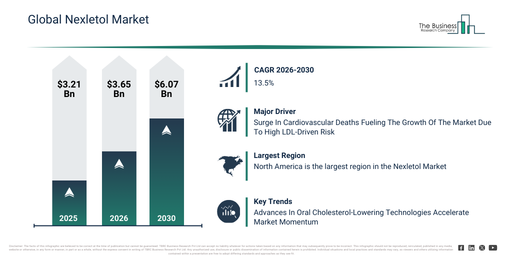
    The nexletol market has witnessed considerable growth recently. Its value is expected to expand from $3.21 billion in 2025 to $3.65 billion in 2026, at a compound annual growth rate (CAGR) of 13.8%. This growth observed in prior periods can be linked to factors such as limited options for cholesterol-lowering drugs, the widespread occurrence of hyperlipidemia, a strong reliance on statin treatments, an uptick in hospital and clinic prescriptions, and increased understanding of cardiovascular health risks.

    The nexletol market size is anticipated to experience substantial growth over the next few years. Its value is projected to reach $6.07 billion by 2030, exhibiting a compound annual growth rate (CAGR) of 13.5%. This expansion during the forecast period is largely driven by the introduction of bempedoic acid-based therapies, the broadening of homecare and long-term care for medication delivery, a rising incidence of cardiovascular diseases, an increased focus on combination therapies, and the expanding healthcare infrastructure in emerging markets. Noteworthy trends expected in the forecast period encompass a greater adoption of LDL-C lowering therapies, an increasing preference for oral administration over injectable forms, the expansion of cardiovascular disease awareness initiatives, enhanced availability through both prescription and over-the-counter channels, and the integration of homecare and long-term care settings for medication use.

    Get A Free Sample Report With In-Depth Market Insights:

    https://thebusinessresearchcompany.com/sample_request?id=71820411&type=smp&name=Nexletol%20Market%20Report%202026&utm_source=Blogs&utm_medium=Paid&utm_campaign=Oct_PR

    Nexletol Market Expansion Drivers: What’s Shaping Future Growth?

    The nexletol market is anticipated to expand due to the rising incidence of cardiovascular diseases. These conditions encompass a range of disorders affecting the heart and blood vessels, such as coronary artery disease, heart failure, and stroke. The increase in cardiovascular diseases is primarily driven by increasingly sedentary lifestyles, where a lack of physical activity leads to weight gain, metabolic imbalances, and higher blood pressure, all of which significantly elevate heart disease risk. Nexletol proves beneficial for cardiovascular diseases by lowering low-density lipoprotein (LDL) cholesterol levels, which in turn helps reduce plaque buildup in arteries and mitigates the risk of heart attacks and other cardiovascular events. For instance, in January 2024, according to the American Heart Association, a US-based non-profit organization, the age-adjusted death rate from cardiovascular disease increased to 233.3 per 100,000 in 2024, up 4.0% from 224.4 per 100,000 in 2023. Consequently, the increasing cases of cardiovascular diseases are poised to boost the growth of the nexletol market.

    Nexletol Market Segment Landscape And Growth Outlook

    The nexletol market covered in this report is segmented –

    1) By Type: 180mg, Other Types

    2) By Administration Route: Oral, Injectable, Intravenous

    3) By Indication: Hyperlipidemia, Atherosclerosis, Cardiovascular Disease

    4) By End User: Hospitals, Clinics, Homecare Settings

    Subsegments:

    1) By 180 mg: Prescription-based, Over-The-Counter (OTC), Hospital or clinic use, Long-Term care facilities use

    2) By Other Types: 40 mg, 80 mg, Other doses

    Nexletol Market Strategic Trends: What Defines The Next Growth Phase?

    Major companies operating in the nexletol market are increasingly focusing on developing innovative oral non-statin LDL-cholesterol lowering therapies, such as bempedoic acid-based agents, to address the growing demand driven by the limitations of statins. Bempedoic acid–based agents are oral cholesterol-lowering drugs that inhibit ATP citrate lyase (ACL), an enzyme involved in the liver’s cholesterol-production pathway, thereby reducing LDL cholesterol; they help patients, especially those who cannot tolerate statins, by lowering LDL-C through a liver-selective mechanism that avoids the muscle-related side effects often associated with traditional statins. For instance, in March 2024, Esperion Therapeutics, Inc., a U.S.-based biopharmaceutical company, received FDA approval for a broad label expansion of its drugs Nexletol (bempedoic acid) and Nexlizet (bempedoic acid + ezetimibe), enabling their use for cardiovascular risk reduction and LDL-C lowering in both primary and secondary prevention regardless of statin use. Nexletol is a once-daily oral tablet formulated with bempedoic acid; it inhibits ACL to lower LDL-C and inflammation, has demonstrated reductions in major cardiovascular events in the CLEAR Outcomes trial, and offers a differentiated, non-statin oral alternative with a favorable safety profile. The updated label significantly widens U.S. patient eligibility, strengthening market adoption.

    Nexletol Market Competitive Landscape: Who Leads The Industry?

    Major companies operating in the nexletol market are Esperion Therapeutics Inc., Daiichi Sankyo Company Limited, Otsuka Pharmaceutical Co. Ltd., Mitsubishi Tanabe Pharma Corporation, Recordati S.p.A., Almirall S.A., Menarini Group, Les Laboratoires Servier, Torrent Pharmaceuticals Ltd., Lupin Limited, Zydus Lifesciences Limited, Sun Pharmaceutical Industries Limited, Dr. Reddy’s Laboratories Limited, Cipla Limited, Aurobindo Pharma Limited, Intas Pharmaceuticals Limited, Glenmark Pharmaceuticals Limited, Alembic Pharmaceuticals Limited, Hetero Drugs Limited, Alkem Laboratories Limited, Wockhardt Limited, Mylan (Viatris Inc.), Teva Pharmaceutical Industries Limited, Apotex Inc., Hikma Pharmaceuticals PLC, Krka d.d., STADA Arzneimittel AG, Sandoz International GmbH

    View The Full Nexletol Market Report:

    https://thebusinessresearchcompany.com/report/nexletol-global-market-report?utm_source=Blogs&utm_medium=Paid&utm_campaign=Oct_PR

    Nexletol Market Geographic Spread And Regional Opportunities

    North America was the largest region in the nexletol market in 2025. The regions covered in the nexletol market report are Asia-Pacific, South East Asia, Western Europe, Eastern Europe, North America, South America, Middle East, Africa.

    Reach Out To Our Team:

    The Business Research Company: https://www.thebusinessresearchcompany.com/

    Americas: +1 310-496-7795

    Asia: +44 7882 955267 & +91 8897263534

    Europe: +44 7882 955267

    Email us at: marketing@tbrc.info

    Follow us on:

    LinkedIn: https://in.linkedin.com/company/the-business-research-company

    YouTube: https://www.youtube.com/channel/UC24_fI0rV8cR5DxlCpgmyFQ

    Global Market Model: https://www.thebusinessresearchcompany.com/global-market-model

  • Neutropenia Biologic Drug Treatment Market Size In 2026 And Beyond: Understanding Future Growth Potential

    Neutropenia Biologic Drug Treatment Market Size In 2026 And Beyond: Understanding Future Growth Potential

    Built to provide research that’s more actionable and strategically valuable, The Business Research Company’s 2026 market reports include market attractiveness analysis, total addressable market sizing, company benchmarking matrices, interactive Excel dashboards, broader supply chain intelligence, emerging startup tracking, and in-depth product insights.

    Neutropenia Biologic Drug Treatment Market Revenue Outlook: What CAGR Lies Ahead Through 2030?

    The neutropenia biologic drug treatment market size has exhibited substantial growth in recent years. It will grow from $14.78 billion in 2025 to $15.79 billion in 2026 at a compound annual growth rate (CAGR) of 6.8%. The historical period’s expansion can be attributed to an increase in cancer chemotherapy utilization, the approval of filgrastim-based therapies, a rise in infection-related hospitalizations, the adoption of supportive oncology care, and the standardization of hospital protocols.

    The market for biologic drug treatments targeting neutropenia is anticipated to experience robust expansion over the coming years. It is projected to reach $20.88 billion in 2030 at a compound annual growth rate (CAGR) of 7.2%. This growth during the forecast period is driven by factors such as an expanding oncology patient population, increased biosimilar penetration, a rising demand for long-acting drug formulations, the broadening of outpatient cancer care services, and an increase in healthcare expenditure. Key trends foreseen include a greater utilization of G-CSF biologics, the growing adoption of long-acting biologic therapies, advancements in managing chemotherapy-induced neutropenia, a strategic focus on biosimilars for cost reduction, and the expansion of distribution through hospitals and oncology pharmacies.

    Get A Free Sample Report With In-Depth Market Insights:

    https://thebusinessresearchcompany.com/sample_request?id=25652325&type=smp&name=Neutropenia%20Biologic%20Drug%20Treatment%20Market%20Report%202026&utm_source=Blogs&utm_medium=Paid&utm_campaign=Oct_PR

    Neutropenia Biologic Drug Treatment Market Development Factors: What’s Supporting Demand?

    The global increase in cancer cases is expected to drive the growth of the market for neutropenia biologic drugs. A rising incidence of cancer and an expanding number of individuals undergoing chemotherapy have resulted in more people developing neutropenia. For instance, in July 2024, data from the Australian Institute of Health and Welfare, an Australia-based government agency, revealed that in 2023, an estimated 165,000 Australians were newly diagnosed with cancer, which equates to over 450 cases each day, and males represented about 55% of these diagnoses. Therefore, the worldwide increase in cancer incidence rates is anticipated to boost demand for the neutropenia biologic drug treatment market over the forthcoming years.

    Neutropenia Biologic Drug Treatment Market Breakdown By Product Type And Application

    The neutropenia biologic drug treatment market covered in this report is segmented –

    1) By Drug Type: Filgrastim, Pegfilgrastim, Lenograstim, Lipegfilgrastim, Sargramostim

    2) By Treatment Type: Antibiotic Drugs, Granulocyte-Colony-Stimulating Factor (G-CSF), Antifungal Drugs, Other Treatment Types

    3) By Distribution Channel: Retail Pharmacies, Hospital Pharmacies, Online Pharmacies

    Neutropenia Biologic Drug Treatment Market Transformation Trends: What Innovations Are Driving Change?

    Major companies in the neutropenia biologic drug treatment sphere are developing biosimilars to provide more cost-effective alternatives to existing biologics. These biosimilars are biologic drugs crafted to be nearly identical to an already approved reference biologic, exhibiting no significant differences in safety or effectiveness. For instance, in May 2023, Amneal Pharmaceuticals, a US-based pharmaceutical company, introduced Fylnetra (pegfilgrastim-pbbk), a biosimilar to Neulasta, intended for treating and preventing febrile neutropenia in patients undergoing chemotherapy. It functions by binding to specific receptors on hematopoietic cells, stimulating the proliferation and differentiation of neutrophil precursors in the bone marrow. This action boosts the production of neutrophils, which are essential for combating infections, particularly in patients undergoing myelosuppressive chemotherapy, consequently lowering the incidence of febrile neutropenia linked to cancer treatments.

    Neutropenia Biologic Drug Treatment Market Company Landscape And Competitive Strategy

    Major companies operating in the neutropenia biologic drug treatment market are Amgen Inc., Pfizer Inc., Novartis AG, Teva Pharmaceutical Industries Ltd., Sanofi S.A., GlaxoSmithKline plc, F. Hoffmann-La Roche Ltd, Merck & Co. Inc., Johnson & Johnson, Baxter International Inc., Mylan N.V., Takeda Pharmaceutical Company Limited, Bayer AG, Sun Pharmaceutical Industries Ltd., Lupin Limited, Fresenius SE & Co. KGaA, Kyowa Kirin Co. Ltd., CSL Limited, Dr. Reddy’s Laboratories Ltd., Astellas Pharma Inc., Otsuka Pharmaceutical Co. Ltd.

    View The Full Neutropenia Biologic Drug Treatment Market Report:

    https://thebusinessresearchcompany.com/report/Neutropenia-Biologic-Drug-Treatments-global-market-report?utm_source=Blogs&utm_medium=Paid&utm_campaign=Oct_PR

    Neutropenia Biologic Drug Treatment Market Top Region By Revenue And Market Share

    North America was the largest region in the neutropenia biologic drug treatment market in 2025. The regions covered in the neutropenia biologic drug treatment market report are Asia-Pacific, South East Asia, Western Europe, Eastern Europe, North America, South America, Middle East, Africa.

    Reach Out To Our Team:

    The Business Research Company: https://www.thebusinessresearchcompany.com/

    Americas: +1 310-496-7795

    Asia: +44 7882 955267 & +91 8897263534

    Europe: +44 7882 955267

    Email us at: marketing@tbrc.info

    Follow us on:

    LinkedIn: https://in.linkedin.com/company/the-business-research-company

    YouTube: https://www.youtube.com/channel/UC24_fI0rV8cR5DxlCpgmyFQ

    Global Market Model: https://www.thebusinessresearchcompany.com/global-market-model
  • Neutralizing Antibody Market Reaches $447.15 Billion In 2026: Key Developments Shaping Expansion

    Neutralizing Antibody Market Reaches $447.15 Billion In 2026: Key Developments Shaping Expansion

    Backed by market attractiveness analysis, total addressable market sizing, company benchmarking matrices, interactive Excel dashboards, wider supply chain intelligence, emerging startup coverage, and detailed product-level insights, The Business Research Company’s 2026 market reports are designed to offer research that is more actionable and strategically valuable than ever.

    Neutralizing Antibody Market Growth Analysis: How Will Revenue Trend Over The Forecast Period?

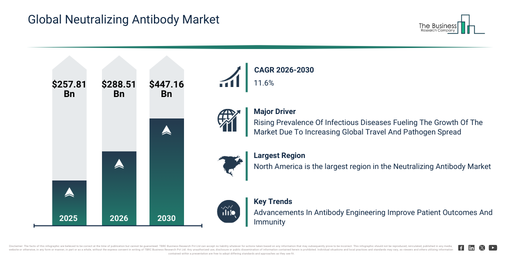
    The neutralizing antibody market size has experienced significant expansion in recent years. This market is projected to expand from $257.81 billion in 2025 to $288.51 billion in 2026, demonstrating a compound annual growth rate (CAGR) of 11.9%. Historically, this expansion was driven by factors such as the rise of viral outbreaks like SARS-CoV-2, the advancement of initial monoclonal antibody platforms, increased research and development in immunology, the incorporation of antibodies into diagnostic assays, and the reliance on animal-derived polyclonal antibodies.

    The neutralizing antibody market is anticipated to experience substantial expansion over the next few years. It is forecast to achieve a size of $447.16 billion by 2030, progressing at a compound annual growth rate (CAGR) of 11.6%. The projected growth in this period stems from various factors such as advancements in fully human and humanized monoclonal antibodies, the development of recombinant polyclonal antibody technology, escalating global demand for COVID-19 and influenza therapeutics, growing collaboration between pharmaceutical and biotech companies, and the broadening of antibody research in emerging markets. Significant trends expected during the forecast period include increased investment in neutralizing antibody therapeutics, the broadened development of monoclonal and polyclonal antibodies, their expanding applications in viral diagnostics and research, an increased emphasis on personalized medicine and targeted therapies, and enhanced regulatory supervision and compliance for antibody production.

    Get A Free Sample Report With In-Depth Market Insights:

    https://thebusinessresearchcompany.com/sample_request?id=24620&type=smp&name=Neutralizing%20Antibody%20Market%20Report%202026&utm_source=Blogs&utm_medium=Paid&utm_campaign=Oct_PR

    Neutralizing Antibody Market Industry Drivers: What’s Behind The Revenue Growth?

    The increasing occurrence of infectious diseases is anticipated to stimulate the expansion of the neutralizing antibody market. Such diseases are defined as conditions brought on by harmful microbes, including bacteria, viruses, fungi, or parasites, capable of transmitting either directly or indirectly among individuals. The escalating incidence of these diseases stems from increased global travel, which aids in the swift dissemination of pathogens across different regions. Neutralizing antibodies improve the management of infectious diseases by precisely targeting and deactivating pathogens, thus proving effective in hindering disease progression. They contribute to better patient results by offering accurate and prompt immune defense. For example, in February 2024, the UK Health Security Agency, a UK-based government agency, reported that tuberculosis (a contagious bacterial infection that primarily affects the lungs) cases in England climbed to 4,850 in 2023, marking an increase of 10.7% from 4,380 cases in 2022. Consequently, the rising prevalence of infectious diseases is propelling the growth of the neutralizing antibody market.

    Neutralizing Antibody Market Segment Analysis And Revenue Potential

    The neutralizing antibody market covered in this report is segmented –

    1) By Antibody Type: Monoclonal Antibodies, Polyclonal Antibodies

    2) By Target Virus: SARS-CoV-2 (COVID-19), Human Immunodeficiency Viruses (HIV), Influenza, Ebola, Zika, Hepatitis C, Other Target Viruses

    3) By Distribution Channel: Direct Sales To End-Users, Distributors, Online Retail, Other Distribution Channels

    4) By Application: Therapeutics, Diagnostics, Research And Development

    5) By End User: Hospitals And Clinics, Research Institutes, Diagnostic Laboratories, Pharmaceutical Companies, Other End Users

    Subsegments:

    1) By Monoclonal Antibodies: Fully Human Monoclonal Antibodies, Humanized Monoclonal Antibodies, Chimeric Monoclonal Antibodies, Murine Monoclonal Antibodies

    2) By Polyclonal Antibodies: Animal-Derived Polyclonal Antibodies, Recombinant Polyclonal Antibodies, Human Polyclonal Antibody Preparations

    #Neutralizing Antibody Market Growth Trends: What’s Shaping The Future Outlook?

    Leading entities within the neutralizing antibody market are prioritizing the creation of novel interventions, such as long-acting monoclonal neutralizing antibodies. Their aim is to offer sustained defense against infectious illnesses, fulfill critical healthcare gaps for at-risk groups, and circumvent shortcomings of conventional vaccines. These long-acting monoclonal neutralizing antibodies are designed proteins engineered to specifically attach to viral antigens with strong affinity, thereby preventing infection, with alterations to their Fc region prolonging their lifespan in the body. Differing from typical small-molecule antivirals or vaccines, these antibodies provide passive immunity, eliminating the need for frequent administration or an activated immune system. An example of this is the launch in June 2025 by Merck & Co. Inc, a US-based pharmaceutical firm, of clesrovimab-cfor, a long-acting monoclonal neutralizing antibody that received approval from the U.S. FDA. It functions as a fully human IgG1? antibody, engineered to target the fusion (F) protein of respiratory syncytial virus (RSV), incorporating a triple amino acid substitution within its Fc region specifically to boost its affinity for the neonatal Fc receptor and extend its presence in the bloodstream. When given as a single 105 mg intramuscular dose, irrespective of an infant’s weight, it delivers protection against RSV for an entire season, thereby assisting in preventive care for infants and other vulnerable populations.

    Neutralizing Antibody Market Key Players Shaping Industry Direction

    Major companies operating in the neutralizing antibody market are Pfizer Inc., Johnson & Johnson, Roche Holding AG, Merck & Co. Inc., AstraZeneca PLC, Sanofi SA, GlaxoSmithKline plc, Eli Lilly and Company, Regeneron Pharmaceuticals Inc., GeNext Genomics, Celltrion Healthcare Co. Ltd, BeiGene Ltd, AbCellera Biologics Inc., BMC Pharmacology and Toxicology, Anthos Therapeutics, Immunome Inc., Sorrento Therapeutics Inc., Tonix Pharmaceuticals, Abwiz Bio, AXIM Biotechnologies.

    View The Full Neutralizing Antibody Market Report:

    https://thebusinessresearchcompany.com/report/neutralizing-antibody-global-market-report?utm_source=Blogs&utm_medium=Paid&utm_campaign=Oct_PR

    Neutralizing Antibody Market Regional Analysis And Top Geography

    North America was the largest region in the neutralizing antibody market in 2025. Asia-Pacific is expected to be the fastest-growing region in the forecast period. The regions covered in the neutralizing antibody market report are Asia-Pacific, South East Asia, Western Europe, Eastern Europe, North America, South America, Middle East, Africa.

    Reach Out To Our Team:

    The Business Research Company: https://www.thebusinessresearchcompany.com/

    Americas: +1 310-496-7795

    Asia: +44 7882 955267 & +91 8897263534

    Europe: +44 7882 955267

    Email us at: marketing@tbrc.info

    Follow us on:

    LinkedIn: https://in.linkedin.com/company/the-business-research-company

    YouTube: https://www.youtube.com/channel/UC24_fI0rV8cR5DxlCpgmyFQ

    Global Market Model: https://www.thebusinessresearchcompany.com/global-market-model
  • Neurotoxin-Inspired Peptide Market Growth Outlook For 2026: Drivers, Trends And Future Opportunities

    Neurotoxin-Inspired Peptide Market Growth Outlook For 2026: Drivers, Trends And Future Opportunities

    Featuring market attractiveness scoring, total addressable market sizing, company benchmarking matrices, interactive Excel dashboards, deeper supply chain intelligence, emerging startup tracking, and granular product-level insights, The Business Research Company’s 2026 market reports are built to deliver research that is both more actionable and more strategically valuable.

    Neurotoxin-Inspired Peptide Market Forecast: What Value Will The Market Reach By 2030?

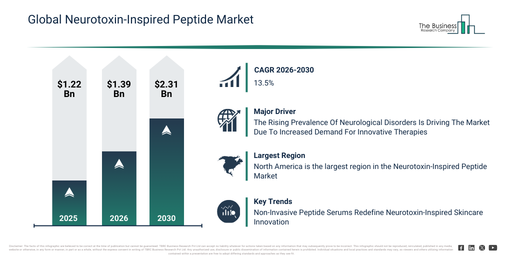
    The neurotoxin-inspired peptide market has seen rapid expansion in recent years. Its valuation is anticipated to climb from $1.22 billion in 2025 to $1.39 billion in 2026, achieving a compound annual growth rate (CAGR) of 13.7%. The growth observed historically is a result of breakthroughs in peptide synthesis technologies, increasing research efforts in neurobiology, wider application of peptides in cosmetic products, the expansion of biotechnology research pipelines, and the availability of recombinant expression systems.

    The neurotoxin-inspired peptide market is projected to experience substantial expansion in the coming years. Its value is set to reach $2.31 billion in 2030, demonstrating a compound annual growth rate (CAGR) of 13.5%. This anticipated growth is driven by factors such as the increasing need for targeted biopharmaceuticals, growing investments in peptide-based treatments, broader applications in the fields of neurology and dermatology, a rising emphasis on safer substitutes for conventional neurotoxins, and ongoing advancements in peptide engineering. Key developments anticipated during this period include the increased creation of therapeutic peptide-based medicines, wider application of neurotoxin-inspired peptides in aesthetic medicine, greater utilization in specific neurological treatments, the spread of recombinant and synthetic peptide technologies, and a sharpened focus on precision and safety.

    Get A Free Sample Report With In-Depth Market Insights:

    https://thebusinessresearchcompany.com/sample_request?id=56550224&type=smp&name=Neurotoxin-Inspired%20Peptide%20Market%20Report%202026&utm_source=Blogs&utm_medium=Paid&utm_campaign=Oct_PR

    Neurotoxin-Inspired Peptide Market Growth Factors: What’s Supporting Expansion?

    The expanding occurrence of neurological disorders is anticipated to stimulate the advancement of the neurotoxin-inspired peptide market in the future. These disorders encompass a wide spectrum of conditions impacting both the central and peripheral nervous systems, specifically the brain, spinal cord, cranial nerves, and peripheral nerves, consequently hindering motor, sensory, cognitive, and autonomic capabilities. A key contributor to the increasing prevalence of neurological disorders is the worldwide rise in life expectancy. Extended lifespans naturally enhance the probability of age-related degeneration within the nervous system, subsequently leading to a higher incidence of these conditions. Neurotoxin-inspired peptides present novel therapeutic strategies designed to target particular neurological pathways with greater accuracy, potentially enhancing treatment results and fulfilling current unmet medical demands linked to the escalating impact of these illnesses. For example, data from October 2023, provided by the World Federation of Neurology, a UK-based organization representing national neurological societies, indicates that the worldwide population affected by brain diseases is predicted to double by 2050. Furthermore, global stroke-related fatalities are foreseen to increase by 50%, reaching an annual total of 9.7 million by the identical year. Consequently, the growing occurrence of neurological disorders will serve as a significant impetus for the neurotoxin-inspired peptide market.

    Neurotoxin-Inspired Peptide Market Segmentation And Category Overview

    The neurotoxin-inspired peptide market covered in this report is segmented –

    1) By Product Type: Synthetic Peptides, Recombinant Peptides, Natural Peptides, Other Product Types

    2) By Distribution Channel: Direct Sales, Online Sales, Distributors, Other Distribution Channels

    3) By Application: Pharmaceuticals, Cosmetics, Research And Development, Other Applications

    4) By End User: Hospitals And Clinics, Research Institutes, Biotechnology Companies, Other End Users

    Subsegments:

    1) By Synthetic Peptides: Solid Phase Peptide Synthesis, Liquid Phase Peptide Synthesis, Hybrid Phase Peptide Synthesis

    2) By Recombinant Peptides: Bacterial Expression Systems, Yeast Expression Systems, Mammalian Cell Expression Systems

    3) By Natural Peptides: Animal Derived Peptides, Plant Derived Peptides, Microbial Derived Peptides

    4) By Other Product Types: Peptide Conjugates, Peptide Mimetics, Peptide Libraries

    Neurotoxin-Inspired Peptide Market Industry Trends: What’s Reshaping Demand?

    Major companies operating in the neurotoxin-inspired peptide market are concentrating on developing innovative products, such as neurotoxin-inspired peptide serums, to provide non-invasive skincare options that deliver wrinkle-reducing effects comparable to injectable treatments. A neurotoxin-inspired peptide serum is a topical formulation that utilizes biomimetic peptides and complementary active ingredients to reduce facial muscle-related expression lines and improve overall skin texture and radiance without requiring invasive procedures. For instance, in July 2024, SkinCeuticals, a US-based medical skincare brand, introduced P-TIOX. This serum combines an advanced peptide complex with exfoliating and hydrating agents in a patent-pending formulation, engineered to visibly smooth skin, refine pores, and reduce the appearance of multiple types of contraction lines. It has been clinically evaluated for both stand-alone use and as a complement to injectable neurotoxin procedures, thus positioning it as a significant non-invasive advancement within the anti-aging skincare category.

    Neurotoxin-Inspired Peptide Market Competitive Analysis Of Leading Industry Participants

    Major companies operating in the neurotoxin-inspired peptide market are AbbVie Inc., Galderma, Ipsen Pharma, Biolab Farmaceutica, Daewoong Pharmaceutical, Luye Pharma Group, CordenPharma, Syngene International, Shanghai Haohai Bio., Hugel Inc., Merz Pharma, Evolus Inc., Medytox Inc., US WorldMeds, Smartox Biotechnology, Venomtech Ltd., Latoxan, Pepscan Therapeutics, ToxinTech Inc., AEON Biopharma Inc.

    View The Full Neurotoxin-Inspired Peptide Market Report:

    https://thebusinessresearchcompany.com/report/neurotoxin-inspired-peptide-global-market-report?utm_source=Blogs&utm_medium=Paid&utm_campaign=Oct_PR

    Neurotoxin-Inspired Peptide Market Geographic Analysis: Where Is Demand Rising Fastest?

    North America was the largest region in the neurotoxin-inspired peptide market in 2025. Asia-Pacific is expected to be the fastest-growing region in the forecast period. The regions covered in the neurotoxin-inspired peptide market report are Asia-Pacific, South East Asia, Western Europe, Eastern Europe, North America, South America, Middle East, Africa.

    Reach Out To Our Team:

    The Business Research Company: https://www.thebusinessresearchcompany.com/

    Americas: +1 310-496-7795

    Asia: +44 7882 955267 & +91 8897263534

    Europe: +44 7882 955267

    Email us at: marketing@tbrc.info

    Follow us on:

    LinkedIn: https://in.linkedin.com/company/the-business-research-company

    YouTube: https://www.youtube.com/channel/UC24_fI0rV8cR5DxlCpgmyFQ

    Global Market Model: https://www.thebusinessresearchcompany.com/global-market-model
  • Neurotoxin Market Size Forecast From 2026 To 2030: Key Industry Trends

    Neurotoxin Market Size Forecast From 2026 To 2030: Key Industry Trends

    Built to provide research that’s more actionable and strategically valuable, The Business Research Company’s 2026 market reports include market attractiveness analysis, total addressable market sizing, company benchmarking matrices, interactive Excel dashboards, broader supply chain intelligence, emerging startup tracking, and in-depth product insights.

    Neurotoxin Market Size Outlook: How Quickly Will Revenue Expand Through 2030?

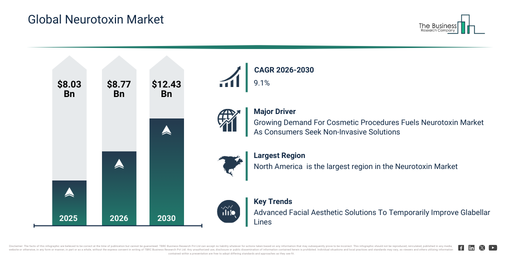
    The neurotoxin market has experienced robust growth recently. It is projected to expand from $8.03 billion in 2025 to $8.77 billion in 2026, demonstrating a compound annual growth rate (CAGR) of 9.2%. The market’s historical growth can be attributed to the rising prevalence of aesthetic consciousness, the increasing application of botulinum toxin in cosmetic procedures, an elevated incidence of neurological disorders, the proliferation of dermatology and specialty clinics, and timely regulatory approvals for botulinum-based products.

    The neurotoxin market is projected to experience substantial expansion over the upcoming years. It is anticipated to reach $12.43 billion in 2030, exhibiting a compound annual growth rate (CAGR) of 9.1%. This anticipated growth during the forecast period can be ascribed to several factors, including the expansion of therapeutic uses beyond cosmetic procedures, a surge in demand for non-surgical medical interventions, advancements in next-generation neurotoxins, increased healthcare spending within emerging economies, and the global proliferation of the aging demographic. Key trends anticipated within this period encompass the broadening of therapeutic indications for neurotoxins, an escalating preference for minimally invasive aesthetic techniques, the creation of neurotoxins with extended efficacy and greater precision, increased utilization in managing chronic migraines and spasticity, and a heightened emphasis on product safety, purity, and lower immunogenicity.

    Get A Free Sample Report With In-Depth Market Insights:

    https://thebusinessresearchcompany.com/sample_request?id=11899&type=smp&name=Neurotoxin%20Market%20Report%202026&utm_source=Blogs&utm_medium=Paid&utm_campaign=Oct_PR

    Neurotoxin Market Demand Drivers: What’s Powering Industry Growth?

    The anticipated growth of the neurotoxin market is closely linked to a rise in cosmetic procedures performed to enhance appearance. Cosmetic procedures involve diverse medical treatments or interventions with the primary objective of improving or modifying a person’s physical look. This upward trend stems from societal, technological, and cultural factors, coupled with increased awareness regarding the benefits of such procedures. Neurotoxins are employed in cosmetic applications to relax specific muscles, thereby lessening the visibility of wrinkles and fine lines. For instance, in June 2024, the American Society of Plastic Surgeons, a US-based non-profit organization, reported that minimally invasive procedures grew by 7% in 2023, exceeding the growth rate of surgical procedures by 2%. Additionally, hand surgeries like carpal tunnel, arthritis, and trigger finger collectively amounted to 207,887 procedures, representing a 2% increase from 2022. Thus, the increasing prevalence of cosmetic procedures for aesthetic enhancement is propelling the expansion of the neurotoxin market.

    Neurotoxin Market Segment Outlook: Which Categories Are Growing Fastest?

    The neurotoxin market covered in this report is segmented –

    1) By Product Type: Botox, Dysport, Xeomin, Other Products

    2) By Application: Therapeutic, Aesthetic

    3) By End User: Hospitals, Specialty Clinics, Dermatology Clinics, Other End Users

    Subsegments:

    1) By Botox: Cosmetic Uses, Therapeutic Uses

    2) By Dysport: Cosmetic Applications, Medical Indications

    3) By Xeomin: Cosmetic Treatments, Therapeutic Applications

    4) By Other Products: Jeuveau, Any Emerging Neurotoxins

    Neurotoxin Market Innovation Trends: What Developments Are Reshaping The Industry?

    Leading companies in the neurotoxins market are prioritizing innovative advancements, such as next-generation aesthetic neurotoxins, with the goal of enhancing cosmetic results, broadening treatment options, and boosting patient satisfaction. These next-generation aesthetic neurotoxins are newly developed botulinum-based formulations engineered to deliver more precise muscle modulation, quicker action, or an extended duration of effect for aesthetic wrinkle-reduction procedures. For instance, in January 2023, Evolus Inc., a US-based medical aesthetics company, secured approval from the Australian Therapeutic Goods Administration (TGA) for Nuceiva (prabotulinumtoxinA). Nuceiva (prabotulinumtoxinA) is a neurotoxin utilized for aesthetic purposes, specifically to temporarily improve the appearance of moderate glabellar lines in adult patients by obstructing nerve impulses to facial muscles, causing them to relax, and thus smoothing wrinkles formed by facial expressions, squinting, and frowning.

    Neurotoxin Market Leading Companies And Competitive Benchmarking

    Major companies operating in the neurotoxin market are AbbVie Inc., Galderma Inc., Ipsen SA, Daewoong Pharmaceutical Co. Ltd., Merz Pharma GmbH & Co KGaA, Hugel Inc., Evolus Inc., Medytox Inc., Croma-Pharma GmbH, Revance Therapeutics Inc., Gufic Biosciences Ltd., Hironic Co. Ltd., Allergan, Lanzhou Institute of Biological Products Co. Ltd., Sinclair Pharma, Vida Aesthetics, Evolife, Hugel Bio, Medytox USA, Revance Aesthetics

    View The Full Neurotoxin Market Report:

    https://thebusinessresearchcompany.com/report/neurotoxin-global-market-report?utm_source=Blogs&utm_medium=Paid&utm_campaign=Oct_PR

    Neurotoxin Market Global Footprint: Which Region Leads The Market?

    North America was the largest region in the neurotoxin market in 2025. Asia-Pacific is expected to be the fastest-growing region in the forecast period. The regions covered in the neurotoxin market report are Asia-Pacific, South East Asia, Western Europe, Eastern Europe, North America, South America, Middle East, Africa.

    Reach Out To Our Team:

    The Business Research Company: https://www.thebusinessresearchcompany.com/

    Americas: +1 310-496-7795

    Asia: +44 7882 955267 & +91 8897263534

    Europe: +44 7882 955267

    Email us at: marketing@tbrc.info

    Follow us on:

    LinkedIn: https://in.linkedin.com/company/the-business-research-company

    YouTube: https://www.youtube.com/channel/UC24_fI0rV8cR5DxlCpgmyFQ

    Global Market Model: https://www.thebusinessresearchcompany.com/global-market-model

  • Neuroregeneration Therapy Market 2026: Market Size, Growth Drivers And Emerging Opportunities

    Neuroregeneration Therapy Market 2026: Market Size, Growth Drivers And Emerging Opportunities

    Backed by market attractiveness analysis, total addressable market sizing, company benchmarking matrices, interactive Excel dashboards, wider supply chain intelligence, emerging startup coverage, and detailed product-level insights, The Business Research Company’s 2026 market reports are designed to offer research that is more actionable and strategically valuable than ever.

    Neuroregeneration Therapy Market Size, Value And Growth Trajectory Through 2030

    Over recent years, the neuroregeneration therapy market has witnessed a swift expansion in its size. This market is projected to grow from $11.29 billion in 2025 to $12.75 billion in 2026, at a compound annual growth rate (CAGR) of 12.9%. Historically, this expansion has been attributed to factors such as the limited availability of neuroregeneration therapies, the high prevalence of neurodegenerative diseases, increasing clinical research on neural repair, rising awareness of neurological disorder management, and a reliance on conventional pharmacological treatments.

    The neuroregeneration therapy market size is expected to experience significant expansion in the coming years. This market is projected to reach $20.5 billion by 2030, demonstrating a compound annual growth rate (CAGR) of 12.6%. The anticipated growth throughout the forecast period stems from the advancement of stem cell and gene therapies, the broadening application of neurostimulation devices, the integration of artificial intelligence and digital monitoring in treatment, increased government funding for neurological research, and a rise in collaborations between pharmaceutical and biotech companies. Prominent trends observed during this period include the increasing adoption of stem cell and gene therapies for neuroregeneration, a greater reliance on neurostimulation techniques in clinical practice, the growth of pharmacological therapies focusing on neuroprotection, the expansion of nanotechnology and biomaterials in drug delivery, and the integration of personalized therapy approaches for neurodegenerative disorders.

    Get A Free Sample Report With In-Depth Market Insights:

    https://thebusinessresearchcompany.com/sample_request?id=86673515&type=smp&name=Neuroregeneration%20Therapy%20Market%20Report%202026&utm_source=Blogs&utm_medium=Paid&utm_campaign=Oct_PR

    Neuroregeneration Therapy Market Growth Drivers: What’s Behind The Acceleration?

    The increasing occurrence of neurological conditions is anticipated to fuel the expansion of the neuroregeneration therapy market in the future. These disorders involve ailments affecting the brain, spinal cord, or peripheral nerves, which interfere with the proper functioning of the nervous system. The rise in neurological disorders stems from environmental toxins; persistent exposure to contaminants like heavy metals, pesticides, and industrial chemicals can harm the nervous system and heighten the probability of developing neurodegenerative conditions. Neuroregeneration therapy addresses neurological ailments by repairing or substituting impaired neurons and tissues, thereby recovering lost functions and fostering recovery in the brain, spinal cord, or nerves to enhance movement, sensation, and general well-being. For example, as reported by the World Federation of Neurology, a UK-based association of national neurological societies, in October 2023, over 40% of the world’s population currently suffers from some type of neurological condition, a figure projected to almost double by 2050. Consequently, the growing incidence of neurological disorders is stimulating the demand for the neuroregeneration therapy market.

    Neuroregeneration Therapy Market Segment Landscape: Which Areas Lead Development?

    The neuroregeneration therapy market covered in this report is segmented –

    1) By Type Of Neuroregeneration Therapy: Stem Cell Therapy, Gene Therapy, Pharmacological Therapy, Neurostimulation Therapy, Other Types Of Neuroregeneration Therapy

    2) By Technology: Tissue Engineering, Cranial And Spinal Stimulation, Nanotechnology In Drug Delivery, Biomaterials Development

    3) By Mode Of Administration: Oral, Injectable, Implantable, Other Modes Of Administration

    4) By Indication: Spinal Cord Injury, Traumatic Brain Injury, Stroke, Parkinson’s Disease, Multiple Sclerosis, Alzheimer’s Disease, Peripheral Nerve Injury, Other Indications

    5) By End-User: Hospitals, Clinical Research Institutes, Academic Institutions, Pharmaceutical And Biotechnology Companies

    Subsegments:

    1) By Stem Cell Therapy: Embryonic Stem Cell Therapy, Mesenchymal Stem Cell Therapy, Neural Stem Cell Therapy, Induced Pluripotent Stem Cell Therapy, Hematopoietic Stem Cell Therapy

    2) By Gene Therapy: In Vivo Gene Therapy, Ex Vivo Gene Therapy, Viral Vector Based Gene Therapy, Non Viral Vector Based Gene Therapy, Genome Editing Gene Therapy

    3) By Pharmacological Therapy: Neuroprotective Drugs, Neurotrophic Factor Based Drugs, Anti Inflammatory Drugs, Antioxidant Drugs

    4) By Neurostimulation Therapy: Deep Brain Stimulation, Transcranial Magnetic Stimulation, Vagus Nerve Stimulation, Spinal Cord Stimulation, Transcranial Direct Current Stimulation

    5) By Other Types Of Neuroregeneration Therapy: Nanotechnology Based Therapy, Exosome Based Therapy, Biomaterial Based Therapy

    Neuroregeneration Therapy Market Trends: What’s Defining The Industry’s Next Phase?

    Leading companies within the neuroregeneration therapy market are prioritizing the creation of novel solutions, including 3D-printed regenerative medical implants, which offer sophisticated treatment avenues for nerve restoration and functional recuperation post-injury. These 3D-printed regenerative implants employ patient-specific biomaterials and engineered tissue scaffolds to aid nerve regeneration, providing accurate structural direction for axonal development and yielding superior results compared to conventional autografts or synthetic conduits, which face limitations in donor tissue availability and design customization. An illustrative example occurred in June 2025 when 3D Systems Inc., a US-based 3D printing and medical technology firm, enhanced its regenerative medical offerings with a pioneering peripheral nerve implant specifically engineered to enable targeted neuroregeneration. This implant consists of biocompatible, 3D-printed scaffold materials designed to steer nerve regrowth, operating by delivering structural and biochemical signals that foster axonal extension and reconnection. Its distinct attributes encompass patient-specific tailoring, seamless integration with adjacent tissue, and suitability for peripheral nerve repair operations. Its uses encompass mending peripheral nerve injuries, restoring function following trauma or surgery, and serving in neuroregenerative medicine research. Advantages derived from its use include accelerated recovery, enhanced functional outcomes, and decreased reliance on donor grafts.

    Neuroregeneration Therapy Market Industry Leaders And Competitive Landscape

    Major companies operating in the neuroregeneration therapy market are F. Hoffmann-La Roche Ltd., Merck & Co. Inc., AbbVie Inc., Sanofi S.A., Novartis International AG, Stryker Corporation, Biogen Inc., Synovis Life Technologies Inc., Integra LifeSciences Holdings Corporation, AxoGen Inc., Denali Therapeutics Inc., Aspen Neuroscience Inc., Neurona Therapeutics Inc., Lineage Cell Therapeutics Inc., Checkpoint Surgical Inc., Stemedica Cell Technologies Inc., Polyganics B.V., Epineuron Technologies Inc., NeuExcell Therapeutics Inc.

    View The Full Neuroregeneration Therapy Market Report:

    https://thebusinessresearchcompany.com/report/neuroregeneration-therapy-global-market-report?utm_source=Blogs&utm_medium=Paid&utm_campaign=Oct_PR

    Neuroregeneration Therapy Market Regional Split: Which Areas Are Fueling Growth?

    North America was the largest region in the neuroregeneration therapy market in 2025. Asia-Pacific is expected to be the fastest-growing region in the forecast period. The regions covered in the neuroregeneration therapy market report are Asia-Pacific, South East Asia, Western Europe, Eastern Europe, North America, South America, Middle East, Africa.

    Reach Out To Our Team:

    The Business Research Company: https://www.thebusinessresearchcompany.com/

    Americas: +1 310-496-7795

    Asia: +44 7882 955267 & +91 8897263534

    Europe: +44 7882 955267

    Email us at: marketing@tbrc.info

    Follow us on:

    LinkedIn: https://in.linkedin.com/company/the-business-research-company

    YouTube: https://www.youtube.com/channel/UC24_fI0rV8cR5DxlCpgmyFQ

    Global Market Model: https://www.thebusinessresearchcompany.com/global-market-model

  • Neuromuscular Blocking Drug Market Set To Expand From $5.23 Billion In 2026: Growth Outlook Through 2030

    Neuromuscular Blocking Drug Market Set To Expand From $5.23 Billion In 2026: Growth Outlook Through 2030

    Featuring market attractiveness scoring, total addressable market sizing, company benchmarking matrices, interactive Excel dashboards, deeper supply chain intelligence, emerging startup tracking, and granular product-level insights, The Business Research Company’s 2026 market reports are built to deliver research that is both more actionable and more strategically valuable.

    Neuromuscular Blocking Drug Market CAGR Outlook And Future Development

    The neuromuscular blocking drug market size has experienced significant expansion recently. Projections indicate it will increase from $4.08 billion in 2025 to $4.3 billion in 2026, demonstrating a compound annual growth rate (CAGR) of 5.3%. Factors contributing to historical growth include the constrained supply of neuromuscular blocking drugs, the rising volume of surgical procedures, continued reliance on traditional anesthesia protocols, enhancements in hospital infrastructure, and heightened awareness regarding patient care during the perioperative phase.

    The neuromuscular blocking drug market size is anticipated to experience robust expansion over the coming years. Its valuation is projected to reach $5.23 billion in 2030, demonstrating a compound annual growth rate (CAGR) of 5.0%. This growth during the forecast period is primarily driven by the introduction of rapid-onset and intermediate-acting agents, the integration of digital anesthesia monitoring systems, the proliferation of specialty clinics, the increasing adoption of short-acting agents for outpatient surgeries, and an intensified regulatory emphasis on drug safety and efficacy. Prominent trends expected in this period include a heightened demand for non-polarizing and depolarizing neuromuscular blocking drugs, an increase in surgical procedures that necessitate muscle relaxation, a wider embrace of short-acting and rapid-onset agents, the expansion of hospital pharmacy and online pharmacy channels, and a significant focus on patient safety and optimized anesthesia protocols.

    Get A Free Sample Report With In-Depth Market Insights:

    https://thebusinessresearchcompany.com/sample_request?id=53051264&type=smp&name=Neuromuscular%20Blocking%20Drug%20Market%20Report%202026&utm_source=Blogs&utm_medium=Paid&utm_campaign=Oct_PR

    Neuromuscular Blocking Drug Market Growth Factors Behind Sustained Expansion

    The expanding volume of surgical interventions is anticipated to drive the advancement of the neuromuscular blocking drug market in the future. These procedures encompass medical operations employing incisions, excisions, or alternative methods to address injuries, illnesses, or various medical conditions. The growing frequency of surgical operations stems from advancements in diagnostic instruments, enhanced access to healthcare services, an emphasis on life quality, and increasing patient understanding and demands. Neuromuscular blocking drugs find application during surgical procedures to achieve muscle relaxation and aid in different stages of the operation. For example, data from September 2023, as reported by the National Library of Medicine, a US-based federal government entity, indicated that by 2023, a total of 7,733 robotic surgical systems had been deployed globally, with over 10 million robotic surgeries performed. Consequently, the rising occurrence of surgical interventions serves as a primary impetus for the expansion of the neuromuscular blocking drug market.

    Neuromuscular Blocking Drug Market Segments: Where Is Growth Concentrated?

    The neuromuscular blocking drug market covered in this report is segmented –

    1) By Type: Non-Polarizing Agents, Depolarizing Agents

    2) By Application: Hospital Pharmacy, Retail Pharmacy, Online Pharmacy, Other Applications

    3) By End-Users: Hospitals, Homecare, Specialty Clinics, Other End-Users

    Subsegments:

    1) By Non-Polarizing Agents: Benzylisoquinolines, Steroidal Agents, Long-Acting Agents, Intermediate-Acting Agents, Short-Acting Agents,

    2) By Depolarizing Agents: Succinylcholine, Analogues of Succinylcholine, Rapid-Onset Agents, Short-Acting Agents, Intermediate-Acting Agents

    Neuromuscular Blocking Drug Market Industry Trends Fueling Future Revenue Growth

    Companies operating in the neuromuscular blocking drug market are increasingly focusing on developing technological advancements, such as RFID-enabled drug delivery, to meet the growing demand for improved patient safety and efficient hospital inventory management. This RFID-enabled drug delivery method involves embedding radio-frequency identification (RFID) tags onto pharmaceutical vials or packaging, empowering hospitals to automatically track, authenticate, and manage medications using digital systems. This approach significantly reduces manual errors, ensures accurate dosing, and assists with recall management, offering a distinct advantage over traditional barcode or manual inventory systems. For example, in May 2023, Fresenius Kabi, a Germany-based pharmaceutical manufacturer, introduced its RFID-pre-tagged Rocuronium Bromide Injection, a non-depolarizing neuromuscular blocking agent, designed for full compatibility with major RFID kit and tray systems. This particular product maintains the same active ingredient, rocuronium bromide, but incorporates a smart RAIN RFID label (GS1-compliant) which simplifies point-of-care tracking, enhances traceability, and improves patient safety through real-time verification and a reduced risk of incorrect dose errors. Additionally, this RFID technology streamlines hospital inventory workflows by enabling automated stock reconciliation and providing timely recall alerts.

    Neuromuscular Blocking Drug Market Key Participants And Competitive Landscape

    Major companies operating in the neuromuscular blocking drug market are Pfizer Inc., Merck & Co Inc., AbbVie Inc., Fresenius Kabi AG, AstraZeneca PLC, Novartis AG, Teva Pharmaceutical Industries Limited, Baxter International Inc., Astellas Pharma Inc., Daiichi Sankyo Company Limited, Ipsen S.A., B. Braun Melsungen AG, Aurobindo Pharma Limited, Hikma Pharmaceuticals PLC, Mallinckrodt Pharmaceuticals plc, Mylan N.V., Sagent Pharmaceuticals Inc., Cadila Healthcare Limited

    View The Full Neuromuscular Blocking Drug Market Report:

    https://thebusinessresearchcompany.com/report/neuromuscular-blocking-drug-global-market-report?utm_source=Blogs&utm_medium=Paid&utm_campaign=Oct_PR

    Neuromuscular Blocking Drug Market Top Region: Where Does Most Revenue Come From?

    North America was the largest region in the neuromuscular blocking drug market in 2025. The regions covered in the neuromuscular blocking drug market report are Asia-Pacific, South East Asia, Western Europe, Eastern Europe, North America, South America, Middle East, Africa.

    Reach Out To Our Team:

    The Business Research Company: https://www.thebusinessresearchcompany.com/

    Americas: +1 310-496-7795

    Asia: +44 7882 955267 & +91 8897263534

    Europe: +44 7882 955267

    Email us at: marketing@tbrc.info

    Follow us on:

    LinkedIn: https://in.linkedin.com/company/the-business-research-company

    YouTube: https://www.youtube.com/channel/UC24_fI0rV8cR5DxlCpgmyFQ

    Global Market Model: https://www.thebusinessresearchcompany.com/global-market-model