Month: October 2026

  • Inactivated Vaccines Market CAGR Forecast Through 2030: Key Trends Shaping Industry Expansion

    Inactivated Vaccines Market CAGR Forecast Through 2030: Key Trends Shaping Industry Expansion

    Built to provide research that’s more actionable and strategically valuable, The Business Research Company’s 2026 market reports include market attractiveness analysis, total addressable market sizing, company benchmarking matrices, interactive Excel dashboards, broader supply chain intelligence, emerging startup tracking, and in-depth product insights.

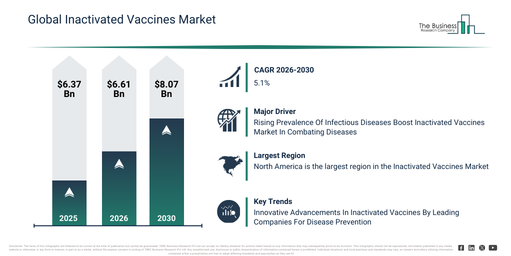
    Inactivated Vaccines Market Poised To Hit $8.06 Billion By 2030 With A 5.1% CAGR

    The inactivated vaccines market size has experienced steady expansion in recent years. Its valuation is anticipated to rise from $6.37 billion in 2025 to $6.61 billion in 2026, demonstrating a compound annual growth rate (CAGR) of 3.9%. The market’s historic growth can be ascribed to factors like an increasing prevalence of infectious diseases, developments in virology research, government funding for immunization efforts, the expansion of healthcare infrastructure, and public awareness campaigns promoting vaccination.

    The inactivated vaccines market is projected to experience substantial expansion in the coming years. Its valuation is anticipated to reach $8.07 billion by 2030, exhibiting a compound annual growth rate (CAGR) of 5.1%. This growth trajectory throughout the forecast period stems from factors such as an expanding elderly demographic, improved healthcare accessibility in developing economies, innovations in vaccine delivery mechanisms, a surge in worldwide immunization efforts, and the increasing uptake of multi-dose and combination vaccines. Key developments expected during this timeframe encompass improvements in vaccine creation methods, an expansion of cold chain logistical networks, a rising need for childhood vaccines, the proliferation of governmental immunization schemes, and the ongoing creation of combined vaccines.

    Get A Free Sample Report With In-Depth Market Insights:

    https://thebusinessresearchcompany.com/sample_request?id=98098142&type=smp&name=Inactivated%20Vaccines%20Market%20Report%202026&utm_source=Blogs&utm_medium=Paid&utm_campaign=Oct_PR

    Inactivated Vaccines Market Development Factors: What’s Supporting Demand?

    The rising occurrence of infectious diseases is projected to drive the expansion of the inactivated vaccine market going forward. Infectious diseases are conditions caused by agents such as bacteria, viruses, fungi, or parasites that can spread between people, leading to various symptoms and health complications, with tuberculosis being one example. Inactivated vaccines employ non-living pathogens to induce an immune response, thereby preventing diseases like polio, hepatitis A, and influenza. For example, in November 2023, the Centers for Disease Control and Prevention, a national public health agency based in the USA, reported that the number of tuberculosis patients in the USA increased from 8,320 in 2022 to 9,615 in 2023, indicating an increase of 1,295 cases. Hence, the increasing prevalence of infectious diseases is fueling the growth of the inactivated vaccine market.

    Inactivated Vaccines Market Segment Performance And Emerging Opportunities

    The inactivated vaccines market covered in this report is segmented –

    1) By Type: Viral Vaccine, Bacterial Vaccine

    2) By Method Of Inactivation: Solvent Detergent, Radiation, pH Concentration, Heat Inactivation, Other Methods Of Inactivation

    3) By Distribution Channel: Hospital Pharmacy, Retail Pharmacy, Other Distribution Channels

    Subsegments:

    1) By Viral Vaccine: Inactivated Poliovirus Vaccine (IPV), Inactivated Influenza Vaccine, Inactivated Hepatitis A Vaccine, Inactivated Rabies Vaccine

    2) By Bacterial Vaccine: Inactivated Typhoid Vaccine, Inactivated Cholera Vaccine, Inactivated Pertussis Vaccine, Inactivated Plague Vaccine

    Inactivated Vaccines Market Transformation Trends: What Innovations Are Driving Change?

    Major companies operating in the inactivated vaccines market are concentrating on expanding their product launches and securing regulatory approvals to strengthen their global vaccine portfolios and meet increasing immunization requirements. For instance, in April 2024, Sanofi S.A., a France-based healthcare company, introduced Verorab, its inactivated rabies vaccine, in the UK, suitable for all age groups in both pre-exposure and post-exposure situations. This introduction highlights the company’s ongoing commitment to expanding its range of inactivated vaccines and enhancing its global immunization offerings. This initiative also reflects growing investments and increasing regulatory momentum surrounding inactivated vaccine development and approvals. As more companies advance similar products and diversify their portfolios, these strategic actions are collectively driving significant growth in the inactivated vaccines market, supporting broader protection against infectious diseases.

    Inactivated Vaccines Market Key Players: Which Companies Lead Industry Competition?

    Major companies operating in the inactivated vaccines market are Pfizer Inc., Sinopharm Group Co. Ltd., Merck & Co. Inc., Sanofi S.A., GlaxoSmithKline plc, Takeda Pharmaceutical Company Limited, CSL Limited, Daiichi Sankyo Company Limited, Zydus Lifesciences Ltd., Sinovac Biotech Ltd., Biological E Limited, Hualan Biological Engineering Inc., Shenzhen Kangtai Biological Products Co. Ltd., Serum Institute of India Pvt. Ltd., Beijing Tiatan Biological Products Co. Ltd., Valneva SE, Beijing Minhai Biotechnology Co. Ltd., Bharat Biotech International Limited, Panacea Biotec Ltd., Sinergium Biotech SA, Bharat Immunologicals and Biologicals Corporation Limited, Haffkine Biopharmaceutical Corporation Limited, Incepta Vaccine Ltd., Changchun BCHT Biotechnology Co. Ltd.

    View The Full Inactivated Vaccines Market Report:

    https://thebusinessresearchcompany.com/report/inactivated-vaccines-global-market-report?utm_source=Blogs&utm_medium=Paid&utm_campaign=Oct_PR

    Inactivated Vaccines Market Regional Split: Which Areas Are Fueling Growth?

    North America was the largest region in the inactivated vaccines market in 2025. Asia-Pacific is expected to be the fastest-growing region in the forecast period. The regions covered in the inactivated vaccines market report are Asia-Pacific, South East Asia, Western Europe, Eastern Europe, North America, South America, Middle East, Africa.

    Reach Out To Our Team:

    The Business Research Company: https://www.thebusinessresearchcompany.com/

    Americas: +1 310-496-7795

    Asia: +44 7882 955267 & +91 8897263534

    Europe: +44 7882 955267

    Email us at: marketing@tbrc.info

    Follow us on:

    LinkedIn: https://in.linkedin.com/company/the-business-research-company

    YouTube: https://www.youtube.com/channel/UC24_fI0rV8cR5DxlCpgmyFQ

    Global Market Model: https://www.thebusinessresearchcompany.com/global-market-model
  • Inactivated Polio And Rabies Vaccines Market To Witness 5.5% CAGR Growth Through 2030: Key Industry Drivers

    Inactivated Polio And Rabies Vaccines Market To Witness 5.5% CAGR Growth Through 2030: Key Industry Drivers

    Backed by market attractiveness analysis, total addressable market sizing, company benchmarking matrices, interactive Excel dashboards, wider supply chain intelligence, emerging startup coverage, and detailed product-level insights, The Business Research Company’s 2026 market reports are designed to offer research that is more actionable and strategically valuable than ever.

    Inactivated Polio And Rabies Vaccines Market Size And Revenue Outlook Through 2030

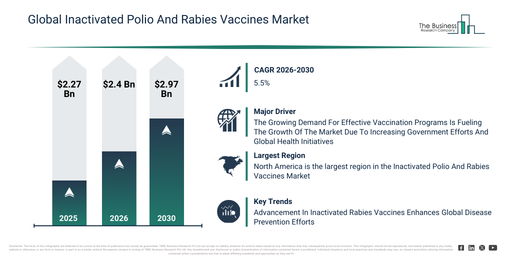
    The inactivated polio and rabies vaccines market has seen significant growth in recent years. It is projected to expand from $2.27 billion in 2025 to $2.4 billion in 2026, achieving a compound annual growth rate (CAGR) of 5.5%. This historical expansion can be attributed to global polio eradication initiatives, a rise in rabies incidence due to animal bites, the expansion of national immunization programs, increased public sector vaccine procurement, and WHO and UNICEF vaccination mandates.

    The inactivated polio and rabies vaccines market is poised for significant expansion in the upcoming years. It is forecast to achieve a valuation of $2.97 billion by 2030, growing at a compound annual growth rate (CAGR) of 5.5%. This projected growth is driven by an intensified focus on eliminating rabies deaths, increasing pediatric immunization rates in emerging economies, better access to healthcare in rural regions, a rise in demand for adult post-exposure prophylaxis, and stronger infrastructure for pandemic preparedness. Throughout the forecast period, notable trends include the broadening of combination inactivated polio vaccine (IPV) and rabies immunization programs, a shift towards intradermal rabies vaccination for improved dose efficiency, stronger cold chain and vaccine logistics, more government-led mass immunization efforts, and greater adoption of WHO-prequalified inactivated vaccines.

    Get A Free Sample Report With In-Depth Market Insights:

    https://thebusinessresearchcompany.com/sample_request?id=67642792&type=smp&name=Inactivated%20Polio%20And%20Rabies%20Vaccines%20Market%20Report%202026&utm_source=Blogs&utm_medium=Paid&utm_campaign=Oct_PR

    Inactivated Polio And Rabies Vaccines Market Industry Drivers: What’s Behind The Revenue Growth?

    The increasing need for effective vaccination initiatives is projected to drive the expansion of the inactivated polio and rabies vaccines market. These programs, which are organized efforts by entities or governments to provide vaccines for disease protection, are on the rise due to stronger governmental pushes to curb outbreaks, reduce healthcare expenditures, and improve public health. Vaccination campaigns bolster the demand for inactivated polio and rabies vaccines by increasing awareness, securing funding, and expanding coverage in vulnerable regions. Sustained vaccine uptake is achieved through large-scale campaigns and regular immunizations spearheaded by governments and health organizations. For example, in April 2024, the Pan American Health Organization (PAHO), a US-based specialized agency, initiated the 22nd Vaccination Week in the Americas (VWA) under the theme Engage now to protect your future GetVax. This event aimed to raise vaccination coverage, particularly in underserved regions, by delivering over 65 million doses, while also countering misinformation and improving vaccine access via community engagement and customized campaigns. Consequently, the escalating demand for robust vaccination programs is fueling the growth of the inactivated polio and rabies vaccines market.

    Inactivated Polio And Rabies Vaccines Market Segment Landscape And Growth Outlook

    The inactivated polio and rabies vaccines market covered in this report is segmented –

    1) By Product Type: Inactivated Polio Vaccine, Inactivated Rabies Vaccine

    2) By Method Of Inactivation: Solvent Detergent Method, Radiation Method, pH Concentration, Heat Inactivation, Other Method Of Inactivations

    3) By Distribution Channel: Government, Private

    4) By Application: Pediatrics, Adults

    Subsegments:

    1) By Inactivated Polio Vaccine: Injectable Inactivated Polio Vaccine, Oral Inactivated Polio Vaccine

    2) By Inactivated Rabies Vaccine: Injectable Inactivated Rabies Vaccine, Intradermal Inactivated Rabies Vaccine

    #Inactivated Polio And Rabies Vaccines Market Growth Trends: What’s Shaping The Future Outlook?

    Leading companies in the inactivated polio and rabies vaccines market are concentrating on developing advanced products, such as killed virus rabies vaccines, to enhance immunogenicity and address the growing global demand for effective disease prevention. These killed virus rabies vaccines are formulated using the rabies virus that has been rendered non-infectious through chemical or physical processes. Such vaccines stimulate the immune system to produce protective antibodies without causing the disease, thus ensuring both safety and effectiveness in pre- and post-exposure prophylaxis. For example, in April 2024, Sanofi, a UK-based pharmaceutical company, introduced Verorab, an inactivated rabies vaccine, in the UK for the pre-exposure and post-exposure prophylaxis of rabies across all age groups. This vaccine, licensed in the UK based on extensive clinical data from over 13,000 individuals, has been broadly utilized in more than 80 countries. Verorab presents an effective immunization choice for travelers heading to high-risk nations and for treatment following rabies exposure, with clinical trials indicating strong immune responses and prolonged protection.

    Inactivated Polio And Rabies Vaccines Market Competitive Landscape: Who Leads The Industry?

    Major companies operating in the inactivated polio and rabies vaccines market are Merck & Co Inc., Sanofi S.A., LG Chem Ltd., Boehringer Ingelheim International GmbH, Sinovac Biotech, Zoetis Inc., Cadila Pharmaceuticals, Zydus Lifesciences Limited, Biological E. Limited, Serum Institute of India (SII), Indian Immunologicals Limited (IIL), Instituto Butantan, Valneva SE, Bio Farma, Bharat Biotech, Bilthoven Biologicals, Panacea Biotec, Batavia Biosciences, Hilleman Laboratories, China National Pharmaceutical Group Co Ltd.

    View The Full Inactivated Polio And Rabies Vaccines Market Report:

    https://thebusinessresearchcompany.com/report/inactivated-polio-and-rabies-vaccines-global-market-report?utm_source=Blogs&utm_medium=Paid&utm_campaign=Oct_PR

    Inactivated Polio And Rabies Vaccines Market Top Region: Where Does Most Revenue Come From?

    North America was the largest region in the inactivated polio and rabies vaccines market in 2025. The regions covered in the inactivated polio and rabies vaccines market report are Asia-Pacific, South East Asia, Western Europe, Eastern Europe, North America, South America, Middle East, Africa.

    Reach Out To Our Team:

    The Business Research Company: https://www.thebusinessresearchcompany.com/

    Americas: +1 310-496-7795

    Asia: +44 7882 955267 & +91 8897263534

    Europe: +44 7882 955267

    Email us at: marketing@tbrc.info

    Follow us on:

    LinkedIn: https://in.linkedin.com/company/the-business-research-company

    YouTube: https://www.youtube.com/channel/UC24_fI0rV8cR5DxlCpgmyFQ

    Global Market Model: https://www.thebusinessresearchcompany.com/global-market-model
  • In Vivo Toxicology Market Projected For Strong Expansion Through 2030: Key Trends And Future Outlook

    In Vivo Toxicology Market Projected For Strong Expansion Through 2030: Key Trends And Future Outlook

    Featuring market attractiveness scoring, total addressable market sizing, company benchmarking matrices, interactive Excel dashboards, deeper supply chain intelligence, emerging startup tracking, and granular product-level insights, The Business Research Company’s 2026 market reports are built to deliver research that is both more actionable and more strategically valuable.

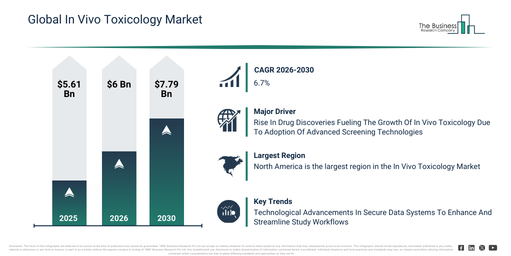
    In Vivo Toxicology Market Growth From $6 Billion In 2026 To $7.79 Billion By 2030 At A CAGR Of 6.7%

    Significant growth has been observed in the in vivo toxicology market over recent years. It will grow from $5.61 billion in 2025 to $6 billion in 2026 at a compound annual growth rate (CAGR) of 7.0%. Historically, this expansion can be linked to factors such as the scarcity of standardized animal models, dependence on manual laboratory processes, an increase in pharmaceutical research and development endeavors, the rising occurrence of chronic disease investigations, and the adoption of fundamental imaging and analytical instruments.

    The in vivo toxicology market is anticipated to show significant expansion in the coming years, with its size projected to reach $7.79 billion in 2030, demonstrating a compound annual growth rate (CAGR) of 6.7%. This growth in the forecast period is primarily attributed to the development of genetically modified organisms for focused research, the integration of automated and high-throughput screening technologies, an increase in contract research organization (CRO) outsourcing for toxicology evaluations, advancements in in vivo imaging and monitoring solutions, and a growing emphasis on alternative testing methods and the reduction of animal testing. Significant trends expected during this period include a rising adoption of rodent and non-human primate models, an increased demand for advanced toxicology assay kits and reagents, the expansion of services for immunotoxicity and genotoxicity testing, the growing implementation of automated liquid handling and imaging systems, and heightened regulatory compliance and ethical standards in animal testing.

    Get A Free Sample Report With In-Depth Market Insights:

    https://thebusinessresearchcompany.com/sample_request?id=15364670&type=smp&name=In%20Vivo%20Toxicology%20Market%20Report%202026&utm_source=Blogs&utm_medium=Paid&utm_campaign=Oct_PR

    In Vivo Toxicology Market Growth Factors: What’s Supporting Expansion?

    A rising volume of drug discoveries is anticipated to drive expansion in the in vivo toxicology market moving ahead. Drug discovery encompasses the scientific process of identifying and designing novel compounds with potential as treatments or preventative measures for a range of ailments. Advances in biotechnology have greatly accelerated this process by improving comprehension of disease mechanisms and facilitating the development of more specific treatments. In vivo toxicology plays a crucial role in drug discovery, allowing for the assessment of the safety profile, tolerability, and any potential negative effects of compounds under investigation within intact organisms. It assists in pinpointing toxicities that limit dosage and guides decisions on formulation and dosing approaches before clinical trials begin. As an example, in November 2024, the Patented Medicine Prices Review Board (PMPRB), a Canada-based government agency, reported that more than 12,000 new medicines were undergoing clinical trials in 2023, which was an increase from approximately 9,000 in 2022. Oncology made up 33% of this pipeline, while infectious diseases accounted for 13% and central nervous system diseases for 12%. Consequently, the expanding volume of drug discoveries is stimulating the expansion of the in vivo toxicology market.

    In Vivo Toxicology Market Breakdown By Product Type And Application

    The in vivo toxicology market covered in this report is segmented –

    1) By Product: Consumables, Instruments

    2) By Testing Types: Chronic Toxicity Testing, Sub-Chronic Toxicity Testing, Sub-Acute Toxicity Testing, Acute Toxicity Testing

    3) By Methodology: In Vivo Animal Models, Genetically Modified Organisms, Non-Human Primate Studies, Rodent Models, Larger Mammals

    4) By Application: Immunotoxicity, Systemic Toxicity, Carcinogenicity, Genotoxicity, Developmental And Reproductive Toxicity (DART), Other Applications

    5) By End-User: Pharmaceutical Companies, Biosimilars Manufacturers, Contract Research Organizations (CROs), Academic And Research Institutions, Biotechnology Firms

    Subsegments:

    1) By Consumables: Animal Models, Reagents And Kits, Assay Kits, Toxicology Testing Media, Antibodies, Biochemicals, Buffers And Solutions, Disposable Labware, Animal Feed, Diluents

    2) By Instruments: Imaging Systems, Flow Cytometers, PCR Machines, Spectrophotometers, Microscopes, Analyzers, Centrifuges, Incubators, Animal Monitoring Systems, Automated Liquid Handling Systems

    In Vivo Toxicology Market Industry Trends: What’s Reshaping Demand?

    Leading companies within the in vivo toxicology market are concentrating on developing sophisticated solutions, particularly secure cloud-based real-time data platforms, to enhance study management and accelerate decision-making. These secure platforms allow researchers and clients to access toxicology study data, milestones, planning tools, and essential documents remotely and securely, thereby improving collaboration and transparency. For instance, in March 2023, Charles River Laboratories International Inc., a US-based contract research organization, introduced Apollo, a secure cloud-based platform designed to offer real-time access to toxicology study data. This secure, cloud-based platform is specifically built to support in vivo general toxicology studies, providing instruments for data visualization, planning, and milestone tracking. It facilitates quicker and more informed decisions through immediate access to vital study information. Furthermore, the platform assists in streamlining project planning and budget estimation throughout the entire drug development process. By digitizing toxicology workflows, Apollo significantly boosts precision, efficiency, and collaboration in in vivo research.

    In Vivo Toxicology Market Company Landscape And Competitive Strategy

    Major companies operating in the in vivo toxicology market are Thermo Fisher Scientific Inc., Laboratory Corporation of America Holdings (Labcorp), Sigma-Aldrich Co. LLC, Eurofins Scientific SE, Agilent Technologies Inc., WuXi AppTec Co. Ltd., Charles River Laboratories International Inc., PerkinElmer Inc., Jubilant Life Sciences Limited, Evotec SE, The Jackson Laboratory, Inotiv Inc., Transcure Bioservices Pvt. Ltd.

    View The Full In Vivo Toxicology Market Report:

    https://thebusinessresearchcompany.com/report/in-vivo-toxicology-global-market-report?utm_source=Blogs&utm_medium=Paid&utm_campaign=Oct_PR

    In Vivo Toxicology Market Regional Breakdown: Where Is Demand Concentrated?

    North America was the largest region in the in-vivo toxicology market in 2025. Asia-Pacific is expected to be the fastest-growing region in the forecast period. The regions covered in the in vivo toxicology market report are Asia-Pacific, South East Asia, Western Europe, Eastern Europe, North America, South America, Middle East, Africa.

    Reach Out To Our Team:

    The Business Research Company: https://www.thebusinessresearchcompany.com/

    Americas: +1 310-496-7795

    Asia: +44 7882 955267 & +91 8897263534

    Europe: +44 7882 955267

    Email us at: marketing@tbrc.info

    Follow us on:

    LinkedIn: https://in.linkedin.com/company/the-business-research-company

    YouTube: https://www.youtube.com/channel/UC24_fI0rV8cR5DxlCpgmyFQ

    Global Market Model: https://www.thebusinessresearchcompany.com/global-market-model
  • In Vitro Diagnostics Enzymes Market Outlook 2026–2030: Growth Trends, Market Dynamics And Emerging Opportunities

    In Vitro Diagnostics Enzymes Market Outlook 2026–2030: Growth Trends, Market Dynamics And Emerging Opportunities

    Built to provide research that’s more actionable and strategically valuable, The Business Research Company’s 2026 market reports include market attractiveness analysis, total addressable market sizing, company benchmarking matrices, interactive Excel dashboards, broader supply chain intelligence, emerging startup tracking, and in-depth product insights.

    In Vitro Diagnostics Enzymes Market Expansion Outlook: What Revenue Opportunities Are Ahead?

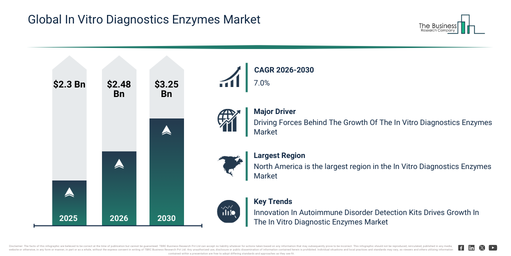
    The in vitro diagnostics enzymes market has demonstrated significant expansion in recent years. It is anticipated to grow from $2.3 billion in 2025 to $2.48 billion in 2026, registering a compound annual growth rate (CAGR) of 7.8%. The historic period’s growth can be linked to the sustained utilization of enzymes in clinical chemistry assays, the increase in laboratory-based diagnostic testing, the widespread incorporation of PCR and molecular diagnostics, the expansion of hospital and diagnostic laboratory infrastructure, and enhanced screening for infectious and chronic diseases.

    The in vitro diagnostics enzymes market is anticipated to show substantial growth over the next few years. It is projected to expand to $3.25 billion by 2030, exhibiting a compound annual growth rate (CAGR) of 7.0%. This growth during the forecast period is attributable to factors such as the increasing incidence of infectious and chronic diseases, a heightened demand for quick and accurate diagnostic methods, the broadening of decentralized and point-of-care testing, developments in personalized and precision diagnostics, and increased investment in advanced molecular diagnostic technologies. Noteworthy trends for the forecast period include a surging demand for high-specificity enzymes in molecular diagnostics, the expanding utilization of enzymes in infectious disease testing panels, a rise in the adoption of enzyme-based point-of-care diagnostics, the development of multiplex diagnostic assays leveraging enzyme systems, and a stronger focus on enhancing enzyme stability and optimizing shelf-life.

    Get A Free Sample Report With In-Depth Market Insights:

    https://thebusinessresearchcompany.com/sample_request?id=24716476&type=smp&name=In%20Vitro%20Diagnostics%20Enzymes%20Market%20Report%202026&utm_source=Blogs&utm_medium=Paid&utm_campaign=Oct_PR

    In Vitro Diagnostics Enzymes Market Demand Drivers: What’s Powering Industry Growth?

    The increasing incidence of cancer is anticipated to drive the expansion of the in vitro diagnostics enzymes market in the future. Cancer is defined as a collection of illnesses marked by the unregulated proliferation and dissemination of atypical cells, which can infiltrate and harm healthy tissues. The spread of cancer is growing due to factors such as infectious agents, impaired immune system function, and hormonal impacts. The in vitro diagnostics enzymes market plays a crucial role in cancer care by facilitating precise diagnostic tests for prompt identification, disease tracking, therapy choice, and tailored treatment strategies. For example, data from February 2024, provided by the World Health Organization (WHO), an intergovernmental body located in Switzerland, indicates that worldwide cancer instances are forecast to surpass 0.035 billion by 2050, which signifies a 77% rise from the approximately 0.02 billion cases recorded in 2022. Consequently, the growing incidence of cancer is fueling the expansion of the in vitro diagnostics enzymes market.

    In Vitro Diagnostics Enzymes Market Segment Analysis And Revenue Potential

    The in vitro diagnostics enzymes market covered in this report is segmented –

    1) By Enzyme Type: Proteases, Polymerase And Transcriptase, Ribonuclease, Other Enzyme Types

    2) By Disease Type: Infectious Disease, Diabetes, Oncology, Cardiology, Nephrology, Autoimmune Diseases, Other Disease Types

    3) By Technology: Histology Assays, Molecular Diagnostics, Clinical Chemistry, Other Technologies

    4) By End Use: Pharma And Biotech, Hospital And Diagnostic Labs, Contract Research Organizations (CROs), Academic Labs

    Subsegments:

    1) By Proteases: Trypsin, Pepsin, Proteinase K

    2) By Polymerase And Transcriptase: DNA Polymerase, RNA Polymerase, Reverse Transcriptase

    3) By Ribonuclease: RNase A, RNase H

    4) By Other Enzyme Types: Dehydrogenases, Lipases, Ligases

    In Vitro Diagnostics Enzymes Market Innovation Trends: What Developments Are Reshaping The Industry?

    Key players within the in vitro diagnostic enzymes market are prioritizing the creation of novel products, such as autoimmune disorder detection kits, to enhance diagnostic capabilities, improve early disease recognition, and fortify their competitive standing. Autoimmune disorder detection kits are specialized diagnostic tools that leverage immunoassays, molecular approaches, and antibody detection methods to identify autoantibodies and biomarkers linked to autoimmune conditions, thereby enabling accurate and timely diagnosis. For instance, in September 2023, NeoDx Biotech Labs Pvt Ltd., an India-based producer of in-vitro diagnostic kits, introduced an autoimmune disorder detection IVD kit integrating advanced immunoassays, molecular diagnostics, and precise antibody detection techniques, delivering high sensitivity and specificity to aid clinicians in achieving faster and more dependable autoimmune disease diagnoses.

    In Vitro Diagnostics Enzymes Market Key Players Shaping Industry Direction

    Major companies operating in the in vitro diagnostics enzymes market are F. Hoffmann-La Roche Ltd., Thermo Fisher Scientific Inc., Danaher Corporation, Merck KGaA, Siemens Healthineers AG, Becton Dickinson and Company, Agilent Technologies Inc., Grifols SA, Hologic Inc., PerkinElmer Inc., bioMérieux SA, QuidelOrtho Corporation, Sysmex Corporation, Bio-Rad Laboratories Inc., Qiagen N.V., DiaSorin SpA, Promega Corporation, Randox Laboratories Ltd., Meridian Bioscience Inc., Fujirebio Diagnostics Inc., Sekisui Diagnostics LLC, Trivitron Healthcare, Amicogen Inc., EKF Diagnostics Holdings plc, Advanced Enzymes Technologies Ltd., Biocatalysts Ltd.

    View The Full In Vitro Diagnostics Enzymes Market Report:

    https://thebusinessresearchcompany.com/report/in-vitro-diagnostics-enzymes-global-market-report?utm_source=Blogs&utm_medium=Paid&utm_campaign=Oct_PR

    In Vitro Diagnostics Enzymes Market Geographic Landscape: Which Region Dominates Industry Growth?

    North America was the largest region in the in vitro diagnostics enzymes market in 2025. Asia-Pacific is expected to be the fastest-growing region in the forecast period. The regions covered in the in vitro diagnostics enzymes market report are Asia-Pacific, South East Asia, Western Europe, Eastern Europe, North America, South America, Middle East, Africa.

    Reach Out To Our Team:

    The Business Research Company: https://www.thebusinessresearchcompany.com/

    Americas: +1 310-496-7795

    Asia: +44 7882 955267 & +91 8897263534

    Europe: +44 7882 955267

    Email us at: marketing@tbrc.info

    Follow us on:

    LinkedIn: https://in.linkedin.com/company/the-business-research-company

    YouTube: https://www.youtube.com/channel/UC24_fI0rV8cR5DxlCpgmyFQ

    Global Market Model: https://www.thebusinessresearchcompany.com/global-market-model
  • In Silico Protein Design Market Growth Outlook From $2.27 Billion In 2026 To $4.86 Billion By 2030

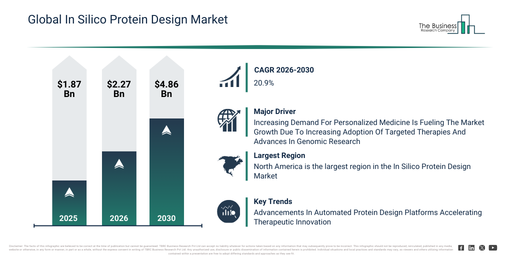
    In Silico Protein Design Market Growth Outlook From $2.27 Billion In 2026 To $4.86 Billion By 2030

    Backed by market attractiveness analysis, total addressable market sizing, company benchmarking matrices, interactive Excel dashboards, wider supply chain intelligence, emerging startup coverage, and detailed product-level insights, The Business Research Company’s 2026 market reports are designed to offer research that is more actionable and strategically valuable than ever.

    In Silico Protein Design Market Growth Potential: How Will Market Size Shift Through 2030?

    The in silico protein design market has witnessed substantial expansion in recent years. Its valuation is expected to rise from $1.87 billion in 2025 to $2.27 billion in 2026, achieving a compound annual growth rate (CAGR) of 21.2%. The historical development of this market is largely due to advancements in computational biology tools, the increasing accessibility of protein structure databases, the expanded application of in silico methodologies in drug discovery, the growth of academic bioinformatics research, and the escalating demand for cost-effective protein design approaches.

    The in silico protein design market size is expected to experience substantial growth in the upcoming years, expanding to $4.86 billion in 2030 at a compound annual growth rate (CAGR) of 20.9%. This expansion during the forecast period is driven by factors such as increasing investments in AI-based drug discovery, the rising adoption of personalized medicine development, the broadening of cloud computing infrastructure, the growing application of automation in biological research, and increased collaboration between biotechnology and software companies. Prominent trends for the forecast period include the increasing uptake of AI-driven protein modeling platforms, a rise in the use of cloud-based simulation software, the growing integration of machine learning in structure prediction, the expansion of computational enzyme engineering, and an enhanced focus on rapid protein optimization.

    Get A Free Sample Report With In-Depth Market Insights:

    https://thebusinessresearchcompany.com/sample_request?id=73912786&type=smp&name=In%20Silico%20Protein%20Design%20Market%20Report%202026&utm_source=Blogs&utm_medium=Paid&utm_campaign=Oct_PR

    In Silico Protein Design Market Growth Drivers: What’s Behind The Acceleration?

    The escalating need for personalized medicine is projected to stimulate the expansion of the in silico protein design market moving ahead. Personalized medicine is defined as the practice of adapting medical treatments and prevention strategies to an individual’s distinct genetic makeup, lifestyle, and environment. This rising demand for personalized medicine is a result of breakthroughs in genomic technologies, alongside the increasing adoption of value-based care models which prioritize enhancing patient outcomes while simultaneously reducing overall healthcare costs. Silico protein design supports this demand by facilitating the quick creation of customized therapeutic proteins specifically designed for individual patient profiles. For example, in February 2024, data from the Personalized Medicine Coalition (PMC), a US-based non-profit organization, revealed that the FDA authorized 16 new personalized treatments for rare disease patients in 2023, which contrasts with just six approvals in 2022. Thus, the growing demand for personalized medicine is a key driver for the growth of the in silico protein design market.

    In Silico Protein Design Market Segmentation And Category Overview

    The in silico protein design market covered in this report is segmented –

    1) By Software Type: Cloud-Based Software, On-Premise Software

    2) By Technology Type: Molecular Modelling, Artificial Intelligence And Machine Learning Algorithms, Homology Modelling, Other Technology Types

    3) By Application: Drug Discovery And Development, Enzyme Engineering, Biomarker Discovery, Vaccinology, Academic Research

    4) By End-User: Pharmaceutical And Biotechnology Companies, Academic And Research Institutes, Other End-Users

    Subsegments:

    1) By Cloud-Based Software: Subscription-Based, Pay-Per-Use, Hybrid Cloud

    2) By On-Premise Software: Enterprise License, Perpetual License, Customized Solutions

    In Silico Protein Design Market Trends: What’s Defining The Industry’s Next Phase?

    Major companies operating in the in silico protein design market are concentrating on developing advanced solutions, such as push-button protein design platforms, to accelerate drug discovery, enhance therapeutic effectiveness, and enable the creation of novel biologics. These push-button protein design platforms are tools that empower scientists to rapidly create and modify proteins using automated, user-friendly processes that require minimal manual input. For instance, in July 2025, Latent Labs, a UK-based biotechnology company, introduced Latent-X, a generative AI model accessible through a web-based push-button platform, enabling users without coding expertise to upload targets and design macrocycles and mini-binders at the atomic level. The system achieves 91–100% hit rates for macrocycles and 10–64% for mini-binders, attains picomolar to micromolar binding affinities with lab-verified specificity, and generates complete sequences and structures more than ten times faster than previous methods. This technological progress is expanding accessibility and accelerating innovation in protein therapeutics.

    In Silico Protein Design Market Competitive Analysis Of Leading Industry Participants

    Major companies operating in the in silico protein design market are Dassault Systèmes SE, Schrödinger Inc., Generate Biomedicines Inc., Insilico Medicine Inc., Chemical Computing Group ULC, Arzeda Corp., Outpace Bio Inc., Evozyne Inc., Cradle Bio B.V., Seismic Therapeutics Inc., Profluent Bio Inc., Nabla Bio Inc., Antiverse Ltd., EvolutionaryScale Inc., RevolKa Ltd., Molecular Discovery Ltd., Inte:Ligand GmbH, Kuano Ltd., AI Proteins Inc., Menten AI Inc.

    View The Full In Silico Protein Design Market Report:

    https://thebusinessresearchcompany.com/report/in-silico-protein-design-global-market-report?utm_source=Blogs&utm_medium=Paid&utm_campaign=Oct_PR

    In Silico Protein Design Market Largest Region: Which Geography Holds The Highest Market Share?

    North America was the largest region in the in silico protein design market in 2025. Asia-Pacific is expected to be the fastest-growing region in the forecast period. The regions covered in the in silico protein design market report are Asia-Pacific, South East Asia, Western Europe, Eastern Europe, North America, South America, Middle East, Africa.

    Reach Out To Our Team:

    The Business Research Company: https://www.thebusinessresearchcompany.com/

    Americas: +1 310-496-7795

    Asia: +44 7882 955267 & +91 8897263534

    Europe: +44 7882 955267

    Email us at: marketing@tbrc.info

    Follow us on:

    LinkedIn: https://in.linkedin.com/company/the-business-research-company

    YouTube: https://www.youtube.com/channel/UC24_fI0rV8cR5DxlCpgmyFQ

    Global Market Model: https://www.thebusinessresearchcompany.com/global-market-model
  • Immunotoxin Market Forecast To Reach $96.77 Billion By 2030: Key Growth Drivers And Industry Trends

    Immunotoxin Market Forecast To Reach $96.77 Billion By 2030: Key Growth Drivers And Industry Trends

    Featuring market attractiveness scoring, total addressable market sizing, company benchmarking matrices, interactive Excel dashboards, deeper supply chain intelligence, emerging startup tracking, and granular product-level insights, The Business Research Company’s 2026 market reports are built to deliver research that is both more actionable and more strategically valuable.

    Immunotoxin Market Value Analysis: What Growth Lies Ahead Over The Forecast Period?

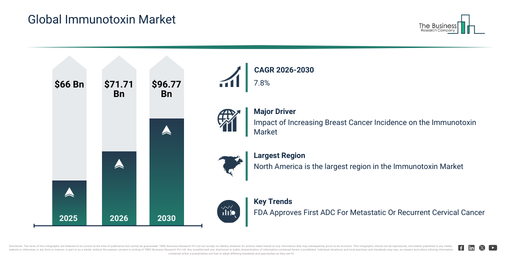
    The immunotoxin market has experienced substantial expansion in recent times. This market is projected to expand from $66 billion in 2025 to $71.71 billion in 2026, exhibiting a compound annual growth rate (CAGR) of 8.7%. Historically, this growth can be ascribed to several factors, including the initial triumphs of antibody-toxin conjugates in cancer research, innovations in monoclonal antibody engineering, the persistent demand for targeted cancer treatments, the proliferation of oncology-focused research facilities, and a deepened comprehension of tumor-specific antigens.

    The immunotoxin market size is anticipated to undergo significant expansion in the upcoming years. It will grow to $96.77 billion in 2030 at a compound annual growth rate (CAGR) of 7.8%. This projected growth is driven by the increasing need for precision oncology treatments, the broadening scope of immunotherapy pipelines, escalating investment in biologics-based cancer medications, the rising occurrence of treatment-resistant cancers, and continuous innovation in protein engineering technologies. Key trends for the forecast period include the increasing creation of target-specific immunotoxins for cancer therapy, a heightened emphasis on reducing unintended toxicity and immune responses, the expanding utilization of immunotoxins in hematological malignancies, broader clinical investigation into next-generation immunotoxin structures, and sustained exploration of combined immunotoxin treatment approaches.

    Get A Free Sample Report With In-Depth Market Insights:

    https://thebusinessresearchcompany.com/sample_request?id=34880911&type=smp&name=Immunotoxin%20Market%20Report%202026&utm_source=Blogs&utm_medium=Paid&utm_campaign=Oct_PR

    Immunotoxin Market Growth Factors Behind Sustained Expansion

    The future expansion of the immunotoxin market is anticipated to be significantly influenced by the rising occurrence of breast cancer. Breast cancer is characterized as a malignant growth forming within breast cells, primarily in the ducts or lobules. This increase in breast cancer cases can be attributed to enhancements in screening initiatives, various lifestyle factors, and longer life expectancies. The immunotoxin market contributes to breast cancer treatment through the provision of specific therapies designed to eliminate cancerous cells while limiting harm to healthy tissues, thus offering fewer adverse effects compared to conventional chemotherapy. For instance, as per the National Breast Cancer Foundation, a US-based organization, it is projected that by January 2025, one in every eight women in the United States will receive a breast cancer diagnosis during her lifespan. Furthermore, in 2024, an estimated 310,720 women and 2,800 men are expected to be diagnosed with invasive breast cancer. Consequently, the growing frequency of breast cancer is acting as a primary catalyst for the development of the immunotoxin market.

    Immunotoxin Market Segment Outlook: Which Categories Are Growing Fastest?

    The immunotoxin market covered in this report is segmented –

    1) By Type: Anthrax Based Toxins, Diphtheria Toxin (DT) And Derivatives, Pseudomonas Exotoxin (PE) And Derivatives, Ribosome Inactivating Proteins Based Immunotoxins, Ribonucleases-Based Immunotoxins, Other Types

    2) By Application: Solid Tumors, Leukemias, Other Applications

    3) By End User: Hospitals And Clinics, Cancer And Radiation Therapy Centers, Research Labs, Other End-Users

    Subsegments:

    1) By Anthrax-Based Toxins: Anthrax Lethal Toxin, Anthrax Protective Antigen

    2) By Diphtheria Toxin (DT) And Derivatives: Diphtheria Toxin, DT Fragment-Based Immunotoxins

    3) By Pseudomonas Exotoxin (PE) And Derivatives: PE38-Based Immunotoxins, PE-Based Fusion Proteins

    4) By Ribosome Inactivating Proteins-Based Immunotoxins: Ricin-Based Immunotoxins, Gelonin-Based Immunotoxins

    5) By Ribonucleases-Based Immunotoxins: Onconase-Based Immunotoxins, Binase-Based Immunotoxins

    6) By Other Types: Shiga Toxin-Based Immunotoxins, Other Toxin-Based Immunotoxins

    Immunotoxin Market Industry Trends Fueling Future Revenue Growth

    Leading firms within the immunotoxin market are dedicated to creating sophisticated antibody-drug conjugates (ADCs) to boost the precision and efficacy of cancer therapy, simultaneously minimizing adverse effects on healthy cells. ADCs are identified as targeted biopharmaceutical treatments that combine a monoclonal antibody with a cytotoxic agent, facilitating accurate delivery of the toxic component to cancer cells displaying a particular antigen, which results in superior therapeutic outcomes compared to standard chemotherapy. For example, during April 2024, Pfizer Inc., a US-based pharmaceutical company, along with Genmab A/S, a Denmark-based biotechnology company, secured complete U.S. FDA approval for TIVDAK. This specific antibody-drug conjugate is formulated for individuals suffering from metastatic or recurrent cervical cancer. It incorporates a monomethyl auristatin E payload, which works by disrupting microtubules to trigger cancer-cell death and has shown statistically significant enhancements in overall survival, thereby positioning it as a promising targeted therapeutic alternative for advanced cervical cancer.

    Immunotoxin Market Leading Companies And Competitive Benchmarking

    Major companies operating in the immunotoxin market are ImmunoGen Inc., Molecular Templates Inc., Mersana Therapeutics, Seagen Inc., MacroGenics Inc., Sutro Biopharma Inc., Celldex Therapeutics, CytImmune Sciences Inc., Pfizer Inc., Roche Holding AG, AbbVie Inc., Bristol Myers Squibb, AstraZeneca plc, Merck KGaA, BioNTech SE, Ipsen Pharma, Innate Pharma Inc., GenScript, Thermo Fisher Scientific Inc., Enzo Life Sciences Inc.

    View The Full Immunotoxin Market Report:

    https://thebusinessresearchcompany.com/report/immunotoxin-global-market-report?utm_source=Blogs&utm_medium=Paid&utm_campaign=Oct_PR

    Immunotoxin Market Regional Analysis: Which Region Leads By Revenue?

    North America was the largest region in the immunotoxin market in 2025. Asia-Pacific is expected to be the fastest-growing region in the forecast period. The regions covered in the immunotoxin market report are Asia-Pacific, South East Asia, Western Europe, Eastern Europe, North America, South America, Middle East, Africa.

    Reach Out To Our Team:

    The Business Research Company: https://www.thebusinessresearchcompany.com/

    Americas: +1 310-496-7795

    Asia: +44 7882 955267 & +91 8897263534

    Europe: +44 7882 955267

    Email us at: marketing@tbrc.info

    Follow us on:

    LinkedIn: https://in.linkedin.com/company/the-business-research-company

    YouTube: https://www.youtube.com/channel/UC24_fI0rV8cR5DxlCpgmyFQ

    Global Market Model: https://www.thebusinessresearchcompany.com/global-market-model
  • Immunosuppressants Market Research 2026: Market Size, Trends, Segments And Growth Forecast

    Immunosuppressants Market Research 2026: Market Size, Trends, Segments And Growth Forecast

    Built to provide research that’s more actionable and strategically valuable, The Business Research Company’s 2026 market reports include market attractiveness analysis, total addressable market sizing, company benchmarking matrices, interactive Excel dashboards, broader supply chain intelligence, emerging startup tracking, and in-depth product insights.

    Immunosuppressants Market Size Forecast: How Big Could The Market Get By 2030?

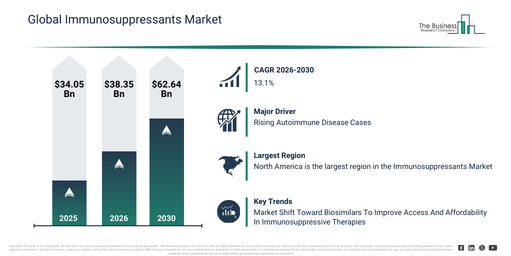
    The immunosuppressants market has experienced substantial expansion in recent years. It is projected to expand from $34.05 billion in 2025 to $38.35 billion in 2026, exhibiting a compound annual growth rate (CAGR) of 12.6%. Historically, this expansion was primarily driven by an increase in organ transplant procedures, a growing prevalence of autoimmune disorders, the established use of corticosteroids, the implementation of hospital-based immunosuppressive protocols, and the broadening reach of specialty pharmacies.

    The immunosuppressants market size is projected to experience swift expansion over the coming years, reaching $62.64 billion in 2030, driven by a compound annual growth rate (CAGR) of 13.1%. This anticipated growth during the forecast period is primarily fueled by factors such as enhanced transplant survival rates, the proliferation of monoclonal antibody therapies, greater integration of monitoring technologies, the development of improved drug classes, and widened accessibility in developing markets. Concurrently, major trends expected in this period encompass an increasing application of immunosuppressants in organ transplantation, a movement towards precise and biological immunosuppressants, a heightened emphasis on long-term patient safety and monitoring, the broader application of immunosuppressants in autoimmune conditions, and the increased adoption of tailored immunosuppression protocols.

    Get A Free Sample Report With In-Depth Market Insights:

    https://thebusinessresearchcompany.com/sample_request?id=78191854&type=smp&name=Immunosuppressants%20Market%20Report%202026&utm_source=Blogs&utm_medium=Paid&utm_campaign=Oct_PR

    Immunosuppressants Market Demand Drivers Opening New Revenue Streams

    The rising prevalence of autoimmune conditions is anticipated to fuel the expansion of the immunosuppressants market. These disorders encompass a wide range of conditions marked by a dysfunctional immune response, where the body’s immune system erroneously targets and harms its own healthy cells, tissues, and organs. Immunosuppressant drugs prove beneficial for autoimmune conditions such as rheumatoid arthritis, as they diminish the excessive immune activity, thereby easing symptoms and retarding the disease’s advancement. Rheumatoid arthritis is particularly prevalent among the elderly. As an illustration, data from Arthritis Australia, an Australia-based non-profit organization, reported in February 2024, forecasts that around 212,136 males and 362,137 females will be affected by rheumatoid arthritis (RA) in 2025. These figures are predicted to increase by 2040, reaching approximately 280,040 males and 479,828 females. Consequently, the growing number of autoimmune disease cases is set to propel the immunosuppressants market.

    Immunosuppressants Market Segment Landscape: Which Areas Lead Development?

    The immunosuppressants market covered in this report is segmented –

    1) By Drug Class: Corticosteroids, Monoclonal Antibodies (mAbs), Calcineurin Inhibitors, mTOR Inhibitors, Anti-Proliferative Agents, Other Drug Classes

    2) By Indication: Organ Transplantation, Autoimmune Disorders, Non-Autoimmune Inflammatory Diseases

    3) By Distribution Channel: Hospital Pharmacies, Retail Pharmacies, Online Pharmacies

    Subsegments:

    1) By Corticosteroids: Prednisone, Methylprednisolone, Dexamethasone

    2) By Monoclonal Antibodies (mAbs): Anti-TNF Agents, Anti-CD20 Agents, Anti-IL-6 Agents

    3) By Calcineurin Inhibitors: Cyclosporine, Tacrolimus

    4) By mTOR Inhibitors: Sirolimus, Everolimus

    5) By Anti-Proliferative Agents: Azathioprine, Mycophenolate Mofetil

    6) By Other Drug Classes: Co-Stimulation Blockers, JAK Inhibitors

    Immunosuppressants Market Trends Powering Strategic Industry Growth

    Leading companies in the immunosuppressants market are prioritizing the creation of advanced biologic and biosimilar therapies, aiming to improve treatment accessibility, reduce patient costs, and enhance long-term disease management for autoimmune disorders. These innovative solutions are designed to provide comparable efficacy and safety to originator biologics, while simultaneously broadening therapeutic choices for conditions such as rheumatoid arthritis, psoriatic arthritis, and inflammatory bowel disease. For example, in January 2023, Amgen Inc., a US-based biopharmaceutical company, launched AMJEVITA, which is the first biosimilar to HUMIRA in the United States. This introduction represents a significant achievement in the immunosuppressants market, fostering greater competition, boosting affordability, and enabling wider patient access to biologic treatments. It is expected to accelerate the adoption of biosimilars across autoimmune disease therapies and stimulate further advancements in cost-effective immunosuppressant solutions.

    Immunosuppressants Market Industry Leaders And Competitive Landscape

    Major companies operating in the immunosuppressants market are Pfizer Inc., Johnson & Johnson Services Inc., F Hoffmann La Roche Ltd., AbbVie Inc., Novartis AG, Sanofi SA, Bristol-Myers Squibb Co., Mylan Laboratories Inc., Teva Pharmaceuticals USA Inc., Astellas Pharma Inc., Sandoz Inc., Aurobindo Pharma Limited, Hikma Pharmaceuticals plc, Intas Pharmaceuticals Ltd., Zydus Lifesciences Limited, Glenmark Pharmaceuticals Ltd., Fresenius Kabi USA, Lupin Pharmaceuticals Inc., Strides Pharma Inc., Accord Healthcare Ltd., RPG Life Sciences Limited, Genzyme Transgenics Corp., Apotex Inc.

    View The Full Immunosuppressants Market Report:

    https://thebusinessresearchcompany.com/report/Immunosuppressant-global-market-report?utm_source=Blogs&utm_medium=Paid&utm_campaign=Oct_PR

    Immunosuppressants Market Geographic Distribution And Regional Opportunities

    North America was the largest region in the immunosuppressants market in 2025. The regions covered in the immunosuppressants market report are Asia-Pacific, South East Asia, Western Europe, Eastern Europe, North America, South America, Middle East, Africa.

    Reach Out To Our Team:

    The Business Research Company: https://www.thebusinessresearchcompany.com/

    Americas: +1 310-496-7795

    Asia: +44 7882 955267 & +91 8897263534

    Europe: +44 7882 955267

    Email us at: marketing@tbrc.info

    Follow us on:

    LinkedIn: https://in.linkedin.com/company/the-business-research-company

    YouTube: https://www.youtube.com/channel/UC24_fI0rV8cR5DxlCpgmyFQ

    Global Market Model: https://www.thebusinessresearchcompany.com/global-market-model
  • Immuno-Oncology Drugs Market Forecast 2026: Market Size, Competitive Landscape And Growth Drivers

    Immuno-Oncology Drugs Market Forecast 2026: Market Size, Competitive Landscape And Growth Drivers

    Backed by market attractiveness analysis, total addressable market sizing, company benchmarking matrices, interactive Excel dashboards, wider supply chain intelligence, emerging startup coverage, and detailed product-level insights, The Business Research Company’s 2026 market reports are designed to offer research that is more actionable and strategically valuable than ever.

    Immuno-Oncology Drugs Market Revenue Outlook: What CAGR Lies Ahead Through 2030?

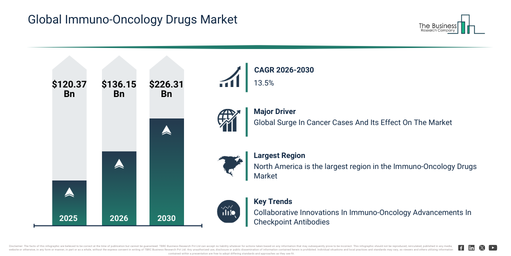
    The immuno-oncology drugs market size has experienced rapid growth in recent years. It is anticipated to increase from $120.37 billion in 2025 to $136.15 billion in 2026, reflecting a compound annual growth rate (CAGR) of 13.1%. This historical expansion can be ascribed to several factors, including the initial limited availability of immuno-oncology drugs, a reliance on conventional chemotherapy, the rising prevalence of cancers such as melanoma and lung cancer, expanding oncology-focused research initiatives, and early regulatory approvals granted for monoclonal antibodies.

    The immuno-oncology drugs market size is anticipated to experience substantial growth in the coming years. It will grow to $226.31 billion in 2030 at a compound annual growth rate (CAGR) of 13.5%. This growth throughout the forecast period can be attributed to advancements such as the development of bispecific antibodies and oncolytic virus therapies, the expansion of personalized immunotherapy solutions, increasing investment in adoptive cell transfer therapies, rising healthcare expenditure on cancer treatment, and the integration of digital platforms for patient monitoring and clinical trials. Furthermore, major trends in the forecast period encompass the rising adoption of immune checkpoint inhibitors across multiple cancer types, increased development of cancer vaccines and adoptive cell therapies, a growing focus on personalized immuno-oncology treatments, the expansion of hospital and ambulatory surgical center-based immunotherapy programs, and rising clinical trials and research activities involving monoclonal antibodies.

    Get A Free Sample Report With In-Depth Market Insights:

    https://thebusinessresearchcompany.com/sample_request?id=36536819&type=smp&name=Immuno-Oncology%20Drugs%20Market%20Report%202026&utm_source=Blogs&utm_medium=Paid&utm_campaign=Oct_PR

    Immuno-Oncology Drugs Market Growth Backed By Core Demand Fundamentals

    The rising occurrence of cancer cases is anticipated to spur expansion within the immuno-oncology drugs market in the coming years. Cancer is characterized by the uncontrolled proliferation of anomalous cells, which can potentially disseminate throughout the body and disrupt normal physiological functions. The rise in cancer diagnoses stems from elements like an aging global demographic, evolving lifestyle habits, and advancements in detection techniques. Immuno-oncology drugs address this challenge by activating the body’s own immune defenses to identify and eradicate cancerous cells, thereby offering more potent and targeted therapeutic avenues. For example, in 2023, Cancer Australia, an Australia-based government agency, reported approximately 164,694 new cancer cases diagnosed and 51,269 deaths. The most prevalent forms were prostate, breast, melanoma, colorectal, and lung cancers, whereas rare cancers represented about one-third of diagnoses and 42% of fatalities. Consequently, the growing frequency of cancer cases is a significant catalyst for the immuno-oncology drugs market.

    Immuno-Oncology Drugs Market Segments: Where Is Growth Concentrated?

    The immuno-oncology drugs market covered in this report is segmented –

    1) By Type: Immune Checkpoint Inhibitors, Immune System Modulators, Other Monoclonal Antibodies, Cancer Vaccines, Other Types

    2) By Therapeutic Application: Melanoma, Lung Cancer, Blood Cancer, Renal Cell Carcinoma, Bladder Cancer, Other Therapeutic Application

    3) By End-Users: Hospitals, Clinics, Ambulatory Surgical Centers, Other End-Users

    Subsegments:

    1) By Immune Checkpoint Inhibitors: PD-1 Inhibitors, PD-L1 Inhibitors, CTLA-4 Inhibitors

    2) By Immune System Modulators: Cytokines, Interferons, Colony-Stimulating Factors

    3) By Other Monoclonal Antibodies: Targeted Monoclonal Antibodies, Bispecific Antibodies

    4) By Cancer Vaccines: Preventive Cancer Vaccines, Therapeutic Cancer Vaccines

    5) By Other Types: Adoptive Cell Transfer Therapies, Oncolytic Virus Therapies

    Immuno-Oncology Drugs Market Growth Trends Reshaping The Competitive Landscape

    Leading companies within the immuno-oncology drugs market are entering collaborations to create and bring to market a novel checkpoint antibody, aiming to boost the effectiveness of cancer treatments. These strategic alliances promote innovation through the exchange of knowledge across various disciplines, which contributes to the quicker development of combination therapies, customized treatments, and advanced drug delivery systems. For instance, in March 2023, BioNTech SE, a Germany-based company, formed a partnership with OncoC4 Inc, a US-based pharmaceutical company, to jointly develop and commercialize a checkpoint antibody, specifically the anti-CTLA-4 monoclonal antibody candidate known as ONC-392. The objective of this partnership is to improve cancer treatment options across numerous solid tumor indications.

    Immuno-Oncology Drugs Market Key Participants And Competitive Landscape

    Major companies operating in the immuno-oncology drugs market are F. Hoffmann-La Roche Ltd., Merck & Co., Bristol-Myers Squibb Company, Amgen Inc, Johnson & Johnson, AstraZeneca Plc, Eli Lilly and Company, Novartis International AG, Pfizer Inc., Sanofi S.A., Arlak Biotech, Apikos Pharma, Kolaz biotech, CStone Pharma, CARsgen Therapeutics, JW Therapeutics, BeiGene, Takeda Pharmaceuticals, Astellas Pharma Inc, Otsuka Pharmaceutical Co Ltd, Legend Biotech Co, Zai Lab, Daiichi Pharmaceutical and Sankyo, AQVIDA GmbH, GlaxoSmithKline plc, Affimed Therapeutics, Autolus Therapeutics, Cellectis, Celyad, GammaDelta Therapeutics, Immunocore, Celon Pharma, Veropharm, Biocad, Selvita, OncoArendi Therapeutics Mabion, Fate Therapeutics, Forty-Seven, Arcus Biosciences, Gritstone Oncology, Rakuten Medical, Rubius Therapeutics, Allogene Therapeutics, Celgene Corporation, Bayer AG, Incyte Corporation, Recepta Biopharma, Sandoz Brazil, Life Pharma, Julphar, NewBridge Pharmaceuticals.

    View The Full Immuno-Oncology Drugs Market Report:

    https://thebusinessresearchcompany.com/report/Immuno-Oncology-Drug-global-market-report?utm_source=Blogs&utm_medium=Paid&utm_campaign=Oct_PR

    Immuno-Oncology Drugs Market Largest Region By Revenue And Market Share

    North America was the largest region in the immuno-oncology drugs market in 2025. The regions covered in the immuno-oncology drugs market report are Asia-Pacific, South East Asia, Western Europe, Eastern Europe, North America, South America, Middle East, Africa.

    Reach Out To Our Team:

    The Business Research Company: https://www.thebusinessresearchcompany.com/

    Americas: +1 310-496-7795

    Asia: +44 7882 955267 & +91 8897263534

    Europe: +44 7882 955267

    Email us at: marketing@tbrc.info

    Follow us on:

    LinkedIn: https://in.linkedin.com/company/the-business-research-company

    YouTube: https://www.youtube.com/channel/UC24_fI0rV8cR5DxlCpgmyFQ

    Global Market Model: https://www.thebusinessresearchcompany.com/global-market-model
  • Immunology Biosimilars Market Size In 2026: Regional Growth, Key Segments And Future Outlook

    Immunology Biosimilars Market Size In 2026: Regional Growth, Key Segments And Future Outlook

    Featuring market attractiveness scoring, total addressable market sizing, company benchmarking matrices, interactive Excel dashboards, deeper supply chain intelligence, emerging startup tracking, and granular product-level insights, The Business Research Company’s 2026 market reports are built to deliver research that is both more actionable and more strategically valuable.

    Immunology Biosimilars Market Growth Analysis: How Will Revenue Trend Over The Forecast Period?

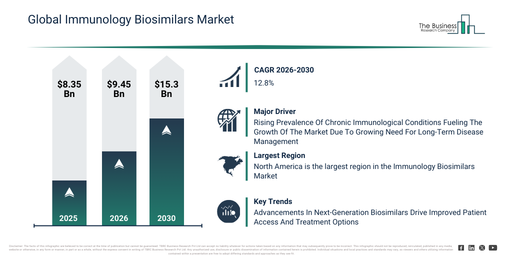
    The immunology biosimilars market has seen substantial growth in recent years. It is anticipated to increase from $8.35 billion in 2025 to $9.45 billion in 2026, exhibiting a compound annual growth rate (CAGR) of 13.2%. Historically, this growth can be attributed to several factors including the elevated cost of original biologics, the restricted availability of biosimilar options, the rising occurrence of autoimmune diseases, the expanding integration of biologics in hospital and clinical practices, and the rigorous regulatory approval processes for biosimilars.

    The immunology biosimilars market is set for significant expansion in the coming years, with its size expected to grow to $15.3 billion by 2030, demonstrating a compound annual growth rate (CAGR) of 12.8%. This projected increase can be attributed to factors such as the development of advanced biosimilar molecules, the expansion of homecare and outpatient treatment options, increasing regulatory harmonization, rising patient awareness and acceptance, and the growth of online and hospital pharmacy distribution channels. Noteworthy trends during this forecast period include the rising adoption of monoclonal antibody biosimilars, increasing use of fusion protein biosimilars, the expansion of recombinant protein therapies, a growing market for interferon-based treatments, and enhanced access to affordable immunology therapies.

    Get A Free Sample Report With In-Depth Market Insights:

    https://thebusinessresearchcompany.com/sample_request?id=93452760&type=smp&name=Immunology%20Biosimilars%20Market%20Report%202026&utm_source=Blogs&utm_medium=Paid&utm_campaign=Oct_PR

    Immunology Biosimilars Market Growth Catalysts And Demand Drivers

    The rising occurrence of chronic immunological conditions is projected to boost the expansion of the immunology biosimilars market. Chronic immunological conditions are persistent disorders where the immune system malfunctions, either attacking the body’s tissues or failing to offer effective protection. This increase in chronic immunological conditions is attributed to a growing number of individuals affected by long-term immune system disorders that demand continuous treatment, proactive disease management, and ongoing healthcare support. Immunology biosimilars address chronic immunological conditions by providing affordable and effective treatment alternatives, supporting long-term disease management, and enhancing patient access to essential therapies that control immune system dysfunction. For instance, in November 2023, the Multiple Sclerosis International Federation (MSIF), a UK-based international nonprofit organization dedicated to global MS research and advocacy, estimated that 2.9 million people worldwide were living with multiple sclerosis in 2023. Therefore, the increasing prevalence of chronic immunological conditions is stimulating growth within the immunology biosimilars market.

    Immunology Biosimilars Market Segment Analysis: What Are The Core Market Categories?

    The immunology biosimilars market covered in this report is segmented –

    1) By Drug Type: Monoclonal Antibodies, Fusion Proteins, Recombinant Proteins, Interferons, Other Biosimilar Immunomodulators

    2) By Disease: Inflammatory Bowel Disease, Arthritis, Other Diseases

    3) By Distribution Channel: Hospital Pharmacies, Retail Pharmacies, Online Pharmacies, Other Distribution Channels

    4) By End User: Hospitals, Clinics, Homecare Settings, Ambulatory Surgical Centers (ASCs)

    Subsegments:

    1) By Monoclonal Antibodies: Anti-Tumor Necrosis Factor Agents, Anti-Interleukin-6 Agents, Anti-Cluster of Differentiation 20 Agents, Anti-Interleukin-12/23 Agents, Other Monoclonal Antibodies

    2) By Fusion Proteins: Etanercept Biosimilars, Other Fusion Protein Biosimilars

    3) By Recombinant Proteins: Recombinant Human Insulin, Recombinant Human Growth Hormone, Recombinant Human Erythropoietin, Other Recombinant Protein Biosimilars

    4) By Interferons: Interferon Alpha, Interferon Beta, Interferon Gamma

    5) By Other Biosimilar Immunomodulators: Interleukin Inhibitors, Janus Kinase Inhibitors, Other Immunomodulatory Biosimilars

    Immunology Biosimilars Market Trends Shaping Long-Term Demand

    Leading companies within the immunology biosimilars market are dedicating efforts to creating advanced biosimilar innovations, encompassing expected interchangeability designations, improved formulations with enhanced stability, and new delivery methods, all designed to offer patients more accessible and effective treatment options. An anticipated interchangeability designation indicates that the biosimilar is forecast to satisfy regulatory criteria, permitting its substitution for the original biologic drug at the pharmacy without needing the prescriber’s involvement. For example, in February 2025, Sandoz Group AG, a pharmaceutical company based in Switzerland, introduced Pyzchiva (ustekinumab-ttwe), a biosimilar to Stelara, intended for managing chronic autoimmune conditions like plaque psoriasis, psoriatic arthritis, Crohn’s disease, and ulcerative colitis. This launch, executed in collaboration with Samsung Bioepis Co. Ltd., a biopharmaceutical firm from South Korea, highlights Sandoz’s commitment to broadening access to immunology biosimilars by providing an economical and patient-centric therapy that includes multiple dosing choices, extended stability, and the unique feature of being re-refrigerated after initial cooling.

    Immunology Biosimilars Market Top Companies Driving Competitive Growth

    Major companies operating in the immunology biosimilars market are Pfizer Inc., Novartis AG, Amgen Inc., Sandoz Group AG, Fresenius Kabi AG, Intas Pharmaceuticals Ltd., Dr. Reddy’s Laboratories Ltd., Samsung Bioepis Co. Ltd., Gedeon Richter Plc, Celltrion Inc., Biocon Ltd., Innovent Biologics Inc., Biocad, Mabion S.A.

    View The Full Immunology Biosimilars Market Report:

    https://thebusinessresearchcompany.com/report/immunology-biosimilars-global-market-report?utm_source=Blogs&utm_medium=Paid&utm_campaign=Oct_PR

    Immunology Biosimilars Market Regional Analysis And Leading Geography

    North America was the largest region in the immunology biosimilars market in 2025. Asia-Pacific is expected to be the fastest-growing region in the forecast period. The regions covered in the immunology biosimilars market report are Asia-Pacific, South East Asia, Western Europe, Eastern Europe, North America, South America, Middle East, Africa.

    Reach Out To Our Team:

    The Business Research Company: https://www.thebusinessresearchcompany.com/

    Americas: +1 310-496-7795

    Asia: +44 7882 955267 & +91 8897263534

    Europe: +44 7882 955267

    Email us at: marketing@tbrc.info

    Follow us on:

    LinkedIn: https://in.linkedin.com/company/the-business-research-company

    YouTube: https://www.youtube.com/channel/UC24_fI0rV8cR5DxlCpgmyFQ

    Global Market Model: https://www.thebusinessresearchcompany.com/global-market-model
  • Immunohematology Market Growth Forecast Through 2030: Market Size And Trends In 2026

    Immunohematology Market Growth Forecast Through 2030: Market Size And Trends In 2026

    Built to provide research that’s more actionable and strategically valuable, The Business Research Company’s 2026 market reports include market attractiveness analysis, total addressable market sizing, company benchmarking matrices, interactive Excel dashboards, broader supply chain intelligence, emerging startup tracking, and in-depth product insights.

    Immunohematology Market Forecast: What Value Will The Market Reach By 2030?

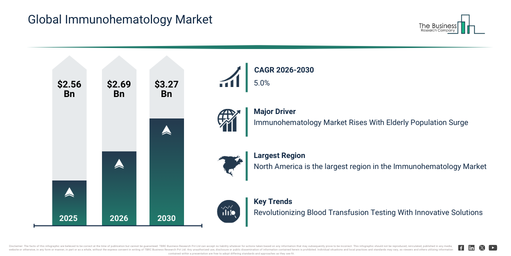
    The immunohematology market has witnessed consistent expansion in recent years. It is projected to increase from $2.56 billion in 2025 to $2.69 billion in 2026, showing a compound annual growth rate (CAGR) of 4.9%. This growth in previous periods is attributable to the rising occurrence of blood disorders, an elevated demand for safe blood transfusions, the establishment of blood banks, the expansion of diagnostic laboratories, and progress in hematology reagents.

    The immunohematology market is anticipated to show significant expansion in the coming years. It is projected to achieve a value of $3.27 billion in 2030, demonstrating a compound annual growth rate (CAGR) of 5.0%. This forecasted growth can be attributed to several factors including technological progress in analyzers, the integration of AI into laboratory diagnostics, the rise of precision medicine, the adoption of digital health systems, and the broadening of blood screening initiatives. Noteworthy trends expected during this period involve advanced methods for blood typing, increased automation in immunohematology testing, personalized transfusion strategies, point-of-care immune diagnostic tools, and the integration of laboratory information systems.

    Get A Free Sample Report With In-Depth Market Insights:

    https://thebusinessresearchcompany.com/sample_request?id=10295&type=smp&name=Immunohematology%20Market%20Report%202026&utm_source=Blogs&utm_medium=Paid&utm_campaign=Oct_PR

    Immunohematology Market Opportunity Drivers: What’s Unlocking New Revenue Potential?

    The immunohematology market is projected to experience growth driven by the aging population, which describes a demographic trend where the proportion of elderly individuals within a society increases. Immunohematology is crucial for managing age-related transfusion requirements, ensuring the safe use of blood products, and supporting medical interventions for this demographic. As an illustration, in January 2024, the US-based nonprofit organization Population Reference Bureau indicated that the number of Americans aged 65 and older is expected to climb from 58 million in 2022 to 82 million by 2050, marking a 47% increase. Concurrently, this group’s share of the overall population is also foreseen to rise from 17% to 23% during the same period. Thus, the aging population is a primary force propelling the expansion of the immunohematology market.

    Immunohematology Market Segment Breakdown: Which Categories Lead On Revenue?

    The immunohematology market covered in this report is segmented –

    1) By Product: Analyzers And Systems, Reagents

    2) By Technology: Biochips, Erythrocyte-Magnetized Technology (Met), Gel Cards, Microplates, Polymerase Chain Reaction (PCR)

    3) By Disease: Blood-Related Diseases, HIV, Hepatitis

    4) By Application: Pretransfusion Testing, Investigation Of Immune Hemolysis, Perinatal Testing, Blood Group Phenotyping, Leucocyte And Platelet Serology

    5) By End User: Blood Banks, Diagnostic And Reference Laboratories, Hospitals, Academic And Research Institutes

    Subsegments:

    1) By Analyzers And Systems: Blood Typing Analyzers, Cross-Matching Analyzers, Gel Card Systems

    2) By Reagents: Blood Grouping Reagents, Antisera, Control Serum

    Immunohematology Market Innovation Trends Shaping Future Development

    Companies active in the immunohematology market are focused on developing innovative diagnostic solutions, such as soluble recombinant proteins, designed to overcome interference from the cancer therapy daratumumab. A soluble recombinant protein is one produced through recombinant DNA technology that remains properly folded and functional in a soluble form within a host cell or solution, making it useful in research and therapeutic applications. For example, in November 2023, Grifols, S.A., a Spain-based pharmaceutical company, launched the Grifols sCD38 solution. Grifols’ sCD38 is the first-ever soluble recombinant protein, developed to address the interference caused by the cancer therapy daratumumab in vital blood transfusion compatibility testing. Specifically designed for multiple myeloma patients, this groundbreaking solution blocks daratumumab from attaching to CD38 proteins on red blood cells, ensuring precise pre-transfusion test outcomes. By facilitating a more efficient process for screening, identification, and crossmatching, Grifols sCD38 enhances blood transfusion protocols and minimizes delays in delivering lifesaving transfusions.

    Immunohematology Market Leading Players And Competitive Positioning

    Major companies operating in the immunohematology market are Ortho Clinical Diagnostics Inc., Immunocor Inc., Abbott Laboratories, Siemens Healthineers AG, Grifols S.A., Beckman Coulter Inc., Thermo Fisher Scientific Inc., Becton Dickinson and Company, Merck Co. & KGaA, Bio-Rad Laboratories, Sysmex Corporation, Danaher Corporation, Biosystems S.A., Roche Holdings AG, Mindray Medical International Limited, F.Hoffmann La-Roche Ltd., Biotest AG, Cardinal Health Inc., Quotient Limited, DiaSorin S.p.A., Lorne Laboratories Ltd., Biokit S.A., Avox Technologies, Diagnostic Automation/Cortez Diagnostics Inc., Inno-train Diagnostik GmbH, Drucker Diagnostics Inc., Immundia Diagnostics Pvt. Ltd.

    View The Full Immunohematology Market Report:

    https://thebusinessresearchcompany.com/report/immunohematology-global-market-report?utm_source=Blogs&utm_medium=Paid&utm_campaign=Oct_PR

    Immunohematology Market Geographic Analysis: Where Is Demand Accelerating Fastest?

    North America was the largest region in the immunohematology market in 2025. Asia-Pacific is expected to be the fastest-growing region in the global immunohematology market during the forecast period. The regions covered in the immunohematology market report are Asia-Pacific, South East Asia, Western Europe, Eastern Europe, North America, South America, Middle East, Africa.

    Reach Out To Our Team:

    The Business Research Company: https://www.thebusinessresearchcompany.com/

    Americas: +1 310-496-7795

    Asia: +44 7882 955267 & +91 8897263534

    Europe: +44 7882 955267

    Email us at: marketing@tbrc.info

    Follow us on:

    LinkedIn: https://in.linkedin.com/company/the-business-research-company

    YouTube: https://www.youtube.com/channel/UC24_fI0rV8cR5DxlCpgmyFQ

    Global Market Model: https://www.thebusinessresearchcompany.com/global-market-model