Month: October 2026

  • Biologic & Biosimilar RA Drugs Market Growth To $20.52 Billion By 2030: What’s Driving The Expansion?

    Biologic & Biosimilar RA Drugs Market Growth To $20.52 Billion By 2030: What’s Driving The Expansion?

    Built to provide research that’s more actionable and strategically valuable, The Business Research Company’s 2026 market reports include market attractiveness analysis, total addressable market sizing, company benchmarking matrices, interactive Excel dashboards, broader supply chain intelligence, emerging startup tracking, and in-depth product insights.

    Biologic & Biosimilar RA Drugs Market Value Growth And Long-Term Outlook

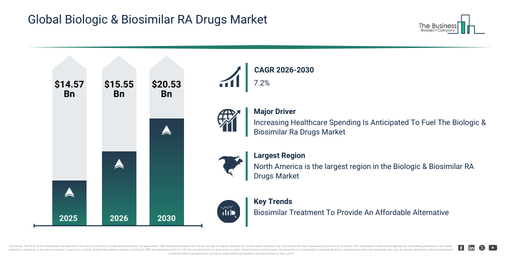
    The market for biologic & biosimilar RA drugs has experienced substantial growth in recent years. It will grow from $14.57 billion in 2025 to $15.55 billion in 2026 at a compound annual growth rate (CAGR) of 6.8%. This historical expansion can be attributed to factors such as the increasing prevalence of rheumatoid arthritis, a limited range of treatment options, growing investment in biologics research, increasing healthcare expenditure, and the patent expiry of key biologics.

    The biologic & biosimilar ra drugs market is projected to experience substantial expansion over the coming years. This market is anticipated to reach a valuation of $20.53 billion by 2030, exhibiting a compound annual growth rate (CAGR) of 7.2%. Factors driving this growth during the forecast period include the increasing uptake of biosimilars, advancements in drug delivery technologies, expanded manufacturing capabilities, supportive regulatory frameworks for biologics, and heightened awareness regarding precision medicine. Key trends expected during this period encompass personalized biologic treatments, a faster rate of biosimilar adoption, sophisticated drug delivery mechanisms, efforts towards regulatory harmonization for biologics, and strategies for cost optimization in rheumatoid arthritis treatments.

    Get A Free Sample Report With In-Depth Market Insights:

    https://www.thebusinessresearchcompany.com/sample.aspx?id=9255&type=smp&utm_source=Blogs&utm_medium=Paid&utm_campaign=Oct_PR

    Biologic & Biosimilar RA Drugs Market Opportunity Drivers: What’s Unlocking New Revenue Potential?

    The ongoing increase in healthcare spending is projected to stimulate the expansion of the biologic & biosimilar RA drug market. Healthcare spending refers to the total financial commitment made by individuals, governments, and organizations towards medical goods and services, including expenses for preventing, treating, and managing various health conditions. The application of biologic and biosimilar RA drugs optimizes the management of rheumatoid arthritis, effectively balancing their efficacy with cost-effectiveness for the specialized and often expensive treatments necessary within healthcare expenditure. As an illustration, in November 2023, figures from CIHI, a Canada-based Institute for Health Information health company, indicated that Canada’s total health spending is anticipated to reach $344 billion in 2023, or $8,740 per Canadian. This represents a 2.8% increase in 2023, following a comparatively lower 1.5% growth observed in 2022. Therefore, the rise in healthcare spending is a significant factor propelling the biologic & biosimilar RA drug market.

    Biologic & Biosimilar RA Drugs Market Segment Analysis Spotlighting Growth Areas

    The biologic & biosimilar ra drugs market covered in this report is segmented –

    1) By Source: Microbial, Mammalian, Other Sources

    2) By Manufacturing: Outsourced, In-House

    3) By Distribution Channel: Hospital Pharmacies, Retail Pharmacies, Online Pharmacies

    Subsegments:

    1) By Microbial: Bacterial Sources, Fungal Sources, Yeast Sources

    2) By Mammalian: Chinese Hamster Ovary (CHO) Cells, Human Embryonic Kidney (HEK) Cells, Other Mammalian Cell Lines

    3) By Other Sources: Plant-Based Sources, Insect-Based Sources, Synthetic Biology Approaches

    Biologic & Biosimilar RA Drugs Market Innovation Trends Shaping Future Development

    Leading firms within the biologic & biosimilar RA drugs market are concentrating on creating novel solutions, notably dual-concentration biosimilar formulations, addressing the increasing need for economical, readily available, and patient-centric substitutes for expensive biologics. These dual-concentration biosimilar alternatives provide both high- and low-strength versions that replicate branded biologics, ensuring uninterrupted treatment progression and greater patient convenience when contrasted with conventional single-concentration biologics. As an illustration, during July 2023, Organon, a healthcare enterprise based in the US, and Samsung Bioepis, a biopharmaceutical firm from South Korea, introduced HADLIMA, a biosimilar of Humira (adalimumab), into the US market. Offered in both high and low concentrations, HADLIMA seeks to improve accessibility and economic viability for individuals suffering from autoimmune conditions. This biosimilar is retailed with an 85% price reduction compared to Humira, thereby broadening patient reach. HADLIMA comes equipped with an autoinjector, endorsed by the Arthritis Foundation, and features a patient assistance initiative, HADLIMA For You, which delivers educational content and co-payment aid. Its indications span numerous ailments, such as rheumatoid arthritis and Crohn’s disease. HADLIMA is obtainable in both a citrate-free high concentration (100 mg/mL) and a citrate-containing low concentration (50 mg/mL), ensuring consistent care for patients.

    Biologic & Biosimilar RA Drugs Market Leading Companies: Who Holds The Strongest Market Presence?

    Major companies operating in the biologic & biosimilar ra drugs market are Samsung BioLogics Co. Ltd., Amgen Inc., AbbVie Inc., Johnson & Johnson Services Inc., Pfizer Inc., Merck & Co. Inc., Eli Lilly and Company, Novartis AG, Bayer AG, F. Hoffmann-La Roche Ltd., AstraZeneca PLC, Teva Pharmaceutical Industries Ltd., Fresenius SE & Co. KGaA, Stada Arzneimittel AG, Boehringer Ingelheim Pharmaceuticals Inc., Gedeon Richter Plc., La Roche Ltd., Regeneron Pharmaceuticals Inc., Bristol-Myers Squibb Company, Dr. Reddy’s Laboratories Ltd., Biogen Inc., Genentech Inc., GlaxoSmithKline plc, Mylan N.V., Sandoz International GmbH, Amneal Pharmaceuticals LLC, Apotex Inc., Biocon Ltd., Coherus BioSciences Inc.

    View The Full Biologic & Biosimilar RA Drugs Market Report:

    https://www.thebusinessresearchcompany.com/report/biologic-and-biosimilar-ra-drugs-global-market-report?utm_source=Blogs&utm_medium=Paid&utm_campaign=Oct_PR

    Biologic & Biosimilar RA Drugs Market Top Region: Where Does Most Revenue Come From?

    North America was the largest region in the biologic & biosimilar RA drugs market in 2025. Asia-Pacific is expected to be the fastest-growing region in the biologic & biosimilar RA drugs market report during the forecast period. The regions covered in the biologic & biosimilar ra drugs market report are Asia-Pacific, South East Asia, Western Europe, Eastern Europe, North America, South America, Middle East, Africa.

    Reach Out To Our Team:

    The Business Research Company: https://www.thebusinessresearchcompany.com/

    Americas: +1 310-496-7795

    Asia: +44 7882 955267 & +91 8897263534

    Europe: +44 7882 955267

    Email us at: marketing@tbrc.info

    Follow us on:

    LinkedIn: https://in.linkedin.com/company/the-business-research-company

    YouTube: https://www.youtube.com/channel/UC24_fI0rV8cR5DxlCpgmyFQ

    Global Market Model: https://www.thebusinessresearchcompany.com/global-market-model

  • Bioengineered Protein Drugs Market Trends Reshaping Industry Growth Through 2030

    Bioengineered Protein Drugs Market Trends Reshaping Industry Growth Through 2030

    Backed by market attractiveness analysis, total addressable market sizing, company benchmarking matrices, interactive Excel dashboards, wider supply chain intelligence, emerging startup coverage, and detailed product-level insights, The Business Research Company’s 2026 market reports are designed to offer research that is more actionable and strategically valuable than ever.

    Bioengineered Protein Drugs Market Poised To Hit $646.93 Billion By 2030 With A 8.4% CAGR

    The bioengineered protein drugs market size has experienced strong growth in recent years. This market is projected to expand from $435.17 billion in 2025 to $468.82 billion in 2026, achieving a compound annual growth rate (CAGR) of 7.7%. The historical increase can be attributed to several factors, including the adoption of recombinant DNA technology, a rise in demand for monoclonal antibodies, advancements in cell culture techniques, the expansion of biotechnology R&D, and the introduction of biosimilars.

    The bioengineered protein drugs market size is anticipated to undergo significant growth in the coming years. Its valuation is set to reach $646.93 billion in 2030, demonstrating a compound annual growth rate (CAGR) of 8.4%. Factors contributing to this anticipated growth include the increasing occurrence of autoimmune and rare diseases, heightened investment in precision medicine, the broadening of biologics manufacturing facilities, the incorporation of AI into drug development, and a rising need for personalized treatment options. Key developments expected during this period involve the emergence of personalized protein therapeutics, sophisticated protein engineering methodologies, the extension of contract manufacturing solutions, improved protein purification technologies, and an uptick in treatments for rare diseases.

    Get A Free Sample Report With In-Depth Market Insights:

    https://www.thebusinessresearchcompany.com/sample.aspx?id=10180&type=smp&utm_source=Blogs&utm_medium=Paid&utm_campaign=Oct_PR

    Bioengineered Protein Drugs Market Growth Momentum: What Factors Are Shaping Demand?

    The rising occurrence of chronic illnesses is anticipated to fuel the expansion of the bioengineered protein drug market in the future. These conditions are defined as ailments from which individuals endure for a minimum of a year, necessitate ongoing medical attention, and limit daily physical pursuits. Bioengineered protein drugs find application in managing chronic diseases, employing specifically designed protein therapies in fields such as oncology and regenerative medicine through combinatorial and logical approaches. To illustrate, the World Health Organization, an intergovernmental body situated in Switzerland, reported in February 2024 that projections indicate more than 35 million new cancer cases by 2050. This signifies a 77% rise when compared to the approximately 20 million cases estimated for 2022. Consequently, the escalating incidence of chronic diseases is a significant impetus behind the expansion of the bioengineered protein drugs market.

    Bioengineered Protein Drugs Market Segment Performance And Emerging Opportunities

    The bioengineered protein drugs market covered in this report is segmented –

    1) By Drug Type: Recombinant Protein, Vaccine, Peptide Antibiotics, Therapeutic Enzymes, Other Drug Type

    2) By Technology: Bioreactors, Fractionation, Genetically Modified Organisms, Genetic Engineering, Pharming, Cell Culture, Microbial Cell Fermentation, Other Technology

    3) By Application: Autoimmune, Heart, Congenital, Infectious Diseases, Cancer, Diabetes, Arthritis, Other Application

    4) By End User: Pharmaceutical, Contract Research Organizations, Research Institutes, Biotechnology Companies

    Subsegments:

    1) By Recombinant Protein: Monoclonal Antibodies, Hormones, Cytokines

    2) By Vaccine: Recombinant Vaccines, DNA Vaccines

    3) By Peptide Antibiotics: Lipopeptide Antibiotics, Glycopeptide Antibiotics

    4) By Therapeutic Enzymes: Enzyme Replacement Therapies, Biosimilar Enzymes

    5) By Other Drug Type: Fusion Proteins, Antibody-Drug Conjugates (ADCs)

    Bioengineered Protein Drugs Market Trends Redefining Industry Growth

    Leading companies within the bioengineered protein drug market are increasingly employing strategic partnerships to deliver crucial bioengineered protein drugs to businesses and governments. These collaborations entail entities combining their respective strengths and resources to achieve collective benefits and accomplishments. As an illustration, in June 2023, Future Fields, a biotechnology company based in Canada, collaborated with Jenthera Therapeutics, also a Canada-based biotechnology company concentrating on developing innovative treatments for rare and complex diseases. Through this alliance, they intend to create a novel cancer-fighting protein, utilizing Future Fields’ EntoEngine platform for production that is both economical and environmentally sustainable on a large scale.

    Bioengineered Protein Drugs Market Key Players: Which Companies Lead Industry Competition?

    Major companies operating in the bioengineered protein drugs market are Abbvie Inc., Amgen Inc., Astrazeneca PLC, Bayer HealthCare Pharmaceuticals LLC, Eli Lilly and Company, F. Hoffmann-La Roche AG, GlaxoSmithKline plc, Johnson & Johnson, Novartis AG, Novo Nordisk A/S, Sanofi S.A., Grifols S.A., Adma Biologics Inc., CSL Limited, Abbott Laboratories, Baxter International Inc., Fresenius Kabi AG, Merck & Co. Inc., Pfizer Inc., Biogen Inc., Bristol-Myers Squibb Company, Genentech Inc., Lonza Group AG, MedImmune LLC, Regeneron Pharmaceuticals Inc., Shire plc., Takeda Pharmaceutical Company Limited, Teva Pharmaceutical Industries Ltd., Shanghai United Cell Biotechnology Co. Ltd., Panacea Biotec Ltd.

    View The Full Bioengineered Protein Drugs Market Report:

    https://www.thebusinessresearchcompany.com/report/bioengineered-protein-drugs-global-market-report?utm_source=Blogs&utm_medium=Paid&utm_campaign=Oct_PR

    Bioengineered Protein Drugs Market Regional Breakdown: Where Is Demand Concentrated?

    North America was the largest region in the bioengineered protein drugs market in 2025. The regions covered in the bioengineered protein drugs market report are Asia-Pacific, South East Asia, Western Europe, Eastern Europe, North America, South America, Middle East, Africa.

    Reach Out To Our Team:

    The Business Research Company: https://www.thebusinessresearchcompany.com/

    Americas: +1 310-496-7795

    Asia: +44 7882 955267 & +91 8897263534

    Europe: +44 7882 955267

    Email us at: marketing@tbrc.info

    Follow us on:

    LinkedIn: https://in.linkedin.com/company/the-business-research-company

    YouTube: https://www.youtube.com/channel/UC24_fI0rV8cR5DxlCpgmyFQ

    Global Market Model: https://www.thebusinessresearchcompany.com/global-market-model

  • Biodegradable Medical Polymers Market Growth To $5.94 Billion Creates New Opportunities Across The Industry

    Biodegradable Medical Polymers Market Growth To $5.94 Billion Creates New Opportunities Across The Industry

    Featuring market attractiveness scoring, total addressable market sizing, company benchmarking matrices, interactive Excel dashboards, deeper supply chain intelligence, emerging startup tracking, and granular product-level insights, The Business Research Company’s 2026 market reports are built to deliver research that is both more actionable and more strategically valuable.

    Biodegradable Medical Polymers Market Size And Revenue Outlook Through 2030

    The biodegradable medical polymers market has experienced swift expansion recently. It is anticipated to expand from $2.78 billion in 2025 to $3.24 billion in 2026, achieving a compound annual growth rate (CAGR) of 16.7%. Historically, this growth can be attributed to several factors including the increasing use of absorbable sutures, the early adoption of biodegradable implants, the expansion of orthopedic and cardiovascular procedures, advancements in polymer chemistry, and the rising acceptance of resorbable materials.

    The biodegradable medical polymers market is projected to experience swift expansion in the coming years, predicted to reach $5.95 billion by 2030, exhibiting a compound annual growth rate (CAGR) of 16.4%. This expansion during the forecast period can be primarily attributed to factors such as a greater demand for minimally invasive medical interventions, an increasing emphasis on environmentally friendly medical substances, the proliferation of drug-device combination products, increasing investments in regenerative medicine, and improvements in precision polymer engineering. Key developments expected during this period involve the expanded application of bioabsorbable implant materials, a heightened need for polymers with controlled degradation properties, the wider incorporation of polymers into drug delivery systems, the broadening of advanced biopolymer processing methods, and a stronger emphasis on biocompatibility and patient safety.

    Get A Free Sample Report With In-Depth Market Insights:

    https://www.thebusinessresearchcompany.com/sample.aspx?id=30210&type=smp&utm_source=Blogs&utm_medium=Paid&utm_campaign=Oct_PR

    Biodegradable Medical Polymers Market Expansion Drivers: What’s Shaping Future Growth?

    The escalating need for minimally invasive procedures is anticipated to fuel the expansion of the biodegradable medical polymers market in the future. These medical techniques involve minor incisions or non-invasive approaches for surgeries or interventions, leading to less tissue damage, quicker recovery periods, and diminished postoperative discomfort when compared to traditional surgical methods. The rise in minimally invasive procedures can be attributed to advancements in medical technology, fostering a greater adoption of precise surgical techniques globally. Biodegradable medical polymers play a crucial role in supporting minimally invasive surgeries by facilitating the creation of temporary implants, sutures, and drug delivery systems that naturally disintegrate inside the body. This eliminates the requirement for subsequent removal operations, lessens tissue trauma, and encourages quicker patient recovery with fewer complications. For instance, in February 2023, the American Society of Plastic Surgeons, a US-based specialty organization, reported an increase in cosmetic minimally invasive procedures from 23.7 million in 2022 to 25.4 million in 2023. Consequently, the rising demand for minimally invasive procedures is a key factor propelling the growth of the biodegradable medical polymers market.

    Biodegradable Medical Polymers Market Segment Landscape And Growth Outlook

    The biodegradable medical polymers market covered in this report is segmented –

    1) By Product Type: Polylactic Acid, Polyglycolic Acid, Polycaprolactone, Polyhydroxyalkanoates, Other Products

    2) By Material Type: Ceramic Matrix Composites (CMC), Oxide Ceramics, Non-Oxide Ceramics, Advanced Porous Ceramics

    3) By Product Form: Powder, Tiles, Coatings, Fibers, Bulk

    4) By Application: Drug Delivery, Implants, Sutures, Other Applications

    Subsegments:

    1) By Polylactic Acid: Lactic Acid Derived Polymers, Copolymers Of Lactic Acid, Stereocomplex Polylactic Acid

    2) By Polyglycolic Acid: Homopolymers Of Glycolic Acid, Copolymers With Other Monomers

    3) By Polycaprolactone: Linear Polycaprolactone, Branched Polycaprolactone, Crosslinked Polycaprolactone

    4) By Polyhydroxyalkanoate: Polyhydroxybutyrate, Polyhydroxyvalerate, Polyhydroxybutyrate Hydroxyvalerate

    5) By Other Products: Starch Based Polymers, Cellulose Based Polymers, Protein Based Polymers

    Biodegradable Medical Polymers Market Strategic Trends: What Defines The Next Growth Phase?

    Key players within the biodegradable medical polymers market are concentrating on pioneering technologies, specifically biopolymer technology, to boost the performance, biocompatibility, and sustainability of medical devices and drug delivery systems. This biopolymer technology involves the scientific study and practical implementation of polymers sourced from natural origins, crafted to be biodegradable and eco-friendly. It serves to produce sustainable materials across medical, packaging, and industrial sectors, simultaneously decreasing dependence on synthetic plastics. An example of this is seen in November 2023, when Sulzer Ltd., a Swiss public company based in Switzerland, launched CAPSUL. This new comprehensive licensed technology facilitates the continuous production of polycaprolactone (PCL), which is a biodegradable polyester, thereby allowing for the manufacture of premium PCL grades at competitive prices. The introduction of CAPSUL intends to encourage the adoption of sustainable and biodegradable materials, enhance manufacturing efficiency, and supply superior eco-conscious polymers for both medical and industrial uses.

    Biodegradable Medical Polymers Market Competitive Landscape: Who Leads The Industry?

    Major companies operating in the biodegradable medical polymers market are Evonik Industries AG, Corbion N.V., dsm-firmenich AG, Mitsui Chemicals Inc., Poly Medicure Limited, KLS Martin SE & Co. KG, BASF SE, NatureWorks LLC, Arkema SA, Eastman Chemical Company, Foster LLC, Becton Dickinson and Company, Toray Industries Inc., Celanese Corporation, Teysa Technologies Ltd, Kaneka Corporation, Arthrex Inc., Ashland Inc., Meril Life Sciences India Private Limited, Reva Medical LLC

    View The Full Biodegradable Medical Polymers Market Report:

    https://www.thebusinessresearchcompany.com/report/global-biodegradable-medical-polymers-market-report?utm_source=Blogs&utm_medium=Paid&utm_campaign=Oct_PR

    Biodegradable Medical Polymers Market Geographic Landscape: Which Region Dominates Industry Growth?

    North America was the largest region in the biodegradable medical polymers market in 2025. Asia-Pacific is expected to be the fastest-growing region in the forecast period. The regions covered in the biodegradable medical polymers market report are Asia-Pacific, South East Asia, Western Europe, Eastern Europe, North America, South America, Middle East, Africa.

    Reach Out To Our Team:

    The Business Research Company: https://www.thebusinessresearchcompany.com/

    Americas: +1 310-496-7795

    Asia: +44 7882 955267 & +91 8897263534

    Europe: +44 7882 955267

    Email us at: marketing@tbrc.info

    Follow us on:

    LinkedIn: https://in.linkedin.com/company/the-business-research-company

    YouTube: https://www.youtube.com/channel/UC24_fI0rV8cR5DxlCpgmyFQ

    Global Market Model: https://www.thebusinessresearchcompany.com/global-market-model
  • Bioconvergence Market Forecast: Breaking Down The Numbers Behind Future Expansion

    Bioconvergence Market Forecast: Breaking Down The Numbers Behind Future Expansion

    Built to provide research that’s more actionable and strategically valuable, The Business Research Company’s 2026 market reports include market attractiveness analysis, total addressable market sizing, company benchmarking matrices, interactive Excel dashboards, broader supply chain intelligence, emerging startup tracking, and in-depth product insights.

    Bioconvergence Market Growth From $175.26 Billion In 2026 To $263.67 Billion By 2030 At A CAGR Of 10.8%

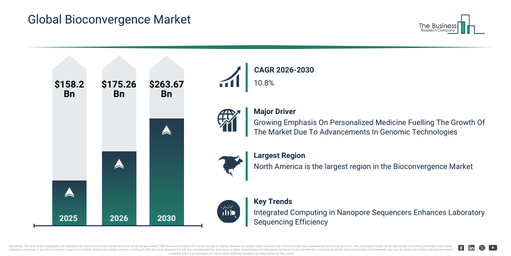
    The bioconvergence market has experienced rapid expansion in recent years. This market is expected to increase from $158.2 billion in 2025 to $175.26 billion in 2026, with a compound annual growth rate (CAGR) of 10.8%. The historical growth can be attributed to factors such as the growth in genomics research, increased adoption of digital health, expanded biotechnology funding, the demand for advanced diagnostics, and various interdisciplinary research initiatives.

    The bioconvergence market is projected to experience substantial expansion over the upcoming years. Its valuation is anticipated to reach $263.67 billion by 2030, demonstrating a compound annual growth rate (CAGR) of 10.8%. This anticipated growth during the forecast period is largely driven by factors such as the acceleration of personalized medicine, advancements in AI-enabled life sciences, innovations in bioengineering, the development of data-driven healthcare solutions, and increasing cross-industry collaborations. Key trends foreseen for this period encompass the integration of biological and engineering systems, the broadening of precision medicine platforms, a rising uptake of AI-driven drug discovery, an expanded application of bioinformatics solutions, and the convergence of digital with biological technologies.

    Get A Free Sample Report With In-Depth Market Insights:

    https://www.thebusinessresearchcompany.com/sample.aspx?id=24168&type=smp&utm_source=Blogs&utm_medium=Paid&utm_campaign=Oct_PR

    Bioconvergence Market Development Factors: What’s Supporting Demand?

    The bioconvergence market is anticipated to expand propelled by the increasing focus on personalized medicine. This medical approach customizes treatments for individual patients based on their genetic, environmental, and lifestyle elements to enhance outcomes and improve care. The demand for personalized medicine is rising due to breakthroughs in genomic technologies, which allow for the precise identification of genetic variations and the development of tailored treatments. Bioconvergence further strengthens personalized medicine by integrating advanced technologies with biological research, enabling more precise, individualized treatment plans aligned with a patient’s genetic and molecular profile. This leads to improved healthcare outcomes by facilitating targeted therapies and reducing adverse effects. For instance, in February 2024, the Personalized Medicine Coalition (PMC), a US-based nonprofit organization, reported that the U.S. Food and Drug Administration (FDA) approved 26 new personalized medicines in 2023, marking a significant increase from the 12 approved in 2022. Consequently, the heightened emphasis on personalized medicine is driving the growth of the bioconvergence market.

    Bioconvergence Market Breakdown By Product Type And Application

    The bioconvergence market covered in this report is segmented –

    1) By Component: Devices, Software, Services, Platforms

    2) By Technology: Artificial Intelligence, Robotics, Three-Dimensional (3D) Printing, Nanotechnology, Synthetic Biology, Bioinformatics, Wearable Devices

    3) By Application: Drug Discovery, Regenerative Medicine, Optogenetics, Nanorobotics For Drug Discovery, Diagnostic And Biological Sensors, Bioelectronics, Precision Medicine

    4) By End-User: Pharmaceutical And Biotechnology Industry, Contract Research Organization, Other End Users

    Subsegments:

    1) By Devices: Diagnostic Devices, Therapeutic Devices, Wearable Medical Devices, Implantable Devices, Robotic Surgical Systems

    2) By Software: Bioinformatics Software, Clinical Decision Support Systems, Genomic Data Analysis Tools, Imaging And Diagnostic Software, Laboratory Information Management Systems (LIMS)

    3) By Services: Contract Research Services, Consulting And Integration Services, Data Management And Analysis Services, Custom Software Development, Regulatory And Compliance Services

    4) By Platforms: Artificial Intelligence Platforms, Omics Integration Platforms, Digital Health Platforms, Personalized Medicine Platforms, Cloud-Based Analytics Platforms

    Bioconvergence Market Transformation Trends: What Innovations Are Driving Change?

    Leading companies within the bioconvergence market are concentrating on creating novel solutions, notably integrated nanopore sequencing devices equipped with onboard computing. These innovations aim to remove reliance on external computational resources, facilitate immediate data interpretation, and optimize laboratory processes. Such a device represents a complete, self-contained benchtop system capable of performing DNA, RNA, and cDNA sequencing, incorporating intrinsic basecalling and analytical functionalities. As an illustration, in March 2024, Oxford Nanopore Technologies, a biotechnology firm based in the UK, introduced the PromethION 2 Integrated (P2i). This product was designed to make high-output nanopore sequencing more accessible to small and medium-sized research facilities. This advanced bioconvergence instrument facilitates real-time basecalling directly on the device, leveraging its integrated NVIDIA Ampere architecture GPU. This empowers researchers to produce up to 290 gigabases of data per flow cell, eliminating the need for external computing infrastructure and enabling instant biological understanding via its integrated MinKNOW software, which offers plug-and-play operation. The PromethION 2 Integrated demonstrates significant versatility, providing efficient sequencing capabilities for various uses such as whole-genome sequencing of large organisms, extensive metagenomic investigations, and complete full-transcript-length RNA analysis. It achieves this by combining two independently addressable flow cells, integrated touchscreen control, and 15 terabytes of onboard storage, thereby enhancing workflow efficiency and data quality.

    Bioconvergence Market Company Landscape And Competitive Strategy

    Major companies operating in the bioconvergence market are Pfizer Inc., Johnson & Johnson, Merck & Co. Inc., Veolia Environnement S.A, Novartis AG, Eli Lilly and Company, Amgen Inc., HDR Inc., Ginkgo Bioworks, BICO Group AB, MeMed Diagnostics Ltd., Anima Biotech, Singota Solutions LLC, SetPoint Medical Corporation, Galvani Bioelectronics, Ezassi Inc., Tissue Dynamics Ltd., Sanara Ventures Ltd., BioConvergent Health LLC, Gradiant Bioconvergence Center

    View The Full Bioconvergence Market Report:

    https://www.thebusinessresearchcompany.com/report/bioconvergence-global-market-report?utm_source=Blogs&utm_medium=Paid&utm_campaign=Oct_PR

    Bioconvergence Market Largest Region: Which Geography Holds The Highest Market Share?

    North America was the largest region in the bioconvergence market in 2025. Asia-Pacific is expected to be the fastest-growing region in the forecast period. The regions covered in the bioconvergence market report are Asia-Pacific, South East Asia, Western Europe, Eastern Europe, North America, South America, Middle East, Africa.

    Reach Out To Our Team:

    The Business Research Company: https://www.thebusinessresearchcompany.com/

    Americas: +1 310-496-7795

    Asia: +44 7882 955267 & +91 8897263534

    Europe: +44 7882 955267

    Email us at: marketing@tbrc.info

    Follow us on:

    LinkedIn: https://in.linkedin.com/company/the-business-research-company

    YouTube: https://www.youtube.com/channel/UC24_fI0rV8cR5DxlCpgmyFQ

    Global Market Model: https://www.thebusinessresearchcompany.com/global-market-model
  • Biobetters Market Expected To Grow At 9.7% CAGR Through 2030: What Businesses Need To Know

    Biobetters Market Expected To Grow At 9.7% CAGR Through 2030: What Businesses Need To Know

    Backed by market attractiveness analysis, total addressable market sizing, company benchmarking matrices, interactive Excel dashboards, wider supply chain intelligence, emerging startup coverage, and detailed product-level insights, The Business Research Company’s 2026 market reports are designed to offer research that is more actionable and strategically valuable than ever.

    Biobetters Market Expansion Outlook: What Revenue Opportunities Are Ahead?

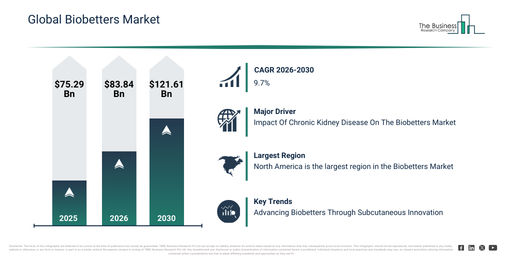
    The biobetters market size has experienced rapid expansion in recent years. It is projected to grow from $75.29 billion in 2025 to $83.84 billion in 2026, achieving a compound annual growth rate (CAGR) of 11.4%. The historic period’s growth can be ascribed to the increasing prevalence of chronic diseases, greater awareness surrounding biosimilars, advancements in biotechnology, supportive government initiatives, and an expanding geriatric population.

    The biobetters market size is projected to experience robust expansion over the coming years. Its value is anticipated to reach $121.61 billion in 2030, exhibiting a compound annual growth rate (CAGR) of 9.7%. This anticipated growth during the forecast period is primarily driven by factors such as the increasing preference for biobetters over original biologics, advancements in drug delivery technologies, the expanding healthcare infrastructure in developing economies, strategic alliances and partnerships within the biopharmaceutical sector, and the escalating need for personalized medicine. Key developments expected in this period encompass improvements in drug efficacy and safety, optimized dosage protocols, enhanced product stability and extended shelf life, more convenient administration techniques, and a broader application in treating chronic diseases.

    Get A Free Sample Report With In-Depth Market Insights:

    https://www.thebusinessresearchcompany.com/sample.aspx?id=15522&type=smp&utm_source=Blogs&utm_medium=Paid&utm_campaign=Oct_PR

    Biobetters Market Industry Drivers: What’s Behind The Revenue Growth?

    The increasing occurrence of chronic kidney diseases is anticipated to propel the expansion of the biobetters market in the future. Chronic kidney disease (CKD) is defined as a long-term ailment where the kidneys progressively lose their ability to filter waste and regulate essential bodily functions. The prevalence of CKD is escalating due to an aging demographic, rising rates of diabetes and hypertension, inactive habits, and enhanced diagnostic detection. The biobetters market supports CKD management by providing therapies that offer superior effectiveness, improved safety profiles, and better dosing regimens compared to original biologics. For instance, in June 2023, according to Oxford Academic, a UK-based academic research platform, CKD prevalence in the UK is projected to increase from 0.00827 billion people in 2022 to 0.00861 billion people in 2032, representing a 4% rise. Consequently, the growing incidence of chronic kidney diseases is driving the growth of the biobetters market.

    Biobetters Market Segment Analysis And Revenue Potential

    The biobetters market covered in this report is segmented –

    1) By Drug Class: Erythropoietin Biobetters, Granulocyte-Colony Stimulating Factor (G-CSF) Bioreactors, Interferon Biobetters, Insulin Biobetters, Monoclonal Antibodies Biobetters, Antihemophilic Factors, Other Drug Classes

    2) By Route Of Administration: Oral, Subcutaneous, Inhaled, Intravenous, Other Routes

    3) By Disease Indication: Diabetes, Cancer, Renal Disease, Neurodegenerative Diseases, Genetic Disorder-Hemophilia, Other Diseases

    4) By Distribution Channel: Hospital Pharmacies, Retail Pharmacies, Online Pharmacies

    Subsegments:

    1) By Erythropoietin Biobetters: Darbepoetin Alfa, Continuous Erythropoietin Receptor Activator (CERA)

    2) By Granulocyte-Colony Stimulating Factor (G-CSF) Biobetters: Pegfilgrastim, Lipegfilgrastim

    3) By Interferon Biobetters: Pegylated Interferon Alfa-2a, Pegylated Interferon Alfa-2b

    4) By Insulin Biobetters: Long-Acting Insulin Analogs (Insulin Glargine), Rapid-Acting Insulin Analogs (Insulin Aspart)

    5) By Monoclonal Antibodies Biobetters: Trastuzumab (Herceptin Biosimilars), Bevacizumab (Avastin Biosimilars), Rituximab (Rituxan Biosimilars)

    6) By Antihemophilic Factors: Recombinant Factor VIII (Nuwiq), Recombinant Factor IX (Alprolix)

    7) By Other Drug Classes: Growth Factors, Cytokines, Enzyme Replacement Therapies, Vaccines

    #Biobetters Market Growth Trends: What’s Shaping The Future Outlook?

    Major companies operating in the biobetters market are concentrating on developing biobetters for subcutaneous administration, aiming to improve patient convenience, enhance therapeutic outcomes, and lessen overall healthcare burdens. Subcutaneous administration of biobetters refers to the delivery of biologic therapies via an under-the-skin injection instead of conventional intravenous infusion, which offers shorter administration times, greater comfort, and improved treatment adherence for individuals managing chronic conditions. For example, in May 2023, Celltrion, a South Korea-based biopharmaceutical company, received approval from the Brazilian Health Regulatory Agency for Remsima SC, a subcutaneous biobetter version of its infliximab biosimilar Remsima, intended for inflammatory bowel diseases such as Crohn’s disease and ulcerative colitis. This product provides the world’s first subcutaneous infliximab option, ensuring enhanced accessibility, improved convenience compared to IV infusion, and the potential for superior clinical outcomes in long-term disease management.

    Biobetters Market Key Players Shaping Industry Direction

    Major companies operating in the biobetters market are Amgen Inc., F. Hoffmann-La Roche Ltd., Genentech Inc., Sanofi Aventis LLC, Pfizer Inc., Novartis AG, Eli Lilly and Company, Regeneron Pharmaceuticals Inc., CSL Behring GmbH, Biogen Inc., Bristol-Myers Squibb Company, AbbVie Inc., Johnson & Johnson, Bayer AG, GlaxoSmithKline plc, Takeda Pharmaceutical Company Limited, Celltrion Inc., Teva Pharmaceutical Industries Ltd., Lonza Group AG, GRIFOLS USA LLC

    View The Full Biobetters Market Report:

    https://www.thebusinessresearchcompany.com/report/biobetters-global-market-report?utm_source=Blogs&utm_medium=Paid&utm_campaign=Oct_PR

    Biobetters Market Regional Analysis: Which Region Leads By Revenue?

    North America was the largest region in the biobetters market in 2025. Asia-Pacific is expected to be the fastest-growing region in the forecast period. The regions covered in the biobetters market report are Asia-Pacific, South East Asia, Western Europe, Eastern Europe, North America, South America, Middle East, Africa.

    Reach Out To Our Team:

    The Business Research Company: https://www.thebusinessresearchcompany.com/

    Americas: +1 310-496-7795

    Asia: +44 7882 955267 & +91 8897263534

    Europe: +44 7882 955267

    Email us at: marketing@tbrc.info

    Follow us on:

    LinkedIn: https://in.linkedin.com/company/the-business-research-company

    YouTube: https://www.youtube.com/channel/UC24_fI0rV8cR5DxlCpgmyFQ

    Global Market Model: https://www.thebusinessresearchcompany.com/global-market-model
  • Biobased Disinfectant Market Forecast To Reach $9.45 Billion By 2030: Key Trends Explained

    Biobased Disinfectant Market Forecast To Reach $9.45 Billion By 2030: Key Trends Explained

    Featuring market attractiveness scoring, total addressable market sizing, company benchmarking matrices, interactive Excel dashboards, deeper supply chain intelligence, emerging startup tracking, and granular product-level insights, The Business Research Company’s 2026 market reports are built to deliver research that is both more actionable and more strategically valuable.

    Biobased Disinfectant Market Growth Potential: How Will Market Size Shift Through 2030?

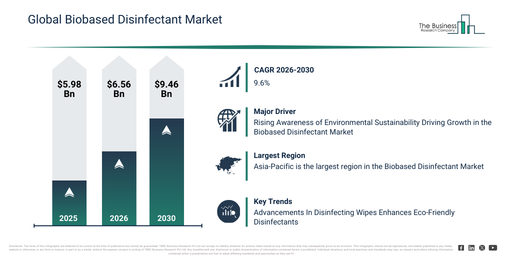
    The market for biobased disinfectants has experienced robust growth in recent years. This sector is forecast to expand from $5.98 billion in 2025 to $6.56 billion in 2026, achieving a compound annual growth rate (CAGR) of 9.7%. Historically, this growth can be attributed to rising environmental awareness among consumers, the expansion of green cleaning initiatives, the increased adoption of disinfectants in healthcare settings, the availability of renewable raw materials, and supportive regulatory frameworks for eco-friendly products.

    The biobased disinfectant market is projected to experience substantial expansion over the upcoming years. This market is forecast to reach $9.46 billion by 2030, exhibiting a compound annual growth rate (CAGR) of 9.6%. Key drivers for this anticipated growth include a rising need for eco-friendly hygiene products, broader application of biobased disinfectants in the food processing sector, increased financial commitments to green chemistry, expanded usage in water purification processes, and a growing consumer preference for disinfectants with reduced toxicity. Significant developments expected during this timeframe involve the wider acceptance of disinfectant formulas derived from plants, a heightened call for surface sanitizers free from harmful chemicals, the proliferation of bio-enzymatic cleaning agents, an increasing emphasis on biodegradable disinfectant items, and enhanced effectiveness of natural antimicrobial mixtures.

    Get A Free Sample Report With In-Depth Market Insights:

    https://www.thebusinessresearchcompany.com/sample.aspx?id=20510&type=smp&utm_source=Blogs&utm_medium=Paid&utm_campaign=Oct_PR

    Biobased Disinfectant Market Growth Factors: What’s Supporting Expansion?

    The increasing focus on environmental sustainability is projected to drive the expansion of the biobased disinfectant market moving forward. Environmental sustainability encompasses the responsible stewardship and conservation of natural resources, aiming to maintain the health and stability of the environment for both current and future generations. Its growing importance stems from rising global concerns regarding climate change, resource depletion, and the long-term vitality of ecosystems. Biobased disinfectants contribute to environmental sustainability by lessening dependence on synthetic chemicals sourced from nonrenewable materials, mitigating adverse environmental consequences, and encouraging the adoption of natural ingredients. For instance, in April 2024, figures from the NYU Stern Center for Sustainable Business, a US-based academic and research institution, indicated that the proportion of sustainability-marketed products grew from 17.3% in 2022 to 18.5% in 2023. Thus, the enhanced awareness of environmental sustainability is fueling the development of the biobased disinfectant market.

    Biobased Disinfectant Market Segmentation And Category Overview

    The biobased disinfectant market covered in this report is segmented –

    1) By Product Type: Essential Oil-Based Disinfectants, Citric Acid-Based Disinfectants, Hydrogen Peroxide-Based Disinfectants, Vinegar-Based Disinfectants, Bio-Enzymatic Disinfectants, Other Product Types

    2) By Category: Liquid Disinfectants, Gel Disinfectants, Spray Disinfectants, Other Categories

    3) By End-User Industry: Healthcare, Food And Beverage, Pharmaceutical, Home Care, Water Treatment, Other End-User Industries

    Subsegments:

    1) By Essential Oil-Based Disinfectants: Tea Tree Oil Disinfectants, Lavender Oil Disinfectants, Eucalyptus Oil Disinfectants, Citrus Oil Disinfectants

    2) By Citric Acid-Based Disinfectants: Liquid Citric Acid Disinfectants, Citric Acid Sprays, Citric Acid Wipes

    3) By Hydrogen Peroxide-Based Disinfectants: Standard Hydrogen Peroxide Solutions, Stabilized Hydrogen Peroxide Formulations, Hydrogen Peroxide Wipes

    4) By Vinegar-Based Disinfectants: White Vinegar Disinfectant Solutions, Apple Cider Vinegar Disinfectants, Vinegar Cleaning Sprays

    5) By Bio-Enzymatic Disinfectants: Protease-Based Disinfectants, Amylase-Based Disinfectants, Lipase-Based Disinfectants

    6) By Other Product Types: Plant Extract-Based Disinfectants, Organic Acid-Based Disinfectants, Multi-Surface Biobased Disinfectants

    Biobased Disinfectant Market Industry Trends: What’s Reshaping Demand?

    Leading companies active in the biobased disinfectant market are developing plant-based disinfectants to satisfy the increasing consumer need for environmentally friendly and efficient cleaning solutions. Plant-based disinfectants are cleaning agents created from natural ingredients sourced from plants, specifically designed to destroy or hinder the proliferation of harmful microorganisms. As an illustration, in August 2024, The Clorox Company, a manufacturing entity based in the US, unveiled Clorox EcoClean Disinfecting Wipes. These wipes are intended for cleaning professionals and are constructed with a 100% plant-based substrate, incorporating naturally derived citric acid as their active ingredient. They effectively eliminate 99.9% of germs without the inclusion of bleach, ammonia, or alcohol, thereby providing a safer choice for various surfaces. The wipes have received certification from the Design for the Environment (DfE) program, highlighting their eco-conscious formulation. Additionally, their packaging uses 38% less plastic than traditional alternatives, supporting sustainability goals.

    Biobased Disinfectant Market Competitive Analysis Of Leading Industry Participants

    Major companies operating in the biobased disinfectant market are BASF SE, The Dow Chemical Company, 3M Company, Ecolab Inc., The Clorox Company, Clariant AG, Diversey Holdings Ltd., GOJO Industries Inc., Betco Corporation, Contec Inc., Seventh Generation Inc., Earth Friendly Products LLC (ECOS), Spartan Chemical Company Inc., Method Products PBC, Virox Technologies Inc., Bio Veda Action Research Pvt Ltd. (Biotique), CleanWell LLC, BioSafe Systems LLC, Bioclean Technologies LLC, Thymox Technology (Laboratoire M2 Inc.)

    View The Full Biobased Disinfectant Market Report:

    https://www.thebusinessresearchcompany.com/report/biobased-disinfectant-global-market-report?utm_source=Blogs&utm_medium=Paid&utm_campaign=Oct_PR

    Biobased Disinfectant Market Geographic Distribution And Regional Opportunities

    Asia-Pacific was the largest region in the biobased disinfectant market in 2025. The regions covered in the biobased disinfectant market report are Asia-Pacific, South East Asia, Western Europe, Eastern Europe, North America, South America, Middle East, Africa.

    Reach Out To Our Team:

    The Business Research Company: https://www.thebusinessresearchcompany.com/

    Americas: +1 310-496-7795

    Asia: +44 7882 955267 & +91 8897263534

    Europe: +44 7882 955267

    Email us at: marketing@tbrc.info

    Follow us on:

    LinkedIn: https://in.linkedin.com/company/the-business-research-company

    YouTube: https://www.youtube.com/channel/UC24_fI0rV8cR5DxlCpgmyFQ

    Global Market Model: https://www.thebusinessresearchcompany.com/global-market-model
  • Biguanides Market Analysis Through 2030: Market Size, Growth Trends And Industry Outlook

    Biguanides Market Analysis Through 2030: Market Size, Growth Trends And Industry Outlook

    Built to provide research that’s more actionable and strategically valuable, The Business Research Company’s 2026 market reports include market attractiveness analysis, total addressable market sizing, company benchmarking matrices, interactive Excel dashboards, broader supply chain intelligence, emerging startup tracking, and in-depth product insights.

    Biguanides Market Value Analysis: What Growth Lies Ahead Over The Forecast Period?

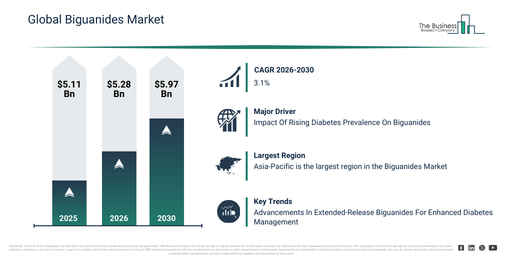
    The biguanides market has experienced consistent expansion in its size over recent years. It is projected to increase from $5.11 billion in 2025 to $5.28 billion in 2026, registering a compound annual growth rate (CAGR) of 3.4%. Historically, this expansion is linked to factors such as the rising incidence of type 2 diabetes, greater understanding of metabolic conditions, an increase in the availability of generic biguanides, the uptake of oral antidiabetic treatments, and breakthroughs in liver-focused therapies.

    The biguanides market size is anticipated to see consistent growth in the coming years, with an expected increase to $5.97 billion in 2030, exhibiting a compound annual growth rate (CAGR) of 3.1%. This projected growth during the forecast period stems from factors such as the increasing demand for personalized medicine, the expansion of telemedicine services for diabetes care, a rising incidence of pcOS, the development of combination therapies, and government initiatives that promote chronic disease management. Key trends identified for the forecast period include the advent of personalized diabetes management solutions, ongoing combination therapy development, expanded indications extending beyond type 2 diabetes, the adoption of home healthcare and remote patient monitoring, and the availability of cost-effective generic biguanides.

    Get A Free Sample Report With In-Depth Market Insights:

    https://www.thebusinessresearchcompany.com/sample.aspx?id=15735&type=smp&utm_source=Blogs&utm_medium=Paid&utm_campaign=Oct_PR

    Biguanides Market Demand Drivers: What’s Powering Industry Growth?

    The biguanides market is anticipated to grow significantly in the future due to the increasing incidence of diabetes. Diabetes is a chronic metabolic disorder defined by elevated blood glucose levels, stemming from either inadequate insulin production or impaired insulin function. This increase in diabetes cases is primarily fueled by shifts in lifestyle, an aging global population, and enhanced diagnostic awareness. The biguanides market contributes to diabetes management through improving insulin sensitivity, decreasing glucose production in the liver, and aiding in the reduction of blood sugar levels for individuals with type 2 diabetes. A relevant example shows that in March 2024, the Office for Health Improvement & Disparities (OHID), a UK-based government department, reported that between March 2022 and March 2023, the percentage of individuals with type 1 diabetes receiving all eight recommended care processes increased by 22%, while for type 2 diabetes it increased by 21%, and the proportion achieving target HbA1c levels reached 37.9%, representing the highest value ever reported. Consequently, the rising prevalence of diabetes is a significant driver for the growth of the biguanides market.

    Biguanides Market Segment Outlook: Which Categories Are Growing Fastest?

    The biguanides market covered in this report is segmented –

    1) By Type: Metformin, Phenformin, Other Types

    2) By Dosage Form: Tablets, Oral Solutions

    3) By Formulation: Immediate Release, Extended Release

    4) By Distribution Channel: Hospital Pharmacies, Retail Pharmacies, Online Pharmacies

    Subsegments:

    1) By Metformin: Immediate-Release Metformin, Extended-Release Metformin

    2) By Phenformin: Phenformin Hydrochloride

    3) By Other Types: Buformin, Metformin Combinations

    Biguanides Market Innovation Trends: What Developments Are Reshaping The Industry?

    Entities operating within the biguanide market are prioritizing the development of advanced remedies like extended-release biguanide formulations to enhance patient compliance, optimize glycemic control, and mitigate gastrointestinal side effects. Extended-release biguanide formulations are pharmaceutical products engineered to release their active component gradually over time, thereby maintaining stable blood concentrations, improving tolerability, and fostering better long-term adherence for individuals managing diabetes. For example, in August 2023, Dr. Reddy’s Laboratories, an India-based biotechnology company, launched saxagliptin and metformin hydrochloride extended-release tablets. This USFDA-approved generic version of KOMBIGLYZE XR integrates saxagliptin, a DPP-4 inhibitor, with metformin, a biguanide, providing adults with type 2 diabetes mellitus an effective once-daily treatment option that supports improved glycemic control when used in conjunction with diet and exercise, while also enhancing adherence through its extended-release design.

    Biguanides Market Leading Companies And Competitive Benchmarking

    Major companies operating in the biguanides market are Pfizer Inc., Sanofi-Aventis LLC, Viatris Inc., Aurobindo Pharma Ltd., Cipla Ltd, Dr. Reddy’s Laboratories, Lupin Limited, Zydus Lifesciences Limited, Torrent Pharmaceuticals Limited, Intas Pharmaceuticals Ltd., Apotex Inc, Sun Pharmaceutical Industries Ltd., Glenmark Pharmaceuticals Ltd., Mylan Laboratories Ltd., Teva Pharmaceutical Industries Ltd., Alkem Laboratories Ltd., Panacea Biotech Ltd., Wanbury Ltd, USV Private Limited, Abbott Laboratories

    View The Full Biguanides Market Report:

    https://www.thebusinessresearchcompany.com/report/biguanides-global-market-report?utm_source=Blogs&utm_medium=Paid&utm_campaign=Oct_PR

    Biguanides Market Largest Region By Revenue And Market Share

    Asia-Pacific was the largest region in the biguanides market in 2025. Middle East And Africa is expected to be the fastest-growing region in the forecast period. The regions covered in the biguanides market report are Asia-Pacific, South East Asia, Western Europe, Eastern Europe, North America, South America, Middle East, Africa.

    Reach Out To Our Team:

    The Business Research Company: https://www.thebusinessresearchcompany.com/

    Americas: +1 310-496-7795

    Asia: +44 7882 955267 & +91 8897263534

    Europe: +44 7882 955267

    Email us at: marketing@tbrc.info

    Follow us on:

    LinkedIn: https://in.linkedin.com/company/the-business-research-company

    YouTube: https://www.youtube.com/channel/UC24_fI0rV8cR5DxlCpgmyFQ

    Global Market Model: https://www.thebusinessresearchcompany.com/global-market-model
  • Bevacizumab Biosimilars Market Outlook From 2026 To 2030: Key Growth Factors And Future Opportunities

    Bevacizumab Biosimilars Market Outlook From 2026 To 2030: Key Growth Factors And Future Opportunities

    Backed by market attractiveness analysis, total addressable market sizing, company benchmarking matrices, interactive Excel dashboards, wider supply chain intelligence, emerging startup coverage, and detailed product-level insights, The Business Research Company’s 2026 market reports are designed to offer research that is more actionable and strategically valuable than ever.

    Bevacizumab Biosimilars Market Size Forecast: How Big Could The Market Get By 2030?

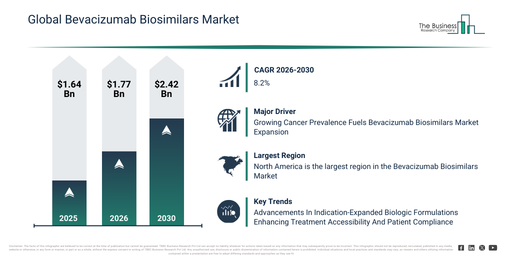
    The bevacizumab biosimilars market size has demonstrated significant expansion in recent years. This market is set to increase from $1.64 billion in 2025 to $1.77 billion in 2026, achieving a compound annual growth rate (CAGR) of 7.5%. Historically, this growth can be attributed to several factors, including the patent expiry of reference bevacizumab, the rising prevalence of cancer, a growing demand for cost-effective biologics, government incentives supporting biosimilars, and advancements in recombinant DNA technology.

    The bevacizumab biosimilars market is poised for significant expansion in the coming years. Its valuation is projected to reach $2.42 billion by 2030, exhibiting a compound annual growth rate (CAGR) of 8.2%. This expansion during the forecast period is driven by factors such as a rise in biosimilar approvals, the penetration into developing markets, the incorporation of AI into drug discovery, a heightened demand for outpatient oncology services, and strategic alliances among pharmaceutical entities. Key developments anticipated during the forecast span involve a greater uptake of biosimilars in cancer treatment, the availability of more economical therapeutic options, an increase in regulatory clearances for biosimilars, the broadening of hospital and retail pharmacy infrastructures, and the proliferation of specialized cancer treatment facilities.

    Get A Free Sample Report With In-Depth Market Insights:

    https://www.thebusinessresearchcompany.com/sample.aspx?id=10848&type=smp&utm_source=Blogs&utm_medium=Paid&utm_campaign=Oct_PR

    Bevacizumab Biosimilars Market Growth Drivers: What’s Behind The Acceleration?

    An increasing occurrence of cancer cases is projected to boost the expansion of the bevacizumab biosimilar market in the future. Cancer incidence quantifies the new cancer cases observed within a particular population over a specified timeframe. Bevacizumab, a biologic, works by inhibiting tumor angiogenesis, thereby facilitating tumor shrinkage and hindering growth, demonstrating similar efficacy and safety to reference biologics for patients with advanced non-small cell lung cancer or metastatic colorectal cancer. For example, the NHS England, a UK-based government department, reported in October 2025 that England saw 354,820 new cancer diagnoses in 2023, marking an increase of 8,605 from 2022. Consequently, the growing prevalence of cancer cases fuels the bevacizumab biosimilars market.

    Bevacizumab Biosimilars Market Segment Landscape: Which Areas Lead Development?

    The bevacizumab biosimilars market covered in this report is segmented –

    1) By Product: Avastin, Mvasi, Zirabev, Aybintio, Other Products

    2) By Distribution Channel: Hospital Pharmacy, Online Pharmacy, Retail Pharmacy, Other Distribution Channels

    3) By Application: Colorectal Cancer, Non-small Cell Lung Cancer, Glioblastoma, Renal Cell Carcinoma, Cervical Cancer, Ovarian Cancer

    Bevacizumab Biosimilars Market Trends: What’s Defining The Industry’s Next Phase?

    Major companies in the bevacizumab biosimilars market are prioritizing technological advancements, such as next-generation indication-expanded formulations, to address the growing need for more adaptable and cost-effective biologic therapies across both oncology and non-oncology indications. These sophisticated formulations modify the core bevacizumab antibody for novel administration methods or new indications, allowing for non-oncologic applications (e.g., ophthalmology) or more patient-compliant dosing, all while maintaining the identical VEGF-neutralizing mechanism utilized by traditional intravenous bevacizumab. For example, in March 2024, Dr. Reddy’s Laboratories, an India-based pharmaceutical firm, introduced Versavo (bevacizumab) in the UK. This high-quality biosimilar of Avastin (bevacizumab) is produced for oncology applications, making treatments for metastatic colorectal cancer, lung cancer, glioblastoma, renal cell carcinoma, cervical cancer, ovarian cancer, and breast cancer more accessible for a wider patient population. Versavo is provided in 100 mg and 400 mg single-use vials, consistent with standard bevacizumab dosages, and offers a biosimilar cost benefit that helps reduce the financial strain on healthcare systems and individuals relying on anti-VEGF therapy.

    Bevacizumab Biosimilars Market Industry Leaders And Competitive Landscape

    Major companies operating in the bevacizumab biosimilars market are Cipla Limited, Reliance lifesciences Pvt. Ltd., Fujifilm Kyowa Kirin Biologics Co. Ltd., Pfizer Inc., F. Hoffmann-La Roche Ltd., Teva Pharmaceutical Industries Ltd., Mylan Inc., Daiichi Sankyo Company Limited, Beaconpharma Ltd., Innovent Biologics Inc., STADA Arzneimittel AG, Shanghai Henlius Biotech Inc., Aurobindo Pharma Ltd., Dr. Reddy’s Laboratories Ltd., Biocon Ltd., Intas Pharmaceuticals Ltd., Amneal Pharmaceuticals LLC, Samsung Bioepis Co. Ltd., Celltrion Inc., Coherus BioSciences Inc., Hetero Drugs Ltd., Apotex Inc., BioXpress Therapeutics SA, mAbxience SA

    View The Full Bevacizumab Biosimilars Market Report:

    https://www.thebusinessresearchcompany.com/report/bevacizumab-biosimilars-global-market-report?utm_source=Blogs&utm_medium=Paid&utm_campaign=Oct_PR

    Bevacizumab Biosimilars Market Regional Analysis And Leading Geography

    North America was the largest region in the bevacizumab biosimilars market in 2025. The regions covered in the bevacizumab biosimilars market report are Asia-Pacific, South East Asia, Western Europe, Eastern Europe, North America, South America, Middle East, Africa.

    Reach Out To Our Team:

    The Business Research Company: https://www.thebusinessresearchcompany.com/

    Americas: +1 310-496-7795

    Asia: +44 7882 955267 & +91 8897263534

    Europe: +44 7882 955267

    Email us at: marketing@tbrc.info

    Follow us on:

    LinkedIn: https://in.linkedin.com/company/the-business-research-company

    YouTube: https://www.youtube.com/channel/UC24_fI0rV8cR5DxlCpgmyFQ

    Global Market Model: https://www.thebusinessresearchcompany.com/global-market-model
  • Beta Blockers Market Growth Forecast: Market Size, Key Trends And Emerging Opportunities Through 2030

    Beta Blockers Market Growth Forecast: Market Size, Key Trends And Emerging Opportunities Through 2030

    Featuring market attractiveness scoring, total addressable market sizing, company benchmarking matrices, interactive Excel dashboards, deeper supply chain intelligence, emerging startup tracking, and granular product-level insights, The Business Research Company’s 2026 market reports are built to deliver research that is both more actionable and more strategically valuable.

    Beta Blockers Market Revenue Outlook: What CAGR Lies Ahead Through 2030?

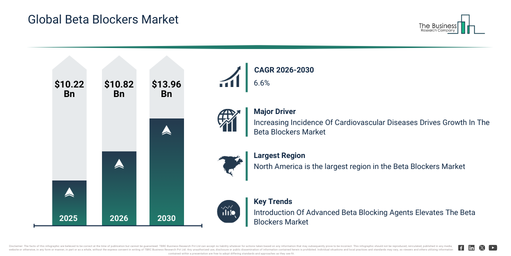
    The beta blockers market has experienced substantial expansion in recent years. It is anticipated to expand from $10.22 billion in 2025 to $10.82 billion in 2026, demonstrating a compound annual growth rate (CAGR) of 5.8%. This historical growth can be linked to factors such as an escalating prevalence of cardiovascular diseases, the launch of generic beta blockers, a developing healthcare infrastructure, enhanced physician awareness, and changes associated with urbanization and lifestyles.

    The beta blockers market is poised for significant expansion in the coming years. Its valuation is projected to reach $13.96 billion by 2030, demonstrating a compound annual growth rate (CAGR) of 6.6%. This anticipated growth during the forecast period is driven by factors such as progress in precision medicine, the integration of digital health solutions, the expansion into emerging markets, new drug delivery technologies, and customized treatment strategies. Key developments anticipated in this period encompass the increased use of beta blockers for managing cardiovascular conditions, enhanced public understanding of preventative cardiac care, the broadening of hospital and retail pharmacy networks, the creation of innovative beta blocker formulations, and the growing elderly demographic suffering from hypertension and heart ailments.

    Get A Free Sample Report With In-Depth Market Insights:

    https://www.thebusinessresearchcompany.com/sample.aspx?id=10684&type=smp&utm_source=Blogs&utm_medium=Paid&utm_campaign=Oct_PR

    Beta Blockers Market Growth Factors Behind Sustained Expansion

    The increasing prevalence of cardiovascular diseases is expected to drive the growth of the beta blockers market. Cardiovascular diseases (CVDs) are conditions impacting the heart and blood vessels. The rise in these diseases is primarily linked to factors such as poor diets, sedentary lifestyles, insufficient exercise, tobacco consumption, and obesity. Beta blockers can aid in reducing cardiovascular cases by exerting various beneficial effects on the heart and blood vessels. Hence, the growing incidence of cardiovascular diseases significantly contributes to the beta blockers market expansion. For instance, in January 2024, the American Heart Association, a US-based non-profit organization, reported an increase in the age-adjusted death rate from cardiovascular disease to 233.3 per 100,000 in 2024, marking a 4.0% rise from 224.4 per 100,000 in 2023. Consequently, the escalating incidence of cardiovascular diseases will fuel the beta blockers market growth.

    Beta Blockers Market Segments: Where Is Growth Concentrated?

    The beta blockers market covered in this report is segmented –

    1) By Type: Non-selective Agents, Selective Agents

    2) By Indication: Angina Pectoris, Heart Failure, High Blood Pressure, Other Indications

    3) By Drugs: Betaxolol, Acebutolol, Esmolol, Other Drugs

    4) By Distribution Channel: Hospital Pharmacy, Retail Pharmacy, Online Pharmacy

    5) By Application: Cardiac Diseases, Hypertension, Glaucoma, Other Applications

    Subsegments:

    1) By Non-Selective Agents: Propranolol, Nadolol, Timolol

    2) By Selective Agents: Atenolol, Metoprolol, Bisoprolol, Nebivolol

    Beta Blockers Market Industry Trends Fueling Future Revenue Growth

    Companies operating in the beta blockers market are prioritizing the introduction of advanced beta-blocking agents designed to manage severe hypertension and reduce blood pressure, seeking a competitive edge. Beta-blockers play a vital role in addressing severe hypertension and lowering blood pressure by blocking peripheral arteriolar alpha-adrenoceptors, which diminishes peripheral resistance, while concurrent beta-blockade protects the heart from reflex sympathetic drives. For instance, in March 2023, Hikma Pharmaceuticals PLC, a UK-based pharmaceutical company, launched Labetalol Hydrochloride (Labetalol HCl) Injection, USP, in a prefilled syringe (PFS) form in the US, specifically for treating severe hypertension and lowering blood pressure. Labetalol features a combination of selective, competitive, alpha1-adrenergic blocking and nonselective, competitive, beta-adrenergic blocking activity within a single substance. It primarily functions by blocking peripheral arteriolar alpha-adrenoceptors, thereby reducing peripheral resistance and decreasing blood pressure. Labetalol is distinctly classified as a non-selective beta-adrenergic receptor antagonist, indicating its ability to block both beta-1 and beta-2 receptors throughout the body.

    Beta Blockers Market Key Participants And Competitive Landscape

    Major companies operating in the beta blockers market are Pfizer Inc., Novartis AG, Merck & Co. Inc., AstraZeneca plc, Johnson and Johnson, Eli Lilly and Company, Sanofi SA, Bristol-Myers Squibb Company, Bayer AG, GlaxoSmithKline plc, Teva Pharmaceutical Industries Ltd., Sun Pharmaceutical Industries Ltd., Amneal Pharmaceuticals LLC, Abbott Laboratories, Eagle Pharmaceuticals Inc., Neon Healthcare Ltd., Midas Pharma GmbH, AbbVie Inc., Mylan N.V., Boehringer Ingelheim International GmbH, Aspen Pharmacare Holdings Limited, Lupin Limited, Torrent Pharmaceuticals Ltd., Dr. Reddy’s Laboratories Ltd., Cipla Ltd., Sandoz International GmbH, Wockhardt Ltd., Endo Pharmaceuticals Inc., Apotex Inc.

    View The Full Beta Blockers Market Report:

    https://www.thebusinessresearchcompany.com/report/beta-blockers-global-market-report?utm_source=Blogs&utm_medium=Paid&utm_campaign=Oct_PR

    Beta Blockers Market Geographic Analysis: Where Is Demand Accelerating Fastest?

    North America was the largest region in the beta blockers market in 2025. Asia-Pacific is expected to be the fastest-growing region in the global beta-blockers market report during the forecast period. The regions covered in the beta blockers market report are Asia-Pacific, South East Asia, Western Europe, Eastern Europe, North America, South America, Middle East, Africa.

    Reach Out To Our Team:

    The Business Research Company: https://www.thebusinessresearchcompany.com/

    Americas: +1 310-496-7795

    Asia: +44 7882 955267 & +91 8897263534

    Europe: +44 7882 955267

    Email us at: marketing@tbrc.info

    Follow us on:

    LinkedIn: https://in.linkedin.com/company/the-business-research-company

    YouTube: https://www.youtube.com/channel/UC24_fI0rV8cR5DxlCpgmyFQ

    Global Market Model: https://www.thebusinessresearchcompany.com/global-market-model
  • Benzodiazepine Market CAGR Forecast Through 2030: Key Trends Shaping Industry Expansion

    Benzodiazepine Market CAGR Forecast Through 2030: Key Trends Shaping Industry Expansion

    Built to provide research that’s more actionable and strategically valuable, The Business Research Company’s 2026 market reports include market attractiveness analysis, total addressable market sizing, company benchmarking matrices, interactive Excel dashboards, broader supply chain intelligence, emerging startup tracking, and in-depth product insights.

    Benzodiazepine Drugs Market Growth Analysis: How Will Revenue Trend Over The Forecast Period?

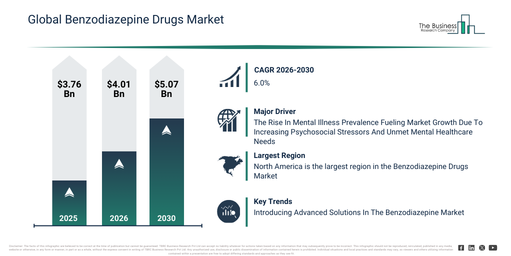
    The benzodiazepine drugs market has experienced substantial growth in recent years. It is anticipated to increase from $3.76 billion in 2025 to $4.01 billion in 2026, achieving a compound annual growth rate (CAGR) of 6.8%. This historical growth can be attributed to several factors, including the rising prevalence of anxiety disorders and insomnia, enhanced awareness of mental health conditions, the introduction of new benzodiazepine formulations, the expansion of hospital and clinical services, and the growing demand for muscle relaxants in neurology.

    The benzodiazepine drugs market size is expected to experience significant expansion over the next few years. It is projected to grow to $5.07 billion by 2030, achieving a compound annual growth rate (CAGR) of 6.0%. This growth in the forecast period is attributable to an increased embrace of precision medicine, the integration of artificial intelligence and digital tools in drug development, the expansion of homecare services for mental health, a rising geriatric population requiring sedatives, and increasing investments in telehealth and remote monitoring. Key trends in the forecast period include the adoption of personalized medicine, AI-powered drug discovery, remote patient monitoring, the integration of digital therapeutics, and smart drug delivery systems.

    Get A Free Sample Report With In-Depth Market Insights:

    https://www.thebusinessresearchcompany.com/sample.aspx?id=15519&type=smp&utm_source=Blogs&utm_medium=Paid&utm_campaign=Oct_PR

    Benzodiazepine Drugs Market Demand Drivers Opening New Revenue Streams

    The market for benzodiazepine drugs is anticipated to expand due to the increasing incidence of mental illness. Mental illness encompasses diverse conditions impacting an individual’s thoughts, feelings, or actions, frequently leading to substantial difficulties in everyday activities. This rise in mental illness prevalence stems from elements like increased psychosocial stress, demands of modern lifestyles, genetic predispositions, and insufficient access to prompt mental health support. Benzodiazepines aid in managing mental health by quickly easing symptoms associated with anxiety, panic disorders, and intense stress reactions, providing immediate, temporary comfort to those undergoing significant psychological suffering. These drugs are particularly efficacious in addressing sudden panic attacks, diminishing manifestations like trembling, sweating, and shortness of breath. For instance, in November 2023, according to NHS England, a UK-based executive non-departmental public body, 20.3% of eight- to 16-year-olds were found to have a probable mental disorder. Consequently, the growing occurrence of mental illness is fueling the expansion of the benzodiazepine drugs market.

    Benzodiazepine Drugs Market Segment Analysis: What Are The Core Market Categories?

    The benzodiazepine drugs market covered in this report is segmented –

    1) By Product: Alprazolam, Diazepam, Lorazepam, Clonazepam, Temazepam, Oxazepam, Chlordiazepoxide, Other Products

    2) By Route Of Administration: Oral, Parenteral, Other Routes Of Administration

    3) By Application: Anxiety Disorders, Seizures, Insomnia, Alcohol Withdrawal, Other Applications

    4) By End User: Hospitals, Homecare, Specialty Clinics, Other End Users

    Benzodiazepine Drugs Market Trends Powering Strategic Industry Growth

    Leading firms within the benzodiazepine drugs market are intensifying their efforts to create sophisticated solutions, like prefilled syringe injections, aimed at improving dosing accuracy and reducing the potential for medication errors. A prefilled syringe injection is a pharmaceutical product format where a precise dose of a benzodiazepine drug is pre-packaged and pre-measured in a syringe, ready for immediate application. As an example, in May 2024, Hikma Pharmaceuticals plc, a pharmaceutical company based in the UK, introduced Midazolam Injection, USP, available in dosages of 2 mg/2 mL and 10 mg/2 mL. This introduction offers exact dosing choices, various ways of administration, and safety details concerning respiratory depression and risks associated with opioid interactions. The launch of Midazolam Injection in a prefilled syringe represents a considerable step forward in drug delivery methods within the benzodiazepine drugs market, providing greater ease of use, precise measurement, sustained sterility, and improved safety, consequently fostering better patient care, broader market reach, and adherence to regulations.

    Benzodiazepine Drugs Market Top Companies Driving Competitive Growth

    Major companies operating in the benzodiazepine drugs market are Pfizer Inc., Johnson & Johnson, Roche Holding AG, Merck & Co. Inc., Bayer AG, Sanofi S.A., Novartis AG, GlaxoSmithKline plc, Eli Lilly and Company, Boehringer Ingelheim International GmbH, Teva Pharmaceutical Industries Ltd., Otsuka Pharmaceutical Co. Ltd, Bausch Health Companies Inc., Sun Pharmaceutical Industries Ltd., Aurobindo Pharma, Dr. Reddy’s Laboratories Ltd., Apotex Inc., Hikma Pharmaceuticals, Endo International plc, Amneal Pharmaceuticals LLC, Lupin Limited, Zydus Lifesciences Limited, Mallinckrodt Pharmaceuticals, Torrent Pharmaceuticals Ltd., Alvogen, Actavis Laboratories FL Inc., Sandoz International GmbH

    View The Full Benzodiazepine Drugs Market Report:

    https://www.thebusinessresearchcompany.com/report/benzodiazepine-drugs-global-market-report?utm_source=Blogs&utm_medium=Paid&utm_campaign=Oct_PR

    Benzodiazepine Drugs Market Global Footprint: Which Region Leads The Industry?

    North America was the largest region in the benzodiazepine drugs market in 2025. Asia-Pacific is expected to be the fastest-growing region in the forecast period. The regions covered in the benzodiazepine drugs market report are Asia-Pacific, South East Asia, Western Europe, Eastern Europe, North America, South America, Middle East, Africa.

    Reach Out To Our Team:

    The Business Research Company: https://www.thebusinessresearchcompany.com/

    Americas: +1 310-496-7795

    Asia: +44 7882 955267 & +91 8897263534

    Europe: +44 7882 955267

    Email us at: marketing@tbrc.info

    Follow us on:

    LinkedIn: https://in.linkedin.com/company/the-business-research-company

    YouTube: https://www.youtube.com/channel/UC24_fI0rV8cR5DxlCpgmyFQ

    Global Market Model: https://www.thebusinessresearchcompany.com/global-market-model