Month: October 2026

  • Benchtop Bioreactors Market To Witness 10.1% CAGR Growth Through 2030: Key Industry Drivers

    Benchtop Bioreactors Market To Witness 10.1% CAGR Growth Through 2030: Key Industry Drivers

    Backed by market attractiveness analysis, total addressable market sizing, company benchmarking matrices, interactive Excel dashboards, wider supply chain intelligence, emerging startup coverage, and detailed product-level insights, The Business Research Company’s 2026 market reports are designed to offer research that is more actionable and strategically valuable than ever.

    Benchtop Bioreactors Market Forecast: What Value Will The Market Reach By 2030?

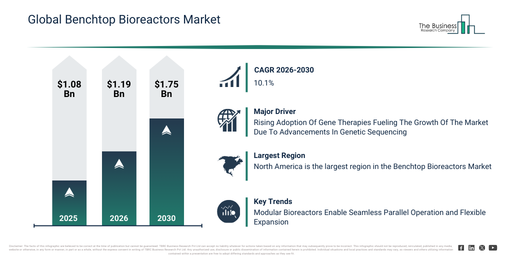
    The benchtop bioreactors market has seen swift expansion in recent years. Its valuation is expected to rise from $1.08 billion in 2025 to $1.19 billion in 2026, registering a compound annual growth rate (CAGR) of 10.2%. The previous period’s growth was primarily due to increased funding in life sciences research, the expansion of academic and research institutions, the reliance on small-scale fermentation systems, a rise in pharmaceutical R&D endeavors, and the escalating need for regulated laboratory settings.

    The benchtop bioreactors market size is anticipated to experience substantial expansion over the upcoming years. It is projected to reach $1.75 billion in 2030 at a compound annual growth rate (CAGR) of 10.1%. This projected growth during the forecast period is fueled by several factors, including the increasing development of biologics and biosimilars, the embrace of automated and continuous bioreactors, a heightened emphasis on personalized medicine research, growing partnerships with Contract Research Organizations (CROs), and innovations in bioprocessing technologies. Key developments expected in this period encompass the increasing integration of benchtop bioreactors into research and development activities, a surge in demand for single-use and modular bioreactor systems, a concentrated effort on refining processes and boosting yield, an expansion of cell culture and microbial fermentation investigations, and a growing application of benchtop bioreactors in educational and academic settings.

    Get A Free Sample Report With In-Depth Market Insights:

    https://www.thebusinessresearchcompany.com/sample.aspx?id=27220&type=smp&utm_source=Blogs&utm_medium=Paid&utm_campaign=Oct_PR

    Benchtop Bioreactors Market Growth Backed By Core Demand Fundamentals

    The increasing integration of gene therapies is anticipated to drive expansion within the benchtop bioreactors market in the future. Gene therapy is defined as a medical approach where faulty genes are altered or substituted to address or avert illnesses. Growing interest in gene therapy stems from progress in genetic sequencing and diagnostics, facilitating accurate detection of disease-related genes for focused interventions. Benchtop bioreactors enhance gene therapies by providing precise regulation and effective manufacturing of cells modified by genes. These devices facilitate quick research and limited-scale production, thereby boosting operational speed and uniformity. As an illustration, data from December 2024, supplied by the American Society of Gene & Cell Therapy (ASGCT), a non-profit medical and scientific body based in the US, showed that the Food and Drug Administration (FDA) gave its approval to six gene therapy products in 2023, an increase from five approvals recorded in 2022. Consequently, the expanding use of gene therapies is stimulating the development of the benchtop bioreactors market.

    Benchtop Bioreactors Market Segment Breakdown: Which Categories Lead On Revenue?

    The benchtop bioreactors market covered in this report is segmented –

    1) By Type: Swing-Style Bioreactors, Stirred-Tank Bioreactors, Wave-Mixed Bioreactors, Airlift Bioreactors, Bubble Column Bioreactors

    2) By Control Type: Automated Bioreactors, Manual Bioreactors, Continuous Bioreactors, Batch Bioreactors

    3) By Material: Stainless Steel, Glass, Plastic, Composite Materials

    4) By Application: Research And Development, Process Development, Bioproduction, Quality Control, Training And Education

    5) By End User: Pharmaceutical Companies, Biotechnology Companies, Academic And Research Institutes, Contract Research Organizations (CROs), Food And Beverage Industry

    Subsegments:

    1) By Swing-Style Bioreactors: Single-Use Swing Bioreactors, Multi-Use Swing Bioreactors, Compact Swing Bioreactors, Automated Swing Bioreactors

    2) By Stirred-Tank Bioreactors: Single-Use Stirred-Tank Bioreactors, Glass Stirred-Tank Bioreactors, Stainless-Steel Stirred-Tank Bioreactors, Modular Stirred-Tank Bioreactors, Automated Stirred-Tank Bioreactors

    3) By Wave-Mixed Bioreactors: Single-Use Wave-Mixed Bioreactors, Dual-Motion Wave-Mixed Bioreactors, Automated Wave-Mixed Bioreactors, Compact Wave-Mixed Bioreactors

    4) By Airlift Bioreactors: Internal Loop Airlift Bioreactors, External Loop Airlift Bioreactors, Single-Use Airlift Bioreactors

    5) By Bubble Column Bioreactors: Vertical Bubble Column Bioreactors, Single-Use Bubble Column Bioreactors, Gas-Lift Bubble Column Bioreactors, Automated Bubble Column Bioreactors

    Benchtop Bioreactors Market Growth Trends Reshaping The Competitive Landscape

    Leading companies within the benchtop bioreactors market are focusing on creating innovative solutions, such as benchtop fermenters, to enhance precise control and scalability for research and small-scale production. Benchtop fermenters are compact, laboratory-scale bioreactors designed for the controlled cultivation of microorganisms or cells, supporting both research and limited production needs. For instance, in September 2024, VFL Sciences Private Limited, an India-based biotechnology equipment manufacturer, introduced the GreatFlo range of benchtop fermenters or bioreactors. This versatile and modular product line is engineered to allow easy scale-up and consistent reproducibility in fermentation and cell culture applications. These fermenters support seamless parallel operation with flexible expansion options, ranging from 2 to 16 vessels, each providing a working volume of 200-500 ml. They are equipped with Peltier-controlled heating and cooling, exhaust condensers, and software that complies with 21 CFR Part 11, offering precise regulation of agitation, pH, dissolved oxygen, and individual gas mixing.

    Benchtop Bioreactors Market Leading Players And Competitive Positioning

    Major companies operating in the benchtop bioreactors market are Thermo Fisher Scientific Inc., Danaher Corporation, Merck KGaA, GE Healthcare, Sartorius AG, Eppendorf AG, Solaris Biotech Solutions, IKA-Werke GmbH And Co. KG, GPC Bio USA, Praj HiPurity Systems Limited., PBS Biotech Inc., Bioengineering AG, Broadley-James Ltd., Infors HT, Solida Biotech, Bbi-biotech GmbH, Applikon Biotechnology B.V., Labfirst Scientific Instruments Co. Ltd, Pharsol Ltd., Uma Pharmatech Machinery

    View The Full Benchtop Bioreactors Market Report:

    https://www.thebusinessresearchcompany.com/report/benchtop-bioreactors-global-market-report?utm_source=Blogs&utm_medium=Paid&utm_campaign=Oct_PR

    Benchtop Bioreactors Market Regional Distribution: Which Areas Power Market Growth?

    North America was the largest region in the benchtop bioreactors market in 2025. Asia-Pacific is expected to be the fastest-growing region in the forecast period. The regions covered in the benchtop bioreactors market report are Asia-Pacific, South East Asia, Western Europe, Eastern Europe, North America, South America, Middle East, Africa.

    Reach Out To Our Team:

    The Business Research Company: https://www.thebusinessresearchcompany.com/

    Americas: +1 310-496-7795

    Asia: +44 7882 955267 & +91 8897263534

    Europe: +44 7882 955267

    Email us at: marketing@tbrc.info

    Follow us on:

    LinkedIn: https://in.linkedin.com/company/the-business-research-company

    YouTube: https://www.youtube.com/channel/UC24_fI0rV8cR5DxlCpgmyFQ

    Global Market Model: https://www.thebusinessresearchcompany.com/global-market-model
  • Behcets disease Market Projected For Strong Expansion Through 2030: Key Trends And Future Outlook

    Behcets disease Market Projected For Strong Expansion Through 2030: Key Trends And Future Outlook

    Featuring market attractiveness scoring, total addressable market sizing, company benchmarking matrices, interactive Excel dashboards, deeper supply chain intelligence, emerging startup tracking, and granular product-level insights, The Business Research Company’s 2026 market reports are built to deliver research that is both more actionable and more strategically valuable.

    Behcets disease Market Size Outlook: How Quickly Will Revenue Expand Through 2030?

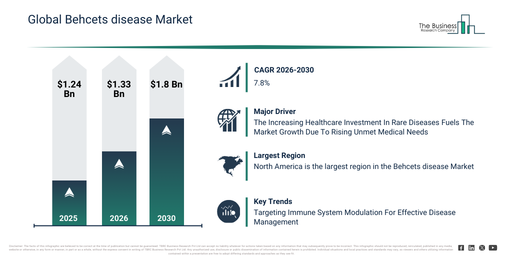
    The behcets disease market has experienced substantial expansion in recent years. Its valuation is predicted to rise from $1.24 billion in 2025 to $1.33 billion in 2026, at a compound annual growth rate (CAGR) of 7.9%. This historical growth can be linked to heightened rare disease awareness, advancements in inflammatory disorder treatments, the application of corticosteroids, the availability of hospital rheumatology services, and the adoption of immunosuppressants.

    The behcets disease market size is anticipated to undergo substantial expansion over the next few years. It is projected to reach $1.8 billion in 2030, growing at a compound annual growth rate (CAGR) of 7.8%. This expansion during the forecast period is primarily driven by innovations in biologic therapy, targeted immune modulation, the introduction of early diagnostic tools, personalized treatment protocols, and global rare disease initiatives. Significant trends expected in the forecast period include an increased application of biologic therapies, a heightened focus on early disease diagnosis, the broader availability of corticosteroid-sparing treatments, a rising requirement for long-term disease management, and more refined multispecialty treatment approaches.

    Get A Free Sample Report With In-Depth Market Insights:

    https://www.thebusinessresearchcompany.com/sample.aspx?id=24167&type=smp&utm_source=Blogs&utm_medium=Paid&utm_campaign=Oct_PR

    Behcets disease Market Growth Catalysts And Demand Drivers

    Future expansion of the behcets disease market is anticipated due to rising healthcare funding directed towards rare diseases. These rare conditions are defined as illnesses impacting less than 1 in 2,000 individuals, typically characterized by intricate symptoms and a scarcity of available treatments. The primary catalyst for increased healthcare investment in rare diseases stems from the escalating acknowledgment of unaddressed medical requirements, as numerous patients lack successful therapies, compelling governments and pharmaceutical firms to prioritize research, development, and financial backing for these conditions. Behçet’s disease serves as an illustration of how concentrated research and dedicated advocacy for one specific rare disorder can stimulate wider investment across the spectrum of rare diseases, showing that precise initiatives can lead to substantial progress in comprehension, therapy, and policy benefiting the entire rare disease community. As an example, in April 2024, Global Genes, a US-based nonprofit organization, reported that during the first quarter of 2024, companies engaged in developing rare disease medications secured $7.1 billion via public equity and debt financing, representing a significant 307% increase from the $1.8 billion acquired during the corresponding period in 2023. Consequently, the expanding healthcare investment into rare diseases is fueling the development of the behcets disease market.

    Behcets disease Market Segmentation: How Does The Market Break Down By Category?

    The behcets disease market covered in this report is segmented –

    1) By Treatment Type: Corticosteroids, Immunosuppressants, Biologics, Other Treatments

    2) By Route Of Administration: Oral, Injectable, Topical

    3) By Type of Disease: Non-Ocular Behcet’s Disease, Ocular Behcet’s Disease

    4) By Distribution Channel: Hospital Pharmacies, Retail Pharmacies, Online Pharmacies, Other Distribution Channels

    5) By End User: Hospitals, Clinics, Ambulatory Surgical Centers

    Subsegments:

    1) By Corticosteroids: Oral Corticosteroids, Topical Corticosteroids, Intravenous Corticosteroids

    2) By Immunosuppressants: Methotrexate, Azathioprine, Cyclophosphamide, Mycophenolate Mofetil, Cyclosporine

    3) By Biologics: Tumor Necrosis Factor (TNF) Inhibitors, Interleukin Inhibitors

    4) By Other Treatments: Colchicine, Thalidomide, Hydroxychloroquine, Corticosteroid-Sparing Agents

    Behcets disease Market Trends Shaping Long-Term Demand

    Key companies in the behcets disease market are prioritizing clinical trials to develop innovative products, such as innate defense regulator (IDR) therapies, aimed at improving immune system modulation and providing more effective treatments for inflammation and other symptoms linked to the condition. Innate defense regulators (IDRs) are synthetic peptides designed to modulate the innate immune response by bolstering the body’s natural defense mechanisms; for Behçet’s disease, they function by regulating the immune system to diminish excessive inflammation, potentially easing symptoms and managing flare-ups. For instance, in November 2024, Soligenix, Inc., a US-based biopharmaceutical company, commenced patient enrollment for its Phase 2 study (protocol number DUS-AUBD-01), which is evaluating SGX945 (dusquetide) as a treatment for Behçet’s disease. This research seeks to assess SGX945, an innate defense regulator (IDR), for its capacity to modulate the immune system and reduce inflammation, offering a new therapeutic method for controlling the symptoms and flare-ups associated with behçet’s disease.

    Behcets disease Market Competitive Overview And Top Companies

    Major companies operating in the behcets disease market are AbbVie Inc., AstraZeneca PLC, GlaxoSmithKline PLC, Amgen Inc., Teva Pharmaceutical Industries Ltd., Sandoz International GmbH, Chugai Pharmaceutical Co. Ltd, Sun Pharmaceutical Industries Limited, Eisai Co. Ltd, Pharmascience Inc, Samsung Bioepis Co. Ltd., Maxivision Eye Hospitals Pvt. Ltd, Ainos Inc., Soligenix Inc, XOMA Corporation, Creabilis S.A., Iltoo Pharma S.A.S., Ganzhou Hemay Pharmaceutical Co. Ltd., Sanguine Biosciences Inc., NYU Langone Health

    View The Full Behcets disease Market Report:

    https://www.thebusinessresearchcompany.com/report/behcets-disease-global-market-report?utm_source=Blogs&utm_medium=Paid&utm_campaign=Oct_PR

    Behcets disease Market Leading Geography: Which Region Contributes The Most Revenue?

    North America was the largest region in the behcets disease market in 2025. Asia-Pacific is expected to be the fastest-growing region in the forecast period. The regions covered in the behcets disease market report are Asia-Pacific, South East Asia, Western Europe, Eastern Europe, North America, South America, Middle East, Africa.

    Reach Out To Our Team:

    The Business Research Company: https://www.thebusinessresearchcompany.com/

    Americas: +1 310-496-7795

    Asia: +44 7882 955267 & +91 8897263534

    Europe: +44 7882 955267

    Email us at: marketing@tbrc.info

    Follow us on:

    LinkedIn: https://in.linkedin.com/company/the-business-research-company

    YouTube: https://www.youtube.com/channel/UC24_fI0rV8cR5DxlCpgmyFQ

    Global Market Model: https://www.thebusinessresearchcompany.com/global-market-model

  • Barrier Packaging Materials For Pharmaceuticals Market Outlook 2026–2030: Growth Trends, Market Dynamics And Emerging Opportunities

    Barrier Packaging Materials For Pharmaceuticals Market Outlook 2026–2030: Growth Trends, Market Dynamics And Emerging Opportunities

    Built to provide research that’s more actionable and strategically valuable, The Business Research Company’s 2026 market reports include market attractiveness analysis, total addressable market sizing, company benchmarking matrices, interactive Excel dashboards, broader supply chain intelligence, emerging startup tracking, and in-depth product insights.

    Barrier Packaging Materials For Pharmaceuticals Market Size, Value And Growth Trajectory Through 2030

    The market size for barrier packaging materials for pharmaceuticals has experienced significant growth in recent years. This market is anticipated to expand from $33.07 billion in 2025 to $36.23 billion in 2026, exhibiting a compound annual growth rate (CAGR) of 9.5%. Historically, this expansion has been propelled by factors such as the increase in solid oral dosage manufacturing, the extensive utilization of aluminum foil barriers, regulatory mandates for drug stability, the rise in generic drug production, and the consistent reliance on traditional blister formats.

    The barrier packaging materials for pharmaceuticals market is anticipated to show substantial growth in the upcoming period. This market is set to reach $51.61 billion by 2030, exhibiting a compound annual growth rate (CAGR) of 9.2%. This expansion during the projection period stems from factors such as the increasing requirements for biologics and biosimilar packaging, a heightened need for sustainable barrier materials, the broadening of cold-chain pharmaceutical distribution, greater uptake of intelligent packaging solutions, and advancements in bio-based barrier films. Key trends identified for the forecast timeframe involve a growing appetite for high-barrier blister packaging, increased use of multi-layer laminates, an intensified focus on safeguarding against moisture and oxygen, the broadening of packaging solutions for biologics, and a stronger commitment to regulatory adherence.

    Get A Free Sample Report With In-Depth Market Insights:

    https://www.thebusinessresearchcompany.com/sample.aspx?id=28955&type=smp&utm_source=Blogs&utm_medium=Paid&utm_campaign=Oct_PR

    Barrier Packaging Materials For Pharmaceuticals Market Opportunity Drivers: What’s Unlocking New Revenue Potential?

    The expanding availability of biologic drugs is anticipated to drive an increase in the demand for barrier packaging materials within the pharmaceuticals market. These therapeutic products, known as biologic drugs, are developed from living cells or organisms to treat illnesses that traditional chemical medications cannot effectively manage. A growing need for biologic drugs is observed, stemming from the increasing occurrence of chronic and intricate diseases that necessitate precise and potent treatment approaches. Pharmaceutical barrier packaging materials improve the safety and stability of medications by safeguarding biologic drugs against elements such as moisture, oxygen, light, and potential microbial contamination. These materials help minimize product degradation and prolong shelf life, thereby boosting product effectiveness and contributing to patient safety. For example, in August 2024, data from the National Library of Medicine (NLM), a US-based biomedical library, indicated that in 2024, the FDA granted authorization for 50 new molecular entities, with 16 being biologics, and remarkably, six biologic therapies received approval within only the initial six months of the year. Consequently, the expansion of biologic drugs is fueling the expansion of the barrier packaging materials for the pharmaceuticals market.

    Barrier Packaging Materials For Pharmaceuticals Market Segment Trends And Revenue Contributors

    The barrier packaging materials for pharmaceuticals market covered in this report is segmented –

    1) By Material Type: Aluminum Foil Barrier Materials, Polymer Film Barrier Materials, Multi-Layer Barrier Systems, Advanced Barrier Technologies

    2) By Packaging Format: Blister Packaging, Flexible Packaging, Rigid Packaging, Specialized Packaging Formats

    3) By Application: Solid Dosage Forms, Liquid And Semi-Solid Formulations, Biologics And Biosimilar

    4) By End-User: Branded Drug Manufacturers, Generic Drug Companies, Contract Development And Manufacturing Organizations (CDMOs)

    Subsegments:

    1) By Aluminum Foil Barrier Materials: Blister Foil, Cold Form Foil, Laminated Foil

    2) By Polymer Film Barrier Materials: Polyethylene (PE), Polypropylene (PP), Polyvinylidene Chloride (PVDC)

    3) By Multi-Layer Barrier Systems: Aluminum Polymer Laminates, Co-Extruded Films, Metallized Films

    4) By Advanced Barrier Technologies: Nanocomposite Films, Bio-Based Barrier Materials, Active And Intelligent Packaging Materials

    Barrier Packaging Materials For Pharmaceuticals Market Innovation Trends Shaping Future Development

    Key companies operating in the barrier packaging materials for pharmaceuticals market are concentrating on developing advanced solutions, including innovative pharmaceutical packaging approaches, to enhance drug stability, extend shelf life, and ensure patient safety. Innovative pharmaceutical packaging solutions refer to modern packaging methods that improve drug safety, maintain product integrity, and optimize storage and transportation, frequently incorporating barrier materials, tamper-evident features, or digital tracking technologies. For instance, in February 2025, LOG Pharma Primary Packaging, an Israel-based manufacturing company, unveiled a new barrier eco line at Pharmapack Europe to provide sustainable, high-performance packaging solutions that safeguard pharmaceuticals. This line reduces bottle weight by up to 30% while sustaining superior moisture and oxygen barrier protection to ensure drug stability. It employs advanced pharma-grade HEALTH+ resins from Dow, offering sustainable, cost-effective packaging that lowers environmental impact without compromising performance. This innovation supports pharmaceutical companies in meeting sustainability objectives and reducing packaging expenses while preserving product efficacy.

    Barrier Packaging Materials For Pharmaceuticals Market Competitive Landscape: Which Companies Lead The Industry?

    Major companies operating in the barrier packaging materials for pharmaceuticals market are BASF SE, Honeywell International Inc., 3M Company, Amcor plc, DuPont de Nemours Inc., Toppan Printing Co. Ltd., Dai Nippon Printing Co. Ltd., Mondi Group, Sealed Air Corporation, AptarGroup Inc., West Pharmaceutical Services Inc., Gerresheimer AG, ProAmpac Holdings LLC, UFlex Limited, SCHOTT AG, Toray Plastics (America) Inc., Cosmo Films Limited, Sonoco Products Company, Glenroy Inc., Cadillac Products Packaging Company, Origin Pharma Packaging Ltd., Neelam Global Pvt. Ltd., Vishakha Polyfab Private Limited

    View The Full Barrier Packaging Materials For Pharmaceuticals Market Report:

    https://www.thebusinessresearchcompany.com/report/barrier-packaging-materials-for-pharmaceuticals-global-market-report?utm_source=Blogs&utm_medium=Paid&utm_campaign=Oct_PR

    Barrier Packaging Materials For Pharmaceuticals Market Regional Outlook: Where Is Opportunity Concentrated?

    North America was the largest region in the barrier packaging materials for pharmaceuticals market in 2025. Asia-Pacific is expected to be the fastest-growing region in the forecast period. The regions covered in the barrier packaging materials for pharmaceuticals market report are Asia-Pacific, South East Asia, Western Europe, Eastern Europe, North America, South America, Middle East, Africa.

    Reach Out To Our Team:

    The Business Research Company: https://www.thebusinessresearchcompany.com/

    Americas: +1 310-496-7795

    Asia: +44 7882 955267 & +91 8897263534

    Europe: +44 7882 955267

    Email us at: marketing@tbrc.info

    Follow us on:

    LinkedIn: https://in.linkedin.com/company/the-business-research-company

    YouTube: https://www.youtube.com/channel/UC24_fI0rV8cR5DxlCpgmyFQ

    Global Market Model: https://www.thebusinessresearchcompany.com/global-market-model
  • Bakuchiol Market Growth Outlook From $1.12 Billion In 2026 To $1.62 Billion By 2030

    Bakuchiol Market Growth Outlook From $1.12 Billion In 2026 To $1.62 Billion By 2030

    Backed by market attractiveness analysis, total addressable market sizing, company benchmarking matrices, interactive Excel dashboards, wider supply chain intelligence, emerging startup coverage, and detailed product-level insights, The Business Research Company’s 2026 market reports are designed to offer research that is more actionable and strategically valuable than ever.

    Bakuchiol Market CAGR Outlook And Future Development

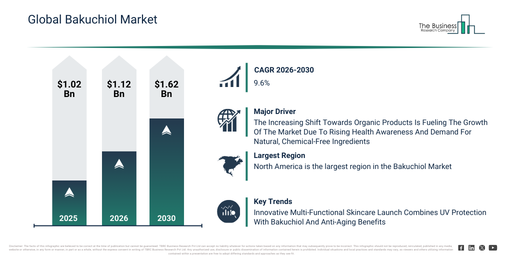
    The bakuchiol market has shown strong expansion in recent years. Its projected growth is from $1.02 billion in 2025 to $1.12 billion in 2026, at a compound annual growth rate (CAGR) of 9.9%. Historically, this growth can be ascribed to factors like the utilization of herbal cosmetics, adverse effects associated with retinol, the incorporation of ayurvedic ingredients, increased awareness regarding skincare, and prevailing natural beauty trends.

    The bakuchiol market size is anticipated to undergo significant expansion over the next few years. It is projected to reach $1.62 billion by 2030, exhibiting a compound annual growth rate (CAGR) of 9.6%. This growth throughout the forecast period is primarily fueled by the clean beauty movement, a heightened focus on sustainability, the emergence of dermatology-backed cosmetics, the demand for premium skincare products, and enhanced ingredient transparency. Key trends influencing this period include the increasing consumer demand for plant-based skincare ingredients, its rising adoption as a retinol alternative, the proliferation of clean label cosmetic products, the broader availability of natural anti-aging solutions, and its integration into sensitive skin formulations.

    Get A Free Sample Report With In-Depth Market Insights:

    https://www.thebusinessresearchcompany.com/sample.aspx?id=24477&type=smp&utm_source=Blogs&utm_medium=Paid&utm_campaign=Oct_PR

    Bakuchiol Market Growth Momentum: What Factors Are Shaping Demand?

    The increasing shift towards organic products is expected to propel the growth of the bakuchiol market going forward. Organic products are derived from naturally grown ingredients, free from synthetic chemicals, fertilizers, and genetically modified organisms (GMOs). Rising demand for organic products is due to increasing consumer awareness about health and environmental benefits, resulting people to prefer natural and chemical-free options for a safer lifestyle. Bakuchiol, a plant-based alternative to retinol, supports organic products by aligning with clean beauty standards through its natural origin and gentle, non-synthetic formulation. For instance, in August 2024, according to the United States Department of Agriculture, a US-based government agency, the agency awarded nearly $10 million in organic development grants, driving a total investment of $85 million to grow US organic products. Additionally, in 2023, consumer demand for organic products in the united states exceeded $69 billion, representing approximately 4% of the overall food sales in the country. Therefore, the increasing shift towards organic products is driving the growth of the bakuchiol market.

    Bakuchiol Market Segment Analysis Spotlighting Growth Areas

    The bakuchiol market covered in this report is segmented –

    1) By Product Type: Serums, Oils, Creams, Other Types

    2) By Source: Natural, Synethetic

    3) By Distribution Channel: Online Retail, Supermarkets Or Hypermarkets, Specialty Stores, Other Distribution Channels

    4) By Application: Skincare, Haircare, Cosmetics, Pharmaceuticals, Food And Beverages

    5) By End-User: Individuals, Professional Use, Commercial Brands

    Subsegments:

    1) By Serums: Anti-Aging Serums, Brightening Serums, Hydrating Serums, Acne Control Serums

    2) By Oils: Facial Oils, Body Oils, Scalp Oils, Multi-Purpose Oils

    3) By Creams: Day Creams, Night Creams, Eye Creams, Moisturizing Creams

    4) By Other Types: Lotions, Gels, Balms, Masks

    Bakuchiol Market Trends Redefining Industry Growth

    Prominent companies operating in the bakuchiol market are concentrating on developing advanced products, such as multi-functional skincare formulations, to meet consumer demand for clean beauty and offer effective, non-irritating alternatives to retinol. A multi-functional skincare formulation is crafted to address multiple skin concerns simultaneously. It integrates several active ingredients to provide benefits like hydration, anti-aging, brightening, and sun protection in a single product. For instance, in April 2024, Wishtrend, a South Korea-based personal care product manufacturing company, launched the Fore Smoothing Bakuchiol Sun Stick, a high-performance skincare item engineered to improve UV protection and skin texture. This innovative sun stick features SPF50+ PA++++ and includes 10,000 ppm of bakuchiol, a plant-derived alternative to retinol valued for its anti-aging properties. Additionally, it contains niacinamide and peptides to boost skin elasticity and texture. The product’s primer capability aids in correcting pores and skin irregularities, delivering a smooth finish even when applied over makeup.

    Bakuchiol Market Leading Companies: Who Holds The Strongest Market Presence?

    Major companies operating in the bakuchiol market are Trilogy Limited, Paula’s Choice, Revolution Beauty Limited, Kora Organics, DIME Beauty, Juicy Chemistry, Herbivore Botanicals, True Botanicals, The INKEY List, Minimalist, Pacifica Beauty, Cocokind, Youth To The People, Versed Skincare, Biossance (Bakuchiol + Squalane line), BYBI Beauty (Bakuchiol Booster), Good Molecules (Bakuchiol Oil Blend), Alpyn Beauty (Bakuchiol Serum), Oskia Skincare (Rest Day Bakuchiol Cream), REN Clean Skincare (Bakuchiol Moisturizer), Naturium (Bakuchiol Retinol Alternative Serum)

    View The Full Bakuchiol Market Report:

    https://www.thebusinessresearchcompany.com/report/bakuchiol-global-market-report?utm_source=Blogs&utm_medium=Paid&utm_campaign=Oct_PR

    Bakuchiol Market Geographic Landscape: Which Region Leads Industry Growth?

    North America was the largest region in the bakuchiol market in 2025. Asia-Pacific is expected to be the fastest-growing region in the forecast period. The regions covered in the bakuchiol market report are Asia-Pacific, South East Asia, Western Europe, Eastern Europe, North America, South America, Middle East, Africa.

    Reach Out To Our Team:

    The Business Research Company: https://www.thebusinessresearchcompany.com/

    Americas: +1 310-496-7795

    Asia: +44 7882 955267 & +91 8897263534

    Europe: +44 7882 955267

    Email us at: marketing@tbrc.info

    Follow us on:

    LinkedIn: https://in.linkedin.com/company/the-business-research-company

    YouTube: https://www.youtube.com/channel/UC24_fI0rV8cR5DxlCpgmyFQ

    Global Market Model: https://www.thebusinessresearchcompany.com/global-market-model

  • Bacterial Cell Culture Market Forecast To Reach $5.05 Billion By 2030: Key Growth Drivers And Industry Trends

    Bacterial Cell Culture Market Forecast To Reach $5.05 Billion By 2030: Key Growth Drivers And Industry Trends

    Featuring market attractiveness scoring, total addressable market sizing, company benchmarking matrices, interactive Excel dashboards, deeper supply chain intelligence, emerging startup tracking, and granular product-level insights, The Business Research Company’s 2026 market reports are built to deliver research that is both more actionable and more strategically valuable.

    Bacterial Cell Culture Market Set To Climb From $3.72 Billion In 2026 To $5.05 Billion By 2030

    The bacterial cell culture market has demonstrated robust expansion in recent years. This market is projected to increase from $3.44 billion in 2025 to $3.73 billion in 2026, showing a compound annual growth rate (CAGR) of 8.2%. The growth experienced in the past can be credited to the expansion of microbiology research laboratories, routine use in clinical diagnostics, rising food safety testing requirements, adoption in academic research settings, and standardized bacterial growth protocols.

    The bacterial cell culture market is projected to experience substantial expansion over the next few years. This market is anticipated to reach $5.05 billion by 2030, exhibiting a compound annual growth rate (CAGR) of 7.9%. Key drivers for this growth during the forecast period include the escalating demand for rapid microbial diagnostics, the expansion of biopharmaceutical fermentation processes, a heightened emphasis on antimicrobial resistance research, the development of environmental testing initiatives, and the incorporation of automated laboratory workflows. Significant trends expected within this period involve a surge in the need for high-purity culture media, the increasing embrace of automated microbial culturing systems, broader application in biopharmaceutical manufacturing, the growth of food and water safety testing, and a stronger focus on quick pathogen detection.

    Get A Free Sample Report With In-Depth Market Insights:

    https://www.thebusinessresearchcompany.com/sample.aspx?id=28952&type=smp&utm_source=Blogs&utm_medium=Paid&utm_campaign=Oct_PR

    Bacterial Cell Culture Market Expansion Drivers: What’s Shaping Future Growth?

    An increase in infectious disease occurrences is projected to drive the expansion of the bacterial cell culture market moving forward. Infectious diseases are ailments originating from microorganisms such as bacteria, viruses, fungi, or parasites, capable of transmission between individuals or organisms. The uptick in infectious illnesses stems from heightened global travel, facilitating the swift dissemination of pathogens across areas and groups previously unexposed. Bacterial cell culture assists in combating infectious illnesses by enabling researchers to cultivate and study bacteria within regulated environments, thereby supporting accurate identification and the development of specific therapies. As an illustration, in October 2024, data from the Center for Infectious Disease Research and Policy, a US-based public organization, indicated that the estimated count of individuals who contracted TB, including unconfirmed instances, rose to 10.8 million in 2023, up from 10.7 million in 2022. Consequently, the growing frequency of infectious diseases is fueling the expansion of the bacterial cell culture market.

    Bacterial Cell Culture Market Segment Performance And Emerging Opportunities

    The bacterial cell culture market covered in this report is segmented –

    1) By Product Type: Media, Reagents, Sera, Consumables, Other Product Types

    2) By Cell Type: Gram-Positive Bacteria, Gram-Negative Bacteria, Anaerobic Bacteria, Thermophilic Bacteria, Other Cell Types

    3) By Application: Disease Diagnosis, Food Testing, Water Testing, Biopharmaceutical Production, Research Laboratories, Other Applications

    4) By End User: Diagnostic Centers, Food Industry, Other End-Users

    Subsegments:

    1) By Media: Liquid Media, Solid Media, Selective Media, Differential Media, Enriched Media

    2) By Reagents: Antibiotics, Buffers, Stains And Dyes, Enzymes, Growth Factors

    3) By Sera: Fetal Bovine Sera, Newborn Calf Sera, Horse Sera, Human Sera

    4) By Consumables: Petri Dishes, Flasks And Bottles, Pipettes And Tips, Microplates, Tubes And Vials

    5) By Other Product Types: Kits, Supplements, Additives, Standards And Controls

    Bacterial Cell Culture Market Strategic Trends: What Defines The Next Growth Phase?

    Key players in the bacterial cell culture market are concentrating on developing advanced solutions, such as automated culturing technology, to enable high-throughput experiments. Automated culturing technology involves systems that employ machines and software to efficiently grow and monitor cell or microbial cultures with minimal human input. For example, in September 2023, OGI Bio, a biotechnology firm located in Scotland, introduced the Mk2 Microbial Culturing System, representing the next generation of automated cell culturing technology. Expanding on the successes of earlier models, the Mk2 provides greater performance, improved features, and user-friendly operation to meet the requirements of modern research laboratories. It offers enhanced efficiency, reliability, and flexibility for automating microbial culture experiments. This system allows scientists to track microbial growth, dissolved oxygen, and fluorescent signals, while the Turbidostat pump uniquely provides precise control over these parameters. With these advancements, the Mk2 stands as a powerful tool for progressing research in microbiology, biotechnology, and synthetic biology.

    Bacterial Cell Culture Market Key Players: Which Companies Lead Industry Competition?

    Major companies operating in the bacterial cell culture market are Danaher Corporation, Thermo Fisher Scientific Inc., Merck KGaA, Corning Incorporated, Lonza Group AG, Avantor Inc., Cytiva, Sartorius AG, FUJIFILM Irvine Scientific, Bio-Techne Corporation, Repligen Corporation, Takara Bio Inc., Becton Dickinson and Company, HiMedia Laboratories Pvt. Ltd., Capricorn Scientific GmbH, Athena Environmental Services Inc., Genexis Biotech Pvt. Ltd., BioProcess Technologies Ltd., Athena Medical Products Inc., Jin Kairui Biotechnology Co. Ltd.

    View The Full Bacterial Cell Culture Market Report:

    https://www.thebusinessresearchcompany.com/report/bacterial-cell-culture-global-market-report?utm_source=Blogs&utm_medium=Paid&utm_campaign=Oct_PR

    Bacterial Cell Culture Market Largest Region: Which Geography Holds The Biggest Share?

    North America was the largest region in the bacterial cell culture market in 2025. Asia-Pacific is expected to be the fastest-growing region in the forecast period. The regions covered in the bacterial cell culture market report are Asia-Pacific, South East Asia, Western Europe, Eastern Europe, North America, South America, Middle East, Africa.

    Reach Out To Our Team:

    The Business Research Company: https://www.thebusinessresearchcompany.com/

    Americas: +1 310-496-7795

    Asia: +44 7882 955267 & +91 8897263534

    Europe: +44 7882 955267

    Email us at: marketing@tbrc.info

    Follow us on:

    LinkedIn: https://in.linkedin.com/company/the-business-research-company

    YouTube: https://www.youtube.com/channel/UC24_fI0rV8cR5DxlCpgmyFQ

    Global Market Model: https://www.thebusinessresearchcompany.com/global-market-model
  • Bacterial And Plasmid Vectors Market Research 2026: Market Size, Trends, Segments And Growth Forecast

    Bacterial And Plasmid Vectors Market Research 2026: Market Size, Trends, Segments And Growth Forecast

    Built to provide research that’s more actionable and strategically valuable, The Business Research Company’s 2026 market reports include market attractiveness analysis, total addressable market sizing, company benchmarking matrices, interactive Excel dashboards, broader supply chain intelligence, emerging startup tracking, and in-depth product insights.

    Bacterial And Plasmid Vectors Market Forecast: Value Set To Climb From $1.02 Billion To $1.6 Billion

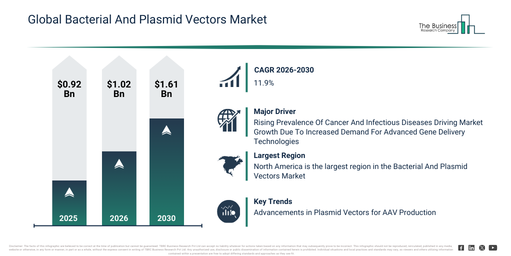
    The market size for bacterial and plasmid vectors has experienced swift expansion recently. It is projected to grow from $0.92 billion in 2025 to $1.02 billion in 2026, exhibiting a compound annual growth rate (CAGR) of 11.5%. Historically, this expansion has been driven by increased molecular biology research, the extensive adoption of e. coli vectors, an increase in biotech research funding, the demand for protein expression, and the rise in academic research.

    The market for bacterial and plasmid vectors is projected to expand significantly over the coming years. Its valuation is anticipated to reach $1.61 billion in 2030, exhibiting a compound annual growth rate (CAGR) of 11.9%. This expansion during the forecast period is driven by advancements in gene therapy, increased biologics manufacturing, innovations in synthetic biology, higher investments in research and development, and the need for highly efficient vectors. Key trends observed throughout this period encompass a surge in the need for recombinant protein production, an increase in gene cloning applications, the broadening scope of synthetic biology research, greater adoption in academic studies, and ongoing progress in vector engineering.

    Get A Free Sample Report With In-Depth Market Insights:

    https://www.thebusinessresearchcompany.com/sample.aspx?id=3422&type=smp&utm_source=Blogs&utm_medium=Paid&utm_campaign=Oct_PR

    Bacterial And Plasmid Vectors Market Development Factors: What’s Supporting Demand?

    The increasing incidence of cancer and infectious diseases is projected to stimulate the demand for the bacterial & plasmid vectors market moving forward. Bacteria are utilized as vectors for delivering recombinant proteins into specific cells to treat both cancer and various infectious conditions. This escalating prevalence of cancer and infectious diseases is largely due to factors such as an expanding aging population, lifestyle changes including poor diet and smoking, environmental pollution, and the presence of infectious agents. Bacterial and plasmid vectors are applied in cancer and infectious disease research to introduce therapeutic genes, vaccines, or genetic material capable of stimulating immune responses or rectifying genetic defects. This helps in the prevention, treatment, or management of these diseases by targeting their underlying causes or enhancing the body’s protective mechanisms. For instance, in October 2024, the World Health Organization, a health authority based in Switzerland, reported that approximately 10.8 million people worldwide contracted tuberculosis, with 55% being men, 33% women, and 12% children and adolescents, and individuals living with human immunodeficiency virus (HIV) constituting 6.1% of cases. Thus, the rising occurrence of cancer and various infectious diseases is driving the growth of the bacterial and plasmid vectors market.

    Bacterial And Plasmid Vectors Market Segment Landscape And Growth Outlook

    The bacterial and plasmid vectors market covered in this report is segmented –

    1) By Host Type: E.Coli Expression Vectors, Other Bacterial Expression Vectors

    2) By Application: Genetics, Molecular Biology, Bioinformatics, Other Applications

    3) By End Users: Academic And Research Institutes, Biotechnology And Biopharmaceutical Companies, Contract Research Organizations (CROs) And Contract Development And Manufacturing Organizations (CDMOs), Industrial And Synthetic Biology Companies, Government And Public Research Laboratories

    Subsegments:

    1) By E. Coli Expression Vectors: PET Vectors, PUC Vectors, PBR322 Vectors, Expression Systems For Protein Production

    2) By Other Bacterial Expression Vectors: Bacillus Subtilis Vectors, Pseudomonas Vectors, Lactococcus Lactis Vectors, Streptomyces Vectors

    Bacterial And Plasmid Vectors Market Transformation Trends: What Innovations Are Driving Change?

    Leading companies operating within the bacterial and plasmid vectors market are concentrating on developing sophisticated solutions, such as Innovative Plasmid, to improve the creation of adeno-associated virus (AAV) vectors. An innovative plasmid is a plasmid (a small, circular DNA molecule) that has been specifically designed or altered to achieve particular, advanced functions in biotechnology, gene therapy, or scientific research. For example, in March 2024, Polyplus, a biotechnology company headquartered in France, released the pPLUS AAV-RC2 plasmid. This product aims to streamline the manufacturing process and offer a ready-to-use solution that enhances both the efficiency and reliability of vector production. It boasts unique characteristics including a ready-to-use format optimized for AAV2 production, considerable improvements in viral genome yield when used with Polyplus transfection reagents, and high-quality manufacturing within a GMP-compliant facility.

    Bacterial And Plasmid Vectors Market Competitive Landscape: Who Leads The Industry?

    Major companies operating in the bacterial and plasmid vectors market are Sigma-Aldrich Inc., Thermo Fisher Scientific Inc., QIAGEN N.V., Promega Corporation, GenScript Biotech Corporation, Takara Bio Inc., New England Biolabs, Agilent Technologies, Bio-Rad Laboratories, ATUM, IBA GmbH, Clontech Laboratories Inc., DNA TwoPointO Inc., Creative Biogene, Creative Biomart, OriGene Technologies Inc., Addgene, Lucigen Corporation, Sino Biological Inc., Oxford Genetics Ltd.

    View The Full Bacterial And Plasmid Vectors Market Report:

    https://www.thebusinessresearchcompany.com/report/bacterial-and-plasmid-vector-global-market-report?utm_source=Blogs&utm_medium=Paid&utm_campaign=Oct_PR

    Bacterial And Plasmid Vectors Market Regional Analysis: Which Geography Leads On Revenue?

    North America was the largest region in the bacterial & plasmid vectors market in 2025. The Middle East is expected to be the fastest-growing region in the global bacterial & plasmid vectors market share during the forecast period. The regions covered in the bacterial and plasmid vectors market report are Asia-Pacific, South East Asia, Western Europe, Eastern Europe, North America, South America, Middle East, Africa.

    Reach Out To Our Team:

    The Business Research Company: https://www.thebusinessresearchcompany.com/

    Americas: +1 310-496-7795

    Asia: +44 7882 955267 & +91 8897263534

    Europe: +44 7882 955267

    Email us at: marketing@tbrc.info

    Follow us on:

    LinkedIn: https://in.linkedin.com/company/the-business-research-company

    YouTube: https://www.youtube.com/channel/UC24_fI0rV8cR5DxlCpgmyFQ

    Global Market Model: https://www.thebusinessresearchcompany.com/global-market-model

  • Back Acne Treatment Market Forecast 2026: Market Size, Competitive Landscape And Growth Drivers

    Back Acne Treatment Market Forecast 2026: Market Size, Competitive Landscape And Growth Drivers

    Backed by market attractiveness analysis, total addressable market sizing, company benchmarking matrices, interactive Excel dashboards, wider supply chain intelligence, emerging startup coverage, and detailed product-level insights, The Business Research Company’s 2026 market reports are designed to offer research that is more actionable and strategically valuable than ever.

    Back Acne Treatment Market Revenue Growth On Track For A 8.8% CAGR Through 2030

    The back acne treatment market size has demonstrated robust growth in recent years. It is anticipated to expand from $1.97 billion in 2025 to $2.15 billion in 2026, achieving a compound annual growth rate (CAGR) of 9.0%. Historically, this growth can be attributed to an increasing occurrence of acne among adolescents and adults, the broader availability of topical acne medications, expanding dermatology clinic networks, rising awareness of body acne treatment options, and the expansion of cosmetic dermatology services.

    The back acne treatment market is anticipated to show significant expansion in the coming years, with its size projected to reach $3.01 billion in 2030, demonstrating a compound annual growth rate (CAGR) of 8.8%. This projected increase is largely due to a growing need for advanced dermatological methods, the increasing use of tailored acne treatment programs, the expansion of tele-dermatology services, an enhanced focus on sustained acne prevention, and the greater integration of skincare with medical therapies. Key developments during this period include a rising adoption of combined topical and oral treatments, increasing demand for laser and light-based acne solutions, a growing utilization of medicated body washes and exfoliants, the broadening of home-based acne management choices, and an intensified focus on scar avoidance and improving skin clarity.

    Get A Free Sample Report With In-Depth Market Insights:

    https://www.thebusinessresearchcompany.com/sample.aspx?id=28145&type=smp&utm_source=Blogs&utm_medium=Paid&utm_campaign=Oct_PR

    Back Acne Treatment Market Industry Drivers: What’s Behind The Revenue Growth?

    Increasing attention to personal aesthetics is anticipated to drive the expansion of the back acne treatment market in the future. These concerns denote an individual’s consciousness and assessment of their physical look, covering views on skin, body characteristics, and general visual appeal, which impact self-assurance and social engagement. The main catalyst behind this increase in aesthetic focus is the widespread exposure to idealized visuals via digital media, where constant engagement with curated content leads to increased self-examination and comparison, thus intensifying the longing for an unblemished look. Back acne treatment directly addresses skin imperfections, consequently easing anxieties linked to appearance and boosting individual confidence as a reaction to this heightened aesthetic awareness. As an illustration, data from June 2024, provided by the American Society of Plastic Surgeons, a US-based specialty organization, indicates that aesthetic minimally invasive procedures saw a 7 percent growth in 2023, outpacing surgical procedures by 2 percent, with more than 9 million neuromodulator injections and over 5 million hyaluronic acid filler treatments performed. Consequently, the escalating aesthetic concerns are propelling the development of the back acne treatment market.

    Back Acne Treatment Market Breakdown By Product Type And Application

    The back acne treatment market covered in this report is segmented –

    1) By Product Type: Topical Medications, Oral Medications, Laser Therapy, Light Therapy, Other Products

    2) By Distribution Channel: Retail Pharmacies, Online pharmacies, Hospital Pharmacies, Other Distribution Channels

    3) By End-User: Hospitals And Clinics, Dermatology Centers, Homecare, Other End-Users

    Subsegments:

    1) By Topical Medications: Salicylic Acid Cream, Benzoyl Peroxide Gel, Retinoid Cream, Azelaic Acid Lotion, Sulfur-Based Treatment

    2) By Oral Medications: Antibiotics, Hormonal Therapy, Isotretinoin, Immunomodulators

    3) By Laser Therapy: Fractional Laser, Pulsed Dye Laser, Carbon Dioxide Laser, Erbium Laser

    4) By Light Therapy: Blue Light Therapy, Red Light Therapy, Combination Light Therapy

    5) By Other Products: Cleansing Body Wash, Exfoliating Scrubs, Moisturizing Lotions, Serums

    #Back Acne Treatment Market Growth Trends: What’s Shaping The Future Outlook?

    Major companies operating in the back acne treatment market are focusing on developing innovative products like triple-combination acne gels to provide an effective, simplified treatment option that addresses both inflammatory and non-inflammatory acne lesions. A triple-combination acne gel is a topical formulation that integrates multiple mechanisms of action to reduce acne lesions and improve skin clarity through a single application. For instance, in October 2023, Bausch Health Companies Inc., a Canada-based pharmaceutical and healthcare company, launched Cabtreo acne gel. This gel combines an antibiotic, a retinoid, and an antibacterial agent in a single, fixed-dose gel, enabling once-daily application for patients twelve years and older. Clinical studies demonstrated substantial reductions in both inflammatory and non-inflammatory acne lesions, achieving approximately fifty percent treatment success within twelve weeks, highlighting its potential to streamline therapy and enhance patient adherence.

    Back Acne Treatment Market Company Landscape And Competitive Strategy

    Major companies operating in the back acne treatment market are Johnson And Johnson, Unilever plc, Pfizer Inc., AbbVie Inc., L’Oréal S.A., GlaxoSmithKline plc, Teva Pharmaceutical Industries Limited, Viatris Inc., Kenvue Inc., Bausch Health Companies Inc., Hindustan Unilever Limited (HUL), Galderma S.A, Pierre Fabre Group, Cipla Ltd., Zydus lifesciences Limited, Reckitt Benckiser Group plc, Alkem Laboratories Limited, Almirall S.A, Merz Pharma GmbH And Co. KGaA, Himalaya Wellness Company

    View The Full Back Acne Treatment Market Report:

    https://www.thebusinessresearchcompany.com/report/back-acne-treatment-global-market-report?utm_source=Blogs&utm_medium=Paid&utm_campaign=Oct_PR

    Back Acne Treatment Market Geographic Spread And Regional Opportunities

    North America was the largest region in the back acne treatment market in 2025. Asia-Pacific is expected to be the fastest-growing region in the forecast period. The regions covered in the back acne treatment market report are Asia-Pacific, South East Asia, Western Europe, Eastern Europe, North America, South America, Middle East, Africa.

    Reach Out To Our Team:

    The Business Research Company: https://www.thebusinessresearchcompany.com/

    Americas: +1 310-496-7795

    Asia: +44 7882 955267 & +91 8897263534

    Europe: +44 7882 955267

    Email us at: marketing@tbrc.info

    Follow us on:

    LinkedIn: https://in.linkedin.com/company/the-business-research-company

    YouTube: https://www.youtube.com/channel/UC24_fI0rV8cR5DxlCpgmyFQ

    Global Market Model: https://www.thebusinessresearchcompany.com/global-market-model

  • Alkaloid Based Drugs Market Analysis 2026: Market Size, Growth Trends And Industry Outlook

    Alkaloid Based Drugs Market Analysis 2026: Market Size, Growth Trends And Industry Outlook

    Backed by market attractiveness analysis, total addressable market sizing, company benchmarking matrices, interactive Excel dashboards, wider supply chain intelligence, emerging startup coverage, and detailed product-level insights, The Business Research Company’s 2026 market reports are designed to offer research that is more actionable and strategically valuable than ever.

    Alkaloid Based Drugs Market Revenue Outlook: What CAGR Lies Ahead Through 2030?

    The alkaloid based drugs market has experienced substantial growth in recent years. Its valuation is projected to rise from $3.14 billion in 2025 to $3.42 billion in 2026, achieving a compound annual growth rate (CAGR) of 9.0%. This historical expansion can be attributed to the traditional application of alkaloid compounds, the clinical endorsement of alkaloid-based medicines, the diversification of cancer treatment solutions, an increasing requirement for analgesics, and the ready supply of natural raw materials.

    The alkaloid based drugs market is projected to experience robust expansion over the coming years. Its size is anticipated to reach $4.8 billion by 2030, demonstrating a compound annual growth rate (CAGR) of 8.8%. This expansion can be ascribed to several factors, including advancements in phytopharmaceutical research, a growing need for drugs derived from natural sources, breakthroughs in extraction and purification techniques, the escalating worldwide incidence of cancer, and the broadening scope of herbal drug regulations. Key trends anticipated during this time encompass a heightened demand for therapeutics originating from plants, an expanding application in oncology and pain management, further development of natural product drugs, a burgeoning preference for bioactive compounds, and intensified research into alkaloid extraction methodologies.

    Get A Free Sample Report With In-Depth Market Insights:

    https://www.thebusinessresearchcompany.com/sample.aspx?id=23302&type=smp&utm_source=Blogs&utm_medium=Paid&utm_campaign=Oct_PR

    Alkaloid Based Drugs Market Growth Drivers: What’s Behind The Acceleration?

    The growing incidence of infectious diseases is anticipated to fuel the expansion of the alkaloid-based drugs market. Infectious diseases are conditions resulting from pathogenic microorganisms like bacteria, viruses, parasites, or fungi, which can be transmitted directly or indirectly among individuals. The rise in these diseases is linked to increased global travel, enabling pathogens to spread rapidly across regions and continents, leading to more frequent and widespread outbreaks. Alkaloid-based drugs are necessary for infectious diseases because they contain potent bioactive compounds that can effectively inhibit or eliminate pathogens, thereby assisting in the control and eradication of infections. For example, in December 2024, a report from the World Health Organization (WHO), a Switzerland-based specialized agency, estimated 263 million malaria cases and 597,000 associated deaths globally in 2023, showing an increase of about 11 million cases from 2022, with the death toll remaining largely consistent. Thus, the increasing prevalence of infectious diseases will drive the growth of the alkaloid-based drugs market.

    Alkaloid Based Drugs Market Segment Breakdown: Which Categories Lead On Revenue?

    The alkaloid based drugs market covered in this report is segmented –

    1) By Type: True Alkaloids, Protoalkaloids, Pseudoalkaloids

    2) By Route Of Administration: Oral, Intravenous, Other Routes Of Administration

    3) By Application: Analgesic, Antimalarial, Antibacterial, Anticancer, Cholinomimetic, Antiasthma, Antiarrhythmic, Vasodilatory, Antihyperglycemic

    4) By End User: Clinic, Hospital, Other End Users

    Subsegments:

    1) By True Alkaloids: Indole Alkaloids, Isoquinoline Alkaloids, Pyrrolizidine Alkaloids, Tropane Alkaloids, Quinolizidine Alkaloids

    2) By Protoalkaloids: Phenethylamine Alkaloids, Purine Alkaloids, Imidazole Alkaloids

    3) By Pseudoalkaloids, Terpenoid Alkaloids, Steroidal Alkaloids, Peptide Alkaloids

    Alkaloid Based Drugs Market Trends: What’s Defining The Industry’s Next Phase?

    Major companies within the alkaloid-based drugs market are focusing on strategic investments, such as equity investment, to align with long-term goals like enhancing strategic collaboration and expanding regional market presence. Equity investment involves a company allocating capital to another in exchange for ownership stakes or shares, often aimed at fostering strategic partnerships, market expansion, or gaining access to new technologies. For example, in October 2024, Alkaloid AD Skopje, a US-based manufacturer of alkaloid-based drugs, invested $1 million in Rophibio, a South Korea-based research and development company, with the aim of introducing biosimilar drugs to the market. ALKALOID AD’s USD 1 million investment in South Korea provides it with an ownership stake and first refusal rights for licensing products in the region. This action strengthens ALKALOID AD’s position in the biopharmaceutical sector, granting access to innovative drug development through Rophibio, which is advancing in biosimilar drug development. The partnership supports ALKALOID AD’s strategic goals, accelerating growth and improving competitiveness in emerging markets.

    Alkaloid Based Drugs Market Leading Players And Competitive Positioning

    Major companies operating in the alkaloid based drugs market are Pfizer Inc., Johnson & Johnson, Bayer AG, Novartis AG, Sanofi SA, Bristol-Myers Squibb Company, GlaxoSmithKline Plc, Eli Lilly and Company, Merck Group, Boehringer Ingelheim, Mylan NV, Astellas Pharma Inc., Sun Pharmaceutical Industries Ltd., Cipla Limited, Zydus Cadila, Lupin Limited, Alchem International Pvt. Ltd., Verve Health Care LTD., AdvaCare Pharma, Vital Laboratories Pvt Ltd

    View The Full Alkaloid Based Drugs Market Report:

    https://www.thebusinessresearchcompany.com/report/alkaloid-based-drugs-global-market-report?utm_source=Blogs&utm_medium=Paid&utm_campaign=Oct_PR

    Alkaloid Based Drugs Market Top Region By Revenue And Market Share

    North America was the largest region in the alkaloid-based drugs market in 2025. Asia-Pacific is expected to be the fastest-growing region in the forecast period. The regions covered in the alkaloid based drugs market report are Asia-Pacific, South East Asia, Western Europe, Eastern Europe, North America, South America, Middle East, Africa.

    Reach Out To Our Team:

    The Business Research Company: https://www.thebusinessresearchcompany.com/

    Americas: +1 310-496-7795

    Asia: +44 7882 955267 & +91 8897263534

    Europe: +44 7882 955267

    Email us at: marketing@tbrc.info

    Follow us on:

    LinkedIn: https://in.linkedin.com/company/the-business-research-company

    YouTube: https://www.youtube.com/channel/UC24_fI0rV8cR5DxlCpgmyFQ

    Global Market Model: https://www.thebusinessresearchcompany.com/global-market-model
  • Alexipharmic Drugs Market Forecast To 2030: Starting From $4.02 Billion In 2026

    Alexipharmic Drugs Market Forecast To 2030: Starting From $4.02 Billion In 2026

    Featuring market attractiveness scoring, total addressable market sizing, company benchmarking matrices, interactive Excel dashboards, deeper supply chain intelligence, emerging startup tracking, and granular product-level insights, The Business Research Company’s 2026 market reports are built to deliver research that is both more actionable and more strategically valuable.

    Alexipharmic Drugs Market Growth Analysis: How Will Revenue Trend Over The Forecast Period?

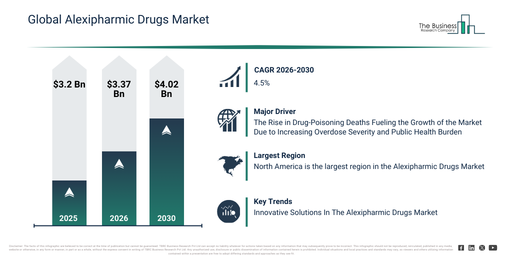
    The alexipharmic drugs market has demonstrated significant growth in recent years. This market is expected to expand from $3.2 billion in 2025 to $3.37 billion in 2026, exhibiting a compound annual growth rate (CAGR) of 5.2%. During the historical period, this expansion was largely influenced by factors such as the restricted availability of antidotes, the high occurrence of chemical and drug poisonings, a strong dependence on hospital-based treatment options, the absence of rapid diagnostic tools, and the regulatory approvals granted for traditional antidotes.

    The alexipharmic drugs market is anticipated to experience consistent expansion over the upcoming years. This market is projected to reach $4.02 billion by 2030, exhibiting a compound annual growth rate (CAGR) of 4.5%. This projected growth can be linked to several factors, including advancements in antidote technology, greater acceptance of homecare solutions, heightened awareness regarding poisoning prevention, the incorporation of AI and digital instruments for quick diagnosis, and an increase in research focused on enzyme and receptor-based antidotes. Key trends expected during the forecast period encompass a growing number of poisoning incidents, the creation of innovative enzyme-based antidotes, the broader implementation of homecare antidote administration, enhanced awareness and training in toxicology management, and the expansion of antidote services within hospitals and specialized clinics.

    Get A Free Sample Report With In-Depth Market Insights:

    https://www.thebusinessresearchcompany.com/sample.aspx?id=15507&type=smp&utm_source=Blogs&utm_medium=Paid&utm_campaign=Oct_PR

    Alexipharmic Drugs Market Growth Factors Behind Sustained Expansion

    The escalating number of drug-poisoning fatalities is anticipated to fuel the expansion of the alexipharmic drugs market in the coming years. Drug poisoning, stemming from the intake of harmful or excessive amounts of substances like opioids, stimulants, or synthetic psychoactive compounds, continues to be a significant contributor to preventable deaths. This increase is attributed to greater exposure to highly potent synthetic drugs, the practice of polysubstance use, and deficiencies in obtaining prompt addiction treatment or harm-reduction interventions. Alexipharmic medications, such as opioid antagonists like naloxone, are crucial for counteracting severe toxicity and mitigating fatal results during overdose crises. For example, the Office for National Statistics (ONS) reported in October 2025 that 5,448 drug-poisoning deaths were recorded in England and Wales in 2023, indicating an 11.0% rise from 2022. Consequently, the increasing incidence of drug-poisoning deaths is stimulating the growth of the alexipharmic drugs market.

    Alexipharmic Drugs Market Segmentation: How Does The Market Break Down By Category?

    The alexipharmic drugs market covered in this report is segmented –

    1) By Type: Chemical Antidote, Physical Antidote, Pharmacological Antidote

    2) By Route Of Administration: Oral, Topical, Injectable, Other Routes Of Administration

    3) By Application: Opioid Overdose, Alcohol Overdose, Cyanide Poisoning, Lead Poisoning, Benzodiazepine Overdose, Other Applications

    4) By End Use: Hospital, Homecare, Specialty Clinics, Other End Uses

    Subsegments:

    1) By Chemical Antidote: Chelating Agents, Reactive Chemicals

    2) By Physical Antidote: Dilution Agents, Filtration And Absorption Agents

    3) By Pharmacological Antidote: Enzyme-Based Antidotes, Receptor-Based Antidotes

    Alexipharmic Drugs Market Industry Trends Fueling Future Revenue Growth

    Leading firms within the alexipharmic drugs market are intensifying efforts to create sophisticated remedies, notably the initial over-the-counter (OTC) opioid overdose reversal medication, aiming to secure a competitive advantage. This pioneering over-the-counter (OTC) opioid overdose reversal medication is defined as a non-prescription drug capable of neutralizing opioid overdose effects, thus delivering crucial emergency life support. An example is the August 2023 announcement by Emergent BioSolutions, a US-based biopharmaceutical company, stating the upcoming over-the-counter (OTC) availability of NARCAN Naloxone HCl Nasal Spray 4 mg. This product retains its identical safe and effective 4 mg formulation, design, and original prescription strength, facilitating convenient and straightforward two-step intranasal administration to reverse opioid effects, including those from fentanyl. Such a solution substantially broadens access to naloxone, diminishing stigma and fostering public readiness, thereby equipping more people to act decisively during opioid emergencies, ultimately helping to save lives and combat the opioid crisis within the alexipharmic drugs market.

    Alexipharmic Drugs Market Competitive Overview And Top Companies

    Major companies operating in the alexipharmic drugs market are Pfizer Inc., Johnson & Johnson, Roche Holding AG, Merck & Co. Inc., Sanofi S.A., Bristol Myers Squibb Company (Bristol-Myers Squibb Company), AstraZeneca, Novartis AG, GlaxoSmithKline plc, Gilead Sciences Inc., Teva Pharmaceutical Industries Ltd., Fresenius SE & Co. KGaA (Fresenius Kabi), Bausch Health Companies Inc., UCB S.A., Sun Pharmaceutical Industries Ltd., B. Braun SE, Aurobindo Pharma, Cipla Inc., Hikma Pharmaceuticals, Amneal Pharmaceuticals, Vifor Pharma Group, Lupin Limited, Emergent BioSolutions, Ethypharm S.A., Accord Healthcare, BTG plc, Apotex Inc.

    View The Full Alexipharmic Drugs Market Report:

    https://www.thebusinessresearchcompany.com/report/alexipharmic-drugs-global-market-report?utm_source=Blogs&utm_medium=Paid&utm_campaign=Oct_PR

    Alexipharmic Drugs Market Regional Analysis And Top Geography

    North America was the largest region in the alexipharmic drugs market in 2025. Asia-Pacific is expected to be the fastest-growing region in the forecast period. The regions covered in the alexipharmic drugs market report are Asia-Pacific, South East Asia, Western Europe, Eastern Europe, North America, South America, Middle East, Africa.

    Reach Out To Our Team:

    The Business Research Company: https://www.thebusinessresearchcompany.com/

    Americas: +1 310-496-7795

    Asia: +44 7882 955267 & +91 8897263534

    Europe: +44 7882 955267

    Email us at: marketing@tbrc.info

    Follow us on:

    LinkedIn: https://in.linkedin.com/company/the-business-research-company

    YouTube: https://www.youtube.com/channel/UC24_fI0rV8cR5DxlCpgmyFQ

    Global Market Model: https://www.thebusinessresearchcompany.com/global-market-model
  • Alcohol-Free Disinfectant Foam Market Size In 2026 And Beyond: Understanding Future Growth Potential

    Alcohol-Free Disinfectant Foam Market Size In 2026 And Beyond: Understanding Future Growth Potential

    Built to provide research that’s more actionable and strategically valuable, The Business Research Company’s 2026 market reports include market attractiveness analysis, total addressable market sizing, company benchmarking matrices, interactive Excel dashboards, broader supply chain intelligence, emerging startup tracking, and in-depth product insights.

    Alcohol-Free Disinfectant Foam Market Forecast: What Value Will The Market Reach By 2030?

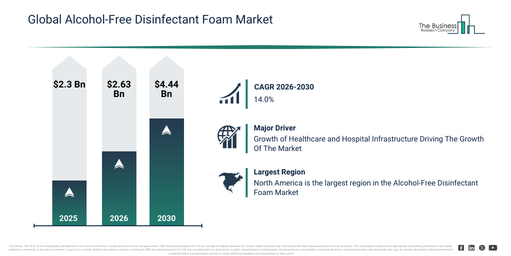
    The market size for alcohol-free disinfectant foam has experienced rapid expansion in recent years. This market is anticipated to expand from $2.3 billion in 2025 to $2.63 billion in 2026, demonstrating a compound annual growth rate (CAGR) of 14.3%. The historical growth of this market can be attributed to several factors, including heightened hygiene awareness during health crises, the availability of non-alcohol antimicrobial agents, the expansion of healthcare sanitation protocols, a rising consumer preference for gentle disinfectants, and the overall growth of personal care hygiene markets.

    The alcohol-free disinfectant foam market is projected to experience swift expansion in the coming years. It is set to reach $4.44 billion in 2030, exhibiting a compound annual growth rate (CAGR) of 14.0%. This anticipated growth during the projection period stems from factors such as a heightened demand for non-irritating disinfectants, increased acceptance in healthcare and food settings, an expansion in sustainable formulation development, a greater emphasis on hygiene products for frequent use, and stricter regulatory oversight concerning chemical safety. Key trends emerging in the forecast period encompass a surging demand for alcohol-free hygiene options, a greater embrace of skin-friendly disinfectant recipes, expanded application in sensitive and pediatric settings, the proliferation of foam-based delivery methods, and an intensified focus on moisturizing and protective attributes.

    Get A Free Sample Report With In-Depth Market Insights:

    https://www.thebusinessresearchcompany.com/sample.aspx?id=28116&type=smp&utm_source=Blogs&utm_medium=Paid&utm_campaign=Oct_PR

    Alcohol-Free Disinfectant Foam Market Demand Drivers Opening New Revenue Streams

    The expansion of healthcare and hospital infrastructure is anticipated to drive the future growth of the alcohol-free disinfectant foam market. This infrastructure encompasses the essential physical facilities, structures, equipment, and assets necessary for providing medical care, such as hospitals, clinics, diagnostic facilities, and broader healthcare systems. The increase in healthcare and hospital infrastructure stems from a growing demand for medical services, fueled by an aging demographic, wider insurance availability, and government funding directed towards modernizing and enlarging medical facilities to satisfy public health requirements. Elevated healthcare spending is encouraging the uptake of alcohol-free disinfectant foams, allowing healthcare establishments to invest in safer, cutting-edge hygiene products that mitigate infection hazards and enhance patient well-being. For example, in December 2024, data from the Centers for Medicare & Medicaid Services, a US-based agency overseeing Medicare and Medicaid, indicated that in 2023, U.S. health care expenditures increased by 7.5%, reaching $4.9 trillion, which equates to approximately $14,570 per person. Consequently, the expansion of healthcare and hospital infrastructure is a key factor propelling the growth of the alcohol-free disinfectant foam market.

    Alcohol-Free Disinfectant Foam Market Segment Trends And Revenue Contributors

    The alcohol-free disinfectant foam market covered in this report is segmented –

    1) By Product Type: Hand Disinfectant Foam, Surface Disinfectant Foam, Multi-Purpose Disinfectant Foam, Other Product Types

    2) By Distribution Channel: Online Stores, Supermarkets Or Hypermarkets, Specialty Stores, Pharmacies, Other Distribution Channels

    3) By Application: Healthcare, Food And Beverage, Household, Commercial, Industrial, Other Applications

    4) By End-User: Hospitals And Clinics, Schools, Offices, Residential, Other End-Users

    Subsegments:

    1) By Hand Disinfectant Foam: Alcohol Free Hand Foam, Moisturizing Or Skincare Hand Foam, Pediatric Or Sensitive Skin Hand Foam

    2) By Surface Disinfectant Foam: Household Surface Foam, Healthcare Surface Foam, Industrial Or Commercial Surface Foam, Food Contact Safe Surface Foam

    3) By Multi-Purpose Disinfectant Foam: Household Cleaning Foam, Institutional, Portable Multi Use Foam, Biodegradable Foam

    4) By Other Product Types: Veterinary Disinfectant Foam, Transport Disinfectant Foam, Fabric Disinfectant Foam, Customized Formulations

    Alcohol-Free Disinfectant Foam Market Competitive Landscape: Which Companies Lead The Industry?

    Major companies operating in the alcohol-free disinfectant foam market are Kimberly-Clark Corporation, Ecolab Inc., S. C. Johnson & Son Inc., The Clorox Company, Paul Hartmann AG, Zep Inc., Saraya Co Ltd., GOJO Industries Inc., Betco Corporation, Lion Corporation, Kutol Products Company Inc., BODE Chemie GmbH, Bioguard Hygiene LLP, Diversey Holdings Ltd., Whiteley Corporation Pty Ltd., CleanWell LLC, Prevest DenPro Limited , Valtec Industries Inc. , RBT Global LLC, Tork

    View The Full Alcohol-Free Disinfectant Foam Market Report:

    https://www.thebusinessresearchcompany.com/report/alcohol-free-disinfectant-foam-global-market-report?utm_source=Blogs&utm_medium=Paid&utm_campaign=Oct_PR

    Alcohol-Free Disinfectant Foam Market Geographic Analysis: Where Is Demand Rising Fastest?

    North America was the largest region in the alcohol-free disinfectant foam market in 2025. Asia-Pacific is expected to be the fastest-growing region in the forecast period. The regions covered in the alcohol-free disinfectant foam market report are Asia-Pacific, South East Asia, Western Europe, Eastern Europe, North America, South America, Middle East, Africa.

    Reach Out To Our Team:

    The Business Research Company: https://www.thebusinessresearchcompany.com/

    Americas: +1 310-496-7795

    Asia: +44 7882 955267 & +91 8897263534

    Europe: +44 7882 955267

    Email us at: marketing@tbrc.info

    Follow us on:

    LinkedIn: https://in.linkedin.com/company/the-business-research-company

    YouTube: https://www.youtube.com/channel/UC24_fI0rV8cR5DxlCpgmyFQ

    Global Market Model: https://www.thebusinessresearchcompany.com/global-market-model