Month: October 2026

  • Acetaminophen-Opioid Combination Market Growth To $4.06 Billion By 2030: What’s Driving The Expansion?

    Acetaminophen-Opioid Combination Market Growth To $4.06 Billion By 2030: What’s Driving The Expansion?

    Built to provide research that’s more actionable and strategically valuable, The Business Research Company’s 2026 market reports include market attractiveness analysis, total addressable market sizing, company benchmarking matrices, interactive Excel dashboards, broader supply chain intelligence, emerging startup tracking, and in-depth product insights.

    Acetaminophen-Opioid Combination Market Set To Climb From $3.35 Billion In 2026 To $4.06 Billion By 2030

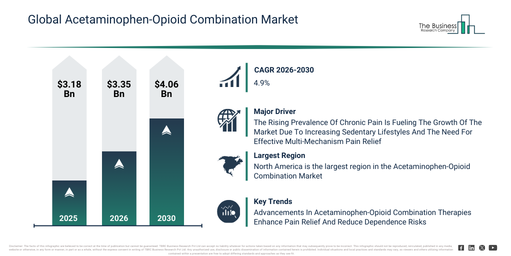
    The acetaminophen-opioid combination market size has seen strong growth in recent years. It is anticipated to increase from $3.18 billion in 2025 to $3.35 billion in 2026, with a compound annual growth rate (CAGR) of 5.3%. The market’s past expansion can be linked to factors such as numerous surgical pain cases, prevalent opioid prescribing practices, established hospital pain management protocols, the existence of combination drugs, and the widespread occurrence of chronic pain.

    The acetaminophen-opioid combination market is anticipated to show consistent growth in the coming years. This market is set to expand to $4.06 billion by 2030, driven by a compound annual growth rate (CAGR) of 4.9%. Several elements will drive this expansion throughout the forecast period, such as opioid stewardship initiatives, a preference for non-opioid treatments, digital prescription tracking, stricter regulatory measures, and the rise of outpatient pain management. Significant trends for the forecast period encompass a decrease in use influenced by opioid regulations, a movement towards lower-dose combinations, more rigorous monitoring of prescription usage, the expansion of generic combination products, and a stronger focus on acute pain management.

    Get A Free Sample Report With In-Depth Market Insights:

    https://www.thebusinessresearchcompany.com/sample.aspx?id=24450&type=smp&utm_source=Blogs&utm_medium=Paid&utm_campaign=Oct_PR

    Acetaminophen-Opioid Combination Market Demand Drivers: What’s Powering Industry Growth?

    The increasing occurrence of chronic pain is anticipated to stimulate the expansion of the acetaminophen-opioid combination market in the future. Chronic pain is defined as persistent or recurrent discomfort lasting beyond three to six months, surpassing the typical healing timeframe, and often significantly impairing an individual’s daily functions and overall health. The rise in chronic pain is linked to inactive lifestyles, which contribute to poor posture and weak muscles, thereby stressing the body and resulting in persistent discomfort. Acetaminophen-opioid combinations offer effective relief for chronic pain by addressing several pain pathways at once, improving pain management, facilitating better daily activity, and potentially reducing the necessary opioid dose. As an illustration, data from June 2024 by the Australian Institute of Health and Welfare, an Australia-based government agency, revealed that in 2023, chronic conditions were responsible for Australians losing about 4.4 million years of healthy life, representing 85% of the nation’s overall disease burden. Consequently, the growing incidence of chronic pain is fueling the expansion of the acetaminophen-opioid combination market.

    Acetaminophen-Opioid Combination Market Segment Landscape: Which Areas Lead Development?

    The acetaminophen-opioid combination market covered in this report is segmented –

    1) By Product: Hydrocodone-Acetaminophen, Oxycodone-Acetaminophen, Codeine-Acetaminophen, Tramadol-Acetaminophen, Other Products

    2) By Strength: Low Dose Combinations, Moderate To High Dose Combinations, Extended-Release Combinations

    3) By Indication: Acute Pain, Chronic Pain

    4) By Distribution Channel: Hospital Pharmacies, Retail Pharmacies, Online Pharmacies, Clinics

    Acetaminophen-Opioid Combination Market Innovation Trends: What Developments Are Reshaping The Industry?

    Major companies operating in the acetaminophen-opioid combination market are concentrating on creating advanced products like oxycodone hydrochloride and acetaminophen tablets to improve pain relief effectiveness and decrease the risk of opioid dependence. Oxycodone hydrochloride and acetaminophen tablets merge a powerful opioid painkiller with a non-opioid analgesic to efficiently relieve moderate to severe pain. This dual-action formulation targets pain via complementary pathways for enhanced relief. For instance, in May 2025, Elite Pharmaceuticals, Inc., a US-based specialty pharmaceutical company, launched its generic version of Percocet in strengths of 5mg/325mg, mg/325 mg, and 10 mg/325 mg. Manufactured under cGMP standards, it provides a reliable, high-quality alternative to the branded Percocet, fulfilling immediate-release pain management needs. This medication is indicated for the relief of moderate to moderately severe pain and signifies a notable market entry for Elite in the niche generic pharmaceutical sector.

    Acetaminophen-Opioid Combination Market Industry Leaders And Competitive Landscape

    Major companies operating in the acetaminophen-opioid combination market are Sun Pharmaceutical Industries Ltd, Endo Pharmaceuticals, Amneal Pharmaceuticals, Mallinckrodt Pharmaceuticals plc, Lupin Pharmaceuticals, Alvogen, Camber Pharmaceuticals Inc., Watson Laboratories, West-Ward Pharmaceuticals Corp., Teva Pharmaceutical Industries Ltd, Purdue Pharma L.P., Hikma Pharmaceuticals PLC, Dr. Reddy’s Laboratories Ltd, Zydus Lifesciences Ltd, Aurobindo Pharma Ltd, Cipla Ltd, Sandoz (Novartis AG), Apotex Inc., Mylan N.V. (Viatris Inc.), Torrent Pharmaceuticals Ltd, Alembic Pharmaceuticals Ltd, Strides Pharma Science Ltd, Wockhardt Ltd, Micro Labs Ltd, Intas Pharmaceuticals Ltd

    View The Full Acetaminophen-Opioid Combination Market Report:

    https://www.thebusinessresearchcompany.com/report/acetaminophen-opioid-combination-global-market-report?utm_source=Blogs&utm_medium=Paid&utm_campaign=Oct_PR

    Acetaminophen-Opioid Combination Market Regional Analysis And Top Geography

    North America was the largest region in the acetaminophen-opioid combination market in 2025. The regions covered in the acetaminophen-opioid combination market report are Asia-Pacific, South East Asia, Western Europe, Eastern Europe, North America, South America, Middle East, Africa.

    Reach Out To Our Team:

    The Business Research Company: https://www.thebusinessresearchcompany.com/

    Americas: +1 310-496-7795

    Asia: +44 7882 955267 & +91 8897263534

    Europe: +44 7882 955267

    Email us at: marketing@tbrc.info

    Follow us on:

    LinkedIn: https://in.linkedin.com/company/the-business-research-company

    YouTube: https://www.youtube.com/channel/UC24_fI0rV8cR5DxlCpgmyFQ

    Global Market Model: https://www.thebusinessresearchcompany.com/global-market-model
  • Avascular Necrosis Market Size In 2026: Regional Growth, Key Segments And Future Outlook

    Avascular Necrosis Market Size In 2026: Regional Growth, Key Segments And Future Outlook

    Featuring market attractiveness scoring, total addressable market sizing, company benchmarking matrices, interactive Excel dashboards, deeper supply chain intelligence, emerging startup tracking, and granular product-level insights, The Business Research Company’s 2026 market reports are built to deliver research that is both more actionable and more strategically valuable.

    Avascular Necrosis Market Value Growth And Long-Term Outlook

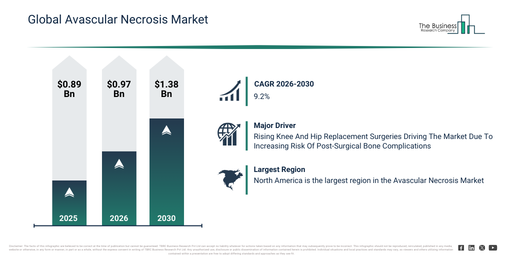
    The avascular necrosis market has demonstrated robust growth in recent years. Looking ahead, it is projected to expand from $0.89 billion in 2025 to $0.97 billion in 2026, at a compound annual growth rate (CAGR) of 9.5%. The historical growth can be attributed to several factors including trauma-related bone injuries, steroid overuse, alcohol consumption, delayed diagnosis, and the overall growth in orthopedic surgery.

    The avascular necrosis market size is set to experience substantial growth over the coming years. It is anticipated to reach $1.38 billion in 2030, demonstrating a compound annual growth rate (CAGR) of 9.2%. This expansion during the forecast period is driven by factors such as the increasing adoption of advanced imaging, research in regenerative medicine, an aging demographic, the prevalence of sports injuries, and innovations in orthopedics. Significant trends expected in this period include the rising application of early diagnostic imaging, a greater acceptance of joint-preserving therapies, an increase in minimally invasive surgical procedures, the expansion of physical rehabilitation initiatives, and a dedicated focus on early-stage disease intervention.

    Get A Free Sample Report With In-Depth Market Insights:

    https://www.thebusinessresearchcompany.com/sample.aspx?id=24476&type=smp&utm_source=Blogs&utm_medium=Paid&utm_campaign=Oct_PR

    Avascular Necrosis Market Growth Factors: What’s Supporting Expansion?

    An increasing volume of knee replacements and hip surgeries is anticipated to fuel the expansion of the avascular necrosis market moving forward. These surgical interventions involve replacing compromised joints and alleviating discomfort in advanced instances of avascular necrosis. The rise in these procedures stems from the rising occurrence of osteoarthritis, a condition leading to intense joint pain and mobility challenges, frequently necessitating surgical intervention for relief and enhanced life quality. Avascular necrosis plays a substantial role in the demand for knee and hip replacements, as this condition results in the death of bone tissue due to insufficient blood supply, often leading to joint decay and eventual collapse. For example, in November 2024, data from the American Joint Replacement Registry (AJRR), a US-based registry managed by the American Academy of Orthopaedic Surgeons, revealed that in 2023, over 4 million hip and knee arthroplasty procedures were recorded, signifying an 18% rise from 2022. Consequently, the increasing frequency of knee replacements and hip surgeries is propelling the growth of the avascular necrosis market. The increasing healthcare expenditure is anticipated to drive the expansion of the avascular necrosis market moving forward. Healthcare expenditure represents the total funds allocated to health services, treatments, and medical products within a given population or healthcare system. This spending is on the rise due to the growing prevalence of chronic illnesses, which necessitate ongoing management, frequent hospital visits, and expensive medications. For avascular necrosis, increased healthcare spending is beneficial as it facilitates access to prompt diagnosis, advanced therapeutic options, and surgical procedures that aid in managing the condition and enhancing patient outcomes. For example, in April 2025, the American Medical Association, a US-based professional association and lobbying group for physicians and medical students, reported that health spending in the United States climbed by 7.5% in 2023 to $4.9 trillion, or $14,570 per capita, which was a higher increase than the 4.6% observed in 2022. Consequently, the growth of the avascular necrosis market is being propelled by rising healthcare expenditure.

    Avascular Necrosis Market Segment Analysis And Revenue Potential

    The avascular necrosis market covered in this report is segmented –

    1) By Type: Trauma Related Avascular Necrosis, Non-Trauma Related Avascular Necrosis

    2) By Diagnosis: Imaging, Biopsy, Computed Tomography Scan, Positron Emission Tomography, X-Ray

    3) By Treatment Type: Medications, Surgery, Physical Therapy, Lifestyle Changes, Bone Grafting

    4) By End-User: Hospitals, Specialty Clinics, Rehabilitation Centers, Ambulatory Surgical Centers, Home Care Settings

    Subsegments:

    1) By Trauma-Related Avascular Necrosis: Fracture-Induced Avascular Necrosis, Dislocation-Induced Avascular Necrosis, Post-Surgical Avascular Necrosis, Crush Injury-Related Avascular Necrosis, Sports Injury-Associated Avascular Necrosis

    2) By Non-Trauma Related Avascular Necrosis: Steroid-Induced Avascular Necrosis, Alcohol-Induced Avascular Necrosis, Sickle Cell Disease-Associated Avascular Necrosis, Lupus-Related Avascular Necrosis, Radiation Therapy-Induced Avascular Necrosis, Idiopathic Avascular Necrosis

    Avascular Necrosis Market Key Players Shaping Industry Direction

    Major companies operating in the avascular necrosis market are Stryker Corporation, Massachusetts General Hospital, Zimmer Biomet Holdings Inc., Smith & Nephew plc, Stanford Health Care, Apollo Hospitals Enterprise Limited, Singapore General Hospital Pte Ltd., Fortis Healthcare Limited, Narayana Hrudayalaya Limited, Bumrungrad International Hospital Co. Ltd., Aster DM Healthcare Limited, Mount Elizabeth Hospital Pte Ltd., Gleneagles Hospital Pte Ltd., Shalby Limited, Texas Orthopedic Hospital LLC, Regrow Biosciences Pvt. Ltd., Maxcure Hospitals Limited, Medicover Hospitals Private Limited, Mesoblast Limited, Athersys Inc.

    View The Full Avascular Necrosis Market Report:

    https://www.thebusinessresearchcompany.com/report/avascular-necrosis-global-market-report?utm_source=Blogs&utm_medium=Paid&utm_campaign=Oct_PR

    Avascular Necrosis Market Top Region By Revenue And Market Share

    North America was the largest region in the avascular necrosis market in 2025. Asia-Pacific is expected to be the fastest-growing region in the forecast period. The regions covered in the avascular necrosis market report are Asia-Pacific, South East Asia, Western Europe, Eastern Europe, North America, South America, Middle East, Africa.

    Reach Out To Our Team:

    The Business Research Company: https://www.thebusinessresearchcompany.com/

    Americas: +1 310-496-7795

    Asia: +44 7882 955267 & +91 8897263534

    Europe: +44 7882 955267

    Email us at: marketing@tbrc.info

    Follow us on:

    LinkedIn: https://in.linkedin.com/company/the-business-research-company

    YouTube: https://www.youtube.com/channel/UC24_fI0rV8cR5DxlCpgmyFQ

    Global Market Model: https://www.thebusinessresearchcompany.com/global-market-model
  • ACE Inhibitors Market Trends Reshaping Industry Growth Through 2030

    ACE Inhibitors Market Trends Reshaping Industry Growth Through 2030

    Backed by market attractiveness analysis, total addressable market sizing, company benchmarking matrices, interactive Excel dashboards, wider supply chain intelligence, emerging startup coverage, and detailed product-level insights, The Business Research Company’s 2026 market reports are designed to offer research that is more actionable and strategically valuable than ever.

    ACE Inhibitors Market Forecast: Value Set To Climb From $7.84 Billion To $10.1 Billion

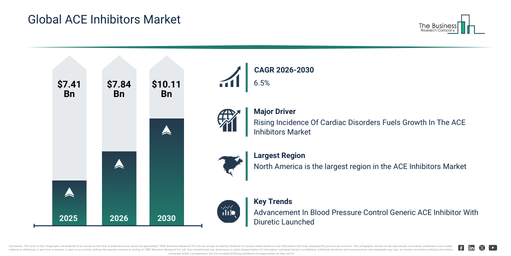
    The ace inhibitors market has experienced substantial growth in recent years. It is projected to expand from $7.41 billion in 2025 to $7.84 billion in 2026, achieving a compound annual growth rate (CAGR) of 5.8%. This historical expansion can be linked to the rising prevalence of hypertension, heightened awareness regarding cardiovascular diseases, the introduction of first-generation ace inhibitors, an increasing geriatric population, and advancements in drug formulation.

    The ace inhibitors market is set for robust expansion over the next few years, with its size forecast to reach $10.11 billion in 2030, demonstrating a compound annual growth rate (CAGR) of 6.5%. This growth throughout the projected period is attributed to several factors including the rising demand for personalized medicine, the integration of digital health solutions, the expansion of new markets, the innovation of novel ace inhibitor combinations, and the increase in home healthcare services. Prominent trends anticipated in the forecast period involve personalized hypertension management, the use of telemedicine and remote patient monitoring, advancements in combination therapy, a surge in generic ace inhibitors, and the broadening of home healthcare solutions.

    Get A Free Sample Report With In-Depth Market Insights:

    https://www.thebusinessresearchcompany.com/sample.aspx?id=10671&type=smp&utm_source=Blogs&utm_medium=Paid&utm_campaign=Oct_PR

    ACE Inhibitors Market Growth Drivers: What’s Behind The Acceleration?

    The rising occurrence of cardiac conditions is projected to boost the expansion of the ACE inhibitors market in the future. Cardiac disorders are defined as various medical ailments impacting the heart or blood vessels, covering conditions such as coronary artery disease, heart failure, and arrhythmias. ACE inhibitors are vital in managing these conditions by blocking the angiotensin-converting enzyme, which in turn lessens vasoconstriction, sodium retention, and aldosterone secretion, ultimately enhancing heart function. For example, data from the American Heart Association, a US non-profit, indicated that in January 2024, the age-adjusted death rate due to cardiovascular disease rose to 233.3 per 100,000 in 2024, representing a 4.0% increase from 224.4 per 100,000 in 2023. Consequently, the growing frequency of cardiac disorders is propelling the ACE inhibitors market’s growth.

    ACE Inhibitors Market Segments: Where Is Growth Concentrated?

    The ace inhibitors market covered in this report is segmented –

    1) By Type: Sulfhydryl-containing Agents, Dicarboxylate-containing Agents, Phosphonate-containing Agents

    2) By Drug: Ramipril, Enalapril, Benazepril, Fosinopril, Captopril, Moexipril, Other Drugs

    3) By Dosage Form: Oral Tablets, Oral Solutions

    4) By Application: Heart Failure, Chronic Kidney Disease, Hypertension, Diabetes, Heart Attack, Other Applications

    5) By End-Users: Hospitals, Online Drug Stores, Other End-Users

    Subsegments:

    1) By Sulfhydryl-Containing Agents: Captopril, Zofenopril

    2) By Dicarboxylate-Containing Agents: Enalapril, Lisinopril, Ramipril, Quinapril, Benazepril, Perindopril

    3) By Phosphonate-Containing Agents: Fosinopril, Fosinopril Sodium, Fosinopril Calcium

    ACE Inhibitors Market Trends: What’s Defining The Industry’s Next Phase?

    Leading firms within the ACE inhibitor market are intensifying their efforts to launch generic medications, aiming to secure a competitive advantage. Such drugs possess identical active components, dosing, safety profile, potency, administration method, and efficacy as their brand-name counterparts, yet they are generally offered at a reduced price point after the original patent lapses. For example, in August 2023, Pharmascience Inc., a pharmaceutical company based in Canada, introduced pms-PERINDOPRIL-INDAPAMIDE. This generic drug is designed for the initial management of mild to moderate essential hypertension (high blood pressure) in adult patients. This combined formulation contains two active substances: perindopril erbumine, an angiotensin-converting enzyme (ACE) inhibitor that assists in blood vessel relaxation, and indapamide, a chlorosulphamoyl diuretic that helps expel surplus fluid and sodium from the body. These components collaboratively reduce blood pressure effectively across a wide spectrum of patients. pms-PERINDOPRIL-INDAPAMIDE is available in several dosage strengths, specifically 2 mg, 4 mg, and 8 mg of perindopril erbumine, combined with 0.625 mg, 1.25 mg, and 2.5 mg of indapamide, respectively.

    ACE Inhibitors Market Key Participants And Competitive Landscape

    Major companies operating in the ace inhibitors market are Pfizer Inc., Novartis AG, Johnson & Johnson Private Limited, Merck KGaA, Sanofi S.A., Bayer AG, Teva Pharmaceutical Industries Ltd., Bristol-Myers Squibb Co., Takeda Pharmaceuticals Company, Daiichi Sankyo Company Ltd., Endo International plc, Sun Pharmaceutical Industries Ltd., Boehringer Ingelheim, Bausch Health Companies Inc., Dr. Reddy’s Laboratories, Abbott Laboratories, Eli Lilly and Company, Cipla Limited, GlaxoSmithKline plc, Cadila Healthcare Limited, AbbVie Inc., Sandoz Group AG, Accord Healthcare Ltd., AstraZeneca plc, Lupin Limited, Macleods Pharmaceuticals Limited, Zydus lifescience Ltd., Apotex Inc.

    View The Full ACE Inhibitors Market Report:

    https://www.thebusinessresearchcompany.com/report/ace-inhibitors-global-market-report?utm_source=Blogs&utm_medium=Paid&utm_campaign=Oct_PR

    ACE Inhibitors Market Geographic Analysis: Where Is Demand Rising Fastest?

    North America was the largest region in the ACE inhibitors market in 2025. Asia-Pacific is expected to be the fastest-growing region in the global ACE inhibitors market report during the forecast period. The regions covered in the ace inhibitors market report are Asia-Pacific, South East Asia, Western Europe, Eastern Europe, North America, South America, Middle East, Africa.

    Reach Out To Our Team:

    The Business Research Company: https://www.thebusinessresearchcompany.com/

    Americas: +1 310-496-7795

    Asia: +44 7882 955267 & +91 8897263534

    Europe: +44 7882 955267

    Email us at: marketing@tbrc.info

    Follow us on:

    LinkedIn: https://in.linkedin.com/company/the-business-research-company

    YouTube: https://www.youtube.com/channel/UC24_fI0rV8cR5DxlCpgmyFQ

    Global Market Model: https://www.thebusinessresearchcompany.com/global-market-model
  • Automated Liquid Handling Systems Market Growth Forecast Through 2030: Market Size And Trends In 2026

    Automated Liquid Handling Systems Market Growth Forecast Through 2030: Market Size And Trends In 2026

    Built to provide research that’s more actionable and strategically valuable, The Business Research Company’s 2026 market reports include market attractiveness analysis, total addressable market sizing, company benchmarking matrices, interactive Excel dashboards, broader supply chain intelligence, emerging startup tracking, and in-depth product insights.

    Automated Liquid Handling Systems Market Poised To Hit $5.73 Billion By 2030 With A 6.3% CAGR

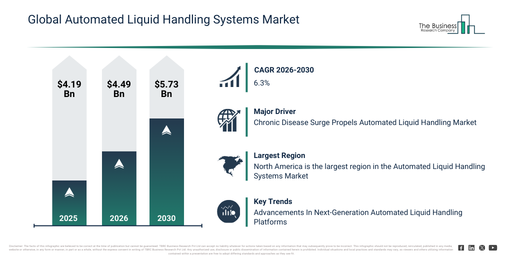
    The automated liquid handling systems market has seen robust expansion over recent years. It is anticipated to grow from $4.19 billion in 2025 to $4.49 billion in 2026, with a compound annual growth rate (CAGR) of 7.2%. This historical growth can be ascribed to several factors, including the increasing integration of automated liquid handling into pharmaceutical research, the rising demand for high-throughput screening, the growing necessity for precision in sample preparation, advancements in biotechnology and genomics research, and the expansion of contract research organizations.

    The automated liquid handling systems market size is projected to experience substantial expansion over the upcoming years, with forecasts indicating it will reach $5.73 billion in 2030, exhibiting a compound annual growth rate (CAGR) of 6.3%. This anticipated growth can be attributed to several factors, including the integration of AI and machine learning for protocol optimization, the increasing demand for lab automation in emerging economies, the ongoing development of multi-channel and robotic liquid handling systems, a growing emphasis on personalized medicine, and advancements in modular and flexible liquid handling platforms. Key trends expected during this forecast period include the automation of high-throughput screening, the miniaturization of liquid handling devices, their integration with lab information management systems (LIMS), the prevalence of multi-functionality and modular system designs, and enhanced accuracy and precision in liquid handling operations.

    Get A Free Sample Report With In-Depth Market Insights:

    https://www.thebusinessresearchcompany.com/sample.aspx?id=14850&type=smp&utm_source=Blogs&utm_medium=Paid&utm_campaign=Oct_PR

    Automated Liquid Handling Systems Market Demand Drivers: What’s Powering Industry Growth?

    The increasing incidence of chronic illnesses is anticipated to fuel the expansion of the automated liquid handling systems market in the future. A chronic condition is defined as a persistent ailment that can be managed, yet generally lacks a complete cure. This rise in chronic disease prevalence stems from factors such as heightened intake of processed foods, inactive lifestyles marked by extended periods of sitting, and decreased physical exertion. These automated systems for liquid handling provide benefits like enhanced precision, consistency, and processing speed when contrasted with manual pipetting, thus becoming essential for the pharmaceutical and biotechnology sectors. Illustratively, data from April 2025 by the Centers for Disease Control and Prevention (CDC), a US-based federal agency, indicates that in 2023, around 194 million U.S. adults, or 76.4%, reported experiencing at least one chronic illness. The occurrence rate stood at 59.5% for young adults, 78.4% for midlife adults, and 93.0% for older adults. Consequently, the increasing widespread presence of chronic diseases is stimulating the expansion of the automated liquid handling systems market.

    Automated Liquid Handling Systems Market Segmentation And Category Overview

    The automated liquid handling systems market covered in this report is segmented –

    1) By Type: Automated Liquid Handling System, Semi-automated Liquid Handling System

    2) By Application: Drug Discovery And ADME-Tox Research, Cancer And Genomic Research, Bioprocessing Or Biotechnology, Other Applications

    3) By End User: Contract Research Organizations, Pharmaceutical And Biotechnology, Academic And Research Institutes

    Subsegments:

    1) By Automated Liquid Handling System: Single-Channel Automated Systems, Multi-Channel Automated Systems, Integrated Liquid Handling Systems, Robotic Liquid Handling Systems

    2) By Semi-Automated Liquid Handling System: Manual-Supported Semi-Automated Systems, Partially Automated Pipetting Systems, Semi-Automated Dispensing Systems

    Automated Liquid Handling Systems Market Innovation Trends: What Developments Are Reshaping The Industry?

    Companies operating in the automated liquid handling systems market are prioritizing the development of cutting-edge platforms intended to improve precision, throughput, and workflow efficiency in life sciences and various laboratory applications. These systems incorporate advanced robotics, software-driven protocols, and modular designs to facilitate scalable, high-volume sample processing. For instance, in February 2025, Tecan US Inc., a laboratory automation company based in the US, unveiled Veya, a new generation liquid handling platform designed to provide enhanced flexibility, speed, and reproducibility across diverse laboratory workflows. The platform’s user-friendly interface, automation capabilities, and integration with other analytical instruments aim to simplify laboratory operations, reduce manual errors, and accelerate research and diagnostic results.

    Automated Liquid Handling Systems Market Competitive Analysis Of Leading Industry Participants

    Major companies operating in the automated liquid handling systems market are Thermo Fisher Scientific Inc, Danaher Corporation, Agilent Technologies, PerkinElmer Inc, Eppendorf AG, Tecan Group Ltd, Hamilton Company, Formulatrix Inc, Analytik Jena AG, Gilson Inc, Corning Inc, Bio Rad Laboratories Inc, Qiagen NV, Becton Dickinson and Company, Lonza Group AG, Mettler Toledo International Inc, Sartorius AG, SPT Labtech Ltd, Opentrons Labworks Inc, Beijing TXTB Science and Technology Co Ltd

    View The Full Automated Liquid Handling Systems Market Report:

    https://www.thebusinessresearchcompany.com/report/automated-liquid-handling-systems-global-market-report?utm_source=Blogs&utm_medium=Paid&utm_campaign=Oct_PR

    Automated Liquid Handling Systems Market Regional Analysis And Top Geography

    North America was the largest region in the automated liquid handling systems market in 2025. Asia Pacific is expected to be the fastest-growing region in the forecast period. The regions covered in the automated liquid handling systems market report are Asia-Pacific, South East Asia, Western Europe, Eastern Europe, North America, South America, Middle East, Africa.

    Reach Out To Our Team:

    The Business Research Company: https://www.thebusinessresearchcompany.com/

    Americas: +1 310-496-7795

    Asia: +44 7882 955267 & +91 8897263534

    Europe: +44 7882 955267

    Email us at: marketing@tbrc.info

    Follow us on:

    LinkedIn: https://in.linkedin.com/company/the-business-research-company

    YouTube: https://www.youtube.com/channel/UC24_fI0rV8cR5DxlCpgmyFQ

    Global Market Model: https://www.thebusinessresearchcompany.com/global-market-model
  • Autologous Stem Cell And Non-Stem Cell Based Therapies Market Analysis: $13.3 Billion Market Size In 2026 And Future Growth Prospects

    Autologous Stem Cell And Non-Stem Cell Based Therapies Market Analysis: $13.3 Billion Market Size In 2026 And Future Growth Prospects

    Backed by market attractiveness analysis, total addressable market sizing, company benchmarking matrices, interactive Excel dashboards, wider supply chain intelligence, emerging startup coverage, and detailed product-level insights, The Business Research Company’s 2026 market reports are designed to offer research that is more actionable and strategically valuable than ever.

    Autologous Stem Cell And Non-Stem Cell Based Therapies Market Size And Revenue Outlook Through 2030

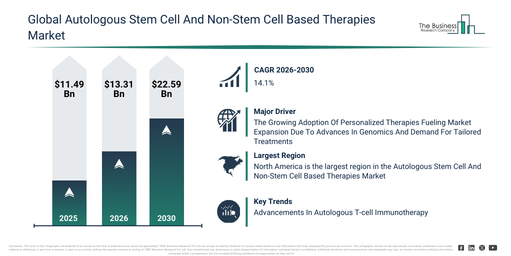
    The autologous stem cell and non-stem cell based therapies market size has seen rapid expansion in recent years. It is anticipated to increase from $11.49 billion in 2025 to $13.31 billion in 2026, achieving a compound annual growth rate (CAGR) of 15.8%. This historical growth can be attributed to a rise in degenerative disorders, advancements in stem cell isolation techniques, growing awareness of regenerative medicine, the early adoption of autologous therapies in developed countries, and government initiatives supporting cell-based treatments.

    The autologous stem cell and non-stem cell based therapies market size is anticipated to undergo significant growth in the upcoming years. The market is forecast to reach $22.59 billion by 2030, at a compound annual growth rate (CAGR) of 14.1%. This expansion is primarily driven by increasing investment in personalized medicine, the broadening of cell therapy manufacturing infrastructure, the incorporation of AI into cell therapy development, increasing demand in emerging markets, and the creation of combination cell-based therapies. Prominent trends for the forecast period include personalized regenerative therapies, immunomodulatory cell therapies, minimally invasive autologous treatments, innovations in cell expansion and manufacturing, and advanced tissue engineering solutions.

    Get A Free Sample Report With In-Depth Market Insights:

    https://www.thebusinessresearchcompany.com/sample.aspx?id=15729&type=smp&utm_source=Blogs&utm_medium=Paid&utm_campaign=Oct_PR

    Autologous Stem Cell And Non-Stem Cell Based Therapies Market Growth Drivers: What’s Behind The Acceleration?

    The expanding embrace of personalized therapies is projected to boost the autologous stem cell and non–stem cell-based therapies market going forward. Personalized therapies represent medical interventions meticulously crafted to align with an individual’s distinct genetic makeup, lifestyle choices, and clinical attributes, aiming for optimal therapeutic efficacy and minimized adverse reactions. The proliferation of personalized therapies is spurred by significant advancements in genomics and biomarker-enabled drug development, alongside an increasing patient preference for targeted and more effective treatment options. Autologous stem cell and non–stem cell-based therapies strongly support this transformation by utilizing a patient’s own cells and genetic data to deliver highly customized therapeutic solutions, which leads to improved outcomes and reduced complications. For instance, in February 2024, according to the Personalized Medicine Coalition (PMC), a US-based organization, in 2023, 20 out of 53 new therapeutic molecular entities approved by the U.S. Food and Drug Administration, approximately 38%, were classified as personalized medicines, highlighting the rapid expansion of precision-based treatment approaches. Therefore, the growing adoption of personalized therapies is driving the growth of the autologous stem cell and non–stem cell-based therapies market.

    Autologous Stem Cell And Non-Stem Cell Based Therapies Market Segment Outlook: Which Categories Are Growing Fastest?

    The autologous stem cell and non-stem cell based therapies market covered in this report is segmented –

    1) By Type: Autologous Stem Cells, Autologous Non-Stem Cells, Other Types

    2) By Application: Cancer, Neurodegenerative Disorders, Cardiovascular Disease, Orthopedic Diseases, Other Applications

    3) By End-User: Hospitals, Ambulatory Surgical Centers, Research Facilities, Other End Users

    Subsegments:

    1) By Autologous Stem Cells: Hematopoietic Stem Cells, Mesenchymal Stem Cells, Neural Stem Cells, Endothelial Stem Cells

    2) By Autologous Non-Stem Cells: Platelet-Rich Plasma (Prp), Adipose-Derived Cells, Peripheral Blood Cells

    3) By Other Types: Exosome-Based Therapies, Tissue-Engineered Constructs

    Autologous Stem Cell And Non-Stem Cell Based Therapies Market Trends: What’s Defining The Industry’s Next Phase?

    Leading companies in the autologous stem cell and non-stem cell-based therapies market are innovating tumor-derived autologous T cell immunotherapy to improve personalized cancer treatment methods. This immunotherapy operates by extracting T cells from a patient’s tumor, propagating and activating them in a laboratory, and then reinfusing them into the patient, thereby strengthening the immune system’s specific capacity to target and eradicate cancer cells. For example, in February 2024, Iovance Biotherapeutics, a US-based biotechnology company, secured accelerated approval from the Food and Drug Administration, a US-based federal agency, for Amtagvi (lifileucel). This product represents the inaugural cellular therapy approved for treating adult patients with melanoma. Lifileucel is a tumor-derived autologous T-cell immunotherapy. It is composed of a patient’s inherent immune cells, termed tumor-infiltrating lymphocytes (TILs). This enables the patient’s immune system to recognize and attack the cancer with increased effectiveness.

    Autologous Stem Cell And Non-Stem Cell Based Therapies Market Leading Companies And Competitive Benchmarking

    Major companies operating in the autologous stem cell and non-stem cell based therapies market are Bayer AG, Novartis AG, Takeda Pharmaceutical Company Limited, Gilead Sciences Inc., Merck & Co. Inc., Stemcell Technologies Inc., Dendreon Corporation, Vericel Corporation, Sangamo Therapeutics Inc., NEOSTEM, Orgenesis Inc., Adaptimmune Therapeutics, Stempeutics Research Pvt Ltd., MEDIPOST, Castle Creek Biosciences Inc., BrainStorm Cell Limited, Athersys Inc., Cytori Therapeutics Inc., Opexa Therapeutics, Gamida Cell, Regen BioPharma Inc., RepliCel Life Sciences, InGeneron Inc., BioCardia Inc., ReNeuron Group

    View The Full Autologous Stem Cell And Non-Stem Cell Based Therapies Market Report:

    https://www.thebusinessresearchcompany.com/report/autologous-stem-cell-and-non-stem-cell-based-therapies-global-market-report?utm_source=Blogs&utm_medium=Paid&utm_campaign=Oct_PR

    Autologous Stem Cell And Non-Stem Cell Based Therapies Market Geographic Analysis: Where Is Demand Rising Fastest?

    North America was the largest region in the autologous stem cell and non-stem cell based therapies market in 2025. Asia-Pacific is expected to be the fastest-growing region in the forecast period. The regions covered in the autologous stem cell and non-stem cell based therapies market report are Asia-Pacific, South East Asia, Western Europe, Eastern Europe, North America, South America, Middle East, Africa.

    Reach Out To Our Team:

    The Business Research Company: https://www.thebusinessresearchcompany.com/

    Americas: +1 310-496-7795

    Asia: +44 7882 955267 & +91 8897263534

    Europe: +44 7882 955267

    Email us at: marketing@tbrc.info

    Follow us on:

    LinkedIn: https://in.linkedin.com/company/the-business-research-company

    YouTube: https://www.youtube.com/channel/UC24_fI0rV8cR5DxlCpgmyFQ

    Global Market Model: https://www.thebusinessresearchcompany.com/global-market-model
  • Abortion Drugs Market Growth To $54.85 Billion Creates New Opportunities Across The Industry

    Abortion Drugs Market Growth To $54.85 Billion Creates New Opportunities Across The Industry

    Featuring market attractiveness scoring, total addressable market sizing, company benchmarking matrices, interactive Excel dashboards, deeper supply chain intelligence, emerging startup tracking, and granular product-level insights, The Business Research Company’s 2026 market reports are built to deliver research that is both more actionable and more strategically valuable.

    Abortion Drugs Market Revenue Growth On Track For A 11.2% CAGR Through 2030

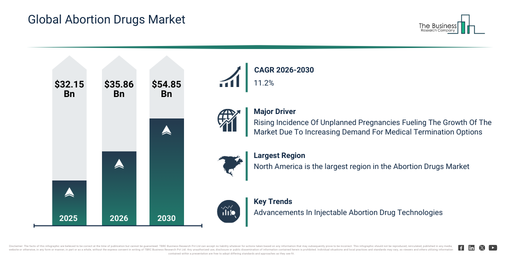
    The abortion drugs market has seen swift growth in recent years. It is anticipated to expand from $32.15 billion in 2025 to $35.86 billion in 2026, indicating a compound annual growth rate (CAGR) of 11.5%. This past growth can be attributed to regulatory approvals, the provision of hospital-based abortion services, women’s reproductive health initiatives, the availability of misoprostol, and verified clinical safety.

    The abortion drugs market is projected to experience substantial expansion in the coming years. This market is set to reach $54.85 billion by 2030, driven by a compound annual growth rate (CAGR) of 11.2%. Key drivers for this growth include the broadening of telehealth services, enhanced understanding of reproductive health, the increasing availability of generic medications, harmonized regulatory frameworks, and the development of digital pharmacy platforms. Significant trends during the forecast period involve a heightened reliance on medical abortion drugs, an uptick in demand for terminating pregnancies in their early stages, expanded availability via telemedicine, an increase in generic abortion medications, and a strong emphasis on the secure and regulated usage of these drugs.

    Get A Free Sample Report With In-Depth Market Insights:

    https://www.thebusinessresearchcompany.com/sample.aspx?id=24449&type=smp&utm_source=Blogs&utm_medium=Paid&utm_campaign=Oct_PR

    Abortion Drugs Market Growth Factors Behind Sustained Expansion

    The future expansion of the abortion drug market is anticipated to be driven by the growing frequency of unplanned pregnancies. These are defined as conceptions not deliberately sought or intended at the time, frequently stemming from inconsistent or incorrect use of birth control. The increase in unplanned pregnancies is largely attributable to restricted access to contraception, where obstacles such as financial constraints, insufficient education, and underdeveloped healthcare infrastructure hinder individuals from obtaining and effectively utilizing family planning methods. Abortion drugs offer a solution for managing unplanned pregnancies by providing a secure, non-invasive method to terminate an early pregnancy, thereby empowering individuals with greater autonomy over their reproductive choices, lessening the necessity for surgical interventions, and facilitating prompt access to healthcare services in both clinical and home environments. For instance, a report released in January 2025 by the National Center for Biotechnology Information (NCBI), a division of the US-based National Library of Medicine (NLM), indicated that an estimated six million unintended pregnancies occurred in Pakistan in 2023, with 64 % of these, or approximately 3.8 million, resulting in induced abortions. Consequently, the rising incidence of unplanned pregnancies is a key factor propelling the growth of the abortion drug market.

    Abortion Drugs Market Segment Analysis: What Are The Core Market Categories?

    The abortion drugs market covered in this report is segmented –

    1) By Drug Class: Mifepristone, Misoprostol, Pitocin, Hemabate, Carboprost, Other Drug Classes

    2) By Route Of Administration: Oral, Intravenous, Subcutaneous

    3) By Therapeutic Application: Medical Abortion, Surgical Abortion

    4) By Distribution Channel: Hospital Pharmacies, Retail Pharmacies, Online Pharmacies

    Subsegments:

    1) By Mifepristone: Generic Mifepristone, Branded Mifepristone, Combination With Misoprostol

    2) By Misoprostol: Oral Tablets, Vaginal Tablets, Sublingual Tablets, Buccal Tablets

    3) By Pitocin: Injectable Solution, Intravenous (IV) Administration, Intramuscular (IM) Administration

    4) By Hemabate: Injectable Solution, Single-Dose Vials, Multi-Dose Vials

    5) By Carboprost: Intramuscular Injection, Prefilled Syringes, Vial Form

    6) By Other Drug Classes: Methotrexate, Dinoprostone, Ergometrine, Oxytocin Analogs

    Abortion Drugs Market Industry Trends Fueling Future Revenue Growth

    Leading companies in the abortion drugs market are concentrating on developing innovative products like advanced prostaglandin-based injectable agents to enhance the safety, efficacy, and reliability of medical pregnancy termination and related obstetric care. These advanced prostaglandin-based injectable agents represent modern formulations of prostaglandin analogs designed to induce strong, controlled uterine contractions, thereby improving the effectiveness and predictability of pregnancy termination procedures while offering a more stable, precisely dosed, and clinically reliable alternative to older or less targeted therapies. For example, in May 2023, Eugia US LLC, a US-based pharmaceutical manufacturing company, obtained U.S. Food and Drug Administration (USFDA) approval for its Carboprost Tromethamine Injection USP 250 mcg/mL, Single-Dose Vials, an advanced injectable prostaglandin analog applied in second-trimester pregnancy termination and the treatment of postpartum hemorrhage. The product incorporates a precisely calibrated single-dose formulation that boosts clinical accuracy, minimizes contamination risk, and ensures consistent potency.

    Abortion Drugs Market Top Companies Driving Competitive Growth

    Major companies operating in the abortion drugs market are Pfizer Inc., Bayer AG, Intas Pharmaceuticals, Sun Pharmaceutical Industries Ltd., Macleods Pharmaceuticals Ltd, Cipla Ltd., Lupin Ltd., Zydus Lifesciences Ltd., Cadila Pharmaceuticals, Alkem Laboratories Ltd., Shanghai Xinhua Pharmaceutical Co. Ltd., Medley Pharmaceuticals, Acme Formulations Ltd., Aristo Pharmaceuticals Pvt. Ltd., Mankind Pharma Ltd., Neiss Labs Ltd., Danco Laboratories LLC, GenBioPro Inc., Exelgyn SA, Linepharma International Limited, Adorshea

    View The Full Abortion Drugs Market Report:

    https://www.thebusinessresearchcompany.com/report/abortion-drugs-global-market-report?utm_source=Blogs&utm_medium=Paid&utm_campaign=Oct_PR

    Abortion Drugs Market Global Footprint: Which Region Leads The Market?

    North America was the largest region in the abortion drugs market in 2025. Asia-Pacific is expected to be the fastest-growing region in the forecast period. The regions covered in the abortion drugs market report are Asia-Pacific, South East Asia, Western Europe, Eastern Europe, North America, South America, Middle East, Africa.

    Reach Out To Our Team:

    The Business Research Company: https://www.thebusinessresearchcompany.com/

    Americas: +1 310-496-7795

    Asia: +44 7882 955267 & +91 8897263534

    Europe: +44 7882 955267

    Email us at: marketing@tbrc.info

    Follow us on:

    LinkedIn: https://in.linkedin.com/company/the-business-research-company

    YouTube: https://www.youtube.com/channel/UC24_fI0rV8cR5DxlCpgmyFQ

    Global Market Model: https://www.thebusinessresearchcompany.com/global-market-model

  • Autoimmune Monoclonal Antibody Market 2026 Market Size And Growth Forecast: Key Trends To Watch

    Autoimmune Monoclonal Antibody Market 2026 Market Size And Growth Forecast: Key Trends To Watch

    Featuring market attractiveness scoring, total addressable market sizing, company benchmarking matrices, interactive Excel dashboards, deeper supply chain intelligence, emerging startup tracking, and granular product-level insights, The Business Research Company’s 2026 market reports are built to deliver research that is both more actionable and more strategically valuable.

    Autoimmune Monoclonal Antibody Market Growth From $76.59 Billion In 2026 To $104.57 Billion By 2030 At A CAGR Of 8.1%

    The autoimmune monoclonal antibody market has experienced robust expansion in recent years. This market is projected to expand from $70.86 billion in 2025 to $76.6 billion in 2026, achieving a compound annual growth rate (CAGR) of 8.1%. Historically, the market’s growth has been fueled by factors such as the increasing prevalence of autoimmune diseases, the approval of new biologic drugs, the expansion of hospital infusion centers, advancements in chronic inflammation management, and the proliferation of specialty clinics.

    The autoimmune monoclonal antibody market is projected to experience substantial expansion in the coming years. This market is anticipated to reach a valuation of $104.57 billion by 2030, exhibiting a compound annual growth rate (CAGR) of 8.1%. Factors contributing to this growth over the projected period include advancements in precision immunology, increased biosimilar penetration, the development of long-acting antibodies, the expansion of outpatient biologic administration, and the rise of personalized autoimmune therapies. Key trends anticipated during the forecast period encompass a greater embrace of targeted biologic therapies, the ongoing expansion of fully human antibody development, an increase in their application for chronic autoimmune conditions, a growing preference for subcutaneous administration, and a heightened emphasis on long-term disease control.

    Get A Free Sample Report With In-Depth Market Insights:

    https://www.thebusinessresearchcompany.com/sample.aspx?id=24162&type=smp&utm_source=Blogs&utm_medium=Paid&utm_campaign=Oct_PR

    Autoimmune Monoclonal Antibody Market Growth Factors Behind Sustained Expansion

    The burgeoning requirement for biologics is anticipated to stimulate the expansion of the autoimmune monoclonal antibody market in the future. Biologics are defined as a class of medicinal substances originating from living entities or their parts, utilized for the therapy, prophylaxis, or identification of illnesses. The rising need for biologics primarily stems from their efficacy in managing intricate ailments like cancer, autoimmune disorders, and genetic conditions, particularly when conventional treatments prove less potent. Autoimmune monoclonal antibody improves biologic treatments through focused immune modulation, rendering them effective in controlling excessive immune reactions. These antibodies diminish the necessity for widespread immunosuppressive drugs by delivering exact therapy, thereby enhancing patient results and lessening adverse reactions. As an illustration, in June 2024, data from Cardinal Health Inc., a US-based healthcare company, indicated that there were 40 Food and Drug Administration (FDA) approved biosimilar products in 2023, with 25 commercially accessible in the US market, marking an increase from 33 biosimilar products in 2022. Consequently, the escalating demand for biologics is propelling the expansion of the autoimmune monoclonal antibody market.

    Autoimmune Monoclonal Antibody Market Segment Landscape: Which Areas Lead Development?

    The autoimmune monoclonal antibody market covered in this report is segmented –

    1) By Type: Immunoglobulin G Monoclonal Antibodies, Immunoglobulin M Monoclonal Antibodies, Chimeric Monoclonal Antibodies, Fully Human Monoclonal Antibodies

    2) By  Route Of Administration: Subcutaneous, Intravenous, Intramuscular

    3) By Application: Rheumatoid Arthritis, Multiple Sclerosis, Systemic Lupus Erythematosus, Psoriasis, Inflammatory Bowel Disease

    4) By Distribution Channel: Hospital Pharmacy, Online Pharmacy, Retail Pharmacy

    5) By End User: Hospitals, Outpatient Clinics, Homecare Settings, Research Institutions

    Subsegments:

    1) By Immunoglobulin G (IgG) Monoclonal Antibodies: Immunoglobulin G1 (IgG1), Immunoglobulin G2 (IgG2), Immunoglobulin G3 (IgG3), Immunoglobulin G4 (IgG4)

    2) By Immunoglobulin M (IgM) Monoclonal Antibodies: Pentameric Immunoglobulin M (IgM), Hexameric Immunoglobulin M (IgM)

    3) By Chimeric Monoclonal Antibodies: Murine Variable Region + Human Constant Region, Humanized Variable Region + Murine Constant Region

    4) By Fully Human Monoclonal Antibodies: Phage Display-Derived, Transgenic Mouse-Derived, Fully Human Hybridoma-Derived

    Autoimmune Monoclonal Antibody Market Industry Trends Fueling Future Revenue Growth

    Key companies in the autoimmune monoclonal antibody sector are prioritizing the creation of innovative solutions, including biosimilar development, to elevate safety, efficacy, and quality. Biosimilar development entails producing biological products that are highly similar, safe, and effective to existing approved biologics. This is achieved through advanced biotechnology, stringent analytical testing, and clinical studies to demonstrate comparable quality, efficacy, and safety, crucial for regulatory approval. For instance, in February 2025, Biocon Biologics Limited, an India-based biopharmaceutical company, unveiled YESINTEK, a biosimilar designed to treat autoimmune conditions like Crohn’s disease, ulcerative colitis, and psoriasis. It functions by targeting and inhibiting the activity of interleukin-12 and interleukin-23 to decrease inflammation and regulate the immune response. Mimicking the reference product stelara, Yesintek aids in long-term disease management while improving patient access to biologic therapies.

    Autoimmune Monoclonal Antibody Market Industry Leaders And Competitive Landscape

    Major companies operating in the autoimmune monoclonal antibody market are Johnson & Johnson, F. Hoffmann-La Roche Ltd, Pfizer Inc., Merck & Co. Inc., AbbVie Inc., Novartis AG, Sanofi S.A., Bristol-Myers Squibb Company, AstraZeneca PLC, Eli Lilly and Company, Amgen Inc., Teva Pharmaceutical Industries Ltd., Regeneron Pharmaceuticals Inc., UCB S.A., Genmab A/S, Zymeworks Inc., Xencor Inc., Immutep Limited, Cue Biopharma Inc., Santa Ana Bio Inc.

    View The Full Autoimmune Monoclonal Antibody Market Report:

    https://www.thebusinessresearchcompany.com/report/autoimmune-monoclonal-antibody-global-market-report?utm_source=Blogs&utm_medium=Paid&utm_campaign=Oct_PR

    Autoimmune Monoclonal Antibody Market Global Footprint: Which Region Leads The Market?

    North America was the largest region in the autoimmune monoclonal antibody market in 2025. Asia-Pacific is expected to be the fastest-growing region in the forecast period. The regions covered in the autoimmune monoclonal antibody market report are Asia-Pacific, South East Asia, Western Europe, Eastern Europe, North America, South America, Middle East, Africa.

    Reach Out To Our Team:

    The Business Research Company: https://www.thebusinessresearchcompany.com/

    Americas: +1 310-496-7795

    Asia: +44 7882 955267 & +91 8897263534

    Europe: +44 7882 955267

    Email us at: marketing@tbrc.info

    Follow us on:

    LinkedIn: https://in.linkedin.com/company/the-business-research-company

    YouTube: https://www.youtube.com/channel/UC24_fI0rV8cR5DxlCpgmyFQ

    Global Market Model: https://www.thebusinessresearchcompany.com/global-market-model
  • Autoimmune Hemolytic Anemia Treatment Market Size Forecast: How The Industry Is Expected To Grow From 2026 To 2030

    Autoimmune Hemolytic Anemia Treatment Market Size Forecast: How The Industry Is Expected To Grow From 2026 To 2030

    Built to provide research that’s more actionable and strategically valuable, The Business Research Company’s 2026 market reports include market attractiveness analysis, total addressable market sizing, company benchmarking matrices, interactive Excel dashboards, broader supply chain intelligence, emerging startup tracking, and in-depth product insights.

    Autoimmune Hemolytic Anemia Treatment Market Expansion Outlook: What Revenue Opportunities Are Ahead?

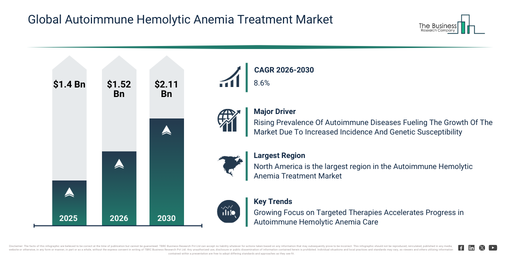
    The autoimmune hemolytic anemia treatment market has experienced substantial growth in recent years. It is anticipated to expand from $1.4 billion in 2025 to $1.52 billion in 2026, at a compound annual growth rate (CAGR) of 8.6%. The historical growth of this market can be ascribed to factors such as autoimmune disorder prevalence, anemia diagnosis growth, corticosteroid usage, hospital hematology services, and blood disorder awareness.

    The autoimmune hemolytic anemia treatment market is poised for significant expansion in the coming years. It is projected to reach $2.11 billion by 2030, driven by a compound annual growth rate (CAGR) of 8.6%. This anticipated growth can be attributed to several factors such as the progression of targeted immunotherapy, the implementation of personalized treatment protocols, the advent of early diagnostic tools, advancements in long-term disease management, and continuous research in biologic therapy. During the forecast period, notable trends are expected to include an increase in the application of corticosteroid therapy, a rising acceptance of immunosuppressive agents, the broadening of second-line treatment options, an upsurge in early diagnosis and monitoring, and a concentrated effort on mitigating treatment-related complications.

    Get A Free Sample Report With In-Depth Market Insights:

    https://www.thebusinessresearchcompany.com/sample.aspx?id=24161&type=smp&utm_source=Blogs&utm_medium=Paid&utm_campaign=Oct_PR

    Autoimmune Hemolytic Anemia Treatment Market Demand Drivers Opening New Revenue Streams

    The increasing occurrence of autoimmune conditions is anticipated to fuel the expansion of the autoimmune hemolytic anemia treatment market in the future. Autoimmune disorders are defined as illnesses where the immune system incorrectly targets the body’s own tissues, leading to inflammation and subsequent damage. This growing incidence of autoimmune diseases is primarily influenced by genetic predisposition, which elevates individuals’ vulnerability to developing these conditions. Treating autoimmune hemolytic anemia is vital for addressing the complications stemming from autoimmune diseases, as it works by targeting and diminishing the immune system’s destruction of red blood cells. As an illustration, data from May 2023, provided by the National Institute for Health and Care Research (NIHR) – a UK organization dedicated to funding, supporting, and conducting health and care research for public health improvement – indicates a significant impact. A comprehensive study involving 22 million people demonstrated that autoimmune disorders currently affect approximately one in ten individuals, with 19 different autoimmune diseases impacting about 10% of the overall population, specifically 13% of women and 7% of men. Consequently, the Rising Prevalence Of Autoimmune Diseases is set to stimulate the expansion of the autoimmune hemolytic anemia treatment market.

    Autoimmune Hemolytic Anemia Treatment Market Segments: Where Is Growth Concentrated?

    The autoimmune hemolytic anemia treatment market covered in this report is segmented –

    1) By Type: Warm Autoimmune Hemolytic Anemia, Cold Autoimmune Hemolytic Anemia, Other Types

    2) By Drug Class: Corticosteroids, Immunosuppressive Agents, Other Drug Classes

    3) By Route Of Administration: Injectable, Oral, Other Route Of Administrations

    4) By Distribution Channel: Hospital Pharmacy, Retail Pharmacy, Online Pharmacy

    Subsegments:

    1) By Warm Autoimmune Hemolytic Anemia: Primary Warm Autoimmune Hemolytic Anemia, Secondary Warm Autoimmune Hemolytic Anemia

    2) By Cold Autoimmune Hemolytic Anemia: Primary Cold Agglutinin Disease (CAD), Secondary Cold Autoimmune Hemolytic Anemia

    3) By Other Types: Mixed-Type Autoimmune Hemolytic Anemia, Paroxysmal Cold Hemoglobinuria (PCH), Drug-Induced Autoimmune Hemolytic Anemia

    Autoimmune Hemolytic Anemia Treatment Market Trends Powering Strategic Industry Growth

    Major companies operating in the autoimmune hemolytic anemia (AIHA) treatment market are emphasizing the advancement of targeted immunotherapies to enhance disease control, decrease hemolysis, and offer safer long-term management strategies for patients. These targeted immunotherapies aim to modulate specific immune pathways responsible for the destruction of red blood cells, thereby addressing the underlying autoimmune mechanism rather than solely managing symptoms. For instance, in June 2025, HUTCHMED, a China-based biopharmaceutical company, initiated its Phase II/III registration trial (ESLIM-02) to evaluate sovleplenib, a selective Syk inhibitor, for the treatment of warm autoimmune hemolytic anemia (wAIHA). This trial is designed to assess the drug’s capability to inhibit immune-mediated hemolysis, improve hemoglobin levels, and provide a novel therapeutic option for patients with limited treatment alternatives.

    Autoimmune Hemolytic Anemia Treatment Market Key Participants And Competitive Landscape

    Major companies operating in the autoimmune hemolytic anemia treatment market are Johnson & Johnson, F. Hoffmann-La Roche Ltd., AbbVie Inc., Sanofi SA, Novartis AG, Amgen Inc., Incyte Corporation, Alexion Pharmaceuticals Inc., Hutchison China MediTech Limited, BioCryst Pharmaceuticals Inc., Annexon Inc., Rigel Pharmaceuticals Inc., Nanjing IASO Biotherapeutics Co. Ltd., Apellis Pharmaceuticals Inc., Momenta Pharmaceuticals Inc., Zenas BioPharma Inc., Immunovant Sciences GmbH, Alpine Immune Sciences Inc., Agios Pharmaceuticals Inc., Kezar Life Sciences Inc.

    View The Full Autoimmune Hemolytic Anemia Treatment Market Report:

    https://www.thebusinessresearchcompany.com/report/autoimmune-hemolytic-anemia-treatment-global-market-report?utm_source=Blogs&utm_medium=Paid&utm_campaign=Oct_PR

    Autoimmune Hemolytic Anemia Treatment Market Regional Split: Which Areas Are Fueling Growth?

    North America was the largest region in the autoimmune hemolytic anemia treatment market in 2025. Asia-Pacific is expected to be the fastest-growing region in the forecast period. The regions covered in the autoimmune hemolytic anemia treatment market report are Asia-Pacific, South East Asia, Western Europe, Eastern Europe, North America, South America, Middle East, Africa.

    Reach Out To Our Team:

    The Business Research Company: https://www.thebusinessresearchcompany.com/

    Americas: +1 310-496-7795

    Asia: +44 7882 955267 & +91 8897263534

    Europe: +44 7882 955267

    Email us at: marketing@tbrc.info

    Follow us on:

    LinkedIn: https://in.linkedin.com/company/the-business-research-company

    YouTube: https://www.youtube.com/channel/UC24_fI0rV8cR5DxlCpgmyFQ

    Global Market Model: https://www.thebusinessresearchcompany.com/global-market-model
  • Abemaciclib Market Forecast: Breaking Down The Numbers Behind Future Expansion

    Abemaciclib Market Forecast: Breaking Down The Numbers Behind Future Expansion

    Built to provide research that’s more actionable and strategically valuable, The Business Research Company’s 2026 market reports include market attractiveness analysis, total addressable market sizing, company benchmarking matrices, interactive Excel dashboards, broader supply chain intelligence, emerging startup tracking, and in-depth product insights.

    Abemaciclib Market Value Growth And Long-Term Outlook

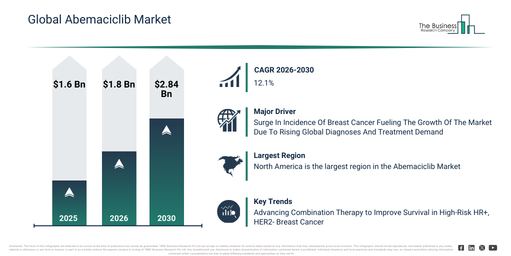
    The abemaciclib market size has experienced rapid growth in recent years. It is anticipated to expand from $1.6 billion in 2025 to $1.8 billion in 2026, achieving a compound annual growth rate (CAGR) of 12.4%. The historical growth can be linked to the increasing prevalence of hormone receptor-positive breast cancer, progress in molecular oncology research, regulatory approvals for targeted therapies, enhanced diagnostic screening programs, and the expansion of oncology treatment centers.

    The abemaciclib market size is projected to experience substantial growth over the next few years, expanding to $2.84 billion in 2030, driven by a compound annual growth rate (CAGR) of 12.1%. This growth during the forecast period is attributed to several factors, including the escalating demand for precision oncology medications, increased investments in targeted cancer therapeutics, the expansion of treatment protocols for early breast cancer, the rising adoption of oral anticancer agents, and continuous innovation in cell cycle inhibition therapies. Prominent trends anticipated in the forecast period encompass the increasing uptake of cdk4/6 inhibitor therapies, a rise in the use of combination endocrine treatments, a greater focus on targeted breast cancer therapies, the broadening utilization of oral oncology drugs, and an enhanced emphasis on early-stage cancer intervention.

    Get A Free Sample Report With In-Depth Market Insights:

    https://www.thebusinessresearchcompany.com/sample.aspx?id=28112&type=smp&utm_source=Blogs&utm_medium=Paid&utm_campaign=Oct_PR

    Abemaciclib Market Demand Drivers Opening New Revenue Streams

    The rising occurrence of breast cancer is anticipated to drive the expansion of the abemaciclib market in the future. Breast cancer is defined as a cancerous growth originating in the breast tissue, typically impacting ducts or lobules, with the potential to metastasize to other bodily regions if left untreated. This increase in breast cancer cases is attributed to enhanced detection and screening techniques, leading to the diagnosis of more instances that might have previously remained undiagnosed. Abemaciclib aids in managing breast cancer by blocking particular enzymes that foster the proliferation of tumor cells, consequently decelerating disease advancement and enhancing patient results. As an illustration, in February 2025, data from the International Agency for Research on Cancer (IARC), an intergovernmental organization located in France, revealed that in 2022, approximately 2.3 million women worldwide received a breast cancer diagnosis, resulting in 670,000 fatalities, with forecasts indicating 3.2 million cases and 1.1 million deaths each year by 2050. Consequently, the growing frequency of breast cancer is fueling the expansion of the abemaciclib market.

    Abemaciclib Market Segment Breakdown: Which Categories Lead On Revenue?

    The abemaciclib market covered in this report is segmented –

    1) By Product Type: Tablets, Capsules, Other Product Types

    2) By Indication: Advanced Or Metastatic Breast Cancer, Early Breast Cancer, Other Indications

    3) By Distribution Channel: Online, Offline

    4) By End-User: Hospitals, Cancer Treatment Centers, Other End-Users

    Subsegments:

    1) By Tablets: Standard Tablets, Extended-Release Tablets

    2) By Capsules: Hard Gelatin Capsules, Soft Gelatin Capsules

    3) By Other Product Types: Oral Suspensions, Injectable Forms, Topical Forms

    Abemaciclib Market Trends Powering Strategic Industry Growth

    Leading companies in the abemaciclib market are focused on developing advanced innovations, such as combination therapy with endocrine treatment, to enhance overall survival, improve long-term treatment efficacy, and reduce recurrence in high-risk HR+, HER2-negative early breast cancer patients. This combination approach with endocrine treatment involves utilizing abemaciclib alongside hormone-blocking therapy to more effectively inhibit the growth and spread of HR+ breast cancer cells. For example, in August 2025, Eli Lilly and Company, a US-based pharmaceutical and biotechnology company, presented new Phase 3 data demonstrating that adjuvant abemaciclib, when combined with endocrine therapy, significantly improved overall survival in patients with high-risk HR+, HER2-negative, node-positive early breast cancer. The therapy exhibited meaningful reductions in both recurrence and long-term disease progression. This advancement expands access to evidence-based combination strategies for high-risk breast cancer patients globally. The aim of combining abemaciclib with endocrine therapy is to further optimize patient outcomes and provide a more effective, long-term treatment approach.

    Abemaciclib Market Leading Players And Competitive Positioning

    Major companies operating in the abemaciclib market are Eli Lilly and Company

    View The Full Abemaciclib Market Report:

    https://www.thebusinessresearchcompany.com/report/abemaciclib-global-market-report?utm_source=Blogs&utm_medium=Paid&utm_campaign=Oct_PR

    Abemaciclib Market Regional Split: Which Areas Are Fueling Growth?

    North America was the largest region in the abemaciclib market in 2025. Asia-Pacific is expected to be the fastest-growing region in the forecast period. The regions covered in the abemaciclib market report are Asia-Pacific, South East Asia, Western Europe, Eastern Europe, North America, South America, Middle East, Africa.

    Reach Out To Our Team:

    The Business Research Company: https://www.thebusinessresearchcompany.com/

    Americas: +1 310-496-7795

    Asia: +44 7882 955267 & +91 8897263534

    Europe: +44 7882 955267

    Email us at: marketing@tbrc.info

    Follow us on:

    LinkedIn: https://in.linkedin.com/company/the-business-research-company

    YouTube: https://www.youtube.com/channel/UC24_fI0rV8cR5DxlCpgmyFQ

    Global Market Model: https://www.thebusinessresearchcompany.com/global-market-model
  • Autoimmune Gastrointestinal Dysmotility Market Reaches $2.62 Billion In 2026: Forecast And Growth Opportunities

    Autoimmune Gastrointestinal Dysmotility Market Reaches $2.62 Billion In 2026: Forecast And Growth Opportunities

    Backed by market attractiveness analysis, total addressable market sizing, company benchmarking matrices, interactive Excel dashboards, wider supply chain intelligence, emerging startup coverage, and detailed product-level insights, The Business Research Company’s 2026 market reports are designed to offer research that is more actionable and strategically valuable than ever.

    Autoimmune Gastrointestinal Dysmotility Market Growth Potential: How Will Market Size Shift Through 2030?

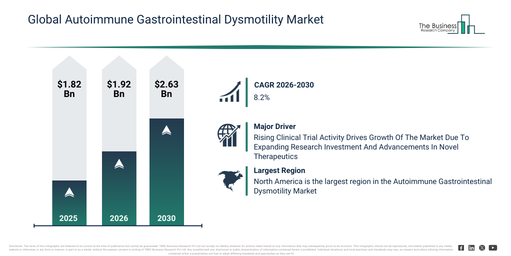
    The autoimmune gastrointestinal dysmotility market size has seen substantial growth in recent years. This market is projected to expand from $1.82 billion in 2025 to $1.92 billion in 2026, exhibiting a compound annual growth rate (CAGR) of 5.5%. Factors contributing to this historical growth include an increase in autoimmune disease diagnoses, the prevalence of gastroparesis, the expansion of hospital gastroenterology services, the usage of immunosuppressive drugs, and heightened awareness of rare diseases.

    The autoimmune gastrointestinal dysmotility market is anticipated to experience substantial expansion over the upcoming years. Projections indicate it will reach a valuation of $2.63 billion by 2030, demonstrating a compound annual growth rate (CAGR) of 8.2%. This expansion throughout the projected timeframe stems from factors such as enhanced early diagnostics, tailored treatment strategies, the increasing need for long-term care, the rise of home-based nutritional support, and broadened research into autoimmune conditions. Key developments anticipated during the forecast horizon encompass a greater acknowledgment of uncommon gastrointestinal ailments, an uptick in the application of immunosuppressive therapies, wider availability of nutritional and dietary interventions, increasing acceptance of comprehensive multidisciplinary care methods, and an emphasis on sustained symptom control.

    Get A Free Sample Report With In-Depth Market Insights:

    https://www.thebusinessresearchcompany.com/sample.aspx?id=24160&type=smp&utm_source=Blogs&utm_medium=Paid&utm_campaign=Oct_PR

    Autoimmune Gastrointestinal Dysmotility Market Growth Backed By Core Demand Fundamentals

    A rising number of clinical trials is expected to fuel the expansion of the autoimmune gastrointestinal dysmotility market in the foreseeable future. Clinical trials are research investigations that assess the safety, efficacy, and optimal application of various medical interventions, including drugs, biologics, devices, and treatment protocols, involving human participants to improve medical knowledge and patient care. The increase in clinical trials primarily results from expanded regulatory frameworks mandating trial registration, greater investment in pharmaceutical research and development, and the accelerating pace of innovation in new therapeutic modalities such as immunotherapies and biologics, which target autoimmune conditions impacting gastrointestinal motility. For autoimmune gastrointestinal dysmotility, these trials are crucial for advancing treatment options by systematically evaluating new immunosuppressive therapies, prokinetic agents, and biologics, identifying the most effective treatment protocols for managing gastrointestinal motility disorders, and establishing evidence-based approaches that lead to regulatory approvals and the clinical adoption of breakthrough therapies addressing autoimmune-mediated gastrointestinal dysfunction. For instance, in November 2025, according to ClinicalTrials.gov, a US-based clinical trials registry overseen by the National Institutes of Health, the total count of registered clinical studies reached 477,203 at the end of 2023 (comprising 437,493 cumulative and 39,710 new registrations) and subsequently grew to 520,877 by the end of 2024 (comprising 477,203 cumulative and 43,674 new registrations), indicating a 9.1% year-on-year rise in overall registered studies. Therefore, the increasing number of clinical trials is a key driver of growth for the autoimmune gastrointestinal dysmotility market.

    Autoimmune Gastrointestinal Dysmotility Market Segment Analysis: What Are The Core Market Categories?

    The autoimmune gastrointestinal dysmotility market covered in this report is segmented –

    1) By Treatment Type: Medications, Surgical Interventions, Dietary Management, Physical Therapy

    2) By Drug Class: Prokinetic Agents, Anti-Inflammatory Drugs, Immunosuppressive Drugs, Antibiotics

    3) By Disease Type: Gastroparesis, Chronic Intestinal Pseudo-Obstruction (Cipo), Functional Dyspepsia, Irritable Bowel Syndrome (Ibs)

    4) By Distribution Channel: Hospital Pharmacy, Retail Pharmacy, Online Pharmacies, Other Distribution Channels

    5) By End User: Hospitals, Clinics, Home Care Settings, Research Institutions

    Subsegments:

    1) By Medications: Immunosuppressants, Corticosteroids, Prokinetic Agents, Antiemetics, Antispasmodics, Antibiotics

    2) By Surgical Interventions: Gastrostomy, Jejunostomy, Colostomy, Ileostomy, Pyloroplasty, Colectomy

    3) By Dietary Management: Enteral Nutrition, Parenteral Nutrition, Gluten-Free Diet, Elemental Diet, Small Frequent Meals

    4) By Physical Therapy: Pelvic Floor Therapy, Abdominal Massage Therapy, Neuromuscular Electrical Stimulation (NMES), Biofeedback Therapy, Respiratory Muscle Training, Postural Training

    Autoimmune Gastrointestinal Dysmotility Market Top Companies Driving Competitive Growth

    Major companies operating in the autoimmune gastrointestinal dysmotility market are AbbVie Inc., GlaxoSmithKline plc, Takeda Pharmaceutical Company Limited, Teva Pharmaceutical Industries Ltd., Chugai Pharmaceutical Co. Ltd., Zeria Pharmaceutical Co. Ltd., Ironwood Pharmaceuticals Inc., Vanda Pharmaceuticals Inc., Dr. Falk Pharma GmbH, Rose Pharma LLC, Parvus Therapeutics Inc., CinDome Pharma Inc., Neurogastrx Inc., Renexxion LLC, ISOThrive Inc., Ambrose Healthcare Inc., AnTolRx Inc., Enteralia Bioscience S.r.l., Immunic Inc., Mozart Therapeutics Inc.

    View The Full Autoimmune Gastrointestinal Dysmotility Market Report:

    https://www.thebusinessresearchcompany.com/report/autoimmune-gastrointestinal-dysmotility-global-market-report?utm_source=Blogs&utm_medium=Paid&utm_campaign=Oct_PR

    Autoimmune Gastrointestinal Dysmotility Market Top Region: Where Does Most Revenue Come From?

    North America was the largest region in the autoimmune gastrointestinal dysmotility market in 2025. The regions covered in the autoimmune gastrointestinal dysmotility market report are Asia-Pacific, South East Asia, Western Europe, Eastern Europe, North America, South America, Middle East, Africa.

    Reach Out To Our Team:

    The Business Research Company: https://www.thebusinessresearchcompany.com/

    Americas: +1 310-496-7795

    Asia: +44 7882 955267 & +91 8897263534

    Europe: +44 7882 955267

    Email us at: marketing@tbrc.info

    Follow us on:

    LinkedIn: https://in.linkedin.com/company/the-business-research-company

    YouTube: https://www.youtube.com/channel/UC24_fI0rV8cR5DxlCpgmyFQ

    Global Market Model: https://www.thebusinessresearchcompany.com/global-market-model