Month: October 2026

  • Autacoids And Related Drug Market Growth In 2026: Market Size, Key Drivers And Future Outlook

    Autacoids And Related Drug Market Growth In 2026: Market Size, Key Drivers And Future Outlook

    Featuring market attractiveness scoring, total addressable market sizing, company benchmarking matrices, interactive Excel dashboards, deeper supply chain intelligence, emerging startup tracking, and granular product-level insights, The Business Research Company’s 2026 market reports are built to deliver research that is both more actionable and more strategically valuable.

    Autacoids And Related Drug Market Value Analysis: What Growth Lies Ahead Over The Forecast Period?

    The autacoids and related drug market has witnessed significant growth in recent years. It is anticipated to expand from $52.81 billion in 2025 to $55.87 billion in 2026, achieving a compound annual growth rate (CAGR) of 5.8%. Historically, this market’s expansion can be ascribed to the widespread occurrence of inflammatory diseases, an increase in allergy cases, the impact of cardiovascular disorders, advancements in gastrointestinal disorder treatments, and the broader scope of hospital pharmacology.

    The autacoids and related drug market size is poised for robust expansion over the next few years. It is expected to reach $70.07 billion in 2030, driven by a compound annual growth rate (CAGR) of 5.8%. The anticipated growth during this period is largely due to the embrace of precision pharmacology, advancements in receptor-targeted drug development, the rise of chronic disease management, the proliferation of outpatient treatment options, and the increased application of combination therapy. Noteworthy trends for the forecast period include the expanding application in inflammatory disease management, a sharpened focus on receptor-specific drug mechanisms, the escalating demand for targeted autacoid modulators, growing utilization in cardiovascular and respiratory care, and a surge in the adoption of combination therapies.

    Get A Free Sample Report With In-Depth Market Insights:

    https://www.thebusinessresearchcompany.com/sample.aspx?id=24159&type=smp&utm_source=Blogs&utm_medium=Paid&utm_campaign=Oct_PR

    Autacoids And Related Drug Market Growth Catalysts And Demand Drivers

    The expanding occurrence of cardiovascular diseases is anticipated to boost the future expansion of the autacoids and related drugs market. These illnesses encompass a range of afflictions impacting the heart and blood vessels, such as coronary heart disease, heart failure, stroke, and hypertension. The rising incidence of cardiovascular diseases largely stems from inadequate dietary habits, with excessive intake of saturated fats, trans fats, added sugars, and sodium leading to high blood pressure, obesity, and increased cholesterol, all significant precursors to cardiac ailments. Autacoids and their associated medications improve cardiovascular well-being by regulating vascular tone and inflammation, which is vital in conditions like hypertension and heart failure. These agents, by targeting pathways involving nitric oxide, endothelin, and prostacyclin, assist in restoring endothelial function, thereby encouraging vasodilation and lowering vascular resistance. For example, in September 2023, the World Health Organization, an intergovernmental body based in Switzerland, reported 17.9 million deaths due to cardiovascular diseases. Consequently, the expanding occurrence of cardiovascular diseases is fueling the growth of the autacoids and related drugs market.

    Autacoids And Related Drug Market Segment Breakdown: Which Categories Lead On Revenue?

    The autacoids and related drug market covered in this report is segmented –

    1) By Type: Histamines, Prostaglandins, Leukotrienes, Serotonin, Bradykinin

    2) By Administration: Oral, Injectable, Topical, Intranasal, Inhalation

    3) By Application: Cardiovascular Disorders, Inflammatory Diseases, Respiratory Disorders, Allergies, Gastrointestinal Disorders

    4) By End User: Hospitals, Clinics, Homecare, Pharmacies

    Subsegments:

    1) By Histamines: H1 Receptor Antagonists, H2 Receptor Antagonists, H3 Receptor Antagonists, H4 Receptor Antagonists, Histamine Agonists

    2) By Prostaglandins: Prostaglandin E1 (PGE1) Analogs, Prostaglandin E2 (PGE2) Analogs, Prostaglandin F2a (PGF2a) Analogs, Prostaglandin I2 (PGI2) Analogs, Prostaglandin D2 (PGD2) Analogs

    3) By Leukotrienes: Leukotriene Receptor Antagonists (LTRAs), 5-Lipoxygenase Inhibitors, Leukotriene Synthesis Inhibitors

    4) By Serotonin: 5-HT1 Receptor Agonists, 5-HT2 Receptor Antagonists, 5-HT3 Receptor Antagonists, 5-HT4 Receptor Agonists, 5-HT6 And 5-HT7 Modulators

    5) By Bradykinin: Bradykinin B1 Receptor Antagonists, Bradykinin B2 Receptor Antagonists, Bradykinin Receptor Agonists

    Autacoids And Related Drug Market Trends Shaping Long-Term Demand

    Leading companies in the autacoids and related drugs sector are concentrating on developing innovative products, such as antihistamines, to boost therapeutic effectiveness, lessen side effects, and address emerging allergic and inflammatory conditions with greater accuracy and safety. Antihistamines are medicines that block the effects of histamine, a chemical released by your immune system during an allergic reaction. For instance, in March 2023, Tiefenbacher Pharmaceuticals, a Germany-based pharmaceuticals company, launched Bilastine as an over-the-counter (OTC) medicine in Germany, marking a significant step in enhancing access to effective allergy treatments. The 20 mg Bilastine tablets offer a non-sedating, second-generation antihistamine solution for patients experiencing allergic symptoms such as hay fever and urticaria.

    Autacoids And Related Drug Market Leading Players And Competitive Positioning

    Major companies operating in the autacoids and related drug market are Sanofi S.A., Fresenius SE & Co. KGaA, Dr. Reddy’s Laboratories Limited, EUROAPI S.A., Pfizer CentreOne, Cayman Chemical Company, Tokyo Chemical Industry Co. Ltd., Avanti Polar Lipids Inc., Kyowa Pharma Chemical Co. Ltd., Nicox S.A., Glentham Life Sciences Ltd., LGM Pharma Inc., chemBlink Inc., ZellBio GmbH, AquigenBio LLC, BOC Sciences Inc., Yarrow Chem Products Pvt. Ltd., LEBSA S.A., VDK NaturaSyn S.A., Enzo Life Sciences Inc.

    View The Full Autacoids And Related Drug Market Report:

    https://www.thebusinessresearchcompany.com/report/autacoids-and-related-drug-global-market-report?utm_source=Blogs&utm_medium=Paid&utm_campaign=Oct_PR

    Autacoids And Related Drug Market Regional Breakdown: Where Is Demand Concentrated?

    North America was the largest region in the autacoids and related drug market in 2025. Asia-Pacific is expected to be the fastest-growing region in the forecast period. The regions covered in the autacoids and related drug market report are Asia-Pacific, South East Asia, Western Europe, Eastern Europe, North America, South America, Middle East, Africa.

    Reach Out To Our Team:

    The Business Research Company: https://www.thebusinessresearchcompany.com/

    Americas: +1 310-496-7795

    Asia: +44 7882 955267 & +91 8897263534

    Europe: +44 7882 955267

    Email us at: marketing@tbrc.info

    Follow us on:

    LinkedIn: https://in.linkedin.com/company/the-business-research-company

    YouTube: https://www.youtube.com/channel/UC24_fI0rV8cR5DxlCpgmyFQ

    Global Market Model: https://www.thebusinessresearchcompany.com/global-market-model

  • 3D Bioprinted Human Tissue Market Expected To Grow At 13.2% CAGR Through 2030: What Businesses Need To Know

    3D Bioprinted Human Tissue Market Expected To Grow At 13.2% CAGR Through 2030: What Businesses Need To Know

    Backed by market attractiveness analysis, total addressable market sizing, company benchmarking matrices, interactive Excel dashboards, wider supply chain intelligence, emerging startup coverage, and detailed product-level insights, The Business Research Company’s 2026 market reports are designed to offer research that is more actionable and strategically valuable than ever.

    3D Bioprinted Human Tissue Market Poised To Hit $3.59 Billion By 2030 With A 13.2% CAGR

    The 3d bioprinted human tissue market has experienced significant growth in its size over recent years. It will grow from $1.93 billion in 2025 to $2.19 billion in 2026 at a compound annual growth rate (CAGR) of 13.5%. The historical expansion can be attributed to the early adoption of tissue engineering technologies, a rising need for advanced in vitro testing models, limitations of traditional animal testing methods, growing academic research funding, and initial developments in biomaterials and bioinks.

    The 3d bioprinted human tissue market is anticipated to expand significantly over the coming years. It will grow to $3.59 billion in 2030 at a compound annual growth rate (CAGR) of 13.2%. This expansion during the projection period is driven by improvements in bioprinting resolution and its ability to scale, rising investments in regenerative medicine, the pharmaceutical sector’s increasing need for predictive drug testing models, broader research in organ transplantation, and favorable regulatory environments for advanced treatments. Key developments expected during this time include the expanded application of 3d bioprinted tissues in drug evaluation and disease understanding, a heightened need for regenerative medicine and tissue engineering solutions, the rise of personalized and patient-specific tissue constructions, increased partnerships in academic and clinical research, and a greater embrace of bioprinted tissues as substitutes for animal testing.

    Get A Free Sample Report With In-Depth Market Insights:

    https://www.thebusinessresearchcompany.com/sample.aspx?id=27196&type=smp&utm_source=Blogs&utm_medium=Paid&utm_campaign=Oct_PR

    3D Bioprinted Human Tissue Market Growth Backed By Core Demand Fundamentals

    The rising need for organ transplants is projected to boost the expansion of the 3D bioprinted human tissue market in the coming years. Organ transplantation involves a medical procedure where organs are transferred from a donor to a recipient to replace damaged or failing ones. The escalating demand for organ transplants is attributed to patients seeking vital interventions that reduce waiting times, enhance survival rates, and provide hope through accessible and dependable transplant solutions. 3D bioprinted human tissue offers a revolutionary answer for organ transplants by enabling the creation of patient-specific, functional tissues, thereby decreasing rejection risks and lessening dependence on donor organs. For instance, in January 2025, according to the Organ Procurement and Transplantation Network, a US-based non-profit organization, there was a modest increase in kidney transplants, reaching 27,759 in 2024, an increase of 1.6 percent compared to 2023. In contrast, heart transplant numbers remained nearly stable, with 4,572 procedures in 2024 compared to 4,545 in 2023. Therefore, the increasing demand for organ transplants is a primary force driving the growth of the 3D bioprinted human tissue market.

    3D Bioprinted Human Tissue Market Segmentation: How Does The Market Break Down By Category?

    The 3d bioprinted human tissue market covered in this report is segmented –

    1) By Tissue Type: Skin, Cartilage, Liver, Bone, Heart, Other Tissue Types

    2) By Technology: Extrusion-Based, Inkjet Bioprinting, Laser-Assisted Bioprinting, Microfluidic And Acoustic, Magnetic Levitation, Hybrid Or 4D

    3) By Materials: Natural Biomaterials, Synthetic Biomaterials, Decellularized Extracellular Matrices, Hydrogels, Composite Materials, Other Materials

    4) By Application: Tissue Engineering, Cosmetic Surgery, Drug Testing And Development, Food Testing

    5) By End-User: Pharmaceutical Companies, Biotechnology Firms, Academic Research Institutions, Contract Research Organizations, Hospitals And Clinics

    Subsegments:

    1) By Skin: Wound Healing Applications, Cosmetic Testing Models, Skin Graft Replacements

    2) By Cartilage: Joint Repair Models, Nasal Reconstruction, Ear Reconstruction

    3) By Liver: Toxicity Testing Models, Disease Modeling, Transplant Research

    4) By Bone: Orthopedic Implants, Cranial Repair Models, Bone Graft Substitutes

    5) By Heart: Cardiac Patch Development, Heart Valve Models, Myocardial Regeneration

    6) By Other Tissue Types: Kidney Models, Lung Tissue Constructs, Pancreatic Tissue Models

    3D Bioprinted Human Tissue Market Growth Trends Reshaping The Competitive Landscape

    Major companies operating within the 3D bioprinted human tissue market are directing their efforts towards innovative strategies, such as optimizing patient-derived samples. These strategies aim to develop highly precise and individualized tissue models, which enhance outcomes in drug testing, disease investigation, and regenerative medicine. Patient-derived sample optimization refers to the improved capacity to effectively utilize scarce patient cells for generating numerous high-quality, biologically relevant 3D tissue models, leading to more accurate and tailored research findings. As an illustration, Inventia Life Science Pty Ltd., an Australian biotechnology firm, launched its RASTRUM solution in January 2025 as part of its Inventia Life Science suite. This solution is specifically designed to facilitate the swift, accurate, and consistent production of intricate 3D human tissue models that closely resemble genuine human tissues, making them valuable for drug discovery, disease modeling, and regenerative medicine. It incorporates advanced drop-on-demand bioprinting technology to automate and scale the creation of 3D cell cultures in standard laboratory plate formats, thereby substantially decreasing manual labor and inconsistencies. This capability empowers researchers to conduct high-throughput, uniform experiments using biologically relevant tissue models, ultimately accelerating discoveries and enhancing the predictability of preclinical research results.

    3D Bioprinted Human Tissue Market Competitive Overview And Top Companies

    Major companies operating in the 3d bioprinted human tissue market are Inventia Life Science PTY LTD., Aspect Biosystems Ltd., Cellink Global AB, Prellis Biologics Inc., Cyfuse Biomedical K.K., Poietis SAS, Fluidform LLC, EpiBone Inc., Carcinotech Ltd., Organovo Holdings Inc., CollPlant Biotechnologies Ltd.

    View The Full 3D Bioprinted Human Tissue Market Report:

    https://www.thebusinessresearchcompany.com/report/3d-bioprinted-human-tissue-global-market-report?utm_source=Blogs&utm_medium=Paid&utm_campaign=Oct_PR

    3D Bioprinted Human Tissue Market Top Region: Where Does Most Revenue Come From?

    North America was the largest region in the 3D bioprinted human tissue market in 2025. Asia-Pacific is expected to be the fastest-growing region in the forecast period. The regions covered in the 3d bioprinted human tissue market report are Asia-Pacific, South East Asia, Western Europe, Eastern Europe, North America, South America, Middle East, Africa.

    Reach Out To Our Team:

    The Business Research Company: https://www.thebusinessresearchcompany.com/

    Americas: +1 310-496-7795

    Asia: +44 7882 955267 & +91 8897263534

    Europe: +44 7882 955267

    Email us at: marketing@tbrc.info

    Follow us on:

    LinkedIn: https://in.linkedin.com/company/the-business-research-company

    YouTube: https://www.youtube.com/channel/UC24_fI0rV8cR5DxlCpgmyFQ

    Global Market Model: https://www.thebusinessresearchcompany.com/global-market-model

  • Aurora Kinase B Market Size And Forecast 2026–2030: Trends Driving Industry Expansion

    Aurora Kinase B Market Size And Forecast 2026–2030: Trends Driving Industry Expansion

    Built to provide research that’s more actionable and strategically valuable, The Business Research Company’s 2026 market reports include market attractiveness analysis, total addressable market sizing, company benchmarking matrices, interactive Excel dashboards, broader supply chain intelligence, emerging startup tracking, and in-depth product insights.

    Aurora Kinase B Market Size Forecast: How Big Could The Market Get By 2030?

    The aurora kinase b market has experienced rapid expansion in its size over recent years. It is projected to expand from $1.27 billion in 2025 to reach $1.43 billion by 2026, demonstrating a compound annual growth rate (CAGR) of 12.0%. This historical growth can be linked to several factors, including developments in molecular oncology research, the recognition of aurora kinase b as a target for cancer treatment, the broadening of clinical trial infrastructure, a rise in investment toward targeted cancer therapies, and advances in the creation of kinase inhibitors.

    The aurora kinase b market is anticipated to experience significant expansion in the coming years, with projections indicating it will reach $2.22 billion in 2030, demonstrating a compound annual growth rate (CAGR) of 11.7%. This expected growth during the forecast period is primarily driven by factors such as the increasing demand for precision cancer therapeutics, the expansion of personalized medicine approaches, heightened oncology clinical trial activity, rising investments in novel kinase inhibitors, and improved regulatory support for targeted oncology drugs. Key trends influencing this period include the intensifying development of selective aurora kinase b inhibitors, a growing emphasis on combination oncology therapies, the broadening of precision oncology drug pipelines, an escalating focus on mitotic targeted therapies, and more refined biomarker-based patient stratification.

    Get A Free Sample Report With In-Depth Market Insights:

    https://www.thebusinessresearchcompany.com/sample.aspx?id=20496&type=smp&utm_source=Blogs&utm_medium=Paid&utm_campaign=Oct_PR

    Aurora Kinase B Market Opportunity Drivers: What’s Unlocking New Revenue Potential?

    The increasing occurrence of cancer is projected to drive the expansion of the aurora kinase B market in the future. Cancer refers to a collection of diseases marked by the unchecked proliferation and dissemination of abnormal cells, capable of invading nearby tissues and spreading to distant body regions. The rise in cancer cases stems from various factors, including an aging demographic, shifts in lifestyle, environmental exposures, and advancements in detection and diagnosis methods. Aurora kinase B plays a crucial role during cell division (mitosis), and its elevated expression is associated with chromosomal instability and the advancement of cancer. Given its participation in tumor cell division, it is frequently a target in cancer treatments. For example, data from the World Health Organization, a Switzerland-based intergovernmental body, in February 2024 indicated approximately 20 million new cancer cases and 9.7 million deaths were reported in 2022. Projections suggest that by 2050, new cancer cases will surpass 35 million, signifying a 77% rise compared to 2022 figures. Consequently, the increasing prevalence of cancer is propelling the growth of the aurora kinase B market.

    Aurora Kinase B Market Segmentation: How Does The Market Break Down By Category?

    The aurora kinase b market covered in this report is segmented –

    1) By Type: AZD-2811, CS-2164, Danusertib, Ilorasertib, NMI-900, Other Types

    2) By Application: Anaplastic Large Cell Lymphoma, Kidney Cancer, Lung Cancer, Prostate Cancer, Other Applications

    3) By End-User: Hospitals, Research Institutes, Diagnostic Laboratories, Other End-Users

    Subsegments:

    1) By AZD-2811: Phase I Clinical Trials AZD-2811, Preclinical Development of AZD-2811, AZD-2811 in Combination Therapy, Targeted Cancer Treatment with AZD-2811

    2) By CS-2164: Phase II Clinical Trials CS-2164, Preclinical Development of CS-2164, CS-2164 in Targeted Cancer Therapy, CS-2164 Combination Therapy in Clinical Studies

    3) By Danusertib: Phase III Clinical Trials Danusertib, Danusertib for Hematological Malignancies, Danusertib for Solid Tumors, Combination Therapy with Danusertib

    4) By Ilorasertib: Preclinical Development of Ilorasertib, Ilorasertib in Solid Tumor Treatment, Phase I and II Clinical Trials of Ilorasertib, Ilorasertib in Combination with Chemotherapies

    5) By NMI-900: NMI-900 in Early-Stage Clinical Trials, NMI-900 for Targeted Cancer Therapy, Preclinical Studies of NMI-900, NMI-900 Combination Therapy Trials

    6) By Other Types: Other Aurora Kinase B Inhibitors in Development, Novel Targeted Aurora Kinase B Drugs, Combination Therapies Involving Aurora Kinase B Inhibitors, Investigational Aurora Kinase B Inhibitors in Oncology

    Aurora Kinase B Market Innovation Trends Shaping Future Development

    Leading companies operating within the aurora kinase B market are engaged in developing innovative products, such as aurora kinase inhibitors, with the precise aim of targeting and disrupting critical processes involved in cell division. Aurora kinase inhibitors are medications formulated to impede the activity of Aurora kinases, which are vital for cell division, thereby interfering with the proliferation of cancer cells and potentially reducing tumor growth. For instance, in June 2023, Ellipses Pharma, a UK-based biotechnology company, announced that its EP0042, a dual FLT-3 and Aurora kinase inhibitor, received approval from the U.S. Food and Drug Administration (FDA). EP0042 is currently being developed as a treatment for acute myeloid leukemia (AML) and functions as an inhibitor targeting both FLT3 and Aurora kinase. This specific strategy is tailored for AML patients who have developed resistance to FLT3 inhibitors. Research has indicated that the dual inhibition of FLT3 and Aurora kinase can effectively overcome acquired resistance to selective FLT3 inhibition in both in vitro and in vivo studies.

    Aurora Kinase B Market Competitive Overview And Top Companies

    Major companies operating in the aurora kinase b market are Pfizer Inc., Johnson & Johnson, Roche Holding AG, Merck & Co. Inc., AbbVie Inc., Sanofi SA, Bristol-Myers Squibb Company, AstraZeneca PLC, Novartis AG, GlaxoSmithKline plc, Takeda Pharmaceutical Company Limited, Boehringer Ingelheim International GmbH, Amgen Inc., Astellas Pharma Inc., Promega Corporation, Rigel Pharmaceuticals Inc., Tocris Bioscience, BPS Bioscience Inc., Advenchen Laboratories LLC, Shenzhen Chipscreen Biosciences Co. Ltd., Cyclacel Pharmaceuticals Inc., Sareum Holdings plc

    View The Full Aurora Kinase B Market Report:

    https://www.thebusinessresearchcompany.com/report/aurora-kinase-b-global-market-report?utm_source=Blogs&utm_medium=Paid&utm_campaign=Oct_PR

    Aurora Kinase B Market Geographic Landscape: Which Region Dominates Industry Growth?

    North America was the largest region in the aurora kinase B market in 2025. Asia-Pacific is expected to be the fastest-growing region in the forecast period. The regions covered in the aurora kinase b market report are Asia-Pacific, South East Asia, Western Europe, Eastern Europe, North America, South America, Middle East, Africa.

    Reach Out To Our Team:

    The Business Research Company: https://www.thebusinessresearchcompany.com/

    Americas: +1 310-496-7795

    Asia: +44 7882 955267 & +91 8897263534

    Europe: +44 7882 955267

    Email us at: marketing@tbrc.info

    Follow us on:

    LinkedIn: https://in.linkedin.com/company/the-business-research-company

    YouTube: https://www.youtube.com/channel/UC24_fI0rV8cR5DxlCpgmyFQ

    Global Market Model: https://www.thebusinessresearchcompany.com/global-market-model

  • Atypical Hemolytic Uremic Syndrome Treatment Market 2026 Outlook: Market Size, CAGR And Key Growth Opportunities

    Atypical Hemolytic Uremic Syndrome Treatment Market 2026 Outlook: Market Size, CAGR And Key Growth Opportunities

    Backed by market attractiveness analysis, total addressable market sizing, company benchmarking matrices, interactive Excel dashboards, wider supply chain intelligence, emerging startup coverage, and detailed product-level insights, The Business Research Company’s 2026 market reports are designed to offer research that is more actionable and strategically valuable than ever.

    Atypical Hemolytic Uremic Syndrome Treatment Market Revenue Outlook: What CAGR Lies Ahead Through 2030?

    The atypical hemolytic uremic syndrome treatment market has shown significant growth in recent years. This market is expected to expand from $1.73 billion in 2025 to $1.86 billion in 2026, with a compound annual growth rate (CAGR) of 7.2%. The historical increase in the market size can be attributed to factors such as the rise in rare disease diagnoses, the increasing adoption of plasma exchange, a growing number of kidney failure cases, the approval of various biologic drugs, and the expansion of hospital nephrology departments.

    The atypical hemolytic uremic syndrome treatment market is anticipated to show significant expansion over the next few years. It is predicted to grow to $2.46 billion in 2030, demonstrating a compound annual growth rate (CAGR) of 7.2%. The increase during the forecast period stems from factors such as precision medicine adoption, complement pathway research, orphan drug incentives, genetic screening programs, and biologics innovation. Prominent trends observed in the forecast period include increased use of complement inhibitor therapy, growth of genetic diagnostic testing, expansion of long-term disease management, rising adoption of targeted biologics, and a focus on rare disease treatment access.

    Get A Free Sample Report With In-Depth Market Insights:

    https://www.thebusinessresearchcompany.com/sample.aspx?id=24156&type=smp&utm_source=Blogs&utm_medium=Paid&utm_campaign=Oct_PR

    Atypical Hemolytic Uremic Syndrome Treatment Market Growth Momentum: What Factors Are Shaping Demand?

    An increasing need for targeted therapies is anticipated to drive the expansion of the atypical hemolytic uremic syndrome treatment market in the future. These therapies are medical interventions designed to precisely act upon and disrupt the molecular pathways associated with disease progression and dissemination. The growing preference for targeted therapies stems from their capacity to deliver more accurate treatments with reduced adverse effects, enhance patient results, and present alternatives to conventional, less focused treatments. Treatment for atypical hemolytic uremic syndrome (aHUS) leverages targeted approaches by specifically inhibiting the excessive activation of the complement system, which is the primary cause of the condition, thereby enabling exact intervention that lessens harm to blood vessels and kidneys. As an example, in October 2023, data from NHS England, a government body in the UK, revealed that in England, 11 million hormone replacement therapy (HRT) items were prescribed, representing a 47% rise from 2021–22, with approximately 2.3 million patients obtaining prescriptions, signifying a 29% year-on-year increase. Consequently, the increased demand for targeted therapies is fueling expansion within the atypical hemolytic uremic syndrome treatment market.

    Atypical Hemolytic Uremic Syndrome Treatment Market Segment Trends And Revenue Contributors

    The atypical hemolytic uremic syndrome treatment market covered in this report is segmented –

    1) By Treatment Type: Complement Inhibitors, Plasma Exchange Therapy, Supportive Care, Antibiotics

    2) By Route of Administration: Intravenous, Subcutaneous, Oral

    3) By Technology: Genetic Testing And Diagnostic Tools, Realtime Monitoring And Complement Activation Technologies, Treatment Delivery Systems, Digital Health Solutions

    4) By End User: Hospital, Speciality Clinics, Home care Settings, Ambulatory Care Centres

    Subsegments:

    1) By Complement Inhibitors: Eculizumab, Ravulizumab, C5 Inhibitors, Factor H Inhibitors

    2) By Plasma Exchange Therapy: Fresh Frozen Plasma (FFP) Exchange, Therapeutic Plasma Exchange (TPE), Plasma Filtration

    3) By Supportive Care: Dialysis, Kidney Transplantation, Red Blood Cell Transfusions, Platelet Transfusions, Anticoagulants

    4) By Antibiotics: Broad-Spectrum Antibiotics, Targeted Antibiotics, Prophylactic Antibiotics

    Atypical Hemolytic Uremic Syndrome Treatment Market Trends Redefining Industry Growth

    Leading companies in the atypical hemolytic uremic syndrome treatment market are prioritizing the development of innovative therapies, such as monoclonal antibody drugs, to enhance targeted complement inhibition and improve patient outcomes. Monoclonal antibody drugs are laboratory-produced proteins that emulate the immune system’s capacity to combat harmful pathogens by precisely targeting and binding to specific proteins involved in disease processes. For instance, in January 2025, AstraZeneca Pharma India Limited, an India-based biopharmaceutical company, obtained approval from the Central Drugs Standard Control Organisation (CDSCO) to import, sell, and distribute eculizumab (marketed as Soliris) in India. These monoclonal antibodies specifically attach to complement protein C5, preventing its cleavage and thereby blocking the formation of the terminal complement complex implicated in immune-mediated cell destruction. The drug is utilized to treat rare and severe conditions including paroxysmal nocturnal hemoglobinuria (PNH), atypical hemolytic uremic syndrome (aHUS), generalized myasthenia gravis, and neuromyelitis optica spectrum disorder by preventing complement-mediated damage.

    Atypical Hemolytic Uremic Syndrome Treatment Market Competitive Landscape: Which Companies Lead The Industry?

    Major companies operating in the atypical hemolytic uremic syndrome treatment market are F. Hoffmann-La Roche Ltd., Bristol-Myers Squibb Company, AstraZeneca plc, Novartis AG, Amgen Inc., Teva Pharmaceutical Industries Ltd., Chugai Pharmaceutical Co. Ltd., Alnylam Pharmaceuticals Inc., Vifor Pharma Ltd., Samsung Bioepis Co. Ltd., Fuji Pharma Co. Ltd., Aevitas Therapeutics Inc., Pharmasyntez JSC, Omeros Corporation, ChemoCentryx Inc., ISU Abxis Co. Ltd., Greenovation Biotech GmbH, Akari Therapeutics plc, NovelMed Therapeutics Inc., Eleva GmbH.

    View The Full Atypical Hemolytic Uremic Syndrome Treatment Market Report:

    https://www.thebusinessresearchcompany.com/report/atypical-hemolytic-uremic-syndrome-treatment-global-market-report?utm_source=Blogs&utm_medium=Paid&utm_campaign=Oct_PR

    Atypical Hemolytic Uremic Syndrome Treatment Market Largest Region: Which Geography Holds The Highest Market Share?

    North America was the largest region in the atypical hemolytic uremic syndrome treatment market in 2025. Asia-Pacific is expected to be the fastest-growing region in the forecast period. The regions covered in the atypical hemolytic uremic syndrome treatment market report are Asia-Pacific, South East Asia, Western Europe, Eastern Europe, North America, South America, Middle East, Africa.

    Reach Out To Our Team:

    The Business Research Company: https://www.thebusinessresearchcompany.com/

    Americas: +1 310-496-7795

    Asia: +44 7882 955267 & +91 8897263534

    Europe: +44 7882 955267

    Email us at: marketing@tbrc.info

    Follow us on:

    LinkedIn: https://in.linkedin.com/company/the-business-research-company

    YouTube: https://www.youtube.com/channel/UC24_fI0rV8cR5DxlCpgmyFQ

    Global Market Model: https://www.thebusinessresearchcompany.com/global-market-model

  • 2D Cell Culture Market Forecast To Reach $8.43 Billion By 2030: Key Trends Explained

    2D Cell Culture Market Forecast To Reach $8.43 Billion By 2030: Key Trends Explained

    Featuring market attractiveness scoring, total addressable market sizing, company benchmarking matrices, interactive Excel dashboards, deeper supply chain intelligence, emerging startup tracking, and granular product-level insights, The Business Research Company’s 2026 market reports are built to deliver research that is both more actionable and more strategically valuable.

    2D Cell Culture Market Size And Revenue Outlook Through 2030

    The 2d cell culture market size has observed substantial growth in recent years. It is anticipated to expand from $5.3 billion in 2025 to $5.83 billion in 2026, registering a compound annual growth rate (CAGR) of 10.0%. The historical expansion can be attributed to several factors, including the widespread adoption of monolayer culture techniques, its extensive use in early-stage drug discovery, the availability of cost-effective plasticware, academic research’s reliance on 2d models, and standardized laboratory protocols.

    The 2d cell culture market size is expected to experience robust expansion in the near future, with projections showing it will reach $8.44 billion in 2030, progressing at a compound annual growth rate (CAGR) of 9.7%. This growth during the forecast period is primarily attributed to factors such as increasing integration with automated imaging systems, a rising need from biopharmaceutical pipelines, the widening scope of toxicology and safety testing, greater utilization in regenerative medicine studies, and its continued relevance alongside 3D culture models. Significant trends observed for the forecast period include the increasing adoption of standardized cell culture consumables, a growing embrace of automated 2D culture platforms, an escalating demand for assays with high reproducibility, the expansion of high-throughput screening applications, and an enhanced focus on cost-efficient cell-based research.

    Get A Free Sample Report With In-Depth Market Insights:

    https://www.thebusinessresearchcompany.com/sample.aspx?id=28896&type=smp&utm_source=Blogs&utm_medium=Paid&utm_campaign=Oct_PR

    2D Cell Culture Market Growth Catalysts And Demand Drivers

    The escalating requirement for personalized medicine is projected to fuel the expansion of the 2D cell culture market in the foreseeable future. Personalized medicine defines a medical strategy that customizes treatment and prevention tactics according to an individual’s distinct genetic makeup, lifestyle, and environment, moving away from a universal approach. The heightened need for personalized medicine stems from superior treatment results, as it delivers focused therapies that are more potent and have reduced adverse effects. This contributes to quicker patient recovery and an enhanced quality of life. The necessity for 2D cell culture is propelled by the demand for personalized medicine, enabling researchers to cultivate and examine patient-specific cells, thereby facilitating the investigation of unique drug responses and the creation of customized therapeutic plans. For example, in February 2024, the Personalized Medicine Coalition, a US-based non-profit organization, reported that in 2023, the FDA sanctioned 16 novel personalized treatments for individuals suffering from rare diseases, marking a considerable rise from the six approved in 2022. Consequently, the increasing appetite for personalized medicine is stimulating the growth of the 2D cell culture market.

    2D Cell Culture Market Segment Trends And Revenue Contributors

    The 2d cell culture market covered in this report is segmented –

    1) By Type: Skin Cell, Lung Cell, Brain Cell, Kidney Cell, Liver Cell, Breast Cell, Other Types

    2) By Technology: 2D Cell Culture Platforms, Microfluidics Technology, Automated Cell Culture Systems, Incubation and Analysis Systems, Culture Monitoring and Control Systems

    3) By Application: Pharmaceutical, Stem Cell Research, Bioproduction, Food Application, Bioenergy, Environment Testing and Toxicology, Agriculture

    4) By End-User: Pharmaceutical Companies, Biotechnology Companies, Contract Research Organizations, Academic Research Institutes

    Subsegments:

    1) By Skin Cell: Epidermal Cell, Dermal Cell, Melanocyte, Keratinocyte

    2) By Lung Cell: Alveolar Cell, Bronchial Cell, Pneumocyte

    3) By Brain Cell: Neuron, Astrocyte, Microglia, Oligodendrocyte

    4) By Kidney Cell: Glomerular Cell, Tubular Cell, Podocyte

    5) By Liver Cell: Hepatocyte, Kupffer Cell, Stellate Cell

    6) By Breast Cell: Luminal Cell, Myoepithelial Cell, Basal Cell

    7) By Other Types: Endothelial Cell, Fibroblast, Stem Cell, Immune Cell

    2D Cell Culture Market Trends Shaping Long-Term Demand

    Leading companies within the 2D cell culture market are prioritizing the creation of sophisticated biomaterials, such as thin hydrogel coatings for 2D substrates, to improve cell attachment, simulate native tissue environments, and boost experimental consistency. Thin hydrogel coatings for 2D substrates are specialized surface layers that provide a biomimetic, cell-friendly setting to enhance cell adhesion, growth, and function in 2D cultures. For example, in September 2025, TheWell Bioscience Inc., a US-based Biotechnology company, unveiled an innovative, xeno-free biomimetic hydrogel system. This platform is designed to support both 2D and 3D neuronal cell cultures, as well as facilitate in vivo injectable delivery. Its objective is to advance neuroregenerative research by closely replicating the natural cellular environment. The technology additionally offers support for precision medicine, cell therapy, and biomanufacturing applications. In sum, it signifies a notable progression in developing effective cell-based therapies.

    2D Cell Culture Market Competitive Landscape: Which Companies Lead The Industry?

    Major companies operating in the 2d cell culture market are Tecan Group Ltd., Roche Holding AG, Thermo Fisher Scientific Inc., Takara Bio Inc., Danaher Corporation, Merck KGaA, GE Healthcare, Corning Incorporated, Becton Dickinson and Company (BD), Lonza Group AG, Agilent Technologies Inc., Sartorius AG, PerkinElmer Inc., Bio-Rad Laboratories Inc., Eppendorf AG, Bio-Techne Corporation, STEMCELL Technologies Inc., Greiner Bio-One International AG, Promega Corporation, BICO Group AB, Cedarlane Laboratories Ltd., Creative Bioarray Inc., PromoCell GmbH, Biolamina AB, HiMedia Laboratories Pvt. Ltd., 3H Biomedical AB, Cell Microsystems Inc., AlveoliX AG.

    View The Full 2D Cell Culture Market Report:

    https://www.thebusinessresearchcompany.com/report/2d-cell-culture-global-market-report?utm_source=Blogs&utm_medium=Paid&utm_campaign=Oct_PR

    2D Cell Culture Market Regional Breakdown: Where Is Demand Concentrated?

    North America was the largest region in the 2D cell culture market in 2025. Asia-Pacific is expected to be the fastest-growing region in the forecast period. The regions covered in the 2d cell culture market report are Asia-Pacific, South East Asia, Western Europe, Eastern Europe, North America, South America, Middle East, Africa.

    Reach Out To Our Team:

    The Business Research Company: https://www.thebusinessresearchcompany.com/

    Americas: +1 310-496-7795

    Asia: +44 7882 955267 & +91 8897263534

    Europe: +44 7882 955267

    Email us at: marketing@tbrc.info

    Follow us on:

    LinkedIn: https://in.linkedin.com/company/the-business-research-company

    YouTube: https://www.youtube.com/channel/UC24_fI0rV8cR5DxlCpgmyFQ

    Global Market Model: https://www.thebusinessresearchcompany.com/global-market-model

  • Attention Deficit Hyperactivity Disorder (ADHD) Therapeutics Market Size Growth: From $14.67 Billion In 2026 To $17.85 Billion By 2030

    Attention Deficit Hyperactivity Disorder (ADHD) Therapeutics Market Size Growth: From $14.67 Billion In 2026 To $17.85 Billion By 2030

    Featuring market attractiveness scoring, total addressable market sizing, company benchmarking matrices, interactive Excel dashboards, deeper supply chain intelligence, emerging startup tracking, and granular product-level insights, The Business Research Company’s 2026 market reports are built to deliver research that is both more actionable and more strategically valuable.

    Attention Deficit Hyperactivity Disorder (ADHD) Therapeutics Market Growth Analysis: How Will Revenue Trend Over The Forecast Period?

    The attention deficit hyperactivity disorder (adhd) therapeutics market has shown robust growth in recent years. This market is expected to expand from $13.97 billion in 2025 to $14.67 billion in 2026, reflecting a compound annual growth rate (CAGR) of 5.0%. The growth observed in the past can be ascribed to an increase in ADHD diagnosis rates, heightened awareness regarding mental health, the availability of stimulant medications, a rise in pediatric ADHD cases, and the development of early intervention programs.

    The attention deficit hyperactivity disorder (adhd) therapeutics market is projected to experience substantial expansion over the coming years. Its valuation is set to reach $17.86 billion by 2030, exhibiting a compound annual growth rate (CAGR) of 5.0%. This anticipated growth during the forecast period can be primarily attributed to advancements in precision medicine for ADHD, the increasing adoption of digital therapeutics, the broadening reach of telehealth platforms, the integration of artificial intelligence into ADHD management strategies, and a rise in adult ADHD diagnoses. Key trends anticipated during this period encompass personalized ADHD treatment programs, the widespread use of telehealth and remote ADHD management, the development of digital therapeutics and mobile applications for ADHD, a notable increase in non-pharmacological interventions, and the greater integration of behavioral and cognitive therapies.

    Get A Free Sample Report With In-Depth Market Insights:

    https://www.thebusinessresearchcompany.com/sample.aspx?id=14042&type=smp&utm_source=Blogs&utm_medium=Paid&utm_campaign=Oct_PR

    Attention Deficit Hyperactivity Disorder (ADHD) Therapeutics Market Expansion Drivers: What’s Shaping Future Growth?

    The growing occurrence of attention-deficit hyperactivity disorder is anticipated to drive expansion in the attention-deficit hyperactivity disorder (ADHD) therapeutics market in the future. This escalating prevalence of attention-deficit hyperactivity disorder (ADHD) signifies an increasing count of people identified with this neurodevelopmental condition over a period. ADHD treatments tackle the complex aspects of the disorder, with the goal of enhancing symptom control, mitigating functional difficulties, improving life quality, and promoting the general welfare of those living with ADHD. As an illustration, in May 2025, information from NHS England Digital, a UK-based national information and technology partner, stated that an estimated 2,498,000 individuals in England were living with ADHD, including both diagnosed and undiagnosed cases, in May 2025. Consequently, the rising occurrence of ADHD is stimulating the expansion of the attention-deficit hyperactivity disorder (ADHD) therapeutic market.

    Attention Deficit Hyperactivity Disorder (ADHD) Therapeutics Market Segment Analysis Spotlighting Growth Areas

    The attention deficit hyperactivity disorder (adhd) therapeutics market covered in this report is segmented –

    1) By Drug Type: Stimulants, Non-Stimulants

    2) By Psychotherapy: Behavior Therapy, Cognitive Behavioral Therapy, Family Therapy

    3) By Age Group: Pediatric And Adolescent, Adult

    4) By Distribution Channel: Hospital Pharmacies, Specialty Clinics, Retail Pharmacies

    Subsegments:

    1) By Stimulants: Amphetamine-Based Stimulants, Methylphenidate-Based Stimulants

    2) By Non-Stimulants: Atomoxetine, Guanfacine, Clonidine

    Attention Deficit Hyperactivity Disorder (ADHD) Therapeutics Market Strategic Trends: What Defines The Next Growth Phase?

    Major companies in the attention-deficit hyperactivity disorder (ADHD) therapeutics market are concentrating on developing digital advancements, including Endeavor over-the-counter (OTC) versions of digital therapeutics for ADHD, to meet the increasing demand for digital solutions and the growth in remote healthcare services. Digital therapeutics are therapeutic interventions, substantiated by evidence, driven by sophisticated software programs to prevent, manage, or treat a medical condition or illness. These interventions are designed for standalone use or alongside conventional medical treatments. For example, in June 2023, Akili, a US-based digital health company, launched an over-the-counter (OTC) version of its video game-based digital therapeutic intended for adults with attention-deficit hyperactivity disorder (ADHD). The OTC version, EndeavorOTC, aims to enhance attention, time management, and organizational skills. Furthermore, this initiative follows the successful release of Akili’s FDA-authorized prescription video game treatment, EndeavorRx, for children with ADHD, providing adults with a non-drug treatment alternative for managing ADHD symptoms.

    Attention Deficit Hyperactivity Disorder (ADHD) Therapeutics Market Leading Companies: Who Holds The Strongest Market Presence?

    Major companies operating in the attention deficit hyperactivity disorder (adhd) therapeutics market are Pfizer Inc, Johnson & Johnson, Novartis AG, GlaxoSmithKline plc, Takeda Pharmaceutical Company Limited, Eli Lilly and Company, Otsuka Pharmaceutical Co Ltd, UCB S.A., Amneal Pharmaceuticals LLC, Lupin Limited, Mallinckrodt Pharmaceuticals Inc, Arbor Pharmaceuticals LLC, Tris Pharma Inc, NEOS Therapeutic Inc, Rhodes Pharmaceuticals L.P., KemPharm Inc, Ironshore Pharmaceuticals Inc, Purdue Pharma L.P., Aevi Genomic Medicine, Highland Therapeutics Inc

    View The Full Attention Deficit Hyperactivity Disorder (ADHD) Therapeutics Market Report:

    https://www.thebusinessresearchcompany.com/report/attention-deficit-hyperactivity-disorder-adhd-therapeutics-global-market-report?utm_source=Blogs&utm_medium=Paid&utm_campaign=Oct_PR

    Attention Deficit Hyperactivity Disorder (ADHD) Therapeutics Market Regional Analysis: Which Region Leads By Revenue?

    North America was the largest region in the attention deficit hyperactivity disorder (ADHD) therapeutic market in 2025. Asia-Pacific is expected to be the fastest-growing region in the forecast period. The regions covered in the attention deficit hyperactivity disorder (adhd) therapeutics market report are Asia-Pacific, South East Asia, Western Europe, Eastern Europe, North America, South America, Middle East, Africa.

    Reach Out To Our Team:

    The Business Research Company: https://www.thebusinessresearchcompany.com/

    Americas: +1 310-496-7795

    Asia: +44 7882 955267 & +91 8897263534

    Europe: +44 7882 955267

    Email us at: marketing@tbrc.info

    Follow us on:

    LinkedIn: https://in.linkedin.com/company/the-business-research-company

    YouTube: https://www.youtube.com/channel/UC24_fI0rV8cR5DxlCpgmyFQ

    Global Market Model: https://www.thebusinessresearchcompany.com/global-market-model
  • Veterinary Orthopedic Medicine Market Size In 2026: Growth Outlook And Forecast Through 2030

    Veterinary Orthopedic Medicine Market Size In 2026: Growth Outlook And Forecast Through 2030

    Featuring market attractiveness scoring, total addressable market sizing, company benchmarking matrices, interactive Excel dashboards, deeper supply chain intelligence, emerging startup tracking, and granular product-level insights, The Business Research Company’s 2026 market reports are built to deliver research that is both more actionable and more strategically valuable.

    Veterinary Orthopedic Medicine Market Size And Revenue Outlook Through 2030

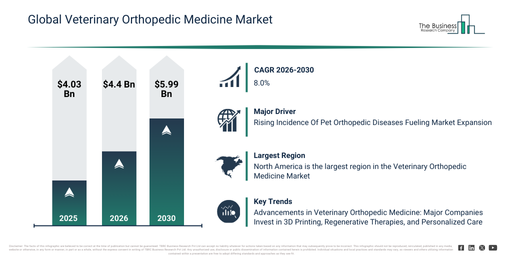
    The veterinary orthopedic medicine market size has shown robust expansion in recent years. Its valuation is set to rise from $4.03 billion in 2025 to $4.4 billion in 2026, exhibiting a compound annual growth rate (CAGR) of 9.1%. The increase observed in the past can be ascribed to a high occurrence of osteoarthritis and joint conditions, an expanding companion animal population, restricted access to advanced orthopedic treatments in earlier periods, a rise in equine and canine athletic pursuits, and the proliferation of veterinary hospitals and clinics.

    The veterinary orthopedic medicine market is projected to experience substantial expansion over the upcoming years. This market is set to reach $5.99 billion by 2030, exhibiting a compound annual growth rate (CAGR) of 8.0%. This anticipated growth is largely driven by developments in PRP and stem cell therapies, increased utilization of viscosupplements and NSAIDs, the implementation of sophisticated surgical methods, expanded investment in veterinary orthopedic studies, and heightened understanding of animal mobility and overall well-being. Key trends during this projection period involve the increasing occurrence of musculoskeletal conditions in animals, a growing preference for minimally invasive orthopedic procedures, the rise of stem cell and biologics-based therapeutic options, the broadening of veterinary rehabilitation and physiotherapy offerings, and a strong focus on effective pain management and recuperation following surgery.

    Get A Free Sample Report With In-Depth Market Insights:

    https://thebusinessresearchcompany.com/sample_request?id=15955&type=smp&name=Veterinary%20Orthopedic%20Medicine%20Market%20Report%202026&utm_source=Blogs&utm_medium=Paid&utm_campaign=Oct_PR

    Veterinary Orthopedic Medicine Market Growth Drivers: What’s Behind The Acceleration?

    A growing occurrence of pet orthopedic diseases is anticipated to propel the future expansion of the veterinary orthopedic medicine market. These conditions refer to ailments affecting the musculoskeletal system of companion animals, particularly dogs and cats. The rising incidence of pet orthopedic diseases can be attributed to factors such as breed predispositions, increasing rates of obesity, and environmental elements like insufficient exercise and poor nutrition. Veterinary orthopedic medicine plays a crucial role in the diagnosis, treatment, and management of these diseases in pets, aiming to alleviate pain, restore mobility, and enhance their overall quality of life. For instance, in July 2024, a report by the Morris Animal Foundation, a US-based non-profit organization, revealed that over 14 million adult dogs in the United States were suffering from osteoarthritis. Additionally, data indicates that approximately 90% of cats over the age of 12 exhibit radiographic signs of osteoarthritis, highlighting the significant prevalence of this condition in aging pets and underscoring a growing demand for increased awareness and advanced treatment options. Therefore, the expanding incidence of pet orthopedic diseases is acting as a key driver for the growth of the veterinary orthopedic medicine market.

    Veterinary Orthopedic Medicine Market Segment Outlook: Which Categories Are Growing Fastest?

    The veterinary orthopedic medicine market covered in this report is segmented –

    1) By Product: Biologics, Viscosupplements, Pharmaceuticals

    2) By Animal Type: Canine, Feline, Equine, Cattle, Swine, Other Animal Types

    3) By Application: Osteoarthritis, Degenerative Joint Disease, Joint Inflammation Or Pain, Other Applications

    4) By End-use: Veterinary Hospitals, Veterinary Clinics, Other End Users

    Subsegments:

    1) By Biologics: Platelet-Rich Plasma (PRP), Stem Cell Therapy, Bone Marrow Aspirate Concentrate (BMAC), Viscosupplements

    2) By Viscosupplements: Hyaluronic Acid, Corticosteroid Injections

    3) By Pharmaceuticals: Non-Steroidal Anti-Inflammatory Drugs (NSAIDs), Analgesics, Antibiotics

    Veterinary Orthopedic Medicine Market Trends: What’s Defining The Industry’s Next Phase?

    Key companies in veterinary orthopedic medicine are prioritizing investment in advanced technologies. These include 3D printing labs for custom implants, regenerative medicine such as stem cell and platelet-rich plasma (PRP) therapies, and sophisticated imaging techniques like MRI and CT scans tailored for animal patients. A 3D Printing Lab for Pet Orthopedic Surgeries is a specialized facility that uses 3D printing technology to create custom implants, prosthetics, and surgical tools specifically designed for veterinary orthopedic procedures. For instance, in October 2024, VCA Animal Hospitals, a U.S.-based company providing high-quality veterinary care for pets, launched a 3D printing lab at its VCA Northwest Veterinary Specialists facility in Clackamas, Oregon. This lab, utilizing advanced 3D printing technology, aims to improve orthopedic surgeries for pets by producing custom implants and surgical guides specific to each pet’s unique anatomy. Osteoarthritis, affecting 20% of dogs older than one year and 80% of those over eight, often requires surgical intervention. With this personalized approach, VCA seeks to foster faster recovery times and better surgical outcomes, addressing complex orthopedic conditions more effectively than traditional methods.

    Veterinary Orthopedic Medicine Market Key Participants And Competitive Landscape

    Major companies operating in the veterinary orthopedic medicine market are Zoetis Inc., Elanco Animal Health, Merck Animal Health, Virbac SA, Ceva Santé Animale, Vetoquinol S.A., Bimeda U.S., American Regent, Hyalogic LLC, BioMedtrix LLC, IMEX Veterinary Inc., Orthomed (UK) Ltd, Veterinary Orthopedic Implants, Integra LifeSciences, Avante Animal Health, DePuy Synthes Vet, KYON AG, Securos Surgical, Arthrex Vet Systems, INNOPLANT Medizintechnik GmbH, VetWelding AG, Scil Animal Care, Intrauma S.p.A., Aysam Veterinary Orthopedics

    View The Full Veterinary Orthopedic Medicine Market Report:

    https://thebusinessresearchcompany.com/report/veterinary-orthopedic-medicine-global-market-report?utm_source=Blogs&utm_medium=Paid&utm_campaign=Oct_PR

    Veterinary Orthopedic Medicine Market Geographic Analysis: Where Is Demand Rising Fastest?

    North America was the largest region in the veterinary orthopedic medicine market in 2025. The regions covered in the veterinary orthopedic medicine market report are Asia-Pacific, South East Asia, Western Europe, Eastern Europe, North America, South America, Middle East, Africa.

    Reach Out To Our Team:

    The Business Research Company: https://www.thebusinessresearchcompany.com/

    Americas: +1 310-496-7795

    Asia: +44 7882 955267 & +91 8897263534

    Europe: +44 7882 955267

    Email us at: marketing@tbrc.info

    Follow us on:

    LinkedIn: https://in.linkedin.com/company/the-business-research-company

    YouTube: https://www.youtube.com/channel/UC24_fI0rV8cR5DxlCpgmyFQ

    Global Market Model: https://www.thebusinessresearchcompany.com/global-market-model
  • Veterinary Ophthalmology Equipment Market Trends Supporting 7.6% CAGR Growth Through 2030

    Veterinary Ophthalmology Equipment Market Trends Supporting 7.6% CAGR Growth Through 2030

    Built to provide research that’s more actionable and strategically valuable, The Business Research Company’s 2026 market reports include market attractiveness analysis, total addressable market sizing, company benchmarking matrices, interactive Excel dashboards, broader supply chain intelligence, emerging startup tracking, and in-depth product insights.

    Veterinary Ophthalmology Equipment Market Growth From $0.79 Billion In 2026 To $1.06 Billion By 2030 At A CAGR Of 7.6%

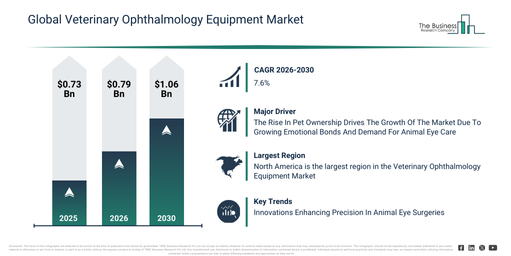
    The veterinary ophthalmology equipment market has observed significant growth in recent years. This market is set to expand from $0.73 billion in 2025 to $0.79 billion in 2026, exhibiting a compound annual growth rate (CAGR) of 8.2%. Historically, this expansion has been driven by factors such as the increasing availability of advanced veterinary ophthalmology tools, a rising prevalence of ocular diseases in companion animals, heightened veterinary awareness regarding eye care, the adoption of basic diagnostic and surgical ophthalmic equipment, and the expansion of veterinary hospitals and clinics.

    The veterinary ophthalmology equipment market size is projected to experience substantial growth over the coming years. Its value is expected to reach $1.06 billion by 2030, at a compound annual growth rate (CAGR) of 7.6%. This expansion during the forecast period can be attributed to factors such as the development of advanced digital imaging and OCT systems, increasing investment in minimally invasive surgical tools, a rising demand for species-specific ophthalmic diagnostics, the growth of mobile veterinary ophthalmology services, and the integration of AI and cloud-based platforms for enhanced diagnosis. Major trends anticipated in the forecast period include the rising adoption of optical coherence tomography (OCT) in veterinary practices, an increasing use of digital imaging systems for accurate diagnosis, a growing demand for minimally invasive ophthalmic surgical equipment, the expansion of emergency eye care and vision rehabilitation services, and customized diagnostic solutions designed for different animal species.

    Get A Free Sample Report With In-Depth Market Insights:

    https://thebusinessresearchcompany.com/sample_request?id=25929&type=smp&name=Veterinary%20Ophthalmology%20Equipment%20Market%20Report%202026&utm_source=Blogs&utm_medium=Paid&utm_campaign=Oct_PR

    Veterinary Ophthalmology Equipment Market Growth Factors Behind Sustained Expansion

    Future expansion of the veterinary ophthalmology equipment market is expected to be propelled by the increasing prevalence of pet ownership. Pet ownership refers to the practice of housing and caring for a domestic animal, such as a dog, cat, bird, or other companion, providing necessities like food, shelter, medical attention, and emotional support. The growth in pet ownership primarily stems from the deepening emotional connection between people and animals, as pets are increasingly regarded as companions and integral family members. This rise in pet ownership fuels the need for veterinary ophthalmology equipment by escalating the demand for advanced eye care solutions essential for ensuring the health and well-being of animals. For instance, in 2024, data from Shelter Animals Count, a US-based non-profit organization, indicated that total dog and cat adoptions reached 4,192,443, consisting of 2 million dogs and 2 million cats, representing a slight increase of 0.4%, or 17,153 more adoptions, compared to 2023. Therefore, the growing trend of pet ownership is a significant driver for the veterinary ophthalmology equipment market.

    Veterinary Ophthalmology Equipment Market Segment Landscape: Which Areas Lead Development?

    The veterinary ophthalmology equipment market covered in this report is segmented –

    1) By Type: Diagnostic Devices, Surgical Equipment, Other Types

    2) By Technology: Optical Coherence Tomography, Digital Imaging Systems, Fluorescein Angiography, Ultrasound Imaging, Electroretinography

    3) By Animal: Equine, Canine, Feline, Bovine

    4) By Application: Diagnosis Of Ocular Diseases, Routine Eye Examinations, Surgical Procedures For Eye Disorders, Emergency Eye Care, Vision Rehabilitation

    5) By End-User: Animal Hospitals, Veterinary Clinics, Research Institutions, Veterinary Universities, Mobile Veterinary Services

    Subsegments:

    1) By Diagnostic Devices: Optical Coherence Tomography, Digital Imaging Systems, Fluorescein Angiography, Ultrasound Imaging, Electroretinography

    2) By Surgical Equipment: Ophthalmic Microscopes, Phacoemulsification Systems, Microsurgical Instruments, Ophthalmic Lasers, Cryotherapy Units

    3) By Other Types: Eye Speculums, Eye Irrigation Systems, Eye Drapes And Surgical Packs, Veterinary Ophthalmic Drugs Administration Tools, Protective Eye Wear For Animals

    Veterinary Ophthalmology Equipment Market Industry Trends Fueling Future Revenue Growth

    Leading companies in the veterinary ophthalmology equipment market are concentrating on creating technologically advanced solutions, such as ophthalmic surgical devices, to improve the accuracy and results of animal eye surgeries. Ophthalmic surgical devices are specialized instruments utilized by veterinarians for performing precise surgical procedures on animal eyes, including cataract removal or corneal repair. For example, in April 2024, Mount Laurel Veterinary Services LLC, a US-based animal hospital, introduced endolaser cyclophotocoagulation equipment specifically designed for veterinary ophthalmology. This technology incorporates an endoscopic probe that combines illumination, visualization, and laser delivery into one device, allowing veterinarians to treat the eye internally, thereby enhancing precision and minimizing tissue damage. The system supports real-time feedback, is adaptable for various species, and is notably effective for companion animals such as dogs and cats.

    Veterinary Ophthalmology Equipment Market Top Companies Driving Competitive Growth

    Major companies operating in the veterinary ophthalmology equipment market are Bausch And Lomb Incorporated, HEINE Optotechnik GmbH And Co. KG, Revenio Group Oyj, Tomey Corporation, IRIDEX Corporation, Reichert Inc, GerVetUSA, Eickemeyer, Optomed Plc, United States Intraocular Lens Inc., AJL Ophthalmic S.A., Domes Pharma Inc., iCare Finland Oy, LKC Technologies Inc., AN-VISION GmbH, Biovision Veterinary Endoscopy LLC, Dan Scott And Associates Inc, I-MED Pharma Inc, Kowa American Corporation, Ocularvision Inc.

    View The Full Veterinary Ophthalmology Equipment Market Report:

    https://thebusinessresearchcompany.com/report/veterinary-ophthalmology-equipment-global-market-report?utm_source=Blogs&utm_medium=Paid&utm_campaign=Oct_PR

    Veterinary Ophthalmology Equipment Market Global Footprint: Which Region Leads The Market?

    North America was the largest region in the veterinary ophthalmology equipment market in 2025. Asia-Pacific is expected to be the fastest-growing region in the forecast period. The regions covered in the veterinary ophthalmology equipment market report are Asia-Pacific, South East Asia, Western Europe, Eastern Europe, North America, South America, Middle East, Africa.

    Reach Out To Our Team:

    The Business Research Company: https://www.thebusinessresearchcompany.com/

    Americas: +1 310-496-7795

    Asia: +44 7882 955267 & +91 8897263534

    Europe: +44 7882 955267

    Email us at: marketing@tbrc.info

    Follow us on:

    LinkedIn: https://in.linkedin.com/company/the-business-research-company

    YouTube: https://www.youtube.com/channel/UC24_fI0rV8cR5DxlCpgmyFQ

    Global Market Model: https://www.thebusinessresearchcompany.com/global-market-model
  • Veterinary Oncology Market Forecast Highlights A $0.77 Billion Opportunity For Industry Participants

    Veterinary Oncology Market Forecast Highlights A $0.77 Billion Opportunity For Industry Participants

    Backed by market attractiveness analysis, total addressable market sizing, company benchmarking matrices, interactive Excel dashboards, wider supply chain intelligence, emerging startup coverage, and detailed product-level insights, The Business Research Company’s 2026 market reports are designed to offer research that is more actionable and strategically valuable than ever.

    Veterinary Oncology Market Expansion Outlook: What Revenue Opportunities Are Ahead?

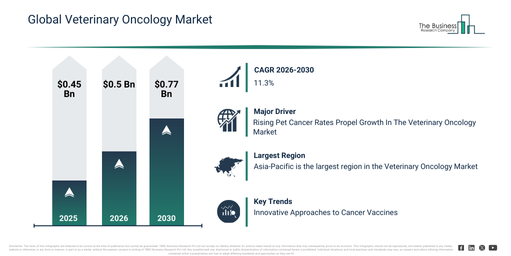
    The veterinary oncology market size has seen rapid growth in recent years. It is anticipated to expand from $0.45 billion in 2025 to $0.5 billion in 2026, exhibiting a compound annual growth rate (CAGR) of 11.0%. The growth observed in the preceding period can be linked to a rising occurrence of cancer in companion animals, increasing recognition of veterinary oncology services, advancements in technology for surgical and radiology equipment, the expansion of veterinary hospitals and specialty clinics, and the adoption of conventional chemotherapy treatments.

    The veterinary oncology market is poised for significant expansion in the upcoming years. Its valuation is projected to reach $0.77 billion in 2030, exhibiting a compound annual growth rate (CAGR) of 11.3%. This projected growth is driven by several factors, including an escalating demand for personalized and targeted therapies, the wider adoption of advanced radiology and imaging techniques, the increasing application of immunotherapy and supportive care, ongoing developments in minimally invasive surgical procedures, and the integration of combined chemotherapy and targeted therapy protocols. Key trends during this period will involve the ongoing expansion of personalized and targeted veterinary cancer treatments, further advancements in minimally invasive surgical techniques, the greater embrace of sophisticated radiology and imaging technologies, the evolution of new combination chemotherapy protocols, and the incorporation of immunotherapy and supportive care into comprehensive treatment plans.

    Get A Free Sample Report With In-Depth Market Insights:

    https://thebusinessresearchcompany.com/sample_request?id=9533&type=smp&name=Veterinary%20Oncology%20Market%20Report%202026&utm_source=Blogs&utm_medium=Paid&utm_campaign=Oct_PR

    Veterinary Oncology Market Demand Drivers Opening New Revenue Streams

    The increasing occurrence of cancer in companion animals is anticipated to drive growth in the veterinary oncology market. Cancer is characterized by uncontrolled cell growth spreading within the body, with pet cancer manifesting as physical tumors like swelling. Veterinary oncology specializes in diagnosing and treating cancer in animals, aiming to limit metastasis and disease progression. Consequently, a rise in pet cancer cases will elevate the demand for veterinary oncology services. For example, The Cancer Letter, a US-based publication on cancer research, reported an estimated 6 million pet dogs would be diagnosed with cancer in the United States in 2024. Additionally, the British Small Animal Veterinary Association (BSAVA), a UK-based veterinary community, indicated in November 2023 that approximately 1 in 4 dogs and 1 in 5 cats are expected to develop cancer during their lives. Thus, the rising incidence of cancer in pets is fueling the veterinary oncology market.

    Veterinary Oncology Market Segments: Where Is Growth Concentrated?

    The veterinary oncology market covered in this report is segmented –

    1) By Therapy: Surgery, Radiology, Chemotherapy, Other Therapies

    2) By Animal Type: Equine, Canine, Feline, Other Animal Types

    3) By Cancer Type: Lymphoma, Mast Cell Cancer, Mammary And Squamous Cell Cancer, Other Cancer Types

    Subsegments:

    1) By Surgery: Tumor Resection, Palliative Surgery, Laparoscopic Surgery, Amputation

    2) By Radiology: Radiation Therapy, Stereotactic Radiosurgery, Brachytherapy, Imaging Techniques

    3) By Chemotherapy: Injectable Chemotherapy, Oral Chemotherapy, Combination Chemotherapy Protocols, Targeted Therapy Agents

    4) By Other Therapies: Immunotherapy, Photodynamic Therapy, Supportive Care, Alternative Therapies

    Veterinary Oncology Market Trends Powering Strategic Industry Growth

    Leading companies within the veterinary oncology market are prioritizing the development of neoantigens, which are specific tumor antigens resulting from mutations in cancer cells. These are unique protein fragments that emerge from tumor-specific genetic changes within malignant cells. Unlike regular antigens found in healthy tissues, neoantigens are created as a direct consequence of genetic alterations (mutations) within the tumor’s DNA. For instance, in October 2024, Biotechnology company, a US-based company, launched a cancer vaccine trial for dogs. Neoantigens are currently being investigated for their potential in developing cancer vaccines and other immunotherapies, with the objective of specifically enhancing the immune response against cancer cells while preserving normal cells.

    Veterinary Oncology Market Leading Players And Competitive Positioning

    Major companies operating in the veterinary oncology market are PetCure Oncology Inc., Zoetis Inc., Varian Medical Systems Inc., Accuray Incorporated, Boehringer Ingelheim International GmbH, Elanco Animal Health Inc., One Health Company Inc., Regeneus Limited, VetDC Inc., Pharmaust Limited, AdvaVet Inc., Nippon Zenyaku Kogyo Company Limited, AB Science SAS, Pfizer Inc., Jaguar Animal Health Solutions Inc., Orion Corporation A/B, Virbac SA, SeQuent Scientific Limited, Ceva Santé Animale S.A., Vetoquinol S.A., IDVet Inc., Bayer Aktiengesellschaft, ZENOAQ GmbH, Oncovet Clinical Research Inc.

    View The Full Veterinary Oncology Market Report:

    https://thebusinessresearchcompany.com/report/veterinary-oncology-global-market-report?utm_source=Blogs&utm_medium=Paid&utm_campaign=Oct_PR

    Veterinary Oncology Market Regional Split: Which Areas Are Fueling Growth?

    Asia-Pacific was the largest region in the veterinary oncology market in 2025. North America is expected to be the fastest-growing region in the veterinary oncology market report during the forecast period. The regions covered in the veterinary oncology market report are Asia-Pacific, South East Asia, Western Europe, Eastern Europe, North America, South America, Middle East, Africa.

    Reach Out To Our Team:

    The Business Research Company: https://www.thebusinessresearchcompany.com/

    Americas: +1 310-496-7795

    Asia: +44 7882 955267 & +91 8897263534

    Europe: +44 7882 955267

    Email us at: marketing@tbrc.info

    Follow us on:

    LinkedIn: https://in.linkedin.com/company/the-business-research-company

    YouTube: https://www.youtube.com/channel/UC24_fI0rV8cR5DxlCpgmyFQ

    Global Market Model: https://www.thebusinessresearchcompany.com/global-market-model

  • Veterinary Molecular Diagnostics Market Analysis: How The Industry Is Evolving Toward A $1.11 Billion Future

    Veterinary Molecular Diagnostics Market Analysis: How The Industry Is Evolving Toward A $1.11 Billion Future

    Featuring market attractiveness scoring, total addressable market sizing, company benchmarking matrices, interactive Excel dashboards, deeper supply chain intelligence, emerging startup tracking, and granular product-level insights, The Business Research Company’s 2026 market reports are built to deliver research that is both more actionable and more strategically valuable.

    Veterinary Molecular Diagnostics Market Growth Potential: How Will Market Size Shift Through 2030?

    The veterinary molecular diagnostics market has seen significant expansion over recent years. Its valuation is projected to rise from $0.7 billion in 2025 to $0.77 billion in 2026, exhibiting a compound annual growth rate (CAGR) of 9.9%. This historical growth can be linked to several factors including the increasing incidence of infectious and genetic animal diseases, breakthroughs in molecular biology technology, the growing populations of companion and livestock animals, elevated veterinary awareness and training initiatives, and the adoption of conventional molecular diagnostic kits.

    The veterinary molecular diagnostics market is anticipated to experience substantial expansion over the coming years, with its valuation projected to reach $1.11 billion by 2030, exhibiting a compound annual growth rate (CAGR) of 9.6%. This anticipated growth during the forecast period stems from factors such as increasing demand for swift and precise molecular diagnostics, the widespread adoption of NGS and high-throughput platforms, the broadening of veterinary genomics services, the incorporation of AI-driven diagnostic analysis, and an increasing focus on preventive veterinary care facilitated by molecular testing. Key developments expected in the forecast period encompass the proliferation of PCR and RT-PCR-based diagnostics, the rising uptake of next-generation sequencing (NGS) within veterinary medicine, the creation of multiplex diagnostic kits designed for infectious diseases, the seamless incorporation of molecular diagnostics into standard veterinary care, and the emergence of automated, high-throughput molecular testing solutions.

    Get A Free Sample Report With In-Depth Market Insights:

    https://thebusinessresearchcompany.com/sample_request?id=20687&type=smp&name=Veterinary%20Molecular%20Diagnostics%20Market%20Report%202026&utm_source=Blogs&utm_medium=Paid&utm_campaign=Oct_PR

    Veterinary Molecular Diagnostics Market Growth Backed By Core Demand Fundamentals

    The significant occurrence of zoonotic diseases is projected to drive the future growth of the veterinary molecular diagnostics market. These infectious diseases are transferred between animals and humans, and their causes can include bacteria, viruses, parasites, or fungi. Common examples of zoonotic diseases are rabies, Lyme disease, salmonellosis, and toxoplasmosis. The widespread nature of zoonotic diseases is influenced by factors like deforestation, wildlife exploitation, intensive animal farming, biodiversity loss, and human mobility. Veterinary molecular diagnostics aid in the early detection of these diseases in animals, which helps prevent their spread to humans. They also improve disease management by enabling the quick and accurate identification of pathogens. For instance, in December 2025, the European Centre for Disease Prevention and Control (ECDC), a Sweden-based government agency, stated that in 2024, the reported human cases of key zoonotic diseases such as campylobacteriosis (168,396 cases) and salmonellosis (79,703 cases) continued to rise, indicating a notable ongoing prevalence of zoonoses in Europe. Therefore, the high prevalence of zoonotic diseases is a key driver for the veterinary molecular diagnostics market.

    Veterinary Molecular Diagnostics Market Segment Analysis: What Are The Core Market Categories?

    The veterinary molecular diagnostics market covered in this report is segmented –

    1) By Product: Kits And Reagents, Instruments

    2) By Animal Type: Companion Animals, Livestock Animals

    3) By Application: Infectious Diseases, Genetic Diseases, Other Applications

    4) By End-User: Diagnostic Laboratories, Veterinary Clinics, Veterinary Hospitals, Other End-Users

    Subsegments:

    1) By Kits And Reagents: Polymerase Chain Reaction (PCR) Kits, Reverse Transcription PCR (RT-PCR) Kits, Real-Time PCR Kits, Nucleic Acid Extraction Kits, Enzyme-Linked Immunosorbent Assay (ELISA) Kits, Hybridization Kits, Reagents For Next-Generation Sequencing (NGS)

    2) By Instruments: PCR Machines (Thermal Cyclers), Real-Time PCR Machines, Nucleic Acid Analyzers, Gel Electrophoresis Equipment, DNA Sequencers, Automated Liquid Handling Systems, Molecular Imaging Systems

    Veterinary Molecular Diagnostics Market Growth Trends Reshaping The Competitive Landscape

    Major companies operating in the veterinary molecular diagnostics market are concentrating on automation and scalability in diagnostic technologies, such as high-volume testing machines, to improve diagnostic accuracy, increase testing efficiency, and enable faster detection of diseases in animals. High-volume testing machines are advanced diagnostic devices designed to process large quantities of samples efficiently, enabling rapid and accurate analysis in laboratories or clinical settings, particularly useful for large-scale testing. For instance, in June 2023, Iowa State University’s Veterinary Diagnostic Laboratory (VDL), a US-based university, introduced SmartChip, a cutting-edge molecular diagnostic testing device equipped with quantitative polymerase chain reaction (qPCR) testing technology. This innovative device can accommodate more than 5,000 samples on a plate no bigger than a postage stamp. It greatly increases its testing capacity when paired with a 384-sample system equipped with automated handling features. The SmartChip testing utilizes microfluidic technology to identify targets of interest in samples, employing a volume 100 times smaller than that used by the VDL’s standard 96-well machines.

    Veterinary Molecular Diagnostics Market Competitive Overview And Top Companies

    Major companies operating in the veterinary molecular diagnostics market are Roche Diagnostics Corporation, Thermo Fisher Scientific Inc., Merck KGaA, Zoetis Inc., Illumina Inc., PerkinElmer Inc., bioMérieux S.A., IDEXX Laboratories Inc., Bio-Rad Laboratories Inc., QIAGEN N.V., LGC Group Ltd., Neogen Corporation, Abcam plc, Eiken Chemical Co. Ltd., Bioneer Corporation, INDICAL BIOSCIENCE GmbH, Biochek B.V., Ring Biotechnology Co. Ltd., Ingenetix GmbH, MiDOG Animal Diagnostics LLC, Biolab S.r.l., Bionote USA Inc.

    View The Full Veterinary Molecular Diagnostics Market Report:

    https://thebusinessresearchcompany.com/report/veterinary-molecular-diagnostics-global-market-report?utm_source=Blogs&utm_medium=Paid&utm_campaign=Oct_PR

    Veterinary Molecular Diagnostics Market Top Region: Where Does Most Revenue Come From?

    North America was the largest region in the Veterinary Molecular Diagnostics market in 2025. Asia-Pacific is expected to be the fastest-growing region in the forecast period. The regions covered in the veterinary molecular diagnostics market report are Asia-Pacific, South East Asia, Western Europe, Eastern Europe, North America, South America, Middle East, Africa.

    Reach Out To Our Team:

    The Business Research Company: https://www.thebusinessresearchcompany.com/

    Americas: +1 310-496-7795

    Asia: +44 7882 955267 & +91 8897263534

    Europe: +44 7882 955267

    Email us at: marketing@tbrc.info

    Follow us on:

    LinkedIn: https://in.linkedin.com/company/the-business-research-company

    YouTube: https://www.youtube.com/channel/UC24_fI0rV8cR5DxlCpgmyFQ

    Global Market Model: https://www.thebusinessresearchcompany.com/global-market-model