Month: October 2026

  • Drugs For Hormonal Replacement Therapy Market Forecast: Breaking Down The Numbers Behind Future Expansion

    Drugs For Hormonal Replacement Therapy Market Forecast: Breaking Down The Numbers Behind Future Expansion

    Featuring market attractiveness scoring, total addressable market sizing, company benchmarking matrices, interactive Excel dashboards, deeper supply chain intelligence, emerging startup tracking, and granular product-level insights, The Business Research Company’s 2026 market reports are built to deliver research that is both more actionable and more strategically valuable.

    Drugs For Hormonal Replacement Therapy Market Revenue Outlook: What CAGR Lies Ahead Through 2030?

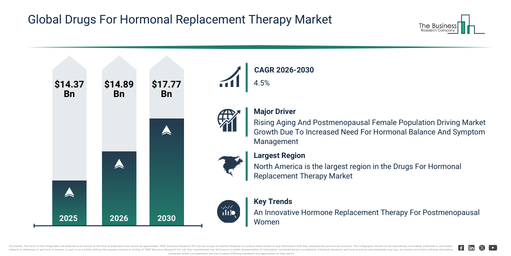
    The market size for drugs used in hormonal replacement therapy has experienced consistent growth over recent years. This market is expected to expand from $14.37 billion in 2025 to $14.89 billion in 2026, demonstrating a compound annual growth rate (CAGR) of 3.6%. Historically, this expansion has been driven by factors such as health requirements related to menopause, various hormone deficiency disorders, the clinical acceptance of HRT, the provision of endocrinology services in hospitals, and the widespread availability of oral hormone drugs.

    The drugs for hormonal replacement therapy market is poised for consistent expansion in the coming years. It is projected to achieve a size of $17.77 billion by 2030, expanding at a compound annual growth rate (CAGR) of 4.5%. This growth during the forecast period is primarily driven by factors such as a globally aging population, increased understanding of hormone imbalance, advancements in bioidentical hormones, the spread of outpatient endocrinology care, and better diagnostic testing. Key developments expected within this timeframe include a growing need for menopause management, an uptick in testosterone replacement therapy, the proliferation of personalized hormone treatments, more extensive use of transdermal therapies, and a heightened focus on the long-term safety of hormone applications.

    Get A Free Sample Report With In-Depth Market Insights:

    https://thebusinessresearchcompany.com/sample_request?id=75859640&type=smp&name=Drugs%20For%20Hormonal%20Replacement%20Therapy%20Market%20Report%202026&utm_source=Blogs&utm_medium=Paid&utm_campaign=Oct_PR

    Drugs For Hormonal Replacement Therapy Market Growth Factors: What’s Supporting Expansion?

    The rising demographic of aging and postmenopausal women is anticipated to propel the Drugs for Hormonal Replacement Therapy Market forward. Postmenopausal women are defined as females who frequently experience reduced levels of estrogen and progesterone, which can lead to symptoms such as hot flashes, mood swings, bone density loss, and sleep disturbances. The increase in the postmenopausal female population is primarily a result of longer life expectancy and an aging global female populace, enabling more women to live extended periods beyond menopause. This growth in the postmenopausal demographic supports the hormonal replacement therapy market by creating demand for medications that restore hormonal balance, prevent long-term complications like osteoporosis, and enhance overall well-being. For instance, in May 2025, according to Impacts of Menopause, a global research initiative focused on women’s health, by 2030 the population of women aged 45 to 55 is expected to reach nearly 500 million, meaning that approximately 6 percent of the world’s population will be in menopause. Therefore, the expanding population of aging and postmenopausal women is driving the growth of the Drugs for Hormonal Replacement Therapy Market.

    Drugs For Hormonal Replacement Therapy Market Segment Analysis Spotlighting Growth Areas

    The drugs for hormonal replacement therapy market covered in this report is segmented –

    1) By Therapy Type: Estrogen Replacement Therapy, Human Growth Hormone (HGH) Replacement Therapy, Thyroid Replacement Therapy, Testosterone Replacement Therapy

    2) By Distribution Channel: Hospital Pharmacies, Retail Pharmacies, Online Pharmacies

    3) By Application: Hypothyroidism, Male Hypogonadism, Growth Hormone Deficiency, Menopause, Other Applications

    Subsegments:

    1) By Estrogen Replacement Therapy: Oral Estrogen Therapy (Estradiol, Conjugated Estrogens), Transdermal Estrogen Therapy (Estradiol Patches), Estrogen Implants, Vaginal Estrogen Therapy (Creams, Tablets, Rings)

    2) By Human Growth Hormone (HGH) Replacement Therapy: Recombinant Human Growth Hormone (Somatropin), Synthetic Growth Hormone Preparations, HGH Injections

    3) By Thyroid Replacement Therapy: Levothyroxine Sodium (Synthetic T4), Liothyronine Sodium (Synthetic T3), Combination Therapy (T4 and T3), Natural Desiccated Thyroid (Armour Thyroid)

    4) By Testosterone Replacement Therapy: Injectable Testosterone (Testosterone Enanthate, Testosterone Cypionate), Transdermal Testosterone (Patches, Gels), Oral Testosterone (Testosterone Undecanoate), Buccal Testosterone, Testosterone Implants

    Drugs For Hormonal Replacement Therapy Market Industry Trends: What’s Reshaping Demand?

    Leading companies operating in the hormonal replacement therapy market are concentrating on developing technologically advanced solutions, such as novel hormone replacement therapies, specifically designed for postmenopausal women with a uterus. New Hormone Replacement Therapy (HRT) refers to innovative treatments aimed at replacing or balancing hormones in the body, typically when natural hormone levels decline due to aging or various medical conditions. For example, in June 2023, Pfizer., a US-based pharmaceutical industry company, launched DUAVEE (conjugated estrogens/bazedoxifene) for the management of moderate to severe vasomotor symptoms associated with menopause, such as hot flashes, and for the prevention of postmenopausal osteoporosis. It features a unique combination of conjugated estrogens with bazedoxifene, a selective estrogen receptor modulator (SERM), rather than a progestin. This innovative blend assists in reducing the risk of endometrial hyperplasia, a condition that can occur with estrogen-alone therapies, thereby presenting a safer choice for women with a uterus experiencing menopausal symptoms.

    Drugs For Hormonal Replacement Therapy Market Leading Companies: Who Holds The Strongest Market Presence?

    Major companies operating in the drugs for hormonal replacement therapy market are Novo Nordisk AS, Eli Lilly and Company, Pfizer Inc., Abbott Laboratories, Bayer AG, Novartis AG, Teva Pharmaceutical Industries Ltd., Mylan N.V., Viatris Inc., Orion Pharma AB, Allergan Plc, Wyeth Ltd., Amgen Inc., Genentech USA Inc., TherapeuticsMD Inc., GlaxoSmithKline plc, Sanofi S.A., Johnson & Johnson Services Inc., Takeda Pharmaceutical Company Limited, Hisamitsu Pharmaceutical Co. Inc.

    View The Full Drugs For Hormonal Replacement Therapy Market Report:

    https://thebusinessresearchcompany.com/report/Drugs-For-Hormonal-Replacement-Therapy-Global-Market-Report?utm_source=Blogs&utm_medium=Paid&utm_campaign=Oct_PR

    Drugs For Hormonal Replacement Therapy Market Top Region By Revenue And Market Share

    North America was the largest region in the drugs for hormonal replacement therapy market in 2025. The Middle East is expected to be the fastest-growing region in the drugs for hormonal replacement therapy market during the forecast period. The regions covered in the drugs for hormonal replacement therapy market report are Asia-Pacific, South East Asia, Western Europe, Eastern Europe, North America, South America, Middle East, Africa.

    Reach Out To Our Team:

    The Business Research Company: https://www.thebusinessresearchcompany.com/

    Americas: +1 310-496-7795

    Asia: +44 7882 955267 & +91 8897263534

    Europe: +44 7882 955267

    Email us at: marketing@tbrc.info

    Follow us on:

    LinkedIn: https://in.linkedin.com/company/the-business-research-company

    YouTube: https://www.youtube.com/channel/UC24_fI0rV8cR5DxlCpgmyFQ

    Global Market Model: https://www.thebusinessresearchcompany.com/global-market-model
  • Drugs For Erectile Dysfunction Market Expected To Grow At 1.8% CAGR Through 2030: What Businesses Need To Know

    Drugs For Erectile Dysfunction Market Expected To Grow At 1.8% CAGR Through 2030: What Businesses Need To Know

    Built to provide research that’s more actionable and strategically valuable, The Business Research Company’s 2026 market reports include market attractiveness analysis, total addressable market sizing, company benchmarking matrices, interactive Excel dashboards, broader supply chain intelligence, emerging startup tracking, and in-depth product insights.

    Drugs For Erectile Dysfunction Market Growth Analysis: How Will Revenue Trend Over The Forecast Period?

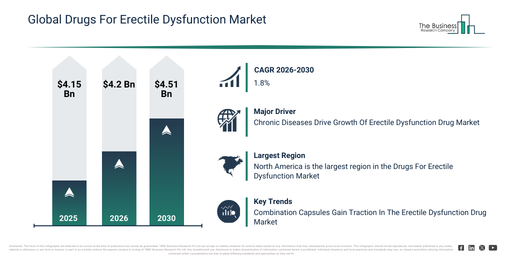
    The market size for drugs used to treat erectile dysfunction has experienced marginal growth in recent years. It is projected to expand from $4.15 billion in 2025 to $4.2 billion in 2026, achieving a compound annual growth rate (CAGR) of 1.0%. This market’s historical growth can be attributed to factors such as the increasing prevalence of erectile dysfunction among the aging male population, rising awareness about sexual health, the expansion of hospital and retail pharmacies, the patent expiration of key drugs, and increasing research and development in erectile dysfunction therapies.

    The market for drugs treating erectile dysfunction is projected to experience modest growth over the coming years. This market is forecast to reach $4.51 billion by 2030, demonstrating a compound annual growth rate (CAGR) of 1.8%. The anticipated expansion during this period can be attributed to several factors, including advancements in personalized medicine, the increasing use of combination therapies, the growth of telemedicine and online pharmacies, greater investments in biotechnology and precision medicine, and the proliferation of male reproductive health awareness campaigns. Key trends influencing this forecast period involve personalized erectile dysfunction therapy, the development of minimally invasive drug delivery systems, heightened male reproductive health awareness, diverse combination therapy approaches, and the continued expansion of online pharmacies.

    Get A Free Sample Report With In-Depth Market Insights:

    https://thebusinessresearchcompany.com/sample_request?id=59342539&type=smp&name=Drugs%20For%20Erectile%20Dysfunction%20Market%20Report%202026&utm_source=Blogs&utm_medium=Paid&utm_campaign=Oct_PR

    Drugs For Erectile Dysfunction Market Demand Drivers: What’s Powering Industry Growth?

    A significant rise in chronic illnesses is propelling the drugs for the erectile dysfunction market. These enduring health issues evolve gradually, necessitating continuous care rather than immediate, temporary interventions. Their surge is primarily linked to increasingly inactive lifestyles, which contribute to obesity and metabolic problems that heighten prolonged health risks. Drugs for erectile dysfunction assist in managing chronic ailments by enhancing blood circulation and vessel performance, thereby positively impacting conditions like hypertension, diabetes-related circulatory issues, and cardiovascular problems. As an illustration, a Centers for Disease Control and Prevention (CDC) report from April 2025 indicated that in 2023, approximately 194 million U.S. adults, representing 76.4% of the population, suffered from at least one chronic ailment. The incidence stood at 59.5% for young adults, 78.4% for midlife adults, and 93.0% for older adults. Consequently, the considerable rise in chronic disease cases is set to propel the drugs for the erectile dysfunction market.

    Drugs For Erectile Dysfunction Market Segment Performance And Emerging Opportunities

    The drugs for erectile dysfunction market covered in this report is segmented –

    1) By Drugs: Sildenafil Citrate, Mirodenafil, Vardenafil

    2) By Mode Of Administration: Oral, Topical, Injections

    3) By End Users: Hospital Pharmacies, Retail Pharmacies, Online Pharmacies

    Subsegments:

    1) By Sildenafil Citrate: Brand Names (Viagra), Generic Forms, Dosage Forms (Tablets, Chewables)

    2) By Mirodenafil: Brand Names (Mvix), Dosage Forms, Combination Products

    3) By Vardenafil: Brand Names (Levitra, Staxyn), Dosage Forms, Administration Routes (Oral, Dissolvable)

    Drugs For Erectile Dysfunction Market Innovation Trends: What Developments Are Reshaping The Industry?

    Major companies in the drugs for erectile dysfunction market are increasingly focusing on introducing combination capsules, such as therapy capsules, to maximize their revenue. Tamsulosin and Tadalafil is a combination of medications utilized to manage both benign prostatic hyperplasia (BPH) and erectile dysfunction. For instance, in September 2023, Akums Drugs & Pharmaceuticals Ltd., an India-based pharmaceutical company, launched a therapy capsule for the treatment of erectile dysfunction and enlarged prostate within the Indian market. This capsule contains a blend of Tamsulosin and Tadalafil, which has demonstrated significant improvements in BPH (Benign Prostatic Hyperplasia) and the Erectile Dysfunction Index. The combination markedly improves total, voiding, and other symptoms associated with BPH. The introduction of this therapy capsule is expected to offer a new treatment option for patients suffering from both conditions.

    Drugs For Erectile Dysfunction Market Key Players: Which Companies Lead Industry Competition?

    Major companies operating in the drugs for erectile dysfunction market are Pfizer Inc., Eli Lilly and Company, Bayer AG, Viatris Inc., Teva Pharmaceutical Industries Ltd., Futura Medical plc, Zydus Cadila, Lupin Limited, Cipla Limited, Dong-A Pharmaceutical Co., Ltd., Aurobindo Pharma Ltd., Alembic Pharmaceuticals Ltd., Lupin Limited, Glenmark Pharmaceuticals Ltd., Sun Pharmaceutical Industries Ltd., AvKARE Inc., Endo Pharmaceuticals Inc., Teva Pharmaceutical USA, Aurobindo Pharma USA, Hims & Hers Health Inc., Antares Pharma Inc., Acrux Limited, Mankind Pharma Ltd., Futura Medical plc, Adamis Pharmaceuticals Corporation

    View The Full Drugs For Erectile Dysfunction Market Report:

    https://thebusinessresearchcompany.com/report/Drugs-For-Erectile-Dysfunction-Global-Market-Report?utm_source=Blogs&utm_medium=Paid&utm_campaign=Oct_PR

    Drugs For Erectile Dysfunction Market Regional Analysis And Top Geography

    North America was the largest region in the drugs for erectile dysfunction market in 2025. Middle East is expected to be the fastest-growing region in the global drugs for erectile dysfunction market during the forecast period. The regions covered in the drugs for erectile dysfunction market report are Asia-Pacific, South East Asia, Western Europe, Eastern Europe, North America, South America, Middle East, Africa.

    Reach Out To Our Team:

    The Business Research Company: https://www.thebusinessresearchcompany.com/

    Americas: +1 310-496-7795

    Asia: +44 7882 955267 & +91 8897263534

    Europe: +44 7882 955267

    Email us at: marketing@tbrc.info

    Follow us on:

    LinkedIn: https://in.linkedin.com/company/the-business-research-company

    YouTube: https://www.youtube.com/channel/UC24_fI0rV8cR5DxlCpgmyFQ

    Global Market Model: https://www.thebusinessresearchcompany.com/global-market-model
  • Drugs For Benign Prostatic hypertrophy Market Forecast To Reach $5.83 Billion By 2030: Key Trends Explained

    Drugs For Benign Prostatic hypertrophy Market Forecast To Reach $5.83 Billion By 2030: Key Trends Explained

    Backed by market attractiveness analysis, total addressable market sizing, company benchmarking matrices, interactive Excel dashboards, wider supply chain intelligence, emerging startup coverage, and detailed product-level insights, The Business Research Company’s 2026 market reports are designed to offer research that is more actionable and strategically valuable than ever.

    Drugs For Benign Prostatic hypertrophy Market Forecast: What Value Will The Market Reach By 2030?

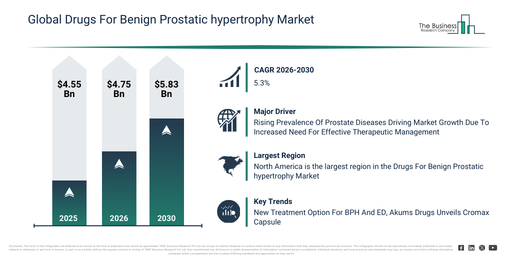
    The market for drugs treating benign prostatic hypertrophy has experienced consistent growth in recent years. It is anticipated to expand from $4.55 billion in 2025 to $4.75 billion in 2026, registering a compound annual growth rate (CAGR) of 4.4%. The historical market expansion is attributable to several factors, including an aging population’s growth, the continued use of alpha blockers, the provision of hospital-based urology care, the wider availability of oral therapies, and advancements in diagnostic tools.

    The market for drugs treating benign prostatic hypertrophy is projected to experience robust expansion over the coming years. Its valuation is set to reach $5.83 billion in 2030, exhibiting a compound annual growth rate (CAGR) of 5.3%. This anticipated growth during the forecast period is primarily driven by factors such as an increase in male life expectancy, improved access to healthcare, advancements in combination drug therapies, the proliferation of outpatient urology clinics, and prevalent lifestyle-related risk factors. Key trends characterizing this period encompass a heightened demand stemming from the aging male demographic, greater uptake of combination therapies, the emergence of minimally invasive drug treatments, the broadening availability of generic BPH drugs, and enhanced awareness leading to earlier diagnoses.

    Get A Free Sample Report With In-Depth Market Insights:

    https://thebusinessresearchcompany.com/sample_request?id=81562707&type=smp&name=Drugs%20For%20Benign%20Prostatic%20hypertrophy%20Market%20Report%202026&utm_source=Blogs&utm_medium=Paid&utm_campaign=Oct_PR

    Drugs For Benign Prostatic hypertrophy Market Growth Drivers: What’s Behind The Acceleration?

    The rising incidence of prostate conditions is anticipated to fuel the expansion of the drugs for benign prostatic hypertrophy market. Prostate diseases are a collection of medical ailments impacting the prostate gland, a male reproductive organ situated just beneath the bladder. This increase in prevalence is largely linked to aging, alongside metabolic and inflammatory elements that foster conditions such as benign prostatic hyperplasia (BPH) and prostate cancer. Medications for benign prostatic hypertrophy (BPH) play a crucial role in managing and easing urinary issues tied to prostate conditions, offering relief through reduced prostate gland size and enhanced urine flow. For instance, in August 2024, Cancer Therapy Advisor, a US-based medical information provider, projected approximately 299,010 new prostate cancer diagnoses in the US in 2024, representing 14.9 percent of all new cancer cases, with over 35,000 projected deaths. Consequently, the heightened occurrence of prostate diseases is stimulating growth in the drugs for benign prostatic hypertrophy market.

    Drugs For Benign Prostatic hypertrophy Market Segment Landscape And Growth Outlook

    The drugs for benign prostatic hypertrophy market covered in this report is segmented –

    1) By Type: Alpha Blocker, 5-alpha Reductase Inhibitor, Phosphodiesterase-5 Inhibitor, Other Types

    2) By Distribution Channel: Hospital Pharmacies, Retail Pharmacies, Online Pharmacies

    3) By End User: Hospital Pharmacies, Retail Pharmacies, Other End-Users

    Subsegments:

    1) By Alpha Blocker: Tamsulosin, Alfuzosin, Doxazosin, Terazosin, Silodosin

    2) By 5-alpha Reductase Inhibitor: Finasteride, Dutasteride

    3) By Phosphodiesterase-5 Inhibitor: Tadalafil, Sildenafil

    4) By Other Types: Anticholinergics, Herbal Supplements (Saw Palmetto), Combination Therapy Drugs (Alpha Blocker + 5-alpha Reductase Inhibitor)

    Drugs For Benign Prostatic hypertrophy Market Trends: What’s Defining The Industry’s Next Phase?

    Leading companies within the drugs for benign prostatic hypertrophy market are concentrating on developing technologically advanced solutions, such as new medications for both enlarged prostate (benign prostatic hyperplasia, BPH) and erectile dysfunction, to gain a competitive edge. Benign Prostatic Hyperplasia (BPH) is a non-cancerous enlargement of the prostate gland, while erectile dysfunction (ED) refers to the inability to achieve or maintain an erection sufficient for sexual activity. For instance, in September 2023, Akums Drugs and Pharmaceuticals Ltd., an Indian-based paint and coating manufacturing pharmaceutical contract manufacturer, launched Tamsulosin + Tadalafil Capsule. This initiative aimed to expand its product offerings in the pharmaceutical sector, specifically addressing common men’s health issues. This innovative product, Cromax, boasts unique features like a dual-action formulation that combines Tamsulosin, which targets smooth muscle relaxation in the prostate and urethra to improve urine flow, and Tadalafil, which enhances blood flow to the penis to facilitate erections. This combination therapy not only offers a more convenient treatment option for men experiencing both benign prostatic hyperplasia (BPH) and erectile dysfunction but also exhibits significant improvements in the International Prostate Symptom Score (IPSS).

    Drugs For Benign Prostatic hypertrophy Market Competitive Landscape: Who Leads The Industry?

    Major companies operating in the drugs for benign prostatic hypertrophy market are Astellas Pharma Inc., Boehringer Ingelheim International GmbH, GlaxoSmithKline plc, Teva Pharmaceutical Industries Limited, Sanofi S.A., Pfizer Inc., Ipsen S.A., Novartis International AG, Bayer AG, Merck & Co. Inc., Endo Pharmaceuticals Inc., Impax Laboratories Inc., Kissei Pharmaceutical Co. Ltd., Abbott Laboratories, Eli Lilly and Company, Bausch Health Companies Inc., Aurobindo Pharma Limited, Sun Pharmaceutical Industries Ltd., Zydus Lifesciences Ltd., Cipla Ltd

    View The Full Drugs For Benign Prostatic hypertrophy Market Report:

    https://thebusinessresearchcompany.com/report/Drugs-For-Benign-Prostatic-hypertrophy-Global-Market-Report?utm_source=Blogs&utm_medium=Paid&utm_campaign=Oct_PR

    Drugs For Benign Prostatic hypertrophy Market Geographic Analysis: Where Is Demand Rising Fastest?

    North America was the largest region in the drugs for benign prostatic hypertrophy market in 2025. Middle East is expected to be the fastest-growing region in the drugs for benign prostatic hypertrophy market. The regions covered in the drugs for benign prostatic hypertrophy market report are Asia-Pacific, South East Asia, Western Europe, Eastern Europe, North America, South America, Middle East, Africa.

    Reach Out To Our Team:

    The Business Research Company: https://www.thebusinessresearchcompany.com/

    Americas: +1 310-496-7795

    Asia: +44 7882 955267 & +91 8897263534

    Europe: +44 7882 955267

    Email us at: marketing@tbrc.info

    Follow us on:

    LinkedIn: https://in.linkedin.com/company/the-business-research-company

    YouTube: https://www.youtube.com/channel/UC24_fI0rV8cR5DxlCpgmyFQ

    Global Market Model: https://www.thebusinessresearchcompany.com/global-market-model
  • Drug Repurposing Market Analysis Through 2030: Market Size, Growth Trends And Industry Outlook

    Drug Repurposing Market Analysis Through 2030: Market Size, Growth Trends And Industry Outlook

    Featuring market attractiveness scoring, total addressable market sizing, company benchmarking matrices, interactive Excel dashboards, deeper supply chain intelligence, emerging startup tracking, and granular product-level insights, The Business Research Company’s 2026 market reports are built to deliver research that is both more actionable and more strategically valuable.

    Drug Repurposing Market Size Outlook: How Quickly Will Revenue Expand Through 2030?

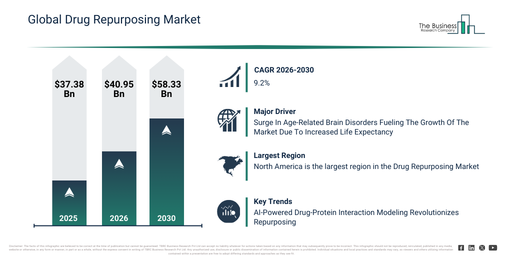
    The drug repurposing market has experienced substantial growth in recent years. It will grow from $37.38 billion in 2025 to $40.95 billion in 2026 at a compound annual growth rate (CAGR) of 9.6%. This historical expansion can be attributed to several factors, including the significant cost and time involved in traditional drug discovery, an increasing number of failed drug candidates, the rising incidence of chronic and rare diseases, a scarcity of therapeutic options for emerging diseases, and the early integration of computational approaches for drug repositioning.

    The drug repurposing market size is expected to show robust expansion in the near future. It is projected to increase to $58.33 billion in 2030, driven by a compound annual growth rate (CAGR) of 9.2%. This projected growth can be attributed to the integration of AI and machine learning in drug repurposing, a surge in investment within biotech and pharma research, the expanding capabilities of contract research organizations (CROs), an increasing demand for affordable therapies, and supportive regulatory environments for repurposed drug approvals. Significant developments anticipated during this forecast period include an intensified focus on phenotypic and target-based screening, the rising adoption of structure-based drug repositioning, advancements in identifying off-target activities, the extended application of drug repurposing for rare and infectious diseases, and the shortening of drug development timelines through the utilization of existing molecules.

    Get A Free Sample Report With In-Depth Market Insights:

    https://thebusinessresearchcompany.com/sample_request?id=51121206&type=smp&name=Drug%20Repurposing%20Market%20Report%202026&utm_source=Blogs&utm_medium=Paid&utm_campaign=Oct_PR

    Drug Repurposing Market Growth Factors Behind Sustained Expansion

    The rising incidence of neurodegenerative diseases is anticipated to boost the expansion of the drug repurposing market in the future. Neurodegenerative diseases represent a collection of disorders characterized by the progressive loss of structure or function in neurons, eventually resulting in their death. The increase in neurodegenerative conditions, such as alzheimer’s dementia, is attributed to extended life expectancy, as aging is the primary risk factor contributing to the gradual decline of neuronal function over time. Drug repurposing assists in combating neurodegenerative diseases by identifying existing drugs with established safety profiles that can be re-directed to target specific disease pathways, thereby accelerating the development of effective treatments. For instance, in March 2023, according to the Alzheimer’s Association, a US-based nonprofit voluntary health organization, approximately 6.7 million Americans aged 65 and older were living with Alzheimer’s dementia in 2023, with forecasts indicating an increase to 13.8 million by 2060. Therefore, the growing prevalence of neurodegenerative diseases is a key driver for the growth of the drug repurposing market.

    Drug Repurposing Market Breakdown By Product Type And Application

    The drug repurposing market covered in this report is segmented –

    1) By Type: Disease-Centric, Target-Centric, Drug-Centric

    2) By Drug Molecules: Biologics, Small Molecule

    3) By Therapeutic Area: Oncology, Neurology, Infectious Diseases, Cardiovascular Diseases, Autoimmune Disorders

    4) By Route Of Administration: Oral, Intravenous, Topical, Inhalation, Intramuscular

    5) By End-User: Pharmaceutical Companies, Research And Academic Institutes, Contract Research Organizations

    Subsegments:

    1) By Disease-Centric: Phenotypic Screening, Epidemiological Analysis, Clinical Observation-Based Repurposing

    2) By Target-Centric: Protein Target Modulation, Pathway Modulation, Biomarker-Based Targeting

    3) By Drug-Centric: Off-Target Activity Identification, Structure-Based Drug Repositioning, Adverse Effect-Based Repurposing

    Drug Repurposing Market Industry Trends Fueling Future Revenue Growth

    Leading firms within the drug repurposing market are concentrating on creating sophisticated technologies, specifically artificial intelligence (AI)-powered drug-protein interaction modeling, to speed up the discovery of novel therapeutic applications for existing medications. This particular modeling approach, driven by AI, utilizes artificial intelligence and machine learning to forecast drug interactions with proteins throughout the human proteome, employing vast datasets to improve both precision and reliability. An example of this is Cosmos Health Inc., a US-based healthcare company, which introduced Cloudscreen 2.0, an advanced AI platform for drug repurposing, in July 2025. This system represents a new generation, built to handle datasets more than 100 times larger than previous versions, facilitating a thorough analysis of drug-protein interactions. The platform incorporates mutagenesis data and tools for examining disordered proteins, allowing it to target conditions like cancer, obesity, and diabetes. Furthermore, scalable processing is enabled by graphics processing unit (GPU)-based cloud computing, establishing the platform as a vital advancement in speeding up research and development for drug repurposing across diverse therapeutic fields.

    Drug Repurposing Market Company Landscape And Competitive Strategy

    Major companies operating in the drug repurposing market are F. Hoffmann-La Roche Ltd , Bayer AG, Takeda Pharmaceutical Company Limited, Amgen Inc., Teva Pharmaceutical Industries Limited, Astellas Pharma Inc., UCB S.A., Eisai Co Ltd., Celltrion Inc., Evotec SE, BenevolentAI Limited, Insilico Medicine Inc., Recursion Pharmaceuticals Inc., Pharnext S.A., Healx Ltd., Algernon Pharmaceuticals Inc., BioXcel Therapeutics Inc.

    View The Full Drug Repurposing Market Report:

    https://thebusinessresearchcompany.com/report/drug-repurposing-global-market-report?utm_source=Blogs&utm_medium=Paid&utm_campaign=Oct_PR

    Drug Repurposing Market Global Footprint: Which Region Leads The Market?

    North America was the largest region in the drug repurposing market in 2025. Asia-Pacific is expected to be the fastest-growing region in the forecast period. The regions covered in the drug repurposing market report are Asia-Pacific, South East Asia, Western Europe, Eastern Europe, North America, South America, Middle East, Africa.

    Reach Out To Our Team:

    The Business Research Company: https://www.thebusinessresearchcompany.com/

    Americas: +1 310-496-7795

    Asia: +44 7882 955267 & +91 8897263534

    Europe: +44 7882 955267

    Email us at: marketing@tbrc.info

    Follow us on:

    LinkedIn: https://in.linkedin.com/company/the-business-research-company

    YouTube: https://www.youtube.com/channel/UC24_fI0rV8cR5DxlCpgmyFQ

    Global Market Model: https://www.thebusinessresearchcompany.com/global-market-model
  • Drug Repositioning Service Market Outlook From 2026 To 2030: Key Growth Factors And Future Opportunities

    Drug Repositioning Service Market Outlook From 2026 To 2030: Key Growth Factors And Future Opportunities

    Built to provide research that’s more actionable and strategically valuable, The Business Research Company’s 2026 market reports include market attractiveness analysis, total addressable market sizing, company benchmarking matrices, interactive Excel dashboards, broader supply chain intelligence, emerging startup tracking, and in-depth product insights.

    Drug Repositioning Service Market Size, Value And Growth Trajectory Through 2030

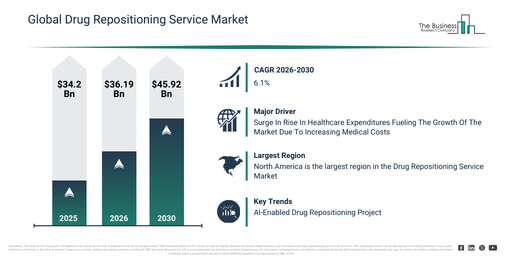
    The drug repositioning service market has seen substantial expansion in recent years. It is anticipated to increase from $34.2 billion in 2025 to $36.19 billion in 2026, exhibiting a compound annual growth rate (CAGR) of 5.8%. This historical growth can be linked to factors like the rising costs of pharmaceutical R&D, the wealth of available legacy drug data, an uptick in unsuccessful clinical trials, the escalating need for quicker drug development cycles, and the early embrace of computational drug discovery.

    The drug repositioning service market is projected to experience robust expansion over the coming years. This market is forecast to reach $45.92 billion by 2030, exhibiting a compound annual growth rate (CAGR) of 6.1%. Several factors are expected to drive this growth during the forecast period, including a heightened demand for economical drug development, the increasing integration of AI-driven discovery solutions, a sharpened focus on rare and orphan conditions, the broadening scope of data-intensive clinical research, and a greater regulatory embrace of drugs that have been repurposed. Key trends anticipated throughout this period involve the wider deployment of AI-powered drug repurposing platforms, an elevated emphasis on re-evaluating drugs that failed in clinical trials, the expanding incorporation of real-world evidence into drug discovery processes, the diversification of precision medicine-focused repositioning efforts, and strengthened partnerships between pharmaceutical companies and contract research organizations (CROs).

    Get A Free Sample Report With In-Depth Market Insights:

    https://thebusinessresearchcompany.com/sample_request?id=29040&type=smp&name=Drug%20Repositioning%20Service%20Market%20Report%202026&utm_source=Blogs&utm_medium=Paid&utm_campaign=Oct_PR

    Drug Repositioning Service Market Demand Drivers Opening New Revenue Streams

    The anticipated expansion of the drug repositioning service market is linked to an increase in healthcare expenditures. These expenditures encompass the total funds allocated to health services, covering prevention, treatment, rehabilitation, and administrative functions. The rise in healthcare spending is primarily driven by escalating medical costs, which are influenced by technological advancements and the growing demand for healthcare provisions. Higher healthcare expenditure benefits drug repositioning services because enhanced funding facilitates more clinical trials and research, thus accelerating the identification of new therapeutic applications for existing drugs. For instance, according to the Office for National Statistics, a UK-based Government department, in May 2024, total healthcare expenditure experienced a significant 5.6% nominal rise from 2022 to 2023. Consequently, the uptick in healthcare expenditures is propelling the growth of the drug repositioning service market.

    Drug Repositioning Service Market Segment Analysis And Revenue Potential

    The drug repositioning service market covered in this report is segmented –

    1) By Type: Generic Drugs, Clinical Trial Failed Drugs

    2) By Therapeutic Area: Oncology, Neurology, Infectious Diseases, Cardiovascular Diseases, Other Therapeutic Area

    3) By End-User: Pharmaceutical Companies, Biotechnology Firms, Contract Research Organizations (CROs), Academic Research Institutions, Hospitals And Ambulatory Surgical Centers.

    Subsegments:

    1) By Generic Drugs: Small Molecule Drugs, Biologics, Biosimilars, Peptide-Based Drugs

    2) By Clinical Trial Failed Drugs: Phase I Failed Drugs, Phase II Failed Drugs, Phase III Failed Drugs, Safety-Related Failed Drugs, Efficacy-Related Failed Drugs

    Drug Repositioning Service Market Trends Powering Strategic Industry Growth

    Leading companies in the drug repositioning service market are prioritizing the integration of artificial intelligence (AI) in drug repositioning, including the use of computational drug repositioning systems. These systems systematically uncover new therapeutic uses for existing drugs through AI-powered analysis of scientific literature and biological data. A computational drug repositioning system functions as a technology-driven platform, employing artificial intelligence, machine learning, and data mining to methodically scrutinize existing drugs, compounds, and biological information. For instance, in November 2024, Japanese firms UBE and FRONTEO initiated a co-creation project. This collaborative framework combines the specialized knowledge of both UBE and FRONTEO to bolster drug repositioning endeavors. It fosters smooth interaction between data analysis (dry research) and biological testing (wet research), thereby improving the progression from initial hypothesis formulation to experimental confirmation. By leveraging FRONTEO’s AI-driven Drug Discovery AI Factory and KIBIT technology, the project aims to systematically identify previously unrecorded connections between diseases and molecules.

    Drug Repositioning Service Market Key Players Shaping Industry Direction

    Major companies operating in the drug repositioning service market are Recursion Pharmaceuticals Inc., Excelra, LifeArc, Cosmos Health Inc., Fios Genomics, Insilico Medicine Inc., Melior Discovery, Delta4, Acubiosys, VeriSIM Life, BioXcel Therapeutics Inc., Pharnext S.S., NuMedii, GVK Biosciences, Plex Research, Paradigm Biopharmaceuticals, BenevolentAI Limited

    View The Full Drug Repositioning Service Market Report:

    https://thebusinessresearchcompany.com/report/drug-repositioning-service-global-market-report?utm_source=Blogs&utm_medium=Paid&utm_campaign=Oct_PR

    Drug Repositioning Service Market Regional Split: Which Areas Are Fueling Growth?

    North America was the largest region in the drug repositioning service market in 2025. Asia-Pacific is expected to be the fastest-growing region in the forecast period. The regions covered in the drug repositioning service market report are Asia-Pacific, South East Asia, Western Europe, Eastern Europe, North America, South America, Middle East, Africa.

    Reach Out To Our Team:

    The Business Research Company: https://www.thebusinessresearchcompany.com/

    Americas: +1 310-496-7795

    Asia: +44 7882 955267 & +91 8897263534

    Europe: +44 7882 955267

    Email us at: marketing@tbrc.info

    Follow us on:

    LinkedIn: https://in.linkedin.com/company/the-business-research-company

    YouTube: https://www.youtube.com/channel/UC24_fI0rV8cR5DxlCpgmyFQ

    Global Market Model: https://www.thebusinessresearchcompany.com/global-market-model
  • Drug Formulation Market Growth Forecast: Market Size, Key Trends And Emerging Opportunities Through 2030

    Drug Formulation Market Growth Forecast: Market Size, Key Trends And Emerging Opportunities Through 2030

    Backed by market attractiveness analysis, total addressable market sizing, company benchmarking matrices, interactive Excel dashboards, wider supply chain intelligence, emerging startup coverage, and detailed product-level insights, The Business Research Company’s 2026 market reports are designed to offer research that is more actionable and strategically valuable than ever.

    Drug Formulation Market CAGR Outlook And Future Development

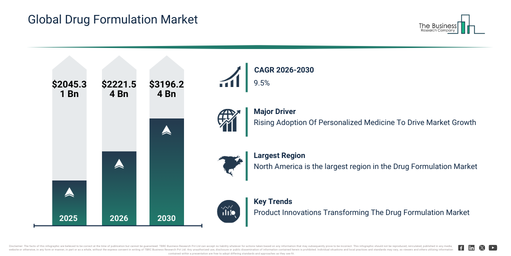
    The drug formulation market size has demonstrated significant expansion in recent years. It is anticipated to expand from $2045.31 billion in 2025 to $2221.54 billion in 2026, achieving a compound annual growth rate (CAGR) of 8.6%. The historical growth within this market can be linked to factors such as an increase in generic drug demand, a rise in the prevalence of chronic diseases, advancements in pharmaceutical research, the expansion of hospital and clinic networks, and growing investments in research and development.

    The drug formulation market is projected to experience substantial expansion over the next few years. It is forecast to reach $3196.24 billion by 2030, showing a compound annual growth rate (CAGR) of 9.5%. The expansion during this forecast period can be attributed to the rise of gene and cell therapies, the integration of AI in drug design, the creation of novel excipients, an increase in biologics and specialty drugs, and the growth of emerging pharmaceutical markets. Key trends anticipated during this period include personalized drug formulations, sophisticated drug delivery systems, the development of biologics and biosimilars, efforts to optimize formulation stability and shelf-life, and a focus on regulatory compliance and quality assurance.

    Get A Free Sample Report With In-Depth Market Insights:

    https://thebusinessresearchcompany.com/sample_request?id=97629752&type=smp&name=Drug%20Formulation%20Market%20Report%202026&utm_source=Blogs&utm_medium=Paid&utm_campaign=Oct_PR

    Drug Formulation Market Growth Backed By Core Demand Fundamentals

    The expanding embrace of personalized medicine is anticipated to drive future growth in the drug formulation market. This innovative healthcare strategy customizes medical treatments and interventions according to each patient’s unique attributes. It entails adapting therapies grounded in specific patient traits, including genetic makeup and biomarkers. Such an approach mandates the creation of bespoke drug formulations to maximize effectiveness and safety for every individual patient. Its influence includes demanding individualized treatment regimens, formulations that incorporate genomic understanding, enhanced drug responses, and specially designed treatments for uncommon diseases. As an illustration, data from the Personalized Medicine Coalition (PMC), a US-based non-profit, indicated that personalized medicines constituted around 38 percent of all newly approved therapeutic molecular entities in 2023, an increase from 34 percent in 2022. Consequently, the rising prevalence of personalized medicine is fueling the expansion of the drug formulation market.

    Drug Formulation Market Segmentation And Category Overview

    The drug formulation market covered in this report is segmented –

    1) By Dosage Form: Oral formulations, Parenteral Formulations, Topical Formulations, Inhalation Formulations

    2) By Formulation: Tablets, Capsules, Injectable, Sprays, Suspensions, Powders, Other Formulations

    3) By Therapy Area: Cardiovascular Diseases (CVDs), Pain, Diabetes, Cancer, Respiratory Diseases, Other Diseases

    4) By End-User: Big Pharma, Small And Medium Pharma, Biotech Companies

    Subsegments:

    1) By Oral Formulations: Tablets, Capsules, Powders, Liquids Or Solutions

    2) By Parenteral Formulations: Injectables, Implants, Infusions

    3) By Topical Formulations: Creams, Ointments, Gels, Transdermal Patches

    4) By Inhalation Formulations: Metered-Dose Inhalers (MDIs), Dry Powder Inhalers (DPIs), Nebulizers

    Drug Formulation Market Growth Trends Reshaping The Competitive Landscape

    Major companies in the drug formulation market are developing new fixed dose combination drugs for type 2 diabetes to gain a competitive edge. A Fixed Dose Combination (FDC) is a pharmaceutical formulation containing two or more active ingredients combined in a fixed ratio of doses within a single dosage form. For instance, in October 2023, Glenmark Pharmaceuticals Limited, an India-based pharmaceutical company, launched its first triple-drug fixed-dose combination under the brand name Zita DM. It includes the DPP4 inhibitor, Teneligliptin (20mg), the SGLT2 inhibitor, Dapagliflozin (10mg), and Metformin SR (500mg/1000mg) in a fixed dose. This medication must be taken once daily, under prescription, to improve glycemic control in patients with Type 2 diabetes.

    Drug Formulation Market Competitive Analysis Of Leading Industry Participants

    Major companies operating in the drug formulation market are AstraZeneca PLC, The Bristol-Myers Squibb Company, Eli Lilly and Company, Gilead Sciences Inc., Merck & Co. Inc., Novartis AG, Pfizer Inc., AbbVie Inc., C.H. Boehringer Sohn AG & Co. KG, F. Hoffmann-La Roche AG, Johnson & Johnson, Bayer AG, Teva Pharmaceutical Industries Ltd., Sanofi S.A., GlaxoSmithKline plc, Novo Nordisk A/S, Amgen Inc., Viatris Inc., Sandoz International GmbH, Takeda Pharmaceutical Company Limited, Sun Pharmaceutical Industries Ltd., Dr. Reddy’s Laboratories Ltd., Cipla Ltd., Lupin Limited, Torrent Pharmaceuticals Limited, Jubilant Life Sciences Limited, Cadila Healthcare Limited, Glenmark Pharmaceuticals Ltd., Wockhardt Ltd., Hikma Pharmaceuticals plc

    View The Full Drug Formulation Market Report:

    https://thebusinessresearchcompany.com/report/drug-formulation-global-market-report?utm_source=Blogs&utm_medium=Paid&utm_campaign=Oct_PR

    Drug Formulation Market Top Region: Where Does Most Revenue Come From?

    North America was the largest region in the drug formulation market in 2025. Asia-Pacific is expected to be the fastest-growing region in the drug formulation market report during the forecast period. The regions covered in the drug formulation market report are Asia-Pacific, South East Asia, Western Europe, Eastern Europe, North America, South America, Middle East, Africa.

    Reach Out To Our Team:

    The Business Research Company: https://www.thebusinessresearchcompany.com/

    Americas: +1 310-496-7795

    Asia: +44 7882 955267 & +91 8897263534

    Europe: +44 7882 955267

    Email us at: marketing@tbrc.info

    Follow us on:

    LinkedIn: https://in.linkedin.com/company/the-business-research-company

    YouTube: https://www.youtube.com/channel/UC24_fI0rV8cR5DxlCpgmyFQ

    Global Market Model: https://www.thebusinessresearchcompany.com/global-market-model
  • Drug Discovery Market CAGR Forecast Through 2030: Key Trends Shaping Industry Expansion

    Drug Discovery Market CAGR Forecast Through 2030: Key Trends Shaping Industry Expansion

    Featuring market attractiveness scoring, total addressable market sizing, company benchmarking matrices, interactive Excel dashboards, deeper supply chain intelligence, emerging startup tracking, and granular product-level insights, The Business Research Company’s 2026 market reports are built to deliver research that is both more actionable and more strategically valuable.

    Drug Discovery Market Set To Climb From $142.53 Billion In 2026 To $250.5 Billion By 2030

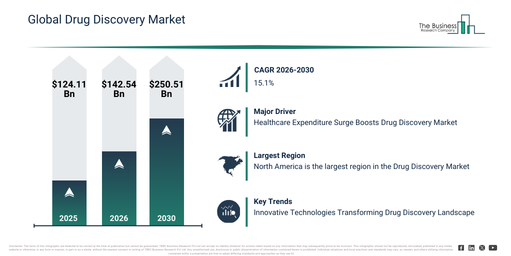
    The drug discovery market size has experienced significant expansion in recent years. It will grow from $124.11 billion in 2025 to $142.54 billion in 2026 at a compound annual growth rate (CAGR) of 14.8%. This historical growth can be attributed to several factors, including an increase in chronic and infectious diseases, advancements in molecular biology techniques, heightened R&D spending by pharmaceutical companies, a rise in biotechnology collaborations, and the availability of research funding.

    The drug discovery market is poised for significant expansion in the coming years. It is projected to reach a valuation of $250.51 billion by 2030, exhibiting a compound annual growth rate (CAGR) of 15.1%. This expected growth during the forecast period is driven by the emergence of AI-driven drug discovery platforms, the expanding scope of personalized medicine, the integration of omics data into drug design, the increasing outsourcing in the biopharmaceutical sector, and the adoption of automation and robotics in laboratory environments. Prominent trends anticipated in this period include advancements in high-throughput screening, the development of targeted drugs, innovative personalized medicine strategies, the incorporation of pharmacogenomics, and the use of nanotechnology in drug discovery.

    Get A Free Sample Report With In-Depth Market Insights:

    https://thebusinessresearchcompany.com/sample_request?id=88969109&type=smp&name=Drug%20Discovery%20Market%20Report%202026&utm_source=Blogs&utm_medium=Paid&utm_campaign=Oct_PR

    Drug Discovery Market Growth Catalysts And Demand Drivers

    The drug discovery market is anticipated to expand due to increasing healthcare spending. Globally, nations allocate a significant portion of their GDP to healthcare costs, encompassing hospital services, doctor and clinic visits, various professional services, dental treatments, additional health, residential, and personal care, home healthcare, nursing homes, continuing care retirement communities, prescription medicines, and other related expenditures. A substantial component of health expenditure is dedicated to drug discovery, crucial for disease treatment and life extension. The demand for novel drugs to address emerging diseases is growing. As an illustration, data from October 2024 from the Centers for Medicare and Medicaid Services, a US-based federal agency, revealed that national health expenditure increased by 4.1% to $4.5 trillion in 2022, equivalent to $13,493 per person. Furthermore, for the period 2023–32, the average national health expenditure growth (5.6%) is projected to surpass the average GDP growth (4.3%), leading to a rise in healthcare spending as a share of GDP from 17.3 percent in 2022 to 19.7 percent in 2032. Consequently, the expansion of the drug discovery market is being propelled by increasing healthcare expenditures.

    Drug Discovery Market Segment Outlook: Which Categories Are Growing Fastest?

    The drug discovery market covered in this report is segmented –

    1) By Drug Type: Small Molecule, Large Molecule

    2) By Process: Target Selection, Target Validation, Hit-To-Lead Identification, Lead Optimization, Candidate Validation

    3) By Technology: High Throughput Screening, Spectroscopy, Combinatorial Chemistry, Biochips, Pharmacogenomics And Pharmacogenetics, Bioinformatics, Metabolomics, Nanotechnology, Other Technologies

    4) By Therapeutic Area: Oncology, Neurology, Infectious And Immune System Diseases, Digestive System Diseases, Cardiovascular Diseases, Diabetes, Respiratory Disease, Other Therapeutic Areas

    5) By End User: Pharmaceutical Companies, CROs, Other End-Users

    Subsegments:

    1) By Small Molecule: Synthetic Small Molecules, Natural Small Molecules, Targeted Small Molecule Drugs

    2) By Large Molecule: Monoclonal Antibodies, Proteins And Peptides, Nucleic Acid-Based Therapies

    Drug Discovery Market Trends Shaping Long-Term Demand

    Major companies operating in the drug discovery market are actively incorporating various innovative technologies, including artificial intelligence and imaging, to decrease the time necessary for drug development. Imaging technology specifically enables the non-invasive visualization, characterization, and quantification of biological activities occurring within organisms when exposed to medications. These techniques, which capitalize on the strengths of either specialized probes or the tissue itself, are essential for deepening the understanding of diseases and identifying new therapeutic options. For instance, in May 2023, Google Cloud launched two advanced AI-powered platforms, namely the Target and Lead Identification Suite and the Multiomics Suite, to expedite drug discovery and refine precision medicine. These tools are engineered to assist biotechnology and pharmaceutical companies in progressing their efforts in drug discovery and precision medicine. The Target and Lead Identification Suite aids in discerning the function of amino acids and proteins, whereas the Multiomics Suite accelerates the discovery and interpretation of genomic data, thereby contributing to the design of personalized treatments.

    Drug Discovery Market Leading Companies And Competitive Benchmarking

    Major companies operating in the drug discovery market are Pfizer Inc., Merck & Co. Inc., Novartis International AG, Thermo Fisher Scientific Inc., WuXi AppTec Group, GlaxoSmithKline plc, Eli Lilly and Company, Laboratory Corporation of America Holdings, Evotec SE, Eurofins Scientific SE, Agilent Technologies Inc., Sanofi S.A., Charles River Laboratories International Inc., Pharmaron Ltd., Viva Biotech Ltd., Albany Molecular Research Inc., Schrödinger Inc., BioDuro Ltd., Aptuit LLC, Selvita S.A., Sygnature Discovery Limited, Jubilant Biosys Limited, Gero Limited, Domainex Ltd., Verge Genomics lnc., Aqemia SAS, BenevolentAI Limited, EPIVAX INC., ProteinQure lnc., Synlogic Inc., ChemPartner Co. Ltd., WuXi Biologics lnc., Abzena plc, Lonza Group Ltd., Catalent lnc., Recursion Pharmaceuticals Inc.

    View The Full Drug Discovery Market Report:

    https://thebusinessresearchcompany.com/report/drug-discovery-global-market-report?utm_source=Blogs&utm_medium=Paid&utm_campaign=Oct_PR

    Drug Discovery Market Regional Breakdown: Where Is Demand Concentrated?

    North America was the largest region in the drug discovery market in 2025. Asia-Pacific is expected to be the fastest-growing region in the forecast period. The regions covered in the drug discovery market report are Asia-Pacific, South East Asia, Western Europe, Eastern Europe, North America, South America, Middle East, Africa.

    Reach Out To Our Team:

    The Business Research Company: https://www.thebusinessresearchcompany.com/

    Americas: +1 310-496-7795

    Asia: +44 7882 955267 & +91 8897263534

    Europe: +44 7882 955267

    Email us at: marketing@tbrc.info

    Follow us on:

    LinkedIn: https://in.linkedin.com/company/the-business-research-company

    YouTube: https://www.youtube.com/channel/UC24_fI0rV8cR5DxlCpgmyFQ

    Global Market Model: https://www.thebusinessresearchcompany.com/global-market-model
  • Doxorubicin Market To Witness 7.2% CAGR Growth Through 2030: Key Industry Drivers

    Doxorubicin Market To Witness 7.2% CAGR Growth Through 2030: Key Industry Drivers

    Built to provide research that’s more actionable and strategically valuable, The Business Research Company’s 2026 market reports include market attractiveness analysis, total addressable market sizing, company benchmarking matrices, interactive Excel dashboards, broader supply chain intelligence, emerging startup tracking, and in-depth product insights.

    Doxorubicin Market Forecast: Value Set To Climb From $1.51 Billion To $2 Billion

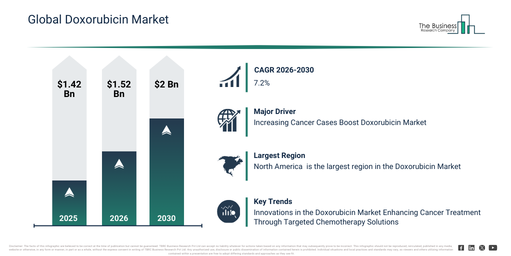
    The doxorubicin market has experienced robust expansion in recent times. Forecasts indicate its size will increase from $1.42 billion in 2025 to $1.52 billion in 2026, demonstrating a compound annual growth rate (CAGR) of 6.9%. Historically, this expansion has been driven by factors such as the rising global incidence of cancer, the broad acceptance of anthracyclines in clinical practice, the development of hospital oncology facilities, an increase in chemotherapy-based treatment approaches, and the prominent integration into national cancer treatment guidelines.

    The doxorubicin market size is projected to undergo significant expansion in the coming years. It is forecast to reach a value of $2 billion by 2030, demonstrating a compound annual growth rate (CAGR) of 7.2%. This expected increase during the forecast period is propelled by the growing need for affordable cancer therapies, the advancement of liposomal and targeted drug delivery systems, improved access to cancer care in developing territories, an increase in approvals for generic formulations, and heightened investment in oncology drug production. Prominent trends anticipated in the forecast period involve the rising acceptance of liposomal doxorubicin formulations, broader application in combination chemotherapy regimens, a growing demand for generic and biosimilar anthracyclines, the broadening of oncology treatment in emerging economies, and enhanced safety and cardiotoxicity management procedures.

    Get A Free Sample Report With In-Depth Market Insights:

    https://thebusinessresearchcompany.com/sample_request?id=73406141&type=smp&name=Doxorubicin%20Market%20Report%202026&utm_source=Blogs&utm_medium=Paid&utm_campaign=Oct_PR

    Doxorubicin Market Opportunity Drivers: What’s Unlocking New Revenue Potential?

    The rising occurrence of cancer is anticipated to propel the doxorubicin market. Cancer constitutes a set of illnesses characterized by the abnormal and uncontrolled proliferation of cells. Doxorubicin, a frequently utilized antibiotic in chemotherapy, addresses various cancer forms by impeding cancer cell growth through DNA damage. Consequently, the escalating incidence of cancer has fueled a greater need for doxorubicin. For example, figures released in January 2024 by the American Cancer Society, a non-profit organization based in the US, indicate that the United States is forecast to record 2,001,140 new cancer diagnoses and 611,720 fatalities from cancer in 2024, an increase compared to 1,958,310 cases and 609,820 deaths reported in 2023. Therefore, the expanding number of cancer patients is a significant impetus for the doxorubicin market.

    Doxorubicin Market Segment Landscape: Which Areas Lead Development?

    The doxorubicin market covered in this report is segmented –

    1) By Drug Formulation: Lyophilized Powder, Doxorubicin Injection

    2) By Application: Breast Cancer, Kidney Cancer, Liver Cancer, Sarcoma, Ovarian Cancer, Lung Cancer, Leukemia, Multiple Myeloma, Other Applications

    3) By Distribution Channel: Hospital Pharmacy, Retail Pharmacy, Online Pharmacy

    Subsegments:

    1) By Lyophilized Powder: Reconstituted Formulations, Freeze-Dried Preparations

    2) By Doxorubicin Injection: Ready-To-Use Solutions, Concentrated Solutions For Dilution, Liposomal Doxorubicin Injections

    Doxorubicin Market Innovation Trends Shaping Future Development

    Leading companies in the doxorubicin market are prioritizing the creation of innovative products, including chemotherapy medications, to boost treatment efficacy and lessen side effects for cancer patients. Chemotherapy medications are drugs employed in cancer treatment to specifically target and eliminate rapidly dividing cancer cells. While they can sometimes impact healthy cells, causing adverse reactions, ongoing developments aim to increase their precision and mitigate these effects. For instance, in August 2024, Lupin Limited, an India-based pharmaceutical company, introduced Doxorubicin Hydrochloride Liposome Injection. This injection is administered to treat advanced ovarian cancer, AIDS-related Kaposi’s sarcoma, and multiple myeloma. Its specialized liposomal formulation allows for targeted delivery, which in turn reduces systemic side effects and improves patient tolerance. This strategy significantly enhances treatment efficacy, establishing it as a crucial option within oncology therapies.

    Doxorubicin Market Industry Leaders And Competitive Landscape

    Major companies operating in the doxorubicin market are Pfizer Inc., Johnson and Johnson, Baxter International Inc., Teva Pharmaceutical Industries Ltd., Dr. Reddy’s Laboratories Ltd., Cipla Limited, Hikma Pharmaceuticals, Mylan Pharmaceuticals Inc., Accord Healthcare Ltd., TTY Biopharm Company Limited, Cadila Pharmaceuticals, Neon Laboratories Limited, APP Pharmaceuticals Manufacturing LLC, Sun Pharmaceutical Industries Ltd., Transo-Pharm Handels GmbH, LGM Pharma, Zhejiang Hisun Pharma, Actavis Pharma, Celon Laboratories Limited, Samarth Life Sciences Pvt. Ltd

    View The Full Doxorubicin Market Report:

    https://thebusinessresearchcompany.com/report/doxorubicin-global-market-report?utm_source=Blogs&utm_medium=Paid&utm_campaign=Oct_PR

    Doxorubicin Market Geographic Landscape: Which Region Dominates Industry Growth?

    North America was the largest region in the doxorubicin market in 2025. Asia-Pacific is expected to be the fastest-growing region in the forecast period. The regions covered in the doxorubicin market report are Asia-Pacific, South East Asia, Western Europe, Eastern Europe, North America, South America, Middle East, Africa.

    Reach Out To Our Team:

    The Business Research Company: https://www.thebusinessresearchcompany.com/

    Americas: +1 310-496-7795

    Asia: +44 7882 955267 & +91 8897263534

    Europe: +44 7882 955267

    Email us at: marketing@tbrc.info

    Follow us on:

    LinkedIn: https://in.linkedin.com/company/the-business-research-company

    YouTube: https://www.youtube.com/channel/UC24_fI0rV8cR5DxlCpgmyFQ

    Global Market Model: https://www.thebusinessresearchcompany.com/global-market-model
  • Dopamine Agonists Market Projected For Strong Expansion Through 2030: Key Trends And Future Outlook

    Dopamine Agonists Market Projected For Strong Expansion Through 2030: Key Trends And Future Outlook

    Backed by market attractiveness analysis, total addressable market sizing, company benchmarking matrices, interactive Excel dashboards, wider supply chain intelligence, emerging startup coverage, and detailed product-level insights, The Business Research Company’s 2026 market reports are designed to offer research that is more actionable and strategically valuable than ever.

    Dopamine Agonists Market Revenue Growth On Track For A 7.1% CAGR Through 2030

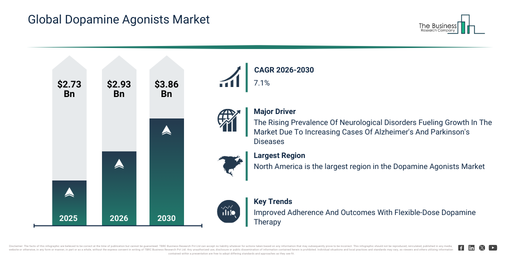
    The dopamine agonists market has experienced strong expansion in recent years. It is anticipated to increase in value from $2.73 billion in 2025 to $2.93 billion in 2026, demonstrating a compound annual growth rate (CAGR) of 7.3%. This historical growth can be attributed to factors such as the rising prevalence of Parkinson’s disease, the initial clinical success of dopamine therapies, the limited availability of alternative treatments for movement disorders, the expansion of neurology care centers, and improved rates of diagnosis.

    The dopamine agonists market is anticipated to experience robust expansion over the coming years. Its valuation is projected to reach $3.86 billion by 2030, exhibiting a compound annual growth rate (CAGR) of 7.1%. This projected growth during the forecast period is primarily driven by factors such as an increasingly elderly global population, the escalating prevalence of neurological disorders, the necessity for enhanced motor symptom management, the expansion of neurological care provided in home settings, and the innovation of formulations that are more convenient for patients. Key trends anticipated within this period encompass the increasing application in Parkinson’s disease treatment, the expanding embrace of non-ergot dopamine agonists, a heightened inclination towards formulations with prolonged action, the wider availability of transdermal administration methods, and a greater deployment in cases of restless legs syndrome.

    Get A Free Sample Report With In-Depth Market Insights:

    https://thebusinessresearchcompany.com/sample_request?id=11206521&type=smp&name=Dopamine%20Agonists%20Market%20Report%202026&utm_source=Blogs&utm_medium=Paid&utm_campaign=Oct_PR

    Dopamine Agonists Market Growth Momentum: What Factors Are Shaping Demand?

    The dopamine agonist market is anticipated to expand due to the increasing occurrence of neurological disorders, which are conditions impacting the brain, spine, or nerves, leading to difficulties with movement, thought processes, or behavior. The growth in the prevalence of neurological disorders is partly linked to extended life expectancies, as the likelihood of conditions such as Alzheimer’s and Parkinson’s increases with age. Dopamine agonists serve to manage neurological disorders, including Parkinson’s disease, by activating dopamine receptors in the brain, thereby enhancing control and alleviating symptoms. For example, in 2024, the Alzheimer’s Disease Facts and Figures report by the Alzheimer’s Association, a US-based nonprofit voluntary health organization that focuses on Alzheimer’s disease care, support, and research, indicated that in 2022, 6.5 million Americans aged 65 and older were diagnosed with Alzheimer’s dementia, a figure projected to rise to 6.9 million in 2024. Consequently, the growing incidence of neurological disorders will fuel the expansion of the dopamine agonist market.

    Dopamine Agonists Market Segments: Where Is Growth Concentrated?

    The dopamine agonists market covered in this report is segmented –

    1) By Product Type: Ergot Based Dopamine Agonists, Non Ergot Based Dopamine Agonists

    2) By Route of Administration: Oral, Parenteral, Transdermal Patches

    3) By Distribution Channel: Hospital Pharmacies, Retail Pharmacies, Other Pharmacies

    4) By Application: Parkinson’s Disease, Restless Legs Syndrome (RLS), Hyperprolactinemia

    5) By End User: Hospitals, Clinics, Home Care Settings

    Subsegments:

    1) By Ergot-Based Dopamine Agonists: Bromocriptine, Cabergoline, Pergolide

    2) By Non-Ergot-Based Dopamine Agonists: Pramipexole, Ropinirole, Rotigotine, Apomorphine

    Dopamine Agonists Market Trends Redefining Industry Growth

    Companies operating in the dopamine agonists market are concentrating on innovations like flexible-dose monotherapy to boost patient adherence, minimize side effects, and offer more individualized treatment options for neurological disorders. This approach involves a single medication with adaptable dosing, enabling doctors to customize the amount for each patient’s specific needs and response. For example, in December 2024, AbbVie Inc., a US-based biopharmaceutical company, reported positive topline results from its Phase 3 TEMPO-2 trial, showing that investigational tavapadon, a flexible-dose monotherapy (5-15 mg once daily), significantly improved motor function in early Parkinson’s disease patients. The trial successfully met its primary endpoint with a notable reduction in MDS-UPDRS Parts II and III scores and achieved key secondary endpoints, demonstrating meaningful improvement in daily motor activities. Tavapadon is the first D1/D5 partial agonist currently being investigated for once-daily Parkinson’s treatment.

    Dopamine Agonists Market Key Participants And Competitive Landscape

    Major companies operating in the dopamine agonists market are Boehringer Ingelheim International GmbH, Teva Pharmaceutical Industries Ltd., Intas Pharmaceuticals Ltd., Dr. Reddy’s Laboratories Ltd., Lupin Limited, Luye Pharma Group Ltd., Kissei Pharmaceutical Co. Ltd., Sun Pharmaceutical Industries Ltd., Aurobindo Pharma Limited, Cipla Limited, Torrent Pharmaceuticals Ltd., Zydus Lifesciences Ltd., Glenmark Pharmaceuticals Ltd., Alembic Pharmaceuticals Ltd., Hetero Drugs Ltd., Mylan N.V., Sandoz Group AG, Hikma Pharmaceuticals PLC, Apotex Inc., Alkem Laboratories Ltd

    View The Full Dopamine Agonists Market Report:

    https://thebusinessresearchcompany.com/report/dopamine-agonists-global-market-report?utm_source=Blogs&utm_medium=Paid&utm_campaign=Oct_PR

    Dopamine Agonists Market Largest Region: Which Geography Holds The Highest Market Share?

    North America was the largest region in the dopamine agonists market in 2025. Asia-Pacific is expected to be the fastest-growing region in the forecast period. The regions covered in the dopamine agonists market report are Asia-Pacific, South East Asia, Western Europe, Eastern Europe, North America, South America, Middle East, Africa.

    Reach Out To Our Team:

    The Business Research Company: https://www.thebusinessresearchcompany.com/

    Americas: +1 310-496-7795

    Asia: +44 7882 955267 & +91 8897263534

    Europe: +44 7882 955267

    Email us at: marketing@tbrc.info

    Follow us on:

    LinkedIn: https://in.linkedin.com/company/the-business-research-company

    YouTube: https://www.youtube.com/channel/UC24_fI0rV8cR5DxlCpgmyFQ

    Global Market Model: https://www.thebusinessresearchcompany.com/global-market-model
  • Neck Pain Treatment Solutions Market Analysis: How The Industry Is Evolving Toward A $8.78 Billion Future

    Neck Pain Treatment Solutions Market Analysis: How The Industry Is Evolving Toward A $8.78 Billion Future

    Backed by market attractiveness analysis, total addressable market sizing, company benchmarking matrices, interactive Excel dashboards, wider supply chain intelligence, emerging startup coverage, and detailed product-level insights, The Business Research Company’s 2026 market reports are designed to offer research that is more actionable and strategically valuable than ever.

    Neck Pain Treatment Solutions Market Expansion Outlook: What Revenue Opportunities Are Ahead?

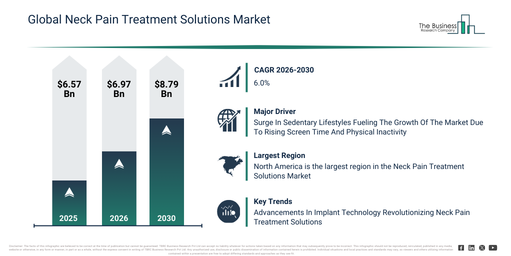
    The neck pain treatment solutions market has demonstrated substantial growth in recent years. Its valuation is anticipated to increase from $6.57 billion in 2025 to $6.97 billion in 2026, at a compound annual growth rate (CAGR) of 6.1%. Historically, this expansion has been driven by increasing sedentary lifestyles, rising workplace-related musculoskeletal disorders, a growing aging population, the expansion of physiotherapy services, and increased use of pain management medications.

    The neck pain treatment solutions market is anticipated to show significant expansion in the upcoming years. Its value is expected to reach $8.79 billion by 2030, growing at a compound annual growth rate (CAGR) of 6.0%. This projected growth stems from several factors, including the spread of remote work culture, a rising demand for sustained pain management, advancements in devices for pain relief, increased understanding of posture-related conditions, and the development of digital rehabilitation platforms. Prominent trends for this period include a greater adoption of diverse neck pain therapies, increased use of at-home neck pain remedies, a growing preference for treatments that are not invasive, the expansion of pain management through telehealth, and a heightened need for solutions focused on ergonomics and prevention.

    Get A Free Sample Report With In-Depth Market Insights:

    https://thebusinessresearchcompany.com/sample_request?id=95758916&type=smp&name=Neck%20Pain%20Treatment%20Solutions%20Market%20Report%202026&utm_source=Blogs&utm_medium=Paid&utm_campaign=Oct_PR

    Neck Pain Treatment Solutions Market Industry Drivers: What’s Behind The Revenue Growth?

    The growing trend of sedentary lifestyles is anticipated to boost the neck pain treatment solutions market in the coming years. Sedentary lifestyles are characterized by extended periods of physical inactivity, often involving prolonged sitting or lying down, which can contribute to various health issues, including discomfort in the neck. The increase in these inactive habits largely stems from extended screen time, which promotes prolonged sitting and reduces physical movement, leading to problems such as neck pain and poor posture. Neck pain treatment solutions provide targeted therapies aimed at alleviating discomfort, improving posture, and encouraging movement, thereby counteracting the negative impacts of prolonged sitting. For instance, in December 2023, the Australian Bureau Of Statistics, an Australia-based government body, reported that roughly 23.9% of people aged 15+ met physical activity guidelines, while 46.9% of employed adults aged 18–64 spent most of their workday sitting. Thus, the expansion of sedentary lifestyles is propelling the growth of the neck pain treatment solutions market.

    Neck Pain Treatment Solutions Market Breakdown By Product Type And Application

    The neck pain treatment solutions market covered in this report is segmented –

    1) By Product Type: Pharmaceuticals, Medical Devices, Physical Therapy, Alternative Treatments

    2) By Patient Age: Adults, Seniors

    3) By Pain Severity: Acute Neck Pain, Chronic Neck Pain, Persistent Neck Pain, Intermittent Neck Pain

    4) By Treatment Setting: In-Clinic Treatments, Home Care Solutions, Telehealth Services, Rehabilitation Centers, Hospital Visits

    5) By Distribution Channel: Online Pharmacies, Retail Pharmacies, Hospital Pharmacies

    Subsegments:

    1) By Pharmaceuticals: Non-Steroidal Anti-Inflammatory Drugs (NSAIDs), Muscle Relaxants, Analgesics, Antidepressants, Corticosteroids, Topical Pain Relievers

    2) By Medical Devices: Cervical Collars, Traction Devices, Electrotherapy Devices, Heat Therapy Devices, Cold Therapy Devices, Orthopedic Support Devices

    3) By Physical Therapy: Manual Therapy, Exercise Therapy, Ultrasound Therapy, Dry Needling, Hydrotherapy, Chiropractic Adjustments

    4) By Alternative Treatments: Acupuncture, Massage Therapy, Herbal Remedies, Yoga And Pilates

    #Neck Pain Treatment Solutions Market Growth Trends: What’s Shaping The Future Outlook?

    Major companies in the neck pain treatment solutions market are prioritizing advancements in medical technology, especially implant technology, to enhance patient outcomes. This focus aims to provide more effective, minimally invasive, and personalized treatment options that improve pain relief and spinal function. Implant technology involves medical devices crafted to replace, support, or augment missing or damaged biological structures inside the body, often made from biocompatible materials and featuring advanced elements such as sensors or drug delivery systems to optimize patient results. For instance, in June 2024, 4WEB Medical, a US-based orthopedic implant company, launched the Cervical Spine Integrated Plating Solution (CSTS-IPS). This innovative product represents the world’s first integrated plating and interbody fusion device specifically for cervical spine surgeries, utilizing advanced 3D-printing technology to offer a stable and simplified alternative to conventional separate plate and cage constructs in spinal fusion procedures.

    Neck Pain Treatment Solutions Market Company Landscape And Competitive Strategy

    Major companies operating in the neck pain treatment solutions market are GlaxoSmithKline (GSK), Medtronic Public Limited Company (Medtronic plc), Stryker Corporation, Globus Medical Inc., Hisamitsu Pharmaceutical Co. Inc., BenchMark Physical Therapy (a part of Upstream Rehabilitation), Nevro Corporation, Hinge Health Inc., Malouf Companies, NeuroSpine Institute, Camber Spine Technologies LLC, DAVID Health Solutions Ltd., ChoiceSpine LP, Converge Medical Technology, Sooma Oy, NeoSpine LLC, Mediflow Inc., Achieve Physical Therapy LLC, NeckCare AB, Coop Cooperative (Coop)

    View The Full Neck Pain Treatment Solutions Market Report:

    https://thebusinessresearchcompany.com/report/neck-pain-treatment-solutions-global-market-report?utm_source=Blogs&utm_medium=Paid&utm_campaign=Oct_PR

    Neck Pain Treatment Solutions Market Geographic Analysis: Where Is Demand Accelerating Fastest?

    North America was the largest region in the neck pain treatment solutions market in 2025. Asia-Pacific is expected to be the fastest-growing region in the forecast period. The regions covered in the neck pain treatment solutions market report are Asia-Pacific, South East Asia, Western Europe, Eastern Europe, North America, South America, Middle East, Africa.

    Reach Out To Our Team:

    The Business Research Company: https://www.thebusinessresearchcompany.com/

    Americas: +1 310-496-7795

    Asia: +44 7882 955267 & +91 8897263534

    Europe: +44 7882 955267

    Email us at: marketing@tbrc.info

    Follow us on:

    LinkedIn: https://in.linkedin.com/company/the-business-research-company

    YouTube: https://www.youtube.com/channel/UC24_fI0rV8cR5DxlCpgmyFQ

    Global Market Model: https://www.thebusinessresearchcompany.com/global-market-model