Month: October 2026

  • Nanomedicine Drug Delivery Market Forecast: Breaking Down The Numbers Behind Future Expansion

    Nanomedicine Drug Delivery Market Forecast: Breaking Down The Numbers Behind Future Expansion

    Built to provide research that’s more actionable and strategically valuable, The Business Research Company’s 2026 market reports include market attractiveness analysis, total addressable market sizing, company benchmarking matrices, interactive Excel dashboards, broader supply chain intelligence, emerging startup tracking, and in-depth product insights.

    Nanomedicine Drug Delivery Market Forecast: Value Set To Climb From $142.7 Billion To $252.68 Billion

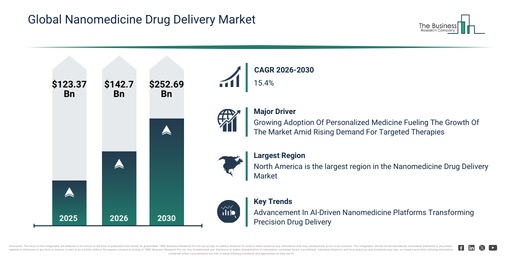
    The nanomedicine drug delivery market has experienced rapid expansion in recent years. Its projected growth will see the market size rise from $123.37 billion in 2025 to $142.7 billion in 2026, achieving a compound annual growth rate (CAGR) of 15.7%. This historical growth is attributable to several factors, including advancements in nanotechnology research, an increasing prevalence of chronic diseases, the expansion of oncology drug development, a rise in academic nanomedicine studies, and the early clinical success of nanoformulations.

    The nanomedicine drug delivery market is anticipated to experience substantial expansion over the upcoming years. This market is projected to reach $252.69 billion in 2030, exhibiting a compound annual growth rate (CAGR) of 15.4%. Factors driving this growth during the projection period include escalating investments in precision therapeutics, a heightened need for targeted drug delivery, the proliferation of nanomedicine clinical trials, increasing incorporation of AI into formulation design, and improved regulatory clarity for nanodrugs. Key trends emerging in this period encompass the intensified creation of targeted nanocarrier systems, wider application of liposomal drug delivery platforms, increased uptake of stimuli-responsive nanomaterials, broadening of nanomedicine uses specifically for oncology, and a stronger emphasis on improving drug bioavailability.

    Get A Free Sample Report With In-Depth Market Insights:

    https://thebusinessresearchcompany.com/sample_request?id=29132&type=smp&name=Nanomedicine%20Drug%20Delivery%20Market%20Report%202026&utm_source=Blogs&utm_medium=Paid&utm_campaign=Oct_PR

    Nanomedicine Drug Delivery Market Development Factors: What’s Supporting Demand?

    The expanding implementation of personalized medicine is anticipated to fuel the growth of the nanomedicine drug delivery market moving forward. This medical approach customizes treatment and prevention strategies based on the individual characteristics of each patient, such as their genetic profile or disease subtype. Its adoption is increasing as genomic and molecular advances enable treatments precisely tailored to an individual’s genetic profile, thereby enhancing effectiveness and facilitating precise, targeted care. Nanomedicine drug delivery supports personalized medicine by accurately directing drugs to target cells and customizing dosages and formulations for each patient, which improves treatment efficacy and reduces side effects. For instance, in February 2024, the Personalized Medicine Coalition, a US-based international non-profit organization, stated that the US Food and Drug Administration (FDA) approved 16 new personalized treatments for patients with rare diseases in 2023, an increase from six approvals in 2022. Thus, the growing adoption of personalized medicine is a significant driver for the expansion of the nanomedicine drug delivery market.

    Nanomedicine Drug Delivery Market Segment Performance And Emerging Opportunities

    The nanomedicine drug delivery market covered in this report is segmented –

    1) By Product Type: Nanoparticles, Liposomes, Micelles, Dendrimers, Nanotubes, Other Product Types

    2) By Route Of Administration: Oral, Injectable, Topical, Other Routes Of Administration

    3) By Application: Oncology, Cardiovascular Diseases, Neurology, Infectious Diseases, Other Applications

    4) By End-User: Hospitals, Clinics, Research Institutes, Other End-Users

    Subsegments:

    1) By Nanoparticles: Polymeric Nanoparticles, Metallic Nanoparticles, Lipid-Based Nanoparticles, Magnetic Nanoparticles, Quantum Dots

    2) By Liposomes: Conventional Liposomes, Stealth Liposomes, Cationic Liposomes, Anionic Liposomes, pH-Sensitive Liposomes

    3) By Micelles: Polymeric Micelles, Lipid Micelles, Amphiphilic Block Copolymer Micelles, Stimuli-Responsive Micelles, Mixed Micelles

    4) By Dendrimers: Polyamidoamine Dendrimers, Polypropylene Imine Dendrimers, Peptide Dendrimers, Carbohydrate Dendrimers, Hydroxyl-Terminated Dendrimers

    5) By Nanotubes: Carbon Nanotubes, Peptide Nanotubes, Inorganic Nanotubes, Multi-Walled Nanotubes, Single-Walled Nanotubes

    6) By Other Product Types: Nanospheres, Nanocapsules, Nanoemulsions, Nanogels, Hybrid Nanocarrier

    Nanomedicine Drug Delivery Market Transformation Trends: What Innovations Are Driving Change?

    Leading companies within the nanomedicine drug delivery market are focusing on developing drug delivery solutions, such as AI-powered nano-delivery platforms, to enhance targeting precision and accelerate the creation of personalized treatments. These AI-powered nano-delivery platforms are advanced systems that leverage artificial intelligence to design and optimize nanoparticles for precise drug targeting, thereby improving therapeutic outcomes, reducing side effects, and enabling personalized treatment. For instance, in September 2025, METiS TechBio, a China-based biotechnology company, launched NanoForge, an AI-driven nano-delivery platform intended to revolutionize how medicines are developed and delivered. The system integrates artificial intelligence with nanotechnology to optimize lipid nanoparticle formulations and deliver drugs precisely to target tissues, facilitating faster, safer, and more cost-effective drug development. This innovation aims to overcome key barriers in drug delivery for complex molecules like mRNA, moving the field toward programmable and reconfigurable therapeutics.

    Nanomedicine Drug Delivery Market Key Players: Which Companies Lead Industry Competition?

    Major companies operating in the nanomedicine drug delivery market are Pfizer Inc., Bristol-Myers Squibb Company, Novartis AG, Gilead Sciences Inc., Evonik Industries AG, Ipsen Pharma S.A.S., Pacira BioSciences Inc., Camurus AB, Arcturus Therapeutics Holdings Inc., Nanobiotix S.A., Acuitas Therapeutics Inc., NanoViricides Inc., Taiwan Liposome Company Ltd., Aphios Corporation, Concept Medical Inc., DelSiTech Ltd., ANP Technologies Inc., ProMab Biotechnologies Inc., BlueWillow Biologics Inc., Nanoform Finland Plc.

    View The Full Nanomedicine Drug Delivery Market Report:

    https://thebusinessresearchcompany.com/report/nanomedicine-drug-delivery-global-market-report?utm_source=Blogs&utm_medium=Paid&utm_campaign=Oct_PR

    Nanomedicine Drug Delivery Market Geographic Analysis: Where Is Demand Rising Fastest?

    North America was the largest region in the nanomedicine drug delivery market in 2025. Asia-Pacific is expected to be the fastest-growing region in the forecast period. The regions covered in the nanomedicine drug delivery market report are Asia-Pacific, South East Asia, Western Europe, Eastern Europe, North America, South America, Middle East, Africa.

    Reach Out To Our Team:

    The Business Research Company: https://www.thebusinessresearchcompany.com/

    Americas: +1 310-496-7795

    Asia: +44 7882 955267 & +91 8897263534

    Europe: +44 7882 955267

    Email us at: marketing@tbrc.info

    Follow us on:

    LinkedIn: https://in.linkedin.com/company/the-business-research-company

    YouTube: https://www.youtube.com/channel/UC24_fI0rV8cR5DxlCpgmyFQ

    Global Market Model: https://www.thebusinessresearchcompany.com/global-market-model
  • Nanomedicine Market Expected To Grow At 16% CAGR Through 2030: What Businesses Need To Know

    Backed by market attractiveness analysis, total addressable market sizing, company benchmarking matrices, interactive Excel dashboards, wider supply chain intelligence, emerging startup coverage, and detailed product-level insights, The Business Research Company’s 2026 market reports are designed to offer research that is more actionable and strategically valuable than ever.

    Nanomedicine Market Revenue Growth On Track For A 16% CAGR Through 2030

    The nanomedicine market size has seen rapid growth in recent years. It is anticipated to expand from $375.87 billion in 2025 to $434.77 billion in 2026, exhibiting a compound annual growth rate (CAGR) of 15.7%. This historic growth can be attributed to increased research and development investments in nanotechnology, the rising incidence of chronic diseases, advancements in nanoparticle synthesis techniques, a growing embrace of nanomedicine within oncology, and collaborations between pharmaceutical and nanotech companies.

    The nanomedicine market is projected for significant expansion over the coming years. It is anticipated to reach $786.46 billion in 2030, exhibiting a compound annual growth rate (CAGR) of 16.0%. This growth during the forecast period is primarily driven by factors such as the broader adoption of precision medicine applications, the incorporation of AI into nanomedicine research, rising demand for regenerative medicine, increased governmental investment in nanotech healthcare, and the creation of versatile nanodevices. Key trends expected during this period encompass breakthroughs in targeted drug delivery, advancements in regenerative nanomedicine, the expansion of personalized therapeutic solutions, diagnostic tools based on nanodevices, and the refinement of nanoformulations.

    Get A Free Sample Report With In-Depth Market Insights:

    https://thebusinessresearchcompany.com/sample_request?id=68817646&type=smp&name=Nanomedicine%20Market%20Report%202026&utm_source=Blogs&utm_medium=Paid&utm_campaign=Oct_PR

    Nanomedicine Market Industry Drivers: What’s Behind The Revenue Growth?

    The global increase in complex and chronic diseases is anticipated to foster the expansion of the nanomedicine market during the projected timeframe. Nanomedicine finds growing application in the management of chronic conditions such as cardiovascular disorders, diabetes, cancer, and dementia, facilitating rapid drug metabolism within the body. As an illustration, data from Alzheimer’s Disease International, part of the International Federation of Alzheimer’s Associations, indicates that over 50 million individuals worldwide are affected by dementia, with this figure expected to double every two decades, reaching 80 million by 2030 and 152 million by 2050. Furthermore, the global cancer incidence is forecast to escalate to 28.4 million new cases by 2040. Consequently, this escalating prevalence of chronic ailments is poised to fuel the need for potent nanomedicine-based therapeutic solutions, thereby stimulating the growth of the nanomedicine market.

    Nanomedicine Market Segment Landscape And Growth Outlook

    The nanomedicine market covered in this report is segmented –

    1) By Type: Nanoparticles, Nanoshells, Nanotubes, Nanodevices, Other Types

    2) By Modality: Diagnostics, Treatments

    3) By Application: Clinical Oncology, Infectious Diseases, Clinical Cardiology, Orthopedics, Other Applications

    Subsegments:

    1) By Nanoparticles: Lipid-Based Nanoparticles, Polymeric Nanoparticles, Metallic Nanoparticles, Ceramic Nanoparticles

    2) By Nanoshells: Gold Nanoshells, Silver Nanoshells, Silica Nanoshells

    3) By Nanotubes: Carbon Nanotubes (CNTs), Polymer Nanotubes

    4) By Nanodevices: Nanosensors, Nanorobots, Nanoscale Imaging Devices

    5) By Other Types: Dendrimers, Quantum Dots, Nanocarriers

    #Nanomedicine Market Growth Trends: What’s Shaping The Future Outlook?

    Leading companies active in the nanomedicine market are concentrating on innovative offerings like Dynapro ZetaStar to boost their earnings within the sector. This novel instrument enables simultaneous assessments of dynamic and static light scattering, as well as dynamic and electrophoretic light scattering (DLS/SLS/ELS). For example, in September 2023, Waters Corporation, a US-based entity specializing in analytical laboratory instruments and equipment, introduced Dynapro ZetaStar for the analysis of nanoparticles. The Zetasizer instrument aids in the precise development of intricate biologics by integrating multiple light scattering techniques, performing adaptive data capture, automatically evaluating data quality, and improving the sensitivity and speed of measurements while using extremely small sample volumes. The ZetaStar instrument’s unique flow cell design allows for its connection to an autosampler, significantly enhancing laboratory productivity and efficiency by enabling scores of unattended measurements to be conducted for several hours or even overnight.

    Nanomedicine Market Competitive Landscape: Who Leads The Industry?

    Major companies operating in the nanomedicine market are Pfizer Inc., Ablynx NV, Amgen Inc., Arrowhead Research Inc., Bio-Gate AG, Celgene Corporation, F. Hoffmann-La Roche AG, GE Healthcare, Gilead Sciences Inc., Merck AG, Nanospectra Biosciences, Nanotherapeutics Inc., NanoViricides Inc, Novartis AG, Sanofi S. A., Abraxis Bioscience Inc., Alnylam Pharmaceuticals Inc., Arrowhead Pharmaceuticals Inc., AuraSense Therapeutics LLC, BIND Therapeutics Inc., Camurus AB, Cerulean Pharma Inc., CytImmune Sciences, Fujifilm Holdings, Nanobiosym Inc., Nanobiotix SA, Nanogen Inc., Nanoparticle BioChem Inc., Nanospective Inc., Nanosphere Health Sciences Inc., Nanosys Inc., PerkinElmer Inc., Selecta Biosciences Inc.

    View The Full Nanomedicine Market Report:

    https://thebusinessresearchcompany.com/report/nanomedicine-global-market-report?utm_source=Blogs&utm_medium=Paid&utm_campaign=Oct_PR

    Nanomedicine Market Global Footprint: Which Region Leads The Market?

    North America was the largest region in the nanomedicine market in 2025.Asia-Pacific is expected to be the fastest-growing region in the forecast period. The regions covered in the nanomedicine market report are Asia-Pacific, South East Asia, Western Europe, Eastern Europe, North America, South America, Middle East, Africa.

    Reach Out To Our Team:

    The Business Research Company: https://www.thebusinessresearchcompany.com/

    Americas: +1 310-496-7795

    Asia: +44 7882 955267 & +91 8897263534

    Europe: +44 7882 955267

    Email us at: marketing@tbrc.info

    Follow us on:

    LinkedIn: https://in.linkedin.com/company/the-business-research-company

    YouTube: https://www.youtube.com/channel/UC24_fI0rV8cR5DxlCpgmyFQ

    Global Market Model: https://www.thebusinessresearchcompany.com/global-market-model
  • Nanomaterials In Personalized Medicine Market Forecast To Reach $674.28 Billion By 2030: Key Trends Explained

    Nanomaterials In Personalized Medicine Market Forecast To Reach $674.28 Billion By 2030: Key Trends Explained

    Featuring market attractiveness scoring, total addressable market sizing, company benchmarking matrices, interactive Excel dashboards, deeper supply chain intelligence, emerging startup tracking, and granular product-level insights, The Business Research Company’s 2026 market reports are built to deliver research that is both more actionable and more strategically valuable.

    Nanomaterials In Personalized Medicine Market Value Growth And Long-Term Outlook

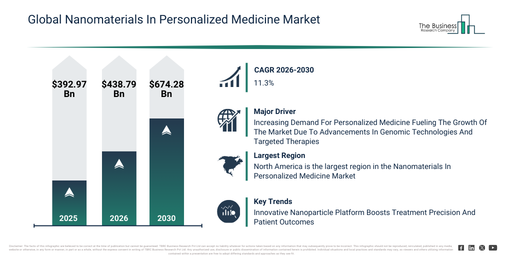
    The market size for nanomaterials in personalized medicine has seen rapid expansion in recent years. It is projected to increase from $392.97 billion in 2025 to $438.79 billion in 2026, achieving a compound annual growth rate (CAGR) of 11.7%. The historical growth of this market can be attributed to advancements in genomics and molecular biology, the growing adoption of targeted therapies, the expansion of translational medical research, the availability of advanced nanofabrication techniques, and the increase in academic-industry collaborations.

    The market size for nanomaterials in personalized medicine is anticipated to experience substantial growth in the coming years. It is predicted to expand to $674.28 billion in 2030, demonstrating a compound annual growth rate (CAGR) of 11.3%. This expansion during the forecast period is driven by factors such as the increasing demand for personalized healthcare solutions, rising investment in precision medicine programs, the broadening application of nanomaterials in diagnostics and imaging, a heightened focus on minimizing therapy side effects, and ongoing innovation in nano-enabled medical technologies. Key trends during this period include the increased use of targeted nanomaterials for individualized therapies, the growing integration of molecular diagnostics with nanotechnology, a rising adoption of nanomaterials in precision drug delivery, the expansion of nanotechnology into regenerative medicine, and an enhanced emphasis on patient-specific treatment outcomes.

    Get A Free Sample Report With In-Depth Market Insights:

    https://thebusinessresearchcompany.com/sample_request?id=93153955&type=smp&name=Nanomaterials%20In%20Personalized%20Medicine%20Market%20Report%202026&utm_source=Blogs&utm_medium=Paid&utm_campaign=Oct_PR

    Nanomaterials In Personalized Medicine Market Growth Factors: What’s Supporting Expansion?

    The rising demand for personalized medicine is anticipated to drive the expansion of the nanomaterials in personalized medicine market going forward. Personalized medicine is a medical approach that entails customizing treatments for individual patients based on their genetic, environmental, and lifestyle factors to maximize positive outcomes and enhance patient care. The demand for personalized medicine is growing owing to progress in genomic technologies, which facilitate accurate identification of genetic variations and tailored treatments for individuals. Nanomaterials in personalized medicine contribute to personalized medicine by supporting targeted and patient-specific therapies, leading to improved treatment effectiveness and safety. They permit the exact delivery of drugs, genes, or RNA, thereby lessening side effects and optimizing therapeutic results. For instance, in February 2024, according to the Personalized Medicine Coalition (PMC), a US-based nonprofit organization, the U.S. Food and Drug Administration (FDA) approved 26 new personalized medicines in 2023, a notable increase from the 12 approved in 2022. Consequently, the growing demand for personalized medicine is propelling the growth of the nanomaterials in personalized medicine market.

    Nanomaterials In Personalized Medicine Market Breakdown By Product Type And Application

    The nanomaterials in personalized medicine market covered in this report is segmented –

    1) By Type Of Nanomaterials: Carbon-Based Nanomaterials, Metallic Nanoparticles, Polymeric Nanomaterials, Nanostructured Materials, Silica Nanoparticles

    2) By Formulation Type: Nanoparticles, Nanosuspensions, Nanoemulsions, Nanocrystals, Nanoformulations For Targeted Delivery

    3) By Technology Utilized: Nanofabrication Techniques, Bioconjugation Methods, Surface Modification Techniques, Molecular Imaging Techniques, Nanotechnology-Based Screening Methods

    4) By Application Areas: Drug Delivery Systems, Diagnostics And Imaging, Therapeutics, Regenerative Medicine, Vaccines

    5) By End-Users: Hospitals And Clinics, Research Laboratories, Pharmaceutical Companies, Biotechnology Firms, Academic Institutions

    Subsegments:

    1) By Carbon-Based Nanomaterials: Fullerenes, Carbon Nanotubes, Graphene, Carbon Dots

    2) By Metallic Nanoparticles: Gold Nanoparticles, Silver Nanoparticles, Iron Oxide Nanoparticles, Copper Nanoparticles

    3) By Polymeric Nanomaterials: Dendrimers, Micelles, Polymeric Nanoparticles, Hydrogels

    4) By Nanostructured Materials: Quantum Dots, Nanowires, Nanosheets, Nanorods

    5) By Silica Nanoparticles: Mesoporous Silica Nanoparticles, Colloidal Silica Nanoparticles, Porous Silica Nanoparticles, Functionalized Silica Nanoparticles

    Nanomaterials In Personalized Medicine Market Industry Trends: What’s Reshaping Demand?

    Leading companies in the nanomaterials in personalized medicine market are prioritizing strategic collaborations to expedite clinical translation, broaden therapeutic indications, and shorten time-to-market, all while conforming to evolving regulatory standards. These strategic collaborations represent partnerships where companies or institutions combine their expertise and resources to accelerate innovation and expand opportunities within personalized medicine. For example, in May 2025, Acuitas Therapeutics Inc., a Canada-based biotechnology company, joined forces with Integrated DNA Technologies Inc., a US-based genomics solutions provider. They launched a personalized CRISPR gene-editing therapy delivery system using their lipid nanoparticles platform, which was used to treat a single baby with a rare genetic disease. This treatment featured precisely targeted CRISPR payloads, bespoke dose tuning, and rapid custom formulation. This advancement accelerates the development of highly individualized, one-off treatments. While it enhances therapeutic precision and improves patient outcomes, it also introduces challenges related to scalable manufacture, stringent regulatory tailoring, and ultra-low-volume production.

    Nanomaterials In Personalized Medicine Market Company Landscape And Competitive Strategy

    Major companies operating in the nanomaterials in personalized medicine market are Pfizer & Co. Inc., BASF SE, Sanofi S.A., The Bristol-Myers Squibb Company, Thermo Fisher Scientific Inc., Abbott Laboratories, Merck KGaA Darmstadt Germany, Evonik Industries AG, Eisai Co. Ltd., TÜV Rheinland AG, OCSiAl S.A., American Elements Inc., Cour Pharmaceuticals Inc., Nanocomposix Inc., NoPo Nanotechnologies Private Limited, Matexcel Biotech Inc., OncoNano Medicine Inc., Molecular Rebar Design Inc., Cello Therapeutics Inc., Apurano Pharmaceuticals GmbH, SGN Nanopharma Inc.

    View The Full Nanomaterials In Personalized Medicine Market Report:

    https://thebusinessresearchcompany.com/report/nanomaterials-in-personalized-medicine-global-market-report?utm_source=Blogs&utm_medium=Paid&utm_campaign=Oct_PR

    Nanomaterials In Personalized Medicine Market Regional Split: Which Areas Are Fueling Growth?

    North America was the largest region in the nanomaterials in personalized medicine market in 2025. Asia-Pacific is expected to be the fastest-growing region in the forecast period. The regions covered in the nanomaterials in personalized medicine market report are Asia-Pacific, South East Asia, Western Europe, Eastern Europe, North America, South America, Middle East, Africa.

    Reach Out To Our Team:

    The Business Research Company: https://www.thebusinessresearchcompany.com/

    Americas: +1 310-496-7795

    Asia: +44 7882 955267 & +91 8897263534

    Europe: +44 7882 955267

    Email us at: marketing@tbrc.info

    Follow us on:

    LinkedIn: https://in.linkedin.com/company/the-business-research-company

    YouTube: https://www.youtube.com/channel/UC24_fI0rV8cR5DxlCpgmyFQ

    Global Market Model: https://www.thebusinessresearchcompany.com/global-market-model
  • Nanocarriers Market Analysis Through 2030: Market Size, Growth Trends And Industry Outlook

    Nanocarriers Market Analysis Through 2030: Market Size, Growth Trends And Industry Outlook

    Built to provide research that’s more actionable and strategically valuable, The Business Research Company’s 2026 market reports include market attractiveness analysis, total addressable market sizing, company benchmarking matrices, interactive Excel dashboards, broader supply chain intelligence, emerging startup tracking, and in-depth product insights.

    Nanocarriers Market Poised To Hit $26.74 Billion By 2030 With A 18.1% CAGR

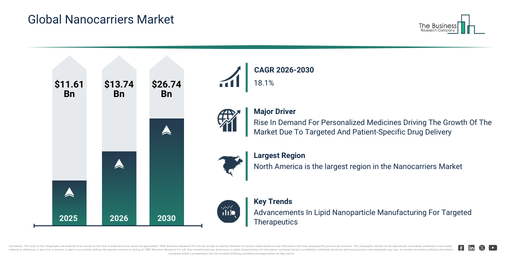
    The nanocarriers market size has seen rapid growth in recent years. It is forecast to expand from $11.61 billion in 2025 to $13.74 billion in 2026, exhibiting a compound annual growth rate (CAGR) of 18.4%. The growth observed in prior periods can be attributed to breakthroughs in nanotechnology research, increasing investments in pharmaceutical R&D, a rising demand for improved drug bioavailability, the early adoption of nanoparticle-based therapeutics, and the expansion of academic and clinical research.

    The nanocarriers market is projected for rapid expansion over the coming years, expected to reach $26.74 billion by 2030 with a compound annual growth rate (CAGR) of 18.1%. This growth during the forecast period is primarily fueled by increasing demand for personalized therapeutics, higher investments in advanced drug delivery systems, the broadened application of nanocarriers in oncology and gene therapy, a heightened focus on minimizing drug side effects, and continuous innovation in nanoscale engineering. Notable trends for this period involve the accelerating development of targeted drug delivery platforms, the increasing uptake of lipid and polymeric nanocarriers, a growing emphasis on controlled and sustained release systems, the expanded use of nanocarriers in gene and vaccine delivery, and enhanced integration with precision medicine methodologies.

    Get A Free Sample Report With In-Depth Market Insights:

    https://thebusinessresearchcompany.com/sample_request?id=31758704&type=smp&name=Nanocarriers%20Market%20Report%202026&utm_source=Blogs&utm_medium=Paid&utm_campaign=Oct_PR

    Nanocarriers Market Demand Drivers: What’s Powering Industry Growth?

    The expanding requirement for personalized medicines is projected to boost the expansion of the nanocarriers market moving ahead. Personalized medicine involves customizing medical care to each patient’s unique attributes, specifically utilizing genetic, biomarker, and molecular data. The heightened focus on personalized medicine is due to its capacity to allow physicians to customize cancer treatments according to a patient’s genetic profile, thereby enhancing efficacy and minimizing adverse effects. Nanocarriers facilitate personalized medicine by delivering medications precisely to specific patient targets, regulating their release, improving their absorption, and enabling customized combination therapies based on individual biological profiles. As an illustration, in February 2024, the Personalized Medicine Coalition, a US-based non-profit organization, reported that in 2023, the United States Food and Drug Administration (FDA) sanctioned 16 novel personalized therapies for patients with rare diseases, a significant jump from only six approvals in 2022. Consequently, the increasing need for personalized medicines is propelling the growth of the nanocarriers market.

    Nanocarriers Market Segment Analysis And Revenue Potential

    The nanocarriers market covered in this report is segmented –

    1) By Type: Polymeric Nanocarriers, Lipid-Based Nanocarriers, Inorganic Nanocarriers, Other Types

    2) By Application: Drug Delivery, Diagnostics, Vaccines, Gene Therapy, Other Applications

    3) By End-User: Pharmaceutical And Biotechnology Companies, Hospitals And Clinics, Research Institutes, Other End-Users

    Subsegments:

    1) By Polymeric Nanocarriers: Nanoparticles Of Poly Lactic Acid, Nanoparticles Of Poly Lactic-Co-Glycolic Acid, Nanoparticles Of Chitosan, Nanoparticles Of Gelatin, Nanoparticles Of Polycaprolactone

    2) By Lipid-Based Nanocarriers: Solid Lipid Nanoparticles, Nanostructured Lipid Carriers, Liposomes, Nanoemulsions, Self-Emulsifying Drug Delivery Systems

    3) By Inorganic Nanocarriers: Gold Nanoparticles, Silver Nanoparticles, Silica Nanoparticles, Magnetic Nanoparticles, Quantum Dots

    4) By Other Types: Dendrimers, Protein-Based Nanocarriers, Carbon Nanotubes, Nanocrystals, Exosomes

    Nanocarriers Market Innovation Trends: What Developments Are Reshaping The Industry?

    Major companies within the nanocarriers market are focusing on developing sophisticated formulations, notably lipid nanoparticle technologies, to enhance the precision of drug delivery and improve therapeutic outcomes. Lipid nanoparticle technologies are microscopic, fat-based carriers designed for the secure and efficient transport of drugs or genetic therapies to designated cells or tissues. For instance, in July 2023, Cytiva, a US-based biotechnology company, launched its NanoAssemblr commercial formulation system, an automated, single-use platform designed to support the entire spectrum of clinical and commercial manufacturing for lipid nanoparticle (LNP) medicines. This system utilizes Cytiva’s NxGen technology to ensure controlled and consistent mixing, thereby maintaining uniform quality from early research stages through to large-scale manufacturing under cGMP conditions. The platform minimizes the risk of cross-contamination through its single-use fluid path and supports the efficient production of multiple products within one facility. Furthermore, it features intuitive software compliant with regulatory standards, which automates workflows and enables electronic batch records, thereby streamlining the production of genomic medicines such as mRNA vaccines, gene therapies, and cancer vaccines.

    Nanocarriers Market Key Players Shaping Industry Direction

    Major companies operating in the nanocarriers market are F. Hoffmann-La Roche Ltd, Pfizer Inc., Sanofi S.A., Novartis AG, Bristol-Myers Squibb Company, Amgen Inc., Evonik Industries AG, Matinas BioPharma Holdings Inc., Luye Pharma Group Ltd., Ascendia Pharmaceuticals Inc., Arcturus Therapeutics Holdings Inc., Nanobiotix S.A., Polymun Scientific Immunbiologische Forschung GmbH, ReCode Therapeutics Inc., Celsion Corporation, Starpharma Holdings Limited, EnGeneIC Ltd., Acuitas Therapeutics Inc., Altamira Therapeutics Ltd., Nanexa AB

    View The Full Nanocarriers Market Report:

    https://thebusinessresearchcompany.com/report/nanocarriers-global-market-report?utm_source=Blogs&utm_medium=Paid&utm_campaign=Oct_PR

    Nanocarriers Market Top Region: Where Does Most Revenue Come From?

    North America was the largest region in the nanocarriers market in 2025. The regions covered in the nanocarriers market report are Asia-Pacific, South East Asia, Western Europe, Eastern Europe, North America, South America, Middle East, Africa.

    Reach Out To Our Team:

    The Business Research Company: https://www.thebusinessresearchcompany.com/

    Americas: +1 310-496-7795

    Asia: +44 7882 955267 & +91 8897263534

    Europe: +44 7882 955267

    Email us at: marketing@tbrc.info

    Follow us on:

    LinkedIn: https://in.linkedin.com/company/the-business-research-company

    YouTube: https://www.youtube.com/channel/UC24_fI0rV8cR5DxlCpgmyFQ

    Global Market Model: https://www.thebusinessresearchcompany.com/global-market-model
  • Naloxone Spray Market Outlook From 2026 To 2030: Key Growth Factors And Future Opportunities

    Naloxone Spray Market Outlook From 2026 To 2030: Key Growth Factors And Future Opportunities

    Backed by market attractiveness analysis, total addressable market sizing, company benchmarking matrices, interactive Excel dashboards, wider supply chain intelligence, emerging startup coverage, and detailed product-level insights, The Business Research Company’s 2026 market reports are designed to offer research that is more actionable and strategically valuable than ever.

    Naloxone Spray Market Size And Revenue Outlook Through 2030

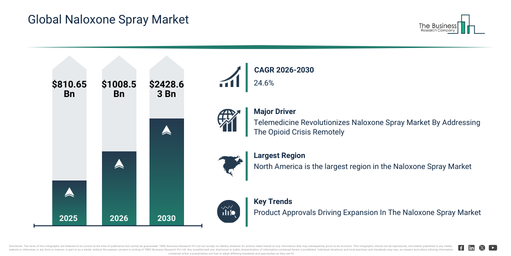
    The naloxone spray market size has demonstrated exponential expansion in recent years. It is anticipated to grow from $810.65 billion in 2025 to $1008.5 billion in 2026, achieving a compound annual growth rate (CAGR) of 24.4%. This historical growth can be attributed to factors such as increasing opioid abuse cases, limited emergency response options, a reliance on intravenous naloxone, high hospitalization rates due to overdose, and government initiatives addressing the opioid crisis.

    The naloxone spray market size is anticipated to undergo significant expansion in the coming years, projected to reach $2428.63 billion by 2030, with a compound annual growth rate (CAGR) of 24.6%. This growth during the forecast period is attributable to increasing recognition of naloxone nasal sprays, the proliferation of over-the-counter naloxone products, advancements in spray delivery technology, the expansion of emergency response networks, and supportive reimbursement policies. Noteworthy trends for this period include the swift adoption of intranasal administration, the broadened accessibility of over-the-counter options, a surge in opioid overdose incidents boosting demand, the creation of patient-friendly single-dose formats, and the integration of these products into emergency response procedures.

    Get A Free Sample Report With In-Depth Market Insights:

    https://thebusinessresearchcompany.com/sample_request?id=22279485&type=smp&name=Naloxone%20Spray%20Market%20Report%202026&utm_source=Blogs&utm_medium=Paid&utm_campaign=Oct_PR

    Naloxone Spray Market Growth Drivers: What’s Behind The Acceleration?

    The rising need for telemedicine is projected to fuel the expansion of the naloxone spray market. Telemedicine, also referred to as telehealth, functions as a healthcare delivery approach utilizing technology and telecommunications to remotely offer medical services and consultations. This approach provides more extensive, accessible, and rapid assistance to those vulnerable to opioid overdose, potentially preserving lives and tackling the opioid crisis with greater efficacy. Illustrating this trend, data from FAIR Health Inc., a US-based non-profit organization, in April 2023, showed a national telehealth usage increase of 7.3%, moving from 5.5% of medical claim lines in December 2022 to 5.9% in January 2023. Consequently, the expanding demand for telemedicine is serving as a key driver for the growth of the naloxone spray market.

    Naloxone Spray Market Segmentation And Category Overview

    The naloxone spray market covered in this report is segmented –

    1) By Product Type: Prescription Naloxone Spray, Over-The-Counter (OTC) Naloxone Spray

    2) By Dosage: 2 mg Or Actuation, 4 mg Or Actuation

    3) By Distribution Channel: Hospitals, Clinics, Retail Pharmacies, Online Pharmacies, Other distribution channels

    Naloxone Spray Market Trends: What’s Defining The Industry’s Next Phase?

    Leading companies active in the naloxone spray market are concentrating on developing innovative products, such as over-the-counter (OTC) naloxone hydrochloride (HCl) nasal sprays, to satisfy the increasing demand for wider community access, rapid overdose reversal, and simplified administration. Naloxone nasal spray is a formulation that doesn’t require needles, designed for fast intranasal delivery, making it easier to use and quicker to deploy compared to traditional injectable naloxone, which necessitates trained healthcare professionals. For instance, in May 2024, Walgreens, a US-based company, revealed the launch of its Walgreens Brand Naloxone HCl Nasal Spray. This over-the-counter offering is intended to quickly reverse the effects of an opioid overdose, providing a critical tool in combating the opioid epidemic. Naloxone functions by blocking the impact of opioids on the brain, restoring normal breathing and preventing death when administered in a timely manner. Despite its proven effectiveness, access to naloxone remains limited in numerous communities, emphasizing the importance of this launch in boosting its availability and public awareness.

    Naloxone Spray Market Competitive Analysis Of Leading Industry Participants

    Major companies operating in the naloxone spray market are Emergent BioSolutions Inc., Amphastar Pharmaceuticals Inc., Hikma Pharmaceuticals plc, Indivior plc, Nasus Pharma LLC, Opiant Pharmaceuticals Inc., Pfizer Inc., Samarth Pharma Pvt. Ltd., Teva Pharmaceutical Industries Ltd., Adapt Pharma Inc., Cardinal Health Inc., Kaleo Inc., McKesson Corporation, Mundipharma International Limited, NextDistro Inc., Rite Aid Corporation, Novartis International AG, Sandoz International GmbH, Fresenius Kabi USA LLC, West-Ward Pharmaceuticals Corp., Lupin Ltd.

    View The Full Naloxone Spray Market Report:

    https://thebusinessresearchcompany.com/report/naloxone-spray-global-market-report?utm_source=Blogs&utm_medium=Paid&utm_campaign=Oct_PR

    Naloxone Spray Market Regional Breakdown: Where Is Demand Concentrated?

    North America was the largest region in the naloxone spray market in 2025. The regions covered in the naloxone spray market report are Asia-Pacific, South East Asia, Western Europe, Eastern Europe, North America, South America, Middle East, Africa.

    Reach Out To Our Team:

    The Business Research Company: https://www.thebusinessresearchcompany.com/

    Americas: +1 310-496-7795

    Asia: +44 7882 955267 & +91 8897263534

    Europe: +44 7882 955267

    Email us at: marketing@tbrc.info

    Follow us on:

    LinkedIn: https://in.linkedin.com/company/the-business-research-company

    YouTube: https://www.youtube.com/channel/UC24_fI0rV8cR5DxlCpgmyFQ

    Global Market Model: https://www.thebusinessresearchcompany.com/global-market-model
  • Myeloproliferative Disorders Drugs Market Growth Forecast: Market Size, Key Trends And Emerging Opportunities Through 2030

    Myeloproliferative Disorders Drugs Market Growth Forecast: Market Size, Key Trends And Emerging Opportunities Through 2030

    Featuring market attractiveness scoring, total addressable market sizing, company benchmarking matrices, interactive Excel dashboards, deeper supply chain intelligence, emerging startup tracking, and granular product-level insights, The Business Research Company’s 2026 market reports are built to deliver research that is both more actionable and more strategically valuable.

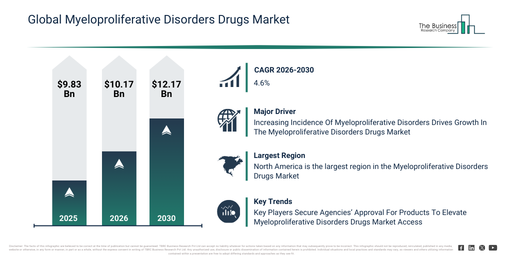
    Myeloproliferative Disorders Drugs Market Growth From $10.17 Billion In 2026 To $12.17 Billion By 2030 At A CAGR Of 4.6%

    The myeloproliferative disorders drugs market has experienced consistent growth in recent years. It is anticipated to expand from $9.83 billion in 2025 to $10.17 billion in 2026, demonstrating a compound annual growth rate (CAGR) of 3.5%. The expansion witnessed during the historic period was primarily due to the high prevalence of myeloproliferative disorders, advancements in chemotherapy, increasing awareness of blood cancers, the availability of generic drugs, and improvements in supportive care.

    The myeloproliferative disorders drugs market size is projected to experience steady growth in the upcoming years. It is expected to reach $12.17 billion in 2030, reflecting a compound annual growth rate (CAGR) of 4.6%. This growth during the forecast period is attributable to the emergence of targeted therapies, increasing research and development investments, the adoption of precision medicine, the expansion of healthcare infrastructure in emerging markets, and favorable regulatory approvals. Major trends anticipated in this period include the development of personalized treatments, a heightened focus on rare blood disorders, advancements in targeted therapies, the expansion of clinical trials, and rising investment in orphan drugs.

    Get A Free Sample Report With In-Depth Market Insights:

    https://thebusinessresearchcompany.com/sample_request?id=69968479&type=smp&name=Myeloproliferative%20Disorders%20Drugs%20Market%20Report%202026&utm_source=Blogs&utm_medium=Paid&utm_campaign=Oct_PR

    Myeloproliferative Disorders Drugs Market Growth Factors Behind Sustained Expansion

    The increasing occurrence of myeloproliferative disorders is projected to fuel the expansion of the myeloproliferative disorder’s drugs market in the future. These disorders encompass a varied group of illnesses, set apart from acute leukemia by the uncontrolled cellular proliferation of one or more blood cell lines in the bloodstream. The rise in myeloproliferative disorders is largely attributed to factors such as genetic predispositions, excessive exposure to radiation, electrical wiring, or specific chemicals, and the aging population. Medications for myeloproliferative diseases function by blocking the BCR-ABL protein. They achieve this by binding to the ATP pocket in its active site, thereby preventing the subsequent phosphorylation of the target protein, which aids in managing the disorder. For example, data from June 2025, provided by the American Cancer Society, a US-based non-profit organization, indicates that chronic myeloid leukemia accounts for approximately 15% of all new U.S. leukemia cases, with about 9,560 new diagnoses and 1,290 deaths each year. This condition affects roughly 1 in 500 individuals during their lifetime and is generally identified around age 66, although 2% of instances are found in people younger than 20. Consequently, the growing incidence of myeloproliferative disorders is a key factor propelling the expansion of the myeloproliferative disorders drug market.

    Myeloproliferative Disorders Drugs Market Segment Outlook: Which Categories Are Growing Fastest?

    The myeloproliferative disorders drugs market covered in this report is segmented –

    1) By Type: Primary Myelofibrosis, Polycythemia Vera (PV), Essential Thrombocythemia (ET), Chronic Eosinophilic Leukemia Or Hyper eosinophilic Syndrome (HES), Systemic Masto cytosis (SM)

    2) By Drug Type: JAK2 Inhibitors, Anti-Neoplastics, Demethylation Agents, Imatinib Mesylate, Other Drug Types

    3) By Route Of Administration: Oral, Parenteral, Other Routes Of Administration

    4) By Distribution Channel: Hospital Pharmacy, Retail Stores, Drug Stores

    Subsegments:

    1) By Primary Myelofibrosis: JAK Inhibitors, Immunomodulatory Agents, Supportive Care

    2) By Polycythemia Vera (PV): JAK Inhibitors, Hydroxyurea, Phlebotomy, Interferon-alpha

    3) By Essential Thrombocythemia (ET): JAK Inhibitors, Hydroxyurea, Anagrelide, Interferon-alpha

    4) By Chronic Eosinophilic Leukemia or Hyper Eosinophilic Syndrome (HES): Tyrosine Kinase Inhibitors, Corticosteroids, Interferon-alpha

    5) By Systemic Mastocytosis (SM): Tyrosine Kinase Inhibitors, Corticosteroids, Antihistamines, Immunotherapy

    Myeloproliferative Disorders Drugs Market Industry Trends Fueling Future Revenue Growth

    Leading entities within the myeloproliferative disorder drugs market are prioritizing the development and regulatory clearance of innovative drug solutions from national government agencies to secure a competitive advantage. These new drug solutions, upon their launch and endorsement, are intended to substantially improve access to sophisticated treatments for individuals suffering from myeloproliferative disorders. As an illustration, in September 2023, Novartis AG, a pharmaceutical corporation headquartered in Switzerland, revealed that the National Institute for Health and Care Excellence’s (NICE) had sanctioned Jakavi (ruxolitinib), a JAK 1/2 inhibitor specifically approved for managing polycythaemia vera (PV). Consequently, patients in England and Wales will gain access to Ruxolitinib, a medication designed to fulfill a critical unmet treatment need for qualified patients, given that approximately 24% of those receiving hydroxycarbamide or hydroxyurea (HC or HU) develop resistance or intolerance to these treatments. PV, identified as a subtype of myeloproliferative disorder, represents a rare and fatal blood cancer characterized by an overproduction of red blood cells, which, if left untreated, carries the risk of leading to a heart attack or stroke. Annually, it is estimated that 1,130 new PV diagnoses are recorded in the UK.

    Myeloproliferative Disorders Drugs Market Leading Companies And Competitive Benchmarking

    Major companies operating in the myeloproliferative disorders drugs market are Novartis AG, Bristol-Myers Squibb Company, Pfizer Inc., Takeda Pharmaceutical Company Limited, Teva Pharmaceutical Industries Ltd., Incyte Corporation, Eli Lilly and Co, F Hoffmann-La Roche Ltd., Mylan NV, Hikma Pharmaceuticals plc, Bayer AG, Sun Pharmaceutical Industries Ltd., Boehringer Ingelheim International GmbH, Sanofi Aventis Inc., AstraZeneca AB, Apotex Inc, Celgene Co., Geron Co., Promedior Inc., Johnson & Johnson Private Limited, AbbVie Inc., Astellas Pharma Inc., Daiichi Sankyo Chemical Pharma Co. Ltd.

    View The Full Myeloproliferative Disorders Drugs Market Report:

    https://thebusinessresearchcompany.com/report/myeloproliferative-disorders-drugs-global-market-report?utm_source=Blogs&utm_medium=Paid&utm_campaign=Oct_PR

    Myeloproliferative Disorders Drugs Market Geographic Landscape: Which Region Dominates Industry Growth?

    North America was the largest region in the myeloproliferative disorder drugs market in 2025. Asia-Pacific is expected to be the fastest-growing region in the global myeloproliferative disorder drugs market report during the forecast period. The regions covered in the myeloproliferative disorders drugs market report are Asia-Pacific, South East Asia, Western Europe, Eastern Europe, North America, South America, Middle East, Africa.

    Reach Out To Our Team:

    The Business Research Company: https://www.thebusinessresearchcompany.com/

    Americas: +1 310-496-7795

    Asia: +44 7882 955267 & +91 8897263534

    Europe: +44 7882 955267

    Email us at: marketing@tbrc.info

    Follow us on:

    LinkedIn: https://in.linkedin.com/company/the-business-research-company

    YouTube: https://www.youtube.com/channel/UC24_fI0rV8cR5DxlCpgmyFQ

    Global Market Model: https://www.thebusinessresearchcompany.com/global-market-model
  • Myelodysplastic Syndrome Drugs Market CAGR Forecast Through 2030: Key Trends Shaping Industry Expansion

    Myelodysplastic Syndrome Drugs Market CAGR Forecast Through 2030: Key Trends Shaping Industry Expansion

    Built to provide research that’s more actionable and strategically valuable, The Business Research Company’s 2026 market reports include market attractiveness analysis, total addressable market sizing, company benchmarking matrices, interactive Excel dashboards, broader supply chain intelligence, emerging startup tracking, and in-depth product insights.

    Myelodysplastic Syndrome Drugs Market Expansion Outlook: What Revenue Opportunities Are Ahead?

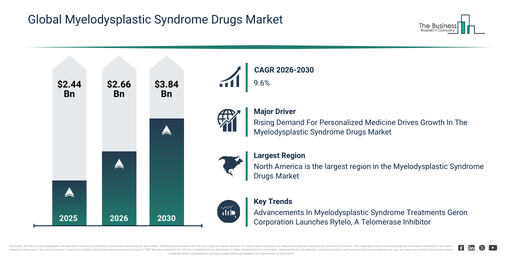
    The market size for myelodysplastic syndrome drugs has demonstrated robust growth over recent years. Projections indicate that it will increase from $2.44 billion in 2025 to $2.66 billion in 2026, registering a compound annual growth rate (CAGR) of 8.9%. Historically, this expansion has been driven by factors such as the scarcity of specific MDS treatments, the prevalent use of blood transfusions, insufficient understanding of MDS subtypes, constrained research and development funding, and elevated treatment expenses in developing economies.

    The myelodysplastic syndrome drugs market size is projected to experience substantial expansion over the upcoming years. It is anticipated to reach $3.84 billion by 2030, demonstrating a compound annual growth rate (CAGR) of 9.6%. This expected increase during the forecast period can be linked to factors such as the increasing occurrence of MDS among aging populations, greater investment in precision medicine, breakthroughs in genomics-based treatments, the development of healthcare infrastructure in APAC, and broader reimbursement policies for MDS medications. Key developments anticipated in this period include tailored MDS therapies, a rise in the use of erythropoiesis-stimulating agents (ESAs), the proliferation of outpatient treatment facilities, an increasing preference for administering drugs parenterally, and a heightened focus on the creation of generic MDS drugs.

    Get A Free Sample Report With In-Depth Market Insights:

    https://thebusinessresearchcompany.com/sample_request?id=83947350&type=smp&name=Myelodysplastic%20Syndrome%20Drugs%20Market%20Report%202026&utm_source=Blogs&utm_medium=Paid&utm_campaign=Oct_PR

    Myelodysplastic Syndrome Drugs Market Demand Drivers Opening New Revenue Streams

    The myelodysplastic syndrome drugs market is expected to grow, primarily driven by the increasing need for personalized medicine. This medical approach involves classifying individuals into distinct categories based on their medical history, genetic profile, and various other factors. For myelodysplastic syndrome, personalized medicine entails customizing treatment plans according to each individual’s specific genetic and molecular characteristics. This strategy helps to enhance therapeutic outcomes and minimize adverse effects in the management of this varied hematological disorder. For example, in February 2024, the Personalized Medicine Coalition, a US-based nonprofit organization, indicated that the USFDA approved 16 new personalized treatments for rare disease patients in 2023, marking a significant increase from 6 personalized treatments in 2022. Therefore, the rising demand for personalized medicine is a key factor propelling the growth of the myelodysplastic syndrome drugs market.

    Myelodysplastic Syndrome Drugs Market Segment Landscape: Which Areas Lead Development?

    The myelodysplastic syndrome drugs market covered in this report is segmented –

    1) By Therapeutic Class: Immunomodulatory Drugs, Hypomethylating Agents, Anti-anemics

    2) By Type of Syndrome: Refractory Cytopenia With Multilineage Dysplasia, Refractory Anemia, Refractory Anemia With Excess Blasts, Refractory Anemia With Ringed Sideroblasts

    3) By Route of Administration: Oral, Parenteral

    4) By Applications: Original, Generics

    5) By End-User: Hospitals, Clinics, Ambulatory Surgical Centers

    Subsegments:

    1) By Immunomodulatory Drugs: Thalidomide, Lenalidomide, Pomalidomide

    2) By Hypomethylating Agents: Azacitidine, Decitabine, Guadecitabine

    3) By Anti-anemics: Erythropoiesis-Stimulating Agents (ESAs), Iron Supplements, Blood Transfusion Products

    Myelodysplastic Syndrome Drugs Market Trends Powering Strategic Industry Growth

    Key companies within the myelodysplastic syndrome drugs market are engaged in developing telomerase inhibitors to target the enzyme telomerase. This effort aims to decelerate disease progression by limiting the uncontrolled division of abnormal cells. Telomerase inhibitors are beneficial in myelodysplastic syndrome treatments as they function by inhibiting the telomerase enzyme, which in turn slows the proliferation of abnormal cells, potentially leading to improved patient outcomes. For instance, in June 2024, Geron Corporation, a US-based biotechnology company, launched rytelo (imetelstat), an FDA-approved intravenous telomerase inhibitor designed for adults with low to intermediate-1 risk myelodysplastic syndromes (LR-MDS) and transfusion dependent anemia unresponsive to and ineligible for ESA. Rytelo offers durable transfusion independence, enhanced hemoglobin levels, and addresses a significant unmet need in the myelodysplastic syndrome drugs market, all coupled with a manageable safety profile.

    Myelodysplastic Syndrome Drugs Market Industry Leaders And Competitive Landscape

    Major companies operating in the myelodysplastic syndrome drugs market are Amgen Inc., Celgene Corporation, Otsuka Pharmaceutical Co. Ltd., Takeda Pharmaceutical Company Limited, Cipla Limited, Dr. Reddy’s Laboratories Ltd., Lupin Ltd., Onconova Therapeutics Inc., Sun Pharmaceutical Industries Limited, Aprea Therapeutics, Bayer AG, Bristol Myers Squibb, Celator Pharmaceuticals, AbbVie Inc., Geron Co., Hikma Pharmaceuticals plc, Jazz Pharmaceuticals Inc., Mylan NV, Novartis AG, Sandoz Inc., Teva Pharmaceutical Industries Ltd., Incyte Corporation, MEI Pharma Inc.

    View The Full Myelodysplastic Syndrome Drugs Market Report:

    https://thebusinessresearchcompany.com/report/myelodysplastic-syndrome-drugs-global-market-report?utm_source=Blogs&utm_medium=Paid&utm_campaign=Oct_PR

    Myelodysplastic Syndrome Drugs Market Largest Region: Which Geography Holds The Highest Market Share?

    North America was the largest region in the Myelodysplastic syndrome drugs market in 2025. Asia-Pacific is expected to be the fastest growing region in the global myelodysplastic syndrome drugs market report during the forecast period. The regions covered in the myelodysplastic syndrome drugs market report are Asia-Pacific, South East Asia, Western Europe, Eastern Europe, North America, South America, Middle East, Africa.

    Reach Out To Our Team:

    The Business Research Company: https://www.thebusinessresearchcompany.com/

    Americas: +1 310-496-7795

    Asia: +44 7882 955267 & +91 8897263534

    Europe: +44 7882 955267

    Email us at: marketing@tbrc.info

    Follow us on:

    LinkedIn: https://in.linkedin.com/company/the-business-research-company

    YouTube: https://www.youtube.com/channel/UC24_fI0rV8cR5DxlCpgmyFQ

    Global Market Model: https://www.thebusinessresearchcompany.com/global-market-model
  • Myelodysplastic Syndrome (MDS) Drugs Market To Witness 8.7% CAGR Growth Through 2030: Key Industry Drivers

    Myelodysplastic Syndrome (MDS) Drugs Market To Witness 8.7% CAGR Growth Through 2030: Key Industry Drivers

    Backed by market attractiveness analysis, total addressable market sizing, company benchmarking matrices, interactive Excel dashboards, wider supply chain intelligence, emerging startup coverage, and detailed product-level insights, The Business Research Company’s 2026 market reports are designed to offer research that is more actionable and strategically valuable than ever.

    Myelodysplastic Syndrome (MDS) Drugs Market Growth Potential: How Will Market Size Shift Through 2030?

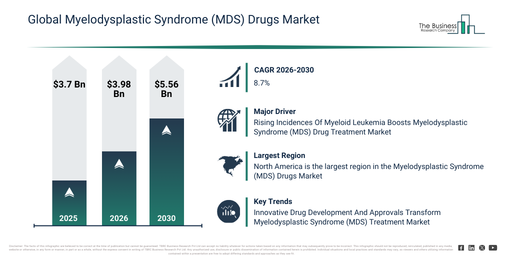
    The myelodysplastic syndrome (mds) drugs market size has experienced significant expansion in recent years. This growth is anticipated to proceed, with the market value forecast to rise from $3.7 billion in 2025 to $3.98 billion in 2026, exhibiting a compound annual growth rate (CAGR) of 7.6%. Factors contributing to this historical development include higher diagnosis rates for bone marrow disorders, the availability of hypomethylating agents, an increase in oncology treatment centers, the growing adoption of supportive transfusion therapies, and enhanced awareness of the disease.

    The myelodysplastic syndrome (mds) drugs market is projected to experience substantial expansion in the coming years. This market is set to reach $5.56 billion in 2030, exhibiting a compound annual growth rate (CAGR) of 8.7%. This anticipated growth during the forecast period is driven by several factors, including the increasing development of novel immunomodulatory drugs, the rising embrace of precision medicine in hematology, the expansion of clinical trial pipelines, a growing emphasis on enhancing patient quality of life, and increased healthcare expenditure on rare diseases. Key developments expected during this period involve the increasing utilization of targeted therapeutic regimens, the rising adoption of oral and parenteral combination therapies, a greater focus on personalized treatment methods, the expansion of supportive care therapies, and improved monitoring of treatment outcomes.

    Get A Free Sample Report With In-Depth Market Insights:

    https://thebusinessresearchcompany.com/sample_request?id=54202885&type=smp&name=Myelodysplastic%20Syndrome%20%28MDS%29%20Drugs%20Market%20Report%202026&utm_source=Blogs&utm_medium=Paid&utm_campaign=Oct_PR

    Myelodysplastic Syndrome (MDS) Drugs Market Growth Backed By Core Demand Fundamentals

    A rise in myeloid leukemia cases is anticipated to fuel the expansion of the myelodysplastic syndrome (MDS) drug treatment market. Myeloid leukemia is a type of cancer developing in the bone marrow, impacting cells vital for blood production. Myelodysplastic syndrome (MDS) drugs are designed to enhance bone marrow function by addressing the underlying cause of leukemia, thereby lowering the risk of complications from low blood cell counts, decreasing the necessity for chemotherapy and transplants, and boosting survival rates for individuals with myelodysplastic syndrome (MDS). For example, data from the American Cancer Society, a US-based health organization, indicated that approximately 20,380 cases and 11,310 deaths from acute myeloid leukemia (AML) were projected in adults for 2023. Consequently, the growing frequency of myeloid leukemia occurrences is a significant factor driving the myelodysplastic syndrome (MDS) drug market. The expansion of the myelodysplastic syndrome (MDS) drugs market is anticipated to be fueled by increasing research and development efforts. Research and development encompasses methodical scientific investigations and experiments aimed at discovering, formulating, and refining novel therapeutic agents and treatment methods. This surge in R&D stems from a deeper comprehension of MDS’s molecular origins and genetic mutations, empowering pharmaceutical firms and research bodies to pinpoint new therapeutic targets and devise precise medical strategies for this diverse condition. Elevated research and development directly contributes to market growth by broadening the range of experimental therapies, resulting in new drug approvals that offer more treatment choices for patients unresponsive to standard hypomethylating agent therapy or who need different interventions. As an illustration, the National Center for Science and Engineering Statistics (NCSES), a US-based government statistical agency, reported in February 2025 that U.S. research and development expenditures climbed from $892 billion in 2022 to $940 billion in 2023, signifying a $48 billion increase. Thus, increasing research and development is a key impetus for the myelodysplastic syndrome (MDS) drugs market’s growth.

    Myelodysplastic Syndrome (MDS) Drugs Market Segments: Where Is Growth Concentrated?

    The myelodysplastic syndrome (mds) drugs market covered in this report is segmented –

    1) By Drug Type: Chemotherapy, Immunomodulatory Drugs

    2) By Route Of Administration: Oral, Parenteral

    3) By Syndrome: Refractory Cytopenia With Multilineage Dysplasia, Refractory Anemia, Refractory Anemia With Ringed Sideroblasts

    4) By End User: Hospitals, Clinics, Ambulatory Surgical Centers

    Subsegments:

    1) By Chemotherapy: Hypomethylating Agents, Cytotoxic Agents

    2) By Immunomodulatory Drugs: Lenalidomide, Thalidomide, Pomalidomide

    Myelodysplastic Syndrome (MDS) Drugs Market Growth Trends Reshaping The Competitive Landscape

    Major companies active in the myelodysplastic syndrome (MDS) drugs market are concentrating on developing novel products, such as targeted therapy, to enhance patient outcomes, fulfill specific customer needs, and integrate effectively into the ecosystem. Targeted therapy for myelodysplastic syndromes (MDS) involves employing medications that specifically address genetic mutations or molecular irregularities in cancer cells, with the goal of improving results by selectively attacking abnormal cells while minimizing harm to healthy tissue. For instance, in October 2023, the U.S. Food and Drug Administration (FDA) approved Tibsovo (ivosidenib) for the treatment of adult patients with relapsed or refractory (R/R) myelodysplastic syndromes (MDS) who possess an isocitrate dehydrogenase-1 (IDH1) mutation. The efficacy of Tibsovo for this specific new indication was assessed in an open-label, single-arm, multicenter study involving 18 adult patients with relapsed or refractory MDS and an IDH1 mutation.

    Myelodysplastic Syndrome (MDS) Drugs Market Key Participants And Competitive Landscape

    Major companies operating in the myelodysplastic syndrome (mds) drugs market are Bristol Myers Squibb, Otsuka Pharmaceutical Co. Ltd., Teva Pharmaceutical Industries Ltd., Dr. Reddy’s Laboratories Ltd., Mylan NV, Cipla Limited, Acceleron Pharma Inc., Aprea Therapeutics, Onconova Therapeutics Inc., Geron Corporation, Amgen Inc., Sandoz, Gilead Sciences Inc., Johnson And Johnson, Lupin Ltd. Corporation, Ono Pharmaceutical Co. Ltd., Eisai Co. Ltd., Nippon Shinyaku Co. Ltd., Lupin Ltd., Accord Healthcare Inc., Kite Pharma Inc., Karyopharm Therapeutics Inc., Aprea Therapeutics Inc., Acceleron Pharma Inc., Astex Pharmaceuticals Inc., Stemline Therapeutics Inc., Geron Corporation, Onconova Therapeutics Inc., Actinium Pharmaceuticals Inc., Millennium Pharmaceuticals Inc.

    View The Full Myelodysplastic Syndrome (MDS) Drugs Market Report:

    https://thebusinessresearchcompany.com/report/myelodysplastic-syndrome-mds-drugs-global-market-report?utm_source=Blogs&utm_medium=Paid&utm_campaign=Oct_PR

    Myelodysplastic Syndrome (MDS) Drugs Market Regional Analysis: Which Region Leads By Revenue?

    North America was the largest region in the myelodysplastic syndrome (MDS) drugs market in 2025. The regions covered in the myelodysplastic syndrome (mds) drugs market report are Asia-Pacific, South East Asia, Western Europe, Eastern Europe, North America, South America, Middle East, Africa.

    Reach Out To Our Team:

    The Business Research Company: https://www.thebusinessresearchcompany.com/

    Americas: +1 310-496-7795

    Asia: +44 7882 955267 & +91 8897263534

    Europe: +44 7882 955267

    Email us at: marketing@tbrc.info

    Follow us on:

    LinkedIn: https://in.linkedin.com/company/the-business-research-company

    YouTube: https://www.youtube.com/channel/UC24_fI0rV8cR5DxlCpgmyFQ

    Global Market Model: https://www.thebusinessresearchcompany.com/global-market-model
  • Myc Proto Oncogene Protein Market Projected For Strong Expansion Through 2030: Key Trends And Future Outlook

    Myc Proto Oncogene Protein Market Projected For Strong Expansion Through 2030: Key Trends And Future Outlook

    Featuring market attractiveness scoring, total addressable market sizing, company benchmarking matrices, interactive Excel dashboards, deeper supply chain intelligence, emerging startup tracking, and granular product-level insights, The Business Research Company’s 2026 market reports are built to deliver research that is both more actionable and more strategically valuable.

    Myc Proto Oncogene Protein Market Value Analysis: What Growth Lies Ahead Over The Forecast Period?

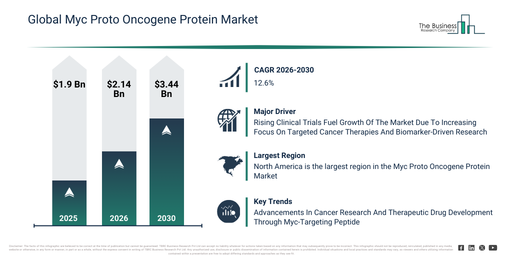
    The myc proto oncogene protein market size has shown rapid expansion in recent years. It is anticipated to increase from $1.9 billion in 2025 to $2.14 billion in 2026, achieving a compound annual growth rate (CAGR) of 12.9%. The market’s historical growth can be attributed to several factors including the limited availability of recombinant proteins, a reliance on conventional PCR and ELISA techniques, growing initiatives in cancer research, an increasing demand for myc-targeted diagnostics, and the adoption of standard laboratory protocols.

    The myc proto oncogene protein market is projected for significant expansion over the coming years, with an anticipated increase to $3.44 billion by 2030, demonstrating a compound annual growth rate (CAGR) of 12.6%. This projected growth during the forecast period is fueled by several factors, including advancements in next-generation sequencing and ChIP-seq technologies, increased funding directed towards biomarker discovery and therapeutic investigations, the broadening scope of pharmaceutical research and development activities, growing partnerships between academic institutions and biotechnology firms, and the incorporation of artificial intelligence and digital tools into research processes. Key trends anticipated during this period encompass the growing application of monoclonal antibodies and recombinant proteins, the increasing embrace of sophisticated gene expression and RNA interference methodologies, the broadening scope of cancer research and biomarker identification efforts, the expansion of applications in diagnostic and treatment development, and enhanced investment in academic and pharmaceutical research.

    Get A Free Sample Report With In-Depth Market Insights:

    https://thebusinessresearchcompany.com/sample_request?id=23861429&type=smp&name=Myc%20Proto%20Oncogene%20Protein%20Market%20Report%202026&utm_source=Blogs&utm_medium=Paid&utm_campaign=Oct_PR

    Myc Proto Oncogene Protein Market Growth Catalysts And Demand Drivers

    The expanding volume of clinical trials is projected to stimulate the growth of the myc proto oncogene protein market moving forward. These trials are research studies involving human participants, designed to assess the safety and efficacy of new medical treatments or interventions. The escalating number of clinical trials reflects efforts by researchers and companies to expedite the development of effective therapies, generate robust safety information, and introduce innovative treatments to patients more quickly. Furthermore, clinical trials are vital for evaluating targeted therapies aimed at myc proto-oncogene-driven cancers, scrutinizing their effectiveness, safety, and resistance mechanisms, and thus guiding the creation of MYC inhibitors and combination treatments. For example, in June 2025, the National Center for Biotechnology Information, a US-based international resource for scientific research, reported that registered studies increased from 437,497 in 2022 to 520,885 in 2024. Hence, the increasing prevalence of clinical trials is a significant driver for the myc proto oncogene protein market’s expansion.

    Myc Proto Oncogene Protein Market Segment Analysis: What Are The Core Market Categories?

    The myc proto oncogene protein market covered in this report is segmented –

    1) By Product Type: Monoclonal Antibodies, Recombinant Proteins, Polymerase Chain Reaction (PCR) Kits, Enzyme-Linked Immunosorbent Assay (ELISA) Kits

    2) By Molecular Variant: BGA-003, ES-4000, Galarmin, Other Types

    3) By Technology: Gene Expression Profiling, Chromatin Immunoprecipitation Sequencing (ChIP-Seq), Next-Generation Sequencing (NGS), Ribonucleic Acid Interference Techniques

    4) By Application: Cancer Research, Diagnostics, Treatment Development, Biomarker Discovery

    5) By End-User: Academic And Research Institutions, Biotechnology Companies, Pharmaceutical Companies, Hospitals And Diagnostic Laboratories

    Subsegments:

    1) By Monoclonal Antibodies: Therapeutic Monoclonal Antibodies, Diagnostic Monoclonal Antibodies, Research-Grade Monoclonal Antibodies

    2) By Recombinant Proteins: Recombinant Myc Proteins, Recombinant Fusion Proteins, Recombinant Antibody Fragments

    3) By Polymerase Chain Reaction (PCR) Kits: Quantitative PCR (Qpcr) Kits, Reverse Transcription PCR (Rt-Pcr) Kits, Digital PCR Kits

    4) By Enzyme-Linked Immunosorbent Assay (ELISA) Kits: Sandwich ELISA Kits, Competitive ELISA Kits, Indirect ELISA Kits

    Myc Proto Oncogene Protein Market Trends Shaping Long-Term Demand

    Leading firms within the myc proto oncogene protein market are increasingly prioritizing sophisticated treatments, particularly myc-targeting peptide therapeutics, with the aim of transforming cancer therapy. This type of therapeutic represents a new category of medication developed to suppress the myc oncogene, an entity that is unusually active in most cancers and is crucial for tumor development and spread. An example of this trend is observed in January 2025, when Peptomyc S.L., a biotechnology company based in Spain, commenced a new Phase 2 clinical trial for its myc-inhibitor medication, OMO-103, for individuals with advanced osteosarcoma. OMO-103 stands out as a pioneering myc-targeting peptide, engineered to disrupt myc’s role within cancer cells, demonstrating a favorable safety profile and significant anti-tumor effects. The objective of this trial is to evaluate the drug’s clinical effectiveness, safety, and how it affects the body, indicating a major advancement in precision treatments for challenging cancers like osteosarcoma.

    Myc Proto Oncogene Protein Market Top Companies Driving Competitive Growth

    Major companies operating in the myc proto oncogene protein market are Thermo Fisher Scientific Inc., Merck KGaA (Sigma-Aldrich), Abcam plc, Bio-Rad Laboratories Inc., Agilent Technologies Inc., RayBiotech Life Inc., Sino Biological Inc., GenScript Biotech Corporation, R&D Systems (Bio-Techne Corporation), Proteintech Group Inc., Cell Signaling Technology Inc., Santa Cruz Biotechnology Inc., Novus Biologicals (Bio-Techne), Creative Diagnostics Inc., Boster Biological Technology, OriGene Technologies Inc., Rockland Immunochemicals Inc., Elabscience Biotechnology Inc., MyBioSource Inc., ProSci Incorporated, LSBio (LifeSpan BioSciences Inc.), Cayman Chemical Company, Enzo Life Sciences Inc., BioLegend Inc., Atlas Antibodies AB, Abbexa Ltd., United States Biological (USBiological Life Sciences), Assay Genie Ltd., Wuhan Fine Biotech Co. Ltd., Aviva Systems Biology Corporation, Cloud-Clone Corp.

    View The Full Myc Proto Oncogene Protein Market Report:

    https://thebusinessresearchcompany.com/report/myc-proto-oncogene-protein-global-market-report?utm_source=Blogs&utm_medium=Paid&utm_campaign=Oct_PR

    Myc Proto Oncogene Protein Market Geographic Distribution And Regional Opportunities

    North America was the largest region in the myc proto oncogene protein market in 2025. Asia-Pacific is expected to be the fastest-growing region in the forecast period. The regions covered in the myc proto oncogene protein market report are Asia-Pacific, South East Asia, Western Europe, Eastern Europe, North America, South America, Middle East, Africa.

    Reach Out To Our Team:

    The Business Research Company: https://www.thebusinessresearchcompany.com/

    Americas: +1 310-496-7795

    Asia: +44 7882 955267 & +91 8897263534

    Europe: +44 7882 955267

    Email us at: marketing@tbrc.info

    Follow us on:

    LinkedIn: https://in.linkedin.com/company/the-business-research-company

    YouTube: https://www.youtube.com/channel/UC24_fI0rV8cR5DxlCpgmyFQ

    Global Market Model: https://www.thebusinessresearchcompany.com/global-market-model

  • Mutation Detection Kits In Genome Editing Market Outlook 2026–2030: Growth Trends, Market Dynamics And Emerging Opportunities

    Mutation Detection Kits In Genome Editing Market Outlook 2026–2030: Growth Trends, Market Dynamics And Emerging Opportunities

    Built to provide research that’s more actionable and strategically valuable, The Business Research Company’s 2026 market reports include market attractiveness analysis, total addressable market sizing, company benchmarking matrices, interactive Excel dashboards, broader supply chain intelligence, emerging startup tracking, and in-depth product insights.

    Mutation Detection Kits In Genome Editing Market Size Forecast: How Big Could The Market Get By 2030?

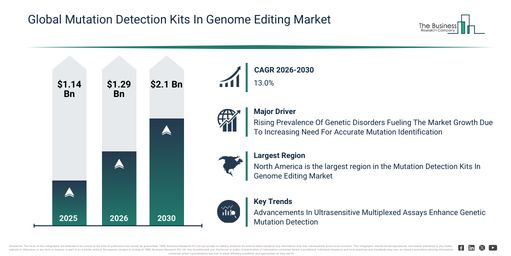
    The market for mutation detection kits in genome editing has experienced significant expansion recently. Its size is expected to climb from $1.14 billion in 2025 to $1.29 billion in 2026, achieving a compound annual growth rate (CAGR) of 13.2%. In the past, this growth was influenced by the limited availability of mutation detection kits, a dependence on manual and traditional detection techniques, the growth in genome editing research, an increasing need for precise validation tools, and the adoption of basic nucleic acid reagents.

    The mutation detection kits in genome editing market size is projected to experience swift expansion over the coming years. This market is set to reach a value of $2.1 billion in 2030, exhibiting a compound annual growth rate (CAGR) of 13.0%. This anticipated growth during the forecast period is driven by factors such as the creation of sophisticated CRISPR-based mutation validation kits, increased spending on next-generation sequencing technologies, the proliferation of cloud-based bioinformatics solutions, a growing number of applications in clinical diagnostics and personalized medicine, and the incorporation of AI-powered data interpretation tools. Key trends anticipated during this period encompass the growing acceptance of PCR-based and next-generation sequencing mutation detection kits, wider utilization of CRISPR mutation validation instruments in genome editing research, the advancement of software tools for genomic data analysis and visualization, broader implementation of mutation detection in drug development and clinical diagnostics, and the integration of cloud-based bioinformatics platforms for immediate data interpretation.

    Get A Free Sample Report With In-Depth Market Insights:

    https://thebusinessresearchcompany.com/sample_request?id=82362599&type=smp&name=Mutation%20Detection%20Kits%20In%20Genome%20Editing%20Market%20Report%202026&utm_source=Blogs&utm_medium=Paid&utm_campaign=Oct_PR

    Mutation Detection Kits In Genome Editing Market Opportunity Drivers: What’s Unlocking New Revenue Potential?

    An anticipated increase in the occurrence of genetic disorders is set to drive the expansion of mutation detection kits within the genome editing market. These disorders are defined as illnesses or conditions stemming from irregularities in a person’s DNA, potentially inherited from parents or arising from novel genetic mutations. Increased public understanding and sophisticated diagnostic tools contribute to this surge, facilitating prompt and precise identification of such conditions, which in turn leads to elevated reported incidence rates. Crucially, genome editing mutation detection kits play a vital role in tackling genetic disorders by precisely pinpointing disease-causing gene mutations, thereby facilitating focused research and the creation of accurate treatment approaches. An illustrative example comes from May 2024, where the National Health Service, a UK government body, reported that about 17,000 individuals in England are affected by sickle cell disease, an inherited blood disorder, with around 250 new diagnoses occurring annually. Consequently, the growing frequency of genetic disorders is indeed a key factor fueling the demand for mutation detection kits in the genome editing market.

    Mutation Detection Kits In Genome Editing Market Segment Breakdown: Which Categories Lead On Revenue?

    The mutation detection kits in genome editing market covered in this report is segmented –

    1) By Product Type: Reagents, Kits, Software Solutions

    2) By Technology: Clustered Regularly Interspaced Short Palindromic Repeats (CRISPR), Transcription Activator-Like Effector Nucleases Or Meganuclease-TAL Effector Nucleases (TALENs/MegaTALs), Zinc Finger Nucleases (ZFN), Other Technologies

    3) By Application: Research, Clinical Diagnostics, Drug Development, Other Applications

    4) By End Use: Academic Institutions, Hospitals And Diagnostic Centers, Biotechnology Companies

    Subsegments:

    1) By Reagents: Deoxyribonucleic Acid Polymerases (DNA) Polymerases, Nucleases, Buffers And Enzymes, Fluorescent Dyes And Probes, Primers And Oligonucleotides

    2) By Kits: Polymerase Chain Reaction (PCR)-Based Mutation Detection Kits, Next-Generation Sequencing-Based Mutation Analysis Kits, Clustered Regularly Interspaced Short Palindromic Repeats (CRISPR) Mutation Validation Kits, Gel Electrophoresis-Based Detection Kits

    3) By Software Solutions: Mutation Analysis And Visualization Tools, Clustered Regularly Interspaced Short Palindromic Repeats (CRISPR) Off-Target Prediction Software, Genomic Alignment and Annotation Software, Data Interpretation Platforms For Next-Generation Sequencing, Cloud-Based Bioinformatics Platforms

    Mutation Detection Kits In Genome Editing Market Innovation Trends Shaping Future Development

    Leading companies in the mutation detection kits segment of the genome editing market are concentrating on developing advanced products, such as ultrasensitive multiplexed assays, to enhance the accuracy, speed, and sensitivity in identifying genetic mutations. These ultrasensitive multiplexed assays are sophisticated diagnostic tests capable of concurrently detecting and quantifying multiple genetic mutations even at very low levels, which aids researchers and clinicians in achieving faster, more accurate, and comprehensive mutation analysis for improved disease diagnosis and treatment monitoring. For example, in April 2024, Bio-Rad Laboratories Inc., a US-based research company, introduced the ddPLEX ESR1 Mutation Detection Kit, an ultrasensitive multiplexed digital PCR assay specifically designed for breast cancer mutation detection. This kit allows for the simultaneous identification and precise quantification of seven ESR1 mutations with an analytical sensitivity reaching 0.01% variant allele fraction, supporting both plasma and tissue sample analysis. Such innovations underscore the industry’s commitment to enhancing diagnostic accuracy and enabling more effective disease monitoring and personalized treatment strategies.

    Mutation Detection Kits In Genome Editing Market Leading Players And Competitive Positioning

    Major companies operating in the mutation detection kits in genome editing market are F. Hoffmann-La Roche Ltd, Merck KGaA, Thermo Fisher Scientific Inc., QIAGEN N.V., Eurofins Scientific SE, Agilent Technologies Inc., Illumina Inc., Bio-Rad Laboratories Inc., Integrated DNA Technologies Inc., GenScript Biotech Corporation, Takara Bio Inc., Promega Corporation, Analytik Jena AG, Twist Bioscience Corporation, New England Biolabs Inc., Applied Biological Materials Inc., Synthego Corporation, BioVision Inc., Creative Biogene Corporation

    View The Full Mutation Detection Kits In Genome Editing Market Report:

    https://thebusinessresearchcompany.com/report/mutation-detection-kits-in-genome-editing-global-market-report?utm_source=Blogs&utm_medium=Paid&utm_campaign=Oct_PR

    Mutation Detection Kits In Genome Editing Market Largest Region By Revenue And Market Share

    North America was the largest region in the mutation detection kits in genome editing market in 2025. Asia-Pacific is expected to be the fastest-growing region in the forecast period. The regions covered in the mutation detection kits in genome editing market report are Asia-Pacific, South East Asia, Western Europe, Eastern Europe, North America, South America, Middle East, Africa.

    Reach Out To Our Team:

    The Business Research Company: https://www.thebusinessresearchcompany.com/

    Americas: +1 310-496-7795

    Asia: +44 7882 955267 & +91 8897263534

    Europe: +44 7882 955267

    Email us at: marketing@tbrc.info

    Follow us on:

    LinkedIn: https://in.linkedin.com/company/the-business-research-company

    YouTube: https://www.youtube.com/channel/UC24_fI0rV8cR5DxlCpgmyFQ

    Global Market Model: https://www.thebusinessresearchcompany.com/global-market-model