Month: October 2026

  • mRNA Therapeutics CDMO Market Growth In 2026: Market Size, Key Drivers And Future Outlook

    mRNA Therapeutics CDMO Market Growth In 2026: Market Size, Key Drivers And Future Outlook

    Featuring market attractiveness scoring, total addressable market sizing, company benchmarking matrices, interactive Excel dashboards, deeper supply chain intelligence, emerging startup tracking, and granular product-level insights, The Business Research Company’s 2026 market reports are built to deliver research that is both more actionable and more strategically valuable.

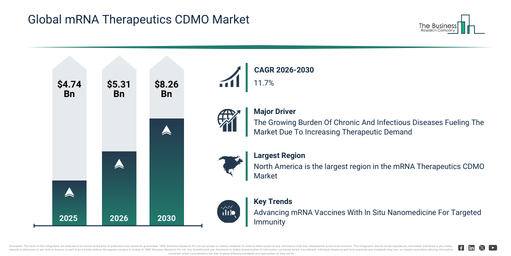
    mRNA Therapeutics CDMO Market Poised To Hit $8.26 Billion By 2030 With A 11.7% CAGR

    The mrna therapeutics cdmo market size has experienced rapid growth in recent years. This market is expected to expand from $4.74 billion in 2025 to $5.31 billion in 2026, with a compound annual growth rate (CAGR) of 12.0%. The historical growth can be ascribed to several factors, including the limited availability of specialized mrna cdmo services, a reliance on in-house pharmaceutical manufacturing, an increase in infectious disease outbreaks, the adoption of early-stage analytical testing, and the expansion of academic and research collaborations.

    The mrna therapeutics cdmo market size is poised for significant expansion in the coming years. This market is projected to reach $8.26 billion by 2030, exhibiting a compound annual growth rate (CAGR) of 11.7%. Key factors driving this growth during the forecast period include increasing investment in mRNA therapeutics pipelines, advancements in plasmid DNA and mRNA synthesis technologies, the expansion of cancer immunotherapy and protein replacement therapies, a heightened demand for fill-finish services, and the proliferation of partnerships between biopharmaceutical companies and CDMOs. Significant trends anticipated in the same period involve a growing need for outsourced mRNA development and manufacturing, a sharpened focus on lipid nanoparticle (LNP) formulation technologies, the broadening of viral vaccine and cancer immunotherapy pipelines, improved regulatory compliance and quality assurance protocols, and the wider acceptance of analytical and bioanalytical laboratory services.

    Get A Free Sample Report With In-Depth Market Insights:

    https://thebusinessresearchcompany.com/sample_request?id=25841&type=smp&name=mRNA%20Therapeutics%20CDMO%20Market%20Report%202026&utm_source=Blogs&utm_medium=Paid&utm_campaign=Oct_PR

    mRNA Therapeutics CDMO Market Growth Catalysts And Demand Drivers

    The increasing prevalence of chronic and infectious diseases is anticipated to propel the expansion of the mRNA therapeutics CDMO market in the future. These conditions include enduring health issues like diabetes, cardiovascular disorders, and asthma, alongside illnesses stemming from harmful microorganisms such as viruses, bacteria, and parasites, capable of direct or indirect transmission between individuals. The rise in chronic and infectious diseases is linked to an aging global population, which is more prone to both persistent health conditions and infections. mRNA therapeutics CDMO plays a role in tackling these diseases by offering comprehensive development and production services, speeding up the delivery of precise, customized mRNA treatments to patients. For instance, in October 2024, the World Health Organization, a Switzerland-based international public health organization, reported that new tuberculosis diagnoses reached approximately 8.2 million individuals in 2023, an increase from about 7.5 million in 2022, underscoring the worsening global impact of infectious diseases. Consequently, the expanding challenge posed by chronic and infectious diseases is a primary catalyst for the growth of the mRNA therapeutics CDMO market.

    mRNA Therapeutics CDMO Market Segments: Where Is Growth Concentrated?

    The mrna therapeutics cdmo market covered in this report is segmented –

    1) By Type Of Service: Development Services, Manufacturing Services, Laboratory Services

    2) By Indication: Infectious Diseases, Metabolic And Genetic Diseases, Cardiovascular And Cerebrovascular Diseases

    3) By Application: Viral Vaccines, Protein Replacement Therapies, Cancer Immunotherapies

    4) By End User: Pharmaceutical Companies, Biotechnology Companies, Academic Institutions, Research Organizations

    Subsegments:

    1) By Development Services: Process Development, Analytical Method Development, Formulation Development, Regulatory Support

    2) By Manufacturing Services: Plasmid DNA Manufacturing, mRNA Synthesis, Lipid Nanoparticle (LNP) Formulation, Fill-Finish Services

    3) By Laboratory Services: Quality Control Testing, Stability Testing, Bioanalytical Testing, Preclinical Testing

    mRNA Therapeutics CDMO Market Trends Shaping Long-Term Demand

    Major companies within the mRNA therapeutics CDMO market are concentrating on developing pioneering solutions, such as in situ nanomedicine vaccines, to improve the effectiveness and precision of mRNA-based vaccines through focused immune stimulation. An in situ nanomedicine vaccine represents an advanced mRNA-based therapeutic designed to generate nanomedicines inside the patient’s body, enabling targeted delivery and personalized immune activation via engineered transgene expression. For example, in January 2025, Esphera SynBio Inc., a biotechnology company based in Canada, launched a new project with the backing of the CQDM Quantum Leap program. This undertaking aims to enhance first-generation lipid nanoparticle or messenger RNA (LNP/mRNA) vaccines by integrating proprietary transgene designs that facilitate the in vivo production of immunostimulatory nanomedicines. This methodology allows for exact antigen delivery and customized immune responses, positioning the technology as a potential breakthrough in vaccine innovation.

    mRNA Therapeutics CDMO Market Key Participants And Competitive Landscape

    Major companies operating in the mrna therapeutics cdmo market are Thermo Fisher Scientific Inc., Danaher Corporation, Merck KGaA, FUJIFILM Holdings Corporation, Evonik Industries AG, AGC Biologics GmbH, Eurofins Scientific SA, Samsung Biologics Co. Ltd., Wuxi Biologics, Recipharm AB, EMERGENT BioSolutions Inc., Genscript Biotech, Ginkgo Bioworks Holdings Inc., Corden Pharma Corp., TriLink BioTechnologies LLC, Biocina Pty Ltd., Aldevron LLC, Synbio Technologies LLC, etherna manufacturing, Bio-Synthesis Inc., Biomay AG.

    View The Full mRNA Therapeutics CDMO Market Report:

    https://thebusinessresearchcompany.com/report/mrna-therapeutics-cdmo-global-market-report?utm_source=Blogs&utm_medium=Paid&utm_campaign=Oct_PR

    mRNA Therapeutics CDMO Market Top Region By Revenue And Market Share

    North America was the largest region in the mRNA therapeutics CDMO market in 2025. Asia-Pacific is expected to be the fastest-growing region in the forecast period. The regions covered in the mrna therapeutics cdmo market report are Asia-Pacific, South East Asia, Western Europe, Eastern Europe, North America, South America, Middle East, Africa.

    Reach Out To Our Team:

    The Business Research Company: https://www.thebusinessresearchcompany.com/

    Americas: +1 310-496-7795

    Asia: +44 7882 955267 & +91 8897263534

    Europe: +44 7882 955267

    Email us at: marketing@tbrc.info

    Follow us on:

    LinkedIn: https://in.linkedin.com/company/the-business-research-company

    YouTube: https://www.youtube.com/channel/UC24_fI0rV8cR5DxlCpgmyFQ

    Global Market Model: https://www.thebusinessresearchcompany.com/global-market-model
  • mRNA Therapeutics Market Size And Forecast 2026–2030: Trends Driving Industry Expansion

    mRNA Therapeutics Market Size And Forecast 2026–2030: Trends Driving Industry Expansion

    Built to provide research that’s more actionable and strategically valuable, The Business Research Company’s 2026 market reports include market attractiveness analysis, total addressable market sizing, company benchmarking matrices, interactive Excel dashboards, broader supply chain intelligence, emerging startup tracking, and in-depth product insights.

    mRNA Therapeutics Market Size And Revenue Outlook Through 2030

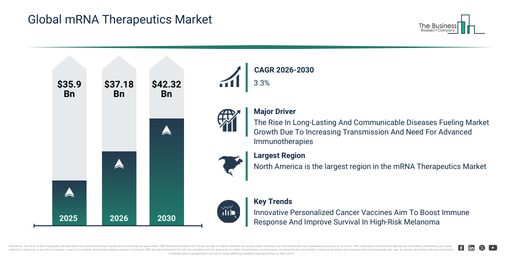
    The mrna therapeutics market has experienced consistent expansion in recent years. This market is projected to expand from $35.9 billion in 2025 to $37.18 billion in 2026, demonstrating a compound annual growth rate (CAGR) of 3.6%. Historically, this growth can be attributed to the breakthrough success of mrna vaccines in infectious diseases, advancements in nucleic acid delivery technologies, an increased understanding of gene expression control, early research validation of mrna-based protein synthesis, and strong public funding for mrna research platforms.

    The mrna therapeutics market is anticipated to experience consistent growth in the coming years. It is projected to expand to $42.32 billion in 2030, demonstrating a compound annual growth rate (CAGR) of 3.3%. This expansion during the forecast period can be attributed to several factors, including an escalating demand for targeted and personalized treatments, the broadening application of mrna in oncology and rare diseases, increased biopharmaceutical investment in mrna development pipelines, a growing number of mrna drugs entering clinical trials, and strategic alliances formed between biotech companies and research organizations. Significant trends expected during this period involve the diversification of mrna therapeutics beyond vaccines, an increasing focus on protein replacement therapies utilizing mrna, a burgeoning clinical pipeline for non-vaccine mrna drugs, heightened investment in lipid nanoparticle delivery systems, and the accelerated development of comprehensive mrna manufacturing capabilities.

    Get A Free Sample Report With In-Depth Market Insights:

    https://thebusinessresearchcompany.com/sample_request?id=41785661&type=smp&name=mRNA%20Therapeutics%20Market%20Report%202026&utm_source=Blogs&utm_medium=Paid&utm_campaign=Oct_PR

    mRNA Therapeutics Market Opportunity Drivers: What’s Unlocking New Revenue Potential?

    The future expansion of the mRNA therapeutics market is anticipated to be fueled by the rising occurrence of chronic and infectious ailments. These are health conditions, such as tuberculosis, HIV/AIDS, and hepatitis, that endure for significant durations and possess the ability to transmit from one person to another. Their increase is attributable to elements like enhanced global travel and shortcomings in medical infrastructure, leading to higher rates of spread and challenges in managing illnesses effectively. mRNA-based therapies aid in better disease management by swiftly prompting the body to generate immune-boosting proteins, thereby accelerating the creation of specific vaccines and medical interventions. As an illustration, data from March 2024 by the US government’s Centers for Disease Control and Prevention indicated a surge in tuberculosis cases, escalating from 8,320 in 2022 to 9,615 in 2023, which signifies a rise of 1,295 cases. Consequently, the expanding occurrence of chronic and infectious diseases is a key factor propelling the development of the mRNA therapeutics market.

    mRNA Therapeutics Market Segment Analysis: What Are The Core Market Categories?

    The mrna therapeutics market covered in this report is segmented –

    1) By Product: Vaccines, Drugs

    2) By Application: Infectious Diseases, Oncology, Rare Genetic Diseases, Respiratory Diseases, Other Applications

    3) By End Use: Hospitals And Clinics, Research Organizations, Other End Uses

    Subsegments:

    1) By Vaccines: Infectious Disease Vaccines, Cancer Vaccines, Other Therapeutic Vaccines

    2) By Drugs: Oncology Drugs, Cardiovascular Drugs, Autoimmune Disease Drugs, Other mRNA-Based Drugs

    mRNA Therapeutics Market Innovation Trends Shaping Future Development

    Leading firms within the mRNA therapeutics market are concentrating on creating novel approaches, like individualized neoantigen vaccines, to boost immune responses and better survival rates for cancer patients. These personalized neoantigen vaccines represent cancer treatments tailored for individual patients, leveraging distinct tumor-specific mutations to activate the immune system to identify and eliminate cancer cells. As an example, in July 2023, Merck & Co., Inc., a US-based biopharmaceutical company focused on research, collaborated with Moderna Therapeutics, Inc., a US-based biotechnology firm, to commence a Phase 3 randomized clinical study (V940-001). This trial aims to assess mRNA-4157 (V940) alongside KEYTRUDA® (pembrolizumab) as an adjuvant therapy for individuals suffering from resected high-risk (Stage IIB-IV) melanoma. This particular investigation is building upon favorable outcomes observed in the Phase 2b KEYNOTE-942/mRNA-4157-P201 trial, where the combination demonstrated a significant advantage compared to KEYTRUDA by itself in lowering the risk of recurrence and distant metastasis. The ongoing Phase 3 trial is designed to validate these initial findings, with its primary and secondary endpoints being the evaluation of relapse-free survival and distant metastasis-free survival, respectively.

    mRNA Therapeutics Market Top Companies Driving Competitive Growth

    Major companies operating in the mrna therapeutics market are Pfizer Inc., Novartis AG, Sanofi AG, AstraZeneca plc, GlaxoSmithKline plc, Hoffmann-La Roche AG, Moderna Therapeutics Inc, BioNTech SE, Vertex Pharmaceuticals Incorporated, Catalent Inc, Alnylam Pharmaceuticals Inc, Sarepta Therapeutics Inc, Arcturus Therapeutics Holdings Inc, CureVac N.V, Ethris GMBH, eTheRNA immunotherapies NV, In-Cell-Art S.A.S., Nutcracker Therapeutics Inc, SCM LifeScience Co Ltd, Suzhou Abogen Biosciences Co Ltd, Tiba Biotech LLC, CSPC Pharmaceutical Group, CRISPR Therapeutics AG

    View The Full mRNA Therapeutics Market Report:

    https://thebusinessresearchcompany.com/report/mrna-therapeutics-global-market-report?utm_source=Blogs&utm_medium=Paid&utm_campaign=Oct_PR

    mRNA Therapeutics Market Regional Analysis And Top Geography

    North America was the largest region in the mRNA therapeutics market in 2025. Asia-Pacific is expected to be the fastest-growing region in the forecast period. The regions covered in the mrna therapeutics market report are Asia-Pacific, South East Asia, Western Europe, Eastern Europe, North America, South America, Middle East, Africa.

    Reach Out To Our Team:

    The Business Research Company: https://www.thebusinessresearchcompany.com/

    Americas: +1 310-496-7795

    Asia: +44 7882 955267 & +91 8897263534

    Europe: +44 7882 955267

    Email us at: marketing@tbrc.info

    Follow us on:

    LinkedIn: https://in.linkedin.com/company/the-business-research-company

    YouTube: https://www.youtube.com/channel/UC24_fI0rV8cR5DxlCpgmyFQ

    Global Market Model: https://www.thebusinessresearchcompany.com/global-market-model
  • mRNA Cancer Vaccines And Therapeutics Market 2026 Outlook: Market Size, CAGR And Key Growth Opportunities

    mRNA Cancer Vaccines And Therapeutics Market 2026 Outlook: Market Size, CAGR And Key Growth Opportunities

    Backed by market attractiveness analysis, total addressable market sizing, company benchmarking matrices, interactive Excel dashboards, wider supply chain intelligence, emerging startup coverage, and detailed product-level insights, The Business Research Company’s 2026 market reports are designed to offer research that is more actionable and strategically valuable than ever.

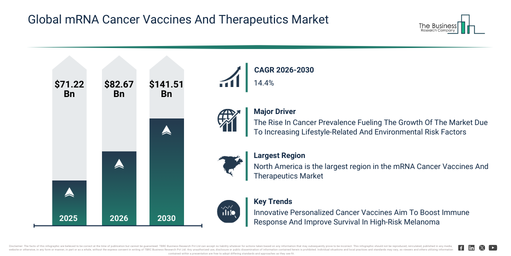
    mRNA Cancer Vaccines And Therapeutics Market Growth From $82.67 Billion In 2026 To $141.51 Billion By 2030 At A CAGR Of 14.4%

    In recent years, the mrna cancer vaccines and therapeutics market has experienced substantial growth in its size. It will grow from $71.22 billion in 2025 to $82.67 billion in 2026 at a compound annual growth rate (CAGR) of 16.1%. This historical expansion can be attributed to factors such as the successful application of mrna platforms in infectious disease vaccines, progress in cancer immunology research, an enhanced understanding of tumor antigens, the early clinical validation of mrna cancer therapies, and increased public and private sector funding directed towards oncology innovation.

    The mrna cancer vaccines and therapeutics market is projected to experience substantial expansion over the coming years. Its valuation is set to reach $141.51 billion in 2030, demonstrating a compound annual growth rate (CAGR) of 14.4%. This anticipated growth throughout the forecast period stems from factors such as an escalating global cancer burden, the increasing need for personalized and targeted cancer therapies, the expansion of mrna manufacturing capabilities, a rise in oncology clinical trials leveraging mrna platforms, and strategic alliances formed between biotechnology and pharmaceutical firms. Key trends anticipated during this period encompass a greater adoption of personalized cancer vaccines, the broadening of mrna-based therapeutics beyond oncology applications, an intensified focus on developing neoantigen-specific vaccines, an expanding clinical pipeline for mrna cancer immunotherapies, and increased capital allocation towards scalable mrna manufacturing platforms.

    Get A Free Sample Report With In-Depth Market Insights:

    https://thebusinessresearchcompany.com/sample_request?id=95488889&type=smp&name=mRNA%20Cancer%20Vaccines%20And%20Therapeutics%20Market%20Report%202026&utm_source=Blogs&utm_medium=Paid&utm_campaign=Oct_PR

    mRNA Cancer Vaccines And Therapeutics Market Growth Momentum: What Factors Are Shaping Demand?

    The growing incidence of cancer is anticipated to drive the expansion of the mRNA cancer vaccine and therapeutic market. Cancer encompasses a range of diseases marked by the uncontrolled proliferation and spread of atypical cells capable of invading and damaging healthy bodily tissues. The rising frequency of cancer cases is largely attributed to elements such as inactive lifestyles, poor dietary choices, and exposure to environmental toxins, all of which elevate the risk of developing diverse malignancies. mRNA cancer vaccines and therapeutics are pivotal in advancing cancer treatment by facilitating personalized, precise immune responses that assist the body in identifying and eliminating cancer cells more efficiently, thus improving therapeutic outcomes. For example, in January 2024, according to the American Cancer Society, Inc., a US-based cancer advocacy organization, it was predicted that the United States would see over 611,000 cancer-related deaths in 2024, which averages out to more than 1,600 fatalities daily. Hence, the increasing prevalence of cancer is propelling the growth of the mRNA cancer vaccine and therapeutic market.

    mRNA Cancer Vaccines And Therapeutics Market Segment Breakdown: Which Categories Lead On Revenue?

    The mrna cancer vaccines and therapeutics market covered in this report is segmented –

    1) By Type: Adeno Carcinomas, Mucinous Carcinomas, Adenosquamous Carcinomas

    2) By Application: Cancer, Other Applications

    3) By End User: Hospitals And Clinics, Ambulatory Surgical Centers, Research Institutes, Other End Users

    Subsegments:

    1) By Adeno Carcinomas: Lung Adenocarcinomas, Colon Adenocarcinomas, Prostate Adenocarcinomas

    2) By Mucinous Carcinomas: Mucinous Ovarian Cancer, Mucinous Breast Cancer, Mucinous Colorectal Cancer

    3) By Adenosquamous Carcinomas: Pancreatic Adenosquamous Carcinoma, Cervical Adenosquamous Carcinoma, Esophageal Adenosquamous Carcinoma

    mRNA Cancer Vaccines And Therapeutics Market Trends Redefining Industry Growth

    Key companies within the mRNA cancer vaccines and therapeutics market are focusing on developing innovative solutions, such as personalized neoantigen vaccines, to improve immune responses and patient survival outcomes in cancer. Personalized neoantigen vaccines are cancer treatments designed specifically for each patient, utilizing unique tumor-specific mutations to stimulate the immune system to target and destroy cancer cells. For example, in July 2023, Merck & Co., Inc., a US-based research-intensive biopharmaceutical company, partnered with Moderna Therapeutics, Inc., a US-based biotechnology company, to initiate a Phase 3 randomized clinical trial (V940-001). This trial will evaluate mRNA-4157 (V940) in combination with KEYTRUDA (pembrolizumab) as an adjuvant therapy for patients with resected high-risk (Stage IIB-IV) melanoma. This study follows positive results from the Phase 2b KEYNOTE-942/mRNA-4157-P201 trial, which indicated a meaningful benefit of the combination over KEYTRUDA alone in reducing the risk of recurrence and distant metastasis. The Phase 3 trial seeks to confirm these findings by assessing relapse-free survival and distant metastasis-free survival as its primary and secondary endpoints, respectively.

    mRNA Cancer Vaccines And Therapeutics Market Leading Players And Competitive Positioning

    Major companies operating in the mrna cancer vaccines and therapeutics market are BioNTech SE, Moderna Therapeutics Inc., CureVac N.V., Arcturus Therapeutics Holdings Inc., Immatics Biotechnologies GmbH, Argos Therapeutics Inc., Anima Biotech, Translate Bio, eTheRNA Immunotherapies NV, Gritstone bio Inc., Neon Therapeutics, Codiak BioSciences, Cartesian Therapeutics, Replimune Group Inc., Precision BioSciences, Acuitas Therapeutics, Ethris GmbH, Strand Therapeutics, Crown Bioscience, Roche (Hoffmann-La Roche AG)

    View The Full mRNA Cancer Vaccines And Therapeutics Market Report:

    https://thebusinessresearchcompany.com/report/mrna-cancer-vaccines-and-therapeutics-global-market-report?utm_source=Blogs&utm_medium=Paid&utm_campaign=Oct_PR

    mRNA Cancer Vaccines And Therapeutics Market Geographic Analysis: Where Is Demand Rising Fastest?

    North America was the largest region in the mRNA cancer vaccination and therapeutics market in 2025. Asia-Pacific is expected to be the fastest-growing region in the forecast period. The regions covered in the mrna cancer vaccines and therapeutics market report are Asia-Pacific, South East Asia, Western Europe, Eastern Europe, North America, South America, Middle East, Africa.

    Reach Out To Our Team:

    The Business Research Company: https://www.thebusinessresearchcompany.com/

    Americas: +1 310-496-7795

    Asia: +44 7882 955267 & +91 8897263534

    Europe: +44 7882 955267

    Email us at: marketing@tbrc.info

    Follow us on:

    LinkedIn: https://in.linkedin.com/company/the-business-research-company

    YouTube: https://www.youtube.com/channel/UC24_fI0rV8cR5DxlCpgmyFQ

    Global Market Model: https://www.thebusinessresearchcompany.com/global-market-model
  • Morphine Drugs Market Size Growth: From $24.5 Billion In 2026 To $30.16 Billion By 2030

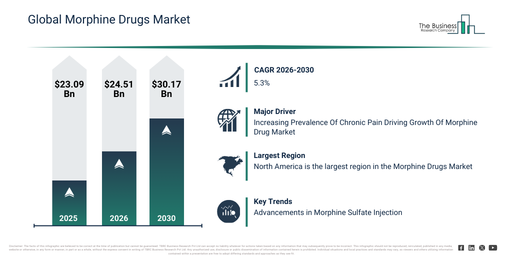
    Morphine Drugs Market Size Growth: From $24.5 Billion In 2026 To $30.16 Billion By 2030

    Featuring market attractiveness scoring, total addressable market sizing, company benchmarking matrices, interactive Excel dashboards, deeper supply chain intelligence, emerging startup tracking, and granular product-level insights, The Business Research Company’s 2026 market reports are built to deliver research that is both more actionable and more strategically valuable.

    Morphine Drugs Market Expansion Outlook: What Revenue Opportunities Are Ahead?

    The morphine drugs market has experienced robust growth recently. It will grow from $23.09 billion in 2025 to $24.51 billion in 2026 at a compound annual growth rate (CAGR) of 6.1%. The expansion observed in the past can be ascribed to a long-standing clinical reliance on morphine for alleviating severe pain, its widespread application in post-surgical and trauma care, its established function in cancer pain management, its inclusion in essential medicines lists, and the availability of numerous generic morphine formulations.

    The morphine drugs market is projected to experience substantial expansion over the upcoming years. Its size is anticipated to reach $30.17 billion in 2030, demonstrating a compound annual growth rate (CAGR) of 5.3%. Factors contributing to this growth during the forecast period include the increasing incidence of cancer necessitating potent analgesics, an escalating demand for palliative care services, the expansion of hospital infrastructure in emerging markets, ongoing requirements for anesthesia and perioperative pain control, and the regulated use of opioids under stricter frameworks. Key trends expected during this period involve a consistent demand for opioid analgesics in managing severe pain, the persistent application of morphine in palliative and end-of-life care, a preference for injectable morphine within hospital environments, the availability of diverse dosage forms offering clinical adaptability, and an increasing focus on the controlled and regulated prescription of opioids.

    Get A Free Sample Report With In-Depth Market Insights:

    https://thebusinessresearchcompany.com/sample_request?id=89348434&type=smp&name=Morphine%20Drugs%20Market%20Report%202026&utm_source=Blogs&utm_medium=Paid&utm_campaign=Oct_PR

    Morphine Drugs Market Expansion Drivers: What’s Shaping Future Growth?

    The rising occurrence of chronic pain conditions is anticipated to fuel the expansion of the morphine drugs market moving ahead. This intricate condition involves enduring discomfort over a prolonged duration, signaling potential injury or illness. Globally, chronic pain has emerged as a significant health issue, influenced by interconnected factors like an aging populace, increasing obesity, inactive lifestyles, mental health challenges including stress, and environmental elements. Morphine is essential for managing chronic pain, given its high efficacy in alleviating discomfort and its adaptability to individual patient requirements. It improves the quality of life, allowing individuals afflicted with chronic pain to accomplish tasks more effectively without constant intense suffering. For example, in May 2021, the Government of Canada, a federal administration situated in Canada, projected that up to 8.3 million Canadians could suffer from chronic pain by 2025, with this number potentially increasing to 9.0 million by 2030. Consequently, the growing occurrence of chronic pain conditions is propelling the expansion of the morphine drug market.

    Morphine Drugs Market Segmentation: How Does The Market Break Down By Category?

    The morphine drugs market covered in this report is segmented –

    1) By Dosage form: Injectable, Oral, Other Dosage Forms

    2) By Distribution channels: Hospital Pharmacy, Retail Pharmacy, Online Pharmacy

    3) By Applications: Pain Management, Palliative Care, Diarrhea Suppressant, Anesthesia, Other Applications

    4) By End Users: Hospitals And Clinics, Ambulatory Surgical Centers, Other End Users

    Subsegments:

    1) By Injectable: Morphine Sulfate Injection, Morphine Hydrochloride Injection, Morphine Extended Release Injection

    2) By Oral: Oral Tablets (Immediate-Release, Extended-Release), Oral Solution Or syrup, Oral Capsules (Extended-Release Capsules)

    3) By Other Dosage Forms: Rectal Suppositories, Sublingual Tablets Or Films

    Morphine Drugs Market Strategic Trends: What Defines The Next Growth Phase?

    Leading companies in the morphine drug market are prioritizing the creation of advanced delivery mechanisms, such as prefilled syringe formats, to elevate efficiency, heighten safety, and decrease medication errors and preparation duration. Prefilled syringes are sterile, single-dose delivery systems already containing a specific medication, thus removing the necessity for manual withdrawal from a vial before administration. As an example, in April 2024, Hikma Pharmaceuticals PLC, a UK-based multinational pharmaceutical company, released Morphine Sulfate Injection USP in a prefilled syringe in the U.S. This product offers a sterile, ready-to-use presentation of the opioid analgesic, which significantly improves convenience for healthcare providers in acute care settings. The prefilled syringe aims to assist in minimizing dosing errors and enhancing workflow efficiency by cutting down preparation stages.

    Morphine Drugs Market Competitive Overview And Top Companies

    Major companies operating in the morphine drugs market are Pfizer Inc., Sanofi S.A., Rusan Pharma Ltd., Johnson & Johnson, Teva Pharmaceutical Industries Ltd., Daiichi Sankyo Company Limited, Sandoz AG, Viatris Inc., Dr. Reddy’s Laboratories Ltd., Apotex Inc., Hikma Pharmaceuticals PLC, Endo Pharmaceuticals Inc., Sun Pharmaceutical Industries Ltd., Johnson Matthey Fine Chemicals, Fresenius Kabi USA LLC, Delpharm SaS, Alvogen Inc., Mallinckrodt Pharmaceuticals, Lannett Company, Mayne Pharma Group Limited, Noramco Inc., Tasmanian Alkaloids, Napp Pharmaceuticals Limited, Alcaliber SA

    View The Full Morphine Drugs Market Report:

    https://thebusinessresearchcompany.com/report/morphine-drugs-global-market-report?utm_source=Blogs&utm_medium=Paid&utm_campaign=Oct_PR

    Morphine Drugs Market Global Footprint: Which Region Leads The Market?

    North America was the largest region in the morphine drugs market in 2025. Asia-Pacific is expected to be the fastest-growing region in the forecast period. The regions covered in the morphine drugs market report are Asia-Pacific, South East Asia, Western Europe, Eastern Europe, North America, South America, Middle East, Africa.

    Reach Out To Our Team:

    The Business Research Company: https://www.thebusinessresearchcompany.com/

    Americas: +1 310-496-7795

    Asia: +44 7882 955267 & +91 8897263534

    Europe: +44 7882 955267

    Email us at: marketing@tbrc.info

    Follow us on:

    LinkedIn: https://in.linkedin.com/company/the-business-research-company

    YouTube: https://www.youtube.com/channel/UC24_fI0rV8cR5DxlCpgmyFQ

    Global Market Model: https://www.thebusinessresearchcompany.com/global-market-model
  • Montelukast Sodium Market Analysis 2026: Market Size, Growth Trends And Industry Outlook

    Montelukast Sodium Market Analysis 2026: Market Size, Growth Trends And Industry Outlook

    Built to provide research that’s more actionable and strategically valuable, The Business Research Company’s 2026 market reports include market attractiveness analysis, total addressable market sizing, company benchmarking matrices, interactive Excel dashboards, broader supply chain intelligence, emerging startup tracking, and in-depth product insights.

    Montelukast Sodium Market Growth Potential: How Will Market Size Shift Through 2030?

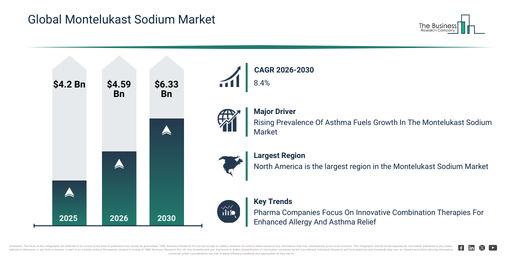
    The montelukast sodium market size has experienced significant expansion in recent years. It is anticipated to grow from $4.2 billion in 2025 to $4.59 billion in 2026, demonstrating a compound annual growth rate (CAGR) of 9.3%. This historic period’s expansion can be attributed to several factors: the long-established clinical application of montelukast in controlling asthma, a rising prevalence of allergic respiratory diseases, its confirmed safety profile for long-term therapy, broad physician acceptance for maintenance treatment, and the availability of affordable generic alternatives.

    The montelukast sodium market is anticipated to experience robust expansion over the coming years, reaching $6.33 billion by 2030, demonstrating a compound annual growth rate (CAGR) of 8.4%. This projected growth is driven by factors such as the increasing worldwide prevalence of asthma and allergic rhinitis, a rise in pediatric asthma diagnoses, greater public understanding of non-steroidal treatments for asthma, wider availability of respiratory medications in developing regions, and ongoing preference for oral maintenance medications. Key trends during this period are expected to encompass an escalating need for leukotriene receptor antagonists in asthma care, the expanding application of montelukast for allergic rhinitis, the proliferation of generic montelukast sodium products, a clear preference for oral solid forms in long-term respiratory treatment, and a surge in prescriptions for both child and adult asthma sufferers.

    Get A Free Sample Report With In-Depth Market Insights:

    https://thebusinessresearchcompany.com/sample_request?id=13102117&type=smp&name=Montelukast%20Sodium%20Market%20Report%202026&utm_source=Blogs&utm_medium=Paid&utm_campaign=Oct_PR

    Montelukast Sodium Market Development Factors: What’s Supporting Demand?

    The rising incidence of asthma is anticipated to drive expansion in the montelukast sodium market in the future. Asthma, a persistent respiratory ailment, is characterized by airway inflammation and narrowing, leading to recurrent episodes of wheezing, shortness of breath, chest tightness, and coughing. The surge in asthma cases is attributed to factors such as environmental contamination, exposure to allergens, genetic factors, increased urbanization, evolving lifestyles, and respiratory illnesses. As a leukotriene receptor antagonist, montelukast sodium is administered for asthma to help avert and control its symptoms by inhibiting the activity of leukotrienes, substances that promote airway inflammation and constriction. An illustrative example comes from October 2024, where the National Asthma Council, an Australia-based non-profit organization, reported that in 2023, Australia experienced 474 asthma-related deaths, consisting of 325 females and 149 males. This number closely mirrors the 473 asthma-related deaths documented in 2022, indicating a stable pattern in asthma mortality across these two years. Consequently, the rising incidence of asthma is a key factor propelling the expansion of the montelukast sodium market.

    Montelukast Sodium Market Segment Trends And Revenue Contributors

    The montelukast sodium market covered in this report is segmented –

    1) By Product: Crystal-like, Form-less Or Amorphous

    2) By Dosage Form: Tablets, Oral Solutions

    3) By Application: Bronchospasm, Allergic Coryza, Asthma, Urticaria, Other Applications

    Subsegments:

    1) By Crystal-Like: Monohydrate Crystal, Anhydrous Crystal, Spherical Crystals, Needle-Like Crystals, Polycrystalline Montelukast Sodium

    2) By Form-Less Or Amorphous: Amorphous Powder, Amorphous Granules, Non-Crystalline Montelukast Sodium

    Montelukast Sodium Market Transformation Trends: What Innovations Are Driving Change?

    Companies operating in the montelukast sodium market are concentrating on creating innovative solutions, such as combination therapies, to offer more extensive allergy and asthma relief and enhance patient adherence. Combination therapies involve treatments that utilize two or more drugs together in a single regimen to address multiple disease pathways for improved efficacy. For instance, in October 2025, Cadila Pharmaceuticals Ltd., an India-based pharmaceutical company, introduced Dlorfast-M tablets, a fixed-dose combination therapy comprising desloratadine (5 mg) and montelukast (10 mg) for managing allergic rhinitis and urticaria. It provides comprehensive symptom control by acting on both histamine and leukotriene pathways through a convenient once-daily oral dosage. This advanced formulation aims to boost patient compliance and deliver lasting relief with good tolerability.

    Montelukast Sodium Market Competitive Landscape: Which Companies Lead The Industry?

    Major companies operating in the montelukast sodium market are Pfizer Inc., Merck & Co. Inc., Sanofi Aventis SA, Teva Pharmaceuticals USA Inc., Hetero Labs Ltd., Sun Pharma Industries Ltd., Aurobindo Pharma Limited, Cipla Inc., Intas Pharmaceuticals Ltd., Seqens Group, Sanyo Chemical Industries Ltd., Morepen Laboratories, Neuland Laboratories Ltd., Medopharm Private Ltd., BEC Chemicals Pvt. Ltd, Delmar Chemicals Inc., Kimia Biosciences Ltd., Ortin Laboratories Ltd., MSN Laboratories Pvt Ltd., Vamsi Labs Ltd., LGM Pharma LLC, HRV Global Life Sciences, Sigmak Lifesciences, Akums Lifesciences Ltd., Anwita Drugs & Chemicals Pvt Ltd

    View The Full Montelukast Sodium Market Report:

    https://thebusinessresearchcompany.com/report/montelukast-sodium-global-market-report?utm_source=Blogs&utm_medium=Paid&utm_campaign=Oct_PR

    Montelukast Sodium Market Regional Split: Which Areas Are Fueling Growth?

    North America was the largest region in the montelukast sodium market in 2025. Asia-Pacific is expected to be the fastest-growing region in the forecast period. The regions covered in the montelukast sodium market report are Asia-Pacific, South East Asia, Western Europe, Eastern Europe, North America, South America, Middle East, Africa.

    Reach Out To Our Team:

    The Business Research Company: https://www.thebusinessresearchcompany.com/

    Americas: +1 310-496-7795

    Asia: +44 7882 955267 & +91 8897263534

    Europe: +44 7882 955267

    Email us at: marketing@tbrc.info

    Follow us on:

    LinkedIn: https://in.linkedin.com/company/the-business-research-company

    YouTube: https://www.youtube.com/channel/UC24_fI0rV8cR5DxlCpgmyFQ

    Global Market Model: https://www.thebusinessresearchcompany.com/global-market-model
  • Monoclonal Antibody Therapeutics Market Forecast To 2030: Starting From $396.1 Billion In 2026

    Monoclonal Antibody Therapeutics Market Forecast To 2030: Starting From $396.1 Billion In 2026

    Backed by market attractiveness analysis, total addressable market sizing, company benchmarking matrices, interactive Excel dashboards, wider supply chain intelligence, emerging startup coverage, and detailed product-level insights, The Business Research Company’s 2026 market reports are designed to offer research that is more actionable and strategically valuable than ever.

    Monoclonal Antibody Therapeutics Market Value Analysis: What Growth Lies Ahead Over The Forecast Period?

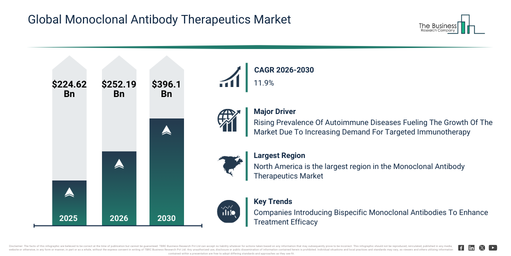
    The monoclonal antibody therapeutics market has experienced substantial growth in recent years. It is projected to expand from $224.62 billion in 2025 to $252.19 billion in 2026, achieving a compound annual growth rate (CAGR) of 12.3%. The market’s historical growth can be attributed to factors like limited antibody engineering technologies, its early adoption in oncology therapeutics, a reliance on traditional clinical trial methods, constrained biologics manufacturing capacity, and increasing awareness of targeted therapies.

    The monoclonal antibody therapeutics market is projected to experience substantial expansion over the coming years, reaching $396.1 billion by 2030, exhibiting a compound annual growth rate (CAGR) of 11.9%. This anticipated growth stems from several factors, including developments in bispecific and multi-specific antibodies, heightened production of biologics and fusion proteins, an increase in the prevalence of autoimmune and infectious diseases, broader adoption by hospitals and private clinics, and the incorporation of AI and automation into drug discovery processes. Key trends for the forecast period encompass greater investment in monoclonal antibody research and development, an expansion of oncology and autoimmune therapeutic applications, increased uptake of antibody-drug conjugates, the advancement of personalized and targeted therapies, and improvements in clinical trial infrastructure and biomanufacturing capacities.

    Get A Free Sample Report With In-Depth Market Insights:

    https://thebusinessresearchcompany.com/sample_request?id=41725916&type=smp&name=Monoclonal%20Antibody%20Therapeutics%20Market%20Report%202026&utm_source=Blogs&utm_medium=Paid&utm_campaign=Oct_PR

    Monoclonal Antibody Therapeutics Market Industry Drivers: What’s Behind The Revenue Growth?

    The increasing occurrence of autoimmune diseases is projected to drive expansion in the monoclonal antibody therapeutics market in the future. These conditions involve the body’s immune system erroneously attacking its own healthy tissues and organs, mistaking them for foreign invaders, which results in persistent inflammation and tissue harm. The rise in autoimmune disease cases is linked to environmental shifts, with greater exposure to contaminants and modified microbial surroundings thought to provoke unusual immune reactions in vulnerable people. Monoclonal antibody therapies are effective for autoimmune disorders because they accurately target and inhibit particular immune pathways that cause inflammation and tissue damage, thereby alleviating symptoms and decelerating the disease’s advancement. For instance, in November 2023, the Multiple Sclerosis International Federation (MSIF), a UK-based international nonprofit organization, reported that an estimated 2.9 million people worldwide were living with multiple sclerosis, a type of autoimmune and immune-mediated disease, in 2023. Consequently, the growing incidence of autoimmune diseases is fueling the expansion of the monoclonal antibody therapeutics market.

    Monoclonal Antibody Therapeutics Market Segment Analysis Spotlighting Growth Areas

    The monoclonal antibody therapeutics market covered in this report is segmented –

    1) By Product Type: Naked, Fusion Protein, Antibody Fragment, Conjugate, Multi-Specific

    2) By Therapy Area: Autoimmune And Inflammatory Disorders, Oncology, Hematology, Ophthalmology, Other Therapy Areas

    3) By Application: Cancer, Autoimmune Diseases, Infection, Hematological Diseases, Other Applications

    4) By End User: Hospitals, Private Clinics, Research Institute

    Subsegments:

    1) By Naked: Fully Human Antibodies, Humanized Antibodies, Chimeric Antibodies

    2) By Fusion Protein: Receptor Fusion Proteins, Ligand Fusion Proteins

    3) By Antibody Fragment: Single-Chain Variable Fragment, Fab Fragments, Diabodies

    4) By Conjugate: Antibody-Drug Conjugates, Radioimmunoconjugates, Immunotoxins

    5) By Multi-Specific: Bispecific Antibodies, Trispecific Antibodies, T-Cell Engagers

    #Monoclonal Antibody Therapeutics Market Growth Trends: What’s Shaping The Future Outlook?

    Leading companies within the monoclonal antibody therapeutics market are concentrating on introducing innovative solutions, such as bispecific monoclonal antibodies, to improve treatment effectiveness by simultaneously targeting two distinct antigens or epitopes. Bispecific monoclonal antibodies represent a specialized category of engineered antibodies designed to concurrently bind to two different antigens or two unique epitopes on the same antigen. As an example, in March 2024, Roche Holding AG, a pharmaceutical company based in Switzerland, introduced Vabysmo (faricimab-svoa). This bispecific monoclonal antibody addresses eye diseases and is formulated to treat neovascular (wet) age-related macular degeneration (nAMD), diabetic macular edema (DME), and macular edema subsequent to retinal vein occlusion (RVO). It targets both VEGF-A and Angiopoietin-2 (Ang-2), leading to enhanced vascular stability and a reduction in retinal fluid leakage. This dual-target mechanism enables extended dosing intervals of up to four months, considerably lessening the treatment burden for patients.

    Monoclonal Antibody Therapeutics Market Leading Companies: Who Holds The Strongest Market Presence?

    Major companies operating in the monoclonal antibody therapeutics market are Pfizer Inc., Johnson & Johnson, F. Hoffmann-La Roche AG, Merck & Co. Inc., AbbVie Inc., Sanofi SA, Bristol-Myers Squibb Company, AstraZeneca plc, Novartis AG, GlaxoSmithKline plc, Takeda Pharmaceutical Company Limited, Eli Lilly and Company, Amgen Inc., Regeneron Pharmaceuticals Inc., Biogen Inc., Daiichi Sankyo Company Limited, UCB S.A., Genmab A/S, ADC Therapeutics, Y-mAbs Therapeutics.

    View The Full Monoclonal Antibody Therapeutics Market Report:

    https://thebusinessresearchcompany.com/report/monoclonal-antibody-therapeutics-global-market-report?utm_source=Blogs&utm_medium=Paid&utm_campaign=Oct_PR

    Monoclonal Antibody Therapeutics Market Top Region: Where Does Most Revenue Come From?

    North America was the largest region in the monoclonal antibody therapeutics market in 2025. Asia-Pacific is expected to be the fastest-growing region in the forecast period. The regions covered in the monoclonal antibody therapeutics market report are Asia-Pacific, South East Asia, Western Europe, Eastern Europe, North America, South America, Middle East, Africa.

    Reach Out To Our Team:

    The Business Research Company: https://www.thebusinessresearchcompany.com/

    Americas: +1 310-496-7795

    Asia: +44 7882 955267 & +91 8897263534

    Europe: +44 7882 955267

    Email us at: marketing@tbrc.info

    Follow us on:

    LinkedIn: https://in.linkedin.com/company/the-business-research-company

    YouTube: https://www.youtube.com/channel/UC24_fI0rV8cR5DxlCpgmyFQ

    Global Market Model: https://www.thebusinessresearchcompany.com/global-market-model
  • Monoclonal Antibodies (MAs) Market Size In 2026 And Beyond: Understanding Future Growth Potential

    Monoclonal Antibodies (MAs) Market Size In 2026 And Beyond: Understanding Future Growth Potential

    Featuring market attractiveness scoring, total addressable market sizing, company benchmarking matrices, interactive Excel dashboards, deeper supply chain intelligence, emerging startup tracking, and granular product-level insights, The Business Research Company’s 2026 market reports are built to deliver research that is both more actionable and more strategically valuable.

    Monoclonal Antibodies (MAs) Market Size Forecast: How Big Could The Market Get By 2030?

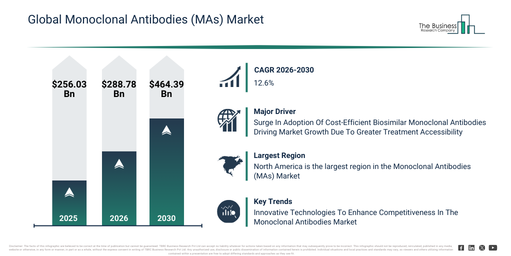
    The monoclonal antibodies (mas) market size has experienced considerable expansion in recent years. Projections indicate it will increase from $256.03 billion in 2025 to $288.78 billion in 2026, demonstrating a compound annual growth rate (CAGR) of 12.8%. Historically, this growth has been driven by advancements in antibody engineering, an increasing burden of cancer and autoimmune diseases, the expansion of biologics approvals, enhanced infusion center infrastructure, and heightened healthcare spending.

    The monoclonal antibodies (mas) market size is projected to experience substantial expansion over the upcoming years, reaching $464.39 billion in 2030, demonstrating a compound annual growth rate (CAGR) of 12.6%. This anticipated expansion during the forecast period is primarily driven by factors such as the expansion of targeted biologics pipelines, increased application in chronic ailments, the proliferation of biosimilars, a surge in immunotherapy uptake, and the development of specialty clinics. Key developments anticipated during this period encompass a heightened demand for therapies based on biologics, greater utilization of monoclonal antibodies in cancer treatment, the broadening of infusion-based treatment environments, an increase in the adoption of humanized and fully human mabs, and an intensified focus on prolonged immunotherapy regimens.

    Get A Free Sample Report With In-Depth Market Insights:

    https://thebusinessresearchcompany.com/sample_request?id=30675538&type=smp&name=Monoclonal%20Antibodies%20%28MAs%29%20Market%20Report%202026&utm_source=Blogs&utm_medium=Paid&utm_campaign=Oct_PR

    Monoclonal Antibodies (MAs) Market Growth Factors: What’s Supporting Expansion?

    The growing availability of affordable biosimilar monoclonal antibodies is projected to stimulate expansion in the monoclonal antibody market. Biosimilars are pharmaceutical products designed to possess comparable characteristics to already approved biological drugs. Their increased uptake stems from rising patient desire for inexpensive biologic treatments, the expiration of patents for key branded monoclonal antibodies, and favorable regulatory frameworks that promote biosimilar development and commercialization. The wider use of cost-effective biosimilar monoclonal antibodies benefits the monoclonal antibody market by broadening treatment accessibility, lowering healthcare expenses, and fostering innovative competition among drug manufacturers. For instance, as per the World Health Organization, a Switzerland-based United Nations agency focused on global public health, in February 2025, biosimilars are approximately 60% less costly than original biologic medicines, offering significant financial savings that can enhance access to crucial biologic therapies. Consequently, the rising prevalence of cost-efficient biosimilar monoclonal antibodies is a key driver for the growth of the monoclonal antibody market.

    Monoclonal Antibodies (MAs) Market Segment Performance And Emerging Opportunities

    The monoclonal antibodies (mas) market covered in this report is segmented –

    1) By Source: Murine, Chimeric, Humanized, Human

    2) By Application: Anti-Cancer, Immunological, Anti-Infective Monoclonal Antibodies (MAs), Neuropharmacological, Cardiovascular And Cerebrovascular, Other Applications

    3) By End Users: Hospitals, Private Clinics, Research Institute

    Subsegments:

    1) By Murine: Fully Murine MAbs, Murine-Derived MAbs

    2) By Chimeric: Chimeric MAbs With Murine Variable Regions, Chimeric MAbs With Human Constant Regions

    3) By Humanized: Humanized MAbs With Minor Murine Components, Fully Humanized MAbs

    4) By Human: Fully Human MAbs, Engineered Human MAbs

    Monoclonal Antibodies (MAs) Market Industry Trends: What’s Reshaping Demand?

    Leading companies in the monoclonal antibodies market are implementing advanced technologies, such as RenMice, to achieve a competitive advantage. RenMice provides significant support in investigating various antibody-based therapies, including fully human monoclonal antibodies, bispecific antibodies, bispecific antibody-drug conjugates (BsADCs), nanobodies, fully human T-cell receptors (TCRs), and TCR-mimic antibodies. For example, in September 2023, Biocytogen Pharmaceuticals, a China-based international biotech firm that spearheads new drug research and development using innovative technologies, introduced the RenMice series, which includes a collection of independently developed fully human antibody mice and TCR mice, all protected by proprietary intellectual property.

    Monoclonal Antibodies (MAs) Market Key Players: Which Companies Lead Industry Competition?

    Major companies operating in the monoclonal antibodies (mas) market are Johnson & Johnson, Merck & Co. Inc., AbbVie Inc., Amgen Inc., Novartis International AG, Pfizer Inc., Thermo Fisher Scientific Inc., Eli Lilly and Company, Bristol-Myers Squibb Company, F. Hoffmann-La Roche Ltd., Sanofi S.A., Abbott Laboratories, Daiichi Sankyo Company Ltd., Seattle Genetics Inc., Shanghai Junshi Biosciences Co. Ltd., GenScript Biotech Corporation, Sigma-Aldrich Co. LLC, AbGenomics Inc., ADC Therapeutics SA, Agensys Inc., Alexion Pharmaceuticals Inc., ALMAC Group Ltd., Ambrx Biopharma Inc., Astellas Pharma Inc., Celgene Corporation, Celldex Therapeutics Inc., Baxter International Inc., Fresenius SE & Co. KGaA, Hikma Pharmaceuticals plc, Jiangsu Hengrui Medicine Co. Ltd., Piramal Enterprises Ltd., CD BioSciences Inc., Creative Biolabs Inc., Advanced ChemTech Inc., Tonbo Biosciences Inc., GlaxoSmithKline plc

    View The Full Monoclonal Antibodies (MAs) Market Report:

    https://thebusinessresearchcompany.com/report/monoclonal-antibodies-global-market-report?utm_source=Blogs&utm_medium=Paid&utm_campaign=Oct_PR

    Monoclonal Antibodies (MAs) Market Regional Breakdown: Where Is Demand Concentrated?

    North America was the largest region in the monoclonal antibodies (MAbS) market in 2025. The regions covered in the monoclonal antibodies (mas) market report are Asia-Pacific, South East Asia, Western Europe, Eastern Europe, North America, South America, Middle East, Africa.

    Reach Out To Our Team:

    The Business Research Company: https://www.thebusinessresearchcompany.com/

    Americas: +1 310-496-7795

    Asia: +44 7882 955267 & +91 8897263534

    Europe: +44 7882 955267

    Email us at: marketing@tbrc.info

    Follow us on:

    LinkedIn: https://in.linkedin.com/company/the-business-research-company

    YouTube: https://www.youtube.com/channel/UC24_fI0rV8cR5DxlCpgmyFQ

    Global Market Model: https://www.thebusinessresearchcompany.com/global-market-model
  • Molecular Targeted Therapy Market Reaches $107.64 Billion In 2026: Key Developments Shaping Expansion

    Molecular Targeted Therapy Market Reaches $107.64 Billion In 2026: Key Developments Shaping Expansion

    Built to provide research that’s more actionable and strategically valuable, The Business Research Company’s 2026 market reports include market attractiveness analysis, total addressable market sizing, company benchmarking matrices, interactive Excel dashboards, broader supply chain intelligence, emerging startup tracking, and in-depth product insights.

    Molecular Targeted Therapy Market Revenue Outlook: What CAGR Lies Ahead Through 2030?

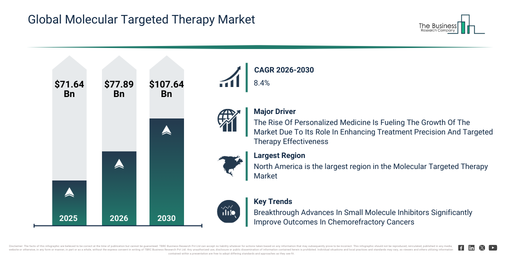
    The molecular targeted therapy market has experienced substantial growth in recent years. This market is projected to expand from $71.64 billion in 2025 to $77.89 billion in 2026, achieving a compound annual growth rate (CAGR) of 8.7%. The observed expansion in past periods can be credited to advancements in cancer genomics research, the development of monoclonal antibodies, numerous oncology drug approvals, the establishment of hospital oncology centers, and the broadening of clinical trials.

    The molecular targeted therapy market is anticipated to experience robust expansion over the next few years, projected to reach $107.64 billion in 2030, demonstrating a compound annual growth rate (CAGR) of 8.4%. This expected growth during the forecast period can be attributed to several factors, including the increasing prevalence of personalized cancer treatments, the broader adoption of next-generation sequencing, advancements in AI-driven drug discovery, the rising global oncology burden, and improved reimbursement for targeted therapies. Significant trends for the forecast period encompass the wider application of precision oncology, a greater uptake of biomarker-based therapies, the expansion of pipelines for targeted cancer drugs, the integration of companion diagnostics, and an increasing utilization of combination targeted therapies.

    Get A Free Sample Report With In-Depth Market Insights:

    https://thebusinessresearchcompany.com/sample_request?id=71063533&type=smp&name=Molecular%20Targeted%20Therapy%20Market%20Report%202026&utm_source=Blogs&utm_medium=Paid&utm_campaign=Oct_PR

    Molecular Targeted Therapy Market Demand Drivers: What’s Powering Industry Growth?

    The growth of the molecular targeted therapy market is anticipated to be fueled by the increasing prominence of personalized medicine. This healthcare approach customizes treatment and prevention based on an individual’s unique genetic profile, lifestyle, and environmental factors. Personalized medicine is gaining traction due to the greater availability of genetic data, enabling therapies specifically designed for individual genomes, leading to enhanced effectiveness and fewer side effects. It supports molecular targeted therapy by analyzing a patient’s tumor for specific genetic mutations or biomarkers, which then guides the selection of therapies that directly target these abnormalities. This methodology enhances treatment accuracy and minimizes harm to healthy tissues. For example, in February 2024, the Personalized Medicine Coalition, a US-based hospital and health care organization, reported that the FDA approved 16 new personalized treatments for rare disease patients in 2023, a significant rise from 6 in 2022. Consequently, the expansion of personalized medicine is a key driver for the molecular targeted therapy market.

    Molecular Targeted Therapy Market Segment Landscape And Growth Outlook

    The molecular targeted therapy market covered in this report is segmented –

    1) By Therapy Type: Monoclonal Antibodies, Small Molecule Inhibitors, Gene Therapy, Cell Therapy

    2) By Mode Of Administration: Oral, Injectable, Topical, Intravenous

    3) By Application: Lung Cancer, Breast Cancer, Colorectal Cancer, Leukemia, Other Applications

    4) By End-User: Hospitals, Clinics, Research Laboratories, Diagnostic Centers

    Subsegments:

    1) By Monoclonal Antibodies: Naked Monoclonal Antibodies, Conjugated Monoclonal Antibodies, Bispecific Monoclonal Antibodies

    2) By Small Molecule Inhibitors: Tyrosine Kinase Inhibitors (TKIs), Proteasome Inhibitors, Poly Adenosine Diphosphate (ADP) Ribose Polymerase (PARP) Inhibitors, Mechanistic Target Of Rapamycin (mTOR) Inhibitors

    3) By Gene Therapy: Viral Vector-Based Gene Therapy, Non-Viral Vector-Based Gene Therapy, Genome Editing

    4) By Cell Therapy: Chimeric Antigen Receptor T-Cell Therapy, T-Cell Receptor (TCR) Therapy, Tumor-Infiltrating Lymphocytes (TILs) Therapy, Dendritic Cell Therapy

    Molecular Targeted Therapy Market Innovation Trends: What Developments Are Reshaping The Industry?

    Leading companies within the molecular targeted therapy market are prioritizing the development of advanced products, such as small molecule inhibitors, to enhance patient outcomes for various cancers and chronic illnesses. Small molecule inhibitors are minute compounds capable of readily penetrating cells and blocking specific proteins that contribute to disease progression. For example, in January 2025, Amgen Inc., a US-based pharmaceutical company, launched Lumakras (sotorasib) in conjunction with Vectibix (panitumumab), following its approval from the US Food and Drug Administration (FDA), a US-based government organization. This therapy is intended for adult patients with KRAS G12C-mutated metastatic colorectal cancer who have previously undergone fluoropyrimidine-, oxaliplatin-, and irinotecan-based chemotherapy, as determined by an FDA-approved diagnostic test. This approval was granted based on the Phase 3 CodeBreaK 300 trial, which indicated that the combination substantially more than doubled progression-free survival when compared to the investigated standard of care, making it the first targeted therapy to demonstrate such a benefit in this patient group resistant to prior chemotherapy.

    Molecular Targeted Therapy Market Competitive Landscape: Who Leads The Industry?

    Major companies operating in the molecular targeted therapy market are Pfizer Inc., Merck & Co. Inc., AbbVie Inc., Sanofi S.A., Bristol-Myers Squibb Company, AstraZeneca PLC, Amgen Inc., Regeneron Pharmaceuticals, Vertex Pharmaceuticals Incorporated, Novartis AG, Incyte Corporation, Exelixis Inc., IDEAYA Biosciences Inc., Prelude Therapeutics Incorporated, Gamida Cell Ltd., Adaptimmune Therapeutics plc, Engine Biosciences Pte. Ltd., Krystal Biotech Inc., Sotio Biotech a.s., Cybrexa Therapeutics Inc.

    View The Full Molecular Targeted Therapy Market Report:

    https://thebusinessresearchcompany.com/report/molecular-targeted-therapy-global-market-report?utm_source=Blogs&utm_medium=Paid&utm_campaign=Oct_PR

    Molecular Targeted Therapy Market Geographic Landscape: Which Region Dominates Industry Growth?

    North America was the largest region in the molecular targeted therapy market in 2025. Asia-Pacific is expected to be the fastest-growing region in the forecast period. The regions covered in the molecular targeted therapy market report are Asia-Pacific, South East Asia, Western Europe, Eastern Europe, North America, South America, Middle East, Africa.

    Reach Out To Our Team:

    The Business Research Company: https://www.thebusinessresearchcompany.com/

    Americas: +1 310-496-7795

    Asia: +44 7882 955267 & +91 8897263534

    Europe: +44 7882 955267

    Email us at: marketing@tbrc.info

    Follow us on:

    LinkedIn: https://in.linkedin.com/company/the-business-research-company

    YouTube: https://www.youtube.com/channel/UC24_fI0rV8cR5DxlCpgmyFQ

    Global Market Model: https://www.thebusinessresearchcompany.com/global-market-model

  • Modular Fill-Finish Micro-Factory Market Growth Outlook For 2026: Drivers, Trends And Future Opportunities

    Backed by market attractiveness analysis, total addressable market sizing, company benchmarking matrices, interactive Excel dashboards, wider supply chain intelligence, emerging startup coverage, and detailed product-level insights, The Business Research Company’s 2026 market reports are designed to offer research that is more actionable and strategically valuable than ever.

    Modular Fill-Finish Micro-Factory Market Growth Analysis: How Will Revenue Trend Over The Forecast Period?

    The modular fill-finish micro-factory market has seen substantial growth in recent years. This market is projected to expand from $1.74 billion in 2025 to $1.94 billion in 2026, registering a compound annual growth rate (CAGR) of 11.4%. The increase observed historically is primarily due to the rise in biologics manufacturing, growing requirements for vaccine production, the expansion of contract manufacturing services, an increasing demand for sterile injectable drugs, and the early embrace of modular production concepts.

    The modular fill-finish micro-factory market is set to undergo significant expansion in the coming years. It is forecast to achieve a valuation of $2.96 billion by 2030, showing a compound annual growth rate (CAGR) of 11.1%. This anticipated growth during the forecast period can be attributed to escalating investments in decentralized production, an increasing need for rapid-response vaccine facilities, the broadening scope of personalized medicine manufacturing, a heightened emphasis on operational flexibility, and greater regulatory acceptance of modular installations. Prominent trends expected in this period involve the wider deployment of modular sterile manufacturing units, a growing embrace of robotic fill-finish systems, an escalating requirement for quick manufacturing scale-up, the expansion of prefabricated GMP facilities, and an intensified focus on adaptable production capacity.

    Get A Free Sample Report With In-Depth Market Insights:

    https://thebusinessresearchcompany.com/sample_request?id=72020722&type=smp&name=Modular%20Fill-Finish%20Micro-Factory%20Market%20Report%202026&utm_source=Blogs&utm_medium=Paid&utm_campaign=Oct_PR

    Modular Fill-Finish Micro-Factory Market Growth Drivers: What’s Behind The Acceleration?

    The growing demand for personalized medicines is anticipated to propel the expansion of the modular fill-finish micro-factory market in the future. Personalized medicine defines a medical approach that customizes the prevention, diagnosis, and treatment of illnesses according to an individual’s genetic, environmental, and lifestyle factors. This escalating demand for personalized medicines is a result of advancements in genomics and biotechnology, which enable the creation of treatments precisely tailored to a person’s genetic makeup for enhanced efficacy and safety. Modular fill-finish micro-factories accelerate the manufacturing of personalized medicines by allowing flexible, small-batch, and rapid production suited to individual patient requirements. For example, in February 2024, the Personalized Medicine Coalition, a US-based non-profit organization, stated that in 2023, the FDA approved 16 new personalized therapies for rare disease patients, indicating a considerable rise from the six approvals observed in 2022. Thus, the increasing demand for personalized medicines is a primary driver for the growth of the modular fill-finish micro-factory market.

    Modular Fill-Finish Micro-Factory Market Breakdown By Product Type And Application

    The modular fill-finish micro-factory market covered in this report is segmented –

    1) By Product Type: Automated Modular Fill-Finish Systems, Semi-Automated Modular Fill-Finish Systems, Manual Modular Fill-Finish Systems

    2) By Scale: Clinical, Commercial

    3) By Application: Pharmaceuticals, Biotechnology, Contract Manufacturing Organizations, Other Applications

    4) By End-User: Pharmaceutical Companies, Biotech Companies, Research Institutes, Other End-Users

    Subsegments:

    1) By Automated Modular Fill-Finish Systems: Robotic Filling Units, Automated Capping Units, Automated Labeling Units, Sterile Transfer Systems, Integrated Packaging Modules

    2) By Semi-Automated Modular Fill-Finish Systems: Semi-Automated Filling Machines, Semi-Automated Capping Machines, Semi-Automated Labeling Machines, Semi-Automated Transfer Systems, Partially Integrated Packaging Units

    3) By Manual Modular Fill-Finish Systems: Manual Filling Stations, Manual Capping Stations, Manual Labeling Stations, Manual Transfer Tools, Manual Packaging Workstations

    Modular Fill-Finish Micro-Factory Market Trends: What’s Defining The Industry’s Next Phase?

    Leading enterprises within the modular fill-finish micro-factory market are concentrating on creating innovative solutions, such as adaptable and interchangeable aseptic filling platforms, to improve manufacturing efficiency, precision, and scalability in sterile production. These flexible and interchangeable aseptic filling platforms represent advanced systems engineered to handle multiple container varieties and batch volumes within a sterile setting, facilitating rapid configuration adjustments to meet diverse product and production requirements. For example, in February 2025, Recipharm AB, a contract development and manufacturing organization based in Sweden, introduced a novel modular sterile filling system intended to support process development, pilot-scale, and clinical supply production. This system functions inside a Grade A isolator and fully adheres to Good Manufacturing Practice (GMP) standards, ensuring a completely GMP-compliant aseptic filling process. Tailored for small-batch manufacturing, ranging from 500 to 50,000 units per batch, it provides outstanding versatility through interchangeable modules compatible with various product forms, including syringes and vials. Its economical design restricts the loss of high-value product to less than 500 mL, rendering it especially suitable for clinical development initiatives in areas like rare diseases, cell and gene therapies, and other cutting-edge modalities.

    Modular Fill-Finish Micro-Factory Market Company Landscape And Competitive Strategy

    Major companies operating in the modular fill-finish micro-factory market are Groninger And Co. GmbH, Lonza Group AG, Sartorius AG, Turner Industries Group LLC, ATS Life Sciences Systems Inc., IMA Group S.p.A., Recipharm AB, Syntegon Technology GmbH, Truking Technology Limited, Optima Packaging Group GmbH, Marchesini Group SPA, Tofflon Science and Technology Co. Ltd., Comecer S.p.A., G-CON Manufacturing Inc., Aseptic Technologies S.A., Steriline S.r.l., Colanar AG, Litek Pharma Solutions Co. Ltd., SKAN AG, Modular Mobile Facility.

    View The Full Modular Fill-Finish Micro-Factory Market Report:

    https://thebusinessresearchcompany.com/report/modular-fill-finish-micro-factory-global-market-report?utm_source=Blogs&utm_medium=Paid&utm_campaign=Oct_PR

    Modular Fill-Finish Micro-Factory Market Largest Region: Which Geography Holds The Highest Market Share?

    North America was the largest region in the modular fill-finish micro-factory market in 2025. Asia-Pacific is expected to be the fastest-growing region in the forecast period. The regions covered in the modular fill-finish micro-factory market report are Asia-Pacific, South East Asia, Western Europe, Eastern Europe, North America, South America, Middle East, Africa.

    Reach Out To Our Team:

    The Business Research Company: https://www.thebusinessresearchcompany.com/

    Americas: +1 310-496-7795

    Asia: +44 7882 955267 & +91 8897263534

    Europe: +44 7882 955267

    Email us at: marketing@tbrc.info

    Follow us on:

    LinkedIn: https://in.linkedin.com/company/the-business-research-company

    YouTube: https://www.youtube.com/channel/UC24_fI0rV8cR5DxlCpgmyFQ

    Global Market Model: https://www.thebusinessresearchcompany.com/global-market-model

  • Minimal Residual Disease Testing Market Size Forecast From 2026 To 2030: Key Industry Trends

    Minimal Residual Disease Testing Market Size Forecast From 2026 To 2030: Key Industry Trends

    Featuring market attractiveness scoring, total addressable market sizing, company benchmarking matrices, interactive Excel dashboards, deeper supply chain intelligence, emerging startup tracking, and granular product-level insights, The Business Research Company’s 2026 market reports are built to deliver research that is both more actionable and more strategically valuable.

    Minimal Residual Disease Testing Market Forecast: What Value Will The Market Reach By 2030?

    The minimal residual disease testing market has experienced substantial growth in its size recently. This market is forecasted to expand from $1.8 billion in 2025 to $2.02 billion in 2026, exhibiting a compound annual growth rate (CAGR) of 12.5%. Historically, this upward trend can be ascribed to factors like the increasing prevalence of hematological malignancies, advancements in molecular diagnostic technologies, heightened awareness about minimal residual disease, a wider embrace of precision medicine, and supportive government healthcare initiatives.

    The minimal residual disease testing market is projected to experience substantial expansion in the coming years, anticipated to reach a valuation of $3.31 billion by 2030, exhibiting a compound annual growth rate (CAGR) of 13.1%. Factors driving this growth during the forecast period include improvements in technologies such as nGS and digital PCR, increased investment in cancer research, stronger partnerships between diagnostic and pharmaceutical firms, a greater need for individualized treatment oversight, and enhancements in healthcare infrastructure within developing economies. Key trends anticipated for this period encompass the widespread use of liquid biopsy, customized cancer monitoring, advances in early detection and prognosis, the incorporation of molecular diagnostics, and a broader scope of oncology research.

    Get A Free Sample Report With In-Depth Market Insights:

    https://thebusinessresearchcompany.com/sample_request?id=50133134&type=smp&name=Minimal%20Residual%20Disease%20Testing%20Market%20Report%202026&utm_source=Blogs&utm_medium=Paid&utm_campaign=Oct_PR

    Minimal Residual Disease Testing Market Growth Factors Behind Sustained Expansion

    The rising incidence of cancer is anticipated to fuel the expansion of the minimal residual disease testing market moving forward. Cancer is defined as a condition where some cells in the body proliferate uncontrollably and disseminate to other areas. Minimal residual disease testing, a highly sensitive technique for identifying cancer cells in the human body, is crucial for detecting cancer stages. This method assists patients in averting the progression of cancer at an early stage, thereby stimulating the minimal residual disease testing market. For example, data from January 2023, released by the National Institutes of Health (NIH), a U.S.-based government body, indicated that the United States was expected to see 1,958,310 new cancer cases and 609,820 cancer deaths in 2023. Consequently, the growing prevalence of cancer is propelling the growth of the minimal residual disease testing market.

    Minimal Residual Disease Testing Market Segment Analysis And Revenue Potential

    The minimal residual disease testing market covered in this report is segmented –

    1) By Test Type: DNA – Based Test, RNA- Based Test, Immunological Test

    2) By Technology: Flow Cytometry, Polymerase Chain Reaction (PCR), Next-Generation Sequencing (NGS), Other Technologies

    3) By Application: Hematological Malignancies, Leukemia, Lymphoma, Solid Tumors, Other Application

    4) By End User: Hospitals And Specialty Clinics, Diagnostic Laboratories, Academic And Research Institutes, Other End Users

    Subsegments:

    1) By DNA-Based Test: Polymerase Chain Reaction (PCR) Tests, Next-Generation Sequencing (NGS), Digital PCR

    2) By RNA-Based Test: Reverse Transcription PCR (RT-PCR), RNA Sequencing, Quantitative PCR (qPCR)

    3) By Immunological Test: Flow Cytometry, Enzyme-Linked Immunosorbent Assay (ELISA), Immunohistochemistry

    Minimal Residual Disease Testing Market Industry Trends Fueling Future Revenue Growth

    Leading companies in the minimal residual disease testing market are introducing cancer research testing solutions to enhance detection sensitivity, improve treatment monitoring, and advance precision medicine approaches for better patient outcomes. The IDT Archer FUSIONPlex Core Solid Tumor Panel refers to a targeted next-generation sequencing assay utilized for identifying gene fusions and mutations in solid tumors, aiding in precision oncology and treatment decision-making. For instance, in April 2023, Integrated DNA Technologies (IDT), a US-based provider of genomic solutions, launched the IDT Archer FUSIONPlex Core Solid Tumor Panel, an enhanced cancer research testing solution, now offering expanded and optimized coverage for single nucleotide variants (SNVs) and indels. This RNA-based sequencing assay simplifies fusion detection and variant calling in solid tumors, using a single sample input and providing researchers with a scalable, user-friendly solution that conserves time, resources, and costs.

    Minimal Residual Disease Testing Market Key Players Shaping Industry Direction

    Major companies operating in the minimal residual disease testing market are Natera Inc., Guardant Health Inc., Laboratory Corporation of America Holdings, QIAGEN NV, F. Hoffmann-La Roche Ltd., Bio-Techne Corporation, Bio-Rad Laboratories Inc., Sysmex Corporation, Exact Sciences Corporation, GRAIL LLC, Veracyte Inc., Cergentis B.V, Mdxhealth SA, NeoGenomics Laboratories Inc., Adaptive Biotechnologies, Thermo Fisher Scientific Inc., Siemens Healthineers AG, PerkinElmer Inc., Agilent Technologies Inc., ArcherDx Inc., Asuragen Inc., Becton Dickinson and Company, Cepheid Inc., Fluidigm Corporation, Illumina Inc., Invitae Corporation, Luminex Corporation, Menarini Silicon Biosystems S.p.A.

    View The Full Minimal Residual Disease Testing Market Report:

    https://thebusinessresearchcompany.com/report/minimal-residual-disease-testing-global-market-report?utm_source=Blogs&utm_medium=Paid&utm_campaign=Oct_PR

    Minimal Residual Disease Testing Market Regional Analysis: Which Region Leads By Revenue?

    North America was the largest region in the minimal residual disease testing market in 2025. The regions covered in the minimal residual disease testing market report are Asia-Pacific, South East Asia, Western Europe, Eastern Europe, North America, South America, Middle East, Africa.

    Reach Out To Our Team:

    The Business Research Company: https://www.thebusinessresearchcompany.com/

    Americas: +1 310-496-7795

    Asia: +44 7882 955267 & +91 8897263534

    Europe: +44 7882 955267

    Email us at: marketing@tbrc.info

    Follow us on:

    LinkedIn: https://in.linkedin.com/company/the-business-research-company

    YouTube: https://www.youtube.com/channel/UC24_fI0rV8cR5DxlCpgmyFQ

    Global Market Model: https://www.thebusinessresearchcompany.com/global-market-model