Month: October 2026

  • HV Fuse Monitoring Module Market Size And Growth In 2026: Key Factors Shaping Future Demand

    HV Fuse Monitoring Module Market Size And Growth In 2026: Key Factors Shaping Future Demand

    Built to provide research that’s more actionable and strategically valuable, The Business Research Company’s 2026 market reports include market attractiveness analysis, total addressable market sizing, company benchmarking matrices, interactive Excel dashboards, broader supply chain intelligence, emerging startup tracking, and in-depth product insights.

    HV Fuse Monitoring Module Market Size And Revenue Outlook Through 2030

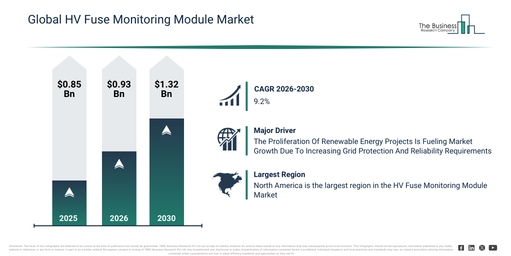
    The hv fuse monitoring module market has shown significant growth over recent years. This market is expected to increase from $0.85 billion in 2025 to $0.93 billion in 2026, at a compound annual growth rate (CAGR) of 9.0%. The expansion observed in the past can be attributed to factors such as the enlargement of high-voltage electrical infrastructure, the rising electrification of industrial systems, an increased need for grid reliability, the growing implementation of complex power electronics, and an enhanced focus on preventive maintenance.

    The hv fuse monitoring module market is projected to experience substantial growth in the upcoming years. It will grow to $1.32 billion in 2030 at a compound annual growth rate (CAGR) of 9.2%. The expansion during the forecast period can be attributed to the increasing adoption of smart grids, rising penetration of electric vehicles, the growing use of digital monitoring systems, the broader integration of renewable energy, and increasing investments in grid modernization. Major trends expected over the forecast horizon include the wider adoption of real-time fuse health monitoring systems, greater integration of remote diagnostics and communication interfaces, an escalating demand for predictive maintenance capabilities, the proliferation of smart high-voltage protection solutions, and an enhanced focus on system safety and reliability.

    Get A Free Sample Report With In-Depth Market Insights:

    https://thebusinessresearchcompany.com/sample_request?id=17183134&type=smp&name=HV%20Fuse%20Monitoring%20Module%20Market%20Report%202026&utm_source=Blogs&utm_medium=Paid&utm_campaign=Oct_PR

    HV Fuse Monitoring Module Market Demand Drivers Opening New Revenue Streams

    The expanding number of renewable energy initiatives is anticipated to drive the future expansion of the HV fuse monitoring module market. These projects encompass efforts to produce energy from naturally restoring sources like solar, wind, hydro, biomass, or geothermal power. The increase in renewable energy projects stems from heightened worries about climate change, as they decrease greenhouse gas output and facilitate the substitution of fossil fuels with cleaner, enduring power options. The HV fuse monitoring module assists renewable energy endeavors by offering immediate fault identification and system safeguarding, thereby enhancing grid dependability, reducing operational interruptions, and guaranteeing the secure and effective incorporation of renewable energy into high-voltage power grids. For example, data from the European Commission, a Belgium-based governmental entity, indicated in December 2025 that in 2024, renewable sources constituted 25.2% of the EU’s total energy consumption, an increase from 24.6% in 2023. Consequently, the expansion of renewable energy projects is a primary factor fueling the growth of the HV fuse monitoring module market.

    HV Fuse Monitoring Module Market Segmentation: How Does The Market Break Down By Category?

    The hv fuse monitoring module market covered in this report is segmented –

    1) By Type: High Voltage Alternating Current Fuse Monitoring Module; High Voltage Direct Current Fuse Monitoring Module

    2) By Voltage Rating: Low Voltage; Medium Voltage; High Voltage

    3) By Sales Channel: Direct Sales; Aftermarket Or Distributors

    4) By End User: Utilities; Industrial; Commercial; Automotive; Other End Users

    Subsegments:

    1) By High Voltage Alternating Current Fuse Monitoring Module: Real Time Fuse Status Monitoring; Overcurrent Detection And Alerting; Temperature And Thermal Condition Monitoring; Remote Monitoring And Communication Capability; Predictive Maintenance And Fault Diagnosis

    2) By High Voltage Direct Current Fuse Monitoring Module: Continuous Fuse Health Monitoring; Direct Current Fault Detection And Protection; Voltage And Current Condition Monitoring; Remote Diagnostics And Data Transmission; Advanced Safety And System Reliability Features

    HV Fuse Monitoring Module Market Industry Leaders And Competitive Landscape

    Major companies operating in the hv fuse monitoring module market are Schneider Electric SE, ABB Ltd., Larsen & Toubro Limited, Eaton Corporation, Leclanché SA, TE Connectivity plc, Zhejiang Chint Electrics Co. Ltd., Hubbell Incorporated, Sensata Technologies Holding plc, Littelfuse Inc., Schweitzer Engineering Laboratories Inc., Mersen S.A., S&C Electric Company, Weidmuller Interface GmbH & Co. KG, Powell Industries Inc., Bel Fuse Inc., Schurter AG, DF Electric S.A., GE Grid Solutions, SIBA GmbH.

    View The Full HV Fuse Monitoring Module Market Report:

    https://thebusinessresearchcompany.com/report/hv-fuse-monitoring-module-market-report?utm_source=Blogs&utm_medium=Paid&utm_campaign=Oct_PR

    HV Fuse Monitoring Module Market Regional Analysis And Leading Geography

    North America was the largest region in the high voltage (HV) fuse monitoring module market in 2025. Asia-Pacific is expected to be the fastest-growing region in the forecast period. The regions covered in the hv fuse monitoring module market report are Asia-Pacific, South East Asia, Western Europe, Eastern Europe, North America, South America, Middle East, Africa.

    Reach Out To Our Team:

    The Business Research Company: https://www.thebusinessresearchcompany.com/

    Americas: +1 310-496-7795

    Asia: +44 7882 955267 & +91 8897263534

    Europe: +44 7882 955267

    Email us at: marketing@tbrc.info

    Follow us on:

    LinkedIn: https://in.linkedin.com/company/the-business-research-company

    YouTube: https://www.youtube.com/channel/UC24_fI0rV8cR5DxlCpgmyFQ

    Global Market Model: https://www.thebusinessresearchcompany.com/global-market-model
  • High-Pass Harmonic Filter Market Analysis: How The Industry Is Evolving Toward A $1.66 Billion Future

    High-Pass Harmonic Filter Market Analysis: How The Industry Is Evolving Toward A $1.66 Billion Future

    Backed by market attractiveness analysis, total addressable market sizing, company benchmarking matrices, interactive Excel dashboards, wider supply chain intelligence, emerging startup coverage, and detailed product-level insights, The Business Research Company’s 2026 market reports are designed to offer research that is more actionable and strategically valuable than ever.

    High-Pass Harmonic Filter Market Growth Analysis: How Will Revenue Trend Over The Forecast Period?

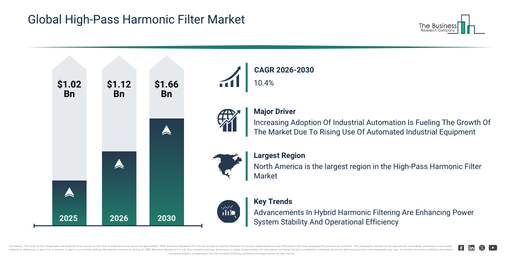
    The high-pass harmonic filter market size has experienced swift expansion in recent years. Its valuation is projected to increase from $1.02 billion in 2025 to $1.12 billion in 2026, achieving a compound annual growth rate (CAGR) of 10.1%. The historical growth can be attributed to factors such as the increasing deployment of power electronics in industrial equipment, the expansion of variable frequency drive installations, a rising awareness of harmonic distortion issues, the development of industrial automation systems, and the adoption of passive harmonic filters.

    The high-pass harmonic filter market size is expected to experience rapid expansion in the coming years. It is projected to grow to $1.66 billion in 2030, driven by a compound annual growth rate (CAGR) of 10.4%. This projected growth can be attributed to several factors, including the increasing integration of renewable energy systems, the rising deployment of electric vehicle charging infrastructure, the expansion of smart grid projects, a growing demand for high-quality power supply, and the increasing use of active and hybrid filtering technologies. Furthermore, key trends in the forecast period involve the increasing deployment of harmonic mitigation solutions in industrial systems, a rising demand for high-frequency harmonic filtering, the growing adoption of hybrid filter configurations, the expansion of power quality management initiatives, and an enhanced focus on grid stability and equipment protection.

    Get A Free Sample Report With In-Depth Market Insights:

    https://thebusinessresearchcompany.com/sample_request?id=35011992&type=smp&name=High-Pass%20Harmonic%20Filter%20Market%20Report%202026&utm_source=Blogs&utm_medium=Paid&utm_campaign=Oct_PR

    High-Pass Harmonic Filter Market Industry Drivers: What’s Behind The Revenue Growth?

    The increasing adoption of industrial automation is projected to propel the expansion of the high-pass harmonic filter market moving forward. Industrial automation signifies the rising implementation of automated technologies, including industrial robots, programmable logic controllers, distributed control systems, and industrial software, to carry out manufacturing and process operations with minimal human involvement. This surge in industrial automation is driven by manufacturers integrating more electronically controlled and digitally integrated equipment to boost productivity, enhance operational efficiency, and reduce unexpected downtime. High-pass harmonic filters facilitate industrial automation by mitigating high-frequency harmonic distortions generated by automated machinery, thereby maintaining power quality, protecting sensitive electrical components, and ensuring the stable functioning of automated systems. For example, in October 2025, the International Federation of Robotics (IFR), a Germany-based robotics association, reported that 542,000 industrial robots were installed globally in 2024, which was more than double the installations from a decade earlier. Thus, the increasing embrace of industrial automation is a significant driver of growth for the high-pass harmonic filter market. The growing integration of renewable energy is anticipated to fuel the high-pass harmonic filter market’s growth in the future. Renewable energy integration refers to the increasing incorporation of electricity derived from renewable sources such as solar and wind into national and regional power grids. This expansion of renewable energy is attributed to declining technology costs, supportive governmental policies, and commitments to decrease carbon emissions. High-pass harmonic filters support renewable energy integration by mitigating high-order harmonic distortions introduced by inverter-based renewable installations, thereby enhancing power quality and system reliability. For instance, in March 2024, according to IRENA – International Renewable Energy Agency, a UAE-based non-profit organization, US renewable energy capacity increased from 356,413 MW in 2022 to 387,549 MW in 2023, representing an 8.7% rise year on year. Therefore, the expanding integration of renewable energy is a key factor driving the growth of the high-pass harmonic filter market.

    High-Pass Harmonic Filter Market Segmentation And Category Overview

    The high-pass harmonic filter market covered in this report is segmented –

    1) By Product Type: Passive High Pass Harmonic Filters; Active High Pass Harmonic Filters; Hybrid High Pass Harmonic Filters

    2) By Phase: Single Phase; Three Phase

    3) By Voltage: Low Voltage; Medium Voltage; High Voltage

    4) By Application: Industrial; Commercial; Residential; Utilities; Other Applications

    5) By End-User: Manufacturing; Power Generation; Oil And Gas; Data Centers; Other End-Users

    Subsegments:

    1) By Passive High Pass Harmonic Filters: Capacitor Based Filters; Inductor Based Filters; Resistor Based Filters

    2) By Active High Pass Harmonic Filters: Operational Amplifier Based Filters; Transistor Based Filters

    3) By Hybrid High Pass Harmonic Filters: Series Hybrid Filters; Parallel Hybrid Filters

    #High-Pass Harmonic Filter Market Growth Trends: What’s Shaping The Future Outlook?

    Leading companies in the high pass harmonic filters market are concentrating on developing sophisticated filtering and monitoring technologies, such as hybrid harmonic filters, with the aim of boosting power system stability, reducing irregularities, and optimizing operational efficiency across various industries. Hybrid harmonic filters are solutions that merge passive and active filtering techniques to mitigate electrical harmonics and stabilize unstable power systems, thereby enhancing the reliability and performance of sensitive electronics. For example, in October 2023, Power Standards Lab Inc., a US-based company, introduced its next-generation products, the PQ Edge Power Analyzer and the PowerAct Hybrid Harmonic Filter, crafted to deliver grid-edge visibility, proactive monitoring, and power quality correction. These solutions are engineered to support mission-critical applications and feature fleet-wide monitoring software, QubeScan, along with a hybrid filtering system that integrates traditional passive and active filters to rectify harmonics, improve uptime, and ensure scalable power quality throughout diverse industrial and commercial operations.

    High-Pass Harmonic Filter Market Company Landscape And Competitive Strategy

    Major companies operating in the high-pass harmonic filter market are CG Power and Industrial Solutions Limited, Trans-Coil Inc., Intone Power Technology Co. Ltd., Sinexcel Empower Energy Freedom Co. Ltd., MTE Corporation, Xi’an CoEpower Electric Co. Ltd., Amtech Electronics Ltd., AVX Corporation, Enspec Power Limited, Mirus International Inc., InPhase Power Technologies Inc., Quality Energy Pty Ltd., Baron Power Limited, Comsys AB, Merus Power Inc., Treffer Power System Solution Private Limited, LPINZ Limited, REO AG, Sharda Electronics & Company, SINAVA GmbH.

    View The Full High-Pass Harmonic Filter Market Report:

    https://thebusinessresearchcompany.com/report/high-pass-harmonic-filter-market-report?utm_source=Blogs&utm_medium=Paid&utm_campaign=Oct_PR

    High-Pass Harmonic Filter Market Largest Region: Which Geography Holds The Biggest Share?

    North America was the largest region in the high-pass harmonic filter market in 2025. Asia-Pacific is expected to be the fastest-growing region in the forecast period. The regions covered in the high-pass harmonic filter market report are Asia-Pacific, South East Asia, Western Europe, Eastern Europe, North America, South America, Middle East, Africa.

    Reach Out To Our Team:

    The Business Research Company: https://www.thebusinessresearchcompany.com/

    Americas: +1 310-496-7795

    Asia: +44 7882 955267 & +91 8897263534

    Europe: +44 7882 955267

    Email us at: marketing@tbrc.info

    Follow us on:

    LinkedIn: https://in.linkedin.com/company/the-business-research-company

    YouTube: https://www.youtube.com/channel/UC24_fI0rV8cR5DxlCpgmyFQ

    Global Market Model: https://www.thebusinessresearchcompany.com/global-market-model
  • High-G Impact Data Logger Market Outlook Through 2030: Understanding The Growth Opportunity

    High-G Impact Data Logger Market Outlook Through 2030: Understanding The Growth Opportunity

    Featuring market attractiveness scoring, total addressable market sizing, company benchmarking matrices, interactive Excel dashboards, deeper supply chain intelligence, emerging startup tracking, and granular product-level insights, The Business Research Company’s 2026 market reports are built to deliver research that is both more actionable and more strategically valuable.

    High-G Impact Data Logger Market Forecast: What Value Will The Market Reach By 2030?

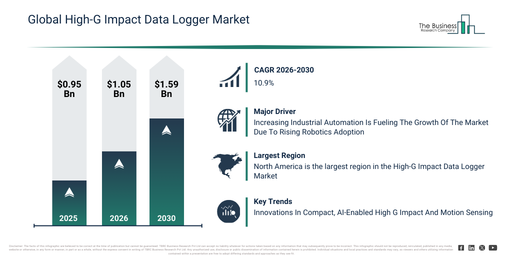
    The high-g impact data logger market has experienced significant expansion in recent years. It is forecast to increase from $0.95 billion in 2025 to $1.05 billion in 2026, achieving a compound annual growth rate (CAGR) of 10.7%. The historical growth of this market can be attributed to several factors including its increasing use in automotive crash testing, the expansion of aerospace and defense testing programs, its adoption in transport and logistics monitoring, the growing demand for impact analysis solutions, and improvements in sensor miniaturization.

    The high-g impact data logger market is anticipated to experience substantial growth over the next few years, with its size projected to reach $1.59 billion by 2030, demonstrating a compound annual growth rate (CAGR) of 10.9%. This expansion during the forecast period is fueled by greater investments in advanced safety testing, an increasing adoption of autonomous vehicle validation tools, the broadening of structural health monitoring applications, increased utilization in defense and ballistic testing, and a rising demand for real-time impact analytics. Significant trends expected include the expanded deployment of ruggedized high-g data loggers, a growing need for high-frequency impact measurement, the rising integration of wireless and GPS-enabled logging systems, an increase in multi-channel data acquisition capabilities, and a heightened focus on compact and lightweight designs.

    Get A Free Sample Report With In-Depth Market Insights:

    https://thebusinessresearchcompany.com/sample_request?id=47005148&type=smp&name=High-G%20Impact%20Data%20Logger%20Market%20Report%202026&utm_source=Blogs&utm_medium=Paid&utm_campaign=Oct_PR

    High-G Impact Data Logger Market Growth Factors: What’s Supporting Expansion?

    The expanding adoption of industrial automation is projected to propel the growth of the high-G impact data logger market in the coming years. Industrial automation signifies the application of control systems and advanced technologies to operate industrial processes and machinery with reduced human intervention. The rise in industrial automation is attributed to increasing labor shortages, cost-related pressures, and the necessity for enhanced productivity, quality, and safety in workplaces. High-G impact data loggers contribute to industrial automation by delivering real-time monitoring of shock and vibration, which helps identify abnormal impacts, avert equipment damage, and decrease unplanned downtime. For instance, in December 2025, a report from the Association for Advancing Automation (A3), a US-based trade association, indicated that the North American robotics industry continued to experience momentum in the first half of 2025. A3’s data showed that robot orders grew by 4.3% and revenue increased by 7.5% when compared to the first half of 2024, signifying sustained investment in automation despite a challenging economic climate. Therefore, the increasing industrial automation is a key driver for the growth of the high-G impact data logger market.

    High-G Impact Data Logger Market Segment Outlook: Which Categories Are Growing Fastest?

    The high-g impact data logger market covered in this report is segmented –

    1) By Product Type: Standalone; Wireless; Universal Serial Bus; Other Product Types

    2) By Connectivity Type: Wired Data Loggers; Wireless Data Loggers; Bluetooth-Enabled Data Loggers; Global Positioning System (Gps) Enabled Data Loggers

    3) By Memory Capacity: Low-Capacity Data Loggers; Medium-Capacity Data Loggers; High-Capacity Data Loggers

    4) By Application Or Use Case: Transport And Logistics Monitoring; Installed Equipment Monitoring; Test, Research And Development, And Certification; Safety And Biomechanics

    5) By End User: Manufacturing; Logistics; Research And Development; Other End Users

    Subsegments:

    1) By Standalone: Single Channel Data Logger; Multi-Channel Data Logger; Portable Data Logger; Compact Data Logger

    2) By Wireless: Wireless Fidelity (Wifi) Enabled Data Logger; Bluetooth Enabled Data Logger; Cellular Network Data Logger; Radio Frequency Data Logger

    3) By Universal Serial Bus: Universal Serial Bus 2.0 Data Logger; Universal Serial Bus 3.0 Data Logger; Universal Serial Bus Data Logger; Plug-And-Play Universal Serial Bus Data Logger

    4) By Other Product Types: Hybrid Data Logger; Cloud-Connected Data Logger; Modular Data Logger; Customizable Data Logger

    High-G Impact Data Logger Market Industry Trends: What’s Reshaping Demand?

    Major companies in the high-G impact data logger market are prioritizing technological advancements, particularly miniaturization and multi-function integration, to develop more compact and versatile devices that can concurrently track shocks, vibrations, and environmental parameters. These advancements involve designing small devices that integrate multiple sensing capabilities, such as impact, motion, and environmental monitoring, into one unit. As an illustration, in May 2025, STMicroelectronics, a Switzerland-based semiconductor company, unveiled the industry-first IMU. The LSM6DSV320X IMU stands as a miniature, AI-enabled sensor that combines high G impact detection and normal activity tracking within a single compact module. Equipped with dual accelerometers, it precisely captures movements up to 16 g and shocks up to 320 g, allowing for accurate event reconstruction in real time. Its integrated AI processing enables in-sensor data analysis, which reduces system power consumption and enhances overall performance.

    High-G Impact Data Logger Market Key Players Shaping Industry Direction

    Major companies operating in the high-g impact data logger market are Ascension Technology Corporation, Teledyne Technologies Incorporated, IMI Sensors, ASPION GmbH, SpotSee LLC, Dewesoft d.o.o., Lansmont Corporation, Jewell Instruments LLC, SHAMA Technologies Pvt. Ltd., Instrumented Sensor Technology AG, MSR Electronics GmbH, Rycobel NV, MicroDAQ LLC, Sercalia S.A., Silicon Designs Inc., Hansford Sensors Ltd, PCE Instruments GmbH, TempMate GmbH, Shinyei Testing Machinery Co. Ltd., InnRecord Inc., Impact-O-Graph Inc., Humipak Ltd., and MicroStar Laboratories Inc.

    View The Full High-G Impact Data Logger Market Report:

    https://thebusinessresearchcompany.com/report/high-g-impact-data-logger-market-report?utm_source=Blogs&utm_medium=Paid&utm_campaign=Oct_PR

    High-G Impact Data Logger Market Regional Analysis: Which Geography Leads On Revenue?

    North America was the largest region in the high-G impact data logger market in 2025. Asia-Pacific is expected to be the fastest-growing region in the forecast period. The regions covered in the high-g impact data logger market report are Asia-Pacific, South East Asia, Western Europe, Eastern Europe, North America, South America, Middle East, Africa.

    Reach Out To Our Team:

    The Business Research Company: https://www.thebusinessresearchcompany.com/

    Americas: +1 310-496-7795

    Asia: +44 7882 955267 & +91 8897263534

    Europe: +44 7882 955267

    Email us at: marketing@tbrc.info

    Follow us on:

    LinkedIn: https://in.linkedin.com/company/the-business-research-company

    YouTube: https://www.youtube.com/channel/UC24_fI0rV8cR5DxlCpgmyFQ

    Global Market Model: https://www.thebusinessresearchcompany.com/global-market-model
  • High-Efficiency Air Dryer Market Growth Outlook: Why Analysts Expect Continued Expansion

    High-Efficiency Air Dryer Market Growth Outlook: Why Analysts Expect Continued Expansion

    Backed by market attractiveness analysis, total addressable market sizing, company benchmarking matrices, interactive Excel dashboards, wider supply chain intelligence, emerging startup coverage, and detailed product-level insights, The Business Research Company’s 2026 market reports are designed to offer research that is more actionable and strategically valuable than ever.

    High-Efficiency Air Dryer Market Size, Value And Growth Trajectory Through 2030

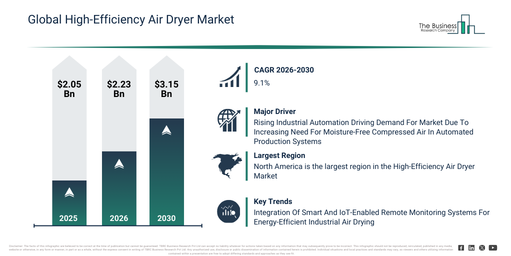
    The high-efficiency air dryer market size has experienced robust growth in recent years. It is anticipated to expand from $2.05 billion in 2025 to $2.23 billion in 2026, exhibiting a compound annual growth rate (CAGR) of 8.8%. This historical growth can be attributed to factors such as the expanding use of industrial compressed air, a growing recognition of equipment damage due to moisture, the adoption of refrigerated and desiccant dryer technologies, an increase in manufacturing automation, and a rising focus on optimizing energy costs.

    The high-efficiency air dryer market is projected to experience substantial expansion over the upcoming period. This market is anticipated to reach $3.15 billion by 2030, achieving a compound annual growth rate (CAGR) of 9.1%. Factors contributing to this growth during the forecast timeframe include greater investments in energy-efficient industrial infrastructure, the growing uptake of smart compressed air systems, increased regulatory emphasis on cutting energy consumption, the expansion of electronics and pharmaceutical manufacturing sectors, and a heightened need for dependable air quality control. Key trends expected within this period involve the increasing use of energy-efficient compressed air drying systems, a rising need for low dew point performance across various industries, the broadening integration of smart monitoring and control features, the spread of hybrid and heat of compression dryer technologies, and an intensified focus on lowering lifecycle operating costs.

    Get A Free Sample Report With In-Depth Market Insights:

    https://thebusinessresearchcompany.com/sample_request?id=22548107&type=smp&name=High-Efficiency%20Air%20Dryer%20Market%20Report%202026&utm_source=Blogs&utm_medium=Paid&utm_campaign=Oct_PR

    High-Efficiency Air Dryer Market Growth Drivers: What’s Behind The Acceleration?

    The increasing prevalence of industrial automation is anticipated to fuel the growth of the high-efficiency air dryers market in the coming years. Industrial automation is defined as the deployment of control systems and information technologies to manage industrial tasks with minimal human involvement. The surge in industrial automation is attributed to the public’s demand for efficient and scalable production methods, prompting various industries to adopt automated systems, real-time surveillance, and interconnected machinery to minimize human errors and enhance overall operational effectiveness. High-efficiency air dryers actively support this expanding industrial automation by providing crucial moisture-free compressed air, essential for the optimal functioning of pneumatic tools and robotic systems. As an illustration, in September 2024, the International Federation of Robotics, a Germany-based industry association, reported that global industrial robot installations reached 542,000 units in 2024, indicating a 9% rise in operational stock to 4,664,000 units compared to 2023. Consequently, the rising trend of industrial automation is a primary impetus behind the expansion of the high-efficiency air dryer market.

    High-Efficiency Air Dryer Market Segments: Where Is Growth Concentrated?

    The high-efficiency air dryer market covered in this report is segmented –

    1) By Product Type: Refrigerated Air Dryers; Desiccant Air Dryers; Membrane Air Dryers; Other Product Types

    2) By Application: Industrial; Commercial; Residential; Other Applications

    3) By Distribution Channel: Direct Sales; Distributors And Wholesalers; Online Retail; Other Distribution Channels

    4) By End-User: Manufacturing; Food And Beverage; Pharmaceuticals; Automotive; Electronics; Other End-Users

    Subsegments:

    1) By Refrigerated Air Dryers: Water Cooled Refrigerated Air Dryers; Air Cooled Refrigerated Air Dryers; Portable Refrigerated Air Dryers; Industrial Refrigerated Air Dryers; Compact Refrigerated Air Dryers

    2) By Desiccant Air Dryers: Heatless Desiccant Air Dryers; Heated Desiccant Air Dryers; Blower Purge Desiccant Air Dryers; Compact Desiccant Air Dryers; Industrial Desiccant Air Dryers

    3) By Membrane Air Dryers: Portable Membrane Air Dryers; Industrial Membrane Air Dryers; High Flow Membrane Air Dryers; Low Flow Membrane Air Dryers; Compact Membrane Air Dryers

    4) By Other Product Types: Hybrid Air Dryers; Chemical Air Dryers; Vacuum Air Dryers; Adsorption Air Dryers; Custom Air Dryers

    High-Efficiency Air Dryer Market Trends: What’s Defining The Industry’s Next Phase?

    Leading companies in the high-efficiency air dryers market are concentrating on developing innovative solutions, such as IoT-enabled and smart high-efficiency refrigerated air dryers with remote monitoring capabilities, to address the increasing demand for improved operational efficiency and reduced energy consumption. Remote monitoring systems are technology configurations that enable equipment to be tracked and managed from a distance via the internet or dedicated networks, facilitating real-time tracking of key performance parameters, predictive maintenance alerts, and energy optimization when compared to traditional air dryers that rely on manual checks and static controls. For instance, in October 2025, ELGi Compressors Europe, a Belgium-based manufacturer of compressed air systems, launched the AR N Series Direct Expansion Refrigerated Compressed Air Dryers, a line of high-efficiency industrial air dryers designed to reliably remove moisture from compressed air systems while simultaneously lowering energy consumption. The AR N Series features a compact, space-saving design, zero-loss auto drain valves to prevent compressed air wastage, a dual-stage cooling system with regenerative pre-cooling, stainless-steel heat exchangers for enhanced corrosion resistance, and environmentally friendly R513a refrigerant to support sustainability goals. Its advanced moisture control technology improves system efficiency and protects downstream equipment compared with conventional dryers. These dryers are suitable for applications ranging from workshops to large production facilities, where consistent dew point performance and reduced operational costs are critical.

    High-Efficiency Air Dryer Market Leading Companies And Competitive Benchmarking

    Major companies operating in the high-efficiency air dryer market are Parker-Hannifin Corporation, Atlas Copco Group, Ingersoll Rand Inc., SMC Corporation, Donaldson Company, Kaeser Compressors, Schulz Group, Sullair LLC, Quincy Compressor, BOGE Kompressoren, Beko Technologies, Deltech, Van Air Systems, Pneumatech, Omega Air, Baker-Rullman Manufacturing Inc, Mikropor America Inc, Annair Drychill Tech Pvt Ltd, Aircel, and Gem Equipments Pvt Ltd.

    View The Full High-Efficiency Air Dryer Market Report:

    https://thebusinessresearchcompany.com/report/high-efficiency-air-dryer-market-report?utm_source=Blogs&utm_medium=Paid&utm_campaign=Oct_PR

    High-Efficiency Air Dryer Market Top Region By Revenue And Market Share

    North America was the largest region in the high-efficiency air dryer market in 2025. Asia-Pacific is expected to be the fastest-growing region in the forecast period. The regions covered in the high-efficiency air dryer market report are Asia-Pacific, South East Asia, Western Europe, Eastern Europe, North America, South America, Middle East, Africa.

    Reach Out To Our Team:

    The Business Research Company: https://www.thebusinessresearchcompany.com/

    Americas: +1 310-496-7795

    Asia: +44 7882 955267 & +91 8897263534

    Europe: +44 7882 955267

    Email us at: marketing@tbrc.info

    Follow us on:

    LinkedIn: https://in.linkedin.com/company/the-business-research-company

    YouTube: https://www.youtube.com/channel/UC24_fI0rV8cR5DxlCpgmyFQ

    Global Market Model: https://www.thebusinessresearchcompany.com/global-market-model
  • High-Density Polyethylene (HDPE) Conduit For Utilities Market Forecast Insights: The Road To $4.02 Billion By 2030

    High-Density Polyethylene (HDPE) Conduit For Utilities Market Forecast Insights: The Road To $4.02 Billion By 2030

    Featuring market attractiveness scoring, total addressable market sizing, company benchmarking matrices, interactive Excel dashboards, deeper supply chain intelligence, emerging startup tracking, and granular product-level insights, The Business Research Company’s 2026 market reports are built to deliver research that is both more actionable and more strategically valuable.

    High-Density Polyethylene (HDPE) Conduit For Utilities Market CAGR Outlook And Future Development

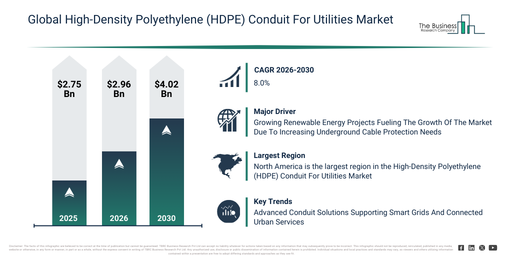
    The market size for high-density polyethylene (hdpe) conduit used in utilities has experienced robust growth recently. This market is projected to expand from $2.75 billion in 2025 to $2.96 billion in 2026, demonstrating a compound annual growth rate (CAGR) of 7.8%. Historically, this growth has stemmed from factors such as the expansion of urban utility networks, a rise in underground cable installations, the replacement of older metal conduits, the development of telecom infrastructure, and the accessibility of adaptable hdpe materials.

    The market for high-density polyethylene (hdpe) conduit used in utilities is projected to experience substantial expansion over the upcoming years. This market is set to reach $4.02 billion in 2030, exhibiting a compound annual growth rate (CAGR) of 8.0%. This anticipated growth during the forecast period is fueled by factors such as increasing capital expenditure in smart grid frameworks, the escalating deployment of fiber-to-the-home networks, the broadening scope of renewable energy cabling projects, a heightened emphasis on climate-resilient utility systems, and the rising need for conduit solutions requiring minimal maintenance. Key developments expected within this period involve the increasing adoption of subterranean utility infrastructure, a growing requirement for conduit systems resistant to corrosion, the expanding utilization of trenchless installation methods, the proliferation of fiber optic network deployment, and a greater emphasis on the enduring durability of infrastructure.

    Get A Free Sample Report With In-Depth Market Insights:

    https://thebusinessresearchcompany.com/sample_request?id=33164&type=smp&name=High-Density%20Polyethylene%20%28HDPE%29%20Conduit%20For%20Utilities%20Market%20Report%202026&utm_source=Blogs&utm_medium=Paid&utm_campaign=Oct_PR

    High-Density Polyethylene (HDPE) Conduit For Utilities Market Growth Factors Behind Sustained Expansion

    The increasing embrace of renewable energy initiatives is anticipated to spur expansion within the high-density polyethylene (HDPE) conduit for utilities market. These renewable energy projects encompass extensive or localized efforts that generate electricity from naturally replenishing resources like solar, wind, hydro, geothermal, and biomass, aiming to lessen dependence on fossil fuels. The rise in renewable energy project adoption stems primarily from governmental decarbonization goals and policy-backed investments designed to achieve net-zero emissions. High-density polyethylene (HDPE) conduit for utilities facilitates these projects by providing resilient, corrosion-resistant, and adaptable underground shielding for power and communication cables utilized in solar farms, wind parks, and grid-interconnection infrastructure. For example, in June 2024, SolarPower Europe, a Belgium-based solar industry association, stated that global solar installations in 2023 reached 447 GW, an increase from 239 GW in 2022, elevating the world’s cumulative solar capacity to 1.6 TW. Consequently, the growing integration of renewable energy projects is accelerating the high-density polyethylene (HDPE) conduit for utilities market’s development.

    High-Density Polyethylene (HDPE) Conduit For Utilities Market Segment Analysis: What Are The Core Market Categories?

    The high-density polyethylene (hdpe) conduit for utilities market covered in this report is segmented –

    1) By Product Type: Smooth Wall; Corrugated; Ribbed; Other Product Types

    2) By Diameter: Small Diameter; Large Diameter

    3) By Installation Type: Direct Burial; Trenchless; Aerial; Other Installation Types

    4) By Application: Power Utilities; Telecommunications; Water Supply; Gas Distribution; Sewage and Drainage; Other Applications

    5) By End User: Electric Power; Telecom; Water and Wastewater; Oil and Gas; Other End Users

    Subsegments:

    1) By Smooth Wall: Single Wall Smooth Conduit; Double Wall Smooth Conduit; Thick Wall Smooth Conduit; Pressure Rated Smooth Conduit

    2) By Corrugated: Single Wall Corrugated Conduit; Double Wall Corrugated Conduit; Flexible Corrugated Conduit; Heavy Duty Corrugated Conduit

    3) By Ribbed: Single Ribbed Conduit; Double Ribbed Conduit; Reinforced Ribbed Conduit; High Strength Ribbed Conduit

    4) By Other Product Types: Micro Duct Conduit; Multi Duct Conduit; Composite Structured Conduit; Specialty Utility Conduit

    High-Density Polyethylene (HDPE) Conduit For Utilities Market Industry Trends Fueling Future Revenue Growth

    Major companies in the high-density polyethylene (HDPE) conduit for utilities market are increasingly focusing on the adoption of technology within smart city infrastructure, specifically through smart utility conduit systems that incorporate embedded sensing and monitoring technologies. These advanced conduit solutions integrate sensing, monitoring, and communication functionalities, enabling real-time tracking, protection, and streamlined management of underground power and communication cables in utility networks. As an illustration, in June 2025, Atkore Inc., a US-based electrical infrastructure manufacturer, launched its Micro-Path™ microduct piping system. This system features various internal duct configurations to suit different cable densities, supports both microtrenching and conventional burial installation techniques, and offers customization possibilities that reduce material waste and optimize conduit sizing for specific utility projects. This microduct approach significantly strengthens conduit deployment strategies, allowing utilities to manage their current connectivity requirements while simultaneously preserving pathways for future broadband and sensor network expansion.

    High-Density Polyethylene (HDPE) Conduit For Utilities Market Industry Leaders And Competitive Landscape

    Major companies operating in the high-density polyethylene (hdpe) conduit for utilities market are IPEX Inc., Pipelife International GmbH, Pexco LLC, Puhui Industry Co. Ltd., WL Plastics Corporation, National Pipe & Plastics Inc., Kangyu Pipe Industry Co. Ltd., Cantex Inc., ThAI-Asia P.E. Pipe Co. Ltd., Kuzeyboru Anonim Sirketi, Blue Diamond Industries LLC, Centennial Plastics Inc., Flying W Plastics Inc., Endot Industries LLC, United Poly Systems LLC, Crown Plastic Pipe LLC, Poliext Csövek Kft., Shree Darshan Pipes Private Limited, Berlia Electricals Private Limited, and Bulldog Pipe LLC.

    View The Full High-Density Polyethylene (HDPE) Conduit For Utilities Market Report:

    https://thebusinessresearchcompany.com/report/high-density-polyethylene-hdpe-conduit-for-utilities-market-report?utm_source=Blogs&utm_medium=Paid&utm_campaign=Oct_PR

    High-Density Polyethylene (HDPE) Conduit For Utilities Market Regional Analysis And Top Geography

    North America was the largest region in the HDPE conduit for utilities market in 2025. Asia-Pacific is expected to be the fastest-growing region in the forecast period. The regions covered in the high-density polyethylene (hdpe) conduit for utilities market report are Asia-Pacific, South East Asia, Western Europe, Eastern Europe, North America, South America, Middle East, Africa.

    Reach Out To Our Team:

    The Business Research Company: https://www.thebusinessresearchcompany.com/

    Americas: +1 310-496-7795

    Asia: +44 7882 955267 & +91 8897263534

    Europe: +44 7882 955267

    Email us at: marketing@tbrc.info

    Follow us on:

    LinkedIn: https://in.linkedin.com/company/the-business-research-company

    YouTube: https://www.youtube.com/channel/UC24_fI0rV8cR5DxlCpgmyFQ

    Global Market Model: https://www.thebusinessresearchcompany.com/global-market-model

  • High Voltage Direct Current (HVDC) Earth Electrode Line Market Explained: What Is Fueling Growth To $2.69 Billion By 2030?

    High Voltage Direct Current (HVDC) Earth Electrode Line Market Explained: What Is Fueling Growth To $2.69 Billion By 2030?

    Built to provide research that’s more actionable and strategically valuable, The Business Research Company’s 2026 market reports include market attractiveness analysis, total addressable market sizing, company benchmarking matrices, interactive Excel dashboards, broader supply chain intelligence, emerging startup tracking, and in-depth product insights.

    High Voltage Direct Current (HVDC) Earth Electrode Line Market Set To Climb From $1.78 Billion In 2026 To $2.69 Billion By 2030

    The high voltage direct current (hvdc) earth electrode line market has recently seen rapid expansion. The market is predicted to expand from $1.61 billion in 2025 to reach $1.78 billion in 2026, achieving a compound annual growth rate (CAGR) of 10.6%. This historical growth stems from the expansion of cross-border power transmission, greater dependence on hvdc systems, an increase in grid interconnection projects, the adoption of monopolar hvdc operations, and the availability of advanced grounding materials.

    The high voltage direct current (hvdc) earth electrode line market is anticipated to show significant expansion in the coming years. It is projected to grow to $2.69 billion in 2030, achieving a compound annual growth rate (CAGR) of 10.8%. This expansion during the forecast period can be attributed to several factors including increasing integration of offshore renewables, rising investments in ultra-high voltage networks, a growing emphasis on grid stability, the expansion of submarine hvdc links, and an increasing need for resilient grounding solutions. Noteworthy trends expected in this period include the increasing deployment of long-distance hvdc transmission projects, a rising demand for corrosion-resistant grounding materials, the growing incorporation of environmental protection measures, the extension of offshore wind grid connections, and an enhanced focus on system reliability and safety.

    Get A Free Sample Report With In-Depth Market Insights:

    https://thebusinessresearchcompany.com/sample_request?id=54887920&type=smp&name=High%20Voltage%20Direct%20Current%20%28HVDC%29%20Earth%20Electrode%20Line%20Market%20Report%202026&utm_source=Blogs&utm_medium=Paid&utm_campaign=Oct_PR

    High Voltage Direct Current (HVDC) Earth Electrode Line Market Demand Drivers Opening New Revenue Streams

    The growing incorporation of renewable energy sources is anticipated to boost the high-voltage direct current (HVDC) earth electrode line market in the forthcoming years. Renewable power options, such as solar, wind, hydropower, and bioenergy, produce electricity with minimal greenhouse gas emissions and are increasingly being adopted globally as part of decarbonization efforts. This integration is accelerating due to worldwide governmental policies and incentives supporting low-carbon energy production. The extensive deployment of renewable energy, often located in distant or offshore areas, has heightened the requirement for HVDC transmission systems capable of efficiently transferring power over long distances while maintaining grid stability. HVDC earth electrode lines are vital in supporting these systems by providing ground return paths and enhancing operational reliability. For instance, in December 2024, as per Eurostat, a Luxembourg-based government agency, renewable energy accounted for 24.5% of total energy consumption in the EU in 2023, an increase from 23.0% in 2022. Consequently, the increasing integration of renewable energy sources is projected to fuel the expansion of the high-voltage direct current (HVDC) earth electrode line market.

    High Voltage Direct Current (HVDC) Earth Electrode Line Market Segment Breakdown: Which Categories Lead On Revenue?

    The high voltage direct current (hvdc) earth electrode line market covered in this report is segmented –

    1) By Type: Overhead Line; Underground Cable; Submarine Cable

    2) By Voltage Rating: Below 500 kV; 500–800 kV; Above 800 kV

    3) By Installation Environment: Land-Based Electrode Systems; Deep Well Electrode Systems; Sea Electrode Systems; Shore Electrode Systems

    4) By Application: Bulk Power Transmission; Interconnecting Grids; Offshore Wind Integration

    5) By End-User: Utilities; Industrial; Renewable Energy Plants; Other End-Users

    Subsegments:

    1) By Overhead Line: Steel Lattice Towers; Concrete Poles; Monopole Structures

    2) By Underground Cable: Direct Buried Cables; Duct Installed Cables; Tunnel Installed Cables

    3) By Submarine Cable: Shallow Water Cables; Deep Water Cables; Armored Submarine Cables

    High Voltage Direct Current (HVDC) Earth Electrode Line Market Key Participants And Competitive Landscape

    Major companies operating in the high voltage direct current (hvdc) earth electrode line market are Hitachi Ltd., Siemens AG, General Electric (GE) Grid Solutions, Schneider Electric SE, Mitsubishi Electric Corporation, ABB Ltd., Sumitomo Electric Industries Ltd., Toshiba Energy Systems & Solutions Corporation, Prysmian Group, TBEA Co. Ltd., Nexans S.A., LS Cable & System Ltd., NKT A/S, Riyadh Cables Group Company, Sterlite Power Transmission Limited, XD Group, Hyosung Heavy Industries, NR Electric Co. Ltd., C-EPRI Electric Power Engineering Co. Ltd.

    View The Full High Voltage Direct Current (HVDC) Earth Electrode Line Market Report:

    https://thebusinessresearchcompany.com/report/high-voltage-direct-current-hvdc-earth-electrode-line-market-report?utm_source=Blogs&utm_medium=Paid&utm_campaign=Oct_PR

    High Voltage Direct Current (HVDC) Earth Electrode Line Market Geographic Analysis: Where Is Demand Rising Fastest?

    Asia-Pacific was the largest region in the high voltage direct current (HVDC) earth electrode line market in 2025 and is expected to be the fastest-growing region in the forecast period. The regions covered in the high voltage direct current (hvdc) earth electrode line market report are Asia-Pacific, South East Asia, Western Europe, Eastern Europe, North America, South America, Middle East, Africa.

    Reach Out To Our Team:

    The Business Research Company: https://www.thebusinessresearchcompany.com/

    Americas: +1 310-496-7795

    Asia: +44 7882 955267 & +91 8897263534

    Europe: +44 7882 955267

    Email us at: marketing@tbrc.info

    Follow us on:

    LinkedIn: https://in.linkedin.com/company/the-business-research-company

    YouTube: https://www.youtube.com/channel/UC24_fI0rV8cR5DxlCpgmyFQ

    Global Market Model: https://www.thebusinessresearchcompany.com/global-market-model
  • Heavy Lift Jack-Up Vessel Market Analysis: Understanding The Drivers Behind 10.3% CAGR Through 2030 Growth

    Heavy Lift Jack-Up Vessel Market Analysis: Understanding The Drivers Behind 10.3% CAGR Through 2030 Growth

    Featuring market attractiveness scoring, total addressable market sizing, company benchmarking matrices, interactive Excel dashboards, deeper supply chain intelligence, emerging startup tracking, and granular product-level insights, The Business Research Company’s 2026 market reports are built to deliver research that is both more actionable and more strategically valuable.

    Heavy Lift Jack-Up Vessel Market Revenue Growth On Track For A 10.3% CAGR Through 2030

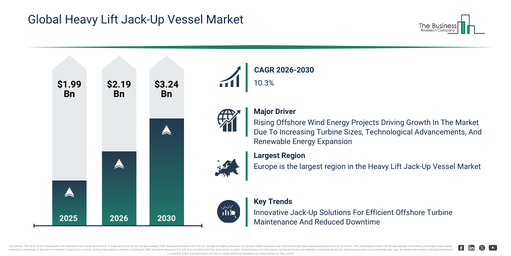
    The heavy lift jack-up vessel market has experienced rapid expansion in recent times. It is projected to grow from $1.99 billion in 2025 to $2.19 billion by 2026, reflecting a compound annual growth rate (CAGR) of 10.0%. Historically, this expansion is linked to several factors, such as the broadening of offshore oil and gas infrastructure, an uptick in marine construction endeavors, the increased use of heavy offshore platforms, the existence of large-scale lifting technologies, and the necessity for reliable offshore installation solutions.

    The heavy lift jack-up vessel market size is expected to experience significant expansion in the coming years. It is projected to grow to $3.24 billion in 2030, with a compound annual growth rate (CAGR) of 10.3%. This anticipated growth during the forecast period is driven by factors such as increasing offshore wind capacity installations, rising investments in renewable offshore infrastructure, a growing need for deepwater installation capabilities, the expansion of hybrid vessel fleets, and a greater emphasis on fuel efficiency and emissions reduction. Key trends observed in this period include an escalating demand for high-capacity offshore installation vessels, the increasing adoption of hybrid and diesel-electric propulsion, the growing utilization of dynamic positioning systems, the broader expansion of offshore wind installation activities, and an enhanced focus on operational safety and stability.

    Get A Free Sample Report With In-Depth Market Insights:

    https://thebusinessresearchcompany.com/sample_request?id=33161&type=smp&name=Heavy%20Lift%20Jack-Up%20Vessel%20Market%20Report%202026&utm_source=Blogs&utm_medium=Paid&utm_campaign=Oct_PR

    Heavy Lift Jack-Up Vessel Market Growth Catalysts And Demand Drivers

    The anticipated growth of the heavy lift jack-up vessel market is linked to the increasing number of offshore wind energy projects. These projects involve generating electricity from wind turbines installed in offshore waters. The expansion of offshore wind energy projects is driven by the global push for renewable power, the use of larger turbines, ongoing technological advancements, and supportive government policies, all of which facilitate quicker deployment and higher efficiency while concurrently lessening reliance on fossil fuels. Heavy lift jack-up vessels are essential for offshore wind projects as they safely and efficiently install large turbines and foundations, thereby minimizing downtime and enhancing overall operational efficiency. For example, in December 2025, the International Energy Agency (IEA), an autonomous intergovernmental organization based in France, predicted that annual offshore wind capacity would escalate from 9.2 GW in 2024 to over 37 GW by 2030, with China accounting for nearly half of this rise. Consequently, the rising volume of offshore wind energy projects is a primary driver for the expansion of the heavy lift jack-up vessel market.

    Heavy Lift Jack-Up Vessel Market Segment Trends And Revenue Contributors

    The heavy lift jack-up vessel market covered in this report is segmented –

    1) By Vessel Type: Self-Propelled; Non-Self-Propelled

    2) By Lifting Capacity: Less Than 2,000 Tons; 2,000–5,000 Tons; Above 5,000 Tons

    3) By End User: Renewable Energy; Oil And Gas; Marine Construction; Other End Users

    Subsegments:

    1) By Self-Propelled: Dynamic Positioning Capable; Diesel Electric Powered; Hybrid Propulsion Powered; Long Distance Transit Capable; Heavy Load Transport Capable

    2) By Non-Self-Propelled: Tug Assisted Mobility; Barge Mounted Configuration; Shallow Water Operable; Fixed Location Installation Support; Modular Deck Configuration

    Heavy Lift Jack-Up Vessel Market Trends Shaping Long-Term Demand

    Companies operating in the heavy lift jack-up vessel market are increasingly concentrating on developing innovative solutions, such as major component exchange vessels (MCEVs) and advanced maintenance jack-up platforms, to meet the rising demand for efficient offshore wind turbine upkeep. An MCEV is a specialized offshore support vessel that integrates up-tower crane technology with dynamic positioning (DP2) systems, motion-compensated cargo platforms, and walk-to-work systems, facilitating the swift movement and replacement of large turbine components, including generators and gearboxes, without requiring seabed contact. For instance, in June 2025, LiftOff, an offshore wind service innovator from the Netherlands, introduced its major component exchange vessel at the RenewableUK Global Wind Offshore exhibition. This vessel combines established up-tower crane systems with modern DP2 ship technology and motion-compensated features to optimize turbine maintenance campaigns, reduce response durations, and improve operational safety by eliminating seabed preparation delays and enabling quicker transit between sites. This development specifically addresses the growing maintenance requirements linked to the expansion of offshore wind fleets.

    Heavy Lift Jack-Up Vessel Market Leading Players And Competitive Positioning

    Major companies operating in the heavy lift jack-up vessel market are COSCO Shipping Heavy Transport, Saipem S.p.A., McDermott International, Hanwha Ocean, Keppel Offshore And Marine, Boskalis, China Offshore Oil Engineering, DEME Group, Van Oord, Jan De Nul Group, Petrofac, Sapura Energy, Lamprell, Cadeler, Heerema Marine Contractors, Fred Olsen Windcarrier, Seaway7, Scaldis, ZPMC Offshore, and Huisman.

    View The Full Heavy Lift Jack-Up Vessel Market Report:

    https://thebusinessresearchcompany.com/report/heavy-lift-jack-up-vessel-market-report?utm_source=Blogs&utm_medium=Paid&utm_campaign=Oct_PR

    Heavy Lift Jack-Up Vessel Market Regional Split: Which Areas Are Fueling Growth?

    Europe was the largest region in the heavy lift jack-up vessel market in 2025. Asia-Pacific is expected to be the fastest-growing region in the forecast period. The regions covered in the heavy lift jack-up vessel market report are Asia-Pacific, South East Asia, Western Europe, Eastern Europe, North America, South America, Middle East, Africa.

    Reach Out To Our Team:

    The Business Research Company: https://www.thebusinessresearchcompany.com/

    Americas: +1 310-496-7795

    Asia: +44 7882 955267 & +91 8897263534

    Europe: +44 7882 955267

    Email us at: marketing@tbrc.info

    Follow us on:

    LinkedIn: https://in.linkedin.com/company/the-business-research-company

    YouTube: https://www.youtube.com/channel/UC24_fI0rV8cR5DxlCpgmyFQ

    Global Market Model: https://www.thebusinessresearchcompany.com/global-market-model
  • Heat Recovery Steam Generator (HRSG) Condition Monitoring Market Growth To $1.77 Billion By 2030: What’s Driving The Expansion?

    Heat Recovery Steam Generator (HRSG) Condition Monitoring Market Growth To $1.77 Billion By 2030: What’s Driving The Expansion?

    Built to provide research that’s more actionable and strategically valuable, The Business Research Company’s 2026 market reports include market attractiveness analysis, total addressable market sizing, company benchmarking matrices, interactive Excel dashboards, broader supply chain intelligence, emerging startup tracking, and in-depth product insights.

    Heat Recovery Steam Generator (HRSG) Condition Monitoring Market Value Growth And Long-Term Outlook

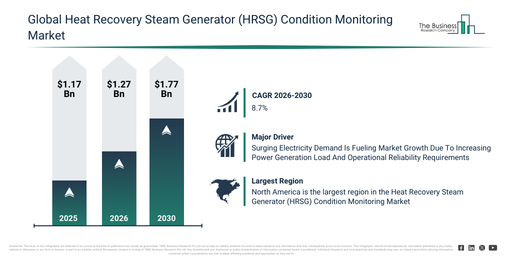
    The heat recovery steam generator (hrsg) condition monitoring market has demonstrated robust growth in recent years. This market is projected to expand from $1.17 billion in 2025 to $1.27 billion in 2026, exhibiting a compound annual growth rate (CAGR) of 8.5%. Historically, this growth can be attributed to the increasing deployment of combined cycle power plants, the rising operational complexity of HRSG systems, a growing awareness of equipment degradation risks, the expansion of sensor-based industrial monitoring, and the demand for reduced unplanned outages.

    The heat recovery steam generator (HRSG) condition monitoring market is projected to experience robust expansion over the next few years. It is expected to grow to $1.77 billion in 2030, exhibiting a compound annual growth rate (CAGR) of 8.7%. This expansion during the forecast period can be attributed to several factors, including increasing investments in digital power plant monitoring, the rising adoption of cloud-based condition monitoring systems, a growing emphasis on lifecycle cost optimization, the wider application of AI-driven diagnostics, and an increasing focus on plant efficiency and reliability. Significant trends anticipated during this period include the rising acceptance of predictive maintenance analytics, the expanded deployment of advanced sensor networks, greater integration of remote monitoring platforms, the development of data-driven fault detection systems, and an enhanced focus on optimizing asset reliability.

    Get A Free Sample Report With In-Depth Market Insights:

    https://thebusinessresearchcompany.com/sample_request?id=33160&type=smp&name=Heat%20Recovery%20Steam%20Generator%20%28HRSG%29%20Condition%20Monitoring%20Market%20Report%202026&utm_source=Blogs&utm_medium=Paid&utm_campaign=Oct_PR

    Heat Recovery Steam Generator (HRSG) Condition Monitoring Market Opportunity Drivers: What’s Unlocking New Revenue Potential?

    The HRSG condition monitoring market is anticipated to expand due to increasing electricity demand. Electricity demand signifies a continuous rise in power usage across homes, businesses, and industrial areas, fueled by economic activities and current electrification patterns. This demand is growing because of widespread electrification across various industries, transport, and residential domains, leading to greater consumption from electric vehicles, digital infrastructure, and technologies requiring significant energy. HRSG condition monitoring aids in addressing growing electricity demand by allowing combined-cycle power plants to function dependably even with heavier loads and frequent operational cycles. It achieves this by constantly overseeing thermal stress, material fatigue, and the health of components within heat recovery steam generators, thereby mitigating the chance of sudden malfunctions, enhancing plant uptime, decreasing unscheduled downtime, and guaranteeing consistent and effective power generation. For example, in March 2024, the International Energy Agency, an intergovernmental body based in France, reported that global electricity demand is forecast to increase more rapidly over the coming three years, averaging a 3.4% annual rise until 2026. Additionally, electricity usage by data centers is predicted to more than double, moving from approximately 460 terawatt-hours (TWh) in 2022 to beyond 1,000 TWh by 2026. Consequently, the increased electricity demand is fueling the expansion of the HRSG condition monitoring market.

    Heat Recovery Steam Generator (HRSG) Condition Monitoring Market Segment Analysis Spotlighting Growth Areas

    The heat recovery steam generator (hrsg) condition monitoring market covered in this report is segmented –

    1) By Component: Hardware; Software; Services

    2) By Deployment Mode: On Premises; Cloud Based

    3) By Technology: Vibration Monitoring; Thermography; Ultrasonic Testing; Oil Analysis; Corrosion Monitoring; Other Technologies

    4) By Application: Power Generation; Oil And Gas; Chemical; Other Applications

    5) By End User: Utilities; Independent Power Producers; Industrial; Other End Users

    Subsegments:

    1) By Hardware: Sensors; Data Acquisition Units; Monitoring Instruments

    2) By Software: Condition Monitoring Platforms; Predictive Analytics Tools; Performance Visualization Systems

    3) By Services: Installation Services; Maintenance Services; Consulting And Training Services

    Heat Recovery Steam Generator (HRSG) Condition Monitoring Market Competitive Overview And Top Companies

    Major companies operating in the heat recovery steam generator (hrsg) condition monitoring market are Schneider Electric SE, Honeywell International Inc., Siemens Energy Global GmbH & Co. KG, GE Vernova Inc., ABB Ltd., Emerson Electric Co., Doosan Enerbility Co. Ltd., Rockwell Automation Inc., Mitsubishi Power Ltd., Yokogawa Electric Corporation, Thermax Limited, Babcock & Wilcox Enterprises Inc., Mistras Group Inc., Nooter Eriksen Inc., Vogt Power International Inc., Structural Integrity Associates, Inc., Greenbank Energy Solutions Inc., SIBA GmbH, Physical Acoustics Corporation, Valmet Corporation.

    View The Full Heat Recovery Steam Generator (HRSG) Condition Monitoring Market Report:

    https://thebusinessresearchcompany.com/report/heat-recovery-steam-generator-hrsg-condition-monitoring-market-report?utm_source=Blogs&utm_medium=Paid&utm_campaign=Oct_PR

    Heat Recovery Steam Generator (HRSG) Condition Monitoring Market Top Region: Where Does Most Revenue Come From?

    North America was the largest region in the heat recovery steam generator (HRSG) condition monitoring market in 2025. Asia-Pacific is expected to be the fastest-growing region in the forecast period. The regions covered in the heat recovery steam generator (hrsg) condition monitoring market report are Asia-Pacific, South East Asia, Western Europe, Eastern Europe, North America, South America, Middle East, Africa.

    Reach Out To Our Team:

    The Business Research Company: https://www.thebusinessresearchcompany.com/

    Americas: +1 310-496-7795

    Asia: +44 7882 955267 & +91 8897263534

    Europe: +44 7882 955267

    Email us at: marketing@tbrc.info

    Follow us on:

    LinkedIn: https://in.linkedin.com/company/the-business-research-company

    YouTube: https://www.youtube.com/channel/UC24_fI0rV8cR5DxlCpgmyFQ

    Global Market Model: https://www.thebusinessresearchcompany.com/global-market-model
  • Heat Pump Retrofit Design Market Trends Reshaping Industry Growth Through 2030

    Heat Pump Retrofit Design Market Trends Reshaping Industry Growth Through 2030

    Backed by market attractiveness analysis, total addressable market sizing, company benchmarking matrices, interactive Excel dashboards, wider supply chain intelligence, emerging startup coverage, and detailed product-level insights, The Business Research Company’s 2026 market reports are designed to offer research that is more actionable and strategically valuable than ever.

    Heat Pump Retrofit Design Market Poised To Hit $16.58 Billion By 2030 With A 12.7% CAGR

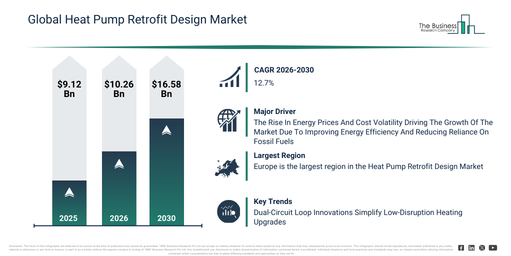
    The heat pump retrofit design market has experienced rapid expansion recently. It is forecast to grow from $9.12 billion in 2025 to $10.26 billion in 2026, achieving a compound annual growth rate (CAGR) of 12.5%. This historical growth can be attributed to the increasing replacement of fossil fuel heating systems, a rising demand for professional energy audits, the expansion of retrofit feasibility studies, the availability of standardized retrofit design tools, and the early adoption of building energy modeling.

    The heat pump retrofit design market is set to achieve considerable expansion in the coming years. Its valuation is projected to reach $16.58 billion by 2030, demonstrating a compound annual growth rate (CAGR) of 12.7%. This anticipated growth is driven by several factors, including heightened investments in heat pump retrofit programs, the increasing adoption of AI-assisted system sizing, the expansion of large-scale residential retrofits, a growing demand for performance-verified designs, and strengthened regulatory support for transitions to low-carbon heating. Prominent trends throughout this period will encompass the increasing embrace of detailed heat pump retrofit assessments, the rising utilization of digital building energy modeling, the broader integration of customized retrofit design packages, an expansion of electrification planning services, and an enhanced focus on system compatibility and overall performance.

    Get A Free Sample Report With In-Depth Market Insights:

    https://thebusinessresearchcompany.com/sample_request?id=33159&type=smp&name=Heat%20Pump%20Retrofit%20Design%20Market%20Report%202026&utm_source=Blogs&utm_medium=Paid&utm_campaign=Oct_PR

    Heat Pump Retrofit Design Market Growth Momentum: What Factors Are Shaping Demand?

    The heat pump retrofit design market is projected to expand due to increasing energy prices and cost volatility. This surge in energy costs and instability stems from supply-demand imbalances, where inconsistent fuel availability and consumption lead to frequent and unpredictable shifts in energy expenses. Heat pump retrofit design offers a solution to these issues by enhancing energy efficiency and decreasing dependence on volatile fossil fuel prices, thus creating more stable and predictable energy expenditures. For example, in April 2024, the Australian Energy Regulator, an Australia-based government agency, reported that in 2023, quarterly electricity prices in Queensland and Victoria increased by 20% and 9%, respectively, when compared to the same quarter of the previous year. Consequently, the rising energy prices and cost volatility are fostering the growth of the heat pump retrofit design market.

    Heat Pump Retrofit Design Market Segment Performance And Emerging Opportunities

    The heat pump retrofit design market covered in this report is segmented –

    1) By Product Type: Air Source Heat Pumps; Ground Source Heat Pumps; Water Source Heat Pumps

    2) By Service Type: Building Energy Assessment And Audit; System Feasibility And Sizing Study; Detailed Engineering And Design Development; Integration Planning And Specification Writing; Commissioning Support And Performance Verification; Post Installation Monitoring And Optimization

    3) By Installation Type: New Installation; Retrofit

    4) By Application: Residential; Commercial; Industrial

    5) By End User: Single-Family Homes; Multi-Family Buildings; Offices; Retail; Hospitality; Industrial Facilities; Other End Users

    Subsegments:

    1) By Air Source Heat Pumps: Residential Air Source Heat Pumps; Commercial Air Source Heat Pumps; Industrial Air Source Heat Pumps; Ducted Air Source Heat Pumps; Ductless Air Source Heat Pumps

    2) By Ground Source Heat Pumps: Horizontal Loop Ground Source Heat Pumps; Vertical Loop Ground Source Heat Pumps; Pond Loop Ground Source Heat Pumps; Residential Ground Source Heat Pumps; Commercial Ground Source Heat Pumps

    3) By Water Source Heat Pumps: Open Loop Water Source Heat Pumps; Closed Loop Water Source Heat Pumps; Lake And River Source Heat Pumps; Residential Water Source Heat Pumps; Commercial Water Source Heat Pumps

    Heat Pump Retrofit Design Market Trends Redefining Industry Growth

    Major companies within the heat pump retrofit design market are concentrating on creating innovative solutions, such as dual-circuit loop designs, to facilitate installations, decrease expenses and interruptions, enhance system compatibility with existing heating infrastructure, and boost maintenance efficiency and overall energy performance. The dual-circuit loop design enables a heat pump to function autonomously from an existing central heating system, resulting in simpler retrofits, reduced disturbance, and more straightforward upkeep. For instance, in June 2025, Hewer Facilities Management Limited, a UK-based heating solutions provider company, unveiled Heat Saviour, a ready-to-install retrofit unit for residential heat pumps that is designed to shorten installation time, lower costs, and minimize disruption. Featuring a dual-circuit loop design, this system operates independently of current central heating, guaranteeing compatibility with a wide array of homes. Its goal is to allow for efficient, dependable, and easy-to-maintain heat pump retrofits, including their application in social housing projects.

    Heat Pump Retrofit Design Market Competitive Landscape: Which Companies Lead The Industry?

    Major companies operating in the heat pump retrofit design market are Daikin Industries Ltd., Mitsubishi Electric Corporation, Trane Technologies plc, Carrier Global Corporation, Johnson Controls International plc, Bosch Thermotechnology, Viessmann Group, NIBE Industrier AB, LG Electronics Inc., Panasonic Corporation, Stiebel Eltron GmbH & Co. KG, Vaillant Group, Danfoss A/S, Fujitsu General Limited, Rheem Manufacturing Company, Glen Dimplex Group, Swegon Group AB, Hitachi Ltd., Aermec S.p.A., Baxi Heating UK Limited, Stiebel Eltron GmbH & Co. KG, Samsung Electronics Co., Ltd., and Ariston Thermo Group.

    View The Full Heat Pump Retrofit Design Market Report:

    https://thebusinessresearchcompany.com/report/heat-pump-retrofit-design-market-report?utm_source=Blogs&utm_medium=Paid&utm_campaign=Oct_PR

    Heat Pump Retrofit Design Market Regional Breakdown: Where Is Demand Concentrated?

    Europe was the largest region in the heat pump retrofit design market in 2025. Asia-Pacific is expected to be the fastest-growing region in the forecast period. The regions covered in the heat pump retrofit design market report are Asia-Pacific, South East Asia, Western Europe, Eastern Europe, North America, South America, Middle East, Africa.

    Reach Out To Our Team:

    The Business Research Company: https://www.thebusinessresearchcompany.com/

    Americas: +1 310-496-7795

    Asia: +44 7882 955267 & +91 8897263534

    Europe: +44 7882 955267

    Email us at: marketing@tbrc.info

    Follow us on:

    LinkedIn: https://in.linkedin.com/company/the-business-research-company

    YouTube: https://www.youtube.com/channel/UC24_fI0rV8cR5DxlCpgmyFQ

    Global Market Model: https://www.thebusinessresearchcompany.com/global-market-model
  • Heat Pump Ready Radiators Market Growth To $2.19 Billion Creates New Opportunities Across The Industry

    Heat Pump Ready Radiators Market Growth To $2.19 Billion Creates New Opportunities Across The Industry

    Featuring market attractiveness scoring, total addressable market sizing, company benchmarking matrices, interactive Excel dashboards, deeper supply chain intelligence, emerging startup tracking, and granular product-level insights, The Business Research Company’s 2026 market reports are built to deliver research that is both more actionable and more strategically valuable.

    Heat Pump Ready Radiators Market Size And Revenue Outlook Through 2030

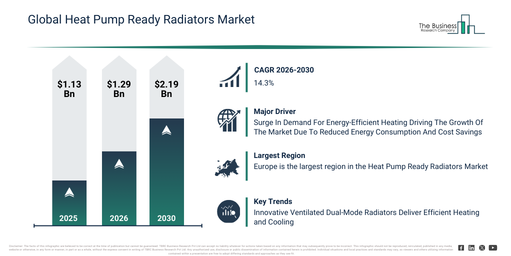
    The heat pump ready radiators market size has seen rapid expansion in recent years. It is projected to grow from $1.13 billion in 2025 to $1.29 billion in 2026, exhibiting a compound annual growth rate (CAGR) of 14.0%. The growth observed in the historic period can be ascribed to the increasing installation of residential heat pumps, the growing replacement of conventional radiators, a rising demand for space heating efficiency, the availability of compact radiator designs, and their early adoption in new energy-efficient buildings.

    The market for heat pump ready radiators is projected to experience substantial expansion over the upcoming years. This market is anticipated to reach a valuation of $2.19 billion by 2030, exhibiting a compound annual growth rate (CAGR) of 14.3%. This expansion during the projection period stems from several factors, including escalating investments directed towards building decarbonization, a greater uptake of intelligent heating control systems, the broadening scope of heat pump retrofits within existing structures, a heightened emphasis on optimizing occupant comfort, and the enhancement of regulatory benchmarks for heating effectiveness. Key developments anticipated throughout the forecast period encompass a wider embrace of low-temperature radiator designs, an increasing requirement for high-output radiators compatible with heat pumps, the accelerating incorporation of smart thermostatic controls, an expansion in upgrading existing radiators through retrofits, and a sharpened focus on the efficiency of heat transfer.

    Get A Free Sample Report With In-Depth Market Insights:

    https://thebusinessresearchcompany.com/sample_request?id=33158&type=smp&name=Heat%20Pump%20Ready%20Radiators%20Market%20Report%202026&utm_source=Blogs&utm_medium=Paid&utm_campaign=Oct_PR

    Heat Pump Ready Radiators Market Expansion Drivers: What’s Shaping Future Growth?

    The increasing emphasis on energy efficiency and cost savings is anticipated to drive the expansion of the heat pump-ready radiators market in the future. These terms signify the capacity of a system, product, or process to deliver the required performance level while consuming less energy, thereby reducing energy usage, operational expenditures, and related emissions over its lifespan. The rise in energy efficiency and cost savings is fueled by decreased energy consumption, as efficient systems need less power for the same performance, leading to lower operating costs and long-term financial advantages. Heat pump-ready radiators contribute to energy efficiency and cost savings by providing effective heat output at lower water temperatures, enabling heat pumps to function more efficiently and lowering overall energy consumption and heating costs. For instance, according to Energy UK, a leading UK-based trade association, over 2.6 million UK homes are expected to achieve $185.6 billion in annual bill savings and 58.2 MtCO2e in lifetime carbon reductions by November 2025. Furthermore, data from March 2024, provided by the Department for Energy Security and Net Zero, a UK-based government department, indicates that ECO continues to be the most significant energy efficiency scheme. In 2023, measures implemented through ECO constituted 83% of all installations. That year, ECO executed 265,000 measures, marking a 61% increase compared to 2022, as the delivery under ECO4 expanded following its launch in April 2022 after the conclusion of ECO3. Therefore, the growing focus on energy efficiency and cost savings is propelling the growth of the heat pump-ready radiators market.

    Heat Pump Ready Radiators Market Segment Landscape And Growth Outlook

    The heat pump ready radiators market covered in this report is segmented –

    1) By Product Type: Panel Radiators; Column Radiators; Towel Radiators; Other Product Types

    2) By Material: Steel; Aluminum; Cast Iron; Other Materials

    3) By Technology Type: Low Temperature Panel Radiators; Enhanced Surface Convector Radiators; Dynamic Response Baseboard Radiators; Dual Output Designer Radiators

    4) By Application: Residential; Commercial; Industrial

    5) By Distribution Channel: Online; Offline

    Subsegments:

    1) By Panel Radiators: Single Panel Radiators; Double Panel Radiators; Triple Panel Radiators; Flat Front Panel Radiators; Compact Panel Radiators

    2) By Column Radiators: Traditional Column Radiators; Modern Column Radiators; Vertical Column Radiators; Horizontal Column Radiators; High Output Column Radiators

    3) By Towel Radiators: Wall Mounted Towel Radiators; Freestanding Towel Radiators; Ladder Style Towel Radiators; Designer Towel Radiators; Multi Functional Towel Radiators

    4) By Other Product Types: Baseboard Radiators; Convector Radiators; Low Profile Radiators; Custom Designed Radiators; Decorative Radiators

    Heat Pump Ready Radiators Market Strategic Trends: What Defines The Next Growth Phase?

    Major companies in the heat pump-ready radiators market are concentrating on creating innovative solutions, such as ventilated dual-mode designs, to deliver effective heating and cooling while ensuring seamless integration with current systems. A ventilated dual-mode design refers to a radiator system equipped with built-in fans for air circulation, enabling it to both heat and cool a space efficiently from a single unit. For instance, in August 2024, The Radiator Company, a UK-based designer and manufacturer of heating solutions, introduced the Relax Hybrid, its first ventilated radiator capable of heating and cooling spaces. This unit combines radiant heat with fan coil assistance and is compatible with traditional boilers and heat pump systems. It is engineered to quickly and evenly reach desired temperatures while sustaining a comfortable climate. At only 107 mm thick, it is promoted as the thinnest ventilated radiator available and comes in horizontal and vertical models with five finishes.

    Heat Pump Ready Radiators Market Competitive Landscape: Who Leads The Industry?

    Major companies operating in the heat pump ready radiators market are HM Heizkörper GmbH, Carrier Global Corporation, Zehnder Group AG, Purmo Group Plc, Stelrad Group plc, Vaillant Group, Kermi GmbH, Pitacs Ltd, Fondital S.p.A., Vasco Group, KORADO a.s., ALL Therm Group Ltd., Runtal North America Inc., Vogel And Noot Wärmetechnik GmbH, MHS Radiators Ltd, Contour Heating Products Ltd., Quinn Radiators Limited, Global Radiatori, Harnitek Ltd., and Hudevad Radiator Design A/S.

    View The Full Heat Pump Ready Radiators Market Report:

    https://thebusinessresearchcompany.com/report/heat-pump-ready-radiators-market-report?utm_source=Blogs&utm_medium=Paid&utm_campaign=Oct_PR

    Heat Pump Ready Radiators Market Geographic Landscape: Which Region Dominates Industry Growth?

    Europe was the largest region in the heat pump ready radiators market in 2025. Asia-Pacific is expected to be the fastest-growing region in the forecast period. The regions covered in the heat pump ready radiators market report are Asia-Pacific, South East Asia, Western Europe, Eastern Europe, North America, South America, Middle East, Africa.

    Reach Out To Our Team:

    The Business Research Company: https://www.thebusinessresearchcompany.com/

    Americas: +1 310-496-7795

    Asia: +44 7882 955267 & +91 8897263534

    Europe: +44 7882 955267

    Email us at: marketing@tbrc.info

    Follow us on:

    LinkedIn: https://in.linkedin.com/company/the-business-research-company

    YouTube: https://www.youtube.com/channel/UC24_fI0rV8cR5DxlCpgmyFQ

    Global Market Model: https://www.thebusinessresearchcompany.com/global-market-model