Month: October 2026

  • Heat Pump Hybrid DHW Tank Market Forecast: Breaking Down The Numbers Behind Future Expansion

    Heat Pump Hybrid DHW Tank Market Forecast: Breaking Down The Numbers Behind Future Expansion

    Built to provide research that’s more actionable and strategically valuable, The Business Research Company’s 2026 market reports include market attractiveness analysis, total addressable market sizing, company benchmarking matrices, interactive Excel dashboards, broader supply chain intelligence, emerging startup tracking, and in-depth product insights.

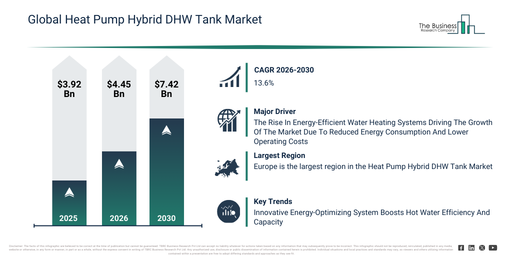
    Heat Pump Hybrid DHW Tank Market Growth From $4.45 Billion In 2026 To $7.42 Billion By 2030 At A CAGR Of 13.6%

    The market for heat pump hybrid dhw tanks has witnessed substantial growth in recent times. Projections indicate that this market will expand from $3.92 billion in 2025 to $4.45 billion in 2026, demonstrating a compound annual growth rate (CAGR) of 13.4%. Historically, this expansion has been driven by factors such as the greater acceptance of heat pump water heaters, an increasing need for hot water solutions during peak demand, the growing requirements for commercial hot water storage, the availability of space-efficient hybrid tank designs, and their early incorporation into building energy systems.

    The heat pump hybrid dhw tank market size is poised for substantial growth in the upcoming years. It is anticipated to reach $7.42 billion by 2030, exhibiting a compound annual growth rate (CAGR) of 13.6%. This expansion during the forecast period can be attributed to increasing investments in electrified water heating solutions, the rising adoption of hybrid systems in multi-family buildings, the broader integration of smart building technologies, a growing demand for energy storage within heating systems, and an increasing regulatory emphasis on water heating efficiency. Key trends for this period include the wider adoption of integrated hybrid dhw tanks, a rising demand for high-capacity storage solutions, the growing integration of smart monitoring and controls, the expansion of hybrid systems into cold climate regions, and an enhanced focus on operational reliability.

    Get A Free Sample Report With In-Depth Market Insights:

    https://thebusinessresearchcompany.com/sample_request?id=60390711&type=smp&name=Heat%20Pump%20Hybrid%20DHW%20Tank%20Market%20Report%202026&utm_source=Blogs&utm_medium=Paid&utm_campaign=Oct_PR

    Heat Pump Hybrid DHW Tank Market Development Factors: What’s Supporting Demand?

    The expansion of the heat pump hybrid domestic hot water (DHW) tank market is anticipated to be fueled by the growing embrace of energy-efficient water heating systems. These systems are engineered to supply hot water efficiently, consuming less energy, minimizing heat loss, cutting down operating expenses, and lessening their ecological footprint. Their growing prevalence stems from their ability to use less energy, effectively decreasing heat loss and operational expenditure without compromising hot water performance. A heat pump hybrid domestic hot water tank further improves these energy-efficient setups by integrating heat pump technology alongside traditional heating elements, thereby lowering electricity usage and ensuring a steady supply of hot water. As an illustration, the United States Department of Energy, a US-based federal government agency, reported in April 2024 that by 2029, new regulations will mandate that more than 50% of newly produced electric storage water heaters incorporate heat pump technology, a significant increase from the current 3%. Consequently, the expanding use of energy-efficient water heating systems is a key factor propelling the expansion of the heat pump hybrid domestic hot water (DHW) tank market.

    Heat Pump Hybrid DHW Tank Market Breakdown By Product Type And Application

    The heat pump hybrid dhw tank market covered in this report is segmented –

    1) By Product Type: Integrated Heat Pump Hybrid Domestic Hot Water Tanks; Split Heat Pump Hybrid Domestic Hot Water Tanks

    2) By Capacity: Below 100 Liters; 100–200 Liters; Above 200 Liters

    3) By Application: Residential; Commercial; Industrial

    4) By Distribution Channel: Direct Sales; Distributors Or Wholesalers; Online Retail

    5) By End-Use Environment: Single Family Residential Buildings; Multi-Family Residential Buildings; Commercial Facilities; Industrial Facilities

    Subsegments:

    1) By Integrated Heat Pump Hybrid Domestic Hot Water Tanks:

    Standard Integrated Tanks; High Capacity Integrated Tanks; Compact Integrated Tanks; Customized Integrated Tanks; Insulated Integrated Tanks

    2) By Split Heat Pump Hybrid Domestic Hot Water Tanks:

    Standard Split Tanks; High Capacity Split Tanks; Compact Split Tanks; Customized Split Tanks; Insulated Split Tanks

    Heat Pump Hybrid DHW Tank Market Transformation Trends: What Innovations Are Driving Change?

    Leading companies in the heat pump hybrid domestic hot water (DHW) tank market are concentrating on advancing FlexCapacity technology. This development aims to maximize usable hot water capacity while concurrently optimizing energy efficiency, improving load management, and enhancing grid responsiveness. FlexCapacity technology functions as a patented system that refines hot water output by adjusting the blend of hot and cold water, thereby delivering up to 60% more usable hot water while sustaining high efficiency. For example, in June 2025, General Electric Company, a US-based manufacturing enterprise, unveiled the GE Profile GEOSPRING Smart Hybrid Heat Pump Water Heater. This product is a next-generation residential domestic hot water (DHW) tank, engineered to bolster energy-efficient and grid-interactive home energy systems. The system integrates advanced heat pump technology, offering substantially higher energy efficiency when compared to conventional electric water heaters. It is also outfitted with FlexCapacity Technology, facilitated by a patented electronic integrated mixing valve, which boosts the availability of usable hot water and supports increased household demand.

    Heat Pump Hybrid DHW Tank Market Company Landscape And Competitive Strategy

    Major companies operating in the heat pump hybrid dhw tank market are Panasonic Corporation, Mitsubishi Electric Corporation, Rheem Manufacturing Company, A. O. Smith Corporation, Groupe Atlantic, BDR Thermea Group, Bradford White Corporation, American Water Heaters Company, PHNIX Heat Pump Technology Co. Ltd., Daikin Industries Ltd., Stiebel Eltron GmbH & Co. KG, Efitherma SL, Sun Stellar Heat Pump Water Heaters, Ariston Thermo Holding N.V., ECO2 Systems LLC, Energen Hybrid Systems, Sunmax Heat Pump Water Heaters, Eco-Logical, Jiangsu Sunrain Solar Energy Co Ltd., and VISSPLUS HVAC Co. Ltd.

    View The Full Heat Pump Hybrid DHW Tank Market Report:

    https://thebusinessresearchcompany.com/report/heat-pump-hybrid-dhw-tank-market-report?utm_source=Blogs&utm_medium=Paid&utm_campaign=Oct_PR

    Heat Pump Hybrid DHW Tank Market Largest Region: Which Geography Holds The Highest Market Share?

    Europe was the largest region in the heat pump hybrid domestic hot water (DHW) tank market in 2025. Asia-Pacific is expected to be the fastest-growing region in the forecast period. The regions covered in the heat pump hybrid dhw tank market report are Asia-Pacific, South East Asia, Western Europe, Eastern Europe, North America, South America, Middle East, Africa.

    Reach Out To Our Team:

    The Business Research Company: https://www.thebusinessresearchcompany.com/

    Americas: +1 310-496-7795

    Asia: +44 7882 955267 & +91 8897263534

    Europe: +44 7882 955267

    Email us at: marketing@tbrc.info

    Follow us on:

    LinkedIn: https://in.linkedin.com/company/the-business-research-company

    YouTube: https://www.youtube.com/channel/UC24_fI0rV8cR5DxlCpgmyFQ

    Global Market Model: https://www.thebusinessresearchcompany.com/global-market-model
  • Heat Pump Booster for DHW Market Expected To Grow At 13% CAGR Through 2030: What Businesses Need To Know

    Heat Pump Booster for DHW Market Expected To Grow At 13% CAGR Through 2030: What Businesses Need To Know

    Backed by market attractiveness analysis, total addressable market sizing, company benchmarking matrices, interactive Excel dashboards, wider supply chain intelligence, emerging startup coverage, and detailed product-level insights, The Business Research Company’s 2026 market reports are designed to offer research that is more actionable and strategically valuable than ever.

    Heat Pump Booster for DHW Market Expansion Outlook: What Revenue Opportunities Are Ahead?

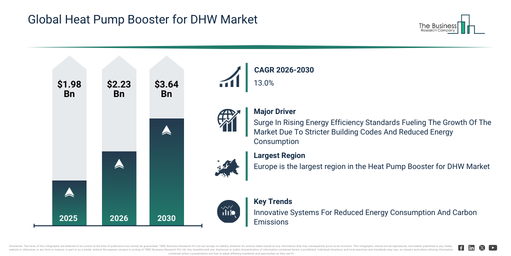
    The market size for heat pump boosters in domestic hot water (dhw) applications has expanded considerably in recent years. This market is projected to grow from $1.98 billion in 2025 to $2.23 billion in 2026, exhibiting a compound annual growth rate (CAGR) of 12.8%. Several factors underpinned the historical growth, including the expansion of residential heat pump installations, a rising demand for low-carbon dhw solutions, the increased availability of compact booster systems, their early adoption in commercial buildings, and advancements in heat exchanger efficiency.

    The heat pump booster for dhw market size is anticipated to undergo rapid expansion over the next few years. It is expected to grow to $3.64 billion in 2030 at a compound annual growth rate (CAGR) of 13.0%. The projected growth in this period can be attributed to heightened investments in building electrification, an increasing need for high-capacity dhw systems, the broadening of district and centralized hot water systems, a growing adoption of smart dhw management solutions, and enhanced regulatory support for heating with low emissions. Key trends observed in the forecast period encompass the increasing uptake of high-temperature heat pump boosters, a rising demand for waste heat recovery systems, the growing integration of smart control modules, the expansion of retrofit applications for dhw systems, and a strengthened focus on energy-efficient hot water generation.

    Get A Free Sample Report With In-Depth Market Insights:

    https://thebusinessresearchcompany.com/sample_request?id=33156&type=smp&name=Heat%20Pump%20Booster%20for%20DHW%20Market%20Report%202026&utm_source=Blogs&utm_medium=Paid&utm_campaign=Oct_PR

    Heat Pump Booster for DHW Market Industry Drivers: What’s Behind The Revenue Growth?

    The escalating energy efficiency requirements in buildings are projected to boost the heat pump booster for domestic hot water (DHW) market. These building energy efficiency standards, comprising regulations and guidelines set by governments or industry to reduce energy consumption, are increasingly adopted to achieve goals such as lowering energy use, cutting operational costs, and mitigating climate change impacts. Heat pump boosters for DHW play a crucial role in meeting these demands by offering highly efficient water heating solutions that consume minimal electricity and comply with the latest energy code requirements. For instance, in December 2024, the United States Department of Energy, a US-based regulatory authority, reported that the 2024 International Energy Conservation Code (IECC) determination indicated residential buildings complying with the updated code would achieve 7.8% site energy savings, 6.8% source energy savings, and 6.6% energy cost savings on a national average compared with the previous code. Therefore, the growing need for energy-efficient buildings is propelling the expansion of the heat pump booster for domestic hot water (DHW) market.

    Heat Pump Booster for DHW Market Segment Analysis And Revenue Potential

    The heat pump booster for dhw market covered in this report is segmented –

    1) By Product Type: Air Source Heat Pump Boosters; Water Source Heat Pump Boosters; Ground Source Heat Pump Boosters

    2) By Capacity: Below 10 Kilowatts; 10–20 Kilowatts; Above 20 Kilowatts

    3) By Application: Residential; Commercial; Industrial

    4) By Distribution Channel: Direct Sales; Distributors; Online Retail

    Subsegments:

    1) By Air Source Heat Pump Boosters: Residential Hot Water Systems; Commercial Hot Water Systems; Centralized Heating Installations; Retrofit And Replacement Systems

    2) By Water Source Heat Pump Boosters: Building Water Loop Systems; Wastewater Heat Recovery Systems; Industrial Process Water Systems; District Heating Networks

    3) By Ground Source Heat Pump Boosters: Vertical Ground Loop Systems; Horizontal Ground Loop Systems; Residential Geothermal Installations; Commercial Geothermal Heating Systems

    #Heat Pump Booster for DHW Market Growth Trends: What’s Shaping The Future Outlook?

    Leading companies in the domestic hot water (DHW) heat pump market are concentrating on developing advanced energy-efficient solutions, such as integrated air-to-water heat pumps. Their objective is to minimize energy consumption, lower carbon emissions, and provide diverse heating options for residential buildings. Air-to-water domestic hot water (DHW) heat pumps are systems that extract heat from the ambient air and transfer it to water for household use. These systems frequently support multiple applications, including radiant floor heating, forced air systems, and chilled panels, while ensuring high efficiency and sustainable operation. For example, in March 2025, Carrier Global Corporation, a US-based intelligent climate and energy solutions company, unveiled its first Domestic Hot Water Air-to-Water (DHW A2W) Heat Pump at the International Builders’ Show (IBS). This system is engineered for both new constructions and retrofits, featuring a compact outdoor unit, advanced refrigerant technology, a Coefficient of Performance (COP) of up to 4.9, and flexible tank integration. It offers significant energy savings, reduced carbon emissions, quiet operation, and smart controls for improved user convenience and sustainability.

    Heat Pump Booster for DHW Market Key Players Shaping Industry Direction

    Major companies operating in the heat pump booster for dhw market are LG Electronics Inc., Panasonic Corporation, Mitsubishi Electric Corporation, Daikin Industries Ltd., Gree Electric Appliances Inc. of Zhuhai, Trane Technologies plc, Danfoss A/S, Rheem Manufacturing Company, Sanden Hot Water Heaters Co. Ltd., NIBE Industrier AB, RinnAI Corporation, Vaillant Group GmbH, iDM Energiesysteme GmbH, Groupe Atlantic, Stiebel Eltron GmbH & Co. KG, Giacomini S.p.A., Powerband Electrical Limited, M-TEC Systems GmbH, Bosch Thermotechnology GmbH, and Sunmax Energy Systems Ltd.

    View The Full Heat Pump Booster for DHW Market Report:

    https://thebusinessresearchcompany.com/report/heat-pump-booster-for-dhw-market-report?utm_source=Blogs&utm_medium=Paid&utm_campaign=Oct_PR

    Heat Pump Booster for DHW Market Regional Analysis: Which Region Leads By Revenue?

    Europe was the largest region in the heat pump booster for domestic hot water (DHW) market in 2025. Asia-Pacific is expected to be the fastest-growing region in the forecast period. The regions covered in the heat pump booster for dhw market report are Asia-Pacific, South East Asia, Western Europe, Eastern Europe, North America, South America, Middle East, Africa.

    Reach Out To Our Team:

    The Business Research Company: https://www.thebusinessresearchcompany.com/

    Americas: +1 310-496-7795

    Asia: +44 7882 955267 & +91 8897263534

    Europe: +44 7882 955267

    Email us at: marketing@tbrc.info

    Follow us on:

    LinkedIn: https://in.linkedin.com/company/the-business-research-company

    YouTube: https://www.youtube.com/channel/UC24_fI0rV8cR5DxlCpgmyFQ

    Global Market Model: https://www.thebusinessresearchcompany.com/global-market-model
  • Heat Network Optimization Market Forecast To Reach $7.78 Billion By 2030: Key Trends Explained

    Heat Network Optimization Market Forecast To Reach $7.78 Billion By 2030: Key Trends Explained

    Featuring market attractiveness scoring, total addressable market sizing, company benchmarking matrices, interactive Excel dashboards, deeper supply chain intelligence, emerging startup tracking, and granular product-level insights, The Business Research Company’s 2026 market reports are built to deliver research that is both more actionable and more strategically valuable.

    Heat Network Optimization Market Growth Potential: How Will Market Size Shift Through 2030?

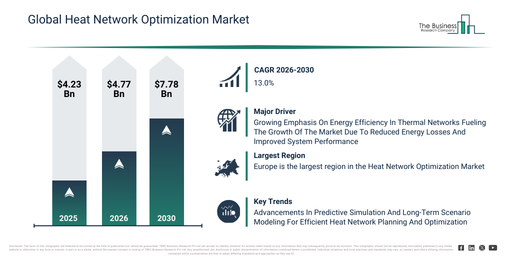
    The heat network optimization market has observed rapid expansion in recent years. It is anticipated to grow from $4.23 billion in 2025 to $4.77 billion in 2026, demonstrating a compound annual growth rate (CAGR) of 12.8%. The historical growth of this market can be attributed to factors like the expansion of district heating infrastructure, an increasing focus on energy efficiency within thermal systems, the deployment of smart heat meters, rising operational cost pressures on utilities, and the early adoption of network monitoring software.

    The heat network optimization market size is projected to experience swift expansion over the coming years. It is anticipated to reach $7.78 billion in 2030, exhibiting a compound annual growth rate (CAGR) of 13.0%. This projected expansion stems from several factors, including heightened investments in intelligent thermal infrastructure, increased incorporation of AI-driven optimization technologies, the proliferation of low-carbon district heating systems, the escalating uptake of predictive maintenance remedies, and a growing emphasis from regulators on energy efficiency. Key developments expected during this forecast period encompass the wider implementation of real-time heat network surveillance, the increasing application of predictive heat demand forecasts, the broader integration of sophisticated control and balancing mechanisms, the expansion of data-centric network optimization offerings, and a sharpened focus on minimizing thermal losses.

    Get A Free Sample Report With In-Depth Market Insights:

    https://thebusinessresearchcompany.com/sample_request?id=33155&type=smp&name=Heat%20Network%20Optimization%20Market%20Report%202026&utm_source=Blogs&utm_medium=Paid&utm_campaign=Oct_PR

    Heat Network Optimization Market Growth Factors: What’s Supporting Expansion?

    An increasing need for energy efficiency within thermal networks is anticipated to drive expansion in the heat network optimization market in the future. This efficiency involves minimizing energy wastage and enhancing heat transfer from its origin to consumers via superior design, equipment, and operational methods. The growing requirement for energy efficiency in thermal networks stems from stricter decarbonization goals, higher energy expenses, and the necessity to streamline heat production and distribution. This is because utilities and operators aim to cut heat losses, boost system efficacy, and incorporate renewable and waste-heat sources to provide dependable, economical, and sustainable thermal energy. Optimizing heat networks boosts energy efficiency by smartly matching heat supply with demand. This is achieved through sophisticated monitoring, control, and analytics, which decrease distribution losses, refine temperature regulation, and allow for more effective utilization of energy resources. The result is decreased fuel usage, lower emissions, and enhanced total system performance. For example, data from the UK’s Department for Energy Security and Net Zero indicates that in 2023, approximately 318,600 energy efficiency measures were put in place via relevant programs, marking a 49% rise from 2022, as reported in March 2024. Consequently, the increasing need for energy efficiency in thermal networks is propelling the expansion of the heat network optimization market.

    Heat Network Optimization Market Segmentation And Category Overview

    The heat network optimization market covered in this report is segmented –

    1) By Component: Software; Hardware; Services

    2) By Deployment Mode: On-Premises; Cloud

    3) By Application: District Heating; District Cooling; Industrial Processes; Residential Buildings; Commercial Buildings

    4) By End User: Utilities; Industrial; Commercial; Residential; Other End Users

    Subsegments:

    1) By Software: Network Optimization Platforms; Energy Management Software; Demand Forecasting Software; Analytics And Reporting Software; Control And Monitoring Software

    2) By Hardware: Smart Meters; Sensors And Actuators; Control Valves; Heat Exchangers; Communication Devices

    3) By Services: Installation And Integration Services; Consulting And Advisory Services; Maintenance And Support Services; Optimization And Performance Services; Training And Education Services

    Heat Network Optimization Market Industry Trends: What’s Reshaping Demand?

    Leading companies within the heat network optimization market are increasingly deploying sophisticated simulation and predictive modeling instruments, such as advanced district heating simulation software, to fulfill the escalating demand for precise performance predictions, strategic development, and efficient network management. These simulation capabilities leverage comprehensive system modeling, historical data, and scenario evaluation to empower operators to assess long-term heat production, network behavior, supply approaches, and investment effects, providing significantly deeper understanding than conventional spreadsheet-based planning or static hydraulic calculations, which frequently lack dynamic forecasting and integrated scenario testing. For example, in February 2025, Kelvin Green, a Germany-based sustainable energy solutions provider, introduced HeatSim, an innovative district heating simulation software tool at E-world 2025, designed to enable heat network operators to model hourly heat generation and examine operational and investment scenarios for up to 20 years ahead. HeatSim’s core functionalities include lifecycle cost optimization, tariff and procurement strategy analysis, predictive operational planning, subsidy and tariff impact assessment, and network optimization insights that can inform choices regarding heat pump integration and temperature regulation, thereby boosting both the financial and operational results for sustainable district heating systems.

    Heat Network Optimization Market Competitive Analysis Of Leading Industry Participants

    Major companies operating in the heat network optimization market are E.ON SE, ENGIE SA, Siemens AG, Veolia Environnement SA, Schneider Electric SE, Honeywell International Inc., ABB Ltd, Centrica plc, Johnson Controls International plc, Trane Technologies plc, Emerson Electric Co., Danfoss A/S, Fortum Oyj, Ramboll Group A/S, Itron Inc., COWI A/S, Kelvion Holding GmbH, Kamstrup A/S, NODA Intelligent Systems GmbH, and Sycous Limited.

    View The Full Heat Network Optimization Market Report:

    https://thebusinessresearchcompany.com/report/heat-network-optimization-market-report?utm_source=Blogs&utm_medium=Paid&utm_campaign=Oct_PR

    Heat Network Optimization Market Geographic Distribution And Regional Opportunities

    Europe was the largest region in the heat network optimization market in 2025. Asia-Pacific is expected to be the fastest-growing region in the forecast period. The regions covered in the heat network optimization market report are Asia-Pacific, South East Asia, Western Europe, Eastern Europe, North America, South America, Middle East, Africa.

    Reach Out To Our Team:

    The Business Research Company: https://www.thebusinessresearchcompany.com/

    Americas: +1 310-496-7795

    Asia: +44 7882 955267 & +91 8897263534

    Europe: +44 7882 955267

    Email us at: marketing@tbrc.info

    Follow us on:

    LinkedIn: https://in.linkedin.com/company/the-business-research-company

    YouTube: https://www.youtube.com/channel/UC24_fI0rV8cR5DxlCpgmyFQ

    Global Market Model: https://www.thebusinessresearchcompany.com/global-market-model
  • Hdr Image Signal Processor Market Growth Forecast: Market Size, Key Trends And Emerging Opportunities Through 2030

    Hdr Image Signal Processor Market Growth Forecast: Market Size, Key Trends And Emerging Opportunities Through 2030

    Built to provide research that’s more actionable and strategically valuable, The Business Research Company’s 2026 market reports include market attractiveness analysis, total addressable market sizing, company benchmarking matrices, interactive Excel dashboards, broader supply chain intelligence, emerging startup tracking, and in-depth product insights.

    Hdr Image Signal Processor Market Revenue Outlook: What CAGR Lies Ahead Through 2030?

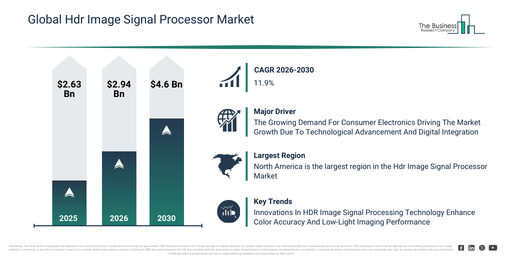
    The HDR image signal processor market has seen considerable growth in recent years. Projections indicate it will expand from $2.63 billion in 2025 to $2.94 billion in 2026, achieving a compound annual growth rate (CAGR) of 11.7%. Historically, this growth can be attributed to several factors including the increasing use of advanced camera systems in consumer electronics, the expansion of automotive imaging applications, the adoption of CMOS sensor technologies, a rising demand for high-quality video capture, and ongoing improvements in image processing hardware.

    The hdr image signal processor market is anticipated to show significant expansion in the next few years, with its size expected to grow to $4.6 billion by 2030, exhibiting a compound annual growth rate (CAGR) of 11.9%. This projected increase is attributed to the growing deployment of autonomous vehicle vision systems, a heightened demand for hdr imaging in surveillance, the advancement of medical imaging applications, the spread of edge-based image processing, and continuous enhancements in ISP power efficiency. Notable trends during this forecast period include the increasing incorporation of AI-based image processing algorithms, a rising need for real-time hdr video processing, the growing embrace of multi-exposure imaging techniques, the expansion of embedded ISP solutions, and an intensified focus on low-light image performance.

    Get A Free Sample Report With In-Depth Market Insights:

    https://thebusinessresearchcompany.com/sample_request?id=46080717&type=smp&name=Hdr%20Image%20Signal%20Processor%20Market%20Report%202026&utm_source=Blogs&utm_medium=Paid&utm_campaign=Oct_PR

    Hdr Image Signal Processor Market Growth Factors Behind Sustained Expansion

    The increasing need for consumer electronics is projected to fuel the expansion of the high dynamic range (HDR) image signal processor market moving forward. Consumer electronics consist of electronic devices made for daily personal use, encompassing smartphones, tablets, cameras, televisions, and gaming consoles. The escalating demand for these electronics stems from continuous technological innovation, as manufacturers regularly introduce advanced attributes such as artificial intelligence integration, enhanced connectivity, and superior display capabilities, attracting consumers who seek state-of-the-art functionality. This heightened demand for consumer electronics boosts image processing technology, as users anticipate excellent visual quality, color precision, and dynamic range in their gadgets, thereby necessitating advanced HDR processing features. For instance, in May 2023, the Japan Electronics and Information Technology Industries Association, a Japan-based trade association, reported that the overall consumer electronic equipment production in Japan hit $209.16 million (¥32,099 million), an increase from $164.65 million (¥25,268 million) in May 2022. Thus, the rising demand for consumer electronics is a significant factor propelling the growth of the high dynamic range (HDR) image signal processor market.

    Hdr Image Signal Processor Market Segments: Where Is Growth Concentrated?

    The hdr image signal processor market covered in this report is segmented –

    1) By Component: Hardware; Software; Services

    2) By Technology: Complementary Metal-Oxide-Semiconductor (CMOS); Charge-Coupled Device (CCD); Other Technologies

    3) By Processing Type: Real-Time Processing; Post-Processing

    4) By Application: Consumer Electronics; Automotive; Surveillance; Medical Imaging; Industrial; Other Applications

    5) By End-User: Original Equipment Manufacturers (OEMs); Aftermarket; Other End-Users

    Subsegments:

    1) By Hardware: Application Specific Integrated Circuits; Field Programmable Gate Arrays; Image Processing Units; Graphics Processing Units; Embedded Processing Boards

    2) By Software: Image Processing Algorithms; Tone Mapping Software; Noise Reduction Software; Color Correction Software; Dynamic Range Optimization Software

    3) By Services: System Integration Services; Calibration And Testing Services; Maintenance And Support Services; Consulting And Customization Services; Training And Technical Assistance Services

    Hdr Image Signal Processor Market Industry Trends Fueling Future Revenue Growth

    Leading companies operating in the high dynamic range (HDR) image signal processor market are concentrating on developing advanced HDR image signal processing solutions, such as RGB-IR processing enhancements, to elevate color accuracy, improve low-light performance, and refine scene perception in imaging systems. RGB-IR image processing involves integrating infrared data alongside visible RGB channels, which facilitates superior color reproduction, more effective noise reduction, and enhanced performance under challenging lighting conditions. For instance, in January 2025, Xylon, a Croatia-based provider of embedded imaging solutions, upgraded its logicBRICKS HDR ISP IP Suite with advanced RGB-IR image processing capabilities. The enhanced solution supports high dynamic range (HDR) imaging while simultaneously improving color accuracy and visibility in low-light environments, making it highly suitable for applications such as automotive vision systems, industrial imaging, and smart camera designs.

    Hdr Image Signal Processor Market Key Participants And Competitive Landscape

    Major companies operating in the hdr image signal processor market are Apple Inc., Samsung Electronics Co. Ltd., Huawei Technologies Co. Ltd., Sony Corporation, Intel Corporation, Qualcomm Technologies Inc., NVIDIA Corporation, Texas Instruments Incorporated, MediaTek Inc., NXP Semiconductors N.V., STMicroelectronics N.V., Renesas Electronics Corporation, ON Semiconductor Corporation, Arm Limited, OMNIVISION Technologies Inc., Socionext Inc., Ambarella Inc., Sigma Corporation, THine Electronics Inc., MulticoreWare Inc., and InnoSilicon Technology Ltd.

    View The Full Hdr Image Signal Processor Market Report:

    https://thebusinessresearchcompany.com/report/hdr-image-signal-processor-market-report?utm_source=Blogs&utm_medium=Paid&utm_campaign=Oct_PR

    Hdr Image Signal Processor Market Geographic Analysis: Where Is Demand Accelerating Fastest?

    North America was the largest region in the HDR image signal processor market in 2025. Asia-Pacific is expected to be the fastest-growing region in the forecast period. The regions covered in the hdr image signal processor market report are Asia-Pacific, South East Asia, Western Europe, Eastern Europe, North America, South America, Middle East, Africa.

    Reach Out To Our Team:

    The Business Research Company: https://www.thebusinessresearchcompany.com/

    Americas: +1 310-496-7795

    Asia: +44 7882 955267 & +91 8897263534

    Europe: +44 7882 955267

    Email us at: marketing@tbrc.info

    Follow us on:

    LinkedIn: https://in.linkedin.com/company/the-business-research-company

    YouTube: https://www.youtube.com/channel/UC24_fI0rV8cR5DxlCpgmyFQ

    Global Market Model: https://www.thebusinessresearchcompany.com/global-market-model
  • HD Map LiDAR SLAM Tooling Market CAGR Forecast Through 2030: Key Trends Shaping Industry Expansion

    HD Map LiDAR SLAM Tooling Market CAGR Forecast Through 2030: Key Trends Shaping Industry Expansion

    Backed by market attractiveness analysis, total addressable market sizing, company benchmarking matrices, interactive Excel dashboards, wider supply chain intelligence, emerging startup coverage, and detailed product-level insights, The Business Research Company’s 2026 market reports are designed to offer research that is more actionable and strategically valuable than ever.

    HDBaseT HDMI Extender Kit Market Growth Analysis: How Will Revenue Trend Over The Forecast Period?

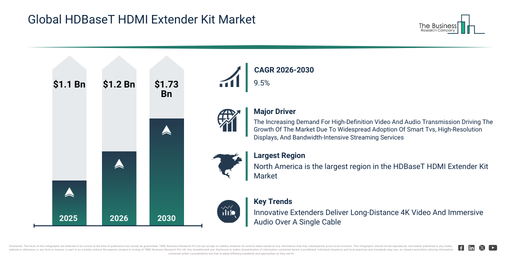
    The hdbaset hdmi extender kit market has demonstrated strong growth in recent years. It is anticipated to expand from $1.1 billion in 2025 to $1.2 billion in 2026, with a compound annual growth rate (CAGR) of 9.3%. This historical expansion can be attributed to several factors, including the proliferation of commercial AV installations, the increasing deployment of digital signage systems, advancements in enterprise conferencing infrastructure, a growing requirement for dependable HD video distribution, and the adoption of category cable-based transmission solutions.

    The hdbaset hdmi extender kit market size is anticipated to demonstrate robust expansion over the next few years. It is projected to achieve a value of $1.73 billion in 2030, progressing at a compound annual growth rate (CAGR) of 9.5%. This projected growth is primarily fueled by the increased rollout of smart buildings, rising investments in education and healthcare audio-visual infrastructure, wider adoption of immersive display technologies, the proliferation of hybrid wired and wireless AV systems, and a growing need for secure signal transmission. Significant trends expected during this period involve an increasing demand for long-distance AV signal transmission, the rising uptake of power-over-cable extender kits, expanding utilization of ultra high definition ready extenders, the advancement of secure wireless HDMI extenders, and an enhanced focus on low-latency signal performance.

    Get A Free Sample Report With In-Depth Market Insights:

    https://thebusinessresearchcompany.com/sample_request?id=60889753&type=smp&name=HDBaseT%20HDMI%20Extender%20Kit%20Market%20Report%202026&utm_source=Blogs&utm_medium=Paid&utm_campaign=Oct_PR

    HDBaseT HDMI Extender Kit Market Demand Drivers Opening New Revenue Streams

    The market for high-definition baseT (HDBaseT) high-definition multimedia interface (HDMI) extender kits is anticipated to expand due to the rising need for high-definition video and audio transmission. This type of transmission involves conveying high-resolution visual and high-fidelity auditory signals from a source to a display or sound system with minimal degradation, thereby guaranteeing crisp images, precise color rendering, and an engaging audio experience. The surge in the requirement for high-definition video and audio transmission stems from the prevalent use of smart TVs, advanced displays, and streaming platforms, all of which necessitate greater bandwidth for superior visual and sonic quality. HDBaseT HDMI extender kits facilitate this by allowing for robust, extended-range transfer of high-definition video and audio via a single category cable, preserving signal integrity for diverse AV setups in homes, offices, and businesses. An illustrative example is found in data from December 2024 by the Federal Communications Commission (FCC), a US government entity, which reported that in 2023, 69% of US consumers viewed digital video on smartphones, and 62% consumed video content through smart, internet-connected TVs, highlighting significant engagement with both portable and stationary viewing platforms. Consequently, the growing need for high-definition video and audio transmission is fueling the expansion of the high-definition baseT (HDBaseT) high-definition multimedia interface (HDMI) extender kit market.

    HDBaseT HDMI Extender Kit Market Segment Analysis: What Are The Core Market Categories?

    The hdbaset hdmi extender kit market covered in this report is segmented –

    1) By Product: Single Cable Extender Kits; Dual Cable Extender Kits; Wireless Extender Kits; Other Products

    2) By Transmission Range: Up To 50m; 51–100m; Above 100m

    3) By Application: Residential; Commercial; Industrial; Education; Healthcare; Other Applications

    4) By Distribution Channel: Online; Offline

    Subsegments:

    1) By Single Cable Extender Kits: Basic High Definition Signal Extenders; Power Over Cable Supported Extenders; Control Signal Integrated Extenders; Ultra High Definition Ready Extenders

    2) By Wireless Extender Kits: Short Range Wireless Extenders; Long Range Wireless Extenders; Interference Resistant Wireless Extenders; Secure Encrypted Wireless Extenders

    3) By Dual Cable Extender Kits: High Bandwidth Video Extenders; Redundant Signal Transmission Extenders; Long Distance Performance Extenders; Enhanced Signal Stability Extenders

    4) By Other Products: Fiber Optic Based Extenders; Hybrid Wired And Wireless Extenders; Custom Configuration Extenders; Ruggedized Industrial Extenders

    HDBaseT HDMI Extender Kit Market Trends Powering Strategic Industry Growth

    Major companies in the high-definition baseT (HDBaseT) high-definition multimedia interface (HDMI) extender kit market are concentrating on developing innovative solutions, such as HDBaseT 3.0 extenders, to facilitate long-distance 4K video and high-quality audio transmission over a single cable. HDBaseT 3.0 extenders are devices designed to transmit ultra high definition video, audio, Ethernet, control signals, and power using a single Cat6a/7 cable for extended AV connectivity. For example, in February 2024, Av Access Tech Ltd, a China-based professional audiovisual connectivity company, introduced the 4KEX40-eARC 4K HDMI extender. This extender delivers uncompressed 4K@60 Hz video with support for dynamic HDR formats, including HDR10, HDR10+, and Dolby Vision, enables immersive audio formats such as Dolby Atmos and DTSX through integrated HDMI eARC and ARC functionality, and incorporates bi-directional IR, CEC, and power-over-cable features to simplify installation and enhance system control across long-distance HDMI connections. It is engineered for both residential and commercial AV installations, providing reliable long-distance transmission over a single Cat6a/7 cable while ensuring seamless integration with various displays, receivers, and source devices.

    HDBaseT HDMI Extender Kit Market Top Companies Driving Competitive Growth

    Major companies operating in the hdbaset hdmi extender kit market are Extron Electronics, Crestron Electronics Inc., ATEN International Co. Ltd., StarTech.com Ltd., SC&T ProAV Inc., TRENDnet Inc., VigilLink Inc., C2G (Cables To Go) Inc., RGB Spectrum Inc., Bolin Technology Co. Ltd., Broadata Communications Inc., Blustream Pty Ltd., KanexPro Inc., Rextron International Co. Ltd., Avenview Corporation, AVPro Edge LLC, BZB Gear LLC, Liberty AV Solutions Inc., Lightware Visual Engineering GmbH, Ocean Matrix Co. Ltd., and PureLink GmbH.

    View The Full HDBaseT HDMI Extender Kit Market Report:

    https://thebusinessresearchcompany.com/report/hdbaset-hdmi-extender-kit-market-report?utm_source=Blogs&utm_medium=Paid&utm_campaign=Oct_PR

    HDBaseT HDMI Extender Kit Market Global Footprint: Which Region Leads The Industry?

    North America was the largest region in the high-definition baseT (HDBaseT) high-definition multimedia interface (HDMI) extender kit market in 2025. Asia-Pacific is expected to be the fastest-growing region in the forecast period. The regions covered in the hdbaset hdmi extender kit market report are Asia-Pacific, South East Asia, Western Europe, Eastern Europe, North America, South America, Middle East, Africa.

    Reach Out To Our Team:

    The Business Research Company: https://www.thebusinessresearchcompany.com/

    Americas: +1 310-496-7795

    Asia: +44 7882 955267 & +91 8897263534

    Europe: +44 7882 955267

    Email us at: marketing@tbrc.info

    Follow us on:

    LinkedIn: https://in.linkedin.com/company/the-business-research-company

    YouTube: https://www.youtube.com/channel/UC24_fI0rV8cR5DxlCpgmyFQ

    Global Market Model: https://www.thebusinessresearchcompany.com/global-market-model
  • Harbor Tug Telematics IoT Market Outlook 2026–2030: Growth Trends, Market Dynamics And Emerging Opportunities

    Harbor Tug Telematics IoT Market Outlook 2026–2030: Growth Trends, Market Dynamics And Emerging Opportunities

    Backed by market attractiveness analysis, total addressable market sizing, company benchmarking matrices, interactive Excel dashboards, wider supply chain intelligence, emerging startup coverage, and detailed product-level insights, The Business Research Company’s 2026 market reports are designed to offer research that is more actionable and strategically valuable than ever.

    Harbor Tug Telematics IoT Market Size, Value And Growth Trajectory Through 2030

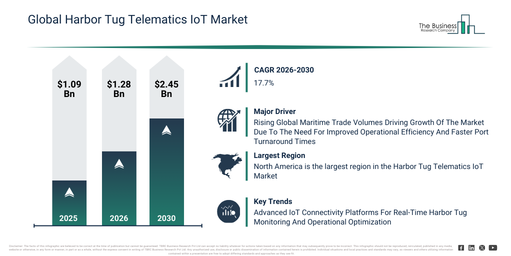
    The harbor tug telematics iot market size has witnessed substantial growth in recent years. Looking ahead, it is projected to expand from $1.09 billion in 2025 to $1.28 billion in 2026, achieving a compound annual growth rate (CAGR) of 17.4%. Historically, the market’s expansion was propelled by increasing port traffic volumes, the adoption of digital fleet management practices, rising fuel cost optimization needs, the expansion of harbor infrastructure, and the availability of maritime connectivity solutions.

    The harbor tug telematics iot market is anticipated to experience substantial growth in the coming years. It is projected to reach $2.45 billion by 2030, exhibiting a compound annual growth rate (CAGR) of 17.7%. This expansion during the forecast period is attributable to increasing investments in smart port initiatives, a rising demand for emission monitoring solutions, the ongoing expansion of autonomous maritime operations, a growing emphasis on operational efficiency, and the wider adoption of integrated maritime analytics. Significant trends expected during this timeframe include the increasing deployment of real-time fleet monitoring systems, a heightened adoption of predictive maintenance analytics, the broader integration of fuel and emission optimization tools, the expansion of cloud-based telematics platforms, and an enhanced focus on navigational safety and compliance.

    Get A Free Sample Report With In-Depth Market Insights:

    https://thebusinessresearchcompany.com/sample_request?id=33148&type=smp&name=Harbor%20Tug%20Telematics%20IoT%20Market%20Report%202026&utm_source=Blogs&utm_medium=Paid&utm_campaign=Oct_PR

    Harbor Tug Telematics IoT Market Opportunity Drivers: What’s Unlocking New Revenue Potential?

    The rising global maritime trade volumes are projected to accelerate the expansion of the harbor tug telematics internet of things (IoT) market in the future. Maritime trade volumes denote the total quantity of goods transported worldwide by sea over a specific duration, typically measured in tonnes or tonne-miles, reflecting the extent and intensity of international seaborne trade. The growth in global maritime trade volumes is driven by the expansion of international commerce, as shipping and port operators aim for heightened efficiency, faster turnaround times, and improved capacity management to handle increasing cargo flows and mitigate operational bottlenecks. Harbor tug telematics IoT supports these growing maritime trade volumes by enhancing real-time vessel assistance, operational efficiency, and port turnaround times, as data-driven tug deployment, performance monitoring, and predictive maintenance assist ports in managing higher cargo traffic safely, reliably, and cost-effectively. For instance, in 2024, information from the United Nations Conference on Trade and Development, a Switzerland-based intergovernmental organization, indicated that global maritime trade reached 12,292 million tonnes in 2023, an increase of 2.4% year on year, and is anticipated to grow by approximately 2.0% in 2024, with containerized trade increasing more rapidly at roughly 3.5%. Therefore, the expanding global maritime trade volumes are propelling the growth of the harbor tug telematics internet of things (IoT) market.

    Harbor Tug Telematics IoT Market Segment Trends And Revenue Contributors

    The harbor tug telematics iot market covered in this report is segmented –

    1) By Component: Hardware; Software; Services

    2) By Deployment: On-Premise; Cloud-Based; Hybrid

    3) By Connectivity: Cellular; Satellite; Wireless Fidelity (Wifi); Other Connectives

    4) By Application: Fleet Management; Predictive Maintenance; Remote Monitoring; Fuel Management; Safety And Security; Other Applications

    5) By End User: Port Authorities; Tug Operators; Shipping Companies; Other End Users

    Subsegments:

    1) By Hardware: Telematics Devices; Sensors And Actuators; Connectivity Modules; Power Management Units; Navigation Equipment

    2) By Software: Fleet Management Software; Predictive Maintenance Software; Data Analytics Software; Navigation Assistance Software; Safety Monitoring Software

    3) By Services: Installation Services; Maintenance Services; Consulting Services; Training Services; Cloud Hosting Services

    Harbor Tug Telematics IoT Market Innovation Trends Shaping Future Development

    Leading companies within the harbor tug telematics internet of things (IoT) market are concentrating on developing innovative solutions, such as advanced IoT connectivity platforms that leverage both satellite and cellular technologies. These platforms aim to satisfy the increasing demand for real-time remote surveillance, proactive maintenance, and improved operational effectiveness, propelled by growing maritime commerce, modernizing ports, and more stringent safety and environmental regulations. Such IoT connectivity platforms merge telematics hardware, including sensors and communication modules, with cloud-based analytics to relay up-to-the-minute performance, location, and condition data from tugboats and related assets. This integration offers significantly enhanced visibility and supports decision-making, in stark contrast to older systems like manual logbooks or isolated on-board monitoring, which were slower, less precise, and lacked forward-looking insights. For example, in June 2024, ORBCOMM Inc., a US-based industrial IoT and satellite communications provider, introduced its advanced OGx satellite IoT service. This platform is engineered to offer superior network capabilities with more robust and economical connectivity for various industrial IoT applications, specifically including maritime asset telematics, through features like reduced power consumption, adaptable pricing, and extensive coverage for global remote monitoring scenarios. The OGx service facilitates integration with currently deployed IoT devices, thereby enhancing data transmission efficiency, expanding telematics applications for activities like tug fleet tracking, remote fault diagnosis, and safety oversight, while also decreasing the expense and intricacy of implementing maritime IoT solutions compared to traditional land-based systems.

    Harbor Tug Telematics IoT Market Competitive Landscape: Which Companies Lead The Industry?

    Major companies operating in the harbor tug telematics iot market are Wärtsilä Corporation, Garmin Ltd, Kongsberg Gruppen ASA, Thales Group SA, Iridium Communications Inc, Caterpillar Marine Power Systems Inc, GTT (Gaztransport & Technigaz SA), ABB Marine & Ports Ltd, Hexagon AB, Trimble Inc., Det Norske Veritas Germanischer Lloyd AS, StormGeo AS, Gurtam LLC, FleetX Inc, Applied Satellite Technology Ltd, Furuno Electric Co., Ltd., MetOcean Telematics Inc, Technoton JSC, Sea Machines Robotics Inc, Bongo IoT Ltd, and Schottel GmbH.

    View The Full Harbor Tug Telematics IoT Market Report:

    https://thebusinessresearchcompany.com/report/harbor-tug-telematics-iot-market-report?utm_source=Blogs&utm_medium=Paid&utm_campaign=Oct_PR

    Harbor Tug Telematics IoT Market Regional Outlook: Where Is Opportunity Concentrated?

    North America was the largest region in the harbor tug telematics IoT market in 2025. Asia-Pacific is expected to be the fastest-growing region in the forecast period. The regions covered in the harbor tug telematics iot market report are Asia-Pacific, South East Asia, Western Europe, Eastern Europe, North America, South America, Middle East, Africa.

    Reach Out To Our Team:

    The Business Research Company: https://www.thebusinessresearchcompany.com/

    Americas: +1 310-496-7795

    Asia: +44 7882 955267 & +91 8897263534

    Europe: +44 7882 955267

    Email us at: marketing@tbrc.info

    Follow us on:

    LinkedIn: https://in.linkedin.com/company/the-business-research-company

    YouTube: https://www.youtube.com/channel/UC24_fI0rV8cR5DxlCpgmyFQ

    Global Market Model: https://www.thebusinessresearchcompany.com/global-market-model
  • Group Ticketing Platforms Market Research 2026: Market Size, Trends, Segments And Growth Forecast

    Group Ticketing Platforms Market Research 2026: Market Size, Trends, Segments And Growth Forecast

    Backed by market attractiveness analysis, total addressable market sizing, company benchmarking matrices, interactive Excel dashboards, wider supply chain intelligence, emerging startup coverage, and detailed product-level insights, The Business Research Company’s 2026 market reports are designed to offer research that is more actionable and strategically valuable than ever.

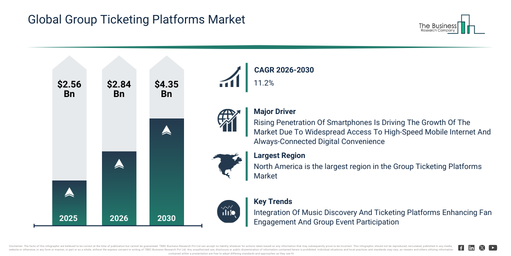
    Group Ticketing Platforms Market Forecast: Value Set To Climb From $2.84 Billion To $4.35 Billion

    The group ticketing platforms market has seen substantial growth recently. It will grow from $2.56 billion in 2025 to $2.84 billion in 2026 at a compound annual growth rate (CAGR) of 11.0%. Historically, this expansion has been propelled by the rise of online event booking platforms, the increase in group travel and tourism activities, the broader adoption of digital ticketing solutions, an escalating demand for operational efficiency in event management, and advancements in internet and mobile penetration.

    The group ticketing platforms market size is anticipated to undergo significant expansion in the coming years. It is forecast to grow to $4.35 billion in 2030, achieving a compound annual growth rate (CAGR) of 11.2%. This growth during the projection period can be attributed to several factors, including an increased demand for automated group coordination instruments, the rising implementation of data-driven pricing strategies, the broadening of digital experiences for large-scale events, an intensifying focus on secure transaction processing, and a greater adoption rate by enterprises and institutions. Noteworthy trends for the forecast period include a surge in the adoption of centralized group booking systems, an increasing need for dynamic pricing and allocation tools, the expanding integration of secure digital payment workflows, the rollout of scalable cloud-based ticketing platforms, and an enhanced emphasis on access control and fraud prevention.

    Get A Free Sample Report With In-Depth Market Insights:

    https://thebusinessresearchcompany.com/sample_request?id=68695852&type=smp&name=Group%20Ticketing%20Platforms%20Market%20Report%202026&utm_source=Blogs&utm_medium=Paid&utm_campaign=Oct_PR

    Group Ticketing Platforms Market Development Factors: What’s Supporting Demand?

    The expanding adoption of smartphones is projected to fuel the growth of the group ticketing platforms market. These mobile electronic devices merge cellular communication with advanced computing features, including internet access, touchscreens, applications, cameras, and multimedia capabilities, allowing users to execute diverse tasks beyond basic calls and texts. The increasing prevalence of smartphones is largely attributable to the widespread access to high-speed mobile internet, facilitating smooth entry to digital services, content, and real-time connections. Smartphones benefit group ticketing platforms by empowering users to quickly find events, coordinate with peers, disseminate booking links, complete secure payments, and handle digital tickets efficiently from one constantly connected device. For example, in March 2024, the Consumer Affairs, a US-based consumer news and advocacy organization, reported that American smartphone ownership rose to 92% in 2023 from 86% in 2022. Consequently, the growing penetration of smartphones is a key driver for the group ticketing platforms market.

    Group Ticketing Platforms Market Segment Landscape And Growth Outlook

    The group ticketing platforms market covered in this report is segmented –

    1) By Component: Software; Services

    2) By Deployment Mode: Cloud Based; On Premises

    3) By Organization Size: Small And Medium Enterprises (Smes); Large Enterprises

    4) By Application: Sports Events; Concerts And Festivals; Theater And Performing Arts; Conferences And Seminars; Travel And Tourism; Other Applications

    5) By End User: Event Organizers; Travel Agencies; Corporates; Educational Institutions; Other End Users

    Subsegments:

    1) By Software: Event Booking And Reservation Software; Ticket Management And Distribution Software; Customer Relationship Management And Engagement Software; Payment Processing And Billing Software

    2) By Services: Implementation And Integration Services; Technical Support And Maintenance Services; Consulting And Advisory Services; Training And Capacity Building Services

    Group Ticketing Platforms Market Transformation Trends: What Innovations Are Driving Change?

    Leading companies in group ticketing platforms are concentrating on developing innovative solutions, particularly integrated discovery-to-purchase systems, to bridge fan engagement with access to live events. These solutions facilitate effortless ticket discovery, acquisition, and coordination based on shared music interests. Integrated music discovery and ticketing platforms merge content-driven audience insights with ticket sales functions, allowing users to transition directly from exploring artists, genres, and events to purchasing tickets, while simultaneously aiding organizers in reaching highly targeted fan communities. For instance, in October 2025, Beatport, a US-based digital music platform, unveiled Beatport Tickets, a new ticketing solution crafted to connect music discovery with live events. This platform allows users to find events directly within Beatport’s music ecosystem and purchase tickets seamlessly, helping fans coordinate their attendance and engage collectively with live performances. By leveraging Beatport’s extensive music data and audience insights, Beatport Tickets empowers event organizers to connect with relevant audiences, improve conversion rates, and enhance community-driven event participation throughout electronic music scenes.

    Group Ticketing Platforms Market Key Players Shaping Industry Direction

    Major companies operating in the group ticketing platforms market are CTS Eventim AG & Co. KGaA, XING Events GmbH, Ticketmaster Entertainment LLC, StubHub Inc., Cvent Inc., TickPick Inc., Tixr Inc., Brown Paper Tickets Inc., Festicket Limited., SeatGeek Inc., See Tickets International Limited, Bigtree Entertainment Pvt. Ltd., Ticketek Pty Ltd, TicketIQ Inc., Eventbrite Inc., Etix Inc., Eventzilla Inc., Billetto A/S, Eventbee Inc., Ticket Tailor Limited, TicketSpice Inc., Universe Inc.

    View The Full Group Ticketing Platforms Market Report:

    https://thebusinessresearchcompany.com/report/group-ticketing-platforms-market-report?utm_source=Blogs&utm_medium=Paid&utm_campaign=Oct_PR

    Group Ticketing Platforms Market Regional Analysis: Which Geography Leads On Revenue?

    North America was the largest region in the group ticketing platforms market in 2025. Asia-Pacific is expected to be the fastest-growing region in the forecast period. The regions covered in the group ticketing platforms market report are Asia-Pacific, South East Asia, Western Europe, Eastern Europe, North America, South America, Middle East, Africa.

    Reach Out To Our Team:

    The Business Research Company: https://www.thebusinessresearchcompany.com/

    Americas: +1 310-496-7795

    Asia: +44 7882 955267 & +91 8897263534

    Europe: +44 7882 955267

    Email us at: marketing@tbrc.info

    Follow us on:

    LinkedIn: https://in.linkedin.com/company/the-business-research-company

    YouTube: https://www.youtube.com/channel/UC24_fI0rV8cR5DxlCpgmyFQ

    Global Market Model: https://www.thebusinessresearchcompany.com/global-market-model
  • Grid-Scale Flywheel Plant Market Size In 2026: Regional Growth, Key Segments And Future Outlook

    Grid-Scale Flywheel Plant Market Size In 2026: Regional Growth, Key Segments And Future Outlook

    Built to provide research that’s more actionable and strategically valuable, The Business Research Company’s 2026 market reports include market attractiveness analysis, total addressable market sizing, company benchmarking matrices, interactive Excel dashboards, broader supply chain intelligence, emerging startup tracking, and in-depth product insights.

    Grid-Scale Flywheel Plant Market Value Growth And Long-Term Outlook

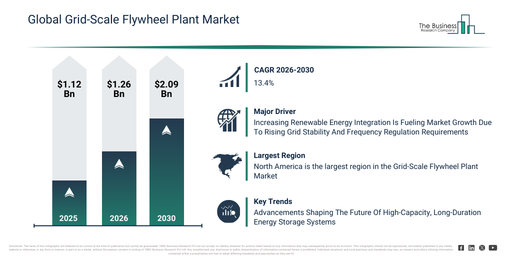
    The grid-scale flywheel plant market has experienced rapid expansion in recent years. It is forecast to grow from $1.12 billion in 2025 to $1.26 billion in 2026, at a compound annual growth rate (CAGR) of 13.2%. The increase observed in the historic period stemmed from the early adoption of flywheels for grid stability, escalating frequency regulation requirements, the implementation of pilot flywheel plants, a surge in fast-response energy storage needs, and initial utility-scale installations.

    The grid-scale flywheel plant market size is forecast to undergo substantial growth in the upcoming years. It is predicted to expand to $2.09 billion in 2030, showing a compound annual growth rate (CAGR) of 13.4%. This anticipated growth during the forecast period can be attributed to several factors such as increasing investments in fast-response storage technologies, the rising unpredictability of renewable energy, a growing demand for grid inertia solutions, the expansion of ancillary service markets, and a greater focus on low-maintenance storage systems. Significant trends for the forecast period include the increasing deployment of high-speed flywheel energy storage systems, the rising utilization of flywheels for frequency regulation, their growing integration with renewable energy assets, the expansion of short-duration grid stabilization solutions, and an enhanced emphasis on long-lifecycle energy storage solutions.

    Get A Free Sample Report With In-Depth Market Insights:

    https://thebusinessresearchcompany.com/sample_request?id=33143&type=smp&name=Grid-Scale%20Flywheel%20Plant%20Market%20Report%202026&utm_source=Blogs&utm_medium=Paid&utm_campaign=Oct_PR

    Grid-Scale Flywheel Plant Market Growth Factors: What’s Supporting Expansion?

    The rising integration of renewable energy sources is projected to drive the expansion of the grid-scale flywheel plant market in the future. Renewable energy integration refers to the growing incorporation of intermittent power sources, such as solar and wind, into electricity grids, which introduces challenges like variability and frequency instability that necessitate active management. This increase in renewable energy integration is occurring due to government initiatives for decarbonization, the widespread deployment of solar and wind capacity, and efforts to decrease reliance on power generation from fossil fuels. Grid-scale flywheel plants aid renewable energy integration by supplying rapid-response, high-frequency energy storage that helps stabilize the fluctuating output of solar and wind generation, maintains grid frequency, lessens voltage variations, and allows conventional power plants to ramp up or down more quickly, thereby boosting overall grid reliability and facilitating higher penetration of renewable energy sources without jeopardizing system stability. For instance, in August 2025, according to the Atlantic Renewables, a UK-based solar energy company, the UK solar industry experienced a significant 22% increase in home solar panel installations in the first half of 2025 compared to the same period in 2024. Therefore, increasing renewable energy integration is driving the growth of the grid-scale flywheel plant market.

    Grid-Scale Flywheel Plant Market Segment Analysis And Revenue Potential

    The grid-scale flywheel plant market covered in this report is segmented –

    1) By Type: Mechanical Flywheels; Electromechanical Flywheels; Hybrid Flywheels

    2) By Capacity: Below 1 Megawatt (MW); 1–10 Megawatt (MW); Above 10 Megawatt (MW)

    3) By Application: Frequency Regulation; Renewable Integration; Uninterruptible Power Supply; Grid Stabilization; Other Applications

    4) By End User: Utilities; Industrial; Commercial; Other End Users

    Subsegments:

    1) By Mechanical Flywheels: Energy Storage Capacity; Rotor Material; Speed Rating; Bearing Type; Housing And Containment; Application Area; Installation Orientation; Safety And Protection Features

    2) By Electromechanical Flywheels: Energy Storage Capacity; Motor-Generator Type; Power Electronics Type; Control System Type; Cooling System Type; Application Area; Installation Orientation; Safety And Protection Features

    3) By Hybrid Flywheels: Energy Storage Capacity; Combined Technology Configuration; Mechanical–Electrical Integration; Bearing System Design; Cooling And Thermal Management; Application Area; Installation Orientation; Safety And Protection Features

    Grid-Scale Flywheel Plant Market Industry Trends: What’s Reshaping Demand?

    Leading companies in the grid-scale flywheel plant market are concentrating on creating innovative products, such as high-capacity energy storage systems, to enhance grid stability and aid in renewable energy integration. High-capacity energy storage systems are technologies that store significant amounts of electricity for later use, assisting in grid stabilization, balancing supply and demand, and supporting the incorporation of renewable energy. For example, in October 2024, Amber Kinetics, a US-based energy storage technology company, unveiled its new Containerized Installation System, an innovative product specifically engineered to simplify the deployment and broaden the scalability of grid-scale flywheel plants. This system integrates multiple flywheels into modular, containerized units, equipped with automated monitoring, requiring low maintenance, and offering flexible sizing to meet various grid demands. This particular solution allows for quicker installation, a smaller site footprint, and improved energy reliability compared to conventional stationary flywheel setups.

    Grid-Scale Flywheel Plant Market Leading Companies And Competitive Benchmarking

    Major companies operating in the grid-scale flywheel plant market are Siemens AG, ABB Ltd., Amber Kinetics Inc., Calnetix Technologies Inc., Convergent Energy & Power LLC, Beacon Power LLC, VYCON Inc., Kinetic Traction Systems, Langley Holdings plc, Levistor GmbH, Revterra Inc., Adaptive Balancing Power, Temporal Power Ltd., Piller Group GmbH, Stornetic, Energiestro, BC New Energy Ltd., XEMC Darwind Co. Ltd., Falcon Flywheels, Huachi Kinetic Energy Co. Ltd. and.

    View The Full Grid-Scale Flywheel Plant Market Report:

    https://thebusinessresearchcompany.com/report/grid-scale-flywheel-plant-market-report?utm_source=Blogs&utm_medium=Paid&utm_campaign=Oct_PR

    Grid-Scale Flywheel Plant Market Top Region By Revenue And Market Share

    North America was the largest region in the grid-scale flywheel plant market in 2025. Asia-Pacific is expected to be the fastest-growing region in the forecast period. The regions covered in the grid-scale flywheel plant market report are Asia-Pacific, South East Asia, Western Europe, Eastern Europe, North America, South America, Middle East, Africa.

    Reach Out To Our Team:

    The Business Research Company: https://www.thebusinessresearchcompany.com/

    Americas: +1 310-496-7795

    Asia: +44 7882 955267 & +91 8897263534

    Europe: +44 7882 955267

    Email us at: marketing@tbrc.info

    Follow us on:

    LinkedIn: https://in.linkedin.com/company/the-business-research-company

    YouTube: https://www.youtube.com/channel/UC24_fI0rV8cR5DxlCpgmyFQ

    Global Market Model: https://www.thebusinessresearchcompany.com/global-market-model
  • Grid-Edge Phase Identification Analytics Market Growth Forecast Through 2030: Market Size And Trends In 2026

    Backed by market attractiveness analysis, total addressable market sizing, company benchmarking matrices, interactive Excel dashboards, wider supply chain intelligence, emerging startup coverage, and detailed product-level insights, The Business Research Company’s 2026 market reports are designed to offer research that is more actionable and strategically valuable than ever.

    Grid-Edge Phase Identification Analytics Market Poised To Hit $2.34 Billion By 2030 With A 16.4% CAGR

    The grid-edge phase identification analytics market has seen rapid expansion in recent years. Its size is forecast to expand from $1.1 billion in 2025 to $1.28 billion in 2026, registering a compound annual growth rate (CAGR) of 16.1%. Historically, this growth can be attributed to factors such as the increasing deployment of smart meters, the early stages of digitizing distribution networks, the rising availability of data at the grid edge, the initial adoption of distribution analytics tools, and a heightened focus on the accuracy of outage management.

    The grid-edge phase identification analytics market is projected for substantial expansion over the upcoming years. It is anticipated to reach $2.34 billion in 2030, demonstrating a compound annual growth rate (CAGR) of 16.4%. This growth during the projection period stems from heightened investments in modernizing distribution grids, increased uptake of distributed energy resources, greater need for automated grid validation, wider adoption of utility cloud analytics, and a stronger emphasis on grid resilience and dependability. Key trends anticipated for this forecast span include the growing implementation of machine learning-driven phase detection, increased utilization of smart meter data analytics, the broader integration of real-time topology validation instruments, the expansion of cloud-native grid-edge analytics platforms, and a heightened commitment to distribution grid precision.

    Get A Free Sample Report With In-Depth Market Insights:

    https://thebusinessresearchcompany.com/sample_request?id=33142&type=smp&name=Grid-Edge%20Phase%20Identification%20Analytics%20Market%20Report%202026&utm_source=Blogs&utm_medium=Paid&utm_campaign=Oct_PR

    Grid-Edge Phase Identification Analytics Market Demand Drivers: What’s Powering Industry Growth?

    The increasing adoption of distributed energy resources (DERs) is projected to boost the expansion of the grid-edge phase identification analytics market. These DERs are small-scale power generation and storage units, such as rooftop solar panels, battery systems, and electric vehicle charging infrastructure, which connect to the grid near the point of consumption. The rise in DERs stems from a growing shift towards decentralized renewable energy generation at the consumer level. Grid-edge phase identification analytics plays a crucial role by accurately mapping DER connections to distribution phases, thereby enabling utilities to optimize load balancing, prevent phase imbalances, and ensure the seamless integration of distributed generation at the grid’s edge. This trend is supported by data from the International Renewable Energy Agency, a UAE-based intergovernmental organization, which stated in March 2025 that global renewable power capacity additions reached 585 GW in 2024, representing over 90% of total power expansion and an increase from prior years. Consequently, the rising prevalence of distributed energy resources is a key factor propelling the grid-edge phase identification analytics market forward.

    Grid-Edge Phase Identification Analytics Market Segmentation And Category Overview

    The grid-edge phase identification analytics market covered in this report is segmented –

    1) By Component: Software; Hardware; Services

    2) By Deployment Mode: On-Premises; Cloud

    3) By Application: Grid Optimization; Outage Management; Asset Management; Load Forecasting; Other Applications

    4) By Sales Channel: Direct Sales; Distributors; Online Sales

    5) By End-User: Utilities; Industrial; Commercial; Residential; Other End Users

    Subsegments:

    1) By Software: Phase Identification Software; Data Analytics Software; Visualization Software; Integration Software; Reporting Software

    2) By Hardware: Sensor Modules; Metering Devices; Communication Interfaces; Data Acquisition Units; Signal Processing Units

    3) By Services: Consulting Services; Deployment Services; Maintenance Services; Training Services; Technical Support Services

    Grid-Edge Phase Identification Analytics Market Innovation Trends: What Developments Are Reshaping The Industry?

    Leading companies within the grid-edge phase identification analytics market are concentrating on developing advanced solutions, such as AI-enabled grid edge analytics platforms that integrate sophisticated real-time phase mapping and operational intelligence. This focus aims to satisfy the increasing demand for improved grid visibility, swift integration of distributed energy resources (DER), and better management of outages and loads, all driven by grid modernization efforts and the escalating complexity of distribution networks. AI-powered grid-edge phase identification analytics platforms utilize machine learning and artificial intelligence to continuously process extensive grid data from smart meters, IoT sensors, and other edge devices, automatically identifying phase imbalances and connectivity patterns. This capability enables utilities to optimize load balancing and grid reliability to an extent not achievable by traditional phase identification methods, which relied on manual surveys and limited data sampling, neither at scale nor in real-time. For example, in November 2025, Schneider Electric, a France-based energy management and automation technology company, launched its One Digital Grid Platform. This modular, AI-enabled software platform is designed to assist utilities in modernizing grid operations by combining planning, operations, and asset management with real-time analytics and predictive insights to enhance outage restoration, resilience, and cost efficiency throughout distribution networks. The One Digital Grid Platform leverages AI algorithms to integrate diverse grid data streams, estimate restoration times during outages, and improve decision-making without necessitating costly infrastructure overhauls, marking a significant advancement over conventional grid management systems that lacked cohesive, AI-driven operational tools.

    Grid-Edge Phase Identification Analytics Market Industry Leaders And Competitive Landscape

    Major companies operating in the grid-edge phase identification analytics market are Siemens AG, Hitachi Energy Ltd., International Business Machines Corporation (IBM), Cisco Systems, Inc., Oracle Corporation, Schneider Electric SE, Honeywell International Inc., ABB Ltd., Capgemini SE, Eaton Corporation plc, Itron, Inc., Landis+Gyr Group AG, Schweitzer Engineering Laboratories, Inc. (SEL), S&C Electric Company, Aclara Technologies LLC (a Hubbell Company), Enel X S.r.l., Kamstrup A/S, C3.ai, Inc., Uplight, Inc., Trilliant Holdings Inc.

    View The Full Grid-Edge Phase Identification Analytics Market Report:

    https://thebusinessresearchcompany.com/report/grid-edge-phase-identification-analytics-market-report?utm_source=Blogs&utm_medium=Paid&utm_campaign=Oct_PR

    Grid-Edge Phase Identification Analytics Market Regional Analysis And Top Geography

    North America was the largest region in the grid-edge phase identification analytics market in 2025. Asia-Pacific is expected to be the fastest-growing region in the forecast period. The regions covered in the grid-edge phase identification analytics market report are Asia-Pacific, South East Asia, Western Europe, Eastern Europe, North America, South America, Middle East, Africa.

    Reach Out To Our Team:

    The Business Research Company: https://www.thebusinessresearchcompany.com/

    Americas: +1 310-496-7795

    Asia: +44 7882 955267 & +91 8897263534

    Europe: +44 7882 955267

    Email us at: marketing@tbrc.info

    Follow us on:

    LinkedIn: https://in.linkedin.com/company/the-business-research-company

    YouTube: https://www.youtube.com/channel/UC24_fI0rV8cR5DxlCpgmyFQ

    Global Market Model: https://www.thebusinessresearchcompany.com/global-market-model

  • Grid Simulator Market Analysis: $0.82 Billion Market Size In 2026 And Future Growth Prospects

    Grid Simulator Market Analysis: $0.82 Billion Market Size In 2026 And Future Growth Prospects

    Featuring market attractiveness scoring, total addressable market sizing, company benchmarking matrices, interactive Excel dashboards, deeper supply chain intelligence, emerging startup tracking, and granular product-level insights, The Business Research Company’s 2026 market reports are built to deliver research that is both more actionable and more strategically valuable.

    Grid Simulator Market Size And Revenue Outlook Through 2030

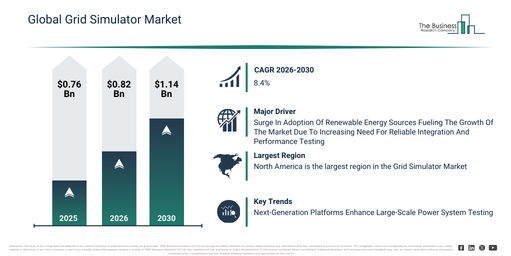
    The market for grid simulators has shown significant growth over the past few years. This market is projected to expand from $0.76 billion in 2025 to $0.82 billion in 2026, achieving a compound annual growth rate (CAGR) of 8.2%. Historically, this expansion has been driven by factors including the increasing adoption of power electronics in grids, the demand for early renewable integration testing, the expansion of research and development facilities, the growing complexity of grid-connected devices, and a rising need for grid stability studies.

    The grid simulator market is anticipated to experience substantial expansion in the coming years, with its valuation expected to reach $1.14 billion in 2030, exhibiting a compound annual growth rate (CAGR) of 8.4%. This projected growth is driven by several factors such as increasing investments in renewable integration testing, a rising demand for EV and inverter validation, the expansion of smart grid deployments, a growing need for cyber-physical grid testing, and an increasing focus on resilient grid infrastructure. Additionally, significant trends for this period involve the increasing deployment of real-time digital grid simulators, a rising demand for hardware-in-the-loop testing platforms, the growing integration of renewable energy testing capabilities, the expansion of grid code compliance and certification testing, and an enhanced focus on high-power simulation accuracy.

    Get A Free Sample Report With In-Depth Market Insights:

    https://thebusinessresearchcompany.com/sample_request?id=23073362&type=smp&name=Grid%20Simulator%20Market%20Report%202026&utm_source=Blogs&utm_medium=Paid&utm_campaign=Oct_PR

    Grid Simulator Market Growth Drivers: What’s Behind The Acceleration?

    The expanding use of renewable energy sources is projected to drive the growth of the grid simulator market moving forward. These naturally replenished resources, such as solar, wind, hydro, geothermal, and biomass, are utilized for generating sustainable power with minimal environmental harm. The increased adoption of renewables is largely due to decreasing technology costs, as innovations in solar and wind power have made clean energy more affordable and competitive with traditional power sources. Grid simulators aid renewable energy sources by assessing and confirming their functionality under actual grid scenarios, guaranteeing stable integration, dependability, and adherence to grid regulations despite the inconsistent nature of renewable power generation. For instance, in November 2024, the UK-based think tank Ember-Energy Organization stated that solar installations are anticipated to reach 593 GW in 2024, marking a 29% year-on-year increase following an 87% growth in 2023. Consequently, the increasing embrace of renewable energy sources is propelling the expansion of the grid simulator market. Increased Electric Vehicle Adoption Drives Market Growth Due to the Requirement for Safe and Efficient Testing of EV-Grid Interactions.

    Grid Simulator Market Segment Outlook: Which Categories Are Growing Fastest?

    The grid simulator market covered in this report is segmented –

    1) By Component: Hardware; Software; Services

    2) By Product Type: Alternating Current (Ac) Grid Simulator; Direct Current (Dc) Grid Simulator

    3) By Power Rating: Low Power; Medium Power; High Power

    4) By Application: Renewable Energy; Automotive; Aerospace; Industrial; Research And Development; Other Applications

    5) By End User: Utilities; Manufacturers; Research Institutes; Other End Users

    Subsegments:

    1) By Hardware: Power Electronic Devices; Control Panels And Switchgear; Sensors And Measurement Instruments; Communication Interfaces; Processing And Computing Units

    2) By Software: Simulation And Modeling Platforms; Grid Analysis And Visualization Tools; Control And Automation Software; Data Analytics And Forecasting Solutions; Testing And Validation Applications

    3) By Services: Consulting And Advisory Services; Installation And Integration Services; Training And Education Services; Maintenance And Technical Support Services; System Customization And Upgradation Services

    Grid Simulator Market Trends: What’s Defining The Industry’s Next Phase?

    Leading companies active within the grid simulator market are concentrating on progressing real-time simulation technologies, specifically high-performance real-time digital simulators, with the aim of enabling precise emulation of electrical grid behavior, providing support for hardware-in-the-loop testing, and validating smart grid devices. High-performance real-time digital simulators are defined as systems that reproduce voltage, frequency, and transient occurrences at timescales sufficiently rapid to interact with physical hardware, thereby allowing engineers to test inverters, control systems, and protective devices securely prior to deployment. For example, in October 2025, OPAL-RT TECHNOLOGIES, a Canada-based simulation technology company, introduced its SPS Software platform, which was developed to be compatible with the newest MATLAB/Simulink releases. This platform provides improved real-time simulation functionalities, facilitating large-scale power system integration and assessment. It also delivers enhanced compatibility with existing legacy models, guaranteeing more seamless transitions for current projects. Additionally, the software supports sophisticated control validation, enabling engineers to thoroughly examine system responses under dynamic conditions. Ultimately, SPS Software streamlines dynamic modeling workflows, making the simulation, analysis, and optimization of intricate electrical grids more manageable.

    Grid Simulator Market Key Participants And Competitive Landscape

    Major companies operating in the grid simulator market are Siemens AG, Hitachi Ltd., Schneider Electric SE, Mitsubishi Electric Corporation, Asea Brown Boveri Ltd., Eaton Corporation plc, Emerson Electric Co., Chroma Automatic Test Equipment Inc., Megger Group Limited, Doble Engineering Company, Kikusui Electronics Corporation, OPAL-RT Technologies Inc., Spirae Inc., Regatron AG, Gridco Systems Inc., Real Time Digital Simulator Technologies Inc., Pacific Power Source Inc., AE Techron Inc., Typhoon Hardware-in-the-Loop Inc., and Intepro Systems Inc.

    View The Full Grid Simulator Market Report:

    https://thebusinessresearchcompany.com/report/grid-simulator-market-report?utm_source=Blogs&utm_medium=Paid&utm_campaign=Oct_PR

    Grid Simulator Market Geographic Analysis: Where Is Demand Rising Fastest?

    North America was the largest region in the grid simulator market in 2025. Asia-Pacific is expected to be the fastest-growing region in the forecast period. The regions covered in the grid simulator market report are Asia-Pacific, South East Asia, Western Europe, Eastern Europe, North America, South America, Middle East, Africa.

    Reach Out To Our Team:

    The Business Research Company: https://www.thebusinessresearchcompany.com/

    Americas: +1 310-496-7795

    Asia: +44 7882 955267 & +91 8897263534

    Europe: +44 7882 955267

    Email us at: marketing@tbrc.info

    Follow us on:

    LinkedIn: https://in.linkedin.com/company/the-business-research-company

    YouTube: https://www.youtube.com/channel/UC24_fI0rV8cR5DxlCpgmyFQ

    Global Market Model: https://www.thebusinessresearchcompany.com/global-market-model