Month: October 2026

  • Sleep Diagnostics Artificial Intelligence Market Analysis: How The Industry Is Evolving Toward A $2.68 Billion Future

    Sleep Diagnostics Artificial Intelligence Market Analysis: How The Industry Is Evolving Toward A $2.68 Billion Future

    Backed by market attractiveness analysis, total addressable market sizing, company benchmarking matrices, interactive Excel dashboards, wider supply chain intelligence, emerging startup coverage, and detailed product-level insights, The Business Research Company’s 2026 market reports are designed to offer research that is more actionable and strategically valuable than ever.

    Sleep Diagnostics Artificial Intelligence Market Size, Value And Growth Trajectory Through 2030

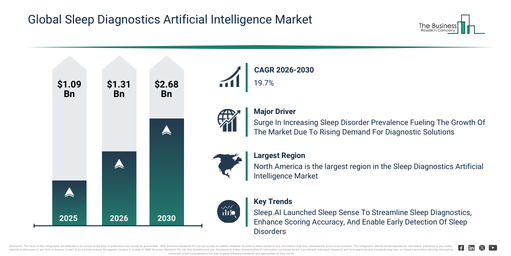
    The sleep diagnostics artificial intelligence market has experienced significant expansion recently. Projections indicate it will escalate from $1.09 billion in 2025 to $1.31 billion in 2026, achieving a compound annual growth rate (CAGR) of 19.4%. This historical growth was primarily driven by an increase in sleep disorder cases, the proliferation of wearable devices, a surge in digital health analytics, more sleep lab studies, and a demand for quicker diagnostic methods.

    The sleep diagnostics artificial intelligence market is anticipated to experience significant expansion over the coming years. Projections indicate it will reach $2.68 billion by 2030, demonstrating a robust compound annual growth rate (CAGR) of 19.7%. This projected increase during the forecast period is driven by several factors, including the uptake of AI clinical decision tools, the growing prevalence of remote sleep monitoring, an increase in home based diagnostics, the emergence of personalized sleep therapy, and its integration with various digital health platforms. Additionally, key trends expected during this period involve AI based sleep stage scoring, wearable integrated sleep analytics, cloud based sleep diagnostic platforms, the development of predictive sleep disorder models, and automated polysomnography interpretation.

    Get A Free Sample Report With In-Depth Market Insights:

    https://thebusinessresearchcompany.com/sample_request?id=38474838&type=smp&name=Sleep%20Diagnostics%20Artificial%20Intelligence%20Market%20Report%202026&utm_source=Blogs&utm_medium=Paid&utm_campaign=Oct_PR

    Sleep Diagnostics Artificial Intelligence Market Growth Backed By Core Demand Fundamentals

    The anticipated expansion of the sleep diagnostics artificial intelligence market is expected to be propelled by the increasing occurrence of sleep disorders. These conditions are defined as medical issues that disrupt typical sleep patterns, affecting the quality, timing, or duration of sleep and leading to daytime discomfort or reduced functioning. This rising prevalence is attributed to factors such as aging populations, lifestyle-related stress, and a greater awareness of sleep health, which collectively have boosted screening, diagnosis, and reporting. Sleep diagnostics artificial intelligence assists in tackling sleep disorders by enabling automated, accurate, and scalable analysis of sleep data, thus supporting early detection, personalized treatment, and enhanced clinical outcomes. For example, in November 2023, NHS England indicated that 64.9% of young people aged 17 to 23 reported experiencing sleep problems three or more times in the previous week, underscoring a growing burden of sleep-related issues and an increased necessity for diagnostic solutions. As a result, the rising prevalence of sleep disorders stands as a primary driver of growth in the sleep diagnostics artificial intelligence market.

    Sleep Diagnostics Artificial Intelligence Market Segmentation: How Does The Market Break Down By Category?

    The sleep diagnostics artificial intelligence market covered in this report is segmented –

    1) By Component: Software; Hardware; Services

    2) By Technology: Machine Learning; Deep Learning; Natural Language Processing; Ensemble Learning

    3) By Deployment Mode: On Premises; Cloud Based

    4) By Application: Sleep Apnea; Insomnia; Narcolepsy; Restless Legs Syndrome; Circadian Rhythm Disorders; Other Applications

    5) By End User: Hospitals; Sleep Centers And Clinics; Home Care Settings; Research Institutes; Other End Users

    Subsegments:

    1) By Software: Sleep Scoring Software; Predictive Analytics Software; Electronic Health Record Integration Software

    2) By Hardware: Wearable Devices; Portable Diagnostic Devices; In Lab Monitoring Equipment

    3) By Services: Consulting Services; Implementation Services; Maintenance And Support Services

    Sleep Diagnostics Artificial Intelligence Market Growth Trends Reshaping The Competitive Landscape

    Major companies within the sleep diagnostics artificial intelligence market are concentrating on technological enhancements in automated sleep scoring, aiming to decrease clinician dependency and diagnostic variability, primarily through frictionless sleep monitoring technology, to secure a competitive advantage. Frictionless sleep monitoring technology is defined as a contactless, AI-powered system designed to automatically capture and analyze sleep patterns, stages, and disturbances without the need for wearable devices, thereby enabling accurate and convenient sleep diagnostics. As an illustration, in December 2025, Sleep.ai, a U.S.-based digital health company, launched Sleep Sense, a frictionless sleep monitoring technology that transforms any smartphone into a privacy-aware sleep sensor, allowing for near-universal sleep data capture without wearables or manual input. This system utilizes advanced AI boundary detection alongside hybrid spatio-temporal models to precisely identify bedtime and wake time, offering accuracy comparable to PSG-validated trackers. Moreover, through its multimodal contextual modeling, it analyzes various signals, including motion, ambient light, and device usage patterns, to generate reliable sleep insights even when data is noisy or limited.

    Sleep Diagnostics Artificial Intelligence Market Industry Leaders And Competitive Landscape

    Major companies operating in the sleep diagnostics artificial intelligence market are ResMed Inc., Neurosoft Ltd., Nox Health Inc., Itamar Medical Ltd., Compumedics Limited, Beacon Biosignals Inc., Onera Health Inc., EnsoData Inc., SleepImage Inc., Zeto Inc., HoneyNaps Co. Ltd., SOMNOmedics GmbH, SleepScore Labs, Nox Medical A/S, Sleep.AI Inc., Sleepacta S.r.l.

    View The Full Sleep Diagnostics Artificial Intelligence Market Report:

    https://thebusinessresearchcompany.com/report/sleep-diagnostics-artificial-intelligence-market-report?utm_source=Blogs&utm_medium=Paid&utm_campaign=Oct_PR

    Sleep Diagnostics Artificial Intelligence Market Regional Analysis And Top Geography

    North America was the largest region in the sleep diagnostics artificial intelligence (AI) market in 2025. Asia-Pacific is expected to be the fastest-growing region in the forecast period. The regions covered in the sleep diagnostics artificial intelligence market report are Asia-Pacific, South East Asia, Western Europe, Eastern Europe, North America, South America, Middle East, Africa.

    Reach Out To Our Team:

    The Business Research Company: https://www.thebusinessresearchcompany.com/

    Americas: +1 310-496-7795

    Asia: +44 7882 955267 & +91 8897263534

    Europe: +44 7882 955267

    Email us at: marketing@tbrc.info

    Follow us on:

    LinkedIn: https://in.linkedin.com/company/the-business-research-company

    YouTube: https://www.youtube.com/channel/UC24_fI0rV8cR5DxlCpgmyFQ

    Global Market Model: https://www.thebusinessresearchcompany.com/global-market-model
  • Sleep Apnea Implants Market Outlook Through 2030: Understanding The Growth Opportunity

    Sleep Apnea Implants Market Outlook Through 2030: Understanding The Growth Opportunity

    Featuring market attractiveness scoring, total addressable market sizing, company benchmarking matrices, interactive Excel dashboards, deeper supply chain intelligence, emerging startup tracking, and granular product-level insights, The Business Research Company’s 2026 market reports are built to deliver research that is both more actionable and more strategically valuable.

    Sleep Apnea Implants Market CAGR Outlook And Future Development

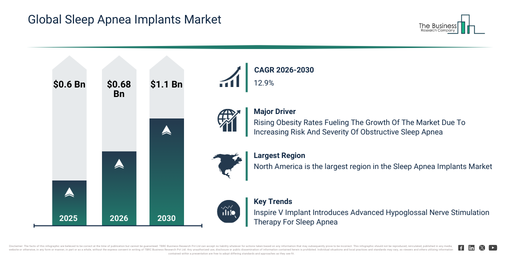
    The sleep apnea implants market size has demonstrated significant expansion in recent years. Its valuation is anticipated to increase from $0.6 billion in 2025 to $0.68 billion in 2026, showing a compound annual growth rate (CAGR) of 12.6%. The market’s past growth can be attributed to factors such as the increasing prevalence of sleep apnea, higher rates of CPAP intolerance, improved diagnosis of sleep disorders, a rise in obesity levels, and the expansion of sleep clinics.

    The sleep apnea implants market size is anticipated to undergo significant expansion in the coming years, reaching $1.1 billion in 2030, exhibiting a compound annual growth rate (CAGR) of 12.9%. This projected increase during the forecast period is largely due to factors such as a heightened demand for long-term implant therapy, the development of minimally invasive procedures, an escalating awareness of sleep health issues, broader reimbursement coverage, and advancements in neurostimulation devices. Prominent trends expected in this period include hypoglossal nerve stimulation devices, implantable airway support systems, programmable neurostimulation implants, minimally invasive sleep implants, and wireless-controlled implant platforms.

    Get A Free Sample Report With In-Depth Market Insights:

    https://thebusinessresearchcompany.com/sample_request?id=20685070&type=smp&name=Sleep%20Apnea%20Implants%20Market%20Report%202026&utm_source=Blogs&utm_medium=Paid&utm_campaign=Oct_PR

    Sleep Apnea Implants Market Growth Catalysts And Demand Drivers

    An increase in obesity rates is projected to drive the expansion of the sleep apnea implants market in the future. Obesity is a medical condition characterized by an excessive buildup of body fat, which substantially elevates the likelihood of negative health consequences and chronic illnesses. The primary reason for the rise in obesity is the greater intake of calorie-rich, ultra-processed foods that offer surplus energy but little nutritional content, thus contributing to sustained weight gain. The growing prevalence of obesity fuels the demand for sleep apnea implants because extra fat deposits around the neck and upper airway heighten both the risk and seriousness of obstructive sleep apnea, prompting more patients unable to tolerate CPAP to seek permanent implantable treatment options. For example, data from May 2024, released by the Office for Health Improvement and Disparities, a UK-based government department, indicated that an estimated 64% of adults aged 18 and above in England were considered overweight or obese. This figure was distinctly higher for men, at about 69%, versus approximately 59% for women. Consequently, the increasing incidence of obesity is a key factor propelling the expansion of the sleep apnea implants market.

    Sleep Apnea Implants Market Segment Trends And Revenue Contributors

    The sleep apnea implants market covered in this report is segmented –

    1) By Product: Phrenic Nerve Stimulator; Hypoglossal Neurostimulation Devices; Bone Screw Implant System; Palatal Implants; Pillar Procedure

    2) By Indication: Central Sleep Apnea; Obstructive Sleep Apnea

    3) By Distribution Channel: Direct Sales to Hospitals; Medical Device Distributors; Specialty Medical Suppliers

    4) By End Use: Hospitals; Ambulatory Surgical Centers

    Subsegments:

    1) By Phrenic Nerve Stimulator: Implantable Phrenic Nerve Stimulators; Rechargeable Phrenic Nerve Stimulators; Fully Programmable Phrenic Nerve Stimulators; Wireless Controlled Phrenic Nerve Stimulators; Long Term Use Phrenic Nerve Stimulators

    2) By Hypoglossal Neurostimulation Devices: Implantable Hypoglossal Neurostimulation Devices; Rechargeable Hypoglossal Neurostimulation Devices; Programmable Hypoglossal Neurostimulation Devices; Wireless Controlled Hypoglossal Neurostimulation Devices; Sleep Activated Hypoglossal Neurostimulation Devices

    3) By Bone Screw Implant System: Titanium Bone Screw Implant Systems; Adjustable Bone Screw Implant Systems; Self Tapping Bone Screw Implant Systems; Long Term Fixation Bone Screw Implant Systems; Minimally Invasive Bone Screw Implant Systems

    4) By Palatal Implants: Soft Palate Implants; Rigid Palatal Implants; Bio Compatible Palatal Implants; Permanent Palatal Implants; Minimally Invasive Palatal Implants

    5) By Pillar Procedure: Single Implant Pillar Procedures; Multiple Implant Pillar Procedures; Office Based Pillar Procedures; Minimally Invasive Pillar Procedures; Outpatient Pillar Procedures

    Sleep Apnea Implants Market Trends Shaping Long-Term Demand

    Leading companies within the sleep apnea implants market are prioritizing technological advancements, particularly hypoglossal nerve stimulation (HNS) therapy, to improve airway patency and decrease instances of obstructive sleep apnea. Hypoglossal nerve stimulation (HNS) therapy is an implantable medical intervention designed to address obstructive sleep apnea by electrically stimulating the hypoglossal nerve, which controls tongue movements, thereby maintaining an open airway during sleep. For example, in November 2025, Children’s Hospital of Pittsburgh, a US-based pediatric hospital, pioneered the use of the Inspire V implant with its inaugural implantation, which incorporates an integrated respiratory sensor, streamlining the implanted system from three components to two, alongside enhanced software designed to boost patient management efficiency and accessibility, with a brief recovery period typically involving one night of observation. The Inspire V implant system tackles obstructive sleep apnea by stimulating the hypoglossal nerve to sustain an open breathing passage during sleep, offering patients advantages such as an integrated respiratory sensor, a simplified two-component design, and updated software that enhances therapy management and lessens procedural complexity.

    Sleep Apnea Implants Market Key Participants And Competitive Landscape

    Major companies operating in the sleep apnea implants market are Medtronic Plc, Koninklijke Philips N.V., Asahi Kasei Corporation, Nyxoah SA, Fisher & Paykel Healthcare Limited, LivaNova Plc, Contec Medical Systems Co. Ltd., Inspire Medical Systems Inc., Drive DeVilbiss Healthcare GmbH, Pillar Palatal LLC, SomnoMed Limited, Respicardia, Inc., Sibel Health Inc., LinguaFlex LLC, Advanced Brain Monitoring Inc, Cleveland Medical Devices Inc., Siesta Medical, Inc., Avery Biomedical Devices Inc., and Nox Medical, Somnowell Ltd.

    View The Full Sleep Apnea Implants Market Report:

    https://thebusinessresearchcompany.com/report/sleep-apnea-implants-market-report?utm_source=Blogs&utm_medium=Paid&utm_campaign=Oct_PR

    Sleep Apnea Implants Market Geographic Analysis: Where Is Demand Rising Fastest?

    North America was the largest region in the sleep apnea implants market in 2025. Asia-Pacific is expected to be the fastest-growing region in the forecast period. The regions covered in the sleep apnea implants market report are Asia-Pacific, South East Asia, Western Europe, Eastern Europe, North America, South America, Middle East, Africa.

    Reach Out To Our Team:

    The Business Research Company: https://www.thebusinessresearchcompany.com/

    Americas: +1 310-496-7795

    Asia: +44 7882 955267 & +91 8897263534

    Europe: +44 7882 955267

    Email us at: marketing@tbrc.info

    Follow us on:

    LinkedIn: https://in.linkedin.com/company/the-business-research-company

    YouTube: https://www.youtube.com/channel/UC24_fI0rV8cR5DxlCpgmyFQ

    Global Market Model: https://www.thebusinessresearchcompany.com/global-market-model
  • Single-use Membrane Chromatography Systems Market Growth Potential: What The Latest Forecast Reveals

    Single-use Membrane Chromatography Systems Market Growth Potential: What The Latest Forecast Reveals

    Built to provide research that’s more actionable and strategically valuable, The Business Research Company’s 2026 market reports include market attractiveness analysis, total addressable market sizing, company benchmarking matrices, interactive Excel dashboards, broader supply chain intelligence, emerging startup tracking, and in-depth product insights.

    Single-use Membrane Chromatography Systems Market Set To Climb From $1.21 Billion In 2026 To $1.96 Billion By 2030

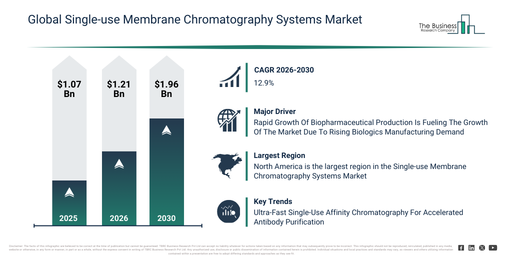
    The market size for single-use membrane chromatography systems has seen rapid expansion over recent years. It is projected to expand from $1.07 billion in 2025 to $1.21 billion in 2026, exhibiting a compound annual growth rate (CAGR) of 12.6%. This historical growth can be attributed to several factors, including an increase in biologics manufacturing, the expansion of vaccine production, a rise in single-use bioprocessing, the demand for faster purification cycles, and an uptick in contract manufacturing.

    The market for single-use membrane chromatography systems is anticipated to experience substantial expansion in the coming years. This market is projected to reach a value of $1.96 billion by 2030, exhibiting a compound annual growth rate (CAGR) of 12.9%. Several factors are driving this expansion during the forecast period, including advances in gene and cell therapy, the broader implementation of modular bioprocess facilities, an increasing need for adaptable purification methods, their use in viral vector manufacturing, and the scaling up of continuous bioprocessing. Key trends emerging in this period encompass disposable high-flow membrane modules, swift downstream purification platforms, pre-packed single-use capsules, continuous membrane processing systems, and designs focused on minimal buffer consumption.

    Get A Free Sample Report With In-Depth Market Insights:

    https://thebusinessresearchcompany.com/sample_request?id=95404566&type=smp&name=Single-use%20Membrane%20Chromatography%20Systems%20Market%20Report%202026&utm_source=Blogs&utm_medium=Paid&utm_campaign=Oct_PR

    Single-use Membrane Chromatography Systems Market Opportunity Drivers: What’s Unlocking New Revenue Potential?

    The market for single-use membrane chromatography systems is anticipated to expand, fueled by the swift increase in biopharmaceutical output. This surge in biopharmaceutical manufacturing stems from a global increase in demand for biologic treatments, encompassing monoclonal antibodies, vaccines, and advanced therapies. These systems play a crucial role in biopharmaceutical production, offering high-throughput, disposable purification solutions that facilitate quicker and more effective processing of biologics, including monoclonal antibodies. An example of this growth is observed in South Korea, where, as per a report from the Ministry of Trade, Industry and Resources in November 2025, the nation’s bioindustry production hit KRW 22.9 trillion, representing a 9.8% rise compared to the prior year. Consequently, the substantial expansion of biopharmaceutical production has propelled the growth of the single-use membrane chromatography systems market.

    Single-use Membrane Chromatography Systems Market Segment Analysis Spotlighting Growth Areas

    The single-use membrane chromatography systems market covered in this report is segmented –

    1) By Product Type: Anion Exchange Membrane Chromatography; Cation Exchange Membrane Chromatography; Mixed-Mode Membrane Chromatography

    2) By Technique: Ion Exchange Membrane Chromatography; Affinity Membrane Chromatography; Hydrophobic Interaction Membrane Chromatography; Mixed-Mode Membrane Chromatography

    3) By Application: Biopharmaceuticals; Clinical Research; Academic Research; Other Applications

    4) By End-User: Pharmaceutical and Biotechnology Companies; Academic and Research Institutes; Contract Research Organizations; Other End-Users

    Subsegments:

    1) By Anion Exchange Membrane Chromatography: High Capacity Anion Exchange Membrane; Strong Anion Exchange Membrane; Weak Anion Exchange Membrane; Disposable Anion Exchange Membrane

    2) By Cation Exchange Membrane Chromatography: Strong Cation Exchange Membrane; Weak Cation Exchange Membrane; High Capacity Cation Exchange Membrane; Disposable Cation Exchange Membrane

    3) By Mixed-Mode Membrane Chromatography: Cation Anion Mixed Mode Membrane; Hydrophobic Interaction Mixed Mode Membrane; Affinity Mixed Mode Membrane; Disposable Mixed Mode Membrane

    Single-use Membrane Chromatography Systems Market Innovation Trends Shaping Future Development

    Major companies within the single-use membrane chromatography systems market are strategically pursuing technological advancements, including ultra-fast single-use affinity chromatography, to enhance downstream processing efficiency, accelerate antibody capture, reduce purification cycle times, and improve scalability from research to commercial manufacturing. Ultra-fast single-use affinity chromatography refers to disposable, membrane-based systems that employ high-flow affinity ligands for capturing target biomolecules. As an illustration, Sartorius AG, a Germany-based company, unveiled Sartobind Rapid A Lab in October 2024. This innovative plug-and-play, single-use Protein A membrane chromatography solution is engineered to streamline antibody purification workflows. It achieves ultra-fast antibody capture in less than three minutes, leveraging a high-flow membrane matrix that delivers considerably higher lifetime yields compared to traditional resin columns. The unit operates without requiring column packing, buffer degassing, or cleaning-in-place, which significantly reduces process complexity and setup duration. Additionally, its flexible operation with syringes, pumps, or liquid chromatography systems eliminates the necessity for dedicated chromatography infrastructure.

    Single-use Membrane Chromatography Systems Market Top Companies Driving Competitive Growth

    Major companies operating in the single-use membrane chromatography systems market are Thermo Fisher Scientific Inc., 3M Company, Merck Millipore, Danaher Corporation, GE Healthcare, Asahi Kasei Corporation, Agilent Technologies Inc., Cytiva, Sartorius AG, Bio-Rad Laboratories Inc., Repligen Corporation, Phenomenex Inc., Cole-Parmer Instrument Company LLC, Membrane Solutions LLC, Graver Technologies LLC, Regis Technologies Inc., Purilogics Inc., BIA Separations d.o.o., Cobetter Filtration Equipment Co. Ltd., i3 Membrane Partnership Ltd.

    View The Full Single-use Membrane Chromatography Systems Market Report:

    https://thebusinessresearchcompany.com/report/single-use-membrane-chromatography-systems-market-report?utm_source=Blogs&utm_medium=Paid&utm_campaign=Oct_PR

    Single-use Membrane Chromatography Systems Market Global Footprint: Which Region Leads The Market?

    North America was the largest region in the single-use membrane chromatography systems market in 2025. Asia-Pacific is expected to be the fastest-growing region in the forecast period. The regions covered in the single-use membrane chromatography systems market report are Asia-Pacific, South East Asia, Western Europe, Eastern Europe, North America, South America, Middle East, Africa.

    Reach Out To Our Team:

    The Business Research Company: https://www.thebusinessresearchcompany.com/

    Americas: +1 310-496-7795

    Asia: +44 7882 955267 & +91 8897263534

    Europe: +44 7882 955267

    Email us at: marketing@tbrc.info

    Follow us on:

    LinkedIn: https://in.linkedin.com/company/the-business-research-company

    YouTube: https://www.youtube.com/channel/UC24_fI0rV8cR5DxlCpgmyFQ

    Global Market Model: https://www.thebusinessresearchcompany.com/global-market-model
  • Robotic Flight Simulator Surgery Market Forecast: Breaking Down The Numbers Behind Future Expansion

    Robotic Flight Simulator Surgery Market Forecast: Breaking Down The Numbers Behind Future Expansion

    Built to provide research that’s more actionable and strategically valuable, The Business Research Company’s 2026 market reports include market attractiveness analysis, total addressable market sizing, company benchmarking matrices, interactive Excel dashboards, broader supply chain intelligence, emerging startup tracking, and in-depth product insights.

    Robotic Flight Simulator Surgery Market Value Analysis: What Growth Lies Ahead Over The Forecast Period?

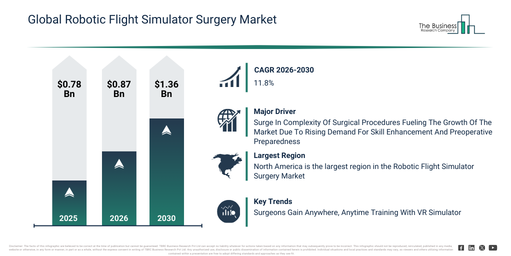
    The robotic flight simulator surgery market has experienced rapid expansion in recent years. It is projected to grow from $0.78 billion in 2025 to $0.87 billion in 2026, at a compound annual growth rate (CAGR) of 11.6%. This historical growth can be attributed to factors such as increased complexity in surgical training, the expansion of simulation-based education, a rising emphasis on patient safety, the growth of minimally invasive surgery, and the development of advanced high-fidelity simulators.

    The robotic flight simulator surgery market is projected for significant expansion over the coming years. This market is set to reach $1.36 billion in 2030, driven by a compound annual growth rate (CAGR) of 11.8%. Several factors are contributing to this anticipated growth, such as increased integration of VR surgical laboratories, advancements in competency-based surgical certification, the broadening scope of remote surgical education, a heightened need for rehearsal-based planning, and enhanced financial support for medical simulation facilities. Key developments expected during this period involve the proliferation of virtual surgical training platforms, a rise in the application of patient-specific procedure simulation, the expansion of haptic-enabled training systems, greater adoption of team-based surgical simulation, and the incorporation of performance scoring and feedback mechanisms.

    Get A Free Sample Report With In-Depth Market Insights:

    https://thebusinessresearchcompany.com/sample_request?id=76447344&type=smp&name=Robotic%20Flight%20Simulator%20Surgery%20Market%20Report%202026&utm_source=Blogs&utm_medium=Paid&utm_campaign=Oct_PR

    Robotic Flight Simulator Surgery Market Demand Drivers Opening New Revenue Streams

    An anticipated increase in the complexity of surgical procedures is projected to fuel the expansion of the robotic flight simulator surgery market moving ahead. Surgical procedures involve medical operations performed by skilled surgeons to treat diseases, injuries, or deformities through physical alteration of body tissues. The heightened intricacy of these procedures is increasing due to an aging global populace, a rising prevalence of chronic conditions requiring surgical intervention, and the expanding adoption of minimally invasive and robot-assisted techniques. Robotic flight simulator surgery enhances surgical practice by enabling surgeons to rehearse challenging procedures within a realistic virtual environment, refine their technical proficiencies, and boost their preparedness prior to actual operations. For instance, in April 2025, the Australian Institute of Health and Welfare (AIHW), an Australia-based independent statutory agency, documented 778,500 public hospital elective surgery admissions, marking a 5.8% increase from the 735,500 recorded in 2022–23. Consequently, the increasing intricacy of surgical operations is propelling the expansion of the robotic flight simulator surgery market.

    Robotic Flight Simulator Surgery Market Segment Analysis: What Are The Core Market Categories?

    The robotic flight simulator surgery market covered in this report is segmented –

    1) By Type Of Surgery: Cardiac Surgery; Orthopedic Surgery; Neurosurgery; Gastrointestinal Surgery; Urological Surgery; Other Types

    2) By Technology: Virtual Reality (VR); Augmented Reality (AR); Mixed Reality (MR)

    3) By Application: Training And Education; Preoperative Planning; Surgical Navigation; Rehabilitation And Recovery Training

    4) By End-User: Hospitals And Clinics; Ambulatory Surgical Centers (ASCs); Research And Academic Institutions

    Subsegments:

    1) By Cardiac Surgery: Minimally Invasive Cardiac Surgery; Coronary Artery Bypass Simulation; Valve Repair And Replacement Simulation; Electrophysiology Procedure Simulation

    2) By Orthopedic Surgery: Joint Replacement Simulation; Fracture Fixation Simulation; Arthroscopic Surgery Simulation; Spinal Fusion Simulation

    3) By Neurosurgery: Brain Tumor Resection Simulation; Spinal Cord Surgery Simulation; Vascular Neurosurgery Simulation; Endoscopic Neurosurgery Simulation

    4) By Gastrointestinal Surgery: Bariatric Surgery Simulation; Colorectal Surgery Simulation; Liver And Pancreas Surgery Simulation; Laparoscopic Gastrointestinal Surgery Simulation

    5) By Urological Surgery: Prostate Surgery Simulation; Kidney Surgery Simulation; Bladder Surgery Simulation; Minimally Invasive Urological Procedures Simulation

    6) By Other Types: Pediatric Surgery Simulation; Gynecological Surgery Simulation; Ophthalmic Surgery Simulation; Emergency Surgery Simulation

    Robotic Flight Simulator Surgery Market Trends Powering Strategic Industry Growth

    Within the robotic flight simulator surgery market, leading companies are prioritizing the incorporation of artificial intelligence (AI) into simulation platforms, including the VTVR platform. This integration aims to elevate surgical accuracy, improve training results, and deliver immediate performance insights for surgeons at all skill levels. The VTVR platform is primarily recognized as a Virtual Reality-centric training tool employed specifically within CMR Surgical’s Versius robotic surgery training initiative. An example of this is CMR Surgical, a surgical robotics firm based in the UK, which unveiled the Versius Trainer in VR (VTVR) in July 2023. This advanced virtual reality simulator is designed for their Versius robotic surgical system. Through VR headsets and hand controllers, the VTVR allows surgeons to participate in interactive simulation exercises, providing adaptable training options that can be accessed from any location at any time. This system, intended to complement the current Versius Trainer, offers a wireless and portable experience, eliminating the necessity for a PC connection. Such an innovative method facilitates surgeons’ ability to practice and become acquainted with the Versius interface on their own schedule. By offering this readily available and immersive training, VTVR has the potential to hasten skill acquisition and reduce the conventional learning period, particularly when contrasted with using in-lab simulators.

    Robotic Flight Simulator Surgery Market Industry Leaders And Competitive Landscape

    Major companies operating in the robotic flight simulator surgery market are Medtronic plc, Intuitive Surgical Inc., Smith & Nephew plc, CAE Inc., Meerecompany Inc., Surgical Science Sweden AB, Avatera Medical GmbH, CMR Surgical Ltd, Osso VR, Ubitus K.K., Mentice AB, HaptX Inc., KRN Labs, Medicaroid Corporation, PrecisionOS Technology, EndoQuest Robotics Inc., iotaMotion Inc., LifeLike BioTissues, ToLTech GmbH, Simulated Surgical Systems LLC

    View The Full Robotic Flight Simulator Surgery Market Report:

    https://thebusinessresearchcompany.com/report/robotic-flight-simulator-surgery-market-report?utm_source=Blogs&utm_medium=Paid&utm_campaign=Oct_PR

    Robotic Flight Simulator Surgery Market Regional Analysis And Leading Geography

    North America was the largest region in the robotic flight simulator surgery market in 2025. Asia-Pacific is expected to be the fastest-growing region in the forecast period. The regions covered in the robotic flight simulator surgery market report are Asia-Pacific, South East Asia, Western Europe, Eastern Europe, North America, South America, Middle East, Africa.

    Reach Out To Our Team:

    The Business Research Company: https://www.thebusinessresearchcompany.com/

    Americas: +1 310-496-7795

    Asia: +44 7882 955267 & +91 8897263534

    Europe: +44 7882 955267

    Email us at: marketing@tbrc.info

    Follow us on:

    LinkedIn: https://in.linkedin.com/company/the-business-research-company

    YouTube: https://www.youtube.com/channel/UC24_fI0rV8cR5DxlCpgmyFQ

    Global Market Model: https://www.thebusinessresearchcompany.com/global-market-model
  • Robotic Assisted Endovascular Systems Market Expected To Grow At 8.9% CAGR Through 2030: What Businesses Need To Know

    Robotic Assisted Endovascular Systems Market Expected To Grow At 8.9% CAGR Through 2030: What Businesses Need To Know

    Backed by market attractiveness analysis, total addressable market sizing, company benchmarking matrices, interactive Excel dashboards, wider supply chain intelligence, emerging startup coverage, and detailed product-level insights, The Business Research Company’s 2026 market reports are designed to offer research that is more actionable and strategically valuable than ever.

    Robotic Assisted Endovascular Systems Market Size Forecast: How Big Could The Market Get By 2030?

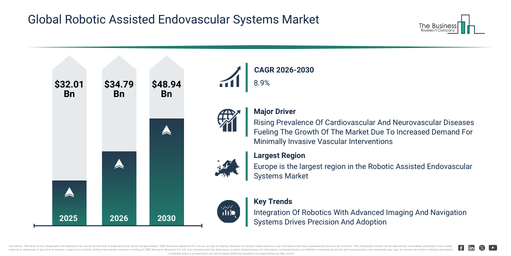
    The robotic assisted endovascular systems market size has shown strong growth recently. It is projected to increase from $32.01 billion in 2025 to $34.79 billion in 2026, achieving a compound annual growth rate (CAGR) of 8.7%. This past growth can be attributed to factors such as an increase in cardiovascular disease cases, growth in catheter based interventions, the expansion of interventional radiology units, a rising preference for minimally invasive surgery, and improvements in vascular imaging.

    The robotic assisted endovascular systems market is projected to experience substantial expansion in the coming years. Its valuation is anticipated to reach $48.94 billion by 2030, exhibiting a compound annual growth rate (CAGR) of 8.9%. This projected increase over the forecast period can be linked to several factors, including the proliferation of robotic vascular labs, a heightened need for precision-guided medical interventions, the broadening scope of neurovascular robotic procedures, advancements in remote surgery functionalities, and increased capital expenditure by hospitals on robotic operating facilities. Key developments expected during this timeframe encompass the advancement of robotic catheter navigation, a growing embrace of these systems in minimally invasive vascular operations, the evolution of imaging-guided robotic platforms, a surge in the application of remote robotic interventions, and the incorporation of sophisticated precision vascular control mechanisms.

    Get A Free Sample Report With In-Depth Market Insights:

    https://thebusinessresearchcompany.com/sample_request?id=56689290&type=smp&name=Robotic%20Assisted%20Endovascular%20Systems%20Market%20Report%202026&utm_source=Blogs&utm_medium=Paid&utm_campaign=Oct_PR

    Robotic Assisted Endovascular Systems Market Growth Backed By Core Demand Fundamentals

    The increasing occurrence of cardiovascular and neurovascular conditions is anticipated to drive expansion in the robotic-assisted endovascular systems market. These conditions impact the heart, blood vessels, and brain’s circulatory system, encompassing issues like coronary artery disease, stroke, and cerebral aneurysms, and are a primary global contributor to fatalities and enduring disabilities. The rise in cardiovascular and neurovascular diseases stems from an aging global demographic coupled with a greater incidence of lifestyle-associated risk factors such as obesity, high blood pressure, and a lack of physical activity. Robotic-assisted endovascular systems aid in addressing these diseases by facilitating extremely precise, minimally intrusive navigation within blood vessels, thereby enhancing the accuracy, safety, and overall clinical results for intricate vascular procedures. For example, in January 2024, the American Heart Association, a US-based non-profit, reported that the age-adjusted mortality rate for cardiovascular disease climbed to 233.3 per 100,000 in 2024, marking a 4.0% increase from 224.4 per 100,000 in 2023. Consequently, the growing occurrence of cardiovascular and neurovascular diseases is fueling the expansion of the robotic-assisted endovascular systems market.

    Robotic Assisted Endovascular Systems Market Segment Breakdown: Which Categories Lead On Revenue?

    The robotic assisted endovascular systems market covered in this report is segmented –

    1) By Component: Hardware; Software; Services

    2) By Product: Robotic Catheter Systems; Robotic Guidewire Systems; Robotic Angioplasty Systems; Other Products

    3) By Technology: Robotic Catheter Systems; AI-Assisted Navigation Systems; Imaging-Guided Robotic Platforms; Haptic Feedback Systems; Autonomous Robotic Systems

    4) By Application: Coronary Interventions; Peripheral Vascular Interventions; Neurovascular Interventions; Other Applications

    5) By End-User: Hospitals; Specialty Clinics; Ambulatory Surgical Centers; Research And Academic Institutes; Other End-Users

    Subsegments:

    1) By Hardware: Robotic Control Units; Robotic Catheter Systems; Navigation Consoles; Imaging Integration Modules; Surgical Instrument Arms

    2) By Software: Navigation Software Platforms; Imaging Processing Software; Procedure Planning Software; Data Management Software; Clinical Decision Support Software

    3) By Services: Installation Services; Maintenance And Repair Services; Training And Education Services; System Upgradation Services

    Robotic Assisted Endovascular Systems Market Growth Trends Reshaping The Competitive Landscape

    Leading companies in the robotic assisted endovascular systems market are prioritizing the integration of robotics with advanced imaging and navigation systems, such as fully remote endovascular robotic platforms. This effort aims to enhance procedural precision, facilitate complex vascular navigation, and broaden access to specialized medical care. Fully remote endovascular robotic platforms are defined as robotic systems that combine real-time fluoroscopic imaging with preoperative CT and MRI data to guide the robotic manipulation of catheters and guidewires during endovascular procedures, while also allowing clinicians to operate from a distant console. An illustrative example of this trend is the introduction, in October 2025, by Remedy Robotics, a US-based medical technology company, of the Remedy N1 System. This endovascular surgical robotic platform is specifically designed to support fully remote neurointerventional procedures. Engineered to boost accuracy and clinical workflow, the system integrates automated CT and MRI image preprocessing with live fluoroscopic imaging for real-time navigation, permits simultaneous robotic control of up to four endovascular devices, and features a portable operator console with secure audiovisual connectivity to facilitate remote procedural execution.

    Robotic Assisted Endovascular Systems Market Key Participants And Competitive Landscape

    Major companies operating in the robotic assisted endovascular systems market are Johnson & Johnson, Siemens Healthineers AG, Corindus Vascular Robotics Inc., Cordis Corporation, MicroPort Scientific Corporation, Hansen Medical Inc., Robocath S.A.S., Magnetecs Corporation, Cathbot Robot Co. Ltd., EKOS Corporation, Stereotaxis Inc., Imperative Care Inc., WeMed Medical Technology Co. Ltd., Lombard Medical Limited, Endovascular Robotics Inc., SS Innovations International Inc., Visionary Medicare Co. Ltd., Vantis Vascular Inc., Microbot Medical Inc., Sentante Ltd.

    View The Full Robotic Assisted Endovascular Systems Market Report:

    https://thebusinessresearchcompany.com/report/robotic-assisted-endovascular-systems-market-report?utm_source=Blogs&utm_medium=Paid&utm_campaign=Oct_PR

    Robotic Assisted Endovascular Systems Market Geographic Analysis: Where Is Demand Accelerating Fastest?

    Europe was the largest region in the robotic assisted endovascular systems market in 2025. Asia-Pacific is expected to be the fastest-growing region in the forecast period. The regions covered in the robotic assisted endovascular systems market report are Asia-Pacific, South East Asia, Western Europe, Eastern Europe, North America, South America, Middle East, Africa.

    Reach Out To Our Team:

    The Business Research Company: https://www.thebusinessresearchcompany.com/

    Americas: +1 310-496-7795

    Asia: +44 7882 955267 & +91 8897263534

    Europe: +44 7882 955267

    Email us at: marketing@tbrc.info

    Follow us on:

    LinkedIn: https://in.linkedin.com/company/the-business-research-company

    YouTube: https://www.youtube.com/channel/UC24_fI0rV8cR5DxlCpgmyFQ

    Global Market Model: https://www.thebusinessresearchcompany.com/global-market-model
  • Robot-Assisted Joint Replacement Systems Market Forecast To Reach $4.26 Billion By 2030: Key Trends Explained

    Robot-Assisted Joint Replacement Systems Market Forecast To Reach $4.26 Billion By 2030: Key Trends Explained

    Featuring market attractiveness scoring, total addressable market sizing, company benchmarking matrices, interactive Excel dashboards, deeper supply chain intelligence, emerging startup tracking, and granular product-level insights, The Business Research Company’s 2026 market reports are built to deliver research that is both more actionable and more strategically valuable.

    Robot-Assisted Joint Replacement Systems Market Revenue Outlook: What CAGR Lies Ahead Through 2030?

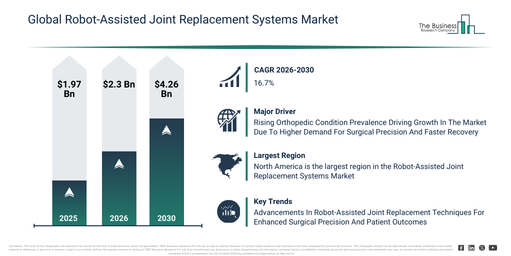
    The market size for robot-assisted joint replacement systems has expanded notably in recent years. It is anticipated to increase from $1.97 billion in 2025 to $2.3 billion in 2026, reflecting a compound annual growth rate (CAGR) of 16.5%. The expansion observed in prior periods can be linked to factors such as the increasing prevalence of osteoarthritis, a rise in joint replacement volumes, the proliferation of orthopedic specialty hospitals, an expanding aging population, and improvements in surgical imaging systems.

    The market size for robot-assisted joint replacement systems is expected to undergo rapid expansion in the coming years. It is projected to grow to $4.26 billion in 2030, with a compound annual growth rate (CAGR) of 16.7%. This anticipated growth is attributed to factors such as increased investments in robotic surgery, a rising demand for precision orthopedics, the expansion of outpatient joint replacement centers, greater surgeon training in robotic platforms, and an increase in the adoption of premium implants. Key trends in the forecast period include the growing adoption of robotic knee replacement systems, an increase in patient-specific surgical planning, the broader application of robotic arm-assisted orthopedic surgery, a rise in the use of real-time intraoperative navigation, and a higher demand for minimally invasive joint procedures.

    Get A Free Sample Report With In-Depth Market Insights:

    https://thebusinessresearchcompany.com/sample_request?id=64585310&type=smp&name=Robot-Assisted%20Joint%20Replacement%20Systems%20Market%20Report%202026&utm_source=Blogs&utm_medium=Paid&utm_campaign=Oct_PR

    Robot-Assisted Joint Replacement Systems Market Growth Catalysts And Demand Drivers

    The market for robot-assisted joint replacement systems is anticipated to grow in the coming years, primarily due to the increasing occurrence of degenerative joint and musculoskeletal (MSK) conditions. Degenerative orthopedic issues, such as osteoarthritis and age-related joint deterioration, principally affect the body’s movement and support structures, frequently leading to chronic pain, reduced mobility, and functional impairment. The incidence of these conditions is on the rise, largely attributable to the aging global population, as older adults are more susceptible to joint wear-and-tear, cartilage degeneration, and bone density loss. Robot-assisted joint replacement systems address advanced joint degeneration by enhancing surgical precision, improving implant alignment, and enabling more consistent outcomes, which can result in fewer complications and quicker postoperative recovery. For instance, data from the UK Office for Health Improvement and Disparities reveals that the prevalence of self-reported long-term musculoskeletal conditions among individuals aged 16 and over climbed to 18.4% in 2023 from 17.6% in 2022, indicating a growing patient population susceptible to progressive joint deterioration. Thus, the escalating prevalence of degenerative joint conditions serves as a significant driver for the growth of the robot-assisted joint replacement systems market.

    Robot-Assisted Joint Replacement Systems Market Segmentation: How Does The Market Break Down By Category?

    The robot-assisted joint replacement systems market covered in this report is segmented –

    1) By Product Type: Knee Replacement Systems; Hip Replacement Systems; Shoulder Replacement Systems; Other Product Types

    2) By Technology: Semi-Autonomous Systems; Fully Autonomous Systems

    3) By End-Users: Orthopedic Surgeons; Hospitals; Clinics; Other End-Users

    Subsegments:

    1) By Knee Replacement Systems: Total Knee Replacement; Partial Knee Replacement; Revision Knee Replacement

    2) By Hip Replacement Systems: Total Hip Replacement; Partial Hip Replacement; Revision Hip Replacement

    3) By Shoulder Replacement Systems: Total Shoulder Replacement; Partial Shoulder Replacement; Reverse Shoulder Replacement

    4) By Other Products: Ankle Replacement Systems; Elbow Replacement Systems; Custom Implant Guides

    Robot-Assisted Joint Replacement Systems Market Trends Shaping Long-Term Demand

    Leading companies in the robot-assisted joint replacement systems market are concentrating on developing advanced solutions, such as imageless intraoperative registration, to improve surgical precision, decrease operative time, and elevate patient outcomes in joint replacement procedures. Imageless intraoperative registration refers to a method employed in robot-assisted joint replacement surgery that creates a digital model of the patient’s joint during the procedure by utilizing anatomical landmarks and sensors, thereby eliminating the necessity for preoperative imaging while facilitating precise robotic guidance. For instance, in October 2023, DePuy Synthes, a US-based orthopedics company, introduced a VELYS Robotic-Assisted Solution for total knee arthroplasty. This imageless, table-mounted system is designed for accurate total knee arthroplasty (TKA), integrating with the ATTUNE knee system to provide individualized implant positioning and balanced soft tissue outcomes. Its primary advantages encompass enhanced surgical accuracy, shorter procedure times, reduced hospital stays (2.5 vs. 3.7 days), and superior early recovery metrics such as ambulation distance and pain relief at 6 months. Overall, it boosts patient satisfaction (95%), functional scores, and surgeon efficiency, while simultaneously minimizing errors in bone cuts and gap balancing.

    Robot-Assisted Joint Replacement Systems Market Top Companies Driving Competitive Growth

    Major companies operating in the robot-assisted joint replacement systems market are Johnson & Johnson, Medtronic plc., Stryker Corporation, B. Braun Melsungen AG., Zimmer Biomet Holdings Inc., Smith & Nephew plc., Meril Life Sciences, Globus Medical Inc., MicroPort Scientific Corporation, Brainlab, Corin Group, Exactech Inc., Think Surgical Inc., Curexo Inc., OMNIlife Science Inc., OrthAlign Inc., Kinamed Inc., Perlove Medical, Guangzhou Aimooe Technology Co. Ltd., Mako Surgical Corp., R2 Surgical,

    View The Full Robot-Assisted Joint Replacement Systems Market Report:

    https://thebusinessresearchcompany.com/report/robot-assisted-joint-replacement-systems-market-report?utm_source=Blogs&utm_medium=Paid&utm_campaign=Oct_PR

    Robot-Assisted Joint Replacement Systems Market Global Footprint: Which Region Leads The Industry?

    North America was the largest region in the robot-assisted joint replacement systems market in 2025. Asia-Pacific is expected to be the fastest-growing region in the forecast period. The regions covered in the robot-assisted joint replacement systems market report are Asia-Pacific, South East Asia, Western Europe, Eastern Europe, North America, South America, Middle East, Africa.

    Reach Out To Our Team:

    The Business Research Company: https://www.thebusinessresearchcompany.com/

    Americas: +1 310-496-7795

    Asia: +44 7882 955267 & +91 8897263534

    Europe: +44 7882 955267

    Email us at: marketing@tbrc.info

    Follow us on:

    LinkedIn: https://in.linkedin.com/company/the-business-research-company

    YouTube: https://www.youtube.com/channel/UC24_fI0rV8cR5DxlCpgmyFQ

    Global Market Model: https://www.thebusinessresearchcompany.com/global-market-model
  • Robot Assisted Surgical Microscope Market Analysis Through 2030: Market Size, Growth Trends And Industry Outlook

    Robot Assisted Surgical Microscope Market Analysis Through 2030: Market Size, Growth Trends And Industry Outlook

    Backed by market attractiveness analysis, total addressable market sizing, company benchmarking matrices, interactive Excel dashboards, wider supply chain intelligence, emerging startup coverage, and detailed product-level insights, The Business Research Company’s 2026 market reports are designed to offer research that is more actionable and strategically valuable than ever.

    Robot Assisted Surgical Microscope Market Growth Analysis: How Will Revenue Trend Over The Forecast Period?

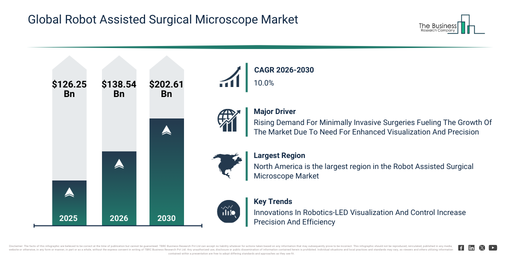
    The robot assisted surgical microscope market has experienced robust growth in recent years. It is forecast to expand from $126.25 billion in 2025 to $138.54 billion in 2026, demonstrating a compound annual growth rate (CAGR) of 9.7%. This historic growth can be attributed to several factors, including the increasing prevalence of minimally invasive surgeries, a rise in neurosurgery procedure volumes, the expansion of operating room imaging systems, a heightened demand for surgical precision, and the early adoption of robotic surgery tools.

    The robot assisted surgical microscope market is anticipated to show significant growth over the next few years. This market is expected to achieve a value of $202.61 billion in 2030, demonstrating a compound annual growth rate (CAGR) of 10.0%. This expansion during the forecast period can be attributed to an increase in complex microsurgical procedures, greater investments in robotics by hospitals, the widening adoption of digital operating rooms, surgeons’ growing requirement for precise visualization, and increased spending on advanced surgical systems. Noteworthy trends predicted for the forecast period include a rising uptake of robot-guided visualization technologies, expanded use of digitally assisted surgical microscopy, the development of image-guided robotic microscopes, a growing integration of AI-based visualization support, and a higher demand for ergonomic robotic microscope platforms.

    Get A Free Sample Report With In-Depth Market Insights:

    https://thebusinessresearchcompany.com/sample_request?id=16457180&type=smp&name=Robot%20Assisted%20Surgical%20Microscope%20Market%20Report%202026&utm_source=Blogs&utm_medium=Paid&utm_campaign=Oct_PR

    Robot Assisted Surgical Microscope Market Opportunity Drivers: What’s Unlocking New Revenue Potential?

    The increasing need for minimally invasive surgical procedures is anticipated to fuel the expansion of the robot-assisted surgical microscope market in the future. These surgeries are characterized by the use of small cuts, resulting in less harm to tissues, decreased pain after surgery, shorter hospitalizations, and reduced risks of complications when contrasted with conventional open operations. The proliferation of minimally invasive surgeries stems from technological progress in surgery, allowing for tinier incisions, quicker recovery periods, and better results for patients. The robot-assisted surgical microscope facilitates the demand for minimally invasive surgeries, providing surgeons with enhanced visualization, accuracy, and command essential for intricate minimally invasive operations. An illustrative example is found in June 2024, when the American Society of Plastic Surgeons (ASPS), a US-based professional association, reported that around 25.4 million cosmetic minimally invasive procedures took place in 2023, representing a 7% rise from 2022. Consequently, the growing requirement for minimally invasive surgeries is a key factor propelling the expansion of the robot-assisted surgical microscope market.

    Robot Assisted Surgical Microscope Market Segment Trends And Revenue Contributors

    The robot assisted surgical microscope market covered in this report is segmented –

    1) By Component: Robotic Surgical Microscope Systems; Software And Control Systems; Accessories And Peripheral Devices; Services

    2) By Technology: Digitally Assisted Robotic Microscopy; Artificial Intelligence (AI)-Enabled Robotic Visualization Systems; Image-Guided Robotic Microscopy

    3) By Surgery Type: Neurological Surgery; Orthopedic Surgery; Ophthalmological Surgery; Other Surgery Types

    4) By End User: Hospitals; Ambulatory Surgical Centers; Specialty Clinics

    Subsegments:

    1) By Robotic Surgical Microscope Systems: Standalone Robotic Microscope Units; Integrated Operating Room Microscope Systems; Ceiling Mounted Robotic Microscope Systems; Mobile Robotic Microscope Platforms; Hybrid Robotic Optical Systems

    2) By Software And Control Systems: Image Processing Software; Navigation And Tracking Software; Robotic Motion Control Software; User Interface And Visualization Software; Data Integration And Management Software

    3) By Accessories And Peripheral Devices: High Definition Optical Lenses; Robotic Arm Attachments; Visualization Displays And Monitors; Illumination And Light Management Devices; Foot Control And Hand Control Interfaces

    4) By Services: Installation And System Integration Services; Maintenance And Repair Services; Software Update And Upgrade Services; User Training And Education Services; Technical Support And Consultation Services

    Robot Assisted Surgical Microscope Market Innovation Trends Shaping Future Development

    Leading companies in the robot assisted surgical microscope market are prioritizing the development of advanced solutions, such as robotic visualization systems for neurosurgery, with the goal of improving surgical precision, operational workflow, and decision-making during procedures. These robotic visualization systems for neurosurgery are defined as surgeon-operated microscope platforms that integrate robotic positioning, high-resolution optical and digital imaging, and software-assisted features to aid in complex microsurgical procedures. For example, in September 2024, Carl Zeiss Meditec AG, a Germany-based medical technology company, unveiled the ZEISS KINEVO 900 S Robotic Visualization System for neurosurgery. This system is engineered to support high-precision microsurgical workflows, combining 4K 3D digital visualization with robotic assistance, enabling hands-free positioning through surgeon-controlled robotic movement, and incorporating AI-supported functionalities like automated focus and alignment to enhance intraoperative efficiency and visualization accuracy.

    Robot Assisted Surgical Microscope Market Leading Players And Competitive Positioning

    Major companies operating in the robot assisted surgical microscope market are Sony Group Corporation, Danaher Corporation, Stryker Corporation, B. Braun Melsungen AG, Olympus Corporation, Karl Storz SE & Co. KG, Carl Zeiss AG, Leica Microsystems GmbH, Aesculap Inc., Brainlab AG, BHS Technologies GmbH, Medical Microinstruments Inc., Synaptive Medical Inc., Jadak LLC, Zumax Medical Co. Ltd., Perlove Medical Technology Co. Ltd., Mitaka Kohki Co. Ltd., Beijing Surgerii Technology Co. Ltd., Medicaroid Corporation, Medel Tıp ve Sağlık Ürünleri A.Ş.

    View The Full Robot Assisted Surgical Microscope Market Report:

    https://thebusinessresearchcompany.com/report/robot-assisted-surgical-microscope-market-report?utm_source=Blogs&utm_medium=Paid&utm_campaign=Oct_PR

    Robot Assisted Surgical Microscope Market Regional Distribution: Which Areas Power Market Growth?

    North America was the largest region in the robot assisted surgical microscope market in 2025. Asia-Pacific is expected to be the fastest-growing region in the forecast period. The regions covered in the robot assisted surgical microscope market report are Asia-Pacific, South East Asia, Western Europe, Eastern Europe, North America, South America, Middle East, Africa.

    Reach Out To Our Team:

    The Business Research Company: https://www.thebusinessresearchcompany.com/

    Americas: +1 310-496-7795

    Asia: +44 7882 955267 & +91 8897263534

    Europe: +44 7882 955267

    Email us at: marketing@tbrc.info

    Follow us on:

    LinkedIn: https://in.linkedin.com/company/the-business-research-company

    YouTube: https://www.youtube.com/channel/UC24_fI0rV8cR5DxlCpgmyFQ

    Global Market Model: https://www.thebusinessresearchcompany.com/global-market-model
  • Retinal Detachment Diagnostic Market Outlook From 2026 To 2030: Key Growth Factors And Future Opportunities

    Retinal Detachment Diagnostic Market Outlook From 2026 To 2030: Key Growth Factors And Future Opportunities

    Featuring market attractiveness scoring, total addressable market sizing, company benchmarking matrices, interactive Excel dashboards, deeper supply chain intelligence, emerging startup tracking, and granular product-level insights, The Business Research Company’s 2026 market reports are built to deliver research that is both more actionable and more strategically valuable.

    Retinal Detachment Diagnostic Market Forecast: What Value Will The Market Reach By 2030?

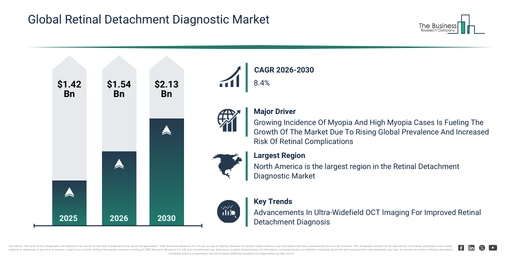
    The retinal detachment diagnostic market size has shown robust growth over recent years. It is projected to increase from $1.42 billion in 2025 to $1.54 billion in 2026, at a compound annual growth rate (CAGR) of 8.2%. The market’s expansion in the past period is attributed to an escalation in diabetic eye disease cases, an increase in ophthalmic imaging centers, heightened awareness of retinal disorders, the expansion of hospital eye clinics, and the early adoption of OCT scanners.

    The retinal detachment diagnostic market is projected to experience substantial growth over the next few years. It is forecasted to expand to $2.13 billion in 2030, showing a compound annual growth rate (CAGR) of 8.4%. This anticipated expansion can be attributed to an increasing aging population, a rising need for early vision diagnosis, the growth of remote eye screening initiatives, increased investment in ophthalmic imaging, and a higher prevalence of myopia and diabetes. Significant trends anticipated during the forecast period include the expanding application of optical coherence tomography imaging, greater acceptance of teleophthalmology screening services, the deployment of digital fundus photography systems, increased utilization of AI-assisted retinal image analysis, and a higher deployment of portable ophthalmic ultrasound devices.

    Get A Free Sample Report With In-Depth Market Insights:

    https://thebusinessresearchcompany.com/sample_request?id=71256914&type=smp&name=Retinal%20Detachment%20Diagnostic%20Market%20Report%202026&utm_source=Blogs&utm_medium=Paid&utm_campaign=Oct_PR

    Retinal Detachment Diagnostic Market Growth Momentum: What Factors Are Shaping Demand?

    An increasing occurrence of myopia and high myopia conditions is projected to drive expansion in the retinal detachment diagnostic market moving ahead. These conditions denote the rising commonness of nearsightedness and acute nearsightedness, which hinder clear distant sight and heighten the potential for significant ocular issues. The surge in myopia and high myopia cases, attributed to extended screen time and less outdoor engagement, is intensifying ocular strain, resulting in earlier development and quicker advancement of refractive impairments. Retinal detachment diagnostics assist in managing myopia and high myopia by facilitating the prompt identification of retinal problems, backing opportune medical intervention, and lessening the likelihood of profound vision impairment. For example, data from July 2025, provided by Woo University, a US-based non-profit organization, indicates that 30% of the global population is currently myopic, a figure anticipated to climb to almost 50% by 2050, impacting approximately 5 billion individuals. Consequently, the escalating incidence of myopia and high myopia cases is fueling the expansion of the retinal detachment diagnostic market.

    Retinal Detachment Diagnostic Market Segment Analysis Spotlighting Growth Areas

    The retinal detachment diagnostic market covered in this report is segmented –

    1) By Disease Type: Tractional Retinal Detachment; Rhegmatogenous Retinal Detachment

    2) By Diagnostic Type: Fundus Photography; Ophthalmoscopy; Optical Coherence Tomography Scanners; Fundus Cameras; Ophthalmic Ultrasound Imaging Systems; Ophthalmic A Scan Ultrasound; Ophthalmic B Scan Ultrasound

    3) By Technology: Imaging Based Diagnostics; Non Imaging Clinical Examination; Advanced Digital Ophthalmic Systems

    4) By Application: Vitreo Retinal Disorders; Cataract; Glaucoma; Refractive Disorders

    5) By End Use: Hospitals And Eye Clinics; Academic And Research Laboratories; Other End Uses

    Subsegments:

    1) By Tractional Retinal Detachment: Diabetic Tractional Retinal Detachment; Proliferative Vitreoretinopathy Related Tractional Retinal Detachment; Inflammatory Tractional Retinal Detachment; Trauma Induced Tractional Retinal Detachment; Post Surgical Tractional Retinal Detachment; Neovascularization Associated Tractional Retinal Detachment

    2) By Rhegmatogenous Retinal Detachment: Superior Break Rhegmatogenous Retinal Detachment; Inferior Break Rhegmatogenous Retinal Detachment; Giant Retinal Tear Related Rhegmatogenous Retinal Detachment; Lattice Degeneration Related Rhegmatogenous Retinal Detachment; Trauma Related Rhegmatogenous Retinal Detachment; Myopic Degeneration Related Rhegmatogenous Retinal Detachment; Post Cataract Surgery Rhegmatogenous Retinal Detachment

    Retinal Detachment Diagnostic Market Trends Redefining Industry Growth

    Major companies in the retinal detachment diagnostic market are concentrating on developing advanced imaging solutions, such as ultra-widefield optical coherence tomography (OCT), to improve detection accuracy, enhance visualization of the peripheral retina, and support the early identification of retinal tears and detachments. Ultra-widefield OCT is an imaging technology that captures high-resolution, wide-angle views of the retina, enabling clinicians to identify subtle or peripheral retinal abnormalities that could otherwise be overlooked. For instance, in March 2025, Optos PLC, a UK-based retinal imaging company, launched MonacoPro, its next-generation ultra-widefield SLO and spectral domain retinal imaging system. Created to assist eye care professionals with better diagnostic precision and workflow efficiency, MonacoPro includes high-quality OCT imaging, integrated 200° optomap visualization, and the new AreaAssist tool, which automates area measurement and analysis, collectively boosting clinicians’ ability to detect retinal detachments and other ocular pathologies.

    Retinal Detachment Diagnostic Market Competitive Overview And Top Companies

    Major companies operating in the retinal detachment diagnostic market are Canon Inc., Essilor International S.A., NIDEK Co Ltd., Alcon Inc., Nikon Corporation, Kowa Company Ltd., Carl Zeiss Meditec AG, Topcon Corporation, Tomey Corporation, Forus Health Pvt Ltd., Reichert Technologies, Optos plc, Revenio Group, Visionix USA Inc., Haag-Streit Group, Optomed Plc, Remidio Innovative Solutions, Intelligent Retinal Imaging Systems (IRIS), Santec Corporation, and D‑EYE Srl.

    View The Full Retinal Detachment Diagnostic Market Report:

    https://thebusinessresearchcompany.com/report/retinal-detachment-diagnostic-market-report?utm_source=Blogs&utm_medium=Paid&utm_campaign=Oct_PR

    Retinal Detachment Diagnostic Market Leading Geography: Which Region Contributes The Most Revenue?

    North America was the largest region in the retinal detachment diagnostic market in 2025. Asia-Pacific is expected to be the fastest-growing region in the forecast period. The regions covered in the retinal detachment diagnostic market report are Asia-Pacific, South East Asia, Western Europe, Eastern Europe, North America, South America, Middle East, Africa.

    Reach Out To Our Team:

    The Business Research Company: https://www.thebusinessresearchcompany.com/

    Americas: +1 310-496-7795

    Asia: +44 7882 955267 & +91 8897263534

    Europe: +44 7882 955267

    Email us at: marketing@tbrc.info

    Follow us on:

    LinkedIn: https://in.linkedin.com/company/the-business-research-company

    YouTube: https://www.youtube.com/channel/UC24_fI0rV8cR5DxlCpgmyFQ

    Global Market Model: https://www.thebusinessresearchcompany.com/global-market-model
  • Respiratory Endotherapy Devices Market Forecast To Reach $4.66 Billion By 2030: Key Growth Drivers And Industry Trends

    Respiratory Endotherapy Devices Market Forecast To Reach $4.66 Billion By 2030: Key Growth Drivers And Industry Trends

    Built to provide research that’s more actionable and strategically valuable, The Business Research Company’s 2026 market reports include market attractiveness analysis, total addressable market sizing, company benchmarking matrices, interactive Excel dashboards, broader supply chain intelligence, emerging startup tracking, and in-depth product insights.

    Respiratory Endotherapy Devices Market Value Growth And Long-Term Outlook

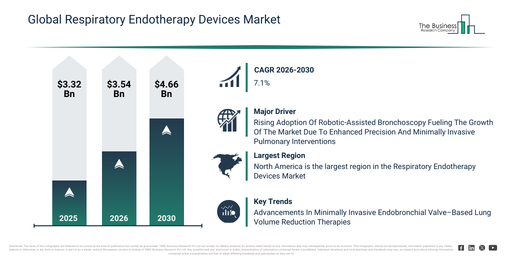
    The market for respiratory endotherapy devices has shown substantial growth over recent years. Looking ahead, its valuation is set to climb from $3.32 billion in 2025 to $3.54 billion in 2026, maintaining a compound annual growth rate (CAGR) of 6.9%. The historical expansion can be traced to various factors including a rise in chronic respiratory diseases, an increase in lung cancer diagnosis, the expansion of interventional pulmonology, growth in hospital endoscopy units, and the demand for minimally invasive procedures.

    The respiratory endotherapy devices market is projected for substantial growth over the next few years. It is anticipated to expand to $4.66 billion by 2030, driven by a compound annual growth rate (CAGR) of 7.1%. This expansion during the forecast period can be attributed to an increase in early lung screening programs, robotic bronchoscopy adoption, outpatient pulmonary procedures growth, advanced imaging integration, and precision airway therapy demand. Significant trends expected in the forecast period include minimally invasive airway intervention devices, disposable bronchoscope adoption, image guided bronchoscopic procedures, advanced endobronchial ablation systems, and smart navigation bronchoscopy tools.

    Get A Free Sample Report With In-Depth Market Insights:

    https://thebusinessresearchcompany.com/sample_request?id=20003569&type=smp&name=Respiratory%20Endotherapy%20Devices%20Market%20Report%202026&utm_source=Blogs&utm_medium=Paid&utm_campaign=Oct_PR

    Respiratory Endotherapy Devices Market Growth Factors Behind Sustained Expansion

    The increasing use of robotic-assisted bronchoscopy is projected to fuel the expansion of the respiratory endotherapy devices market moving forward. These advanced robotic-assisted bronchoscopy systems allow for precise navigation within the respiratory tract, leading to improved diagnostic accuracy and better therapeutic results. Demand for these systems is surging as healthcare providers seek less invasive options that reduce procedure time, bolster patient safety, and enhance clinical efficiency. Respiratory endotherapy devices, when assisted by robotics, facilitate complex interventions by offering real-time imaging, superior maneuverability, and greater control. For instance, in September 2025, the European Respiratory Society International Congress, a Switzerland-based membership organization, noted that the utilization of robotic-assisted bronchoscopy with integrated cone beam CT for peripheral lung lesions soared to 84.6% in 2025, a substantial rise from only 23.1% with conventional bronchoscopy in 2024. Hence, the increasing embrace of robotic-assisted bronchoscopy is propelling the growth of the respiratory endotherapy devices market.

    Respiratory Endotherapy Devices Market Segment Landscape: Which Areas Lead Development?

    The respiratory endotherapy devices market covered in this report is segmented –

    1) By Product Type: Bronchoscopes; Endobronchial Ultrasound Systems; Biopsy Forceps; Guidewires; Catheters; Airway Stents; Endobronchial Valves; Ablation Devices; Other Endotherapy Accessories

    2) By Diagnostic Devices: Trans Bronchial Aspiration; Biopsy Forceps; Cytology Brushes; Other Diagnostic Devices

    3) By Patient Type: Adult Patients; Pediatric Patients

    4) By Specialist: Hospitals; Diagnostic Centers; Ambulatory Surgical Centers

    5) By End User: Peripheral Vascular Intervention; Endovascular Interventions; Cardiac; Interventional Radiology; Venous; Other End Users

    Subsegments:

    1) By Bronchoscopes: Flexible Bronchoscopes; Rigid Bronchoscopes; Video Bronchoscopes; Disposable Bronchoscopes; Therapeutic Bronchoscopes

    2) By Endobronchial Ultrasound Systems: Radial Endobronchial Ultrasound Systems; Linear Endobronchial Ultrasound Systems; Portable Endobronchial Ultrasound Systems; Cart Based Endobronchial Ultrasound Systems; High Resolution Endobronchial Ultrasound Systems

    3) By Biopsy Forceps: Flexible Biopsy Forceps; Rigid Biopsy Forceps; Disposable Biopsy Forceps; Alligator Jaw Biopsy Forceps; Cup Biopsy Forceps

    4) By Guidewires: Hydrophilic Guidewires; Non Coated Guidewires; Steerable Guidewires; Flexible Tip Guidewires; High Strength Guidewires

    5) By Catheters: Balloon Catheters; Aspiration Catheters; Delivery Catheters; Diagnostic Catheters; Therapeutic Catheters

    6) By Airway Stents: Silicone Airway Stents; Metallic Airway Stents; Covered Airway Stents; Uncovered Airway Stents; Expandable Airway Stents

    7) By Endobronchial Valves: One Way Endobronchial Valves; Permanent Endobronchial Valves; Temporary Endobronchial Valves; Adjustable Endobronchial Valves; Implantable Endobronchial Valves

    8) By Ablation Devices: Radiofrequency Ablation Devices; Cryoablation Devices; Laser Ablation Devices; Thermal Ablation Devices; Microwave Ablation Devices

    9) By Other Endotherapy Accessories: Suction Tubes; Specimen Collection Traps; Bronchoscopy Brushes; Biopsy Needles; Airway Dilators

    Respiratory Endotherapy Devices Market Industry Trends Fueling Future Revenue Growth

    Leading firms in the respiratory endotherapy devices market are concentrating on creating innovative solutions, like endobronchial valves, with the aim of reducing treatment risks and achieving specific lung volume reduction without irreversible tissue removal. An endobronchial valve represents a minimally invasive implant, inserted via bronchoscopy into chosen airways to impede airflow to affected lung regions, thereby enabling healthier parts to operate more efficiently. For example, Olympus Canada Inc., a medical technology company based in Canada, introduced the Spiration Valve System in February 2024, designed for managing severe emphysema. This umbrella-shaped device is intended for placement in the most severely diseased lung areas through a minimally invasive bronchoscopic procedure. Its unique mechanism redirects airflow away from hyperinflated lung areas towards healthier tissue, which aids in enhancing respiratory mechanics. Being the sole endobronchial valve therapy presently accessible in Canada, it fulfills an unaddressed requirement in the treatment of severe emphysema. Clinical data from the EMPROVE trial illustrates lasting advantages over 24 months, encompassing significant enhancements in lung function, reduced breathlessness, and an improved quality of life for patients.

    Respiratory Endotherapy Devices Market Industry Leaders And Competitive Landscape

    Major companies operating in the respiratory endotherapy devices market are Johnson & Johnson, Medtronic plc, Siemens Healthineers, Stryker Corporation, GE Healthcare Technologies Inc., Boston Scientific Corporation, Intuitive Surgical Inc., Olympus Corporation, Hoya Corporation, Steris Healthcare, Teleflex Incorporated, Karl Storz SE & Co. KG, CookMedical, Merit Medical Systems Inc., Ambu A/S, Vygon, Richard Wolf GmbH, Vapotherm Inc, Scholly Fiberoptic GmbH, Clarus Medical LLC, ENDO-FLEX GmbH, The Lung Docs Inc., and Broncus Medical Inc.

    View The Full Respiratory Endotherapy Devices Market Report:

    https://thebusinessresearchcompany.com/report/respiratory-endotherapy-devices-market-report?utm_source=Blogs&utm_medium=Paid&utm_campaign=Oct_PR

    Respiratory Endotherapy Devices Market Regional Analysis And Top Geography

    North America was the largest region in the respiratory endotherapy devices market in 2025. Asia-Pacific is expected to be the fastest-growing region in the forecast period. The regions covered in the respiratory endotherapy devices market report are Asia-Pacific, South East Asia, Western Europe, Eastern Europe, North America, South America, Middle East, Africa.

    Reach Out To Our Team:

    The Business Research Company: https://www.thebusinessresearchcompany.com/

    Americas: +1 310-496-7795

    Asia: +44 7882 955267 & +91 8897263534

    Europe: +44 7882 955267

    Email us at: marketing@tbrc.info

    Follow us on:

    LinkedIn: https://in.linkedin.com/company/the-business-research-company

    YouTube: https://www.youtube.com/channel/UC24_fI0rV8cR5DxlCpgmyFQ

    Global Market Model: https://www.thebusinessresearchcompany.com/global-market-model

  • Renal Toxicity – Absorption, Distribution, Metabolism, And Excretion (ADME) Toxicology Testing Market Research 2026: Market Size, Trends, Segments And Growth Forecast

    Renal Toxicity – Absorption, Distribution, Metabolism, And Excretion (ADME) Toxicology Testing Market Research 2026: Market Size, Trends, Segments And Growth Forecast

    Backed by market attractiveness analysis, total addressable market sizing, company benchmarking matrices, interactive Excel dashboards, wider supply chain intelligence, emerging startup coverage, and detailed product-level insights, The Business Research Company’s 2026 market reports are designed to offer research that is more actionable and strategically valuable than ever.

    Renal Toxicity – Absorption, Distribution, Metabolism, And Excretion (ADME) Toxicology Testing Market Poised To Hit $2.78 Billion By 2030 With A 12.9% CAGR

    The renal toxicity – absorption, distribution, metabolism, and excretion (adme) toxicology testing market has expanded quickly in recent years. This market is projected to expand from $1.52 billion in 2025 to $1.71 billion in 2026, demonstrating a compound annual growth rate (CAGR) of 12.7%. Historically, this expansion is attributable to various factors such as an increase in preclinical drug safety testing, a rise in nephrotoxicity related drug failures, the expansion of CRO services, heightened regulatory safety requirements, and broader adoption of in vitro assays.

    The renal toxicity – absorption, distribution, metabolism, and excretion (adme) toxicology testing market size is projected to experience substantial growth over the next few years. It is anticipated to reach $2.78 billion by 2030, exhibiting a compound annual growth rate (CAGR) of 12.9%. This expansion during the forecast period is primarily fueled by the increasing number of biologics and complex drugs, the widespread adoption of predictive toxicology models, the ongoing expansion of organ on chip platforms, advancements in precision medicine research, and the rising demand for AI-based safety analytics. Key emerging trends expected within this period include kidney organoid-based toxicity assays, AI-assisted nephrotoxicity prediction models, high-throughput renal screening platforms, biomarker-driven renal safety panels, and microphysiological kidney-on-chip systems.

    Get A Free Sample Report With In-Depth Market Insights:

    https://thebusinessresearchcompany.com/sample_request?id=32674723&type=smp&name=Renal%20Toxicity%20%E2%80%93%20Absorption%2C%20Distribution%2C%20Metabolism%2C%20And%20Excretion%20%28ADME%29%20Toxicology%20Testing%20Market%20Report%202026&utm_source=Blogs&utm_medium=Paid&utm_campaign=Oct_PR

    Renal Toxicity – Absorption, Distribution, Metabolism, And Excretion (ADME) Toxicology Testing Market Demand Drivers Opening New Revenue Streams

    The increasing occurrence of kidney ailments is anticipated to drive the expansion of the renal toxicity-absorption, distribution, metabolism, and excretion (ADME) toxicology testing market in the future. These conditions are characterized by damage to the kidneys, compromising their ability to filter blood and maintain the body’s equilibrium. The rise in kidney-related disorders is linked to the growing incidence of diabetes, which harms renal blood vessels and hinders their filtering capacity. Renal toxicity ADME/toxicology testing plays a crucial role in identifying and assessing potential kidney damage resulting from various drugs or chemicals, thereby facilitating prompt intervention and the creation of safer therapeutic options. For instance, in 2025, according to the American Cancer Society, a US-based professional organization, approximately 80,980 new cases of kidney (renal) cancer are expected to be diagnosed in the US, with an estimated 14,510 deaths resulting from the disease. Consequently, the escalating prevalence of kidney-related disorders is propelling the growth of the renal toxicity-absorption, distribution, metabolism, and excretion (ADME) toxicology testing market.

    Renal Toxicity – Absorption, Distribution, Metabolism, And Excretion (ADME) Toxicology Testing Market Segments: Where Is Growth Concentrated?

    The renal toxicity – absorption, distribution, metabolism, and excretion (adme) toxicology testing market covered in this report is segmented –

    1) By Test Type: In Vitro Renal Toxicity Testing; In Vivo Renal Toxicity Testing; In Silico Renal Toxicity Modeling

    2) By Method: Biochemical and Enzymatic Assays; Cell Based Renal Assays; Biomarker Based Toxicity Analysis; Histopathology and Imaging; Pharmacokinetic and Drug Metabolism Studies

    3) By Stage of Drug Development: Discovery and Lead Optimization; Preclinical Development; Clinical Development; Post Marketing Safety Studies

    4) By Technology: High Throughput Screening Platforms; Organ On Chip and Microfluidic Systems; Omics Based Toxicology Platforms; Artificial Intelligence and Predictive Modeling Tools; Digital Pathology and Imaging Systems

    5) By End User: Pharmaceutical and Biotechnology Companies; Contract Research Organizations; Academic and Research Institutes; Regulatory Laboratories

    Subsegments:

    1) By In Vitro Renal Toxicity Testing: Primary Renal Cell Assays; Immortalized Renal Cell Line Assays; Three Dimensional Renal Cell Cultures; Kidney Organoid Models; Transporter Interaction Assays; Biomarker Based Nephrotoxicity Assays; High Content Imaging Assays; Microphysiological Kidney System Models

    2) By In Vivo Renal Toxicity Testing: Acute Renal Toxicity Studies; Subacute Renal Toxicity Studies; Subchronic Renal Toxicity Studies; Chronic Renal Toxicity Studies; Renal Biomarker Evaluation Studies; Histopathological Kidney Assessment; Dose Response Toxicity Studies; Recovery and Reversibility Studies

    3) By In Silico Renal Toxicity Modeling: Quantitative Structure Activity Relationship Modeling; Machine Learning Based Toxicity Prediction; Physiologically Based Pharmacokinetic Modeling; Virtual Screening for Nephrotoxicity; Read Across Toxicity Modeling; Systems Biology Based Toxicity Modeling

    Renal Toxicity – Absorption, Distribution, Metabolism, And Excretion (ADME) Toxicology Testing Market Trends Powering Strategic Industry Growth

    Leading companies in the renal toxicity-absorption, distribution, metabolism, and excretion (ADME) toxicology testing market are prioritizing the development of innovative solutions, such as low-drug-absorbing microfluidic chips, to enhance the predictive accuracy of kidney toxicity while reducing dependence on animal testing. A low-drug-absorbing microfluidic chip refers to a lab-on-a-chip device specifically designed for renal toxicity assessment that minimizes unintended drug absorption by its material, thereby ensuring a more accurate simulation of kidney functions and reliable measurement of drug effects on renal cells. For instance, in September 2024, Emulate Inc., a US-based biotechnology company, introduced the chip-R1 rigid chip, aiming to improve kidney toxicity testing with more accurate and reliable outcomes. This chip is engineered for precise ADME and toxicology modeling in non-stretch organs like the liver and kidney, utilizing low-drug-absorbing plastics and a thin, porous polycarbonate membrane to prevent compound loss and enhance drug recovery for lipophilic compounds. Its benefits include robust high shear stress support (up to 2.3 dyn/cm²), preactivated surfaces for streamlined workflows, and improved cellular crosstalk, while advantages encompass better reproducibility, accurate toxicity detection, and compatibility with existing organ-chip hardware to accelerate human-relevant preclinical testing.

    Renal Toxicity – Absorption, Distribution, Metabolism, And Excretion (ADME) Toxicology Testing Market Key Participants And Competitive Landscape

    Major companies operating in the renal toxicity – absorption, distribution, metabolism, and excretion (adme) toxicology testing market are Thermo Fisher Scientific Inc., Eurofins Scientific SE, Agilent Technologies Inc., WuXi AppTec Co. Ltd., Charles River Laboratories International Inc., PerkinElmer Inc., Beckman Coulter Inc., Bio-Rad Laboratories Inc., Pharmaron Beijing Co. Ltd., Simulations Plus Inc., GVK Biosciences Pvt. Ltd., Promega Corporation, Syngene International Ltd., SAI Life Sciences Ltd., QPS Holdings LLC, Southern Research Institute, BioIVT LLC, TCG Lifesciences Pvt. Ltd., Frontage Laboratories Inc., Symeres, TSRL Inc., BOC Sciences LLC, Vivisciences Preclinical CRO.

    View The Full Renal Toxicity – Absorption, Distribution, Metabolism, And Excretion (ADME) Toxicology Testing Market Report:

    https://thebusinessresearchcompany.com/report/renal-toxicity-absorption-distribution-metabolism-and-excretion-adme-toxicology-testing-market-report?utm_source=Blogs&utm_medium=Paid&utm_campaign=Oct_PR

    Renal Toxicity – Absorption, Distribution, Metabolism, And Excretion (ADME) Toxicology Testing Market Geographic Analysis: Where Is Demand Rising Fastest?

    North America was the largest region in the renal toxicity-ADME toxicology testing market in 2025. Asia-Pacific is expected to be the fastest-growing region in the forecast period. The regions covered in the renal toxicity – absorption, distribution, metabolism, and excretion (adme) toxicology testing market report are Asia-Pacific, South East Asia, Western Europe, Eastern Europe, North America, South America, Middle East, Africa.

    Reach Out To Our Team:

    The Business Research Company: https://www.thebusinessresearchcompany.com/

    Americas: +1 310-496-7795

    Asia: +44 7882 955267 & +91 8897263534

    Europe: +44 7882 955267

    Email us at: marketing@tbrc.info

    Follow us on:

    LinkedIn: https://in.linkedin.com/company/the-business-research-company

    YouTube: https://www.youtube.com/channel/UC24_fI0rV8cR5DxlCpgmyFQ

    Global Market Model: https://www.thebusinessresearchcompany.com/global-market-model