Month: October 2026

  • Intravenous (IV) Compounding Robots Market Forecast To Reach $0.99 Billion By 2030: Key Growth Drivers And Industry Trends

    Intravenous (IV) Compounding Robots Market Forecast To Reach $0.99 Billion By 2030: Key Growth Drivers And Industry Trends

    Built to provide research that’s more actionable and strategically valuable, The Business Research Company’s 2026 market reports include market attractiveness analysis, total addressable market sizing, company benchmarking matrices, interactive Excel dashboards, broader supply chain intelligence, emerging startup tracking, and in-depth product insights.

    Intravenous (IV) Compounding Robots Market Set To Climb From $0.58 Billion In 2026 To $0.99 Billion By 2030

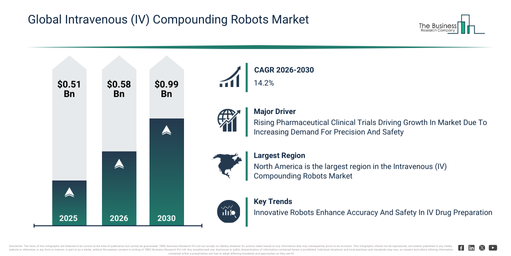
    The intravenous (IV) compounding robots market has seen substantial growth over recent years. Its value is anticipated to rise from $0.51 billion in 2025 to $0.58 billion in 2026, exhibiting a compound annual growth rate (CAGR) of 14.5%. This historical expansion can be attributed to a heightened emphasis on medication safety in hospitals, the increasing occurrence of chemotherapy drug preparation, greater integration of pharmacy automation systems, the development of centralized hospital pharmacies, and the ongoing necessity to lessen human compounding errors.

    The intravenous (IV) compounding robots market is anticipated to experience significant expansion over the next few years, with its size projected to reach $0.99 billion in 2030, demonstrating a compound annual growth rate (CAGR) of 14.2%. This growth within the forecast period can be attributed to a heightened demand for the secure handling of hazardous drugs, an increasing uptake of automated sterile compounding, growing investments in hospital automation infrastructure, the expansion of oncology treatment centers, and a rising need for operational efficiency in pharmacy workflows. Noteworthy trends during this period include technology-led innovations in robotic drug compounding, advancements in artificial intelligence (AI)-enabled dose verification, developments in closed system transfer integration, increasing research and development in precision pharmacy robotics, and innovations in real-time monitoring and quality assurance systems.

    Get A Free Sample Report With In-Depth Market Insights:

    https://thebusinessresearchcompany.com/sample_request?id=62126491&type=smp&name=Intravenous%20%28IV%29%20Compounding%20Robots%20Market%20Report%202026&utm_source=Blogs&utm_medium=Paid&utm_campaign=Oct_PR

    Intravenous (IV) Compounding Robots Market Expansion Drivers: What’s Shaping Future Growth?

    The rising number of pharmaceutical clinical trials is projected to fuel the expansion of the intravenous (IV) compounding robots market in the future. These trials are structured research studies designed to assess the safety, effectiveness, and appropriate dosage of new drugs or therapies in human participants. The growing demand for innovative treatments for intricate and emerging health conditions is contributing to the increase in pharmaceutical clinical trials. IV compounding robots assist clinical trials by guaranteeing the accurate and uniform preparation of investigational drugs, thereby improving the safety and dependability of study outcomes. For example, in December 2024, the Association of the British Pharmaceutical Industry (ABPI), a UK-based organization, reported that the number of pharmaceutical industry trials launched in the UK rose for the second year in a row, from 411 in 2022 to 426 in 2023. Consequently, the increasing number of pharmaceutical clinical trials is boosting the growth of the intravenous (IV) compounding robots market. The expanding adoption of personalized medicine and complex infusion protocols is anticipated to drive the intravenous (IV) compounding robots market forward. Personalized medicine involves customizing medical treatments, including drug choice and dosage, based on individual patient characteristics like genetics, biomarkers, and disease profiles. The increasing approval and clinical implementation of targeted therapies that necessitate highly customized intravenous dosing and preparation are propelling the growth of personalized medicine. IV compounding robots support personalized medicine by automating the precise preparation and individualized dosing of high-potency therapies, ensuring accuracy, safety, and consistency for patient-specific treatments. For instance, in November 2025, the Personalized Medicine Coalition, a US-based nonprofit organization, stated that the US Food and Drug Administration approved 18 new personalized medicines in 2024, making up over 25% of all new drug approvals, following 20 personalized medicine approvals in 2023, many of which require individualized IV preparation. Thus, the expanding use of personalized medicine and complex infusion protocols is propelling the growth of the intravenous (IV) compounding robots market.

    Intravenous (IV) Compounding Robots Market Segment Performance And Emerging Opportunities

    The intravenous (iv) compounding robots market covered in this report is segmented –

    1) By Component: Hardware, Software, Consumables

    2) By Product Type: Centralized Robots, Decentralized Robots

    3) By Technology: Gravimetric Dosing Systems, Volumetric Dosing Systems, Hybrid Dosing Systems

    4) By Application: Chemotherapy, Parenteral Nutrition, Monoclonal Antibodies, Other Applications

    5) By End User: Hospitals, Oncology Centers, Compounding Pharmacies, Other End Users

    Subsegments:

    1) By Hardware: Robotic Arms, Control Panels, Safety Enclosures, Sensors

    2) By Software: Workflow Management Software, Dose Verification Software, Inventory Management Software, Reporting And Analytics Software

    3) By Consumables: Syringes, Vials, Needles

    Intravenous (IV) Compounding Robots Market Strategic Trends: What Defines The Next Growth Phase?

    Major companies in the intravenous (IV) compounding robots market are developing innovative central pharmacy dispensing robots to enhance accuracy, safety, and efficiency in intravenous drug preparation, support personalized medicine, and reduce occupational exposure to high-potency and hazardous drugs. These central pharmacy dispensing robots are automated systems designed to store, retrieve, and dispense medications efficiently and accurately within a hospital or pharmacy setting, reducing errors and improving workflow. For instance, in October 2025, Ballad Health, a US-based healthcare company, launched three compounding robots for its central fill pharmacy at Bristol (Tenn.) Regional Medical Center. The implementation of these robots allows Ballad Health to streamline workflow, reduce turnaround time for IV medication preparation, and support personalized treatment protocols. This adoption also reinforces the hospital’s commitment to patient safety and regulatory compliance in handling hazardous drugs.

    Intravenous (IV) Compounding Robots Market Company Landscape And Competitive Strategy

    Major companies operating in the intravenous (iv) compounding robots market are Becton Dickinson and Company, Baxa Corporation, Grifols Engineering S.A., IMA Life S.p.A., ICU Medical Inc., Syntegon Technology GmbH, Omnicell Inc., OPTIMA Pharma GmbH, Marchesini Group S.p.A., Romaco Group, Trasis S.A., APOTECA S.p.A., ARxIUM Inc., Health Robotics S.r.l., Steriline Robotics, PharmaSmart Robotics, iPharma Automation, Robotic Automation Systems, Pharma Automation Solutions, Aesynt Inc., Aseptio Technologies LLC

    View The Full Intravenous (IV) Compounding Robots Market Report:

    https://thebusinessresearchcompany.com/report/intravenous-iv-compounding-robots-market-report?utm_source=Blogs&utm_medium=Paid&utm_campaign=Oct_PR

    Intravenous (IV) Compounding Robots Market Largest Region: Which Geography Holds The Biggest Share?

    North America was the largest region in the intravenous (IV) compounding robots market in 2025. Asia-Pacific is expected to be the fastest-growing region in the forecast period. The regions covered in the intravenous (iv) compounding robots market report are Asia-Pacific, South East Asia, Western Europe, Eastern Europe, North America, South America, Middle East, Africa.

    Reach Out To Our Team:

    The Business Research Company: https://www.thebusinessresearchcompany.com/

    Americas: +1 310-496-7795

    Asia: +44 7882 955267 & +91 8897263534

    Europe: +44 7882 955267

    Email us at: marketing@tbrc.info

    Follow us on:

    LinkedIn: https://in.linkedin.com/company/the-business-research-company

    YouTube: https://www.youtube.com/channel/UC24_fI0rV8cR5DxlCpgmyFQ

    Global Market Model: https://www.thebusinessresearchcompany.com/global-market-model
  • Intravenous (IV) Compounding Automation Market Research 2026: Market Size, Trends, Segments And Growth Forecast

    Intravenous (IV) Compounding Automation Market Research 2026: Market Size, Trends, Segments And Growth Forecast

    Backed by market attractiveness analysis, total addressable market sizing, company benchmarking matrices, interactive Excel dashboards, wider supply chain intelligence, emerging startup coverage, and detailed product-level insights, The Business Research Company’s 2026 market reports are designed to offer research that is more actionable and strategically valuable than ever.

    Intravenous (IV) Compounding Automation Market Forecast: Value Set To Climb From $2.45 Billion To $3.79 Billion

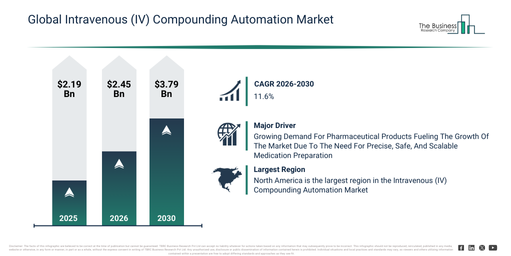
    The intravenous (IV) compounding automation market size has seen substantial growth in recent years. This market is anticipated to expand from $2.19 billion in 2025 to $2.45 billion in 2026, achieving a compound annual growth rate (CAGR) of 11.9%. The historical expansion of this market can be linked to the increased adoption of robotic compounding systems, a rising demand for chemotherapy automation, a greater emphasis on medication safety, the broadening of hospital and pharmacy automation, and enhanced awareness regarding workflow efficiency.

    The intravenous (IV) compounding automation market is anticipated to experience significant expansion in the coming years. This market is projected to reach $3.79 billion by 2030, exhibiting a compound annual growth rate (CAGR) of 11.6%. Factors driving this growth during the forecast period include greater investment in AI-driven compounding technologies, wider adoption of automated IV workstations, enhanced software integration with hospital information systems, broadened use of remote monitoring and predictive maintenance, and the progressive development of modular and customizable compounding systems. Key trends anticipated for the forecast period encompass breakthroughs in AI and machine learning for compounding, progress in robotic and automated devices, the evolution of smart pump and monitoring technologies, novel sterile compounding isolators and safety cabinets, and improvements in compact, space-efficient automation solutions.

    Get A Free Sample Report With In-Depth Market Insights:

    https://thebusinessresearchcompany.com/sample_request?id=15250584&type=smp&name=Intravenous%20%28IV%29%20Compounding%20Automation%20Market%20Report%202026&utm_source=Blogs&utm_medium=Paid&utm_campaign=Oct_PR

    Intravenous (IV) Compounding Automation Market Development Factors: What’s Supporting Demand?

    The increasing need for pharmaceutical goods is anticipated to fuel the expansion of the intravenous (IV) compounding automation market in the future. A pharmaceutical product refers to a substance or combination of substances designed for the diagnosis, treatment, prevention, or relief of diseases and medical conditions in humans or animals. IV compounding automation aids pharmaceutical products by facilitating the accurate, safe, and efficient preparation of intricate intravenous medications, ensuring precise dosages, mitigating contamination hazards, and enabling healthcare providers to satisfy the rising requirement for superior therapies. As an illustration, in November 2023, the European Federation of Pharmaceutical Industries and Associations (EFPIA), a Belgium-based trade association, reported that the total pharmaceutical production in Europe reached €390,000 million ($422,803 million) in 2023, an increase from €363,300 million ($393,857 million) in 2022. Consequently, the escalating demand for pharmaceutical products is propelling the growth of the intravenous (IV) compounding automation market.

    Intravenous (IV) Compounding Automation Market Segment Landscape And Growth Outlook

    The intravenous (iv) compounding automation market covered in this report is segmented –

    1) By Product Type: Robotic Compounding Systems, Automated Compounding Devices, Software Solutions, Other Product Types

    2) By Service: Installation, Maintenance, Training, Consulting, Support, System Integration, Validation, Software Updates, Calibration, Remote Monitoring

    3) By Application: Chemotherapy, Parenteral Nutrition, Antibiotics, Other Applications

    4) By End-User: Hospitals, Compounding Pharmacies, Oncology Centers, Other End-Users

    Subsegments:

    1) By Robotic Compounding Systems: Robotic Arm Based Systems, Closed System Robotic Compounding Units, Hazardous Drug Handling Robots, Sterile Preparation Robotic Platforms

    2) By Automated Compounding Devices: Volumetric Compounding Devices, Gravimetric Compounding Devices, Multi Chamber Compounding Units, Automated Parenteral Nutrition Compounding Devices

    3) By Software Solutions: Compounding Workflow Management Software, Dose Verification Software, Barcode Based Medication Safety Software, Compounding Data Analytics And Reporting Software

    4) By Other Product Types: Semi Automated Compounding Systems, Isolator Based Compounding Systems, Sterile Admixture Preparation Cabinets, Hybrid Compounding Assistance Devices

    Intravenous (IV) Compounding Automation Market Key Players Shaping Industry Direction

    Major companies operating in the intravenous (iv) compounding automation market are Becton Dickinson and Company, Baxter International Inc., Grifols S.A., ICU Medical Inc., Omnicell Inc., Fresenius Kabi AG, Equashield Medical Ltd., Health Robotics S.r.l., Loccioni Group, Loccioni Group, OPTIMA pharma GmbH, Medimix Systems AG, ARxIUM Inc., General Healthy Co. Ltd., PharmaScope Onco Automation B.V., Comecer SpA, Syntegon Technology GmbH, Parata Pharmacy Automation, B. Braun SE, Aesynt Incorporated, Shenzhen Broadcare Robots Co. Ltd.

    View The Full Intravenous (IV) Compounding Automation Market Report:

    https://thebusinessresearchcompany.com/report/intravenous-iv-compounding-automation-market-report?utm_source=Blogs&utm_medium=Paid&utm_campaign=Oct_PR

    Intravenous (IV) Compounding Automation Market Regional Analysis: Which Geography Leads On Revenue?

    North America was the largest region in the intravenous (IV) compounding automation market in 2025. Asia-Pacific is expected to be the fastest-growing region in the forecast period. The regions covered in the intravenous (iv) compounding automation market report are Asia-Pacific, South East Asia, Western Europe, Eastern Europe, North America, South America, Middle East, Africa.

    Reach Out To Our Team:

    The Business Research Company: https://www.thebusinessresearchcompany.com/

    Americas: +1 310-496-7795

    Asia: +44 7882 955267 & +91 8897263534

    Europe: +44 7882 955267

    Email us at: marketing@tbrc.info

    Follow us on:

    LinkedIn: https://in.linkedin.com/company/the-business-research-company

    YouTube: https://www.youtube.com/channel/UC24_fI0rV8cR5DxlCpgmyFQ

    Global Market Model: https://www.thebusinessresearchcompany.com/global-market-model
  • Intraoperative Neuromonitoring (IONM) Market Forecast 2026: Market Size, Competitive Landscape And Growth Drivers

    Intraoperative Neuromonitoring (IONM) Market Forecast 2026: Market Size, Competitive Landscape And Growth Drivers

    Featuring market attractiveness scoring, total addressable market sizing, company benchmarking matrices, interactive Excel dashboards, deeper supply chain intelligence, emerging startup tracking, and granular product-level insights, The Business Research Company’s 2026 market reports are built to deliver research that is both more actionable and more strategically valuable.

    Intraoperative Neuromonitoring (IONM) Market Revenue Growth On Track For A 7.6% CAGR Through 2030

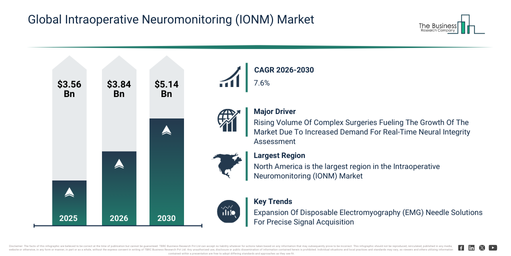
    The intraoperative neuromonitoring market size has demonstrated robust growth over recent years. It is anticipated to expand from $3.56 billion in 2025 to $3.84 billion in 2026, achieving a compound annual growth rate (CAGR) of 7.9%. The market’s historical expansion can be attributed to factors such as an increasing need for safer surgical interventions, wider acceptance of intraoperative neuromonitoring during complex operations, a rise in neurological and spinal conditions, the development of hospital infrastructure in advanced regions, and a heightened focus on ensuring patient safety throughout surgical procedures.

    The intraoperative neuromonitoring market is projected to experience substantial expansion over the coming years, reaching $5.14 billion in 2030 with a compound annual growth rate (CAGR) of 7.6%. This anticipated growth during the forecast period is primarily driven by factors such as the wider acceptance of multimodality neuromonitoring systems, the increasing application of artificial intelligence for interpreting signals, heightened investment in research and development for neuromonitoring innovations, the proliferation of minimally invasive and robotic surgical procedures, and a growing supply of proficient neuromonitoring specialists. Key developments anticipated in this period encompass the advancement of multimodality monitoring techniques, the deepening integration of artificial intelligence into neuromonitoring setups, the rise of portable and cloud-enabled devices, the broader application of real-time data analytics in surgical settings, and emerging innovations in wearable and intraoperative monitoring sensors.

    Get A Free Sample Report With In-Depth Market Insights:

    https://thebusinessresearchcompany.com/sample_request?id=70125995&type=smp&name=Intraoperative%20Neuromonitoring%20%28IONM%29%20Market%20Report%202026&utm_source=Blogs&utm_medium=Paid&utm_campaign=Oct_PR

    Intraoperative Neuromonitoring (IONM) Market Industry Drivers: What’s Behind The Revenue Growth?

    The increasing number of complex surgical procedures is anticipated to drive the expansion of the intraoperative neuromonitoring (IONM) market moving forward. These intricate medical procedures are characterized by high risks, demand specialized skills, and often address severe or multi-system health issues. The volume of complex surgeries is on the rise as surgeons increasingly operate on older patients with multiple chronic conditions like diabetes, obesity, and heart disease, enabled by advancements in surgical techniques that make previously high-risk cases feasible. Intraoperative neuromonitoring (IONM) supports these surgeries by providing real-time feedback on neural function, thereby minimizing the risk of nerve damage during critical procedures. For instance, in January 2025, according to the Organ Procurement and Transplantation Network (OPTN), a US-based national system linking US professionals in organ donation and transplantation, total organ transplants in the United States grew to 48,180 in 2024, representing a 3.3% increase from 46,632 in 2023. Consequently, the rising volume of complex surgeries is a significant driver for the growth of the intraoperative neuromonitoring (IONM) market.

    Intraoperative Neuromonitoring (IONM) Market Breakdown By Product Type And Application

    The intraoperative neuromonitoring (ionm) market covered in this report is segmented –

    1) By Type: Systems, Accessories And Consumables, Services

    2) By Source Type: Insourced Monitoring, Outsourced Monitoring

    3) By Modality: Somatosensory Evoked Potentials, Motor Evoked Potentials, Electroencephalography, Electromyography, Brainstem Auditory Evoked Potentials, Visual Evoked Potentials, Other Modalities

    4) By Application: Neurosurgery, Spinal Surgery, Vascular Surgery, Cardiothoracic Surgery, Ear, Nose, Throat Surgery, Orthopedic Surgery

    5) By End-User: Hospitals, Ambulatory Surgical Centers, Specialty Clinics, Other End-Users

    Subsegments:

    1) By Systems: Electromyography Monitoring System, Electroencephalography Monitoring System, Somatosensory Evoked Potential Monitoring System, Motor Evoked Potential Monitoring System, Brainstem Auditory Evoked Potential Monitoring System

    2) By Accessories And Consumables: Electrodes And Probes, Cables And Connectors, Monitoring Software, Disposable Sensors, Stimulators And Pads

    3) By Services: Preoperative Assessment Services, Intraoperative Monitoring Services, Postoperative Analysis Services, Remote Neuromonitoring Services, Consulting And Training Services

    #Intraoperative Neuromonitoring (IONM) Market Growth Trends: What’s Shaping The Future Outlook?

    Leading firms within the intraoperative neuromonitoring (IONM) market are prioritizing the creation of product ranges, including advanced disposable concentric needle families, with the aim of boosting diagnostic precision and operational streamlined workflows. These specialized disposable concentric needle families are engineered to provide disposable needles featuring unwavering signal quality and accurate recording abilities, thereby removing the inconsistencies often linked with reusable instruments and ensuring excellent fidelity in electromyography (EMG) and nerve conduction velocity (NCV) studies. As an illustration, Rhythmlink International LLC, a US-based entity specializing in the design and manufacture of intraoperative neuromonitoring medical devices, introduced its Concentric Needle Family in October 2023. This particular product range supplies specialized disposable concentric needles across four sizes, crafted to integrate with a reusable cable specifically developed for the overall system. This solution furnishes clinicians with a top-tier, adaptable instrument for pinpointing and capturing data from specific muscle regions with extremely precise positioning, ultimately elevating the dependability of both intraoperative and diagnostic neurological evaluations.

    Intraoperative Neuromonitoring (IONM) Market Competitive Analysis Of Leading Industry Participants

    Major companies operating in the intraoperative neuromonitoring (ionm) market are Abbott Laboratories, Medtronic plc, Boston Scientific Corporation, Nihon Kohden Corporation, Nuvaise Inc., Natus Medical incorporated, Speciality care Inc., Brainlab AG, Neurosoft Ltd., Cadwell industries Inc., Neuromonitoring Associates LLC, Compummedics Ltd., Inomed medizintecknic Gmbh, Accurate Neuromonitoring Inc., Electrical Geodesics Inc., Blackrock NeuroTech LLC, Neuromonitoring Technologies Inc., Tucker Davis technologies Inc., Sentient Medical Systems Inc., Dr.Langer Medical Gmbh, Moller Wedel Gmbh, Ionm Solutions Inc., Axontronic GmbH & Co. KG, Alpha Omega Engineering Ltd.

    View The Full Intraoperative Neuromonitoring (IONM) Market Report:

    https://thebusinessresearchcompany.com/report/intraoperative-neuromonitoring-ionm-market-report?utm_source=Blogs&utm_medium=Paid&utm_campaign=Oct_PR

    Intraoperative Neuromonitoring (IONM) Market Geographic Spread And Regional Opportunities

    North America was the largest region in the intraoperative neuromonitoring market in 2025. Asia-Pacific is expected to be the fastest-growing region in the forecast period. The regions covered in the intraoperative neuromonitoring (ionm) market report are Asia-Pacific, South East Asia, Western Europe, Eastern Europe, North America, South America, Middle East, Africa.

    Reach Out To Our Team:

    The Business Research Company: https://www.thebusinessresearchcompany.com/

    Americas: +1 310-496-7795

    Asia: +44 7882 955267 & +91 8897263534

    Europe: +44 7882 955267

    Email us at: marketing@tbrc.info

    Follow us on:

    LinkedIn: https://in.linkedin.com/company/the-business-research-company

    YouTube: https://www.youtube.com/channel/UC24_fI0rV8cR5DxlCpgmyFQ

    Global Market Model: https://www.thebusinessresearchcompany.com/global-market-model
  • Internet Of Things (IoT)-Based Dialysis Machine Market Size In 2026: Regional Growth, Key Segments And Future Outlook

    Internet Of Things (IoT)-Based Dialysis Machine Market Size In 2026: Regional Growth, Key Segments And Future Outlook

    Built to provide research that’s more actionable and strategically valuable, The Business Research Company’s 2026 market reports include market attractiveness analysis, total addressable market sizing, company benchmarking matrices, interactive Excel dashboards, broader supply chain intelligence, emerging startup tracking, and in-depth product insights.

    Internet Of Things (IoT)-Based Dialysis Machine Market Value Growth And Long-Term Outlook

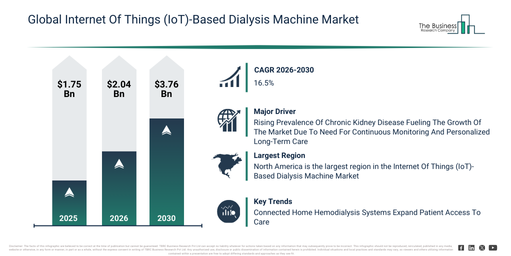
    The market size for IoT-based dialysis machines has expanded significantly over recent years. It is forecast to rise from $1.75 billion in 2025 to $2.04 billion in 2026, achieving a compound annual growth rate (CAGR) of 16.8%. Historically, this expansion has been propelled by factors such as the increasing prevalence of chronic kidney disease, the growing acceptance of home-based dialysis solutions, a heightened need for remote patient monitoring, the development of digital health infrastructure, and increased healthcare investment in renal care.

    The IoT-based dialysis machine market is anticipated to experience substantial expansion over the upcoming years. This market is projected to reach $3.76 billion in 2030, exhibiting a compound annual growth rate (CAGR) of 16.5%. This projected growth is driven by several factors, including the increasing adoption of IoT-enabled medical devices, a rising demand for home and portable dialysis options, the expanding use of telehealth and connected care services, the development of value-based renal care models, and enhanced governmental backing for digital healthcare initiatives. Key trends during this period are expected to encompass technological improvements in connected dialysis systems, breakthroughs in sensor-based real-time monitoring, progress in artificial intelligence and data analytics, ongoing research and development into portable and wearable dialysis solutions, and the seamless integration of cloud platforms with electronic health records.

    Get A Free Sample Report With In-Depth Market Insights:

    https://thebusinessresearchcompany.com/sample_request?id=91198707&type=smp&name=Internet%20Of%20Things%20%28IoT%29-Based%20Dialysis%20Machine%20Market%20Report%202026&utm_source=Blogs&utm_medium=Paid&utm_campaign=Oct_PR

    Internet Of Things (IoT)-Based Dialysis Machine Market Growth Factors: What’s Supporting Expansion?

    The increasing incidence of chronic kidney disease is anticipated to propel the expansion of the internet of things (IoT)-based dialysis machine market in the future. Chronic kidney disease is a persistent ailment where the kidneys fail to function optimally, leading to a build-up of waste and fluids within the body. The rising occurrence of chronic kidney disease primarily stems from a growing number of diabetes and high blood pressure cases, as these conditions progressively harm renal blood vessels and hinder the organs’ capacity to effectively filter waste. Internet of things (IoT)-based dialysis machines aid in managing chronic kidney disease by enabling real-time monitoring of treatment parameters and patient vitals through remote data connectivity. They enhance patient outcomes by supporting personalized therapy adjustments, prompt identification of complications, and more efficient long-term care. As an illustration, in June 2023, according to Kidney Research UK, a United Kingdom based non profit organization, approximately 7.2 million people in the United Kingdom were living with chronic kidney disease, representing over 10% of the population. Of these, 3.25 million were in advanced stages and 3.9 million were in early stages, with the total number of affected individuals projected to rise to 7.61 million by 2033. Consequently, the growing prevalence of chronic kidney disease is driving the growth of the internet of things (IoT)-based dialysis machine market.

    Internet Of Things (IoT)-Based Dialysis Machine Market Segment Analysis And Revenue Potential

    The internet of things (iot)-based dialysis machine market covered in this report is segmented –

    1) By Component: Hardware, Software, Services, Consumables

    2) By Product Type: IoT-Enabled Hemodialysis Machines, IoT-Enabled Peritoneal Dialysis Machines, Portable And Wearable IoT-Based Dialysis Devices, Software Platforms And Connectivity Solutions, Accessories And Consumables

    3) By Connectivity: Wi-Fi And Broadband-Connected Dialysis Machines, Cellular Enabled Dialysis Devices, Cloud-Based Data Management And Analytics Platforms, Decision-Support Modules

    4) By Application: Chronic Kidney Disease Management, End-Stage Renal Disease Treatment, Acute Kidney Injury Management, Remote Patient Monitoring And Therapy Optimization

    5) By End User: Hospitals, Dialysis Centers, Home Care Settings, Ambulatory Care Centers, Specialty Clinics

    Subsegments:

    1) By Hardware: Dialysis Machine Units, Sensors And Monitoring Devices, Connectivity Modules, Embedded Control Systems, Power Supply Components

    2) By Software: Remote Monitoring Platforms, Data Analytics Software, Treatment Management Systems, Device Management Applications, Cloud Based Control Dashboards

    3) By Services: Installation And Integration Services, Maintenance And Support Services, Remote Monitoring Services, Training And Education Services, Data Management Services

    4) By Consumables: Dialyzers, Blood Tubing Sets, Dialysis Solutions, Filters And Cartridges, Disposable Sensors

    Internet Of Things (IoT)-Based Dialysis Machine Market Industry Trends: What’s Reshaping Demand?

    Key players in the internet of things (IoT)-based dialysis machine market are concentrating on developing sophisticated products, such as connected home hemodialysis systems, to enhance patient access and treatment adherence. These connected home hemodialysis systems integrate smart software designed to guide patients through setup and treatment procedures, thereby simplifying the learning curve and enabling remote monitoring by healthcare providers, which in turn cultivates increased confidence and independence for patients managing kidney failure at home. For instance, in September 2024, Fresenius Medical Care, a healthcare company from Germany, introduced its NxStage VersiHD with GuideMe Software. This platform is specifically designed to simplify connected home hemodialysis treatment by offering visual guidance and an easier learning experience, incorporating features that enable patients to complete training 7 to 10 days sooner than conventional methods. The solution also provides connected capabilities that support an expanding network of over 14,000 U.S. patients, aiming to accelerate the adoption of home therapies and improve the overall user experience for those who require chronic renal replacement therapy.

    Internet Of Things (IoT)-Based Dialysis Machine Market Leading Companies And Competitive Benchmarking

    Major companies operating in the internet of things (iot)-based dialysis machine market are Medtronic plc, Fresenius Medical Care AG & Co. KGaA, Toray Industries Inc., Toray Medical Co. Ltd., Baxter International Inc., B. Braun Melsungen AG, Nipro Corporation, Wego Group, Bellco S.p.A., Mar Cor Purification, Mozarc Medical Holding LLC, Poly Medicure Limited, Outset Medical Inc., Quanta Dialysis Technologies Ltd., Infomed SA, Allmed Medical Care Holdings Limited, Innovative Renal Care, Gambro, Nextkidney BV, Newsol Technologies

    View The Full Internet Of Things (IoT)-Based Dialysis Machine Market Report:

    https://thebusinessresearchcompany.com/report/internet-of-things-iot-based-dialysis-machine-market-report?utm_source=Blogs&utm_medium=Paid&utm_campaign=Oct_PR

    Internet Of Things (IoT)-Based Dialysis Machine Market Top Region By Revenue And Market Share

    North America was the largest region in the IoT-based dialysis machine market in 2025. Asia-Pacific is expected to be the fastest-growing region in the forecast period. The regions covered in the internet of things (iot)-based dialysis machine market report are Asia-Pacific, South East Asia, Western Europe, Eastern Europe, North America, South America, Middle East, Africa.

    Reach Out To Our Team:

    The Business Research Company: https://www.thebusinessresearchcompany.com/

    Americas: +1 310-496-7795

    Asia: +44 7882 955267 & +91 8897263534

    Europe: +44 7882 955267

    Email us at: marketing@tbrc.info

    Follow us on:

    LinkedIn: https://in.linkedin.com/company/the-business-research-company

    YouTube: https://www.youtube.com/channel/UC24_fI0rV8cR5DxlCpgmyFQ

    Global Market Model: https://www.thebusinessresearchcompany.com/global-market-model
  • International Normalized Ratio (INR) Test Meter Market Growth Forecast Through 2030: Market Size And Trends In 2026

    International Normalized Ratio (INR) Test Meter Market Growth Forecast Through 2030: Market Size And Trends In 2026

    Backed by market attractiveness analysis, total addressable market sizing, company benchmarking matrices, interactive Excel dashboards, wider supply chain intelligence, emerging startup coverage, and detailed product-level insights, The Business Research Company’s 2026 market reports are designed to offer research that is more actionable and strategically valuable than ever.

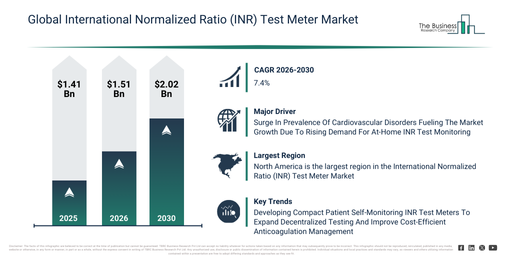
    International Normalized Ratio (INR) Test Meter Market Poised To Hit $2.02 Billion By 2030 With A 7.4% CAGR

    The INR test meter market has experienced strong growth in recent years. It is anticipated to expand from $1.41 billion in 2025 to $1.51 billion in 2026, achieving a compound annual growth rate (CAGR) of 7.7%. Historically, this expansion has been driven by the rising prevalence of cardiovascular diseases, increasing adoption of point-of-care testing, a growing geriatric population, heightened awareness of anticoagulant therapy, and a stronger patient preference for home monitoring.

    The INR test meter market is anticipated to experience robust expansion over the coming years, reaching a valuation of $2.02 billion by 2030, exhibiting a compound annual growth rate (CAGR) of 7.4%. This projected growth can be ascribed to several factors, including the increasing desire for self-testing at home, the wider acceptance of telemedicine, rising healthcare spending, the expansion of point-of-care services, and a heightened emphasis on individualized patient care. Key developments expected during this period involve progress in biosensor technology, the integration of technology with mobile applications, creative designs for portable meters, ongoing research into non-invasive testing methods, and incorporation with electronic health records.

    Get A Free Sample Report With In-Depth Market Insights:

    https://thebusinessresearchcompany.com/sample_request?id=74430673&type=smp&name=International%20Normalized%20Ratio%20%28INR%29%20Test%20Meter%20Market%20Report%202026&utm_source=Blogs&utm_medium=Paid&utm_campaign=Oct_PR

    International Normalized Ratio (INR) Test Meter Market Demand Drivers: What’s Powering Industry Growth?

    A growing incidence of cardiovascular disorders is anticipated to boost the International Normalized Ratio (INR) test meter market in the future. These conditions, affecting the heart and blood vessels, hinder circulatory function and frequently necessitate long-term anticoagulant treatment to avert critical events like stroke and thrombosis. This increase in cardiovascular disorders stems from unhealthy diets, with excessive intake of saturated fats, trans fats, added sugars, and sodium leading to high blood pressure, obesity, and high cholesterol, all significant risk factors for heart ailments. International Normalized Ratio (INR) test meters aid in managing cardiovascular disorders by facilitating regular at-home monitoring of a patient’s coagulation status, thereby promoting safer and more effective anticoagulant therapy. For example, data from August 2025 by the Centers for Disease Control and Prevention, a Switzerland-based health agency, revealed that 90% of the country’s 4.9 trillion dollars in annual health care expenditure is for chronic and mental health conditions. Furthermore, over 84,000 Americans succumb to heart disease or stroke annually, and the expenses related to cardiovascular diseases are forecast to climb to approximately $2 trillion by 2050. Consequently, the rising occurrence of cardiovascular disorders is propelling the expansion of the International Normalized Ratio (INR) test meter market.

    International Normalized Ratio (INR) Test Meter Market Segmentation And Category Overview

    The international normalized ratio (inr) test meter market covered in this report is segmented –

    1) By Product Type: Devices, Test Strips, Lancets, Reagents, Mobile App Integration

    2) By Technology: Electrochemical Biosensor-Based Meters, Photometric-Based Meters, Bluetooth, Non-Invasive

    3) By End User: Hospitals, Specialty Clinics, Ambulatory Surgical Centers, Homecare Settings

    Subsegments:

    1) By Devices: Handheld Meters, Portable Meters, Desktop Meters, Wireless Meters, Bluetooth Enabled Meters

    2) By Test Strips: Standard Test Strips, Ultra-Sensitive Test Strips, Fast-Acting Test Strips, Reusable Test Strips, Single-Use Test Strips

    3) By Lancets: Safety Lancets, Auto-Release Lancets, Adjustable Depth Lancets, Single-Use Lancets, Spring-Loaded Lancets

    4) By Reagents: Enzymatic Reagents, Chemical Reagents, Calibration Reagents, Buffer Solutions, Control Solutions

    5) By Mobile App Integration: iOS Applications, Android Applications, Cloud-Synced Applications, Real-Time Monitoring Applications, Personalized Health Recommendation Applications

    International Normalized Ratio (INR) Test Meter Market Innovation Trends: What Developments Are Reshaping The Industry?

    Leading companies in the International Normalized Ratio (INR) test meter market are concentrating on developing advanced products, such as patient self-monitoring coagulation analyzers, to broaden decentralized testing and shift ongoing demand towards more affordable consumables. These patient self-monitoring coagulation analyzers are portable devices that allow individuals to perform PT/INR testing at home using a small capillary blood sample, thereby supporting frequent monitoring and reducing reliance on clinical visits. For instance, in March 2024, Universal Biosensors, an Australia-based medical device company, introduced the Xprecia Prime 4U Coagulation Analyzer for patient self-monitoring. This handheld self-monitoring coagulation analyzer provides rapid PT/INR results from a single drop of capillary blood and utilizes an electrochemical strip format, which supports regulatory approvals, including 510(k) clearance and CLIA waiver for the U.S. market. This launch signifies a significant improvement in INR testing by enabling wider access to home monitoring, increasing test frequency, and enhancing cost efficiency through greater consumable utilization while maintaining clinical accuracy.

    International Normalized Ratio (INR) Test Meter Market Industry Leaders And Competitive Landscape

    Major companies operating in the international normalized ratio (inr) test meter market are Abbott Laboratories, Siemens Healthineers AG, Roche Diagnostics International Ltd., Guangzhou Wondfo Biotech Co. Ltd., Nova Biomedical Corporation, Agappe Diagnostics Ltd., Helena Laboratories Corporation, Getein Biotech Inc., Transasia Bio-Medicals Limited, ACON Laboratories Inc., ERBA Diagnostics Mannheim GmbH, ARKRAY USA Inc., Genrui Biotech Inc., i-SENS Inc., Accurex Biomedical Pvt. Ltd., Trivitron Healthcare Private Limited, iLine Microsystems S.L, Meril Life Sciences Private Limited, Micropoint Biotechnologies Co. Ltd., Universal Biosensors Inc.

    View The Full International Normalized Ratio (INR) Test Meter Market Report:

    https://thebusinessresearchcompany.com/report/international-normalized-ratio-inr-test-meter-market-report?utm_source=Blogs&utm_medium=Paid&utm_campaign=Oct_PR

    International Normalized Ratio (INR) Test Meter Market Regional Analysis And Top Geography

    North America was the largest region in the INR test meter market in 2025. Asia-Pacific is expected to be the fastest-growing region in the forecast period. The regions covered in the international normalized ratio (inr) test meter market report are Asia-Pacific, South East Asia, Western Europe, Eastern Europe, North America, South America, Middle East, Africa.

    Reach Out To Our Team:

    The Business Research Company: https://www.thebusinessresearchcompany.com/

    Americas: +1 310-496-7795

    Asia: +44 7882 955267 & +91 8897263534

    Europe: +44 7882 955267

    Email us at: marketing@tbrc.info

    Follow us on:

    LinkedIn: https://in.linkedin.com/company/the-business-research-company

    YouTube: https://www.youtube.com/channel/UC24_fI0rV8cR5DxlCpgmyFQ

    Global Market Model: https://www.thebusinessresearchcompany.com/global-market-model
  • Interactive Patient Care Systems Market Analysis: $0.34 Billion Market Size In 2026 And Future Growth Prospects

    Interactive Patient Care Systems Market Analysis: $0.34 Billion Market Size In 2026 And Future Growth Prospects

    Featuring market attractiveness scoring, total addressable market sizing, company benchmarking matrices, interactive Excel dashboards, deeper supply chain intelligence, emerging startup tracking, and granular product-level insights, The Business Research Company’s 2026 market reports are built to deliver research that is both more actionable and more strategically valuable.

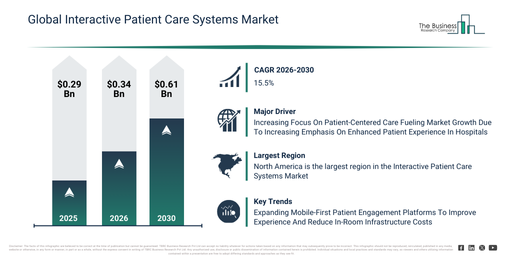
    Interactive Patient Care Systems Market Size And Revenue Outlook Through 2030

    The interactive patient care systems market size has experienced significant growth in recent years. It is forecast to expand from $0.29 billion in 2025 to $0.34 billion in 2026, achieving a compound annual growth rate (CAGR) of 15.8%. This historical growth can be attributed to several factors, including the increasing adoption of digital health platforms, a rise in investment in patient engagement solutions, greater integration of bedside terminals and mobile applications, the expansion of telehealth services, and an increased focus on clinical workflow optimization.

    The interactive patient care systems market size is projected to experience swift expansion over the coming years. This market is anticipated to reach $0.61 billion by 2030, demonstrating a compound annual growth rate (CAGR) of 15.5%. Key factors driving this expansion during the forecast period include the expanding creation of AI-driven analytics for customized care, enhanced innovation in cloud-based platforms for patient engagement, increased funding for remote patient monitoring devices, the proliferation of interactive kiosks and self-service terminals, and continuous improvements in software interoperability and integration tools. Significant trends expected in the forecast timeframe encompass breakthroughs in mobile care applications, progress in telehealth and virtual consultation platforms, the creation of integrated solutions for clinical workflows, technological upgrades in content management and educational modules, and ongoing research and development into hybrid deployment and scalable interactive patient care systems.

    Get A Free Sample Report With In-Depth Market Insights:

    https://thebusinessresearchcompany.com/sample_request?id=21114794&type=smp&name=Interactive%20Patient%20Care%20Systems%20Market%20Report%202026&utm_source=Blogs&utm_medium=Paid&utm_campaign=Oct_PR

    Interactive Patient Care Systems Market Growth Drivers: What’s Behind The Acceleration?

    A growing emphasis on patient-centered care is anticipated to drive the expansion of the interactive patient care systems market. Patient-centered care involves healthcare provision that honors and addresses specific patient preferences, requirements, and values, ensuring that clinical choices and service delivery are informed by these patient values. This heightened focus on patient-centered care stems from hospitals and health systems making patient experience a key strategic goal to enhance quality results, patient contentment, and institutional standing. Interactive patient care systems facilitate patient-centered care and elevate the patient experience within hospitals by providing real-time communication, tailored educational content, and engagement instruments at the bedside, consequently boosting patient experience and operational effectiveness. For example, as reported by Chief Healthcare Executive, a US healthcare leadership publication, in November 2025, 49% of hospital executives in 2023 cited improving patient experience as their primary strategic objective, an increase from 36% in 2023, indicating a 36% rise over prior years. Consequently, this heightened emphasis on patient-centered care is a key factor propelling the expansion of the interactive patient care systems market.

    Interactive Patient Care Systems Market Segment Outlook: Which Categories Are Growing Fastest?

    The interactive patient care systems market covered in this report is segmented –

    1) By Component: Hardware, Software, Services

    2) By Product Type: Bedside Terminals, Interactive Displays, Patient Monitoring Devices, Mobile Care Applications, In-Room Entertainment Systems, Other Product Types

    3) By Deployment Mode: On-Premises, Cloud-Based, Hybrid Deployment Models

    4) By Application: Patient Education, Entertainment, Communication, Medication Management, Other Applications

    5) By End-User: Hospitals, Clinics, Ambulatory Surgical Centers, Long-Term Care Centers, Other End-Users

    Subsegments:

    1) By Hardware: Bedside Terminals, Interactive Displays, Patient Monitoring Devices, Mobile Care Applications, In Room Entertainment Systems, Other Product Types

    2) By Software: Patient Education, Entertainment, Communication, Medication Management, Other Applications

    3) By Services: Implementation Support, Training And Education, Maintenance And Support, Consulting Services, Integration Services

    Interactive Patient Care Systems Market Trends: What’s Defining The Industry’s Next Phase?

    Leading entities within the interactive patient care systems market are concentrating on creating engagement applications, such as mobile-first patient engagement platforms, with the goals of improving patient involvement, streamlining communication regarding care, and lessening reliance on dedicated bedside equipment. These mobile-first patient engagement platforms are defined as cloud-based digital solutions that grant patients direct access to care details, educational materials, service requests, and communication functionalities via their personal mobile devices throughout their hospital stay. An illustration of this trend is seen in February 2024, when Oneview Healthcare PLC, an Ireland-based healthcare technology firm, unveiled MyStay Mobile. This software-as-a-service patient engagement platform was conceived to broaden interactive care provisions beyond conventional in-room terminals. The platform allows patients to retrieve customized stay information, request meals, submit service inquiries, and offer real-time feedback using their own smartphones, all without the need for application installation. Furthermore, it integrates with hospital electronic health record systems and facilitates multilingual content delivery, thereby assisting healthcare providers in elevating the patient experience while simultaneously lowering the capital and upkeep expenditures linked to bedside hardware implementation.

    Interactive Patient Care Systems Market Key Participants And Competitive Landscape

    Major companies operating in the interactive patient care systems market are Epic Systems Corporation, Advantech Co. Ltd., Barco NV, HCI Group Inc., Vocera Communications Inc., PatientPoint Inc., Medhost Inc., CipherHealth Inc., Lincor Solutions Ltd., Sentrics, Aceso Interactive Inc., Aiva Health Inc., SONIFI Health Inc., BEWATEC ConnectedCare GmbH, GetWellNetwork Inc., Oneview Healthcare PLC, PDI Communications Inc., eVideon Inc., Onyx Healthcare Inc., ClinicAll

    View The Full Interactive Patient Care Systems Market Report:

    https://thebusinessresearchcompany.com/report/interactive-patient-care-systems-market-report?utm_source=Blogs&utm_medium=Paid&utm_campaign=Oct_PR

    Interactive Patient Care Systems Market Geographic Analysis: Where Is Demand Rising Fastest?

    North America was the largest region in the interactive patient care systems market in 2025. Asia-Pacific is expected to be the fastest-growing region in the forecast period. The regions covered in the interactive patient care systems market report are Asia-Pacific, South East Asia, Western Europe, Eastern Europe, North America, South America, Middle East, Africa.

    Reach Out To Our Team:

    The Business Research Company: https://www.thebusinessresearchcompany.com/

    Americas: +1 310-496-7795

    Asia: +44 7882 955267 & +91 8897263534

    Europe: +44 7882 955267

    Email us at: marketing@tbrc.info

    Follow us on:

    LinkedIn: https://in.linkedin.com/company/the-business-research-company

    YouTube: https://www.youtube.com/channel/UC24_fI0rV8cR5DxlCpgmyFQ

    Global Market Model: https://www.thebusinessresearchcompany.com/global-market-model
  • Intelligent Medical Guidance and Navigation System Market 2026 Market Size And Growth Forecast: Key Trends To Watch

    Intelligent Medical Guidance and Navigation System Market 2026 Market Size And Growth Forecast: Key Trends To Watch

    Built to provide research that’s more actionable and strategically valuable, The Business Research Company’s 2026 market reports include market attractiveness analysis, total addressable market sizing, company benchmarking matrices, interactive Excel dashboards, broader supply chain intelligence, emerging startup tracking, and in-depth product insights.

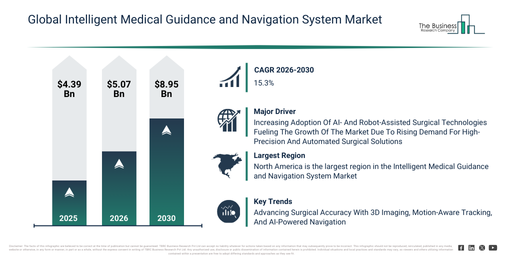
    Intelligent Medical Guidance and Navigation System Market Growth From $5.07 Billion In 2026 To $8.95 Billion By 2030 At A CAGR Of 15.3%

    The intelligent medical guidance and navigation system market has seen significant growth recently. This market is expected to expand from $4.39 billion in 2025 to $5.07 billion in 2026, registering a compound annual growth rate (CAGR) of 15.6%. Key drivers for this historical growth include the increasing uptake of medical imaging technologies, the growing demand for minimally invasive procedures, advancements in hospital digitalization, the early incorporation of artificial intelligence into clinical workflows, and the widespread development of surgical navigation solutions.

    The intelligent medical guidance and navigation system market is poised for significant expansion in the upcoming years, with its valuation expected to climb to $8.95 billion by 2030, achieving a compound annual growth rate (CAGR) of 15.3%. This anticipated growth throughout the forecast period is driven by factors such as the increasing necessity for precision medicine, the expanding deployment of artificial intelligence-driven clinical support instruments, intensified investment in smart operating environments, a growing focus on environmentally sustainable and carbon-free hospital infrastructure, and the rapid uptake of real-time patient monitoring. Prominent trends for this period encompass the integration of artificial intelligence with multimodal imaging, the advancement of robotics-assisted navigation, the broadening of cloud-based clinical decision-making platforms, an increased utilization of digital twins in healthcare planning, and a shift towards energy-efficient and carbon-neutral medical systems.

    Get A Free Sample Report With In-Depth Market Insights:

    https://thebusinessresearchcompany.com/sample_request?id=62386167&type=smp&name=Intelligent%20Medical%20Guidance%20and%20Navigation%20System%20Market%20Report%202026&utm_source=Blogs&utm_medium=Paid&utm_campaign=Oct_PR

    Intelligent Medical Guidance and Navigation System Market Growth Factors Behind Sustained Expansion

    The intelligent medical guidance and navigation system market is poised for growth, propelled by the rising integration of robot-assisted surgical technologies. These advanced systems, which combine artificial intelligence (AI) and robotic mechanisms, enable surgeons to perform intricate procedures with enhanced precision, control, and efficiency. Hospitals are increasingly adopting artificial intelligence (AI) and robot-assisted surgical technologies to achieve higher surgical precision, reduce complication rates, and accelerate patient recovery through minimally invasive, digitally guided interventions. The intelligent medical guidance and navigation system directly supports these technologies by offering real-time surgical navigation, automated instrument guidance, and crucial decision-support features, thereby optimizing procedural accuracy. A notable instance is the report from November 2024 by the Private Healthcare Information Network, a UK-based government-mandated organisation, which indicated that approximately 22,700 robot-assisted procedures were carried out in the first quarter of 2024. This represented a substantial 45% increase compared to the first quarter of 2023 and a 12% rise from the last quarter of 2023. Consequently, the expanding adoption of robot-assisted surgical technologies is a key driver for the intelligent medical guidance and navigation system market’s expansion.

    Intelligent Medical Guidance and Navigation System Market Segment Landscape: Which Areas Lead Development?

    The intelligent medical guidance and navigation system market covered in this report is segmented –

    1) By Component Or Product Type: Hardware, Software, Service

    2) By Technology: Robotics, Computer Vision, Artificial Intelligence, Augmented Reality, Navigation Software

    3) By Application: Surgical Navigation, Radiation Therapy, Diagnostic Imaging, Orthopedic Guidance, Neurological Guidance

    4) By End Use: Hospitals, Ambulatory Surgery Centers, Diagnostic Centers, Research Institutions

    Subsegments:

    1) By Hardware: Imaging Sensors, Tracking Sensors, Navigation Consoles, Robotic Arms, Display Monitors

    2) By Software: Imaging Analysis Software, Navigation Planning Software, Intraoperative Guidance Software, Workflow Integration Software, Data Management Software

    3) By Service: Installation Service, Maintenance Service, Training Service, Upgradation Service, Technical Support Service

    Intelligent Medical Guidance and Navigation System Market Industry Trends Fueling Future Revenue Growth

    Key companies operating in the intelligent medical guidance and navigation system market are concentrating on developing advanced technology, such as 3D imaging and motion-aware tracking, to improve intraoperative precision, reduce errors, and enhance surgical outcomes. 3D imaging and motion-aware tracking involves the integration of three-dimensional visualization with real-time tracking of surgical instruments and patient anatomy, allowing systems to adapt dynamically to movement and provide accurate guidance during procedures. For instance, in October 2025, Zeta Surgical Inc., a US-based medical technology company specializing in AI-enabled surgical solutions, secured FDA 510(k) clearance for its AI-powered TMS Navigation System. This system incorporates 3D imaging and motion-aware tracking to deliver real-time guidance during complex surgical procedures, enabling surgeons to navigate with enhanced spatial awareness and precision. This system supports safer, more efficient surgeries and contributes to improved patient outcomes.

    Intelligent Medical Guidance and Navigation System Market Top Companies Driving Competitive Growth

    Major companies operating in the intelligent medical guidance and navigation system market are Johnson & Johnson, Medtronic Plc, Siemens Healthineers AG, Stryker Corporation, Koninklijke Philips N.V., GE Healthcare Technologies Inc., Smith & Nephew Plc, B. Braun Melsungen AG, Zimmer Biomet Holdings Inc., Intuitive Surgical, Olympus Corporation, Karl Storz SE & Co. KG, Brainlab AG, Amplitude Surgical, Northern Digital Inc., Augmedics, Synaptive Medical Inc., Proprio, Fiagon GmbH, Surgical Theater LLC, Orthofix Medical Inc., Naviswiss AG, SurgicEye GmbH

    View The Full Intelligent Medical Guidance and Navigation System Market Report:

    https://thebusinessresearchcompany.com/report/intelligent-medical-guidance-and-navigation-system-market-report?utm_source=Blogs&utm_medium=Paid&utm_campaign=Oct_PR

    Intelligent Medical Guidance and Navigation System Market Global Footprint: Which Region Leads The Market?

    North America was the largest region in the intelligent medical guidance and navigation systems market in 2025. Asia-Pacific is expected to be the fastest-growing region in the forecast period. The regions covered in the intelligent medical guidance and navigation system market report are Asia-Pacific, South East Asia, Western Europe, Eastern Europe, North America, South America, Middle East, Africa.

    Reach Out To Our Team:

    The Business Research Company: https://www.thebusinessresearchcompany.com/

    Americas: +1 310-496-7795

    Asia: +44 7882 955267 & +91 8897263534

    Europe: +44 7882 955267

    Email us at: marketing@tbrc.info

    Follow us on:

    LinkedIn: https://in.linkedin.com/company/the-business-research-company

    YouTube: https://www.youtube.com/channel/UC24_fI0rV8cR5DxlCpgmyFQ

    Global Market Model: https://www.thebusinessresearchcompany.com/global-market-model
  • Independent Medical Review Service Market 2026 Outlook: Market Size, CAGR And Key Growth Opportunities

    Independent Medical Review Service Market 2026 Outlook: Market Size, CAGR And Key Growth Opportunities

    Featuring market attractiveness scoring, total addressable market sizing, company benchmarking matrices, interactive Excel dashboards, deeper supply chain intelligence, emerging startup tracking, and granular product-level insights, The Business Research Company’s 2026 market reports are built to deliver research that is both more actionable and more strategically valuable.

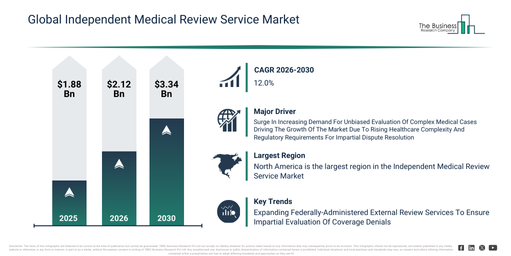
    Independent Medical Review Service Market Revenue Outlook: What CAGR Lies Ahead Through 2030?

    The independent medical review service market size has experienced rapid expansion in recent years. This market is set to grow from $1.88 billion in 2025 to $2.12 billion in 2026, reflecting a compound annual growth rate (CAGR) of 12.3%. The historical development of this market is attributable to several factors, including the rising need for impartial medical evaluations, an increase in insurance claim disputes, the growing adoption of value-based healthcare, an expansion in monitoring healthcare quality, and the increasing requirements for regulatory compliance.

    The independent medical review service market is projected to experience substantial expansion over the coming years, reaching a valuation of $3.34 billion by 2030, demonstrating a compound annual growth rate (CAGR) of 12.0%. This anticipated growth is driven by factors such as the increasing adoption of telehealth and remote review solutions, the rising demand for economical healthcare dispute resolution, enhanced integration of advanced data analytics, the broader digitalization of healthcare, and increased public understanding of patient rights and the need for transparency. Key trends expected during this period involve technological progress in remote medical review platforms, new developments in clinical decision support systems, improvements in healthcare data management practices, research and innovation in artificial intelligence-assisted case evaluation, and advancements in cybersecurity and privacy measures for sensitive healthcare information.

    Get A Free Sample Report With In-Depth Market Insights:

    https://thebusinessresearchcompany.com/sample_request?id=86774955&type=smp&name=Independent%20Medical%20Review%20Service%20Market%20Report%202026&utm_source=Blogs&utm_medium=Paid&utm_campaign=Oct_PR

    Independent Medical Review Service Market Growth Momentum: What Factors Are Shaping Demand?

    The escalating need for impartial assessments of intricate medical cases is projected to drive the expansion of the independent medical review service market. Impartial assessment entails an objective appraisal of medical choices, treatment strategies, and disagreements over insurance claims by an autonomous third-party medical professional, ensuring equity and appropriate patient care. This demand stems from the increasing complexity of healthcare treatments and the broader implementation of independent dispute resolution processes, which are mandated by regulations to protect patients and resolve conflicts between healthcare providers and insurers. Independent medical review services facilitate this trend by offering objective evaluations that aid in dispute resolution, enhance adherence to standards, and uphold quality benchmarks across healthcare systems. For example, in April 2025, Health systems, LLC, a US-based entity providing Pharmacy Benefit Management (PBM) and Ancillary Benefits Management (ABM), reported an increase in independent medical review applications to 199,651 in 2024, marking a 14.07% rise from 2023. Concurrently, the number of final determinations issued grew by 8.29% compared to the previous year, according to the California Division of Workers’ Compensation annual report. Therefore, the growing requirement for objective evaluations of complex medical cases is propelling the growth of the independent medical review service market.

    Independent Medical Review Service Market Segment Trends And Revenue Contributors

    The independent medical review service market covered in this report is segmented –

    1) By Type Of Review: Prior Authorization Reviews, Utilization Reviews, Peer Reviews, Independent Medical Evaluations (IME), Disability Claim Reviews

    2) By Delivery Mode: Onsite Review Services, Remote Or Virtual Review Services

    3) By Medical Specialty: Orthopedics And Musculoskeletal Disorders, Oncology, Cardiology, Neurology And Mental Health, Behavioral Health Or Substance Use Disorder, Internal Medicine

    4) By Application: Treatment Approval Disputes, Coverage Denial Disputes, Disability And Workers’ Compensation Review, Experimental Or Investigational Treatment Review, Quality Of Care Disputes

    5) By Client Type: Healthcare Providers, Legal Firms, Corporate Employers, Government Agencies, Healthcare Networks

    Subsegments:

    1) By Prior Authorization Reviews: Inpatient Authorization Review, Outpatient Authorization Review, Procedure Authorization Review, Medication Authorization Review, Diagnostic Test Authorization Review

    2) By Utilization Reviews: Prospective Utilization Review, Concurrent Utilization Review, Retrospective Utilization Review, Case Management Review, Resource Utilization Review

    3) By Peer Reviews: Physician Peer Review, Specialist Peer Review, Multidisciplinary Peer Review, Quality Of Care Peer Review, Clinical Outcome Peer Review

    4) By Independent Medical Evaluations: Physical Examination Evaluation, Mental Health Evaluation, Functional Capacity Evaluation, Medical Necessity Evaluation, Second Opinion Evaluation

    5) By Disability Claim Reviews: Short-Term Disability Claim Review, Long-Term Disability Claim Review, Workers Compensation Claim Review, Social Security Disability Claim Review, Critical Illness Claim Review

    Independent Medical Review Service Market Trends Redefining Industry Growth

    Major companies operating in the independent medical review service market are concentrating on broadening federally-administered external review services, such as the HHS-administered federal external review Process. This expansion aims to standardize the unbiased assessment of adverse benefit determinations, enhance transparency, and safeguard consumer appeal rights. The HHS-Administered Federal External Review Process is a government-supervised service enabling individuals whose health plans reject coverage due to medical judgment to seek an impartial review. It offers an unbiased evaluation of rejections concerning medical necessity, suitability, level of care, or investigational treatment, ensuring prompt decisions through established submission and response timelines. For instance, in September 2024, the Centers for Medicare & Medicaid Services (CMS), a U.S. federal healthcare agency, unveiled improvements to the HHS-Administered Federal External Review Process. This revised process permits consumers to submit written requests for external review within four months following a denial, mandates insurers to provide all supporting documents within five business days, and stipulates that standard external review decisions be issued within 45 days, with urgent expedited reviews finalized within 72 hours.

    Independent Medical Review Service Market Company Landscape And Competitive Strategy

    Major companies operating in the independent medical review service market are Optum IME & Review Services, MCMC LLC, MAXIMUS Federal Services Inc., IME Plus LLC, ReviewMed Inc., CorVel Corporation, MedRisk LLC, MedReview Inc., Paradigm Outcomes LLC, Advanced Medical Reviews Inc., eQHealth Solutions Inc., URAC-Accredited Review Services Inc., Healthcare Resolution Services Inc., AllMed Healthcare Management Inc., Kepro Technologies Pvt. Ltd., ProPeer Resources LLC, Independent Review Inc. (IRI), Physician Review Network LLC, Independent Medical Review Associates (IMRA), California Department of Industrial Relations

    View The Full Independent Medical Review Service Market Report:

    https://thebusinessresearchcompany.com/report/independent-medical-review-service-market-report?utm_source=Blogs&utm_medium=Paid&utm_campaign=Oct_PR

    Independent Medical Review Service Market Largest Region: Which Geography Holds The Highest Market Share?

    North America was the largest region in the independent medical review service market in 2025. Asia-Pacific is expected to be the fastest-growing region in the forecast period. The regions covered in the independent medical review service market report are Asia-Pacific, South East Asia, Western Europe, Eastern Europe, North America, South America, Middle East, Africa.

    Reach Out To Our Team:

    The Business Research Company: https://www.thebusinessresearchcompany.com/

    Americas: +1 310-496-7795

    Asia: +44 7882 955267 & +91 8897263534

    Europe: +44 7882 955267

    Email us at: marketing@tbrc.info

    Follow us on:

    LinkedIn: https://in.linkedin.com/company/the-business-research-company

    YouTube: https://www.youtube.com/channel/UC24_fI0rV8cR5DxlCpgmyFQ

    Global Market Model: https://www.thebusinessresearchcompany.com/global-market-model
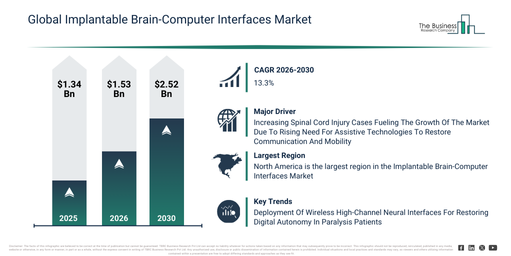
  • Implantable Brain-Computer Interfaces Market Size Growth: From $1.53 Billion In 2026 To $2.52 Billion By 2030

    Implantable Brain-Computer Interfaces Market Size Growth: From $1.53 Billion In 2026 To $2.52 Billion By 2030

    Built to provide research that’s more actionable and strategically valuable, The Business Research Company’s 2026 market reports include market attractiveness analysis, total addressable market sizing, company benchmarking matrices, interactive Excel dashboards, broader supply chain intelligence, emerging startup tracking, and in-depth product insights.

    Implantable Brain-Computer Interfaces Market Growth Analysis: How Will Revenue Trend Over The Forecast Period?

    The implantable brain–computer interface market has seen significant expansion in recent years. It is projected to increase from $1.34 billion in 2025 to $1.53 billion in 2026, achieving a compound annual growth rate (CAGR) of 13.6%. Historically, this market’s growth can be attributed to factors like the rising demand for neuroprosthetics, the increasing occurrence of neurological disorders, the growing adoption of non-invasive brain–computer interfaces, augmented research funding in neuroscience, and the expanding application of brain–computer interfaces in rehabilitation.

    The implantable brain–computer interface market size is projected for substantial expansion in the coming years. Its valuation is expected to reach $2.52 billion by 2030, demonstrating a compound annual growth rate (CAGR) of 13.3%. This projected growth can be attributed to the increasing integration of artificial intelligence in brain–computer interfaces, greater investments in neural interface development, the rising adoption of minimally invasive brain–computer interfaces, expanding applications in assistive communication, and the growing demand for brain–controlled robotic systems. Significant trends anticipated during this period involve advancements in neural signal decoding technology, innovations in fully implantable brain–computer interfaces, progress in wireless brain–computer interface devices, ongoing research and development in brain–controlled prosthetics, and enhancements in high-resolution neuroimaging techniques.

    Get A Free Sample Report With In-Depth Market Insights:

    https://thebusinessresearchcompany.com/sample_request?id=60308909&type=smp&name=Implantable%20Brain-Computer%20Interfaces%20Market%20Report%202026&utm_source=Blogs&utm_medium=Paid&utm_campaign=Oct_PR

    Implantable Brain-Computer Interfaces Market Expansion Drivers: What’s Shaping Future Growth?

    The escalating number of spinal cord injury incidents is projected to fuel the expansion of the implantable brain-computer interfaces market. Spinal cord injuries involve damage, either traumatic or non-traumatic, to the spinal cord, disrupting the communication pathways between the brain and the rest of the body, frequently leading to a partial or complete loss of motor and sensory capabilities. This upward trend in spinal cord injury cases is primarily attributed to a rise in falls among the elderly, who are more susceptible due to conditions like osteoporosis, mobility challenges, and home accidents. Implantable brain-computer interfaces offer critical support by converting neural signals from the brain into actionable commands, allowing control over assistive technologies, wheelchairs, or computers, thereby empowering paralyzed individuals to restore their communication and autonomy. For example, as reported in June 2025 by NeoMotion Assistive Solutions Private Limited, an India-based manufacturer of assistive mobility devices, the estimated prevalence of individuals living with spinal cord injury in the United States saw an increase from around 302,000 in 2023 to approximately 308,620 in 2024. Consequently, the rising incidence of spinal cord injuries is a significant catalyst for the growth of the implantable brain-computer interfaces market.

    Implantable Brain-Computer Interfaces Market Segment Analysis Spotlighting Growth Areas

    The implantable brain-computer interfaces market covered in this report is segmented –

    1) By Component: Hardware, Software

    2) By Type: Non-invasive Brain–Computer Interfaces, Partially Invasive Brain–Computer Interfaces, Fully Invasive Brain–Computer Interfaces

    3) By Application: Healthcare And Rehabilitation, Communication And Control, Gaming And Entertainment, Smart Home And Automotive Control

    4) By End User: Hospitals And Specialty Clinics, Research Centers And Academic Institutes, Home Care Settings, Other End Users

    Subsegments:

    1) By Hardware: Neural Electrodes, Signal Amplifiers, Data Acquisition Units, Wireless Transmitters, Power Supply Units

    2) By Software: Signal Processing Software, Neural Decoding Software, Data Analysis Software, Control Interface Software, Feedback And Visualization Software

    Implantable Brain-Computer Interfaces Market Strategic Trends: What Defines The Next Growth Phase?

    Leading companies in the implantable brain-computer interfaces market are concentrating on developing advanced products, such as fully implantable, wireless brain-computer interface devices. These innovations aim to restore communication abilities for individuals experiencing severe neurological conditions. Implantable wireless brain-computer interface devices are defined as medical or neurotechnology instruments surgically placed within the brain that wirelessly record neural activity and/or stimulate neural circuits, facilitating direct communication between the brain and external devices. As an illustration, in January 2024, Neuralink Corp., a US-based neurotechnology company, introduced its Telepathy system into a human patient. This device is engineered to interpret neural activity, enabling individuals with quadriplegia or amyotrophic lateral sclerosis (ALS) to operate a computer cursor or keyboard using their thoughts. The system additionally offers a method for recovering lost sensory and motor functions, representing a notable achievement in the clinical deployment of high-bandwidth brain-machine interfaces for medical rehabilitation.

    Implantable Brain-Computer Interfaces Market Key Players Shaping Industry Direction

    Major companies operating in the implantable brain-computer interfaces market are Medtronic plc, NeuroPace Inc., PINS Medical Co. Ltd., Neurosoft Ltd., Precision Neuroscience Corporation, Onward Medical N.V., NeuroOne Medical Technologies Corporation, Emotiv Systems Inc., NextMind S.A., Neuralink Corp., CorTec GmbH, Microprobes for Life Science Inc., Synchron Inc., Shanghai Rishena Medical Instrument Co. Ltd., Paradromics Inc., SceneRay Corporation Ltd., Blackrock Neurotech LLC, NeuroXess Inc., Inbrain Neuroelectronics S.L., BrainGate Company Inc.

    View The Full Implantable Brain-Computer Interfaces Market Report:

    https://thebusinessresearchcompany.com/report/implantable-brain-computer-interfaces-market-report?utm_source=Blogs&utm_medium=Paid&utm_campaign=Oct_PR

    Implantable Brain-Computer Interfaces Market Regional Analysis: Which Region Leads By Revenue?

    North America was the largest region in the implantable brain–computer interface market in 2025. Asia-Pacific is expected to be the fastest-growing region in the forecast period. The regions covered in the implantable brain-computer interfaces market report are Asia-Pacific, South East Asia, Western Europe, Eastern Europe, North America, South America, Middle East, Africa.

    Reach Out To Our Team:

    The Business Research Company: https://www.thebusinessresearchcompany.com/

    Americas: +1 310-496-7795

    Asia: +44 7882 955267 & +91 8897263534

    Europe: +44 7882 955267

    Email us at: marketing@tbrc.info

    Follow us on:

    LinkedIn: https://in.linkedin.com/company/the-business-research-company

    YouTube: https://www.youtube.com/channel/UC24_fI0rV8cR5DxlCpgmyFQ

    Global Market Model: https://www.thebusinessresearchcompany.com/global-market-model
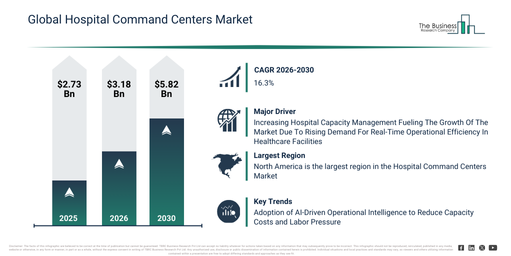
  • Hospital Command Centers Market 2026: Market Size, Growth Drivers And Emerging Opportunities

    Hospital Command Centers Market 2026: Market Size, Growth Drivers And Emerging Opportunities

    Backed by market attractiveness analysis, total addressable market sizing, company benchmarking matrices, interactive Excel dashboards, wider supply chain intelligence, emerging startup coverage, and detailed product-level insights, The Business Research Company’s 2026 market reports are designed to offer research that is more actionable and strategically valuable than ever.

    Hospital Command Centers Market Revenue Growth On Track For A 16.3% CAGR Through 2030

    The market for hospital command centers has experienced rapid expansion in recent times. It is projected to expand from $2.73 billion in 2025 to $3.18 billion in 2026, demonstrating a compound annual growth rate (CAGR) of 16.6%. Historically, this growth can be ascribed to several factors, including the escalation of hospital operational complexities, a heightened emphasis on optimizing patient flow, the increased uptake of centralized decision support systems, the broadening of emergency preparedness initiatives, and the progressive deployment of real-time hospital monitoring solutions.

    The hospital command centers market is anticipated to experience substantial growth in the coming years. It is projected to reach $5.82 billion by 2030, at a compound annual growth rate (CAGR) of 16.3%. This expansion during the forecast period is driven by factors such as the increasing demand for integrated operations management platforms, a greater adoption of data-driven hospital decision-making, the escalating need for enhanced patient safety and quality outcomes, the broadening of value-based healthcare models, and rising investment in digital hospital infrastructure. Prominent trends for the upcoming period include technological advancements in real-time analytics, innovations in artificial intelligence-enabled hospital operations, developments in telehealth-supported command functions, research and development in predictive hospital management systems, and progress in cloud-based hospital coordination platforms.

    Get A Free Sample Report With In-Depth Market Insights:

    https://thebusinessresearchcompany.com/sample_request?id=92912523&type=smp&name=Hospital%20Command%20Centers%20Market%20Report%202026&utm_source=Blogs&utm_medium=Paid&utm_campaign=Oct_PR

    Hospital Command Centers Market Demand Drivers Opening New Revenue Streams

    The expansion of the hospital command center market is fueled by the growing emphasis on managing hospital capacity. Hospital capacity management involves the strategic planning and operational supervision of hospital assets, such as beds and personnel, to effectively satisfy patient requirements. This intensified focus stems from a combination of rising patient numbers and limited resources like beds, staff, and budgets, necessitating that hospitals optimize their resource utilization to provide care that is prompt, safe, and economical. Hospital command centers facilitate this management by centralizing data from various departments, offering a comprehensive operational perspective, and thus enabling improved decision-making and resource allocation. For example, in January 2024, the National Health Service (NHS) England, a UK-based publicly funded healthcare system, successfully achieved its goal of adding 5,000 permanent core beds by early 2024, building on a 2022-23 baseline of 94,500 core beds, and reaching an average of 99,750 core beds by the week ending January 21, 2024. Consequently, the expanding implementation of hospital capacity management is a key driver for the growth of the hospital command center market.

    Hospital Command Centers Market Segment Landscape: Which Areas Lead Development?

    The hospital command centers market covered in this report is segmented –

    1) By Component: Software, Hardware, Services

    2) By Function: Patient Flow Management, Resource Allocation, Emergency Response, Bed Management, Clinical Operations, Others

    3) By Deployment Mode: On-Premises, Cloud-Based

    4) By End User: Hospitals, Specialty Clinics, Ambulatory Surgical Centers, Others

    Subsegments:

    1) By Software: Real Time Analytics Platforms, Operational Workflow Management Software, Patient Flow Optimization Systems, Communication And Collaboration Software, Capacity And Bed Management Software

    2) By Hardware: Command Center Display Systems, Real Time Monitoring Devices, Communication And Network Infrastructure, Sensor And Tracking Hardware, Server And Data Storage Equipment

    3) By Services: Implementation And Integration Services, Consulting And Workflow Optimization Services, Training And Skill Development Services, Maintenance And Support Services, Managed Command Center Operation Services

    Hospital Command Centers Market Trends Powering Strategic Industry Growth

    Leading companies operating in the hospital command centers market are concentrating on developing advanced platforms, such as AI-driven operational intelligence platforms, to reduce capacity-related costs, manage labor shortages, and improve the efficiency of supply distribution for beds, staff, and critical assets. AI-driven operational intelligence platforms are centralized digital systems that aggregate real-time clinical, operational, and administrative data, applying analytics and machine learning to predict bottlenecks, optimize patient flow, and support rapid operational decisions that directly influence cost per admission and resource utilization. For instance, in August 2025, NHS England, a UK-based public healthcare authority, introduced AI-enabled virtual hospital command center capabilities through its Federated Data Platform program to assist hospitals in managing bed occupancy, elective care backlogs, and discharge delays. This intelligence platform integrates real-time data from multiple hospital systems, applies predictive analytics to forecast demand and capacity constraints, and enables system-wide coordination to reduce reliance on expensive agency staff and avoidable lengths of stay, particularly at a time when hospitals face sustained inflation in labor and infrastructure costs.

    Hospital Command Centers Market Competitive Overview And Top Companies

    Major companies operating in the hospital command centers market are IBM Corporation, Oracle Corporation, Honeywell International Inc., Siemens Healthineers AG, Koninklijke Philips N.V., GE HealthCare Technologies Inc., Palantir Technologies Inc., Huron Consulting Group Inc., Dedalus Group, Allscripts Healthcare Solutions Inc., Everbridge Inc., Ascom Ltd., Care Logistics LLC, Spok Holdings Inc., TeleTracking Technologies Inc., LeanTaaS Inc., Qventus Inc., Connexall, Pointcore, Epic Systems Corporation

    View The Full Hospital Command Centers Market Report:

    https://thebusinessresearchcompany.com/report/hospital-command-centers-market-report?utm_source=Blogs&utm_medium=Paid&utm_campaign=Oct_PR

    Hospital Command Centers Market Leading Geography: Which Region Contributes The Most Revenue?

    North America was the largest region in the hospital command centers market in 2025. Asia-Pacific is expected to be the fastest-growing region in the forecast period. The regions covered in the hospital command centers market report are Asia-Pacific, South East Asia, Western Europe, Eastern Europe, North America, South America, Middle East, Africa.

    Reach Out To Our Team:

    The Business Research Company: https://www.thebusinessresearchcompany.com/

    Americas: +1 310-496-7795

    Asia: +44 7882 955267 & +91 8897263534

    Europe: +44 7882 955267

    Email us at: marketing@tbrc.info

    Follow us on:

    LinkedIn: https://in.linkedin.com/company/the-business-research-company

    YouTube: https://www.youtube.com/channel/UC24_fI0rV8cR5DxlCpgmyFQ

    Global Market Model: https://www.thebusinessresearchcompany.com/global-market-model