Author: Marketing Posting

  • Acute On Chronic Liver Failure (ACLF) Market CAGR Of 7.4% Forecast For 2026–2030: What It Means For The Industry

    Acute On Chronic Liver Failure (ACLF) Market CAGR Of 7.4% Forecast For 2026–2030: What It Means For The Industry

    Designed to make market research more actionable and strategically valuable, The Business Research Company’s 2026 market reports feature market attractiveness scoring, total addressable market sizing, company benchmarking matrices, interactive Excel dashboards, deeper supply chain intelligence, emerging startup tracking, and granular product-level insights.

    Acute On Chronic Liver Failure (ACLF) Market To Expand At A 7.4% CAGR: Size And Growth Projections Through 2030

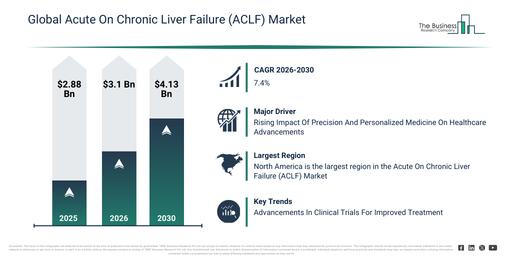
    The acute on chronic liver failure (ACLF) market has experienced strong growth in recent years. It is anticipated to expand from $2.88 billion in 2025 to $3.1 billion in 2026, exhibiting a compound annual growth rate (CAGR) of 7.7%. Historically, this market expansion can be attributed to the increasing prevalence of chronic liver diseases, a rise in hospitalization rates for liver complications, the adoption of pharmacological treatments for ACLF, growing awareness regarding systemic inflammation in liver failure, and the limited availability of specialized care centers.

    The market size for acute on chronic liver failure (aclf) is projected to experience substantial growth over the next few years. It is expected to expand to $4.13 billion by 2030, exhibiting a compound annual growth rate (CAGR) of 7.4%. This anticipated growth during the forecast period can be attributed to several factors such as technological progress in liver support therapies, the expansion of intensive care unit (ICU) and specialty care facilities, increased investment in pharmacological research, improved early diagnosis and biomarker identification, and the incorporation of digital monitoring and patient management systems. Key trends anticipated in this period include the increased uptake of liver dialysis and plasma exchange, a rising demand for advanced immunomodulators and antiviral agents, an intensifying focus on nutritional support and patient management, the broader implementation of mechanical ventilation and renal replacement therapy (rrt), and enhanced early diagnosis and monitoring capabilities for aclf patients.

    Get Your Free Acute On Chronic Liver Failure (ACLF) Market Report Sample Today:

    https://thebusinessresearchcompany.com/sample_request?id=57673034&type=smp&name=Acute%20On%20Chronic%20Liver%20Failure%20%28ACLF%29%20Market%20Report%202026&utm_source=Blogs&utm_medium=Paid&utm_campaign=Nov_PR

    Which Factor Is Expected To Drive The Acute On Chronic Liver Failure (ACLF) Market Over The Forecast Period?

    A growing emphasis on precision and personalized medicine is anticipated to drive expansion in the acute-on-chronic liver failure market moving ahead. This approach customizes therapies for individual patients by considering their genetic makeup, environmental influences, and lifestyle choices, aiming to enhance treatment results and overall care. The adoption of precision and personalized medicine is on the rise, spurred by genomic advancements, wider access to biomarker-based diagnostic tools, better data analytics, and an increasing need for more focused and effective treatments. Specifically for acute-on-chronic liver failure (ACLF), precision and personalized medicine facilitates tailored treatments based on a patient’s genetic profile, disease severity, and biomarker data, enabling specific therapies that improve patient outcomes and reduce the likelihood of multi-organ failure. Consequently, the heightened attention on precision and personalized medicine is propelling the acute-on-chronic liver failure market’s expansion.

    Acute On Chronic Liver Failure (ACLF) Market Segmentation Insights: How Is The Industry Categorized?

    The acute on chronic liver failure (aclf) market covered in this report is segmented –

    1) By Type Of Treatment: Pharmacological, Supportive Care

    2) By Mode Of Administration: Oral, Intravenous (IV)

    3) By End-User: Hospitals, Tertiary Care Centers or Liver Transplant Centers, Intensive Care Units (ICUs), Specialty Hepatology Clinics

    Subsegments:

    1) By Pharmacological: Antibiotics, Vasopressors

    2) By Supportive Care: Liver Dialysis, Plasma Exchange, Nutritional Support, Mechanical Ventilation, Renal Replacement Therapy (RRT)

    Acute On Chronic Liver Failure (ACLF) Market Trends Explained: What Is Changing And Why It Matters

    Companies operating in the acute-on-chronic liver failure (ACLF) market are emphasizing clinical trials to develop novel therapeutics, regenerative medicine approaches, and targeted drug therapies, all aimed at improving patient survival rates. Clinical trials are vital for validating new treatment protocols, artificial liver support systems, and immunomodulatory therapies to enhance disease management and reduce mortality.

    Acute On Chronic Liver Failure (ACLF) Market Competitor Landscape: Who Are The Major Companies?

    Major companies operating in the acute on chronic liver failure (aclf) market are Pfizer Inc., F Hoffmann La Roche AG, Merck and Co Inc., Bayer AG, Sanofi SA, Bristol Myers Squibb, AstraZeneca plc, GSK plc, Eli Lilly and Company, Gilead Sciences Inc, Novo Nordisk AS, Astellas Pharma Inc., CSL Behring, Grifols SA, Ferring Pharmaceuticals, Lupin Pharmaceutical Limited, Dr Falk Pharma GmbH, Genfit, Conatus Pharmaceuticals Inc., Gyre Therapeutics Inc., Abbott Laboratories

    See The Full Acute On Chronic Liver Failure (ACLF) Market Report For Complete Market Sizing And Trends:

    https://thebusinessresearchcompany.com/report/acute-on-chronic-liver-failure-aclf-global-market-report?utm_source=Blogs&utm_medium=Paid&utm_campaign=Nov_PR

    Acute On Chronic Liver Failure (ACLF) Market Regional Demand Analysis And Leading Geography

    North America was the largest region in the acute on chronic liver failure (ACLF) market in 2025. Asia-Pacific is expected to be the fastest-growing region in the forecast period. The regions covered in the acute on chronic liver failure (aclf) market report are Asia-Pacific, South East Asia, Western Europe, Eastern Europe, North America, South America, Middle East, Africa.

    Reach Out To Our Team:

    The Business Research Company: https://www.thebusinessresearchcompany.com/

    Americas: +1 310-496-7795

    Asia: +44 7882 955267 & +91 8897263534

    Europe: +44 7882 955267

    Email us at: marketing@tbrc.info

    Follow us on:

    LinkedIn: https://in.linkedin.com/company/the-business-research-company

    YouTube: https://www.youtube.com/channel/UC24_fI0rV8cR5DxlCpgmyFQ

    Global Market Model: https://www.thebusinessresearchcompany.com/global-market-model
  • Automated Cell Culture Equipment Market To Grow At A 11.6% CAGR Through 2030: Drivers, Trends And Forecast

    Automated Cell Culture Equipment Market To Grow At A 11.6% CAGR Through 2030: Drivers, Trends And Forecast

    Market attractiveness scoring, total addressable market sizing, company benchmarking matrices, interactive Excel dashboards, deeper supply chain intelligence, emerging startup tracking, and granular product-level insights are among the key offerings featured in The Business Research Company’s 2026 market reports, designed to deliver more actionable and strategically valuable research.

    Automated Cell Culture Equipment Market Valued At $2.6 Billion In 2026, Projected To Reach $4.03 Billion By 2030

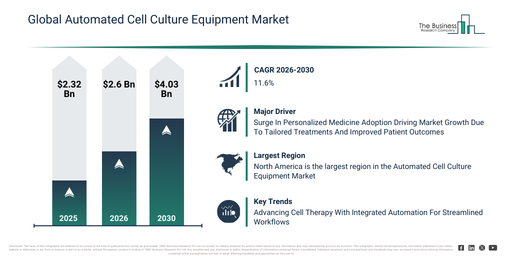
    The automated cell culture equipment market size has experienced swift expansion in recent years. This market is anticipated to expand from $2.32 billion in 2025 to $2.6 billion in 2026, exhibiting a compound annual growth rate (CAGR) of 11.9%. The historical growth of this market can be attributed to several factors including increased pharmaceutical and biologics research, a heightened demand for consistent cell culture outcomes, the broadening of drug discovery pipelines, the escalating complexity of cell-based assays, and the early adoption of laboratory automation.

    The automated cell culture equipment market is projected to experience substantial expansion in the coming years. This market is anticipated to reach a size of $4.03 billion by 2030, exhibiting a compound annual growth rate (CAGR) of 11.6%. Key factors driving this growth over the forecast period include greater investments in regenerative medicine, the enlargement of cell and gene therapy pipelines, increasing requirements for scalable cell culture solutions, a heightened emphasis on minimizing laboratory variability, and the growing incorporation of AI-driven lab automation. Significant trends expected during this period involve the expanding deployment of fully automated cell culture platforms, a rise in the adoption of high-throughput cell processing systems, the increasing integration of robotics and imaging technologies, the proliferation of closed-system and contamination-controlled workflows, and an intensified focus on reproducibility and process standardization.

    Request A Complimentary Automated Cell Culture Equipment Market Research Sample:

    https://thebusinessresearchcompany.com/sample_request?id=62879707&type=smp&name=Automated%20Cell%20Culture%20Equipment%20Market%20Report%202026&utm_source=Blogs&utm_medium=Paid&utm_campaign=Nov_PR

    Key Factor Propelling The Automated Cell Culture Equipment Market Forward

    The increasing embrace of personalized medicine is anticipated to fuel the expansion of the automated cell culture equipment market in the future. This approach involves customizing medical interventions based on an individual’s genetic makeup, lifestyle choices, and environmental influences to provide more accurate and impactful care. Enhanced treatment effectiveness motivates the growing adoption of personalized medicine, as therapies are specifically designed for a patient’s genetic and biological profile, leading to better patient results. Automated cell culture equipment facilitates personalized medicine through the delivery of accurate, high-volume, and consistent cell culture processes, which are crucial for developing patient-specific treatments and customized drug screening. Consequently, the increasing use of personalized medicine is fostering the expansion of the automated cell culture equipment market.

    Automated Cell Culture Equipment Market Segments And Subsegments Explained

    The automated cell culture equipment market covered in this report is segmented –

    1) By Product Type: Instruments, Consumables, Software

    2) By Automation Level: Fully Automated Systems, Semi-Automated Systems, Manual Systems With Automation Features

    3) By Application: Drug Discovery And Development, Regenerative Medicine, Toxicology Testing, Vaccine Development, Stem Cell Research

    4) By End-User: Pharmaceutical Companies, Biotechnology Companies, Academic And Research Institutions, Contract Research Organizations (CROs), Diagnostics And Testing Laboratories

    Subsegments:

    1) By Instruments: Automated Cell Culture Systems, Bioreactors, Incubators, Centrifuges, Cell Counters And Analyzers, Liquid Handling Systems, Cell Imaging Systems, Robotic Arms And Manipulators, Cell Harvesting Systems, Filtration And Separation Devices

    2) By Consumables: Culture Media, Reagents And Supplements, Microplates And Culture Dishes, Flasks And Bottles, Single-Use Bags And Tubing, Filters And Membranes, Pipette Tips And Cartridges, Cell Culture Inserts, Sterile Connectors And Clamps

    3) By Software: Data Management Software, Process Control And Monitoring Software, Laboratory Information Management Systems (LIMS), Image Analysis Software, Workflow Automation Software, Quality Control And Compliance Software, Remote Monitoring And Cloud Integration Tools

    Emerging Trends Transforming The Automated Cell Culture Equipment Market

    Leading firms in the automated cell culture equipment sector are prioritizing advancements in integrated workflows, specifically closed single-use consumable systems. This focus aims to improve process consistency, lower contamination hazards, decrease manual intervention, and facilitate effective scaling from research stages to clinical production. Such a system is a sterile, disposable configuration that combines various cell culture procedures into a single unit, thereby mitigating contamination and allowing for scalable, consistent workflows. An example of this is Limula SA, a Swiss biotechnology firm dedicated to automated cell therapy manufacturing, which introduced LimONE in March 2025. This integrated system combines hardware, software, and single-use consumables to streamline and standardize cell culture and processing tasks. The product’s debut signifies the availability of a commercial solution for both research applications and manufacturing processes that comply with GMP standards. LimONE facilitates quicker technology transfer, reduces expenses related to labor and infrastructure, and supports the scalable manufacturing of advanced cell therapies, such as CAR-T and gene-edited stem cells. The system improves the efficiency of workflows and guarantees consistent outcomes across diverse cell therapy procedures. In summary, this new product bolsters Limula’s position in the automated cell culture equipment market and assists in meeting regulatory requirements.

    Automated Cell Culture Equipment Market Key Players: Major Companies In The 2026 Report

    Major companies operating in the automated cell culture equipment market are F. Hoffmann-La Roche Ltd, Hitachi Ltd., Merck KGaA, Panasonic Holdings Corporation, Thermo Fisher Scientific Inc., Danaher Corporation, Becton Dickinson and Company, Corning Incorporated, Lonza Group AG, Olympus Corporation, Sartorius AG, Eppendorf SE, Tecan Group Ltd., STEMCELL Technologies Inc., Miltenyi Biotec B.V. & Co. KG, Hamilton Company, Greiner Bio-One International GmbH, Solida Biotech GmbH, Biostream International B.V., HiMedia Laboratories Pvt. Ltd., Kuhner Shaker AG, Cellexus International Ltd.

    Explore The Full Automated Cell Culture Equipment Market Report With Forecasts To 2030:

    https://thebusinessresearchcompany.com/report/global-automated-cell-culture-equipment-market-report?utm_source=Blogs&utm_medium=Paid&utm_campaign=Nov_PR

    Automated Cell Culture Equipment Market By Region: Where Is Demand Strongest?

    North America was the largest region in the automated cell culture equipment market in 2025. Asia-Pacific is expected to be the fastest-growing region in the forecast period. The regions covered in the automated cell culture equipment market report are Asia-Pacific, South East Asia, Western Europe, Eastern Europe, North America, South America, Middle East, Africa.

    Reach Out To Our Team:

    The Business Research Company: https://www.thebusinessresearchcompany.com/

    Americas: +1 310-496-7795

    Asia: +44 7882 955267 & +91 8897263534

    Europe: +44 7882 955267

    Email us at: marketing@tbrc.info

    Follow us on:

    LinkedIn: https://in.linkedin.com/company/the-business-research-company

    YouTube: https://www.youtube.com/channel/UC24_fI0rV8cR5DxlCpgmyFQ

    Global Market Model: https://www.thebusinessresearchcompany.com/global-market-model
  • Autologous Cell Therapy Market Size To Reach $27.31 Billion By 2030: Growth Drivers, Trends And Forecast

    Autologous Cell Therapy Market Size To Reach $27.31 Billion By 2030: Growth Drivers, Trends And Forecast

    Designed to make market research more actionable and strategically valuable, The Business Research Company’s 2026 market reports feature market attractiveness scoring, total addressable market sizing, company benchmarking matrices, interactive Excel dashboards, deeper supply chain intelligence, emerging startup tracking, and granular product-level insights.

    How Big Is The Autologous Cell Therapy Market In 2026, And How Fast Will It Grow?

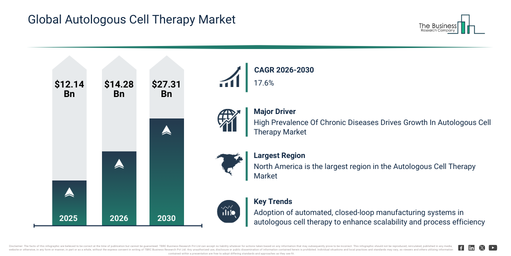
    The autologous cell therapy market size has seen rapid expansion in recent years. It is projected to increase from $12.14 billion in 2025 to $14.28 billion in 2026, exhibiting a compound annual growth rate (CAGR) of 17.6%. The historical growth of this market can be attributed to advancements in stem cell research, early clinical success of autologous therapies, the increasing prevalence of chronic diseases, the expansion of oncology treatment options, and rising investments in regenerative medicine.

    The autologous cell therapy market size is anticipated to experience substantial expansion in the coming years. It is projected to reach a valuation of $27.31 billion by 2030, exhibiting a compound annual growth rate (CAGR) of 17.6%. This growth over the forecast period can be attributed to several factors, including the increasing number of approvals for cell-based therapies, a rising demand for personalized medicine, the expansion of manufacturing automation within cell therapy, an increase in clinical trial activities, and greater healthcare spending on advanced therapies. Key trends anticipated during this period include the wider adoption of CAR T-cell therapies, a growing utilization of personalized regenerative treatments, the increasing integration of automated cell processing systems, the broadened application of autologous stem cells, and a stronger emphasis on patient-specific therapeutic results.

    Download A Free Autologous Cell Therapy Market Sample Report With Size And Forecast Data:

    https://thebusinessresearchcompany.com/sample_request?id=63793269&type=smp&name=Autologous%20Cell%20Therapy%20Market%20Report%202026&utm_source=Blogs&utm_medium=Paid&utm_campaign=Nov_PR

    Autologous Cell Therapy Market Growth Driver: The Key Factor Behind Rising Demand

    The increasing incidence of chronic diseases is projected to stimulate the expansion of autologous cell therapy. A chronic disease is characterized as a health condition or illness persisting for more than a year and requiring continuous medical attention. Autologous cell therapy provides a promising method for treating and managing these conditions, employing an individual’s own cells that are cultured and multiplied outside the body before being reintroduced to the donor. Therefore, the widespread occurrence of chronic diseases is a key factor driving the growth of the autologous cell therapy market.

    Autologous Cell Therapy Market Segmentation: Key Segments And Subsegments Covered

    The autologous cell therapy market covered in this report is segmented –

    1) By Therapy: Autologous Stem Cell Therapy, Autologous Cellular Immunotherapies

    2) By Source: Bone Marrow, Epidermis, Mesenchymal Stem Cells, Hematopoietic Stem Cells, Chondrocytes, Other Sources

    3) By Application: Cancer, Neurodegenerative Disorders, Cardiovascular Disorders, Autoimmune Disorders, Orthopedics, Wound Healing, Other Applications

    4) By End User: Hospitals And Clinics, Ambulatory Centers, Academics And Research, Other End-Users

    Subsegments:

    1) By Autologous Stem Cell Therapy: Hematopoietic Stem Cell Transplantation, Mesenchymal Stem Cell Therapy, Adipose-Derived Stem Cell Therapy

    2) By Autologous Cellular Immunotherapies: Chimeric Antigen Receptor (CAR) T-Cell Therapy, Tumor-Infiltrating Lymphocyte (TIL) Therapy, Dendritic Cell Therapy

    Autologous Cell Therapy Market Trends: Key Developments Shaping 2026 And Beyond

    Leading companies operating in the autologous cell therapy market are concentrating on developing technological advancements, including robotic, end-to-end manufacturing platforms for patient-specific therapies. These advancements aim to enhance process consistency, mitigate contamination risk, and expedite time-to-patient. An end-to-end manufacturing platform integrates multiple cell-processing steps such as isolation, activation, transduction, expansion, formulation, and harvest within a single closed system, thereby lessening manual intervention compared to conventional open flask- or bag-based methods. For instance, in April 2025, Cellares, a US-based integrated development and manufacturing organization, introduced the Cell Shuttle system, which is engineered for autologous cell therapies. This product automates the complete workflow within a functionally closed cassette, boosting reproducibility, minimizing contamination risk, and facilitating scalable, patient-specific manufacturing, which supports quicker development and delivery of personalized therapies.

    Leading Companies Operating In The Autologous Cell Therapy Market

    Major companies operating in the autologous cell therapy market are Novartis AG, Bristol-Myers Squibb Company, Gilead Sciences Inc., Johnson & Johnson, F. Hoffmann-La Roche Ltd., Vericel Corporation, Dendreon Pharmaceuticals LLC, Brainstorm Cell Therapeutics Inc., Caladrius Biosciences Inc., Castle Creek Biosciences Inc., Pharmicell Co. Ltd., Medipost Co. Ltd., Tego Science AB, Holostem Terapie Avanzate S.r.l., Opexa Therapeutics Inc., CORESTEM Inc., Takeda Pharmaceutical Company Limited, CSL Limited, AstraZeneca plc, Iovance Biotherapeutics Inc., Adaptimmune Therapeutics plc, Autolus Therapeutics plc

    Access The Full Autologous Cell Therapy Market Research Report:

    https://thebusinessresearchcompany.com/report/autologous-cell-therapy-global-market-report?utm_source=Blogs&utm_medium=Paid&utm_campaign=Nov_PR

    Autologous Cell Therapy Market Regional Analysis: Largest Region And Key Geographies Covered

    North America was the largest region in the autologous cell therapy market in 2025.Asia-pacific is expected to be the fastest-growing region in the forecast period. The regions covered in the autologous cell therapy market report are Asia-Pacific, South East Asia, Western Europe, Eastern Europe, North America, South America, Middle East, Africa.

    Reach Out To Our Team:

    The Business Research Company: https://www.thebusinessresearchcompany.com/

    Americas: +1 310-496-7795

    Asia: +44 7882 955267 & +91 8897263534

    Europe: +44 7882 955267

    Email us at: marketing@tbrc.info

    Follow us on:

    LinkedIn: https://in.linkedin.com/company/the-business-research-company

    YouTube: https://www.youtube.com/channel/UC24_fI0rV8cR5DxlCpgmyFQ

    Global Market Model: https://www.thebusinessresearchcompany.com/global-market-model
  • Acute Ocular Pain Market Forecast: $0.64 Billion Valuation Expected By 2030

    Acute Ocular Pain Market Forecast: $0.64 Billion Valuation Expected By 2030

    The Business Research Company’s 2026 market reports are designed to deliver research that is more actionable and strategically valuable. Key offerings include market attractiveness scoring, total addressable market sizing, company benchmarking matrices, interactive Excel dashboards, deeper supply chain intelligence, emerging startup tracking, and granular product-level insights.

    Acute Ocular Pain Market Size, Growth Rate And Key Forecast Highlights For 2026–2030

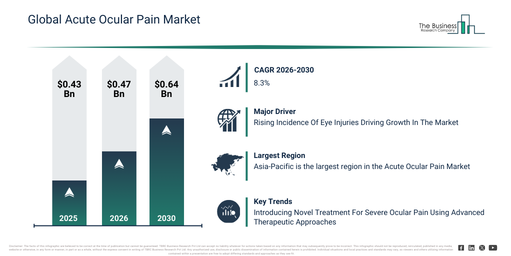
    The market for acute ocular pain has demonstrated robust growth over recent years. It is projected to expand from $0.43 billion in 2025 to $0.47 billion in 2026, achieving a compound annual growth rate (CAGR) of 8.6%. Historically, this growth can be ascribed to factors such as the increasing occurrence of ocular infections, an expanding elderly population, a rise in eye injuries, the uptake of hospital-based ophthalmic care, and advancements in topical ocular drugs.

    The acute ocular pain market is anticipated to show significant expansion in the upcoming years, projected to attain $0.64 billion by 2030, expanding at a compound annual growth rate (CAGR) of 8.3%. This expected growth during the forecast period is fueled by advancements in drug delivery systems, the proliferation of online pharmacy channels, increasing embrace of teleophthalmology, a surge in ophthalmic clinical investigations, and growing awareness regarding homecare ocular treatments. Prominent trends for this period encompass a rising preference for topical NSAIDs and cycloplegic agents, an escalating need for corticosteroids and immunomodulators, enhanced understanding of acute ocular pain management, the expansion of hospital and homecare ophthalmic services, and the integration of teleophthalmology with remote patient monitoring.

    See What’s Inside The Acute Ocular Pain Market Report With A Free Sample:

    https://thebusinessresearchcompany.com/sample_request?id=66018224&type=smp&name=Acute%20Ocular%20Pain%20Market%20Report%202026&utm_source=Blogs&utm_medium=Paid&utm_campaign=Nov_PR

    Acute Ocular Pain Market Expansion: The Major Factor Driving Growth

    A growing number of eye injuries is projected to drive the acute ocular pain market in the future. An eye injury involves any harm or trauma to the eye or adjacent areas, potentially caused by impacts, foreign bodies, chemical contact, or burns, resulting in discomfort, impaired vision, or lasting damage. The surge in eye injury occurrences is largely attributed to escalating workplace dangers, extended screen time, atmospheric contaminants, sports-related trauma, and insufficient eye protection. Acute ocular pain acts as a vital sign of underlying eye trauma, encouraging prompt diagnosis and treatment; however, insufficient or delayed pain management can worsen issues, causing extended suffering and potential vision loss. Consequently, the escalating frequency of eye injuries is boosting the acute ocular pain market.

    Understanding Acute Ocular Pain Market Segmentation For Strategic Planning

    The acute ocular pain market covered in this report is segmented –

    1) By Drug: Topical Non-Steroidal Anti-Inflammatory Drugs, Topical Cycloplegic Agents, Oral Analgesics, Corticosteroids

    2) By Medical Condition: Corneal Abrasion, Glaucoma, Conjunctivitis, Iritis, Other Medical Conditions

    3) By Route Of Administration: Topical, Intraocular, Oral, Other Routes Of Administration

    4) By Distribution Channel: Hospital Pharmacy, Online Pharmacy, Retail Pharmacy

    5) By End User: Hospitals, Homecare, Ophthalmic Clinics, Other End Users

    Subsegments:

    1) By Topical Non-Steroidal Anti-Inflammatory Drugs (NSAIDs): Ketorolac, Bromfenac, Nepafenac, Diclofenac

    2) By Topical Cycloplegic Agents: Atropine, Cyclopentolate, Homatropine

    3) By Oral Analgesics: Acetaminophen, Ibuprofen, Tramadol, Codeine

    4) By Corticosteroids: Prednisolone, Dexamethasone, Fluorometholone, Loteprednol

    Key Acute Ocular Pain Market Trends To Watch In 2026

    Leading companies operating in the acute ocular pain market are focusing on developing innovative solutions, such as neuropathic corneal pain (NCP) therapy, to introduce novel treatments for severe eye discomfort. Neuropathic corneal pain (NCP) therapy encompasses treatments designed to manage and alleviate chronic, often intense eye pain caused by nerve damage or dysfunction in the cornea.

    Key Companies Active In The Acute Ocular Pain Market

    Major companies operating in the acute ocular pain market are AbbVie Inc, Novartis AG, Regeneron Pharmaceuticals Inc, Alcon Inc, Bausch and Lomb Corporation, Sun Pharmaceutical Industries Ltd, Santen Pharmaceutical Co Ltd, Dompé Farmaceutici SpA, Aldeyra Therapeutics Inc, Ocular Therapeutix Inc, Nicox SA, Kala Bio Inc, Surface Ophthalmics Inc, Omeros Corporation, XOMA Corporation, Sylentis SA, Pharmaleads SAS, IACTA Pharmaceuticals, EyePoint Pharmaceuticals Inc, Kowa Company Ltd

    Explore Detailed Acute Ocular Pain Market Research And Forecasts:

    https://thebusinessresearchcompany.com/report/acute-ocular-pain-global-market-report?utm_source=Blogs&utm_medium=Paid&utm_campaign=Nov_PR

    Which Geography Dominates The Acute Ocular Pain Market?

    Asia-Pacific was the largest region in the acute ocular pain market in 2025. North America expected to be the fastest-growing region in the forecast period. The regions covered in the acute ocular pain market report are Asia-Pacific, South East Asia, Western Europe, Eastern Europe, North America, South America, Middle East, Africa.

    Reach Out To Our Team:

    The Business Research Company: https://www.thebusinessresearchcompany.com/

    Americas: +1 310-496-7795

    Asia: +44 7882 955267 & +91 8897263534

    Europe: +44 7882 955267

    Email us at: marketing@tbrc.info

    Follow us on:

    LinkedIn: https://in.linkedin.com/company/the-business-research-company

    YouTube: https://www.youtube.com/channel/UC24_fI0rV8cR5DxlCpgmyFQ

    Global Market Model: https://www.thebusinessresearchcompany.com/global-market-model
  • Autoimmune Treatment Market Report 2026: Size, Segmentation, Regional Analysis And Key Players

    Autoimmune Treatment Market Report 2026: Size, Segmentation, Regional Analysis And Key Players

    The Business Research Company’s 2026 market reports are designed to deliver research that is more actionable and strategically valuable. Key offerings include market attractiveness scoring, total addressable market sizing, company benchmarking matrices, interactive Excel dashboards, deeper supply chain intelligence, emerging startup tracking, and granular product-level insights.

    Autoimmune Treatment Market Size 2026: Valuation, Growth Rate And Forecast To 2030

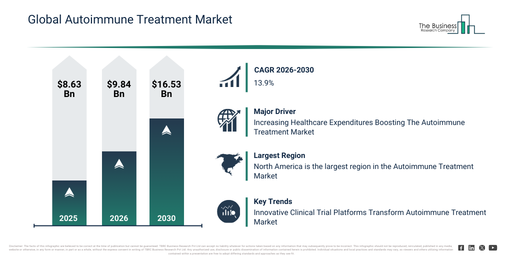
    The autoimmune treatment market has experienced rapid expansion in recent years. Its projected growth will take it from $8.63 billion in 2025 to $9.84 billion in 2026, at a compound annual growth rate (CAGR) of 14.0%. This historical growth can be attributed to several factors, including the improved availability of immunosuppressive drugs, the expansion of rheumatology and immunology services, accumulating clinical experience in autoimmune care, higher rates of patient diagnosis, and wider access to specialty medications.

    The autoimmune treatment market is projected to experience swift expansion in the coming years, anticipated to reach $16.53 billion by 2030, exhibiting a compound annual growth rate (CAGR) of 13.9%. This expansion during the projection period stems from heightened investment in developing new biologics, a surging need for customized autoimmune treatments, the broader availability of digital monitoring and follow-up support, an intensified effort to mitigate chronic disease complications, and a rise in research dedicated to immune system modulation. Key developments expected within this forecast timeframe encompass the wider acceptance of biologic therapies, greater utilization of specific immunomodulators, the increasing incorporation of long-term disease management initiatives, the proliferation of individualized treatment approaches, and a stronger emphasis on multi-drug therapeutic combinations.

    Get A Free Sample Of The Autoimmune Treatment Market Report 2026:

    https://thebusinessresearchcompany.com/sample_request?id=70366977&type=smp&name=Autoimmune%20Treatment%20Market%20Report%202026&utm_source=Blogs&utm_medium=Paid&utm_campaign=Nov_PR

    What Is Driving The Growth Of The Autoimmune Treatment Market?

    The increasing healthcare expenditures are projected to fuel the expansion of the autoimmune treatment market. Health expenditures encompass all costs associated with providing health services, family planning activities, nutrition programs, and emergency assistance with a focus on overall well-being. A surge in healthcare spending is expected to lead to the development of more effective therapies and medical technologies for autoimmune treatment. Therefore, the rise in healthcare expenditures is a key driver for the growth of the autoimmune treatment market.

    How Is The Autoimmune Treatment Market Segmented?

    The autoimmune treatment market covered in this report is segmented –

    1) By Service Type: Consultation And Diagnosis, Therapy And Monitoring, Drug development

    2) By Disease: Rheumatoid Arthritis, Systemic Lupus Erythematosus, Sjögren’s Syndrome, Thyroiditis, Scleroderma, Other Diseases

    3) By Application: Disease Management and Symptom Control, Disease Diagnosis and Monitoring, Immune Modulation and Targeted Therapy, Long-Term Care and Relapse Prevention

    Subsegments:

    1) By Consultation and Diagnosis: Clinical Evaluation and Medical Consultation, Autoimmune Biomarker Testing and Serological Assays, Imaging and Functional Diagnostic Services, Disease Severity Assessment and Risk Stratification

    2) By Therapy and Monitoring: Pharmacological Treatment Management, Biologic and Immunotherapy Administration, Disease Activity Monitoring and Follow-Up Services, Adverse Event and Safety Monitoring, Patient Support and Adherence Programs

    3) By Drug Development: Preclinical Research and Target Identification, Clinical Trial Services (Phase I–IV), Regulatory Affairs and Compliance Services, Pharmacovigilance and Post-Marketing Surveillance

    What Are The Latest Trends In The Autoimmune Treatment Market?

    Leading entities within the autoimmune treatment market are intensifying their efforts to launch novel clinical trial platforms, aiming to secure a competitive advantage. These cutting-edge clinical trial platforms for autoimmune conditions utilize sophisticated technologies and tailored strategies to improve effectiveness, safety, and patient results.

    Who Are The Key Players In The Autoimmune Treatment Market?

    Major companies operating in the autoimmune treatment market are Abbott Laboratories, Amgen Inc., Eli Lilly and Company, Pfizer Inc., F Hoffmann-La Roche AG, AstraZeneca PLC, Bristol-Myers Squibb Company, Thermo Fisher Scientific Inc., Biogen Idec Inc., GSK PLC, Genentech Inc., AbbVie Inc., Celgene Corporation, Gilead Sciences Inc., Merck & Co. Inc., Novartis International AG, Sanofi SA, Takeda Pharmaceutical Company Limited, Teva Pharmaceutical Industries Ltd., UCB SA, Alexion Pharmaceuticals Inc., AnaptysBio Inc., Apellis Pharmaceuticals Inc., Arena Pharmaceuticals Inc., Aurinia Pharmaceuticals Inc., BioCryst Pharmaceuticals Inc., Cabaletta Bio Inc., ChemoCentryx Inc., Corbus Pharmaceuticals Holdings Inc., CSL Limited

    Read The Complete Autoimmune Treatment Market Report 2026:

    https://thebusinessresearchcompany.com/report/autoimmune-treatment-global-market-report?utm_source=Blogs&utm_medium=Paid&utm_campaign=Nov_PR

    Which Region Is The Largest In The Autoimmune Treatment Market?

    North America was the largest region in the autoimmune treatment market in 2025. The regions covered in the autoimmune treatment market report are Asia-Pacific, South East Asia, Western Europe, Eastern Europe, North America, South America, Middle East, Africa.

    Reach Out To Our Team:

    The Business Research Company: https://www.thebusinessresearchcompany.com/

    Americas: +1 310-496-7795

    Asia: +44 7882 955267 & +91 8897263534

    Europe: +44 7882 955267

    Email us at: marketing@tbrc.info

    Follow us on:

    LinkedIn: https://in.linkedin.com/company/the-business-research-company

    YouTube: https://www.youtube.com/channel/UC24_fI0rV8cR5DxlCpgmyFQ

    Global Market Model: https://www.thebusinessresearchcompany.com/global-market-model
  • Acute Myocardial Infarction Market Overview: Size, Growth Drivers, Trends And Competitive Landscape

    Acute Myocardial Infarction Market Overview: Size, Growth Drivers, Trends And Competitive Landscape

    With a focus on actionable insights and strategic value, The Business Research Company’s 2026 market reports include market attractiveness scoring, total addressable market sizing, company benchmarking matrices, interactive Excel dashboards, deeper supply chain intelligence, emerging startup tracking, and granular product-level insights.

    How Much Will The Acute Myocardial Infarction Market Be Worth By 2030?

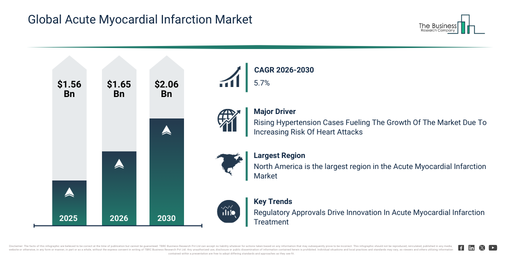
    The market for acute myocardial infarction has demonstrated substantial growth in recent years. Projections indicate it will expand from $1.56 billion in 2025 to reach $1.65 billion by 2026, advancing at a compound annual growth rate (CAGR) of 6.0%. This historical expansion is attributable to several factors, including the increasing prevalence of coronary artery disease, a rise in the number of hospitals and specialized cardiac centers, the widespread adoption of electrocardiogram and advanced imaging techniques, heightened awareness of acute MI symptoms, and an increase in cardiac research initiatives.

    The market for acute myocardial infarction is projected to experience substantial expansion over the coming years, reaching $2.06 billion by 2030, driven by a compound annual growth rate (CAGR) of 5.7%. This anticipated growth stems from several factors, including the emergence of new thrombolytic agents, a rise in minimally invasive procedural applications, the uptake of sophisticated imaging technologies, the expansion of personalized cardiology treatments, and the incorporation of AI and big data into cardiac care. Key trends identified for this period encompass the growing acceptance of percutaneous coronary intervention (PCI) procedures, a greater reliance on advanced cardiac biomarkers for early detection, an amplified emphasis on less invasive cardiac interventions, the broadening of telecardiology and remote patient surveillance, and an escalation in awareness and preventive initiatives for acute MI.

    Get Access To A Free Acute Myocardial Infarction Market Report Sample:

    https://thebusinessresearchcompany.com/sample_request?id=98711159&type=smp&name=Acute%20Myocardial%20Infarction%20Market%20Report%202026&utm_source=Blogs&utm_medium=Paid&utm_campaign=Nov_PR

    The Key Driver Behind The Acute Myocardial Infarction Market’s 5.7% CAGR

    The increasing prevalence of hypertension is anticipated to fuel the expansion of the acute myocardial infarction market in the future. Hypertension, a medical state marked by consistently high blood pressure, elevates the danger of heart disease, stroke, and other health complications. The incidence of hypertension is growing as a result of more prevalent inactive lifestyles, which are brought on by sedentary employment, extensive screen time, and insufficient physical activity. Hypertension contributes to acute myocardial infarction by harming arteries, encouraging the formation of plaque, and raising the risk of blood clots that can obstruct coronary arteries. Thus, the escalating cases of hypertension are driving the growth of the acute myocardial infarction market.

    Acute Myocardial Infarction Market Classification: Main Segments And Detailed Subsegments

    The acute myocardial infarction market covered in this report is segmented –

    1) By Type: ST-Elevation Myocardial Infarction (STEMI), Non-ST-Elevation Myocardial Infarction (NSTEMI)

    2) By Treatment Type: Thrombolytic Therapy, Percutaneous Coronary Intervention (PCI), Coronary Artery Bypass Grafting (CABG), Medications

    3) By Diagnosis Method: Electrocardiogram, Cardiac Biomarkers, Echocardiography, Coronary Angiography, Magnetic Resonance Imaging (MRI), Computed Tomography (CT) Scan

    4) By Route Of Administration: Oral Route, Intravenous (IV) Route, Subcutaneous Route, Transdermal Route, Sublingual Route

    5) By End User: Hospitals And Clinics, Ambulatory Surgical Centers, Specialty Cardiac Centers, Research Institutes

    Subsegments:

    1) By ST-Elevation Myocardial Infarction (STEMI): Anterior ST-Elevation Myocardial Infarction (STEMI), Inferior ST-Elevation Myocardial Infarction (STEMI), Posterior ST-Elevation Myocardial Infarction (STEMI), Lateral ST-Elevation Myocardial Infarction (STEMI), Right Ventricular ST-Elevation Myocardial Infarction (STEMI), Extensive (Large) ST-Elevation Myocardial Infarction (STEMI)

    2) By Non-ST-Elevation Myocardial Infarction (NSTEMI): Subendocardial Non-ST-Elevation Myocardial Infarction (NSTEMI), Multi-Vessel Non-ST-Elevation Myocardial Infarction (NSTEMI), Silent Non-ST-Elevation Myocardial Infarction (NSTEMI), Recurrent Non-ST-Elevation Myocardial Infarction (NSTEMI)

    Acute Myocardial Infarction Market Strategic Shifts: What Leading Players Are Prioritizing

    Leading firms within the acute myocardial infarction market prioritize securing regulatory authorizations to broaden their range of products, improve the effectiveness of treatments, and solidify their standing in the market. These regulatory approvals are official sanctions granted by health organizations like the FDA and EMA, which certify that medications and medical equipment adhere to criteria for safety, effectiveness, and quality prior to being introduced to the market. As an example, in March 2025, Sungen Biomedical, a biopharmaceutical firm based in China, was granted FDA Fast Track Designation for its monoclonal antibody medication, SGC001, which is the first globally developed for emergency acute myocardial infarction (AMI) treatment. This particular designation acknowledges SGC001’s capacity to decrease cardiomyocyte cell death and enhance circulation in regions experiencing ischemia. Given encouraging preclinical findings that suggest advantages in patient recovery and a decrease in mortality, the Fast Track status facilitates swifter communication with the FDA, thereby speeding up the approval procedure and ensuring patients receive earlier access to this novel AMI therapy.

    Acute Myocardial Infarction Market Company Analysis: Major Industry Participants

    Major companies operating in the acute myocardial infarction market are Johnson & Johnson, F Hoffmann La Roche AG, Merck & Co Inc, Bayer AG, Sanofi SA, Bristol Myers Squibb Company, AstraZeneca plc, Abbott Laboratories, Novartis AG, GSK plc, Eli Lilly and Company, Siemens Healthineers, Koninklijke Philips NV, Boston Scientific Corporation, Daiichi Sankyo Company Limited, Terumo Corporation, MicroPort Scientific Corporation, Pfizer Inc, Boehringer Ingelheim International GmbH, Amgen Inc

    Get Full Access To The Acute Myocardial Infarction Market Report 2026:

    https://thebusinessresearchcompany.com/report/acute-myocardial-infarction-global-market-report?utm_source=Blogs&utm_medium=Paid&utm_campaign=Nov_PR

    Acute Myocardial Infarction Market Global Regional Breakdown: Key Regions Analyzed

    North America was the largest region in the acute myocardial infarction market in 2025. Asia-Pacific is expected to be the fastest-growing region in the forecast period. The regions covered in the acute myocardial infarction market report are Asia-Pacific, South East Asia, Western Europe, Eastern Europe, North America, South America, Middle East, Africa.

    Reach Out To Our Team:

    The Business Research Company: https://www.thebusinessresearchcompany.com/

    Americas: +1 310-496-7795

    Asia: +44 7882 955267 & +91 8897263534

    Europe: +44 7882 955267

    Email us at: marketing@tbrc.info

    Follow us on:

    LinkedIn: https://in.linkedin.com/company/the-business-research-company

    YouTube: https://www.youtube.com/channel/UC24_fI0rV8cR5DxlCpgmyFQ

    Global Market Model: https://www.thebusinessresearchcompany.com/global-market-model
  • What Is Driving The Autoimmune Disease Diagnosis Market? A Closer Look At High Incidence Of Autoimmune Diseases

    What Is Driving The Autoimmune Disease Diagnosis Market? A Closer Look At High Incidence Of Autoimmune Diseases

    With a focus on actionable insights and strategic value, The Business Research Company’s 2026 market reports include market attractiveness scoring, total addressable market sizing, company benchmarking matrices, interactive Excel dashboards, deeper supply chain intelligence, emerging startup tracking, and granular product-level insights.

    Autoimmune Disease Diagnosis Market Size Outlook: A $9.38 Billion Market By 2030, Growing At 8.6% Annually

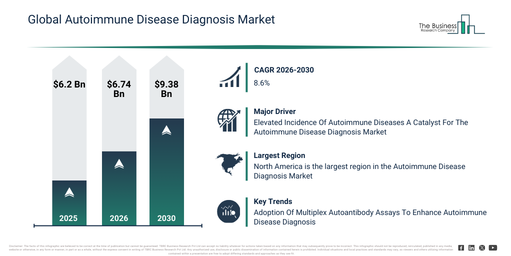
    The autoimmune disease diagnosis market has experienced robust growth in recent years. It is projected to expand from $6.2 billion in 2025 to $6.74 billion in 2026, demonstrating a compound annual growth rate (CAGR) of 8.8%. This historical growth can be attributed to several factors including the increasing prevalence of autoimmune diseases, improved availability of immunoassay technologies, the expansion of clinical laboratory networks, growing physician awareness of autoimmune conditions, and the wider adoption of routine screening tests.

    The autoimmune disease diagnosis market is projected to experience robust expansion in the coming years. Its size is forecast to reach $9.38 billion by 2030, demonstrating a compound annual growth rate (CAGR) of 8.6%. This growth during the forecast period can be linked to several factors, including a heightened need for prompt and precise diagnosis, the increasing adoption of AI-assisted diagnostic analytics, the development of tailored diagnostic methods, greater investments in autoimmune research, and the enhanced incorporation of point-of-care testing. Key trends anticipated for the forecast period encompass a broader uptake of sophisticated immunological testing, the escalating application of autoantibody panels, the expanding integration of multiplex diagnostic platforms, the advancement of laboratory automation, and a stronger emphasis on identifying diseases at an earlier stage.

    Make Data-Driven Decisions With A Free Autoimmune Disease Diagnosis Market Sample Report:

    https://thebusinessresearchcompany.com/sample_request?id=43616170&type=smp&name=Autoimmune%20Disease%20Diagnosis%20Market%20Report%202026&utm_source=Blogs&utm_medium=Paid&utm_campaign=Nov_PR

    Key Demand Driver Expected To Lift Autoimmune Disease Diagnosis Market Revenue

    The rising prevalence of autoimmune diseases has fueled the expansion of the autoimmune disease diagnosis market. Autoimmune conditions are characterized by the body’s immune system erroneously attacking its own healthy cells, tissues, or organs. The increase in these diseases is attributed to heightened exposure to environmental factors such as pollution, infections, and lifestyle changes that can disrupt immune regulation. Autoimmune disease diagnosis plays a crucial role in accurately identifying specific immune disorders, allowing for the initiation of appropriate treatment and better management of disease progression. Consequently, the growing incidence of autoimmune diseases worldwide is a key factor driving the autoimmune disease diagnosis market.

    Autoimmune Disease Diagnosis Market Driver: Elevated Healthcare Expenditures Fuel Growth In The Autoimmune Disease Diagnosis Market

    The autoimmune disease diagnosis market is anticipated to experience growth propelled by increasing healthcare expenditures in the upcoming years. Healthcare expenditure is defined as the total funds allocated for healthcare products and services, serving as a critical indicator of a population’s health and the effectiveness of its healthcare system. Higher healthcare spending facilitates more timely healthcare services, leading to improved identification, treatment, and outcomes for individuals with autoimmune illnesses. Therefore, the escalation in healthcare expenditures is a driving force behind the autoimmune disease diagnosis market.

    Exploring The Autoimmune Disease Diagnosis Market Through Its Key Segments

    The autoimmune disease diagnosis market covered in this report is segmented –

    1) By Product: Consumables And Assay Kits, Instruments

    2) By Test Type: Routine Laboratory Tests, Autoantibodies Tests, Immunologic Tests, Other Tests

    3) By End User: Clinical Laboratories, Hospitals, Other End Users

    Subsegments:

    1) By Consumables And Assay Kits: ELISA Kits, Reagents And Test Kits, Sample Collection And Preservation Devices, Control And Calibration Materials

    2) By Instruments: Immunoassay Analyzers, Flow Cytometers, Luminometers, Microscopes

    New Trends Redefining Competition In The Autoimmune Disease Diagnosis Market

    In the autoimmune disease diagnosis market, major companies are concentrating on advancing technologies, specifically multiplex autoantibody assay platforms, for thorough, early, and accurate identification of autoimmune disorders to boost diagnostic precision and patient management. A multiplex autoantibody assay platform facilitates the concurrent detection of numerous disease-specific autoantibodies within a single patient sample, thereby improving sensitivity and specificity when compared to traditional single-analyte ELISA or immunofluorescence tests, alongside decreasing sample volume and processing time. For instance, in January 2025, Exagen Inc., a U.S.-based diagnostics company, launched its AVISE CTD platform, which includes new systemic lupus erythematosus (SLE) and rheumatoid arthritis (RA) biomarker assays. This platform identifies novel biomarkers such as TIgG, TIgM, and TC4d, enabling clinicians to more accurately differentiate overlapping autoimmune conditions and simplify patient diagnosis, while also integrating smoothly with existing testing workflows.

    Autoimmune Disease Diagnosis Market Competition: Key Players And Industry Participants

    Major companies operating in the autoimmune disease diagnosis market are Siemens Healthineers AG, Abbott Laboratories, Thermo Fisher Scientific Inc, Bio-Rad Laboratories Inc, F. Hoffmann-La Roche Ltd, Danaher Corporation, AESKU Diagnostics GmbH & Co. KG, Trinity Biotech plc, bioMérieux SA, SQI Diagnostics, Philips Healthcare India, Agappe Diagnostics Ltd, Lepu Medical Technology Company (Beijing) Co., Ltd, Shanghai Runda Medical Technology Co., Ltd, GE Healthcare China Co., Ltd, Roche Holding AG, Koninklijke Philips, Theradiag, Becton Dickinson and Company, Ortho Clinical Diagnostics

    Get The Detailed Autoimmune Disease Diagnosis Market Research Report Here:

    https://thebusinessresearchcompany.com/report/Autoimmune-Disease-Diagnosis-Global-Market-Report?utm_source=Blogs&utm_medium=Paid&utm_campaign=Nov_PR

    Autoimmune Disease Diagnosis Market Regional Overview: Largest Market And Global Coverage

    North America was the largest region in the autoimmune disease diagnosis market in 2025. Western Europe was the second largest region in the autoimmune disease diagnosis market share. The regions covered in the autoimmune disease diagnosis market report are Asia-Pacific, South East Asia, Western Europe, Eastern Europe, North America, South America, Middle East, Africa.

    Reach Out To Our Team:

    The Business Research Company: https://www.thebusinessresearchcompany.com/

    Americas: +1 310-496-7795

    Asia: +44 7882 955267 & +91 8897263534

    Europe: +44 7882 955267

    Email us at: marketing@tbrc.info

    Follow us on:

    LinkedIn: https://in.linkedin.com/company/the-business-research-company

    YouTube: https://www.youtube.com/channel/UC24_fI0rV8cR5DxlCpgmyFQ

    Global Market Model: https://www.thebusinessresearchcompany.com/global-market-model
  • Autism Spectrum Disorders Treatment Market 7.6% CAGR Outlook: Size, Segments And Regional Analysis

    Autism Spectrum Disorders Treatment Market 7.6% CAGR Outlook: Size, Segments And Regional Analysis

    The Business Research Company’s 2026 market reports combine market attractiveness scoring, total addressable market sizing, company benchmarking matrices, interactive Excel dashboards, deeper supply chain intelligence, emerging startup tracking, and granular product-level insights to deliver research that is more actionable and strategically valuable.

    Is The Autism Spectrum Disorders Treatment Market Expanding? Latest Size Estimates And 2030 Projections

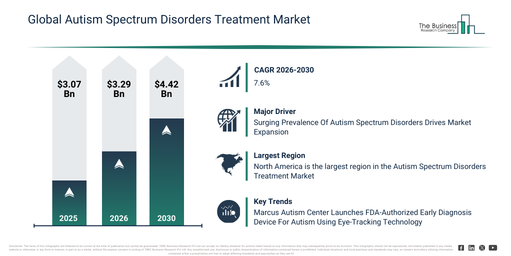
    The autism spectrum disorders treatment market has shown significant growth in recent years. It is anticipated to expand from $3.07 billion in 2025 to $3.29 billion in 2026, reflecting a compound annual growth rate (CAGR) of 7.1%. This historical expansion can be attributed to an enhanced understanding of autism treatment methods, the wider availability of behavioral therapy services, the introduction of approved pharmacological options, increased participation from caregivers, and the establishment of more specialized treatment centers.

    The autism spectrum disorders treatment market is anticipated to experience substantial growth over the coming years. By 2030, its size is projected to reach $4.42 billion, driven by a compound annual growth rate (CAGR) of 7.6%. This projected growth is primarily due to factors such as the increasing demand for tailored autism therapies, the wider adoption of digital and remote therapy tools, the development of integrated care models, an enhanced emphasis on managing autism throughout a person’s life, and greater investment in innovative therapies. Key trends anticipated during this period encompass the increased application of multimodal therapy strategies, the growing implementation of early intervention initiatives, the deeper integration of behavioral and pharmacological approaches, the broadening of personalized therapy plans, and a heightened focus on managing long-term outcomes.

    Free Autism Spectrum Disorders Treatment Market Sample: Market Size, Growth Drivers And Competitive Landscape:

    https://thebusinessresearchcompany.com/sample_request?id=92285622&type=smp&name=Autism%20Spectrum%20Disorders%20Treatment%20Market%20Report%202026&utm_source=Blogs&utm_medium=Paid&utm_campaign=Nov_PR

    Autism Spectrum Disorders Treatment Market Drivers Explained: What Is Supporting A 7.6% CAGR?

    The escalating occurrence of autism spectrum disorders (ASD) is anticipated to drive the expansion of the autism spectrum disorders market in the future. These disorders involve a range of medical conditions characterized by varying levels of difficulty in social engagement and communication abilities. A significant factor in the creation of diverse treatment solutions for children with ASDs is the increasing identification of children with these conditions. Consequently, the rising incidence of ASDs is set to stimulate the growth of the autism spectrum disorders treatment market.

    Autism Spectrum Disorders Treatment Market Segment Guide: Main Divisions And Subsegments

    The autism spectrum disorders treatment market covered in this report is segmented –

    1) By Drug Therapy: Antipsychotic Drugs, SSRIs Or Antidepressants, Stimulants, Sleep Medications

    2) By Treatment Approach: Behavioral Approaches, Early Intervention, Medication

    3) By Application: Autistic Disorder, Asperger Syndrome, Pervasive Developmental Disorder, Other Applications

    4) By Distribution Channel: Hospital Pharmacies, Drug Stores And Retail Pharmacies, Online Pharmacies

    Subsegments:

    1) By Antipsychotic Drugs: Atypical Antipsychotics, Typical Antipsychotics

    2) By SSRIs Or Antidepressants: Selective Serotonin Reuptake Inhibitors, Serotonin–Norepinephrine Reuptake Inhibitors, Atypical Antidepressants

    3) By Stimulants: Methylphenidate, Amphetamines

    4) By Sleep Medications: Melatonin, Benzodiazepines

    Autism Spectrum Disorders Treatment Market Trends And Opportunities For 2026–2030

    Leading companies within the autism spectrum disorder treatment market are concentrating on developing novel solutions, such as early diagnosis devices for autism spectrum disorder, to identify initial signs of autism in children. An early diagnosis device for Autism Spectrum Disorder (ASD) refers to a technology or instrument designed to detect the preliminary indicators of autism in children, typically prior to their third birthday.

    Which Major Players Are Active In The Autism Spectrum Disorders Treatment Market?

    Major companies operating in the autism spectrum disorders treatment market are PaxMedica, Otsuka Pharmaceutical Co. Ltd., Curemark LLC, Zynerba Pharmaceuticals Inc., Axial Therapeutics, Novartis AG, STALICLA, H. Lundbeck A/S, Janssen Pharmaceuticals Inc., Yamo Pharmaceuticals, F. Hoffmann-La Roche Ltd, Q BioMed Inc., Bristol-Myers Squibb Company, Merck & Co. Inc., Eli Lilly and Company, Pfizer Inc., Johnson & Johnson Services Inc., AbbVie Inc., NeuroRx Inc., Intra-Cellular Therapies Inc., MedinCell, Sorrento Therapeutics Inc., Aytu BioPharma Inc., Harmony Biosciences, Acadia Pharmaceuticals, Aeglea BioTherapeutics

    Unlock The Complete Autism Spectrum Disorders Treatment Market Report With Company Benchmarking:

    https://thebusinessresearchcompany.com/report/autism-spectrum-disorders-treatment-global-market-report?utm_source=Blogs&utm_medium=Paid&utm_campaign=Nov_PR

    Autism Spectrum Disorders Treatment Market World Regions Compared: Which Leads In Revenue?

    North America was the largest region in the autism spectrum disorders treatment market in 2025. The regions covered in the autism spectrum disorders treatment market report are Asia-Pacific, South East Asia, Western Europe, Eastern Europe, North America, South America, Middle East, Africa.

    Reach Out To Our Team:

    The Business Research Company: https://www.thebusinessresearchcompany.com/

    Americas: +1 310-496-7795

    Asia: +44 7882 955267 & +91 8897263534

    Europe: +44 7882 955267

    Email us at: marketing@tbrc.info

    Follow us on:

    LinkedIn: https://in.linkedin.com/company/the-business-research-company

    YouTube: https://www.youtube.com/channel/UC24_fI0rV8cR5DxlCpgmyFQ

    Global Market Model: https://www.thebusinessresearchcompany.com/global-market-model
  • Acute Myeloid Leukemia Market To Grow From $3.97 Billion To $5.25 Billion By 2030: Key Drivers Explained

    Acute Myeloid Leukemia Market To Grow From $3.97 Billion To $5.25 Billion By 2030: Key Drivers Explained

    The Business Research Company’s 2026 market reports combine market attractiveness scoring, total addressable market sizing, company benchmarking matrices, interactive Excel dashboards, deeper supply chain intelligence, emerging startup tracking, and granular product-level insights to deliver research that is more actionable and strategically valuable.

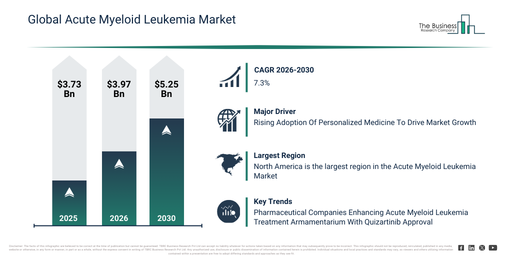
    Acute Myeloid Leukemia Market Revenue Forecast: $3.97 Billion In 2026 Rising To $5.25 Billion In 2030

    The acute myeloid leukemia market size has shown substantial growth over recent years. It is forecast to expand from $3.73 billion in 2025 to $3.97 billion in 2026, achieving a compound annual growth rate (CAGR) of 6.3%. This expansion in previous periods can be attributed to factors such as the rising incidence of AML, the development of hospital infrastructure, increased public awareness regarding leukemia treatments, the widespread use of traditional chemotherapy regimens, and improvements in supportive care provisions.

    The acute myeloid leukemia market is projected to experience substantial expansion in the coming years. By 2030, this market is anticipated to reach a valuation of $5.25 billion, demonstrating a compound annual growth rate (CAGR) of 7.3%. Key factors driving this growth over the forecast period include progress in targeted therapy drugs, a rise in stem cell transplant procedures, the introduction of novel tyrosine kinase inhibitors, the expansion of ambulatory care facilities, and the incorporation of personalized medicine strategies into treatment protocols. Significant trends expected during this period involve the increasing uptake of targeted AML treatments, a greater reliance on stem cell transplantation, a surging need for customized chemotherapy regimens, the broadening use of tyrosine kinase inhibitors and monoclonal antibodies, and a heightened emphasis on prompt diagnosis and AML monitoring.

    Free Sample Report: Acute Myeloid Leukemia Market Size, Trends And Forecast To 2030:

    https://thebusinessresearchcompany.com/sample_request?id=32752518&type=smp&name=Acute%20Myeloid%20Leukemia%20Market%20Report%202026&utm_source=Blogs&utm_medium=Paid&utm_campaign=Nov_PR

    Acute Myeloid Leukemia Market Growth Catalyst: What Is Creating New Demand?

    The anticipated expansion of the acute myeloid leukemia market going forward is closely tied to the increasing adoption of personalized medicine. This innovative approach to medical treatment and healthcare considers individual differences among patients, encompassing their genes, environments, and lifestyles. For acute myeloid leukemia (AML), personalized medicine is implemented through molecular profiling to pinpoint specific genetic mutations and biomarkers unique to each patient. This crucial information then guides the selection of targeted therapies and tailored treatment plans, thereby optimizing the effectiveness of interventions while minimizing adverse effects, leading to a more personalized and precise method for AML management. Therefore, the increasing adoption of personalized medicine is actively driving the growth of the acute myeloid leukemia market.

    Acute Myeloid Leukemia Market Segment Overview: Categories Covered In The 2026 Report

    The acute myeloid leukemia market covered in this report is segmented –

    1) By Treatment Type: Chemotherapy, Stem Cell Transplant, Targeted Therapy

    2) By Treatment Phase: Induction Therapy, Consolidation Therapy, Maintenance Therapy, Relapsed Or Refractory Therapy

    3) By End-User: Hospitals, Specialty Oncology Centers, Transplant Centers, Research and Academic Institutes

    Subsegments:

    1) By Chemotherapy: Cytarabine-Based Therapy, Anthracycline-Based Therapy, Hypomethylating Agents, Low-Intensity Chemotherapy, Combination Chemotherapy Regimens

    2) By Stem Cell Transplant: Allogeneic Stem Cell Transplant, Autologous Stem Cell Transplant, Conditioning Regimens, Post-Transplant Maintenance Therapy

    3) By Targeted Therapy: FLT3 Inhibitors, IDH1 Inhibitors, IDH2 Inhibitors, BCL-2 Inhibitors, Hedgehog Pathway Inhibitors, Monoclonal Antibodies, Other Targeted Agents

    How Are Leading Companies Shaping Acute Myeloid Leukemia Market Trends?

    Leading companies in the acute myeloid leukemia market are concentrating on developing advanced therapeutic options, such as maintenance monotherapy, to expand their product offerings, improve patient outcomes, and address unmet medical needs. Maintenance monotherapy refers to a treatment strategy where a single therapeutic agent is administered continuously and long-term to a patient to prevent the recurrence or progression of a medical condition.

    Acute Myeloid Leukemia Market Players: Key Companies Shaping Competition

    Major companies operating in the acute myeloid leukemia market are Pfizer Inc., AbbVie Inc., Novartis AG, Bristol Myers Squibb Company, F. Hoffmann-La Roche AG, Takeda Pharmaceutical Company Limited, Astellas Pharma Inc., Servier Pharmaceuticals, Amgen Inc., Otsuka Holdings Co. Ltd., Agios Pharmaceuticals Inc., Syndax Pharmaceuticals Inc., MEI Pharma Inc., SELLAS Life Sciences Group, Genmab AS, Aptose Biosciences Inc., Daiichi Sankyo Company Limited, BeiGene Ltd., Jazz Pharmaceuticals plc, Ipsen S.A.

    Access Complete Acute Myeloid Leukemia Market Data, Forecasts And Competitive Insights:

    https://thebusinessresearchcompany.com/report/acute-myeloid-leukemia-global-market-report?utm_source=Blogs&utm_medium=Paid&utm_campaign=Nov_PR

    Acute Myeloid Leukemia Market Regional Performance And Geographic Coverage

    North America was the largest region in the acute myeloid leukemia market in 2025. The regions covered in the acute myeloid leukemia market report are Asia-Pacific, South East Asia, Western Europe, Eastern Europe, North America, South America, Middle East, Africa.

    Reach Out To Our Team:

    The Business Research Company: https://www.thebusinessresearchcompany.com/

    Americas: +1 310-496-7795

    Asia: +44 7882 955267 & +91 8897263534

    Europe: +44 7882 955267

    Email us at: marketing@tbrc.info

    Follow us on:

    LinkedIn: https://in.linkedin.com/company/the-business-research-company

    YouTube: https://www.youtube.com/channel/UC24_fI0rV8cR5DxlCpgmyFQ

    Global Market Model: https://www.thebusinessresearchcompany.com/global-market-model
  • How The Autism Spectrum Disorder Diagnostics Market Will Grow To $36.76 Billion By 2030

    How The Autism Spectrum Disorder Diagnostics Market Will Grow To $36.76 Billion By 2030

    Market attractiveness scoring, total addressable market sizing, company benchmarking matrices, interactive Excel dashboards, deeper supply chain intelligence, emerging startup tracking, and granular product-level insights are among the key offerings featured in The Business Research Company’s 2026 market reports, designed to deliver more actionable and strategically valuable research.

    Autism Spectrum Disorder Diagnostics Market Growth Outlook: How Much Bigger Will The Market Be By 2030?

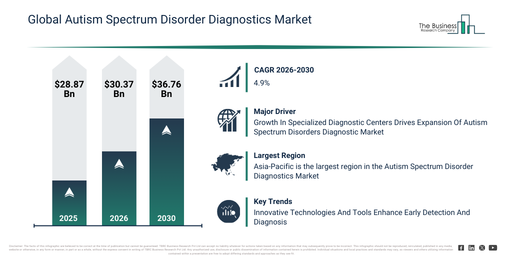
    The autism spectrum disorder diagnostics market has demonstrated robust growth over recent years. It is anticipated to increase from $28.87 billion in 2025 to $30.37 billion in 2026, reflecting a compound annual growth rate (CAGR) of 5.2%. This historical expansion can be ascribed to several contributing factors, including greater awareness of autism spectrum disorders, the broadening of pediatric developmental screening programs, the availability of qualified diagnostic professionals, the increasing adoption of behavioral assessment frameworks, and improved access to diagnostic services.

    The autism spectrum disorder diagnostics market size is anticipated to experience consistent expansion in the coming years. It is projected to reach $36.76 billion by 2030, growing at a compound annual growth rate (CAGR) of 4.9%. This projected growth can be attributed to several factors, including an escalating demand for early intervention services, the increased adoption of AI-assisted diagnostic tools, the broadening of tele-diagnostics platforms, a rise in investment in neurodevelopmental research, and the improved standardization of diagnostic criteria. Significant trends expected during this forecast period encompass the wider acceptance of digital screening tools, the growing application of standardized behavioral assessment scales, the expansion of early childhood diagnostic programs, an increasing integration of multidisciplinary diagnostic approaches, and a heightened focus on early and accurate detection.

    Request A Free Autism Spectrum Disorder Diagnostics Market Sample From The Business Research Company:

    https://thebusinessresearchcompany.com/sample_request?id=16593&type=smp&name=Autism%20Spectrum%20Disorder%20Diagnostics%20Market%20Report%202026&utm_source=Blogs&utm_medium=Paid&utm_campaign=Nov_PR

    How Is The Key Growth Driver Influencing The Autism Spectrum Disorder Diagnostics Market?

    The expansion of specialized diagnostic centers is anticipated to fuel the progression of the autism spectrum disorders diagnostic market in the future. An autism-focused diagnostic center is defined as a facility employing healthcare professionals, psychologists, and experts who carry out thorough evaluations and assessments for the diagnosis of autism spectrum disorder. This increase in specialized diagnostic centers stems from improvements in diagnostics, the need for all-encompassing care, expert training, ongoing research, and the acknowledgment of autism as a critical public health concern. These centers are crucial for boosting diagnostic precision, enabling prompt intervention, and bettering results for individuals with ASD, achieved through offering specialized knowledge, cutting-edge diagnostic instruments, extensive assessments, personalized treatment strategies, family assistance, and avenues for collaborative research. As an illustration, by July 2025, per NHS England, the U.K.-based government body providing health services, the national Community Diagnostic Centre (CDC) Programme had sanctioned 170 CDC sites throughout England. Consequently, the expansion of specialized diagnostic centers is propelling the growth of the autism spectrum disorders diagnostic market.

    Autism Spectrum Disorder Diagnostics Market Segmentation By Category: What Does The 2026 Report Cover?

    The autism spectrum disorder diagnostics market covered in this report is segmented –

    1) By Diagnostic Method: Behavioral And Developmental Screening Tools, Standardized Diagnostic Assessments, Genetic And Molecular Testing, Digital And AI-Based Diagnostic Tools

    2) By Test Type: Observational And Questionnaire-Based Tests, Cognitive And Neurodevelopmental Assessments, Biomarker And Genetic Tests, Eye-Tracking And Sensor-Based Tests

    3) By Age Group: Infants And Toddlers (0–3 years), Children (4–12 years), Adolescents And Adults

    4) By End User: Hospitals And Specialty Clinics, Diagnostic And Reference Laboratories, Academic And Research Institutes

    Subsegments:

    1) By Behavioral And Developmental Screening Tools: Parent-Reported Screening Questionnaires, Clinician-Administered Developmental Checklists

    2) By Standardized Diagnostic Assessments: Structured Behavioral Observation Assessments, Standardized Diagnostic Interviews

    3) By Genetic And Molecular Testing: Chromosomal Microarray Analysis (CMA), Next-Generation Sequencing (NGS) Panels

    4) By Digital And AI-Based Diagnostic Tools: AI-Driven Behavioral Analysis Platforms, Digital Biomarker & Eye-Tracking Systems

    How Are Industry Players Changing The Autism Spectrum Disorder Diagnostics Market Landscape?

    Leading companies within the autism spectrum disorder diagnostics market are developing sophisticated solutions, including devices that incorporate Dynamic Quantification of Social-Visual Engagement (DQSVE), to enhance their market position. This technology observes and assesses a child’s continuous visual gaze at a frequency of 120 times per second.

    Autism Spectrum Disorder Diagnostics Market Global Key Players And Competitive Overview

    Major companies operating in the autism spectrum disorder diagnostics market are Quest Diagnostics, Laboratory Corporation of America LabCorp, ARUP Laboratories, Invitae, Natera, Fulgent Genetics, Myriad Genetics, Sema4, PreventionGenetics, Color Genomics, Cognoa, EarliTec Diagnostics, Eurofins Scientific, Sonic Healthcare, Cerba HealthCare, Baylor Genetics, Mayo Clinic Laboratories, Bionano Genomics, Genomind, Blueprint Genetics

    Explore Comprehensive Autism Spectrum Disorder Diagnostics Market Coverage In The Full Report:

    https://thebusinessresearchcompany.com/report/autism-spectrum-disorder-diagnostics-global-market-report?utm_source=Blogs&utm_medium=Paid&utm_campaign=Nov_PR

    Regional Analysis Of The Autism Spectrum Disorder Diagnostics Market: Where Is The Industry Concentrated?

    Asia-Pacific was the largest region in the autism spectrum disorder diagnostics market in 2025. The regions covered in the autism spectrum disorder diagnostics market report are Asia-Pacific, South East Asia, Western Europe, Eastern Europe, North America, South America, Middle East, Africa.

    Reach Out To Our Team:

    The Business Research Company: https://www.thebusinessresearchcompany.com/

    Americas: +1 310-496-7795

    Asia: +44 7882 955267 & +91 8897263534

    Europe: +44 7882 955267

    Email us at: marketing@tbrc.info

    Follow us on:

    LinkedIn: https://in.linkedin.com/company/the-business-research-company

    YouTube: https://www.youtube.com/channel/UC24_fI0rV8cR5DxlCpgmyFQ

    Global Market Model: https://www.thebusinessresearchcompany.com/global-market-model