Author: Marketing Posting

  • Acute Repetitive Seizures Market Forecast To 2030: Growth Outlook For Key Players Such As Pfizer Inc.

    Acute Repetitive Seizures Market Forecast To 2030: Growth Outlook For Key Players Such As Pfizer Inc.

    The Business Research Company’s 2026 market reports are designed to deliver research that is more actionable and strategically valuable. Key offerings include market attractiveness scoring, total addressable market sizing, company benchmarking matrices, interactive Excel dashboards, deeper supply chain intelligence, emerging startup tracking, and granular product-level insights.

    Acute Repetitive Seizures Market Historical Growth Vs. Forecast Growth: How Do The Numbers Compare?

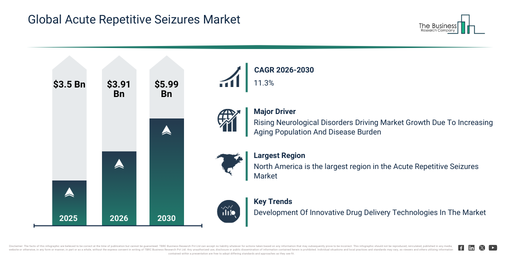
    The acute repetitive seizures market size has seen rapid growth in recent years. It is expected to expand from $3.5 billion in 2025 to $3.91 billion in 2026, achieving a compound annual growth rate (CAGR) of 11.6%. This historical increase can be attributed to several factors including the constrained availability of rapid-acting antiepileptic drugs, an uptick in the prevalence of epilepsy and various neurological disorders, enhanced hospital-based seizure management practices, the increasing adoption of benzodiazepines, and the broadened scope of clinical guidelines for treating acute seizures.

    The acute repetitive seizures market size is poised for substantial expansion over the next few years, projected to reach $5.99 billion by 2030, with an impressive compound annual growth rate (CAGR) of 11.3%. This anticipated growth is driven by the introduction of intranasal and rectal formulations, a heightened focus on home-based seizure management strategies, the increasing adoption of novel antiepileptic drugs, the integration of digital seizure monitoring devices, and the advancements in personalized and precision neurology therapies. Major trends expected during this forecast period include the rising acceptance of intranasal and rectal drug delivery methods, an increasing reliance on benzodiazepines for managing acute seizures, the expansion of home care and ambulatory care settings, growing awareness of rapid intervention protocols, and continued advancements in personalized epilepsy treatment.

    Start With A Free Sample Of The Acute Repetitive Seizures Market Research Report:

    https://thebusinessresearchcompany.com/sample_request?id=83188204&type=smp&name=Acute%20Repetitive%20Seizures%20Market%20Report%202026&utm_source=Blogs&utm_medium=Paid&utm_campaign=Nov_PR

    The Leading Growth Driver In The Acute Repetitive Seizures Market Explained

    The acute repetitive seizures market is anticipated to expand due to the increasing prevalence of neurological disorders. These conditions affect the brain, nerves, or spinal cord, resulting in impairments related to movement, speech, thinking, or overall bodily functions. The heightened occurrence of neurological disorders is largely attributed to an aging population, as older adults are more prone to degenerative brain changes, thereby increasing the risk of conditions such as Alzheimer’s disease, Parkinson’s disease, and stroke. Acute repetitive seizures exacerbate the progression of neurological disorders by elevating the risk of neuronal damage, cognitive decline, and long-term complications, necessitating early intervention to prevent worsening outcomes. Consequently, the rising prevalence of neurological disorders is a significant factor propelling the growth of the acute repetitive seizures market.

    Key Segments Shaping The Acute Repetitive Seizures Market Landscape

    The acute repetitive seizures market covered in this report is segmented –

    1) By Drug Type: Benzodiazepines, Barbiturates

    2) By Route Of Administration: Intranasal, Rectal, Oral, Other Routes Of Administrations

    3) By End User: Hospitals, Clinics, Home Care Settings

    Subsegments:

    1) By Benzodiazepines: Diazepam, Lorazepam, Midazolam

    2) By Barbiturates: Phenobarbital, Primidone

    Acute Repetitive Seizures Market Trend Spotlight: Key Shifts Shaping Future Demand

    Companies operating in the acute repetitive seizures market are concentrating on developing innovative formulations, such as benzodiazepine buccal film, to enhance drug absorption, provide rapid seizure relief, and improve patient convenience. A benzodiazepine buccal film is a slender, soluble film containing benzodiazepine medication, applied inside the cheek for swift absorption via the oral lining. This film aids in managing acute repetitive seizures by quickly delivering the drug into the bloodstream, thereby decreasing seizure duration and frequency.

    Acute Repetitive Seizures Market Competitive Analysis: Who Are The Main Competitors?

    Major companies operating in the acute repetitive seizures market are Pfizer Inc., Sanofi S.A., Novartis AG, GlaxoSmithKline plc, Takeda Pharmaceutical Company Limited, Boehringer Ingelheim International GmbH, Bausch Health US LLC., UCB S.A., Eisai Co. Ltd., Sun Pharmaceutical Industries Ltd., Hikma Pharmaceuticals PLC, Zydus Lifesciences Limited, Endo International plc, Lupin Limited, Amneal Pharmaceuticals LLC, Aquestive Therapeutics Inc., Neurelis Inc., Grupo Ferrer Internacional S.A., UpsherSmith Laboratories LLC, Aculys Pharma Inc.

    Find The Complete Acute Repetitive Seizures Market Outlook In The Full Report:

    https://thebusinessresearchcompany.com/report/acute-repetitive-seizures-global-market-report?utm_source=Blogs&utm_medium=Paid&utm_campaign=Nov_PR

    Mapping The Acute Repetitive Seizures Market: Regional Leadership And Global Reach

    North America was the largest region in the acute repetitive seizures market in 2025. Asia-Pacific is expected to be the fastest-growing region in the forecast period. The regions covered in the acute repetitive seizures market report are Asia-Pacific, South East Asia, Western Europe, Eastern Europe, North America, South America, Middle East, Africa.

    Reach Out To Our Team:

    The Business Research Company: https://www.thebusinessresearchcompany.com/

    Americas: +1 310-496-7795

    Asia: +44 7882 955267 & +91 8897263534

    Europe: +44 7882 955267

    Email us at: marketing@tbrc.info

    Follow us on:

    LinkedIn: https://in.linkedin.com/company/the-business-research-company

    YouTube: https://www.youtube.com/channel/UC24_fI0rV8cR5DxlCpgmyFQ

    Global Market Model: https://www.thebusinessresearchcompany.com/global-market-model
  • Automation In Biopharma Industry Market To Grow From $2.35 Billion To $3.16 Billion By 2030: Key Drivers Explained

    Automation In Biopharma Industry Market To Grow From $2.35 Billion To $3.16 Billion By 2030: Key Drivers Explained

    The Business Research Company’s 2026 market reports combine market attractiveness scoring, total addressable market sizing, company benchmarking matrices, interactive Excel dashboards, deeper supply chain intelligence, emerging startup tracking, and granular product-level insights to deliver research that is more actionable and strategically valuable.

    Automation In Biopharma Industry Market Revenue Forecast: $2.35 Billion In 2026 Rising To $3.16 Billion In 2030

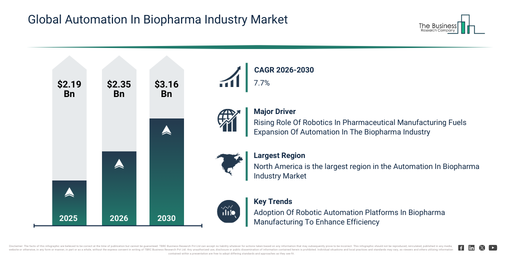
    The market for automation within the biopharma industry has experienced significant growth over recent years. This market is projected to expand from $2.19 billion in 2025 to $2.35 billion in 2026, demonstrating a compound annual growth rate (CAGR) of 7.1%. Historically, this expansion has been driven by factors such as the growing complexity of biologic drug production, an escalating need for scalable biopharma manufacturing solutions, the early integration of laboratory automation, the broadened scope of contract manufacturing services, and innovations in process control technologies.

    The market size for automation within the biopharma industry anticipates robust expansion over the coming years. This market is projected to reach $3.16 billion by 2030, driven by a compound annual growth rate (CAGR) of 7.7%. Factors contributing to this growth during the forecast period include increasing investments in smart biomanufacturing facilities, the growing adoption of continuous manufacturing, the expansion of personalized biologics production, a rising demand for regulatory-compliant automation, and an increasing focus on manufacturing efficiency optimization. Key trends anticipated in the same forecast period encompass the increasing adoption of robotic manufacturing platforms, the rising integration of digital twin technologies, the growing use of automated quality control systems, the expansion of end-to-end bioprocess automation, and an enhanced focus on data-driven manufacturing.

    Free Sample Report: Automation In Biopharma Industry Market Size, Trends And Forecast To 2030:

    https://thebusinessresearchcompany.com/sample_request?id=70009064&type=smp&name=Automation%20In%20Biopharma%20Industry%20Market%20Report%202026&utm_source=Blogs&utm_medium=Paid&utm_campaign=Nov_PR

    Automation In Biopharma Industry Market Growth Catalyst: What Is Creating New Demand?

    The expanding deployment of robots in pharmaceutical manufacturing is projected to stimulate the growth of the automation in biopharma industry market. Within this sector, robots in pharmaceutical manufacturing refer to sophisticated automated systems and machines that perform various tasks in the creation and packaging of pharmaceutical products. These robots are frequently utilized across multiple applications in drug manufacturing, including secondary packaging, intralogistics, laboratory automation, pick and place operations, the streamlining of pharmacy processes, and personalized medicine, thereby contributing to increased productivity, enhanced precision, reduced contamination risks, and improved worker safety. Consequently, the increasing adoption of robots in pharmaceutical manufacturing will drive the growth of the automation in biopharma industry market.

    Automation In Biopharma Industry Market Segment Overview: Categories Covered In The 2026 Report

    The automation in biopharma industry market covered in this report is segmented –

    1) By Technology: Automation Technology, Digitization Technology

    2) By Component: Automation Hardware, Automation Software, Services Project Phase, Services Operation Phase

    3) By Application: Clinical Phase, Drug Discovery Phase, Production Phase

    Subsegments:

    1) By Automation Technology: Process Automation, Laboratory Automation, Robotics And Artificial Intelligence, Control Systems, Programmable Logic Controllers (PLCs)

    2) By Digitization Technology: Data Analytics And Visualization, Electronic Lab Notebooks (ELN), Cloud Computing, Internet Of Things (IoT) In Pharma, Digital Twin Technology

    How Are Leading Companies Shaping Automation In Biopharma Industry Market Trends?

    Leading companies are actively implementing automation within the biopharma industry market, primarily focusing on developing technological breakthroughs such as robotic cell-therapy manufacturing platforms. These platforms are designed to achieve scalable, efficient, and error-reduced production of advanced therapies. A robotic cell-therapy manufacturing platform integrates mobile robotics, aseptic fluid-handling systems, automated tube welding, and digital process control into a completely closed and modular system, effectively replacing traditional manual bioprocessing methods that are heavily reliant on labor and open systems.

    Automation In Biopharma Industry Market Players: Key Companies Shaping Competition

    Major companies operating in the automation in biopharma industry market are F. Hoffmann-La Roche Ltd., Thermo Fisher Scientific Inc., Danaher Corporation, ABB Ltd, Siemens Healthineers AG, Emerson Electric Co., Becton Dickinson and Company (BD), Corning Incorporated, Rockwell Automation Inc., Agilent Technologies Inc., PerkinElmer Inc., Sartorius AG, bioMérieux SA, Mettler-Toledo International Inc., Beckman Coulter Inc., Waters Corporation, Pall Corporation, Bruker Corporation, Qiagen N.V., Eppendorf AG, Tecan Group Ltd., Promega Corporation, Brooks Automation Inc., Omron Automation, Hamilton Company, Integra Biosciences AG, Gilson Inc., Analytik Jena AG, BioTek Instruments Inc.

    Access Complete Automation In Biopharma Industry Market Data, Forecasts And Competitive Insights:

    https://thebusinessresearchcompany.com/report/automation-in-biopharma-industry-global-market-report?utm_source=Blogs&utm_medium=Paid&utm_campaign=Nov_PR

    Automation In Biopharma Industry Market Regional Performance And Geographic Coverage

    North America was the largest region in the automation in biopharma industry market in 2025. The regions covered in the automation in biopharma industry market report are Asia-Pacific, South East Asia, Western Europe, Eastern Europe, North America, South America, Middle East, Africa.

    Reach Out To Our Team:

    The Business Research Company: https://www.thebusinessresearchcompany.com/

    Americas: +1 310-496-7795

    Asia: +44 7882 955267 & +91 8897263534

    Europe: +44 7882 955267

    Email us at: marketing@tbrc.info

    Follow us on:

    LinkedIn: https://in.linkedin.com/company/the-business-research-company

    YouTube: https://www.youtube.com/channel/UC24_fI0rV8cR5DxlCpgmyFQ

    Global Market Model: https://www.thebusinessresearchcompany.com/global-market-model
  • Acute Renal Failure (ARF) Market Led By North America: Size, Growth And Regional Outlook

    Acute Renal Failure (ARF) Market Led By North America: Size, Growth And Regional Outlook

    With a focus on actionable insights and strategic value, The Business Research Company’s 2026 market reports include market attractiveness scoring, total addressable market sizing, company benchmarking matrices, interactive Excel dashboards, deeper supply chain intelligence, emerging startup tracking, and granular product-level insights.

    Acute Renal Failure (ARF) Market Size Forecast Points To $9.71 Billion In Revenue By 2030

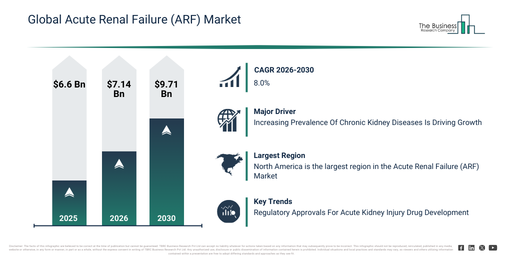
    The acute renal failure (arf) market has experienced significant growth recently. It is projected to expand from $6.6 billion in 2025 to $7.14 billion in 2026, exhibiting a compound annual growth rate (CAGR) of 8.3%. Historically, this growth has been driven by factors such as the increasing prevalence of hypertension and diabetes, enhanced hospital-based renal care, inadequate awareness of early ARF symptoms, the adoption of traditional dialysis techniques, and the expansion of hospital infrastructure.

    The market size for acute renal failure (ARF) is anticipated to experience substantial expansion over the upcoming years. This market is projected to reach $9.71 billion by 2030, exhibiting a compound annual growth rate (CAGR) of 8.0%. Factors contributing to this growth during the forecast period include the creation of new nephroprotective medications, the adoption of AI-powered diagnostic tools, the broadening of home healthcare provisions, a growing elderly demographic, and increased funding for renal disease investigations. Key trends expected throughout this period encompass a greater uptake of sophisticated dialysis and renal support treatments, enhanced emphasis on the early detection of acute kidney injury, a surge in the application of nephroprotective drug regimens, the broadening scope of imaging and biopsy-reliant diagnostic methods, and a rising inclination towards home-based healthcare management for ARF patients.

    Get A Free Acute Renal Failure (ARF) Market Sample Covering Drivers, Trends And Key Players:

    https://thebusinessresearchcompany.com/sample_request?id=38285003&type=smp&name=Acute%20Renal%20Failure%20%28ARF%29%20Market%20Report%202026&utm_source=Blogs&utm_medium=Paid&utm_campaign=Nov_PR

    Acute Renal Failure (ARF) Market Driver Analysis: Key Factor Supporting Revenue Growth

    The increasing prevalence of chronic kidney diseases (CKD) is anticipated to fuel the expansion of the Acute Renal Failure (ARF) market. Chronic kidney disease is defined as a persistent condition where kidney function is compromised, hindering proper blood filtration. The escalating rates of CKD globally are attributable to factors such as rising instances of diabetes, hypertension, obesity, an aging population, and lifestyle choices. Acute renal failure, characterized by an abrupt decline in kidney function, can serve as a critical initiator or aggravator of chronic kidney disease by inflicting permanent damage to kidney tissues, impairing filtration efficiency, and heightening the risk of progressive, long-term kidney dysfunction if not adequately managed. Thus, the growing incidence of chronic kidney diseases is a primary catalyst for growth in the Acute Renal Failure (ARF) market.

    Acute Renal Failure (ARF) Market Segmentation Framework: Major Segments At A Glance

    The acute renal failure (arf) market covered in this report is segmented –

    1) By Disease Type: Prerenal Acute Renal Failure, Renal Acute Renal Failure, Postrenal Acute Renal Failure

    2) By Drug Type: Diuretics, Vasopressors, Erythropoiesis-Stimulating Agents (ESAS), Phosphate Binders, Calcium and Vitamin D Supplements, Antibiotics, Other Drugs

    3) By Route of Administration: Oral, Intravenous

    4) By End-Users: Clinics, Hospitals, Others End-Users

    Subsegments:

    1) By Prerenal Acute Renal Failure: Hypovolemia, Decreased Cardiac Output, Renal Artery Stenosis

    2) By Renal Acute Renal Failure: Acute Tubular Necrosis, Glomerulonephritis, Interstitial Nephritis

    3) By Postrenal Acute Renal Failure: Obstructive Uropathy, Bladder Outlet Obstruction, Kidney Stones

    Latest Acute Renal Failure (ARF) Market Developments And Emerging Trends

    Leading companies within the acute renal failure (ARF) market are concentrating on acquiring regulatory approvals for medications to broaden their market reach and solidify their standing in the management of severe acute kidney injury (AKI). These regulatory clearances signify official authorization from governmental or oversight bodies for the marketing and public use of pharmaceutical products, medical devices, or treatments.

    Which Companies Are Shaping The Acute Renal Failure (ARF) Market?

    Major companies operating in the acute renal failure (arf) market are Pfizer Inc, Novartis AG, Baxter International Inc, Fresenius Medical Care AG and Co KGaA, Medtronic plc, Asahi Kasei Corporation, Astellas Pharma Inc, NIKKISO Co Ltd, NIPRO Corporation, Quark Pharmaceuticals Inc, AM Pharma BV, Sentien Biotechnologies, Angion Biomedica Corp, Alloksys Life Sciences BV, Theravance Biopharma, Kissei Pharmaceutical Co Ltd, Otsuka Pharmaceutical Co Ltd, B Braun Melsungen AG, Chiesi Farmaceutici SpA, Takeda Pharmaceutical Company Limited

    Dive Deeper Into The Acute Renal Failure (ARF) Market With The Full Report:

    https://thebusinessresearchcompany.com/report/acute-renal-failure-arf-global-market-report?utm_source=Blogs&utm_medium=Paid&utm_campaign=Nov_PR

    Acute Renal Failure (ARF) Market Regional Distribution: Where Is Revenue Concentrated?

    North America was the largest region in the acute renal failure (ARF) market in 2025. Asia-Pacific is expected to be the fastest-growing region in the forecast period. The regions covered in the acute renal failure (arf) market report are Asia-Pacific, South East Asia, Western Europe, Eastern Europe, North America, South America, Middle East, Africa.

    Reach Out To Our Team:

    The Business Research Company: https://www.thebusinessresearchcompany.com/

    Americas: +1 310-496-7795

    Asia: +44 7882 955267 & +91 8897263534

    Europe: +44 7882 955267

    Email us at: marketing@tbrc.info

    Follow us on:

    LinkedIn: https://in.linkedin.com/company/the-business-research-company

    YouTube: https://www.youtube.com/channel/UC24_fI0rV8cR5DxlCpgmyFQ

    Global Market Model: https://www.thebusinessresearchcompany.com/global-market-model
  • Automated Sample Preparation Market Worth $2.14 Billion In 2026: What The Latest Data Shows

    Automated Sample Preparation Market Worth $2.14 Billion In 2026: What The Latest Data Shows

    Market attractiveness scoring, total addressable market sizing, company benchmarking matrices, interactive Excel dashboards, deeper supply chain intelligence, emerging startup tracking, and granular product-level insights are among the key offerings featured in The Business Research Company’s 2026 market reports, designed to deliver more actionable and strategically valuable research.

    Automated Sample Preparation Market Size Overview: From Historical Performance To The 2030 Forecast

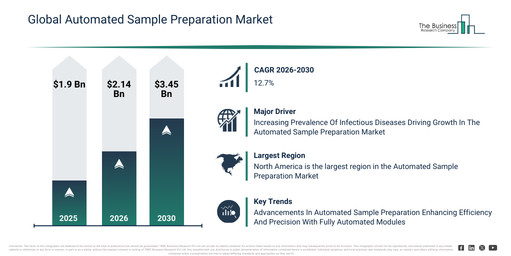
    The automated sample preparation market has experienced rapid expansion recently. It is projected to increase from $1.9 billion in 2025 to $2.14 billion in 2026, demonstrating a compound annual growth rate (CAGR) of 13.0%. This market’s historical growth can be attributed to factors such as the rise of laboratory automation initiatives, a growing volume of clinical and research samples, an increased emphasis on reproducibility in testing, the expansion of pharmaceutical R&D activities, and the availability of advanced laboratory instruments.

    The automated sample preparation market is anticipated to experience substantial growth over the next few years. It is projected to reach $3.45 billion by 2030, achieving a compound annual growth rate (CAGR) of 12.7%. This expansion during the forecast period is primarily driven by factors such as the increasing adoption of fully automated laboratories, a rising demand for precision diagnostics, the broadening scope of personalized medicine research, growing investments in smart laboratory infrastructure, and the enhanced integration of AI-driven analytics in sample preparation. Significant trends expected in this period include the increasing uptake of robotic liquid handling systems, a growing need for high-throughput sample processing, the expanding integration of automated workstations in laboratories, the development of error-reduction focused sample handling, and improved standardization of laboratory workflows.

    Get A Free Sample Of The Business Research Company’s Automated Sample Preparation Market Report:

    https://thebusinessresearchcompany.com/sample_request?id=68019631&type=smp&name=Automated%20Sample%20Preparation%20Market%20Report%202026&utm_source=Blogs&utm_medium=Paid&utm_campaign=Nov_PR

    What Factor Is Increasing Demand In The Automated Sample Preparation Market?

    The automated sample preparation market is anticipated to expand due to the rising occurrence of infectious diseases. These diseases are defined as sicknesses resulting from pathogens like bacteria, viruses, fungi, or parasites, capable of transmission between individuals or via tainted sources. The increase in infectious disease cases stems from issues such as poor sanitation, insufficient healthcare availability, changing climate conditions, and the emergence of drug-resistant pathogens. Automated sample preparation improves the precision and speed of diagnosing infectious diseases by streamlining and standardizing biological sample processing, consequently minimizing human mistakes and guaranteeing uniform outcomes in widespread testing. Consequently, the growing incidence of infectious diseases is propelling the expansion of the automated sample preparation market.

    Which Segments Make Up The Automated Sample Preparation Market?

    The automated sample preparation market covered in this report is segmented –

    1) By Product Type: Kits And Consumables, Instruments

    2) By Application: Research And Development, Diagnostics

    3) By End User: Biotechnology And Pharmaceutical Companies, Clinical And Diagnostic Laboratories, Academic And Research Institutions

    Subsegments:

    1) By Kits And Consumables: DNA/RNA Extraction Kits, Protein Purification Kits, Sample Collection Consumables, Reagents And Buffers, Assay Kits

    2) By Instruments: Automated Liquid Handling Systems, Magnetic Bead Separation Systems, Centrifuges, Robotically Controlled Pipetting Systems, Workstations For Sample Preparation

    Automated Sample Preparation Market Emerging Trends: What Are Industry Leaders Focusing On?

    Major companies operating in the automated sample preparation market are concentrating on developing advanced solutions, such as fully automated sample preparation modules, to boost efficiency, reduce manual errors, and enhance reproducibility in laboratory processes. Fully automated sample preparation modules are sophisticated systems engineered to manage all stages of sample processing with minimal human intervention.

    Major Companies To Know In The Automated Sample Preparation Market

    Major companies operating in the automated sample preparation market are F. Hoffmann-La Roche Ltd., Thermo Fisher Scientific Inc., Danaher Corporation, Agilent Technologies, Hitachi High-Technologies Corp, Sartorius AG, Mettler-Toledo International Inc., Shimadzu Corporation, PerkinElmer, Waters Corporation, Bio-Rad Laboratories, Bruker Corporation, QIAGEN NV, Eppendorf, Tecan Group, Hamilton Company, Malvern Panalytical, Promega Corporation, Biotage AB, Gilson Inc., Aurora Biomed

    Read The In-Depth Automated Sample Preparation Market Report:

    https://thebusinessresearchcompany.com/report/automated-sample-preparation-global-market-report?utm_source=Blogs&utm_medium=Paid&utm_campaign=Nov_PR

    Automated Sample Preparation Market Regional Landscape: Largest Region In 2025

    North America was the largest region in the automated sample preparation market in 2025. The regions covered in the automated sample preparation market report are Asia-Pacific, South East Asia, Western Europe, Eastern Europe, North America, South America, Middle East, Africa.

    Reach Out To Our Team:

    The Business Research Company: https://www.thebusinessresearchcompany.com/

    Americas: +1 310-496-7795

    Asia: +44 7882 955267 & +91 8897263534

    Europe: +44 7882 955267

    Email us at: marketing@tbrc.info

    Follow us on:

    LinkedIn: https://in.linkedin.com/company/the-business-research-company

    YouTube: https://www.youtube.com/channel/UC24_fI0rV8cR5DxlCpgmyFQ

    Global Market Model: https://www.thebusinessresearchcompany.com/global-market-model
  • Automated Next-Generation Sequencing (NGS) Library Preparation Market Competitive Landscape: F. Hoffmann-La Roche Ltd. And Other Key Players

    Automated Next-Generation Sequencing (NGS) Library Preparation Market Competitive Landscape: F. Hoffmann-La Roche Ltd. And Other Key Players

    Designed to make market research more actionable and strategically valuable, The Business Research Company’s 2026 market reports feature market attractiveness scoring, total addressable market sizing, company benchmarking matrices, interactive Excel dashboards, deeper supply chain intelligence, emerging startup tracking, and granular product-level insights.

    What Is The Projected CAGR Of The Automated Next-Generation Sequencing (NGS) Library Preparation Market Through 2030?

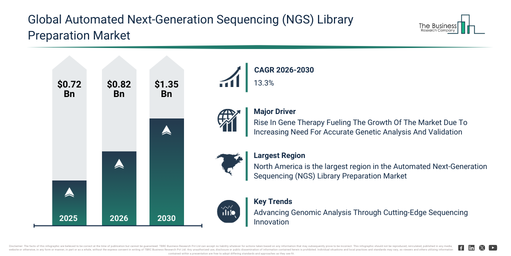
    The automated next-generation sequencing (ngs) library preparation market has shown substantial growth in recent years. Its value is expected to rise from $0.72 billion in 2025 to $0.82 billion in 2026, achieving a compound annual growth rate (CAGR) of 13.9%. Historically, this expansion has been propelled by factors including the broader scope of genomic research activities, increased integration of NGS in clinical research, advancements in precision medicine programs, a growing demand for adaptable sequencing workflows, and enhancements in sequencing chemistry technologies.

    The automated next-generation sequencing (NGS) library preparation market is projected to experience swift expansion in the coming years, anticipated to reach a valuation of $1.35 billion by 2030, exhibiting a compound annual growth rate (CAGR) of 13.3%. This growth during the projected period stems from several factors, including the expanding application of NGS in diagnostics, increasing capital allocation towards automated laboratory infrastructure, the proliferation of population genomics initiatives, a heightened need for quicker sequencing results, and the growing uptake of single-cell sequencing methodologies. Key trends expected over the forecast horizon encompass the wider adoption of fully automated library preparation platforms, an escalating requirement for high-throughput sequencing operations, the increasing incorporation of robotics in sample handling, the broadening of standardized and replicable NGS pipelines, and a stronger emphasis on minimizing errors and ensuring workflow uniformity.

    Claim Your Free Automated Next-Generation Sequencing (NGS) Library Preparation Market Sample Report With Key Data And Trends:

    https://thebusinessresearchcompany.com/sample_request?id=79386823&type=smp&name=Automated%20Next-Generation%20Sequencing%20%28NGS%29%20Library%20Preparation%20Market%20Report%202026&utm_source=Blogs&utm_medium=Paid&utm_campaign=Nov_PR

    Automated Next-Generation Sequencing (NGS) Library Preparation Market Demand Analysis: The Driving Force Behind Expansion

    The anticipated expansion of gene therapy is projected to fuel the advancement of the automated next-generation sequencing (NGS) library preparation market. This therapeutic approach involves modifying an individual’s genes to address or prevent illnesses, and its growth stems from the increasing incidence of genetic conditions necessitating precise and enduring treatment options. Within gene therapy, automated NGS library preparation facilitates the accurate analysis and validation of genetic alterations by preparing premium DNA or RNA samples for subsequent sequencing. Consequently, the expanding field of gene therapy is a key catalyst for the growth of the automated next-generation sequencing (NGS) library preparation market.

    Breaking Down The Automated Next-Generation Sequencing (NGS) Library Preparation Market By Segment

    The automated next-generation sequencing (ngs) library preparation market covered in this report is segmented –

    1) By Type: Targeted Genome Sequencing, Whole Genome Sequencing, Whole Exome Sequencing, Other Sequencing Types

    2) By Workflow: Nucleic Acid Extraction, Fragmentation, Adapter Ligation, Purification And Quantification

    3) By Application: Drug And Biomarker Discovery, Disease Diagnostics, Other Applications

    4) By End-Use: Hospitals And Clinics, Academic And Research Institutions, Pharmaceutical And Biotechnology Companies, Other End-Users

    Subsegments:

    1) By Targeted Genome Sequencing: Amplicon-Based Targeted Sequencing, Hybridization Capture-Based Targeted Sequencing, Custom Targeted Panels, Pre-designed Gene Panels

    2) By Whole Genome Sequencing: Human Whole Genome Sequencing, Animal Whole Genome Sequencing, Plant Whole Genome Sequencing, Microbial Whole Genome Sequencing

    3) By Whole Exome Sequencing: Standard Exome Sequencing, Clinical Exome Sequencing, Custom Exome Panels, Ultra-Rapid Exome Sequencing

    4) By Other Sequencing Types: RNA Sequencing (RNA-Seq), Epigenome Sequencing, Metagenomic Sequencing, Single-Cell Sequencing

    Top Trend Influencing The Automated Next-Generation Sequencing (NGS) Library Preparation Market Outlook

    Major companies within the automated next-generation sequencing (NGS) library preparation market are dedicating efforts to create cutting-edge technologies, such as Xpandomer technology, aiming to accelerate sequencing, improve data precision, and expand system capacity, ultimately optimizing workflows and facilitating more effective and dependable genomic analysis. Xpandomer technology constitutes a sophisticated deoxyribonucleic acid (DNA) or ribonucleic acid (RNA) sequencing technique that transforms a specific nucleic acid molecule into a synthetic, elongated polymer termed an Xpandomer, measuring approximately 50 times the length of the initial deoxyribonucleic acid (DNA) or ribonucleic acid (RNA) strand. As an illustration, in February 2025, Roche AG, a biotechnology firm based in Switzerland, unveiled Sequencing by Expansion, a state-of-the-art sequencing platform developed to enhance genomic resolution across advanced diagnostics, disease investigation, and precision medicine applications. This novel automated next-generation sequencing (NGS) library preparation system optimizes intricate workflows, improves data accuracy, and hastens genomic analysis, thereby assisting advanced research and tailored medicine. The Sequencing by Expansion platform demonstrates high adaptability, allowing for the accurate examination of diverse genomic modifications across numerous illnesses, such as cancer and uncommon genetic conditions, by boosting resolution and precision for more profound biological understanding.

    Automated Next-Generation Sequencing (NGS) Library Preparation Market Competitive Landscape And Major Players

    Major companies operating in the automated next-generation sequencing (ngs) library preparation market are F. Hoffmann-La Roche Ltd., Thermo Fisher Scientific Inc., Agilent Technologies India Private Limited, Illumina Inc., Beckman Coulter Inc., Bio-Rad Laboratories Inc., IDT Corporation, Tecan Group AG, Hamilton Company, Takara Bio Inc., 10x Genomics Inc., Oxford Nanopore Technologies plc, Twist Bioscience Corporation, New England Biolabs Inc., SPT Labtech Limited, Watchmaker Genomics Inc., Pillar Biosciences Inc., Aurora Biomed Inc., BGI Group, SEQWELL INC., Hudson Robotics Inc.

    Read The Full Automated Next-Generation Sequencing (NGS) Library Preparation Market Report By The Business Research Company:

    https://thebusinessresearchcompany.com/report/automated-next-generation-sequencing-ngs-library-preparation-global-market-report?utm_source=Blogs&utm_medium=Paid&utm_campaign=Nov_PR

    Where Is The Automated Next-Generation Sequencing (NGS) Library Preparation Market Largest? Key Regional Insights

    North America was the largest region in the automated next-generation sequencing (NGS) library preparation market in 2025. Asia-Pacific is expected to be the fastest-growing region in the forecast period. The regions covered in the automated next-generation sequencing (ngs) library preparation market report are Asia-Pacific, South East Asia, Western Europe, Eastern Europe, North America, South America, Middle East, Africa.

    Reach Out To Our Team:

    The Business Research Company: https://www.thebusinessresearchcompany.com/

    Americas: +1 310-496-7795

    Asia: +44 7882 955267 & +91 8897263534

    Europe: +44 7882 955267

    Email us at: marketing@tbrc.info

    Follow us on:

    LinkedIn: https://in.linkedin.com/company/the-business-research-company

    YouTube: https://www.youtube.com/channel/UC24_fI0rV8cR5DxlCpgmyFQ

    Global Market Model: https://www.thebusinessresearchcompany.com/global-market-model
  • Acute Pharyngitis Market Forecast To 2030: The Growing Role Of Innovations In Syndromic Point-Of-Care (POC) Technology Enhance Rapid Detection And Diagnostic Accuracy

    Acute Pharyngitis Market Forecast To 2030: The Growing Role Of Innovations In Syndromic Point-Of-Care (POC) Technology Enhance Rapid Detection And Diagnostic Accuracy

    The Business Research Company’s 2026 market reports combine market attractiveness scoring, total addressable market sizing, company benchmarking matrices, interactive Excel dashboards, deeper supply chain intelligence, emerging startup tracking, and granular product-level insights to deliver research that is more actionable and strategically valuable.

    Acute Pharyngitis Market Size Trajectory: Key Numbers Every Industry Stakeholder Should Know

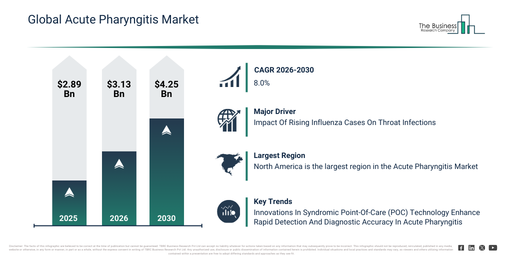
    The acute pharyngitis market has demonstrated strong growth in recent years. It is anticipated to increase from $2.89 billion in 2025 to $3.13 billion in 2026, exhibiting a compound annual growth rate (CAGR) of 8.2%. The expansion observed in prior periods can be attributed to the elevated prevalence of viral and bacterial pharyngitis, insufficient treatment awareness, improvements in healthcare infrastructure, an increase in outpatient visits, and the expanding availability of pharmaceuticals.

    The acute pharyngitis market is projected to experience substantial expansion in the coming years. This market is anticipated to reach a value of $4.25 billion by 2030, exhibiting a compound annual growth rate (CAGR) of 8.0%. Factors contributing to this growth during the forecast period include advancements in novel antivirals and antibiotics, increased adoption of telemedicine, the proliferation of online pharmacy platforms, a growing recognition of herbal and alternative remedies, and the broader availability of homecare and specialty care services. Key trends identified for the forecast period encompass an increasing utilization of antibiotics and antivirals to treat acute pharyngitis, a rise in the uptake of over-the-counter medications, a growing inclination towards herbal and alternative remedies, the diversification of treatment options within hospitals and homecare settings, and an emphasis on anti-inflammatory and corticosteroid therapies.

    Looking For Reliable Acute Pharyngitis Market Data? Request A Free Sample:

    https://thebusinessresearchcompany.com/sample_request?id=34342637&type=smp&name=Acute%20Pharyngitis%20Market%20Report%202026&utm_source=Blogs&utm_medium=Paid&utm_campaign=Nov_PR

    What Is Behind The Rising Demand In The Acute Pharyngitis Market?

    The increasing occurrence of influenza is anticipated to fuel the expansion of the acute pharyngitis market in the future. Influenza, caused by influenza viruses, spreads via respiratory droplets expelled from coughs and sneezes, or through contact with contaminated surfaces. This uptick in influenza prevalence stems from factors such as seasonal changes, inadequate vaccination rates, greater human movement, viral mutations, and compromised immunity within certain demographics. Acute pharyngitis treatment offers support to influenza patients by easing throat inflammation and discomfort, making swallowing less painful, preventing subsequent bacterial infections, and aiding overall recuperation. When combined with antiviral drugs, sufficient hydration, and rest, this treatment significantly boosts the body’s capacity to combat the influenza virus. For example, data from the Centers for Disease Control and Prevention, a US-based government agency, indicated that by February 2025, the positivity rate for influenza in clinical lab tests reached 31.6%, showing an increase from 29.4% the preceding week and 18.6% at the year’s commencement. Consequently, the rising prevalence of influenza is a key driver for the growth of the acute pharyngitis market.

    Acute Pharyngitis Market Segment Coverage And Subsegment Analysis

    The acute pharyngitis market covered in this report is segmented –

    1) By Treatment: Antibiotics, Antivirals, Over-the-Counter (OTC) Medications, Corticosteroids And Anti-inflammatory Drugs

    2) By Distribution Channel: Hospital Pharmacy, Online Pharmacy, Retail Pharmacy

    3) By End-User: Hospitals, Homecare, Speciality Centres, Other End Users

    Subsegments:

    1) By Antibiotics: Penicillins, Cephalosporins, Macrolides

    2) By Antivirals: Neuraminidase Inhibitors, Nucleoside Analogs

    3) By Over-the-Counter (OTC) Medications: Analgesics, Throat Lozenges, Cough Syrups

    4) By Corticosteroids And Anti-inflammatory Drugs: Glucocorticoids, Non-Steroidal Anti-Inflammatory Drugs (NSAIDs)

    Acute Pharyngitis Market Future Trends: Where Is The Industry Heading?

    Major companies in the acute pharyngitis market are focusing on developing advanced solutions, such as multiplex syndromic point-of-care (POC) testing, to improve diagnostic speed, enhance accuracy, and support pathogen-specific treatment decisions. Multiplex POC testing is a technological approach designed to detect multiple pathogens from a single sample in a short timeframe, which enables clinicians to differentiate between viral and bacterial infections and reduce unnecessary antibiotic use.

    Acute Pharyngitis Market Top Players List For 2026

    Major companies operating in the acute pharyngitis market are Pfizer Inc., Johnson & Johnson, Merck & Co. Inc., Sanofi S.A., AstraZeneca plc, Novartis AG, GlaxoSmithKline plc, F. Hoffmann La Roche AG, Abbott Laboratories, Bayer AG, Eli Lilly and Company, Bristol Myers Squibb Company, Boehringer Ingelheim International GmbH, Teva Pharmaceutical Industries Ltd., Sandoz Group AG, Hikma Pharmaceuticals PLC, Lupin Limited, Alkem Laboratories Ltd., Cipla Limited, Sun Pharmaceutical Industries Limited

    Order Your Copy Of The Acute Pharyngitis Market Report 2026:

    https://thebusinessresearchcompany.com/report/acute-pharyngitis-global-market-report?utm_source=Blogs&utm_medium=Paid&utm_campaign=Nov_PR

    How Does The Acute Pharyngitis Market Vary By Region?

    North America was the largest region in the acute pharyngitis market in 2025. The regions covered in the acute pharyngitis market report are Asia-Pacific, South East Asia, Western Europe, Eastern Europe, North America, South America, Middle East, Africa.

    Reach Out To Our Team:

    The Business Research Company: https://www.thebusinessresearchcompany.com/

    Americas: +1 310-496-7795

    Asia: +44 7882 955267 & +91 8897263534

    Europe: +44 7882 955267

    Email us at: marketing@tbrc.info

    Follow us on:

    LinkedIn: https://in.linkedin.com/company/the-business-research-company

    YouTube: https://www.youtube.com/channel/UC24_fI0rV8cR5DxlCpgmyFQ

    Global Market Model: https://www.thebusinessresearchcompany.com/global-market-model
  • North America Leads The Automated Microscopy Market: Regional Analysis And 2030 Forecast

    North America Leads The Automated Microscopy Market: Regional Analysis And 2030 Forecast

    The Business Research Company’s 2026 market reports are designed to deliver research that is more actionable and strategically valuable. Key offerings include market attractiveness scoring, total addressable market sizing, company benchmarking matrices, interactive Excel dashboards, deeper supply chain intelligence, emerging startup tracking, and granular product-level insights.

    Automated Microscopy Market Revenue Projected To Rise To $11.6 Billion By 2030

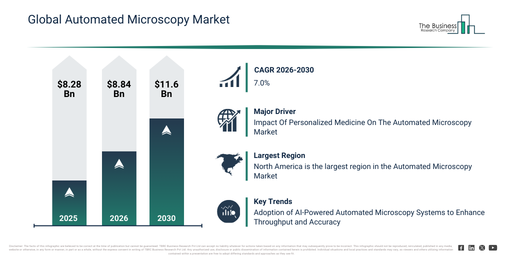
    The automated microscopy market has seen significant expansion in recent years. It is anticipated to grow from $8.28 billion in 2025 to $8.84 billion in 2026, achieving a compound annual growth rate (CAGR) of 6.8%. This historic growth is a result of factors such as the increasing application of microscopy in life sciences research, the broadening scope of clinical diagnostics imaging, continuous advancements in optical and electron microscopy, the expansion of materials science research, and an escalating demand for reliable imaging results.

    The automated microscopy market is expected to demonstrate significant growth over the next few years, reaching $11.6 billion in 2030 with a compound annual growth rate (CAGR) of 7.0%. This projected growth is driven by factors such as the increasing adoption of AI-assisted diagnostics, the expansion of semiconductor inspection applications, rising investments in automated research laboratories, a growing demand for scalable imaging solutions, and the increasing integration of cloud-based microscopy platforms. Major trends anticipated in this forecast period include the expanding deployment of AI-based image analysis, a rising adoption of high-throughput imaging platforms, the growing integration of automated sample handling, the expansion of remote and digital microscopy, and an enhanced focus on high-resolution imaging accuracy.

    Want Deeper Automated Microscopy Market Insights? Get A Free Sample Report:

    https://thebusinessresearchcompany.com/sample_request?id=91171033&type=smp&name=Automated%20Microscopy%20Market%20Report%202026&utm_source=Blogs&utm_medium=Paid&utm_campaign=Nov_PR

    Primary Growth Driver Shaping The Automated Microscopy Market Outlook

    The escalating need for personalized medicine is projected to stimulate the expansion of the automated microscopy market in the coming years. Personalized medicine refers to a healthcare strategy that considers each individual’s distinct differences in genes, environment, and lifestyle. The uptake of personalized medicine is increasing due to several elements, including enhanced understanding of genetic variations, breakthroughs in genomics, and the rising occurrence of chronic conditions. Automated microscopy offers researchers and clinicians the necessary instruments and innovations to advance personalized medicine by elucidating disease mechanisms, recognizing predictive biomarkers, and enhancing treatment plans. Thus, the increasing demand for personalized medicine is propelling the growth of the automated microscopy market.

    Automated Microscopy Market Structure: A Detailed Look At Segments And Subsegments

    The automated microscopy market covered in this report is segmented –

    1) By Product Type: Optical Microscopes, Electron Microscopes, Scanning Probe Microscopes

    2) By Application: Medical Diagnostics, Nanotechnology, Material Science, Life Sciences, Semiconductors

    3) By End User: Hospitals, Research Facilities, Diagnostic Clinics

    Subsegments:

    1) By Optical Microscopes: Automated Light Microscopes, Confocal Microscopes, Fluorescence Microscopes

    2) By Electron Microscopes: Scanning Electron Microscopes (SEM), Transmission Electron Microscopes (TEM), Scanning Transmission Electron Microscopes (STEM)

    3) By Scanning Probe Microscopes: Atomic Force Microscopes (AFM), Scanning Tunneling Microscopes (STM)

    Automated Microscopy Market Innovation And Strategy Trends Among Leading Companies

    Major companies operating in the automated microscopy market are concentrating on developing technological advancements such as AI-powered automated fluorescence microscopes. This focus aims to increase throughput, enhance image accuracy, and reduce manual labor in cell analysis and drug discovery workflows. An AI-powered automated microscope integrates motorized stages, autofocus, multi-channel imaging, and intelligent image analysis software, which enables automated cell counting, confluency assessment, and time-lapse imaging with minimal human intervention.

    Top Companies Competing In The Automated Microscopy Market

    Major companies operating in the automated microscopy market are Thermo Fisher Scientific Inc., Zeiss Group, Agilent Technologies Inc., Keyence Corporation, Hitachi High-Tech Corporation, PerkinElmer Inc., Nikon Corporation, Bruker Corporation, Hamamatsu Photonics K.K., Jenoptik AG, HORIBA Scientific, Molecular Devices LLC, JEOL Ltd., Olympus Corporation, Prior Scientific Instruments Ltd., Phase Holographic Imaging PHI AB, Andor Technology Ltd., Crest Optics S.p.A, Delmic B.V., Nanolive SA, Nanosurf AG, Photometrics

    View The Complete Automated Microscopy Market Study With Segment And Regional Data:

    https://thebusinessresearchcompany.com/report/automated-microscopy-global-market-report?utm_source=Blogs&utm_medium=Paid&utm_campaign=Nov_PR

    Automated Microscopy Market Regional Outlook Across Major Geographies

    North America was the largest region in the automated microscopy market in 2025. Asia-Pacific is expected to be the fastest-growing region in the forecast period. The regions covered in the automated microscopy market report are Asia-Pacific, South East Asia, Western Europe, Eastern Europe, North America, South America, Middle East, Africa.

    Reach Out To Our Team:

    The Business Research Company: https://www.thebusinessresearchcompany.com/

    Americas: +1 310-496-7795

    Asia: +44 7882 955267 & +91 8897263534

    Europe: +44 7882 955267

    Email us at: marketing@tbrc.info

    Follow us on:

    LinkedIn: https://in.linkedin.com/company/the-business-research-company

    YouTube: https://www.youtube.com/channel/UC24_fI0rV8cR5DxlCpgmyFQ

    Global Market Model: https://www.thebusinessresearchcompany.com/global-market-model
  • Acute Pancreatitis Market Set To Reach $8.55 Billion By 2030, Driven By Increasing Healthcare Expenditure

    Acute Pancreatitis Market Set To Reach $8.55 Billion By 2030, Driven By Increasing Healthcare Expenditure

    Market attractiveness scoring, total addressable market sizing, company benchmarking matrices, interactive Excel dashboards, deeper supply chain intelligence, emerging startup tracking, and granular product-level insights are among the key offerings featured in The Business Research Company’s 2026 market reports, designed to deliver more actionable and strategically valuable research.

    What Is The Acute Pancreatitis Market Size In 2026, And Where Is It Heading By 2030?

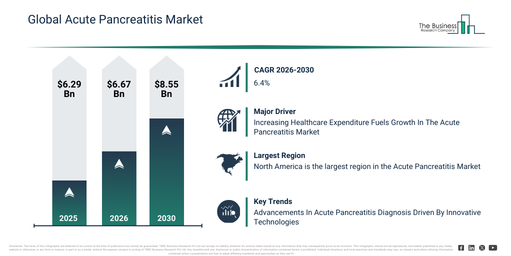
    The acute pancreatitis market has experienced robust expansion in recent years. Projections indicate its expansion from $6.29 billion in 2025 to $6.67 billion in 2026, demonstrating a compound annual growth rate (CAGR) of 6.0%. Historically, this growth is linked to factors such as the rising incidence of gallstone-related disorders, elevated alcohol consumption, insufficient understanding of initial pancreatitis symptoms, the use of traditional imaging and laboratory diagnostics, and an expanding patient population across hospitals and clinics.

    The market for acute pancreatitis is projected to experience substantial expansion in the coming years. By 2030, this market is anticipated to reach a valuation of $8.55 billion, demonstrating a compound annual growth rate (CAGR) of 6.4%. This projected growth is driven by several factors, including the introduction of targeted therapeutic solutions, increased public understanding of lifestyle changes, the embrace of less invasive treatment options, an expansion in hospital and clinic infrastructure, and the incorporation of advanced diagnostic methods. Key trends expected during this period involve an increasing occurrence of pancreatitis triggered by gallstones and alcohol, a greater reliance on sophisticated imaging and lab tests for diagnosis, the rising uptake of intravenous fluid and nutritional support therapies, the wider application of minimally invasive procedures such as ERCP, and a heightened emphasis on prompt diagnosis and comprehensive patient care approaches.

    Request Your Free Acute Pancreatitis Market Sample With Segment And Regional Data:

    https://thebusinessresearchcompany.com/sample_request?id=28838188&type=smp&name=Acute%20Pancreatitis%20Market%20Report%202026&utm_source=Blogs&utm_medium=Paid&utm_campaign=Nov_PR

    Acute Pancreatitis Market Growth Drivers And Their Impact On Future Demand

    The expansion of healthcare expenditure is projected to stimulate the growth of the acute pancreatitis market moving forward. Healthcare expenditure represents the aggregate of resources, both financial and non-financial, utilized in delivering health services and related activities. This increase in healthcare spending can be attributed to several factors, including the rising prevalence of chronic diseases, the broadening scope of health insurance coverage, and heightened awareness of mental health concerns. Acute pancreatitis can lead to serious complications such as necrotizing pancreatitis, organ failure, and infections, which necessitate additional treatments, surgical interventions, and extended hospital stays, significantly driving up healthcare costs. Therefore, increased healthcare expenditure is a primary driver for the growth of the acute pancreatitis market.

    What Categories Define The Acute Pancreatitis Market?

    The acute pancreatitis market covered in this report is segmented –

    1) By Cause: Gallstones, Alcohol, Other Causes

    2) By Treatment: Intravenous Fluid, Nutritional Support, Analgesics, Endoscopic Retrograde Cholangiopancreatography (ERCP), Other treatments

    3) By Diagnosis: Imaging tests, Laboratory Tests

    Subsegments:

    1) By Gallstones: Cholecystitis-Induced Pancreatitis, Choledocholithiasis-Induced Pancreatitis

    2) By Alcohol: Acute Alcoholic Pancreatitis, Binge Drinking-Induced Pancreatitis

    3) By Other Causes: Medications-Induced Pancreatitis, Trauma-Induced Pancreatitis, Infections-Induced Pancreatitis

    What New Developments Are Emerging In The Acute Pancreatitis Market?

    Major companies operating in the acute pancreatitis market are advancing cutting-edge technologies, such as dry chemistry slide technology, to accurately determine pancreatic lipase levels. Dry chemistry slide technology is a diagnostic technique that utilizes a coated slide containing dry reagents to perform chemical reactions for analyzing biological samples, enabling rapid and accurate testing without the need for liquid reagents.

    Major Players Driving Competition In The Acute Pancreatitis Market

    Major companies operating in the acute pancreatitis market are CalciMedica Inc., SCM Lifescience Co. Ltd., Baxter International Inc., B. Braun Melsungen AG, Medtronic plc, Boston Scientific Corporation, Fresenius Kabi AG, Sun BioPharma Inc., Atox Bio Inc., D-Pharm Ltd., Olympus Corporation, Abbott Laboratories, Pfizer Inc., Merck & Co Inc., GlaxoSmithKline plc, AbbVie Inc., Amgen Inc., AstraZeneca PLC, Boehringer Ingelheim GmbH, Bristol-Myers Squibb Company, Eli Lilly and Company, F. Hoffmann-La Roche AG, Novartis AG, Sanofi SA, Takeda Pharmaceutical Company Limited, Teva Pharmaceutical Industries Ltd., Johnson & Johnson

    View The Comprehensive Acute Pancreatitis Market Analysis:

    https://thebusinessresearchcompany.com/report/acute-pancreatitis-global-market-report?utm_source=Blogs&utm_medium=Paid&utm_campaign=Nov_PR

    Acute Pancreatitis Market Regional Leaders: Insights From The 2026 Report

    North America was the largest region in the acute pancreatitis market in 2025. The regions covered in the acute pancreatitis market report are Asia-Pacific, South East Asia, Western Europe, Eastern Europe, North America, South America, Middle East, Africa.

    Reach Out To Our Team:

    The Business Research Company: https://www.thebusinessresearchcompany.com/

    Americas: +1 310-496-7795

    Asia: +44 7882 955267 & +91 8897263534

    Europe: +44 7882 955267

    Email us at: marketing@tbrc.info

    Follow us on:

    LinkedIn: https://in.linkedin.com/company/the-business-research-company

    YouTube: https://www.youtube.com/channel/UC24_fI0rV8cR5DxlCpgmyFQ

    Global Market Model: https://www.thebusinessresearchcompany.com/global-market-model
  • Automated Microbiology Market Trends 2026: Spotlight On Innovative Solutions Driving Growth Through Enhanced Diagnostic Accuracy

    Automated Microbiology Market Trends 2026: Spotlight On Innovative Solutions Driving Growth Through Enhanced Diagnostic Accuracy

    With a focus on actionable insights and strategic value, The Business Research Company’s 2026 market reports include market attractiveness scoring, total addressable market sizing, company benchmarking matrices, interactive Excel dashboards, deeper supply chain intelligence, emerging startup tracking, and granular product-level insights.

    Automated Microbiology Market Size Analysis: Historical Growth And Future Revenue Projections

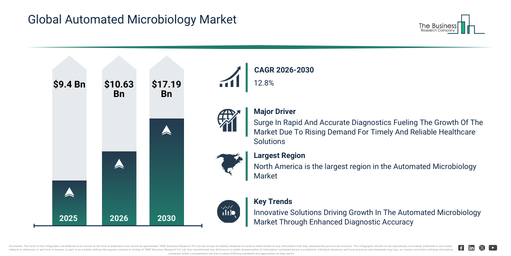
    The automated microbiology market size has expanded quickly over recent years. It is anticipated to increase from $9.4 billion in 2025 to $10.63 billion in 2026, achieving a compound annual growth rate (CAGR) of 13.0%. Historically, this growth can be attributed to factors such as rising clinical testing volumes, a greater need for expedited diagnostic results, the expansion of hospital laboratory infrastructure, insufficient numbers of skilled laboratory personnel, and the adoption of standardized diagnostic protocols.

    The automated microbiology market is projected to experience substantial expansion in the coming years, forecast to reach $17.19 billion by 2030, exhibiting a compound annual growth rate (CAGR) of 12.8%. This anticipated growth is driven by several factors, including heightened investments in intelligent laboratories, a rising need for swift infectious disease diagnosis, the broadening scope of molecular microbiology uses, increasing integration of data-driven laboratory systems, and an enhanced emphasis on the precision of diagnostics. Key trends anticipated during this period encompass the greater embrace of fully automated microbiology solutions, the expanding application of AI for pathogen identification, a growing convergence of LIMS platforms, the proliferation of high-throughput diagnostic tests, and a heightened emphasis on streamlining laboratory workflows.

    Preview The Automated Microbiology Market Report With A Free Sample:

    https://thebusinessresearchcompany.com/sample_request?id=37184026&type=smp&name=Automated%20Microbiology%20Market%20Report%202026&utm_source=Blogs&utm_medium=Paid&utm_campaign=Nov_PR

    Automated Microbiology Market Drivers: What Is Fueling Demand Through 2030?

    The escalating demand for swift and precise diagnostic tools is poised to boost the expansion of the automated microbiology market moving forward. These rapid and accurate diagnostics refer to medical testing procedures that efficiently and precisely identify infections or diseases, allowing for timely and effective medical interventions. The surge in demand for such diagnostics is driven by the increasing necessity for prompt disease identification to prevent complications and improve patient health outcomes, coupled with the desire for minimal result waiting times. Automated microbiology supports this need by enabling high-throughput, standardized, and error-reduced testing, which guarantees faster results and enhanced patient care. Thus, the growing need for rapid and accurate diagnostics is stimulating growth in the automated microbiology market.

    Automated Microbiology Market Segmentation Analysis: Core Categories And Subcategories

    The automated microbiology market covered in this report is segmented –

    1) By Product: Instruments, Reagents And Kits, Software

    2) By Automation Type: Fully Automated, Semi-Automated

    3) By Diagnostic Technology: DNA And RNA Probe Technology, Detection Techniques

    4) By Application: Biopharmaceutical Production, Clinical Diagnostics, Environmental And Water Testing, Food And Beverage Testing, Other Applications

    5) By End Use: Pharmaceutical And Biotechnology Companies, Hospitals And Diagnostic Laboratories, Academic And Research Institutes, Other End Uses

    Subsegments:

    1) By Instruments: Automated Gram Stainers, Microbial Detection Systems, Automated ID/AST Systems, Blood Culture Systems, Sample Preparation Systems

    2) By Reagents And Kits: Culture Media, Identification Kits, Susceptibility Testing Kits, Staining Reagents, Molecular Diagnostic Reagents

    3) By Software: Data Analysis And Interpretation Tools, Laboratory Workflow Management Software, Integration And Connectivity Solutions, Quality Control And Compliance Software

    Which Trends Will Define The Automated Microbiology Market Through 2030?

    Leading companies in the automated microbiology market are focusing on developing advanced solutions, such as matrix-assisted laser desorption or ionization (MALDI) biotyper systems, to enhance the speed and accuracy of microbial identification. This technique, based on mass spectrometry, identifies microorganisms, including bacteria and fungi, by analyzing their unique protein profiles.

    Automated Microbiology Market Major Companies And Industry Participants

    Major companies operating in the automated microbiology market are Thermo Fisher Scientific Inc, Danaher Corporation, Becton Dickinson and Company, bioMérieux SA, Abbott Laboratories, Merck KGaA, Agilent Technologies Inc, Sysmex Corporation, Bio-Rad Laboratories Inc, PerkinElmer Inc, HORIBA Ltd, DiaSorin SpA, Neogen Corporation, Rapid Micro Biosystems Inc, Bruker Corporation, Tecan Group AG, Roche Diagnostics International AG, QIAGEN NV, Illumina Inc, Luminex Corporation

    Buy The Full Automated Microbiology Global Market Report 2026:

    https://thebusinessresearchcompany.com/report/automated-microbiology-global-market-report?utm_source=Blogs&utm_medium=Paid&utm_campaign=Nov_PR

    Automated Microbiology Market Geographic Analysis: Which Region Accounts For The Biggest Share?

    North America was the largest region in the automated microbiology market in 2025. The regions covered in the automated microbiology market report are Asia-Pacific, South East Asia, Western Europe, Eastern Europe, North America, South America, Middle East, Africa.

    Reach Out To Our Team:

    The Business Research Company: https://www.thebusinessresearchcompany.com/

    Americas: +1 310-496-7795

    Asia: +44 7882 955267 & +91 8897263534

    Europe: +44 7882 955267

    Email us at: marketing@tbrc.info

    Follow us on:

    LinkedIn: https://in.linkedin.com/company/the-business-research-company

    YouTube: https://www.youtube.com/channel/UC24_fI0rV8cR5DxlCpgmyFQ

    Global Market Model: https://www.thebusinessresearchcompany.com/global-market-model
  • Automated Cell Cultures Market Growth Driven By Increasing The Production Of Biopharmaceuticals: Outlook To 2030

    Automated Cell Cultures Market Growth Driven By Increasing The Production Of Biopharmaceuticals: Outlook To 2030

    The Business Research Company’s 2026 market reports combine market attractiveness scoring, total addressable market sizing, company benchmarking matrices, interactive Excel dashboards, deeper supply chain intelligence, emerging startup tracking, and granular product-level insights to deliver research that is more actionable and strategically valuable.

    What Is The Automated Cell Cultures Market Growth Rate? A 10.5% CAGR Outlook Through 2030

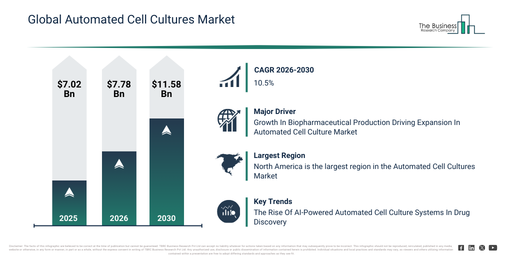
    The automated cell cultures market has experienced rapid growth in recent years. It will grow from $7.02 billion in 2025 to $7.78 billion in 2026 at a compound annual growth rate (CAGR) of 10.8%. This historical expansion can be attributed to heightened biopharmaceutical research endeavors, an increasing need for standardized cell culture protocols, the broadening of drug discovery initiatives, the availability of versatile automation solutions, and the expansion of academic life science research.

    The automated cell cultures market is projected to experience substantial growth over the next few years. It is expected to reach $11.58 billion by 2030, demonstrating a compound annual growth rate (CAGR) of 10.5%. This anticipated growth is primarily driven by factors such as increasing investments in cell and gene therapy manufacturing, a rising demand for high-throughput screening, the expansion of personalized medicine research, the growing adoption of automation in laboratories, and a heightened focus on scalable biologics production. Key trends for the forecast period include the increasing deployment of fully automated cell culture platforms, a rise in the adoption of robotic liquid handling systems, the expanding use of scalable cell culture automation, the broadening application of closed-system cell processing, and an enhanced emphasis on reproducibility and sterility control.

    Access A Free Sample Of The Latest Automated Cell Cultures Market Analysis:

    https://thebusinessresearchcompany.com/sample_request?id=28982308&type=smp&name=Automated%20Cell%20Cultures%20Market%20Report%202026&utm_source=Blogs&utm_medium=Paid&utm_campaign=Nov_PR

    Why Is The Automated Cell Cultures Market Growing? The Key Demand Driver Explained

    The anticipated rise in biopharmaceutical production is set to drive expansion within the automated cell cultures market in the future. Biopharmaceuticals are pharmaceuticals created through biotechnology, specifically employing methods such as recombinant DNA technology and cell culture. The increasing need for biopharmaceuticals stems from their capacity to deliver precise and potent treatments, accompanied by fewer adverse reactions than conventional therapies. Automated cell culture improves the efficiency and uniformity of biopharmaceutical manufacturing by optimizing procedures for cell proliferation, observation, and collection. Consequently, the expanding output of biopharmaceuticals is stimulating the growth of the automated cell cultures market.

    What Are The Main Segments Of The Automated Cell Cultures Market?

    The automated cell cultures market covered in this report is segmented –

    1) By Type: Modular Automation, Whole Label Automation

    2) By Equipment Type: Automated Liquid Handling Systems, Microplate Readers, Robotic Systems, Automated Storage And Retrieval Systems, Other Equipment Types

    3) By Application: Biopharmaceuticals Production, Diagnostics, Gene Therapy, Drug Screening And Development, Toxicity Testing, Stem Cell Research, Tissue Engineering And Regenerative Medicine, Personalized Medicine, Other Applications

    4) By End User: Pharmaceuticals And Biotechnology Companies, Hospital And Diagnostic Laboratories, Research Institutes, Cell Banks

    Subsegments:

    1) By Modular Automation: Automated Cell Culture Systems, Robotic Workstations, Modular Bioreactors

    2) By Whole Label Automation: Fully Automated Cell Culture Systems, Integrated Cell Culture Platforms, Automated Cell Handling Solutions

    Automated Cell Cultures Market Trend Analysis: Where Leading Companies Are Focusing

    Leading companies operating within the automated cell cultures market are prioritizing technological innovations, specifically integrated artificial intelligence (AI)-powered software, to secure a competitive edge. This integrated AI software for automated cell culture refines experimental conditions and elevates efficiency by analyzing real-time data to foster improved cell growth and productivity.

    Which Companies Are Major Players In The Automated Cell Cultures Market?

    Major companies operating in the automated cell cultures market are Hitachi Ltd., Panasonic Holdings Corporation, Thermo Fisher Scientific Inc., Danaher Corporation, Corning Incorporated, Lonza Group AG, Nikon healthcare, Sartorius AG, Beckman Coulter Inc., Celltrio Inc., Eppendorf AG, Tecan Trading AG, Shibuya Corp, Hamilton Company, Molecular Devices LLC, FORMULATRIX, Highres Biosolutions, Biotron Healthcare, Agilent Technologies, Miltenyi Biotec

    Get The Complete Automated Cell Cultures Market Analysis Here:

    https://thebusinessresearchcompany.com/report/automated-cell-cultures-global-market-report?utm_source=Blogs&utm_medium=Paid&utm_campaign=Nov_PR

    Which Region Held The Largest Share Of The Automated Cell Cultures Market In 2025?

    North America was the largest region in the automated cell cultures market in 2025. Asia-Pacific is expected to be the fastest-growing region in the forecast period. The regions covered in the automated cell cultures market report are Asia-Pacific, South East Asia, Western Europe, Eastern Europe, North America, South America, Middle East, Africa.

    Reach Out To Our Team:

    The Business Research Company: https://www.thebusinessresearchcompany.com/

    Americas: +1 310-496-7795

    Asia: +44 7882 955267 & +91 8897263534

    Europe: +44 7882 955267

    Email us at: marketing@tbrc.info

    Follow us on:

    LinkedIn: https://in.linkedin.com/company/the-business-research-company

    YouTube: https://www.youtube.com/channel/UC24_fI0rV8cR5DxlCpgmyFQ

    Global Market Model: https://www.thebusinessresearchcompany.com/global-market-model