Author: Marketing Posting

  • Atenolol Market Led By North America: Size, Growth And Regional Outlook

    Atenolol Market Led By North America: Size, Growth And Regional Outlook

    With a focus on actionable insights and strategic value, The Business Research Company’s 2026 market reports include market attractiveness scoring, total addressable market sizing, company benchmarking matrices, interactive Excel dashboards, deeper supply chain intelligence, emerging startup tracking, and granular product-level insights.

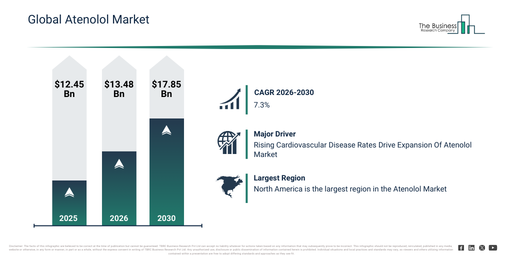
    Atenolol Market Size Forecast Points To $17.85 Billion In Revenue By 2030

    The atenolol market size has experienced significant expansion in recent years. It is anticipated to increase from $12.45 billion in 2025 to $13.48 billion in 2026, exhibiting a compound annual growth rate (CAGR) of 8.2%. This historical growth can be attributed to a higher incidence of hypertension and heart disease, the broader adoption of generic drugs, the accessibility of beta-blocker therapies, an increase in pharmaceutical manufacturing capacity, and enhanced access to cardiovascular medications.

    The atenolol market is projected to experience substantial growth over the coming years, reaching a valuation of $17.85 billion by 2030, demonstrating a compound annual growth rate (CAGR) of 7.3%. This expansion during the forecast period is primarily driven by factors such as the escalating demand for affordable therapies for chronic diseases, increased capital expenditure on enhancing pharmaceutical quality, the broadening scope of branded-generic drug markets, a heightened emphasis on fortifying supply chain resilience, and the wider integration of advanced drug formulation techniques. Key developments anticipated in this period encompass a surge in the need for generic cardiovascular medications, a growing concentration on pharmaceutical ingredients with high purity, an increasing inclination towards oral solid dosage forms, the scaling up of cost-efficient drug production, and a stronger commitment to regulatory quality compliance.

    Get A Free Atenolol Market Sample Covering Drivers, Trends And Key Players:

    https://thebusinessresearchcompany.com/sample_request?id=99806106&type=smp&name=Atenolol%20Market%20Report%202026&utm_source=Blogs&utm_medium=Paid&utm_campaign=Nov_PR

    Atenolol Market Driver Analysis: Key Factor Supporting Revenue Growth

    The increasing occurrence of cardiovascular diseases is projected to drive the growth of the atenolol market moving forward. Cardiovascular diseases are conditions impacting the heart and blood vessels. The rising prevalence of these diseases is linked to an expanding and aging global population, various risk factors, and inadequate execution of established preventative and therapeutic measures. Atenolol is vital for addressing several cardiovascular conditions by decreasing heart rate, lowering blood pressure, alleviating angina, averting heart attacks, and regulating arrhythmias. It assists in stabilizing cardiac function, controlling blood pressure, and avoiding complications, which supports improved long-term cardiovascular well-being. Consequently, the increasing incidence of cardiovascular diseases is fueling the expansion of the atenolol market. The rising prevalence of hypertension is anticipated to drive the expansion of the atenolol market in the future. Hypertension, or high blood pressure, is a medical condition characterized by persistently elevated pressure of blood against arterial walls. The growing incidence of hypertension is attributed to elements like lifestyle choices, eating patterns, stress levels, and shifts in demographics. Atenolol assists in controlling hypertension by lowering heart rate, diminishing the strength of cardiac contractions, and suppressing the renin-angiotensin-aldosterone system. Together, these actions lower blood pressure, aiding in the prevention of complications associated with hypertension and enhancing patient health results. Thus, the rising incidence of hypertension is a key driver for the atenolol market.

    Atenolol Market Segmentation Framework: Major Segments At A Glance

    The atenolol market covered in this report is segmented –

    1) By Type: 98% Purity, 99% Purity

    2) By Distribution Channel: Hospital Pharmacies, Drug Stores, Online Pharmacies, Other Distribution Channels

    3) By Application: Hypertension, Angina, Arrhythmia, Other Applications

    Subsegments:

    1) By 98% Purity: Atenolol With 98% Purity For Pharmaceutical Formulations, Atenolol 98% Purity For Generic Drug Production, Atenolol 98% Purity For Bulk Production And Manufacturing

    2) By 99% Purity: Atenolol With 99% Purity For High-Quality Pharmaceutical Products, Atenolol 99% Purity For Branded Drug Formulations

    Which Companies Are Shaping The Atenolol Market?

    Major companies operating in the atenolol market are AstraZeneca Plc, Abbott Laboratories Inc., Shanghai Pharmaceuticals Holding Co. Ltd., LGM Pharma, Torrent Pharmaceuticals GmbH, Cipla Inc., Intas Pharmaceuticals Limited, Lupin Limited, Macleods Pharmaceuticals Ltd., Ipca Laboratories Limited, Aristo Pharmaceuticals Pvt. Ltd., Medley Pharmaceuticals Ltd., Micro Labs Ltd., Unichem Laboratories Limited, Harman Finochem Ltd., Axplora, Erregierre SpA, Darou Pakhsh Pharma Chem Co., Zydus Pharmaceuticals (USA) Inc., Anant Pharmaceuticals Pvt. Ltd., Enomark LLC, Hairui Chemical, Octavius Pharma Pvt. Ltd., Hoventa Pharma

    Dive Deeper Into The Atenolol Market With The Full Report:

    https://thebusinessresearchcompany.com/report/atenolol-global-market-report?utm_source=Blogs&utm_medium=Paid&utm_campaign=Nov_PR

    Atenolol Market Regional Distribution: Where Is Revenue Concentrated?

    North America was the largest region in the atenolol market in 2025. Asia-Pacific is expected to be the fastest-growing region in the forecast period. The regions covered in the atenolol market report are Asia-Pacific, South East Asia, Western Europe, Eastern Europe, North America, South America, Middle East, Africa.

    Reach Out To Our Team:

    The Business Research Company: https://www.thebusinessresearchcompany.com/

    Americas: +1 310-496-7795

    Asia: +44 7882 955267 & +91 8897263534

    Europe: +44 7882 955267

    Email us at: marketing@tbrc.info

    Follow us on:

    LinkedIn: https://in.linkedin.com/company/the-business-research-company

    YouTube: https://www.youtube.com/channel/UC24_fI0rV8cR5DxlCpgmyFQ

    Global Market Model: https://www.thebusinessresearchcompany.com/global-market-model
  • What Is Driving The Acute Care Telemedicine Market? A Closer Look At Rising Demand For Remote Patient Monitoring

    What Is Driving The Acute Care Telemedicine Market? A Closer Look At Rising Demand For Remote Patient Monitoring

    With a focus on actionable insights and strategic value, The Business Research Company’s 2026 market reports include market attractiveness scoring, total addressable market sizing, company benchmarking matrices, interactive Excel dashboards, deeper supply chain intelligence, emerging startup tracking, and granular product-level insights.

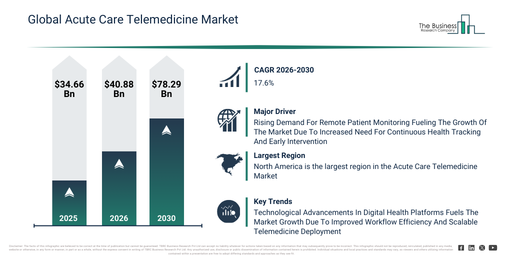
    Acute Care Telemedicine Market Size Outlook: A $78.29 Billion Market By 2030, Growing At 17.6% Annually

    The acute care telemedicine market has seen rapid expansion in recent years. Its size is projected to increase from $34.66 billion in 2025 to $40.88 billion in 2026, achieving a compound annual growth rate (CAGR) of 17.9%. This historical growth is attributable to the expansion of emergency care infrastructure, shortfalls in on-site medical specialists, greater adoption of remote clinical collaboration, an increase in critical care demand, and enhancements in wireless communication technologies.

    The acute care telemedicine market is projected to experience significant expansion in the upcoming years. Its value is forecast to reach $78.29 billion by 2030, demonstrating a compound annual growth rate (CAGR) of 17.6%. This growth during the forecast period is driven by factors such as increased investments in emergency telehealth systems, a rising need for prompt virtual care, the expansion of tele-ICU networks, a growing focus on remote critical care coverage, and the increased adoption of AI-assisted triage tools. Noteworthy trends for this period include the wider deployment of high-acuity telemedicine carts, an increase in real-time remote specialist consultations, the expanding integration of portable diagnostic devices, an enlargement of emergency telehealth services, and an intensified focus on low-latency connectivity.

    Make Data-Driven Decisions With A Free Acute Care Telemedicine Market Sample Report:

    https://thebusinessresearchcompany.com/sample_request?id=15046583&type=smp&name=Acute%20Care%20Telemedicine%20Market%20Report%202026&utm_source=Blogs&utm_medium=Paid&utm_campaign=Nov_PR

    Key Demand Driver Expected To Lift Acute Care Telemedicine Market Revenue

    The escalating need for remote patient monitoring is anticipated to fuel the expansion of the acute care telemedicine market. Remote patient monitoring involves the application of digital technologies to gather and transmit a patient’s health data from locations outside standard healthcare facilities to medical professionals for assessment and continuous care management. This surge in demand for remote patient monitoring is attributed to the increasing prevalence of chronic diseases, which mandate ongoing health tracking and prompt intervention to avert complications and reduce hospitalizations. Acute care telemedicine bolsters remote patient monitoring by enabling real-time evaluations and rapid clinical responses to critical shifts in a patient’s condition, even when they are not in traditional healthcare settings. For instance, in January 2025, ElectroIQ, a US-based technology and electronics company, reported that a burgeoning interest in home-based healthcare contributed to a 20% rise in sales of remote monitoring devices compared to the previous year. Consequently, the rising demand for remote patient monitoring is a key factor driving the growth of the acute care telemedicine market.

    Exploring The Acute Care Telemedicine Market Through Its Key Segments

    The acute care telemedicine market covered in this report is segmented –

    1) By Product Type: Telehealth Units, Telemedicine Carts, Portable Telemedicine Systems

    2) By Delivery: Clinician To Patient, Clinician To Clinician

    3) By Connectivity: Local Area Network (LAN), Wireless

    4) By Application: Emergency Medicine, Critical Care, Virtual Emergency Triage

    5) By End User: Hospitals, Clinics, Ambulatory Surgical Centers, Other End Users

    Subsegments:

    1) By Telehealth Units: Fixed Telehealth Stations, Wall-Mounted Telehealth Systems, Integrated Telemedicine Workstations

    2) By Telemedicine Carts: Basic Telemedicine Carts, Advanced and High-Acuity Telemedicine Carts, Specialty-Specific Carts

    3) By Portable Telemedicine Systems: Handheld Telemedicine Devices, Mobile Acute Care Teleconsultation Platforms, Continuous Vital Sign Monitoring Devices

    New Trends Redefining Competition In The Acute Care Telemedicine Market

    Leading companies within the acute care telemedicine market are prioritizing technological innovations, particularly digital health platforms, to improve clinical workflow effectiveness, facilitate real-time care coordination, and expand the reach of telemedicine services across various acute care environments. These platforms represent unified software systems that facilitate the provision, synchronization, and oversight of healthcare services using digital instruments, thereby allowing for instant communication, distant patient observation, analytical data processing, and optimized clinical processes.

    Acute Care Telemedicine Market Competition: Key Players And Industry Participants

    Major companies operating in the acute care telemedicine market are Koninklijke Philips NV, Teladoc Health, AMN Healthcare Inc, US Acute Care Solutions LLC, Enghouse Systems Limited, American Well Corporation, Caregility, Eagle Telemedicine, RelyMD Inc, eVisit LLC, Teledigm Health, Vitalchat Inc, GenieMD Inc, SOC Telemed, InTouch Health, GlobalMed, Advanced ICU Care, TeleSpecialists LLC, Avel eCare, Access TeleCare, Bluestream Health, RapidSOS

    Get The Detailed Acute Care Telemedicine Market Research Report Here:

    https://thebusinessresearchcompany.com/report/acute-care-telemedicine-global-market-report?utm_source=Blogs&utm_medium=Paid&utm_campaign=Nov_PR

    Acute Care Telemedicine Market Regional Overview: Largest Market And Global Coverage

    North America was the largest region in the acute care telemedicine market in 2025. Asia-Pacific is expected to be the fastest-growing region in the forecast period. The regions covered in the acute care telemedicine market report are Asia-Pacific, South East Asia, Western Europe, Eastern Europe, North America, South America, Middle East, Africa.

    Reach Out To Our Team:

    The Business Research Company: https://www.thebusinessresearchcompany.com/

    Americas: +1 310-496-7795

    Asia: +44 7882 955267 & +91 8897263534

    Europe: +44 7882 955267

    Email us at: marketing@tbrc.info

    Follow us on:

    LinkedIn: https://in.linkedin.com/company/the-business-research-company

    YouTube: https://www.youtube.com/channel/UC24_fI0rV8cR5DxlCpgmyFQ

    Global Market Model: https://www.thebusinessresearchcompany.com/global-market-model
  • Ataxia Market Forecast To 2030: The Growing Role Of Revolutionizing Ataxia Treatment With Groundbreaking Drug Targeting

    Ataxia Market Forecast To 2030: The Growing Role Of Revolutionizing Ataxia Treatment With Groundbreaking Drug Targeting

    The Business Research Company’s 2026 market reports combine market attractiveness scoring, total addressable market sizing, company benchmarking matrices, interactive Excel dashboards, deeper supply chain intelligence, emerging startup tracking, and granular product-level insights to deliver research that is more actionable and strategically valuable.

    Ataxia Market Size Trajectory: Key Numbers Every Industry Stakeholder Should Know

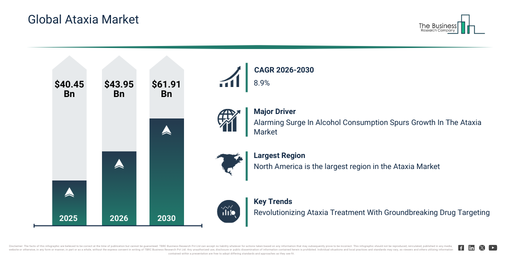
    The ataxia market has demonstrated strong expansion in recent years. It is forecast to rise from $40.45 billion in 2025 to $43.95 billion in 2026, at a compound annual growth rate (CAGR) of 8.6%. The historical growth of this market is attributable to improved recognition of neurological disorders, the increased availability of diagnostic imaging, a rise in research dedicated to rare neurological diseases, enhanced clinical awareness regarding ataxia subtypes, and the provision of supportive care options.

    The ataxia market size is anticipated to undergo significant expansion over the next few years, projected to reach $61.91 billion by 2030, demonstrating a compound annual growth rate (CAGR) of 8.9%. This forecasted growth is attributable to factors such as increased investments in gene-based therapies, the growing adoption of personalized neurology treatments, the expansion of digital monitoring for neurological conditions, an escalating focus on rare disease drug development, and heightened collaboration in neurological research. Prominent trends for the forecast period encompass a stronger emphasis on genetic testing and counseling, the increasing application of symptomatic treatment approaches, the wider use of advanced neurodiagnostic tools, the broadening of long-term disease management strategies, and an enhanced focus on early diagnosis.

    Looking For Reliable Ataxia Market Data? Request A Free Sample:

    https://thebusinessresearchcompany.com/sample_request?id=33676885&type=smp&name=Ataxia%20Market%20Report%202026&utm_source=Blogs&utm_medium=Paid&utm_campaign=Nov_PR

    What Is Behind The Rising Demand In The Ataxia Market?

    An anticipated increase in alcohol consumption is projected to drive the expansion of the ataxia market moving ahead. Alcohol consumption is defined as the oral intake of a beverage containing ethanol. Chronic alcohol misuse leads to cerebellar degeneration, which is a common form of acquired toxic ataxia. Individuals suffering from alcoholism often exhibit postural tremors in their lower limbs and gait ataxia. Consequently, the increase in alcohol consumption is fueling the expansion of the ataxia market.

    Ataxia Market Segment Coverage And Subsegment Analysis

    The ataxia market covered in this report is segmented –

    1) By Disease Type: Friedreich’s Ataxia, Ataxia-telangiectasia, Episodic Ataxia, Other Disease Types

    2) By Product: Treatment, Diagnosis

    3) By Dosage Form: Solid, Liquids, Other Dosage Forms

    4) By Route Of Administration: Oral, Parenteral, Other Routes Of Administration

    5) By End User: Hospital, Clinics, Home Healthcare, Other End-Users

    Subsegments:

    1) By Friedreich’s Ataxia: Genetic Counseling And Testing, Symptomatic Treatments

    2) By Ataxia-telangiectasia: Immunotherapy, Supportive Care

    3) By Episodic Ataxia: Medications For Episodes, Long-term Management Strategies

    4) By Other Disease Types: Spinocerebellar Ataxias (SCAs), Ataxia Due To Vitamin Deficiencies Or Toxins

    Ataxia Market Future Trends: Where Is The Industry Heading?

    Major companies operating in the ataxia market are focusing on developing innovative solutions, such as first-in-class oral drug therapies, to meet the increasing demand for effective treatment options that can slow disease progression and improve functional outcomes in rare neurodegenerative disorders. These oral therapies offer a convenient, non-invasive alternative to traditional supportive care approaches, which primarily manage symptoms without modifying underlying disease pathways.

    Ataxia Market Top Players List For 2026

    Major companies operating in the ataxia market are Pfizer Inc., Johnson & Johnson Services Inc., Eisai Co. Ltd., Genentech Inc., CRISPR Therapeutics AG, Eli Lilly & Company, GlaxoSmithKline Plc, Larimar Therapeutics Inc., Capsida Biotherapeutics Inc., Intellia Therapeutics Inc., Bluebird bio Inc., Editas Medicine Inc., Healx, Acorda Therapeutics Inc., H. Lundbeck A/S, Reata Pharmaceuticals Inc., PTC Therapeutics, Ionis Pharmaceuticals Inc., IntraBio, Biogen Inc., Novartis AG, Sanofi, Roche Holding Ltd., Teva Pharmaceuticals, Zydus Lifesciences Ltd

    Order Your Copy Of The Ataxia Market Report 2026:

    https://thebusinessresearchcompany.com/report/ataxia-global-market-report?utm_source=Blogs&utm_medium=Paid&utm_campaign=Nov_PR

    How Does The Ataxia Market Vary By Region?

    North America was the largest region in the ataxia market in 2025. Asia-Pacific is expected to be the fastest-growing region in the ataxia market report during the forecast period. The regions covered in the ataxia market report are Asia-Pacific, South East Asia, Western Europe, Eastern Europe, North America, South America, Middle East, Africa.

    Reach Out To Our Team:

    The Business Research Company: https://www.thebusinessresearchcompany.com/

    Americas: +1 310-496-7795

    Asia: +44 7882 955267 & +91 8897263534

    Europe: +44 7882 955267

    Email us at: marketing@tbrc.info

    Follow us on:

    LinkedIn: https://in.linkedin.com/company/the-business-research-company

    YouTube: https://www.youtube.com/channel/UC24_fI0rV8cR5DxlCpgmyFQ

    Global Market Model: https://www.thebusinessresearchcompany.com/global-market-model
  • Astigmatism Market Set To Reach $4.3 Billion By 2030, Driven By Increasing Prevalence Of Vision Impairment

    Astigmatism Market Set To Reach $4.3 Billion By 2030, Driven By Increasing Prevalence Of Vision Impairment

    Market attractiveness scoring, total addressable market sizing, company benchmarking matrices, interactive Excel dashboards, deeper supply chain intelligence, emerging startup tracking, and granular product-level insights are among the key offerings featured in The Business Research Company’s 2026 market reports, designed to deliver more actionable and strategically valuable research.

    What Is The Astigmatism Market Size In 2026, And Where Is It Heading By 2030?

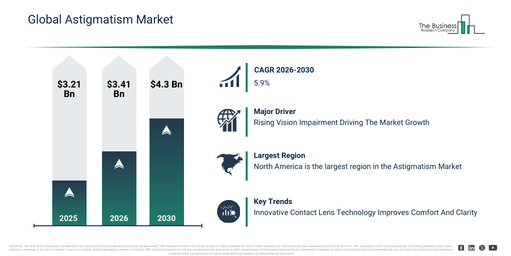
    The astigmatism market has demonstrated strong growth in recent years. Looking ahead, it is projected to expand from $3.21 billion in 2025 to $3.41 billion in 2026, at a compound annual growth rate (CAGR) of 6.2%. This past growth is attributable to several factors, including the rising prevalence of refractive errors, increased awareness of vision correction options, the expansion of ophthalmic clinics, the availability of affordable corrective lenses, and improvements in diagnostic accuracy.

    The astigmatism market size is projected to experience strong growth over the next few years. It is forecast to reach $4.3 billion by 2030, demonstrating a compound annual growth rate (CAGR) of 5.9%. This expansion during the forecast period can be attributed to escalating demand for personalized vision care, the growing adoption of laser-based corrective procedures, the widening availability of tele-ophthalmology services, an enhanced focus on preventive eye care, and the increasing use of AI-assisted diagnostics. Key trends expected in the forecast period involve the increasing embrace of customized corrective lenses, the rising utilization of advanced diagnostic imaging tools, a growing preference for minimally invasive vision correction, the proliferation of digital eye testing solutions, and an intensified focus on early vision screening.

    Request Your Free Astigmatism Market Sample With Segment And Regional Data:

    https://thebusinessresearchcompany.com/sample_request?id=42171563&type=smp&name=Astigmatism%20Market%20Report%202026&utm_source=Blogs&utm_medium=Paid&utm_campaign=Nov_PR

    Astigmatism Market Growth Drivers And Their Impact On Future Demand

    The astigmatism market is projected to grow due to the rising occurrence of vision impairment. Vision impairment is defined as a condition where an individual experiences either a partial or complete loss of eyesight that cannot be entirely corrected by glasses, contact lenses, or medical treatments. The escalating prevalence of vision impairment is attributed to an aging population, an increase in diabetes and various eye diseases, excessive screen time, and insufficient access to eye care in certain regions. Astigmatism exacerbates vision impairment by causing blurred or distorted vision, a result of an irregularly shaped cornea or lens which hinders the accurate focusing of light onto the retina. Thus, the increasing prevalence of vision impairment is a key driver for the growth of the astigmatism market.

    What Categories Define The Astigmatism Market?

    The astigmatism market covered in this report is segmented –

    1) By Type: Myopic Astigmatism, Hyperopic Astigmatism, Other Types

    2) By Treatments: Corrective Lenses, Orthokeratology, Surgeries, Other Treatments

    3) By End User: Hospitals, Clinics, Other End Users

    Subsegments:

    1) By Myopic Astigmatism: Simple Myopic Astigmatism, Compound Myopic Astigmatism

    2) By Hyperopic Astigmatism: Simple Hyperopic Astigmatism, Compound Hyperopic Astigmatism

    3) By Other Types: Regular Astigmatism, Irregular Astigmatism, Congenital Astigmatism, Post-surgical Astigmatism

    What New Developments Are Emerging In The Astigmatism Market?

    Major companies operating in the astigmatism market are concentrating on developing advanced technologies, such as water gradient technology, to enhance contact lens comfort, improve moisture retention, and provide clearer vision for individuals with astigmatism. Water gradient technology refers to a contact lens design where water content gradually increases from the core to the surface, significantly improving moisture retention and comfort.

    Major Players Driving Competition In The Astigmatism Market

    Major companies operating in the astigmatism market are EssilorLuxottica SA, Novartis AG, HOYA Corporation, Alcon Inc, STAAR Surgical Company, Menicon Co Ltd, Rayner Intraocular Lenses Limited, Ophtec BV, Shamir Optical Industry Ltd, SEED Co Ltd, Visionary Optics LLC, Santen Pharmaceutical Co Ltd, Carl Zeiss AG, NIDEK Co Ltd, Topcon Corporation, Ziemer Ophthalmic Systems AG, SCHWIND eye-tech-solutions GmbH, BVI Medical, LENSAR Inc, Avedro Inc

    View The Comprehensive Astigmatism Market Analysis:

    https://thebusinessresearchcompany.com/report/astigmatism-global-market-report?utm_source=Blogs&utm_medium=Paid&utm_campaign=Nov_PR

    Astigmatism Market Regional Leaders: Insights From The 2026 Report

    North America was the largest region in the astigmatism market in 2025. Asia-Pacific is expected to be the fastest-growing region in the forecast period. The regions covered in the astigmatism market report are Asia-Pacific, South East Asia, Western Europe, Eastern Europe, North America, South America, Middle East, Africa.

    Reach Out To Our Team:

    The Business Research Company: https://www.thebusinessresearchcompany.com/

    Americas: +1 310-496-7795

    Asia: +44 7882 955267 & +91 8897263534

    Europe: +44 7882 955267

    Email us at: marketing@tbrc.info

    Follow us on:

    LinkedIn: https://in.linkedin.com/company/the-business-research-company

    YouTube: https://www.youtube.com/channel/UC24_fI0rV8cR5DxlCpgmyFQ

    Global Market Model: https://www.thebusinessresearchcompany.com/global-market-model

  • Acute Bacterial Skin And Skin Structure Infections Market 10.2% CAGR Outlook: Size, Segments And Regional Analysis

    Acute Bacterial Skin And Skin Structure Infections Market 10.2% CAGR Outlook: Size, Segments And Regional Analysis

    The Business Research Company’s 2026 market reports combine market attractiveness scoring, total addressable market sizing, company benchmarking matrices, interactive Excel dashboards, deeper supply chain intelligence, emerging startup tracking, and granular product-level insights to deliver research that is more actionable and strategically valuable.

    Is The Acute Bacterial Skin And Skin Structure Infections Market Expanding? Latest Size Estimates And 2030 Projections

    The market for acute bacterial skin and skin structure infections has experienced robust growth in recent years. It is projected to expand from $12.9 billion in 2025 to $14.09 billion in 2026, at a compound annual growth rate (CAGR) of 9.2%. This historical expansion can be attributed to factors such as the limited availability of broad-spectrum antibiotics, an increasing prevalence of hospital-acquired infections, enhanced awareness of skin infection complications, greater access to community healthcare, and the implementation of standard infection control protocols.

    The market for acute bacterial skin and skin structure infections is anticipated to experience substantial growth in the upcoming years. It is projected to expand to $20.79 billion by 2030, demonstrating a compound annual growth rate (CAGR) of 10.2%. This expansion during the forecast period can be attributed to the creation of next-generation antibiotics, increased investments in antimicrobial research, the expansion of community-based infection management programs, wider hospital pharmacy distribution channels, and the deployment of rapid diagnostic technologies. Notable trends expected in this period include a growing occurrence of acute bacterial skin and skin structure infections, increased acceptance of novel antibiotics and combination therapies, the development of hospital and community healthcare facilities, greater use of oral and parenteral antibiotics, and a concentrated effort to decrease hospital-acquired infection rates.

    Free Acute Bacterial Skin And Skin Structure Infections Market Sample: Market Size, Growth Drivers And Competitive Landscape:

    https://thebusinessresearchcompany.com/sample_request?id=23521067&type=smp&name=Acute%20Bacterial%20Skin%20And%20Skin%20Structure%20Infections%20Market%20Report%202026&utm_source=Blogs&utm_medium=Paid&utm_campaign=Nov_PR

    Acute Bacterial Skin And Skin Structure Infections Market Drivers Explained: What Is Supporting A 10.2% CAGR?

    The increasing occurrence of skin infections is anticipated to propel the growth of the acute bacterial skin and skin structure infections market in the coming years. Skin infections are defined as conditions where microorganisms such as bacteria, fungi, or viruses invade and multiply within the skin, resulting in various symptoms and discomfort. This surge in skin infections generates a heightened demand for therapeutic solutions, antibiotics, and innovative treatments to manage acute bacterial and skin structure infections, thereby ensuring patients receive the best possible care and outcomes. Thus, the growing prevalence of skin infections will act as a significant driver for the expansion of the acute bacterial skin and skin structure infections market.

    Acute Bacterial Skin And Skin Structure Infections Market Segment Guide: Main Divisions And Subsegments

    The acute bacterial skin and skin structure infections market covered in this report is segmented –

    1) By Type Of Infection: Hospital-Acquired Acute Bacterial Skin And Skin Structure Infections, Community-Acquired Acute Bacterial Skin And Skin Structure Infections

    2) By Active Ingredients: Delafloxacin, Vancomycin, Ceftaroline Fosamil, Oritavancin, Tedizolid, Daptomycin, Tigecycline, Linezolid, Other Active Ingredients

    3) By Route Of Administration: Oral, Parenteral

    4) By Distribution Channel: Hospital Pharmacies, Retail Pharmacies, Online Pharmacies

    Subsegments:

    1) By Hospital-Acquired Acute Bacterial Skin And Skin Structure Infections (HABSSSIs): Surgical Site Infections, Catheter-Related Infections, Infections Related To Medical Devices

    2) By Community-Acquired Acute Bacterial Skin And Skin Structure Infections (CABSSSIs): Cellulitis, Abscesses, Impetigo, Folliculitis, Wound Infections

    Acute Bacterial Skin And Skin Structure Infections Market Trends And Opportunities For 2026–2030

    Leading companies within the acute bacterial skin and skin structure infections market are concentrating on developing innovative single-dose treatments, such as Dalbonova, to secure a competitive advantage. Dalbonova represents a convenient and effective single-dose therapy, allowing patients to achieve desired results with just one powerful 1500 mg dose.

    Which Major Players Are Active In The Acute Bacterial Skin And Skin Structure Infections Market?

    Major companies operating in the acute bacterial skin and skin structure infections market are Pfizer Inc., AbbVie Inc., Novartis AG, GSK PLC, Takeda Pharmaceutical Company Limited, Viatris Inc., Teva Pharmaceutical Industries Ltd., Sun Pharmaceutical Industries Limited, Dr. Reddy’s Laboratories Ltd., Cipla Limited, Lupin Limited, Zydus Lifesciences Limited, Aurobindo Pharma Limited, Glenmark Pharmaceuticals Ltd., Alkem Laboratories Limited, Aspen Pharmacare Holdings Limited, Melinta Therapeutics LLC, Abbott Laboratories, Fresenius SE & Co. KGaA, Menarini Group

    Unlock The Complete Acute Bacterial Skin And Skin Structure Infections Market Report With Company Benchmarking:

    https://thebusinessresearchcompany.com/report/acute-bacterial-skin-and-skin-structure-infections-global-market-report?utm_source=Blogs&utm_medium=Paid&utm_campaign=Nov_PR

    Acute Bacterial Skin And Skin Structure Infections Market World Regions Compared: Which Leads In Revenue?

    Asia-Pacific was the largest region in the acute bacterial skin and skin structure infections market in 2025. North America is expected to be the fastest-growing region in the forecast period. The regions covered in the acute bacterial skin and skin structure infections market report are Asia-Pacific, South East Asia, Western Europe, Eastern Europe, North America, South America, Middle East, Africa.

    Reach Out To Our Team:

    The Business Research Company: https://www.thebusinessresearchcompany.com/

    Americas: +1 310-496-7795

    Asia: +44 7882 955267 & +91 8897263534

    Europe: +44 7882 955267

    Email us at: marketing@tbrc.info

    Follow us on:

    LinkedIn: https://in.linkedin.com/company/the-business-research-company

    YouTube: https://www.youtube.com/channel/UC24_fI0rV8cR5DxlCpgmyFQ

    Global Market Model: https://www.thebusinessresearchcompany.com/global-market-model
  • Assistive Technology For Low Vision Market CAGR Of 8.4% Forecast For 2026–2030: What It Means For The Industry

    Assistive Technology For Low Vision Market CAGR Of 8.4% Forecast For 2026–2030: What It Means For The Industry

    Designed to make market research more actionable and strategically valuable, The Business Research Company’s 2026 market reports feature market attractiveness scoring, total addressable market sizing, company benchmarking matrices, interactive Excel dashboards, deeper supply chain intelligence, emerging startup tracking, and granular product-level insights.

    Assistive Technology For Low Vision Market To Expand At A 8.4% CAGR: Size And Growth Projections Through 2030

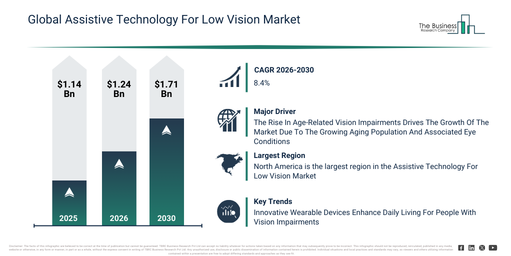
    The market size for assistive technology designed for low vision has shown significant expansion in recent years. It is anticipated to grow from $1.14 billion in 2025 to $1.24 billion in 2026, at a compound annual growth rate (CAGR) of 8.8%. This historical growth can be attributed to several factors, including the increasing prevalence of age-related vision impairment, the wider availability of optical magnification devices, a growing awareness of assistive technologies, the expansion of special education programs, and increased institutional support for visual disabilities.

    The assistive technology for low vision market is projected to experience substantial growth in the upcoming years. This market is expected to expand to $1.71 billion by 2030, exhibiting a compound annual growth rate (CAGR) of 8.4%. This anticipated growth can be attributed to several factors, including the increasing global aging population, the rising adoption of digital assistive devices, growing investments in inclusive healthcare technologies, the expansion of remote and home-based care solutions, and continuous advancements in computer vision technologies. During the forecast period, major trends are expected to include the increasing adoption of AI-enabled visual assistance tools, a rising utilization of wearable low vision devices, the growing integration of audio-visual assistive solutions, the expansion of smartphone-based vision assistance applications, and an enhanced focus on personalized vision support.

    Get Your Free Assistive Technology For Low Vision Market Report Sample Today:

    https://thebusinessresearchcompany.com/sample_request?id=55836738&type=smp&name=Assistive%20Technology%20For%20Low%20Vision%20Market%20Report%202026&utm_source=Blogs&utm_medium=Paid&utm_campaign=Nov_PR

    Which Factor Is Expected To Drive The Assistive Technology For Low Vision Market Over The Forecast Period?

    The anticipated expansion of the assistive technology for low-vision market is driven by the growing occurrence of age-related vision impairments. These impairments involve a progressive reduction in visual capability, a natural consequence of aging, encompassing conditions like age-related macular degeneration, cataracts, glaucoma, and diabetic retinopathy. The rise in age-related vision impairments is mainly attributed to the expanding elderly population, given their heightened vulnerability to age-related eye conditions such as macular degeneration, cataracts, and glaucoma. Assistive technology for low vision addresses age-related vision impairments by improving existing visual function and empowering older individuals to sustain autonomy in their everyday lives. Consequently, the expanding occurrence of age-related vision impairments is a key driver for the growth of the assistive technology for low-vision market.

    Assistive Technology For Low Vision Market Segmentation Insights: How Is The Industry Categorized?

    The assistive technology for low vision market covered in this report is segmented –

    1) By Product Type: Electronic Magnifiers, Screen Readers, Optical Magnifiers, Video Magnifiers, Smartphone Applications

    2) By Technology Type: Low-Tech Solutions, High-Tech Solutions, AI-Based Vision Assistance Systems, Wearable Technology, Augmented Reality Solutions

    3) By Application: Blind Schools, Enterprises And Social Organizations, Personal Use, Federations And Hospitals

    4) By Distribution Channel: Online Retail, Brick-And-Mortar Stores, Direct Sales, Third-Party Distributors, Wholesale Suppliers

    5) By End-User: Individuals, Educational Institutions, Healthcare Providers, Senior Care Facilities, Government Organizations

    Subsegments:

    1) By Electronic Magnifiers: Desktop Electronic Magnifiers, Portable Electronic Magnifiers, Wearable Electronic Magnifiers

    2) By Screen Readers: Windows-Based Screen Readers, Mac Operating System Based Screen Readers, Android-Based Screen Readers, Linux-Based Screen Readers

    3) By Optical Magnifiers: Handheld Magnifiers, Stand Magnifiers, Spectacle Magnifiers, Dome Magnifiers

    4) By Video Magnifiers: Closed-Circuit Television-Based Video Magnifiers, Head-Mounted Video Magnifiers, Portable Video Magnifiers

    5) By Smartphone Applications: Text-to-Speech Apps, Object Recognition Apps, Navigation And Wayfinding Apps, Magnification And Contrast Adjustment Apps

    Assistive Technology For Low Vision Market Trends Explained: What Is Changing And Why It Matters

    Leading companies operating in the assistive technology for low vision market are prioritizing the development of innovative solutions, including wearable electronic low vision devices, to improve visual assistance and enhance users’ quality of life. Wearable electronic low vision devices are portable gadgets worn by individuals that utilize technologies like cameras and displays to boost visual clarity for people with vision impairments.

    Assistive Technology For Low Vision Market Competitor Landscape: Who Are The Major Companies?

    Major companies operating in the assistive technology for low vision market are Vispero Holdings LLC, HumanWare Group, Freedom Scientific Inc., Aira Tech Corp., Low Vision International AB, IrisVision Global Inc., SELVAS Healthcare Inc., KAPSYS PTE. LTD., Sight and Sound Technology, Envision Technologies B.V., American Thermoform Corporation, Dot Incorporation Ltd, Optelec B.V., ViewPlus Technologies Inc., VisionAid Technologies Limited., Access Ingenuity LLC, Zoomax Technology Co. Limited, OrCam Technologies Ltd., Chuck Cohen Technology Inc., Quantum Reading Learning Vision.

    See The Full Assistive Technology For Low Vision Market Report For Complete Market Sizing And Trends:

    https://thebusinessresearchcompany.com/report/assistive-technology-for-low-vision-global-market-report?utm_source=Blogs&utm_medium=Paid&utm_campaign=Nov_PR

    Assistive Technology For Low Vision Market Regional Demand Analysis And Leading Geography

    North America was the largest region in the assistive technology for low vision market in 2025. The regions covered in the assistive technology for low vision market report are Asia-Pacific, South East Asia, Western Europe, Eastern Europe, North America, South America, Middle East, Africa.

    Reach Out To Our Team:

    The Business Research Company: https://www.thebusinessresearchcompany.com/

    Americas: +1 310-496-7795

    Asia: +44 7882 955267 & +91 8897263534

    Europe: +44 7882 955267

    Email us at: marketing@tbrc.info

    Follow us on:

    LinkedIn: https://in.linkedin.com/company/the-business-research-company

    YouTube: https://www.youtube.com/channel/UC24_fI0rV8cR5DxlCpgmyFQ

    Global Market Model: https://www.thebusinessresearchcompany.com/global-market-model
  • Assistive Technologies For Visually Impaired Market Forecast: $12.71 Billion Valuation Expected By 2030

    Assistive Technologies For Visually Impaired Market Forecast: $12.71 Billion Valuation Expected By 2030

    The Business Research Company’s 2026 market reports are designed to deliver research that is more actionable and strategically valuable. Key offerings include market attractiveness scoring, total addressable market sizing, company benchmarking matrices, interactive Excel dashboards, deeper supply chain intelligence, emerging startup tracking, and granular product-level insights.

    Assistive Technologies For Visually Impaired Market Size, Growth Rate And Key Forecast Highlights For 2026–2030

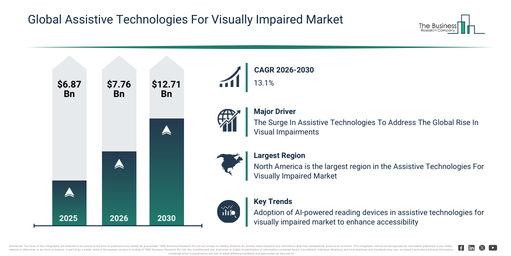
    The market size for assistive technologies designed for the visually impaired has witnessed rapid expansion in recent years. This market is projected to grow from $6.87 billion in 2025 to $7.76 billion in 2026, exhibiting a compound annual growth rate (CAGR) of 12.9%. Historically, this growth can be attributed to heightened awareness of visual impairment accessibility needs, the expansion of special education programs, increased availability of assistive devices, growing institutional support for disability inclusion, and the broader adoption of screen reader technologies.

    The assistive technologies for visually impaired market size is projected to experience significant growth over the next few years, reaching $12.71 billion in 2030 at a compound annual growth rate (CAGR) of 13.1%. This expansion during the forecast period is fueled by the increasing integration of AI and computer vision, rising investments in inclusive technology development, the expansion of smart city accessibility initiatives, a growing demand for personalized assistive solutions, and the increasing adoption of wearable assistive devices. Key trends for the forecast period include the increasing adoption of AI-powered assistive software, the rising use of smart and wearable navigation devices, a growing demand for accessible digital learning tools, the expansion of connected mobility aids, and an enhanced focus on user-centric assistive design.

    See What’s Inside The Assistive Technologies For Visually Impaired Market Report With A Free Sample:

    https://thebusinessresearchcompany.com/sample_request?id=13598&type=smp&name=Assistive%20Technologies%20For%20Visually%20Impaired%20Market%20Report%202026&utm_source=Blogs&utm_medium=Paid&utm_campaign=Nov_PR

    Assistive Technologies For Visually Impaired Market Expansion: The Major Factor Driving Growth

    The increasing prevalence of visual impairments and blindness is anticipated to propel the growth of the assistive technologies for the visually impaired market moving forward. These conditions refer to a limited or complete inability to see, impacting a person’s vision to various extents. Assistive technologies improve accessibility for individuals with visual impairments and blindness by providing essential support, including Braille displays, for enhanced navigation, information access, and communication. Consequently, the rising incidences of visual impairments and blindness are driving the growth of the assistive technologies for the visually impaired market.

    Understanding Assistive Technologies For Visually Impaired Market Segmentation For Strategic Planning

    The assistive technologies for visually impaired market covered in this report is segmented –

    1) By Type: Educational Devices And Software, Mobility Devices, Low Vision Devices

    2) By Distribution Channel: Hospital Pharmacies, Retail Pharmacies, Optical Stores, Online Pharmacies

    3) By End User: Blind Schools, Enterprises And Social Organizations, Personal Use, Hospitals, Other End Users

    Subsegments:

    1) By Educational Devices And Software: Braille Notetakers, Screen Readers, Accessible Learning Software

    2) By Mobility Devices: Canes (Traditional And Smart Canes), GPS Navigation Devices, Wearable Technology For Navigation

    3) By Low Vision Devices: Magnifiers (Handheld And Electronic), Telescopic Lenses, Digital Magnification Devices

    Key Assistive Technologies For Visually Impaired Market Trends To Watch In 2026

    Leading companies operating in the assistive technologies for visually impaired market are concentrating on developing technological advancements, including AI-powered handheld reading devices. These devices aim to provide real-time text recognition and scene understanding to enhance reading independence, improve usability, and lessen the need for sighted assistance. An AI-powered handheld reading device utilizes a combination of computer vision and optical character recognition (OCR) to instantly convert printed, handwritten, or digital text into spoken feedback, much like having a personal reader. This allows for smoother, faster access to information, broader language support, and reduced reliance on additional assistive tools.

    Key Companies Active In The Assistive Technologies For Visually Impaired Market

    Major companies operating in the assistive technologies for visually impaired market are OrCam Technologies Ltd., Vispero, Freedom Scientific Inc., Humanware Pty. Ltd., Amedia Corporation, Aira Tech Corp., LVI Low Vision International AB, Maxi-Aids, Dolphin Computer Access Ltd., Eschenbach Optik GmbH, eSight Corporation, Zoomax Inc., Ash Technologies, ViewPlus Technologies Inc., Envision AI, Ai Squared Inc., Eyedaptic Inc., ABiSee Inc., American Thermoform Corporation, Boundless Assistive Technology, Torchit

    Explore Detailed Assistive Technologies For Visually Impaired Market Research And Forecasts:

    https://thebusinessresearchcompany.com/report/assistive-technologies-for-visually-impaired-global-market-report?utm_source=Blogs&utm_medium=Paid&utm_campaign=Nov_PR

    Which Geography Dominates The Assistive Technologies For Visually Impaired Market?

    North America was the largest region in the assistive technologies for visually impaired market in 2025. Asia-Pacific is expected to be the fastest-growing region in the forecast period. The regions covered in the assistive technologies for visually impaired market report are Asia-Pacific, South East Asia, Western Europe, Eastern Europe, North America, South America, Middle East, Africa.

    Reach Out To Our Team:

    The Business Research Company: https://www.thebusinessresearchcompany.com/

    Americas: +1 310-496-7795

    Asia: +44 7882 955267 & +91 8897263534

    Europe: +44 7882 955267

    Email us at: marketing@tbrc.info

    Follow us on:

    LinkedIn: https://in.linkedin.com/company/the-business-research-company

    YouTube: https://www.youtube.com/channel/UC24_fI0rV8cR5DxlCpgmyFQ

    Global Market Model: https://www.thebusinessresearchcompany.com/global-market-model
  • How The Acute Agitation And Aggression Treatment Market Will Grow To $8.37 Billion By 2030

    How The Acute Agitation And Aggression Treatment Market Will Grow To $8.37 Billion By 2030

    Market attractiveness scoring, total addressable market sizing, company benchmarking matrices, interactive Excel dashboards, deeper supply chain intelligence, emerging startup tracking, and granular product-level insights are among the key offerings featured in The Business Research Company’s 2026 market reports, designed to deliver more actionable and strategically valuable research.

    Acute Agitation And Aggression Treatment Market Growth Outlook: How Much Bigger Will The Market Be By 2030?

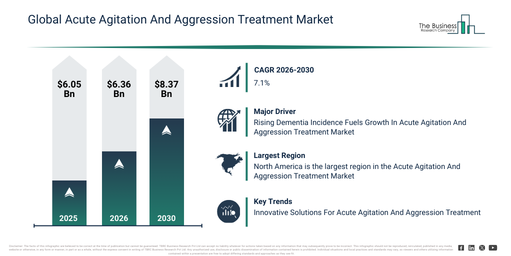
    The acute agitation and aggression treatment market has experienced substantial growth in its size over recent years. It is anticipated to expand from $6.05 billion in 2025 to $6.36 billion in 2026, exhibiting a compound annual growth rate (CAGR) of 5.2%. Historically, this expansion has been fueled by factors such as the increasing prevalence of psychiatric disorders, a rise in emergency department visits for agitation, the broader availability of antipsychotic medications, the ongoing expansion of mental health services, and a growing awareness of behavioral health conditions.

    The acute agitation and aggression treatment market size is anticipated to undergo significant expansion in the coming years. It is forecast to grow to $8.37 billion in 2030, achieving a compound annual growth rate (CAGR) of 7.1%. This projected growth can be attributed to several factors, including a rising demand for fast-acting therapeutic solutions, increased investments in neuropsychiatric drug development, broader utilization of digital mental health tools, the expansion of integrated behavioral care models, and a heightened focus on patient-centric treatment pathways. Major trends identified for the forecast period include the increasing adoption of rapid-acting pharmacologic treatments, a growing emphasis on personalized psychiatry approaches, the expanding integration of digital monitoring tools, the development of emergency behavioral care protocols, and an enhanced commitment to patient safety.

    Request A Free Acute Agitation And Aggression Treatment Market Sample From The Business Research Company:

    https://thebusinessresearchcompany.com/sample_request?id=31356299&type=smp&name=Acute%20Agitation%20And%20Aggression%20Treatment%20Market%20Report%202026&utm_source=Blogs&utm_medium=Paid&utm_campaign=Nov_PR

    How Is The Key Growth Driver Influencing The Acute Agitation And Aggression Treatment Market?

    The rising incidence of dementia is projected to fuel the expansion of the acute agitation and aggression treatment market in the coming years. Dementia describes various conditions characterized by compromised memory, cognitive function, and the ability to manage daily tasks. A frequently observed symptom in individuals with dementia is agitation, which can manifest as restlessness, repetitive actions, or frequent hand movements. Acute agitation and aggression treatment holds a vital role in dementia care, as it helps mitigate the risk of harmful symptoms, enhances the patient’s quality of life, and addresses the underlying reasons for agitation. Thus, the increasing occurrence of dementia is a key driver for the growth of the acute agitation and aggression treatment market.

    Acute Agitation And Aggression Treatment Market Segmentation By Category: What Does The 2026 Report Cover?

    The acute agitation and aggression treatment market covered in this report is segmented –

    1) By Treatment Approach: Behavioral Approaches, Environmental Interventions, Pharmacologic Approaches

    2) By Drug Class: Anti-Psychotics, Benzodiazepines, Other Drug Classes

    3) By Route of Administration: Oral, Intramuscular, Other Routes of Administrations

    4) By Indication: Schizophrenia, Dementia, Bipolar Disorder, Depression, Drug-Induced Agitation And Aggression, Alcohol Withdrawal, Other Indications

    5) By End User: Hospitals And Ambulatory Surgical Centers, Psychiatric Care Facilities, Other End Users

    Subsegments:

    1) By Behavioral Approaches: Cognitive Behavioral Therapy (CBT), De-escalation Techniques, Psychoeducation, Relaxation Therapy, Other Behavioral Interventions

    2) By Environmental Interventions: Sensory Modifications, Safe Room Or Containment Strategies, Environmental Noise Reduction, Lighting And Temperature Adjustments, Other Environmental Interventions

    3) By Pharmacologic Approaches: Antipsychotic Medications, Benzodiazepine Medications, Mood Stabilizers, Other Pharmacologic Agents, Adjunctive Medications

    How Are Industry Players Changing The Acute Agitation And Aggression Treatment Market Landscape?

    Major companies operating in the acute agitation and aggression treatment market are concentrating on developing innovative products, such as a generic version of Zyprexa, to meet patient needs. Generic Zyprexa is a variant of the brand-name drug Zyprexa, which contains the active ingredient olanzapine and is employed in the treatment of psychotic conditions.

    Acute Agitation And Aggression Treatment Market Global Key Players And Competitive Overview

    Major companies operating in the acute agitation and aggression treatment market are Pfizer Inc., Johnson and Johnson Pvt Ltd., F Hoffmann-La Roche Ltd., AbbVie Inc., Novartis AG, Sanofi SA, Bristol-Myers Squibb Company, GlaxoSmithKline plc., Eli Lilly and Company, Teva Pharmaceutical Industries Ltd., Otsuka Pharmaceutical Co Ltd., Mylan NV, Biogen Inc., Bausch Health Companies Inc., UCB SA, Servier Laboratories, Sun Pharmaceutical Industries Ltd., AstraZeneca PLC, Ono Pharmaceutical Co Ltd., Apotex Inc., H Lundbeck A/S, Hikma Pharmaceuticals PLC, Amneal Pharmaceuticals LLC, Neurocrine Biosciences Inc., Aurobindo Pharma Limited, Alkermes plc., Indivior plc., Sunovion Pharmaceuticals Inc., Vanda Pharmaceuticals Inc., and Alexza Pharmaceuticals Inc

    Explore Comprehensive Acute Agitation And Aggression Treatment Market Coverage In The Full Report:

    https://thebusinessresearchcompany.com/report/acute-agitation-and-aggression-treatment-global-market-report?utm_source=Blogs&utm_medium=Paid&utm_campaign=Nov_PR

    Regional Analysis Of The Acute Agitation And Aggression Treatment Market: Where Is The Industry Concentrated?

    North America was the largest region in the acute agitation and aggression treatment market in 2025. Asia-Pacific is expected to be the fastest-growing region in the forecast period. The regions covered in the acute agitation and aggression treatment market report are Asia-Pacific, South East Asia, Western Europe, Eastern Europe, North America, South America, Middle East, Africa.

    Reach Out To Our Team:

    The Business Research Company: https://www.thebusinessresearchcompany.com/

    Americas: +1 310-496-7795

    Asia: +44 7882 955267 & +91 8897263534

    Europe: +44 7882 955267

    Email us at: marketing@tbrc.info

    Follow us on:

    LinkedIn: https://in.linkedin.com/company/the-business-research-company

    YouTube: https://www.youtube.com/channel/UC24_fI0rV8cR5DxlCpgmyFQ

    Global Market Model: https://www.thebusinessresearchcompany.com/global-market-model
  • Assisted Reproductive Technology Market Overview: Size, Growth Drivers, Trends And Competitive Landscape

    Assisted Reproductive Technology Market Overview: Size, Growth Drivers, Trends And Competitive Landscape

    With a focus on actionable insights and strategic value, The Business Research Company’s 2026 market reports include market attractiveness scoring, total addressable market sizing, company benchmarking matrices, interactive Excel dashboards, deeper supply chain intelligence, emerging startup tracking, and granular product-level insights.

    How Much Will The Assisted Reproductive Technology Market Be Worth By 2030?

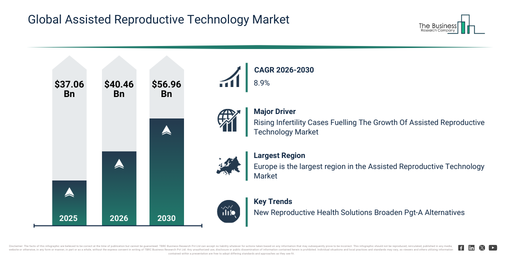
    The assisted reproductive technology market size has experienced significant expansion in recent years. Projections indicate it will advance from $37.06 billion in 2025 to $40.46 billion in 2026, exhibiting a compound annual growth rate (CAGR) of 9.2%. This historical growth can be attributed to factors such as increasing infertility prevalence, rising maternal age trends, the expansion of fertility clinics, the widespread availability of assisted reproductive procedures, and the growing social acceptance of art treatments.

    The assisted reproductive technology market is projected to experience substantial expansion over the upcoming years. This market is anticipated to reach $56.96 billion by 2030, exhibiting a compound annual growth rate (CAGR) of 8.9%. Factors driving this growth during the forecast period include the increasing adoption of precision fertility diagnostics, greater investments in fertility treatment infrastructure, the broadening of genetic testing applications, a rising demand for minimally invasive procedures, and enhanced healthcare spending on reproductive health. Key trends expected during this period involve a greater embrace of advanced embryo screening techniques, increased utilization of frozen embryo and egg banking, an escalating demand for personalized fertility treatments, the expansion of genetic testing within ART procedures, and a heightened emphasis on improving treatment success rates.

    Get Access To A Free Assisted Reproductive Technology Market Report Sample:

    https://thebusinessresearchcompany.com/sample_request?id=27294058&type=smp&name=Assisted%20Reproductive%20Technology%20Market%20Report%202026&utm_source=Blogs&utm_medium=Paid&utm_campaign=Nov_PR

    The Key Driver Behind The Assisted Reproductive Technology Market’s 8.9% CAGR

    An increase in infertility instances is projected to boost the assisted reproductive technology market in the foreseeable future. Infertility refers to the inability to achieve pregnancy following twelve months of regular, unprotected sexual activity. This condition impacts both genders and is commonly identified when conception does not occur. Assisted reproductive technology (ART) serves as the treatment for infertility, with these therapies encompassing methods involving both a female’s egg and a male’s sperm. Consequently, the growing prevalence of infertility cases fuels the expansion of the assisted reproductive technology market.

    Assisted Reproductive Technology Market Classification: Main Segments And Detailed Subsegments

    The assisted reproductive technology market covered in this report is segmented –

    1) By Diagnosis: Hysterosalpingography, Ovarian Reserve Testing, Genetic Testing

    2) By Procedure Type: Fresh Non-Donor, Fresh Donor, Frozen Donor, Frozen Non-Donor, Embryo Or Egg Banking

    3) By End-User: Hospitals, Fertility Clinics, Other End-Users

    Subsegments:

    1) By Hysterosalpingography (HSG): X-ray HSG, Sonohysterography (SHG)

    2) By Ovarian Reserve Testing: Follicle Stimulating Hormone (FSH) Testing, Anti-Müllerian Hormone (AMH) Testing, Antral Follicle Count (AFC) via Ultrasound

    3) By Genetic Testing: Preimplantation Genetic Testing (PGT), Carrier Screening Tests, Genetic Compatibility Testing

    Assisted Reproductive Technology Market Strategic Shifts: What Leading Players Are Prioritizing

    Major companies operating in the assisted reproductive technology market are prioritizing the creation of advanced solutions, such as next-generation sequencing (NGS)-based testing kits, to enhance chromosomal analysis, improve embryo selection, and increase the success rates of fertility treatments. NGS-based preimplantation genetic testing refers to research-use technologies designed for a comprehensive assessment of chromosomal abnormalities in embryos, thus aiding informed decision-making during IVF and ICSI procedures.

    Assisted Reproductive Technology Market Company Analysis: Major Industry Participants

    Major companies operating in the assisted reproductive technology market are Cooper Surgical Inc., Ferring Pharmaceuticals Ltd., Hamilton Thorne Ltd., Merck KGaA, Genea Limited, California Cryobank, European Sperm Bank, OvaScience Inc., Bloom IVF Centre, Vitrolife AB, FUJIFILM Irvine Scientific Inc., Nidacon International AB, Monash IVF Group Ltd., Cook Medical, INVO Bioscience Inc., Thermo Fisher Scientific Inc., Anecova Sa, Carolinas Fertility Institute, Microm Ltd., Inception Sciences Inc., Progyny Inc., Oxford Gene Technology IP Ltd., IVI-RMA Global, Boston IVF, CARE Fertility Group, Virtus Health, Reproductive Medicine Associates of New York, Shady Grove Fertility, CCRM Fertility, New Hope Fertility Center, Houston Fertility Institute, Pacific Fertility Center, RMA of New Jersey, Sher Fertility Institute, IVF Florida, ORM Fertility, HRC Fertility, Arizona Center for Reproductive Endocrinology & Infertility, San Diego Fertility Center, Fertility Centers of Illinois

    Get Full Access To The Assisted Reproductive Technology Market Report 2026:

    https://thebusinessresearchcompany.com/report/Assisted-Reproductive-Technology-global-market-report?utm_source=Blogs&utm_medium=Paid&utm_campaign=Nov_PR

    Assisted Reproductive Technology Market Global Regional Breakdown: Key Regions Analyzed

    Europe was the largest region in the assisted reproductive technology market in 2025. North America was the second-largest region in assisted reproductive technology market. The regions covered in the assisted reproductive technology market report are Asia-Pacific, South East Asia, Western Europe, Eastern Europe, North America, South America, Middle East, Africa.

    Reach Out To Our Team:

    The Business Research Company: https://www.thebusinessresearchcompany.com/

    Americas: +1 310-496-7795

    Asia: +44 7882 955267 & +91 8897263534

    Europe: +44 7882 955267

    Email us at: marketing@tbrc.info

    Follow us on:

    LinkedIn: https://in.linkedin.com/company/the-business-research-company

    YouTube: https://www.youtube.com/channel/UC24_fI0rV8cR5DxlCpgmyFQ

    Global Market Model: https://www.thebusinessresearchcompany.com/global-market-model
  • Active Wound Care Market Segmentation And Growth Analysis: Insights Through 2030

    Active Wound Care Market Segmentation And Growth Analysis: Insights Through 2030

    Designed to make market research more actionable and strategically valuable, The Business Research Company’s 2026 market reports feature market attractiveness scoring, total addressable market sizing, company benchmarking matrices, interactive Excel dashboards, deeper supply chain intelligence, emerging startup tracking, and granular product-level insights.

    Active Wound Care Market Forecast 2026–2030: Size, Value And Compound Annual Growth Rate

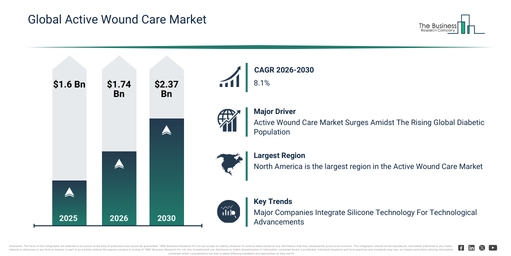
    The active wound care market has experienced significant growth in recent years. Its size is expected to increase from $1.6 billion in 2025 to $1.74 billion in 2026, showing a compound annual growth rate (CAGR) of 8.4%. Historically, this expansion has been driven by several factors, including the limited availability of advanced wound care products, a rising prevalence of chronic wounds, an increase in wound care procedures performed in hospitals and clinics, growing awareness concerning diabetic foot ulcers, and the adoption of conventional dressings.

    The active wound care market is anticipated to experience substantial expansion over the upcoming years, projected to reach $2.37 billion by 2030, exhibiting a compound annual growth rate (CAGR) of 8.1%. Factors contributing to this growth during the forecast period include the advancement of bioengineered skin substitutes, a rise in the application of growth factors for wound healing, the broadening scope of home care wound management, increased funding for chronic wound treatment research, and the incorporation of smart wound care monitoring technologies. Key trends foreseen in this period encompass the growing uptake of advanced wound dressings, an increased reliance on growth factors for tissue regeneration, the expansion of both chronic and acute wound management approaches, a heightened preference for skin-substitutes and biomaterials, and an emphasis on infection control and pain management.

    Try Before You Buy: Free Sample Of The Active Wound Care Market Report:

    https://thebusinessresearchcompany.com/sample_request?id=26511226&type=smp&name=Active%20Wound%20Care%20Market%20Report%202026&utm_source=Blogs&utm_medium=Paid&utm_campaign=Nov_PR

    Active Wound Care Market Growth Engine: The Factor Boosting Demand Globally

    The global increase in diabetic individuals is anticipated to boost the expansion of the active wound care market in the future. Obesity, identified as a condition originating from excessively high blood glucose, can lead to sores and ulcers, thereby elevating the risk of infections and other severe complications. Active wound care treatment facilitates a structured healing process for patients through the application of diverse solutions and therapies to wounds, consequently driving up the demand for active wound care. For example, data from April 2025 by the International Diabetes Federation (IDF), a non-profit organization based in Belgium, indicated that around 589 million adults worldwide, aged 20–79, currently have diabetes, representing 11.1% of the global population within this age bracket. This figure is projected to rise to 853 million (13%) by the year 2050. Furthermore, an estimated 252 million adults living with diabetes are believed to be unaware of their condition. Consequently, the increasing prevalence of diabetic patients and related fatalities will stimulate the expansion of the active wound care market.

    Which Categories And Subcategories Shape The Active Wound Care Market?

    The active wound care market covered in this report is segmented –

    1) By Product: Biomaterials, Skin-Substitutes, Synthetic Skin-Substitute, Growth Factors

    2) By Indications: Burns, Diabetic Foot Ulcers, Pressure Ulcers, Lower Limb Ulcers

    3) By Application: Chronic Wounds, Acute Wounds

    4) By End-User: Hospitals, Clinics, Home Care Settings, Other End-users

    Subsegments:

    1) By Biomaterials: Collagen-Based Products, Hydrogel Dressings, Alginate Dressings

    2) By Skin-Substitutes: Autografts, Allografts, Xenografts

    3) By Synthetic Skin-Substitutes: Polyurethane Films, Silicone-Based Products, Dermal Regeneration Templates

    4) By Growth Factors: Platelet-Derived Growth Factors (PDGF), Epidermal Growth Factors (EGF), Vascular Endothelial Growth Factors (VEGF)

    Active Wound Care Market Trend Insights: Strategic Focus Areas Of Leading Companies

    Leading companies in the active wound care market are introducing technologically advanced products, such as silicone technology, to maintain their competitive standing. Silicone technology refers to the application and utilization of materials known as silicones, which are synthetic polymers composed of silicon, oxygen, carbon, and hydrogen.

    Leading Organizations In The Active Wound Care Market

    Major companies operating in the active wound care market are Smith & Nephew PLC, MiMedx Group Inc., Tissue Regenix Group, Organogenesis Inc., Acell Inc., Integra Life Sciences Holdings Corporation, Solsys Medical LLC, Osiris Therapeutics Inc., Cytori Therapeutics Inc., Human BioSciences Inc., Wright Medical Group NV, Mölnlycke Health Care AB, Medline Industries Inc., AVITA Medical Inc., ConvaTec Inc., Stryker Corporation, 3M Company, Acelity L.P. Inc., B. Braun Melsungen AG, BSN Medical GmbH, Cardinal Health Inc., Celularity Inc., Coloplast A/S, Generex Biotechnology Corp., Hollister Incorporated, Johnson & Johnson Inc., Lohmann & Rauscher GmbH & Co. Kg, Medtronic PLC, PAUL HARTMANN AG, Adynxx Inc., Derma sciences Inc., Baxter International Inc., Axio Biosolutions

    Continue Reading: The Full Active Wound Care Market Report:

    https://thebusinessresearchcompany.com/report/active-wound-care-global-market-report?utm_source=Blogs&utm_medium=Paid&utm_campaign=Nov_PR

    Active Wound Care Market Regional Spotlight: Top Geography And Report Coverage

    North America was the largest region in the active wound care market in 2025. The regions covered in the active wound care market report are Asia-Pacific, South East Asia, Western Europe, Eastern Europe, North America, South America, Middle East, Africa.

    Reach Out To Our Team:

    The Business Research Company: https://www.thebusinessresearchcompany.com/

    Americas: +1 310-496-7795

    Asia: +44 7882 955267 & +91 8897263534

    Europe: +44 7882 955267

    Email us at: marketing@tbrc.info

    Follow us on:

    LinkedIn: https://in.linkedin.com/company/the-business-research-company

    YouTube: https://www.youtube.com/channel/UC24_fI0rV8cR5DxlCpgmyFQ

    Global Market Model: https://www.thebusinessresearchcompany.com/global-market-model