Author: Marketing Posting

  • Veterinary Device Security Monitoring Market Trends Supporting 12.5% CAGR Growth Through 2030

    Veterinary Device Security Monitoring Market Trends Supporting 12.5% CAGR Growth Through 2030

    Featuring market attractiveness scoring, total addressable market sizing, company benchmarking matrices, interactive Excel dashboards, deeper supply chain intelligence, emerging startup tracking, and granular product-level insights, The Business Research Company’s 2026 market reports are built to deliver research that is both more actionable and more strategically valuable.

    Veterinary Device Security Monitoring Market CAGR Outlook And Future Development

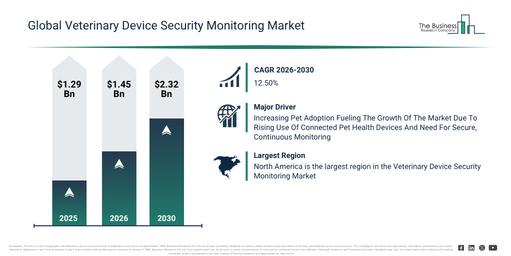
    The veterinary device security monitoring market has experienced rapid growth in recent years. It is projected to expand from $1.29 billion in 2025 to $1.45 billion in 2026, demonstrating a compound annual growth rate (CAGR) of 12.3%. This historical expansion can be attributed to factors such as limited cybersecurity maturity within veterinary device ecosystems, fragmented integration of veterinary medical devices, low adoption of connected IoT-based veterinary monitoring systems, the absence of standardized device security protocols in animal healthcare, and a reliance on reactive and manual device security management practices.

    The veterinary device security monitoring market is poised for substantial expansion over the next few years, with its valuation projected to reach $2.32 billion by 2030, demonstrating a compound annual growth rate (CAGR) of 12.5%. This growth during the forecast period is fueled by the rapid proliferation of connected veterinary IoT ecosystems, the escalating sophistication of cyber threats targeting medical devices, the increasing adoption of cloud-based veterinary healthcare platforms, stricter regulatory enforcement of healthcare data protection and device security standards, and rising investments in AI-driven predictive security monitoring systems. Key trends anticipated during this period include the implementation of zero-trust veterinary device authentication frameworks, real-time anomaly detection within clinical device networks, the utilization of edge-based veterinary device security analytics, interoperable device identity management solutions for veterinary systems, and automated compliance monitoring for veterinary medical devices.

    Get A Free Sample Report With In-Depth Market Insights:

    https://thebusinessresearchcompany.com/sample_request?id=95273259&type=smp&name=Veterinary%20Device%20Security%20Monitoring%20Market%20Report%202026&utm_source=Blogs&utm_medium=Paid&utm_campaign=Oct_PR

    Veterinary Device Security Monitoring Market Expansion Drivers: What’s Shaping Future Growth?

    The expanding rate of pet ownership is anticipated to boost the growth of the veterinary device security monitoring market in the coming years. Pet adoption involves taking on the care of a domestic animal, frequently from a shelter or rescue group, to provide it with a lasting and loving home. The rise in pet adoptions stems from greater awareness regarding animal welfare, with more individuals acknowledging the advantages of adopting rescued animals rather than buying them. Veterinary device security monitoring is applied to pets to oversee and safeguard connected medical devices, like wearables and implants, by guaranteeing the integrity of their data, identifying cyber risks, and ensuring ongoing, secure health tracking. As an example, in March 2025, the American Pet Products Association, a US-based non-profit association, reported that ninety-four (94) million U. S. households own at least one pet, an increase from eighty-two (82) million in 2023. Consequently, the growing trend of pet adoption is propelling the expansion of the veterinary device security monitoring market.

    Veterinary Device Security Monitoring Market Segment Landscape And Growth Outlook

    The veterinary device security monitoring market covered in this report is segmented –

    1) By Component: Hardware, Software, Services

    2) By Device Type: Imaging Devices, Monitoring Devices, Diagnostic Devices, Therapeutic Devices, Other Device Types

    3) By Deployment Mode: On Premises, Cloud

    4) By Application: Companion Animals, Livestock Animals, Other Applications

    5) By End User: Veterinary Hospitals, Veterinary Clinics, Research Institutes, Other End Users

    Subsegments:

    1) By Hardware: Sensors, Monitors, Controllers, Network Devices

    2) By Software: Security Management Software, Analytics Software, Alerting Software, Reporting Software

    3) By Services: Installation Services, Maintenance Services, Consulting Services, Training Services

    Veterinary Device Security Monitoring Market Top Companies Driving Competitive Growth

    Major companies operating in the veterinary device security monitoring market are Siemens Healthineers AG, Koninklijke Philips N. V, GE HealthCare Technologies Inc., Palo Alto Networks, Covetrus Inc., IDEXX Laboratories Inc., CrowdStrike Holdings Inc., Check Point Software Technologies Ltd., Zscaler Inc., Trend Micro Incorporated, Sophos Ltd., McAfee Corp., Darktrace plc, Kaspersky Lab, Armis Inc., Heska Corporation, Forescout Technologies Inc., Claroty Ltd., Cynerio Ltd., Ordr Inc.

    View The Full Veterinary Device Security Monitoring Market Report:

    https://thebusinessresearchcompany.com/report/veterinary-device-security-monitoring-market-report?utm_source=Blogs&utm_medium=Paid&utm_campaign=Oct_PR

    Veterinary Device Security Monitoring Market Global Footprint: Which Region Leads The Market?

    North America was the largest region in the veterinary device security monitoring market in 2025. Asia Pacific is expected to be the fastest-growing region in the forecast period. The regions covered in the veterinary device security monitoring market report are Asia-Pacific, South East Asia, Western Europe, Eastern Europe, North America, South America, Middle East and Africa.

    Reach Out To Our Team:

    The Business Research Company: https://www.thebusinessresearchcompany.com/

    Americas: +1 310-496-7795

    Asia: +44 7882 955267 & +91 8897263534

    Europe: +44 7882 955267

    Email us at: marketing@tbrc.info

    Follow us on:

    LinkedIn: https://in.linkedin.com/company/the-business-research-company

    YouTube: https://www.youtube.com/channel/UC24_fI0rV8cR5DxlCpgmyFQ

    Global Market Model: https://www.thebusinessresearchcompany.com/global-market-model
  • Veterinary Client Retention Platforms Market Analysis: How The Industry Is Evolving Toward A $2.02 Billion Future

    Veterinary Client Retention Platforms Market Analysis: How The Industry Is Evolving Toward A $2.02 Billion Future

    Backed by market attractiveness analysis, total addressable market sizing, company benchmarking matrices, interactive Excel dashboards, wider supply chain intelligence, emerging startup coverage, and detailed product-level insights, The Business Research Company’s 2026 market reports are designed to offer research that is more actionable and strategically valuable than ever.

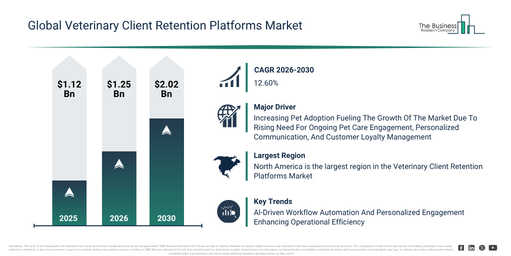
    Veterinary Client Retention Platforms Market Forecast: Value Set To Climb From $1.25 Billion To $2.02 Billion

    The veterinary client retention platforms market has experienced significant expansion in recent years. It is forecast to grow from $1. 12 billion in 2025 to $1. 25 billion in 2026, achieving a compound annual growth rate (CAGR) of 12. 4%. The historic growth of this market can be ascribed to several contributing factors, including manual record keeping in veterinary clinics which hindered client engagement, the low adoption of digital communication tools in veterinary practices, an increase in pet ownership and the frequency of veterinary visits, fragmented customer relationship management in animal healthcare, and limited automation in appointment and follow-up systems.

    The market size for veterinary client retention platforms is projected to experience substantial growth in the coming years. It is expected to expand to $2.02 billion by 2030, growing at a compound annual growth rate (CAGR) of 12.6%. This anticipated expansion during the forecast period is attributable to the increasing deployment of AI-powered veterinary CRM and retention systems, a rising demand for personalized pet healthcare experiences, the greater adoption of cloud-based veterinary practice management platforms, an elevated focus on preventive pet healthcare and continuous client engagement, and the integration of predictive analytics for forecasting client behavior. Significant trends during this period include AI-driven predictive pet health engagement and retention analytics, cloud-based platforms for veterinary client communication and appointment automation, the incorporation of IoT-enabled pet monitoring for ongoing care engagement, personalized loyalty and reward programs to enhance long-term pet owner retention, and data-driven behavioral segmentation tools for managing the veterinary client lifecycle.

    Get A Free Sample Report With In-Depth Market Insights:

    https://thebusinessresearchcompany.com/sample_request?id=73867428&type=smp&name=Veterinary%20Client%20Retention%20Platforms%20Market%20Report%202026&utm_source=Blogs&utm_medium=Paid&utm_campaign=Oct_PR

    Veterinary Client Retention Platforms Market Industry Drivers: What’s Behind The Revenue Growth?

    The rising trend of pet adoption is projected to stimulate the growth of the veterinary client retention platforms market in the foreseeable future. Pet adoption entails taking on the responsibility for a domesticated animal, often acquired from a shelter or rescue organization, with the goal of providing it with a stable and caring residence. The increase in pet adoption is attributed to heightened awareness of animal welfare, leading more individuals to recognize the benefits of adopting rescued animals and choose adoption over purchasing pets. Veterinary client retention platforms are utilized to keep pet owners engaged and loyal by managing reminders, conducting follow-ups, and sending personalized communications for their pets’ ongoing healthcare needs. For instance, in March 2025, according to the American Pet Products Association, a US-based non-profit association, ninety-four (94) million U. S. households own at least one pet, compared to eighty-two (82) million in 2023. Therefore, the expanding adoption of pets is a key driver for the growth of the veterinary client retention platforms market.

    Veterinary Client Retention Platforms Market Segment Analysis And Revenue Potential

    The veterinary client retention platforms market covered in this report is segmented –

    1) By Component: Software, Services

    2) By Practice Size: Small And Medium Sized Practices, Large Practices

    3) By Deployment Mode: Cloud Based, On Premises

    4) By Application: Appointment Reminders, Loyalty Programs, Communication Management, Feedback And Surveys, Marketing Automation, Other Applications

    5) By End User: Veterinary Clinics, Animal Hospitals, Veterinary Diagnostic Centers, Other End Users

    Subsegments:

    1) By Software: Practice Management Software, Customer Relationship Management Software, Appointment Scheduling Software, Communication And Engagement Software, Billing And Invoicing Software, Analytics And Reporting Software

    2) By Services: Consulting Services, Implementation And Integration Services, Training And Support Services, Maintenance And Upgradation Services, Data Migration Services

    #Veterinary Client Retention Platforms Market Growth Trends: What’s Shaping The Future Outlook?

    Leading companies in the veterinary client retention platforms market are concentrating on developing AI-powered, integrated client engagement solutions designed to enhance communication, automate workflows, and improve personalized client interactions, thereby driving retention and operational efficiency. An AI-powered client engagement solution is a system that utilizes artificial intelligence to automate, personalize, and optimize client interactions to boost communication, satisfaction, and loyalty. For instance, in January 2025, Covetrus, a US-based animal-health technology and services company, launched AI-enabled workflow automation and treatment board capabilities within its Covetrus Pulse platform at VMX 2025, strengthening its comprehensive practice improvement ecosystem. These innovations streamline veterinary workflows through features such as ambient listening for automatic SOAP note generation, AI-driven pre-appointment summaries, and real-time treatment tracking boards. This solution reduces administrative tasks, enhances staff efficiency, and saves time per appointment, allowing veterinarians to prioritize patient care. Moreover, the platform leverages AI insights to elevate client engagement and support personalized communication, ultimately helping veterinary practices improve operational performance, expand revenue opportunities, and achieve better clinical outcomes.

    Veterinary Client Retention Platforms Market Competitive Overview And Top Companies

    Major companies operating in the veterinary client retention platforms market are Covetrus Inc., IDEXX Laboratories Inc., ActiveCampaign LLC, Keap Inc., ezyVet Limited, PetDesk Inc., Vetstoria Limited, Hippo Manager Software Inc., Weave Communications Inc., Provet Cloud, Emitrr Inc., VetSuccess Inc., Vetspire Inc., PetExec Inc., PetsApp Ltd., AllyDVM Inc., NaVetor, DaySmart Vet, VitusVet Inc., Onward Vet Inc

    View The Full Veterinary Client Retention Platforms Market Report:

    https://thebusinessresearchcompany.com/report/veterinary-client-retention-platforms-market-report?utm_source=Blogs&utm_medium=Paid&utm_campaign=Oct_PR

    Veterinary Client Retention Platforms Market Top Region: Where Does Most Revenue Come From?

    North America was the largest region in the veterinary client retention platforms market in 2025. Asia Pacific is expected to be the fastest-growing region in the forecast period. The regions covered in the veterinary client retention platforms market report are Asia-Pacific, South East Asia, Western Europe, Eastern Europe, North America, South America, Middle East and Africa.

    Reach Out To Our Team:

    The Business Research Company: https://www.thebusinessresearchcompany.com/

    Americas: +1 310-496-7795

    Asia: +44 7882 955267 & +91 8897263534

    Europe: +44 7882 955267

    Email us at: marketing@tbrc.info

    Follow us on:

    LinkedIn: https://in.linkedin.com/company/the-business-research-company

    YouTube: https://www.youtube.com/channel/UC24_fI0rV8cR5DxlCpgmyFQ

    Global Market Model: https://www.thebusinessresearchcompany.com/global-market-model
  • Veterinary Chewable Base Excipients Market Outlook Through 2030: Understanding The Growth Opportunity

    Veterinary Chewable Base Excipients Market Outlook Through 2030: Understanding The Growth Opportunity

    Featuring market attractiveness scoring, total addressable market sizing, company benchmarking matrices, interactive Excel dashboards, deeper supply chain intelligence, emerging startup tracking, and granular product-level insights, The Business Research Company’s 2026 market reports are built to deliver research that is both more actionable and more strategically valuable.

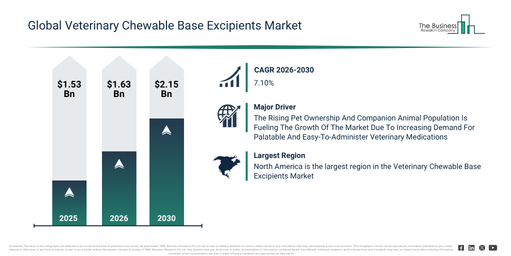
    Veterinary Chewable Base Excipients Market Revenue Growth On Track For A 7.1% CAGR Through 2030

    The veterinary chewable base excipients market has demonstrated significant growth in recent years. This market is projected to expand from $1.53 billion in 2025 to $1.63 billion in 2026, reflecting a compound annual growth rate (CAGR) of 6.9%. The historical expansion can be attributed to factors such as low medication adherence in animals due to unsatisfactory palatability, a continued dependence on traditional tablet and injectable veterinary dosage forms, the limited availability of species-specific flavored drug formulations, an escalating demand for improved veterinary treatment compliance, and the increasing utilization of basic sugar and gelatin-based excipients in formulations.

    The market for veterinary chewable base excipients is projected to experience substantial expansion over the coming years, reaching a valuation of $2.15 billion by 2030, advancing at a compound annual growth rate (CAGR) of 7.1%. This anticipated growth is fueled by several factors, including the incorporation of AI-powered tools for formulation design and predicting palatability, the development of personalized veterinary medicine necessitating customized excipient systems, the increasing use of biodegradable and sustainable excipient materials, a rise in investment in sophisticated drug delivery methods for animals, and a greater need for precise dosing and formulations that improve compliance. Key developments expected during this period encompass AI-driven optimization of palatability and analytical insights for veterinary excipients, the implementation of smart manufacturing techniques for chewable forms leveraging automated mixing and precise dosing, cloud-based systems for managing formulation data and monitoring excipient quality, advanced technologies for masking flavors and improving taste to boost animal medication adherence, and the creation of sustainable and biodegradable excipients for environmentally friendly veterinary pharmaceutical products.

    Get A Free Sample Report With In-Depth Market Insights:

    https://thebusinessresearchcompany.com/sample_request?id=30227857&type=smp&name=Veterinary%20Chewable%20Base%20Excipients%20Market%20Report%202026&utm_source=Blogs&utm_medium=Paid&utm_campaign=Oct_PR

    Veterinary Chewable Base Excipients Market Growth Factors: What’s Supporting Expansion?

    The market for veterinary chewable base excipients is expected to advance with the surge in pet ownership and companion animal populations. This trend, defined by the number of households owning pets and the total count of domesticated animals like dogs and cats in a given area, is expanding due to the increasing humanization of pets. As owners increasingly treat pets as family and invest more in their care, there’s a heightened need for palatable and easily administered veterinary medicines, which in turn boosts the demand for veterinary chewable base excipients used in animal-friendly dosage forms. For instance, data from the American Pet Products Association, a US-based non-profit association, indicated that as of March 2025, 94 million households in the U. S. owned at least one pet, a rise from 82 million households in 2023. Thus, the growing number of pet owners and companion animals is a significant driver for the veterinary chewable base excipients market. Growth in the veterinary chewable base excipients market is being propelled by the rising prevalence of chronic and lifestyle diseases among animals. These conditions are persistent health issues resulting from factors such as poor nutrition, insufficient exercise, aging, or environmental influences, requiring continuous management. The increase in these ailments is largely due to escalating pet obesity, stemming from overfeeding and reduced physical activity, which significantly elevates the risk of long-term conditions like diabetes and osteoarthritis. This situation necessitates long-term, palatable treatment solutions, thereby increasing the demand for veterinary chewable base excipients essential for creating easy-to-administer and compliant dosage forms. As an example, Portland Vets Limited, a UK-based, family-owned, independent small animal veterinary practice, reported in October 2024 that 45% of animals were overweight or obese during their 2024 campaign, including 46% of dogs and 43% of cats. Therefore, the increasing occurrence of chronic and lifestyle diseases in animals is significantly driving the veterinary chewable base excipients market.

    Veterinary Chewable Base Excipients Market Segmentation And Category Overview

    The veterinary chewable base excipients market covered in this report is segmented –

    1) By Product Type: Gelatin Based Excipients, Starch Based Excipients, Sugar Based Excipients, Polymer Based Excipients, Other Product Types

    2) By Animal Type: Companion Animals, Livestock, Other Animal Types

    3) By Distribution Channel: Direct Sales, Distributors Or Wholesalers, Online Retail, Other Distribution Channels

    4) By Application: Chewable Tablets, Soft Chews, Hard Chews, Other Applications

    5) By End User: Veterinary Hospitals, Veterinary Clinics, Research Institutes, Other End Users

    Subsegments:

    1) By Gelatin Based Excipients: Soft Gelatin Chewable Bases, Hard Gelatin Chewable Bases, Flavored Gelatin Bases, Plasticized Gelatin Bases, Stabilized Gelatin Bases

    2) By Starch Based Excipients: Pregelatinized Starch Bases, Modified Starch Bases, Native Starch Bases, Cross Linked Starch Bases, Enzyme Treated Starch Bases

    3) By Sugar Based Excipients: Sucrose Based Chewable Bases, Glucose Based Chewable Bases, Maltose Based Chewable Bases, Lactose Based Chewable Bases, Sugar Alcohol Based Chewable Bases

    4) By Polymer Based Excipients: Cellulose Based Polymers, Polyvinyl Based Polymers, Acrylic Based Polymers, Biodegradable Polymer Bases, Water Soluble Polymer Bases

    5) By Other Product Types: Lipid Based Excipients, Protein Based Excipients, Gum Based Excipients, Fiber Based Excipients, Mineral Based Excipients

    Veterinary Chewable Base Excipients Market Competitive Landscape: Which Companies Lead The Industry?

    Major companies operating in the veterinary chewable base excipients market are Cargill Incorporated, Archer Daniels Midland Company, International Flavors & Fragrances Inc., IMCD N. V., Clariant AG, Omya AG, Roquette Frères, Croda International Plc, Ashland Inc., Kemin Industries Inc., JRS Pharma GmbH & Co. KG, SPI Pharma Inc., Gattefossé SAS, Lipoid GmbH, Lesaffre et Compagnie, Sigachi Industries Limited, Accent Microcell Private Limited, Nitika Pharmaceuticals Limited, Salius Pharma Private Limited, MEGGLE GmbH & Co. KG, AdvaCare Pharma USA LLC, Shreeji Pharma International Private Limited

    View The Full Veterinary Chewable Base Excipients Market Report:

    https://thebusinessresearchcompany.com/report/veterinary-chewable-base-excipients-market-report?utm_source=Blogs&utm_medium=Paid&utm_campaign=Oct_PR

    Veterinary Chewable Base Excipients Market Regional Breakdown: Where Is Demand Concentrated?

    North America was the largest region in the veterinary chewable base excipients market in 2025. Asia-Pacific is expected to be the fastest-growing region in the forecast period. The regions covered in the veterinary chewable base excipients market report are Asia-Pacific, South East Asia, Western Europe, Eastern Europe, North America, South America, Middle East and Africa.

    Reach Out To Our Team:

    The Business Research Company: https://www.thebusinessresearchcompany.com/

    Americas: +1 310-496-7795

    Asia: +44 7882 955267 & +91 8897263534

    Europe: +44 7882 955267

    Email us at: marketing@tbrc.info

    Follow us on:

    LinkedIn: https://in.linkedin.com/company/the-business-research-company

    YouTube: https://www.youtube.com/channel/UC24_fI0rV8cR5DxlCpgmyFQ

    Global Market Model: https://www.thebusinessresearchcompany.com/global-market-model

  • Veterinary BioBurden Testing Services Market Growth Potential: What The Latest Forecast Reveals

    Veterinary BioBurden Testing Services Market Growth Potential: What The Latest Forecast Reveals

    Built to provide research that’s more actionable and strategically valuable, The Business Research Company’s 2026 market reports include market attractiveness analysis, total addressable market sizing, company benchmarking matrices, interactive Excel dashboards, broader supply chain intelligence, emerging startup tracking, and in-depth product insights.

    Veterinary BioBurden Testing Services Market Value Growth And Long-Term Outlook

    The veterinary bioburden testing services market size has experienced robust expansion in recent years. This market is projected to expand from $0. 99 billion in 2025 to $1. 07 billion in 2026, demonstrating a compound annual growth rate (CAGR) of 8. 3%. Factors contributing to its growth during the past period include a rise in veterinary hospital acquired infections, the dependence on manual microbial testing and culture techniques, an increasing need for sterilization validation within animal healthcare, the broadening of quality control requirements in veterinary pharmaceutical manufacturing, and heightened awareness of hygiene standards in veterinary settings.

    The veterinary bioburden testing services market is projected to experience substantial expansion over the next few years. This market is anticipated to reach $1.49 billion by 2030, exhibiting a compound annual growth rate (CAGR) of 8.5%. This growth during the forecast period can be attributed to several factors, including the integration of AI-powered systems for microbial risk prediction and analysis, the proliferation of automated and robotics-driven laboratory testing platforms, rising adoption of cloud-based bioburden data management systems, more stringent regulatory requirements for veterinary sterilization and infection control, and an increasing need for rapid diagnostic and real-time contamination monitoring solutions. Key trends foreseen for the same period encompass AI-driven detection of microbial contamination and predictive bioburden analytics, cloud-based platforms for laboratory data management and sterilization compliance, IoT-enabled systems for real-time environmental microbial monitoring, automated high-throughput microbiological testing coupled with robotic lab workflows, and blockchain-based systems for sample traceability and contamination audit trails.

    Get A Free Sample Report With In-Depth Market Insights:

    https://thebusinessresearchcompany.com/sample_request?id=12303428&type=smp&name=Veterinary%20BioBurden%20Testing%20Services%20Market%20Report%202026&utm_source=Blogs&utm_medium=Paid&utm_campaign=Oct_PR

    Veterinary BioBurden Testing Services Market Demand Drivers: What’s Powering Industry Growth?

    The escalating occurrence of zoonotic diseases is projected to stimulate the expansion of the veterinary bioburden testing services market moving forward. These diseases are conditions resulting from infectious agents that naturally transfer from animals to humans via direct contact, tainted food or water, or environmental exposure. The increasing prevalence of zoonotic diseases primarily stems from the expanding interaction between humans and animals, as factors such as growing agricultural endeavors, wildlife intrusion, and animal farming intensify direct contact, thereby enabling pathogen transmission. This rise in zoonotic diseases fuels the need for veterinary bioburden testing services, as thorough microbial load evaluation in animals becomes crucial for identifying, tracking, and managing pathogen sources before they spread to human populations. For instance, in June 2025, according to the Centers for Disease Control and Prevention (CDC), a US-based federal public health agency, the number of West Nile virus disease cases, a key zoonotic arboviral disease transmitted from birds to humans via mosquitoes, rose from 1,132 cases in 2022 to 2,628 cases in 2023, reflecting an increase of 1,496 cases. Consequently, the rising incidence of zoonotic diseases is propelling the growth of the veterinary bioburden testing services market.

    Veterinary BioBurden Testing Services Market Segment Outlook: Which Categories Are Growing Fastest?

    The veterinary bioburden testing services market covered in this report is segmented –

    1) By Test Type: Aerobic Plate Count, Anaerobic Plate Count, Fungal Count, Spore Count, Other Test Types

    2) By Animal Type: Companion Animals, Livestock Animals, Other Animal Types

    3) By Application: Pre-Sterilization Validation, Environmental Monitoring, Surgical Site Surveillance, Water Quality Testing, Pharmaceutical Manufacturing Quality Control, Infection Outbreak Investigation

    4) By End User: Veterinary Hospitals, Diagnostic Laboratories, Research Institutes, Other End Users

    Subsegments:

    1) By Aerobic Plate Count: Standard Plate Count, Total Viable Count, Heterotrophic Plate Count, Surface Plate Count, Pour Plate Count

    2) By Anaerobic Plate Count: Clostridium Count, Bacteroides Count, Anaerobic Culture Count, Deep Agar Plate Count, Roll Tube Method Count

    3) By Fungal Count: Yeast Count, Mold Count, Total Fungal Count, Environmental Fungal Count, Pathogenic Fungal Count

    4) By Spore Count: Bacterial Spore Count, Bacillus Spore Count, Clostridium Spore Count, Heat Resistant Spore Count, Thermophilic Spore Count

    5) By Other Test Types: Coliform Count, Enterobacteriaceae Count, Pseudomonas Count, Staphylococcus Count, Salmonella Count

    Veterinary BioBurden Testing Services Market Innovation Trends: What Developments Are Reshaping The Industry?

    Leading companies in the veterinary bioburden testing services market are concentrating on creating sophisticated solutions, such as AI-enabled microbial analysis platforms, to enhance detection precision, shorten processing times, and improve contamination evaluation in animal healthcare and laboratory settings. AI-enabled microbial analysis involves using artificial intelligence technologies to automatically identify, quantify, and classify microorganisms present in samples, thereby supporting faster and more dependable testing outcomes. For instance, in May 2025, Carbgem, a Japan-based biotechnology company, introduced Zone of Inhibition for Veterinary Medicine (ZOI VET), an advanced AI-integrated microbial detection solution designed to boost accuracy in contamination analysis. This solution leverages automated image recognition and data analytics to efficiently detect and quantify microbial loads, empowering veterinary laboratories and research facilities to elevate quality control, ensure adherence to hygiene standards, and foster improved infection prevention strategies.

    Veterinary BioBurden Testing Services Market Competitive Landscape: Who Leads The Industry?

    Major companies operating in the veterinary bioburden testing services market are Thermo Fisher Scientific Inc., Merck KGaA, Laboratory Corporation of America Holdings, Eurofins Scientific SE, SGS SA, Intertek Group plc, Charles River Laboratories International Inc., WuXi Biologics (Cayman) Inc., Element Materials Technology Group Limited, STERIS Laboratories Inc., WuXi AppTec Co. Ltd., Pace Analytical Services LLC, North American Science Associates Inc., Medistri SA, Microbac Laboratories Inc., Almac Group Limited, Boston Analytical Inc., Creative Bioarray, Pacific BioLabs Inc., Accuratus Lab Services Inc.

    View The Full Veterinary BioBurden Testing Services Market Report:

    https://thebusinessresearchcompany.com/report/veterinary-bioburden-testing-services-market-report?utm_source=Blogs&utm_medium=Paid&utm_campaign=Oct_PR

    Veterinary BioBurden Testing Services Market Geographic Landscape: Which Region Dominates Industry Growth?

    North America was the largest region in the veterinary bioburden testing services market in 2025. Asia-Pacific is expected to be the fastest-growing region in the forecast period. The regions covered in the veterinary bioburden testing services market report are Asia-Pacific, South East Asia, Western Europe, Eastern Europe, North America, South America, Middle East and Africa.

    Reach Out To Our Team:

    The Business Research Company: https://www.thebusinessresearchcompany.com/

    Americas: +1 310-496-7795

    Asia: +44 7882 955267 & +91 8897263534

    Europe: +44 7882 955267

    Email us at: marketing@tbrc.info

    Follow us on:

    LinkedIn: https://in.linkedin.com/company/the-business-research-company

    YouTube: https://www.youtube.com/channel/UC24_fI0rV8cR5DxlCpgmyFQ

    Global Market Model: https://www.thebusinessresearchcompany.com/global-market-model
  • Veterinary Asset Tracking Market Growth Outlook: Why Analysts Expect Continued Expansion

    Veterinary Asset Tracking Market Growth Outlook: Why Analysts Expect Continued Expansion

    Backed by market attractiveness analysis, total addressable market sizing, company benchmarking matrices, interactive Excel dashboards, wider supply chain intelligence, emerging startup coverage, and detailed product-level insights, The Business Research Company’s 2026 market reports are designed to offer research that is more actionable and strategically valuable than ever.

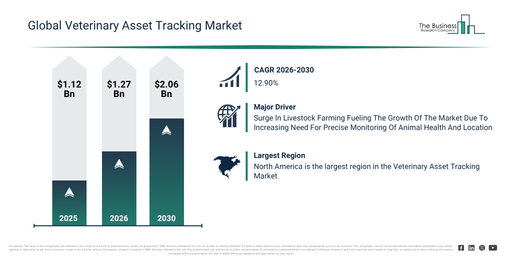
    Veterinary Asset Tracking Market Poised To Hit $2.06 Billion By 2030 With A 12.9% CAGR

    The veterinary asset tracking market has seen rapid expansion in recent years. This market is expected to grow from $1. 12 billion in 2025 to $1. 27 billion in 2026, at a compound annual growth rate (CAGR) of 12. 7%. The historical growth in this sector can be ascribed to factors such as manual inventory and asset tracking systems in veterinary facilities, which led to increasing operational inefficiencies and problems with equipment misplacement. Other contributing factors include the expanding veterinary infrastructure and equipment acquisition, a rising demand for improved inventory accuracy and accountability, and the implementation of basic barcode and spreadsheet-based tracking systems.

    The veterinary asset tracking market is projected to experience substantial expansion over the coming years. By 2030, this market is forecasted to reach $2. 06 billion, demonstrating a compound annual growth rate (CAGR) of 12. 9%. This anticipated growth during the projection period stems from several factors, including the incorporation of IoT and AI-powered asset tracking systems within veterinary facilities, an increasing need for automated inventory management and proactive equipment upkeep, the proliferation of cloud-based veterinary management platforms, intensified regulatory demands for asset traceability and adherence, and the wider uptake of intelligent hospital infrastructure and interconnected veterinary technologies. Key trends expected within the forecast timeframe encompass IoT-driven real-time veterinary asset monitoring and tracking systems, AI-enhanced predictive maintenance and optimization of veterinary equipment utilization, centralized cloud-based platforms for veterinary inventory and asset management, smart tagging solutions integrating RFID and GPS for valuable veterinary assets, and blockchain-supported audit trails and compliance tracking for the use of veterinary equipment.

    Get A Free Sample Report With In-Depth Market Insights:

    https://thebusinessresearchcompany.com/sample_request?id=69540518&type=smp&name=Veterinary%20Asset%20Tracking%20Market%20Report%202026&utm_source=Blogs&utm_medium=Paid&utm_campaign=Oct_PR

    Veterinary Asset Tracking Market Growth Drivers: What’s Behind The Acceleration?

    The expansion of livestock farming practices is anticipated to fuel the progress of the veterinary asset tracking market in the coming years. Livestock farming involves the rearing of domesticated animals under controlled agricultural settings to obtain products like food, fiber, and labor. This sector is growing primarily due to the rising global demand for animal-derived foods, as dietary shifts and population increases lead to greater consumption of meat, milk, and other animal products. The increase in livestock farming boosts the need for veterinary asset tracking because larger animal populations necessitate precise monitoring of their health and whereabouts to prevent disease outbreaks and enhance farm management effectiveness. For instance, the Department of Agriculture, a US-based government entity, reported in December 2025 that global chicken meat production is forecast to rise by approximately 2% in 2026, reaching an unprecedented 109.6 million tons. Furthermore, US production is predicted to expand by about 1% to 22.0 million tons. Consequently, the proliferation of livestock farming practices is propelling the expansion of the veterinary asset tracking market. The increasing prevalence of pet ownership is projected to drive the expansion of the veterinary asset tracking market in the coming period. A pet is an animal kept by humans mainly for camaraderie, emotional bonding, or personal satisfaction, rather than for financial or practical purposes. Pet ownership is on the rise as contemporary lifestyles, marked by increased social isolation and stress, encourage more people to adopt animals for companionship, thereby enhancing emotional well-being and mitigating loneliness. This higher rate of pet ownership creates a need for veterinary asset tracking, as a greater number of pets requires effective monitoring and management to ensure their safety, health, and prompt medical attention both at home and in clinics. For example, data from the American Pet Products Association, a US-based non-profit trade group, revealed in March 2025 that pet ownership has recovered, with 94 million U.S. households owning at least one pet, an increase from 82 million in 2023. Ownership for both dogs and cats has generally climbed, with dogs found in 51% of households (68 million) and cats in 37% (49 million). Thus, the growing trend of pet ownership is a key factor propelling the veterinary asset tracking market.

    Veterinary Asset Tracking Market Segment Landscape: Which Areas Lead Development?

    The veterinary asset tracking market covered in this report is segmented –

    1) By Component: Hardware, Software, Services

    2) By Technology: Radio Frequency Identification, Barcode, Global Positioning System, Internet Of Things, Other Technologies

    3) By Deployment: On-Premises, Cloud-Based

    4) By Application: Equipment Tracking, Inventory Management, Medication Tracking, Animal Identification, Other Applications

    5) By End User: Veterinary Hospitals And Clinics, Research Institutes, Animal Farms, Other End Users

    Subsegments:

    1) By Hardware: Radio Frequency Identification Tags, Global Positioning System Trackers, Barcode Scanners, Sensors, Mobile Devices

    2) By Software: Asset Management Software, Inventory Tracking Software, Fleet Management Software, Cloud-Based Platforms, Analytics Software

    3) By Services: Installation Services, Maintenance Services, Training Services, Consulting Services, Support Services

    Veterinary Asset Tracking Market Company Landscape And Competitive Strategy

    Major companies operating in the veterinary asset tracking market are Honeywell International Inc., Avery Dennison Corporation, Zebra Technologies Corporation, Trimble Inc., Impinj Inc., CenTrak Inc., Invengo Technology Pte. Ltd., Alien Technology LLC, GAO RFID Inc., Identec Solutions AG, CUBEX LLC, Digitail Inc., Asset Panda LLC, SATO Holdings Corporation, Wavetrend Technologies Ltd., EZOfficeInventory, Sortly Inc., Inventory Ally, Angelpaw LLC, Mashura Inc.

    View The Full Veterinary Asset Tracking Market Report:

    https://thebusinessresearchcompany.com/report/veterinary-asset-tracking-market-report?utm_source=Blogs&utm_medium=Paid&utm_campaign=Oct_PR

    Veterinary Asset Tracking Market Largest Region: Which Geography Holds The Highest Market Share?

    North America was the largest region in the veterinary asset tracking market in 2025. Asia-Pacific is expected to be the fastest-growing region in the forecast period. The regions covered in the veterinary asset tracking market report are Asia-Pacific, South East Asia, Western Europe, Eastern Europe, North America, South America, Middle East and Africa.

    Reach Out To Our Team:

    The Business Research Company: https://www.thebusinessresearchcompany.com/

    Americas: +1 310-496-7795

    Asia: +44 7882 955267 & +91 8897263534

    Europe: +44 7882 955267

    Email us at: marketing@tbrc.info

    Follow us on:

    LinkedIn: https://in.linkedin.com/company/the-business-research-company

    YouTube: https://www.youtube.com/channel/UC24_fI0rV8cR5DxlCpgmyFQ

    Global Market Model: https://www.thebusinessresearchcompany.com/global-market-model
  • Veterinary Anti-Tamper Seals With Near Field Communication (NFC) Market Forecast Insights: The Road To $0.97 Billion By 2030

    Veterinary Anti-Tamper Seals With Near Field Communication (NFC) Market Forecast Insights: The Road To $0.97 Billion By 2030

    Featuring market attractiveness scoring, total addressable market sizing, company benchmarking matrices, interactive Excel dashboards, deeper supply chain intelligence, emerging startup tracking, and granular product-level insights, The Business Research Company’s 2026 market reports are built to deliver research that is both more actionable and more strategically valuable.

    Veterinary Anti-Tamper Seals With Near Field Communication (NFC) Market Size And Revenue Outlook Through 2030

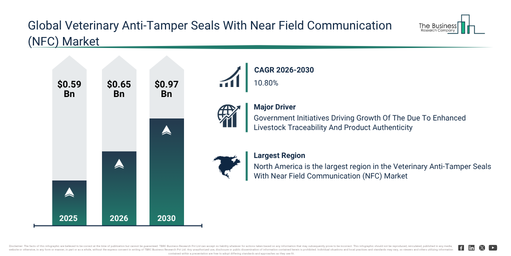
    The market for veterinary anti-tamper seals with near field communication (NFC) has witnessed significant expansion in recent years. This market is projected to grow from $0.59 billion in 2025 to $0.65 billion in 2026, at a compound annual growth rate (CAGR) of 10.5%. The historical increase in market size can be attributed to several factors, including the rising incidence of livestock disease outbreaks and the resulting need for traceability, the growing prevalence of counterfeit veterinary drugs within supply chains, the increasing adoption of basic animal tagging and manual identification systems, the expansion of global livestock trade along with its export compliance requirements, and a heightened demand for robust vaccination and treatment record keeping.

    The market for veterinary anti-tamper seals with near field communication (NFC) is anticipated to experience substantial expansion over the next few years. It is projected to achieve a valuation of $0.97 billion by 2030, reflecting a compound annual growth rate (CAGR) of 10.8%. This growth during the forecast period can be attributed to the integration of NFC and IoT-based smart veterinary identification systems, a rising demand for real-time livestock monitoring and predictive animal health analytics, the expansion of digital veterinary ecosystems and interoperable health records, stricter global regulations on animal welfare and pharmaceutical traceability, and the increasing adoption of smart farming and precision livestock management solutions. Prominent trends for this period include NFC-enabled tamper-evident veterinary identification systems, blockchain-based livestock traceability and compliance authentication, smart animal health data capture alongside cloud-based veterinary record systems, AI-enabled veterinary fraud detection and seal integrity analytics, and connected pharmaceutical and animal sample verification systems.

    Get A Free Sample Report With In-Depth Market Insights:

    https://thebusinessresearchcompany.com/sample_request?id=76635514&type=smp&name=Veterinary%20Anti-Tamper%20Seals%20With%20Near%20Field%20Communication%20%28NFC%29%20Market%20Report%202026&utm_source=Blogs&utm_medium=Paid&utm_campaign=Oct_PR

    Veterinary Anti-Tamper Seals With Near Field Communication (NFC) Market Growth Factors Behind Sustained Expansion

    The increasing government initiatives supporting the livestock sector are expected to propel the growth of the veterinary anti-tamper seals with near field communication (NFC) market going forward. These governmental programs and policies are designed to enhance animal health, productivity, and product traceability. Such initiatives are expanding to ensure food safety and traceability by promoting veterinary monitoring and technologies that prevent counterfeit or substandard products. Government initiatives supporting the livestock sector aid veterinary anti-tamper seals with NFC by fostering traceability and authenticity, thereby encouraging the use of NFC-enabled seals to securely track veterinary products throughout the supply chain. For instance, in September 2023, according to the U. S. Department of Agriculture (USDA), a US-based federal agency, the Portuguese government provided USD 0.013 bn (€12 million) in financial support to the beef cattle sector. Therefore, the increasing government initiatives supporting the livestock sector are driving the growth of the veterinary anti-tamper seals with near field communication (NFC) market. The growing concern over counterfeit veterinary products is anticipated to propel the growth of the veterinary anti-tamper seals with near-field communication (NFC) market going forward. This concern refers to the risk of fake or substandard animal medicines and health products that can harm animals, reduce treatment effectiveness, and cause economic losses. This apprehension is escalating due to the expansion of online and unregulated distribution channels, which facilitate the circulation of unauthorized products. NFC-enabled anti-tamper seals help address this issue by enabling secure product authentication and traceability, allowing veterinarians and farmers to verify the authenticity of medicines before use. For instance, in March 2026, the UK government reported that the Veterinary Medicines Directorate conducted 188 inspections between October and November 2025, initiated 200 enforcement cases, and removed 77 illegal listings. Therefore, the growing concern over counterfeit veterinary products is driving the growth of the veterinary anti-tamper seals with near-field communication (NFC) market.

    Veterinary Anti-Tamper Seals With Near Field Communication (NFC) Market Segments: Where Is Growth Concentrated?

    The veterinary anti-tamper seals with near field communication (nfc) market covered in this report is segmented –

    1) By Product Type: Adhesive Seals, Clip Seals, Band Seals, Other Product Types

    2) By Technology: Near Field Communication Enabled, Radio-Frequency Identification, Barcode, Other Technologies

    3) By Distribution Channel: Direct Sales, Distributors, Online Sales, Other Distribution Channels

    4) By Application: Pharmaceutical Packaging, Medical Devices, Animal Identification, Other Applications

    5) By End User: Veterinary Clinics, Animal Hospitals, Research Laboratories, Other End Users

    Subsegments:

    1) By Adhesive Seals: Void Label Adhesive Seals, Destructible Film Adhesive Seals, Tamper Evident Tape Seals, Security Sticker Seals, Residue Indicating Adhesive Seals, Holographic Adhesive Seals

    2) By Clip Seals: Plastic Clip Seals, Metal Clip Seals, Snap Lock Clip Seals, Adjustable Length Clip Seals, Fixed Length Clip Seals, High Security Clip Seals

    3) By Band Seals: Bottle Neck Band Seals, Cap Band Seals, Heat Shrink Band Seals, Breakable Ring Band Seals, Tamper Evident Sleeve Bands, Perforated Band Seals

    4) By Other Product Types: Tamper Evident Caps And Closures, Security Tapes And Strips, Tamper Evident Pouches, Serialized Security Labels, Smart Packaging Seals, Integrated Sensor Based Seals

    Veterinary Anti-Tamper Seals With Near Field Communication (NFC) Market Key Players Shaping Industry Direction

    Major companies operating in the veterinary anti-tamper seals with near field communication (nfc) market are 3M Company, Medtronic plc, Avery Dennison Corporation, CCL Industries Inc., H. B. Fuller Medical Adhesive Technologies, HID Global Corporation, Datamars, Resource Label Group Inc., Schreiner Group, Identiv Inc., KVP International LLC, Confidex Ltd., LeghornGroup, SAG RFID, National Band & Tag Co., ID Tech Solutions, Kupsan Tag Company, Tageos SAS, Securikett Ulrich & Horn GmbH, SSS TAG INDIA

    View The Full Veterinary Anti-Tamper Seals With Near Field Communication (NFC) Market Report:

    https://thebusinessresearchcompany.com/report/veterinary-anti-tamper-seals-with-near-field-communication-nfc-market-report?utm_source=Blogs&utm_medium=Paid&utm_campaign=Oct_PR

    Veterinary Anti-Tamper Seals With Near Field Communication (NFC) Market Regional Analysis: Which Region Leads By Revenue?

    North America was the largest region in the veterinary anti-tamper seals with near field communication (NFC) market in 2025. Asia-Pacific is expected to be the fastest-growing region in the forecast period. The regions covered in the veterinary anti-tamper seals with near field communication (NFC) market report are Asia-Pacific, South East Asia, Western Europe, Eastern Europe, North America, South America, Middle East and Africa.

    Reach Out To Our Team:

    The Business Research Company: https://www.thebusinessresearchcompany.com/

    Americas: +1 310-496-7795

    Asia: +44 7882 955267 & +91 8897263534

    Europe: +44 7882 955267

    Email us at: marketing@tbrc.info

    Follow us on:

    LinkedIn: https://in.linkedin.com/company/the-business-research-company

    YouTube: https://www.youtube.com/channel/UC24_fI0rV8cR5DxlCpgmyFQ

    Global Market Model: https://www.thebusinessresearchcompany.com/global-market-model
  • Ventricular Catheters Market Analysis: Understanding The Drivers Behind 8.7% CAGR Through 2030 Growth

    Ventricular Catheters Market Analysis: Understanding The Drivers Behind 8.7% CAGR Through 2030 Growth

    Featuring market attractiveness scoring, total addressable market sizing, company benchmarking matrices, interactive Excel dashboards, deeper supply chain intelligence, emerging startup tracking, and granular product-level insights, The Business Research Company’s 2026 market reports are built to deliver research that is both more actionable and more strategically valuable.

    Ventricular Catheters Market Growth Potential: How Will Market Size Shift Through 2030?

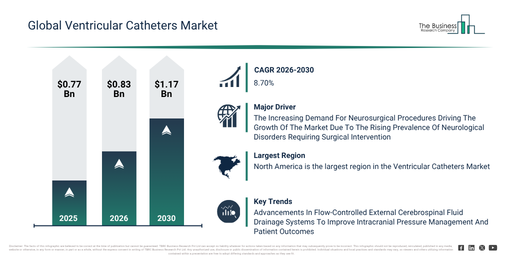
    The ventricular catheters market size has demonstrated substantial growth in recent years. It is forecast to grow from $0.77 billion in 2025 to $0.83 billion in 2026, at a compound annual growth rate (CAGR) of 8.5%. This historical expansion can be attributed to the rising prevalence of hydrocephalus and neurological disorders, an increasing number of traumatic brain injury cases, the growing adoption of neurosurgical procedures in hospitals, the expansion of neurocritical care infrastructure, and increasing awareness of intracranial pressure management.

    The ventricular catheters market is anticipated to show robust expansion over the next few years, reaching $1.17 billion by 2030, with a compound annual growth rate (CAGR) of 8.7%. This growth during the forecast period is primarily driven by progressive developments in neuroimaging and neurosurgical technologies, a rising need for minimally invasive neurosurgical instruments, increased investments in neurocritical care units, the expanding elderly demographic susceptible to neurological ailments, and the growing integration of smart and sensor-equipped medical devices. Significant trends for the forecast period include the increasing adoption of antibiotic-impregnated ventricular catheters to lower infection risks in neurosurgical procedures, a greater demand for minimally invasive cerebrospinal fluid drainage systems in critical care environments, the rising utilization of smart pressure-monitoring ventricular catheters for real-time intracranial pressure tracking, the broader application of advanced biomaterial-based catheters for enhanced biocompatibility and improved patient outcomes, and an increased use of pediatric and neonatal-specific ventricular access devices in specialized neurology care.

    Get A Free Sample Report With In-Depth Market Insights:

    https://thebusinessresearchcompany.com/sample_request?id=72228497&type=smp&name=Ventricular%20Catheters%20Market%20Report%202026&utm_source=Blogs&utm_medium=Paid&utm_campaign=Oct_PR

    Ventricular Catheters Market Growth Catalysts And Demand Drivers

    The ventricular catheters market is anticipated to experience growth due to the escalating demand for neurosurgical procedures. These procedures encompass medical operations performed on the brain, spinal cord, or nervous system, aimed at diagnosing, treating, or managing conditions such as tumors, injuries, or various neurological disorders. The heightened requirement for neurosurgical interventions is a result of the rising prevalence of neurological disorders, which necessitates surgical treatment for a greater number of patients suffering from conditions like brain tumors, stroke, and spinal disorders. Ventricular catheters are essential in supporting neurosurgical procedures by facilitating effective cerebrospinal fluid drainage, intracranial pressure monitoring, and targeted therapeutic interventions for patients with neurological conditions. For instance, in January 2025, according to Great Ormond Street Hospital, a UK-based pediatric hospital, brain tumor neurosurgical procedures saw an increase to 126 during April 2023–March 2024, up from 121 in April 2022–March 2023, reflecting a rise in surgical volume. Consequently, the increasing need for neurosurgical operations is propelling the expansion of the ventricular catheters market.

    Ventricular Catheters Market Segmentation: How Does The Market Break Down By Category?

    The ventricular catheters market covered in this report is segmented –

    1) By Product Type: External Ventricular Drain Catheters, Ventriculoperitoneal Shunt Ventricular Catheters, Intracranial Pressure Monitoring Integrated Ventricular Catheters, Specialty Ventricular Access Catheters

    2) By Coating: Standard, Antibiotic Impregnated, Antimicrobial Silver, Heparin Anti Thrombogenic

    3) By Material: Silicone, Polyurethane, Other Materials

    4) By Indication: Hydrocephalus, Traumatic Brain Injury, Intracerebral Hemorrhage Intraventricular Hemorrhage, Subarachnoid Hemorrhage, Central Nervous System Infection

    5) By End User: Hospitals, Ambulatory Surgical Centers, Specialty Neurology Centers

    Subsegments:

    1) By External Ventricular Drain Catheters: Standard External Ventricular Drain Catheters, Antibiotic Impregnated External Ventricular Drain Catheters, Silver Coated External Ventricular Drain Catheters, Pressure Monitoring External Ventricular Drain Catheters, Tunneled External Ventricular Drain Catheters

    2) By Ventriculoperitoneal Shunt Ventricular Catheters: Standard Ventriculoperitoneal Shunt Catheters, Programmable Valve Ventriculoperitoneal Shunt Catheters, Fixed Pressure Valve Ventriculoperitoneal Shunt Catheters, Anti Siphon Ventriculoperitoneal Shunt Catheters, Flow Regulated Ventriculoperitoneal Shunt Catheters

    3) By Intracranial Pressure Monitoring Integrated Ventricular Catheters: Fiber Optic Sensor Integrated Ventricular Catheters, Strain Gauge Sensor Integrated Ventricular Catheters, Digital Pressure Monitoring Ventricular Catheters, Continuous Monitoring Ventricular Catheters, Dual Function Drainage And Monitoring Ventricular Catheters

    4) By Specialty Ventricular Access Catheters: Reservoir Based Ventricular Access Catheters, Ommaya Reservoir Ventricular Access Catheters, Endoscopic Ventricular Access Catheters, Neonatal Ventricular Access Catheters, Pediatric Ventricular Access Catheters

    Ventricular Catheters Market Trends Shaping Long-Term Demand

    Major companies in the ventricular catheters market are focusing on creating advanced solutions, including sophisticated flow-regulated external ventricular drain (EVD) systems. These efforts aim to boost cerebrospinal fluid drainage efficiency, reduce the risks of catheter blockage and infection, improve intracranial pressure management, and ultimately enhance patient outcomes. Advanced flow-regulated external ventricular drain (EVD) systems are neurosurgical tools specifically designed to automatically manage and maintain steady cerebrospinal fluid drainage from the brain’s ventricles. This allows for more secure and effective intracranial pressure regulation compared to traditional gravity-based systems. For instance, in March 2025, Anuncia Medical Inc., a US-based medical device company, secured approval from the U. S. Food and Drug Administration (FDA) for ReFlow External Ventricular Drain (EVD). This innovative ventricular catheter system is engineered to optimize CSF management for patients who require temporary cerebrospinal fluid diversion. The system features a distinct flow-control mechanism aimed at minimizing catheter obstruction and ensuring consistent CSF drainage without the need for frequent manual adjustments. It is developed to offer more consistent intracranial pressure management, potentially decreasing the complications often linked with conventional external ventricular drainage systems.

    Ventricular Catheters Market Industry Leaders And Competitive Landscape

    Major companies operating in the ventricular catheters market are Medtronic plc, Stryker Corporation, Boston Scientific Corporation, B. Braun Melsungen AG, FUJIFILM Corporation, Teleflex Incorporated, Biotronik Se And Co. Kg, Integra LifeSciences Holdings Corporation, Merit Medical Systems Inc., Lepu Medical Technology (Beijing) Co Ltd., Natus Medical Incorporated, MicroPort NeuroTech Co Ltd., Raumedic Ag, Sophysa SAS, Neuromedex GmbH, Anuncia Medical Inc., DESU Medical, Dispomedica GmbH, Luciole Medical AG, Surgiwear Limited

    View The Full Ventricular Catheters Market Report:

    https://thebusinessresearchcompany.com/report/ventricular-catheters-market-report?utm_source=Blogs&utm_medium=Paid&utm_campaign=Oct_PR

    Ventricular Catheters Market Regional Analysis And Leading Geography

    North America was the largest region in the ventricular catheters market in 2025. Asia-Pacific is expected to be the fastest-growing region in the forecast period. The regions covered in the ventricular catheters market report are Asia-Pacific, South East Asia, Western Europe, Eastern Europe, North America, South America, Middle East and Africa.

    Reach Out To Our Team:

    The Business Research Company: https://www.thebusinessresearchcompany.com/

    Americas: +1 310-496-7795

    Asia: +44 7882 955267 & +91 8897263534

    Europe: +44 7882 955267

    Email us at: marketing@tbrc.info

    Follow us on:

    LinkedIn: https://in.linkedin.com/company/the-business-research-company

    YouTube: https://www.youtube.com/channel/UC24_fI0rV8cR5DxlCpgmyFQ

    Global Market Model: https://www.thebusinessresearchcompany.com/global-market-model
  • Vascular Sealant Market Forecast: Breaking Down The Numbers Behind Future Expansion

    Vascular Sealant Market Forecast: Breaking Down The Numbers Behind Future Expansion

    Built to provide research that’s more actionable and strategically valuable, The Business Research Company’s 2026 market reports include market attractiveness analysis, total addressable market sizing, company benchmarking matrices, interactive Excel dashboards, broader supply chain intelligence, emerging startup tracking, and in-depth product insights.

    Vascular Sealant Market Growth Analysis: How Will Revenue Trend Over The Forecast Period?

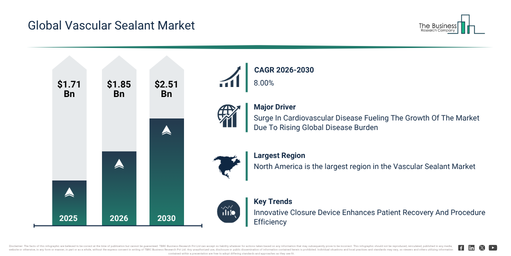
    The vascular sealant market has shown robust growth recently. It is anticipated to expand from $1.71 billion in 2025 to $1.85 billion in 2026, achieving a compound annual growth rate (CAGR) of 7.8%. This historic market expansion is primarily attributed to an escalating number of surgical procedures, the increasing prevalence of cardiovascular diseases, ongoing advancements in surgical technologies, a rising demand for effective hemostasis solutions, and the general expansion of healthcare infrastructure.

    The vascular sealant market size is projected to experience substantial expansion over the upcoming years. This market is anticipated to reach $2.51 billion by 2030, demonstrating a compound annual growth rate (CAGR) of 8.0%. Factors contributing to this growth during the forecast period include the expanding use of minimally invasive surgical procedures, an escalating need for sophisticated biomaterials, increased capital allocation towards surgical advancements, the proliferation of outpatient surgical facilities, and a heightened emphasis on ensuring patient safety and expedited recuperation. Significant trends expected during the forecast period encompass a greater uptake of advanced hemostatic agents in surgical operations, a heightened inclination towards minimally invasive surgical sealants, an increasing requirement for vascular sealants that are both rapid-acting and highly potent, the creation of sealant materials that are bioresorbable and biocompatible, and the broader application of multi-purpose sealants across various surgical domains.

    Get A Free Sample Report With In-Depth Market Insights:

    https://thebusinessresearchcompany.com/sample_request?id=67943234&type=smp&name=Vascular%20Sealant%20Market%20Report%202026&utm_source=Blogs&utm_medium=Paid&utm_campaign=Oct_PR

    Vascular Sealant Market Development Factors: What’s Supporting Demand?

    The expanding incidence of cardiovascular disease is anticipated to drive the future expansion of the vascular sealant market. Cardiovascular disease encompasses various conditions impacting the heart and blood vessels, such as ischemic heart disease and stroke. The rise in these diseases stems from an aging and expanding global population, coupled with greater exposure to risk factors like obesity, diabetes, high blood pressure, unhealthy dietary habits, lack of physical activity, and smoking; these factors collectively increase the risk of developing heart and blood vessel ailments. Vascular sealants play a role in managing cardiovascular disease by facilitating efficient bleeding control, aiding in vascular repair, and minimizing complications during surgical interventions. As an illustration, the Scottish Health Survey 2024, conducted by the Scottish Government, a Scotland-based governmental body, indicated that 16% of adults stated they lived with some form of cardiovascular disease (CVD), with the rate increasing from 4% for individuals aged 16–24 to 42% for adults aged 75 and over. Consequently, the increasing occurrence of cardiovascular disease is fueling the expansion of the vascular sealant market.

    Vascular Sealant Market Segment Landscape And Growth Outlook

    The vascular sealant market covered in this report is segmented –

    1) By Product Type: Fibrin Sealants, Collagen Based Sealants, Synthetic Sealants, Other Product Types

    2) By Material Type: Natural Biological Materials, Synthetic Polymeric Materials, Semi Synthetic Materials

    3) By Form Factor: Liquid, Patch, Spray Or Foam, Pre Filled Applicator Kits

    4) By Application: Cardiovascular Surgery, General Surgery, Neurosurgery, Orthopedic Surgery, Other Applications

    5) By End User: Hospitals, Ambulatory Surgical Centers, Specialty Clinics, Other End Users

    Subsegments:

    1) By Fibrin Sealants: Human Plasma Derived Sealants, Bovine Plasma Derived Sealants, Recombinant Fibrin Sealants, Combination Fibrin Sealants

    2) By Collagen Based Sealants: Bovine Collagen Sealants, Porcine Collagen Sealants, Equine Collagen Sealants, Crosslinked Collagen Sealants

    3) By Synthetic Sealants: Polyethylene Glycol Sealants, Cyanoacrylate Sealants, Albumin Based Sealants, Gelatin Based Sealants

    4) By Other Product Types: Combination Sealants, Hydrogel Sealants, Polysaccharide Based Sealants, Enzymatic Sealants

    Vascular Sealant Market Transformation Trends: What Innovations Are Driving Change?

    Leading companies in the vascular sealant market are increasingly focusing on utilizing innovative technologies like grip technology to achieve quicker hemostasis and improved patient recovery. Grip technology, a system rooted in hydrophilic polymers, establishes a secure and flexible seal at the vascular access site. This contributes to rapid hemostasis, minimizes the risk of bleeding complications, shortens patient recovery time, and facilitates earlier ambulation and discharge, all while presenting a minimally invasive alternative to traditional manual compression methods. For example, in July 2024, Cordis Corporation, a US-based medical device firm, secured U.S. Food and Drug Administration (FDA) approval for the Mynx Control Venous VCD. This innovative device integrates Grip Technology, which is based on hydrophilic, bioinert polyethylene glycol. The Mynx Control Venous VCD delivers effective closure for midbore venous puncture sites, including those employed in electrophysiology procedures, and demonstrated 100% procedural and device success in clinical trials. Its key benefits include a significantly reduced time to hemostasis (2.1 minutes versus 11.4 minutes for manual compression), faster ambulation, and earlier eligibility for discharge, thereby enhancing both patient experience and the operational efficiency of healthcare facilities.

    Vascular Sealant Market Competitive Overview And Top Companies

    Major companies operating in the vascular sealant market are Johnson & Johnson, Pfizer Inc., Medtronic plc, Stryker Corporation, Becton Dickinson and Company, Baxter International Inc., B. Braun Melsungen AG, Grifols S. A., Terumo Corporation, Teleflex Incorporated, Integra LifeSciences Holdings Corporation, CSL Behring LLC, Advanced Medical Solutions Group plc, SkinStitch Inc., Tricol Biomedical Inc., Cellphire Therapeutics Inc., Artivion Inc., GluStitch Inc., CuraMedical B. V., Endomedix Inc.

    View The Full Vascular Sealant Market Report:

    https://thebusinessresearchcompany.com/report/vascular-sealant-market-report?utm_source=Blogs&utm_medium=Paid&utm_campaign=Oct_PR

    Vascular Sealant Market Leading Geography: Which Region Contributes The Most Revenue?

    North America was the largest region in the vascular sealant market in 2025. Asia-Pacific is expected to be the fastest-growing region in the forecast period. The regions covered in the vascular sealant market report are Asia-Pacific, South East Asia, Western Europe, Eastern Europe, North America, South America, Middle East and Africa.

    Reach Out To Our Team:

    The Business Research Company: https://www.thebusinessresearchcompany.com/

    Americas: +1 310-496-7795

    Asia: +44 7882 955267 & +91 8897263534

    Europe: +44 7882 955267

    Email us at: marketing@tbrc.info

    Follow us on:

    LinkedIn: https://in.linkedin.com/company/the-business-research-company

    YouTube: https://www.youtube.com/channel/UC24_fI0rV8cR5DxlCpgmyFQ

    Global Market Model: https://www.thebusinessresearchcompany.com/global-market-model
  • Upstream Bioprocessing Equipment Market Forecast To Reach $18.61 Billion By 2030: Key Trends Explained

    Upstream Bioprocessing Equipment Market Forecast To Reach $18.61 Billion By 2030: Key Trends Explained

    Featuring market attractiveness scoring, total addressable market sizing, company benchmarking matrices, interactive Excel dashboards, deeper supply chain intelligence, emerging startup tracking, and granular product-level insights, The Business Research Company’s 2026 market reports are built to deliver research that is both more actionable and more strategically valuable.

    Upstream Bioprocessing Equipment Market Size Outlook: How Quickly Will Revenue Expand Through 2030?

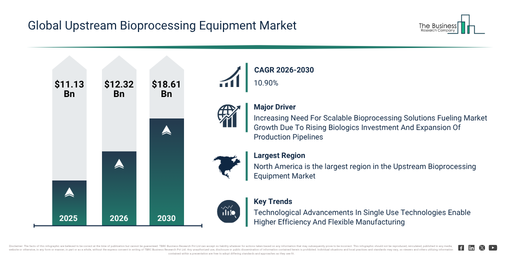
    The upstream bioprocessing equipment market has experienced rapid growth in its size over recent years. Projections indicate it will expand from $11.13 billion in 2025 to reach $12.32 billion by 2026, demonstrating a compound annual growth rate (CAGR) of 10.6%. This historical growth can be attributed to factors such as the increasing demand for monoclonal antibodies and vaccines, greater investment in biopharmaceutical manufacturing capacity, the rising adoption of mammalian cell culture systems, the expansion of contract manufacturing organizations, and an increased focus on process efficiency and yield optimization.

    The upstream bioprocessing equipment market is projected to expand significantly in the coming years, reaching $18. 61 billion by 2030, exhibiting a compound annual growth rate (CAGR) of 10. 9%. This projected expansion is driven by factors such as an expanding pipeline of biosimilars and biologics, the increasing embrace of single-use technologies, a surging demand for personalized medicine, the broadening scope of gene and cell therapy manufacturing, and greater investments in adaptable biomanufacturing facilities. Key trends anticipated during this period include the wider acceptance of single-use bioreactor systems to minimize contamination and enhance adaptability in biologics production. Additionally, there’s an escalating need for perfusion-based cell culture systems for ongoing biologics manufacturing, along with the increased utilization of modular and scalable upstream bioprocessing equipment to expedite facility expansions. The deployment of closed-system bioprocessing solutions is also growing, aiming to boost sterility and operational efficiency, complemented by the greater integration of automated sampling and process control systems for more consistent upstream processes.

    Get A Free Sample Report With In-Depth Market Insights:

    https://thebusinessresearchcompany.com/sample_request?id=82663436&type=smp&name=Upstream%20Bioprocessing%20Equipment%20Market%20Report%202026&utm_source=Blogs&utm_medium=Paid&utm_campaign=Oct_PR

    Upstream Bioprocessing Equipment Market Growth Factors: What’s Supporting Expansion?

    The upstream bioprocessing equipment market is anticipated to expand, driven by the growing demand for scalable bioprocessing solutions. These solutions refer to systems and machinery designed to facilitate a smooth progression from research-level production to commercial manufacturing on a large scale, all while ensuring constant product quality and efficient operations. The rising demand for scalable bioprocessing solutions stems from the rapid growth in biologics development pipelines, which necessitate adaptable manufacturing capabilities across various production capacities. Upstream bioprocessing equipment addresses this requirement by allowing for the efficient scaling of cell culture, fermentation, and production processes, utilizing sophisticated bioreactors and integrated systems. As an illustration, the BioIndustry Association, a UK biotechnology industry body, reported that in January 2025, the UK biotech sector secured around $4. 4 billion in investments, representing a 94% rise from the prior year. Consequently, the escalating demand for scalable bioprocessing solutions is fueling the expansion of the upstream bioprocessing equipment market.

    Upstream Bioprocessing Equipment Market Segment Analysis And Revenue Potential

    The upstream bioprocessing equipment market covered in this report is segmented –

    1) By Product Type: Bioreactors And Fermenters, Cell Culture Vessels, Filtration Systems, Mixing Systems, Sampling Systems, Other Product Types

    2) By Workflow: Media Preparation, Cell Culture, Cell Separation

    3) By Application: Monoclonal Antibodies Production, Vaccines Manufacturing, Recombinant Proteins, Gene Therapy, Other Application

    4) By End User: Pharmaceutical And Biotechnology Companies, Contract Manufacturing Organizations, Academic And Research Institutes

    Subsegments:

    1) By Bioreactors And Fermenters: Stirred Tank Bioreactors, Airlift Bioreactors, Bubble Column Bioreactors, Wave Induced Bioreactors, Packed Bed Bioreactors, Fluidized Bed Bioreactors

    2) By Cell Culture Vessels: Cell Culture Flasks, Cell Culture Plates, Cell Culture Bottles, Spinner Flasks, Roller Bottles, Cell Culture Bags

    3) By Filtration Systems: Depth Filtration Systems, Microfiltration Systems, Ultrafiltration Systems, Nanofiltration Systems, Membrane Filtration Systems, Cross Flow Filtration Systems

    4) By Mixing Systems: Magnetic Mixing Systems, Mechanical Mixing Systems, Static Mixing Systems, Single Use Mixing Systems, High Shear Mixing Systems, Low Shear Mixing Systems

    5) By Sampling Systems: Manual Sampling Systems, Automated Sampling Systems, Aseptic Sampling Systems, In Line Sampling Systems, Off Line Sampling Systems, Closed Sampling Systems

    6) By Other Product Types: Incubators, Centrifuges, Sensors And Probes, Sterilization Equipment, Media Preparation Systems, Single Use Assemblies

    Upstream Bioprocessing Equipment Market Industry Trends: What’s Reshaping Demand?

    Key companies operating in the upstream bioprocessing equipment market are concentrating on advancements in single-use technologies, such as integrated single-use bioreactor intensification systems, to enhance production adaptability, mitigate contamination risks, and improve process efficiency. These integrated single-use bioreactor intensification systems are sophisticated bioprocessing setups that merge disposable bioreactors with built-in cell retention and process control technologies, supporting high-density cell culture and continuous manufacturing without requiring extensive cleaning. For example, in August 2023, Sartorius AG, a Germany-based life sciences firm, unveiled an integrated Biostat STR system that incorporates Repligen’s XCell Alternating Tangential Flow technology. This system features embedded hardware and software modules with predefined control recipes, integrated process analytical technology for real-time observation, and improved cell retention capabilities, which removes the need for separate control units, thereby streamlining upstream processing operations.

    Upstream Bioprocessing Equipment Market Competitive Landscape: Who Leads The Industry?

    Major companies operating in the upstream bioprocessing equipment market are Saint-Gobain Performance Plastics Corporation, Thermo Fisher Scientific Inc., Merck KGaA, Danaher Corporation, Parker-Hannifin Corporation, GE Healthcare Technologies Inc., Corning Incorporated, Lonza Group AG, Avantor Inc., Sartorius AG, Entegris Inc., Getinge AB, Waters Corporation, Eppendorf SE, ZETA GmbH, Repligen Corporation, ABEC Inc., Shelcel Biozeen Technologies Private Limited, PBS Biotech Inc., Bionet Engineering S. r. l., Meissner Filtration Products Inc., ESCO Micro Pte. Ltd., BBI-Biotech GmbH, Morimatsu International Holdings Company Limited, Adolf Kühner AG

    View The Full Upstream Bioprocessing Equipment Market Report:

    https://thebusinessresearchcompany.com/report/upstream-bioprocessing-equipment-market-report?utm_source=Blogs&utm_medium=Paid&utm_campaign=Oct_PR

    Upstream Bioprocessing Equipment Market Geographic Landscape: Which Region Leads Industry Growth?

    North America was the largest region in the upstream bioprocessing equipment market in 2025. Asia-Pacific is expected to be the fastest-growing region in the forecast period. The regions covered in the upstream bioprocessing equipment market report are Asia-Pacific, South East Asia, Western Europe, Eastern Europe, North America, South America, Middle East and Africa.

    Reach Out To Our Team:

    The Business Research Company: https://www.thebusinessresearchcompany.com/

    Americas: +1 310-496-7795

    Asia: +44 7882 955267 & +91 8897263534

    Europe: +44 7882 955267

    Email us at: marketing@tbrc.info

    Follow us on:

    LinkedIn: https://in.linkedin.com/company/the-business-research-company

    YouTube: https://www.youtube.com/channel/UC24_fI0rV8cR5DxlCpgmyFQ

    Global Market Model: https://www.thebusinessresearchcompany.com/global-market-model
  • Udder Health Monitoring Market Projected For Strong Expansion Through 2030: Key Trends And Future Outlook

    Udder Health Monitoring Market Projected For Strong Expansion Through 2030: Key Trends And Future Outlook

    Built to provide research that’s more actionable and strategically valuable, The Business Research Company’s 2026 market reports include market attractiveness analysis, total addressable market sizing, company benchmarking matrices, interactive Excel dashboards, broader supply chain intelligence, emerging startup tracking, and in-depth product insights.

    Udder Health Monitoring Market Value Growth And Long-Term Outlook

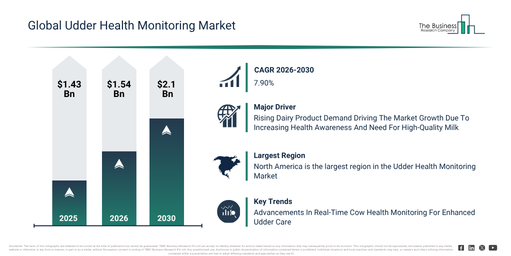
    The udder health monitoring market has demonstrated significant expansion in recent years. Its valuation is anticipated to rise from $1.43 billion in 2025 to $1.54 billion in 2026, achieving a compound annual growth rate (CAGR) of 7.7%. The growth observed in prior periods can be attributed to several factors including the rising occurrence of bovine mastitis, an increasing requirement for high-quality dairy output, insufficient manual oversight of udder health, the expansion of dairy herd sizes within commercial operations, and a heightened awareness concerning the prevention of livestock ailments.

    The udder health monitoring market is anticipated to show considerable expansion over the next few years. It is projected to reach $2.1 billion by 2030, progressing at a compound annual growth rate (CAGR) of 7.9%. This growth during the forecast period can be attributed to several factors, including the wider adoption of precision livestock farming practices, the increasing use of IoT-enabled dairy monitoring systems, a rise in investment towards automated milking systems, a growing demand for real-time animal health analytics, and the greater integration of AI-based disease detection models. Major developments foreseen in this period encompass the increasing implementation of sensor-based real-time udder health monitoring systems, a rising reliance on predictive mastitis detection technologies, an escalating demand for automated milk quality analysis solutions, the expansion of wearable livestock health tracking devices, and the deeper integration of farm management platforms with dairy monitoring systems.

    Get A Free Sample Report With In-Depth Market Insights:

    https://thebusinessresearchcompany.com/sample_request?id=51761895&type=smp&name=Udder%20Health%20Monitoring%20Market%20Report%202026&utm_source=Blogs&utm_medium=Paid&utm_campaign=Oct_PR

    Udder Health Monitoring Market Growth Catalysts And Demand Drivers

    The burgeoning consumer appetite for dairy products is anticipated to fuel the expansion of the udder health monitoring market moving forward. Dairy items encompass various foods and beverages derived from mammal milk, such as milk itself, cheese, butter, yogurt, and cream. The consumption of these products is on an upward trend, driven by heightened health consciousness among individuals who recognize their substantial nutritional content, particularly their crucial supply of calcium and protein vital for strong bones and muscles. Udder health monitoring plays a crucial role in enhancing dairy product quality by enabling early detection and prevention of mastitis and other infections in cows, thereby guaranteeing superior milk quality, safety, and uninterrupted production. For instance, in April 2025, the United States Department of Agriculture, a US-based government agency, reported that total cheese production, excluding cottage cheeses, reached 14. 2 billion pounds, marking a 0. 7 percent increase over 2023 production. Consequently, the rising demand for dairy products is a primary impetus behind the growth of the udder health monitoring market. The expanding digital transformation within veterinary healthcare is projected to spur the growth of the udder health monitoring market in the future. This transformation involves applying digital instruments and technologies to streamline clinical workflows, sharpen decision-making, and deliver more effective and accessible animal care services. The acceleration of digital transformation in veterinary healthcare is largely due to an increasing need for convenient and remote care options, as digital tools facilitate quicker access to veterinary services and boost overall operational efficiency. It significantly improves udder health monitoring through the application of the Internet of Things (IoT), artificial intelligence (AI), and data analytics for real-time and predictive identification of udder issues, thereby enhancing herd health and milk quality. For example, in March 2026, Instinct Science LLC, a US-based veterinary technology company, stated that roughly 90% of veterinary practices employ digital diagnostic and imaging tools, 75% utilize digital communication platforms for client engagement, and 91% have either introduced or updated at least one new technology during the preceding year. Consequently, the increasing digital transformation in veterinary healthcare is a key factor propelling the udder health monitoring market.

    Udder Health Monitoring Market Segment Breakdown: Which Categories Lead On Revenue?

    The udder health monitoring market covered in this report is segmented –

    1) By Component: Hardware, Software, Services

    2) By Technology: Sensors, Imaging Systems, Wearable Devices, Data Analytics

    3) By Distribution Channel: Direct Sales, Distributors, Online

    4) By Application: Mastitis Detection, Milk Quality Monitoring, Reproductive Health, Other Applications

    5) By End-User: Dairy Farms, Veterinary Clinics, Research Institutes, Other End-Users

    Subsegments:

    1) By Hardware: Milk Quality Analysers, Conductivity Sensors, Somatic Cell Count Monitors, Thermal Imaging Devices, Wearable Udder Monitoring Devices

    2) By Software: Data Analytics Platforms, Herd Management Software, Predictive Monitoring Software, Cloud Based Monitoring Software, Disease Detection Software

    3) By Services: Installation And Integration Services, Maintenance And Support Services, Data Monitoring And Analysis Services, Consulting Services, Training And Education Services

    Udder Health Monitoring Market Trends Shaping Long-Term Demand

    Leading companies within the udder health monitoring market are prioritizing the creation of advanced solutions, including remote cow monitoring, to improve udder health, avert mastitis, elevate milk quality, and facilitate real-time, data-informed herd management. This technology utilizes sensors and IoT devices to track cows’ health and behavior in real time, aiding in early disease detection and streamlined herd management. An instance of this is MSD Animal Health Ireland, an Ireland-based veterinary pharmaceutical company, which launched an integrated milk quality monitoring suite under its SenseHub Dairy platform in December 2023. This suite is designed to provide dairy farmers with real-time, cow-level insights to improve both milk quality and udder health. The system highlights elevated somatic cell counts and abnormal milk quality readings through a traffic light display and can automatically segregate affected cows, which facilitates quicker interventions and enhanced udder health management, thereby reducing milk quality penalties for dairy farms.

    Udder Health Monitoring Market Key Participants And Competitive Landscape

    Major companies operating in the udder health monitoring market are Zoetis Inc., GEA Group Aktiengesellschaft, DeLaval Holding AB, Lely Holding S. à r. l., FOSS A/S, Nedap N. V., Dairymaster, BouMatic LLC, smaXtec animal care GmbH, CowManager B. V., Afimilk Ltd., Milkplan S. A., Advanced Animal Diagnostics Inc., Connecterra B. V., EIO Diagnostics Inc., Immunolab GmbH, Allflex Livestock Intelligence, Udder Health Systems Inc., Fullwood Packo Ltd., MastiLine

    View The Full Udder Health Monitoring Market Report:

    https://thebusinessresearchcompany.com/report/udder-health-monitoring-market-report?utm_source=Blogs&utm_medium=Paid&utm_campaign=Oct_PR

    Udder Health Monitoring Market Geographic Analysis: Where Is Demand Rising Fastest?

    North America was the largest region in the udder health monitoring market in 2025. Asia-Pacific is expected to be the fastest-growing region in the forecast period. The regions covered in the udder health monitoring market report are Asia-Pacific, South East Asia, Western Europe, Eastern Europe, North America, South America, Middle East and Africa.

    Reach Out To Our Team:

    The Business Research Company: https://www.thebusinessresearchcompany.com/

    Americas: +1 310-496-7795

    Asia: +44 7882 955267 & +91 8897263534

    Europe: +44 7882 955267

    Email us at: marketing@tbrc.info

    Follow us on:

    LinkedIn: https://in.linkedin.com/company/the-business-research-company

    YouTube: https://www.youtube.com/channel/UC24_fI0rV8cR5DxlCpgmyFQ

    Global Market Model: https://www.thebusinessresearchcompany.com/global-market-model