Author: Marketing Posting

  • Sphingolipids Market Expected To Grow At 7% CAGR Through 2030: What Businesses Need To Know

    Sphingolipids Market Expected To Grow At 7% CAGR Through 2030: What Businesses Need To Know

    Backed by market attractiveness analysis, total addressable market sizing, company benchmarking matrices, interactive Excel dashboards, wider supply chain intelligence, emerging startup coverage, and detailed product-level insights, The Business Research Company’s 2026 market reports are designed to offer research that is more actionable and strategically valuable than ever.

    Sphingolipids Market Growth Analysis: How Will Revenue Trend Over The Forecast Period?

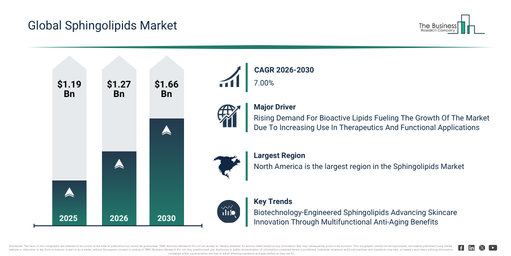
    The sphingolipids market has seen robust growth over the past few years. It is projected to increase from $1.19 billion in 2025 to $1.27 billion in 2026, at a compound annual growth rate (CAGR) of 6.8%. This growth experienced in the historic period is primarily due to increasing research activities in lipid biochemistry, a rising demand for premium skincare ingredients, the growing prevalence of chronic and metabolic disorders, the expansion of pharmaceutical biotechnology applications, and advancements in analytical lipid profiling technologies.

    The sphingolipids market size is projected to experience robust expansion over the coming years. It is expected to grow to $1.66 billion by 2030, demonstrating a compound annual growth rate (CAGR) of 7.0%. This anticipated growth within the forecast period can be attributed to several factors, including increased investment in precision medicine research, a rising adoption of bioactive lipids in nutraceutical products, a growing demand for sustainable and plant-derived lipid ingredients, the expansion of personalized skincare and cosmetic formulations, and the increasing commercialization of sphingolipid-based drug development programs. Prominent trends identified for the forecast period include the growing integration of sphingolipids into advanced skincare formulations, increasing research into sphingolipid-based therapeutic applications, a heightened demand for plant-based sphingolipid ingredients, the expansion of lipidomics studies for cellular function analysis, and the growing utilization of sphingolipids in functional nutrition products.

    Get A Free Sample Report With In-Depth Market Insights:

    https://thebusinessresearchcompany.com/sample_request?id=60664879&type=smp&name=Sphingolipids%20Market%20Report%202026&utm_source=Blogs&utm_medium=Paid&utm_campaign=Oct_PR

    Sphingolipids Market Demand Drivers: What’s Powering Industry Growth?

    The increasing demand for bioactive lipids is projected to drive the expansion of the sphingolipids market moving forward. Bioactive lipids are lipid molecules that perform crucial functions in cellular signaling, inflammation regulation, and disease progression, making them vital across pharmaceutical, cosmetic, and nutritional applications. The need for bioactive lipids is growing due to an elevated emphasis on targeted treatments and functional components that support cellular well-being. Sphingolipids contribute to this demand by offering essential bioactive lipid compounds, such as ceramides and sphingomyelins, which are extensively used in drug creation, skincare formulations, and nutraceutical offerings. For instance, in March 2024, data from the National Institutes of Health, a US-based government research organization, revealed that research related to bioactive lipids grew by over 12% in 2023 compared to 2022, reflecting a surging scientific and industrial interest in lipid-based therapeutics. Consequently, the escalating demand for bioactive lipids is propelling the growth of the sphingolipids market.

    Sphingolipids Market Segment Performance And Emerging Opportunities

    The sphingolipids market covered in this report is segmented –

    1) By Product Type: Ceramide, Sphingomyelin, Glycosphingolipids, Other Types

    2) By Source: Plant-Based, Animal-Based, Synthetic

    3) By Application: Cosmetics, Pharmaceuticals, Food And Beverages, Other Applications

    4) By End-User: Personal Care, Healthcare, Food Industry, Other End-Users

    Subsegments:

    1) By Ceramide: Synthetic Ceramide, Natural Ceramide, Plant Derived Ceramide, Animal Derived Ceramide

    2) By Sphingomyelin: Natural Sphingomyelin, Synthetic Sphingomyelin, Bovine Derived Sphingomyelin, Egg Derived Sphingomyelin

    3) By Glycosphingolipids: Cerebrosides, Gangliosides, Globosides, Sulfatides

    4) By Other Types: Sphingosine, Sphinganine, Ceramide Phosphate, Sphingosine One Phosphate

    Sphingolipids Market Innovation Trends: What Developments Are Reshaping The Industry?

    Leading companies in the sphingolipids market are concentrating on developing biotechnology-engineered ingredients, such as designer sphingolipids, to enhance skin regeneration, barrier function, and anti-aging performance. Designer sphingolipids are sophisticated bioactive lipid molecules created through biotechnological processes to offer specific skin benefits, including better hydration, elasticity, and cellular repair, while maintaining high compatibility with the skin. For example, in March 2026, Evonik Industries AG, a Germany-based chemical company, unveiled SPHINOX Vively. This cutting-edge sphingolipid provides retinol-like effectiveness with improved tolerance, encouraging the production of elastin and hyaluronic acid without causing irritation or disrupting the skin barrier. It also strengthens the skin barrier by elevating ceramide levels and decreasing inflammatory markers such as IL-1a, thereby fostering skin resilience and recovery. Additionally, this ingredient is developed using biotechnology-driven methods that align with sustainability objectives, supporting the demand for high-performing, skin-friendly, and environmentally conscious skincare options.

    Sphingolipids Market Industry Leaders And Competitive Landscape

    Major companies operating in the sphingolipids market are BASF SE, Unilever PLC, Thermo Fisher Scientific Inc., Takara Bio Inc., Merck KGaA, Bruker Corporation, Bio-Techne Corporation, Polypeptide Group, Cayman Chemical Company, Tokyo Chemical Industry Co. Ltd., Metabolon Inc., Lipoid GmbH, Santa Cruz Biotechnology Inc., Creative Biolabs, Galchimia, Bio-Synthesis Inc., Iris Biotech GmbH, Creative Proteomics, Lipotype GmbH, Biotium Inc., CLR Berlin, Lipidomics Consulting GmbH, Lipidomics Analytical Services GmbH, Sphingotec GmbH, Zora Biosciences, ChemShuttle

    View The Full Sphingolipids Market Report:

    https://thebusinessresearchcompany.com/report/sphingolipids-market-report?utm_source=Blogs&utm_medium=Paid&utm_campaign=Oct_PR

    Sphingolipids Market Regional Analysis And Top Geography

    North America was the largest region in the sphingolipids market in 2025. Asia-Pacific is expected to be the fastest-growing region in the forecast period. The regions covered in the sphingolipids market report are Asia-Pacific, South East Asia, Western Europe, Eastern Europe, North America, South America, Middle East and Africa.

    Reach Out To Our Team:

    The Business Research Company: https://www.thebusinessresearchcompany.com/

    Americas: +1 310-496-7795

    Asia: +44 7882 955267 & +91 8897263534

    Europe: +44 7882 955267

    Email us at: marketing@tbrc.info

    Follow us on:

    LinkedIn: https://in.linkedin.com/company/the-business-research-company

    YouTube: https://www.youtube.com/channel/UC24_fI0rV8cR5DxlCpgmyFQ

    Global Market Model: https://www.thebusinessresearchcompany.com/global-market-model
  • Smart Dental Imaging And Artificial Intelligence (AI) Interpretation Devices Market Size In 2026: Regional Growth, Key Segments And Future Outlook

    Smart Dental Imaging And Artificial Intelligence (AI) Interpretation Devices Market Size In 2026: Regional Growth, Key Segments And Future Outlook

    Built to provide research that’s more actionable and strategically valuable, The Business Research Company’s 2026 market reports include market attractiveness analysis, total addressable market sizing, company benchmarking matrices, interactive Excel dashboards, broader supply chain intelligence, emerging startup tracking, and in-depth product insights.

    Smart Dental Imaging And Artificial Intelligence (AI) Interpretation Devices Market Growth Potential: How Will Market Size Shift Through 2030?

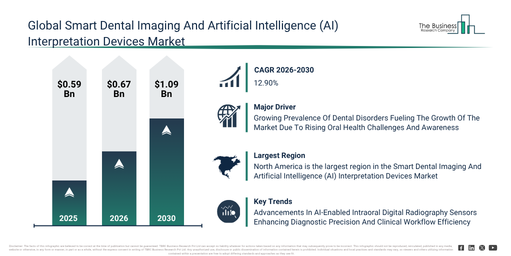
    The smart dental imaging and artificial intelligence (AI) interpretation devices market has experienced significant growth in recent years. Its size is anticipated to expand from $0.59 billion in 2025 to $0.67 billion in 2026, achieving a compound annual growth rate (CAGR) of 12.7%. The historical growth of this market can be ascribed to factors such as the increasing integration of digital radiography systems in dental practices, the rising incidence of dental disorders and oral diseases, heightened awareness concerning preventive dental care, the spread of cosmetic and restorative dentistry procedures, and ongoing technological advancements in CBCT and intraoral imaging systems.

    The smart dental imaging and artificial intelligence (AI) interpretation devices market is projected to experience significant expansion in the coming years. This market is anticipated to reach a valuation of $1.09 billion by 2030, exhibiting a compound annual growth rate (CAGR) of 12.9%. Factors contributing to this growth during the forecast period include the increasing incorporation of AI-powered diagnostic aids, a surge in demand for cloud-based dental imaging systems, enhanced investments in smart dental clinic infrastructure, the expansion of teledentistry and remote consultation offerings, and the broader uptake of automated solutions for treatment planning and workflow. Key trends shaping the market over the forecast period encompass the growing adoption of CBCT imaging systems in dental practices, increased utilization of intraoral scanners to optimize digital workflows, the advancement of software for real-time dental caries detection, a heightened preference for minimally invasive image-guided dental procedures, and the broader implementation of integrated dental imaging alongside practice management systems.

    Get A Free Sample Report With In-Depth Market Insights:

    https://thebusinessresearchcompany.com/sample_request?id=91066007&type=smp&name=Smart%20Dental%20Imaging%20And%20Artificial%20Intelligence%20%28AI%29%20Interpretation%20Devices%20Market%20Report%202026&utm_source=Blogs&utm_medium=Paid&utm_campaign=Oct_PR

    Smart Dental Imaging And Artificial Intelligence (AI) Interpretation Devices Market Growth Drivers: What’s Behind The Acceleration?

    The increasing occurrence of dental problems is projected to drive the expansion of the smart dental imaging and artificial intelligence (AI) interpretation devices market in the future. These disorders encompass issues impacting teeth, gums, and the entire oral cavity, such as cavities, gum disease, and tooth loss, all of which can negatively affect oral and general health. The escalation in dental disorders stems from factors like unhealthy diets, inadequate oral hygiene practices, and an aging demographic, resulting in a greater demand for sophisticated diagnostic and treatment options. These smart dental imaging and artificial intelligence (AI) interpretation devices contribute to oral healthcare by facilitating precise, effective, and early identification of dental issues, thereby boosting diagnostic accuracy and elevating patient care results. For example, data from November 2025, reported by the World Health Organization, a Switzerland-based health agency, indicated that global oral disease prevalence hit 3.5 billion people in 2025. This included more than 2 billion adults experiencing caries in permanent teeth and 514 million children with caries in primary teeth. Consequently, the increasing occurrence of dental disorders is a primary driver for the expansion of the smart dental imaging and artificial intelligence (AI) interpretation devices market.

    Smart Dental Imaging And Artificial Intelligence (AI) Interpretation Devices Market Segment Performance And Emerging Opportunities

    The smart dental imaging and artificial intelligence (ai) interpretation devices market covered in this report is segmented –

    1) By Technology: Machine Learning, Deep Learning, Natural Language Processing, Computer Vision, Other Technologies

    2) By Imaging Type: Intraoral Imaging, Extraoral Imaging

    3) By Application: Dental Implantology, Orthodontics, Endodontics, Periodontology, Dental Caries Detection, Other Applications

    4) By End User: Dental Clinics And Laboratories, Hospitals, Research Institutes, Other End Users

    Subsegments:

    1) By Machine Learning: Supervised Learning, Unsupervised Learning, Reinforcement Learning, Predictive Analytics, Pattern Recognition

    2) By Deep Learning: Neural Network Models, Convolutional Neural Networks, Recurrent Neural Networks, Image Classification Models, Feature Extraction Techniques

    3) By Natural Language Processing: Text Analysis, Speech Recognition, Sentiment Analysis, Language Translation, Clinical Documentation Processing

    4) By Computer Vision: Image Recognition, Object Detection, Image Segmentation, Facial Recognition, Motion Analysis

    5) By Other Technologies: Hybrid Artificial Intelligence Systems, Expert Systems, Decision Support Systems, Cognitive Computing, Data Mining Techniques

    Smart Dental Imaging And Artificial Intelligence (AI) Interpretation Devices Market Trends: What’s Defining The Industry’s Next Phase?

    Major companies within the smart dental imaging and artificial intelligence (AI) interpretation devices market are concentrating on advancements in imaging sensors, such as next-generation AI-enabled intraoral digital radiography sensors, to improve diagnostic precision and clinical workflow effectiveness. These next-generation AI-enabled intraoral digital radiography sensors represent advanced dental imaging equipment designed to capture high-resolution radiographic images from within the oral cavity, integrating artificial intelligence algorithms to facilitate automated image enhancement, detection, and diagnostic interpretation. As an illustration, in May 2024, DEXIS, a US-based dental imaging technology company, introduced the DEXIS Ti2 Intraoral Sensor, an advanced AI-enabled imaging device aimed at enhancing diagnostic capabilities in dental practices. This sensor incorporates improved durability, a more ergonomic design, and high-resolution image capture supported by CleanCapture technology, which works to lessen noise and sharpen anatomical detail. It integrates AI-powered 2D dental findings that automatically identify conditions like caries, bone loss, and periapical issues directly within the imaging software, thereby removing the necessity for external applications. Furthermore, the device connects to a wider digital ecosystem, which streamlines processes, facilitates real-time diagnostics, and ultimately enhances clinical efficiency and patient outcomes.

    Smart Dental Imaging And Artificial Intelligence (AI) Interpretation Devices Market Top Companies Driving Competitive Growth

    Major companies operating in the smart dental imaging and artificial intelligence (ai) interpretation devices market are FUJIFILM Holdings Corporation, Koninklijke Philips N. V., GE HealthCare Technologies Inc., Konica Minolta Healthcare Americas Inc., DENTSPLY SIRONA Inc., Shimadzu Corporation, Envista Holdings Corporation, ACTEON Group, Planmeca Oy, Midmark Corporation, J. MORITA Corporation, Carestream Dental LLC, Vatech Co. Ltd., Gendex Dental Systems, Air Techniques Inc., 3Disc Imaging Inc., Shanghai Handy Medical Equipment Co. Ltd., NICAL S. p. A., DÜRR DENTAL SE, Owandy Radiology S. A. S., Cruxell Corporation, Apixia Inc., Trident S. r. l., Cefla S. C. (MyRay S. r. l. ), ACTEON Group – X-Mind

    View The Full Smart Dental Imaging And Artificial Intelligence (AI) Interpretation Devices Market Report:

    https://thebusinessresearchcompany.com/report/smart-dental-imaging-and-artificial-intelligence-ai-interpretation-devices-market-report?utm_source=Blogs&utm_medium=Paid&utm_campaign=Oct_PR

    Smart Dental Imaging And Artificial Intelligence (AI) Interpretation Devices Market Global Footprint: Which Region Leads The Industry?

    North America was the largest region in the smart dental imaging and artificial intelligence (AI) interpretation devices market in 2025. Asia-Pacific is expected to be the fastest-growing region in the forecast period. The regions covered in the smart dental imaging and artificial intelligence (AI) interpretation devices market report are Asia-Pacific, South East Asia, Western Europe, Eastern Europe, North America, South America, Middle East and Africa.

    Reach Out To Our Team:

    The Business Research Company: https://www.thebusinessresearchcompany.com/

    Americas: +1 310-496-7795

    Asia: +44 7882 955267 & +91 8897263534

    Europe: +44 7882 955267

    Email us at: marketing@tbrc.info

    Follow us on:

    LinkedIn: https://in.linkedin.com/company/the-business-research-company

    YouTube: https://www.youtube.com/channel/UC24_fI0rV8cR5DxlCpgmyFQ

    Global Market Model: https://www.thebusinessresearchcompany.com/global-market-model
  • Sleep Fragmentation Analytics Market Size Forecast: How The Industry Is Expected To Grow From 2026 To 2030

    Sleep Fragmentation Analytics Market Size Forecast: How The Industry Is Expected To Grow From 2026 To 2030

    Backed by market attractiveness analysis, total addressable market sizing, company benchmarking matrices, interactive Excel dashboards, wider supply chain intelligence, emerging startup coverage, and detailed product-level insights, The Business Research Company’s 2026 market reports are designed to offer research that is more actionable and strategically valuable than ever.

    Sleep Fragmentation Analytics Market Growth Analysis: How Will Revenue Trend Over The Forecast Period?

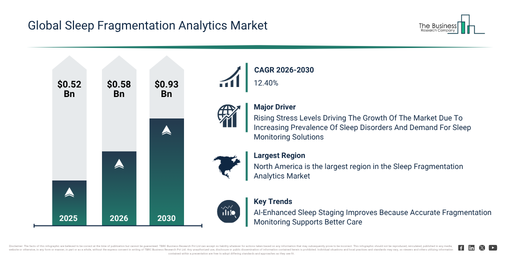
    The sleep fragmentation analytics market has experienced swift expansion over recent years. Its size is projected to increase from $0.52 billion in 2025 to $0.58 billion in 2026, demonstrating a compound annual growth rate (CAGR) of 12.1%. Historically, this growth can be attributed to several factors, including the increasing prevalence of insomnia and other sleep-related disorders, the expansion of traditional sleep laboratories and diagnostic centers, a heightened awareness of the importance of sleep health, the broader adoption of wearable fitness trackers, and the growing clinical application of polysomnography systems.

    The sleep fragmentation analytics market size is anticipated to experience substantial growth over the next few years. It is forecast to grow to $0.93 billion by 2030, achieving a compound annual growth rate (CAGR) of 12.4%. This expansion during the forecast period is driven by the increasing adoption of AI-based sleep analytics platforms, the broadening availability of home-based sleep monitoring devices, the rising integration of cloud-based health data ecosystems, a growing demand for personalized sleep optimization solutions, and the development of preventive healthcare and wellness-focused diagnostics. Significant trends expected in this period include AI-powered sleep fragmentation detection and predictive sleep quality scoring, continuous sleep monitoring through wearables such as smart rings and headband sensors, cloud-connected polysomnography platforms for remote sleep disorder diagnostics, the integration of EEG-based sleep stage classification with automated clinical reporting systems, and a surge in the use of consumer sleep wellness apps for tailored sleep optimization insights.

    Get A Free Sample Report With In-Depth Market Insights:

    https://thebusinessresearchcompany.com/sample_request?id=36909963&type=smp&name=Sleep%20Fragmentation%20Analytics%20Market%20Report%202026&utm_source=Blogs&utm_medium=Paid&utm_campaign=Oct_PR

    Sleep Fragmentation Analytics Market Growth Catalysts And Demand Drivers

    The anticipated increase in stress levels is set to boost the sleep fragmentation analytics market’s expansion in the future. Stress is characterized as a state of mental or emotional pressure resulting from challenging situations, lifestyle demands, or physiological elements that disrupt the body’s normal functions. Globally, stress levels are on the rise due to factors like work-related pressures and economic uncertainties, which collectively contribute to greater psychological strain and diminished sleep quality. Sleep fragmentation analytics tools are instrumental in identifying disturbed sleep patterns, tracking nocturnal awakenings, and delivering practical insights for managing sleep disturbances triggered by stress, thereby improving overall sleep health and well-being. As an illustration, in May 2024, the American Psychiatric Association, a US-based professional organization representing psychiatrists and advancing mental health research, reported that 43% of adults felt more anxious in 2024, an increase from 37% in 2023 and 32% in 2022. This upward trend in stress levels is, therefore, propelling the growth of the sleep fragmentation analytics market.

    Sleep Fragmentation Analytics Market Segmentation And Category Overview

    The sleep fragmentation analytics market covered in this report is segmented –

    1) By Type: Wearable Sleep Trackers, Electroencephalogram Sleep Scoring Software, Artificial Intelligence Sleep Fragmentation Algorithms

    2) By Diagnostic Technology Type: Polysomnography, Actigraphy Motion Sensors, Electroencephalogram Based Systems

    3) By Distribution Channel Type: Direct Sales Tenders, Retail Pharmacies And Medical Stores, Online Electronic Commerce Channels

    4) By Application: Sleep Apnea Evaluation, Insomnia Pattern Analysis, Shift Worker Sleep Studies, Cognitive Impact Research

    5) By End User: Hospitals And Clinics, Sleep Diagnostic Centers, Consumer Wellness Platforms, Corporate Wellness Programs

    Subsegments:

    1) By Wearable Sleep Trackers: Wrist Worn Trackers, Headband Sleep Monitors, Clip On Sleep Sensors, Smart Ring Sleep Devices

    2) By Electroencephalogram Sleep Scoring Software: Automated Sleep Scoring Platforms, Signal Processing Software, Sleep Stage Classification Tools, Data Visualization Software

    3) By Artificial Intelligence Sleep Fragmentation Algorithms: Sleep Pattern Recognition Algorithms, Sleep Disruption Detection Tools, Predictive Sleep Analysis Platforms, Machine Learning Sleep Optimization Systems

    Sleep Fragmentation Analytics Market Trends Shaping Long-Term Demand

    Companies operating within the sleep fragmentation analytics market are concentrating on developing innovative technologies, such as machine-learning-based sleep staging algorithms, to gain a competitive edge. This is achieved by automating the precise identification of sleep stages and micro-arousals, which reflect fragmentation patterns closely linked to health outcomes and decisions regarding prescription delivery in clinical care. Machine-learning-based sleep staging algorithms refer to sophisticated software designed to interpret physiological signals, including EEG and movement patterns, using trained models to classify sleep architecture with greater consistency and reduced human error compared to manual scoring. For instance, in March 2024, Beacon Biosignals, a US-based health technology company, received FDA 510(k) clearance for its SleepStageML software. This software automatically stages sleep from polysomnography recordings, standardizes classification across various settings, and enables more consistent, efficient, and precise sleep analysis to detect fragmentation and other diagnostic markers.

    Sleep Fragmentation Analytics Market Competitive Landscape: Who Leads The Industry?

    Major companies operating in the sleep fragmentation analytics market are Apple Inc., Google LLC, Samsung Electronics Co. Ltd., Garmin Ltd., ResMed Inc., Masimo Corporation, Sleep Number Corporation, NIHON KOHDEN Corporation, Thryve Health GmbH, OURA Health Oy, Natus Medical Incorporated, Zepp Health Corporation, WHOOP Inc., Withings S. A., Cadwell Industries Inc., Eight Sleep Inc., Compumedics Limited, Fullpower Technologies Inc., Emfit Ltd., Belun Technology Company Limited

    View The Full Sleep Fragmentation Analytics Market Report:

    https://thebusinessresearchcompany.com/report/sleep-fragmentation-analytics-market-report?utm_source=Blogs&utm_medium=Paid&utm_campaign=Oct_PR

    Sleep Fragmentation Analytics Market Geographic Landscape: Which Region Leads Industry Growth?

    North America was the largest region in the sleep fragmentation analytics market in 2025. Asia-Pacific is expected to be the fastest-growing region in the forecast period. The regions covered in the sleep fragmentation analytics market report are Asia-Pacific, South East Asia, Western Europe, Eastern Europe, North America, South America, Middle East and Africa.

    Reach Out To Our Team:

    The Business Research Company: https://www.thebusinessresearchcompany.com/

    Americas: +1 310-496-7795

    Asia: +44 7882 955267 & +91 8897263534

    Europe: +44 7882 955267

    Email us at: marketing@tbrc.info

    Follow us on:

    LinkedIn: https://in.linkedin.com/company/the-business-research-company

    YouTube: https://www.youtube.com/channel/UC24_fI0rV8cR5DxlCpgmyFQ

    Global Market Model: https://www.thebusinessresearchcompany.com/global-market-model
  • Single Photon Emission Computed Tomography (SPECT) Or Positron Emission Tomography (PET) Radiopharmaceutical Market 2026 Outlook: Market Size, CAGR And Key Growth Opportunities

    Single Photon Emission Computed Tomography (SPECT) Or Positron Emission Tomography (PET) Radiopharmaceutical Market 2026 Outlook: Market Size, CAGR And Key Growth Opportunities

    Featuring market attractiveness scoring, total addressable market sizing, company benchmarking matrices, interactive Excel dashboards, deeper supply chain intelligence, emerging startup tracking, and granular product-level insights, The Business Research Company’s 2026 market reports are built to deliver research that is both more actionable and more strategically valuable.

    Single Photon Emission Computed Tomography (SPECT) Or Positron Emission Tomography (PET) Radiopharmaceutical Market CAGR Outlook And Future Development

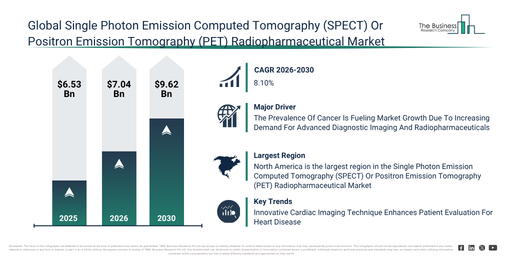
    The single photon emission computed tomography (SPECT) or positron emission tomography (PET) radiopharmaceutical market has shown robust expansion in its size during recent years. This market is expected to increase from $6.53 billion in 2025 to $7.04 billion in 2026, registering a compound annual growth rate (CAGR) of 7.9%. Historically, this growth has been driven by the rising prevalence of cancer and cardiovascular diseases, the expansion of nuclear medicine infrastructure, a growing demand for functional imaging techniques, advancements in radiopharmaceutical development, and the proliferation of diagnostic imaging centers.

    The market for single photon emission computed tomography (SPECT) or positron emission tomography (PET) radiopharmaceuticals is projected to experience substantial expansion over the upcoming years, with an anticipated growth to $9.62 billion by 2030, demonstrating a compound annual growth rate (CAGR) of 8.1%. Key factors driving this expansion during the projection period include a rising need for individualized diagnostic approaches, the proliferation of theranostics applications, increased funding into nuclear medicine research, technological improvements in radioisotope manufacturing, and the broader integration of PET imaging in clinical settings. Significant trends expected in this timeframe encompass the greater acceptance of targeted radiopharmaceuticals for specific disease visualization, a surging preference for hybrid imaging methods that merge SPECT and PET technologies, the expanded utilization of isotopes with short half-lives to enhance safety and imaging accuracy, the broadening scope of radiopharmaceutical applications within oncology and neurology, and a heightened emphasis on prompt disease identification and functional imaging.

    Get A Free Sample Report With In-Depth Market Insights:

    https://thebusinessresearchcompany.com/sample_request?id=90056858&type=smp&name=Single%20Photon%20Emission%20Computed%20Tomography%20%28SPECT%29%20Or%20Positron%20Emission%20Tomography%20%28PET%29%20Radiopharmaceutical%20Market%20Report%202026&utm_source=Blogs&utm_medium=Paid&utm_campaign=Oct_PR

    Single Photon Emission Computed Tomography (SPECT) Or Positron Emission Tomography (PET) Radiopharmaceutical Market Development Factors: What’s Supporting Demand?

    The increasing incidence of cancer is projected to stimulate the expansion of the single photon emission computed tomography (SPECT) or positron emission tomography (PET) radiopharmaceutical market. Cancer, defined by the unregulated multiplication and dissemination of abnormal cells leading to tumor formation and impaired bodily functions, is seeing a rise in prevalence, largely attributable to an aging demographic more prone to genetic mutations that initiate uncontrolled cell division. SPECT and PET radiopharmaceuticals offer highly accurate and sensitive tumor imaging, aiding in early diagnosis, precise staging, therapy tracking, and tailoring personalized treatment plans. For example, the World Health Organization, an international body based in Switzerland, reported in February 2024 a forecast of over 35 million new cancer cases by 2050, marking a 77% rise from the approximately 20 million cases in 2022. Consequently, the growing occurrence of cancer is a key factor propelling the single photon emission computed tomography (SPECT) or positron emission tomography (PET) radiopharmaceutical market forward.

    Single Photon Emission Computed Tomography (SPECT) Or Positron Emission Tomography (PET) Radiopharmaceutical Market Segment Analysis: What Are The Core Market Categories?

    The single photon emission computed tomography (spect) or positron emission tomography (pet) radiopharmaceutical market covered in this report is segmented –

    1) By Type Of Radiopharmaceuticals: Single Photon Emission Computed Tomography, Positron Emission Tomography

    2) By Radioisotope Type: Technetium-99m, Fluorine-18, Iodine-123, Gallium-68

    3) By Route Of Administration: Injectable, Inhalation, Oral

    4) By Application Areas: Oncology, Cardiology, Neurology, Other Application Areas

    5) By End User: Hospitals, Diagnostic Imaging Centers, Research Institutions, Other End Users

    Subsegments:

    1) By Single Photon Emission Computed Tomography: Cardiac Imaging Agents, Bone Imaging Agents, Renal Imaging Agents, Pulmonary Imaging Agents, Thyroid Imaging Agents

    2) By Positron Emission Tomography: Oncology Imaging Agents, Neurology Imaging Agents, Cardiology Imaging Agents, Infection And Inflammation Imaging Agents, Metabolic Imaging Agents

    Single Photon Emission Computed Tomography (SPECT) Or Positron Emission Tomography (PET) Radiopharmaceutical Market Transformation Trends: What Innovations Are Driving Change?

    Leading firms within the positron emission tomography (PET) radiopharmaceutical market are concentrating efforts on creating novel products, specifically cardiac positron emission tomography (PET) tracers, to enhance the precision and availability of diagnostic imaging for coronary artery disease. These cardiac positron emission tomography (PET) tracers are radioactive substances employed in PET imaging for visualizing blood flow and identifying regions of diminished perfusion within the heart, thereby assisting clinicians in precisely diagnosing coronary artery disease and evaluating myocardial ischemia and infarction through a noninvasive and exceptionally sensitive method. An example of this is when, in September 2024, GE HealthCare, a U.S.-based entity specializing in medical technology and pharmaceutical diagnostics, secured U. S. Food and Drug Administration (FDA) approval for Flyrcado (flurpiridaz F 18). This product functions as a cardiac PET (positron emission tomography) tracer intended for myocardial perfusion imaging (MPI) in individuals diagnosed with or suspected of having coronary artery disease. Flyrcado itself is a convenient, ready-to-use unit dose radiotracer featuring a prolonged half-life of 109 minutes. This characteristic allows for high-resolution PET imaging, exercise stress testing, and repeat scans within the same session, which in turn boosts diagnostic accuracy when contrasted with conventional SPECT MPI agents. The aforementioned approval broadens accessibility to advanced cardiac PET imaging, providing significant advantages especially for patients challenging to image, including women and individuals with a high body mass index (BMI).

    Single Photon Emission Computed Tomography (SPECT) Or Positron Emission Tomography (PET) Radiopharmaceutical Market Leading Companies And Competitive Benchmarking

    Major companies operating in the single photon emission computed tomography (spect) or positron emission tomography (pet) radiopharmaceutical market are Cardinal Health Inc., Bayer AG, Siemens Healthineers AG, GE HealthCare Technologies Inc., Bracco Imaging S. p. A., Lantheus Holdings Inc., Jubilant Pharmova Limited, Curium Pharma, Sofie Biosciences Inc., Telix Pharmaceuticals Limited, Eckert & Ziegler SE, Advanced Accelerator Applications S. A., Nordion Inc., NorthStar Medical Radioisotopes LLC, ITM Isotope Technologies Munich SE, Eczacibasi-Monrol Nuclear Products, Radioisotope Centre POLATOM, IBA Radiopharma Solutions, Dongcheng, Pars Isotope Company

    View The Full Single Photon Emission Computed Tomography (SPECT) Or Positron Emission Tomography (PET) Radiopharmaceutical Market Report:

    https://thebusinessresearchcompany.com/report/single-photon-emission-computed-tomography-spect-or-positron-emission-tomography-pet-radiopharmaceutical-market-report?utm_source=Blogs&utm_medium=Paid&utm_campaign=Oct_PR

    Single Photon Emission Computed Tomography (SPECT) Or Positron Emission Tomography (PET) Radiopharmaceutical Market Top Region By Revenue And Market Share

    North America was the largest region in the single photon emission computed tomography (SPECT) or positron emission tomography (PET) radiopharmaceutical market in 2025. Asia-Pacific is expected to be the fastest-growing region in the forecast period. The regions covered in the single photon emission computed tomography (SPECT) or positron emission tomography (PET) radiopharmaceutical market report are Asia-Pacific, South East Asia, Western Europe, Eastern Europe, North America, South America, Middle East and Africa.

    Reach Out To Our Team:

    The Business Research Company: https://www.thebusinessresearchcompany.com/

    Americas: +1 310-496-7795

    Asia: +44 7882 955267 & +91 8897263534

    Europe: +44 7882 955267

    Email us at: marketing@tbrc.info

    Follow us on:

    LinkedIn: https://in.linkedin.com/company/the-business-research-company

    YouTube: https://www.youtube.com/channel/UC24_fI0rV8cR5DxlCpgmyFQ

    Global Market Model: https://www.thebusinessresearchcompany.com/global-market-model
  • Silver Economy Market Size Growth: From $1407.19 Billion In 2026 To $1949.06 Billion By 2030

    Silver Economy Market Size Growth: From $1407.19 Billion In 2026 To $1949.06 Billion By 2030

    Built to provide research that’s more actionable and strategically valuable, The Business Research Company’s 2026 market reports include market attractiveness analysis, total addressable market sizing, company benchmarking matrices, interactive Excel dashboards, broader supply chain intelligence, emerging startup tracking, and in-depth product insights.

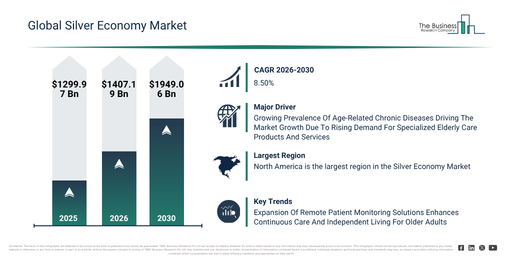
    Silver Economy Market Set To Climb From $1407.19 Billion In 2026 To $1949.06 Billion By 2030

    The silver economy market size has shown substantial growth in recent years. It is anticipated to expand from $1299.97 billion in 2025 to $1407.19 billion in 2026, achieving a compound annual growth rate (CAGR) of 8.2%. This historical growth can be attributed to factors such as an increasing global aging population, the expansion of public pension and social security systems, improvements in life expectancy, the proliferation of traditional elderly care institutions, and the rise of family-based caregiving structures.

    The silver economy market size is projected to experience robust expansion over the coming years. This market is set to reach $1949.06 billion by 2030, exhibiting a compound annual growth rate (CAGR) of 8.5%. The expansion during this forecast period stems from several factors, including the increasing demand for digital elderly care and remote health services, the broadening of age-friendly smart housing infrastructure, greater integration of AI-based health monitoring systems, enhanced silver economy consumer spending power, and the rising embrace of personalized healthcare and longevity solutions. Significant trends anticipated in the forecast period involve AI-powered elderly care monitoring and predictive health risk management, smart home assisted living solutions catering to an independent aging population, the ongoing expansion of telemedicine and remote geriatric healthcare services, an increase in wearable health tracking and fall detection devices for seniors, and the growing adoption of fintech solutions for retirement planning and senior wealth management.

    Get A Free Sample Report With In-Depth Market Insights:

    https://thebusinessresearchcompany.com/sample_request?id=16518880&type=smp&name=Silver%20Economy%20Market%20Report%202026&utm_source=Blogs&utm_medium=Paid&utm_campaign=Oct_PR

    Silver Economy Market Industry Drivers: What’s Behind The Revenue Growth?

    The silver economy market is anticipated to expand due to the increasing incidence of age-related chronic diseases. These are long-term health issues that become more prevalent as individuals age, linked to a gradual decline in bodily functions. The surge in these conditions is primarily fueled by the rapid growth of the global aging population, where extended life spans and lower birth rates lead to a greater proportion of older adults who are naturally more prone to developing several chronic illnesses simultaneously. This rising burden of chronic diseases among the elderly directly stimulates the need for specialized products, services, medical care, and support systems designed to meet the complex and ongoing requirements of older people. For example, in June 2024, data from the National Health Service, a UK-based government department, indicated that in 2023, the NHS identified over half a million (549,000) more individuals in England susceptible to type 2 diabetes, bringing the total number of people with non-diabetic hyperglycemia, or pre-diabetes, registered with a GP to 3,615,330. This figure represents a notable increase from 3,065,825 in 2022, demonstrating a nearly 20% rise. Consequently, the expanding prevalence of age-related chronic diseases is fueling the growth of the silver economy market.

    Silver Economy Market Segment Breakdown: Which Categories Lead On Revenue?

    The silver economy market covered in this report is segmented –

    1) By Offering: Healthcare, Financial Services, Housing, Transportation, Leisure And Entertainment, Other Products

    2) By Service: Public, Private

    3) By Application: Healthcare And Wellness, Daily Living Assistance, Financial Security And Retirement Planning, Social Engagement And Leisure Activities

    4) By End User: Individual Consumers, Healthcare Providers And Care Institutions, Government And Public Welfare Organizations

    Subsegments:

    1) By Healthcare: Geriatric Medical Care Services, Chronic Disease Management Services, Home Healthcare And Nursing Services, Preventive Health Screening Services, Rehabilitation And Physiotherapy Services

    2) By Financial Services: Retirement Planning And Pension Management Services, Insurance Services For Senior Citizens, Wealth Management And Investment Advisory Services, Reverse Mortgage And Equity Release Services, Digital Banking Services For Older Adults

    3) By Housing: Assisted Living Communities, Independent Senior Living Residences, Age Friendly Residential Housing, Continuing Care Retirement Communities, Home Modification And Accessibility Solutions

    4) By Transportation: Senior Friendly Public Transportation Services, Non Emergency Medical Transportation Services, Ride Sharing Services For Older Adults, Mobility Assistance Transportation Services, Accessible Vehicle Transportation Services

    5) By Leisure And Entertainment: Senior Tourism And Travel Services, Recreational And Wellness Activities, Cultural And Social Engagement Programs, Educational And Lifelong Learning Programs, Digital Entertainment And Media Services

    6) By Other Products: Personal Safety And Emergency Response Systems, Nutrition And Dietary Supplements For Seniors, Wearable Health Tracking Devices, Elder Care Management Apps, Companionship And Caregiving Platforms, Legal And Estate Planning Services

    #Silver Economy Market Growth Trends: What’s Shaping The Future Outlook?

    Leading enterprises within the geriatric care services sector are prioritizing the creation of advanced technologies, including AI-driven assistant services, to facilitate effective eldercare for users. These AI-powered assistants, designed for elderly care, represent technological solutions leveraging artificial intelligence to bolster the well-being, health, and everyday routines of older individuals. An example surfaced in January 2024, when US-based AI robotics firm Intuition Robotics introduced ElliQ 3 at CES. This product is a subsequent generation eldercare companion robot, fueled by generative AI, specifically large language models. Through this introduction, the company seeks to expand its conversational support system for seniors, offering interactions that are more intuitive and contextually relevant, all while preserving memory and emotional intelligence. ElliQ 3 itself operates on a more lightweight hardware architecture featuring an octa-core plus AI chip. Furthermore, its updated software remains compatible with previous ElliQ units, ensuring that current users can also access the benefits of the generative AI improvements.

    Silver Economy Market Industry Leaders And Competitive Landscape

    Major companies operating in the silver economy market are Best Buy Health Inc, Papa Inc, AgeWell Global, Intuition Robotics Ltd, Uniper Care Technologies Inc, Homecare Hub Limited, Honor Technology Inc, SafelyYou Inc, Tunstall Healthcare Group Limited, Birdie Care Services Limited, GrandPad Inc, Cera Care Limited, Nobi NV, CareYaya Health Technologies, K4Connect Inc, Stannah Group Limited, CarePredict Inc, Emoha Elder Care Private Limited, Silvernest Inc, Yodda Elder Care Technologies Private Limited

    View The Full Silver Economy Market Report:

    https://thebusinessresearchcompany.com/report/silver-economy-market-report?utm_source=Blogs&utm_medium=Paid&utm_campaign=Oct_PR

    Silver Economy Market Regional Analysis And Top Geography

    North America was the largest region in the silver economy market in 2025. Asia-Pacific is expected to be the fastest-growing region in the forecast period. The regions covered in the silver economy market report are Asia-Pacific, South East Asia, Western Europe, Eastern Europe, North America, South America, Middle East and Africa.

    Reach Out To Our Team:

    The Business Research Company: https://www.thebusinessresearchcompany.com/

    Americas: +1 310-496-7795

    Asia: +44 7882 955267 & +91 8897263534

    Europe: +44 7882 955267

    Email us at: marketing@tbrc.info

    Follow us on:

    LinkedIn: https://in.linkedin.com/company/the-business-research-company

    YouTube: https://www.youtube.com/channel/UC24_fI0rV8cR5DxlCpgmyFQ

    Global Market Model: https://www.thebusinessresearchcompany.com/global-market-model
  • Shelter Pathogen Polymerase Chain Reaction (PCR) Screening Programs Market Size In 2026 And Beyond: Understanding Future Growth Potential

    Shelter Pathogen Polymerase Chain Reaction (PCR) Screening Programs Market Size In 2026 And Beyond: Understanding Future Growth Potential

    Built to provide research that’s more actionable and strategically valuable, The Business Research Company’s 2026 market reports include market attractiveness analysis, total addressable market sizing, company benchmarking matrices, interactive Excel dashboards, broader supply chain intelligence, emerging startup tracking, and in-depth product insights.

    Shelter Pathogen Polymerase Chain Reaction (PCR) Screening Programs Market Value Growth And Long-Term Outlook

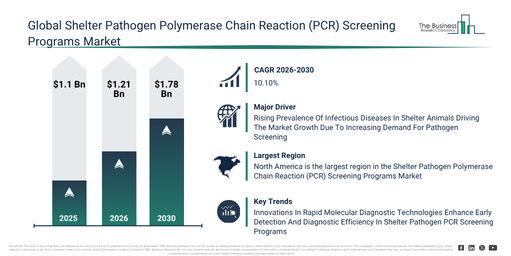
    In recent years, the market size for shelter pathogen polymerase chain reaction (PCR) screening programs has demonstrated robust growth. It will grow from $1.1 billion in 2025 to $1.21 billion in 2026 at a compound annual growth rate (CAGR) of 9.8%. This historical growth can be attributed to several factors, including an increase in infectious diseases within animal shelters, a greater embrace of molecular diagnostic methods, heightened understanding of zoonotic disease dangers, restricted access to quick testing solutions in shelters, and the proliferation of veterinary diagnostic facilities.

    The market for shelter pathogen polymerase chain reaction (PCR) screening programs is projected to experience substantial expansion over the coming years. It is anticipated to reach $1.78 billion by 2030 at a compound annual growth rate (CAGR) of 10.1%. This projected increase during the forecast period stems from factors such as a heightened need for prompt disease detection in animal populations, the proliferation of automated and high-throughput PCR systems, growing financial commitments to animal health infrastructure, the broadening scope of preventive veterinary screening initiatives, and innovations in portable and point-of-care molecular diagnostics. Key developments expected during this period involve the widespread adoption of real-time PCR-based pathogen monitoring within animal shelters, a greater uptake of multiplex PCR testing for swift disease identification, increased deployment of automated nucleic acid extraction technologies in shelter diagnostic processes, the expanding incorporation of portable PCR devices for immediate screening purposes, and an amplified focus on preventing outbreaks through regular molecular screening efforts.

    Get A Free Sample Report With In-Depth Market Insights:

    https://thebusinessresearchcompany.com/sample_request?id=51292287&type=smp&name=Shelter%20Pathogen%20Polymerase%20Chain%20Reaction%20%28PCR%29%20Screening%20Programs%20Market%20Report%202026&utm_source=Blogs&utm_medium=Paid&utm_campaign=Oct_PR

    Shelter Pathogen Polymerase Chain Reaction (PCR) Screening Programs Market Growth Drivers: What’s Behind The Acceleration?

    An anticipated surge in infectious diseases affecting animals in shelters is projected to fuel the expansion of the shelter pathogen polymerase chain reaction (PCR) screening programs market in the coming years. These diseases, caused by detrimental pathogens like viruses and bacteria, spread quickly among dogs, cats, and other animals kept in close quarters within shelters. The increasing occurrence of such diseases in shelter environments is primarily due to a rise in animal admissions coupled with a decline in vaccination rates since the pandemic, leading to larger vulnerable populations in already packed facilities. The growing number of infectious disease cases in shelter animals directly increases the need for precise pathogen identification tools like polymerase chain reaction (PCR) screening, given that prompt and accurate detection of causal agents is vital for implementing effective strategies for containment and treatment at a population level. For example, in November 2023, the Colorado Department of Agriculture, a US-based state government agency, reported twice the usual number of canine infectious respiratory disease cases compared to a typical outbreak, with similar spikes recorded across at least 10 U. S. states between 2022 and 2023. Consequently, the rising incidence of infectious diseases in shelter animals is a key factor propelling the growth of the shelter pathogen polymerase chain reaction (PCR) screening programs market. The increasing trend of pet ownership is anticipated to boost the shelter pathogen polymerase chain reaction (PCR) screening programs market in the foreseeable future. Pet ownership describes the custom of having domesticated animals like dogs and cats as companions within residences. This expanding prevalence of pet ownership is largely fueled by changing views across generations, especially among younger groups who increasingly view pets as members of their families, thereby encouraging higher adoption rates in homes. The growing number of animals entering both private homes and animal shelters intensifies the demand for precise and swift pathogen detection methods, as a greater quantity of animals requires health checks prior to being adopted or placed to prevent the spread of diseases. For instance, in March 2025, data from the American Pet Products Association (APPA), a US-based trade organization, indicated that the overall count of U. S. pet-owning households increased from 82 million in 2023 to 94 million in 2024. Consequently, the rise in pet ownership is a significant factor propelling the growth of the pathogen polymerase chain reaction (PCR) screening programs market.

    Shelter Pathogen Polymerase Chain Reaction (PCR) Screening Programs Market Segment Analysis Spotlighting Growth Areas

    The shelter pathogen polymerase chain reaction (pcr) screening programs market covered in this report is segmented –

    1) By Product Type: Polymerase Chain Reaction Test Kits, Nucleic Acid Extraction Kits, Real-Time Polymerase Chain Reaction Reagents, Polymerase Chain Reaction Primers And Probes, Sample Collection Swabs, Viral Transport Media, Microcentrifuge Tubes, Pipettes, Polymerase Chain Reaction Plates

    2) By Screening Type: Viral Diseases, Bacterial Diseases, Parasitic Diseases, Fungal Diseases, Other Screening Types

    3) By Animal Type: Dogs, Cats, Other Animal Types

    4) By Testing Method: Molecular Diagnostics, Serological Tests, Rapid Tests, Other Testing Methods

    5) By End User: Animal Shelters, Veterinary Clinics, Research Institutes, Other End Users

    Subsegments:

    1) By Polymerase Chain Reaction Test Kits: Basic Detection Kits, Multiplex Detection Kits, Quantitative Polymerase Chain Reaction Kits, Point Of Care Kits, High Throughput Kits

    2) By Nucleic Acid Extraction Kits: Manual Extraction Kits, Automated Extraction Kits, Spin Column Kits, Magnetic Bead Kits, Tissue And Blood Extraction Kits

    3) By Real-Time Polymerase Chain Reaction Reagents: Polymerase Enzymes, Fluorescent Dyes, Master Mix Solutions, Buffer Solutions, Positive Control Reagents

    4) By Polymerase Chain Reaction Primers And Probes: Custom Primers, Pre Designed Primers, Hydrolysis Probes, Molecular Beacon Probes, Dual Labeled Probes

    5) By Sample Collection Swabs: Sterile Cotton Swabs, Synthetic Fiber Swabs, Flocked Swabs, Transport Swabs, Oral And Nasal Swabs

    6) By Viral Transport Media: Liquid Transport Media, Freeze Dried Media, Universal Transport Media, Stabilizing Media, Antimicrobial Containing Media

    7) By Microcentrifuge Tubes: Polypropylene Tubes, Graduated Tubes, Screw Cap Tubes, Flat Cap Tubes, Color Coded Tubes

    8) By Pipettes: Single Channel Pipettes, Multi Channel Pipettes, Adjustable Volume Pipettes, Fixed Volume Pipettes, Electronic Pipettes

    9) By Polymerase Chain Reaction Plates: Standard Polymerase Chain Reaction Plates, Optical Polymerase Chain Reaction Plates, Deep Well Polymerase Chain Reaction Plates, Sealable Polymerase Chain Reaction Plates, Strip Polymerase Chain Reaction Plates

    Shelter Pathogen Polymerase Chain Reaction (PCR) Screening Programs Market Trends: What’s Defining The Industry’s Next Phase?

    Leading companies in the shelter pathogen polymerase chain reaction (PCR) screening programs market are concentrating on developing advanced molecular diagnostic solutions, such as rapid multiplex PCR tests. This effort aims to improve the speed of pathogen detection, enhance diagnostic accuracy, and facilitate timely disease management in high-risk animal populations. Rapid multiplex PCR tests are sophisticated molecular assays capable of simultaneously identifying multiple infectious pathogens from a single sample, thereby boosting workflow efficiency and shortening turnaround times in shelter environments. For instance, in June 2025, Enalees, a France-based veterinary diagnostics company, introduced Rhéa, a new line of veterinary rapid molecular tests designed for point-of-care application. These tests utilize real-time PCR technology to provide quick and dependable detection of infectious diseases in companion animals, aiding in early diagnosis and improved clinical decision-making, especially in settings like animal shelters where prompt screening and disease containment are critical.

    Shelter Pathogen Polymerase Chain Reaction (PCR) Screening Programs Market Leading Players And Competitive Positioning

    Major companies operating in the shelter pathogen polymerase chain reaction (pcr) screening programs market are Thermo Fisher Scientific Inc, Zoetis Inc, Eurofins Scientific SE, Agilent Technologies Inc, bioMérieux SA, IDEXX Laboratories Inc, Bio-Rad Laboratories Inc, QIAGEN NV, GenScript Biotech Corporation, Randox Laboratories Ltd, Bioneer Corporation, IDvet, Creative Diagnostics, Primerdesign Ltd (Novacyt Group), GeneReach Biotechnology Corp, Ring Biotechnology Co Ltd (RINGBIO), VetFor Diagnostic Systems, Invitek Diagnostics GmbH, ViroVet NV, BioVenic, Enzo Life Sciences Inc

    View The Full Shelter Pathogen Polymerase Chain Reaction (PCR) Screening Programs Market Report:

    https://thebusinessresearchcompany.com/report/shelter-pathogen-polymerase-chain-reaction-pcr-screening-programs-market-report?utm_source=Blogs&utm_medium=Paid&utm_campaign=Oct_PR

    Shelter Pathogen Polymerase Chain Reaction (PCR) Screening Programs Market Regional Split: Which Areas Are Fueling Growth?

    North America was the largest region in the shelter pathogen polymerase chain reaction (PCR) screening programs market in 2025. Asia-Pacific is expected to be the fastest-growing region in the forecast period. The regions covered in the shelter pathogen polymerase chain reaction (PCR) screening programs market report are Asia-Pacific, South East Asia, Western Europe, Eastern Europe, North America, South America, Middle East and Africa.

    Reach Out To Our Team:

    The Business Research Company: https://www.thebusinessresearchcompany.com/

    Americas: +1 310-496-7795

    Asia: +44 7882 955267 & +91 8897263534

    Europe: +44 7882 955267

    Email us at: marketing@tbrc.info

    Follow us on:

    LinkedIn: https://in.linkedin.com/company/the-business-research-company

    YouTube: https://www.youtube.com/channel/UC24_fI0rV8cR5DxlCpgmyFQ

    Global Market Model: https://www.thebusinessresearchcompany.com/global-market-model
  • Shelter Medicine Services Market Reaches $3.85 Billion In 2026: Key Developments Shaping Expansion

    Shelter Medicine Services Market Reaches $3.85 Billion In 2026: Key Developments Shaping Expansion

    Backed by market attractiveness analysis, total addressable market sizing, company benchmarking matrices, interactive Excel dashboards, wider supply chain intelligence, emerging startup coverage, and detailed product-level insights, The Business Research Company’s 2026 market reports are designed to offer research that is more actionable and strategically valuable than ever.

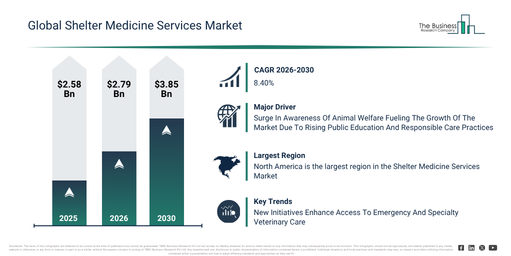
    Shelter Medicine Services Market Poised To Hit $3.85 Billion By 2030 With A 8.4% CAGR

    The shelter medicine services market has shown significant expansion in recent years. Its valuation is anticipated to increase from $2.58 billion in 2025 to $2.79 billion in 2026, achieving a compound annual growth rate (CAGR) of 8.1%. Factors contributing to this historical growth include the escalating global stray animal population, the rising incidence of zoonotic diseases, restricted access to veterinary care within shelters, the proliferation of animal rescue organizations, and the growing adoption of vaccination programs administered by shelters.

    The shelter medicine services market size is projected to undergo substantial expansion in the coming years. It is forecast to reach $3.85 billion by 2030, demonstrating a compound annual growth rate (CAGR) of 8.4%. This growth during the forecast period can be attributed to several factors, including the broadening of municipal animal welfare initiatives, increased funding directed towards animal health infrastructure, the wider acceptance of tele-veterinary services within shelters, heightened understanding of animal welfare and ethical care standards, and advancements in preventive veterinary medicine and diagnostics. Significant trends anticipated over this period encompass the growing implementation of preventive veterinary care programs in animal shelters, expanded utilization of population health management for disease control within shelters, the increasing deployment of mobile veterinary clinics for shelter outreach, a broadening of vaccination and spay/neuter drives in community shelters, and an enhanced emphasis on infectious disease surveillance and outbreak prevention among animal populations.

    Get A Free Sample Report With In-Depth Market Insights:

    https://thebusinessresearchcompany.com/sample_request?id=19059258&type=smp&name=Shelter%20Medicine%20Services%20Market%20Report%202026&utm_source=Blogs&utm_medium=Paid&utm_campaign=Oct_PR

    Shelter Medicine Services Market Growth Factors Behind Sustained Expansion

    The expanding understanding of animal welfare is anticipated to boost the growth of the shelter medicine services market in the future. Animal welfare pertains to the overall condition of animals, covering their physical health, comfort levels, nutritional needs, safety, and capacity to exhibit natural behaviors. This heightened consciousness regarding animal welfare stems from increased public education, which fosters responsible care methods and advocates for improved treatment of animals. Shelter medicine services play a crucial role in enhancing animal welfare awareness by educating on appropriate animal care, encouraging proactive health measures, and exemplifying compassionate treatment within shelter settings. For example, in June 2025, the Royal Society for the Prevention of Cruelty to Animals, a UK-based animal welfare charity, reported that safeguarding wildlife emerged as the leading animal welfare concern for the UK public, climbing to 61% from 56% in 2024, signifying a rising dedication to wildlife preservation. Consequently, the escalating awareness of animal welfare is propelling the expansion of the shelter medicine services market.

    Shelter Medicine Services Market Segment Performance And Emerging Opportunities

    The shelter medicine services market covered in this report is segmented –

    1) By Service Type: Preventive Veterinary Care, Population Medicine And Disease Control, Spay Or Neuter Services, Other Service Types

    2) By Animal Type: Cats, Dogs, Other Small Animals

    3) By Service Delivery: Onsite Shelter Services, Mobile Clinics, Telemedicine, Other Service Deliveries

    4) By Therapeutic: Infectious Disease Management, Parasiticides, Pain Management And Sedation

    5) By Application: Municipal Or City Animal Shelters, Private Non-Profit Rescue Organizations, Disaster Response Units, Community Animal Outreach, Other Applications

    Subsegments:

    1) By Preventive Veterinary Care: Vaccinations, Parasite Control, Routine Health Examinations, Nutritional Counseling, Dental Care

    2) By Population Medicine And Disease Control: Infectious Disease Management, Outbreak Response, Epidemiological Surveillance, Quarantine And Isolation, Health Monitoring Programs

    3) By Spay Or Neuter Services: Female Sterilization, Male Sterilization, Preoperative Assessment, Postoperative Care, Mobile Surgery Clinics

    4) By Other Service Types: Emergency Veterinary Care, Behavioral Assessment And Counseling, Rehabilitation And Physical Therapy, Adoption Support Services, Mobile Outreach Programs

    Shelter Medicine Services Market Industry Trends Fueling Future Revenue Growth

    Leading companies within the shelter medicine services market are concentrating on developing advanced charitable and outreach programs, such as mobile care and grant-based support, to enhance accessibility to emergency and specialty veterinary care, improve animal welfare, and support under-resourced communities. Shelter medicine services refer to veterinary care programs specifically designed for shelter and rescue animals, including preventive care, emergency interventions, and support for chronic or complex conditions, ensuring healthier outcomes for animals in group-living environments. For instance, in February 2024, BluePearl Pet Hospital, a US-based veterinary network, launched its charitable arm, BluePearl Cares, a nonprofit organization aimed at expanding access to veterinary services for shelter and owned pets. The initiative operates through three pillars: care in communities via volunteer deployments of emergency and specialty veterinarians, care in hospitals through grant programs supporting financially qualifying pet owners, and care in shelters with medical equipment grants, collectively enabling timely and life-saving interventions while fostering equitable access to high-quality veterinary care.

    Shelter Medicine Services Market Competitive Overview And Top Companies

    Major companies operating in the shelter medicine services market are Henry Schein Animal Health, Covetrus Inc., Idexx Laboratories Inc., Virbac S. A., Antech Diagnostics Inc., Ceva Santé Animale S. A., Best Friends Animal Society, Companion Care Veterinary Group, PetPoint Inc., Patterson Veterinary Supply Inc., Chameleon Shelter Software Inc., Alley Cat Allies, Mars Veterinary Health, FixNation Inc., Shelterluv Inc., RedRover, Mobile Vet, Midmark Animal Health, Animal Shelter Manager (ASM), VetPronto

    View The Full Shelter Medicine Services Market Report:

    https://thebusinessresearchcompany.com/report/shelter-medicine-services-market-report?utm_source=Blogs&utm_medium=Paid&utm_campaign=Oct_PR

    Shelter Medicine Services Market Top Region: Where Does Most Revenue Come From?

    North America was the largest region in the shelter medicine services market in 2025. Asia-Pacific is expected to be the fastest-growing region in the forecast period. The regions covered in the shelter medicine services market report are Asia-Pacific, South East Asia, Western Europe, Eastern Europe, North America, South America, Middle East and Africa.

    Reach Out To Our Team:

    The Business Research Company: https://www.thebusinessresearchcompany.com/

    Americas: +1 310-496-7795

    Asia: +44 7882 955267 & +91 8897263534

    Europe: +44 7882 955267

    Email us at: marketing@tbrc.info

    Follow us on:

    LinkedIn: https://in.linkedin.com/company/the-business-research-company

    YouTube: https://www.youtube.com/channel/UC24_fI0rV8cR5DxlCpgmyFQ

    Global Market Model: https://www.thebusinessresearchcompany.com/global-market-model
  • Self-Administered Biologics Market Forecast 2026–2030: Market Size, Trends And Growth Opportunities

    Self-Administered Biologics Market Forecast 2026–2030: Market Size, Trends And Growth Opportunities

    Backed by market attractiveness analysis, total addressable market sizing, company benchmarking matrices, interactive Excel dashboards, wider supply chain intelligence, emerging startup coverage, and detailed product-level insights, The Business Research Company’s 2026 market reports are designed to offer research that is more actionable and strategically valuable than ever.

    Self-Administered Biologics Market Size Forecast: How Big Could The Market Get By 2030?

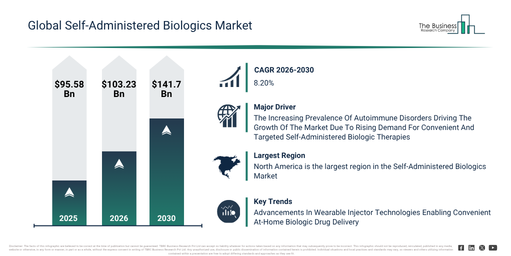
    The self-administered biologics market size has demonstrated strong growth in recent years. It is anticipated to expand from $95.58 billion in 2025 to $103.23 billion in 2026, achieving a compound annual growth rate (CAGR) of 8.0%. Historically, this expansion has been driven by factors including the increasing prevalence of chronic diseases, a rise in biologics drug approvals, the growth of hospital-based infusion therapies, constraints on patient convenience in clinical administration, and the significant strain on healthcare facilities.

    The self-administered biologics market is projected to experience substantial expansion in the coming years. This market is anticipated to reach a valuation of $141.7 billion by 2030, exhibiting a compound annual growth rate (CAGR) of 8.2%. The anticipated growth during this period can be attributed to factors such as the expansion of homecare healthcare delivery models, the increasing adoption of self-injection devices, the growth in the biosimilar pipeline, a rising patient preference for independence in treatment, and advancements in subcutaneous biologic formulations. Major trends expected in the forecast period include the increasing prevalence of home-based biologic self-administration therapies, the rising adoption of patient-centric chronic disease management models, the growing use of prefilled syringes and autoinjectors for simplified dosing, the expansion of biosimilar self-injectable therapies in autoimmune and metabolic diseases, and improving regulatory approvals and reimbursement support for home-use biologics.

    Get A Free Sample Report With In-Depth Market Insights:

    https://thebusinessresearchcompany.com/sample_request?id=78996035&type=smp&name=Self-Administered%20Biologics%20Market%20Report%202026&utm_source=Blogs&utm_medium=Paid&utm_campaign=Oct_PR

    Self-Administered Biologics Market Expansion Drivers: What’s Shaping Future Growth?

    A rise in autoimmune disorders is projected to fuel the expansion of the self-administered biologics market in the future. These conditions involve the immune system erroneously targeting the body’s own healthy components like cells, tissues, or organs, encompassing examples such as rheumatoid arthritis (RA), lupus, and multiple sclerosis. The growing incidence of autoimmune disorders is largely attributed to evolving lifestyles that impact and disturb the immune system’s regular operations. Self-administered biologics assist in handling autoimmune disorders by providing patients with an easy way to administer precise treatments that moderate immune system activity, decrease inflammation, and enhance long-term management of the disease. For example, Arthritis Australia, an Australia-based non-profit organization, reported in February 2024 that 212,136 males and 362,137 females were affected by rheumatoid arthritis (RA) in 2025, with projections indicating an increase to approximately 280,040 males and 479,828 females by 2040. Consequently, the rising occurrence of autoimmune disorders is a key factor propelling the expansion of the self-administered biologics market.

    Self-Administered Biologics Market Segment Landscape: Which Areas Lead Development?

    The self-administered biologics market covered in this report is segmented –

    1) By Product: Prefilled Syringes, Autoinjectors, Wearable Injectors, Drug Reconstitution

    2) By Indications: Diabetes, Rheumatoid Arthritis, Anaphylaxis, Other Indications

    3) By Mode Of Delivery: Subcutaneous, Intramuscular, Transdermal

    4) By Application: Autoimmune Disease Management, Diabetes Care, Oncology Supportive Care, Rare Disease Therapy

    5) By End User: Homecare Settings, Hospitals Or Clinics

    Subsegments:

    1) By Prefilled Syringes: Glass Prefilled Syringes, Plastic Prefilled Syringes, Siliconized Syringes, Polymer Coated Syringes

    2) By Autoinjectors: Spring Activated Autoinjectors, Button Activated Autoinjectors, Manual Autoinjectors, Single Dose Autoinjectors

    3) By Wearable Injectors: Patch Pump Wearable Injectors, Mechanical Wearable Injectors, Electronic Wearable Injectors, Large Volume Wearable Injectors

    4) By Drug Reconstitution: Vial-Based Drug Reconstitution, Dual Chamber Cartridge Reconstitution, Lyophilized Powder Reconstitution, On-Demand Mixing Systems

    Self-Administered Biologics Market Strategic Trends: What Defines The Next Growth Phase?

    Leading companies in the self-administered biologics market are prioritizing the development of technologically advanced solutions, such as wearable injector technologies, to boost patient convenience and facilitate the efficient at-home delivery of complex biologic therapies. These wearable injector technologies are drug delivery devices designed to adhere to the body and automatically dispense precise doses of medications, particularly biologics, over a set period without the need for manual injection. For instance, in July 2025, Becton, Dickinson and Company (BD), a US-based medical technology company, announced the first pharma-sponsored clinical trial utilizing its BD Libertas Wearable Injector. This innovative drug delivery technology is engineered to deliver high-viscosity biologic drugs in volumes greater than standard autoinjectors, enabling patients to self-administer treatments at home with minimal discomfort. It boasts a lightweight, on-body design with a simple activation mechanism, fostering ease of use and improved patient compliance. The system integrates precise flow rate control and safety mechanisms to ensure accurate dosing and mitigate the risk of administration errors. Additionally, it supports a broad spectrum of biologic formulations, making it well-suited for addressing chronic conditions like autoimmune disorders. This technology contributes to reducing the frequency of hospital visits while simultaneously enhancing patient convenience and overall healthcare efficiency.

    Self-Administered Biologics Market Leading Companies And Competitive Benchmarking

    Major companies operating in the self-administered biologics market are Johnson And Johnson, F. Hoffmann-La Roche Ltd., Merck And Co Inc., Pfizer Inc., AbbVie Inc., Sanofi S. A., Novartis AG, AstraZeneca PLC, Bristol-Myers Squibb Company, GlaxoSmithKline plc, Eli Lilly and Company, Novo Nordisk A/S, Takeda Pharmaceutical Company Limited, Amgen Inc., Regeneron Pharmaceuticals Inc., Biogen Inc., UCB S. A., Genentech Inc., Wockhardt Limited, Gan And Lee Pharmaceuticals Co Ltd., The United Laboratories International Holdings Limited, Tonghua Dongbao Pharmaceutical Co Ltd.

    View The Full Self-Administered Biologics Market Report:

    https://thebusinessresearchcompany.com/report/self-administered-biologics-market-report?utm_source=Blogs&utm_medium=Paid&utm_campaign=Oct_PR

    Self-Administered Biologics Market Largest Region By Revenue And Market Share

    North America was the largest region in the self-administered biologics market in 2025. Asia-Pacific is expected to be the fastest-growing region in the forecast period. The regions covered in the self-administered biologics market report are Asia-Pacific, South East Asia, Western Europe, Eastern Europe, North America, South America, Middle East and Africa.

    Reach Out To Our Team:

    The Business Research Company: https://www.thebusinessresearchcompany.com/

    Americas: +1 310-496-7795

    Asia: +44 7882 955267 & +91 8897263534

    Europe: +44 7882 955267

    Email us at: marketing@tbrc.info

    Follow us on:

    LinkedIn: https://in.linkedin.com/company/the-business-research-company

    YouTube: https://www.youtube.com/channel/UC24_fI0rV8cR5DxlCpgmyFQ

    Global Market Model: https://www.thebusinessresearchcompany.com/global-market-model
  • Scar Treatment Injectable Fillers Market Growth Potential: What The Latest Forecast Reveals

    Scar Treatment Injectable Fillers Market Growth Potential: What The Latest Forecast Reveals

    Built to provide research that’s more actionable and strategically valuable, The Business Research Company’s 2026 market reports include market attractiveness analysis, total addressable market sizing, company benchmarking matrices, interactive Excel dashboards, broader supply chain intelligence, emerging startup tracking, and in-depth product insights.

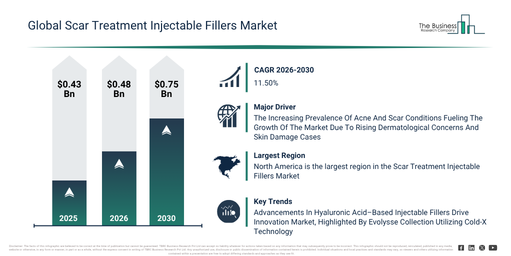
    Scar Treatment Injectable Fillers Market Forecast: Value Set To Climb From $0.48 Billion To $0.75 Billion

    The scar treatment injectable fillers market has seen rapid growth in recent years. It is anticipated to increase from $0.43 billion in 2025 to $0.48 billion in 2026, showing a compound annual growth rate (CAGR) of 11.2%. This historical growth can be attributed to several factors, including the rising prevalence of acne and traumatic scars, increased consumer awareness regarding aesthetic treatments, the growing adoption of cosmetic dermatology procedures, the expansion of dermatology clinic infrastructure, and advancements in injectable filler formulation technologies.

    The scar treatment injectable fillers market is set to experience substantial growth over the next few years. This market is expected to reach $0.75 billion by 2030, driven by a compound annual growth rate (CAGR) of 11.5%. The anticipated expansion can be attributed to several factors, including the increasing demand for tailored aesthetic treatments, the ongoing development of regenerative injectable fillers, growing investments in advanced scar revision therapies, the expanding use of minimally invasive cosmetic procedures, and a rising preference for long-acting collagen-stimulating fillers. Major trends influencing this period encompass the increasing adoption of minimally invasive scar correction procedures, a growing demand for long-lasting injectable fillers for scar treatment, a rising preference for collagen-stimulating fillers in dermatology, the expanding use of combination therapies for complex scar management, and an increasing focus on biocompatible and safe dermal filler formulations.

    Get A Free Sample Report With In-Depth Market Insights:

    https://thebusinessresearchcompany.com/sample_request?id=68687970&type=smp&name=Scar%20Treatment%20Injectable%20Fillers%20Market%20Report%202026&utm_source=Blogs&utm_medium=Paid&utm_campaign=Oct_PR

    Scar Treatment Injectable Fillers Market Growth Backed By Core Demand Fundamentals

    A rise in the occurrence of acne and scar conditions is anticipated to propel the expansion of the scar treatment injectable fillers market. These dermatological problems involve skin inflammation, lesions, and lasting marks or depressions that result from the skin’s healing process. This growing frequency is linked to elements like hormonal shifts, stress, and environmental contamination, all contributing to more frequent occurrences of skin disorders. With a greater number of people facing moderate to severe acne potentially leading to scarring, the need for efficient cosmetic interventions grows. Injectable fillers present a minimally invasive option, restoring skin volume, enhancing texture, and diminishing the appearance of scars. For example, a study in October 2024, found in Cureus, a Saudi Arabia-based research article, indicated that the prevalence of acne vulgaris among adolescents and young adults in Al-Baha reached 70.2% in 2024, an increase from 64.5% in 2023. Consequently, the expanding occurrence of acne and scar conditions is fueling the expansion of the scar treatment injectable fillers market.

    Scar Treatment Injectable Fillers Market Segment Landscape And Growth Outlook

    The scar treatment injectable fillers market covered in this report is segmented –

    1) By Product Type: Hyaluronic Acid, Poly-L-Lactic Acid, Calcium Hydroxyapatite, Collagen

    2) By Procedure Type: Minimally Invasive Injectable Procedures, Combination Therapies

    3) By Applications: Acne Scars, Surgical Scars, Traumatic Scars, Burn Scars, Other Applications

    4) By End User: Hospitals, Dermatology Clinics, Beauty Clinics, Other End Users

    Subsegments:

    1) By Hyaluronic Acid: Cross Linked Hyaluronic Acid, Non Cross Linked Hyaluronic Acid, Single Phase Hyaluronic Acid, Dual Phase Hyaluronic Acid

    2) By Poly-L-Lactic Acid: Injectable Suspension, Biostimulatory Formulation, Collagen Stimulating Formulation, Long Acting Formulation

    3) By Calcium Hydroxyapatite: Microsphere Based Filler, Gel Carrier Based Filler, High Viscosity Filler, Deep Tissue Filler

    4) By Collagen: Bovine Collagen, Porcine Collagen, Human Derived Collagen, Recombinant Collagen

    Scar Treatment Injectable Fillers Market Growth Trends Reshaping The Competitive Landscape

    Key players in the scar treatment injectable filler market are concentrating on advancements in hyaluronic acid-based fillers. These include injectable hyaluronic acid dermal fillers designed to improve facial volume, smooth out wrinkles, define facial features, and boost skin hydration, leading to a natural, youthful appearance. Injectable hyaluronic acid dermal fillers consist of sterile, gel-like formulations, primarily composed of hyaluronic acid, which is a naturally occurring polysaccharide in the human body. For example, in February 2025, Evolus, a US-based performance beauty company, announced that the FDA approved Evolysse Form and Evolysse Smooth. These are the inaugural two products in the Evolysse collection of injectable hyaluronic acid (HA) gels, developed for enhancing facial aesthetics. Evolysse Form and Evolysse Smooth incorporate innovative Cold-X technology to preserve the natural structure of the HA molecule, resulting in long-lasting, natural-looking outcomes. Both products demonstrated their safety, effectiveness, and versatility in over 2,000 patients globally, facilitating precise injections at various skin depths for wrinkle reduction, facial contouring, and volume restoration, thereby making them ideal for non-surgical facial rejuvenation.

    Scar Treatment Injectable Fillers Market Company Landscape And Competitive Strategy

    Major companies operating in the scar treatment injectable fillers market are LG Chem Ltd., Merz Pharma GmbH & Co. KGaA, MTF Biologics Inc., Dongkook Pharmaceutical Co. Ltd., Lumines Aesthetics Inc., Medytox Inc., Croma-Pharma GmbH, Anika Therapeutics Inc., Regenyal Laboratories S. r. l., Prollenium Medical Technologies Inc., Hyalual LLC, Hangzhou Singclean Medical Products Co. Ltd., Teoxane Laboratories SA, Bloomage BioTechnology Corporation Limited, Promoitalia Group S. p. A., GANA R&D Co. Ltd., BioXis Pharmaceuticals LLC, BNC Korea Co. Ltd., Inbiotec S. A., MiMedx Group Inc., Jetema Co. Ltd.

    View The Full Scar Treatment Injectable Fillers Market Report:

    https://thebusinessresearchcompany.com/report/scar-treatment-injectable-fillers-market-report?utm_source=Blogs&utm_medium=Paid&utm_campaign=Oct_PR

    Scar Treatment Injectable Fillers Market Largest Region: Which Geography Holds The Biggest Share?

    North America was the largest region in the scar treatment injectable fillers market in 2025. Asia-Pacific is expected to be the fastest-growing region in the forecast period. The regions covered in the scar treatment injectable fillers market report are Asia-Pacific, South East Asia, Western Europe, Eastern Europe, North America, South America, Middle East and Africa.

    Reach Out To Our Team:

    The Business Research Company: https://www.thebusinessresearchcompany.com/

    Americas: +1 310-496-7795

    Asia: +44 7882 955267 & +91 8897263534

    Europe: +44 7882 955267

    Email us at: marketing@tbrc.info

    Follow us on:

    LinkedIn: https://in.linkedin.com/company/the-business-research-company

    YouTube: https://www.youtube.com/channel/UC24_fI0rV8cR5DxlCpgmyFQ

    Global Market Model: https://www.thebusinessresearchcompany.com/global-market-model
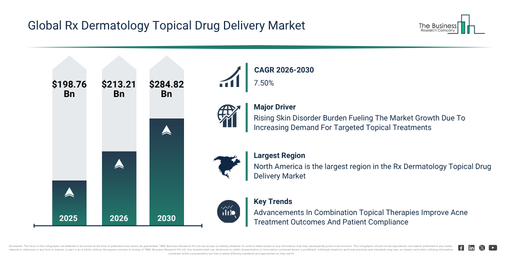
  • Rx Dermatology Topical Drug Delivery Market Trends Reshaping Industry Growth Through 2030

    Rx Dermatology Topical Drug Delivery Market Trends Reshaping Industry Growth Through 2030

    Backed by market attractiveness analysis, total addressable market sizing, company benchmarking matrices, interactive Excel dashboards, wider supply chain intelligence, emerging startup coverage, and detailed product-level insights, The Business Research Company’s 2026 market reports are designed to offer research that is more actionable and strategically valuable than ever.

    Rx Dermatology Topical Drug Delivery Market Growth Potential: How Will Market Size Shift Through 2030?

    The rx dermatology topical drug delivery market has experienced robust growth in recent times. Projected to expand further, it is expected to reach $213. 21 billion in 2026 from $198. 76 billion in 2025, demonstrating a compound annual growth rate (CAGR) of 7. 3%. Historically, this growth has been driven by several factors, including the increasing incidence of chronic skin conditions, a heightened demand for prescribed topical treatments, greater understanding of the advantages of localized drug administration, the expansion of dermatological treatment facilities, and innovations in semi-solid formulation techniques.

    The rx dermatology topical drug delivery market size is set for significant expansion in the coming years. It is projected to grow to $284. 82 billion by 2030 at a compound annual growth rate (CAGR) of 7. 5%. This anticipated increase throughout the forecast period stems from factors such as the rising adoption of microneedle-based transdermal systems, the advancement of personalized dermatology treatments, increased investments in sophisticated topical biologic formulations, the growing demand for home-based dermatology care, and a sharpened focus on enhancing drug permeability and sustained release technologies. Major developments expected during this forecast period include a wider embrace of controlled-release topical drug formulations, an escalating need for targeted skin penetration technologies within dermatology therapies, an increase in the use of transdermal patches for managing chronic dermatological conditions, the broadening development of combination topical therapies for treating acne and psoriasis, and a growing preference for non-invasive localized dermatology drug delivery systems.

    Get A Free Sample Report With In-Depth Market Insights:

    https://thebusinessresearchcompany.com/sample_request?id=87437820&type=smp&name=Rx%20Dermatology%20Topical%20Drug%20Delivery%20Market%20Report%202026&utm_source=Blogs&utm_medium=Paid&utm_campaign=Oct_PR

    Rx Dermatology Topical Drug Delivery Market Growth Factors: What’s Supporting Expansion?

    The growing occurrence of skin conditions is anticipated to drive the expansion of the Rx dermatology topical drug delivery market moving ahead. These disorders are medical conditions impacting the skin’s structure and function, frequently necessitating prolonged therapeutic care. The rise in skin disorder prevalence is linked to heightened environmental pollution, which compromises the skin barrier, instigates inflammation, and increases vulnerability to diverse skin ailments. Rx dermatology topical drug delivery addresses skin issues by delivering medication directly to affected regions, ensuring targeted action, quicker outcomes, and minimized systemic adverse effects. For instance, in December 2025, Cancer Australia, an Australia-based government agency, estimated that 17,443 new cases of melanoma of the skin were diagnosed in Australia in 2025, including 10,187 cases in males and 7,256 cases in females. Consequently, the expanding occurrence of skin conditions is fueling the growth of the Rx dermatology topical drug delivery market.

    Rx Dermatology Topical Drug Delivery Market Segment Analysis: What Are The Core Market Categories?

    The rx dermatology topical drug delivery market covered in this report is segmented –

    1) By Product Type: Semi-Solid, Liquid, Solid, Transdermal, Other Product Types

    2) By Route Of Administration: Dermal Drug Delivery, Ophthalmic Drug Delivery, Rectal Drug Delivery, Vaginal Drug Delivery, Nasal Drug Delivery, Other Routes Of Administration

    3) By Category: Branded, Generic, Other Categories

    4) By Application: Skin Infections, Dermatitis, Antiaging, Acne, Hyperpigmentation, Rosacea, Skin Cancer, Psoriasis, Onychomycosis, Other Applications

    5) By End User: Hospitals And Clinics, Homecare Settings, Burn Centers, Diagnostic Centers

    Subsegments:

    1) By Semi-Solid: Creams, Ointments, Gels, Pastes, Foams

    2) By Liquid: Solutions, Lotions, Shampoos, Tinctures, Suspensions

    3) By Solid: Powders, Tablets For Topical Use, Pellets, Granules, Suppositories

    4) By Transdermal: Transdermal Patches, Drug Embedded Films, Microneedle Patches, Adhesive Patches, Polymer Based Patches

    5) By Other Product Types: Sprays, Emulsions, Roll-Ons, Wafers, Hydrogels

    Rx Dermatology Topical Drug Delivery Market Industry Trends: What’s Reshaping Demand?

    Leading companies in the Rx dermatology topical drug delivery market are prioritizing the creation of advanced combination topical therapies. This focus aims to boost treatment effectiveness, simplify dosing, and improve patient adherence. Combination topical therapies are formulations that integrate multiple active ingredients into a single topical product, designed to target various pathogenic factors of skin conditions such as acne. For instance, in October 2023, Bausch Health Companies Inc., a Canada-based pharmaceutical company, obtained approval from the U. S. Food and Drug Administration for IDP-126 topical gel. This product is a triple-combination treatment for acne vulgaris in patients aged 12 years and older. The gel brings together clindamycin phosphate, benzoyl peroxide, and adapalene, providing a comprehensive approach to acne management by addressing inflammation, bacterial growth, and abnormal skin cell turnover, ultimately improving therapeutic outcomes and simplifying treatment regimens.

    Rx Dermatology Topical Drug Delivery Market Leading Players And Competitive Positioning

    Major companies operating in the rx dermatology topical drug delivery market are Johnson & Johnson, Merck & Co. Inc., Pfizer Inc., AbbVie Inc., Bayer AG, Sanofi S. A., Novartis AG, GlaxoSmithKline plc, 3M Company, Teva Pharmaceutical Industries Ltd., Viatris Inc., Sun Pharmaceutical Industries Limited, Perrigo Company plc, Galderma S. A., Dr. Reddy’s Laboratories Ltd., Cipla Limited, LEO Pharma A/S, Glenmark Pharmaceuticals Limited, Almirall S. A., Taro Pharmaceutical Industries Ltd., Biofrontera AG, Medimetriks Pharmaceuticals Inc., Encore Dermatology Inc.

    View The Full Rx Dermatology Topical Drug Delivery Market Report:

    https://thebusinessresearchcompany.com/report/rx-dermatology-topical-drug-delivery-market-report?utm_source=Blogs&utm_medium=Paid&utm_campaign=Oct_PR

    Rx Dermatology Topical Drug Delivery Market Regional Split: Which Areas Are Fueling Growth?

    North America was the largest region in the Rx dermatology topical drug delivery market in 2025. Asia-Pacific is expected to be the fastest-growing region in the forecast period. The regions covered in the rx dermatology topical drug delivery market report are Asia-Pacific, South East Asia, Western Europe, Eastern Europe, North America, South America, Middle East and Africa.

    Reach Out To Our Team:

    The Business Research Company: https://www.thebusinessresearchcompany.com/

    Americas: +1 310-496-7795

    Asia: +44 7882 955267 & +91 8897263534

    Europe: +44 7882 955267

    Email us at: marketing@tbrc.info

    Follow us on:

    LinkedIn: https://in.linkedin.com/company/the-business-research-company

    YouTube: https://www.youtube.com/channel/UC24_fI0rV8cR5DxlCpgmyFQ

    Global Market Model: https://www.thebusinessresearchcompany.com/global-market-model