Author: Marketing Posting

  • Bioreactors Market Explained: What Is Fueling Growth To $21.03 Billion By 2030?

    Bioreactors Market Explained: What Is Fueling Growth To $21.03 Billion By 2030?

    Built to provide research that’s more actionable and strategically valuable, The Business Research Company’s 2026 market reports include market attractiveness analysis, total addressable market sizing, company benchmarking matrices, interactive Excel dashboards, broader supply chain intelligence, emerging startup tracking, and in-depth product insights.

    Bioreactors Market Value Growth And Long-Term Outlook

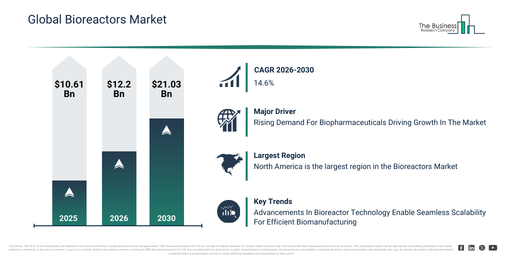
    The bioreactors market has experienced substantial expansion in recent times. This market is projected to expand from $10.61 billion in 2025 to $12.2 billion by 2026, demonstrating a compound annual growth rate (CAGR) of 15.0%. Historically, this growth can be attributed to factors such as the increased production of biologics, the rise of fermentation-based manufacturing, the growing adoption of fed-batch processes, increased investment in biopharma R&D, and the availability of advanced bioprocess control systems.

    The bioreactors market is projected to expand significantly in the coming years, with its size expected to reach $21.03 billion by 2030, exhibiting a compound annual growth rate (CAGR) of 14.6%. This anticipated growth during the forecast period is driven by factors such as an escalating demand for high-yield bioprocessing, the expansion of personalized medicine manufacturing, increasing integration of AI-driven process optimization, a heightened focus on production efficiency, and the broader adoption of continuous manufacturing models. Noteworthy trends anticipated in this period include the increased embrace of automated bioreactor systems, a rising utilization of continuous bioprocessing technologies, growing requirements for scalable bioreactor platforms, the proliferation of single-use bioreactor solutions, and an enhanced emphasis on process monitoring and control.

    Get A Free Sample Report With In-Depth Market Insights:

    https://thebusinessresearchcompany.com/sample_request?id=14669611&type=smp&name=Bioreactors%20Market%20Report%202026&utm_source=Blogs&utm_medium=Paid&utm_campaign=Oct_PR

    Bioreactors Market Development Factors: What’s Supporting Demand?

    The expanding need for biopharmaceuticals is anticipated to fuel the expansion of the bioreactors market in the coming years. Biopharmaceuticals are medical products sourced from biological origins, including proteins, cells, and living organisms, utilized for the prevention, treatment, or management of diverse illnesses. This rising demand stems from breakthroughs in medical research, the rise of personalized medicine, and the requirement for novel treatments, resulting in enhanced global healthcare outcomes. Bioreactors prove beneficial for biopharmaceuticals by facilitating the efficient and scalable manufacturing of therapeutic products, guaranteeing uniform quality, lowering production expenses, and aiding in the creation of innovative, life-improving medications. As an illustration, in November 2025, the Organisation for Economic Co operation and Development, a France-based intergovernmental economic organization, indicated that the average per capita spending on retail pharmaceuticals stood at USD 766 (adjusted for purchasing power disparities) across OECD countries in 2023. Consequently, the growing need for biopharmaceuticals is stimulating the expansion of the bioreactors market.

    Bioreactors Market Breakdown By Product Type And Application

    The bioreactors market covered in this report is segmented –

    1) By Type Of Bioprocess: Batch And Fed-Batch, Continuous

    2) By Cell: Mammalian Cells, Bacterial Cells, Yeast Cells, Other Cells

    3) By Control: Manual, Automated

    4) By Usage: Lab Scale Production, Pilot Scale Production, Full Scale Production

    5) By End-Use: Research And Development (R&D) Organizations, Biopharmaceutical (Biopharma) Manufacturers, Contract Manufacturing Organizations (CMOS)

    Subsegments:

    1) By Batch And Fed-Batch: Traditional Batch Bioreactors, Fed-Batch Bioreactors

    2) By Continuous: Perfusion Bioreactors, Continuous Stirred Tank Bioreactors (CSTR)

    Bioreactors Market Transformation Trends: What Innovations Are Driving Change?

    Leading companies in the bioreactors market are concentrating on developing advanced products, such as fixed-bed bioreactors, to support the cultivation of more complex biological cultures. A fixed-bed bioreactor is a type of bioreactor where biological organisms are attached to a solid support, which is typically composed of porous materials like beads, fibers, or granules. This design improves mass transfer, minimizes shear stress, and provides enhanced control over the biological processes. For instance, in October 2024, Univercells Technologies, a biotechnology company based in Belgium, launched the Scale-X Nexo bioreactor. This innovative bioreactor, featuring a 0.5 m² growth surface, is specifically designed to optimize cell culture process development, offering substantial benefits for biopharmaceutical companies and research institutions. The Scale-X Nexo enables seamless scalability to larger models, reduces media and reagent consumption, and has the potential to lower operational costs by up to 60% compared to traditional entry-level bioreactors. Additionally, its integration with the Skaia Vision application software further boosts productivity by providing precise cell count estimations without the need for direct sampling.

    Bioreactors Market Company Landscape And Competitive Strategy

    Major companies operating in the bioreactors market are Thermo Fisher Scientific Inc., Danaher Corporation, Merck KGaA, GE HealthCare Technologies Inc., Cytiva Bioscience Holding Ltd., Sartorius AG, Cellexus Ltd., Getinge AB, Eppendorf AG, ZETA Holding, Pierre Guerin, PBS Biotech Inc., TAP Biosystems, BBI-Biotech GmbH, HiTec Zang GmbH, Bioengineering AG, Infors AG, Univercells Technologies SA, CerCell A/S, Bailun Biotechnology Co. Ltd., BioNet, Shanghai Ritai Medicine Equipment Project Co. Ltd.

    View The Full Bioreactors Market Report:

    https://thebusinessresearchcompany.com/report/bioreactors-global-market-report?utm_source=Blogs&utm_medium=Paid&utm_campaign=Oct_PR

    Bioreactors Market Regional Breakdown: Where Is Demand Concentrated?

    North America was the largest region in the bioreactors market in 2025. Asia-Pacific is expected to be the fastest-growing region in the forecast period. The regions covered in the bioreactors market report are Asia-Pacific, South East Asia, Western Europe, Eastern Europe, North America, South America, Middle East, Africa.

    Reach Out To Our Team:

    The Business Research Company: https://www.thebusinessresearchcompany.com/

    Americas: +1 310-496-7795

    Asia: +44 7882 955267 & +91 8897263534

    Europe: +44 7882 955267

    Email us at: marketing@tbrc.info

    Follow us on:

    LinkedIn: https://in.linkedin.com/company/the-business-research-company

    YouTube: https://www.youtube.com/channel/UC24_fI0rV8cR5DxlCpgmyFQ

    Global Market Model: https://www.thebusinessresearchcompany.com/global-market-model
  • Bioprocess Bags Market Forecast To Reach $8.14 Billion By 2030: Key Trends Explained

    Bioprocess Bags Market Forecast To Reach $8.14 Billion By 2030: Key Trends Explained

    Backed by market attractiveness analysis, total addressable market sizing, company benchmarking matrices, interactive Excel dashboards, wider supply chain intelligence, emerging startup coverage, and detailed product-level insights, The Business Research Company’s 2026 market reports are designed to offer research that is more actionable and strategically valuable than ever.

    Bioprocess Bags Market Poised To Hit $8.14 Billion By 2030 With A 16.3% CAGR

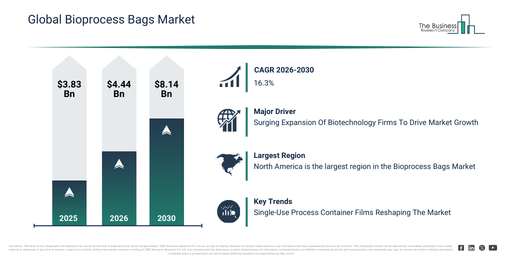
    The bioprocess bags market has seen substantial growth recently. Its valuation is set to rise from $3.83 billion in 2025 to $4.44 billion in 2026, progressing at a compound annual growth rate (CAGR) of 16.1%. Historically, this expansion has been driven by growth in biopharmaceutical manufacturing, increasing adoption of disposable technologies, expansion of contract manufacturing services, rising focus on process flexibility, and the availability of standardized single-use components.

    The bioprocess bags market is projected to experience substantial expansion over the next few years, reaching $8.14 billion by 2030 with a compound annual growth rate (CAGR) of 16.3%. This anticipated growth is primarily fueled by a surge in demand for biologics and vaccines, the enlargement of cell and gene therapy manufacturing, increased capital expenditure in modular bioprocessing facilities, a heightened focus on economical production methods, and enhanced regulatory backing for single-use technologies. Key developments emerging within this period encompass the wider embrace of single-use bioprocessing solutions, a heightened need for sterile disposable vessels, the increasing application of 3D bioprocess bags in cell cultivation, the proliferation of adaptable manufacturing processes, and a greater emphasis on mitigating contamination risks.

    Get A Free Sample Report With In-Depth Market Insights:

    https://thebusinessresearchcompany.com/sample_request?id=50059707&type=smp&name=Bioprocess%20Bags%20Market%20Report%202026&utm_source=Blogs&utm_medium=Paid&utm_campaign=Oct_PR

    Bioprocess Bags Market Industry Drivers: What’s Behind The Revenue Growth?

    The accelerated development of biotechnology firms is projected to drive the expansion of the bioprocess bag market moving forward. These companies leverage biological knowledge, tools, and techniques to develop products and services for various industries. Bioprocess bags offer several benefits to the biotechnology sector, including a reduced environmental footprint, flexibility, cost-effectiveness, time efficiency, and enhanced contamination control. For example, in January 2024, LondonLovesTech, a UK-based digital media and tech news publisher, reported that biotech companies and startups collectively raised $136.3B in 2023, demonstrating that funding activity remained above the pre-pandemic levels. Therefore, the significant growth of biotechnology firms is a key factor propelling the bioprocess bag market.

    Bioprocess Bags Market Segment Analysis And Revenue Potential

    The bioprocess bags market covered in this report is segmented –

    1) By Type: 2D Bioprocess Bags, 3D Bioprocess Bags, Other Types

    2) By Workflow: Upstream Process, Downstream Process, Process Development

    3) By Capacity: Small, Medium, Large, Extra Large

    4) By Application: Buffer And Media Storage, Cell Culture, Cell Separation And Harvest, Chromatography Feed And Collection, Ultrafiltration And Diafiltration, Intermediate And Final Product Hold, Other Applications

    5) By End-User: Pharmaceutical Companies, Biopharmaceutical Companies, Biotechnology Labs, Academic Labs

    Subsegments:

    1) By 2D Bioprocess Bags: Flat Bags, Customized 2D Bags

    2) By 3D Bioprocess Bags: Bioreactor Bags, Storage Bags, Mixing Bags

    3) By Other Types: Tubing And Connectors, Filters And Filter Assemblies, Bag Support Stands, Accessories For Sterilization And Storage

    #Bioprocess Bags Market Growth Trends: What’s Shaping The Future Outlook?

    Leading companies in the bioprocess bag market are developing novel products like single-use process container films to secure a competitive advantage. These films are flexible materials or sheets specifically engineered for the construction of single-use process containers within bioprocessing and pharmaceutical manufacturing contexts. For instance, in April 2023, Merck KGaA, a Germany-based pharmaceutical company, introduced Ultimus Single-Use Process Container Film, an advanced solution designed to address challenges in bioprocessing liquid applications. Built with a proprietary woven nylon structure, the Ultimus film offers extreme durability and leak resistance, providing 10 times greater abrasion resistance, 2.8 times greater tensile strength, and twice the puncture strength compared to other single-use bioprocessing films. This advancement aims to minimize disruptions in manufacturing operations and enhance operational efficiency. Additionally, the Ultimus Single-Use Process Container Film incorporates an animal origin-free contact resin. This attribute is designed to achieve a low extractable profile, meeting stringent regulatory requirements and industry standards.

    Bioprocess Bags Market Key Players Shaping Industry Direction

    Major companies operating in the bioprocess bags market are Saint-Gobain Group, Charter Medical LLC, Thermo Fisher Scientific Inc., 3M Company, Danaher Corporation, Merck KGaA, GE Healthcare, Parker Hannifin Corporation, Corning Incorporated, Avantor Inc., Lonza Group, GEA Group Aktiengesellschaft, Sartorius AG, Entegris Inc., W. L. Gore & Associates Inc., Repligen Corporation, ESI Technologies Group, Colder Products Company, CellBios Healthcare and Lifesciences Pvt Ltd., PBS Biotech

    View The Full Bioprocess Bags Market Report:

    https://thebusinessresearchcompany.com/report/bioprocess-bags-global-market-report?utm_source=Blogs&utm_medium=Paid&utm_campaign=Oct_PR

    Bioprocess Bags Market Geographic Landscape: Which Region Leads Industry Growth?

    North America was the largest region in the bioprocess bags market in 2025. Asia-Pacific is expected to be the fastest-growing region in the forecast period. The regions covered in the bioprocess bags market report are Asia-Pacific, South East Asia, Western Europe, Eastern Europe, North America, South America, Middle East, Africa.

    Reach Out To Our Team:

    The Business Research Company: https://www.thebusinessresearchcompany.com/

    Americas: +1 310-496-7795

    Asia: +44 7882 955267 & +91 8897263534

    Europe: +44 7882 955267

    Email us at: marketing@tbrc.info

    Follow us on:

    LinkedIn: https://in.linkedin.com/company/the-business-research-company

    YouTube: https://www.youtube.com/channel/UC24_fI0rV8cR5DxlCpgmyFQ

    Global Market Model: https://www.thebusinessresearchcompany.com/global-market-model
  • Biopreservation Market Analysis: Understanding The Drivers Behind 13.2% CAGR Through 2030 Growth

    Biopreservation Market Analysis: Understanding The Drivers Behind 13.2% CAGR Through 2030 Growth

    Featuring market attractiveness scoring, total addressable market sizing, company benchmarking matrices, interactive Excel dashboards, deeper supply chain intelligence, emerging startup tracking, and granular product-level insights, The Business Research Company’s 2026 market reports are built to deliver research that is both more actionable and more strategically valuable.

    Biopreservation Market Size And Revenue Outlook Through 2030

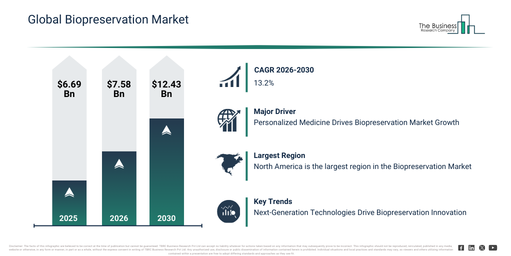
    The biopreservation market size has experienced rapid expansion in recent years. Projections indicate an increase in its value from $6.69 billion in 2025 to $7.58 billion in 2026, demonstrating a compound annual growth rate (CAGR) of 13.3%. Historical growth in this sector has been driven by factors such as the expansion of biobanking activities, an increase in clinical research studies, the rising use of biospecimens in diagnostics, enhanced availability of preservation equipment, and the adoption of standardized storage protocols.

    The biopreservation market is anticipated to experience significant expansion over the coming years. This market is projected to reach $12.43 billion by 2030, exhibiting a compound annual growth rate (CAGR) of 13.2%. Key drivers for this growth during the forecast period include the escalating demand for regenerative medicine samples, the broadening scope of precision medicine research, increased capital allocation for biorepository infrastructure, a heightened emphasis on ensuring sample quality, and the global surge in clinical trial undertakings. Significant trends expected over this period encompass the wider adoption of sophisticated cryopreservation methods, a growing need for solutions for long-term biospecimen storage, the increasing application of specialized biopreservation media, the expansion of consolidated biorepository facilities, and a stronger commitment to maintaining sample integrity and traceability.

    Get A Free Sample Report With In-Depth Market Insights:

    https://thebusinessresearchcompany.com/sample_request?id=72710582&type=smp&name=Biopreservation%20Market%20Report%202026&utm_source=Blogs&utm_medium=Paid&utm_campaign=Oct_PR

    Biopreservation Market Growth Factors: What’s Supporting Expansion?

    The escalating demand for personalized medicine is significantly boosting the growth of the biopreservation market. This type of medicine offers treatments specifically designed for individual patients and their particular diseases. The creation of these tailored medicines is supported by biobanks, which preserve human tissues and cells through biopreservation techniques. For example, in February 2024, the Personalized Medicine Coalition, a US-based non-profit organization, indicated that the FDA approved 16 novel personalized therapies for patients with rare diseases in 2023, a notable increase from six in 2022. Thus, the continuous rise in demand for personalized medicine is anticipated to drive the biopreservation market’s expansion moving forward.

    Biopreservation Market Segmentation And Category Overview

    The biopreservation market covered in this report is segmented –

    1) By Type: Biopreservation Equipment, Biopreservation Media

    2) By Biospecimen: Human Tissue Samples, Organs, Stem Cells, Other Biospecimens

    3) By Application: Therapeutic Applications, Research Applications, Clinical Trials, Other Applications

    4) By End User: Biobanks, Gene Banks, Hospitals, Other End Users

    Subsegments:

    1) By Biopreservation Equipment: Freezers, Liquid Nitrogen Tanks, Refrigerators, Incubators

    2) By Biopreservation Media: Cryoprotectants, Growth Media, Supplementary Media

    Biopreservation Market Industry Trends: What’s Reshaping Demand?

    Companies operating within the biopreservation market are prioritizing the development of innovative solutions, such as cryopreservation solutions, to address the increasing demand for preserving intricate tissues and organs over extended periods. Cryopreservation is defined as the process of protecting biological material at extremely low temperatures (−196°C), achieved either very quickly, as seen in seed storage, or gradually with controlled dehydration, providing advantages over conventional storage methods by sustaining viability and functionality for longer durations. For example, in April 2024, Pluristyx, Inc., a US-based biotechnology company, introduced PluriFreeze Cryopreservation Media, engineered to boost the viability and functionality of human-derived pluripotent stem cells (iPSCs) and other fragile cell types during freezing and thawing. PluriFreeze is formulated exclusively from synthetic and animal-origin-free (AOF) materials. Its low viscosity supports automation and large-scale cell production, while the accompanying DMSO-free wash solution, PluriPrep, allows for extended processing times, thereby optimizing cell handling and recovery for research and clinical uses.

    Biopreservation Market Competitive Analysis Of Leading Industry Participants

    Major companies operating in the biopreservation market are Thermo Fisher Scientific Inc., BioLife Solutions Inc., VWR International LLC, BioCision LLC, Lifeline Scientific Inc., Biomatrica Inc., Custom Biogenic System Inc., QIAGEN NV, ThermoGenesis Holdings Inc., MVE Biological Solutions LLC, Taylor-Wharton America Inc., X-Therma Inc., Cesca Therapeutics Inc., Core Dynamics Ltd., The Merck Group, Azenta US Inc., Avantor Inc., Bio-Techne Corporation, Worthington Industries Inc., Chart Industries Inc., Cryoport Inc., LabVantage Solutions Inc., Brooks Automation Inc., BioVault Technical Ltd., Biomatik Corporation, Biostorage Technologies Inc., Arctiko A/S, Eppendorf AG, Panasonic Healthcare Co. Ltd., BioSpherix Ltd.

    View The Full Biopreservation Market Report:

    https://thebusinessresearchcompany.com/report/biopreservation-global-market-report?utm_source=Blogs&utm_medium=Paid&utm_campaign=Oct_PR

    Biopreservation Market Largest Region: Which Geography Holds The Biggest Share?

    North America was the largest region in the biopreservation market share in 2025. The regions covered in the biopreservation market report are Asia-Pacific, South East Asia, Western Europe, Eastern Europe, North America, South America, Middle East, Africa.

    Reach Out To Our Team:

    The Business Research Company: https://www.thebusinessresearchcompany.com/

    Americas: +1 310-496-7795

    Asia: +44 7882 955267 & +91 8897263534

    Europe: +44 7882 955267

    Email us at: marketing@tbrc.info

    Follow us on:

    LinkedIn: https://in.linkedin.com/company/the-business-research-company

    YouTube: https://www.youtube.com/channel/UC24_fI0rV8cR5DxlCpgmyFQ

    Global Market Model: https://www.thebusinessresearchcompany.com/global-market-model
  • Biophotonics Market Growth To $166.03 Billion By 2030: What’s Driving The Expansion?

    Biophotonics Market Growth To $166.03 Billion By 2030: What’s Driving The Expansion?

    Built to provide research that’s more actionable and strategically valuable, The Business Research Company’s 2026 market reports include market attractiveness analysis, total addressable market sizing, company benchmarking matrices, interactive Excel dashboards, broader supply chain intelligence, emerging startup tracking, and in-depth product insights.

    Biophotonics Market Growth From $103.72 Billion In 2026 To $166.03 Billion By 2030 At A CAGR Of 12.5%

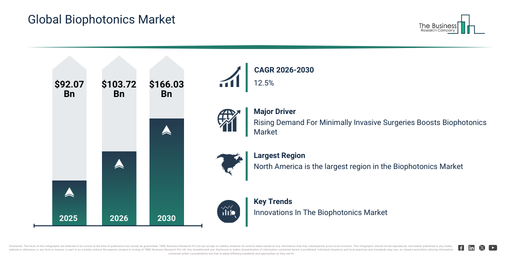
    The biophotonics market size has experienced swift expansion in recent years. This market is projected to expand from $92.07 billion in 2025 to reach $103.72 billion by 2026, at a compound annual growth rate (CAGR) of 12.7%. Historically, this growth has been driven by advancements in optical sensor technologies, increased funding for life sciences research, the broadening of biomedical imaging applications, a rising adoption of photonic tools in diagnostics, and an overall growth in academic and clinical research.

    The biophotonics market is projected to experience substantial expansion in the coming years. Its valuation is forecast to reach $166.03 billion by 2030, exhibiting a compound annual growth rate (CAGR) of 12.5%. This projected growth during the forecast period is primarily driven by factors such as a heightened demand for precision diagnostics, the broadening scope of personalized medicine applications, the increasing integration of AI in optical imaging, the expanding application of biophotonics in minimally invasive therapies, and the greater uptake of point-of-care diagnostic devices. Key trends anticipated over the forecast period encompass the escalating utilization of optical imaging in diagnostics, the increasing acceptance of non-invasive light-based therapies, the deepening integration of biophotonics into medical devices, the broadening of high-resolution microscopy techniques, and an intensified focus on real-time biological monitoring.

    Get A Free Sample Report With In-Depth Market Insights:

    https://thebusinessresearchcompany.com/sample_request?id=41882858&type=smp&name=Biophotonics%20Market%20Report%202026&utm_source=Blogs&utm_medium=Paid&utm_campaign=Oct_PR

    Biophotonics Market Demand Drivers: What’s Powering Industry Growth?

    The growing demand for minimally invasive surgeries is projected to drive the expansion of the biophotonics market. Optical engineering and imaging technologies are integral to minimally invasive procedures, facilitating real-time visualization of tissue manipulation within distant internal sites. As an illustration, in June 2024, the International Society of Aesthetic Plastic Surgery, a US-based non profit professional society, reported that total surgical and non-surgical procedures increased by 3.4% in 2023, reaching 34.9 million. Consequently, the rising global volume of minimally invasive surgeries performed annually is contributing to increased revenues in the biophotonics market.

    Biophotonics Market Segment Outlook: Which Categories Are Growing Fastest?

    The biophotonics market covered in this report is segmented –

    1) By Product Technology: In-Vitro, In-Vivo

    2) By Application: See-Through Imaging, Inside Imaging, Spectromolecular, Surface Imaging, Microscopy, Light Therapy, Biosensors, Other Applications

    3) By End Use: Diagnostics, Therapeutic, Tests, Other End Uses

    Subsegments:

    1) By In-Vitro: Diagnostic Imaging, Fluorescence Microscopy, Spectroscopy-Based Detection, Biochemical Sensors, Point-Of-Care Devices

    2) By In-Vivo: Endoscopy, Optical Coherence Tomography (OCT), Photodynamic Therapy (PDT), Bioluminescence Imaging, Near-Infrared Spectroscopy (NIRS)

    Biophotonics Market Innovation Trends: What Developments Are Reshaping The Industry?

    Leading companies in the biophotonics market are concentrating on developing innovative products such as bronchoscopes, which facilitate advanced medical procedures. These instruments are vital for examining the interior of the respiratory system. For example, in September 2025, Olympus Corporation, a Japan-based manufacturer of precision optics and medical devices, introduced the BF-UCP190F. This new endobronchial ultrasound (EBUS) bronchoscope is specifically optimized for lung lesion biopsy and sophisticated diagnostic procedures. The device features a slender 5.9 mm outer diameter and 170° upward angulation, allowing medical professionals to navigate deeply into the peribronchial region and enhance access to segmental and subsegmental airways. This launch strengthens Olympus’ biophotonics portfolio by integrating optical imaging with real-time ultrasound guidance, thereby addressing the rising demand for minimally invasive lung sampling and improving diagnostic accuracy in thoracic oncology.

    Biophotonics Market Leading Companies And Competitive Benchmarking

    Major companies operating in the biophotonics market are Thermo Fisher Scientific Inc., OpGen Inc., IPG Photonics Corporation, Idex Corporation, Toshiba Corporation, Horiba Ltd., Precision Photonics Corp, Roche Group, General Electric Company, Koninklijke Philips NV, Affymetrix Inc., Andor Technology Ltd., Becton Dickinson & Co., Carl Zeiss AG, FEI Company, Hamamatsu Photonics KK, Lumenis Ltd., Olympus Corporation, PerkinElmer Inc., Zecotek Photonics Inc., Zenalux Biomedical Inc., Glenbrook Technologies Inc., Oxford Instruments Plc, Lumicks BV, Creoptix AG, ThinkCyte Inc., PhotoPharmics Inc., Bioptics Inc.

    View The Full Biophotonics Market Report:

    https://thebusinessresearchcompany.com/report/Biophotonics-Global-Market-Report?utm_source=Blogs&utm_medium=Paid&utm_campaign=Oct_PR

    Biophotonics Market Regional Analysis: Which Geography Leads On Revenue?

    North America was the largest region in the biophotonics market in 2025. Western Europe was the second largest region in the biophotonics market. The regions covered in the biophotonics market report are Asia-Pacific, South East Asia, Western Europe, Eastern Europe, North America, South America, Middle East, Africa.

    Reach Out To Our Team:

    The Business Research Company: https://www.thebusinessresearchcompany.com/

    Americas: +1 310-496-7795

    Asia: +44 7882 955267 & +91 8897263534

    Europe: +44 7882 955267

    Email us at: marketing@tbrc.info

    Follow us on:

    LinkedIn: https://in.linkedin.com/company/the-business-research-company

    YouTube: https://www.youtube.com/channel/UC24_fI0rV8cR5DxlCpgmyFQ

    Global Market Model: https://www.thebusinessresearchcompany.com/global-market-model
  • Biopharmaceutical Third-Party Logistics Market Trends Reshaping Industry Growth Through 2030

    Biopharmaceutical Third-Party Logistics Market Trends Reshaping Industry Growth Through 2030

    Backed by market attractiveness analysis, total addressable market sizing, company benchmarking matrices, interactive Excel dashboards, wider supply chain intelligence, emerging startup coverage, and detailed product-level insights, The Business Research Company’s 2026 market reports are designed to offer research that is more actionable and strategically valuable than ever.

    Biopharmaceutical Third-Party Logistics Market Expansion Outlook: What Revenue Opportunities Are Ahead?

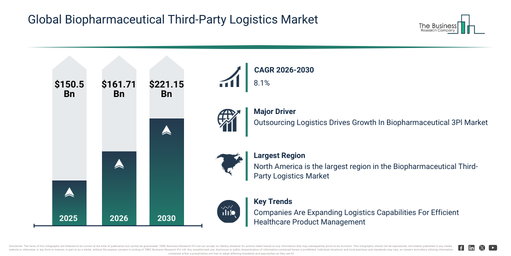
    The biopharmaceutical third-party logistics market has experienced significant expansion in recent years. It is anticipated to grow from $150.5 billion in 2025 to $161.71 billion in 2026, at a compound annual growth rate (CAGR) of 7.4%. This historical growth can be attributed to the increase in biologics and vaccine production, the rising trend of pharmaceutical companies outsourcing logistics services, the broadening of global biopharmaceutical supply chains, more stringent regulatory requirements for drug transportation, and the limited internal logistics capabilities of biopharma firms.

    The biopharmaceutical third-party logistics market is projected to experience robust expansion in the coming years. This market is forecast to reach $221.15 billion by 2030, exhibiting a compound annual growth rate (CAGR) of 8.1%. Factors contributing to this growth over the forecast period include the escalating demand for personalized medicines, the broadening distribution of cell and gene therapies, increased investments in intelligent logistics platforms, a heightened emphasis on comprehensive supply chain visibility, and the expansion of international biopharmaceutical commerce. Key trends anticipated during this period involve a greater uptake of sophisticated cold chain logistics solutions, an elevated need for services for temperature-controlled transportation, the expanding utilization of platforms for real-time shipment tracking, the development of specialized warehousing facilities for biopharmaceuticals, and an intensified commitment to logistics operations that comply with regulations.

    Get A Free Sample Report With In-Depth Market Insights:

    https://thebusinessresearchcompany.com/sample_request?id=64376681&type=smp&name=Biopharmaceutical%20Third-Party%20Logistics%20Market%20Report%202026&utm_source=Blogs&utm_medium=Paid&utm_campaign=Oct_PR

    Biopharmaceutical Third-Party Logistics Market Growth Drivers: What’s Behind The Acceleration?

    The increasing adoption of outsourced logistics is anticipated to fuel the expansion of the biopharmaceutical third-party logistics market. This practice entails contracting a third-party entity to manage either all or specific segments of a firm’s logistics operations. Within biopharmaceutical third-party logistics, outsourcing logistics is specifically employed for entrusting cryogenic supply chain management to specialized logistics partners. As an illustration, data from February 2024, published by the Bureau of Transportation Statistics, a US-based division of the Department of Transportation (DOT), showed that for-hire freight shipments experienced a 1.8% increase in December 2023 relative to December 2022, concurrently, the Freight Transportation Services Index climbed from 136.6 in December 2022 to 139.1 in December 2023. Consequently, the increasing inclination towards outsourcing logistics is projected to accelerate the development of the biopharmaceutical third-party logistics market.

    Biopharmaceutical Third-Party Logistics Market Segment Landscape: Which Areas Lead Development?

    The biopharmaceutical third-party logistics market covered in this report is segmented –

    1) By Supply Chain: Cold Chain, Non-Cold Chain

    2) By Service: Transportation, Warehousing And Storage, Other Services

    3) By End-User: Pharmaceutical And Biopharmaceutical Companies, Medical Device Companies, Hospitals And Clinics, Other End-Users

    Subsegments:

    1) By Cold Chain: Refrigerated Transport, Temperature-Controlled Storage, Specialized Packaging

    2) By Non-Cold Chain: Ambient Transport, Standard Storage Solutions, General Packaging Methods

    Biopharmaceutical Third-Party Logistics Market Trends: What’s Defining The Industry’s Next Phase?

    Key companies operating in the biopharmaceutical third-party logistics market are concentrating on developing innovative approaches, such as expanding their business in life sciences and healthcare logistics, to improve their capabilities for handling pharmaceutical and healthcare products, thus ensuring efficient storage and distribution. This expansion in life sciences and healthcare logistics represents the strategic advancement of logistics companies to bolster their capacity for transporting and managing medical items, which is critical for guaranteeing timely delivery and preserving the integrity of temperature-sensitive goods vital for patient care. As an illustration, in May 2025, DHL Group, a Germany-based logistics firm, announced the official opening of its upgraded Life Sciences & Healthcare (LSH) campus located in Florstadt, Germany. This new facility incorporates ultra-cold storage areas (down to –70°C), real-time tracking systems, and GDP-certified infrastructure, facilitating the secure management of temperature-sensitive biopharmaceuticals, including mRNA vaccines, materials for clinical trials, and advanced therapies.

    Biopharmaceutical Third-Party Logistics Market Industry Leaders And Competitive Landscape

    Major companies operating in the biopharmaceutical third-party logistics market are McKesson Corporation, AmerisourceBergen Corporation, United Parcel Service of America Inc., FedEx Corporation, DHL International GmbH, Kuehne + Nagel International AG, SF Express Co Ltd., DB Schenker, CH Robinson Worldwide Inc., Nippon Express Group, Expeditors International of Washington Inc., Sinotrans Limited, XPO Logistics Inc., Kerry Logistics Network Limited, Bollore Logistics, VersaCold Logistics Services, Cryoport Inc., Agility Logistics Corp, Fisher Clinical Services, CEVA Logistics Inc., LifeScience Logistics, Cold Chain Technologies LLC, Langham Logistics, Airpharm Logistics, Express Courier International, Bio Pharma Logistics

    View The Full Biopharmaceutical Third-Party Logistics Market Report:

    https://thebusinessresearchcompany.com/report/biopharmaceutical-third-party-logistics-global-market-report?utm_source=Blogs&utm_medium=Paid&utm_campaign=Oct_PR

    Biopharmaceutical Third-Party Logistics Market Geographic Spread And Regional Opportunities

    North America was the largest region in the biopharmaceutical third party logistics market in 2025. Asia Pacific is expected to be the fastest-growing region in the forecast period. The regions covered in the biopharmaceutical third-party logistics market report are Asia-Pacific, South East Asia, Western Europe, Eastern Europe, North America, South America, Middle East, Africa.

    Reach Out To Our Team:

    The Business Research Company: https://www.thebusinessresearchcompany.com/

    Americas: +1 310-496-7795

    Asia: +44 7882 955267 & +91 8897263534

    Europe: +44 7882 955267

    Email us at: marketing@tbrc.info

    Follow us on:

    LinkedIn: https://in.linkedin.com/company/the-business-research-company

    YouTube: https://www.youtube.com/channel/UC24_fI0rV8cR5DxlCpgmyFQ

    Global Market Model: https://www.thebusinessresearchcompany.com/global-market-model
  • Biopharmaceutical CMO And CRO Market Growth To $48.79 Billion Creates New Opportunities Across The Industry

    Biopharmaceutical CMO And CRO Market Growth To $48.79 Billion Creates New Opportunities Across The Industry

    Featuring market attractiveness scoring, total addressable market sizing, company benchmarking matrices, interactive Excel dashboards, deeper supply chain intelligence, emerging startup tracking, and granular product-level insights, The Business Research Company’s 2026 market reports are built to deliver research that is both more actionable and more strategically valuable.

    Biopharmaceutical CMO And CRO Market Growth Potential: How Will Market Size Shift Through 2030?

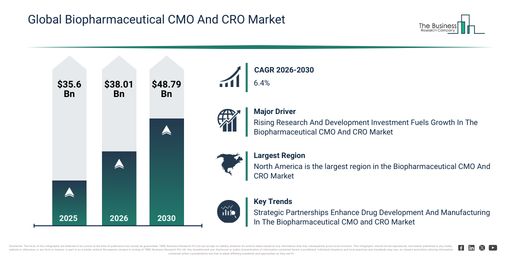
    The biopharmaceutical cmo and cro market size has shown robust expansion in recent years. It is anticipated to grow from $35.6 billion in 2025 to $38.01 billion in 2026, achieving a compound annual growth rate (CAGR) of 6.8%. This historical growth can be primarily linked to the increasing complexity involved in biologic drug development, the rising R&D expenses for biopharmaceutical companies, the broader scope of clinical trial activities, advancements in biosimilar development, and the presence of specialized contract service providers.

    The biopharmaceutical cmo and cro market size is anticipated to experience robust expansion over the next few years, reaching $48.79 billion by 2030, with a compound annual growth rate (CAGR) of 6.4%. This projected growth is driven by increasing demand for advanced biologics manufacturing, rising investments in cell and gene therapies, the expansion of global clinical trial pipelines, a growing focus on speed-to-market strategies, and the increasing adoption of digitalized CRO services. Major trends expected during this period include increasing outsourcing of biologic drug manufacturing, a rising demand for end-to-end contract research services, a growing emphasis on flexible manufacturing capacity, the expansion of cell and gene therapy development support, and an enhanced focus on regulatory compliance services.

    Get A Free Sample Report With In-Depth Market Insights:

    https://thebusinessresearchcompany.com/sample_request?id=77113147&type=smp&name=Biopharmaceutical%20CMO%20And%20CRO%20Market%20Report%202026&utm_source=Blogs&utm_medium=Paid&utm_campaign=Oct_PR

    Biopharmaceutical CMO And CRO Market Growth Factors Behind Sustained Expansion

    The increasing investment in research and development is projected to boost the expansion of the biopharmaceutical CMO and CRO market in the future. This surge in R&D funding is attributed to various factors, including the demand for innovation, competitive pressures, the necessity to address evolving market requirements, and government incentives. Such investments empower CMOs and CROs to develop superior manufacturing methods and research procedures, thereby enhancing their capabilities and operational efficiency. This commitment to innovation attracts and retains clients by providing cutting-edge solutions while ensuring regulatory compliance. For instance, in September 2025, Eurostat, the Luxembourg-based statistical agency, reported that the EU spent approximately $456 billion USD on research and development (R&D) in 2023 (€389 billion), with R&D expenditure relative to GDP rising to 2.26%, up from 2.22% in the preceding year. Thus, the growing investment in research and development is propelling the growth of the biopharmaceutical CMO and CRO market.

    Biopharmaceutical CMO And CRO Market Segments: Where Is Growth Concentrated?

    The biopharmaceutical cmo and cro market covered in this report is segmented –

    1) By Product: Biologics, Biosimilars

    2) By Service Type: Contract Manufacturing, Contract Research

    3) By Source: Mammalian, Non-Mammalian

    Subsegments:

    1) By Biologics: Monoclonal Antibodies (mAbs), Vaccines, Recombinant Proteins, Cell and Gene Therapies, Antibody-Drug Conjugates (ADCs), Therapeutic Enzymes

    2) By Biosimilars: Biosimilar Monoclonal Antibodies, Biosimilar Insulins, Biosimilar Growth Hormones, Biosimilar Erythropoietins, Biosimilar Granulocyte Colony-Stimulating Factors (G-CSFs)

    Biopharmaceutical CMO And CRO Market Industry Trends Fueling Future Revenue Growth

    Leading entities within the biopharmaceutical CMO and CRO market are forging strategic alliances to enhance their service offerings, boost operational efficiencies, and accelerate drug development for biopharmaceutical companies. These strategic collaborations represent a process where organizations leverage each other’s strengths and resources to achieve mutual benefits and success. For example, in June 2024, Abzena plc., a biopharmaceutical firm located in the UK, entered into a partnership with Argonaut Manufacturing Services Inc., a US-based contract manufacturing organization (CMO), with the goal of integrating drug development and manufacturing solutions for clients. Through this joint effort, they intend to offer expedited, comprehensive drug development and manufacturing solutions designed to improve efficiency, reduce expenses, and streamline biopharmaceutical production for their clientele.

    Biopharmaceutical CMO And CRO Market Key Participants And Competitive Landscape

    Major companies operating in the biopharmaceutical cmo and cro market are Thermo Fisher Scientific Inc., Boehringer Ingelheim International GmbH, Eurofins Scientific SE, Lonza Group AG, Syneos Health Inc., Catalent Inc., Charles River Laboratories International Inc., Parexel International (MA) Corporation, Samsung Biologics Co. Ltd., CELLTRION INC., Medpace Holdings Inc., Fujifilm Diosynth Biotechnologies UK Limited, Almac Group, Pharmaron Beijing Co. Ltd., Worldwide Clinical Trials, KBI Biopharma, Inotiv Inc., Caidya, Rentschler Biopharma SE, Celerion Inc., TFS HEALTHCARE LIMITED

    View The Full Biopharmaceutical CMO And CRO Market Report:

    https://thebusinessresearchcompany.com/report/biopharmaceutical-cmo-and-cro-global-market-report?utm_source=Blogs&utm_medium=Paid&utm_campaign=Oct_PR

    Biopharmaceutical CMO And CRO Market Top Region By Revenue And Market Share

    North America was the largest region in the biopharmaceutical CMO and CRO market in 2025. Asia-Pacific is expected to be the fastest-growing region in the forecast period. The regions covered in the biopharmaceutical cmo and cro market report are Asia-Pacific, South East Asia, Western Europe, Eastern Europe, North America, South America, Middle East, Africa.

    Reach Out To Our Team:

    The Business Research Company: https://www.thebusinessresearchcompany.com/

    Americas: +1 310-496-7795

    Asia: +44 7882 955267 & +91 8897263534

    Europe: +44 7882 955267

    Email us at: marketing@tbrc.info

    Follow us on:

    LinkedIn: https://in.linkedin.com/company/the-business-research-company

    YouTube: https://www.youtube.com/channel/UC24_fI0rV8cR5DxlCpgmyFQ

    Global Market Model: https://www.thebusinessresearchcompany.com/global-market-model
  • Biopharmaceutical CMO Market Forecast: Breaking Down The Numbers Behind Future Expansion

    Biopharmaceutical CMO Market Forecast: Breaking Down The Numbers Behind Future Expansion

    Built to provide research that’s more actionable and strategically valuable, The Business Research Company’s 2026 market reports include market attractiveness analysis, total addressable market sizing, company benchmarking matrices, interactive Excel dashboards, broader supply chain intelligence, emerging startup tracking, and in-depth product insights.

    Biopharmaceutical CMO Market Value Analysis: What Growth Lies Ahead Over The Forecast Period?

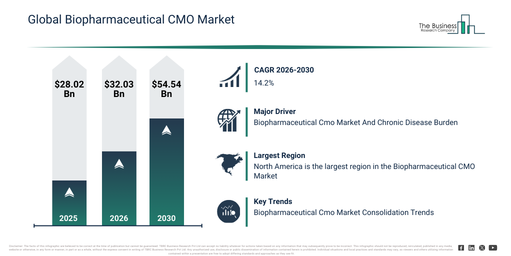
    The biopharmaceutical cmo market size has experienced swift expansion in recent years. It is projected to climb from $28.02 billion in 2025 to $32.03 billion in 2026, demonstrating a compound annual growth rate (CAGR) of 14.3%. The growth witnessed during the historic period can be ascribed to factors such as the escalating development of biologics pipelines, increased clinical trial activity, a growing demand for adaptable manufacturing capacity, a rise in biosimilar approvals, and the presence of specialized biomanufacturing expertise.

    The biopharmaceutical cmo market is anticipated to experience substantial expansion in the coming years. Its valuation is projected to reach $54.54 billion by 2030, exhibiting a compound annual growth rate (CAGR) of 14.2%. This anticipated growth throughout the forecast period stems from factors such as heightened investments in advanced biologics, a surging requirement for expedited scale-up manufacturing, the broadening scope of personalized therapies, increasing integration of continuous bioprocessing methods, and a sharpened emphasis on risk-sharing manufacturing frameworks. Key trends identified for this period encompass a rise in the outsourcing of biologics manufacturing, increasing demand for biosimilar production services, wider adoption of single-use bioprocessing systems, the expansion of manufacturing for cell and gene therapies, and an intensified focus on comprehensive, end-to-end cmo capabilities.

    Get A Free Sample Report With In-Depth Market Insights:

    https://thebusinessresearchcompany.com/sample_request?id=52861647&type=smp&name=Biopharmaceutical%20CMO%20Market%20Report%202026&utm_source=Blogs&utm_medium=Paid&utm_campaign=Oct_PR

    Biopharmaceutical CMO Market Demand Drivers Opening New Revenue Streams

    The escalating prevalence of chronic diseases is projected to drive the growth of the biopharmaceutical CMO market moving forward. These are long-standing health conditions that persist throughout an individual’s life, often progressing slowly and demanding continuous medical oversight. Biopharmaceutical CMOs can significantly aid in addressing chronic diseases by accelerating drug development, ensuring cost-efficient production, and maintaining high-quality standards, thereby enhancing the accessibility and affordability of essential medications. For example, in January 2024, the World Health Organization, a Switzerland-based intergovernmental organization, reported that the burden of noncommunicable diseases—primarily cardiovascular disease, cancer, chronic respiratory disease, and diabetes—continues to grow, causing 41 million deaths annually, which represents 74% of all deaths and the majority of premature mortality worldwide, with the greatest impact observed in low- and middle-income countries. Therefore, the increasing burden of chronic diseases drives the biopharmaceutical CMOs market.

    Biopharmaceutical CMO Market Segment Analysis: What Are The Core Market Categories?

    The biopharmaceutical cmo market covered in this report is segmented –

    1) By Product: Biologics, Biosimilars

    2) By Source: Mammalian, Non-Mammalian

    3) By Service: Manufacturing, Fill And Finish Operations, Analytical And QC Studies, Packaging

    Subsegments:

    1) By Biologics: Monoclonal Antibodies, Recombinant Proteins, Vaccines, Cell And Gene Therapies

    2) By Biosimilars: Biosimilar Monoclonal Antibodies, Biosimilar Recombinant Proteins, Biosimilar Insulins, Biosimilar Growth Hormones

    Biopharmaceutical CMO Market Trends Powering Strategic Industry Growth

    Key players within the biopharmaceutical CMO market are adopting a strategic collaboration strategy to develop innovative biopharmaceutical products. Such strategic alliances assist biopharmaceutical CMO companies by pooling resources and expertise, strengthening research and development capabilities, expanding their market reach, and accelerating commercialization, ultimately stimulating innovation and growth across the biopharmaceutical CMO industry. For instance, in May 2024, BioConnection, a contract manufacturing company situated in the Netherlands, formed a partnership with AGC Biologics, a contract development and manufacturing company based in the US. Through this partnership, they aim to provide a streamlined, comprehensive solution for biopharmaceutical development and manufacturing, thereby accelerating timelines and simplifying processes for drug developers.

    Biopharmaceutical CMO Market Top Companies Driving Competitive Growth

    Major companies operating in the biopharmaceutical cmo market are Lonza Group AG, Fujifilm Diosynth Biotechnologies USA Inc., Thermo Fisher Scientific Inc., Samsung Biologics, WuXi AppTec, Catalent, Inc., Rentschler Biopharma SE, Boehringer Ingelheim, Recipharm AB, AGC Biologics, CMC Biologics, KBI Biopharma, Vetter Pharma International GmbH, Emergent BioSolutions Inc., Aenova Group, Bio-Xcellence (Boehringer Ingelheim), AbbVie Contract Manufacturing, PCI Pharma Services, Evonik Industries AG

    View The Full Biopharmaceutical CMO Market Report:

    https://thebusinessresearchcompany.com/report/biopharmaceutical-CMO-global-market-report?utm_source=Blogs&utm_medium=Paid&utm_campaign=Oct_PR

    Biopharmaceutical CMO Market Regional Analysis And Top Geography

    North America was the largest region in the biopharmaceutical CMO market in 2025. Asia-Pacific is expected to be the fastest-growing region in the forecast period. The regions covered in the biopharmaceutical cmo market report are Asia-Pacific, South East Asia, Western Europe, Eastern Europe, North America, South America, Middle East, Africa.

    Reach Out To Our Team:

    The Business Research Company: https://www.thebusinessresearchcompany.com/

    Americas: +1 310-496-7795

    Asia: +44 7882 955267 & +91 8897263534

    Europe: +44 7882 955267

    Email us at: marketing@tbrc.info

    Follow us on:

    LinkedIn: https://in.linkedin.com/company/the-business-research-company

    YouTube: https://www.youtube.com/channel/UC24_fI0rV8cR5DxlCpgmyFQ

    Global Market Model: https://www.thebusinessresearchcompany.com/global-market-model
  • Biometric As A Service In Healthcare Market Expected To Grow At 22.3% CAGR Through 2030: What Businesses Need To Know

    Biometric As A Service In Healthcare Market Expected To Grow At 22.3% CAGR Through 2030: What Businesses Need To Know

    Backed by market attractiveness analysis, total addressable market sizing, company benchmarking matrices, interactive Excel dashboards, wider supply chain intelligence, emerging startup coverage, and detailed product-level insights, The Business Research Company’s 2026 market reports are designed to offer research that is more actionable and strategically valuable than ever.

    Biometric As A Service In Healthcare Market Size Forecast: How Big Could The Market Get By 2030?

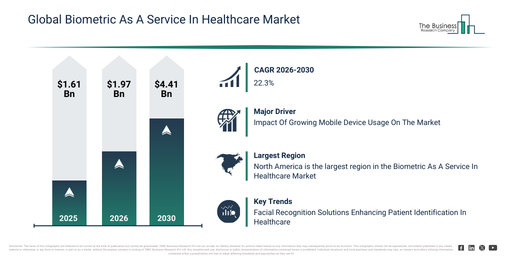
    The biometric as a service in healthcare market size has expanded significantly in recent years. It is expected to grow from $1.61 billion in 2025 to $1.97 billion in 2026, at a compound annual growth rate (CAGR) of 22.7%. The historical growth experienced by this market stems from factors such as the increasing digitization of healthcare records, a heightened need for patient identification accuracy, the broadening of telehealth services, intensifying concerns surrounding healthcare data breaches, and the adoption of cloud-based healthcare platforms.

    The biometric as a service in healthcare market is projected to experience substantial expansion in the coming years. This market is forecast to reach $4.41 billion by 2030, exhibiting a compound annual growth rate (CAGR) of 22.3%. Factors contributing to this growth during the forecast period include a rising demand for secure remote healthcare access, increased investments in digital health infrastructure, the broadening scope of AI-driven biometric analytics, a heightened regulatory focus on data privacy compliance, and the expanded deployment of biometric-enabled patient monitoring. Key trends anticipated within the forecast timeframe involve the growing adoption of cloud-based biometric authentication, an uptick in the utilization of multimodal biometric systems, increased integration of biometrics into remote patient monitoring, the expansion of secure digital identity platforms, and an intensified commitment to healthcare data protection.

    Get A Free Sample Report With In-Depth Market Insights:

    https://thebusinessresearchcompany.com/sample_request?id=88907859&type=smp&name=Biometric%20As%20A%20Service%20In%20Healthcare%20Market%20Report%202026&utm_source=Blogs&utm_medium=Paid&utm_campaign=Oct_PR

    Biometric As A Service In Healthcare Market Growth Backed By Core Demand Fundamentals

    The growing adoption of mobile devices is projected to boost the expansion of the biometric as a service in the healthcare market. Mobile devices are portable electronic gadgets, such as smartphones, tablets, and smartwatches, engineered for wireless communication, internet access, and various applications. This increasing usage of mobile devices is attributed to advancements in wireless technology, affordable smartphones, improved internet access, and the rise of mobile-based applications in healthcare. Mobile devices enable Biometric as a Service (BaaS) in healthcare, enhancing their functionality by allowing secure, real-time access to sensitive health data and patient records through advanced biometric authentication, thus ensuring both convenience and compliance with healthcare regulations. For instance, in November 2024, according to the Mobility Report of Ericsson, a Sweden-based telecommunications company, global smartphone subscriptions numbered 6,930 million units in 2023, and this figure increased to 7,160 million units in 2024. Therefore, the expanding usage of mobile devices is fostering the growth of the biometric as a service in the healthcare market.

    Biometric As A Service In Healthcare Market Segment Breakdown: Which Categories Lead On Revenue?

    The biometric as a service in healthcare market covered in this report is segmented –

    1) By Modality: Unimodal, Multimodal

    2) By Component: Software, Services

    3) By Scanner Type: Fingerprint Recognition, Iris Recognition, Palm Recognition, Facial Recognition, Voice Recognition, Other Scanner Types

    4) By Application: Pharmacy Dispensing, Care Provider Authentication, Medical Record Security And Data Centre Security, Patient Identification And Tracking, Home Or Remote Patient Access, Narcotic Security, Counter Insurance Frauds, Other Applications

    5) By End Use: Hospitals, Long Term Care Centers, Ambulatory Surgical Centers, Other End-Users

    Subsegments:

    1) By Unimodal: Fingerprint Recognition, Facial Recognition, Iris Recognition, Voice Recognition, Hand Geometry Recognition

    2) By Multimodal: Fingerprint And Facial Recognition, Fingerprint And Iris Recognition, Facial And Voice Recognition, Multi-Factor Biometric Systems

    Biometric As A Service In Healthcare Market Growth Trends Reshaping The Competitive Landscape

    Leading companies in the biometric as a service in healthcare market are concentrating on developing novel offerings, including facial recognition technologies, to strengthen patient identification, simplify access control, and elevate security levels in medical establishments. Facial recognition solutions are defined as technological systems designed to identify or confirm individuals by examining and comparing facial characteristics derived from images or video recordings, typically applied for security, verification, or monitoring. As an illustration, in February 2024, Imprivata Inc., a US-based software firm, unveiled Imprivata Biometric Patient Identity, an innovative solution incorporating facial recognition technology. This particular solution employs advanced biometric methods, such as facial and fingerprint recognition, to guarantee accurate patient verification across diverse care environments. Furthermore, it integrates effortlessly with current Electronic Health Records (EHR) systems, facilitating instant authentication while strictly adhering to healthcare privacy mandates like HIPAA.

    Biometric As A Service In Healthcare Market Leading Players And Competitive Positioning

    Major companies operating in the biometric as a service in healthcare market are Hitachi Ltd., Qualcomm Technologies Inc., Fujitsu Limited, IDEMIA Group, NICE Ltd., HID Global Corporation, Imprivata Inc., NEC Corporation, Cognitec Systems GmbH, Aware Inc., Aratek Biometric Technology Co. Ltd., Integrated Biometrics LLC, IRITECH Inc., Thales Group, Suprema Inc., Innovatrics s.r.o., BIO-key International Inc., Cenmetrix (Pvt) Ltd., ImageWare Systems Inc., Idex Biometrics ASA, SecuGen Corporation

    View The Full Biometric As A Service In Healthcare Market Report:

    https://thebusinessresearchcompany.com/report/biometric-as-a-service-in-healthcare-global-market-report?utm_source=Blogs&utm_medium=Paid&utm_campaign=Oct_PR

    Biometric As A Service In Healthcare Market Geographic Analysis: Where Is Demand Rising Fastest?

    North America was the largest region in the biometric as a service in healthcare market in 2025. Asia-Pacific is expected to be the fastest-growing region in the forecast period. The regions covered in the biometric as a service in healthcare market report are Asia-Pacific, South East Asia, Western Europe, Eastern Europe, North America, South America, Middle East, Africa.

    Reach Out To Our Team:

    The Business Research Company: https://www.thebusinessresearchcompany.com/

    Americas: +1 310-496-7795

    Asia: +44 7882 955267 & +91 8897263534

    Europe: +44 7882 955267

    Email us at: marketing@tbrc.info

    Follow us on:

    LinkedIn: https://in.linkedin.com/company/the-business-research-company

    YouTube: https://www.youtube.com/channel/UC24_fI0rV8cR5DxlCpgmyFQ

    Global Market Model: https://www.thebusinessresearchcompany.com/global-market-model
  • BioMEMS And Microsystem In Healthcare Market Forecast To Reach $10.54 Billion By 2030: Key Trends Explained

    BioMEMS And Microsystem In Healthcare Market Forecast To Reach $10.54 Billion By 2030: Key Trends Explained

    Featuring market attractiveness scoring, total addressable market sizing, company benchmarking matrices, interactive Excel dashboards, deeper supply chain intelligence, emerging startup tracking, and granular product-level insights, The Business Research Company’s 2026 market reports are built to deliver research that is both more actionable and more strategically valuable.

    BioMEMS And Microsystem In Healthcare Market Revenue Outlook: What CAGR Lies Ahead Through 2030?

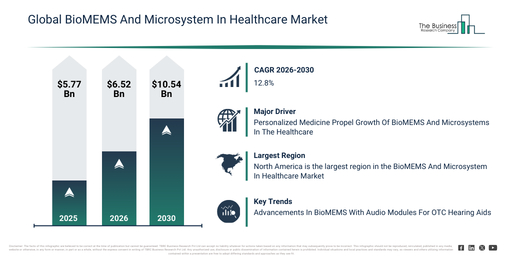
    The biomems and microsystem in healthcare market size has seen swift expansion in recent times. Its value is forecast to increase from $5.77 billion in 2025 to $6.52 billion in 2026, reflecting a compound annual growth rate (CAGR) of 12.9%. The historical progression of this market can be attributed to several factors, including breakthroughs in microfabrication techniques, an escalating need for point-of-care diagnostics, augmented funding for biomedical research, the rising uptake of minimally invasive devices, and improvements in technologies for sensor integration.

    The biomems and microsystem in healthcare market size is projected for substantial expansion over the coming years, with expectations to reach $10.54 billion by 2030, demonstrating a compound annual growth rate (CAGR) of 12.8%. This anticipated growth is primarily driven by a heightened need for immediate health oversight, increased capital into individualized medical instruments, the proliferation of portable and embedded medical solutions, the expanding application of AI-powered diagnostic tools, and a heightened emphasis on long-distance patient management. Prominent trends expected over this timeframe comprise a greater implementation of lab-on-a-chip technology, the growing embrace of embedded biomems sensors, enhanced incorporation of microfluidic diagnostic platforms, the wider availability of continuous patient surveillance tools, and an elevated emphasis on compact therapeutic solutions.

    Get A Free Sample Report With In-Depth Market Insights:

    https://thebusinessresearchcompany.com/sample_request?id=98428197&type=smp&name=BioMEMS%20And%20Microsystem%20In%20Healthcare%20Market%20Report%202026&utm_source=Blogs&utm_medium=Paid&utm_campaign=Oct_PR

    BioMEMS And Microsystem In Healthcare Market Growth Catalysts And Demand Drivers

    The rising requirement for personalized medicine is anticipated to drive the expansion of the BioMEMS and microsystems in healthcare market moving ahead. Personalized medicine represents a healthcare strategy focused on customizing medical interventions according to each patient’s unique attributes. The emphasis on personalized medicine is fueled by improved comprehension of genetic differences and progress in diagnostic instruments, data analytics, bioinformatics, and precision medicine technologies. BioMEMS and microsystems in healthcare facilitate accurate, continuous monitoring and diagnosis, thereby supporting the escalating need for personalized medicine through the provision of customized treatments informed by individual health information. As an illustration, in February 2024, the Personalized Medicine Coalition (PMC), a US-based nonprofit umbrella organization, released data indicating that in 2023, the FDA sanctioned 16 novel personalized therapies for rare diseases, marking a substantial rise from the six approvals observed in 2022. Consequently, the expanding demand for personalized medicine is a key driver for the growth of BioMEMS and microsystems in the healthcare market.

    BioMEMS And Microsystem In Healthcare Market Segmentation: How Does The Market Break Down By Category?

    The biomems and microsystem in healthcare market covered in this report is segmented –

    1) By Type: Biomedical Microelectromechanical Systems (BioMEMS), Microsystem

    2) By Application: Clinical Diagnostics, Therapeutic Devices, Surgical Devices, Other Applications

    3) By End-User: Hospitals, Diagnostic Centers, Research Laboratories, Other End-Users

    Subsegments:

    1) By Biomedical Microelectromechanical Systems (BioMEMS): Sensors, Actuators, Lab-On-A-Chip Devices

    2) By Microsystem: Microfluidic Devices, Microarray Systems, Implantable Devices

    BioMEMS And Microsystem In Healthcare Market Trends Shaping Long-Term Demand

    Companies engaged in the BioMEMS and microsystems in healthcare markets are prioritizing the development of advanced products, including integrated audio modules for over-the-counter hearing aids, to address the rising demand for compact audio solutions in various electronic devices. Integrated audio modules designed for over-the-counter hearing aids are compact systems that combine microelectromechanical systems (MEMS) speakers with electronics, offering enhanced sound quality and accessibility without the need for a prescription. For instance, in March 2023, USound GmbH, an innovation company located in Germany, launched Kore 4.0, an integrated audio module featuring the advanced Tarvos ultra-low power audio amplifier and the latest Conamara MEMS drivers. This module provides exceptional audio performance and low power consumption in a small footprint, making it ideal for wearables and Over-the-Counter (OTC) hearing aids. It incorporates USound’s patented technology, integrates effortlessly with any Bluetooth System-on-a-Chip (SoC), and can be customized for medium- to high-volume production. Its design also allows for further miniaturization, creating additional room for sensors and other components.

    BioMEMS And Microsystem In Healthcare Market Competitive Overview And Top Companies

    Major companies operating in the biomems and microsystem in healthcare market are Johnson & Johnson, Robert Bosch GmbH, Danaher Corporation, Koninklijke Philips NV, Infineon Technologies AG, TDK Corporation, TE Connectivity Ltd, STMicroelectronics NV, Murata Manufacturing Co Ltd, NXP Semiconductors NV, Boston Micro Fabrication, Analog Devices Inc, Microchip Technology Incorporated, Renishaw plc, Teledyne DALSA Semiconductor Inc, Sensirion AG, SPTS Technologies Ltd, Silex Microsystems AB, Amphenol Advanced Sensors Puerto Rico LLC, Tronics Microsystems SA, xMEMS Labs Inc., Bluechiip Limited

    View The Full BioMEMS And Microsystem In Healthcare Market Report:

    https://thebusinessresearchcompany.com/report/biomems-and-microsystem-in-healthcare-global-market-report?utm_source=Blogs&utm_medium=Paid&utm_campaign=Oct_PR

    BioMEMS And Microsystem In Healthcare Market Global Footprint: Which Region Leads The Market?

    North America was the largest region in the BioMEMS and microsystem in healthcare market in 2025. The regions covered in the biomems and microsystem in healthcare market report are Asia-Pacific, South East Asia, Western Europe, Eastern Europe, North America, South America, Middle East, Africa.

    Reach Out To Our Team:

    The Business Research Company: https://www.thebusinessresearchcompany.com/

    Americas: +1 310-496-7795

    Asia: +44 7882 955267 & +91 8897263534

    Europe: +44 7882 955267

    Email us at: marketing@tbrc.info

    Follow us on:

    LinkedIn: https://in.linkedin.com/company/the-business-research-company

    YouTube: https://www.youtube.com/channel/UC24_fI0rV8cR5DxlCpgmyFQ

    Global Market Model: https://www.thebusinessresearchcompany.com/global-market-model
  • Biomedical Textiles Market Analysis Through 2030: Market Size, Growth Trends And Industry Outlook

    Biomedical Textiles Market Analysis Through 2030: Market Size, Growth Trends And Industry Outlook

    Built to provide research that’s more actionable and strategically valuable, The Business Research Company’s 2026 market reports include market attractiveness analysis, total addressable market sizing, company benchmarking matrices, interactive Excel dashboards, broader supply chain intelligence, emerging startup tracking, and in-depth product insights.

    Biomedical Textiles Market Growth Analysis: How Will Revenue Trend Over The Forecast Period?

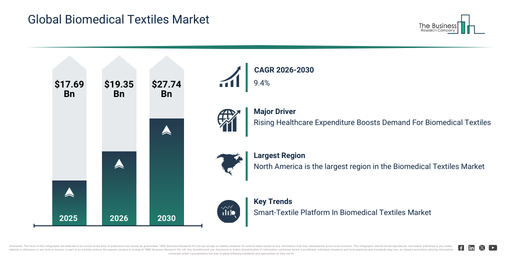
    The biomedical textiles market has experienced substantial growth in recent years. Projections indicate it will expand from $17.69 billion in 2025 to $19.35 billion in 2026, achieving a compound annual growth rate (CAGR) of 9.4%. The increase observed in the past can be attributed to rising surgical procedure volumes, increasing prevalence of chronic diseases, expansion of hospital infrastructure, growing use of wound care products, and advancements in textile manufacturing technologies.

    The biomedical textiles market is projected to experience substantial expansion over the coming years, reaching $27.74 billion by 2030, exhibiting a compound annual growth rate (CAGR) of 9.4%. This anticipated growth during the forecast period is driven by factors such as the greater acceptance of bioresorbable materials, the escalating need for minimally invasive surgical options, the proliferation of smart healthcare textiles, increased financial commitments to medical device innovation, and a heightened emphasis on preventing infections. Key developments expected throughout this period encompass a rise in the uptake of sophisticated implantable textile materials, a surge in the requirement for antimicrobial medical fabrics, the expanding utilization of biodegradable biomedical fibers, the broadening scope of smart and functional medical textiles, and a stronger commitment to ensuring patient comfort and safety.

    Get A Free Sample Report With In-Depth Market Insights:

    https://thebusinessresearchcompany.com/sample_request?id=82995098&type=smp&name=Biomedical%20Textiles%20Market%20Report%202026&utm_source=Blogs&utm_medium=Paid&utm_campaign=Oct_PR

    Biomedical Textiles Market Opportunity Drivers: What’s Unlocking New Revenue Potential?

    The increasing healthcare expenditure is anticipated to drive the growth of the biomedical textiles market moving forward. Healthcare expenditure is defined as the financial resources allocated to healthcare goods and services, encompassing medical equipment, pharmaceuticals, hospital care, physician services, and other related health expenses. This spending directly fuels investments in advanced medical treatments, technologies, and healthcare infrastructure. The rise in healthcare expenditure has prompted investments in cutting-edge medical treatments and technologies, further increasing the demand for specialized biomedical textile materials. For example, in November 2025, the Organisation for Economic Co-operation and Development, a France-based intergovernmental economic organization, reported that average health spending in OECD countries in 2024 was estimated at nearly USD 6000 per capita (when adjusted for differences in purchasing power). The United States was identified as the highest spender. Therefore, escalating healthcare expenditures are propelling the expansion of the biomedical textiles market.

    Biomedical Textiles Market Segment Trends And Revenue Contributors

    The biomedical textiles market covered in this report is segmented –

    1) By Product Type: Non Implantable, Implantable

    2) By Fabric: Non-Woven Biomedical Textiles, Woven Biomedical Textiles, Knitted Biomedical Textiles

    3) By Fiber Type: Non Biodegradable, Biodegradable

    4) By Applications: Ophthalmology, Neurology, Cardiology, Dentistry, Orthopedics, General Surgery And Treatment, Other Applications

    5) By End Users: Hospitals, Ambulatory Centers, Clinics, Community Healthcare, Other End Users

    Subsegments:

    1) By Non-Implantable: Surgical Textiles, Wound Dressings, Bandages And Plasters, Compression Garments

    2) By Implantable: Sutures, Mesh Materials, Tissue Engineering Scaffolds, Vascular Grafts

    Biomedical Textiles Market Innovation Trends Shaping Future Development

    Major companies in the biomedical textiles market are prioritizing strategic collaborations to introduce intelligent textile platforms for the development of biomedical textiles. These partnerships enable companies to leverage each other’s expertise in creating innovative platforms that integrate medicine, wellness, and health advantages into clothing. For instance, in August 2023, Nufabrx, a US-based biomedical textile company, joined forces with Enventys Partners, a US-based vertically integrated product development, crowdfunding, and inbound marketing agency, to launch HealthWear, a groundbreaking platform technology that incorporates medicine, wellness, and health benefits directly into garments. This proprietary smart-textile platform immediately embeds active chemicals into textile goods. The final garments, once knitted into HealthWear’s composition, consistently apply small amounts of topical medications to the skin, which are activated by body heat and/or moisture. Even after numerous wears, uses, and laundries, apparel constructed with HealthWear technology continues to provide a therapeutic level of care.

    Biomedical Textiles Market Competitive Landscape: Which Companies Lead The Industry?

    Major companies operating in the biomedical textiles market are Confluent Medical Technologies, Cardinal Health Inc, Johnson & Johnson Services Inc, B. Braun Melsungen AG, Smith & Nephew PLC, Medline Industries Inc, 3M Company, ATEX Technologies, Integra Life Sciences Corporation, Paul Hartmann AG, BSN Medical GmbH, Bally Ribbon Mills, Asahi Kasei Corporation, Freudenberg Medical LLC, Halyard Health, Kimberly-Clark Corporation, Milliken & Company, Mölnlycke Health Care AB, Precision Fabrics Group Inc., Secant Group LLC, Stradis Healthcare, Tietex International Ltd., Trelleborg AB, Vestagen Protective Technologies Inc., W.L. Gore & Associates Inc., Welspun Group, Zimmer Biomet Holdings

    View The Full Biomedical Textiles Market Report:

    https://thebusinessresearchcompany.com/report/biomedical-textiles-global-market-report?utm_source=Blogs&utm_medium=Paid&utm_campaign=Oct_PR

    Biomedical Textiles Market Regional Split: Which Areas Are Fueling Growth?

    North America was the largest region in the biomedical textiles market in 2025. Asia-Pacific is expected to be the fastest-growing region in the forecast period. The regions covered in the biomedical textiles market report are Asia-Pacific, South East Asia, Western Europe, Eastern Europe, North America, South America, Middle East, Africa.

    Reach Out To Our Team:

    The Business Research Company: https://www.thebusinessresearchcompany.com/

    Americas: +1 310-496-7795

    Asia: +44 7882 955267 & +91 8897263534

    Europe: +44 7882 955267

    Email us at: marketing@tbrc.info

    Follow us on:

    LinkedIn: https://in.linkedin.com/company/the-business-research-company

    YouTube: https://www.youtube.com/channel/UC24_fI0rV8cR5DxlCpgmyFQ

    Global Market Model: https://www.thebusinessresearchcompany.com/global-market-model