Author: Marketing Posting

  • Aseptic Sampling Market Trends 2026: Spotlight On Adoption Of Advanced Aseptic Sampling Solutions To Enhance Bioprocessing Efficiency

    Aseptic Sampling Market Trends 2026: Spotlight On Adoption Of Advanced Aseptic Sampling Solutions To Enhance Bioprocessing Efficiency

    With a focus on actionable insights and strategic value, The Business Research Company’s 2026 market reports include market attractiveness scoring, total addressable market sizing, company benchmarking matrices, interactive Excel dashboards, deeper supply chain intelligence, emerging startup tracking, and granular product-level insights.

    Aseptic Sampling Market Size Analysis: Historical Growth And Future Revenue Projections

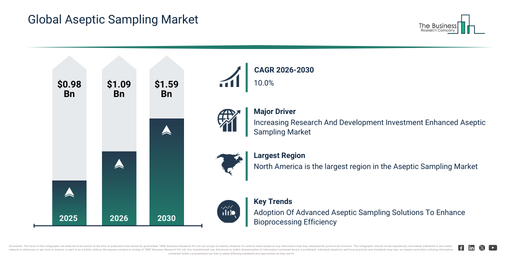
    The aseptic sampling market has experienced substantial growth in recent years. This market is projected to expand from $0.98 billion in 2025 to $1.09 billion in 2026, demonstrating a compound annual growth rate (CAGR) of 11.3%. Historically, this growth has been driven by factors such as the expansion of biopharmaceutical manufacturing, an increasing emphasis on product quality assurance, heightened regulatory oversight in life sciences, the proliferation of sterile processing environments, and the adoption of manual aseptic techniques.

    The aseptic sampling market is projected to experience substantial expansion over the upcoming years, reaching a valuation of $1.59 billion by 2030, driven by a compound annual growth rate (CAGR) of 10.0%. This anticipated growth is primarily fueled by factors such as increasing investments in automated bioprocessing, the rising acceptance of continuous manufacturing practices, a growing need for contamination-free sampling, the expansion of biologics production capabilities, and the increased implementation of smart sampling systems. Key developments expected during this forecast period involve the growing integration of automated aseptic sampling systems, a heightened demand for single-use sterile sampling solutions, the increasing incorporation of robotic sampling technologies, the spread of in-line and on-line sampling methods, and a sharpened emphasis on mitigating contamination risks.

    Preview The Aseptic Sampling Market Report With A Free Sample:

    https://thebusinessresearchcompany.com/sample_request?id=53325323&type=smp&name=Aseptic%20Sampling%20Market%20Report%202026&utm_source=Blogs&utm_medium=Paid&utm_campaign=Nov_PR

    Aseptic Sampling Market Drivers: What Is Fueling Demand Through 2030?

    The expanding financial commitment to research and development initiatives is poised to boost the aseptic sampling market moving forward. These investments constitute funds designated for scientific inquiry and innovation, aimed at refining products, processes, or technologies. The upward trend in R&D funding can be ascribed to factors such as intensified competition, technological progress, evolving regulatory mandates, and companies adopting growth strategies driven by innovation. Enhanced research and development investment improves aseptic sampling methods, guaranteeing superior precision, sterility, and adherence to regulations in pharmaceutical manufacturing. Thus, increasing investments in research and development activities are fueling the expansion of the aseptic sampling market.

    Aseptic Sampling Market Segmentation Analysis: Core Categories And Subcategories

    The aseptic sampling market covered in this report is segmented –

    1) By Type: Manual Aseptic Sampling, Automated Aseptic Sampling

    2) By Technique: Off-Line Sampling Technique, On-Line Sampling Technique, In-Line Sampling Technique

    3) By Application: Downstream Processing, Upstream Processing

    4) By End-User: Biotechnology And Pharmaceutical Manufacturers, Research And Development Departments, Contract Research And Manufacturing Organizations, Other End Users

    Subsegments:

    1) By Manual Aseptic Sampling: Single-Use Manual Sampling, Reusable Manual Sampling

    2) By Automated Aseptic Sampling: Robotic Sampling Systems, Automated Sample Collection Systems

    Which Trends Will Define The Aseptic Sampling Market Through 2030?

    Leading companies within the aseptic sampling market are concentrating on developing advanced technologies, including pre-engineered PUPSIT (pre-use, post-sterilization integrity testing) assemblies and closed-path sampling systems. These efforts are geared towards enhancing sterility, mitigating contamination risks, and improving sampling efficiency in biopharmaceutical manufacturing. A PUPSIT-enabled aseptic sampling system integrates pre-sterilized, single-use fluid pathways with integrated integrity testing, allowing for secure, automated sampling without compromising closed-system integrity. This method contrasts with traditional manual stainless-steel or fixed-path sampling, which poses a higher contamination risk and requires separate validation. As an illustration, in October 2025, Avantor, a U.S.-based life sciences company, launched its Next-Generation Sterile Sampling Platform for biopharma processes. The platform features the Exact Volume Sampling System (EVSS), Needle-Based Sampling System (NBSS), Needle-Free Sampling System (NFSS), and OmniTop assemblies, which facilitate precise micro-volume sampling, reduce product loss, and offer fully closed, pre-sterilized paths that optimize process monitoring and ensure sterility across advanced therapy medicinal product (ATMP) manufacturing.

    Aseptic Sampling Market Major Companies And Industry Participants

    Major companies operating in the aseptic sampling market are Merck & Co. Inc., Saint-Gobain Performance Plastics, Thermo Fisher Scientific Inc., 3M Company, Danaher Corporation, Parker-Hannifin Corporation, Corning Incorporated, Avantor Inc., Lonza Group AG, GEA Group AG, W. L. Gore & Associates Inc., Sartorius AG, Charles River Laboratories International Inc., QualiTest Group, Eppendorf AG, Repligen Corporation, Gemü Group, Watson-Marlow Fluid Technology Group, Cole-Parmer Instrument Company LLC, LabVantage Solutions Inc., Advanced Microdevices Pvt. Ltd., TRACE Analytics GmbH, QualiTru Sampling Systems, KEOFITT A/S, Bbi-biotech GmbH

    Buy The Full Aseptic Sampling Global Market Report 2026:

    https://thebusinessresearchcompany.com/report/aseptic-sampling-global-market-report?utm_source=Blogs&utm_medium=Paid&utm_campaign=Nov_PR

    Aseptic Sampling Market Geographic Analysis: Which Region Accounts For The Biggest Share?

    North America was the largest region in the aseptic sampling market in 2025. Asia-Pacific is expected to be the fastest-growing region in the forecast period. The regions covered in the aseptic sampling market report are Asia-Pacific, South East Asia, Western Europe, Eastern Europe, North America, South America, Middle East, Africa.

    Reach Out To Our Team:

    The Business Research Company: https://www.thebusinessresearchcompany.com/

    Americas: +1 310-496-7795

    Asia: +44 7882 955267 & +91 8897263534

    Europe: +44 7882 955267

    Email us at: marketing@tbrc.info

    Follow us on:

    LinkedIn: https://in.linkedin.com/company/the-business-research-company

    YouTube: https://www.youtube.com/channel/UC24_fI0rV8cR5DxlCpgmyFQ

    Global Market Model: https://www.thebusinessresearchcompany.com/global-market-model
  • Where Is The Acromegaly Market Heading? Size, Trends And Forecast Through 2030

    Where Is The Acromegaly Market Heading? Size, Trends And Forecast Through 2030

    The Business Research Company’s 2026 market reports combine market attractiveness scoring, total addressable market sizing, company benchmarking matrices, interactive Excel dashboards, deeper supply chain intelligence, emerging startup tracking, and granular product-level insights to deliver research that is more actionable and strategically valuable.

    Acromegaly Market Size Review: What Shaped Past Growth And What Will Drive Future Expansion?

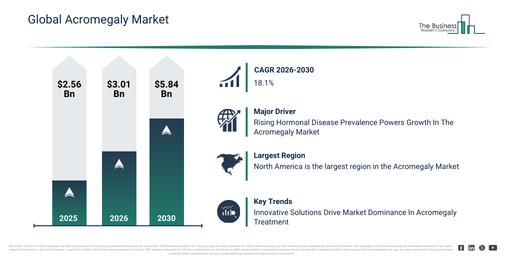
    The acromegaly market size has experienced rapid growth in recent years. This market is projected to expand from $2.56 billion in 2025 to $3.01 billion in 2026, achieving a compound annual growth rate (CAGR) of 17.5%. Factors contributing to the historical growth include the limited availability of acromegaly diagnostic tools, an increasing prevalence of growth hormone disorders, expanding hospital and specialty clinic infrastructure, the adoption of conventional treatment methods, and a growing awareness of rare endocrine disorders.

    The acromegaly market is projected to witness rapid expansion over the next few years, with its size expected to reach $5.84 billion by 2030, demonstrating a compound annual growth rate (CAGR) of 18.1%. This anticipated growth during the forecast period is attributable to the development of advanced somatostatin analogues, the increasing availability of parenteral treatment options, the rising embrace of precision medicine approaches, the expansion of homecare and outpatient treatment models, and the integration of digital health and remote monitoring solutions. Furthermore, significant trends for this period include the increasing adoption of growth hormone measurement and IGF-I testing, the growing utilization of somatostatin analogues and dopamine agonists, the broadening of minimally invasive surgery and radiation therapy, an intensifying focus on personalized treatment plans for patients, and improvements in awareness and early diagnosis programs.

    Access Free Sample Pages From The Acromegaly Market Report 2026:

    https://thebusinessresearchcompany.com/sample_request?id=78209457&type=smp&name=Acromegaly%20Market%20Report%202026&utm_source=Blogs&utm_medium=Paid&utm_campaign=Nov_PR

    Understanding The Main Driver Of The Acromegaly Market

    The increasing incidence of hormonal conditions like diabetes is anticipated to fuel the expansion of the acromegaly market in the future. Hormonal diseases, alternatively termed endocrine disorders, refer to health issues stemming from malfunctions within the endocrine system. Among these, diabetes stands out as a highly common and significant hormonal ailment. Both acromegaly and other endocrine conditions can arise from an excessive production of certain hormones, including growth hormone or cortisol. Furthermore, given the effect of elevated growth hormone levels on insulin production, approximately 50% of individuals suffering from acromegaly could develop insulin resistance or type 2 diabetes mellitus. Consequently, the expanding occurrence of hormonal diseases is a key factor propelling the expansion of the acromegaly market.

    Acromegaly Market Segment Mapping For 2026 And Beyond

    The acromegaly market covered in this report is segmented –

    1) By Type: Ectopic Acromegaly, Acromegaly Due To Growth Hormone

    2) By Diagnosis: GH And IGF-I Measurement, Growth Hormone Suppression Test, Imaging, Other Diagnosis

    3) By Route Of Administration: Oral, Parental, Other Routes Of Administration

    4) By Treatment: Medication, Somatostatin analogues, Dopamine Agonists, Growth Hormone Antagonist, Surgery, Radiation, Other Treatments

    5) By End Users: Hospitals, Specialty Clinics, Other End Users

    Subsegments:

    1) By Ectopic Acromegaly: Tumor-Induced Ectopic Acromegaly, Non-Tumor-Induced Ectopic Acromegaly

    2) By Acromegaly Due To Growth Hormone: Primary Growth Hormone Excess, Secondary Growth Hormone Excess

    What Key Trend Is Expected To Shape The Acromegaly Market Over The Forecast Period?

    Major companies operating in the acromegaly market are concentrating on developing innovative products and solutions, such as generic lanreotide, to enhance treatment options and improve patient outcomes. Generic lanreotide refers to an unbranded formulation of the medication utilized to treat acromegaly and certain neuroendocrine tumors. It functions as a somatostatin analogue, which reduces growth hormone secretion and increases patient accessibility to effective treatment alternatives.

    Acromegaly Market Major Players And Industry Competition Overview

    Major companies operating in the acromegaly market are Pfizer Inc., Johnson & Johnson Private Limited, Merck & Co Inc., AbbVie Inc., Bayer AG, Novartis AG, Sanofi S.A., AstraZeneca plc, GlaxoSmithKline plc, Eli Lilly and Company, Gilead Sciences Inc., Boehringer Ingelheim International GmbH., Amgen Inc., Allergan Inc., Teva Pharmaceutical Industries Ltd., Mylan N.V., Ipsen Pharma S.A., Hikma Pharmaceuticals PLC, Lupin Ltd., Recordati S.p.A., Ionis Pharmaceuticals Inc., Amryt Pharma plc , Strongbridge Biopharma plc, Aquestive Therapeutics Inc., Peptron Inc., Crinetics Pharmaceuticals, Chiasma Inc.

    Full Acromegaly Market Report: Market Size, Trends, Segments And Key Players:

    https://thebusinessresearchcompany.com/report/acromegaly-global-market-report?utm_source=Blogs&utm_medium=Paid&utm_campaign=Nov_PR

    Acromegaly Market Geographic Segmentation: Regions Covered In The Report

    North America was the largest region in the acromegaly market in 2025. The regions covered in the acromegaly market report are Asia-Pacific, South East Asia, Western Europe, Eastern Europe, North America, South America, Middle East, Africa.

    Reach Out To Our Team:

    The Business Research Company: https://www.thebusinessresearchcompany.com/

    Americas: +1 310-496-7795

    Asia: +44 7882 955267 & +91 8897263534

    Europe: +44 7882 955267

    Email us at: marketing@tbrc.info

    Follow us on:

    LinkedIn: https://in.linkedin.com/company/the-business-research-company

    YouTube: https://www.youtube.com/channel/UC24_fI0rV8cR5DxlCpgmyFQ

    Global Market Model: https://www.thebusinessresearchcompany.com/global-market-model
  • Artificial Saliva Market Growth Driven By Rising Prevalence Of Dry Mouth Syndrome: Outlook To 2030

    Artificial Saliva Market Growth Driven By Rising Prevalence Of Dry Mouth Syndrome: Outlook To 2030

    The Business Research Company’s 2026 market reports combine market attractiveness scoring, total addressable market sizing, company benchmarking matrices, interactive Excel dashboards, deeper supply chain intelligence, emerging startup tracking, and granular product-level insights to deliver research that is more actionable and strategically valuable.

    What Is The Artificial Saliva Market Growth Rate? A 12.2% CAGR Outlook Through 2030

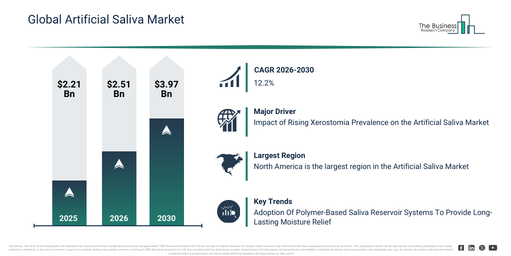
    The artificial saliva market size has seen swift expansion in recent years. It is projected to expand from $2.21 billion in 2025 to $2.51 billion in 2026, exhibiting a compound annual growth rate (CAGR) of 13.6%. The historical growth of this market can be linked to factors such as the rising incidence of dry mouth conditions, the increasing administration of medications that induce xerostomia, the proliferation of cancer radiation therapies, heightened consciousness regarding oral health management, and the accessibility of over-the-counter saliva alternatives.

    The artificial saliva market is projected to experience substantial expansion in the coming years. Its size is anticipated to reach $3.97 billion by 2030, exhibiting a compound annual growth rate (CAGR) of 12.2%. This projected growth is driven by several factors, including the increasing needs of an aging demographic, a heightened emphasis on therapies that enhance quality of life, the development of more pediatric-suitable formulations, continuous innovation in bio-mimetic saliva products, and expanded distribution pathways through both healthcare and retail outlets. Key trends anticipated during this period encompass a surging demand for products addressing xerostomia, the ongoing creation of alcohol-free oral solutions, a concentrated effort on developing user-friendly dosage formats, an increase in the availability of ready-to-use artificial saliva items, and a heightened focus on ensuring oral comfort and adequate hydration.

    Access A Free Sample Of The Latest Artificial Saliva Market Analysis:

    https://thebusinessresearchcompany.com/sample_request?id=43401533&type=smp&name=Artificial%20Saliva%20Market%20Report%202026&utm_source=Blogs&utm_medium=Paid&utm_campaign=Nov_PR

    Why Is The Artificial Saliva Market Growing? The Key Demand Driver Explained

    The increasing occurrence of dry mouth syndrome is anticipated to fuel the expansion of the artificial saliva market in the future. Known medically as xerostomia, dry mouth syndrome describes a state marked by a constant sensation of oral dryness. This syndrome’s commonness has grown, partly because of an aging demographic and the extensive consumption of prescription and over-the-counter drugs capable of inducing xerostomia. Artificial saliva delivers hydration to oral tissues, thereby alleviating the dry, adhesive sensation frequently linked with xerostomia. For example, data from PubMed, the US-based National Institutes of Health, indicated a combined xerostomia prevalence of 38% (95% CI: 22-57%) in 2025. Consequently, the growing incidence of dry mouth syndrome is a key factor propelling the artificial saliva market’s growth.

    What Are The Main Segments Of The Artificial Saliva Market?

    The artificial saliva market covered in this report is segmented –

    1) By Product: Oral Spray, Oral Solution, Oral Liquid, Dissolving Tablets, Gel, Powder

    2) By Distribution Channel: Supermarkets, Hypermarkets, Other Distribution Channels

    3) By End-User: Adult, Pediatric

    Subsegments:

    1) By Oral Spray: Non-Alcoholic Oral Spray, Alcohol-Based Oral Spray

    2) By Oral Solution: Ready-To-Use Oral Solution, Concentrated Oral Solution

    3) By Oral Liquid: Viscous Oral Liquid, Non-Viscous Oral Liquid

    4) By Dissolving Tablets: Fast-Dissolving Tablets, Slow-Dissolving Tablets

    5) By Gel: High-Viscosity Gel, Low-Viscosity Gel

    6) By Powder: Ready-To-Use Powder, Powder Requiring Mixing

    Artificial Saliva Market Trend Analysis: Where Leading Companies Are Focusing

    Major companies in the artificial saliva market are focusing on developing innovative solutions, such as poly(hydroxyethyl methacrylate) (pHEMA)–based in-mouth hydrogels, to deliver sustained moisture release for individuals with xerostomia. A pHEMA hydrogel functions as a biocompatible polymer matrix that absorbs synthetic saliva, expands significantly, and gradually releases moisture, differing from traditional artificial saliva sprays that offer only short-term lubrication and necessitate frequent reapplication. For example, in August 2025, a US-based research team led by Debnath, Malandraki, and Boudouris developed a pHEMA artificial-saliva reservoir hydrogel specifically designed for intraoral placement. This hydrogel can expand up to four times its dry volume, stores saliva substitute solutions, releases moisture gradually for several hours, and maintains its performance across multiple swelling–release cycles. Additionally, it exhibited strong biocompatibility and provided more consistent lubrication, positioning it as a promising next-generation alternative for managing chronic dry mouth.

    Which Companies Are Major Players In The Artificial Saliva Market?

    Major companies operating in the artificial saliva market are Pfizer Inc., Viatris Inc., Bausch Health Companies Inc., Perrigo Company plc, Cipla Ltd., Aurobindo Pharma Ltd., Hikma Pharmaceuticals plc, Recordati S.p.A., Mission Pharmacal Company, DENTAID S.L., Forward Science Holdings LLC, Saliwell Ltd., Sun Pharmaceutical Industries Ltd., GlaxoSmithKline plc, Johnson & Johnson, Colgate-Palmolive Company, Church & Dwight Co. Inc., Prestige Consumer Healthcare Inc., Thornton & Ross Ltd., Roquette Frères

    Get The Complete Artificial Saliva Market Analysis Here:

    https://thebusinessresearchcompany.com/report/artificial-saliva-global-market-report?utm_source=Blogs&utm_medium=Paid&utm_campaign=Nov_PR

    Which Region Held The Largest Share Of The Artificial Saliva Market In 2025?

    North America was the largest region in the artificial saliva market in 2025. Asia-Pacific is expected to be the fastest-growing region in the forecast period. The regions covered in the artificial saliva market report are Asia-Pacific, South East Asia, Western Europe, Eastern Europe, North America, South America, Middle East, Africa.

    Reach Out To Our Team:

    The Business Research Company: https://www.thebusinessresearchcompany.com/

    Americas: +1 310-496-7795

    Asia: +44 7882 955267 & +91 8897263534

    Europe: +44 7882 955267

    Email us at: marketing@tbrc.info

    Follow us on:

    LinkedIn: https://in.linkedin.com/company/the-business-research-company

    YouTube: https://www.youtube.com/channel/UC24_fI0rV8cR5DxlCpgmyFQ

    Global Market Model: https://www.thebusinessresearchcompany.com/global-market-model
  • Artificial Pancreas Device System Market To Grow At A 13.7% CAGR Through 2030: Drivers, Trends And Forecast

    Artificial Pancreas Device System Market To Grow At A 13.7% CAGR Through 2030: Drivers, Trends And Forecast

    Market attractiveness scoring, total addressable market sizing, company benchmarking matrices, interactive Excel dashboards, deeper supply chain intelligence, emerging startup tracking, and granular product-level insights are among the key offerings featured in The Business Research Company’s 2026 market reports, designed to deliver more actionable and strategically valuable research.

    Artificial Pancreas Device System Market Valued At $2.35 Billion In 2026, Projected To Reach $3.92 Billion By 2030

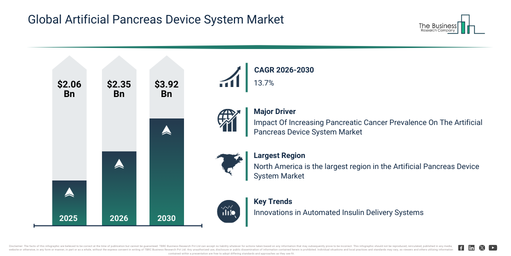
    The artificial pancreas device system market has experienced rapid expansion in recent years. It is projected to increase from $2.06 billion in 2025 to $2.35 billion in 2026, demonstrating a compound annual growth rate (CAGR) of 13.9%. The market’s historical growth can be attributed to the increasing prevalence of diabetes, early adoption of insulin pump technologies, expansion of continuous glucose monitoring usage, improvements in medical sensor accuracy, and growing awareness of automated diabetes management.

    The artificial pancreas device system market is anticipated to experience swift growth in the foreseeable future. By 2030, its value is predicted to reach $3.92 billion, expanding at a compound annual growth rate (CAGR) of 13.7%. This projected growth is driven by several factors, including the escalating demand for completely automated glucose management, increased investments in digital diabetes solutions, the broadening scope of remote patient monitoring, a heightened emphasis on personalized insulin treatment, and greater regulatory backing for sophisticated diabetes technologies. Key trends during this period are expected to encompass the growing uptake of closed-loop glucose control systems, the increasing integration of CGM with insulin pumps, the expanding application of predictive algorithms for insulin administration, the proliferation of wearable devices for diabetes management, and an intensified focus on patient-centered automation.

    Request A Complimentary Artificial Pancreas Device System Market Research Sample:

    https://thebusinessresearchcompany.com/sample_request?id=69973385&type=smp&name=Artificial%20Pancreas%20Device%20System%20Market%20Report%202026&utm_source=Blogs&utm_medium=Paid&utm_campaign=Nov_PR

    Key Factor Propelling The Artificial Pancreas Device System Market Forward

    A rise in the incidence of pancreatic cancer is projected to stimulate the expansion of the artificial pancreas device system market in the future. Pancreatic cancer refers to a harmful tumor developing within the pancreas, an organ situated behind the stomach. Its development is shaped by various elements such as lifestyle choices, genetic predispositions, medical conditions, and environmental exposures, in addition to genetic mutations that result in hereditary pancreatitis, potentially causing persistent pancreatic inflammation. An artificial pancreas device system (APDS) serves primarily to assist diabetic individuals in controlling their blood sugar concentrations through automated glucose monitoring and precise insulin delivery. Consequently, the growing occurrence of pancreatic cancer is fueling the expansion of the artificial pancreas device system market.

    Artificial Pancreas Device System Market Segments And Subsegments Explained

    The artificial pancreas device system market covered in this report is segmented –

    1) By Device Type: Threshold Suspend Device Systems, Control-To-Range Systems, Control-To-Target Systems

    2) By Treatment Type: Bi-Hormonal, Insulin Only, Hybrid

    3) By End-User: Hospitals, Medical Centers, Other End-Users

    Subsegments:

    1) By Threshold Suspend Device Systems: Insulin Pump with Threshold Suspend, Continuous Glucose Monitoring (CGM) Integrated Systems

    2) By Control-To-Range Systems: Hybrid Closed-Loop Systems, Insulin Delivery Systems with Range Control, Real-Time Glucose Adjustment Systems

    3) By Control-To-Target Systems: Fully Closed-Loop Artificial Pancreas Systems, Insulin Pumps with Targeted Glucose Control, Automated Glucose Regulation Systems

    Emerging Trends Transforming The Artificial Pancreas Device System Market

    Leading companies operating in the artificial pancreas device system market are developing automated insulin delivery systems to improve diabetes management by automatically monitoring blood glucose levels and administering the correct amount of insulin. These automated insulin delivery systems aim to replicate the function of a healthy pancreas, thereby reducing the need for constant blood sugar monitoring and manual insulin administration for individuals with diabetes.

    Artificial Pancreas Device System Market Key Players: Major Companies In The 2026 Report

    Major companies operating in the artificial pancreas device system market are Medtronic plc, Abbott Laboratories, DexCom Inc., Insulet Corporation, Tandem Diabetes Care Inc., Roche Diabetes Care, Ypsomed, SOOIL Development, Beta Bionics Inc., Bigfoot Biomedical Inc., Diabeloop SA, Inreda Diabetic B.V., Defymed SAS, DreaMed Diabetes Ltd., Medtrum Technologies Inc., EOFlow Co. Ltd., Cellnovo, Pancreum Inc., Admetsys Corporation, GlucoModicum, MicroTech Medical

    Explore The Full Artificial Pancreas Device System Market Report With Forecasts To 2030:

    https://thebusinessresearchcompany.com/report/artificial-pancreas-device-system-global-market-report?utm_source=Blogs&utm_medium=Paid&utm_campaign=Nov_PR

    Artificial Pancreas Device System Market By Region: Where Is Demand Strongest?

    North America was the largest region in the artificial pancreas device system market in 2025. Asia-Pacific is expected to be the fastest-growing region in the forecast period. The regions covered in the artificial pancreas device system market report are Asia-Pacific, South East Asia, Western Europe, Eastern Europe, North America, South America, Middle East, Africa.

    Reach Out To Our Team:

    The Business Research Company: https://www.thebusinessresearchcompany.com/

    Americas: +1 310-496-7795

    Asia: +44 7882 955267 & +91 8897263534

    Europe: +44 7882 955267

    Email us at: marketing@tbrc.info

    Follow us on:

    LinkedIn: https://in.linkedin.com/company/the-business-research-company

    YouTube: https://www.youtube.com/channel/UC24_fI0rV8cR5DxlCpgmyFQ

    Global Market Model: https://www.thebusinessresearchcompany.com/global-market-model
  • Innovative Long-Acting Injectable Therapies Revolutionizing HIV Treatment for Improved Adherence: The Key Trend Shaping The Acquired Immunodeficiency Syndrome (AIDS) Market Through 2030

    Innovative Long-Acting Injectable Therapies Revolutionizing HIV Treatment for Improved Adherence: The Key Trend Shaping The Acquired Immunodeficiency Syndrome (AIDS) Market Through 2030

    Market attractiveness scoring, total addressable market sizing, company benchmarking matrices, interactive Excel dashboards, deeper supply chain intelligence, emerging startup tracking, and granular product-level insights are among the key offerings featured in The Business Research Company’s 2026 market reports, designed to deliver more actionable and strategically valuable research.

    Acquired Immunodeficiency Syndrome (AIDS) Market On Course To Reach $43.28 Billion By 2030: Size And Growth Overview

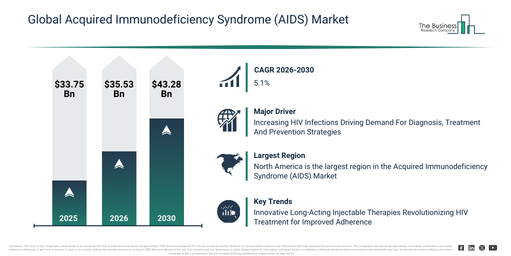
    The acquired immunodeficiency syndrome (aids) market size has shown significant expansion over recent years. It is anticipated to increase from $33.75 billion in 2025 to $35.53 billion in 2026, at a compound annual growth rate (CAGR) of 5.3%. The market’s past growth can be attributed to several factors, including the widespread prevalence of hiv infections globally, improved awareness and screening efforts, government-funded hiv treatment initiatives, the availability of first-generation antiretroviral drugs, and a rising incidence of opportunistic infections.

    The market for acquired immunodeficiency syndrome (AIDS) is projected to experience robust expansion in the coming years. This market is anticipated to reach a size of $43.28 billion by 2030, driven by a compound annual growth rate (CAGR) of 5.1%. During the forecast period, this growth is expected to stem from several factors, including the advancement of next-generation antiretroviral therapies, the broadening of PrEP and PEP initiatives, increased research into HIV vaccines, the integration of digital health monitoring tools, and a rise in public-private collaborations for HIV management. Key trends shaping the forecast period involve the growing acceptance of antiretroviral therapy (ART), an increase in the utilization of pre-exposure prophylaxis (PrEP) and post-exposure prophylaxis (PEP), the expansion of HIV diagnostic and surveillance efforts, a heightened emphasis on HIV vaccine research and development, and the merging of hospital and retail pharmacy services.

    Need Acquired Immunodeficiency Syndrome (AIDS) Market Forecasts? Get Your Free Sample Report Here:

    https://thebusinessresearchcompany.com/sample_request?id=41529545&type=smp&name=Acquired%20Immunodeficiency%20Syndrome%20%28AIDS%29%20Market%20Report%202026&utm_source=Blogs&utm_medium=Paid&utm_campaign=Nov_PR

    Acquired Immunodeficiency Syndrome (AIDS) Market Growth Factors: What Is Strengthening Demand Worldwide?

    The anticipated expansion of the acquired immunodeficiency syndrome (AIDS) market is driven by the rising incidence of HIV infections. HIV infections describe a state caused by the human immunodeficiency virus (HIV) that compromises the immune system, diminishing the body’s defense against illnesses and infections. The heightened rates of HIV infections stem from factors such as unprotected sexual contact with an infected individual, the sharing of needles or syringes, exposure to contaminated blood products, engaging in multiple sexual partnerships, and a compromised immune system or pre-existing sexually transmitted infections. Effective management of acquired immunodeficiency syndrome (AIDS) assists HIV infection patients through encouraging early detection, broadening availability of potent antiretroviral treatments, improving prevention tactics, and bolstering healthcare frameworks, all of which aid in better containment of the virus’s dissemination. Consequently, the acquired immunodeficiency syndrome (AIDS) market is being propelled by the rise in HIV infections.

    Acquired Immunodeficiency Syndrome (AIDS) Market By Segment: Complete Category And Subcategory Breakdown

    The acquired immunodeficiency syndrome (aids) market covered in this report is segmented –

    1) By Type: Human Immunodeficiency Virus 1, Human Immunodeficiency Virus 2

    2) By Drug Type: Nucleoside-Analog Reverse Transcriptase Inhibitors, Non-Nucleoside Reverse Transcriptase Inhibitors, Fusion Inhibitors, CCR5 Anatagonists And Post-Attachment Inhibitors, Protease Inhibitors, Integrase Inhibitors, Pre-Exposure Prophylaxis And Post-Exposure Prophylaxis

    3) By Route Of Administration: Oral, Parenteral

    4) By Application: Hospital Pharmacy, Retail Pharmacy, Other Applications

    5) By Distribution Channel: Offline, Online

    Subsegments:

    1) By Human Immunodeficiency Virus 1 (HIV-1): Antiretroviral Therapy (ART), Pre-Exposure Prophylaxis (PrEP), Post-Exposure Prophylaxis (PEP), HIV-1 Diagnostic Tests, HIV-1 Vaccine Development, HIV-1 Opportunistic Infection Management

    2) By Human Immunodeficiency Virus 2 (HIV-2): Antiretroviral Therapy (ART) For HIV-2, HIV-2 Diagnostic Tests, HIV-2 Surveillance And Epidemiology, HIV-2 Vaccine Research, Management Of HIV-2 Co-Infections

    Acquired Immunodeficiency Syndrome (AIDS) Market Trend Outlook: Developments Defining The Forecast Period

    Leading companies in the acquired immunodeficiency syndrome (AIDS) market are concentrating on developing innovative therapies like long-acting injectables. These treatments provide enhanced patient compliance, decrease the frequency of dosing, and offer a more convenient alternative to daily oral antiretroviral regimens. Long-acting injectables are medications administered through injection, designed to release their active ingredients slowly over an extended duration, thus permitting less frequent dosing compared to traditional oral drugs. For instance, in January 2025, GSK plc, a UK-based pharmaceutical company, announced the European Commission’s approval for its long-acting injectable treatment, Vocabria (cabotegravir) combined with Rekambys (rilpivirine). This treatment is approved for use in adolescents aged 12 years and older living with HIV. It is administered via intramuscular injection, typically every one or two months, depending on the specific treatment plan. The prolonged action of these injections may improve adherence rates among adolescents who face difficulties with daily pill schedules.

    Who Is Competing For Share In The Acquired Immunodeficiency Syndrome (AIDS) Market?

    Major companies operating in the acquired immunodeficiency syndrome (aids) market are Pfizer Inc., Johnson and Johnson, F. Hoffmann-La Roche Ltd, Merck & Co. Inc., Sanofi SA, Bristol-Myers Squibb Company, Abbott, GSK plc, Takeda Pharmaceuticals, Gilead Sciences, Viatris Inc., Teva Pharmaceuticals, Aurobindo Pharma, Cipla Ltd, Shionogi and Co., Dr. Reddy’s Laboratories, Lupin, Hetero Drugs Limited, Glenmark Pharmaceuticals Limited, ViiV Healthcare

    Get The Full Picture With The Acquired Immunodeficiency Syndrome (AIDS) Market Report:

    https://thebusinessresearchcompany.com/report/acquired-immunodeficiency-syndrome-aids-global-market-report?utm_source=Blogs&utm_medium=Paid&utm_campaign=Nov_PR

    Acquired Immunodeficiency Syndrome (AIDS) Market Regional Snapshot: Leading Geography In 2025

    North America was the largest region in the acquired immunodeficiency syndrome (AIDS) market in 2025. Asia-Pacific is expected to be the fastest-growing region in the forecast period. The regions covered in the acquired immunodeficiency syndrome (aids) market report are Asia-Pacific, South East Asia, Western Europe, Eastern Europe, North America, South America, Middle East, Africa.

    Reach Out To Our Team:

    The Business Research Company: https://www.thebusinessresearchcompany.com/

    Americas: +1 310-496-7795

    Asia: +44 7882 955267 & +91 8897263534

    Europe: +44 7882 955267

    Email us at: marketing@tbrc.info

    Follow us on:

    LinkedIn: https://in.linkedin.com/company/the-business-research-company

    YouTube: https://www.youtube.com/channel/UC24_fI0rV8cR5DxlCpgmyFQ

    Global Market Model: https://www.thebusinessresearchcompany.com/global-market-model
  • Artificial Neural Network Market Size To Reach $1.27 Billion By 2030: Growth Drivers, Trends And Forecast

    Artificial Neural Network Market Size To Reach $1.27 Billion By 2030: Growth Drivers, Trends And Forecast

    Designed to make market research more actionable and strategically valuable, The Business Research Company’s 2026 market reports feature market attractiveness scoring, total addressable market sizing, company benchmarking matrices, interactive Excel dashboards, deeper supply chain intelligence, emerging startup tracking, and granular product-level insights.

    How Big Is The Artificial Neural Network Market In 2026, And How Fast Will It Grow?

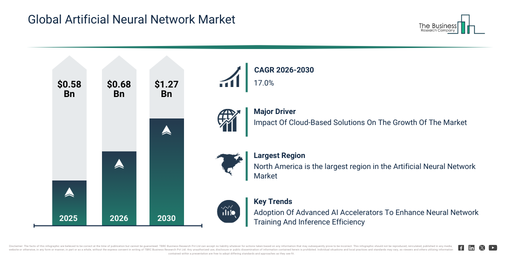
    The artificial neural network market has experienced substantial growth in recent years. It is projected to expand from $0.58 billion in 2025 to $0.68 billion in 2026, achieving a compound annual growth rate (CAGR) of 17.4%. This past growth can be linked to several factors, including the increasing availability of extensive datasets, advancements in computational processing capabilities, the expansion of open-source neural network frameworks, early adoption of machine learning by enterprises, and a growing demand for pattern recognition solutions.

    The artificial neural network market is projected to experience substantial expansion in the coming years, with its value anticipated to reach $1.27 billion by 2030, exhibiting a compound annual growth rate (CAGR) of 17.0%. This projected growth stems from several factors, including a surge in demand for real-time AI applications, increased investments in cloud-based AI platforms, the broadening scope of edge AI deployments, the rising integration of neural networks in automation processes, and the greater incorporation of ANN models into enterprise systems. Key trends expected during this period involve the wider acceptance of deep learning architectures, increased utilization of neural networks in image and signal processing, the proliferation of cloud-based ANN platforms, a broader application of ANN across various sectors, and a heightened emphasis on optimizing models and ensuring their scalability.

    Download A Free Artificial Neural Network Market Sample Report With Size And Forecast Data:

    https://thebusinessresearchcompany.com/sample_request?id=77482979&type=smp&name=Artificial%20Neural%20Network%20Market%20Report%202026&utm_source=Blogs&utm_medium=Paid&utm_campaign=Nov_PR

    Artificial Neural Network Market Growth Driver: The Key Factor Behind Rising Demand

    The rising need for cloud-based solutions is anticipated to drive the expansion of the artificial neural network market in the future. A cloud-based solution is characterized as a service or application that operates on distant servers reachable through the internet, rather than being hosted locally. The escalating uptake of cloud-based solutions is due to their inherent scalability, economic efficiency, improved access to data, and support for remote cooperation, fulfilling the dynamic requirements of current businesses. Artificial neural networks improve cloud-based solutions by offering advanced data handling, predictive analytical tools, and intelligent decision-making functionalities, leading to optimized efficiency and flexibility. Hence, the increasing demand for cloud-based solutions is fueling the growth of the artificial neural network (ANN) market.

    Artificial Neural Network Market Segmentation: Key Segments And Subsegments Covered

    The artificial neural network market covered in this report is segmented –

    1) By Component: Solutions, Platform Or Application Programming Interface (API), Services

    2) By Deployment Mode: On-Premises, Cloud

    3) By Enterprise: Large Enterprises, Small And Medium Enterprises

    4) By Application: Image Recognition, Signal Recognition, Data Mining

    5) By End-User: Banking, Financial Services, and Insurance (BFSI), Retail And E-Commerce, IT And Telecom, Manufacturing, Healthcare, Automotive

    Subsegments:

    1) By Solutions: Software Solutions, Hardware Solutions, Deployment Solutions, Data Management Solutions

    2) By Platform Or Application Programming Interface (API): Cloud-Based Platforms, On-Premise Platforms, Open-Source APIs, Proprietary APIs

    3) By Services: Consulting Services, Integration And Deployment Services, Support And Maintenance Services, Managed Services

    Artificial Neural Network Market Trends: Key Developments Shaping 2026 And Beyond

    Leading companies are active in the artificial neural network market, concentrating on developing innovative solutions like advanced AI training and inference GPUs to support the increasing demand for generative AI, large language models, and high-performance deep learning workloads. AI GPUs are specialized processors that employ massively parallel computation, mixed-precision operations, and high-bandwidth memory to carry out neural network calculations much more efficiently than conventional CPUs.

    Leading Companies Operating In The Artificial Neural Network Market

    Major companies operating in the artificial neural network market are Medtronic plc, Abbott Laboratories, DexCom Inc., Insulet Corporation, Tandem Diabetes Care Inc., Roche Diabetes Care, Ypsomed, SOOIL Development, Beta Bionics Inc., Bigfoot Biomedical Inc., Diabeloop SA, Inreda Diabetic B.V., Defymed SAS, DreaMed Diabetes Ltd., Medtrum Technologies Inc., EOFlow Co. Ltd., Cellnovo, Pancreum Inc., Admetsys Corporation, GlucoModicum, MicroTech Medical

    Access The Full Artificial Neural Network Market Research Report:

    https://thebusinessresearchcompany.com/report/artificial-neural-network-global-market-report?utm_source=Blogs&utm_medium=Paid&utm_campaign=Nov_PR

    Artificial Neural Network Market Regional Analysis: Largest Region And Key Geographies Covered

    North America was the largest region in the artificial neural network market in 2025. Asia-Pacific is expected to be the fastest-growing region in the forecast period. The regions covered in the artificial neural network market report are Asia-Pacific, South East Asia, Western Europe, Eastern Europe, North America, South America, Middle East, Africa.

    Reach Out To Our Team:

    The Business Research Company: https://www.thebusinessresearchcompany.com/

    Americas: +1 310-496-7795

    Asia: +44 7882 955267 & +91 8897263534

    Europe: +44 7882 955267

    Email us at: marketing@tbrc.info

    Follow us on:

    LinkedIn: https://in.linkedin.com/company/the-business-research-company

    YouTube: https://www.youtube.com/channel/UC24_fI0rV8cR5DxlCpgmyFQ

    Global Market Model: https://www.thebusinessresearchcompany.com/global-market-model
  • Artificial Intelligence-Powered Solutions For Elderly Care Market Report 2026: Size, Segmentation, Regional Analysis And Key Players

    Artificial Intelligence-Powered Solutions For Elderly Care Market Report 2026: Size, Segmentation, Regional Analysis And Key Players

    The Business Research Company’s 2026 market reports are designed to deliver research that is more actionable and strategically valuable. Key offerings include market attractiveness scoring, total addressable market sizing, company benchmarking matrices, interactive Excel dashboards, deeper supply chain intelligence, emerging startup tracking, and granular product-level insights.

    Artificial Intelligence-Powered Solutions For Elderly Care Market Size 2026: Valuation, Growth Rate And Forecast To 2030

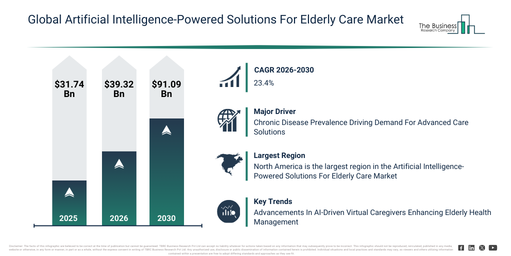
    The market size for artificial intelligence-powered solutions aimed at elderly care has witnessed significant expansion in recent years. This sector is anticipated to increase from $31.74 billion in 2025 to $39.32 billion in 2026, achieving a compound annual growth rate (CAGR) of 23.9%. Historically, this development can be attributed to several factors, including the expanding aging population, the increasing occurrence of chronic illnesses among older individuals, the proliferation of home-based care alternatives, the prompt integration of remote health monitoring technologies, and the rise of digital health platforms.

    The market for artificial intelligence-powered solutions tailored for elderly care is projected to experience significant expansion over the coming years. This market is anticipated to reach $91.09 billion by 2030, demonstrating a compound annual growth rate (CAGR) of 23.4%. Factors driving this growth during the forecast period include a heightened demand for solutions that support independent aging, increased investments in smart home healthcare technologies, the expansion of AI-driven preventive care, a growing emphasis on alleviating caregiver burden, and the greater integration of robotics into elderly assistance. Key trends expected within this period involve the increasing adoption of AI-based remote monitoring solutions, the rising utilization of virtual assistants for elderly care, the expanding deployment of fall detection and safety systems, the broadening of social companion robots, and an enhanced focus on delivering personalized care.

    Get A Free Sample Of The Artificial Intelligence-Powered Solutions For Elderly Care Market Report 2026:

    https://thebusinessresearchcompany.com/sample_request?id=92656611&type=smp&name=Artificial%20Intelligence-Powered%20Solutions%20For%20Elderly%20Care%20Market%20Report%202026&utm_source=Blogs&utm_medium=Paid&utm_campaign=Nov_PR

    What Is Driving The Growth Of The Artificial Intelligence-Powered Solutions For Elderly Care Market?

    The increasing prevalence of chronic diseases is anticipated to propel the artificial intelligence (AI)-powered solution for the elderly care market in the foreseeable future. These long-term health conditions, exemplified by diabetes and heart disease, necessitate continuous care and impact daily life. The rise in chronic diseases is attributed to an aging global population, evolving lifestyles such as reduced physical activity and unhealthy diets, and expanding urbanization. Artificial intelligence (AI)-powered solutions for elderly care effectively aid in managing chronic diseases by enabling real-time health monitoring, leveraging predictive analytics for early intervention, and delivering personalized care plans, thereby improving patient outcomes and enhancing the quality of life for aging individuals. Thus, the escalating incidence of chronic diseases is a significant driver for the artificial intelligence (AI)-powered solution for the elderly care market.

    How Is The Artificial Intelligence-Powered Solutions For Elderly Care Market Segmented?

    The artificial intelligence-powered solutions for elderly care market covered in this report is segmented –

    1) By Technology: Machine Learning, Natural Language Processing, Robotics, Computer Vision, Other Technologies

    2) By Application: Fall Detection And Prevention, Remote Monitoring And Healthcare, Personalized Virtual Assistants, Medication Management, Social Interaction And Companionship, Other Applications

    3) By End Users: Home Care Settings, Assisted Living Facilities, Nursing Homes, Hospitals And Clinics, Other End Users

    Subsegments:

    1) By Machine Learning: Predictive Analytics, Personalized Health Monitoring, Data-Driven Decision Making, Adaptive Learning Systems

    2) By Natural Language Processing (NLP): Voice Assistants, Language Translation For Elderly Communication, Sentiment Analysis For Emotional Well-Being, Speech Recognition For Assistance Devices

    3) By Robotics: Social Companions (Companion Robots), Assistance Robots For Daily Activities, Robotic Prosthetics And Exoskeletons, Autonomous Mobility Robots

    4) By Computer Vision: Fall Detection Systems, Vision-Based Health Monitoring (Eye Health), Gesture Recognition For Communication, Environment Mapping And Navigation

    5) By Other Technologies: AI-Powered Wearables, Remote Monitoring Systems, Smart Home Devices Integration, Virtual Reality Therapy

    What Are The Latest Trends In The Artificial Intelligence-Powered Solutions For Elderly Care Market?

    Leading companies in the artificial intelligence (AI)-powered solution for elderly care market are concentrating on developing innovative technologies, such as AI-driven virtual caregivers, to deliver personalized care, enhance monitoring, and improve the overall quality of life for seniors. An AI virtual caregiver is an intelligent digital assistant that helps monitor health, provide medication reminders, offer companionship, and respond to emergencies, primarily supporting elderly individuals in maintaining their independence and well-being.

    Who Are The Key Players In The Artificial Intelligence-Powered Solutions For Elderly Care Market?

    Major companies operating in the artificial intelligence-powered solutions for elderly care market are Samsung Electronics Co Ltd, Siemens Healthineers AG, Koninklijke Philips N.V., Cera Care, Elder HQ, Aviva Health, AiCure LLC, GrandCare Systems, K4connect, Sensi AI, Orbita, Blue Frog Robotics, CarePredict, Anvayaa Kin Care, Emoha, Reemo Health, Walk With Path, Intuition Robotics, MiiCare, Care.Coach, MyndYou, ClinOne, PainChek, Somatix Inc., SmartQuare

    Read The Complete Artificial Intelligence-Powered Solutions For Elderly Care Market Report 2026:

    https://thebusinessresearchcompany.com/report/artificial-intelligence-powered-solutions-for-elderly-care-global-market-report?utm_source=Blogs&utm_medium=Paid&utm_campaign=Nov_PR

    Which Region Is The Largest In The Artificial Intelligence-Powered Solutions For Elderly Care Market?

    North America was the largest region in the artificial intelligence-powered solutions for elderly Care market in 2025. The regions covered in the artificial intelligence-powered solutions for elderly care market report are Asia-Pacific, South East Asia, Western Europe, Eastern Europe, North America, South America, Middle East, Africa.

    Reach Out To Our Team:

    The Business Research Company: https://www.thebusinessresearchcompany.com/

    Americas: +1 310-496-7795

    Asia: +44 7882 955267 & +91 8897263534

    Europe: +44 7882 955267

    Email us at: marketing@tbrc.info

    Follow us on:

    LinkedIn: https://in.linkedin.com/company/the-business-research-company

    YouTube: https://www.youtube.com/channel/UC24_fI0rV8cR5DxlCpgmyFQ

    Global Market Model: https://www.thebusinessresearchcompany.com/global-market-model
  • Acquired Hemophilia Treatment Market To Expand At A 4.4% CAGR On The Back Of Growing Number Of Ongoing Clinical Trials

    Acquired Hemophilia Treatment Market To Expand At A 4.4% CAGR On The Back Of Growing Number Of Ongoing Clinical Trials

    Designed to make market research more actionable and strategically valuable, The Business Research Company’s 2026 market reports feature market attractiveness scoring, total addressable market sizing, company benchmarking matrices, interactive Excel dashboards, deeper supply chain intelligence, emerging startup tracking, and granular product-level insights.

    Acquired Hemophilia Treatment Market Revenue Expansion Outlook For The 2026–2030 Forecast Period

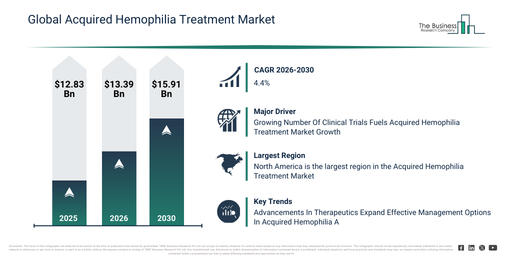
    The market size for acquired hemophilia treatments has demonstrated consistent growth over the last few years. This market is projected to expand from $12.83 billion in 2025 to $13.39 billion in 2026, exhibiting a compound annual growth rate (CAGR) of 4.4%. Factors contributing to its historical expansion include the restricted access to specialized hemophilia therapies, an increase in the occurrence of acquired hemophilia cases, reliance on healthcare provided in hospitals, a heightened understanding of bleeding disorders, and the implementation of on-demand treatment methods.

    The acquired hemophilia treatment market is anticipated to show consistent expansion in the coming years. It is projected to achieve a size of $15.91 billion by 2030, growing at a compound annual growth rate (CAGR) of 4.4%. This growth during the forecast period is attributable to advancements in gene therapy technology, the wider adoption of prophylaxis treatments, the evolution of personalized medicine within hematology, increasing investments in hemophilia research, and better access to advanced treatment options in emerging regions. Significant trends expected during this period include a greater embrace of clotting factor replacement therapies, increased utilization of gene therapy for hemophilia prophylaxis, the expansion of individualized treatment plans for acquired hemophilia, rising awareness and early diagnosis programs, and a focused effort on reducing bleeding episodes and eradicating inhibitors.

    Download A Free Sample For In-Depth Acquired Hemophilia Treatment Market Intelligence:

    https://thebusinessresearchcompany.com/sample_request?id=42106255&type=smp&name=Acquired%20Hemophilia%20Treatment%20Market%20Report%202026&utm_source=Blogs&utm_medium=Paid&utm_campaign=Nov_PR

    Acquired Hemophilia Treatment Market Demand Driver: How It Is Shaping Industry Growth

    The expansion of ongoing clinical trials is projected to fuel the growth of the acquired hemophilia treatment market. These research studies involve human participants to assess the safety and efficacy of new medical treatments, particularly for acquired hemophilia, thereby advancing research, improving patient outcomes, and establishing effective therapeutic interventions.

    Acquired Hemophilia Treatment Market Segmentation Overview: Detailed Category Analysis

    The acquired hemophilia treatment market covered in this report is segmented –

    1) By Treatment Approach: Bleeding Control Therapy (On-Demand Treatment), Inhibitor Eradication Therapy (Immunosuppressive Treatment)

    2) By Route of Administration: Intravenous, Subcutaneous

    3) By End User: Hospitals, Specialty Hematology Clinics, Other End Users

    Subsegments:

    1) By Bleeding Control Therapy (On-Demand Treatment): Bypassing Agents, Recombinant Activated Factor VII (rFVIIa), Activated Prothrombin Complex Concentrates (aPCC), Recombinant Porcine Factor VIII, Desmopressin

    2) By Inhibitor Eradication Therapy (Immunosuppressive Treatment): Corticosteroid Monotherapy, Corticosteroids + Cytotoxic Agents (e.g., Cyclophosphamide), Rituximab-Based Immunotherapy, Combination Immunosuppressive Regimens

    Top Acquired Hemophilia Treatment Market Trends And Recent Industry Developments

    Leading companies within the acquired hemophilia treatment market are concentrating on developing and gaining approval for drugs that offer additional benefits to sustain their market presence. There’s an increase in drug approvals for routine prophylaxis, largely driven by the necessity for more effective and safer options.

    Acquired Hemophilia Treatment Market Company Landscape: Key Players To Watch

    Major companies operating in the acquired hemophilia treatment market are Roche Holding AG, Novo Nordisk A/S, Takeda Pharmaceutical Company Limited, Pfizer Inc., Bayer AG, CSL Limited, Grifols SA, Octapharma AG, Kedrion Biopharma Inc., Sanofi SA, Sobi Inc., Chugai Pharmaceutical Co. Ltd., Novartis AG, Bristol-Myers Squibb Company, Johnson & Johnson, Medexus Pharmaceuticals Inc., Ferring Pharmaceuticals BV, Hema Biologics LLC, Bio Products Laboratory Ltd., LFB SA

    Explore The Acquired Hemophilia Treatment Global Market Report For Full Insights:

    https://thebusinessresearchcompany.com/report/acquired-hemophilia-treatment-global-market-report?utm_source=Blogs&utm_medium=Paid&utm_campaign=Nov_PR

    Acquired Hemophilia Treatment Market Region-Wise Analysis: Largest Regional Market Identified

    North America was the largest region in the acquired hemophilia treatment market in 2025. Asia-Pacific is expected to be the fastest-growing region in the forecast period. The regions covered in the acquired hemophilia treatment market report are Asia-Pacific, South East Asia, Western Europe, Eastern Europe, North America, South America, Middle East, Africa.

    Reach Out To Our Team:

    The Business Research Company: https://www.thebusinessresearchcompany.com/

    Americas: +1 310-496-7795

    Asia: +44 7882 955267 & +91 8897263534

    Europe: +44 7882 955267

    Email us at: marketing@tbrc.info

    Follow us on:

    LinkedIn: https://in.linkedin.com/company/the-business-research-company

    YouTube: https://www.youtube.com/channel/UC24_fI0rV8cR5DxlCpgmyFQ

    Global Market Model: https://www.thebusinessresearchcompany.com/global-market-model
  • What Is Driving The Artificial Intelligence-Generated Personalized Prenatal Nutrition Guide Market? A Closer Look At Rising Prevalence Of Nutrition Related Pregnancy Complications

    What Is Driving The Artificial Intelligence-Generated Personalized Prenatal Nutrition Guide Market? A Closer Look At Rising Prevalence Of Nutrition Related Pregnancy Complications

    With a focus on actionable insights and strategic value, The Business Research Company’s 2026 market reports include market attractiveness scoring, total addressable market sizing, company benchmarking matrices, interactive Excel dashboards, deeper supply chain intelligence, emerging startup tracking, and granular product-level insights.

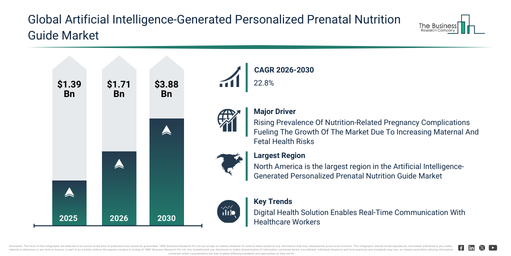
    Artificial Intelligence-Generated Personalized Prenatal Nutrition Guide Market Size Outlook: A $3.88 Billion Market By 2030, Growing At 22.8% Annually

    The market size for artificial intelligence-generated personalized prenatal nutrition guides has experienced rapid growth in recent years. This market is projected to expand from $1.39 billion in 2025 to $1.71 billion in 2026, demonstrating a compound annual growth rate (CAGR) of 23.1%. Historically, this expansion has been driven by factors such as a heightened understanding of the significance of maternal nutrition, the early adoption of applications for pregnancy health, improved digital health literacy, the proliferation of prenatal care initiatives, and an increasing desire for customized wellness solutions.

    The artificial intelligence-generated personalized prenatal nutrition guide market size is projected to experience rapid expansion over the upcoming years. This market is forecasted to reach $3.88 billion by 2030, demonstrating a compound annual growth rate (CAGR) of 22.8%. This anticipated growth during the forecast period stems from factors such as greater investments in digital maternal health solutions, the growing application of AI-powered nutrition analysis, the broadening of remote prenatal monitoring services, increased incorporation of genomics into nutrition strategies, and a heightened need for data-centric pregnancy support. Key trends for this period encompass a rise in the adoption of AI-personalized prenatal diet planning, enhanced integration with wearable health tracking devices, an expansion of nutrition recommendations based on genetics, wider utilization of digital maternal health platforms, and a strengthened emphasis on proactive prenatal care.

    Make Data-Driven Decisions With A Free Artificial Intelligence-Generated Personalized Prenatal Nutrition Guide Market Sample Report:

    https://thebusinessresearchcompany.com/sample_request?id=22397303&type=smp&name=Artificial%20Intelligence-Generated%20Personalized%20Prenatal%20Nutrition%20Guide%20Market%20Report%202026&utm_source=Blogs&utm_medium=Paid&utm_campaign=Nov_PR

    Key Demand Driver Expected To Lift Artificial Intelligence-Generated Personalized Prenatal Nutrition Guide Market Revenue

    The increasing occurrence of pregnancy complications linked to nutrition is anticipated to boost the artificial intelligence generated personalized prenatal nutrition guide market in the future. These complications encompass maternal or fetal health problems stemming from insufficient, excessive, or imbalanced nutrient consumption, manifesting as conditions like anemia, gestational diabetes, or abnormal birth weights. The rise in such complications is attributed to unhealthy eating habits, which result in inadequate nutrient absorption, undue weight gain, and metabolic irregularities throughout gestation. An artificial intelligence generated personalized prenatal nutrition guide addresses these issues by providing customized dietary advice, making it highly beneficial for pregnant women. It lowers associated risks via individualised tracking and support, thereby enhancing health outcomes for both the mother and her baby. Consequently, the growing incidence of nutrition-linked pregnancy complications is fueling the expansion of the artificial intelligence generated personalized prenatal nutrition guide market.

    Exploring The Artificial Intelligence-Generated Personalized Prenatal Nutrition Guide Market Through Its Key Segments

    The artificial intelligence-generated personalized prenatal nutrition guide market covered in this report is segmented –

    1) By Product Type: Mobile Apps, Web-Based Platforms, Wearable Integration, Other Product Types

    2) By Deployment Mode: Cloud-Based, Hybrid Deployment Models

    3) By Application: Pregnancy Nutrition Management, Dietary Recommendations, Supplement Tracking, Other Applications

    4) By End User: Hospitals And Clinics, Homecare, Fitness And Wellness Centers, Other End Users

    Subsegments:

    1) By Mobile Apps: Artificial Intelligence-Driven Meal Planning Apps, Prenatal Nutrition Tracking Apps, Genetic-Based Nutrition Recommendation Apps, Microbiome Analysis Apps, Symptom And Health Log Apps For Pregnancy

    2) By Web-Based Platforms: Online Prenatal Diet Planning Portals, Genetic Test Result Dashboards, Artificial Intelligence (AI)-Powered Consultation Platforms, Nutrient Deficiency Monitoring Portals, Personalized Prenatal Recipe Platforms

    3) By Wearable Integration: Fitness Trackers With Prenatal Nutrition Sync, Continuous Glucose Monitoring (CGM) Integration, Smart Scales With Pregnancy Mode, Sleep Trackers Linked To Nutrition Recommendations, Hydration Monitoring Wearables

    4) By Other Product Types: At-Home Genetic Test Kits With Prenatal Focus, Microbiome Test Kits For Pregnancy Health, Artificial Intelligence-Enabled Supplement Dispensers, Voice-Assistant Guided Prenatal Nutrition Tools, Smart Kitchen Devices With Pregnancy Diet Presets

    New Trends Redefining Competition In The Artificial Intelligence-Generated Personalized Prenatal Nutrition Guide Market

    Leading companies within the artificial intelligence-generated personalized prenatal nutrition guide market are concentrating on developing advanced solutions, including digital health solutions, to provide customized nutritional recommendations aimed at improving maternal and fetal health outcomes. A digital health solution is a technology-driven platform that utilizes data and artificial intelligence to offer personalized nutritional guidance for enhanced maternal and fetal well-being.

    Artificial Intelligence-Generated Personalized Prenatal Nutrition Guide Market Competition: Key Players And Industry Participants

    Major companies operating in the artificial intelligence-generated personalized prenatal nutrition guide market are MamaWell, Appinventiv Technologies Pvt. Ltd., Maven Clinic Inc., Ritual Vitamins Inc., Nutrino Health Ltd., Ovia Health Inc., Vitagene Inc., Bump And Beyond Nutrition Limited., Nutrify LLC, Perelel, DayTwo Inc., Qua Nutrition, Baby2Body Limited., JM Nutrition, Rootine Inc., Suggestic Inc., Zaya Care, BellyFuel, Femia, Nuskha Kitchen

    Get The Detailed Artificial Intelligence-Generated Personalized Prenatal Nutrition Guide Market Research Report Here:

    https://thebusinessresearchcompany.com/report/artificial-intelligence-generated-personalized-prenatal-nutrition-guide-global-market-report?utm_source=Blogs&utm_medium=Paid&utm_campaign=Nov_PR

    Artificial Intelligence-Generated Personalized Prenatal Nutrition Guide Market Regional Overview: Largest Market And Global Coverage

    North America was the largest region in the artificial intelligence-generated personalized prenatal nutrition guide market in 2025. Asia Pacific is expected to be the fastest-growing region in the forecast period. The regions covered in the artificial intelligence-generated personalized prenatal nutrition guide market report are Asia-Pacific, South East Asia, Western Europe, Eastern Europe, North America, South America, Middle East, Africa.

    Reach Out To Our Team:

    The Business Research Company: https://www.thebusinessresearchcompany.com/

    Americas: +1 310-496-7795

    Asia: +44 7882 955267 & +91 8897263534

    Europe: +44 7882 955267

    Email us at: marketing@tbrc.info

    Follow us on:

    LinkedIn: https://in.linkedin.com/company/the-business-research-company

    YouTube: https://www.youtube.com/channel/UC24_fI0rV8cR5DxlCpgmyFQ

    Global Market Model: https://www.thebusinessresearchcompany.com/global-market-model
  • Acoustic Neuroma Market Growth Rate Explained: 7.1% CAGR Projected Through 2030

    Acoustic Neuroma Market Growth Rate Explained: 7.1% CAGR Projected Through 2030

    The Business Research Company’s 2026 market reports are designed to deliver research that is more actionable and strategically valuable. Key offerings include market attractiveness scoring, total addressable market sizing, company benchmarking matrices, interactive Excel dashboards, deeper supply chain intelligence, emerging startup tracking, and granular product-level insights.

    Which Factors Will Shape The Acoustic Neuroma Market Size Through 2030?

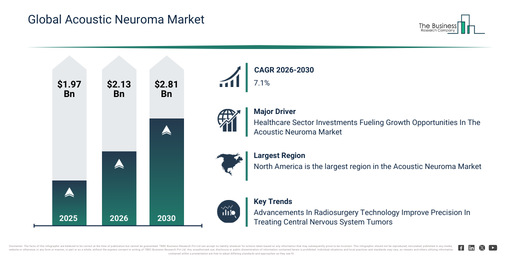
    The acoustic neuroma market has seen significant growth in recent years. This market is set to expand from $1.97 billion in 2025 to $2.13 billion in 2026, exhibiting a compound annual growth rate (CAGR) of 8.2%. Factors contributing to its historical growth include restricted awareness of acoustic neuroma, dependence on traditional radiation therapy, sluggish integration of advanced imaging modalities, a rising incidence of hearing disorders, and a scarcity of surgical treatment facilities.

    The acoustic neuroma market is projected to experience substantial expansion over the upcoming years. By 2030, it is anticipated to reach a valuation of $2.81 billion, showing a compound annual growth rate (CAGR) of 7.1%. This projected growth during the forecast period is fueled by several factors, including advancements in MRI and CT-scan technologies, the expanding use of proton therapy and stereotactic radiosurgery, increased investments in hospitals and surgical centers, a rise in patient awareness leading to earlier diagnoses, and the proliferation of specialized treatment facilities. Key trends anticipated during this period encompass the wider adoption of sophisticated imaging techniques, a growing inclination towards minimally invasive treatments, continued development in proton therapy and stereotactic radiosurgery, the broadened application of personalized treatment methods, and heightened understanding of vestibular schwannoma indicators.

    Request A Free Acoustic Neuroma Market Sample To Support Your Strategic Planning:

    https://thebusinessresearchcompany.com/sample_request?id=69703365&type=smp&name=Acoustic%20Neuroma%20Market%20Report%202026&utm_source=Blogs&utm_medium=Paid&utm_campaign=Nov_PR

    What Is Propelling The Acoustic Neuroma Market Toward $2.81 Billion By 2030?

    The escalating investment within the healthcare sector is anticipated to stimulate the expansion of the acoustic neuroma market. This sector encompasses diverse services and facilities aimed at fostering health, delivering medical care, and enhancing overall well-being for individuals and communities. Such investments stem from factors like escalating demand, technological breakthroughs, evolving regulations, and worldwide health crises. Specifically, these funds drive innovation in the diagnosis and treatment of acoustic neuroma conditions, thereby improving patient outcomes and overall quality of life. Consequently, the increasing investment in the healthcare sector is a key driver for the growth of the acoustic neuroma market.

    What Are The Key Segments And Subsegments In The Acoustic Neuroma Market?

    The acoustic neuroma market covered in this report is segmented –

    1) By Type: Unilateral Vestibular Schwannomas, Bilateral Vestibular Schwannomas

    2) By Treatment Type: Radiation Therapy, Proton Therapy, Stereotactic Radiosurgery

    3) By Diagnosis Type: Magnetic Resonance Imaging (MRI), Hearing Tests

    4) By End User: Hospitals, Surgical Centers

    Subsegments:

    1) By Unilateral Vestibular Schwannomas: Small Unilateral Vestibular Schwannomas, Medium Unilateral Vestibular Schwannomas, Large Unilateral Vestibular Schwannomas

    2) By Bilateral Vestibular Schwannomas: Familial Bilateral Vestibular Schwannomas, Sporadic Bilateral Vestibular Schwannomas

    Acoustic Neuroma Market Trends Behind The 7.1% CAGR Forecast

    Companies operating in the acoustic neuroma market are prioritizing the development of advanced solutions, such as high-precision image-guided delivery, to enhance the accuracy of treatments, reduce damage to surrounding healthy tissues, and improve patient outcomes. This high-precision image-guided delivery is a technological characteristic within radiosurgery that enables real-time tumor targeting and tracking, ensuring exact radiation application to the affected area. For instance, in April 2025, Accuray Incorporated, a US-based medical device company specializing in state-of-the-art radiosurgery systems, released new clinical data regarding its CyberKnife System, emphasizing its wide-ranging capabilities in delivering SRS and SBRT. Engineered to treat central nervous system (CNS) tumors, including acoustic neuroma, the system provides noninvasive, targeted treatment options that enhance both safety and clinical efficacy.

    Major Companies Profiled In The Acoustic Neuroma Market Report

    Major companies operating in the acoustic neuroma market are Pfizer Inc, F. Hoffmann-La Roche AG, Merck & Co. Inc., Sanofi S.A., AstraZeneca plc, Novartis AG, GSK plc, Amgen Inc., Teva Pharmaceuticals Industries Ltd, General Electric Company, Siemens Healthineers, Canon Medical Systems Corporation, Toshiba Medical Systems Corporation, Shimadzu Corporation, Varian Medical Systems, Elekta AB, Medtronic plc, Olympus Corporation, Cochlear Limited, Brainlab AG, Natus Medical Incorporated, Abbott Laboratories

    Explore The Business Research Company’s Complete Acoustic Neuroma Market Report:

    https://thebusinessresearchcompany.com/report/acoustic-neuroma-global-market-report?utm_source=Blogs&utm_medium=Paid&utm_campaign=Nov_PR

    Where Does The Acoustic Neuroma Market Generate The Most Revenue?

    North America was the largest region in the acoustic neuroma market in 2025. The regions covered in the acoustic neuroma market report are Asia-Pacific, South East Asia, Western Europe, Eastern Europe, North America, South America, Middle East, Africa.

    Reach Out To Our Team:

    The Business Research Company: https://www.thebusinessresearchcompany.com/

    Americas: +1 310-496-7795

    Asia: +44 7882 955267 & +91 8897263534

    Europe: +44 7882 955267

    Email us at: marketing@tbrc.info

    Follow us on:

    LinkedIn: https://in.linkedin.com/company/the-business-research-company

    YouTube: https://www.youtube.com/channel/UC24_fI0rV8cR5DxlCpgmyFQ

    Global Market Model: https://www.thebusinessresearchcompany.com/global-market-model