
Author: Marketing Posting

  • Minimally Invasive Spine Technologies Market Forecast To Reach $6.81 Billion By 2030: Key Growth Drivers And Industry Trends

    Minimally Invasive Spine Technologies Market Forecast To Reach $6.81 Billion By 2030: Key Growth Drivers And Industry Trends

    Built to provide research that’s more actionable and strategically valuable, The Business Research Company’s 2026 market reports include market attractiveness analysis, total addressable market sizing, company benchmarking matrices, interactive Excel dashboards, broader supply chain intelligence, emerging startup tracking, and in-depth product insights.

    Minimally Invasive Spine Technologies Market Revenue Growth On Track For A 9.5% CAGR Through 2030

    The minimally invasive spine technologies market size has experienced robust growth in recent years. It is forecast to increase from $4.34 billion in 2025 to $4.74 billion in 2026, demonstrating a compound annual growth rate (CAGR) of 9.2%. This historical expansion can be linked to several factors, including the rising prevalence of degenerative spine disorders, the increasing acceptance of conventional spinal fusion procedures, an uptick in hospital-based spine surgery volumes, the development of initial minimally invasive surgical tools, and heightened awareness concerning post-operative recovery benefits.

    The minimally invasive spine technologies market is projected for significant expansion over the coming years. It is set to reach $6. 81 billion by 2030, exhibiting a compound annual growth rate (CAGR) of 9. 5%. This expansion during the forecast period is propelled by several factors, including the escalating demand for spinal procedures performed on an outpatient basis, a growing preference for surgical methods that ensure quicker recovery, an expanding elderly population suffering from spinal conditions, the proliferation of specialized spine clinics and centers, and a heightened healthcare emphasis on minimizing hospitalization expenses. Key trends anticipated in this period encompass the increasing embrace of ultra-minimally invasive spine techniques designed to lessen tissue damage and inpatient time, a noticeable move towards outpatient and ambulatory spine surgery centers for more efficient patient processing, the rising application of expandable and modular spinal implants for enhanced flexibility during operations, the broadening of tissue-preserving surgical strategies to alleviate post-operative discomfort and issues, and a greater emphasis on financially efficient spine care models featuring shorter rehabilitation durations.

    Get A Free Sample Report With In-Depth Market Insights:

    https://thebusinessresearchcompany.com/sample_request?id=37064088&type=smp&name=Minimally%20Invasive%20Spine%20Technologies%20Market%20Report%202026&utm_source=Blogs&utm_medium=Paid&utm_campaign=Oct_PR

    Minimally Invasive Spine Technologies Market Growth Backed By Core Demand Fundamentals

    The expanding occurrence of spinal disorders is anticipated to drive the growth of the minimally invasive spine technologies market in the future. Spinal disorders encompass a variety of conditions affecting the spine, including chronic back pain, degenerative disc disease, spinal stenosis, and related musculoskeletal issues that negatively impact mobility and overall quality of life. The increasing prevalence of these disorders is primarily due to aging populations and lifestyle factors like sedentary behavior and poor posture, which raise the risk of chronic back pain, degenerative disc disease, and other spinal conditions. Minimally invasive spine technologies offer focused, less intrusive surgical and therapeutic solutions that lessen tissue damage, quicken recovery, relieve pain, and restore spinal function, making them an effective strategy for managing the growing burden of spinal disorders. For instance, in February 2025, data from the National Spinal Cord Injury Statistical Center (NSCISC), a U. S. organization that gathers, analyzes, and disseminates nationwide information on traumatic spinal cord injuries, indicated that with the U. S. population in 2024 at approximately 341 million and an incidence rate of around 54 traumatic spinal cord injuries per million people, an estimated 18,421 new tSCI cases occur annually. Hence, the rising prevalence of spinal disorders is boosting the growth of the minimally invasive spine technologies market.

    Minimally Invasive Spine Technologies Market Segmentation And Category Overview

    The minimally invasive spine technologies market covered in this report is segmented –

    1) By Technology: Robotic-Assisted Surgery, Fluoroscopic Navigation, Image-Guided Surgery, Endoscopic Techniques

    2) By Type Of Procedure: Microdiscectomy, Laminectomy, Spinal Fusion, Kyphoplasty, Foraminotomy

    3) By Device Type: Access Devices, Implants, Visualization Devices, Instruments And Accessories

    4) By Application: Degenerative Disc Disease, Spinal Stenosis, Herniated Disc, Spinal Deformities, Trauma And Fractures

    5) By End User: Hospitals, Ambulatory Surgery Centers, Specialty Spine Clinics, Orthopedic Centers

    Subsegments:

    1) By Robotic-Assisted Surgery: Spinal Pedicle Screw Placement Robotic-Assisted Surgery, Minimally Invasive Lumbar Fusion Robotic-Assisted Surgery, Cervical Spine Robotic-Assisted Procedures, Thoracic Spine Robotic-Assisted Procedures

    2) By Fluoroscopic Navigation: 2D Fluoroscopic Navigation Systems, 3D Fluoroscopic Navigation Systems, Hybrid Fluoroscopic Navigation Systems, Real-Time Fluoroscopic Guidance Systems

    3) By Image-Guided Surgery: Computed Tomography Guided Spine Surgery, Magnetic Resonance Imaging Guided Spine Surgery, Intraoperative Imaging Guided Spine Surgery, Navigation-Assisted Spine Surgery

    4) By Endoscopic Techniques: Percutaneous Endoscopic Lumbar Discectomy, Endoscopic Decompression Techniques, Endoscopic Interbody Fusion Techniques, Minimally Invasive Endoscopic Spinal Procedures

    Minimally Invasive Spine Technologies Market Growth Trends Reshaping The Competitive Landscape

    Major companies operating in the minimally invasive spine technologies market are concentrating on developing innovative solutions, such as advanced camera-based surgical navigation technology, to improve precision, reduce tissue damage, and shorten patient recovery times. This sophisticated technology involves a system that employs cameras and machine-vision algorithms to generate real-time 3D images of the spine during surgery, enabling surgeons to accurately place implants while minimizing tissue damage and reducing recuperation periods. For instance, in August 2023, Orthofix Medical Inc., a US-based spine and orthopedics company, launched the 7D FLASH™ Navigation System Percutaneous Module 2.0. This advanced image-guided navigation technology, specifically designed for minimally invasive spine surgery, incorporates visible-light machine-vision technology to rapidly produce 3D images, which aids in optimizing surgical planning, enhancing procedural efficiency, and supporting reduced radiation exposure and precise implant placement during minimally invasive procedures. The system’s novel camera-based platform offers quicker, more accurate navigation and expands functionality over traditional fluoroscopy and older navigation tools, assisting surgeons with complex spinal fusion and instrumentation tasks while simultaneously minimizing incisional size and trauma.

    Minimally Invasive Spine Technologies Market Competitive Landscape: Who Leads The Industry?

    Major companies operating in the minimally invasive spine technologies market are Johnson & Johnson, Medtronic plc, Stryker Corporation, B. Braun SE, Globus Medical Inc., Orthofix Medical Inc., Alphatec Spine Inc., SI-BONE Inc., Xtant Medical Holdings Inc., Centinel Spine LLC, Precision Spine Inc., Spineart SA, Joimax GmbH, CoreLink LLC, Spine Wave Inc., Spineology Inc., Zavation Medical Products LLC, Aurora Spine Corporation, Life Spine Inc., Neoflex Spine Inc., Camber Spine Technologies LLC, Ulrich GmbH & Co. KG, Safe Orthopaedics SA, Spinal Simplicity LLC, FH Orthopedics SA, SIGNUS Medizintechnik GmbH

    View The Full Minimally Invasive Spine Technologies Market Report:

    https://thebusinessresearchcompany.com/report/minimally-invasive-spine-technologies-market-report?utm_source=Blogs&utm_medium=Paid&utm_campaign=Oct_PR

    Minimally Invasive Spine Technologies Market Geographic Landscape: Which Region Dominates Industry Growth?

    North America was the largest region in the minimally invasive spine technologies market in 2025. Asia-Pacific is expected to be the fastest-growing region in the forecast period. The regions covered in the minimally invasive spine technologies market report are Asia-Pacific, South East Asia, Western Europe, Eastern Europe, North America, South America, Middle East and Africa.

    Reach Out To Our Team:

    The Business Research Company: https://www.thebusinessresearchcompany.com/

    Americas: +1 310-496-7795

    Asia: +44 7882 955267 & +91 8897263534

    Europe: +44 7882 955267

    Email us at: marketing@tbrc.info

    Follow us on:

    LinkedIn: https://in.linkedin.com/company/the-business-research-company

    YouTube: https://www.youtube.com/channel/UC24_fI0rV8cR5DxlCpgmyFQ

    Global Market Model: https://www.thebusinessresearchcompany.com/global-market-model
  • Methicillin-Resistant Staphylococcus Aureus (MRSA) Testing Market Growth Forecast Through 2030: Market Size And Trends In 2026

    Methicillin-Resistant Staphylococcus Aureus (MRSA) Testing Market Growth Forecast Through 2030: Market Size And Trends In 2026

    Backed by market attractiveness analysis, total addressable market sizing, company benchmarking matrices, interactive Excel dashboards, wider supply chain intelligence, emerging startup coverage, and detailed product-level insights, The Business Research Company’s 2026 market reports are designed to offer research that is more actionable and strategically valuable than ever.

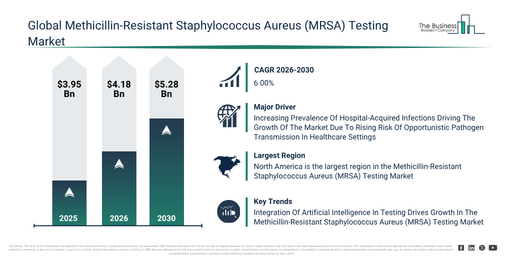
    Methicillin-Resistant Staphylococcus Aureus (MRSA) Testing Market Growth From $4.18 Billion In 2026 To $5.28 Billion By 2030 At A CAGR Of 6%

    The methicillin-resistant staphylococcus aureus (MRSA) testing market has seen robust expansion in recent years. It is anticipated to increase from $3.95 billion in 2025 to $4.18 billion in 2026, achieving a compound annual growth rate (CAGR) of 5.8%. The growth observed in the preceding period can be linked to the escalating prevalence of hospital-acquired infections, a heightened awareness of antibiotic resistance, the expansion of diagnostic laboratory infrastructure, the advancement of hospital infection control programs, and the rising adoption of culture-based diagnostic methods.

    The methicillin-resistant staphylococcus aureus (MRSA) testing market is projected to experience substantial growth over the coming years, with its size forecast to reach $5.28 billion by 2030, demonstrating a compound annual growth rate (CAGR) of 6.0%. This expansion is primarily driven by factors such as the increasing integration of rapid molecular diagnostic technologies, heightened investment in precision medicine and pathogen genomics, the broadening of automated laboratory systems, a rising need for real-time infection surveillance, and a more stringent regulatory emphasis on antimicrobial resistance control. Additionally, notable trends for this period encompass the escalating embrace of rapid molecular diagnostics for detecting antibiotic resistance, the expanding deployment of point-of-care MRSA testing within hospital settings, the widespread adoption of automated microbiology workflows in diagnostic labs, the growth of infection surveillance initiatives across healthcare facilities, and a rising requirement for multiplex assays in screening for hospital-acquired infections.

    Get A Free Sample Report With In-Depth Market Insights:

    https://thebusinessresearchcompany.com/sample_request?id=46599439&type=smp&name=Methicillin-Resistant%20Staphylococcus%20Aureus%20%28MRSA%29%20Testing%20Market%20Report%202026&utm_source=Blogs&utm_medium=Paid&utm_campaign=Oct_PR

    Methicillin-Resistant Staphylococcus Aureus (MRSA) Testing Market Expansion Drivers: What’s Shaping Future Growth?

    The rising occurrence of hospital-acquired infections is anticipated to boost expansion in the methicillin-resistant staphylococcus aureus (MRSA) testing market in the future. HAIs, or hospital-acquired infections, refer to secondary infections developed by patients during medical or surgical care in a healthcare setting. This global increase is due to the growing complexity of medical procedures and a large number of immunocompromised patients, which provides more chances for opportunistic pathogens to establish themselves. MRSA testing aids in managing these infections by enabling healthcare professionals to promptly identify colonized individuals and put isolation measures in place to stop widespread transmission within facilities. For example, the Health Security Agency, a national executive agency based in the UK, reported that in August 2025, total MRSA bacteremia cases hit 81, an 8.0% rise from 75 cases recorded in August 2024. Consequently, the growing incidence of hospital-acquired infections is projected to stimulate expansion within the methicillin-resistant staphylococcus aureus (MRSA) testing market.

    Methicillin-Resistant Staphylococcus Aureus (MRSA) Testing Market Segment Analysis: What Are The Core Market Categories?

    The methicillin-resistant staphylococcus aureus (mrsa) testing market covered in this report is segmented –

    1) By Type: Healthcare Acquired Methicillin Resistant Staphylococcus Aureus, Community Acquired Methicillin Resistant Staphylococcus Aureus, Hospital Acquired Methicillin Resistant Staphylococcus Aureus

    2) By Indication: Skin And Soft Tissue Infections (SSTIs), Pneumonia, Bloodstream Infections, Surgical And Medical Infections, Other Indications

    3) By Technology: Polymerase Chain Reaction (PCR), Real Time Polymerase Chain Reaction (RT-PCR), Chromogenic Media, Enzyme Linked Immunosorbent Assay (ELISA), Other Technologies

    4) By End User: Hospitals, Diagnostic Laboratories, Research Institutes, Ambulatory Care Centers, Other End Users

    Subsegments:

    1) By Healthcare Acquired Methicillin Resistant Staphylococcus Aureus: Intensive Care Unit Associated Infections, Catheter Related Infections, Ventilator Associated Infections, Post Surgical Site Infections, Long Term Care Facility Infections

    2) By Community Acquired Methicillin Resistant Staphylococcus Aureus: Skin And Soft Tissue Infections, Athlete Associated Infections, Household Transmission Infections, Community Cluster Infections, School And Daycare Associated Infections

    3) By Hospital Acquired Methicillin Resistant Staphylococcus Aureus: Surgical Site Infections, Bloodstream Infections, Respiratory Tract Infections, Device Associated Infections, Wound And Burn Infections

    Methicillin-Resistant Staphylococcus Aureus (MRSA) Testing Market Strategic Trends: What Defines The Next Growth Phase?

    Key players in the methicillin-resistant staphylococcus aureus (MRSA) testing market are concentrating on incorporating artificial intelligence into their testing procedures, particularly through AI-powered imaging analysis, to secure a competitive advantage. This AI-powered imaging analysis leverages artificial intelligence algorithms to automatically and accurately interpret bacterial growth patterns on chromogenic media plates within MRSA screening workflows. As an illustration, in May 2023, Becton, Dickinson and Company (BD), a US-based medical technology firm, received FDA 510(k) clearance for its BD Kiestra MRSA Imaging application. This application automates the inspection of Petri dishes for mauve-colored MRSA colonies, allows for the batch review of negative results, and integrates with BD Synapsys Informatics for streamlined worklist organization. Laboratories consequently experience advantages like shortened turnaround times, reduced labor demands, and the capacity to redeploy staff to more intricate analyses.

    Methicillin-Resistant Staphylococcus Aureus (MRSA) Testing Market Leading Companies And Competitive Benchmarking

    Major companies operating in the methicillin-resistant staphylococcus aureus (mrsa) testing market are F. Hoffmann-La Roche Ltd., Thermo Fisher Scientific Inc., Abbott Laboratories, Danaher Corporation, Becton Dickinson and Company, bioMérieux SA, Hologic Inc., QuidelOrtho Corporation, Bruker Corporation, Bio-Rad Laboratories Inc., QIAGEN N. V., Randox Laboratories Ltd., SD Biosensor Inc., Seegene Inc., Hardy Diagnostics Inc., Alifax S. r. l., Ganesh Diagnostic and Imaging Centre Pvt. Ltd., Uniogen Oy, 3B BlackBio Dx Limited, Orange Health Labs Private Limited

    View The Full Methicillin-Resistant Staphylococcus Aureus (MRSA) Testing Market Report:

    https://thebusinessresearchcompany.com/report/methicillin-resistant-staphylococcus-aureus-mrsa-testing-market-report?utm_source=Blogs&utm_medium=Paid&utm_campaign=Oct_PR

    Methicillin-Resistant Staphylococcus Aureus (MRSA) Testing Market Largest Region By Revenue And Market Share

    North America was the largest region in the methicillin-resistant staphylococcus aureus (MRSA) testing market in 2025. Asia-Pacific is expected to be the fastest-growing region in the forecast period. The regions covered in the methicillin-resistant staphylococcus aureus (MRSA) testing market report are Asia-Pacific, South East Asia, Western Europe, Eastern Europe, North America, South America, Middle East and Africa.

    Reach Out To Our Team:

    The Business Research Company: https://www.thebusinessresearchcompany.com/

    Americas: +1 310-496-7795

    Asia: +44 7882 955267 & +91 8897263534

    Europe: +44 7882 955267

    Email us at: marketing@tbrc.info

    Follow us on:

    LinkedIn: https://in.linkedin.com/company/the-business-research-company

    YouTube: https://www.youtube.com/channel/UC24_fI0rV8cR5DxlCpgmyFQ

    Global Market Model: https://www.thebusinessresearchcompany.com/global-market-model
  • Mepolizumab Market Size Forecast: How The Industry Is Expected To Grow From 2026 To 2030

    Mepolizumab Market Size Forecast: How The Industry Is Expected To Grow From 2026 To 2030

    Backed by market attractiveness analysis, total addressable market sizing, company benchmarking matrices, interactive Excel dashboards, wider supply chain intelligence, emerging startup coverage, and detailed product-level insights, The Business Research Company’s 2026 market reports are designed to offer research that is more actionable and strategically valuable than ever.

    Mepolizumab Market Value Analysis: What Growth Lies Ahead Over The Forecast Period?

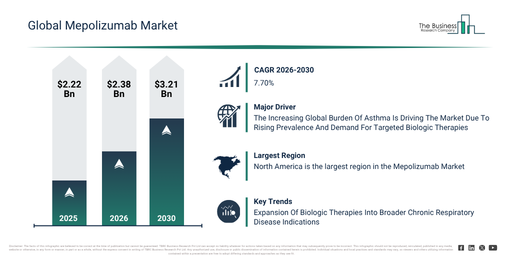
    The mepolizumab market size has shown robust expansion in recent years. It is anticipated to increase from $2.22 billion in 2025 to $2.38 billion in 2026, achieving a compound annual growth rate (CAGR) of 7.5%. The historical development can be ascribed to a rising incidence of severe asthma, greater understanding of eosinophilic disorders, progress in biologics research and development, an expansion of specialty care provisions, and improved methods for diagnosing inflammatory diseases.

    The mepolizumab market is anticipated to experience substantial expansion over the upcoming years. Its valuation is projected to reach $3.21 billion by 2030, exhibiting a compound annual growth rate (CAGR) of 7.7%. This anticipated growth during the forecast period can be attributed to factors such as a heightened emphasis on personalized medicine, an expanding pipeline for biologics, an increasing need for home-based treatment solutions, progress in targeted immunotherapies, and greater healthcare investments directed towards managing chronic diseases. Key trends identified for the forecast period encompass the wider acceptance of monoclonal antibody therapies, increased utilization of biologics for managing severe asthma, a rising preference for steroid-sparing treatment alternatives, broadening clinical applications for eosinophilic disorders, and enhanced patient adherence facilitated by targeted therapies.

    Get A Free Sample Report With In-Depth Market Insights:

    https://thebusinessresearchcompany.com/sample_request?id=94475431&type=smp&name=Mepolizumab%20Market%20Report%202026&utm_source=Blogs&utm_medium=Paid&utm_campaign=Oct_PR

    Mepolizumab Market Growth Factors: What’s Supporting Expansion?

    The global prevalence of asthma, which is steadily rising, is projected to fuel the expansion of the mepolizumab market. Asthma is characterized as a persistent respiratory ailment where the airways, or bronchi, become inflamed, constrict, and produce excessive mucus, making respiration challenging. The increased occurrence of asthma stems from individuals encountering a combination of inherited and environmental elements that can trigger inflammation within the body’s airways, thereby heightening lung sensitivity and leading to a greater incidence of the condition. Mepolizumab provides relief for asthma by diminishing inflammation attributed to eosinophils, a specific kind of white blood cell implicated in airway swelling and asthma attacks. For illustration, data from February 2026 provided by the Australian Institute of Health and Welfare (AIHW), an independent statutory agency based in Australia, indicates that asthma accounts for 2.5% of Australia’s total disease burden in 2024, stands as the primary cause of disease burden among children aged 1-9, generates approximately $1.3 billion in healthcare spending in 2023-24, and exhibits greater prevalence and hospitalization rates in boys compared to girls. Additionally, in February 2023, NHS England, a UK-based executive non-departmental public body, reported that roughly 5.4 million individuals are currently receiving asthma treatment, with approximately 160,000 new diagnoses recorded each year, and occupational exposure contributing to nearly 9–15% of adult-onset asthma cases. Consequently, the growing worldwide impact of asthma is propelling the growth of the mepolizumab market.

    Mepolizumab Market Segment Trends And Revenue Contributors

    The mepolizumab market covered in this report is segmented –

    1) By Indication: Severe Asthma, Eosinophilic Granulomatosis With Polyangiitis, Chronic Obstructive Pulmonary Disease, Other Eosinophilic Disorders

    2) By Age Group: Children 6 To 11 Years, Adolescents 12 To 17 Years, Adults 18 Years And Older

    3) By Distribution Channel: Direct Sales, Retail Pharmacy, Online Pharmacy

    4) By End User: Hospitals, Clinics, Home Care Settings

    Subsegments:

    1) By Severe Asthma: Allergic Severe Asthma, Non Allergic Severe Asthma, Late Onset Severe Asthma

    2) By Eosinophilic Granulomatosis With Polyangiitis: Active Eosinophilic Granulomatosis With Polyangiitis, Relapsing Eosinophilic Granulomatosis With Polyangiitis, Remission Phase Eosinophilic Granulomatosis With Polyangiitis

    3) By Chronic Obstructive Pulmonary Disease: Chronic Bronchitis Dominant Chronic Obstructive Pulmonary Disease, Emphysema Dominant Chronic Obstructive Pulmonary Disease, Frequent Exacerbator Chronic Obstructive Pulmonary Disease

    4) By Other Eosinophilic Disorders: Hypereosinophilic Syndrome, Eosinophilic Esophagitis, Eosinophilic Chronic Rhinosinusitis

    Mepolizumab Market Industry Trends: What’s Reshaping Demand?

    Leading companies active in the mepolizumab market are concentrating on developing innovative products, such as eosinophil-targeting biologics, to broaden therapeutic uses and enhance disease management outcomes. An eosinophil-targeting biologic is a monoclonal antibody therapy that works by inhibiting interleukin-5 to reduce inflammation mediated by eosinophils. For instance, in January 2026, GlaxoSmithKline PLC, a UK-based biopharmaceutical firm, announced the approval of Nucala (mepolizumab) by China’s National Medical Products Administration (NMPA). When added to standard inhaled treatments, this therapy demonstrates statistically significant reductions in moderate to severe exacerbations in patients with eosinophilic chronic obstructive pulmonary disease. Its approval introduces a targeted biologic option for a large patient population, facilitating improved clinical outcomes and lessening the burden of hospitalization.

    Mepolizumab Market Top Companies Driving Competitive Growth

    Major companies operating in the mepolizumab market are GlaxoSmithKline plc, Bio-Thera Solutions Ltd.

    View The Full Mepolizumab Market Report:

    https://thebusinessresearchcompany.com/report/mepolizumab-market-report?utm_source=Blogs&utm_medium=Paid&utm_campaign=Oct_PR

    Mepolizumab Market Global Footprint: Which Region Leads The Industry?

    North America was the largest region in the mepolizumab market in 2025. Asia-Pacific is expected to be the fastest-growing region in the forecast period. The regions covered in the mepolizumab market report are Asia-Pacific, South East Asia, Western Europe, Eastern Europe, North America, South America, Middle East and Africa.

    Reach Out To Our Team:

    The Business Research Company: https://www.thebusinessresearchcompany.com/

    Americas: +1 310-496-7795

    Asia: +44 7882 955267 & +91 8897263534

    Europe: +44 7882 955267

    Email us at: marketing@tbrc.info

    Follow us on:

    LinkedIn: https://in.linkedin.com/company/the-business-research-company

    YouTube: https://www.youtube.com/channel/UC24_fI0rV8cR5DxlCpgmyFQ

    Global Market Model: https://www.thebusinessresearchcompany.com/global-market-model
  • Medical Instruments Disinfections Market Growth In 2026: Market Size, Key Drivers And Future Outlook

    Medical Instruments Disinfections Market Growth In 2026: Market Size, Key Drivers And Future Outlook

    Built to provide research that’s more actionable and strategically valuable, The Business Research Company’s 2026 market reports include market attractiveness analysis, total addressable market sizing, company benchmarking matrices, interactive Excel dashboards, broader supply chain intelligence, emerging startup tracking, and in-depth product insights.

    Medical Instruments Disinfections Market Revenue Outlook: What CAGR Lies Ahead Through 2030?

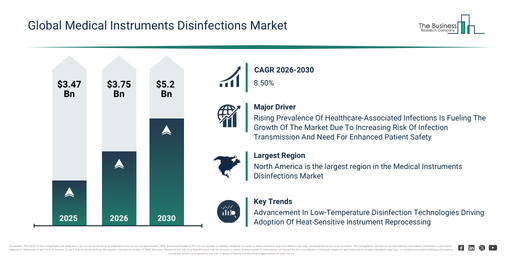
    The medical instruments disinfections market has seen significant expansion in recent years. This market is anticipated to increase from $3.47 billion in 2025 to $3.75 billion in 2026, at a compound annual growth rate (CAGR) of 8.3%. The historical growth of the market can be linked to a rise in healthcare-associated infection cases, ongoing expansion of hospital infrastructure, increased awareness of infection control protocols, an expansion in surgical and diagnostic procedures, and the implementation of stricter regulatory hygiene standards in healthcare settings.

    The medical instruments disinfections market is anticipated to experience substantial growth in the upcoming years, with its size projected to reach $5.2 billion by 2030, exhibiting a compound annual growth rate (CAGR) of 8.5%. This growth throughout the forecast period is propelled by factors such as the increasing adoption of automated sterilization systems, a heightened demand for sustainable disinfectant chemicals, the rise in outpatient and ambulatory surgical procedures, the incorporation of smart tracking within sterilization workflows, and the broader implementation of biotechnology-driven infection control solutions. Prominent trends foreseen for this period include the optimization of low-temperature enzymatic and chemical disinfection processes, the deployment of automated sterilization tracking and validation systems in healthcare facilities, the ongoing development of eco-friendly biodegradable medical disinfectant formulations, the integration of advanced surface-compatible antimicrobial coatings for instruments, and the emergence of rapid high-level disinfection technologies designed for reusable surgical instruments.

    Get A Free Sample Report With In-Depth Market Insights:

    https://thebusinessresearchcompany.com/sample_request?id=22072869&type=smp&name=Medical%20Instruments%20Disinfections%20Market%20Report%202026&utm_source=Blogs&utm_medium=Paid&utm_campaign=Oct_PR

    Medical Instruments Disinfections Market Growth Drivers: What’s Behind The Acceleration?

    The anticipated expansion of the medical instrument disinfection market is significantly driven by the rising occurrence of healthcare-associated infections. These infections are contracted by patients within healthcare environments during treatment, posing risks to patient safety and impacting clinical results. Factors contributing to this increase include greater hospital usage, an older patient demographic, and a growing number of patients with multiple health conditions. Disinfection of medical instruments aids healthcare systems by offering efficient solutions to lessen infection spread from these devices and guarantee enhanced patient safety. A notable example is from January 2024, when the Centers for Disease Control and Prevention, a US-based government agency, reported an approximate 4% increase in the standardized infection ratio (SIR) for surgical site infections (SSI) across all NHSN operative procedure categories combined compared to the prior year. Consequently, the escalating frequency of healthcare-associated infections acts as a key impetus for the expansion of the medical instrument disinfection market.

    Medical Instruments Disinfections Market Segment Performance And Emerging Opportunities

    The medical instruments disinfections market covered in this report is segmented –

    1) By Type Of Disinfectant: Alcohol-Based Disinfectants, Chlorine-Based Disinfectants, Phenolic Disinfectants, Quaternary Ammonium Compounds (Quats), Hydrogen Peroxide

    2) By Formulation Type: Ready-To-Use Formulations, Concentrated Formulations, Wipes, Sprays, High-Level Disinfectants

    3) By Distribution Channel: Direct Sales, Online Retail, Medical Supply Distributors, Pharmacies, Wholesale Suppliers

    4) By Application: Pre-Procedural Disinfection, Post-Procedural Disinfection, Surface Disinfection, Instrument Sterilization, Environmental Disinfection

    5) By End-User: Hospitals And Clinics, Biotechnology And Pharmaceutical Companies, Dental Practices, Ambulatory Surgical Centers, Research Laboratories

    Subsegments:

    1) By Alcohol-Based Disinfectants: Ethanol, Isopropanol, N-Propanol

    2) By Chlorine-Based Disinfectants: Sodium Hypochlorite, Calcium Hypochlorite, Chlorine Dioxide

    3) By Phenolic Disinfectants: Cresol, Orthophenylphenol, Hexachlorophene

    4) By Quaternary Ammonium Compounds: Benzalkonium Chloride, Cetyltrimethylammonium Bromide, Dodecylbenzyldimethylammonium Chloride

    5) By Hydrogen Peroxide: Stabilized Hydrogen Peroxide, Vaporized Hydrogen Peroxide, Hydrogen Peroxide Solutions

    Medical Instruments Disinfections Market Trends: What’s Defining The Industry’s Next Phase?

    Leading companies within the medical instruments disinfection market are prioritizing the development of advanced low-temperature sterilization technologies, such as vaporized hydrogen peroxide (VHP) systems. These innovations aim to enable effective reprocessing of heat-sensitive medical instruments while safeguarding material integrity and ensuring superior microbial elimination. Vaporized hydrogen peroxide (VHP) sterilization operates as a low-temperature technique that utilizes reactive hydrogen peroxide vapor to generate free radicals, which efficiently eradicate microorganisms on delicate medical devices without inflicting thermal damage. For instance, in December 2024, STERIS plc, an Ireland-based provider of products and services supporting patient care with a focus on infection prevention, secured clearance from the U. S. Food and Drug Administration for its V-PRO Low Temperature Sterilizers. These sterilizers are specifically designed for hospital-produced 3D-printed surgical guides and anatomical models. The system is compatible with Formlabs’ BioMed Amber and BioMed Clear resins, guarantees dimensional stability, and has been validated for use with over 43 materials, thereby facilitating the safe and efficient disinfection of heat-sensitive instruments.

    Medical Instruments Disinfections Market Competitive Overview And Top Companies

    Major companies operating in the medical instruments disinfections market are Medline Industries LP, Evonik Industries AG, Ecolab Inc., LANXESS AG, STERIS plc, Getinge AB, PAUL HARTMANN AG, Hu-Friedy Mfg. Co. LLC, Belimed AG, Schülke & Mayr GmbH, 3M Company, Advanced Sterilization Products Inc., Nanosonics Limited, GAMA Healthcare Ltd, Matachana Group S. A., SciCan Ltd., Microgen Bioproducts Ltd, Metrex Research LLC, Tuttnauer Ltd., BODE Chemie GmbH, Wassenburg Medical B. V., Whiteley Corporation Pty Ltd, MMM Group GmbH

    View The Full Medical Instruments Disinfections Market Report:

    https://thebusinessresearchcompany.com/report/medical-instruments-disinfections-market-report?utm_source=Blogs&utm_medium=Paid&utm_campaign=Oct_PR

    Medical Instruments Disinfections Market Leading Geography: Which Region Contributes The Most Revenue?

    North America was the largest region in the medical instruments disinfection market in 2025. Asia-Pacific is expected to be the fastest-growing region in the forecast period. The regions covered in the medical instruments disinfections market report are Asia-Pacific, South East Asia, Western Europe, Eastern Europe, North America, South America, Middle East and Africa.

    Reach Out To Our Team:

    The Business Research Company: https://www.thebusinessresearchcompany.com/

    Americas: +1 310-496-7795

    Asia: +44 7882 955267 & +91 8897263534

    Europe: +44 7882 955267

    Email us at: marketing@tbrc.info

    Follow us on:

    LinkedIn: https://in.linkedin.com/company/the-business-research-company

    YouTube: https://www.youtube.com/channel/UC24_fI0rV8cR5DxlCpgmyFQ

    Global Market Model: https://www.thebusinessresearchcompany.com/global-market-model
  • Mastitis Control Products Market Size Growth: From $2.12 Billion In 2026 To $2.65 Billion By 2030

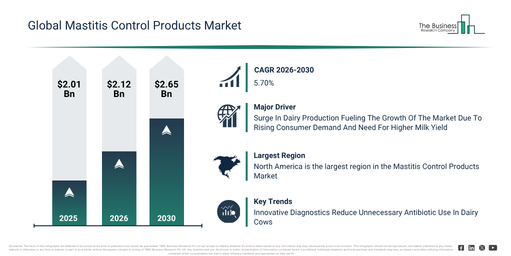
    Mastitis Control Products Market Size Growth: From $2.12 Billion In 2026 To $2.65 Billion By 2030

    Built to provide research that’s more actionable and strategically valuable, The Business Research Company’s 2026 market reports include market attractiveness analysis, total addressable market sizing, company benchmarking matrices, interactive Excel dashboards, broader supply chain intelligence, emerging startup tracking, and in-depth product insights.

    Mastitis Control Products Market Size Outlook: How Quickly Will Revenue Expand Through 2030?

    The mastitis control products market has seen strong growth in recent years. It is projected to increase from $2.01 billion in 2025 to $2.12 billion in 2026, exhibiting a compound annual growth rate (CAGR) of 5.5%. The expansion witnessed in the past can be attributed to the rising prevalence of mastitis in dairy cattle populations, the increasing demand for high-quality milk production, the development of veterinary healthcare infrastructure, the expansion of commercial dairy farming operations, and the traditional reliance on antibiotics for infection control.

    The mastitis control products market is poised for significant expansion in the coming years, projected to reach $2.65 billion by 2030 at a compound annual growth rate (CAGR) of 5.7%. This anticipated growth during the forecast period is driven by a surging move towards antibiotic-free dairy production systems, the increasing adoption of rapid diagnostic and preventive care solutions, a rising demand for organic and residue-free milk products, the expansion of smart dairy farm monitoring technologies, and a heightened focus on animal welfare along with sustainable livestock management practices. Dominant trends expected during the forecast period involve data-driven mastitis early detection and monitoring systems, antibiotic-free and probiotic-based udder health management solutions, the development of sustainable and residue-free dairy hygiene products, automated milking hygiene and udder disinfection systems, and rapid on-farm diagnostic testing kits for mastitis detection.

    Get A Free Sample Report With In-Depth Market Insights:

    https://thebusinessresearchcompany.com/sample_request?id=27924458&type=smp&name=Mastitis%20Control%20Products%20Market%20Report%202026&utm_source=Blogs&utm_medium=Paid&utm_campaign=Oct_PR

    Mastitis Control Products Market Growth Backed By Core Demand Fundamentals

    The increasing demand for dairy production is anticipated to fuel the expansion of the mastitis control products market in the future. Dairy production involves creating milk and products derived from milk using domesticated animals such as cows, buffaloes, goats, and sheep. This surge in dairy production stems from a growing consumer appetite for milk and its derivatives, as expanding populations and shifting dietary habits drive up consumption. Mastitis control products support dairy production by preventing and treating infections in udders, leading to healthier cattle, increased milk output, and better milk quality. For example, in January 2026, data from the Bullvine, a Canadian online resource for dairy breeding experts, indicated that US milk production reached approximately 234.3 billion pounds, marking a 1.4% increase over 2025. Consequently, the rising demand for dairy production is projected to stimulate the growth of the mastitis control products market.

    Mastitis Control Products Market Segment Analysis And Revenue Potential

    The mastitis control products market covered in this report is segmented –

    1) By Product Type: Antibiotics, Vaccines, Disinfectants, Teat Sealants, Diagnostic Kits, Other Product Types

    2) By Animal Type: Dairy Cattle, Sheep, Goats, Other Animal Types

    3) By Route Of Administration: Topical, Intramammary, Systemic

    4) By Distribution Channel: Veterinary Hospitals And Clinics, Retail Pharmacies, Online Pharmacies, Other Distribution Channels

    5) By End User: Dairy Farms, Veterinary Clinics, Animal Health Laboratories, Research Institutes

    Subsegments:

    1) By Antibiotics: Beta Lactam Antibiotics, Macrolide Antibiotics, Aminoglycoside Antibiotics, Tetracycline Antibiotics

    2) By Vaccines: Inactivated Vaccines, Live Attenuated Vaccines, Subunit Vaccines, Recombinant Vaccines

    3) By Disinfectants: Iodine Based Disinfectants, Chlorine Based Disinfectants, Chlorhexidine Based Disinfectants, Quaternary Ammonium Compound Disinfectants

    4) By Teat Sealants: Internal Teat Sealants, External Teat Sealants

    5) By Diagnostic Kits: Rapid Mastitis Detection Kits, Somatic Cell Count Test Kits, Bacterial Culture Test Kits, Enzyme Based Detection Kits

    6) By Other Product Types: Probiotic Based Products, Herbal Mastitis Control Products, Immune Support Supplements, Udder Care Formulations

    Mastitis Control Products Market Growth Trends Reshaping The Competitive Landscape

    Leading companies in the mastitis control products market are concentrating on developing advanced solutions, such as swift on-site diagnostic tools, to enhance detection accuracy, minimize unnecessary antimicrobial use, and improve herd health management. Rapid on-farm diagnostics denote quick, localized tests designed to identify mastitis in dairy cows, allowing for immediate treatment decisions. For instance, in August 2023, Zoetis, a US-based animal health company, introduced Vetscan Mastigram+, a rapid on-farm mastitis diagnostic that employs a simple flow dipstick test to detect Gram-positive mastitis within eight hours. This solution enables farmers and veterinarians to identify affected cows before their next milking, facilitating targeted antimicrobial therapy, reducing superfluous treatments, and supporting responsible antibiotic use.

    Mastitis Control Products Market Company Landscape And Competitive Strategy

    Major companies operating in the mastitis control products market are Merck & Co, Boehringer Ingelheim, Ecolab Inc., Zoetis Inc., GEA Group AG, Elanco Animal Health, IDEXX Laboratories, Ceva Santé Animale, Virbac S. A., DeLaval Holding AB, Phibro Animal Health Corporation, Neogen Corporation, Vetoquinol, Norbrook Laboratories, Milkrite InterPuls, BouMatic LLC, Dairymaster, Bioveta a. s., Afimilk Ltd., ImmuCell Corporation

    View The Full Mastitis Control Products Market Report:

    https://thebusinessresearchcompany.com/report/mastitis-control-products-market-report?utm_source=Blogs&utm_medium=Paid&utm_campaign=Oct_PR

    Mastitis Control Products Market Largest Region: Which Geography Holds The Biggest Share?

    North America was the largest region in the mastitis control products market in 2025. Asia Pacific is expected to be the fastest-growing region in the forecast period. The regions covered in the mastitis control products market report are Asia-Pacific, South East Asia, Western Europe, Eastern Europe, North America, South America, Middle East and Africa.

    Reach Out To Our Team:

    The Business Research Company: https://www.thebusinessresearchcompany.com/

    Americas: +1 310-496-7795

    Asia: +44 7882 955267 & +91 8897263534

    Europe: +44 7882 955267

    Email us at: marketing@tbrc.info

    Follow us on:

    LinkedIn: https://in.linkedin.com/company/the-business-research-company

    YouTube: https://www.youtube.com/channel/UC24_fI0rV8cR5DxlCpgmyFQ

    Global Market Model: https://www.thebusinessresearchcompany.com/global-market-model
  • Magnetic Resonance Imaging (MRI) Contrast Agents Market Size In 2026 And Beyond: Understanding Future Growth Potential

    Magnetic Resonance Imaging (MRI) Contrast Agents Market Size In 2026 And Beyond: Understanding Future Growth Potential

    Built to provide research that’s more actionable and strategically valuable, The Business Research Company’s 2026 market reports include market attractiveness analysis, total addressable market sizing, company benchmarking matrices, interactive Excel dashboards, broader supply chain intelligence, emerging startup tracking, and in-depth product insights.

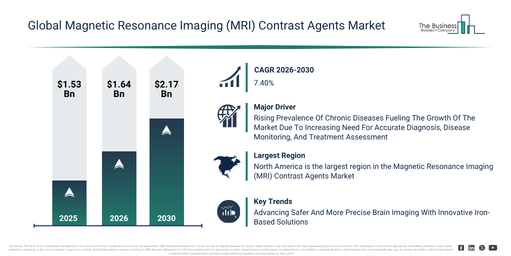
    Magnetic Resonance Imaging (MRI) Contrast Agents Market Set To Climb From $1.64 Billion In 2026 To $2.17 Billion By 2030

    The magnetic resonance imaging (MRI) contrast agents market size has seen substantial growth over recent years. It is anticipated to expand from $1.53 billion in 2025 to $1.64 billion in 2026, at a compound annual growth rate (CAGR) of 7.1%. This historical growth can be attributed to several factors, including the increasing occurrence of chronic diseases, the development of diagnostic imaging infrastructure, rising healthcare expenditure, the enlargement of hospital networks, and advancements in MRI technology.

    The magnetic resonance imaging (MRI) contrast agents market size is anticipated to experience robust growth in the coming years. It is projected to reach $2. 17 billion by 2030, exhibiting a compound annual growth rate (CAGR) of 7. 4%. This expansion during the forecast period is propelled by the development of targeted contrast agents, the increasing demand for precision diagnostics, the growth in outpatient imaging centers, technological innovation in contrast formulations, and rising awareness of early disease detection. Significant trends during this period include the increasing adoption of gadolinium-based contrast agents, a growing demand for safer and low-toxicity agents, the rising prevalence of neurological and gastrointestinal disorders, advancements in nanoparticle-based contrast agents, and the expanding use of MRI in diagnostic imaging centers.

    Get A Free Sample Report With In-Depth Market Insights:

    https://thebusinessresearchcompany.com/sample_request?id=55658807&type=smp&name=Magnetic%20Resonance%20Imaging%20%28MRI%29%20Contrast%20Agents%20Market%20Report%202026&utm_source=Blogs&utm_medium=Paid&utm_campaign=Oct_PR

    Magnetic Resonance Imaging (MRI) Contrast Agents Market Growth Momentum: What Factors Are Shaping Demand?

    The growing incidence of chronic diseases is expected to stimulate the expansion of the magnetic resonance imaging (MRI) contrast agents market moving forward. A chronic disease is defined as a persistent health condition that advances slowly and typically lasts for many years. The rise in these conditions is attributed to unhealthy lifestyle choices, such as poor diet and insufficient physical activity. Magnetic resonance imaging (MRI) contrast agents are utilized in the management of chronic diseases to enhance the visualization of tissues and abnormalities, thereby enabling accurate diagnosis, effective monitoring of disease progression, and thorough assessment of treatment outcomes. For instance, in August 2024, figures from Macmillan Cancer Support, a UK-based organization, indicated that over 3 million people in the UK are living with cancer, a figure projected to increase to 3. 5 million by 2025, 4 million by 2030, and 5. 3 million by 2040. This demonstrates how the increasing prevalence of chronic diseases is actively propelling the growth of the magnetic resonance imaging (MRI) contrast agents market.

    Magnetic Resonance Imaging (MRI) Contrast Agents Market Segment Landscape: Which Areas Lead Development?

    The magnetic resonance imaging (mri) contrast agents market covered in this report is segmented –

    1) By Product: Super-Paramagnetic Agents, Paramagnetic Agents

    2) By Route Of Administration: Oral Administration, Intra Articular Administration

    3) By Application: Gastrointestinal, Intravenous, Hepato-Biliary, Neurological Imaging, Other Applications

    4) By End-Use: Hospitals, Diagnostic And Imaging Centres, Research Institutes, Other End-Users

    Subsegments:

    1) By Super-Paramagnetic Agents: Iron Oxide Nanoparticles, Ultrasmall Superparamagnetic Iron Oxide Particles, Standard Superparamagnetic Iron Oxide Particles, Liver Targeted Superparamagnetic Agents

    2) By Paramagnetic Agents: Gadolinium Based Contrast Agents, Manganese Based Contrast Agents, Macrocyclic Paramagnetic Agents, Linear Paramagnetic Agents

    Magnetic Resonance Imaging (MRI) Contrast Agents Market Trends Redefining Industry Growth

    Key players in the magnetic resonance imaging (MRI) contrast agents market are concentrating on creating novel products, including iron-based contrast agents, to offer safer options for individuals with kidney problems and boost the precision of imaging. These agents are MRI substances containing superparamagnetic iron oxide nanoparticles that improve image contrast by modifying local magnetic fields. This aids in better visualization of tumors and lesions, simultaneously presenting a safer choice for patients with compromised kidney function. As an example, in February 2026, the U. S. -based pharmaceutical firm, Azurity Pharmaceuticals, introduced Ferabright. This iron-based contrast agent received approval from the U. S. Food and Drug Administration (FDA) for use in brain MRI scans for adults diagnosed with or suspected of having malignant neoplasms. Ferabright comes in single-dose vials, containing either 300 mg or 510 mg of elemental iron for intravenous infusion, specifically engineered to enhance the visibility of brain lesions where the blood-brain barrier is compromised. Its substantial molecular size ensures it stays within blood vessels during initial imaging stages, and a delayed-phase MRI reveals tumor enhancement resulting from macrophage absorption. Furthermore, Ferabright is metabolized through the body’s natural iron pathways, alleviating worries about its long-term presence and offering an alternative for individuals unable to receive gadolinium, all while contributing to eco-friendly imaging methods.

    Magnetic Resonance Imaging (MRI) Contrast Agents Market Leading Companies And Competitive Benchmarking

    Major companies operating in the magnetic resonance imaging (mri) contrast agents market are Bayer AG, GE HealthCare Technologies Inc., Hengrui Medicine Co. Ltd., Zydus Lifesciences Ltd., Bracco Imaging S. p. A., Lantheus Holdings Inc., Guerbet SA, Jiangsu Hengrui Pharmaceuticals Co. Ltd., Azurity Pharmaceuticals Inc., Yangtze River Pharmaceutical Group Co. Ltd., Beijing Beilu Pharmaceutical Co. Ltd., Unijules Life Sciences Ltd., Viwit Pharmaceutical Co. Ltd., Sanochemia Pharmazeutika AG, J. B. Chemicals & Pharmaceuticals Ltd., Nano Therapeutics Pvt. Ltd., Taejoon Pharm Co. Ltd., Nanoprobes Inc., Spago Nanomedical AB, Advanced Magnetics Inc

    View The Full Magnetic Resonance Imaging (MRI) Contrast Agents Market Report:

    https://thebusinessresearchcompany.com/report/magnetic-resonance-imaging-mri-contrast-agents-market-report?utm_source=Blogs&utm_medium=Paid&utm_campaign=Oct_PR

    Magnetic Resonance Imaging (MRI) Contrast Agents Market Top Region By Revenue And Market Share

    North America was the largest region in the magnetic resonance imaging (MRI) contrast agents market in 2025. Asia-Pacific is expected to be the fastest-growing region in the forecast period. The regions covered in the magnetic resonance imaging (MRI) contrast agents market report are Asia-Pacific, South East Asia, Western Europe, Eastern Europe, North America, South America, Middle East and Africa.

    Reach Out To Our Team:

    The Business Research Company: https://www.thebusinessresearchcompany.com/

    Americas: +1 310-496-7795

    Asia: +44 7882 955267 & +91 8897263534

    Europe: +44 7882 955267

    Email us at: marketing@tbrc.info

    Follow us on:

    LinkedIn: https://in.linkedin.com/company/the-business-research-company

    YouTube: https://www.youtube.com/channel/UC24_fI0rV8cR5DxlCpgmyFQ

    Global Market Model: https://www.thebusinessresearchcompany.com/global-market-model
  • Long-Acting Implant And Ocular Drug-Delivery Polymer Systems Market Size And Growth In 2026: Key Factors Shaping Future Demand

    Long-Acting Implant And Ocular Drug-Delivery Polymer Systems Market Size And Growth In 2026: Key Factors Shaping Future Demand

    Built to provide research that’s more actionable and strategically valuable, The Business Research Company’s 2026 market reports include market attractiveness analysis, total addressable market sizing, company benchmarking matrices, interactive Excel dashboards, broader supply chain intelligence, emerging startup tracking, and in-depth product insights.

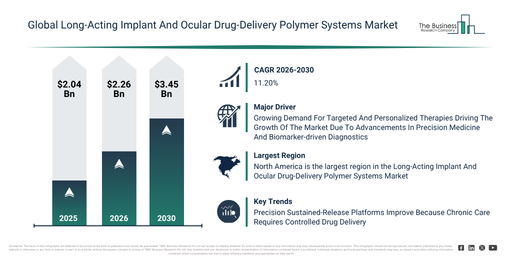
    Long-Acting Implant And Ocular Drug-Delivery Polymer Systems Market Growth From $2.26 Billion In 2026 To $3.45 Billion By 2030 At A CAGR Of 11.2%

    The market size for long-acting implant and ocular drug-delivery polymer systems has experienced rapid growth in recent years. It is anticipated to expand from $2.04 billion in 2025 to $2.26 billion by 2026, progressing at a compound annual growth rate (CAGR) of 11.0%. The expansion observed during the historic period can be linked to factors such as limited patient compliance with frequent ocular drug administration, the high prevalence of chronic eye diseases including glaucoma and macular degeneration, the scarcity of effective sustained-release ophthalmic therapies, the increasing adoption of intravitreal injection-based treatments, and the early advancements in biodegradable implant technologies for drug delivery.

    The long-acting implant and ocular drug-delivery polymer systems market size is poised for rapid expansion over the next few years. It is expected to grow to $3.45 billion by 2030, demonstrating a compound annual growth rate (CAGR) of 11.2%. This projected growth can be attributed to several factors including a rising demand for long-acting and minimally invasive ocular therapies, the increasing geriatric population and associated age-related eye disorders, broader adoption of precision medicine in ophthalmology, advancements in biodegradable and biocompatible polymer innovations, and improvements in targeted and controlled release drug delivery systems. Key trends anticipated during this period include innovations in biodegradable polymer-based ocular implants for reduced toxicity, sustained release intravitreal drug delivery for managing retinal diseases, smart hydrogel-based systems for controlling ocular drug diffusion, nanoparticle-enhanced ocular barrier penetration technologies, and platforms for optimizing precision ophthalmic drug release kinetics.

    Get A Free Sample Report With In-Depth Market Insights:

    https://thebusinessresearchcompany.com/sample_request?id=88720038&type=smp&name=Long-Acting%20Implant%20And%20Ocular%20Drug-Delivery%20Polymer%20Systems%20Market%20Report%202026&utm_source=Blogs&utm_medium=Paid&utm_campaign=Oct_PR

    Long-Acting Implant And Ocular Drug-Delivery Polymer Systems Market Growth Drivers: What’s Behind The Acceleration?

    The growing demand for targeted and personalized therapies is anticipated to drive the long-acting implant and ocular drug-delivery polymer systems market forward. Targeted and personalized therapies refer to medical interventions specifically tailored to individual patient attributes, including genetic profile, disease subtype, and specific therapeutic response, with the goal of improving effectiveness and reducing negative side effects. This demand is escalating due to progress in precision medicine and biomarker-driven diagnostics, which allow for more accurate disease classification and individualized treatment choices. Long-acting implant and ocular drug-delivery polymer systems facilitate targeted and personalized therapies by enabling sustained, localized, and controlled drug release directly at the intended site, thereby reducing systemic exposure and enhancing treatment adherence for chronic ocular conditions. For instance, in February 2024, the Personalized Medicine Coalition, a US-based nonprofit organization, reported that the U. S. Food and Drug Administration approved 16 new personalized medicines in 2023, making up approximately 34% of all new drug approvals, an increase from 12 approvals in 2022. Consequently, the increasing demand for targeted and personalized therapies is propelling the growth of the long-acting implant and ocular drug-delivery polymer systems market.

    Long-Acting Implant And Ocular Drug-Delivery Polymer Systems Market Segment Analysis Spotlighting Growth Areas

    The long-acting implant and ocular drug-delivery polymer systems market covered in this report is segmented –

    1) By Delivery Route: Subcutaneous And Intramuscular Implants, Intravitreal And Ocular Implants, Other Local Long-Acting Systems

    2) By Therapy Area: Oncology And Chronic Pain, Ophthalmology, Endocrine And Women’s Health, Other Chronic Conditions

    3) By Polymer Type: Biodegradable Polyesters, Non-Degradable Polymers, Hybrid Or Novel Polymer Platforms

    4) By Application: Chronic Eye Disease Therapy, Glaucoma Sustained Delivery, Post-Surgical Antibiotic Delivery, Macular Degeneration Therapy

    5) By End User: Hospitals And Clinics, Specialty Ophthalmology Centers, Research Institutes

    Subsegments:

    1) By Subcutaneous And Intramuscular Implants: Biodegradable Polymer Implants, Non-Biodegradable Polymer Implants, Extended Release Hormonal Implants, Long-Acting Analgesic Implants

    2) By Intravitreal And Ocular Implants: Sustained Release Retinal Drug Implants, Biodegradable Ocular Inserts, Non-Biodegradable Ocular Inserts, Anti-Inflammatory Ocular Drug Implants

    3) By Other Local Long-Acting Systems: Localized Pain Management Implants, Tumor Targeted Delivery Inserts, Long-Acting Anti-Infective Systems, Extended Release Wound Care Systems

    Long-Acting Implant And Ocular Drug-Delivery Polymer Systems Market Trends: What’s Defining The Industry’s Next Phase?

    Leading companies engaged in long-acting implant and ocular drug-delivery polymer systems are concentrating on technological enhancements, such as biodegradable covalent prodrug polymer platforms. This focus aims to achieve a competitive advantage by offering zero-order, predictable therapeutic elution over extended durations and reducing the frequency of dosing for chronic eye and systemic conditions that align with prescription delivery requirements. Biodegradable covalent prodrug polymer platforms refer to polymeric systems that chemically bond therapeutic agents to a biodegradable backbone, thereby enabling consistent, controlled release kinetics without sudden burst effects and eliminating residual material after degradation. For instance, in August 2025, PolyActiva, an Australia-based biopharmaceutical company, enrolled the first patient in its Phase 2b clinical trial for the PA5108 ocular micro-implant. This implant leverages its PREZIA polymer-prodrug technology to deliver sustained intraocular pressure reduction over six months, allows for flexible repeat dosing, and minimizes residual foreign material through complete biodegradation while maintaining steady drug levels.

    Long-Acting Implant And Ocular Drug-Delivery Polymer Systems Market Competitive Landscape: Which Companies Lead The Industry?

    Major companies operating in the long-acting implant and ocular drug-delivery polymer systems market are BASF SE, F. Hoffmann-La Roche Ltd., AbbVie Inc., Evonik Industries AG, DSM Biomedical B. V., Celanese Corporation, Alcon Inc., Lubrizol Corp., Ashland Inc., Corbion N. V., ANI Pharmaceuticals Inc., Ocular Therapeutix Inc., EyePoint Pharmaceuticals Inc., Agno Pharma LLC, Novaliq GmbH, Kala Pharmaceuticals Inc., Nicox S. A., Clearside Biomedical Inc., Mati Therapeutics Inc., iVeena Delivery Systems Inc.

    View The Full Long-Acting Implant And Ocular Drug-Delivery Polymer Systems Market Report:

    https://thebusinessresearchcompany.com/report/long-acting-implant-and-ocular-drug-delivery-polymer-systems-market-report?utm_source=Blogs&utm_medium=Paid&utm_campaign=Oct_PR

    Long-Acting Implant And Ocular Drug-Delivery Polymer Systems Market Regional Breakdown: Where Is Demand Concentrated?

    North America was the largest region in the long-acting implant and ocular drug-delivery polymer systems market in 2025. Asia-Pacific is expected to be the fastest-growing region in the forecast period. The regions covered in the long-acting implant and ocular drug-delivery polymer systems market report are Asia-Pacific, South East Asia, Western Europe, Eastern Europe, North America, South America, Middle East and Africa.

    Reach Out To Our Team:

    The Business Research Company: https://www.thebusinessresearchcompany.com/

    Americas: +1 310-496-7795

    Asia: +44 7882 955267 & +91 8897263534

    Europe: +44 7882 955267

    Email us at: marketing@tbrc.info

    Follow us on:

    LinkedIn: https://in.linkedin.com/company/the-business-research-company

    YouTube: https://www.youtube.com/channel/UC24_fI0rV8cR5DxlCpgmyFQ

    Global Market Model: https://www.thebusinessresearchcompany.com/global-market-model
  • Liposomal Chemotherapy Market Size In 2026: Growth Outlook And Forecast Through 2030

    Liposomal Chemotherapy Market Size In 2026: Growth Outlook And Forecast Through 2030

    Backed by market attractiveness analysis, total addressable market sizing, company benchmarking matrices, interactive Excel dashboards, wider supply chain intelligence, emerging startup coverage, and detailed product-level insights, The Business Research Company’s 2026 market reports are designed to offer research that is more actionable and strategically valuable than ever.

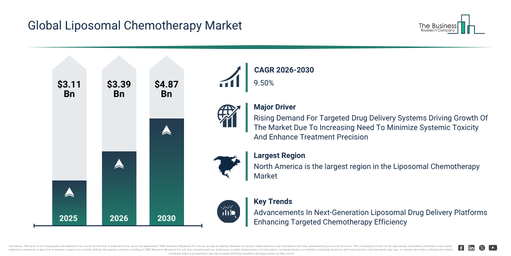
    Liposomal Chemotherapy Market Size Forecast: How Big Could The Market Get By 2030?

    The liposomal chemotherapy market size has experienced robust growth in recent years. It is anticipated to increase from $3.11 billion in 2025 to $3.39 billion in 2026, demonstrating a compound annual growth rate (CAGR) of 9.2%. The expansion observed in the past can be ascribed to several factors, including the pronounced toxicity of standard chemotherapy treatments, the restricted tumor targeting efficiency inherent in traditional drug delivery methods, the rising prevalence of cancer and subsequent demand for its treatment, the development of initial liposomal drug formulations, and the increasing acceptance of hospital-based chemotherapy infusion therapies.

    The liposomal chemotherapy market is anticipated to experience substantial expansion over the coming years, reaching $4. 87 billion by 2030, exhibiting a compound annual growth rate (CAGR) of 9. 5%. This projected growth during the forecast timeframe is driven by factors such as the broadening scope of personalized oncology and precision medicine, the growing embrace of chemotherapy systems with targeted action and reduced toxicity, advancements in nanotechnology-based drug delivery, an increase in clinical trials for sophisticated liposomal formulations, and the greater incorporation of biomarker-guided approaches in cancer therapy selection. Key trends expected within this period encompass the optimization of precision nanocarrier-based drug delivery, improved accumulation of drugs specifically within the tumor microenvironment, developments in long-circulating stealth liposome formulations, the integration of combination therapies alongside liposomal chemotherapy, and the application of biomarker-guided strategies for personalized oncology treatment.

    Get A Free Sample Report With In-Depth Market Insights:

    https://thebusinessresearchcompany.com/sample_request?id=91315818&type=smp&name=Liposomal%20Chemotherapy%20Market%20Report%202026&utm_source=Blogs&utm_medium=Paid&utm_campaign=Oct_PR

    Liposomal Chemotherapy Market Growth Catalysts And Demand Drivers

    The future growth of the liposomal chemotherapy market is anticipated to be propelled by the increasing requirement for targeted drug delivery systems. These sophisticated formulations are engineered to transport therapeutic agents directly to affected tissues while minimizing exposure to healthy cells, thereby enhancing treatment accuracy and lowering systemic toxicity. The escalating need to reduce adverse effects by precisely delivering medications to diseased cells while protecting healthy tissues is driving the demand for targeted drug delivery systems. Liposomal chemotherapy addresses this need by encapsulating anticancer drugs within lipid vesicles, facilitating controlled release and concentrated accumulation at tumor sites, consequently improving both safety and the effectiveness of treatments. For instance, in July 2024, the National Library of Medicine (NLM), a US-based biomedical library, projected that prescription drug spending would increase by 10.0%–12.0% in 2024 compared to 2023. Consequently, the rising demand for targeted drug delivery systems is a significant factor driving the expansion of the liposomal chemotherapy market.

    Liposomal Chemotherapy Market Segment Analysis And Revenue Potential

    The liposomal chemotherapy market covered in this report is segmented –

    1) By Drug Type: Liposomal Doxorubicin, Liposomal Paclitaxel, Liposomal Amphotericin B, Other Liposomal Chemotherapy Drugs

    2) By Indication: Breast Cancer, Ovarian Cancer, Leukemia, Lymphoma, Pancreatic Cancer, Kaposi Sarcoma, Bone Sarcoma, Multiple Myeloma, Fungal Infections

    3) By Route Of Administration: Intravenous, Intrathecal, Intramuscular, Subcutaneous

    4) By Distribution Channel: Hospital Pharmacies, Retail Pharmacies, Specialty Pharmacies, Online Pharmacies

    5) By End User: Hospitals, Homecare, Specialty Clinics, Other End Users

    Subsegments:

    1) By Liposomal Doxorubicin: Doxorubicin Hydrochloride, Pegylated Doxorubicin, Non Pegylated Doxorubicin

    2) By Liposomal Paclitaxel: Albumin Bound Paclitaxel, Conventional Paclitaxel, Polymer Encapsulated Paclitaxel

    3) By Liposomal Amphotericin B: Lipid Complex Amphotericin B, Conventional Amphotericin B, Colloidal Dispersion Amphotericin B

    4) By Other Liposomal Chemotherapy Drugs: Liposomal Vincristine, Liposomal Irinotecan, Liposomal Cytarabine

    Liposomal Chemotherapy Market Trends Shaping Long-Term Demand

    Major companies operating in the liposomal chemotherapy market are concentrating on advancements in liposome formulation, such as cutting-edge liposomal drug delivery platforms that enhance targeted distribution and controlled release of anticancer agents. These next-generation liposomal drug delivery platforms are proprietary systems specifically engineered to improve drug stability, extend circulation time, and preferentially accumulate at tumor sites, which increases therapeutic efficacy while reducing systemic toxicity. For instance, in August 2024, Lupin Limited, an India-based pharmaceutical company, introduced Doxorubicin Hydrochloride Liposome Injection in single-dose vial formulations. This product enables improved delivery of the drug to cancer cells, supports controlled release, and provides flexibility through multiple vial strengths for optimized dosing. Additionally, this launch aligns with the increasing demand for safer and more precise chemotherapy options, strengthening Lupin’s oncology portfolio and expanding access to advanced liposomal treatments in the market.

    Liposomal Chemotherapy Market Competitive Analysis Of Leading Industry Participants

    Major companies operating in the liposomal chemotherapy market are Johnson & Johnson Services Inc., Merck & Co. Inc., Pfizer Inc., Sanofi SA, Novartis AG, GSK plc, Eli Lilly and Company, Takeda Pharmaceutical Company Limited, Gilead Sciences Inc., Astellas Pharma Inc., CSPC Pharmaceutical Group Limited, Jazz Pharmaceuticals plc, Sichuan Kelun Pharmaceutical Co. Ltd., Cipla Inc., Hikma Pharmaceuticals PLC, Cadila Pharmaceuticals Ltd., Lupin Limited, Zydus Lifesciences Ltd., Towa Pharmaceutical Co. Ltd., CHEPLAPHARM Arzneimittel GmbH, Luye Pharma Group Ltd., TTY Biopharm Company Limited, Accord Healthcare Limited, SRS Life Sciences, Shanghai Fudan-Zhangjiang Bio-Pharmaceutical Co. Ltd.

    View The Full Liposomal Chemotherapy Market Report:

    https://thebusinessresearchcompany.com/report/liposomal-chemotherapy-market-report?utm_source=Blogs&utm_medium=Paid&utm_campaign=Oct_PR

    Liposomal Chemotherapy Market Geographic Distribution And Regional Opportunities

    North America was the largest region in the liposomal chemotherapy market in 2025. Asia-Pacific is expected to be the fastest-growing region in the forecast period. The regions covered in the liposomal chemotherapy market report are Asia-Pacific, South East Asia, Western Europe, Eastern Europe, North America, South America, Middle East and Africa.

    Reach Out To Our Team:

    The Business Research Company: https://www.thebusinessresearchcompany.com/

    Americas: +1 310-496-7795

    Asia: +44 7882 955267 & +91 8897263534

    Europe: +44 7882 955267

    Email us at: marketing@tbrc.info

    Follow us on:

    LinkedIn: https://in.linkedin.com/company/the-business-research-company

    YouTube: https://www.youtube.com/channel/UC24_fI0rV8cR5DxlCpgmyFQ

    Global Market Model: https://www.thebusinessresearchcompany.com/global-market-model
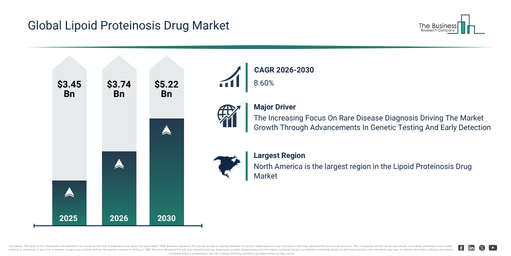
  • Lipoid Proteinosis Drug Market Trends Supporting 8.6% CAGR Growth Through 2030

    Lipoid Proteinosis Drug Market Trends Supporting 8.6% CAGR Growth Through 2030

    Featuring market attractiveness scoring, total addressable market sizing, company benchmarking matrices, interactive Excel dashboards, deeper supply chain intelligence, emerging startup tracking, and granular product-level insights, The Business Research Company’s 2026 market reports are built to deliver research that is both more actionable and more strategically valuable.

    Lipoid Proteinosis Drug Market Revenue Outlook: What CAGR Lies Ahead Through 2030?

    The lipoid proteinosis drug market has demonstrated strong growth in recent years. It is anticipated to expand from $3.45 billion in 2025 to $3.74 billion in 2026, at a compound annual growth rate (CAGR) of 8.4%. The expansion observed historically can be attributed to factors such as limited awareness and delayed diagnosis of rare genetic skin disorders, the lack of targeted treatment options for lipoid proteinosis management, a reliance on symptomatic and supportive care therapies, the slow development of orphan drug pipelines, and limited clinical research focused on hyaline deposition disorders.

    The lipoid proteinosis drug market is anticipated to experience substantial growth over the next few years, with its valuation expected to climb to $5.22 billion by 2030, exhibiting a compound annual growth rate (CAGR) of 8.6%. This projected expansion is fueled by several factors, including the increasing scope of gene therapy and genome editing research for rare diseases, the rising adoption of precision medicine strategies in dermatology, an uptick in incentives and regulatory support for orphan drug development, growing investment in advanced drug delivery technologies, and the expanding utilization of AI for rare disease detection and clinical decision support. Significant trends foreseen during this period encompass gene editing-based therapeutic approaches for rare dermatological conditions, precision dermatology coupled with personalized drug response profiling, AI-driven rare disease diagnosis and treatment optimization, nanotechnology-based drug delivery systems aimed at targeted skin repair, and regenerative medicine methods for mucosal and tissue restoration.

    Get A Free Sample Report With In-Depth Market Insights:

    https://thebusinessresearchcompany.com/sample_request?id=75278215&type=smp&name=Lipoid%20Proteinosis%20Drug%20Market%20Report%202026&utm_source=Blogs&utm_medium=Paid&utm_campaign=Oct_PR

    Lipoid Proteinosis Drug Market Opportunity Drivers: What’s Unlocking New Revenue Potential?

    An escalating emphasis on rare diseases is projected to boost the growth of the lipoid proteinosis drug market in the future. These conditions, affecting a small segment of the population, are often chronic, severe, and potentially fatal. The heightened focus stems from rising regulatory incentives, where government structures offer financial advantages like market exclusivity and tax credits, prompting pharmaceutical firms to invest in therapies for previously overlooked ailments. This increased attention fosters the discovery and clinical advancement of specific treatments, thereby expanding the array of specialty drugs for conditions as rare as lipoid proteinosis. For example, the Cystic Fibrosis Trust, a UK-based national charity, reported 11,148 people in the UK had cystic fibrosis (CF) in 2022, which rose to 11,318 in 2023, as observed in October 2024. Consequently, the intensified focus on rare diseases is a key factor in the expansion of the lipoid proteinosis drug market. The expanding emphasis on personalized medicine is anticipated to fuel the growth of the lipoid proteinosis drug market in the upcoming period. This medical strategy involves tailoring treatments and decisions according to an individual’s genetic profile, lifestyle, and specific disease characteristics. The heightened interest in personalized medicine stems from concerted efforts by policymakers, healthcare professionals, and researchers aimed at enhancing treatment effectiveness and patient results while reducing unneeded procedures. Advancements in lipoid proteinosis drug development align with personalized medicine by targeting disease pathways and unique patient-specific pathological traits, thereby improving symptom control and treatment success. For instance, as reported by the Personalized Medicine Coalition, a US-based nonprofit organization, in February 2024, the U. S. Food and Drug Administration approved 16 new personalized treatments for rare disease patients in 2023, significantly more than the 6 approved in 2022, effectively doubling the number of such approvals annually. Consequently, the increasing focus on personalized medicine is a key driver for the lipoid proteinosis drug market.

    Lipoid Proteinosis Drug Market Segmentation And Category Overview

    The lipoid proteinosis drug market covered in this report is segmented –

    1) By Drug Type: Retinoids, Anti-inflammatory Agents, Gene Therapy Candidates, Other Drug Types

    2) By Therapy Type: Symptomatic Treatment, Genetic Therapy, Dermatological Care, Other Therapy Types

    3) By Route Of Administration: Oral, Topical, Injectable

    4) By End-Users: Hospitals, Sleep Clinics, Homecare Settings, Other End-Users

    Subsegments:

    1) By Retinoids: Systemic Retinoids, Topical Retinoids, Synthetic Retinoids

    2) By Anti-Inflammatory Agents: Corticosteroids, Non Steroidal Anti Inflammatory Drugs, Immunosuppressive Agents

    3) By Gene Therapy Candidates: Viral Vector Based Gene Therapy, Non Viral Gene Delivery Systems, Genome Editing Therapies

    4) By Other Drug Types: Antihistamines, Antibiotics, Enzyme Modulating Agents, Supportive Care Medications

    Lipoid Proteinosis Drug Market Leading Companies And Competitive Benchmarking

    Major companies operating in the lipoid proteinosis drug market are Johnson & Johnson Services Inc., F Hoffmann-La Roche Ltd, Merck & Co Inc, Pfizer Inc, AbbVie Inc, Bayer AG, Sanofi SA, Novartis AG, AstraZeneca plc, Bristol-Myers Squibb Company, GlaxoSmithKline plc, Eli Lilly and Company, Takeda Pharmaceutical Company Limited, Teva Pharmaceutical Industries Ltd, CSL Limited, Daiichi Sankyo Company Limited, Grifols SA, Sun Pharmaceutical Industries Ltd, Eisai Co Ltd, Aurobindo Pharma Limited, Chiesi Farmaceutici SpA, Dr Reddys Laboratories Ltd, Amneal Pharmaceuticals Inc, Zydus Lifesciences Limited, Alnylam Pharmaceuticals Inc

    View The Full Lipoid Proteinosis Drug Market Report:

    https://thebusinessresearchcompany.com/report/lipoid-proteinosis-drug-market-report?utm_source=Blogs&utm_medium=Paid&utm_campaign=Oct_PR

    Lipoid Proteinosis Drug Market Largest Region By Revenue And Market Share

    North America was the largest region in the lipoid proteinosis drugs market in 2025. Asia-Pacific is expected to be the fastest-growing region in the forecast period. The regions covered in the lipoid proteinosis drug market report are Asia-Pacific, South East Asia, Western Europe, Eastern Europe, North America, South America, Middle East and Africa.

    Reach Out To Our Team:

    The Business Research Company: https://www.thebusinessresearchcompany.com/

    Americas: +1 310-496-7795

    Asia: +44 7882 955267 & +91 8897263534

    Europe: +44 7882 955267

    Email us at: marketing@tbrc.info

    Follow us on:

    LinkedIn: https://in.linkedin.com/company/the-business-research-company

    YouTube: https://www.youtube.com/channel/UC24_fI0rV8cR5DxlCpgmyFQ

    Global Market Model: https://www.thebusinessresearchcompany.com/global-market-model
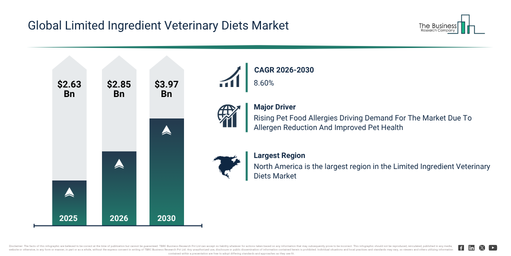
  • Limited Ingredient Veterinary Diets Market Forecast Highlights A $3.97 Billion Opportunity For Industry Participants

    Limited Ingredient Veterinary Diets Market Forecast Highlights A $3.97 Billion Opportunity For Industry Participants

    Built to provide research that’s more actionable and strategically valuable, The Business Research Company’s 2026 market reports include market attractiveness analysis, total addressable market sizing, company benchmarking matrices, interactive Excel dashboards, broader supply chain intelligence, emerging startup tracking, and in-depth product insights.

    Limited Ingredient Veterinary Diets Market Growth Analysis: How Will Revenue Trend Over The Forecast Period?

    The limited ingredient veterinary diets market has experienced robust expansion in recent years. This market is projected to grow from $2.63 billion in 2025 to $2.85 billion in 2026, achieving a compound annual growth rate (CAGR) of 8.4%. The historical increase can be ascribed to factors including the rising occurrence of pet food allergies and sensitivities, enhanced understanding of digestive health issues in animals, increased adoption of veterinary dietary prescriptions, a rise in premium and specialized pet food consumption, and growing trends in pet humanization and health-focused nutrition.

    The market for limited ingredient veterinary diets is set to experience robust expansion over the next few years. It is projected to grow to $3.97 billion by 2030, showing a compound annual growth rate (CAGR) of 8.6%. This anticipated growth is driven by factors such as an escalating demand for personalized pet nutrition solutions, the broadening scope of preventive veterinary healthcare practices, an increase in functional and therapeutic pet diets, the rising adoption of data-driven pet health monitoring systems, and greater investment in sustainable and clean label pet food production. Significant trends expected during this forecast period include novel protein-based hypoallergenic pet nutrition formulations, veterinary dietary customization targeting the microbiome, precise nutrient balancing for digestive health management, innovation in grain-free and allergen-free functional pet food, and AI-assisted systems for pet health and dietary recommendations.

    Get A Free Sample Report With In-Depth Market Insights:

    https://thebusinessresearchcompany.com/sample_request?id=64788648&type=smp&name=Limited%20Ingredient%20Veterinary%20Diets%20Market%20Report%202026&utm_source=Blogs&utm_medium=Paid&utm_campaign=Oct_PR

    Limited Ingredient Veterinary Diets Market Growth Momentum: What Factors Are Shaping Demand?

    The escalating occurrence of pet food allergies is anticipated to boost the limited ingredient veterinary diets market in the future. Pet food allergies are defined as undesirable immune or non-immune reactions in animals caused by specific food components, leading to gastrointestinal or skin problems. The rise in these allergies is associated with the expanding incorporation of diverse and processed ingredients in pet diets, which can provoke immune responses. Limited ingredient veterinary diets assist in managing pet food allergies by incorporating a minimal number of carefully selected ingredients, typically featuring a single protein and carbohydrate source, thereby decreasing allergen exposure and mitigating adverse immune reactions in pets. For instance, in December 2025, preprints from a Switzerland-based organization indicated that more than 20% of dogs and cats were impacted by food allergies, showing a 1.3% increase year on year. Consequently, the increasing prevalence of pet food allergies is propelling the expansion of the limited ingredient veterinary diets market. The expansion of pet ownership is anticipated to fuel the growth of the limited ingredient veterinary diets market in the future. Pet ownership encompasses the act of housing and nurturing an animal as a companion, thereby guaranteeing its health and welfare. Pet ownership is on the rise, primarily driven by increasing recognition of mental health advantages, encouraging individuals to adopt pets for companionship and stress reduction. Limited ingredient veterinary diets aid pet owners by mitigating food allergies and digestive troubles, ensuring pets remain healthy, content, and easier to look after. For instance, in October 2025, the American Veterinary Medical Association, a US-based nonprofit organization, indicated that the share of respondents who had acquired a cat increased to 47.6%, up from 43.5% in 2023. Consequently, increasing pet ownership is a significant factor propelling the growth of the limited ingredient veterinary diets market.

    Limited Ingredient Veterinary Diets Market Segment Outlook: Which Categories Are Growing Fastest?

    The limited ingredient veterinary diets market covered in this report is segmented –

    1) By Product Type: Dry Food, Wet Food, Treats

    2) By Animal Type: Dogs, Cats, Other Animal Type

    3) By Ingredient Source: Animal-based, Plant-based, Novel Proteins

    4) By Distribution Channel: Veterinary Clinics, Pet Specialty Stores, Online Retail, Other Distribution Channel

    Subsegments:

    1) By Dry Food: Single Protein Dry Food, Grain Free Dry Food, Limited Grain Dry Food, Hypoallergenic Dry Food, Veterinary Prescription Dry Food, Novel Protein Dry Food, Sensitive Digestion Dry Food, Skin And Coat Care Dry Food

    2) By Wet Food: Single Protein Wet Food, Grain Free Wet Food, Limited Ingredient Stew And Gravy Wet Food, Hypoallergenic Wet Food, Veterinary Prescription Wet Food, Novel Protein Wet Food, Sensitive Digestion Wet Food, Skin And Coat Care Wet Food

    3) By Treats: Single Protein Treats, Grain Free Treats, Hypoallergenic Treats, Limited Ingredient Training Treats, Novel Protein Treats, Sensitive Digestion Treats, Skin And Coat Care Treats, Soft Chew Limited Ingredient Treats

    Limited Ingredient Veterinary Diets Market Industry Leaders And Competitive Landscape

    Major companies operating in the limited ingredient veterinary diets market are Nestlé S. A., Colgate-Palmolive Company, Mars Incorporated, General Mills Inc, Dechra Pharmaceuticals PLC, Hill’s Pet Nutrition Inc., Drools Vet-Pro, Affinity Petcare Group, Champion Petfoods LP, Diamond Pet Foods Inc., JustFoodForDogs Inc., Canidae Corporation, Natural Balance Inc., Farmina Pet Foods, Petcurean Pet Nutrition Company, WellPet LLC, Medicus Veterinary Diets, Royal Canin SAS, VAFO Praha s. r. o., Rayne Nutrition Inc.

    View The Full Limited Ingredient Veterinary Diets Market Report:

    https://thebusinessresearchcompany.com/report/limited-ingredient-veterinary-diets-market-report?utm_source=Blogs&utm_medium=Paid&utm_campaign=Oct_PR

    Limited Ingredient Veterinary Diets Market Regional Analysis And Leading Geography

    North America was the largest region in the limited ingredient veterinary diets market in 2025. Asia-Pacific is expected to be the fastest-growing region in the forecast period. The regions covered in the limited ingredient veterinary diets market report are Asia-Pacific, South East Asia, Western Europe, Eastern Europe, North America, South America, Middle East and Africa.

    Reach Out To Our Team:

    The Business Research Company: https://www.thebusinessresearchcompany.com/

    Americas: +1 310-496-7795

    Asia: +44 7882 955267 & +91 8897263534

    Europe: +44 7882 955267

    Email us at: marketing@tbrc.info

    Follow us on:

    LinkedIn: https://in.linkedin.com/company/the-business-research-company

    YouTube: https://www.youtube.com/channel/UC24_fI0rV8cR5DxlCpgmyFQ

    Global Market Model: https://www.thebusinessresearchcompany.com/global-market-model