Author: Marketing Posting

  • Implant-Grade Polyether Ether Ketone (PEEK) Polymer Machining Services Market Reaches $0.73 Billion In 2026: Key Developments Shaping Expansion

    Implant-Grade Polyether Ether Ketone (PEEK) Polymer Machining Services Market Reaches $0.73 Billion In 2026: Key Developments Shaping Expansion

    Backed by market attractiveness analysis, total addressable market sizing, company benchmarking matrices, interactive Excel dashboards, wider supply chain intelligence, emerging startup coverage, and detailed product-level insights, The Business Research Company’s 2026 market reports are designed to offer research that is more actionable and strategically valuable than ever.

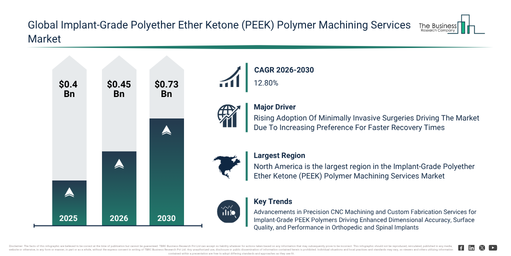
    Implant-Grade Polyether Ether Ketone (PEEK) Polymer Machining Services Market Set To Climb From $0.45 Billion In 2026 To $0.73 Billion By 2030

    The implant-grade polyether ether ketone (PEEK) polymer machining services market size has seen substantial growth in recent years. This market is projected to expand from $0.4 billion in 2025 to $0.45 billion in 2026, demonstrating a compound annual growth rate (CAGR) of 12.6%. The historical expansion can be attributed to factors such as the escalating demand for orthopedic and dental implant surgeries, the wider adoption of biocompatible high-performance polymers in healthcare, the development of medical device manufacturing capabilities, the increasing occurrence of musculoskeletal and spinal disorders, and the growing trend of medical device companies outsourcing precision machining services.

    The implant-grade polyether ether ketone (PEEK) polymer machining services market is anticipated to experience substantial expansion over the next few years. Its valuation is projected to reach $0.73 billion by 2030, exhibiting a compound annual growth rate (CAGR) of 12.8%. This expansion throughout the forecast period can be attributed to an increasing need for individualized and patient-specific implant solutions, the growing preference for minimally invasive surgical procedures, the deeper integration of automation within precision machining services, the development of healthcare infrastructure in emerging economies, and a greater focus on lightweight and robust implant materials for long-term effectiveness. Prominent trends for the forecast period include the escalating adoption of precision CNC machining for implant-grade PEEK components, a heightened demand for patient-specific customized orthopedic implant manufacturing, the increasing utilization of high-performance biomaterials machining for spinal and dental implants, the expansion of micro-machining and multi-axis machining techniques for medical-grade components, and the enhanced incorporation of advanced surface finishing methods for biocompatible implant production.

    Get A Free Sample Report With In-Depth Market Insights:

    https://thebusinessresearchcompany.com/sample_request?id=93299501&type=smp&name=Implant-Grade%20Polyether%20Ether%20Ketone%20%28PEEK%29%20Polymer%20Machining%20Services%20Market%20Report%202026&utm_source=Blogs&utm_medium=Paid&utm_campaign=Oct_PR

    Implant-Grade Polyether Ether Ketone (PEEK) Polymer Machining Services Market Industry Drivers: What’s Behind The Revenue Growth?

    The expanding adoption of minimally invasive surgeries is anticipated to drive the implant-grade PEEK polymer machining services market forward. These medical procedures involve small incisions, specialized instruments, and advanced imaging, resulting in reduced tissue damage and faster patient recovery times. The growing preference for minimally invasive procedures is due to benefits like quicker recuperation, fewer complications, and ongoing advancements in surgical technologies. Implant-grade PEEK (polyether ether ketone) is extensively utilized in applications such as spinal implants, orthopedic devices, and cranial components because of its biocompatibility, radiolucency, and mechanical strength. Precision machining services are crucial for producing these high-performance components with the exact accuracy needed for minimally invasive surgical techniques. As an illustration, in November 2024, the Private Healthcare Information Network (PHIN), a UK-based independent, government-mandated organization, reported that robot-assisted procedures in the UK climbed to 22,700 in 2024, marking a 45% increase compared to 2023. This exemplifies the broader growth in advanced minimally invasive surgical approaches. Therefore, the increasing volume of minimally invasive surgeries is a primary catalyst for the growth of the implant-grade PEEK polymer machining services market.

    Implant-Grade Polyether Ether Ketone (PEEK) Polymer Machining Services Market Segment Outlook: Which Categories Are Growing Fastest?

    The implant-grade polyether ether ketone (peek) polymer machining services market covered in this report is segmented –

    1) By Service Type: Computer Numerical Control Machining, Turning, Milling, Drilling, Other Types

    2) By Material Grade: Medical-Grade Polyether Ether Ketone, Reinforced Polyether Ether Ketone, Bio-Compatible Polyether Ether Ketone

    3) By Precision Level: Standard Precision, High Precision, Ultra Precision, Micro Machining

    4) By End-Use Application: Orthopedic Implants, Dental Implants, Spinal Implants, Cardiovascular Implants, Other Applications

    Subsegments:

    1) By Computer Numerical Control Machining: Multi Axis Machining, Precision Machining, Micro Machining, High Speed Machining

    2) By Turning: Precision Turning, Computer Numerical Control Turning, Swiss Type Turning, Hard Turning

    3) By Milling: Face Milling, End Milling, Slot Milling, Multi Axis Milling

    4) By Drilling: Deep Hole Drilling, Micro Drilling, High Precision Drilling, Computer Numerical Control Drilling

    5) By Other Types: Precision Machining, Surface Finishing, Custom Fabrication, Micro Machining, Prototyping Services, Assembly And Integration Services, Polishing Services, Drilling Services, Milling Services, Turning Services, Quality Inspection Services

    #Implant-Grade Polyether Ether Ketone (PEEK) Polymer Machining Services Market Growth Trends: What’s Shaping The Future Outlook?

    Leading companies within the implant-grade PEEK polymer machining services market are increasingly adopting advanced precision machining technologies, such as multi-axis CNC machining and micro-machining, to achieve the high accuracy, tight tolerances, and superior surface finishes essential for complex medical implants. These techniques allow for the creation of customized PEEK components featuring enhanced dimensional stability, improved biocompatibility, and optimized performance across orthopedic and spinal applications. For instance, in April 2024, Invibio Ltd, a UK-based biomaterial solutions company focused on high-performance implantable polymers for medical devices, expanded its medical manufacturing capabilities to provide end-to-end PEEK implant solutions, encompassing precision machining and finished component supply. The company leverages advanced CNC machining and quality control systems to manufacture implant-grade PEEK components with consistent mechanical properties and high surface integrity. These services aid medical device manufacturers in developing customized orthopedic and spinal implants, ensuring compliance with stringent regulatory standards and ultimately improving overall implant performance and longevity.

    Implant-Grade Polyether Ether Ketone (PEEK) Polymer Machining Services Market Competitive Landscape: Who Leads The Industry?

    Major companies operating in the implant-grade polyether ether ketone (peek) polymer machining services market are Saint-Gobain, Ensinger GmbH, EPTAM Precision, Peko Precision Products, ARCH Medical Solutions, The Gund Company, Cirtronics Corp., Tamshell Corporation, SRC Medical, BMP Medical, Hirsh Precision Products, WayKen Rapid Manufacturing, Senga Engineering, Genesis Medical Plastics, Upland Fab, Criterion Precision Machining, Reading Plastic Machining & Fabrication, Xilloc Medical, Pierhor-Gasser, Falcon CNC Machining, XTJ CNC

    View The Full Implant-Grade Polyether Ether Ketone (PEEK) Polymer Machining Services Market Report:

    https://thebusinessresearchcompany.com/report/implant-grade-polyether-ether-ketone-peek-polymer-machining-services-market-report?utm_source=Blogs&utm_medium=Paid&utm_campaign=Oct_PR

    Implant-Grade Polyether Ether Ketone (PEEK) Polymer Machining Services Market Geographic Landscape: Which Region Dominates Industry Growth?

    North America was the largest region in the implant-grade PEEK polymer machining services market in 2025. Asia-Pacific is expected to be the fastest-growing region in the forecast period. The regions covered in the implant-grade polyether ether ketone (PEEK) polymer machining services market report are Asia-Pacific, South East Asia, Western Europe, Eastern Europe, North America, South America, Middle East and Africa.

    Reach Out To Our Team:

    The Business Research Company: https://www.thebusinessresearchcompany.com/

    Americas: +1 310-496-7795

    Asia: +44 7882 955267 & +91 8897263534

    Europe: +44 7882 955267

    Email us at: marketing@tbrc.info

    Follow us on:

    LinkedIn: https://in.linkedin.com/company/the-business-research-company

    YouTube: https://www.youtube.com/channel/UC24_fI0rV8cR5DxlCpgmyFQ

    Global Market Model: https://www.thebusinessresearchcompany.com/global-market-model
  • Immunoassay Biomarker Test Menu Expansion Market Growth Outlook For 2026: Drivers, Trends And Future Opportunities

    Immunoassay Biomarker Test Menu Expansion Market Growth Outlook For 2026: Drivers, Trends And Future Opportunities

    Featuring market attractiveness scoring, total addressable market sizing, company benchmarking matrices, interactive Excel dashboards, deeper supply chain intelligence, emerging startup tracking, and granular product-level insights, The Business Research Company’s 2026 market reports are built to deliver research that is both more actionable and more strategically valuable.

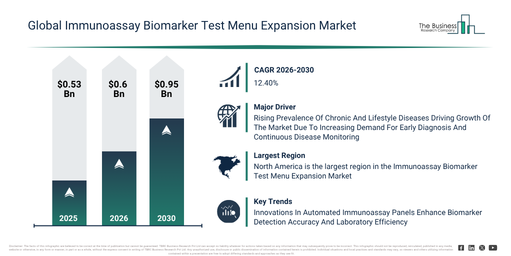
    Immunoassay Biomarker Test Menu Expansion Market Forecast: Value Set To Climb From $0.6 Billion To $0.95 Billion

    The immunoassay biomarker test menu expansion market size has experienced substantial growth in recent years. It is anticipated to increase from $0.53 billion in 2025 to $0.6 billion in 2026, reflecting a compound annual growth rate (CAGR) of 12.2%. The historical expansion in this market can be linked to factors such as the rising incidence of chronic and infectious diseases, the greater adoption of immunoassay-based diagnostic technologies in clinical laboratories, the expansion of hospital diagnostic infrastructure and laboratory networks, increasing public awareness of early disease detection and preventive healthcare, and augmented government funding for diagnostic research and laboratory modernization.

    The market for immunoassay biomarker test menu expansion is anticipated to experience significant expansion over the coming years. This market is projected to grow to $0.95 billion by 2030 at a compound annual growth rate (CAGR) of 12.4%. Factors contributing to this growth during the forecast period include an escalating need for precision medicine and tailored biomarker profiling, greater incorporation of AI and automation into diagnostic laboratories, the widening scope of companion diagnostics within drug development pipelines, increased uptake of multiplex and high-throughput testing platforms, and an enhanced emphasis on early detection programs for cancer and chronic diseases. Key trends anticipated in this period encompass the broadening of multiplex immunoassay panels for detecting multiple disease biomarkers, continuous advancement of high-sensitivity chemiluminescent immunoassay platforms, a surge in the embrace of personalized medicine-guided biomarker testing solutions, the growing incorporation of automated laboratory immunoassay analyzers for high-throughput applications, and an elevated demand for expanding oncology and infectious disease biomarker assays.

    Get A Free Sample Report With In-Depth Market Insights:

    https://thebusinessresearchcompany.com/sample_request?id=89257278&type=smp&name=Immunoassay%20Biomarker%20Test%20Menu%20Expansion%20Market%20Report%202026&utm_source=Blogs&utm_medium=Paid&utm_campaign=Oct_PR

    Immunoassay Biomarker Test Menu Expansion Market Growth Factors: What’s Supporting Expansion?

    The anticipated expansion of the immunoassay biomarker test menu market is driven by the growing incidence of chronic and lifestyle diseases. These conditions encompass persistent health issues like heart disease, diabetes, obesity, and hypertension, necessitating continuous medical care. The rise in these diseases can be attributed to an aging populace and lifestyle elements such as inadequate nutrition and lack of exercise, collectively intensifying the burden of chronic health conditions. Expanding the immunoassay biomarker test menu facilitates enhanced disease detection, empowering laboratories to pinpoint a broader spectrum of disease-related biomarkers, thereby enhancing early diagnosis and ongoing monitoring. As an illustration, the US Centers for Disease Control and Prevention, a US-based government public health agency, reported in April 2025 that in 2023, 76.4% of American adults had at least one chronic condition, translating to over 194 million individuals needing consistent health condition oversight and care. Consequently, the escalating occurrence of chronic and lifestyle ailments is stimulating the expansion of the immunoassay biomarker test menu market.

    Immunoassay Biomarker Test Menu Expansion Market Segment Landscape: Which Areas Lead Development?

    The immunoassay biomarker test menu expansion market covered in this report is segmented –

    1) By Type: Enzyme-Linked Immunosorbent Assay Kits, Chemiluminescent Immunoassay Kits, Fluorescent Immunoassay Kits, Multiplex Immunoassay Panels, Rapid Diagnostic Test Kits, Biomarker-Specific Reagents, Calibration Standards, Quality Control Materials

    2) By Biomarker Type: Oncology Biomarkers, Cardiac Biomarkers, Endocrine And Hormonal Biomarkers, Infectious Disease Biomarkers, Autoimmune Disease Biomarkers, Neurological Biomarkers, Therapeutic Drug Monitoring Biomarkers

    3) By Grade: High-Performance Liquid Chromatography (HPLC) And Ultra-High-Performance Liquid Chromatography (UHPLC) Grade Reagents, Gas Chromatography (GC) Grade Reagents, Analytical Grade Reagents, Liquid Chromatography–Mass Spectrometry (LC-MS) Grade Reagents, Preparative Grade Reagents, Biotechnology Grade Reagents, Technical Grade Filtration Products

    4) By Application: Clinical Diagnostics, Companion Diagnostics, Personalized Medicine, Drug Discovery And Clinical Research

    5) By End-User: Pharmaceutical And Biotechnology Companies, Contract Research Organizations, Contract Manufacturing Organizations, Academic And Research Institutions, Clinical And Diagnostic Laboratories, Food And Beverage Testing Laboratories, Environmental Testing Laboratories, Government And Regulatory Agencies, Chemical And Industrial Manufacturing Companies

    Subsegments:

    1) By Enzyme-Linked Immunosorbent Assay Kits: Sandwich Assay Kits, Competitive Assay Kits, Indirect Assay Kits, Direct Assay Kits

    2) By Chemiluminescent Immunoassay Kits: Magnetic Particle-Based Kits, Solid Phase Kits, Microplate-Based Kits, Automated Analyzer Kits

    3) By Fluorescent Immunoassay Kits: Time-Resolved Fluorescence Kits, Lateral Flow Fluorescence Kits, Microbead-Based Kits, Multiplex Fluorescence Kits

    4) By Multiplex Immunoassay Panels: Cytokine Panels, Cardiac Marker Panels, Oncology Panels, Infectious Disease Panels

    5) By Rapid Diagnostic Test Kits: Lateral Flow Immunoassays, Colloidal Gold Test Kits, Microfluidic Rapid Kits, Paper-Based Diagnostic Kits

    6) By Biomarker-Specific Reagents: Antibodies, Antigens, Conjugates, Detection Reagents

    7) By Calibration Standards: Protein Standards, Peptide Standards, Whole Blood Controls, Serum Controls

    8) By Quality Control Materials: Positive Controls, Negative Controls, Internal Controls, External Controls

    Immunoassay Biomarker Test Menu Expansion Market Industry Trends: What’s Reshaping Demand?

    Leading companies operating within the immunoassay biomarker test menu expansion market are concentrating on developing advanced automated immunoassay panels, such as fully integrated immunoassay systems, which streamline sample handling and result reporting in a single automated workflow to minimize operator variability and boost laboratory throughput. Automated immunoassay panels are systems where immunoassay tests are conducted with minimal manual involvement, using robotics or automated analyzers that manage sample preparation, reagent mixing, incubation, detection, and result output, thereby enhancing consistency and accelerating turnaround times in clinical settings. For instance, in May 2024, bioMérieux, a France-based healthcare technology company, launched the VIDA TBI (GFAP, UCH-L1) test for its automated immunoassay platforms VIDAS 3 and VIDAS KUBE. This test features high sensitivity for traumatic brain injury biomarkers, is compatible with on-demand automated workflows 24/7, and offers rapid result turnaround, assisting in efficient clinical triage and reducing unnecessary imaging. The launch reinforces bioMérieux’s immunoassay test menu by expanding its neurological biomarker portfolio and addressing the growing demand for rapid diagnostic solutions in emergency care settings. Moreover, it supports improved clinical decision-making by enabling the timely and accurate detection of brain injury, enhancing patient management, and optimizing healthcare resource utilization.

    Immunoassay Biomarker Test Menu Expansion Market Company Landscape And Competitive Strategy

    Major companies operating in the immunoassay biomarker test menu expansion market are Tecan Trading AG, Euroimmun Medizinische Labordiagnostika AG, OPKO Health Inc., Autobio Diagnostics Co. Ltd., Promega Corporation, BioLegend Inc., Sekisui Diagnostics LLC, Boditech Med Inc., Dynex Technologies Inc., QuantuMDx Group Ltd., NanoEntek, J. Mitra & Co. Pvt. Ltd., Baebies, ALPCO Diagnostics, Micropoint Bioscience, Coris BioConcept, MiCo BioMed Inc., Kamiya Biomedical Company, Abionic SA, ANP Technologies Inc., Axis-Biosciences / Axela, Epitope Diagnostics Inc., MedMira Inc., Nanomix Inc.

    View The Full Immunoassay Biomarker Test Menu Expansion Market Report:

    https://thebusinessresearchcompany.com/report/immunoassay-biomarker-test-menu-expansion-market-report?utm_source=Blogs&utm_medium=Paid&utm_campaign=Oct_PR

    Immunoassay Biomarker Test Menu Expansion Market Largest Region: Which Geography Holds The Highest Market Share?

    North America was the largest region in the immunoassay biomarker test menu expansion market in 2025. Asia-Pacific is expected to be the fastest-growing region in the forecast period. The regions covered in the immunoassay biomarker test menu expansion market report are Asia-Pacific, South East Asia, Western Europe, Eastern Europe, North America, South America, Middle East and Africa.

    Reach Out To Our Team:

    The Business Research Company: https://www.thebusinessresearchcompany.com/

    Americas: +1 310-496-7795

    Asia: +44 7882 955267 & +91 8897263534

    Europe: +44 7882 955267

    Email us at: marketing@tbrc.info

    Follow us on:

    LinkedIn: https://in.linkedin.com/company/the-business-research-company

    YouTube: https://www.youtube.com/channel/UC24_fI0rV8cR5DxlCpgmyFQ

    Global Market Model: https://www.thebusinessresearchcompany.com/global-market-model
  • Hydro Fiber Pads Market Size And Growth In 2026: Key Factors Shaping Future Demand

    Hydro Fiber Pads Market Size And Growth In 2026: Key Factors Shaping Future Demand

    Built to provide research that’s more actionable and strategically valuable, The Business Research Company’s 2026 market reports include market attractiveness analysis, total addressable market sizing, company benchmarking matrices, interactive Excel dashboards, broader supply chain intelligence, emerging startup tracking, and in-depth product insights.

    Hydro Fiber Pads Market Size And Revenue Outlook Through 2030

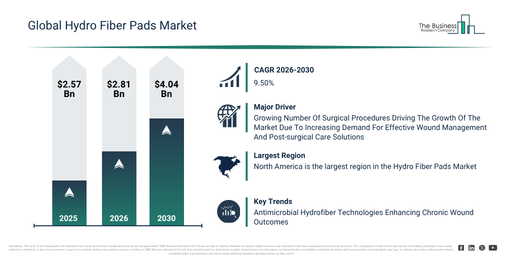
    The hydro fiber pads market size has experienced robust growth in recent years. It is projected to expand from $2.57 billion in 2025 to $2.81 billion in 2026, at a compound annual growth rate (CAGR) of 9.3%. This historic period’s growth is attributable to an increase in broadband penetration and the expansion of fixed line connectivity, rising telecom infrastructure investments by governments and private operators, a growing demand for high-speed internet services in urban regions, the rapid evolution of mobile network generations from 3G to 4G, and the increasing deployment of fiber to the home and enterprise connectivity solutions.

    The hydro fiber pads market is projected to experience substantial growth in the upcoming years, with its size anticipated to reach $4.04 billion by 2030, demonstrating a compound annual growth rate (CAGR) of 9.5%. This expansion over the forecast period is primarily driven by the accelerating global rollouts of 5G and future 6G networks, a rising adoption of cloud-driven and software-defined networking architectures, the increasing demand for ultra-low latency connectivity essential for IoT and edge computing, the proliferation of smart cities and connected infrastructure projects, and growing investments in rural broadband and digital inclusion initiatives. Major trends influencing this period include the integration of smart access infrastructure with cloud-based network management systems, the increasing deployment of high-speed fiber optic access solutions for broadband expansion, a greater uptake of next-generation optical network equipment to support 5G readiness, a rising demand for energy-efficient and compact telecom access devices, and the broader expansion of software-defined networking in access infrastructure for enhanced scalability.

    Get A Free Sample Report With In-Depth Market Insights:

    https://thebusinessresearchcompany.com/sample_request?id=50138610&type=smp&name=Hydro%20Fiber%20Pads%20Market%20Report%202026&utm_source=Blogs&utm_medium=Paid&utm_campaign=Oct_PR

    Hydro Fiber Pads Market Demand Drivers Opening New Revenue Streams

    The increasing volume of surgical operations is anticipated to drive the expansion of the hydro fiber pads market moving ahead. Surgical procedures encompass medical interventions utilizing operative methods for diagnosing, treating, or managing diverse illnesses, injuries, and health conditions. The rise in surgical procedure frequency stems from the growing incidence of chronic illnesses, a globally aging demographic, and improved accessibility to advanced healthcare, collectively fueling a greater need for surgical interventions. Hydro fiber pads are vital in surgical and post-operative care, offering excellent management of wound exudate, sustaining an optimal moist healing setting, and diminishing infection risks, consequently enhancing patient recovery. For example, data from June 2024, released by the Aesthetic Society, a professional organization based in the US, indicated that the overall count of surgical procedures saw a 2. 9% year-over-year rise between 2022 and 2023. Consequently, the expanding volume of surgical procedures is fueling the growth of the hydro fiber pads market.

    Hydro Fiber Pads Market Segmentation: How Does The Market Break Down By Category?

    The hydro fiber pads market covered in this report is segmented –

    1) By Product Type: Silver Impregnated Hydro Fiber Pads, Antimicrobial Hydro Fiber Pads, High Absorbency Hydro Fiber Pads, Standard Hydro Fiber Pads

    2) By Distribution Channel: Hospital Pharmacies, Retail Pharmacies, Online Medical Stores, Medical Supply Distributors

    3) By Application: Chronic Wounds, Surgical Wounds, Burns, Traumatic Wounds, Pressure Ulcers

    4) By End User: Hospitals, Clinics, Home Healthcare Settings, Ambulatory Surgical Centers

    Subsegments:

    1) By Silver Impregnated Hydro Fiber Pads: Ionic Silver Hydro Fiber Pads, Nanocrystalline Silver Hydro Fiber Pads, Sustained Release Silver Hydro Fiber Pads, High Strength Silver Hydro Fiber Pads, Flexible Silver Hydro Fiber Pads

    2) By Antimicrobial Hydro Fiber Pads: Broad Spectrum Antimicrobial Hydro Fiber Pads, Chlorhexidine Treated Hydro Fiber Pads, Iodine Based Antimicrobial Hydro Fiber Pads, Polyhexamethylene Biguanide Hydro Fiber Pads, Herbal Antimicrobial Hydro Fiber Pads

    3) By High Absorbency Hydro Fiber Pads: Super Absorbent Core Hydro Fiber Pads, Multi Layer Absorbent Hydro Fiber Pads, High Exudate Management Hydro Fiber Pads, Rapid Fluid Lock Hydro Fiber Pads, Extra Thick Absorbent Hydro Fiber Pads

    4) By Standard Hydro Fiber Pads: Basic Wound Care Hydro Fiber Pads, Non Medicated Hydro Fiber Pads, General Purpose Hydro Fiber Pads, Single Layer Hydro Fiber Pads, Cost Effective Hydro Fiber Pads

    Hydro Fiber Pads Market Trends Powering Strategic Industry Growth

    Major companies in the hydro fiber pads market are dedicating efforts to clinical validation and the development of innovative advanced wound care products, specifically antimicrobial hydrofiber dressings. These initiatives aim to enhance healing outcomes, minimize infection risks, and improve patient recovery for those with chronic wounds. Antimicrobial hydrofiber dressings are sophisticated wound care solutions crafted from sodium carboxymethylcellulose fibers that form a gel upon contact with wound exudate, thereby sustaining a moist environment and incorporating antimicrobial agents like silver to manage infection. As an illustration, in May 2025, Convatec Group plc, a UK-based medical products and technologies company, disclosed the results of a multinational randomized controlled trial (RCT) evaluating its AQUACEL Ag+ Extra dressing for venous leg ulcers. The study, conducted across 20 sites in Germany, the United Kingdom, and Colombia, demonstrated that wounds treated with AQUACEL Ag+ Extra were 31% more likely to achieve complete healing at 12 weeks and 31% more likely to show a 40% reduction in wound area at 4 weeks, compared to standard-of-care dressings. Furthermore, 74. 8% of ulcers treated with AQUACEL Ag+ Extra healed completely at 12 weeks, contrasting with 55. 6% for standard care, underscoring the product’s superior clinical effectiveness.

    Hydro Fiber Pads Market Industry Leaders And Competitive Landscape

    Major companies operating in the hydro fiber pads market are Cardinal Health Inc., Medline Industries Inc., 3M Company, B. Braun Melsungen AG, Smith & Nephew plc, Coloplast A/S, Paul Hartmann AG, Convatec Group plc, Mölnlycke Health Care AB, Integra LifeSciences Corporation, Lohmann & Rauscher GmbH & Co. KG, DeRoyal Industries Inc., Advanced Medical Solutions Group plc, Winner Medical Co. Ltd., Huizhou Foryou Medical Devices Co. Ltd., BSN Medical GmbH, ACG Medical Supply, DATT Mediproducts Private Limited, Urgo Medical Ltd., Medilivescare Manufacturing Pvt. Ltd.

    View The Full Hydro Fiber Pads Market Report:

    https://thebusinessresearchcompany.com/report/hydro-fiber-pads-market-report?utm_source=Blogs&utm_medium=Paid&utm_campaign=Oct_PR

    Hydro Fiber Pads Market Regional Analysis And Leading Geography

    North America was the largest region in the hydro fiber pads market in 2025. Asia-Pacific is expected to be the fastest-growing region in the forecast period. The regions covered in the hydro fiber pads market report are Asia-Pacific, South East Asia, Western Europe, Eastern Europe, North America, South America, Middle East and Africa.

    Reach Out To Our Team:

    The Business Research Company: https://www.thebusinessresearchcompany.com/

    Americas: +1 310-496-7795

    Asia: +44 7882 955267 & +91 8897263534

    Europe: +44 7882 955267

    Email us at: marketing@tbrc.info

    Follow us on:

    LinkedIn: https://in.linkedin.com/company/the-business-research-company

    YouTube: https://www.youtube.com/channel/UC24_fI0rV8cR5DxlCpgmyFQ

    Global Market Model: https://www.thebusinessresearchcompany.com/global-market-model
  • Hot And Cold Therapy Market Forecast 2026–2030: Market Size, Trends And Growth Opportunities

    Hot And Cold Therapy Market Forecast 2026–2030: Market Size, Trends And Growth Opportunities

    Backed by market attractiveness analysis, total addressable market sizing, company benchmarking matrices, interactive Excel dashboards, wider supply chain intelligence, emerging startup coverage, and detailed product-level insights, The Business Research Company’s 2026 market reports are designed to offer research that is more actionable and strategically valuable than ever.

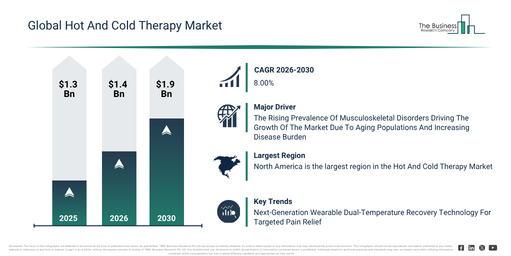
    Hot And Cold Therapy Market Growth From $1.4 Billion In 2026 To $1.9 Billion By 2030 At A CAGR Of 8%

    The hot and cold therapy market size has seen robust growth in recent years. It is forecast to increase from $1.3 billion in 2025 to $1.4 billion in 2026, demonstrating a compound annual growth rate (CAGR) of 7.8%. This historical expansion can be attributed to factors such as the rising prevalence of musculoskeletal disorders and sports injuries, the increasing adoption of physical rehabilitation therapies in hospitals, growing awareness of non pharmacological pain management methods, the expansion of physiotherapy clinics and rehabilitation centers, and the increasing use of hot and cold packs for injury treatment and recovery.

    The hot and cold therapy market size is anticipated to demonstrate substantial expansion in the coming years. Its value is projected to reach $1.9 billion by 2030, exhibiting a compound annual growth rate (CAGR) of 8.0%. This projected growth can be linked to several factors, including increased participation in sports and fitness boosting demand for recovery products, the rising uptake of smart wearable recovery technologies, a heightened emphasis on preventive healthcare and wellness management, the proliferation of home healthcare and self-therapy options, and the enhanced integration of digital monitoring into rehabilitation equipment. Prominent trends for the forecast duration encompass the wider adoption of wearable smart thermotherapy and cryotherapy devices with real-time tracking, a growing need for portable and home-based pain management solutions, the increasing incorporation of sensor-based feedback systems for tailored recovery therapy, the expansion of combination therapy devices that integrate compression, heat, and cold functions, and the amplified utilization of sports recovery systems for injury prevention and performance improvement.

    Get A Free Sample Report With In-Depth Market Insights:

    https://thebusinessresearchcompany.com/sample_request?id=78418279&type=smp&name=Hot%20And%20Cold%20Therapy%20Market%20Report%202026&utm_source=Blogs&utm_medium=Paid&utm_campaign=Oct_PR

    Hot And Cold Therapy Market Growth Backed By Core Demand Fundamentals

    The increasing incidence of musculoskeletal conditions is projected to boost the hot and cold therapy market’s expansion moving ahead. These disorders encompass various ailments impacting muscles, bones, joints, ligaments, tendons, and nerves, frequently leading to discomfort, swelling, and diminished mobility or physical capabilities. The growing occurrence of musculoskeletal issues stems from an aging demographic, given that elderly individuals naturally encounter age-related degeneration of their bones, joints, and muscles, thereby increasing their vulnerability to conditions such as arthritis, osteoporosis, and persistent back pain. Hot and cold therapy aids in managing musculoskeletal disorders by alleviating pain and inflammation, enhancing blood flow, and relaxing or comforting the affected muscles and joints, thus facilitating quicker recovery. For example, in January 2024, data from the Office for Health Improvement and Disparities, a UK-based government department, revealed that approximately 18. 4% of individuals aged 16 and over reported a long-term musculoskeletal condition in 2023. This figure marked an increase from 17. 6% in 2022, with a lower incidence observed in males (15. 8%) compared to females (20. 9%). Consequently, the increasing prevalence of musculoskeletal disorders is anticipated to fuel the expansion of the hot and cold therapy market.

    Hot And Cold Therapy Market Segment Trends And Revenue Contributors

    The hot and cold therapy market covered in this report is segmented –

    1) By Product Type: Gel Packs, Instant Packs, Electric Heating Pads, Cold Plunge Systems, Compression Therapy Devices, Light Emitting Diode Integrated Thermal Devices, Smart Recovery Platforms

    2) By Distribution Channel: Retail Pharmacies, Hospital Pharmacies, Online Channels

    3) By Application: Pain Relief, Injury Treatment, Post Surgical Recovery, Rehabilitation Therapy, Wellness And Fitness

    4) By End User: Hospitals, Physiotherapy Centers, Home Care Settings, Sports And Fitness Centers

    Subsegments:

    1) By Gel Packs: Reusable Gel Packs, Disposable Gel Packs, Flexible Gel Packs, Dual Temperature Gel Packs, Anatomical Shape Gel Packs

    2) By Instant Packs: Instant Cold Packs, Instant Heat Packs, Single Use Instant Packs, Portable Instant Packs, Emergency Use Instant Packs

    3) By Electric Heating Pads: Dry Electric Heating Pads, Moist Electric Heating Pads, Adjustable Temperature Heating Pads, Wearable Heating Pads, Infrared Heating Pads

    4) By Cold Plunge Systems: Portable Cold Plunge Systems, Fixed Cold Plunge Systems, Inflatable Cold Plunge Tubs, Ice Bath Systems, Temperature Controlled Cold Systems

    5) By Compression Therapy Devices: Cold Compression Therapy Devices, Dynamic Compression Devices, Pneumatic Compression Devices, Wrap Based Compression Devices, Wearable Compression Systems

    6) By Light Emitting Diode Integrated Thermal Devices: Red Light Thermal Devices, Infrared Light Thermal Devices, Combined Light And Heat Devices, Portable Light Emitting Diode Thermal Devices, Multi Mode Therapy Devices

    7) By Smart Recovery Platforms: Connected Recovery Devices, Application Based Recovery Platforms, Wearable Recovery Systems, Sensor Based Recovery Devices, Data Driven Recovery Platforms

    Hot And Cold Therapy Market Growth Trends Reshaping The Competitive Landscape

    Companies operating significantly within the hot and cold therapy market are prioritizing the development of innovative solutions, such as wearable contrast therapy systems, with the aim of augmenting targeted pain relief, expediting muscle recovery, and enhancing patient comfort and mobility. Wearable contrast therapy systems are portable apparatuses designed to be worn on the body, delivering alternating heat and cold therapy, frequently in conjunction with compression, to alleviate pain and inflammation and foster quicker muscle recuperation. For instance, in August 2025, Hyperice Inc., a US-based recovery technology company, unveiled the Hyperice X 2 Knee and Hyperice X 2 Shoulder, an advanced wearable contrast therapy system that incorporates next-generation thermal regulation technology specifically for joint recovery. These devices employ a precisely controlled system to smoothly transition between hot and cold therapy, thereby assisting in reducing inflammation, mitigating pain, and improving circulation more effectively than static therapy methods. They are equipped with ergonomically designed wearable wraps custom-fit for the knee and shoulder, ensuring a secure placement and hands-free application during treatment sessions. The product line also features customizable intensity settings and smart control functionalities accessible via connected interfaces, allowing individuals to tailor their therapy based on the injury type and stage of recovery. These solutions are extensively utilized in sports medicine, physiotherapy clinics, and post-operative rehabilitation settings, contributing to faster muscle recovery and improved mobility outcomes.

    Hot And Cold Therapy Market Key Participants And Competitive Landscape

    Major companies operating in the hot and cold therapy market are Cardinal Health Inc., 3M Company, Medline Industries LP, Sunbeam Products Inc., Enovis Corporation, Breg Inc., Performance Health Holding Inc., Hyperice Inc., Dynarex Corporation, Tommie Copper Inc, Mueller Sports Medicine Inc., Core Products International Inc., Carex Health Brands Inc, Polar Products Inc., ThermoTek Inc., Bruder Healthcare Company LLC, Zimmer MedizinSysteme GmbH, CoolSystems Inc., Impact Cryotherapy Inc., Vive Health LLC

    View The Full Hot And Cold Therapy Market Report:

    https://thebusinessresearchcompany.com/report/hot-and-cold-therapy-market-report?utm_source=Blogs&utm_medium=Paid&utm_campaign=Oct_PR

    Hot And Cold Therapy Market Geographic Analysis: Where Is Demand Accelerating Fastest?

    North America was the largest region in the hot and cold therapy market in 2025. Asia-Pacific is expected to be the fastest-growing region in the forecast period. The regions covered in the hot and cold therapy market report are Asia-Pacific, South East Asia, Western Europe, Eastern Europe, North America, South America, Middle East and Africa.

    Reach Out To Our Team:

    The Business Research Company: https://www.thebusinessresearchcompany.com/

    Americas: +1 310-496-7795

    Asia: +44 7882 955267 & +91 8897263534

    Europe: +44 7882 955267

    Email us at: marketing@tbrc.info

    Follow us on:

    LinkedIn: https://in.linkedin.com/company/the-business-research-company

    YouTube: https://www.youtube.com/channel/UC24_fI0rV8cR5DxlCpgmyFQ

    Global Market Model: https://www.thebusinessresearchcompany.com/global-market-model
  • Hormone-Refractory Oncology Drug Market Size Reaches $4.4 Billion In 2026: What Is Driving Growth?

    Hormone-Refractory Oncology Drug Market Size Reaches $4.4 Billion In 2026: What Is Driving Growth?

    Featuring market attractiveness scoring, total addressable market sizing, company benchmarking matrices, interactive Excel dashboards, deeper supply chain intelligence, emerging startup tracking, and granular product-level insights, The Business Research Company’s 2026 market reports are built to deliver research that is both more actionable and more strategically valuable.

    Hormone-Refractory Oncology Drug Market Expansion Outlook: What Revenue Opportunities Are Ahead?

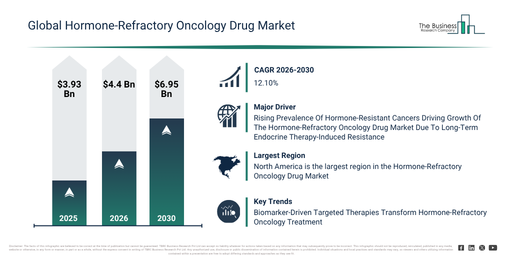
    The hormone-refractory oncology drug market has seen rapid growth in its size over recent years. Its expansion is anticipated to be from $3.93 billion in 2025 to $4.4 billion in 2026, achieving a compound annual growth rate (CAGR) of 11.9%. Several factors underpin this historical growth, including the increasing global prevalence of prostate and breast cancer cases, a greater dependence on hormone therapy for early-stage cancer treatment, the broadening scope of oncology drug research and clinical trials, the growing acceptance of chemotherapy and endocrine therapy combinations, and heightened healthcare spending on cancer treatment and improvements in hospital oncology infrastructure.

    The hormone-refractory oncology drug market is projected to experience substantial expansion in the coming years. This market is anticipated to reach $6.95 billion by 2030, exhibiting a compound annual growth rate (CAGR) of 12.1%. Factors contributing to this growth during the forecast period include the rise of precision medicine and biomarker-driven oncology therapies, greater development of advanced targeted cancer treatments, the increasing uptake of combination immunotherapy and small molecule drugs, the expansion of individualized oncology treatment routes within hospitals, and a surge in regulatory approvals for innovative refractory cancer medications. Key trends anticipated in the same period involve a growing embrace of targeted kinase inhibitors and next-generation biologics for challenging cancer types, an increased reliance on combination therapy strategies to address hormone resistance in cancer care, the broadening of precision oncology via biomarker-guided treatment selection for advanced malignancies, expanding development of immunotherapy-based options for managing hormone-refractory cancer, and a noticeable move towards oral oncology drugs to enhance patient adherence in prolonged treatments.

    Get A Free Sample Report With In-Depth Market Insights:

    https://thebusinessresearchcompany.com/sample_request?id=41541215&type=smp&name=Hormone-Refractory%20Oncology%20Drug%20Market%20Report%202026&utm_source=Blogs&utm_medium=Paid&utm_campaign=Oct_PR

    Hormone-Refractory Oncology Drug Market Growth Catalysts And Demand Drivers

    The rising occurrence of hormone-resistant cancers is anticipated to fuel the expansion of the hormone-refractory oncology drug market in the future. These are malignancies that persist in growing or spreading even when patients receive hormone-blocking treatments, including conditions such as castration-resistant prostate cancer (CRPC) or endocrine-resistant breast cancer. The increasing prevalence of hormone-resistant cancers stems from extended exposure to endocrine (hormone) therapies, prompting tumor cells to adapt and evolve resistance mechanisms over a period. The development of hormone-refractory oncology drugs aids in managing these resistant disease states by offering specific therapeutic alternatives when standard hormone therapies prove ineffective. For instance, in October 2025, according to NHS England, a UK-based publicly funded healthcare system, there were 354,820 new cancer diagnoses in 2023, representing an increase of 8,605 from 2022. Consequently, the growing incidence of hormone-resistant cancers is a key factor propelling the expansion of the hormone-refractory oncology drug market.

    Hormone-Refractory Oncology Drug Market Segment Analysis Spotlighting Growth Areas

    The hormone-refractory oncology drug market covered in this report is segmented –

    1) By Drug Type: Anti-Androgens, Aromatase Inhibitors, Estrogen Receptor Modulators, Gonadotropin Releasing Hormone Agonists/Antagonists, Other Drug Types

    2) By Therapy Approach: Monotherapy, Combination Therapy

    3) By Route Of Administration: Oral, Injectable

    4) By Distribution Channel: Hospital Pharmacies, Retail Pharmacies, Online Pharmacies

    5) By Application: Prostate Cancer, Breast Cancer, Other Cancers

    Subsegments:

    1) By Anti-Androgens: Non Steroidal Anti Androgens, Steroidal Anti Androgens, Second Generation Anti Androgens

    2) By Aromatase Inhibitors: Non Steroidal Aromatase Inhibitors, Steroidal Aromatase Inhibitors

    3) By Estrogen Receptor Modulators: Selective Estrogen Receptor Modulators, Selective Estrogen Receptor Degraders

    4) By Gonadotropin Releasing Hormone Agonists / Antagonists: Gonadotropin Releasing Hormone Agonists, Gonadotropin Releasing Hormone Antagonists

    5) By Other Drug Types: Androgen Biosynthesis Inhibitors, Targeted Kinase Inhibitors, Immunotherapy Agents

    Hormone-Refractory Oncology Drug Market Trends Shaping Long-Term Demand

    Major companies within the hormone-refractory oncology drug market are focusing on biomarker-driven targeted therapies that inhibit specific molecular pathways contributing to resistance to hormone treatment. These therapies are designed to identify genetic alterations and selectively block signaling pathways that promote tumor growth after endocrine therapy has failed. For example, in November 2023, AstraZeneca, a UK-based pharmaceutical company, secured U. S. Food and Drug Administration (FDA) approval for Truqap (capivasertib). This approval was for its use in combination with fulvestrant for the treatment of hormone receptor-positive, HER2-negative advanced breast cancer with PIK3CA, AKT1, or PTEN alterations following disease progression. This therapy specifically inhibits the AKT signaling pathway and employs biomarker-based patient selection to enhance treatment outcomes. The approval was substantiated by positive results from the Phase III CAPItello-291 trial, which demonstrated improved progression-free survival in patients with these genetic alterations, thereby strengthening AstraZeneca’s oncology portfolio and expanding treatment options for patients suffering from hormone-resistant breast cancer.

    Hormone-Refractory Oncology Drug Market Top Companies Driving Competitive Growth

    Major companies operating in the hormone-refractory oncology drug market are Johnson & Johnson, F. Hoffmann-La Roche Ltd., Merck & Co. Inc., Pfizer Inc., AbbVie Inc., Bayer AG, Sanofi S. A., Novartis AG, AstraZeneca plc, Bristol-Myers Squibb Company, GlaxoSmithKline plc, Eli Lilly and Company, Takeda Pharmaceutical Company Limited, Amgen Inc., Astellas Pharma Inc., Daiichi Sankyo Company Limited, Incyte Corporation, Ipsen S. A., Exelixis Inc., Arvinas Inc., Nuvation Bio Inc., Immunic Inc., Noxopharm Limited, Accutar Biotechnology Inc.

    View The Full Hormone-Refractory Oncology Drug Market Report:

    https://thebusinessresearchcompany.com/report/hormone-refractory-oncology-drug-market-report?utm_source=Blogs&utm_medium=Paid&utm_campaign=Oct_PR

    Hormone-Refractory Oncology Drug Market Global Footprint: Which Region Leads The Industry?

    North America was the largest region in the hormone-refractory oncology drug market in 2025. Asia-Pacific is expected to be the fastest-growing region in the forecast period. The regions covered in the hormone-refractory oncology drug market report are Asia-Pacific, South East Asia, Western Europe, Eastern Europe, North America, South America, Middle East and Africa.

    Reach Out To Our Team:

    The Business Research Company: https://www.thebusinessresearchcompany.com/

    Americas: +1 310-496-7795

    Asia: +44 7882 955267 & +91 8897263534

    Europe: +44 7882 955267

    Email us at: marketing@tbrc.info

    Follow us on:

    LinkedIn: https://in.linkedin.com/company/the-business-research-company

    YouTube: https://www.youtube.com/channel/UC24_fI0rV8cR5DxlCpgmyFQ

    Global Market Model: https://www.thebusinessresearchcompany.com/global-market-model
  • Hernia Mesh Repair Devices Market Forecast Insights: The Road To $4.54 Billion By 2030

    Hernia Mesh Repair Devices Market Forecast Insights: The Road To $4.54 Billion By 2030

    Featuring market attractiveness scoring, total addressable market sizing, company benchmarking matrices, interactive Excel dashboards, deeper supply chain intelligence, emerging startup tracking, and granular product-level insights, The Business Research Company’s 2026 market reports are built to deliver research that is both more actionable and more strategically valuable.

    Hernia Mesh Repair Devices Market CAGR Outlook And Future Development

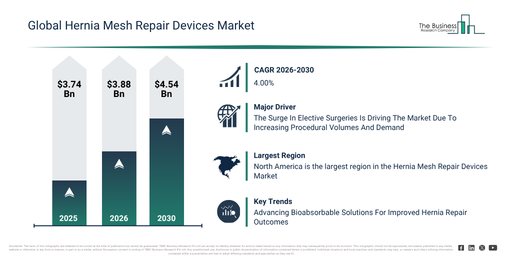
    The hernia mesh repair devices market size has seen steady expansion over recent years. It is forecast to increase from $3.74 billion in 2025 to $3.88 billion in 2026, achieving a compound annual growth rate (CAGR) of 3.8%. The growth observed in the past can be attributed to several factors including a rise in global hernia occurrences linked to obesity and an aging demographic, increased adoption of synthetic polypropylene meshes, the development of hospital surgical infrastructure, heightened awareness for early hernia treatment, and a greater number of open surgical repair procedures.

    The hernia mesh repair devices market is projected to experience consistent expansion in the coming years. Its valuation is anticipated to reach $4. 54 billion by 2030, exhibiting a compound annual growth rate (CAGR) of 4. 0%. This growth during the forecast period is fueled by a shift towards less invasive and robot-assisted surgical techniques, increasing need for bioresorbable and biologic meshes, innovations in anti-infective mesh coatings, the proliferation of ambulatory surgical centers and outpatient services, and a greater emphasis on customized and precise surgical options. Key developments expected during this period involve wider adoption of bioresorbable and absorbable mesh products, a growing preference for laparoscopic hernia repair, a rise in hernia cases linked to an aging population and obesity, the establishment of more ambulatory surgical centers for economical operations, and enhancements in composite mesh materials providing better anti-adhesion and infection resistance.

    Get A Free Sample Report With In-Depth Market Insights:

    https://thebusinessresearchcompany.com/sample_request?id=51342569&type=smp&name=Hernia%20Mesh%20Repair%20Devices%20Market%20Report%202026&utm_source=Blogs&utm_medium=Paid&utm_campaign=Oct_PR

    Hernia Mesh Repair Devices Market Growth Factors Behind Sustained Expansion

    The expansion of the hernia mesh repair devices market is projected to be driven by the rising number of elective surgeries. These are planned, non-urgent surgical procedures that healthcare providers schedule in advance based on clinical need and resource availability. The uptick in elective surgeries is occurring due to a growing backlog of postponed procedures, a consequence of pandemic-related healthcare disruptions. Hernia mesh repair devices enhance surgical outcomes by reinforcing weakened abdominal tissue, thereby reducing recurrence rates and supporting efficient hernia repair procedures. For instance, data published by the American Society of Plastic Surgeons (ASPS), a US-based plastic surgery specialty organization, indicated in June 2024 that liposuction was the most popular plastic surgery in 2023, with nearly 350,000 procedures performed, marking a 7% increase from 2022. During the same period, hand surgeries reached a total of 207,887, up 2%, and maxillofacial surgeries climbed to 52,868, a 1% rise compared to the previous year. Consequently, the surge in elective surgeries is fueling the growth of the hernia mesh repair devices market.

    Hernia Mesh Repair Devices Market Segment Analysis: What Are The Core Market Categories?

    The hernia mesh repair devices market covered in this report is segmented –

    1) By Product Type: Synthetic Mesh, Biologic Mesh, Bioresorbable Mesh, Fixation Devices

    2) By Surgery Type: Open Surgical Repair, Laparoscopic Or Minimally Invasive Repair

    3) By Material: Non Absorbable, Absorbable, Biological Mesh

    4) By Application: Inguinal Hernia, Incisional Hernia, Umbilical And Epigastric Hernia, Femoral Hernia, Hiatal Hernia, Other Hernias

    5) By End User: Hospitals, Ambulatory Surgical Centers, Specialty Surgical Clinics, Other Healthcare Settings

    Subsegments:

    1) By Synthetic Mesh: Polypropylene Mesh, Polyester Mesh, Expanded Polytetrafluoroethylene Mesh, Composite Synthetic Mesh

    2) By Biologic Mesh: Porcine Dermis Mesh, Bovine Pericardium Mesh, Human Dermis Mesh, Collagen Based Mesh

    3) By Bioresorbable Mesh: Polylactic Acid Mesh, Polyglycolic Acid Mesh, Polycaprolactone Mesh, Poly Four Hydroxybutyrate Mesh

    4) By Fixation Devices: Sutures, Tacks, Staples, Adhesives

    Hernia Mesh Repair Devices Market Industry Trends Fueling Future Revenue Growth

    Major companies operating in the hernia mesh repair devices market are focusing on developing advanced solutions, such as bioabsorbable hernia patches, to improve patient outcomes and reduce long-term implant-related complications. A bioabsorbable hernia patch is a temporary implant designed to reinforce weakened tissue and gradually degrade within the body after supporting tissue healing. For instance, in April 2025, Becton, Dickinson and Company, a US-based medical technology company, launched Phasix ST Umbilical Hernia Patch. The product utilizes a biologically derived polymer combined with a hydrogel barrier to support tissue repair while minimizing adhesion risks. It is designed for ease of use with established surgical techniques, offering surgeons flexibility while addressing patient preference for non-permanent implant solutions.

    Hernia Mesh Repair Devices Market Industry Leaders And Competitive Landscape

    Major companies operating in the hernia mesh repair devices market are Medtronic plc, Becton Dickinson and Company, Boston Scientific Corporation, DSM-Firmenich AG, B. Braun Melsungen AG, Cook Group Incorporated, Molnlycke Health Care AB, Integra LifeSciences Holdings Corporation, Advanced Medical Solutions Group plc, Peters Surgical SAS, W. L. Gore & Associates Inc., TELA Bio Inc., Duomed Group, Aroa Biosurgery Limited, FEG Textiltechnik Forschungs- und Entwicklungsgesellschaft m. b. H., Poly-Med Inc., Via Surgical Ltd., Cousin Surgery SAS, Dipromed S. r. l., Herniamesh S. r. l., Novus Scientific AB, Insightra Medical Inc., SurgiMatrix Inc., Aspide Medical

    View The Full Hernia Mesh Repair Devices Market Report:

    https://thebusinessresearchcompany.com/report/hernia-mesh-repair-devices-market-report?utm_source=Blogs&utm_medium=Paid&utm_campaign=Oct_PR

    Hernia Mesh Repair Devices Market Regional Analysis And Top Geography

    North America was the largest region in the hernia mesh repair devices market in 2025. Asia-Pacific is expected to be the fastest-growing region in the forecast period. The regions covered in the hernia mesh repair devices market report are Asia-Pacific, South East Asia, Western Europe, Eastern Europe, North America, South America, Middle East and Africa.

    Reach Out To Our Team:

    The Business Research Company: https://www.thebusinessresearchcompany.com/

    Americas: +1 310-496-7795

    Asia: +44 7882 955267 & +91 8897263534

    Europe: +44 7882 955267

    Email us at: marketing@tbrc.info

    Follow us on:

    LinkedIn: https://in.linkedin.com/company/the-business-research-company

    YouTube: https://www.youtube.com/channel/UC24_fI0rV8cR5DxlCpgmyFQ

    Global Market Model: https://www.thebusinessresearchcompany.com/global-market-model
  • Hair Growth Botanical Blends Market Forecast To Reach $3.05 Billion By 2030: Key Trends Explained

    Hair Growth Botanical Blends Market Forecast To Reach $3.05 Billion By 2030: Key Trends Explained

    Featuring market attractiveness scoring, total addressable market sizing, company benchmarking matrices, interactive Excel dashboards, deeper supply chain intelligence, emerging startup tracking, and granular product-level insights, The Business Research Company’s 2026 market reports are built to deliver research that is both more actionable and more strategically valuable.

    Hair Growth Botanical Blends Market Growth Potential: How Will Market Size Shift Through 2030?

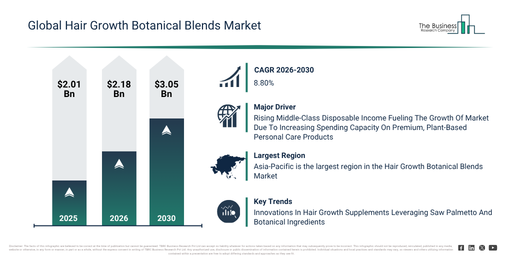
    The hair growth botanical blends market size has demonstrated robust growth in recent years. It is projected to expand from $2. 01 billion in 2025 to $2. 18 billion in 2026, at a compound annual growth rate (CAGR) of 8. 6%. The expansion during the historic period can be attributed to the adoption of traditional herbal medicine in hair care, a rising prevalence of stress-induced hair loss, an increasing consumer inclination towards natural cosmetics, the expansion of salon-based hair treatment services, and growing awareness of personal care products free from chemicals.

    The hair growth botanical blends market is poised for significant expansion in the coming years, with its size projected to reach $3.05 billion by 2030, exhibiting a compound annual growth rate (CAGR) of 8.8%. This anticipated growth during the forecast period is propelled by factors such as the rise of personalized botanical hair care formulations, enhanced clinical validation of plant-based active ingredients, increasing consumer demand for solutions targeting the scalp microbiome, the incorporation of bioactive peptides into botanical blends, and the proliferation of direct-to-consumer digital hair care brands. Key trends identified for the forecast timeframe encompass the renewed interest in Ayurvedic and traditional herbal remedies for hair care, the development of scalp microbiome-balancing formulations, the emergence of adaptogenic botanical blends addressing stress-related hair loss, herbal hair protection systems designed for pollution defense, and multi-functional plant-based scalp tonics and densifying treatments.

    Get A Free Sample Report With In-Depth Market Insights:

    https://thebusinessresearchcompany.com/sample_request?id=99012049&type=smp&name=Hair%20Growth%20Botanical%20Blends%20Market%20Report%202026&utm_source=Blogs&utm_medium=Paid&utm_campaign=Oct_PR

    Hair Growth Botanical Blends Market Growth Factors: What’s Supporting Expansion?

    The market for hair growth botanical blends is anticipated to experience growth due to the increasing disposable income of the middle class. Disposable income represents the funds an individual or household has available for spending or saving after all taxes have been paid. This rise in disposable incomes is primarily driven by economic expansion, which leads to the creation of more jobs and higher wages, thereby increasing the amount of money individuals retain post-tax for spending and saving. The growth in disposable income among the higher middle class fuels the demand for hair growth botanical blends, as it enables consumers to invest more in premium, plant-based products that demonstrate proven efficacy, consequently boosting the adoption of high-quality, results-oriented hair care solutions. As an illustration, in March 2026, the Bureau of Economic Analysis (BEA), a US-based government agency, reported that disposable personal income (DPI), which is personal income after deducting current taxes, advanced by $219.9 billion (0.9%), concurrently, personal consumption expenditures (PCE) increased by $81.1 billion (0.4%). Thus, the expanding middle-class disposable income is a significant driver for the growth of the hair growth botanical blends market.

    Hair Growth Botanical Blends Market Segmentation And Category Overview

    The hair growth botanical blends market covered in this report is segmented –

    1) By Product: Shampoos, Serums, Oils, Supplements, Other Products

    2) By Distribution Channel: Online Stores, Supermarkets Or Hypermarkets, Pharmacies, Specialty Stores, Other Distribution Channels

    3) By Application: Men, Women, Unisex

    4) By End User: Individual Consumers, Professional Salons, Dermatology Clinics, Hair Care Treatment Centers

    Subsegments:

    1) By Shampoos: Herbal Infused Shampoos, Botanical Extract Shampoos, Plant Based Nourishing Shampoos, Sulfate Free Botanical Shampoos, Scalp Revitalizing Herbal Shampoos

    2) By Serums: Botanical Hair Growth Serums, Herbal Concentrate Serums, Plant Extract Strengthening Serums, Scalp Repair Botanical Serums, Natural Follicle Stimulating Serums

    3) By Oils: Herbal Infused Hair Oils, Botanical Blend Hair Oils, Plant Extract Nourishing Oils, Scalp Therapy Botanical Oils, Cold Pressed Herbal Hair Oils

    4) By Supplements: Botanical Hair Growth Capsules, Herbal Nutritional Supplements, Plant Based Hair Health Tablets, Botanical Extract Hair Support Supplements, Natural Hair Strengthening Supplements

    5) By Other Products: Botanical Hair Growth Sprays, Herbal Hair Masks And Creams, Scalp Treatment Tonics, Leave In Conditioning Treatments, Natural Hair Growth Kits

    Hair Growth Botanical Blends Market Industry Trends: What’s Reshaping Demand?

    Leading companies in the hair growth botanical blends market are concentrating on developing innovative products, such as saw palmetto extract, to foster a healthy scalp environment, which in turn can promote stronger and healthier hair growth. Saw palmetto extract is a natural, plant-derived substance sourced from the berries of the saw palmetto palm, commonly utilized to support hair health and hormonal balance. For instance, in March 2026, Live Conscious, a US-based lifestyle wellness brand, launched Clinical Hair Growth+, an advanced hair growth supplement featuring Serevelle, a scientifically validated saw palmetto extract. A double-blind, randomized, placebo-controlled study demonstrated its ability to boost hair growth by 35% within 90 days. This product is specifically formulated for men and women experiencing age-related hair thinning, shedding, or reduced density. It combines clinically supported ingredients, collagen, botanicals, and essential vitamins to nourish hair from within. The supplement works to decrease everyday hair shedding, strengthen hair structure, and support visible hair density. Additionally, it encourages healthy hair growth at the root while maintaining overall scalp health.

    Hair Growth Botanical Blends Market Competitive Analysis Of Leading Industry Participants

    Major companies operating in the hair growth botanical blends market are Rahua Beauty, Blossom Kochhar Aroma Magic Pvt. Ltd., The Good Glamm Group, WishCare, Hindustan Unilever Limited, Innersense Organic Beauty Inc., Rolland S. r. l., Brillare Science Pvt. Ltd., Lotus Herbals Pvt. Ltd., Juicy Chemistry Pvt. Ltd., Biotique Bio Veda Action Research Company, Soulflower Co. Pvt. Ltd., Khadi Natural Healthcare Pvt. Ltd., Forest Essentials Pvt. Ltd., Kama Ayurveda Pvt. Ltd., Briogeo Hair Care LLC, Herbal Hills Wellness India Pvt. Ltd., EVOLVh Inc., Bo International Pvt. Ltd., Nakshtra Botanique Pvt. Ltd.

    View The Full Hair Growth Botanical Blends Market Report:

    https://thebusinessresearchcompany.com/report/hair-growth-botanical-blends-market-report?utm_source=Blogs&utm_medium=Paid&utm_campaign=Oct_PR

    Hair Growth Botanical Blends Market Geographic Distribution And Regional Opportunities

    Asia-Pacific was the largest region in the hair growth botanical blends market in 2025. North America is expected to be the fastest-growing region in the forecast period. The regions covered in the hair growth botanical blends market report are Asia-Pacific, South East Asia, Western Europe, Eastern Europe, North America, South America, Middle East and Africa.

    Reach Out To Our Team:

    The Business Research Company: https://www.thebusinessresearchcompany.com/

    Americas: +1 310-496-7795

    Asia: +44 7882 955267 & +91 8897263534

    Europe: +44 7882 955267

    Email us at: marketing@tbrc.info

    Follow us on:

    LinkedIn: https://in.linkedin.com/company/the-business-research-company

    YouTube: https://www.youtube.com/channel/UC24_fI0rV8cR5DxlCpgmyFQ

    Global Market Model: https://www.thebusinessresearchcompany.com/global-market-model
  • Gynecological Examination Chairs Market Analysis Through 2030: Market Size, Growth Trends And Industry Outlook

    Gynecological Examination Chairs Market Analysis Through 2030: Market Size, Growth Trends And Industry Outlook

    Backed by market attractiveness analysis, total addressable market sizing, company benchmarking matrices, interactive Excel dashboards, wider supply chain intelligence, emerging startup coverage, and detailed product-level insights, The Business Research Company’s 2026 market reports are designed to offer research that is more actionable and strategically valuable than ever.

    Gynecological Examination Chairs Market Value Analysis: What Growth Lies Ahead Over The Forecast Period?

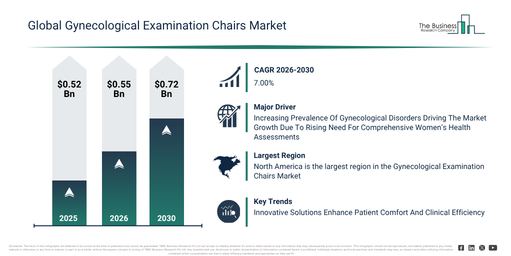
    The gynecological examination chairs market has demonstrated significant growth recently. This market is projected to expand from $0. 52 billion in 2025 to $0. 55 billion by 2026, achieving a compound annual growth rate (CAGR) of 6. 8%. The historical expansion can be attributed to increasing demand for improved women’s healthcare infrastructure, the global proliferation of hospitals and gynecology clinics, growing awareness of preventive gynecological examinations, the adoption of basic mechanical examination furniture in clinics, and the rise in maternal and prenatal care services.

    The gynecological examination chairs market is poised for substantial growth over the next few years. It is projected to expand to $0.72 billion by 2030, exhibiting a compound annual growth rate (CAGR) of 7.0%. This anticipated expansion during the forecast period stems from factors such as the incorporation of smart digital control systems in medical chairs, a heightened demand for outpatient and ambulatory gynecological procedures, progress in minimally invasive diagnostic technologies, increasing healthcare investments across emerging economies, and the implementation of automated positioning and ergonomic optimization systems. Significant developments expected in the forecast period include a greater embrace of electric and motorized gynecological examination chairs to boost patient comfort and positioning accuracy, a growing integration of IoT-enabled smart examination chairs for real-time adjustments and monitoring, an escalating preference for ergonomic and patient-centric chair designs within women’s healthcare facilities, the proliferation of multi-functional gynecological chairs supporting both diagnostic and minor surgical procedures, and an intensified focus on infection-resistant and easy-to-clean medical chair materials within clinical settings.

    Get A Free Sample Report With In-Depth Market Insights:

    https://thebusinessresearchcompany.com/sample_request?id=61312259&type=smp&name=Gynecological%20Examination%20Chairs%20Market%20Report%202026&utm_source=Blogs&utm_medium=Paid&utm_campaign=Oct_PR

    Gynecological Examination Chairs Market Demand Drivers: What’s Powering Industry Growth?

    The growing occurrence of gynecological conditions is anticipated to fuel the expansion of the gynecological examination chairs market in the coming years. These conditions encompass various medical issues impacting the female reproductive system, including hormonal, structural, and functional problems affecting the uterus, ovaries, and associated organs. The increase in gynecological disorder prevalence is attributed to contemporary lifestyle shifts, such as unhealthy eating habits, inactive routines, and elevated stress, all of which can disrupt hormonal equilibrium and reproductive well-being. Gynecological examination chairs are crucial as they allow healthcare providers to conduct comprehensive and comfortable examinations, diagnostic procedures, and treatments for women suffering from these disorders, thus ensuring precise evaluation and effective handling of reproductive system ailments. For instance, data from September 2025, released by the Centers for Disease Control and Prevention, a US-based government agency, indicated approximately 209,253 syphilis cases in 2023, marking a 1% rise from 207,269 cases reported in 2022. Consequently, the increasing incidence of gynecological disorders is acting as a key driver for the growth of the gynecological examination chairs market.

    Gynecological Examination Chairs Market Segment Outlook: Which Categories Are Growing Fastest?

    The gynecological examination chairs market covered in this report is segmented –

    1) By Product Type: Non Electric, Electric, Hydraulic, Electro Hydraulic Hybrid, Smart Or Internet Of Things (IOT) Integrated Models

    2) By Sales Channel: Direct Sales, Distributor And Wholesaler Sales, Original Equipment Manufacturer And Private Label

    3) By Application: Diagnostic Examinations, Surgical Procedures, Prenatal Care And Monitoring

    4) By End User: Hospitals, Diagnostic Centers, Acute Care Centers, Ambulatory Surgical Centers, Clinics

    Subsegments:

    1) By Non Electric: Fixed Height Chairs, Adjustable Backrest Chairs, Foldable Examination Chairs, Basic Mechanical Leg Support Chairs

    2) By Electric: Single Motor Chairs, Dual Motor Chairs, Multi Motor Chairs, Programmable Position Chairs

    3) By Hydraulic: Foot Operated Hydraulic Chairs, Manual Pump Hydraulic Chairs, Height Adjustable Hydraulic Chairs, Heavy Duty Hydraulic Chairs

    4) By Electro Hydraulic Hybrid: Electric Height Hydraulic Tilt Chairs, Programmable Electro Hydraulic Chairs, Dual Control Hybrid Chairs, High Stability Hybrid Chairs

    5) By Smart Or Internet Of Things (IOT) Integrated Models: Connected Digital Control Chairs, Remote Monitoring Enabled Chairs, Automated Position Memory Chairs, Integrated Data System Chairs

    Gynecological Examination Chairs Market Innovation Trends: What Developments Are Reshaping The Industry?

    Leading firms in the gynecological examination chair sector are concentrating on creating novel products, specifically sophisticated ergonomic and hygienic examination chairs, to improve patient experience and optimize clinical workflows. These advanced chairs are meticulously engineered with adjustable settings, supportive shapes, and surfaces that are simple to clean, which collectively boosts patient comfort, eases the physical demands on clinicians, and upholds superior hygiene protocols throughout gynecological examinations. As an illustration, in March 2024, SCHMITZ GmbH & Co. KG, a German medical equipment producer, introduced the medi-matic, an inventive gynecological examination chair. The medi-matic chair integrates superior ergonomic qualities with intuitive, straightforward functionality, offering adjustable height and tilt, hygienic surfaces amenable to swift disinfection, and adaptable positions for diverse examinations and minor medical interventions. Its construction emphasizes both patient well-being and practitioner effectiveness, thereby establishing a new standard within the realm of medical and surgical examination chairs.

    Gynecological Examination Chairs Market Leading Companies And Competitive Benchmarking

    Major companies operating in the gynecological examination chairs market are Stryker Corporation, Baxter International Inc., STERIS plc, Midmark Corporation, Paramount Bed Holdings Co. Ltd., FAMED Zywiec Sp. z o. o., Promotal, UFSK-International OSYS GmbH, IndoSurgicals Private Limited, Euroclinic Group S. r. l., LINET Group SE, Schmitz u. Söhne GmbH & Co. KG, medifa GmbH & Co. KG, AGA Sanitätsartikel GmbH, Brumaba GmbH & Co. KG, Malvestio S. p. A., Novak M d. o. o., Lemi Group S. r. l., United Poly Engineering Private Limited, Adequate Medical Equipment Private Limited, Moretti S. p. A., Esthetica Medical & Spa Solution

    View The Full Gynecological Examination Chairs Market Report:

    https://thebusinessresearchcompany.com/report/gynecological-examination-chairs-market-report?utm_source=Blogs&utm_medium=Paid&utm_campaign=Oct_PR

    Gynecological Examination Chairs Market Largest Region By Revenue And Market Share

    North America was the largest region in the gynecological examination chairs market in 2025. Asia-Pacific is expected to be the fastest-growing region in the forecast period. The regions covered in the gynecological examination chairs market report are Asia-Pacific, South East Asia, Western Europe, Eastern Europe, North America, South America, Middle East and Africa.

    Reach Out To Our Team:

    The Business Research Company: https://www.thebusinessresearchcompany.com/

    Americas: +1 310-496-7795

    Asia: +44 7882 955267 & +91 8897263534

    Europe: +44 7882 955267

    Email us at: marketing@tbrc.info

    Follow us on:

    LinkedIn: https://in.linkedin.com/company/the-business-research-company

    YouTube: https://www.youtube.com/channel/UC24_fI0rV8cR5DxlCpgmyFQ

    Global Market Model: https://www.thebusinessresearchcompany.com/global-market-model
  • Food And Drug Administration (FDA)-Cleared Pediatric Wearable Devices Market Analysis: $0.73 Billion Market Size In 2026 And Future Growth Prospects

    Food And Drug Administration (FDA)-Cleared Pediatric Wearable Devices Market Analysis: $0.73 Billion Market Size In 2026 And Future Growth Prospects

    Featuring market attractiveness scoring, total addressable market sizing, company benchmarking matrices, interactive Excel dashboards, deeper supply chain intelligence, emerging startup tracking, and granular product-level insights, The Business Research Company’s 2026 market reports are built to deliver research that is both more actionable and more strategically valuable.

    Food And Drug Administration (FDA)-Cleared Pediatric Wearable Devices Market Size And Revenue Outlook Through 2030

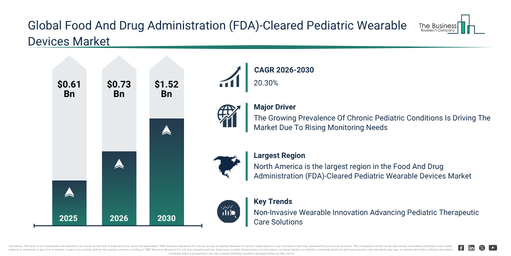
    The market size for food and drug administration (FDA)-cleared pediatric wearable devices has experienced significant expansion in recent years. It is projected to increase from $0.61 billion in 2025 to $0.73 billion in 2026, demonstrating a compound annual growth rate (CAGR) of 20.1%. Historically, this growth can be attributed to the rising prevalence of pediatric chronic diseases, an increasing demand for early diagnostic interventions, the limited availability of child-specific medical wearables, a growing reliance on hospital-based monitoring, and heightened awareness of preventive pediatric healthcare.

    The food and drug administration (FDA)-cleared pediatric wearable devices market size is projected to experience substantial growth over the next few years. It is expected to reach $1.52 billion by 2030, demonstrating a compound annual growth rate (CAGR) of 20.3%. This expansion during the forecast period is primarily driven by factors such as the broadening of home-based pediatric healthcare monitoring, the increasing adoption of AI-driven predictive health analytics, rising investment in pediatric digital health infrastructure, a surge in regulatory approvals for wearable medical devices, and the deepening integration of cloud and IoT healthcare ecosystems. Noteworthy trends anticipated in the forecast period include the increasing adoption of AI-enabled pediatric wearable diagnostics for real-time health insights, the expanding integration of IoT-based connected monitoring ecosystems within pediatric care, the proliferation of cloud-based remote patient monitoring platforms for children, the growing utilization of advanced biosensor miniaturization for improved wearable accuracy, and the increasing deployment of cybersecurity frameworks dedicated to pediatric health data protection.

    Get A Free Sample Report With In-Depth Market Insights:

    https://thebusinessresearchcompany.com/sample_request?id=74215515&type=smp&name=Food%20And%20Drug%20Administration%20%28FDA%29-Cleared%20Pediatric%20Wearable%20Devices%20Market%20Report%202026&utm_source=Blogs&utm_medium=Paid&utm_campaign=Oct_PR

    Food And Drug Administration (FDA)-Cleared Pediatric Wearable Devices Market Growth Drivers: What’s Behind The Acceleration?

    The increasing occurrence of chronic pediatric health issues is anticipated to fuel the expansion of the FDA-cleared pediatric wearable devices market moving forward. These chronic conditions are defined as persistent health ailments impacting infants, children, or adolescents, typically enduring for three months or longer, and frequently demanding continuous medical attention, management, and sometimes lifestyle modifications. Their rising prevalence is a result of various influences, including exposure to environmental factors, shifts in lifestyle such as inactivity and unhealthy eating habits, alongside improvements in diagnostic methods and public understanding. FDA-cleared pediatric wearable devices, exemplified by continuous glucose monitors and cardiac monitoring systems, facilitate real-time tracking of physiological data and prompt identification of potential complications, thereby enabling more proactive disease management and enhancing adherence to treatment plans. As the burden associated with chronic conditions grows, both healthcare providers and caregivers are increasingly adopting these technologies to improve patient outcomes and reduce long-term healthcare expenditures. For instance, data from December 2025, provided by the World Health Organization (WHO), a Switzerland-based United Nations (UN) organization, indicated that globally, approximately 35 million children below five years of age were affected by excess weight in 2024, while more than 390 million individuals aged five to nineteen were overweight in 2022, including around 160 million with obesity. Consequently, the rising prevalence of chronic pediatric conditions is a key factor propelling the growth of the FDA-cleared pediatric wearable devices market.

    Food And Drug Administration (FDA)-Cleared Pediatric Wearable Devices Market Segment Outlook: Which Categories Are Growing Fastest?

    The food and drug administration (fda)-cleared pediatric wearable devices market covered in this report is segmented –

    1) By Device Type: Pulse Oximeters, Cardiac Monitors Or Electrocardiogram Wearables, Respiratory Monitors, Multi-Vital Monitors, Glucose Monitoring Wearables, Sleep Trackers

    2) By Clinical Use: Cardiac Monitoring, Respiratory Monitoring, Glucose Monitoring, Temperature Monitoring, Sudden Infant Death Syndrome Adjunct Monitoring

    3) By Technology: Optical (Photoplethysmography), Electrical (Electrocardiography), Accelerometers, Bio-Impedance

    4) By End-User: Hospitals And Neonatal Intensive Care Units, Pediatric Clinics And Outpatient Centers, Homecare Settings And Caregivers, Ambulatory Surgical Centers

    Subsegments:

    1) By Pulse Oximeters: Fingertip Pulse Oximeters, Wrist-Worn Pulse Oximeters, Handheld Pulse Oximeters, Ring-Based Pulse Oximeters

    2) By Cardiac Monitors Or Electrocardiogram Wearables: Patch-Based Cardiac Monitors, Chest Strap Heart Monitors, Wearable Holter Monitors, Smart Garment Cardiac Monitors

    3) By Respiratory Monitors: Wearable Respiratory Rate Monitors, Chest-Worn Breathing Monitors, Apnea Monitoring Devices, Smart Garment Respiratory Monitors

    4) By Multi-Vital Monitors: Integrated Vital Sign Monitoring Wearables, Smart Patch Multi-Vital Monitors, Wrist-Worn Multi-Parameter Monitors, Smart Clothing Multi-Vital Monitors

    5) By Glucose Monitoring Wearables: Continuous Glucose Monitoring Devices, Flash Glucose Monitoring Devices, Implantable Glucose Monitoring Devices, Non-Invasive Glucose Monitoring Wearables

    6) By Sleep Trackers: Wearable Sleep Monitoring Bands, Smart Sock Sleep Trackers, Mattress-Integrated Sleep Monitoring Devices, Smart Pajamas And Sleep Garment Trackers, Wrist-Worn Pediatric Sleep Trackers, Sleep And Movement Monitoring Patches, Infant Sleep Position Monitors, Multi-Parameter Sleep Tracking Wearables

    Food And Drug Administration (FDA)-Cleared Pediatric Wearable Devices Market Trends: What’s Defining The Industry’s Next Phase?

    Companies within the FDA-cleared pediatric wearable devices market are concentrating on groundbreaking developments, including therapeutic wearable devices, to provide non-invasive and personalized treatment options. These therapeutic wearables are defined as medical technologies worn on the body, engineered to provide specific therapeutic interventions directly to the individual. An example of this is SoundHealth, a US-based medical technology firm focused on AI-powered healthcare solutions, which in June 2025, received U. S. Food and Drug Administration (FDA) approval for its SONU Band. The SONU Band employs artificial intelligence to chart sinus structures and administer tailored acoustic vibrations, aiding in the reduction of nasal inflammation and enhancement of airflow. With its non-invasive, drug-free methodology and home-based usability, the device represents a considerable step forward in pediatric respiratory care, improving both safety and access to treatment.

    Food And Drug Administration (FDA)-Cleared Pediatric Wearable Devices Market Key Participants And Competitive Landscape

    Major companies operating in the food and drug administration (fda)-cleared pediatric wearable devices market are Abbott Laboratories, Medtronic plc, Koninklijke Philips N. V., GE HealthCare Technologies Inc., Dexcom Inc., Masimo Corporation, Insulet Corporation, Nihon Kohden Corporation, iRhythm Technologies Inc., Natus Medical Incorporated, Bittium Corporation, Current Health Ltd., Sibel Health Inc., Empatica Inc., Owlet Baby Care Inc., LifeSignals Inc., VitalConnect Inc., Blue Spark Technologies Inc., BioIntelliSense Inc., Nonin Medical Inc., Biobeat Technologies Ltd., Lief Therapeutics Inc., Preventice Solutions Inc.

    View The Full Food And Drug Administration (FDA)-Cleared Pediatric Wearable Devices Market Report:

    https://thebusinessresearchcompany.com/report/food-and-drug-administration-fda-cleared-pediatric-wearable-devices-market-report?utm_source=Blogs&utm_medium=Paid&utm_campaign=Oct_PR

    Food And Drug Administration (FDA)-Cleared Pediatric Wearable Devices Market Geographic Analysis: Where Is Demand Rising Fastest?

    North America was the largest region in the food and drug administration (FDA)-cleared pediatric wearable devices market in 2025. Asia-Pacific is expected to be the fastest-growing region in the forecast period. The regions covered in the food and drug administration (FDA)-cleared pediatric wearable devices market report are Asia-Pacific, South East Asia, Western Europe, Eastern Europe, North America, South America, Middle East and Africa.

    Reach Out To Our Team:

    The Business Research Company: https://www.thebusinessresearchcompany.com/

    Americas: +1 310-496-7795

    Asia: +44 7882 955267 & +91 8897263534

    Europe: +44 7882 955267

    Email us at: marketing@tbrc.info

    Follow us on:

    LinkedIn: https://in.linkedin.com/company/the-business-research-company

    YouTube: https://www.youtube.com/channel/UC24_fI0rV8cR5DxlCpgmyFQ

    Global Market Model: https://www.thebusinessresearchcompany.com/global-market-model
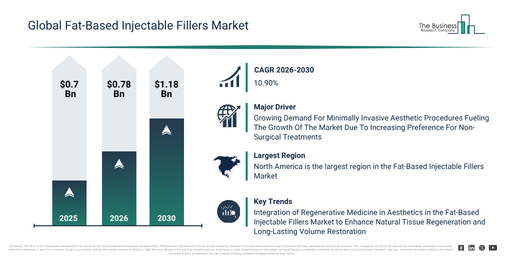
  • Fat-Based Injectable Fillers Market Reaches $1.18 Billion In 2026: Forecast And Growth Opportunities

    Fat-Based Injectable Fillers Market Reaches $1.18 Billion In 2026: Forecast And Growth Opportunities

    Featuring market attractiveness scoring, total addressable market sizing, company benchmarking matrices, interactive Excel dashboards, deeper supply chain intelligence, emerging startup tracking, and granular product-level insights, The Business Research Company’s 2026 market reports are built to deliver research that is both more actionable and more strategically valuable.

    Fat-Based Injectable Fillers Market Growth Potential: How Will Market Size Shift Through 2030?

    The fat-based injectable fillers market has seen substantial growth recently. It is anticipated to expand from $0.7 billion in 2025 to $0.78 billion in 2026, achieving a compound annual growth rate (CAGR) of 10.7%. The historical growth of this market is attributable to a surge in demand for aesthetic enhancement and facial rejuvenation procedures, the increasing adoption of liposuction-based fat transfer techniques, a rise in cosmetic surgery clinics and dermatology centers, broader awareness of minimally invasive cosmetic treatments, and higher disposable incomes supporting elective aesthetic procedures.

    The fat-based injectable fillers market is projected to experience substantial expansion over the upcoming years, reaching a valuation of $1.18 billion by 2030, exhibiting a compound annual growth rate (CAGR) of 10.9%. This anticipated growth during the forecast period is driven by advancements in regenerative medicine and stem cell-enriched fat grafting, a growing desire for enduring and natural aesthetic solutions, the rise of customized cosmetic treatment planning, increasing utilization of enhanced fat processing technologies, and the expansion of medical tourism for cosmetic procedures. Key developments anticipated in this period include a rising demand for minimally invasive fat grafting techniques, a growing inclination towards natural and autologous aesthetic treatments, the proliferation of combination therapies involving fat and regenerative methods, an increase in outpatient cosmetic surgery facilities, and wider adoption of sophisticated fat processing and purification systems.

    Get A Free Sample Report With In-Depth Market Insights:

    https://thebusinessresearchcompany.com/sample_request?id=96863440&type=smp&name=Fat-Based%20Injectable%20Fillers%20Market%20Report%202026&utm_source=Blogs&utm_medium=Paid&utm_campaign=Oct_PR

    Fat-Based Injectable Fillers Market Growth Backed By Core Demand Fundamentals

    The expanding requirement for minimally invasive aesthetic procedures is anticipated to boost the fat-based injectable fillers market in the coming period. These procedures are cosmetic treatments that enhance physical appearance with little to no surgery, offer reduced recovery time, and present a lower risk compared to conventional surgical techniques. The escalating need for minimally invasive aesthetic procedures stems from a rising inclination towards swift treatments with minimal downtime. Fat-based injectable fillers align with this demand for minimally invasive aesthetic procedures by delivering natural-looking outcomes with decreased risk and minimal downtime compared to surgical alternatives. For instance, in June 2024, the American Society of Plastic Surgeons, a US-based organization of board-certified plastic surgeons, reported that approximately 25. 4 million minimally invasive cosmetic procedures were conducted in the U. S. in 2023, representing a 7% increase over 2022, thereby indicating significant and growing acceptance. Consequently, the increasing demand for minimally invasive aesthetic procedures is propelling the expansion of the fat-based injectable fillers market. The increasing proliferation of cosmetic and medical aesthetic clinics is projected to stimulate the growth of the fat-based injectable fillers market in the future. These clinics are specialized healthcare establishments that deliver non-surgical and minimally invasive cosmetic treatments focused on improving physical appearance and skin well-being. The rise in cosmetic and medical aesthetic clinics is attributed to escalating consumer interest in aesthetic procedures, greater awareness of cosmetic improvements, and technological innovations in aesthetic treatments. Fat-based injectable fillers contribute to the expansion of cosmetic and medical aesthetic clinics by supplying natural-looking, minimally invasive solutions for facial rejuvenation, which draws a wider range of patients seeking secure and efficient aesthetic treatments. For instance, in February 2024, the International Society of Aesthetic Plastic Surgery (ISAPS), a US-based professional organization for board-certified aesthetic plastic surgeons, reported that the worldwide volume of aesthetic procedures rose by 11. 2% in 2023 compared to the preceding year. Thus, the growth in cosmetic and medical aesthetic clinics is a key driver for the fat-based injectable fillers market.

    Fat-Based Injectable Fillers Market Segment Analysis: What Are The Core Market Categories?

    The fat-based injectable fillers market covered in this report is segmented –

    1) By Type: Autologous Fat Injections, Allogeneic Fat Injections, Other Types

    2) By Material: Micronized Fat, Nanofat, Macrofat

    3) By Gender: Female, Male

    4) By Application: Facial Line Correction, Lip Enhancement, Breast Augmentation, Buttock Augmentation, Other Applications

    5) By End User: Hospitals, Cosmetic Clinics, Ambulatory Surgical Centers, Other End-Users

    Subsegments:

    1) By Autologous Fat Injections: Micro Fat Grafting, Nano Fat Grafting, Structural Fat Grafting, Stem Cell Enriched Fat Grafting

    2) By Allogeneic Fat Injections: Processed Donor Fat, Cryopreserved Fat, Decellularized Fat Matrix, Sterilized Fat Derivatives

    Fat-Based Injectable Fillers Market Growth Trends Reshaping The Competitive Landscape

    Leading companies in the fat-based injectable fillers market are concentrating on developing innovative products, such as structural adipose allograft fillers, to meet the growing demand for natural-looking, long-lasting, and minimally invasive aesthetic treatments. Structural adipose allograft fillers are injectable items derived from processed human adipose (fat) tissue that retain extracellular matrix components, growth factors, and proteins, facilitating volumization and tissue regeneration. For instance, in September 2025, Tiger Aesthetics, a US-based medical aesthetics company, introduced alloClae, a novel structural adipose injectable specifically designed for body contouring applications. This product is made of purified, donor-derived adipose tissue processed to preserve regenerative elements such as collagen and growth factors, enabling its integration with host tissue and promoting natural fat regeneration. It is a ready-to-use, shelf-stable injectable that removes the requirement for liposuction needed in traditional autologous fat grafting, thereby decreasing procedure time and invasiveness.

    Fat-Based Injectable Fillers Market Competitive Overview And Top Companies

    Major companies operating in the fat-based injectable fillers market are Merz Aesthetics, MTF Biologics, Huons Co. Ltd., Dongkook Pharmaceutical, Anika Therapeutics Inc, Daehan New Pharm, Estetique International, MicroAire Surgical Instruments, RegenLab SA, Koru Pharma, SoftFil, Teoxane Laboratories, Cytori Therapeutics, Gana R&D, Nouvag AG, Lipogems International S. p. A., Iskra Medical, Black & Black Surgical Inc., HK Surgical, Marina Medical Instruments

    View The Full Fat-Based Injectable Fillers Market Report:

    https://thebusinessresearchcompany.com/report/fat-based-injectable-fillers-market-report?utm_source=Blogs&utm_medium=Paid&utm_campaign=Oct_PR

    Fat-Based Injectable Fillers Market Top Region: Where Does Most Revenue Come From?

    North America was the largest region in the fat-based injectable fillers market in 2025. Asia-Pacific is expected to be the fastest-growing region in the forecast period. The regions covered in the fat-based injectable fillers market report are Asia-Pacific, South East Asia, Western Europe, Eastern Europe, North America, South America, Middle East and Africa.

    Reach Out To Our Team:

    The Business Research Company: https://www.thebusinessresearchcompany.com/

    Americas: +1 310-496-7795

    Asia: +44 7882 955267 & +91 8897263534

    Europe: +44 7882 955267

    Email us at: marketing@tbrc.info

    Follow us on:

    LinkedIn: https://in.linkedin.com/company/the-business-research-company

    YouTube: https://www.youtube.com/channel/UC24_fI0rV8cR5DxlCpgmyFQ

    Global Market Model: https://www.thebusinessresearchcompany.com/global-market-model