Author: Marketing Posting

  • Tele-Dermatology Prescription Market Set To Expand From $6.3 Billion In 2026: Growth Outlook Through 2030

    Tele-Dermatology Prescription Market Set To Expand From $6.3 Billion In 2026: Growth Outlook Through 2030

    Built to provide research that’s more actionable and strategically valuable, The Business Research Company’s 2026 market reports include market attractiveness analysis, total addressable market sizing, company benchmarking matrices, interactive Excel dashboards, broader supply chain intelligence, emerging startup tracking, and in-depth product insights.

    Tele-Dermatology Prescription Market Forecast: Value Set To Climb From $2.85 Billion To $6.3 Billion

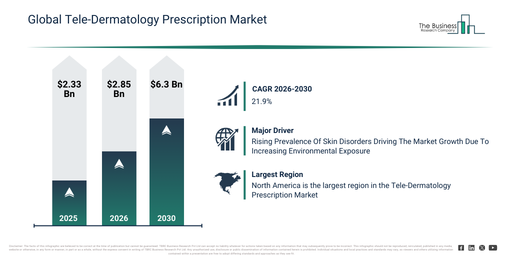
    The tele-dermatology prescription market has seen its size increase significantly in recent years. It is anticipated to expand from $2.33 billion in 2025 to $2.85 billion in 2026, exhibiting a compound annual growth rate (CAGR) of 22.2%. The historical growth of this market is attributable to various factors, such as the wider adoption of telehealth during periods of healthcare disruption, a growing prevalence of chronic skin conditions, a scarcity of dermatologists in rural areas, an increase in smartphone-based healthcare access, and the greater acceptance of virtual consultations.

    The tele-dermatology prescription market size is projected to experience rapid expansion in the coming years. It is set to reach $6.3 billion by 2030, demonstrating a compound annual growth rate (CAGR) of 21.9%. This expansion during the forecast period stems from several factors, including an escalating demand for remote specialist medical attention, increased capital expenditure in digital dermatology systems, the proliferation of AI-driven diagnostic assistance, enhanced regulatory guidance for tele-prescriptions, and progress in image analysis techniques. Key trends anticipated within this period encompass the wider embrace of AI-aided remote skin diagnostics, the increasing utilization of store-and-forward consultation paradigms, the burgeoning incorporation of electronic prescription platforms, the spread of mobile dermatology apps, and a heightened emphasis on safeguarding patient data.

    Get A Free Sample Report With In-Depth Market Insights:

    https://thebusinessresearchcompany.com/sample_request?id=19184661&type=smp&name=Tele-Dermatology%20Prescription%20Market%20Report%202026&utm_source=Blogs&utm_medium=Paid&utm_campaign=Nov_PR

    Tele-Dermatology Prescription Market Demand Drivers: What’s Powering Industry Growth?

    The increasing occurrence of skin conditions is projected to drive the expansion of the tele-dermatology prescription market going forward. Skin disorders are medical ailments that impact the skin’s structure, function, or appearance, leading to symptoms such as redness, itching, inflammation, or lesions. The growing frequency of these disorders is largely attributable to rising environmental pollution, which exposes the skin to harmful chemicals and irritants that can trigger or worsen various conditions. Tele-dermatology prescriptions aid in managing skin disorders more effectively by facilitating quicker diagnoses, timely treatment, and continuous remote follow-up care. The increasing demand for remote patient monitoring is driving the growth of the tele-dermatology prescription market.

    Tele-Dermatology Prescription Market Segment Analysis: What Are The Core Market Categories?

    The tele-dermatology prescription market covered in this report is segmented –

    1) By Service Type: Real-Time Tele-Dermatology, Store-And-Forward Tele-Dermatology, Hybrid Tele-Dermatology

    2) By Delivery Mode: Web-Based, Cloud-Based, On-Premises

    3) By Application: Skin Cancer, Psoriasis, Acne, Eczema, Other Applications

    4) By End User: Hospitals And Clinics, Homecare, Pharmacies, Other End-Users

    Subsegments:

    1) By Real-Time Tele-Dermatology: Video Consultation, Live Chat Consultation, Remote Monitoring

    2) By Store-And-Forward Tele-Dermatology: Image-Based Consultation, Asynchronous Messaging, Medical Record Sharing

    3) By Hybrid Tele-Dermatology: Combined Live And Image Consultation, Integrated Remote Monitoring And Messaging, Synchronous And Asynchronous Follow-Up

    Tele-Dermatology Prescription Market Top Companies Driving Competitive Growth

    Major companies operating in the tele-dermatology prescription market are Teladoc Health Inc., PharmEasy Online Services Private Limited, American Well Corporation (Amwell), Hims & Hers Health Inc., Curology Inc., Doctor On Demand Inc., Zocdoc Inc., HealthTap Inc., Maple Corporation, Sesame Care Inc., Medweb Inc., SkyMD Inc., Dermatica Limited, CureSkin Technologies Pvt. Ltd., Nurx Inc., DermatologistOnCall Inc., Clinikally Ltd., MapleDerm Inc., MDLive Inc., eDermConsult GmbH, First Derm ApS, iCliniq Technologies Private Limited, Practo Technologies Private Limited, Babylon Health Services Limited, Push Health Inc., PlushCare Inc., HeyDoctor by GoodRx Inc., K Health Inc.

    View The Full Tele-Dermatology Prescription Market Report:

    https://thebusinessresearchcompany.com/report/tele-dermatology-prescription-global-market-report?utm_source=Blogs&utm_medium=Paid&utm_campaign=Nov_PR

    Tele-Dermatology Prescription Market Regional Split: Which Areas Are Fueling Growth?

    North America was the largest region in the tele-dermatology prescription market in 2025. Asia-Pacific is expected to be the fastest-growing region in the forecast period. The regions covered in the tele-dermatology prescription market report are Asia-Pacific, South East Asia, Western Europe, Eastern Europe, North America, South America, Middle East, Africa.

    Reach Out To Our Team:

    The Business Research Company: https://www.thebusinessresearchcompany.com/

    Americas: +1 310-496-7795

    Asia: +44 7882 955267 & +91 8897263534

    Europe: +44 7882 955267

    Email us at: marketing@tbrc.info

    Follow us on:

    LinkedIn: https://in.linkedin.com/company/the-business-research-company

    YouTube: https://www.youtube.com/channel/UC24_fI0rV8cR5DxlCpgmyFQ

    Global Market Model: https://www.thebusinessresearchcompany.com/global-market-model
  • Tele-Derm Robot Camera Arm Market Size And Growth In 2026: Key Factors Shaping Future Demand

    Tele-Derm Robot Camera Arm Market Size And Growth In 2026: Key Factors Shaping Future Demand

    Backed by market attractiveness analysis, total addressable market sizing, company benchmarking matrices, interactive Excel dashboards, wider supply chain intelligence, emerging startup coverage, and detailed product-level insights, The Business Research Company’s 2026 market reports are designed to offer research that is more actionable and strategically valuable than ever.

    Tele-Derm Robot Camera Arm Market Revenue Growth On Track For A 18.6% CAGR Through 2030

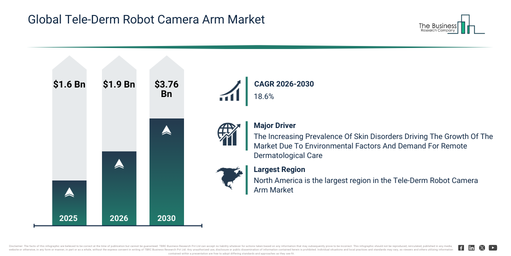
    The market size for tele-derm robot camera arms has experienced substantial growth in recent years. It is anticipated to expand from $1.6 billion in 2025 to $1.9 billion in 2026, demonstrating a compound annual growth rate (CAGR) of 18.9%. This historical growth can be ascribed to several factors, including the increasing adoption of telemedicine, a mounting shortage of dermatology specialists, the broadening of remote clinical consultation services, improvements in robotic camera hardware, and a growing acceptance of digital diagnostics.

    The tele-derm robot camera arm market size is expected to experience significant expansion in the coming years. It is projected to reach $3.76 billion in 2030, growing at a compound annual growth rate (CAGR) of 18.6%. This anticipated growth throughout the forecast period stems from factors such as increasing investments in telehealth robotics, a rising demand for remote specialty care, the expansion of wireless medical imaging technologies, the growing integration of AI diagnostics, and increased deployment in outpatient and ambulatory settings. Prominent trends for the forecast period include the increasing adoption of robotic-assisted teledermatology devices, a rising demand for high-precision remote imaging systems, the growing integration of AI-enhanced skin analysis, the expansion of portable and flexible camera arm solutions, and an enhanced focus on remote diagnostic accuracy.

    Get A Free Sample Report With In-Depth Market Insights:

    https://thebusinessresearchcompany.com/sample_request?id=92084761&type=smp&name=Tele-Derm%20Robot%20Camera%20Arm%20Market%20Report%202026&utm_source=Blogs&utm_medium=Paid&utm_campaign=Nov_PR

    Tele-Derm Robot Camera Arm Market Growth Drivers: What’s Behind The Acceleration?

    The growing incidence of skin conditions is anticipated to boost the expansion of the tele-derm robot camera arm market moving forward. Skin disorders encompass any medical conditions that impact the skin’s structure, performance, or appearance, leading to symptoms such as rashes, lesions, inflammation, or alterations in color or texture. The rising occurrence of skin conditions is attributed to environmental elements, as exposure to pollution, UV radiation, climate changes, and harmful chemicals can harm the skin and trigger various dermatological problems. The tele-derm robot camera arm facilitates accurate remote skin examinations, enhancing early detection, diagnosis, and monitoring of various skin disorders while also broadening access to dermatological care. The rising healthcare expenditure is driving the growth of the tele-derm robot camera arm market.

    Tele-Derm Robot Camera Arm Market Segment Breakdown: Which Categories Lead On Revenue?

    The tele-derm robot camera arm market covered in this report is segmented –

    1) By Product Type: Fixed Camera Arm, Articulated Camera Arm, Portable Camera Arm, Other Product Types

    2) By Technology: Wired, Wireless

    3) By Application: Teledermatology, Remote Patient Monitoring, Clinical Diagnostics, Other Applications

    4) By End-User: Hospitals, Clinics, Ambulatory Surgical Centers, Other End-Users

    Subsegments:

    1) By Fixed Camera Arm: Wall Mounted, Ceiling Mounted, Tripod Mounted, Desk Mounted

    2) By Articulated Camera Arm: Single Joint, Double Joint, Multi Joint, Telescopic

    3) By Portable Camera Arm: Handheld, Foldable, Collapsible, Lightweight

    4) By Other Product Types: Robotic, Motorized, Pneumatic, Hydraulic

    Tele-Derm Robot Camera Arm Market Leading Players And Competitive Positioning

    Major companies operating in the tele-derm robot camera arm market are Olympus Corporation, KUKA Systems GmbH, Comau S.p.A., Universal Robots AS, FotoFinder Systems Inc., Canfield Scientific Inc., Mecademic Robotics, Blackcam Robotics, Dermavision Solutions S.L., Elephant Robotics, Fourth Arrow Camera Arms, Shenzhen Wisonic Medical Technology Co. Ltd, Adept Technology Inc., Kinova Robotics, Staubli Robotics, Denso Robotics, Robotiq Inc., iRobot Medical Systems, Yaskawa Motoman, ABB Robotics

    View The Full Tele-Derm Robot Camera Arm Market Report:

    https://thebusinessresearchcompany.com/report/tele-derm-robot-camera-arm-global-market-report?utm_source=Blogs&utm_medium=Paid&utm_campaign=Nov_PR

    Tele-Derm Robot Camera Arm Market Top Region: Where Does Most Revenue Come From?

    North America was the largest region in the tele-derm robot camera arm market in 2025. Asia-Pacific is expected to be the fastest-growing region in the forecast period. The regions covered in the tele-derm robot camera arm market report are Asia-Pacific, South East Asia, Western Europe, Eastern Europe, North America, South America, Middle East, Africa.

    Reach Out To Our Team:

    The Business Research Company: https://www.thebusinessresearchcompany.com/

    Americas: +1 310-496-7795

    Asia: +44 7882 955267 & +91 8897263534

    Europe: +44 7882 955267

    Email us at: marketing@tbrc.info

    Follow us on:

    LinkedIn: https://in.linkedin.com/company/the-business-research-company

    YouTube: https://www.youtube.com/channel/UC24_fI0rV8cR5DxlCpgmyFQ

    Global Market Model: https://www.thebusinessresearchcompany.com/global-market-model
  • Teledentistry Market Forecast 2026–2030: Market Size, Trends And Growth Opportunities

    Teledentistry Market Forecast 2026–2030: Market Size, Trends And Growth Opportunities

    Featuring market attractiveness scoring, total addressable market sizing, company benchmarking matrices, interactive Excel dashboards, deeper supply chain intelligence, emerging startup tracking, and granular product-level insights, The Business Research Company’s 2026 market reports are built to deliver research that is both more actionable and more strategically valuable.

    Teledentistry Market Value Growth And Long-Term Outlook

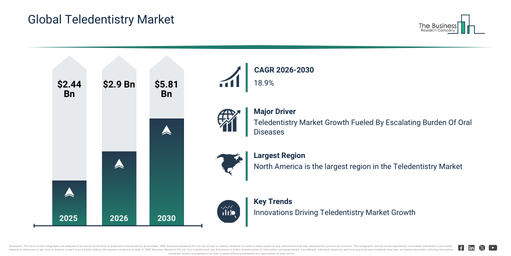
    The teledentistry market has experienced significant growth in recent years. It is projected to expand from $2.44 billion in 2025 to reach $2.9 billion in 2026, demonstrating a compound annual growth rate (CAGR) of 19.0%. The historical growth can be ascribed to several factors, including enhanced internet penetration in the healthcare sector, a growing scarcity of dental practitioners in rural regions, increased acceptance of remote healthcare provisions, the wider adoption of digital dental records, and advancements in video conferencing technologies.

    The teledentistry market is projected to experience swift expansion over the coming years. By 2030, its size is anticipated to reach $5.81 billion, demonstrating a compound annual growth rate (CAGR) of 18.9%. This expansion during the forecast period is fueled by several factors, including a greater need for remote oral healthcare access, increased capital flowing into digital dental platforms, a heightened emphasis on preventive dental care, the broadening of AI-supported dental diagnostics, and the deeper incorporation of teledentistry into standard dental practices. Key trends anticipated for the forecast period encompass the greater embrace of virtual dental consultations, an uptick in the utilization of digital imaging and remote diagnostic tools, more extensive integration of practice management platforms, the proliferation of cloud-based dental communication solutions, and a stronger emphasis on engaging patients remotely.

    Get A Free Sample Report With In-Depth Market Insights:

    https://thebusinessresearchcompany.com/sample_request?id=70905442&type=smp&name=Teledentistry%20Market%20Report%202026&utm_source=Blogs&utm_medium=Paid&utm_campaign=Nov_PR

    Teledentistry Market Growth Factors Behind Sustained Expansion

    The increasing burden of oral diseases is anticipated to accelerate the expansion of the teledentistry market in the coming years. Oral diseases encompass conditions affecting the mouth and its structures like teeth, gums, and tongue. Teledentistry serves to broaden access to oral health services and improve the management of these ailments. The rising incidence of oral diseases is propelling the growth of the teledentistry market.

    Teledentistry Market Segmentation: How Does The Market Break Down By Category?

    The teledentistry market covered in this report is segmented –

    1) By Component: Hardware, Software

    2) By Delivery Mode: On-premise, Cloud-based

    3) By Application: Tele-consultation, Remote patient monitoring, Education and training

    4) By End User: Healthcare providers, Patients, Other End-Users

    Subsegments:

    1) By Hardware: Intraoral Cameras, X-Ray Scanners, Mobile Devices, Computer Systems

    2) By Software: Practice Management Software, Appointment Scheduling Software, Image Analysis and Diagnosis Software, Communication And Video Conferencing Software

    Teledentistry Market Strategic Trends: What Defines The Next Growth Phase?

    Major companies operating in the teledentistry market are prioritizing technological advancements, such as AI-driven diagnostic tools and virtual consultation platforms, to boost patient access and elevate the quality of dental care, leading to improved oral health outcomes and patient satisfaction. Artificial intelligence (AI) for photo analysis uses algorithms to evaluate and interpret visual data from images, enabling precise assessments and diagnoses in various fields, including healthcare.

    Teledentistry Market Competitive Overview And Top Companies

    Major companies operating in the teledentistry market are The TeleDentists, Dentulu Inc, Toothpic, Virtudent Inc, SmileMate, DentalChat, Denteractive, DigiDentista, Odonto Virtual, Odontología Virtual, Dentaly.org, Teladent, Zahnarzt-Hotline, Dentist.cz, DentistulTau, Dentaltap, Dentalink, Odontovida, Smileneo, Teledentistry

    View The Full Teledentistry Market Report:

    https://thebusinessresearchcompany.com/report/teledentistry-global-market-report?utm_source=Blogs&utm_medium=Paid&utm_campaign=Nov_PR

    Teledentistry Market Regional Breakdown: Where Is Demand Concentrated?

    North America was the largest region in the teledentistry market in 2025. The regions covered in the teledentistry market report are Asia-Pacific, South East Asia, Western Europe, Eastern Europe, North America, South America, Middle East, Africa.

    Reach Out To Our Team:

    The Business Research Company: https://www.thebusinessresearchcompany.com/

    Americas: +1 310-496-7795

    Asia: +44 7882 955267 & +91 8897263534

    Europe: +44 7882 955267

    Email us at: marketing@tbrc.info

    Follow us on:

    LinkedIn: https://in.linkedin.com/company/the-business-research-company

    YouTube: https://www.youtube.com/channel/UC24_fI0rV8cR5DxlCpgmyFQ

    Global Market Model: https://www.thebusinessresearchcompany.com/global-market-model
  • Telecare Market Size Reaches $7.19 Billion In 2026: What Is Driving Growth?

    Telecare Market Size Reaches $7.19 Billion In 2026: What Is Driving Growth?

    Built to provide research that’s more actionable and strategically valuable, The Business Research Company’s 2026 market reports include market attractiveness analysis, total addressable market sizing, company benchmarking matrices, interactive Excel dashboards, broader supply chain intelligence, emerging startup tracking, and in-depth product insights.

    Telecare Market Poised To Hit $10.42 Billion By 2030 With A 9.7% CAGR

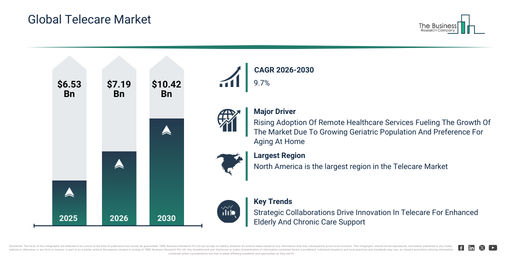
    The telecare market has seen substantial expansion in its size over recent years. This market is set to increase from $6.53 billion in 2025 to attain $7.19 billion by 2026, exhibiting a compound annual growth rate (CAGR) of 10.1%. The growth observed in prior periods is attributable to an expanding elderly demographic, a heightened occurrence of chronic conditions, the broadening of home healthcare provisions, enhanced connectivity infrastructure, and the increasing acceptance of remote care models.

    The telecare market is projected to experience substantial expansion over the forthcoming years. Its valuation is set to reach $10.42 billion by 2030, exhibiting a compound annual growth rate (CAGR) of 9.7%. This anticipated growth during the forecast timeframe stems from various factors, including increasing investments in digital health platforms, the growing acceptance of AI-enabled telecare analytics, the expansion of smart home healthcare ecosystems, a heightened emphasis on preventive care, and the rising need for cost-effective care delivery. Key trends anticipated during this period encompass the increased uptake of remote patient monitoring solutions, the growing deployment of wearable telecare devices, a broader integration of emergency alert systems, the broadening of home-based chronic care models, and an intensified focus on solutions that support aging-in-place.

    Get A Free Sample Report With In-Depth Market Insights:

    https://thebusinessresearchcompany.com/sample_request?id=46532208&type=smp&name=Telecare%20Market%20Report%202026&utm_source=Blogs&utm_medium=Paid&utm_campaign=Nov_PR

    Telecare Market Demand Drivers Opening New Revenue Streams

    The increased adoption of remote healthcare services is projected to propel the growth of the telecare market in the future. Remote healthcare services refer to the provision of healthcare via telecommunication technologies, enabling patients to access care from afar without needing to visit healthcare facilities. The expansion of remote healthcare services is attributed to the rising geriatric population, as more elderly individuals prefer aging at home, thereby increasing the need for continuous remote monitoring and assistance. Telecare aids remote healthcare services by facilitating real-time monitoring, emergency response, and communication through connected devices, ensuring care delivery without physical presence. The growing uptake of remote healthcare services solutions is driving the expansion of the telecare market.

    Telecare Market Segment Trends And Revenue Contributors

    The telecare market covered in this report is segmented –

    1) By Type: Activity Monitoring, Remote Medication Management

    2) By Technology: Non Wearable, Wearable

    3) By End Use: Healthcare Consumers, Healthcare Providers, Payers

    Subsegments:

    1) By Activity Monitoring: Motion Sensors, Bed And Chair Occupancy Sensors, Door And Window Sensors, Wearable Activity Trackers, Fall Detection Devices

    2) By Remote Medication Management: Smart Pill Dispensers, Automated Medication Reminders, Mobile Medication Management Apps, Connected Inhalers, Remote Dose Monitoring Platforms

    Telecare Market Transformation Trends: What Innovations Are Driving Change?

    Companies heavily involved in the telecare market are concentrating on introducing innovative solutions through strategic alliances to improve remote monitoring capabilities and broaden their service offerings. This focus aims to address the increasing demand for support in both elderly and chronic care. Strategic collaborations entail partnerships where organizations pool their resources and specialized knowledge to develop novel solutions, enhance service delivery, and achieve shared objectives more efficiently.

    Telecare Market Competitive Landscape: Which Companies Lead The Industry?

    Major companies operating in the telecare market are Philips Healthcare, The Access Group Limited, Tunstall Healthcare Group Limited, ConnectAmerica.com LLC, Ascom Holding AG, Resideo Technologies Inc., Cera Care Limited, Enovation Group B.V., iHealth Labs Inc., Vivify Health Inc., Careium AB, Essence SmartCare Ltd., Helios Telecare Inc., Rest Assured LLC, Tyto Care Ltd., Alarm.com, Legrand Care, Essence Group, Everon Group, AT Technology Services, Doro Care, Televic Healthcare

    View The Full Telecare Market Report:

    https://thebusinessresearchcompany.com/report/telecare-global-market-report?utm_source=Blogs&utm_medium=Paid&utm_campaign=Nov_PR

    Telecare Market Geographic Landscape: Which Region Leads Industry Growth?

    North America was the largest region in the telecare market in 2025. Asia-Pacific is expected to be the fastest-growing region in the forecast period. The regions covered in the telecare market report are Asia-Pacific, South East Asia, Western Europe, Eastern Europe, North America, South America, Middle East, Africa.

    Reach Out To Our Team:

    The Business Research Company: https://www.thebusinessresearchcompany.com/

    Americas: +1 310-496-7795

    Asia: +44 7882 955267 & +91 8897263534

    Europe: +44 7882 955267

    Email us at: marketing@tbrc.info

    Follow us on:

    LinkedIn: https://in.linkedin.com/company/the-business-research-company

    YouTube: https://www.youtube.com/channel/UC24_fI0rV8cR5DxlCpgmyFQ

    Global Market Model: https://www.thebusinessresearchcompany.com/global-market-model
  • Tele Intensive Care Unit Market Valued At $15.65 Billion In 2026: Key Trends And Growth Drivers

    Tele Intensive Care Unit Market Valued At $15.65 Billion In 2026: Key Trends And Growth Drivers

    Backed by market attractiveness analysis, total addressable market sizing, company benchmarking matrices, interactive Excel dashboards, wider supply chain intelligence, emerging startup coverage, and detailed product-level insights, The Business Research Company’s 2026 market reports are designed to offer research that is more actionable and strategically valuable than ever.

    Tele Intensive Care Unit Market Size And Revenue Outlook Through 2030

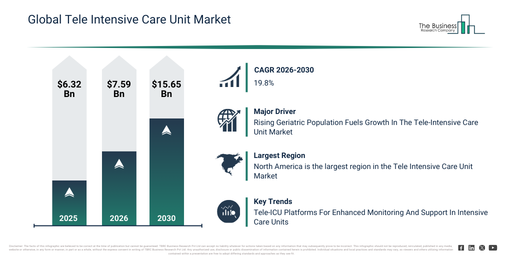
    The tele intensive care unit market size has experienced significant expansion in recent years. It is projected to grow from $6.32 billion in 2025 to $7.59 billion in 2026, exhibiting a compound annual growth rate (CAGR) of 20.0%. The growth witnessed during the historic period stems from factors such as the expansion of hospital critical care capacity, a rising scarcity of intensivists, the increased utilization of telemedicine platforms, advancements in digital health infrastructure, and the demand for continuous patient monitoring.

    The tele intensive care unit market is projected to experience substantial expansion over the upcoming years. By 2030, this market is anticipated to reach a valuation of $15.65 billion, demonstrating a compound annual growth rate (CAGR) of 19.8%. This expansion during the projected timeframe is driven by factors such as greater capital expenditure in smart hospital infrastructure, a surge in the embrace of cloud-based healthcare solutions, the broadening of remote critical care provision, the escalating application of predictive analytics in icu care, and a heightened emphasis on delivering healthcare economically. Key developments anticipated in the forecast period encompass a wider acceptance of remote icu monitoring systems, the proliferation of centralized tele-icu models, the increasing incorporation of AI-based clinical decision support, a growing need for real-time patient data analytics, and an intensified concentration on optimizing the critical care workforce.

    Get A Free Sample Report With In-Depth Market Insights:

    https://thebusinessresearchcompany.com/sample_request?id=80960223&type=smp&name=Tele%20Intensive%20Care%20Unit%20Market%20Report%202026&utm_source=Blogs&utm_medium=Paid&utm_campaign=Nov_PR

    Tele Intensive Care Unit Market Growth Backed By Core Demand Fundamentals

    The tele-intensive care unit market is anticipated to grow propelled by the increasing geriatric population. This segment of the population includes older adults, typically defined as individuals who are 65 or older. Tele-Intensive Care Units (Tele-ICUs) are vital for ensuring prompt interventions and improving health outcomes for elderly patients. These systems deliver care to critically ill patients and support the existing staff in the intensive care unit (ICU) utilizing secure audio–video and electronic links. For instance, in October 2025, the World Health Organization, a US-based specialized health agency, reported that worldwide, 1 in 6 individuals would be 60 or older by 2030, with the elderly population expected to reach 2.1 billion by 2050. Thus, the expanding geriatric population is a key driver for the growth of the tele-intensive care unit market.

    Tele Intensive Care Unit Market Segment Analysis Spotlighting Growth Areas

    The tele intensive care unit market covered in this report is segmented –

    1) By Type: Centralized Models, Decentralized Models, Other Types

    2) By Type Of Management: Intensivist, Open, Co-Managed, Open With Consultants, Other Types Of Management

    3) By Component: Hardware, Software

    4) By End User: Hospitals, Clinics, Other End Users

    Subsegments:

    1) By Centralized Models: Single Hub With Multiple Remote ICUs, Centralized Monitoring Systems, Integrated Care Coordination Platforms

    2) By Decentralized Models: Distributed Care Teams Across Multiple Locations, Localized Monitoring With Remote Support, Hybrid Care Models

    3) By Other Types: Mobile Tele-ICU Units, Cloud-Based Tele-ICU Solutions, Specialized Tele-ICU Applications

    #Tele Intensive Care Unit Market Growth Trends: What’s Shaping The Future Outlook?

    Leading companies operating within the tele-intensive care unit market are heightening their focus on launching a tele-ICU platform to gain a competitive edge. A tele-ICU platform serves as a technology-driven system that enables remote observation, consultation, and assistance for intensive care units (ICUs).

    Tele Intensive Care Unit Market Leading Companies: Who Holds The Strongest Market Presence?

    Major companies operating in the tele intensive care unit market are Hicuity Health LLC, Banner Health System, Teladoc Health Inc., Koninklijke Philips NV, University of Pittsburgh Medical Center, Inova Health System, Apollo TeleHealth Services Limited, Eagle Telemedicine LLC, iMDsoft Ltd., CLEW Medical Ltd., General Electric Company, Cloudphysician Healthcare Company, GlobalMed Inc., Mercy Virtual Inc., SynsorMed Inc., TeleICU by eCatalyst Healthcare Solutions LLC, Vidyo Inc., Vituity Telehealth Services Inc., CyberMed Inc., Dignity Health Telemedicine

    View The Full Tele Intensive Care Unit Market Report:

    https://thebusinessresearchcompany.com/report/tele-intensive-care-unit-global-market-report?utm_source=Blogs&utm_medium=Paid&utm_campaign=Nov_PR

    Tele Intensive Care Unit Market Largest Region: Which Geography Holds The Biggest Share?

    North America was the largest region in the tele intensive care unit market in 2025. The regions covered in the tele intensive care unit market report are Asia-Pacific, South East Asia, Western Europe, Eastern Europe, North America, South America, Middle East, Africa.

    Reach Out To Our Team:

    The Business Research Company: https://www.thebusinessresearchcompany.com/

    Americas: +1 310-496-7795

    Asia: +44 7882 955267 & +91 8897263534

    Europe: +44 7882 955267

    Email us at: marketing@tbrc.info

    Follow us on:

    LinkedIn: https://in.linkedin.com/company/the-business-research-company

    YouTube: https://www.youtube.com/channel/UC24_fI0rV8cR5DxlCpgmyFQ

    Global Market Model: https://www.thebusinessresearchcompany.com/global-market-model
  • Teeth Whitening Market Size In 2026: Growth Outlook And Forecast Through 2030

    Teeth Whitening Market Size In 2026: Growth Outlook And Forecast Through 2030

    Featuring market attractiveness scoring, total addressable market sizing, company benchmarking matrices, interactive Excel dashboards, deeper supply chain intelligence, emerging startup tracking, and granular product-level insights, The Business Research Company’s 2026 market reports are built to deliver research that is both more actionable and more strategically valuable.

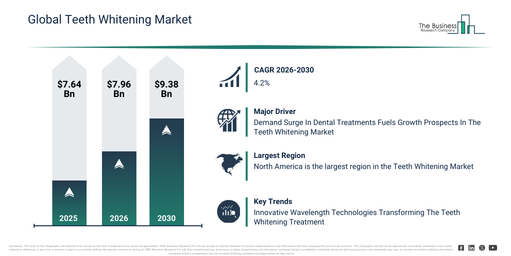
    Teeth Whitening Market Growth From $7.96 Billion In 2026 To $9.38 Billion By 2030 At A CAGR Of 4.2%

    The teeth whitening market size has demonstrated consistent growth in recent years. It is projected to expand from $7.64 billion in 2025 to $7.96 billion in 2026, exhibiting a compound annual growth rate (CAGR) of 4.3%. The market’s historical expansion can be attributed to factors such as increasing awareness of cosmetic dentistry, a heightened consumer focus on personal aesthetics, the wider availability of retail oral care products, rising disposable income levels, and the accessibility of professional whitening treatments.

    The teeth whitening market is projected to experience consistent expansion over the upcoming years. This market is set to reach $9.38 billion by 2030, exhibiting a compound annual growth rate (CAGR) of 4.2%. Factors driving this growth during the forecast period include the rising adoption of digital dental solutions, an increased demand for premium oral care products, the broadening of cosmetic dental clinics, the expanding influence of social media aesthetics, and greater innovation in whitening formulations. Key trends anticipated in the forecast period encompass an increasing demand for at-home whitening products, the rising adoption of LED-based whitening devices, an evolving preference for non-invasive cosmetic dentistry, the expansion of professional whitening services, and a heightened focus on enamel-safe formulations.

    Get A Free Sample Report With In-Depth Market Insights:

    https://thebusinessresearchcompany.com/sample_request?id=45974367&type=smp&name=Teeth%20Whitening%20Market%20Report%202026&utm_source=Blogs&utm_medium=Paid&utm_campaign=Nov_PR

    Teeth Whitening Market Growth Catalysts And Demand Drivers

    The teeth whitening market is anticipated to expand due to a rising need for dental procedures. Dental treatments encompass medical interventions and procedures carried out by dental experts to manage oral health problems. Dentists provide teeth whitening as a dental treatment to improve tooth color and appearance, thereby boosting patients’ aesthetic appeal. For example, Align Technology, Inc., a medical device company from the US, reported in April 2025 that its clear aligner volumes hit 642.3 thousand cases in Q1 2025. This represented a 2.2% sequential rise and a 6.2% increase from the prior year’s comparable period. Consequently, the heightened demand for dental interventions is poised to fuel the expansion of the teeth whitening market.

    Teeth Whitening Market Segment Performance And Emerging Opportunities

    The teeth whitening market covered in this report is segmented –

    1) By Product Type: Whitening Toothpaste, Whitening Gels And Strips, Light Teeth Whitening Device, Other Product Types

    2) By Distribution Channel: Institutional Sales, Retail Sales

    3) By Application Type: In-Office, At-Home

    Subsegments:

    1) By Whitening Toothpaste: Abrasive Whitening Toothpaste, Enzyme-Based Whitening Toothpaste

    2) By Whitening Gels And Strips: Gel-Based Whitening Products, Whitening Strips

    3) By Light Teeth Whitening Device: LED Teeth Whitening Devices, UV Teeth Whitening Devices

    4) By Other Product Types: Whitening Mouthwashes, Whitening Pens, Professional Teeth Whitening Kits

    Teeth Whitening Market Industry Trends: What’s Reshaping Demand?

    Leading businesses within the teeth whitening sector are innovating sophisticated oral care solutions incorporating wavelength technology to secure a market edge. Such advanced products employ distinct light frequencies to improve dental procedures and boost oral hygiene results.

    Teeth Whitening Market Key Players: Which Companies Lead Industry Competition?

    Major companies operating in the teeth whitening market are Johnson And Johnson, Procter And Gamble, Unilever PLC, GlaxoSmithKline Plc, 3M Company, Koninklijke Philips N.V., Colgate-Palmolive Company, Church And Dwight Co, DENTSPLY International, Ivoclar Vivadent AG, Kerr Corp, Ultradent Products Inc., Dr. Fresh LLC, Onuge Personal Care (Guangzhou) Co. Ltd., TECNO-GAZ SpA, Pearl Smile GmbH, Beaming White LLC, WHITEsmile GmbH, WSD Labs USA INC., DentMate Technology Co. Ltd., Mavrik Dental Systems Ltd., GLO Science LLC, Cosmolab Manufacturing Ltd

    View The Full Teeth Whitening Market Report:

    https://thebusinessresearchcompany.com/report/teeth-whitening-global-market-report?utm_source=Blogs&utm_medium=Paid&utm_campaign=Nov_PR

    Teeth Whitening Market Regional Analysis: Which Geography Leads On Revenue?

    North America was the largest region in the teeth whitening market in 2025. Asia-Pacific is expected to be the fastest-growing region in the forecast period. The regions covered in the teeth whitening market report are Asia-Pacific, South East Asia, Western Europe, Eastern Europe, North America, South America, Middle East, Africa.

    Reach Out To Our Team:

    The Business Research Company: https://www.thebusinessresearchcompany.com/

    Americas: +1 310-496-7795

    Asia: +44 7882 955267 & +91 8897263534

    Europe: +44 7882 955267

    Email us at: marketing@tbrc.info

    Follow us on:

    LinkedIn: https://in.linkedin.com/company/the-business-research-company

    YouTube: https://www.youtube.com/channel/UC24_fI0rV8cR5DxlCpgmyFQ

    Global Market Model: https://www.thebusinessresearchcompany.com/global-market-model
  • Technology Spending On Core Administration In Healthcare Market Trends Supporting 7.9% CAGR Growth Through 2030

    Technology Spending On Core Administration In Healthcare Market Trends Supporting 7.9% CAGR Growth Through 2030

    Built to provide research that’s more actionable and strategically valuable, The Business Research Company’s 2026 market reports include market attractiveness analysis, total addressable market sizing, company benchmarking matrices, interactive Excel dashboards, broader supply chain intelligence, emerging startup tracking, and in-depth product insights.

    Technology Spending On Core Administration In Healthcare Market Expansion Outlook: What Revenue Opportunities Are Ahead?

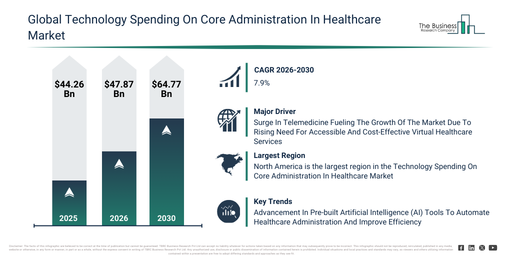
    The technology spending on core administration within the healthcare market has demonstrated significant expansion in recent years. This market is set to increase from $44.26 billion in 2025 to $47.87 billion in 2026, achieving a compound annual growth rate (CAGR) of 8.2%. Key factors contributing to its historical growth include the escalating administrative burden on healthcare systems, the widespread adoption of electronic records for billing and enrollment purposes, the increasing intricacy of healthcare operations, the expansion of various insurance coverage programs, and the essential requirement for efficient revenue cycle management.

    The technology spending on core administration within the healthcare market is projected to experience significant growth over the next few years. This sector is expected to expand to $64.77 billion by 2030, demonstrating a compound annual growth rate (CAGR) of 7.9%. The projected growth is driven by factors such as increasing investments in intelligent automation tools, a rising demand for real-time financial analytics, the expansion of digital payer-provider ecosystems, a growing focus on automating regulatory compliance, and the integration of advanced data management platforms. Furthermore, major trends anticipated in this period include the increasing automation of healthcare administrative workflows, the rising adoption of cloud-based core administration platforms, the expansion of AI-enabled claims and billing systems, a stronger emphasis on data accuracy and interoperability, and an enhanced focus on cost optimization in healthcare operations.

    Get A Free Sample Report With In-Depth Market Insights:

    https://thebusinessresearchcompany.com/sample_request?id=23156118&type=smp&name=Technology%20Spending%20On%20Core%20Administration%20In%20Healthcare%20Market%20Report%202026&utm_source=Blogs&utm_medium=Paid&utm_campaign=Nov_PR

    Technology Spending On Core Administration In Healthcare Market Opportunity Drivers: What’s Unlocking New Revenue Potential?

    The increasing need for telemedicine is projected to fuel the expansion of technology expenditure within healthcare’s core administrative functions in the future. Telemedicine involves delivering medical services remotely, utilizing digital tools like video calls, messaging platforms, or mobile applications for patient diagnosis, treatment, and monitoring. Its rising adoption enables patients to receive medical care from a distance, diminishing travel requirements and enhancing convenience, particularly for individuals in remote or less-served regions. Investment in healthcare’s core administrative technology bolsters telemedicine by automating processes such as patient registration, appointment scheduling, billing, and claims, thereby boosting efficiency and minimizing delays, which allows providers to concentrate on delivering timely virtual care. The escalating demand for telemedicine is a key factor propelling the increase in technology expenditure for core administration within the healthcare sector.

    Technology Spending On Core Administration In Healthcare Market Segment Landscape And Growth Outlook

    The technology spending on core administration in healthcare market covered in this report is segmented –

    1) By Type: Software, Hardware, Services

    2) By Technology: Electronic Health Records (EHRs), Patient Management Systems, Financial Management Systems, Supply Chain Management Systems, Revenue Cycle Management System

    3) By Deployment Mode: On-Premise, Cloud-Based, Hybrid

    4) By Application: Patient Management, Staff Management, Inventory Management, Other Applications

    5) By End-User: Hospitals, Clinics, Insurance Providers, Other End-Users

    Subsegments:

    1) By Software: Electronic Health Record (EHR) Systems, Practice Management Software, Revenue Cycle Management (RCM) Software, Patient Scheduling Software, Claims Management Software

    2) By Hardware: Servers and Storage Devices, Workstations and Desktops, Networking Equipment, Scanners And Imaging Devices, Administrative Endpoints And Secure Access Devices

    3) By Services: Information Technology Consulting and Support, System Integration Services, Managed Services, Training and Education Services, Maintenance and Upgrades

    Technology Spending On Core Administration In Healthcare Market Innovation Trends: What Developments Are Reshaping The Industry?

    Leading companies operating in the technology spending on core administration within the healthcare market are dedicating efforts to developing advanced solutions, specifically prebuilt artificial intelligence tools for healthcare, aimed at automating administrative tasks and enhancing the precision of decision-making. These prebuilt artificial intelligence tools are ready-to-use AI solutions that remove the requirement for extensive custom development, enabling swift adoption of sophisticated capabilities such as automation, data analysis, and prediction to achieve streamlined workflows. For example, in February 2025, Salesforce Inc., a US-based cloud-based software company, introduced Agentforce for Health, a library comprising prebuilt agentic AI tools crafted to automate time-consuming administrative, clinical, and public health tasks across the healthcare sector. This platform integrates functionalities like patient appointment scheduling, eligibility checks with insurers, and support for care coordination. Additionally, it contributes to disease surveillance and clinical trial matching by extracting data from various registries. The intention behind these developments is to lessen administrative burden, counter workforce burnout, and elevate operational efficiency for both providers and payers.

    Technology Spending On Core Administration In Healthcare Market Competitive Landscape: Who Leads The Industry?

    Major companies operating in the technology spending on core administration in healthcare market are Microsoft Corporation, Siemens AG, International Business Machines Corporation, Oracle Corporation, Tata Consultancy Services Limited, Cognizant Technology Solutions Corporation, GE Healthcare Technologies Inc., Infosys Limited, Conduent Incorporated, Evolent Health Inc., Veradigm Inc., Tebra Inc., 314e Corporation, Qventus Inc., Meditab Software Inc., CodaMetrix Inc., Raintree Systems Inc., ReLi Med Solutions Inc., Cerner Corporation, Epic Systems Corporation, Allscripts Healthcare Solutions Inc., McKesson Corporation

    View The Full Technology Spending On Core Administration In Healthcare Market Report:

    https://thebusinessresearchcompany.com/report/technology-spending-on-core-administration-in-healthcare-global-market-report?utm_source=Blogs&utm_medium=Paid&utm_campaign=Nov_PR

    Technology Spending On Core Administration In Healthcare Market Geographic Spread And Regional Opportunities

    North America was the largest region in the technology spending on core administration in healthcare market in 2025. Asia-Pacific is expected to be the fastest-growing region in the forecast period. The regions covered in the technology spending on core administration in healthcare market report are Asia-Pacific, South East Asia, Western Europe, Eastern Europe, North America, South America, Middle East, Africa.

    Reach Out To Our Team:

    The Business Research Company: https://www.thebusinessresearchcompany.com/

    Americas: +1 310-496-7795

    Asia: +44 7882 955267 & +91 8897263534

    Europe: +44 7882 955267

    Email us at: marketing@tbrc.info

    Follow us on:

    LinkedIn: https://in.linkedin.com/company/the-business-research-company

    YouTube: https://www.youtube.com/channel/UC24_fI0rV8cR5DxlCpgmyFQ

    Global Market Model: https://www.thebusinessresearchcompany.com/global-market-model
  • Tay-Sachs Disease Treatment Market Forecast Highlights A $3.45 Billion Opportunity For Industry Participants

    Tay-Sachs Disease Treatment Market Forecast Highlights A $3.45 Billion Opportunity For Industry Participants

    Backed by market attractiveness analysis, total addressable market sizing, company benchmarking matrices, interactive Excel dashboards, wider supply chain intelligence, emerging startup coverage, and detailed product-level insights, The Business Research Company’s 2026 market reports are designed to offer research that is more actionable and strategically valuable than ever.

    Tay-Sachs Disease Treatment Market Growth Potential: How Will Market Size Shift Through 2030?

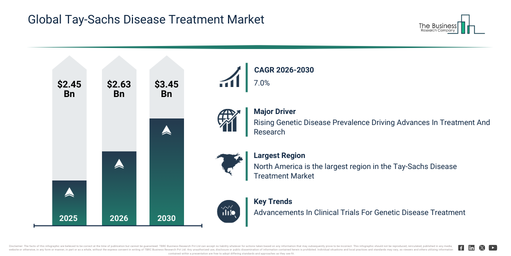
    The tay-sachs disease treatment market size has shown significant expansion in recent years. It is anticipated to increase from $2.45 billion in 2025 to $2.63 billion in 2026, achieving a compound annual growth rate (CAGR) of 7.3%. Historically, the market’s growth can be linked to advancements in genetic screening capabilities, increased public awareness of rare genetic disorders, the development of pediatric neurology care, the availability of various supportive treatment options, and the expansion of orphan drug research programs.

    The Tay-Sachs disease treatment market is projected to experience robust expansion over the coming years. Its valuation is set to reach $3.45 billion by 2030, exhibiting a compound annual growth rate (CAGR) of 7.0%. This anticipated growth during the forecast period is fueled by factors such as a rise in clinical trials for gene-based therapies, enhanced regulatory backing for orphan drugs, the expanding application of precision medicine in rare diseases, broadened patient advocacy programs, and increased funding for sophisticated biotechnologies. Key trends anticipated in this period encompass a heightened emphasis on gene therapy development, an increase in enzyme replacement research, wider adoption of substrate reduction therapies, growing investments in the development of drugs for rare diseases, and improved supportive care protocols.

    Get A Free Sample Report With In-Depth Market Insights:

    https://thebusinessresearchcompany.com/sample_request?id=59914885&type=smp&name=Tay-Sachs%20Disease%20Treatment%20Market%20Report%202026&utm_source=Blogs&utm_medium=Paid&utm_campaign=Nov_PR

    Tay-Sachs Disease Treatment Market Growth Momentum: What Factors Are Shaping Demand?

    The future expansion of the tay-sachs disease treatment market is anticipated to be fueled by the increasing occurrence of genetic diseases. Genetic diseases are defined as conditions resulting from DNA irregularities in a person, which can be passed down through inheritance or arise from unprompted mutations. The rise in genetic diseases stems from improved diagnostic methods, heightened public understanding, environmental influences, and elevated mutation rates linked to later age parenthood and shifts in lifestyle. This increasing prevalence of genetic diseases underscores the necessity for progress in tay-sachs disease treatment, thereby propelling research efforts in gene therapy, enzyme replacement, and early detection methods. The expanding occurrence of genetic diseases will propel the tay-sachs disease treatment market forward.

    Tay-Sachs Disease Treatment Market Breakdown By Product Type And Application

    The tay-sachs disease treatment market covered in this report is segmented –

    1) By Treatment: Medication, Respiratory Care, Physical Therapy

    2) By Mode Of Administration: Injectable, Oral, Other Mode Of Administration

    3) By End-Users: Hospitals, Homecare, Specialty Clinics

    Subsegments:

    1) By Medication: Antiepileptic Drugs, Miglustat, Supportive Symptomatic Medications

    2) By Respiratory Care: Mechanical Ventilation, Airway Clearance Therapy, Oxygen Therapy

    3) By Physical Therapy: Motor Function Exercises, Hydrotherapy, Assistive Mobility Devices

    Tay-Sachs Disease Treatment Market Trends: What’s Defining The Industry’s Next Phase?

    Leading companies in the tay-sachs disease treatment market are concentrating on developing novel treatments, including initiating clinical trials, to explore advanced therapies such as gene therapy, enzyme replacement, and small-molecule drugs, aiming for improved patient outcomes. A clinical trial constitutes a research study designed to evaluate the safety, efficacy, and potential adverse effects of medical interventions, medications, or procedures in humans.

    Tay-Sachs Disease Treatment Market Company Landscape And Competitive Strategy

    Major companies operating in the tay-sachs disease treatment market are Pfizer Inc., Sanofi S.A., Novartis AG, Takeda Pharmaceutical Company Limited, Regeneron Pharmaceuticals Inc., Biogen Inc., Vertex Pharmaceuticals Incorporated, BioMarin Pharmaceutical Inc., Sarepta Therapeutics Inc., Ultragenyx Pharmaceutical Inc., Amicus Therapeutics Inc., Spark Therapeutics Inc., Rocket Pharmaceuticals Inc., RegenxBio Inc., Forge Biologics Inc., Passage Bio Inc., Protalix BioTherapeutics Inc., Orchard Therapeutics plc, Affinia Therapeutics Inc., IntraBio Inc., Taysha Gene Therapies Inc.

    View The Full Tay-Sachs Disease Treatment Market Report:

    https://thebusinessresearchcompany.com/report/tay-sachs-disease-treatment-global-market-report?utm_source=Blogs&utm_medium=Paid&utm_campaign=Nov_PR

    Tay-Sachs Disease Treatment Market Top Region By Revenue And Market Share

    North America was the largest region in the tay-sachs disease treatment market in 2025. Asia-Pacific is expected to be the fastest-growing region in the forecast period. The regions covered in the tay-sachs disease treatment market report are Asia-Pacific, South East Asia, Western Europe, Eastern Europe, North America, South America, Middle East, Africa.

    Reach Out To Our Team:

    The Business Research Company: https://www.thebusinessresearchcompany.com/

    Americas: +1 310-496-7795

    Asia: +44 7882 955267 & +91 8897263534

    Europe: +44 7882 955267

    Email us at: marketing@tbrc.info

    Follow us on:

    LinkedIn: https://in.linkedin.com/company/the-business-research-company

    YouTube: https://www.youtube.com/channel/UC24_fI0rV8cR5DxlCpgmyFQ

    Global Market Model: https://www.thebusinessresearchcompany.com/global-market-model
  • Targeted Therapy Market Analysis: How The Industry Is Evolving Toward A $158.2 Billion Future

    Targeted Therapy Market Analysis: How The Industry Is Evolving Toward A $158.2 Billion Future

    Featuring market attractiveness scoring, total addressable market sizing, company benchmarking matrices, interactive Excel dashboards, deeper supply chain intelligence, emerging startup tracking, and granular product-level insights, The Business Research Company’s 2026 market reports are built to deliver research that is both more actionable and more strategically valuable.

    Targeted Therapy Market Value Analysis: What Growth Lies Ahead Over The Forecast Period?

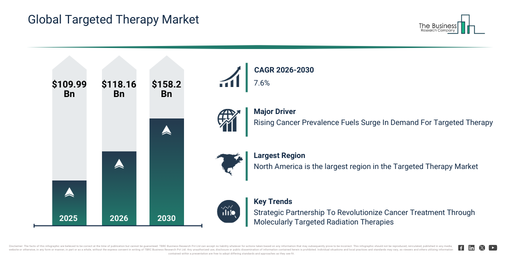
    The targeted therapy market size has seen significant expansion over recent years. It is anticipated to increase from $109.99 billion in 2025 to $118.16 billion in 2026, exhibiting a compound annual growth rate (CAGR) of 7.4%. This historical growth can be ascribed to several factors, including increasing global cancer incidence, an expansion of oncology research funding, the growing adoption of monoclonal antibodies, advancements in molecular biology research, and the rising approval of targeted cancer drugs.

    The targeted therapy market size is anticipated to experience substantial expansion over the coming years. This market is projected to reach $158.2 billion by 2030, exhibiting a compound annual growth rate (CAGR) of 7.6%. The projected increase during this period stems from heightened investments in personalized medicine, the expanding application of AI-driven drug discovery, wider adoption of precision diagnostics, a greater need for less toxic cancer treatments, and increased clinical trial activity within oncology. Key developments anticipated in the forecast period encompass the escalating creation of precision oncology drugs, a greater uptake of biomarker-based treatment selection, the broadening use of combination targeted therapies, increased utilization of companion diagnostics, and a heightened emphasis on designing drugs specific to tumors.

    Get A Free Sample Report With In-Depth Market Insights:

    https://thebusinessresearchcompany.com/sample_request?id=27496061&type=smp&name=Targeted%20Therapy%20Market%20Report%202026&utm_source=Blogs&utm_medium=Paid&utm_campaign=Nov_PR

    Targeted Therapy Market Expansion Drivers: What’s Shaping Future Growth?

    The rising occurrence of cancer is projected to fuel the expansion of the targeted therapy market in the future. Cancer refers to conditions where abnormal cells multiply without control and can invade nearby tissues. Targeted therapy works by deactivating signals that promote cancer cell growth or by prompting cancer cells to destroy themselves. This approach employs medications designed to specifically block genes and proteins essential for cancer cell proliferation and survival, thereby boosting its demand. The growing incidence of cancer will stimulate the expansion of the targeted therapy market.

    Targeted Therapy Market Segment Analysis And Revenue Potential

    The targeted therapy market covered in this report is segmented –

    1) By Type: Small Molecule Medicines, Monoclonal Antibodies

    2) By Distribution Channel: Hospital Pharmacies, Retail Pharmacies, Online Pharmacies

    3) By Application: Breast Cancer, Colorectal Cancer, Leukemia, Lung Cancer, Lymphoma, Renal Cancer, Other Applications

    Subsegments:

    1) By Small Molecule Medicines: Tyrosine Kinase Inhibitors (TKIs), Proteasome Inhibitors, Phosphatidylinositol 3-Kinase (PI3K) Inhibitors, Other Small Molecule Therapies

    2) By Monoclonal Antibodies: Immune Checkpoint Inhibitors, Antibody-Drug Conjugates (ADCs), Cytokine Blockers, Other Monoclonal Antibodies

    Targeted Therapy Market Industry Trends Fueling Future Revenue Growth

    Leading companies within the targeted therapy market are prioritizing strategic alliances to deliver dependable services to their clientele. Such a partnership represents an agreement between multiple companies or entities, enabling them to collaborate or assist one another in attaining their individual objectives.

    Targeted Therapy Market Key Players Shaping Industry Direction

    Major companies operating in the targeted therapy market are Pfizer Inc., Johnson & Johnson, F. Hoffmann-La Roche Ltd, Merck & Co Inc., AbbVie Inc., Bayer AG, Novartis AG, Sanofi SA, Bristol Myers Squibb, AstraZeneca, GlaxoSmithKline plc, Takeda Pharmaceutical Company Limited, Eli Lilly and Company, Gilead Sciences Inc., Amgen Inc., Genmab A/S, Regeneron Pharmaceuticals Inc., Biogen Inc., Vertex Pharmaceuticals Incorporated, Agilent Technologies Inc., Illumina Inc., Incyte Corporation, Sysmex Corporation, Exact Sciences Corporation, Seagen Inc., Exelixis Inc., Seattle Genetics Inc., Genentech Inc., Daiichi Sankyo Company Limited

    View The Full Targeted Therapy Market Report:

    https://thebusinessresearchcompany.com/report/targeted-therapy-global-market-report?utm_source=Blogs&utm_medium=Paid&utm_campaign=Nov_PR

    Targeted Therapy Market Regional Analysis And Top Geography

    North America was the largest region in the targeted therapy market in 2025. The regions covered in the targeted therapy market report are Asia-Pacific, South East Asia, Western Europe, Eastern Europe, North America, South America, Middle East, Africa.

    Reach Out To Our Team:

    The Business Research Company: https://www.thebusinessresearchcompany.com/

    Americas: +1 310-496-7795

    Asia: +44 7882 955267 & +91 8897263534

    Europe: +44 7882 955267

    Email us at: marketing@tbrc.info

    Follow us on:

    LinkedIn: https://in.linkedin.com/company/the-business-research-company

    YouTube: https://www.youtube.com/channel/UC24_fI0rV8cR5DxlCpgmyFQ

    Global Market Model: https://www.thebusinessresearchcompany.com/global-market-model
  • Tadalafil Market Outlook Through 2030: Understanding The Growth Opportunity

    Tadalafil Market Outlook Through 2030: Understanding The Growth Opportunity

    Built to provide research that’s more actionable and strategically valuable, The Business Research Company’s 2026 market reports include market attractiveness analysis, total addressable market sizing, company benchmarking matrices, interactive Excel dashboards, broader supply chain intelligence, emerging startup tracking, and in-depth product insights.

    Tadalafil Market Size Forecast: How Big Could The Market Get By 2030?

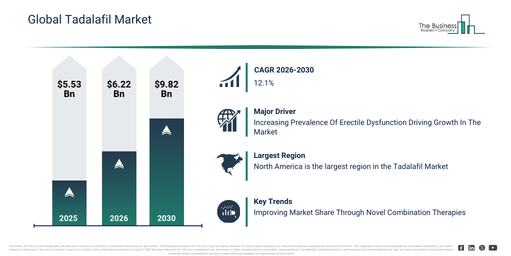
    The tadalafil market has experienced substantial expansion in recent times. Projections indicate it will expand from $5.53 billion in 2025 to reach $6.22 billion by 2026, demonstrating a compound annual growth rate (CAGR) of 12.4%. Historically, this growth is primarily due to several factors, including the increasing occurrence of erectile dysfunction, improved detection of pulmonary arterial hypertension, broader access to branded tadalafil products, the expansion of retail pharmacy networks, and heightened physician understanding of PDE5 inhibitors.

    The tadalafil market size is projected to undergo substantial growth in the coming years, with its value expected to climb to $9.82 billion by 2030, demonstrating a compound annual growth rate (CAGR) of 12.1%. This anticipated expansion within the forecast period stems from several factors, including an increasing aging male demographic, the growing acceptance of online prescription platforms, a heightened emphasis on chronic disease management, the broadening scope of combination therapy research, and improved availability of affordable generic medications. Key trends for this forecast period encompass the increasing adoption of generic tadalafil formulations, a rising demand for long-acting PDE5 inhibitors, the expansion of online pharmacy distribution networks, a greater focus on patient-centric dosing options, and enhancements in manufacturing efficiency for oral solid dosage forms.

    Get A Free Sample Report With In-Depth Market Insights:

    https://thebusinessresearchcompany.com/sample_request?id=66505672&type=smp&name=Tadalafil%20Market%20Report%202026&utm_source=Blogs&utm_medium=Paid&utm_campaign=Nov_PR

    Tadalafil Market Development Factors: What’s Supporting Demand?

    The rising occurrence of erectile dysfunction (ED) is anticipated to drive the expansion of the tadalafil market in the future. Erectile dysfunction is defined as a persistent inability to attain or sustain an erection adequate for satisfactory sexual activity. This rise in ED prevalence is primarily attributed to an aging population, chronic health issues, unhealthy lifestyle habits, psychological stress, and adverse effects from specific medications. Tadalafil addresses erectile dysfunction by relaxing the penis’s blood vessel smooth muscles, thereby improving blood flow and allowing for the achievement and maintenance of an erection during sexual stimulation. The growing prevalence of erectile dysfunction is fueling the expansion of the tadalafil market.

    Tadalafil Market Segmentation And Category Overview

    The tadalafil market covered in this report is segmented –

    1) By Product Type: Tablets, Oral Suspensions

    2) By Distribution Channel: Hospital Pharmacy, Retail Pharmacy, Online Pharmacy

    3) By Application: Erectile Dysfunction, Pulmonary Arterial Hypertension, Benign Prostatic Hyperplasia

    Subsegments:

    1) By Tablets: 2.5 mg Tablets, 5 mg Tablets, 10 mg Tablets, 20 mg Tablets

    2) By Oral Suspensions: 2.5 mg/5 mL Oral Suspension, 10 mg Oral Suspension, Custom Dosing Oral Suspensions

    Tadalafil Market Trends Powering Strategic Industry Growth

    Leading firms within the tadalafil market are concentrating on developing novel formulations, including combination therapy, with the aim of boosting treatment effectiveness, increasing patient adherence, and growing their market presence for addressing erectile dysfunction and pulmonary arterial hypertension. This approach, known as combination therapy, involves administering two or more drugs or treatments concurrently to improve therapeutic results, enhance efficacy, and tackle various facets of a disease or ailment.

    Tadalafil Market Competitive Analysis Of Leading Industry Participants

    Major companies operating in the tadalafil market are Eli Lilly and Company, Teva Pharmaceutical Industries Ltd., Sun Pharmaceutical Industries Limited, Cipla Limited, Aurobindo Pharma Limited, Dr. Reddy’s Laboratories Limited, Lupin Limited, Glenmark Pharmaceuticals Limited, Torrent Pharmaceuticals Limited, Jubilant Pharma Limited, Jiangsu Lianhuan Pharmaceutical Co. Ltd., Alembic Pharmaceuticals Limited, Polpharma SA, SMS Pharmaceuticals Limited, Camber Pharmaceuticals Inc., Century Pharmaceuticals Limited, Rakshit Drugs Private Limited, Ami Lifesciences Private Limited, Hangzhou Longshine Bio-Tech Co. Ltd., Dolphin Pharmaceuticals

    View The Full Tadalafil Market Report:

    https://thebusinessresearchcompany.com/report/tadalafil-global-market-report?utm_source=Blogs&utm_medium=Paid&utm_campaign=Nov_PR

    Tadalafil Market Geographic Analysis: Where Is Demand Rising Fastest?

    North America was the largest region in the tadalafil market in 2025. Asia-Pacific is expected to be the fastest-growing region in the forecast period. The regions covered in the tadalafil market report are Asia-Pacific, South East Asia, Western Europe, Eastern Europe, North America, South America, Middle East, Africa.

    Reach Out To Our Team:

    The Business Research Company: https://www.thebusinessresearchcompany.com/

    Americas: +1 310-496-7795

    Asia: +44 7882 955267 & +91 8897263534

    Europe: +44 7882 955267

    Email us at: marketing@tbrc.info

    Follow us on:

    LinkedIn: https://in.linkedin.com/company/the-business-research-company

    YouTube: https://www.youtube.com/channel/UC24_fI0rV8cR5DxlCpgmyFQ

    Global Market Model: https://www.thebusinessresearchcompany.com/global-market-model