Author: Marketing Posting

  • Urinary Tract Infection Testing Devices Market 2025-2034: Key Highlights, Growth Dynamics, and Emerging Trends

    Urinary Tract Infection Testing Devices Market 2025-2034: Key Highlights, Growth Dynamics, and Emerging Trends

    Stay ahead with our updated market reports featuring the latest on tariffs, trade flows, and supply chain transformations.

    How Has The Urinary Tract Infection Testing Devices Market Growth Evolved From 2024 To 2025, And What’s Ahead?

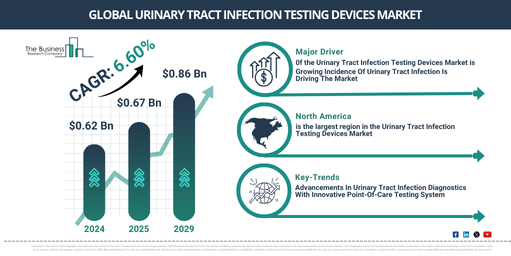
    The market size of devices used for testing urinary tract infections has shown a robust growth in the past few years. The market, which is worth $0.62 billion in 2024, is expected to inflate to $0.67 billion in 2025, with a compound annual growth rate (CAGR) of 6.9%. The historical growth in the market is credited to the surge in disease rates, elevated cases of urinary tract infections worldwide, heightened occurrence of diabetes in low to middle income countries, an increase in hospital-acquired urinary tract infections, as well as a rise in the prevalence of antibiotic-resistant urinary tract infections.

    The market for urinary tract infection testing devices is slated for impressive growth over the upcoming years, with the size expected to reach $0.86 billion in 2029, boasting a compound annual growth rate (CAGR) of 6.6%. Factors contributing to this projected growth include more people turning to self-testing kits and at-home options, greater emphasis on early diagnostics, and an intensifying need to tackle antibiotic resistance. Key trends expected during the forecast period involve integration of AI and machine learning, advancements in home-testing technology, overall technical innovations, diagnostics based on nanotechnology, and the use of CRISPR for diagnostic purposes.

    Download a free sample to assess the report’s scope and structure:

    https://www.thebusinessresearchcompany.com/sample.aspx?id=20988&type=smp

    Which Primay Drivers Are Accelerating Growth in the Urinary Tract Infection Testing Devices Market?

    The surge in urinary tract infections (UTIs) is set to spur the increase of the urinary tract infection testing devices market. UTIs, which are prevalent in any part of the urinary system such as kidneys, ureters, bladder, or urethra, are usually caused by bacteria, with Escherichia coli being the most commonly found. They majorly occur due to the extended use of catheters, poor hygiene habits, and growing antimicrobial resistance among hospital patients. The urinary tract infection testing devices are pivotal in diagnosing UTIs swiftly and accurately. This quick diagnosis aids healthcare professionals to discover the causative pathogens promptly and instigate targeted treatments, thereby diminishing complications, enhancing patient outcomes, and limiting the dispersion of antimicrobial resistance in medical environments. For example, the University of New South Wales, a public research university in Australia, reported in March 2024 that UTIs are high-frequency infections, noting a global annual incidence surpassing 400 million cases. Hence, the surge in urinary tract infections (UTIs) propels the urinary tract infection testing devices market.

    Which Primary Segments of the Urinary Tract Infection Testing Devices Market Are Driving Growth and Industry Transformations?

    The urinary tract infection testing devices market covered in this report is segmented –

    1) By Product type: Instruments, Kits

    2) By Test Type: Urinalysis, Urine Cultures, Susceptibility Testing

    3) By End-User: Hospitals, Diagnostic Labs, Other End Users

    Subsegments:

    1) By Instruments: Automated UTI Analyzers, UTI Culture Systems, UTI Microscopes, UTI Diagnostic Devices (Handheld Devices)

    2) By Kits: UTI Test Strips, UTI Reagents, Urine Culture Kits, UTI Home Testing Kits

    Request customized data on this market:

    https://www.thebusinessresearchcompany.com/customise?id=20988&type=smp

    Which Regions Are Key Players in the Growth of the Urinary Tract Infection Testing Devices Market?

    North America was the largest region in the urinary tract infection testing devices market in 2024. Asia Pacific is expected to be the fastest-growing region in the forecast period. The regions covered in the urinary tract infection testing devices market report are Asia-Pacific, Western Europe, Eastern Europe, North America, South America, Middle East, Africa.

    Which Technological Trends Are Reshaping the Urinary Tract Infection Testing Devices Industry Dynamics?

    Leading firms in the urinary tract infection testing devices market are concentrating their efforts on point-of-care (POC) testing devices. These tools are lauded for their speed and convenience in providing diagnoses, which has the effect of bettering patient outcomes. Point-of-care testing devices are medical diagnostic instruments that are used at the location of patient care, such as the doctor’s office, the patient’s bedside in the hospital, or even at home, thus eliminating the need to send samples to a lab. As an example, Sysmex Corporation, a Japan-based manufacturer of urinary tract infection testing devices, unveiled the PA-100 AST System, a Point-of-Care Testing System for identifying antimicrobial susceptibility, in June 2023. This system can discern the presence or absence of bacteria and gauge the efficacy of antimicrobials in a reduced timeframe. The device claims to detect bacterial growth in urine samples in roughly 10 minutes and can deliver susceptibility test results in less than 30 minutes. This capability encourages healthcare professionals to conduct swift testing directly from the urine samples of patients presumed to have urinary tract infections.

    View the full report here:

    https://www.thebusinessresearchcompany.com/report/urinary-tract-infection-testing-devices-global-market-report

    What Parameters Are Used to Define the Urinary Tract Infection Testing Devices Market?

    Urinary tract infection (UTI) testing devices are medical tools used to diagnose infections in the urinary system by detecting bacteria, white blood cells, or other markers in urine samples. These devices range from dipsticks and culture kits to advanced automated analyzers, providing rapid and accurate results to guide treatment decisions.

    Purchase the full report and get a swift delivery:

    https://www.thebusinessresearchcompany.com/purchaseoptions.aspx?id=20988

    About The Business Research Company:

    With over 15000+ reports from 27 industries covering 60+ geographies, The Business Research Company has built a reputation for offering comprehensive, data-rich research and insights. Armed with 1,500,000 datasets, the optimistic contribution of in-depth secondary research, and unique insights from industry leaders, you can get the information you need to stay ahead in the game.

    Get in touch with us:

    The Business Research Company: https://www.thebusinessresearchcompany.com/

    Americas +1 3156230293

    Asia +44 2071930708

    Europe +44 2071930708

    Email us at info@tbrc.info

    Follow us on:

    LinkedIn: https://in.linkedin.com/company/the-business-research-company

    YouTube: https://www.youtube.com/channel/UC24_fI0rV8cR5DxlCpgmyFQ

    Global Market Model: https://www.thebusinessresearchcompany.com/global-market-model
  • Urinary Stents Or Ureteral Stents Growth Trajectory: Key Forecasts and Strategic Insights

    Urinary Stents Or Ureteral Stents Growth Trajectory: Key Forecasts and Strategic Insights

    Stay ahead with our updated market reports featuring the latest on tariffs, trade flows, and supply chain transformations.

    What is the Projected CAGR for the Urinary Stents Or Ureteral Stents Market Size from 2025 to 2034?

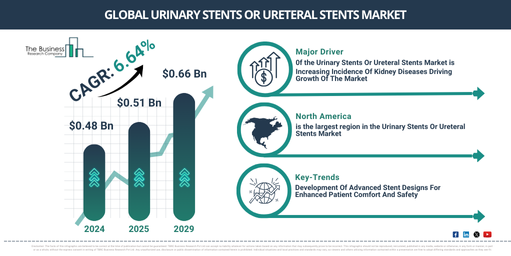
    In the past few years, the market size for ureteral or urinary stents has seen robust growth. An upswing from $0.48 billion in 2024 to $0.51 billion in 2025 is projected, translating to a compound annual growth rate (CAGR) of 6.87%. The historical period growth can be credited to factors such as an upsurge in prevalence of urological diseases, increased demand for enhanced urinary stent solutions, a rising trend towards minimally invasive procedures, enhanced focus on patient comfort and shorter recovery periods, and an ascending emphasis on technological progress in stent materials.

    In the forthcoming years, the market size of urinary or ureteral stents is predicted to witness a significant surge, reaching a value of $0.66 billion in 2029 with a compound annual growth rate (CAGR) of 6.64%. This growth for the projected period is linked to factors such as the rising need for customized urinary stent solutions, an elevated level of healthcare consciousness among patients, an increasing count of kidney stone cases, enhanced investments in healthcare, and a burgeoning elderly population. Some of the prominent trends to look out for during this period are improvements in minimally invasive procedures, advancements in the design of ureteral stents, the launch of innovative products, progress in technology, and the evolution of biodegradable hydrogel stents.

    Download a free sample to assess the report’s scope and structure:

    https://www.thebusinessresearchcompany.com/sample.aspx?id=20987&type=smp

    Which Factors and External Forces Are Driving Demand in the Urinary Stents Or Ureteral Stents Market?

    The rising prevalence of kidney-related disorders is likely to fuel the expansion of the urinary stents or ureteral stents market. Kidney ailments encompass conditions like chronic kidney disease (CKD), kidney stones, urinary tract blockages, and infections which impair the kidneys’ function and structure. Factors contributing to a surge in kidney ailments worldwide include escalating occurrence of diabetes, hypertension, obesity, aging populations, unhealthy lifestyle choices, environmental conditions, and late detection. Urinary stents are essential in addressing kidney disorders by ensuring unhindered urine flow, thwarting obstructions, and aiding kidney function, particularly in cases like chronic kidney disease, kidney stones, and urinary tract blockages. For example, data from the Australian Institute of Health and Welfare, a government agency based in Australia, in December 2024 reported that fatality rates due to chronic kidney disease (CKD) surged by 4.2% in 2021 to 6.2% in 2022. Hence, the escalating prevalence of kidney disorders is facilitating the growth of the urinary stents or ureteral stents market.

    Which Segments in the Urinary Stents Or Ureteral Stents Offer the Most Growth?

    The urinary stents or ureteral stents market covered in this report is segmented –

    1) By Product Type: Open End Stents, Closed End Stents, Double Pigtail Stents, Multiloop Stents

    2) By Material: Metallic Stents, Polymer Stents, Biodegradable Hydrogel Stents

    3) By Application: Kidney Stones, Kidney Failure, Urinary Tract Infection, Urinary Incontinence, Other Applications

    4) By End-user: Hospitals And Specialty Centers, Ambulatory Surgical Centers, Academic and Research Institutes

    Subsegments:

    1) By Open End Stents: Standard Open End Ureteral Stents, Silicone Open End Stents

    2) By Closed End Stents: Standard Closed End Ureteral Stents, Anti-reflux Closed End Stents

    3) By Double Pigtail Stents: Coiled Double Pigtail Stents, Silicone Double Pigtail Stents

    4) By Multiloop Stents: Metallic Multiloop Stents, Polymeric Multiloop Stents

    Request customized data on this market:

    https://www.thebusinessresearchcompany.com/customise?id=20987&type=smp

    What Are the Fastest-Growing Geographies in the Urinary Stents Or Ureteral Stents Market?

    North America was the largest region in the urinary stents or ureteral stents market in 2024. Asia-Pacific is expected to be the fastest-growing region in the forecast period. The regions covered in the urinary stents or ureteral stents market report are Asia-Pacific, Western Europe, Eastern Europe, North America, South America, Middle East, Africa.

    Which Cutting-Edge Market Trends Are Expected to Drive the Urinary Stents Or Ureteral Stents Market’s Growth?

    Key players in the ureteral or urinary stents industry are concentrating on the development of superior products, such as innovative stents designed to decrease patient discomfort and cut the risk of infections. These are distinguished from current designs by their unique features and proprietary enhancements. For instance, in May 2022, University Hospitals, a healthcare system based in the United States, teamed up with the Ureteral Stent Company, a US-based manufacturer, to obtain FDA 510k approval for their Relief Ureteral Stent. This stent, constructed from advanced materials and an exclusive design, is engineered to increase patient comfort, reduce complications like encrustation or migration, and promise better endurance and flexibility to ensure enhanced performance in patients with urinary tract obstructions over a longer period. The product’s FDA authorization underlines its safety, effectiveness and readiness for medical use, indicating a significant breakthrough in the realm of urology.

    View the full report here:

    https://www.thebusinessresearchcompany.com/report/urinary-stents-or-ureteral-stents-global-market-report

    What Are the Key Elements That Define the Urinary Stents Or Ureteral Stents Market?

    Urinary stents, also known as ureteral stents, are medical devices inserted into the ureters (tubes that carry urine from the kidneys to the bladder) to maintain or restore urine flow. These stents are typically used when there is a blockage, injury, or narrowing in the ureter, such as from kidney stones, tumors, or after surgery. They help prevent urine backup, reduce the risk of kidney damage, and provide relief from symptoms such as pain or infection.

    Purchase the full report and get a swift delivery:

    https://www.thebusinessresearchcompany.com/purchaseoptions.aspx?id=20987

    About The Business Research Company:

    With over 15000+ reports from 27 industries covering 60+ geographies, The Business Research Company has built a reputation for offering comprehensive, data-rich research and insights. Armed with 1,500,000 datasets, the optimistic contribution of in-depth secondary research, and unique insights from industry leaders, you can get the information you need to stay ahead in the game.

    Get in touch with us:

    The Business Research Company: https://www.thebusinessresearchcompany.com/

    Americas +1 3156230293

    Asia +44 2071930708

    Europe +44 2071930708

    Email us at info@tbrc.info

    Follow us on:

    LinkedIn: https://in.linkedin.com/company/the-business-research-company

    YouTube: https://www.youtube.com/channel/UC24_fI0rV8cR5DxlCpgmyFQ

    Global Market Model: https://www.thebusinessresearchcompany.com/global-market-model
  • Next-Gen Urethral Stricture Treatment Devices: Market Forecast, Transformation, and Long-Term Trajectories

    Next-Gen Urethral Stricture Treatment Devices: Market Forecast, Transformation, and Long-Term Trajectories

    Stay ahead with our updated market reports featuring the latest on tariffs, trade flows, and supply chain transformations.

    What Is the Current and Projected Market Size of the Urethral Stricture Treatment Devices Market Through 2034?

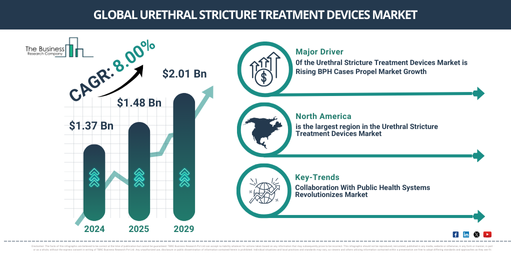
    The market for devices used in the treatment of urethral strictures has seen robust growth in recent times. The market value is set to increase from $1.37 billion in 2024 to $1.48 billion in 2025, marking a compound annual growth rate (CAGR) of 8.3%. Several factors like the heightened occurrence of urethral strictures, the growing preference for minimally invasive procedures, heightened consciousness about urological conditions, increased healthcare spending in developed regions, and enhanced diagnostics have contributed to the growth observed in the historic period.

    The market for urethral stricture treatment devices is set to experience significant growth in the upcoming years, projected to escalate to $2.01 billion by 2029 with a compound annual growth rate (CAGR) of 8.0%. The expansion during the forecast period is influenced by factors such as an increasing preference for outpatient procedures, emphasized attention to patient-centric care, the development of healthcare infrastructure in blossoming markets, a surge in trauma-related strictures cases, and healthcare organizations’ awareness initiatives. Some dominant trends for the forecast timeframe include a transition towards less invasive procedures, the application of AI in diagnostic equipment, progressive enhancements in surgical devices, breakthroughs in medical imaging methods, and an emphasis on individualized treatment strategies.

    Download a free sample to assess the report’s scope and structure:

    https://www.thebusinessresearchcompany.com/sample.aspx?id=20986&type=smp

    Which Major Market Drivers Are Expected to Boost the Growth Potential of the Urethral Stricture Treatment Devices Market?

    The urethral stricture treatment devices market is expected to be boosted by the increasing incidence of benign prostatic hyperplasia (BPH) and neurogenic bladder. BPH is a common condition among older men, where the prostate gland gets enlarged, often leading to urinary obstruction and elevating the risk of urethral strictures. The growth in BPH is primarily attributed to aging, particularly in men over 50, and its development is influenced by factors such as lifestyle, hormonal changes, and chronic conditions. Urethral stricture treatment devices are frequently used for urological conditions like BPH, where post-surgical complications or prolonged catheterization can cause the urethra to narrow. Interventions using dilators, stents, or urethrotomy tools are necessary to restore normal urinary flow in such cases. As per a report by the Royal Pharmaceutical Society, a professional body based in the UK, in September 2023, about 3 million people in the UK suffer from BPH. The condition affects around 50% of men aged 60-70 years and increases to 90% in men aged over 80 years. Consequently, the growing prevalence of BPH and neurogenic bladder is expected to stimulate the urethral stricture treatment devices market.

    Which Key Market Segments Comprise the Urethral Stricture Treatment Devices Market and Drive Its Revenue Growth?

    The urethral stricture treatment devices market covered in this report is segmented –

    1) By Product Type: Urethral Dilators, Urethral Stents, Urethral Balloon Dilation Catheters, Urinary Catheters

    2) By Stricture Location: Anterior, Posterior

    3) By End-User: Hospitals, Specialty Clinics, Other End-Users

    Subsegments:

    1) By Urethral Dilators: Semi-Rigid Urethral Dilators, Flexible Urethral Dilators, Balloon Urethral Dilators, Graded Urethral Dilators

    2) By Urethral Stents: Self-Expanding Urethral Stents, Balloon-Expandable Urethral Stents, Metallic Urethral Stents, Silicone Urethral Stents

    3) By Urethral Balloon Dilation Catheters: Single-Balloon Dilation Catheters, Double-Balloon Dilation Catheters, Coaxial Balloon Dilation Catheters, Hydrophilic-Coated Balloon Dilation Catheters

    4) By Urinary Catheters: Foley Urinary Catheters, Intermittent Urinary Catheters, External Urinary Catheters, Supra-Pubic Urinary Catheters

    Request customized data on this market:

    https://www.thebusinessresearchcompany.com/customise?id=20986&type=smp

    Which Areas Are Leading Regions in the Urethral Stricture Treatment Devices Market Expansion Across the Globe?

    North America was the largest region in the urethral stricture treatment devices market in 2024. The regions covered in the urethral stricture treatment devices market report are Asia-Pacific, Western Europe, Eastern Europe, North America, South America, Middle East, Africa.

    What Are the Key Market Trends in the Urethral Stricture Treatment Devices Market Over the Coming Years?

    Prominent businesses in the urethral stricture treatment devices market are opting for strategic partnerships to boost technological collaborations and broaden their market presence. This kind of partnership entangles a cooperative alliance between two or more entities, pooling their resources, know-how, and endeavors to accomplish shared targets or objectives. For example, in April 2024, Laborie Medical Technologies Corp., a company specializing in diagnostic and therapeutic medical technology based in the U.S., formed a partnership with the NHS Specialized Services Device Programme (SSDP), incorporating their Optilume Urethral Drug-Coated Balloon (DCB) into the program. This combined effort provides reimbursement for NHS hospitals in England, enabling broader patient reach for this innovative apparatus. Optilume merges balloon dilation with the delivery of an anti-proliferative drug to curb the relapse of urethral strictures. This low-invasive technology offers a revolutionary alternative to standard surgery or multiple treatments, answering a key requirement in the urology sphere.

    View the full report here:

    https://www.thebusinessresearchcompany.com/report/urethral-stricture-treatment-devices-global-market-report

    How Is the Urethral Stricture Treatment Devices Market Conceptually Defined?

    Urethral stricture treatment devices are medical instruments designed to treat urethral stricture, a condition where the urethra becomes narrowed, often leading to urinary retention and difficulty in urination. These devices help in widening or bypassing the narrowed area of the urethra to restore normal urine flow, with applications in both surgical and non-surgical treatment options.

    Purchase the full report and get a swift delivery:

    https://www.thebusinessresearchcompany.com/purchaseoptions.aspx?id=20986

    About The Business Research Company:

    With over 15000+ reports from 27 industries covering 60+ geographies, The Business Research Company has built a reputation for offering comprehensive, data-rich research and insights. Armed with 1,500,000 datasets, the optimistic contribution of in-depth secondary research, and unique insights from industry leaders, you can get the information you need to stay ahead in the game.

    Get in touch with us:

    The Business Research Company: https://www.thebusinessresearchcompany.com/

    Americas +1 3156230293

    Asia +44 2071930708

    Europe +44 2071930708

    Email us at info@tbrc.info

    Follow us on:

    LinkedIn: https://in.linkedin.com/company/the-business-research-company

    YouTube: https://www.youtube.com/channel/UC24_fI0rV8cR5DxlCpgmyFQ

    Global Market Model: https://www.thebusinessresearchcompany.com/global-market-model

  • Tuberculosis TherapeuticsMarket Overview 2025–2034: CAGR Trends, Long-Term Growth Paths, and Business Implications

    Tuberculosis TherapeuticsMarket Overview 2025–2034: CAGR Trends, Long-Term Growth Paths, and Business Implications

    Stay ahead with our updated market reports featuring the latest on tariffs, trade flows, and supply chain transformations.

    How Has The Tuberculosis Therapeutics Market Size Shifted, And What Is the Outlook Through 2034?

    The market size for tuberculosis therapeutics has seen a healthy surge in recent times. It is anticipated to have growth from $1.88 billion in 2024 to $2.01 billion in 2025, witnessing a compound annual growth rate (CAGR) of 6.58%. Factors that have contributed to the growth in the previous period include the escalating occurrence of tuberculosis, increasing acceptability of tuberculosis therapeutics, heightened consciousness about tuberculosis (TB), a growing number of XDR-TB cases, and an uptick in drug-resistant tuberculosis incidents.

    Expectations are high for significant growth in the tuberculosis therapeutics market size over the coming years, with predictions of a value around $2.57 billion by 2029, projecting a compound annual growth rate (CAGR) of 6.32%. This growth during the forecast period could be a result of expanding investment in healthcare infrastructure, improved education and awareness, increased spending on research and development, more approvals for various anti-TB agents, enhanced research funding, and a rising number of elderly people. The forecast period is also likely to witness notable trends such as advancements in drug development, personalised medicine, combined therapies, digital healthcare solutions, as well as the growth of AI and machine learning in drug discovery.

    Download a free sample to assess the report’s scope and structure:

    https://www.thebusinessresearchcompany.com/sample.aspx?id=20983&type=smp

    What Are the Primary Drivers Supporting the Market Growth of the Tuberculosis Therapeutics Market?

    The growth of the tuberculosis therapeutics market is projected to accelerate due to the increasing prevalence of co-infection rates (TB-HIV). Co-infection rates (TB-HIV) define the proportion of people suffering from both tuberculosis (TB) and the human immunodeficiency virus (HIV) simultaneously. The escalation of co-infection rates (TB-HIV) is triggered by the compromised immune system resulting from HIV, which heightens an individual’s vulnerability to tuberculosis. Additionally, the coinciding worldwide spread of these two epidemics among populations at high risk exacerbates the situation. By offering specialized treatment strategies targeting both TB infection and the immune suppression caused by HIV, tuberculosis therapeutics assist in managing rising co-infection rates (TB-HIV). This approach enhances overall patient prognosis and lessens the impact of both diseases. As per data provided by gov.uk, a public sector based in the UK, in October 2023, England registered 3,805 new HIV diagnoses in 2022, showing a 22% surge compared to the 3,118 cases noted in 2021. Thus, the escalating co-infection rates (TB-HIV) act as a catalyst propelling the expansion of the tuberculosis therapeutics market.

    Which Primary Segments of the Tuberculosis Therapeutics Market Are Driving Growth and Industry Transformations?

    The tuberculosis therapeutics market covered in this report is segmented –

    1) By Type: Active Tuberculosis (TB), Latent Tuberculosis (TB)

    2) By Product Type: Isoniazid, Rifampin, Pyrazinamide, Hydrazine derivatives, Miscellaneous anti-tubercular drugs, Ethambutol

    3) By Route of Administration: Oral, Parenteral, Other route of administration

    4) By Distribution Channel: Hospital Pharmacy, Retail Pharmacy, Online Pharmacy

    5) By End-User: Hospitals, Clinics, Ambulatory Surgical Centers, Other End-Users

    Subsegments:

    1) By Active Tuberculosis (TB): First-Line Drugs (Rifampicin, Isoniazid, Pyrazinamide, Ethambutol), Second-Line Drugs (Fluoroquinolones, Aminoglycosides), Combination Therapies, Drug-Resistant TB Treatments (MDR-TB, XDR-TB)

    2) By Latent Tuberculosis (TB): Isoniazid Prophylaxis, Rifampicin-Based Regimens, Rifapentine-Based Regimens, Combination Prophylactic Therapies

    Request customized data on this market:

    https://www.thebusinessresearchcompany.com/customise?id=20983&type=smp

    Which Regions Are Key Players in the Growth of the Tuberculosis Therapeutics Market?

    North America was the largest region in the tuberculosis therapeutics market in 2024. Asia-Pacific is expected to be the fastest-growing region in the forecast period. The regions covered in the tuberculosis therapeutics market report are Asia-Pacific, Western Europe, Eastern Europe, North America, South America, Middle East, Africa.

    What Are the Most Significant Market Trends in the Tuberculosis Therapeutics Market?

    Significant enterprises in the tuberculosis therapeutics market, such as Johnson & Johnson, are concentrating their efforts on establishing cutting-edge strategies like combination treatment to enhance the effectiveness of their tuberculosis products, shorten therapy duration, and fight drug-resistant tuberculosis strains. Combination therapy entails utilizing two or more diverse class medications to combat a disease with the objective of elevating treatment effectiveness, limiting resistance, and promoting better patient results. For example, in July 2024, Johnson & Johnson, a US pharmaceutical corporation, attained a remarkable achievement in tuberculosis management with the authorization of SIRTURO (bedaquiline) by the U.S. FDA and the European Commission. This innovative product is the first in more than 40 years to be explicitly crafted to combat multidrug-resistant tuberculosis (MDR-TB). The uniqueness of its mechanism involves obstructing the ATP synthase enzyme vital for energy production in TB bacteria, thereby providing a targeted and efficient treatment method. Its incorporation in combination therapies boosts the overall effectiveness of MDR-TB regimens, reduces the length of treatments, and improves adherence from patients.

    View the full report here:

    https://www.thebusinessresearchcompany.com/report/tuberculosis-therapeutics-global-market-report

    What Parameters Are Used to Define the Tuberculosis Therapeutics Market?

    Tuberculosis therapeutics refers to the pharmaceutical treatments designed to prevent and cure tuberculosis (TB), a bacterial infection caused by Mycobacterium tuberculosis. The purpose of these therapeutics is to eradicate the bacteria, reduce transmission, and improve patient outcomes, particularly for those with drug-resistant strains.

    Purchase the full report and get a swift delivery:

    https://www.thebusinessresearchcompany.com/purchaseoptions.aspx?id=20983

    About The Business Research Company:

    With over 15000+ reports from 27 industries covering 60+ geographies, The Business Research Company has built a reputation for offering comprehensive, data-rich research and insights. Armed with 1,500,000 datasets, the optimistic contribution of in-depth secondary research, and unique insights from industry leaders, you can get the information you need to stay ahead in the game.

    Get in touch with us:

    The Business Research Company: https://www.thebusinessresearchcompany.com/

    Americas +1 3156230293

    Asia +44 2071930708

    Europe +44 2071930708

    Email us at info@tbrc.info

    Follow us on:

    LinkedIn: https://in.linkedin.com/company/the-business-research-company

    YouTube: https://www.youtube.com/channel/UC24_fI0rV8cR5DxlCpgmyFQ

    Global Market Model: https://www.thebusinessresearchcompany.com/global-market-model
  • Thoracic Drainage Devices Market in Focus: Forecasting Growth Drivers, Scaling Potential, and Global Opportunities

    Thoracic Drainage Devices Market in Focus: Forecasting Growth Drivers, Scaling Potential, and Global Opportunities

    Stay ahead with our updated market reports featuring the latest on tariffs, trade flows, and supply chain transformations.

    How Fast Is The Thoracic Drainage Devices Market Expected to Grow Between 2025 And 2029?

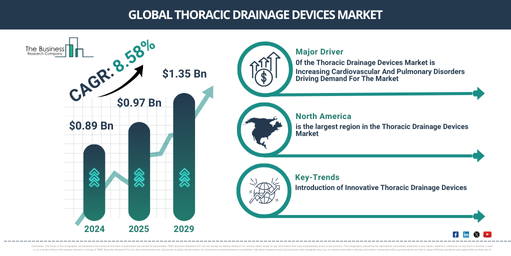
    In recent years, there has been a substantial growth in the market size of thoracic drainage devices. The anticipated growth is from $0.89 billion in 2024 to about $0.97 billion in 2025, with a compound annual growth rate (CAGR) of 8.95%. Factors contributing to this growth during the historical period include a rise in the occurrence of pulmonary ailments, an increase in the number of thoracic operations, an expanding elderly population, a heightened preference for less invasive procedures, and a surge in pneumothorax and pleural effusion cases.

    In the coming years, the market size for thoracic drainage devices is predicted to experience robust growth, expanding to $1.35 billion in 2029 at a Compound Annual Growth Rate (CAGR) of 8.58%. The predicted growth in the forthcoming period can be ascribed to factors like increased healthcare spending, enhanced understanding of post-operative care, advancements in global hospital facilities, growing need for portable drainage systems, and increased use of disposable medical devices. Key trends anticipated during the forecast period encompass medical device technological advancements, progressive developments in chest drainage systems, creation of intelligent monitoring systems, innovations in catheter and tubing materials, and launch of antimicrobial coatings for drainage devices.

    Download a free sample to assess the report’s scope and structure:

    https://www.thebusinessresearchcompany.com/sample.aspx?id=20979&type=smp

    What Are the Core Market Drivers Propelling Growth in the Thoracic Drainage Devices Industry?

    The burgeoning incidence of cardiovascular and lung disorders is projected to stimulate the expansion of the thoracic drainage devices market. These disorders encompass a variety of conditions impacting the cardiovascular system and lungs, adversely affecting respiratory and cardiovascular health. Their increasing prevalence, rooted in sedentary lifestyles, unhealthy diets, smoking, and infrequent health monitoring, prompts a rising demand for specialized treatments and preventative health measures. Thoracic drainage devices contribute to the management of these disorders by efficiently expelling excess fluid, air, or blood from the pleural or thoracic cavity, fostering optimal lung capacity and cardiovascular functionality. For example, the Australian Institute of Health and Welfare, a government agency based in Australia, reported in December 2023 that registered deaths from coronary heart disease (CHD) surged to 14,100 in 2021, with a further increase to 14,900 in 2022. In June 2024, the same agency revealed that in 2022, COPD served as the primary cause of 7,691 deaths or 29.6 deaths per 100,000 population, comprising 4.0% of all fatalities. Thus, the surging incidence of cardiovascular and lung disorders underpins the growth of the thoracic drainage devices market. Driving Market Growth for the Market is an increasing inclination for minimally invasive surgeries. These procedures involve minuscule incisions or none at all, utilizing modern tools like cameras and specialized instruments to dampen tissue damage, abbreviate recuperation periods, and minimize scarring in contrast to conventional open surgery. Their growing preference is due to their capacity to offer abbreviated recovery durations, diminished infection risk, less scarring, and shorter hospitalizations. Thoracic drainage devices are integral to minimally invasive surgeries, effectively managing pleural effusions, air leaks, and fluid accumulation, encouraging optimal lung capacity and diminishing risk of complications during recovery. For instance, in June 2024, the American Society of Plastic Surgeons, a non-profit organization based in the US, disclosed that minimally invasive procedures had experienced a 7 percent growth in 2023, outpacing the growth rate of surgical procedures by 2 percent. Therefore, the growing inclination for minimally invasive surgeries bolsters growth in the thoracic drainage devices market.

    How Is the Thoracic Drainage Devices Market Segmented?

    The thoracic drainage devices market covered in this report is segmented –

    1) By Type: Digital, Traditional

    2) By Product: Thoracic Drainage Systems, Thoracic Drainage Kits, Pleural Drainage Catheters, Other Products

    3) By Application: Cardiac Surgery, Thoracic And Pulmonary Surgery, Other Applications

    4) By End-Users: Hospitals, Ambulatory Surgical Centers, Other End-Users

    Subsegments:

    1) By Digital: Electronic Monitoring Systems, Digital Drainage Units With Real-Time Pressure Measurement, Automated Fluid Monitoring Devices

    2) By Traditional: Suction Drainage Systems, Gravity Drainage Systems, Water-Seal Chest Drains

    Request customized data on this market:

    https://www.thebusinessresearchcompany.com/customise?id=20979&type=smp

    Which Regions Are Driving the Next Phase of the Thoracic Drainage Devices Market Growth?

    North America was the largest region in the thoracic drainage devices market in 2024. The regions covered in the thoracic drainage devices market report are Asia-Pacific, Western Europe, Eastern Europe, North America, South America, Middle East, Africa.

    What Key Market Trends and Innovations Are Shaping the Future of the Thoracic Drainage Devices Industry?

    Leading corporations in the thoracic drainage devices market are striving to develop pioneering products such as evacuated drainage bottles to augment efficiency and lower infection risks during medical procedures. An evacuated drainage bottle functions as a medical appliance tasked with accumulating and storing fluid drained from wounds or surgical locations, typically using vacuum pressure, to aid healing and avert infection. For example, Merit Medical Systems Inc., an American producer of disposable medical appliances, released the Aspira evacuated drainage bottle in September 2023. This device, created for draining pleural effusions and malignant ascites, provides patients with the flexibility to self-administer treatment at home, affording enhanced comfort and command over drainage velocity and requires 23% less storage area compared to conventional drainage bottles.

    View the full report here:

    https://www.thebusinessresearchcompany.com/report/thoracic-drainage-devices-global-market-report

    How Is the Thoracic Drainage Devices Market Defined and What Are Its Core Parameters?

    Thoracic drainage devices are medical tools used to remove air, fluid, or blood from the pleural space to prevent complications like pneumothorax or pleural effusion. They typically consist of a tube inserted into the chest, connected to a collection system to facilitate continuous drainage and promote lung re-expansion.

    Purchase the full report and get a swift delivery:

    https://www.thebusinessresearchcompany.com/purchaseoptions.aspx?id=20979

    About The Business Research Company:

    With over 15000+ reports from 27 industries covering 60+ geographies, The Business Research Company has built a reputation for offering comprehensive, data-rich research and insights. Armed with 1,500,000 datasets, the optimistic contribution of in-depth secondary research, and unique insights from industry leaders, you can get the information you need to stay ahead in the game.

    Get in touch with us:

    The Business Research Company: https://www.thebusinessresearchcompany.com/

    Americas +1 3156230293

    Asia +44 2071930708

    Europe +44 2071930708

    Email us at info@tbrc.info

    Follow us on:

    LinkedIn: https://in.linkedin.com/company/the-business-research-company

    YouTube: https://www.youtube.com/channel/UC24_fI0rV8cR5DxlCpgmyFQ

    Global Market Model: https://www.thebusinessresearchcompany.com/global-market-model
  • Testicular Cancer Market Valuation Expected To Reach $4.97 Billion By 2029, Growing At A Rate Of 7.6%

    Stay ahead with our updated market reports featuring the latest on tariffs, trade flows, and supply chain transformations.

    How Has The Testicular Cancer Market Growth Evolved From 2024 To 2025, And What’s Ahead?

    Recent years have witnessed robust growth in the size of the testicular cancer market. The market, projected to escalate from $3.43 billion in 2024 to $3.71 billion in 2025, will do so at a compound annual growth rate (CAGR) of 7.9%. The historical period reveals this growth can be credited to the heightened awareness of testicular cancer, an increase in associated risk factors, larger prevalence and incidence rates of testicular cancer, as well as an increased demand for effective diagnostics.

    There’s an anticipated robust expansion in the testicular cancer market in the upcoming years. It’s projected to surge to $4.97 billion by 2029 with a compound annual growth rate (CAGR) of 7.6%. Several factors contributing to the growth during the forecast period include the rise in testicular cancer diagnosis, increasing prevalence of the condition, a growing range of treatment options, and wider use of targeted therapies. The forecast period is also expected to witness numerous trends such as advancements in treatment options, improved healthcare facilities, research and development efforts, creation of targeted medicines, and progress in clinical trials.

    Download a free sample to assess the report’s scope and structure:

    https://www.thebusinessresearchcompany.com/sample.aspx?id=20977&type=smp

    Which Factors and External Forces Are Driving Demand in the Testicular Cancer Market?

    The escalating identification of testicular cancer is projected to stimulate the advancement of the testicular cancer market. Testicular cancer, which originates in the male testicles often marked by painless lumps or swelling, is becoming increasingly diagnosed due to enhanced awareness, developed diagnostic systems, increased self-checks, and potential environmental and lifestyle influences. The testicular cancer market plays an essential role in this rise in diagnoses by funding studies, enhancing diagnostic resources, and promoting awareness campaigns for early detection. For instance, a Cancer Council Victoria report in July 2024 revealed that there were notably more diagnoses of testicular cancer in males below the age of 40, with 160 cases in 2022, compared to the 37 in the 40-49 age group, underscoring a significant disparity in diagnoses among younger and middle-aged males. Consequently, the rise in testicular cancer diagnoses is spurring the growth of the market.

    Which Segments in the Testicular Cancer Offer the Most Growth?

    The testicular cancer market covered in this report is segmented –

    1) By Treatment Type: Surgery, Chemotherapy, Radiotherapy, Immunotherapy, Targeted Therapy

    2) By Histology: Seminoma, Non-Seminoma, Mixed

    3) By Product: Tablet, Capsule, Creams

    4) By Route Of Administration: Oral, Topical

    5) By End-use: Hospitals, Clinics

    Subsegments:

    1) By Surgery: Orchiectomy, Retroperitoneal Lymph Node Dissection (RPLND)

    2) By Chemotherapy: Platinum-Based Chemotherapy, Chemotherapy Regimens (BEP regimen)

    3) By Radiotherapy: External Beam Radiation, Retroperitoneal Radiation

    4) By Immunotherapy: Immune Checkpoint Inhibitors, Cancer Vaccines

    5) By Targeted Therapy: Tyrosine Kinase Inhibitors, Monoclonal Antibodies

    Request customized data on this market:

    https://www.thebusinessresearchcompany.com/customise?id=20977&type=smp

    What Are the Fastest-Growing Geographies in the Testicular Cancer Market?

    North America was the largest region in the testicular cancer market in 2024. Asia-Pacific is expected to be the fastest-growing region in the forecast period. The regions covered in the testicular cancer market report are Asia-Pacific, Western Europe, Eastern Europe, North America, South America, Middle East, Africa.

    Which Cutting-Edge Market Trends Are Expected to Drive the Testicular Cancer Market’s Growth?

    Key players in the testicular cancer market are centering their efforts on the creation of groundbreaking products such as cell-interactive bispecific antibodies for the treatment of gynecologic and testicular cancers marked by CLDN6 positivity. A cell-interacting bispecific antibody has the ability to connect to two separate targets, enabling the stimulation of immune cells to identify and eliminate cancerous or diseased cells. To exemplify, in May 2024, Context Therapeutics Inc., a biopharmaceutical firm based in the United States, made known that its Application for Investigational New Drug (IND) for CTIM-76, a CLDN6 x CD3 T cell-interacting bispecific antibody, received clearance from the U.S. Food and Drug Administration (FDA). This approval paves the way for the company to commence a Phase 1 clinical trial to analyze CTIM-76 in patients with CLDN6-positive gynecologic and testicular cancers. The study will pinpoint dose escalation and expansion to evaluate the drug’s safety, effectiveness, and pharmacokinetics.

    View the full report here:

    https://www.thebusinessresearchcompany.com/report/testicular-cancer-global-market-report

    What Are the Key Elements That Define the Testicular Cancer Market?

    Testicular cancer is a type of cancer that originates in the testicles, which are part of the male reproductive system. It typically affects young men and is highly treatable, especially when diagnosed early, with various treatment options. Testicular cancer is relatively rare but is one of the most common cancers in young men, particularly between the ages of 15 and 35. It often presents as a lump or swelling in one testicle, sometimes accompanied by pain or discomfort.

    Purchase the full report and get a swift delivery:

    https://www.thebusinessresearchcompany.com/purchaseoptions.aspx?id=20977

    About The Business Research Company:

    With over 15000+ reports from 27 industries covering 60+ geographies, The Business Research Company has built a reputation for offering comprehensive, data-rich research and insights. Armed with 1,500,000 datasets, the optimistic contribution of in-depth secondary research, and unique insights from industry leaders, you can get the information you need to stay ahead in the game.

    Get in touch with us:

    The Business Research Company: https://www.thebusinessresearchcompany.com/

    Americas +1 3156230293

    Asia +44 2071930708

    Europe +44 2071930708

    Email us at info@tbrc.info

    Follow us on:

    LinkedIn: https://in.linkedin.com/company/the-business-research-company

    YouTube: https://www.youtube.com/channel/UC24_fI0rV8cR5DxlCpgmyFQ

    Global Market Model: https://www.thebusinessresearchcompany.com/global-market-model
  • Global Tadalafil Market Projected to Reach $8.87 Billion by 2029 at a CAGR of 12.5%

    Global Tadalafil Market Projected to Reach $8.87 Billion by 2029 at a CAGR of 12.5%

    Stay ahead with our updated market reports featuring the latest on tariffs, trade flows, and supply chain transformations.

    What is the Anticipated CAGR of the Tadalafil Market, and What Factors Will Drive It?

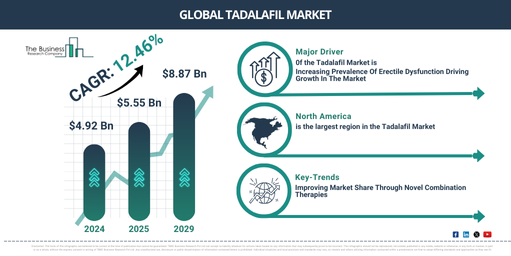
    In the recent past, the tadalafil market has witnessed rapid expansion. The projected growth tells us that this market, worth $4.92 billion in 2024, will reach a value of $5.55 billion in 2025, demonstrating a compound annual growth rate (CAGR) of 12.83%. Deeper awareness about men’s health, a surge in the consumption of pharmaceuticals, a rise in the proliferation of tadalafil, bolstered healthcare spending, and a growing older age group account for this remarkable growth in the historic period.

    The industry for tadalafil is predicted to experience swift expansion in the upcoming years, escalating to a value of $8.87 billion by 2029, reflecting a compound annual growth rate (CAGR) of 12.46%. The growth during the projection period can be linked to a rise in erectile dysfunction cases, a heightened demand for lifestyle drugs, a growing number of PAH instances, widespread acceptance of contemporary healthcare methods, and rising disposable incomes. Notable trends over the forecast span are the integration of digital health, innovative drug formulations, advancements in medication, improved drug delivery systems, and progress in medical technology.

    Download a free sample to assess the report’s scope and structure:

    https://www.thebusinessresearchcompany.com/sample.aspx?id=20974&type=smp

    What are the Fundamental Drivers and Innovations Shaping the Tadalafil Market?

    The upward trend in the occurrence of erectile dysfunction is projected to stimulate the expansion of the tadalafil market in future. Erectile dysfunction, or ED, is defined medically as a persistent incapacity to achieve or maintain an erection sufficient for satisfactory sexual engagement. The rise in the occurrence of ED is primarily tied to ageing populations, chronic illnesses, unhealthy lifestyle choices, psychological stress, and the side effects of some medications. Tadalafil addresses ED by causing the smooth muscles in the penis’ blood vessels to relax, augmenting blood flow, and facilitating the attainment and maintenance of an erection during sexual arousal. As per a report published by the National Library of Medicine, a national organization based in the US dedicated to health studies, in February 2024, the prevalence of erectile dysfunction, gauged via IIEF-5 scores, stands at 24.2% among the general populace. The occurrence markedly escalates with age, impacting 52.2% of individuals aged 75 and over and 48.0% of those in the 65-74 age bracket. Consequently, the rising prevalence of erectile dysfunction is propelling the growth of the tadalafil market.

    How Is the Tadalafil Market Segmented?

    The tadalafil market covered in this report is segmented –

    1) By Product Type: Tablets, Oral Suspensions

    2) By Distribution Channel: Hospital Pharmacy, Retail Pharmacy, Online Pharmacy

    3) By Application: Erectile Dysfunction, Pulmonary Arterial Hypertension, Benign Prostatic Hyperplasia

    Subsegments:

    1) By Tablets: 2.5 mg Tablets, 5 mg Tablets, 10 mg Tablets, 20 mg Tablets

    2) By Oral Suspensions: 2.5 mg/5 mL Oral Suspension, 10 mg/5 mL Oral Suspension, Custom Dosing Oral Suspensions

    Request customized data on this market:

    https://www.thebusinessresearchcompany.com/customise?id=20974&type=smp

    Which Regions Are Driving the Next Phase of the Tadalafil Market Growth?

    North America was the largest region in the tadalafil market in 2024. Asia-Pacific is expected to be the fastest-growing region in the forecast period. The regions covered in the tadalafil market report are Asia-Pacific, Western Europe, Eastern Europe, North America, South America, Middle East, Africa.

    What Key Trends Are Shaping the Future of the Tadalafil Market?

    Key players in the tadalafil market are concentrating on developing inventive solutions, such as combined treatments, to strengthen treatment effectiveness, enhance patient adherence, and increase their marketplace presence in addressing erectile dysfunction and pulmonary arterial hypertension. The combined treatment method involves using two or more drugs or therapies at the same time to improve therapeutic results, increase effectiveness, and manage diverse aspects of a disease. For example, in March 2024, Johnson & Johnson, a healthcare enterprise based in the US, revealed that the U.S. Food and Drug Administration (FDA) had given approval for OPSYNVI, a single-tablet therapy composed of macitentan, an endothelin receptor antagonist (ERA), and tadalafil, a phosphodiesterase 5 (PDE5) inhibitor. This new approach is designed for the long-term management of pulmonary arterial hypertension (PAH) (WHO Group I) in adults classified within WHO functional class II-III. OPSYNVI is applicable for patients new to treatment as well as those on ERA, PDE5 inhibitors, or both therapies presently. Furthermore, it proposes a simplified route for patients stabilized on macitentan 10 mg and tadalafil 40 mg (20 mg x 2) administered independently.

    View the full report here:

    https://www.thebusinessresearchcompany.com/report/tadalafil-global-market-report

    How Is the Tadalafil Market Defined and What Are Its Core Parameters?

    Tadalafil is a phosphodiesterase 5 (PDE5) inhibitor used primarily to treat erectile dysfunction and pulmonary arterial hypertension. It works by relaxing blood vessels, improving blood flow to specific areas, and helping to manage these conditions effectively.

    Purchase the full report and get a swift delivery:

    https://www.thebusinessresearchcompany.com/purchaseoptions.aspx?id=20974

    About The Business Research Company:

    With over 15000+ reports from 27 industries covering 60+ geographies, The Business Research Company has built a reputation for offering comprehensive, data-rich research and insights. Armed with 1,500,000 datasets, the optimistic contribution of in-depth secondary research, and unique insights from industry leaders, you can get the information you need to stay ahead in the game.

    Get in touch with us:

    The Business Research Company: https://www.thebusinessresearchcompany.com/

    Americas +1 3156230293

    Asia +44 2071930708

    Europe +44 2071930708

    Email us at info@tbrc.info

    Follow us on:

    LinkedIn: https://in.linkedin.com/company/the-business-research-company

    YouTube: https://www.youtube.com/channel/UC24_fI0rV8cR5DxlCpgmyFQ

    Global Market Model: https://www.thebusinessresearchcompany.com/global-market-model
  • Surgical Lasers Market Insights: In-Depth Look at Growth Trends, Market Size, and Opportunities for 2025-2034

    Surgical Lasers Market Insights: In-Depth Look at Growth Trends, Market Size, and Opportunities for 2025-2034

    Stay ahead with our updated market reports featuring the latest on tariffs, trade flows, and supply chain transformations.

    What Are the Projected Market Size and Growth Rates for the Surgical Lasers Market From 2025 To 2029?

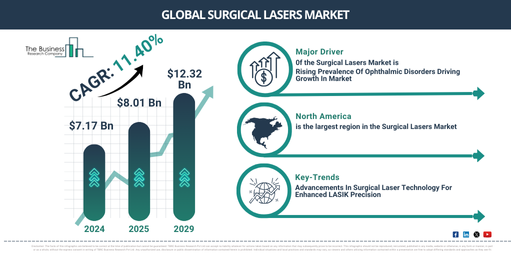
    In the past few years, the surgical lasers market has experienced substantial growth, with its value expected to increase from $7.17 billion in 2024 to $8.01 billion in 2025, reflecting a compound annual growth rate (CAGR) of 11.7%. Several factors have contributed to the growth recorded during the historic period, including the technological advancements in CO₂ lasers for more accurate surgeries; the employment of argon lasers in the field of ophthalmology; the advent of multifunctional diode lasers; progress in excimer lasers for eye surgeries; the deployment of cooling systems in laser apparatus; the presentation of fibre-optic laser delivery; the widening of laser uses in dentistry; enhancements in the precision and targeting of lasers; the development of high-powered lasers for cancer treatments; and the ongoing investment in research and development for less invasive laser systems.

    In the next few years, the market size for surgical lasers is anticipated to experience swift expansion, eventually reaching $12.32 billion by 2029 with a compound annual growth rate (CAGR) of 11.4%. Various factors are expected to fuel this growth within the forecast period such as the evolution of AI-integrated laser systems, advancements in compact and portable laser tools, enhanced safety and efficiency of laser systems, rising traction for photothermal and photochemical therapies, the creation of multifunctional laser platforms, and the incorporation of Internet of Things (IoT) in laser systems. Additionally, an upsurge in real-time imaging for laser guidance, and globally increasing demand for minimally invasive treatments also contribute. Noteworthy trends within this period comprise quicker approvals for AI-integrated mechanisms, incentives for research and development in laser technology, embracement of robotic-assisted surgical lasers, and product innovations.

    Download a free sample to assess the report’s scope and structure:

    https://www.thebusinessresearchcompany.com/sample.aspx?id=20970&type=smp

    What External and Internal Drivers Are Contributing to the Growth of the Surgical Lasers Market?

    The escalating occurrence of eye-related diseases is predicted to boost the surgical laser market’s growth in the future. These diseases, collectively called ophthalmic disorders, affect not only the eyes but also related structures such as eyelids, tear ducts, optic nerves, and adjacent tissues. The reasons for the increasing prevalence of these disorders are numerous, including an aging population, longer screen exposure time, environmental pollution, genetic factors, and lifestyle alterations. These factors lead to conditions like cataracts, glaucoma, and macular degeneration. Surgical lasers have been instrumental in treating these conditions by producing precise light energy to target specific areas, allowing for minimally invasive procedures that lower recovery periods, reduce complications and enhance visual outcomes. As a result, the quality of life improves for those affected by such conditions. According to a 2024 report by the World Health Organization (WHO), a specialized United Nations agency for global health located in Switzerland, more than 2.2 billion individuals worldwide experienced vision impairment, whether near or distant. Prominent causes included cataracts (94 million cases), refractive errors (88.4 million), age-related macular degeneration (8 million), glaucoma (7.7 million), and diabetic retinopathy (3.9 million). Consequently, the surgical lasers market is getting a significant push from the increased prevalence of optical disorders.

    What Segment Types Define the Surgical Lasers Market Structure?

    The surgical lasers market covered in this report is segmented –

    1) By Type: Carbon Dioxide Lasers, Argon Lasers, ND:Yag Lasers, Diode Lasers, Other Surgical Lasers Connected Sensors

    2) By Procedure Type: Open Surgery, Laparoscopic Surgery, Percutaneous Surgery

    3) Application: Ophthalmology, Dermatology, Dentistry, Urology, Cardiology, Gynecology, Oncology, Other Applications

    4) By End-Use: Hospitals, Specialty Clinics, Ambulatory Surgical Centers

    Subsegments:

    1) By Carbon Dioxide Lasers: Laser Scalpel Systems, CO2 Laser Resurfacing Systems, CO2 Laser Ablation Systems

    2) By Argon Lasers: Laser Photocoagulation Systems, Retinal Phototherapy Lasers, Laser Surgical Systems

    3) By ND:YAG Lasers: Laser Lithotripsy Systems, Laser Hair Removal Systems, Laser Coagulation Systems

    4) By Diode Lasers: Diode Laser For Soft Tissue Surgery, Diode Laser For Dental Applications, Diode Laser For Aesthetic Treatments

    5) By Other Surgical Lasers Connected Sensors: Holmium Lasers For Urology, KTP Lasers For Endoscopic Surgery, Alexandrite Lasers For Dermatology, Excimer Lasers For Ophthalmology

    Request customized data on this market:

    https://www.thebusinessresearchcompany.com/customise?id=20970&type=smp

    Which Geographic Areas Hold the Strongest Growth Potential in the Surgical Lasers Market?

    North America was the largest region in the surgical lasers market in 2024. Asia-Pacific is expected to be the fastest-growing region in the forecast period. The regions covered in the surgical lasers market report are Asia-Pacific, Western Europe, Eastern Europe, North America, South America, Middle East, Africa.

    What Key Trends Are Shaping the Future of the Surgical Lasers Market?

    In the surgical lasers market, leading companies are concentrating their efforts on creating highly sophisticated technologies such as the ELITA Laser Technology. This is intended to boost the trust of surgeons and provide improved visual results, as well as expedite patient recovery from LASIK procedures. The ELITA Laser Technology is a cutting-edge femtosecond laser system specifically designed to provide precision in LASIK eye surgeries. For example, in April 2023, US-based medical device manufacturer Johnson & Johnson, received FDA clearance for its ELITA Femtosecond Laser. This state-of-the-art laser technology aims to fabricate accurate LASIK flaps. The ELITA Femtosecond Laser is equipped with low-energy pulses, ultra-fast repetition rates, and sub-micron level accuracy to enhance surgical precision, facilitating smoother flap lifts, and ensuring extraordinary visual results. The user-friendly design of this product promotes efficient practice management, speedy setup and shorter recovery times for patients.

    View the full report here:

    https://www.thebusinessresearchcompany.com/report/surgical-lasers–global-market-report

    What Is the Definition of the Surgical Lasers Market?

    Surgical lasers are specialized medical devices that use focused light energy to perform precise surgical procedures, such as cutting, coagulating, or vaporizing tissue. These devices are widely used across various medical specialties for cutting, vaporizing, or coagulating tissue with high precision and minimal damage to surrounding areas.

    Purchase the full report and get a swift delivery:

    https://www.thebusinessresearchcompany.com/purchaseoptions.aspx?id=20970

    About The Business Research Company:

    With over 15000+ reports from 27 industries covering 60+ geographies, The Business Research Company has built a reputation for offering comprehensive, data-rich research and insights. Armed with 1,500,000 datasets, the optimistic contribution of in-depth secondary research, and unique insights from industry leaders, you can get the information you need to stay ahead in the game.

    Get in touch with us:

    The Business Research Company: https://www.thebusinessresearchcompany.com/

    Americas +1 3156230293

    Asia +44 2071930708

    Europe +44 2071930708

    Email us at info@tbrc.info

    Follow us on:

    LinkedIn: https://in.linkedin.com/company/the-business-research-company

    YouTube: https://www.youtube.com/channel/UC24_fI0rV8cR5DxlCpgmyFQ

    Global Market Model: https://www.thebusinessresearchcompany.com/global-market-model
  • Major Drivers Propelling the Growth oh theSpinal Stenosis Devices Market Forward: Rising Incidence Of Spinal Injuries Expected To Drive Demand For Market

    Major Drivers Propelling the Growth oh theSpinal Stenosis Devices Market Forward: Rising Incidence Of Spinal Injuries Expected To Drive Demand For Market

    Stay ahead with our updated market reports featuring the latest on tariffs, trade flows, and supply chain transformations.

    How Has The Spinal Stenosis Devices Market Growth Evolved From 2024 To 2025, And What’s Ahead?

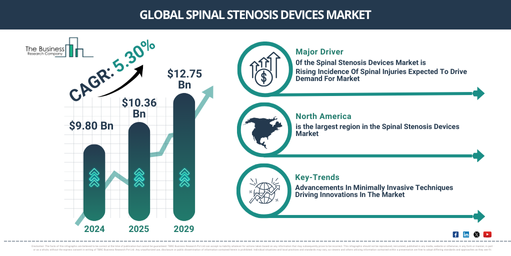
    In the past few years, the market size for spinal stenosis devices has witnessed robust growth. It is predicted to increase from $9.80 billion in 2024 to about $10.36 billion in 2025, with a compound annual growth rate (CAGR) of 5.7%. Factors contributing to the growth during the historic period include an upturn in spinal stenosis cases among the expanding elderly population, a rise in spinal disorders and degenerative diseases, a growing incidence of spinal injury, an increasing prevalence of spinal diseases, and growing spinal disorders in both, the young and older population.

    In the following years, the market size for spinal stenosis devices is predicted to experience substantial growth. It is expected to reach $12.75 billion by 2029, with a compound annual growth rate (CAGR) of 5.3%. A surge in the demand for minimally invasive surgical procedures, a heightened focus on minimally invasive spine surgery (MISS), increased healthcare spending, and investments in developing markets collectively contribute to this projected growth. During the forecast period, significant trends could include progress in spinal implant technology and surgical methods, increased usage of biodegradable and 3D-printed implants, as well as collaboration and innovation in product development.

    Download a free sample to assess the report’s scope and structure:

    https://www.thebusinessresearchcompany.com/sample.aspx?id=20966&type=smp

    Which Major Market Drivers Are Expected to Boost the Growth Potential of the Spinal Stenosis Devices Market?

    The upward trend in spinal injury cases is anticipated to boost the growth of the spinal stenosis devices market in future. Spinal injuries, defined as traumatic damage that disrupts the sensory and motor signal conduction to the spinal cord or nearby structures, can result in possible loss of motion, function, and sensation under the injury site. A surge in spinal injuries is primarily due to an escalation in traumatic incidents like car accidents and falls, particularly among the elderly, as well as an increased occurrence of non-traumatic reasons like degenerative diseases and problems linked to aging populations. Spinal stenosis devices offer precise relief and structural reinforcement by easing nerve compression, improving spinal alignment, and increasing mobility, considerably enhancing the life quality of patients with spinal injuries. For example, the National Spinal Cord Injury Statistical Center, a US-based entity that disseminates information about the spinal cord, reported in May 2023 that 18,000 new spinal injury cases are documented every year, presenting an annual incidence rate of 54 per 1 million. It is also projected that around 302,000 people in the USA have suffered a traumatic spinal cord injury. Therefore, the increasing incidence of spinal injuries is the key driver of the spinal stenosis devices market expansion.

    Which Key Market Segments Comprise the Spinal Stenosis Devices Market and Drive Its Revenue Growth?

    The spinal stenosis devices market covered in this report is segmented –

    1) By Product Type: Interspinous Spacers, Stabilization Systems, Spinal Arthroplasty System, Interbody Fusion Devices

    2) By Application: Lumbar Spinal Stenosis, Cervical Spinal Stenosis, Thoracic Spinal Stenosis

    3) By End User: Hospitals, Ambulatory Surgical Centres, Others End Users

    Subsegments:

    1) By Interspinous Spacers: Single-Level Spacers, Multi-Level Spacers, Expandable Spacers

    2) By Stabilization Systems: Pedicle Screw Systems, Lateral Screw Systems, Dynamic Stabilization Systems

    3) By Spinal Arthroplasty System: Cervical Arthroplasty Systems, Lumbar Arthroplasty Systems, Artificial Disc Replacements

    4) By Interbody Fusion Devices: PEEK (Polyetheretherketone) Devices, Titanium Interbody Devices, Bioactive And Biocompatible Devices

    Request customized data on this market:

    https://www.thebusinessresearchcompany.com/customise?id=20966&type=smp

    Which Areas Are Leading Regions in the Spinal Stenosis Devices Market Expansion Across the Globe?

    North America was the largest region in the spinal stenosis devices market in 2024. Asia-Pacific is expected to be the fastest-growing region in the forecast period. The regions covered in the spinal stenosis devices market report are Asia-Pacific, Western Europe, Eastern Europe, North America, South America, Middle East, Africa.

    What Long-Term Trends Are Transforming the Competitive Landscape of the Spinal Stenosis Devices Market?

    Firms operating within the spinal stenosis devices field are prioritizing technological advancements, including minimally invasive surgical methods to improve surgical accuracy and decrease recovery periods. These procedures utilise smaller incisions or ‘ports’ to reach internal organs, greatly reducing the bodily trauma involved. Such methods demand specialized tools such as cameras and trocars, facilitating operations with less pain, shorter recovery times, and potential complications compared to conventional open surgery. For example, in January 2024, Accelus, an American medical technology enterprise specialising in innovative spinal surgery solutions, introduced the linesider modular-cortical system. This system allows surgeons to place the screw shanks at the early stages of spinal implant procedures, and tailor constructs with modular tulips and rods. It provides both open modular and cortical modular sets to suit different surgical approaches. Spinal implants play a crucial role in stabilizing the spine during surgical processes, aiding in the correction of deformities, fractures, or degenerative diseases, thereby enhancing the patient’s functionality and lifestyle quality.

    View the full report here:

    https://www.thebusinessresearchcompany.com/report/spinal-stenosis-devices-global-market-report

    How Is the Spinal Stenosis Devices Market Conceptually Defined?

    Spinal stenosis devices are medical tools or implants designed to relieve pressure on the spinal cord or nerves caused by the narrowing of the spinal canal. These devices include interspinous spacers, decompression systems, and stabilizing implants to improve mobility and reduce pain.

    Purchase the full report and get a swift delivery:

    https://www.thebusinessresearchcompany.com/purchaseoptions.aspx?id=20966

    About The Business Research Company:

    With over 15000+ reports from 27 industries covering 60+ geographies, The Business Research Company has built a reputation for offering comprehensive, data-rich research and insights. Armed with 1,500,000 datasets, the optimistic contribution of in-depth secondary research, and unique insights from industry leaders, you can get the information you need to stay ahead in the game.

    Get in touch with us:

    The Business Research Company: https://www.thebusinessresearchcompany.com/

    Americas +1 3156230293

    Asia +44 2071930708

    Europe +44 2071930708

    Email us at info@tbrc.info

    Follow us on:

    LinkedIn: https://in.linkedin.com/company/the-business-research-company

    YouTube: https://www.youtube.com/channel/UC24_fI0rV8cR5DxlCpgmyFQ

    Global Market Model: https://www.thebusinessresearchcompany.com/global-market-model

  • Critical Market Drivers Shaping the Outlook for Spinal Muscular Atrophy Market from 2025-2034: Impact Of Rising Prevalence Of Rare Genetic Diseases On the Market

    Critical Market Drivers Shaping the Outlook for Spinal Muscular Atrophy Market from 2025-2034: Impact Of Rising Prevalence Of Rare Genetic Diseases On the Market

    Stay ahead with our updated market reports featuring the latest on tariffs, trade flows, and supply chain transformations.

    What is the Projected CAGR for the Spinal Muscular Atrophy Market Size from 2025 to 2034?

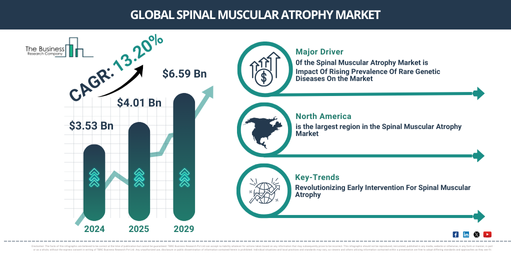
    The market for spinal muscular atrophy has experienced swift expansion in recent times. Its growth is projected to increase from $3.53 billion in 2024 to $4.01 billion in 2025, marking a compound annual growth rate (CAGR) of 13.5%. The notable growth during the historical period is due to factors such as enhanced diagnosis and early detection efforts, an increasing occurrence of rare genetic diseases, advancements in healthcare infrastructure, support from government and regulatory bodies, and the rise in unfulfilled healthcare requirements.

    Anticipated in the coming years is a swift upsurge in the market size of spinal muscular atrophy. A compound annual growth rate (CAGR) of 13.2% is forecasted, propelling the market to reach $6.59 billion by 2029. The projected growth within this period can be credited to factors like enhanced awareness and diagnosis rates, improved accessibility of treatment, rising investments in healthcare regarding rare diseases, a conducive regulatory climate, and escalating healthcare expenditure. Key trends predicted for the forecast period involve progress in oral therapies, the application of gene therapy, advancements in drug delivery technology, the incorporation of artificial intelligence in the development of SMA treatment, and gene editing technologies.

    Download a free sample to assess the report’s scope and structure:

    https://www.thebusinessresearchcompany.com/sample.aspx?id=20965&type=smp

    What Are the Core Growth Drivers Propelling the Spinal Muscular Atrophy Market Forward?

    The growth of the spinal muscular atrophy market is set to be largely influenced by the increased occurrence of uncommon genetic illnesses. These disorders, which only affect a small demographic due to gene mutations, often lead to significant, ongoing health challenges. The upsurge in the occurrence of such rare genetic conditions can be linked to enhanced diagnostic tools, a greater public consciousness, and easier access to genetic testing, which contribute to an increased number of diagnosed and reported cases. Spinal muscular atrophy (SMA) represents an example of the complexities and potential associated with understanding inherited diseases. Furthering the investigation into genetic disorders is therefore of vital importance. For instance, a report from the Office for National Statistics, a UK government department, reveals that as of July 2023, SMA, which affects between 1 in 10,000 and 20,000 live births with over 95% of sufferers being homozygous for SMN1 deletion, has been precisely recorded due to genetic testing of the SMN1 gene. As such, the increasing occurrence of rare genetic conditions is set to fuel the growth of the spinal muscular atrophy market.

    What Segment Types Define the Spinal Muscular Atrophy Market Structure?

    The spinal muscular atrophy market covered in this report is segmented –

    1) By Type: Type 1 (Severe), Type 2 (Intermediate), Type 3 (Mild), Type 4 (Adult)

    2) By Age: Pediatric, Adults

    3) By Treatment: Drug Therapy, Gene Therapy

    4) By End User: Hospital pharmacy, Online pharmacy, Retail pharmacy

    Subsegments:

    1) By Type 1 (Severe): Infantile-Onset SMA, Severe Progressive SMA

    2) By Type 2 (Intermediate): Early-Onset SMA, Non-progressive SMA

    3) By Type 3 (Mild): Juvenile-Onset SMA, Mild Progressive SMA

    4) By Type 4 (Adult): Adult-Onset SMA, Late-Onset SMA

    Request customized data on this market:

    https://www.thebusinessresearchcompany.com/customise?id=20965&type=smp

    Which Geographic Areas Hold the Strongest Growth Potential in the Spinal Muscular Atrophy Market?

    North America was the largest region in the spinal muscular atrophy market in 2024. Asia-Pacific is expected to be the fastest-growing region in the forecast period. The regions covered in the spinal muscular atrophy market report are Asia-Pacific, Western Europe, Eastern Europe, North America, South America, Middle East, Africa.

    What Key Market Trends and Innovations Are Shaping the Future of the Spinal Muscular Atrophy Industry?

    Notable businesses in the spinal muscular atrophy industry are working on the creation of novel items like dry syrup to provide better medication adherence and simplify administration for pediatric patients and others who find it challenging to swallow. Dry syrup refers to a powdery drug that is blended with water prior to consumption. This medication is primarily prescribed to infants and patients having trouble swallowing pills or capsules. In September 2024, for example, the Japan-centric pharmaceutical firm Chugai Pharmaceutical Co., Ltd. received authorization from the Ministry of Health, Labour and Welfare of Japan for its expanded drug indication, Evrysdi (risdiplam). This approval makes it possible for the drug to be used in unsymptomatic spinal muscular atrophy (SMA) cases and permits dosage to infants under two months old. This key development allows the commencement of treatment before the manifestation of symptoms, potentially boosting therapeutic results for affected babies. The approval was backed by findings from the RAINBOWFISH research which evaluated the safety and effectiveness of Evrysdi in infants diagnosed with SMA who do not have symptoms yet. Results indicated that the infants who received the treatment reached developmental milestones such as unsupported sitting and enhanced motor abilities by 12 months. This emphasizes the drug’s potential to alter the progression of this disease if given early.

    View the full report here:

    https://www.thebusinessresearchcompany.com/report/spinal-muscular-atrophy-global-market-report

    What Is the Definition of the Spinal Muscular Atrophy Market?

    Spinal muscular atrophy (SMA) is a genetic neuromuscular disorder characterized by the progressive loss of motor neurons in the spinal cord, leading to muscle weakness and atrophy. It is caused by mutations in the SMN1 gene, resulting in insufficient survival motor neuron (SMN) protein. SMA affects voluntary muscle movements, particularly those involved in walking, swallowing, and breathing.

    Purchase the full report and get a swift delivery:

    https://www.thebusinessresearchcompany.com/purchaseoptions.aspx?id=20965

    About The Business Research Company:

    With over 15000+ reports from 27 industries covering 60+ geographies, The Business Research Company has built a reputation for offering comprehensive, data-rich research and insights. Armed with 1,500,000 datasets, the optimistic contribution of in-depth secondary research, and unique insights from industry leaders, you can get the information you need to stay ahead in the game.

    Get in touch with us:

    The Business Research Company: https://www.thebusinessresearchcompany.com/

    Americas +1 3156230293

    Asia +44 2071930708

    Europe +44 2071930708

    Email us at info@tbrc.info

    Follow us on:

    LinkedIn: https://in.linkedin.com/company/the-business-research-company

    YouTube: https://www.youtube.com/channel/UC24_fI0rV8cR5DxlCpgmyFQ

    Global Market Model: https://www.thebusinessresearchcompany.com/global-market-model