Author: Marketing Posting

  • Strategic Growth Drivers Shaping the Triple Negative Breast Cancer Market Outlook 2025- 2034:Improvement In Healthcare Facilities Drives Growth Of The Market

    Strategic Growth Drivers Shaping the Triple Negative Breast Cancer Market Outlook 2025- 2034:Improvement In Healthcare Facilities Drives Growth Of The Market

    Our market reports now include the latest updates on global tariffs, trade impacts, and evolving supply chain dynamics.

    What Are the Projected Market Size and Growth Rates for the Triple Negative Breast Cancer Market From 2025 To 2029?

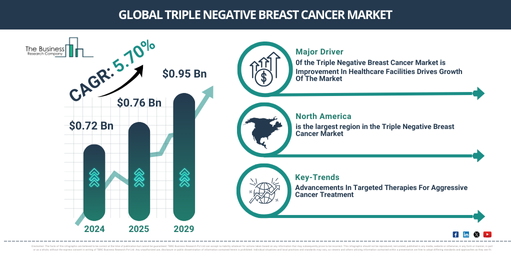
    In recent times, the market size for triple negative breast cancer has seen substantial growth. It is projected to escalate from $0.72 billion in 2024 to around $0.76 billion in 2025, at a compound annual growth rate (CAGR) of 6.1%. Factors driving this growth during the historical period include a rise in female population, heightened demand for TNBC remedies, increasing cognizance about the importance of early breast cancer detection, a growing number of patients, and an uptick in healthcare expenditure.

    Expectations are high for robust expansion in the triple negative breast cancer market in the coming years, with the market value projected to reach $0.95 billion in 2029 at a compound annual growth rate (CAGR) of 5.7%. Factors such as rising instances of breast cancer, an upward trend in triple-negative breast cancer cases, advancements in healthcare infrastructure, escalated research and exploratory strides, coupled with an increase in her2-positive breast cancer, contribute to this forecasted growth. The period is likely to witness significant trends including, but not limited to, novel tnbc treatments, enhancements and advancements in radiation techniques, technological breakthroughs in diagnosis, a rising demand for personalised medicine, and product innovation.

    Download a free sample to assess the report’s scope and structure:

    https://www.thebusinessresearchcompany.com/sample.aspx?id=21308&type=smp

    Which Factors and External Forces Are Driving Demand in the Triple Negative Breast Cancer Market?

    The advancement in healthcare facilities is anticipated to boost the expansion of the triple negative breast cancer market in the future. These facilities encompass entities like hospitals, clinics, diagnostic centres that provide medical care, support and services to patients. The betterment of healthcare facilities chalks up to factors like uplifted investment in healthcare infrastructure, emphasis on care centred around patients, population boost, and aging. Enhanced healthcare facilities buttress the fight against triple-negative breast cancer through the provision of access to cutting-edge diagnostic technologies, personalised therapy options, teams that entail a variety of medical disciplines, and superior patient education. This ultimately elevates the early detection rates, effectiveness of treatment, and overall survival rates of patients. Citing an example, in May 2023, as per the data released by the American Health Care Association, a non-profit organisation based in the US, the number of hospitals in the United States stood at 6,129, exhibiting an uptick of 0.591% compared to the previous year, when the tally was 6,093. Hence, the enhancement of healthcare facilities is fueling the growth of the triple negative breast cancer market.

    Which Segments in the Triple Negative Breast Cancer Offer the Most Growth?

    The triple negative breast cancer market covered in this report is segmented –

    1) By Treatment Type: Chemotherapy, Immunotherapy, Targeted Therapy, Surgery, Radiation Therapy, Other Treatment Types

    2) By Type Of Test: Imaging Techniques, Assays, Breast Biopsy

    3) By End-User: Hospitals, Specialty Clinics, Ambulatory Surgical Centers, Other End-Users

    Subsegments:

    1) By Chemotherapy: Anthracyclines-based Chemotherapy, Taxane-based Chemotherapy, Platinum-based Chemotherapy

    2) By Immunotherapy: Checkpoint Inhibitors, Cancer Vaccines

    3) By Targeted Therapy: PARP Inhibitors, VEGF Inhibitors, CDK4 Or CDK6 Inhibitors

    4) By Surgery: Mastectomy, Lumpectomy, Lymph Node Dissection

    5) By Radiation Therapy: External Beam Radiation, Brachytherapy

    6) By Other Treatment Types: Hormone Therapy, Hyperthermia Therapy, Stem Cell Therapy

    Request customized data on this market:

    https://www.thebusinessresearchcompany.com/customise?id=21308&type=smp

    What Are the Fastest-Growing Geographies in the #Which Factors and External Forces Are Driving Demand in the Triple Negative Breast Cancer Market?# Market?

    North America was the largest region in the triple negative breast cancer market in 2024. Asia-Pacific is expected to be the fastest-growing region in the forecast period. The regions covered in the triple negative breast cancer market report are Asia-Pacific, Western Europe, Eastern Europe, North America, South America, Middle East, Africa.

    Which Cutting-Edge Market Trends Are Expected to Drive theTriple Negative Breast Cancer Market’s Growth?

    Major businesses in the triple-negative breast cancer market are putting their efforts into creating new products like small molecule drugs. These drugs can effectively target a variety of diseases with precision and efficacy. With their low molecular weight, small molecule drugs can efficiently penetrate cells and alter biological processes, making them potent in targeting specific illnesses, including cancer and infectious diseases. In December 2024, for example, Lantern Pharma Inc., a US-based clinical biotechnology firm, presented its investigational drug LP-184 for Triple Negative Breast Cancer treatment, which has received Fast Track Category approval from the Food and Drug Administration (FDA), a US government agency. LP-184, a next-generation acylfulvene and small molecule drug, is designed to inflict selective DNA damage in cancer cells that overly express specific biomarkers or carry mutations in DNA damage repair pathways. LP-184, used alongside Lantern’s RADR AI platform, can effectively identify patient populations and cancer types that are most likely to respond to treatment. Not only is it being tested on several solid tumors with nanomolar potency, but LP-184 has also shown potential in treating drug-resistant cancers, making it a possible groundbreaking development in targeted cancer therapy.

    View the full report here:

    https://www.thebusinessresearchcompany.com/report/triple-negative-breast-cancer-global-market-report

    What Are the Key Elements That Define the Triple Negative Breast Cancer Market?

    Triple-negative breast cancer is an aggressive and fast-growing subtype of breast cancer that lacks estrogen receptors (ER), progesterone receptors (PR), and human epidermal growth factor receptor 2 (HER2), making it unresponsive to hormonal therapies or HER2-targeted treatments. Compared to other forms of breast cancer, it is more aggressive and more difficult to cure. TNBC doesn’t respond to hormonal therapy or targeted treatments like HER2 inhibitors. TNBC is more common in younger women, African American women, and those with BRCA1 mutations, confirming the genetic predisposition link.

    Purchase the full report and get a swift delivery:

    https://www.thebusinessresearchcompany.com/purchaseoptions.aspx?id=21308

    About The Business Research Company:

    With over 15000+ reports from 27 industries covering 60+ geographies, The Business Research Company has built a reputation for offering comprehensive, data-rich research and insights. Armed with 1,500,000 datasets, the optimistic contribution of in-depth secondary research, and unique insights from industry leaders, you can get the information you need to stay ahead in the game.

    Get in touch with us:

    The Business Research Company: https://www.thebusinessresearchcompany.com/

    Americas +1 3156230293

    Asia +44 2071930708

    Europe +44 2071930708

    Email us at info@tbrc.info

    Follow us on:

    LinkedIn: https://in.linkedin.com/company/the-business-research-company

    YouTube: https://www.youtube.com/channel/UC24_fI0rV8cR5DxlCpgmyFQ

    Global Market Model: https://www.thebusinessresearchcompany.com/global-market-model

  • Major Drivers Propelling the Growth oh theTrigeminal Neuralgia Treatment Market Forward: Rising Prevalence Of Neurological Disorders Fuels Demand For Market

    Major Drivers Propelling the Growth oh theTrigeminal Neuralgia Treatment Market Forward: Rising Prevalence Of Neurological Disorders Fuels Demand For Market

    Our market reports now include the latest updates on global tariffs, trade impacts, and evolving supply chain dynamics.

    What Is the Estimated Market Size of the Trigeminal Neuralgia Treatment Market In 2029?

    In the recent past, the market for trigeminal neuralgia treatment has seen significant growth. The market size is projected to increase from $0.68 billion in 2024 to $0.73 billion in 2025, experiencing a compound annual growth rate (CAGR) of 7.1%. The surge during the historic period can be linked to the mounting occurrence of chronic illnesses, rising instances of neurological disorders and trigeminal neuralgia, escalating demand for treatments that are minimally invasive, and a heightened need for surgeries that follow the same principle.

    The market size of treatments for trigeminal neuralgia is predicted to experience considerable expansion in the coming years, reaching a value of $0.95 billion in 2029 with a compound annual growth rate (CAGR) of 6.7%. This rise during the projected period can be credited to the enhanced comprehension of trigeminal neuralgia among medical staff and ordinary citizens, a surge in TN cases, an expanding elderly population, escalating healthcare spending, and a growth in identified cases. Predominant trends in the predicted period comprise of developments in neuromodulation procedures, progress in TENS technology, enhancements in medicinal exploration and technology, embracement of minimally invasive surgical methods, and progresses in digital health technologies.

    Download a free sample to assess the report’s scope and structure:

    https://www.thebusinessresearchcompany.com/sample.aspx?id=21307&type=smp

    Which Major Market Drivers Are Expected to Boost the Growth Potential of the Trigeminal Neuralgia Treatment Market?

    The surge in instances of neurological conditions is predicted to fuel the expansion of the market for trigeminal neuralgia treatments. Neurological conditions are those that impact the nervous system, encompassing the brain, spinal cord, and nerves. The surging incidence of such disorders can be linked to several causes such as genetic susceptibility, infection, trauma, toxic substances, autoimmune reactions, and deterioration. The treatment of trigeminal neuralgia aids patients with neurological diseases by alleviating intense facial discomfort, minimizing nerve inflammation, improving life quality, assisting in pain management, and averting additional neurological damage. For example, in April 2022, the Belgium-based non-profit organization, the European Brain Council, stated that more than 600 neurological diseases and approximately 300 psychiatric conditions afflict millions worldwide, including 65 million individuals with epilepsy. In Europe, there are 10.5 million people suffering from dementia, and this figure is predicted to increase to 18.7 million by 2050. Hence, the escalating occurrence of neurological disorders is projected to spur the growth of the trigeminal neuralgia treatment market.

    Which Key Market Segments Comprise the Trigeminal Neuralgia Treatment Market and Drive Its Revenue Growth?

    The trigeminal neuralgia treatment market covered in this report is segmented –

    1) By Treatment Type: Medications, Surgery, Other Treatment Types

    2) By Distribution Channel: Hospital Pharmacies, Retail Pharmacies, Online Pharmacies

    3) By End-User: Hospitals, Specialty Clinics, Ambulatory Surgical Centers, Other End-Users

    Subsegments:

    1) By Medications: Anticonvulsants, Muscle Relaxants, Antidepressants

    2) By Surgery: Microvascular Decompression Surgery, Gamma Knife Radiosurgery, Rhizotomy

    3) By Other Treatment Types: Nerve Blocks, Stereotactic Radiosurgery, Physical Therapy

    Request customized data on this market:

    https://www.thebusinessresearchcompany.com/customise?id=21307&type=smp

    Which Areas Are Leading Regions in the Trigeminal Neuralgia Treatment Market Expansion Across the Globe?

    North America was the largest region in the trigeminal neuralgia treatment market in 2024. Asia-Pacific is expected to be the fastest-growing region in the forecast period. The regions covered in the trigeminal neuralgia treatment market report are Asia-Pacific, Western Europe, Eastern Europe, North America, South America, Middle East, Africa.

    What Are the Key Market Trends in theTrigeminal Neuralgia Treatment Market Over the Coming Years?

    Leading corporations in the trigeminal neuralgia treatment market are concentrating on submitting new drug (IND) applications to gain approval from relevant authorities and subsequently enlarge their market presence. The submission of an investigational new drug (IND) application is a request by a pharmaceutical firm to regulatory bodies for clearance to commence human trials of a new drug, with the intended purpose of determining its safety, efficacy, and proper dosage. For example, Noema Pharma, a Swiss-based biotech firm in its clinical stage, obtained an Investigational New Drug (IND) application in February 2022 from the US government’s Food and Drug Administration (FDA) for the commencement of a Phase 2b clinical trial of the mGluR5 inhibitor NOE-101 in trigeminal neuralgia (TN), using LibraTN. The LibraTN is a twenty-four-week, multicentre, placebo-controlled study aiming to evaluate the effectiveness and safety of NOE-101 in adults with TN-associated pain. The findings of this study are projected to be available in the first half of 2024. Furthermore, the FDA has granted a fast track designation to basimglurant (NOE-101) to fast-track its development and evaluation.

    View the full report here:

    https://www.thebusinessresearchcompany.com/report/trigeminal-neuralgia-treatment-global-market-report

    How Is the Trigeminal Neuralgia Treatment Market Conceptually Defined?

    Trigeminal neuralgia treatment involves medical strategies to manage the severe, sharp facial pain caused by trigeminal neuralgia, which affects the trigeminal nerve. The main goal of trigeminal neuralgia treatment is to alleviate pain, reduce the frequency and intensity of episodes, and address the underlying nerve irritation, ultimately enhancing the patient’s quality of life.

    Purchase the full report and get a swift delivery:

    https://www.thebusinessresearchcompany.com/purchaseoptions.aspx?id=21307

    About The Business Research Company:

    With over 15000+ reports from 27 industries covering 60+ geographies, The Business Research Company has built a reputation for offering comprehensive, data-rich research and insights. Armed with 1,500,000 datasets, the optimistic contribution of in-depth secondary research, and unique insights from industry leaders, you can get the information you need to stay ahead in the game.

    Get in touch with us:

    The Business Research Company: https://www.thebusinessresearchcompany.com/

    Americas +1 3156230293

    Asia +44 2071930708

    Europe +44 2071930708

    Email us at info@tbrc.info

    Follow us on:

    LinkedIn: https://in.linkedin.com/company/the-business-research-company

    YouTube: https://www.youtube.com/channel/UC24_fI0rV8cR5DxlCpgmyFQ

    Global Market Model: https://www.thebusinessresearchcompany.com/global-market-model
  • Critical Market Drivers Shaping the Outlook for Treprostinil Sodium Market from 2025-2034: Rising Prevalence of Pulmonary Diseases Driving Growth In The Market

    Critical Market Drivers Shaping the Outlook for Treprostinil Sodium Market from 2025-2034: Rising Prevalence of Pulmonary Diseases Driving Growth In The Market

    Our market reports now include the latest updates on global tariffs, trade impacts, and evolving supply chain dynamics.

    How Fast Is The Treprostinil Sodium Market Expected to Grow Between 2025 And 2029?

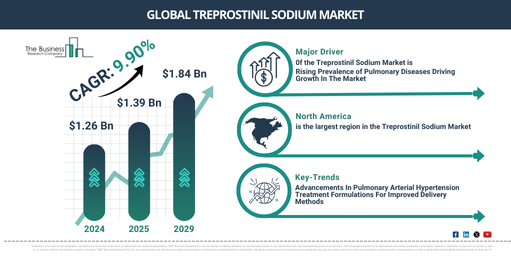
    The market size for treprostinil sodium has seen quick expansion in the previous years. It’s projected to increase from $1.26 billion in 2024 to $1.39 billion in 2025, reflecting a compound annual growth rate (CAGR) of 10.2%. Factors contributing to growth in the historical period include heightened demand for treprostinil sodium, a rise in pulmonary arterial hypertension (PAH) prevalence, an increased demand for treprostinil drugs, a growing understanding of the significance of respiratory health, and an uptick in healthcare infrastructure investment.

    Expectations are high for robust expansion in the treprostinil sodium market over the next several years. Predicted growth is at a compound annual growth rate (CAGR) of 9.9%, culminating in a market value of $1.84 billion by 2029. Factors contributing to this forecasted growth include cutting-edge advancements in drug delivery technologies, an increasing inclination towards combination therapies, substantial investment in research and clinical trials, an aging population, and escalated healthcare expenses. The industry also anticipates trends during this forecast period such as the enhancement of nebulized and dry powder inhaler formulae, advancements in sustained-release formations, wider adoption of combination therapies, the production of more stable bioavailable oral formulae, and continued clinical trials exploring new remedy applications.

    Download a free sample to assess the report’s scope and structure:

    https://www.thebusinessresearchcompany.com/sample.aspx?id=21306&type=smp

    What Are the Core Growth Drivers Propelling the Treprostinil Sodium Market Forward?

    The rise in pulmonary disease cases is anticipated to be a major driving force behind the expansion of the treprostinil sodium market. Pulmonary diseases influence the lungs and the respiratory system, thereby interrupting normal breathing and obstruction of oxygen supply. This rise is attributed to various factors including air pollution, habits like smoking, toxins in the environment, and an increasing aged population. Treprostinil sodium is a vasodilator which helps in relaxing the blood vessels in the lungs, reducing pressure, enhancing breathing and providing an adaptable treatment for pulmonary diseases. For example, the Australian Institute of Health and Welfare, a governmental agency of Australia, reported in June 2024 that chronic obstructive pulmonary disease (COPD) caused 7,691 deaths in 2022, which translates to 29.6 deaths per 100,000 population, accounting for 4.0% of all deaths. Hence, the escalating instances of pulmonary diseases are pushing the treprostinil sodium market’s growth.

    What Segment Types Define the Treprostinil Sodium Market Structure?

    The treprostinil sodium market covered in this report is segmented –

    1) By Product Type: Injectable, Inhalable, Oral

    2) By Applications: Pulmonary Arterial Hypertension, Chronic Thromboembolic Pulmonary Hypertension, Other Applications

    3) By Distribution Channel: Hospitals, Specialty Clinics, Online Pharmacies, Retail Pharmacies

    Subsegments:

    1) By Injectable: Subcutaneous Injection, Intravenous Infusion

    2) By Inhalable: Inhalation Aerosol, Nebulizer Solution

    3) By Oral: Extended-Release Tablets, Oral Suspension

    Request customized data on this market:

    https://www.thebusinessresearchcompany.com/customise?id=21306&type=smp

    Which Geographic Areas Hold the Strongest Growth Potential in the Treprostinil Sodium Market?

    North America was the largest region in the treprostinil sodium market in 2024. The regions covered in the treprostinil sodium market report are Asia-Pacific, Western Europe, Eastern Europe, North America, South America, Middle East, Africa.

    Which Emerging Trends that Are Influencing theTreprostinil Sodium Industry Evolution?

    The key players in the treprostinil sodium market are focusing their efforts on engineering advanced pulmonary arterial hypertension (PAH) product formulations. These preparations are developed to offer more comfortable methods of administration. In the process of PAH product formulation, medications are produced with a specified composition providing an efficient treatment for PAH with minimal side effects. The goal of these formulations is to deliver the active ingredients in the most beneficial way therapeutically. For instance, Dr. Reddy’s Laboratories, an Indian pharmaceutical firm, launched in the U.S. market the Treprostinil Injection in April 2023, with the approval of the Food and Drug Administration, a government agency based in the U.S. Treprostinil injection is a generic therapeutic equivalent version of Remodulin (treprostinil) injection, classified under the group of agents known as prostacyclin mimetics, commonly used for treating PAH to reduce exercise-associated symptoms. It comes in vials of 20 mg/20 ml, 50 mg/20 ml, 100 mg/20 ml, or 200 mg/20 ml.

    View the full report here:

    https://www.thebusinessresearchcompany.com/report/treprostinil-sodium-global-market-report

    What Is the Definition of the Treprostinil Sodium Market?

    Treprostinil sodium is a synthetic prostacyclin (PGI2) analogue that treats pulmonary arterial hypertension (PAH) by improving exercise capacity and symptoms. It promotes vasodilation, inhibits platelet aggregation, and reduces vascular remodeling, lowering pulmonary pressure and enhancing blood flow that helps slow disease progression and improve quality of life.

    Purchase the full report and get a swift delivery:

    https://www.thebusinessresearchcompany.com/purchaseoptions.aspx?id=21306

    About The Business Research Company:

    With over 15000+ reports from 27 industries covering 60+ geographies, The Business Research Company has built a reputation for offering comprehensive, data-rich research and insights. Armed with 1,500,000 datasets, the optimistic contribution of in-depth secondary research, and unique insights from industry leaders, you can get the information you need to stay ahead in the game.

    Get in touch with us:

    The Business Research Company: https://www.thebusinessresearchcompany.com/

    Americas +1 3156230293

    Asia +44 2071930708

    Europe +44 2071930708

    Email us at info@tbrc.info

    Follow us on:

    LinkedIn: https://in.linkedin.com/company/the-business-research-company

    YouTube: https://www.youtube.com/channel/UC24_fI0rV8cR5DxlCpgmyFQ

    Global Market Model: https://www.thebusinessresearchcompany.com/global-market-model
  • Critical Market Drivers Shaping the Outlook for Von Willebrand Disease Market from 2025-2034: Rise In Bleeding Disorders Driving The Growth Of The Market Due To Improved Diagnosis And Awareness

    Critical Market Drivers Shaping the Outlook for Von Willebrand Disease Market from 2025-2034: Rise In Bleeding Disorders Driving The Growth Of The Market Due To Improved Diagnosis And Awareness

    Discover trends, market shifts, and competitive outlooks for the von willebrand disease industry through 2025-2034 with The Business Research Company’s reliable data and in-depth research

    What Are the Key Milestones in the Von Willebrand Disease Market’s Growth Trajectory From 2025 To 2034?

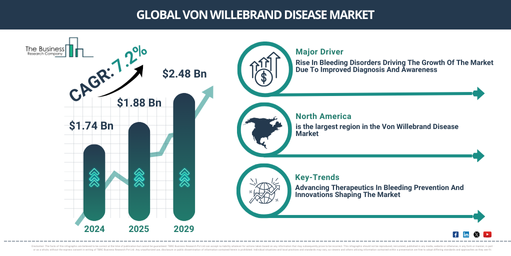
    In the past few years, the von Willebrand disease market has significantly expanded. It is projected to increase from $1.74 billion in 2024 to $1.88 billion in 2025, experiencing a compound annual growth rate (CAGR) of 7.6%. This growth during the historical period is credited to factors like greater awareness of uncommon bleeding disorders, increase in the diagnosis of von Willebrand disease, enhancement in research funding for blood-related disorders, improved healthcare accessibility and the growing use of preventive treatments in managing hemophilia.

    The market size for von willebrand disease is predicted to experience robust expansion in the forthcoming years, potentially reaching $2.48 billion by 2029 with a 7.2% compound annual growth rate (CAGR). A myriad of factors underpins this projected increase including enhancements in gene therapy for hemorrhagic conditions, an escalation in funding for biotech research, a surge in demand for non-invasive diagnostic methods, a rise in utilization of digital health aids for disease tracking, and expansion in telemedicine services for uncommon diseases. Key trends within this forecast period encompass progressions in gene therapy methodologies, the employment of artificial intelligence in diagnosis, breakthroughs in non-invasive diagnostic devices, the debut of unique drug delivery systems, and digital health platforms aimed at educating patients.

    Download a free sample to assess the report’s scope and structure:

    https://www.thebusinessresearchcompany.com/sample.aspx?id=22168&type=smp

    What Are the Core Growth Drivers Propelling the Von Willebrand Disease Market Forward?

    Increased instances of bleeding disorders are anticipated to boost the von willebrand disease market’s growth. Bleeding disorders are a set of medical conditions which pose difficulties in forming blood clots, causing severe or prolonged bleeding. The surge in the diagnosis of these disorders can be attributed to progressive medical knowledge and refined diagnostic tools, enabling healthcare professionals to detect cases previously unnoticed. The treatment for von willebrand disease assists patients with bleeding disorders by enhancing blood clotting, minimizing severe bleeding, and improving their overall quality of life. For example, a report from November 2022 by the United Kingdom Haemophilia Centre Doctors’ Organization, a medical association based in the UK, revealed that new Hemophilia A registrations in the UK grew from 16 in 2021 to 19 in 2022. Consequently, the rising prevalence of blood disorders is bolstering the growth of the von willebrand disease market.

    What Segment Types Define the Von Willebrand Disease Market Structure?

    The von willebrand disease market covered in this report is segmented –

    1) By Type: Type 1, Type 2, Type 3

    2) By Drugs: Antihemophilic Factor, Coagulation Factor VIII Complex, Von Willebrand Factor, Desmopressin Acetate, Other Drugs

    3) By Severity: Mild, Moderate, Severe

    4) By Distribution Channel: Hospital Pharmacy, Retail Pharmacy, Online Pharmacy, Other Distribution Channels

    5) By End Users: Hospitals, Speciality Clinics, Homecare, Other End Users

    Subsegmentss:

    1) By Type 1: Mild Von Willebrand Disease, Moderate Von Willebrand Disease, Severe Von Willebrand Disease

    2) By Type 2: Type 2A, Type 2B, Type 2M, Type 2N

    3) By Type 3: Congenital Type 3, Acquired Type 3

    Request customized data on this market:

    https://www.thebusinessresearchcompany.com/customise?id=22168&type=smp

    Which Geographic Areas Hold the Strongest Growth Potential in the Von Willebrand Disease Market?

    North America was the largest region in the von willebrand disease market in 2024. Asia-Pacific is expected to be the fastest-growing region in the forecast period. The regions covered in the von willebrand disease market report are Asia-Pacific, Western Europe, Eastern Europe, North America, South America, Middle East, Africa.

    Which Emerging Trends that Are Influencing theVon Willebrand Disease Industry Evolution?

    Leading firms in the von willebrand disease market are concentrating on creating innovative treatments such as von willebrand factor concentrate to increase the effectiveness of treatment, lower the incidence of bleeding, and improve patient results. Von willebrand factor (VWF) concentrate is a tool used to manage and prevent bleeding among patients with von willebrand disease (VWD), a genetically linked disorder causing bleeding due to a lack or poor function of the von willebrand factor. For example, Wilate, a von willebrand factor concentrate with lyophilized powder solution for intravenous injection for routine prophylaxis was introduced in the market with FDA approval in April 2024 by a US-based pharmaceutical company, Octapharma USA Inc. Designed to lower the number of bleeding incidents in adults and children aged 6 and older, Wilate received the FDA’s orphan drug designation that provides it with a market exclusivity of up to seven years, aiming to stimulate the development of treatments for uncommon diseases.

    View the full report here:

    https://www.thebusinessresearchcompany.com/report/von-willebrand-disease-global-market-report

    What Is the Definition of the Von Willebrand Disease Market?

    Von willebrand disease (VWD) is a genetic bleeding disorder caused by a deficiency or dysfunction of von willebrand factor (VWF), a protein that helps blood clot. The severity of the disorder depends on the amount and functionality of von willebrand factor in the blood.

    Purchase the full report and get a swift delivery:

    https://www.thebusinessresearchcompany.com/purchaseoptions.aspx?id=22168

    About The Business Research Company:

    With over 15000+ reports from 27 industries covering 60+ geographies, The Business Research Company has built a reputation for offering comprehensive, data-rich research and insights. Armed with 1,500,000 datasets, the optimistic contribution of in-depth secondary research, and unique insights from industry leaders, you can get the information you need to stay ahead in the game.

    Get in touch with us:

    The Business Research Company: https://www.thebusinessresearchcompany.com/

    Americas +1 3156230293

    Asia +44 2071930708

    Europe +44 2071930708

    Email us at info@tbrc.info

    Follow us on:

    LinkedIn: https://in.linkedin.com/company/the-business-research-company

    YouTube: https://www.youtube.com/channel/UC24_fI0rV8cR5DxlCpgmyFQ

    Global Market Model: https://www.thebusinessresearchcompany.com/global-market-model
  • Key Factors Fueling the Growth of the Venous Leg Ulcer Treatment Market in 2025: Expansion Of Healthcare Facilities Driving The Growth Of The Market Due To Advancements In Medical Technology

    Key Factors Fueling the Growth of the Venous Leg Ulcer Treatment Market in 2025: Expansion Of Healthcare Facilities Driving The Growth Of The Market Due To Advancements In Medical Technology

    Discover trends, market shifts, and competitive outlooks for the venous leg ulcer treatment industry through 2025-2034 with The Business Research Company’s reliable data and in-depth research

    How Has The Venous Leg Ulcer Treatment Market Size Shifted, And What Is the Outlook Through 2034?

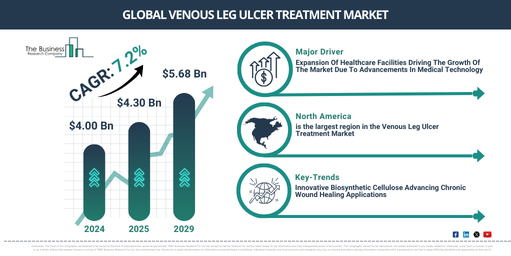
    The market for venous leg ulcer treatments has seen substantial growth recently. It is expected to expand from $4.00 billion in 2024 to $4.30 billion in 2025, with a Compound Annual Growth Rate (CAGR) of 7.5%. The historical growth in this market can be traced back to factors such as the rising occurrence of venous leg ulcers, enhanced knowledge of advanced wound care therapies, a growing preference for minimally invasive treatment procedures, an increase in the utilization of antimicrobial dressings, and an escalated adoption of bioengineered skin substitutes.

    Anticipations indicate a robust expansion in the venous leg ulcer treatment market in the upcoming years. It is projected to escalate to $5.68 billion by 2029, with a compound annual growth rate (CAGR) of 7.2%. The projected growth during this period is associated with factors such as enhanced healthcare spending, increased research and development activities, a spike in diabetes cases, growing demand for compression therapy products, and an uptick in the need for personalized wound care solutions. The forecast period also suggests prominent trends such as the emergence of advanced wound dressings, innovative compression therapy, the incorporation of telemedicine, the application of artificial intelligence (AI) in wound assessment, and wider health insurance coverage.

    Download a free sample to assess the report’s scope and structure:

    https://www.thebusinessresearchcompany.com/sample.aspx?id=22167&type=smp

    What are the Fundamental Drivers and Innovations Shaping the Venous Leg Ulcer Treatment Market?

    The evolution and growth of healthcare facilities are projected to stimulate the expansion of the venous leg ulcer treatment market. These facilities, crucial for the implementation of effective healthcare services, encompass necessary physical facilities, resources, and systems. The enlargement of healthcare infrastructure is driven by the progression in medical technology, with revolutionary innovations such as AI-driven diagnostics, robotic surgery, and telemedicine necessitating enhanced facilities, advanced delivery systems, and specialized equipment, all in a bid to optimize patient outcomes and efficiency. These healthcare facilities bolster venous leg ulcer treatment by guaranteeing access to modern wound care facilities, proven treatment modalities, professional medical staff, and novel treatment avenues thereby fostering improved healing outcomes and a higher quality of life for patients. For example, data from the American Hospital Association, a non-profit organization in the US, reveals that the count of hospitals in the United States grew from 6,093 in 2022 to 6,120 in 2024. Thus, the growth in healthcare infrastructure is fuelling the venous leg ulcer treatment market’s development.

    How Is the Venous Leg Ulcer Treatment Market Segmented?

    The venous leg ulcer treatment market covered in this report is segmented –

    1) By Treatment Type: Compression Therapy, Debridement, Medication, Surgery

    2) By Etiology: Venous Insufficiency, Arterial Insufficiency, Mixed Insufficiency, Other Etiologies

    3) By Mechnaism Of Action: Oxygenation Enhancers, Growth Factor Stimulators, Anti-inflammatory Agents, Antimicrobial Treatments

    4) By End Users: Hospitals, Clinics, Home Healthcare, Other End-Users

    Subsegmentss:

    1) By Compression Therapy Type: Short-Stretch Bandages, Long-Stretch Bandages, Multi-Layer Compression Bandages, Compression Stockings, Intermittent Pneumatic Compression (IPC) Devices

    2) By Debridement Type: Surgical Debridement, Autolytic Debridement, Enzymatic Debridement, Mechanical Debridement, Biological Debridement

    3) By Medication Type: Topical Antibiotics, Oral Antibiotics, Growth Factors, Anti-Inflammatory Agents, Wound Healing Agents

    4) By Surgery Type: Skin Grafting, Vein Ablation, Subfascial Endoscopic Perforator Surgery (SEPS), Sclerotherapy, Vein Bypass Surgery

    Request customized data on this market:

    https://www.thebusinessresearchcompany.com/customise?id=22167&type=smp

    Which Regions Are Driving the Next Phase of the Venous Leg Ulcer Treatment Market Growth?

    North America was the largest region in the venous leg ulcer treatment market in 2024. Asia-Pacific is expected to be the fastest-growing region in the forecast period. The regions covered in the venous leg ulcer treatment market report are Asia-Pacific, Western Europe, Eastern Europe, North America, South America, Middle East, Africa.

    What Key Trends Are Shaping the Future of the Venous Leg Ulcer Treatment Market?

    Leading organizations in the venous leg ulcer treatment market are prioritizing the creation of cutting-edge wound dressings, using biosynthetic cellulose to bolster healing and facilitate the management of chronic wounds. Biosynthetic cellulose, a bio fabricated material created by microorganisms via fermentation, presents exceptional purity, compatibility with living tissues, and superior strength for numerous uses. To illustrate, Evonik Industries AG, a specialty chemical corporation based in Germany, in June 2023, introduced Epicite Balance. This is a wound dressing crafted from biosynthetic cellulose for the remedy of chronic wounds like venous leg ulcers, diabetic foot ulcers, and bed sores. The dressing accelerates wound recuperation by retaining a moist wound atmosphere, soaking up wound exudate, and enabling exceptional cleansing, thus making it apt for both hospital and homecare utilization.

    View the full report here:

    https://www.thebusinessresearchcompany.com/report/venous-leg-ulcer-treatment-global-market-report

    How Is the Venous Leg Ulcer Treatment Market Defined and What Are Its Core Parameters?

    Venous leg ulcer treatment refers to a comprehensive approach aimed at managing and healing open sores that develop on the legs due to poor blood circulation in the veins. This treatment typically involves compression therapy to improve blood flow, wound care to prevent infection, and lifestyle adjustments or medical interventions to address underlying venous conditions.

    Purchase the full report and get a swift delivery:

    https://www.thebusinessresearchcompany.com/purchaseoptions.aspx?id=22167

    About The Business Research Company:

    With over 15000+ reports from 27 industries covering 60+ geographies, The Business Research Company has built a reputation for offering comprehensive, data-rich research and insights. Armed with 1,500,000 datasets, the optimistic contribution of in-depth secondary research, and unique insights from industry leaders, you can get the information you need to stay ahead in the game.

    Get in touch with us:

    The Business Research Company: https://www.thebusinessresearchcompany.com/

    Americas +1 3156230293

    Asia +44 2071930708

    Europe +44 2071930708

    Email us at info@tbrc.info

    Follow us on:

    LinkedIn: https://in.linkedin.com/company/the-business-research-company

    YouTube: https://www.youtube.com/channel/UC24_fI0rV8cR5DxlCpgmyFQ

    Global Market Model: https://www.thebusinessresearchcompany.com/global-market-model
  • Major Trends and Emerging Patterns in the Valley Fever Market: Innovative Vaccine Development Advancing Protection Against Fungal Infections

    Major Trends and Emerging Patterns in the Valley Fever Market: Innovative Vaccine Development Advancing Protection Against Fungal Infections

    Discover trends, market shifts, and competitive outlooks for the valley fever industry through 2025-2034 with The Business Research Company’s reliable data and in-depth research

    How Has the Valley Fever Market Growth Performance Trended Historically, And What Lies Ahead?

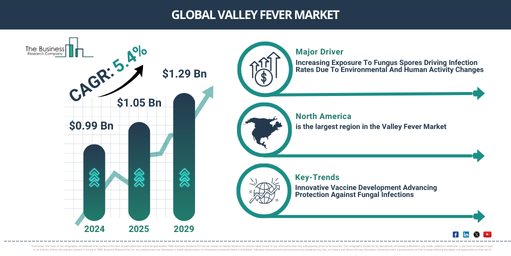
    The market size for valley fever has exhibited strong growth in the recent past. It is anticipated to surge from $0.99 billion in 2024 to $1.05 billion in 2025, with a compound annual growth rate (CAGR) of 5.8%. The historical growth can be ascribed to the escalating effects of climate change, which drive the dispersal of fungi, enhanced research funding for Valley Fever therapies, increased investment in healthcare, a growing need for specialized diagnostic labs, and a surging incidence rate of Valley Fever in non-endemic regions.

    In the upcoming years, the market size of valley fever is predicted to encounter substantial growth, projecting to reach $1.29 billion by 2029, with a 5.4% compound annual growth rate (CAGR). This anticipated expansion in the forecast period is influenced by multiple factors such as the amplified adoption of telemedicine, escalation in antifungal resistance research, increase in funding dedicated to vaccine development, population migration across areas of high risk, and the escalating availability of antifungal treatments. Key trends to watch during this forecast period encompass technological advancements, demand for antifungal drugs, development of vaccines, application of telemedicine, and international teamwork.

    Download a free sample to assess the report’s scope and structure:

    https://www.thebusinessresearchcompany.com/sample.aspx?id=22166&type=smp

    What Are the Primary Drivers Supporting the Market Growth of the Valley Fever Market?

    An increase in exposure to fungus spores is anticipated to be a key driver in the growth of the valley fever market. These microscopic spores, released by fungi, have the ability to disperse through air, water, or surfaces, facilitating growth and reproduction in new areas. Activities such as deforestation and shift in weather patterns are causing heightened exposure to these spores, disturbing soil and stimulating spore release. This raises infection risks like valley fever, specifically in dry areas favorable to the coccidioides fungus. Therapies for valley fever lessen symptoms, avert complications, and manage fungal development, substantially helping those exposed and enhancing their quality of life and recovery. For instance, the International Society for Infectious Diseases indicated that around 6.5 million people are impacted by invasive fungal infections annually as of September 2024, resulting in nearly 3.8 million deaths, with about 2.5 million directly associated with these infections. Thus, the increasing exposure to fungal spores significantly fuels the valley fever market’s growth. Growth in healthcare facilities, as a result of medical technology advancements, is also contributing to the growth of the valley fever market. Healthcare facilities, essential for delivering effective healthcare services, are expanding owing to the advancement in medical technology. Innovations such as telemedicine, robotic surgical procedures, and AI-powered diagnostics necessitate improved facilities, specialist equipment, and superior healthcare delivery systems, enhancing patient outcomes and efficiency. These facilities aid in the early diagnosis of valley fever, provide antifungal treatments, educate patients, and offer continual care to manage symptoms and prevent complications. For example, the American Hospital Association reported an increase in the total number of hospitals in the United States from 6,093 in 2022 to 6,120 in 2024. Therefore, the growing healthcare infrastructure significantly propels the expansion of the valley fever market.

    Which Primary Segments of the Valley Fever Market Are Driving Growth and Industry Transformations?

    The valley fever market covered in this report is segmented –

    1) By Types Of Treatment: Fluconazole, Itraconazole, Voriconazole, Posaconazole, Others Types Of Treatment

    2) By Site Of Infection: Skin, Lungs, Liver, Bones, Heart, Brain, Membranes That Surround The Brain And Spinal Cord, Other Sites Of Infection

    3) By End-Users: Human, Cattle, Sheep And Goats, Camel, Other End-Users

    Subsegmentss:

    1) By Fluconazole Type: Oral Fluconazole, Intravenous Fluconazole

    2) By Itraconazole Type: Capsule Itraconazole, Oral Solution Itraconazole

    3) By Voriconazole Type: Oral Voriconazole, Intravenous Voriconazole

    4) By Posaconazole Type: Oral Suspension Posaconazole, Delayed-Release Tablets Posaconazole, Intravenous Posaconazole

    5) By Other Treatment Types: Combination Therapy, Adjunctive Therapy

    Request customized data on this market:

    https://www.thebusinessresearchcompany.com/customise?id=22166&type=smp

    Which Regions Are Key Players in the Growth of the #What Are the Primary Drivers Supporting the Market Growth of the Valley Fever Market?# Market?

    North America was the largest region in the valley fever market in 2024. The regions covered in the valley fever market report are Asia-Pacific, Western Europe, Eastern Europe, North America, South America, Middle East, Africa.

    What Are the Most Significant Market Trends in the Valley Fever Market?

    Leading firms in the valley fever market are concentrating on the creation of novel vaccines for valley fever in response to the escalating menace of fungal infections. These vaccines, developed using cutting-edge scientific and manufacturing processes, are designed to enhance public health and safety. For example, Anivive Lifesciences Inc., a US-based pet pharmaceutical firm, secured a contract in August 2024 valued at up to $33 million from the National Institute of Allergy and Infectious Diseases (NIAID), a government agency in the US, geared towards the development of a human Valley Fever vaccine. This financial backing will aid additional production, formulation, comprehensive safety evaluations, and a Phase 1 clinical trial, with the goal of delivering the first-ever vaccine to counter a severe systemic fungal infection.

    View the full report here:

    https://www.thebusinessresearchcompany.com/report/valley-fever-global-market-report

    What Parameters Are Used to Define the Valley Fever Market?

    Valley fever, also called coccidioidomycosis, is a fungal infection that primarily affects the lungs and can cause symptoms such as cough, fever, fatigue, and chest pain, with some cases resulting in severe complications. It is caused by inhaling airborne spores of the coccidioides fungi, which are commonly present in dry, dusty soil and can become airborne when the soil is disturbed.

    Purchase the full report and get a swift delivery:

    https://www.thebusinessresearchcompany.com/purchaseoptions.aspx?id=22166

    About The Business Research Company:

    With over 15000+ reports from 27 industries covering 60+ geographies, The Business Research Company has built a reputation for offering comprehensive, data-rich research and insights. Armed with 1,500,000 datasets, the optimistic contribution of in-depth secondary research, and unique insights from industry leaders, you can get the information you need to stay ahead in the game.

    Get in touch with us:

    The Business Research Company: https://www.thebusinessresearchcompany.com/

    Americas +1 3156230293

    Asia +44 2071930708

    Europe +44 2071930708

    Email us at info@tbrc.info

    Follow us on:

    LinkedIn: https://in.linkedin.com/company/the-business-research-company

    YouTube: https://www.youtube.com/channel/UC24_fI0rV8cR5DxlCpgmyFQ

    Global Market Model: https://www.thebusinessresearchcompany.com/global-market-model
  • Emerging Trends Redefining the Tibial Bearings Market Landscape: Advancements In Tibial Cones For Enhanced Knee Revision Surgeries

    Emerging Trends Redefining the Tibial Bearings Market Landscape: Advancements In Tibial Cones For Enhanced Knee Revision Surgeries

    Discover trends, market shifts, and competitive outlooks for the tibial bearings industry through 2025-2034 with The Business Research Company’s reliable data and in-depth research

    What Are the Key Projections for the CAGR of the Tibial Bearings Market Size From 2025 to 2034?

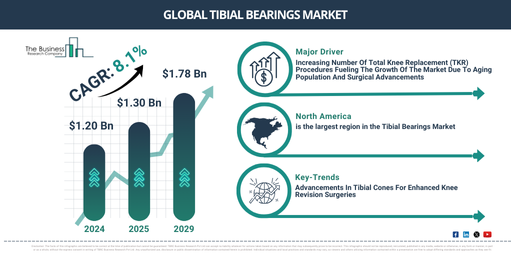
    The market for tibial bearings has witnessed significant growth in the recent past. Projected growth from $1.20 billion in 2024 to $1.30 billion in 2025, at a Compound Annual Growth Rate (CAGR) of 8.5%, indicates a strong upward trend. This historical market growth has been driven by a rise in total knee replacement (TKR) procedures, an increasing incidence of obesity, a surge in sedentary lifestyles, growth in disposable income, and an upward pressuring demand for knee implants.

    Expectations are high for the tibial bearings market as it’s projected to significantly expand in the upcoming years. By 2029, the market could be worth an estimated $1.78 billion, achieving an 8.1% compound annual growth rate (CAGR). The anticipated market expansion during the forecast period is driven by factors such as an aging population, increasing instances of arthritis and osteoporosis, evolving demands for individualized and patient-specific implants, higher infection rates, and the growing inclination towards bicruciate-retaining total knee arthroplasty. Additionally, the forecast period will likely see trends such as advancements in personalized medicine and patient-specific implants, breakthroughs in surgical robotics and minimally invasive techniques, progression in surgical techniques, a transition towards minimally invasive surgical procedures, and further progress in surgical techniques.

    Download a free sample to assess the report’s scope and structure:

    https://www.thebusinessresearchcompany.com/sample.aspx?id=22162&type=smp

    What Are the Core Market Drivers Propelling Growth in the Tibial Bearings Industry?

    The tibial bearings market is predicted to grow, driven by the rising number of total knee replacement (TKR) procedures. These procedures, which replace damaged knee joint surfaces with artificial implants, are increasing due to the growing incidence of osteoarthritis, a condition affected by aging and lifestyle factors. Tibial bearings, which boost the durability and performance of TKR surgeries and thus patient results, are thus seeing greater demand. This is evidenced by data from the Australian Orthopedic Association National Joint Replacement Registry, which revealed that TKR procedures saw a significant uptick of 19.2% between 2022 and 2023. Consequently, the tibial bearings market is reaping the benefits of this proliferation of TKR surgeries. Moreover, the tibial bearings market growth is further fueled by the rising incidence of obesity, which is known to increase the prevalence of osteoarthritis and hence the demand for knee replacement procedures. Obesity, characterized by excessive body weight and posing immense health risks, is escalating due to increased consumption of processed, high-calorie food and sedentary lifestyles. The additional stress on knee joints caused by increased body weight prompts heightened osteoarthritis rates and knee replacement needs, thereby sparking demand for tibial bearings. For instance, a May 2024 report by the Office for Health Improvement & Disparities (OHID) revealed that an estimated 26.2% of adults were classified as obese between 2022 and 2023, marking a slight rise from 25.9% in 2021-2022. Therefore, obesity’s increasing prevalence is a significant driver for the tibial bearings market’s expansion.

    How Is the Tibial Bearings Market Segmented?

    The tibial bearings market covered in this report is segmented –

    1) By Type Of Bearing System: Fixed Bearing Systems, Mobile Bearing Systems, Conventional Bearing Systems, Hybrid Systems

    2) By Material Type: Polyethylene, Ceramic, Metallic Alloys, Composite Materials

    3) By Distribution Channel: Direct Sales, Online Retailers, Third-Party Distributors, Medical Supply Stores

    4) By Application: Orthopedic Implants, Sports Medicine, Trauma Surgery, Reconstructive Surgery

    5) By End-User: Hospitals, Orthopedic Clinics, Ambulatory Surgical Centers, Other End-Users

    Subsegments:

    1) By Fixed Bearing Systems: Polyethylene Bearings, Metal-Backed Bearings, Highly Cross-Linked Polyethylene Bearings

    2) By Mobile Bearing Systems: Rotating Platform Bearings, Medial-Pivot Bearings, High-Flex Bearings

    3) By Conventional Bearing Systems: Standard Polyethylene Bearings, Cemented Bearings, Uncemented Bearings

    4) By Hybrid Systems: Metal-Polyethylene Hybrid Bearings, Ceramic-Polyethylene Hybrid Bearings, Advanced Composite Bearings

    Request customized data on this market:

    https://www.thebusinessresearchcompany.com/customise?id=22162&type=smp

    Which Regions Are Driving the Next Phase of the Tibial Bearings Market Growth?

    North America was the largest region in the tibial bearings market in 2024. Asia-Pacific is expected to be the fastest-growing region in the forecast period. The regions covered in the tibial bearings market report are Asia-Pacific, Western Europe, Eastern Europe, North America, South America, Middle East, Africa.

    What Key Market Trends and Innovations Are Shaping the Future of the Tibial Bearings Industry?

    Prominent enterprises in the domain of the tibial bearings market have been investing their efforts in the creation of tibial cones. This accelerated focus aims to improve the stability of implants, ensure better integration with the bone, and tackle sever bone loss issues during revision total knee arthroplasty (TKA). Serving as handy tools in total knee arthroplasty, tibial cones are meant to manage metaphyseal bone loss in the tibial section. A case in point is the launch of Evolution Tibial Cones by MicroPort Orthopaedics, a U.S. medical device company, in North America in September 2024. These tools are designed to manage metaphyseal bone loss during revision total knee arthroplasty (TKA). The uses of OsteoSync Ti, an extremely porous variant of titanium, speaks to the superior craftsmanship behind these cones, whose structural support, initial fixing, and bone integration make them stand out. The extraordinary friction coefficient, when compared to competitor products, not only enhances implant stability but also guarantees early rigid fixation, which is a necessary factor in successful knee revision surgeries.

    View the full report here:

    https://www.thebusinessresearchcompany.com/report/tibial-bearings-global-market-report

    How Is the Tibial Bearings Market Defined and What Are Its Core Parameters?

    Tibial bearings are components of knee prostheses used in total knee replacements. They provide articulation between the femoral component and the tibial baseplate. Made from materials such as polyethylene, they help distribute loads and reduce wear. Their design affects knee stability, movement, and longevity of the implant.

    Purchase the full report and get a swift delivery:

    https://www.thebusinessresearchcompany.com/purchaseoptions.aspx?id=22162

    About The Business Research Company:

    With over 15000+ reports from 27 industries covering 60+ geographies, The Business Research Company has built a reputation for offering comprehensive, data-rich research and insights. Armed with 1,500,000 datasets, the optimistic contribution of in-depth secondary research, and unique insights from industry leaders, you can get the information you need to stay ahead in the game.

    Get in touch with us:

    The Business Research Company: https://www.thebusinessresearchcompany.com/

    Americas +1 3156230293

    Asia +44 2071930708

    Europe +44 2071930708

    Email us at info@tbrc.info

    Follow us on:

    LinkedIn: https://in.linkedin.com/company/the-business-research-company

    YouTube: https://www.youtube.com/channel/UC24_fI0rV8cR5DxlCpgmyFQ

    Global Market Model: https://www.thebusinessresearchcompany.com/global-market-model
  • Strong CAGR to Propel in the Spinal Surgery Devices Market and Beyond upto $16.98 Billion by 2029

    Discover trends, market shifts, and competitive outlooks for the spinal surgery devices industry through 2025-2034 with The Business Research Company’s reliable data and in-depth research

    What Are the Key Projections for the CAGR of the Spinal Surgery Devices Market Size From 2025 to 2034?

    The market for spinal surgery devices has seen significant growth over recent years. The market value is predicted to increase from $12.67 billion in 2024 to $13.47 billion in 2025, demonstrating a compound annual growth rate (CAGR) of 6.3%. Factors that contribute to this growth during the historic period include a growing preference for minimally invasive procedures, an increasing incidence of spinal disorders, a trend towards motion preservation surgeries, a higher demand for endoscopic spinal procedures, and a rise in the number of fractures related to osteoporosis.

    In the coming years, the market for spinal surgery devices is predicted to experience robust growth. It’s projected to expand to $16.99 billion by 2029, with a compound annual growth rate (CAGR) of 6.0%. This growth during the forecasted period is attributable to factors such as a growing elderly population, increased use of image-guided systems for spinal navigation, heightened demand for motion preservation technologies and ergonomic medical devices for spinal care, and an increase in the number of dedicated centers for spinal care. The forecast period is also anticipated to see significant trends such as minimally invasive surgical (MIS) methods, 3D printing for tailor-made implants, robot-assisted surgeries, motion preservation devices, and intelligent implants outfitted with sensors.

    Download a free sample to assess the report’s scope and structure:

    https://www.thebusinessresearchcompany.com/sample.aspx?id=22151&type=smp

    Which Primay Drivers Are Accelerating Growth in the Spinal Surgery Devices Market?

    The escalating issues related to back problems are predicted to stimulate the progression of the spinal surgery devices market. Factors fueling the market’s expansion include conditions that induce pain, discomfort, or restricted mobility in the upper, lower, or middle back due to structural, muscular, or nerve-related complications. The surge in back problems is tied to a sedentary lifestyle, as extended sitting, improper posture, and lack of physical activity put excessive pressure on the spine, weaken the core muscles, and hasten disc degeneration. This can result in chronic pain and mobility challenges. Spinal surgery devices assist patients with back issues by offering structural stability, alleviating nerve pressure, reestablishing spinal alignment, and improving mobility, effectively reducing pain, augmenting function, and improving overall life quality. An illustration of this is evident from data collected by the Australian Welfare of Health and Welfare in June 2024. This Australia-based government entity reported that an estimated 177,000 hospitalizations were due to back issues as the main diagnosis in 2021–22. Moreover, in 2022, approximately 72% of individuals coping with back problems were also managing at least one other chronic condition. Thus, the rise in back problems fuels the spinal surgery devices market.

    Which Primary Segments of the Spinal Surgery Devices Market Are Driving Growth and Industry Transformations?

    The spinal surgery devices market covered in this report is segmented –

    1) By Device Type: Spinal Decompression, Spinal Fusion, Fracture Repair Devices, Arthroplasty Devices, Non-Fusion Devices

    2) By Disease Indication: Degenerative Disc Disease, Complex Deformity, Traumas And Fractures

    3) By Technology: Fusion, Non-Fusion, Vertebral Compression Fracture, Spine Biologics, Spinal Decompression

    4) By End-Users: Hospitals And Ambulatory Surgery Centers, Specialty Clinics, Other End Users

    Subsegmentss:

    1) By Spinal Decompression Device Type: Cervical Decompression, Lumbar Decompression, Thoracic Decompression

    2) By Spinal Fusion Device Type: Anterior Cervical Discectomy and Fusion (ACDF), Posterior Lumbar Interbody Fusion (PLIF), Transforaminal Lumbar Interbody Fusion (TLIF), Lateral Lumbar Interbody Fusion (LLIF), Interbody Fusion Devices

    3) By Fracture Repair Device Type: Pedicle Screws, Vertebroplasty Devices, Kyphoplasty Devices

    4) By Arthroplasty Device Type: Cervical Arthroplasty Devices, Lumbar Arthroplasty Devices

    5) By Non-Fusion Device Type: Artificial Discs, Dynamic Stabilization Devices

    Request customized data on this market:

    https://www.thebusinessresearchcompany.com/customise?id=22151&type=smp

    Which Regions Are Key Players in the Growth of the Spinal Surgery Devices Market?

    North America was the largest region in the spinal surgery devices market in 2024. Asia-Pacific is expected to be the fastest-growing region in the forecast period. The regions covered in the spinal surgery devices market report are Asia-Pacific, Western Europe, Eastern Europe, North America, South America, Middle East, Africa.

    Which Technological Trends Are Reshaping the Spinal Surgery Devices Industry Dynamics?

    Primary firms active in the spinal surgery devices market are prioritizing the development of advanced fixation systems that employ elastic interference technology and compliant mechanism engineering to boost stability and better surgical results. Elastic interference technology involves using a flexible element to stretch over and strongly hold another element, establishing a secure, press-fit connection without traditional fasteners like set screws being necessary. For example, Nexus Spine, a medical technology company located in the US, introduced the PressON posterior lumbar fixation system in August 2022. This system employs elastic interference technology and removes the requirement for set screws by firmly fastening rods through a flexible bore that is extended over pedicle screw heads. This approach increases stability, minimizes the size of the implant, and enhances surgical productivity by promoting quicker implantation and customization of rods specific to each patient during surgery.

    View the full report here:

    https://www.thebusinessresearchcompany.com/report/spinal-surgery-devices-global-market-report

    What Parameters Are Used to Define the Spinal Surgery Devices Market?

    Spinal surgery devices refer to medical instruments and implants designed to support surgical procedures that address spinal conditions, including degenerative disc disease, fractures, and deformities. These devices refer to tools that assist surgeons in stabilizing the spine, relieving pressure on nerves, and promoting proper alignment to enhance recovery and improve patient mobility.

    Purchase the full report and get a swift delivery:

    https://www.thebusinessresearchcompany.com/purchaseoptions.aspx?id=22151

    About The Business Research Company:

    With over 15000+ reports from 27 industries covering 60+ geographies, The Business Research Company has built a reputation for offering comprehensive, data-rich research and insights. Armed with 1,500,000 datasets, the optimistic contribution of in-depth secondary research, and unique insights from industry leaders, you can get the information you need to stay ahead in the game.

    Get in touch with us:

    The Business Research Company: https://www.thebusinessresearchcompany.com/

    Americas +1 3156230293

    Asia +44 2071930708

    Europe +44 2071930708

    Email us at info@tbrc.info

    Follow us on:

    LinkedIn: https://in.linkedin.com/company/the-business-research-company

    YouTube: https://www.youtube.com/channel/UC24_fI0rV8cR5DxlCpgmyFQ

    Global Market Model: https://www.thebusinessresearchcompany.com/global-market-model
  • Spina Bifida In-Utero Market Valuation Expected To Reach $3.77 Billion By 2029, Growing At A Rate Of 9.2%

    Spina Bifida In-Utero Market Valuation Expected To Reach $3.77 Billion By 2029, Growing At A Rate Of 9.2%

    Discover trends, market shifts, and competitive outlooks for the spina bifida in-utero industry through 2025-2034 with The Business Research Company’s reliable data and in-depth research

    How Has The Spina Bifida In-Utero Market Growth Evolved From 2024 To 2025, And What’s Ahead?

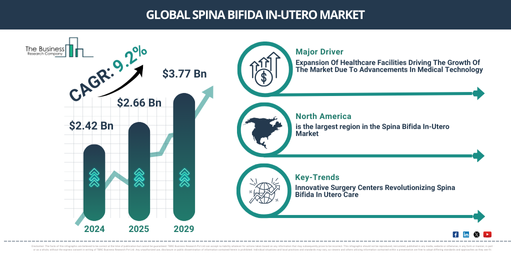
    In recent years, the market size for in utero spina bifida has experienced robust growth. It is projected that the market will increase from $2.42 billion in 2024 to $2.66 billion in 2025, with a compound annual growth rate (CAGR) of 9.5%. The historical growth can be traced back to factors such as the escalating prevalence of spina bifida, increased consciousness about fetal surgery, a rise in maternal age and corresponding pregnancy risks, heightened healthcare spending, and advancing research and development in the field of fetal medicine.

    Growth projections for the in utero spina bifida market are highly robust for the forthcoming years, with it expanding to hit $3.77 billion by 2029, boosted by a Compound Annual Growth Rate (CAGR) of 9.2%. This escalate during the predicted period is linked to a variety of factors such as increased understanding of prenatal diagnosis and treatment, the surge in the use of minimally invasive procedures, rising government support and initiatives, the expansion of healthcare infrastructure in developing markets, and an increase in dedicated fetal surgery centers. Key trends for the forecast period includes progress in prenatal screening and diagnostics, technological evolutions in minimally invasive surgical methods, advancements in the creation of biomaterials used in fetal surgical procedures, breakthroughs in therapies based on amniotic fluid, and the implementation of artificial womb technology to assist fetal development.

    Download a free sample to assess the report’s scope and structure:

    https://www.thebusinessresearchcompany.com/sample.aspx?id=22150&type=smp

    Which Factors and External Forces Are Driving Demand in the Spina Bifida In-Utero Market?

    The anticipated growth of the spina bifida in-utero market is associated with the improvement and expansion of healthcare facilities. These facilities, crucial for the provision of effective healthcare services, encompass physical structures, systems, and resources. The growth of the healthcare infrastructure primarily stems from the progression of medical technology. Pioneering developments such as telemedicine, AI-enabled diagnostics, and robotic surgery necessitate the enhancement of facilities, specialized tools, and superior healthcare delivery systems to optimize patient outcomes. Such healthcare facilities play an instrumental role in spina bifida in-utero treatment by endorsing access to researched therapies, trained healthcare professionals, and cutting-edge treatment alternatives. These factors collectively result in superior healing outcomes and an improved patient quality of life. For example, data from the American Hospital Association, a non-profit organization based in the US, indicate that the number of hospitals in the US rose from 6,093 in 2022 to 6,120 in 2024. Consequently, the growth and improvement of healthcare infrastructure contribute significantly to the progression of the spina bifida in-utero market.

    Which Segments in the Spina Bifida In-Utero Offer the Most Growth?

    The spina bifida in-utero market covered in this report is segmented –

    1) By Type: Myelomeningocele, Meningocele, Occulta

    2) By Diagnosis: Ultrasound, Magnetic Resonance Imaging (MRI), Amniocentesis

    3) By Treatment: Surgery, Postnatal Surgery, Medication Management

    4) By End-User: Hospitals, Specialty Clinics, Ambulatory Surgical Centers

    Subsegmentss:

    1) By Myelomeningocele Type: Open Myelomeningocele, Closed Myelomeningocele, Lumbosacral Myelomeningocele, Thoracic Myelomeningocele, Cervical Myelomeningocele

    2) By Meningocele Type: Cranial Meningocele, Spinal Meningocele, Occipital Meningocele, Frontal Meningocele, Parietal Meningocele

    3) By Occulta Type: Lumbosacral Spina Bifida Occulta, Sacral Spina Bifida Occulta, Isolated Spina Bifida Occulta, Complex Spina Bifida Occulta, Tethered Cord Syndrome Associated Occulta

    Request customized data on this market:

    https://www.thebusinessresearchcompany.com/customise?id=22150&type=smp

    What Are the Fastest-Growing Geographies in the Spina Bifida In-Utero Market?

    North America was the largest region in the spina bifida in utero market in 2024. Asia-Pacific is expected to be the fastest-growing region in the forecast period. The regions covered in the spina bifida in-utero market report are Asia-Pacific, Western Europe, Eastern Europe, North America, South America, Middle East, Africa.

    Which Cutting-Edge Market Trends Are Expected to Drive theSpina Bifida In-Utero Market’s Growth?

    Leading firms in the spina bifida in utero market are developing inventive centers like surgery centers to incorporate advanced imaging and minimally invasive methods for fetal interventions. These surgery centers are specialized facilities that conduct surgical operations on an outpatient basis, mitigating the need for hospital stays. For example, in January 2025, an innovative center was launched by Wadia Hospital, a health institution based in India, offering fetal surgery for open spina bifida. The avant-garde facility amalgamates cutting-edge surgical techniques with a multifaceted approach, supporting early interventions which can lessen complications and enhance long-term outcomes for affected babies. The center emphasizes refining surgical accuracy and patient care, providing hope for families dealing with the complexities of open spina bifida.

    View the full report here:

    https://www.thebusinessresearchcompany.com/report/spina-bifida-in-utero-global-market-report

    What Are the Key Elements That Define the Spina Bifida In-Utero Market?

    Spina bifida in-utero refers to a prenatal surgical procedure performed to repair spina bifida, a neural tube defect where the spine and spinal cord don’t develop properly. The surgery, done before birth, aims to reduce complications such as hydrocephalus and improve mobility and neurological outcomes. It helps protect the exposed spinal cord from further damage by closing the defect earlier. This intervention can enhance the child’s quality of life compared to postnatal repair.

    Purchase the full report and get a swift delivery:

    https://www.thebusinessresearchcompany.com/purchaseoptions.aspx?id=22150

    About The Business Research Company:

    With over 15000+ reports from 27 industries covering 60+ geographies, The Business Research Company has built a reputation for offering comprehensive, data-rich research and insights. Armed with 1,500,000 datasets, the optimistic contribution of in-depth secondary research, and unique insights from industry leaders, you can get the information you need to stay ahead in the game.

    Get in touch with us:

    The Business Research Company: https://www.thebusinessresearchcompany.com/

    Americas +1 3156230293

    Asia +44 2071930708

    Europe +44 2071930708

    Email us at info@tbrc.info

    Follow us on:

    LinkedIn: https://in.linkedin.com/company/the-business-research-company

    YouTube: https://www.youtube.com/channel/UC24_fI0rV8cR5DxlCpgmyFQ

    Global Market Model: https://www.thebusinessresearchcompany.com/global-market-model

  • Reading Glasses Market in Focus: Forecasting Growth Drivers, Scaling Potential, and Global Opportunities

    Reading Glasses Market in Focus: Forecasting Growth Drivers, Scaling Potential, and Global Opportunities

    Discover trends, market shifts, and competitive outlooks for the reading glasses industry through 2025-2034 with The Business Research Company’s reliable data and in-depth research

    How Has the Reading Glasses Market Growth Performance Trended Historically, And What Lies Ahead?

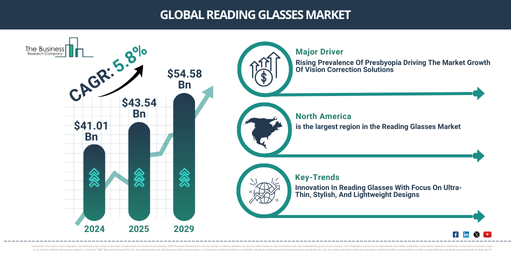
    The market size of reading glasses has shown a significant increase over the past few years. It is projected to rise from $41.01 billion in 2024 to $43.54 billion in 2025, with a compound annual growth rate (CAGR) of 6.2%. The factors contributing to the growth during the historical period include an aging population, increasing urbanization, growing occurrence of presbyopia, heightened demand for vision correction, and an increase in ocular diseases.

    In the upcoming years, the reading glasses market is anticipated to experience robust growth, projected to escalate to $54.58 billion by 2029 with a 5.8% CAGR. The projected growth during the predicted timeframe can be ascribed to various factors such as the proliferation of online sales channels, increased preference for high-end branded products, growing demand for reading glasses, elevated consumer disposable income, increased use of mobile devices, computers, and other technologies, a rising demand for fashionable designs and branded items among the younger demographic, and the expansion of e-commerce platforms. The forecast period will also witness certain key trends like the utilization of digital devices, evolving consumer buying behaviors, technological progress, improvements in eyeglass frame materials, and the incorporation of AI in reading glasses.

    Download a free sample to assess the report’s scope and structure:

    https://www.thebusinessresearchcompany.com/sample.aspx?id=22122&type=smp

    What Are the Core Market Drivers Propelling Growth in the Reading Glasses Industry?

    The heightened occurrence of presbyopia is projected to fuel the expansion of the reading glasses market in the future. Presbyopia, an age-associated vision disorder, causes difficulty in concentrating on close items, typically impacting people over 40. This growing frequency is attributed to the natural aging process which gradually lessens the flexibility of the eye lens, thus impairing its ability to concentrate on close items. The shift in modern lifestyles, such as escalating screen time and restricted outdoor activities, may initiate an earlier onset or magnify symptoms. Reading glasses assist individuals with presbyopia by offsetting the eye’s diminished focus capacity, providing required magnification to boost clarity and alleviate strain. For example, in September 2023, Ophthalmology Times Europe, a UK-based periodical, stated that approximately 1.8 billion people were afflicted with presbyopia globally in 2022. Additionally, the occurrence of presbyopia is estimated to increase to approximately 2.1 billion by 2030. Thus, the escalating occurrence of presbyopia is steering the growth of the reading glasses market.

    How Is the Reading Glasses Market Segmented?

    The reading glasses market covered in this report is segmented –

    1) By Type: Prescription Reading Glasses, Over-The-Counter (OTC) Reading Glasses

    2) By Material: Plastic, Metal, Hybrid, Other Materials

    3) By Age Group: Less Than 18 Years, 65 Years And Greater, 18-64 Years

    4) By Distribution Channel: Online Retail, Optical Stores, Supermarkets, Pharmacies, Other Distribution Channels

    Subsegmentss:

    1) By Prescription Reading Glasses: Single Vision Prescription Reading Glasses, Bifocal Prescription Reading Glasses, Progressive Prescription Reading Glasses, Blue Light Blocking Prescription Reading Glasses, Custom-Tinted Prescription Reading Glasses

    2) By Over-The-Counter (OTC) Reading Glasses: Full-Frame OTC Reading Glasses, Half-Frame OTC Reading Glasses, Rimless OTC Reading Glasses, Foldable OTC Reading Glasses, Multi-Strength OTC Reading Glasses

    Request customized data on this market:

    https://www.thebusinessresearchcompany.com/customise?id=22122&type=smp

    Which Regions Are Driving the Next Phase of the Reading Glasses Market Growth?

    North America was the largest region in the reading glasses market in 2024. Asia-Pacific is expected to be the fastest-growing region in the forecast period. The regions covered in the reading glasses market report are Asia-Pacific, Western Europe, Eastern Europe, North America, South America, Middle East, Africa.

    What Key Market Trends and Innovations Are Shaping the Future of the Reading Glasses Industry?

    Big players in the reading glasses market are centering their efforts on the creation of advanced products such as ultra-thin reading glasses to fulfill the consumer’s need for light, comfortable, and stylish eyewear solutions. Ultra-thin reading glasses are specialized for close-vision tasks, leveraging cutting-edge materials and technologies to reduce weight and thickness whilst maintaining superior optical clarity and durability. To illustrate, Read On, an eyewear firm based in Switzerland, introduced Read On Light in February 2024 – a highly flexible, lightweight reading glasses model. The glasses are crafted from TR90, a top-tier eyewear material, for optimal comfort and style. Available in five trendy colors, the glasses come with a coordinating hard case. They possess extra-long temples for easy customization and can be easily stored due to their fold-flat design. This innovation quenches the consumer thirst for functional yet aesthetically pleasing reading glasses, eliminating the need to incorporate them into a smartphone case, which was a feature of their prior products.

    View the full report here:

    https://www.thebusinessresearchcompany.com/report/reading-glasses-global-market-report

    How Is the Reading Glasses Market Defined and What Are Its Core Parameters?

    Reading glasses are non-prescription, over-the-counter eyewear designed to temporarily enhance near vision for individuals experiencing presbyopia. These glasses work by magnifying close-up objects, allowing users to read, write, or perform other near-vision tasks with improved clarity.

    Purchase the full report and get a swift delivery:

    https://www.thebusinessresearchcompany.com/purchaseoptions.aspx?id=22122

    About The Business Research Company:

    With over 15000+ reports from 27 industries covering 60+ geographies, The Business Research Company has built a reputation for offering comprehensive, data-rich research and insights. Armed with 1,500,000 datasets, the optimistic contribution of in-depth secondary research, and unique insights from industry leaders, you can get the information you need to stay ahead in the game.

    Get in touch with us:

    The Business Research Company: https://www.thebusinessresearchcompany.com/

    Americas +1 3156230293

    Asia +44 2071930708

    Europe +44 2071930708

    Email us at info@tbrc.info

    Follow us on:

    LinkedIn: https://in.linkedin.com/company/the-business-research-company

    YouTube: https://www.youtube.com/channel/UC24_fI0rV8cR5DxlCpgmyFQ

    Global Market Model: https://www.thebusinessresearchcompany.com/global-market-model