Author: Marketing Posting

  • Global Protein Crystallization Market Projected to Reach $2.8 Billion by 2029 at a CAGR of 11.5%

    Global Protein Crystallization Market Projected to Reach $2.8 Billion by 2029 at a CAGR of 11.5%

    Discover trends, market shifts, and competitive outlooks for the protein crystallization industry through 2025-2034 with The Business Research Company’s reliable data and in-depth research

    How Has The Protein Crystallization Market Growth Evolved From 2024 To 2025, And What’s Ahead?

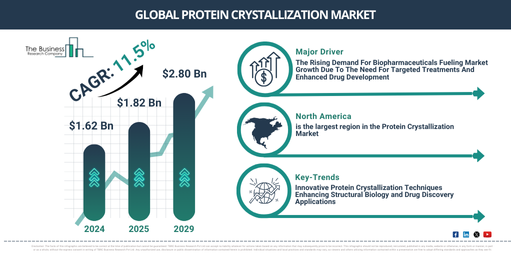
    The size of the protein crystallization market has been rapidly expanding in the recent past. It is projected to increase from a worth of $1.62 billion in 2024 to $1.82 billion in 2025, boasting a compound annual growth rate (CAGR) of 11.8%. This significant growth over the historical period is linked to various key factors such as the growing demand for personalized healthcare, increased need for biologics, advancements in structural proteomics, increased academic research activities, and the escalating requirement for the development of biologics.

    In the upcoming years, the market size of protein crystallization is predicted to experience accelerated growth, reaching $2.80 billion in 2029 with a compound annual growth rate (CAGR) of 11.5%. This increase in the projection period is attributed to the rising demand for protein-centric drug formulation, the increasing occurrence of chronic diseases, and profound research into protein-ligand interactions. Other factors include an increased focus on high-throughput screening methods and a growing requirement for specific software in crystallography. Major tendencies within the forecast period encompass technological advancements, the incorporation of AI in crystallization, laboratory workflow automation, the development of hybrid methodologies, and emerging x-ray technologies.

    Download a free sample to assess the report’s scope and structure:

    https://www.thebusinessresearchcompany.com/sample.aspx?id=22117&type=smp

    What are the Fundamental Drivers and Innovations Shaping the Protein Crystallization Market?

    The protein crystallization market’s expansion is anticipated to be driven by the burgeoning demand for biopharmaceuticals. Biopharmaceuticals are therapeutic drugs created from biological sources or processes, such as proteins, vaccines, and gene therapies, to combat a variety of illnesses and conditions. The growing demand for these biopharmaceuticals stems from their ability to deliver targeted treatments, improve patient prognosis, and address a wide array of chronic and complex diseases with personalized solutions more effective than conventional therapies. Protein crystallization amplifies the effectiveness of biopharmaceuticals by facilitating the precise identification of protein structures, which boosts the creation of targeted treatments and enhances efficacy and stability in biopharmaceutical products. For example, in June 2024, the Australian Bureau of Statistics reported that during 2022-23, Australian government agencies devoted $4,344 million to research and development, marking a rise of $726 million from 2020-21. Concurrently, private non-profit organizations allocated $1,595 million, a surge of $196 million from the previous year. Thus, the escalating demand for biopharmaceuticals is fueling the growth of the protein crystallization market.

    How Is the Protein Crystallization Market Segmented?

    The protein crystallization market covered in this report is segmented –

    1) By Product: Instruments, Consumables, Software And Services

    2) By Technology: X-Ray Crystallography, Cryo-electron Microscopy, NMR Spectroscopy, Other Technologies

    3) By End-User: Pharmaceutical And Biotechnology Companies, Academic And Research Institutes

    Subsegmentss:

    1) By Instruments Type: X-ray Diffractometers, Liquid Handling Systems, Crystallization Imaging Systems, Microfluidic Systems, Incubators & Temperature Control Devices

    2) By Consumables Type: Crystallization Reagents, Microplates & Crystallization Plates, Screens & Buffers, Cryoprotectants, Protein Purification Kits

    3) By Software and Services Type: Crystallography Data Analysis Software, Molecular Modeling Software, AI-Based Structure Prediction Tools, Custom Crystallization Services, Training & Consulting Services

    Request customized data on this market:

    https://www.thebusinessresearchcompany.com/customise?id=22117&type=smp

    Which Regions Are Driving the Next Phase of the Protein Crystallization Market Growth?

    North America was the largest region in the protein crystallization market in 2024. Asia-Pacific is expected to be the fastest-growing region in the forecast period. The regions covered in the protein crystallization market report are Asia-Pacific, Western Europe, Eastern Europe, North America, South America, Middle East, Africa.

    What Key Trends Are Shaping the Future of the Protein Crystallization Market?

    The protein crystallization market is heavily influenced by large corporations that prioritize the development of innovative techniques aimed at improving efficiency and resolution in protein crystallization. These techniques include the use of advanced cell-free protein crystallization methods for the analysis of unstable proteins crucial in structural biology and drug discovery. Specifically, cell-free protein crystallization facilitates the formation of crystallized proteins without the need for living cells, optimizing both crystallization and protein analysis processes. To illustrate this point, Tokyo Institute of Technology, a public university located in Japan, introduced an innovative cell-free protein crystallization technique in October 2022. This revolutionary technique boosts efficiency and resolution in protein crystallization, thus enabling more effective analysis of unstable proteins that were previously challenging to study via conventional methods. Consequently, this technique is poised to substantially improve knowledge about intricate cellular activities and play a key role in creating innovative therapeutic strategies.

    View the full report here:

    https://www.thebusinessresearchcompany.com/report/protein-crystallization-global-market-report

    How Is the Protein Crystallization Market Defined and What Are Its Core Parameters?

    Protein crystallization refers to the process in which proteins are induced to form well-ordered, three-dimensional crystals through a controlled environment, typically by altering conditions such as temperature, pH, and the presence of specific solvents or salts. This method plays a critical role in structural biology by enabling researchers to study the atomic structure of proteins in detail, most commonly through techniques like X-ray diffraction, which can provide insights into protein functions and interactions.

    Purchase the full report and get a swift delivery:

    https://www.thebusinessresearchcompany.com/purchaseoptions.aspx?id=22117

    About The Business Research Company:

    With over 15000+ reports from 27 industries covering 60+ geographies, The Business Research Company has built a reputation for offering comprehensive, data-rich research and insights. Armed with 1,500,000 datasets, the optimistic contribution of in-depth secondary research, and unique insights from industry leaders, you can get the information you need to stay ahead in the game.

    Get in touch with us:

    The Business Research Company: https://www.thebusinessresearchcompany.com/

    Americas +1 3156230293

    Asia +44 2071930708

    Europe +44 2071930708

    Email us at info@tbrc.info

    Follow us on:

    LinkedIn: https://in.linkedin.com/company/the-business-research-company

    YouTube: https://www.youtube.com/channel/UC24_fI0rV8cR5DxlCpgmyFQ

    Global Market Model: https://www.thebusinessresearchcompany.com/global-market-model
  • Pressure Relief Devices Market Outlook 2025–2034: Identifying Growth Drivers, Technology Trends, and Policy Impact

    Pressure Relief Devices Market Outlook 2025–2034: Identifying Growth Drivers, Technology Trends, and Policy Impact

    Discover trends, market shifts, and competitive outlooks for the pressure relief devices industry through 2025-2034 with The Business Research Company’s reliable data and in-depth research

    How Has The Pressure Relief Devices Market Size Shifted, And What Is the Outlook Through 2034?

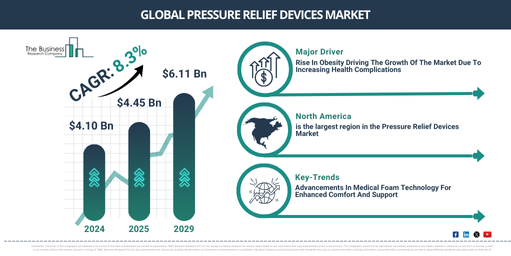
    The market for pressure relief devices has seen considerable growth in the past few years. The industry, which was valued at $4.10 billion in 2024, is anticipated to reach $4.45 billion in 2025, indicating a compound annual growth rate (CAGR) of 8.5%. The growth witnessed during the historical period is linked to factors such as an increase in pressure ulcers, a rise in the elderly population, escalating consciousness about patient safety, an upsurge in diseases related to lifestyle, and enhancing knowledge about severe complications.

    The market for pressure relief devices is anticipated to experience robust expansion in the succeeding years, projected to escalate to $6.11 billion in 2029 with an 8.3% compound annual growth rate (CAGR). The predicted growth in the forecast period can be credited to the escalating demand for less invasive medical procedures, increased occurrence of chronic diseases, surging demand for equipment to manage bedsores, augmenting demand for healthcare services, and increased consciousness about surgical wound care. The chief trends within the forecasted period comprise investments in research and development, strategic partnerships, advancements in technology, incorporation of telemedicine, and progressive wound therapy.

    Download a free sample to assess the report’s scope and structure:

    https://www.thebusinessresearchcompany.com/sample.aspx?id=22112&type=smp

    What Are the Core Market Drivers Propelling Growth in the Pressure Relief Devices Industry?

    The projected increase in obesity-related cases is anticipated to stimulate the expansion of the pressure relief devices market. Obesity, characterized by an unhealthy buildup of body fat, exposes individuals to various health risks. The surge in obesity primarily stems from the ubiquitous consumption of sugary, unhealthy foods and processed items that are calorie-dense. Modern lifestyle patterns have resulted in a strong dependence on fast foods, sugar-rich beverages, and meals that are easy to prepare but lacking in nutritional value, contributing to overeating. By distributing weight evenly, reducing pressure ulcers, and promoting mobility, pressure relief devices assist in the management of obesity, thereby enhancing overall health. The World Obesity Federation, a UK-based entity committed to tackling the worldwide obesity dilemma, projects that the international adult obesity count will increase from 0.81 billion in 2020 to 1.53 billion by 2035. Consequently, the upsurge in obesity cases is fueling the expansion of the pressure relief devices market.

    How Is the Pressure Relief Devices Market Segmented?

    The pressure relief devices market covered in this report is segmented –

    1) By Type: Low-Tech Devices, High-Tech Devices

    2) By Application: Pressure Ulcers, Burns, Surgical Wounds, Other Applications

    3) By End User: Hospitals, Home Care, Long-Term Care Centers, Rehabilitation Centers, Other End Users

    Subsegments:

    1) By Low-Tech Devices: Foam-Based Mattress, Gel-Based Mattress, Fiber Filled Mattress, Water Or Fluid Filled Mattress, Air Filled Mattress, Other Low-Tech Devices

    2) By High-Tech Devices: Dynamic Air Therapy Beds, Kinetic Beds, Other High-Tech Devices

    Request customized data on this market:

    https://www.thebusinessresearchcompany.com/customise?id=22112&type=smp

    Which Regions Are Driving the Next Phase of the Pressure Relief Devices Market Growth?

    North America was the largest region in the pressure relief devices market in 2024. Asia-Pacific is expected to be the fastest-growing region in the forecast period. The regions covered in the pressure relief devices market report are Asia-Pacific, Western Europe, Eastern Europe, North America, South America, Middle East, Africa.

    What Key Market Trends and Innovations Are Shaping the Future of the Pressure Relief Devices Industry?

    Major firms in the pressure relief devices market are prioritizing the creation of innovative technologies like TrueGel technology. This advanced material aims to enhance comfort and offer therapeutic advantages by relieving pressure, supporting the spine, and controlling temperature. In August 2023, the UK-based foam producing company, GNG Group, launched KomfiMed which is a specialized foam equipped with TrueGel technology for superior pressure relief. These mattresses, made from specialized foam, offer increased durability, breathability, and antimicrobial features to uphold cleanliness in medical environments. They are specifically designed to assist bariatic patients, ensuring maximum stability and comfort while adhering to the strict quality requirements of hospital and healthcare settings.

    View the full report here:

    https://www.thebusinessresearchcompany.com/report/pressure-relief-devices-global-market-report

    How Is the Pressure Relief Devices Market Defined and What Are Its Core Parameters?

    Pressure relief devices refer to medical equipment designed to reduce prolonged pressure on the body, helping to prevent skin breakdown and improve blood circulation. These devices are used for individuals with limited mobility, ensuring comfort and reducing the risk of pressure ulcers and related complications.

    Purchase the full report and get a swift delivery:

    https://www.thebusinessresearchcompany.com/purchaseoptions.aspx?id=22112

    About The Business Research Company:

    With over 15000+ reports from 27 industries covering 60+ geographies, The Business Research Company has built a reputation for offering comprehensive, data-rich research and insights. Armed with 1,500,000 datasets, the optimistic contribution of in-depth secondary research, and unique insights from industry leaders, you can get the information you need to stay ahead in the game.

    Get in touch with us:

    The Business Research Company: https://www.thebusinessresearchcompany.com/

    Americas +1 3156230293

    Asia +44 2071930708

    Europe +44 2071930708

    Email us at info@tbrc.info

    Follow us on:

    LinkedIn: https://in.linkedin.com/company/the-business-research-company

    YouTube: https://www.youtube.com/channel/UC24_fI0rV8cR5DxlCpgmyFQ

    Global Market Model: https://www.thebusinessresearchcompany.com/global-market-model
  • Major Drivers Propelling the Growth oh thePost-Operative Nausea And Vomiting Market Forward: Rising Surgical Procedures Driving Growth Due To Enhanced Healthcare Access And Advancements

    Major Drivers Propelling the Growth oh thePost-Operative Nausea And Vomiting Market Forward: Rising Surgical Procedures Driving Growth Due To Enhanced Healthcare Access And Advancements

    Discover trends, market shifts, and competitive outlooks for the post-operative nausea and vomiting industry through 2025-2034 with The Business Research Company’s reliable data and in-depth research

    What Is the Estimated Market Size of the Post-Operative Nausea And Vomiting Market In 2029?

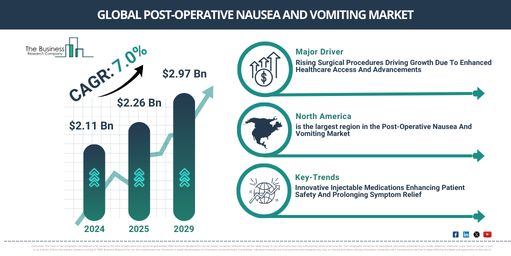
    The market size for post-operative nausea and vomiting has experienced considerable growth in the recent past. Predictions indicate an increase from $2.11 billion in 2024 to $2.26 billion in 2025, reflecting a compound annual growth rate (CAGR) of 7.4%. The historic growth period was influenced by factors such as increased research and development activities, a higher demand for advanced therapeutic methods, an uptick in healthcare spending, a greater emphasis on personalized medicine, and the increased uptake of digital health technologies.

    Predictions point towards a steady expansion of the post-operative nausea and vomiting market over the upcoming years. The market is forecasted to reach $2.97 billion by 2029, maintaining a compound annual growth rate (CAGR) of 7.0%. Factors contributing to this projected growth include the escalating demand for pharmaceuticals, the uptake in combination therapy, heightened awareness, investments in healthcare, an expanding geriatric population, and an increasing incidence of cancer cases. The period under forecast can expect to see trends such as progressive antiemetic therapies, strategic alliances, inventive pharmaceutical formulations, the deployment of cutting-edge diagnostic tools, and the incorporation of electronic simulation devices.

    Download a free sample to assess the report’s scope and structure:

    https://www.thebusinessresearchcompany.com/sample.aspx?id=22109&type=smp

    Which Major Market Drivers Are Expected to Boost the Growth Potential of the Post-Operative Nausea And Vomiting Market?

    The growth of the post-operative nausea and vomiting market is expected to be driven by the increasing number of surgical procedures. Surgical operations, which involve the use of tools to identify, cure, or eliminate malfunctioning tissues or organs through cutting or manipulation, are on the rise. This surge is a result of advancements in medical technology that have made procedures safer, more effective, and less invasive, thereby increasing patient approval and broader usage. Post-operative nausea and vomiting management enhances surgical procedures by enhancing patient comfort, reducing recovery periods, lessening the likelihood of complications, ensuring more effective post-operative care, and ultimately improving overall surgical results. For example, the Australian Institute of Health and Welfare reported in November 2024 that in 2023-24, admissions for surgery from public hospital elective surgery waiting lists increased by 4.9% compared to 2022-23, with a total of 771,600 patients. Consequently, the growing number of surgical procedures is fuelling the expansion of the post-operative nausea and vomiting market.

    Which Key Market Segments Comprise the Post-Operative Nausea And Vomiting Market and Drive Its Revenue Growth?

    The post-operative nausea and vomiting market covered in this report is segmented –

    1) By Treatment Type: Serotonin Antagonists, Steroids, Dopamine Antagonists, Neurokinin NK-1 Receptor Antagonists, Non-pharmacological Treatment, Other Treatment Types

    2) By Route Of Administration: Oral, Intravenous, Transdermal, Other Route Of Administrations

    3) By Patient Demographics: Pediatric Patients, Adult Patients, Geriatric Patients

    4) By Surgical Procedure Type: Orthopedic Surgery, Gynecological Surgery, General Surgery, Cardiac Surgery, Ophthalmic Surgery

    5) By End-User: Hospitals, Ambulatory Surgical Centers, Specialty Clinics, Other End-Users

    Subsegmentss:

    1) By Serotonin Antagonists Type: Ondansetron, Granisetron, Palonosetron, Dolasetron, Tropisetron

    2) By Steroids Type: Dexamethasone, Methylprednisolone, Hydrocortisone, Prednisolone, Betamethasone

    3) By Dopamine Antagonists Type: Metoclopramide, Droperidol, Prochlorperazine, Domperidone, Chlorpromazine

    4) By Neurokinin NK-1 Receptor Antagonists Type: Aprepitant, Fosaprepitant, Rolapitant, Netupitant, Casopitant

    5) By Non-Pharmacological Treatment Type: Acupressure, Aromatherapy, Hypnotherapy, Electroacupuncture, Ginger Supplements

    6) By Other Treatment Types: Antihistamines, Anticholinergics, Cannabinoids, Combination Therapy, Herbal & Natural Remedies

    Request customized data on this market:

    https://www.thebusinessresearchcompany.com/customise?id=22109&type=smp

    Which Areas Are Leading Regions in the Post-Operative Nausea And Vomiting Market Expansion Across the Globe?

    North America was the largest region in the post-operative nausea and vomiting market in 2024. Asia-Pacific is expected to be the fastest-growing region in the forecast period. The regions covered in the post-operative nausea and vomiting market report are Asia-Pacific, Western Europe, Eastern Europe, North America, South America, Middle East, Africa.

    What Are the Key Market Trends in thePost-Operative Nausea And Vomiting Market Over the Coming Years?

    Leading corporations operating within the post-operative nausea and vomiting Market are concentrating on creating crucial injectable drugs with the use of advanced emulsion formulations and extended-release technology to enhance the effectiveness and extend symptom aid for patients after surgery. The term ‘critical injectable medications’ refers to vital drugs administered through injection intended to offer immediate and potent treatment for severe or critical medical situations. For instance, in July 2024, Avenacy, an American speciality pharmaceutical company, introduced Palonosetron Hydrochloride Injection in 0.25 mg/5 ml single-dose vials, aimed at assisting healthcare professionals to minimize dosage mistakes and upgrade patient safety. This injection is used for the prevention of nausea and vomiting resulting from chemotherapy and to control postoperative nausea and vomiting (PONV) for approximately 24 hours following surgery, making it a trustworthy treatment choice for patients vulnerable to these conditions.

    View the full report here:

    https://www.thebusinessresearchcompany.com/report/post-operative-nausea-and-vomiting-global-market-report

    How Is the Post-Operative Nausea And Vomiting Market Conceptually Defined?

    Post-operative nausea and vomiting (PONV) is a common complication that occurs within 24 to 48 hours after surgery, often resulting from anesthesia, pain medications, or the body’s response to surgical stress. It can significantly affect a patient’s recovery, causing discomfort, delayed healing, and an increased risk of complications like dehydration or electrolyte imbalance.

    Purchase the full report and get a swift delivery:

    https://www.thebusinessresearchcompany.com/purchaseoptions.aspx?id=22109

    About The Business Research Company:

    With over 15000+ reports from 27 industries covering 60+ geographies, The Business Research Company has built a reputation for offering comprehensive, data-rich research and insights. Armed with 1,500,000 datasets, the optimistic contribution of in-depth secondary research, and unique insights from industry leaders, you can get the information you need to stay ahead in the game.

    Get in touch with us:

    The Business Research Company: https://www.thebusinessresearchcompany.com/

    Americas +1 3156230293

    Asia +44 2071930708

    Europe +44 2071930708

    Email us at info@tbrc.info

    Follow us on:

    LinkedIn: https://in.linkedin.com/company/the-business-research-company

    YouTube: https://www.youtube.com/channel/UC24_fI0rV8cR5DxlCpgmyFQ

    Global Market Model: https://www.thebusinessresearchcompany.com/global-market-model

  • Critical Market Drivers Shaping the Outlook for Positive Air Pressure Devices Market from 2025-2034: Rising Prevalence Of Respiratory Disorders Fueling The Growth Of The Market Due To Increasing Demand For Effective Breathing Solutions

    Critical Market Drivers Shaping the Outlook for Positive Air Pressure Devices Market from 2025-2034: Rising Prevalence Of Respiratory Disorders Fueling The Growth Of The Market Due To Increasing Demand For Effective Breathing Solutions

    Discover trends, market shifts, and competitive outlooks for the positive air pressure devices industry through 2025-2034 with The Business Research Company’s reliable data and in-depth research

    How Fast Is The Positive Air Pressure Devices Market Expected to Grow Between 2025 And 2029?

    The market size for positive air pressure devices has seen considerable growth in the past few years. The size is set to increase from $2.94 billion in 2024 to hit a new high of $3.17 billion by 2025, portraying a robust compound annual growth rate (CAGR) of 7.7%. The historic growth of this sector can be credited to the increasing cognizance of sleep-related issues, a surge in instances of respiratory diseases, a mounting demand for non-invasive therapeutic methods, growing societal impacts of sleep deprivation and a heightened focus on mental health and sleep.

    It is anticipated that the market size for positive air pressure devices will undergo substantial growth in the forthcoming years, eventually expanding to $4.23 billion by 2029 with a 7.5% compound annual growth rate (CAGR). Several contributors to this predicted growth include increased prevalence of respiratory illnesses, heightened preference for treatments from home, greater awareness and understanding around sleep health, a stronger focus on preventive care, and an amplified emphasis on optimizing devices. The upcoming period will also see key developments such as advancements in pressure sensing, enhancements of smart positive air pressure devices, innovations in the integration of telemedicine and telehealth, and progress in airflow technology.

    Download a free sample to assess the report’s scope and structure:

    https://www.thebusinessresearchcompany.com/sample.aspx?id=22108&type=smp

    What Are the Core Growth Drivers Propelling the Positive Air Pressure Devices Market Forward?

    The ever-increasing instances of respiratory ailments are predicted to stimulate the positive air pressure devices market’s expansion in future. Respiratory issues comprise a variety of diseases impacting the lungs and air passages, resulting in breathing complications and obstructed oxygen transit. The escalation in respiratory diseases can be credited to amplified air contamination and exposure to environmental toxins. The rapid surge of urbanization has led to an increased accumulation of pollutants like particulate matter (PM), nitrogen dioxide (NO2), and ozone, exacerbating respiratory issues like asthma, bronchitis, and chronic obstructive pulmonary disease (COPD). Positive air pressure devices are instrumental in managing these respiratory ailments by producing a clean, regulated environment that aids in minimizing exposure to dangerous pollutants, allergens, and airborne diseases. For instance, projections from the National Library of Medicine, a U.S. government agency, suggest that by 2050, the global occurrences of chronic obstructive pulmonary disease (COPD) are slated to reach an alarming nearly 600 million cases, indicating the escalating burden of respiratory issues globally. Consequently, the escalating instances of respiratory diseases fuel the expansion of the positive air pressure devices market.

    What Segment Types Define the Positive Air Pressure Devices Market Structure?

    The positive air pressure devices market covered in this report is segmented –

    1) By Product: Continuous Positive Airways Pressure Devices (CPAP), Bi-level Positive Airway Pressure (BiPAP) And Variable Positive Airway Pressure (VPAP), Automatic Positive Airway Pressure Devices (APAP)

    2) By Technology: Microfluidics, Optical Detection, Fluorescence-Based Detection, Mass Spectrometry, Immunoassays

    3) By Distribution Channel: Direct Sales, Online Sales, Third-Party Distributors, Pharmacies, Other Distribution Channels

    4) By Application: Sleep Apnea, Chronic Obstructive Pulmonary Disease (COPD), Respiratory Distress Syndrome, Other Applications

    5) By End-User: Hospitals, Home Care Settings, Sleep Clinics, Other End-Users

    Subsegments:

    1) By Continuous Positive Airway Pressure (CPAP) Devices: Fixed Continuous Positive Airway Pressure (CPAP) Devices, Portable Continuous Positive Airway Pressure (CPAP) Devices

    2) By Bi-level Positive Airway Pressure (BiPAP) And Variable Positive Airway Pressure (VPAP) Devices: Fixed Bi-level Positive Airway Pressure (BiPAP) Devices, Auto Bi-level Positive Airway Pressure (BiPAP) Devices

    3) By Automatic Positive Airway Pressure (APAP) Devices: Standard Automatic Positive Airway Pressure (APAP) Devices, Smart Automatic Positive Airway Pressure (APAP) Devices

    Request customized data on this market:

    https://www.thebusinessresearchcompany.com/customise?id=22108&type=smp

    Which Geographic Areas Hold the Strongest Growth Potential in the Positive Air Pressure Devices Market?

    North America was the largest region in the positive air pressure devices market in 2024. Asia-Pacific is expected to be the fastest-growing region in the forecast period. The regions covered in the positive air pressure devices market report are Asia-Pacific, Western Europe, Eastern Europe, North America, South America, Middle East, Africa.

    Which Emerging Trends that Are Influencing thePositive Air Pressure Devices Industry Evolution?

    Many key players in the positive air pressure devices market are prioritizing the creation of novel products, like sleep apnea devices, in order to enhance patient comfort, improve device efficacy, and provide tailored solutions. These devices are regularly employed to address sleep apnea, a disorder characterized by breathing interruptions during sleep due to a blocked or constricted airway. For instance, in February 2024, the American company ResMed introduced AirCurve 11 Bilevel Devices that offer inventive remedies for sleep apnea, chronic obstructive pulmonary disease (COPD), and other breathing ailments by utilizing PAP devices. This device uses dual pressure settings (IPAP and EPAP) to handle sleep apnea and is equipped with state-of-the-art features like built-in humidification and wireless connectivity for tracking.

    View the full report here:

    https://www.thebusinessresearchcompany.com/report/positive-air-pressure-devices-global-market-report

    What Is the Definition of the Positive Air Pressure Devices Market?

    Positive air pressure devices are equipment designed to maintain higher air pressure inside a controlled environment than outside one. These devices help prevent the entry of contaminants, dust, or pollutants by ensuring that air flows outward rather than inward when doors or vents are opened

    Purchase the full report and get a swift delivery:

    https://www.thebusinessresearchcompany.com/purchaseoptions.aspx?id=22108

    About The Business Research Company:

    With over 15000+ reports from 27 industries covering 60+ geographies, The Business Research Company has built a reputation for offering comprehensive, data-rich research and insights. Armed with 1,500,000 datasets, the optimistic contribution of in-depth secondary research, and unique insights from industry leaders, you can get the information you need to stay ahead in the game.

    Get in touch with us:

    The Business Research Company: https://www.thebusinessresearchcompany.com/

    Americas +1 3156230293

    Asia +44 2071930708

    Europe +44 2071930708

    Email us at info@tbrc.info

    Follow us on:

    LinkedIn: https://in.linkedin.com/company/the-business-research-company

    YouTube: https://www.youtube.com/channel/UC24_fI0rV8cR5DxlCpgmyFQ

    Global Market Model: https://www.thebusinessresearchcompany.com/global-market-model
  • Market Trends Influencing Strategic Decisions in the Polymyositis Industry: Advancements In Stem Cell Therapy For Autoimmune Diseases

    Market Trends Influencing Strategic Decisions in the Polymyositis Industry: Advancements In Stem Cell Therapy For Autoimmune Diseases

    Discover trends, market shifts, and competitive outlooks for the polymyositis industry through 2025-2034 with The Business Research Company’s reliable data and in-depth research

    What Is the Current and Projected Market Size of the Polymyositis Market Through 2034?

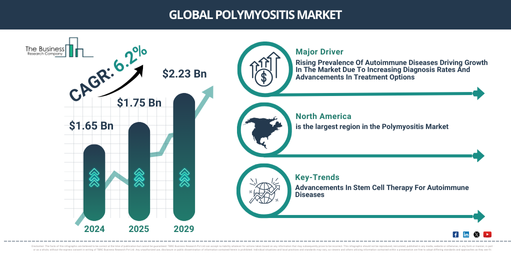
    The market for polymyositis has experienced robust growth in the recent past. Starting from a $1.65 billion valuation in 2024, it is expected to reach $1.75 billion by 2025, marking a compound annual growth rate (CAGR) of 6.4%. This upward trend during the historic period was likely due to improved access in emerging regions, a rise in prednisone application, an increase in acceptance of methotrexate for symptom management, enlargement in the usage of TNF inhibitors, and a surge in antibody testing application.

    The market size for polymyositis is anticipated to experience robust expansion in the upcoming years, with a projection to reach $2.23 billion by 2029, along with a compound annual growth rate (CAGR) of 6.2%. The anticipated growth within this forecast period can be credited to the expansion of telemedicine, increased use of remote patient monitoring, a surge in the employment of immunosuppressants, growth in stem cell therapy applications, and an upsurge in the use of biosimilars. Key trends expected to emerge during this forecast period comprise the incorporation of artificial intelligence in drug discovery, advancements in specific therapeutics, development of new immunomodulators, amplified research in the regenerative medicine sphere, and the assimilation of substantial data.

    Download a free sample to assess the report’s scope and structure:

    https://www.thebusinessresearchcompany.com/sample.aspx?id=22104&type=smp

    What Are the Major Market Drivers Behind the Rising Adoption of Polymyositis Market?

    The growing occurrence of autoimmune diseases is anticipated to spur the expansion of the polymyositis market. Autoimmune diseases are medical situations in which the immune system erroneously attacks healthy cells, tissues, or organs in the body, resulting in inflammation and harm. The escalating rate of autoimmune diseases hinges on certain genetic variants that overstimulate immune responses, rendering individuals vulnerable to mistakenly attacking their own tissues. Hence, this genetic predisposition, alongside environmentally instigated factors like infections, stress, and lifestyle aspects, play a part in the escalating incidents of autoimmune conditions. Polymyositis acts as a lens to comprehend autoimmune diseases by showcasing how immune system malfunction leads to muscular inflammation, thus presenting an understanding of root mechanisms and potential remedies for related conditions. For example, in November 2024, Versorgungsatlas.de, based in Germany, stated that in 2022, out of 73,241,305 insured citizens, 6,304,340 were diagnosed with at least one autoimmune disease, indicating a raw prevalence rate of 8.61%. Thus, the increasing prevalence of autoimmune diseases propels the Polymyositis market. A surge in demand for oral drugs is projected to drive the growth of the polymyositis market. Oral drugs, as consumables—tablets, capsules or liquids—are taken by mouth and digested through the alimentary canal. This heightened demand is linked to their ease of use, simple administration and patient choice for non-intrusive treatments over injections or other means. Polymyositis leverages oral drugs to lessen muscular inflammation, modify immune responses and improve muscle function, thereby alleviating symptoms and preventing further progress of the disease. As an example, the Centers for Disease Control and Prevention in the US reported in October 2022 that disbursement of oral antivirals witnessed an increase of 57% from 643 per 100,000 people from April 24 to May 21, 2022, to 1,012 per 100,000 during July 31 and August 28, 2022. Consequently, the escalating demand for oral drugs is fostering the expansion of the polymyositis market.

    Which Key Market Segments Comprise the Polymyositis Market and Drive Its Revenue Growth?

    The polymyositis market covered in this report is segmented –

    1) By Type: Idiopathic Polymyositis, Dermatomyositis, Inclusion Body Myositis, Overlapping Myositis Syndromes

    2) By Diagnosis: Physical Examination, Muscle Biopsy, Electromyography (EMG), Blood Tests, Magnetic Resonance Imaging (MRI)

    3) By Treatment: Immunosuppressant, Immunoglobulins, Corticosteroids, Alkylating agents, Monoclonal Antibodies

    4) By Distribution Channel: Offline, Online

    5) By End User: Hospital pharmacy, Online pharmacy, Retail pharmacy

    Subsegmentss:

    1) By Idiopathic Polymyositis: Immune-Mediated Polymyositis, Virus-Associated Polymyositis

    2) By Dermatomyositis: Classic Dermatomyositis, Amyopathic Dermatomyositis, Juvenile Dermatomyositis

    3) By Inclusion Body Myositis: Sporadic Inclusion Body Myositis, Hereditary Inclusion Body Myopathy

    4) By Overlapping Myositis Syndromes:Polymyositis with Systemic Lupus Erythematosus (SLE), Polymyositis with Rheumatoid Arthritis (RA), Polymyositis with Systemic Sclerosis, Polymyositis with Mixed Connective Tissue Disease (MCTD)

    Request customized data on this market:

    https://www.thebusinessresearchcompany.com/customise?id=22104&type=smp

    Which Areas Are Leading Regions in the Polymyositis Market Expansion Across the Globe?

    North America was the largest region in the polymyositis market in 2024. Asia-Pacific is expected to be the fastest-growing region in the forecast period. The regions covered in the polymyositis market report are Asia-Pacific, Western Europe, Eastern Europe, North America, South America, Middle East, Africa.

    What Are the Strategic Trends Steering thePolymyositis Market Direction?

    Key players within the polymyositis market are focusing on the development of novel treatments, such as stem cell therapy, to heighten treatment effectiveness and slow the progression of the disease. The basis of the stem cell therapy is the usage of stem cells derived from the umbilical cord as a means of regenerative treatment. These cells possess robust immunomodulatory and anti-inflammatory characteristics, implying that they could be useful in treating autoimmune disorders such as polymyositis. As an example, RESTEM, an American clinical-stage biotech firm, was granted Orphan Drug Designation (ODD) by the U.S. Food and Drug Administration (FDA) for its program which uses umbilical cord outer lining stem cells (ULSCs) in December 2024. This program is helping in the treatment of polymyositis and Dermatomyositis by modulating the immune system and reducing muscle inflammation. The potential to reduce steroid dependence was evidenced by the promising safety and efficacy results of early trials of the treatment.

    View the full report here:

    https://www.thebusinessresearchcompany.com/report/polymyositis-global-market-report

    How Is the Polymyositis Market Conceptually Defined?

    Polymyositis is a chronic inflammatory myopathy characterized by progressive muscle weakness, primarily affecting the skeletal muscles. It results from an autoimmune response where the body’s immune system mistakenly attacks muscle fibers, leading to inflammation, degeneration, and weakness.

    Purchase the full report and get a swift delivery:

    https://www.thebusinessresearchcompany.com/purchaseoptions.aspx?id=22104

    About The Business Research Company:

    With over 15000+ reports from 27 industries covering 60+ geographies, The Business Research Company has built a reputation for offering comprehensive, data-rich research and insights. Armed with 1,500,000 datasets, the optimistic contribution of in-depth secondary research, and unique insights from industry leaders, you can get the information you need to stay ahead in the game.

    Get in touch with us:

    The Business Research Company: https://www.thebusinessresearchcompany.com/

    Americas +1 3156230293

    Asia +44 2071930708

    Europe +44 2071930708

    Email us at info@tbrc.info

    Follow us on:

    LinkedIn: https://in.linkedin.com/company/the-business-research-company

    YouTube: https://www.youtube.com/channel/UC24_fI0rV8cR5DxlCpgmyFQ

    Global Market Model: https://www.thebusinessresearchcompany.com/global-market-model
  • Top Trends Driving Innovation and Change in the Polymyalgia Rheumatica Market: FDA Approval Of Advanced IL-6 Receptor Blocker Offers New Treatment For Polymyalgia Rheumatica

    Top Trends Driving Innovation and Change in the Polymyalgia Rheumatica Market: FDA Approval Of Advanced IL-6 Receptor Blocker Offers New Treatment For Polymyalgia Rheumatica

    Discover trends, market shifts, and competitive outlooks for the polymyalgia rheumatica industry through 2025-2034 with The Business Research Company’s reliable data and in-depth research

    What is the Anticipated CAGR of the Polymyalgia Rheumatica Market, and What Factors Will Drive It?

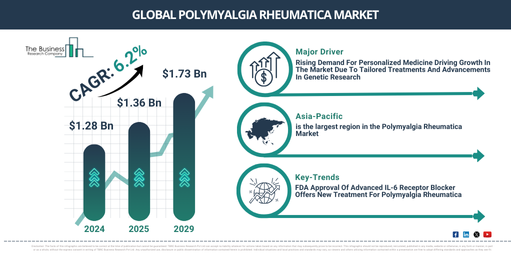
    In the past few years, the polymyalgia rheumatica market size has witnessed significant growth. The projection is that it will expand from $1.28 billion in 2024 to $1.36 billion in 2025 with a compound annual growth rate (CAGR) of 6.6%. Factors that contributed to this historical growth include heightened awareness among healthcare professionals, increased utilization of corticosteroids, proliferation of specialty clinics, the advent of biologic therapies, and boosted healthcare budgets.

    Strong expansion is anticipated in the polymyalgia rheumatica market in the coming years, with predictions estimating its value will reach $1.73 billion in 2029, stemming from a compound annual growth rate (CAGR) of 6.2%. This predicted increases are mainly due to the increased use of biologics, the broadening of precision medicine, an acceleration in drug approvals, more comprehensive reimbursements, and an enlargement in clinical trials. During the forecast period, key trends are expected to be the creation of combination therapies, breakthroughs in personalized medicine, precision medicine development, the inclusion of electronic health records, as well as progress in biomarkers.

    Download a free sample to assess the report’s scope and structure:

    https://www.thebusinessresearchcompany.com/sample.aspx?id=22103&type=smp

    What External and Internal Drivers Are Contributing to the Growth of the Polymyalgia Rheumatica Market?

    The ascension in demand for tailored medical treatment, known as personalized medicine, is anticipated to boost the expansion of the polymyalgia rheumatica market. This individual-oriented medicine approach, influenced by an individual’s unique genetic makeup, lifestyle, and personal health state, brings more effective results. This personalized medical revolution has been propelled by progressive genetic studies, rising patient desires for bespoke treatment plans, and technological improvements in diagnostics. Understanding individual genetic variations through genetic studies has allowed for the creation of customized treatments targeting specific genetic markers. This individualized approach to medicine aids in drug selection, based on patient’s unique characteristics for a safer and more effective treatment agenda. For instance, the Personalised Medicine Coalition, a health care organisation based in the US, reported that in February 2024, the Food and Drug Administration approved 16 new bespoke treatments for rare disease patients in 2023, as compared to six in 2022. This surge in personalized medicine subsequently maneuvering the growth of the polymyalgia rheumatica market. As the ascension in telemedicine services is anticipated to encourage the expansion of the polymyalgia rheumatica market. Telemedicine services utilize digital communicative technologies, such as video and phone calls and online chatting, to extend remote medical consultations, diagnoses, treatment, and patients’ post-treatment care without the requirement of physical appointments. This ascension in telemedicine services is a response to rising demand for convenient and economical healthcare solutions. Telemedicine eradicates the necessity for physical appointments, offering convenience particularly for non-urgent consultations. The growth of these remote healthcare services is beneficial for managing polymyalgia rheumatica (PMR) as it enables distant symptom tracking, medication supervision, and regular patient follow-ups, all essential for managing long-lasting pain and inflammation. For example, the Australian Bureau of Statistics, a governmental agency based in Australia, reported in November 2024 that the proportion of individuals using telehealth consultations rose from 87.7% in 2022-23 to 89.2% in 2023-24. The escalating use of telemedicine services subsequently contributes to the expansion of the polymyalgia rheumatica market.

    What Segment Types Define the Polymyalgia Rheumatica Market Structure?

    The polymyalgia rheumatica market covered in this report is segmented –

    1) By Treatment: Corticosteroids, Nonsteroidal Anti-Inflammatory Drugs, Disease-Modifying Antirheumatic Drugs, Biologics

    2) By Route Of Administration: Oral, Intravenous, Subcutaneous

    3) By Patient Type: Adult, Geriatric, Periatric

    4) By Distribution Channel: Hospital Pharmacies, Retail Pharmacies, Online Pharmacies

    Subsegments:

    1) By Corticosteroids: Prednisone, Methylprednisolone, Hydrocortisone, Dexamethasone

    2) By Nonsteroidal Anti-Inflammatory Drugs (NSAIDs): Ibuprofen, Naproxen, Aspirin, Celecoxib

    3) By Disease-Modifying Antirheumatic Drugs (DMARDs): Methotrexate, Leflunomide, Sulfasalazine, Hydroxychloroquine

    4) By Biologics: Tumor Necrosis Factor (TNF) Inhibitors, Interleukin-6 (IL-6) Inhibitors, B-Cell Inhibitors, Janus Kinase (JAK) Inhibitors

    Request customized data on this market:

    https://www.thebusinessresearchcompany.com/customise?id=22103&type=smp

    Which Geographic Areas Hold the Strongest Growth Potential in the Polymyalgia Rheumatica Market?

    Asia-Pacific was the largest region in the polymyalgia rheumatica market in 2024. The regions covered in the polymyalgia rheumatica market report are Asia-Pacific, Western Europe, Eastern Europe, North America, South America, Middle East, Africa.

    What Long-Term Trends Are Transforming the Competitive Landscape of the Polymyalgia Rheumatica Market?

    Notable companies navigating the polymyalgia rheumatica market are prioritizing the creation of advanced medicinal treatments, particularly interleukin-6 (IL-6) receptor blockers, which offer a more precise, effective mode of action. These biological therapeutics function by inhibiting IL-6, an integral pro-inflammatory cytokine in the context of autoimmune diseases. By obstructing IL-6, these interventions create a cascade of effects that decrease inflammation and ameliorate symptoms, improving life quality for those suffering from PMR. As an example, Regeneron Pharmaceuticals Inc., originating from the U.S., and Sanofi, a healthcare enterprise based in France, publicly stated in February 2023 that the FDA had approved their joint product, Kevzara (sarilumab), for the treatment of polymyalgia rheumatica in adults who are not optimally responsive to corticosteroids or who have trouble easing off them. Kevzara is singular in its status as the first and only biological agent approved for this condition, and it accomplishes its therapeutic goal by interfering with IL-6-mediated signaling. This approval was fueled by the results of a trial where 28.3% of patients under sarilumab obtained sustained remission by the 52nd week, as opposed to only the 10.3% who were given a placebo. The treatment protocol for Kevzara involves a subcutaneous injection every fortnight, and it carries an additional approval for the management of moderately to severely active rheumatoid arthritis. Sanofi’s shares (SNY) are presently valued at $54.13 on the NASDAQ market.

    View the full report here:

    https://www.thebusinessresearchcompany.com/report/polymyalgia-rheumatica-global-market-report

    What Is the Definition of the Polymyalgia Rheumatica Market?

    Polymyalgia rheumatica (PMR) is an inflammatory disorder that primarily affects older adults, causing muscle pain and stiffness, particularly in the shoulders, hips, and neck. It is characterized by aching and swelling in the muscles around the shoulders and hips, leading to difficulty in movement and daily activities.

    Purchase the full report and get a swift delivery:

    https://www.thebusinessresearchcompany.com/purchaseoptions.aspx?id=22103

    About The Business Research Company:

    With over 15000+ reports from 27 industries covering 60+ geographies, The Business Research Company has built a reputation for offering comprehensive, data-rich research and insights. Armed with 1,500,000 datasets, the optimistic contribution of in-depth secondary research, and unique insights from industry leaders, you can get the information you need to stay ahead in the game.

    Get in touch with us:

    The Business Research Company: https://www.thebusinessresearchcompany.com/

    Americas +1 3156230293

    Asia +44 2071930708

    Europe +44 2071930708

    Email us at info@tbrc.info

    Follow us on:

    LinkedIn: https://in.linkedin.com/company/the-business-research-company

    YouTube: https://www.youtube.com/channel/UC24_fI0rV8cR5DxlCpgmyFQ

    Global Market Model: https://www.thebusinessresearchcompany.com/global-market-model
  • Emerging Trends Redefining the Poly(ADP-Ribose) Polymerase (PARP) Inhibitors Market Landscape: Advancements In Targeted Cancer Therapies Driving Innovation In PARP Inhibitors

    Emerging Trends Redefining the Poly(ADP-Ribose) Polymerase (PARP) Inhibitors Market Landscape: Advancements In Targeted Cancer Therapies Driving Innovation In PARP Inhibitors

    Discover trends, market shifts, and competitive outlooks for the poly(adp-ribose) polymerase (parp) inhibitors industry through 2025-2034 with The Business Research Company’s reliable data and in-depth research

    What Are the Key Milestones in the Poly(ADP-Ribose) Polymerase (PARP) Inhibitors Market’s Growth Trajectory From 2025 To 2034?

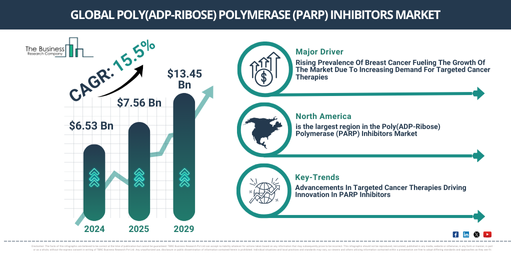
    The market size for poly(ADP-ribose) polymerase (PARP) inhibitors has been on a swift upward trend in the past few years. This market is projected to expand from $6.53 billion in 2024 to $7.56 billion in 2025, signaling a compound annual growth rate (CAGR) of 15.7%. The historic growth pattern can be traced back to factors such as a surge in cancer cases, an increase in genetic testing, successful clinical trials, broader insurance coverage, and a boom in cancer research.

    In the forthcoming years, the market size of poly(ADP-ribose) polymerase (PARP) inhibitors is set to experience substantial growth, estimated to reach a value of $13.45 billion in 2029, with an impressive compound annual growth rate (CAGR) of 15.5%. This growth is primarily driven by factors like an increase in the production and distribution of drugs, heightened incidences of BRCA-mutated cancers and breast cancer, the escalating use of monoclonal antibodies, and a hike in healthcare spending. Key trends during the forecast period encompass improvements in biomarker research, the advent of combination therapies, the incorporation of artificial intelligence in drug creation, progression in biomarker-guided therapy, and the creation of next-generation PARP inhibitors.

    Download a free sample to assess the report’s scope and structure:

    https://www.thebusinessresearchcompany.com/sample.aspx?id=22102&type=smp

    What Are the Core Market Drivers Propelling Growth in the Poly(ADP-Ribose) Polymerase (PARP) Inhibitors Industry?

    The escalating incidence rates of breast cancer are set to catalyze the expansion of the poly(ADP-ribose) polymerase (PARP) inhibitors market. Breast cancer is typified by unregulated cell proliferation in the breast, eventually forming a malignant growth capable of metastasizing to various body parts. The uptick in breast cancer incidences is traced back to aging demographics, alterations in lifestyle, hereditary predisposition, hormonal imbalances, obesity, consumption of alcohol and enhanced susceptibility to environmental risks. PARP inhibitors aid in the treatment of breast cancer by thwarting the DNA repair function of the PARP enzyme in cancerous cells, which induces cell death, specifically in tumours possessing BRCA1 or BRCA2 mutations. For instance, the National Breast Cancer Foundation, a US-centric organization, stated in January 2025, that one in every eight women in the United States will be diagnosed with breast cancer at some point in her lifetime. Stats from 2024 revealed 310,720 women and 2,800 men diagnosed with invasive forms of breast cancer. Consequently, this surge in breast cancer incidences is stimulating the growth of the poly(ADP-ribose) polymerase (PARP) inhibitors market.

    How Is the Poly(ADP-Ribose) Polymerase (PARP) Inhibitors Market Segmented?

    The poly(ADP-ribose) polymerase (PARP) inhibitors market covered in this report is segmented –

    1) By Type: Olaparib, Rucaparib, Niraparib, Talazoparib, Other Types

    2) By Indication: Ovarian Cancer, Breast Cancer, Prostate Cancer, Pancreatic Cancer

    3) By Distribution Channel: Hospital Pharmacies, Retail Pharmacies, Online Pharmacies

    4) By End-User: Hospitals, Specialty Clinics, Research Institutions, Other End-Users

    Subsegments:

    1) By Olaparib: BRCA-Mutated Cancers, HRD-Positive Cancers, Maintenance Therapy

    2) By Rucaparib: Ovarian Cancer, Prostate Cancer, Pancreatic Cancer

    3) By Niraparib: First-Line Treatment, Recurrent Cancer Treatment, Late-Stage Cancer

    4) By Talazoparib: Breast Cancer, Germline BRCA-Mutated Tumors, Neoadjuvant Or Adjuvant Therapy

    5) By Other Types: Emerging PARP Inhibitors, Investigational Therapies, Novel Combinations

    Request customized data on this market:

    https://www.thebusinessresearchcompany.com/customise?id=22102&type=smp

    Which Regions Are Driving the Next Phase of the Poly(ADP-Ribose) Polymerase (PARP) Inhibitors Market Growth?

    North America was the largest region in the poly(ADP-ribose) polymerase (PARP) inhibitors market in 2024. Asia-Pacific is expected to be the fastest-growing region in the forecast period. The regions covered in the poly(ADP-ribose) polymerase (PARP) inhibitors market report are Asia-Pacific, Western Europe, Eastern Europe, North America, South America, Middle East, Africa.

    What Key Market Trends and Innovations Are Shaping the Future of the Poly(ADP-Ribose) Polymerase (PARP) Inhibitors Industry?

    Prominent firms in the poly(ADP-ribose) polymerase (PARP) inhibitors market are concentrating their efforts on creating innovative cancer therapies, such as anticancer drugs, aimed at specific genetic mutations found in certain types of cancer. These anticancer drugs are designed to combat cancer by inhibiting cancer cell growth, hindering their expansion, or annihilating them. They function in a variety of ways, such as disrupting cell division, obstructing vital proteins necessary for tumor growth, or boosting the immune system’s capacity to resist cancer. For example, Zydus Lifesciences Limited, a pharmaceutical entity based in India, introduced IBYRA, a generic form of the PARP inhibitor olaparib, to the Indian market in March 2024. This medication offers a cost-effective and targeted treatment alternative for HRD-positive and BRCA-positive cancer patients, drastically reducing treatment expenses compared to the original drug.

    View the full report here:

    https://www.thebusinessresearchcompany.com/report/polyadp-ribose-polymerase-parp-inhibitors-global-market-report

    How Is the Poly(ADP-Ribose) Polymerase (PARP) Inhibitors Market Defined and What Are Its Core Parameters?

    PARP inhibitors (poly(ADP-ribose) polymerase inhibitors) are a group of drugs mainly used in cancer therapy. These medications work by blocking DNA repair in cancer cells, particularly in cancers with BRCA mutations. They are commonly used to treat ovarian and breast cancer and are usually taken orally. PARP inhibitors help reduce the risk of cancer returning after chemotherapy and can cause side effects such as fatigue and low blood cell counts.

    Purchase the full report and get a swift delivery:

    https://www.thebusinessresearchcompany.com/purchaseoptions.aspx?id=22102

    About The Business Research Company:

    With over 15000+ reports from 27 industries covering 60+ geographies, The Business Research Company has built a reputation for offering comprehensive, data-rich research and insights. Armed with 1,500,000 datasets, the optimistic contribution of in-depth secondary research, and unique insights from industry leaders, you can get the information you need to stay ahead in the game.

    Get in touch with us:

    The Business Research Company: https://www.thebusinessresearchcompany.com/

    Americas +1 3156230293

    Asia +44 2071930708

    Europe +44 2071930708

    Email us at info@tbrc.info

    Follow us on:

    LinkedIn: https://in.linkedin.com/company/the-business-research-company

    YouTube: https://www.youtube.com/channel/UC24_fI0rV8cR5DxlCpgmyFQ

    Global Market Model: https://www.thebusinessresearchcompany.com/global-market-model

  • Medical PendantMarket Overview 2025–2034: CAGR Trends, Long-Term Growth Paths, and Business Implications

    Medical PendantMarket Overview 2025–2034: CAGR Trends, Long-Term Growth Paths, and Business Implications

    Get 30% off on our Global Market Reports with code ONLINE30 – Hurry, limited time offer!

    What Are the Key Milestones in the Medical Pendant Market’s Growth Trajectory From 2025 To 2034?

    The size of the medical pendant market has seen strong growth in the preceding years. This market is projected to expand from a valuation of $0.62 billion in 2024 to $0.67 billion in 2025, reflecting a compound annual growth rate (CAGR) of 9.5%. Factors that have contributed to the growth during the historical period include the escalating demand for ergonomic solutions, the aging population, increasing cases of chronic diseases, a surge in healthcare spending, and the growing requirements of critical care settings.

    The medical pendant industry’s enlargement is projected to drastically escalate in the imminent years, with projections indicating it will reach $0.96 billion by 2029 with a Compound Annual Growth Rate (CAGR) of 9.2%. This prospective amplification during the forecast phase is linked to many factors: tailored development practices, a surge in surgical procedures, an escalating count of healthcare institutions, an augmented consciousness about personal health, and a burgeoning number of health care professionals. Noteworthy trends anticipated during the forecast period encompass the amalgamation of state-of-the-art technologies, tactical partnership, the incorporation of telemedicine, the automation in healthcare systems, and the manufacture of user-friendly medical pendant solutions.

    Download a free sample to assess the report’s scope and structure:

    https://www.thebusinessresearchcompany.com/sample.aspx?id=23448&type=smp

    What Are the Primary Drivers Supporting the Market Growth of the Medical Pendant Market?

    The increase in surgical operations is anticipated to fuel the expansion of the medical pendant market during the projected period. Surgical operations, encompassing incisions or manipulations to heal ailments, injuries, or conditions, are escalating due to the higher incident rate of chronic illnesses like cardiovascular diseases and cancer. These diseases, necessitating surgical procedures for their cure, are propelled by factors like growing elderly population, lifestyle modifications, and medical technology improvements, which augment the success and accessibility of surgeries. A medical pendant features as an essential tool in surgeries to streamline and organize vital medical tools, gases, and electrical connections, thereby facilitating a sterile, clutter-free, and safe operation environment. Such an environment aids in enhancing surgical accuracy, shortening procedure duration, and diminishing the risk associated with equipment. For instance, the Australian Institute of Health and Welfare, a government agency of Australia, reported in November 2024 that there was a 4.9% rise to a total of 771,600 patients admitted for surgery from public hospital elective surgery waiting lists during 2023-24, as opposed to the previous year, 2022-23. Consequently, the upsurge in surgical operations is stimulating the expansion of the medical pendant market.

    Which Primary Segments of the Medical Pendant Market Are Driving Growth and Industry Transformations?

    The medical pendant market covered in this report is segmented –

    1) By Type: Fixed Pendant, Single Arm Movable Pendant, Double And Multi Arm Movable Pendant, Accessories

    2) By Technology: Manual, Motorized, Pneumatic

    3) By Installation: Ceiling Mounted Pendants, Wall Mounted Pendants, Other Installations

    4) By Application: Surgery, Endoscopy, Anesthesia, Intensive Care Unit (ICU), Other Applications

    5) By End-User: Hospitals, Clinics, Other End-Users

    Subsegments:

    1) By Fixed Pendant: Ceiling-Mounted Fixed Pendant, Wall-Mounted Fixed Pendant

    2) By Single Arm Movable Pendant: Motorized Single Arm Pendant, Manual Single Arm Pendant

    3) By Double And Multi-Arm Movable Pendant: Motorized Multi-Arm Pendant, Manual Multi-Arm Pendant

    4) By Accessories: Gas Outlets, Shelves And Drawers, IV Poles, Monitor Holders, Cable Management Systems

    Request customized data on this market:

    https://www.thebusinessresearchcompany.com/customise?id=23448&type=smp

    Which Regions Are Key Players in the Growth of the Medical Pendant Market?

    North America was the largest region in the medical pendant market in 2024. Asia-Pacific is expected to be the fastest-growing region in the forecast period. The regions covered in the medical pendant market report are Asia-Pacific, Western Europe, Eastern Europe, North America, South America, Middle East, Africa.

    Which Technological Trends Are Reshaping the Medical Pendant Industry Dynamics?

    The medical pendant market’s dominant players are intensifying their focus on strategic alliances as a tool to incorporate their collective strengths, mitigate uncertainties, speed up breakthroughs, and extend their market sphere more effectively. Typically, these strategic alliances refer to partnerships between organizations wherein resources, expertise, or technologies are intermingled to achieve shared objectives, spur innovation, or secure a competitive edge. An illustration of this came in July 2022, when Arthrex, a US company specializing in less invasive orthopedic products, formed an alliance with Skytron, a US firm manufacturing medical pendants. The aim was to deliver a wide range of comprehensive room solutions catering to the changing demands and obstacles faced by surgical healthcare facilities. This alliance has empowered the company to bring advanced technology and a fully consolidated operating room set-up within one single offering. This deliverable comprises a full set of harmonized products developed to heighten surgical productivity and elevate patient results. Working in unison, Arthrex and Skytron are poised to provide top-tier solutions tailored to the needs of hospitals and surgical centers.

    View the full report here:

    https://www.thebusinessresearchcompany.com/report/medical-pendant-global-market-report

    What Parameters Are Used to Define the Medical Pendant Market?

    A medical pendant is a ceiling-mounted device used in hospitals and healthcare facilities to efficiently manage medical gases, electrical outlets, and equipment in critical care areas such as operating rooms, intensive care units (ICUs), and emergency rooms. It provides a space-saving solution by suspending essential medical utilities, allowing for improved workflow, easy access to life-support systems, and enhanced infection control.

    Purchase the full report and get a swift delivery:

    https://www.thebusinessresearchcompany.com/purchaseoptions.aspx?id=23448

    About The Business Research Company:

    With over 15000+ reports from 27 industries covering 60+ geographies, The Business Research Company has built a reputation for offering comprehensive, data-rich research and insights. Armed with 1,500,000 datasets, the optimistic contribution of in-depth secondary research, and unique insights from industry leaders, you can get the information you need to stay ahead in the game.

    Get in touch with us:

    The Business Research Company: https://www.thebusinessresearchcompany.com/

    Americas +1 3156230293

    Asia +44 2071930708

    Europe +44 2071930708

    Email us at info@tbrc.info

    Follow us on:

    LinkedIn: https://in.linkedin.com/company/the-business-research-company

    YouTube: https://www.youtube.com/channel/UC24_fI0rV8cR5DxlCpgmyFQ

    Global Market Model: https://www.thebusinessresearchcompany.com/global-market-model

  • Medical Mammography Equipment  Outlook 2034: Key Drivers, Trends, and Market Frontiers

    Medical Mammography Equipment Outlook 2034: Key Drivers, Trends, and Market Frontiers

    Get 30% off on our Global Market Reports with code ONLINE30 – Hurry, limited time offer!

    How Has The Medical Mammography Equipment Market Size Shifted, And What Is the Outlook Through 2034?

    In recent years, the market size for medical mammography equipment has seen strong growth. The market is forecasted to expand from $2.07 billion in 2024 to $2.23 billion in 2025, with a compound annual growth rate (CAGR) of 7.4%. The historic growth has been fueled by factors such as growing cognizance of breast cancer, an upward trend in demand for early detection technologies, increased government initiatives and funding for breast cancer screenings, a boost in healthcare spending, and an increase in breast cancer cases amongst women.

    The market size of medical mammography equipment is anticipated to experience robust growth in the upcoming years, expected to reach a worth of $2.93 billion in 2029, with a compound annual growth rate (CAGR) of 7.1%. Factors contributing to the growth during this period include the accelerating adoption of digital mammography systems, an increase in the elderly population, development in healthcare infrastructure, advances in AI for breast cancer detection, and an increased emphasis on preventive healthcare and initial diagnosis. Noteworthy trends expected during this period encompass advancements in 3D mammography techniques, superior unification of AI, and machine learning for enhanced diagnosis, the creation of portable and compact mammography units, and new developments in customised breast cancer screening alongside progress in contrast-enhanced mammography methods.

    Download a free sample to assess the report’s scope and structure:

    https://www.thebusinessresearchcompany.com/sample.aspx?id=23447&type=smp

    How Are Key Drivers in the Industry Acting as Catalysts for the Growth of the Medical Mammography Equipment Market?

    The medical mammography equipment market’s expansion is anticipated to be fuelled by the growing incidence of breast cancer. This disease is characterized by uncontrolled cell growth in the breast, which creates a tumor often detectable on an x-ray or by touch as a lump. The increasing instances of breast cancer are attributed to heightened exposure to endocrine-disrupting chemicals, increasing hormone-related tumor growth risk due to disturbances in hormonal balance. Medical mammography equipment plays a crucial role in early breast cancer detection, paving the way for prompt treatment and enhanced survival rates. For example, Cancer Australia, a government agency, stated in September 2024 that in 2022, 12.7% of all new cancer cases were attributable to breast cancer with 20,640 diagnoses and 3,214 related deaths. Hence, the increasing occurrence of breast cancer is propelling the medical mammography equipment market’s growth.

    Which Segments in the Medical Mammography Equipment Offer the Most Growth?

    The medical mammography equipment market covered in this report is segmented –

    1) By Product Type: Analog Mammography Equipment, Digital Mammography Equipment, 3D Mammography (Tomosynthesis), MRI Mammography, Screening Mammography Systems

    2) By Technology: Film-Based Technology, Digital Technology, Computed Radiography, Computed Radiography

    3) By Application: Screening For Breast Cancer, Diagnostic Mammography, Monitoring Treatment Responses, Research And Development In Breast Health

    4) By End-User: Hospitals, Diagnostic Imaging Centers, Specialized Clinics, Research Institutions

    Sub Segments:

    1) By Analog Mammography Equipment: Film-Screen Mammography Systems, Dedicated Analog Mammography Units, Retrofit Analog Systems

    2) By Digital Mammography Equipment: Full-Field Digital Mammography (FFDM), Computed Radiography (CR) Mammography, Digital Breast Imaging Workstations

    3) By 3D Mammography (Tomosynthesis): Standalone Tomosynthesis Systems, Combo 2D/3D Systems, Mobile Tomosynthesis Units

    4) By MRI Mammography: Breast MRI Scanners, Dedicated Breast Coils, Contrast Agents for Breast MRI

    5) By Screening Mammography Systems: Hospital-Based Screening Systems, Mobile Screening Units, Public Health Screening Programs

    Request customized data on this market:

    https://www.thebusinessresearchcompany.com/customise?id=23447&type=smp

    What Are the Fastest-Growing Geographies in the Medical Mammography Equipment Market?

    North America was the largest region in the medical mammography equipment market in 2024. Asia-Pacific is expected to be the fastest-growing region in the forecast period. The regions covered in the medical mammography equipment market report are Asia-Pacific, Western Europe, Eastern Europe, North America, South America, Middle East, Africa.

    Which Cutting-Edge Market Trends Are Expected to Drive the Medical Mammography Equipment Market’s Growth?

    Key players in the medical mammography equipment market are striving to introduce innovative technologies such as digital breast chemosynthesis (DBT). This approach not only enhances early detection of breast cancer but also improves diagnostic precision, minimizes recall rates, and enables more personalized and effective patient care. Digital breast tomosynthesis (DBT) is an advanced imaging procedure that generates 3D-like breast images by capturing multiple X-ray shots from various angles. For example, in October 2023, Siemens Healthineers, a medical technology firm based in Germany, unveiled the Mammomat B. Brilliant, a revolutionary tomosynthesis mammography system. This groundbreaking device comes with a wide-angle tube design that enhances 3D imaging of the breast, thereby improving cancer detection. The system is engineered to provide high-resolution images while ensuring patient comfort and minimizing radiation. The goal is to revolutionize breast cancer diagnostics by enabling more precise and efficient screening. The introduction of the Mammomat B. Brilliant underscores the company’s dedication to utilizing leading-edge imaging technologies in women’s health.

    View the full report here:

    https://www.thebusinessresearchcompany.com/report/medical-mammography-equipment-global-market-report

    What Are the Key Elements That Define the Medical Mammography Equipment Market?

    Medical mammography equipment is specialized imaging technology used for early detection and diagnosis of breast cancer. It utilizes low-dose X-rays to create detailed images of the breast tissue, helping identify abnormalities such as tumors or calcifications. The equipment typically includes a mammography machine, image processing systems, and advanced software for analysis.

    Purchase the full report and get a swift delivery:

    https://www.thebusinessresearchcompany.com/purchaseoptions.aspx?id=23447

    About The Business Research Company:

    With over 15000+ reports from 27 industries covering 60+ geographies, The Business Research Company has built a reputation for offering comprehensive, data-rich research and insights. Armed with 1,500,000 datasets, the optimistic contribution of in-depth secondary research, and unique insights from industry leaders, you can get the information you need to stay ahead in the game.

    Get in touch with us:

    The Business Research Company: https://www.thebusinessresearchcompany.com/

    Americas +1 3156230293

    Asia +44 2071930708

    Europe +44 2071930708

    Email us at info@tbrc.info

    Follow us on:

    LinkedIn: https://in.linkedin.com/company/the-business-research-company

    YouTube: https://www.youtube.com/channel/UC24_fI0rV8cR5DxlCpgmyFQ

    Global Market Model: https://www.thebusinessresearchcompany.com/global-market-model

  • Global Medical Low Value Consumables Market Trends: Regional Breakdowns and Strategic Insights

    Global Medical Low Value Consumables Market Trends: Regional Breakdowns and Strategic Insights

    Get 30% off on our Global Market Reports with code ONLINE30 – Hurry, limited time offer!

    How Has the Medical Low Value Consumables Market Growth Performance Trended Historically, And What Lies Ahead?

    There has been significant expansion in the medical low value consumables market size in the past few years. The market is projected to enlarge from $12.46 billion in 2024 to $13.26 billion in 2025, following a compound annual growth rate (CAGR) of 6.4%. The historic period growth is ascribed to a surge in healthcare expenditure, an escalated demand for single-use medical items, an uptick in chronic illnesses, an intensified emphasis on infection prevention, and a rise in the number of surgical procedures.

    The market size of medical low value consumables is projected to experience significant growth within the next few years, escalating to a total of $16.78 billion in 2029 with a compound annual growth rate (CAGR) of 6.1%. This projected increase during the forecast period can be attributed to factors such as the growth of the aging population, expanded healthcare access in emerging markets, an uptick in outpatient surgeries, heightened awareness surrounding hygiene and safety standards, and a rising demand for affordable medical solutions. Key trends anticipated during the forecast period encompass advancements in automation and packaging technologies, innovations in advanced materials for enhanced safety, an evolution in eco-friendly and sustainable consumables, the creation of custom-designed low-value consumables, and progression in point-of-care diagnostic consumables.

    Download a free sample to assess the report’s scope and structure:

    https://www.thebusinessresearchcompany.com/sample.aspx?id=23446&type=smp

    What Are the Major Market Drivers Behind the Rising Adoption of Medical Low Value Consumables Market?

    The increase in chronic diseases is predicted to fuel the expansion of the medical low value consumables market. Chronic diseases, such as diabetes, heart disease, and cancer, are slowly progressive, long-term conditions. Lifestyle modifications and environmental influences, which lead to a poor diet, lack of physical activity, and prolonged exposure to harmful substances, are contributing to the increase in chronic illnesses. The usage of medical low value consumables inadvertently promotes the rise of these diseases through excessive or inadequate use of healthcare resources, leading to misdiagnosis, delayed treatments, and unnecessary patient exposure to interventions. For example, in December 2023, the Australian bureau of Statistics, a government agency based in Australia, reported that 81.4% of individuals had at least one long-term health condition, while 49.9% had at least one chronic condition. Consequently, the increasing prevalence of chronic diseases is propelling the growth of the medical low value consumables market.

    Which Key Market Segments Comprise the Medical Low Value Consumables Market and Drive Its Revenue Growth?

    The medical low value consumables market covered in this report is segmented –

    1) By Product Type: Syringes, Needles, Gloves, Bandages, Catheters

    2) By Material Type: Plastic, Glass, Metal, Biodegradable Materials, Synthetic Polymers

    3) By Usage Type: Single Use Products, Reusable Products, Disposables, Repairable Products

    4) By End User: Hospitals, Clinics, Diagnostic Laboratories, Home Care Settings, Research Laboratories

    Subsegments:

    1) By Syringes: Insulin Syringes, Tuberculin Syringes, Prefilled Syringes, Disposable Syringes, Safety Syringes

    2) By Needles: Hypodermic Needles, Suture Needles, Biopsy Needles, Spinal Needles, Dental Needles

    3) By Gloves: Examination Gloves, Surgical Gloves, Nitrile Gloves, Latex Gloves, Vinyl Gloves

    4) By Bandages: Adhesive Bandages, Elastic Bandages, Gauze Bandages, Cohesive Bandages, Triangular Bandages

    5) By Catheters: Foley Catheters, Intermittent Catheters, Central Venous Catheters, Peripheral IV Catheters, Suprapubic Catheters

    Request customized data on this market:

    https://www.thebusinessresearchcompany.com/customise?id=23446&type=smp

    Which Areas Are Leading Regions in the Medical Low Value Consumables Market Expansion Across the Globe?

    North America was the largest region in the medical low-value consumables market in 2024. Asia-Pacific is expected to be the fastest-growing region in the forecast period. The regions covered in the medical low value consumables market report are Asia-Pacific, Western Europe, Eastern Europe, North America, South America, Middle East, Africa.

    What Are the Key Market Trends in the Medical Low Value Consumables Market Over the Coming Years?

    Key players in the medical low-value consumables industry are turning their attention towards innovations such as glass prefillable syringes with the aim of increasing drug delivery precision, enhancing patient safety, and catering to a rising demand for ready-to-use injectable solutions in both hospital and out-patient environments. Glass prefillable syringes are sterile and ready-to-fill syringes fashioned from glass, employed in the packaging and administration of drugs that are injected. They display elevated chemical resistance, are compatible with a multitude of medicines, and assist in lowering the risk of drug contamination. For instance, in September 2022, the BD Effivax Glass Prefillable Syringe was launched by Becton, Dickinson and Company (BD), a medical technology enterprise based in the U.S. The enhancements in its design minimize the chances of production line halts and improve the dependability of the container. This helps to improve manufacturing efficiency and optimize costs. The syringe enables quicker administration, supports saving doses, minimizes waste of vaccines, and is designed to accommodate next-gen vaccines like mRNA formulations that necessitate very cold storage (up to -75°C).

    View the full report here:

    https://www.thebusinessresearchcompany.com/report/medical-low-value-consumables-global-market-report

    How Is the Medical Low Value Consumables Market Conceptually Defined?

    Medical low-value consumables refer to inexpensive, single-use items commonly used in healthcare settings, such as gloves, bandages, syringes, and masks. These products are typically disposable and used in routine medical procedures. Their low cost makes them essential for daily operations, but not significant drivers of revenue in healthcare systems.

    Purchase the full report and get a swift delivery:

    https://www.thebusinessresearchcompany.com/purchaseoptions.aspx?id=23446

    About The Business Research Company:

    With over 15000+ reports from 27 industries covering 60+ geographies, The Business Research Company has built a reputation for offering comprehensive, data-rich research and insights. Armed with 1,500,000 datasets, the optimistic contribution of in-depth secondary research, and unique insights from industry leaders, you can get the information you need to stay ahead in the game.

    Get in touch with us:

    The Business Research Company: https://www.thebusinessresearchcompany.com/

    Americas +1 3156230293

    Asia +44 2071930708

    Europe +44 2071930708

    Email us at info@tbrc.info

    Follow us on:

    LinkedIn: https://in.linkedin.com/company/the-business-research-company

    YouTube: https://www.youtube.com/channel/UC24_fI0rV8cR5DxlCpgmyFQ

    Global Market Model: https://www.thebusinessresearchcompany.com/global-market-model