Author: Marketing Posting

  • Next-Gen 4D Printing In Healthcare : Market Forecast, Transformation, and Long-Term Trajectories

    Next-Gen 4D Printing In Healthcare : Market Forecast, Transformation, and Long-Term Trajectories

    Discover trends, market shifts, and competitive outlooks for the 4d printing in healthcare industry through 2025-2034 with The Business Research Company’s reliable data and in-depth research

    What Is the Estimated Market Size of the 4D Printing In Healthcare Market In 2029?

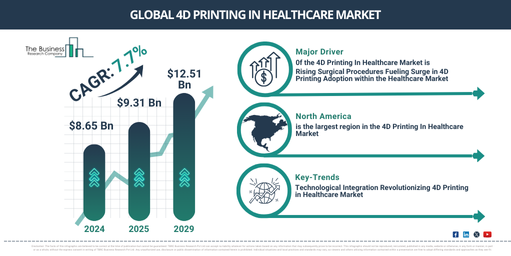
    The market for 4D printing in healthcare has seen robust growth in recent years. Projected to grow from a value of $8.65 billion in 2024 to $9.31 billion in 2025, this represents a compound annual growth rate (CAGR) of 7.6%. Factors contributing to this growth during the historic period include the increasing demand for patient-specific solutions, advancements in tissue engineering and bioprinting, the emergence of innovations in 3D printing technology, and progress in materials development.

    It is projected that the market size for 4D printing in healthcare will experience substantial growth in the upcoming years, with expectations to reach a worth of $12.51 billion by 2029, growing at a compound annual growth rate (CAGR) of 7.7%. This projected growth during the forecast period can be credited to development in personalized medicine, breakthroughs in material science and tissue engineering, and the increased healthcare demands of an aging population. Notable trends expected during the forecast period encompass custom-made implants and prosthetics, intelligent drug delivery systems, biocompatible and biodegradable constructs, smart wearable devices for treatment and observation, and advances in tissue engineering and regenerative medicine.

    Download a free sample to assess the report’s scope and structure:

    https://www.thebusinessresearchcompany.com/sample.aspx?id=14032&type=smp

    Which Major Market Drivers Are Expected to Boost the Growth Potential of the 4D Printing In Healthcare Market?

    As the number of surgeries continues to rise, it is anticipated that this will drive the expansion of 4D printing within the healthcare market. The adaptability of 4D printing allows for the development of medical implants and devices that can be tailored specifically to the patient’s anatomy. This surge in surgeries necessitates a rise in personalized medical solutions to boost surgical outcomes and aid patient recovery. 4D printing permits the creation of intricate structures to accommodate specific patient requirements, enhancing the effectiveness of treatment and heightening patient satisfaction. For example, Austin Publishing Group, a publishing firm based in the United States, claimed in May 2023 that over 300 million major surgical procedures are performed by the global healthcare system annually. As such, the rising number of surgical procedures is fuelling the expansion of the 4D printing sector within the healthcare market.

    Which Key Market Segments Comprise the 4D Printing In Healthcare Market and Drive Its Revenue Growth?

    The 4D printing in healthcare market covered in this report is segmented –

    1) By Type: Fused Deposition Modeling (FDM), PolyJet, Stereolithography, Selective Laser Sintering (SLS)

    2) By Component: Equipment, 3D Printers, 3D Bioprinters, Programmable Materials, Shape-Memory Materials, Hydrogels, Living Cells, Software And Services

    3) By End-User: Hospitals And Clinics, Dental Laboratories, Other End-Users

    Subsegments:

    1) By Fused Deposition Modeling (FDM): Thermoplastic Materials, Biodegradable Polymers, Composite Materials

    2) By PolyJet: Rigid Materials, Flexible Materials, Biocompatible Materials

    3) By Stereolithography: Photopolymer Resins, Dental Resins, Bio-resins

    4) By Selective Laser Sintering (SLS): Nylon Powder, Metal Powders, Polymer Powders

    Request customized data on this market:

    https://www.thebusinessresearchcompany.com/customise?id=14032&type=smp

    Which Areas Are Leading Regions in the 4D Printing In Healthcare Market Expansion Across the Globe?

    North America was the largest region in the 4D printing in healthcare market in 2024. Asia-Pacific is expected to be the fastest-growing region in the forecast period. The regions covered in the 4d printing in healthcare market report are Asia-Pacific, Western Europe, Eastern Europe, North America, South America, Middle East, Africa.

    What Are the Key Market Trends in the 4D Printing In Healthcare Market Over the Coming Years?

    Leading companies that are active in the 4D printing sector within the healthcare market are placing their focus on innovative technological products like 4D designs in a bid to enhance their market profitability. 4D designs can be defined as three-dimensional (3D) designs that include time as the fourth dimension. For example, a UK-based biotechnology firm, 4D Biomaterials, launched a product known as 4Degra, which is a photocurable polycarbonate urethane polymer. This specific polymer is apt for various medical device applications ranging from soft and malleable to stiff and rigid. It is developed using the unique polycarbonate-urethane chemistry of 4D Biomaterials. DLP, LCD, SLA, and two-photon lithography are some of the photocurable additive processes at micro and macro levels that can cast, apply as coatings, or 3D print 4Degra resins.

    View the full report here:

    https://www.thebusinessresearchcompany.com/report/4d-printing-in-healthcare-global-market-report

    How Is the 4D Printing In Healthcare Market Conceptually Defined?

    4D printing in healthcare refers to the fabrication of customized medical devices, implants, and structures using materials that can self-transform or change shape in response to external stimuli over time. This technology builds upon 3D printing by introducing an additional dimension of functionality, enabling the printed objects to alter their shape, properties, or functionality after manufacturing.

    Purchase the full report and get a swift delivery:

    https://www.thebusinessresearchcompany.com/purchaseoptions.aspx?id=14032

    About The Business Research Company:

    With over 15000+ reports from 27 industries covering 60+ geographies, The Business Research Company has built a reputation for offering comprehensive, data-rich research and insights. Armed with 1,500,000 datasets, the optimistic contribution of in-depth secondary research, and unique insights from industry leaders, you can get the information you need to stay ahead in the game.

    Get in touch with us:

    The Business Research Company: https://www.thebusinessresearchcompany.com/

    Americas +1 3156230293

    Asia +44 2071930708

    Europe +44 2071930708

    Email us at info@tbrc.info

    Follow us on:

    LinkedIn: https://in.linkedin.com/company/the-business-research-company

    YouTube: https://www.youtube.com/channel/UC24_fI0rV8cR5DxlCpgmyFQ

    Global Market Model: https://www.thebusinessresearchcompany.com/global-market-model
  • Next-Gen Bird Healthcare And Supplements: Market Forecast, Transformation, and Long-Term Trajectories

    Next-Gen Bird Healthcare And Supplements: Market Forecast, Transformation, and Long-Term Trajectories

    We’ve updated all our reports with current data on tariff changes, trade developments, and supply chain shifts affecting key industries.

    How Has The Bird Healthcare And Supplements Market Growth Evolved From 2024 To 2025, And What’s Ahead?

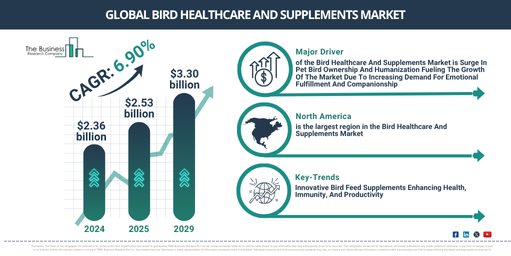
    Recent years have seen a robust expansion in the bird healthcare and supplements market. The market size, which stood at $2.36 billion in 2024, is expected to surge to $2.53 billion in 2025, growing at a compound annual growth rate (CAGR) of 7.2%. This growth in the historic period resulted from a rise in domestic bird ownership, viewing pets as family members, improved understanding of bird health problems, educational initiatives by veterinarians and organizations, as well as regulatory advancements.

    In the coming years, the market for bird healthcare and supplements is anticipated to experience substantial growth, reaching a value of $3.30 billion by 2029 with a compound annual growth rate (CAGR) of 6.9%. This expected growth in the forecast period is due to factors such as the proliferation of online retail platforms, the increasing consumer preference for natural ingredients, an upsurge in disposable income, an emphasis on preventive healthcare, and heightened awareness about bird diseases. The forecast period is expected to see emerging trends like the adoption of blockchain technology, the invention of smart feeders powered by IoT technology, the application of AI-based analytics, the incorporation of biotechnology in supplement formulation, and the creation of specialized probiotics for birds.

    Download a free sample to assess the report’s scope and structure:

    https://www.thebusinessresearchcompany.com/sample.aspx?id=24172&type=smp

    Which Major Market Drivers Are Expected to Boost the Growth Potential of the Bird Healthcare And Supplements Market?

    The increasing trend of keeping pet birds is predicted to boost the bird healthcare and supplements market’s expansion. The term bird ownership implies the duty of attending to a pet bird’s physical and emotional requirements. As more individuals seek emotional gratification and companionship, the number of people owning birds is seeing an uptick. Birds, with their optimal blend of affection and intelligence, are ideal for those seeking deep, emotional connections in compact living quarters. Bird healthcare and supplements are crucial to bird ownership as they contribute to the upkeep of a bird’s health, stave off illnesses, and enhance its overall wellness, guaranteeing a lengthier, more joyful existence. For example, as per a report put forth in May 2022 by Mérieux NutriSciences, a food safety firm based in France, almost 4 million birds resided as pets within 1.5 million homes in 2022, showing a nearly 23% surge compared to the preceding year. Hence, the growing pet bird ownership is fuelling the bird healthcare and supplements market’s growth.

    Which Key Market Segments Comprise the Bird Healthcare And Supplements Market and Drive Its Revenue Growth?

    The bird healthcare and supplements market covered in this report is segmented –

    1) By Product Type: Vitamins, Probiotics, Herbal Supplements, Mineral Supplements, Other Product Types

    2) By Target Bird Species: Parrots, Canaries, Finches, Pigeons, Budgerigars

    3) By Formulation Type: Pills And Capsules, Powders, Liquids, Soft Chews, Gummies

    4) By Distribution Channel: Online Retail, Specialty Pet Stores, Veterinary Clinics, Super markets, Direct Sales, Other Distribution Channels

    5) By Application: Digestive Health, Immune Support, Bone Health, Other Applications

    Subsegments:

    1) By Vitamins: Vitamin A Supplements, Vitamin D3 Supplements, Vitamin E Supplements, Multivitamin Complexes, Water-Soluble Vitamin Blends

    2) By Probiotics: Lactobacillus-Based Supplements, Bacillus Subtilis Probiotics, Yeast-Based Probiotics, Multi-Strain Probiotic Blends, Prebiotic-Probiotic Combinations

    3) By Herbal Supplements: Echinacea Extract Supplements, Garlic-Based Immunity Boosters, Turmeric (Curcumin) Blends, Neem-Based Detox Supplements, Aloe Vera Digestive Aids

    4) By Mineral Supplements: Calcium And Phosphorus Blends, Zinc-Enriched Supplements, Iron Supplements, Magnesium Blends, Electrolyte And Trace Mineral Premixes

    5) By Other Product Types: Amino Acid Supplements, Omega-3 And Omega-6 Fatty Acid Supplements, Immune Enhancers, Enzyme Supplements, Anti-Stress Tonics And Appetite Stimulants

    Request customized data on this market:

    https://www.thebusinessresearchcompany.com/sample.aspx?id=24172&type=smp

    Which Areas Are Leading Regions in the Bird Healthcare And Supplements Market Expansion Across the Globe?

    North America was the largest region in the bird healthcare and supplements market in 2024. Asia-Pacific is expected to be the fastest-growing region in the forecast period. The regions covered in the bird healthcare and supplements market report are Asia-Pacific, Western Europe, Eastern Europe, North America, South America, Middle East, Africa.

    What Are the Key Market Trends in the Bird Healthcare And Supplements Market Over the Coming Years?

    In the bird healthcare and supplements market, leading companies are concentrating their efforts on creating novel formulations, like bird feed supplements, to improve birds’ overall health, immunity, and productivity. Bird feed supplements are added to a bird’s normal diet to supplement nutrients, vitamins, minerals, or other beneficial compounds that may be lacking in their usual feed. For example, Refit Animal Care, a company based in India that manufactures veterinary products, launched FEATHER GLOW in March 2025. This groundbreaking bird feed supplement is aimed at enhancing feather growth, improving skin health and boosting birds’ immunity. It contains essential fatty acids, vitamins (A, D3, E, B6), minerals like zinc, and antioxidants that contribute to healthy feathers, deter feather picking, and enhance skin’s moisture, elasticity. This supplement also increases the overall vitality of birds and aids in disease resistance.

    View the full report here:

    https://www.thebusinessresearchcompany.com/report/bird-healthcare-and-supplements-global-market-report

    How Is the Bird Healthcare And Supplements Market Conceptually Defined?

    Bird healthcare and supplements refer to a broad category of products designed to support the physical well-being, disease prevention, and performance of birds, whether they are kept as pets, raised for poultry farming, or observed in the wild. These supplements help fill dietary gaps and promote well-being, especially during stress, illness, or breeding periods.

    Purchase the full report and get a swift delivery:

    https://www.thebusinessresearchcompany.com/customise?id=24172&type=smp

    About The Business Research Company:

    With over 15000+ reports from 27 industries covering 60+ geographies, The Business Research Company has built a reputation for offering comprehensive, data-rich research and insights. Armed with 1,500,000 datasets, the optimistic contribution of in-depth secondary research, and unique insights from industry leaders, you can get the information you need to stay ahead in the game.

    Get in touch with us:

    The Business Research Company: https://www.thebusinessresearchcompany.com/

    Americas +1 3156230293

    Asia +44 2071930708

    Europe +44 2071930708

    Email us at info@tbrc.info

    Follow us on:

    LinkedIn: https://in.linkedin.com/company/the-business-research-company

    YouTube: https://www.youtube.com/channel/UC24_fI0rV8cR5DxlCpgmyFQ

    Global Market Model: https://www.thebusinessresearchcompany.com/global-market-model
  • Bipolar Disorder Drugs And Treatment Market Overview 2025: Competitive Shifts, Forecast Models, and Emerging Opportunities

    Bipolar Disorder Drugs And Treatment Market Overview 2025: Competitive Shifts, Forecast Models, and Emerging Opportunities

    We’ve updated all our reports with current data on tariff changes, trade developments, and supply chain shifts affecting key industries.

    What is the Projected CAGR for the Bipolar Disorder Drugs And Treatment Market Size from 2025 to 2034?

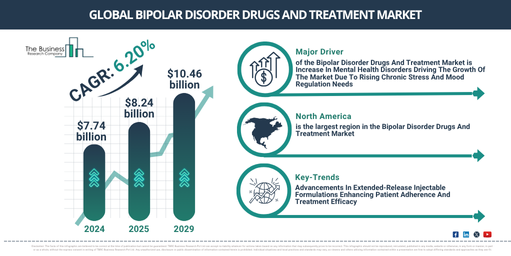
    In recent years, there has been substantial growth in the market size of drugs and treatment for bipolar disorder. It is forecasted to inflate from $7.74 billion in 2024 to $8.24 billion in 2025, reflecting a compound annual growth rate (CAGR) of 6.4%. Factors contributing to the growth during the historic period include an increase in healthcare spending, a rise in mental health research and its funding, more healthcare professionals specializing in mental health, an increased rate of early diagnosis of bipolar disorder patients, and a growing demand for outpatient psychiatric care.

    In the forthcoming years, the market for bipolar disorder drugs and therapy is predicted to witness robust growth. By 2029, it is anticipated to climb to a worth of $10.46 billion, boasting a compound annual growth rate (CAGR) of 6.2%. This substantial growth throughout the forecast period can be ascribed to an increasing incidence of bipolar disorder globally, heightened attention towards mental health issues, a growing acceptance of therapeutic approaches towards mental issues, an enlargement of insurance policies covering mental health therapy, and governmental interventions to bolster mental health care. Conspicuous trends during the forecast period encompass strides in the advancement of medication for bipolar disorder, enhancements in diagnostic practices and apparatus, the roll-out of innovative and fresh drug formulations, ongoing studies and clinical trials for groundbreaking drugs, and the availability of generic medicines for bipolar disorder.

    Download a free sample to assess the report’s scope and structure:

    https://www.thebusinessresearchcompany.com/sample.aspx?id=24171&type=smp

    What Are the Core Growth Drivers Propelling the Bipolar Disorder Drugs And Treatment Market Forward?

    The escalation in mental health disorders is poised to trigger the expansion of the bipolar disorder drugs and treatment market in the forthcoming years. Mental health disorders, affecting an individual’s thoughts, emotions, behavior, or mood, often hinder their everyday functions and wellness. The surge in such disorders can be attributed to the growing chronic stress stemming from contemporary lifestyles as enduring strains related to work, money, and societal pressures can degrade emotional health and give rise to long-term psychological issues. Drugs and treatments for bipolar disorder prove beneficial in managing mental health disorders by stabilizing mood swings, an important factor for enhancing emotional regulation and diminishing the intensity and frequency of disruptive episodes linked with these conditions. For example, in September 2024, as per the National Institute of Mental Health (NIMH), a federal agency based in the US, showed that any mental illness (AMI) impacted more than 59.3 million adults in the US in 2022, making up 23.1% of the adult population. Also, the incidence of AMI was considerably higher in women (26.4%) than men (19.7%). Consequently, the rising prevalence of mental health disorders will play a crucial role in propelling the bipolar disorder drugs and treatment market.

    What Segment Types Define the Bipolar Disorder Drugs And Treatment Market Structure?

    The bipolar disorder drugs and treatment market covered in this report is segmented –

    1) By Types: Mood Stabilizers, Anticonvulsants, Antipsychotic Drugs, Antidepressant Drugs, Anti-Anxiety Drugs

    2) By Route Of Administration: Oral, Parenteral, Other Routes Of Administration

    3) By Bipolar Disorder: Bipolar I Disorder, Bipolar II Disorder, Cyclothymic Disorder

    4) By Distribution Channel: Hospital Pharmacies, Retail Pharmacies, Online Pharmacies

    Subsegments:

    1) By Mood Stabilizers: Lithium Carbonate, Lamotrigine, Valproate

    2) By Anticonvulsants: Carbamazepine, Oxcarbazepine, Topiramate

    3) By Antipsychotic Drugs: Olanzapine, Risperidone, Quetiapine, Aripiprazole

    4) By Antidepressant Drugs: Selective Serotonin Reuptake Inhibitors (SSRIs), Serotonin-Norepinephrine Reuptake Inhibitors (SNRIs), Tricyclic Antidepressants (TCAs)

    5) By Anti-Anxiety Drugs: Benzodiazepines, Buspirone

    Request customized data on this market:

    https://www.thebusinessresearchcompany.com/sample.aspx?id=24171&type=smp

    Which Geographic Areas Hold the Strongest Growth Potential in the Bipolar Disorder Drugs And Treatment Market?

    North America was the largest region in the bipolar disorder drugs and treatment market in 2024. Asia-Pacific is expected to be the fastest-growing region in the forecast period. The regions covered in the bipolar disorder drugs and treatment market report are Asia-Pacific, Western Europe, Eastern Europe, North America, South America, Middle East, Africa.

    Which Emerging Trends that Are Influencing the Bipolar Disorder Drugs And Treatment Industry Evolution?

    Leading firms in the bipolar disorder drugs and treatment market are prioritizing the creation of progressive solutions like extended-release injectable formulations, which offer long-lasting therapeutic benefits. These extended-release injectable formulations gradually release medicine into the bloodstream, thus eliminating the necessity for daily dosage and ensuring steady therapeutic effects. Notably, in January 2023, the U.S. Food and Drug Administration (FDA) endorsed Rykindo (risperidone), a solution specifically designed for long-term injection treatment of adult schizophrenia and also for treatment of adult bipolar I disorder either independently or in conjunction with lithium or valproate. This solution was proposed by Luye Pharma, a pharmaceutical firm based in China. Rykindo, which is given through intramuscular injection bi-weekly, employs a specialized microsphere technology devised by Luye Pharma to facilitate prolonged effects. Risperidone, the primary component, is steadily released over time through extended-release microsphere technology.

    View the full report here:

    https://www.thebusinessresearchcompany.com/report/bipolar-disorder-drugs-and-treatment-global-market-report

    What Is the Definition of the Bipolar Disorder Drugs And Treatment Market?

    Bipolar disorder drugs and treatment refer to a comprehensive approach designed to manage extreme mood shifts and support long-term mental stability. It focuses on regulating brain activity to minimize the intensity and recurrence of mood episodes while addressing co-occurring issues such as disrupted sleep, anxiety, or concentration difficulties.

    Purchase the full report and get a swift delivery:

    https://www.thebusinessresearchcompany.com/customise?id=24171&type=smp

    About The Business Research Company:

    With over 15000+ reports from 27 industries covering 60+ geographies, The Business Research Company has built a reputation for offering comprehensive, data-rich research and insights. Armed with 1,500,000 datasets, the optimistic contribution of in-depth secondary research, and unique insights from industry leaders, you can get the information you need to stay ahead in the game.

    Get in touch with us:

    The Business Research Company: https://www.thebusinessresearchcompany.com/

    Americas +1 3156230293

    Asia +44 2071930708

    Europe +44 2071930708

    Email us at info@tbrc.info

    Follow us on:

    LinkedIn: https://in.linkedin.com/company/the-business-research-company

    YouTube: https://www.youtube.com/channel/UC24_fI0rV8cR5DxlCpgmyFQ

    Global Market Model: https://www.thebusinessresearchcompany.com/global-market-model
  • From Insight to Impact: Strategic Growth Mapping in the Biofeedback Devices Market

    From Insight to Impact: Strategic Growth Mapping in the Biofeedback Devices Market

    We’ve updated all our reports with current data on tariff changes, trade developments, and supply chain shifts affecting key industries.

    What Is the Current and Projected Market Size of the Biofeedback Devices Market Through 2034?

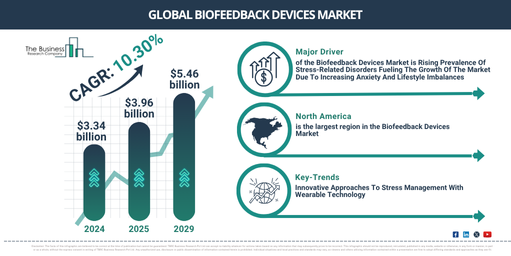
    The market size for biofeedback devices has experienced swift growth in the past few years, with the market size expected to rise from $3.34 billion in 2024 to $3.96 billion in 2025. This depicts a compound annual growth rate (CAGR) of 10.4%. Growth during the historic period could be credited to various factors including, an increased prevalence of stress-related illnesses, heightened awareness about mental health and wellbeing, the growing usage of wearable health technology, a rise in demand for non-invasive and non-pharmaceutical treatment options, and an extension of these devices in rehabilitation and the management of chronic diseases.

    The market for biofeedback devices is projected to undergo swift expansion in the coming years, growing to $5.46 billion in 2029 with a compound annual growth rate (CAGR) of 10.3%. The impending development is due to various factors, including increased incorporation with digital platforms and mobile applications, escalating investments in digital therapeutics and neurotechnology, a rise in the availability of devices suitable for home use and consumer-grade, amplified support from insurance providers for biofeedback therapy, plus an uptick in clinical evidence backing the effectiveness of biofeedback. Future trends comprise technological advancements in wearable sensor technology, biofeedback’s amalgamation with mobile health platforms, innovation complemented with artificial intelligence and machine learning, growth in brain-computer interface and neurofeedback systems, and advances in cloud computing for distanced monitoring.

    Download a free sample to assess the report’s scope and structure:

    https://www.thebusinessresearchcompany.com/sample.aspx?id=24170&type=smp

    What are the Fundamental Drivers and Innovations Shaping the Biofeedback Devices Market?

    The biofeedback devices market growth is expected to get a boost in the future due to the increasing occurrence of stress-related disorders. These disorders, both physical and mental health conditions, develop because of long-term or extreme stress, and their prevalence is growing because of increased pressures from work and lifestyle discrepancies in today’s society. Biofeedback devices are utilized in treating stress-related disorders as they assist individuals in monitoring and regulating physiological reactions, like heart rate and brainwaves, which can help to increase relaxation and decrease stress. For example, the American Psychiatric Association reported in May 2024 that the percentage of US adults experiencing increased anxiety had risen to 43%, from 37% in 2023 and 32% in 2022. Consequently, the escalating occurrence of stress-related disorders is fueling the growth of the biofeedback devices market.

    How Is the Biofeedback Devices Market Segmented?

    The biofeedback devices market covered in this report is segmented –

    1) By Type: Brainwaves, Heart Rate, Muscle Tone, Sweat Glands, Temperature, Pulmonary Functions, Other Types

    2) By Technology: Electromyography (EMG), Electroencephalography (EEG), Heart Rate Variability (HRV)

    3) By Distribution Channel: Online Retail, Physical Retail, Direct Sales

    4) By Application: Home Use, Hospital, Clinic, Rehabilitation Centers, Research Institutions

    5) By End-User: Individuals, Healthcare Providers, Corporate Wellness Programs

    Subsegment:

    1) By Brainwaves: Alpha Waves, Beta Waves, Delta Waves, Theta Waves, Gamma Waves

    2) By Heart Rate: Heart Rate Variability (HRV), Resting Heart Rate Monitoring, Peak Heart Rate Monitoring

    3) By Muscle Tone: Surface Electromyography (sEMG), Intramuscular EMG, Pelvic Floor EMG, Facial EMG

    4) By Sweat Glands: Galvanic Skin Response (GSR), Electrodermal Activity (EDA)

    5) By Temperature: Peripheral Skin Temperature Monitoring, Core Body Temperature Monitoring

    6) By Pulmonary Functions: Respiratory Rate Monitoring, Breathing Pattern Training, Capnography-based Feedback

    7) By Other Types: Blood Pressure Monitoring, Posture Monitoring, Skin Conductance, Thermal Biofeedback

    Request customized data on this market:

    https://www.thebusinessresearchcompany.com/sample.aspx?id=24170&type=smp

    Which Regions Are Driving the Next Phase of the Biofeedback Devices Market Growth?

    North America was the largest region in the biofeedback devices market in 2024. Asia-Pacific is expected to be the fastest-growing region in the forecast period. The regions covered in the biofeedback devices market report are Asia-Pacific, Western Europe, Eastern Europe, North America, South America, Middle East, Africa.

    What Key Trends Are Shaping the Future of the Biofeedback Devices Market?

    Key players in the biofeedback devices market are prioritizing technological advancements such as wearable biofeedback devices. These innovations aim to elevate real-time monitoring, heighten user experience, and deliver customized data-informed insights for stress control, mental wellbeing, and overall health. Wearable biofeedback equipment is portable tech that observes physiological responses, like the heart rate, skin temperature, or brain functions, providing instant feedback beneficial for health and stress management. For example, BramhAnsh Technologies, a company based in India, launched SOONYAM in January 2024. This wearable biofeedback device measures mental conditions using Galvanic Skin Response (GSR) technology. SOONYAM uses electrodermal activity tracking to give immediate insights into psychological arousal, stress levels, and mental exertion. It is tailored for individuals, counselors, and practitioners, featuring an easy-to-use interface and allows seamless integration into everyday activities such as sleep monitoring and meditation.

    View the full report here:

    https://www.thebusinessresearchcompany.com/report/biofeedback-devices-global-market-report

    How Is the Biofeedback Devices Market Defined and What Are Its Core Parameters?

    Biofeedback devices are electronic tools that monitor physiological signals and provide real-time feedback to help users consciously regulate bodily functions for improved health and well-being. Biofeedback devices are utilized by capturing real-time physiological data and providing feedback to help users learn to control functions such as heart rate, muscle tension, or brain activity for therapeutic or performance-enhancing purposes.

    Purchase the full report and get a swift delivery:

    https://www.thebusinessresearchcompany.com/customise?id=24170&type=smp

    About The Business Research Company:

    With over 15000+ reports from 27 industries covering 60+ geographies, The Business Research Company has built a reputation for offering comprehensive, data-rich research and insights. Armed with 1,500,000 datasets, the optimistic contribution of in-depth secondary research, and unique insights from industry leaders, you can get the information you need to stay ahead in the game.

    Get in touch with us:

    The Business Research Company: https://www.thebusinessresearchcompany.com/

    Americas +1 3156230293

    Asia +44 2071930708

    Europe +44 2071930708

    Email us at info@tbrc.info

    Follow us on:

    LinkedIn: https://in.linkedin.com/company/the-business-research-company

    YouTube: https://www.youtube.com/channel/UC24_fI0rV8cR5DxlCpgmyFQ

    Global Market Model: https://www.thebusinessresearchcompany.com/global-market-model
  • Bioengineered Artificial SkinMarket Overview 2025–2034: CAGR Trends, Long-Term Growth Paths, and Business Implications

    Bioengineered Artificial SkinMarket Overview 2025–2034: CAGR Trends, Long-Term Growth Paths, and Business Implications

    We’ve updated all our reports with current data on tariff changes, trade developments, and supply chain shifts affecting key industries.

    What is the Anticipated CAGR of the Bioengineered Artificial Skin Market, and What Factors Will Drive It?

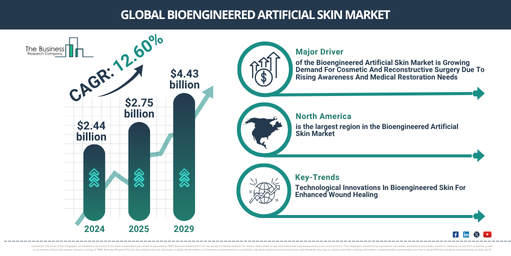
    There has been a swift expansion in the bioengineered artificial skin market in the last few years. The market, which valued at $2.44 billion in 2024, is projected to upsurge to $2.75 billion in 2025, indicating a compound annual growth rate (CAGR) of 12.9%. This growth in the past years has been driven by factors such as a surge in burn injury incidents, a high prevalence of chronic wounds, early advances in tissue engineering, a rise in initial government research grants, and an upward demand from the military and trauma care sectors.

    Anticipated to encounter swift expansion in the coming years, the bioengineered artificial skin market is projected to rise to $4.43 billion by 2029, with a compound annual growth rate (CAGR) of 12.6%. Reasons for this growth during the forecast period include the progression of stem cell technologies, widespread use in cosmetic surgeries, enhanced concentration on personalized medicine, rising aging population suffering from skin conditions, and increased investment in regenerative healthcare solutions. Key trends for the forecast period encompass the incorporation of 3D bioprinting, emergence of smart skin technologies, advancement in hybrid synthetic-biological skin models, assimilation of artificial intelligence in tissue modeling, and partnerships between biotechnology companies and hospitals.

    Download a free sample to assess the report’s scope and structure:

    https://www.thebusinessresearchcompany.com/sample.aspx?id=24169&type=smp

    What Are the Primary Drivers Supporting the Market Growth of the Bioengineered Artificial Skin Market?

    The bioengineered artificial skin market is expected to boom owing to the escalating demand for cosmetic and reconstructive surgery. This type of surgery, which is carried out to improve physical appearance or rectify form and function of body parts affected by congenital conditions, trauma, or illness, has seen a surge in demand due to rising consumer awareness and growing needs for medical restoration after trauma, illness or congenital issues. Artificial skin created via bioengineering becomes highly useful in these surgeries as it promotes tissue regeneration, minimizes scarring and enhances aesthetic outcomes from procedures aimed at repairing or reviving damaged or lost skin. For example, the number of cosmetic procedures carried out in 2022 registered a staggering rise of 102% to hit 31,057 in the UK, as noted by the British Association of Aesthetic Plastic Surgeons – a non-profit organization based in the UK, in March 2023. Therefore, the increase in demand for cosmetic and reconstructive surgery is fuelling the expansion of the bioengineered artificial skin market.

    Which Primary Segments of the Bioengineered Artificial Skin Market Are Driving Growth and Industry Transformations?

    The bioengineered artificial skin market covered in this report is segmented –

    1) By Product Type: Acellular Dermal Matrices, Cell-Based Skin Substitutes, Skin Grafts, 3D Bioprinted Skin

    2) By Material Type: Collagen-Based, Hyaluronic Acid-Based, Silicone-Based, Polyurethane-Based

    3) By Technology: Bioprinting, Electrospinning, Self-Assembly, Microfabrication

    4) By Application: Burn Treatment, Chronic Wound Care, Surgical Reconstruction, Other Applications

    5) By End-User: Hospitals, Dermatology Clinics, Ambulatory Surgical Centers, Research Institutions

    Subsegments:

    1) By Acellular Dermal Matrices: Biologically Derived Acellular Dermal Matrices, Synthetic Acellular Dermal Matrices, Hydrogel-Based Acellular Dermal Matrices, Collagen-Based Acellular Dermal Matrices

    2) By Cell-Based Skin Substitutes: Autologous Skin Substitutes, Allogeneic Skin Substitutes, Stem Cell-Based Skin Substitutes, Fetal and Neonatal Cell-Based Substitutes

    3) By Skin Grafts: Split-Thickness Skin Grafts, Full-Thickness Skin Grafts, Cultured Skin Grafts, Synthetic Skin Grafts

    4) By 3D Bioprinted Skin: Human Skin Bioprinting, Animal-Derived Bioprinted Skin, Bioink-Based Bioprinted Skin, Multi-Layered Bioprinted Skin

    Request customized data on this market:

    https://www.thebusinessresearchcompany.com/sample.aspx?id=24169&type=smp

    Which Regions Are Key Players in the Growth of the Bioengineered Artificial Skin Market?

    North America was the largest region in the bioengineered artificial skin market in 2024. Asia-Pacific is expected to be the fastest-growing region in the forecast period. The regions covered in the bioengineered artificial skin market report are Asia-Pacific, Western Europe, Eastern Europe, North America, South America, Middle East, Africa.

    What Are the Most Significant Market Trends in the Bioengineered Artificial Skin Market?

    Leading businesses in the bioengineered artificial skin market are centering their efforts on technological breakthroughs, such as sophisticated tissue engineering methodologies. They aim to design superior skin replacements that not only enhance the process of wound healing and better patient conditions, but also cater to the mounting need for regenerative medicine in addressing serious burn injuries and persistent wounds. Advanced tissue engineering is a multidisciplinary domain that merges biology, materials science, and engineering to formulate synthetic or biologically sourced tissues and organs. These products are capable of mimicking the structure and function of natural tissues for medical use. For example, in January 2023, the France-based healthcare company, Urgo Group, inaugurated the Genesis research laboratory. Their main goal is to build artificial skin that aids in the effective recovery of severe wounds. The idea is to assist healthcare workers by pioneering progressive bioengineered skin solutions to fast-track patient recuperation and better wound-healing results.

    View the full report here:

    https://www.thebusinessresearchcompany.com/report/bioengineered-artificial-skin-global-market-report

    What Parameters Are Used to Define the Bioengineered Artificial Skin Market?

    Bioengineered artificial skin is a laboratory-created substitute designed to mimic the structure and function of natural human skin. It is developed using living cells and synthetic or natural materials to replicate the skin’s layers, primarily the epidermis and dermis. This artificial skin is used for wound healing, burn treatment, skin grafts, and testing pharmaceuticals or cosmetics. By promoting cell growth and tissue regeneration, it offers a valuable solution when natural skin regeneration is insufficient or unavailable.

    Purchase the full report and get a swift delivery:

    https://www.thebusinessresearchcompany.com/customise?id=24169&type=smp

    About The Business Research Company:

    With over 15000+ reports from 27 industries covering 60+ geographies, The Business Research Company has built a reputation for offering comprehensive, data-rich research and insights. Armed with 1,500,000 datasets, the optimistic contribution of in-depth secondary research, and unique insights from industry leaders, you can get the information you need to stay ahead in the game.

    Get in touch with us:

    The Business Research Company: https://www.thebusinessresearchcompany.com/

    Americas +1 3156230293

    Asia +44 2071930708

    Europe +44 2071930708

    Email us at info@tbrc.info

    Follow us on:

    LinkedIn: https://in.linkedin.com/company/the-business-research-company

    YouTube: https://www.youtube.com/channel/UC24_fI0rV8cR5DxlCpgmyFQ

    Global Market Model: https://www.thebusinessresearchcompany.com/global-market-model
  • Bioconvergence Outlook 2034: Key Drivers, Trends, and Market Frontiers

    Bioconvergence Outlook 2034: Key Drivers, Trends, and Market Frontiers

    We’ve updated all our reports with current data on tariff changes, trade developments, and supply chain shifts affecting key industries.

    What Are the Key Milestones in the Bioconvergence Market’s Growth Trajectory From 2025 To 2034?

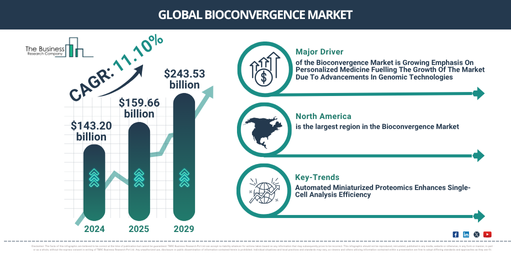
    The bioconvergence marketplace has experienced a swift expansion in recent years. The market which is valued at $143.20 billion in 2024 is expected to escalate to $159.66 billion in 2025, demonstrating a compound annual growth rate (CAGR) of 11.5%. Factors contributing to this significant growth during the historical phase include the emergence of personalized medicine, advancements in biomedical engineering, the surge in healthcare digitization, progress in bioinformatics, and partnerships between the technology and biotech sectors.

    The bioconvergence market is anticipated to witness swift expansion in the upcoming years, reaching $243.53 billion in 2029 with a CAGR of 11.1%. The predicted upswing in the forecast period can be linked to the escalating development of regenerative medicine, rising instances of chronic illnesses, incorporation of bioelectronics and biosensors, advancement in engineered living materials, and a boost in biotechnology research and development investment. Significant trends expected during the forecast period include the utilization of artificial intelligence in drug discovery, the progression of lab-on-a-chip technologies, the surge in wearable biosensors, the proliferation of 3D bioprinting applications, the use of nanorobotics for specific therapies, the adoption of organ-on-a-chip models and advancements in gene editing techniques.

    Download a free sample to assess the report’s scope and structure:

    https://www.thebusinessresearchcompany.com/sample.aspx?id=24168&type=smp

    How Are Key Drivers in the Industry Acting as Catalysts for the Growth of the Bioconvergence Market?

    The bioconvergence market’s expansion is expected to be driven by the increasing focus on personalized medicine. Personalized medicine employs a patient-specific approach, tailoring treatments based on an individual’s genetic makeup, environmental influences, and lifestyle habits to enhance the effectiveness of care. This approach is gaining popularity due to advancements in genomic technologies, enabling accurate identification of genes and the development of personalized treatments. By integrating cutting-edge technologies into biological research, bioconvergence augments personalized medicine and allows for the creation of precise treatment plans based on a patient’s genetic and molecular characteristics. This enhances healthcare results by providing targeted treatments and minimizing undesirable effects. As per the Personalized Medicine Coalition (PMC), a nonprofit organization based in the US, the U.S. Food and Drug Administration (FDA) endorsed 26 new personalized medicine in 2023, a noticeable increase from the 12 sanctioned in 2022. Consequently, the increasing emphasis on personalized medicine is fueling the expansion of the bioconvergence market.

    Which Segments in the Bioconvergence Offer the Most Growth?

    The bioconvergence market covered in this report is segmented –

    1) By Component: Devices, Software, Services, Platforms

    2) By Technology: Artificial Intelligence, Robotics, Three-Dimensional (3D) Printing, Nanotechnology, Synthetic Biology, Bioinformatics, Wearable Devices

    3) By Application: Drug Discovery, Regenerative Medicine, Optogenetics, Nanorobotics For Drug Discovery, Diagnostic And Biological Sensors, Bioelectronics, Precision Medicine

    4) By End-User: Pharmaceutical And Biotechnology Industry, Contract Research Organization, Other End Users

    Subsegments:

    1) By Devices: Diagnostic Devices, Therapeutic Devices, Wearable Medical Devices, Implantable Devices, Robotic Surgical Systems

    2) By Software: Bioinformatics Software, Clinical Decision Support Systems, Genomic Data Analysis Tools, Imaging And Diagnostic Software, Laboratory Information Management Systems (LIMS)

    3) By Services: Contract Research Services, Consulting And Integration Services, Data Management And Analysis Services, Custom Software Development, Regulatory And Compliance Services

    4) By Platforms: Artificial Intelligence Platforms, Omics Integration Platforms, Digital Health Platforms, Personalized Medicine Platforms, Cloud-Based Analytics Platforms

    Request customized data on this market:

    https://www.thebusinessresearchcompany.com/sample.aspx?id=24168&type=smp

    What Are the Fastest-Growing Geographies in the Bioconvergence Market?

    North America was the largest region in the bioconvergence market in 2024. Asia-Pacific is expected to be the fastest-growing region in the forecast period. The regions covered in the bioconvergence market report are Asia-Pacific, Western Europe, Eastern Europe, North America, South America, Middle East, Africa.

    What Are the Current Market Growth and Trends in the Bioconvergence Industry?

    Leading firms in the bioconvergence market are honing their focus on the creation of novel products. These include automated miniaturized single-cell proteomics sample preparation systems designed to optimize protein analysis accuracy, minimize sample wastage, and make single-cell research workflows more efficient. This process relies on automation to manage and prepare proteins from individual cells in exceptionally small volumes. For instance, Scienion GmbH, a biotechnology firm rooted in Germany, introduced the proteochip LF 48 in September 2022. This tool, designed for bioconvergence, paves the way for reproducible and miniaturized workflows in the context of mass spectrometry-based single-cell proteomics analysis. It makes the lysis and protein digestion of individual cells possible on-chip, helping researchers to cut down on sample loss, improve workflows, and derive more profound biological understanding through effective mass spectrometry analysis. The proteochip LF 48 is extremely adaptable and facilitates efficient sample preparation for a broad range of single-cell proteomics uses. It achieves this by merging accurate cell handling with on-chip lysis and protein digestion, thereby enhancing both the efficiency of the workflow and the quality of the data generated.

    View the full report here:

    https://www.thebusinessresearchcompany.com/report/bioconvergence-global-market-report

    What Are the Key Elements That Define the Bioconvergence Market?

    Bioconvergence is the integration of biology with engineering, data science, and advanced technologies to drive innovation in healthcare, biotechnology, and life sciences. Its main goal is to develop smarter, more personalized, and more efficient solutions such as precision medicine, advanced diagnostics, and bioengineered products. Bioconvergence fosters the creation of faster, cheaper, and more effective novel therapies, devices, and platforms.

    Purchase the full report and get a swift delivery:

    https://www.thebusinessresearchcompany.com/customise?id=24168&type=smp

    About The Business Research Company:

    With over 15000+ reports from 27 industries covering 60+ geographies, The Business Research Company has built a reputation for offering comprehensive, data-rich research and insights. Armed with 1,500,000 datasets, the optimistic contribution of in-depth secondary research, and unique insights from industry leaders, you can get the information you need to stay ahead in the game.

    Get in touch with us:

    The Business Research Company: https://www.thebusinessresearchcompany.com/

    Americas +1 3156230293

    Asia +44 2071930708

    Europe +44 2071930708

    Email us at info@tbrc.info

    Follow us on:

    LinkedIn: https://in.linkedin.com/company/the-business-research-company

    YouTube: https://www.youtube.com/channel/UC24_fI0rV8cR5DxlCpgmyFQ

    Global Market Model: https://www.thebusinessresearchcompany.com/global-market-model
  • Global Behcets disease Market Trends: Regional Breakdowns and Strategic Insights

    Global Behcets disease Market Trends: Regional Breakdowns and Strategic Insights

    We’ve updated all our reports with current data on tariff changes, trade developments, and supply chain shifts affecting key industries.

    How Has The Behcets disease Market Size Shifted, And What Is the Outlook Through 2034?

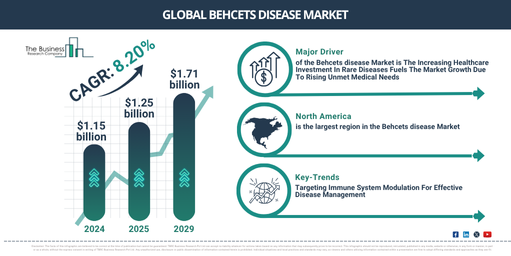
    The market size for behcets disease has been expanding robustly over the past few years. The projection is that it will rise from $1.15 billion in 2024 to $1.25 billion in 2025, experiencing a compound annual growth rate (CAGR) of 8.4%. Factors that contributed to this expansion during the historical timeline include heightened awareness of rare diseases, access to biologic treatments, improvement in healthcare infrastructure, increased instances of autoimmune diseases, and escalating acceptance of biologic therapies.

    The market size of Behcets disease is projected to experience significant expansion in the upcoming years, reaching a valuation of $1.71 billion by 2029 with an 8.2% CAGR. This growth during the forecast period is influenced by factors such as escalated research efforts into autoimmune and inflammatory diseases, an increase in clinical trials and research studies, personalized therapy advancements, improved patient healthcare access in developing markets, and a heightened focus on models that prioritize patient care. Other noteworthy trends during this forecast period encompass progress in diagnostic methods, advancements in precision medicine, the migration towards telemedicine and digital health solutions, increased partnerships between pharmaceutical firms and research entities, and the introduction of innovative combination therapies for treatment.

    Download a free sample to assess the report’s scope and structure:

    https://www.thebusinessresearchcompany.com/sample.aspx?id=24167&type=smp

    What Are the Major Market Drivers Behind the Rising Adoption of Behcets disease Market?

    The behcets disease market is anticipated to grow due to a rise in healthcare investments in rare diseases. These are diseases that affect fewer than 1 in 2,000 individuals and usually present with complex symptoms and limited treatments. The push for more investment in this sector is due to the recognition of the unutilized medical needs because many patients have no effective treatment. This has led to governments and pharmaceutical firms prioritizing this area for research, development, and funding. Behçet’s disease is a perfect example of how concentrated research and advocacy in a specific rare disease can inspire more widespread investment in the rare diseases sector, serving as a clear signal that focused initiatives can bring about significant improvements in comprehension, management, and policy for all rare diseases. For instance, Global Genes, a US nonprofit organization, reported in April 2024 that in the first quarter of 2024, firms developing rare disease drugs secured $7.1 billion through public equity and debt financing, marking a 307% increase from the $1.8 billion raised during the same period in 2023. Therefore, the enhanced investment in healthcare for rare diseases is fuelling the growth of the behcets disease market.

    Which Key Market Segments Comprise the Behcets disease Market and Drive Its Revenue Growth?

    The behcets disease market covered in this report is segmented –

    1) By Treatment Type: Corticosteroids, Immunosuppressants, Biologics, Other Treatments

    2) By Route Of Administration: Oral, Injectable, Topical

    3) By Type of Disease: Non-Ocular Behcet’s Disease, Ocular Behcet’s Disease

    4) By Distribution Channel: Hospital Pharmacies, Retail Pharmacies, Online Pharmacies, Other Distribution Channels

    5) By End User: Hospitals, Clinics, Ambulatory Surgical Centers

    Subsegments:

    1) By Corticosteroids: Oral Corticosteroids, Topical Corticosteroids, Intravenous Corticosteroids

    2) By Immunosuppressants: Methotrexate, Azathioprine, Cyclophosphamide, Mycophenolate Mofetil, Cyclosporine

    3) By Biologics: Tumor Necrosis Factor (TNF) Inhibitors, Interleukin Inhibitors

    4) By Other Treatments: Colchicine, Thalidomide, Hydroxychloroquine, Corticosteroid-Sparing Agents

    Request customized data on this market:

    https://www.thebusinessresearchcompany.com/sample.aspx?id=24167&type=smp

    Which Areas Are Leading Regions in the Behcets disease Market Expansion Across the Globe?

    North America was the largest region in the behcets disease market in 2024. Asia-Pacific is expected to be the fastest-growing region in the forecast period. The regions covered in the behcets disease market report are Asia-Pacific, Western Europe, Eastern Europe, North America, South America, Middle East, Africa.

    What Are the Strategic Trends Steering the Behcets disease Market Direction?

    The focus for many leading companies in the behcets disease market is on the execution of clinical trials aimed at crafting innovative products such as innate defense regulator (IDR), with the goal to amplify immune system modulation and provide more effective inflammation treatments and other symptoms ingrained with the disease. Innate defense regulators (IDRs) – synthetic peptides that augment the innate immune response by fortifying the body’s natural defense mechanisms – can help manage Behçet’s disease by controlling the immune system to minimize exaggerated inflammation, possibly easing symptoms and managing flare-ups. For example, patient enrollment was commenced by Soligenix, Inc., an American biopharmaceutical firm, for its Phase 2 study (protocol number DUS-AUBD-01) evaluating the usability of SGX945 (dusquetide) in treating Behçet’s disease in November 2024. The study’s intention is to examine the potential of SGX945, an innate defense regulator (IDR), to control the immune system and cut down inflammation, offering an innovative therapeutic approach to managing the symptoms and flare-ups linked with Behçet’s disease.

    View the full report here:

    https://www.thebusinessresearchcompany.com/report/behcets-disease-global-market-report

    How Is the Behcets disease Market Conceptually Defined?

    Behçet’s disease is a rare, chronic, and multisystem inflammatory disorder characterized by recurrent episodes of inflammation in various parts of the body, particularly the eyes, mouth, skin, and genitals. It is classified as a vasculitis, meaning it involves inflammation of blood vessels, and can affect both large and small blood vessels.

    Purchase the full report and get a swift delivery:

    https://www.thebusinessresearchcompany.com/customise?id=24167&type=smp

    About The Business Research Company:

    With over 15000+ reports from 27 industries covering 60+ geographies, The Business Research Company has built a reputation for offering comprehensive, data-rich research and insights. Armed with 1,500,000 datasets, the optimistic contribution of in-depth secondary research, and unique insights from industry leaders, you can get the information you need to stay ahead in the game.

    Get in touch with us:

    The Business Research Company: https://www.thebusinessresearchcompany.com/

    Americas +1 3156230293

    Asia +44 2071930708

    Europe +44 2071930708

    Email us at info@tbrc.info

    Follow us on:

    LinkedIn: https://in.linkedin.com/company/the-business-research-company

    YouTube: https://www.youtube.com/channel/UC24_fI0rV8cR5DxlCpgmyFQ

    Global Market Model: https://www.thebusinessresearchcompany.com/global-market-model
  • Bariatric Transport Wheelchairs Market Outlook 2025: Mapping Growth, Innovation, and Regional Shifts

    Bariatric Transport Wheelchairs Market Outlook 2025: Mapping Growth, Innovation, and Regional Shifts

    We’ve updated all our reports with current data on tariff changes, trade developments, and supply chain shifts affecting key industries.

    How Has the Bariatric Transport Wheelchairs Market Growth Performance Trended Historically, And What Lies Ahead?

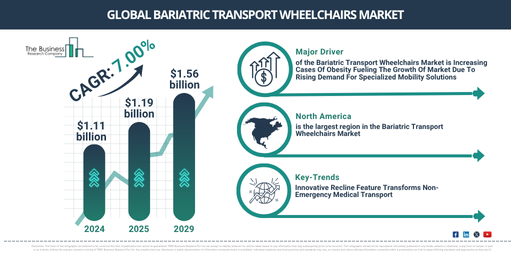
    The market for bariatric transport wheelchairs has seen significant growth recently. It is projected to expand from a value of $1.11 billion in 2024 to $1.19 billion in 2025 at a CAGR of 7.4%. Factors that have contributed to this growth during the past period include a surge in obesity rates, an aging population, escalating demand for mobility aids, heightened awareness about bariatric care, and rising spending on chronic diseases.

    The market for bariatric transport wheelchairs is predicted to have a robust growth in the forthcoming years, with it projected to reach $1.56 billion by 2029, at a compound annual growth rate (CAGR) of 7.0%. The expansion in this projection period can be credited to the rising incidence of chronic illnesses, augmented expenditure in niche medical equipment, increasing need for home healthcare, governmental backing for supportive apparatuses, and the booming medical tourism sector in emerging nations. Expected trends for the forecast period encompass advancements in the technology of wheelchair design, the incorporation of intelligent monitoring capabilities, novel inventions in lightweight and sturdy materials, the creation of products prioritizing patient comfort and safety, and advances in electronic transport systems.

    Download a free sample to assess the report’s scope and structure:

    https://www.thebusinessresearchcompany.com/sample.aspx?id=24166&type=smp

    What External and Internal Drivers Are Contributing to the Growth of the Bariatric Transport Wheelchairs Market?

    The escalating incidence of obesity is predicted to spur the expansion of the bariatric transport wheelchairs market. Obesity, a health disorder characterized by an excessive amount of body fat, is on the rise due to unhealthy diets, sedentary lifestyles, and inadequate physical exercise, which in turn increased the need for specialized healthcare devices for individuals with restricted mobility. Bariatric transport wheelchairs are designed with strong frames and extended seats to assist obese individuals, facilitating safe and worry-free movement. These wheelchairs alleviate caregivers’ physical stress by allowing easy maneuverability and improving patient transportation in medical environments. Notably, the Food and Agriculture Organization of the United Nations reported that nearly 2.5 billion adults aged 18 and over were overweight in 2022, with 890 million people classified as obese, comprising 43% of the adult global population. They also anticipate that over a billion adults around the world will be battling obesity by 2030, which is likely to further drive the growth of the bariatric transport wheelchairs market. Moreover, the growing number of weight-loss and bariatric surgeries are fueling the market expansion due to increasing post-surgical mobility solutions. Weight-loss and bariatric surgeries, which alter the digestive system to assist severely obese individuals in losing weight, are on the rise. This rise is due to the escalating prevalence of severe obesity and related health conditions that cannot be adequately regulated with lifestyle modifications alone. Bariatric transport wheelchairs improve patient mobility pre and post these surgeries, mitigating physical strain on caregivers and boosting efficiency in post-surgical patient care. According to the American Society for Metabolic and Bariatric Surgery, bariatric surgeries rose to 279,967 in 2022 from 262,893 in the previous year, reflecting a 6.5% increase. Consequently, the increasing prevalence of weight-loss and bariatric surgeries is propelling the growth of the bariatric transport wheelchairs market.

    What Segment Types Define the Bariatric Transport Wheelchairs Market Structure?

    The bariatric transport wheelchairs market covered in this report is segmented –

    1) By Product Type: Manual Wheelchairs, Electric Wheelchairs, Transport Wheelchairs

    2) By Weight Capacity: Up To 300 Pounds (lbs), 301 To 400 Pounds (lbs), 401 To 500 Pounds (lbs), Over 500 Pounds (lbs)

    3) By Application: Healthcare Facilities, Home Care, Transportation Services, Emergency Services

    4) By End User: Adult, Pediatric, Geriatric

    Subsegments:

    1) By Manual Wheelchairs: Folding Manual Wheelchairs, Rigid Frame Manual Wheelchairs, Reclining Manual Wheelchairs, Tilt-In-Space Manual Wheelchairs

    2) By Electric Wheelchairs: Front-Wheel Drive Electric Wheelchairs, Rear-Wheel Drive Electric Wheelchairs, Mid-Wheel Drive Electric Wheelchairs, Standing Electric Wheelchairs, Powered Wheelchairs With Recline

    3) By Transport Wheelchairs: Standard Transport Wheelchairs, Lightweight Transport Wheelchairs, Heavy-Duty Transport Wheelchairs, Foldable Transport Wheelchairs

    Request customized data on this market:

    https://www.thebusinessresearchcompany.com/sample.aspx?id=24166&type=smp

    Which Geographic Areas Hold the Strongest Growth Potential in the Bariatric Transport Wheelchairs Market?

    North America was the largest region in the bariatric transport wheelchairs market in 2024. Asia-Pacific is expected to be the fastest-growing region in the forecast period. The regions covered in the bariatric transport wheelchairs market report are Asia-Pacific, Western Europe, Eastern Europe, North America, South America, Middle East, Africa.

    What Long-Term Trends Are Transforming the Competitive Landscape of the Bariatric Transport Wheelchairs Market?

    Key players in the bariatric transport wheelchairs market are concentrating on the development of groundbreaking products, such as those with a 90-degree recline feature, to augment patients’ comfort, escalate safety during motion, and empower individuals suffering from limited mobility or higher weight requirements with more respectful and varied options for moving around. The 90-degree recline denotes the capability of the chair to fully flatten the backrest, bringing the chair from a vertical sitting pose to a horizontal one. For example, in March 2025, Mity Inc., a healthcare mobility solution provider from the United States, introduced Traversa, a progressive bariatric transport wheelchair meant to magnify patient comfort, mobility and caregiver productivity during medical conveyance. This avant-garde wheelchair with 90-degree recline integrates cutting-edge mobility technology, ergonomic design and adaptable characteristics to magnify patient comfort, augment caregiver productivity, and comply with the changing needs of contemporary healthcare settings. The Traversa aims to enhance non-emergency medical carriage through convenient reclining and tilting features and the ability to be used by a single operator, thereby enhancing operational efficiency and cutting down labor expenses.

    View the full report here:

    https://www.thebusinessresearchcompany.com/report/bariatric-transport-wheelchairs-global-market-report

    What Is the Definition of the Bariatric Transport Wheelchairs Market?

    Bariatric transport wheelchairs are specially designed mobility devices to assist the movement of individuals with obesity or those requiring higher weight capacity capacities, typically over 300 pounds. They feature a wider seat, reinforced frames, and heavy-duty wheels for stability and durability. Bariatric transport wheelchairs pushed by a caregiver rather than self-propelled used to provide safe and comfortable transportation for bariatric patients in clinical or home settings.

    Purchase the full report and get a swift delivery:

    https://www.thebusinessresearchcompany.com/customise?id=24166&type=smp

    About The Business Research Company:

    With over 15000+ reports from 27 industries covering 60+ geographies, The Business Research Company has built a reputation for offering comprehensive, data-rich research and insights. Armed with 1,500,000 datasets, the optimistic contribution of in-depth secondary research, and unique insights from industry leaders, you can get the information you need to stay ahead in the game.

    Get in touch with us:

    The Business Research Company: https://www.thebusinessresearchcompany.com/

    Americas +1 3156230293

    Asia +44 2071930708

    Europe +44 2071930708

    Email us at info@tbrc.info

    Follow us on:

    LinkedIn: https://in.linkedin.com/company/the-business-research-company

    YouTube: https://www.youtube.com/channel/UC24_fI0rV8cR5DxlCpgmyFQ

    Global Market Model: https://www.thebusinessresearchcompany.com/global-market-model
  • Baby Changing Units And Tables Market in Focus: Forecasting Growth Drivers, Scaling Potential, and Global Opportunities

    Baby Changing Units And Tables Market in Focus: Forecasting Growth Drivers, Scaling Potential, and Global Opportunities

    We’ve updated all our reports with current data on tariff changes, trade developments, and supply chain shifts affecting key industries.

    What Are the Projected Market Size and Growth Rates for the Baby Changing Units And Tables Market From 2025 To 2029?

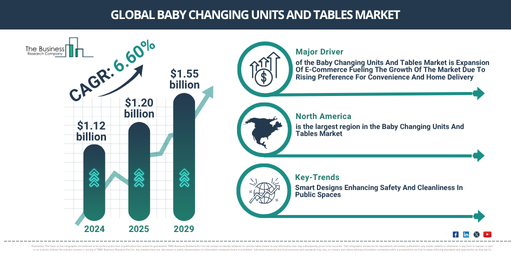
    The market size for baby changing units and tables has seen a robust growth in recent times. The market is forecasted to increase from $1.12 billion in 2024 to $1.20 billion in 2025, with a compound annual growth rate (CAGR) of 7.0%. This expansion during the historic phase is due to factors like heightened consciousness about baby cleanliness, upturn in birth rates, rising demand because of ease in childcare, focus on the safety of babies, requirement for space-saving furniture, surge in urbanization, an increase in disposable income, and expenditure on baby items.

    Predictions indicate a powerful surge in the baby changing units and tables market in the following years, escalating to a valuation of $1.55 billion in 2029 with a compound annual growth rate (CAGR) of 6.6%. This projected increase during the forecast period can be linked to the rise in urbanization, the escalating demand for handy products in child-rearing, the proliferation of intelligent baby care items, growing investment in public facilities, and a focus on comprehensive family-centric amenities. The forecast period is set to witness major trends such as intelligent changing tables equipped with inbuilt sensors, capabilities for wireless charging, collapsible and space-efficient designs, touch-free operations for convenience, and upgraded safety measures like anti-tip features.

    Download a free sample to assess the report’s scope and structure:

    https://www.thebusinessresearchcompany.com/sample.aspx?id=24165&type=smp

    What Are the Core Market Drivers Propelling Growth in the Baby Changing Units And Tables Industry?

    The surge in e-commerce is projected to fuel the development of the market for baby-changing units and tables. The term ‘e-commerce’ pertains to the online buying and selling of goods or services, accompanied by the transfer of money and data to complete these transactions. The growth in e-commerce can be attributed to a greater preference for expedience and home delivery, particularly among new and expecting parents. This method provides them the ease of purchasing baby items and having them directly delivered to their homes without stepping outside. Through e-commerce, a range of options for baby-changing units and tables from various brands become readily available. This allows parents and businesses to make comparisons regarding features, prices, and reviews readily, facilitating convenient and well-informed purchases. For instance, the United States Census Bureau, a US government agency, revealed in February 2025 that total e-commerce sales in 2024 amounted to $1,192.6 billion, reflecting an 8.1% increase from 2023. Hence, the burgeoning of e-commerce is a pivotal driver in the growth of the baby-changing units and tables market.

    How Is the Baby Changing Units And Tables Market Segmented?

    The baby changing units and tables market covered in this report is segmented –

    1) By Product Type: Wall-Mounted Changing Units, Foldable Changing Tables, Stationary Changing Tables, Changing Stations For Public Restrooms, Portable Changing Pads

    2) By Material: Plastic, Wood, Metal, Composite Materials, Fabric, Other Materials

    3) By Age Group: Newborn (0-3 Months), Infants (3-12 Months), Toddlers (1-3 Years), Preschoolers (3-5 Years), Special Needs Children

    4) By Distribution Channel: Online Stores, Super markets Or Hyper markets, Specialty Stores, Other Distribution Channels

    5) By End-User: Residential Use, Commercial Use, Healthcare Facilities, Public Amenities, Daycare Centers, Other End-Users

    Subsegments:

    1) By Wall-Mounted Changing Units: Horizontal Wall-Mounted Units, Vertical Wall-Mounted Units, Compact Wall-Mounted Designs, Commercial Grade Wall Units

    2) By Foldable Changing Tables: Wooden Foldable Tables, Metal Frame Foldable Tables, Travel-Friendly Foldables, Foldable Tables with Storage

    3) By Stationary Changing Tables: Standard Stationary Tables, Stationary Tables with Drawers, Multi-Tiered Stationary Tables, Convertible Crib-Changing Table Combos

    4) By Changing Stations For Public Restrooms: Americans With Disabilities Act Compliant Changing Stations, Antibacterial Surface Stations, Heavy-Duty Commercial Stations, High-Traffic Area Changing Units

    5) By Portable Changing Pads: Waterproof Changing Pads, Padded Travel Changing Mats, Disposable Changing Pads, Roll-Up Portable Changing Pads

    Request customized data on this market:

    https://www.thebusinessresearchcompany.com/sample.aspx?id=24165&type=smp

    Which Regions Are Driving the Next Phase of the Baby Changing Units And Tables Market Growth?

    North America was the largest region in the baby changing units and tables market in 2024. Asia-Pacific is expected to be the fastest-growing region in the forecast period. The regions covered in the baby changing units and tables market report are Asia-Pacific, Western Europe, Eastern Europe, North America, South America, Middle East, Africa.

    What Key Market Trends and Innovations Are Shaping the Future of the Baby Changing Units And Tables Industry?

    In the baby changing units and tables market, leading businesses are concentrating on creating cutting-edge products like self-sanitizing diaper changing tables to boost hygiene, heightened user convenience, and cater to the growing consumer demand for safer, more advanced childcare solutions in both public and private spaces. The self-sanitizing diaper changing table is an innovative hygiene-centered development designed to clean and sterilize its surface after every use, featuring built-in technologies such as UV-C light, antimicrobial surfaces, or automated cleaning sprays to eliminate bacteria and germs. For example, in March 2023, Pluie Inc., a US-based baby product manufacturing firm, debuted a self-sanitizing diaper changing table equipped with a UV-C light system that cleans the surface post every use by effectively eradicating 99.9% of dangerous bacteria and viruses, providing peace of mind to parents and caregivers. This intelligent hygiene innovation assists in maintaining a hygienic, germ-free environment for infants, considerably lowering the risk of contamination in public places.

    View the full report here:

    https://www.thebusinessresearchcompany.com/report/baby-changing-units-and-tables-global-market-report

    How Is the Baby Changing Units And Tables Market Defined and What Are Its Core Parameters?

    Baby changing units and tables are specially designed furniture pieces that provide a safe and convenient surface for changing infant diapers or clothes. They typically include raised edges, storage for baby essentials, and a padded changing area to ensure comfort and safety. Baby changing units and tables provide a safe and clean area for caregivers to change diapers while offering convenient storage for baby supplies.

    Purchase the full report and get a swift delivery:

    https://www.thebusinessresearchcompany.com/customise?id=24165&type=smp

    About The Business Research Company:

    With over 15000+ reports from 27 industries covering 60+ geographies, The Business Research Company has built a reputation for offering comprehensive, data-rich research and insights. Armed with 1,500,000 datasets, the optimistic contribution of in-depth secondary research, and unique insights from industry leaders, you can get the information you need to stay ahead in the game.

    Get in touch with us:

    The Business Research Company: https://www.thebusinessresearchcompany.com/

    Americas +1 3156230293

    Asia +44 2071930708

    Europe +44 2071930708

    Email us at info@tbrc.info

    Follow us on:

    LinkedIn: https://in.linkedin.com/company/the-business-research-company

    YouTube: https://www.youtube.com/channel/UC24_fI0rV8cR5DxlCpgmyFQ

    Global Market Model: https://www.thebusinessresearchcompany.com/global-market-model
  • Strong CAGR to Propel in the Automatic Immunohistochemical Staining Instrument Market and Beyond upto $1.73 Billion by 2029

    Strong CAGR to Propel in the Automatic Immunohistochemical Staining Instrument Market and Beyond upto $1.73 Billion by 2029

    We’ve updated all our reports with current data on tariff changes, trade developments, and supply chain shifts affecting key industries.

    What Is the Estimated Market Size of the Automatic Immunohistochemical Staining Instrument Market In 2029?

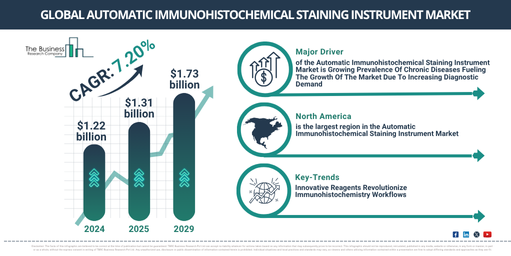
    The market size of the automatic immunohistochemical staining instrument has seen potent growth in the past few years, and it is expected to expand from $1.22 billion in 2024 to $1.31 billion in 2025, registering a compound annual growth rate (CAGR) of 7.3%. Factors contributing to the growth during this historical period include the rise in chronic diseases, heightened demand for personalized medicine, increase in pathology labs, superior precision and consistency in results, growth in molecular biology research, and heightened government spending on healthcare.

    Substantial expansion is projected in the automatic immunohistochemical staining instrument market in the upcoming years, with the market size anticipated to reach $1.73 billion by 2029 with a compound annual growth rate (CAGR) of 7.2%. The growth during this period can be traced back to multiple factors such as an increased emphasis on early detection of diseases, a growing old-age population, advancements in healthcare facilities particularly in developing markets, increased funding towards cancer research, a higher demand for standardized diagnostic methods, as well as the expansion in biotech and pharmaceutical R&D activities. Key upcoming trends include the fusion of artificial intelligence with imaging analysis, the inception of cloud-based data management systems, the rendering of staining instruments into smaller sizes, improved multiplexing capabilities, automation in the preparation and staining of slides, and employing advanced robotics for precise manipulations.

    Download a free sample to assess the report’s scope and structure:

    https://www.thebusinessresearchcompany.com/sample.aspx?id=24164&type=smp

    Which Primay Drivers Are Accelerating Growth in the Automatic Immunohistochemical Staining Instrument Market?

    The automatic immunohistochemical staining instrument market is anticipated to expand due to the increased occurrence of chronic illnesses. Chronic ailments are defined as medical issues that generally advance at a slow pace and necessitate regular oversight. These include conditions like diabetes, cardiovascular disease, hypertension, arthritis, chronic respiratory diseases, cancer, and obesity. Lifestyle alterations, subpar diets, and insufficient physical activity lead to a higher occurrence of these chronic illnesses, which in turn cause long-term health complications. The diagnostic ability is enhanced by automatic immunohistochemical staining instruments by providing accurate and efficient tissue analysis which is critical for detecting chronic diseases. By automating the staining process, these instruments decrease the manual labour involved, increasing diagnostic precision and enabling earlier disease detection. For example, in June 2024, as reported by the National Health Service, a government department based in the UK, there were 3,615,330 individuals registered with a general practitioner (GP) diagnosed with non-diabetic hyperglycemia or pre-diabetes in 2023. This was an 18% increase from the 3,065,825 cases reported in 2022. Consequently, the rising prevalence of chronic diseases is propelling the growth of the automatic immunohistochemical staining instrument market.

    Which Primary Segments of the Automatic Immunohistochemical Staining Instrument Market Are Driving Growth and Industry Transformations?

    The automatic immunohistochemical staining instrument market covered in this report is segmented –

    1) By Product Type: Fully Automated Stainers, Semi-Automated Stainers, Manual Stainers

    2) By Technology: Slide Staining, Tissue Staining, Fluorescent Staining

    3) By Consumables: Antibodies, Staining Kits, Slides, Coverslips

    4) By Application: Oncology, Cardiovascular Diseases, Neurological Disorders, Infectious Diseases

    5) By End-User: Hospitals, Diagnostic Laboratories, Academic Institutes, Research Laboratories

    Subsegments:

    1) By Fully Automated Stainers: Compact Automated Stainers, High-Throughput Stainers, Benchtop Automated Stainers

    2) By Semi-Automated Stainers: Programmable Stainers, Timer-Based Stainers, Hybrid Stainers

    3) By Manual Stainers: Dip-Type Manual Stainers, Rotary Manual Stainers, Handheld Staining Kits

    Request customized data on this market:

    https://www.thebusinessresearchcompany.com/sample.aspx?id=24164&type=smp

    Which Regions Are Key Players in the Growth of the Automatic Immunohistochemical Staining Instrument Market?

    North America was the largest region in the automatic immunohistochemical staining instrument market in 2024. Asia-Pacific is expected to be the fastest-growing region in the forecast period. The regions covered in the automatic immunohistochemical staining instrument market report are Asia-Pacific, Western Europe, Eastern Europe, North America, South America, Middle East, Africa.

    Which Technological Trends Are Reshaping the Automatic Immunohistochemical Staining Instrument Industry Dynamics?

    Major firms in the automatic immunohistochemical staining instrument market are prioritizing the creation of novel solutions like antibody alternative reagents in order to improve the precision, efficiency, and flexibility of tissue analysis. This is in addition to reducing costs and enhancing repeatability. These particular antibody alternative reagents include molecules such as aptamers, affirmers, and antibody mimetics that replace conventional antibodies in research, diagnostics, or therapeutic uses by specifically binding to target antigens. As an illustration, Aptamer Group plc, a biotech firm based in the UK, introduced in March 2023, a new reagent solution named Optimer-Fc for automated immunohistochemistry (IHC) workflows. Optimer-Fc provides a groundbreaking antibody alternative for immunohistochemistry, broadening target detection and improving assay selection. It seamlessly merges with automated immunohistochemistry (IHC) workflows to accurately pinpoint both established and emerging biomarkers.

    View the full report here:

    https://www.thebusinessresearchcompany.com/report/automatic-immunohistochemical-staining-instrument-global-market-report

    What Parameters Are Used to Define the Automatic Immunohistochemical Staining Instrument Market?

    Automatic immunohistochemical staining instrument is a laboratory device used to automate the process of staining tissue samples for the detection of specific proteins or antigens. Its primary purpose is to enhance the accuracy, consistency, and efficiency of immunohistochemistry (IHC) tests, which are essential for diagnosing various diseases, including cancer, by visualizing specific molecular markers in tissue sections.

    Purchase the full report and get a swift delivery:

    https://www.thebusinessresearchcompany.com/customise?id=24164&type=smp

    About The Business Research Company:

    With over 15000+ reports from 27 industries covering 60+ geographies, The Business Research Company has built a reputation for offering comprehensive, data-rich research and insights. Armed with 1,500,000 datasets, the optimistic contribution of in-depth secondary research, and unique insights from industry leaders, you can get the information you need to stay ahead in the game.

    Get in touch with us:

    The Business Research Company: https://www.thebusinessresearchcompany.com/

    Americas +1 3156230293

    Asia +44 2071930708

    Europe +44 2071930708

    Email us at info@tbrc.info

    Follow us on:

    LinkedIn: https://in.linkedin.com/company/the-business-research-company

    YouTube: https://www.youtube.com/channel/UC24_fI0rV8cR5DxlCpgmyFQ

    Global Market Model: https://www.thebusinessresearchcompany.com/global-market-model