Category: Healthcare Services

  • Mixed Reality in Healthcare Market Outlook 2026–2030 Exploring New Business Opportunities

    Mixed Reality in Healthcare Market Outlook 2026–2030 Exploring New Business Opportunities

    The Business Research Company’s 2026 market reports include new capabilities such as market attractiveness scoring and analysis, total addressable market analysis, company scoring matrix, interactive excel data dashboard, improved supply chain analysis, upcoming startups in the market, and overview of key products, aimed at improving the depth, usability, and strategic value of the insights delivered.

    What Market Value Is Anticipated For The Mixed Reality in Healthcare Market Over The Period 2026–2030?

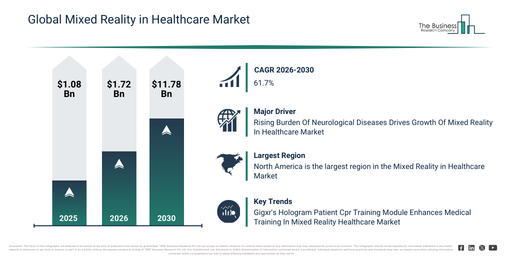
    The mixed reality in healthcare market has experienced substantial growth in recent years. It is projected to expand from $1.08 billion in 2025 to $1.72 billion in 2026, at a compound annual growth rate (CAGR) of 60.2%. The historical increase can be attributed to the early adoption of VR training tools, a rising demand for virtual surgery simulation, the increased use of AR in patient consultation, the growing requirements for remote treatment, and advancements in wearable display technology.

    The mixed reality in healthcare market size is anticipated to undergo substantial growth in the upcoming years. It is forecast to reach $11.78 billion in 2030, growing at a compound annual growth rate (CAGR) of 61.7%. This projected growth within the forecast period can be attributed to the expanding array of AI-driven MR solutions, a heightened demand for immersive medical education, rapid uptake in surgical centers, integration with telehealth ecosystems, and increased capital investment in MR hardware and software. Key trends during this period are expected to include the broader adoption of AR/VR-based medical training platforms, the incorporation of AI-powered mixed reality diagnostics, the development of cloud-enabled mixed reality healthcare ecosystems, a rise in the utilization of IoT-connected mixed reality devices, and the enhancement of MR surgical assistance through automation and robotics.

    Download the Free Sample Report to Explore Key Market Insights:

    https://www.thebusinessresearchcompany.com/sample.aspx?id=6935&type=smp

    Which Economic Or Industry Drivers Are Impacting The Mixed Reality in Healthcare Market?

    The rising prevalence of neurological conditions is set to fuel the growth of the mixed reality in the healthcare market. These conditions span numerous disorders impacting the nervous system, leading to diverse physical, cognitive, and functional challenges. Mixed-reality solutions are increasingly adopted in healthcare to enhance patient results, especially within neurological care. Through virtual environments, mixed reality assists individuals suffering from neurological ailments like Alzheimer’s, Parkinson’s, and multiple sclerosis in boosting their cognitive and motor abilities. A notable example is the statistic from October 2023 by the World Federation of Neurology, a UK-based association of national neurological societies, indicating that over 40% of the worldwide population presently lives with some form of neurological condition, with this burden projected to almost double by 2050. Consequently, the expanding challenge posed by neurological diseases will undoubtedly stimulate the mixed reality in the healthcare market.

    How Is The Mixed Reality in Healthcare Market Divided Into Its Major Segments?

    The mixed reality in healthcare market covered in this report is segmented –

    1) By Device Types: AR Devices, VR Devices

    2) By Component: Hardware, Software, Content And Application

    3) By Application: Surgery And Surgery Simulation, Patient Care Management, Fitness Management, Medical Training And Education, Other Applications

    4) By End-User: Hospital, Surgical Centers And Medical Institutes, Other End Users

    Subsegments:

    1) By AR Devices: Smart Glasses, Head-Mounted Displays (HMDs), Mobile AR Applications, Projection-Based AR Systems

    2) By VR Devices: Head-Mounted Displays (HMDs), VR Software Platforms, Motion Tracking Devices, Controllers And Input Devices

    What Trends Are Projected To Affect The Mixed Reality in Healthcare Market?

    Leading organizations in the mixed reality healthcare market are creating innovative offerings, such as a new module concentrating on basic life support. Basic Life Support leverages mixed reality to simulate an individual who needs CPR or a defibrillator. It is designed to offer instructors a means to educate first responders, providers, medical and nursing students, public safety professionals, and community members, either remotely or in person. For example, in March 2023, GigXR, a US-based SaaS startup that uses mixed reality to enhance training results in healthcare, unveiled a CPR training module in VR enabling learners to visualize and engage with a hologram patient undergoing cardiac arrest and related medical equipment.

    Who Are The Prominent Organizations Shaping The Mixed Reality in Healthcare Market?

    Major companies operating in the mixed reality in healthcare market are Atheer Inc., EchoPixel Inc., Firsthand Technology Inc., Microsoft Corporation, Oculus Labs, HTC Corporation, Surgical Theater Inc., Osso VR Inc., Medical Realities Ltd., Augmedix Inc., MindMaze SA, Orca Health Care India Private Limited, AccuVein Inc., Medivis Inc., Intuitive Surgical Inc., Philips Healthcare, Siemens Healthineers, GE HealthCare Technologies Inc., Magic Leap Inc., Varjo Technologies, Vuzix Corporation, Augmentix Corporation

    Read the full mixed reality in healthcare market report here:

    https://www.thebusinessresearchcompany.com/report/mixed-reality-in-healthcare-global-market-report

    What Are The Top-Performing Regions Within The Mixed Reality in Healthcare Market?

    North America was the largest region in the mixed reality in healthcare market in 2025. Asia-Pacific is expected to be the fastest-growing region in the forecast period. The regions covered in the mixed reality in healthcare market report are Asia-Pacific, South East Asia, Western Europe, Eastern Europe, North America, South America, Middle East, Africa.

    Request A Tailored Mixed Reality in Healthcare Market Research Report For Competitive Advantage:

    https://www.thebusinessresearchcompany.com/customise?id=6935&type=smp

    Browse Through More Reports Similar to the Global Mixed Reality in Healthcare Market 2026, By The Business Research Company

    Cardiac Valve Global Market Report

    https://www.thebusinessresearchcompany.com/report/cardiac-valve-global-market-report

    Cardiometabolic Diseases Global Market Report

    https://www.thebusinessresearchcompany.com/report/cardiometabolic-diseases-global-market-report

    Pediatric Heart Valve Repair And Replacement Global Market Report

    https://www.thebusinessresearchcompany.com/report/pediatric-heart-valve-repair-and-replacement-global-market-report

    Get in touch with us:

    The Business Research Company: https://www.thebusinessresearchcompany.com/

    Americas +1 310-496-7795

    Asia +44 7882 955267 & +91 8897263534

    Europe +44 7882 955267

    Email us at info@tbrc.info

    Follow us on:

    LinkedIn: https://in.linkedin.com/company/the-business-research-company

    YouTube: https://www.youtube.com/channel/UC24_fI0rV8cR5DxlCpgmyFQ

    Global Market Model: https://www.thebusinessresearchcompany.com/global-market-model
  • Global Mitral Valve Disease Market Report 2026–2035 Highlighting Expansion Outlook and Forecast Opportunities

    Global Mitral Valve Disease Market Report 2026–2035 Highlighting Expansion Outlook and Forecast Opportunities

    The Business Research Company’s 2026 market reports include new capabilities such as market attractiveness scoring and analysis, total addressable market analysis, company scoring matrix, interactive excel data dashboard, improved supply chain analysis, upcoming startups in the market, and overview of key products, aimed at improving the depth, usability, and strategic value of the insights delivered.

    What Is The Expected Market Size Of The Mitral Valve Disease Market From 2026 To 2030?

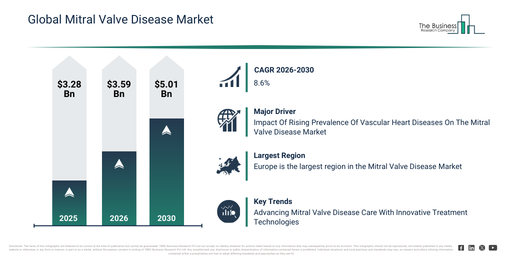
    The mitral valve disease market size has observed substantial growth in recent years. It is anticipated to expand from $3.28 billion in 2025 to $3.59 billion in 2026, demonstrating a compound annual growth rate (CAGR) of 9.7%. The expansion witnessed in the past can be ascribed to an escalating prevalence of heart valve disorders, an increased dependence on echocardiography diagnostics, a surge in surgical mitral valve repair procedures, the implementation of anticoagulation therapies, and improvements in hospital cardiac care infrastructure.

    The mitral valve disease market is anticipated to show substantial expansion in the coming years. It is projected to achieve a size of $5.01 billion in 2030, growing at a compound annual growth rate (CAGR) of 8.6%. This expected increase throughout the forecast period can be attributed to the rise in minimally invasive mitral valve procedures, an escalating demand for TMVR solutions, broader adoption of remote cardiac monitoring, increased capital allocated to valve repair devices, and the advancement of tailored therapeutic approaches. Significant trends during the forecast period encompass breakthroughs in precision medicine-based mitral valve treatments, the integration of artificial intelligence in mitral valve diagnostics and surveillance, the proliferation of cloud-based cardiac imaging and data platforms, the utilization of IoT-enabled remote cardiac monitoring devices, and a heightened implementation of robotic-assisted mitral valve repair systems.

    Download the Free Sample Report to Explore Key Market Insights:

    https://www.thebusinessresearchcompany.com/sample.aspx?id=16480&type=smp

    What Major Drivers Are Influencing Demand In The Mitral Valve Disease Market?

    The expanding occurrence of vascular heart diseases is anticipated to drive the advancement of the mitral valve disease market in the future. These conditions refer to a collection of ailments that impact the blood vessels feeding the heart or located within the heart’s structure. The rise in vascular heart disease cases stems from an intricate combination of lifestyle decisions, shifts in demographics, various medical conditions, environmental influences, and genetic elements. Specific vascular heart diseases, such as ischemic heart disease and hypertension, can indirectly contribute to mitral valve disease by impairing the heart’s overall structure and functional capabilities, thereby resulting in conditions that impact the mitral valve. For instance, in November 2024, according to the Scottish Government, a Scotland-based government agency, the prevalence of any cardiovascular disease among adults significantly increases with age, reaching 42% for individuals aged 75 and over. Consequently, the rising occurrence of vascular heart diseases is fueling the growth of the mitral valve disease market.

    Which Segments Are Included In The Analysis Of The Mitral Valve Disease Market?

    The mitral valve disease market covered in this report is segmented –

    1) By Treatment Type: Mitral Valve Repair, Mitral Valve Replacement, Mitral Valve Therapeutics

    2) By Indication: Mitral Valve Stenosis, Mitral Valve Prolapse, Mitral Valve Regurgitation

    3) By End-User: Hospitals, Ambulatory Surgical Centers, Other End-Users

    Subsegments:

    1) By Mitral Valve Repair: Surgical Repair, Minimally Invasive Repair, Percutaneous Mitral Valve Repair

    2) By Mitral Valve Replacement: Mechanical Valve Replacement, Biological Valve Replacement, Transcatheter Mitral Valve Replacement (TMVR)

    3) By Mitral Valve Therapeutics: Pharmacological Treatments, Anticoagulation Therapy, Mitral Valve Repair Devices

    Which Upcoming Trends Are Expected To Influence The Mitral Valve Disease Market?

    Leading companies within the mitral valve disease market are engaged in the development of stented tissue valves, responding to the escalating demand for minimally invasive treatment options. These stented tissue valves are engineered to offer durable and reliable performance, providing patients with an alternative to conventional surgical interventions. For example, in April 2024, Medtronic, an Ireland-based healthcare company, unveiled the Avalus Ultra valve, an advanced surgical aortic tissue valve created for improved ease of use during implantation and for long-term patient management. Drawing upon a decade of clinical experience with the original Avalus valve, the Avalus Ultra incorporates a low valve profile for simpler implantation, a PEEK base frame to ensure consistent circularity, and an industry-leading Effective Orifice Area (EOA) that can promote greater blood flow. Additionally, it features a radiopaque coil for clear visibility during subsequent valve-in-valve procedures.

    Which Key Industry Participants Are Active In The Mitral Valve Disease Market?

    Major companies operating in the mitral valve disease market are Pfizer Inc., Bayer AG, Abbott Laboratories, Novartis AG, Medtronic plc, Boston Scientific Corporation, Edwards Lifesciences, ShockWave Medical Inc., Artivion Inc., TTK Health Care Limited, Braile Biomedica, JenaValve Technology Inc., 4C Medical technologies, Labcor Laboratorios Ltda, CryoLife Inc., Valcare Medical, Affluent Medical, Colibri Heart Valve LLC, Coramaze Technologies, Corcym UK Limited, HighLife Medical, Micro International Devices Inc., Neovasc Inc., Mitralign Inc., Transcatheter Technologies GmbH

    Read the full mitral valve disease market report here:

    https://www.thebusinessresearchcompany.com/report/mitral-valve-disease-global-market-report

    Which Region Shows The Strongest Potential For Future Growth In The Mitral Valve Disease Market?

    Europe was the largest region in the mitral valve disease market in 2025. Asia-Pacific is expected to be the fastest-growing region in the forecast period. The regions covered in the mitral valve disease market report are Asia-Pacific, South East Asia, Western Europe, Eastern Europe, North America, South America, Middle East, Africa.

    Request A Tailored Mitral Valve Disease Market Research Report For Competitive Advantage:

    https://www.thebusinessresearchcompany.com/customise?id=16480&type=smp

    Browse Through More Reports Similar to the Global Mitral Valve Disease Market 2026, By The Business Research Company

    Next Generation Antibody Therapeutics Global Market Report

    https://www.thebusinessresearchcompany.com/report/next-generation-antibody-therapeutics-global-market-report

    Mammalian Polyclonal Immunoglobulin G Igg Antibody Global Market Report

    https://www.thebusinessresearchcompany.com/report/mammalian-polyclonal-immunoglobulin-g-igg-antibody-global-market-report

    Recombinant Proteins Global Market Report

    https://www.thebusinessresearchcompany.com/report/recombinant-proteins-global-market-report

    Get in touch with us:

    The Business Research Company: https://www.thebusinessresearchcompany.com/

    Americas +1 310-496-7795

    Asia +44 7882 955267 & +91 8897263534

    Europe +44 7882 955267

    Email us at info@tbrc.info

    Follow us on:

    LinkedIn: https://in.linkedin.com/company/the-business-research-company

    YouTube: https://www.youtube.com/channel/UC24_fI0rV8cR5DxlCpgmyFQ

    Global Market Model: https://www.thebusinessresearchcompany.com/global-market-model
  • Mitotic Spindle Organizing Protein 2B (MZT2B) Antibody Market Growth Prospects 2026–2030 with Innovation Trends and Competitive Landscape

    Mitotic Spindle Organizing Protein 2B (MZT2B) Antibody Market Growth Prospects 2026–2030 with Innovation Trends and Competitive Landscape

    The Business Research Company’s 2026 market reports include new capabilities such as market attractiveness scoring and analysis, total addressable market analysis, company scoring matrix, interactive excel data dashboard, improved supply chain analysis, upcoming startups in the market, and overview of key products, aimed at improving the depth, usability, and strategic value of the insights delivered.

    What Market Valuation Is Forecasted For The Mitotic Spindle Organizing Protein 2B (MZT2B) Antibody Market By 2030 Starting From Its 2026 Size?

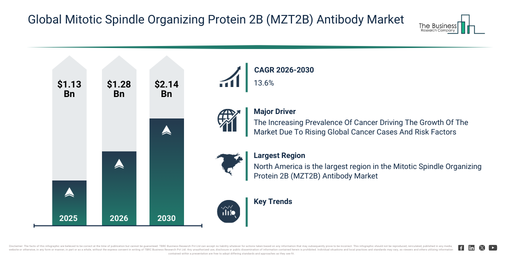
    The market size for mitotic spindle organizing protein 2b (mzt2b) antibodies has experienced substantial expansion in recent years. It is projected to climb from $1.13 billion in 2025 to $1.28 billion in 2026, at a compound annual growth rate (CAGR) of 13.9%. The increase observed in the historic period was driven by the broadening of biomedical research activities, enhanced funding for cell biology studies, the proliferation of academic research institutes, a rise in the application of immunoassays in laboratories, and the accessibility of advanced antibody production techniques.

    The mitotic spindle organizing protein 2b (mzt2b) antibody market size is anticipated to experience significant expansion over the next few years, projecting to reach $2.14 billion by 2030, with a compound annual growth rate (CAGR) of 13.6%. This expected growth during the forecast period is fueled by elements such as increased investments in precision medicine research, a rising demand for targeted cancer studies, the expanding scope of proteomics and genomics research, the growing adoption of advanced molecular diagnostics, and heightened collaboration between academia and biotech firms. Prominent trends throughout this period include an increasing demand for high-specificity research antibodies, greater use in cell division and cancer research, the growing adoption of recombinant antibody technologies, the expansion of precision diagnostics research, and an enhanced focus on protein localization studies.

    Download the Free Sample Report to Explore Key Market Insights:

    https://www.thebusinessresearchcompany.com/sample.aspx?id=30326&type=smp

    Which Market Drivers Are Supporting The Expansion Of The Mitotic Spindle Organizing Protein 2B (MZT2B) Antibody Market?

    The rising prevalence of cancer is anticipated to fuel the expansion of the mitotic spindle organizing protein 2B (MZT2B) antibody market. This increase in cancer cases globally is linked to various lifestyle and environmental factors, such as unhealthy eating habits, lack of physical activity, use of tobacco and alcohol, and exposure to pollutants and radiation, all of which contribute to a higher risk and incidence of cancer. The mitotic spindle organizing protein 2B (MZT2B) antibody plays a crucial role in cancer research and treatment by targeting essential proteins involved in cell division, thereby facilitating precise detection and potential suppression of uncontrolled tumor growth. For example, in February 2024, the World Health Organization reported an estimated 20 million new cancer cases worldwide in 2022, with projections indicating a 77% increase to over 35 million new cases by 2050. Consequently, the growing incidence of cancer is propelling the growth of the mitotic spindle organizing protein 2B (MZT2B) antibody market. The escalating demand for personalized medicines is set to boost the mitotic spindle organizing protein 2B (MZT2B) antibody market going forward. Personalized medicines are medical therapies customized to an individual’s unique genetic makeup, lifestyle, and environment, aiming for the most effective treatment for that particular patient. This heightened demand stems from the increasing occurrence of chronic and rare diseases, which require targeted, patient-specific treatments for better outcomes. The mitotic spindle organizing protein 2B (MZT2B) antibody supports personalized medicine by precisely targeting specific cellular pathways, enabling the development of tailored therapeutic strategies based on an individual’s molecular profile. For instance, in February 2024, the Personalized Medicine Coalition noted that in 2023, the FDA approved 16 new personalized therapies for rare disease patients, a significant jump from the six approvals in 2022. Therefore, the growing demand for personalized medicines is a key driver for the mitotic spindle organizing protein 2B (MZT2B) antibody market.

    Which Segment Categories Define The Mitotic Spindle Organizing Protein 2B (MZT2B) Antibody Market?

    The mitotic spindle organizing protein 2b (mzt2b) antibody market covered in this report is segmented –

    1) By Type: Monoclonal Antibodies, Polyclonal Antibodies

    2) By Technology: Recombinant Technology, Hybridoma Technology, Phage Display Technology

    3) By Application: Research, Diagnostics, Therapeutics

    4) By Sales Channel: Direct Sales, Distributors, Online Sales

    5) By End User: Academic And Research Institutes, Pharmaceutical And Biotechnology Companies, Contract Research Organizations, Hospitals And Diagnostic Laboratories, Other End Users

    Subsegments:

    1) By Monoclonal Antibodies: Mouse Monoclonal Antibodies, Rabbit Monoclonal Antibodies, Humanized Monoclonal Antibodies, Chimeric Monoclonal Antibodies

    2) By Polyclonal Antibodies: Rabbit Polyclonal Antibodies, Goat Polyclonal Antibodies, Sheep Polyclonal Antibodies, Donkey Polyclonal Antibodies

    Who Are The Top Companies Competing In The Mitotic Spindle Organizing Protein 2B (MZT2B) Antibody Market?

    Major companies operating in the mitotic spindle organizing protein 2b (mzt2b) antibody market are Thermo Fisher Scientific Inc., Sino Biological Inc., OriGene Technologies Inc., Elabscience Biotechnology Inc., RayBiotech Inc., ABclonal Technology Co. Ltd., GeneTex Inc., Proteintech Group Inc., ProSci Inc., Tebu-bio S.A., Santa Cruz Biotechnology Inc., Creative Diagnostics Inc., Novopro Labs Inc., MyBioSource Inc., Boster Biological Technology Co. Ltd., Abbexa Ltd., Biorbyt Ltd., St John’s Laboratory Ltd., LabCart GmbH, LifeSpan BioSciences Inc.

    Read the full mitotic spindle organizing protein 2b (mzt2b) antibody market report here:

    https://www.thebusinessresearchcompany.com/report/global-mitotic-spindle-organizing-protein-2b-mzt2b-antibody-market-report

    How Is The Mitotic Spindle Organizing Protein 2B (MZT2B) Antibody Market Distributed Across Key Geographic Regions?

    North America was the largest region in the mitotic spindle organizing protein 2B (MZT2B) antibody market in 2025. Asia-Pacific is expected to be the fastest-growing region in the forecast period. The regions covered in the mitotic spindle organizing protein 2b (mzt2b) antibody market report are Asia-Pacific, South East Asia, Western Europe, Eastern Europe, North America, South America, Middle East, Africa.

    Request A Tailored Mitotic Spindle Organizing Protein 2B (MZT2B) Antibody Market Research Report For Competitive Advantage:

    https://www.thebusinessresearchcompany.com/customise?id=30326&type=smp

    Browse Through More Reports Similar to the Global Mitotic Spindle Organizing Protein 2B (MZT2B) Antibody Market 2026, By The Business Research Company

    Minimally Invasive Spine Surgery Devices Global Market Report

    https://www.thebusinessresearchcompany.com/report/minimally-invasive-spine-surgery-devices-global-market-report

    Vertebroplasty And Kyphoplasty Global Market Report

    https://www.thebusinessresearchcompany.com/report/vertebroplasty-and-kyphoplasty-global-market-report

    Vertebroplasty Needles Global Market Report

    https://www.thebusinessresearchcompany.com/report/vertebroplasty-needles-global-market-report

    Get in touch with us:

    The Business Research Company: https://www.thebusinessresearchcompany.com/

    Americas +1 310-496-7795

    Asia +44 7882 955267 & +91 8897263534

    Europe +44 7882 955267

    Email us at info@tbrc.info

    Follow us on:

    LinkedIn: https://in.linkedin.com/company/the-business-research-company

    YouTube: https://www.youtube.com/channel/UC24_fI0rV8cR5DxlCpgmyFQ

    Global Market Model: https://www.thebusinessresearchcompany.com/global-market-model

  • Minimally Invasive Vertebral Compression Fracture Treatment Market Forecast 2026–2035 Highlighting Market Data Patterns and Industry Insights

    Minimally Invasive Vertebral Compression Fracture Treatment Market Forecast 2026–2035 Highlighting Market Data Patterns and Industry Insights

    The Business Research Company’s 2026 market reports include new capabilities such as market attractiveness scoring and analysis, total addressable market analysis, company scoring matrix, interactive excel data dashboard, improved supply chain analysis, upcoming startups in the market, and overview of key products, aimed at improving the depth, usability, and strategic value of the insights delivered.

    How Is The Market Size Of The Minimally Invasive Vertebral Compression Fracture Treatment Market Expected To Change Between 2026 And 2030?

    The minimally invasive vertebral compression fracture treatment market size has experienced significant expansion in recent years. This market is anticipated to expand from $1.48 billion in 2025 to $1.6 billion in 2026, registering a compound annual growth rate (CAGR) of 8.4%. Factors contributing to its historical growth include the rising incidence of osteoporosis-related fractures, increased adoption of vertebroplasty and kyphoplasty, advancements in spinal imaging technologies, growing demand for minimally invasive spinal procedures, and improved hospital spine care infrastructure.

    The market for minimally invasive vertebral compression fracture treatment is projected to experience substantial expansion over the coming years, reaching a valuation of $2.19 billion by 2030, demonstrating an 8.2% compound annual growth rate (CAGR). This projected increase can be ascribed to several factors during the forecast period, including the wider adoption of robotic-assisted spine surgery, a growing inclination towards outpatient minimally invasive procedures, advancements in bio-cement and sophisticated bone fillers, increased capital flowing into spine surgery devices, and an escalating need for quicker post-operative recovery methods. Key developments anticipated in the forecast timeframe encompass progress in precision medicine for managing spine fractures, the incorporation of AI for diagnosing vertebral compression fractures, enhanced automation and robotics in minimally invasive spine interventions, the proliferation of cloud-based solutions for medical imaging and surgical planning, and the implementation of IoT-enabled systems for post-operative monitoring.

    Download the Free Sample Report to Explore Key Market Insights:

    https://www.thebusinessresearchcompany.com/sample.aspx?id=13881&type=smp

    What Underlying Factors Are Accelerating The Growth Of The Minimally Invasive Vertebral Compression Fracture Treatment Market?

    The growing incidence of osteoporosis is anticipated to drive the expansion of the minimally invasive vertebral compression fracture treatment market moving forward. Osteoporosis is a medical condition characterized by bone weakening, an elevated risk of fractures, and a reduction in bone density. The application of minimally invasive vertebral compression fracture treatments in osteoporosis represents an advanced and effective strategy for managing fractures, aimed at improving patient outcomes and overall well-being. For example, in December 2024, data from the National Library of Medicine, a US-based biomedical library, revealed that the prevalence of osteoporosis continues to rise globally, affecting more than 200 million people worldwide. Thus, the increasing prevalence of osteoporosis is a significant factor contributing to the growth of the minimally invasive vertebral compression fracture treatment market.

    How Is The Minimally Invasive Vertebral Compression Fracture Treatment Market Structured Across Different Segments?

    The minimally invasive vertebral compression fracture treatment market covered in this report is segmented –

    1) By Surgery: Minimally Invasive Spine Surgery, Open Spine Surgery

    2) By Technology: Balloon Kyphoplasty, Vertebroplasty

    3) By End-User: Hospitals, Ambulatory Surgery Centers (ASCs)

    Subsegments:

    1) By Minimally Invasive Spine Surgery: Kyphoplasty, Vertebroplasty, Balloon Kyphoplasty, Transforaminal Lumbar Interbody Fusion (TLIF), Percutaneous Spinal Fixation

    2) By Open Spine Surgery: Open Vertebroplasty, Open Decompression Surgery, Open Spinal Fusion, Laminectomy, Spinal Instrumentation And Fusion Techniques

    Which Market Trends Are Creating New Opportunities In The Minimally Invasive Vertebral Compression Fracture Treatment Market?

    Leading companies in the minimally invasive vertebral compression fracture treatment market are focusing on creating advanced technologies, such as access retractor systems, to better serve customers with sophisticated features. Minimally invasive access retractor systems are medical devices crafted to enable less invasive surgical procedures by offering access to target areas with minimal tissue disruption, typically through small incisions or natural body openings. For example, in April 2023, Orthofix Medical Inc., a US-based medical device company, introduced two access retractor systems to aid surgeons in minimally invasive spine (MIS) procedures. The Lattus Lateral Access System and Fathom Pedicle-Based Retractor System augment the company’s range of access solutions. The Lattus system provides ease of use and versatility, independent blade retraction strength, and a unique down-and-out splay feature for challenging anatomy access. The Fathom Retractor, featuring three points of active telescoping blade fixation, enables surgeons to customize lateral to medial tilt for a precise and rigid construct, thereby promoting optimal outcomes in MIS procedures. Both systems contribute to improved surgical workflow, enhanced visualization, and complement Orthofix’s comprehensive procedural solutions.

    Which Major Players Dominate The Minimally Invasive Vertebral Compression Fracture Treatment Market?

    Major companies operating in the minimally invasive vertebral compression fracture treatment market are Johnson & Johnson, Medtronic plc, Stryker Corporation, Zimmer Biomet, Merit Medical Systems, Globus Medical, Orthofix Medical Inc., Aesculap Implant Systems LLC, Alphatec Holdings Inc., RTI Surgical, OsteoMed L.P., Spine Wave Inc., CoreLink Surgical, ZAVATION, Vexim SA, Benvenue Medical, Osseon Therapeutics, Spirit Spine Holding Corporation Inc., Lindare Medical Ltd., Teknimed, G-21 srl, BMK Global Medical Company, SOMATEX Medical Technologies GmbH, TAEYEON MEDICAL Co Ltd.

    Read the full minimally invasive vertebral compression fracture treatment market report here:

    https://www.thebusinessresearchcompany.com/report/minimally-invasive-vertebral-compression-fracture-treatment-global-market-report

    Which Region Is Projected To Dominate The Minimally Invasive Vertebral Compression Fracture Treatment Market During The Forecast Period?

    North America was the largest region in the minimally invasive vertebral compression fracture treatment market in 2025. Asia-Pacific is expected to be the fastest-growing region in the forecast period. The regions covered in the minimally invasive vertebral compression fracture treatment market report are Asia-Pacific, South East Asia, Western Europe, Eastern Europe, North America, South America, Middle East, Africa.

    Request A Tailored Minimally Invasive Vertebral Compression Fracture Treatment Market Research Report For Competitive Advantage:

    https://www.thebusinessresearchcompany.com/customise?id=13881&type=smp

    Browse Through More Reports Similar to the Global Minimally Invasive Vertebral Compression Fracture Treatment Market 2026, By The Business Research Company

    Consumer Credit Global Market Report

    https://www.thebusinessresearchcompany.com/report/consumer-credit-global-market-report

    Credit Card Issuance Services Global Market Report

    https://www.thebusinessresearchcompany.com/report/credit-card-issuance-services-global-market-report

    Personal Goods Repair And Maintenance Global Market Report

    https://www.thebusinessresearchcompany.com/report/personal-goods-repair-and-maintenance-global-market-report

    Get in touch with us:

    The Business Research Company: https://www.thebusinessresearchcompany.com/

    Americas +1 310-496-7795

    Asia +44 7882 955267 & +91 8897263534

    Europe +44 7882 955267

    Email us at info@tbrc.info

    Follow us on:

    LinkedIn: https://in.linkedin.com/company/the-business-research-company

    YouTube: https://www.youtube.com/channel/UC24_fI0rV8cR5DxlCpgmyFQ

    Global Market Model: https://www.thebusinessresearchcompany.com/global-market-model

  • Minimally Invasive Treatment Of Lung Cancer Market Outlook 2026–2030 with Major Growth Drivers and Emerging Industry Trends

    Minimally Invasive Treatment Of Lung Cancer Market Outlook 2026–2030 with Major Growth Drivers and Emerging Industry Trends

    The Business Research Company’s 2026 market reports include new capabilities such as market attractiveness scoring and analysis, total addressable market analysis, company scoring matrix, interactive excel data dashboard, improved supply chain analysis, upcoming startups in the market, and overview of key products, aimed at improving the depth, usability, and strategic value of the insights delivered.

    What Is The Market Size Of The Minimally Invasive Treatment Of Lung Cancer Market In 2026 And What Value Is Projected For 2030?

    The market for minimally invasive treatment of lung cancer has demonstrated robust expansion over recent years. This market is projected to expand from $3.35 billion in 2025 to $3.67 billion in 2026, achieving a compound annual growth rate (CAGR) of 9.5%. Historically, this expansion has been driven by factors such as a rise in lung cancer incidence rates, the proliferation of oncology treatment centers, advancements in interventional radiology techniques, increased accessibility to minimally invasive treatment methods, and the growing clinical adoption of ablation therapies.

    The market size for the minimally invasive treatment of lung cancer is expected to demonstrate significant expansion over the next few years. It is projected to increase to $5.21 billion by 2030, achieving a compound annual growth rate (CAGR) of 9.2%. This growth throughout the forecast period can be attributed to greater investments in precision cancer care, the rising adoption of robotic and AI-assisted oncology treatments, the expansion of early-stage lung cancer detection programs, an increasing demand for outpatient cancer procedures, and a heightened focus on personalized treatment pathways. Prominent trends for the forecast period include the increasing adoption of image-guided tumor ablation techniques, a rising utilization of minimally invasive embolization procedures, the growing integration of robotic assistance in oncology care, the expansion of precision oncology treatment platforms, and an enhanced focus on reducing treatment-related complications.

    Download the Free Sample Report to Explore Key Market Insights:

    https://www.thebusinessresearchcompany.com/sample.aspx?id=27349&type=smp

    Which Growth Drivers Are Contributing To The Progress Of The Minimally Invasive Treatment Of Lung Cancer Market?

    The growing occurrence of lung cancer is anticipated to stimulate the expansion of the minimally invasive treatment of lung cancer market in the coming period. This condition is a malignancy starting in the lungs, marked by unregulated cellular proliferation. Its rise is primarily attributed to heightened tobacco smoking, which boosts the probability of rampant cell division and tumor development. Minimally invasive approaches benefit lung cancer sufferers by precisely targeting, excising, or eliminating tumors via small cuts or probes guided by imaging, thereby shortening recuperation periods, lessening harm to healthy lung tissue, decreasing complication risks, and enabling a quicker return to routine activities. As an illustration, in January 2023, the American Cancer Society, a U.S.-based non-profit organization, reported that in 2023, around 238,340 people, consisting of 117,550 men and 120,790 women, are projected to receive a lung cancer diagnosis, with an estimated 127,070 fatalities from the illness. Consequently, the expanding occurrence of lung cancer is propelling the demand for the minimally invasive treatment of lung cancer market.

    What Are The Key Segments Of The Minimally Invasive Treatment Of Lung Cancer Market?

    The minimally invasive treatment of lung cancer market covered in this report is segmented –

    1) By Type: Lung Tumor Ablation, Lung Tumor Embolization

    2) By Stage: Stage I, Stage II, Stage III, Stage IV

    3) By Age Group: Under 30 Years, 31 To 45 Years, 46 To 60 Years

    4) By End-User: Hospitals, Ambulatory Surgical Centers (ASCs), Specialty Clinics, Research Institutions

    Subsegments:

    1) By Lung Tumor Ablation: Radiofrequency Ablation, Microwave Ablation, Cryoablation, Laser Ablation

    2) By Lung Tumor Embolization: Bronchial Artery Embolization, Pulmonary Artery Embolization, Chemoembolization, Radioembolization

    What Trends Are Affecting The Expansion Of The Minimally Invasive Treatment Of Lung Cancer Market?

    Major companies active in the minimally invasive treatment of lung cancer market are concentrating on developing advanced solutions, such as microwave ablation systems and navigation-assisted biopsy platforms, to address the increasing demand for lung-sparing therapies, quicker diagnoses, shorter hospital stays, and treatment options for individuals unsuitable for open surgery. Microwave ablation (MWA) devices transmit high-frequency electromagnetic energy through a probe to rapidly heat and coagulate tumour tissue, resulting in predictable spherical ablation zones with faster treatment durations and reduced heat-sink effect compared to radiofrequency ablation. For instance, in January 2025, Creo Medical Group plc, a UK-based medical device company specialising in minimally invasive surgical endoscopy, introduced the MicroBlate Flex soft-tissue microwave ablation system and moved it into clinical study for lung lesions. The MicroBlate Flex system is composed of a microwave generator and a flexible ablation applicator, designed for use across various soft-tissue indications. It operates by emitting high-frequency microwave energy at the applicator tip to create controlled thermal zones that eradicate tumour cells. The system’s distinctive features include a high-frequency power profile for efficient energy deposition, a flexible delivery design intended to access difficult anatomies, and compatibility with endoscopic or percutaneous approaches, enabling applications in small pulmonary nodules, metastatic lung lesions, and patients who cannot tolerate lobectomy. Clinically, this leads to shorter procedure times, a decreased need for general anaesthesia, potential outpatient workflows, and an expanded set of treatment options when compared with open surgery or stereotactic radiotherapy.

    Who Are The Leading Companies Operating In The Minimally Invasive Treatment Of Lung Cancer Market?

    Major companies operating in the minimally invasive treatment of lung cancer market are Johnson & Johnson, Medtronic plc, Siemens Healthineers AG, Stryker Corporation, Boston Scientific Corporation, Olympus Corporation, Intuitive Surgical Inc., Accuray Incorporated, Richard Wolf GmbH, AngioDynamics Inc., CMR Surgical Ltd., Guangzhou Geyi Medical Instrument Co. Ltd., Quantum Surgical SA, Scanlan International Inc., RZ Medizintechnik GmbH & Co. KG, August Reuchlen GmbH, SBH Surgical GmbH & Co. KG, Geister Medizintechnik GmbH, Cook Medical Incorporated, Terumo Corporation, Merit Medical Systems Inc., Sirtex Medical Limited

    Read the full minimally invasive treatment of lung cancer market report here:

    https://www.thebusinessresearchcompany.com/report/minimally-invasive-treatment-of-lung-cancer-global-market-report

    What Are The Leading Geographic Regions In The Minimally Invasive Treatment Of Lung Cancer Market?

    North America was the largest region in the minimally invasive treatment of lung cancer market in 2025. Asia-Pacific is expected to be the fastest-growing region in the forecast period. The regions covered in the minimally invasive treatment of lung cancer market report are Asia-Pacific, South East Asia, Western Europe, Eastern Europe, North America, South America, Middle East, Africa.

    Request A Tailored Minimally Invasive Treatment Of Lung Cancer Market Research Report For Competitive Advantage:

    https://www.thebusinessresearchcompany.com/customise?id=27349&type=smp

    Browse Through More Reports Similar to the Global Minimally Invasive Treatment Of Lung Cancer Market 2026, By The Business Research Company

    Hydrofluoric Acid Global Market Report

    https://www.thebusinessresearchcompany.com/report/hydrofluoric-acid-global-market-report

    Electronic Grade Hydrofluoric Acid Global Market Report

    https://www.thebusinessresearchcompany.com/report/electronic-grade-hydrofluoric-acid-global-market-report

    Fluoropolymer Films Global Market Report

    https://www.thebusinessresearchcompany.com/report/fluoropolymer-films-global-market-report

    Get in touch with us:

    The Business Research Company: https://www.thebusinessresearchcompany.com/

    Americas +1 310-496-7795

    Asia +44 7882 955267 & +91 8897263534

    Europe +44 7882 955267

    Email us at info@tbrc.info

    Follow us on:

    LinkedIn: https://in.linkedin.com/company/the-business-research-company

    YouTube: https://www.youtube.com/channel/UC24_fI0rV8cR5DxlCpgmyFQ

    Global Market Model: https://www.thebusinessresearchcompany.com/global-market-model

  • One of the Major Drivers of the Minimally Invasive Thoracic Surgery Market Is the The Rising Incidence Of Lung Diseases Is Fueling The Growth Of The Market Due To The Increasing Need More Effective Surgical Treatments

    One of the Major Drivers of the Minimally Invasive Thoracic Surgery Market Is the The Rising Incidence Of Lung Diseases Is Fueling The Growth Of The Market Due To The Increasing Need More Effective Surgical Treatments

    The Business Research Company’s 2026 market reports include new capabilities such as market attractiveness scoring and analysis, total addressable market analysis, company scoring matrix, interactive excel data dashboard, improved supply chain analysis, upcoming startups in the market, and overview of key products, aimed at improving the depth, usability, and strategic value of the insights delivered.

    What Will Be The Estimated Market Valuation Of The Minimally Invasive Thoracic Surgery Market By The End Of 2030?

    The minimally invasive thoracic surgery market has witnessed significant growth in recent years. It is projected to expand from $4.38 billion in 2025 to $4.74 billion in 2026, achieving an 8.2% compound annual growth rate (CAGR). The expansion observed in the past can be ascribed to several factors, including a higher incidence of thoracic disorders, the proliferation of specialized surgical centers, advancements in minimally invasive surgical instruments, an increase in surgeon training for thoracoscopic techniques, and a rising patient preference for minimally invasive procedures.

    The market for minimally invasive thoracic surgery is projected to experience robust expansion over the coming years. This market is anticipated to reach a valuation of $6.46 billion by 2030, progressing at a compound annual growth rate (CAGR) of 8.1%. This forecasted growth is linked to factors such as the increasing embrace of advanced robotic platforms, the growing incorporation of AI-powered surgical planning, the enlargement of outpatient thoracic surgery initiatives, the rising need for high-definition imaging technologies, and a heightened emphasis on surgical care focused on patient outcomes. Key developments during this period are expected to involve the wider uptake of robotic-assisted thoracic procedures, increased utilization of sophisticated visualization systems, a growing inclination towards video-assisted methods, the broadening application of precision energy devices, and a stronger emphasis on minimizing recovery periods after surgery.

    Download the Free Sample Report to Explore Key Market Insights:

    https://www.thebusinessresearchcompany.com/sample.aspx?id=27348&type=smp

    What Primary Drivers Are Shaping The Development Of The Minimally Invasive Thoracic Surgery Market?

    The increasing occurrence of lung conditions is anticipated to fuel the expansion of the minimally invasive thoracic surgery market moving ahead. These conditions encompass medical ailments like asthma, COPD, pneumonia, and lung cancer, which hinder normal lung operation and respiration. A primary contributor to the rise in lung disease is tobacco smoking, as the detrimental substances in tobacco progressively harm lung cell DNA, elevating the risk of unchecked cellular proliferation and tumor development. This minimally invasive approach aids patients with lung conditions by targeting, excising, or eliminating tumors via small cuts or probes guided by imaging, thereby shortening recuperation periods, lessening harm to healthy lung tissue, decreasing complication risks, and enabling patients to return to their routine activities more quickly. For example, reports from June 2025 by the Centers for Disease Control and Prevention, a US-based government administration, indicated that in 2022, the United States registered 218,893 new cases of lung cancer, and by 2023, lung cancer resulted in 131,584 fatalities within the nation. Consequently, the growing frequency of lung illnesses is propelling the expansion of the minimally invasive thoracic surgery market.

    Which Segment Classifications Shape The Minimally Invasive Thoracic Surgery Market?

    The minimally invasive thoracic surgery market covered in this report is segmented –

    1) By Surgical Resection Type: Lobectomy, Wedge Resection, Pneumonectomy, Other Types

    2) By Product: Energy Devices, Instruments, Staplers And Disposables, Visualization Systems

    3) By Procedure Type: Video-Assisted Thoracoscopic Surgery (VATS), Robotic-Assisted Thoracic Surgery, Endoscopic Thoracic Surgery, Other Procedure Types

    4) By Application: Lung Cancer Surgery, Esophageal Surgery, Mediastinal Surgery, Other Applications

    5) By End-User: Hospitals, Specialty Clinics, Ambulatory Surgical Centers, Other End-Users

    Subsegments:

    1) By Lobectomy: Bilobectomy, Sleeve Lobectomy, Thoracoscopic Lobectomy (VATS Lobectomy), Robotic-Assisted Lobectomy

    2) By Wedge Resection: Video-Assisted Thoracoscopic Surgery (VATS) Wedge Resection, Robotic-Assisted Wedge Resection, Open Wedge Resection

    3) By Pneumonectomy: Standard Pneumonectomy, Extended Pneumonectomy, Sleeve Pneumonectomy, Thoracoscopic

    4) By Other Types: Segmentectomy, Sleeve Resection, Decortication, Bullectomy, Thoracoscopic Resection For Metastasectomy

    Which Trends Are Influencing The Minimally Invasive Thoracic Surgery Market?

    Leading companies in the minimally invasive thoracic surgery market are prioritizing the development of innovative technologies, such as robotic-assisted surgery platforms, to enhance surgical accuracy and improve overall clinical results. A robotic-assisted surgery platform functions as a surgical system where surgeons manipulate robotic arms to conduct minimally invasive procedures with significant precision, thereby boosting accuracy, dexterity, and visualization when compared to traditional operations. For instance, in June 2024, Monmouth Medical Centre (MMC), a US-based medical institution, unveiled the Ion Robotic platform, the Aliya PEF system, and intraoperative AI-driven CT imaging. This suite of technologies delivers advantages including heightened surgical precision, superior patient outcomes, and real-time imaging to aid in better decision-making. Collectively, these advancements facilitate minimally invasive and accurate lung cancer diagnosis and treatment, resulting in quicker recovery times and excellent patient results. They offer capabilities such as real-time navigation, non-thermal tumor ablation, and reduced radiation exposure, thereby encouraging early detection and effective healthcare.

    Which Companies Are Expanding Their Footprint In The Minimally Invasive Thoracic Surgery Market?

    Major companies operating in the minimally invasive thoracic surgery market are Johnson And Johnson Services Inc., Medtronic Plc, Koninklijke Philips N.V., Stryker Corporation, GE Healthcare Inc., Olympus Corporation, Intuitive Surgical Operations Inc., Smith & Nephew plc, Teleflex Incorporated, Karl Storz SE & Co. KG, Cook Group Incorporated, CONMED Corporation, Applied Medical Resources Corporation, KLS Martin Group, Aesculap Inc., Medela Inc., Richard Wolf GmbH, B. Braun Melsungen AG, Ackermann Instrumente GmbH, Cmr Surgical, Genesee Biomedical Inc.

    Read the full minimally invasive thoracic surgery market report here:

    https://www.thebusinessresearchcompany.com/report/minimally-invasive-thoracic-surgery-global-market-report

    How Does The Minimally Invasive Thoracic Surgery Market Perform Across Major Global Regions?

    North America was the largest region in the minimally invasive thoracic surgery market in 2025. Asia-Pacific is expected to be the fastest-growing region in the forecast period. The regions covered in the minimally invasive thoracic surgery market report are Asia-Pacific, South East Asia, Western Europe, Eastern Europe, North America, South America, Middle East, Africa.

    Request A Tailored Minimally Invasive Thoracic Surgery Market Research Report For Competitive Advantage:

    https://www.thebusinessresearchcompany.com/customise?id=27348&type=smp

    Browse Through More Reports Similar to the Global Minimally Invasive Thoracic Surgery Market 2026, By The Business Research Company

    Rare Disease Diagnostics Global Market Report

    https://www.thebusinessresearchcompany.com/report/rare-disease-diagnostics-global-market-report

    Rare Diseases Treatment Global Market Report

    https://www.thebusinessresearchcompany.com/report/rare-diseases-treatment-global-market-report

    Rare Neurological Disease Treatment Global Market Report

    https://www.thebusinessresearchcompany.com/report/rare-neurological-disease-treatment-global-market-report

    Get in touch with us:

    The Business Research Company: https://www.thebusinessresearchcompany.com/

    Americas +1 310-496-7795

    Asia +44 7882 955267 & +91 8897263534

    Europe +44 7882 955267

    Email us at info@tbrc.info

    Follow us on:

    LinkedIn: https://in.linkedin.com/company/the-business-research-company

    YouTube: https://www.youtube.com/channel/UC24_fI0rV8cR5DxlCpgmyFQ

    Global Market Model: https://www.thebusinessresearchcompany.com/global-market-model
  • A key trend shaping the Minimal Residual Disease Market involves the Innovations In Ultra-Sensitive MRD Testing Enhance Cancer Monitoring And Treatment Personalization

    A key trend shaping the Minimal Residual Disease Market involves the Innovations In Ultra-Sensitive MRD Testing Enhance Cancer Monitoring And Treatment Personalization

    The Business Research Company’s 2026 market reports include new capabilities such as market attractiveness scoring and analysis, total addressable market analysis, company scoring matrix, interactive excel data dashboard, improved supply chain analysis, upcoming startups in the market, and overview of key products, aimed at improving the depth, usability, and strategic value of the insights delivered.

    What Market Size Growth Is Projected For The Minimal Residual Disease Market During The Forecast Period 2026–2030?

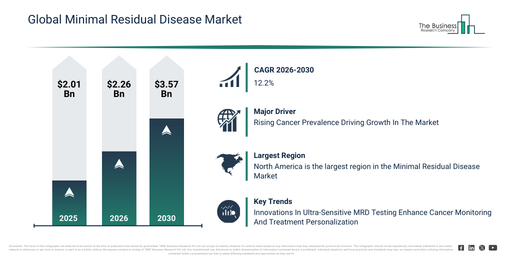
    The minimal residual disease market has experienced rapid expansion in recent years. It is anticipated to grow from $2.01 billion in 2025 to $2.26 billion in 2026, exhibiting a compound annual growth rate (CAGR) of 12.5%. This market’s historical growth can be attributed to several factors, including a rise in leukemia and lymphoma cases, the increasing utilization of flow cytometry testing, the early adoption of pcr-based mrd detection, a growing clinical focus on relapse prediction, and the expansion of diagnostic laboratory capabilities.

    The minimal residual disease market is projected to experience swift expansion over the coming years. This market is anticipated to reach a valuation of $3.57 billion by 2030, exhibiting a compound annual growth rate (CAGR) of 12.2%. Factors driving this growth during the projected period include the accelerated adoption of NGS-based MRD testing, a rising need for individualized oncology therapies, the creation of highly sensitive molecular assays, broader acceptance of liquid biopsy MRD testing, and increased funding for cancer diagnostics research. Key trends expected during this forecast timeframe encompass the implementation of precision medicine in MRD detection, the incorporation of AI to boost sensitivity in MRD testing, an increase in cloud-based data management solutions for MRD monitoring, IoT-enabled connectivity within MRD diagnostic platforms, and the progression of automation and digitalization in laboratory MRD analysis.

    Download the Free Sample Report to Explore Key Market Insights:

    https://www.thebusinessresearchcompany.com/sample.aspx?id=21224&type=smp

    Which Major Factors Are Driving The Expansion Of The Minimal Residual Disease Market?

    The expanding occurrence of cancer is anticipated to drive the advancement of the minimal residual disease market moving ahead. Cancer refers to a collection of illnesses marked by the unregulated proliferation and dissemination of atypical cells throughout the body. This growing incidence of cancer stems from various elements, including an older demographic, greater contact with environmental cancer-causing agents, detrimental daily habits, and inherited susceptibilities. This escalating cancer rate fuels the need for accurate minimal residual disease testing to identify remaining cancer cells, allowing for prompt intervention and tailored therapies. Such testing improves the foresight of relapse and boosts patient recovery. For example, data from February 2024, provided by the World Health Organization, an intergovernmental entity based in Switzerland, indicated that by 2050, more than 35 million new instances of cancer are predicted, signifying a 77% surge from the approximate 20 million cases recorded in 2022. Consequently, the rising occurrence of cancer is a key factor propelling the expansion of the minimal residual disease market.

    What Market Segments Are Evaluated Within The Minimal Residual Disease Market?

    The minimal residual disease market covered in this report is segmented –

    1) By Detection Target: Lymphoma, Leukemia, Solid Tumors, Other Detection Targets

    2) By Test Technique: Flow Cytometry, Polymerase Chain Reaction (PCR), Next Generation Sequencing (NGS), Other Test Techniques

    3) By End-User: Hospitals, Diagnostic Laboratories, Research Institutions

    Subsegments:

    1) By Lymphoma: Hodgkin Lymphoma, Non-Hodgkin Lymphoma

    2) By Leukemia: Acute Lymphoblastic Leukemia, Acute Myeloid Leukemia, Chronic Lymphocytic Leukemia, Chronic Myeloid Leukemia

    3) By Solid Tumors: Breast Cancer, Lung Cancer, Colorectal Cancer, Prostate Cancer

    4) By Other Detection Targets: Multiple Myeloma, Neuroblastoma, Sarcomas

    What Trends Are Advancing Progress In The Minimal Residual Disease Market?

    Leading companies operating within the minimal residual disease (MRD) market are concentrating on developing advanced ultra-sensitive assays to enhance both early detection and patient management. These ultra-sensitive assays are laboratory tests specifically designed to detect circulating tumor DNA at extremely low frequencies with high accuracy, enabling an earlier identification of cancer recurrence and improved treatment decisions. For instance, in April 2025, Natera, Inc., a US-based provider of cell-free DNA and genetic testing services, launched the Signatera Genome MRD test, which features a personalized, tumor-informed assay constructed from a patient’s whole genome sequence and matched normal DNA. The test employs multiplex polymerase chain reaction and next-generation sequencing technology to detect tumor DNA at frequencies as low as 1 part per million and even below for research use. It has undergone clinical validation across numerous cancer types, including breast, colorectal, non-small cell lung, melanoma, and renal cell carcinoma. Signatera Genome is capable of identifying postsurgical patients who are at a higher risk of recurrence, offers predictive clinical utility, supports both clinical and research applications, and benefits from Medicare coverage across a broad spectrum of indications, thereby enabling more precise and informed treatment strategies.

    Who Are The Top Market Participants Influencing The Minimal Residual Disease Market?

    Major companies operating in the minimal residual disease market are Thermo Fisher Scientific Inc., LabCorp, Quest Diagnostics Incorporated, Agilent Technologies Inc., Sysmex Corporation, Bio-Rad Laboratories Inc., Qiagen N.V., Natera Inc., Foundation Medicine Inc., NeoGenomics Inc., Guardant Health Inc., Adaptive Biotechnologies Corporation, Invivoscribe Inc., Mission Bio Inc., ArcherDx Inc., Abbott Laboratories, F. Hoffmann-La Roche Ltd., Illumina Inc., Personalis Inc., Asuragen Inc., ARUP Laboratories Inc., Myriad Genetics Inc., Luminex Corporation, EntroGen Inc., 3B BlackBio Biotech India, Bioartis, PerkinElmer Inc.

    Read the full minimal residual disease market report here:

    https://www.thebusinessresearchcompany.com/report/minimal-residual-disease-global-market-report

    Which Region Currently Holds The Largest Share Of The Minimal Residual Disease Market?

    North America was the largest region in the minimal residual disease market in 2025. Asia-Pacific is expected to be the fastest-growing region in the forecast period. The regions covered in the minimal residual disease market report are Asia-Pacific, South East Asia, Western Europe, Eastern Europe, North America, South America, Middle East, Africa.

    Request A Tailored Minimal Residual Disease Market Research Report For Competitive Advantage:

    https://www.thebusinessresearchcompany.com/customise?id=21224&type=smp

    Browse Through More Reports Similar to the Global Minimal Residual Disease Market 2026, By The Business Research Company

    Mineral Oil Global Market Report

    https://www.thebusinessresearchcompany.com/report/mineral-oil-global-market-report

    Mineral Supplements Global Market Report

    https://www.thebusinessresearchcompany.com/report/mineral-supplements-global-market-report

    Mineral Global Market Report

    https://www.thebusinessresearchcompany.com/report/mineral-global-market-report

    Get in touch with us:

    The Business Research Company: https://www.thebusinessresearchcompany.com/

    Americas +1 310-496-7795

    Asia +44 7882 955267 & +91 8897263534

    Europe +44 7882 955267

    Email us at info@tbrc.info

    Follow us on:

    LinkedIn: https://in.linkedin.com/company/the-business-research-company

    YouTube: https://www.youtube.com/channel/UC24_fI0rV8cR5DxlCpgmyFQ

    Global Market Model: https://www.thebusinessresearchcompany.com/global-market-model
  • A significant industry trend in the Mineral Sunscreen Market includes the Innovative Formulations Enhance Protection And Consumer Comfort

    A significant industry trend in the Mineral Sunscreen Market includes the Innovative Formulations Enhance Protection And Consumer Comfort

    The Business Research Company’s 2026 market reports include new capabilities such as market attractiveness scoring and analysis, total addressable market analysis, company scoring matrix, interactive excel data dashboard, improved supply chain analysis, upcoming startups in the market, and overview of key products, aimed at improving the depth, usability, and strategic value of the insights delivered.

    How Will The Market Size Of The Mineral Sunscreen Market Evolve From 2026 To 2030?

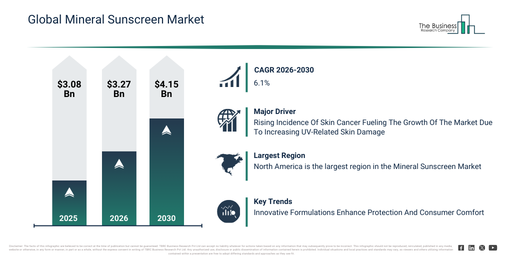
    The mineral sunscreen market has experienced robust expansion over recent years. It is projected to increase from $3.08 billion in 2025 to $3.27 billion in 2026, achieving a compound annual growth rate (CAGR) of 6.4%. This historical growth can be linked to several key drivers, including heightened awareness about preventing skin cancer, a rise in outdoor recreational activities, the early acceptance of zinc oxide formulations, the proliferation of dermatology-recommended products, and growing consumer apprehension regarding chemical sunscreens.

    The mineral sunscreen market size is projected to experience substantial growth over the coming years. Its valuation is expected to reach $4.15 billion by 2030, achieving a compound annual growth rate (CAGR) of 6.1%. This expansion during the forecast period is primarily driven by the increasing demand for sun protection products safe for infants and children, the broadening of premium skincare segments, a rising focus on sustainable personal care, the proliferation of e-commerce channels for skincare sales, and augmented regulatory scrutiny on sunscreen ingredients. Prominent trends anticipated in this timeframe include a growing inclination towards physical UV filters, an escalating need for formulations suitable for sensitive skin, the increasing uptake of reef-safe sunscreens, the availability of mineral sunscreen products in diverse formats, and a stronger emphasis on clean label assertions.

    Download the Free Sample Report to Explore Key Market Insights:

    https://www.thebusinessresearchcompany.com/sample.aspx?id=24607&type=smp

    What Key Drivers Are Influencing The Growth Of The Mineral Sunscreen Market?

    The escalating occurrence of skin cancer is anticipated to drive the expansion of the mineral sunscreen market in the future. Skin cancer involves the unchecked proliferation of unusual skin cells, typically resulting from ultraviolet radiation damage originating from sunlight or tanning devices. This surge in skin cancer cases is mainly attributed to prolonged sun exposure, causing detrimental ultraviolet (UV) radiation to harm the DNA within skin cells. Mineral sunscreen augments skin protection through its broad-spectrum defense against adverse UV rays, establishing its crucial role in everyday sun safety. It mitigates the chances of skin damage and the development of skin cancer, thereby fostering healthier skin and sustained well-being. As an illustration, in 2023, Cancer Australia, a government agency located in Australia, reported roughly 8,257 new diagnoses of melanoma of the skin, representing 2.6% of all cancer-related fatalities. Consequently, the increasing prevalence of skin cancer is fueling the expansion of the mineral sunscreen market.

    Which Segment Areas Are Covered In The Mineral Sunscreen Market Analysis?

    The mineral sunscreen market covered in this report is segmented –

    1) By Product Type: Lotion, Cream, Spray, Stick, Powder

    2) By Skin Type: Dry, Oily, Sensitive

    3) By Sun Protection Factor (SPF): Up To 29 Sun Protection Factor (SPF), 30 To 49 Sun Protection Factor (SPF), 50 To 69 Sun Protection Factor (SPF), 70 And More Sun Protection Factor (SPF)

    4) By Distribution Channel: Supermarkets And Hypermarkets, Specialty Stores, Online Or E-commerce, Other Distribution Channels

    5) By End User: Adults, Children, Babies

    Subsegments:

    1) By Lotion: Face Lotion, Body Lotion, Tinted Lotion, Baby Lotion

    2) By Cream: Daily Wear Cream, Anti-Aging Cream, Moisturizing Cream, Sensitive Skin Cream

    3) By Spray: Continuous Spray, Pump Spray, Sport Spray, Kids Spray

    4) By Stick: Face Stick, Lip Balm Stick, Travel Stick, Sport Stick

    5) By Powder: Loose Powder Sunscreen, Pressed Powder Sunscreen, Tinted Powder, Touch-Up Powder

    How Are Trends Transforming The Mineral Sunscreen Market Landscape?

    Key companies in the mineral sunscreen market are prioritizing the development of innovative formulations, such as those that are lightweight and broad-spectrum, to boost both protection and user comfort. These lightweight, broad-spectrum formulations are sunscreens that offer a light, non-greasy feel on the skin while delivering defense against both UVA and UVB rays. For example, in May 2025, Saltyface Natural Inc., a Canadian cosmetics company, introduced the Daily Sun Shield mineral sunscreen, a sheer, lightweight SPF 30 formula created for all skin types. This broad-spectrum sunscreen contains 14% non-nano zinc oxide, ensuring reef-safe, water- and sweat-resistant protection for up to 80 minutes. Its skincare-oriented formula is enriched with hydrating and soothing ingredients including hyaluronic acid, squalane, green tea, and chamomile, making it suitable for daily wear, whether applied alone, under makeup, or during outdoor activities.

    Which Global Companies Are Actively Competing In The Mineral Sunscreen Market?

    Major companies operating in the mineral sunscreen market are Loreal SA, The Estee Lauder Companies Inc, Edgewell Personal Care Company, Crown Laboratories Inc, ISDIN SA, Sun Bum LLC, Goddess Garden LLC, EltaMD Inc, Australian Gold LLC, WS Badger Company, Supergoop LLC, Drunk Elephant LLC, Raw Elements USA LLC, CP Skin Health Group Inc, Babo Botanicals Inc, Coola LLC, Rubys Organics Private Limited, Think Operations LLC, Neutrogena Corporation, Blue Lizard Australian Sunscreen, La Roche Posay, Vanicream

    Read the full mineral sunscreen market report here:

    https://www.thebusinessresearchcompany.com/report/mineral-sunscreen-global-market-report

    Which Region Is Expected To Register The Fastest Growth In The Mineral Sunscreen Market?

    North America was the largest region in the mineral sunscreen market in 2025. Asia-Pacific is expected to be the fastest-growing region in the forecast period. The regions covered in the mineral sunscreen market report are Asia-Pacific, South East Asia, Western Europe, Eastern Europe, North America, South America, Middle East, Africa.

    Request A Tailored Mineral Sunscreen Market Research Report For Competitive Advantage:

    https://www.thebusinessresearchcompany.com/customise?id=24607&type=smp

    Browse Through More Reports Similar to the Global Mineral Sunscreen Market 2026, By The Business Research Company

    Osteoporosis Treatment Global Market Report

    https://www.thebusinessresearchcompany.com/report/osteoporosis-treatment-global-market-report

    Bone Cancer Treatment Global Market Report

    https://www.thebusinessresearchcompany.com/report/bone-cancer-treatment-global-market-report

    Bone And Mineral Diagnostic Testing Global Market Report

    https://www.thebusinessresearchcompany.com/report/bone-and-mineral-diagnostic-testing-global-market-report

    Get in touch with us:

    The Business Research Company: https://www.thebusinessresearchcompany.com/

    Americas +1 310-496-7795

    Asia +44 7882 955267 & +91 8897263534

    Europe +44 7882 955267

    Email us at info@tbrc.info

    Follow us on:

    LinkedIn: https://in.linkedin.com/company/the-business-research-company

    YouTube: https://www.youtube.com/channel/UC24_fI0rV8cR5DxlCpgmyFQ

    Global Market Model: https://www.thebusinessresearchcompany.com/global-market-model

  • A key trend shaping the Mineral And Bone Disorder Treatment Market involves the Innovations In Drug Development Enhance Treatment Options In Mineral And Bone Disorders

    A key trend shaping the Mineral And Bone Disorder Treatment Market involves the Innovations In Drug Development Enhance Treatment Options In Mineral And Bone Disorders

    The Business Research Company’s 2026 market reports include new capabilities such as market attractiveness scoring and analysis, total addressable market analysis, company scoring matrix, interactive excel data dashboard, improved supply chain analysis, upcoming startups in the market, and overview of key products, aimed at improving the depth, usability, and strategic value of the insights delivered.

    What Is The Forecasted Market Value Of The Mineral And Bone Disorder Treatment Market Across 2026–2030?

    The mineral and bone disorder treatment market has seen significant expansion in recent years. It is anticipated to grow from $3.54 billion in 2025 to $3.79 billion in 2026, achieving a compound annual growth rate (CAGR) of 6.8%. This historical growth can be linked to the rising prevalence of chronic kidney disease, increasing awareness of mineral imbalance complications, a greater use of calcium and vitamin D supplements, the early adoption of dialysis-based treatments, and the expansion of specialty clinics for bone disorders.

    The mineral and bone disorder treatment market is projected to experience robust expansion in the coming years, with its size anticipated to reach $5.09 billion by 2030, exhibiting a compound annual growth rate (CAGR) of 7.7%. This expected growth during the forecast period is attributable to several factors, including advancements in hormonal therapies, a rising demand for personalized nutrition plans, the development of new RANK ligand inhibitors, the increasing adoption of online pharmacy channels, and the expansion of homecare-based treatment solutions. Prominent trends for the forecast period include progress in precision medicine for bone disorder management, AI-enabled diagnostic evaluation for mineral imbalance, the proliferation of digital platforms for treatment monitoring, a greater uptake of sustainable supplement formulations, and the automation of medication production and distribution systems.

    Download the Free Sample Report to Explore Key Market Insights:

    https://www.thebusinessresearchcompany.com/sample.aspx?id=12956&type=smp

    What Major Growth Drivers Are Shaping The Outlook Of The Mineral And Bone Disorder Treatment Market?

    The increasing occurrence of chronic kidney diseases is projected to drive the expansion of the mineral and bone disorder treatment market. Chronic kidney disease (CKD) is characterized as a long-term, progressive medical condition where the kidneys gradually lose their capacity to function properly. The primary aims of mineral and bone disorder treatment for chronic kidney diseases involve maintaining a correct mineral balance, preserving bone health, and mitigating the risk of complications linked to these imbalances. For instance, in November 2025, data from MJH Life Sciences, a US-based privately held medical media company, indicated that 788 million adults aged 20 and above were impacted by chronic kidney disease (CKD) in 2023. As a result, the escalating prevalence of chronic kidney diseases is fueling the growth of the mineral and bone disorder treatment market.

    What Segmentation Levels Are Considered In The Mineral And Bone Disorder Treatment Market?

    The mineral and bone disorder treatment market covered in this report is segmented –

    1) By Treatment: Diet, Nutrition, Medication, Supplements, Dialysis

    2) By Distribution Channel: Hospital Pharmacy, Online Pharmacy, Retail Pharmacy

    3) By End User: Hospitals, Homecare, Specialty Clinics, Other End Users

    Subsegments:

    1) By Diet: Calcium-Rich Foods, Vitamin D-Enriched Foods, Phosphorus-Rich Foods

    2) By Nutrition: Nutritional Counseling, Fortified Food Products, Meal Replacement Programs

    3) By Medication: Bisphosphonates, Hormonal Therapies, RANK Ligand Inhibitors

    4) By Supplements: Calcium Supplements, Vitamin D Supplements, Multivitamin Supplements

    5) By Dialysis: Hemodialysis, Peritoneal Dialysis, Continuous Renal Replacement Therapy (CRRT)

    Which Trends Are Impacting The Growth Of The Mineral And Bone Disorder Treatment Market?

    Major companies operating in the mineral and bone disorder treatment market are intensifying their focus on creating novel therapies and securing regulatory approvals to improve patient well-being and meet current medical needs. Regulatory approvals represent official authorizations from government bodies that permit a drug, device, or therapy to be commercialized and utilized, ensuring the product conforms to all necessary safety, efficacy, and quality criteria. For instance, in August 2024, Ascendis Pharma A/S, a biopharmaceutical company headquartered in Denmark, received FDA approval for YORVIPATH, designated for the management of hypoparathyroidism in adults. YORVIPATH functions as a prodrug of parathyroid hormone (PTH[1-34]), formulated to provide continuous exposure to released PTH over 24 hours, thereby aiding in the regulation of calcium and phosphate metabolism and supporting bone and mineral homeostasis in individuals with this rare endocrine condition.

    Which Leading Firms Are Contributing To The Growth Of The Mineral And Bone Disorder Treatment Market?

    Major companies operating in the mineral and bone disorder treatment market are Pfizer Inc., Merck & Co. Inc., Novartis AG, Eli Lilly And Company, Amgen Inc., GlaxoSmithKline plc, Teva Pharmaceuticals Industries Ltd., Mylan N.V., Servier Laboratories Pty Ltd., Sun Pharmaceutical Industries Ltd., Aurobindo Pharma Limited, Cipla Limited, Dr. Reddy’s Laboratories Ltd., Hikma Pharmaceuticals plc, Glenmark Pharmaceuticals Ltd., Alkem Laboratories Ltd., Zydus Cadila Healthcare Ltd., Alembic Pharmaceuticals Limited, Abiogen Pharma Spa, Intas Pharmaceuticals Ltd., Radius Health Inc.

    Read the full mineral and bone disorder treatment market report here:

    https://www.thebusinessresearchcompany.com/report/mineral-and-bone-disorder-treatment-global-market-report

    Which Regions Are Projected To Dominate The Mineral And Bone Disorder Treatment Market In The Coming Years?

    North America was the largest region in the mineral and bone disorder treatment market in 2025. The regions covered in the mineral and bone disorder treatment market report are Asia-Pacific, South East Asia, Western Europe, Eastern Europe, North America, South America, Middle East, Africa.

    Request A Tailored Mineral And Bone Disorder Treatment Market Research Report For Competitive Advantage:

    https://www.thebusinessresearchcompany.com/customise?id=12956&type=smp

    Browse Through More Reports Similar to the Global Mineral And Bone Disorder Treatment Market 2026, By The Business Research Company

    Payment Processor Global Market Report

    https://www.thebusinessresearchcompany.com/report/payment-processor-global-market-report

    Payment Processing Solutions Global Market Report

    https://www.thebusinessresearchcompany.com/report/payment-processing-solutions-global-market-report

    Quantum Technology Global Market Report

    https://www.thebusinessresearchcompany.com/report/quantum-technology-global-market-report

    Get in touch with us:

    The Business Research Company: https://www.thebusinessresearchcompany.com/

    Americas +1 310-496-7795

    Asia +44 7882 955267 & +91 8897263534

    Europe +44 7882 955267

    Email us at info@tbrc.info

    Follow us on:

    LinkedIn: https://in.linkedin.com/company/the-business-research-company

    YouTube: https://www.youtube.com/channel/UC24_fI0rV8cR5DxlCpgmyFQ

    Global Market Model: https://www.thebusinessresearchcompany.com/global-market-model

  • An Important Factor Driving the Military And Humanitarian Trauma Care Market Is the Rising Global Conflicts And Military Engagement Fueling Growth Of The Market Due To Escalating Geopolitical Tensions And Operational Threats

    An Important Factor Driving the Military And Humanitarian Trauma Care Market Is the Rising Global Conflicts And Military Engagement Fueling Growth Of The Market Due To Escalating Geopolitical Tensions And Operational Threats

    The Business Research Company’s 2026 market reports include new capabilities such as market attractiveness scoring and analysis, total addressable market analysis, company scoring matrix, interactive excel data dashboard, improved supply chain analysis, upcoming startups in the market, and overview of key products, aimed at improving the depth, usability, and strategic value of the insights delivered.

    What Market Size Increase Is Anticipated For The Military And Humanitarian Trauma Care Market Over The 2026–2030 Period?

    The military and humanitarian trauma care market size has experienced significant expansion in recent years. This market is projected to grow from $7.73 billion in 2025 to $8.34 billion in 2026, demonstrating a compound annual growth rate (CAGR) of 7.9%. Historically, this growth has stemmed from factors such as increasing frequency of regional conflicts, expansion of humanitarian relief operations, improvements in emergency medical protocols, rising investments in military healthcare infrastructure, and growing demand for rapid trauma response solutions.

    The military and humanitarian trauma care market is anticipated to experience significant growth in the coming years. This sector is projected to expand to $11.18 billion by 2030, achieving a compound annual growth rate (CAGR) of 7.6%. This projected growth over the forecast period is driven by factors such as the increasing adoption of AI-assisted trauma diagnostics, a rising emphasis on remote and mobile medical units, the expansion of advanced surgical kits designed for field use, the growing integration of digital health systems in defense medicine, and an increasing focus on improving survivability outcomes. Prominent trends for the forecast period include the escalating deployment of advanced battlefield medical devices, a greater utilization of portable diagnostic and monitoring equipment, the growing adoption of rapid hemorrhage control solutions, an expansion of telemedicine support in trauma care, and an enhanced focus on lightweight and durable medical supplies.

    Download the Free Sample Report to Explore Key Market Insights:

    https://www.thebusinessresearchcompany.com/sample.aspx?id=27346&type=smp

    What Drivers Are Expected To Influence The Military And Humanitarian Trauma Care Market During The Forecast Period?

    Growing worldwide conflicts and military actions are anticipated to drive expansion in the military and humanitarian trauma care market. These events encompass armed clashes or tactical military operations involving countries, groups, or factions, affecting global security and stability. The primary drivers behind the surge in global conflicts and military engagements are geopolitical rivalries and the struggle for resources, intensifying friction among nations and regional authorities. Within these contexts, military and humanitarian trauma care is vital for delivering prompt, life-saving medical aid to wounded service members and non-combatants in areas of conflict and crisis. For example, Inkstick Media, an international affairs publication based in the US specializing in security, foreign policy, and global conflict, reported in February 2024 that global conflict rates increased by 12% in 2023. This rise was attributed to more than 15,000 extra attacks, bombings, and assaults compared to the prior year. Consequently, the escalating global conflicts and military engagements are fostering the expansion of the military and humanitarian trauma care market.

    How Is The Military And Humanitarian Trauma Care Market Segmented Across Key Categories?

    The military and humanitarian trauma care market covered in this report is segmented –

    1) By Product Type: On Field Aid, Internal And External Fixators, Occlusion Products, Other Product Types

    2) By Material: Metal Alloys, Ceramics, Polymers

    3) By Surgical Site: Upper Extremities, Lower Extremities

    4) By End-Users: Hospitals, Military And Civilian Applications, Ambulatory Surgical Centers, Field Hospitals And Emergency Response Units

    Subsegments:

    1) By On Field Aid: Trauma Dressings And Bandages, Hemostatic Agents, Tourniquets, Chest Seals, Burn Treatment Supplies, Airway Management Devices, IV Fluids And Accessories

    2) By Internal And External Fixators: Internal Fixators, External Fixators, Bone Nails And Pins, Orthopedic Implants

    3) By Occlusion Products: Vascular Occlusion Devices, Balloon Catheters, Embolization Coils, Tourniquet Devices

    4) By Other Product Types: Surgical Kits And Instruments, Diagnostic And Monitoring Devices, Personal Protective Equipment (PPE), Evacuation And Transport Equipment

    What Major Market Trends Are Driving Changes In The Military And Humanitarian Trauma Care Market?

    Leading companies in the military and humanitarian trauma care market are concentrating on developing advanced solutions, such as variable-angle plating systems, to enhance fracture stabilization and improve patient outcomes, especially in high-stress environments. Variable-angle plating systems are orthopedic implants that allow surgeons to secure screws at multiple angles within the plate, providing tailored fixation for complex bone fractures and boosting stability. For instance, in August 2024, Stryker Corporation, a US-based medical technology company, launched its Pangea Plating System after receiving US Food and Drug Administration (FDA) clearance in late 2023. This innovative system delivers a versatile, variable-angle plating solution for varied patient populations, supporting the internal fixation and stabilization of fractures, osteotomies, and arthrodesis in both normal and osteopenic bone. Engineered with evidence-based precision, the Pangea System enhances implant fit and screw placement through anatomically contoured plates, addressing a wide range of fracture patterns. The platform features streamlined instrumentation and an extensive portfolio, including 20 anatomic and 13 utility plates, all integrated into a single, efficient system, setting a new benchmark in the market.

    Who Are The Dominant Players Shaping The Military And Humanitarian Trauma Care Market Landscape?

    Major companies operating in the military and humanitarian trauma care market are Johnson & Johnson, Abbott Laboratories, 3M Company, Medtronic plc, Becton Dickinson and Company, Stryker Corporation, GE HealthCare Technologies Inc., Philips Healthcare, Zimmer Biomet Holdings Inc., Smith & Nephew plc, Teleflex Incorporated, Zoll Medical Corporation, Orthofix Medical Inc., Accumed LLC, North American Rescue LLC, Combat Medical Systems LLC, RevMedx Inc., Persys Medical Ltd., Safeguard Medical Group, H&H Medical Corporation, Laerdal Medical AS, Argon Medical Devices Inc.

    Read the full military and humanitarian trauma care market report here:

    https://www.thebusinessresearchcompany.com/report/military-and-humanitarian-trauma-care-global-market-report

    Which Region Is Forecast To Lead The Military And Humanitarian Trauma Care Market In Terms Of Market Size?

    North America was the largest region in the military and humanitarian trauma care market in 2025. Asia-Pacific is expected to be the fastest-growing region in the forecast period. The regions covered in the military and humanitarian trauma care market report are Asia-Pacific, South East Asia, Western Europe, Eastern Europe, North America, South America, Middle East, Africa.

    Request A Tailored Military And Humanitarian Trauma Care Market Research Report For Competitive Advantage:

    https://www.thebusinessresearchcompany.com/customise?id=27346&type=smp

    Browse Through More Reports Similar to the Global Military And Humanitarian Trauma Care Market 2026, By The Business Research Company

    Acute Migraine Treatment Global Market Report

    https://www.thebusinessresearchcompany.com/report/acute-migraine-treatment-global-market-report

    Migraine Drugs Global Market Report

    https://www.thebusinessresearchcompany.com/report/migraine-drugs-global-market-report

    Migraine Global Market Report

    https://www.thebusinessresearchcompany.com/report/migraine-global-market-report

    Get in touch with us:

    The Business Research Company: https://www.thebusinessresearchcompany.com/

    Americas +1 310-496-7795

    Asia +44 7882 955267 & +91 8897263534

    Europe +44 7882 955267

    Email us at info@tbrc.info

    Follow us on:

    LinkedIn: https://in.linkedin.com/company/the-business-research-company

    YouTube: https://www.youtube.com/channel/UC24_fI0rV8cR5DxlCpgmyFQ

    Global Market Model: https://www.thebusinessresearchcompany.com/global-market-model