
Category: Healthcare Services

  • A Significant Growth Driver for the Migraine Treatment Market Is the Impact of Prolonged Screen Exposure on the Migraine Treatment Market

    A Significant Growth Driver for the Migraine Treatment Market Is the Impact of Prolonged Screen Exposure on the Migraine Treatment Market

    The Business Research Company’s 2026 market reports include new capabilities such as market attractiveness scoring and analysis, total addressable market analysis, company scoring matrix, interactive excel data dashboard, improved supply chain analysis, upcoming startups in the market, and overview of key products, aimed at improving the depth, usability, and strategic value of the insights delivered.

    How Much Is The Migraine Treatment Market Expected To Grow In Terms Of Market Value Between 2026 And 2030?

    The migraine treatment market size has seen swift expansion in recent years. It is forecast to grow from $3.45 billion in 2025 to $3.82 billion in 2026, achieving a compound annual growth rate (CAGR) of 10.7%. The historical period’s expansion can be attributed to the increasing prevalence of neurological conditions, improved diagnosis of various migraine subtypes, rising consumer demand for over-the-counter pain relief, the early uptake of triptans and preventive medicines, and an increase in medical consultations for chronic migraines.

    The migraine treatment market is projected to experience substantial growth in the upcoming years, with its size anticipated to reach $5.8 billion by 2030, showing a compound annual growth rate (CAGR) of 11.0%. This expansion during the forecast period is driven by the development of new cgrp inhibitors, increased adoption of digital therapeutics, a rising demand for home-based care solutions, the growing use of wearable device technology for migraine tracking, and the expansion of personalized treatment programs. Prominent trends for the forecast duration include the expansion of precision medicine approaches for migraine prevention, the emergence of AI-based migraine detection and forecasting tools, an increase in digital symptom tracking platforms, the integration of iot-enabled wearable devices for migraine monitoring, and the utilization of vr/ar for pain distraction therapy.

    Download the Free Sample Report to Explore Key Market Insights:

    https://www.thebusinessresearchcompany.com/sample.aspx?id=8126&type=smp

    What Drivers Are Influencing The Migraine Treatment Market?

    Extended periods of screen engagement are anticipated to drive the expansion of the migraine treatment market. This screen exposure refers to the time individuals spend interacting with electronic displays, such as those on smartphones, tablets, computers, and televisions. Factors contributing to prolonged screen exposure include a rise in remote work, online education, digital entertainment, and increasing reliance on technology for social interaction. Migraine treatment addresses symptoms triggered or worsened by extended screen time through methods like medications, lifestyle adjustments, and ergonomic practices aimed at minimizing strain and preventing attacks. For example, in November 2023, the office of communications, a UK-based entity, reported that in May 2023, UK adults spent an average of 3 hours and 41 minutes online daily, representing a slight increase of eight minutes compared to May 2022. During this period, 47.9 million adults accessed the internet via smartphones, tablets, and computers. Young adults aged 18–24 were the most frequent users, averaging 4 hours and 36 minutes per day, while those aged 65 and above spent the least amount of time online. Therefore, prolonged screen exposure is fueling the growth of the migraine treatment market.

    What Major Segment Divisions Exist Within The Migraine Treatment Market?

    The migraine treatment market covered in this report is segmented –

    1) By Type: Episodic, Migraine With Aura, Chronic, Other Types

    2) By Treatment: Acute Or Abortive Treatment, Preventive Or Prophylactic Treatment, Non-Pharmacological Therapies And Devices

    3) By End-User: Hospitals, Clinics, Homecare, Other End-Users

    Subsegments:

    1) By Episodic: Frequent Episodic Migraine, Infrequent Episodic Migraine

    2) By Migraine With Aura: Visual Aura, Sensory Aura, Speech Or Language Aura

    3) By Chronic: Chronic Migraine Without Aura, Chronic Migraine With Aura

    4) By Other Types: Hemiplegic Migraine, Retinal Migraine, Menstrual Migraine

    Which Trends Are Shaping The Future Of The Migraine Treatment Market?

    Major companies operating in the migraine treatment market are concentrating on securing product approvals, such as for Zavzpret (zavegepant) migraine nasal spray, to boost their revenues. Zavzpret is a calcitonin gene-related peptide (CGRP) receptor antagonist nasal spray specifically developed for the acute management of adult migraines. For instance, in March 2023, Pfizer Inc., a pharmaceutical corporation based in the US, obtained FDA approval for zavzpret (zavegepant). This nasal spray, also known as zavzpret, is designed for the immediate treatment of adult migraine attacks, whether symptoms are present or not, with the goal of providing pain relief from a single spray. The FDA’s endorsement of Zavzpret signifies a considerable advancement for migraine sufferers seeking an alternative to oral medications and desiring effective pain relief.

    Which Companies Are Leading Innovation In The Migraine Treatment Market?

    Major companies operating in the migraine treatment market are Pfizer Inc., Eli Lilly and Company, Amgen Inc., Novartis AG, Bayer AG, Allergan PLC, Allodynic Therapeutics LLC, Impel Pharmaceuticals Inc., AbbVie Inc., Alder BioPharmaceuticals Inc., Biohaven Pharmaceutical Holding Company Ltd., Johnson & Johnson Inc., Teva Pharmaceutical Industries Ltd., H Lundbeck A/S, Axsome Therapeutics Inc., Zosano Pharma Inc., Satsuma Pharmaceuticals Inc., AEON Biopharma Inc., Pulmatrix Inc., Vaxxinity Inc., Ionis Pharmaceuticals Inc., Charleston Laboratories LLC, Merz Therapeutics, Ipsen, Kallyope Inc., Nuvie Bio LLC.

    Read the full migraine treatment market report here:

    https://www.thebusinessresearchcompany.com/report/migraine-treatment-global-market-report

    Which Regions Are Expected To Experience Rapid Expansion In The Migraine Treatment Market?

    North America was the largest region in the migraine treatment market in 2025. The regions covered in the migraine treatment market report are Asia-Pacific, South East Asia, Western Europe, Eastern Europe, North America, South America, Middle East, Africa.

    Request A Tailored Migraine Treatment Market Research Report For Competitive Advantage:

    https://www.thebusinessresearchcompany.com/customise?id=8126&type=smp

    Browse Through More Reports Similar to the Global Migraine Treatment Market 2026, By The Business Research Company

    Migraine Treatment Global Market Report

    https://www.thebusinessresearchcompany.com/report/migraine-treatment-global-market-report

    Migraine Drugs Global Market Report

    https://www.thebusinessresearchcompany.com/report/migraine-drugs-global-market-report

    Acute Migraine Treatment Global Market Report

    https://www.thebusinessresearchcompany.com/report/acute-migraine-treatment-global-market-report

    Get in touch with us:

    The Business Research Company: https://www.thebusinessresearchcompany.com/

    Americas +1 310-496-7795

    Asia +44 7882 955267 & +91 8897263534

    Europe +44 7882 955267

    Email us at info@tbrc.info

    Follow us on:

    LinkedIn: https://in.linkedin.com/company/the-business-research-company

    YouTube: https://www.youtube.com/channel/UC24_fI0rV8cR5DxlCpgmyFQ

    Global Market Model: https://www.thebusinessresearchcompany.com/global-market-model

  • Global Migraine Industry Trends and Market Growth Forecast for 2026–2030

    Global Migraine Industry Trends and Market Growth Forecast for 2026–2030

    The Business Research Company’s 2026 market reports include new capabilities such as market attractiveness scoring and analysis, total addressable market analysis, company scoring matrix, interactive excel data dashboard, improved supply chain analysis, upcoming startups in the market, and overview of key products, aimed at improving the depth, usability, and strategic value of the insights delivered.

    What Market Value Is Expected For The Migraine Market At The End Of The 2026–2030 Forecast Period?

    The migraine market has demonstrated consistent expansion in recent years. It is projected to grow from $1.97 billion in 2025 to $2.02 billion in 2026, at a compound annual growth rate (CAGR) of 3.0%. The expansion observed historically can be attributed to the increasing prevalence of migraine disorders, greater utilization of over-the-counter (OTC) analgesics, the early acceptance of triptans, a rise in clinical consultations for chronic migraine, and an expanding understanding of neurological conditions.

    The migraine market is projected to experience consistent expansion over the upcoming years. This market is forecast to reach a value of $2.36 billion by 2030, exhibiting a compound annual growth rate (CAGR) of 4.0%. The anticipated growth during this period stems from various factors, including the rising demand for CGRP-based treatments, the emergence of digital migraine therapeutics, the uptake of remote monitoring for migraines, the increase in home-based treatment devices, and the broader implementation of personalized treatment plans. Key trends for the forecast duration involve sophisticated precision-based migraine management, artificial intelligence-powered tools for migraine prediction, the proliferation of cloud-enabled platforms for migraine monitoring, the embrace of IoT-driven wearables for tracking migraines, and the incorporation of AR/VR solutions for pain alleviation.

    Download the Free Sample Report to Explore Key Market Insights:

    https://www.thebusinessresearchcompany.com/sample.aspx?id=12919&type=smp

    What Drivers Are Shaping The Future Growth Of The Migraine Market?

    The increasing prevalence of stress is projected to stimulate the expansion of the migraine market moving forward. Stress refers to the body’s physiological and psychological reaction to challenging or demanding situations that people consider threatening, overwhelming, or beyond their effective coping abilities. Stress can trigger migraines by inducing the body’s fight or flight response, leading to the release of stress hormones such as cortisol and adrenaline. This can cause rapid constriction and dilation of blood vessels, potentially contributing to alterations in blood flow and vascular function associated with migraine attacks. For instance, in May 2024, according to the American Psychiatric Association, a US-based professional organization of psychiatrists and trainee psychiatrists, 43% of adults reported experiencing higher levels of anxiety compared to the previous year, an increase from 37% in 2023 and 32% in 2022. Therefore, the growing incidence of stress is propelling the expansion of the migraine market.

    What Segment Types Make Up The Migraine Market?

    The migraine market covered in this report is segmented –

    1) By Type: Episodic, Migraine With Aura, Chronic, Other Types

    2) By Treatment: Acute Or Abortive Treatment, Preventive Or Prophylactic Treatment, Non-Pharmacological Therapies And Devices

    3) By Route Of Administration: Oral, Injectable, Nasal Spray, Other Routes Of Administration

    4) By Distribution Channel: Retail Pharmacies, Hospital Pharmacies, Online Pharmacies, Specialty Clinics

    5) By End-User: Adults, Adolescents, Pediatric, Other End-Users

    Subsegments:

    1) By Episodic: Frequent Episodic Migraine, Infrequent Episodic Migraine

    2) By Migraine With Aura: Visual Aura, Sensory Aura, Speech Or Language Aura

    3) By Chronic: Chronic Migraine Without Aura, Chronic Migraine With Aura

    4) By Other Types: Hemiplegic Migraine, Retinal Migraine, Menstrual Migraine

    What Key Trends Are Influencing The Development Of The Migraine Market?

    Major companies active in the migraine market are concentrating on developing technological advancements like migraine lens technology to gain a competitive advantage. Migraine lens technology refers to specialized eyewear designed to assist individuals suffering from migraines and light sensitivity. For example, in July 2023, Zenni Optical Inc., a US-based eyewear retailer, announced the launch of its latest technology innovation, the FL-41 migraine lenses. These lenses were created to help people with light sensitivity due to migraines, offer respite from post-concussion, and address other ailments. Additionally, the lenses prevent a spectrum of light that causes eye pain, thereby reducing the risk of migraines and aiding in the treatment of active migraines.

    Who Are The Key Players Driving Competition In The Migraine Market?

    Major companies operating in the migraine market are Pfizer Inc., Johnson & Johnson, Merck & Co. Inc., Bayer AG, Novartis AG, Sanofi-Aventis LLC, GlaxoSmithKline plc., Eli Lilly and Co Ltd., Amgen Inc., Teva Pharmaceutical Industries Ltd., Sun Pharmaceutical Industries Limited, Dr Reddy’s Laboratories Ltd., Apotex Inc., Cipla Limited, Amneal Pharmaceuticals LLC, Zydus Lifesciences Ltd., Lupin Limited, Torrent Pharmaceuticals Ltd., Axsome Therapeutics, Impel NeuroPharma, Zosano Pharma, H Lundbeck A S, Merz Therapeutics

    Read the full migraine market report here:

    https://www.thebusinessresearchcompany.com/report/migraine-global-market-report

    Which Geographic Regions Are Influencing Demand In The Migraine Market?

    North America was the largest region in the migraine market in 2025. The regions covered in the migraine market report are Asia-Pacific, South East Asia, Western Europe, Eastern Europe, North America, South America, Middle East, Africa.

    Request A Tailored Migraine Market Research Report For Competitive Advantage:

    https://www.thebusinessresearchcompany.com/customise?id=12919&type=smp

    Browse Through More Reports Similar to the Global Migraine Market 2026, By The Business Research Company

    Optical Microscopes Global Market Report

    https://www.thebusinessresearchcompany.com/report/optical-microscopes-global-market-report

    Microscope Software Global Market Report

    https://www.thebusinessresearchcompany.com/report/microscope-software-global-market-report

    Biological Microscope Global Market Report

    https://www.thebusinessresearchcompany.com/report/biological-microscope-global-market-report

    Get in touch with us:

    The Business Research Company: https://www.thebusinessresearchcompany.com/

    Americas +1 310-496-7795

    Asia +44 7882 955267 & +91 8897263534

    Europe +44 7882 955267

    Email us at info@tbrc.info

    Follow us on:

    LinkedIn: https://in.linkedin.com/company/the-business-research-company

    YouTube: https://www.youtube.com/channel/UC24_fI0rV8cR5DxlCpgmyFQ

    Global Market Model: https://www.thebusinessresearchcompany.com/global-market-model
  • Microscope Camera Market Size Outlook and Demand Growth Across 2026–2030

    Microscope Camera Market Size Outlook and Demand Growth Across 2026–2030

    The Business Research Company’s 2026 market reports include new capabilities such as market attractiveness scoring and analysis, total addressable market analysis, company scoring matrix, interactive excel data dashboard, improved supply chain analysis, upcoming startups in the market, and overview of key products, aimed at improving the depth, usability, and strategic value of the insights delivered.

    What Is The Estimated Market Size Of The Microscope Camera Market During 2026–2030?

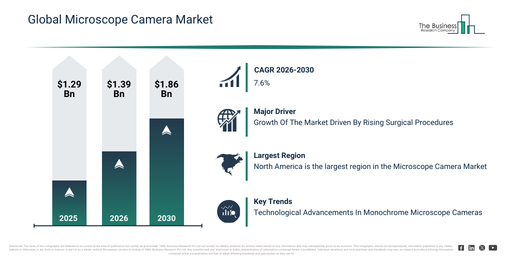
    The microscope camera market has experienced robust expansion over the past few years. Projections indicate its value will escalate from $1.29 billion in 2025 to $1.39 billion in 2026, advancing at a compound annual growth rate (CAGR) of 7.9%. Historically, this growth has been driven by several factors, including heightened demand for clinical microscopy, the increasing adoption of CMOS sensors, the expansion of academic research imaging, the integration of digital laboratory workflows, and the broader application in materials science imaging.

    The microscope camera market size is anticipated to undergo significant expansion in the coming years. It is projected to reach $1.86 billion by 2030, exhibiting a compound annual growth rate (CAGR) of 7.6%. This expected growth can be attributed to several factors such as the increasing demand for AI-based diagnostic tools, the growing integration of remote microscopy, advancements in high-resolution imaging sensor development, the expansion of real-time telepathology, and a rise in biotech R&D investments. Noteworthy trends during the forecast period include AI-enhanced image processing, cloud-based microscopy data management, the adoption of automation in laboratory imaging, IoT-enabled remote microscopy systems, and advanced digital imaging for precision diagnostics.

    Download the Free Sample Report to Explore Key Market Insights:

    https://www.thebusinessresearchcompany.com/sample.aspx?id=20882&type=smp

    Which Economic Or Industry Drivers Are Impacting The Microscope Camera Market?

    The escalating volume of surgical procedures is projected to drive the growth of the microscope camera market in the coming years. Surgical operations encompass medical interventions where a surgeon physically acts to address diseases, injuries, or deformities by cutting, removing, repairing, or altering bodily tissue to enhance a patient’s health or functionality. The surge in surgical operations can be attributed to several factors, including an aging population, advancements in medical technology, a rise in chronic diseases, improved access to healthcare, heightened medical awareness, better surgical outcomes, and the expansion of medical tourism. Microscope cameras significantly improve surgical operations by delivering high-definition, magnified views of the surgical field, thereby increasing precision, enabling real-time documentation, and facilitating remote collaboration for superior patient outcomes. For instance, in December 2023, the UK Health Security Agency, a UK-based government agency, reported an increase in coronary artery bypass graft surgeries in 2023, reaching 27,524 procedures compared to 2022. Therefore, the increasing number of surgical operations is set to boost the expansion of the microscope camera market.

    How Are The Various Segments Of The Microscope Camera Market Categorized?

    The microscope camera market covered in this report is segmented –

    1) By Type: Monochrome Cameras, Color Cameras

    2) By Sensor Type: Complementary Metal-Oxide-Semiconductor (CMOS) Sensors, Charge-Coupled Device (CCD) Sensors

    3) By Resolution: High-Definition Cameras, Standard-Definition Cameras

    4) By Distribution Channel: Online, Offline

    5) By Application: Medical, Industry, Education, Other Applications

    Subsegments:

    1) By Monochrome Cameras: CMOS Monochrome Cameras, CCD Monochrome Cameras

    2) By Color Cameras: CMOS Color Cameras, CCD Color Cameras

    What Key Trends Are Influencing The Development Of The Microscope Camera Market?

    Major companies in the microscope camera market are concentrating on developing technologically advanced offerings, such as monochrome microscope cameras, to boost image clarity and precision for high-resolution scientific and medical imaging applications. A monochrome microscope camera is a digital camera utilized in microscopy that captures high-contrast grayscale images, often preferred for its capacity to deliver sharper, more detailed visuals, particularly in low-light or high-sensitivity environments. For example, in January 2023, Nikon Corporation, a Japan-based manufacturer of optical instruments and cameras, unveiled the Digital Sight 50M monochrome microscope camera. This camera is engineered for high-precision analysis and large-volume sampling, notably in applications like plate screening, offering a 50-megapixel resolution that allows for improved imaging performance and accurate detection across various scientific and medical uses. The camera’s sophisticated attributes, including a 50-megapixel sensor and enhanced light sensitivity, enable precise and clear image acquisition, making it perfectly suited for scientific research, medical diagnostics, and quality control in laboratory settings.

    Which Major Firms Influence Developments In The Microscope Camera Market?

    Major companies operating in the microscope camera market are Sony Corporation, Canon Inc., Danaher Corporation, Keyence Corporation, Olympus Corporation, Teledyne Technologies, Roper Technologies Inc., Nikon Corporation, Carl Zeiss AG, Hamamatsu, Brunel Microscopes Ltd, Jenoptik AG, Leica Microsystems, Motic China Group Co Ltd, Basler AG, Andor Technology Limited, Oxford Instruments plc, Tucsen Photonics Co Ltd., Lumenera Corporation, Euromex Microscopen BV, Guangzhou Micro-shot Technology Co Ltd., Martin Microscope, Meiji Techno Co Ltd.

    Read the full microscope camera market report here:

    https://www.thebusinessresearchcompany.com/report/microscope-camera-global-market-report

    What Are The Top-Performing Regions Within The Microscope Camera Market?

    North America was the largest region in the microscope camera market in 2025. Asia-Pacific is expected to be the fastest-growing region in the forecast period. The regions covered in the microscope camera market report are Asia-Pacific, South East Asia, Western Europe, Eastern Europe, North America, South America, Middle East, Africa.

    Request A Tailored Microscope Camera Market Research Report For Competitive Advantage:

    https://www.thebusinessresearchcompany.com/customise?id=20882&type=smp

    Browse Through More Reports Similar to the Global Microscope Camera Market 2026, By The Business Research Company

    Microarray Global Market Report

    https://www.thebusinessresearchcompany.com/report/microarray-global-market-report

    Rna Targeting Small Molecules Therapeutics Global Market Report

    https://www.thebusinessresearchcompany.com/report/rna-targeting-small-molecules-therapeutics-global-market-report

    Rna Analysis Transcriptomics Global Market Report

    https://www.thebusinessresearchcompany.com/report/rna-analysis-transcriptomics-global-market-report

    Get in touch with us:

    The Business Research Company: https://www.thebusinessresearchcompany.com/

    Americas +1 310-496-7795

    Asia +44 7882 955267 & +91 8897263534

    Europe +44 7882 955267

    Email us at info@tbrc.info

    Follow us on:

    LinkedIn: https://in.linkedin.com/company/the-business-research-company

    YouTube: https://www.youtube.com/channel/UC24_fI0rV8cR5DxlCpgmyFQ

    Global Market Model: https://www.thebusinessresearchcompany.com/global-market-model
  • MicroRNA Market Insights Highlighting Opportunities and Drivers Supporting Growth to 2030

    MicroRNA Market Insights Highlighting Opportunities and Drivers Supporting Growth to 2030

    The Business Research Company’s 2026 market reports include new capabilities such as market attractiveness scoring and analysis, total addressable market analysis, company scoring matrix, interactive excel data dashboard, improved supply chain analysis, upcoming startups in the market, and overview of key products, aimed at improving the depth, usability, and strategic value of the insights delivered.

    What Market Size Expansion Is Predicted For The MicroRNA Market Between 2026 And 2030?

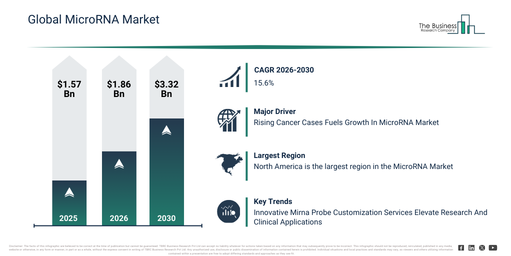
    The microrna market size has experienced significant expansion in recent years. Its valuation is projected to increase from $1.57 billion in 2025 to $1.86 billion in 2026, reflecting a compound annual growth rate (CAGR) of 18.5%. The historical growth of this market can be linked to the increased embrace of genomic research, a growing demand for biomarker discovery, the development of PCR-based testing, the broadening of cancer research initiatives, and the escalating use of NGS instruments.

    The microrna market is projected for significant expansion in the coming years, reaching $3.32 billion by 2030, driven by a compound annual growth rate (CAGR) of 15.6%. This growth during the forecast period is fueled by several factors, including the expanding clinical uses of microrna diagnostics, the increasing adoption of personalized medicine, advancements in therapeutic microrna development, broadened infectious disease research, and growing investments in molecular assay technologies. Key trends anticipated over the forecast period encompass the broadening scope of precision genomics, AI-powered microrna expression analysis, increased reliance on cloud-based sequencing data storage, enhanced automation in molecular diagnostics, and the integration of IoT for streamlined laboratory workflows.

    Download the Free Sample Report to Explore Key Market Insights:

    https://www.thebusinessresearchcompany.com/sample.aspx?id=15608&type=smp

    What Major Drivers Are Influencing Demand In The MicroRNA Market?

    The expanding incidence of cancer is projected to fuel the advancement of the microRNA market in the future. Cancer is defined as an intricate illness marked by unregulated cell multiplication and growth, frequently resulting in the development of malignant tumors capable of infiltrating nearby tissues and metastasizing to remote organs, thereby presenting considerable health dangers. The rising occurrence of cancer diagnoses stems from multiple elements, such as an aging demographic, lifestyle decisions like smoking and unhealthy eating, environmental contaminants, and enhanced screening techniques that facilitate earlier detection. MicroRNA is integrated with conventional cancer treatments to boost drug responsiveness and better patient results. Furthermore, beyond therapeutic applications, miRNAs function as diagnostic and prognostic indicators, assisting in the classification of cancer types, forecasting disease advancement, and tracking responses to therapy. For example, data from May 2024, provided by the National Cancer Institute, a government body based in the US, revealed approximately 20 million new cases and 9.7 million cancer-associated fatalities annually in 2022, with forecasts suggesting 15.3 million deaths and 29.9 million new cases per year by 2040. Consequently, the growing prevalence of cancer cases is fueling the expansion of the microRNA market.

    Which Market Segments Are Examined In The MicroRNA Market Study?

    The microrna market covered in this report is segmented –

    1) By Product: Instruments, Consumables

    2) By Assay Type: Immunoassay, Next Generation Sequencing, MiRNA Arrays, Polymerase Chain Reaction (PCR) Based Arrays

    3) By Application: Cancer, Infectious Diseases, Immunological Disorder, Cardiovascular Disease, Neurological Disease, Other Applications

    4) By End User: Academic And Research Institutes, Biopharmaceutical Companies, Diagnostic Centers, Clinical Research Organizations

    Subsegments:

    1) By Instruments: Quantitative PCR Systems, Microarray Platforms, Next-Generation Sequencing (NGS) Systems, Real-Time PCR Instruments, Microrna Analyzers

    2) By Consumables: MicroRNA Kits ( Extraction Kits, Detection Kits), PCR Reagents, Primers And Probes, Microarrays And Chips, RNA Sequencing Kits

    How Are Trends Impacting The MicroRNA Market?

    Leading companies within the microRNA market are concentrating on developing sophisticated solutions, such as miRNA probe customization services, to address the distinct requirements of researchers and clinicians, enhance the precision of miRNA detection, and enable a broad spectrum of applications. MiRNA probe customization services denote specialized offerings from biotechnology and molecular biology companies that involve designing and manufacturing bespoke probes specific to particular microRNAs (miRNAs) for diverse research and clinical uses. For example, in September 2023, Abnova Corporation, a Taiwan-based biotech company, introduced improved services for customizing miRNA probes, along with a new collection of cataloged miRNA probes, to cater to the varied needs of academic, industrial, and research communities engaged in miRNA investigations. These probes are instrumental in identifying and accurately locating miRNAs, which are small, non-coding RNA molecules vital for various biological processes. Abnova’s customization services ensure high specificity and minimal cross-reactivity, making them particularly suitable for analyzing samples containing limited miRNA content.

    Who Are The Primary Competitors In The MicroRNA Market?

    Major companies operating in the microrna market are Thermo Fisher Scientific Inc., Merck KGaA, Agilent Technologies Inc, Illumina Inc., Bio-Rad Laboratories Inc., QIAGEN N.V., Miltenyi Biotec, LGC Limited, Promega Corporation, Abcam plc, Integrated DNA Technologies Inc., NanoString Technologies Inc., Horizon Discovery Ltd., OriGene Technologies Inc., Omega Bio-Tek, New England Biolabs, Quantabio, SeqMatic LLC, GeneCopoeia Inc., HTG Molecular Diagnostics Inc.

    Read the full microrna market report here:

    https://www.thebusinessresearchcompany.com/report/microrna-global-market-report

    Which Region Shows The Strongest Potential For Future Growth In The MicroRNA Market?

    North America was the largest region in the microRNA market in 2025. Asia-Pacific is expected to be the fastest-growing region in the forecast period. The regions covered in the microrna market report are Asia-Pacific, South East Asia, Western Europe, Eastern Europe, North America, South America, Middle East, Africa.

    Request A Tailored MicroRNA Market Research Report For Competitive Advantage:

    https://www.thebusinessresearchcompany.com/customise?id=15608&type=smp

    Browse Through More Reports Similar to the Global MicroRNA Market 2026, By The Business Research Company

    Organic Skincare Global Market Report

    https://www.thebusinessresearchcompany.com/report/organic-skincare-global-market-report

    Professional Skincare Global Market Report

    https://www.thebusinessresearchcompany.com/report/professional-skincare-global-market-report

    Skin Care Products Global Market Report

    https://www.thebusinessresearchcompany.com/report/skin-care-products-global-market-report

    Get in touch with us:

    The Business Research Company: https://www.thebusinessresearchcompany.com/

    Americas +1 310-496-7795

    Asia +44 7882 955267 & +91 8897263534

    Europe +44 7882 955267

    Email us at info@tbrc.info

    Follow us on:

    LinkedIn: https://in.linkedin.com/company/the-business-research-company

    YouTube: https://www.youtube.com/channel/UC24_fI0rV8cR5DxlCpgmyFQ

    Global Market Model: https://www.thebusinessresearchcompany.com/global-market-model
  • Global Microproteins Skincare Market Expected to Reach $4.87 Billion by 2030 with 8% CAGR

    Global Microproteins Skincare Market Expected to Reach $4.87 Billion by 2030 with 8% CAGR

    The Business Research Company’s 2026 market reports include new capabilities such as market attractiveness scoring and analysis, total addressable market analysis, company scoring matrix, interactive excel data dashboard, improved supply chain analysis, upcoming startups in the market, and overview of key products, aimed at improving the depth, usability, and strategic value of the insights delivered.

    How Large Is The Microproteins Skincare Market Projected To Become By 2030 Based On Its 2026 Valuation?

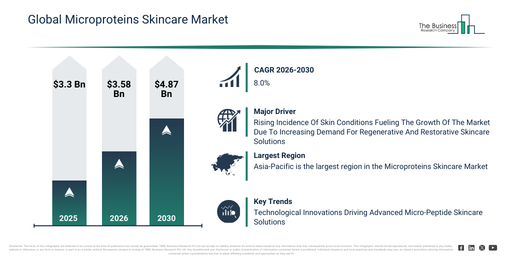
    The microproteins skincare market has experienced significant expansion over recent years. This market is anticipated to expand from $3.3 billion in 2025 to $3.58 billion in 2026, achieving a compound annual growth rate (CAGR) of 8.3%. The historical increase in this market can be linked to a heightened consumer interest in anti-aging skincare, an escalating demand for high-end cosmetic goods, the proliferation of clinical-grade skincare solutions, the increasing impact of dermatological investigations, and the broader availability of advanced cosmetic formulations.

    The microproteins skincare market is projected to experience substantial expansion over the upcoming years. Its valuation is anticipated to reach $4.87 billion by 2030, demonstrating a compound annual growth rate (CAGR) of 8.0%. This anticipated growth during the forecast period stems from several factors, including heightened investments in protein-based skincare research and development, a growing inclination towards non-invasive anti-aging remedies, the expansion of biotech-driven cosmetic advancements, increasing consumer demand for multi-functional skincare items, and the greater uptake of customized beauty therapies. Key trends for this period encompass the growing integration of microprotein-infused anti-aging products, an elevated need for skincare actives that penetrate deeply, an intensified concentration on stimulating collagen and elastin, the proliferation of high-performance skincare formulations, and a heightened focus on solutions for cellular repair.

    Download the Free Sample Report to Explore Key Market Insights:

    https://www.thebusinessresearchcompany.com/sample.aspx?id=30325&type=smp

    Which Market Drivers Are Supporting The Expansion Of The Microproteins Skincare Market?

    An anticipated increase in skin condition occurrences is set to drive expansion within the microprotein skincare market. These conditions encompass various irregularities or dysfunctions impacting the skin’s structure, look, or operation, such as acne, eczema, psoriasis, and different infections. The frequency of skin conditions is escalating because both consumers and medical experts are increasingly aware of how environmental, lifestyle, and genetic elements influence skin health, leading them to prioritize specific skincare treatments for management and prevention. Microprotein skincare offerings are vital in addressing skin conditions by fostering skin renewal, mending compromised tissues, improving barrier integrity, and lessening inflammation to reinstate comprehensive skin well-being. As an illustration, a March 2025 report on Chronic Skin Conditions from the British Dermatological Nursing Group, an independent professional body in the UK, indicated that by 2040, melanoma cases in Northern Ireland are expected to rise by 28%, potentially increasing yearly healthcare expenditures by an estimated $4.8 million (£3.8 million). Consequently, the growing occurrence of skin conditions is fueling the expansion of the microprotein skincare market.

    What Segment Groups Are Identified Within The Microproteins Skincare Market?

    The microproteins skincare market covered in this report is segmented –

    1) By Product Type: Creams, Serums, Masks, Lotions

    2) By Distribution Channel: Online, Offline

    3) By Application: Anti-aging, Moisturizing, Acne Treatment, Sensitive Skin

    Subsegments:

    1) By Creams: Anti-Aging Creams, Brightening Creams, Hydrating Creams, Firming Creams

    2) By Serums: Anti-Wrinkle Serums, Hydration Serums, Brightening Serums, Repair Serums

    3) By Masks: Sheet Masks, Clay Masks, Gel Masks, Cream Masks

    4) By Lotions: Moisturizing Lotions, Brightening Lotions, Firming Lotions, Soothing Lotions

    What Industry Trends Are Redefining The Microproteins Skincare Market?

    Leading firms within the microprotein skincare market are concentrating on creating advanced technological solutions, including proprietary micropeptide technology, aimed at boosting skin regeneration, improving collagen production, and offering specific anti-aging advantages. This proprietary micro-peptide technology is a distinct, company-specific method that produces bioactive micro-peptides intended to deeply permeate the skin, thereby activating natural regeneration, collagen synthesis, and repair functions for superior skincare efficacy. An illustration of this is Kenvue Inc., a US-based consumer health firm, introducing its Neutrogena Collagen Bank skincare line in August 2024. This line incorporates patented micro-peptide technology, which is two times smaller than typical peptides, allowing it to reach over 10 layers beneath the skin’s surface to fortify existing collagen and prompt the creation of new collagen, thus addressing the initial indicators of skin aging. The collection encompasses daily-use moisturizers, including a broad-spectrum SPF 30 moisturizer and another product enriched with bakuchiol, a plant-derived alternative to retinol. These products are primarily intended for Gen Z consumers who are actively looking to prevent collagen degradation and preserve youthful skin starting from their early 20s.

    Which Companies Hold Significant Positions In The Microproteins Skincare Market?

    Major companies operating in the microproteins skincare market are BASF SE, Kenvue Inc., Natura Bissé International S.A., Croda International Plc, Indeed Laboratories Inc., Geltor Inc., HydroPeptide LLC, BeautyStat Inc., Numaferm GmbH, AnteAGE Inc., CLR Chemisches Laboratorium, Erasa Skincare LLC, Intoxicated Cosmetics LLC, Kiwla Co. Ltd., Loti Labs LLC, Merz Pharma GmbH & Co. KGaA, OneSkin Inc., Peach and Lily Inc., Skin Actives Scientific LLC, Topaz Biosciences Inc.

    Read the full microproteins skincare market report here:

    https://www.thebusinessresearchcompany.com/report/global-microproteins-skincare-market-report

    How Is The Microproteins Skincare Market Distributed Across Key Geographic Regions?

    Asia-Pacific was the largest region in the microproteins skincare market in 2025. North America is expected to be the fastest-growing region in the forecast period. The regions covered in the microproteins skincare market report are Asia-Pacific, South East Asia, Western Europe, Eastern Europe, North America, South America, Middle East, Africa.

    Request A Tailored Microproteins Skincare Market Research Report For Competitive Advantage:

    https://www.thebusinessresearchcompany.com/customise?id=30325&type=smp

    Browse Through More Reports Similar to the Global Microproteins Skincare Market 2026, By The Business Research Company

    Microirrigation Systems Global Market Report

    https://www.thebusinessresearchcompany.com/report/microirrigation-systems-global-market-report

    Micromachining Global Market Report

    https://www.thebusinessresearchcompany.com/report/micromachining-global-market-report

    Microlending Global Market Report

    https://www.thebusinessresearchcompany.com/report/microlending-global-market-report

    Get in touch with us:

    The Business Research Company: https://www.thebusinessresearchcompany.com/

    Americas +1 310-496-7795

    Asia +44 7882 955267 & +91 8897263534

    Europe +44 7882 955267

    Email us at info@tbrc.info

    Follow us on:

    LinkedIn: https://in.linkedin.com/company/the-business-research-company

    YouTube: https://www.youtube.com/channel/UC24_fI0rV8cR5DxlCpgmyFQ

    Global Market Model: https://www.thebusinessresearchcompany.com/global-market-model
  • Micropropagation Market Future Outlook Showing Expansion Toward $2.61 Billion by 2030

    Micropropagation Market Future Outlook Showing Expansion Toward $2.61 Billion by 2030

    The Business Research Company’s 2026 market reports include new capabilities such as market attractiveness scoring and analysis, total addressable market analysis, company scoring matrix, interactive excel data dashboard, improved supply chain analysis, upcoming startups in the market, and overview of key products, aimed at improving the depth, usability, and strategic value of the insights delivered.

    What Market Value Is Anticipated For The Micropropagation Market Over The Period 2026–2030?

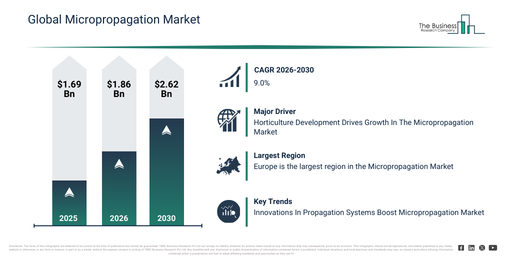
    The micropropagation market size has seen substantial expansion in recent years. It is forecast to expand from $1.69 billion in 2025 to $1.86 billion in 2026, at a compound annual growth rate (CAGR) of 10.1%. The increase observed in the past can be ascribed to a heightened demand for disease-free planting materials, the integration of tissue culture in horticulture, a rise in commercial flower production, progress in forestry and agroforestry endeavors, and its early implementation in banana and ornamental crops.

    The micropropagation market is projected to experience robust expansion over the coming years. This market is anticipated to reach $2.62 billion by 2030, exhibiting a compound annual growth rate (CAGR) of 9.0%. Factors driving this growth during the forecast period include an increasing demand for scalable plant propagation, greater investment in crops resistant to climate change, the expansion of medicinal plant farming, the spread of commercial greenhouse activities, and innovations in culture media technology. Key trends identified for the forecast timeframe encompass the wider adoption of precision propagation methods, plant production centered on sustainability, the implementation of automation in tissue culture labs, AI-supported growth optimization, and cloud-based data oversight within micropropagation.

    Download the Free Sample Report to Explore Key Market Insights:

    https://www.thebusinessresearchcompany.com/sample.aspx?id=16737&type=smp

    What Underlying Factors Are Accelerating The Growth Of The Micropropagation Market?

    The progression of horticulture is anticipated to stimulate the expansion of the micropropagation market moving forward. Horticulture is defined as the scientific study and practice of cultivating plants for food, medicinal use, ornamental purposes, or aesthetic pleasure. Horticulture is advancing due to a surging demand for diverse crops, sustainable agricultural methods, urban green areas, and decorative plants, all influenced by population growth, environmental concerns, and aesthetic preferences. Micropropagation is crucial for horticulture to effectively produce large quantities of disease-free plants with desired traits, ensuring consistent quality and genetic uniformity in crop production, ornamental gardening, and conservation efforts. For example, in June 2024, a report from the Department for Environment Food and Rural Affairs, a UK-based ministerial department, revealed that in 2023, the value of home-grown vegetables grew by 10% to just under £1.9 billion ($2.03 billion). The value of field vegetables saw a 12% increase, reaching £1.5 billion ($1.60 billion), and the value of protected vegetables ascended by 3.7%, arriving at £374 million ($399 million). Thus, the evolution of horticulture is propelling the growth of the micropropagation market.

    How Is The Micropropagation Market Divided Into Its Major Segments?

    The micropropagation market covered in this report is segmented –

    1) By Crop Types: Banana, Orchids And Ornamentals, Medicinal Plants, Vegetables, Small Fruits, Other Crop Types

    2) By Container Type: Test Tubes And Petri Dishes, Glass Bottles, Plastic Containers

    3) By Sales Channels: Offline, Online

    4) By End User: Farmers, Research Labs, Other End Users

    Subsegments:

    1) By Banana: Cavendish Banana, Red Banana, Plantains

    2) By Orchids And Ornamentals: Phalaenopsis Orchids, Cattleya Orchids, Dendrobium Orchids, Cymbidium Orchids, Gerbera, Chrysanthemums, Roses, Tulips, Lilies

    3) By Medicinal Plants: Aloe Vera, Ginseng, Echinacea, Turmeric, Stevia, Lavender, Mint, Cannabis, Basil

    4) By Vegetables: Tomatoes, Peppers, Lettuce, Cucumber, Spinach, Eggplant, Carrots, Kale

    5) By Small Fruits: Strawberries, Raspberries, Blueberries, Blackberries, Grapes, Gooseberries

    6) By Other Crop Types: Trees And Timber Species, Flowering Plants, Fruits, Nut Crops, Spices, Turfgrass And Lawn Species, Forestry And Agroforestry Crops

    What Key Developments And Trends Are Impacting The Micropropagation Market?

    Leading companies active in the micropropagation market are developing innovative offerings, such as propagation systems, to improve the effectiveness and efficiency of plant cloning and cultivation. Propagation systems refer to techniques or processes employed to multiply plants using seeds, cuttings, or other plant components, yielding new individuals that are either genetically identical or distinct. For example, in January 2023, NuPlant, an Australia-based biotechnology company, introduced SmartClone. SmartClone is an advanced system for plant tissue culture propagation, intended to swiftly generate enhanced plants from breeding programs for various species. This system incorporates precision robotics to produce robust clones from parent material, with adaptable conditions for each stage of growth. SmartClone is anticipated to produce hardier, more uniform plantlets, while simultaneously decreasing labor demands and lowering the cost per plant.

    Who Are The Prominent Organizations Shaping The Micropropagation Market?

    Major companies operating in the micropropagation market are Phytocultures Ltd., Deroose Plants Inc., Phytelligence Inc., Oglesby Plants International Inc., AgriForest Bio-Technologies Ltd., Tissue-Grown Corporation, Agribiotecnología de Costa Rica S A, Hartmann’s Plant Company, Knight Hollow Nursery Inc., Lowes TC Pty Ltd., Mountain Shadow Nursery LLC, Phytotech Labs Inc., Plant Cell Technology Inc., Rancho Tissue Technologies Inc., Xplant Laboratory Inc., Agromillora Group, Highveld Biotech, TC Propagation Ltd., In Vitro Microplants Ltd., Valley Tissue Culture, Phytoclone Inc., Okanagan Plant Improvement Co Ltd., Meristematic Laboratories

    Read the full micropropagation market report here:

    https://www.thebusinessresearchcompany.com/report/micropropagation-global-market-report

    Which Region Is Projected To Dominate The Micropropagation Market During The Forecast Period?

    Europe was the largest region in the micropropagation market in 2025. Asia-Pacific is expected to be the fastest-growing region in the forecast period. The regions covered in the micropropagation market report are Asia-Pacific, South East Asia, Western Europe, Eastern Europe, North America, South America, Middle East, Africa.

    Request A Tailored Micropropagation Market Research Report For Competitive Advantage:

    https://www.thebusinessresearchcompany.com/customise?id=16737&type=smp

    Browse Through More Reports Similar to the Global Micropropagation Market 2026, By The Business Research Company

    Natural Skin Care Products Global Market Report

    https://www.thebusinessresearchcompany.com/report/natural-skin-care-products-global-market-report

    Skincare Global Market Report

    https://www.thebusinessresearchcompany.com/report/skincare-global-market-report

    Organic Skincare Global Market Report

    https://www.thebusinessresearchcompany.com/report/organic-skincare-global-market-report

    Get in touch with us:

    The Business Research Company: https://www.thebusinessresearchcompany.com/

    Americas +1 310-496-7795

    Asia +44 7882 955267 & +91 8897263534

    Europe +44 7882 955267

    Email us at info@tbrc.info

    Follow us on:

    LinkedIn: https://in.linkedin.com/company/the-business-research-company

    YouTube: https://www.youtube.com/channel/UC24_fI0rV8cR5DxlCpgmyFQ

    Global Market Model: https://www.thebusinessresearchcompany.com/global-market-model

  • Microbiome Skincare Product Market Revenue Growth Expected to Reach $3.15 Billion by 2030 with 18.5% CAGR

    Microbiome Skincare Product Market Revenue Growth Expected to Reach $3.15 Billion by 2030 with 18.5% CAGR

    The Business Research Company’s 2026 market reports include new capabilities such as market attractiveness scoring and analysis, total addressable market analysis, company scoring matrix, interactive excel data dashboard, improved supply chain analysis, upcoming startups in the market, and overview of key products, aimed at improving the depth, usability, and strategic value of the insights delivered.

    What Is The Expected Market Size Of The Microbiome Skincare Product Market From 2026 To 2030?

    The microbiome skincare product market has experienced rapid expansion in recent years. Its value is projected to increase from $1.35 billion in 2025 to $1.6 billion in 2026, registering a compound annual growth rate (CAGR) of 18.7%. This historic growth can be attributed to factors such as elevated consumer awareness regarding skin health, a rise in demand for sensitive skin solutions, the broadening of premium skincare ranges, enhanced availability of dermatology-endorsed products, and a wider embrace of microbiome science within cosmetic formulations.

    The microbiome skincare product market is projected for significant expansion over the coming years, reaching $3.15 billion by 2030, demonstrating a compound annual growth rate (CAGR) of 18.5%. This anticipated growth is driven by several factors, including an escalating demand for customized skincare routines, increased capital investment in biotech-derived cosmetic products, a heightened inclination towards clean-label formulas, the broadening reach of online skincare retail platforms, and a greater emphasis on solutions for sustained skin health. Key trends anticipated during this period encompass a wider embrace of microbiome-compatible product formulations, a surge in the need for products that restore the skin’s barrier, an escalating incorporation of prebiotic and probiotic components, the proliferation of tailored skincare options, and a heightened emphasis on maintaining the equilibrium of skin microflora.

    Download the Free Sample Report to Explore Key Market Insights:

    https://www.thebusinessresearchcompany.com/sample.aspx?id=30323&type=smp

    Which Growth Drivers Are Contributing To The Progress Of The Microbiome Skincare Product Market?

    Growing recognition of skin health is anticipated to fuel the expansion of the microbiome skincare market in the future. The term skin health encompasses the overall state and performance of the skin, covering aspects such as its barrier function, moisture levels, and equilibrium of microbes. Knowledge about skin health is rising because a greater number of consumers and medical experts acknowledge how a balanced skin microbiome influences the overall state of the skin, leading them to prioritize preventative and restorative skincare solutions. Products designed for microbiome skincare aid in sustaining the equilibrium of the skin’s inherent microbiome, offering defense against detrimental microbes, and improving the skin’s barrier capability to avert harm and preserve its general condition. As an illustration, in February 2024, data from the International League of Dermatological Societies (ILDS), an England-based overarching body for dermatology societies dedicated to advancing skin health worldwide, indicated that in 2023, the World Skin Health Day (WSHD) initiative expanded to 23 countries, showing a 21% rise in international engagement. This campaign involved over 8 million people, provided dermatological services to more than 40,000 patients, and boosted skin health understanding among 916 healthcare professionals and advocates. Consequently, the expanding consciousness of skin health is a key factor propelling the development of the microbiome skincare market.

    Which Segments Are Included In The Analysis Of The Microbiome Skincare Product Market?

    The microbiome skincare product market covered in this report is segmented –

    1) By Product Type: Cleansers, Moisturizers, Serums, Masks, Other Product Types

    2) By Skin Type: Dry Skin, Oily Skin, Combination Skin, Sensitive Skin, Normal Skin

    3) By Formulation: Cream, Gel, Liquid, Foam

    4) By Distribution Channel: Online Stores, Supermarkets Or Hypermarkets, Specialty Stores, Other Distribution Channels

    5) By End User: Men, Women, Unisex, Infants And Children

    Subsegments:

    1) By Cleansers: Foam Cleanser, Gel Cleanser, Cream Cleanser, Micellar Cleanser, Oil-Based Cleanser

    2) By Moisturizers: Cream Moisturizer, Gel Moisturizer, Lotion Moisturizer, Emulsion Moisturizer, Balm Moisturizer

    3) By Serums: Hydrating Serum, Brightening Serum, Anti-Aging Serum, Repair Serum, Soothing Serum

    4) By Masks: Sheet Mask, Clay Mask, Cream Mask, Peel-Off Mask, Overnight Mask

    5) By Other Product Types: Toner, Exfoliator, Sunscreen, Facial Mist, Eye Cream

    What Trends Are Projected To Affect The Microbiome Skincare Product Market?

    Leading companies within the microbiome skincare market are increasingly focusing on developing technological advancements, such as the Microbiome Analyzer. These innovations aim to foster a better understanding of individual skin microbiota, facilitate personalized skincare solutions, and boost product efficacy through data-driven insights. A microbiome analyzer is characterized as a device that evaluates an individual’s skin microbiome and delivers customized skincare recommendations based on this assessment. For example, in July 2024, Unilever, a UK-based consumer goods company, introduced the Microbiome Analyzer in collaboration with Watsons, a Hong-Kong-based health and skin store, in the Philippines. This device functions by using a skin swab to analyze microbiome data, subsequently suggesting personalized skincare routines. The distinctive capabilities of the microbiome analyzer include its rapid analysis, completed within 60 minutes, and personalized product recommendations derived from individual microbiome profiles. This innovation endeavors to empower consumers with enhanced knowledge of their skin’s unique microbiome composition and its impact on overall skin health, effectively integrating advanced skin diagnostics with bespoke product suggestions.

    Which Key Industry Participants Are Active In The Microbiome Skincare Product Market?

    Major companies operating in the microbiome skincare product market are BASF S.E., Unilever PLC., L’Oréal S.A., Johnson & Johnson, The Colgate-Palmolive Company, dsm-firmenich AG., Clinique Laboratories LLC., Shiseido Company Limited, Symrise AG., Amorepacific Corporation, Beiersdorf Aktiengesellschaft, Lallemand Inc., BioGaia AB., Eminence Organic Skin Care, Sabinsa Corporation, AOBiome Therapeutics Inc., Esse Skincare Pty. Ltd., LaFlore Probiotic Skincare LLC., Marie Veronique Inc., BeBe & Bella LLC

    Read the full microbiome skincare product market report here:

    https://www.thebusinessresearchcompany.com/report/global-microbiome-skincare-product-market-report

    What Are The Leading Geographic Regions In The Microbiome Skincare Product Market?

    North America was the largest region in the microbiome skincare product market in 2025. Asia-Pacific is expected to be the fastest-growing region in the forecast period. The regions covered in the microbiome skincare product market report are Asia-Pacific, South East Asia, Western Europe, Eastern Europe, North America, South America, Middle East, Africa.

    Request A Tailored Microbiome Skincare Product Market Research Report For Competitive Advantage:

    https://www.thebusinessresearchcompany.com/customise?id=30323&type=smp

    Browse Through More Reports Similar to the Global Microbiome Skincare Product Market 2026, By The Business Research Company

    Genomics Services Global Market Report

    https://www.thebusinessresearchcompany.com/report/genomics-services-global-market-report

    Microbiomes Global Market Report

    https://www.thebusinessresearchcompany.com/report/microbiomes-global-market-report

    Next Generation Sequencing Market

    https://www.thebusinessresearchcompany.com/report/next-generation-sequencing-market

    Get in touch with us:

    The Business Research Company: https://www.thebusinessresearchcompany.com/

    Americas +1 310-496-7795

    Asia +44 7882 955267 & +91 8897263534

    Europe +44 7882 955267

    Email us at info@tbrc.info

    Follow us on:

    LinkedIn: https://in.linkedin.com/company/the-business-research-company

    YouTube: https://www.youtube.com/channel/UC24_fI0rV8cR5DxlCpgmyFQ

    Global Market Model: https://www.thebusinessresearchcompany.com/global-market-model

  • Microbiome Sequencing Service Market Expected to Record Steady Growth and Approach $5.29 Billion by 2030

    Microbiome Sequencing Service Market Expected to Record Steady Growth and Approach $5.29 Billion by 2030

    The Business Research Company’s 2026 market reports include new capabilities such as market attractiveness scoring and analysis, total addressable market analysis, company scoring matrix, interactive excel data dashboard, improved supply chain analysis, upcoming startups in the market, and overview of key products, aimed at improving the depth, usability, and strategic value of the insights delivered.

    What Market Valuation Is Forecasted For The Microbiome Sequencing Service Market By 2030 Starting From Its 2026 Size?

    The microbiome sequencing service market size has experienced considerable growth over recent years. It is forecast to rise from $2.43 billion in 2025 to $2.84 billion in 2026, at a compound annual growth rate (CAGR) of 17.1%. The expansion observed in prior periods stems from the proliferation of microbiome research initiatives, an uptick in academic research funding, mounting interest in gut and skin microbiota studies, the widespread availability of next-generation sequencing platforms, and enhanced collaboration between academia and industry.

    The market for microbiome sequencing services anticipates substantial expansion over the coming years. Projections indicate it will reach $5.3 billion by 2030, exhibiting a compound annual growth rate (CAGR) of 16.8%. This expansion during the projection period stems from several factors: the growing clinical uptake of diagnostics based on microbiomes, escalating investments into microbiome therapeutics, the broadening scope of personalized nutrition research, the increasing application of AI-powered microbial analysis, and a heightened need for extensive population-level microbiome investigations. Key trends anticipated for this forecast timeframe encompass a surging need for high-throughput microbiome sequencing offerings, an expanding reliance on shotgun and amplicon sequencing techniques, the increasing incorporation of sophisticated bioinformatics pipelines, the broadening of clinical microbiome research applications, and a reinforced emphasis on profiling microbial functions.

    Download the Free Sample Report to Explore Key Market Insights:

    https://www.thebusinessresearchcompany.com/sample.aspx?id=28270&type=smp

    What Primary Drivers Are Shaping The Development Of The Microbiome Sequencing Service Market?

    The increasing occurrence of gut-related illnesses is projected to fuel the expansion of the microbiome sequencing service market in the future. These illnesses are medical conditions impacting the gastrointestinal (GI) tract, encompassing the stomach, intestines, and related organs like the liver, pancreas, and gallbladder. The surge in gut-related diseases stems from shifts in lifestyle and dietary practices, such as consuming excessive processed foods and insufficient fiber, which disturbs the equilibrium of gut microbiota. The microbiome sequencing service aids in managing gut-related diseases by providing comprehensive understanding of gut microbial makeup, making it suitable for identifying and overseeing gastrointestinal ailments. This service facilitates precise interventions by pinpointing microbial imbalances, enhancing tailored treatments, and improving overall gut health management. As an illustration, in June 2025, the UK Health Security Agency reported a 27.0% rise in laboratory reports for Campylobacter, from 96.1 to 122.0 per 100,000 population, between 2022 and 2024. Consequently, the growing prevalence of gut-related diseases is boosting the growth of the microbiome sequencing service market.

    Which Segment Categories Define The Microbiome Sequencing Service Market?

    The microbiome sequencing service market covered in this report is segmented –

    1) By Service: Sample Preparation, Sequencing And Library Preparation, Data Analysis

    2) By Technology: Sequencing By Litigation (SBL), Sequencing By Synthesis (SBS), Short Gun Sequencing, Targeted Gene Sequencing, RNA Sequencing, Other Technologies

    3) By Application: Autoimmune Disorder, Cancer, Gastrointestinal Disorders, Other Applications

    4) By End-User: Pharmaceutical And Biotechnology Companies, Academic Research Institutes, Other End-Users

    Subsegments:

    1) By Sample Preparation: Deoxyribonucleic Acid (DNA) Extraction, Ribonucleic Acid (RNA) Extraction, Protein Extraction, Cell Lysis, Library Construction

    2) By Sequencing And Library Preparation: Whole Genome Sequencing, Metagenomic Sequencing, Amplicon Sequencing, Shotgun Sequencing, Targeted Sequencing

    3) By Data Analysis: Taxonomic Profiling, Functional Profiling, Comparative Analysis, Statistical Analysis, Pathway Analysis

    Which Upcoming Trends Are Expected To Influence The Microbiome Sequencing Service Market?

    Major companies operating within the microbiome sequencing service market are concentrating on developing advanced solutions, such as automated metagenomics sequencing tools, to enhance efficiency, accuracy, and scalability in microbiome research and analysis. An automated metagenomics sequencing solution is a comprehensive system designed to enable the sequencing and analysis of microbial communities with minimal manual intervention, thereby ensuring high accuracy, reproducibility, and scalable throughput. For instance, in July 2024, MGI Tech Co. Ltd., a China-based biotechnology company, unveiled its Human Microbiome Metagenomics Sequencing Package. This product provides a fully integrated workflow, incorporating automated sample pretreatment, nucleic acid extraction, library preparation, sequencing, and data analysis to support high-throughput and cost-efficient microbiome research. Its validated performance on a large number of human stool samples guarantees reproducibility and accuracy, thereby establishing a new standard for large-scale human microbiome studies.

    Who Are The Top Companies Competing In The Microbiome Sequencing Service Market?

    Major companies operating in the microbiome sequencing service market are Eurofins Scientific LLC, Illumina Inc., Charles River Laboratories, QIAGEN N.V., Mérieux NutriSciences Corporation, OraSure Technologies Inc., Zifo RnD Solutions, Novogene Co. Ltd., Oxford Nanopore Technologies Plc, Macrogen Inc., Zymo Research Corporation, CD Genomics, Molzym GmbH & Co. KG (Gradian Diagnostics), Baseclear BV, Psomagen Inc., Mapmygenome, Rancho Biosciences LLC, Boster Biological Technology Ltd., Clinical Microbiomics, Microba Life Sciences Limited

    Read the full microbiome sequencing service market report here:

    https://www.thebusinessresearchcompany.com/report/microbiome-sequencing-service-global-market-report

    How Does The Microbiome Sequencing Service Market Perform Across Major Global Regions?

    North America was the largest region in the microbiome sequencing service market in 2025. Asia-Pacific is expected to be the fastest-growing region in the forecast period. The regions covered in the microbiome sequencing service market report are Asia-Pacific, South East Asia, Western Europe, Eastern Europe, North America, South America, Middle East, Africa.

    Request A Tailored Microbiome Sequencing Service Market Research Report For Competitive Advantage:

    https://www.thebusinessresearchcompany.com/customise?id=28270&type=smp

    Browse Through More Reports Similar to the Global Microbiome Sequencing Service Market 2026, By The Business Research Company

    Supply Chain Security Global Market Report

    https://www.thebusinessresearchcompany.com/report/supply-chain-security-global-market-report

    Revenue Based Financing Global Market Report

    https://www.thebusinessresearchcompany.com/report/revenue-based-financing-global-market-report

    Healthcare Supply Chain Management Global Market Report

    https://www.thebusinessresearchcompany.com/report/healthcare-supply-chain-management-global-market-report

    Get in touch with us:

    The Business Research Company: https://www.thebusinessresearchcompany.com/

    Americas +1 310-496-7795

    Asia +44 7882 955267 & +91 8897263534

    Europe +44 7882 955267

    Email us at info@tbrc.info

    Follow us on:

    LinkedIn: https://in.linkedin.com/company/the-business-research-company

    YouTube: https://www.youtube.com/channel/UC24_fI0rV8cR5DxlCpgmyFQ

    Global Market Model: https://www.thebusinessresearchcompany.com/global-market-model

  • Microbiology And Bacterial Culture Media Industry Expansion Forecast Showing Market Size of $8.84 Billion by 2030 at 9.6% CAGR

    Microbiology And Bacterial Culture Media Industry Expansion Forecast Showing Market Size of $8.84 Billion by 2030 at 9.6% CAGR

    The Business Research Company’s 2026 market reports include new capabilities such as market attractiveness scoring and analysis, total addressable market analysis, company scoring matrix, interactive excel data dashboard, improved supply chain analysis, upcoming startups in the market, and overview of key products, aimed at improving the depth, usability, and strategic value of the insights delivered.

    How Is The Market Size Of The Microbiology And Bacterial Culture Media Market Expected To Change Between 2026 And 2030?

    The microbiology and bacterial culture media market size has experienced robust growth in recent years. This market is set to expand from $5.59 billion in 2025 to $6.14 billion in 2026, demonstrating a compound annual growth rate (CAGR) of 9.8%. The historical growth of the market can be attributed to several factors, including the expansion of pharmaceutical manufacturing activities, the increase in clinical diagnostics testing, heightened food and water safety testing, the growing adoption of microbiology in research laboratories, and the widespread availability of standardized culture media products.

    The microbiology and bacterial culture media market size is anticipated to undergo significant expansion over the next few years. It is projected to reach $8.85 billion by 2030, exhibiting a compound annual growth rate (CAGR) of 9.6%. The growth during the forecast period is attributable to the increasing embrace of rapid microbial detection methods, escalating investments in biopharmaceutical quality control, the expansion of microbiology testing into emerging markets, a rising demand for single-use media formats, and a heightened focus on laboratory automation. Prominent trends within this period include an increasing requirement for chromogenic and selective media, a growing adoption of ready-to-use culture media formats, enhanced customization of specialty media formulations, the expansion of automated microbiology workflows, and a stronger emphasis on contamination control.

    Download the Free Sample Report to Explore Key Market Insights:

    https://www.thebusinessresearchcompany.com/sample.aspx?id=27344&type=smp

    Which Major Factors Are Driving The Expansion Of The Microbiology And Bacterial Culture Media Market?

    The increasing incidence of infectious diseases is anticipated to drive the expansion of the microbiology and bacterial culture media market in the coming years. These diseases are conditions caused by detrimental microorganisms capable of spreading between individuals. The upward trend in infectious disease prevalence stems from escalating antibiotic resistance, which diminishes the efficacy of standard treatments, enabling infections to linger longer and disseminate more readily. Microbiology and culture media facilitate the identification and growth of these harmful microbes, thereby assisting in accurate diagnosis of infectious diseases and guiding appropriate therapeutic interventions. For example, data released by the Centers for Disease Control and Prevention, a US government body, in March 2024 indicated an increase in tuberculosis cases from 8,320 in 2022 to 9,615 in 2023, marking an increment of 1,295 cases. Consequently, the growing occurrence of infectious diseases is a key factor propelling the growth of the microbiology and bacterial culture media market.

    How Is The Microbiology And Bacterial Culture Media Market Structured Across Different Segments?

    The microbiology and bacterial culture media market covered in this report is segmented –

    1) By Product Type: Dehydrated Culture Media, Prepared (Ready-To-Use) Culture Media, Chromogenic And Selective Culture Media, Enriched And Enrichment Media, Other Product Types

    2) By Media Composition: Complex Media, Defined Media, Selective Media, Differential Media, Transport Media

    3) By Formulation: Bulk Packaged Media, Single-Use Media Formats, Custom Or Specialty Formulated Media

    4) By Application: Pharmaceutical And Biopharmaceutical Production, Diagnostics, Food And Water Testing, Bioenergy And Agricultural Research, Cosmetics And Personal Care Applications, Other Applications

    Subsegments:

    1) By Dehydrated Culture Media: Powdered Media, Agar Media, Broth Media

    2) By Prepared (Ready-To-Use) Culture Media: Plates, Slants, Tubes, Bottles

    3) By Chromogenic And Selective Culture Media: Chromogenic Media, Selective Media

    4) By Enriched And Enrichment Media: Enriched Media, Enrichment Broth

    5) By Other Product Types: Synthetic Media, Minimal Media, Transport Media

    How Are Trends Shaping The Direction Of The Microbiology And Bacterial Culture Media Market?

    Major companies operating in the microbiology and bacterial culture media market are concentrating on developing advanced products, such as ready-to-use culture media, to support high-throughput diagnostic and research applications. Ready-to-use culture media are sterile, pre-prepared substrates for growing microorganisms, thereby eliminating the need for manual preparation and saving time while minimizing contamination risks and ensuring consistent laboratory results. For instance, in April 2025, AnalytiChem, a Germany-based company that manufactures laboratory equipment, reagents, and consumables, introduced Redipor, ready-to-use culture media. Redipor culture media is designed to meet the strict standards and compliance requirements of microbiologists working in various life sciences sectors such as pharmaceuticals, food and beverage, environmental, and healthcare. The product range includes a wide collection of media types and packaging options, including plates, bottles, tubes, vials, chromogenic and irradiated media, and universal operator broth transfer kits. These products can be customized for specific customer needs and regulations.

    Which Major Players Dominate The Microbiology And Bacterial Culture Media Market?

    Major companies operating in the microbiology and bacterial culture media market are Thermo Fisher Scientific Inc., Merck KGaA, Becton Dickinson and Company, Nissui Pharmaceutical Co. Ltd., bioMérieux SA, Bio-Rad Laboratories Inc., Neogen Corporation, Eiken Chemical Co. Ltd., Hardy Diagnostics, Teknova Inc., Microbiologics Inc., HiMedia Laboratories Pvt. Ltd., Scharlab S.L., Solabia Group, Conda Laboratories, Biotecnica Instruments S.p.A., Liofilchem S.r.l., Carl Roth GmbH + Co. KG, Central Drug House Pvt. Ltd., Oxoid Limited, Titan Biotech Ltd., Sisco Research Laboratories Pvt. Ltd.

    Read the full microbiology and bacterial culture media market report here:

    https://www.thebusinessresearchcompany.com/report/microbiology-and-bacterial-culture-media-global-market-report

    Which Region Currently Holds The Largest Share Of The Microbiology And Bacterial Culture Media Market?

    North America was the largest region in the microbiology and bacterial culture media market in 2025. Asia-Pacific is expected to be the fastest-growing region in the forecast period. The regions covered in the microbiology and bacterial culture media market report are Asia-Pacific, South East Asia, Western Europe, Eastern Europe, North America, South America, Middle East, Africa.

    Request A Tailored Microbiology And Bacterial Culture Media Market Research Report For Competitive Advantage:

    https://www.thebusinessresearchcompany.com/customise?id=27344&type=smp

    Browse Through More Reports Similar to the Global Microbiology And Bacterial Culture Media Market 2026, By The Business Research Company

    Industrial Microbiology Global Market Report

    https://www.thebusinessresearchcompany.com/report/industrial-microbiology-global-market-report

    Microbiology Diagnostic Devices And Equipment Global Market Report

    https://www.thebusinessresearchcompany.com/report/microbiology-diagnostic-devices-and-equipment-global-market-report

    Clinical Microbiology Global Market Report

    https://www.thebusinessresearchcompany.com/report/clinical-microbiology-global-market-report

    Get in touch with us:

    The Business Research Company: https://www.thebusinessresearchcompany.com/

    Americas +1 310-496-7795

    Asia +44 7882 955267 & +91 8897263534

    Europe +44 7882 955267

    Email us at info@tbrc.info

    Follow us on:

    LinkedIn: https://in.linkedin.com/company/the-business-research-company

    YouTube: https://www.youtube.com/channel/UC24_fI0rV8cR5DxlCpgmyFQ

    Global Market Model: https://www.thebusinessresearchcompany.com/global-market-model
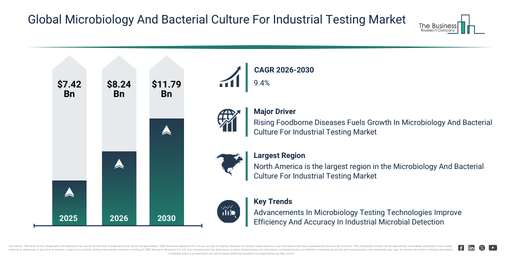
  • Microbiology And Bacterial Culture For Industrial Testing Market Revenue Expected to Reach $11.79 Billion by 2030 with 9.4% CAGR

    Microbiology And Bacterial Culture For Industrial Testing Market Revenue Expected to Reach $11.79 Billion by 2030 with 9.4% CAGR

    The Business Research Company’s 2026 market reports include new capabilities such as market attractiveness scoring and analysis, total addressable market analysis, company scoring matrix, interactive excel data dashboard, improved supply chain analysis, upcoming startups in the market, and overview of key products, aimed at improving the depth, usability, and strategic value of the insights delivered.

    What Is The Market Size Of The Microbiology And Bacterial Culture For Industrial Testing Market In 2026 And What Value Is Projected For 2030?

    The microbiology and bacterial culture for industrial testing market has witnessed rapid expansion in recent years. It is anticipated to grow from $7.42 billion in 2025 to $8.24 billion in 2026, achieving a compound annual growth rate (CAGR) of 11.1%. This historical growth can be linked to an increase in foodborne contamination cases, a rise in mandatory microbiological testing, the development of industrial fermentation processes, the broader application of pharmaceutical quality testing, and the integration of traditional culture-based methods.

    The market size for microbiology and bacterial culture used in industrial testing is projected to experience robust expansion over the coming years. This market is anticipated to reach a valuation of $11.79 billion by 2030, demonstrating a compound annual growth rate (CAGR) of 9.4%. Several factors are expected to drive this growth during the forecast period, including an increasing requirement for swift microbial testing, the proliferation of automated culture instruments, a heightened need for contamination-free production processes, the broadening scope of bioenergy and agricultural biotechnology, and increased funding directed towards advanced microbial diagnostics. Key trends anticipated during this period encompass sophisticated genomic profiling applications in industrial microbiology, cloud-based solutions for managing microbial data, the automation of culture and testing procedures, artificial intelligence-powered microbial identification, and environmental monitoring systems integrated with IoT technology.

    Download the Free Sample Report to Explore Key Market Insights:

    https://www.thebusinessresearchcompany.com/sample.aspx?id=15607&type=smp

    What Key Drivers Are Influencing The Growth Of The Microbiology And Bacterial Culture For Industrial Testing Market?

    The increasing occurrence of foodborne illnesses is projected to drive the expansion of the microbiology and bacterial culture for industrial testing market in the future. Foodborne illnesses refer to conditions that arise from ingesting food or drinks tainted with disease-causing microbes, harmful toxins, or chemical agents. Various elements contribute to the surge in foodborne occurrences, such as shifts in how food is produced, distributed, and consumed, the worldwide nature of food supply networks, insufficient food safety protocols, resistance to antimicrobials, the effects of climate change on food output, and a greater intake of risky food items. Microbiology and bacterial culture play a crucial role in industrial testing for foodborne diseases, aiding in the discovery and recognition of pathogens, safeguarding food, and averting epidemics through stringent quality assurance procedures. As an illustration, in February 2024, data from the UK Health Security Agency, a UK-based government body, indicated that England and Wales recorded 167 cases of listeriosis (a serious infection resulting from consuming food tainted with the bacterium Listeria monocytogenes) in 2022, an increase from the 160 cases noted in 2021. Consequently, the growing frequency of foodborne diseases fuels the expansion of the microbiology and bacterial culture for industrial testing market.

    What Are The Key Segments Of The Microbiology And Bacterial Culture For Industrial Testing Market?

    The microbiology and bacterial culture for industrial testing market covered in this report is segmented –

    1) By Consumable: Media, Reagents, Sera

    2) By Application: Food And Water Testing, Bioenergy And Agricultural Research, Other Applications

    3) By End User: Industrial Laboratories, Research Laboratories, Food Testing Laboratories, Diagnostic Laboratories, Other End Users

    Subsegments:

    1) By Media: Agar Plates, Broth Media, Selective Media, Differential Media, Transport Media

    2) By Reagents: Staining Reagents (Gram Stain, Acid-Fast Stain), Biochemical Reagents, PCR Reagents, Enzyme-Based Reagents, Chromogenic Reagents

    3) By Sera: Blood Serum, Animal Sera (Bovine Serum), Human Sera, Culture Sera

    Which Market Trends Are Creating New Opportunities In The Microbiology And Bacterial Culture For Industrial Testing Market?

    Leading companies within the industrial microbiology and bacterial culture testing market are concentrating on developing innovative, pre-prepared culture media plates. Their objective is to boost microbial detection efficiency, simplify workflow procedures, and heighten the accuracy of contamination monitoring across diverse sectors. These ready-to-use culture media plates offer an optimized method for quantifying and identifying microbial loads, thereby reducing preparation time and enhancing safety in laboratory environments. For instance, in February 2023, Hardy Diagnostics, a US-based manufacturer of microbiology products, introduced CompactDry TCR. This product is a ready-to-use dehydrated culture medium plate specifically engineered for the rapid detection and enumeration of microorganisms. The CompactDry TCR plate provides total aerobic plate counts in as little as 24 hours, is AOAC PTM-certified, and features an innovative, self-diffusing design that facilitates easy colony interpretation, improves user safety, and simplifies microbial testing workflows.

    Who Are The Leading Companies Operating In The Microbiology And Bacterial Culture For Industrial Testing Market?

    Major companies operating in the microbiology and bacterial culture for industrial testing market are Thermo Fisher Scientific Inc., 3M Company, Danaher Corporation, Merck KGaA, Becton Dickinson and Company BD, Avantor Inc., bioMérieux SA, IDEXX Laboratories Inc., Bio-Rad Laboratories Inc., Bruker Microbiology and Diagnostics, Eiken Chemical Co Ltd, Hain Lifescience GmbH, Neogen Corporation, Hardy Diagnostics, LaMotte Company, Himedia Laboratories Pvt Ltd, Titan Biotech Limited, Serosep Ltd, Sartorius AG, Liofilchem Srl, R-Biopharm AG, MP Biomedicals LLC, CONDALAB, Alpha Teknova Inc.

    Read the full microbiology and bacterial culture for industrial testing market report here:

    https://www.thebusinessresearchcompany.com/report/microbiology-and-bacterial-culture-for-industrial-testing-global-market-report

    Which Region Is Expected To Register The Fastest Growth In The Microbiology And Bacterial Culture For Industrial Testing Market?

    North America was the largest region in the microbiology and bacterial culture for industrial testing market in 2025. The regions covered in the microbiology and bacterial culture for industrial testing market report are Asia-Pacific, South East Asia, Western Europe, Eastern Europe, North America, South America, Middle East, Africa.

    Request A Tailored Microbiology And Bacterial Culture For Industrial Testing Market Research Report For Competitive Advantage:

    https://www.thebusinessresearchcompany.com/customise?id=15607&type=smp

    Browse Through More Reports Similar to the Global Microbiology And Bacterial Culture For Industrial Testing Market 2026, By The Business Research Company

    Microbial Identification Global Market Report

    https://www.thebusinessresearchcompany.com/report/microbial-identification-global-market-report

    Agricultural Microbial Global Market Report

    https://www.thebusinessresearchcompany.com/report/agricultural-microbial-global-market-report

    Industrial Microbiology Global Market Report

    https://www.thebusinessresearchcompany.com/report/industrial-microbiology-global-market-report

    Get in touch with us:

    The Business Research Company: https://www.thebusinessresearchcompany.com/

    Americas +1 310-496-7795

    Asia +44 7882 955267 & +91 8897263534

    Europe +44 7882 955267

    Email us at info@tbrc.info

    Follow us on:

    LinkedIn: https://in.linkedin.com/company/the-business-research-company

    YouTube: https://www.youtube.com/channel/UC24_fI0rV8cR5DxlCpgmyFQ

    Global Market Model: https://www.thebusinessresearchcompany.com/global-market-model