Category: Healthcare Services

  • Metaverse In Medical Training Market Forecast 2026–2035 Highlighting Market Data Patterns and Industry Insights

    Metaverse In Medical Training Market Forecast 2026–2035 Highlighting Market Data Patterns and Industry Insights

    The Business Research Company’s 2026 market reports include new capabilities such as market attractiveness scoring and analysis, total addressable market analysis, company scoring matrix, interactive excel data dashboard, improved supply chain analysis, upcoming startups in the market, and overview of key products, aimed at improving the depth, usability, and strategic value of the insights delivered.

    What Market Value Is Anticipated For The Metaverse In Medical Training Market Over The Period 2026–2030?

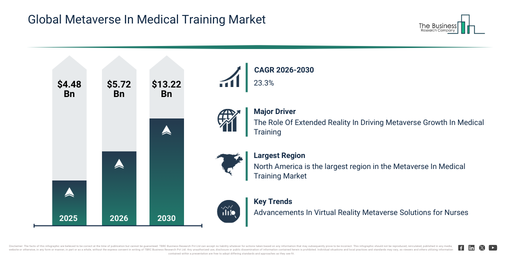
    The market size for the metaverse in medical training has experienced significant expansion in recent years. It is forecast to increase from $4.48 billion in 2025 to $5.72 billion in 2026, exhibiting a compound annual growth rate (CAGR) of 27.8%. This historical growth is primarily attributable to the rising adoption of virtual simulation tools, increasing demand for remote medical instruction, early integration of VR technology, advancements in healthcare digitalization, and the ongoing need for standardized training modules.

    The metaverse in medical training market size is anticipated to undergo substantial growth in the upcoming years. It is predicted to reach $13.22 billion in 2030, achieving a compound annual growth rate (CAGR) of 23.3%. The projected growth can be attributed to the expanding use of AI-assisted learning, increased investment in simulation laboratories, advancements in mixed reality hardware, a growing demand for skill-based assessments, and its integration with telemedicine ecosystems. Significant trends for the forecast period include the wider adoption of AR/VR-based medical simulations, AI-enhanced skill assessment tools, virtual training platforms powered by cloud technology, the integration of smart medical training infrastructure, and IoT-enabled real-time performance tracking.

    Download the Free Sample Report to Explore Key Market Insights:

    https://www.thebusinessresearchcompany.com/sample.aspx?id=14958&type=smp

    Which Major Factors Are Driving The Expansion Of The Metaverse In Medical Training Market?

    The expanding integration of extended reality technology is expected to drive the growth of the metaverse in the medical training market moving forward. Extended reality (XR) encompasses technologies that incorporate digital elements into the physical environment, thereby altering reality. These technologies include augmented reality (AR), mixed reality (MR), virtual reality (VR), and more, without limitations on their scope. The growing acceptance of extended reality technology is propelled by its capacity to revolutionize remote collaboration and improve training experiences. XR technology allows users to interact with complex medical information virtually and engage with medical objects within the metaverse, overcoming the constraints of real-world vision and available resources for medical treatment. For instance, in September 2024, according to the XR Association (XRA), a US-based industry association, among 500 patient-facing healthcare professionals, 64% reported positive impacts from using XR in healthcare applications such as training, medical education, and remote surgery. Additionally, 84% of these professionals believe that AR/VR will positively affect the healthcare industry. Therefore, the increasing adoption of extended reality technology is fueling the growth of the metaverse in the medical training market.

    How Is The Metaverse In Medical Training Market Divided Into Its Major Segments?

    The metaverse in medical training market covered in this report is segmented –

    1) By Component: Software, Hardware

    2) By Technology: Augmented Reality (AR), Virtual Reality (VR), Artificial Intelligence (AI), Mixed Reality (MR)

    3) By End User: Medical Schools And Universities, Hospitals And Healthcare Institutions, Pharmaceutical Companies, Other End Users

    Subsegments:

    1) By Software: Simulation Software, Training Platforms, Content Development Tools, Learning Management Systems (LMS), Virtual Reality (VR) and Augmented Reality (AR) Software, AI-Based Training Software, Collaboration And Communication Tools

    2) By Hardware: Virtual Reality (VR) Headsets, Augmented Reality (AR) Glasses, Motion Tracking Devices, Haptic Feedback Devices, Computing Devices (PCs, Servers), Input Devices (Gloves, Controllers), Wearable Sensors

    What Industry Trends Are Redefining The Metaverse In Medical Training Market?

    Prominent companies within the metaverse in the medical training market are concentrating on crafting sophisticated, pioneering solutions, such as virtual reality metaverse training for nurses, to secure a competitive advantage. This immersive virtual reality metaverse training places nurses in authentic scenarios, thereby elevating clinical proficiencies and decision-making capabilities within a vibrant, interactive setting, thus transforming healthcare education. For example, in February 2023, Stamford Health Inc., a US-based medical group, introduced a virtual reality (VR) training program for nurses, partnering with Oxford Medical Simulation, a virtual reality (VR) platform known for delivering high-quality, evidence-based, and highly realistic simulation training for healthcare professionals. This initiative, powered by the Metaverse and the Meta Quest 2 VR headset, empowers nurses to sharpen their abilities by engaging with virtual patients presenting simulated medical conditions. The VR platform additionally oversees nurses’ clinical aptitude, developing customized training regimens to target specific areas for enhancement and aid their professional advancement.

    Who Are The Prominent Organizations Shaping The Metaverse In Medical Training Market?

    Major companies operating in the metaverse in medical training market are Microsoft Corporation, NVIDIA Corporation, Siemens Healthineers AG, GE HealthCare Technologies Inc. , CAE Inc., 3D Systems Corporation, Brainlab AG, Surgical Science Sweden AB, EON Reality Inc., CMR Surgical Ltd , Novarad Corporation, XRHealth USA Inc., VirtaMed AG, Level Ex Inc., FundamentalVR plc, WorldViz Inc., Medical Realities Ltd., ImmersiveTouch Inc., BioflightVR, Devden Creative Solutions Pvt. Ltd., 8Chili Inc., PrecisionOS Technologies Inc., SimX Inc., Osso VR Inc., Arch Virtual

    Read the full metaverse in medical training market report here:

    https://www.thebusinessresearchcompany.com/report/metaverse-in-medical-training-global-market-report

    Which Region Currently Holds The Largest Share Of The Metaverse In Medical Training Market?

    North America was the largest region in the metaverse in medical training market in 2025. Asia-Pacific is expected to be the fastest-growing region in the forecast period. The regions covered in the metaverse in medical training market report are Asia-Pacific, South East Asia, Western Europe, Eastern Europe, North America, South America, Middle East, Africa.

    Request A Tailored Metaverse In Medical Training Market Research Report For Competitive Advantage:

    https://www.thebusinessresearchcompany.com/customise?id=14958&type=smp

    Browse Through More Reports Similar to the Global Metaverse In Medical Training Market 2026, By The Business Research Company

    Urothelial Carcinoma Treatment Global Market Report

    https://www.thebusinessresearchcompany.com/report/urothelial-carcinoma-treatment-global-market-report

    Urothelial Cancer Drugs Global Market Report

    https://www.thebusinessresearchcompany.com/report/urothelial-cancer-drugs-global-market-report

    Urinary Tract Cancer Global Market Report

    https://www.thebusinessresearchcompany.com/report/urinary-tract-cancer-global-market-report

    Get in touch with us:

    The Business Research Company: https://www.thebusinessresearchcompany.com/

    Americas +1 310-496-7795

    Asia +44 7882 955267 & +91 8897263534

    Europe +44 7882 955267

    Email us at info@tbrc.info

    Follow us on:

    LinkedIn: https://in.linkedin.com/company/the-business-research-company

    YouTube: https://www.youtube.com/channel/UC24_fI0rV8cR5DxlCpgmyFQ

    Global Market Model: https://www.thebusinessresearchcompany.com/global-market-model
  • Metastatic Urothelial Carcinoma Market Outlook 2026–2030 with Major Growth Drivers and Emerging Industry Trends

    Metastatic Urothelial Carcinoma Market Outlook 2026–2030 with Major Growth Drivers and Emerging Industry Trends

    The Business Research Company’s 2026 market reports include new capabilities such as market attractiveness scoring and analysis, total addressable market analysis, company scoring matrix, interactive excel data dashboard, improved supply chain analysis, upcoming startups in the market, and overview of key products, aimed at improving the depth, usability, and strategic value of the insights delivered.

    What Is The Expected Market Size Of The Metastatic Urothelial Carcinoma Market From 2026 To 2030?

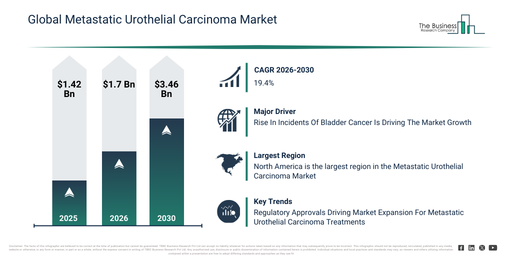
    The market for metastatic urothelial carcinoma has experienced rapid expansion in recent years. Projections indicate it will increase from $1.42 billion in 2025 to $1.7 billion in 2026, demonstrating a compound annual growth rate (CAGR) of 19.9%. Historically, this growth can be ascribed to factors such as an escalating prevalence of bladder cancer, the prompt incorporation of chemotherapy regimens, a greater reliance on cystoscopy diagnostics, an increasing need for targeted therapy, and breakthroughs in immunotherapy research.

    The market size for metastatic urothelial carcinoma is expected to experience substantial expansion in the coming years, projected to reach $3.46 billion by 2030, with a compound annual growth rate (CAGR) of 19.4%. This growth during the forecast period is attributable to the increasing availability of FGFR inhibitors, the wider adoption of combination immunotherapies, technological advancements in biopsy accuracy, a surge in investment in oncology research and development, and a growing emphasis on personalized treatment. Major trends anticipated in this period encompass precision medicine-driven oncology development, AI-assisted enhancements in diagnostics, the optimization of cancer treatment through big data integration, assessments based on virtual imaging and simulation, and the implementation of automated solutions for oncology workflows.

    Download the Free Sample Report to Explore Key Market Insights:

    https://www.thebusinessresearchcompany.com/sample.aspx?id=21221&type=smp

    What Key Drivers Are Influencing The Growth Of The Metastatic Urothelial Carcinoma Market?

    The increasing incidence of bladder cancer is anticipated to fuel the expansion of the metastatic urothelial carcinoma market in the future. Bladder cancer is characterized by the development of malignant cells within the bladder’s tissues, frequently originating in the urothelial cells that line the organ. An uptick in bladder cancer diagnoses can be attributed to factors such as smoking, exposure to chemicals, persistent bladder inflammation, and advancements in detection techniques. As an advanced and aggressive manifestation of bladder cancer, metastatic urothelial carcinoma underscores the urgent requirement for early diagnosis, enhanced therapeutic interventions, and amplified research endeavors. This, in turn, spurs innovations and progress in managing bladder cancer and improves prospects for individuals afflicted by this severe illness. A relevant example is found in February 2023 data from a Cancer Research UK-based charity, which projected that new bladder cancer cases in the UK would rise from an estimated 9,800 cases annually between 2023 and 2025 to about 10,700 cases per year by 2038-2040. Consequently, the growing prevalence of bladder cancer is a key driver for the metastatic urothelial carcinoma market.

    Which Segments Are Included In The Analysis Of The Metastatic Urothelial Carcinoma Market?

    The metastatic urothelial carcinoma market covered in this report is segmented –

    1) By Treatment: Chemotherapy, Targeted Therapy, Immunotherapy, Radiation Therapy

    2) By Diagnosis: Urine Lab Tests, Cystoscopy, Intravenous Pyelogram (IVP), Biopsy

    3) By End User: Hospital, Oncology Clinics, Research Institutes, Other End Users

    Subsegments:

    1) By Chemotherapy: Platinum-Based Chemotherapy, Gemcitabine-Based Chemotherapy

    2) By Targeted Therapy: FGFR Inhibitors, Immune Checkpoint Inhibitors

    3) By Immunotherapy: PD-1 Or PD-L1 Inhibitors, CTLA-4 Inhibitors, Combination Immunotherapies

    4) By Radiation Therapy: External Beam Radiation Therapy, Stereotactic Body Radiation Therapy

    What Key Developments And Trends Are Impacting The Metastatic Urothelial Carcinoma Market?

    Major companies operating in the metastatic urothelial carcinoma market are actively pursuing regulatory approvals for their pharmaceutical products to expand their influence and strengthen their standing in treating adult patients afflicted with locally advanced or metastatic urothelial carcinoma (la/mUC). Regulatory approvals denote the official authorization provided by governmental or regulatory entities for a drug, medical device, or therapeutic approach to be publicly marketed and utilized. As an illustration, in April 2023, Merck & Co. Inc., a pharmaceutical firm based in the US, secured FDA approval for KEYTRUDA (pembrolizumab) for the initial line of treatment in certain individuals with locally advanced or metastatic urothelial cancer. This development signifies a major achievement in urothelial cancer therapy, as the combination of KEYTRUDA (pembrolizumab) and enfortumab vedotin is now recognized as the first anti-PD-1 therapy approved in the U.S. when combined with an antibody-drug conjugate for patients suffering from locally advanced or metastatic urothelial cancer. Clinical trials revealed that this combination therapy led to a statistically significant improvement in both overall survival (OS) and progression-free survival (PFS) when compared against conventional platinum-based chemotherapy, specifically gemcitabine plus cisplatin or carboplatin. This combined treatment offers a new therapeutic alternative for these patients, many of whom may not have had effective treatment options readily available previously.

    Which Key Industry Participants Are Active In The Metastatic Urothelial Carcinoma Market?

    Major companies operating in the metastatic urothelial carcinoma market are Pfizer Inc., Johnson & Johnson Services Inc., F. Hoffmann-La Roche Ltd., Merck & Co., Inc., AbbVie Inc., Bayer AG, Bristol-Myers Squibb Company, AstraZeneca PLC, Eli Lilly and Company, Gilead Sciences Inc., Merck KGaA, Astellas Pharma Inc., Genentech Inc., Genentech Inc., Exelixis Inc., EMD Serono, Zymeworks Inc., Mirati Therapeutics Inc., UroGen Pharma Ltd.

    Read the full metastatic urothelial carcinoma market report here:

    https://www.thebusinessresearchcompany.com/report/metastatic-urothelial-carcinoma-global-market-report

    Which Region Is Expected To Register The Fastest Growth In The Metastatic Urothelial Carcinoma Market?

    North America was the largest region in the metastatic urothelial carcinoma market in 2025. Asia-Pacific is expected to be the fastest-growing region in the forecast period. The regions covered in the metastatic urothelial carcinoma market report are Asia-Pacific, South East Asia, Western Europe, Eastern Europe, North America, South America, Middle East, Africa.

    Request A Tailored Metastatic Urothelial Carcinoma Market Research Report For Competitive Advantage:

    https://www.thebusinessresearchcompany.com/customise?id=21221&type=smp

    Browse Through More Reports Similar to the Global Metastatic Urothelial Carcinoma Market 2026, By The Business Research Company

    Metastatic Cancer Drugs Global Market Report

    https://www.thebusinessresearchcompany.com/report/metastatic-cancer-drugs-global-market-report

    Prostate Cancer Diagnostics Global Market Report

    https://www.thebusinessresearchcompany.com/report/prostate-cancer-diagnostics-global-market-report

    Prostate Cancer Drugs Global Market Report

    https://www.thebusinessresearchcompany.com/report/prostate-cancer-drugs-global-market-report

    Get in touch with us:

    The Business Research Company: https://www.thebusinessresearchcompany.com/

    Americas +1 310-496-7795

    Asia +44 7882 955267 & +91 8897263534

    Europe +44 7882 955267

    Email us at info@tbrc.info

    Follow us on:

    LinkedIn: https://in.linkedin.com/company/the-business-research-company

    YouTube: https://www.youtube.com/channel/UC24_fI0rV8cR5DxlCpgmyFQ

    Global Market Model: https://www.thebusinessresearchcompany.com/global-market-model
  • One of the Major Drivers of the Metastatic Prostate Cancer Market Is the Rising Demand For Personalized Treatments Enhancing Market Growth Due To Advances In Genomic Profiling And Biomarker Testing

    One of the Major Drivers of the Metastatic Prostate Cancer Market Is the Rising Demand For Personalized Treatments Enhancing Market Growth Due To Advances In Genomic Profiling And Biomarker Testing

    The Business Research Company’s 2026 market reports include new capabilities such as market attractiveness scoring and analysis, total addressable market analysis, company scoring matrix, interactive excel data dashboard, improved supply chain analysis, upcoming startups in the market, and overview of key products, aimed at improving the depth, usability, and strategic value of the insights delivered.

    What Market Valuation Is Forecasted For The Metastatic Prostate Cancer Market By 2030 Starting From Its 2026 Size?

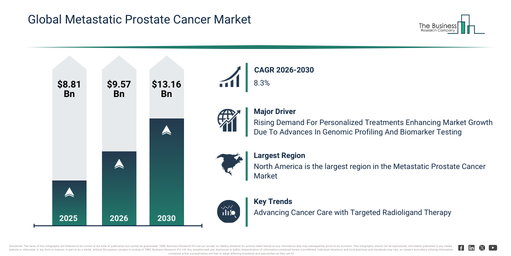
    The market size for metastatic prostate cancer has demonstrated robust expansion over recent years. It is projected to expand from $8.81 billion in 2025 to $9.57 billion by 2026, representing a compound annual growth rate (CAGR) of 8.6%. This historical growth can be attributed to several factors, including the rising incidence of advanced prostate cancer cases, the expansion of oncology treatment centers, improved survival rates through early intervention, the availability of multiple therapeutic options, and increased use of chemotherapy protocols.

    The metastatic prostate cancer market size is projected to experience substantial growth in the upcoming years. It is forecast to expand to $13.16 billion by 2030, achieving a compound annual growth rate (CAGR) of 8.3%. This anticipated growth throughout the forecast period stems from the increasing development of novel immunotherapies, the rising adoption of personalized cancer treatments, the expansion of clinical trials for advanced therapies, the growing utilization of radiopharmaceutical treatments, and an increasing focus on improving quality-of-life outcomes for patients. Significant trends during this period are expected to include the escalating adoption of targeted and hormonal therapies, the rising application of combination treatment regimens, a heightened focus on precision oncology approaches, the broadening of advanced diagnostic and biomarker testing, and an enhanced emphasis on patient-centered treatment strategies.

    Download the Free Sample Report to Explore Key Market Insights:

    https://www.thebusinessresearchcompany.com/sample.aspx?id=25833&type=smp

    What Major Growth Drivers Are Shaping The Outlook Of The Metastatic Prostate Cancer Market?

    The increasing requirement for personalized treatments is projected to propel the expansion of the metastatic prostate cancer market in the coming years. Personalized treatments involve medical strategies tailored to an individual’s genetic profile, lifestyle, and specific disease characteristics to achieve more effective and targeted outcomes. The growing demand for personalized treatments is attributed to the increasing availability of genomic profiling and biomarker testing; these technologies assist in identifying specific mutations and biological markers, thereby enabling clinicians to select therapies that are more likely to be effective for each individual. Personalized treatment approaches, such as biomarker-guided therapies and gene-targeted drugs, are transforming the management of metastatic prostate cancer by aligning specific therapies with each patient’s unique tumor profile to enhance effectiveness and minimize side effects. For instance, in February 2024, the Personalized Medicine Coalition, a US-based non-profit organization, reported that the US Food and Drug Administration (FDA) approved 16 new personalized treatments for rare diseases in 2023, a significant rise compared to 6 in the year 2022. Therefore, the escalating demand for personalized treatments is a key driver for the growth of the metastatic prostate cancer market.

    Which Segment Categories Define The Metastatic Prostate Cancer Market?

    The metastatic prostate cancer market covered in this report is segmented –

    1) By Treatment Type: Chemotherapy, Immunotherapy, Hormonal Therapy, Radiation Therapy, Other Treatments

    2) By Route of Administration: Oral, Parenteral Route, Intravenous

    3) By Distribution Channel: Hospital Pharmacy, Retail Pharmacy, Online Pharmacy, Other Distribution Channels

    4) By End User: Hospitals, Clinics, Cancer Centers, Research Laboratories, Other End-Users

    Subsegments:

    1) By Chemotherapy: Docetaxel, Cabazitaxel, Mitoxantrone, Combination Chemotherapy Regimens

    2) By Immunotherapy: Sipuleucel-T, Immune Checkpoint Inhibitors, Cancer Vaccines, Cytokine Therapies

    3) By Hormonal Therapy: Luteinizing Hormone-Releasing Hormone (LHRH) Agonists, LHRH Antagonists, Anti-Androgens, Androgen Synthesis Inhibitors, Combined Androgen Blockade (CAB)

    4) By Radiation Therapy: External Beam Radiation Therapy (EBRT), Stereotactic Body Radiotherapy (SBRT), Radiopharmaceutical Therapy, Intensity-Modulated Radiation Therapy (IMRT)

    5) By Other Treatments: Targeted Therapy, Bone-Targeted Therapy, Clinical Trial Drugs, Palliative Therapy

    What Trends Are Projected To Affect The Metastatic Prostate Cancer Market?

    Leading companies in the metastatic prostate cancer market are concentrating on technological innovations in cancer treatment, such as advanced targeted radioligand technology, to deliver precise radiation to cancer cells while safeguarding healthy tissue. This advanced targeted radioligand technology is a therapy that combines a molecule targeting prostate specific membrane antigen PSMA with a radioactive isotope, enabling the targeted destruction of cancer cells throughout the body. For example, in March 2025, Novartis AG, a Switzerland-based multinational pharmaceutical company, secured U.S. Food and Drug Administration (FDA) approval for Pluvicto for earlier administration in patients with PSMA-positive metastatic castration-resistant prostate cancer. Pluvicto itself is composed of a prostate-specific membrane antigen (PSMA) targeting ligand linked to a beta-emitting radionuclide; it operates by binding to PSMA-expressing tumor cells and delivering localized radiation to eliminate them. Its distinctive attributes include strong tumor specificity, a favorable safety profile, and the potential for combination with other therapies. Its applications cover advanced-stage prostate cancer treatment, particularly for patients who have progressed after androgen deprivation therapy. The observed benefits include improved progression-free survival, targeted cytotoxicity, reduced off-target effects, and enhanced patient outcomes.

    Who Are The Top Companies Competing In The Metastatic Prostate Cancer Market?

    Major companies operating in the metastatic prostate cancer market are Pfizer Inc., Merck & Co. Inc., AbbVie Inc., Bayer AG, Bristol-Myers Squibb Company, AstraZeneca PLC, Novartis AG, Astellas Pharma Inc., Ipsen Group, Exelixis Inc., Ferring Pharmaceuticals, Dendreon Pharmaceuticals LLC, Hinova Pharmaceuticals Inc., Janux Therapeutics Inc., Clarity Pharmaceuticals Ltd., Convergent Therapeutics Inc., Johnson & Johnson, Sanofi, Eli Lilly And Company, Roche Holding AG, Takeda Pharmaceutical Company Limited

    Read the full metastatic prostate cancer market report here:

    https://www.thebusinessresearchcompany.com/report/metastatic-prostate-cancer-global-market-report

    Which Regions Are Projected To Dominate The Metastatic Prostate Cancer Market In The Coming Years?

    North America was the largest region in the metastatic prostate cancer market in 2025. Asia-Pacific is expected to be the fastest-growing region in the forecast period. The regions covered in the metastatic prostate cancer market report are Asia-Pacific, South East Asia, Western Europe, Eastern Europe, North America, South America, Middle East, Africa.

    Request A Tailored Metastatic Prostate Cancer Market Research Report For Competitive Advantage:

    https://www.thebusinessresearchcompany.com/customise?id=25833&type=smp

    Browse Through More Reports Similar to the Global Metastatic Prostate Cancer Market 2026, By The Business Research Company

    Melanoma Therapeutics Global Market Report

    https://www.thebusinessresearchcompany.com/report/melanoma-therapeutics-global-market-report

    Malignant Melanoma Treatment Global Market Report

    https://www.thebusinessresearchcompany.com/report/malignant-melanoma-treatment-global-market-report

    Melanoma Drugs Global Market Report

    https://www.thebusinessresearchcompany.com/report/melanoma-drugs-global-market-report

    Get in touch with us:

    The Business Research Company: https://www.thebusinessresearchcompany.com/

    Americas +1 310-496-7795

    Asia +44 7882 955267 & +91 8897263534

    Europe +44 7882 955267

    Email us at info@tbrc.info

    Follow us on:

    LinkedIn: https://in.linkedin.com/company/the-business-research-company

    YouTube: https://www.youtube.com/channel/UC24_fI0rV8cR5DxlCpgmyFQ

    Global Market Model: https://www.thebusinessresearchcompany.com/global-market-model
  • A key trend shaping the Metastatic Melanoma Therapeutics Market involves the Strategic Collaboration To Evaluate Metastatic Cutaneous Melanoma Therapeutics

    A key trend shaping the Metastatic Melanoma Therapeutics Market involves the Strategic Collaboration To Evaluate Metastatic Cutaneous Melanoma Therapeutics

    The Business Research Company’s 2026 market reports include new capabilities such as market attractiveness scoring and analysis, total addressable market analysis, company scoring matrix, interactive excel data dashboard, improved supply chain analysis, upcoming startups in the market, and overview of key products, aimed at improving the depth, usability, and strategic value of the insights delivered.

    How Is The Market Size Of The Metastatic Melanoma Therapeutics Market Expected To Change Between 2026 And 2030?

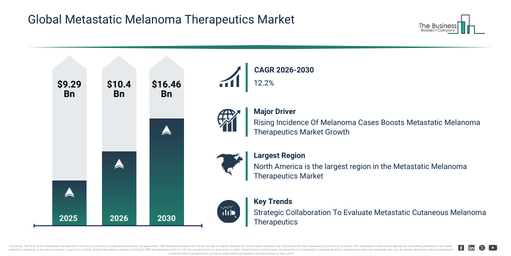
    The metastatic melanoma therapeutics market size has witnessed swift expansion in recent years. This market is projected to expand from $9.29 billion in 2025 to $10.4 billion in 2026, exhibiting a compound annual growth rate (CAGR) of 11.9%. Historically, this market’s expansion can be attributed to several factors, including the rising incidence of melanoma, the introduction of checkpoint inhibitors, advancements in targeted therapy, the adoption of stereotactic radiosurgery, and growing awareness of early-stage detection.

    The metastatic melanoma therapeutics market size is expected to experience significant growth in the coming years. Its value is projected to grow to $16.46 billion by 2030, achieving a compound annual growth rate (CAGR) of 12.2%. The expansion during the forecast period is attributable to several factors, including the proliferation of combination immunotherapies, the development of next-gen braf and mek inhibitors, increased investment in oncology r&d, improved diagnostic accuracy facilitated by AI tools, and the rising adoption of personalized cancer treatment. Major trends identified for the forecast period include the integration of precision medicine into melanoma therapy, AI-assisted tumor detection and treatment planning, big data-enabled optimization of immunotherapy, virtual simulation for oncology training and prognosis, and automated treatment workflow and therapy monitoring.

    Download the Free Sample Report to Explore Key Market Insights:

    https://www.thebusinessresearchcompany.com/sample.aspx?id=12065&type=smp

    What Drivers Are Expected To Influence The Metastatic Melanoma Therapeutics Market During The Forecast Period?

    The increasing occurrence of melanoma cases is anticipated to stimulate the expansion of the metastatic melanoma therapeutics market in the future. Melanoma represents a type of skin cancer originating in melanocytes, the cells responsible for skin pigment regulation. This form of cancer has the potential to manifest on any part of the skin. Treatments for metastatic melanoma encompass various therapies designed to inhibit mutant chemicals and stop the proliferation of melanoma cells, all while preserving healthy tissue. To illustrate, data from January 2023 released by the American Cancer Society, a US-based voluntary health organization focused on cancer eradication, projected 58,120 new melanoma diagnoses in males and 39,490 in women within the US during 2023, accumulating to approximately 97,610 cases. Furthermore, melanoma-related fatalities are forecast to reach around 7,990. Consequently, the escalating frequency of melanoma is fueling the expansion of the metastatic melanoma therapeutics market.

    How Is The Metastatic Melanoma Therapeutics Market Structured Across Different Segments?

    The metastatic melanoma therapeutics market covered in this report is segmented –

    1) By Therapy: Chemotherapy, Immunotherapy, Targeted Therapy, Radiation Therapy, Surgery

    2) By Line Of Therapy: First-Line, Second-Line, Third-Line

    3) By End User: Hospitals, Specialty Clinics, Home Healthcare, Other End-Users

    Subsegments:

    1) By Chemotherapy: Dacarbazine, Temozolomide, Carboplatin And Cisplatin Combinations

    2) By Immunotherapy: Checkpoint Inhibitors, Interleukin-2 (IL-2), Oncolytic Virus Therapies

    3) By Targeted Therapy: BRAF Inhibitors, MEK Inhibitors, KIT Inhibitors

    4) By Radiation Therapy: Stereotactic Radiosurgery, Palliative Radiation Therapy

    5) By Surgery: Tumor Resection, Sentinel Lymph Node Biopsy, Debulking Surgery

    Which Upcoming Trends Are Expected To Influence The Metastatic Melanoma Therapeutics Market?

    Leading companies in the metastatic melanoma therapeutics market are concentrating on developing innovative immunotherapies and integrated treatment plans to enhance patient outcomes and improve the effectiveness of initial therapies. Novel immunotherapies and combination treatments represent advanced therapies that activate or modify the immune system to combat diseases, frequently used alongside other treatments to boost efficacy and achieve synergistic results. For example, in March 2024, IO Biotech A/S, a US-based biotechnology company, finalized the enrollment of 380 patients in its key Phase 3 trial (IOB-013/KN-D18 NCT05155254) assessing IO102-IO103 combined with pembrolizumab (KEYTRUDA) versus pembrolizumab alone for the first-line treatment of unresectable or metastatic melanoma. This trial is sponsored by IO Biotech and is conducted collaboratively with Merck, a U.S.-based pharmaceutical company, with Merck supplying pembrolizumab for the study. The aim of this combination therapy is to bolster anti-tumor immune responses, potentially leading to improved overall response rates and long-term clinical outcomes for patients with advanced melanoma.

    Which Major Players Dominate The Metastatic Melanoma Therapeutics Market?

    Major companies operating in the metastatic melanoma therapeutics market are Pfizer Inc., F. Hoffmann-La Roche AG, Merck & Co. Inc., Novartis AG, Bristol-Myers Squibb Company, AstraZeneca PLC, Amgen Inc., Regeneron Pharmaceuticals Inc., Exelixis Inc., Immunocore Holdings plc, Genentech Inc., Iovance Biotherapeutics Inc., Adaptimmune Therapeutics plc, Evaxion Biotech A/S, InxMed Co. Ltd., AiVita Biomedical Inc., Cytovation AS, Biocad, Apexigen Inc., Checkmate Pharmaceuticals, HUYABIO International LLC, IO Biotech, Nykode Therapeutics, Karyopharm Therapeutics, Zucero Therapeutics, Ultimovacs ASA, Immuneering Corporation, TILT Biotherapeutics

    Read the full metastatic melanoma therapeutics market report here:

    https://www.thebusinessresearchcompany.com/report/metastatic-melanoma-therapeutics-global-market-report

    Which Region Is Forecast To Lead The Metastatic Melanoma Therapeutics Market In Terms Of Market Size?

    North America was the largest region in the metastatic melanoma therapeutics market in 2025. The regions covered in the metastatic melanoma therapeutics market report are Asia-Pacific, South East Asia, Western Europe, Eastern Europe, North America, South America, Middle East, Africa.

    Request A Tailored Metastatic Melanoma Therapeutics Market Research Report For Competitive Advantage:

    https://www.thebusinessresearchcompany.com/customise?id=12065&type=smp

    Browse Through More Reports Similar to the Global Metastatic Melanoma Therapeutics Market 2026, By The Business Research Company

    Metastatic Cancer Drugs Global Market Report

    https://www.thebusinessresearchcompany.com/report/metastatic-cancer-drugs-global-market-report

    Metastatic Breast Cancer Treatment Global Market Report

    https://www.thebusinessresearchcompany.com/report/metastatic-breast-cancer-treatment-global-market-report

    Small Cell Lung Cancer Therapeutics Global Market Report

    https://www.thebusinessresearchcompany.com/report/small-cell-lung-cancer-therapeutics-global-market-report

    Get in touch with us:

    The Business Research Company: https://www.thebusinessresearchcompany.com/

    Americas +1 310-496-7795

    Asia +44 7882 955267 & +91 8897263534

    Europe +44 7882 955267

    Email us at info@tbrc.info

    Follow us on:

    LinkedIn: https://in.linkedin.com/company/the-business-research-company

    YouTube: https://www.youtube.com/channel/UC24_fI0rV8cR5DxlCpgmyFQ

    Global Market Model: https://www.thebusinessresearchcompany.com/global-market-model
  • A significant industry trend in the Metastatic Lung Adenocarcinoma Treatment Market includes the Chemotherapy-Free Advancements Enhance First-Line Treatment Options For Metastatic Lung Adenocarcinoma

    A significant industry trend in the Metastatic Lung Adenocarcinoma Treatment Market includes the Chemotherapy-Free Advancements Enhance First-Line Treatment Options For Metastatic Lung Adenocarcinoma

    The Business Research Company’s 2026 market reports include new capabilities such as market attractiveness scoring and analysis, total addressable market analysis, company scoring matrix, interactive excel data dashboard, improved supply chain analysis, upcoming startups in the market, and overview of key products, aimed at improving the depth, usability, and strategic value of the insights delivered.

    What Is The Market Size Of The Metastatic Lung Adenocarcinoma Treatment Market In 2026 And What Value Is Projected For 2030?

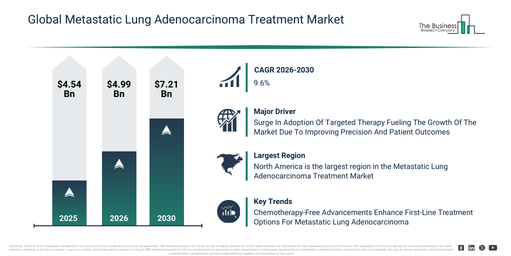
    The metastatic lung adenocarcinoma treatment market size has exhibited robust growth in recent years. It is projected to expand from $4.54 billion in 2025 to $4.99 billion in 2026, demonstrating a compound annual growth rate (CAGR) of 9.9%. Historically, this growth can be attributed to the rising prevalence of lung cancer, the adoption of platinum chemotherapy, the early use of egfr inhibitors, an increased reliance on radiation therapy, and growing diagnostic advancements.

    The metastatic lung adenocarcinoma treatment market is set for substantial growth over the next few years, with its size forecast to reach $7.21 billion by 2030, growing at a compound annual growth rate (CAGR) of 9.6%. This expansion during the forecast period is primarily driven by the expansion of alk and ros1 inhibitors, increasing adoption of immunotherapy combinations, growth in car-t research for lung cancer, advanced imaging enhancement, and rising investment in targeted therapy development. Significant trends identified for this period include precision medicine integration in lung adenocarcinoma treatment, AI-based tumor detection and therapy optimization, big data-driven immunotherapy enhancement, virtual simulation platforms for oncology training, and automated diagnostics and treatment workflow solutions.

    Download the Free Sample Report to Explore Key Market Insights:

    https://www.thebusinessresearchcompany.com/sample.aspx?id=24320&type=smp

    What Drivers Are Influencing The Metastatic Lung Adenocarcinoma Treatment Market?

    The expanding utilization of targeted therapy is projected to fuel the advancement of the metastatic lung adenocarcinoma treatment market in the foreseeable future. This therapy represents a cancer intervention employing pharmaceuticals to precisely inhibit cancer proliferation by zeroing in on distinct genes or proteins that instigate tumor formation and dissemination. Its popularity is surging because it accurately addresses particular genetic mutations, leading to superior treatment efficacy and fewer adverse reactions when contrasted with traditional approaches. Specifically, targeted therapy treats metastatic lung adenocarcinoma by obstructing the genetic mutations responsible for the cancer’s progression and dissemination. This method provides a more accurate strategy with diminished side effects, potentially significantly improving survival rates and life quality for patients presenting with actionable mutations. As an illustration, data from July 2023, sourced from the American Society of Gene and Cell Therapy (ASGCT), a US-based professional membership organization, and Citeline, a US-based provider of drugs and devices, indicated 247 gene therapies were in Phase II by the close of the first quarter of 2023, subsequently rising by 5% to 260 by the end of the second quarter. Consequently, the growing acceptance of targeted therapy is serving as a catalyst for the expansion of the metastatic lung adenocarcinoma treatment market.

    What Are The Key Segments Of The Metastatic Lung Adenocarcinoma Treatment Market?

    The metastatic lung adenocarcinoma treatment market covered in this report is segmented –

    1) By Treatment: Chemotherapy, Targeted Therapy, Immunotherapy, Radiation Therapy

    2) By Route Of Administration: Oral, Intravenous

    3) By End-User: Hospitals, Cancer Research Centers, Specialty Clinics

    Subsegments:

    1) By Chemotherapy: Platinum-Based Chemotherapy, Non-Platinum Chemotherapy, Combination Therapy, Single-Agent Chemotherapy

    2) By Targeted Therapy: Epidermal Growth Factor Receptor Inhibitors, Anaplastic Lymphoma Kinase Inhibitors, C-Ros Oncogene 1 Receptor Tyrosine Kinase Inhibitors, V-Raf Murine Sarcoma Viral Oncogene Homolog B1 Inhibitors, Rearranged During Transfection Inhibitors, Mesenchymal-Epithelial Transition Factor Inhibitors, Neurotrophic Tropomyosin Receptor Kinase Inhibitors

    3) By Immunotherapy: PD-1 Inhibitors, PD-L1 Inhibitors, CTLA-4 Inhibitors, Combination Immunotherapy, CAR-T Cell Therapy (Emerging)

    4) By Radiation Therapy: External Beam Radiation Therapy (EBRT), Stereotactic Body Radiotherapy (SBRT), Intensity-Modulated Radiation Therapy (IMRT), Proton Therapy

    How Are Trends Shaping The Direction Of The Metastatic Lung Adenocarcinoma Treatment Market?

    Major companies in the metastatic lung adenocarcinoma treatment market are focusing on developing advanced solutions such as chemotherapy-free treatments to enhance long-term survival rates by targeting specific genetic mutations and improving patient outcomes. Chemotherapy-free treatment refers to cancer therapies that use alternatives like targeted therapy or immunotherapy, with the goal of effectively managing cancer while reducing the severe side effects typically associated with traditional chemotherapy. For instance, in August 2024, Johnson & Johnson, a US-based healthcare company, announced that the U.S. Food and Drug Administration (FDA) had approved RYBREVANT (amivantamab-vmjw) in combination with LAZCLUZE (lazertinib) as a first-line, chemotherapy-free treatment for adults with locally advanced or metastatic non-small cell lung cancer (NSCLC) characterized by EGFR exon 19 deletions or exon 21 L858R substitution mutations. This approval was supported by results from the Phase 3 MARIPOSA study, which demonstrated superior progression-free survival compared to osimertinib.

    Who Are The Leading Companies Operating In The Metastatic Lung Adenocarcinoma Treatment Market?

    Major companies operating in the metastatic lung adenocarcinoma treatment market are Pfizer Inc., Johnson & Johnson, F. Hoffmann-La Roche Ltd, Merck & Co. Inc., Bristol-Myers Squibb Company, AstraZeneca PLC, Novartis AG, Boehringer Ingelheim International GmbH, BeiGene Ltd., Novocure, Gilead Sciences, Daiichi Sankyo Company Limited, Mirati Therapeutics Inc., Nuvalent Inc., Moderna Therapeutics, Shanghai Henlius Biotech, Duality BioSciences Inc., Arcus Biosciences Inc., NeoImmuneTech Inc., Hutchison Medipharma Limited, Betta Pharma Company Limited, OncoC4 Inc., Xcovery Holding Company, BioNTech SE

    Read the full metastatic lung adenocarcinoma treatment market report here:

    https://www.thebusinessresearchcompany.com/report/metastatic-lung-adenocarcinoma-treatment-global-market-report

    Which Regions Are Expected To Experience Rapid Expansion In The Metastatic Lung Adenocarcinoma Treatment Market?

    North America was the largest region in the metastatic lung adenocarcinoma treatment market in 2025. Asia-Pacific is expected to be the fastest-growing region in the forecast period. The regions covered in the metastatic lung adenocarcinoma treatment market report are Asia-Pacific, South East Asia, Western Europe, Eastern Europe, North America, South America, Middle East, Africa.

    Request A Tailored Metastatic Lung Adenocarcinoma Treatment Market Research Report For Competitive Advantage:

    https://www.thebusinessresearchcompany.com/customise?id=24320&type=smp

    Browse Through More Reports Similar to the Global Metastatic Lung Adenocarcinoma Treatment Market 2026, By The Business Research Company

    Metastatic Breast Cancer Treatment Global Market Report

    https://www.thebusinessresearchcompany.com/report/metastatic-breast-cancer-treatment-global-market-report

    Metastatic Cancer Drugs Global Market Report

    https://www.thebusinessresearchcompany.com/report/metastatic-cancer-drugs-global-market-report

    Breast Cancer Drugs Global Market Report

    https://www.thebusinessresearchcompany.com/report/breast-cancer-drugs-global-market-report

    Get in touch with us:

    The Business Research Company: https://www.thebusinessresearchcompany.com/

    Americas +1 310-496-7795

    Asia +44 7882 955267 & +91 8897263534

    Europe +44 7882 955267

    Email us at info@tbrc.info

    Follow us on:

    LinkedIn: https://in.linkedin.com/company/the-business-research-company

    YouTube: https://www.youtube.com/channel/UC24_fI0rV8cR5DxlCpgmyFQ

    Global Market Model: https://www.thebusinessresearchcompany.com/global-market-model
  • A key trend shaping the Metastatic HR+/HER2− Breast Cancer Market involves the Advancements In Combination Therapy Boosting Market Growth

    A key trend shaping the Metastatic HR+/HER2− Breast Cancer Market involves the Advancements In Combination Therapy Boosting Market Growth

    The Business Research Company’s 2026 market reports include new capabilities such as market attractiveness scoring and analysis, total addressable market analysis, company scoring matrix, interactive excel data dashboard, improved supply chain analysis, upcoming startups in the market, and overview of key products, aimed at improving the depth, usability, and strategic value of the insights delivered.

    What Will Be The Estimated Market Valuation Of The Metastatic HR+/HER2- Breast Cancer Market By The End Of 2030?

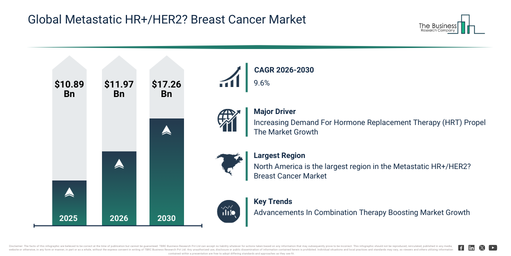
    The metastatic hr+/her2- breast cancer market has experienced robust expansion in recent years. Its valuation is projected to increase from $10.89 billion in 2025 to $11.97 billion by 2026, demonstrating a compound annual growth rate (CAGR) of 9.9%. This historical expansion is primarily due to factors such as an increase in breast cancer prevalence, the widespread adoption of hormonal therapies, greater utilization of chemotherapy, advancements in early diagnostic tools, and enhanced monitoring of patient survival.

    The metastatic hr+/her2- breast cancer market size is projected to undergo significant expansion in the coming years. It is forecast to reach $17.26 billion by 2030, demonstrating a compound annual growth rate (CAGR) of 9.6%. This anticipated growth throughout the forecast period can be ascribed to advancements in targeted therapies such as cdk4/6 inhibitors, the broadening scope of immunotherapy research, increased utilization of genomic profiling, a growing need for combination treatment regimens, and improvements in patient monitoring technologies. Noteworthy trends predicted for this period include progress in precision hormonal therapy, AI-powered treatment personalization, monitoring treatment responses through data, virtual simulation for oncology education, and the seamless integration of automated diagnostic workflows.

    Download the Free Sample Report to Explore Key Market Insights:

    https://www.thebusinessresearchcompany.com/sample.aspx?id=21220&type=smp

    What Drivers Are Shaping The Future Growth Of The Metastatic HR+/HER2- Breast Cancer Market?

    The expanding application of hormone replacement therapy (HRT) is anticipated to drive the future growth of the metastatic HR+/HER2- breast cancer market. HRT serves as a medical intervention designed to supplement or substitute hormones found at insufficient levels within the body, primarily addressing menopause or other hormone deficiency scenarios. The increased adoption of HRT is attributable to its efficacy in enhancing treatment results, its fewer adverse effects in contrast to conventional treatments, and progress within precision medicine. For patients with metastatic HR+/HER2- breast cancer, HRT can offer support by easing menopausal symptoms linked to estrogen deficiency, including hot flashes and vaginal dryness. It achieves this without impeding the efficacy of endocrine therapies, as its main action focuses on correcting hormone imbalances rather than targeting cancerous cells directly, thereby improving the overall quality of life for individuals undergoing cancer treatment. A notable example from October 2023, reported by the Health Professional Academy, a UK-based personalized health professional learning platform, indicates that approximately 11 million hormone replacement therapy (HRT) prescriptions were dispensed in 2022/23, reflecting an almost 50% increase from the prior year. Consequently, the growing utilization of hormone replacement therapy (HRT) acts as a significant catalyst for the metastatic HR+/HER2- breast cancer market.

    Which Segment Classifications Shape The Metastatic HR+/HER2- Breast Cancer Market?

    The metastatic hr+/her2- breast cancer market covered in this report is segmented –

    1) By Drugs: Paclitaxel, Tamoxifen, Docetaxel, Other Drugs

    2) By Treatment: Radiation Therapy, Vitamin Therapy, Macrobiotic Diets, Homeopathy, Herbal Medication

    3) By End-User: Hospitals, Clinics, Other End-User

    Subsegments:

    1) By Paclitaxel: Generic Paclitaxel, Taxol

    2) By Tamoxifen: Generic Tamoxifen, Nolvadex

    3) By Docetaxel: Generic Docetaxel, Taxotere

    4) By Other Drugs: Letrozole, Anastrozole, Exemestane, Palbociclib, Ribociclib, Abemaciclib

    Which Market Trends Are Creating New Opportunities In The Metastatic HR+/HER2- Breast Cancer Market?

    Leading companies operating in the metastatic HR+/HER2- breast cancer market are actively developing combination therapies to broaden their indications, extend their market reach, and diversify treatment options. Combination therapy represents a therapeutic strategy involving the concurrent application of two or more agents, which might include chemotherapy, targeted therapy, immunotherapy, hormone therapy, or other approaches. This method aims to treat medical conditions more effectively by targeting multiple pathways, thereby enhancing the overall treatment response and diminishing the likelihood of conditions, such as cancer, developing resistance to any single treatment. For instance, in July 2023, Merck & Co., Inc., a US-based pharmaceutical company, announced the findings from its Phase 3 KEYNOTE-756 trial. This study evaluated KEYTRUDA (pembrolizumab), an anti-PD-1 therapy, when combined with chemotherapy approved by the Food and Drug Administration, a US-based government agency. The trial successfully achieved its primary endpoint by significantly improving the pathological complete response (pCR) rate in patients diagnosed with high-risk, early-stage ER+/HER2- breast cancer. KEYNOTE-756 marks the first positive Phase 3 trial to demonstrate a statistically significant improvement in the pCR rate with an immunotherapy regimen within the neoadjuvant setting for this patient population. The trial’s design involved assessing KEYTRUDA with chemotherapy as a neoadjuvant treatment, followed by adjuvant KEYTRUDA plus endocrine therapy for high-risk, early-stage ER+/HER2- breast cancer.

    Which Companies Are Expanding Their Footprint In The Metastatic HR+/HER2- Breast Cancer Market?

    Major companies operating in the metastatic hr+/her2- breast cancer market are Pfizer Inc., F Hoffmann-La Roche AG, AstraZeneca PLC, Eli Lilly and Company, Merck & Co, Arvinas Inc, Olema Pharmaceuticals Inc, Genentech Inc, Veru Pharma, DualityBio Inc, BioNTech SE, Evgen Pharma, EQRx Inc, G1 Therapeutics Inc, Immutep Ltd, RemeGen Co Ltd, SynCore Biotechnology Co Ltd, Allarity Therapeutics AS, Jiangsu Alphamab Biopharmaceuticals Co Ltd, Byondis BV, Jiangsu Hansoh Pharmaceutical Co Ltd, Shanghai Miracogen Inc, Eisai Co Ltd, Tyme Inc, Orion Pharma

    Read the full metastatic hr+/her2- breast cancer market report here:

    https://www.thebusinessresearchcompany.com/report/metastatic-hr-her2-breast-cancer-global-market-report

    Which Geographic Regions Are Influencing Demand In The Metastatic HR+/HER2- Breast Cancer Market?

    North America was the largest region in the dominated market in 2025. Asia-Pacific is expected to be the fastest-growing region in the forecast period. The regions covered in the metastatic hr+/her2- breast cancer market report are Asia-Pacific, South East Asia, Western Europe, Eastern Europe, North America, South America, Middle East, Africa.

    Request A Tailored Metastatic HR+/HER2- Breast Cancer Market Research Report For Competitive Advantage:

    https://www.thebusinessresearchcompany.com/customise?id=21220&type=smp

    Browse Through More Reports Similar to the Global Metastatic HR+/HER2- Breast Cancer Market 2026, By The Business Research Company

    Metastatic Hr Her2 Breast Cancer Global Market Report

    https://www.thebusinessresearchcompany.com/report/metastatic-hr-her2-breast-cancer-global-market-report

    Metastatic Cancer Drugs Global Market Report

    https://www.thebusinessresearchcompany.com/report/metastatic-cancer-drugs-global-market-report

    Breast Cancer Drugs Global Market Report

    https://www.thebusinessresearchcompany.com/report/breast-cancer-drugs-global-market-report

    Get in touch with us:

    The Business Research Company: https://www.thebusinessresearchcompany.com/

    Americas +1 310-496-7795

    Asia +44 7882 955267 & +91 8897263534

    Europe +44 7882 955267

    Email us at info@tbrc.info

    Follow us on:

    LinkedIn: https://in.linkedin.com/company/the-business-research-company

    YouTube: https://www.youtube.com/channel/UC24_fI0rV8cR5DxlCpgmyFQ

    Global Market Model: https://www.thebusinessresearchcompany.com/global-market-model
  • An Important Factor Driving the Metastatic Breast Cancer Treatment Market Is the Metastatic Breast Cancer Treatment Market Driven By The Prevailing Incidence Of Breast Cancer

    An Important Factor Driving the Metastatic Breast Cancer Treatment Market Is the Metastatic Breast Cancer Treatment Market Driven By The Prevailing Incidence Of Breast Cancer

    The Business Research Company’s 2026 market reports include new capabilities such as market attractiveness scoring and analysis, total addressable market analysis, company scoring matrix, interactive excel data dashboard, improved supply chain analysis, upcoming startups in the market, and overview of key products, aimed at improving the depth, usability, and strategic value of the insights delivered.

    What Market Size Growth Is Projected For The Metastatic Breast Cancer Treatment Market During The Forecast Period 2026–2030?

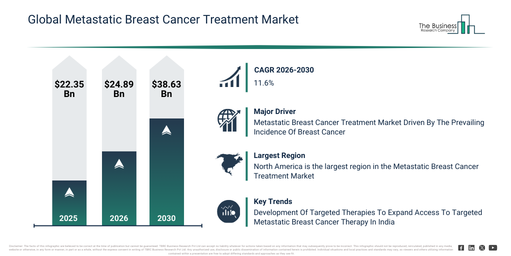
    The metastatic breast cancer treatment market size has experienced significant growth in recent years. This market is projected to expand from $22.35 billion in 2025 to $24.89 billion in 2026, demonstrating a compound annual growth rate (CAGR) of 11.4%. Historically, this expansion has been driven by factors such as an increasing burden of metastatic breast cancer, the implementation of chemotherapy regimens, wider application of hormone therapy, advancements in radiation techniques, and enhanced cancer screening initiatives.

    The metastatic breast cancer treatment market size is projected for substantial expansion over the upcoming years, reaching $38.63 billion by 2030, exhibiting a compound annual growth rate (CAGR) of 11.6%. This anticipated growth during the forecast period is driven by factors such as the increasing call for targeted therapies, the proliferation of immunotherapy options, escalating investment in genomic profiling, the expansion of tele-oncology services, and an emphasis on personalized treatment approaches. Key developments expected in this period encompass progress in targeted therapy creation, AI-powered patient surveillance and therapy selection, the integration of digital platforms for remote cancer care, improved simulation-based training for oncology interventions, and the automation of diagnostic processes in cancer screening.

    Download the Free Sample Report to Explore Key Market Insights:

    https://www.thebusinessresearchcompany.com/sample.aspx?id=10816&type=smp

    Which Economic Or Industry Drivers Are Impacting The Metastatic Breast Cancer Treatment Market?

    The increasing occurrence of breast cancer is anticipated to drive the expansion of the metastatic breast cancer treatment market in the future. Breast cancer is defined as a form of cancer originating in the mammary gland cells, developing when abnormal cells within the breast start proliferating uncontrollably, leading to tumor formation. This trend is influenced by genetic predispositions, hormonal imbalances, lifestyle choices, and environmental factors. Treatments for metastatic breast cancer aid in addressing the widespread nature of breast cancer by enhancing both the prognosis and the well-being of those afflicted with advanced-stage illness. For instance, in September 2023, a report from the American Cancer Society, a US-based non-profit entity, projected that roughly 297,790 women would be diagnosed with invasive breast cancer in 2023, alongside an estimated 55,720 new cases of ductal carcinoma in situ (DCIS). Furthermore, approximately 43,700 women are foreseen to succumb to breast cancer within the identical year. Consequently, the widespread occurrence of breast cancer is fueling the expansion of the metastatic breast cancer treatment market.

    What Market Segments Are Evaluated Within The Metastatic Breast Cancer Treatment Market?

    The metastatic breast cancer treatment market covered in this report is segmented –

    1) By Therapy Type: Chemotherapy, Radiation Therapy, Biologic Targeted Therapy, Breast Surgery, Hormone Therapy

    2) By Molecule Type: Monoclonal Antibody, Peptides, Polymer, Small Molecule, Gene Therapy

    3) By Route Of Administration: Oral, Parenteral

    4) By End-User: Hospitals, Clinics, Ambulatory Surgical Centers, Other End-Users

    Subsegments:

    1) By Chemotherapy: Anthracyclines, Taxanes, Antimetabolites, Platinum Agents

    2) By Radiation Therapy: External Beam Radiation, Stereotactic Radiosurgery, Brachytherapy

    3) By Biologic Targeted Therapy: HER2-Targeted Therapy, CDK4 Or 6 Inhibitors, PARP Inhibitors, PI3K Inhibitors

    4) By Breast Surgery: Lumpectomy, Mastectomy, Sentinel Lymph Node Biopsy, Reconstructive Surgery

    5) By Hormone Therapy: Selective Estrogen Receptor Modulators (SERMs), Aromatase Inhibitors, Estrogen Receptor Downregulators (ERDs)

    What Trends Are Affecting The Expansion Of The Metastatic Breast Cancer Treatment Market?

    Major companies operating in the breast cancer treatment market are primarily focusing on developing targeted therapies to improve clinical outcomes and increase accessibility for patients suffering from advanced disease. Targeted therapy refers to medications specifically designed to interfere with molecular pathways implicated in cancer growth, thereby minimizing damage to normal cells while enhancing overall efficacy. For instance, in January 2023, BDR Pharmaceuticals, an India-based pharmaceutical company, launched Bdpalbo (palbociclib) in India, intended for the treatment of advanced and metastatic breast cancer. Bdpalbo, classified as a CDK4/6 inhibitor, is provided in three distinct capsule strengths: 125 mg, 100 mg, and 75 mg. The introduction aims to expand treatment availability for patients with advanced disease by offering a more affordable formulation of palbociclib, which supports improved therapeutic outcomes by enhancing accessibility.

    Who Are The Top Market Participants Influencing The Metastatic Breast Cancer Treatment Market?

    Major companies operating in the metastatic breast cancer treatment market are Pfizer Inc., AstraZeneca plc, Novartis AG, Eli Lilly & Co., Merck & Co. Inc., Johnson & Johnson Services Inc., F. Hoffmann-La Roche AG, Bristol-Myers Squibb Company, AbbVie Inc., Seattle Genetics Inc., Genentech Inc., MacroGenics Inc., Daiichi Sankyo Company Limited, Celgene Corporation, Mersana Therapeutics Inc., Olema Oncology, RemeGen, SynCore Biotechnology, Allarity Therapeutics, Byondis B.V., Jiangsu Alphamab Biopharmaceuticals Co. Ltd., Shanghai Miracogen Inc., Ambrx Inc., Rhizen Pharmaceuticals SA, Immutep Ltd.

    Read the full metastatic breast cancer treatment market report here:

    https://www.thebusinessresearchcompany.com/report/metastatic-breast-cancer-treatment-global-market-report

    What Are The Top-Performing Regions Within The Metastatic Breast Cancer Treatment Market?

    North America was the largest region in the metastatic breast cancer treatment market in 2025. Asia-Pacific is expected to be the fastest-growing region in the global metastatic breast cancer treatment market during the forecast period. The regions covered in the metastatic breast cancer treatment market report are Asia-Pacific, South East Asia, Western Europe, Eastern Europe, North America, South America, Middle East, Africa.

    Request A Tailored Metastatic Breast Cancer Treatment Market Research Report For Competitive Advantage:

    https://www.thebusinessresearchcompany.com/customise?id=10816&type=smp

    Browse Through More Reports Similar to the Global Metastatic Breast Cancer Treatment Market 2026, By The Business Research Company

    Bone Cancer Treatment Global Market Report

    https://www.thebusinessresearchcompany.com/report/bone-cancer-treatment-global-market-report

    Metastatic Hr Her2 Breast Cancer Global Market Report

    https://www.thebusinessresearchcompany.com/report/metastatic-hr-her2-breast-cancer-global-market-report

    Mineral And Bone Disorder Treatment Global Market Report

    https://www.thebusinessresearchcompany.com/report/mineral-and-bone-disorder-treatment-global-market-report

    Get in touch with us:

    The Business Research Company: https://www.thebusinessresearchcompany.com/

    Americas +1 310-496-7795

    Asia +44 7882 955267 & +91 8897263534

    Europe +44 7882 955267

    Email us at info@tbrc.info

    Follow us on:

    LinkedIn: https://in.linkedin.com/company/the-business-research-company

    YouTube: https://www.youtube.com/channel/UC24_fI0rV8cR5DxlCpgmyFQ

    Global Market Model: https://www.thebusinessresearchcompany.com/global-market-model
  • A Significant Growth Driver for the Metastatic Bone Disease Market Is the Impact Of Bone Cancer Prevalence On The Metastatic Bone Disease Market

    A Significant Growth Driver for the Metastatic Bone Disease Market Is the Impact Of Bone Cancer Prevalence On The Metastatic Bone Disease Market

    The Business Research Company’s 2026 market reports include new capabilities such as market attractiveness scoring and analysis, total addressable market analysis, company scoring matrix, interactive excel data dashboard, improved supply chain analysis, upcoming startups in the market, and overview of key products, aimed at improving the depth, usability, and strategic value of the insights delivered.

    How Will The Market Size Of The Metastatic Bone Disease Market Evolve From 2026 To 2030?

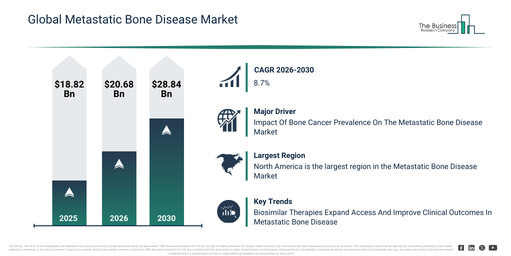
    The metastatic bone disease market has experienced substantial growth in recent years. It is anticipated to expand from $18.82 billion in 2025 to $20.68 billion in 2026, achieving a compound annual growth rate (CAGR) of 9.8%. This historical growth can be attributed to several factors including a rise in cancer incidence, an increasing number of bone metastasis cases, wider use of chemotherapy, advancements in radiation therapy techniques, and the growing application of bisphosphonates.

    The metastatic bone disease market size is poised for robust expansion over the next few years. It is projected to increase to $28.84 billion by 2030, achieving a compound annual growth rate (CAGR) of 8.7%. This anticipated growth throughout the forecast period stems from the proliferation of targeted bone agents, the escalating uptake of immunotherapy combinations, a surging requirement for non-invasive tumor ablation techniques, the broadening scope of personalized treatment approaches, and reinforced oncologic diagnostic capabilities. Significant trends anticipated during this period include enhancements in targeted bone metastasis therapies, AI-assisted improvements in diagnostic imaging, the advent of digital platforms for remote symptom surveillance, the automation of workflows in oncology radiology, and virtual reality-driven training for surgical procedures and treatment.

    Download the Free Sample Report to Explore Key Market Insights:

    https://www.thebusinessresearchcompany.com/sample.aspx?id=15859&type=smp

    What Major Drivers Are Influencing Demand In The Metastatic Bone Disease Market?

    The expanding incidence of bone cancer is projected to fuel the growth of the metastatic bone disease market in the coming years. Bone cancer is characterized as a malignant tumor that develops in the cells of the bone. Its occurrence is influenced by genetic factors, radiation exposure, and environmental elements such as contact with specific chemicals. This condition can lead to metastatic bone disease as cancerous cells from the initial tumor spread through the bloodstream or lymphatic system, forming new tumors in other bones. For instance, in 2023, the American Cancer Society, a US-based non-profit organization, recorded 3,970 new cases of bone and joint cancer, marking an increase from the 3,910 cases reported in 2022. Thus, the rising prevalence of bone cancer is propelling the growth of the metastatic bone disease market.

    Which Segment Areas Are Covered In The Metastatic Bone Disease Market Analysis?

    The metastatic bone disease market covered in this report is segmented –

    1) By Treatment: Medication, Radiation Therapy, Surgical Intervention, Tumor Ablation Therapy

    2) By Origin: Breast, Lung, Thyroid, Kidney, Prostate, Other Origins

    3) By End-User: Hospitals, Specialty Clinics, Ambulatory Surgical Centers

    Subsegments:

    1) By Medication: Bisphosphonates, Denosumab, Chemotherapy Drugs, Hormonal Therapies, Targeted Therapies, Radiation Therapy

    2) By Radiation Therapy: External Beam Radiation Therapy, Internal Radiation Therapy

    3) By Surgical Intervention: Bone Stabilization Surgery, Bone Resection Surgery, Spinal Decompression Surgery

    4) By Tumor Ablation Therapy: Radiofrequency Ablation, Cryoablation, Microwave Ablation

    Which Trends Are Influencing The Metastatic Bone Disease Market?

    Key companies operating in the metastatic bone disease market are concentrating on developing biosimilar therapies to enhance patient access and decrease treatment costs while maintaining clinical effectiveness. Biosimilars are biologic medical products that are highly comparable to already approved reference medicines, exhibiting no clinically significant differences in safety or effectiveness. For instance, in March 2024, Sandoz, a Switzerland-based biopharmaceutical company, obtained FDA approval for Wyost (denosumab-bbdz) and Jubbonti (denosumab-bbdz), which are the first and only FDA-approved biosimilars of denosumab for all indications of the reference medicines. These indications include the prevention of skeletal-related events in patients with bone metastases from solid tumors. Such advancements are expected to improve treatment accessibility and enhance clinical outcomes for patients with metastatic bone disease.

    Which Global Companies Are Actively Competing In The Metastatic Bone Disease Market?

    Major companies operating in the metastatic bone disease market are Pfizer Inc., Johnson & Johnson, Roche Holding AG, Merck & Co. Inc., Bayer AG, Sanofi SA, Bristol-Myers Squibb Company, AstraZeneca plc, Novartis AG, GSK plc, Takeda Pharmaceutical Company Limited, Medtronic plc, Eli Lilly and Company, Amgen Inc., Boston Scientific Corporation, Regeneron Pharmaceuticals Inc., Astellas Pharma Inc., Daiichi Sankyo Company Limited, Jazz Pharmaceuticals Inc., Exelixis Inc., BeiGene Ltd., Mylan N.V., Novocure GmbH, Galapagos NV, Telix Pharmaceuticals Limited

    Read the full metastatic bone disease market report here:

    https://www.thebusinessresearchcompany.com/report/metastatic-bone-disease-global-market-report

    Which Region Shows The Strongest Potential For Future Growth In The Metastatic Bone Disease Market?

    North America was the largest region in the metastatic bone disease market in 2025. The regions covered in the metastatic bone disease market report are Asia-Pacific, South East Asia, Western Europe, Eastern Europe, North America, South America, Middle East, Africa.

    Request A Tailored Metastatic Bone Disease Market Research Report For Competitive Advantage:

    https://www.thebusinessresearchcompany.com/customise?id=15859&type=smp

    Browse Through More Reports Similar to the Global Metastatic Bone Disease Market 2026, By The Business Research Company

    Dental Implants Global Market Report

    https://www.thebusinessresearchcompany.com/report/dental-implants-global-market-report

    Microelectronic Medical Implants Global Market Report

    https://www.thebusinessresearchcompany.com/report/microelectronic-medical-implants-global-market-report

    Cosmetic Implants Global Market Report

    https://www.thebusinessresearchcompany.com/report/cosmetic-implants-global-market-report

    Get in touch with us:

    The Business Research Company: https://www.thebusinessresearchcompany.com/

    Americas +1 310-496-7795

    Asia +44 7882 955267 & +91 8897263534

    Europe +44 7882 955267

    Email us at info@tbrc.info

    Follow us on:

    LinkedIn: https://in.linkedin.com/company/the-business-research-company

    YouTube: https://www.youtube.com/channel/UC24_fI0rV8cR5DxlCpgmyFQ

    Global Market Model: https://www.thebusinessresearchcompany.com/global-market-model
  • Global Metal Implants And Medical Alloys Industry Trends and Market Growth Forecast for 2026–2030

    Global Metal Implants And Medical Alloys Industry Trends and Market Growth Forecast for 2026–2030

    The Business Research Company’s 2026 market reports include new capabilities such as market attractiveness scoring and analysis, total addressable market analysis, company scoring matrix, interactive excel data dashboard, improved supply chain analysis, upcoming startups in the market, and overview of key products, aimed at improving the depth, usability, and strategic value of the insights delivered.

    What Is The Forecasted Market Value Of The Metal Implants And Medical Alloys Market Across 2026–2030?

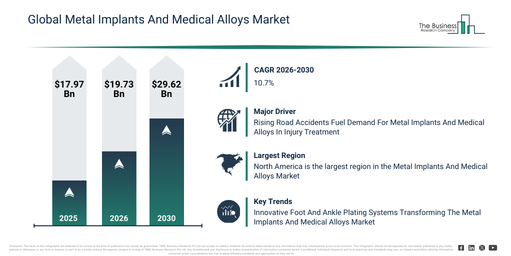
    The market for metal implants and medical alloys has experienced robust growth in recent years. This market is projected to expand from $17.97 billion in 2025 to $19.73 billion in 2026, demonstrating a compound annual growth rate (CAGR) of 9.8%. Historically, this expansion has been driven by factors such as increasing orthopedic surgery volume, the rising prevalence of joint disorders, the expanding adoption of dental implants, advancements in surgical techniques, and the growing usage of titanium alloys.

    The metal implants and medical alloys market size is anticipated to experience substantial growth over the next few years, projected to reach $29.62 billion by 2030, demonstrating a compound annual growth rate (CAGR) of 10.7%. This expansion during the forecast period is driven by advancements in biodegradable metal implants, an increasing demand for minimally invasive implant procedures, greater investment in medical alloy research and development, the expansion of orthopedic trauma care, and a growing preference for customized implant solutions. Significant trends emerging in this period include progress in biocompatible metal alloy development, the integration of AI in optimizing implant designs, the automation of metal implant manufacturing processes, the adoption of circular material recycling for medical alloys, and the implementation of digital tracking and monitoring of implant performance.

    Download the Free Sample Report to Explore Key Market Insights:

    https://www.thebusinessresearchcompany.com/sample.aspx?id=12974&type=smp

    Which Market Drivers Are Supporting The Expansion Of The Metal Implants And Medical Alloys Market?

    The rising incidence of road accidents is projected to fuel the expansion of the metal implants and medical alloys market in the future. A road accident is defined as an incident on a public road involving a moving vehicle that results in either fatal or non-fatal casualties. The increase in such accidents is attributed to factors like distracted driving, excessive speed, poor road conditions, and a growing volume of vehicles. Metal implants and medical alloys are essential in surgical procedures following road accidents, providing lasting support for bone repair and assisting in faster recuperation. For instance, in May 2025, Transport Canada, a Canada-based government agency, reported that motor vehicle fatalities reached 1,964 in 2023, indicating a 1.7% increase from the 1,931 deaths recorded in 2022. This illustrates how the growing number of road accidents is driving the growth of the metal implants and medical alloys market.

    What Segmentation Levels Are Considered In The Metal Implants And Medical Alloys Market?

    The metal implants and medical alloys market covered in this report is segmented –

    1) By Material: Titanium, Stainless Steel, Cobalt Chromium, Other Materials

    2) By Application: Cardiovascular Applications, Dental Applications, Spinal Fusion Applications, Cranio-Facial Surgeries, Orthopedic Reconstruction Surgeries, Other Applications

    3) By End-User: Hospitals And Clinics, Ambulatory Surgical Centers, Other End-Users

    Subsegments:

    1) By Titanium: Titanium Alloys, Titanium Implants

    2) By Stainless Steel: 316L Stainless Steel, 304 Stainless Steel

    3) By Cobalt Chromium: Cobalt Chromium Alloys, Cobalt Chromium Implants

    4) By Other Materials: Zirconium, Nickel Titanium (Nitinol), Magnesium Alloys

    What Trends Are Advancing Progress In The Metal Implants And Medical Alloys Market?

    Leading companies in the metal implants and medical alloys market are concentrating on developing innovative solutions, such as foot and ankle plating systems, for treating foot and ankle conditions. A foot and ankle plating system serves as a surgical hardware solution, providing stabilization and support for fractures or deformities in the foot and ankle through the deployment of metal plates and screws. For example, in September 2023, MiRus LLC, a US-based medical device company known for its extensive proprietary technology in both implants and procedural solutions, introduced the ATLAS MoRe Foot and Ankle Plating System. This ATLAS MoRe Foot and Ankle Plating System, launched by MiRus, LLC, is characterized by its modular design, which enables customizable fixation options to be tailored for individual patient requirements. Its advanced locking mechanism improves both stability and strength, while the system’s low-profile plates facilitate a more anatomical fit, thereby reducing soft tissue irritation. Moreover, the system is engineered for ease of use during surgical procedures, leading to enhanced efficiency and improved outcomes.

    Which Leading Firms Are Contributing To The Growth Of The Metal Implants And Medical Alloys Market?

    Major companies operating in the metal implants and medical alloys market are Medtronic plc, Stryker Corporation, B. Braun Melsungen AG, Aperam S.A., Zimmer Biomet Holdings Inc., Smith and Nephew plc, Dentsply Sirona Inc., ATI Specialty Alloys and Components, Carpenter Technology Corporation, Materion Corporation, Integra LifeSciences Holdings Corporation, NuVasive Inc., CONMED Corporation, Wright Medical Group, Fort Wayne Metals Research Products LLC, Ulbrich Stainless Steels & Special Metals Inc., Lisi Medical Jeropa Inc., Shanghai MicroPort Orthopedics Inc., DJO Global Inc., Ametek Specialty Metal Products Inc., Boston Centerless Inc., Anomet Products Inc., AAP Implantate AG, QuesTek Innovations LLC, Supra Alloys Inc., Syntellix AG

    Read the full metal implants and medical alloys market report here:

    https://www.thebusinessresearchcompany.com/report/metal-implants-and-medical-alloys-global-market-report

    How Is The Metal Implants And Medical Alloys Market Distributed Across Key Geographic Regions?

    North America was the largest region in the metal implants and medical alloys market in 2025. Asia-Pacific is expected to be the fastest-growing region in the forecast period. The regions covered in the metal implants and medical alloys market report are Asia-Pacific, South East Asia, Western Europe, Eastern Europe, North America, South America, Middle East, Africa.

    Request A Tailored Metal Implants And Medical Alloys Market Research Report For Competitive Advantage:

    https://www.thebusinessresearchcompany.com/customise?id=12974&type=smp

    Browse Through More Reports Similar to the Global Metal Implants And Medical Alloys Market 2026, By The Business Research Company

    Metagenomic Sequencing Global Market Report

    https://www.thebusinessresearchcompany.com/report/metagenomic-sequencing-global-market-report

    Metabolomics Global Market Report

    https://www.thebusinessresearchcompany.com/report/metabolomics-global-market-report

    Genomics Global Market Report

    https://www.thebusinessresearchcompany.com/report/genomics-global-market-report

    Get in touch with us:

    The Business Research Company: https://www.thebusinessresearchcompany.com/

    Americas +1 310-496-7795

    Asia +44 7882 955267 & +91 8897263534

    Europe +44 7882 955267

    Email us at info@tbrc.info

    Follow us on:

    LinkedIn: https://in.linkedin.com/company/the-business-research-company

    YouTube: https://www.youtube.com/channel/UC24_fI0rV8cR5DxlCpgmyFQ

    Global Market Model: https://www.thebusinessresearchcompany.com/global-market-model
  • Metagenomics In Healthcare Market Size Outlook and Demand Growth Across 2026–2030

    Metagenomics In Healthcare Market Size Outlook and Demand Growth Across 2026–2030

    The Business Research Company’s 2026 market reports include new capabilities such as market attractiveness scoring and analysis, total addressable market analysis, company scoring matrix, interactive excel data dashboard, improved supply chain analysis, upcoming startups in the market, and overview of key products, aimed at improving the depth, usability, and strategic value of the insights delivered.

    What Market Size Increase Is Anticipated For The Metagenomics In Healthcare Market Over The 2026–2030 Period?

    The metagenomics in healthcare market has observed rapid expansion in its size over recent years. It is anticipated to grow from $2.44 billion in 2025 to $2.87 billion in 2026, exhibiting a compound annual growth rate (CAGR) of 17.8%. This historical growth is primarily attributable to several key factors, including advancements in sequencing technologies, an increased incidence of infectious diseases, the expansion of microbiome research programs, a rising demand for culture-independent diagnostics, and the availability of clinical-grade sequencing workflows.

    The metagenomics in healthcare market size is projected to experience swift expansion in the coming years. Its value is anticipated to reach $5.46 billion by 2030, driven by a compound annual growth rate (CAGR) of 17.5%. This growth throughout the forecast period is primarily attributed to the increasing adoption of precision infectious disease diagnostics, rising investments in microbiome therapeutics, the expansion of genomic epidemiology initiatives, the growing integration of AI in microbial analysis, and an increasing focus on personalized treatment strategies. Furthermore, significant trends for this period encompass the increasing adoption of metagenomic diagnostics in clinical settings, the growing use of microbiome-based disease profiling, the rising integration of NGS in infection management, the expansion of personalized microbial therapeutics research, and an enhanced focus on rapid pathogen identification.

    Download the Free Sample Report to Explore Key Market Insights:

    https://www.thebusinessresearchcompany.com/sample.aspx?id=28267&type=smp

    What Underlying Factors Are Accelerating The Growth Of The Metagenomics In Healthcare Market?

    The future expansion of the metagenomics in healthcare market is anticipated to be significantly propelled by the rising incidence of infectious diseases. These illnesses, caused by harmful microorganisms such as bacteria, viruses, fungi, or parasites, can spread directly or indirectly between people. The growing prevalence of such diseases is largely attributed to increased global travel, which facilitates the rapid cross-border dissemination of pathogens. Metagenomics in healthcare plays a crucial role in tackling infectious diseases by enabling the quick and precise identification of pathogens, which is vital for controlling outbreaks. It also reduces diagnostic uncertainty through the analysis of complex microbial communities, thereby improving patient outcomes and guiding targeted treatments. For instance, in February 2024, the UK Health Security Agency, a UK-based government agency, reported that tuberculosis (a contagious bacterial infection that primarily affects the lungs) cases in England increased to 4,850 in 2023, representing a 10.7% rise from 4,380 cases in 2022. This increasing prevalence of infectious diseases is thus a key driver for the growth of the metagenomics in healthcare market.

    How Is The Metagenomics In Healthcare Market Segmented Across Key Categories?

    The metagenomics in healthcare market covered in this report is segmented –

    1) By Types: Sample Extraction Kits, Metagenomics Kits

    2) By Technology: Next-Generation Sequencing, Polymerase Chain Reaction, Microarray

    3) By Workflow: Sample Collection, Deoxyribonucleic Acid Extraction, Library Preparation, Sequencing

    4) By Application: Infectious Disease Diagnosis, Genomic Epidemiology, Personalized Medicine, Microbiome Analysis, Drug Discovery

    5) By End User: Hospitals, Diagnostic Laboratories, Research Institutes, Pharmaceutical Companies, Biotechnology Companies

    Subsegments:

    1) By Sample Extraction Kits: Deoxyribonucleic Acid Extraction Kits, Ribonucleic Acid Extraction Kits, Protein Extraction Kits

    2) By Metagenomics Kits: Library Preparation Kits, Sequencing Kits, Target Enrichment Kits

    How Are Trends Transforming The Metagenomics In Healthcare Market Landscape?

    Key companies active in the metagenomics in healthcare market are prioritizing the creation of innovative solutions, such as microbial community profiling, to improve disease diagnosis, enable tailored treatments, and push forward precision medicine. Microbial community profiling entails the thorough examination and description of various microbial groups within a specific setting or sample, employing sequencing and bioinformatics tools to ascertain their makeup, variety, and functional contributions. For example, in August 2024, MGI Tech Co. Ltd., a China-based biotechnology company, unveiled a Human Microbiome Metagenomics Sequencing Package to further microbial research and healthcare applications. This package offers an automated, comprehensive microbial community profiling workflow for effectively analyzing human microbiome diversity, function, and links to diseases using proven high-throughput platforms. It reduces manual effort, boosts consistency, and lowers expenditures, thereby making large-scale and clinical microbiome research more widely available. Researchers benefit from rapid and accurate microbial identification, alongside flexible throughput, which supports biomarker discovery and advances translational health research.

    Who Are The Dominant Players Shaping The Metagenomics In Healthcare Market Landscape?

    Major companies operating in the metagenomics in healthcare market are F. Hoffmann-La Roche AG, Eurofins Scientific, Agilent Technologies Inc., Illumina Inc., Bio-Rad Laboratories Inc., QIAGEN N.V., BGI Genomics Co. Ltd., Novogene Corporation, Oxford Nanopore Technologies Limited, Pacific Biosciences of California Inc., MedGenome Labs Limited, Zymo Research Corporation, BaseClear B.V., Psomagen Inc., Karius Inc., Microsynth AG, Macrogen Inc., Norgen Biotek Corp., Tiny Health Inc., CosmosID Inc., Kanvas Biosciences Inc., Phase Genomics Inc., Wobble Genomics Inc.

    Read the full metagenomics in healthcare market report here:

    https://www.thebusinessresearchcompany.com/report/metagenomics-in-healthcare-global-market-report

    Which Region Is Projected To Dominate The Metagenomics In Healthcare Market During The Forecast Period?

    North America was the largest region in the metagenomics in healthcare market in 2025. Asia-Pacific is expected to be the fastest-growing region in the forecast period. The regions covered in the metagenomics in healthcare market report are Asia-Pacific, South East Asia, Western Europe, Eastern Europe, North America, South America, Middle East, Africa.

    Request A Tailored Metagenomics In Healthcare Market Research Report For Competitive Advantage:

    https://www.thebusinessresearchcompany.com/customise?id=28267&type=smp

    Browse Through More Reports Similar to the Global Metagenomics In Healthcare Market 2026, By The Business Research Company

    Metagenomic Sequencing Global Market Report

    https://www.thebusinessresearchcompany.com/report/metagenomic-sequencing-global-market-report

    Metabolomics Global Market Report

    https://www.thebusinessresearchcompany.com/report/metabolomics-global-market-report

    Genomics In Cancer Care Global Market Report

    https://www.thebusinessresearchcompany.com/report/genomics-in-cancer-care-global-market-report

    Get in touch with us:

    The Business Research Company: https://www.thebusinessresearchcompany.com/

    Americas +1 310-496-7795

    Asia +44 7882 955267 & +91 8897263534

    Europe +44 7882 955267

    Email us at info@tbrc.info

    Follow us on:

    LinkedIn: https://in.linkedin.com/company/the-business-research-company

    YouTube: https://www.youtube.com/channel/UC24_fI0rV8cR5DxlCpgmyFQ

    Global Market Model: https://www.thebusinessresearchcompany.com/global-market-model