Category: Healthcare Services

  • Fifth Generation (5G) Smart Healthcare Market Forecast 2026–2035 Reflecting Expansion Opportunities Across Industries

    Fifth Generation (5G) Smart Healthcare Market Forecast 2026–2035 Reflecting Expansion Opportunities Across Industries

    The Business Research Company’s 2026 market reports include new capabilities such as market attractiveness scoring and analysis, total addressable market analysis, company scoring matrix, interactive excel data dashboard, improved supply chain analysis, upcoming startups in the market, and overview of key products, aimed at improving the depth, usability, and strategic value of the insights delivered.

    What Is The Market Size Of The Fifth Generation (5G) Smart Healthcare Market In 2026 And What Value Is Projected For 2030?

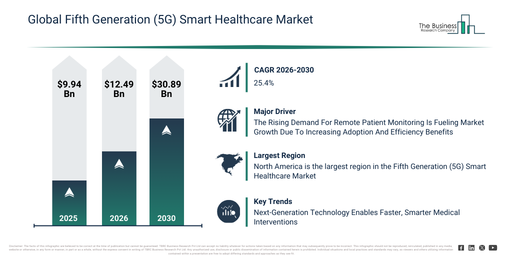
    The fifth generation (5g) smart healthcare market size has experienced significant expansion in recent years. This market is expected to increase from $9.94 billion in 2025 to $12.49 billion in 2026, achieving a compound annual growth rate (CAGR) of 25.7%. Factors contributing to its historical growth include the growing embrace of telemedicine platforms, the enhancement of digital health infrastructure, an escalating need for remote patient care solutions, the initial deployment of connected medical devices, and advancements in wireless healthcare connectivity.

    The fifth generation (5g) smart healthcare market is projected to experience substantial expansion in the coming years. This market is anticipated to reach a valuation of $30.89 billion by 2030, demonstrating a compound annual growth rate (CAGR) of 25.4%. During this forecast period, the expansion can be linked to heightened investments in 5g healthcare infrastructure, a greater need for immediate clinical decision support, the proliferation of smart hospital programs, the deeper integration of AI-powered healthcare analytics, and a stronger emphasis on remote and distributed care approaches. Key developments foreseen include wider acceptance of remote surgery capabilities, increased implementation of real-time patient monitoring systems, enhanced integration of AI-driven diagnostics leveraging 5g, the growth of augmented reality and virtual reality assisted surgical tools, and a sharpened focus on medical networks with ultra-low latency.

    Download the Free Sample Report to Explore Key Market Insights:

    https://www.thebusinessresearchcompany.com/sample.aspx?id=28221&type=smp

    What Major Drivers Are Influencing Demand In The Fifth Generation (5G) Smart Healthcare Market?

    The increasing demand for remote patient monitoring is anticipated to propel the growth of the fifth generation (5G) smart healthcare market. Remote patient monitoring utilizes digital technologies to track and transmit patients’ health data in real time outside traditional healthcare settings. This surge in remote patient monitoring is driven by the growing prevalence of chronic diseases and the need for continuous care, as it facilitates proactive interventions, reduces hospital visits, and enhances patient outcomes. Fifth generation (5G) smart healthcare supports remote patient monitoring by providing high-speed, low-latency connectivity for seamless data exchange and reliable virtual healthcare delivery. For instance, in June 2025, according to the National Library of Medicine (NLM), a US-based biomedical library, remote patient monitoring utilization within physician office settings expanded sharply, reaching 5,118,772 services in 2023. Therefore, the rising demand for remote patient monitoring is driving the growth of the fifth generation (5G) smart healthcare market.

    What Are The Key Segments Of The Fifth Generation (5G) Smart Healthcare Market?

    The fifth generation (5g) smart healthcare market covered in this report is segmented –

    1) By Component: Hardware, Software, Services

    2) By Application: Remote Patient Monitoring, Connected Medical Devices, Telemedicine, Augmented Reality (AR) Or Virtual Reality (VR) For Surgery, Other Applications

    3) By End-User: Hospitals, Clinics, Ambulatory Surgical Centers, Other End-Users

    Subsegments:

    1) By Hardware: Wearable Devices, Medical Imaging Equipment, Diagnostic Equipment, Monitoring Devices, Networking Equipment

    2) By Software: Electronic Health Record, Telemedicine Platforms, Health Analytics Software, Patient Management System, Remote Monitoring Software

    3) By Services: Consulting Services, Implementation Services, Maintenance And Support, Training And Education, Data Management Services

    How Are Trends Impacting The Fifth Generation (5G) Smart Healthcare Market?

    Leading companies in the fifth generation (5G) smart healthcare market are prioritizing the adoption of innovative technologies like artificial intelligence (AI) to facilitate real-time patient monitoring and enhance emergency care outcomes. AI, which simulates human intelligence in machines to analyze data, learn, and make decisions, supports healthcare by enabling continuous patient oversight, early diagnosis, and more rapid, accurate medical interventions. An example of this is the launch in July 2025 by KIMS Hospitals Private Limited, an India-based healthcare provider, in partnership with Medulance Private Limited, an India-based app-based technology and comprehensive emergency response service provider, of Thane region’s first AI-integrated 5G Smart Ambulance. This ambulance facilitates the live transmission of crucial patient data, including ECG, blood pressure, and oxygen saturation, directly to the emergency room while the patient is en route. This integration of 5G connectivity with AI-driven analytics allows emergency doctors to evaluate patient conditions and begin care protocols before the patient’s arrival, substantially improving response times and enhancing results in critical emergencies. It also presents a scalable model for incorporating advanced technology into pre-hospital care across India and various other emerging markets.

    Who Are The Leading Companies Operating In The Fifth Generation (5G) Smart Healthcare Market?

    Major companies operating in the fifth generation (5g) smart healthcare market are Verizon Communications Inc., AT&T Inc., Huawei Technologies Co. Ltd., Nippon Telegraph and Telephone Corporation, T-Mobile US Inc., Cisco Systems Inc., Intel Corporation, Oracle Corporation, Vodafone Group Plc, Qualcomm Technologies Inc., Medtronic plc, BT Group plc, Fujitsu Limited, Telefonaktiebolaget LM Ericsson, Siemens Healthineers AG, GE HealthCare Technologies Inc., ZTE Corporation, Visionable Limited, Somatix Inc., Vigorus Healthtech Pvt. Ltd.

    Read the full fifth generation (5g) smart healthcare market report here:

    https://www.thebusinessresearchcompany.com/report/fifth-generation-5g-smart-healthcare-global-market-report

    Which Region Shows The Strongest Potential For Future Growth In The Fifth Generation (5G) Smart Healthcare Market?

    North America was the largest region in the fifth generation (5G) smart healthcare market in 2025. The regions covered in the fifth generation (5g) smart healthcare market report are Asia-Pacific, South East Asia, Western Europe, Eastern Europe, North America, South America, Middle East, Africa.

    Request A Tailored Fifth Generation (5G) Smart Healthcare Market Research Report For Competitive Advantage:

    https://www.thebusinessresearchcompany.com/customise?id=28221&type=smp

    Browse Through More Reports Similar to the Global Fifth Generation (5G) Smart Healthcare Market 2026, By The Business Research Company

    5Th Generation 5G Enterprise Global Market Report

    https://www.thebusinessresearchcompany.com/report/5th-generation-5g-enterprise-global-market-report

    5G Technologies Global Market Report

    https://www.thebusinessresearchcompany.com/report/5g-technologies-global-market-report

    5G Services Global Market Report

    https://www.thebusinessresearchcompany.com/report/5g-services-global-market-report

    Get in touch with us:

    The Business Research Company: https://www.thebusinessresearchcompany.com/

    Americas +1 310-496-7795

    Asia +44 7882 955267 & +91 8897263534

    Europe +44 7882 955267

    Email us at info@tbrc.info

    Follow us on:

    LinkedIn: https://in.linkedin.com/company/the-business-research-company

    YouTube: https://www.youtube.com/channel/UC24_fI0rV8cR5DxlCpgmyFQ

    Global Market Model: https://www.thebusinessresearchcompany.com/global-market-model
  • Healthcare Companion Robots Market Growth Prospects 2026–2030 with Innovation Trends and Competitive Landscape

    Healthcare Companion Robots Market Growth Prospects 2026–2030 with Innovation Trends and Competitive Landscape

    The Business Research Company’s 2026 market reports include new capabilities such as market attractiveness scoring and analysis, total addressable market analysis, company scoring matrix, interactive excel data dashboard, improved supply chain analysis, upcoming startups in the market, and overview of key products, aimed at improving the depth, usability, and strategic value of the insights delivered.

    What Market Value Is Expected For The Healthcare Companion Robots Market At The End Of The 2026–2030 Forecast Period?

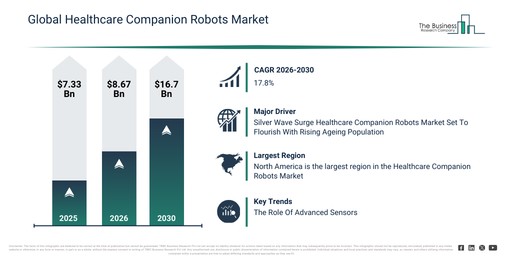
    The healthcare companion robots market has seen substantial growth in recent years. It is projected to expand from $7.33 billion in 2025 to $8.67 billion in 2026, at a compound annual growth rate (CAGR) of 18.3%. This historical growth can be attributed to the rising elderly population, increasing demand for assisted living solutions, a shortage of healthcare caregivers, the adoption of robotics in therapy settings, and improvements in robotic sensor technologies.

    The market size for healthcare companion robots is projected to undergo substantial expansion over the next few years. It is forecast to achieve a valuation of $16.7 billion by 2030, exhibiting a compound annual growth rate (CAGR) of 17.8%. This anticipated growth throughout the forecast period stems from the increasing implementation of socially assistive robots, a surge in investments directed towards personalized healthcare robotics, the broadening scope of home-based care models, a rising receptiveness to robotic companionship, and progress in AI-driven behavioral analytics. Significant developments expected during this period encompass the growing adoption of AI-enabled companion robots, an increase in the use of robots for supporting elderly care, the deeper integration of personalized care algorithms, the expansion of emotion recognition functionalities, and an elevated focus on the interaction between humans and robots.

    Download the Free Sample Report to Explore Key Market Insights:

    https://www.thebusinessresearchcompany.com/sample.aspx?id=8225&type=smp

    What Primary Drivers Are Shaping The Development Of The Healthcare Companion Robots Market?

    The increasing number of elderly individuals is projected to fuel the expansion of the healthcare companion robot market. As the demographic of older people grows, so does the need for companion robots, which are built to remain at home and provide assistance to the aged. Furthermore, governments worldwide are launching initiatives to encourage the adoption of healthcare companion robots. For instance, data released in October 2025 by the UK’s Office for the National Statistics revealed that 625,000 individuals aged 90 or over resided in the UK in 2024, marking a 2.2% increase from 612,000 in mid-2023. Consequently, the expanding ageing population is anticipated to be a primary catalyst for the healthcare companion robots market’s expansion throughout the projection period.

    What Segment Types Make Up The Healthcare Companion Robots Market?

    The healthcare companion robots market covered in this report is segmented –

    1) By Type: Animal-like Robots, Humanoid Robots

    2) By Age Group: Children, Geriatric

    3) By Application: Emotional Support And Companionship, Therapy And Rehabilitation Assistance, Monitoring And Safety Assistance, Cognitive Stimulation And Dementia Care, Pediatric Support And Developmental Aid, Entertainment And Engagement

    Subsegments:

    1) By Animal-Like Robots: Robotic Pets, Interactive Animal Simulators

    2) By Humanoid Robots: Social Companion Robots, Assistance Robots For Elderly Care

    How Are Trends Impacting The Healthcare Companion Robots Market?

    Leading companies in the healthcare companion robot market are prioritizing innovative technologies, such as advanced sensors, to improve patient monitoring, enhance interaction capabilities, and deliver personalized care solutions. Advanced sensors are sophisticated devices that gather and analyze intricate data from their surroundings, frequently integrating AI and IoT for improved functionality and accuracy. For instance, in February 2023, Elephant Robotics Technology Co., Ltd., a Chinese high-tech enterprise focused on robot research and development, unveiled MetaCat. The MetaCat is outfitted with numerous touch sensors, voice recognition features, and expressive LED lights. These attributes enable it to simulate a cat’s purrs, meows, and eye movements, thereby boosting its lifelike characteristics.

    Who Are The Key Players Driving Competition In The Healthcare Companion Robots Market?

    Major companies operating in the healthcare companion robots market are Blue Frog Robotics SAS, Intuition Robotics Ltd., No Isolation AS, Honda Motor Co. Ltd., Hanson Robotics Limited, Ubtech Robotics Corp. Ltd., Emotix Inc., Catalia Health Inc., Care Coach Inc., F&P Robotics AG, Giraff Technologies AB, Leka SAS, SoftBank Robotics, Toyota, Paro Robots, PAL Robotics, Robosoft Systems, Sanbot Technology, Aldebaran Robotics, Mayfield Robotics

    Read the full healthcare companion robots market report here:

    https://www.thebusinessresearchcompany.com/report/healthcare-companion-robots-global-market-report

    How Does The Healthcare Companion Robots Market Perform Across Major Global Regions?

    North America was the largest region in the healthcare companion robots market share in 2025. The regions covered in the healthcare companion robots market report are Asia-Pacific, South East Asia, Western Europe, Eastern Europe, North America, South America, Middle East, Africa.

    Request A Tailored Healthcare Companion Robots Market Research Report For Competitive Advantage:

    https://www.thebusinessresearchcompany.com/customise?id=8225&type=smp

    Browse Through More Reports Similar to the Global Healthcare Companion Robots Market 2026, By The Business Research Company

    Healthcare Mobile Robots Global Market Report

    https://www.thebusinessresearchcompany.com/report/healthcare-mobile-robots-global-market-report

    Hospital Robots Global Market Report

    https://www.thebusinessresearchcompany.com/report/hospital-robots-global-market-report

    Healthcare Assistive Robot Global Market Report

    https://www.thebusinessresearchcompany.com/report/healthcare-assistive-robot-global-market-report

    Get in touch with us:

    The Business Research Company: https://www.thebusinessresearchcompany.com/

    Americas +1 310-496-7795

    Asia +44 7882 955267 & +91 8897263534

    Europe +44 7882 955267

    Email us at info@tbrc.info

    Follow us on:

    LinkedIn: https://in.linkedin.com/company/the-business-research-company

    YouTube: https://www.youtube.com/channel/UC24_fI0rV8cR5DxlCpgmyFQ

    Global Market Model: https://www.thebusinessresearchcompany.com/global-market-model
  • Healthcare Command Centers Market Forecast 2026–2035 Highlighting Market Data Patterns and Industry Insights

    Healthcare Command Centers Market Forecast 2026–2035 Highlighting Market Data Patterns and Industry Insights

    The Business Research Company’s 2026 market reports include new capabilities such as market attractiveness scoring and analysis, total addressable market analysis, company scoring matrix, interactive excel data dashboard, improved supply chain analysis, upcoming startups in the market, and overview of key products, aimed at improving the depth, usability, and strategic value of the insights delivered.

    What Is The Estimated Market Size Of The Healthcare Command Centers Market During 2026–2030?

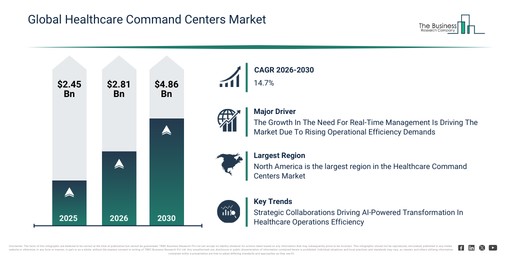
    The healthcare command centers market size has experienced rapid growth in recent years. It is anticipated to expand from $2.45 billion in 2025 to $2.81 billion in 2026, exhibiting a compound annual growth rate (CAGR) of 14.9%. The historical period’s growth can be attributed to several factors, including the increasing intricacy of hospital operations, a surge in patient volume within acute care facilities, the early implementation of hospital analytics platforms, a rising focus on operational efficiency, and the expansion of centralized care coordination models.

    The healthcare command centers market is poised for substantial expansion over the next few years. It is projected to attain a valuation of $4.86 billion by 2030, growing at a compound annual growth rate (CAGR) of 14.7%. This growth trajectory during the forecast period stems from factors such as increasing demand for data-driven clinical decision-making, rising investments in smart hospital infrastructure, the expansion of telehealth coordination capabilities, a growing adoption of AI-enabled hospital management tools, and an increasing focus on value-based healthcare delivery. Significant trends expected in the forecast period include the increasing deployment of real-time hospital operations dashboards, the growing use of predictive analytics for patient flow, the rising integration of multisource clinical data systems, the expansion of virtual and hybrid command centers, and an enhanced focus on proactive resource optimization.

    Download the Free Sample Report to Explore Key Market Insights:

    https://www.thebusinessresearchcompany.com/sample.aspx?id=30292&type=smp

    Which Major Factors Are Driving The Expansion Of The Healthcare Command Centers Market?

    The increasing requirement for real-time management is projected to advance the healthcare command centers market moving forward. Real-time management involves the continuous observation and response to ongoing operations or data as events unfold, ensuring immediate decision-making and optimal performance. This rising need for real-time management stems from the growing desire for quicker decisions and improved operational efficiency, especially within intricate environments like healthcare. Healthcare command centers address this by integrating data from various sources such as patient flow, bed occupancy, and resource utilization, enabling constant monitoring, rapid decision-making, and timely intervention throughout healthcare operations. For instance, in October 2025, according to the British Medical Association (BMA), a UK-based professional body and trade union for doctors, the latest Referral to Treatment (RTT) data for August 2025 revealed that approximately 6.26 million patients were awaiting treatment across 7.41 million cases, including about 2.89 million waiting over 18 weeks and nearly 191,500 waiting more than a year. Thus, the escalating need for real-time management is fueling the growth of the healthcare command centers market.

    How Are The Various Segments Of The Healthcare Command Centers Market Categorized?

    The healthcare command centers market covered in this report is segmented –

    1) By Component: Software, Hardware, Services

    2) By Command Center Type: Capacity And Bed Management, Operations And Resource Centers, Clinical Command Centers, Emergency Operations Centers, Security Operations Centers

    3) By Deployment Mode: On-Premise, Cloud-Based, Hybrid

    4) By Application: Patient Flow And Capacity Management, Bed Management, Staff Allocation And Scheduling, Emergency Response And Crisis Management, Real-Time Decision Support, Telehealth And Remote Care Coordination

    5) By End User: Large Health Systems, Academic Medical Centers, Community And Regional Hospitals, Ambulatory Surgery Centers And Integrated Clinics, Managed Service Providers

    Subsegments:

    1) By Software: Real-Time Dashboards And Visualization, Predictive Analytics And Forecasting, Scheduling And Procedure Optimization, Event Or Alarm And Incident Management, Integrations And Middleware, Collaboration Or Communication Workspace

    2) By Hardware: Display Walls And Visualization Hardware, Networking And Edge Appliances, On-Site Monitoring Stations Or Consoles

    3) By Services: Implementation And Integration Services, Managed Services Or Virtual Command Center Operations, Consulting, Training And Continuous Optimization, Data Science Or Model Tuning

    What Industry Trends Are Redefining The Healthcare Command Centers Market?

    Key players in the healthcare command centers market are prioritizing the establishment of strategic collaborations to drive technological innovation, elevate operational intelligence, and enhance patient care efficiency through integrated data-driven approaches. Such strategic collaborations involve alliances between technology providers and healthcare organizations, designed to merge clinical knowledge with advanced analytics, artificial intelligence, and real-time management capabilities to optimize hospital operations and their outcomes. As an illustration, in October 2025, GE HealthCare, a U.S.-based medical technology company, partnered with The Queen’s Health Systems, a U.S.-based healthcare network, and Duke Health, a U.S.-based academic medical center, to jointly develop cloud-first, AI-driven hospital operations software within its CareIntellect family. This collaborative endeavor centers on utilizing predictive analytics to optimize patient flow, staffing, and resource utilization in real time, leading to improved efficiency, a reduction in patient length of stay, and the promotion of high-quality, patient-centered care.

    Which Major Firms Influence Developments In The Healthcare Command Centers Market?

    Major companies operating in the healthcare command centers market are Deloitte Touche Tohmatsu Limited, Siemens Healthineers AG, Koninklijke Philips N.V., General Electric Company, Oracle Corporation, Epic Systems Corporation, Dedalus S.p.A., symplr, Inc., Columna Flow, Inc., Care Logistics, Inc., TeleTracking Technologies, Inc., LeanTaaS, Inc., Alcidion Pty Ltd, Qventus, Inc., ABOUT Healthcare, Inc., Pointcore, Inc., Hospital IQ, Inc., TAGNOS, Inc., WellSky Corporation, Cerner Corporation

    Read the full healthcare command centers market report here:

    https://www.thebusinessresearchcompany.com/report/global-healthcare-command-centers-market-report

    Which Region Currently Holds The Largest Share Of The Healthcare Command Centers Market?

    North America was the largest region in the healthcare command centers market in 2025. Asia-Pacific is expected to be the fastest-growing region in the forecast period. The regions covered in the healthcare command centers market report are Asia-Pacific, South East Asia, Western Europe, Eastern Europe, North America, South America, Middle East, Africa.

    Request A Tailored Healthcare Command Centers Market Research Report For Competitive Advantage:

    https://www.thebusinessresearchcompany.com/customise?id=30292&type=smp

    Browse Through More Reports Similar to the Global Healthcare Command Centers Market 2026, By The Business Research Company

    Operations Command Center Global Market Report

    https://www.thebusinessresearchcompany.com/report/operations-command-center-global-market-report

    Medical Centrifuge Global Market Report

    https://www.thebusinessresearchcompany.com/report/medical-centrifuge-global-market-report

    Healthcare Services Market

    https://www.thebusinessresearchcompany.com/report/healthcare-services-market

    Get in touch with us:

    The Business Research Company: https://www.thebusinessresearchcompany.com/

    Americas +1 310-496-7795

    Asia +44 7882 955267 & +91 8897263534

    Europe +44 7882 955267

    Email us at info@tbrc.info

    Follow us on:

    LinkedIn: https://in.linkedin.com/company/the-business-research-company

    YouTube: https://www.youtube.com/channel/UC24_fI0rV8cR5DxlCpgmyFQ

    Global Market Model: https://www.thebusinessresearchcompany.com/global-market-model
  • Healthcare Cloud Infrastructure Market Outlook 2026–2030 with Major Growth Drivers and Emerging Industry Trends

    Healthcare Cloud Infrastructure Market Outlook 2026–2030 with Major Growth Drivers and Emerging Industry Trends

    The Business Research Company’s 2026 market reports include new capabilities such as market attractiveness scoring and analysis, total addressable market analysis, company scoring matrix, interactive excel data dashboard, improved supply chain analysis, upcoming startups in the market, and overview of key products, aimed at improving the depth, usability, and strategic value of the insights delivered.

    What Market Size Expansion Is Predicted For The Healthcare Cloud Infrastructure Market Between 2026 And 2030?

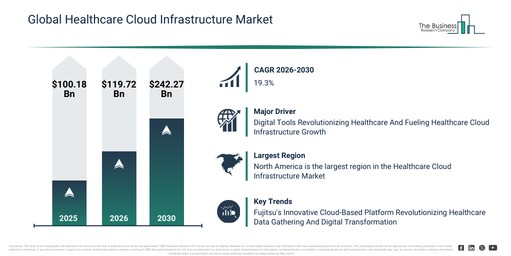
    The healthcare cloud infrastructure market size has experienced significant expansion in recent years. It is anticipated to increase from $100.18 billion in 2025 to $119.72 billion in 2026, with a compound annual growth rate (CAGR) of 19.5%. The historical growth of this market can be attributed to factors such as the increasing digitization of healthcare records, the rise of telehealth platforms, a growing demand for scalable IT infrastructure, the adoption of electronic health records, and the expansion of healthcare data volumes.

    The healthcare cloud infrastructure market is projected for significant expansion in the coming years, anticipated to reach $242.27 billion by 2030, exhibiting a compound annual growth rate (CAGR) of 19.3%. This projected growth stems from factors such as a surge in the adoption of cloud-native healthcare applications, a heightened emphasis on data privacy and security compliance, the broadening scope of AI-enabled healthcare analytics, increased funding for hybrid cloud models, and the demand for economical healthcare IT infrastructure. Key trends driving this period involve the increasing integration of hybrid cloud architectures, a heightened necessity for secure healthcare data storage, the expanding utilization of scalable cloud computing resources, the development of robust disaster recovery and backup solutions, and a stronger commitment to interoperable infrastructure.

    Download the Free Sample Report to Explore Key Market Insights:

    https://www.thebusinessresearchcompany.com/sample.aspx?id=7267&type=smp

    What Key Drivers Are Influencing The Growth Of The Healthcare Cloud Infrastructure Market?

    The projected expansion of the healthcare cloud infrastructure market over the next few years is anticipated to be fueled by the growing integration of digital tools within the healthcare sector. These digital tools encompass software programs, hardware, and services that utilize information and communication technology to empower healthcare professionals and patients in making well-informed choices. Examples of such tools include electronic health records (EHRs), electronic medical records (EMRs), mobile health (mHealth) applications, wearable technology, telehealth and telemedicine platforms, and personalized medicine, all engineered to enhance healthcare service delivery. Healthcare cloud infrastructure finds application across various digital solutions to boost the efficiency, interconnectedness, and security of healthcare provisions. As a fundamental element, healthcare cloud infrastructure facilitates the digital transformation of the healthcare industry, leading to improved patient care, enhanced operational effectiveness, and greater innovation in both healthcare services and technology. For example, data from January 2025, released by Deloitte Touche Tohmatsu Limited, a UK-based software company, revealed that approximately 70% of survey participants consider investment in digital tools and platforms crucial, 60% place importance on foundational technologies like EMRs and ERP, and almost 90% of C-suite executives foresee a rapid increase in digital technology adoption during 2025. Consequently, the growing embrace of digital tools within the healthcare sector is a key impetus for the healthcare cloud infrastructure market.

    Which Market Segments Are Examined In The Healthcare Cloud Infrastructure Market Study?

    The healthcare cloud infrastructure market covered in this report is segmented –

    1) By Component: Hardware, Services

    2) By Deployment Model: Private Cloud, Hybrid Cloud, Public Cloud

    3) By End-User: Healthcare Providers, Healthcare Payers

    Subsegments:

    1) By Hardware: Servers, Storage Devices, Networking Equipment, Security Appliances

    2) By Services: Cloud Storage Services, Cloud Computing Services, Cloud Security Services, Consulting And Integration Services

    What Key Developments And Trends Are Impacting The Healthcare Cloud Infrastructure Market?

    Leading firms in the healthcare cloud infrastructure market are prioritizing product advancements, including cloud-based platforms, to more effectively satisfy the requirements of their current clientele. This type of platform encompasses the operating system and hardware found on a server within an internet-connected data center, facilitating the remote and scalable integration of both software and hardware components. Businesses opt to lease access to computing resources like databases, servers, storage, statistical analysis tools, networking capabilities, software applications, and intelligent services, thereby avoiding the need to set up and manage their proprietary data centers or IT infrastructure. As an illustration, in March 2023, Fujitsu Limited, a Japanese company specializing in information and communications technology equipment and services, introduced an inventive and distinctive cloud-based platform. This advanced cloud platform empowers users to securely collect and utilize health-related data, thereby fostering digital transformation within the medical sector. This latest offering aligns with Fujitsu’s ongoing commitment to fostering a healthy society, consistent with Fujitsu Uvance’s objective of promoting ‘healthy living’ for a sustainable global future. Key features of the platform include the automatic conversion of healthcare data into HL7 FHIR, recognized as the next-generation standard for medical information, comprehensive aggregation of diverse health data, and strong security protocols designed to guarantee secure data usage.

    Who Are The Primary Competitors In The Healthcare Cloud Infrastructure Market?

    Major companies operating in the healthcare cloud infrastructure market are Amazon.com Inc., Microsoft Corporation, Google LLC, Oracle Corporation, International Business Machines Corporation, Hewlett Packard Enterprise, Dell Inc., NetApp Inc., Cisco Systems Inc., VMware Inc., SAP SE, Alibaba Group Holding Ltd, Tencent Holdings Ltd, NTT Ltd, Fujitsu Limited, Hitachi Ltd, Iron Mountain Incorporated, Equinix Inc., Digital Realty Trust Inc., ClearDATA Networks Inc.

    Read the full healthcare cloud infrastructure market report here:

    https://www.thebusinessresearchcompany.com/report/healthcare-cloud-infrastructure-global-market-report

    Which Region Is Expected To Register The Fastest Growth In The Healthcare Cloud Infrastructure Market?

    North America was the largest region in the healthcare cloud computing market in 2025. Asia-Pacific is expected to be the fastest-growing region in the forecast period. The regions covered in the healthcare cloud infrastructure market report are Asia-Pacific, South East Asia, Western Europe, Eastern Europe, North America, South America, Middle East, Africa.

    Request A Tailored Healthcare Cloud Infrastructure Market Research Report For Competitive Advantage:

    https://www.thebusinessresearchcompany.com/customise?id=7267&type=smp

    Browse Through More Reports Similar to the Global Healthcare Cloud Infrastructure Market 2026, By The Business Research Company

    Healthcare Cloud Computing Global Market Report

    https://www.thebusinessresearchcompany.com/report/healthcare-cloud-computing-global-market-report

    Cloud Services Market

    https://www.thebusinessresearchcompany.com/report/cloud-services-market

    Cloud Professional Services Global Market Report

    https://www.thebusinessresearchcompany.com/report/cloud-professional-services-global-market-report

    Get in touch with us:

    The Business Research Company: https://www.thebusinessresearchcompany.com/

    Americas +1 310-496-7795

    Asia +44 7882 955267 & +91 8897263534

    Europe +44 7882 955267

    Email us at info@tbrc.info

    Follow us on:

    LinkedIn: https://in.linkedin.com/company/the-business-research-company

    YouTube: https://www.youtube.com/channel/UC24_fI0rV8cR5DxlCpgmyFQ

    Global Market Model: https://www.thebusinessresearchcompany.com/global-market-model
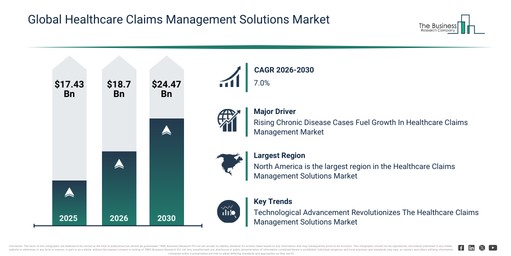
  • One of the Major Drivers of the Healthcare Claims Management Solutions Market Is the Rising Chronic Disease Cases Fuel Growth In Healthcare Claims Management Market

    One of the Major Drivers of the Healthcare Claims Management Solutions Market Is the Rising Chronic Disease Cases Fuel Growth In Healthcare Claims Management Market

    The Business Research Company’s 2026 market reports include new capabilities such as market attractiveness scoring and analysis, total addressable market analysis, company scoring matrix, interactive excel data dashboard, improved supply chain analysis, upcoming startups in the market, and overview of key products, aimed at improving the depth, usability, and strategic value of the insights delivered.

    How Large Is The Healthcare Claims Management Solutions Market Projected To Become By 2030 Based On Its 2026 Valuation?

    The healthcare claims management solutions market has experienced robust expansion in recent years. Projections indicate it will grow from $17.43 billion in 2025 to $18.7 billion in 2026, at a compound annual growth rate (CAGR) of 7.3%. The growth observed in the historic period stems from increasing healthcare insurance coverage, rising claim volumes across providers, the adoption of digital billing systems, the growing complexity of reimbursement processes, and the demand for faster claim settlement.

    The healthcare claims management solutions market is projected to experience substantial expansion in the coming years. By 2030, its size is anticipated to reach $24.47 billion, advancing at a compound annual growth rate (CAGR) of 7.0%. This anticipated growth during the forecast period is fueled by several factors, including the expanding implementation of AI-powered claims platforms, a heightened emphasis on value-based care reimbursement, the proliferation of cloud-based claims solutions, an escalating focus on automating regulatory compliance, and a need for immediate claims transparency. Key trends for this period encompass the greater uptake of automated claims processing systems, an increase in the application of predictive analytics to improve claims accuracy, broader integration of real-time access to patient data, the development of fraud detection and prevention instruments, and an elevated commitment to data security and adherence to regulations.

    Download the Free Sample Report to Explore Key Market Insights:

    https://www.thebusinessresearchcompany.com/sample.aspx?id=7298&type=smp

    What Major Growth Drivers Are Shaping The Outlook Of The Healthcare Claims Management Solutions Market?

    The growing prevalence of chronic diseases is anticipated to drive the expansion of the healthcare claims management solutions market in the coming years. Chronic diseases are defined as enduring health conditions that persist for a prolonged duration, generally necessitating continuous medical attention. These healthcare claims management solutions play a vital role in supporting the efficient and precise handling of claims, thereby guaranteeing healthcare providers are promptly compensated for services related to chronic disease management. As an illustration, data from January 2023, sourced from the National Center for Biotechnology Information (NCBI), a US-based National Library of Medicine, forecasts that by 2050, the population of individuals aged 50 years and older suffering from at least one chronic illness is set to increase by 99.5%, reaching a total of 142.66 million. Consequently, the rising occurrence of chronic diseases is expected to significantly boost the healthcare claims management solutions market.

    What Segment Groups Are Identified Within The Healthcare Claims Management Solutions Market?

    The healthcare claims management solutions market covered in this report is segmented –

    1) By Type: Software, Services

    2) By Deployment Mode: Web-Based, Cloud-Based, On-Premise

    3) By End-User: Healthcare Payers, Healthcare Providers, Other End-Users

    Subsegments:

    1) By Software: Claims Processing Software, Revenue Cycle Management Software, Medical Billing Software, Analytics And Reporting Tools

    2) By Services: Consulting Services, Implementation Services, Training And Support Services, Claims Auditing Services

    What Trends Are Projected To Affect The Healthcare Claims Management Solutions Market?

    Leading companies in the healthcare claims management solutions market are emphasizing product innovation, such as the AI-enabled claims data activator Suite, to maintain their market position. The Claims Data Activator achieves data interoperability, intelligent analytics, and smart reporting through the utilization of Document AI, the Healthcare Natural Language API, and the Healthcare API to transform unstructured data into structured data. For instance, in April 2023, Google LLC, a US-based technology company, introduced a new Google Cloud AI-enabled claims data activator. This system aims to support health plans and providers in reducing administrative costs and responsibilities by converting unstructured data into structured data, thereby enabling specialists to make faster, more informed decisions that enhance patient care.

    Which Companies Hold Significant Positions In The Healthcare Claims Management Solutions Market?

    Major companies operating in the healthcare claims management solutions market are Allscripts Healthcare Solutions Inc, Athenahealth, McKesson Corporation, Oracle Corporation, Availity LLC, Cerner Corporation, Change Healthcare, Conifer Health Solutions LLC, eClinicalWorks, Emdeon Inc, Epic Systems Corporation, Inovalon Co, InstaMed LLC, Kareo Co, NaviNet Inc, NTT Data Services, Optum Inc, SSI Group LLC, Cognizant Technology Ltd, TruBridge Co, Waystar Co, ZirMed Inc

    Read the full healthcare claims management solutions market report here:

    https://www.thebusinessresearchcompany.com/report/healthcare-claims-management-solutions-global-market-report

    Which Regions Are Projected To Dominate The Healthcare Claims Management Solutions Market In The Coming Years?

    North America was the largest region in the healthcare claim management solution market in 2025. Asia-Pacific is expected to be the fastest-growing region in the forecast period. The regions covered in the healthcare claims management solutions market report are Asia-Pacific, South East Asia, Western Europe, Eastern Europe, North America, South America, Middle East, Africa.

    Request A Tailored Healthcare Claims Management Solutions Market Research Report For Competitive Advantage:

    https://www.thebusinessresearchcompany.com/customise?id=7298&type=smp

    Browse Through More Reports Similar to the Global Healthcare Claims Management Solutions Market 2026, By The Business Research Company

    Insurance Claims Services Global Market Report

    https://www.thebusinessresearchcompany.com/report/insurance-claims-services-global-market-report

    Claims Processing Software Global Market Report

    https://www.thebusinessresearchcompany.com/report/claims-processing-software-global-market-report

    Healthcare Payer Solution Global Market Report

    https://www.thebusinessresearchcompany.com/report/healthcare-payer-solution-global-market-report

    Get in touch with us:

    The Business Research Company: https://www.thebusinessresearchcompany.com/

    Americas +1 310-496-7795

    Asia +44 7882 955267 & +91 8897263534

    Europe +44 7882 955267

    Email us at info@tbrc.info

    Follow us on:

    LinkedIn: https://in.linkedin.com/company/the-business-research-company

    YouTube: https://www.youtube.com/channel/UC24_fI0rV8cR5DxlCpgmyFQ

    Global Market Model: https://www.thebusinessresearchcompany.com/global-market-model
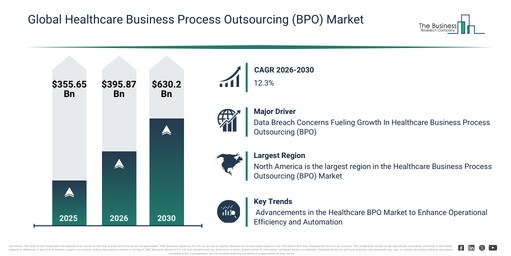
  • A key trend shaping the Healthcare Business Process Outsourcing (BPO) Market involves the Advancements in the Healthcare BPO Market to Enhance Operational Efficiency and Automation

    A key trend shaping the Healthcare Business Process Outsourcing (BPO) Market involves the Advancements in the Healthcare BPO Market to Enhance Operational Efficiency and Automation

    The Business Research Company’s 2026 market reports include new capabilities such as market attractiveness scoring and analysis, total addressable market analysis, company scoring matrix, interactive excel data dashboard, improved supply chain analysis, upcoming startups in the market, and overview of key products, aimed at improving the depth, usability, and strategic value of the insights delivered.

    What Market Value Is Anticipated For The Healthcare Business Process Outsourcing (BPO) Market Over The Period 2026–2030?

    The healthcare business process outsourcing (BPO) market has experienced rapid expansion in recent years. This market is expected to grow from $355.65 billion in 2025 to $395.87 billion in 2026, achieving a compound annual growth rate (CAGR) of 11.3%. The growth observed in previous periods is attributable to factors such as increasing administrative intricacy in healthcare operations, escalating operational costs for both providers and payers, the broader availability of health insurance coverage, evolving regulatory compliance requirements, and the early implementation of outsourced billing services.

    The healthcare business process outsourcing (bpo) market is projected to expand significantly in the coming years. Its size is anticipated to reach $630.2 billion by 2030, demonstrating a compound annual growth rate (CAGR) of 12.3%. This expansion during the forecast period is primarily driven by factors such as a greater need for flexible outsourcing solutions, increased capital allocation towards AI-powered BPO services, the broadening of administrative support for value-based care, an intensified emphasis on cybersecurity and regulatory compliance outsourcing, and an ongoing transition to digital healthcare processes. Key trends anticipated within this period involve the rising integration of comprehensive revenue cycle outsourcing, the increasing application of automation in managing claims and billing, a heightened requirement for services related to compliance and data security, the expansion of IT infrastructure management outsourcing, and a stronger emphasis on optimizing expenditures.

    Download the Free Sample Report to Explore Key Market Insights:

    https://www.thebusinessresearchcompany.com/sample.aspx?id=13290&type=smp

    What Drivers Are Expected To Influence The Healthcare Business Process Outsourcing (BPO) Market During The Forecast Period?

    The escalating occurrence of data breaches is projected to fuel the expansion of the healthcare business process outsourcing market. A data breach is defined as the unauthorized access, disclosure, acquisition, or sharing of confidential or sensitive information. Healthcare BPO providers employ rigorous data handling protocols and security frameworks to guarantee the confidentiality and integrity of patient records. For example, in January 2025, the Identity Theft Resource Center (ITRC), a US-based non-profit organization, reported that the number of data compromises in 2023 stood at 3,205, which represented a 78 percentage point increase compared to 1,801 in 2022. Consequently, the rising data threats are a significant driver for the growth of the healthcare business process outsourcing market.

    How Is The Healthcare Business Process Outsourcing (BPO) Market Divided Into Its Major Segments?

    The healthcare business process outsourcing (bpo) market covered in this report is segmented –

    1) By Service Type: Provider Outsourcing Services, Payer Outsourcing Services, Operational Outsourcing Services, Information Technology Infrastructure Management Services

    2) By Provider Service: Revenue Cycle Management, Patient Enrollment, Patient Care

    3) By Solution: Manufacturing, Research And Development, Non-Clinical Services

    4) By End User: Healthcare Providers, Healthcare Payers, Other End-Users

    Subsegments:

    1) By Provider Outsourcing Services: Medical Billing And Coding, Revenue Cycle Management, Patient Scheduling And Registration, Telehealth Services

    2) By Payer Outsourcing Services: Claims Processing, Member Enrollment And Eligibility Verification, Fraud Detection And Prevention, Customer Support Services

    3) By Operational Outsourcing Services: Human Resources Outsourcing, Procurement And Supply Chain Management, Facility Management Services, Administrative Support Services

    4) By Information Technology Infrastructure Management Services: IT Help Desk Support, Cloud Services Management, Network Management, Data Security And Compliance Services

    Which Upcoming Trends Are Expected To Influence The Healthcare Business Process Outsourcing (BPO) Market?

    Leading companies in the healthcare business process outsourcing (BPO) market are increasingly embracing technological advancements, such as agentic AI-powered digital workforce platforms, to meet the rising demand for reduced claim denials, improved operational efficiency, and scalable, cost-effective revenue cycle management. In contrast to traditional BPO models that heavily rely on manual processing and rigid rule-based workflows, an agentic AI-powered digital workforce platform employs intelligent digital agents powered by AI, natural language understanding, machine learning, and automation to autonomously perform or assist with complex back-office tasks like eligibility verification, denial management, prior authorization, and appeals. For instance, in October 2025, AGS Health, a US-based revenue cycle management and BPO services provider, introduced its Agentic Digital Workforce Solutions, a suite of AI agents designed for RCM. These agents offer human-like reasoning and decision support capabilities, understanding natural language, adapting to changing payer rules, and collaborating with human staff. They automate high-volume repetitive tasks while identifying actionable next steps. The solution integrates generative AI, RPA, and workflow orchestration to effectively reduce denial rates, improve clean claim ratios, and boost cash flow, enabling RCM teams to focus on higher-value work.

    Who Are The Prominent Organizations Shaping The Healthcare Business Process Outsourcing (BPO) Market?

    Major companies operating in the healthcare business process outsourcing (bpo) market are UnitedHealth Group Incorporated, Accenture plc, International Business Machines Corporation, Tata Consultancy Services Limited, Cognizant Technology Solutions Corporation, IQVIA Holdings Inc., Quintiles IMS Holdings Inc., HCL Technologies Limited, Infosys Limited, Wipro Limited, Sutherland Global Services Inc., Xerox Holdings Corporation, Genpact Limited, Access Healthcare Services Pvt. Ltd., Parexel International Corporation, R1 RCM Inc., NTT Data Corporation, EXLService Holdings Inc., Sykes Enterprises Incorporated, WNS Limited, Firstsource Solutions Limited, Invensis Technologies Pvt. Ltd., Hinduja Global Solutions Limited, Mphasis Limited, GeBBS Healthcare Solutions Inc., Akurate Management Solutions Pvt Ltd., Gevity Consulting Inc., Octopus Tech Solutions Pvt Ltd.

    Read the full healthcare business process outsourcing (bpo) market report here:

    https://www.thebusinessresearchcompany.com/report/healthcare-business-process-outsourcing-bpo-global-market-report

    Which Region Is Forecast To Lead The Healthcare Business Process Outsourcing (BPO) Market In Terms Of Market Size?

    North America was the largest region in the healthcare business process outsourcing (BPO) market in 2025. Asia-Pacific is expected to be the fastest-growing region in the forecast period. The regions covered in the healthcare business process outsourcing (bpo) market report are Asia-Pacific, South East Asia, Western Europe, Eastern Europe, North America, South America, Middle East, Africa.

    Request A Tailored Healthcare Business Process Outsourcing (BPO) Market Research Report For Competitive Advantage:

    https://www.thebusinessresearchcompany.com/customise?id=13290&type=smp

    Browse Through More Reports Similar to the Global Healthcare Business Process Outsourcing (BPO) Market 2026, By The Business Research Company

    Middleoffice Business Process Outsourcing Bpo Service Global Market Report

    https://www.thebusinessresearchcompany.com/report/middleoffice-business-process-outsourcing-bpo-service-global-market-report

    Insurance Business Process Outsourcing Global Market Report

    https://www.thebusinessresearchcompany.com/report/insurance-business-process-outsourcing-global-market-report

    Healthcare Bpo Global Market Report

    https://www.thebusinessresearchcompany.com/report/healthcare-bpo-global-market-report

    Get in touch with us:

    The Business Research Company: https://www.thebusinessresearchcompany.com/

    Americas +1 310-496-7795

    Asia +44 7882 955267 & +91 8897263534

    Europe +44 7882 955267

    Email us at info@tbrc.info

    Follow us on:

    LinkedIn: https://in.linkedin.com/company/the-business-research-company

    YouTube: https://www.youtube.com/channel/UC24_fI0rV8cR5DxlCpgmyFQ

    Global Market Model: https://www.thebusinessresearchcompany.com/global-market-model
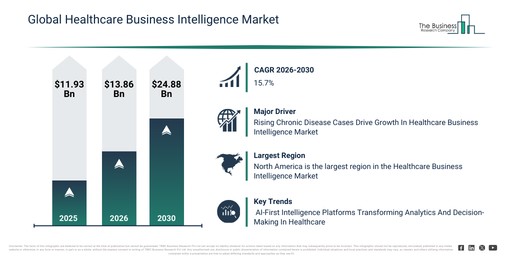
  • A significant industry trend in the Healthcare Business Intelligence Market includes the AI-First Intelligence Platforms Transforming Analytics And Decision-Making In Healthcare

    A significant industry trend in the Healthcare Business Intelligence Market includes the AI-First Intelligence Platforms Transforming Analytics And Decision-Making In Healthcare

    The Business Research Company’s 2026 market reports include new capabilities such as market attractiveness scoring and analysis, total addressable market analysis, company scoring matrix, interactive excel data dashboard, improved supply chain analysis, upcoming startups in the market, and overview of key products, aimed at improving the depth, usability, and strategic value of the insights delivered.

    What Is The Expected Market Size Of The Healthcare Business Intelligence Market From 2026 To 2030?

    The healthcare business intelligence market has seen rapid expansion in recent years. It is forecast to increase from $11.93 billion in 2025 to $13.86 billion in 2026, exhibiting a compound annual growth rate (CAGR) of 16.2%. This historical growth can be linked to the greater availability of electronic health data, the early adoption of reporting and dashboard tools, increasing pressure to decrease healthcare costs, the broadening of performance measurement practices, and a heightened focus on operational transparency.

    The healthcare business intelligence market is projected to experience substantial growth over the upcoming years, reaching a valuation of $24.88 billion by 2030, exhibiting a compound annual growth rate (CAGR) of 15.7%. This expansion during the forecast period is fueled by several factors, including increased investments in AI-powered analytics, a heightened need for insights into population health, the broadening scope of value-based care analytics, the increasing implementation of cloud-based BI solutions, and ongoing progress in healthcare data interoperability. Key developments anticipated in this period encompass a greater uptake of sophisticated healthcare analytics platforms, an expanded utilization of predictive and prescriptive analytics, the growing incorporation of real-time data visualization tools, a wider availability of cloud-based business intelligence offerings, and an intensified concentration on data-driven decision-making.

    Download the Free Sample Report to Explore Key Market Insights:

    https://www.thebusinessresearchcompany.com/sample.aspx?id=6928&type=smp

    What Drivers Are Influencing The Healthcare Business Intelligence Market?

    The rising occurrence of chronic ailments is anticipated to drive expansion in the healthcare business intelligence market moving ahead. Chronic diseases are defined as persistent health conditions enduring over a prolonged duration, generally necessitating continuous medical attention. Within chronic disease management, healthcare business intelligence is employed to elevate patient care, optimize resource distribution, lower expenses, and enable data-informed choices for superior long-term patient health results. For example, data from January 2023, sourced from the National Center for Biotechnology Information (NCBI), a US-based National Library of Medicine, forecasts a 99.5% increase in the number of people aged 50 years and older with at least one chronic illness by 2050, reaching 142.66 million. Consequently, the growing prevalence of chronic diseases will stimulate the healthcare business intelligence market.

    Which Segments Are Included In The Analysis Of The Healthcare Business Intelligence Market?

    The healthcare business intelligence market covered in this report is segmented –

    1) By Component: Platforms, Software, Services

    2) By Function: Query and Reporting, OLAP and Visualization, Performance Management

    3) By Mode of Delivery: On-Premise Model, Hybrid Model, Cloud-Based Model

    4) By Application: Financial Analysis, Clinical Data Analysis, Patient Care Analysis, Other Applications

    5) By End-User: Payers, Healthcare Providers, Other End-Users

    Subsegments:

    1) By Platforms: Cloud-Based Platforms, On-Premise Platforms

    2) By Software: Analytics Software, Reporting Software, Data Visualization Tools, Dashboard Software

    3) By Services: Consulting Services, Implementation Services, Training and Support Services, Maintenance Services

    How Are Trends Shaping The Direction Of The Healthcare Business Intelligence Market?

    Leading companies within the healthcare business intelligence (BI) market are increasingly emphasizing technological advancements, particularly AI-first healthcare intelligence platforms. This focus aims to address the growing need for real-time predictive analytics, comprehensive cross-domain data integration, and scalable decision support, which are prompted by factors such as the increasing adoption of electronic health records (EHR), escalating operational expenses, and mandates for value-based care. An AI-first healthcare intelligence platform functions as a cloud-native system designed to consolidate diverse data sources—including clinical, financial, operational, and HR data—by employing machine learning and integrated AI agents or copilots, alongside offering self-service capabilities for analytics and workflow automation. In contrast to conventional BI tools that frequently rely on static reports and isolated data, these advanced platforms facilitate dynamic, predictive, and prescriptive insights, capable of processing data almost instantly. As an illustration, in May 2025, Innovaccer, a healthcare AI firm based in the US, unveiled Innovaccer Gravity, an intelligence platform specifically designed for healthcare. This platform is built on a contemporary, cloud-agnostic architecture (compatible with AWS, Azure, Snowflake, Databricks) and adheres to HIPAA, HITRUST, and SOC 2 standards. Gravity integrates EHR, claims, financial, operational, and supply chain data through over 400 pre-built connectors and more than 100 FHIR resources. It provides a data fabric layer, pre-trained AI models (like OCR and speech analytics), and low-code or no-code development environments for creating personalized AI agents and workflows, thereby empowering healthcare organizations with integrated intelligence across various domains, self-service analytical tools, and quicker return on investment at a reduced total cost of ownership. The platform is instrumental in fostering improved patient care, heightened operational efficiency, and stronger financial outcomes.

    Which Key Industry Participants Are Active In The Healthcare Business Intelligence Market?

    Major companies operating in the healthcare business intelligence market are Microsoft Corporation, Oracle Corporation, Tableau Software, SAP SE, IBM Corporation, QlikTech International AB, Sisense Inc, SAS Institute Inc, BOARD International, Yellowfin BI, MicroStrategy Incorporated, Infor Inc, Domo Inc., Information Builders, Perficient Inc., Tibco Software Inc., Panorama Software Inc, Definitive Healthcare, Dimensional Insight Inc., Looker Data Sciences Inc., GoodData Corporation, Phocas Software, Pyramid Analytics Inc., Dundas Data Visualization Inc., Alteryx Inc., ThoughtSpot Inc., Rapid Insight Inc., Aptean Inc., Health Catalyst Inc., Arcadia.io Inc., MedeAnalytics Inc., McKesson Corporation, Optum Inc., Cerner Corporation, Allscripts Healthcare Solutions Inc., Athenahealth Inc., Epic Systems Corporation, GE Healthcare, Philips Healthcare, Siemens Healthineers, Change Healthcare

    Read the full healthcare business intelligence market report here:

    https://www.thebusinessresearchcompany.com/report/healthcare-business-intelligence-global-market-report

    Which Regions Are Expected To Experience Rapid Expansion In The Healthcare Business Intelligence Market?

    North America was the largest region in the healthcare business intelligence market in 2025. Asia-Pacific is expected to be the fastest-growing region in the forecast period. The regions covered in the healthcare business intelligence market report are Asia-Pacific, South East Asia, Western Europe, Eastern Europe, North America, South America, Middle East, Africa.

    Request A Tailored Healthcare Business Intelligence Market Research Report For Competitive Advantage:

    https://www.thebusinessresearchcompany.com/customise?id=6928&type=smp

    Browse Through More Reports Similar to the Global Healthcare Business Intelligence Market 2026, By The Business Research Company

    Healthcare Data Integration Global Market Report

    https://www.thebusinessresearchcompany.com/report/healthcare-data-integration-global-market-report

    Self Service Business Intelligence Bi Global Market Report

    https://www.thebusinessresearchcompany.com/report/self-service-business-intelligence-bi-global-market-report

    Healthcare Predictive Analytics Global Market Report

    https://www.thebusinessresearchcompany.com/report/healthcare-predictive-analytics-global-market-report

    Get in touch with us:

    The Business Research Company: https://www.thebusinessresearchcompany.com/

    Americas +1 310-496-7795

    Asia +44 7882 955267 & +91 8897263534

    Europe +44 7882 955267

    Email us at info@tbrc.info

    Follow us on:

    LinkedIn: https://in.linkedin.com/company/the-business-research-company

    YouTube: https://www.youtube.com/channel/UC24_fI0rV8cR5DxlCpgmyFQ

    Global Market Model: https://www.thebusinessresearchcompany.com/global-market-model
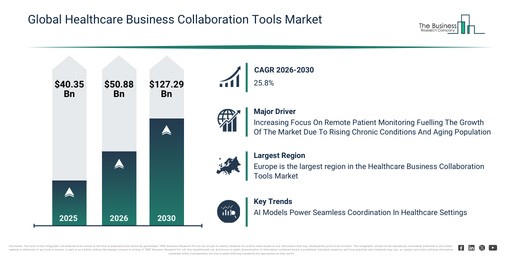
  • A key trend shaping the Healthcare Business Collaboration Tools Market involves the AI Models Power Seamless Coordination In Healthcare Settings

    A key trend shaping the Healthcare Business Collaboration Tools Market involves the AI Models Power Seamless Coordination In Healthcare Settings

    The Business Research Company’s 2026 market reports include new capabilities such as market attractiveness scoring and analysis, total addressable market analysis, company scoring matrix, interactive excel data dashboard, improved supply chain analysis, upcoming startups in the market, and overview of key products, aimed at improving the depth, usability, and strategic value of the insights delivered.

    What Market Valuation Is Forecasted For The Healthcare Business Collaboration Tools Market By 2030 Starting From Its 2026 Size?

    The healthcare business collaboration tools market size has expanded significantly in recent years. It is projected to increase from $40.35 billion in 2025 to $50.88 billion in 2026, achieving a compound annual growth rate (CAGR) of 26.1%. This historical growth can be linked to the increasing digitization of healthcare administration, the expansion of multi-location healthcare networks, the early adoption of telehealth communication tools, a growing need for care coordination, and rising regulatory documentation requirements.

    The healthcare business collaboration tools market size is projected to experience substantial growth in the upcoming years. It is forecast to reach $127.29 billion by 2030, exhibiting a compound annual growth rate (CAGR) of 25.8%. This expansion during the forecast period is largely fueled by the increasing demand for interoperable collaboration platforms, rising investments in digital healthcare ecosystems, the broadening of remote care coordination models, a greater focus on real-time clinical collaboration, and continuous improvements in cybersecurity frameworks. Noteworthy trends anticipated in this period include the increasing adoption of cloud-based collaboration platforms, a rise in the use of secure healthcare communication tools, the growing integration of workflow management solutions, the expansion of virtual meeting and telecollaboration tools, and an enhanced focus on data privacy and compliance.

    Download the Free Sample Report to Explore Key Market Insights:

    https://www.thebusinessresearchcompany.com/sample.aspx?id=24232&type=smp

    What Drivers Are Shaping The Future Growth Of The Healthcare Business Collaboration Tools Market?

    A rising emphasis on remote patient monitoring is anticipated to drive the expansion of the healthcare business collaboration tools market in the future. Remote patient monitoring (RPM) refers to a healthcare approach employing digital tools to gather patient health information remotely, forwarding it to healthcare professionals for evaluation and advice. This heightened attention on remote patient monitoring stems from an expanding elderly demographic and the corresponding increase in chronic conditions, necessitating ongoing, extended care and immediate health surveillance. Healthcare business collaboration tools improve remote patient monitoring by facilitating instant data exchange and communication, thereby guaranteeing prompt interventions and synchronized care delivery. These tools boost patient outcomes through their support for continuous oversight and effective decision-making among healthcare teams. As an illustration, in August 2025, the US Department of Health and Human Services, a US based government administration, reported that in 2024, almost 1 million individuals enrolled in remote patient monitoring, marking a 27-percent rise compared to 2023. Consequently, the heightened concentration on remote patient monitoring fuels the expansion of the healthcare business collaboration tools market.

    Which Segment Categories Define The Healthcare Business Collaboration Tools Market?

    The healthcare business collaboration tools market covered in this report is segmented –

    1) By Type: Conferencing Software, Communication And Coordination Software

    2) By Deployment: Cloud, On-Premises

    3) By End-User: Large Facilities, Small And Medium Facilities

    Subsegments:

    1) By Conferencing Software: Video Conferencing, Audio Conferencing, Web Conferencing, Virtual Meeting Platforms

    2) By Communication And Coordination Software: Messaging Platforms, Patient Coordination Tools, Collaborative Care Solutions, Workflow Management Systems

    Which Market Trends Are Creating New Opportunities In The Healthcare Business Collaboration Tools Market?

    Leading companies in the healthcare business collaboration tools market are concentrating on creating novel solutions, such as healthcare artificial intelligence (AI) models, aiming to offer clients improved assistance, reduce discomfort, and boost coordination for superior healthcare provision. These healthcare artificial intelligence (AI) models represent advanced AI systems designed to integrate and scrutinize diverse medical data, thereby enhancing clinical judgments and patient results. As an illustration, in October 2024, Microsoft Corporation, a US-based technology company, introduced Microsoft Cloud for Healthcare with the goal of advancing patient involvement, fostering team collaboration, and deepening healthcare insights. This pioneering healthcare business collaboration tool, incorporating artificial intelligence (AI) models, streamlines communication processes, boosts workflow efficiency, and facilitates effortless coordination among medical teams, ultimately leading to better patient care and greater operational effectiveness. Microsoft Cloud for Healthcare elevates patient care, team collaboration, and operational processes through AI-powered insights and robust data security.

    Who Are The Top Companies Competing In The Healthcare Business Collaboration Tools Market?

    Major companies operating in the healthcare business collaboration tools market are Microsoft Corporation, Google LLC, Salesforce Inc, Zoom Video Communications Inc, RingCentral Inc, Cisco Systems Inc, Verizon Communications Inc, Teladoc Health Inc, Doximity Inc, TigerConnect Inc, Zocdoc Inc, Health Catalyst Inc, Zoho Corporation, Slack Technologies, Asana Inc, Mondaycom Ltd, Smartsheet Inc, FlowForma Limited, OnPage Corporation, Gladinet Inc

    Read the full healthcare business collaboration tools market report here:

    https://www.thebusinessresearchcompany.com/report/healthcare-business-collaboration-tools-global-market-report

    Which Geographic Regions Are Influencing Demand In The Healthcare Business Collaboration Tools Market?

    Europe was the largest region in the healthcare business collaboration tools market in 2025. Asia-Pacific is expected to be the fastest-growing region in the forecast period. The regions covered in the healthcare business collaboration tools market report are Asia-Pacific, South East Asia, Western Europe, Eastern Europe, North America, South America, Middle East, Africa.

    Request A Tailored Healthcare Business Collaboration Tools Market Research Report For Competitive Advantage:

    https://www.thebusinessresearchcompany.com/customise?id=24232&type=smp

    Browse Through More Reports Similar to the Global Healthcare Business Collaboration Tools Market 2026, By The Business Research Company

    Healthcare Business Intelligence Global Market Report

    https://www.thebusinessresearchcompany.com/report/healthcare-business-intelligence-global-market-report

    Healthcare Data Integration Global Market Report

    https://www.thebusinessresearchcompany.com/report/healthcare-data-integration-global-market-report

    Enterprise Collaboration Global Market Report

    https://www.thebusinessresearchcompany.com/report/enterprise-collaboration-global-market-report

    Get in touch with us:

    The Business Research Company: https://www.thebusinessresearchcompany.com/

    Americas +1 310-496-7795

    Asia +44 7882 955267 & +91 8897263534

    Europe +44 7882 955267

    Email us at info@tbrc.info

    Follow us on:

    LinkedIn: https://in.linkedin.com/company/the-business-research-company

    YouTube: https://www.youtube.com/channel/UC24_fI0rV8cR5DxlCpgmyFQ

    Global Market Model: https://www.thebusinessresearchcompany.com/global-market-model
  • An Important Factor Driving the Healthcare Biometrics Market Is the Patients In Hospitals Propel Growth Of The Healthcare Biometrics Market

    An Important Factor Driving the Healthcare Biometrics Market Is the Patients In Hospitals Propel Growth Of The Healthcare Biometrics Market

    The Business Research Company’s 2026 market reports include new capabilities such as market attractiveness scoring and analysis, total addressable market analysis, company scoring matrix, interactive excel data dashboard, improved supply chain analysis, upcoming startups in the market, and overview of key products, aimed at improving the depth, usability, and strategic value of the insights delivered.

    How Is The Market Size Of The Healthcare Biometrics Market Expected To Change Between 2026 And 2030?

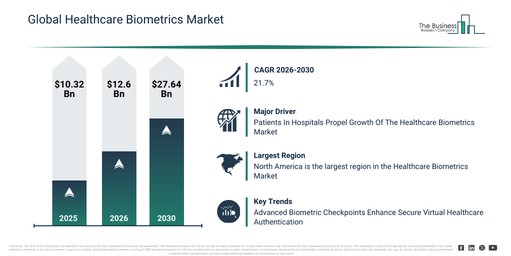
    The healthcare biometrics market size has experienced substantial growth in recent years. This market is set to increase from $10.32 billion in 2025 to $12.6 billion in 2026, advancing at a compound annual growth rate (CAGR) of 22.0%. The expansion observed historically is a result of several factors, including the increasing digitalization of healthcare records, a surge in patient identity fraud cases, the early adoption of fingerprint and facial recognition technologies, the development of hospital information systems, and a strong regulatory emphasis on data protection.

    The healthcare biometrics market is projected to experience substantial expansion over the coming years. This market is anticipated to reach $27.64 billion by 2030, exhibiting a compound annual growth rate (CAGR) of 21.7%. Factors contributing to this growth during the forecast period include the rising adoption of AI-powered biometric analytics, the expansion of telehealth services and remote monitoring, increased investments in healthcare cybersecurity, a growing need for streamlined patient access management, and the integration of biometric technology with digital health platforms. Key trends expected during this period involve the expanding deployment of multi-modal biometric authentication, an uptick in the use of contactless patient identification, greater integration of biometrics with electronic health record (EHR) systems, the proliferation of remote patient authentication solutions, and a heightened emphasis on data security and privacy.

    Download the Free Sample Report to Explore Key Market Insights:

    https://www.thebusinessresearchcompany.com/sample.aspx?id=19499&type=smp

    Which Economic Or Industry Drivers Are Impacting The Healthcare Biometrics Market?

    The expanding number of patients in hospitals is anticipated to fuel the growth of the healthcare biometrics market in the coming period. This increase in patient numbers is a result of an aging population, a greater prevalence of chronic diseases, and improved access to medical services. Healthcare biometrics aids hospital patients by bolstering security and enabling personalized care through precise identification and authentication of individuals. For example, in September 2024, Public Health, a UK-based not-for-profit organization, indicated that approximately 0.7 million Scottish residents (one in eight of the population) were admitted to hospital in 2023/24. Of these patients, three out of ten (31%) experienced multiple admissions. Hospital admissions collectively exceeded 1.1 million in 2023/24, marking a 4% rise compared to the preceding year (2022/23). Consequently, the rising number of patients in hospitals is propelling the expansion of the healthcare biometrics market.

    How Is The Healthcare Biometrics Market Structured Across Different Segments?

    The healthcare biometrics market covered in this report is segmented –

    1) By Technology: Fingerprint Recognition, Face Recognition, Voice Recognition, Vein Recognition, Iris Recognition

    2) By Application: Medical Record And Data Center Security, Patient Identification And Tracking, Care Provider Authentication, Home Or Remote Patient Monitoring, Other Applications

    3) By End-User: Hospitals, Clinics, Clinical Laboratories, Healthcare Institutions

    Subsegments:

    1) By Fingerprint Recognition: Optical Fingerprint Recognition, Capacitive Fingerprint Recognition, Ultrasonic Fingerprint Recognition, Thermal Fingerprint Recognition, Multi-Factor Fingerprint Authentication Systems

    2) By Face Recognition: 2D Face Recognition, 3D Face Recognition, Infrared Face Recognition, Facial Thermography, Real-Time Face Recognition Systems

    3) By Voice Recognition: Speaker Identification Systems, Speaker Verification Systems, Voice Biometric Authentication, AI-Powered Voice Recognition For Healthcare, Multi-Modal Voice Recognition Systems

    4) By Vein Recognition: Palm Vein Recognition, Finger Vein Recognition, Infrared Vein Pattern Recognition, Near-Infrared Vein Imaging

    5) By Iris Recognition: Near-Infrared Iris Scanning, Multi-Spectral Iris Recognition, High-Speed Iris Recognition Systems, Real-Time Iris Recognition Solutions

    What Trends Are Affecting The Expansion Of The Healthcare Biometrics Market?

    Leading firms in healthcare biometrics are prioritizing the creation of novel patient identification technologies to bolster security and refine the precision of patient services. These solutions are sophisticated systems engineered to reliably and safely verify patients’ identities, thereby boosting both safety and operational effectiveness within healthcare environments. An example is VerifiNow, a US-based biometric verification company, which launched PatientVerifi in February 2024. This biometric identity verification system for telehealth providers utilizes voice biometrics, facial recognition, and liveness detection to precisely confirm patient identities during online consultations. Such technology mitigates dangers associated with mistaken patient identification, malpractice suits resulting from incorrect diagnoses, and the improper use of prescriptions. PatientVerifi is built for seamless integration with widely used video platforms, including Zoom and Microsoft Teams, thereby improving adherence to healthcare regulations and protecting both patients and medical professionals.

    Which Major Players Dominate The Healthcare Biometrics Market?

    Major companies operating in the healthcare biometrics market are Fujitsu Limited, NEC Corporation, Siemens Healthineers AG, Thales Group, IDEMIA SA, GoForward Inc., Zkteco Inc., Imprivata Inc, M2SYS LLC, Cross Match Technologies Inc., Daon Inc., Facephi, Aware Inc., Integrated Biometrics, Suprema Inc, eyeLock, Bio-Key International, Facetec Inc., RightPatient, Morpho Dys

    Read the full healthcare biometrics market report here:

    https://www.thebusinessresearchcompany.com/report/healthcare-biometrics-global-market-report

    What Are The Top-Performing Regions Within The Healthcare Biometrics Market?

    North America was the largest region in the healthcare biometrics market in 2025. Asia-Pacific is expected to be the fastest-growing region in the forecast period. The regions covered in the healthcare biometrics market report are Asia-Pacific, South East Asia, Western Europe, Eastern Europe, North America, South America, Middle East, Africa.

    Request A Tailored Healthcare Biometrics Market Research Report For Competitive Advantage:

    https://www.thebusinessresearchcompany.com/customise?id=19499&type=smp

    Browse Through More Reports Similar to the Global Healthcare Biometrics Market 2026, By The Business Research Company

    Healthcare Reimbursement Global Market Report

    https://www.thebusinessresearchcompany.com/report/healthcare-reimbursement-global-market-report

    Healthcare Service Global Market Report

    https://www.thebusinessresearchcompany.com/report/healthcare-service-global-market-report

    Veterinary Healthcare Global Market Report

    https://www.thebusinessresearchcompany.com/report/veterinary-healthcare-global-market-report

    Get in touch with us:

    The Business Research Company: https://www.thebusinessresearchcompany.com/

    Americas +1 310-496-7795

    Asia +44 7882 955267 & +91 8897263534

    Europe +44 7882 955267

    Email us at info@tbrc.info

    Follow us on:

    LinkedIn: https://in.linkedin.com/company/the-business-research-company

    YouTube: https://www.youtube.com/channel/UC24_fI0rV8cR5DxlCpgmyFQ

    Global Market Model: https://www.thebusinessresearchcompany.com/global-market-model
  • A Significant Growth Driver for the Healthcare Automation Market Is the Surge in Automation Adoption Fueling Growth in The Healthcare Automation Market

    A Significant Growth Driver for the Healthcare Automation Market Is the Surge in Automation Adoption Fueling Growth in The Healthcare Automation Market

    The Business Research Company’s 2026 market reports include new capabilities such as market attractiveness scoring and analysis, total addressable market analysis, company scoring matrix, interactive excel data dashboard, improved supply chain analysis, upcoming startups in the market, and overview of key products, aimed at improving the depth, usability, and strategic value of the insights delivered.

    What Is The Market Size Of The Healthcare Automation Market In 2026 And What Value Is Projected For 2030?

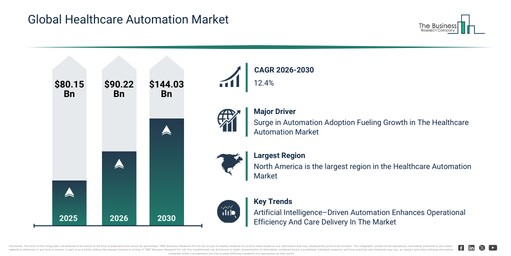
    The healthcare automation market has experienced rapid expansion in its size over recent years. It is anticipated to grow from $80.15 billion in 2025 to $90.22 billion in 2026, demonstrating a compound annual growth rate (CAGR) of 12.6%. This historical growth is attributable to the increasing digitization of healthcare operations, a rising demand for error reduction in care delivery, the early adoption of laboratory automation systems, the expansion of electronic health records usage, and a growing focus on patient safety.

    The healthcare automation market is projected to experience substantial expansion in the coming years. It is expected to reach $144.03 billion by 2030, progressing at a compound annual growth rate (CAGR) of 12.4%. This anticipated growth is fueled by factors such as increasing investments in smart hospitals, the rising adoption of AI-enabled automation tools, the expansion of remote monitoring solutions, a growing demand for integrated healthcare platforms, and continuous advancements in healthcare software interoperability. Significant trends anticipated during this forecast period include the increasing adoption of automated clinical workflows, the rising deployment of smart monitoring and alert systems, the growing integration of software-driven care automation, the expansion of robotics in diagnostics and pharmacy automation, and an enhanced focus on operational efficiency.

    Download the Free Sample Report to Explore Key Market Insights:

    https://www.thebusinessresearchcompany.com/sample.aspx?id=7323&type=smp

    What Major Drivers Are Influencing Demand In The Healthcare Automation Market?

    The healthcare automation market is expanding due to an increase in the adoption of automation. This adoption refers to the implementation of advanced solutions within healthcare facilities. These facilities are integrating healthcare automation to enhance work efficiency and streamline various activities. For instance, in July 2023, Koninklijke Philips N.V, a Netherlands-based multinational conglomerate corporation, published the Future Health Index 2023 Australian report, which is the largest global survey for healthcare. The report indicated that nearly half (47%) of healthcare leaders are utilizing automation to improve patient processes, such as automating appointment bookings, while 43% are leveraging it to optimize internal processes, including automating administrative tasks and improving workflows. Therefore, a greater adoption of automation is anticipated to propel healthcare automation market growth over the coming years.

    What Are The Key Segments Of The Healthcare Automation Market?

    The healthcare automation market covered in this report is segmented –

    1) By Component: Equipment, Software, Services

    2) By Application: Therapeutic Automation, Lab And Pharmacy Automation, Diagnostics And Monitoring Automation

    3) By End-User: Pharmacies, Research Institutes And Labs

    Subsegments:

    1) By Equipment: Automated Laboratory Equipment, Pharmacy Automation Systems, Surgical Robots, Point-Of-Care Testing Devices

    2) By Software: Laboratory Information Management Systems (LIMS), Electronic Health Records (EHR) Systems, Workflow Management Software, Clinical Decision Support Systems (CDSS)

    3) By Services: Consulting Services, Integration Services, Maintenance And Support Services

    Which Trends Are Influencing The Healthcare Automation Market?

    Leading companies in the healthcare automation market are prioritizing the development of advanced offerings, such as AI-powered automation platforms, to enhance clinical decision-making, streamline administrative tasks, and improve overall patient care. AI-driven healthcare automation refers to the utilization of intelligent systems capable of analyzing extensive datasets, optimizing population health management, supporting care coordination, and enabling efficient administrative operations, all while maintaining high levels of accuracy, compliance, and data security. For example, in August 2023, Innovaccer Inc., a US-based healthcare data platform company, launched the AI Automation Suite, Sara for Healthcare. This suite of AI solutions is intended to assist with population health management, customer relationship management, value-based care, self-service analytics, and comprehensive care management and coordination. Designed to adhere to the strict safety, security, compliance, and scalability standards of healthcare IT, the platform illustrates how AI adoption is transforming the healthcare automation market by boosting efficiency and elevating the standard of care.

    Who Are The Leading Companies Operating In The Healthcare Automation Market?

    Major companies operating in the healthcare automation market are 3M Company, Accuray Inc, Allscripts Healthcare Solutions, Becton Dickinson and Company, Danaher Corporation, General Electric Company, International Business Machines Corporation, Intuitive Surgical Inc, Koninklijke Philips N.V, McKesson Corporation, MedeAnalytics, Medtronic plc, Oracle Corporation, Stryker Corporation, Tecan Group Ltd, Abbott Laboratories, Agilent Technologies, Athenahealth, Elekta, Epic Systems Corporation, Hologic Inc

    Read the full healthcare automation market report here:

    https://www.thebusinessresearchcompany.com/report/healthcare-automation-global-market-report

    Which Region Shows The Strongest Potential For Future Growth In The Healthcare Automation Market?

    North America was the largest region in the healthcare automation market in 2025. The regions covered in the healthcare automation market report are Asia-Pacific, South East Asia, Western Europe, Eastern Europe, North America, South America, Middle East, Africa.

    Request A Tailored Healthcare Automation Market Research Report For Competitive Advantage:

    https://www.thebusinessresearchcompany.com/customise?id=7323&type=smp

    Browse Through More Reports Similar to the Global Healthcare Automation Market 2026, By The Business Research Company

    Medical Automation Global Market Report

    https://www.thebusinessresearchcompany.com/report/medical-automation-global-market-report

    Medical Automation Technologies Global Market Report

    https://www.thebusinessresearchcompany.com/report/medical-automation-technologies-global-market-report

    Robotic Process Automation In Healthcare Global Market Report

    https://www.thebusinessresearchcompany.com/report/robotic-process-automation-in-healthcare-global-market-report

    Get in touch with us:

    The Business Research Company: https://www.thebusinessresearchcompany.com/

    Americas +1 310-496-7795

    Asia +44 7882 955267 & +91 8897263534

    Europe +44 7882 955267

    Email us at info@tbrc.info

    Follow us on:

    LinkedIn: https://in.linkedin.com/company/the-business-research-company

    YouTube: https://www.youtube.com/channel/UC24_fI0rV8cR5DxlCpgmyFQ

    Global Market Model: https://www.thebusinessresearchcompany.com/global-market-model