Category: Healthcare Services

  • Healthcare EDI Market Size Outlook and Demand Growth Across 2026–2030

    Healthcare EDI Market Size Outlook and Demand Growth Across 2026–2030

    The Business Research Company’s 2026 market reports include new capabilities such as market attractiveness scoring and analysis, total addressable market analysis, company scoring matrix, interactive excel data dashboard, improved supply chain analysis, upcoming startups in the market, and overview of key products, aimed at improving the depth, usability, and strategic value of the insights delivered.

    What Market Size Increase Is Anticipated For The Healthcare EDI Market Over The 2026–2030 Period?

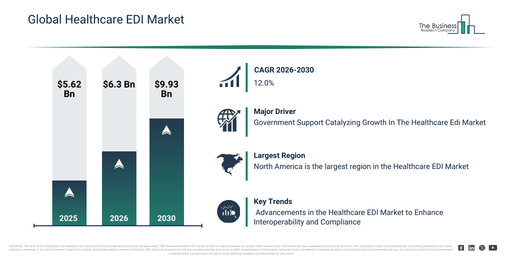
    The healthcare edi market has witnessed substantial growth in recent years. It is anticipated to expand from $5.62 billion in 2025 to $6.3 billion in 2026, progressing at a compound annual growth rate (CAGR) of 12.2%. This historical expansion is largely due to the proliferation of digital healthcare billing systems, a surge in insurance claim volumes, the implementation of standardized healthcare transaction formats, the development of payer-provider networks, and a heightened demand for administrative efficiency.

    The healthcare edi market is projected to experience swift expansion over the coming years. By 2030, this market is anticipated to reach a valuation of $9.93 billion, demonstrating a compound annual growth rate (CAGR) of 12.0%. This growth is primarily driven by escalating investments in automated revenue cycle management, a rising demand for real-time eligibility verification, the expansion of cloud-native edi solutions, an increasing focus on interoperability compliance, and the growing adoption of AI-assisted claims processing. Throughout this period, significant trends will include the increasing uptake of cloud-based edi platforms, enhanced automation of claims and billing processes, greater integration of edi with hospital information systems, the broadening of real-time transaction processing, and a heightened emphasis on compliance and data accuracy.

    Download the Free Sample Report to Explore Key Market Insights:

    https://www.thebusinessresearchcompany.com/sample.aspx?id=6129&type=smp

    Which Economic Or Industry Drivers Are Impacting The Healthcare EDI Market?

    Growing government backing for healthcare is set to boost the expansion of the healthcare EDI market. This technology facilitates the exchange of vital information such as coordination of benefits, claims status, insurance and payment data, and eligibility forms, both within and between super-specialty hospital departments and branches. Such support not only aids the healthcare sector in developing new equipment and enhancing services but also drives technological advancements within government hospitals. A notable example is the UK, where the Office for National Statistics reported in May 2024 that total healthcare expenditure grew by 5.6% in nominal terms from 2022 to 2023, a considerable rise from the 0.9% growth seen in 2022. Consequently, this elevated government investment in healthcare directly fuels the demand for the healthcare EDI market.

    How Is The Healthcare EDI Market Segmented Across Key Categories?

    The healthcare edi market covered in this report is segmented –

    1) By Component: Software, Services

    2) By Transaction: Claim Management, Healthcare Supply Chain, Other Transactions

    3) By Mode of Delivery: VAN, Web And Cloud-based, Point-to-point

    4) By End User: Healthcare Provider, Payer, Pharmacies, Other End Users

    Subsegments:

    1) By Software: EDI Solutions, Integration Software, EDI Mapping And Translation Software

    2) By Services: EDI Consulting Services, Managed EDI Services, Technical Support And Maintenance Services

    What Key Trends Are Influencing The Development Of The Healthcare EDI Market?

    Leading entities within the healthcare EDI (Electronic Data Interchange) market are prioritizing technological advancements, such as cloud-native interoperability platforms that integrate EDI, FHIR, and HL7, to satisfy the increasing need for regulatory adherence, smooth data exchange, and scalable connectivity between payers and providers. Such a cloud-native platform consolidates traditional EDI (e.g., HIPAA X12), modern healthcare APIs (like FHIR), and clinical messaging standards (HL7) into a unified, flexible, and secure infrastructure, contrasting sharply with older, on-premises EDI gateways which are often isolated, inflexible, and expensive to scale. An example of this trend is Edifecs, a US-based health information-technology company, which introduced its Healthcare Interoperability Cloud, a cutting-edge platform for payers, in February 2025. This platform facilitates the effortless sharing of administrative and clinical data across EDI, FHIR, HL7v2, and proprietary formats; it’s built for regulatory compliance (e.g., CMS-9115-F, CMS-0057-F), provides strategic workflow orchestration, allows for shared automation across systems, and integrates AI (including ML and NLP) to deliver enhanced insights and quicker, more adaptable integration. Ultimately, this solution aims to lessen data friction, speed up payer-provider collaboration, and ensure the longevity of interoperability infrastructure.

    Who Are The Dominant Players Shaping The Healthcare EDI Market Landscape?

    Major companies operating in the healthcare edi market are McKesson Corporation, Optum Inc, Allscripts, Cognizant Technology Solutions India Pvt Ltd, Cerner Corporation, The SSI Group, Quadax Inc, AthenaHealth, Change Healthcare Inc, Conduent Inc, Epic Systems Corporation, NextGen Healthcare, Edifecs Inc, Waystar Inc, Availity LLC, eClinicalWorks, Ability Network, PracticeSuite Inc, Jopari Solutions Inc, Alpha II LLC, TransUnion Healthcare, Healthpac Computer Systems

    Read the full healthcare edi market report here:

    https://www.thebusinessresearchcompany.com/report/healthcare-edi-global-market-report

    What Are The Top-Performing Regions Within The Healthcare EDI Market?

    North America was the largest region in the healthcare EDI market in 2025. Asia-Pacific is expected to be the fastest-growing region in the forecast period. The regions covered in the healthcare edi market report are Asia-Pacific, South East Asia, Western Europe, Eastern Europe, North America, South America, Middle East, Africa.

    Request A Tailored Healthcare EDI Market Research Report For Competitive Advantage:

    https://www.thebusinessresearchcompany.com/customise?id=6129&type=smp

    Browse Through More Reports Similar to the Global Healthcare EDI Market 2026, By The Business Research Company

    Healthcare Education Global Market Report

    https://www.thebusinessresearchcompany.com/report/healthcare-education-global-market-report

    Healthcare It Integration Global Market Report

    https://www.thebusinessresearchcompany.com/report/healthcare-it-integration-global-market-report

    Health And Medical Insurance Global Market Report

    https://www.thebusinessresearchcompany.com/report/health-and-medical-insurance-global-market-report

    Get in touch with us:

    The Business Research Company: https://www.thebusinessresearchcompany.com/

    Americas +1 310-496-7795

    Asia +44 7882 955267 & +91 8897263534

    Europe +44 7882 955267

    Email us at info@tbrc.info

    Follow us on:

    LinkedIn: https://in.linkedin.com/company/the-business-research-company

    YouTube: https://www.youtube.com/channel/UC24_fI0rV8cR5DxlCpgmyFQ

    Global Market Model: https://www.thebusinessresearchcompany.com/global-market-model
  • Healthcare Distribution Market Insights Highlighting Opportunities and Drivers Supporting Growth to 2030

    Healthcare Distribution Market Insights Highlighting Opportunities and Drivers Supporting Growth to 2030

    The Business Research Company’s 2026 market reports include new capabilities such as market attractiveness scoring and analysis, total addressable market analysis, company scoring matrix, interactive excel data dashboard, improved supply chain analysis, upcoming startups in the market, and overview of key products, aimed at improving the depth, usability, and strategic value of the insights delivered.

    How Much Is The Healthcare Distribution Market Expected To Grow In Terms Of Market Value Between 2026 And 2030?

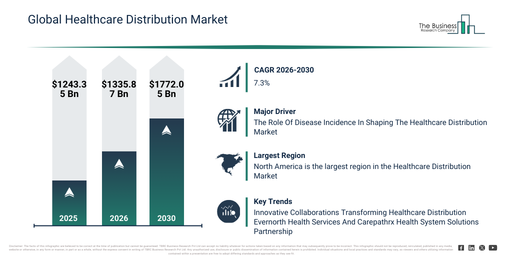
    The healthcare distribution market has seen robust expansion in recent years. This market is anticipated to expand from $1243.35 billion in 2025 to reach $1335.87 billion in 2026, reflecting a compound annual growth rate (CAGR) of 7.4%. Historically, this growth was fueled by the broadening scope of pharmaceutical manufacturing, the proliferation of hospital networks, a heightened need for punctual medicine delivery, the adoption of centralized distribution systems, and increasing healthcare consumption.

    The healthcare distribution market is projected to experience substantial expansion in the coming years. Its valuation is anticipated to reach $1772.05 billion by 2030, exhibiting a compound annual growth rate (CAGR) of 7.3%. This growth over the forecast period is fueled by greater investments in intelligent logistics platforms, the broadening of specialty and biologics distribution networks, an escalating need for last-mile healthcare services, a heightened emphasis on resilient supply chains, and the wider integration of digital traceability solutions. Key trends shaping this period encompass the increasing embrace of automated healthcare supply chains, the expanding integration of digital inventory management systems, a surging demand for real-time order tracking, the enlargement of cold chain distribution capacities, and an intensified commitment to distribution efficiency and regulatory compliance.

    Download the Free Sample Report to Explore Key Market Insights:

    https://www.thebusinessresearchcompany.com/sample.aspx?id=7326&type=smp

    What Major Drivers Are Influencing Demand In The Healthcare Distribution Market?

    The increasing occurrence of diseases is projected to stimulate the expansion of the healthcare distribution market in the coming years. A disease refers to an ailment or sickness impacting individuals, plants, or animals, resulting from genetic or developmental faults, infection, or other conditions. It is marked by distinct signs or symptoms that lead to discomfort, impaired function, suffering, social issues, or death for the affected person or those nearby. Diseases significantly affect healthcare distribution by requiring the efficient and timely delivery of therapeutic resources, vaccinations, and medical services to control outbreaks, mitigate their impact, and ultimately improve public health outcomes. To address the complexities presented by evolving health threats, disease outbreaks demand healthcare distribution networks that are adaptable, responsive, and thoroughly coordinated. For instance, in March 2024, as reported by the Centers for Disease Control and Prevention, a US-based government agency, the count of reported TB cases climbed from 8,320 in 2022 to 9,615 in 2023, signifying an increase of 1,295 cases or 16%. Thus, the rising incidence of diseases is fueling the healthcare distribution market.

    What Major Segment Divisions Exist Within The Healthcare Distribution Market?

    The healthcare distribution market covered in this report is segmented –

    1) By Type: Pharmaceutical Product Distribution Services, Biopharmaceutical Product Distribution Services, Medical Device Distribution Services

    2) By Distribution Model: Direct-to-Healthcare Provider Distribution, Wholesale Distribution, Third-Party Logistics (3PL) Distribution, Online and E-Distribution Channels

    3) By End User: Retail Pharmacies, Hospital Pharmacies, Other End-Users

    Subsegments:

    1) By Pharmaceutical Product Distribution Services: Prescription Drug Distribution, Over-The-Counter (OTC) Drug Distribution

    2) By Biopharmaceutical Product Distribution Services: Cold Chain Distribution, Specialty Drug Distribution

    3) By Medical Device Distribution Services: Surgical Instrument Distribution, Diagnostic Equipment Distribution, Consumables And Disposable Device Distribution

    How Are Trends Impacting The Healthcare Distribution Market?

    Key entities within the healthcare distribution market are focusing on strategic collaborations, such as the partnership between Evernorth Health Services and CarepathRx Health System Solutions, to better address the needs of their current clientele. Evernorth Health Services has established a strategic agreement with CarepathRx Health System Solutions (CHSS) to enhance patient-specialized care. This collaboration aims to upgrade, broaden, and accelerate the provision of pharmacy services for patients with chronic and complex care requirements, notably announced in June 2023. The combined expertise of Evernorth and CHSS is set to assist hospitals, health systems, and their physicians in diversifying their services while strengthening patient connections to vital specialized care for chronic and complicated disorders, including rheumatoid arthritis, Crohn’s disease, and cancer. Through this alliance, Evernorth intends to gradually expand site-of-care options for infusion services to alternative locations, evolve value-based site-of-care strategies, improve data exchange within and across medical centers to identify optimal treatment plans, and deepen physician and patient engagement. CarepathRx Health System Solutions operates as a comprehensive, end-to-end hospital pharmacy care delivery model based in the United States.

    Which Companies Are Leading Innovation In The Healthcare Distribution Market?

    Major companies operating in the healthcare distribution market are Alliance Healthcare UK, AmerisourceBergen Corporation, Cardinal Health Inc., CuraScript SD, Dakota Drug Inc., FFF Enterprises Inc., Henry Schein Inc., KeySource Medical Inc., Medline Industries LP, Morris and Dickson Co. LLC, Mutual Drug Company, Owens & Minor Inc., Patterson Companies Inc., PHOENIX Group, Rochester Drug Cooperative Inc., Shanghai Pharmaceutical Group Co. Ltd., Smith Drug Company, TTK Healthcare, Anda Inc., Associated Pharmacies Inc., Besse Medical, Gulf South Medical Supply, H.D. Smith LLC, Harvard Drug Group LLC, Kinray Inc., MasterPharm SA, McKesson Corporation, Metro Medical Supply, MMS – A Medical Supply Company, Oncology Supply Inc., PSS World Medical Inc., Seneca Medical Inc., TheraCom LLC

    Read the full healthcare distribution market report here:

    https://www.thebusinessresearchcompany.com/report/healthcare-distribution-global-market-report

    Which Region Shows The Strongest Potential For Future Growth In The Healthcare Distribution Market?

    North America was the largest region in the healthcare distribution market in 2025. Asia-Pacific is expected to be the fastest-growing region in the forecast period. The regions covered in the healthcare distribution market report are Asia-Pacific, South East Asia, Western Europe, Eastern Europe, North America, South America, Middle East, Africa.

    Request A Tailored Healthcare Distribution Market Research Report For Competitive Advantage:

    https://www.thebusinessresearchcompany.com/customise?id=7326&type=smp

    Browse Through More Reports Similar to the Global Healthcare Distribution Market 2026, By The Business Research Company

    Healthcare Logistics Global Market Report

    https://www.thebusinessresearchcompany.com/report/healthcare-logistics-global-market-report

    Medical Supply Delivery Service Global Market Report

    https://www.thebusinessresearchcompany.com/report/medical-supply-delivery-service-global-market-report

    Health And Medical Insurance Global Market Report

    https://www.thebusinessresearchcompany.com/report/health-and-medical-insurance-global-market-report

    Get in touch with us:

    The Business Research Company: https://www.thebusinessresearchcompany.com/

    Americas +1 310-496-7795

    Asia +44 7882 955267 & +91 8897263534

    Europe +44 7882 955267

    Email us at info@tbrc.info

    Follow us on:

    LinkedIn: https://in.linkedin.com/company/the-business-research-company

    YouTube: https://www.youtube.com/channel/UC24_fI0rV8cR5DxlCpgmyFQ

    Global Market Model: https://www.thebusinessresearchcompany.com/global-market-model
  • Global Healthcare Digital Payment Market Expected to Reach $62.71 Billion by 2030 with 22.1% CAGR

    Global Healthcare Digital Payment Market Expected to Reach $62.71 Billion by 2030 with 22.1% CAGR

    The Business Research Company’s 2026 market reports include new capabilities such as market attractiveness scoring and analysis, total addressable market analysis, company scoring matrix, interactive excel data dashboard, improved supply chain analysis, upcoming startups in the market, and overview of key products, aimed at improving the depth, usability, and strategic value of the insights delivered.

    What Market Value Is Expected For The Healthcare Digital Payment Market At The End Of The 2026–2030 Forecast Period?

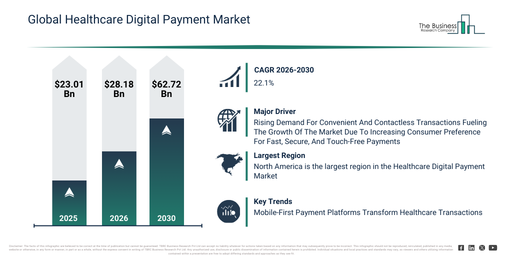
    The healthcare digital payment market size has experienced significant expansion in recent years. This market is projected to expand from $23.01 billion in 2025 to $28.18 billion in 2026, demonstrating a compound annual growth rate (CAGR) of 22.5%. Historically, this increase can be linked to factors such as the increasing digitalization of healthcare services, a growing inclination among patients for cashless transactions, the proliferation of online medical billing systems, the wider use of mobile banking within healthcare, and advancements in payment security technologies.

    The healthcare digital payment market size is projected to experience substantial growth in the coming years. It is anticipated to reach $62.72 billion by 2030, demonstrating a compound annual growth rate (CAGR) of 22.1%. This expansion during the forecast period is primarily driven by increasing investments in healthcare fintech platforms, a rising demand for interoperable payment systems, the expansion of telemedicine payment solutions, growing adoption of biometric authentication, and an increasing regulatory focus on digital transaction security. Furthermore, significant trends in the forecast period encompass the increasing adoption of contactless healthcare payment solutions, the rising integration of digital wallets within healthcare platforms, the growing use of AI-based fraud detection systems, the expansion of blockchain-enabled medical payments, and an enhanced focus on payment transparency and automation.

    Download the Free Sample Report to Explore Key Market Insights:

    https://www.thebusinessresearchcompany.com/sample.aspx?id=28239&type=smp

    Which Market Drivers Are Supporting The Expansion Of The Healthcare Digital Payment Market?

    The increasing necessity for easy and touch-free transactions is projected to drive the expansion of the healthcare digital payment market. These transactions involve making payments quickly and simply, without needing to physically interact with cash or cards. The uptick in convenient and contactless transactions stems from consumers’ growing preference for swift and effortless payment methods that do not require physical contact or PIN entry. Such transactions bolster healthcare digital payment systems by offering rapid and secure payment options, making them ideal for medical clinics, pharmacies, and remote healthcare services. They reduce manual processes and waiting times by facilitating seamless, touch-free payments, thereby enhancing convenience for both patients and providers. As an illustration, in July 2024, UK Finance, a UK-based financial services company, reported that 18.3 billion contactless payments were made in the UK in 2023, indicating a 7% increase from 17 billion in 2022. Thus, the escalating demand for convenient and contactless transactions is a significant catalyst for the growth of the healthcare digital payment market.

    What Segment Types Make Up The Healthcare Digital Payment Market?

    The healthcare digital payment market covered in this report is segmented –

    1) By Type: Mobile Wallets, Point-Of-Sale (POS) Systems, Internet Banking, Mobile Banking, Cryptocurrencies, Other Types

    2) By Solution: Application Program Interface, Payment Gateway, Payment Processing, Payment Security And Fraud Management, Transaction Risk Management, Other Solutions

    3) By Deployment: Cloud, On-Premise

    4) By Technology: Near Field Communication (NFC), Quick Response (QR) Code Payments, Blockchain, Biometric Authentication, Other Technologies

    5) By End-User: Hospitals, Medical Clinics, Pharmacies, Health Insurance Companies, Telemedicine And Remote Health Services, Other End-Users

    Subsegments:

    1) By Mobile Wallets: Near Field Communication Payments, Quick Response (QR) Code Payments, Mobile App Based Payments, Cloud Based Mobile Wallets, Peer To Peer Transfers

    2) By Point Of Sale Systems: Countertop Terminals, Mobile Point Of Sale Terminals, Smart Point Of Sale Terminals, Contactless Point Of Sale Terminals, Integrated Point Of Sale Solutions

    3) By Internet Banking: Web Based Fund Transfers, Online Bill Payments, Account Management Services, Loan And Credit Services, Online Investment Services

    4) By Mobile Banking: Mobile Check Deposits, Mobile Fund Transfers, Account Balance Inquiries, Bill Payments Through Apps, Personalized Financial Alerts

    5) By Cryptocurrencies: Bitcoin Payments, Ethereum Payments, Stablecoin Transactions, Blockchain Based Remittances, Decentralized Finance Payments

    6) By Other Types: Biometric Payment Systems, Voice Activated Payment Systems, Wearable Device Payments, Smart Card Payments, Contactless Payment Rings

    What Industry Trends Are Redefining The Healthcare Digital Payment Market?

    Major companies in the healthcare digital payment market are concentrating on developing advanced solutions, such as mobile-first payment platforms, to improve transaction efficiency, bolster security, and enhance experiences for patients and providers alike. Mobile-first payment platforms are digital payment systems specifically optimized for smartphones and tablets, allowing for seamless, secure, and contactless transactions through integrated technologies like tokenization, biometric authentication, and cloud-based processing. For example, in April 2025, Alternative Payments Ltd. (t/a Judopay), a UK-based mobile payments provider, introduced a digital payments solution for UK pharmacies and healthcare providers aimed at simplifying and securing payment processing within the healthcare sector. This agile and fully compliant platform enables providers to accept payments online, in-app, in person, and through payment links, supporting all major payment methods including cards, Apple Pay, Google Pay, and contactless payments. It addresses critical challenges in healthcare payments, such as strict data regulations, fraud risk, and complex underwriting, by offering features like fast onboarding, effective fraud prevention, and smooth integration with existing healthcare systems.

    Who Are The Key Players Driving Competition In The Healthcare Digital Payment Market?

    Major companies operating in the healthcare digital payment market are American Express Company, Visa Inc., PayPal Holdings Inc., Mastercard Incorporated, HDFC Bank Limited, Fiserv Inc., Experian Health Inc., athenahealth Inc., Adyen N.V., Nets Group A/S, Cotiviti Inc., Waystar Inc., Paymentus Holdings Inc., Zelis Healthcare LLC, Flywire Corporation, Phreesia Inc., Availity L.L.C., RevSpring Inc., Rectangle Health Inc., AccessOne MedCard Inc., ClearBalance Healthcare Inc., PayZen Inc., PatientPay Inc.

    Read the full healthcare digital payment market report here:

    https://www.thebusinessresearchcompany.com/report/healthcare-digital-payment-global-market-report

    How Is The Healthcare Digital Payment Market Distributed Across Key Geographic Regions?

    North America was the largest region in the healthcare digital payment market in 2025. Asia-Pacific is expected to be the fastest-growing region in the forecast period. The regions covered in the healthcare digital payment market report are Asia-Pacific, South East Asia, Western Europe, Eastern Europe, North America, South America, Middle East, Africa.

    Request A Tailored Healthcare Digital Payment Market Research Report For Competitive Advantage:

    https://www.thebusinessresearchcompany.com/customise?id=28239&type=smp

    Browse Through More Reports Similar to the Global Healthcare Digital Payment Market 2026, By The Business Research Company

    Digital Transformation In Healthcare Global Market Report

    https://www.thebusinessresearchcompany.com/report/digital-transformation-in-healthcare-global-market-report

    Healthcare Payer Solution Global Market Report

    https://www.thebusinessresearchcompany.com/report/healthcare-payer-solution-global-market-report

    Value Based Care Payment Global Market Report

    https://www.thebusinessresearchcompany.com/report/value-based-care-payment-global-market-report

    Get in touch with us:

    The Business Research Company: https://www.thebusinessresearchcompany.com/

    Americas +1 310-496-7795

    Asia +44 7882 955267 & +91 8897263534

    Europe +44 7882 955267

    Email us at info@tbrc.info

    Follow us on:

    LinkedIn: https://in.linkedin.com/company/the-business-research-company

    YouTube: https://www.youtube.com/channel/UC24_fI0rV8cR5DxlCpgmyFQ

    Global Market Model: https://www.thebusinessresearchcompany.com/global-market-model
  • Healthcare Digital Experience Platform Market Future Outlook Showing Expansion Toward $5.11 Billion by 2030

    Healthcare Digital Experience Platform Market Future Outlook Showing Expansion Toward $5.11 Billion by 2030

    The Business Research Company’s 2026 market reports include new capabilities such as market attractiveness scoring and analysis, total addressable market analysis, company scoring matrix, interactive excel data dashboard, improved supply chain analysis, upcoming startups in the market, and overview of key products, aimed at improving the depth, usability, and strategic value of the insights delivered.

    What Is The Estimated Market Size Of The Healthcare Digital Experience Platform Market During 2026–2030?

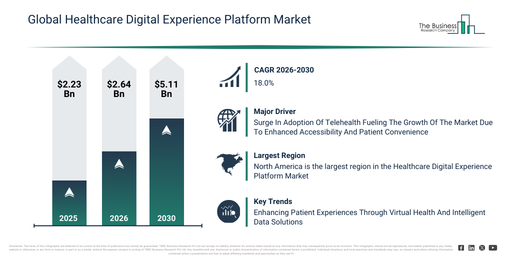
    Recent years have witnessed substantial growth in the healthcare digital experience platform market size. This market is projected to expand from $2.23 billion in 2025 to $2.64 billion in 2026, demonstrating a compound annual growth rate (CAGR) of 18.4%. Historically, this growth has been driven by the increasing digitization of healthcare services, wider adoption of patient portals, expanded telemedicine usage, a greater emphasis on patient-centric care delivery, and enhanced healthcare data interoperability.

    The healthcare digital experience platform market is poised for significant expansion in the coming years. Projections indicate it will reach $5.11 billion by 2030, exhibiting a compound annual growth rate (CAGR) of 18.0%. This projected growth is driven by several factors, including heightened investments in virtual care ecosystems, a rising need for tailored digital health journeys, the broadening use of AI-enabled care coordination, increased uptake of mobile health platforms, and a greater focus on delivering healthcare centered around user experience. Key trends anticipated during this period encompass the growing implementation of omnichannel patient engagement platforms, the increasing integration of AI-driven personalization tools, the expanded deployment of telehealth-enabled experience platforms, the wider availability of cloud-based healthcare experience solutions, and a heightened emphasis on cohesive interfaces for both providers and patients.

    Download the Free Sample Report to Explore Key Market Insights:

    https://www.thebusinessresearchcompany.com/sample.aspx?id=25776&type=smp

    What Underlying Factors Are Accelerating The Growth Of The Healthcare Digital Experience Platform Market?

    The increasing integration of telehealth is anticipated to propel the growth of the healthcare digital experience platform market moving forward. Telehealth refers to the provision of healthcare services and consultations remotely through digital communication technologies. The heightened adoption of telehealth is attributed to its enhanced accessibility, which allows patients to receive timely medical consultations and care from the comfort of their homes without requiring travel. A healthcare digital experience platform improves telehealth adoption by offering seamless, user-friendly digital interfaces that integrate patient data, appointment scheduling, and real-time communication, ensuring a smooth and personalized healthcare experience. For instance, in March 2024, data from the Department of Health and Aged Care, an Australia-based government department, revealed that telehealth usage in 2022–23 was highest among GPs (20%) and allied health (12%), with GPs and non-GP specialists constituting 75% and 48% of all video consultations, respectively. Consequently, the rising adoption of telehealth is a significant driver for the growth of the healthcare digital experience platform market.

    How Are The Various Segments Of The Healthcare Digital Experience Platform Market Categorized?

    The healthcare digital experience platform market covered in this report is segmented –

    1) By Component: Platform, Services

    2) By Delivery Mode: On-Premises, Cloud Based

    3) By Technology: Mobile Technology, Artificial Intelligence And Machine Learning, Internet of Medical Things (IoMT), Telemedicine Solutions

    4) By Application: Business-To-Consumer (B2C), Business-To-Business (B2B), Other Applications

    5) By End Use: Hospitals And Clinics, Healthcare Payers, Other End Uses

    Subsegments:

    1) By Platform: Patient Engagement Platforms, Provider Engagement Platforms, Data Analytics Platforms, Cloud-Based Platforms, Mobile Health Platforms, Virtual Care Platforms

    2) By Services: Implementation And Integration Services, Consulting Services, Support And Maintenance Services, Training And Education Services, Managed Services, Custom Development Services

    What Key Developments And Trends Are Impacting The Healthcare Digital Experience Platform Market?

    Leading companies within the healthcare digital experience platform market are concentrating on developing sophisticated technologies, such as generative artificial intelligence (AI)-driven clinical documentation tools, to streamline administrative workflows and boost clinician productivity. These generative AI-powered clinical documentation tools employ natural language processing and AI models to automatically transcribe, summarize, and create clinical documentation from patient-provider conversations, significantly cutting down on manual input. For instance, in October 2023, Microsoft Corporation, a US-based technology company, unveiled Dragon Ambient eXperience (DAX) Copilot. This generative AI-powered tool is designed to produce clinical summaries in real-time from interactions in exam rooms and telehealth sessions. Securely integrated with electronic health record (EHR) systems, the tool decreases the documentation load on clinicians by up to 40 minutes daily. Its capability to accurately and securely capture medical dialogue helps enhance care quality, reduce burnout, and improve patient-clinician interactions, positioning it as a transformative innovation in the healthcare digital experience platform market.

    Which Major Firms Influence Developments In The Healthcare Digital Experience Platform Market?

    Major companies operating in the healthcare digital experience platform market are Optum Inc., Microsoft Corporation, Accenture plc, International Business Machines Corporation, Oracle Corporation, Salesforce Inc., Cognizant Technology Solutions Corporation, GE HealthCare Technologies Inc., Infosys Limited, Adobe Inc., DXC Technology Company, Wipro Limited, Open Text Corporation, SoftServe Inc., Veradigm Inc., Sitecore A/S, Optimizely Inc., Innovaccer Inc., Liferay Inc., Acquia Inc.

    Read the full healthcare digital experience platform market report here:

    https://www.thebusinessresearchcompany.com/report/healthcare-digital-experience-platform-global-market-report

    Which Region Is Projected To Dominate The Healthcare Digital Experience Platform Market During The Forecast Period?

    North America was the largest region in the healthcare digital experience platform market in 2025. Asia-Pacific is expected to be the fastest-growing region in the forecast period. The regions covered in the healthcare digital experience platform market report are Asia-Pacific, South East Asia, Western Europe, Eastern Europe, North America, South America, Middle East, Africa.

    Request A Tailored Healthcare Digital Experience Platform Market Research Report For Competitive Advantage:

    https://www.thebusinessresearchcompany.com/customise?id=25776&type=smp

    Browse Through More Reports Similar to the Global Healthcare Digital Experience Platform Market 2026, By The Business Research Company

    Digital Insurance Platform Global Market Report

    https://www.thebusinessresearchcompany.com/report/digital-insurance-platform-global-market-report

    Healthcare Information System Global Market Report

    https://www.thebusinessresearchcompany.com/report/healthcare-information-system-global-market-report

    Healthcare Software As A Service Global Market Report

    https://www.thebusinessresearchcompany.com/report/healthcare-software-as-a-service-global-market-report

    Get in touch with us:

    The Business Research Company: https://www.thebusinessresearchcompany.com/

    Americas +1 310-496-7795

    Asia +44 7882 955267 & +91 8897263534

    Europe +44 7882 955267

    Email us at info@tbrc.info

    Follow us on:

    LinkedIn: https://in.linkedin.com/company/the-business-research-company

    YouTube: https://www.youtube.com/channel/UC24_fI0rV8cR5DxlCpgmyFQ

    Global Market Model: https://www.thebusinessresearchcompany.com/global-market-model
  • Healthcare Data Storage Market Revenue Growth Expected to Reach $17.38 Billion by 2030 with 19.7% CAGR

    Healthcare Data Storage Market Revenue Growth Expected to Reach $17.38 Billion by 2030 with 19.7% CAGR

    The Business Research Company’s 2026 market reports include new capabilities such as market attractiveness scoring and analysis, total addressable market analysis, company scoring matrix, interactive excel data dashboard, improved supply chain analysis, upcoming startups in the market, and overview of key products, aimed at improving the depth, usability, and strategic value of the insights delivered.

    What Market Size Expansion Is Predicted For The Healthcare Data Storage Market Between 2026 And 2030?

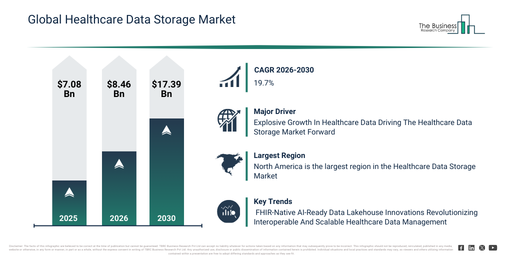
    The healthcare data storage market has experienced significant expansion in its size over the past few years. This market is projected to expand from $7.08 billion in 2025 to reach $8.46 billion in 2026, demonstrating a compound annual growth rate (CAGR) of 19.6%. Factors contributing to its historical growth include the escalating volume of digital medical records, the proliferation of medical imaging data, advancements in hospital IT infrastructure, a heightened demand for regulatory-compliant data storage solutions, and the wider adoption of electronic health records.

    The healthcare data storage market is poised for substantial expansion in the coming years. This market is projected to reach $17.39 billion by 2030, exhibiting a compound annual growth rate (CAGR) of 19.7%. This projected growth is driven by several factors, including the increasing application of AI-driven clinical analytics, greater investments in healthcare cloud infrastructure, the expansion of genomics and precision medicine data, an escalating demand for scalable storage solutions, and an intensified focus on data security and compliance. Key trends anticipated during this period encompass the rising adoption of cloud-based healthcare storage solutions, a growing need for high-performance data storage systems, the increasing utilization of hybrid storage architectures, the broadening of secure long-term medical data archiving practices, and an elevated emphasis on data redundancy and disaster recovery.

    Download the Free Sample Report to Explore Key Market Insights:

    https://www.thebusinessresearchcompany.com/sample.aspx?id=5845&type=smp

    Which Growth Drivers Are Contributing To The Progress Of The Healthcare Data Storage Market?

    The expanding volume of digital data storage within healthcare organizations is projected to propel the growth of the healthcare data storage market. This rapid increase in healthcare data is attributed to advancements in big data analytics tools and medical imaging, as well as the growing availability of real-time data to support clinical decision-making. The collection and archiving of healthcare data from various sources enhance efficient communication between doctors and patients, improve overall patient care quality, and provide more profound insights into specific conditions. For instance, according to RBC Capital Markets, a Canada-based investment bank, the healthcare industry generated about 30% of the world’s total data volume. Additionally, healthcare data is expected to grow at a compound annual growth rate of 36% by 2025. Thus, the escalating volume of digital data storage in healthcare organizations will bolster the market’s development.

    Which Market Segments Are Examined In The Healthcare Data Storage Market Study?

    The healthcare data storage market covered in this report is segmented –

    1) By Type: Magnetic Storage, Flash Storage

    2) By Architecture: Block Storage, File Storage, Object Storage

    3) By Deployment: On-Premise Solutions, Hybrid Solutions

    4) By End User: Pharmaceutical, Hospitals, Other End-Users

    Subsegments:

    1) By Magnetic Storage: Hard Disk Drives (HDDs), Tape Storage Systems

    2) By Flash Storage: Solid-State Drives, NVMe-Based Flash Storage

    What Trends Are Projected To Affect The Healthcare Data Storage Market?

    Leading companies in the healthcare data storage market are concentrating on developing advanced solutions, such as FHIR-native, AI-ready data lakehouse platforms. This focus is driven by the need to manage increasing clinical data volumes, facilitate seamless interoperability, and accelerate analytics-driven healthcare delivery. These FHIR-native, AI-ready data lakehouse platforms are defined as cloud-native architectures capable of ingesting, storing, and transforming diverse healthcare datasets, including structured, unstructured, and imaging data, while upholding standard formats like FHIR. For example, in December 2024, Microsoft, a US-based technology giant, announced the general availability of DICOM (Digital Imaging and Communications in Medicine) data transformation within its Healthcare Data Solutions in Microsoft Fabric. This enables users to ingest, store, transform, and analyze medical imaging datasets (such as CT, MRI) within a lakehouse architecture. This capability supports the conversion of DICOM imaging data into tabular formats that can persist in FHIR or OMOP standards, facilitates large-scale radiomics and imaging analytics, and integrates with powerful AI services for multimodal insights. The transformation feature is a component of Microsoft’s medallion-style Lakehouse, which unifies clinical, claims, conversational, and imaging data in a single, scalable repository, thereby simplifying advanced analytics, the application of AI models, and the acceleration of research and care workflows.

    Who Are The Primary Competitors In The Healthcare Data Storage Market?

    Major companies operating in the healthcare data storage market are Dell Technologies, International Business Machines Corporation, NetApp Inc., Hewlett Packard Enterprise Development LP, Pure Storage Inc., Hitachi Ltd., Western Digital Corporation, Huawei Technologies Co. Ltd., Toshiba Corporation, Scality, Fujitsu Limited, Cloudian Inc., Samsung, Tintri Inc., Cisco Systems, Nutanix Inc., Commvault Systems, Cohesity, Rubrik, Veeam Software, Zadara, Caringo, Infinidat, Nexenta Systems, DataCore Software, Qumulo, SwiftStack, StorPool, Panzura

    Read the full healthcare data storage market report here:

    https://www.thebusinessresearchcompany.com/report/healthcare-data-storage-global-market-report

    What Are The Leading Geographic Regions In The Healthcare Data Storage Market?

    North America was the largest region in the healthcare data storage market in 2025. The regions covered in the healthcare data storage market report are Asia-Pacific, South East Asia, Western Europe, Eastern Europe, North America, South America, Middle East, Africa.

    Request A Tailored Healthcare Data Storage Market Research Report For Competitive Advantage:

    https://www.thebusinessresearchcompany.com/customise?id=5845&type=smp

    Browse Through More Reports Similar to the Global Healthcare Data Storage Market 2026, By The Business Research Company

    Data Storage Global Market Report

    https://www.thebusinessresearchcompany.com/report/data-storage-global-market-report

    Healthcare Data Integration Global Market Report

    https://www.thebusinessresearchcompany.com/report/healthcare-data-integration-global-market-report

    Healthcare Electronic Data Interchange Global Market Report

    https://www.thebusinessresearchcompany.com/report/healthcare-electronic-data-interchange-global-market-report

    Get in touch with us:

    The Business Research Company: https://www.thebusinessresearchcompany.com/

    Americas +1 310-496-7795

    Asia +44 7882 955267 & +91 8897263534

    Europe +44 7882 955267

    Email us at info@tbrc.info

    Follow us on:

    LinkedIn: https://in.linkedin.com/company/the-business-research-company

    YouTube: https://www.youtube.com/channel/UC24_fI0rV8cR5DxlCpgmyFQ

    Global Market Model: https://www.thebusinessresearchcompany.com/global-market-model
  • Healthcare Data Monetization Market Expected to Record Steady Growth and Approach $2.42 Billion by 2030

    Healthcare Data Monetization Market Expected to Record Steady Growth and Approach $2.42 Billion by 2030

    The Business Research Company’s 2026 market reports include new capabilities such as market attractiveness scoring and analysis, total addressable market analysis, company scoring matrix, interactive excel data dashboard, improved supply chain analysis, upcoming startups in the market, and overview of key products, aimed at improving the depth, usability, and strategic value of the insights delivered.

    How Large Is The Healthcare Data Monetization Market Projected To Become By 2030 Based On Its 2026 Valuation?

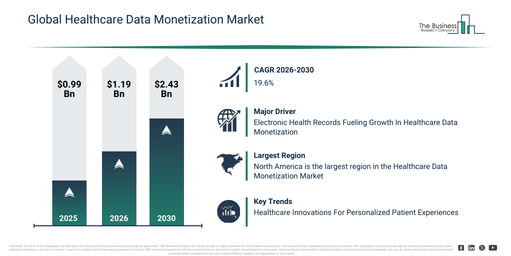
    The healthcare data monetization market has experienced substantial growth in recent years. It is projected to expand from $0.99 billion in 2025 to $1.19 billion in 2026, achieving a compound annual growth rate (CAGR) of 19.6%. This historical growth can be attributed to factors such as the increasing availability of digital healthcare data, the expansion of electronic health records, rising interest from pharmaceutical research organizations, the growth in real-world evidence studies, and the early adoption of healthcare analytics platforms.

    The healthcare data monetization market size is anticipated to undergo swift expansion over the coming years. This market is projected to reach $2.43 billion by 2030, demonstrating a compound annual growth rate (CAGR) of 19.6%. The expected growth within this forecast period is driven by factors such as escalating investments in AI-powered healthcare analytics, an increasing need for personalized medicine insights, the broader adoption of value-based healthcare models, clearer regulatory guidelines on data usage rights, and the rising application of synthetic health data. Prominent trends identified for the forecast timeframe include the expanding use of data licensing models within healthcare, a growing inclination towards analytics-driven data commercialization, a heightened demand for de-identified patient data sets, the proliferation of platform-based data marketplaces, and a strengthened emphasis on data governance and consent management.

    Download the Free Sample Report to Explore Key Market Insights:

    https://www.thebusinessresearchcompany.com/sample.aspx?id=13672&type=smp

    What Primary Drivers Are Shaping The Development Of The Healthcare Data Monetization Market?

    The increasing prevalence of electronic health records (EHRs) is anticipated to fuel expansion within the healthcare data monetization market moving ahead. These digital versions of patients’ medical records encompass information about their health history, diagnoses, prescribed medications, and various treatments received. In the context of healthcare data monetization, these EHRs serve purposes such as facilitating medical research, supporting drug development, and aiding clinical trials, ultimately leading to improved therapies and customized medical care. As an illustration, in June 2024, the Australian National Audit Office, an Australian government agency, reported that approximately 23.8 million Australians possessed a My Health Record by March 2024, representing an estimated investment of $2 billion into the system. Consequently, the extensive uptake of electronic health records is a key factor propelling the expansion of the healthcare data monetization market.

    What Segment Groups Are Identified Within The Healthcare Data Monetization Market?

    The healthcare data monetization market covered in this report is segmented –

    1) By Type: Direct Data Monetization, Indirect Data Monetization

    2) By Deployment: On-Premise, Cloud

    3) By End User: Pharmaceutical And Biotechnology Companies, Healthcare Providers, Healthcare Payers, Medical Technology Companies

    Subsegments:

    1) By Direct Data Monetization: Data Licensing And Sales, Data Sharing Agreements, Subscription-Based Access To Data

    2) By Indirect Data Monetization: Targeted Marketing And Advertising, Research And Development Collaborations

    Which Upcoming Trends Are Expected To Influence The Healthcare Data Monetization Market?

    Leading companies operating within the healthcare data monetization market are introducing various digital transformation innovations, such as Software as a Service, to assist healthcare providers in delivering more personalized patient experiences. Software as a Service (SaaS) is a model for software delivery where applications are hosted in the cloud and users access them over the internet, typically through a web browser or mobile application. For instance, in April 2023, Salesforce, a US-based cloud-based software company, announced new Customer 360 for Health capabilities aimed at helping healthcare providers offer more personalized patient experiences. These innovations seek to streamline operations, reduce costs, and improve patient care by leveraging real-time data, AI, and automation. These functionalities empower healthcare and life sciences organizations to enhance the overall care experience using the full potential of Salesforce technology, including real-time data from Data Cloud, Einstein AI, and automation with Flow.

    Which Companies Hold Significant Positions In The Healthcare Data Monetization Market?

    Major companies operating in the healthcare data monetization market are Google LLC, Microsoft Corporation, Oracle Corporation, SAP SE, Salesforce Inc., Snowflake Inc., Informatica Inc., TIBCO Software Inc., QlikTech International AB, SAS Institute Inc., OpenText Corporation, Innovaccer Inc., H1.Co, John Snow Labs Inc., Accenture Plc, Infosys Limited, Virtusa Corp., HTEC Group, Sisense Inc., Infor

    Read the full healthcare data monetization market report here:

    https://www.thebusinessresearchcompany.com/report/healthcare-data-monetization-global-market-report

    How Does The Healthcare Data Monetization Market Perform Across Major Global Regions?

    North America was the largest region in the healthcare data monetization market in 2025. The regions covered in the healthcare data monetization market report are Asia-Pacific, South East Asia, Western Europe, Eastern Europe, North America, South America, Middle East, Africa.

    Request A Tailored Healthcare Data Monetization Market Research Report For Competitive Advantage:

    https://www.thebusinessresearchcompany.com/customise?id=13672&type=smp

    Browse Through More Reports Similar to the Global Healthcare Data Monetization Market 2026, By The Business Research Company

    Data Monetization In Telecom Global Market Report

    https://www.thebusinessresearchcompany.com/report/data-monetization-in-telecom-global-market-report

    Data Monetization Solutions For Life Science Companies Global Market Report

    https://www.thebusinessresearchcompany.com/report/data-monetization-solutions-for-life-science-companies-global-market-report

    Healthcare Data Storage Global Market Report

    https://www.thebusinessresearchcompany.com/report/healthcare-data-storage-global-market-report

    Get in touch with us:

    The Business Research Company: https://www.thebusinessresearchcompany.com/

    Americas +1 310-496-7795

    Asia +44 7882 955267 & +91 8897263534

    Europe +44 7882 955267

    Email us at info@tbrc.info

    Follow us on:

    LinkedIn: https://in.linkedin.com/company/the-business-research-company

    YouTube: https://www.youtube.com/channel/UC24_fI0rV8cR5DxlCpgmyFQ

    Global Market Model: https://www.thebusinessresearchcompany.com/global-market-model
  • Healthcare Data Interoperability Industry Expansion Forecast Showing Market Size of $14.97 Billion by 2030 at 14.8% CAGR

    Healthcare Data Interoperability Industry Expansion Forecast Showing Market Size of $14.97 Billion by 2030 at 14.8% CAGR

    The Business Research Company’s 2026 market reports include new capabilities such as market attractiveness scoring and analysis, total addressable market analysis, company scoring matrix, interactive excel data dashboard, improved supply chain analysis, upcoming startups in the market, and overview of key products, aimed at improving the depth, usability, and strategic value of the insights delivered.

    What Market Value Is Anticipated For The Healthcare Data Interoperability Market Over The Period 2026–2030?

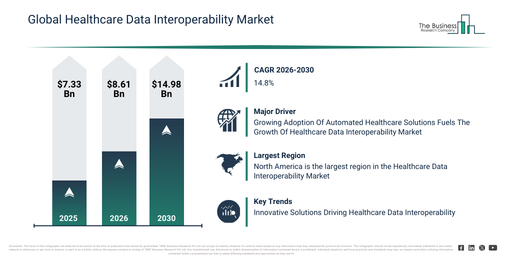
    The healthcare data interoperability market has witnessed significant expansion over recent years. It is projected to increase from $7.33 billion in 2025 to $8.61 billion in 2026, exhibiting a compound annual growth rate (CAGR) of 17.6%. The historical growth of this market can be attributed to factors such as the growing digitization of healthcare records, the widespread adoption of electronic health record systems, an increasing necessity for integrated patient care, the emergence of multi-provider healthcare networks, and regulatory mandates for health data standardization.

    The size of the healthcare data interoperability market is projected to experience substantial expansion over the upcoming years. This market is anticipated to reach $14.98 billion by 2030, demonstrating a compound annual growth rate (CAGR) of 14.8%. Factors contributing to this growth throughout the forecast period include the increased embrace of value-based care approaches, elevated investments in linked healthcare IT systems, a rising need for interoperable telehealth solutions, the broadening of national health information exchange networks, and a heightened emphasis on patient-focused data accessibility. Key trends identified for the forecast timeframe encompass the wider acceptance of standardized health data exchange frameworks, an expanding integration of clinical systems across various platforms, an escalating requirement for immediate patient data access, the proliferation of secure API-driven interoperability tools, and a sharpened focus on the semantic harmonization of data.

    Download the Free Sample Report to Explore Key Market Insights:

    https://www.thebusinessresearchcompany.com/sample.aspx?id=14925&type=smp

    Which Major Factors Are Driving The Expansion Of The Healthcare Data Interoperability Market?

    The increasing implementation of automated healthcare solutions is anticipated to fuel the expansion of healthcare data interoperability in the future. These solutions encompass technology-powered instruments and frameworks developed to optimize and improve diverse facets of healthcare provision and administrative procedures. The rising uptake of automated healthcare solutions within the industry stems from the demand for better efficiency, precision, and patient service. Healthcare data interoperability allows automated healthcare solutions to smoothly combine and share patient data, leading to improved care provision. Furthermore, this interoperability empowers automated healthcare solutions to optimize clinical processes through the automation of routine operations like data input, record-keeping, and administrative tasks. As an illustration, in March 2024, NHS England, a UK-based organization, reported that in 2024, it committed $148.21 million (£113 million) to 86 AI-based projects within health and care, with these AI initiatives currently under evaluation at 408 sites throughout the UK, encompassing 466 active AI-based trials. Consequently, the increasing embrace of automated healthcare solutions is propelling the expansion of the healthcare data interoperability market.

    How Is The Healthcare Data Interoperability Market Divided Into Its Major Segments?

    The healthcare data interoperability market covered in this report is segmented –

    1) By Model: Centralized, Hybrid, Decentralized

    2) By Deployment: Cloud-Based, On-Premises

    3) By Level: Foundational, Structural, Semantic

    4) By Application: Diagnosis, Treatment, Other Applications

    5) By End User: Healthcare Providers, Healthcare Payers, Pharmacies

    Subsegments:

    1) By Centralized: Single Point Of Control, Unified Data Repository, Centralized Management And Storage

    2) By Hybrid: Combination Of Centralized And Decentralized Approaches, Distributed Data Management With Centralized Control, Flexible Data Exchange Models

    3) By Decentralized: Distributed Data Storage, Peer-To-Peer Data Sharing, Localized Control And Management

    How Are Trends Shaping The Direction Of The Healthcare Data Interoperability Market?

    Leading firms within the healthcare data interoperability sector are crafting novel, cutting-edge solutions, including digital platforms, to secure a competitive advantage. These digital platforms are defined as internet-based systems or applications that enable user interactions, transactions, and information exchange, encompassing examples like e-commerce sites, social networking services, and cloud-based service platforms. As an illustration, KMS Healthcare, a company based in the US, introduced its CONNECT interoperability solution in August 2023. This platform aims to streamline data exchange among electronic health records (EHRs). The innovative solution incorporates customizable, pre-tested FHIR APIs alongside an HL7 conversion engine, which together assist healthcare providers in addressing interoperability hurdles and optimizing data integration processes. By offering instant access to prominent EHR systems, the CONNECT platform empowers developers to swiftly test and create applications, thereby substantially lowering the expenses and intricate nature involved in setting up separate sandbox connections.

    Who Are The Prominent Organizations Shaping The Healthcare Data Interoperability Market?

    Major companies operating in the healthcare data interoperability market are Optum Inc., Oracle Corporation, Cognizant Technology Solutions, Koninklijke Philips NV, Wipro Limited, Epic Systems Corporation, Infor Inc, Virtusa Corp, Deevita LLC, Ciox Health, Veradigm LLC, ViSolve Inc., Change Healthcare, InterSystems Corporation, NextGen Healthcare Inc., eMids, Consensus Cloud Solutions Inc., Merative, Orion Health Group Limited, Teletracking Technologies, OSP Labs, Jitterbit, Nalashaa Solutions, Lyniate, MphRx, iNTERFACEWARE Inc

    Read the full healthcare data interoperability market report here:

    https://www.thebusinessresearchcompany.com/report/healthcare-data-interoperability-global-market-report

    Which Region Currently Holds The Largest Share Of The Healthcare Data Interoperability Market?

    North America was the largest region in the healthcare data interoperability market in 2025. Asia Pacific is expected to be the fastest-growing region in the forecast period. The regions covered in the healthcare data interoperability market report are Asia-Pacific, South East Asia, Western Europe, Eastern Europe, North America, South America, Middle East, Africa.

    Request A Tailored Healthcare Data Interoperability Market Research Report For Competitive Advantage:

    https://www.thebusinessresearchcompany.com/customise?id=14925&type=smp

    Browse Through More Reports Similar to the Global Healthcare Data Interoperability Market 2026, By The Business Research Company

    Healthcare Data Integration Global Market Report

    https://www.thebusinessresearchcompany.com/report/healthcare-data-integration-global-market-report

    Healthcare Interoperability Solutions Global Market Report

    https://www.thebusinessresearchcompany.com/report/healthcare-interoperability-solutions-global-market-report

    Healthcare Electronic Data Interchange Global Market Report

    https://www.thebusinessresearchcompany.com/report/healthcare-electronic-data-interchange-global-market-report

    Get in touch with us:

    The Business Research Company: https://www.thebusinessresearchcompany.com/

    Americas +1 310-496-7795

    Asia +44 7882 955267 & +91 8897263534

    Europe +44 7882 955267

    Email us at info@tbrc.info

    Follow us on:

    LinkedIn: https://in.linkedin.com/company/the-business-research-company

    YouTube: https://www.youtube.com/channel/UC24_fI0rV8cR5DxlCpgmyFQ

    Global Market Model: https://www.thebusinessresearchcompany.com/global-market-model
  • Healthcare Data Integration Market Revenue Expected to Reach $5.83 Billion by 2030 with 15.1% CAGR

    Healthcare Data Integration Market Revenue Expected to Reach $5.83 Billion by 2030 with 15.1% CAGR

    The Business Research Company’s 2026 market reports include new capabilities such as market attractiveness scoring and analysis, total addressable market analysis, company scoring matrix, interactive excel data dashboard, improved supply chain analysis, upcoming startups in the market, and overview of key products, aimed at improving the depth, usability, and strategic value of the insights delivered.

    What Is The Expected Market Size Of The Healthcare Data Integration Market From 2026 To 2030?

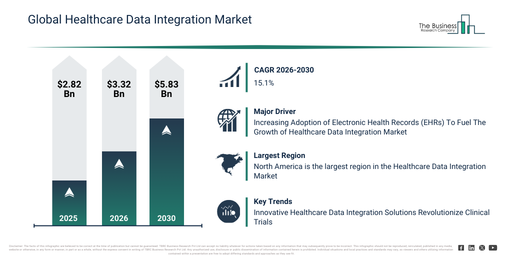
    The healthcare data integration market has experienced significant growth in recent years. Its value is projected to rise from $2.82 billion in 2025 to $3.32 billion in 2026, reflecting a compound annual growth rate (CAGR) of 17.9%. This historical expansion can be linked to several factors, including the increasing fragmentation of healthcare data systems, the widespread adoption of electronic health records, the expansion of multi-provider healthcare networks, the growing demand for operational analytics, and the availability of integration middleware tools.

    The healthcare data integration market is projected to experience swift expansion over the coming years. This market is anticipated to reach $5.83 billion by 2030, exhibiting a compound annual growth rate (CAGR) of 15.1%. Factors contributing to this growth during the forecast period include the escalating embrace of interoperable healthcare environments, increasing capital deployment into data-centric care approaches, the broadening scope of population health management programs, a heightened emphasis on automating regulatory reports, and a greater need for scalable cloud integration. Key trends foreseen in this period encompass the growing implementation of unified data integration platforms, a surging requirement for immediate clinical data access, the deepening incorporation of interoperability standards, the proliferation of cloud-based integration options, and a reinforced commitment to data governance and compliance.

    Download the Free Sample Report to Explore Key Market Insights:

    https://www.thebusinessresearchcompany.com/sample.aspx?id=14729&type=smp

    What Key Drivers Are Influencing The Growth Of The Healthcare Data Integration Market?

    The greater utilization of electronic health records (EHRs) is projected to drive the expansion of the healthcare data integration market in the foreseeable future. Electronic health records (EHR) are digital frameworks that securely store and manage patient health information, enabling efficient access, sharing, and analysis among medical providers. The demand for EHR IT systems is increasing due to benefits such as improved efficiency, centralized and accessible data, enhanced interoperability, and better patient engagement. Healthcare data integration solutions are essential for achieving interoperability by linking EHR systems with other healthcare IT systems, including laboratory information systems (LIS), pharmacy systems, and radiology systems. For instance, in May 2024, the Journal of Medical Internet Research, a peer-reviewed journal based in Canada, reported that 38.78% of US adults had engaged with telehealth services in the past year. Thus, the growing adoption of electronic health records (EHRs) is a key factor boosting the healthcare data integration market’s growth.

    Which Segments Are Included In The Analysis Of The Healthcare Data Integration Market?

    The healthcare data integration market covered in this report is segmented –

    1) By Component: Tools, Services

    2) By Type Of Integration: Application Integration, Data Integration, Device Integration, Healthcare Information Exchange (HIE), System Integration, Other Integrations

    3) By Deployment: Cloud, On-Premises

    4) By Business Application: Operations And Supply Chain, Finance

    5) By End-user: Hospital, Clinics, Laboratories, Other End-Users

    Subsegments:

    1) By Tools: Data Integration Software, Middleware Solutions, Data Mapping Tools, Etl (Extract, Transform, Load) Tools

    2) By Services: Data Integration Consulting, Implementation And Support Services, Cloud Integration Services, Managed Data Services

    Which Market Trends Are Creating New Opportunities In The Healthcare Data Integration Market?

    Leading companies in the healthcare data integration market are concentrating on developing innovative data integration offerings, such as Clinical Data Studio and Health Record Connect, to achieve a competitive advantage. Clinical Data Studio and Health Record Connect are new data integration solutions that enhance and optimize clinical data workflows in clinical trials. For instance, in November 2023, Medidata Solutions Inc., a US-based technology company that develops and markets software as a service for clinical trials, launched Clinical Data Studio and Health Record Connect, a data integration solution specifically designed to improve and accelerate clinical trials. Medidata’s clinical data offerings optimize workflows by incorporating lab data, electronic health records, and sensors. Clinical Data Studio streamlines data standardization, while Health Record Connect integrates clinical research into healthcare data, transforming study conduct with AI insights. These solutions boost trial outcomes by utilizing actionable data insights and enhancing data quality and management processes. They combine healthcare data sources to increase efficiencies and improve patient outcomes in clinical research settings.

    Which Key Industry Participants Are Active In The Healthcare Data Integration Market?

    Major companies operating in the healthcare data integration market are McKesson Corporation, International Business Machines Corporation, Oracle Corporation, Koninklijke Philips N.V, GE Healthcare, Cerner Corporation, SAS Institute Inc, Epic Systems Corporation, Allscripts Healthcare Solutions Inc, Informatica Inc, Siemens Healthineers AG, InterSystems Corporation, NXGN Management LLC, Optum Inc, Health Catalyst, Innovaccer Inc, Orion Health, Veradigm LLC, Denodo Technologies, 1upHealth

    Read the full healthcare data integration market report here:

    https://www.thebusinessresearchcompany.com/report/healthcare-data-integration-global-market-report

    Which Region Is Expected To Register The Fastest Growth In The Healthcare Data Integration Market?

    North America was the largest region in the healthcare data integration market in 2025. Asia-Pacific is expected to be the fastest-growing region in the forecast period. The regions covered in the healthcare data integration market report are Asia-Pacific, South East Asia, Western Europe, Eastern Europe, North America, South America, Middle East, Africa.

    Request A Tailored Healthcare Data Integration Market Research Report For Competitive Advantage:

    https://www.thebusinessresearchcompany.com/customise?id=14729&type=smp

    Browse Through More Reports Similar to the Global Healthcare Data Integration Market 2026, By The Business Research Company

    Healthcare Data Interoperability Global Market Report

    https://www.thebusinessresearchcompany.com/report/healthcare-data-interoperability-global-market-report

    Healthcare Electronic Data Interchange Global Market Report

    https://www.thebusinessresearchcompany.com/report/healthcare-electronic-data-interchange-global-market-report

    Data Integration Global Market Report

    https://www.thebusinessresearchcompany.com/report/data-integration-global-market-report

    Get in touch with us:

    The Business Research Company: https://www.thebusinessresearchcompany.com/

    Americas +1 310-496-7795

    Asia +44 7882 955267 & +91 8897263534

    Europe +44 7882 955267

    Email us at info@tbrc.info

    Follow us on:

    LinkedIn: https://in.linkedin.com/company/the-business-research-company

    YouTube: https://www.youtube.com/channel/UC24_fI0rV8cR5DxlCpgmyFQ

    Global Market Model: https://www.thebusinessresearchcompany.com/global-market-model
  • Global Healthcare Data Annotation Tools Market Set for Strong Expansion Reaching $1.09 Billion by 2030 at 28.4% CAGR

    Global Healthcare Data Annotation Tools Market Set for Strong Expansion Reaching $1.09 Billion by 2030 at 28.4% CAGR

    The Business Research Company’s 2026 market reports include new capabilities such as market attractiveness scoring and analysis, total addressable market analysis, company scoring matrix, interactive excel data dashboard, improved supply chain analysis, upcoming startups in the market, and overview of key products, aimed at improving the depth, usability, and strategic value of the insights delivered.

    What Market Valuation Is Forecasted For The Healthcare Data Annotation Tools Market By 2030 Starting From Its 2026 Size?

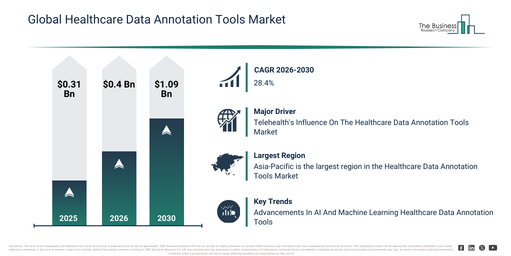
    The healthcare data annotation tools market has seen rapid expansion in its size over recent years. Projections indicate it will expand from $0.31 billion in 2025 to reach $0.4 billion by 2026, demonstrating a compound annual growth rate (CAGR) of 28.3%. Contributing factors to its past growth include the growing integration of AI in medical imaging, the expansion of digital pathology datasets, the development of clinical decision support systems, the availability of vast healthcare datasets, and the pioneering use of machine learning for diagnostic purposes.

    The healthcare data annotation tools market is projected for substantial expansion in the coming years, with an anticipated growth to $1.09 billion by 2030, reflecting a compound annual growth rate (CAGR) of 28.4%. This growth during the forecast period is propelled by factors such as the increasing deployment of AI-powered diagnostic tools, a rising demand for scalable annotation platforms, the expansion of personalized medicine applications, growing investments in healthcare AI startups, and increasing regulatory oversight on AI model validation. Key trends observed in this period include a heightened demand for high-quality labeled medical data, the increasing adoption of automated annotation tools, a growing use of multimodal data annotation, the expansion of AI training data pipelines, and an enhanced focus on annotation accuracy and compliance.

    Download the Free Sample Report to Explore Key Market Insights:

    https://www.thebusinessresearchcompany.com/sample.aspx?id=13852&type=smp

    What Major Growth Drivers Are Shaping The Outlook Of The Healthcare Data Annotation Tools Market?

    The rising adoption of telehealth is projected to fuel the expansion of the healthcare data annotation tools market in the coming years. Telehealth involves the application of electronic information and telecommunication technologies to support long-distance clinical healthcare, provide health-related education for patients and professionals, assist with health administration, and contribute to public health initiatives. In telemedicine, healthcare data annotation tools are employed to accurately identify and categorize medical data, thereby facilitating more effective evaluation, therapy planning, and remote patient monitoring. For instance, in September 2024, the Australian Bureau of Statistics (ABS), Australia’s national statistical agency, reported that in 2023–24, 83.5% of males used telehealth services, an increase from 78.6% in 2022–23. Hence, the increasing usage of telehealth is a key driver for the healthcare data annotation tools market.

    Which Segment Categories Define The Healthcare Data Annotation Tools Market?

    The healthcare data annotation tools market covered in this report is segmented –

    1) By Type: Text, Image And Video, Audio

    2) By Technology: Manual, Semi-Supervised, Automatic

    3) By End-User: Hospitals, Diagnostic Imaging Centers, Healthcare Technology Companies, Other End-Users

    Subsegments:

    1) By Text: Natural Language Processing (NLP) Annotation, Entity Recognition, Text Classification

    2) By Image and Video: Medical Image Labeling, Object Detection, Semantic Segmentation, Video Frame Annotation

    3) By Audio: Speech Recognition Annotation, Voice Data Labeling, Audio Transcription

    What Trends Are Affecting The Expansion Of The Healthcare Data Annotation Tools Market?

    Major companies engaged in healthcare data annotation tools are concentrating on developing innovative technological solutions, including AI-driven healthcare data annotation tools, to facilitate the faster annotation of videos essential for AI development. These AI-based healthcare data annotation tools are software solutions that leverage artificial intelligence (AI) technologies to annotate and label healthcare-specific data. For example, in August 2023, iMerit Technology, a US-based artificial intelligence (AI) data solutions company, unveiled Ango Hub. This platform is an end-to-end, enterprise-grade technology designed to provide a comprehensive suite of data annotation tools for AI and analytics within a single environment. The platform aims to deliver a full spectrum of data annotation services, incorporating automation throughout each stage, from data preparation and selection to workflow structuring, specific annotation tools, quality assurance, and reporting. Ango Hub has been applied to medical image annotation. iMerit’s Ango Hub is a new, purpose-built application founded on a generative AI framework, intended to expedite development in crucial vertical areas such as medical artificial intelligence.

    Who Are The Top Companies Competing In The Healthcare Data Annotation Tools Market?

    Major companies operating in the healthcare data annotation tools market are Infosys BPM, iMerit Technology, Appen Limited, Scale AI, CloudFactory Limited, Innodata, Cogito Tech LLC, Defined.ai, Shaip, Sama AI, Labelbox, SuperAnnotate LLC, Label Your Data, Playment, V7, NetraMark Corp, Keymakr Inc, Dataloop AI, Haidata, Hive AI, Turing, Capestart, Anolytics, Explorium, Alegion AI Inc, Lynxcare, Trillbit, Kotwel

    Read the full healthcare data annotation tools market report here:

    https://www.thebusinessresearchcompany.com/report/healthcare-data-annotation-tools-global-market-report

    Which Regions Are Projected To Dominate The Healthcare Data Annotation Tools Market In The Coming Years?

    Asia-Pacific was the largest region in the healthcare data annotation tools market in 2025. The regions covered in the healthcare data annotation tools market report are Asia-Pacific, South East Asia, Western Europe, Eastern Europe, North America, South America, Middle East, Africa.

    Request A Tailored Healthcare Data Annotation Tools Market Research Report For Competitive Advantage:

    https://www.thebusinessresearchcompany.com/customise?id=13852&type=smp

    Browse Through More Reports Similar to the Global Healthcare Data Annotation Tools Market 2026, By The Business Research Company

    Data Annotation Tools Global Market Report

    https://www.thebusinessresearchcompany.com/report/data-annotation-tools-global-market-report

    Data Annotation And Labeling Global Market Report

    https://www.thebusinessresearchcompany.com/report/data-annotation-and-labeling-global-market-report

    Healthcare Data Integration Global Market Report

    https://www.thebusinessresearchcompany.com/report/healthcare-data-integration-global-market-report

    Get in touch with us:

    The Business Research Company: https://www.thebusinessresearchcompany.com/

    Americas +1 310-496-7795

    Asia +44 7882 955267 & +91 8897263534

    Europe +44 7882 955267

    Email us at info@tbrc.info

    Follow us on:

    LinkedIn: https://in.linkedin.com/company/the-business-research-company

    YouTube: https://www.youtube.com/channel/UC24_fI0rV8cR5DxlCpgmyFQ

    Global Market Model: https://www.thebusinessresearchcompany.com/global-market-model
  • Healthcare Cybersecurity Market Growth Expected to Reach $56.68 Billion by 2030 with 15.6% CAGR

    Healthcare Cybersecurity Market Growth Expected to Reach $56.68 Billion by 2030 with 15.6% CAGR

    The Business Research Company’s 2026 market reports include new capabilities such as market attractiveness scoring and analysis, total addressable market analysis, company scoring matrix, interactive excel data dashboard, improved supply chain analysis, upcoming startups in the market, and overview of key products, aimed at improving the depth, usability, and strategic value of the insights delivered.

    How Is The Market Size Of The Healthcare Cybersecurity Market Expected To Change Between 2026 And 2030?

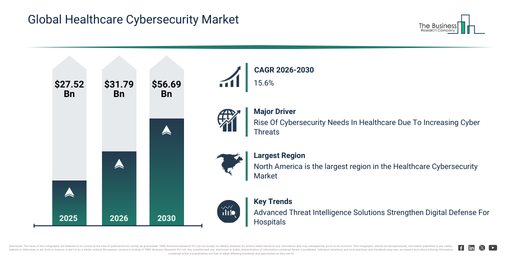
    The healthcare cybersecurity market size has demonstrated rapid expansion in recent years. It is anticipated to grow from $27.52 billion in 2025 to $31.79 billion in 2026, at a compound annual growth rate (CAGR) of 15.5%. The historical growth of this market can be attributed to factors such as the increasing digitization of healthcare records, a rise in cyberattack incidents targeting hospitals, the adoption of electronic health records, the expansion of connected medical devices, and an escalating regulatory focus on patient data protection.

    The healthcare cybersecurity market is projected for significant expansion over the coming years, anticipated to reach $56.69 billion by 2030, exhibiting a compound annual growth rate (CAGR) of 15.6%. This projected growth during the forecast period is fueled by several factors, including heightened investments in healthcare IT security, a surge in demand for real-time threat monitoring, the broadening of cloud-based healthcare platforms, an intensified focus on preventing ransomware attacks, and the increasing incorporation of cybersecurity into medical device design. Key trends expected during the forecast period encompass a greater deployment of sophisticated threat detection systems, an increase in the adoption of zero-trust security frameworks, the expanding integration of AI-driven security analytics, the broadening of medical device cybersecurity solutions, and a stronger emphasis on regulatory compliance and the protection of data privacy.

    Download the Free Sample Report to Explore Key Market Insights:

    https://www.thebusinessresearchcompany.com/sample.aspx?id=13964&type=smp

    What Drivers Are Expected To Influence The Healthcare Cybersecurity Market During The Forecast Period?

    The projected growth of the healthcare cybersecurity market is primarily fueled by the increasing prevalence of cyberattacks. These attacks are malicious attempts designed to disrupt, damage, or gain unauthorized entry to computer systems, networks, or devices. Cyberattacks are escalating because financially motivated threat actors are targeting organizations to steal sensitive data, execute ransomware operations, and exploit vulnerabilities for monetary gain. Healthcare cybersecurity supports this trend by providing advanced security tools that safeguard patient information, protect clinical operations, and prevent data breaches that could disrupt care delivery. For instance, in October 2025, according to the Australian Signals Directorate, an Australia-based government agency, in FY2024–25, the Australian Signals Directorate’s (ASD) Australian Cyber Security Centre (ACSC) received over 42,500 calls to the Australian Cyber Security Hotline, marking a 16% rise from the previous year. Therefore, the increasing number of cyberattacks is a key driver for the growth of the healthcare cybersecurity market.

    How Is The Healthcare Cybersecurity Market Structured Across Different Segments?

    The healthcare cybersecurity market covered in this report is segmented –

    1) By Solution: Identity And Access Management, Risk And Compliance Management, Antivirus And Antimalware, Distributed Denial Of Service (DDoS) Mitigation, Security Information And Event Management, Intrusion Detection System/ Intrusion Prevention System, Other Solutions

    2) By Security: Network Security, Endpoint Security, Application Security, Content Security

    3) By Threat: Malware, Distributed Denial Of Service (DDoS) Threats, Advanced Persistent Threat, Spyware, Lost Or Stolen Devices, Other Threats

    4) By End User: Pharma And Chemicals, Medical Devices, Health Insurance, Hospitals, Other End Users

    Subsegments:

    1) By Identity And Access Management: User Authentication, Role-Based Access Control, Single Sign-On

    2) By Risk And Compliance Management: Risk Assessment Tools, Compliance Management Solutions, Policy Management Software

    3) By Antivirus And Antimalware: Antivirus Software, Antimalware Solutions, Endpoint Protection

    4) By Distributed Denial Of Service (Ddos) Mitigation: Traffic Filtering, Rate Limiting, Ddos Protection Services

    5) By Security Information And Event Management (SIEM): Log Management, Security Monitoring, Incident Response

    6) By Intrusion Detection System Or Intrusion Prevention System (IDS Or IPS): Network-Based IDS Or IPS, Host-Based IDS Or IPS, Hybrid IDS Or IPS

    7) By Other Solutions: Data Encryption Solutions, Threat Intelligence Services, Security Training And Awareness Programs

    Which Trends Are Influencing The Healthcare Cybersecurity Market?

    Major companies in the healthcare cybersecurity market are focusing on developing advanced solutions, such as healthcare-specific threat intelligence platforms, to enhance the protection of electronic health records, connected medical devices, and critical clinical systems against increasingly sophisticated cyberattacks. These healthcare-specific threat intelligence platforms are cybersecurity systems designed for hospitals and health systems, which aggregate sector-focused threat feeds, correlate indicators of compromise, and automate response workflows to assist security teams in detecting, prioritizing, and mitigating attacks targeting healthcare infrastructure. For instance, in December 2024, Cyware Labs Inc., a US-based cybersecurity software company, introduced its Healthcare Tuned Threat Intelligence Platform (HC-TIP) to provide curated, sector-specific threat intelligence to hospitals and clinical networks. This platform offers real-time visibility into ransomware attacks, medical-device vulnerabilities, and other healthcare-focused cyber risks. It also improves incident response by providing pre-built workflows and automated threat-sharing capabilities customized for the unique security demands of the healthcare sector.

    Which Major Players Dominate The Healthcare Cybersecurity Market?

    Major companies operating in the healthcare cybersecurity market are Microsoft Corporation, Intel Corporation, International Business Machines Corporation, Cisco Systems Inc., Broadcom Inc., Thales Group, Palo Alto Networks Inc., Juniper Networks Inc., Fortinet Inc., Gen Digital Inc., Splunk Inc., Checkpoint Software Technologies Ltd., Trend Micro Inc., Crowdstrike Holdings Inc., Fortra LLC, Tenable Inc., Rapid7 Inc., Qualys Inc., McAfee Corp., Forescout Technologies Inc., LogRhythm Inc., Claroty Ltd., Sophos Ltd., Fortified Health Security, Sensato Cybersecurity Solutions

    Read the full healthcare cybersecurity market report here:

    https://www.thebusinessresearchcompany.com/report/healthcare-cybersecurity-global-market-report

    Which Region Is Forecast To Lead The Healthcare Cybersecurity Market In Terms Of Market Size?

    North America was the largest region in the healthcare cybersecurity market in 2025. Asia-Pacific is expected to be the fastest-growing region in the forecast period. The regions covered in the healthcare cybersecurity market report are Asia-Pacific, South East Asia, Western Europe, Eastern Europe, North America, South America, Middle East, Africa.

    Request A Tailored Healthcare Cybersecurity Market Research Report For Competitive Advantage:

    https://www.thebusinessresearchcompany.com/customise?id=13964&type=smp

    Browse Through More Reports Similar to the Global Healthcare Cybersecurity Market 2026, By The Business Research Company

    Healthcare Technology Management Global Market Report

    https://www.thebusinessresearchcompany.com/report/healthcare-technology-management-global-market-report

    Mixed Reality In Healthcare Global Market Report

    https://www.thebusinessresearchcompany.com/report/mixed-reality-in-healthcare-global-market-report

    Smart Healthcare Products Global Market Report

    https://www.thebusinessresearchcompany.com/report/smart-healthcare-products-global-market-report

    Get in touch with us:

    The Business Research Company: https://www.thebusinessresearchcompany.com/

    Americas +1 310-496-7795

    Asia +44 7882 955267 & +91 8897263534

    Europe +44 7882 955267

    Email us at info@tbrc.info

    Follow us on:

    LinkedIn: https://in.linkedin.com/company/the-business-research-company

    YouTube: https://www.youtube.com/channel/UC24_fI0rV8cR5DxlCpgmyFQ

    Global Market Model: https://www.thebusinessresearchcompany.com/global-market-model