Category: Healthcare Services

  • Global Gingivitis Market Report 2026–2035 Highlighting Expansion Outlook and Forecast Opportunities

    Global Gingivitis Market Report 2026–2035 Highlighting Expansion Outlook and Forecast Opportunities

    The Business Research Company’s 2026 market reports include new capabilities such as market attractiveness scoring and analysis, total addressable market analysis, company scoring matrix, interactive excel data dashboard, improved supply chain analysis, upcoming startups in the market, and overview of key products, aimed at improving the depth, usability, and strategic value of the insights delivered.

    What Is The Market Size Of The Gingivitis Market In 2026 And What Value Is Projected For 2030?

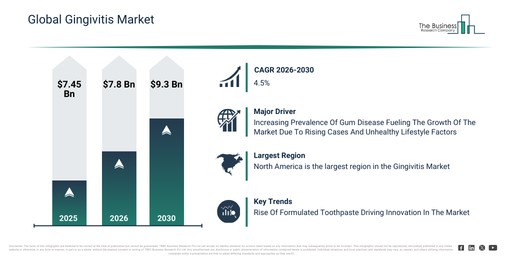
    The gingivitis market has experienced consistent expansion in recent years. It is anticipated to increase from $7.45 billion in 2025 to $7.8 billion in 2026, exhibiting a compound annual growth rate (CAGR) of 4.7%. This historical growth can be linked to factors such as inadequate oral hygiene habits, an increase in dental consultations, the early adoption of antiseptic treatments, public health dental programs, and rising sugar consumption.

    The gingivitis market size is projected to experience consistent expansion over the upcoming years, reaching $9.3 billion by 2030 with a compound annual growth rate (CAGR) of 4.5%. This anticipated growth during the forecast period is largely driven by factors such as the adoption of preventive dentistry, an expansion of oral care products, the rise of digital dental consultations, the implementation of school-based oral health programs, and increasing healthcare literacy. Significant trends expected during this period include a heightened focus on preventive oral care, a rising preference for non-surgical treatments, the growth of antibacterial oral care products, an expansion of home-based oral hygiene solutions, and improved public awareness regarding gum health.

    Download the Free Sample Report to Explore Key Market Insights:

    https://www.thebusinessresearchcompany.com/sample.aspx?id=21987&type=smp

    What Drivers Are Influencing The Gingivitis Market?

    The rising occurrence of gum disease is projected to drive the expansion of the gingivitis market moving ahead. This common oral ailment involves inflammation, infection, or the degeneration of gum tissues and adjacent structures, primarily resulting from plaque buildup and insufficient oral hygiene. The growing incidence of gum disease stems largely from inadequate oral hygiene practices, which contribute to plaque formation and subsequent bacterial infections. Diets rich in sugar and processed items contribute to inflammation of the gums, and smoking compromises the immune system, rendering gums more prone to infection. As the initial stage of gum disease, gingivitis plays a crucial role in its rising occurrence by acting as a precursor to more severe conditions like periodontitis if not addressed, underscoring the importance of early treatment and preventative measures. For example, in January 2024, data from a report issued by the Office for Health Improvement & Disparities (OHID), a government agency in the UK, indicated that the proportion of adults diagnosed with gum disease rose from 4% in the 16–24 age group to 28% for individuals aged 55–64, highlighting an increase in prevalence with advancing age. Consequently, the expanding incidence of gum disease is fueling the growth of the gingivitis market.

    What Are The Key Segments Of The Gingivitis Market?

    The gingivitis market covered in this report is segmented –

    1) By Treatment Type: Medication, Surgical Procedures, Non-Surgical Treatments

    2) By Route Of Administration: Oral, Topical

    3) By Distribution Channel: Retail Pharmacies, Hospital Pharmacies, Online Pharmacies

    4) By End-User: Hospitals, Dental Clinics, Homecare Settings

    Subsegments:

    1) By Medication: Antibiotics, Antiseptic Mouthwashes, Anti-Inflammatory Drugs, Pain Relievers

    2) By Surgical Procedures: Flap Surgery, Gingivectomy, Gingivoplasty, Laser Therapy

    3) By Non-Surgical Treatments: Scaling and Root Planing, Professional Dental Cleaning, Local Drug Delivery, Lifestyle and Dietary Modifications

    How Are Trends Shaping The Direction Of The Gingivitis Market?

    Leading companies in the gingivitis market are developing innovative products, such as formulated toothpaste, to effectively tackle gum inflammation, reduce plaque buildup, and promote comprehensive oral health. Formulated toothpaste is a specially crafted dental paste featuring specific active ingredients to target particular oral health concerns like cavities, gingivitis, or sensitivity. For instance, in February 2023, Frimline Private Limited, an India-based healthcare and personal care company, introduced Dente91 She toothpaste. This innovative toothpaste is created with lactoferrin, a potent antimicrobial protein that safeguards against oral infections and inflammation. Unlike traditional toothpaste, Dente91 She is uniquely enriched with folic acid (vitamin B9) and pyridoxine (vitamin B6) to support women’s oral health through various hormonal transitions, from puberty to menopause.

    Who Are The Leading Companies Operating In The Gingivitis Market?

    Major companies operating in the gingivitis market are Procter & Gamble, Colgate-Palmolive Company, Haleon group, Bausch Health Companies Inc., Kivonyx Healthcare Pvt Ltd., ICPA Health Products Limited, Alarsin Pharmaceuticals, Laboratorios KIN, Ikon remedies pvt ltd., Perio Protect LLC, Algen Healthcare Ltd, Neuracle Lifesciences Private Limited, Dental Herb Company, Shreeji Pharma International, Pfizer Inc., Johnson & Johnson, 3M Company, Dentsply Sirona Inc., Sunstar Group, GC Corporation, Ivoclar Vivadent AG, Straumann Group, Ultradent Products Inc, Nobel Biocare Holdings AG

    Read the full gingivitis market report here:

    https://www.thebusinessresearchcompany.com/report/gingivitis-global-market-report

    Which Regions Are Expected To Experience Rapid Expansion In The Gingivitis Market?

    North America was the largest region in the gingivitis market in 2025. The regions covered in the gingivitis market report are Asia-Pacific, South East Asia, Western Europe, Eastern Europe, North America, South America, Middle East, Africa.

    Request A Tailored Gingivitis Market Research Report For Competitive Advantage:

    https://www.thebusinessresearchcompany.com/customise?id=21987&type=smp

    Browse Through More Reports Similar to the Global Gingivitis Market 2026, By The Business Research Company

    Cotton Ginning Machinery Global Market Report

    https://www.thebusinessresearchcompany.com/report/cotton-ginning-machinery-global-market-report

    Periodontal Global Market Report

    https://www.thebusinessresearchcompany.com/report/periodontal-global-market-report

    Oral Care Global Market Report

    https://www.thebusinessresearchcompany.com/report/oral-care-global-market-report

    Get in touch with us:

    The Business Research Company: https://www.thebusinessresearchcompany.com/

    Americas +1 310-496-7795

    Asia +44 7882 955267 & +91 8897263534

    Europe +44 7882 955267

    Email us at info@tbrc.info

    Follow us on:

    LinkedIn: https://in.linkedin.com/company/the-business-research-company

    YouTube: https://www.youtube.com/channel/UC24_fI0rV8cR5DxlCpgmyFQ

    Global Market Model: https://www.thebusinessresearchcompany.com/global-market-model
  • Gingival Recession Market Growth Prospects 2026–2030 with Innovation Trends and Competitive Landscape

    Gingival Recession Market Growth Prospects 2026–2030 with Innovation Trends and Competitive Landscape

    The Business Research Company’s 2026 market reports include new capabilities such as market attractiveness scoring and analysis, total addressable market analysis, company scoring matrix, interactive excel data dashboard, improved supply chain analysis, upcoming startups in the market, and overview of key products, aimed at improving the depth, usability, and strategic value of the insights delivered.

    What Will Be The Estimated Market Valuation Of The Gingival Recession Market By The End Of 2030?

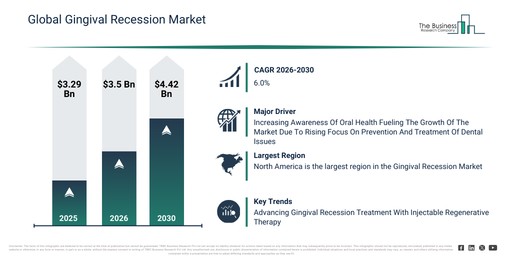
    The gingival recession market size has experienced significant expansion in recent years. This market is projected to increase from $3.29 billion in 2025 to $3.5 billion in 2026, reflecting a compound annual growth rate (CAGR) of 6.3%. The market’s historical growth can be attributed to factors such as the prevalence of periodontal disease, the expansion of dental clinics, the early adoption of grafting techniques, a growing demand for cosmetic dentistry, and increased oral hygiene awareness.

    The gingival recession market size is set to experience significant expansion in the next few years. It is forecast to grow to $4.42 billion by 2030, achieving a compound annual growth rate (CAGR) of 6.0%. This anticipated growth during the forecast period stems from developments in regenerative dentistry, an increase in laser-based procedures, the rise of dental tourism, patient inclination towards minimally invasive care, and growing dental expenditure. Noteworthy trends for the forecast period involve an increasing demand for minimally invasive procedures, greater adoption of regenerative dental materials, the expanding use of the pinhole surgical technique, enhanced aesthetic dental outcomes, and the broadening of preventive dental care.

    Download the Free Sample Report to Explore Key Market Insights:

    https://www.thebusinessresearchcompany.com/sample.aspx?id=21986&type=smp

    What Drivers Are Shaping The Future Growth Of The Gingival Recession Market?

    The rising recognition of oral health is projected to fuel the expansion of the gingival recession market in the future. Oral health encompasses the state of teeth, gums, and the mouth, ensuring freedom from ailments, discomfort, or infection for optimal functionality and general health. The prevalence of oral health awareness is climbing due to greater information accessibility via digital platforms and health initiatives, which emphasize its broader impact on well-being. Gingival recession, being a noticeable and often discomforting indicator of inadequate oral health, prompts individuals to seek knowledge about its origins, prevention, and treatment, thereby bolstering understanding of appropriate oral hygiene. For example, a report released by the Manchester Health and Wellbeing Board, a UK partnership, in January 2024, indicated that from July 2022 to June 2023, 78,230 children under 18 in Manchester received care from an NHS dentist, showing an increase of 13,488 children, or 20.8%, over the prior year. Consequently, heightened oral health awareness is propelling the growth of the gingival recession market.

    Which Segment Classifications Shape The Gingival Recession Market?

    The gingival recession market covered in this report is segmented –

    1) By Treatment Method: Soft Tissue Grafting, Regenerative Procedures, Pinhole Surgical Technique (PST)

    2) By Product Type: Tissue Regenerative Materials, Bone Grafting Materials

    3) By End-User: Hospitals, Dental Clinics, Research Institutes

    Subsegments:

    1) By Soft Tissue Grafting: Free Gingival Graft, Connective Tissue Graft, Pedicle Graft, Allograft

    2) By Regenerative Procedures: Guided Tissue Regeneration (GTR), Enamel Matrix Derivatives (EMD), Platelet-Rich Fibrin (PRF), Bone Grafting

    3) By Pinhole Surgical Technique (PST): Minimally Invasive Recession Coverage, Collagen Membrane Application, Scalpel-Free Gum Rejuvenation

    Which Market Trends Are Creating New Opportunities In The Gingival Recession Market?

    Leading firms within the gingival recession market are innovating with advanced treatments, including injectable regenerative tissue advancement therapy, aiming to bolster soft and hard tissue regeneration, elevate treatment success, and meet unaddressed demands in oral care. This type of therapy, an injectable regenerative tissue treatment, offers a less invasive approach, encouraging the body’s innate healing processes and rebuilding both soft and hard tissues through stimulation of regeneration. A noteworthy example occurred in February 2025, when BioCellgraft, Inc., a biotechnology and regenerative medicine enterprise based in the US, unveiled OraFyl. OraFyl’s distinct injectable composition differentiates it from conventional grafting methods used in oral tissue regeneration. Rather than the extensive intervention and extended recovery periods associated with traditional surgical approaches, OraFyl presents a minimally intrusive option for managing gum recession, the loss of papilla, and alveolar socket care. By leveraging a human connective tissue matrix (HCTM), it aids the body’s inherent healing mechanisms, potentially accelerating recovery, lessening patient discomfort, decreasing treatment expenses, and enhancing overall clinical results.

    Which Companies Are Expanding Their Footprint In The Gingival Recession Market?

    Major companies operating in the gingival recession market are Alfa-Perio Ltd, Zimmer Biomet Dental, Institut Straumann AG, LifeNet Health, BioHorizons, Geistlich Pharma AG, osteocom, Dentevim Dental Clinic, Uniqa Dental LTD, Focus Dental, Premiere Dental Care Center, Dentsply Sirona, ZimVie Inc, Tissue Regenix, Septodont Holding, Medical Consult Implants GmbH, Regedent AG, Regenity Biosciences, Nobel Biocare Services AG, Bioteck S.p.A, Maxigen Biotech Inc

    Read the full gingival recession market report here:

    https://www.thebusinessresearchcompany.com/report/gingival-recession-global-market-report

    Which Geographic Regions Are Influencing Demand In The Gingival Recession Market?

    North America was the largest region in the gingival recession market in 2025. The regions covered in the gingival recession market report are Asia-Pacific, South East Asia, Western Europe, Eastern Europe, North America, South America, Middle East, Africa.

    Request A Tailored Gingival Recession Market Research Report For Competitive Advantage:

    https://www.thebusinessresearchcompany.com/customise?id=21986&type=smp

    Browse Through More Reports Similar to the Global Gingival Recession Market 2026, By The Business Research Company

    Small Cell Backhaul Global Market Report

    https://www.thebusinessresearchcompany.com/report/small-cell-backhaul-global-market-report

    Rare Kidney Diseases Global Market Report

    https://www.thebusinessresearchcompany.com/report/rare-kidney-diseases-global-market-report

    Rare Inflammatory Disease Treatment Global Market Report

    https://www.thebusinessresearchcompany.com/report/rare-inflammatory-disease-treatment-global-market-report

    Get in touch with us:

    The Business Research Company: https://www.thebusinessresearchcompany.com/

    Americas +1 310-496-7795

    Asia +44 7882 955267 & +91 8897263534

    Europe +44 7882 955267

    Email us at info@tbrc.info

    Follow us on:

    LinkedIn: https://in.linkedin.com/company/the-business-research-company

    YouTube: https://www.youtube.com/channel/UC24_fI0rV8cR5DxlCpgmyFQ

    Global Market Model: https://www.thebusinessresearchcompany.com/global-market-model
  • Giant-Cell Arteritis Market Forecast 2026–2035 Highlighting Market Data Patterns and Industry Insights

    Giant-Cell Arteritis Market Forecast 2026–2035 Highlighting Market Data Patterns and Industry Insights

    The Business Research Company’s 2026 market reports include new capabilities such as market attractiveness scoring and analysis, total addressable market analysis, company scoring matrix, interactive excel data dashboard, improved supply chain analysis, upcoming startups in the market, and overview of key products, aimed at improving the depth, usability, and strategic value of the insights delivered.

    What Market Size Growth Is Projected For The Giant-Cell Arteritis Market During The Forecast Period 2026–2030?

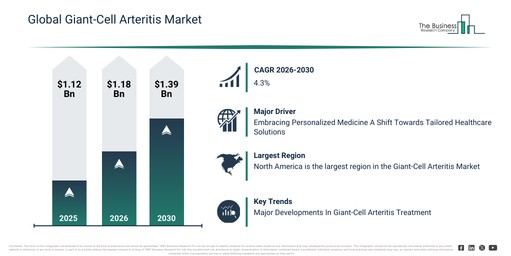
    The giant-cell arteritis market has demonstrated consistent growth in recent years. It is expected to expand from $1.12 billion in 2025 to $1.18 billion in 2026, reflecting a compound annual growth rate (CAGR) of 4.9%. This historical growth can be attributed to an aging population’s growth, the continued reliance on corticosteroid therapy, improvements in rheumatology care, the expansion of hospital-based treatment, and increased disease awareness.

    The market for giant-cell arteritis is projected to experience consistent expansion over the upcoming years. This market is anticipated to reach a valuation of $1.39 billion by 2030, exhibiting a compound annual growth rate (CAGR) of 4.3%. This anticipated growth during the forecast timeframe is primarily driven by factors such as the approval of biologic drugs, advancements in immunology research, enhanced diagnostic procedures, tailored vasculitis treatments, and the proliferation of specialized clinics. Key developments expected within this period encompass a greater uptake of biologic therapies, an elevated emphasis on prompt and precise diagnosis, a wider application of corticosteroid-sparing treatments, enhanced long-term disease surveillance, and an increasing understanding of how to prevent vision loss.

    Download the Free Sample Report to Explore Key Market Insights:

    https://www.thebusinessresearchcompany.com/sample.aspx?id=17162&type=smp

    Which Economic Or Industry Drivers Are Impacting The Giant-Cell Arteritis Market?

    The giant-cell arteritis market is projected to expand moving forward due to a rising emphasis on personalized medicine. This medical approach entails customizing treatment to align with individual characteristics, such as genetics, lifestyle, and environment. Personalized medicine is gaining prominence because of progress in genomics, biotechnology, and data analytics, which facilitates targeted therapies that improve treatment effectiveness and minimize adverse effects for individuals. For giant-cell arteritis (GCA), personalized medicine can be beneficial by allowing for specific therapies developed from individual patient factors such as genetic predispositions, immune profiles, and disease manifestations. As an illustration, in February 2024, the Personalized Medicine Coalition (PMC), a U.S.-based non-profit organization, indicated that personalized medicines accounted for over one-third of new drug approvals by the U.S. Food and Drug Administration (FDA) for the fourth consecutive year in 2023. In that year, the FDA sanctioned 16 new personalized treatments tailored for rare diseases, representing a notable increase from six approvals in 2022. Furthermore, the approvals in 2023 included seven cancer medications and three treatments for various other diseases and conditions. Consequently, the growing emphasis on personalized medicine is driving the growth of the giant-cell arteritis market.

    What Market Segments Are Evaluated Within The Giant-Cell Arteritis Market?

    The giant-cell arteritis market covered in this report is segmented –

    1) By Therapeutics: Prednisone, Methotrexate, Tocilizumab, Aspirin

    2) By Mechanism Of Action: Corticosteroids, Immunosuppressive Agents, Anticoagulants, Other Mechanisms Of Action

    3) By Route Of Administration: Oral, Intravenous, Subcutaneous, Other Routes Of Administration

    Subsegments:

    1) By Prednisone: Oral Prednisone, Intravenous (IV) Prednisone, Low-Dose Prednisone Therapy, High-Dose Prednisone Therapy

    2) By Methotrexate: Oral Methotrexate, Subcutaneous Methotrexate, Methotrexate Monotherapy, Methotrexate Combination Therapy

    3) By Tocilizumab: Intravenous Tocilizumab, Subcutaneous Tocilizumab, Tocilizumab Monotherapy, Tocilizumab In Combination With Corticosteroids

    4) By Aspirin: Low-Dose Aspirin Therapy, Aspirin For Cardiovascular Risk Management, Aspirin In Combination Therapy, Enteric-Coated Aspirin

    What Trends Are Affecting The Expansion Of The Giant-Cell Arteritis Market?

    Major companies operating in the giant-cell arteritis are focusing on developing new products, such as biosimilars, to expand available treatment options and address the outstanding medical needs of patients. A biosimilar is defined as a biologic drug that is highly comparable to an already approved biological product, exhibiting no clinically relevant differences regarding safety, purity, and potency. For example, in April 2024, Fresenius SE & Co. KGaA, a Germany-based healthcare company, launched Tocilizumab-aazg in the US market for the treatment of chronic autoimmune diseases. This biosimilar received approval for conditions including rheumatoid arthritis (RA), systemic juvenile idiopathic arthritis (JIA), polyarticular juvenile idiopathic arthritis (PJIA), and giant cell arteritis. Its approval was founded on data from a randomized, double-blind, single-dose, parallel phase 1 trial that compared its pharmacokinetics, safety, and immunogenicity to both US and EU reference tocilizumab across three patient groups.

    Who Are The Top Market Participants Influencing The Giant-Cell Arteritis Market?

    Major companies operating in the giant-cell arteritis market are Roche, AbbVie, Novartis, Pfizer, Sanofi, GlaxoSmithKline, Takeda Pharmaceutical Company Limited, Eli Lilly and Company, Amgen, Bristol-Myers Squibb, Johnson & Johnson, UCB S.A., Kiniksa Pharmaceuticals Ltd., Teva Pharmaceutical Industries Ltd., Fresenius SE & Co KGaA, CSL Limited, Dr Reddy’s Laboratories, Tianjin Tianyao Pharmaceutical Co Ltd, Gilead Sciences Inc, Sobi AB

    Read the full giant-cell arteritis market report here:

    https://www.thebusinessresearchcompany.com/report/giant-cell-arteritis-global-market-report

    What Are The Top-Performing Regions Within The Giant-Cell Arteritis Market?

    North America was the largest region in the giant-cell arteritis market in 2025. Asia-Pacific is expected to be the fastest-growing region in the forecast period. The regions covered in the giant-cell arteritis market report are Asia-Pacific, South East Asia, Western Europe, Eastern Europe, North America, South America, Middle East, Africa.

    Request A Tailored Giant-Cell Arteritis Market Research Report For Competitive Advantage:

    https://www.thebusinessresearchcompany.com/customise?id=17162&type=smp

    Browse Through More Reports Similar to the Global Giant-Cell Arteritis Market 2026, By The Business Research Company

    Monkey Pox Testing Global Market Report

    https://www.thebusinessresearchcompany.com/report/monkey-pox-testing-global-market-report

    Enteric Disease Testing Global Market Report

    https://www.thebusinessresearchcompany.com/report/enteric-disease-testing-global-market-report

    Bowel Management Systems Global Market Report

    https://www.thebusinessresearchcompany.com/report/bowel-management-systems-global-market-report

    Get in touch with us:

    The Business Research Company: https://www.thebusinessresearchcompany.com/

    Americas +1 310-496-7795

    Asia +44 7882 955267 & +91 8897263534

    Europe +44 7882 955267

    Email us at info@tbrc.info

    Follow us on:

    LinkedIn: https://in.linkedin.com/company/the-business-research-company

    YouTube: https://www.youtube.com/channel/UC24_fI0rV8cR5DxlCpgmyFQ

    Global Market Model: https://www.thebusinessresearchcompany.com/global-market-model
  • GI Stool Testing Market Outlook 2026–2030 with Major Growth Drivers and Emerging Industry Trends

    GI Stool Testing Market Outlook 2026–2030 with Major Growth Drivers and Emerging Industry Trends

    The Business Research Company’s 2026 market reports include new capabilities such as market attractiveness scoring and analysis, total addressable market analysis, company scoring matrix, interactive excel data dashboard, improved supply chain analysis, upcoming startups in the market, and overview of key products, aimed at improving the depth, usability, and strategic value of the insights delivered.

    How Will The Market Size Of The GI Stool Testing Market Evolve From 2026 To 2030?

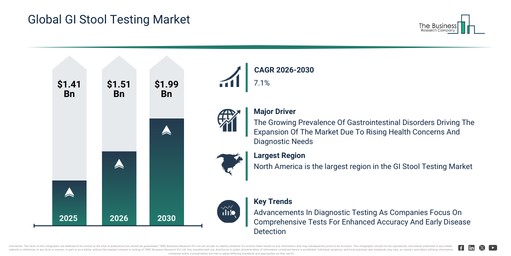
    The gi stool testing market has experienced significant expansion in recent years. Its valuation is set to climb from $1.41 billion in 2025 to $1.51 billion in 2026, achieving a compound annual growth rate (CAGR) of 7.4%. Factors such as the increase in gastrointestinal disorders, enhancements in diagnostic laboratories, the development of early microbiology testing, an upswing in colorectal cancer screening, and heightened healthcare awareness contributed to its historical growth.

    The gi stool testing market size is projected to experience robust expansion over the coming years. This market is set to reach $1.99 billion by 2030, exhibiting a compound annual growth rate (CAGR) of 7.1%. Key factors contributing to this anticipated growth include the increased availability of personalized gut health testing, the rise of home diagnostics, the incorporation of AI-based analysis, greater adoption of preventive healthcare, and heightened awareness of digestive health. Significant trends expected during this period involve an increasing preference for non-invasive diagnostics, a surge in the uptake of microbiome-based testing, broader application of molecular diagnostic methods, the proliferation of home-based stool testing kits, and enhanced early detection capabilities for GI disorders.

    Download the Free Sample Report to Explore Key Market Insights:

    https://www.thebusinessresearchcompany.com/sample.aspx?id=23410&type=smp

    What Major Drivers Are Influencing Demand In The GI Stool Testing Market?

    The expanding occurrence of gastrointestinal conditions is projected to drive the future growth of the GI stool testing market. These disorders, which impact the digestive system including the stomach, intestines, and associated organs, manifest with symptoms such as nausea, diarrhea, constipation, and abdominal pain. The increase in gastrointestinal disorders largely stems from poor eating habits; a greater intake of processed foods, high sugar, and low-fiber diets disturbs gut microbiota, compromises digestive health, and contributes to conditions like acid reflux, irritable bowel syndrome (IBS), and inflammatory bowel disease (IBD). GI stool testing is essential for gastrointestinal disorders to identify infections, inflammation, or digestive imbalances. It aids in pinpointing pathogens (bacteria, viruses, parasites), indicators of gut inflammation, and deficiencies in digestive enzymes, facilitating precise diagnosis and targeted therapy. For example, in September 2024, the Centers for Disease Control and Prevention reported 1,676 norovirus outbreaks in NoroSTAT-participating states from 2024 to 2025, a substantial increase from the 729 outbreaks noted during the corresponding period last season. Consequently, the rising frequency of gastrointestinal disorders is a key driver for the GI stool testing market’s expansion.

    Which Segment Areas Are Covered In The GI Stool Testing Market Analysis?

    The gi stool testing market covered in this report is segmented –

    1) By Type: Immunoassay Test, Molecular Diagnostic Test, Chromatography-Based Test, Microbiological Culture Test, Enzyme-Linked Immunosorbent Assay (ELISA)

    2) By Sample Type: Fecal Samples, Serum Samples

    3) By Equipment: Automated Analyzers, Benchtop Instruments, Portable Devices

    4) By Application: Diagnosis Of Gastrointestinal Disorders, Screening For Colorectal Cancer, Monitoring Of Inflammatory Bowel Disease (IBD), Detection Of Gastrointestinal Infections, Evaluation Of Digestive Health

    5) By End User: Hospital, Diagnostic Centre And Laboratory, Academic Institution, Research Centre Organization, Homecare, Other End Users

    Subsegments:

    1) By Immunoassay Test: Rapid Immunoassay, Lateral Flow Assay, Fluorescent Immunoassay

    2) By Molecular Diagnostic Test: Polymerase Chain Reaction (PCR), Nucleic Acid Amplification Test (NAAT), Next-Generation Sequencing (NGS)

    3) By Chromatography-Based Test: Gas Chromatography (GC), Liquid Chromatography (LC), Thin-Layer Chromatography (TLC)

    4) By Microbiological Culture Test: Aerobic Culture, Anaerobic Culture, Selective Media Culture

    5) By Enzyme-Linked Immunosorbent Assay (ELISA): Direct ELISA, Indirect ELISA, Sandwich ELISA, Competitive ELISA

    Which Trends Are Influencing The GI Stool Testing Market?

    Major companies operating in the GI stool testing market are prioritizing advanced testing technologies, such as comprehensive diagnostic tests, to enhance accuracy, speed, and early disease detection. A comprehensive diagnostic test serves as an advanced medical instrument that simultaneously evaluates multiple health parameters, offering a thorough assessment of a condition. For instance, in November 2024, EmeritusDX, a US-based diagnostics company, launched GI Detect, a comprehensive diagnostic test developed to assist healthcare providers in identifying gastrointestinal disorders. This cutting-edge test utilizes a single stool swab to detect 26 bacteria, viruses, and parasites associated with digestive system disruptions. With a 24-hour turnaround time, GI Detect facilitates fast and informed clinical decision-making. In addition to broad pathogen detection, the test also screens for Helicobacter pylori and its virulence factors VacA, cagA, and babA, along with common gastrointestinal parasites such as Cryptosporidium, Entamoeba histolytica, and Giardia lamblia. This comprehensive approach ensures accurate and timely diagnosis of gastrointestinal infections.

    Which Global Companies Are Actively Competing In The GI Stool Testing Market?

    Major companies operating in the gi stool testing market are Thermo Fisher Scientific Inc., Abbott Laboratories Inc., Hologic Inc., Biomerieux SA, Bio-Rad Laboratories Inc., Meridian BioScience Inc., Diasorin SPA, ELITechGroup, Genova Diagnostics Inc., US BioTek Laboratories LLC, Doctor’s Data Inc., Diagnostic Solutions Laboratory LLC, Functional Medical Institute Pvt. Ltd., Walk-In Lab LLC, ScheBo Biotech AG, Qiagen NV, Roche Diagnostics, Siemens Healthineers, QuidelOrtho Corporation, Biohit Oyj, Exact Sciences Corporation

    Read the full gi stool testing market report here:

    https://www.thebusinessresearchcompany.com/report/gi-stool-testing-global-market-report

    Which Region Shows The Strongest Potential For Future Growth In The GI Stool Testing Market?

    North America was the largest region in the GI stool testing market in 2025. Asia-Pacific is expected to be the fastest-growing region in the forecast period. The regions covered in the gi stool testing market report are Asia-Pacific, South East Asia, Western Europe, Eastern Europe, North America, South America, Middle East, Africa.

    Request A Tailored GI Stool Testing Market Research Report For Competitive Advantage:

    https://www.thebusinessresearchcompany.com/customise?id=23410&type=smp

    Browse Through More Reports Similar to the Global GI Stool Testing Market 2026, By The Business Research Company

    Pompe Disease Global Market Report

    https://www.thebusinessresearchcompany.com/report/pompe-disease-global-market-report

    Ectopic Pregnancy Global Market Report

    https://www.thebusinessresearchcompany.com/report/ectopic-pregnancy-global-market-report

    Human Chorionic Gonadotropin Global Market Report

    https://www.thebusinessresearchcompany.com/report/human-chorionic-gonadotropin-global-market-report

    Get in touch with us:

    The Business Research Company: https://www.thebusinessresearchcompany.com/

    Americas +1 310-496-7795

    Asia +44 7882 955267 & +91 8897263534

    Europe +44 7882 955267

    Email us at info@tbrc.info

    Follow us on:

    LinkedIn: https://in.linkedin.com/company/the-business-research-company

    YouTube: https://www.youtube.com/channel/UC24_fI0rV8cR5DxlCpgmyFQ

    Global Market Model: https://www.thebusinessresearchcompany.com/global-market-model
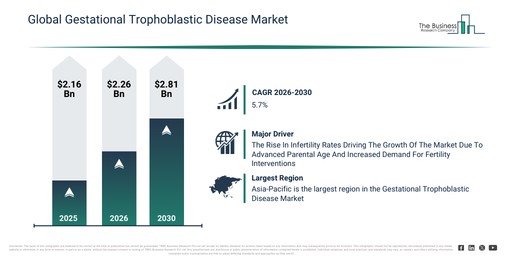
  • One of the Major Drivers of the Gestational Trophoblastic Disease Market Is the The Rise In Infertility Rates Driving The Growth Of The Market Due To Advanced Parental Age And Increased Demand For Fertility Interventions

    One of the Major Drivers of the Gestational Trophoblastic Disease Market Is the The Rise In Infertility Rates Driving The Growth Of The Market Due To Advanced Parental Age And Increased Demand For Fertility Interventions

    The Business Research Company’s 2026 market reports include new capabilities such as market attractiveness scoring and analysis, total addressable market analysis, company scoring matrix, interactive excel data dashboard, improved supply chain analysis, upcoming startups in the market, and overview of key products, aimed at improving the depth, usability, and strategic value of the insights delivered.

    What Is The Forecasted Market Value Of The Gestational Trophoblastic Disease Market Across 2026–2030?

    The gestational trophoblastic disease market has demonstrated consistent expansion in recent years. This market is projected to grow from $2.16 billion in 2025 to $2.26 billion in 2026, reflecting a compound annual growth rate (CAGR) of 4.6%. Historically, this growth can be attributed to several factors including advances in gynecologic oncology, the widespread availability of HCG testing, increased adoption of surgical treatment, heightened awareness regarding rare pregnancy disorders, and established clinical oncology protocols.

    The market for gestational trophoblastic disease is anticipated to experience substantial expansion in the coming years. Projections indicate it will reach a valuation of $2.81 billion by 2030, exhibiting a compound annual growth rate (CAGR) of 5.7%. Key factors contributing to this growth during the forecast period include enhanced diagnostic precision, the proliferation of oncology centers, the establishment of standardized treatment protocols, greater access to healthcare, and a heightened emphasis on managing rare diseases. Significant trends anticipated in the upcoming period encompass refinements in hCG-based disease monitoring, a growing reliance on chemotherapy for GTD management, a stronger emphasis on prompt diagnosis, the expansion of specialized oncology services for women, and enhanced post-treatment follow-up.

    Download the Free Sample Report to Explore Key Market Insights:

    https://www.thebusinessresearchcompany.com/sample.aspx?id=13271&type=smp

    Which Market Drivers Are Supporting The Expansion Of The Gestational Trophoblastic Disease Market?

    The increasing rates of infertility are projected to boost the growth of the gestational trophoblastic disease market in the coming years. Infertility rates describe the proportion of individuals or couples within a population who are unable to conceive naturally after a year of consistent, unprotected sexual activity. The rise in infertility is primarily linked to advanced parental age, as older reproductive ages correlate with diminished egg and sperm quality, reduced fertility, and elevated risks of conception complications. While a pathological condition, gestational trophoblastic disease can offer valuable insights into infertility treatments by illuminating the roles of trophoblastic tissue in implantation and hormone regulation, thereby guiding interventions aimed at improving conception success. For example, the World Health Organization (WHO), a Switzerland-based intergovernmental organization, reported in April 2023 that approximately 17.5% of the adult population, or about 1 in 6 people worldwide, experience infertility, underscoring the critical need to enhance access to affordable, high-quality fertility care for those affected. Consequently, the escalating infertility rates are propelling the gestational trophoblastic disease market.

    Gestational Trophoblastic Disease Market Driver: Impact Of Increasing Cigarette Smoking On The Growth Of The Gestational Trophoblastic Disease Market

    What Segmentation Levels Are Considered In The Gestational Trophoblastic Disease Market?

    The gestational trophoblastic disease market covered in this report is segmented –

    1) By Type: Hydatidiform Mole, Choriocarcinoma, Placental-Site Trophoblastic Tumor, Epithelioid Trophoblastic Tumor, Other Types

    2) By Treatment: Surgery, Chemotherapy, Suction Dilation And Curettage (D&C), Radiation Therapy

    3) By End User: Hospital And Clinics, Diagnostic Centers, Other End Users

    Subsegments:

    1) By Hydatidiform Mole: Complete Hydatidiform Mole, Partial Hydatidiform Mole

    2) By Choriocarcinoma: Non-Metastatic Choriocarcinoma, Metastatic Choriocarcinoma

    3) By Placental-Site Trophoblastic Tumor: PSTT With Normal Placentation, PSTT With Abnormal Placentation

    4) By Epithelioid Trophoblastic Tumor: Epithelioid Trophoblastic Tumor With No Evidence Of Metastasis, Epithelioid Trophoblastic Tumor With Metastasis

    5) By Other Types: Trophoblastic Tumor Of Unknown Origin, Non-Gestational Trophoblastic Neoplasia

    Which Leading Firms Are Contributing To The Growth Of The Gestational Trophoblastic Disease Market?

    Major companies operating in the gestational trophoblastic disease market are Pfizer Inc., F. Hoffmann-La Roche AG, AbbVie Inc., Bayer AG, Novartis AG, Merck And Co. Inc., Sun Pharmaceutical Industries Ltd., GSK plc, Bristol-Myers Squibb Company, Sanofi S.A., AstraZeneca plc, Eli Lilly and Company, Daiichi Sankyo Co. Ltd., Eisai Co. Ltd.

    Read the full gestational trophoblastic disease market report here:

    https://www.thebusinessresearchcompany.com/report/gestational-trophoblastic-disease-global-market-report

    How Is The Gestational Trophoblastic Disease Market Distributed Across Key Geographic Regions?

    Asia-Pacific was the largest region in the gestational trophoblastic disease market in 2025, and is expected to be the fastest-growing region in the forecast period. The regions covered in the gestational trophoblastic disease market report are Asia-Pacific, South East Asia, Western Europe, Eastern Europe, North America, South America, Middle East, Africa.

    Request A Tailored Gestational Trophoblastic Disease Market Research Report For Competitive Advantage:

    https://www.thebusinessresearchcompany.com/customise?id=13271&type=smp

    Browse Through More Reports Similar to the Global Gestational Trophoblastic Disease Market 2026, By The Business Research Company

    Type 1 Diabetes Global Market Report

    https://www.thebusinessresearchcompany.com/report/type-1-diabetes-global-market-report

    Insuman Global Market Report

    https://www.thebusinessresearchcompany.com/report/insuman-global-market-report

    Diabetes Care Devices Market

    https://www.thebusinessresearchcompany.com/report/diabetes-care-devices-market

    Get in touch with us:

    The Business Research Company: https://www.thebusinessresearchcompany.com/

    Americas +1 310-496-7795

    Asia +44 7882 955267 & +91 8897263534

    Europe +44 7882 955267

    Email us at info@tbrc.info

    Follow us on:

    LinkedIn: https://in.linkedin.com/company/the-business-research-company

    YouTube: https://www.youtube.com/channel/UC24_fI0rV8cR5DxlCpgmyFQ

    Global Market Model: https://www.thebusinessresearchcompany.com/global-market-model
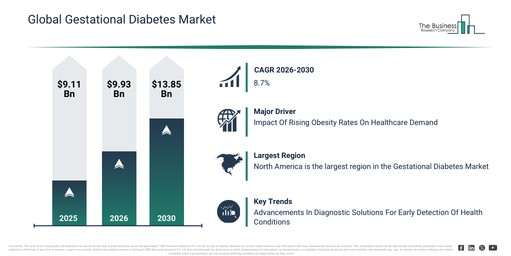
  • A key trend shaping the Gestational Diabetes Market involves the Advancements In Diagnostic Solutions For Early Detection Of Health Conditions

    A key trend shaping the Gestational Diabetes Market involves the Advancements In Diagnostic Solutions For Early Detection Of Health Conditions

    The Business Research Company’s 2026 market reports include new capabilities such as market attractiveness scoring and analysis, total addressable market analysis, company scoring matrix, interactive excel data dashboard, improved supply chain analysis, upcoming startups in the market, and overview of key products, aimed at improving the depth, usability, and strategic value of the insights delivered.

    What Market Size Increase Is Anticipated For The Gestational Diabetes Market Over The 2026–2030 Period?

    The gestational diabetes market has experienced robust expansion in recent years. Its size is projected to grow from $9.11 billion in 2025 to $9.93 billion in 2026, reflecting a compound annual growth rate (CAGR) of 8.9%. This growth observed historically is attributable to factors such as increasing obesity rates, a rise in pregnancies among older mothers, the implementation of early diabetes screening programs, the expansion of prenatal care services, and greater awareness of pregnancy complications.

    The gestational diabetes market is anticipated to experience substantial growth in the upcoming years. It is projected to expand to $13.85 billion by 2030, achieving a compound annual growth rate (CAGR) of 8.7%. This projected growth can be attributed to several factors, including the increasing prevalence of gestational diabetes, the widening adoption of digital health monitoring, advancements in prenatal diagnostics, a greater emphasis on preventive maternal care, and supportive healthcare policies. During this period, major trends are expected to involve the rising adoption of blood glucose monitoring, a greater utilization of insulin therapy during pregnancy, an increased focus on lifestyle-based disease management, the expansion of prenatal screening programs, and improved awareness concerning maternal health.

    Download the Free Sample Report to Explore Key Market Insights:

    https://www.thebusinessresearchcompany.com/sample.aspx?id=20818&type=smp

    What Underlying Factors Are Accelerating The Growth Of The Gestational Diabetes Market?

    The projected expansion of the gestational diabetes market is anticipated to be fueled by the growing number of obese individuals. Obese individuals are defined as those with a body mass index (BMI) of 30 or above, signifying excessive body fat levels that could lead to considerable health concerns. This demographic is growing as a result of factors such as inactive lifestyles, increased intake of processed, high-calorie foods, genetic factors, and restricted availability of nutritious food and opportunities for physical activity. Addressing gestational diabetes is vital for obese individuals, given their heightened susceptibility to insulin resistance and significant weight gain during gestation, which, if not controlled, can result in adverse outcomes for both the pregnant individual and the infant. As an illustration, data from May 2025 released by the Office for Health Improvement and Disparities, a UK-based government body, showed that approximately 64.5% of adults aged 18 and above in England were classified as overweight or living with obesity between 2023 and 2024, an increase from 64.0% recorded from 2022 to 2023. Consequently, the expanding obese population is a key factor propelling the gestational diabetes market.

    How Is The Gestational Diabetes Market Segmented Across Key Categories?

    The gestational diabetes market covered in this report is segmented –

    1) By Type: Type A1, Type A2, Other Types

    2) By Treatment: Monitoring, Drug Treatment, Non-pharmacological Treatment

    3) By Administration: Oral, Intravenous, Other Administrations

    4) By End User: Hospitals, Clinics, Home Care Settings, Diagnostic Centers

    Subsegments:

    1) By Type A1: Diet-Controlled Gestational Diabetes, Exercise-Controlled Gestational Diabetes

    2) By Type A2: Insulin-Controlled Gestational Diabetes, Oral Medication-Controlled Gestational Diabetes

    3) By Other Types: Pre-Gestational Diabetes, Gestational Diabetes With Complications

    How Are Trends Transforming The Gestational Diabetes Market Landscape?

    Leading companies in the gestational diabetes market are focused on developing technologically advanced offerings, such as diagnostic kits specifically for gestational diabetes, to provide quick, precise, and convenient early detection methods. A diagnostic kit for gestational diabetes is a medical device utilized to measure blood glucose levels and identify abnormal glucose tolerance in pregnant women, thereby aiding in the early diagnosis and management of the condition. For example, in August 2024, DirectSens GmbH, an Austria-based biotechnology company, introduced the XpressGT RUO kit, a diagnostic tool designed to identify gestational diabetes, endometriosis, insulin resistance, and liver disease. This kit accurately measures 2-hydroxybutyrate (2-HB) levels present in venous blood, which is naturally produced by the liver during its standard functions. Elevated 2-HB levels are linked to increased reductive stress, which is associated with various endocrine and obesity-related disorders, including insulin resistance. The kit is compatible with any existing clinical analyzer and provides results in just 8 minutes, presenting a fast and efficient diagnostic solution.

    Who Are The Dominant Players Shaping The Gestational Diabetes Market Landscape?

    Major companies operating in the gestational diabetes market are Sanofi S.A., Abbott Laboratories, Eli Lilly and Company, Novo Nordisk A/S, Becton Dickinson and Company, Dexcom Inc, Biocon Limited, Ascensia Diabetes Care Holdings AG, Roche Diabetes Care, Medtronic plc, Insulet Corporation, Tandem Diabetes Care Inc, Ypsomed Holding AG, Beta Bionics Inc, Bigfoot Biomedical Inc, Glooko Inc, Philips Healthcare, Sun Pharmaceutical Industries Ltd, Takeda Pharmaceutical Company Ltd, Pfizer Inc, Novartis AG, Adocia SA, Daiichi Sankyo Company Ltd

    Read the full gestational diabetes market report here:

    https://www.thebusinessresearchcompany.com/report/gestational-diabetes-global-market-report

    Which Region Is Projected To Dominate The Gestational Diabetes Market During The Forecast Period?

    North America was the largest region in the gestational diabetes market in 2025. Asia-Pacific is expected to be the fastest-growing region in the forecast period. The regions covered in the gestational diabetes market report are Asia-Pacific, South East Asia, Western Europe, Eastern Europe, North America, South America, Middle East, Africa.

    Request A Tailored Gestational Diabetes Market Research Report For Competitive Advantage:

    https://www.thebusinessresearchcompany.com/customise?id=20818&type=smp

    Browse Through More Reports Similar to the Global Gestational Diabetes Market 2026, By The Business Research Company

    Tumor Infiltrating Lymphocytes Global Market Report

    https://www.thebusinessresearchcompany.com/report/tumor-infiltrating-lymphocytes-global-market-report

    Emphysema Global Market Report

    https://www.thebusinessresearchcompany.com/report/emphysema-global-market-report

    Non Hodgkin Lymphoma Nhl Global Market Report

    https://www.thebusinessresearchcompany.com/report/non-hodgkin-lymphoma-nhl-global-market-report

    Get in touch with us:

    The Business Research Company: https://www.thebusinessresearchcompany.com/

    Americas +1 310-496-7795

    Asia +44 7882 955267 & +91 8897263534

    Europe +44 7882 955267

    Email us at info@tbrc.info

    Follow us on:

    LinkedIn: https://in.linkedin.com/company/the-business-research-company

    YouTube: https://www.youtube.com/channel/UC24_fI0rV8cR5DxlCpgmyFQ

    Global Market Model: https://www.thebusinessresearchcompany.com/global-market-model
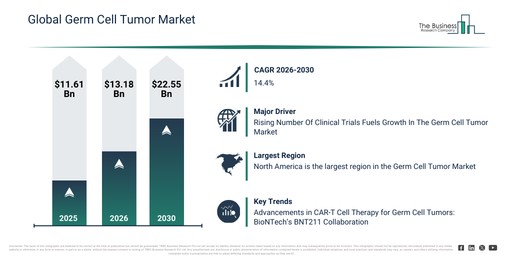
  • A significant industry trend in the Germ Cell Tumor Market includes the Advancements in CAR-T Cell Therapy for Germ Cell Tumors: BioNTech’s BNT211 Collaboration

    A significant industry trend in the Germ Cell Tumor Market includes the Advancements in CAR-T Cell Therapy for Germ Cell Tumors: BioNTech’s BNT211 Collaboration

    The Business Research Company’s 2026 market reports include new capabilities such as market attractiveness scoring and analysis, total addressable market analysis, company scoring matrix, interactive excel data dashboard, improved supply chain analysis, upcoming startups in the market, and overview of key products, aimed at improving the depth, usability, and strategic value of the insights delivered.

    How Much Is The Germ Cell Tumor Market Expected To Grow In Terms Of Market Value Between 2026 And 2030?

    The germ cell tumor market has seen a rapid increase in size over recent years. Its valuation is anticipated to climb from $11.61 billion in 2025 to $13.18 billion in 2026, at a compound annual growth rate (CAGR) of 13.5%. The historical expansion of this market can be linked to improvements in oncology chemotherapy, better cancer diagnostic methods, the creation of oncology centers, increased awareness regarding testicular cancer, and the broader scope of clinical trials.

    The market for germ cell tumors is projected to experience swift expansion over the coming years. This market is forecast to reach $22.55 billion by 2030, exhibiting a compound annual growth rate (CAGR) of 14.4%. This anticipated growth during the forecast period is primarily driven by factors such as the advancement of targeted therapies, increased embrace of immunotherapy, ongoing research in precision oncology, the widening of cancer treatment facilities, and enhancements in screening methods. Key trends expected over this period encompass a surge in the application of combination chemotherapy regimens, a greater uptake of immunotherapy strategies, an intensified focus on diagnosing tumors early, the broadening of treatment options for pediatric germ cell tumors, and better survival rates resulting from multimodal care.

    Download the Free Sample Report to Explore Key Market Insights:

    https://www.thebusinessresearchcompany.com/sample.aspx?id=13249&type=smp

    Which Growth Drivers Are Contributing To The Progress Of The Germ Cell Tumor Market?

    The increasing number of clinical trials is anticipated to drive the expansion of the germ cell tumor market moving forward. These trials are meticulously designed research investigations involving human participants, intended to evaluate the safety, effectiveness, and potential advantages of new medical interventions, treatments, therapies, or procedures. Clinical trials hold significant importance in the study of germ-cell cancers, assisting in the assessment of novel medicine efficacy and safety, and offering valuable insights into current treatment methodologies. For instance, in May 2023, Xtalks, a Canada-based digital health company, reported that 452,604 registered clinical trials were listed globally on ClinicalTrials.gov, with 64,838 actively recruiting participants as of May 2023. Consequently, the rising volume of clinical trials is fueling the growth of the germ cell tumor market. The increasing prevalence of cancer is expected to propel the growth of the germ cell tumor market in the future. Cancer describes a collection of diseases characterized by the unrestrained multiplication and dissemination of abnormal cells, frequently forming tumors that can invade surrounding tissues and spread to other parts of the body. The principal treatment for germ cell tumors entails the surgical removal of the tumor, followed by chemotherapy to target any residual cancer cells. For example, in 2023, the American Cancer Society Inc., a US-based non-profit health group, projected 1,958,310 new cancer cases to be diagnosed in the US, a rise from 1,918,030 new cancer cases in 2022. Therefore, the growing prevalence of cancer is driving the expansion of the germ cell tumor market.

    What Major Segment Divisions Exist Within The Germ Cell Tumor Market?

    The germ cell tumor market covered in this report is segmented –

    1) By Disease: Testicular, Ovarian, Other Diseases

    2) By Treatment Type: Chemotherapy, Immunotherapy

    3) By Route Of Administration: Oral, Intravenous, Intraperitoneal

    4) By End User: Hospitals And Clinics, Research Institutes, Other End Users

    Subsegments:

    1) By Testicular: Seminomas, Non-Seminomas

    2) By Ovarian: Dysgerminoma, Non-Dysgerminomatous Germ Cell Tumors

    3) By Other Diseases: Extragonadal Germ Cell Tumors, Germ Cell Tumors In Children

    Which Trends Are Impacting The Growth Of The Germ Cell Tumor Market?

    Leading companies in the germ cell tumor market are concentrating on advancements such as CAR T cell therapies. CAR T cell therapy represents an advanced immunotherapy where a patient’s own T cells, a type of immune cell, are genetically engineered to express chimeric antigen receptors (CARs) capable of specifically recognizing and binding to cancer cells. Once these modified T cells are reintroduced into the patient’s body, they actively seek out and destroy targeted tumor cells. For instance, in March 2025, BioNTech SE, a Germany-based biotechnology company focused on developing innovative immunotherapies, initiated a collaboration with Autolus Therapeutics plc, a UK-based biopharmaceutical company. This partnership aims to advance BNT211, a CAR T therapy specifically targeting CLDN6-positive solid tumors, which includes germ cell tumors. The collaboration intends to accelerate the development of personalized CAR T treatments for patients with germ cell malignancies by leveraging BioNTech’s expertise in RNA-based and cell therapies. This alliance combines cutting-edge cellular therapy technology with targeted oncology research, potentially offering new therapeutic options for patients who currently have limited treatment choices.

    Which Companies Are Leading Innovation In The Germ Cell Tumor Market?

    Major companies operating in the germ cell tumor market are Johnson & Johnson, Pfizer Inc., F. Hoffmann-La Roche AG, AbbVie Inc., Bayer AG, Novartis AG, Merck & Co. Inc., Bristol-Myers Squibb Company, Fresenius Kabi Oncology Limited, Sanofi S.A., AstraZeneca plc, Ipsen Pharma, Takeda Pharmaceutical Company Limited, Eli Lilly and Company, Regeneron Pharmaceuticals Inc., Sandoz International GmbH, Daiichi Sankyo Co. Ltd., Jazz Pharmaceuticals plc, Ono Pharmaceutical Co. Ltd., Kyowa Hakko Kirin Co. Ltd., Mallinckrodt Pharmaceuticals, Taiho Pharmaceutical Co. Ltd., Accord Healthcare Limited, Spectrum Pharmaceuticals Inc., Ziopharm Oncology Inc.

    Read the full germ cell tumor market report here:

    https://www.thebusinessresearchcompany.com/report/germ-cell-tumor-global-market-report

    What Are The Leading Geographic Regions In The Germ Cell Tumor Market?

    North America was the largest region in the germ cell tumors market in 2025. Asia-Pacific is expected to be the fastest-growing region in the forecast period. The regions covered in the germ cell tumor market report are Asia-Pacific, South East Asia, Western Europe, Eastern Europe, North America, South America, Middle East, Africa.

    Request A Tailored Germ Cell Tumor Market Research Report For Competitive Advantage:

    https://www.thebusinessresearchcompany.com/customise?id=13249&type=smp

    Browse Through More Reports Similar to the Global Germ Cell Tumor Market 2026, By The Business Research Company

    Alzheimers Drugs Global Market Report

    https://www.thebusinessresearchcompany.com/report/alzheimers-drugs-global-market-report

    Geriatric Care Services Global Market Report

    https://www.thebusinessresearchcompany.com/report/geriatric-care-services-global-market-report

    Geriatric Medicines Global Market Report

    https://www.thebusinessresearchcompany.com/report/geriatric-medicines-global-market-report

    Get in touch with us:

    The Business Research Company: https://www.thebusinessresearchcompany.com/

    Americas +1 310-496-7795

    Asia +44 7882 955267 & +91 8897263534

    Europe +44 7882 955267

    Email us at info@tbrc.info

    Follow us on:

    LinkedIn: https://in.linkedin.com/company/the-business-research-company

    YouTube: https://www.youtube.com/channel/UC24_fI0rV8cR5DxlCpgmyFQ

    Global Market Model: https://www.thebusinessresearchcompany.com/global-market-model
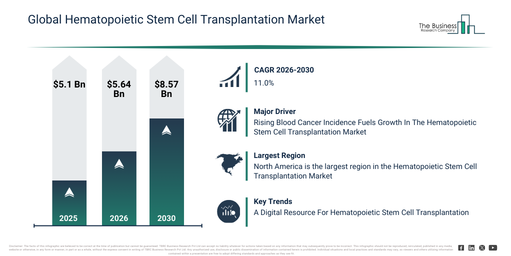
  • Global Hematopoietic Stem Cell Transplantation Market Analysis for 2026–2030 with Strategic Forecast Insights for Businesses

    Global Hematopoietic Stem Cell Transplantation Market Analysis for 2026–2030 with Strategic Forecast Insights for Businesses

    The Business Research Company’s 2026 market reports include new capabilities such as market attractiveness scoring and analysis, total addressable market analysis, company scoring matrix, interactive excel data dashboard, improved supply chain analysis, upcoming startups in the market, and overview of key products, aimed at improving the depth, usability, and strategic value of the insights delivered.

    What Market Value Is Expected For The Hematopoietic Stem Cell Transplantation Market At The End Of The 2026–2030 Forecast Period?

    The hematopoietic stem cell transplantation market has seen rapid expansion in recent years. This market is projected to grow from $5.1 billion in 2025 to $5.64 billion in 2026, demonstrating a compound annual growth rate (CAGR) of 10.6%. Historically, its growth can be attributed to several factors including the increasing prevalence of hematologic disorders, the expansion of transplant centers, improvements in donor matching techniques, the rising use of autologous transplants, and advancements in supportive care protocols.

    The hematopoietic stem cell transplantation market size is poised for substantial expansion over the coming years. It is projected to reach $8.57 billion by 2030, advancing at a compound annual growth rate (CAGR) of 11.0%. This anticipated growth during the forecast period is largely driven by the increasing integration of gene-modified stem cell therapies, a surge in investments directed towards transplant infrastructure, the broadened scope of allogeneic transplant procedures, a greater emphasis on personalized transplant approaches, and improved survival rates following transplantation. Significant trends identified for the forecast period include the increasing uptake of peripheral blood stem cell transplants, the growing utilization of cord blood transplantation, the progressive adoption of precision conditioning regimens, the enlargement of donor registry networks, and an intensified focus on post-transplant monitoring.

    Download the Free Sample Report to Explore Key Market Insights:

    https://www.thebusinessresearchcompany.com/sample.aspx?id=10445&type=smp

    What Primary Drivers Are Shaping The Development Of The Hematopoietic Stem Cell Transplantation Market?

    The rising occurrence of blood cancer is anticipated to propel the growth of the hematopoietic stem cell transplantation market. Blood cancers are characterized as a group of malignancies that impact the development and operation of blood cells, with leukemia, lymphoma, and myeloma being the three primary types. Hematopoietic stem cell transplantation is generally employed to treat blood cancer by replacing stem cells and bone marrow cells destroyed by the malignancy. These new stem cells can then migrate to the bone marrow and begin producing new blood cells. These aspects collectively boost the hematopoietic stem cell transplantation market. For instance, in September 2025, according to Cancer Research UK, a UK-based charity, the incidence rate of leukemia in the UK from 2024 to 2026 is estimated at approximately 17.9 cases per 100,000 people per year, and it is projected to decrease by 3% to around 17.4 per 100,000 by 2038 to 2040. Consequently, the increased frequency of blood cancer drives the hematopoietic stem cell transplantation market.

    What Segment Types Make Up The Hematopoietic Stem Cell Transplantation Market?

    The hematopoietic stem cell transplantation market covered in this report is segmented –

    1) By Type: Allogeneic, Autologous

    2) By Indication: Leukemia, Lymphatic Disorder, Myeloma, Other Non-Malignant Disorders

    3) By Application: Bone Marrow Transplant, Peripheral Blood Stem Cell Transplant, Cord Blood Transplant

    4) By End User: Hospital Pharmacy, Specialty Clinics

    Subsegments:

    1) By Allogeneic: Matched Related Donor Transplantation, Matched Unrelated Donor Transplantation, Cord Blood Transplantation

    2) By Autologous: Peripheral Blood Stem Cell Transplantation, Bone Marrow Stem Cell Transplantation

    Which Upcoming Trends Are Expected To Influence The Hematopoietic Stem Cell Transplantation Market?

    Leading companies in hematopoietic stem cell transplantation are increasingly focusing on developing innovations, such as digital resources, to optimize patient management, improve donor matching processes, and provide real-time data analytics for more informed decision-making. Digital resources refer to various online tools, platforms, or materials that offer information, services, or functionalities in a digital format. For instance, in September 2024, BioLineRx Ltd., an Israel-based biopharmaceutical company, launched Mobilization Matters, a new digital resource. Mobilization Matters is an interactive platform designed to educate healthcare professionals and patients about the mobilization of stem cells for transplantation. It provides comprehensive guidelines, best practices, and real-time tracking tools to enhance the stem cell collection process, ultimately improving patient outcomes and ensuring efficient resource utilization in transplantation procedures.

    Who Are The Key Players Driving Competition In The Hematopoietic Stem Cell Transplantation Market?

    Major companies operating in the hematopoietic stem cell transplantation market are Pluristem Therapeutics Inc., Lonza Group AG, Escape Therapeutics Inc., Regen Biopharma Inc., Bluebird Bio Inc., CellGenix GmbH, CBR Systems Inc., Merck KGaA, Cord Blood Corporation, Kiadis Pharma NV, Marker Therapeutics Inc., Taiga Biotechnologies Inc., Takeda Pharmaceutical Company Limited, Talaris Therapeutics Inc., ViaCord LLC, ScienCell Research Laboratories Inc., BiolineRx, Stemcell Technologies Inc., ThermoGenesis Holdings Inc., MEDIPOST Co. Ltd., Anterogen. Co. Ltd., Pharmicell Inc., JCR Pharmaceuticals Co. Ltd., Holostem Terapie Avanzate Srl, Regrow Biosciences Pvt Ltd., Stempeutics Research Pvt Ltd.

    Read the full hematopoietic stem cell transplantation market report here:

    https://www.thebusinessresearchcompany.com/report/hematopoietic-stem-cell-transplantation-global-market-report

    How Does The Hematopoietic Stem Cell Transplantation Market Perform Across Major Global Regions?

    North America was the largest region in the hematopoietic stem cell transplantation market in 2025. Asia-Pacific is expected to be the fastest-growing region in the global hematopoietic stem cell transplantation market during the forecast period. The regions covered in the hematopoietic stem cell transplantation market report are Asia-Pacific, South East Asia, Western Europe, Eastern Europe, North America, South America, Middle East, Africa.

    Request A Tailored Hematopoietic Stem Cell Transplantation Market Research Report For Competitive Advantage:

    https://www.thebusinessresearchcompany.com/customise?id=10445&type=smp

    Browse Through More Reports Similar to the Global Hematopoietic Stem Cell Transplantation Market 2026, By The Business Research Company

    Bone Marrow Transplantation Global Market Report

    https://www.thebusinessresearchcompany.com/report/bone-marrow-transplantation-global-market-report

    Stem Cells Therapy Global Market Report

    https://www.thebusinessresearchcompany.com/report/stem-cells-therapy-global-market-report

    Human Embryonic Stem Cells Global Market Report

    https://www.thebusinessresearchcompany.com/report/human-embryonic-stem-cells-global-market-report

    Get in touch with us:

    The Business Research Company: https://www.thebusinessresearchcompany.com/

    Americas +1 310-496-7795

    Asia +44 7882 955267 & +91 8897263534

    Europe +44 7882 955267

    Email us at info@tbrc.info

    Follow us on:

    LinkedIn: https://in.linkedin.com/company/the-business-research-company

    YouTube: https://www.youtube.com/channel/UC24_fI0rV8cR5DxlCpgmyFQ

    Global Market Model: https://www.thebusinessresearchcompany.com/global-market-model
  • Hematology Analyzers Market Outlook 2026–2035 Driven by Key Growth Factors and Industry Projections

    Hematology Analyzers Market Outlook 2026–2035 Driven by Key Growth Factors and Industry Projections

    The Business Research Company’s 2026 market reports include new capabilities such as market attractiveness scoring and analysis, total addressable market analysis, company scoring matrix, interactive excel data dashboard, improved supply chain analysis, upcoming startups in the market, and overview of key products, aimed at improving the depth, usability, and strategic value of the insights delivered.

    What Is The Estimated Market Size Of The Hematology Analyzers Market During 2026–2030?

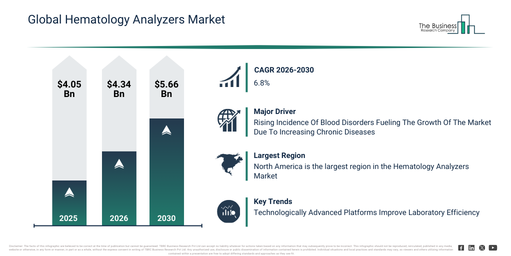
    The hematology analyzers market has experienced robust growth recently. Projections indicate its expansion from $4.05 billion in 2025 to $4.34 billion by 2026, demonstrating a compound annual growth rate (CAGR) of 7.2%. This expansion in the historic period stemmed from factors such as increased clinical laboratory testing volumes, the growing prevalence of blood-related disorders, enhanced hospital diagnostic capabilities, the uptake of automated lab instruments, and better access to routine blood testing.

    The hematology analyzers market is projected for substantial expansion in the coming years, reaching $5.66 billion by 2030, demonstrating a compound annual growth rate (CAGR) of 6.8%. This anticipated expansion over the forecast period is driven by factors such as a heightened need for rapid diagnostic solutions, the increasing decentralization of lab tests, the broadening scope of oncology and hematology diagnostics, the wider embrace of digital pathology integration, and a greater emphasis on automating workflows. Key developments shaping this period encompass the greater use of fully automated analyzers, the increasing incorporation of AI for cell analysis, a rising need for point-of-care hematology tests, the expansion of high-throughput laboratory systems, and an intensified commitment to improving diagnostic accuracy and speed.

    Download the Free Sample Report to Explore Key Market Insights:

    https://www.thebusinessresearchcompany.com/sample.aspx?id=24558&type=smp

    Which Major Factors Are Driving The Expansion Of The Hematology Analyzers Market?

    An increase in blood disorder cases is projected to fuel the expansion of the hematology analyzers market in the coming period. These conditions involve abnormalities in the essential constituents of blood, such as red blood cells, white blood cells, platelets, or plasma. The growing occurrence of blood disorders mainly stems from the widespread increase in chronic ailments, which directly compromise blood health and necessitate continuous observation. Hematology analyzers are instrumental in diagnosing blood disorders by offering precise and quick analysis of blood components, facilitating prompt identification and intervention. These devices also improve clinical judgments, leading to better patient care and results. For instance, in March 2024, according to the National Institute for Health and Care Excellence, a UK-based non-departmental public body, in 2022/2023, there were 2,069 individuals in the UK diagnosed with haemophilia B, including 374 with severe disease and 351 with moderate disease. Consequently, the heightened occurrence of blood disorders is a key factor propelling the expansion of the hematology analyzers market.

    How Are The Various Segments Of The Hematology Analyzers Market Categorized?

    The hematology analyzers market covered in this report is segmented –

    1) By Type: Fully-Automated Hematology Analyzers, Semi-Automated Hematology Analyzers

    2) By Component: Instruments, Consumables

    3) By Modality: Standalone, Point Of Care

    4) By Technology: Flow Cytometry, Electrical Impedance, Optical Technology

    5) By End User: Hospitals, Clinical Laboratories, Research Institutes, Other End Users

    Subsegments:

    1) By Fully-Automated Hematology Analyzers: 3-Part Differential Analyzers, 5-Part Differential Analyzers, 6-Part And Above Differential Analyzers, Integrated Hematology Systems

    2) By Semi-Automated Hematology Analyzers: Hemoglobin Analyzers, Coagulation Analyzers, Erythrocyte Sedimentation Rate (ESR) Analyzers, Platelet Function Analyzers

    How Are Trends Shaping The Direction Of The Hematology Analyzers Market?

    Leading companies in the hematology analyzers market are concentrating on developing technologically advanced offerings, such as automated hematology systems, to enhance diagnostic accuracy, boost workflow efficiency, and deliver quicker test results with minimal human intervention. Automated hematology systems are sophisticated diagnostic devices employed in clinical laboratories to conduct various hematological tests requiring very little manual input. As an illustration, in January 2024, Horiba Medical, a Japan-based medical diagnostics firm, launched the HELO 2.0 high-throughput automated hematology platform, which is Conformité Européenne In Vitro Diagnostic Regulation (CE-IVDR) approved and awaiting United States Food and Drug Administration (FDA) approval. HELO 2.0 provides a flexible, scalable, and efficient modular solution designed to cater to the requirements of mid- to large-scale laboratories. It also integrates advanced technologies from the Yumizen H2500 and H1500 analyzers, ensuring high-quality performance through 360-degree sample mixing, optimized turnaround time, space utilization, and reagent storage. Additionally, it offers support for ISO-15189 accreditation, addressing all pre-analytical, post-analytical, and analytical necessities.

    Which Major Firms Influence Developments In The Hematology Analyzers Market?

    Major companies operating in the hematology analyzers market are F. Hoffmann-La Roche AG, Abbott Laboratories, Danaher Corporation, Siemens Healthineers AG, Shenzhen Mindray Bio-Medical Electronics Co. Ltd., Sysmex Corporation, Horiba Medical Ltd., Nihon Kohden Corporation, Trivitron Healthcare Pvt. Ltd., Transasia Bio-Medicals Ltd., Erba Mannheim GmbH, Boule Diagnostics AB, Diatron MI PLC, Rayto Life and Analytical Sciences Co. Ltd., Perlong Medical, PZ Cormay S.A., Bio-Rad Laboratories Inc., BioSystems, EKF Diagnostics, Ortho Clinical Diagnostics, URIT Medical Electronic Group, Agappe Diagnostics

    Read the full hematology analyzers market report here:

    https://www.thebusinessresearchcompany.com/report/hematology-analyzers-global-market-report

    Which Region Currently Holds The Largest Share Of The Hematology Analyzers Market?

    North America was the largest region in the hematology analyzers market in 2025. Asia-Pacific is expected to be the fastest-growing region in the forecast period. The regions covered in the hematology analyzers market report are Asia-Pacific, South East Asia, Western Europe, Eastern Europe, North America, South America, Middle East, Africa.

    Request A Tailored Hematology Analyzers Market Research Report For Competitive Advantage:

    https://www.thebusinessresearchcompany.com/customise?id=24558&type=smp

    Browse Through More Reports Similar to the Global Hematology Analyzers Market 2026, By The Business Research Company

    Hematology Drug Global Market Report

    https://www.thebusinessresearchcompany.com/report/hematology-drug-global-market-report

    Hematocrit Test Devices Global Market Report

    https://www.thebusinessresearchcompany.com/report/hematocrit-test-devices-global-market-report

    Veterinary Hematology Analyzers Global Market Report

    https://www.thebusinessresearchcompany.com/report/veterinary-hematology-analyzers-global-market-report

    Get in touch with us:

    The Business Research Company: https://www.thebusinessresearchcompany.com/

    Americas +1 310-496-7795

    Asia +44 7882 955267 & +91 8897263534

    Europe +44 7882 955267

    Email us at info@tbrc.info

    Follow us on:

    LinkedIn: https://in.linkedin.com/company/the-business-research-company

    YouTube: https://www.youtube.com/channel/UC24_fI0rV8cR5DxlCpgmyFQ

    Global Market Model: https://www.thebusinessresearchcompany.com/global-market-model
  • Hematologic Malignancies Testing Market Developments and Growth Opportunities Across 2026–2030

    Hematologic Malignancies Testing Market Developments and Growth Opportunities Across 2026–2030

    The Business Research Company’s 2026 market reports include new capabilities such as market attractiveness scoring and analysis, total addressable market analysis, company scoring matrix, interactive excel data dashboard, improved supply chain analysis, upcoming startups in the market, and overview of key products, aimed at improving the depth, usability, and strategic value of the insights delivered.

    What Market Size Expansion Is Predicted For The Hematologic Malignancies Testing Market Between 2026 And 2030?

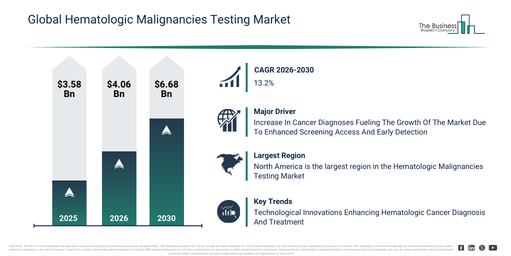
    The hematologic malignancies testing market has seen rapid expansion in recent years. Its value is expected to rise from $3.58 billion in 2025 to $4.06 billion in 2026, reflecting a compound annual growth rate (CAGR) of 13.4%. This historical growth can be attributed to several factors including the rising occurrence of hematologic cancers, the broader embrace of molecular diagnostics, the enlargement of diagnostic laboratory networks, an increasing application of CBC and flow cytometry, and better availability of oncology testing services.

    The market for hematologic malignancies testing is projected to experience swift expansion over the coming years. This market is anticipated to reach $6.68 billion by 2030, demonstrating a compound annual growth rate (CAGR) of 13.2%. This expansion during the forecast timeframe is driven by factors such as a rising need for precision oncology diagnostics, the increasing incorporation of AI-based data interpretation, the broadening scope of companion diagnostics, greater embrace of MRD monitoring, and heightened investments in cutting-edge diagnostic technologies. Key developments foreseen during this period encompass the greater uptake of NGS-based diagnostic testing, a surge in the application of flow cytometry for MRD detection, enhanced integration of molecular and genetic assays, the widening availability of personalized diagnostic profiling, and a stronger emphasis on prompt and precise subtyping.

    Download the Free Sample Report to Explore Key Market Insights:

    https://www.thebusinessresearchcompany.com/sample.aspx?id=24234&type=smp

    What Key Drivers Are Influencing The Growth Of The Hematologic Malignancies Testing Market?

    The increasing number of cancer diagnoses is projected to fuel the expansion of the hematologic malignancies testing market moving forward. Cancer diagnoses entail identifying the presence, type, and stage of cancer in a patient through various medical tests and evaluations, including imaging, laboratory tests, and biopsies. The rise in cancer diagnoses stems from improved access to screening programs and increased public awareness, which contributes to earlier detection. Hematologic malignancies testing assists in cancer diagnoses by enabling early identification, accurate classification, and monitoring of blood-related cancers, thereby guiding targeted treatment decisions and enhancing patient outcomes. For instance, according to American Cancer Society, an US-based nonprofit organization, in 2024, over 2 million new cancer cases are diagnosed in the US, representing a 4% increase from previous years. Thus, the growing volume of cancer diagnoses propels growth within the hematologic malignancies testing market.

    Which Market Segments Are Examined In The Hematologic Malignancies Testing Market Study?

    The hematologic malignancies testing market covered in this report is segmented –

    1) By Test Type: Complete Blood Count (CBC), Flow Cytometry, Molecular Testing, Genetic Testing, Others Test Type

    2) By Product: Kits, Services

    3) By Technology: Polymerase Chain Reaction (PCR), Next-Generation Sequencing (NGS), Immunohisto Chemistry (IHC), Cytogenetics, Others Technology

    4) By Therapeutic Indication: Leukemia, Lymphoma, Multiple Myeloma, Myeloproliferative Neoplasms, Others Therapeutic Indication

    5) By End User: Hospitals, Diagnostic Labs, Academic and Research Institutions, Others End Users

    Subsegments:

    1) By Complete Blood Count (CBC): Hemoglobin Testing, Hematocrit Measurement, White Blood Cell Count, Red Blood Cell Count, Platelet Count, Mean Corpuscular Volume (MCV), Mean Corpuscular Hemoglobin (MCH)

    2) By Flow Cytometry: Immunophenotyping, Cell Cycle Analysis, Apoptosis Detection, Minimal Residual Disease (MRD) Testing, DNA Content Analysis

    3) By Molecular Testing: Polymerase Chain Reaction (PCR), Next-Generation Sequencing (NGS), Reverse Transcriptase-PCR (RT-PCR), Fluorescence In Situ Hybridization (FISH), Microarray Analysis

    4) By Genetic Testing: Germline Mutation Testing, Somatic Mutation Testing, Cytogenetic Testing, Chromosomal Aberration Detection, Single Nucleotide Polymorphism (SNP) Analysis

    5) By Others Test Type: Bone Marrow Biopsy, Immunohistochemistry (IHC), Enzyme Assays, Serum Protein Electrophoresis (SPEP), Imaging Tests

    Which Market Trends Are Creating New Opportunities In The Hematologic Malignancies Testing Market?

    Companies operating in the hematologic malignancies testing market are concentrating on developing innovative diagnostic methods, such as rapid molecular profiling, to offer healthcare providers precise and timely diagnostic tools that enhance early detection, treatment planning, and monitoring of blood cancers. Rapid molecular profiling serves as a diagnostic strategy that examines a patient’s genetic composition to identify mutations and variations, enabling quicker and more personalized treatment decisions. As an example, in November 2023, Roswell Park Comprehensive Cancer Center, a US-based comprehensive cancer center, introduced PanHeme, a next-generation gene sequencing tool specifically designed to diagnose hematologic cancers like leukemia, lymphoma, and multiple myeloma with greater accuracy and speed. This test detects mutations in hundreds of genes in under 72 hours, thereby significantly improving the speed and precision of diagnosis and ultimately guiding more personalized treatment decisions for patients.

    Who Are The Primary Competitors In The Hematologic Malignancies Testing Market?

    Major companies operating in the hematologic malignancies testing market are Abbott Laboratories, F. Hoffmann-La Roche Ltd, Siemens Healthineers AG, Becton Dickinson and Company, Bio-Rad Laboratories Inc., Agilent Technologies Inc., Illumina Inc., Thermo Fisher Scientific Inc., Danaher Corporation, Sysmex Corporation, QIAGEN N.V., PerkinElmer Inc., Adaptive Biotechnologies Corporation, Invivoscribe Inc., ArcherDx Inc., Guardant Health Inc., Sophia Genetics SA, Natera Inc., Roche Diagnostics International AG, Laboratory Corporation of America Holdings

    Read the full hematologic malignancies testing market report here:

    https://www.thebusinessresearchcompany.com/report/hematologic-malignancies-testing-global-market-report

    Which Region Is Expected To Register The Fastest Growth In The Hematologic Malignancies Testing Market?

    North America was the largest region in the hematologic malignancies testing market in 2025. Asia-Pacific is expected to be the fastest-growing region in the forecast period. The regions covered in the hematologic malignancies testing market report are Asia-Pacific, South East Asia, Western Europe, Eastern Europe, North America, South America, Middle East, Africa.

    Request A Tailored Hematologic Malignancies Testing Market Research Report For Competitive Advantage:

    https://www.thebusinessresearchcompany.com/customise?id=24234&type=smp

    Browse Through More Reports Similar to the Global Hematologic Malignancies Testing Market 2026, By The Business Research Company

    Dermatological Drugs Global Market Report

    https://www.thebusinessresearchcompany.com/report/dermatological-drugs-global-market-report

    Hematocrit Test Devices Global Market Report

    https://www.thebusinessresearchcompany.com/report/hematocrit-test-devices-global-market-report

    Hematology Diagnostic Devices And Equipment Global Market Report

    https://www.thebusinessresearchcompany.com/report/hematology-diagnostic-devices-and-equipment-global-market-report

    Get in touch with us:

    The Business Research Company: https://www.thebusinessresearchcompany.com/

    Americas +1 310-496-7795

    Asia +44 7882 955267 & +91 8897263534

    Europe +44 7882 955267

    Email us at info@tbrc.info

    Follow us on:

    LinkedIn: https://in.linkedin.com/company/the-business-research-company

    YouTube: https://www.youtube.com/channel/UC24_fI0rV8cR5DxlCpgmyFQ

    Global Market Model: https://www.thebusinessresearchcompany.com/global-market-model