Category: Healthcare Services

  • Dengue Treatment Market Size Outlook and Demand Growth Across 2026–2030

    Dengue Treatment Market Size Outlook and Demand Growth Across 2026–2030

    The Business Research Company’s 2026 market reports include new capabilities such as market attractiveness scoring and analysis, total addressable market analysis, company scoring matrix, interactive excel data dashboard, improved supply chain analysis, upcoming startups in the market, and overview of key products, aimed at improving the depth, usability, and strategic value of the insights delivered.

    What Is The Estimated Market Size Of The Dengue Treatment Market During 2026–2030?

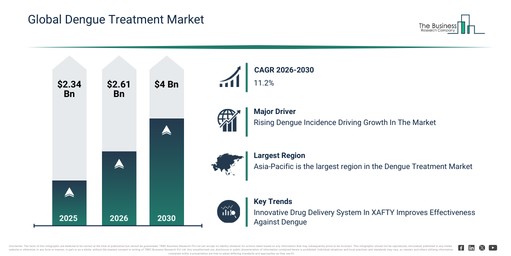
    The dengue treatment market size has experienced rapid growth in recent years. This market is projected to expand from $2.34 billion in 2025 to $2.61 billion in 2026, exhibiting a compound annual growth rate (CAGR) of 11.5%. Historically, the expansion can be attributed to the high prevalence of dengue in tropical regions, a scarcity of antiviral treatments, reliance on supportive care, hospital-centered management strategies, and recurrent seasonal outbreak patterns.

    The dengue treatment market is projected to experience substantial expansion in the coming years, with its size anticipated to reach $4 billion by 2030, exhibiting a compound annual growth rate (CAGR) of 11.2%. This growth during the forecast period is primarily driven by the increasing availability of dengue vaccines, the climate-induced spread of mosquitoes, the reinforcement of public health systems, enhanced access to diagnostic tools, and greater governmental intervention. Furthermore, significant trends expected over this period include a heightened focus on supportive care management, the expansion of dengue vaccination programs, intensified monitoring of severe dengue cases, the development of hospital-based treatment protocols, and improvements in public health surveillance.

    Download the Free Sample Report to Explore Key Market Insights:

    https://www.thebusinessresearchcompany.com/sample.aspx?id=20745&type=smp

    Which Major Factors Are Driving The Expansion Of The Dengue Treatment Market?

    The increasing occurrence of dengue infections is anticipated to boost the expansion of the dengue treatment market in the future. Dengue is defined as a viral illness transmitted by mosquitoes, characterized by symptoms similar to the flu, which can lead to serious health issues if medical attention is not sought. This escalation in dengue cases is largely attributable to factors such as expanded urbanization, climatic shifts that promote mosquito reproduction, insufficient efforts in vector control, and a growing populace in regions prone to the disease. Addressing dengue through treatment helps diminish its prevalence by guaranteeing prompt medical care, easing intense symptoms, averting further complications, and limiting its dissemination via improved patient recovery and heightened public understanding of health. For example, data from a 2023 report by the Centers for Disease Control and Prevention, a US-based government agency, revealed that dengue fever cases in the Americas soared to over 4.6 million, resulting in roughly 4,000 deaths. This represented a 13% increase compared to the corresponding timeframe in 2022, indicating a substantial rise over prior years. Consequently, the growing frequency of dengue infections is a key driver for the expansion of the dengue treatment market.

    How Are The Various Segments Of The Dengue Treatment Market Categorized?

    The dengue treatment market covered in this report is segmented –

    1) By Type: Vaccines, Acetaminophen

    2) By Route Of Administration: Parenteral, Oral

    3) By Distribution Channel: Hospital Pharmacies, Retail Pharmacies, Online Pharmacies

    4) By End User: Hospital, Specialty Clinics, Home Healthcare

    Subsegments:

    1) By Vaccines: Live Attenuated Vaccines, Recombinant Vaccines, Inactivated Vaccines

    2) By Acetaminophen: Oral Acetaminophen, Intravenous Acetaminophen

    What Trends Are Advancing Progress In The Dengue Treatment Market?

    Companies operating within the dengue treatment market are concentrating on developing solutions like broad-spectrum antiviral drugs to improve treatment effectiveness, decrease disease severity, and concurrently address various serotypes of the dengue virus. A broad-spectrum antiviral drug is a medication that proves effective against a wide array of viruses, rather than targeting only one specific virus. For example, in September 2024, Hyundai Pharmaceutical Co. Ltd., a South Korea-based producer of pharmaceutical products, introduced XAFTY. This revolutionary broad-spectrum antiviral is designed to treat multiple viral infections, including COVID-19 and dengue fever. It features unique characteristics such as an innovative drug that enhances the absorption and effectiveness of niclosamide, demonstrated safety and efficacy from clinical trials, the capability to target a range of RNA viruses, thereby offering versatility against potential future threats, and a rapid response potential that facilitates expedited supply to regions confronted with public health crises.

    Which Major Firms Influence Developments In The Dengue Treatment Market?

    Major companies operating in the dengue treatment market are Sanofi S.A., Bharat Biotech International Limited, Pfizer Inc., Merck & Co Inc., GlaxoSmithKline plc, Takeda Pharmaceutical Company Limited, Panacea Biotec Ltd, Serum Institute of India Pvt Ltd, InBios International Inc, GeneOne Life Science Inc, VLP Therapeutics Inc, AstraZeneca plc, Bayer AG, Eli Lilly and Company, VBI Vaccines Inc, Emergex Vaccines Holding Limited, Butantan Institute, Medigen Vaccine Biologics Corporation, Immunoforge

    Read the full dengue treatment market report here:

    https://www.thebusinessresearchcompany.com/report/dengue-treatment-global-market-report

    Which Region Currently Holds The Largest Share Of The Dengue Treatment Market?

    Asia-Pacific was the largest region in the dengue treatment in 2025. Asia-Pacific is expected to be the fastest-growing region in the forecast period. The regions covered in the dengue treatment market report are Asia-Pacific, South East Asia, Western Europe, Eastern Europe, North America, South America, Middle East, Africa.

    Request A Tailored Dengue Treatment Market Research Report For Competitive Advantage:

    https://www.thebusinessresearchcompany.com/customise?id=20745&type=smp

    Browse Through More Reports Similar to the Global Dengue Treatment Market 2026, By The Business Research Company

    Avian Flu Treatment Global Market Report

    https://www.thebusinessresearchcompany.com/report/avian-flu-treatment-global-market-report

    Antiviral Combination Therapy Global Market Report

    https://www.thebusinessresearchcompany.com/report/antiviral-combination-therapy-global-market-report

    Influenza Treatment Global Market Report

    https://www.thebusinessresearchcompany.com/report/influenza-treatment-global-market-report

    Get in touch with us:

    The Business Research Company: https://www.thebusinessresearchcompany.com/

    Americas +1 310-496-7795

    Asia +44 7882 955267 & +91 8897263534

    Europe +44 7882 955267

    Email us at info@tbrc.info

    Follow us on:

    LinkedIn: https://in.linkedin.com/company/the-business-research-company

    YouTube: https://www.youtube.com/channel/UC24_fI0rV8cR5DxlCpgmyFQ

    Global Market Model: https://www.thebusinessresearchcompany.com/global-market-model
  • Dendritic Cell Cancer Vaccine Market Insights Highlighting Opportunities and Drivers Supporting Growth to 2030

    Dendritic Cell Cancer Vaccine Market Insights Highlighting Opportunities and Drivers Supporting Growth to 2030

    The Business Research Company’s 2026 market reports include new capabilities such as market attractiveness scoring and analysis, total addressable market analysis, company scoring matrix, interactive excel data dashboard, improved supply chain analysis, upcoming startups in the market, and overview of key products, aimed at improving the depth, usability, and strategic value of the insights delivered.

    What Market Size Expansion Is Predicted For The Dendritic Cell Cancer Vaccine Market Between 2026 And 2030?

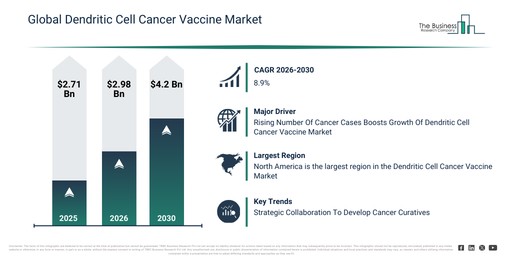
    The dendritic cell cancer vaccine market has experienced substantial expansion in recent years. This market is set to expand from $2.71 billion in 2025 to $2.98 billion in 2026, achieving a compound annual growth rate (CAGR) of 10.1%. The historical growth in this sector is linked to several factors, including the limitations of conventional cancer therapies, the early success of sipuleucel-t, unmet needs in metastatic cancers, the rise of immuno-oncology research, and hospital-based vaccine administration.

    The dendritic cell cancer vaccine market size is anticipated to experience robust growth in the coming years, projected to reach $4.2 billion in 2030, with a compound annual growth rate (CAGR) of 8.9%. The expansion during the forecast period is attributable to advancements in cell therapy manufacturing, the broadening scope of precision oncology, increasing regulatory backing, a rise in cancer incidence, and growing investment in immunotherapy pipelines. Major trends for this period include the proliferation of personalized cancer vaccines, an increase in clinical trials targeting solid tumors, a heightened focus on immune system modulation, the increasing adoption of combination immunotherapies, and continuous advancements in cell processing technologies.

    Download the Free Sample Report to Explore Key Market Insights:

    https://www.thebusinessresearchcompany.com/sample.aspx?id=16031&type=smp

    What Key Drivers Are Influencing The Growth Of The Dendritic Cell Cancer Vaccine Market?

    The increasing incidence of cancer cases is anticipated to drive expansion in the dendritic cell cancer vaccine market moving ahead. Cancer is a medical condition marked by the unchecked proliferation and dissemination of abnormal cells within the body, frequently resulting in tumor formation and the disruption of regular bodily functions. The prevalence of cancer cases is influenced by elements such as lifestyle choices, environmental factors, and genetic susceptibilities. Dendritic cell cancer vaccines are employed in oncology to activate the body’s immune response, specifically targeting malignant cells and potentially enhancing patient prognoses. For example, in February 2024, the World Health Organization, an intergovernmental body based in the US, projected around 35 million new cancer cases in 2050, representing a 77% surge from the estimated 20 million cases in 2022. Consequently, the growing number of cancer diagnoses is fueling the growth of the dendritic cell cancer vaccine market.

    Which Market Segments Are Examined In The Dendritic Cell Cancer Vaccine Market Study?

    The dendritic cell cancer vaccine market covered in this report is segmented –

    1) By Product: CreaVax, Sipuleucel-T (Provenge), Other Products

    2) By Distribution Channel: Hospitals, Cancer Centers, Ambulatory Surgical Centers, Clinics

    3) By Application: Pediatrics, Adults

    4) By End User: Oncology, Research Institutions, Biopharmaceutical Companies

    Subsegments:

    1) By Creavax: Creavax In Clinical Trials, Creavax Commercialization

    2) By Sipuleucel-T (Provenge): Sipuleucel-T In Prostate Cancer, Sipuleucel-T Market Share, Sipuleucel-T Regulatory Approvals

    3) By Other Products: Dcvax, Oncovax, GVAX

    How Are Trends Transforming The Dendritic Cell Cancer Vaccine Market Landscape?

    Companies operating in the dendritic cell cancer vaccine market are primarily focusing on forming strategic alliances to develop curative cancer vaccines, thereby aiming to improve clinical outcomes for patients. Strategic collaborations denote formal partnerships between various companies or organizations, established to achieve specific, mutually advantageous business goals. An illustrative example occurred in May 2023, when the Walter and Eliza Hall Institute of Medical Research, an Australia-based medical research institute, collaborated with the Peter MacCallum Cancer Centre, an Australia-based oncology research institute. They jointly received over $900,000 in MRFF funding dedicated to creating a cancer vaccine for patients who have limited therapeutic alternatives. The team’s objective is to enhance dendritic cell-based vaccinations, a promising treatment for cancer patients that involves boosting their own cells to fight the disease. This particular study is founded on a significant discovery made at WEHI 30 years ago, which holds the potential to lead to the first clinical trial for cancer patients.

    Who Are The Primary Competitors In The Dendritic Cell Cancer Vaccine Market?

    Major companies operating in the dendritic cell cancer vaccine market are Dendreon Pharmaceuticals LLC, Cognate BioServices Inc., Batavia Biosciences, Medigene AG, Zelluna Immunotherapy AS, Northwest Biotherapeutics, PDC*line Pharma SA, ImmunityBio Inc., Celldex Therapeutics Inc., Argos Therapeutics Inc., DCPrime, NuGenerex Immuno-Oncology, ImmunoCellular Therapeutics Ltd., Immunicum AB, 3M Company, Activartis Biotech GmbH, DanDrit Biotech, Kiromic BioPharma Inc., GlaxoSmithKline plc, SOTIO, Vaxil BioTherapeutics

    Read the full dendritic cell cancer vaccine market report here:

    https://www.thebusinessresearchcompany.com/report/dendritic-cell-cancer-vaccine-global-market-report

    Which Region Is Expected To Register The Fastest Growth In The Dendritic Cell Cancer Vaccine Market?

    North America was the largest region in the dendritic cell cancer vaccine market in 2025. The regions covered in the dendritic cell cancer vaccine market report are Asia-Pacific, South East Asia, Western Europe, Eastern Europe, North America, South America, Middle East, Africa.

    Request A Tailored Dendritic Cell Cancer Vaccine Market Research Report For Competitive Advantage:

    https://www.thebusinessresearchcompany.com/customise?id=16031&type=smp

    Browse Through More Reports Similar to the Global Dendritic Cell Cancer Vaccine Market 2026, By The Business Research Company

    Therapeutic Bcg Vaccines Global Market Report

    https://www.thebusinessresearchcompany.com/report/therapeutic-bcg-vaccines-global-market-report

    Mrna Cancer Vaccines And Therapeutics Global Market Report

    https://www.thebusinessresearchcompany.com/report/mrna-cancer-vaccines-and-therapeutics-global-market-report

    Vaccines Global Market Report

    https://www.thebusinessresearchcompany.com/report/vaccines-global-market-report

    Get in touch with us:

    The Business Research Company: https://www.thebusinessresearchcompany.com/

    Americas +1 310-496-7795

    Asia +44 7882 955267 & +91 8897263534

    Europe +44 7882 955267

    Email us at info@tbrc.info

    Follow us on:

    LinkedIn: https://in.linkedin.com/company/the-business-research-company

    YouTube: https://www.youtube.com/channel/UC24_fI0rV8cR5DxlCpgmyFQ

    Global Market Model: https://www.thebusinessresearchcompany.com/global-market-model
  • Global Demulcent Eye Drops Market Expected to Reach $2.86 Billion by 2030 with 7.3% CAGR

    Global Demulcent Eye Drops Market Expected to Reach $2.86 Billion by 2030 with 7.3% CAGR

    The Business Research Company’s 2026 market reports include new capabilities such as market attractiveness scoring and analysis, total addressable market analysis, company scoring matrix, interactive excel data dashboard, improved supply chain analysis, upcoming startups in the market, and overview of key products, aimed at improving the depth, usability, and strategic value of the insights delivered.

    How Large Is The Demulcent Eye Drops Market Projected To Become By 2030 Based On Its 2026 Valuation?

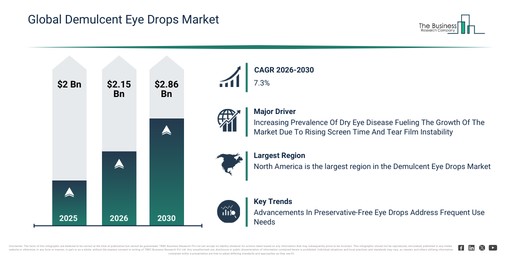
    The demulcent eye drops market has experienced robust expansion in recent years. It is projected to increase from $2 billion in 2025 to $2.15 billion by 2026, exhibiting a compound annual growth rate (CAGR) of 7.7%. This historic growth can be ascribed to elements such as the rising prevalence of dry eye syndrome, increased screen time exposure, a growing aging population, the expansion of over-the-counter eye care products, and improved access to ophthalmic medications.

    The demulcent eye drops market size is anticipated to experience substantial expansion in the coming years. This market is projected to reach $2.86 billion by 2030, exhibiting a compound annual growth rate (CAGR) of 7.3%. Several factors contribute to this growth over the forecast period, including heightened awareness of ocular surface disorders, an increasing need for sophisticated lubricating formulations, the expansion of online pharmacy channels, a greater emphasis on preservative-free eye care solutions, and wider adoption among contact lens wearers. Significant trends expected during this forecast period encompass the growing acceptance of preservative-free formulations, an escalating demand for lubrication solutions that provide extended relief, a rising preference for packaging in single doses, the broader development of combination demulcent therapies, and an intensified focus on ensuring patient comfort and adherence to treatment.

    Download the Free Sample Report to Explore Key Market Insights:

    https://www.thebusinessresearchcompany.com/sample.aspx?id=24517&type=smp

    What Major Growth Drivers Are Shaping The Outlook Of The Demulcent Eye Drops Market?

    The rising incidence of dry eye disease is projected to drive the expansion of the demulcent eye drops market in the future. This condition, known as dry eye disease, occurs when the eyes generate inadequate or low-quality tears, resulting in discomfort, impaired vision, and possible harm to the ocular surface. The growing occurrence of dry eye disease largely stems from increased screen time, which diminishes how often individuals blink and destabilizes the tear film, causing dryness and irritation in the eyes. Demulcent eye drops mitigate dry eye disease by creating a protective film on the eye’s surface, thereby decreasing irritation and moisture loss, and offering comforting relief to sustain ocular comfort. As an illustration, in February 2024, data from Eyes On Eyecare, a US-based media firm, showed that dry eye constituted the main clinical area of interest for 43.39% of practices in 2024, representing a 16.54% rise from 2023. Consequently, the expanding occurrence of dry eye disease is fueling the growth within the demulcent eye drops market.

    What Segment Groups Are Identified Within The Demulcent Eye Drops Market?

    The demulcent eye drops market covered in this report is segmented –

    1) By Product Type: Artificial Tears, Lubricating Eye Drops, Allergy Eye Drops, Other Product Types

    2) By Formulation Type: Preserved Eye Drops, Preservatives-Free Eye Drops, Multidose Eye Drops, Single-Dose Eye Drops, Other Formulation Types

    3) By Application: Dry Eye Syndrome, Allergies, Eye Infections, Other Applications

    4) By Distribution channel: Retail Pharmacies, Online Pharmacies, Hospitals And Clinics

    5) By End User: Individuals With Dry Eye Syndrome, Post-Surgical Patients, Contact Lense Wearers, Individuals With Allergies, Other End Users

    Subsegments:

    1) By Artificial Tears: Cellulose Derivatives, Polyethylene Glycol-Based Formulations, Propylene Glycol-Based Formulations

    2) By Lubricating Eye Drops: Glycerin-Based Lubricants, Mineral Oil-Based Drops, Hyaluronic Acid-Based Lubricants

    3) By Allergy Eye Drops: Antihistamine-Dased Demulcents, Mast Cell Stabilizer Combinations

    4) By Other Product Types: Preservative-Free Demulcents, Combination Therapies

    Which Trends Are Impacting The Growth Of The Demulcent Eye Drops Market?

    Major companies in the demulcent eye drops market are concentrating on developing innovative products, such as formulas free of preservatives, to serve consumers with sensitive eyes and minimize irritation risks. Preservative-free eye drops are artificial tears developed without chemical preservatives, making them ideal for individuals with delicate eyes or those requiring frequent application. For example, in September 2023, Alcon Inc., a pharmaceutical and medical device company based in Switzerland, introduced Systane Hydration multi-dose preservative-free (MDPF) lubricant eye drops. This offering incorporates HydroBoost Technology, which combines sodium hyaluronate and HP-Guar to provide superior hydration and protection. This preservative-free formula comes in a multi-dose bottle featuring PureFlow technology, ensuring sterility without the need for preservatives. It is designed for regular use, offering enduring relief for dry, irritated eyes, and is safe for use with soft contact lenses.

    Which Companies Hold Significant Positions In The Demulcent Eye Drops Market?

    Major companies operating in the demulcent eye drops market are Pfizer Inc., AbbVie Inc., Abbott Laboratories, Novartis AG, Sun Pharmaceutical Industries Limited, Bausch + Lomb, Cipla Ltd, Santen Pharmaceutical Co. Ltd, Rohto Pharmaceutical Co. Ltd., Prestige Consumer Healthcare Inc., FDC Limited, AFT Pharmaceuticals, Sentiss Pharma Pvt. Ltd., VISUfarma B.V, URSAPHARM GmbH, Thea Pharmaceuticals, OASIS Medical Inc, Entod Pharmaceuticals Ltd., Scope Ophthalmics Ltd.

    Read the full demulcent eye drops market report here:

    https://www.thebusinessresearchcompany.com/report/demulcent-eye-drops-global-market-report

    Which Regions Are Projected To Dominate The Demulcent Eye Drops Market In The Coming Years?

    North America was the largest region in the demulcent eye drops market in 2025. Asia-Pacific is expected to be the fastest-growing region in the forecast period. The regions covered in the demulcent eye drops market report are Asia-Pacific, South East Asia, Western Europe, Eastern Europe, North America, South America, Middle East, Africa.

    Request A Tailored Demulcent Eye Drops Market Research Report For Competitive Advantage:

    https://www.thebusinessresearchcompany.com/customise?id=24517&type=smp

    Browse Through More Reports Similar to the Global Demulcent Eye Drops Market 2026, By The Business Research Company

    Otc Dry Eye Drops Global Market Report

    https://www.thebusinessresearchcompany.com/report/otc-dry-eye-drops-global-market-report

    Eye Health Supplements Global Market Report

    https://www.thebusinessresearchcompany.com/report/eye-health-supplements-global-market-report

    Dry Eye Products Global Market Report

    https://www.thebusinessresearchcompany.com/report/dry-eye-products-global-market-report

    Get in touch with us:

    The Business Research Company: https://www.thebusinessresearchcompany.com/

    Americas +1 310-496-7795

    Asia +44 7882 955267 & +91 8897263534

    Europe +44 7882 955267

    Email us at info@tbrc.info

    Follow us on:

    LinkedIn: https://in.linkedin.com/company/the-business-research-company

    YouTube: https://www.youtube.com/channel/UC24_fI0rV8cR5DxlCpgmyFQ

    Global Market Model: https://www.thebusinessresearchcompany.com/global-market-model
  • De-Identified Health Data Market Future Outlook Showing Expansion Toward $16.07 Billion by 2030

    De-Identified Health Data Market Future Outlook Showing Expansion Toward $16.07 Billion by 2030

    The Business Research Company’s 2026 market reports include new capabilities such as market attractiveness scoring and analysis, total addressable market analysis, company scoring matrix, interactive excel data dashboard, improved supply chain analysis, upcoming startups in the market, and overview of key products, aimed at improving the depth, usability, and strategic value of the insights delivered.

    What Market Value Is Anticipated For The De-Identified Health Data Market Over The Period 2026–2030?

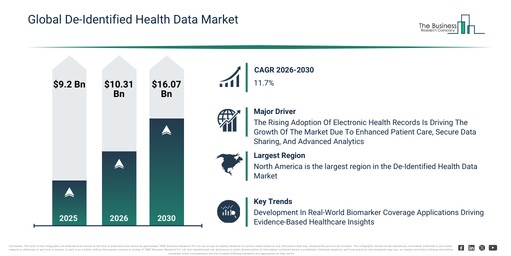
    The de-identified health data market size has shown rapid expansion in recent years. It is anticipated to increase from $9.2 billion in 2025 to $10.31 billion in 2026, achieving a compound annual growth rate (CAGR) of 12.1%. The growth observed in prior periods can be attributed to the rising adoption of electronic health records, a surging demand for population health analytics, the expansion of clinical research databases, an intensified focus on patient privacy compliance, and the increasing availability of structured healthcare data.

    The de-identified health data market size is anticipated to undergo significant expansion over the next few years. It is forecast to grow to $16.07 billion in 2030, exhibiting a compound annual growth rate (CAGR) of 11.7%. The projected increase in this period can be attributed to the rising application of AI-driven health insights, greater investments in precision medicine research, the broadening scope of value-based care analytics, a heightened demand for secure health data exchange, and the increased adoption of real-world evidence in regulatory decisions. Notable developments in the forecast period include the proliferation of large-scale de-identified data platforms, expanded utilization of real-world evidence analytics, a growing need for privacy-preserving data sharing models, increased uptake of longitudinal patient data analysis, and the consolidation of multi-source healthcare datasets.

    Download the Free Sample Report to Explore Key Market Insights:

    https://www.thebusinessresearchcompany.com/sample.aspx?id=28191&type=smp

    What Drivers Are Expected To Influence The De-Identified Health Data Market During The Forecast Period?

    The expanding embrace of electronic health records (EHRs) is anticipated to fuel the expansion of the de-identified health data market going forward. EHRs represent a digital record of a patient’s complete medical history, encompassing diagnoses, treatments, medications, lab results, and other health information, which is securely stored and accessible to authorized healthcare providers. Their increasing use stems from their capacity to improve patient care and safety by providing precise, real-time access to extensive medical information. De-identified health data further enhances electronic health records by facilitating secure data sharing and sophisticated analytics while safeguarding patient privacy, ultimately leading to improved clinical choices and healthcare results. For instance, in August 2025, as per a 2024 report by the National Center for Biotechnology Information, a US-based National Library of Medicine (NLM), which is part of the U.S. National Institutes of Health (NIH) a federal government agency, the majority of hospitals had implemented patient engagement features allowing patients to electronically view (99%) (e.g., test results), download (96%), and transmit their health information to a third party (84%). Consequently, the growing adoption of electronic health records (EHRs) is propelling the growth of the de-identified health data market.

    How Is The De-Identified Health Data Market Divided Into Its Major Segments?

    The de-identified health data market covered in this report is segmented –

    1) By Type: Clinical Data, Genomic Data, Patient Demographics, Prescription Data, Hospital And Provider Data, Pharmacogenomic Data

    2) By Application: Clinical Research And Trials, Public Health, Precision Medicine, Health Economics And Outcomes Research (HEOR), Population Health Management, Drug Discovery And Development, Healthcare Quality Improvement, Insurance Underwriting And Risk Assessment, Other Applications

    3) By End-User: Pharmaceutical Companies, Biotechnology Firms, Healthcare Providers, Insurance Companies Or Healthcare Payers, Research Institutions, Government Agencies, Other End-Users

    Subsegments:

    1) By Clinical Data: Electronic Health Records, Medical Imaging Data, Laboratory Test Results, Surgical Reports, Pathology Reports, Vital Signs Measurements

    2) By Genomic Data: Whole Genome Sequencing Data, Exome Sequencing Data, Single Nucleotide Polymorphism Data, Gene Expression Profiles, Epigenetic Data

    3) By Patient Demographics: Age Information, Gender Information, Ethnicity Information, Geographic Location, Socioeconomic Status, Marital Status

    4) By Prescription Data: Medication Orders, Dosage Information, Prescription Refill History, Drug Allergies, Pharmacy Dispensation Records

    5) By Hospital And Provider Data: Provider Performance Metrics, Care Delivery Outcomes, Billing And Claims Data, Resource Utilization Data

    6) By Pharmacogenomic Data: Gene–Drug Interaction Data, Adverse Drug Reaction Data, Personalized Therapy Response Data, Drug Efficacy Variation Data

    What Major Market Trends Are Driving Changes In The De-Identified Health Data Market?

    Leading firms within the de-identified health data market are concentrating on creating sophisticated solutions, like real-world biomarker coverage applications, to facilitate evidence-based healthcare choices. Such an application utilizes de-identified patient information to observe and evaluate biomarker patterns and their efficacy among varied populations beyond traditional clinical trials, thus empowering researchers and healthcare providers with understanding regarding treatment outcomes and disease trajectories. For instance, in July 2025, Datma Inc., a US-based healthcare technology firm, introduced the Federated Biomarker Explorer. This free application is specifically designed for pharmaceutical teams to rapidly confirm real-world biomarker coverage across Datma’s collaborative network of contributing data partners. The tool furnishes aggregate, cohort-level insights into the presence of biomarkers, allowing for quick assessments without requiring contracts or IT assistance. Furthermore, it permits secure integration of users’ proprietary data for overlap analysis and supports early-stage feasibility evaluations through clinical and demographic filtering, aiding in verifying if datasets encompass the requisite patient populations prior to resource allocation.

    Who Are The Prominent Organizations Shaping The De-Identified Health Data Market?

    Major companies operating in the de-identified health data market are UnitedHealth Group Incorporated, Oracle Corporation, IQVIA Holdings Inc, ICON Public Limited Company, Datavant Inc, Premier Inc., iMerit Technology Services Pvt. Ltd., Tempus Labs Inc., Medidata Solutions Inc., Veradigm Inc., Flatiron Health, Merative LP, Komodo Health Inc., Shaip Inc., Truveta Inc., Evidation Health Inc., TriNetX Inc., Clarify Health Solutions Inc., Akrivia Health Ltd., Gradient Health Inc.

    Read the full de-identified health data market report here:

    https://www.thebusinessresearchcompany.com/report/de-identified-health-data-global-market-report

    Which Region Is Forecast To Lead The De-Identified Health Data Market In Terms Of Market Size?

    North America was the largest region in the de-identified health data market in 2025. Asia-Pacific is expected to be the fastest-growing region in the forecast period. The regions covered in the de-identified health data market report are Asia-Pacific, South East Asia, Western Europe, Eastern Europe, North America, South America, Middle East, Africa.

    Request A Tailored De-Identified Health Data Market Research Report For Competitive Advantage:

    https://www.thebusinessresearchcompany.com/customise?id=28191&type=smp

    Browse Through More Reports Similar to the Global De-Identified Health Data Market 2026, By The Business Research Company

    Heat Shrink Tubing And Sleeves Global Market Report

    https://www.thebusinessresearchcompany.com/report/heat-shrink-tubing-and-sleeves-global-market-report

    High Temperature Insulation Global Market Report

    https://www.thebusinessresearchcompany.com/report/high-temperature-insulation-global-market-report

    Thermal Paper Global Market Report

    https://www.thebusinessresearchcompany.com/report/thermal-paper-global-market-report

    Get in touch with us:

    The Business Research Company: https://www.thebusinessresearchcompany.com/

    Americas +1 310-496-7795

    Asia +44 7882 955267 & +91 8897263534

    Europe +44 7882 955267

    Email us at info@tbrc.info

    Follow us on:

    LinkedIn: https://in.linkedin.com/company/the-business-research-company

    YouTube: https://www.youtube.com/channel/UC24_fI0rV8cR5DxlCpgmyFQ

    Global Market Model: https://www.thebusinessresearchcompany.com/global-market-model
  • Deep Partial-Thickness Thermal Burns Market Revenue Growth Expected to Reach $1.9 Billion by 2030 with 8.1% CAGR

    Deep Partial-Thickness Thermal Burns Market Revenue Growth Expected to Reach $1.9 Billion by 2030 with 8.1% CAGR

    The Business Research Company’s 2026 market reports include new capabilities such as market attractiveness scoring and analysis, total addressable market analysis, company scoring matrix, interactive excel data dashboard, improved supply chain analysis, upcoming startups in the market, and overview of key products, aimed at improving the depth, usability, and strategic value of the insights delivered.

    What Is The Expected Market Size Of The Deep Partial-Thickness Thermal Burns Market From 2026 To 2030?

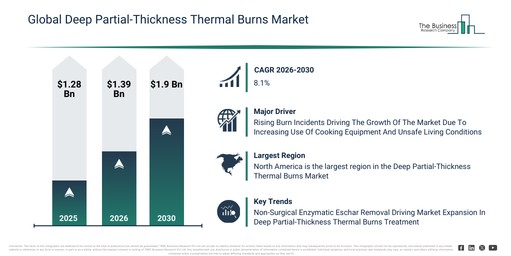
    The market size for deep partial-thickness thermal burns has experienced strong growth in recent years. It is projected to increase from $1.28 billion in 2025 to $1.39 billion in 2026, achieving a compound annual growth rate (CAGR) of 8.5%. The expansion observed in the historic period can be linked to a surge in thermal burn injuries, the establishment of more specialized burn treatment centers, the widespread availability of surgical wound management techniques, the growth of emergency care services, and increasing awareness regarding advanced burn treatment options.

    The deep partial-thickness thermal burns market size is projected for substantial growth over the coming years. It is expected to expand to $1.9 billion by 2030, demonstrating a compound annual growth rate (CAGR) of 8.1%. The anticipated growth during this period is driven by factors such as the increasing adoption of regenerative medicine in burn treatment, rising investments in biologic wound therapies, the expansion of home-based burn care services, a growing emphasis on functional recovery outcomes, and the increased use of advanced surgical reconstruction techniques. Significant trends in the forecast period include the increasing uptake of advanced wound care therapies, a rising use of biologic dressings and skin substitutes, the growing integration of multidisciplinary burn care protocols, the expansion of surgical intervention techniques, and an enhanced focus on scar reduction outcomes.

    Download the Free Sample Report to Explore Key Market Insights:

    https://www.thebusinessresearchcompany.com/sample.aspx?id=24515&type=smp

    What Drivers Are Influencing The Deep Partial-Thickness Thermal Burns Market?

    The escalating incidence of burn cases is anticipated to drive the expansion of the deep partial-thickness thermal burns market. A burn case describes situations where an individual’s skin suffers harm due to heat, flames, hot objects, electricity, or chemicals. This rise in burn prevalence largely results from the increased reliance on cooking equipment and open flames within homes, contributing to more accidental fires and exposure to hot surfaces, particularly amidst crowded or unsafe living environments. Deep partial-thickness thermal burns are treated with advanced products such as specialized wound dressings, skin graft materials, and regenerative therapies. These interventions enhance healing outcomes, diminish complications, and facilitate faster recovery for patients with severe burns, additionally minimizing scarring and the potential for long-term functional issues. As an illustration, in November 2023, a report published by the East London NHS Foundation Trust, a UK-based organization, estimated that around 250,000 individuals in the UK sustain burn injuries annually. Of these, approximately 175,000 visit A&E departments, and about 16,000 require hospital admission for specialist burns treatment. Thus, the growing prevalence of burn cases is fueling the growth of the deep partial-thickness thermal burns market.

    Which Segments Are Included In The Analysis Of The Deep Partial-Thickness Thermal Burns Market?

    The deep partial-thickness thermal burns market covered in this report is segmented –

    1) By Treatment: Initial Wound Care, Physical And Occupational Therapy, Other Treatments

    2) By Burn Type: Fire Burn Injuries, Scald Burn, Hot Objects

    3) By Distribution Channel: Direct Tender, Hospital Pharmacy, Online Pharmacy, Retail Pharmacy, Other Distribution Channels

    4) By End-User: Hospitals, Specialty Clinics, Ambulatory Surgical Centers, Home Healthcare, Other End-Users

    Subsegments:

    1) By Initial Wound Care: Debridement, Topical Antimicrobial Agents, Dressings And Bandages, Pain Management

    2) By Physical And Occupational Therapy: Range Of Motion Exercises, Scar Management, Strengthening Exercises, Activities Of Daily Living (ADL) Training

    3) By Other Treatments: Skin Grafting, Biologic Dressings, Negative Pressure Wound Therapy (NPWT), Hyperbaric Oxygen Therapy (HBOT)

    Which Trends Are Shaping The Future Of The Deep Partial-Thickness Thermal Burns Market?

    Leading companies in the deep partial-thickness thermal burns treatment market are prioritizing advanced technologies, such as non-surgical enzymatic eschar removal, to improve treatment outcomes for both adult and pediatric burn patients. This non-surgical enzymatic eschar removal method is a technique designed for the rapid and selective breakdown of burn eschar using biological agents applied topically, thus circumventing the need for conventional surgical debridement. For example, in August 2024, Vericel Corporation, a US-based biopharmaceutical company, obtained FDA approval for a pediatric indication for NexoBrid (anacaulase-bcdb) for eschar removal in pediatric patients afflicted with deep partial-thickness and full-thickness thermal burns. NexoBrid is contraindicated for patients with known allergies to pineapple, bromelain, papain, or any other constituents of the product, as it can induce hypersensitivity reactions, including anaphylaxis. It also requires careful consideration for patients undergoing anticoagulant therapy due to the heightened potential for bleeding.

    Which Key Industry Participants Are Active In The Deep Partial-Thickness Thermal Burns Market?

    Major companies operating in the deep partial-thickness thermal burns market are Smith & Nephew plc, Coloplast A/S, Convatec Group plc, Integra LifeSciences Holdings Corporation, Mölnlycke Health Care AB, Organogenesis Holdings Inc., MiMedx Group Inc., Vericel Corporation, AlloSource Inc., PolyNovo Limited, AVITA Medical Inc., MediWound Ltd., Stratatech Corporation, RenovaCare Inc., Aroa Biosurgery Limited, 3M Company, Anika Therapeutics Inc., B Braun SE, Osiris Therapeutics Inc., Celularity Inc., Amnio Technology LLC, Tissue Regenix Group plc, CUTISS AG, Tides Medical Inc.

    Read the full deep partial-thickness thermal burns market report here:

    https://www.thebusinessresearchcompany.com/report/deep-partial-thickness-thermal-burns-global-market-report

    Which Regions Are Expected To Experience Rapid Expansion In The Deep Partial-Thickness Thermal Burns Market?

    North America was the largest region in the deep partial-thickness thermal burns market in 2025. Asia-Pacific is expected to be the fastest-growing region in the forecast period. The regions covered in the deep partial-thickness thermal burns market report are Asia-Pacific, South East Asia, Western Europe, Eastern Europe, North America, South America, Middle East, Africa.

    Request A Tailored Deep Partial-Thickness Thermal Burns Market Research Report For Competitive Advantage:

    https://www.thebusinessresearchcompany.com/customise?id=24515&type=smp

    Browse Through More Reports Similar to the Global Deep Partial-Thickness Thermal Burns Market 2026, By The Business Research Company

    Artificial Intelligence In Drug Discovery Global Market Report

    https://www.thebusinessresearchcompany.com/report/artificial-intelligence-in-drug-discovery-global-market-report

    Drug Discovery Global Market Report

    https://www.thebusinessresearchcompany.com/report/drug-discovery-global-market-report

    Drug Discovery Services Global Market Report

    https://www.thebusinessresearchcompany.com/report/drug-discovery-services-global-market-report

    Get in touch with us:

    The Business Research Company: https://www.thebusinessresearchcompany.com/

    Americas +1 310-496-7795

    Asia +44 7882 955267 & +91 8897263534

    Europe +44 7882 955267

    Email us at info@tbrc.info

    Follow us on:

    LinkedIn: https://in.linkedin.com/company/the-business-research-company

    YouTube: https://www.youtube.com/channel/UC24_fI0rV8cR5DxlCpgmyFQ

    Global Market Model: https://www.thebusinessresearchcompany.com/global-market-model
  • Deep Learning In Drug Discovery And Diagnostics Market Expected to Record Steady Growth and Approach $36.95 Billion by 2030

    Deep Learning In Drug Discovery And Diagnostics Market Expected to Record Steady Growth and Approach $36.95 Billion by 2030

    The Business Research Company’s 2026 market reports include new capabilities such as market attractiveness scoring and analysis, total addressable market analysis, company scoring matrix, interactive excel data dashboard, improved supply chain analysis, upcoming startups in the market, and overview of key products, aimed at improving the depth, usability, and strategic value of the insights delivered.

    What Market Valuation Is Forecasted For The Deep Learning In Drug Discovery And Diagnostics Market By 2030 Starting From Its 2026 Size?

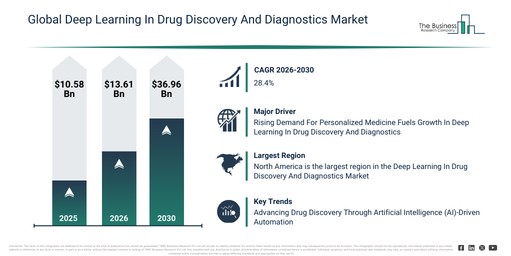
    The deep learning in drug discovery and diagnostics market has experienced an exponential increase in its size during recent years. This market is forecast to expand from $10.58 billion in 2025 to $13.61 billion by 2026, registering a compound annual growth rate (CAGR) of 28.7%. Factors contributing to its historical growth encompass the increasing availability of large biomedical datasets, rising computational power for model training, the expansion of AI adoption in pharmaceutical R&D, a growing demand for faster drug discovery cycles, and the early success of deep learning diagnostic models.

    The deep learning in drug discovery and diagnostics market is anticipated to experience substantial expansion over the coming years. This market is projected to reach $36.96 billion by 2030, exhibiting a compound annual growth rate (CAGR) of 28.4%. This growth during the forecast period is primarily driven by factors such as increasing investments in AI-powered healthcare solutions, a growing demand for precision medicine, the wider integration of AI across clinical workflows, the expanding utilization of real-world evidence data, and greater regulatory approval for AI-assisted diagnostics. Prominent trends expected in this period involve the rising implementation of deep neural networks in drug screening, increased application of AI-driven predictive modeling in diagnostics, an expanding integration of multi-omics data analysis, the development of automated clinical decision support systems, and a heightened emphasis on personalized medicine platforms.

    Download the Free Sample Report to Explore Key Market Insights:

    https://www.thebusinessresearchcompany.com/sample.aspx?id=19394&type=smp

    What Drivers Are Shaping The Future Growth Of The Deep Learning In Drug Discovery And Diagnostics Market?

    The expanding need for tailored medicine is anticipated to fuel the progression of the deep learning in drug discovery and diagnostics market. This approach involves customizing medical care and interventions based on a person’s specific genetic makeup, environment, and lifestyle to boost effectiveness and lessen adverse reactions. The increasing call for personalized medicine stems from breakthroughs in genomics and data analytics, enabling more precise and successful therapies suited to individual patient profiles. Within the deep learning in drug discovery and diagnostics domain, its application strengthens personalized medicine by scrutinizing intricate biological information to pinpoint distinct biomarkers and forecast patient responses to treatments with greater precision. For example, in February 2024, as reported by the Personalized Medicine Coalition, a US-based non-profit organization, the FDA sanctioned 16 novel personalized therapies for patients with rare diseases in 2023, which is an increase from six in 2022. Consequently, the rising demand for personalized medicine propels the deep learning in drug discovery and diagnostics market.

    Which Segment Categories Define The Deep Learning In Drug Discovery And Diagnostics Market?

    The deep learning in drug discovery and diagnostics market covered in this report is segmented –

    1) By Type: Drug Discovery, Diagnostics, Forensic Interventions, Other Types

    2) By Drug Type: Small Molecule Drugs, Biologics Drugs

    3) By End Use Industry: Pharmaceutical Companies, Biotechnology Companies, Contract Research Organizations (CROs), Healthcare Information Technology (IT)

    Subsegments:

    1) By Drug Discovery: Target Identification, Drug Screening, Lead Optimization, Predictive Modeling

    2) By Diagnostics: Medical Imaging Analysis, Genomic Data Interpretation, Disease Detection Algorithms, Personalized Medicine

    3) By Forensic Interventions: Digital Pathology, Forensic DNA Analysis, Toxicology Screening, Crime Scene Reconstruction

    4) By Other Types: Biomarker Discovery, Predictive Analytics in Healthcare, Patient Data Management Systems

    What Key Trends Are Influencing The Development Of The Deep Learning In Drug Discovery And Diagnostics Market?

    Major companies within the deep learning in drug discovery and diagnostics market are adopting advanced technologies such as generative artificial intelligence (AI) and machine-learning (ML)–driven automation platforms. This strategic incorporation aims to boost efficiency, reduce research and development (R&D) expenditures, and accelerate the early stages of therapeutic discovery. Generative AI and ML-driven automation platforms are computational systems designed to learn from chemical and biological data, enabling them to design new drug candidates virtually (in silico), forecast molecular behavior, and automatically synthesize and test compounds using robotic systems, thereby lessening reliance on traditional high-throughput screening methods. For instance, in July 2024, Exscientia, a UK-based AI-driven drug-design company, unveiled its AWS-powered AI/ML platform. This platform integrates a “DesignStudio” for AI-based molecule generation with an “AutomationStudio” for robotic lab synthesis and testing. Operating in a closed “design–make–test–learn” loop, the platform continuously refines its AI models with experimental data, significantly speeding up the discovery process, improving scalability, and facilitating the more precise and cost-effective development of novel therapeutics.

    Who Are The Top Companies Competing In The Deep Learning In Drug Discovery And Diagnostics Market?

    Major companies operating in the deep learning in drug discovery and diagnostics market are Google Inc., Microsoft Corporation, International Business Machines Corporation, NVIDIA Corporation, Zebra Medical Vision Ltd, Tempus Labs Inc., Nanostring Technologies Inc., Owkin Inc., Insilico Medicine Inc., SOPHiA GENETICS SA, Qureai Technologies Pvt Ltd, H2Oai Inc., Arterys Inc., Deep Genomics Inc., GNS Healthcare Inc., MedAware Systems Inc., PathAI Inc., Kheiron Medical Technologies Ltd, CureMetrix Inc., OncoImmunity AS, Proscia Inc., BenevolentAI Ltd, BioXcel Therapeutics Inc.

    Read the full deep learning in drug discovery and diagnostics market report here:

    https://www.thebusinessresearchcompany.com/report/deep-learning-in-drug-discovery-and-diagnostics-global-market-report

    Which Geographic Regions Are Influencing Demand In The Deep Learning In Drug Discovery And Diagnostics Market?

    North America was the largest region in the deep learning in drug discovery and diagnostics market in 2025. The regions covered in the deep learning in drug discovery and diagnostics market report are Asia-Pacific, South East Asia, Western Europe, Eastern Europe, North America, South America, Middle East, Africa.

    Request A Tailored Deep Learning In Drug Discovery And Diagnostics Market Research Report For Competitive Advantage:

    https://www.thebusinessresearchcompany.com/customise?id=19394&type=smp

    Browse Through More Reports Similar to the Global Deep Learning In Drug Discovery And Diagnostics Market 2026, By The Business Research Company

    Artificial Intelligence In Cancer Diagnostics Global Market Report

    https://www.thebusinessresearchcompany.com/report/artificial-intelligence-in-cancer-diagnostics-global-market-report

    Ai In Medical Diagnostics Global Market Report

    https://www.thebusinessresearchcompany.com/report/ai-in-medical-diagnostics-global-market-report

    Artificial Intelligence In Healthcare Diagnosis Global Market Report

    https://www.thebusinessresearchcompany.com/report/artificial-intelligence-in-healthcare-diagnosis-global-market-report

    Get in touch with us:

    The Business Research Company: https://www.thebusinessresearchcompany.com/

    Americas +1 310-496-7795

    Asia +44 7882 955267 & +91 8897263534

    Europe +44 7882 955267

    Email us at info@tbrc.info

    Follow us on:

    LinkedIn: https://in.linkedin.com/company/the-business-research-company

    YouTube: https://www.youtube.com/channel/UC24_fI0rV8cR5DxlCpgmyFQ

    Global Market Model: https://www.thebusinessresearchcompany.com/global-market-model
  • Deep Learning In Diagnostics Industry Expansion Forecast Showing Market Size of $16.06 Billion by 2030 at 35.7% CAGR

    Deep Learning In Diagnostics Industry Expansion Forecast Showing Market Size of $16.06 Billion by 2030 at 35.7% CAGR

    The Business Research Company’s 2026 market reports include new capabilities such as market attractiveness scoring and analysis, total addressable market analysis, company scoring matrix, interactive excel data dashboard, improved supply chain analysis, upcoming startups in the market, and overview of key products, aimed at improving the depth, usability, and strategic value of the insights delivered.

    How Is The Market Size Of The Deep Learning In Diagnostics Market Expected To Change Between 2026 And 2030?

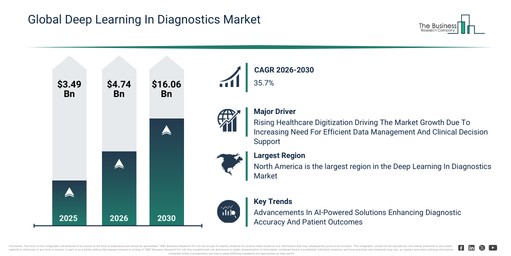
    The deep learning in diagnostics market has experienced substantial expansion in recent times. This market is projected to expand significantly, climbing from $3.49 billion in 2025 to $4.74 billion in 2026, demonstrating a compound annual growth rate (CAGR) of 35.9%. Factors contributing to its historical growth include the increasing digitalization of medical imaging, mounting pressures from diagnostic workloads, the broadening of radiology and pathology services, the expanding access to annotated medical datasets, and the greater incorporation of clinical decision support systems.

    The deep learning in diagnostics market is projected to experience rapid expansion in the coming years. This market is anticipated to reach $16.06 billion by 2030, exhibiting a compound annual growth rate (CAGR) of 35.7%. This anticipated growth is driven by several factors, including a greater need for early disease detection, escalating investment in AI-powered diagnostics, the broadening of cloud-based diagnostic platforms, increasing regulatory endorsements for AI tools, and a heightened emphasis on automating healthcare workflows. Key trends for the forecast period encompass a wider uptake of AI-based medical imaging analysis, an expanding application of deep learning in identifying diseases, the broadening of automated diagnostic workflows, a growing integration of multi-modal clinical data, and an intensified focus on precision in diagnostics.

    Download the Free Sample Report to Explore Key Market Insights:

    https://www.thebusinessresearchcompany.com/sample.aspx?id=28190&type=smp

    Which Economic Or Industry Drivers Are Impacting The Deep Learning In Diagnostics Market?

    The expansion of healthcare digitization is projected to boost the growth of the deep learning in diagnostics market. Healthcare digitization involves the integration of digital technologies within healthcare systems to enhance efficiency, accessibility, data management, and overall patient care. This increase in healthcare digitization is fueled by its capacity to effectively manage and securely exchange the rapidly growing volumes of patient data, supporting improved care coordination and informed decision-making. The digital transformation of healthcare generates vast amounts of data from medical imaging, electronic health records, and connected devices, thus creating a demand for deep learning in diagnostics, which can efficiently analyze this data and provide faster, more accurate insights than traditional methods. For instance, in April 2023, FAIR Health Inc., a US-based non-profit organization, reported a 7.3% national increase in telehealth usage, climbing from 5.5% of medical claim lines in December 2022 to 5.9% in January 2023. Therefore, the ongoing healthcare digitization is a significant driver for the growth of the deep learning in diagnostics market.

    How Is The Deep Learning In Diagnostics Market Structured Across Different Segments?

    The deep learning in diagnostics market covered in this report is segmented –

    1) By Component: Software, Hardware, Services

    2) By Deployment Mode: Cloud-Based, On-Premises

    3) By Application: Medical Imaging, Pathology, Genomics, Drug Discovery, Other Applications

    4) By End-User: Hospitals, Diagnostic Laboratories, Research Institutes, Other End-Users

    Subsegments:

    1) By Software: Diagnostic Imaging Software, Pathology Analysis Software, Genomic Data Analysis Software

    2) By Hardware: Storage Devices, Networking Devices, Diagnostic Imaging Equipment

    3) By Services: Deployment And Integration Services, Training And Education Services, Consulting Services

    What Key Trends Are Influencing The Development Of The Deep Learning In Diagnostics Market?

    Leading companies in the deep learning in diagnostics market are prioritizing the development of sophisticated solutions, including AI-driven deep learning solutions, to elevate diagnostic precision, speed, and individualized patient care. An AI-driven deep learning solution is an advanced system that utilizes artificial intelligence and layered neural networks to automatically examine complex medical data, identify patterns, and generate highly accurate diagnostic insights with limited human involvement. For example, in May 2025, GE Healthcare Technologies Inc., a US-based medical technology and diagnostics company, introduced CleaRecon DL, specifically designed to enhance image reconstruction and diagnostic accuracy. This solution improves cone-beam CT (CBCT) images by efficiently removing streak artifacts, yielding substantially clearer and more precise imaging for interventional procedures. The technology boosts clinicians’ confidence in image interpretation and enhances precision during interventions, with clinical studies demonstrating 98% clearer images and 94% improved confidence. Ultimately, this supports better patient outcomes by streamlining workflows and enabling more effective, image-guided treatments.

    Which Major Players Dominate The Deep Learning In Diagnostics Market?

    Major companies operating in the deep learning in diagnostics market are International Business Machines Corporation, Siemens Healthineers AG, Koninklijke Philips N.V., GE HealthCare Technologies Inc., Tempus AI Inc., Qure.ai Technologies Pvt. Ltd., Freenome Holdings Inc., PathAI Inc., Aidoc Medical Ltd., Viz.ai Inc., SOPHiA GENETICS SA, Lunit Inc., Paige.AI Inc., Beijing Infervision Technology Co. Ltd., Indica Labs Inc., CureMetrix Inc., Deep Bio Inc., Enlitic Inc., ScreenPoint Medical B.V., VUNO Inc., Mindpeak GmbH, Arterys Inc.

    Read the full deep learning in diagnostics market report here:

    https://www.thebusinessresearchcompany.com/report/deep-learning-in-diagnostics-global-market-report

    What Are The Top-Performing Regions Within The Deep Learning In Diagnostics Market?

    North America was the largest region in the deep learning in diagnostics market in 2025. Asia-Pacific is expected to be the fastest-growing region in the forecast period. The regions covered in the deep learning in diagnostics market report are Asia-Pacific, South East Asia, Western Europe, Eastern Europe, North America, South America, Middle East, Africa.

    Request A Tailored Deep Learning In Diagnostics Market Research Report For Competitive Advantage:

    https://www.thebusinessresearchcompany.com/customise?id=28190&type=smp

    Browse Through More Reports Similar to the Global Deep Learning In Diagnostics Market 2026, By The Business Research Company

    Wearable Computing Global Market Report

    https://www.thebusinessresearchcompany.com/report/wearable-computing-global-market-report

    Smart Wearables Global Market Report

    https://www.thebusinessresearchcompany.com/report/smart-wearables-global-market-report

    Wearable Medical Devices Market

    https://www.thebusinessresearchcompany.com/report/wearable-medical-devices-market

    Get in touch with us:

    The Business Research Company: https://www.thebusinessresearchcompany.com/

    Americas +1 310-496-7795

    Asia +44 7882 955267 & +91 8897263534

    Europe +44 7882 955267

    Email us at info@tbrc.info

    Follow us on:

    LinkedIn: https://in.linkedin.com/company/the-business-research-company

    YouTube: https://www.youtube.com/channel/UC24_fI0rV8cR5DxlCpgmyFQ

    Global Market Model: https://www.thebusinessresearchcompany.com/global-market-model
  • Decentralized Trial Wearable Kit Market Revenue Expected to Reach $6.82 Billion by 2030 with 19% CAGR

    Decentralized Trial Wearable Kit Market Revenue Expected to Reach $6.82 Billion by 2030 with 19% CAGR

    The Business Research Company’s 2026 market reports include new capabilities such as market attractiveness scoring and analysis, total addressable market analysis, company scoring matrix, interactive excel data dashboard, improved supply chain analysis, upcoming startups in the market, and overview of key products, aimed at improving the depth, usability, and strategic value of the insights delivered.

    What Is The Market Size Of The Decentralized Trial Wearable Kit Market In 2026 And What Value Is Projected For 2030?

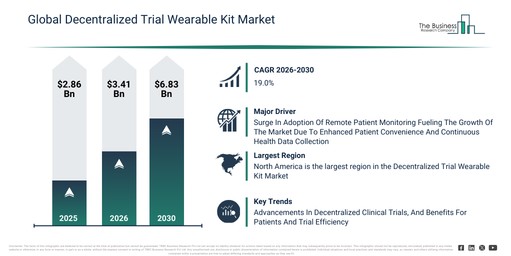
    The decentralized trial wearable kit market size has experienced significant expansion in recent times. Projections indicate it will expand from $2.86 billion in 2025 to $3.41 billion in 2026, exhibiting a compound annual growth rate (CAGR) of 19.3%. This historical rise is largely due to factors such as a greater move towards decentralized clinical trials, increased adoption of mobile health applications in research, the broadening of remote data collection techniques, escalating investments in digital trial infrastructure, and enhanced interoperability of wearable devices.

    The decentralized trial wearable kit market is projected for substantial expansion in the coming years, with its size expected to reach $6.83 billion by 2030, exhibiting a compound annual growth rate (CAGR) of 19.0%. This anticipated growth is driven by several factors, including a heightened demand for comprehensive decentralized trial solutions, the broadening scope of chronic disease monitoring trials, a greater emphasis on strategies for patient retention, the expanding utilization of cloud-based platforms for trial data, and increased regulatory approval for remote data collection. Key developments expected during this period involve the wider deployment of integrated wearable trial kits, a surge in the adoption of health monitoring devices linked to applications, an increasing need for complete solutions for trial participation, the proliferation of home-based clinical trial capabilities, and a strengthened focus on ensuring data continuity and patient adherence.

    Download the Free Sample Report to Explore Key Market Insights:

    https://www.thebusinessresearchcompany.com/sample.aspx?id=29013&type=smp

    What Major Drivers Are Influencing Demand In The Decentralized Trial Wearable Kit Market?

    The expanding integration of remote patient monitoring is set to fuel the growth of the decentralized trial wearable kit market moving forward. Remote patient monitoring involves utilizing digital technologies and connected devices to continually gather and transmit patients’ health data, such as vital signs or chronic condition metrics, to healthcare providers, facilitating prompt medical interventions, enhanced care management, and a reduced necessity for in-person consultations. The increasing uptake of remote patient monitoring stems from improved patient convenience, allowing consistent health tracking from home without frequent hospital visits. The decentralized trial wearable kit enables this by offering wearable devices and digital instruments that continuously monitor patients’ vital signs, physiological data, and activity levels, thereby providing healthcare providers with real-time insights, supporting timely interventions, and boosting overall trial efficiency without requiring frequent on-site visits. For instance, in October 2024, a report from the World Health Organization (WHO), a Switzerland-based intergovernmental organization, highlighted that teleradiology is the most widely adopted service, present in 84% of countries. Furthermore, telemedicine and remote patient monitoring are gaining significant traction, offered by 77% of countries, while telepsychiatry services are available in 51%. Consequently, the escalating adoption of remote patient monitoring is propelling the expansion of the decentralized trial wearable kit market.

    What Are The Key Segments Of The Decentralized Trial Wearable Kit Market?

    The decentralized trial wearable kit market covered in this report is segmented –

    1) By Product Type: Smartwatches, Fitness Bands, Biosensors, Smart Clothing, Other Products

    2) By Distribution Channel: Online, Offline

    3) By Application: Clinical Trials, Remote Patient Monitoring, Chronic Disease Management, Other Applications

    4) By End-User: Pharmaceutical Companies, Contract Research Organizations, Hospitals And Clinics, Other End Users

    Subsegments:

    1) By Smartwatches: Heart Rate Monitoring, Sleep Tracking, Activity Tracking, Electrocardiogram Monitoring, Blood Pressure Monitoring

    2) By Fitness Bands: Step Counting, Calorie Tracking, Distance Tracking, Sleep Monitoring, Heart Rate Monitoring

    3) By Biosensors: Glucose Monitoring, Oxygen Saturation Monitoring, Electrocardiogram Monitoring, Temperature Monitoring, Blood Pressure Monitoring

    4) By Smart Clothing: Posture Monitoring, Muscle Activity Monitoring, Heart Rate Monitoring, Respiration Monitoring, Temperature Monitoring

    5) By Other Products: Portable Electrocardiogram Devices, Glucometers, Pulse Oximeters, Smart Inhalers, Mobile Health Kits

    How Are Trends Impacting The Decentralized Trial Wearable Kit Market?

    Leading companies within the decentralized trial wearable kit market are concentrating on developing advanced technologies, such as wireless data transmission, to boost data precision and streamline remote clinical trial operations. Wireless data transmission involves the transfer of digital information between devices without physical cables, employing technologies like Wi-Fi, Bluetooth, or cellular networks to enable real-time communication, remote monitoring, and seamless connectivity across various devices and locations. For example, in June 2025, Empatica Inc., a US-based digital health company, introduced the EmbraceMini, which is the world’s smallest actigraphy wearable designed for clinical trials. This device provides compact, comfortable, and continuous monitoring of patients’ physiological data, simultaneously improving data collection in decentralized and hybrid studies and enhancing patient convenience and trial efficiency. This particular launch seeks to advance decentralized clinical trials by offering precise, continuous patient surveillance, reducing the necessity for frequent site visits, and facilitating more efficient, data-driven decision-making throughout the study period.

    Who Are The Leading Companies Operating In The Decentralized Trial Wearable Kit Market?

    Major companies operating in the decentralized trial wearable kit market are Dassault Systèmes SE, IQVIA Holdings Inc, THREAD Research Inc., ARCHIMED SAS, Google LLC, Alivecor Inc., ICON Public Limited Company, Oracle Corporation, Withings SAS, Clario Inc., Veeva Systems Inc., Koneksa Health Inc., Science 37 Holdings Inc., Medable Inc., Medidata Solutions Inc., Obvio Health USA Inc., ActiGraph LLC., Garmin Ltd., Signant Health Private Limited, Koninklijke Philips N.V.

    Read the full decentralized trial wearable kit market report here:

    https://www.thebusinessresearchcompany.com/report/decentralized-trial-wearable-kit-global-market-report

    Which Region Shows The Strongest Potential For Future Growth In The Decentralized Trial Wearable Kit Market?

    North America was the largest region in the decentralized trial wearable Kit market in 2025. Asia-Pacific is expected to be the fastest-growing region in the forecast period. The regions covered in the decentralized trial wearable kit market report are Asia-Pacific, South East Asia, Western Europe, Eastern Europe, North America, South America, Middle East, Africa.

    Request A Tailored Decentralized Trial Wearable Kit Market Research Report For Competitive Advantage:

    https://www.thebusinessresearchcompany.com/customise?id=29013&type=smp

    Browse Through More Reports Similar to the Global Decentralized Trial Wearable Kit Market 2026, By The Business Research Company

    Smart Wearables Global Market Report

    https://www.thebusinessresearchcompany.com/report/smart-wearables-global-market-report

    Wearable Computing Global Market Report

    https://www.thebusinessresearchcompany.com/report/wearable-computing-global-market-report

    Wearable Medical Devices Market

    https://www.thebusinessresearchcompany.com/report/wearable-medical-devices-market

    Get in touch with us:

    The Business Research Company: https://www.thebusinessresearchcompany.com/

    Americas +1 310-496-7795

    Asia +44 7882 955267 & +91 8897263534

    Europe +44 7882 955267

    Email us at info@tbrc.info

    Follow us on:

    LinkedIn: https://in.linkedin.com/company/the-business-research-company

    YouTube: https://www.youtube.com/channel/UC24_fI0rV8cR5DxlCpgmyFQ

    Global Market Model: https://www.thebusinessresearchcompany.com/global-market-model
  • Global Decentralized Trial Wearable Market Set for Strong Expansion Reaching $6.18 Billion by 2030 at 20.5% CAGR

    Global Decentralized Trial Wearable Market Set for Strong Expansion Reaching $6.18 Billion by 2030 at 20.5% CAGR

    The Business Research Company’s 2026 market reports include new capabilities such as market attractiveness scoring and analysis, total addressable market analysis, company scoring matrix, interactive excel data dashboard, improved supply chain analysis, upcoming startups in the market, and overview of key products, aimed at improving the depth, usability, and strategic value of the insights delivered.

    What Will Be The Estimated Market Valuation Of The Decentralized Trial Wearable Market By The End Of 2030?

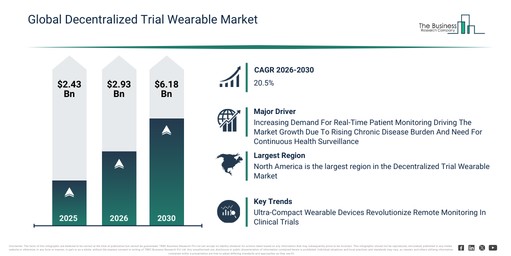
    The decentralized trial wearable market size has experienced significant expansion in recent years. It is projected to increase from $2.43 billion in 2025 to $2.93 billion in 2026, exhibiting a compound annual growth rate (CAGR) of 20.8%. The growth observed in the past period is attributable to the increasing adoption of decentralized clinical trial models, the rising use of wearable health devices in research, growing demand for remote patient engagement, advancements in sensor miniaturization, and the expansion of digital clinical trial infrastructure.

    The decentralized trial wearable market is projected to experience rapid expansion over the coming years. Its valuation is anticipated to reach $6.18 billion by 2030, demonstrating a compound annual growth rate (CAGR) of 20.5%. This projected growth is driven by several factors, including heightened investments in virtual trial platforms, a surge in demand for generating real-world evidence, the expanding embrace of hybrid clinical trials, a greater focus on remote monitoring that complies with regulations, and the increasing application of AI-driven trial analytics. Key trends anticipated during this period involve the growing acceptance of continuous remote health monitoring wearables, an increase in the integration of multi-parameter biosensing devices, the expanding utilization of real-time data transmission within clinical trials, the broader implementation of patient-centric trial designs, and a heightened commitment to ensuring data accuracy and compliance.

    Download the Free Sample Report to Explore Key Market Insights:

    https://www.thebusinessresearchcompany.com/sample.aspx?id=29012&type=smp

    Which Market Drivers Are Supporting The Expansion Of The Decentralized Trial Wearable Market?

    The increasing need for real-time patient monitoring is anticipated to fuel the expansion of the decentralized trial wearable market in the foreseeable future. Real-time patient monitoring involves the ongoing gathering and transfer of health data through interconnected medical devices that automatically transmit physiological measurements to healthcare professionals for immediate evaluation and intervention. The need for real-time patient monitoring is escalating due to the growing incidence of chronic conditions such as diabetes, cardiovascular disorders, and respiratory illnesses, which necessitate constant tracking of patients’ health for prompt action and improved disease management. Decentralized trial wearable kits facilitate real-time patient monitoring by continuously collecting and forwarding health data from individuals in their natural settings to central repositories, thereby allowing researchers and healthcare providers to monitor patient health remotely, identify irregularities early, and make prompt, evidence-based clinical choices. For example, in August 2023, Vivalink, a US-based healthcare technology company, reported survey findings indicating that 84% of existing remote patient monitoring (RPM) users intend to increase their usage in 2024, 45% of healthcare providers are deploying RPM for critical monitoring within hospital-at-home programs, and 77% foresee RPM-based care superseding conventional inpatient hospital care within the next five years. Consequently, the rising demand for real-time patient monitoring is a key factor propelling the growth of the decentralized trial wearable market.

    Which Segment Classifications Shape The Decentralized Trial Wearable Market?

    The decentralized trial wearable market covered in this report is segmented –

    1) By Product Type: Smartwatches, Fitness Trackers, Biosensors, Smart Clothing, Other Product Types

    2) By Distribution Channel: Online, Offline

    3) By Application: Remote Patient Monitoring, Clinical Trials, Disease Management, Other Applications

    4) By End-User: Pharmaceutical Companies, Contract Research Organizations, Healthcare Providers, Other End-Users

    Subsegments:

    1) By Smartwatches: Health Monitoring Smartwatches, Electrocardiogram (ECG) Smartwatches, Blood Oxygen Tracking Smartwatches, Multi-Sensor Smartwatches

    2) By Fitness Trackers: Heart Rate Monitoring Fitness Trackers, Activity Tracking Fitness Trackers, Sleep Tracking Fitness Trackers, Multi-Metric Fitness Trackers

    3) By Biosensors: Glucose Monitoring Biosensors, Electrocardiogram (ECG) Biosensors, Temperature Sensing Biosensors, Multi-Parameter Biosensors

    4) By Smart Clothing: Sensor-Embedded Smart Shirts, Smart Pants With Biometric Sensors, Compression Wear Smart Clothing, Smart Athletic Wear

    5) By Other Product Types: Hybrid Wearable Devices, Remote Patient Monitoring Wearables, Medical Grade Wearables, Innovative Material Wearables

    What Industry Trends Are Redefining The Decentralized Trial Wearable Market?

    Leading companies in the decentralized trial wearable market are concentrating on developing innovative products like ultra-compact health monitoring devices to improve patient comfort and enhance remote data collection. These ultra-compact health monitoring devices are miniature, wearable gadgets designed for continuous tracking of physiological and behavioral data with minimal intrusion, thereby boosting patient compliance, enabling remote supervision, and providing high-quality data for clinical trials. For instance, in June 2025, Empatica Inc., a US-based medical technology firm, introduced EmbraceMini, which is the world’s smallest wrist-worn actigraphy device tailored for clinical research. Measuring just 12mm thick and 14mm wide, a size comparable to a USB flash drive or AA battery, it is engineered for exceptionally comfortable, non-invasive wear, facilitating continuous monitoring of over 200 digital measures, including activity, sleep, gait, and light exposure. The device wirelessly transmits data to Empatica’s FDA-cleared Health Monitoring Platform, supporting remote data acquisition, digital biomarker analysis, and integration with existing clinical trial systems, all while prioritizing participant experience and adherence. It is specifically built for studies on sleep disorders, movement disorders, obesity, depression, and pain, among other conditions, offering high-resolution insights into participants’ physiological and behavioral patterns. Its long battery life allows at least seven days of uninterrupted monitoring, reducing the burden on participants and enhancing compliance. Additionally, the modular design enables it to be worn on the wrist, ankle, leg, or waist, and multiple units can be utilized simultaneously for richer datasets.

    Which Companies Are Expanding Their Footprint In The Decentralized Trial Wearable Market?

    Major companies operating in the decentralized trial wearable market are Oracle Corporation, IQVIA Holdings Inc., LabCorp Drug Development Inc., ICON Public Limited Company, Garmin Ltd., Clario Inc., Medidata Solutions Inc., BioTelemetry Inc., Signant Health Holding Corp, Withings France SA, Medable Inc., Science 37 Holdings Inc., THREAD Research Inc., Huma Therapeutics Ltd., Empatica S.r.l., Clinical Ink Inc., VivaLNK Inc., Sempulse Ltd., Activinsights Ltd., Mahalo Health Inc.

    Read the full decentralized trial wearable market report here:

    https://www.thebusinessresearchcompany.com/report/decentralized-trial-wearable-global-market-report

    How Is The Decentralized Trial Wearable Market Distributed Across Key Geographic Regions?

    North America was the largest region in the decentralized trial wearable market in 2025. Asia-Pacific is expected to be the fastest-growing region in the forecast period. The regions covered in the decentralized trial wearable market report are Asia-Pacific, South East Asia, Western Europe, Eastern Europe, North America, South America, Middle East, Africa.

    Request A Tailored Decentralized Trial Wearable Market Research Report For Competitive Advantage:

    https://www.thebusinessresearchcompany.com/customise?id=29012&type=smp

    Browse Through More Reports Similar to the Global Decentralized Trial Wearable Market 2026, By The Business Research Company

    Virtual Clinical Trials Global Market Report

    https://www.thebusinessresearchcompany.com/report/virtual-clinical-trials-global-market-report

    Clinical Trial Management System Global Market Report

    https://www.thebusinessresearchcompany.com/report/clinical-trial-management-system-global-market-report

    Clinical Trial Supply And Logistics Global Market Report

    https://www.thebusinessresearchcompany.com/report/clinical-trial-supply-and-logistics-global-market-report

    Get in touch with us:

    The Business Research Company: https://www.thebusinessresearchcompany.com/

    Americas +1 310-496-7795

    Asia +44 7882 955267 & +91 8897263534

    Europe +44 7882 955267

    Email us at info@tbrc.info

    Follow us on:

    LinkedIn: https://in.linkedin.com/company/the-business-research-company

    YouTube: https://www.youtube.com/channel/UC24_fI0rV8cR5DxlCpgmyFQ

    Global Market Model: https://www.thebusinessresearchcompany.com/global-market-model
  • Decentralized Clinical Trials Market Growth Expected to Reach $19.55 Billion by 2030 with 17.3% CAGR

    Decentralized Clinical Trials Market Growth Expected to Reach $19.55 Billion by 2030 with 17.3% CAGR

    The Business Research Company’s 2026 market reports include new capabilities such as market attractiveness scoring and analysis, total addressable market analysis, company scoring matrix, interactive excel data dashboard, improved supply chain analysis, upcoming startups in the market, and overview of key products, aimed at improving the depth, usability, and strategic value of the insights delivered.

    What Market Size Growth Is Projected For The Decentralized Clinical Trials Market During The Forecast Period 2026–2030?

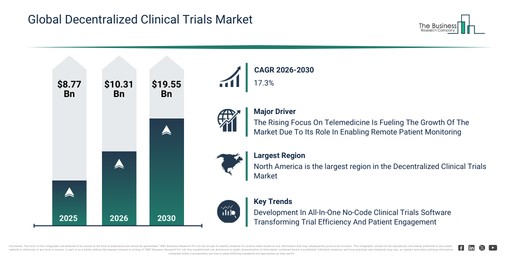
    The decentralized clinical trials market has seen rapid expansion in recent years. It is projected to increase from $8.77 billion in 2025 to $10.31 billion in 2026, at a compound annual growth rate (CAGR) of 17.7%. Historically, this growth can be ascribed to factors such as the increasing complexity of clinical trials, a heightened need for patient recruitment efficiency, the proliferation of digital health technologies, the expanding use of electronic data capture systems, and a growing regulatory acceptance of decentralized models.

    The market size for decentralized clinical trials is anticipated to experience substantial expansion over the upcoming years. This market is projected to reach $19.55 billion by 2030, expanding at a compound annual growth rate (CAGR) of 17.3%. The expansion during the forecast period is primarily driven by the increasing integration of hybrid trial designs, a growing need for quicker drug development timelines, the broadening scope of global virtual trials, the rising application of AI-driven trial optimization, and an intensified focus on diverse patient involvement. Significant trends expected in this period involve the wider uptake of remote patient monitoring tools, the increased utilization of virtual trial platforms, the expansion of data collection through wearables, the growing implementation of real-time trial analytics, and an elevated emphasis on patient-centric trial design.

    Download the Free Sample Report to Explore Key Market Insights:

    https://www.thebusinessresearchcompany.com/sample.aspx?id=28189&type=smp

    What Underlying Factors Are Accelerating The Growth Of The Decentralized Clinical Trials Market?

    An increasing emphasis on telemedicine is anticipated to drive expansion within the decentralized clinical trials market in the future. Telemedicine involves providing health services remotely through digital communication technologies, enabling medical consultations and patient monitoring without requiring physical presence at healthcare facilities. This growing focus on telemedicine largely stems from the demand for accessible healthcare delivery, particularly in response to global health challenges and social distancing requirements. Decentralized clinical trials leverage telemedicine to remotely engage and oversee patients, thereby minimizing in-person visits while simultaneously enabling real-time data collection, enhanced access, and continuous supervision. For instance, in September 2024, according to the Australian Bureau of Statistics (ABS), the national statistical agency of Australia, in 2023–24, 83.5% of males reported using telehealth services, an increase from 78.6% in 2022–23. Consequently, the rising focus on telemedicine is propelling the growth of the decentralized clinical trials market.

    What Market Segments Are Evaluated Within The Decentralized Clinical Trials Market?

    The decentralized clinical trials market covered in this report is segmented –

    1) By Type: Interventional, Observational, Expanded Access

    2) By Technology Used: Wearable Devices, Mobile Health Applications, Telemedicine Platforms, Electronic Data Capture Systems

    3) By Study Phase: Phase I, Phase II, Phase III, Phase IV

    4) By Therapeutic Area: Oncology, Cardiology, Neurology, Infectious Diseases

    5) By End-User: Pharmaceutical Companies, Biotechnology Firms, Contract Research Organizations, Regulatory Authorities, Academic And Research Institutions

    Subsegments:

    1) By Interventional: Randomized Controlled Trials (RCTs), Non-Randomized Trials, Adaptive Clinical Trials, Pragmatic Clinical Trials

    2) By Observational: Cohort Studies, Case-Control Studies, Cross-Sectional Studies, Prospective Studies, Retrospective Studies, Longitudinal Studies

    3) By Expanded Access: Treatment Investigational New Drug (IND) Applications, Intermediate-Size Patient Population Investigational New Drug (IND) Applications, Single-Patient Investigational New Drug (IND) Applications, Emergency Use Investigational New Drug (IND) Applications

    What Key Developments And Trends Are Impacting The Decentralized Clinical Trials Market?

    Leading companies within the decentralized clinical trials market are concentrating on creating sophisticated tools, such as integrated, no-code clinical trials software. This aims to streamline trial setup and administration, boosting overall efficiency and patient involvement. Such all-in-one, no-code software enables researchers to conceptualize, manage, and execute trials without requiring programming knowledge, while seamlessly consolidating patient acquisition, data collection, oversight, and analysis onto a singular, easy-to-use platform. For example, in August 2024, Medable, a clinical technology company based in the US, introduced Medable Studio. This is an all-in-one, no-code software solution engineered to simplify and speed up the configuration, translation, validation, and deployment of electronic Clinical Outcome Assessments (eCOA), eConsent, Televisit, and sensors Plus within clinical trials. It allows biopharmaceutical firms to craft protocol-specific study designs in hours rather than months, affording users increased command, clarity, and pace. Furthermore, it provides adaptable self-service, full-service, or combined approaches, significantly cutting down study initiation periods and expenditures. The platform’s objective is to transform trial execution by making the study construction process quicker, more effective, and less reliant on specialized external assistance.

    Who Are The Top Market Participants Influencing The Decentralized Clinical Trials Market?

    Major companies operating in the decentralized clinical trials market are Walgreens Boots Alliance Inc., Pfizer Inc., Oracle Corporation, Thermo Fisher Scientific Inc., IQVIA Holdings Inc., Labcorp Holdings Inc., ICON Public Limited Company, Dassault Systèmes SE, LEO Pharma A/S, Verily Life Sciences LLC, ProPharma, Signant Health Holding Corp., PCM Trials, Huma Therapeutics Limited, Medable Inc., Science 37 Inc., Obvio Health, EmVenio Research Inc., Grove AI Inc., Phesi Inc.

    Read the full decentralized clinical trials market report here:

    https://www.thebusinessresearchcompany.com/report/decentralized-clinical-trials-global-market-report

    Which Region Is Projected To Dominate The Decentralized Clinical Trials Market During The Forecast Period?

    North America was the largest region in the decentralized clinical trials market in 2025. Asia-Pacific is expected to be the fastest-growing region in the forecast period. The regions covered in the decentralized clinical trials market report are Asia-Pacific, South East Asia, Western Europe, Eastern Europe, North America, South America, Middle East, Africa.

    Request A Tailored Decentralized Clinical Trials Market Research Report For Competitive Advantage:

    https://www.thebusinessresearchcompany.com/customise?id=28189&type=smp

    Browse Through More Reports Similar to the Global Decentralized Clinical Trials Market 2026, By The Business Research Company

    Healthcare Data Integration Global Market Report

    https://www.thebusinessresearchcompany.com/report/healthcare-data-integration-global-market-report

    Personal Health Record Software Global Market Report

    https://www.thebusinessresearchcompany.com/report/personal-health-record-software-global-market-report

    Genomics Personalized Health Global Market Report

    https://www.thebusinessresearchcompany.com/report/genomics-personalized-health-global-market-report

    Get in touch with us:

    The Business Research Company: https://www.thebusinessresearchcompany.com/

    Americas +1 310-496-7795

    Asia +44 7882 955267 & +91 8897263534

    Europe +44 7882 955267

    Email us at info@tbrc.info

    Follow us on:

    LinkedIn: https://in.linkedin.com/company/the-business-research-company

    YouTube: https://www.youtube.com/channel/UC24_fI0rV8cR5DxlCpgmyFQ

    Global Market Model: https://www.thebusinessresearchcompany.com/global-market-model