Category: Healthcare Services

  • Automated Sample Preparation Market Outlook 2026–2035 Driven by Key Growth Factors and Industry Projections

    Automated Sample Preparation Market Outlook 2026–2035 Driven by Key Growth Factors and Industry Projections

    The Business Research Company’s 2026 market reports include new capabilities such as market attractiveness scoring and analysis, total addressable market analysis, company scoring matrix, interactive excel data dashboard, improved supply chain analysis, upcoming startups in the market, and overview of key products, aimed at improving the depth, usability, and strategic value of the insights delivered.

    What Is The Estimated Market Size Of The Automated Sample Preparation Market During 2026–2030?

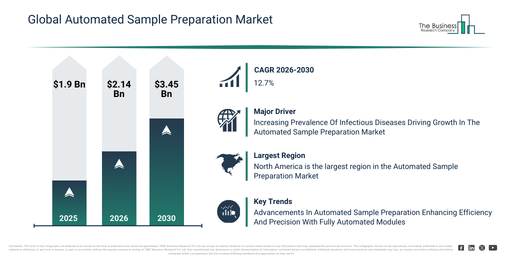
    The automated sample preparation market has seen rapid expansion in recent years. It is anticipated to grow from $1.9 billion in 2025 to $2.14 billion in 2026, at a compound annual growth rate (CAGR) of 13.0%. This market’s historical growth is attributable to factors such as the growth of laboratory automation initiatives, an increasing volume of clinical and research samples, a rising focus on reproducibility in testing, the expansion of pharmaceutical R&D activities, and the availability of advanced laboratory instruments.

    The automated sample preparation market size is projected to experience substantial growth in the coming years. It is anticipated to reach a valuation of $3.45 billion by 2030, demonstrating a compound annual growth rate (CAGR) of 12.7%. This expansion during the forecast period can be attributed to several factors, including the increasing implementation of fully automated laboratories, a rising necessity for precision diagnostics, the broadening of personalized medicine research, greater investments in smart laboratory infrastructure, and the growing incorporation of AI-driven analytics into sample preparation. Key trends during this period involve the wider adoption of robotic liquid handling systems, a heightened demand for high-throughput sample processing, the increasing integration of automated workstations in laboratories, the expansion of sample handling methods focused on error reduction, and enhanced standardization of laboratory workflows.

    Download the Free Sample Report to Explore Key Market Insights:

    https://www.thebusinessresearchcompany.com/sample.aspx?id=19325&type=smp

    Which Economic Or Industry Drivers Are Impacting The Automated Sample Preparation Market?

    The automated sample preparation market is anticipated to expand due to the rising occurrence of infectious diseases. These diseases are defined as ailments resulting from pathogens like bacteria, viruses, fungi, or parasites, capable of transmission between individuals or via tainted sources. The escalation in infectious disease cases stems from factors including poor sanitation, limited healthcare availability, climate shifts, and the emergence of drug-resistant pathogens. Automated sample preparation boosts the precision and effectiveness of diagnosing infectious diseases by streamlining and standardizing biological sample processing, which minimizes human errors and guarantees uniform outcomes in extensive testing. For example, in March 2024, the Centers for Disease Control and Prevention (CDC), a US public health agency, reported an increase in tuberculosis cases from 8,320 in 2022 to 9,615 in 2023, marking an increment of 1,295 cases. Furthermore, the incidence rate per 100,000 individuals climbed from 2.5 in 2022 to 2.9 in 2023. Consequently, the expanding occurrence of infectious diseases is fueling the growth within the automated sample preparation market.

    How Are The Various Segments Of The Automated Sample Preparation Market Categorized?

    The automated sample preparation market covered in this report is segmented –

    1) By Product Type: Kits And Consumables, Instruments

    2) By Application: Research And Development, Diagnostics

    3) By End User: Biotechnology And Pharmaceutical Companies, Clinical And Diagnostic Laboratories, Academic And Research Institutions

    Subsegments:

    1) By Kits And Consumables: DNA/RNA Extraction Kits, Protein Purification Kits, Sample Collection Consumables, Reagents And Buffers, Assay Kits

    2) By Instruments: Automated Liquid Handling Systems, Magnetic Bead Separation Systems, Centrifuges, Robotically Controlled Pipetting Systems, Workstations For Sample Preparation

    What Key Trends Are Influencing The Development Of The Automated Sample Preparation Market?

    Leading companies in the automated sample preparation market are prioritizing the creation of sophisticated solutions, such as fully automated sample preparation modules, to boost efficiency, minimize manual errors, and improve consistency in laboratory procedures. These fully automated sample preparation modules are advanced systems engineered to manage every stage of sample processing with minimal human involvement. For instance, in July 2024, Shimadzu Corporation, a Japan-based manufacturer of precision instruments and medical equipment, unveiled the MUP-3100, a fully automated sample preparation module designed for glycan analysis that streamlines the pretreatment of antibody glycans. Utilizing a 6-axis robot, it automates duties such as reagent dispensing and sample processing, consequently reducing labor, mitigating procedural errors, and enhancing safety. The MUP-3100 can process up to 24 samples in six hours, significantly accelerating workflows compared to traditional methods, which can extend beyond two days. This advanced system offers particular advantages for pharmaceutical companies and contract manufacturing organizations (CMOs) engaged with biosimilars and antibody drugs.

    Which Major Firms Influence Developments In The Automated Sample Preparation Market?

    Major companies operating in the automated sample preparation market are F. Hoffmann-La Roche Ltd., Thermo Fisher Scientific Inc., Danaher Corporation, Agilent Technologies, Hitachi High-Technologies Corp, Sartorius AG, Mettler-Toledo International Inc., Shimadzu Corporation, PerkinElmer, Waters Corporation, Bio-Rad Laboratories, Bruker Corporation, QIAGEN NV, Eppendorf, Tecan Group, Hamilton Company, Malvern Panalytical, Promega Corporation, Biotage AB, Gilson Inc., Aurora Biomed

    Read the full automated sample preparation market report here:

    https://www.thebusinessresearchcompany.com/report/automated-sample-preparation-global-market-report

    What Are The Top-Performing Regions Within The Automated Sample Preparation Market?

    North America was the largest region in the automated sample preparation market in 2025. The regions covered in the automated sample preparation market report are Asia-Pacific, South East Asia, Western Europe, Eastern Europe, North America, South America, Middle East, Africa.

    Request A Tailored Automated Sample Preparation Market Research Report For Competitive Advantage:

    https://www.thebusinessresearchcompany.com/customise?id=19325&type=smp

    Browse Through More Reports Similar to the Global Automated Sample Preparation Market 2026, By The Business Research Company

    Automated Breach And Attack Simulation Global Market Report

    https://www.thebusinessresearchcompany.com/report/automated-breach-and-attack-simulation-global-market-report

    Automated Test Equipment Global Market Report

    https://www.thebusinessresearchcompany.com/report/automated-test-equipment-global-market-report

    Automated Storage And Retrieval System Global Market Report

    https://www.thebusinessresearchcompany.com/report/automated-storage-and-retrieval-system-global-market-report

    Get in touch with us:

    The Business Research Company: https://www.thebusinessresearchcompany.com/

    Americas +1 310-496-7795

    Asia +44 7882 955267 & +91 8897263534

    Europe +44 7882 955267

    Email us at info@tbrc.info

    Follow us on:

    LinkedIn: https://in.linkedin.com/company/the-business-research-company

    YouTube: https://www.youtube.com/channel/UC24_fI0rV8cR5DxlCpgmyFQ

    Global Market Model: https://www.thebusinessresearchcompany.com/global-market-model
  • Automated Next-Generation Sequencing (NGS) Library Preparation Market Developments and Growth Opportunities Across 2026–2030

    Automated Next-Generation Sequencing (NGS) Library Preparation Market Developments and Growth Opportunities Across 2026–2030

    The Business Research Company’s 2026 market reports include new capabilities such as market attractiveness scoring and analysis, total addressable market analysis, company scoring matrix, interactive excel data dashboard, improved supply chain analysis, upcoming startups in the market, and overview of key products, aimed at improving the depth, usability, and strategic value of the insights delivered.

    What Market Size Expansion Is Predicted For The Automated Next-Generation Sequencing (NGS) Library Preparation Market Between 2026 And 2030?

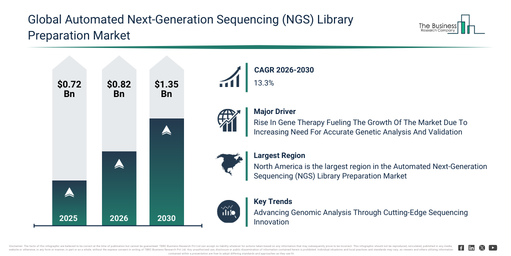
    The automated next-generation sequencing (ngs) library preparation market has experienced significant expansion recently. Its size is projected to increase from $0.72 billion in 2025 to $0.82 billion in 2026, demonstrating a compound annual growth rate (CAGR) of 13.9%. This historical growth can be linked to factors such as the expansion of genomic research activities, the increasing adoption of NGS in clinical research, the advancement of precision medicine initiatives, a rising demand for scalable sequencing workflows, and enhancements in sequencing chemistry technologies.

    The market for automated next-generation sequencing (ngs) library preparation is projected to experience rapid expansion in the coming years. Its valuation is anticipated to reach $1.35 billion by 2030, exhibiting a compound annual growth rate (CAGR) of 13.3%. This projected growth is driven by factors such as the expanding application of NGS in diagnostics, increased capital allocation towards automated lab infrastructure, the broadening scope of population genomics initiatives, a greater need for quick sequencing results, and the wider integration of single-cell sequencing procedures. Key developments expected during this period involve the wider uptake of fully automated library preparation systems, an escalating requirement for high-throughput sequencing methods, the increasing incorporation of robotics into sample handling, the development of more standardized and replicable ngs pipelines, and a heightened emphasis on minimizing errors and ensuring workflow uniformity.

    Download the Free Sample Report to Explore Key Market Insights:

    https://www.thebusinessresearchcompany.com/sample.aspx?id=27216&type=smp

    What Major Drivers Are Influencing Demand In The Automated Next-Generation Sequencing (NGS) Library Preparation Market?

    The future expansion of the automated next-generation sequencing (NGS) library preparation market is anticipated to be driven by the increasing application of gene therapy. This therapeutic approach involves modifying an individual’s genes to address or avert illnesses. Its growth stems from the growing incidence of genetic conditions demanding specific and enduring treatment options. Within gene therapy, automated NGS library preparation plays a crucial role in the precise analysis and validation of genetic alterations, achieved by preparing premium DNA or RNA samples for subsequent sequencing. An illustrative example is provided by the American Society of Gene and Cell Therapy, a US-based non-profit medical and scientific organization, which reported in April 2024 that the volume of phase III gene therapy clinical trials saw a 10% increase in the fourth quarter of 2023. This marked the initial quarterly rise observed since the third quarter of 2022. Consequently, the expansion of gene therapy is a significant catalyst for the growth of the automated next-generation sequencing (NGS) library preparation market.

    Which Market Segments Are Examined In The Automated Next-Generation Sequencing (NGS) Library Preparation Market Study?

    The automated next-generation sequencing (ngs) library preparation market covered in this report is segmented –

    1) By Type: Targeted Genome Sequencing, Whole Genome Sequencing, Whole Exome Sequencing, Other Sequencing Types

    2) By Workflow: Nucleic Acid Extraction, Fragmentation, Adapter Ligation, Purification And Quantification

    3) By Application: Drug And Biomarker Discovery, Disease Diagnostics, Other Applications

    4) By End-Use: Hospitals And Clinics, Academic And Research Institutions, Pharmaceutical And Biotechnology Companies, Other End-Users

    Subsegments:

    1) By Targeted Genome Sequencing: Amplicon-Based Targeted Sequencing, Hybridization Capture-Based Targeted Sequencing, Custom Targeted Panels, Pre-designed Gene Panels

    2) By Whole Genome Sequencing: Human Whole Genome Sequencing, Animal Whole Genome Sequencing, Plant Whole Genome Sequencing, Microbial Whole Genome Sequencing

    3) By Whole Exome Sequencing: Standard Exome Sequencing, Clinical Exome Sequencing, Custom Exome Panels, Ultra-Rapid Exome Sequencing

    4) By Other Sequencing Types: RNA Sequencing (RNA-Seq), Epigenome Sequencing, Metagenomic Sequencing, Single-Cell Sequencing

    How Are Trends Impacting The Automated Next-Generation Sequencing (NGS) Library Preparation Market?

    Leading companies within the automated next-generation sequencing (NGS) library preparation market are concentrating on innovating sophisticated technologies, including Xpandomer technology, to boost sequencing velocity, refine data precision, and expand scalability, which in turn simplifies processes and facilitates more effective and dependable genomic examination. Xpandomer technology represents a sophisticated method for deoxyribonucleic acid (DNA) or ribonucleic acid (RNA) sequencing, transforming a target nucleic acid molecule into an artificial, enlarged polymer known as an Xpandomer, measuring roughly 50 times the length of the initial deoxyribonucleic acid (DNA) or ribonucleic acid (RNA) strand. As an illustration, in February 2025, Roche AG, a Switzerland-based biotechnology company, unveiled its Sequencing by Expansion, an innovative sequencing platform specifically engineered to elevate genomic resolution across advanced diagnostics, disease investigation, and precision medicine uses. This pioneering automated next-generation sequencing (NGS) library preparation system optimizes intricate procedures, improves the caliber of data, and speeds up genomic analysis, thereby assisting sophisticated research and personalized medical approaches. The Sequencing by Expansion platform demonstrates significant adaptability, facilitating accurate examination of diverse genomic modifications in numerous conditions, such as cancer and rare genetic disorders, through improved resolution and precision, leading to more profound biological understandings.

    Who Are The Primary Competitors In The Automated Next-Generation Sequencing (NGS) Library Preparation Market?

    Major companies operating in the automated next-generation sequencing (ngs) library preparation market are F. Hoffmann-La Roche Ltd., Thermo Fisher Scientific Inc., Agilent Technologies India Private Limited, Illumina Inc., Beckman Coulter Inc., Bio-Rad Laboratories Inc., IDT Corporation, Tecan Group AG, Hamilton Company, Takara Bio Inc., 10x Genomics Inc., Oxford Nanopore Technologies plc, Twist Bioscience Corporation, New England Biolabs Inc., SPT Labtech Limited, Watchmaker Genomics Inc., Pillar Biosciences Inc., Aurora Biomed Inc., BGI Group, SEQWELL INC., Hudson Robotics Inc.

    Read the full automated next-generation sequencing (ngs) library preparation market report here:

    https://www.thebusinessresearchcompany.com/report/automated-next-generation-sequencing-ngs-library-preparation-global-market-report

    Which Region Shows The Strongest Potential For Future Growth In The Automated Next-Generation Sequencing (NGS) Library Preparation Market?

    North America was the largest region in the automated next-generation sequencing (NGS) library preparation market in 2025. Asia-Pacific is expected to be the fastest-growing region in the forecast period. The regions covered in the automated next-generation sequencing (ngs) library preparation market report are Asia-Pacific, South East Asia, Western Europe, Eastern Europe, North America, South America, Middle East, Africa.

    Request A Tailored Automated Next-Generation Sequencing (NGS) Library Preparation Market Research Report For Competitive Advantage:

    https://www.thebusinessresearchcompany.com/customise?id=27216&type=smp

    Browse Through More Reports Similar to the Global Automated Next-Generation Sequencing (NGS) Library Preparation Market 2026, By The Business Research Company

    Insurance Global Market Report

    https://www.thebusinessresearchcompany.com/report/insurance-global-market-report

    Rideshare Insurance Global Market Report

    https://www.thebusinessresearchcompany.com/report/rideshare-insurance-global-market-report

    Equine Healthcare Global Market Report

    https://www.thebusinessresearchcompany.com/report/equine-healthcare-global-market-report

    Get in touch with us:

    The Business Research Company: https://www.thebusinessresearchcompany.com/

    Americas +1 310-496-7795

    Asia +44 7882 955267 & +91 8897263534

    Europe +44 7882 955267

    Email us at info@tbrc.info

    Follow us on:

    LinkedIn: https://in.linkedin.com/company/the-business-research-company

    YouTube: https://www.youtube.com/channel/UC24_fI0rV8cR5DxlCpgmyFQ

    Global Market Model: https://www.thebusinessresearchcompany.com/global-market-model
  • Global Automated Microscopy Market Forecast 2026–2035 Presenting Long-Term Industry Expansion Insights

    Global Automated Microscopy Market Forecast 2026–2035 Presenting Long-Term Industry Expansion Insights

    The Business Research Company’s 2026 market reports include new capabilities such as market attractiveness scoring and analysis, total addressable market analysis, company scoring matrix, interactive excel data dashboard, improved supply chain analysis, upcoming startups in the market, and overview of key products, aimed at improving the depth, usability, and strategic value of the insights delivered.

    How Large Is The Automated Microscopy Market Projected To Become By 2030 Based On Its 2026 Valuation?

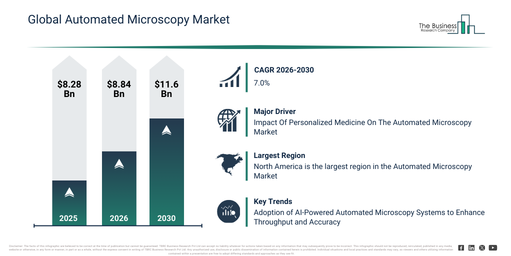
    The automated microscopy market has experienced robust growth in recent years. Its expansion is projected to reach $8.84 billion in 2026 from $8.28 billion in 2025, demonstrating a compound annual growth rate (CAGR) of 6.8%. Historically, this growth can be attributed to factors such as the increasing use of microscopy in life sciences research, the expansion of clinical diagnostics imaging, advancements in optical and electron microscopy, growth in materials science research, and the rising demand for reproducible imaging results.

    The automated microscopy market is anticipated to experience substantial expansion over the next few years. It is projected to reach a size of $11.6 billion by 2030, demonstrating a compound annual growth rate (CAGR) of 7.0%. This expected growth is largely attributed to the increasing embrace of AI-assisted diagnostics, the broadening scope of semiconductor inspection applications, escalating investments in automated research facilities, the rising need for scalable imaging solutions, and the growing integration of cloud-based microscopy platforms. Furthermore, significant trends during this period will include the heightened deployment of AI-based image analysis, a surge in the adoption of high-throughput imaging platforms, the expanding integration of automated sample handling, the continued growth of remote and digital microscopy, and an enhanced emphasis on achieving high-resolution imaging accuracy.

    Download the Free Sample Report to Explore Key Market Insights:

    https://www.thebusinessresearchcompany.com/sample.aspx?id=14259&type=smp

    Which Market Drivers Are Supporting The Expansion Of The Automated Microscopy Market?

    The increasing demand for personalized medicine is anticipated to boost the expansion of the automated microscopy market in the future. Personalized medicine refers to a healthcare strategy that considers the distinct variations in an individual’s genes, environment, and lifestyle. The adoption of personalized medicine is experiencing an uptick owing to several factors, including a heightened understanding of genetic variability, progress in genomics, and the rising incidence of chronic diseases. Automated microscopy provides researchers and clinicians with the necessary instruments and technologies to advance personalized medicine by clarifying disease mechanisms, identifying predictive biomarkers, and refining treatment strategies. As an illustration, in February 2024, the Personalized Medicine Coalition, a US-based advocacy organization for individualized medical treatments, reported that the FDA sanctioned 16 novel personalized therapies for patients with rare diseases in 2023, an increase from six in 2022. Consequently, the increasing need for personalized medicine is fueling the expansion of the automated microscopy market.

    What Segment Groups Are Identified Within The Automated Microscopy Market?

    The automated microscopy market covered in this report is segmented –

    1) By Product Type: Optical Microscopes, Electron Microscopes, Scanning Probe Microscopes

    2) By Application: Medical Diagnostics, Nanotechnology, Material Science, Life Sciences, Semiconductors

    3) By End User: Hospitals, Research Facilities, Diagnostic Clinics

    Subsegments:

    1) By Optical Microscopes: Automated Light Microscopes, Confocal Microscopes, Fluorescence Microscopes

    2) By Electron Microscopes: Scanning Electron Microscopes (SEM), Transmission Electron Microscopes (TEM), Scanning Transmission Electron Microscopes (STEM)

    3) By Scanning Probe Microscopes: Atomic Force Microscopes (AFM), Scanning Tunneling Microscopes (STM)

    What Industry Trends Are Redefining The Automated Microscopy Market?

    Major companies active in the automated microscopy market are focusing on developing technological advancements, specifically AI-powered automated fluorescence microscopes, to increase throughput, improve image accuracy, and reduce manual labor in cell analysis and drug discovery workflows. An AI-powered automated microscope integrates motorized stages, autofocus, multi-channel imaging, and intelligent image analysis software, thereby enabling automated cell counting, confluency assessment, and time-lapse imaging with minimal human intervention. For instance, in August 2024, Leica Microsystems, a Germany-based scientific instrumentation company, launched the Mateo FL, an AI-powered digital fluorescence microscope engineered for automated cell-culture analysis. This product combines transmitted-light imaging for label-free monitoring with multi-channel fluorescence imaging, utilizes AI algorithms for automated confluency checks and cell counting, and delivers high reproducibility with faster experimental workflows compared to traditional manual microscopes.

    Which Companies Hold Significant Positions In The Automated Microscopy Market?

    Major companies operating in the automated microscopy market are Thermo Fisher Scientific Inc., Zeiss Group, Agilent Technologies Inc., Keyence Corporation, Hitachi High-Tech Corporation, PerkinElmer Inc., Nikon Corporation, Bruker Corporation, Hamamatsu Photonics K.K., Jenoptik AG, HORIBA Scientific, Molecular Devices LLC, JEOL Ltd., Olympus Corporation, Prior Scientific Instruments Ltd., Phase Holographic Imaging PHI AB, Andor Technology Ltd., Crest Optics S.p.A, Delmic B.V., Nanolive SA, Nanosurf AG, Photometrics

    Read the full automated microscopy market report here:

    https://www.thebusinessresearchcompany.com/report/automated-microscopy-global-market-report

    How Is The Automated Microscopy Market Distributed Across Key Geographic Regions?

    North America was the largest region in the automated microscopy market in 2025. Asia-Pacific is expected to be the fastest-growing region in the forecast period. The regions covered in the automated microscopy market report are Asia-Pacific, South East Asia, Western Europe, Eastern Europe, North America, South America, Middle East, Africa.

    Request A Tailored Automated Microscopy Market Research Report For Competitive Advantage:

    https://www.thebusinessresearchcompany.com/customise?id=14259&type=smp

    Browse Through More Reports Similar to the Global Automated Microscopy Market 2026, By The Business Research Company

    Microscopy Global Market Report

    https://www.thebusinessresearchcompany.com/report/microscopy-global-market-report

    Biological Microscope Global Market Report

    https://www.thebusinessresearchcompany.com/report/biological-microscope-global-market-report

    Optical Microscopes Global Market Report

    https://www.thebusinessresearchcompany.com/report/optical-microscopes-global-market-report

    Get in touch with us:

    The Business Research Company: https://www.thebusinessresearchcompany.com/

    Americas +1 310-496-7795

    Asia +44 7882 955267 & +91 8897263534

    Europe +44 7882 955267

    Email us at info@tbrc.info

    Follow us on:

    LinkedIn: https://in.linkedin.com/company/the-business-research-company

    YouTube: https://www.youtube.com/channel/UC24_fI0rV8cR5DxlCpgmyFQ

    Global Market Model: https://www.thebusinessresearchcompany.com/global-market-model
  • Automated Microbiology Market Outlook 2026–2030 Exploring New Business Opportunities

    Automated Microbiology Market Outlook 2026–2030 Exploring New Business Opportunities

    The Business Research Company’s 2026 market reports include new capabilities such as market attractiveness scoring and analysis, total addressable market analysis, company scoring matrix, interactive excel data dashboard, improved supply chain analysis, upcoming startups in the market, and overview of key products, aimed at improving the depth, usability, and strategic value of the insights delivered.

    What Market Value Is Anticipated For The Automated Microbiology Market Over The Period 2026–2030?

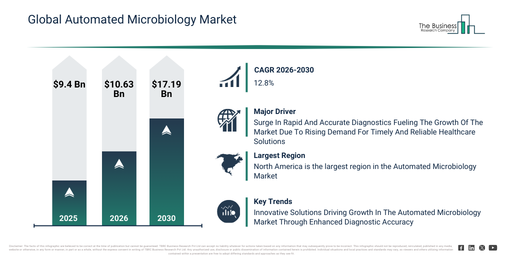
    The automated microbiology market size has shown rapid expansion in recent years. It is expected to advance from $9.4 billion in 2025 to $10.63 billion in 2026, demonstrating a compound annual growth rate (CAGR) of 13.0%. The growth observed in the past can be attributed to an increase in clinical testing volumes, a growing requirement for quicker diagnostic results, the expansion of hospital laboratory infrastructure, a scarcity of skilled lab personnel, and the adoption of standardized diagnostic protocols.

    The automated microbiology market is projected for substantial expansion in the coming years, with its valuation anticipated to reach $17.19 billion by 2030, demonstrating a compound annual growth rate (CAGR) of 12.8%. This anticipated growth during the forecast period is driven by factors such as enhanced investments in smart laboratories, a surging need for swift infectious disease diagnostics, the broadening scope of molecular microbiology applications, the increasing uptake of data-integrated laboratory systems, and a heightened emphasis on diagnostic precision. Key trends foreseen for the forecast period encompass a greater adoption of fully automated microbiology systems, the increasing application of AI-driven pathogen identification, stronger integration of LIMS platforms, an expansion in high-throughput diagnostic testing capabilities, and an elevated focus on automating laboratory workflows.

    Download the Free Sample Report to Explore Key Market Insights:

    https://www.thebusinessresearchcompany.com/sample.aspx?id=24163&type=smp

    What Underlying Factors Are Accelerating The Growth Of The Automated Microbiology Market?

    The increasing need for quick and precise disease detection is anticipated to fuel expansion in the automated microbiology market. These quick and precise diagnostic methods involve medical tests that rapidly and accurately identify infections or illnesses, allowing for prompt and effective treatment. This heightened demand stems from the critical need for early disease identification to avert complications, improve patient health, and reduce result waiting times. Automated microbiology supports this need by facilitating high-volume, standardized, and less error-prone testing, which leads to quicker results and enhanced patient care. For example, in 2024, the World Health Organization, a Switzerland-based national agency, indicated that an initial diagnostic test was performed for 54% (4.5 million) of the 8.3 million individuals newly diagnosed with TB in 2024, a rise from 48% (out of a total of 8.2 million) in 2023. Consequently, the growing requirement for rapid and accurate diagnostics is propelling the automated microbiology market forward.

    How Is The Automated Microbiology Market Divided Into Its Major Segments?

    The automated microbiology market covered in this report is segmented –

    1) By Product: Instruments, Reagents And Kits, Software

    2) By Automation Type: Fully Automated, Semi-Automated

    3) By Diagnostic Technology: DNA And RNA Probe Technology, Detection Techniques

    4) By Application: Biopharmaceutical Production, Clinical Diagnostics, Environmental And Water Testing, Food And Beverage Testing, Other Applications

    5) By End Use: Pharmaceutical And Biotechnology Companies, Hospitals And Diagnostic Laboratories, Academic And Research Institutes, Other End Uses

    Subsegments:

    1) By Instruments: Automated Gram Stainers, Microbial Detection Systems, Automated ID/AST Systems, Blood Culture Systems, Sample Preparation Systems

    2) By Reagents And Kits: Culture Media, Identification Kits, Susceptibility Testing Kits, Staining Reagents, Molecular Diagnostic Reagents

    3) By Software: Data Analysis And Interpretation Tools, Laboratory Workflow Management Software, Integration And Connectivity Solutions, Quality Control And Compliance Software

    What Key Developments And Trends Are Impacting The Automated Microbiology Market?

    Major companies in the automated microbiology market are dedicated to developing advanced solutions, such as matrix-assisted laser desorption or ionization (MALDI) biotyper systems, to improve the speed and precision of microbial identification. This is a mass spectrometry-based method that identifies microorganisms, including bacteria and fungi, through the analysis of their distinct protein profiles. For example, in April 2024, Bruker Corporation, a US-based producer of scientific instruments for molecular and materials research, introduced the MBT Pathfinder IVD robot for automated MALDI Biotyper target preparation. This innovation automates the creation of targets for matrix-assisted laser desorption or ionization (MALDI) biotyper analysis, boosting efficiency in clinical procedures. It simplifies sample loading, matrix application, and plate preparation, allowing for swifter and more accurate identification of microorganisms.

    Who Are The Prominent Organizations Shaping The Automated Microbiology Market?

    Major companies operating in the automated microbiology market are Thermo Fisher Scientific Inc, Danaher Corporation, Becton Dickinson and Company, bioMérieux SA, Abbott Laboratories, Merck KGaA, Agilent Technologies Inc, Sysmex Corporation, Bio-Rad Laboratories Inc, PerkinElmer Inc, HORIBA Ltd, DiaSorin SpA, Neogen Corporation, Rapid Micro Biosystems Inc, Bruker Corporation, Tecan Group AG, Roche Diagnostics International AG, QIAGEN NV, Illumina Inc, Luminex Corporation

    Read the full automated microbiology market report here:

    https://www.thebusinessresearchcompany.com/report/automated-microbiology-global-market-report

    Which Region Is Projected To Dominate The Automated Microbiology Market During The Forecast Period?

    North America was the largest region in the automated microbiology market in 2025. The regions covered in the automated microbiology market report are Asia-Pacific, South East Asia, Western Europe, Eastern Europe, North America, South America, Middle East, Africa.

    Request A Tailored Automated Microbiology Market Research Report For Competitive Advantage:

    https://www.thebusinessresearchcompany.com/customise?id=24163&type=smp

    Browse Through More Reports Similar to the Global Automated Microbiology Market 2026, By The Business Research Company

    Clinical Microbiology Global Market Report

    https://www.thebusinessresearchcompany.com/report/clinical-microbiology-global-market-report

    Bioprocess Automation Global Market Report

    https://www.thebusinessresearchcompany.com/report/bioprocess-automation-global-market-report

    Microbial Api Global Market Report

    https://www.thebusinessresearchcompany.com/report/microbial-api-global-market-report

    Get in touch with us:

    The Business Research Company: https://www.thebusinessresearchcompany.com/

    Americas +1 310-496-7795

    Asia +44 7882 955267 & +91 8897263534

    Europe +44 7882 955267

    Email us at info@tbrc.info

    Follow us on:

    LinkedIn: https://in.linkedin.com/company/the-business-research-company

    YouTube: https://www.youtube.com/channel/UC24_fI0rV8cR5DxlCpgmyFQ

    Global Market Model: https://www.thebusinessresearchcompany.com/global-market-model
  • Global Automated Cell Cultures Market Report 2026–2035 Highlighting Expansion Outlook and Forecast Opportunities

    Global Automated Cell Cultures Market Report 2026–2035 Highlighting Expansion Outlook and Forecast Opportunities

    The Business Research Company’s 2026 market reports include new capabilities such as market attractiveness scoring and analysis, total addressable market analysis, company scoring matrix, interactive excel data dashboard, improved supply chain analysis, upcoming startups in the market, and overview of key products, aimed at improving the depth, usability, and strategic value of the insights delivered.

    What Is The Expected Market Size Of The Automated Cell Cultures Market From 2026 To 2030?

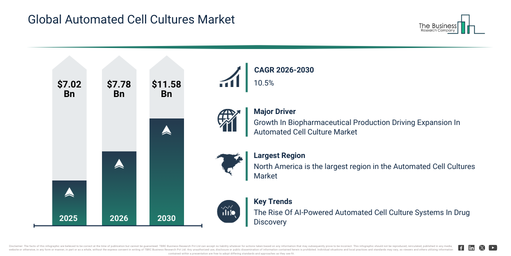
    The automated cell cultures market has expanded significantly in recent years. It is projected to increase from $7.02 billion in 2025 to $7.78 billion in 2026, advancing at a compound annual growth rate (CAGR) of 10.8%. This historical growth can be linked to increasing biopharmaceutical research activity, a rising demand for standardized cell culture processes, the expansion of drug discovery programs, the availability of modular automation solutions, and the growth in academic life science research.

    The automated cell cultures market size is projected to experience substantial expansion over the coming years, reaching a valuation of $11.58 billion by 2030, with a compound annual growth rate (CAGR) of 10.5%. This anticipated growth is driven by several factors, including heightened investments in cell and gene therapy manufacturing, an escalating demand for high-throughput screening methods, the broadening scope of personalized medicine research, the increasing integration of automation in laboratory settings, and a reinforced emphasis on scalable biologics production. Key trends anticipated during this period encompass the wider deployment of fully automated cell culture platforms, an uptick in the adoption of robotic liquid handling systems, the expanding utilization of scalable cell culture automation, the proliferation of closed-system cell processing techniques, and a sharpened focus on ensuring reproducibility and sterility control.

    Download the Free Sample Report to Explore Key Market Insights:

    https://www.thebusinessresearchcompany.com/sample.aspx?id=20499&type=smp

    Which Growth Drivers Are Contributing To The Progress Of The Automated Cell Cultures Market?

    The projected increase in the manufacturing of biopharmaceuticals is expected to drive the expansion of the automated cell cultures market going forward. Biopharmaceuticals are medicinal products created using biotechnology methods, including recombinant DNA technology and cell culture techniques. The rising consumer demand for biopharmaceuticals is attributed to their capability to provide targeted, effective treatments with fewer adverse effects compared to traditional medical approaches. Automated cell culture boosts efficiency and consistency in biopharmaceutical production by optimizing the procedures for cell growth, monitoring, and harvesting. For instance, in July 2025, according to Sartorius, a Germany-based international life science technology company, global sales of biopharmaceutical drugs rose by about 9% to reach USD 458 billion in 2024, up from the previous year, accounting for 41% of the total pharmaceutical market compared with 40% in 2023. Thus, the escalating production of biopharmaceuticals is propelling the growth of the automated cell cultures market.

    Which Segments Are Included In The Analysis Of The Automated Cell Cultures Market?

    The automated cell cultures market covered in this report is segmented –

    1) By Type: Modular Automation, Whole Label Automation

    2) By Equipment Type: Automated Liquid Handling Systems, Microplate Readers, Robotic Systems, Automated Storage And Retrieval Systems, Other Equipment Types

    3) By Application: Biopharmaceuticals Production, Diagnostics, Gene Therapy, Drug Screening And Development, Toxicity Testing, Stem Cell Research, Tissue Engineering And Regenerative Medicine, Personalized Medicine, Other Applications

    4) By End User: Pharmaceuticals And Biotechnology Companies, Hospital And Diagnostic Laboratories, Research Institutes, Cell Banks

    Subsegments:

    1) By Modular Automation: Automated Cell Culture Systems, Robotic Workstations, Modular Bioreactors

    2) By Whole Label Automation: Fully Automated Cell Culture Systems, Integrated Cell Culture Platforms, Automated Cell Handling Solutions

    What Trends Are Projected To Affect The Automated Cell Cultures Market?

    Key companies operating in the automated cell cultures market are increasingly focusing on technological advancements, such as integrated artificial intelligence (AI)-powered software, to gain a competitive advantage. This integrated AI-powered software within automated cell culture systems optimizes experimental conditions and enhances efficiency by meticulously analyzing real-time data, leading to improved cell growth and productivity. For example, in October 2023, Molecular Devices LLC, a US-based biotechnology company, unveiled the CellXpress.ai Automated Cell Culture System, a significant innovation aimed at improving drug discovery processes through advanced automation and artificial intelligence. This particular system is engineered to streamline complex cell culture workflows, thereby enabling researchers to concentrate on more critical tasks while simultaneously enhancing overall efficiency and reliability.

    Which Key Industry Participants Are Active In The Automated Cell Cultures Market?

    Major companies operating in the automated cell cultures market are Hitachi Ltd., Panasonic Holdings Corporation, Thermo Fisher Scientific Inc., Danaher Corporation, Corning Incorporated, Lonza Group AG, Nikon healthcare, Sartorius AG, Beckman Coulter Inc., Celltrio Inc., Eppendorf AG, Tecan Trading AG, Shibuya Corp, Hamilton Company, Molecular Devices LLC, FORMULATRIX, Highres Biosolutions, Biotron Healthcare, Agilent Technologies, Miltenyi Biotec

    Read the full automated cell cultures market report here:

    https://www.thebusinessresearchcompany.com/report/automated-cell-cultures-global-market-report

    What Are The Leading Geographic Regions In The Automated Cell Cultures Market?

    North America was the largest region in the automated cell cultures market in 2025. Asia-Pacific is expected to be the fastest-growing region in the forecast period. The regions covered in the automated cell cultures market report are Asia-Pacific, South East Asia, Western Europe, Eastern Europe, North America, South America, Middle East, Africa.

    Request A Tailored Automated Cell Cultures Market Research Report For Competitive Advantage:

    https://www.thebusinessresearchcompany.com/customise?id=20499&type=smp

    Browse Through More Reports Similar to the Global Automated Cell Cultures Market 2026, By The Business Research Company

    Cellular Telephone Global Market Report

    https://www.thebusinessresearchcompany.com/report/cellular-telephone-global-market-report

    Cell Cultures Global Market Report

    https://www.thebusinessresearchcompany.com/report/cell-cultures-global-market-report

    Cells Therapy Global Market Report

    https://www.thebusinessresearchcompany.com/report/cells-therapy-global-market-report

    Get in touch with us:

    The Business Research Company: https://www.thebusinessresearchcompany.com/

    Americas +1 310-496-7795

    Asia +44 7882 955267 & +91 8897263534

    Europe +44 7882 955267

    Email us at info@tbrc.info

    Follow us on:

    LinkedIn: https://in.linkedin.com/company/the-business-research-company

    YouTube: https://www.youtube.com/channel/UC24_fI0rV8cR5DxlCpgmyFQ

    Global Market Model: https://www.thebusinessresearchcompany.com/global-market-model
  • Automated Cell Culture Equipment Market Growth Prospects 2026–2030 with Innovation Trends and Competitive Landscape

    Automated Cell Culture Equipment Market Growth Prospects 2026–2030 with Innovation Trends and Competitive Landscape

    The Business Research Company’s 2026 market reports include new capabilities such as market attractiveness scoring and analysis, total addressable market analysis, company scoring matrix, interactive excel data dashboard, improved supply chain analysis, upcoming startups in the market, and overview of key products, aimed at improving the depth, usability, and strategic value of the insights delivered.

    What Market Valuation Is Forecasted For The Automated Cell Culture Equipment Market By 2030 Starting From Its 2026 Size?

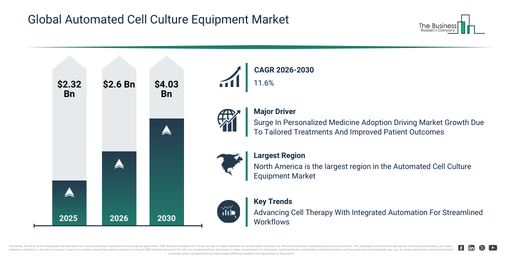
    The automated cell culture equipment market size has seen swift expansion in recent years. This market is anticipated to rise from $2.32 billion in 2025 to $2.6 billion in 2026, achieving a compound annual growth rate (CAGR) of 11.9%. Historically, the market’s expansion can be attributed to the growth in pharmaceutical and biologics research, an increasing need for consistent cell culture outcomes, the broadening of drug discovery pipelines, the escalating complexity of cell-based assays, and the early adoption of laboratory automation.

    The automated cell culture equipment market is poised for significant expansion in the coming years. Its value is projected to reach $4.03 billion by 2030, exhibiting a compound annual growth rate (CAGR) of 11.6%. This anticipated growth stems from several factors, including increasing investments in regenerative medicine, the widening scope of cell and gene therapy pipelines, a rising need for scalable cell culture solutions, a greater emphasis on minimizing laboratory variability, and the expanding integration of AI-driven lab automation. Key developments expected during this period involve the increasing adoption of fully automated cell culture platforms, the growing use of high-throughput cell processing systems, enhanced incorporation of robotics and imaging technologies, the expansion of closed-system and contamination-controlled workflows, and a heightened focus on reproducibility and process standardization.

    Download the Free Sample Report to Explore Key Market Insights:

    https://www.thebusinessresearchcompany.com/sample.aspx?id=30201&type=smp

    What Primary Drivers Are Shaping The Development Of The Automated Cell Culture Equipment Market?

    The increasing embrace of personalized medicine is anticipated to fuel the expansion of the automated cell culture equipment market. Personalized medicine involves customizing medical care based on an individual’s genetic makeup, lifestyle choices, and environmental influences to achieve more accurate and impactful treatment. The growing acceptance of personalized medicine stems from its ability to offer more potent treatments, as therapies are specifically designed for an individual’s genetic and biological profile, leading to enhanced patient results. Automated cell culture equipment plays a crucial role in advancing personalized medicine by delivering accurate, high-volume, and consistent cell culture procedures that aid in developing patient-specific therapies and customized drug assessments. For example, in February 2024, the US-based non-profit, Personalized Medicine Coalition, revealed that in 2023, the FDA sanctioned 16 novel personalized treatments for individuals with rare diseases, marking a substantial increase from the six approved in 2022. Consequently, the escalating adoption of personalized medicine is powering the growth of the automated cell culture equipment market.

    Which Segment Categories Define The Automated Cell Culture Equipment Market?

    The automated cell culture equipment market covered in this report is segmented –

    1) By Product Type: Instruments, Consumables, Software

    2) By Automation Level: Fully Automated Systems, Semi-Automated Systems, Manual Systems With Automation Features

    3) By Application: Drug Discovery And Development, Regenerative Medicine, Toxicology Testing, Vaccine Development, Stem Cell Research

    4) By End-User: Pharmaceutical Companies, Biotechnology Companies, Academic And Research Institutions, Contract Research Organizations (CROs), Diagnostics And Testing Laboratories

    Subsegments:

    1) By Instruments: Automated Cell Culture Systems, Bioreactors, Incubators, Centrifuges, Cell Counters And Analyzers, Liquid Handling Systems, Cell Imaging Systems, Robotic Arms And Manipulators, Cell Harvesting Systems, Filtration And Separation Devices

    2) By Consumables: Culture Media, Reagents And Supplements, Microplates And Culture Dishes, Flasks And Bottles, Single-Use Bags And Tubing, Filters And Membranes, Pipette Tips And Cartridges, Cell Culture Inserts, Sterile Connectors And Clamps

    3) By Software: Data Management Software, Process Control And Monitoring Software, Laboratory Information Management Systems (LIMS), Image Analysis Software, Workflow Automation Software, Quality Control And Compliance Software, Remote Monitoring And Cloud Integration Tools

    Which Upcoming Trends Are Expected To Influence The Automated Cell Culture Equipment Market?

    Leading companies within the automated cell culture equipment market are concentrating on innovations in seamless workflow integration, particularly closed single-use consumable systems, to improve process standardization, mitigate contamination risks, minimize manual handling, and enable efficient scaling from research to clinical manufacturing. A closed single-use consumable system represents a sterile, disposable setup that consolidates multiple cell culture processes into one unit, thereby lowering contamination risks and facilitating scalable, reproducible workflows. For example, in March 2025, Limula SA, a biotechnology company based in Switzerland specializing in automated cell therapy manufacturing solutions, introduced LimONE, an integrated system that combines hardware, software, and single-use consumables to simplify and standardize cell culture and processing workflows. This introduction establishes a commercial product serving both research and GMP-compliant manufacturing sectors. LimONE facilitates quicker technology transfer, reduces labor and infrastructure costs, and supports the scalable production of advanced cell therapies, including CAR-T and gene-edited stem cells. The system boosts workflow efficiency and ensures reproducibility across various cell therapy processes. Overall, this product launch strengthens Limula’s presence in the automated cell culture equipment market while supporting regulatory compliance.

    Who Are The Top Companies Competing In The Automated Cell Culture Equipment Market?

    Major companies operating in the automated cell culture equipment market are F. Hoffmann-La Roche Ltd, Hitachi Ltd., Merck KGaA, Panasonic Holdings Corporation, Thermo Fisher Scientific Inc., Danaher Corporation, Becton Dickinson and Company, Corning Incorporated, Lonza Group AG, Olympus Corporation, Sartorius AG, Eppendorf SE, Tecan Group Ltd., STEMCELL Technologies Inc., Miltenyi Biotec B.V. & Co. KG, Hamilton Company, Greiner Bio-One International GmbH, Solida Biotech GmbH, Biostream International B.V., HiMedia Laboratories Pvt. Ltd., Kuhner Shaker AG, Cellexus International Ltd.

    Read the full automated cell culture equipment market report here:

    https://www.thebusinessresearchcompany.com/report/global-automated-cell-culture-equipment-market-report

    How Does The Automated Cell Culture Equipment Market Perform Across Major Global Regions?

    North America was the largest region in the automated cell culture equipment market in 2025. Asia-Pacific is expected to be the fastest-growing region in the forecast period. The regions covered in the automated cell culture equipment market report are Asia-Pacific, South East Asia, Western Europe, Eastern Europe, North America, South America, Middle East, Africa.

    Request A Tailored Automated Cell Culture Equipment Market Research Report For Competitive Advantage:

    https://www.thebusinessresearchcompany.com/customise?id=30201&type=smp

    Browse Through More Reports Similar to the Global Automated Cell Culture Equipment Market 2026, By The Business Research Company

    Cell Cultures Global Market Report

    https://www.thebusinessresearchcompany.com/report/cell-cultures-global-market-report

    Cell Cultures Global Market Report

    https://www.thebusinessresearchcompany.com/report/cell-cultures-global-market-report

    Cell Culture Media Global Market Report

    https://www.thebusinessresearchcompany.com/report/cell-culture-media-global-market-report

    Get in touch with us:

    The Business Research Company: https://www.thebusinessresearchcompany.com/

    Americas +1 310-496-7795

    Asia +44 7882 955267 & +91 8897263534

    Europe +44 7882 955267

    Email us at info@tbrc.info

    Follow us on:

    LinkedIn: https://in.linkedin.com/company/the-business-research-company

    YouTube: https://www.youtube.com/channel/UC24_fI0rV8cR5DxlCpgmyFQ

    Global Market Model: https://www.thebusinessresearchcompany.com/global-market-model
  • Autologous Cell Therapy Market Forecast 2026–2035 Highlighting Market Data Patterns and Industry Insights

    Autologous Cell Therapy Market Forecast 2026–2035 Highlighting Market Data Patterns and Industry Insights

    The Business Research Company’s 2026 market reports include new capabilities such as market attractiveness scoring and analysis, total addressable market analysis, company scoring matrix, interactive excel data dashboard, improved supply chain analysis, upcoming startups in the market, and overview of key products, aimed at improving the depth, usability, and strategic value of the insights delivered.

    How Is The Market Size Of The Autologous Cell Therapy Market Expected To Change Between 2026 And 2030?

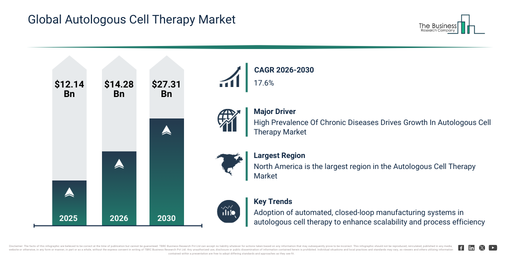
    The autologous cell therapy market has experienced swift expansion in recent years. Its value is projected to rise from $12.14 billion in 2025 to $14.28 billion in 2026, reflecting a compound annual growth rate (CAGR) of 17.6%. This historical growth can be linked to progress in stem cell research, the early clinical triumphs of autologous therapies, a rising incidence of chronic diseases, an expansion of oncology treatment solutions, and increased investment in regenerative medicine.

    The autologous cell therapy market is projected to experience substantial expansion in the coming years. By 2030, this market is anticipated to reach $27.31 billion, demonstrating a compound annual growth rate (CAGR) of 17.6%. Factors contributing to this growth over the forecast period include the increasing number of approvals for cell-based therapies, the escalating demand for personalized medicine, the expanding adoption of manufacturing automation in cell therapy, a surge in clinical trial activities, and greater healthcare expenditure on advanced treatments. Key trends during the forecast period involve the growing acceptance of CAR T-cell therapies, the increasing application of personalized regenerative treatments, the wider integration of automated cell processing systems, the broadening scope of autologous stem cell applications, and an intensified emphasis on therapeutic outcomes tailored to individual patients.

    Download the Free Sample Report to Explore Key Market Insights:

    https://www.thebusinessresearchcompany.com/sample.aspx?id=10771&type=smp

    Which Major Factors Are Driving The Expansion Of The Autologous Cell Therapy Market?

    The increasing prevalence of chronic diseases is anticipated to fuel the growth of autologous cell therapy. A chronic disease is an illness or medical state that endures for more than a year and necessitates ongoing treatment. Autologous cell therapy offers a promising strategy for managing and treating these conditions by utilizing an individual’s own cells, which are cultivated and expanded outside the body before being reinfused into the donor. For instance, according to the National Library of Medicine, a US-based agency, in January 2023, the number of individuals in the US aged 50 and older suffering from at least 1 chronic condition is expected to rise to 142.66 million by 2050. Thus, the widespread occurrence of chronic diseases is a key factor driving the expansion of the autologous cell therapy market.

    How Is The Autologous Cell Therapy Market Structured Across Different Segments?

    The autologous cell therapy market covered in this report is segmented –

    1) By Therapy: Autologous Stem Cell Therapy, Autologous Cellular Immunotherapies

    2) By Source: Bone Marrow, Epidermis, Mesenchymal Stem Cells, Hematopoietic Stem Cells, Chondrocytes, Other Sources

    3) By Application: Cancer, Neurodegenerative Disorders, Cardiovascular Disorders, Autoimmune Disorders, Orthopedics, Wound Healing, Other Applications

    4) By End User: Hospitals And Clinics, Ambulatory Centers, Academics And Research, Other End-Users

    Subsegments:

    1) By Autologous Stem Cell Therapy: Hematopoietic Stem Cell Transplantation, Mesenchymal Stem Cell Therapy, Adipose-Derived Stem Cell Therapy

    2) By Autologous Cellular Immunotherapies: Chimeric Antigen Receptor (CAR) T-Cell Therapy, Tumor-Infiltrating Lymphocyte (TIL) Therapy, Dendritic Cell Therapy

    How Are Trends Shaping The Direction Of The Autologous Cell Therapy Market?

    Leading companies in the autologous cell therapy market are concentrating on developing technological advancements, including robotic, end-to-end manufacturing platforms, for patient-specific therapies. These efforts aim to improve process consistency, reduce contamination risk, and accelerate the time it takes to deliver treatments to patients. An end-to-end manufacturing platform integrates several cell-processing steps—such as isolation, activation, transduction, expansion, formulation, and harvest—within a single closed system, thereby minimizing manual intervention compared to traditional open flask- or bag-based methods. For instance, in April 2025, Cellares, a US-based integrated development and manufacturing organization, launched the Cell Shuttle system, which is specifically designed for autologous cell therapies. This product automates the entire workflow in a functionally closed cassette, enhancing reproducibility, minimizing contamination risk, and enabling scalable, patient-specific manufacturing, which supports faster development and delivery of personalized therapies.

    Which Major Players Dominate The Autologous Cell Therapy Market?

    Major companies operating in the autologous cell therapy market are Novartis AG, Bristol-Myers Squibb Company, Gilead Sciences Inc., Johnson & Johnson, F. Hoffmann-La Roche Ltd., Vericel Corporation, Dendreon Pharmaceuticals LLC, Brainstorm Cell Therapeutics Inc., Caladrius Biosciences Inc., Castle Creek Biosciences Inc., Pharmicell Co. Ltd., Medipost Co. Ltd., Tego Science AB, Holostem Terapie Avanzate S.r.l., Opexa Therapeutics Inc., CORESTEM Inc., Takeda Pharmaceutical Company Limited, CSL Limited, AstraZeneca plc, Iovance Biotherapeutics Inc., Adaptimmune Therapeutics plc, Autolus Therapeutics plc

    Read the full autologous cell therapy market report here:

    https://www.thebusinessresearchcompany.com/report/autologous-cell-therapy-global-market-report

    Which Region Currently Holds The Largest Share Of The Autologous Cell Therapy Market?

    North America was the largest region in the autologous cell therapy market in 2025.Asia-pacific is expected to be the fastest-growing region in the forecast period. The regions covered in the autologous cell therapy market report are Asia-Pacific, South East Asia, Western Europe, Eastern Europe, North America, South America, Middle East, Africa.

    Request A Tailored Autologous Cell Therapy Market Research Report For Competitive Advantage:

    https://www.thebusinessresearchcompany.com/customise?id=10771&type=smp

    Browse Through More Reports Similar to the Global Autologous Cell Therapy Market 2026, By The Business Research Company

    Cells Therapy Global Market Report

    https://www.thebusinessresearchcompany.com/report/cells-therapy-global-market-report

    Autologous Stem Cell And Non Stem Cell Based Therapies Global Market Report

    https://www.thebusinessresearchcompany.com/report/autologous-stem-cell-and-non-stem-cell-based-therapies-global-market-report

    Cell Therapy Technologies Global Market Report

    https://www.thebusinessresearchcompany.com/report/cell-therapy-technologies-global-market-report

    Get in touch with us:

    The Business Research Company: https://www.thebusinessresearchcompany.com/

    Americas +1 310-496-7795

    Asia +44 7882 955267 & +91 8897263534

    Europe +44 7882 955267

    Email us at info@tbrc.info

    Follow us on:

    LinkedIn: https://in.linkedin.com/company/the-business-research-company

    YouTube: https://www.youtube.com/channel/UC24_fI0rV8cR5DxlCpgmyFQ

    Global Market Model: https://www.thebusinessresearchcompany.com/global-market-model
  • Artificial Intelligence (AI)-Powered Rare Disease Diagnosis Market Outlook 2026–2035 Driven by Key Growth Factors and Industry Projections

    Artificial Intelligence (AI)-Powered Rare Disease Diagnosis Market Outlook 2026–2035 Driven by Key Growth Factors and Industry Projections

    The Business Research Company’s 2026 market reports include new capabilities such as market attractiveness scoring and analysis, total addressable market analysis, company scoring matrix, interactive excel data dashboard, improved supply chain analysis, upcoming startups in the market, and overview of key products, aimed at improving the depth, usability, and strategic value of the insights delivered.

    What Market Size Growth Is Projected For The Artificial Intelligence (AI)-Powered Rare Disease Diagnosis Market During The Forecast Period 2026–2030?

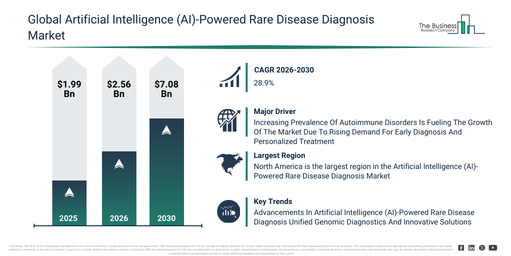
    The artificial intelligence (AI)-powered rare disease diagnosis market size has experienced significant growth in recent years. It is projected to expand from $1.99 billion in 2025 to $2.56 billion in 2026, achieving a compound annual growth rate (CAGR) of 28.9%. This historical growth can be attributed to various factors such as increasing diagnostic complexities for rare conditions, enhanced availability of genetic testing, rising investments in rare disease research, the expanding utilization of data analytics in healthcare, and the early adoption of AI-driven diagnostic tools.

    The artificial intelligence (AI)-powered rare disease diagnosis market is set to experience significant expansion over the next few years. It is forecast to attain a valuation of $7.08 billion by 2030, demonstrating a compound annual growth rate (CAGR) of 28.9%. This anticipated growth during the forecast period can be linked to a heightened focus on personalized medicine, the increasing implementation of AI-assisted clinical decision support, the broader integration of genomic sequencing, expanding investment in rare disease screening initiatives, and a rising demand for diagnostic efficiency. Prominent trends observed within this period include the expanding application of AI for pattern recognition in rare diseases, the surging adoption of genomic data analytics platforms, the growing incorporation of multi-modal patient data, the development of cloud-based diagnostic solutions, and an intensified commitment to early and accurate diagnosis.

    Download the Free Sample Report to Explore Key Market Insights:

    https://www.thebusinessresearchcompany.com/sample.aspx?id=28139&type=smp

    Which Major Factors Are Driving The Expansion Of The Artificial Intelligence (AI)-Powered Rare Disease Diagnosis Market?

    The expanding occurrence of autoimmune conditions is projected to fuel the expansion of the artificial intelligence (AI)-powered rare disease diagnosis market moving ahead. Autoimmune disorders are characterized by the immune system erroneously targeting healthy cells and tissues within the body, leading to inflammation and damage. The rise in autoimmune disorders stems from an increasing number of people facing immune system malfunctions, consequently boosting the need for prompt diagnosis, sophisticated treatments, and ongoing surveillance for effective symptom management. Artificial intelligence (AI)-powered rare disease diagnosis aids in the management of autoimmune disorders by swiftly pinpointing intricate conditions, assisting in tailored treatment choices, and enhancing general diagnostic precision. An illustrative example is provided by the Mayo Clinic, a US-based nonprofit academic medical center, which reported in January 2025 that an estimated 15 million individuals suffer from at least one of 105 autoimmune diseases. Consequently, the expanding occurrence of autoimmune conditions acts as a significant catalyst for the growth of the artificial intelligence (AI)-powered rare disease diagnosis market.

    What Market Segments Are Evaluated Within The Artificial Intelligence (AI)-Powered Rare Disease Diagnosis Market?

    The artificial intelligence (AI)-powered rare disease diagnosis market covered in this report is segmented –

    1) By Component: Software, Hardware, Services

    2) By Technology: Machine Learning, Deep Learning, Natural Language Processing, Computer Vision, Other Technologies

    3) By Deployment Mode: Cloud-Based, On-Premises

    4) By Diagnosis Type: Genetic Disorders, Autoimmune Disorders, Metabolic Disorders, Infectious Diseases, Other Diagnosis Types

    5) By End-User: Hospitals, Diagnostic Centers, Research Institutes, Specialty Clinics, Other End-Users

    Subsegments:

    1) By Software: Clinical Decision Support, Data Analytics Platforms, Genomic Interpretation Tools, Machine Learning Algorithms, Diagnostic Reporting Software

    2) By Hardware: Sequencing Instruments, Imaging Devices, Laboratory Equipment, Computational Servers, Diagnostic Sensors

    3) By Services: Consulting Services, Implementation And Integration, Training And Support, Data Management Services, Maintenance And Upgrades

    How Are Trends Shaping The Direction Of The Artificial Intelligence (AI)-Powered Rare Disease Diagnosis Market?

    Major companies operating in the artificial intelligence (AI)-powered rare disease diagnosis market are concentrating on developing innovative technologies, such as unified genomic diagnostics solutions, to enhance diagnostic accuracy, reduce turnaround time, and provide more comprehensive insights into complex genetic disorders. A unified genomic diagnostics solution is an integrated system that combines whole-genome sequencing with artificial intelligence (AI)-driven analysis to deliver complete genetic insights. For instance, in October 2023, Oxford Nanopore Technologies plc, a UK-based biotechnology company, and Fabric Genomics Inc., a US-based artificial intelligence (AI)-based company, launched an integrated whole-genome sequencing solution aimed at accelerating rare disease diagnosis by merging rapid sequencing with AI-driven variant interpretation for more accurate and actionable clinical insights. This launch integrates real-time nanopore sequencing with artificial intelligence (AI)-powered genomic analysis to rapidly identify rare genetic variants, delivering comprehensive and actionable insights to clinicians, thus enhancing diagnostic speed and accuracy for pediatric care.

    Who Are The Top Market Participants Influencing The Artificial Intelligence (AI)-Powered Rare Disease Diagnosis Market?

    Major companies operating in the artificial intelligence (AI)-powered rare disease diagnosis market are Ambry Genetics Corporation, MedGenome Inc., Sophia Genetics SA, Variantyx Inc., Atropos Health Inc., Congenica Ltd., Saventic Care Sp. z o.o., Rapid Innovation LLC, Centogene N.V., Impilo AB, ThinkGenetic Inc., ClairLabs Ltd., 3billion Inc., OpenEvidence Inc., GenomeUp S.R.L., Mendel.ai Inc., RareSum GmbH, DeepRare AI Solutions, Zebra-Llama Project

    Read the full artificial intelligence (ai)-powered rare disease diagnosis market report here:

    https://www.thebusinessresearchcompany.com/report/artificial-intelligence-ai-powered-rare-disease-diagnosis-global-market-report

    Which Region Currently Holds The Largest Share Of The Artificial Intelligence (AI)-Powered Rare Disease Diagnosis Market?

    North America was the largest region in the artificial intelligence (AI)-powered rare disease diagnosis market in 2025. Asia-Pacific is expected to be the fastest-growing region in the forecast period. The regions covered in the artificial intelligence (AI)-powered rare disease diagnosis market report are Asia-Pacific, South East Asia, Western Europe, Eastern Europe, North America, South America, Middle East, Africa.

    Request A Tailored Artificial Intelligence (AI)-Powered Rare Disease Diagnosis Market Research Report For Competitive Advantage:

    https://www.thebusinessresearchcompany.com/customise?id=28139&type=smp

    Browse Through More Reports Similar to the Global Artificial Intelligence (AI)-Powered Rare Disease Diagnosis Market 2026, By The Business Research Company

    Artificial Intelligence In The Diagnostic Global Market Report

    https://www.thebusinessresearchcompany.com/report/artificial-intelligence-in-the-diagnostic-global-market-report

    Ai In Medical Diagnostics Global Market Report

    https://www.thebusinessresearchcompany.com/report/ai-in-medical-diagnostics-global-market-report

    Artificial Intelligence In Cancer Diagnostics Global Market Report

    https://www.thebusinessresearchcompany.com/report/artificial-intelligence-in-cancer-diagnostics-global-market-report

    Get in touch with us:

    The Business Research Company: https://www.thebusinessresearchcompany.com/

    Americas +1 310-496-7795

    Asia +44 7882 955267 & +91 8897263534

    Europe +44 7882 955267

    Email us at info@tbrc.info

    Follow us on:

    LinkedIn: https://in.linkedin.com/company/the-business-research-company

    YouTube: https://www.youtube.com/channel/UC24_fI0rV8cR5DxlCpgmyFQ

    Global Market Model: https://www.thebusinessresearchcompany.com/global-market-model
  • Artificial Intelligence (AI)-Powered Hospital Asset Rental Market Developments and Growth Opportunities Across 2026–2030

    Artificial Intelligence (AI)-Powered Hospital Asset Rental Market Developments and Growth Opportunities Across 2026–2030

    The Business Research Company’s 2026 market reports include new capabilities such as market attractiveness scoring and analysis, total addressable market analysis, company scoring matrix, interactive excel data dashboard, improved supply chain analysis, upcoming startups in the market, and overview of key products, aimed at improving the depth, usability, and strategic value of the insights delivered.

    How Will The Market Size Of The Artificial Intelligence (AI)-Powered Hospital Asset Rental Market Evolve From 2026 To 2030?

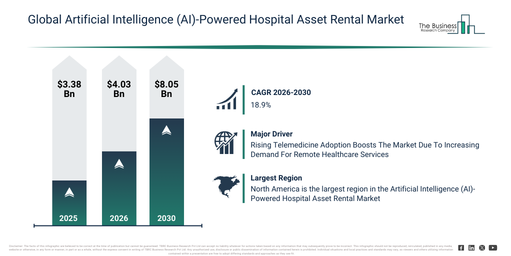
    The artificial intelligence (AI)-powered hospital asset rental market has experienced significant expansion recently. Its size is anticipated to grow from $3.38 billion in 2025 to $4.03 billion in 2026, exhibiting a compound annual growth rate (CAGR) of 19.1%. The historical increase in this market can be linked to several factors, including the rising costs of healthcare equipment, an increased demand for operational efficiency in hospitals, broader adoption of digital asset management, the expanding use of rented medical devices, and a heightened focus on managing hospital expenditures.

    The artificial intelligence (AI)-powered hospital asset rental market size is forecasted to undergo rapid expansion in the coming years. This market is expected to reach $8.05 billion by 2030, exhibiting a compound annual growth rate (CAGR) of 18.9%. The projected growth can be attributed to factors such as the expansion of AI-driven hospital operations, increasing adoption of asset-as-a-service models, greater integration with hospital information systems, rising investments in smart healthcare infrastructure, and growing demand for predictive utilization analytics. Key trends anticipated during the forecast period include the increasing uptake of AI-based asset utilization analytics, wider implementation of predictive maintenance in hospitals, escalating demand for equipment sharing platforms, the expansion of cloud-based asset rental systems, and an enhanced focus on cost optimization tools.

    Download the Free Sample Report to Explore Key Market Insights:

    https://www.thebusinessresearchcompany.com/sample.aspx?id=28929&type=smp

    What Key Drivers Are Influencing The Growth Of The Artificial Intelligence (AI)-Powered Hospital Asset Rental Market?

    The Artificial Intelligence (AI)-Powered Hospital Asset Rental Market is projected to expand due to the increasing adoption of telemedicine, which involves delivering healthcare services remotely via digital platforms. The demand for telemedicine is escalating as it provides convenient healthcare access, allowing patients to consult and follow up from home, thereby saving travel time. AI-powered hospital asset rental facilities enhance telemedicine by ensuring essential medical equipment is readily available and optimally utilized, enabling healthcare providers to conduct remote diagnostics and virtual care effectively. For instance, data from the Australian Bureau of Statistics (ABS) in September 2024 revealed that 83.5% of males used telehealth services in 2023–24, a notable increase from 78.6% in 2022–23. This upward trend in telemedicine is thus a key factor propelling the Artificial Intelligence (AI)-Powered Hospital Asset Rental Market forward. The Artificial Intelligence (AI)-Powered Hospital Asset Rental Market is anticipated to expand significantly due to increasing healthcare expenditure. This expenditure represents the total funds allocated to medical services, equipment, and technologies aimed at enhancing health outcomes. The increase in healthcare spending is driven by a heightened demand for cutting-edge medical technologies, leading hospitals and clinics to invest more in innovative equipment and digital solutions to improve patient care. Elevated healthcare expenditure facilitates the adoption of AI-powered hospital asset rental services by allowing healthcare facilities to acquire advanced, cost-efficient technologies that optimize equipment use and lower overall operational expenses. For example, the Centers for Medicare & Medicaid Services reported in June 2025 that national health expenditures (NHE) in 2023 rose by 7.5% to $4.9 trillion, averaging $14,570 per person and accounting for 17.6% of the Gross Domestic Product (GDP), with Medicare spending increasing by 8.1% to $1,029.8 billion, representing 21% of total NHE. Thus, the growth in healthcare expenditure is a primary catalyst for the Artificial Intelligence (AI)-Powered Hospital Asset Rental Market.

    Which Segment Areas Are Covered In The Artificial Intelligence (AI)-Powered Hospital Asset Rental Market Analysis?

    The artificial intelligence (AI)-powered hospital asset rental market covered in this report is segmented –

    1) By Component: Software, Hardware, Services

    2) By Asset Type: Medical Equipment, Mobility Devices, Diagnostic Devices, Other Asset Types

    3) By Deployment Mode: On-Premises, Cloud-Based

    4) By Application: Equipment Tracking, Inventory Management, Predictive Maintenance, Utilization Optimization, Other Applications

    5) By End User: Hospitals, Clinics, Diagnostic Centers, Other End-Users

    Subsegments:

    1) By Software: Artificial Intelligence-Based Asset Management Software, Predictive Maintenance Software, Hospital Information System (HIS) Integration Software

    2) By Hardware: Artificial Intelligence-Enabled Medical Equipment, Iot Sensors And Devices For Asset Tracking, Robotics And Automation Equipment

    3) By Services: Installation And Deployment Services, Maintenance And Support Services, Training And Consultation Services

    Which Global Companies Are Actively Competing In The Artificial Intelligence (AI)-Powered Hospital Asset Rental Market?

    Major companies operating in the artificial intelligence (AI)-powered hospital asset rental market are Siemens Healthineers AG, Stryker Corporation, GE Healthcare Technologies Inc., US Med-Equip, LLC, Agiliti Health, Med One Group, Hill-Rom Holdings, Baxter International, Canon Medical Systems, Fresenius Medical Care, Cardinal Health, Avante Health Solutions, Block Imaging, Owens & Minor, Rentex Medical, WestCMR, Vanguard Healthcare Solutions, Trimedx, Althea Group, Prometheus Group, Cognosos, Kontakt.io, Asset Panda, CenTrak, Zebra Technologies Corporation

    Read the full artificial intelligence (ai)-powered hospital asset rental market report here:

    https://www.thebusinessresearchcompany.com/report/artificial-intelligence-ai-powered-hospital-asset-rental-global-market-report

    Which Region Is Expected To Register The Fastest Growth In The Artificial Intelligence (AI)-Powered Hospital Asset Rental Market?

    North America was the largest region in the artificial intelligence (AI)-powered hospital asset rental market in 2025. Asia-Pacific is expected to be the fastest-growing region in the forecast period. The regions covered in the artificial intelligence (AI)-powered hospital asset rental market report are Asia-Pacific, South East Asia, Western Europe, Eastern Europe, North America, South America, Middle East, Africa.

    Request A Tailored Artificial Intelligence (AI)-Powered Hospital Asset Rental Market Research Report For Competitive Advantage:

    https://www.thebusinessresearchcompany.com/customise?id=28929&type=smp

    Browse Through More Reports Similar to the Global Artificial Intelligence (AI)-Powered Hospital Asset Rental Market 2026, By The Business Research Company

    Artificial Intelligence Ai For Insurance Global Market Report

    https://www.thebusinessresearchcompany.com/report/artificial-intelligence-ai-for-insurance-global-market-report

    Ai In Real Estate Global Market Report

    https://www.thebusinessresearchcompany.com/report/ai-in-real-estate-global-market-report

    Hospital Asset Management Systems Global Market Report

    https://www.thebusinessresearchcompany.com/report/hospital-asset-management-systems-global-market-report

    Get in touch with us:

    The Business Research Company: https://www.thebusinessresearchcompany.com/

    Americas +1 310-496-7795

    Asia +44 7882 955267 & +91 8897263534

    Europe +44 7882 955267

    Email us at info@tbrc.info

    Follow us on:

    LinkedIn: https://in.linkedin.com/company/the-business-research-company

    YouTube: https://www.youtube.com/channel/UC24_fI0rV8cR5DxlCpgmyFQ

    Global Market Model: https://www.thebusinessresearchcompany.com/global-market-model
  • Global Artificial Intelligence (AI)-Powered Dermatology Lesion Triaging Market Forecast 2026–2035 Presenting Long-Term Industry Expansion Insights

    Global Artificial Intelligence (AI)-Powered Dermatology Lesion Triaging Market Forecast 2026–2035 Presenting Long-Term Industry Expansion Insights

    The Business Research Company’s 2026 market reports include new capabilities such as market attractiveness scoring and analysis, total addressable market analysis, company scoring matrix, interactive excel data dashboard, improved supply chain analysis, upcoming startups in the market, and overview of key products, aimed at improving the depth, usability, and strategic value of the insights delivered.

    What Is The Forecasted Market Value Of The Artificial Intelligence (AI)-Powered Dermatology Lesion Triaging Market Across 2026–2030?

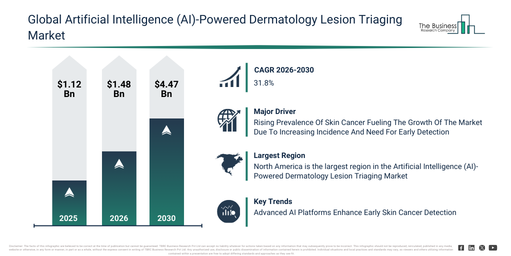
    The artificial intelligence (AI)-powered dermatology lesion triaging market has experienced remarkable growth in recent times. Projections indicate it will expand from $1.12 billion in 2025 to $1.48 billion in 2026, demonstrating a compound annual growth rate (CAGR) of 32.1%. Historically, this growth has been fueled by factors such as the increasing prevalence of skin disorders, a rising demand for early cancer detection, the expansion of dermatology diagnostic services, the growing adoption of digital imaging tools, and increasing awareness of preventive dermatology care.

    The market for artificial intelligence (AI)-powered dermatology lesion triaging is projected to experience substantial expansion over the upcoming years. This market is anticipated to reach $4.47 billion by 2030, exhibiting a compound annual growth rate (CAGR) of 31.8%. Key factors fueling this growth during the forecast period include the expanding application of AI-assisted diagnostic tools, a surge in remote dermatology consultation uptake, the broadening of cloud-based clinical decision support systems, an escalating need for workflow automation within dermatology, and a heightened emphasis on enhancing diagnostic accuracy. Significant trends anticipated during this period encompass the growing embrace of AI-based skin image analysis, an increased utilization of automated lesion risk stratification tools, the wider integration of teledermatology platforms, the proliferation of mobile dermatology applications, and a reinforced commitment to the early detection of skin cancer.

    Download the Free Sample Report to Explore Key Market Insights:

    https://www.thebusinessresearchcompany.com/sample.aspx?id=28138&type=smp

    What Major Growth Drivers Are Shaping The Outlook Of The Artificial Intelligence (AI)-Powered Dermatology Lesion Triaging Market?

    The increasing occurrence of skin cancer is anticipated to fuel the expansion of the artificial intelligence (AI)-powered dermatology lesion triaging market going forward. This condition involves the unchecked proliferation of atypical skin cells, primarily resulting from ultraviolet radiation damage from sun exposure or tanning equipment. Its growing occurrence largely stems from excessive exposure to the sun, where detrimental ultraviolet (UV) radiation harms the DNA within skin cells. Artificial intelligence (AI)-powered dermatology lesion triaging offers a solution to skin cancer through facilitating prompt and precise identification of concerning skin lesions. This technology minimizes delays in diagnosis by offering immediate risk evaluations, simplifying referrals to specialists, and assisting clinical judgments, thereby enhancing patient results. As an illustration, in 2023, data from Cancer Australia, a government agency based in Australia, showed that roughly 8,257 new cases of melanoma of the skin were identified, making up 2.6% of all cancer-related deaths. Consequently, the increasing prevalence of skin cancer is propelling the expansion of the artificial intelligence (AI)-powered dermatology lesion triaging market.

    What Segmentation Levels Are Considered In The Artificial Intelligence (AI)-Powered Dermatology Lesion Triaging Market?

    The artificial intelligence (AI)-powered dermatology lesion triaging market covered in this report is segmented –

    1) By Component: Software, Hardware, Services

    2) By Deployment Mode: Cloud-Based, On-Premises

    3) By Lesion Type: Benign, Malignant, Pre-Malignant

    4) By Application: Skin Cancer Detection, Benign Lesion Identification, Teledermatology, Clinical Decision Support, Other Applications

    5) By End-User: Hospitals, Dermatology Clinics, Diagnostic Centers, Research Institutes, Other End Users

    Subsegments:

    1) By Software: Image Analysis Software, Diagnostic Support Software, Cloud-Based Software, Mobile Application Software, Patient Management Software

    2) By Hardware: Imaging Devices, Dermatoscopes, Cameras, Computers, Scanners

    3) By Services: Consulting Services, Implementation Services, Training And Education Services, Maintenance And Support Services, Data Management Services

    What Trends Are Affecting The Expansion Of The Artificial Intelligence (AI)-Powered Dermatology Lesion Triaging Market?

    Leading companies within the artificial intelligence (AI)-powered dermatology lesion triaging market are concentrating on creating sophisticated offerings, including AI-driven imaging platforms, with the goal of boosting diagnostic precision, facilitating earlier identification of skin cancers, and optimizing clinical procedures. These AI-powered imaging platforms represent unified systems that employ artificial intelligence algorithms for analyzing skin lesions, offering immediate diagnostic assistance, and helping categorize cases according to their malignancy risk. As an illustration, in June 2024, Enspectra Health Inc., a US-based health technology firm, was granted Food and Drug Administration Breakthrough Device Designation for its innovative artificial intelligence-powered VIO Skin Platform. This platform integrates reflectance confocal and multiphoton laser scanning microscopy to produce non-invasive, real-time, cellular-level images of skin tissues. It also incorporates VIO.ai NMSC, a computer-aided diagnosis and triage (CADx/CADt) software function, designed to categorize lesions suggestive of basal cell carcinoma (BCC) and squamous cell carcinoma (SCC) in high-risk groups, thereby supporting physicians in their clinical judgments and potentially minimizing unwarranted biopsies.

    Which Leading Firms Are Contributing To The Growth Of The Artificial Intelligence (AI)-Powered Dermatology Lesion Triaging Market?

    Major companies operating in the artificial intelligence (AI)-powered dermatology lesion triaging market are Proscia Inc., SkinVision B.V., MetaOptima Technology Inc., SkinIO Inc., Skin Analytics Ltd., DermaSensor Inc., Dxcover Ltd., Skinive, Legit.Health, Veriskin, VivoSight, BelleTorus, First Derm, CureSkin, Skinopathy, DermLens AI, Enspectra Health Inc., Dermie.AI, DermTech, FotoFinder Systems

    Read the full artificial intelligence (ai)-powered dermatology lesion triaging market report here:

    https://www.thebusinessresearchcompany.com/report/artificial-intelligence-ai-powered-dermatology-lesion-triaging-global-market-report

    Which Regions Are Projected To Dominate The Artificial Intelligence (AI)-Powered Dermatology Lesion Triaging Market In The Coming Years?

    North America was the largest region in the artificial intelligence (AI)-powered dermatology lesion triaging market in 2025. The regions covered in the artificial intelligence (AI)-powered dermatology lesion triaging market report are Asia-Pacific, South East Asia, Western Europe, Eastern Europe, North America, South America, Middle East, Africa.

    Request A Tailored Artificial Intelligence (AI)-Powered Dermatology Lesion Triaging Market Research Report For Competitive Advantage:

    https://www.thebusinessresearchcompany.com/customise?id=28138&type=smp

    Browse Through More Reports Similar to the Global Artificial Intelligence (AI)-Powered Dermatology Lesion Triaging Market 2026, By The Business Research Company

    Ai In Beauty And Cosmetics Global Market Report

    https://www.thebusinessresearchcompany.com/report/ai-in-beauty-and-cosmetics-global-market-report

    Ai In Cancer Diagnostics Global Market Report

    https://www.thebusinessresearchcompany.com/report/ai-in-cancer-diagnostics-global-market-report

    Artificial Intelligence In Cancer Diagnostics Global Market Report

    https://www.thebusinessresearchcompany.com/report/artificial-intelligence-in-cancer-diagnostics-global-market-report

    Get in touch with us:

    The Business Research Company: https://www.thebusinessresearchcompany.com/

    Americas +1 310-496-7795

    Asia +44 7882 955267 & +91 8897263534

    Europe +44 7882 955267

    Email us at info@tbrc.info

    Follow us on:

    LinkedIn: https://in.linkedin.com/company/the-business-research-company

    YouTube: https://www.youtube.com/channel/UC24_fI0rV8cR5DxlCpgmyFQ

    Global Market Model: https://www.thebusinessresearchcompany.com/global-market-model