Category: Healthcare Services

  • Artificial Intelligence (AI) Pathology Quality Control Market Growth Expected to Reach $4.64 Billion by 2030 with 21.1% CAGR

    Artificial Intelligence (AI) Pathology Quality Control Market Growth Expected to Reach $4.64 Billion by 2030 with 21.1% CAGR

    The Business Research Company’s 2026 market reports include new capabilities such as market attractiveness scoring and analysis, total addressable market analysis, company scoring matrix, interactive excel data dashboard, improved supply chain analysis, upcoming startups in the market, and overview of key products, aimed at improving the depth, usability, and strategic value of the insights delivered.

    What Market Value Is Anticipated For The Artificial Intelligence (AI) Pathology Quality Control Market Over The Period 2026–2030?

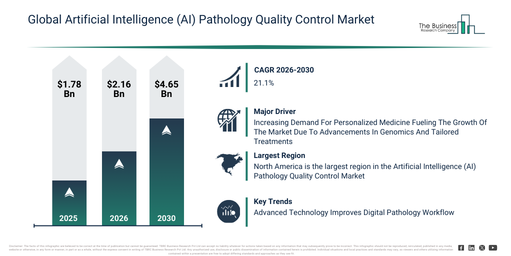
    The artificial intelligence (AI) pathology quality control market has experienced significant expansion in recent years. Projections indicate its expansion from $1.78 billion in 2025 to $2.16 billion in 2026, showcasing a compound annual growth rate (CAGR) of 21.4%. Historically, this growth has been driven by factors such as increasing pathology workload volumes, the early digitization of pathology slides, the growing complexity of cancer diagnostics, a demand for standardized reporting, and the initial adoption of AI-assisted pathology tools.

    The artificial intelligence (AI) pathology quality control market is anticipated to experience substantial growth over the next few years. It is projected to expand to $4.65 billion by 2030, with a compound annual growth rate (CAGR) of 21.1%. This projected growth is driven by factors such as increasing investments in digital pathology platforms, a rising demand for precision diagnostics, the expansion of AI validation in clinical workflows, the growing integration of pathology data analytics, and an increasing regulatory emphasis on diagnostic quality control. Key trends expected during this forecast period include the increasing deployment of AI-based slide quality assessment, a rising adoption of automated error detection tools, the growing standardization of pathology workflows, the expansion of digital pathology integration, and an enhanced focus on diagnostic accuracy assurance.

    Download the Free Sample Report to Explore Key Market Insights:

    https://www.thebusinessresearchcompany.com/sample.aspx?id=28124&type=smp

    Which Major Factors Are Driving The Expansion Of The Artificial Intelligence (AI) Pathology Quality Control Market?

    The anticipated surge in demand for personalized medicine is projected to stimulate the expansion of the artificial intelligence (AI) pathology quality control market in the future. This medical approach involves customizing treatment and prevention plans to suit an individual’s distinct genetic profile, lifestyle, and environmental factors. Its growing acceptance largely stems from progress in genomics, facilitating the accurate detection of genetic variations and the development of customized treatments. Artificial intelligence (AI) pathology quality control improves personalized medicine by offering accurate and reliable diagnostic information, thus supporting personalized therapeutic approaches. It minimizes diagnostic inaccuracies through automated quality assessments, boosting precision and dependability, which in turn elevates patient-specific care. As an illustration, in February 2024, the Personalized Medicine Coalition (PMC), a US-based nonprofit, reported that the U.S. Food and Drug Administration (FDA) approved 26 new personalized medicines in 2023, a notable rise from 12 approvals in 2022. Consequently, the heightened need for personalized medicine will propel the artificial intelligence (AI) pathology quality control market.

    How Is The Artificial Intelligence (AI) Pathology Quality Control Market Divided Into Its Major Segments?

    The artificial intelligence (AI) pathology quality control market covered in this report is segmented –

    1) By Component: Software, Hardware, Services

    2) By Deployment Mode: On-Premises, Cloud-Based

    3) By Application: Cancer Diagnostics, Infectious Disease Diagnostics, Digital Pathology, Research, Other Applications

    4) By End-User: Hospitals, Diagnostic Laboratories, Research Institutes, Pharmaceutical And Biotechnology Companies, Other End Users

    Subsegments:

    1) By Software: Image Analysis Software, Diagnostic Decision Support Software, Workflow Management Software, Reporting And Visualization Software

    2) By Hardware: Digital Pathology Scanners, Imaging Devices, Servers And Storage Systems, Laboratory Equipment

    3) By Services: Implementation Services, Training And Support Services, Maintenance And Upgrade Services, Consulting Services

    Which Trends Are Shaping The Future Of The Artificial Intelligence (AI) Pathology Quality Control Market?

    Companies prominently involved in the artificial intelligence (AI) pathology quality control market are concentrating on developing sophisticated solutions, particularly advanced AI-powered tools, to optimize diagnostic precision, streamline laboratory processes, and ensure the dependability of pathology data. These advanced AI-powered solutions signify next-generation technologies that leverage artificial intelligence to accomplish complex tasks with superior accuracy, speed, and efficiency. For instance, in November 2023, PathAI, a US-based biotechnology firm, unveiled Artifact Detect 1 on its AISight digital pathology platform. This instrument automates the identification and measurement of artifacts within whole slide images (WSI), which are irrelevant morphological characteristics capable of impairing diagnostic precision. ArtifactDetect minimizes misdiagnoses and the necessity for re-scans by automatically pre-screening slides for quality concerns, thereby boosting accuracy, laboratory operational efficiency, and overall processing capacity. This innovation supports timely corrective actions such as re-staining or re-scanning, ultimately refining the digital workflow and preserving valuable resources for both technicians and pathologists.

    Who Are The Prominent Organizations Shaping The Artificial Intelligence (AI) Pathology Quality Control Market?

    Major companies operating in the artificial intelligence (AI) pathology quality control market are Roche Diagnostics GmbH, Danaher Corporation, Philips Healthcare, Agilent Technologies Inc., Hologic Inc., Clinisys Group Ltd., Sectra AB, PathAI Inc., OptraSCAN Inc., Paige.AI Inc., Proscia Inc., Quibim S.L., 3DHISTECH Ltd., Visiopharm A/S, Indica Labs Inc., Ibex Medical Analytics Ltd., Aiosyn B.V., DeepBio Inc., Nucleai Ltd., Gestalt Diagnostics LLC

    Read the full artificial intelligence (ai) pathology quality control market report here:

    https://www.thebusinessresearchcompany.com/report/artificial-intelligence-ai-pathology-quality-control-global-market-report

    Which Region Currently Holds The Largest Share Of The Artificial Intelligence (AI) Pathology Quality Control Market?

    North America was the largest region in the artificial intelligence (AI) pathology quality control market in 2025. Asia-Pacific is expected to be the fastest-growing region in the forecast period. The regions covered in the artificial intelligence (AI) pathology quality control market report are Asia-Pacific, South East Asia, Western Europe, Eastern Europe, North America, South America, Middle East, Africa.

    Request A Tailored Artificial Intelligence (AI) Pathology Quality Control Market Research Report For Competitive Advantage:

    https://www.thebusinessresearchcompany.com/customise?id=28124&type=smp

    Browse Through More Reports Similar to the Global Artificial Intelligence (AI) Pathology Quality Control Market 2026, By The Business Research Company

    Ai In Medical Diagnostics Global Market Report

    https://www.thebusinessresearchcompany.com/report/ai-in-medical-diagnostics-global-market-report

    Ai In Cancer Diagnostics Global Market Report

    https://www.thebusinessresearchcompany.com/report/ai-in-cancer-diagnostics-global-market-report

    Artificial Intelligence In Healthcare Diagnosis Global Market Report

    https://www.thebusinessresearchcompany.com/report/artificial-intelligence-in-healthcare-diagnosis-global-market-report

    Get in touch with us:

    The Business Research Company: https://www.thebusinessresearchcompany.com/

    Americas +1 310-496-7795

    Asia +44 7882 955267 & +91 8897263534

    Europe +44 7882 955267

    Email us at info@tbrc.info

    Follow us on:

    LinkedIn: https://in.linkedin.com/company/the-business-research-company

    YouTube: https://www.youtube.com/channel/UC24_fI0rV8cR5DxlCpgmyFQ

    Global Market Model: https://www.thebusinessresearchcompany.com/global-market-model
  • Artificial Intelligence In Radiology Market Size Outlook and Demand Growth Across 2026–2030

    The Business Research Company’s 2026 market reports include new capabilities such as market attractiveness scoring and analysis, total addressable market analysis, company scoring matrix, interactive excel data dashboard, improved supply chain analysis, upcoming startups in the market, and overview of key products, aimed at improving the depth, usability, and strategic value of the insights delivered.

    What Market Size Increase Is Anticipated For The Artificial Intelligence In Radiology Market Over The 2026–2030 Period?

    The market size for artificial intelligence in radiology has experienced rapid expansion in recent years. It is projected to increase from $2.85 billion in 2025 to $3.71 billion in 2026, demonstrating a compound annual growth rate (CAGR) of 30.2%. Historically, this growth can be ascribed to a rising demand for diagnostic imaging services, a shortage of radiology professionals, the expansion of digital radiology systems, the increasing complexity of imaging data, and the adoption of picture archiving systems.

    The artificial intelligence in radiology market is projected to experience substantial expansion over the upcoming years. This sector is anticipated to reach $10.7 billion by 2030, demonstrating a compound annual growth rate (CAGR) of 30.3%. Several factors contribute to this growth during the forecast period, including the wider uptake of AI-assisted radiology platforms, a heightened emphasis on optimizing productivity within imaging departments, the proliferation of cloud-based radiology AI solutions, an expanding application of predictive imaging analytics, and greater integration with hospital IT systems. Key trends observed throughout this period encompass the increasing incorporation of AI into radiology reporting workflows, a growing reliance on computer vision for interpreting images, the broader implementation of AI for workflow optimization, the development of real-time decision support tools, and a sharpened focus on enhancing diagnostic accuracy.

    Download the Free Sample Report to Explore Key Market Insights:

    https://www.thebusinessresearchcompany.com/sample.aspx?id=13591&type=smp

    Which Major Factors Are Driving The Expansion Of The Artificial Intelligence In Radiology Market?

    The increasing application of artificial intelligence (AI) in healthcare is anticipated to fuel the expansion of artificial intelligence (AI) in the radiology market moving forward. AI-driven algorithms showcase a remarkable capacity to accurately analyze and interpret medical images, thereby assisting radiologists in detecting subtle irregularities and improving overall diagnostic results. The efficiency and swiftness offered by AI solutions not only streamline radiological workflows but also contribute to more rapid and precise diagnoses. For instance, in July 2024, according to The Health Foundation, a UK-based independent charity, over half of the UK public (54%) and three-quarters of surveyed NHS staff (76%) expressed approval for using AI in patient care, while an even higher percentage endorsed its utilization for administrative tasks (61% of the public and 81% of NHS staff). Thus, the broadening use of AI in healthcare is a significant driver for the growth of artificial intelligence (AI) in the radiology market.

    How Is The Artificial Intelligence In Radiology Market Segmented Across Key Categories?

    The artificial intelligence in radiology market covered in this report is segmented –

    1) By Solution Type: AI Software, AI Hardware

    2) By Modality: Computed Tomography (CT), Magnetic Resonance (MR), X-Ray, Mammography, Ultrasound (US), Other Modalities

    3) By Application: Neurology, Chest And Lung, Musculoskeletal, Abdomen, Cardiology, Other Applications

    4) By End-User: Hospitals, Diagnostic Imaging Centers, Other End-Users

    Subsegments:

    1) By AI Software: Image Analysis Software, Workflow Optimization Software, Radiology Reporting Software, Decision Support Systems, Predictive Analytics Tools

    2) By AI Hardware: Imaging Devices, Servers And Computing Infrastructure, Robotics For Automated Imaging, Workstations For Radiologists

    What Trends Are Advancing Progress In The Artificial Intelligence In Radiology Market?

    Major companies are active in the artificial intelligence in radiology market, concentrating on developing innovative cloud-native radiology informatics platforms, such as AI-orchestrated diagnostic workspaces, to improve imaging workflow efficiency, support faster clinical decision-making, and manage growing imaging volumes. A cloud-native AI radiology platform combines traditional PACS or RIS functions with scalable cloud infrastructure, facilitating real-time AI model deployment, advanced image streaming, automated reporting, and smooth interoperability across clinical systems. For example, in February 2025, DeepHealth, Inc., a U.S.-based health informatics company, introduced Diagnostic Suite, an AI-powered cloud-native radiology workspace. This platform integrates worklist management, patient briefs, high-speed streaming viewers, AI orchestration, and smart reporting within a single interface. It offers high scalability, integrates multiple AI diagnostic models spanning lung, prostate, brain, and breast imaging, and enhances efficiency by ensuring seamless interoperability with existing radiology IT infrastructure.

    Who Are The Dominant Players Shaping The Artificial Intelligence In Radiology Market Landscape?

    Major companies operating in the artificial intelligence in radiology market are Microsoft Corporation, IBM Corporation, NVIDIA Corporation, Siemens Healthineers AG, Koninklijke Philips N.V, GE Healthcare Technologies Inc., Canon Medical Systems Corporation, HeartFlow Inc., Viz.ai Inc., Aidoc Medical Ltd., EnvoyAI, Butterfly Network Inc., Digital Diagnostics Inc., Caption Health, Enlitic Inc., Arterys, Nano X Imaging Ltd., Subtle Medical Inc., CureMetrix Inc., DiA Imaging Analysis Ltd., Imagen Technologies, Gleamer Ltd., Quibim, Behold.ai, Intel Corporation

    Read the full artificial intelligence in radiology market report here:

    https://www.thebusinessresearchcompany.com/report/artificial-intelligence-in-radiology-global-market-report

    Which Region Currently Holds The Largest Share Of The Artificial Intelligence In Radiology Market?

    North America was the largest region in the artificial intelligence in radiology market in 2025. The regions covered in the artificial intelligence in radiology market report are Asia-Pacific, South East Asia, Western Europe, Eastern Europe, North America, South America, Middle East, Africa.

    Request A Tailored Artificial Intelligence In Radiology Market Research Report For Competitive Advantage:

    https://www.thebusinessresearchcompany.com/customise?id=13591&type=smp

    Browse Through More Reports Similar to the Global Artificial Intelligence In Radiology Market 2026, By The Business Research Company

    Artificial Intelligence Ai Radiology Tool Global Market Report

    https://www.thebusinessresearchcompany.com/report/artificial-intelligence-ai-radiology-tool-global-market-report

    Artificial Intelligence In Medical Imaging Global Market Report

    https://www.thebusinessresearchcompany.com/report/artificial-intelligence-in-medical-imaging-global-market-report

    Artificial Intelligence In The Diagnostic Global Market Report

    https://www.thebusinessresearchcompany.com/report/artificial-intelligence-in-the-diagnostic-global-market-report

    Get in touch with us:

    The Business Research Company: https://www.thebusinessresearchcompany.com/

    Americas +1 310-496-7795

    Asia +44 7882 955267 & +91 8897263534

    Europe +44 7882 955267

    Email us at info@tbrc.info

    Follow us on:

    LinkedIn: https://in.linkedin.com/company/the-business-research-company

    YouTube: https://www.youtube.com/channel/UC24_fI0rV8cR5DxlCpgmyFQ

    Global Market Model: https://www.thebusinessresearchcompany.com/global-market-model
  • Artificial Intelligence In Oncology Market Insights Highlighting Opportunities and Drivers Supporting Growth to 2030

    The Business Research Company’s 2026 market reports include new capabilities such as market attractiveness scoring and analysis, total addressable market analysis, company scoring matrix, interactive excel data dashboard, improved supply chain analysis, upcoming startups in the market, and overview of key products, aimed at improving the depth, usability, and strategic value of the insights delivered.

    How Much Is The Artificial Intelligence In Oncology Market Expected To Grow In Terms Of Market Value Between 2026 And 2030?

    The market size for artificial intelligence in oncology has experienced rapid expansion over recent years. Forecasts indicate it will expand from $2.35 billion in 2025 to $3.13 billion in 2026, exhibiting a compound annual growth rate (CAGR) of 33.4%. Historically, this growth can be ascribed to several factors including rising global cancer incidence rates, an increase in oncology research initiatives, wider adoption of digital pathology, the growing application of data-driven cancer diagnostics, and significant investments in advanced oncology infrastructure.

    The artificial intelligence in oncology market size is set for substantial growth in the upcoming years. It is projected to expand to $10.25 billion by 2030, achieving a compound annual growth rate (CAGR) of 34.5%. This growth throughout the forecast period can be attributed to the increasing uptake of precision oncology solutions, a rising demand for personalized cancer therapies, the expanding use of AI in clinical oncology trials, the growing integration of genomics with AI platforms, and increasing investments in oncology-focused AI startups. Prominent trends expected during this period include the rising adoption of AI-based cancer detection tools, an increased application of AI in optimizing treatment planning, the deepening integration of AI in drug discovery and development, the expansion of predictive oncology analytics, and an enhanced focus on precision oncology applications.

    Download the Free Sample Report to Explore Key Market Insights:

    https://www.thebusinessresearchcompany.com/sample.aspx?id=13130&type=smp

    What Key Drivers Are Influencing The Growth Of The Artificial Intelligence In Oncology Market?

    The increasing occurrence of cancer is anticipated to fuel the expansion of the AI in oncology market in the future. Cancer constitutes a sophisticated category of illnesses marked by the unregulated proliferation and splitting of unusual cells within the body. Incorporating AI into oncology holds the promise of transforming cancer treatment, enhancing its precision, individualization, and effectiveness. A concrete example is that in 2023, a report from the American Cancer Society Inc., a US-based voluntary health organization, indicated an increase in estimated new cancer cases from 1.8 million to 1.9 million. Consequently, the growing frequency of cancer cases is propelling the growth of the AI in oncology market.

    What Major Segment Divisions Exist Within The Artificial Intelligence In Oncology Market?

    The artificial intelligence in oncology market covered in this report is segmented –

    1) By Component: Software Solutions, Hardware, Services

    2) By Treatment Type: Chemotherapy, Radiotherapy, Immunotherapy, Other Treatment Types

    3) By Cancer Type: Breast Cancer, Lung Cancer, Prostate Cancer, Colorectal Cancer, Brain Tumor, Other Cancer Types

    4) By Application: Cancer Detection, Drug Discovery, Drug Development, Other Applications

    5) By End-Users: Hospitals, Diagnostic Centers, Pharmaceutical Companies, Research Institutes, Other End Users

    Subsegments:

    1) By Software Solutions: Diagnostic Software, Treatment Planning Software, Patient Management Software, Data Analytics Platforms

    2) By Hardware: AI-Enabled Imaging Devices, High-Performance Computing Systems

    3) By Services: Consulting Services, Integration Services, Maintenance And Support Services

    How Are Trends Transforming The Artificial Intelligence In Oncology Market Landscape?

    Key companies operating in the AI in the oncology market are concentrating on producing cutting-edge software, such as cloud-based solutions, to heighten their effectiveness and provide better services. Cloud-based software is fundamental to AI applications in oncology, offering a scalable, adaptable, and accessible platform for processing and analyzing large volumes of medical data. For instance, in March 2023, Illumina Inc., a US-based biotechnology company, introduced Connected Insights, a new cloud-based software facilitating tertiary analysis for oncology applications. Through the integration of external knowledge bases, Connected Insights streamlines the interpretation and reporting of results from diverse assay types, allowing labs to expand their utilization of NGS (Next-Generation Sequencing) and quicken the turnaround time for clinical reporting.

    Which Companies Are Leading Innovation In The Artificial Intelligence In Oncology Market?

    Major companies operating in the artificial intelligence in oncology market are Azra AI, IBM Corporation, Siemens Healthcare GmbH, GE HealthCare, NVIDIA Corporation, Digital Diagnostics Inc., ConcertAI Inc., PathAI Inc., Median Technologies SA, Kheiron Medical Technologies Ltd, Tempus Labs Inc., Paige AI Inc., Prognos Health Inc., Enlitic, Inspirata Inc., Proscia Inc., Deep 6 AI Inc., Intel Corporation, Zebra Medical Vision, Ibex Medical Analytics, Nanox Imaging Ltd., Berg LLC

    Read the full artificial intelligence in oncology market report here:

    https://www.thebusinessresearchcompany.com/report/artificial-intelligence-in-oncology-global-market-report

    Which Region Is Expected To Register The Fastest Growth In The Artificial Intelligence In Oncology Market?

    North America was the largest region in the AI in oncology market in 2025. Asia-Pacific is expected to be the fastest-growing region in the forecast period. The regions covered in the artificial intelligence in oncology market report are Asia-Pacific, South East Asia, Western Europe, Eastern Europe, North America, South America, Middle East, Africa.

    Request A Tailored Artificial Intelligence In Oncology Market Research Report For Competitive Advantage:

    https://www.thebusinessresearchcompany.com/customise?id=13130&type=smp

    Browse Through More Reports Similar to the Global Artificial Intelligence In Oncology Market 2026, By The Business Research Company

    Artificial Intelligence In Cancer Diagnostics Global Market Report

    https://www.thebusinessresearchcompany.com/report/artificial-intelligence-in-cancer-diagnostics-global-market-report

    Artificial Intelligence In Medicine Global Market Report

    https://www.thebusinessresearchcompany.com/report/artificial-intelligence-in-medicine-global-market-report

    Ai In Cancer Diagnostics Global Market Report

    https://www.thebusinessresearchcompany.com/report/ai-in-cancer-diagnostics-global-market-report

    Get in touch with us:

    The Business Research Company: https://www.thebusinessresearchcompany.com/

    Americas +1 310-496-7795

    Asia +44 7882 955267 & +91 8897263534

    Europe +44 7882 955267

    Email us at info@tbrc.info

    Follow us on:

    LinkedIn: https://in.linkedin.com/company/the-business-research-company

    YouTube: https://www.youtube.com/channel/UC24_fI0rV8cR5DxlCpgmyFQ

    Global Market Model: https://www.thebusinessresearchcompany.com/global-market-model
  • Artificial Intelligence (AI) Oral Health App Market Forecast 2026–2035 Reflecting Expansion Opportunities Across Industries

    Artificial Intelligence (AI) Oral Health App Market Forecast 2026–2035 Reflecting Expansion Opportunities Across Industries

    The Business Research Company’s 2026 market reports include new capabilities such as market attractiveness scoring and analysis, total addressable market analysis, company scoring matrix, interactive excel data dashboard, improved supply chain analysis, upcoming startups in the market, and overview of key products, aimed at improving the depth, usability, and strategic value of the insights delivered.

    What Is The Expected Market Size Of The Artificial Intelligence (AI) Oral Health App Market From 2026 To 2030?

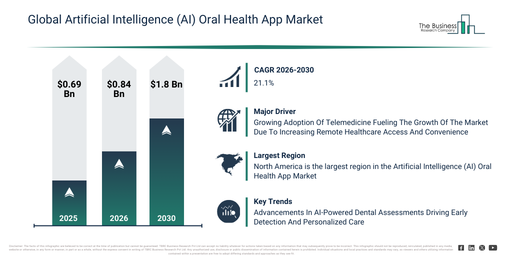
    The artificial intelligence (AI) oral health app market has experienced substantial expansion in recent years. Its valuation is expected to climb from $0.69 billion in 2025 to $0.84 billion in 2026, demonstrating a compound annual growth rate (CAGR) of 21.4%. Factors contributing to this historical growth include increasing smartphone penetration in healthcare, heightened awareness of oral hygiene, the early adoption of digital dental diagnostics, the expansion of telehealth platforms, and the availability of dental imaging data.

    The artificial intelligence (AI) oral health app market is projected to experience substantial growth in the coming years, with its size anticipated to reach $1.8 billion by 2030, exhibiting a compound annual growth rate (CAGR) of 21.1%. This expansion is primarily driven by an increasing demand for remote dental care solutions, the rising adoption of AI-driven preventive healthcare, the broadening of cloud-based health applications, a growing emphasis on personalized patient engagement, and increasing investments within digital health ecosystems. Significant trends expected during this period include a greater embrace of AI-based dental image analysis, the increasing use of personalized oral health monitoring tools, enhanced integration of remote dental diagnostics, the expansion of preventive dental care applications, and a stronger focus on the early detection of oral diseases.

    Download the Free Sample Report to Explore Key Market Insights:

    https://www.thebusinessresearchcompany.com/sample.aspx?id=28122&type=smp

    What Key Drivers Are Influencing The Growth Of The Artificial Intelligence (AI) Oral Health App Market?

    The increasing use of telemedicine is poised to drive the expansion of the artificial intelligence (AI) oral health app market. Telemedicine refers to the provision of clinical healthcare services remotely through digital communication technologies, allowing patients to consult medical professionals, receive diagnoses, and manage treatments without requiring in-person visits to a facility. Its increasing prevalence is due to the greater convenience it offers, enabling patients to access healthcare services from a distance, thereby saving time and removing the necessity for travel, which ultimately enhances accessibility and efficiency. Artificial intelligence (AI) oral health apps further integrate into telemedicine ecosystems by providing remote dental monitoring, making them highly suitable for individuals with limited access to traditional in-person care. They streamline diagnostic efforts through immediate analysis of oral images, thereby improving healthcare convenience and facilitating early detection of dental problems. For example, in February 2025, according to the PubMed Central, a US-based government-run digital repository, it was reported that in March 2023, 29% of all mental health care visits and 21% of substance use disorder care were delivered via telemedicine. Furthermore, payment parity mandates were linked to a 2.5 percentage point increase in telemedicine use in the first quarter of 2023 compared to states lacking such mandates. Thus, the increasing uptake of telemedicine is indeed stimulating the expansion of the artificial intelligence (AI) oral health app market.

    Which Segments Are Included In The Analysis Of The Artificial Intelligence (AI) Oral Health App Market?

    The artificial intelligence (AI) oral health app market covered in this report is segmented –

    1) By Component: Software, Services

    2) By Deployment Mode: Cloud-Based, On-Premises

    3) By Application: Dental Diagnostics, Oral Health Monitoring, Patient Education, Other Applications

    4) By End User: Dental Clinics, Hospitals, Individual Users, Other End-Users

    Subsegments:

    1) By Software: Diagnostic Software, Monitoring Software, Treatment Planning Software, Imaging Software

    2) By Services: Consultation Services, Data Analytics Services, Maintenance And Support Services, Integration Services

    What Key Trends Are Influencing The Development Of The Artificial Intelligence (AI) Oral Health App Market?

    Leading companies within the artificial intelligence (AI) oral health app market are concentrating on creating sophisticated solutions, such as AI-powered dental assessments. These solutions aim to improve early detection, personalize care, boost patient involvement, and make oral healthcare more accessible. Specifically, AI-powered dental assessments involve artificial intelligence algorithms analyzing images of teeth and gums. Their purpose is to pinpoint potential oral health problems and offer immediate, practical recommendations to users. An example of this is seen in May 2025, when Mars Inc., a US-based global pet nutrition and healthcare company, introduced GREENIES Canine Dental Check. This AI-powered dental assessment tool examines photographs of dogs’ teeth and gums to identify tartar buildup and gum irritation, delivering results in seconds, accompanied by subsequent advice. Furthermore, the tool connects users with licensed veterinary technicians via the PETconnect by GREENIES service. This exemplifies a contemporary method of utilizing AI for ongoing, home-based oral health surveillance and assistance. Such innovation enables pet owners to spot dental issues proactively, thereby decreasing the chances of serious oral diseases and expensive veterinary interventions.

    Which Key Industry Participants Are Active In The Artificial Intelligence (AI) Oral Health App Market?

    Major companies operating in the artificial intelligence (AI) oral health app market are Dentsply Sirona Inc., Align Technology Inc., Straumann Group, Planmeca Oy, 3Shape A/S, Dexis Corp., Dandy Inc., Carestream Health Inc., Dental Monitoring SAS, Pearl Inc., Overjet Inc., VideaHealth Inc., Zenyum Pte. Ltd., Candid Care Co., MouthWatch LLC, Dentem Inc., Denti.AI Technology Inc., OraQ AI Inc., Oryx Dental Software LLC, SOTA Imaging, Denota Ltd.

    Read the full artificial intelligence (ai) oral health app market report here:

    https://www.thebusinessresearchcompany.com/report/artificial-intelligence-ai-oral-health-app-global-market-report

    Which Region Is Expected To Register The Fastest Growth In The Artificial Intelligence (AI) Oral Health App Market?

    North America was the largest region in the artificial intelligence (AI) oral health app market in 2025. Asia-Pacific is expected to be the fastest-growing region in the forecast period. The regions covered in the artificial intelligence (AI) oral health app market report are Asia-Pacific, South East Asia, Western Europe, Eastern Europe, North America, South America, Middle East, Africa.

    Request A Tailored Artificial Intelligence (AI) Oral Health App Market Research Report For Competitive Advantage:

    https://www.thebusinessresearchcompany.com/customise?id=28122&type=smp

    Browse Through More Reports Similar to the Global Artificial Intelligence (AI) Oral Health App Market 2026, By The Business Research Company

    Oral Care Global Market Report

    https://www.thebusinessresearchcompany.com/report/oral-care-global-market-report

    Womens Health App Global Market Report

    https://www.thebusinessresearchcompany.com/report/womens-health-app-global-market-report

    Artificial Intelligence Ai Software Global Market Report

    https://www.thebusinessresearchcompany.com/report/artificial-intelligence-ai-software-global-market-report

    Get in touch with us:

    The Business Research Company: https://www.thebusinessresearchcompany.com/

    Americas +1 310-496-7795

    Asia +44 7882 955267 & +91 8897263534

    Europe +44 7882 955267

    Email us at info@tbrc.info

    Follow us on:

    LinkedIn: https://in.linkedin.com/company/the-business-research-company

    YouTube: https://www.youtube.com/channel/UC24_fI0rV8cR5DxlCpgmyFQ

    Global Market Model: https://www.thebusinessresearchcompany.com/global-market-model

  • Global Artificial Intelligence In Medicine Market Expected to Reach $80.58 Billion by 2030 with 38.8% CAGR

    The Business Research Company’s 2026 market reports include new capabilities such as market attractiveness scoring and analysis, total addressable market analysis, company scoring matrix, interactive excel data dashboard, improved supply chain analysis, upcoming startups in the market, and overview of key products, aimed at improving the depth, usability, and strategic value of the insights delivered.

    What Market Value Is Expected For The Artificial Intelligence In Medicine Market At The End Of The 2026–2030 Forecast Period?

    The market size for artificial intelligence in medicine has witnessed significant growth in recent years. It is projected to increase from $15.6 billion in 2025 to $21.7 billion in 2026, achieving a compound annual growth rate (CAGR) of 39.1%. The expansion observed historically can be attributed to factors such as the increasing digitization of healthcare records, a rising demand for improved clinical outcomes, the broadening use of healthcare data analytics, the escalating complexity of treatment pathways, and the accessibility of advanced computing resources.

    The artificial intelligence in medicine market is anticipated to undergo significant expansion in the coming years, with its size projected to reach $80.59 billion by 2030, exhibiting a compound annual growth rate (CAGR) of 38.8%. This projected growth throughout the forecast period can be linked to factors such as the increasing embrace of AI-enabled personalized medicine, a rise in investments directed towards healthcare AI platforms, the spread of remote and digital care models, the growing application of predictive analytics in population health, and the enhanced integration of AI across various clinical workflows. Prominent trends for the forecast period include the wider deployment of AI-based clinical decision support systems, a surge in the adoption of personalized treatment algorithms, the increasing utilization of AI for disease risk prediction, the broadening of AI applications in hospital operations, and a heightened focus on data-driven patient management.

    Download the Free Sample Report to Explore Key Market Insights:

    https://www.thebusinessresearchcompany.com/sample.aspx?id=13590&type=smp

    What Major Growth Drivers Are Shaping The Outlook Of The Artificial Intelligence In Medicine Market?

    The expanding interest in real-time remote patient monitoring (RPM) systems is projected to fuel the advancement of artificial intelligence in the medicine market in the coming years. A remote patient monitoring system represents a technology-powered healthcare solution specifically engineered to oversee patients’ well-being outside typical clinical environments. Artificial intelligence (AI) in medicine has substantially reshaped remote patient monitoring by utilizing sophisticated algorithms to process vast patient data, thereby offering predictive analyses and enabling individualized patient care. For example, in November 2025, a report from Statistics Canada, a Canada-based government agency, showed that Canadians living in Newfoundland and Labrador (13.2%), British Columbia (10.6%), and Nova Scotia (10.4%) comprised the largest shares of individuals who exclusively had virtual appointments. In contrast, Saskatchewan (2.1%), Alberta (2.4%), and Manitoba (3.3%) recorded the smallest shares of those relying solely on virtual appointments. Hence, the escalating engagement with real-time remote patient monitoring (RPM) systems is propelling the growth of artificial intelligence in the medicine market.

    What Segment Types Make Up The Artificial Intelligence In Medicine Market?

    The artificial intelligence in medicine market covered in this report is segmented –

    1) By Type: Hardware, Software, Services

    2) By Technology: Machine Learning, Natural Language Processing, Context-Aware Processing, Computer Vision

    3) By Application: Medical Administration And Support, Patient Management, Research And Development, Other Applications

    4) By End User: Hospitals, Clinics, Research Institutions

    Subsegments:

    1) By Hardware: AI-Powered Imaging Devices, Robotics And Automation Devices, Wearable Health Devices, Servers And Computing Systems

    2) By Software: Machine Learning Algorithms, Natural Language Processing (NLP) Tools, Image Analysis Software, Predictive Analytics Software, Clinical Decision Support Systems

    3) By Services: AI Consulting Services, Integration Services, Maintenance And Support Services, Data Management Services, Training And Education Services

    Which Trends Are Impacting The Growth Of The Artificial Intelligence In Medicine Market?

    Leading companies active in the artificial intelligence in the medicine market are dedicated to developing innovative solutions, including AI-powered platforms, to deliver dependable services to customers. An AI-powered platform is a software solution that incorporates artificial intelligence (AI) technologies to automate tasks, analyze data, and produce predictions. For instance, in April 2023, OM1 Inc., a US-based digital health company, unveiled PhenOM. This platform employs real-world data and advanced analytics to identify distinct digital phenotypes correlated with specific conditions and outcomes, effectively generating unique profiles for various patient groups. PhenOM is capable of analyzing individual patient data to foresee risks, pinpoint chances for intervention, and inform decisions about treatment.

    Who Are The Key Players Driving Competition In The Artificial Intelligence In Medicine Market?

    Major companies operating in the artificial intelligence in medicine market are Google LLC, Microsoft Corporation, Intel Corporation, IBM Corporation, Medtronic PLC, Nvidia Corporation, Siemens Healthineers AG, Philips Healthcare, Babylon Healthcare Services Ltd., Komodo Health Inc., Modernizing Medicine Inc., Viz.ai Inc., Butterfly Network Inc., Augmedix, AiCure LLC, HealthTap Inc., Welltok Inc., Enlitic Inc., PathAI Inc., Nano-X Imaging Ltd., Berg LLC, Insitro, Sense.ly Inc., Subtle Medical Inc., Medasense Biometrics Limited, Immunai, Atomwise Inc., Freenome Holdings Inc., CloudMedX Inc.

    Read the full artificial intelligence in medicine market report here:

    https://www.thebusinessresearchcompany.com/report/artificial-intelligence-in-medicine-global-market-report

    Which Regions Are Projected To Dominate The Artificial Intelligence In Medicine Market In The Coming Years?

    North America was the largest region in the artificial intelligence in medicine market in 2025. Asia-Pacific is expected to be the fastest-growing region in the forecast period. The regions covered in the artificial intelligence in medicine market report are Asia-Pacific, South East Asia, Western Europe, Eastern Europe, North America, South America, Middle East, Africa.

    Request A Tailored Artificial Intelligence In Medicine Market Research Report For Competitive Advantage:

    https://www.thebusinessresearchcompany.com/customise?id=13590&type=smp

    Browse Through More Reports Similar to the Global Artificial Intelligence In Medicine Market 2026, By The Business Research Company

    Artificial Intelligence In Healthcare Market

    https://www.thebusinessresearchcompany.com/report/artificial-intelligence-in-healthcare-market

    Artificial Intelligence Ai In Precision Medicine Global Market Report

    https://www.thebusinessresearchcompany.com/report/artificial-intelligence-ai-in-precision-medicine-global-market-report

    Artificial Intelligence In Healthcare Diagnosis Global Market Report

    https://www.thebusinessresearchcompany.com/report/artificial-intelligence-in-healthcare-diagnosis-global-market-report

    Get in touch with us:

    The Business Research Company: https://www.thebusinessresearchcompany.com/

    Americas +1 310-496-7795

    Asia +44 7882 955267 & +91 8897263534

    Europe +44 7882 955267

    Email us at info@tbrc.info

    Follow us on:

    LinkedIn: https://in.linkedin.com/company/the-business-research-company

    YouTube: https://www.youtube.com/channel/UC24_fI0rV8cR5DxlCpgmyFQ

    Global Market Model: https://www.thebusinessresearchcompany.com/global-market-model

  • Global Artificial Intelligence (AI) In Wound Care Market Analysis for 2026–2030 with Strategic Forecast Insights for Businesses

    Global Artificial Intelligence (AI) In Wound Care Market Analysis for 2026–2030 with Strategic Forecast Insights for Businesses

    The Business Research Company’s 2026 market reports include new capabilities such as market attractiveness scoring and analysis, total addressable market analysis, company scoring matrix, interactive excel data dashboard, improved supply chain analysis, upcoming startups in the market, and overview of key products, aimed at improving the depth, usability, and strategic value of the insights delivered.

    What Market Valuation Is Forecasted For The Artificial Intelligence (AI) In Wound Care Market By 2030 Starting From Its 2026 Size?

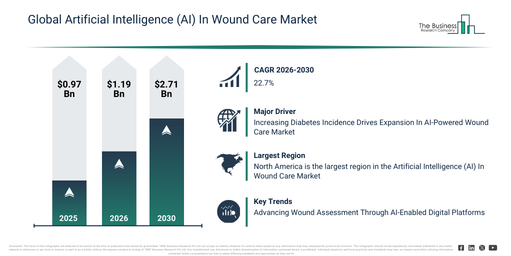
    The market size for artificial intelligence (AI) in wound care has seen remarkable expansion in recent years. Projections indicate it will expand from $0.97 billion in 2025 to $1.19 billion in 2026, demonstrating a compound annual growth rate (CAGR) of 23.0%. Historically, this growth stemmed from factors such as the increasing occurrence of chronic wounds, a rise in diabetes-related ulcers, the integration of digital wound documentation, the expansion of hospital-based wound care initiatives, and the availability of tools for imaging-based assessment.

    The artificial intelligence (AI) in wound care market is projected to experience substantial growth in the coming years, with its size forecast to reach $2.71 billion by 2030, demonstrating a compound annual growth rate (CAGR) of 22.7%. This expansion during the forecast period is attributed to several factors including a heightened demand for personalized wound treatment, the increasing uptake of remote patient monitoring, the broadening of AI-enabled clinical decision support, a growing emphasis on cost-effective wound management, and more extensive integration of AI with telehealth platforms. Key trends anticipated in the forecast period encompass the increasing deployment of AI-based wound assessment tools, a rise in the adoption of predictive healing analytics, greater integration of remote wound monitoring solutions, the expansion of personalized wound care algorithms, and enhanced automation of clinical documentation.

    Download the Free Sample Report to Explore Key Market Insights:

    https://www.thebusinessresearchcompany.com/sample.aspx?id=19316&type=smp

    What Major Growth Drivers Are Shaping The Outlook Of The Artificial Intelligence (AI) In Wound Care Market?

    Future expansion of the artificial intelligence (AI) in wound care market is anticipated due to the increasing occurrence of diabetes. This chronic condition, marked by elevated blood glucose, often results in complications like heart disease, kidney failure, neuropathy, and vision loss. The growing prevalence of diabetes is largely influenced by rising obesity rates, which heighten the risk of type 2 diabetes, and by an aging demographic, given that the likelihood of developing the condition increases with age. Artificial intelligence in wound care supports diabetes management through precise wound evaluations and customized treatment strategies, thereby improving the effectiveness and efficiency of care for diabetic ulcers. For example, data from May 2024 by the Centers for Disease Control and Prevention, a U.S. governmental body, indicated that 38.4 million Americans, representing 11.6% of the U.S. population, were living with diabetes. This prevalence rose considerably to 29.2% among adults aged 65 and above. Consequently, the increasing occurrence of diabetes is propelling the expansion of the artificial intelligence (AI) in wound care market.

    Which Segment Categories Define The Artificial Intelligence (AI) In Wound Care Market?

    The artificial intelligence (AI) in wound care market covered in this report is segmented –

    1) By Type Of Wound: Acute Wounds, Chronic Wounds

    2) By Technology: Deep Learning, Machine Learning, Other Technologies

    3) By End User: Clinical Trials And Research Centers, Home Health Agencies, Hospitals, Nursing Facilities, Other End Users

    Subsegments:

    1) By Acute Wounds: Surgical Wounds, Traumatic Wounds, Burns

    2) By Chronic Wounds: Diabetic Foot Ulcers, Pressure Ulcers (Bedsores), Venous Leg Ulcers, Arterial Ulcers

    What Key Trends Are Influencing The Development Of The Artificial Intelligence (AI) In Wound Care Market?

    Key entities in the artificial intelligence (AI) in wound care market are prioritizing the integration of innovative solutions, such as artificial intelligence (AI)-driven digital wound management solutions, to boost clinical effectiveness, enhance wound monitoring, improve documentation accuracy, and predict healing outcomes. Artificial intelligence (AI)-driven digital wound management solutions represent software systems that leverage computer vision and machine learning to analyze wound images and associated clinical data, facilitating real-time wound measurement, automated documentation, and tracking of healing progression. As an illustration, in October 2024, Swift Medical, a digital wound-care technology company based in Canada, introduced Skin & Wound 2. This AI-based digital wound-care platform is engineered to assist clinicians across various care settings, incorporating capabilities like sub-millimetre-accuracy imaging, electronic medical record (EMR) integration through fast healthcare interoperability resources (FHIR), and automated monitoring of healing timelines. Skin & Wound 2 contributes to more consistent wound assessment, diminishes the documentation workload, and supports care decisions informed by data.

    Who Are The Top Companies Competing In The Artificial Intelligence (AI) In Wound Care Market?

    Major companies operating in the artificial intelligence (AI) in wound care market are Medtronic plc, Stryker Corporation, Smith & Nephew plc, Convatec Group plc, Mölnlycke Health Care AB, Derma Sciences Inc., Implicity Inc., Cecelia Health, Swift Medical Inc., Spectral MD Inc., PolarityTE Inc., eKare Inc., KroniKare Pte Ltd, Perceptive Solutions Inc., Tissue Analytics Inc., WoundZoom Inc., Intellicure Inc., WoundMatrix Inc., WoundVision LLC, The Wound Pros LLC

    Read the full artificial intelligence (ai) in wound care market report here:

    https://www.thebusinessresearchcompany.com/report/artificial-intelligence-ai-in-wound-care-global-market-report

    Which Regions Are Projected To Dominate The Artificial Intelligence (AI) In Wound Care Market In The Coming Years?

    North America was the largest region in the artificial intelligence (AI) in wound care market in 2025. The regions covered in the artificial intelligence (AI) in wound care market report are Asia-Pacific, South East Asia, Western Europe, Eastern Europe, North America, South America, Middle East, Africa.

    Request A Tailored Artificial Intelligence (AI) In Wound Care Market Research Report For Competitive Advantage:

    https://www.thebusinessresearchcompany.com/customise?id=19316&type=smp

    Browse Through More Reports Similar to the Global Artificial Intelligence (AI) In Wound Care Market 2026, By The Business Research Company

    Ai In Construction Global Market Report

    https://www.thebusinessresearchcompany.com/report/ai-in-construction-global-market-report

    Ai In Manufacturing Global Market Report

    https://www.thebusinessresearchcompany.com/report/ai-in-manufacturing-global-market-report

    Ai In Real Estate Global Market Report

    https://www.thebusinessresearchcompany.com/report/ai-in-real-estate-global-market-report

    Get in touch with us:

    The Business Research Company: https://www.thebusinessresearchcompany.com/

    Americas +1 310-496-7795

    Asia +44 7882 955267 & +91 8897263534

    Europe +44 7882 955267

    Email us at info@tbrc.info

    Follow us on:

    LinkedIn: https://in.linkedin.com/company/the-business-research-company

    YouTube: https://www.youtube.com/channel/UC24_fI0rV8cR5DxlCpgmyFQ

    Global Market Model: https://www.thebusinessresearchcompany.com/global-market-model

  • Artificial Intelligence in Medical Imaging Market Future Outlook Showing Expansion Toward $17.19 Billion by 2030

    The Business Research Company’s 2026 market reports include new capabilities such as market attractiveness scoring and analysis, total addressable market analysis, company scoring matrix, interactive excel data dashboard, improved supply chain analysis, upcoming startups in the market, and overview of key products, aimed at improving the depth, usability, and strategic value of the insights delivered.

    What Is The Estimated Market Size Of The Artificial Intelligence in Medical Imaging Market During 2026–2030?

    The market size for artificial intelligence in medical imaging has experienced substantial growth in recent years. This market is expected to expand from $4.44 billion in 2025 to $5.82 billion in 2026, achieving a compound annual growth rate (CAGR) of 31.0%. The expansion observed historically stems from several factors, including the rising volume of medical imaging procedures, a scarcity of skilled radiologists, an increasing prevalence of chronic and complex diseases, the ongoing development of digital imaging infrastructure, and the enlargement of hospital imaging departments.

    The artificial intelligence in medical imaging market size is projected to experience significant growth in the coming years. It is expected to expand to $17.19 billion in 2030, driven by a compound annual growth rate (CAGR) of 31.1%. This projected growth during the forecast period can be attributed to the rising adoption of AI-powered clinical decision support, increasing investments in precision diagnostics, the expansion of AI’s use across various imaging modalities, a growing demand for faster diagnostic turnaround, and an increasing integration of AI with hospital information systems. Major trends anticipated during this period include the rising adoption of AI-assisted diagnostic imaging tools, an increase in the use of deep learning for image interpretation, the growing integration of AI in radiology workflow automation, the expansion of AI-based predictive diagnostic models, and an enhanced focus on the accuracy of early disease detection.

    Download the Free Sample Report to Explore Key Market Insights:

    https://www.thebusinessresearchcompany.com/sample.aspx?id=13589&type=smp

    What Drivers Are Expected To Influence The Artificial Intelligence in Medical Imaging Market During The Forecast Period?

    The expansion of imaging modalities is anticipated to propel the growth of AI in the medical imaging market going forward. These modalities encompass various medical imaging techniques utilized to visualize the body for diagnostic and therapeutic purposes. AI algorithms are integrated into medical modalities to assist with image reconstruction, noise reduction, and artifact correction, leading to clearer and more accurate CT images. For instance, in June 2025, the National Health Service, a UK-based government department, reported 47.2 million imaging tests in England in the year to March 2024, which compares to 45.0 million in the previous year, showing an increase of 4.8%. Therefore, the increasing prevalence of imaging modalities is driving the growth of AI in the medical imaging market.

    How Are The Various Segments Of The Artificial Intelligence in Medical Imaging Market Categorized?

    The artificial intelligence in medical imaging market covered in this report is segmented –

    1) By Modality: Computed Tomography (CT) Scan, Magnetic Resonance Imaging (MRI), X-rays, Ultrasound, Nuclear Imaging

    2) By Technology: Deep Learning, Natural Language Processing (NLP), Other Technologies

    3) By Application: Neurology, Respiratory And Pulmonary, Cardiology, Breast Screening, Orthopedics

    4) By End-Use: Hospitals, Diagnostic Imaging Centers, Other End-Users

    Subsegments:

    1) By Computed Tomography (CT) Scan: Cardiac CT, CT Angiography, Lung CT, Abdominal CT, Head CT

    2) By Magnetic Resonance Imaging (MRI): Brain MRI, Spine MRI, Musculoskeletal MRI, Abdominal MRI, Functional MRI

    3) By X-rays: Chest X-rays, Dental X-rays, Mammography, Bone X-rays, Fluoroscopy

    4) By Ultrasound: Abdominal Ultrasound, Cardiac Ultrasound, Obstetric And Gynecological Ultrasound, Vascular Ultrasound, Musculoskeletal Ultrasound

    5) By Nuclear Imaging: Positron Emission Tomography (PET), Single Photon Emission Computed Tomography (SPECT), Bone Scans, Thyroid Scans, Cardiac Scans

    What Major Market Trends Are Driving Changes In The Artificial Intelligence in Medical Imaging Market?

    Leading companies operating in the AI in the medical imaging market are developing innovative products, such as AI-enabled MRI systems, to better serve patients. An AI-enabled MRI system is essentially a traditional Magnetic Resonance Imaging (MRI) machine that integrates artificial intelligence (AI) technology. For instance, in December 2023, GE Healthcare, a US-based medical technology company, launched SIGNA Champion, an AI-enabled MRI system. SIGNA Champion is engineered to provide several AI-enabled workflow features, including AIR Recon DL and Sonic DL, which support efficiency and deliver excellent image quality for users across all experience levels. A unique characteristic of SIGNA Champion is its combination of generous patient clearance inside the bore and short scan times.

    Which Major Firms Influence Developments In The Artificial Intelligence in Medical Imaging Market?

    Major companies operating in the artificial intelligence in medical imaging market are Google LLC, Microsoft Corporation, IBM Watson Health, Intel Corporation, NVIDIA Corporation, Siemens Healthineers, Koninklijke Philips N.V, GE Healthcare, Agfa-Gevaert Group/Agfa HealthCare, Aidoc Medical, Arterys Inc., Lunit Inc., Butterfly Network Inc., Digital Diagnostics Inc., Caption Health Inc., EchoNous Inc., Covera Health Inc., Nanox Imaging LTD., AZmed, InformAI LLC, Avicenna AI, ImageBiopsy Lab, Nucleai, Icometrix NV., Gleamer

    Read the full artificial intelligence in medical imaging market report here:

    https://www.thebusinessresearchcompany.com/report/artificial-intelligence-in-medical-imaging-global-market-report

    Which Region Is Forecast To Lead The Artificial Intelligence in Medical Imaging Market In Terms Of Market Size?

    North America was the largest region in the AI in medical imaging market in 2025. Asia-Pacific is expected to be the fastest-growing region in the forecast period. The regions covered in the artificial intelligence in medical imaging market report are Asia-Pacific, South East Asia, Western Europe, Eastern Europe, North America, South America, Middle East, Africa.

    Request A Tailored Artificial Intelligence in Medical Imaging Market Research Report For Competitive Advantage:

    https://www.thebusinessresearchcompany.com/customise?id=13589&type=smp

    Browse Through More Reports Similar to the Global Artificial Intelligence in Medical Imaging Market 2026, By The Business Research Company

    Ai In Medical Imaging Global Market Report

    https://www.thebusinessresearchcompany.com/report/ai-in-medical-imaging-global-market-report

    Artificial Intelligence In Magnetic Resonance Imaging Mri Global Market Report

    https://www.thebusinessresearchcompany.com/report/artificial-intelligence-in-magnetic-resonance-imaging-mri-global-market-report

    Artificial Intelligence In Radiology Global Market Report

    https://www.thebusinessresearchcompany.com/report/artificial-intelligence-in-radiology-global-market-report

    Get in touch with us:

    The Business Research Company: https://www.thebusinessresearchcompany.com/

    Americas +1 310-496-7795

    Asia +44 7882 955267 & +91 8897263534

    Europe +44 7882 955267

    Email us at info@tbrc.info

    Follow us on:

    LinkedIn: https://in.linkedin.com/company/the-business-research-company

    YouTube: https://www.youtube.com/channel/UC24_fI0rV8cR5DxlCpgmyFQ

    Global Market Model: https://www.thebusinessresearchcompany.com/global-market-model

  • Artificial Intelligence (AI) In Respiratory Diseases Market Outlook 2026–2035 Driven by Key Growth Factors and Industry Projections

    Artificial Intelligence (AI) In Respiratory Diseases Market Outlook 2026–2035 Driven by Key Growth Factors and Industry Projections

    The Business Research Company’s 2026 market reports include new capabilities such as market attractiveness scoring and analysis, total addressable market analysis, company scoring matrix, interactive excel data dashboard, improved supply chain analysis, upcoming startups in the market, and overview of key products, aimed at improving the depth, usability, and strategic value of the insights delivered.

    How Is The Market Size Of The Artificial Intelligence (AI) In Respiratory Diseases Market Expected To Change Between 2026 And 2030?

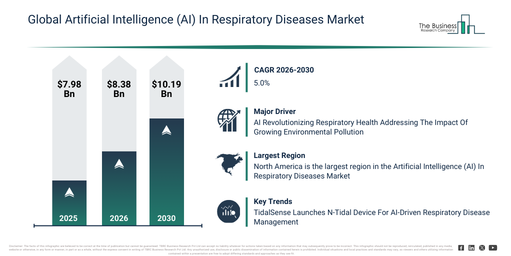
    The artificial intelligence (AI) in respiratory diseases market size has experienced consistent expansion over recent years. This market is projected to expand from $7.98 billion in 2025 to $8.38 billion in 2026, demonstrating a compound annual growth rate (CAGR) of 4.9%. Historically, this growth has been driven by several factors, including the increasing occurrence of respiratory diseases, a greater reliance on CT and MRI imaging, the ongoing digitalization of healthcare records, the early integration of AI-assisted diagnostics, and the enhancement of hospital diagnostic capacities.

    The market size for artificial intelligence (AI) in respiratory diseases is projected to experience robust expansion over the coming years. This market is predicted to reach $10.19 billion by 2030, exhibiting a compound annual growth rate (CAGR) of 5.0%. Factors contributing to this growth during the forecast period include a rising demand for tailored respiratory care, enhanced integration of AI with clinical decision support systems, the widening scope of remote monitoring for individuals with chronic respiratory conditions, an increasing emphasis on preventive pulmonology, and progress in medical imaging AI. Key trends anticipated within the forecast timeframe encompass the increasing utilization of AI-driven imaging analysis, the growing acceptance of predictive models for disease progression, the broader incorporation of AI into pulmonary diagnostics, the proliferation of remote respiratory monitoring technologies, and a heightened emphasis on identifying diseases early.

    Download the Free Sample Report to Explore Key Market Insights:

    https://www.thebusinessresearchcompany.com/sample.aspx?id=13792&type=smp

    What Drivers Are Expected To Influence The Artificial Intelligence (AI) In Respiratory Diseases Market During The Forecast Period?

    The respiratory disease market is influenced by various factors. Environmental pollution refers to the introduction of any substance or energy into the environment at a rate faster than it can be dispersed or stored in a harmless form. Artificial intelligence (AI) in respiratory diseases has the capability to substantially reduce the effects of environmental pollution on respiratory health by providing real-time monitoring, individualized risk assessments, data-driven decision-making, and innovative solutions for both individuals and communities. For example, in November 2024, according to the Global Carbon Budget, a Japan-based annual scientific assessment, fossil carbon dioxide emissions climbed to 37.4 billion tonnes, an increase of 0.8% over the previous year. Therefore, growing environmental pollution is a key factor driving the growth of artificial intelligence (AI) in the respiratory disease market.

    How Is The Artificial Intelligence (AI) In Respiratory Diseases Market Structured Across Different Segments?

    The artificial intelligence (AI) in respiratory diseases market covered in this report is segmented –

    1) By Imaging Type: Magnetic Resonance Imaging (MRI), Computed Tomography (CT) Scan, Electronic Patient-Reported Outcomes (ePRO)

    2) By Indication: Chronic Obstructive Pulmonary Disease, Interstitial Lung Disease, Pulmonary Infection

    3) By End Use: Hospital, Diagnostic Centers, Ambulatory Surgical Centers, Other End-Users

    Subsegments:

    1) By Magnetic Resonance Imaging (MRI): Lung Imaging, Thoracic Imaging, Cardiopulmonary Imaging

    2) By Computed Tomography (CT) Scan: High-Resolution CT (HRCT), Low-Dose CT, Thoracic CT

    3) By Electronic Patient-Reported Outcomes (ePRO): Symptom Tracking, Medication Adherence Monitoring, Quality Of Life Assessments

    How Are Trends Impacting The Artificial Intelligence (AI) In Respiratory Diseases Market?

    Leading companies in the artificial intelligence (AI) domain within the respiratory diseases market are developing innovative products such as N-Tidal devices to monitor patients’ tidal breathing. The n-Tidal device accurately measures the volume of air exchanged during normal breathing and provides valuable information concerning lung function. For instance, in August 2023, TidalSense, a UK-based respiratory technology company, introduced N-Tidal, which is a regulated AI technology for chronic obstructive pulmonary disease (COPD) diagnosis and management. This technology integrates N-Tidal’s CO2 sensor data with an artificial intelligence platform to gauge changes in lung function, seeking to improve the diagnosis and management of this respiratory condition. Clinical studies have shown the technology’s high accuracy, and it is expected to reform the diagnostic process for respiratory diseases. The launch represents a significant development in the application of AI for respiratory disease assessment, providing a more comfortable and efficient alternative to existing diagnostic tests.

    Which Major Players Dominate The Artificial Intelligence (AI) In Respiratory Diseases Market?

    Major companies operating in the artificial intelligence (AI) in respiratory diseases market are Siemens Healthineers, Philips Healthcare, GE Healthcare, Verily Life Sciences LLC, DeepMind Health, Merative L.P., Aidoc Medical, Butterfly Network, Infervision, Imagen Technologies, Caption Health, Swaasa AI, VIDA Diagnostics Inc., Enlitic, Thirona B.V., ArtiQ, Icometrix, Aidence, Arterys, PneumoWave Ltd

    Read the full artificial intelligence (ai) in respiratory diseases market report here:

    https://www.thebusinessresearchcompany.com/report/artificial-intelligence-ai-in-respiratory-diseases-global-market-report

    Which Region Is Forecast To Lead The Artificial Intelligence (AI) In Respiratory Diseases Market In Terms Of Market Size?

    North America was the largest region in the artificial Intelligence (AI) in respiratory diseases market in 2025. Asia-Pacific is expected to be the fastest-growing region in the forecast period. The regions covered in the artificial intelligence (AI) in respiratory diseases market report are Asia-Pacific, South East Asia, Western Europe, Eastern Europe, North America, South America, Middle East, Africa.

    Request A Tailored Artificial Intelligence (AI) In Respiratory Diseases Market Research Report For Competitive Advantage:

    https://www.thebusinessresearchcompany.com/customise?id=13792&type=smp

    Browse Through More Reports Similar to the Global Artificial Intelligence (AI) In Respiratory Diseases Market 2026, By The Business Research Company

    Artificial Intelligence In Healthcare Diagnosis Global Market Report

    https://www.thebusinessresearchcompany.com/report/artificial-intelligence-in-healthcare-diagnosis-global-market-report

    Ai In Medical Diagnostics Global Market Report

    https://www.thebusinessresearchcompany.com/report/ai-in-medical-diagnostics-global-market-report

    Artificial Intelligence Ai In Animal Health Global Market Report

    https://www.thebusinessresearchcompany.com/report/artificial-intelligence-ai-in-animal-health-global-market-report

    Get in touch with us:

    The Business Research Company: https://www.thebusinessresearchcompany.com/

    Americas +1 310-496-7795

    Asia +44 7882 955267 & +91 8897263534

    Europe +44 7882 955267

    Email us at info@tbrc.info

    Follow us on:

    LinkedIn: https://in.linkedin.com/company/the-business-research-company

    YouTube: https://www.youtube.com/channel/UC24_fI0rV8cR5DxlCpgmyFQ

    Global Market Model: https://www.thebusinessresearchcompany.com/global-market-model

  • Artificial Intelligence In Medical Coding Market Revenue Growth Expected to Reach $6 Billion by 2030 with 14% CAGR

    The Business Research Company’s 2026 market reports include new capabilities such as market attractiveness scoring and analysis, total addressable market analysis, company scoring matrix, interactive excel data dashboard, improved supply chain analysis, upcoming startups in the market, and overview of key products, aimed at improving the depth, usability, and strategic value of the insights delivered.

    What Market Size Expansion Is Predicted For The Artificial Intelligence In Medical Coding Market Between 2026 And 2030?

    The artificial intelligence in medical coding market size has experienced rapid growth in recent years. It is projected to expand from $3.12 billion in 2025 to $3.56 billion in 2026, at a compound annual growth rate (CAGR) of 14.0%. The expansion observed in the historic period can be attributed to several factors, including increasing healthcare data volumes, the rising complexity of medical coding standards, the growing administrative burden on healthcare providers, the expansion of electronic health record systems, and the demand for improved revenue cycle efficiency.

    The artificial intelligence in medical coding market is anticipated to experience substantial expansion in the next few years, with projections indicating a rise to $6 billion by 2030, growing at a compound annual growth rate (CAGR) of 14.0%. This growth during the forecast period is primarily driven by the increasing integration of fully automated coding platforms, heightened regulatory scrutiny regarding billing accuracy, the expanding utilization of AI-assisted clinical documentation, the wider availability of outsourced AI-powered coding services, and escalating investments in healthcare automation technologies. Significant trends for the forecast period include the increasing adoption of AI-driven automated coding solutions, the rising integration of natural language processing (NLP)-based clinical documentation analysis, the growing application of generative AI to improve code accuracy, the expansion of AI-enabled compliance and audit tools, and an intensified focus on reducing coding errors and denials.

    Download the Free Sample Report to Explore Key Market Insights:

    https://www.thebusinessresearchcompany.com/sample.aspx?id=13588&type=smp

    What Drivers Are Influencing The Artificial Intelligence In Medical Coding Market?

    The rising need for coding services is anticipated to fuel the expansion of artificial intelligence in the medical coding market going forward. Coding services involve converting healthcare diagnoses, procedures, and medical services into globally recognized alphanumeric medical codes. This process is crucial for precise billing, handling insurance claims, and securing reimbursements. The integration of AI into medical coding improves the speed, correctness, and flexibility of these services, thereby benefiting healthcare organizations, medical coders, and patient care. For example, the American Bureau of Labor Statistics, a US-based government agency, indicated that in 2024, employment for medical records specialists is anticipated to rise by 7 percent from 2024 to 2034. Consequently, the escalating demand for coding services is a key factor propelling the expansion of artificial intelligence in the medical coding market.

    Which Market Segments Are Examined In The Artificial Intelligence In Medical Coding Market Study?

    The artificial intelligence in medical coding market covered in this report is segmented –

    1) By Component: In-House, Outsourced

    2) By Technology: Machine Learning, Natural Language Processing (NLP), Generative AI

    3) By End-User: Healthcare Providers, Medical Billing Companies, Payers

    Subsegments:

    1) By In-House: Internal Coding Teams, AI-Enhanced Coding Solutions, Integration With Existing Systems

    2) By Outsourced: Third-Party Coding Services, AI-Powered Outsourcing Solutions, Vendor Management For Coding Services

    Which Trends Are Shaping The Future Of The Artificial Intelligence In Medical Coding Market?

    Major companies engaged in artificial intelligence within the medical coding sector are developing advanced technologies like Natural Language Processing (NLP) to understand the context in which words are used. This enables more accurate interpretation of patient conversations and a better grasp of the subtle aspects of a patient’s medical condition. Natural Language Processing (NLP) itself is a specialized area of Artificial Intelligence (AI) that allows machines to comprehend and process human-generated data, both spoken and written. As an illustration, in March 2023, the UK-based software company Linguamatics launched its Healthcare Product Suite, designed to transform unstructured electronic health record data into practical patient insights. This suite leverages natural language processing (NLP) to extract crucial information from various unstructured sources, such as EHRs, patient portals, and call center notes. The NLP Data Factory offered by Linguamatics delivers scalable and automated NLP transformation for key applications, supporting a broad range of healthcare data. Furthermore, the Health Language Data Interoperability Solution by Wolters Kluwer assists organizations in consolidating structured, semi-structured, and unstructured data from numerous sources within the healthcare field.

    Who Are The Primary Competitors In The Artificial Intelligence In Medical Coding Market?

    Major companies operating in the artificial intelligence in medical coding market are CodaMetrix Inc., Fathom, Inc., AKASA, Inc., Aideo Technologies, Inc., M-Scribe Technologies, LLC, Dolbey Systems, Inc., Streamline Health Solutions, Inc., Talix, Inc., Health Record Services Corporation, Saince, Inc., Diagnoss, Inc., BUDDI AI, Inc., Oncora Medical, Inc., Epic Systems Corporation, CorroHealth, Inc., nThrive, Inc., Waystar Technologies, Inc., Thoughtful Automation, Inc., Solventum Corporation, Exponential AI, Inc.

    Read the full artificial intelligence in medical coding market report here:

    https://www.thebusinessresearchcompany.com/report/artificial-intelligence-in-medical-coding-global-market-report

    Which Regions Are Expected To Experience Rapid Expansion In The Artificial Intelligence In Medical Coding Market?

    North America was the largest region in the artificial intelligence in medical coding market in 2025. The regions covered in the artificial intelligence in medical coding market report are Asia-Pacific, South East Asia, Western Europe, Eastern Europe, North America, South America, Middle East, Africa.

    Request A Tailored Artificial Intelligence In Medical Coding Market Research Report For Competitive Advantage:

    https://www.thebusinessresearchcompany.com/customise?id=13588&type=smp

    Browse Through More Reports Similar to the Global Artificial Intelligence In Medical Coding Market 2026, By The Business Research Company

    Artificial Intelligence In Medicine Global Market Report

    https://www.thebusinessresearchcompany.com/report/artificial-intelligence-in-medicine-global-market-report

    Medical Coding Global Market Report

    https://www.thebusinessresearchcompany.com/report/medical-coding-global-market-report

    Artificial Intelligence In Healthcare Market

    https://www.thebusinessresearchcompany.com/report/artificial-intelligence-in-healthcare-market

    Get in touch with us:

    The Business Research Company: https://www.thebusinessresearchcompany.com/

    Americas +1 310-496-7795

    Asia +44 7882 955267 & +91 8897263534

    Europe +44 7882 955267

    Email us at info@tbrc.info

    Follow us on:

    LinkedIn: https://in.linkedin.com/company/the-business-research-company

    YouTube: https://www.youtube.com/channel/UC24_fI0rV8cR5DxlCpgmyFQ

    Global Market Model: https://www.thebusinessresearchcompany.com/global-market-model

  • Artificial Intelligence In Life Sciences Market Expected to Record Steady Growth and Approach $10.42 Billion by 2030

    The Business Research Company’s 2026 market reports include new capabilities such as market attractiveness scoring and analysis, total addressable market analysis, company scoring matrix, interactive excel data dashboard, improved supply chain analysis, upcoming startups in the market, and overview of key products, aimed at improving the depth, usability, and strategic value of the insights delivered.

    How Large Is The Artificial Intelligence In Life Sciences Market Projected To Become By 2030 Based On Its 2026 Valuation?

    The artificial intelligence in life sciences market size has grown exponentially in recent years. It will grow from $3.59 billion in 2025 to $4.44 billion in 2026 at a compound annual growth rate (CAGR) of 23.6%. The growth in the historic period can be attributed to increasing complexity of biological datasets, expansion of genomics research, rising adoption of digital lab technologies, early integration of ai in biotechnology research, growing demand for faster research cycles.

    The artificial intelligence in life sciences market size is anticipated to undergo substantial growth in the upcoming years. It is projected to swell to $10.43 billion by 2030, achieving a compound annual growth rate (CAGR) of 23.8%. This expansion during the forecast period is attributable to several factors, including heightened investments in personalized medicine, the increasing deployment of AI-enabled laboratory automation, the broadening reach of cloud-based life science platforms, strengthening partnerships between technology and life science firms, and a growing regulatory acceptance of AI-driven insights. Key trends for the forecast period include the deeper integration of AI across life science workflows, the rising uptake of AI-driven data analytics platforms, the expanded use of automation in laboratory operations, the proliferation of AI-based precision medicine applications, and an enhanced focus on expediting research outcomes.

    Download the Free Sample Report to Explore Key Market Insights:

    https://www.thebusinessresearchcompany.com/sample.aspx?id=13587&type=smp

    What Drivers Are Shaping The Future Growth Of The Artificial Intelligence In Life Sciences Market?

    The rising demand for real-time remote patient monitoring (RPM) systems is anticipated to fuel the expansion of artificial intelligence within the life sciences market moving ahead. An RPM system represents a technology-powered healthcare solution specifically developed to oversee patients’ well-being beyond conventional medical environments. Artificial intelligence in life sciences plays a crucial role in remote patient monitoring, offering ongoing, tailored, and data-informed insights that facilitate proactive healthcare management. As an illustration, in April 2025, the Peterson Center on Healthcare, a US-based non-profit organization, documented that expenditures for remote therapeutic monitoring (RTM) within Traditional Medicare increased substantially from $2.2 million in 2022 to $10.4 million in 2023. Additionally, during 2023, Traditional Medicare saw 451,000 patients utilizing RPM services. Consequently, the heightened enthusiasm for real-time remote patient monitoring (RPM) systems is propelling the expansion of artificial intelligence in the life sciences market.

    What Segment Groups Are Identified Within The Artificial Intelligence In Life Sciences Market?

    The artificial intelligence in life sciences market covered in this report is segmented –

    1) By Offering: Software, Hardware, Services

    2) By Deployment: On-Premises, Cloud-Based

    3) By Application: Drug Discovery, Medical Diagnosis, Biotechnology, Clinical Trials, Precision And Personalized Medicine, Patient Monitoring

    Subsegments:

    1) By Software: Drug Discovery Software, Genomic Analysis Software, Clinical Trial Management Software, Personalized Medicine Software, Laboratory Information Management Systems (LIMS)

    2) By Hardware: AI-Enabled Laboratory Equipment, Robotics And Automation Systems, Imaging Devices And Equipment, Sensor Technologies

    3) By Services: Consulting Services, Data Analytics Services, Research And Development Services, Implementation And Integration Services, Training And Support Services

    What Key Trends Are Influencing The Development Of The Artificial Intelligence In Life Sciences Market?

    Leading companies active in the artificial intelligence in the life sciences market are concentrating on developing innovative products featuring technological progress, such as drug discovery software, to secure their market position. Drug discovery software refers to a range of computer programs and applications crafted to support pharmaceutical and biotechnology researchers in the process of discovering new medications. For example, in December 2023, Merck, a science and technology firm based in Germany, introduced AIDDISON, a pioneering drug discovery software. Unique as the first of its kind, it connects virtual molecule design with practical manufacturability, utilizing generative AI, machine learning, and computer-aided drug design. AIDDISON efficiently identifies potential drug candidates from numerous options, considering vital characteristics like non-toxicity and solubility. Its capacity to bridge the gap between theoretical molecule design and real-world production viability is a notable application of artificial intelligence in the life sciences sector.

    Which Companies Hold Significant Positions In The Artificial Intelligence In Life Sciences Market?

    Major companies operating in the artificial intelligence in life sciences market are Google LLC, Microsoft Corporation, Intel Corporation, IBM Corporation, Medtronic PLC, Nvidia Corporation, Novo Nordisk A/S, Siemens Healthineers AG, Philips Healthcare, Babylon Healthcare Services Ltd., Komodo Health Inc., Modernizing Medicine Inc., Viz.ai Inc., Butterfly Network Inc., Augmedix, AiCure LLC, HealthTap Inc., Welltok Inc., Enlitic Inc., PathAI Inc., Nano-X Imaging Ltd., Berg LLC, Insitro, Sense.ly Inc., Subtle Medical Inc., Medasense Biometrics Limited, Immunai, Atomwise Inc., Freenome Holdings Inc., CloudMedX Inc.

    Read the full artificial intelligence in life sciences market report here:

    https://www.thebusinessresearchcompany.com/report/artificial-intelligence-in-life-sciences-global-market-report

    Which Geographic Regions Are Influencing Demand In The Artificial Intelligence In Life Sciences Market?

    North America was the largest region in the Artificial Intelligence In Life Sciences market in 2025. Asia-Pacific is expected to be the fastest-growing region in the forecast period. The regions covered in the artificial intelligence in life sciences market report are Asia-Pacific, South East Asia, Western Europe, Eastern Europe, North America, South America, Middle East, Africa.

    Request A Tailored Artificial Intelligence In Life Sciences Market Research Report For Competitive Advantage:

    https://www.thebusinessresearchcompany.com/customise?id=13587&type=smp

    Browse Through More Reports Similar to the Global Artificial Intelligence In Life Sciences Market 2026, By The Business Research Company

    Ai In Life Science Analytics Global Market Report

    https://www.thebusinessresearchcompany.com/report/ai-in-life-science-analytics-global-market-report

    Artificial Intelligence In Medicine Global Market Report

    https://www.thebusinessresearchcompany.com/report/artificial-intelligence-in-medicine-global-market-report

    Life Science Analytics Global Market Report

    https://www.thebusinessresearchcompany.com/report/life-science-analytics-global-market-report

    Get in touch with us:

    The Business Research Company: https://www.thebusinessresearchcompany.com/

    Americas +1 310-496-7795

    Asia +44 7882 955267 & +91 8897263534

    Europe +44 7882 955267

    Email us at info@tbrc.info

    Follow us on:

    LinkedIn: https://in.linkedin.com/company/the-business-research-company

    YouTube: https://www.youtube.com/channel/UC24_fI0rV8cR5DxlCpgmyFQ

    Global Market Model: https://www.thebusinessresearchcompany.com/global-market-model