Category: Healthcare Services

  • Global Artificial Intelligence (AI)-Powered Sleep Apnea Monitoring Market Analysis for 2026–2030 with Strategic Forecast Insights for Businesses

    The Business Research Company’s 2026 market reports include new capabilities such as market attractiveness scoring and analysis, total addressable market analysis, company scoring matrix, interactive excel data dashboard, improved supply chain analysis, upcoming startups in the market, and overview of key products, aimed at improving the depth, usability, and strategic value of the insights delivered.

    What Will Be The Estimated Market Valuation Of The Artificial Intelligence (AI)-Powered Sleep Apnea Monitoring Market By The End Of 2030?

    The artificial intelligence (AI)-powered sleep apnea monitoring market has experienced substantial growth in its size over recent years. This market is projected to expand from $1.84 billion in 2025 to reach $2.24 billion by 2026, demonstrating a compound annual growth rate (CAGR) of 21.6%. Historically, this growth can be attributed to factors such as the increasing prevalence of sleep apnea, rising awareness of sleep health, wider adoption of wearable health technology, increasing application of home-based diagnostic tools, and greater accessibility to digital sleep data.

    The artificial intelligence (AI)-powered sleep apnea monitoring market is projected to experience substantial growth in the coming years. This market is forecast to reach a size of $4.84 billion by 2030, demonstrating a compound annual growth rate (CAGR) of 21.3%. Key factors driving this expansion during the forecast period include progress in AI-driven respiratory analytics, the increasing embrace of tele-sleep medicine, the wider availability of cloud-based sleep monitoring platforms, a greater need for continuous health monitoring, and an intensified focus on managing sleep disorders proactively. Significant trends anticipated in the forecast period involve the growing acceptance of AI-based tools for detecting sleep disorders, greater integration of wearable devices for sleep monitoring, increased utilization of remote sleep diagnostics, the proliferation of home-based monitoring solutions, and an amplified emphasis on identifying apnea early.

    Download the Free Sample Report to Explore Key Market Insights:

    https://www.thebusinessresearchcompany.com/sample.aspx?id=28931&type=smp

    What Primary Drivers Are Shaping The Development Of The Artificial Intelligence (AI)-Powered Sleep Apnea Monitoring Market?

    The increasing occurrence of sleep disorders is anticipated to fuel the expansion of the artificial intelligence (AI)-powered sleep apnea monitoring market in the future. These disorders are medical ailments that routinely impair an individual’s capacity to achieve restful sleep, encompassing conditions like insomnia, sleep apnea, and restless legs syndrome. The rise in sleep disorders is attributed to excessive screen usage prior to bedtime, given that blue light disrupts melatonin synthesis and postpones the commencement of sleep. Artificial intelligence (AI)-powered sleep apnea monitoring offers assistance with sleep disorders through constant surveillance of breathing patterns, oxygen saturation, and sleep cycles to pinpoint apnea incidents instantly, thereby facilitating prompt diagnosis and tailored interventions, alongside supporting distant oversight and enhancing sleep quality. For example, data from November 2023, provided by the National Health Service, a UK-based governmental health statistics organization, indicated a marginal increase in the percentage of young individuals aged 17 to 23 years reporting sleep issues three or more times during the previous week, reaching 64.9%, up from 64.0% in 2022. Consequently, the escalating incidence of sleep disorders is a key factor propelling the expansion of the artificial intelligence (AI)-powered sleep apnea monitoring market.

    Which Segment Classifications Shape The Artificial Intelligence (AI)-Powered Sleep Apnea Monitoring Market?

    The artificial intelligence (AI)-powered sleep apnea monitoring market covered in this report is segmented –

    1) By Product Type: Wearable Devices, Non-Wearable Devices, Software Solutions

    2) By Technology: Machine Learning, Deep Learning, Natural Language Processing, Other Technologies

    3) By Distribution Channel: Online, Offline

    4) By Application: Home Care, Hospitals And Clinics, Sleep Centers, Other Applications

    5) By End-User: Adults, Pediatrics, Geriatrics

    Subsegments:

    1) By Wearable Devices: Wrist Worn Sleep Trackers, Finger Oximeter Rings, Adhesive Respiratory Patches, Chest Belt Respiratory Monitors, Headband Sleep Sensors, Smart Clothing Garments

    2) By Non-Wearable Devices: Bedside Radar Respiratory Monitors, Under Mattress Sensor Mats, Smart Bed Platforms With Physiological Monitoring, Pillow Embedded Acoustic Sensors, Nightstand Radio Frequency Sensing Units

    3) By Software Solutions: Event Detection And Scoring Platforms, Remote Monitoring And Adherence Portals, Clinical Decision Support Dashboards, Patient Engagement And Coaching Applications, Population Health Screening And Triage Modules, Care Coordination And Teleconsultation Tools, Data Management And Cloud Storage Services

    Which Upcoming Trends Are Expected To Influence The Artificial Intelligence (AI)-Powered Sleep Apnea Monitoring Market?

    Major companies operating in the artificial intelligence (AI)-powered sleep apnea monitoring market are primarily concentrating on creating sophisticated at-home sleep examination solutions to provide customized management of sleep apnea and enhance patient outcomes. These at-home sleep examination solutions allow individuals to track their sleep patterns and breathing at home, collecting real-time physiological data for accurate detection of sleep disorders and reducing the need for clinical visits. For instance, in January 2025, APNEAL, a France-based healthcare technology company, unveiled the world’s first AI-powered smartphone application for identifying sleep apnea during CES 2025. The app converts a typical smartphone into a clinical-grade diagnostic instrument capable of analyzing respiratory patterns, heartbeats, and breathing sounds utilizing its built-in sensors, including the accelerometer, gyroscope, and microphone. It employs advanced artificial intelligence to deliver a 90% accuracy rate compared to polysomnography, thereby enabling at-home sleep apnea screening without the necessity for specialized equipment or hospital visits.

    Which Companies Are Expanding Their Footprint In The Artificial Intelligence (AI)-Powered Sleep Apnea Monitoring Market?

    Major companies operating in the artificial intelligence (AI)-powered sleep apnea monitoring market are Koninklijke Philips N.V., ResMed Inc., Nihon Kohden Corporation, Fisher & Paykel Healthcare Corporation Limited, Inspire Medical Systems Inc., Vyaire Medical Inc., BioSerenity, SomnoMed Limited, BMC Medical Co. Ltd., Compumedics Limited, Sibel Health, Sleepiz AG, EnsoData Inc., Onera Health B.V., SleepScore Labs LLC, SleepImage, Beacon Biosignals, Acurable, Wesper, Hexoskin.

    Read the full artificial intelligence (ai)-powered sleep apnea monitoring market report here:

    https://www.thebusinessresearchcompany.com/report/artificial-intelligence-ai-powered-sleep-apnea-monitoring-global-market-report

    How Does The Artificial Intelligence (AI)-Powered Sleep Apnea Monitoring Market Perform Across Major Global Regions?

    North America was the largest region in the artificial intelligence (AI)-powered sleep apnea monitoring market in 2025. Asia-Pacific is expected to be the fastest-growing region in the forecast period. The regions covered in the artificial intelligence (AI)-powered sleep apnea monitoring market report are Asia-Pacific, South East Asia, Western Europe, Eastern Europe, North America, South America, Middle East, Africa.

    Request A Tailored Artificial Intelligence (AI)-Powered Sleep Apnea Monitoring Market Research Report For Competitive Advantage:

    https://www.thebusinessresearchcompany.com/customise?id=28931&type=smp

    Browse Through More Reports Similar to the Global Artificial Intelligence (AI)-Powered Sleep Apnea Monitoring Market 2026, By The Business Research Company

    Smart Sleep Monitor Global Market Report

    https://www.thebusinessresearchcompany.com/report/smart-sleep-monitor-global-market-report

    Sleep Monitoring Apps Global Market Report

    https://www.thebusinessresearchcompany.com/report/sleep-monitoring-apps-global-market-report

    Sleep Tech Devices Global Market Report

    https://www.thebusinessresearchcompany.com/report/sleep-tech-devices-global-market-report

    Get in touch with us:

    The Business Research Company: https://www.thebusinessresearchcompany.com/

    Americas +1 310-496-7795

    Asia +44 7882 955267 & +91 8897263534

    Europe +44 7882 955267

    Email us at info@tbrc.info

    Follow us on:

    LinkedIn: https://in.linkedin.com/company/the-business-research-company

    YouTube: https://www.youtube.com/channel/UC24_fI0rV8cR5DxlCpgmyFQ

    Global Market Model: https://www.thebusinessresearchcompany.com/global-market-model
  • Artificial Intelligence (AI) In Aging And Elderly Care Market Forecast 2026–2035 Highlighting Market Data Patterns and Industry Insights

    Artificial Intelligence (AI) In Aging And Elderly Care Market Forecast 2026–2035 Highlighting Market Data Patterns and Industry Insights

    The Business Research Company’s 2026 market reports include new capabilities such as market attractiveness scoring and analysis, total addressable market analysis, company scoring matrix, interactive excel data dashboard, improved supply chain analysis, upcoming startups in the market, and overview of key products, aimed at improving the depth, usability, and strategic value of the insights delivered.

    What Market Size Increase Is Anticipated For The Artificial Intelligence (AI) In Aging And Elderly Care Market Over The 2026–2030 Period?

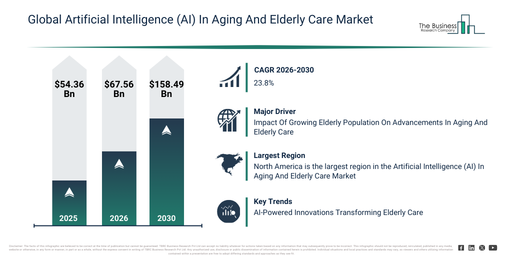
    The artificial intelligence (AI) in aging and elderly care market has seen substantial growth in recent years. It is anticipated to expand from $54.36 billion in 2025 to $67.56 billion by 2026, achieving a compound annual growth rate (CAGR) of 24.3%. This historical surge can be ascribed to an aging global populace, the increasing incidence of chronic illnesses, the spread of remote healthcare services, the rising uptake of digital health technologies, and the growing need for assisted living solutions.

    The artificial intelligence (AI) in aging and elderly care market is projected to experience substantial expansion over the upcoming years. Its value is anticipated to reach $158.49 billion in 2030, propelled by a compound annual growth rate (CAGR) of 23.8%. This growth during the forecast period is primarily driven by escalating investments in AI-powered healthcare platforms, an increasing need for customized elderly care solutions, wider adoption of smart home healthcare, a stronger focus on preventive healthcare, and the growing integration of robotics in eldercare services. Significant trends expected in this period encompass the expanded deployment of AI-enabled health monitoring systems, a rise in the use of wearable devices for elderly care, the increasing application of predictive analytics for health risk management, the proliferation of robotic assistance solutions, and a heightened emphasis on remote care models.

    Download the Free Sample Report to Explore Key Market Insights:

    https://www.thebusinessresearchcompany.com/sample.aspx?id=20714&type=smp

    What Underlying Factors Are Accelerating The Growth Of The Artificial Intelligence (AI) In Aging And Elderly Care Market?

    The increasing number of older individuals is anticipated to fuel the expansion of artificial intelligence (AI) within the aging and elderly care market moving ahead. This demographic consists of individuals aged 60 or 65 and above, who require customized care and assistance because of health and lifestyle issues associated with aging. The growth in the elderly population stems from extended lifespans, attributable to progress in healthcare, and a decrease in birth rates, which subsequently lowers the percentage of younger people in the overall population. Artificial intelligence (AI) is revolutionizing aging and elderly care by bolstering healthcare services, increasing accessibility, and fostering greater independence for older adults. For example, a report released in January 2024 by the Population Reference Bureau, a US-based non-profit organization, projects that the population of Americans aged 65 and above will climb from 58 million in 2022 to 82 million by 2050, representing a 47% increase. Consequently, this demographic’s share of the entire U.S. population is predicted to expand from 17% to 23% over the same timeframe. Hence, the expanding elderly population is a key factor fueling the expansion of artificial intelligence (AI) in the aging and elderly care market.

    How Is The Artificial Intelligence (AI) In Aging And Elderly Care Market Segmented Across Key Categories?

    The artificial intelligence (AI) in aging and elderly care market covered in this report is segmented –

    1) By Type: Natural Language Processing (NLP) Systems, Robotics And Robotic Assistance, Smart Home Devices And IoT Solutions, Machine Learning And Predictive Analytics, Virtual Health Assistants

    2) By Technology: Wearable Devices, Smart Home Systems, Mobile Apps, Cloud Computing, Internet Of Things (IoT)

    3) By Applications: Fall Detection And Prevention, Medication Management, Remote Health Monitoring, Social Engagement And Companion AI, Cognitive Stimulation And Brain Training

    4) By End User: Home Care Settings, Assisted Living Facilities, Nursing Homes And Long-Term Care Centers, Hospitals And Healthcare Institutions

    Subsegments:

    1) By Natural Language Processing (NLP) Systems: Voice-Activated Assistants, AI-Powered Speech Recognition Systems, NLP for Cognitive Health Monitoring

    2) By Robotics And Robotic Assistance: Elderly Care Robots, Robotic Mobility Assistance Devices, Robotic Companions For Seniors

    3) By Smart Home Devices And IoT Solutions: Smart Sensors (Fall Detection, Monitoring), AI-Enabled Smart Home Automation Systems, Wearable IoT Devices For Health Monitoring

    4) By Machine Learning And Predictive Analytics: AI-Based Health Risk Prediction Models, Machine Learning For Personalized Care Plans, Predictive Analytics For Medication Management

    5) By Virtual Health Assistants: AI-Powered Virtual Care Assistants, Telemedicine Virtual Assistants, Virtual Health Coaching And Support Systems

    Which Market Trends Are Creating New Opportunities In The Artificial Intelligence (AI) In Aging And Elderly Care Market?

    Leading firms within the artificial intelligence (AI) in aging and elderly care market are prioritizing the creation of novel solutions, including AI-powered virtual caregivers, aiming to deliver tailored care options, boost monitoring functionalities, and elevate the overall quality of life for seniors. An AI virtual caregiver functions as an intelligent digital assistant, assisting with health monitoring, medication reminders, companionship, and emergency responses, thereby critically supporting elderly individuals in preserving their autonomy and welfare. As an illustration, in November 2024, Electronic Caregiver Inc., a medical equipment supplier based in the US, introduced Addison Care+ via the AWS marketplace. Addison Care+ represents a sophisticated AI-powered virtual caregiver designed to transform senior care through improved health management, increased engagement, and greater independence for older adults and those with chronic conditions. This system offers continuous 24/7 activity surveillance, early detection of health concerns, and detailed care information encompassing medication oversight and immediate emergency actions. Its integration with AI-driven telecare operations facilitates simpler national deployment, equipping caregivers with proactive instruments to manage client health and refine the provision of care.

    Who Are The Dominant Players Shaping The Artificial Intelligence (AI) In Aging And Elderly Care Market Landscape?

    Major companies operating in the artificial intelligence (AI) in aging and elderly care market are Amazon.com Inc., Google LLC, Samsung Electronics Co. Ltd., Microsoft Corporation, Intel Corporation, General Electric Company, International Business Machines Corporation, Oracle Corporation, Medtronic plc, NVIDIA Corporation, Siemens Healthineers AG, Koninklijke Philips N.V., AARP Services Inc., Suki AI Inc., AiCure LLC, Sensi.AI, Orbita Inc., Sensely Inc., CarePredict Inc., Cognivue Corporation, Reemo Health Inc., Canary Health Technologies Inc., Somatix Inc.

    Read the full artificial intelligence (ai) in aging and elderly care market report here:

    https://www.thebusinessresearchcompany.com/report/artificial-intelligence-ai-in-aging-and-elderly-care-global-market-report

    Which Region Is Projected To Dominate The Artificial Intelligence (AI) In Aging And Elderly Care Market During The Forecast Period?

    North America was the largest region in the artificial intelligence (AI) in aging and elderly care market in 2025. Asia-Pacific is expected to be the fastest-growing region in the forecast period. The regions covered in the artificial intelligence (AI) in aging and elderly care market report are Asia-Pacific, South East Asia, Western Europe, Eastern Europe, North America, South America, Middle East, Africa.

    Request A Tailored Artificial Intelligence (AI) In Aging And Elderly Care Market Research Report For Competitive Advantage:

    https://www.thebusinessresearchcompany.com/customise?id=20714&type=smp

    Browse Through More Reports Similar to the Global Artificial Intelligence (AI) In Aging And Elderly Care Market 2026, By The Business Research Company

    Artificial Intelligence In Healthcare Diagnosis Global Market Report

    https://www.thebusinessresearchcompany.com/report/artificial-intelligence-in-healthcare-diagnosis-global-market-report

    Artificial Intelligence In Diabetes Management Global Market Report

    https://www.thebusinessresearchcompany.com/report/artificial-intelligence-in-diabetes-management-global-market-report

    Artificial Intelligence Ai In Precision Medicine Global Market Report

    https://www.thebusinessresearchcompany.com/report/artificial-intelligence-ai-in-precision-medicine-global-market-report

    Get in touch with us:

    The Business Research Company: https://www.thebusinessresearchcompany.com/

    Americas +1 310-496-7795

    Asia +44 7882 955267 & +91 8897263534

    Europe +44 7882 955267

    Email us at info@tbrc.info

    Follow us on:

    LinkedIn: https://in.linkedin.com/company/the-business-research-company

    YouTube: https://www.youtube.com/channel/UC24_fI0rV8cR5DxlCpgmyFQ

    Global Market Model: https://www.thebusinessresearchcompany.com/global-market-model
  • Artificial Intelligence (AI) Heart Sound Digital Twin Analytics Market Outlook 2026–2030 with Major Growth Drivers and Emerging Industry Trends

    Artificial Intelligence (AI) Heart Sound Digital Twin Analytics Market Outlook 2026–2030 with Major Growth Drivers and Emerging Industry Trends

    The Business Research Company’s 2026 market reports include new capabilities such as market attractiveness scoring and analysis, total addressable market analysis, company scoring matrix, interactive excel data dashboard, improved supply chain analysis, upcoming startups in the market, and overview of key products, aimed at improving the depth, usability, and strategic value of the insights delivered.

    How Much Is The Artificial Intelligence (AI) Heart Sound Digital Twin Analytics Market Expected To Grow In Terms Of Market Value Between 2026 And 2030?

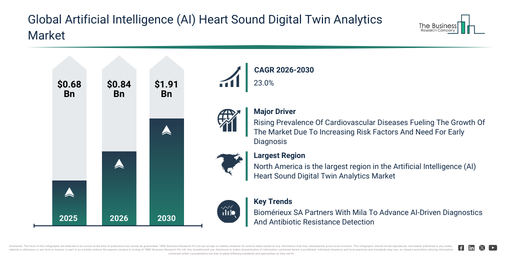
    The artificial intelligence (AI) heart sound digital twin analytics market size has grown exponentially in recent years. It will grow from $0.68 billion in 2025 to $0.84 billion in 2026 at a compound annual growth rate (CAGR) of 23.3%. The growth in the historic period can be attributed to growth in cardiovascular disease prevalence, advances in digital auscultation devices, increased use of ai in clinical diagnostics, expansion of remote patient monitoring, availability of large cardiac datasets.

    The artificial intelligence (AI) heart sound digital twin analytics market is projected to experience rapid expansion in the coming years. This market is anticipated to reach $1.91 billion by 2030, exhibiting a compound annual growth rate (CAGR) of 23.0%. Factors driving this growth during the forecast period include the escalating demand for prompt cardiac risk detection, the increasing uptake of personalized cardiology solutions, the broadening reach of cloud-based clinical analytics, a heightened emphasis on uninterrupted cardiac monitoring, and the greater incorporation of AI into clinical workflows. Key trends observed throughout this period encompass the wider acceptance of digital twin cardiac models, a surge in the application of AI-based heart sound analytics, the proliferation of remote cardiac monitoring tools, the increasing integration of wearable cardiac sensors, and a sharper focus on predictive cardiovascular diagnostics.

    Download the Free Sample Report to Explore Key Market Insights:

    https://www.thebusinessresearchcompany.com/sample.aspx?id=28119&type=smp

    Which Growth Drivers Are Contributing To The Progress Of The Artificial Intelligence (AI) Heart Sound Digital Twin Analytics Market?

    The increasing prevalence of cardiovascular conditions is anticipated to fuel the expansion of the artificial intelligence (AI) heart sound digital twin analytics market moving forward. These conditions encompass various disorders affecting the heart and blood vessels, such as coronary heart disease, heart failure, stroke, and hypertension. The rise in cardiovascular diseases is primarily linked to unhealthy diets, where excessive consumption of saturated fats, trans fats, added sugars, and sodium contributes to elevated blood pressure, obesity, and high cholesterol, all significant risk factors for heart-related ailments. Artificial intelligence (AI) heart sound digital twin analytics assist in diagnosing cardiovascular diseases by creating customized digital heart models for patients, making them highly effective for early detection and continuous monitoring. They help lessen clinical burdens by offering real-time heart sound analysis, thus enhancing diagnostic precision and individualized treatment. For instance, in September 2025, the American College of Cardiology (ACC), a US-based non-profit medical professional society, reported that CVD remains the leading cause of disability-adjusted life years (DALYs) and deaths estimated in the GBD globally. There were 437 million CVD DALYs in 2023. Consequently, the escalating occurrence of cardiovascular diseases is propelling the growth of the artificial intelligence (AI) heart sound digital twin analytics market. The growing demand for personalized healthcare approaches is projected to accelerate the expansion of the artificial intelligence (AI) heart sound digital twin analytics market in the future. Personalized medicine involves a medical strategy that customizes treatment and prevention plans to an individual’s unique genetic makeup, lifestyle, and environmental factors. This increasing demand for tailored medical interventions stems mainly from advancements in genomics, which enable precise identification of genetic variations and the development of specific treatments for individuals. Artificial intelligence (AI) heart sound digital twin analytics improve personalized medicine by providing patient-specific digital models of the heart, making them ideal for adapting treatments to individual cardiac profiles. They diminish diagnostic uncertainties by delivering real-time analysis of heart sounds, thereby enhancing treatment accuracy and patient outcomes. For instance, in February 2024, the Personalized Medicine Coalition (PMC), a US-based nonprofit organization, stated that the U.S. Food and Drug Administration (FDA) approved 26 new personalized medicines in 2023, a significant increase from the 12 approved in 2022. Therefore, the increasing adoption of personalized medicine is fueling the growth of the artificial intelligence (AI) heart sound digital twin analytics market.

    What Major Segment Divisions Exist Within The Artificial Intelligence (AI) Heart Sound Digital Twin Analytics Market?

    The artificial intelligence (AI) heart sound digital twin analytics market covered in this report is segmented –

    1) By Component: Software, Hardware, Services

    2) By Deployment Mode: On-Premises, Cloud

    3) By Application: Cardiology, Remote Patient Monitoring, Clinical Diagnostics, Research, Other Applications

    4) By End-User: Hospitals, Clinics, Research Institutes, Diagnostic Centers, Other End-Users

    Subsegments:

    1) By Software: AI Algorithms And Models, Predictive Analytics Platforms, Simulation And Modeling Tools, Data Integration And Management Software, Visualization And Reporting Dashboards

    2) By Hardware: Sensors, Digital Stethoscopes, Wearable Devices, Edge Devices Or Processing Units, Cloud Or Server Infrastructure

    3) By Services: Implementation And Integration Services, Consulting And Advisory Services, Training And Education Services, Support And Maintenance Services, Data-As-A-Service (DaaS)

    What Trends Are Affecting The Expansion Of The Artificial Intelligence (AI) Heart Sound Digital Twin Analytics Market?

    Companies operating in the artificial intelligence (AI) heart sound digital twin analytics market are primarily focused on creating advanced products, such as digital stethoscopes, to analyze heart sounds, facilitate early diagnosis, and support personalized patient care. A digital stethoscope functions as an electronic device that amplifies and records body sounds, offering noise reduction and connectivity with various apps for enhanced diagnosis and data sharing. As an example, in April 2025, Eko Health Inc., a US-based digital health company, introduced its CORE 500 digital stethoscope and Eko+ membership service in Canada. The CORE 500 digital stethoscope stands out as a highly advanced device, featuring patented audio technology with three listening modes, visualization of both ECG and heart sounds, and active noise cancellation for precise auscultation, alongside enabling effortless data capture, sharing, and monitoring. Furthermore, the Eko+ membership expands its utility with AI-powered murmur and arrhythmia detection, waveform visualization, guided examination flows, and secure sharing capabilities. This launch empowers Canadian clinicians with cutting-edge, AI-driven instruments designed to improve cardiac and pulmonary care and ultimately enhance patient outcomes.

    Which Companies Are Leading Innovation In The Artificial Intelligence (AI) Heart Sound Digital Twin Analytics Market?

    Major companies operating in the artificial intelligence (AI) heart sound digital twin analytics market are Medtronic plc, Tata Consultancy Services Limited (TCS), Siemens Healthineers AG, Fujifilm Healthcare Corporation, GE Healthcare Technologies Inc., Dassault Systemes SE, Synopsys Inc., Tempus Labs Inc., Biofourmis Inc., HeartFlow Inc., Viz.ai Inc., Aidoc Medical Ltd., Butterfly Network Inc., Eko Health Inc., Shenzhen Minttihealth Co. Ltd., Ultromics Limited, Thinklabs Medical LLC, Acorai AB, Sensydia Corporation, CardioSignal, Cardionics Inc., Ayu Devices Pvt. Ltd., Ai Health Highway India Pvt Ltd., Aevice Health Pte Ltd., CSD Labs, Sanolla Ltd., HeartTronics AI

    Read the full artificial intelligence (ai) heart sound digital twin analytics market report here:

    https://www.thebusinessresearchcompany.com/report/artificial-intelligence-ai-heart-sound-digital-twin-analytics-global-market-report

    What Are The Leading Geographic Regions In The Artificial Intelligence (AI) Heart Sound Digital Twin Analytics Market?

    North America was the largest region in the artificial intelligence (AI) heart sound digital twin analytics market in 2025. The regions covered in the artificial intelligence (AI) heart sound digital twin analytics market report are Asia-Pacific, South East Asia, Western Europe, Eastern Europe, North America, South America, Middle East, Africa.

    Request A Tailored Artificial Intelligence (AI) Heart Sound Digital Twin Analytics Market Research Report For Competitive Advantage:

    https://www.thebusinessresearchcompany.com/customise?id=28119&type=smp

    Browse Through More Reports Similar to the Global Artificial Intelligence (AI) Heart Sound Digital Twin Analytics Market 2026, By The Business Research Company

    Artificial Intelligence In Cardiology Global Market Report

    https://www.thebusinessresearchcompany.com/report/artificial-intelligence-in-cardiology-global-market-report

    Ai In Life Science Analytics Global Market Report

    https://www.thebusinessresearchcompany.com/report/ai-in-life-science-analytics-global-market-report

    Digital Twins In Healthcare Global Market Report

    https://www.thebusinessresearchcompany.com/report/digital-twins-in-healthcare-global-market-report

    Get in touch with us:

    The Business Research Company: https://www.thebusinessresearchcompany.com/

    Americas +1 310-496-7795

    Asia +44 7882 955267 & +91 8897263534

    Europe +44 7882 955267

    Email us at info@tbrc.info

    Follow us on:

    LinkedIn: https://in.linkedin.com/company/the-business-research-company

    YouTube: https://www.youtube.com/channel/UC24_fI0rV8cR5DxlCpgmyFQ

    Global Market Model: https://www.thebusinessresearchcompany.com/global-market-model
  • One of the Major Drivers of the Artificial Intelligence (AI) Facial Skin Analyzer Market Is the Rising Demand For Personalized Skincare Fueling The Growth Of The Market Due To Advancements In AI-Based Skin Analysis

    One of the Major Drivers of the Artificial Intelligence (AI) Facial Skin Analyzer Market Is the Rising Demand For Personalized Skincare Fueling The Growth Of The Market Due To Advancements In AI-Based Skin Analysis

    The Business Research Company’s 2026 market reports include new capabilities such as market attractiveness scoring and analysis, total addressable market analysis, company scoring matrix, interactive excel data dashboard, improved supply chain analysis, upcoming startups in the market, and overview of key products, aimed at improving the depth, usability, and strategic value of the insights delivered.

    What Market Value Is Expected For The Artificial Intelligence (AI) Facial Skin Analyzer Market At The End Of The 2026–2030 Forecast Period?

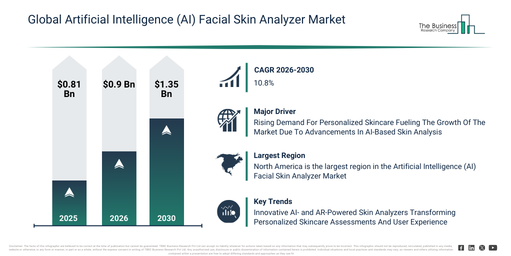
    The artificial intelligence (AI) facial skin analyzer market has experienced substantial expansion in recent years. This market is projected to expand from $0.81 billion in 2025 to reach $0.9 billion by 2026, demonstrating a compound annual growth rate (CAGR) of 11.2%. Historically, this growth has been driven by several factors, including a heightened consumer interest in skincare analysis, the proliferation of digital dermatology instruments, an increase in the adoption of cosmetic technology, the wider availability of high-resolution imaging devices, and a growing demand for customized beauty solutions.

    The artificial intelligence (AI) facial skin analyzer market size is projected to undergo significant expansion in the coming years. It is anticipated to attain a value of $1.35 billion by 2030, growing at a compound annual growth rate (CAGR) of 10.8%. This growth during the forecast period stems from factors such as the increasing integration of AI in aesthetic medicine, the rising use of virtual skincare consultations, the expansion of data-driven cosmetic formulation, the growing adoption in clinical dermatology settings, and the increasing demand for real-time skin monitoring solutions. Key trends influencing this period include the increasing adoption of AI-driven skin diagnostics, the rising integration of mobile-based skin analysis platforms, the growing use of 3D facial imaging technologies, the expansion of personalized skincare recommendation systems, and enhanced accuracy in multi-parameter skin assessment.

    Download the Free Sample Report to Explore Key Market Insights:

    https://www.thebusinessresearchcompany.com/sample.aspx?id=24469&type=smp

    What Primary Drivers Are Shaping The Development Of The Artificial Intelligence (AI) Facial Skin Analyzer Market?

    The increasing demand for personalized skincare solutions is expected to drive the expansion of the artificial intelligence (AI) facial skin analyzer market in the future. Personalized skincare involves custom-fitting products and regimens to an individual’s unique skin characteristics and specific concerns. The rise in personalized skincare solutions is attributed to the growing utilization of AI and skin analysis technologies, which enable customized product recommendations based on individual skin needs. Artificial Intelligence (AI) facial skin analyzers contribute to personalizing skincare by accurately assessing individual skin conditions and subsequently generating data-driven, bespoke product and treatment recommendations. As an illustration, figures from December 2024, provided by the US-based government agency Bureau of Labor Statistics, show that consumer spending on personal care products and services climbed from USD 866 in 2022 to USD 950 in 2023. This reflects a 9.7% year-over-year increase, building on a 12.3% rise observed in 2022. Therefore, the escalating demand for personalized skincare solutions is a primary driver for the growth of the artificial intelligence (AI) facial skin analyzer market.

    What Segment Types Make Up The Artificial Intelligence (AI) Facial Skin Analyzer Market?

    The artificial intelligence (AI) facial skin analyzer market covered in this report is segmented –

    1) By Product Type: Portable, Desktop

    2) By Device Type: Mobile App, Web-Based Platform, Standalone Device

    3) By Technology: Artificial intelligence (AI)-Based, Machine Learning, Deep Learning

    4) By Application: Skincare, Aesthetic Treatments, Cosmetics, Medical Diagnosis

    5) By End User: Healthcare, Personal Care, Other End-Users

    Subsegments:

    1) By Portable: Handheld Skin Analyzers, Smartphone-Compatible Devices, Wearable Skin Analyzers

    2) By Desktop: Multi-Parameter Skin Analyzers, 3D Imaging Skin Analyzers, Clinical-Grade Skin Analyzers

    Which Trends Are Influencing The Artificial Intelligence (AI) Facial Skin Analyzer Market?

    Leading companies in the artificial intelligence (AI) facial skin analyzer market are concentrating on developing innovative solutions, including AI and augmented reality (AR)-powered skin analyzers. These aim to offer real-time, personalized skincare assessments, enhance user engagement, and expand accessibility across consumer and professional segments. These AI and AR-driven analyzers utilize smart algorithms and augmented visuals to evaluate skin health and show immediate skincare effects, aiding users in making informed choices through interactive, customized analysis. For instance, in January 2024, Flipkart Private Limited, an India-based e-commerce company, unveiled the ModiFace Powered Skin Analyzer. This AI-driven tool is seamlessly integrated into Flipkart’s mobile platform, allowing users to conduct a facial skin analysis by simply taking a selfie and answering a few basic questions. The technology assesses crucial skin parameters such as pores, wrinkles, pigmentation, acne, and firmness, leveraging advanced artificial intelligence and augmented reality. Subsequently, it delivers customized skincare recommendations specifically tailored to each user’s skin profile, spanning seven stages: cleanse, prepare, treat, moisturize, care, targeted, and protect.

    Who Are The Key Players Driving Competition In The Artificial Intelligence (AI) Facial Skin Analyzer Market?

    Major companies operating in the artificial intelligence (AI) facial skin analyzer market are JANUS Pro, LUMINI LLC, FotoFinder Systems Inc., Revieve Inc., Canfield Scientific Inc., DermaCompare, HiMirror, SkinVision B.V., Haut.AI, Skintelligent, Perfect Corp, Quantificare, BeautyAI, SkinAI, Syensqo, OKKAMI, UVisio, Meicet Technology Co LTD, Coralai, Zemits, Aram Huvis Co Ltd, Courage + Khazaka Electronic GmbH, Microderm GLO, Pixience, BeautyBio

    Read the full artificial intelligence (ai) facial skin analyzer market report here:

    https://www.thebusinessresearchcompany.com/report/artificial-intelligence-ai-facial-skin-analyzer-global-market-report

    How Does The Artificial Intelligence (AI) Facial Skin Analyzer Market Perform Across Major Global Regions?

    North America was the largest region in the artificial intelligence (AI) facial skin analyzer market in 2025. Asia-Pacific is expected to be the fastest-growing region in the forecast period. The regions covered in the artificial intelligence (AI) facial skin analyzer market report are Asia-Pacific, South East Asia, Western Europe, Eastern Europe, North America, South America, Middle East, Africa.

    Request A Tailored Artificial Intelligence (AI) Facial Skin Analyzer Market Research Report For Competitive Advantage:

    https://www.thebusinessresearchcompany.com/customise?id=24469&type=smp

    Browse Through More Reports Similar to the Global Artificial Intelligence (AI) Facial Skin Analyzer Market 2026, By The Business Research Company

    Artificial Intelligence Server Global Market Report

    https://www.thebusinessresearchcompany.com/report/artificial-intelligence-server-global-market-report

    Edge Ai Software Global Market Report

    https://www.thebusinessresearchcompany.com/report/edge-ai-software-global-market-report

    Artificial Intelligence In Medicine Global Market Report

    https://www.thebusinessresearchcompany.com/report/artificial-intelligence-in-medicine-global-market-report

    Get in touch with us:

    The Business Research Company: https://www.thebusinessresearchcompany.com/

    Americas +1 310-496-7795

    Asia +44 7882 955267 & +91 8897263534

    Europe +44 7882 955267

    Email us at info@tbrc.info

    Follow us on:

    LinkedIn: https://in.linkedin.com/company/the-business-research-company

    YouTube: https://www.youtube.com/channel/UC24_fI0rV8cR5DxlCpgmyFQ

    Global Market Model: https://www.thebusinessresearchcompany.com/global-market-model
  • Body Fat Reduction Industry Expansion Forecast Showing Market Size of $23.01 Billion by 2030 at 10.1% CAGR

    Body Fat Reduction Industry Expansion Forecast Showing Market Size of $23.01 Billion by 2030 at 10.1% CAGR

    The Business Research Company’s 2026 market reports include new capabilities such as market attractiveness scoring and analysis, total addressable market analysis, company scoring matrix, interactive excel data dashboard, improved supply chain analysis, upcoming startups in the market, and overview of key products, aimed at improving the depth, usability, and strategic value of the insights delivered.

    What Market Value Is Anticipated For The Body Fat Reduction Market Over The Period 2026–2030?

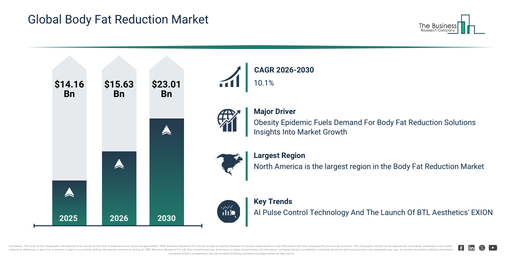
    The body fat reduction market size has seen significant growth in recent times. This market is expected to increase from $14.16 billion in 2025 to $15.63 billion in 2026, achieving a compound annual growth rate (CAGR) of 10.4%. The expansion observed in the past can be ascribed to several factors, including heightened aesthetic awareness among individuals, increased acceptance of cosmetic procedures, the growth of medical spa services, wider accessibility of fat reduction technologies, and higher levels of disposable income.

    The body fat reduction market is anticipated to experience substantial expansion in the coming years. Its valuation is projected to reach $23.01 billion by 2030, demonstrating a compound annual growth rate (CAGR) of 10.1%. This projected growth during the forecast period is primarily driven by factors such as a heightened demand for non-surgical body contouring methods, a growing emphasis on individualized aesthetic results, the proliferation of sophisticated laser and ultrasound technologies, an increase in men seeking aesthetic treatments, and a greater focus on cosmetic procedures performed in outpatient settings. Key developments anticipated during this period encompass the wider acceptance of non-invasive fat reduction techniques, an escalating preference for minimally invasive aesthetic interventions, the increased incorporation of energy-based devices for body contouring, the emergence of more customized body shaping options, and an elevated commitment to patient safety and recovery.

    Download the Free Sample Report to Explore Key Market Insights:

    https://www.thebusinessresearchcompany.com/sample.aspx?id=5661&type=smp

    What Drivers Are Expected To Influence The Body Fat Reduction Market During The Forecast Period?

    The increasing prevalence of obesity is anticipated to fuel the expansion of the body fat reduction market going forward. Obesity is a chronic health condition defined by an excessive buildup of body fat that can negatively affect overall health. Growing concerns regarding obesity arise from the widespread availability of high-calorie, high-fat, and high-sugar foods, coupled with sedentary routines and decreased physical activity in daily life. Body fat reduction aids in enhancing health for individuals with obesity by diminishing the risk of various diseases, improving mobility, boosting mental well-being, elevating energy levels, and refining metabolism. For instance, in March 2023, the World Heart Foundation stated that approximately 2.3 billion adults and children globally are either obese or overweight, and current trends suggest this figure will reach 2.7 billion by 2025. Thus, escalating concerns about obesity are a significant driver for the body fat reduction market.

    How Is The Body Fat Reduction Market Divided Into Its Major Segments?

    The body fat reduction market covered in this report is segmented –

    1) By Procedure: Surgical, Non-Surgical

    2) By Gender: Male, Female

    3) By Service Provider: Medical Spas, Hospitals, Clinics

    Subsegments:

    1) By Surgical: Liposuction, Abdominoplasty (Tummy Tuck)

    2) By Non-Surgical: Cryolipolysis (CoolSculpting), Ultrasound-Assisted Lipolysis, Radiofrequency Lipolysis, Laser Lipolysis

    Which Trends Are Influencing The Body Fat Reduction Market?

    Leading companies in the global body fat reduction market are increasingly prioritizing technological advancements, such as AI pulse control technology, to achieve greater treatment precision, elevate the user experience, and optimize outcomes in fat reduction through individualized and adaptive treatment protocols. AI pulse control technology specifically leverages artificial intelligence to meticulously regulate and refine the delivery of therapeutic pulses during body fat reduction procedures, thereby boosting effectiveness and patient comfort. For instance, in January 2024, BTL Aesthetics, a US-based manufacturer of aesthetic equipment, unveiled EXION. This innovative applicator integrates radiofrequency and targeted ultrasound to stimulate hyaluronic acid production in the skin, enhancing hydration and elasticity without requiring needles. Its design targets facial areas, including the lips, the region around the eyes, the forehead, and the neck.

    Who Are The Prominent Organizations Shaping The Body Fat Reduction Market?

    Major companies operating in the body fat reduction market are AbbVie Inc., Apollo Hospitals Enterprise Limited, Cutera Inc., Cynosure LLC, VLCC Health Care Limited, Solta Medical International Inc., Lumenis Ltd., Sciton Inc., Sisram Medical Ltd., Elite Body Sculpture, Fosun Pharmaceuticals Co. Ltd., VIDA Wellness and Beauty, Candela Medical Corporation, Erchonia Corporation, InMode Ltd., Ideal Image, Sono Bello, SculpSure, Body Contour Centers, LaserAway, Zerona, UltraShape

    Read the full body fat reduction market report here:

    https://www.thebusinessresearchcompany.com/report/body-fat-reduction-global-market-report

    Which Region Is Forecast To Lead The Body Fat Reduction Market In Terms Of Market Size?

    North America was the largest region in the body fat reduction market in 2025. Asia-Pacific is expected to be the fastest-growing region in the forecast period. The regions covered in the body fat reduction market report are Asia-Pacific, South East Asia, Western Europe, Eastern Europe, North America, South America, Middle East, Africa.

    Request A Tailored Body Fat Reduction Market Research Report For Competitive Advantage:

    https://www.thebusinessresearchcompany.com/customise?id=5661&type=smp

    Browse Through More Reports Similar to the Global Body Fat Reduction Market 2026, By The Business Research Company

    Non Invasive Fat Reduction Global Market Report

    https://www.thebusinessresearchcompany.com/report/non-invasive-fat-reduction-global-market-report

    Lung Cancer Diagnostic And Screening Global Market Report

    https://www.thebusinessresearchcompany.com/report/lung-cancer-diagnostic-and-screening-global-market-report

    Fat Replacers Global Market Report

    https://www.thebusinessresearchcompany.com/report/fat-replacers-global-market-report

    Get in touch with us:

    The Business Research Company: https://www.thebusinessresearchcompany.com/

    Americas +1 310-496-7795

    Asia +44 7882 955267 & +91 8897263534

    Europe +44 7882 955267

    Email us at info@tbrc.info

    Follow us on:

    LinkedIn: https://in.linkedin.com/company/the-business-research-company

    YouTube: https://www.youtube.com/channel/UC24_fI0rV8cR5DxlCpgmyFQ

    Global Market Model: https://www.thebusinessresearchcompany.com/global-market-model
  • A key trend shaping the Artificial Intelligence (AI) Enhanced Remote Physiotherapy Market involves the Artificial Intelligence (AI)-Powered Digital Care Assistants Enhancing Patient Engagement And Rehabilitation

    A key trend shaping the Artificial Intelligence (AI) Enhanced Remote Physiotherapy Market involves the Artificial Intelligence (AI)-Powered Digital Care Assistants Enhancing Patient Engagement And Rehabilitation

    The Business Research Company’s 2026 market reports include new capabilities such as market attractiveness scoring and analysis, total addressable market analysis, company scoring matrix, interactive excel data dashboard, improved supply chain analysis, upcoming startups in the market, and overview of key products, aimed at improving the depth, usability, and strategic value of the insights delivered.

    What Is The Estimated Market Size Of The Artificial Intelligence (AI) Enhanced Remote Physiotherapy Market During 2026–2030?

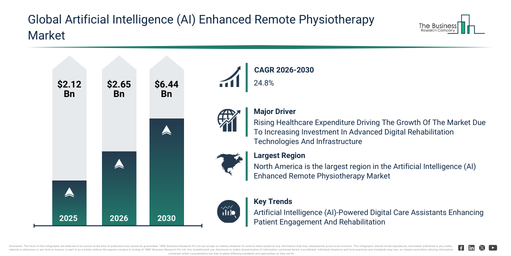
    The artificial intelligence (AI) enhanced remote physiotherapy market has seen substantial growth over recent years. Forecasts show it will expand from $2.12 billion in 2025 to $2.65 billion in 2026, demonstrating a compound annual growth rate (CAGR) of 25.1%. This historical market expansion is primarily due to the increased availability of telehealth services, a rise in musculoskeletal disorders, greater adoption of wearable health devices, the emergence of home-based care models, and advancements in remote monitoring technologies.

    The artificial intelligence (AI) enhanced remote physiotherapy market is projected to experience rapid expansion over the coming years. This market is anticipated to reach $6.44 billion by 2030, exhibiting a compound annual growth rate (CAGR) of 24.8%. This expansion during the projection period stems from heightened investments in AI-powered rehabilitation platforms, a growing need for ongoing therapy monitoring, the broadening of geriatric and chronic care initiatives, greater incorporation of physiotherapy into digital health ecosystems, and an intensified emphasis on preventive rehabilitation strategies. Key developments anticipated in this period encompass the increasing deployment of AI-based motion tracking, greater uptake of wearable physiotherapy devices, a rising need for tailored exercise regimens, the proliferation of remote rehabilitation solutions, and a stronger focus on therapy outcomes.

    Download the Free Sample Report to Explore Key Market Insights:

    https://www.thebusinessresearchcompany.com/sample.aspx?id=28907&type=smp

    Which Major Factors Are Driving The Expansion Of The Artificial Intelligence (AI) Enhanced Remote Physiotherapy Market?

    The escalating healthcare expenditure is anticipated to drive the expansion of the artificial intelligence (AI) enhanced remote physiotherapy market. This expenditure represents the total funds allocated by governments, individuals, and private entities for healthcare services, including medical treatments, equipment, infrastructure, and personnel. The increase in healthcare spending is attributed to the rising incidence of chronic diseases, which demand long-term and costly treatments. Such spending facilitates the adoption of artificial intelligence (AI)–enhanced remote physiotherapy by enabling greater investment in advanced technologies, digital infrastructure, and personalized rehabilitation solutions. For instance, in May 2024, the Office for National Statistics, a UK-based government department, reported that total healthcare expenditure saw a 5.6% increase in nominal terms from 2022 to 2023, marking a notable acceleration compared to the 0.9% growth observed in 2022. Consequently, the rising healthcare expenditure is propelling the growth of the artificial intelligence (AI) enhanced remote physiotherapy market.

    How Are The Various Segments Of The Artificial Intelligence (AI) Enhanced Remote Physiotherapy Market Categorized?

    The artificial intelligence (AI) enhanced remote physiotherapy market covered in this report is segmented –

    1) By Component: Software, Hardware, Services

    2) By Therapy Type: Musculoskeletal, Neurological, Cardiopulmonary, Pediatric, Geriatric, Other Therapy Types

    3) By Deployment Mode: Cloud-Based, On-Premises

    4) By Application: Rehabilitation, Pain Management, Preventive Care, Other Applications

    5) By End-User: Hospitals And Clinics, Homecare Settings, Rehabilitation Centers, Other End-Users

    Subsegments:

    1) By Software: Virtual Therapy Platforms, Artificial Intelligence Analytics Software, Exercise Prescription Software, Patient Monitoring Software

    2) By Hardware: Wearable Devices, Motion Sensors, Rehabilitation Robotics, Mobile Devices

    3) By Services: Remote Consultation Services, Data Analysis Services, Therapy Session Management Services, Training And Support Services

    What Trends Are Advancing Progress In The Artificial Intelligence (AI) Enhanced Remote Physiotherapy Market?

    Leading businesses within the artificial intelligence (AI) enhanced remote physiotherapy market are prioritizing the creation of sophisticated solutions, specifically AI-powered digital care assistants, with the aim of improving patient involvement and recovery results. These AI-powered digital care assistants function as intelligent virtual companions, utilizing artificial intelligence to deliver immediate guidance, encouragement, and customized feedback throughout physical therapy sessions. An example of this is Kaia Health, a US-based digital therapeutics company, which introduced Angela in June 2023, marking it as the industry’s inaugural AI-powered voice-based digital care assistant designed to aid patients undergoing at-home physiotherapy. This innovative system supports users via voice interaction, providing real-time motivation, exercise instructions, and educational information customized to individual requirements. Integrated into Kaia Health’s AI-based musculoskeletal (MSK) platform, it facilitates continuous remote support and monitors progress, thereby boosting therapy adherence, bettering rehabilitation results, and delivering a more engaging, human-like digital physiotherapy experience.

    Which Major Firms Influence Developments In The Artificial Intelligence (AI) Enhanced Remote Physiotherapy Market?

    Major companies operating in the artificial intelligence (AI) enhanced remote physiotherapy market are Hinge Health Inc., Sword Health, SPRY Inc., Kaia Health Technologies GmbH, XRHealth Inc., Moterum Technologies Inc., Physitrack Group AB., MIRA REHAB LIMITED, Band Connect Inc., CUREosity GmbH, BlueJay Mobile Health Inc., Kinomatic Pty Ltd., Vitrue Health Inc., BioSensics Inc., Wizecare Inc., Limber Health Inc., Akina Inc., Zerapy Inc., Preve Inc., Flok Health Inc.

    Read the full artificial intelligence (ai) enhanced remote physiotherapy market report here:

    https://www.thebusinessresearchcompany.com/report/artificial-intelligence-ai-enhanced-remote-physiotherapy-global-market-report

    Which Region Currently Holds The Largest Share Of The Artificial Intelligence (AI) Enhanced Remote Physiotherapy Market?

    North America was the largest region in the artificial intelligence (AI) enhanced remote physiotherapy market in 2025. Asia-Pacific is expected to be the fastest-growing region in the forecast period. The regions covered in the artificial intelligence (AI) enhanced remote physiotherapy market report are Asia-Pacific, South East Asia, Western Europe, Eastern Europe, North America, South America, Middle East, Africa.

    Request A Tailored Artificial Intelligence (AI) Enhanced Remote Physiotherapy Market Research Report For Competitive Advantage:

    https://www.thebusinessresearchcompany.com/customise?id=28907&type=smp

    Browse Through More Reports Similar to the Global Artificial Intelligence (AI) Enhanced Remote Physiotherapy Market 2026, By The Business Research Company

    Physiotherapy Services Global Market Report

    https://www.thebusinessresearchcompany.com/report/physiotherapy-services-global-market-report

    Ai In Medical Devices Global Market Report

    https://www.thebusinessresearchcompany.com/report/ai-in-medical-devices-global-market-report

    Physiotherapy Equipment And Accessories Global Market Report

    https://www.thebusinessresearchcompany.com/report/physiotherapy-equipment-and-accessories-global-market-report

    Get in touch with us:

    The Business Research Company: https://www.thebusinessresearchcompany.com/

    Americas +1 310-496-7795

    Asia +44 7882 955267 & +91 8897263534

    Europe +44 7882 955267

    Email us at info@tbrc.info

    Follow us on:

    LinkedIn: https://in.linkedin.com/company/the-business-research-company

    YouTube: https://www.youtube.com/channel/UC24_fI0rV8cR5DxlCpgmyFQ

    Global Market Model: https://www.thebusinessresearchcompany.com/global-market-model
  • BNP And NTproBNP Market Revenue Expected to Reach $4.02 Billion by 2030 with 12.3% CAGR

    BNP And NTproBNP Market Revenue Expected to Reach $4.02 Billion by 2030 with 12.3% CAGR

    The Business Research Company’s 2026 market reports include new capabilities such as market attractiveness scoring and analysis, total addressable market analysis, company scoring matrix, interactive excel data dashboard, improved supply chain analysis, upcoming startups in the market, and overview of key products, aimed at improving the depth, usability, and strategic value of the insights delivered.

    What Is The Expected Market Size Of The BNP And NTproBNP Market From 2026 To 2030?

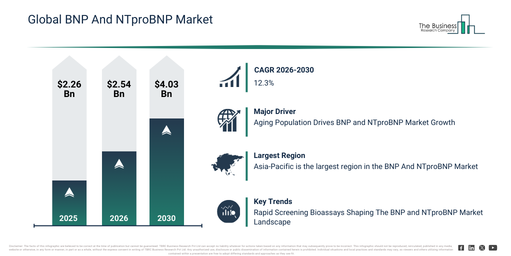
    The bnp and ntprobnp market has shown rapid expansion in recent years. Its size is expected to increase from $2.26 billion in 2025 to $2.54 billion in 2026, achieving a compound annual growth rate (CAGR) of 12.2%. This historical growth can be attributed to the rising prevalence of cardiovascular diseases, increased clinical adoption of bnp testing, expansion of hospital diagnostic infrastructure, growing awareness regarding early heart failure detection, and the availability of laboratory immunoassay technologies.

    The bnp and ntprobnp market size is projected to experience substantial expansion over the upcoming years. It is anticipated to reach a valuation of $4.03 billion by 2030, exhibiting a compound annual growth rate (CAGR) of 12.3%. This anticipated increase throughout the forecast period stems from factors such as a heightened demand for swift cardiac diagnostics, wider embrace of point-of-care testing, an expanding senior demographic, increasing incorporation of AI-assisted diagnostic analysis, and a greater emphasis on preventive cardiology. Key developments during this timeframe are expected to involve the rising implementation of high-sensitivity cardiac biomarker assays, greater utilization of point-of-care bnp testing devices, enhanced integration of automated laboratory diagnostics, broader rollout of early heart failure screening initiatives, and an intensified focus on diagnostics with quick results.

    Download the Free Sample Report to Explore Key Market Insights:

    https://www.thebusinessresearchcompany.com/sample.aspx?id=10673&type=smp

    What Drivers Are Influencing The BNP And NTproBNP Market?

    The increasing number of older adults is anticipated to boost the expansion of the BNP and NT-proBNP market in the coming years. This demographic encompasses older individuals, generally classified as those aged 65 and above. For this elderly demographic, BNP and NT-proBNP function as essential indicators, facilitating the detection and treatment of heart failure through offering key information on heart performance and assisting in determining suitable therapeutic approaches. As an illustration, in October 2025, data from the World Health Organization, a US-based specialized health agency, indicates that globally, 1 in 6 individuals will be 60 or older by 2030 and is expected to reach 2.1 billion elderly people by 2050. Consequently, the expansion of the geriatric population is fueling the development of the BNP and NT-proBNP market.

    Which Segments Are Included In The Analysis Of The BNP And NTproBNP Market?

    The bnp and ntprobnp market covered in this report is segmented –

    1) By Type: BNP (Brain Natriuretic Peptide), NT-proBNP (N-terminal Pro–B-Type Natriuretic Peptide)

    2) By Location Of Testing: Point Of Care Testing, Laboratory Testing

    3) By Application: Myocardial Infarction, Congestive Heart Failure, Acute Coronary Syndrome (ACS), Other Applications

    Subsegments:

    1) By BNP (Brain Natriuretic Peptide): BNP Testing Kits, Point-Of-Care BNP Testing Devices, Laboratory BNP Assays

    2) By NT-ProBNP (N-Terminal Pro–B-Type Natriuretic Peptide): NT-ProBNP Testing Kits, Point-Of-Care NT-proBNP Testing Devices, Laboratory NT-ProBNP Assays

    What Trends Are Advancing Progress In The BNP And NTproBNP Market?

    Major companies operating in the BNP and NTproBNP market are increasingly focusing on introducing rapid screening bioassays to gain a competitive edge. Rapid screening bioassays are biological tests that effectively evaluate the presence, concentration, or activity of a substance by assessing its effects on living cells or organisms, enabling quick and dependable identification or classification of specific attributes or conditions. For instance, in October 2023, Mindray Medical International Limited, a China-based medical device company, released two new assays designed to aid in the diagnosis and management of cardiovascular diseases (CVDs). These assays are named high-sensitivity troponin I (hs-cTnI) and N-terminal pro-B-type natriuretic peptide (NT-proBNP). By adding these new assays to its diverse portfolio of cardiac biomarkers, Mindray has improved its capability to screen, stratify risk, rapidly diagnose, and monitor therapy for CVDs. Mindray collaborated with HyTest, a pioneer in cardiac biomarkers, to incorporate HyTest’s research and antibodies into Mindray’s immunoassay platforms.

    Which Key Industry Participants Are Active In The BNP And NTproBNP Market?

    Major companies operating in the bnp and ntprobnp market are Abbott Laboratories, Gentian Diagnostics ASA, Siemens AG, PerkinElmer Inc., Biomerieux SA, Quidel Corporation, Bio-Rad Laboratories Inc., F Hoffman La Roche Ltd., CTK Biotech Inc., RayBiotech Life Inc., BHR Pharmaceuticals Ltd., Getein Biotech Inc., VACURE Biotechnology Co. Ltd., Bio-Techne Co., Xiamen Biotime Biotechnology Co. Ltd., Scripps Laboratories Inc., Danaher Corporation, Beckman Coulter Inc., Thermo Fisher Scientific Inc., Randox Laboratories Ltd., LSI Medience Corporation, Shionogi & Co. Ltd., Radiometer Medical ApS, Ortho Clinical Diagnostics, Tosoh Corporation, Aidian Oy, Shenzhen Mindray Bio-Medical Electronics Co. Ltd., Becton Dickinson and Company, Acon Laboratories Inc., Response Biomedical Corp., Nanomix Inc., Cepheid Inc., Alere Inc.

    Read the full bnp and ntprobnp market report here:

    https://www.thebusinessresearchcompany.com/report/bnp-and-ntprobnp-global-market-report

    Which Regions Are Expected To Experience Rapid Expansion In The BNP And NTproBNP Market?

    Asia-Pacific was the largest region in the BNP and NTproBNP market in 2025.North America is expected to be the fastest-growing region in the global BNP and NTproBNP market report during the forecast period. The regions covered in the bnp and ntprobnp market report are Asia-Pacific, South East Asia, Western Europe, Eastern Europe, North America, South America, Middle East, Africa.

    Request A Tailored BNP And NTproBNP Market Research Report For Competitive Advantage:

    https://www.thebusinessresearchcompany.com/customise?id=10673&type=smp

    Browse Through More Reports Similar to the Global BNP And NTproBNP Market 2026, By The Business Research Company

    B2B2C Insurance Global Market Report

    https://www.thebusinessresearchcompany.com/report/b2b2c-insurance-global-market-report

    B2B Telecommunication Global Market Report

    https://www.thebusinessresearchcompany.com/report/b2b-telecommunication-global-market-report

    Consumer And Smb Nas Global Market Report

    https://www.thebusinessresearchcompany.com/report/consumer-and-smb-nas-global-market-report

    Get in touch with us:

    The Business Research Company: https://www.thebusinessresearchcompany.com/

    Americas +1 310-496-7795

    Asia +44 7882 955267 & +91 8897263534

    Europe +44 7882 955267

    Email us at info@tbrc.info

    Follow us on:

    LinkedIn: https://in.linkedin.com/company/the-business-research-company

    YouTube: https://www.youtube.com/channel/UC24_fI0rV8cR5DxlCpgmyFQ

    Global Market Model: https://www.thebusinessresearchcompany.com/global-market-model
  • A significant industry trend in the Arthrogryposis Market includes the Advancements In Growth-Modulation Technologies Improve Orthopedic Management In Arthrogryposis

    A significant industry trend in the Arthrogryposis Market includes the Advancements In Growth-Modulation Technologies Improve Orthopedic Management In Arthrogryposis

    The Business Research Company’s 2026 market reports include new capabilities such as market attractiveness scoring and analysis, total addressable market analysis, company scoring matrix, interactive excel data dashboard, improved supply chain analysis, upcoming startups in the market, and overview of key products, aimed at improving the depth, usability, and strategic value of the insights delivered.

    What Market Size Expansion Is Predicted For The Arthrogryposis Market Between 2026 And 2030?

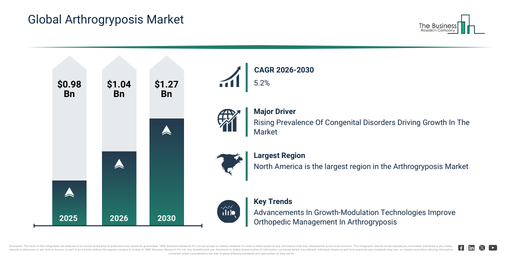
    The arthrogryposis market has experienced significant growth in recent years. It is anticipated to increase from $0.98 billion in 2025 to $1.04 billion in 2026, registering a compound annual growth rate (CAGR) of 5.5%. The expansion witnessed in the past can be attributed to a better clinical comprehension of congenital disorders, the enlargement of pediatric orthopedic care, improved availability of rehabilitation services, the adoption of physical therapy interventions, and the development of specialized treatment centers.

    The arthrogryposis market is anticipated to experience significant expansion in the coming years. It is projected to reach $1.27 billion by 2030, exhibiting a compound annual growth rate (CAGR) of 5.2%. This growth over the forecast period is primarily driven by heightened investments in rare disease research, a rising demand for customized rehabilitation programs, the broadening of early screening initiatives, an increased focus on improving long-term quality of life, and the greater integration of advanced diagnostic technologies. Key developments expected during this period include a stronger emphasis on prompt diagnosis and intervention, the increasing adoption of multidisciplinary treatment approaches, the expanding utilization of advanced imaging diagnostics, the development of more comprehensive long-term rehabilitation programs, and enhanced supportive care strategies.

    Download the Free Sample Report to Explore Key Market Insights:

    https://www.thebusinessresearchcompany.com/sample.aspx?id=21105&type=smp

    What Key Drivers Are Influencing The Growth Of The Arthrogryposis Market?

    The increasing occurrence of congenital disorders is anticipated to fuel the expansion of the arthrogryposis market in the future. Congenital disorders are defined as structural or functional anomalies that arise during fetal development and are present at birth. The rising prevalence of these disorders stems from factors such as advancements in prenatal diagnostics, exposure to environmental elements, genetic mutations, and shifts in lifestyle. Arthrogryposis aids in comprehending congenital disorders by emphasizing the significance of fetal movement, genetic predispositions, and neuromuscular development in the emergence of musculoskeletal abnormalities. For example, in February 2023, data from the World Health Organization, a Switzerland-based intergovernmental organization, indicated that approximately 240,000 newborns globally die from congenital disorders annually within their first 28 days of life. Moreover, congenital conditions are responsible for an estimated 170,000 child fatalities between the ages of 1 month and 5 years. Therefore, the growing prevalence of congenital disorders is stimulating growth in the arthrogryposis market.

    Which Market Segments Are Examined In The Arthrogryposis Market Study?

    The arthrogryposis market covered in this report is segmented –

    1) By Type: Classic Arthrogryposis, Distal Arthrogryposis, Amyoplasia

    2) By Treatment Type: Occupational Therapists, Physical Therapy, Surgery, Imaging Diagnostics

    3) By Patient Age: Children, Adults

    Subsegments:

    1) By Classic Arthrogryposis: Multiple Joint Involvement, Flexion Contractures, Severe Muscle Weakness, Progressive Arthrogryposis, Intellectual Impairment

    2) By Distal Arthrogryposis: Isolated Limb Involvement, Contractures of Hands and Feet, Distal Joint Contractures, Autosomal Dominant Inheritance

    3) By Amyoplasia: Severe Limb Contractures, Muscle Hypotonia (low muscle tone), No Cognitive Impairment, Symmetric Joint Involvement, Lack Of Muscle Development In Affected Limbs

    How Are Trends Transforming The Arthrogryposis Market Landscape?

    Leading companies in the arthrogryposis treatment market are concentrating on developing advanced orthopedic solutions, such as guided-growth systems, to improve deformity correction, reduce surgical burden, and support better functional outcomes for affected patients. These guided-growth systems allow for the controlled modulation of bone alignment during a child’s development, enabling clinicians to gradually correct joint contractures with minimal tissue disruption. For example, in June 2023, OrthoPediatrics Corp., a US-based pediatric orthopedic company, launched a growth modulation system that features guided implant technology. This technology offers precise intraoperative alignment control, minimally invasive implantation, patient-specific sizing options, compatibility with standard surgical instruments, and enhanced monitoring of growth progression. This technology, engineered to facilitate targeted deformity correction, provides clinicians with a more controlled and less invasive method for managing the joint abnormalities typically associated with arthrogryposis.

    Who Are The Primary Competitors In The Arthrogryposis Market?

    Major companies operating in the arthrogryposis market are Boston Children’s Hospital, Seattle Children’s Hospital, Shriners Hospitals for Children, Texas Scottish Rite Hospital for Children, Gillette Children’s Specialty Healthcare, Cleveland Clinic, Johns Hopkins Hospital, Mayo Clinic, Children’s Hospital of Philadelphia, Nationwide Children’s Hospital, Children’s Healthcare of Atlanta, Nemours Children’s Health, Phoenix Children’s Hospital, Cincinnati Children’s Hospital Medical Center, St Jude Children’s Research Hospital, Rady Children’s Hospital San Diego, Children’s National Hospital, Great Ormond Street Hospital, SickKids Hospital Toronto, Royal Children’s Hospital Melbourne

    Read the full arthrogryposis market report here:

    https://www.thebusinessresearchcompany.com/report/arthrogryposis-global-market-report

    Which Region Is Expected To Register The Fastest Growth In The Arthrogryposis Market?

    North America was the largest region in the arthrogryposis market in 2025. Asia-Pacific is expected to be the fastest-growing region in the forecast period. The regions covered in the arthrogryposis market report are Asia-Pacific, South East Asia, Western Europe, Eastern Europe, North America, South America, Middle East, Africa.

    Request A Tailored Arthrogryposis Market Research Report For Competitive Advantage:

    https://www.thebusinessresearchcompany.com/customise?id=21105&type=smp

    Browse Through More Reports Similar to the Global Arthrogryposis Market 2026, By The Business Research Company

    Immunohematology Global Market Report

    https://www.thebusinessresearchcompany.com/report/immunohematology-global-market-report

    Bioceramics Global Market Report

    https://www.thebusinessresearchcompany.com/report/bioceramics-global-market-report

    Chondroplasty Global Market Report

    https://www.thebusinessresearchcompany.com/report/chondroplasty-global-market-report

    Get in touch with us:

    The Business Research Company: https://www.thebusinessresearchcompany.com/

    Americas +1 310-496-7795

    Asia +44 7882 955267 & +91 8897263534

    Europe +44 7882 955267

    Email us at info@tbrc.info

    Follow us on:

    LinkedIn: https://in.linkedin.com/company/the-business-research-company

    YouTube: https://www.youtube.com/channel/UC24_fI0rV8cR5DxlCpgmyFQ

    Global Market Model: https://www.thebusinessresearchcompany.com/global-market-model
  • Global Blood Stream Infection Testing Market Set for Strong Expansion Reaching $14.7 Billion by 2030 at 11.6% CAGR

    Global Blood Stream Infection Testing Market Set for Strong Expansion Reaching $14.7 Billion by 2030 at 11.6% CAGR

    The Business Research Company’s 2026 market reports include new capabilities such as market attractiveness scoring and analysis, total addressable market analysis, company scoring matrix, interactive excel data dashboard, improved supply chain analysis, upcoming startups in the market, and overview of key products, aimed at improving the depth, usability, and strategic value of the insights delivered.

    What Market Valuation Is Forecasted For The Blood Stream Infection Testing Market By 2030 Starting From Its 2026 Size?

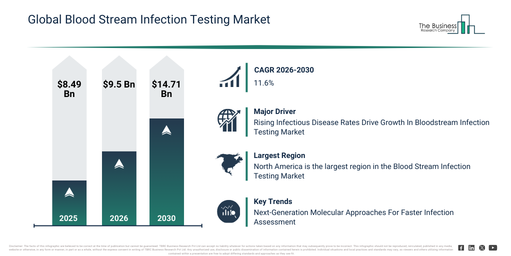
    The blood stream infection testing market size has observed swift expansion in recent years. It is forecast to grow from $8.49 billion in 2025 to $9.5 billion in 2026, at a compound annual growth rate (CAGR) of 11.9%. The historical period’s growth can be attributed to the increasing incidence of bloodstream infections, rising hospital-acquired infection rates, the expansion of clinical microbiology laboratories, the adoption of automated diagnostic instruments, and growing awareness of sepsis management.

    The market for blood stream infection testing is anticipated to experience significant expansion over the coming years. By 2030, this market is projected to reach a valuation of $14.71 billion, demonstrating a compound annual growth rate (CAGR) of 11.6%. This projected growth is driven by several factors, including a heightened need for swift diagnostic results, the increasing use of molecular diagnostics within healthcare facilities, the advancement of individualized infection management, rising investments in sophisticated laboratory infrastructure, and the greater incorporation of AI-powered diagnostic instruments. Key developments expected during this period involve the wider embrace of rapid molecular diagnostic tests, a surge in the deployment of automated blood culture platforms, the increasing incorporation of antimicrobial susceptibility analyses, the broadening of multiplex pathogen identification panels, and a stronger emphasis on identifying sepsis at an early stage.

    Download the Free Sample Report to Explore Key Market Insights:

    https://www.thebusinessresearchcompany.com/sample.aspx?id=20514&type=smp

    What Drivers Are Shaping The Future Growth Of The Blood Stream Infection Testing Market?

    A rising incidence of infectious diseases is projected to drive expansion in the blood stream infection testing market in the coming years. These conditions are characterized as ailments resulting from disease-causing microorganisms, including bacteria, viruses, fungi, or parasites. The rates of infectious diseases are escalating due to multiple contributors like heightened international travel, growing urbanization, shifts in climate, resistance to antibiotics, and insufficient vaccination. Within the context of infectious diseases, blood stream infection testing plays a crucial role in diagnosing and pinpointing the pathogens responsible for sepsis and other serious infections, thereby facilitating specific and efficient therapeutic approaches. As an illustration, data from October 2024 by the World Health Organization, an international public health body based in Switzerland, indicated that approximately 8.2 million individuals received a new tuberculosis diagnosis in 2023, representing an increase from about 7.5 million in 2022, establishing tuberculosis as the foremost fatal infectious disease. Consequently, the growing frequency of infectious diseases is propelling the blood stream infection testing market.

    Which Segment Categories Define The Blood Stream Infection Testing Market?

    The blood stream infection testing market covered in this report is segmented –

    1) By Product Type: Instruments, Reagents And Consumables, Software And Services

    2) By Sample Type: Whole Blood, Blood Culture

    3) By Technology: Polymerase Chain Reaction (PCR), Mass Spectroscopy, In Situ Hybridization, Other Technologies

    4) By End-User: Hospitals And Diagnostic Centers, Laboratory Service Providers, Academic And Research Institutes, Other End-Users

    Subsegments:

    1) By Instruments: Blood Culture Systems, Automated Microbial Identification Systems, Molecular Diagnostic Instruments

    2) By Reagents And Consumables: Blood Culture Media, Antimicrobial Susceptibility Testing Reagents, Nucleic Acid Extraction Kits

    3) By Software And Services: Laboratory Information Management Systems (LIMS), Data Analysis Software, Maintenance And Support Services

    How Are Trends Transforming The Blood Stream Infection Testing Market Landscape?

    Leading companies within the blood stream infection testing market are increasingly concentrating on integrating cutting-edge technologies, such as host-response diagnostics based on machine learning, to enhance rapid detection, improve clinical decision support, and foster potential advancements in patient management. Host-response diagnostics function by analyzing a patient’s immune system via gene expression signatures found in blood samples, employing artificial intelligence (AI)-derived algorithms to infer the presence, specific type, and likely severity of an infection in real time, thereby enabling clinicians to make faster and more accurate treatment decisions. For instance, in January 2025, Inflammatix Inc., a US-based molecular diagnostics company, obtained clearance from the US Food and Drug Administration for TriVerity. This machine-learning-based molecular blood test is designed to assist in the swift evaluation of patients with suspected acute infections or sepsis, featuring the measurement of 29 immune-related mRNAs and providing AI-generated scores indicating the likelihood of bacterial infection, viral infection, and the risk of severe illness, with results intended to be available in roughly 30 minutes. TriVerity supports clinical decision-making by reducing diagnostic uncertainty, aiding timely targeted therapy, and helping optimize hospital resource utilization when utilized alongside standard clinical evaluation and other laboratory findings.

    Who Are The Top Companies Competing In The Blood Stream Infection Testing Market?

    Major companies operating in the blood stream infection testing market are Thermo Fisher Scientific Inc., Abbott Laboratories, F. Hoffmann-La Roche Ltd, Danaher Corporation, Siemens Healthcare Private Limited, Becton Dickinson and Company (BD), Grifols S.A., Hologic Inc., BIOMÉRIEUX SA, Bio-Rad Laboratories Inc., Bruker Corporation, Qiagen N.V., DiaSorin S.p.A., Seegene Inc., Cepheid, Meridian Bioscience Inc., Biocartis NV, T2 Biosystems Inc., Molzym GmbH & Co. KG, Curetis GmbH, Accelerate Diagnostics Inc., OpGen Inc.

    Read the full blood stream infection testing market report here:

    https://www.thebusinessresearchcompany.com/report/blood-stream-infection-testing-global-market-report

    Which Geographic Regions Are Influencing Demand In The Blood Stream Infection Testing Market?

    North America was the largest region in the blood stream infection testing market in 2025. The regions covered in the blood stream infection testing market report are Asia-Pacific, South East Asia, Western Europe, Eastern Europe, North America, South America, Middle East, Africa.

    Request A Tailored Blood Stream Infection Testing Market Research Report For Competitive Advantage:

    https://www.thebusinessresearchcompany.com/customise?id=20514&type=smp

    Browse Through More Reports Similar to the Global Blood Stream Infection Testing Market 2026, By The Business Research Company

    Infection Control Supplies Global Market Report

    https://www.thebusinessresearchcompany.com/report/infection-control-supplies-global-market-report

    Urinary Tract Infection Treatment Global Market Report

    https://www.thebusinessresearchcompany.com/report/urinary-tract-infection-treatment-global-market-report

    Preoperative Infection Prevention And Wound Cleansing Devices Global Market Report

    https://www.thebusinessresearchcompany.com/report/preoperative-infection-prevention-and-wound-cleansing-devices-global-market-report

    Get in touch with us:

    The Business Research Company: https://www.thebusinessresearchcompany.com/

    Americas +1 310-496-7795

    Asia +44 7882 955267 & +91 8897263534

    Europe +44 7882 955267

    Email us at info@tbrc.info

    Follow us on:

    LinkedIn: https://in.linkedin.com/company/the-business-research-company

    YouTube: https://www.youtube.com/channel/UC24_fI0rV8cR5DxlCpgmyFQ

    Global Market Model: https://www.thebusinessresearchcompany.com/global-market-model
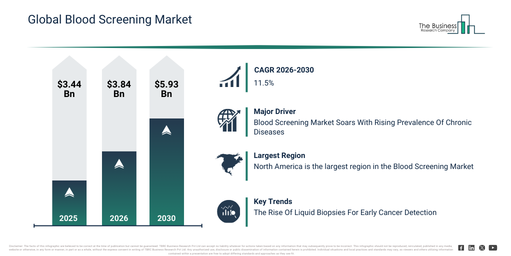
  • Blood Screening Market Growth Expected to Reach $5.93 Billion by 2030 with 11.5% CAGR

    Blood Screening Market Growth Expected to Reach $5.93 Billion by 2030 with 11.5% CAGR

    The Business Research Company’s 2026 market reports include new capabilities such as market attractiveness scoring and analysis, total addressable market analysis, company scoring matrix, interactive excel data dashboard, improved supply chain analysis, upcoming startups in the market, and overview of key products, aimed at improving the depth, usability, and strategic value of the insights delivered.

    How Is The Market Size Of The Blood Screening Market Expected To Change Between 2026 And 2030?

    The blood screening market has seen swift expansion in recent years. It is forecast to grow from $3.44 billion in 2025 to $3.84 billion in 2026, demonstrating a compound annual growth rate (CAGR) of 11.6%. Historically, this growth can be attributed to factors such as increasingly strict regulatory screening mandates, an increase in blood donation volumes, a rising incidence of transfusion-transmitted infections, the establishment of centralized blood banks, and the embrace of ELISA-based testing.

    The blood screening market is projected to experience rapid growth in the upcoming years. Its valuation is set to reach $5.93 billion by 2030, progressing at a compound annual growth rate (CAGR) of 11.5%. This expansion during the forecast period is attributed to increased investments in advanced screening technologies, a rising demand for rapid and accurate diagnostics, the broadening adoption of molecular testing, the growing integration of AI-driven data analysis, and an elevated focus on global blood safety standards. Significant trends foreseen in this period include the increasing uptake of nucleic acid testing technologies, an escalating demand for high-throughput screening systems, the expanding utilization of automated blood screening instruments, the proliferation of software-integrated screening platforms, and an enhanced emphasis on transfusion safety.

    Download the Free Sample Report to Explore Key Market Insights:

    https://www.thebusinessresearchcompany.com/sample.aspx?id=9047&type=smp

    Which Economic Or Industry Drivers Are Impacting The Blood Screening Market?

    The increasing prevalence of chronic diseases is expected to propel the growth of the blood screening market. Chronic diseases are long-term conditions or illnesses that are typically manageable but not curable, demanding adjustment to both the therapy used to treat the condition and its requirements. Blood screening diligently matches the compatibility between the donor’s and recipient’s blood types during transfusions. Blood transfusions are frequently essential as part of medical treatments for numerous chronic diseases, including autoimmune diseases, hematological disorders, and all forms of cancers. For instance, in September 2023, according to the World Health Organization, a Switzerland-based specialized agency of the United Nations, there were 41 million deaths globally, accounting for 74% of those caused by non-communicable diseases (NCDs) or chronic diseases every year. Therefore, the growing prevalence of chronic diseases is driving the growth of the blood screening market.

    How Is The Blood Screening Market Structured Across Different Segments?

    The blood screening market covered in this report is segmented –

    1) By Product: Reagents And Kits, Instruments, Software And Services

    2) By Technology: Nucleic Acid Testing, Enzyme-Linked Immunosorbent Assay (ELISA), Rapid Tests, Western Blot Assays, Next-Generation Sequencing (NGS)

    3) By End User: Blood Banks, Diagnostic Centers And Pathology Labs, Hospitals, Clinics, Ambulatory Surgical Centers (ASCs)

    Subsegments:

    1) By Reagents And Kits: Diagnostic Reagents, Testing Kits

    2) By Instruments: Automated Analyzers, Manual Testing Equipment

    3) By Software And Services: Laboratory Information Management Systems (LIMS), Data Analysis Software, Support And Consulting Services

    Which Trends Are Impacting The Growth Of The Blood Screening Market?

    Leading companies active in the blood screening market are developing technologies such as liquid biopsy to enhance the early detection of cancer, improve the monitoring of treatments, and enable personalized medicine approaches. A liquid biopsy is a minimally invasive test that examines blood or other body fluids to identify cancer cells or genetic material from tumors. For instance, in November 2023, Guardant Health, Inc., a US-based biotechnology company, introduced its Shield blood-based screening tests. The Shield test analyzes cell-free DNA (cfDNA) present in the bloodstream, which can indicate the presence of colorectal tumors or precancerous growths. It specifically looks for alterations in DNA fragments that are released into the blood from cancer cells.

    Which Major Players Dominate The Blood Screening Market?

    Major companies operating in the blood screening market are Abbott Laboratories, Grifols S.A., Becton Dickinson and Company, F. Hoffmann-La Roche AG, bioMérieux S.A., Bio-Rad Laboratories Inc., Thermo Fisher Scientific Inc., Ortho Clinical Diagnostics Inc., Beckman Coulter Inc., Siemens Healthineers AG, DiaSorin S.p.A., Merck KGaA, PerkinElmer Inc., Bio-Techne Corporation, Roche Diagnostics GmbH, Danaher Corporation, Sysmex Corporation, GenMark Diagnostics Inc., QIAGEN N.V., Hologic Inc., Luminex Corporation, Trinity Biotech plc, Fujirebio Inc., OraSure Technologies Inc., Immunetics Inc., Cepheid Inc., Haemonetics Corporation, Verax Biomedical Inc.

    Read the full blood screening market report here:

    https://www.thebusinessresearchcompany.com/report/blood-screening-global-market-report

    What Are The Top-Performing Regions Within The Blood Screening Market?

    North America was the largest region in the blood screening market in 2025. The regions covered in the blood screening market report are Asia-Pacific, South East Asia, Western Europe, Eastern Europe, North America, South America, Middle East, Africa.

    Request A Tailored Blood Screening Market Research Report For Competitive Advantage:

    https://www.thebusinessresearchcompany.com/customise?id=9047&type=smp

    Browse Through More Reports Similar to the Global Blood Screening Market 2026, By The Business Research Company

    Drug Screening Global Market Report

    https://www.thebusinessresearchcompany.com/report/drug-screening-global-market-report

    Blood Culture Tests Global Market Report

    https://www.thebusinessresearchcompany.com/report/blood-culture-tests-global-market-report

    Bleeding Disorder Testing Global Market Report

    https://www.thebusinessresearchcompany.com/report/bleeding-disorder-testing-global-market-report

    Get in touch with us:

    The Business Research Company: https://www.thebusinessresearchcompany.com/

    Americas +1 310-496-7795

    Asia +44 7882 955267 & +91 8897263534

    Europe +44 7882 955267

    Email us at info@tbrc.info

    Follow us on:

    LinkedIn: https://in.linkedin.com/company/the-business-research-company

    YouTube: https://www.youtube.com/channel/UC24_fI0rV8cR5DxlCpgmyFQ

    Global Market Model: https://www.thebusinessresearchcompany.com/global-market-model