Category: Healthcare Services

  • Human Primary Cell Culture Market Growth In 2026: Market Size, Key Drivers And Future Outlook

    Human Primary Cell Culture Market Growth In 2026: Market Size, Key Drivers And Future Outlook

    Backed by market attractiveness analysis, total addressable market sizing, company benchmarking matrices, interactive Excel dashboards, wider supply chain intelligence, emerging startup coverage, and detailed product-level insights, The Business Research Company’s 2026 market reports are designed to offer research that is more actionable and strategically valuable than ever.

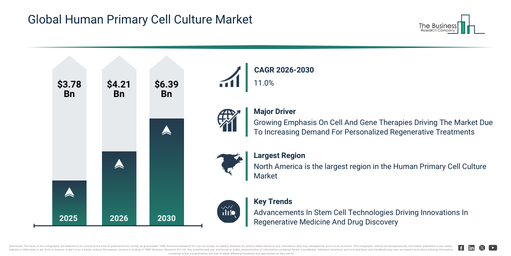
    Human Primary Cell Culture Market Growth From $4.21 Billion In 2026 To $6.39 Billion By 2030 At A CAGR Of 11%

    The human primary cell culture market size has seen substantial growth in recent years. It is anticipated to expand from $3.78 billion in 2025 to $4.21 billion in 2026, achieving a compound annual growth rate (CAGR) of 11.3%. This historical expansion can be attributed to various factors, including the limitations of immortalized cell lines, an increase in biomedical research activities, enhanced funding for life sciences research, a rising demand for predictive preclinical models, and advancements in cell isolation and culture techniques.

    The human primary cell culture market is projected to experience substantial expansion in the coming years. Its valuation is anticipated to reach $6.39 billion by 2030, exhibiting a compound annual growth rate (CAGR) of 11.0%. This anticipated growth during the forecast period is attributable to several factors, including a heightened emphasis on personalized medicine, an increase in pharmaceutical and biotech research and development (R&D) investments, broader acceptance of regenerative therapies, innovations in cell culture systems, and the expanding application of human primary cells in disease modeling. Key trends foreseen in this period involve the rising utilization of human primary cells in drug discovery and toxicity evaluations, increased integration of patient-derived cells for precision medicine studies, a growing need for serum-free and chemically defined culture media, broader applications of primary cells within regenerative medicine, and a heightened preference for in vivo-relevant cell models compared to immortalized cell lines.

    Get A Free Sample Report With In-Depth Market Insights:

    https://thebusinessresearchcompany.com/sample_request?id=54957956&type=smp&name=Human%20Primary%20Cell%20Culture%20Market%20Report%202026&utm_source=Blogs&utm_medium=Paid&utm_campaign=Oct_PR

    Human Primary Cell Culture Market Growth Drivers: What’s Behind The Acceleration?

    A heightened interest in cell and gene therapies is anticipated to drive the expansion of the human primary cell culture market in the future. These therapies represent sophisticated medical interventions designed to alter or substitute genetic material or cells, aiming to treat or cure illnesses at a molecular level. The increasing importance placed on cell and gene therapy stems from their capacity to offer lasting or curative solutions for genetic disorders, cancers, and rare diseases, by tackling the fundamental issue at the molecular level. Within cell and gene therapies, human primary cell cultures find application in creating treatments, manufacturing viral vectors, and evaluating gene editing methods. As an illustration, in July 2024, data from the American Society of Gene & Cell Therapy (ASGCT), a US-based non-profit organization, indicated that approximately 76 gene therapy trials commenced in the USA during the second quarter of 2024, representing a 25% increase over the first quarter. Consequently, the heightened priority given to advancing cell and gene therapies is stimulating the expansion of the human primary cell culture market.

    Human Primary Cell Culture Market Segment Analysis: What Are The Core Market Categories?

    The human primary cell culture market covered in this report is segmented –

    1) By Product Type: Primary Cells, Reagents And Supplements, Instruments, Primary Cell Culture Media, Other Product Types

    2) By Applications: Drug Discovery, Therapy Development, Regenerative Medicine, Other Applications

    3) By End User: Pharmaceutical And Biotechnology Companies, Contract Research Organizations (CROs), Academic And Research Institutions

    Subsegments:

    1) By Primary Cells: Human Dermal Fibroblasts (HDF), Human Epidermal Keratinocytes (HEK), Human Mesenchymal Stem Cells (HMSC), Human Endothelial Cells, Human Hematopoietic Cells

    2) By Reagents And Supplements: Growth Factors And Cytokines, Antibiotics And Antimycotics, Fetal Bovine Serum (FBS), Buffers And Chemicals, Cryopreservation Reagents

    3) By Instruments: Cell Culture Incubators, Biosafety Cabinets, Centrifuges, Cell Counters And Analyzers, Microscopes

    4) By Primary Cell Culture Media: Serum-Free Media, Chemically Defined Media, Classical Media, Protein-Free Media, Custom Media

    5) By Other Product Types: Culture Dishes And Plates, Flasks And Bottles, Pipettes And Tips, Cell Strainers And Filters, Coated Culture Surfaces

    Human Primary Cell Culture Market Trends: What’s Defining The Industry’s Next Phase?

    Leading companies within the human primary cell culture market are concentrating on creating technologically advanced solutions, particularly induced pluripotent stem cell (iPSC) and embryonic stem cell (ESC) technologies, with the aim of improving cell-based research, optimizing drug discovery processes, and speeding up progress in regenerative medicine and personalized therapies. Both iPSC (Induced Pluripotent Stem Cell) and ESC (Embryonic Stem Cell) technologies utilize the reprogramming of adult cells or the application of embryonic cells to generate pluripotent stem cells, which possess the ability to transform into diverse cell types beneficial for research, drug discovery, and regenerative medicine applications. A notable illustration of this trend occurred in July 2024, when BioServe Biotechnologies India Pvt Ltd., an India-based Biotechnology and life sciences firm, introduced a range of advanced stem cell products from REPROCELL, designed to bolster scientific research and drug development efforts across India. This product portfolio encompasses cell culture media, tools for stem cell differentiation, 3D cell culture systems, and services for drug discovery. Such innovations significantly contribute to advancements in regenerative medicine, disease modeling, and preclinical research, all leveraging iPSC and ESC technologies.

    Human Primary Cell Culture Market Top Companies Driving Competitive Growth

    Major companies operating in the human primary cell culture market are Thermo Fisher Scientific Inc., Merck & Co. Inc., Lonza Group AG, STEMCELL Technologies Inc., American Type Culture Collection, PromoCell GmbH, Krishgen Biosystems Private Limited, Cell Culture Company Limited Liability Company, HiMedia Laboratories Private Limited, 3H Biomedical Aktiebolag, ScienCell Research Laboratories Inc., Cell Applications Incorporated, Life Technologies Private Limited, PELOBIOTECH Gesellschaft mit beschränkter Haftung, Amsbio Limited, AcceGen Biotechnology Limited Liability Company, Cell Biologics Incorporated, BI Biotech India Private Limited, Innoprot Sociedad Limitada, ZenBio Incorporated, Evercyte GmbH, Cell Systems Corporation, Cytion GmbH, Kosheeka Private Limited

    View The Full Human Primary Cell Culture Market Report:

    https://thebusinessresearchcompany.com/report/human-primary-cell-culture-global-market-report?utm_source=Blogs&utm_medium=Paid&utm_campaign=Oct_PR

    Human Primary Cell Culture Market Regional Analysis And Top Geography

    North America was the largest region in the human primary cell culture market in 2025. Asia-Pacific is expected to be the fastest-growing region in the forecast period. The regions covered in the human primary cell culture market report are Asia-Pacific, South East Asia, Western Europe, Eastern Europe, North America, South America, Middle East, Africa.

    Reach Out To Our Team:

    The Business Research Company: https://www.thebusinessresearchcompany.com/

    Americas: +1 310-496-7795

    Asia: +44 7882 955267 & +91 8897263534

    Europe: +44 7882 955267

    Email us at: marketing@tbrc.info

    Follow us on:

    LinkedIn: https://in.linkedin.com/company/the-business-research-company

    YouTube: https://www.youtube.com/channel/UC24_fI0rV8cR5DxlCpgmyFQ

    Global Market Model: https://www.thebusinessresearchcompany.com/global-market-model
  • Human Papillomavirus (HPV) Cytomegalovirus (CMV) Therapeutic Market Size And Forecast 2026–2030: Trends Driving Industry Expansion

    Human Papillomavirus (HPV) Cytomegalovirus (CMV) Therapeutic Market Size And Forecast 2026–2030: Trends Driving Industry Expansion

    Featuring market attractiveness scoring, total addressable market sizing, company benchmarking matrices, interactive Excel dashboards, deeper supply chain intelligence, emerging startup tracking, and granular product-level insights, The Business Research Company’s 2026 market reports are built to deliver research that is both more actionable and more strategically valuable.

    Human Papillomavirus (HPV) Cytomegalovirus (CMV) Therapeutic Market Expansion Outlook: What Revenue Opportunities Are Ahead?

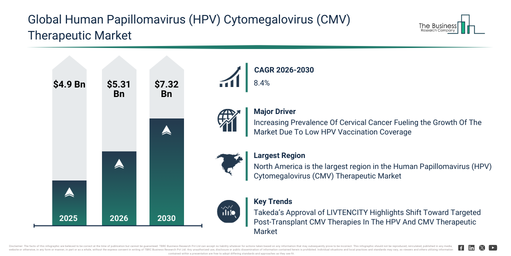
    The human papillomavirus (hpv) cytomegalovirus (cmv) therapeutic market size has experienced significant expansion recently. It is projected to increase from $4.9 billion in 2025 to $5.31 billion in 2026, registering a compound annual growth rate (CAGR) of 8.3%. This historical growth can be attributed to factors such as the high global prevalence of hpv and cmv infections, a rising incidence of cancers linked to viruses, widespread adoption of prophylactic hpv vaccination programs, the increasing burden of cmv infections in immunocompromised patients, and advancements in antiviral drug development.

    The human papillomavirus (hpv) cytomegalovirus (cmv) therapeutic market size is projected to experience robust expansion over the coming years. This market is anticipated to reach $7.32 billion by 2030, exhibiting a compound annual growth rate (CAGR) of 8.4%. Factors contributing to this growth during the forecast period include the escalating demand for therapeutic vaccines, a heightened emphasis on cancer immunotherapy, increased investments in antiviral research and development, the expansion of screening and early intervention initiatives, and a greater understanding of congenital and persistent viral infections. Key trends anticipated during the forecast timeframe involve the intensified development of therapeutic vaccines for hpv and cmv, the wider embrace of immunotherapy-driven antiviral treatments, a growing emphasis on combination approaches for managing viral infections, the broadening of targeted therapies for cancers linked to viruses, and an increase in clinical investigations for advanced antiviral medications.

    Get A Free Sample Report With In-Depth Market Insights:

    https://thebusinessresearchcompany.com/sample_request?id=68759333&type=smp&name=Human%20Papillomavirus%20%28HPV%29%20Cytomegalovirus%20%28CMV%29%20Therapeutic%20Market%20Report%202026&utm_source=Blogs&utm_medium=Paid&utm_campaign=Oct_PR

    Human Papillomavirus (HPV) Cytomegalovirus (CMV) Therapeutic Market Growth Factors Behind Sustained Expansion

    The expanding occurrence of cervical cancer is anticipated to boost the growth of the human papillomavirus (HPV) and cytomegalovirus (CMV) therapeutic market. Cervical cancer, defined as a malignant tumor in the cervix, is primarily escalating due to ongoing infections with high-risk human papillomavirus (HPV) strains, which induce atypical cervical cell changes that can become cancerous if left untreated. Human papillomavirus (HPV) cytomegalovirus (CMV) therapeutics aid in cervical cancer management by targeting the viral progression of the disease and enhancing patient results. These therapies diminish the likelihood of cancer development through antiviral treatments and immunotherapies, thereby improving long-term health and quality of life. For example, the American Cancer Society reported in April 2024 that around 20 million new cervical cancer cases were diagnosed globally in 2022, a figure expected to increase to 35 million by 2050. Consequently, the rising incidence of cervical cancer is a key driver for the human papillomavirus (HPV) and cytomegalovirus (CMV) therapeutic market. The growth of the human papillomavirus (HPV) cytomegalovirus (CMV) therapeutic market is also anticipated to be driven by increasing healthcare expenditure. This expenditure represents the collective spending on medical services, treatments, and health resources, financed by governments, insurers, and individuals to guarantee accessible and high-quality care. Human papillomavirus (HPV) and cytomegalovirus (CMV) therapeutics gain from this rise in spending, as it facilitates wider availability of sophisticated antiviral treatments and preventive measures. For illustration, the Office for National Statistics, a UK government body, stated in May 2024 that total healthcare expenditure experienced a 5.6% nominal increase between 2022 and 2023, which signifies a substantial acceleration compared to the 0.9% growth noted in 2022. Thus, the escalating healthcare expenditure is a significant factor in the expansion of the human papillomavirus (HPV) cytomegalovirus (CMV) therapeutic market.

    Human Papillomavirus (HPV) Cytomegalovirus (CMV) Therapeutic Market Segment Breakdown: Which Categories Lead On Revenue?

    The human papillomavirus (hpv) cytomegalovirus (cmv) therapeutic market covered in this report is segmented –

    1) By Therapeutic Type: Vaccines, Antiviral Drugs, Immunotherapy

    2) By Route of Administration: Intramuscular, Oral

    3) By Indications: Cervical Cancer, Genital Warts, Head And Neck Cancer, Anal Cancer

    4) By Distribution Channel: Hospitals, Retail Pharmacies, Specialty Clinics

    Subsegments:

    1) By Vaccines: Prophylactic Vaccines, Therapeutic Vaccines, Recombinant Vaccines, Virus-Like Particle (VLP) Based Vaccines

    2) By Antiviral Drugs: Nucleoside Analogues, Deoxyribonucleic Acid Polymerase Inhibitors

    3) By Immunotherapy: Monoclonal Antibodies, Immune Checkpoint Inhibitors, Adoptive T-cell Therapy

    Human Papillomavirus (HPV) Cytomegalovirus (CMV) Therapeutic Market Industry Trends Fueling Future Revenue Growth

    Leading companies within the human papillomavirus (HPV) and cytomegalovirus (CMV) therapeutics market are concentrating on advancing novel technologies, such as post-transplant anti-cytomegalovirus (CMV) treatment, with the aim of addressing previously unmet medical demands, boosting treatment effectiveness, lessening resistance to current therapies, and enhancing patient outcomes for those who are immunocompromised. This post-transplant anti-cytomegalovirus (CMV) treatment refers to therapeutic interventions designed to either prevent or manage cytomegalovirus (CMV) infections in individuals who have received organ or stem cell transplants and are considered high-risk because of their immunosuppressed state. As an illustration, in June 2024, Takeda Pharmaceutical Company Limited, a pharmaceutical firm based in Japan, secured approval from the Japanese Ministry of Health, Labour, and Welfare (MHLW) for LIVTENCITY (maribavir) specifically for treating post-transplant cytomegalovirus (CMV) infection or disease that has shown resistance to existing anti-CMV medications. This cutting-edge antiviral agent stands as the sole treatment available in Japan that specifically targets and suppresses the cytomegalovirus (CMV)-specific UL97 protein kinase, thereby providing a unique action mechanism distinct from conventional treatments.

    Human Papillomavirus (HPV) Cytomegalovirus (CMV) Therapeutic Market Leading Players And Competitive Positioning

    Major companies operating in the human papillomavirus (hpv) cytomegalovirus (cmv) therapeutic market are Merck & Co. Inc., Pfizer Inc., GlaxoSmithKline plc, Moderna Inc., BioNTech SE, Gilead Sciences Inc., F. Hoffmann-La Roche AG, Sanofi S.A., AstraZeneca plc, Novartis AG, AbbVie Inc., Bristol Myers Squibb Company, Takeda Pharmaceutical Company Limited, Amgen Inc., Vir Biotechnology Inc., Inovio Pharmaceuticals Inc., Dynavax Technologies Corporation, Hookipa Pharma Inc., Vaxart Inc., Bavarian Nordic A/S

    View The Full Human Papillomavirus (HPV) Cytomegalovirus (CMV) Therapeutic Market Report:

    https://thebusinessresearchcompany.com/report/human-papillomavirus-hpv-cytomegalovirus-cmv-therapeutic-global-market-report?utm_source=Blogs&utm_medium=Paid&utm_campaign=Oct_PR

    Human Papillomavirus (HPV) Cytomegalovirus (CMV) Therapeutic Market Geographic Analysis: Where Is Demand Rising Fastest?

    North America was the largest region in the human papillomavirus (HPV) cytomegalovirus (CMV) therapeutic market in 2025. Asia-Pacific is expected to be the fastest-growing region in the forecast period. The regions covered in the human papillomavirus (hpv) cytomegalovirus (cmv) therapeutic market report are Asia-Pacific, South East Asia, Western Europe, Eastern Europe, North America, South America, Middle East, Africa.

    Reach Out To Our Team:

    The Business Research Company: https://www.thebusinessresearchcompany.com/

    Americas: +1 310-496-7795

    Asia: +44 7882 955267 & +91 8897263534

    Europe: +44 7882 955267

    Email us at: marketing@tbrc.info

    Follow us on:

    LinkedIn: https://in.linkedin.com/company/the-business-research-company

    YouTube: https://www.youtube.com/channel/UC24_fI0rV8cR5DxlCpgmyFQ

    Global Market Model: https://www.thebusinessresearchcompany.com/global-market-model
  • Human Organoids Market 2026 Outlook: Market Size, CAGR And Key Growth Opportunities

    Human Organoids Market 2026 Outlook: Market Size, CAGR And Key Growth Opportunities

    Built to provide research that’s more actionable and strategically valuable, The Business Research Company’s 2026 market reports include market attractiveness analysis, total addressable market sizing, company benchmarking matrices, interactive Excel dashboards, broader supply chain intelligence, emerging startup tracking, and in-depth product insights.

    Human Organoids Market Growth Potential: How Will Market Size Shift Through 2030?

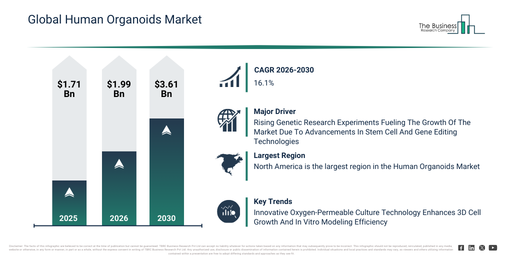
    The human organoids market has experienced rapid growth in recent years. It is projected to expand from $1.71 billion in 2025 to $1.99 billion in 2026, achieving a compound annual growth rate (CAGR) of 16.6%. This historical expansion is primarily due to advancements in stem cell research, the limitations of traditional 2D cell cultures, a rising demand for predictive preclinical models, increased investment in biomedical research, and a growing focus on reducing animal testing.

    The market for human organoids is anticipated to experience significant expansion in the coming years. This market is projected to reach $3.61 billion by 2030, demonstrating a compound annual growth rate (CAGR) of 16.1%. Several factors contribute to this growth during the projected period, including the greater uptake of precision medicine approaches, growing pharmaceutical r&d spending, broader applications of organoids in regenerative medicine, advancements in 3D cell culture systems, and a rising need for human-relevant disease models. Key developments anticipated for the forecast timeframe encompass the expanding utilization of organoids in drug discovery and toxicity assessments, their increased deployment for disease modeling and pathophysiology investigations, the growing requirement for personalized medicine based on patient-derived organoids, the wider application of organoids in oncology and neurology studies, and enhanced partnerships between academic institutions and pharmaceutical companies for organoid-focused research.

    Get A Free Sample Report With In-Depth Market Insights:

    https://thebusinessresearchcompany.com/sample_request?id=81565366&type=smp&name=Human%20Organoids%20Market%20Report%202026&utm_source=Blogs&utm_medium=Paid&utm_campaign=Oct_PR

    Human Organoids Market Demand Drivers Opening New Revenue Streams

    The expanding volume of experiments in genetic science is projected to propel the advancement of the human organoids market in the future. Genetic science, a biological field, investigates how characteristics are passed down via genes and how genetic data shapes the growth and function of living entities. The surge in genetic science experiments stems from technological innovations enhancing gene editing speed and accuracy, thereby facilitating more profound investigations into diseases and the creation of focused therapies. This scientific discipline aids human organoids by enabling precise gene manipulation to create models for particular diseases and observe their progression. It assists scientists in comprehending genetic conditions, evaluating novel medications, and devising personalized treatment approaches more efficiently. As an illustration, in April 2024, the American Society of Gene & Cell Therapy, a US-based non-profit medical and scientific organization, communicated that in Q4 2023, phase III gene therapy clinical trials saw a 10% increase, representing the first quarterly rise since Q3 2022. Consequently, the growing number of experiments in genetic science will fuel the human organoids market.

    Human Organoids Market Segmentation: How Does The Market Break Down By Category?

    The human organoids market covered in this report is segmented –

    1) By Type: Brain Organoids, Heart Organoids, Intestinal Organoids, Kidney Organoids, Liver Organoids, Lung Organoids, Pancreatic Organoids

    2) By Technology: 3D Bioprinting, Cell Culture Technology, Hydrogels And Scaffold-Based Technology

    3) By Application: Drug Discovery, Infectious Disease Research, Neurology Studies, Oncology Research, Personalized Medicine

    4) By End User: Pharma And Biotech Companies, Contract Research Organizations, Academic And Research Institutes

    Subsegments:

    1) By Brain Organoids: Cerebral Organoids, Midbrain Organoids, Hypothalamic Organoids, Spinal Cord Organoids

    2) By Heart Organoids: Cardiac Muscle Organoids, Vascularized Heart Organoids, Chamber-Specific Heart Organoids

    3) By Intestinal Organoids: Small Intestine Organoids, Colon Organoids, Duodenal Organoids

    4) By Kidney Organoids: Nephron Organoids, Glomerular Organoids, Proximal Tubule Organoids

    5) By Liver Organoids: Hepatic Organoids, Bile Duct Organoids, Cholangiocyte Organoids

    6) By Lung Organoids: Airway Organoids, Alveolar Organoids, Bronchial Organoids

    7) By Pancreatic Organoids: Islet Organoids, Ductal Pancreatic Organoids, Acinar Pancreatic Organoids

    Human Organoids Market Trends Powering Strategic Industry Growth

    Major companies in the human organoids market are concentrating on developing advanced culture platforms and materials designed to boost cell viability and oxygen delivery. This focus aims to improve the accuracy and scalability of in vitro models for applications in drug discovery, regenerative medicine, and personalized therapy. For instance, in June 2025, Mitsui Chemicals Group, a Japan-based chemical manufacturing company, introduced its InnoCell oxygen-permeable cell culture microplates. These innovative microplates integrate the company’s specialized materials and precision cutting techniques to enhance oxygen supply to cells, proving especially useful in 3D spheroid and organoid cultures by reducing cell death and improving long-term viability. They are offered in both non-treated (N-type) and collagen-coated (C-type) versions to accommodate various cell types. The plates also boast low drug adsorption and excellent fluorescence imaging properties. With these advancements, the product is positioned to support drug discovery, personalized medicine, regenerative therapies, and advanced in vitro modeling in pharmaceutical research.

    Human Organoids Market Competitive Overview And Top Companies

    Major companies operating in the human organoids market are Organovo Holdings Inc., Emulate Inc., MIMETAS B.V., InSphero AG, DefiniGEN Limited, CN Bio Innovations Limited, CELLINK AB, Hubrecht Organoid Technology, Stemcell Technologies Inc., Crown Bioscience Inc., Synthego Corporation, Altis Biosystems Inc., Molecular Devices LLC, TissUse GmbH, Nortis Inc., Hesperos Inc., Vivodyne Inc., Curi Bio Inc., Axol Bioscience Ltd.

    View The Full Human Organoids Market Report:

    https://thebusinessresearchcompany.com/report/human-organoids-global-market-report?utm_source=Blogs&utm_medium=Paid&utm_campaign=Oct_PR

    Human Organoids Market Global Footprint: Which Region Leads The Market?

    North America was the largest region in the human organoids market in 2025. Asia-Pacific is expected to be the fastest-growing region in the forecast period. The regions covered in the human organoids market report are Asia-Pacific, South East Asia, Western Europe, Eastern Europe, North America, South America, Middle East, Africa.

    Reach Out To Our Team:

    The Business Research Company: https://www.thebusinessresearchcompany.com/

    Americas: +1 310-496-7795

    Asia: +44 7882 955267 & +91 8897263534

    Europe: +44 7882 955267

    Email us at: marketing@tbrc.info

    Follow us on:

    LinkedIn: https://in.linkedin.com/company/the-business-research-company

    YouTube: https://www.youtube.com/channel/UC24_fI0rV8cR5DxlCpgmyFQ

    Global Market Model: https://www.thebusinessresearchcompany.com/global-market-model
  • Human Metapneumovirus Diagnostics Market Size Growth: From $0.59 Billion In 2026 To $0.86 Billion By 2030

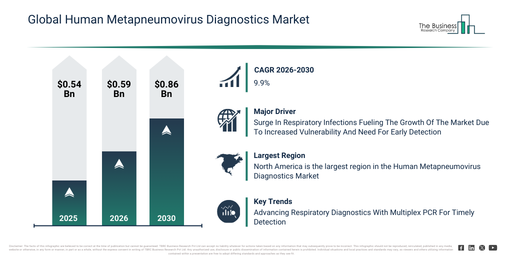
    Human Metapneumovirus Diagnostics Market Size Growth: From $0.59 Billion In 2026 To $0.86 Billion By 2030

    Backed by market attractiveness analysis, total addressable market sizing, company benchmarking matrices, interactive Excel dashboards, wider supply chain intelligence, emerging startup coverage, and detailed product-level insights, The Business Research Company’s 2026 market reports are designed to offer research that is more actionable and strategically valuable than ever.

    Human Metapneumovirus Diagnostics Market Value Analysis: What Growth Lies Ahead Over The Forecast Period?

    The human metapneumovirus diagnostics market size has experienced rapid growth in recent years. It is projected to increase from $0.54 billion in 2025 to $0.59 billion in 2026, at a compound annual growth rate (CAGR) of 10.1%. Historically, this expansion has been driven by factors such as the rising incidence of respiratory tract infections, increased hospitalization of infants and elderly patients, expansion of pcr-based diagnostic capabilities, growing awareness of non-influenza respiratory viruses, and improved access to diagnostic laboratories.

    The human metapneumovirus diagnostics market is projected to experience substantial expansion in the coming years. Its valuation is anticipated to reach $0.86 billion by 2030, demonstrating a compound annual growth rate (CAGR) of 9.9%. This projected growth is driven by factors such as a heightened need for swift respiratory diagnostic solutions, the broadening scope of multiplex and syndromic testing, increased capital allocation towards molecular diagnostic innovations, a sharper emphasis on prompt and precise viral identification, and enhanced readiness for recurring respiratory epidemics. Key developments expected during this timeframe involve the wider acceptance of molecular diagnostics for respiratory viruses, a surging need for quick and accessible hmpv testing, a greater focus on early diagnosis particularly for children and the elderly, the proliferation of comprehensive multiplex panels for respiratory pathogens, and the tighter incorporation of diagnostic findings into medical treatment planning.

    Get A Free Sample Report With In-Depth Market Insights:

    https://thebusinessresearchcompany.com/sample_request?id=33709531&type=smp&name=Human%20Metapneumovirus%20Diagnostics%20Market%20Report%202026&utm_source=Blogs&utm_medium=Paid&utm_campaign=Oct_PR

    Human Metapneumovirus Diagnostics Market Growth Backed By Core Demand Fundamentals

    The escalating prevalence of respiratory infections is projected to stimulate growth within the human metapneumovirus diagnostics market moving forward. These infections are illnesses caused by viruses, bacteria, or other pathogens that impact the respiratory system, including the sinuses, throat, airways, and lungs. The increased occurrence of respiratory infections is linked to their tendency to expose individuals to detrimental pollutants, which irritate and weaken the respiratory tract, thereby heightening its vulnerability to infections. Human metapneumovirus diagnostics play a crucial role in identifying hMPV as the underlying cause of respiratory infections, enabling precise treatment and enhanced patient management. For example, in January 2025, the UK Health Security Agency, a UK-based government body, documented that during the 2023–2024 season, respiratory infection rates in England peaked at 8.0 per 100,000 in weeks 50 and 52 of 2023, further escalating to 10.2 per 100,000 in week 4 of 2024, while acute respiratory infection (ARI) incidents in closed settings amounted to a total of 2,051, with most cases reported in care homes and hospitals. Therefore, the growing prevalence of respiratory infections is actively propelling the expansion of the human metapneumovirus diagnostics market.

    Human Metapneumovirus Diagnostics Market Segment Trends And Revenue Contributors

    The human metapneumovirus diagnostics market covered in this report is segmented –

    1) By Product Type: Reagents And Kits, Instruments

    2) By Test Type: Molecular Diagnostics, Immunodiagnostics

    3) By Technology: PCR-Based Diagnostics, Immunofluorescence Assays, Lateral Flow Assays

    4) By End-Use: Hospitals And Clinics, Diagnostic And Reference Laboratories, Academic And Research Institutions, Other End Users

    Subsegments:

    1) By Reagents And Kits: Sample Collection Kits, Nucleic Acid Extraction Kits, Viral Transport Media, Control Reagents

    2) By Instruments: Thermal Cyclers, Automated Analyzers, Nucleic Acid Extractors, Fluorescence Readers

    Human Metapneumovirus Diagnostics Market Growth Trends Reshaping The Competitive Landscape

    Companies operating within the human metapneumovirus diagnostics market are prioritizing the development of innovative offerings, such as respiratory polymerase chain reaction (PCR) diagnostic solutions, to enhance their molecular diagnostic capabilities for identifying a wide array of respiratory pathogens. A respiratory polymerase chain reaction (PCR) diagnostic solution functions as a molecular testing method designed to detect and identify respiratory pathogens through the amplification of their genetic material, providing high levels of sensitivity and specificity. For example, in March 2023, Jiangsu BioPerfectus Technologies Co., Ltd., a China-based molecular diagnostic company, launched its respiratory pathogen multiplex real-time polymerase chain reaction (PCR) diagnostic kit. This solution is engineered for the simultaneous detection of multiple respiratory pathogens with high accuracy and a quick turnaround time, thereby boosting diagnostic efficiency in clinical and point-of-care settings. Its broad coverage and precise operation are instrumental in supporting timely clinical decision-making, particularly when managing respiratory infections that exhibit similar symptoms.

    Human Metapneumovirus Diagnostics Market Competitive Landscape: Which Companies Lead The Industry?

    Major companies operating in the human metapneumovirus diagnostics market are F. Hoffmann-La Roche Ltd., Thermo Fisher Scientific Inc., Abbott Laboratories, Quest Diagnostics, Hologic Inc., QuidelOrtho Corporation, Bio-Rad Laboratories Inc., ARUP Laboratories, Qiagen NV, Diasorin, Luminex Corporation, bioMérieux, Seegene Inc., Cepheid, R-Biopharm AG, Certest Biotec, ZeptoMetrix, Xi’an Tianlong Science and Technology Co. Ltd, The Native Antigen Company, Hangzhou Testsea Biotechnology Co. Ltd., Attogene.

    View The Full Human Metapneumovirus Diagnostics Market Report:

    https://thebusinessresearchcompany.com/report/human-metapneumovirus-diagnostics-global-market-report?utm_source=Blogs&utm_medium=Paid&utm_campaign=Oct_PR

    Human Metapneumovirus Diagnostics Market Regional Split: Which Areas Are Fueling Growth?

    North America was the largest region in the human metapneumovirus diagnostics market in 2025. Asia-Pacific is expected to be the fastest-growing region in the forecast period. The regions covered in the human metapneumovirus diagnostics market report are Asia-Pacific, South East Asia, Western Europe, Eastern Europe, North America, South America, Middle East, Africa.

    Reach Out To Our Team:

    The Business Research Company: https://www.thebusinessresearchcompany.com/

    Americas: +1 310-496-7795

    Asia: +44 7882 955267 & +91 8897263534

    Europe: +44 7882 955267

    Email us at: marketing@tbrc.info

    Follow us on:

    LinkedIn: https://in.linkedin.com/company/the-business-research-company

    YouTube: https://www.youtube.com/channel/UC24_fI0rV8cR5DxlCpgmyFQ

    Global Market Model: https://www.thebusinessresearchcompany.com/global-market-model
  • Integrated Patient Care Systems Market Size In 2026: Regional Growth, Key Segments And Future Outlook

    Integrated Patient Care Systems Market Size In 2026: Regional Growth, Key Segments And Future Outlook

    Featuring market attractiveness scoring, total addressable market sizing, company benchmarking matrices, interactive Excel dashboards, deeper supply chain intelligence, emerging startup tracking, and granular product-level insights, The Business Research Company’s 2026 market reports are built to deliver research that is both more actionable and more strategically valuable.

    Integrated Patient Care Systems Market Forecast: Value Set To Climb From $30.19 Billion To $47.43 Billion

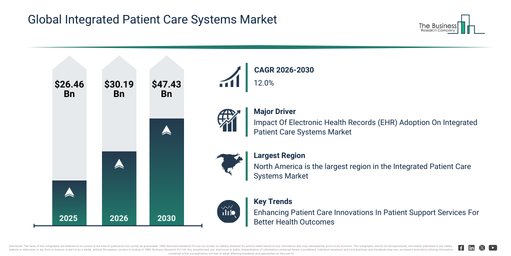
    The integrated patient care systems market has experienced swift expansion recently. Projections indicate an increase from $26.46 billion in 2025 to $30.19 billion in 2026, demonstrating a compound annual growth rate (CAGR) of 14.1%. Historically, this growth has been fueled by factors such as the splintering of healthcare delivery systems, a rising incidence of chronic diseases, the widespread implementation of electronic health records, escalating healthcare operational expenditures, and a persistent need for better clinical results.

    The integrated patient care systems market is projected to experience substantial expansion over the coming years. Its size is anticipated to reach $47.43 billion by 2030, demonstrating a compound annual growth rate (CAGR) of 12.0%. This growth trajectory throughout the forecast period can be primarily attributed to factors such as an escalating emphasis on population health management, the broadening of integrated care networks, a surge in healthcare digital transformation initiatives, an increasing need for cost-efficient care delivery, and favorable government healthcare reforms. Key trends observed within the same forecast period encompass a heightened focus on care coordination and continuity, the increasing embrace of value-based care models, a rising demand for patient-centric care pathways, the expansion of interoperable healthcare platforms, and the integration of multidisciplinary care teams.

    Get A Free Sample Report With In-Depth Market Insights:

    https://thebusinessresearchcompany.com/sample_request?id=51846617&type=smp&name=Integrated%20Patient%20Care%20Systems%20Market%20Report%202026&utm_source=Blogs&utm_medium=Paid&utm_campaign=Oct_PR

    Integrated Patient Care Systems Market Growth Catalysts And Demand Drivers

    The expanding adoption of electronic health records (EHR) is projected to stimulate the growth of the integrated patient care systems market moving forward. Electronic health records (EHR) represent digital systems that safely store and manage patient health information, allowing healthcare providers efficient access, sharing, and analysis. The escalating demand for electronic health records (EHR) systems is attributable to several factors, including improved efficiency, data centralization and accessibility, enhanced interoperability, and increased patient engagement. EHR systems are vital components of integrated healthcare systems, as they enable smoother information exchange, better care coordination, and superior patient outcomes. In integrated healthcare setups, EHR interoperability is critical for ensuring the secure and efficient transfer of patient information across various healthcare environments. For instance, in July 2024, according to the European Commission, a Belgium-based organization, the Digital Decade e Health Indicator Study indicated that the EU average access to electronic health records (EHR) via online portals rose to 79%, an increase from 72% in 2022. Consequently, the rising adoption of electronic health records (EHR) is propelling the expansion of the integrated patient care systems market.

    Integrated Patient Care Systems Market Segmentation And Category Overview

    The integrated patient care systems market covered in this report is segmented –

    1) By Component: Software, Hardware, Services

    2) By Delivery Mode: Web Or Cloud-Based Systems, On-Premise Systems, Hybrid Models

    3) By Application: Electronic Health Or Medical Records, Real-Time Healthcare, Patient Engagement, Prescription Management, Other Applications

    4) By End User: Hospitals, Clinics, Diagnostic Centers, Pharmacies, Other End Users

    Subsegments:

    1) By Software: Electronic Health Record (EHR) Systems, Patient Monitoring Software, Clinical Decision Support Systems (CDSS), Hospital Information Systems (HIS)

    2) By Hardware: Patient Monitoring Devices, Diagnostic Equipment, Medical Imaging Systems, Infusion Pumps

    3) By Services: Installation and Deployment Services, Maintenance and Support Services, Training and Consulting Services, Data Integration Services

    Integrated Patient Care Systems Market Trends Shaping Long-Term Demand

    Major companies involved in integrated patient care systems are focusing on developing innovative services, such as patient support services, to improve care coordination and increase patient engagement. Patient support services are a variety of healthcare offerings designed to provide ongoing help, resources, and information to patients, thereby assisting them in managing their health conditions more effectively. This type of service connects with multiple aspects of healthcare delivery. For instance, in July 2023, Inizio Engage, an Austrian-based pharmaceutical company, launched Patient Access Services. This is a comprehensive package created to enhance the patient experience, particularly for those living with specialty, rare, and orphan diseases. The goal of this initiative is to improve adherence to treatment and overall health outcomes by offering personalized support throughout the often complicated process of diagnosis and treatment.

    Integrated Patient Care Systems Market Competitive Analysis Of Leading Industry Participants

    Major companies operating in the integrated patient care systems market are McKesson Corporation, International Business Machines Corporation, Oracle Corporation, GE HealthCare, Koninklijke Philips N.V, Cerner Corporation, Epic Systems Corporation, Allscripts Healthcare LLC, eClinicalWorks, Siemens Healthineers, InterSystems Corporation, Medical Information Technology Inc, Computer Programs and Systems Inc, Optum Inc, Vocera Communications Inc, Advantech Co. Ltd, CareCloud Inc, Greenway Health LLC, NantHealth Inc, CureMD, GetWellNetwork Inc, PatientSafe Solutions Inc, SONIFI, Compulink Advantage

    View The Full Integrated Patient Care Systems Market Report:

    https://thebusinessresearchcompany.com/report/integrated-patient-care-systems-global-market-report?utm_source=Blogs&utm_medium=Paid&utm_campaign=Oct_PR

    Integrated Patient Care Systems Market Top Region By Revenue And Market Share

    North America was the largest region in the integrated patient care systems market in 2025. Asia-Pacific is expected to be the fastest-growing region in the forecast period. The regions covered in the integrated patient care systems market report are Asia-Pacific, South East Asia, Western Europe, Eastern Europe, North America, South America, Middle East, Africa.

    Reach Out To Our Team:

    The Business Research Company: https://www.thebusinessresearchcompany.com/

    Americas: +1 310-496-7795

    Asia: +44 7882 955267 & +91 8897263534

    Europe: +44 7882 955267

    Email us at: marketing@tbrc.info

    Follow us on:

    LinkedIn: https://in.linkedin.com/company/the-business-research-company

    YouTube: https://www.youtube.com/channel/UC24_fI0rV8cR5DxlCpgmyFQ

    Global Market Model: https://www.thebusinessresearchcompany.com/global-market-model
  • Insulin Infusion Pump Market Growth Forecast Through 2030: Market Size And Trends In 2026

    Insulin Infusion Pump Market Growth Forecast Through 2030: Market Size And Trends In 2026

    Built to provide research that’s more actionable and strategically valuable, The Business Research Company’s 2026 market reports include market attractiveness analysis, total addressable market sizing, company benchmarking matrices, interactive Excel dashboards, broader supply chain intelligence, emerging startup tracking, and in-depth product insights.

    Insulin Infusion Pump Market Revenue Growth On Track For A 10% CAGR Through 2030

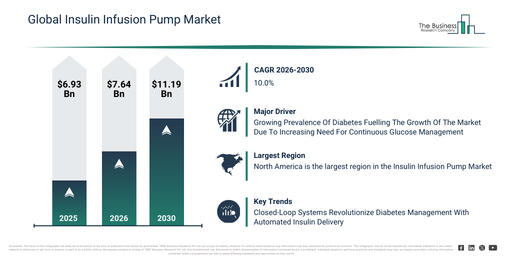
    The insulin infusion pump market size has seen rapid expansion in recent years. It is anticipated to increase from $6.93 billion in 2025 to $7.64 billion in 2026, demonstrating a compound annual growth rate (CAGR) of 10.1%. This historical growth can be attributed to several factors including the rising global prevalence of diabetes, the limitations associated with multiple daily insulin injections, advancements in insulin pump technology, heightened awareness regarding intensive insulin therapy, and the increasing adoption of self-monitoring blood glucose.

    The market for insulin infusion pumps is projected to experience swift expansion over the coming years. This market is anticipated to reach a valuation of $11.19 billion by 2030, exhibiting a compound annual growth rate (CAGR) of 10.0%. This projected growth is driven by factors such as a surge in demand for automated insulin delivery systems, a higher prevalence of both type 1 and type 2 diabetes, increased use of remote patient monitoring solutions, innovations in smart insulin pump technology, and broadened reimbursement policies for diabetes-related medical equipment. Key developments expected during this timeframe encompass a greater uptake of continuous glucose-guided insulin delivery, an increasing inclination towards wearable and tubeless insulin pumps, a significant move towards managing diabetes at home, the proliferation of closed-loop and hybrid insulin systems, and enhanced patient compliance due to more straightforward insulin delivery methods.

    Get A Free Sample Report With In-Depth Market Insights:

    https://thebusinessresearchcompany.com/sample_request?id=87441710&type=smp&name=Insulin%20Infusion%20Pump%20Market%20Report%202026&utm_source=Blogs&utm_medium=Paid&utm_campaign=Oct_PR

    Insulin Infusion Pump Market Opportunity Drivers: What’s Unlocking New Revenue Potential?

    The increasing incidence of diabetes is projected to fuel the expansion of the insulin infusion pump market in the future. This chronic medical condition is characterized by the body’s inability to adequately manage blood sugar or glucose levels. The rise in diabetes cases is primarily fueled by more inactive lifestyles and unhealthy eating patterns, which contribute to obesity, insulin resistance, and a greater occurrence of type 2 diabetes. Insulin infusion pumps assist in managing diabetes by providing constant and exact insulin doses, thereby sustaining steady blood glucose levels. These devices minimize the necessity for repeated injections, offering convenience and improved blood sugar regulation, which elevates the standard of overall diabetes care. As an illustration, in June 2024, data from the National Health Service, a UK-based government department, indicated that 3,615,330 individuals registered with a general practitioner (GP) received a diagnosis of non-diabetic hyperglycemia or pre-diabetes in 2023. This represents an 18% surge from 3,065,825 instances recorded in 2022. Consequently, the escalation in illnesses linked to lifestyle factors is anticipated to spur the expansion of the medical device safety testing market.

    Insulin Infusion Pump Market Segment Outlook: Which Categories Are Growing Fastest?

    The insulin infusion pump market covered in this report is segmented –

    1) By Type: Continuous Subcutaneous Insulin Infusion Pumps, Insulin Delivery Pens, Wearable Insulin Pumps

    2) By Technology: Remote Monitoring Systems, Closed Loop Systems, Smart Insulin Pumps

    3) By End Use: Hospitals, Home Care Settings, Diabetes Clinics

    Subsegments:

    1) By Continuous Subcutaneous Insulin Infusion (CSII) Pumps: Tubed Insulin Pumps, Tubeless Insulin Pumps

    2) By Insulin Delivery Pens: Reusable Insulin Pens, Disposable Insulin Pens, Smart Insulin Pens

    3) By Wearable Insulin Pumps: Adhesive Patch Pumps, Detachable Patch Pumps, Hybrid Closed-Loop Wearables

    Insulin Infusion Pump Market Innovation Trends Shaping Future Development

    Leading companies in the insulin infusion pumps market are concentrating on developing innovative products, such as insulin patch pump systems, to enhance convenience, improve portability, and offer patients more discreet and comfortable insulin delivery options. Insulin patch pump systems are small, wearable devices that administer insulin through the skin, eliminating the need for traditional tubing. For example, in November 2023, ViCentra BV, a Netherlands-based medical device company, introduced a hybrid closed-loop system for automated insulin delivery. This system integrates its Kaleido insulin patch pump with the Diabeloop DBLG1 algorithm and Dexcom G6 continuous glucose monitoring. This integrated artificial pancreas automatically adjusts insulin dosing in real time, substantially reducing hypoglycemia and improving glucose control and time in range for people with type 1 diabetes. The system is user-friendly, requires minimal setup without fingerstick tests, and uploads data to a cloud platform for effortless monitoring by both users and healthcare providers.

    Insulin Infusion Pump Market Leading Companies And Competitive Benchmarking

    Major companies operating in the insulin infusion pump market are Roche Holding AG, Medtronic plc, Insulet Corporation, Tandem Diabetes Care Inc., Ypsomed Holding AG, Beta Bionics Inc., SOOIL Development Co. Ltd.

    View The Full Insulin Infusion Pump Market Report:

    https://thebusinessresearchcompany.com/report/insulin-infusion-pump-global-market-report?utm_source=Blogs&utm_medium=Paid&utm_campaign=Oct_PR

    Insulin Infusion Pump Market Regional Analysis And Top Geography

    North America was the largest region in the insulin infusion pump market in 2025. Asia-Pacific is expected to be the fastest-growing region in the forecast period. The regions covered in the insulin infusion pump market report are Asia-Pacific, South East Asia, Western Europe, Eastern Europe, North America, South America, Middle East, Africa.

    Reach Out To Our Team:

    The Business Research Company: https://www.thebusinessresearchcompany.com/

    Americas: +1 310-496-7795

    Asia: +44 7882 955267 & +91 8897263534

    Europe: +44 7882 955267

    Email us at: marketing@tbrc.info

    Follow us on:

    LinkedIn: https://in.linkedin.com/company/the-business-research-company

    YouTube: https://www.youtube.com/channel/UC24_fI0rV8cR5DxlCpgmyFQ

    Global Market Model: https://www.thebusinessresearchcompany.com/global-market-model
  • Insomnia Market Analysis: $5.52 Billion Market Size In 2026 And Future Growth Prospects

    Insomnia Market Analysis: $5.52 Billion Market Size In 2026 And Future Growth Prospects

    Backed by market attractiveness analysis, total addressable market sizing, company benchmarking matrices, interactive Excel dashboards, wider supply chain intelligence, emerging startup coverage, and detailed product-level insights, The Business Research Company’s 2026 market reports are designed to offer research that is more actionable and strategically valuable than ever.

    Insomnia Market Value Growth And Long-Term Outlook

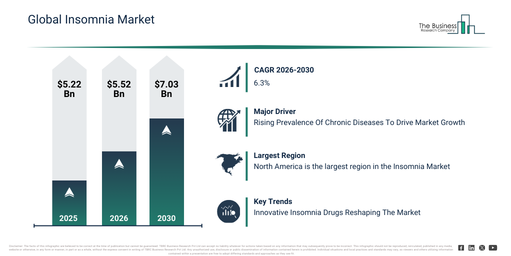
    The insomnia market has experienced significant growth in recent years. It is projected to expand from $5.22 billion in 2025 to $5.52 billion in 2026, exhibiting a compound annual growth rate (CAGR) of 5.7%. The historical period’s growth can be attributed to the rising prevalence of sleep disorders, increased stress and lifestyle changes, widespread use of benzodiazepines and sedatives, growing diagnosis rates of insomnia, and the expansion of sleep clinics and specialists.

    The insomnia market size is anticipated to experience substantial expansion over the coming years, projected to reach $7.03 billion by 2030, demonstrating a compound annual growth rate (CAGR) of 6.3%. This projected growth during the forecast period stems from factors such as the increasing uptake of digital therapeutics, a rising demand for safer and more enduring insomnia treatments, an expanding geriatric population, heightened mental health awareness, and wider accessibility to online and retail pharmacies. Key trends identified for this period encompass the growing preference for non-pharmacological insomnia interventions, an increase in the application of cognitive behavioral therapy for insomnia, a greater inclination towards personalized sleep management, the broader utilization of combination therapy methods, and an escalating recognition of chronic insomnia as a legitimate medical condition.

    Get A Free Sample Report With In-Depth Market Insights:

    https://thebusinessresearchcompany.com/sample_request?id=20025631&type=smp&name=Insomnia%20Market%20Report%202026&utm_source=Blogs&utm_medium=Paid&utm_campaign=Oct_PR

    Insomnia Market Growth Momentum: What Factors Are Shaping Demand?

    The rising occurrence of chronic diseases is anticipated to fuel the expansion of the insomnia market in the future. Chronic disease is defined as an ailment persisting for at least three months, with the potential to worsen over time. Individuals affected by long-term health problems, such as cardiovascular disorders, diabetes, and chronic pain conditions, frequently encounter insomnia or other sleep disturbances as a co-occurring condition. This escalating prevalence generates a need for effective treatments and management approaches for insomnia, thereby stimulating the market for products and services aimed at tackling sleep disorders. For instance, in April 2025, according to the Centers for Disease Control and Prevention, a US-based federal public health agency, 76.4% of US adults, representing about 194 million people, reported having one or more chronic conditions in 2023, with prevalence at 59.5% among young adults, 78.4% among midlife adults, and 93.0% among older adults. Consequently, the expanding occurrence of chronic diseases is propelling the growth of the insomnia market.

    Insomnia Market Segment Landscape: Which Areas Lead Development?

    The insomnia market covered in this report is segmented –

    1) By Therapy Type: Non-Pharmacological Therapy, Pharmacological Therapy

    2) By Drug Class: Anti-Depressants, Melatonin Antagonist, Benzodiazepines, Nonbenzodiazepines, Orexin Antagonist, Other Drug Classes

    3) By Route Of Administration: Oral, Parenteral, Other Route Of Administration

    4) By Distribution Channel: Hospital Pharmacies, Retail Pharmacies, Online Pharmacies

    Subsegments:

    1) By Non-Pharmacological Therapy: Cognitive Behavioral Therapy For Insomnia (CBT-I), Sleep Hygiene Education, Relaxation Techniques, Stimulus Control Therapy, Sleep Restriction Therapy

    2) By Pharmacological Therapy: Prescription Medications, Over-The-Counter, Herbal Supplements

    Insomnia Market Trends Redefining Industry Growth

    Major companies operating in the insomnia market are actively developing new products, including zaleplon-based insomnia drugs, to gain a competitive advantage. Zaleplon is a non-benzodiazepine sedative-hypnotic medication employed for the short-term management of insomnia. For instance, in April 2023, Bukwang Pharm Co Ltd., a South Korea-based pharmaceutical company, launched Zaledeep Cap., representing the first insomnia treatment in South Korea to utilize zaleplon as its primary ingredient. Zaleplon, an FDA-approved non-benzodiazepine drug for treating insomnia, is characterized by its rapid onset of action, short half-life, and minimal impact on daily activities. Given the increasing prevalence of insomnia cases in modern society, the introduction of Zaledeep Cap. is expected to provide a novel and effective treatment solution, aiming to improve sleep quality and overall well-being for individuals experiencing insomnia.

    Insomnia Market Industry Leaders And Competitive Landscape

    Major companies operating in the insomnia market are Pfizer Inc., Merck & Co Inc., Sanofi S.A., GlaxoSmithKline plc., Takeda Pharmaceutical Company Limited, Koninklijke Philips N.V., Viatris Inc., Astellas Pharma Inc., Sun Pharmaceutical Industries Limited, Eisai Co.Ltd., UCLA Health Insomnia Clinic, Jazz Pharmaceuticals PLC, Aurobindo Pharma Limited, Purdue Pharma LP, Cipla Inc., Dr. Reddy’s Laboratories Ltd., Zydus Lifesciences Limited, Lupin Limited, Mallinckrodt Pharmaceuticals Plc., Fisher & Paykel Healthcare Corporation Limited, ResMed Inc., Sunovion Pharmaceuticals Inc., Casper Sleep Inc., Biocodex Inc., Vanda Pharmaceuticals Inc., Pernix Therapeutics Holdings Inc., SleepScore Labs, Alpha-Stim, Neurim Pharmaceuticals Ltd., NightWare Inc.

    View The Full Insomnia Market Report:

    https://thebusinessresearchcompany.com/report/insomnia-global-market-report?utm_source=Blogs&utm_medium=Paid&utm_campaign=Oct_PR

    Insomnia Market Geographic Analysis: Where Is Demand Rising Fastest?

    North America was the largest region in the insomnia market in 2025. The regions covered in the insomnia market report are Asia-Pacific, South East Asia, Western Europe, Eastern Europe, North America, South America, Middle East, Africa.

    Reach Out To Our Team:

    The Business Research Company: https://www.thebusinessresearchcompany.com/

    Americas: +1 310-496-7795

    Asia: +44 7882 955267 & +91 8897263534

    Europe: +44 7882 955267

    Email us at: marketing@tbrc.info

    Follow us on:

    LinkedIn: https://in.linkedin.com/company/the-business-research-company

    YouTube: https://www.youtube.com/channel/UC24_fI0rV8cR5DxlCpgmyFQ

    Global Market Model: https://www.thebusinessresearchcompany.com/global-market-model
  • In-Situ Hybridization Market 2026 Market Size And Growth Forecast: Key Trends To Watch

    In-Situ Hybridization Market 2026 Market Size And Growth Forecast: Key Trends To Watch

    Featuring market attractiveness scoring, total addressable market sizing, company benchmarking matrices, interactive Excel dashboards, deeper supply chain intelligence, emerging startup tracking, and granular product-level insights, The Business Research Company’s 2026 market reports are built to deliver research that is both more actionable and more strategically valuable.

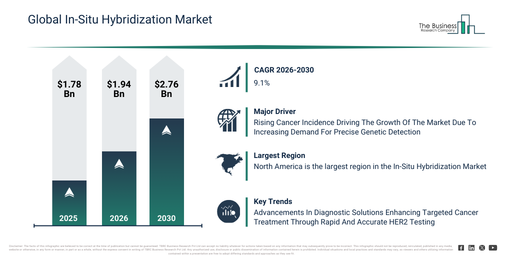
    In-Situ Hybridization Market Poised To Hit $2.76 Billion By 2030 With A 9.1% CAGR

    The in-situ hybridization market has witnessed significant expansion in recent times. Its valuation is projected to increase from $1.78 billion in 2025 to $1.94 billion in 2026, achieving a compound annual growth rate (CAGR) of 9.5%. This historical growth can be attributed to the broadening of molecular pathology applications, an uptick in cancer biomarker testing, the expanded adoption of fluorescence microscopy, the rise in academic genomics research, and the increasing integration of ish in infectious disease investigations.

    The in-situ hybridization market is projected to experience robust expansion over the coming years. This market is anticipated to reach a valuation of $2.76 billion by 2030, demonstrating a compound annual growth rate (CAGR) of 9.1%. The anticipated growth during this period stems from several factors, including the escalating demand for precision oncology diagnostics, the increasing adoption of AI-driven image analysis, the widening scope of personalized medicine research, greater investments in molecular diagnostics infrastructure, and the ongoing development of advanced probe technologies. Key trends expected during the forecast period encompass the increasing uptake of multiplex in-situ hybridization (ISH) techniques, the growing deployment of automated slide scanning systems, a heightened demand for high-resolution spatial gene expression analysis, broader integration of digital pathology, and a stronger emphasis on companion diagnostics.

    Get A Free Sample Report With In-Depth Market Insights:

    https://thebusinessresearchcompany.com/sample_request?id=67614143&type=smp&name=In-Situ%20Hybridization%20Market%20Report%202026&utm_source=Blogs&utm_medium=Paid&utm_campaign=Oct_PR

    In-Situ Hybridization Market Expansion Drivers: What’s Shaping Future Growth?

    The increasing occurrence of cancer is expected to drive the expansion of the in-situ hybridization market over the next few years. Cancer is defined as a disease characterized by the uncontrolled proliferation of aberrant cells, capable of invading or metastasizing to other areas of the body. The rise in cancer diagnoses is linked to longer life expectancies, since aging provides a greater window for genetic alterations to accumulate and for individuals to encounter carcinogenic elements. In-situ hybridization (ISH) holds significant importance in managing cancer, as it facilitates the identification of particular genetic anomalies within cancerous cells. Its applications include precise diagnosis, prognosis assessment, and informing decisions for targeted therapies. For example, data from February 2024, published by the World Health Organization, a Switzerland-based intergovernmental body, indicates that new cancer cases are forecast to surpass 35 million by 2050. This represents a 77% surge from the estimated 20 million cases reported in 2022. Consequently, the escalating incidence of cancer is set to propel the expansion of the in-situ hybridization market.

    In-Situ Hybridization Market Segments: Where Is Growth Concentrated?

    The in-situ hybridization market covered in this report is segmented –

    1) By Product: Analytical Instruments, Kits And Reagents, Software And Services, Other Products

    2) By Technology: Fluorescence In Situ Hybridization, Chromogenic In Situ Hybridization, Dual-Color In Situ Hybridization

    3) By Application: Cancer Diagnosis, Cytogenetics, Developmental Biology, Infectious Diseases, Immunology, Other Applications

    4) By End User: Hospitals And Diagnostic Laboratories, Academic And Research Institutes, Contract Research Organizations, Pharmaceutical And Biotechnology Companies

    Subsegments:

    1) By Analytical Instruments: Fluorescence Microscopes, Brightfield Microscopes, Automated Slide Scanners, Hybridization Systems

    2) By Kits And Reagents: DNA Probes, RNA Probes, Labeling Kits, Detection Reagents, Pretreatment Reagents

    3) By Software And Services: Image Analysis Software, Data Management Software, Custom Probe Design Services, Sample Preparation Services

    4) By Other Products: Slides And Coverslips, Storage Reagents, Hybridization Buffers, Control Probes

    In-Situ Hybridization Market Strategic Trends: What Defines The Next Growth Phase?

    Leading entities within the in-situ hybridization market are concentrating on creating sophisticated solutions, including HER2 testing solutions, designed to assist in predicting how patients will respond to specific treatments. These HER2 testing solutions serve as diagnostic instruments for detecting the presence and quantity of the HER2 protein in cancerous cells, thereby facilitating informed decisions for targeted treatment. As an illustration, in December 2023, Cytelabs, a provider of cancer diagnostic services located in India, introduced dual in situ hybridization (DISH) testing specifically for individuals with breast cancer. This DISH technology, which has received approval from the US FDA, marks a substantial improvement in the precision of HER2 testing, a critical component for targeted breast cancer therapy. It considerably shortens the turnaround time by delivering HER2 status results typically within 24 to 48 hours, thus alleviating anxiety for patients and their relatives. The rapid provision of reliable results through DISH enables quick formulation and commencement of treatment plans. Given the vital role of HER2 status in establishing prognosis and therapeutic strategies, accurate and efficient testing remains imperative for the thorough assessment of all invasive breast cancers.

    In-Situ Hybridization Market Key Participants And Competitive Landscape

    Major companies operating in the in-situ hybridization market are F. Hoffmann-La Roche Ltd., Thermo Fisher Scientific Inc., Abbott Laboratories Inc., Danaher Corporation, Merck KGaA, Agilent Technologies Inc., PerkinElmer Inc., Bio-Rad Laboratories Inc., Qiagen NV, Bio-Techne Corporation, Leica Biosystems Nussloch GmbH, Biocare Medical LLC, BioGenex Srl, Oxford Gene Technology Inc., Creative Biolabs, Empire Genomics LLC, Abnova Corporation, BioView Ltd., Advanced Cell Diagnostics Inc., BioCat GmbH, Bio SB Inc., Genemed Biotechnologies Inc.

    View The Full In-Situ Hybridization Market Report:

    https://thebusinessresearchcompany.com/report/in-situ-hybridization-global-market-report?utm_source=Blogs&utm_medium=Paid&utm_campaign=Oct_PR

    In-Situ Hybridization Market Global Footprint: Which Region Leads The Market?

    North America was the largest region in the in-situ hybridization market in 2025. Asia-Pacific is expected to be the fastest-growing region in the forecast period. The regions covered in the in-situ hybridization market report are Asia-Pacific, South East Asia, Western Europe, Eastern Europe, North America, South America, Middle East, Africa.

    Reach Out To Our Team:

    The Business Research Company: https://www.thebusinessresearchcompany.com/

    Americas: +1 310-496-7795

    Asia: +44 7882 955267 & +91 8897263534

    Europe: +44 7882 955267

    Email us at: marketing@tbrc.info

    Follow us on:

    LinkedIn: https://in.linkedin.com/company/the-business-research-company

    YouTube: https://www.youtube.com/channel/UC24_fI0rV8cR5DxlCpgmyFQ

    Global Market Model: https://www.thebusinessresearchcompany.com/global-market-model
  • Insect Cell Culture Market Size Forecast: How The Industry Is Expected To Grow From 2026 To 2030

    Insect Cell Culture Market Size Forecast: How The Industry Is Expected To Grow From 2026 To 2030

    Built to provide research that’s more actionable and strategically valuable, The Business Research Company’s 2026 market reports include market attractiveness analysis, total addressable market sizing, company benchmarking matrices, interactive Excel dashboards, broader supply chain intelligence, emerging startup tracking, and in-depth product insights.

    Insect Cell Culture Market Size And Revenue Outlook Through 2030

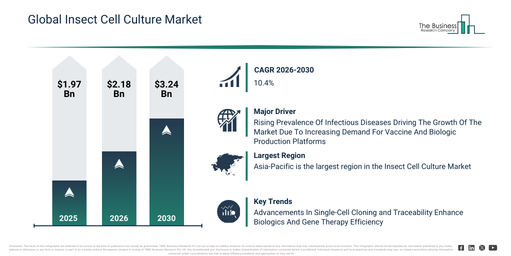
    The insect cell culture market has seen swift expansion in recent years. This market is set to expand from $1.97 billion in 2025 to $2.18 billion in 2026, achieving a compound annual growth rate (CAGR) of 10.7%. The historical increase in the market size can be linked to the rise in recombinant protein research, the increasing deployment of baculovirus expression systems, the growth in academic life science research, the expanding use of insect cells in virology studies, and the availability of sophisticated culture reagents.

    The insect cell culture market is projected for significant expansion in the coming years. This market is anticipated to reach $3.24 billion by 2030, demonstrating a compound annual growth rate (CAGR) of 10.4%. Key drivers for this growth include a surge in demand for viral vector production, the broadening of gene therapy pipelines, escalating investments in biopharmaceutical manufacturing, a heightened emphasis on scalable cell culture systems, and the wider integration of automated culture platforms. Notable trends anticipated during the forecast period encompass the increasing uptake of serum-free insect cell culture media, the growing application of insect cells in vaccine manufacturing, a burgeoning need for high-yield recombinant protein expression, the expansion of scalable bioreactor-based insect cell systems, and an intensified focus on refining process optimization and consistency.

    Get A Free Sample Report With In-Depth Market Insights:

    https://thebusinessresearchcompany.com/sample_request?id=13345117&type=smp&name=Insect%20Cell%20Culture%20Market%20Report%202026&utm_source=Blogs&utm_medium=Paid&utm_campaign=Oct_PR

    Insect Cell Culture Market Development Factors: What’s Supporting Demand?

    The increasing occurrence of infectious diseases is projected to drive the growth of the insect cell culture market going forward. These diseases are ailments triggered by microorganisms such as bacteria, viruses, fungi, or parasites, capable of transmission either directly or indirectly from one person to another, from animals to humans, or via contaminated food, water, or environmental sources. A primary factor contributing to the rise in infectious diseases is increased global travel, which accelerates the spread of pathogens across regions and populations. Insect cell culture aids in combating infectious diseases by facilitating the efficient production of vaccines, viral vectors, and recombinant proteins, thereby offering a safe and scalable platform for devising preventive and therapeutic solutions. For instance, in March 2025, the UK Health Security Agency (UKHSA), a UK-based government organization focused on protecting public health and preparing for infectious disease threats, reported that in 2024, tuberculosis (TB) cases in England increased by 13% to 5,480, up from 4,850 cases in 2023, signifying a notable year-over-year rise in incidence. Consequently, the expanding prevalence of infectious diseases is stimulating the growth of the insect cell culture market.

    Insect Cell Culture Market Segment Analysis: What Are The Core Market Categories?

    The insect cell culture market covered in this report is segmented –

    1) By Product Type: Media, Reagents, Sera, Equipment

    2) By Cell Type: S19 (Spodoptera Frugiperda), High Five (Trichoplusia Ni), Sf21 (Spodoptera Frugiperda), Drosophila Schneider 2 (s2)

    3) By Application: Biopharmaceutical Manufacturing, Gene Therapy, Tissue Culture And Engineering, Cytogenetics

    4) By End-User: Pharmaceutical And Biotechnology Companies, Academic And Research Institutes, Contract Research Organizations

    Subsegments:

    1) By Media: Growth Media, Serum-Free Media, Protein-Free Media, Chemically Defined Media, Specialty Media, Custom Media Formulations

    2) By Reagents: Attachment Factors, Dissociation Reagents, Buffers And Salts, Cryoprotectants, Antibiotics And Antimycotics, Transfection Reagents, Supplements

    3) By Sera: Fetal Bovine Serum (FBS), Insect-Derived Serum, Hybridoma Serum, Serum Substitutes, Heat-Inactivated Serum

    4) By Equipment: Bioreactors, Cell Culture Flasks And Plates, Shakers And Incubators, Centrifuges, Microscopes And Imaging Systems, Filtration Systems, Automated Cell Counters, Cryogenic Storage Systems

    Insect Cell Culture Market Transformation Trends: What Innovations Are Driving Change?

    Major corporations operating within the insect cell culture market are prioritizing advancements in insect cell culture technology, specifically focusing on single-cell cloning and traceability. This strategic emphasis aims to bolster product consistency, optimize bioprocessing efficiency, and ensure adherence to regulations for cutting-edge biologics and gene therapy applications. Single-cell cloning and traceability defines a cell culture methodology where individual cells are isolated to develop genetically homogeneous cell lines, while meticulous records of their origin, handling, and developmental history are maintained to guarantee reproducibility, quality control, and compliance with regulatory standards. An illustrative example occurred in June 2023 when Expression Systems, a company based in the US specializing in cell culture media, introduced its sf9 rv-free insect cell line, making it available for early access in research settings. This rhabdovirus-free cell line, cultured in suspension, is specifically formulated for ESF advanced chemically defined insect cell culture medium, achieving rapid proliferation, exceeding 95% viability, and reaching substantial cell densities within five days. It proves suitable for manufacturing recombinant proteins, adeno-associated viruses (AAV), and virus-like particles (VLPs), thereby supporting applications in gene therapy and viral vaccines. Furthermore, these cells are cloned using single-cell printing and come complete with comprehensive protocols, traceability information, and essential regulatory documentation.

    Insect Cell Culture Market Top Companies Driving Competitive Growth

    Major companies operating in the insect cell culture market are Thermo Fisher Scientific Inc., Danaher Corporation, Merck KGaA, GE Healthcare, Becton, Dickinson and Company, Corning Incorporated, Lonza Group Ltd., Charles River Laboratories, Sartorius AG, Wuxi Biologics, QIAGEN N.V., Eppendorf AG, Novavax Inc., Takara Bio Inc., GenScript Biotech Corporation, Promega Corporation, HiMedia Laboratories Pvt. Ltd., Cell Culture Company, Trenzyme, Proteogenix.

    View The Full Insect Cell Culture Market Report:

    https://thebusinessresearchcompany.com/report/global-insect-cell-culture-market-report?utm_source=Blogs&utm_medium=Paid&utm_campaign=Oct_PR

    Insect Cell Culture Market Regional Split: Which Areas Are Fueling Growth?

    Asia-Pacific was the largest region in the insect cell culture market in 2025, and it is expected to be the fastest-growing region in the forecast period. The regions covered in the insect cell culture market report are Asia-Pacific, South East Asia, Western Europe, Eastern Europe, North America, South America, Middle East, Africa.

    Reach Out To Our Team:

    The Business Research Company: https://www.thebusinessresearchcompany.com/

    Americas: +1 310-496-7795

    Asia: +44 7882 955267 & +91 8897263534

    Europe: +44 7882 955267

    Email us at: marketing@tbrc.info

    Follow us on:

    LinkedIn: https://in.linkedin.com/company/the-business-research-company

    YouTube: https://www.youtube.com/channel/UC24_fI0rV8cR5DxlCpgmyFQ

    Global Market Model: https://www.thebusinessresearchcompany.com/global-market-model
  • Inpatient Services Market Reaches $2390.08 Billion In 2026: Forecast And Growth Opportunities

    Inpatient Services Market Reaches $2390.08 Billion In 2026: Forecast And Growth Opportunities

    Backed by market attractiveness analysis, total addressable market sizing, company benchmarking matrices, interactive Excel dashboards, wider supply chain intelligence, emerging startup coverage, and detailed product-level insights, The Business Research Company’s 2026 market reports are designed to offer research that is more actionable and strategically valuable than ever.

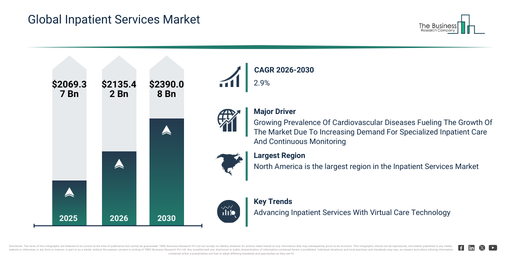
    Inpatient Services Market Growth From $2135.42 Billion In 2026 To $2390.08 Billion By 2030 At A CAGR Of 2.9%

    The inpatient services market has shown consistent growth recently. This market is projected to expand, moving from $2069.37 billion in 2025 to $2135.42 billion in 2026, demonstrating a compound annual growth rate (CAGR) of 3.2%. Historically, this expansion can be linked to factors such as an increasing elderly population, the growing occurrence of chronic illnesses, advancements in hospital facilities, a higher use of inpatient surgical procedures, and the presence of qualified healthcare personnel.

    The inpatient services market is projected to experience consistent expansion over the upcoming years, with its size anticipated to reach $2390.08 billion by 2030, demonstrating a compound annual growth rate (CAGR) of 2.9%. This expansion during the forecast period can be attributed to factors such as greater investments in smart hospital technologies, an increasing need for personalized inpatient care, the broadening of value-based care models, a rising adoption of remote patient monitoring, and an overall increase in healthcare expenditure. Key trends expected during the forecast period encompass a greater uptake of sophisticated inpatient monitoring technologies, an escalating demand for specialized acute care, the increasing integration of digital health systems, the development of multidisciplinary care approaches, and a stronger emphasis on patient-centric care delivery.

    Get A Free Sample Report With In-Depth Market Insights:

    https://thebusinessresearchcompany.com/sample_request?id=19595068&type=smp&name=Inpatient%20Services%20Market%20Report%202026&utm_source=Blogs&utm_medium=Paid&utm_campaign=Oct_PR

    Inpatient Services Market Industry Drivers: What’s Behind The Revenue Growth?

    The increasing incidence of cardiovascular diseases is anticipated to boost the expansion of the inpatient services market in the future. These diseases encompass a range of conditions impacting the heart and blood vessels, such as coronary artery disease, heart failure, arrhythmias, and stroke. The surge in cardiovascular diseases primarily stems from inactive lifestyles, which lead to obesity, compromised heart health, and a heightened susceptibility to hypertension and diabetes. Patients suffering from cardiovascular diseases increase the demand for inpatient services because they often necessitate hospitalizations for procedures, ongoing observation, and critical medical attention. This, in turn, leads to a higher utilization of hospital beds, specialized medical staff, and sophisticated treatment technologies. For example, as reported in October 2024 by the Centers for Disease Control and Prevention (CDC), a US-based federal agency, cardiovascular disease was responsible for 919,032 deaths in 2023, which represents approximately one in every three fatalities. Consequently, the expanding occurrence of cardiovascular diseases is fueling the growth of the inpatient services market.

    Inpatient Services Market Segment Breakdown: Which Categories Lead On Revenue?

    The inpatient services market covered in this report is segmented –

    1) By Service: Acute Care Services, Chronic Disease Management, Rehabilitation Services, Psychiatric Services, Palliative Care

    2) By Treatment: Cardiovascular Disorders, Cancer, Musculoskeletal Diseases, Emergency And Trauma, Respiratory Disorder, Gastroenterology, Central Nervous System Disorders, Pregnancy And Postpartum Care, Urology And Nephrology Disorders, Other Treatments

    3) By Specialty: Cardiology, Oncology, Orthopedic, Neurology, General Medicine

    4) By Ownership: Publicly Or Government-Owned, Not-For-Profit Privately Owned, For-Profit Privately Owned

    5) By End User: Patients, Healthcare Providers, Other End Users

    Subsegments:

    1) By Acute Care Services: Emergency Care, Intensive Care Unit (ICU) Services, Surgical Care, Trauma Care, Post-Operative Care

    2) By Chronic Disease Management: Diabetes Management, Cardiovascular Disease Management, Chronic Respiratory Disease Care, Renal Disease Management, Cancer Care Management

    3) By Rehabilitation Services: Physical Therapy, Occupational Therapy, Speech And Language Therapy, Neurological Rehabilitation, Orthopedic Rehabilitation

    4) By Psychiatric Services: Inpatient Psychiatric Hospitals, Substance Abuse And Detoxification Services, Geriatric Psychiatric Services, Adolescent And Child Psychiatry, Dual Diagnosis Treatment

    5) By Palliative Care: Hospice Care, Pain And Symptom Management, End-Of-Life Care, Bereavement Support, Hospital-Integrated Palliative Care Programs

    #Inpatient Services Market Growth Trends: What’s Shaping The Future Outlook?

    Major companies in the inpatient services market are prioritizing advanced technologies, such as inpatient television integration, for delivering virtual care to support remote clinical responsibilities and alleviate staff burdens. This integration allows hospitals to convert in-room televisions into comprehensive care tools capable of remote observation, patient interviews, educational delivery, and discharge coordination, thereby enhancing workflow flexibility for care teams. For example, in November 2023, Oneview Healthcare, an Ireland-based health-tech company, launched its updated Care Experience Platform (CXP), featuring the new Virtual Care API. This API enables hospitals to utilize Oneview’s patient television system for virtual inpatient care, including virtual observation and remote nursing assistance. This improvement ensures smooth integration with external virtual care solutions, allowing clinicians to initiate telehealth sessions directly from the electronic medical record (EMR). It accommodates both scheduled and on-demand video consultations, boosting care accessibility and efficiency.

    Inpatient Services Market Leading Players And Competitive Positioning

    Major companies operating in the inpatient services market are Kaiser Permanente, HCA Healthcare, Ascension Health, Fresenius Medical Care, Tenet Healthcare Corporation, Sutter Health, Mayo Clinic, Cleverland Clinic, Universal Health Services Inc., Community Health Systems (CHS), Advent Health, NewYork-Presbyterian Hospital, Ramsay Healthcare, Massachusetts General Hospital, UCLA Medical Centers, Cedars-Sinai, Mediclinic International, The Hospitals Contribution Fund of Australia Limited, The Johns Hopkins Hospital, Bangkok Dusit Medical Services, Singapore Health Services, Life Healthcare Group, Keio University (Medical Services), Burjeel Holdings, THE ROYAL MELBOURNE HOSPITAL, Fortis Healthcare, Apollo Hospitals Enterprise Ltd., West Suffolk NHS Foundation Trust, Royal Papworth Hospital NHS Foundation Trust, Max Healthcare.

    View The Full Inpatient Services Market Report:

    https://thebusinessresearchcompany.com/report/inpatient-services-global-market-report?utm_source=Blogs&utm_medium=Paid&utm_campaign=Oct_PR

    Inpatient Services Market Top Region: Where Does Most Revenue Come From?

    North America was the largest region in the inpatient services market in 2025. Asia-Pacific is expected to be the fastest-growing region in the forecast period. The regions covered in the inpatient services market report are Asia-Pacific, South East Asia, Western Europe, Eastern Europe, North America, South America, Middle East, Africa.

    Reach Out To Our Team:

    The Business Research Company: https://www.thebusinessresearchcompany.com/

    Americas: +1 310-496-7795

    Asia: +44 7882 955267 & +91 8897263534

    Europe: +44 7882 955267

    Email us at: marketing@tbrc.info

    Follow us on:

    LinkedIn: https://in.linkedin.com/company/the-business-research-company

    YouTube: https://www.youtube.com/channel/UC24_fI0rV8cR5DxlCpgmyFQ

    Global Market Model: https://www.thebusinessresearchcompany.com/global-market-model