Category: Healthcare Services

  • Injury Prevention Service Market Growth In 2026: Market Size, Key Drivers And Future Outlook

    Injury Prevention Service Market Growth In 2026: Market Size, Key Drivers And Future Outlook

    Featuring market attractiveness scoring, total addressable market sizing, company benchmarking matrices, interactive Excel dashboards, deeper supply chain intelligence, emerging startup tracking, and granular product-level insights, The Business Research Company’s 2026 market reports are built to deliver research that is both more actionable and more strategically valuable.

    Injury Prevention Service Market Expansion Outlook: What Revenue Opportunities Are Ahead?

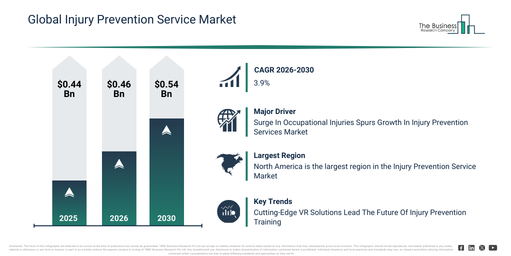
    The size of the injury prevention service market has experienced consistent growth in recent years. It is anticipated to expand from $0.44 billion in 2025 to $0.46 billion in 2026, reflecting a compound annual growth rate (CAGR) of 4.3%. The historical increase can be attributed to factors such as enhanced workplace safety awareness, the broadening of occupational health services, escalating regulatory safety mandates, the increasing implementation of ergonomic standards, and a heightened employer focus on reducing injuries.

    The injury prevention service market is projected to experience consistent expansion over the upcoming years. This market is forecast to reach $0.54 billion by 2030, demonstrating a compound annual growth rate (CAGR) of 3.9%. This anticipated growth during the forecast period is primarily driven by heightened investments in preventive healthcare, the increased adoption of digital safety monitoring tools, the broadening scope of corporate wellness initiatives, a surging demand for tailored injury prevention programs, and a greater emphasis on sustained workforce health. Key trends anticipated for this period encompass the growing uptake of data-driven injury risk evaluations, an escalating need for workplace safety training, the progressive incorporation of ergonomic consulting services, the broadening of preventive health and wellness programs, and an intensified focus on compliance oversight.

    Get A Free Sample Report With In-Depth Market Insights:

    https://thebusinessresearchcompany.com/sample_request?id=79668738&type=smp&name=Injury%20Prevention%20Service%20Market%20Report%202026&utm_source=Blogs&utm_medium=Paid&utm_campaign=Oct_PR

    Injury Prevention Service Market Growth Factors: What’s Supporting Expansion?

    The increasing incidence of occupational injuries is anticipated to drive the expansion of the injury prevention service market in the coming years. Occupational injuries encompass any physical harm or health problems that arise from workplace activities or conditions. This rise in occupational injuries is frequently attributed to factors such as insufficient safety measures, a lack of adequate training, and the escalated pace or demands within work environments. Injury prevention services are essential for tackling the growing number of these injuries by implementing proactive safety protocols, offering necessary training, and identifying and mitigating potential hazards in the workplace. For example, the US Bureau of Labor Statistics, a US-based government agency, reported in November 2024 that private industry employers recorded 2.6 million nonfatal workplace injuries and illnesses in 2023, underscoring a significant and continuous requirement for workplace safety interventions. Thus, the escalating count of occupational injuries will indeed propel the growth of the injury prevention services market.

    Injury Prevention Service Market Segmentation: How Does The Market Break Down By Category?

    The injury prevention service market covered in this report is segmented –

    1) By Service Type: Safety Training, Risk Assessments, Ergonomic Consultations, Preventive Measures Implementation

    2) By Application: Schools, Fire Departments, Community Groups, Other Applications

    3) By End User: Hospitals, Occupational Therapists, Physiotherapy Centers, Rehabilitation Centers, Sports Centers

    Subsegments:

    1) By Safety Training: Workplace Safety Training Programs, First Aid And CPR Training, Hazard Recognition Training

    2) By Risk Assessments: Workplace Safety Audits, Job Hazard Analyses, Environmental Risk Assessments

    3) By Ergonomic Consultations: Ergonomic Workplace Evaluations, Ergonomic Equipment Recommendations, Custom Ergonomic Solutions

    4) By Preventive Measures Implementation: Safety Policy Development, Incident Reporting Systems, Health and Wellness Programs

    Injury Prevention Service Market Industry Trends: What’s Reshaping Demand?

    Leading companies in the injury prevention service market are focusing on creating advanced solutions, including immersive simulation training, to improve safety education by recreating realistic dangerous situations in a controlled environment. Immersive simulation training employs virtual reality (VR) to develop highly realistic, interactive settings where trainees can develop skills and manage scenarios that closely resemble actual conditions. For instance, in January 2024, Technological University (TU) Dublin, an Ireland-based higher education institution, collaborated with BioPharmaChem Skillnet, an Ireland-based network specializing in upskilling and development, to launch a new Virtual Reality (VR) program for workplace health and safety training. This VR program enhances workplace health and safety training by providing engaging, true-to-life simulations that enable employees to practice and grasp safety protocols in a safe environment. This innovative approach aims to boost knowledge retention, reduce training time, and tackle complex safety issues across diverse sectors.

    Injury Prevention Service Market Competitive Overview And Top Companies

    Major companies operating in the injury prevention service market are Cintas Corporation, Concentra Inc., IPAR Rehabilitation Pty Ltd, Total Safety U.S. Inc., Medcor Inc., Briotix Health LP, Fit For Work LLC, Work-Fit LLC, Safety Management Group Inc., Axiom Medical Consulting LLC, KINNECT Pty Ltd, Safety Services Company, ATI Worksite Solutions LLC, The Back School of Atlanta LLC, EHS Support LLC, BIOKINETIX LLC, WorkWell Prevention & Care Inc., Atlas Injury Prevention Solutions LLC, SafeStart International Inc., ErgoPlus Inc., Champion Sports Medicine LLC, HealthWorks Inc., ErgoScience Inc., Preventure Inc., DORN Companies LLC

    View The Full Injury Prevention Service Market Report:

    https://thebusinessresearchcompany.com/report/injury-prevention-service-global-market-report?utm_source=Blogs&utm_medium=Paid&utm_campaign=Oct_PR

    Injury Prevention Service Market Regional Breakdown: Where Is Demand Concentrated?

    North America was the largest region in the injury prevention service market in 2025. The regions covered in the injury prevention service market report are Asia-Pacific, South East Asia, Western Europe, Eastern Europe, North America, South America, Middle East, Africa.

    Reach Out To Our Team:

    The Business Research Company: https://www.thebusinessresearchcompany.com/

    Americas: +1 310-496-7795

    Asia: +44 7882 955267 & +91 8897263534

    Europe: +44 7882 955267

    Email us at: marketing@tbrc.info

    Follow us on:

    LinkedIn: https://in.linkedin.com/company/the-business-research-company

    YouTube: https://www.youtube.com/channel/UC24_fI0rV8cR5DxlCpgmyFQ

    Global Market Model: https://www.thebusinessresearchcompany.com/global-market-model
  • Inherited Retinal Disease Market Size And Forecast 2026–2030: Trends Driving Industry Expansion

    Inherited Retinal Disease Market Size And Forecast 2026–2030: Trends Driving Industry Expansion

    Built to provide research that’s more actionable and strategically valuable, The Business Research Company’s 2026 market reports include market attractiveness analysis, total addressable market sizing, company benchmarking matrices, interactive Excel dashboards, broader supply chain intelligence, emerging startup tracking, and in-depth product insights.

    Inherited Retinal Disease Market Growth Potential: How Will Market Size Shift Through 2030?

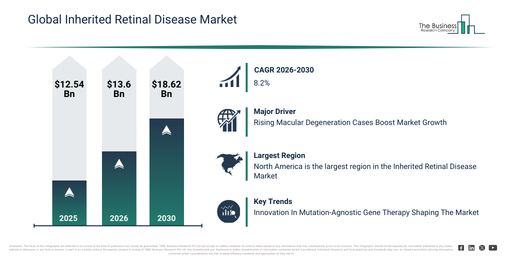
    The inherited retinal disease market has shown robust growth in recent years. Its valuation is projected to increase from $12.54 billion in 2025 to $13.6 billion in 2026, achieving a compound annual growth rate (CAGR) of 8.4%. This historical expansion can be attributed to several factors, including the identification of disease-causing retinal genes, improvements in retinal imaging technologies, a rise in awareness regarding inherited eye disorders, the expansion of specialized ophthalmology clinics, and both public and private investment in rare disease research.

    The inherited retinal disease market is projected for significant expansion in the coming years, set to reach $18.62 billion by 2030, exhibiting a compound annual growth rate (CAGR) of 8.2%. This anticipated growth during the forecast period is fueled by progress in gene therapy platforms, an increase in approvals for new retinal therapies, greater access to genetic screening programs, the expansion of precision medicine initiatives, and rising investments in pipelines for rare ophthalmic diseases. Key trends expected in the forecast period encompass a surge in the adoption of genetic testing for early detection, an intensified focus on gene and cell-based treatments, the broadening of personalized therapeutic strategies, an uptick in clinical trials for uncommon retinal disorders, and enhanced patient access to sophisticated retinal imaging technologies.

    Get A Free Sample Report With In-Depth Market Insights:

    https://thebusinessresearchcompany.com/sample_request?id=58257063&type=smp&name=Inherited%20Retinal%20Disease%20Market%20Report%202026&utm_source=Blogs&utm_medium=Paid&utm_campaign=Oct_PR

    Inherited Retinal Disease Market Demand Drivers: What’s Powering Industry Growth?

    The rising incidence of macular degeneration is projected to drive expansion within the inherited retinal disease market moving ahead. This condition is an age-associated ocular disorder characterized by damage to the macula, resulting in central vision impairment and challenges with tasks such as reading or recognizing faces. The growing occurrence of macular degeneration is influenced by an aging global demographic, extended lifespans, and lifestyle elements like smoking and inadequate nutrition, all of which heighten the risk. Treatment for inherited retinal disease assists individuals suffering from macular degeneration through addressing the fundamental genetic contributors to retinal degradation, offering therapies that decelerate disease advancement, recover diminished eyesight, or even avert additional retinal harm, thereby enhancing visual results and overall well-being for those impacted by either age-related or inherited forms of macular degeneration. As an illustration, in February 2024, the Canadian Ophthalmological Society, a nonprofit entity situated in Canada, disclosed that 2.5 million individuals in Canada over the age of 55 experience vision loss due to age-related macular degeneration (AMD). Consequently, the expanding prevalence of macular degeneration is propelling the expansion of the inherited retinal disease market.

    Inherited Retinal Disease Market Segment Trends And Revenue Contributors

    The inherited retinal disease market covered in this report is segmented –

    1) By Type: Diagnosis, Therapy

    2) By Disease Type: Retinitis Pigmentosa, Choroideremia, Stargardt Disease, Cone-rod Dystrophy, Leber Congenital Amaurosis, Other Diseases

    3) By Distribution Channel: Retail Sales, Direct Tender

    4) By End User: Hospitals, Speciality Clinics, Ambulatory Surgical Centres, Home Healthcare, Other End Users

    Subsegments:

    1) By Diagnosis: Genetic Testing, Retinal Imaging, Electrophysiological Testing (Electroretinography), Visual Field Testing, Fundus Autofluorescence Imaging

    2) By Therapy: Gene Therapy, Stem Cell Therapy, Retinal Prosthesis (Artificial Retina), Pharmacological Therapy, Photoreceptor Rescue Therapy

    Inherited Retinal Disease Market Innovation Trends: What Developments Are Reshaping The Industry?

    Major companies engaged in the inherited retinal diseases market are prioritizing the development of innovative therapies, such as mutation-agnostic gene therapy, to offer inclusive treatment options and address a broader spectrum of genetic variations associated with these conditions. Mutation-agnostic gene therapy is a treatment methodology that targets wider genetic mechanisms or pathways rather than specific mutations, making it applicable to diverse genetic disorders. For instance, in March 2024, Nanoscope Therapeutics Inc., a US-based biotechnology company, announced positive clinical trial results for its primary program, MCO-010, demonstrating vision improvements for patients with permanent and severe vision loss from advanced retinitis pigmentosa. MCO-010 achieved its primary and key secondary endpoints with statistical significance and without any serious adverse events.

    Inherited Retinal Disease Market Competitive Landscape: Which Companies Lead The Industry?

    Major companies operating in the inherited retinal disease market are Johnson & Johnson, Novartis AG, Astellas Pharma Inc., Biogen Inc., Ionis Pharmaceuticals Inc., Invitae Corporation, Spark Therapeutics, Aldeyra Therapeutics, Regenxbio Inc., IVERIC bio, MeiraGTx Limited, Ocugen Inc., Coave Therapeutics, Bionic Vision Technologies, GenSight Biologics SA, LKC Technologies Inc., Sparing Vision, ProQR Therapeutics NV, Endogena Therapeutics

    View The Full Inherited Retinal Disease Market Report:

    https://thebusinessresearchcompany.com/report/inherited-retinal-disease-global-market-report?utm_source=Blogs&utm_medium=Paid&utm_campaign=Oct_PR

    Inherited Retinal Disease Market Geographic Landscape: Which Region Leads Industry Growth?

    North America was the largest region in the inherited retinal disease market in 2025. Asia-Pacific is expected to be the fastest-growing region in the forecast period. The regions covered in the inherited retinal disease market report are Asia-Pacific, South East Asia, Western Europe, Eastern Europe, North America, South America, Middle East, Africa.

    Reach Out To Our Team:

    The Business Research Company: https://www.thebusinessresearchcompany.com/

    Americas: +1 310-496-7795

    Asia: +44 7882 955267 & +91 8897263534

    Europe: +44 7882 955267

    Email us at: marketing@tbrc.info

    Follow us on:

    LinkedIn: https://in.linkedin.com/company/the-business-research-company

    YouTube: https://www.youtube.com/channel/UC24_fI0rV8cR5DxlCpgmyFQ

    Global Market Model: https://www.thebusinessresearchcompany.com/global-market-model
  • Infrared And Terahertz Spectroscopy Market 2026 Outlook: Market Size, CAGR And Key Growth Opportunities

    Infrared And Terahertz Spectroscopy Market 2026 Outlook: Market Size, CAGR And Key Growth Opportunities

    Backed by market attractiveness analysis, total addressable market sizing, company benchmarking matrices, interactive Excel dashboards, wider supply chain intelligence, emerging startup coverage, and detailed product-level insights, The Business Research Company’s 2026 market reports are designed to offer research that is more actionable and strategically valuable than ever.

    Infrared And Terahertz Spectroscopy Market Value Analysis: What Growth Lies Ahead Over The Forecast Period?

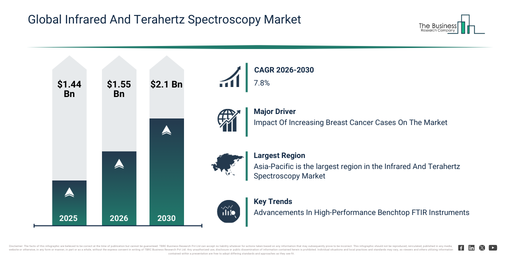
    The market size for infrared and terahertz spectroscopy has experienced robust growth over recent years. It is expected to rise from $1.44 billion in 2025 to $1.55 billion by 2026, achieving a compound annual growth rate (CAGR) of 8.1%. The expansion observed in the past can be ascribed to an increase in analytical chemistry applications, the greater utilization of spectroscopy in academic research, the ongoing growth in semiconductor manufacturing, a surging demand for material quality assurance, and progress in infrared detector technologies.

    The infrared and terahertz spectroscopy market size is projected to experience robust expansion over the coming years, anticipated to reach a valuation of $2.1 billion by 2030, exhibiting a compound annual growth rate (CAGR) of 7.8%. This projected growth can be linked to several factors, including the rising use of terahertz spectroscopy for security screening, a growing need for in-line industrial inspection methods, the broadening scope of biomedical spectroscopy applications, increased funding for advanced research tools, and a heightened emphasis on non-contact testing approaches. Key trends expected during this period involve a greater embrace of non-destructive testing methodologies, an increasing requirement for material characterization and quality assurance, the widening application of spectroscopy in semiconductor analysis, the growing deployment of portable and handheld spectroscopy devices, and progress in high-resolution molecular identification.

    Get A Free Sample Report With In-Depth Market Insights:

    https://thebusinessresearchcompany.com/sample_request?id=64907168&type=smp&name=Infrared%20And%20Terahertz%20Spectroscopy%20Market%20Report%202026&utm_source=Blogs&utm_medium=Paid&utm_campaign=Oct_PR

    Infrared And Terahertz Spectroscopy Market Growth Drivers: What’s Behind The Acceleration?

    The infrared and terahertz spectroscopy market is anticipated to expand due to the rising incidence of breast cancer. Breast cancer refers to a type of malignancy that starts in the cells of the breast. This growing prevalence is attributed to factors such as an aging demographic, genetic predisposition, hormonal influences, unhealthy lifestyles, environmental exposures, and improved detection methods. Infrared and terahertz spectroscopy are beneficial for breast cancer as they assist in the early detection and monitoring of tumors through the analysis of tissue properties. For instance, in February 2025, according to the International Agency for Research on Cancer (IARC), a France-based intergovernmental agency, 1 in 20 women worldwide will be diagnosed with breast cancer in their lifetime, and if current rates persist, the annual number of new breast-cancer cases globally is projected to reach 3.2 million by 2050. Consequently, the increasing prevalence of breast cancer serves as a significant driver for the infrared and terahertz spectroscopy market.

    Infrared And Terahertz Spectroscopy Market Segment Analysis Spotlighting Growth Areas

    The infrared and terahertz spectroscopy market covered in this report is segmented –

    1) By Type: Near-Infrared Radiation, Mid-Infrared Radiation, Far-Infrared Radiation

    2) By Technology: Benchtop, Microscopy, Portable And Handheld, Hyphenated

    3) By Application: Semiconductors, Homeland Security, Non-Destructive Testing, Research And Development

    4) By End User: Pharmaceuticals And Biotechnology, Industrial Chemistry, Food And Beverage Testing, Environmental Testing, Other End-Users

    Subsegments:

    1) By Near-Infrared Radiation: Fourier Transform Near-Infrared (FT-NIR) Spectroscopy, Dispersive Near-Infrared (DNIR) Spectroscopy

    2) By Mid-Infrared Radiation: Fourier Transform Mid-Infrared (FT-MIR) Spectroscopy, Tunable Diode Laser (TDL) Spectroscopy

    3) By Far-Infrared Radiation: Terahertz Spectroscopy, Time-Domain Terahertz Spectroscopy, Frequency-Domain Terahertz Spectroscopy

    Infrared And Terahertz Spectroscopy Market Trends: What’s Defining The Industry’s Next Phase?

    Major companies operating in the infrared and terahertz spectroscopy market are focusing on developing innovative high-performance benchtop FTIR instruments to meet the growing demand for precise, reliable, and cost-effective analytical solutions across various industries, including pharmaceuticals, environmental monitoring, materials science, and food quality control. High-performance benchtop FTIR (Fourier Transform Infrared) instruments are advanced, compact spectrometers used for analyzing the infrared spectrum of materials. For instance, in March 2023, Edinburgh Instruments, a Scotland-based company that manufactures molecular spectroscopy products launched IR5 FTIR Spectrometer. The instrument is designed for ease of use across all user levels, from beginners to advanced researchers. It incorporates moisture control technology that requires no maintenance. The IR5 is equipped with modern software designed specifically for its operation. Miracle facilitates every aspect of the experimental process, from setup to data analysis and reporting.

    Infrared And Terahertz Spectroscopy Market Leading Companies: Who Holds The Strongest Market Presence?

    Major companies operating in the infrared and terahertz spectroscopy market are Hamamatsu Photonics K.K., Thermo Fisher Scientific Inc., Boston Electronics Corporation, Agilent Technologies Inc., Advantest Corporation, PerkinElmer Holdings Inc., Shimadzu Corporation, Bruker Corporation, Horiba Ltd., HÜBNER GmbH & Co. KG, Novanta Inc., TOPTICA Photonics AG, JASCO Corporation, Menlo Systems GmbH, TeraView Limited, Spectra Quest Lab Inc., TERASENSE GROUP INC., QMC Instruments Ltd., Zomega Terahertz Corporation.

    View The Full Infrared And Terahertz Spectroscopy Market Report:

    https://thebusinessresearchcompany.com/report/infrared-and-terahertz-spectroscopy-global-market-report?utm_source=Blogs&utm_medium=Paid&utm_campaign=Oct_PR

    Infrared And Terahertz Spectroscopy Market Largest Region: Which Geography Holds The Biggest Share?

    Asia-Pacific was the largest region in the infrared and terahertz spectroscopy market in 2025. The regions covered in the infrared and terahertz spectroscopy market report are Asia-Pacific, South East Asia, Western Europe, Eastern Europe, North America, South America, Middle East, Africa.

    Reach Out To Our Team:

    The Business Research Company: https://www.thebusinessresearchcompany.com/

    Americas: +1 310-496-7795

    Asia: +44 7882 955267 & +91 8897263534

    Europe: +44 7882 955267

    Email us at: marketing@tbrc.info

    Follow us on:

    LinkedIn: https://in.linkedin.com/company/the-business-research-company

    YouTube: https://www.youtube.com/channel/UC24_fI0rV8cR5DxlCpgmyFQ

    Global Market Model: https://www.thebusinessresearchcompany.com/global-market-model
  • Information Technology (IT) Spending In Healthcare Market Size Growth: From $216.27 Billion In 2026 To $345.9 Billion By 2030

    Information Technology (IT) Spending In Healthcare Market Size Growth: From $216.27 Billion In 2026 To $345.9 Billion By 2030

    Featuring market attractiveness scoring, total addressable market sizing, company benchmarking matrices, interactive Excel dashboards, deeper supply chain intelligence, emerging startup tracking, and granular product-level insights, The Business Research Company’s 2026 market reports are built to deliver research that is both more actionable and more strategically valuable.

    Information Technology (IT) Spending In Healthcare Market Size Forecast: How Big Could The Market Get By 2030?

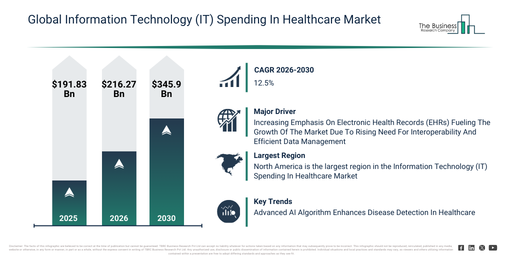
    The information technology (it) spending in healthcare market has experienced significant growth in recent years. This market is projected to expand from $191.83 billion in 2025 to $216.27 billion in 2026, exhibiting a compound annual growth rate (CAGR) of 12.7%. The historical growth can be attributed to factors such as the increasing digitization of healthcare records, a rise in the adoption of electronic health records, the expansion of hospital information systems, growing demand for administrative automation, and stricter regulatory requirements for data security.

    The market size for information technology (IT) spending in healthcare is anticipated to witness substantial growth over the next few years. It is predicted to expand to $345.9 billion by 2030, achieving a compound annual growth rate (CAGR) of 12.5%. This growth throughout the forecast period can be attributed to several factors, including an escalating demand for data-driven clinical decision-making, the widening of telemedicine infrastructure, increased investments in AI-enabled healthcare systems, a heightened focus on interoperable health data platforms, and a growing necessity for advanced cybersecurity frameworks. Significant trends expected during this period encompass the increasing adoption of cloud-based healthcare platforms, rising financial commitments to healthcare cybersecurity solutions, expanding utilization of advanced healthcare analytics tools, the broadening of interoperable digital health systems, and an enhanced emphasis on operational efficiency powered by IT.

    Get A Free Sample Report With In-Depth Market Insights:

    https://thebusinessresearchcompany.com/sample_request?id=98164228&type=smp&name=Information%20Technology%20%28IT%29%20Spending%20In%20Healthcare%20Market%20Report%202026&utm_source=Blogs&utm_medium=Paid&utm_campaign=Oct_PR

    Information Technology (IT) Spending In Healthcare Market Growth Factors Behind Sustained Expansion

    A heightened focus on electronic health records (EHRs) is anticipated to drive expansion in the information technology (IT) spending in healthcare market moving ahead. These records represent digital renditions of patient medical backgrounds, continuously managed and revised by healthcare providers. This growing emphasis on EHRs stems from the necessity for enhanced interoperability, facilitating smooth data sharing and improved synchronization among healthcare systems. Investment in information technology (IT) within healthcare facilitates electronic health records through secure and effective data handling, enhancing patient data availability across various systems. This also lessens administrative burdens via digital record-keeping, improves care coordination, and leads to superior clinical judgments and patient results. An illustrative example is from June 2022, where the Department of Health and Social Care, a UK-based government department, reported that 90% of National Health Service (NHS) trusts had implemented electronic health records by December 2023, with a projection to achieve 100% adoption by March 2025. Consequently, the growing importance placed on electronic health records (EHRs) is fueling the expansion of the information technology (IT) spending in healthcare market.

    Information Technology (IT) Spending In Healthcare Market Segment Performance And Emerging Opportunities

    The information technology (it) spending in healthcare market covered in this report is segmented –

    1) By Component: Hardware, Software, Services

    2) By Deployment Mode: On-Premise, Cloud-Based, Hybrid

    3) By Organization Size: Large Enterprises, Small And Medium-sized Enterprises (SMEs)

    4) By Application: Electronic Health Records, Telemedicine, Healthcare Analytics, Cybersecurity, Other Applications

    5) By End User: Hospitals, Clinics, Diagnostic Centers, Ambulatory Surgical Centers

    Subsegments:

    1) By Hardware: Medical Imaging Devices, Networking Equipment, Data Storage Systems, Servers And Workstations, Patient Monitoring Devices, Input And Output Devices

    2) By Software: Electronic Health Record Software, Practice Management Software, Healthcare Analytics Software, Telehealth Software, Revenue Cycle Management Software, Clinical Decision Support Software

    3) By Services: Implementation Services, System Integration Services, Support And Maintenance Services, Training And Education Services, Consulting Services, Managed Services

    Information Technology (IT) Spending In Healthcare Market Industry Trends Fueling Future Revenue Growth

    Leading companies active in the information technology (IT) spending within the healthcare market are focusing on the development of sophisticated algorithms, such as those for automated disease detection, to enhance diagnostic speed, improve patient outcomes, and alleviate the burden on clinical workflows. Automated disease detection algorithms refer to advanced software that employs artificial intelligence to analyze medical data and pinpoint indicators of specific conditions, frequently flagging them for prompt clinical review. For instance, in August 2023, Viz.ai, a US-based medical software company, launched Viz HCM following its FDA De Novo classification. This system interprets 12-lead ECG recordings, identifies signs associated with hypertrophic cardiomyopathy, and provides analysis and notification capabilities for clinicians, integrated with existing ECG workflows.

    Information Technology (IT) Spending In Healthcare Market Key Players: Which Companies Lead Industry Competition?

    Major companies operating in the information technology (it) spending in healthcare market are Huawei Technologies Co. Ltd., Dell Technologies Inc., Siemens AG, Hitachi Ltd., Accenture plc, International Business Machines Corporation, Cisco Systems Inc., Oracle Corporation, SAP S.E., Tata Consultancy Services Limited, Capgemini S.E., Koninklijke Philips N.V., Cognizant Technology Solutions Corporation, GE HealthCare Technologies Inc., Infosys Limited, DXC Technology Company, ALTEN SA., InterSystems Corporation, Veradigm Inc., CareCloud Inc.

    View The Full Information Technology (IT) Spending In Healthcare Market Report:

    https://thebusinessresearchcompany.com/report/global-information-technology-it-spending-in-healthcare-market-report?utm_source=Blogs&utm_medium=Paid&utm_campaign=Oct_PR

    Information Technology (IT) Spending In Healthcare Market Regional Analysis: Which Geography Leads On Revenue?

    North America was the largest region in the information technology (IT) spending in healthcare market in 2025. Asia-Pacific is expected to be the fastest-growing region in the forecast period. The regions covered in the information technology (it) spending in healthcare market report are Asia-Pacific, South East Asia, Western Europe, Eastern Europe, North America, South America, Middle East, Africa.

    Reach Out To Our Team:

    The Business Research Company: https://www.thebusinessresearchcompany.com/

    Americas: +1 310-496-7795

    Asia: +44 7882 955267 & +91 8897263534

    Europe: +44 7882 955267

    Email us at: marketing@tbrc.info

    Follow us on:

    LinkedIn: https://in.linkedin.com/company/the-business-research-company

    YouTube: https://www.youtube.com/channel/UC24_fI0rV8cR5DxlCpgmyFQ

    Global Market Model: https://www.thebusinessresearchcompany.com/global-market-model
  • Influenza Diagnostic Market Analysis 2026: Market Size, Growth Trends And Industry Outlook

    Influenza Diagnostic Market Analysis 2026: Market Size, Growth Trends And Industry Outlook

    Built to provide research that’s more actionable and strategically valuable, The Business Research Company’s 2026 market reports include market attractiveness analysis, total addressable market sizing, company benchmarking matrices, interactive Excel dashboards, broader supply chain intelligence, emerging startup tracking, and in-depth product insights.

    Influenza Diagnostic Market Revenue Outlook: What CAGR Lies Ahead Through 2030?

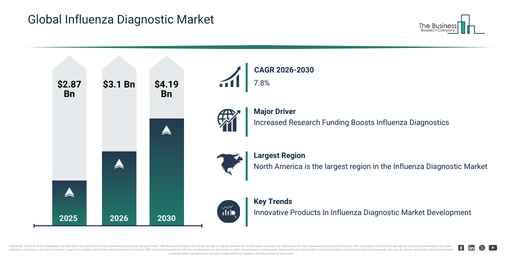
    The influenza diagnostic market size has experienced robust growth over recent years. It is projected to expand from $2.87 billion in 2025 to $3.1 billion in 2026, with a compound annual growth rate (CAGR) of 8.3%. This historical growth can be ascribed to elements such as seasonal influenza outbreaks, the prevalent use of rapid antigen tests, the development of hospital laboratory infrastructure, government influenza surveillance programs, and heightened awareness of early flu diagnosis.

    The influenza diagnostic market size is anticipated to experience substantial expansion over the next few years, reaching $4.19 billion by 2030, propelled by a compound annual growth rate (CAGR) of 7.8%. This projected growth stems from several factors, including the increasing occurrence of influenza epidemics, a rising requirement for precise molecular diagnostics, the broadening of point-of-care testing infrastructure, enhanced public health readiness programs, and advancements in rapid diagnostic assays. Significant trends expected during this period encompass a surging demand for swift influenza testing, greater adoption of molecular diagnostic techniques, an increasing preference for point-of-care flu diagnostics, the expansion of seasonal and pandemic surveillance testing, and continuous improvements in the sensitivity and specificity of tests.

    Get A Free Sample Report With In-Depth Market Insights:

    https://thebusinessresearchcompany.com/sample_request?id=72765500&type=smp&name=Influenza%20Diagnostic%20Market%20Report%202026&utm_source=Blogs&utm_medium=Paid&utm_campaign=Oct_PR

    Influenza Diagnostic Market Demand Drivers Opening New Revenue Streams

    Increased investment in research on influenza diagnostics is anticipated to stimulate the expansion of the influenza diagnostic market moving forward. Funding for research on influenza diagnostics involves financial resources provided by government agencies, institutions, and various organizations to back scientific investigations aimed at developing, improving, and verifying methods and technologies for identifying influenza viruses. The rise in funding for influenza research is largely influenced by lessons from the COVID-19 pandemic and concerns regarding future respiratory disease outbreaks, as health authorities acknowledge the critical necessity of rapid and accurate diagnostic capabilities to avert widespread transmission and enable prompt public health interventions. Augmented research funding facilitates the advancement and commercialization of advanced testing technologies, molecular assays, point-of-care devices, and enhanced laboratory procedures that allow for faster and more precise identification of influenza strains in clinical settings. For example, in October 2024, as per the Department of Health and Aged Care, an Australia-based government organization responsible for health research, funding, promotion, and regulation, the Australian Government is allocating $95 million to combat avian influenza, thereby protecting agriculture, wildlife, and the economy. Therefore, greater funding for research in influenza diagnostics is fueling the growth of the influenza diagnostic market.

    Influenza Diagnostic Market Segment Landscape And Growth Outlook

    The influenza diagnostic market covered in this report is segmented –

    1) By Traditional Diagnostic Tests: Rapid Influenza Diagnostic Tests (RIDT), Viral Culture, DFA, Serological Assays, Other Traditional Diagnostic Tests

    2) By Molecular Diagnostic Tests: Reverse Transcription Polymerase Chain Reaction (RT-PCR), Isothermal Nucleic Acid Amplification Tests (INAAT), Loop Mediated Isothermal Based Amplification Assays, Transcription Mediated Isothermal Based Amplification Assays, Other Isothermal Nucleic Acid Amplification Tests, Other Molecular Diagnostic Tests

    3) By End User: Hospitals And Clinical Laboratories, Diagnostic Reference Laboratories, Academic/Research Institutes, Other End Users

    Subsegments:

    1) By Rapid Influenza Diagnostic Tests (RIDT): Immunoassay-based Tests, Lateral Flow Assays, Enzyme Immunoassays (EIA)

    2) By Viral Culture: Cell Culture, Egg-based Culture

    3) By Serological Assays: Hemagglutination Inhibition (HI) Assay, Enzyme-Linked Immunosorbent Assay (ELISA), Western Blotting Assay

    4) By Other Traditional Diagnostic Tests: Polymerase Chain Reaction (PCR), Immunofluorescence Assays

    Influenza Diagnostic Market Trends Powering Strategic Industry Growth

    Leading firms within the influenza diagnostic market are creating advanced solutions, including the Lucira COVID-19 & Flu Home Test, designed for concurrent, rapid qualitative detection. This Lucira COVID-19 and Flu Home Test functions as a disposable, at-home kit, delivering results from user-collected nasal swab samples in approximately 30 minutes. As an illustration, during February 2023, Pfizer Inc., a pharmaceutical company based in the US, secured approval for its Lucira COVID-19 & Flu Home Test. The test is capable of identifying influenza A and B, widely recognized as the flu, along with SARS-CoV-2, the pathogen responsible for COVID-19.

    Influenza Diagnostic Market Competitive Landscape: Who Leads The Industry?

    Major companies operating in the influenza diagnostic market are F. Hoffmann-La Roche Ltd., Quidel Corporation, Thermo Fisher Scientific Inc., Abbott Laboratories, Hologic Inc., Becton Dickinson and Company, DiaSorin SpA, Luminex Corporation, Meridian Bioscience Inc., GenMark Diagnostics Inc., SA Scientific Ltd., Sekisui Diagnostics LLC, bioMérieux Inc., Danaher Corporation, Siemens Healthineers AG, Coris Bioconcept Sprl, Mast Group, Elitech Technology lnc., Analytik Jena AG, altona Diagnostics GmbH, Tecan Trading AG, Genome Diagnostics Pvt Ltd., Germaine Laboratories Inc., Response Biomedical Corporation, TAUNS Laboratories Inc., TRUPCR Europe Ltd., Quest Diagnostics Inc., Labcorp Employer Services Inc.

    View The Full Influenza Diagnostic Market Report:

    https://thebusinessresearchcompany.com/report/Influenza-Diagnostic-Global-Market-Report?utm_source=Blogs&utm_medium=Paid&utm_campaign=Oct_PR

    Influenza Diagnostic Market Geographic Spread And Regional Opportunities

    North America was the largest region in the influenza diagnostics market in 2025. Western Europe was the second largest region in the influenza diagnostics market. The regions covered in the influenza diagnostic market report are Asia-Pacific, South East Asia, Western Europe, Eastern Europe, North America, South America, Middle East, Africa.

    Reach Out To Our Team:

    The Business Research Company: https://www.thebusinessresearchcompany.com/

    Americas: +1 310-496-7795

    Asia: +44 7882 955267 & +91 8897263534

    Europe: +44 7882 955267

    Email us at: marketing@tbrc.info

    Follow us on:

    LinkedIn: https://in.linkedin.com/company/the-business-research-company

    YouTube: https://www.youtube.com/channel/UC24_fI0rV8cR5DxlCpgmyFQ

    Global Market Model: https://www.thebusinessresearchcompany.com/global-market-model
  • Infertility Treatment Market Growth To $3 Billion Creates New Opportunities Across The Industry

    Infertility Treatment Market Growth To $3 Billion Creates New Opportunities Across The Industry

    Backed by market attractiveness analysis, total addressable market sizing, company benchmarking matrices, interactive Excel dashboards, wider supply chain intelligence, emerging startup coverage, and detailed product-level insights, The Business Research Company’s 2026 market reports are designed to offer research that is more actionable and strategically valuable than ever.

    Infertility Treatment Market Growth Analysis: How Will Revenue Trend Over The Forecast Period?

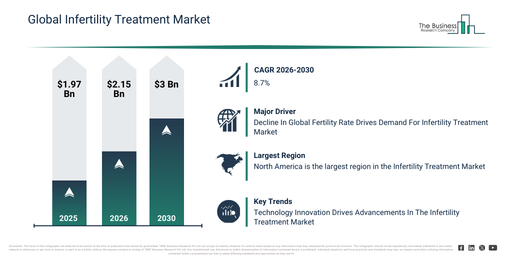
    The infertility treatment market has shown considerable expansion in recent years. Its size is anticipated to increase from $1.97 billion in 2025 to $2.15 billion in 2026, exhibiting a compound annual growth rate (CAGR) of 9.2%. This historic growth can be attributed to trends such as delayed parenthood, the increasing prevalence of lifestyle-related infertility, growing awareness of fertility treatments, the expansion of IVF clinics, and advancements in reproductive medicine.

    The infertility treatment market is projected to experience substantial expansion over the upcoming years. This market is forecast to reach $3 billion by 2030, demonstrating a compound annual growth rate (CAGR) of 8.7%. This anticipated growth during the forecast period stems from several factors, including an increase in global infertility rates, improved success rates of assisted reproductive technologies, a greater need for fertility preservation, increased healthcare expenditure directed towards reproductive health, and broader availability of fertility treatments in developing regions. Key trends anticipated during this period encompass a heightened demand for assisted reproductive technologies, greater acceptance of infertility treatments, an uptick in both female and male fertility preservation, the establishment of more fertility clinics and specialized centers, and ongoing progress in hormonal and drug-based therapies.

    Get A Free Sample Report With In-Depth Market Insights:

    https://thebusinessresearchcompany.com/sample_request?id=12389161&type=smp&name=Infertility%20Treatment%20Market%20Report%202026&utm_source=Blogs&utm_medium=Paid&utm_campaign=Oct_PR

    Infertility Treatment Market Growth Backed By Core Demand Fundamentals

    A significant factor fueling the expansion of the infertility treatment market is the worldwide decrease in fertility rates. The fertility rate at a given age is defined as the number of children born alive to women of that age during the year, expressed as a percentage of the average annual population of women in that age group. Globally, this fertility rate is consistently decreasing due to various reasons, including the growing trend of late marriages and an increase in age-related infertility. This reduction in fertility has, consequently, led to a substantial rise in the demand for infertility treatment products designed to identify the fertility window in both males and females. For example, in 2024, according to the United Nations Department of Economic and Social Affairs (UN DESA), a US–based international organization, the global total fertility rate was estimated at 2.25 births per woman, and it is projected to decline to about 2.07 births per woman by 2054. Therefore, the ongoing decline in the global fertility rate is driving the demand for the infertility treatment market.

    Infertility Treatment Market Breakdown By Product Type And Application

    The infertility treatment market covered in this report is segmented –

    1) By Product: Equipment, Media And Consumables, Accessories

    2) By Procedure: Assisted Reproductive Technology, Artificial Insemination, Fertility Surgeries, Other Infertility Treatment Procedures

    3) By Drugs: Clomiphene Citrate, Letrozole, Serophene, Hormone Treatment, Other Drugs

    4) By Patient Type: Female Infertility Treatment, Male Infertility Treatment

    5) By End User: Hospitals And Surgical Clinics, Research Institutes

    Subsegments:

    1) By Equipment: In Vitro Fertilization (IVF) Equipment, Cryopreservation Equipment, Sperm And Embryo Storage Systems, Ultrasound Machines

    2) By Media And Consumables: Culture Media, Sperm Processing Media, Embryo Transfer Media, Oocyte Preservation Media

    3) By Accessories: Catheters, Needles And Syringes, Petri Dishes, Incubators

    Infertility Treatment Market Growth Trends Reshaping The Competitive Landscape

    Major companies in the infertility treatment market are focusing on integrating technological advancements, such as sophisticated motorized microscopy systems, to enhance workflow efficiency and procedural accuracy in assisted reproductive treatments. These advanced motorized microscopy systems are automated optical microscopes equipped with motor-driven controls, which improve precision and efficiency, thereby assisting infertility treatments through clearer imaging, accurate sperm selection, and smoother execution of delicate procedures with minimal manual involvement. For instance, in July 2024, Nikon Corporation, a Tokyo-based company, launched the ECLIPSE Ti2-I Motorized Inverted Microscope, specifically engineered for micro-insemination procedures like ICSI (Intracytoplasmic Sperm Injection) and IMSI (Intracytoplasmic Morphologically-Selected Sperm Injection). This innovative microscope streamlines the workflow in reproductive medicine, particularly in infertility treatment, simplifying complex procedures for specialists.

    Infertility Treatment Market Company Landscape And Competitive Strategy

    Major companies operating in the infertility treatment market are The Cooper Companies Inc., Cook Group Incorporated, Vitrolife AB, Thermo Fisher Scientific Inc., Esco Micro Pte. Ltd., Genea Limited, IVFtech ApS, FUJIFILM Irvine Scientific Inc., The Baker Company Inc., Kitazato Corporation, Rocket Medical PLC, IHMedical A/S, Hamilton Thorne Ltd., Carl Zeiss AG, MedGyn Products Inc., DxNow Inc., Nidacon International AB, Gynotec B.V., SAR Healthline Pvt. Ltd., InVitroCare Inc., Boston IVF, Shady Grove Fertility LLC, CCRM Fertility Co. LLC, IVI-RMA Global, Fertility Centers of Illinois, New Hope Fertility Center, Pacific Fertility Center, Houston Fertility Institute, Sher Fertility Institute, Columbia Asia Fertility Centre, Bourn Hall Fertility Clinic, Manipal Fertility, Morpheus IVF, Nova IVF Fertility, Indira IVF, Bloom Fertility Centre, Cloudnine Fertility, Oasis Fertility, Apollo Fertility, Milann Fertility Center, Fakih IVF, Procrea Fertility, The Montreal Fertility Center, The Center for Reproductive Medicine, The Reproductive Medicine Group, The Fertility Institute

    View The Full Infertility Treatment Market Report:

    https://thebusinessresearchcompany.com/report/infertility-treatment-global-market-report?utm_source=Blogs&utm_medium=Paid&utm_campaign=Oct_PR

    Infertility Treatment Market Top Region By Revenue And Market Share

    North America was the largest region in the infertility treatment market in 2025. Asia-Pacific is expected to be the fastest growing region in the forecast period. The regions covered in the infertility treatment market report are Asia-Pacific, South East Asia, Western Europe, Eastern Europe, North America, South America, Middle East, Africa.

    Reach Out To Our Team:

    The Business Research Company: https://www.thebusinessresearchcompany.com/

    Americas: +1 310-496-7795

    Asia: +44 7882 955267 & +91 8897263534

    Europe: +44 7882 955267

    Email us at: marketing@tbrc.info

    Follow us on:

    LinkedIn: https://in.linkedin.com/company/the-business-research-company

    YouTube: https://www.youtube.com/channel/UC24_fI0rV8cR5DxlCpgmyFQ

    Global Market Model: https://www.thebusinessresearchcompany.com/global-market-model
  • Infectious Disease Therapeutics Market Forecast: Breaking Down The Numbers Behind Future Expansion

    Infectious Disease Therapeutics Market Forecast: Breaking Down The Numbers Behind Future Expansion

    Featuring market attractiveness scoring, total addressable market sizing, company benchmarking matrices, interactive Excel dashboards, deeper supply chain intelligence, emerging startup tracking, and granular product-level insights, The Business Research Company’s 2026 market reports are built to deliver research that is both more actionable and more strategically valuable.

    Infectious Disease Therapeutics Market Forecast: What Value Will The Market Reach By 2030?

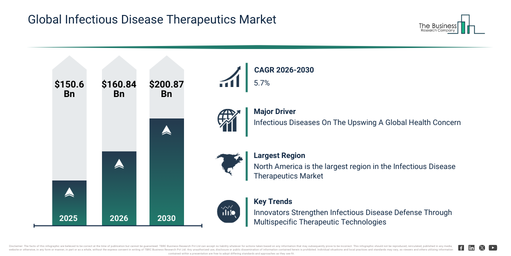
    The infectious disease therapeutics market has experienced significant expansion recently. Projections indicate it will expand from $150.6 billion in 2025 to $160.84 billion by 2026, achieving a compound annual growth rate (CAGR) of 6.8%. Historically, this growth has been driven by factors such as the substantial global impact of infectious diseases, the broad application of antibiotics and antivirals, governmental immunization initiatives, an increase in pharmaceutical manufacturing capabilities, and enhanced investment in infectious disease research.

    The infectious disease therapeutics market is projected to experience robust expansion over the coming years. This market is anticipated to reach a valuation of $200.87 billion by 2030, demonstrating a compound annual growth rate (CAGR) of 5.7%. Several factors will drive this growth during the projected period, including escalating antimicrobial resistance rates, the increasing frequency of infectious disease outbreaks, broadened global vaccination coverage, a rising demand for novel antiviral therapies, and stronger public health preparedness initiatives. Key trends expected during this forecast span encompass a heightened emphasis on antimicrobial resistance management, the accelerating development of broad-spectrum therapeutics, a greater adoption of combination drug therapies, the expansion of rapid-response therapeutics for outbreaks, and augmented investment in vaccine research and stockpiling.

    Get A Free Sample Report With In-Depth Market Insights:

    https://thebusinessresearchcompany.com/sample_request?id=37319140&type=smp&name=Infectious%20Disease%20Therapeutics%20Market%20Report%202026&utm_source=Blogs&utm_medium=Paid&utm_campaign=Oct_PR

    Infectious Disease Therapeutics Market Growth Catalysts And Demand Drivers

    The increasing incidence of infectious diseases is anticipated to propel the growth of the infectious disease therapeutics market going forward. Infectious diseases are conditions caused by pathogenic microorganisms such as bacteria, viruses, fungi, parasites, or prions. The rise in these diseases is attributed to several significant factors including climate change and environmental disruption, antimicrobial resistance, weakened immune systems, increased interactions with animals, and ecological disturbances. Infectious disease therapeutics are vital for treating infections, reducing morbidity and mortality, and controlling the spread of communicable diseases within communities and across populations. For instance, in October 2023, the National Health Service (NHS) England, a UK-based government department, indicated that in 2022/23, hospitals recorded 147,285 admissions primarily diagnosed as urinary tract infection (UTI). Patients over 65 years of age constituted 56% of these cases, amounting to 82,392 admissions. The 80–84 age group had the highest number of admissions, with 17,280 cases. Therefore, the expanding prevalence of infectious diseases is a driving force for the infectious disease therapeutics market.

    Infectious Disease Therapeutics Market Segment Analysis And Revenue Potential

    The infectious disease therapeutics market covered in this report is segmented –

    1) By Type: Drugs, Vaccines

    2) By Disease: Tuberculosis, HIV/AIDS, Influenza, Hepatitis, Other Diseases

    3) By End-User: Hospitals And Clinics, Retail Pharmacies, Research Organizations, Other End Users

    Subsegments:

    1) By Drugs: Antibiotics, Antivirals, Antifungals, Antiparasitics, Other Therapeutic Drugs (Monoclonal Antibodies, Immunomodulators)

    2) By Vaccines: Inactivated Vaccines, Live Attenuated Vaccines, Subunit Vaccines, Mrna Vaccines, Dna Vaccines, Toxoid Vaccines

    Infectious Disease Therapeutics Market Trends Shaping Long-Term Demand

    Leading companies active in the infectious disease therapeutics market are concentrating on integrating multispecific antibody platforms, such as the multispecific therapeutic antibody reactor (MSTAR), to heighten effectiveness, extend protective reach, and fortify responsiveness to emerging viral threats. The multispecific therapeutic antibody reactor (MSTAR) is an advanced multispecific antibody technology that merges several independent binding regions into a single therapeutic molecule, enabling capabilities like broad viral neutralization, the simultaneous targeting of multiple epitopes, and quick adaptation to new variants. For instance, in September 2023, ModeX Therapeutics Inc, a US-based clinical stage biopharmaceutical company, was awarded a contract from the Biomedical Advanced Research and Development Authority to advance its multispecific antibody candidates. These candidates are engineered for the treatment and prevention of viral infectious diseases, including COVID 19 and influenza, demonstrating broad activity against circulating viral strains, potential compatibility with gene based delivery utilizing mRNA or DNA vectors, and a multi binding site architecture. This multispecific antibody strategy enhances therapeutic results by shortening development periods, broadening protective coverage, and lessening the complexity linked with combination biologic treatments.

    Infectious Disease Therapeutics Market Key Players Shaping Industry Direction

    Major companies operating in the infectious disease therapeutics market are Pfizer Inc., F. Hoffmann-La Roche AG, Merck & Co. Inc., Sanofi SA, AstraZeneca, Novartis International AG, GlaxoSmithKline plc, Gilead Sciences Inc., Janssen Pharmaceuticals, Moderna Inc., Regeneron Pharmaceuticals Inc., Boehringer Ingelheim GmbH, BioCryst Pharmaceuticals Inc.

    View The Full Infectious Disease Therapeutics Market Report:

    https://thebusinessresearchcompany.com/report/infectious-disease-therapeutics-global-market-report?utm_source=Blogs&utm_medium=Paid&utm_campaign=Oct_PR

    Infectious Disease Therapeutics Market Regional Analysis And Top Geography

    North America was the largest region in the infectious disease therapeutics market in 2025. Asia-Pacific is expected to be the fastest-growing region in the forecast period. The regions covered in the infectious disease therapeutics market report are Asia-Pacific, South East Asia, Western Europe, Eastern Europe, North America, South America, Middle East, Africa.

    Reach Out To Our Team:

    The Business Research Company: https://www.thebusinessresearchcompany.com/

    Americas: +1 310-496-7795

    Asia: +44 7882 955267 & +91 8897263534

    Europe: +44 7882 955267

    Email us at: marketing@tbrc.info

    Follow us on:

    LinkedIn: https://in.linkedin.com/company/the-business-research-company

    YouTube: https://www.youtube.com/channel/UC24_fI0rV8cR5DxlCpgmyFQ

    Global Market Model: https://www.thebusinessresearchcompany.com/global-market-model
  • Infectious Disease Clinical Trials Market Expected To Grow At 7.1% CAGR Through 2030: What Businesses Need To Know

    Infectious Disease Clinical Trials Market Expected To Grow At 7.1% CAGR Through 2030: What Businesses Need To Know

    Built to provide research that’s more actionable and strategically valuable, The Business Research Company’s 2026 market reports include market attractiveness analysis, total addressable market sizing, company benchmarking matrices, interactive Excel dashboards, broader supply chain intelligence, emerging startup tracking, and in-depth product insights.

    Infectious Disease Clinical Trials Market Size Outlook: How Quickly Will Revenue Expand Through 2030?

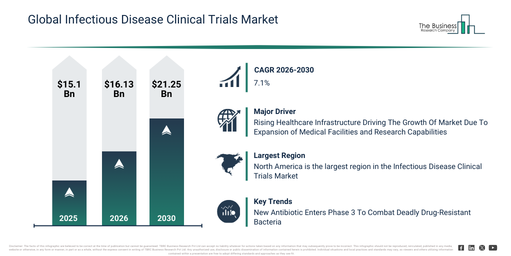
    The infectious disease clinical trials market size has shown strong growth in recent years. This market is expected to increase from $15.1 billion in 2025 to $16.13 billion in 2026, at a compound annual growth rate (CAGR) of 6.8%. The historical growth in this sector is due to factors such as the expansion of the global infectious disease burden, increased funding for vaccine development, the growth in multinational clinical trial networks, the adoption of digital trial management systems, and rising public health research initiatives.

    The market for infectious disease clinical trials is projected to experience substantial expansion over the upcoming years. This market is anticipated to reach $21.25 billion by 2030, exhibiting a compound annual growth rate (CAGR) of 7.1%. Factors driving this growth during the projected timeframe include heightened investments in pandemic preparedness, the growing application of AI-assisted patient recruitment, the widening scope of global trial decentralization, an intensifying emphasis on accelerated regulatory approvals, and the greater incorporation of digital biomarkers. Key trends anticipated during the forecast period involve the expanding embrace of data-driven trial design, the increasing implementation of decentralized clinical trial models, the deepening integration of real-world evidence, the broader deployment of adaptive trial methodologies, and a stronger focus on rapid pathogen response.

    Get A Free Sample Report With In-Depth Market Insights:

    https://thebusinessresearchcompany.com/sample_request?id=29097&type=smp&name=Infectious%20Disease%20Clinical%20Trials%20Market%20Report%202026&utm_source=Blogs&utm_medium=Paid&utm_campaign=Oct_PR

    Infectious Disease Clinical Trials Market Opportunity Drivers: What’s Unlocking New Revenue Potential?

    The expansion of healthcare infrastructure is anticipated to drive the future growth of the infectious disease clinical trials market. This infrastructure encompasses physical facilities, medical equipment, technologies, and a skilled workforce that underpin the provision of healthcare services and enable effective prevention, diagnosis, and treatment of diseases. The development of healthcare infrastructure is increasing due to the rising demand for sophisticated medical services, the escalating burden of novel and complex diseases, and the necessity for well-equipped facilities and proficient healthcare professionals to deliver timely diagnosis, treatment, and preventative care. Healthcare infrastructure directly supports the capacity for clinical trials by offering advanced medical facilities, specialized equipment, and enhanced research capabilities crucial for conducting extensive studies on infectious diseases. For instance, in January 2025, the American Hospital Association, a US-based non-profit organization, projects that the total number of hospitals in the United States will reach 6,093 by 2025, indicating a moderate increase in healthcare facilities nationwide. Thus, the growing healthcare infrastructure is fueling the expansion of the infectious disease clinical trials market.

    Infectious Disease Clinical Trials Market Segmentation And Category Overview

    The infectious disease clinical trials market covered in this report is segmented –

    1) By Phase: Phase I, Phase II, Phase III, Phase IV

    2) By Indication: Human Immunodeficiency Virus, Hepatitis, Influenza, Tuberculosis, Malaria, Coronavirus Disease Of 2019 (COVID-19), Other Indications

    3) By Study Design: Randomized Controlled Trials, Open Label Studies, Double Blind Studies, Observational Studies, Cohort Studies

    4) By Drug Type: Antibiotics, Antivirals, Antifungals, Vaccines, Combination Therapies

    5) By End-User: Pharmaceutical Companies, Biotechnology Companies, Contract Research Organizations, Academic Institutes, Other End-Users

    Subsegments:

    1) By Phase I: Healthy Volunteer Trials, Dose Escalation Studies, Safety And Tolerability Studies, Pharmacokinetic And Pharmacodynamic Studies

    2) By Phase II: Early Efficacy Studies, Proof Of Concept Studies, Patient Population Specific Studies, Short Term Safety Studies

    3) By Phase III: Large Scale Efficacy Trials, Comparative Effectiveness Studies, Multi Center Clinical Trials, Extended Safety And Tolerability Studies

    4) By Phase IV: Post Marketing Surveillance Studies, Long Term Safety Studies, Real World Evidence Studies, Special Population Studies

    Infectious Disease Clinical Trials Market Innovation Trends Shaping Future Development

    Companies operating within the infectious disease clinical trials market are increasingly focused on developing advanced research initiatives, such as Phase 3 trials for antibiotic candidates, to assist in identifying rare side effects and confirming optimal dosing. A Phase 3 trial for antibiotic candidates represents a late-stage investigation, testing the drug in a large cohort of patients to thoroughly evaluate its safety profile, effectiveness, and how it compares to existing treatments before it can receive approval for use. For instance, in May 2025, Roche, a pharmaceutical company based in Switzerland, initiated a Phase 3 clinical trial for zosurabalpin, an innovative tethered macrocyclic peptide antibiotic specifically designed to combat CRAB, a critical contributor to severe hospital infections worldwide. The unique characteristic of zosurabalpin lies in its novel mechanism of action, which obstructs the transport of lipopolysaccharide, a vital component for constructing the bacterial outer membrane, with no reported resistance thus far. This global trial is set to involve approximately 400 patients to assess its safety and effectiveness in comparison to standard treatments. Preliminary research has already indicated powerful activity against multidrug-resistant bacteria, excellent tolerability, and encouraging pharmacokinetic properties. This places Zosurabalpin as a potentially groundbreaking solution for tackling the urgent issue of antibiotic resistance.

    Infectious Disease Clinical Trials Market Competitive Analysis Of Leading Industry Participants

    Major companies operating in the infectious disease clinical trials market are GlaxoSmithKline plc (GSK), Pfizer Inc, Moderna Inc, Novartis AG, Sanofi S.A., AstraZeneca plc, Merck & Co Inc, Gilead Sciences Inc, AbbVie Inc, Eli Lilly and Company, Bristol Myers Squibb Company, Roche Holding AG, Bayer AG, Takeda Pharmaceutical Company Limited, CSL Limited, Regeneron Pharmaceuticals Inc, Biogen Inc, Amgen Inc, Inovio Pharmaceuticals Inc, Dynavax Technologies Corporation, Valneva SE, Emergent BioSolutions Inc, Vir Biotechnology Inc, International AIDS Vaccine Initiative, VBI Vaccines Inc, Otsuka Pharmaceutical Co Ltd, Daiichi Sankyo Company Limited, Shionogi & Co Ltd, Astellas Pharma Inc, Eisai Co Ltd, Sun Pharmaceutical Industries Ltd, Glenmark Pharmaceuticals Ltd, Bharat Biotech International Limited, Laurus Labs Limited, Sarepta Therapeutics Inc, Alnylam Pharmaceuticals Inc, Intellia Therapeutics Inc, Sangamo Therapeutics Inc, Excision BioTherapeutics Inc, Atara Biotherapeutics Inc, Adaptive Biotechnologies Corporation, ImmunityBio Inc, Enanta Pharmaceuticals Inc, Iterum Therapeutics plc, Spero Therapeutics Inc, Venatorx Pharmaceuticals Inc, Vaxart Inc, Immunovant Inc, Tonix Pharmaceuticals Holding Corp, Genentech Infectious Diseases Unit

    View The Full Infectious Disease Clinical Trials Market Report:

    https://thebusinessresearchcompany.com/report/infectious-disease-clinical-trials-global-market-report?utm_source=Blogs&utm_medium=Paid&utm_campaign=Oct_PR

    Infectious Disease Clinical Trials Market Geographic Analysis: Where Is Demand Rising Fastest?

    North America was the largest region in the infectious disease clinical trials market in 2025. Asia-Pacific is expected to be the fastest-growing region in the forecast period. The regions covered in the infectious disease clinical trials market report are Asia-Pacific, South East Asia, Western Europe, Eastern Europe, North America, South America, Middle East, Africa.

    Reach Out To Our Team:

    The Business Research Company: https://www.thebusinessresearchcompany.com/

    Americas: +1 310-496-7795

    Asia: +44 7882 955267 & +91 8897263534

    Europe: +44 7882 955267

    Email us at: marketing@tbrc.info

    Follow us on:

    LinkedIn: https://in.linkedin.com/company/the-business-research-company

    YouTube: https://www.youtube.com/channel/UC24_fI0rV8cR5DxlCpgmyFQ

    Global Market Model: https://www.thebusinessresearchcompany.com/global-market-model
  • Infection Prevention Market Forecast To Reach $53.88 Billion By 2030: Key Trends Explained

    Infection Prevention Market Forecast To Reach $53.88 Billion By 2030: Key Trends Explained

    Backed by market attractiveness analysis, total addressable market sizing, company benchmarking matrices, interactive Excel dashboards, wider supply chain intelligence, emerging startup coverage, and detailed product-level insights, The Business Research Company’s 2026 market reports are designed to offer research that is more actionable and strategically valuable than ever.

    Infection Prevention Market Size, Value And Growth Trajectory Through 2030

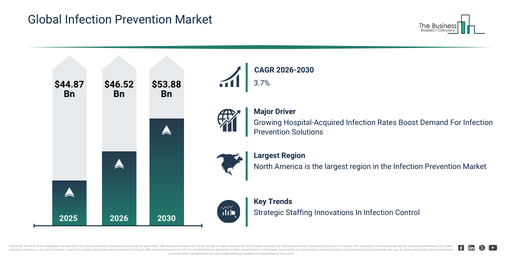
    The infection prevention market size has seen steady expansion in recent years. It is projected to grow from $44.87 billion in 2025 to $46.52 billion in 2026, demonstrating a compound annual growth rate (CAGR) of 3.7%. The observed growth during the historic period can be attributed to global outbreaks of infectious diseases, increasing awareness of personal hygiene, growth in healthcare-associated infections, expansion of healthcare infrastructure, and regulatory enforcement of infection prevention standards.

    The infection prevention market is projected to experience consistent growth over the coming years. Its value is anticipated to reach $53.88 billion by 2030, demonstrating a compound annual growth rate (CAGR) of 3.7%. Factors contributing to this growth during the forecast period include heightened public health awareness, increased financial allocation towards preventive healthcare, the broadening of healthcare infrastructure in developing regions, an escalating need for PPE and related consumables, and improved governmental readiness initiatives. Key developments expected over this period encompass a greater embrace of preventive hygiene habits, a surging requirement for personal protective equipment, the extension of infection prevention measures beyond traditional healthcare environments, an increasing focus on vaccination and immunization strategies, and the establishment of uniform infection prevention protocols.

    Get A Free Sample Report With In-Depth Market Insights:

    https://thebusinessresearchcompany.com/sample_request?id=93220809&type=smp&name=Infection%20Prevention%20Market%20Report%202026&utm_source=Blogs&utm_medium=Paid&utm_campaign=Oct_PR

    Infection Prevention Market Growth Momentum: What Factors Are Shaping Demand?

    The rising occurrence of hospital-acquired infections is anticipated to propel the expansion of the infection prevention market in the future. These infections are defined as those contracted by patients during their healthcare treatment within hospitals or other medical establishments. Strategies for infection prevention tackle hospital-acquired infections (HAIs) through the deployment of various measures aimed at reducing infection risks and improving patient safety. To illustrate, data from the third Point Prevalence Survey (PPS) of HAIs conducted in 2022-2023, published by the European Centre for Disease Prevention and Control (ECDC), a Sweden-based government agency, revealed that approximately 4.3 million patients in EU/EEA hospitals contract at least one HAI annually. Consequently, the growing prevalence of hospital-acquired infections is serving as a catalyst for the expansion of the infection prevention market.

    Infection Prevention Market Segment Outlook: Which Categories Are Growing Fastest?

    The infection prevention market covered in this report is segmented –

    1) By Product: Sterilization Equipment, Disinfectors, Consumables

    2) By Infection Type: Microbial Infections, Healthcare Associated Infections

    3) By End User: Hospitals And Clinics, Pharmaceutical Companies, Clinical Laboratories, Medical Device Companies, Life Science Industry, Academic And Research Centers

    Subsegments:

    1) By Sterilization Equipment: Steam Sterilizers, Ethylene Oxide Sterilizers, Plasma Sterilizers, Dry Heat Sterilizers, Chemical Sterilizers

    2) By Disinfectors: Surface Disinfectors, Endoscope Disinfectors, Washer Disinfectors, Automated Disinfecting Systems

    3) By Consumables: Sterilization Pouches And Wraps, Disinfectant Wipes, Chemical Indicators, Personal Protective Equipment (PPE), Cleaning Agents And Solutions

    Infection Prevention Market Trends Redefining Industry Growth

    Major companies operating in the infection prevention market are developing innovative products, such as infection preventionist staffing calculators, to provide dependable services to customers. An infection preventionist staffing calculator is a utility employed to estimate the appropriate count of infection preventionists needed in a healthcare facility, based on criteria like the number of beds, patient acuity, and facility type. For instance, in December 2023, the Association for Professionals in Infection Control and Epidemiology (APIC), a US-based organization dedicated to advancing infection prevention and control practices, launched an infection preventionist staffing calculator. This tool assists healthcare facilities like hospitals and clinics in determining the necessary number of infection preventionists (IPs), thereby enhancing patient safety through optimal staffing. Data collected from these facilities will be used to refine this tool, ensuring precise staffing guidance.

    Infection Prevention Market Leading Companies And Competitive Benchmarking

    Major companies operating in the infection prevention market are Cardinal Health Inc., 3M Company, Stryker Corporation, Reckitt Benckiser Group plc, Ecolab Inc., B. Braun Melsungen AG, The Clorox Company, Olympus Corporation, Fortive Corporation, Steris PLC, Getinge AB, Sotera Health Inc., Belimed AG, Coltene Group, Steelco S.p.A., Skytron LLC, Melag Medizintechnik GmbH & Co. KG, Metrex Research, Pal International, Cisa Production S.r.l. Unipersonale, Covalon Technologies Ltd., Biosafe Systems LLC, Terragene SA, Micro-Scientific LLC, Matachana SA

    View The Full Infection Prevention Market Report:

    https://thebusinessresearchcompany.com/report/infection-prevention-global-market-report?utm_source=Blogs&utm_medium=Paid&utm_campaign=Oct_PR

    Infection Prevention Market Global Footprint: Which Region Leads The Market?

    North America was the largest region in the infection prevention market in 2025. The regions covered in the infection prevention market report are Asia-Pacific, South East Asia, Western Europe, Eastern Europe, North America, South America, Middle East, Africa.

    Reach Out To Our Team:

    The Business Research Company: https://www.thebusinessresearchcompany.com/

    Americas: +1 310-496-7795

    Asia: +44 7882 955267 & +91 8897263534

    Europe: +44 7882 955267

    Email us at: marketing@tbrc.info

    Follow us on:

    LinkedIn: https://in.linkedin.com/company/the-business-research-company

    YouTube: https://www.youtube.com/channel/UC24_fI0rV8cR5DxlCpgmyFQ

    Global Market Model: https://www.thebusinessresearchcompany.com/global-market-model
  • Infection Control Surveillance Solutions Market Size Forecast From 2026 To 2030: Key Industry Trends

    Infection Control Surveillance Solutions Market Size Forecast From 2026 To 2030: Key Industry Trends

    Featuring market attractiveness scoring, total addressable market sizing, company benchmarking matrices, interactive Excel dashboards, deeper supply chain intelligence, emerging startup tracking, and granular product-level insights, The Business Research Company’s 2026 market reports are built to deliver research that is both more actionable and more strategically valuable.

    Infection Control Surveillance Solutions Market CAGR Outlook And Future Development

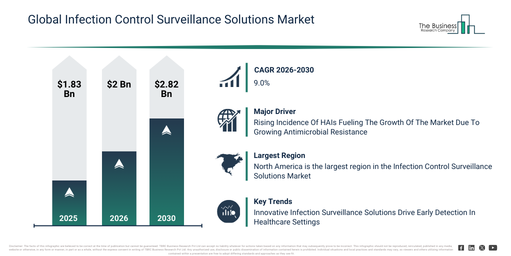
    The infection control surveillance solutions market size has demonstrated significant expansion over recent years. It is anticipated to grow from $1.83 billion in 2025 to $2 billion in 2026, achieving a compound annual growth rate (CAGR) of 9.3%. The increase observed in the historic period is primarily due to the rising occurrence of healthcare-associated infections, a heightened regulatory emphasis on infection control, the broader implementation of hospital digitization initiatives, the increasing utilization of electronic health records, and the demand for improved patient safety.

    The infection control surveillance solutions market is anticipated to experience substantial expansion over the upcoming years, projected to reach $2.82 billion by 2030 with a compound annual growth rate (CAGR) of 9.0%. This growth during the forecast period can be attributed to factors such as increasing investments in AI-driven surveillance tools, the rising adoption of cloud healthcare solutions, the expansion of antimicrobial stewardship programs, a growing focus on real-time data-driven decision making, and increasing healthcare quality compliance requirements. Major trends expected within this period include the rising adoption of real-time infection monitoring systems, an increasing use of predictive analytics for outbreak detection, growing integration with electronic health records, the expansion of cloud-based surveillance platforms, and an enhanced focus on compliance and reporting automation.

    Get A Free Sample Report With In-Depth Market Insights:

    https://thebusinessresearchcompany.com/sample_request?id=93805237&type=smp&name=Infection%20Control%20Surveillance%20Solutions%20Market%20Report%202026&utm_source=Blogs&utm_medium=Paid&utm_campaign=Oct_PR

    Infection Control Surveillance Solutions Market Expansion Drivers: What’s Shaping Future Growth?

    The increasing occurrence of healthcare-associated infections (HAIs) is anticipated to drive the expansion of the infection control surveillance solutions market moving forward. Healthcare-associated infections are defined as infections that patients acquire while receiving medical or surgical treatment in a healthcare setting. The rise in healthcare-associated infections is attributed to the growing use of invasive medical devices, such as catheters and ventilators, which can introduce pathogens into the body. Infection control surveillance solutions aid in reducing healthcare-associated infections by enabling early detection of infection trends and facilitating prompt intervention to prevent outbreaks. For instance, in March 2025, according to the UK Health Security Agency, a UK-based government agency, it was reported that 7.6% of hospital patients in England had at least one healthcare-associated infection, with intensive care units showing the highest prevalence at 15.9%. Therefore, the increasing incidences of healthcare-associated infections (HAIs) are fueling the growth of the infection control surveillance solutions market.

    Infection Control Surveillance Solutions Market Segment Landscape: Which Areas Lead Development?

    The infection control surveillance solutions market covered in this report is segmented –

    1) By Product Type: Software Solutions, Hardware Solutions, Services

    2) By Deployment Mode: On-Premise Solutions, Cloud-Based Solutions, Hybrid Solutions

    3) By Application: Infection Control, Surveillance And Reporting, Data Management, Compliance Monitoring, Quality Improvement

    4) By End-User: Hospitals, Long-term Care Facilities, Home Healthcare, Ambulatory Surgical Centers, Clinical Laboratories

    Subsegments:

    1) By Software Solutions: Infection Surveillance Software, Antimicrobial Stewardship Software, Outbreak Detection And Alert Systems, Compliance Monitoring Software, Clinical Decision Support Systems (CDSS), Real-Time Analytics And Reporting Dashboards, Electronic Health Record (EHR) Integration Modules

    2) By Hardware Solutions: Real-Time Location Systems (RTLS), Environmental Monitoring Devices, Handheld Data Collection Devices, ATP Testing Instruments, Network Infrastructure Equipment

    3) By Services: Installation And Integration Services, Training And Support Services, Consulting Services, Data Analysis And Reporting Services, Managed Services

    Infection Control Surveillance Solutions Market Strategic Trends: What Defines The Next Growth Phase?

    Major companies operating in the infection control surveillance solutions market are focusing on developing innovative solutions, such as infection surveillance systems, to enhance early detection and response to healthcare-associated infections. Infection surveillance systems refer to digital or manual tools used to systematically monitor, detect, and report infections within healthcare settings to support timely prevention and control measures. For instance, in November 2023, NeoIPC, a Europe-based neonatal infection prevention initiative coordinated by Fondazione Penta ETS, launched a new surveillance toolkit designed to enhance infection prevention and control efforts in neonatal intensive care units (NICUs). It includes real-time data collection tools tailored specifically for neonatal settings, allowing for early detection of infection clusters and antimicrobial resistance patterns. The toolkit also features customizable dashboards for NICU staff to monitor IPC indicators, along with integrated decision-support algorithms that guide timely interventions. It supports cross-institutional data sharing and benchmarking, enabling collaborative learning and faster responses to emerging infection risks.

    Infection Control Surveillance Solutions Market Industry Leaders And Competitive Landscape

    Major companies operating in the infection control surveillance solutions market are Oracle Corporation, 3M Company, Becton Dickinson And Company, Baxter International Inc, Ecolab Inc, Wolters Kluwer NV, STERIS plc, Getinge AB, Premier Inc, Inovalon Holdings Inc, Belimed AG, Harris Healthcare Solutions Inc, RLDatix Group, Hygiena LLC, CenTrak Inc, Matachana Group SA, Pal International Ltd, Azalea Health Innovations Inc, TOMI Environmental Solutions Inc, Cerner Corporation, Epic Systems Corporation, Allscripts Healthcare Solutions

    View The Full Infection Control Surveillance Solutions Market Report:

    https://thebusinessresearchcompany.com/report/infection-control-surveillance-solutions-global-market-report?utm_source=Blogs&utm_medium=Paid&utm_campaign=Oct_PR

    Infection Control Surveillance Solutions Market Regional Split: Which Areas Are Fueling Growth?

    North America was the largest region in the infection control surveillance solutions market in 2025. Asia-Pacific is expected to be the fastest-growing region in the forecast period. The regions covered in the infection control surveillance solutions market report are Asia-Pacific, South East Asia, Western Europe, Eastern Europe, North America, South America, Middle East, Africa.

    Reach Out To Our Team:

    The Business Research Company: https://www.thebusinessresearchcompany.com/

    Americas: +1 310-496-7795

    Asia: +44 7882 955267 & +91 8897263534

    Europe: +44 7882 955267

    Email us at: marketing@tbrc.info

    Follow us on:

    LinkedIn: https://in.linkedin.com/company/the-business-research-company

    YouTube: https://www.youtube.com/channel/UC24_fI0rV8cR5DxlCpgmyFQ

    Global Market Model: https://www.thebusinessresearchcompany.com/global-market-model