Category: Healthcare Services

  • Healthcare Facility Management Market 2026: Market Size, Growth Drivers And Emerging Opportunities

    Healthcare Facility Management Market 2026: Market Size, Growth Drivers And Emerging Opportunities

    Built to provide research that’s more actionable and strategically valuable, The Business Research Company’s 2026 market reports include market attractiveness analysis, total addressable market sizing, company benchmarking matrices, interactive Excel dashboards, broader supply chain intelligence, emerging startup tracking, and in-depth product insights.

    Healthcare Facility Management Market Set To Climb From $320.67 Billion In 2026 To $499.26 Billion By 2030

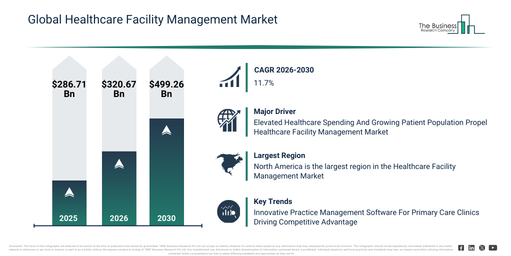
    The healthcare facility management market size has experienced swift expansion in recent years. This market is forecast to grow from $286.71 billion in 2025 to $320.67 billion in 2026, exhibiting a compound annual growth rate (CAGR) of 11.8%. The historical period’s growth can be attributed to factors such as the expansion of hospital infrastructure, a heightened need for operational efficiency in healthcare facilities, increasingly stringent regulatory compliance requirements, the rise of multi-specialty hospitals, and the adoption of centralized facility management systems.

    The healthcare facility management market is projected for substantial expansion over the upcoming years. Its size is anticipated to reach $499.26 billion by 2030, exhibiting a compound annual growth rate (CAGR) of 11.7%. This anticipated growth during the forecast period is driven by factors such as greater investments in smart hospital technologies, a heightened demand for sustainable healthcare infrastructure, the proliferation of IoT-enabled facility monitoring, an increasing inclination towards outsourced facility services, and a magnified emphasis on optimizing costs within healthcare operations. Key trends for the forecast period encompass a wider adoption of smart facility management systems, an escalating utilization of predictive maintenance technologies, a reinforced focus on constructing energy-efficient healthcare buildings, the expansion of outsourced facility services, and a heightened emphasis on ensuring patient safety and regulatory compliance.

    Get A Free Sample Report With In-Depth Market Insights:

    https://thebusinessresearchcompany.com/sample_request?id=83858373&type=smp&name=Healthcare%20Facility%20Management%20Market%20Report%202026&utm_source=Blogs&utm_medium=Paid&utm_campaign=Nov_PR

    Healthcare Facility Management Market Development Factors: What’s Supporting Demand?

    An expanding patient population, coupled with increasing healthcare spending from both private and public entities within healthcare systems, is a primary driver for the growth of the healthcare facility management market. Governmental and private investments in healthcare across various countries bolster the development of healthcare systems, ultimately enhancing patient services. This, in turn, facilitates the broader adoption of healthcare facility management within the healthcare infrastructure. For instance, the Office for National Statistics, a UK-based government department, reported in May 2024 that total healthcare expenditure experienced a 5.6% nominal increase from 2022 to 2023. This marked a significant acceleration compared to the 0.9% growth observed in 2022. Consequently, the financial commitments by private and public participants in healthcare systems are propelling the expansion of the healthcare facility management market.

    Healthcare Facility Management Market Breakdown By Product Type And Application

    The healthcare facility management market covered in this report is segmented –

    1) By Type: Hard Services, Soft Services, Other Services

    2) By Business Model: Outsourced, In-House

    3) By End User: Hospitals And Clinics, Long-Term Healthcare Facilities

    Subsegments:

    1) By Hard Services: Building Maintenance, Mechanical And Electrical Services, Infrastructure Management

    2) By Soft Services: Cleaning And Sanitation, Security Services, Catering And Food Services

    3) By Other Services: Waste Management, Grounds Maintenance, Pest Control Services

    Healthcare Facility Management Market Trends Powering Strategic Industry Growth

    Major companies operating in the healthcare facility management market are developing innovative solutions, such as practice management software, for primary care clinics to gain a competitive advantage and increase revenue. Practice management software for primary care clinics refers to specialized software applications designed to streamline and optimize the administrative and operational tasks within a primary care clinic or medical practice. For instance, in August 2023, Kumo, a Malysia-based healthcare company, launched KumoDoc, a practice management software tailored for primary care clinics, with a primary focus on improving efficiency and optimizing clinic operations. KumoDoc offers an array of features, including synchronized appointment scheduling with patient notifications through WhatsApp, efficient medical inventory management, a secure telehealth platform, algorithms for fraud detection, and seamless billing processes. It brings together electronic medical records to facilitate real-time collaboration, delivering benefits to both clinics and patients. KumoDoc adopts a customer-centric approach, aiming to enhance and streamline healthcare processes for providers. The software simplifies the healthcare experience, making it efficient, personalized, and convenient. Its innovative technology and user-friendly interface are designed to support medical practitioners in managing daily clinic administration, benefiting primary care and medical wellness centers.

    Healthcare Facility Management Market Company Landscape And Competitive Strategy

    Major companies operating in the healthcare facility management market are ABM Industries Inc., ISS World Services A/S, Jones Lang LaSalle IP Inc., Medxcel Facility Management LLC, Mitie Group PLC, Aramark Corporation, Compass Group PLC, Ecolab Inc., Sodexo SVC India Pvt. Ltd., OCS Group Limited, Serco Group PLC, Vanguard Resources Inc., Arora Holdings Limited, Cushman & Wakefield, CBRE Group Inc., Johnson Controls International PLC, Crothall Healthcare, C&W Facility Services Inc., AM Facilities Management Service Ltd., Emcor Facilities Services Inc., Epic Facilities Management, Stericycle Inc.

    View The Full Healthcare Facility Management Market Report:

    https://thebusinessresearchcompany.com/report/healthcare-facility-management-global-market-report?utm_source=Blogs&utm_medium=Paid&utm_campaign=Nov_PR

    Healthcare Facility Management Market Regional Split: Which Areas Are Fueling Growth?

    North America was the largest region in the healthcare facility management market in 2025. The regions covered in the healthcare facility management market report are Asia-Pacific, South East Asia, Western Europe, Eastern Europe, North America, South America, Middle East, Africa.

    Reach Out To Our Team:

    The Business Research Company: https://www.thebusinessresearchcompany.com/

    Americas: +1 310-496-7795

    Asia: +44 7882 955267 & +91 8897263534

    Europe: +44 7882 955267

    Email us at: marketing@tbrc.info

    Follow us on:

    LinkedIn: https://in.linkedin.com/company/the-business-research-company

    YouTube: https://www.youtube.com/channel/UC24_fI0rV8cR5DxlCpgmyFQ

    Global Market Model: https://www.thebusinessresearchcompany.com/global-market-model
  • Healthcare Extended Reality Market Set To Expand From $45.3 Billion In 2026: Growth Outlook Through 2030

    Healthcare Extended Reality Market Set To Expand From $45.3 Billion In 2026: Growth Outlook Through 2030

    Backed by market attractiveness analysis, total addressable market sizing, company benchmarking matrices, interactive Excel dashboards, wider supply chain intelligence, emerging startup coverage, and detailed product-level insights, The Business Research Company’s 2026 market reports are designed to offer research that is more actionable and strategically valuable than ever.

    Healthcare Extended Reality Market Forecast: Value Set To Climb From $14.84 Billion To $45.3 Billion

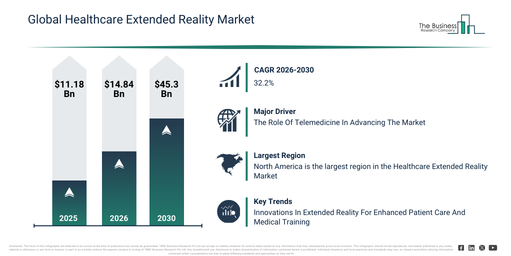
    The healthcare extended reality market size has experienced significant expansion in recent years. It is anticipated to increase from $11.18 billion in 2025 to $14.84 billion in 2026, demonstrating a compound annual growth rate (CAGR) of 32.8%. The growth observed in the past can be attributed to factors like the increasing application of simulation-based medical education, rising investments in digital healthcare tools, the expanded adoption of minimally invasive procedures, the broadening of telemedicine services, and the availability of advanced visualization hardware.

    The healthcare extended reality market is projected to experience rapid expansion over the coming years, with its valuation anticipated to reach $45.3 billion by 2030, exhibiting a compound annual growth rate (CAGR) of 32.2%. This growth during the projection period can be attributed to several factors, including the increasing integration of XR with AI-driven diagnostics, a rising demand for remote and immersive care delivery, the expansion of precision medicine applications, a growing emphasis on personalized patient engagement, and increased funding directed towards digital health innovation. Key trends expected during the forecast period encompass the increasing adoption of immersive medical training platforms, a rising utilization of XR in surgical planning and guidance, the growing implementation of virtual rehabilitation programs, the expansion of remote consultations leveraging XR tools, and an enhanced focus on patient-centric immersive therapies.

    Get A Free Sample Report With In-Depth Market Insights:

    https://thebusinessresearchcompany.com/sample_request?id=69922329&type=smp&name=Healthcare%20Extended%20Reality%20Market%20Report%202026&utm_source=Blogs&utm_medium=Paid&utm_campaign=Nov_PR

    Healthcare Extended Reality Market Industry Drivers: What’s Behind The Revenue Growth?

    The rising adoption of telemedicine is projected to stimulate the expansion of the healthcare extended reality market. Telemedicine involves the application of telecommunications technology to deliver medical services and care remotely, enabling individuals to consult with healthcare professionals without needing an in-person visit to a medical facility. The increased prevalence of telemedicine can be attributed to the escalating desire for convenient healthcare access and technological advancements that facilitate remote consultations and monitoring. Healthcare extended reality (XR) enhances telemedicine by offering immersive remote consultations, virtual examinations, and interactive training, thereby improving patient engagement, the accuracy of diagnoses, and collaborative care among healthcare professionals. For instance, in June 2024, according to the Health-tech news, a UK-based innovative platform for the health tech community, in April 2024, there were 1,301,924 GP appointments classed as video or online, a significant rise from 172,114 in April 2023. Therefore, the growing uptake of telemedicine is propelling the growth of the healthcare extended reality market.

    Healthcare Extended Reality Market Segment Analysis And Revenue Potential

    The healthcare extended reality market covered in this report is segmented –

    1) By Component: Hardware, Software, Services

    2) By Technology: Augmented Reality, Virtual Reality, Mixed Reality

    3) By Application: Surgery, Therapy, Education And Training, Rehabilitation, Pain Management, Other Applications

    4) By End User: Hospitals, Clinics And Surgical Centers, Research Organizations, Diagnostics Laboratories, Other End Users

    Subsegments:

    1) By Hardware: Head-Mounted Displays (HMDs), Smart Glasses, Haptic Feedback Devices, Sensors and Cameras

    2) By Software: Virtual Reality (VR) Software, Augmented Reality (AR) Software, Mixed Reality (MR) Software, Simulation and Training Software

    3) By Services: Consulting Services, Integration And Deployment Services, Support And Maintenance Services, Training And Education Services

    Healthcare Extended Reality Market Growth Trends Reshaping The Competitive Landscape

    Major companies involved in healthcare extended reality are focusing on developing innovative technologies, such as integrating virtual and augmented reality technologies, to enhance medical training, patient treatment, and surgical planning. The integration of virtual and augmented reality technologies improves user experiences by blending digital content with the real world, creating immersive and interactive environments. For instance, in April 2024, SindyXR Inc., a US-based telehealth group therapy platform company, launched its first extended reality (XR)-based group health support system, which enhances patient care through immersive educational experiences that boost engagement and enable remote access to healthcare services. It also aids in mental health treatments, alleviates pain perception, and promotes collaboration among healthcare professionals, resulting in improved health outcomes.

    Healthcare Extended Reality Market Key Players Shaping Industry Direction

    Major companies operating in the healthcare extended reality market are Microsoft Corporation, Meta Platforms Inc, NVIDIA Corporation, Medtronic plc, EON Reality Inc, Osso VR Inc, zSpace Inc, VirtaMed AG, Surgical Theater Inc, XRHealth, AppliedVR Inc, OramaVR Inc, Apprentice.io, GigXR Inc, PrecisionOS Technology Inc, SentiAR Inc, FundamentalVR, Medical Realities, ImmersiveTouch, Luxsonic Technologies, EchoPixel

    View The Full Healthcare Extended Reality Market Report:

    https://thebusinessresearchcompany.com/report/healthcare-extended-reality-global-market-report2024?utm_source=Blogs&utm_medium=Paid&utm_campaign=Nov_PR

    Healthcare Extended Reality Market Top Region: Where Does Most Revenue Come From?

    North America was the largest region in the healthcare extended reality market in 2025. The regions covered in the healthcare extended reality market report are Asia-Pacific, South East Asia, Western Europe, Eastern Europe, North America, South America, Middle East, Africa.

    Reach Out To Our Team:

    The Business Research Company: https://www.thebusinessresearchcompany.com/

    Americas: +1 310-496-7795

    Asia: +44 7882 955267 & +91 8897263534

    Europe: +44 7882 955267

    Email us at: marketing@tbrc.info

    Follow us on:

    LinkedIn: https://in.linkedin.com/company/the-business-research-company

    YouTube: https://www.youtube.com/channel/UC24_fI0rV8cR5DxlCpgmyFQ

    Global Market Model: https://www.thebusinessresearchcompany.com/global-market-model
  • Healthcare ERP Consulting Services Market Size And Growth In 2026: Key Factors Shaping Future Demand

    Healthcare ERP Consulting Services Market Size And Growth In 2026: Key Factors Shaping Future Demand

    Featuring market attractiveness scoring, total addressable market sizing, company benchmarking matrices, interactive Excel dashboards, deeper supply chain intelligence, emerging startup tracking, and granular product-level insights, The Business Research Company’s 2026 market reports are built to deliver research that is both more actionable and more strategically valuable.

    Healthcare ERP Consulting Services Market Revenue Growth On Track For A 10.7% CAGR Through 2030

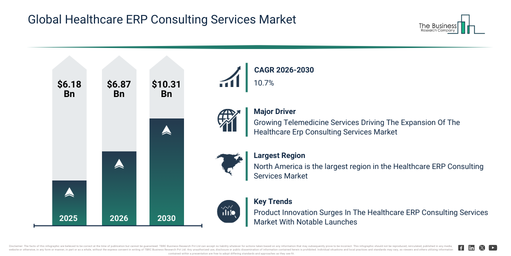
    The healthcare erp consulting services market has experienced significant expansion in recent years. Its size is projected to increase from $6.18 billion in 2025 to $6.87 billion in 2026, achieving a compound annual growth rate (CAGR) of 11.3%. This growth during the historic period stems from factors such as the rising complexity of healthcare operations, the expansion of hospital networks, an escalating demand for financial transparency, the integration of digital hospital management systems, and an increase in regulatory reporting requirements.

    The healthcare erp consulting services market is projected for substantial expansion in the coming years. By 2030, this market is anticipated to reach $10.31 billion, demonstrating a compound annual growth rate (CAGR) of 10.7%. This expansion during the forecast period is driven by factors such as greater investments in cloud-native erp platforms, an increasing need for real-time operational analytics, the proliferation of value-based healthcare models, a heightened emphasis on cybersecurity compliance, and the wider uptake of integrated healthcare IT ecosystems. Key trends anticipated over this period encompass a rise in the adoption of cloud-based healthcare erp systems, a growing requirement for erp implementation and integration services, an intensified focus on data-driven hospital management, the broadening scope of compliance and regulatory consulting, and a stronger emphasis on optimizing workflows.

    Get A Free Sample Report With In-Depth Market Insights:

    https://thebusinessresearchcompany.com/sample_request?id=46486922&type=smp&name=Healthcare%20ERP%20Consulting%20Services%20Market%20Report%202026&utm_source=Blogs&utm_medium=Paid&utm_campaign=Nov_PR

    Healthcare ERP Consulting Services Market Growth Factors: What’s Supporting Expansion?

    The expansion of telemedicine services is projected to propel the advancement of the healthcare ERP consulting services market in the future. These services involve providing healthcare, medical advice, and clinical support from a distance, leveraging telecommunications technology, mainly the Internet and video conferencing platforms. Significant volumes of patient information are produced by telemedicine platforms. Healthcare ERP systems play a crucial role in consolidating this data with existing healthcare records and optimizing procedures for patient management and billing. An example is found in September 2024, where the Australian Bureau of Statistics (ABS), Australia’s national statistical agency, reported that in 2023–24, 83.5% of males utilized telehealth services, representing a rise from 78.6% in 2022–23. Consequently, the expansion of telemedicine services is stimulating the growth within the healthcare ERP consulting services market.

    Healthcare ERP Consulting Services Market Segmentation And Category Overview

    The healthcare erp consulting services market covered in this report is segmented –

    1) By Functionality: Implementation, Training And Education, Other Functionalities

    2) By Deployment: On-Premise ERP Consulting, Cloud-Based ERP Consulting, Hybrid ERP Consulting

    3) By End-User: Hospitals and Health Systems, Clinics and Ambulatory Care Centers, Diagnostic and Imaging Centers, Specialty Healthcare Providers, Other Healthcare Facilities

    Subsegments:

    1) By Implementation: System Integration, Configuration, Data Migration

    2) By Training and Education: User Training, Administrator Training, Ongoing Education Programs

    3) By Other Functionality: Process Optimization, Change Management, Compliance And Regulatory Support

    Healthcare ERP Consulting Services Market Trends Shaping Long-Term Demand

    Leading companies active in the healthcare ERP consulting services market are developing advanced solutions that incorporate features tailored for healthcare, enabling organizations to enhance their operations and improve patient care through customized enterprise resource planning systems. Healthcare-specific capabilities refer to functionalities and attributes designed to meet the distinct requirements of the healthcare industry. For example, in September 2023, Oracle Corporation, a US-based computer software company, unveiled the Fusion Cloud Applications Suite, featuring new healthcare-specific capabilities aimed at increasing operational efficiency and elevating patient care. These healthcare-specific capabilities include financial consolidation and reporting, procurement, replenishment planning, and recall management. These features will be incorporated into Oracle Fusion Cloud Enterprise Resource Planning (ERP), Oracle Fusion Cloud Enterprise Performance Management (EPM), and Oracle Fusion Cloud Supply Chain & Manufacturing (SCM).

    Healthcare ERP Consulting Services Market Competitive Analysis Of Leading Industry Participants

    Major companies operating in the healthcare erp consulting services market are Accenture plc, Deloitte Touche Tohmatsu, PricewaterhouseCoopers, Infosys Limited, Atos Information Technology GmbH, Avaap USA LLC, Wipro Limited, KPMG International Limited, Clarkston Consulting, JDC Systems Innovations, The RockWood Group INC., AIM Solutions, Alithya Group Inc., LeverX International LLC, Panorama Consulting Group, Traction Consulting Group, Cognizant Technology Solutions India Private Limited, HCL Technologies, IBM Corporation, Tata Consultancy Services Limited, Tech Mahindra Limited, Ernst & Young Global Limited

    View The Full Healthcare ERP Consulting Services Market Report:

    https://thebusinessresearchcompany.com/report/healthcare-ERP-consulting-services-global-market-report?utm_source=Blogs&utm_medium=Paid&utm_campaign=Nov_PR

    Healthcare ERP Consulting Services Market Regional Breakdown: Where Is Demand Concentrated?

    North America was the largest region in the healthcare ERP consulting services market in 2025. The regions covered in the healthcare erp consulting services market report are Asia-Pacific, South East Asia, Western Europe, Eastern Europe, North America, South America, Middle East, Africa.

    Reach Out To Our Team:

    The Business Research Company: https://www.thebusinessresearchcompany.com/

    Americas: +1 310-496-7795

    Asia: +44 7882 955267 & +91 8897263534

    Europe: +44 7882 955267

    Email us at: marketing@tbrc.info

    Follow us on:

    LinkedIn: https://in.linkedin.com/company/the-business-research-company

    YouTube: https://www.youtube.com/channel/UC24_fI0rV8cR5DxlCpgmyFQ

    Global Market Model: https://www.thebusinessresearchcompany.com/global-market-model
  • Healthcare Equipment Leasing Market Forecast 2026–2030: Market Size, Trends And Growth Opportunities

    Healthcare Equipment Leasing Market Forecast 2026–2030: Market Size, Trends And Growth Opportunities

    Built to provide research that’s more actionable and strategically valuable, The Business Research Company’s 2026 market reports include market attractiveness analysis, total addressable market sizing, company benchmarking matrices, interactive Excel dashboards, broader supply chain intelligence, emerging startup tracking, and in-depth product insights.

    Healthcare Equipment Leasing Market Value Growth And Long-Term Outlook

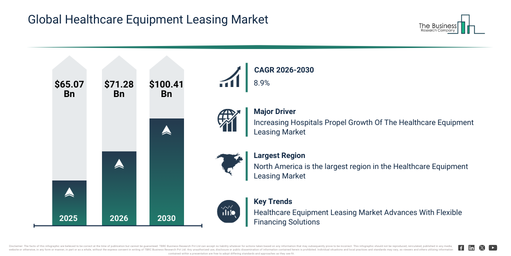
    The healthcare equipment leasing market size has seen strong growth in recent years. It is anticipated to expand from $65.07 billion in 2025 to $71.28 billion in 2026, with a compound annual growth rate (CAGR) of 9.5%. This historical expansion can be attributed to factors such as the increasing capital cost of medical equipment, the expansion of diagnostic and surgical facilities, a rising demand for technology upgrades, the growth of outpatient care centers, and increasing financial constraints among healthcare providers.

    The healthcare equipment leasing market is projected to experience robust expansion over the coming years, anticipated to reach $100.41 billion by 2030, exhibiting a compound annual growth rate (CAGR) of 8.9%. This projected growth during the forecast period is attributable to the increasing embrace of subscription-based leasing models, a heightened demand for swift equipment upgrades, the broadening scope of homecare equipment leasing, an intensifying focus on cost optimization strategies, and the wider integration of digital lease management platforms. Key trends identified for the forecast period encompass a growing inclination towards equipment leasing instead of ownership, an escalating demand for flexible financing models, the increasing uptake of refurbished medical equipment leasing, the expansion of usage-based leasing agreements, and an elevated emphasis on asset lifecycle management.

    Get A Free Sample Report With In-Depth Market Insights:

    https://thebusinessresearchcompany.com/sample_request?id=17595760&type=smp&name=Healthcare%20Equipment%20Leasing%20Market%20Report%202026&utm_source=Blogs&utm_medium=Paid&utm_campaign=Nov_PR

    Healthcare Equipment Leasing Market Demand Drivers: What’s Powering Industry Growth?

    The expanding count of hospitals is projected to stimulate the growth of the healthcare equipment leasing market moving forward. Hospitals are healthcare institutions dedicated to delivering medical care and treatment to patients. The demand for hospitals is influenced by a blend of demographic shifts, the increase in chronic conditions, population expansion, heightened health awareness, and broadened health insurance coverage. These facilities generate a need for healthcare equipment leasing due to the persistent requirement for advanced medical technology. For example, according to the American Hospital Association, a US-based non-profit entity, the United States registered 6,120 hospitals in 2024, demonstrating an increase from 6,093 hospitals in 2022. Hence, the increasing number of hospitals and clinics is serving as a catalyst for the growth of the healthcare equipment leasing market.

    Healthcare Equipment Leasing Market Segment Outlook: Which Categories Are Growing Fastest?

    The healthcare equipment leasing market covered in this report is segmented –

    1) By Device Type: Personal And Homecare Leasing Equipment, Digital And Electronic Equipment, Surgical And Therapy Leasing Equipment, Durable Medical Equipment (DME), Storage And Transport Leasing Equipment, Other Device Types

    2) By Device Finance Type: New Medical Equipment, Rental Equipment, Refurbished Equipment, Other Device Finance Types

    3) By End-User: Ambulatory Surgical Services, Hospitals, Homecare, Laboratory And Diagnostic Centers, Other End Users

    Subsegments:

    1) By Personal And Homecare Leasing Equipment: Home Oxygen Equipment, CPAP Machines, Mobility Aids (Wheelchairs, Walkers)

    2) By Digital And Electronic Equipment: Diagnostic Imaging Equipment (X-ray, MRI, CT scanners), Patient Monitoring Systems, Diagnostic And Lab Testing Equipment

    3) By Surgical and Therapy Leasing Equipment: Anesthesia Machines, Physiotherapy Equipment, Laser Therapy Equipment

    4) By Durable Medical Equipment (DME): Hospital Beds, Respiratory Equipment, Patient Lifts and Hoists

    5) By Storage And Transport Leasing Equipment: Refrigerators/Freezers for Medical Use, Patient Transport Stretchers

    6) By Other Device Types: Laboratory Equipment, Dialysis Machines, Defibrillators, Infusion Pumps

    Healthcare Equipment Leasing Market Innovation Trends Shaping Future Development

    Leading companies within the healthcare equipment leasing sector are introducing adaptable financing solutions to support healthcare providers in acquiring cutting-edge equipment. Flexible financing options refer to a spectrum of financial arrangements or plans designed to offer versatility and adaptability, catering to the specific needs of borrowers or purchasers. For instance, in June 2024, Capital MBS, a US-based platform for funding alternatives, introduced flexible financing options tailored for the medical and dental sectors. This was achieved through partnerships with reputable banks, enabling healthcare providers to procure advanced equipment without substantial upfront costs or delays. This option covers the financing of diagnostic tools such as MRI, CT scanners, X-ray systems, surgical instruments, dental technologies, patient care equipment, and laboratory instruments. An online application system facilitates swift access to these funding solutions, thereby assisting healthcare professionals in securing the necessary capital for essential medical technology.

    Healthcare Equipment Leasing Market Leading Companies And Competitive Benchmarking

    Major companies operating in the healthcare equipment leasing market are McKesson Corporation, Stryker Corporation, Far East Horizon Limited, Hill-Rom Holdings Inc., Getinge AB, Genertec Universal Medical Group, Encore Medical Capital, Agiliti Inc., Meridian Group International Inc., Crossroads Equipment Lease and Finance, AvTech Capital LLC, United Leasing & Finance, Med One Group, Providence Capital Funding Inc., Lease Corporation of America, Dext Capital LLC, Crest Capital, Madison Capital LLC, National Technology Leasing Corp, Insight Financial Services, Liberty Capital Group

    View The Full Healthcare Equipment Leasing Market Report:

    https://thebusinessresearchcompany.com/report/healthcare-equipment-leasing-global-market-report?utm_source=Blogs&utm_medium=Paid&utm_campaign=Nov_PR

    Healthcare Equipment Leasing Market Geographic Landscape: Which Region Leads Industry Growth?

    North America was the largest region in the healthcare equipment leasing market in 2025. Asia-Pacific is expected to be the fastest-growing region in the forecast period. The regions covered in the healthcare equipment leasing market report are Asia-Pacific, South East Asia, Western Europe, Eastern Europe, North America, South America, Middle East, Africa.

    Reach Out To Our Team:

    The Business Research Company: https://www.thebusinessresearchcompany.com/

    Americas: +1 310-496-7795

    Asia: +44 7882 955267 & +91 8897263534

    Europe: +44 7882 955267

    Email us at: marketing@tbrc.info

    Follow us on:

    LinkedIn: https://in.linkedin.com/company/the-business-research-company

    YouTube: https://www.youtube.com/channel/UC24_fI0rV8cR5DxlCpgmyFQ

    Global Market Model: https://www.thebusinessresearchcompany.com/global-market-model
  • Healthcare Environmental Services Market Size Reaches $20.32 Billion In 2026: What Is Driving Growth?

    Healthcare Environmental Services Market Size Reaches $20.32 Billion In 2026: What Is Driving Growth?

    Backed by market attractiveness analysis, total addressable market sizing, company benchmarking matrices, interactive Excel dashboards, wider supply chain intelligence, emerging startup coverage, and detailed product-level insights, The Business Research Company’s 2026 market reports are designed to offer research that is more actionable and strategically valuable than ever.

    Healthcare Environmental Services Market Poised To Hit $30.1 Billion By 2030 With A 10.3% CAGR

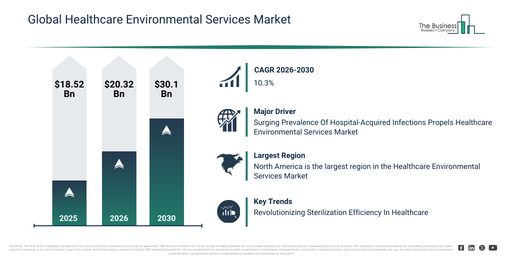
    The healthcare environmental services market has shown strong growth in recent years. It is projected to increase from $18.52 billion in 2025 to $20.32 billion in 2026, at a compound annual growth rate (CAGR) of 9.8%. The growth observed in the past can be attributed to increasing awareness of hospital-acquired infections, the expansion of healthcare infrastructure, rising regulatory hygiene standards, growth in outsourced cleaning services, and the adoption of standardized sanitation practices.

    The healthcare environmental services market size is expected to undergo rapid growth over the coming years. It is projected to expand to $30.1 billion in 2030, demonstrating a compound annual growth rate (CAGR) of 10.3%. This anticipated growth can be attributed to increasing investments in smart cleaning technologies, a rising demand for sustainable healthcare sanitation solutions, the expansion of automated environmental services, a growing focus on real-time cleanliness monitoring, and increasing regulatory scrutiny on infection control. Key trends identified for the forecast period include the increasing adoption of advanced disinfection technologies, the rising use of UV-C and electrostatic cleaning systems, a growing focus on infection prevention protocols, the expansion of automated cleaning equipment, and an enhanced emphasis on environmental hygiene compliance.

    Get A Free Sample Report With In-Depth Market Insights:

    https://thebusinessresearchcompany.com/sample_request?id=67509567&type=smp&name=Healthcare%20Environmental%20Services%20Market%20Report%202026&utm_source=Blogs&utm_medium=Paid&utm_campaign=Nov_PR

    Healthcare Environmental Services Market Growth Drivers: What’s Behind The Acceleration?

    The rising occurrence of hospital-acquired infections is propelling the healthcare environmental services market forward. Healthcare-acquired infections (HAIs) refer to illnesses patients contract while undergoing treatment for other conditions within medical environments such as hospitals or clinics. Healthcare environmental services are instrumental in mitigating the risk of acquiring these hospital-acquired infections (HAIs) by ensuring surfaces remain sterile and free from pathogens. For example, in September 2024, the UK Health Security Agency, a UK government body, indicated that the overall number of hospital-onset healthcare-associated (HOHA) E. coli infections increased from 6,525 to 7,881 cases during the fiscal year 2022–2023. Thus, the growing prevalence of hospital-acquired infections is a key driver for the growth of the healthcare environmental services market.

    Healthcare Environmental Services Market Segment Landscape: Which Areas Lead Development?

    The healthcare environmental services market covered in this report is segmented –

    1) By Type: Janitorial Cleaning Services, Enhanced Cleaning Technology

    2) By Facility Type: Acute Care, Post-Acute-Care, Non-Acute Care

    3) By End User: Medical Device Companies, Hospitals And Clinics, Pharmaceutical And Biotechnology Companies, Other End Users

    Subsegments:

    1) By Janitorial Cleaning Services: Routine Cleaning, Disinfection Services, Waste Management And Disposal

    2) By Enhanced Cleaning Technology: Electrostatic Disinfection, UV-C Cleaning Technology, Advanced Cleaning Equipment And Tools

    Healthcare Environmental Services Market Trends Redefining Industry Growth

    Leading businesses within the healthcare environmental services sector are creating sterilization wrap to boost their market profitability. In healthcare environmental services, sterilization wrap is defined as a substance employed to encase and safeguard medical tools and equipment throughout the sterilization procedure. As an example, in May 2023, Ahlstrom-Munksjö Oyj, a Finnish producer of fiber-based materials and supplier of creative and sustainable solutions, introduced reliance fusion. Reliance fusion, an advanced sterilization wrap, improves Central Sterilization efficiency, providing increased throughput, energy conservation, and decreased labor, utilizing an innovative fiber-based material to reduce wet packs. This inventive sterilization wrap combines a cellulose-based inner layer with a sturdy SMS nonwoven outer layer, thereby optimizing tray sterilization within hospitals. The product, offered in Fusion Light and Fusion Heavy variations, shortens drying time, minimizes wet packs, and streamlines the sterilization process by providing adaptable solutions for diverse application requirements.

    Healthcare Environmental Services Market Industry Leaders And Competitive Landscape

    Major companies operating in the healthcare environmental services market are Veolia North America LLC, Sodexo Group, Aramark Corporation, ABM Industries Inc., Steris plc, Stericycle Inc., Hospital Housekeeping Systems LLC, Healthcare Services Group Inc., Crothall Healthcare Inc., Xanitos Inc., Daniels Health, Triumvirate Environmental Inc, Clean Earth LLC, Heritage Environmental Services LLC, Waste Management Inc., Republic Services Inc., Clean Harbors Inc., US Ecology Inc., Servicon Systems Inc., Jani-King International Inc., BioMedical Waste Solutions LLC, MedPro Disposal, EnviroMed Services Inc., Healthcare Medical Waste Services LLC, EcoMed Services LLC, BWS Inc.

    View The Full Healthcare Environmental Services Market Report:

    https://thebusinessresearchcompany.com/report/healthcare-environmental-services-global-market-report?utm_source=Blogs&utm_medium=Paid&utm_campaign=Nov_PR

    Healthcare Environmental Services Market Largest Region: Which Geography Holds The Biggest Share?

    North America was the largest region in the healthcare environmental services market in 2025. The regions covered in the healthcare environmental services market report are Asia-Pacific, South East Asia, Western Europe, Eastern Europe, North America, South America, Middle East, Africa.

    Reach Out To Our Team:

    The Business Research Company: https://www.thebusinessresearchcompany.com/

    Americas: +1 310-496-7795

    Asia: +44 7882 955267 & +91 8897263534

    Europe: +44 7882 955267

    Email us at: marketing@tbrc.info

    Follow us on:

    LinkedIn: https://in.linkedin.com/company/the-business-research-company

    YouTube: https://www.youtube.com/channel/UC24_fI0rV8cR5DxlCpgmyFQ

    Global Market Model: https://www.thebusinessresearchcompany.com/global-market-model
  • Healthcare Electronic Data Interchange Market Valued At $10.57 Billion In 2026: Key Trends And Growth Drivers

    Healthcare Electronic Data Interchange Market Valued At $10.57 Billion In 2026: Key Trends And Growth Drivers

    Featuring market attractiveness scoring, total addressable market sizing, company benchmarking matrices, interactive Excel dashboards, deeper supply chain intelligence, emerging startup tracking, and granular product-level insights, The Business Research Company’s 2026 market reports are built to deliver research that is both more actionable and more strategically valuable.

    Healthcare Electronic Data Interchange Market Size And Revenue Outlook Through 2030

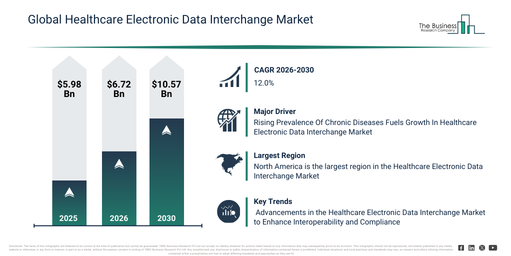
    The healthcare electronic data interchange market has seen rapid expansion in recent years. It is projected to grow from $5.98 billion in 2025 to $6.72 billion in 2026, with a compound annual growth rate (CAGR) of 12.3%. The historic period’s growth can be linked to the increasing digitization of healthcare records, the expansion of health insurance coverage, rising administrative efficiency requirements, the adoption of standardized data exchange formats, and the growth of electronic claims management.

    The healthcare electronic data interchange market is anticipated to experience substantial expansion over the forthcoming years. By 2030, its valuation is projected to reach $10.57 billion, exhibiting a compound annual growth rate (CAGR) of 12.0%. This projected increase during the forecast period stems from factors such as a heightened need for real-time data exchange capabilities, greater capital expenditure in healthcare information technology upgrades, the proliferation of value-based care frameworks, an intensified emphasis on securing healthcare data transmissions, and the wider uptake of mobile EDI tools. Key developments anticipated during this timeframe encompass the wider implementation of cloud-based EDI solutions, the increasing incorporation of standardized healthcare data interoperability, a surge in the application of automated claims processing, the enlargement of secure data sharing platforms, and a strengthened commitment to automating regulatory adherence.

    Get A Free Sample Report With In-Depth Market Insights:

    https://thebusinessresearchcompany.com/sample_request?id=85805305&type=smp&name=Healthcare%20Electronic%20Data%20Interchange%20Market%20Report%202026&utm_source=Blogs&utm_medium=Paid&utm_campaign=Nov_PR

    Healthcare Electronic Data Interchange Market Growth Factors Behind Sustained Expansion

    The healthcare electronic data interchange market is projected to grow in the coming years, primarily driven by the increasing prevalence of chronic diseases. Chronic illnesses are persistent health issues that are not preventable by vaccinations, treatable with medication, or simply disappear; they typically last for three months or more. Healthcare EDI plays a crucial role in the comprehensive management of chronic conditions by expediting data exchange, optimizing administrative procedures, and fostering efficient communication. It assists healthcare professionals and patients in aligning treatment strategies, monitoring health statuses, and improving the overall standard of care for those with long-term health problems. For instance, in April 2025, data from the Centers for Disease Control and Prevention, a US-based federal agency, indicated that in 2023, around 76.4% of U.S. adults reported experiencing at least one of 12 selected chronic conditions, and 51.4% of U.S. adults reported multiple chronic conditions. Therefore, the rising incidence of chronic diseases is a key factor propelling the healthcare electronic data interchange market.

    Healthcare Electronic Data Interchange Market Segments: Where Is Growth Concentrated?

    The healthcare electronic data interchange market covered in this report is segmented –

    1) By Component: Services, Solution

    2) By Delivery Mode: Web and Cloud-based EDI, EDI Value Added Network (VAN), Direct (Point-to-Point) EDI, Mobile EDI

    3) By End-Use: Healthcare Payers, Healthcare Providers, Pharmaceutical and Medical Device Industries, Other End-Uses

    Subsegments:

    1) By Services: Consulting Services, Implementation Services, Maintenance And Support Services

    2) By Solution: EDI Software, EDI Gateway Solutions, EDI Translation Tools

    Healthcare Electronic Data Interchange Market Strategic Trends: What Defines The Next Growth Phase?

    Major companies in the healthcare electronic data interchange market are increasingly concentrating on technological advancements, such as cloud-native interoperability platforms that unify EDI and FHIR, to fulfill the rising need for smooth data exchange, regulatory compliance (especially with CMS mandates), and scalable, enduring connectivity across payers and providers. Such a cloud-native interoperability platform integrates existing EDI (e.g., HIPAA X12), contemporary FHIR APIs, and other communication standards (like HL7) into a singular, adaptable, secure infrastructure, contrasting with traditional on-premises EDI gateways that are often rigid, isolated, and difficult to scale. For example, in February 2025, Edifecs, a US-based health information-technology company, launched its Healthcare Interoperability Cloud, a next-generation platform developed for payers. This solution merges Edifecs’ unified EDI Gateway, FHIR Gateway, and smart-trading modules to support any format, including EDI, FHIR, HL7v2, and proprietary ones, while automating workflows, managing trading partner relationships, and orchestrating shared processes; it is designed for compliance with CMS-9115-F and CMS-0057-F rules, provides a low-code integration engine, and leverages AI (such as ML and NLP) to surface insights, lessen administrative burden, and ensure future-proof interoperability infrastructure. This platform aids payers in streamlining operations, minimizing data friction, and scaling interoperability more strategically.

    Healthcare Electronic Data Interchange Market Key Participants And Competitive Landscape

    Major companies operating in the healthcare electronic data interchange market are McKesson Corporation, Optum Inc., Allscripts Healthcare Solutions Inc., Athenahealth Inc., NextGen Healthcare Inc., Experian plc, Cognizant Technology Solutions, Cerner Corporation, The SSI Group LLC, Waystar Health, Comarch SA., Axway Software, PLEXIS Healthcare Systems Inc., TrueCommerce B2BGateway, DiCentral Corporation, 123 EDI, Quadax Inc., Epic Systems Corporation, eClinicalWorks, Practice Fusion, MEDITECH Inc., Care360 Pty Ltd., Vitera Ltd., Quality Systems Inc., IBM Corporation, Oracle Corporation, Infor Global Solutions

    View The Full Healthcare Electronic Data Interchange Market Report:

    https://thebusinessresearchcompany.com/report/healthcare-electronic-data-interchange-global-market-report?utm_source=Blogs&utm_medium=Paid&utm_campaign=Nov_PR

    Healthcare Electronic Data Interchange Market Regional Analysis: Which Geography Leads On Revenue?

    North America was the largest region in the healthcare electronic data interchange market in 2025. Asia-Pacific is expected to be the fastest-growing region in the forecast period. The regions covered in the healthcare electronic data interchange market report are Asia-Pacific, South East Asia, Western Europe, Eastern Europe, North America, South America, Middle East, Africa.

    Reach Out To Our Team:

    The Business Research Company: https://www.thebusinessresearchcompany.com/

    Americas: +1 310-496-7795

    Asia: +44 7882 955267 & +91 8897263534

    Europe: +44 7882 955267

    Email us at: marketing@tbrc.info

    Follow us on:

    LinkedIn: https://in.linkedin.com/company/the-business-research-company

    YouTube: https://www.youtube.com/channel/UC24_fI0rV8cR5DxlCpgmyFQ

    Global Market Model: https://www.thebusinessresearchcompany.com/global-market-model
  • Healthcare Education Market Size In 2026: Growth Outlook And Forecast Through 2030

    Healthcare Education Market Size In 2026: Growth Outlook And Forecast Through 2030

    Built to provide research that’s more actionable and strategically valuable, The Business Research Company’s 2026 market reports include market attractiveness analysis, total addressable market sizing, company benchmarking matrices, interactive Excel dashboards, broader supply chain intelligence, emerging startup tracking, and in-depth product insights.

    Healthcare Education Market Growth From $143.22 Billion In 2026 To $217.41 Billion By 2030 At A CAGR Of 11%

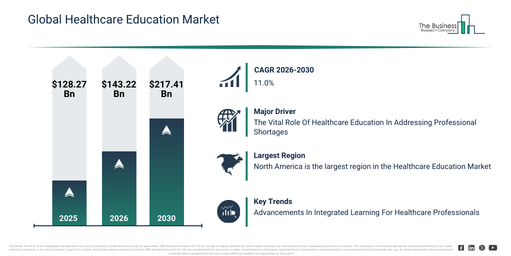
    The healthcare education market has experienced substantial growth in recent years. It is anticipated to expand from $128.27 billion in 2025 to $143.22 billion in 2026, demonstrating a compound annual growth rate (CAGR) of 11.7%. This historical expansion can be attributed to an increased emphasis on preventive healthcare education, the proliferation of medical and nursing schools, the growing prevalence of chronic diseases, the development of continuing professional education programs, and the broader adoption of digital learning tools.

    The healthcare education market size is projected for swift expansion over the coming years. This market is anticipated to reach $217.41 billion by 2030, showing a compound annual growth rate (CAGR) of 11.0%. Factors contributing to this growth during the projection period include the wider embrace of immersive learning technologies, an escalating need for remote healthcare training, the broadening of digital health literacy programs, increasing capital expenditure in medical simulation infrastructure, and a heightened emphasis on individualized healthcare education. Key trends for the forecast duration encompass the growing integration of e-learning platforms, a surge in the application of medical simulation and VR-based training, an increasing call for patient-focused education programs, the enlargement of continuing medical education options, and a reinforced concentration on remote and mobile learning approaches.

    Get A Free Sample Report With In-Depth Market Insights:

    https://thebusinessresearchcompany.com/sample_request?id=71664198&type=smp&name=Healthcare%20Education%20Market%20Report%202026&utm_source=Blogs&utm_medium=Paid&utm_campaign=Nov_PR

    Healthcare Education Market Demand Drivers Opening New Revenue Streams

    The anticipated scarcity of healthcare workers is projected to drive expansion within the healthcare education market. These professionals are individuals trained in medical, nursing, and allied health sectors, committed to delivering medical services and assistance. This scarcity promotes the growth of educational programs and establishments, necessitating the creation of new infrastructure, the launch of virtual learning platforms, and the broadening of healthcare education to meet industry-specific demands. For example, Dynamic Health Staff, a UAE-based healthcare staffing and recruitment firm, reported in September 2024 that the nursing sector experiences a considerable shortfall, requiring an estimated 177,400 more Registered Nurses (RNs) between 2023 and 2032, driven by increased healthcare requirements and an aging demographic. By 2024, approximately 47.8% of hospitals indicate vacancy rates over 10%, underscoring a vital demand for nursing personnel. Consequently, the insufficient number of healthcare professionals is stimulating the expansion of the healthcare education market.

    Healthcare Education Market Segment Analysis: What Are The Core Market Categories?

    The healthcare education market covered in this report is segmented –

    1) By Provider: Universities And Academic Centers, Continuing Medical Education Providers, OEMs Or Pharmaceutical Companies, Learning Management Systems Providers, Educational Platforms, Medical Simulation

    2) By Delivery Mode: Classroom Based Courses, E-Learning Solutions

    3) By Application: Academic Education, Cardiology, Neurology, Radiology, Internal Medicine, Pediatrics, Other Applications

    4) By End-User: Students, Physicians, Non-Physicians.

    Subsegments:

    1) By Universities And Academic Centers: Medical Schools, Nursing Schools, Allied Health Programs

    2) By Continuing Medical Education (CME) Providers: Accredited CME Organizations, Online CME Platforms

    3) By OEMs Or Pharmaceutical Companies: In-House Training Programs, Sponsored Educational Initiatives

    4) By Learning Management Systems (LMS) Providers: Online Course Management Systems, Virtual Learning Environments

    5) By Educational Platforms: E-Learning Platforms, Mobile Learning Applications

    6) By Medical Simulation: Simulation Training Centers, Virtual Reality (VR) And Augmented Reality (AR) Simulations, Hands-On Simulation Equipment And Tools

    Healthcare Education Market Transformation Trends: What Innovations Are Driving Change?

    Major companies in the healthcare education market are increasingly employing digital platforms, such as integrating in-clinic interactions and technologies, to enhance medical training and education. This strategy aims to supply healthcare professionals with current resources that support skill development and lead to improved patient care outcomes. Integrating in-clinic interactions involves combining direct patient consultations with digital resources and tools to elevate the healthcare experience and improve access to information during appointments. For instance, in August 2023, Cipla, an India-based pharmaceutical company, launched CiplaMed 2.0, an advanced knowledge platform for healthcare professionals that integrates in-clinic interactions with digital resources. This platform offers access to current medical content across 19 specialities, including scientific articles and webinars, while utilizing advanced analytics to enhance knowledge-sharing within the pharmaceutical industry.

    Healthcare Education Market Top Companies Driving Competitive Growth

    Major companies operating in the healthcare education market are Siemens Healthineers AG, FUJIFILM Holdings Corporation, Koninklijke Philips N.V., Stryker Corporation, GE Healthcare, Olympus Corporation, Medtronic plc, Zimmer Biomet Holdings Inc., Canon Medical Systems Corporation, Elsevier B.V., Johns Hopkins Medicine, Apollo Hospitals Enterprise Limited, McGraw-Hill Education, Harvard Medical School, Stanford University, Coursera Inc., HealthStream Inc., Symplr Inc., PeopleFluent, Articulate Global Inc., HealthcareSource, Trivantis Corporation, Gundersen Health System, Richmond Academy of Medicine Inc., Wolters Kluwer Health, EBSCO Information Services Inc.

    View The Full Healthcare Education Market Report:

    https://thebusinessresearchcompany.com/report/healthcare-education-global-market-report?utm_source=Blogs&utm_medium=Paid&utm_campaign=Nov_PR

    Healthcare Education Market Geographic Spread And Regional Opportunities

    North America was the largest region in the healthcare education market in 2025. The regions covered in the healthcare education market report are Asia-Pacific, South East Asia, Western Europe, Eastern Europe, North America, South America, Middle East, Africa.

    Reach Out To Our Team:

    The Business Research Company: https://www.thebusinessresearchcompany.com/

    Americas: +1 310-496-7795

    Asia: +44 7882 955267 & +91 8897263534

    Europe: +44 7882 955267

    Email us at: marketing@tbrc.info

    Follow us on:

    LinkedIn: https://in.linkedin.com/company/the-business-research-company

    YouTube: https://www.youtube.com/channel/UC24_fI0rV8cR5DxlCpgmyFQ

    Global Market Model: https://www.thebusinessresearchcompany.com/global-market-model
  • Healthcare EDI Market Trends Supporting 12% CAGR Growth Through 2030

    Healthcare EDI Market Trends Supporting 12% CAGR Growth Through 2030

    Backed by market attractiveness analysis, total addressable market sizing, company benchmarking matrices, interactive Excel dashboards, wider supply chain intelligence, emerging startup coverage, and detailed product-level insights, The Business Research Company’s 2026 market reports are designed to offer research that is more actionable and strategically valuable than ever.

    Healthcare EDI Market Expansion Outlook: What Revenue Opportunities Are Ahead?

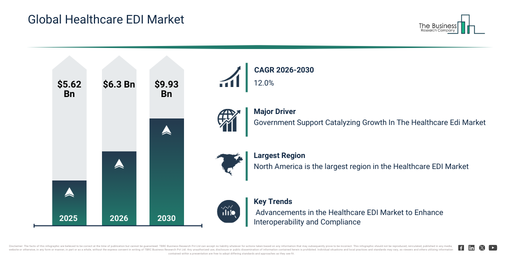
    The healthcare edi market has seen rapid expansion in recent years. Its value is projected to climb from $5.62 billion in 2025 to $6.3 billion in 2026, reflecting a compound annual growth rate (CAGR) of 12.2%. This historical growth can be attributed to several factors, including the increased adoption of digital healthcare billing systems, a surge in insurance claim volumes, the implementation of standardized healthcare transaction formats, the development of payer-provider networks, and a growing imperative for administrative efficiency.

    The healthcare edi market is anticipated to experience significant expansion over the coming years. Its valuation is projected to reach $9.93 billion by 2030, demonstrating a compound annual growth rate (CAGR) of 12.0%. This growth during the forecast period is attributed to increasing investments in automated revenue cycle management, a rising demand for real-time eligibility verification, the expansion of cloud-native edi solutions, a growing focus on interoperability compliance, and the increasing adoption of AI-assisted claims processing. Key trends expected in this forecast period include the increasing adoption of cloud-based edi platforms, growing automation of claims and billing processes, rising integration of edi with hospital information systems, the expansion of real-time transaction processing, and an enhanced focus on compliance and data accuracy.

    Get A Free Sample Report With In-Depth Market Insights:

    https://thebusinessresearchcompany.com/sample_request?id=26029870&type=smp&name=Healthcare%20EDI%20Market%20Report%202026&utm_source=Blogs&utm_medium=Paid&utm_campaign=Nov_PR

    Healthcare EDI Market Growth Backed By Core Demand Fundamentals

    The expanding government backing for healthcare is projected to drive the growth of the healthcare EDI market. Healthcare EDI is utilized for sharing information between departments and branches in super-specialty hospitals. Healthcare EDI software facilitates the transmission of details such as coordination of benefits, claims status and information, insurance data, payment data, and eligibility forms within healthcare. Growing government support for the healthcare industry assists the healthcare sector in developing new equipment and delivering improved services to the public. It also aids in increasing technology adoption in government hospitals. For instance, in May 2024, the Office for National Statistics, a UK-based government department, reported that total healthcare expenditure experienced a 5.6% increase in nominal terms from 2022 to 2023, signifying a notable acceleration compared to the 0.9% growth observed in 2022. Therefore, the rising government support for healthcare fuels the demand for the healthcare EDI market.

    Healthcare EDI Market Segment Breakdown: Which Categories Lead On Revenue?

    The healthcare edi market covered in this report is segmented –

    1) By Component: Software, Services

    2) By Transaction: Claim Management, Healthcare Supply Chain, Other Transactions

    3) By Mode of Delivery: VAN, Web And Cloud-based, Point-to-point

    4) By End User: Healthcare Provider, Payer, Pharmacies, Other End Users

    Subsegments:

    1) By Software: EDI Solutions, Integration Software, EDI Mapping And Translation Software

    2) By Services: EDI Consulting Services, Managed EDI Services, Technical Support And Maintenance Services

    #Healthcare EDI Market Growth Trends: What’s Shaping The Future Outlook?

    Leading companies in the healthcare EDI (Electronic Data Interchange) market are prioritizing technological advancements, such as cloud-native interoperability platforms that merge EDI, FHIR, and HL7. This focus aims to satisfy the growing demand for regulatory compliance, effortless data exchange, and scalable connectivity across payers and providers. A cloud-native interoperability platform integrates traditional EDI (e.g., HIPAA X12), modern healthcare APIs (like FHIR), and clinical messaging standards (HL7) into a singular, adaptable, secure infrastructure, contrasting with older on-premises EDI gateways that are often isolated, inflexible, and expensive to expand. For example, in February 2025, Edifecs, a US-based health information technology company, unveiled its Healthcare Interoperability Cloud, a next-generation platform for payers. This platform enables the seamless exchange of administrative and clinical data across EDI, FHIR, HL7v2, and proprietary formats; it is built for regulatory compliance (e.g., CMS-9115-F, CMS-0057-F), offers strategic workflow orchestration, supports shared automation between systems, and incorporates AI (including ML and NLP) to deliver deeper insights and faster, more consistently updated integration. The solution aids in reducing data friction, accelerating payer-provider collaboration, and future-proofing the interoperability infrastructure.

    Healthcare EDI Market Leading Players And Competitive Positioning

    Major companies operating in the healthcare edi market are McKesson Corporation, Optum Inc, Allscripts, Cognizant Technology Solutions India Pvt Ltd, Cerner Corporation, The SSI Group, Quadax Inc, AthenaHealth, Change Healthcare Inc, Conduent Inc, Epic Systems Corporation, NextGen Healthcare, Edifecs Inc, Waystar Inc, Availity LLC, eClinicalWorks, Ability Network, PracticeSuite Inc, Jopari Solutions Inc, Alpha II LLC, TransUnion Healthcare, Healthpac Computer Systems

    View The Full Healthcare EDI Market Report:

    https://thebusinessresearchcompany.com/report/healthcare-EDI-global-market-report?utm_source=Blogs&utm_medium=Paid&utm_campaign=Nov_PR

    Healthcare EDI Market Top Region By Revenue And Market Share

    North America was the largest region in the healthcare EDI market in 2025. Asia-Pacific is expected to be the fastest-growing region in the forecast period. The regions covered in the healthcare edi market report are Asia-Pacific, South East Asia, Western Europe, Eastern Europe, North America, South America, Middle East, Africa.

    Reach Out To Our Team:

    The Business Research Company: https://www.thebusinessresearchcompany.com/

    Americas: +1 310-496-7795

    Asia: +44 7882 955267 & +91 8897263534

    Europe: +44 7882 955267

    Email us at: marketing@tbrc.info

    Follow us on:

    LinkedIn: https://in.linkedin.com/company/the-business-research-company

    YouTube: https://www.youtube.com/channel/UC24_fI0rV8cR5DxlCpgmyFQ

    Global Market Model: https://www.thebusinessresearchcompany.com/global-market-model
  • Healthcare Distribution Market Forecast Highlights A $1772.05 Billion Opportunity For Industry Participants

    Healthcare Distribution Market Forecast Highlights A $1772.05 Billion Opportunity For Industry Participants

    Featuring market attractiveness scoring, total addressable market sizing, company benchmarking matrices, interactive Excel dashboards, deeper supply chain intelligence, emerging startup tracking, and granular product-level insights, The Business Research Company’s 2026 market reports are built to deliver research that is both more actionable and more strategically valuable.

    Healthcare Distribution Market Growth Potential: How Will Market Size Shift Through 2030?

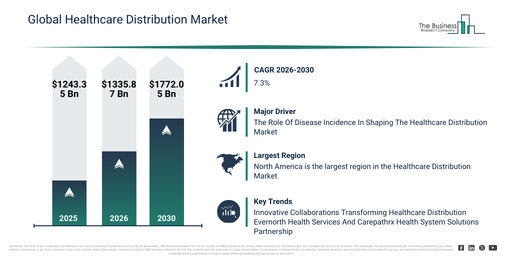
    The healthcare distribution market has experienced robust growth in recent years. It is projected to expand from $1243.35 billion in 2025 to $1335.87 billion in 2026, at a compound annual growth rate (CAGR) of 7.4%. Historically, this growth can be attributed to factors such as the expansion of pharmaceutical manufacturing, the development of hospital networks, an increasing demand for timely medicine delivery, the adoption of centralized distribution models, and rising healthcare consumption levels.

    The healthcare distribution market is projected to experience substantial expansion in the coming years. By 2030, its size is anticipated to reach $1772.05 billion, demonstrating a compound annual growth rate (CAGR) of 7.3%. This projected growth during the forecast period is driven by several factors, including greater investments in intelligent logistics platforms, the broadening scope of specialty and biologics distribution, an escalating need for last-mile healthcare services, a heightened emphasis on robust supply chains, and the increasing integration of digital traceability solutions. Key trends characterizing this period encompass the wider implementation of automated healthcare supply chains, the expanding integration of digital inventory management systems, a growing desire for real-time order tracking, the broadening of cold chain distribution capacities, and a sharpened focus on both distribution efficiency and regulatory compliance.

    Get A Free Sample Report With In-Depth Market Insights:

    https://thebusinessresearchcompany.com/sample_request?id=38048844&type=smp&name=Healthcare%20Distribution%20Market%20Report%202026&utm_source=Blogs&utm_medium=Paid&utm_campaign=Nov_PR

    Healthcare Distribution Market Growth Catalysts And Demand Drivers

    The rising occurrence of illnesses is anticipated to drive the expansion of the healthcare distribution market in the foreseeable future. An ailment, or disease, is a condition impacting people, flora, or fauna, stemming from genetic or developmental abnormalities, infections, or various other factors. Such conditions are marked by specific signs or symptoms leading to discomfort, impaired function, suffering, societal problems, or fatality for the affected entity or those nearby. Diseases profoundly influence healthcare distribution, demanding the effective and timely supply of medical treatments, vaccines, and health services to control outbreaks, lessen their effects, and ultimately improve overall public health. To address the complexities presented by emerging health risks, disease outbreaks require healthcare distribution systems that are flexible, quick to react, and harmonized. For example, data from March 2024 by the Centers for Disease Control and Prevention, a US-based government agency, indicated an increase in reported TB cases from 8,320 in 2022 to 9,615 in 2023, signifying a rise of 1,295 cases or 16%. Consequently, the growing prevalence of diseases is a key driver for the healthcare distribution market.

    Healthcare Distribution Market Segmentation: How Does The Market Break Down By Category?

    The healthcare distribution market covered in this report is segmented –

    1) By Type: Pharmaceutical Product Distribution Services, Biopharmaceutical Product Distribution Services, Medical Device Distribution Services

    2) By Distribution Model: Direct-to-Healthcare Provider Distribution, Wholesale Distribution, Third-Party Logistics (3PL) Distribution, Online and E-Distribution Channels

    3) By End User: Retail Pharmacies, Hospital Pharmacies, Other End-Users

    Subsegments:

    1) By Pharmaceutical Product Distribution Services: Prescription Drug Distribution, Over-The-Counter (OTC) Drug Distribution

    2) By Biopharmaceutical Product Distribution Services: Cold Chain Distribution, Specialty Drug Distribution

    3) By Medical Device Distribution Services: Surgical Instrument Distribution, Diagnostic Equipment Distribution, Consumables And Disposable Device Distribution

    Healthcare Distribution Market Industry Trends: What’s Reshaping Demand?

    Major companies in the healthcare distribution market are increasingly prioritizing strategic collaborations, such as Evernorth Health Services’ alliance with CarepathRx Health System Solutions, to more effectively address the needs of their current customers. Evernorth Health Services has forged a strategic agreement with CarepathRx Health System Solutions (CHSS) with the goal of improving patient-specialized care. This collaboration aims to enhance, expand, and accelerate the delivery of pharmacy care to patients who have chronic and complex medical needs. For instance, in June 2023, Evernorth Health Services publicly announced its partnership with CarepathRx Health System Solutions. The combined knowledge of Evernorth and CHSS will support hospitals, health systems, and their medical professionals in diversifying their services, while also strengthening patient connections to essential specialized care for chronic and complex conditions like rheumatoid arthritis, Crohn’s disease, and cancer. Through this partnership, Evernorth plans to gradually offer more site-of-care connections for infusion services to alternative locations, evolve value-based site-of-care strategies, improve data sharing within and across medical centers to identify ideal treatment plans, and deepen physician and patient engagement. CarepathRx Health System Solutions operates as a comprehensive, end-to-end hospital pharmacy care delivery model based in the US.

    Healthcare Distribution Market Competitive Overview And Top Companies

    Major companies operating in the healthcare distribution market are Alliance Healthcare UK, AmerisourceBergen Corporation, Cardinal Health Inc., CuraScript SD, Dakota Drug Inc., FFF Enterprises Inc., Henry Schein Inc., KeySource Medical Inc., Medline Industries LP, Morris and Dickson Co. LLC, Mutual Drug Company, Owens & Minor Inc., Patterson Companies Inc., PHOENIX Group, Rochester Drug Cooperative Inc., Shanghai Pharmaceutical Group Co. Ltd., Smith Drug Company, TTK Healthcare, Anda Inc., Associated Pharmacies Inc., Besse Medical, Gulf South Medical Supply, H.D. Smith LLC, Harvard Drug Group LLC, Kinray Inc., MasterPharm SA, McKesson Corporation, Metro Medical Supply, MMS – A Medical Supply Company, Oncology Supply Inc., PSS World Medical Inc., Seneca Medical Inc., TheraCom LLC

    View The Full Healthcare Distribution Market Report:

    https://thebusinessresearchcompany.com/report/healthcare-distribution-global-market-report?utm_source=Blogs&utm_medium=Paid&utm_campaign=Nov_PR

    Healthcare Distribution Market Regional Analysis And Top Geography

    North America was the largest region in the healthcare distribution market in 2025. Asia-Pacific is expected to be the fastest-growing region in the forecast period. The regions covered in the healthcare distribution market report are Asia-Pacific, South East Asia, Western Europe, Eastern Europe, North America, South America, Middle East, Africa.

    Reach Out To Our Team:

    The Business Research Company: https://www.thebusinessresearchcompany.com/

    Americas: +1 310-496-7795

    Asia: +44 7882 955267 & +91 8897263534

    Europe: +44 7882 955267

    Email us at: marketing@tbrc.info

    Follow us on:

    LinkedIn: https://in.linkedin.com/company/the-business-research-company

    YouTube: https://www.youtube.com/channel/UC24_fI0rV8cR5DxlCpgmyFQ

    Global Market Model: https://www.thebusinessresearchcompany.com/global-market-model
  • Healthcare Digital Payment Market Analysis: How The Industry Is Evolving Toward A $62.72 Billion Future

    Healthcare Digital Payment Market Analysis: How The Industry Is Evolving Toward A $62.72 Billion Future

    Built to provide research that’s more actionable and strategically valuable, The Business Research Company’s 2026 market reports include market attractiveness analysis, total addressable market sizing, company benchmarking matrices, interactive Excel dashboards, broader supply chain intelligence, emerging startup tracking, and in-depth product insights.

    Healthcare Digital Payment Market Value Analysis: What Growth Lies Ahead Over The Forecast Period?

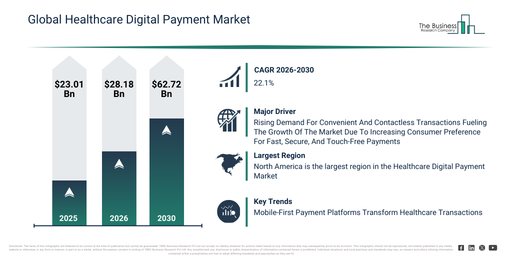
    The healthcare digital payment market has seen substantial growth in recent years. It is projected to expand from $23.01 billion in 2025 to $28.18 billion in 2026, exhibiting a compound annual growth rate (CAGR) of 22.5%. This historical growth is primarily due to several factors, including the increasing digitalization of healthcare services, a growing patient preference for cashless payments, the widespread expansion of online medical billing systems, the rising adoption of mobile banking in healthcare, and advancements in payment security technologies.

    The healthcare digital payment market is expected to experience substantial growth over the next few years. Its valuation is projected to reach $62.72 billion by 2030, demonstrating a compound annual growth rate (CAGR) of 22.1%. This expansion during the forecast period is driven by various factors, including increased investments in healthcare fintech platforms, a growing need for interoperable payment systems, the broadening of telemedicine payment solutions, a rising acceptance of biometric authentication, and a heightened regulatory focus on the security of digital transactions. Significant trends anticipated for the forecast period encompass the wider adoption of contactless healthcare payment methods, enhanced integration of digital wallets into healthcare platforms, the increasing deployment of AI-based fraud detection systems, the development of blockchain-enabled medical payments, and an increased emphasis on payment transparency and automation.

    Get A Free Sample Report With In-Depth Market Insights:

    https://thebusinessresearchcompany.com/sample_request?id=24963069&type=smp&name=Healthcare%20Digital%20Payment%20Market%20Report%202026&utm_source=Blogs&utm_medium=Paid&utm_campaign=Nov_PR

    Healthcare Digital Payment Market Opportunity Drivers: What’s Unlocking New Revenue Potential?

    The increasing demand for effortless and touch-free transactions is projected to stimulate the expansion of the healthcare digital payment market. These types of transactions are characterized by swift and simple payments completed without the need for physical interaction with currency or cards. The surge in convenient and contactless transactions stems from consumers’ growing desire for rapid and straightforward payment experiences that do not involve physical contact or PIN input. They significantly improve healthcare digital payment systems by providing fast and secure payment options, making them well-suited for settings like clinics, pharmacies, and telehealth services. Furthermore, these payments reduce manual processing and waiting periods by facilitating seamless, touch-free transactions, thereby boosting convenience for both patients and providers. For instance, in July 2024, according to UK Finance, a UK-based financial services company, 18.3 billion contactless payments were conducted in the UK during 2023, marking a 7% increase from 17 billion in 2022. Thus, the escalating demand for convenient and contactless transactions is a key driver for the growth of the healthcare digital payment market.

    Healthcare Digital Payment Market Segment Trends And Revenue Contributors

    The healthcare digital payment market covered in this report is segmented –

    1) By Type: Mobile Wallets, Point-Of-Sale (POS) Systems, Internet Banking, Mobile Banking, Cryptocurrencies, Other Types

    2) By Solution: Application Program Interface, Payment Gateway, Payment Processing, Payment Security And Fraud Management, Transaction Risk Management, Other Solutions

    3) By Deployment: Cloud, On-Premise

    4) By Technology: Near Field Communication (NFC), Quick Response (QR) Code Payments, Blockchain, Biometric Authentication, Other Technologies

    5) By End-User: Hospitals, Medical Clinics, Pharmacies, Health Insurance Companies, Telemedicine And Remote Health Services, Other End-Users

    Subsegments:

    1) By Mobile Wallets: Near Field Communication Payments, Quick Response (QR) Code Payments, Mobile App Based Payments, Cloud Based Mobile Wallets, Peer To Peer Transfers

    2) By Point Of Sale Systems: Countertop Terminals, Mobile Point Of Sale Terminals, Smart Point Of Sale Terminals, Contactless Point Of Sale Terminals, Integrated Point Of Sale Solutions

    3) By Internet Banking: Web Based Fund Transfers, Online Bill Payments, Account Management Services, Loan And Credit Services, Online Investment Services

    4) By Mobile Banking: Mobile Check Deposits, Mobile Fund Transfers, Account Balance Inquiries, Bill Payments Through Apps, Personalized Financial Alerts

    5) By Cryptocurrencies: Bitcoin Payments, Ethereum Payments, Stablecoin Transactions, Blockchain Based Remittances, Decentralized Finance Payments

    6) By Other Types: Biometric Payment Systems, Voice Activated Payment Systems, Wearable Device Payments, Smart Card Payments, Contactless Payment Rings

    Healthcare Digital Payment Market Innovation Trends: What Developments Are Reshaping The Industry?

    Major companies within the healthcare digital payment market are concentrating on developing advanced solutions, such as mobile-first payment platforms, to improve transaction efficiency, strengthen security, and optimize patient and provider experiences. Mobile-first payment platforms refer to digital payment systems specifically optimized for smartphones and tablets, which enable smooth, secure, and contactless transactions through integrated technologies like tokenization, biometric authentication, and cloud-based processing. For example, in April 2025, Alternative Payments Ltd. (t/a Judopay), a UK-based mobile payments provider, introduced a digital payments solution for UK pharmacies and healthcare providers intended to simplify and secure payment processing within the healthcare sector. This flexible, fully compliant platform allows providers to accept payments online, in-app, in person, and via payment links, accommodating all primary payment methods including cards, Apple Pay, Google Pay, and contactless payments. It addresses significant challenges in healthcare payments, such as strict data regulations, fraud risk, and complex underwriting, by facilitating fast onboarding, comprehensive fraud prevention, and seamless integration with existing healthcare systems.

    Healthcare Digital Payment Market Competitive Landscape: Which Companies Lead The Industry?

    Major companies operating in the healthcare digital payment market are American Express Company, Visa Inc., PayPal Holdings Inc., Mastercard Incorporated, HDFC Bank Limited, Fiserv Inc., Experian Health Inc., athenahealth Inc., Adyen N.V., Nets Group A/S, Cotiviti Inc., Waystar Inc., Paymentus Holdings Inc., Zelis Healthcare LLC, Flywire Corporation, Phreesia Inc., Availity L.L.C., RevSpring Inc., Rectangle Health Inc., AccessOne MedCard Inc., ClearBalance Healthcare Inc., PayZen Inc., PatientPay Inc.

    View The Full Healthcare Digital Payment Market Report:

    https://thebusinessresearchcompany.com/report/healthcare-digital-payment-global-market-report?utm_source=Blogs&utm_medium=Paid&utm_campaign=Nov_PR

    Healthcare Digital Payment Market Geographic Analysis: Where Is Demand Rising Fastest?

    North America was the largest region in the healthcare digital payment market in 2025. Asia-Pacific is expected to be the fastest-growing region in the forecast period. The regions covered in the healthcare digital payment market report are Asia-Pacific, South East Asia, Western Europe, Eastern Europe, North America, South America, Middle East, Africa.

    Reach Out To Our Team:

    The Business Research Company: https://www.thebusinessresearchcompany.com/

    Americas: +1 310-496-7795

    Asia: +44 7882 955267 & +91 8897263534

    Europe: +44 7882 955267

    Email us at: marketing@tbrc.info

    Follow us on:

    LinkedIn: https://in.linkedin.com/company/the-business-research-company

    YouTube: https://www.youtube.com/channel/UC24_fI0rV8cR5DxlCpgmyFQ

    Global Market Model: https://www.thebusinessresearchcompany.com/global-market-model