Category: Healthcare Services

  • Healthcare Content Management System Market Forecast: Breaking Down The Numbers Behind Future Expansion

    Healthcare Content Management System Market Forecast: Breaking Down The Numbers Behind Future Expansion

    Featuring market attractiveness scoring, total addressable market sizing, company benchmarking matrices, interactive Excel dashboards, deeper supply chain intelligence, emerging startup tracking, and granular product-level insights, The Business Research Company’s 2026 market reports are built to deliver research that is both more actionable and more strategically valuable.

    Healthcare Content Management System Market Value Growth And Long-Term Outlook

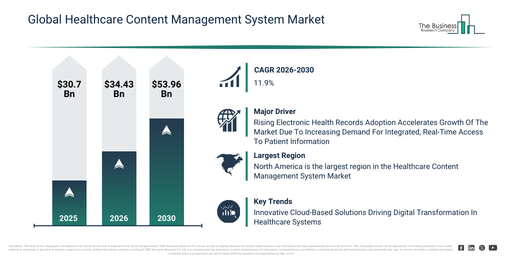
    The healthcare content management system market has experienced rapid expansion in recent years. Its value is projected to rise from $30.7 billion in 2025 to $34.43 billion in 2026, reflecting a compound annual growth rate (CAGR) of 12.2%. This market’s historical growth can be attributed to several factors, including the expansion of electronic health record adoption, increasing healthcare digitization initiatives, rising regulatory documentation requirements, the growth of healthcare data volumes, and improved IT infrastructure in healthcare organizations.

    The healthcare content management system market is anticipated to experience substantial growth over the next few years. It is projected to expand to $53.96 billion by 2030, demonstrating a compound annual growth rate (CAGR) of 11.9%. This expansion in the forecast period can be attributed to factors such as the increasing migration towards cloud-native healthcare systems, a rising demand for real-time content accessibility, the broadening requirements for telemedicine documentation, a growing emphasis on data security and privacy compliance, and the increasing integration of AI-driven content analytics. Significant trends during this period include the escalating adoption of cloud-based content management platforms, a rising demand for interoperable healthcare data systems, a heightened focus on regulatory-compliant document management, the expansion of AI-assisted content classification tools, and an enhanced emphasis on secure data access and collaboration.

    Get A Free Sample Report With In-Depth Market Insights:

    https://thebusinessresearchcompany.com/sample_request?id=92797793&type=smp&name=Healthcare%20Content%20Management%20System%20Market%20Report%202026&utm_source=Blogs&utm_medium=Paid&utm_campaign=Nov_PR

    Healthcare Content Management System Market Growth Catalysts And Demand Drivers

    The increasing integration of electronic health records (EHRs) is anticipated to stimulate expansion within the healthcare content management system market in the future. EHRs are digital compilations of patient health data, structured to enhance the ease of access, organization, and standard of care. The uptake of electronic health records is fueled by the imperative to elevate patient care via immediate access to precise and complete medical information. A healthcare content management system (CMS) facilitates EHRs by simplifying the process of acquiring, archiving, and retrieving unorganized data, thereby allowing healthcare professionals to access all pertinent patient details from a singular, integrated platform. As an illustration, in July 2024, data from the European Commission, an organization based in Belgium, revealed that Europe demonstrated advancements in eHealth maturity during 2024, with the EU27-average overall composite score climbing to 79% from 72% in the preceding year. Consequently, the growing embrace of electronic health records (EHRs) is propelling the expansion of the healthcare content management system market.

    Healthcare Content Management System Market Segment Breakdown: Which Categories Lead On Revenue?

    The healthcare content management system market covered in this report is segmented –

    1) By Component: Software, Services

    2) By Distribution Channel: Direct Sales, Distributors, Online Platforms

    3) By Application: Telemedicine, Patient Data Management, Regulatory Compliance, Workflow Management

    4) By End User: Hospitals And Health Systems, Ambulatory Surgical Centers, Diagnostic And Imaging Centers, Payers Or Insurance Providers, Long-Term Care Facilities

    Subsegments:

    1) By Software: On-Premise, Cloud-Based

    2) By Services: Implementation And Integration, Support And Maintenance, Consulting

    Healthcare Content Management System Market Industry Trends: What’s Reshaping Demand?

    Companies within the healthcare content management system market are actively engaged in creating advanced solutions, including cloud-native architecture, to bolster data accessibility, scalability, and seamless integration throughout healthcare systems. Cloud-native architecture represents a contemporary application development methodology that utilizes cloud computing frameworks to construct systems that are scalable, robust, and simple to deploy, employing technologies such as containers, microservices, and automated DevOps practices. As an illustration, in October 2024, Oracle Corporation, a US-based computer software company, introduced a cutting-edge electronic health record (EHR) system aimed at optimizing clinical workflows and elevating patient care. This system significantly improves healthcare by delivering comprehensive, real-time patient data and insights powered by AI, thereby enhancing clinical decision-making and lessening administrative load. Furthermore, these innovations facilitate secure data exchange, improved coordination of care, and contribute to enhanced patient safety and better overall outcomes.

    Healthcare Content Management System Market Leading Players And Competitive Positioning

    Major companies operating in the healthcare content management system market are Microsoft Corporation, Hitachi Ltd., IBM Corporation, Oracle Corporation, Capgemini SE, GE Healthcare Technologies Inc., CGI Inc., Xerox Holdings Corporation, Adobe Inc., Infor Inc., OpenText Corporation, Epic Systems Corporation, Veeva Systems Inc., NextGen Healthcare Inc., Sitecore Holding II A/S, M-Files Corporation, Laserfiche, Alfresco Software Inc., Samsung Healthcare, SoftTech Health LLC, Hyland Software Inc., InterSystems Corporation

    View The Full Healthcare Content Management System Market Report:

    https://thebusinessresearchcompany.com/report/healthcare-content-management-system-global-market-report?utm_source=Blogs&utm_medium=Paid&utm_campaign=Nov_PR

    Healthcare Content Management System Market Geographic Analysis: Where Is Demand Rising Fastest?

    North America was the largest region in the healthcare content management system market in 2025. Asia-Pacific is expected to be the fastest-growing region in the forecast period. The regions covered in the healthcare content management system market report are Asia-Pacific, South East Asia, Western Europe, Eastern Europe, North America, South America, Middle East, Africa.

    Reach Out To Our Team:

    The Business Research Company: https://www.thebusinessresearchcompany.com/

    Americas: +1 310-496-7795

    Asia: +44 7882 955267 & +91 8897263534

    Europe: +44 7882 955267

    Email us at: marketing@tbrc.info

    Follow us on:

    LinkedIn: https://in.linkedin.com/company/the-business-research-company

    YouTube: https://www.youtube.com/channel/UC24_fI0rV8cR5DxlCpgmyFQ

    Global Market Model: https://www.thebusinessresearchcompany.com/global-market-model
  • Healthcare Consumables Market Expected To Grow At 10.5% CAGR Through 2030: What Businesses Need To Know

    Healthcare Consumables Market Expected To Grow At 10.5% CAGR Through 2030: What Businesses Need To Know

    Built to provide research that’s more actionable and strategically valuable, The Business Research Company’s 2026 market reports include market attractiveness analysis, total addressable market sizing, company benchmarking matrices, interactive Excel dashboards, broader supply chain intelligence, emerging startup tracking, and in-depth product insights.

    Healthcare Consumables Market Poised To Hit $568.82 Billion By 2030 With A 10.5% CAGR

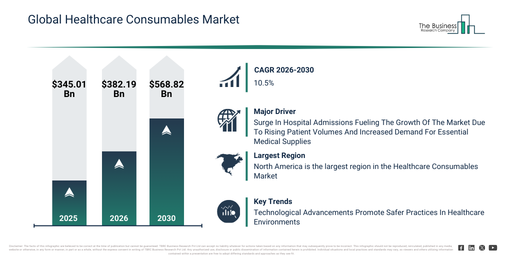
    The healthcare consumables market has seen substantial expansion in recent years. It is anticipated to expand from $345.01 billion in 2025 to $382.19 billion in 2026, achieving a compound annual growth rate (CAGR) of 10.8%. This historical growth can be linked to several factors, including a rise in hospitalization rates, an increase in surgical procedure volumes, the widespread application of disposable medical products, the expansion of diagnostic testing, and the growth of chronic disease management.

    The size of the healthcare consumables market is projected to experience swift expansion over the coming years. This market is forecast to reach $568.82 billion by 2030, exhibiting a compound annual growth rate (CAGR) of 10.5%. The anticipated growth during this period stems from factors such as a heightened demand for home-based patient care supplies, a growing focus on eco-friendly consumables, the broadening scope of point-of-care diagnostics, increasing investments directed towards infection control, and the expanding utilization of advanced sterilization consumables. Key trends foreseen over the forecast horizon encompass a surge in demand for single-use medical products, an intensified focus on infection prevention consumables, the widespread adoption of home healthcare consumables, an uptick in the use of sustainable and biodegradable materials, and improved supply chain traceability for consumables.

    Get A Free Sample Report With In-Depth Market Insights:

    https://thebusinessresearchcompany.com/sample_request?id=63571501&type=smp&name=Healthcare%20Consumables%20Market%20Report%202026&utm_source=Blogs&utm_medium=Paid&utm_campaign=Nov_PR

    Healthcare Consumables Market Opportunity Drivers: What’s Unlocking New Revenue Potential?

    An increase in hospital admissions is anticipated to fuel the expansion of the healthcare consumables market in the future. Hospital admission signifies the formal entry of an individual into a medical facility for care or treatment. Multiple factors contribute to the rise in hospital admissions, including an aging demographic, the growing occurrence of chronic illnesses, and developments in medical science. During hospital admissions, healthcare consumables encompass crucial items like gloves, syringes, bandages, and surgical tools, all essential for effective patient care and medical interventions. For example, data from September 2024, provided by the UK-based publicly funded National Health Service (NHS), showed that England registered 17.6 million finished admission episodes (FAEs) over the 12 months concluding on March 31, 2024. This highlights a greater need for consumables vital for patient care. Consequently, the increasing volume of hospital admissions is a key driver for the expansion of the healthcare consumables market.

    Healthcare Consumables Market Segmentation: How Does The Market Break Down By Category?

    The healthcare consumables market covered in this report is segmented –

    1) By Product Type: Wound Care Consumables, Diagnostic Consumables, Respiratory Supplies, Drug Delivery Products, Dialysis Consumables, Sterilization Consumables, Incontinence Products, Hands Sanitizer, Other Product Types

    2) By Raw Materials: Rubber, Non-woven Materials, Glass, Metals, Plastic Resin, Paper, Other Raw Materials

    3) By End User: Hospitals, Specialty Clinics, Other End-Users

    Subsegments:

    1) By Wound Care Consumables: Dressings (Hydrocolloid, Foam, Alginate, etc.), Bandages, Gauze And Sponges, Antiseptic Solutions, Wound Closure Devices (Staples, Sutures), Burn Care Products, Surgical Drains

    2) By Diagnostic Consumables: Blood Glucose Test Strips, Pregnancy Test Kits, Urine Test Strips, Pregnancy & Ovulation Test Kits, Hematology Consumables, Point-of-Care Testing Kits, Diagnostic Reagents And Chemicals

    3) By Respiratory Supplies: Oxygen Masks and Nasal Cannulas, Nebulizer Masks and Tubing Sets, Ventilator Circuits and Consumables, Endotracheal and Tracheostomy Tubes, Breathing Filters, Disposable Respiratory Masks

    4) By Drug Delivery Products: Syringes and Needles, IV Catheters and Cannulas, IV Administration Sets, Insulin Pens and Pen Needles, Inhaler Consumables, Transdermal Drug Delivery Patches, Infusion Sets and Tubing

    5) By Dialysis Consumables: Dialysis Filters (Dialyzers), Dialysis Tubing Sets, Dialysis Solution (Dialysate), Bloodline Tubing, Peritoneal Dialysis Kits, Catheters For Dialysis Access

    6) By Sterilization Consumables: Sterilization Wraps And Pouches, Sterilization Indicators (Chemical And Biological), Autoclave Bags, Disinfectants And Sterilizing Solutions, Gas Sterilization Consumables

    7) By Incontinence Products: Adult Diapers and Briefs, Incontinence Pads and Liners, Protective Underpads, Disposable Bed Protectors, Incontinence Care Wipes

    8) By Hand Sanitizer: Alcohol-Based Hand Sanitizers, Non-Alcohol-Based Hand Sanitizers, Hand Sanitizing Wipes, Medical-Grade Hand Hygiene Solutions

    9) By Other Product Types: Surgical Gloves, Medical Masks and Face Shields, Surgical Drapes and Gowns, Disposable Medical Apparel, Single-Use Medical Accessories

    Healthcare Consumables Market Innovation Trends: What Developments Are Reshaping The Industry?

    Major companies operating in the healthcare consumables market are concentrating on creating innovative solutions, such as passive safety syringes, with the aim of improving patient safety, mitigating unintentional needle-stick incidents, and aiding in infection control across clinical and hospital environments. These passive safety syringes are single-use injection devices equipped with built-in mechanisms that automatically engage once an injection is complete to retract or shield the needle, thereby preventing reuse and accidental needlesticks without needing extra user activation steps. For instance, in January 2024, medmix Drug Delivery, a Switzerland-based medical-device manufacturing company, introduced SicuroJect, a disposable passive-needle safety device specifically for subcutaneous injections. SicuroJect is available in two variants compatible with standard pre-filled 1 mL or 2.25 mL syringes (glass or plastic), retains the standard injection technique of traditional syringes, and can be supplied either as an off-the-shelf safety syringe or as part of a full-service development platform that includes design verification, assembly, secondary packaging, and serialization. Designed primarily to elevate user safety for healthcare professionals or patients administering injections, SicuroJect underscores a broader trend within the healthcare consumables market toward devices that not only deliver medications but also prioritize safety, sterility, and regulatory compliance.

    Healthcare Consumables Market Competitive Overview And Top Companies

    Major companies operating in the healthcare consumables market are Cardinal Health Inc., Johnson & Johnson, Abbott Laboratories, 3M Company, Siemens Healthineers, Becton Dickinson and Company (BD), Philips Healthcare, Stryker Corporation, GE HealthCare Technologies Inc, Boston Scientific Corporation, B. Braun Melsungen AG, Alcon Laboratories Inc., Fresenius Kabi AG, Zimmer Biomet Holdings Inc., Terumo Corporation, Smith & Nephew plc, Hologic Inc., Nipro Corporation, Coloplast A/S, Dexcom Inc., Hollister Incorporated, AngioDynamics Inc., Biolife Solutions Inc., Medi-Plast Ltd., Ortho Clinical Diagnostics

    View The Full Healthcare Consumables Market Report:

    https://thebusinessresearchcompany.com/report/healthcare-consumables-global-market-report?utm_source=Blogs&utm_medium=Paid&utm_campaign=Nov_PR

    Healthcare Consumables Market Global Footprint: Which Region Leads The Market?

    North America was the largest region in the healthcare consumables market in 2025. The regions covered in the healthcare consumables market report are Asia-Pacific, South East Asia, Western Europe, Eastern Europe, North America, South America, Middle East, Africa.

    Reach Out To Our Team:

    The Business Research Company: https://www.thebusinessresearchcompany.com/

    Americas: +1 310-496-7795

    Asia: +44 7882 955267 & +91 8897263534

    Europe: +44 7882 955267

    Email us at: marketing@tbrc.info

    Follow us on:

    LinkedIn: https://in.linkedin.com/company/the-business-research-company

    YouTube: https://www.youtube.com/channel/UC24_fI0rV8cR5DxlCpgmyFQ

    Global Market Model: https://www.thebusinessresearchcompany.com/global-market-model
  • Healthcare Consulting Services Market Forecast To Reach $63.11 Billion By 2030: Key Trends Explained

    Healthcare Consulting Services Market Forecast To Reach $63.11 Billion By 2030: Key Trends Explained

    Backed by market attractiveness analysis, total addressable market sizing, company benchmarking matrices, interactive Excel dashboards, wider supply chain intelligence, emerging startup coverage, and detailed product-level insights, The Business Research Company’s 2026 market reports are designed to offer research that is more actionable and strategically valuable than ever.

    Healthcare Consulting Services Market Size And Revenue Outlook Through 2030

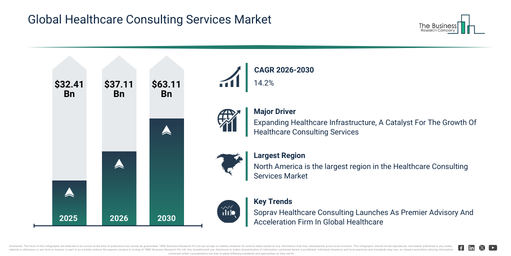
    The healthcare consulting services market has shown substantial growth in recent times. Its size is expected to increase from $32.41 billion in 2025 to $37.11 billion in 2026, advancing at a compound annual growth rate (CAGR) of 14.5%. This historical expansion is linked to elements such as the increasing complexity of healthcare operations, heightened pressures related to healthcare expenditure, the integration of health IT systems, evolving regulatory changes in healthcare, and the ongoing demand for strategies to optimize costs.

    The healthcare consulting services market size is projected to experience considerable expansion in the upcoming years. It is expected to reach $63.11 billion by 2030, growing at a compound annual growth rate (CAGR) of 14.2%. The anticipated growth during this forecast period stems from factors such as increased investments in healthcare digitalization, a rising need for AI-enabled consulting insights, the broadening of value-based care models, a stronger focus on integrated care delivery, and the integration of advanced analytics into healthcare decision-making processes. Major trends identified for the forecast period include an escalating demand for digital transformation consulting, a greater emphasis on revenue cycle optimization services, the increasing uptake of data-driven healthcare strategies, the expansion of regulatory and compliance advisory services, and a reinforced focus on consulting for operational efficiency.

    Get A Free Sample Report With In-Depth Market Insights:

    https://thebusinessresearchcompany.com/sample_request?id=7155&type=smp&name=Healthcare%20Consulting%20Services%20Market%20Report%202026&utm_source=Blogs&utm_medium=Paid&utm_campaign=Nov_PR

    Healthcare Consulting Services Market Growth Momentum: What Factors Are Shaping Demand?

    The growth of the healthcare consulting services market is anticipated to be propelled by the expanding healthcare infrastructure in the coming years. Healthcare infrastructure refers to the foundational structural elements and tangible assets, such as buildings, furnishings, machinery, and staff, that support the delivery of healthcare services within a medical facility or organization. It includes all components necessary to provide medical care and assistance to people in the community. Healthcare consulting services are vital for optimizing healthcare infrastructure by offering strategic perspectives, regulatory assistance, and practical suggestions to improve the standard, effectiveness, and overall efficiency of healthcare delivery. These services aid healthcare firms in adapting to evolving market trends, technological improvements, and changing patient expectations, all while maintaining regulatory compliance. For instance, in May 2024, the Office for National Statistics, a UK-based government department, reported that total healthcare expenditure experienced a 5.6% increase in nominal terms from 2022 to 2023, which signifies a notable acceleration compared to the 0.9% growth observed in 2022. Therefore, the expanding healthcare infrastructure is driving the healthcare consulting services market.

    Healthcare Consulting Services Market Segment Trends And Revenue Contributors

    The healthcare consulting services market covered in this report is segmented –

    1) By Consulting Type: Strategy and Transformation Consulting, Operational and Performance Improvement Consulting, Clinical and Care Delivery Consulting, Health Information Technology Consulting

    2) By Functional Area: Enterprise and Organizational Management, Clinical Operations and Quality Improvement, Information Technology and Digital Enablement

    3) By Engagement Model: Advisory and Assessment Services, Implementation and Integration Services, Managed and Outsourced Consulting Services

    4) By End User: Healthcare Providers, Government and Public Health Bodies, Health Insurance Payers, Pharmaceutical and Biotechnology Companies

    Subsegments:

    1) By Strategy and Transformation Consulting: Organizational Strategy and Road-Mapping, Business Model Transformation, Mergers, Acquisitions, and Integration Advisory, Value-Based Care and Population Health Strategy, Market Entry and Growth Strategy, Change Management and Leadership Advisory

    2) By Operational and Performance Improvement Consulting: Workflow and Process Optimization, Cost Reduction and Efficiency Improvement, Capacity, Throughput, and Resource Planning, Supply Chain and Procurement Optimization, Lean, Six Sigma, and Continuous Improvement Consulting, Performance Benchmarking and KPI Development

    3) By Clinical and Care Delivery Consulting: Care Pathway and Service Line Optimization, Clinical Quality and Patient Safety Improvement, Clinical Workforce and Productivity Optimization, Outcomes Measurement and Reporting, Patient Experience and Engagement Consulting, Clinical Governance and Standardization

    4) By Health Information Technology Consulting: Electronic Health Record (EHR) Advisory and Implementation, Health Information Exchange and Interoperability Consulting, Digital Health and Telehealth Strategy Consulting, Data Governance and Health IT Architecture Advisory, Cybersecurity, Privacy, and Compliance Consulting, Health IT Optimization and Modernization

    Healthcare Consulting Services Market Trends: What’s Defining The Industry’s Next Phase?

    Leading companies in the healthcare consulting services market are consistently expanding and introducing innovations to cater to the industry’s evolving requirements. For example, Soprav Healthcare Consulting, an India-based consulting company, commenced operations in April 2024, establishing itself as a premier healthcare advisory and acceleration firm. This firm’s objective is to deliver extensive regulatory, investment, financial, organizational, and operational assistance to a broad spectrum of healthcare entities, including hospitals, medical practitioners, pharmaceuticals, med-tech, digital health-tech, wellness, and other B2B2C markets within the global healthcare spectrum. Soprav prioritizes close cooperation with healthcare innovators to support product commercialization and manage complex regulatory frameworks.

    Healthcare Consulting Services Market Competitive Landscape: Which Companies Lead The Industry?

    Major companies operating in the healthcare consulting services market are Alvarez and Marsal Holdings LLC, Bain & Company Inc., Boston Consulting Group, Cognizant Technology Solutions Corp., Deloitte Consulting LLP, Ernst and Young Global Limited, FTI Consulting, Huron Consulting Group Inc., International Business Machines Corporation, IQVIA Holdings Inc., McKinsey and Company, PricewaterhouseCoopers International Limited, Accenture PLC, Advisory Board Company, Avalere Health LLC, Chartis Group, ECG Management Consultants, Health Catalyst Inc., L.E.K. Consulting, Leidos Holdings Inc., McBee Associates Inc., Navigant Technologies Private Limited, Nordic Consulting, Optum Inc., Pivot Point Consulting, Stax Inc., Vynamic LLC

    View The Full Healthcare Consulting Services Market Report:

    https://thebusinessresearchcompany.com/report/healthcare-consulting-services-global-market-report?utm_source=Blogs&utm_medium=Paid&utm_campaign=Nov_PR

    Healthcare Consulting Services Market Regional Split: Which Areas Are Fueling Growth?

    North America was the largest region in the healthcare consulting services market in 2025. Asia-Pacific is expected to be the fastest-growing region in the forecast period. The regions covered in the healthcare consulting services market report are Asia-Pacific, South East Asia, Western Europe, Eastern Europe, North America, South America, Middle East, Africa.

    Reach Out To Our Team:

    The Business Research Company: https://www.thebusinessresearchcompany.com/

    Americas: +1 310-496-7795

    Asia: +44 7882 955267 & +91 8897263534

    Europe: +44 7882 955267

    Email us at: marketing@tbrc.info

    Follow us on:

    LinkedIn: https://in.linkedin.com/company/the-business-research-company

    YouTube: https://www.youtube.com/channel/UC24_fI0rV8cR5DxlCpgmyFQ

    Global Market Model: https://www.thebusinessresearchcompany.com/global-market-model
  • Healthcare Compliance Software Market Analysis Through 2030: Market Size, Growth Trends And Industry Outlook

    Healthcare Compliance Software Market Analysis Through 2030: Market Size, Growth Trends And Industry Outlook

    Featuring market attractiveness scoring, total addressable market sizing, company benchmarking matrices, interactive Excel dashboards, deeper supply chain intelligence, emerging startup tracking, and granular product-level insights, The Business Research Company’s 2026 market reports are built to deliver research that is both more actionable and more strategically valuable.

    Healthcare Compliance Software Market Growth From $3.58 Billion In 2026 To $5.62 Billion By 2030 At A CAGR Of 12%

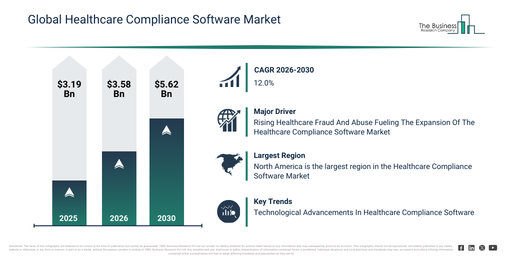
    The healthcare compliance software market has experienced rapid growth in its size over recent years. It is anticipated to expand from $3.19 billion in 2025 to $3.58 billion in 2026, demonstrating a compound annual growth rate (CAGR) of 12.1%. The historical growth can be attributed to several factors, including increasing regulatory scrutiny in healthcare, the adoption of electronic health records, rising data breach incidents, the growth in healthcare IT systems, and the demand for standardized compliance processes.

    The healthcare compliance software market is poised for significant expansion over the coming years. This market is projected to reach $5.62 billion by 2030, exhibiting a compound annual growth rate (CAGR) of 12.0%. The anticipated growth during this period stems from several factors, including the escalating need for ongoing compliance oversight, increased capital allocation to regulatory technology, the proliferation of AI-powered compliance analytics, wider acceptance of cloud-based governance instruments, and a sharpened emphasis on preventative risk management. Key developments expected within the forecast timeframe encompass the increasing embrace of cloud-based compliance platforms, a surge in the utilization of automated audit and reporting mechanisms, the deepening integration of risk management solutions, the broadening of real-time compliance tracking, and a heightened emphasis on data privacy safeguards.

    Get A Free Sample Report With In-Depth Market Insights:

    https://thebusinessresearchcompany.com/sample_request?id=30702175&type=smp&name=Healthcare%20Compliance%20Software%20Market%20Report%202026&utm_source=Blogs&utm_medium=Paid&utm_campaign=Nov_PR

    Healthcare Compliance Software Market Expansion Drivers: What’s Shaping Future Growth?

    A rising incidence of healthcare fraud and abuse is anticipated to fuel the expansion of the healthcare compliance software market in the future. Such fraud and abuse denote intentional and misleading actions within the healthcare framework, encompassing fraudulent claims, misrepresentation, or other unlawful acts designed to secure unapproved financial gains or advantages, thereby undermining the honesty and efficiency of healthcare provisions. Healthcare compliance software serves to improve adherence to regulations, identify irregularities in billing, and implement strict oversight, consequently protecting against illegal operations and maintaining the soundness of healthcare systems. For example, in 2024, data from the United States Sentencing Commission (USSC), a US-based government agency, revealed that among the 61,678 cases presented to the Commission during fiscal year 2024, 395 pertained to health care fraud. Consequently, the growing prevalence of healthcare fraud and abuse is propelling the expansion of the healthcare compliance software market.

    Healthcare Compliance Software Market Segment Analysis Spotlighting Growth Areas

    The healthcare compliance software market covered in this report is segmented –

    1) By Product Type: On-Premise, Cloud-Based

    2) By Application: Policy And Procedure Management, Auditing Tools, Training Management And Tracking, Medical Billing And Coding, License, Certificate, And Contract Tracking, Incident Management, Accreditation Management

    3) By End-User: Hospitals, Specialty Clinics, Other End Users

    Subsegments:

    1) By On-Premise: On-Premise Healthcare Compliance Management, On-Premise Regulatory Reporting Software, On-Premise Risk Management Software

    2) By Cloud-Based: Cloud-Based Healthcare Compliance Management, Cloud-Based Regulatory Reporting Software, Cloud-Based Risk Management Software

    Healthcare Compliance Software Market Industry Trends Fueling Future Revenue Growth

    Leading companies in the healthcare compliance software market are concentrating on technological innovations, such as healthcare compliance platforms, to improve the effectiveness and efficiency of regulatory healthcare compliance. A healthcare compliance platform is a thorough software solution built to assist healthcare organizations in managing and maintaining their compliance. For example, in October 2023, Compliancy Group, a US-based provider of cloud-based software, introduced The Guard. It functions as a centralized hub for overseeing all facets of compliance, covering everything from risk assessment and policy administration to audit preparation and educational initiatives. The Guard is a comprehensive, cloud-based software platform specifically designed to aid healthcare organizations in attaining and sustaining compliance with various regulations, primarily HIPAA, SOC 2, and OSHA.

    Healthcare Compliance Software Market Leading Companies: Who Holds The Strongest Market Presence?

    Major companies operating in the healthcare compliance software market are Wolters Kluwer, Cerner Corporation, Change Healthcare Inc., Beacon Healthcare Systems Inc., RLDatix Ltd., Accruent LLC, HealthStream Inc., Symplr, Intelex Technologies, AHM Holding Inc., iContracts, Sprinto Corporation, Healthicity LLC, Panacea Healthcare Solutions LLC, VigiLanz Corporation, Contract Guardian Inc., MedTraine LLC, Atlantic.net, Complete Medical SolutionsLLC, Verge Solutions LLC, HCS

    View The Full Healthcare Compliance Software Market Report:

    https://thebusinessresearchcompany.com/report/healthcare-compliance-software-global-market-report?utm_source=Blogs&utm_medium=Paid&utm_campaign=Nov_PR

    Healthcare Compliance Software Market Top Region: Where Does Most Revenue Come From?

    North America was the largest region in the healthcare compliance software market in 2025. Asia-Pacific is expected to be the fastest-growing region in the forecast period. The regions covered in the healthcare compliance software market report are Asia-Pacific, South East Asia, Western Europe, Eastern Europe, North America, South America, Middle East, Africa.

    Reach Out To Our Team:

    The Business Research Company: https://www.thebusinessresearchcompany.com/

    Americas: +1 310-496-7795

    Asia: +44 7882 955267 & +91 8897263534

    Europe: +44 7882 955267

    Email us at: marketing@tbrc.info

    Follow us on:

    LinkedIn: https://in.linkedin.com/company/the-business-research-company

    YouTube: https://www.youtube.com/channel/UC24_fI0rV8cR5DxlCpgmyFQ

    Global Market Model: https://www.thebusinessresearchcompany.com/global-market-model
  • Healthcare Companion Robots Market Outlook From 2026 To 2030: Key Growth Factors And Future Opportunities

    Healthcare Companion Robots Market Outlook From 2026 To 2030: Key Growth Factors And Future Opportunities

    Built to provide research that’s more actionable and strategically valuable, The Business Research Company’s 2026 market reports include market attractiveness analysis, total addressable market sizing, company benchmarking matrices, interactive Excel dashboards, broader supply chain intelligence, emerging startup tracking, and in-depth product insights.

    Healthcare Companion Robots Market Expansion Outlook: What Revenue Opportunities Are Ahead?

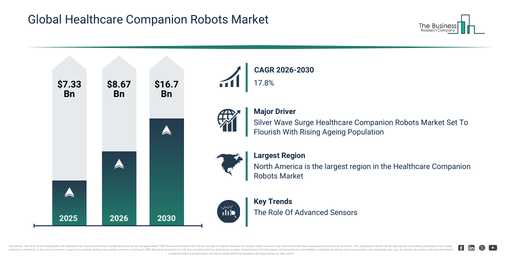
    The market size for healthcare companion robots has shown rapid expansion in recent years. It is anticipated to grow from $7.33 billion in 2025 to $8.67 billion in 2026, achieving a compound annual growth rate (CAGR) of 18.3%. Historically, this market expansion can be attributed to a rising elderly population, an increasing demand for assisted living solutions, a shortage of healthcare caregivers, the adoption of robotics in therapy settings, and improvements in robotic sensor technologies.

    The healthcare companion robots market is projected to undergo significant expansion in the coming years. It is forecasted to reach $16.7 billion by 2030, exhibiting a compound annual growth rate (CAGR) of 17.8%. This anticipated growth during the forecast period stems from factors such as the increasing deployment of socially assistive robots, heightened investments in personalized healthcare robotics, the broadening of home-based care models, a rising acceptance of robotic companionship, and advancements in AI-driven behavioral analytics. Noteworthy trends during this period encompass the growing adoption of AI-enabled companion robots, an increased utilization of robots for elderly care support, the expanding integration of personalized care algorithms, enhanced emotion recognition capabilities, and a stronger emphasis on human-robot interaction.

    Get A Free Sample Report With In-Depth Market Insights:

    https://thebusinessresearchcompany.com/sample_request?id=35004000&type=smp&name=Healthcare%20Companion%20Robots%20Market%20Report%202026&utm_source=Blogs&utm_medium=Paid&utm_campaign=Nov_PR

    Healthcare Companion Robots Market Development Factors: What’s Supporting Demand?

    The expanding elderly demographic is anticipated to fuel expansion within the healthcare companion robot’s market. As the number of senior citizens grows, so does the demand for companion robots, which are specifically designed to offer in-home care and support to older individuals. Furthermore, governments across different nations are actively pursuing initiatives to encourage the adoption of healthcare companion robots. For instance, the Office for the National Statistics, a UK-based organization, stated in October 2025 that the UK recorded 625,000 people aged 90 or over in 2024, an increase of 2.2% from 612,000 in mid-2023. Consequently, the increasing ageing population is projected to be a key driver for the growth of the healthcare companion robots market during the forecast period.

    Healthcare Companion Robots Market Segment Performance And Emerging Opportunities

    The healthcare companion robots market covered in this report is segmented –

    1) By Type: Animal-like Robots, Humanoid Robots

    2) By Age Group: Children, Geriatric

    3) By Application: Emotional Support And Companionship, Therapy And Rehabilitation Assistance, Monitoring And Safety Assistance, Cognitive Stimulation And Dementia Care, Pediatric Support And Developmental Aid, Entertainment And Engagement

    Subsegments:

    1) By Animal-Like Robots: Robotic Pets, Interactive Animal Simulators

    2) By Humanoid Robots: Social Companion Robots, Assistance Robots For Elderly Care

    Healthcare Companion Robots Market Trends Powering Strategic Industry Growth

    Major companies operating in the healthcare companion robot market are concentrating on innovative technologies, such as advanced sensors, to improve patient monitoring, refine interaction capabilities, and deliver personalized care solutions. Advanced sensors are intricate devices that collect and interpret complex data from their surroundings, frequently integrating AI and IoT for enhanced functionality and accuracy. For instance, in February 2023, Elephant Robotics Technology Co., Ltd., a Chinese high-tech enterprise specializing in robot research and development, introduced MetaCat. The MetaCat incorporates multiple touch sensors, voice recognition capabilities, and expressive LED lights. These features enable it to mimic a cat’s purrs, meows, and eye movements, thereby augmenting its lifelike qualities.

    Healthcare Companion Robots Market Key Players: Which Companies Lead Industry Competition?

    Major companies operating in the healthcare companion robots market are Blue Frog Robotics SAS, Intuition Robotics Ltd., No Isolation AS, Honda Motor Co. Ltd., Hanson Robotics Limited, Ubtech Robotics Corp. Ltd., Emotix Inc., Catalia Health Inc., Care Coach Inc., F&P Robotics AG, Giraff Technologies AB, Leka SAS, SoftBank Robotics, Toyota, Paro Robots, PAL Robotics, Robosoft Systems, Sanbot Technology, Aldebaran Robotics, Mayfield Robotics

    View The Full Healthcare Companion Robots Market Report:

    https://thebusinessresearchcompany.com/report/healthcare-companion-robots-global-market-report?utm_source=Blogs&utm_medium=Paid&utm_campaign=Nov_PR

    Healthcare Companion Robots Market Regional Breakdown: Where Is Demand Concentrated?

    North America was the largest region in the healthcare companion robots market share in 2025. The regions covered in the healthcare companion robots market report are Asia-Pacific, South East Asia, Western Europe, Eastern Europe, North America, South America, Middle East, Africa.

    Reach Out To Our Team:

    The Business Research Company: https://www.thebusinessresearchcompany.com/

    Americas: +1 310-496-7795

    Asia: +44 7882 955267 & +91 8897263534

    Europe: +44 7882 955267

    Email us at: marketing@tbrc.info

    Follow us on:

    LinkedIn: https://in.linkedin.com/company/the-business-research-company

    YouTube: https://www.youtube.com/channel/UC24_fI0rV8cR5DxlCpgmyFQ

    Global Market Model: https://www.thebusinessresearchcompany.com/global-market-model
  • Healthcare Command Centers Market Growth Forecast: Market Size, Key Trends And Emerging Opportunities Through 2030

    Healthcare Command Centers Market Growth Forecast: Market Size, Key Trends And Emerging Opportunities Through 2030

    Backed by market attractiveness analysis, total addressable market sizing, company benchmarking matrices, interactive Excel dashboards, wider supply chain intelligence, emerging startup coverage, and detailed product-level insights, The Business Research Company’s 2026 market reports are designed to offer research that is more actionable and strategically valuable than ever.

    Healthcare Command Centers Market Growth Potential: How Will Market Size Shift Through 2030?

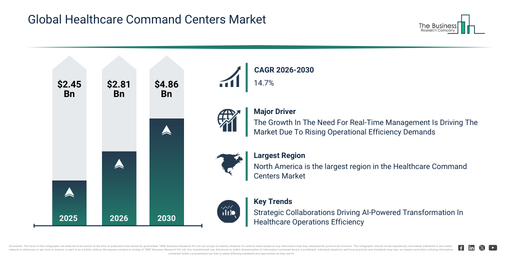
    The healthcare command centers market size has seen swift expansion recently. It is anticipated to increase from $2.45 billion in 2025 to $2.81 billion in 2026, reflecting a compound annual growth rate (CAGR) of 14.9%. Historically, this market’s expansion can be attributed to factors like the escalating complexity of hospital operations, an increase in patient volume within acute care facilities, the early uptake of hospital analytics platforms, a heightened emphasis on operational efficiency, and the growth of centralized care coordination models.

    The healthcare command centers market is projected to experience substantial growth in the coming years, anticipated to reach $4.86 billion by 2030 with a compound annual growth rate (CAGR) of 14.7%. This expansion during the forecast period is attributed to the increasing demand for data-driven clinical decision-making, rising investments in smart hospital infrastructure, the broadening of telehealth coordination capabilities, the growing adoption of AI-enabled hospital management tools, and a heightened focus on value-based healthcare delivery. Key trends shaping the forecast period encompass the increasing deployment of real-time hospital operations dashboards, the expanding utilization of predictive analytics for patient flow, the growing integration of multisource clinical data systems, the proliferation of virtual and hybrid command centers, and an enhanced focus on proactive resource optimization.

    Get A Free Sample Report With In-Depth Market Insights:

    https://thebusinessresearchcompany.com/sample_request?id=10245001&type=smp&name=Healthcare%20Command%20Centers%20Market%20Report%202026&utm_source=Blogs&utm_medium=Paid&utm_campaign=Nov_PR

    Healthcare Command Centers Market Industry Drivers: What’s Behind The Revenue Growth?

    The rising demand for real-time management is anticipated to drive the healthcare command centers market forward. Real-time management involves ongoing observation and reaction to current operations or data as incidents unfold, facilitating instant decision-making and peak performance. The increasing necessity for such management stems from the desire for quicker decisions and improved operational effectiveness, particularly within intricate environments like healthcare. Healthcare command centers address this by combining information from various sources, including patient flow, bed occupancy, and resource utilization, to enable constant oversight, swift decisions, and prompt actions across all healthcare operations. For instance, in October 2025, the British Medical Association (BMA), a professional body and trade union for doctors in the UK, reported that the latest Referral to Treatment (RTT) data for August 2025 indicated roughly 6.26 million patients were awaiting treatment across 7.41 million cases, with approximately 2.89 million waiting over 18 weeks and nearly 191,500 waiting more than a year. Consequently, the increasing need for real-time management is fueling the growth of the healthcare command centers market.

    Healthcare Command Centers Market Segment Landscape And Growth Outlook

    The healthcare command centers market covered in this report is segmented –

    1) By Component: Software, Hardware, Services

    2) By Command Center Type: Capacity And Bed Management, Operations And Resource Centers, Clinical Command Centers, Emergency Operations Centers, Security Operations Centers

    3) By Deployment Mode: On-Premise, Cloud-Based, Hybrid

    4) By Application: Patient Flow And Capacity Management, Bed Management, Staff Allocation And Scheduling, Emergency Response And Crisis Management, Real-Time Decision Support, Telehealth And Remote Care Coordination

    5) By End User: Large Health Systems, Academic Medical Centers, Community And Regional Hospitals, Ambulatory Surgery Centers And Integrated Clinics, Managed Service Providers

    Subsegments:

    1) By Software: Real-Time Dashboards And Visualization, Predictive Analytics And Forecasting, Scheduling And Procedure Optimization, Event Or Alarm And Incident Management, Integrations And Middleware, Collaboration Or Communication Workspace

    2) By Hardware: Display Walls And Visualization Hardware, Networking And Edge Appliances, On-Site Monitoring Stations Or Consoles

    3) By Services: Implementation And Integration Services, Managed Services Or Virtual Command Center Operations, Consulting, Training And Continuous Optimization, Data Science Or Model Tuning

    Healthcare Command Centers Market Growth Trends Reshaping The Competitive Landscape

    Major companies active in the healthcare command centers market are increasingly focusing on establishing strategic partnerships to advance technological innovation, enhance operational intelligence, and improve patient care efficiency through integrated, data-driven solutions. These strategic collaborations represent alliances between technology providers and healthcare institutions, designed to integrate clinical expertise with advanced analytics, artificial intelligence, and real-time management capabilities to optimize hospital operations and outcomes. An illustrative instance occurred in October 2025, when GE HealthCare, a U.S.-based medical technology company, collaborated with The Queen’s Health Systems, a U.S.-based healthcare network, and Duke Health, a U.S.-based academic medical center, to co-develop cloud-first, AI-driven hospital operations software within its CareIntellect family. This collaboration aims to utilize predictive analytics for the real-time optimization of patient flow, staffing, and resource utilization, consequently improving efficiency, reducing patient length of stay, and supporting the delivery of high-quality, patient-centered care.

    Healthcare Command Centers Market Competitive Landscape: Who Leads The Industry?

    Major companies operating in the healthcare command centers market are Deloitte Touche Tohmatsu Limited, Siemens Healthineers AG, Koninklijke Philips N.V., General Electric Company, Oracle Corporation, Epic Systems Corporation, Dedalus S.p.A., symplr, Inc., Columna Flow, Inc., Care Logistics, Inc., TeleTracking Technologies, Inc., LeanTaaS, Inc., Alcidion Pty Ltd, Qventus, Inc., ABOUT Healthcare, Inc., Pointcore, Inc., Hospital IQ, Inc., TAGNOS, Inc., WellSky Corporation, Cerner Corporation

    View The Full Healthcare Command Centers Market Report:

    https://thebusinessresearchcompany.com/report/global-healthcare-command-centers-market-report?utm_source=Blogs&utm_medium=Paid&utm_campaign=Nov_PR

    Healthcare Command Centers Market Geographic Landscape: Which Region Leads Industry Growth?

    North America was the largest region in the healthcare command centers market in 2025. Asia-Pacific is expected to be the fastest-growing region in the forecast period. The regions covered in the healthcare command centers market report are Asia-Pacific, South East Asia, Western Europe, Eastern Europe, North America, South America, Middle East, Africa.

    Reach Out To Our Team:

    The Business Research Company: https://www.thebusinessresearchcompany.com/

    Americas: +1 310-496-7795

    Asia: +44 7882 955267 & +91 8897263534

    Europe: +44 7882 955267

    Email us at: marketing@tbrc.info

    Follow us on:

    LinkedIn: https://in.linkedin.com/company/the-business-research-company

    YouTube: https://www.youtube.com/channel/UC24_fI0rV8cR5DxlCpgmyFQ

    Global Market Model: https://www.thebusinessresearchcompany.com/global-market-model
  • Healthcare Cloud Infrastructure Market CAGR Forecast Through 2030: Key Trends Shaping Industry Expansion

    Healthcare Cloud Infrastructure Market CAGR Forecast Through 2030: Key Trends Shaping Industry Expansion

    Featuring market attractiveness scoring, total addressable market sizing, company benchmarking matrices, interactive Excel dashboards, deeper supply chain intelligence, emerging startup tracking, and granular product-level insights, The Business Research Company’s 2026 market reports are built to deliver research that is both more actionable and more strategically valuable.

    Healthcare Cloud Infrastructure Market Value Analysis: What Growth Lies Ahead Over The Forecast Period?

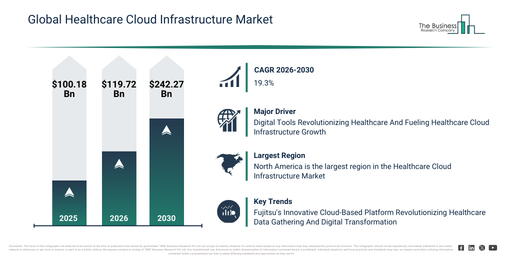
    The healthcare cloud infrastructure market size has experienced rapid growth in recent years. It is projected to expand from $100.18 billion in 2025 to $119.72 billion in 2026, demonstrating a compound annual growth rate (CAGR) of 19.5%. The historical growth can be ascribed to the increasing digitization of healthcare records, the expansion of telehealth platforms, a rising demand for scalable IT infrastructure, the adoption of electronic health records, and the broader expansion of healthcare data volumes.

    The healthcare cloud infrastructure market is anticipated to experience substantial growth over the next few years, with projections indicating it will climb to $242.27 billion by 2030, achieving a compound annual growth rate (CAGR) of 19.3%. This expansion during the forecast period is propelled by factors such as the increasing shift towards cloud-native healthcare applications, a heightened focus on data privacy and security compliance, the broadening scope of AI-enabled healthcare analytics, growing investments in hybrid cloud models, and the demand for cost-efficient healthcare IT infrastructure. Key trends observed in this period include the rising adoption of hybrid cloud architectures, an increasing need for secure healthcare data storage, the growing utilization of scalable cloud computing resources, the expansion of disaster recovery and backup solutions, and an enhanced emphasis on interoperable infrastructure.

    Get A Free Sample Report With In-Depth Market Insights:

    https://thebusinessresearchcompany.com/sample_request?id=83775693&type=smp&name=Healthcare%20Cloud%20Infrastructure%20Market%20Report%202026&utm_source=Blogs&utm_medium=Paid&utm_campaign=Nov_PR

    Healthcare Cloud Infrastructure Market Growth Factors: What’s Supporting Expansion?

    The expansion of digital tool integration within the healthcare sector is anticipated to fuel the growth of the healthcare cloud infrastructure market in the foreseeable future. These tools encompass software, hardware, and services that leverage information and communication technology, empowering both healthcare professionals and patients to make well-informed decisions. Specific examples include electronic health records (EHRs), electronic medical records (EMRs), mobile health (mHealth) applications, wearable devices, telehealth and telemedicine platforms, and customized medicine, all designed to enhance healthcare delivery. Healthcare cloud infrastructure plays a crucial role in numerous digital applications, boosting the efficiency, interconnectedness, and security of healthcare services. It stands as a foundational element for the digital transformation of the healthcare industry, facilitating improved patient care, operational effectiveness, and innovation in healthcare solutions and technology. This trend is underscored by data from January 2025, where Deloitte Touche Tohmatsu Limited, a UK-based software company, reported that approximately 70% of respondents consider investments in digital tools and platforms essential, 60% prioritize core technologies such as EMRs and ERP, and nearly 90% of C-suite executives foresee an acceleration in digital technology adoption during 2025. Consequently, the increasing embrace of digital tools within the healthcare domain is a significant driver for the healthcare cloud infrastructure market.

    Healthcare Cloud Infrastructure Market Breakdown By Product Type And Application

    The healthcare cloud infrastructure market covered in this report is segmented –

    1) By Component: Hardware, Services

    2) By Deployment Model: Private Cloud, Hybrid Cloud, Public Cloud

    3) By End-User: Healthcare Providers, Healthcare Payers

    Subsegments:

    1) By Hardware: Servers, Storage Devices, Networking Equipment, Security Appliances

    2) By Services: Cloud Storage Services, Cloud Computing Services, Cloud Security Services, Consulting And Integration Services

    Healthcare Cloud Infrastructure Market Trends Shaping Long-Term Demand

    Leading companies in the healthcare cloud infrastructure market are concentrating on product advancements like cloud-based platforms to better address the requirements of their existing customers. A cloud-based platform constitutes the operating system and hardware of a server located in an Internet-connected data center. It facilitates the remote and scalable co-existence of software and hardware devices. Businesses choose to lease access to computing services such as databases, servers, storage, statistical analysis, networking, software, and intelligence, rather than constructing and maintaining their own data centers or computer infrastructure. For example, in March 2023, Fujitsu Limited, a Japan-based corporation specializing in information and communications technology equipment and services, introduced a new, innovative, and distinct cloud-based platform. This advanced cloud-based platform allows users to securely collect and leverage health-related data to accelerate digital transformation in the medical industry. The new product is consistent with Fujitsu’s continuous efforts to contribute to establishing a healthy society, aligning with Fujitsu Uvance’s ‘healthy living’ goal for creating a sustainable world. The platform’s notable attributes include the automatic translation of healthcare data into HL7 FHIR, the upcoming medical information standard, the compilation of a broad spectrum of health-related information, and robust security protocols to ensure protected data consumption.

    Healthcare Cloud Infrastructure Market Company Landscape And Competitive Strategy

    Major companies operating in the healthcare cloud infrastructure market are Amazon.com Inc., Microsoft Corporation, Google LLC, Oracle Corporation, International Business Machines Corporation, Hewlett Packard Enterprise, Dell Inc., NetApp Inc., Cisco Systems Inc., VMware Inc., SAP SE, Alibaba Group Holding Ltd, Tencent Holdings Ltd, NTT Ltd, Fujitsu Limited, Hitachi Ltd, Iron Mountain Incorporated, Equinix Inc., Digital Realty Trust Inc., ClearDATA Networks Inc.

    View The Full Healthcare Cloud Infrastructure Market Report:

    https://thebusinessresearchcompany.com/report/healthcare-cloud-infrastructure-global-market-report?utm_source=Blogs&utm_medium=Paid&utm_campaign=Nov_PR

    Healthcare Cloud Infrastructure Market Largest Region: Which Geography Holds The Biggest Share?

    North America was the largest region in the healthcare cloud computing market in 2025. Asia-Pacific is expected to be the fastest-growing region in the forecast period. The regions covered in the healthcare cloud infrastructure market report are Asia-Pacific, South East Asia, Western Europe, Eastern Europe, North America, South America, Middle East, Africa.

    Reach Out To Our Team:

    The Business Research Company: https://www.thebusinessresearchcompany.com/

    Americas: +1 310-496-7795

    Asia: +44 7882 955267 & +91 8897263534

    Europe: +44 7882 955267

    Email us at: marketing@tbrc.info

    Follow us on:

    LinkedIn: https://in.linkedin.com/company/the-business-research-company

    YouTube: https://www.youtube.com/channel/UC24_fI0rV8cR5DxlCpgmyFQ

    Global Market Model: https://www.thebusinessresearchcompany.com/global-market-model
  • Healthcare Claims Management Solutions Market To Witness 7% CAGR Growth Through 2030: Key Industry Drivers

    Healthcare Claims Management Solutions Market To Witness 7% CAGR Growth Through 2030: Key Industry Drivers

    Built to provide research that’s more actionable and strategically valuable, The Business Research Company’s 2026 market reports include market attractiveness analysis, total addressable market sizing, company benchmarking matrices, interactive Excel dashboards, broader supply chain intelligence, emerging startup tracking, and in-depth product insights.

    Healthcare Claims Management Solutions Market Size Forecast: How Big Could The Market Get By 2030?

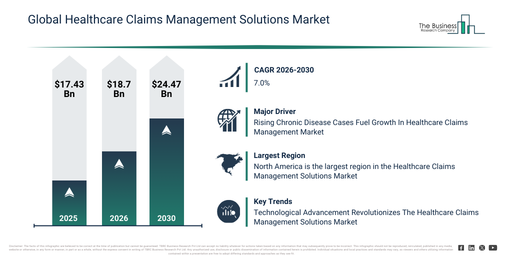
    The healthcare claims management solutions market has experienced robust growth in recent years. It is projected to expand from $17.43 billion in 2025 to $18.7 billion in 2026, demonstrating a compound annual growth rate (CAGR) of 7.3%. Historically, this growth has been driven by increasing healthcare insurance coverage, rising claim volumes across providers, the adoption of digital billing systems, the growing complexity of reimbursement processes, and the demand for faster claim settlement.

    The market for healthcare claims management solutions is projected to experience robust expansion in the coming years. This market is predicted to reach $24.47 billion by 2030, driven by a compound annual growth rate (CAGR) of 7.0%. Several factors contribute to this growth over the forecast period, including the increased adoption of AI-driven claims platforms, a heightened focus on value-based care reimbursement, the broadening of cloud-based claims solutions, a greater emphasis on automating regulatory compliance, and the demand for real-time claims transparency. Key trends anticipated during the forecast period involve a rise in the uptake of automated claims processing systems, increased application of predictive analytics to improve claims accuracy, a growing integration of real-time patient data access, the proliferation of fraud detection and prevention instruments, and an amplified emphasis on data security and compliance.

    Get A Free Sample Report With In-Depth Market Insights:

    https://thebusinessresearchcompany.com/sample_request?id=40329534&type=smp&name=Healthcare%20Claims%20Management%20Solutions%20Market%20Report%202026&utm_source=Blogs&utm_medium=Paid&utm_campaign=Nov_PR

    Healthcare Claims Management Solutions Market Demand Drivers: What’s Powering Industry Growth?

    The expanding occurrence of chronic diseases is anticipated to fuel the expansion of the healthcare claims management solutions market in the future. Chronic diseases are characterized as long-term health conditions that persist over an extended period, typically requiring ongoing medical oversight. Healthcare claims management solutions offer crucial support for the efficient and accurate processing of claims, ensuring that healthcare providers receive timely reimbursement for services related to chronic disease management. For instance, in January 2023, according to the National Center for Biotechnology Information (NCBI), a US-based National Library of Medicine, it is projected that by the year 2050, the number of individuals aged 50 years and older who have at least one chronic illness will surge by 99.5%, rising to 142.66 million. Therefore, the increasing incidence of chronic diseases will propel the healthcare claims management solutions market.

    Healthcare Claims Management Solutions Market Segment Analysis And Revenue Potential

    The healthcare claims management solutions market covered in this report is segmented –

    1) By Type: Software, Services

    2) By Deployment Mode: Web-Based, Cloud-Based, On-Premise

    3) By End-User: Healthcare Payers, Healthcare Providers, Other End-Users

    Subsegments:

    1) By Software: Claims Processing Software, Revenue Cycle Management Software, Medical Billing Software, Analytics And Reporting Tools

    2) By Services: Consulting Services, Implementation Services, Training And Support Services, Claims Auditing Services

    Healthcare Claims Management Solutions Market Innovation Trends Shaping Future Development

    Major companies within the healthcare claims management solutions market are prioritizing product innovation, exemplified by developments like the AI-enabled claims data activator Suite, to maintain their competitive standing. The Claims Data Activator facilitates data interoperability, intelligent analytics, and smart reporting by employing Document AI, the Healthcare Natural Language API, and the Healthcare API to transform unstructured data into structured information. For instance, in April 2023, Google LLC, a US-based technology corporation, launched a new Google Cloud AI-enabled claims data activator. This system is designed to assist health plans and providers in decreasing administrative costs and responsibilities by converting unstructured data into structured data, thereby empowering specialists to make swifter, more insightful decisions that enhance patient care.

    Healthcare Claims Management Solutions Market Key Players Shaping Industry Direction

    Major companies operating in the healthcare claims management solutions market are Allscripts Healthcare Solutions Inc, Athenahealth, McKesson Corporation, Oracle Corporation, Availity LLC, Cerner Corporation, Change Healthcare, Conifer Health Solutions LLC, eClinicalWorks, Emdeon Inc, Epic Systems Corporation, Inovalon Co, InstaMed LLC, Kareo Co, NaviNet Inc, NTT Data Services, Optum Inc, SSI Group LLC, Cognizant Technology Ltd, TruBridge Co, Waystar Co, ZirMed Inc

    View The Full Healthcare Claims Management Solutions Market Report:

    https://thebusinessresearchcompany.com/report/healthcare-claims-management-solutions-global-market-report?utm_source=Blogs&utm_medium=Paid&utm_campaign=Nov_PR

    Healthcare Claims Management Solutions Market Regional Analysis: Which Geography Leads On Revenue?

    North America was the largest region in the healthcare claim management solution market in 2025. Asia-Pacific is expected to be the fastest-growing region in the forecast period. The regions covered in the healthcare claims management solutions market report are Asia-Pacific, South East Asia, Western Europe, Eastern Europe, North America, South America, Middle East, Africa.

    Reach Out To Our Team:

    The Business Research Company: https://www.thebusinessresearchcompany.com/

    Americas: +1 310-496-7795

    Asia: +44 7882 955267 & +91 8897263534

    Europe: +44 7882 955267

    Email us at: marketing@tbrc.info

    Follow us on:

    LinkedIn: https://in.linkedin.com/company/the-business-research-company

    YouTube: https://www.youtube.com/channel/UC24_fI0rV8cR5DxlCpgmyFQ

    Global Market Model: https://www.thebusinessresearchcompany.com/global-market-model
  • Healthcare Business Process Outsourcing (BPO) Market Projected For Strong Expansion Through 2030: Key Trends And Future Outlook

    Healthcare Business Process Outsourcing (BPO) Market Projected For Strong Expansion Through 2030: Key Trends And Future Outlook

    Backed by market attractiveness analysis, total addressable market sizing, company benchmarking matrices, interactive Excel dashboards, wider supply chain intelligence, emerging startup coverage, and detailed product-level insights, The Business Research Company’s 2026 market reports are designed to offer research that is more actionable and strategically valuable than ever.

    Healthcare Business Process Outsourcing (BPO) Market Revenue Outlook: What CAGR Lies Ahead Through 2030?

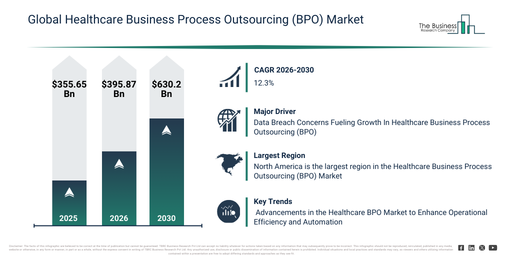
    The healthcare business process outsourcing (bpo) market has experienced rapid growth in its size over recent years. It is anticipated to expand from $355.65 billion in 2025 to $395.87 billion in 2026, driven by a compound annual growth rate (CAGR) of 11.3%. The historical increase in this market can be attributed to several factors, including the increasing administrative complexity in healthcare operations, rising operational costs for providers and payers, the expansion of health insurance coverage, growing regulatory compliance requirements, and the early adoption of outsourced billing services.

    The healthcare business process outsourcing (bpo) market is projected to experience substantial expansion in the coming years, reaching $630.2 billion by 2030 at a compound annual growth rate (CAGR) of 12.3%. This anticipated growth is driven by several factors, including a heightened demand for scalable outsourcing solutions, increased capital allocation towards AI-powered BPO services, the broadening of support for value-based care administration, an intensified emphasis on cybersecurity and compliance in outsourcing, and an ongoing transition to digital healthcare processes. Key developments anticipated during this timeframe encompass a greater uptake of comprehensive revenue cycle outsourcing, an increased application of automation in claims and billing procedures, an escalating need for compliance and data security offerings, the enlargement of IT infrastructure management outsourcing, and a heightened priority on optimizing expenditures.

    Get A Free Sample Report With In-Depth Market Insights:

    https://thebusinessresearchcompany.com/sample_request?id=24630124&type=smp&name=Healthcare%20Business%20Process%20Outsourcing%20%28BPO%29%20Market%20Report%202026&utm_source=Blogs&utm_medium=Paid&utm_campaign=Nov_PR

    Healthcare Business Process Outsourcing (BPO) Market Growth Drivers: What’s Behind The Acceleration?

    Rising occurrences of data breaches are expected to fuel the expansion of the healthcare business process outsourcing market in the coming years. A data breach is defined as the unauthorized access, disclosure, acquisition, or sharing of sensitive or private information. Healthcare BPO providers implement robust data handling procedures and security protocols to ensure the confidentiality and integrity of patient data. For instance, in January 2025, the Identity Theft Resource Center (ITRC), a US-based non-profit organization, reported that the number of data compromises in 2023 (3,205) increased by 78 percentage points when compared to 2022 (1,801). Consequently, the increasing data threats are driving the growth of the healthcare business process outsourcing market.

    Healthcare Business Process Outsourcing (BPO) Market Segmentation And Category Overview

    The healthcare business process outsourcing (bpo) market covered in this report is segmented –

    1) By Service Type: Provider Outsourcing Services, Payer Outsourcing Services, Operational Outsourcing Services, Information Technology Infrastructure Management Services

    2) By Provider Service: Revenue Cycle Management, Patient Enrollment, Patient Care

    3) By Solution: Manufacturing, Research And Development, Non-Clinical Services

    4) By End User: Healthcare Providers, Healthcare Payers, Other End-Users

    Subsegments:

    1) By Provider Outsourcing Services: Medical Billing And Coding, Revenue Cycle Management, Patient Scheduling And Registration, Telehealth Services

    2) By Payer Outsourcing Services: Claims Processing, Member Enrollment And Eligibility Verification, Fraud Detection And Prevention, Customer Support Services

    3) By Operational Outsourcing Services: Human Resources Outsourcing, Procurement And Supply Chain Management, Facility Management Services, Administrative Support Services

    4) By Information Technology Infrastructure Management Services: IT Help Desk Support, Cloud Services Management, Network Management, Data Security And Compliance Services

    Healthcare Business Process Outsourcing (BPO) Market Trends Redefining Industry Growth

    Major companies operating within the healthcare business process outsourcing (BPO) market are increasingly embracing technological advancements, such as agentic AI-powered digital workforce platforms, to address the growing demand for fewer claim denials, greater operational efficiency, and scalable, cost-effective revenue cycle management. An agentic AI-powered digital workforce platform, unlike traditional BPO models that are heavily reliant on manual processing and rigid rule-based workflows, employs intelligent digital agents driven by AI, natural language understanding, machine learning, and automation to autonomously perform or assist with complex back-office tasks, including eligibility verification, denial management, prior authorization, and appeals. For example, in October 2025, AGS Health, a US-based revenue cycle management and BPO services provider, launched its Agentic Digital Workforce Solutions, a collection of AI agents specifically tailored for RCM. These agents provide human-like reasoning and decision support by understanding natural language, adapting to evolving payer rules, and collaborating with human staff, thereby automating high-volume repetitive tasks while identifying actionable next steps. The solution integrates generative AI, RPA, and workflow orchestration to reduce denial rates, improve clean claim ratios, and enhance cash flow, allowing RCM teams to dedicate their efforts to more high-value work.

    Healthcare Business Process Outsourcing (BPO) Market Competitive Analysis Of Leading Industry Participants

    Major companies operating in the healthcare business process outsourcing (bpo) market are UnitedHealth Group Incorporated, Accenture plc, International Business Machines Corporation, Tata Consultancy Services Limited, Cognizant Technology Solutions Corporation, IQVIA Holdings Inc., Quintiles IMS Holdings Inc., HCL Technologies Limited, Infosys Limited, Wipro Limited, Sutherland Global Services Inc., Xerox Holdings Corporation, Genpact Limited, Access Healthcare Services Pvt. Ltd., Parexel International Corporation, R1 RCM Inc., NTT Data Corporation, EXLService Holdings Inc., Sykes Enterprises Incorporated, WNS Limited, Firstsource Solutions Limited, Invensis Technologies Pvt. Ltd., Hinduja Global Solutions Limited, Mphasis Limited, GeBBS Healthcare Solutions Inc., Akurate Management Solutions Pvt Ltd., Gevity Consulting Inc., Octopus Tech Solutions Pvt Ltd.

    View The Full Healthcare Business Process Outsourcing (BPO) Market Report:

    https://thebusinessresearchcompany.com/report/healthcare-business-process-outsourcing-bpo-global-market-report?utm_source=Blogs&utm_medium=Paid&utm_campaign=Nov_PR

    Healthcare Business Process Outsourcing (BPO) Market Geographic Spread And Regional Opportunities

    North America was the largest region in the healthcare business process outsourcing (BPO) market in 2025. Asia-Pacific is expected to be the fastest-growing region in the forecast period. The regions covered in the healthcare business process outsourcing (bpo) market report are Asia-Pacific, South East Asia, Western Europe, Eastern Europe, North America, South America, Middle East, Africa.

    Reach Out To Our Team:

    The Business Research Company: https://www.thebusinessresearchcompany.com/

    Americas: +1 310-496-7795

    Asia: +44 7882 955267 & +91 8897263534

    Europe: +44 7882 955267

    Email us at: marketing@tbrc.info

    Follow us on:

    LinkedIn: https://in.linkedin.com/company/the-business-research-company

    YouTube: https://www.youtube.com/channel/UC24_fI0rV8cR5DxlCpgmyFQ

    Global Market Model: https://www.thebusinessresearchcompany.com/global-market-model
  • Healthcare Business Intelligence Market Outlook 2026–2030: Growth Trends, Market Dynamics And Emerging Opportunities

    Healthcare Business Intelligence Market Outlook 2026–2030: Growth Trends, Market Dynamics And Emerging Opportunities

    Featuring market attractiveness scoring, total addressable market sizing, company benchmarking matrices, interactive Excel dashboards, deeper supply chain intelligence, emerging startup tracking, and granular product-level insights, The Business Research Company’s 2026 market reports are built to deliver research that is both more actionable and more strategically valuable.

    Healthcare Business Intelligence Market Growth Analysis: How Will Revenue Trend Over The Forecast Period?

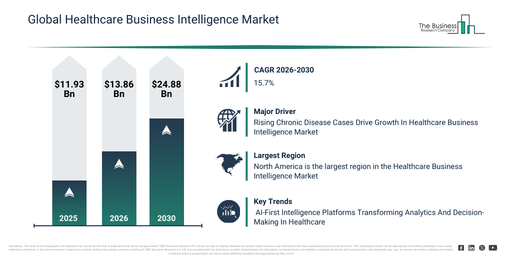
    The healthcare business intelligence market size has experienced significant expansion in recent years. This market is set to expand from $11.93 billion in 2025 to $13.86 billion in 2026, demonstrating a compound annual growth rate (CAGR) of 16.2%. The historical surge can be linked to the greater availability of electronic health data, the initial adoption of reporting and dashboard tools, increasing pressure to curb healthcare costs, the broadening of performance measurement practices, and an elevated focus on operational transparency.

    The healthcare business intelligence market is poised for significant expansion in the next few years, with its valuation expected to reach $24.88 billion by 2030, demonstrating a compound annual growth rate (CAGR) of 15.7%. This projected growth throughout the forecast period can be attributed to several factors, including increased investments in AI-driven analytics, a rising demand for population health insights, the expansion of value-based care analytics, greater adoption of cloud-based BI platforms, and continuous advancements in healthcare data interoperability. Noteworthy trends during this period encompass the increasing uptake of advanced healthcare analytics platforms, a growing utilization of predictive and prescriptive analytics, the expanding integration of real-time data visualization tools, the proliferation of cloud-based business intelligence solutions, and an enhanced focus on data-driven decision making.

    Get A Free Sample Report With In-Depth Market Insights:

    https://thebusinessresearchcompany.com/sample_request?id=58087464&type=smp&name=Healthcare%20Business%20Intelligence%20Market%20Report%202026&utm_source=Blogs&utm_medium=Paid&utm_campaign=Nov_PR

    Healthcare Business Intelligence Market Growth Factors Behind Sustained Expansion

    The rising occurrence of chronic diseases is anticipated to drive the future expansion of the healthcare business intelligence market. Chronic diseases refer to long-lasting health conditions that persist over an extended period and typically require ongoing medical management. Healthcare business intelligence is utilized in chronic disease management to enhance patient care, improve resource allocation, reduce costs, and facilitate data-driven decision-making for better outcomes in long-term patient health. For instance, in January 2023, according to the National Center for Biotechnology Information (NCBI), a US-based National Library of Medicine, it is projected that by 2050, the number of individuals aged 50 years and older who have at least one chronic illness will surge by 99.5%, rising to 142.66 million. Therefore, the increasing incidence of chronic diseases will propel the healthcare business intelligence market.

    Healthcare Business Intelligence Market Segment Outlook: Which Categories Are Growing Fastest?

    The healthcare business intelligence market covered in this report is segmented –

    1) By Component: Platforms, Software, Services

    2) By Function: Query and Reporting, OLAP and Visualization, Performance Management

    3) By Mode of Delivery: On-Premise Model, Hybrid Model, Cloud-Based Model

    4) By Application: Financial Analysis, Clinical Data Analysis, Patient Care Analysis, Other Applications

    5) By End-User: Payers, Healthcare Providers, Other End-Users

    Subsegments:

    1) By Platforms: Cloud-Based Platforms, On-Premise Platforms

    2) By Software: Analytics Software, Reporting Software, Data Visualization Tools, Dashboard Software

    3) By Services: Consulting Services, Implementation Services, Training and Support Services, Maintenance Services

    Healthcare Business Intelligence Market Strategic Trends: What Defines The Next Growth Phase?

    Leading companies within the healthcare business intelligence (BI) market are increasingly concentrating on technological advancements, such as AI-first healthcare intelligence platforms, to address the growing need for real-time predictive analytics, integrated cross-domain data, and scalable decision support. This drive is influenced by factors including the increasing adoption of electronic health records (EHR), rising operational costs, and mandates for value-based care. An AI-first healthcare intelligence platform is characterized as a cloud-native system that integrates diverse data sources (such as clinical, financial, operational, and HR), applies machine learning and integrated AI agents or copilots, and provides self-service tools for analytics and workflow automation. Unlike traditional BI tools, which often rely on static reports and isolated data, these platforms offer dynamic, predictive, and prescriptive insights that can act on data in near real time. For instance, in May 2025, Innovaccer, a US-based healthcare AI company, introduced Innovaccer Gravity, an intelligence platform designed for healthcare. Built on a modern, cloud-agnostic architecture (compatible with AWS, Azure, Snowflake, Databricks) and compliant with HIPAA, HITRUST, and SOC 2, Gravity unifies EHR, claims, financial, operational, and supply chain data via over 400 pre-built connectors and more than 100 FHIR resources. It features a data fabric layer, pre-trained AI models (such as OCR and speech analytics), and low-code or no-code studios for building custom AI agents and workflows, enabling healthcare organizations with comprehensive cross-domain intelligence, self-serve analytics, and a quicker return on investment at a reduced total cost of ownership. This platform ultimately contributes to better patient care, improved operational efficiency, and stronger financial performance.

    Healthcare Business Intelligence Market Leading Companies And Competitive Benchmarking

    Major companies operating in the healthcare business intelligence market are Microsoft Corporation, Oracle Corporation, Tableau Software, SAP SE, IBM Corporation, QlikTech International AB, Sisense Inc, SAS Institute Inc, BOARD International, Yellowfin BI, MicroStrategy Incorporated, Infor Inc, Domo Inc., Information Builders, Perficient Inc., Tibco Software Inc., Panorama Software Inc, Definitive Healthcare, Dimensional Insight Inc., Looker Data Sciences Inc., GoodData Corporation, Phocas Software, Pyramid Analytics Inc., Dundas Data Visualization Inc., Alteryx Inc., ThoughtSpot Inc., Rapid Insight Inc., Aptean Inc., Health Catalyst Inc., Arcadia.io Inc., MedeAnalytics Inc., McKesson Corporation, Optum Inc., Cerner Corporation, Allscripts Healthcare Solutions Inc., Athenahealth Inc., Epic Systems Corporation, GE Healthcare, Philips Healthcare, Siemens Healthineers, Change Healthcare

    View The Full Healthcare Business Intelligence Market Report:

    https://thebusinessresearchcompany.com/report/healthcare-business-intelligence-global-market-report?utm_source=Blogs&utm_medium=Paid&utm_campaign=Nov_PR

    Healthcare Business Intelligence Market Top Region By Revenue And Market Share

    North America was the largest region in the healthcare business intelligence market in 2025. Asia-Pacific is expected to be the fastest-growing region in the forecast period. The regions covered in the healthcare business intelligence market report are Asia-Pacific, South East Asia, Western Europe, Eastern Europe, North America, South America, Middle East, Africa.

    Reach Out To Our Team:

    The Business Research Company: https://www.thebusinessresearchcompany.com/

    Americas: +1 310-496-7795

    Asia: +44 7882 955267 & +91 8897263534

    Europe: +44 7882 955267

    Email us at: marketing@tbrc.info

    Follow us on:

    LinkedIn: https://in.linkedin.com/company/the-business-research-company

    YouTube: https://www.youtube.com/channel/UC24_fI0rV8cR5DxlCpgmyFQ

    Global Market Model: https://www.thebusinessresearchcompany.com/global-market-model