Category: Healthcare Services

  • Excimer Laser Market Growth In 2026: Market Size, Key Drivers And Future Outlook

    Excimer Laser Market Growth In 2026: Market Size, Key Drivers And Future Outlook

    Backed by market attractiveness analysis, total addressable market sizing, company benchmarking matrices, interactive Excel dashboards, wider supply chain intelligence, emerging startup coverage, and detailed product-level insights, The Business Research Company’s 2026 market reports are designed to offer research that is more actionable and strategically valuable than ever.

    Excimer Laser Market Value Growth And Long-Term Outlook

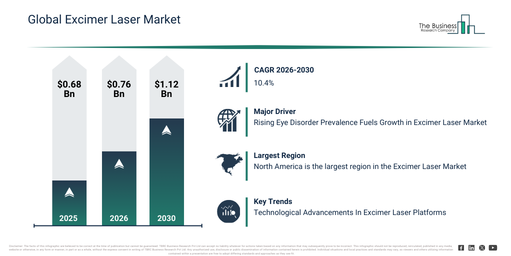
    The excimer laser market has experienced rapid expansion in recent years. Projections indicate it will increase from $0.68 billion in 2025 to $0.76 billion by 2026, demonstrating a compound annual growth rate (CAGR) of 10.7%. Historically, this growth has been driven by factors such as the rise in vision correction procedures, increased semiconductor manufacturing capacity, wider acceptance of laser-based medical treatments, progress in laser gas technologies, and the growing need for high-precision industrial tools.

    The excimer laser market is anticipated to experience substantial expansion in the coming years. By 2030, this market is projected to reach $1.12 billion, demonstrating a compound annual growth rate (CAGR) of 10.4%. This projected growth is driven by several factors, including a heightened demand for sophisticated ophthalmic procedures, the ongoing miniaturization of semiconductor nodes, increased funding for medical laser advancements, the expanding application of lasers in cutting-edge manufacturing processes, and the wider acceptance of minimally invasive surgical techniques. Key trends anticipated during this period involve the greater integration of excimer lasers in refractive eye surgery, an escalating need for precise medical laser systems, their expanding application in semiconductor photolithography, the broadening scope of minimally invasive dermatological uses, and an intensified emphasis on the accuracy and control of laser technology.

    Get A Free Sample Report With In-Depth Market Insights:

    https://thebusinessresearchcompany.com/sample_request?id=21067324&type=smp&name=Excimer%20Laser%20Market%20Report%202026&utm_source=Blogs&utm_medium=Paid&utm_campaign=Nov_PR

    Excimer Laser Market Growth Momentum: What Factors Are Shaping Demand?

    The excimer laser market is anticipated to expand due to the rising occurrence of eye disorders. Various factors contribute to the escalating number of eye conditions, including prolonged screen exposure, environmental influences, existing chronic illnesses, insufficient proactive medical attention, and lifestyle choices. Excimer lasers are employed in treating eye disorders to reshape the cornea and rectify visual impairments like nearsightedness, farsightedness, and astigmatism. As an illustration, a report from August 2024 by National Health Services, a US-based government organization, indicated that 8,400 low vision assessments took place during 2023-24, representing a 3.7% increase compared to 2022-23. Of these evaluations, 87.2% comprised initial examinations, with the residual 12.8% being follow-up appointments. Consequently, the growing frequency of eye disorders is acting as a catalyst for the expansion of the excimer laser market.

    Excimer Laser Market Segmentation: How Does The Market Break Down By Category?

    The excimer laser market covered in this report is segmented –

    1) By Type Of Gases: Noble Gas, Halogen Gas, Buffer Gas

    2) By Technology: Excimer Laser Gas Mixture, Excimer Laser Wavelength

    3) By Application: Photolithography, Laser Surgery, Pulsed Laser Deposition, Laser Making O Glass And Plastic, Pumping Of Another Laser

    4) By End User: Hospitals And Clinics, Semiconductor Industry, Automotive Industry, Other End Users

    Subsegments:

    1) By Noble Gas: Argon Fluoride (ArF) Lasers, Krypton Fluoride (KrF) Lasers, Xenon Fluoride (XeF) Lasers, Argon-Ion (Ar+) Lasers, Neon-Ion (Ne+) Lasers

    2) By Halogen Gas: Chlorine (Cl2) Lasers, Fluorine (F2) Lasers, Bromine (Br2) Lasers, Hydrogen Fluoride (HF) Lasers, Hydrogen Chloride (HCl) Lasers

    3) By Buffer Gas: Neon (Ne) As A Buffer Gas, Helium (He) As A Buffer Gas, Nitrogen (N2) As A Buffer Gas, Xenon (Xe) As A Buffer Gas, Hydrogen (H2) As A Buffer Gas

    Excimer Laser Market Trends: What’s Defining The Industry’s Next Phase?

    Leading companies in the excimer laser market are developing technologically advanced solutions, such as excimer laser platforms, to achieve high precision and minimal thermal damage. Excimer laser platforms are sophisticated systems that utilize excimer lasers to deliver precise, high-energy ultraviolet light for applications including medical procedures, material processing, and scientific research. For instance, in January 2024, Bausch + Lomb Corporation, a US-based healthcare company, secured approval from the U.S. Food and Drug Administration (FDA) for its TENEO Excimer Laser Platform. This marked a significant advancement in LASIK vision correction surgery for myopia and myopic astigmatism. The TENEO platform incorporates an advanced eye-tracking system that operates at 1,740 Hz, which is more than three times faster than the laser’s repetition rate. This feature helps ensure precise laser ablation patterns, even amidst patient eye movements.

    Excimer Laser Market Competitive Overview And Top Companies

    Major companies operating in the excimer laser market are Abbott Laboratories, Carl Zeiss AG, Alcon Inc., TRUMPF GmbH + Co. KG, Nikon Corporation, Bausch & Lomb Incorporated, Coherent Inc., IPG Photonics Corporation, Hoya Corporation, Advanced Medical Optics Inc., Lumenis Ltd., SUSS MicroTec SE, Jenoptik AG, LASIK Vision Correction Inc., Gigaphoton Inc., TECHNOLAS Perfect Vision GmbH, Ellex Medical Lasers Limited, SCHWIND eye-tech-solutions GmbH & Co. KG, Radiant Dyes Laser & Accessoires GmbH, Ziemer Ophthalmic Systems AG, A.R.C. Laser GmbH, FEMTO LASER Inc., WaveLight GmbH, LightMachinery Inc.

    View The Full Excimer Laser Market Report:

    https://thebusinessresearchcompany.com/report/excimer-laser-global-market-report?utm_source=Blogs&utm_medium=Paid&utm_campaign=Nov_PR

    Excimer Laser Market Geographic Landscape: Which Region Leads Industry Growth?

    North America was the largest region in the excimer laser market in 2025. The regions covered in the excimer laser market report are Asia-Pacific, South East Asia, Western Europe, Eastern Europe, North America, South America, Middle East, Africa.

    Reach Out To Our Team:

    The Business Research Company: https://www.thebusinessresearchcompany.com/

    Americas: +1 310-496-7795

    Asia: +44 7882 955267 & +91 8897263534

    Europe: +44 7882 955267

    Email us at: marketing@tbrc.info

    Follow us on:

    LinkedIn: https://in.linkedin.com/company/the-business-research-company

    YouTube: https://www.youtube.com/channel/UC24_fI0rV8cR5DxlCpgmyFQ

    Global Market Model: https://www.thebusinessresearchcompany.com/global-market-model
  • Exanthema Market Size And Forecast 2026–2030: Trends Driving Industry Expansion

    Exanthema Market Size And Forecast 2026–2030: Trends Driving Industry Expansion

    Featuring market attractiveness scoring, total addressable market sizing, company benchmarking matrices, interactive Excel dashboards, deeper supply chain intelligence, emerging startup tracking, and granular product-level insights, The Business Research Company’s 2026 market reports are built to deliver research that is both more actionable and more strategically valuable.

    Exanthema Market Poised To Hit $2.76 Billion By 2030 With A 4.1% CAGR

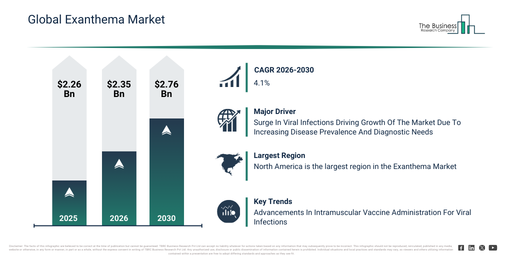
    The exanthema market has shown consistent expansion in recent years. It is projected to expand from $2.26 billion in 2025 to $2.35 billion by 2026, exhibiting a compound annual growth rate (CAGR) of 4.1%. This historical growth can be linked to factors such as viral infection outbreaks, the prevalence of childhood diseases, reliance on clinical diagnosis, existing vaccination gaps, and an increase in dermatology consultations.

    The exanthema market is anticipated to experience steady expansion in the upcoming years, with projections indicating a rise to $2.76 billion by 2030, exhibiting a compound annual growth rate (CAGR) of 4.1%. This growth during the forecast period can be attributed to factors such as improved diagnostic awareness, comprehensive viral surveillance programs, the expansion of pediatric healthcare, the adoption of early intervention protocols, and various infection control initiatives. Significant trends expected during this period include a rising incidence of viral skin infections, an increased focus on early clinical diagnosis, the broader availability of supportive care treatments, advancements in pediatric rash management, and an emphasis on infection-specific treatment approaches.

    Get A Free Sample Report With In-Depth Market Insights:

    https://thebusinessresearchcompany.com/sample_request?id=86819083&type=smp&name=Exanthema%20Market%20Report%202026&utm_source=Blogs&utm_medium=Paid&utm_campaign=Nov_PR

    Exanthema Market Expansion Drivers: What’s Shaping Future Growth?

    The increasing occurrence of viral infections is anticipated to boost the expansion of the exanthema market in the future. Viral infections are defined as conditions brought on by viruses that penetrate and proliferate inside the body’s cells, resulting in diverse symptoms and ailments. The surge in viral infections stems from heightened global travel, urban development, shifts in climate, and compromised immune systems within populations. The growing number of viral infections fuels the need for exanthema treatments since more individuals exhibit skin rashes, thereby escalating the requirement for efficient management. Exanthema functions as a discernible immune reaction to viral infections, assisting in the expulsion of pathogens, indicating immune system activation, and aiding in diagnosis by signifying the body’s struggle against the virus. For example, in August 2024, data from the Centers for Disease Control and Prevention, a US-based government agency, showed that from 2022–2024, the percentage of people with IgM antibodies, signifying a recent Parvovirus B19 infection, stayed under 3% but dramatically rose to 10% by June 2024. The most notable increase was observed among children aged 5–9 years, where the prevalence climbed from 15% to 40% during this timeframe. Consequently, the increasing prevalence of viral infections is propelling the expansion of the exanthema market.

    Exanthema Market Segment Trends And Revenue Contributors

    The exanthema market covered in this report is segmented –

    1) By Types: Bacterial, Viral, Other Types

    2) By Treatment: Topical Treatments, Systemic Treatments, Supportive Care

    3) By Diagnosis Method: Clinical Examination, Laboratory Tests, Imaging Techniques

    4) By Application: Rubeola, Rubella, Erythema Infectiosum, Roseola Infantum

    5) By End-Users: Hospitals, Homecare, Specialty Centers, Other End-Users

    Subsegments:

    1) By Bacterial: Scarlet Fever, Meningococcemia, Staphylococcal Scalded Skin Syndrome (Ssss), Lyme Disease, Tuberculosis-Associated Exanthema

    2) By Viral: Measles (Rubeola), Rubella (German Measles), Varicella (Chickenpox), Roseola (Exanthem Subitum), Hand, Foot, And Mouth Disease, Parvovirus B19, Dengue Fever Rash, Zika Virus Rash

    3) By Other Types: Drug-Induced Exanthema (Hypersensitivity Reactions), Autoimmune-Related Exanthema (Lupus, Kawasaki Disease), Allergic Dermatitis-Related Exanthema, Fungal Infections Leading To Exanthema, Environmental And Toxin-Induced Exanthema

    Exanthema Market Industry Trends Fueling Future Revenue Growth

    Leading firms within the exanthema market are concentrating on creating new therapies, including the intramuscular (IM) delivery of vaccines and antiviral medications, with the aim of boosting effectiveness, minimizing adverse effects, and improving patient results in addressing viral infections linked to exanthematous conditions. Intramuscular (IM) administration for vaccines and antiviral treatments involves introducing drugs or immunizations straight into the muscle tissue via a syringe and needle. This technique facilitates rapid absorption of these substances into the bloodstream, utilizing the abundant blood vessels in the muscles to elicit an immune reaction or a desired therapeutic impact. As an example, in March 2023, Merck & Co. Inc., a US-based pharmaceutical company, disclosed that the FDA had cleared the intramuscular (IM) administration pathway for its MMRV vaccines M-M-R II, VARIVAX, and ProQuad. The IM route is recognized for providing superior stability and efficacy for these live-virus vaccines compared to alternative delivery methods, representing a vital progression in improving public health initiatives for preventing these potentially serious viral infections.

    Exanthema Market Competitive Landscape: Which Companies Lead The Industry?

    Major companies operating in the exanthema market are F. Hoffmann-La Roche Ltd., Merck & Co. Inc., Sanofi SA, Abbott Laboratories, GlaxoSmithKline plc, Serum Institute of India Pvt. Ltd., Takeda Pharmaceutical Company Limited, Amgen Inc., Daiichi Sankyo Company Limited, Biological E. Limited, Zydus Lifesciences Limited, Bio Farma, Meridian Bioscience Inc., West-Ward Pharmaceutical Corp., Trinity Biotech plc, Biosynth Srl, Creative Diagnostics, Taj Pharmaceuticals Limited, TestLine Clinical Diagnostics s.r.o., The Native Antigen Co. Ltd., QED Bioscience Inc.

    View The Full Exanthema Market Report:

    https://thebusinessresearchcompany.com/report/exanthema-global-market-report?utm_source=Blogs&utm_medium=Paid&utm_campaign=Nov_PR

    Exanthema Market Largest Region: Which Geography Holds The Biggest Share?

    North America was the largest region in the exanthema market in 2025. Asia-Pacific is expected to be the fastest-growing region in the forecast period. The regions covered in the exanthema market report are Asia-Pacific, South East Asia, Western Europe, Eastern Europe, North America, South America, Middle East, Africa.

    Reach Out To Our Team:

    The Business Research Company: https://www.thebusinessresearchcompany.com/

    Americas: +1 310-496-7795

    Asia: +44 7882 955267 & +91 8897263534

    Europe: +44 7882 955267

    Email us at: marketing@tbrc.info

    Follow us on:

    LinkedIn: https://in.linkedin.com/company/the-business-research-company

    YouTube: https://www.youtube.com/channel/UC24_fI0rV8cR5DxlCpgmyFQ

    Global Market Model: https://www.thebusinessresearchcompany.com/global-market-model
  • Essential Thrombocythemia (ET) Market 2026 Outlook: Market Size, CAGR And Key Growth Opportunities

    Essential Thrombocythemia (ET) Market 2026 Outlook: Market Size, CAGR And Key Growth Opportunities

    Built to provide research that’s more actionable and strategically valuable, The Business Research Company’s 2026 market reports include market attractiveness analysis, total addressable market sizing, company benchmarking matrices, interactive Excel dashboards, broader supply chain intelligence, emerging startup tracking, and in-depth product insights.

    Essential Thrombocythemia (ET) Market Size And Revenue Outlook Through 2030

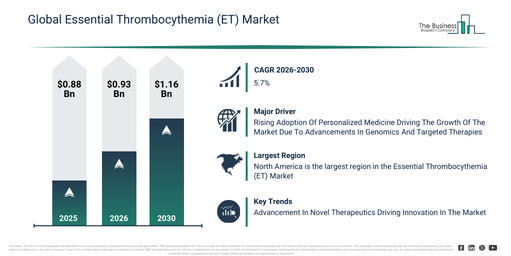
    The market for essential thrombocythemia (et) has experienced significant expansion recently. Projections indicate it will expand from $0.88 billion in 2025 to reach $0.93 billion by 2026, demonstrating a compound annual growth rate (CAGR) of 5.6%. Historically, this expansion is linked to factors such as myeloproliferative disorder awareness, enhanced platelet disorder diagnosis, increased aspirin therapy usage, the proliferation of hematology clinics, and the growing demand for chronic disease management.

    The essential thrombocythemia (et) market size is anticipated to undergo significant expansion in the coming years. It is projected to reach $1.16 billion in 2030, demonstrating a compound annual growth rate (CAGR) of 5.7%. This growth over the forecast period can be attributed to the adoption of genetic profiling, the development of targeted therapies, early risk stratification, personalized hematology care, and improved survival outcomes. Key trends expected during the forecast period include an increasing focus on chronic blood disorders, greater utilization of cytoreductive therapies, the expansion of genetic mutation testing, a rising emphasis on long-term disease monitoring, and the integration of personalized treatment strategies.

    Get A Free Sample Report With In-Depth Market Insights:

    https://thebusinessresearchcompany.com/sample_request?id=43595003&type=smp&name=Essential%20Thrombocythemia%20%28ET%29%20Market%20Report%202026&utm_source=Blogs&utm_medium=Paid&utm_campaign=Nov_PR

    Essential Thrombocythemia (ET) Market Development Factors: What’s Supporting Demand?

    The increasing integration of personalized medicine is anticipated to drive the expansion of the essential thrombocythemia (ET) market in the coming years. Personalized medicine represents a healthcare strategy that customizes treatment and prevention plans for individuals, considering their genetic characteristics, lifestyle, and environmental influences. The adoption of this approach is accelerating thanks to advancements in genomics, biotechnology, and data analytics, leading to more precise diagnostic tools and targeted therapeutic interventions. For essential thrombocythemia, personalized medicine is beneficial as it enables therapies specifically targeting genetic mutations, thereby improving the accuracy of treatment and overall patient outcomes. For example, in February 2024, the Personalized Medicine Coalition, a US-based non-profit organization, reported that the FDA approved 16 novel personalized therapies for patients with rare diseases in 2023, an increase from six in 2022. Thus, the rising acceptance of personalized medicine is fueling the growth of the essential thrombocythemia (ET) market.

    Essential Thrombocythemia (ET) Market Segment Analysis Spotlighting Growth Areas

    The essential thrombocythemia (et) market covered in this report is segmented –

    1) By Treatment Type: Interferon, Anagrelide, Hydroxyurea, Aspirin

    2) By Diagnosis: Blood Tests, Bone Marrow Biopsy, Gene Mutation Analysis, Other Diagnosis

    3) By End User: Hospitals, Research Organizations, Specialty Clinics

    Subsegments:

    1) By Interferon: Pegylated Interferon, Standard Interferon, Combination Therapy

    2) By Anagrelide: Monotherapy, Combination With Aspirin, Dose-Adjusted Therapy

    3) By Hydroxyurea: Low-Dose Therapy, High-Dose Therapy, Combination With Antiplatelet Agents

    4) By Aspirin: Low-Dose Aspirin, High-Dose Aspirin, Combination With Cytoreductive Therapy

    Essential Thrombocythemia (ET) Market Trends Powering Strategic Industry Growth

    Leading companies active in the essential thrombocythemia (ET) market are prioritizing novel therapeutic approaches, such as Phase 3 clinical trials for bomedemstat, to enhance treatment effectiveness, improve patient outcomes, and expand the range of available treatment options. These late-stage trials evaluate bomedemstat, an LSD1 inhibitor, for its safety and effectiveness in patients who require advanced treatment solutions. For instance, in August 2024, Merck & Co. Inc., a US-based pharmaceutical company, announced the initiation of Shorespan-007, a Phase 3 clinical trial assessing bomedemstat, an investigational LSD1 inhibitor, for the treatment of essential thrombocythemia (ET). The trial specifically focuses on patients who have not previously received cytoreductive therapy. Global recruitment for Shorespan-007 has commenced, with patient enrollment now underway.

    Essential Thrombocythemia (ET) Market Leading Companies: Who Holds The Strongest Market Presence?

    Major companies operating in the essential thrombocythemia (et) market are Novartis AG, Bristol Myers Squibb Company, Incyte Corporation, PharmaEssentia Corporation, Geron Corporation, CTI BioPharma Corp., Merck Sharp and Dohme (Merck & Co Inc), Takeda Pharmaceutical Company Limited, Pfizer Inc, AstraZeneca PLC, Gilead Sciences Inc, Swedish Orphan Biovitrum AB, Ajax Therapeutics Inc, Aclaris Therapeutics Inc, Celon Pharma, Sareum Therapeutics plc, Karyopharm Therapeutics Inc, Jazz Pharmaceuticals plc, Kura Oncology Inc, Disc Medicine Inc.

    View The Full Essential Thrombocythemia (ET) Market Report:

    https://thebusinessresearchcompany.com/report/essential-thrombocythemia-et-global-market-report?utm_source=Blogs&utm_medium=Paid&utm_campaign=Nov_PR

    Essential Thrombocythemia (ET) Market Regional Analysis: Which Geography Leads On Revenue?

    North America was the largest region in the essential thrombocythemia (ET) market in 2025. The regions covered in the essential thrombocythemia (et) market report are Asia-Pacific, South East Asia, Western Europe, Eastern Europe, North America, South America, Middle East, Africa.

    Reach Out To Our Team:

    The Business Research Company: https://www.thebusinessresearchcompany.com/

    Americas: +1 310-496-7795

    Asia: +44 7882 955267 & +91 8897263534

    Europe: +44 7882 955267

    Email us at: marketing@tbrc.info

    Follow us on:

    LinkedIn: https://in.linkedin.com/company/the-business-research-company

    YouTube: https://www.youtube.com/channel/UC24_fI0rV8cR5DxlCpgmyFQ

    Global Market Model: https://www.thebusinessresearchcompany.com/global-market-model
  • Esoteric Testing Market Size Growth: From $41.24 Billion In 2026 To $67.57 Billion By 2030

    Esoteric Testing Market Size Growth: From $41.24 Billion In 2026 To $67.57 Billion By 2030

    Backed by market attractiveness analysis, total addressable market sizing, company benchmarking matrices, interactive Excel dashboards, wider supply chain intelligence, emerging startup coverage, and detailed product-level insights, The Business Research Company’s 2026 market reports are designed to offer research that is more actionable and strategically valuable than ever.

    Esoteric Testing Market Growth From $41.24 Billion In 2026 To $67.57 Billion By 2030 At A CAGR Of 13.1%

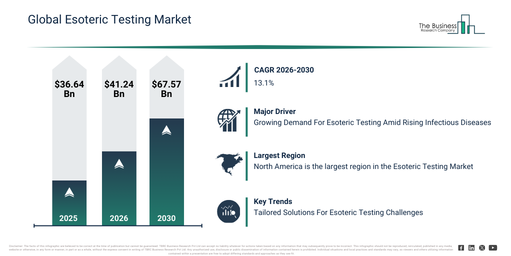
    The esoteric testing market size has seen substantial growth in recent years. This market is expected to expand from $36.64 billion in 2025 to $41.24 billion in 2026, achieving a compound annual growth rate (CAGR) of 12.6%. Historically, this growth has been driven by factors such as the requirement for rare disease identification, the advancement of laboratory infrastructure, the need for specialized tests from physicians, the expansion of clinical research, and the demands for improved diagnostic accuracy.

    The esoteric testing market is projected to experience substantial expansion over the upcoming years. This market is forecast to reach $67.57 billion by 2030, exhibiting a compound annual growth rate (CAGR) of 13.1%. This expansion during the forecast period can be largely attributed to factors such as increased adoption of genomic testing, advancements in biomarker discovery, greater automation within laboratories, the expansion of precision medicine, and a heightened demand for diagnosing complex diseases. Key trends anticipated in the coming years involve a surging demand for rare disease diagnostics, wider utilization of advanced molecular testing methods, the proliferation of specialized reference laboratories, an increase in personalized diagnostic strategies, and a strong focus on the accuracy of high-complexity testing.

    Get A Free Sample Report With In-Depth Market Insights:

    https://thebusinessresearchcompany.com/sample_request?id=94377494&type=smp&name=Esoteric%20Testing%20Market%20Report%202026&utm_source=Blogs&utm_medium=Paid&utm_campaign=Nov_PR

    Esoteric Testing Market Industry Drivers: What’s Behind The Revenue Growth?

    The growing incidence of infectious diseases is anticipated to drive the expansion of the esoteric testing market in the future. These diseases arise from infectious agents like bacteria and viruses, often influenced by migration, travel, and environmental shifts. Esoteric testing utilizes sophisticated technologies, such as nucleic acid technology, to identify the genetic material of these infectious agents, offering more precise and sensitive outcomes compared to conventional techniques like microbiological culture. For example, data released by the UK Health Security Agency, a UK-based executive agency, indicated that in England, UKHSA recorded 368 measles cases in 2023. This represented an almost sevenfold increase from the 53 cases reported in 2022, with the West Midlands and London contributing 44% and 33% of these cases, respectively. Consequently, the rising occurrence of infectious diseases is fueling the esoteric testing market.

    Esoteric Testing Market Segment Performance And Emerging Opportunities

    The esoteric testing market covered in this report is segmented –

    1) By Type: Infectious Diseases Testing, Endocrinology Testing, Oncology Testing, Genetics Testing, Toxicology Testing, Immunology Testing, Neurology Testing, Other Testing

    2) By Technology: Chemiluminescence Immunoassay, Enzyme-Linked Immunosorbent Assay, Mass Spectrometry, Real-Time PCR, DNA (Deoxyribonucleic Acid) Sequencing, Flow Cytometry, Other Technologies

    3) By End User: Independent And Reference Laboratories, Hospital-Based Laboratories

    Subsegments:

    1) By Infectious Diseases Testing: Viral Infections, Bacterial Infections, Fungal Infections

    2) By Endocrinology Testing: Hormone Level Tests, Thyroid Function Tests, Metabolic Disorders Testing

    3) By Oncology Testing: Tumor Marker Testing, Genetic Profiling, Liquid Biopsy Tests

    4) By Genetics Testing: Carrier Screening, Prenatal Testing, Pharmacogenomics

    5) By Toxicology Testing: Drug Testing, Heavy Metal Testing, Environmental Toxicity Testing

    6) By Immunology Testing: Autoimmune Disease Testing, Allergy Testing, Infectious Disease Antibody Testing

    7) By Neurology Testing: Neurodegenerative Disease Testing, Neuropathology Testing, Biomarker Analysis

    8) By Other Testing: Rare Disease Testing, Cardiovascular Testing, Metabolic And Nutritional Testing

    Esoteric Testing Market Growth Trends Reshaping The Competitive Landscape

    Leading enterprises within the esoteric testing market are concentrating on introducing new products, such as automated chemiluminescent enzyme immunoassay analyzers, to elevate assay analytical specifications and deliver enhanced ease of use and analytical performance. An automated chemiluminescent enzyme immunoassay analyzer represents a sophisticated laboratory instrument that employs chemiluminescent reactions and enzyme immunoassay techniques for the automated and highly sensitive detection of biomolecules. Illustratively, in May 2023, Tosoh Bioscience – Diagnostics EMEA, a Japan-based company committed to better diagnostics for better living, launched the AIA-CL300, its novel compact automated chemiluminescent enzyme immunoassay analyzer. This introduction features improved sensitivity, streamlined workflow automation, adaptability for laboratories of various scales, predictable consumption, and calibration stability, alongside user-friendly attributes designed to prevent errors. These collective characteristics effectively address the distinct requirements of the esoteric testing market, enabling precise and reliable detection of low-abundance biomarkers while optimizing processes and ensuring consistent output for accurate and reproducible results.

    Esoteric Testing Market Key Players: Which Companies Lead Industry Competition?

    Major companies operating in the esoteric testing market are LabCorp Holdings, Quest Diagnostics Inc., Eurofins Scientific SE, Sonic Healthcare Limited, Miraca Holdings Inc., H.U. Group Holdings Inc., Arup Laboratories Inc., OPKO Health Inc., Mayo Medical Laboratories, SYNLAB International GmbH, Myriad Genetics Inc., Bio-Reference Laboratories Inc., NeoGenomics Laboratories, Foundation Medicine Inc., Health Network Laboratories, Fulgent Genetics Inc., Grifols S.A., Adaptive Biotechnologies Corporation, Genova Diagnostics, Kind star Globalgene Technology Inc., National Medical Services Inc. (NMS), ACM Global Laboratories LLC, Miraca Life Sciences Inc., Leo Labs Inc., Pacific Bio labs Inc., Lab21 Healthcare Ltd., HealthQuest Esoterics Inc., Georgia Esoteric And Molecular Laboratory LLC., Atherotech Diagnostics Lab, Spectra Laboratories Inc

    View The Full Esoteric Testing Market Report:

    https://thebusinessresearchcompany.com/report/esoteric-testing-global-market-report?utm_source=Blogs&utm_medium=Paid&utm_campaign=Nov_PR

    Esoteric Testing Market Geographic Spread And Regional Opportunities

    North America was the largest region in the esoteric testing market in 2025. Asia-Pacific is expected to be the fastest-growing region in the forecast period. The regions covered in the esoteric testing market report are Asia-Pacific, South East Asia, Western Europe, Eastern Europe, North America, South America, Middle East, Africa.

    Reach Out To Our Team:

    The Business Research Company: https://www.thebusinessresearchcompany.com/

    Americas: +1 310-496-7795

    Asia: +44 7882 955267 & +91 8897263534

    Europe: +44 7882 955267

    Email us at: marketing@tbrc.info

    Follow us on:

    LinkedIn: https://in.linkedin.com/company/the-business-research-company

    YouTube: https://www.youtube.com/channel/UC24_fI0rV8cR5DxlCpgmyFQ

    Global Market Model: https://www.thebusinessresearchcompany.com/global-market-model
  • Human Metapneumovirus (hMPV) Therapeutics Market Analysis 2026: Market Size, Growth Trends And Industry Outlook

    Human Metapneumovirus (hMPV) Therapeutics Market Analysis 2026: Market Size, Growth Trends And Industry Outlook

    Featuring market attractiveness scoring, total addressable market sizing, company benchmarking matrices, interactive Excel dashboards, deeper supply chain intelligence, emerging startup tracking, and granular product-level insights, The Business Research Company’s 2026 market reports are built to deliver research that is both more actionable and more strategically valuable.

    Human Metapneumovirus (hMPV) Therapeutics Market Size Forecast: How Big Could The Market Get By 2030?

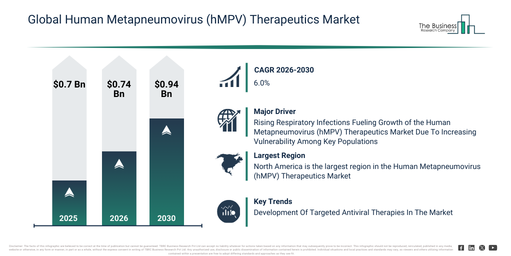
    The human metapneumovirus (hmpv) therapeutics market has seen robust expansion in its size over recent years. This market is projected to expand from $0.7 billion in 2025 to $0.74 billion by 2026, exhibiting a compound annual growth rate (CAGR) of 6.2%. Historically, this growth has been driven by several factors, including the widespread occurrence of respiratory viral infections, the absence of specific approved antiviral treatments for hmpv, a dependence on supportive and symptomatic care methods, a rise in hospital admissions for infants and elderly patients, and increasing understanding of viral lower respiratory tract infections.

    The market for human metapneumovirus (hmpv) therapeutics is projected to experience substantial expansion over the coming years, reaching a valuation of $0.94 billion by 2030, demonstrating a compound annual growth rate (CAGR) of 6.0%. This anticipated growth during the forecast period is driven by several factors, including an increased emphasis on developing therapeutics specifically targeting the virus, a rise in investment dedicated to respiratory virus research, a growing need for effective treatments among immunocompromised individuals, the expansion of clinical trials for new antiviral agents, and enhanced readiness for seasonal respiratory virus epidemics. Key trends anticipated within this forecast timeframe involve a heightened focus on antiviral therapies specifically designed for respiratory viruses, an escalating requirement for symptom-focused management in both pediatric and geriatric patient groups, a greater emphasis on early intervention strategies for at-risk populations, the broadening of supportive care treatments for viral respiratory infections, and an uptick in clinical research exploring new hmpv treatment possibilities.

    Get A Free Sample Report With In-Depth Market Insights:

    https://thebusinessresearchcompany.com/sample_request?id=93029477&type=smp&name=Human%20Metapneumovirus%20%28hMPV%29%20Therapeutics%20Market%20Report%202026&utm_source=Blogs&utm_medium=Paid&utm_campaign=Nov_PR

    Human Metapneumovirus (hMPV) Therapeutics Market Growth Catalysts And Demand Drivers

    The rising occurrence of respiratory infections is anticipated to boost the expansion of the human metapneumovirus (HMPV) therapeutics market in the future. These infections are conditions impacting the respiratory tract, encompassing the nose, throat, airways, and lungs. The growing incidence of respiratory infections stems from elevated levels of air pollution. Contaminants such as particulate matter and nitrogen dioxide irritate and compromise the respiratory tract, thereby increasing individuals’ vulnerability to infections. Human metapneumovirus (hMPV) therapeutics play a crucial role in managing respiratory infections brought on by hMPV; they achieve this by mitigating viral replication and inflammation via antiviral therapies and supportive interventions, leading to better health outcomes for susceptible populations like infants, the elderly, and immunocompromised individuals. As an illustration, in June 2024, the Australian Institute of Health and Welfare, an Australia-based government agency, reported that Chronic Obstructive Pulmonary Disease (COPD) in Australia was responsible for 3.6% of the overall disease burden in 2023. This condition represented 50% of the total burden from respiratory ailments, with approximately 638,000 people (2.5% of the population) affected by COPD in 2022. Consequently, the rising prevalence of respiratory infections fuels the expansion within the human metapneumovirus (HMPV) therapeutics market.

    Human Metapneumovirus (hMPV) Therapeutics Market Segment Analysis Spotlighting Growth Areas

    The human metapneumovirus (hmpv) therapeutics market covered in this report is segmented –

    1) By Drug Class: Antipyretic, Decongestants, Cough Suppressants, Other Drug Classes

    2) By Distribution Channel: Hospital Pharmacies, Retail Pharmacies, Online Pharmacies

    3) By End-Use: Hospitals And Clinics, Academic And Research Institutions, Other End-Uses

    Subsegments:

    1) By Antipyretic: Nonsteroidal Anti-Inflammatory Drugs (NSAIDs), Acetaminophen (Paracetamol)

    2) By Decongestants: Nasal Decongestants, Oral Decongestants

    3) By Cough Suppressants: Dextromethorphan, Benzonatate

    4) By Other Drug Classes: Antiviral Agents, Inhaled Corticosteroids

    Human Metapneumovirus (hMPV) Therapeutics Market Trends Shaping Long-Term Demand

    In the human metapneumovirus (hMPV) therapeutics market, leading companies are concentrating on developing specific antiviral treatments, including monoclonal antibodies, to effectively combat hMPV infections. Monoclonal antibodies (mAbs) are laboratory-manufactured proteins designed to mimic the immune system’s natural ability to combat diseases. These antibodies offer targeted therapeutic approaches for various conditions, such as cancer and autoimmune disorders, by specifically binding to and neutralizing harmful antigens or cells. For instance, in October 2024, Vicebio Ltd., a biopharmaceutical company based in the UK, successfully secured $100 million in Series B financing, led by TCGX with participation from Goldman Sachs Alternatives and other investors, to advance its next-generation respiratory virus vaccines. This funding is allocated to support the Phase 1 clinical trial of VXB-241, a bivalent vaccine targeting both RSV and hMPV, with initial results projected for mid-2025. Furthermore, it will accelerate the development of VXB-251, a trivalent vaccine aimed at RSV, hMPV, and Parainfluenza Virus 3, intended to address substantial medical challenges faced by older individuals.

    Human Metapneumovirus (hMPV) Therapeutics Market Leading Companies: Who Holds The Strongest Market Presence?

    Major companies operating in the human metapneumovirus (hmpv) therapeutics market are Pfizer Inc., Sanofi S.A, AstraZeneca Plc, Merck KGaA, Moderna Inc, Novartis AG, Roche Holding AG, Johnson & Johnson, GlaxoSmithKline plc, Eli Lilly and Company, Bristol Myers Squibb Company, AbbVie Inc, Takeda Pharmaceutical Company Limited, Bayer AG, CSL Limited, Regeneron Pharmaceuticals Inc, BioNTech SE, Vertex Pharmaceuticals Incorporated, Alnylam Pharmaceuticals Inc, Vir Biotechnology Inc., Enanta Pharmaceuticals Inc.

    View The Full Human Metapneumovirus (hMPV) Therapeutics Market Report:

    https://thebusinessresearchcompany.com/report/human-metapneumovirus-hmpv-therapeutics-global-market-report?utm_source=Blogs&utm_medium=Paid&utm_campaign=Nov_PR

    Human Metapneumovirus (hMPV) Therapeutics Market Top Region: Where Does Most Revenue Come From?

    North America was the largest region in the human metapneumovirus (hMPV) therapeutics market in 2025. Asia-Pacific is expected to be the fastest-growing region in the forecast period. The regions covered in the human metapneumovirus (hmpv) therapeutics market report are Asia-Pacific, South East Asia, Western Europe, Eastern Europe, North America, South America, Middle East, Africa.

    Reach Out To Our Team:

    The Business Research Company: https://www.thebusinessresearchcompany.com/

    Americas: +1 310-496-7795

    Asia: +44 7882 955267 & +91 8897263534

    Europe: +44 7882 955267

    Email us at: marketing@tbrc.info

    Follow us on:

    LinkedIn: https://in.linkedin.com/company/the-business-research-company

    YouTube: https://www.youtube.com/channel/UC24_fI0rV8cR5DxlCpgmyFQ

    Global Market Model: https://www.thebusinessresearchcompany.com/global-market-model

  • Human Liver Model Market Growth To $5.02 Billion Creates New Opportunities Across The Industry

    Human Liver Model Market Growth To $5.02 Billion Creates New Opportunities Across The Industry

    Built to provide research that’s more actionable and strategically valuable, The Business Research Company’s 2026 market reports include market attractiveness analysis, total addressable market sizing, company benchmarking matrices, interactive Excel dashboards, broader supply chain intelligence, emerging startup tracking, and in-depth product insights.

    Human Liver Model Market Revenue Outlook: What CAGR Lies Ahead Through 2030?

    The human liver model market size has experienced rapid expansion in recent years. It is anticipated to increase from $2.62 billion in 2025 to $2.98 billion in 2026, demonstrating a compound annual growth rate (CAGR) of 13.5%. The market’s growth in the past can be ascribed to elements such as escalating drug attrition stemming from liver toxicity, the constraints of conventional animal models, an increase in pharmaceutical research and development activities, the initial implementation of 2d liver cell culture models, and an intensified focus on evaluating drug safety.

    The human liver model market is poised for significant expansion in the foreseeable future. It is projected to achieve a market size of $5.02 billion by 2030, exhibiting a robust compound annual growth rate (CAGR) of 14.0%. This anticipated growth throughout the forecast period stems from factors such as the increasing requirement for precision toxicology models, the advancement of organ-on-chip technologies, a heightened regulatory focus on minimizing animal testing, rising investments in sophisticated in vitro research tools, and the growing adoption of human-relevant models in the initial stages of drug development. Prominent trends for this period include the wider acceptance of advanced in vitro liver models for toxicity screening, the increasing integration of liver organoids into drug discovery pipelines, a growing preference for human-relevant models over animal testing, the broadened application of liver-on-a-chip technologies in preclinical research, and an elevated demand for predictive hepatotoxicity assessment instruments.

    Get A Free Sample Report With In-Depth Market Insights:

    https://thebusinessresearchcompany.com/sample_request?id=74163225&type=smp&name=Human%20Liver%20Model%20Market%20Report%202026&utm_source=Blogs&utm_medium=Paid&utm_campaign=Nov_PR

    Human Liver Model Market Opportunity Drivers: What’s Unlocking New Revenue Potential?

    The human liver model market is projected to grow, driven by the rise in clinical trials. These are investigative studies performed to assess how safe and effective various medical interventions, therapies, or medicines are when administered to people. For pharmaceutical development, human liver models play a crucial role in these trials by enabling the simulation and examination of drug metabolism and potential liver toxicity. An illustrative example comes from December 2024, when the UK-based Association of the British Pharmaceutical Industry (ABPI) disclosed that the total count of clinical trials commenced within the UK increased from 411 in 2022 to 426 in 2023. Consequently, this upsurge in clinical trials is a key factor propelling the human liver model market.

    Human Liver Model Market Segment Performance And Emerging Opportunities

    The human liver model market covered in this report is segmented –

    1) By Product: Liver Organoids, Liver-On-A-Chip, 2D Models, 3D Bioprinting

    2) By Application: Educational, Drug Discovery, Other Applications

    3) By End Users: Research Institutes, Pharmaceutical Companies, Other End Users

    Subsegments:

    1) By Liver Organoids: Primary Liver Organoids, Induced Pluripotent Stem Cell (iPSC)-Derived Organoids

    2) By Liver-On-A-Chip: Microfluidic Liver Chips, Multi-Organ Chip Systems

    3) By 2D Models: Liver Cell Cultures, Liver Cell Lines

    4) By 3D Bioprinting: Bioprinted Liver Tissues, Hybrid Bioprinted Models

    Human Liver Model Market Innovation Trends Shaping Future Development

    Major companies in the human liver model market are primarily focused on developing advanced systems, such as single-organ higher throughput (HT) systems, to boost the adoption of predictive human liver models and secure a competitive position in the market. A single-organ higher throughput (HT) system is a technology engineered for scalable and cost-effective drug discovery, designed to overcome obstacles in the integration of predictive human liver models. For example, in February 2023, CN Bio, a UK-based organ-on-a-chip company, launched PhysioMimix with Liver-48 plate. This is a single-organ higher throughput (HT) system specifically designed to address barriers hindering the application of predictive human liver models in drug discovery. The technology offers a scalable and economically efficient solution, allowing researchers to perform larger-scale comparative studies on aspects such as drug disposition, efficacy, or safety. The Liver-48 plate functions as a multi-chip consumable that miniaturizes the company’s human liver model for various applications, including predicting drug-induced liver injury and assessing drug metabolism.

    Human Liver Model Market Key Players: Which Companies Lead Industry Competition?

    Major companies operating in the human liver model market are Corning Incorporated, EISCO Scientific LLC, BioIVT LLC, Cyprotex plc, Emulate Inc., Cellink AB, Nortis Inc., InSphero AG, CN Bio Innovations Ltd., TissUse GmbH, HemoShear Therapeutics Inc., Cyfuse Biomedical, MIMETAS BV, Biopredic International Sarl, ZenBio, Hurel Corporation, Regenovo, Pandorum, Organovo Holdings Inc., BICO Group, Hepregen Corporation, Kirkstall Ltd., HepaLife Technologies Inc., Cellaïon SA.

    View The Full Human Liver Model Market Report:

    https://thebusinessresearchcompany.com/report/human-liver-model-global-market-report?utm_source=Blogs&utm_medium=Paid&utm_campaign=Nov_PR

    Human Liver Model Market Regional Breakdown: Where Is Demand Concentrated?

    North America was the largest region in the human liver model market in 2025. The regions covered in the human liver model market report are Asia-Pacific, South East Asia, Western Europe, Eastern Europe, North America, South America, Middle East, Africa.

    Reach Out To Our Team:

    The Business Research Company: https://www.thebusinessresearchcompany.com/

    Americas: +1 310-496-7795

    Asia: +44 7882 955267 & +91 8897263534

    Europe: +44 7882 955267

    Email us at: marketing@tbrc.info

    Follow us on:

    LinkedIn: https://in.linkedin.com/company/the-business-research-company

    YouTube: https://www.youtube.com/channel/UC24_fI0rV8cR5DxlCpgmyFQ

    Global Market Model: https://www.thebusinessresearchcompany.com/global-market-model
  • Human Immunodeficiency Viruses (HIV) Clinical Trials Market Forecast: Breaking Down The Numbers Behind Future Expansion

    Human Immunodeficiency Viruses (HIV) Clinical Trials Market Forecast: Breaking Down The Numbers Behind Future Expansion

    Backed by market attractiveness analysis, total addressable market sizing, company benchmarking matrices, interactive Excel dashboards, wider supply chain intelligence, emerging startup coverage, and detailed product-level insights, The Business Research Company’s 2026 market reports are designed to offer research that is more actionable and strategically valuable than ever.

    Human Immunodeficiency Viruses (HIV) Clinical Trials Market Growth Analysis: How Will Revenue Trend Over The Forecast Period?

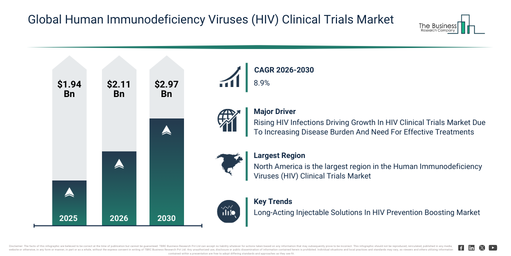
    The human immunodeficiency viruses (hiv) clinical trials market size has experienced robust expansion over recent years. It is projected to expand from $1.94 billion in 2025 to $2.11 billion in 2026, exhibiting a compound annual growth rate (CAGR) of 9.2%. This historical growth is largely due to a significant global HIV disease burden, the expanding scope of antiretroviral drug research, increased public and private funding directed towards HIV studies, advancements in clinical research infrastructure, and supportive regulatory frameworks for HIV drug development.

    The human immunodeficiency viruses (hiv) clinical trials market size is anticipated to experience substantial growth over the upcoming years, projected to reach $2.97 billion by 2030, at a compound annual growth rate (CAGR) of 8.9%. This expansion during the forecast period is driven by the increasing development of curative and preventive hiv therapies, the rising adoption of adaptive trial designs, the expansion of vaccine-focused hiv trials, the growing application of AI in clinical research, and a heightened focus on long-term safety and efficacy outcomes. Major trends expected in this period encompass the increasing adoption of decentralized clinical trial models, the rising use of digital patient recruitment tools, an intensifying focus on long-acting hiv therapies in trials, the broader integration of real-world evidence, and the enhanced use of data analytics in trial management.

    Get A Free Sample Report With In-Depth Market Insights:

    https://thebusinessresearchcompany.com/sample_request?id=38824099&type=smp&name=Human%20Immunodeficiency%20Viruses%20%28HIV%29%20Clinical%20Trials%20Market%20Report%202026&utm_source=Blogs&utm_medium=Paid&utm_campaign=Nov_PR

    Human Immunodeficiency Viruses (HIV) Clinical Trials Market Growth Momentum: What Factors Are Shaping Demand?

    The anticipated expansion of the human immunodeficiency virus (HIV) clinical trials market is set to be driven by the rising frequency of human immunodeficiency virus (HIV) infections. Human immunodeficiency virus (HIV) infections are defined as a state where the HIV virus compromises and debilitates the immune system, making individuals more vulnerable to illnesses and potentially progressing to AIDS. A primary factor contributing to the rise in HIV infections is insufficient awareness regarding its transmission, which leads to high-risk activities and belated diagnostic testing, thereby accelerating the virus’s dissemination. These human immunodeficiency virus (HIV) clinical trials aim to aid individuals with HIV infections by evaluating novel medications, vaccinations, and therapeutic approaches to enhance prevention, ensure more efficient viral management, and ultimately curb disease advancement and spread. For example, data released in August 2024 by the US-based government agency, the Minority HIV/AIDS Fund (MHAF), indicated that approximately 39.9 million individuals globally were living with HIV in 2023, comprising 38.6 million adults and 1.4 million children, a figure comparable to prior years. Consequently, the escalating occurrence of human immunodeficiency virus (HIV) infections is a key impetus for the expansion of the human immunodeficiency virus (HIV) clinical trials market.

    Human Immunodeficiency Viruses (HIV) Clinical Trials Market Segment Landscape And Growth Outlook

    The human immunodeficiency viruses (hiv) clinical trials market covered in this report is segmented –

    1) By Phase: Phase I, Phase II, Phase III, Phase IV, Preclinical

    2) By Drug Type: Antiretroviral Therapy (ART), Pre-Exposure Prophylaxis (PrEP), Post-Exposure Prophylaxis (PEP), Long-Acting Injectable Antiretrovirals, Experimental Drugs

    3) By Study Design: Interventional Studies, Observational Studies, Expanded Access Studies

    4) By Patient Population: Adults, Pediatric Patients, Seniors, Pregnant Women, High-Risk Populations

    5) By End User: Pharmaceutical Companies, Research Institutes, Hospitals, Other End-Users

    Subsegments:

    1) By Phase I: First-In-Human Studies, Safety And Tolerability Studies

    2) By Phase II: Dose-Finding Studies, Efficacy Studies

    3) By Phase III: Pivotal Trials, Comparative Efficacy Studies

    4) By Phase Iv: Post-Marketing Surveillance, Long-Term Safety Studies

    5) By Preclinical: In Vitro Studies, Animal Studies

    Human Immunodeficiency Viruses (HIV) Clinical Trials Market Trends Redefining Industry Growth

    Major enterprises active within the human immunodeficiency virus (HIV) clinical trials sector are concentrating on creating novel remedies, such as HIV prevention injections, to boost treatment effectiveness and decrease transmission rates. An HIV prevention injection refers to a long-duration injectable medicine administered at intervals to avert HIV infection among individuals at elevated risk, by obstructing the virus from establishing itself in the body. For instance, in August 2025, Gilead Sciences Inc., a pharmaceutical firm based in the US, secured approval from the European Union for Yeytuo (lenacapavir) for HIV treatment. This twice-yearly injectable HIV prevention therapy demonstrates substantial effectiveness, achieving nearly 100% in clinical trials, thereby considerably lowering the chances of sexually transmitted HIV-1 infection. Its extended-release dosage enhances patient compliance and convenience when compared to daily oral PrEP, thereby addressing a significant void in HIV prevention efforts. This solution is intended for adults and adolescents at increased susceptibility, with the objective of expanding availability and contributing to a reduction in new global HIV infections as part of comprehensive prevention frameworks.

    Human Immunodeficiency Viruses (HIV) Clinical Trials Market Competitive Landscape: Who Leads The Industry?

    Major companies operating in the human immunodeficiency viruses (hiv) clinical trials market are Johnson & Johnson, F. Hoffmann-La Roche Ltd., Pfizer Inc., AbbVie Inc., Sanofi S.A., Thermo Fisher Scientific Inc., Amgen Inc., Gilead Sciences Inc., Merck & Co., IQVIA Holdings Inc., ICON plc, Moderna Inc., ViiV Healthcare Limited, HOOKIPA Pharma Inc., Excision BioTherapeutics Inc., American Gene Technologies International Inc., Bionor Holding AS, Aelix Therapeutics, Immuno Cure BioTech Private Limited, ImmunityBio

    View The Full Human Immunodeficiency Viruses (HIV) Clinical Trials Market Report:

    https://thebusinessresearchcompany.com/report/human-immunodeficiency-viruses-hiv-clinical-trials-global-market-report?utm_source=Blogs&utm_medium=Paid&utm_campaign=Nov_PR

    Human Immunodeficiency Viruses (HIV) Clinical Trials Market Geographic Landscape: Which Region Leads Industry Growth?

    North America was the largest region in the human immunodeficiency viruses (HIV) clinical trials market in 2025. Asia-Pacific is expected to be the fastest-growing region in the forecast period. The regions covered in the human immunodeficiency viruses (hiv) clinical trials market report are Asia-Pacific, South East Asia, Western Europe, Eastern Europe, North America, South America, Middle East, Africa.

    Reach Out To Our Team:

    The Business Research Company: https://www.thebusinessresearchcompany.com/

    Americas: +1 310-496-7795

    Asia: +44 7882 955267 & +91 8897263534

    Europe: +44 7882 955267

    Email us at: marketing@tbrc.info

    Follow us on:

    LinkedIn: https://in.linkedin.com/company/the-business-research-company

    YouTube: https://www.youtube.com/channel/UC24_fI0rV8cR5DxlCpgmyFQ

    Global Market Model: https://www.thebusinessresearchcompany.com/global-market-model
  • Human Immunodeficiency Virus Therapeutics Market Expected To Grow At 5.4% CAGR Through 2030: What Businesses Need To Know

    Human Immunodeficiency Virus Therapeutics Market Expected To Grow At 5.4% CAGR Through 2030: What Businesses Need To Know

    Featuring market attractiveness scoring, total addressable market sizing, company benchmarking matrices, interactive Excel dashboards, deeper supply chain intelligence, emerging startup tracking, and granular product-level insights, The Business Research Company’s 2026 market reports are built to deliver research that is both more actionable and more strategically valuable.

    Human Immunodeficiency Virus Therapeutics Market Forecast: What Value Will The Market Reach By 2030?

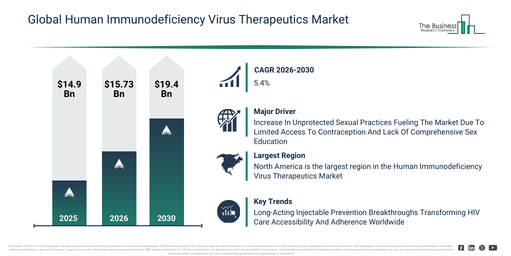
    The human immunodeficiency virus therapeutics market size has exhibited strong growth in recent years. It is anticipated to expand from $14.9 billion in 2025 to $15.73 billion in 2026, registering a compound annual growth rate (CAGR) of 5.6%. The historical growth can be ascribed to several factors, including the global burden of hiv infections, the widespread adoption of antiretroviral therapy, government-funded hiv treatment programs, the increasing availability of generic hiv drugs, and improved survival rates among hiv patients.

    The human immunodeficiency virus therapeutics market is projected to experience substantial expansion in the upcoming years. This market is anticipated to reach a value of $19.4 billion by 2030, demonstrating a compound annual growth rate (CAGR) of 5.4%. This projected growth stems from several factors, including the increasing demand for extended-duration HIV treatments, a heightened emphasis on individualized HIV treatment plans, broader availability of HIV care in developing nations, increased funding for advanced antiretroviral medications, and a greater focus on continuous HIV disease management throughout a patient’s life. Key trends foreseen for this period encompass the wider embrace of combination antiretroviral therapies, a noticeable move towards long-acting injectable HIV treatments, a heightened commitment to achieving early and consistent viral suppression, the increased availability of generic antiretroviral drugs, and an augmented focus on ensuring treatment adherence alongside simplified regimens.

    Get A Free Sample Report With In-Depth Market Insights:

    https://thebusinessresearchcompany.com/sample_request?id=17129094&type=smp&name=Human%20Immunodeficiency%20Virus%20Therapeutics%20Market%20Report%202026&utm_source=Blogs&utm_medium=Paid&utm_campaign=Nov_PR

    Human Immunodeficiency Virus Therapeutics Market Expansion Drivers: What’s Shaping Future Growth?

    The increasing occurrence of unprotected sexual acts is anticipated to drive the expansion of the human immunodeficiency virus therapeutics market in the future. These practices involve sexual encounters lacking barrier protection, thereby elevating the likelihood of sexually transmitted infections (STIs) and unplanned pregnancies. Inadequate comprehensive sex education contributes to insufficient knowledge regarding safe practices, thereby fostering risky conduct among young individuals. Therapeutics for human immunodeficiency virus aid in mitigating the danger of HIV transmission resulting from unprotected sexual activities by bringing viral load down to undetectable levels, thus inhibiting the continued spread of the infection. As an illustration, data from November 2024, provided by the Centers for Disease Control and Prevention, a government agency in the US, revealed that a 2023 survey of U.S. high school students showed 32% had engaged in sexual intercourse at least once, and 48% reported not using a condom during their most recent sexual encounter. Consequently, the rising incidence of unprotected sexual practices is fueling the expansion of the human immunodeficiency virus therapeutics market.

    Human Immunodeficiency Virus Therapeutics Market Breakdown By Product Type And Application

    The human immunodeficiency virus therapeutics market covered in this report is segmented –

    1) By Drug Type: Branded Drugs, Generic Drugs

    2) By Distribution Channel: Hospital Pharmacies, Online Pharmacies, Retail Pharmacies

    3) By End-user: Hospitals And Clinics, Specialty Centers

    Subsegments:

    1) By Branded Drugs: Biktarvy, Triumeq, Genvoya, Juluca, Dovato, Isentress, Prezista

    2) By Generic Drugs: Tenofovir Disoproxil Fumarate (TDF), Lamivudine, Efavirenz, Zidovudine, Nevirapine, Abacavir, Ritonavir

    Human Immunodeficiency Virus Therapeutics Market Strategic Trends: What Defines The Next Growth Phase?

    Major companies operating in the Human Immunodeficiency Virus Therapeutics market are focusing on developing long-acting, highly effective prevention and treatment options, expanding access through supportive reimbursement programs, and advancing innovative clinical strategies to improve adherence and reduce new HIV infections. For instance, in June 2025, Gilead Sciences, a US-based healthcare company, received FDA approval for Yeztugo (lenacapavir), the first and only twice-yearly injectable PrEP option, marking a major advancement in HIV prevention. Backed by Phase 3 PURPOSE 1 and PURPOSE 2 data, the drug showed exceptional efficacy, with =99.9% of participants remaining HIV-negative. The long-acting injection aims to overcome barriers such as adherence challenges, stigma, and low awareness that limit current PrEP use. Yeztugo’s approval offers a promising tool to help reduce new HIV infections across diverse populations. Gilead is also implementing broad access measures, including insurance partnerships, co-pay support for eligible patients, and free access for uninsured individuals through assistance programs.

    Human Immunodeficiency Virus Therapeutics Market Company Landscape And Competitive Strategy

    Major companies operating in the human immunodeficiency virus therapeutics market are Gilead Sciences Inc., GlaxoSmithKline plc, Merck & Co. Inc., AbbVie Inc., Johnson & Johnson, Bristol Myers Squibb Company, Pfizer Inc., F Hoffmann La Roche Ltd., Sanofi SA, Novartis International AG, Boehringer Ingelheim International GmbH, Teva Pharmaceutical Industries Ltd., Cipla Limited, Aurobindo Pharma Limited, Hetero Labs Limited, Viatris Inc., Sun Pharmaceutical Industries Ltd., Lupin Limited, Dr Reddy’s Laboratories Ltd., Mylan N.V.

    View The Full Human Immunodeficiency Virus Therapeutics Market Report:

    https://thebusinessresearchcompany.com/report/human-immunodeficiency-virus-therapeutics-global-market-report?utm_source=Blogs&utm_medium=Paid&utm_campaign=Nov_PR

    Human Immunodeficiency Virus Therapeutics Market Largest Region: Which Geography Holds The Biggest Share?

    North America was the largest region in the human immunodeficiency virus therapeutics market in 2025. Asia-Pacific is expected to be the fastest-growing region in the forecast period. The regions covered in the human immunodeficiency virus therapeutics market report are Asia-Pacific, South East Asia, Western Europe, Eastern Europe, North America, South America, Middle East, Africa.

    Reach Out To Our Team:

    The Business Research Company: https://www.thebusinessresearchcompany.com/

    Americas: +1 310-496-7795

    Asia: +44 7882 955267 & +91 8897263534

    Europe: +44 7882 955267

    Email us at: marketing@tbrc.info

    Follow us on:

    LinkedIn: https://in.linkedin.com/company/the-business-research-company

    YouTube: https://www.youtube.com/channel/UC24_fI0rV8cR5DxlCpgmyFQ

    Global Market Model: https://www.thebusinessresearchcompany.com/global-market-model
  • Human Immunodeficiency Virus (HIV) Diagnosis Market Forecast To Reach $7.4 Billion By 2030: Key Trends Explained

    Human Immunodeficiency Virus (HIV) Diagnosis Market Forecast To Reach $7.4 Billion By 2030: Key Trends Explained

    Built to provide research that’s more actionable and strategically valuable, The Business Research Company’s 2026 market reports include market attractiveness analysis, total addressable market sizing, company benchmarking matrices, interactive Excel dashboards, broader supply chain intelligence, emerging startup tracking, and in-depth product insights.

    Human Immunodeficiency Virus (HIV) Diagnosis Market Size Outlook: How Quickly Will Revenue Expand Through 2030?

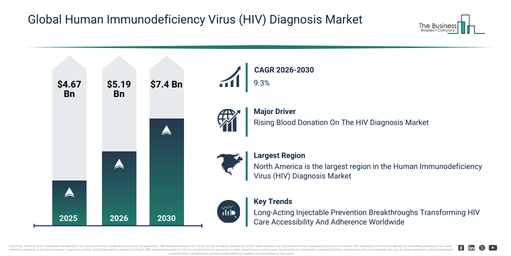
    The human immunodeficiency virus (hiv) diagnosis market size has undergone rapid expansion in recent years. It is forecasted to grow from $4.67 billion in 2025 to $5.19 billion in 2026, recording a compound annual growth rate (CAGR) of 11.0%. The historical growth in this sector is attributable to factors such as the global prevalence of hiv infections, government-led hiv screening programs, the increased availability of rapid diagnostic kits, the expansion of diagnostic laboratory infrastructure, and growing public health awareness initiatives.

    The human immunodeficiency virus (hiv) diagnosis market is set to experience robust growth in the coming years. It is anticipated to expand to $7.4 billion by 2030, demonstrating a compound annual growth rate (CAGR) of 9.3%. This expansion during the forecast period is fueled by an escalating demand for early hiv detection, the increasing uptake of self-test kits, the advancement of point-of-care diagnostic technologies, a heightened focus on hiv prevention and monitoring, and rising investments in infectious disease diagnostics. Significant trends foreseen in this period include the growing adoption of rapid and point-of-care hiv testing, an increased emphasis on early and routine hiv screening, a burgeoning demand for self-testing and home-based diagnostics, the expansion of integrated hiv testing and counseling services, and a greater concentration on data-driven hiv surveillance and reporting.

    Get A Free Sample Report With In-Depth Market Insights:

    https://thebusinessresearchcompany.com/sample_request?id=38830773&type=smp&name=Human%20Immunodeficiency%20Virus%20%28HIV%29%20Diagnosis%20Market%20Report%202026&utm_source=Blogs&utm_medium=Paid&utm_campaign=Nov_PR

    Human Immunodeficiency Virus (HIV) Diagnosis Market Development Factors: What’s Supporting Demand?

    The growth of the HIV diagnosis market is projected to be driven by increasing blood donations. Blood donation involves the voluntary collection of blood through phlebotomy, a procedure where a needle is inserted into a vein. The surge in blood donations is attributed to advancements in medical technology, robust community engagement, and improved methods for donor recruitment and retention. As more individuals contribute blood, a larger array of samples becomes available for HIV screening. This enhanced availability of blood samples enables more extensive testing for HIV antibodies or antigens, thus improving the accuracy and trustworthiness of HIV diagnosis. For illustration, NHS Blood and Transplant, a government agency in the UK, reported an increase in new blood donors from 119,016 in 2022-2023 to 119,371 in 2023-2024. Therefore, the rising rate of blood donation is a key factor propelling the expansion of the HIV diagnosis market.

    Human Immunodeficiency Virus (HIV) Diagnosis Market Segment Analysis And Revenue Potential

    The human immunodeficiency virus (hiv) diagnosis market covered in this report is segmented –

    1) By Product: Consumables, Instruments, Software, Services

    2) By Mode: Self-Test, Lab-Based

    3) By End User: Diagnostic Laboratories, Hospitals, Research Institutions

    Subsegments:

    1) By Consumables: Test Kits (Rapid Hiv Test Kits, Elisa Test Kits), Reagents And Chemicals, Sample Collection Devices (Blood Collection Tubes, Lancets), Test Strips, Control And Calibration Kits, Disposable Gloves And Safety Equipment

    2) By Instruments: Hiv Diagnostic Analyzers ( Automated Immunoassay Analyzers), Hiv Viral Load Testing Equipment, Cd4 Count Analyzers, Point-Of-Care Hiv Diagnostic Devices, Molecular Diagnostic Instruments ( Pcr Machines), Electrochemical And Optical Hiv Detection Instruments

    3) By Software: Hiv Diagnosis Data Management Software, Electronic Health Record (Ehr) Integration Software, Hiv Test Result Interpretation Software, Laboratory Information Management Systems (Lims), Patient Monitoring And Tracking Software, Cloud-Based Hiv Diagnostic Reporting Tools

    4) By Services: Diagnostic Testing Services, Hiv Testing Support Services ( Counseling, Education), Diagnostic Lab Services, Telemedicine And Remote Hiv Testing Services, Clinical Trial Services For Hiv Diagnostic Tests, Data Analytics And Interpretation Services For Hiv Testing

    Human Immunodeficiency Virus (HIV) Diagnosis Market Transformation Trends: What Innovations Are Driving Change?

    Leading companies in the human immunodeficiency virus (HIV) diagnosis market are concentrating on developing long-lasting, highly effective prevention and treatment methods, expanding accessibility through robust reimbursement programs, and advancing innovative clinical approaches to enhance adherence and decrease new HIV infections. For example, in June 2025, Gilead Sciences, a US-based healthcare company, secured FDA approval for Yeztugo (lenacapavir), the first and only twice-yearly injectable PrEP option, representing a significant leap forward in HIV prevention. Supported by Phase 3 PURPOSE 1 and PURPOSE 2 data, the drug exhibited exceptional efficacy, with =99.9% of participants remaining HIV-negative. This long-acting injection aims to mitigate challenges such as adherence difficulties, stigma, and limited awareness that currently restrict PrEP usage. Yeztugo’s approval presents a promising resource for reducing new HIV infections across various populations. Gilead is also rolling out extensive access initiatives, including collaborations with insurance providers, co-pay assistance for eligible patients, and free access for uninsured individuals via support programs.

    Human Immunodeficiency Virus (HIV) Diagnosis Market Key Players Shaping Industry Direction

    Major companies operating in the human immunodeficiency virus (hiv) diagnosis market are Thermo Fisher Scientific Inc., Abbott Laboratories, Siemens Healthineers, Roche Diagnostics, Becton Dickinson and Company, Hologic Inc., bioMérieux SA, Beckman Coulter Inc., Bio-Rad Laboratories Inc., QIAGEN N.V., Bio-Techne Corporation, Alere Inc., Cepheid Inc., OraSure Technologies Inc., Advanced Instruments Inc., BBI Solutions, Chembio Diagnostic Systems Inc., BioLytical Laboratories Inc., Avioq Inc., Advanced Molecular Diagnostics, Atila BioSystems Inc.

    View The Full Human Immunodeficiency Virus (HIV) Diagnosis Market Report:

    https://thebusinessresearchcompany.com/report/human-immunodeficiency-virus-hiv-diagnosis-global-market-report?utm_source=Blogs&utm_medium=Paid&utm_campaign=Nov_PR

    Human Immunodeficiency Virus (HIV) Diagnosis Market Regional Analysis: Which Geography Leads On Revenue?

    North America was the largest region in the HIV diagnosis market in 2025. Asia-Pacific is expected to be the fastest-growing region in the forecast period. The regions covered in the human immunodeficiency virus (hiv) diagnosis market report are Asia-Pacific, South East Asia, Western Europe, Eastern Europe, North America, South America, Middle East, Africa.

    Reach Out To Our Team:

    The Business Research Company: https://www.thebusinessresearchcompany.com/

    Americas: +1 310-496-7795

    Asia: +44 7882 955267 & +91 8897263534

    Europe: +44 7882 955267

    Email us at: marketing@tbrc.info

    Follow us on:

    LinkedIn: https://in.linkedin.com/company/the-business-research-company

    YouTube: https://www.youtube.com/channel/UC24_fI0rV8cR5DxlCpgmyFQ

    Global Market Model: https://www.thebusinessresearchcompany.com/global-market-model
  • Human Growth Hormone Market Size Forecast From 2026 To 2030: Key Industry Trends

    Human Growth Hormone Market Size Forecast From 2026 To 2030: Key Industry Trends

    Backed by market attractiveness analysis, total addressable market sizing, company benchmarking matrices, interactive Excel dashboards, wider supply chain intelligence, emerging startup coverage, and detailed product-level insights, The Business Research Company’s 2026 market reports are designed to offer research that is more actionable and strategically valuable than ever.

    Human Growth Hormone Market Size, Value And Growth Trajectory Through 2030

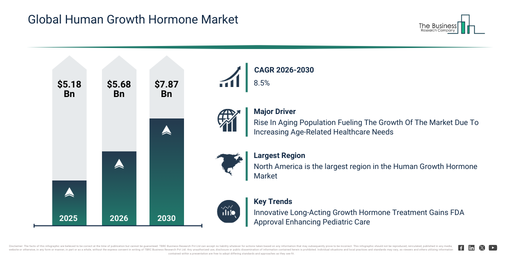
    The human growth hormone market has experienced robust expansion over the past few years. Its valuation is projected to increase from $5.18 billion in 2025 to reach $5.68 billion by 2026, demonstrating a compound annual growth rate (CAGR) of 9.5%. Historically, this expansion has been driven by several factors, including a rise in the diagnosis of growth hormone deficiency, an increase in the production of recombinant hormones, heightened public awareness concerning pediatric growth disorders, the greater accessibility of branded HGH therapies, and the established clinical application of hormone replacement.

    The market for human growth hormone is anticipated to experience substantial expansion in the coming years. Projections indicate it will reach $7.87 billion by 2030, exhibiting a compound annual growth rate (CAGR) of 8.5%. This anticipated growth during the forecast timeframe is attributable to several factors, including the escalating demand for long-acting growth hormone treatments, the increasing incidence of adult growth hormone deficiency, an intensified focus on customized endocrine therapies, the broadening reach of specialty pharmacy distribution channels, and greater investment in hormone therapy research. Key trends anticipated within this period encompass a heightened demand for treatments addressing growth hormone deficiency, the rising acceptance of long-acting growth hormone formulations, expanded application of HGH in pediatric endocrinology, the proliferation of recombinant growth hormone therapies, and an enhanced emphasis on patient compliance and ease of administration.

    Get A Free Sample Report With In-Depth Market Insights:

    https://thebusinessresearchcompany.com/sample_request?id=90167778&type=smp&name=Human%20Growth%20Hormone%20Market%20Report%202026&utm_source=Blogs&utm_medium=Paid&utm_campaign=Nov_PR

    Human Growth Hormone Market Industry Drivers: What’s Behind The Revenue Growth?

    The expansion of the aging population is anticipated to fuel the growth of the human growth hormone market in the future. An aging population is characterized by an increasing share of older individuals within a society, a trend resulting from longer life expectancies and reduced birth rates. This demographic shift is accelerating due to healthcare innovations that have extended human lifespan. The aging demographic utilizes human growth hormone, under medical guidance, to combat age-associated issues such as muscle loss, diminished energy levels, and metabolic deterioration. For example, the Population Reference Bureau, a US-based non-profit, indicated in January 2024 that the population of Americans aged 65 and above is projected to increase from 58 million in 2022 to 82 million by 2050, representing a 47% growth. Consequently, this cohort’s share of the overall U.S. population will expand from 17% to 23% within this timeframe. Therefore, the expanding aging population is a key driver for the human growth hormone market.

    Human Growth Hormone Market Segmentation And Category Overview

    The human growth hormone market covered in this report is segmented –

    1) By Product: Liquid, Powder

    2) By Brand: Norditropin, Genotropin, Humatrope, Saizen, Omnitrope, Skytrofa, Other Brands

    3) By Route Of Administration: Intramuscular, Subcutaneous

    4) By Distribution Channel: Hospital Pharmacies, Retail Pharmacies, Online Pharmacy, Specialty Pharmacy

    5) By Application: Growth Hormone (GH) Deficiency, Adult Growth Hormone (GH) Deficiency, Pediatric Growth Hormone (GH) Deficiency, Turner Syndrome, Idiopathic Short Stature, Prader-Willi Syndrome, Small For Gestational Age, Other Applications

    Subsegments:

    1) By Liquid: Pre-Filled Liquid Syringes, Vials Of Liquid Growth Hormone

    2) By Powder: Reconstitutable Powder, Freeze-Dried Powder

    #Human Growth Hormone Market Growth Trends: What’s Shaping The Future Outlook?

    Key players in the human growth hormone market are increasingly prioritizing drug development and securing approvals to innovate their medication offerings and deliver enhanced treatment solutions. The process of drug development is intricate and stringent, involving multiple stages to guarantee a new drug’s safety, efficacy, and quality before its introduction to the market. For example, in June 2023, Pfizer Inc., a US-based biopharmaceutical company, and OPKO Health Inc., a US-based biopharmaceutical and diagnostics company, reported that NGENLA (somatrogon-ghla) had received approval from the Food and Drug Administration (FDA). This therapy offers a more convenient dosing regimen and improves patient adherence when contrasted with daily injections. It allows children with growth hormone deficiency the choice to reduce injection frequency from daily to just once a week. The FDA approval was substantiated by a Phase 3 study that illustrated NGENLA’s non-inferiority compared to once-daily somatropin, exhibiting a safety profile consistent with somatropin.

    Human Growth Hormone Market Competitive Analysis Of Leading Industry Participants

    Major companies operating in the human growth hormone market are Pfizer Inc., Roche Holding AG, Novartis AG, Thermo Fisher Scientific Inc., Eli Lilly and Company, Novo Nordisk A/S, Merck KGaA, Teva Pharmaceutical Industries Ltd., Sandoz International GmbH, Ipsen Pharma, Ferring Holding SA, Endo International, Zydus Lifesciences Limited, Opko Health, LG Life Sciences, EMD Serono Inc., Wockhardt Ltd., JCR Pharmaceuticals Co. Ltd., Genentech Inc., SOFAR S.p.A., United Laboratories, Ascendis Pharma, Uni-Pharma S.A., Versartis Inc., Reliance Life Sciences, Anhui Anke Biotechnology (Group) Co. Ltd., Rani Therapeutics

    View The Full Human Growth Hormone Market Report:

    https://thebusinessresearchcompany.com/report/human-growth-hormone-global-market-report?utm_source=Blogs&utm_medium=Paid&utm_campaign=Nov_PR

    Human Growth Hormone Market Geographic Spread And Regional Opportunities

    North America was the largest region in the human growth hormone market in 2025. Asia-Pacific is expected to be the fastest-growing region in the forecast period. The regions covered in the human growth hormone market report are Asia-Pacific, South East Asia, Western Europe, Eastern Europe, North America, South America, Middle East, Africa.

    Reach Out To Our Team:

    The Business Research Company: https://www.thebusinessresearchcompany.com/

    Americas: +1 310-496-7795

    Asia: +44 7882 955267 & +91 8897263534

    Europe: +44 7882 955267

    Email us at: marketing@tbrc.info

    Follow us on:

    LinkedIn: https://in.linkedin.com/company/the-business-research-company

    YouTube: https://www.youtube.com/channel/UC24_fI0rV8cR5DxlCpgmyFQ

    Global Market Model: https://www.thebusinessresearchcompany.com/global-market-model