Category: Healthcare Services

  • Eye Melanoma Market Growth Outlook From $10.69 Billion In 2026 To $15.17 Billion By 2030

    Eye Melanoma Market Growth Outlook From $10.69 Billion In 2026 To $15.17 Billion By 2030

    Built to provide research that’s more actionable and strategically valuable, The Business Research Company’s 2026 market reports include market attractiveness analysis, total addressable market sizing, company benchmarking matrices, interactive Excel dashboards, broader supply chain intelligence, emerging startup tracking, and in-depth product insights.

    Eye Melanoma Market Size Forecast: How Big Could The Market Get By 2030?

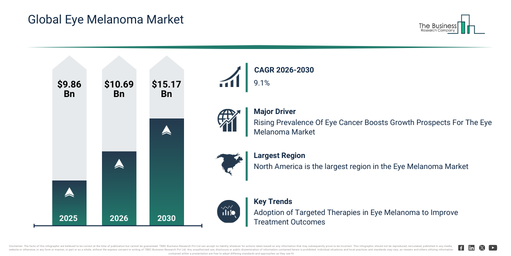
    The eye melanoma market has observed robust expansion in recent years. The market is anticipated to expand from $9.86 billion in 2025 to $10.69 billion in 2026, demonstrating a compound annual growth rate (CAGR) of 8.4%. This historical growth can be linked to improvements in ocular imaging technologies, rising cancer awareness, the proliferation of oncology treatment facilities, advancements in diagnostic capabilities, and better survival outcomes.

    The eye melanoma market size is anticipated to experience robust expansion over the next few years. It is projected to reach $15.17 billion by 2030, demonstrating a compound annual growth rate (CAGR) of 9.1%. This growth during the forecast period can be attributed to several factors, including the development of innovative immunotherapies, increasing adoption of precision oncology, an expansion in genetic testing, rising investment in rare cancer research, and improvements in early screening programs. Significant trends anticipated for the forecast period involve a heightened focus on early cancer detection, a growing embrace of targeted and immunotherapies, increased utilization of advanced ocular imaging, the expansion of specialized oncology centers, and growing clinical research dedicated to rare eye cancers.

    Get A Free Sample Report With In-Depth Market Insights:

    https://thebusinessresearchcompany.com/sample_request?id=54739003&type=smp&name=Eye%20Melanoma%20Market%20Report%202026&utm_source=Blogs&utm_medium=Paid&utm_campaign=Nov_PR

    Eye Melanoma Market Development Factors: What’s Supporting Demand?

    The escalating incidence of eye cancer is anticipated to propel the growth of the eye melanoma market in the forthcoming period. Eye cancer is characterized by the abnormal and unchecked proliferation of cells within the eye’s structures. The expanding recognition and successful handling of early cases are fostering a greater need for specialized therapies and interventions, driven by enhanced detection methods, increased awareness, and advances in treatment approaches. For instance, in 2025, according to the American Cancer Society, a US-based non-profit organization, there were approximately 3,140 new cases of eye and orbital cancers (mainly melanomas), including 1,620 in males and 1,520 in females. Furthermore, there were about 490 deaths from these cancers, comprising 270 males and 220 females. Therefore, the rising prevalence of eye cancer will further drive the expansion of the eye melanoma market.

    Eye Melanoma Market Segment Performance And Emerging Opportunities

    The eye melanoma market covered in this report is segmented –

    1) By Site: Uvea, Sclera, Retina

    2) By Diagnosis: Imaging, Biopsy, Eye Exam

    3) By Treatment: Surgery, Radiation Therapy, Targeted Therapy, Immunotherapy, Other Treatment

    4) By End User: Hospitals And Clinics, Academic Institutes

    Subsegments:

    1) By Uvea: Choroid Melanoma, Ciliary Body Melanoma, Iris Melanoma

    2) By Sclera: Episcleral Melanoma, Scleral Surface Melanoma, Conjunctival Melanoma

    3) By Retina: Macular Melanoma, Peripheral Retinal Melanoma, Optic Disc Melanoma

    Eye Melanoma Market Trends Powering Strategic Industry Growth

    Prominent companies operating in the eye melanoma market are prioritizing the development of technological advancements, such as protein-kinase C (PKC) inhibitors, to fulfill the growing demand for effective, eye-preserving systemic treatments. PKC inhibitors function as small-molecule agents that specifically obstruct PKC enzymes linked to tumor growth, thereby providing a non-surgical alternative to established therapies like plaque brachytherapy or enucleation. For instance, in March 2025, IDEAYA Biosciences, a US-based precision oncology company, introduced darovasertib, a pioneering first-in-class PKC inhibitor tailored for uveal melanoma. This therapy targets PKC isoforms involved in tumor proliferation, exhibiting tumor shrinkage rates of approximately 82% and eye-preservation rates of 61% in its Phase 2 trials. Darovasertib can be administered to patients eligible for either enucleation or plaque brachytherapy, presenting a systemic, eye-sparing treatment option for primary uveal melanoma.

    Eye Melanoma Market Key Players: Which Companies Lead Industry Competition?

    Major companies operating in the eye melanoma market are Pfizer Inc., Johnson & Johnson, F. Hoffmann-La Roche Ltd, Merck & Co. Inc, AbbVie Inc., Bayer AG, Novartis AG, Bristol-Myers Squibb Company, AstraZeneca PLC, Sanofi S.A., Amgen Inc., Castle Biosciences Inc., IDEAYA Biosciences Inc., Delcath Systems Inc., Immunocore Holdings plc, Aura Biosciences Inc., TriSalus Life Sciences Inc., Replimune Group Inc., Linnaeus Therapeutics, iOnctura, LES LABORATOIRES SERVIER, Immatics NV

    View The Full Eye Melanoma Market Report:

    https://thebusinessresearchcompany.com/report/eye-melanoma-global-market-report?utm_source=Blogs&utm_medium=Paid&utm_campaign=Nov_PR

    Eye Melanoma Market Largest Region: Which Geography Holds The Biggest Share?

    North America was the largest region in the eye melanoma market in 2025. Asia-Pacific is expected to be the fastest-growing region in the forecast period. The regions covered in the eye melanoma market report are Asia-Pacific, South East Asia, Western Europe, Eastern Europe, North America, South America, Middle East, Africa.

    Reach Out To Our Team:

    The Business Research Company: https://www.thebusinessresearchcompany.com/

    Americas: +1 310-496-7795

    Asia: +44 7882 955267 & +91 8897263534

    Europe: +44 7882 955267

    Email us at: marketing@tbrc.info

    Follow us on:

    LinkedIn: https://in.linkedin.com/company/the-business-research-company

    YouTube: https://www.youtube.com/channel/UC24_fI0rV8cR5DxlCpgmyFQ

    Global Market Model: https://www.thebusinessresearchcompany.com/global-market-model
  • Eye Infections Market Forecast To Reach $10.24 Billion By 2030: Key Growth Drivers And Industry Trends

    Eye Infections Market Forecast To Reach $10.24 Billion By 2030: Key Growth Drivers And Industry Trends

    Backed by market attractiveness analysis, total addressable market sizing, company benchmarking matrices, interactive Excel dashboards, wider supply chain intelligence, emerging startup coverage, and detailed product-level insights, The Business Research Company’s 2026 market reports are designed to offer research that is more actionable and strategically valuable than ever.

    Eye Infections Market Revenue Outlook: What CAGR Lies Ahead Through 2030?

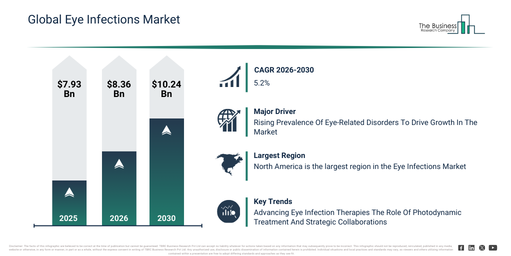
    The eye infections market size has experienced significant growth in recent years. It is anticipated to increase from $7.93 billion in 2025 to $8.36 billion in 2026, demonstrating a compound annual growth rate (CAGR) of 5.4%. This historical expansion can be linked to the high occurrence of conjunctivitis and keratitis, a rise in contact lens usage, increasing urban pollution, improved healthcare access, and the proliferation of ophthalmology clinics.

    The eye infections market is anticipated to experience substantial growth in the coming years. It is projected to expand to $10.24 billion by 2030, achieving a compound annual growth rate (CAGR) of 5.2%. This growth over the forecast period is primarily driven by factors such as the development of innovative antimicrobial eye drugs, an expanding aging population, an increase in digital eye strain incidents, enhanced access to ophthalmic care, and the proliferation of online pharmacies. Significant trends for the forecast period include a rising prevalence of bacterial and viral eye infections, greater utilization of prescription ophthalmic drugs, increasing awareness regarding early diagnosis and treatment, the expansion of online and retail pharmacy networks, and the creation of broad-spectrum ophthalmic therapies.

    Get A Free Sample Report With In-Depth Market Insights:

    https://thebusinessresearchcompany.com/sample_request?id=34992420&type=smp&name=Eye%20Infections%20Market%20Report%202026&utm_source=Blogs&utm_medium=Paid&utm_campaign=Nov_PR

    Eye Infections Market Industry Drivers: What’s Behind The Revenue Growth?

    The growing occurrence and widespread presence of eye-related disorders are expected to drive the eye infections market. These disorders encompass various ocular conditions, including illnesses like glaucoma, cataracts, and macular degeneration, alongside refractive issues such as myopia and hyperopia. The rise in individuals suffering from eye-related disorders stems from elements such as an aging demographic, evolving lifestyles, environmental influences, and insufficient diagnostic abilities that cause delays in identifying problems. Eye infections can exacerbate or initiate these disorders through inducing inflammation, damaging tissues, and compromising the eye’s inherent protective mechanisms, potentially resulting in complications like vision loss or persistent conditions. As an illustration, information from October 2024, provided by the World Health Organization, a health authority based in Switzerland, indicated that in 2023, surgical interventions for advanced trachoma were performed on 130,746 individuals, and 32.9 million received antibiotic treatments, achieving a worldwide coverage of 29%. Consequently, the escalating incidence and prevalence of eye-related disorders are set to propel the eye infections market in the foreseeable future.

    Eye Infections Market Segment Landscape And Growth Outlook

    The eye infections market covered in this report is segmented –

    1) By Indications: Conjunctivitis, Keratitis, Endophthalmitis, Blepharitis, Stye, Uveitis, Cellulitis, Ocular Herpes

    2) By Drug Type: Corticosteroids, Quinolone Antibiotics, Macrolide Antibiotics, Tetracycline Antibiotics, Polyene Antifungals

    3) By Distribution Channel: Hospital Pharmacies, Retail Pharmacies, Online Pharmacies

    Subsegments:

    1) By Conjunctivitis: Bacterial Conjunctivitis, Viral Conjunctivitis, Allergic Conjunctivitis

    2) By Keratitis: Bacterial Keratitis, Viral Keratitis, Fungal Keratitis, Acanthamoeba Keratitis

    3) By Endophthalmitis: Post-surgical Endophthalmitis, Post-traumatic Endophthalmitis, Endogenous Endophthalmitis

    4) By Blepharitis: Anterior Blepharitis, Posterior Blepharitis

    5) By Stye: Internal Stye, External Stye

    6) By Uveitis: Anterior Uveitis, Intermediate Uveitis, Posterior Uveitis, Panuveitis

    7) By Cellulitis: Periorbital Cellulitis, Orbital Cellulitis

    8) By Ocular Herpes: Herpes Simplex Keratitis, Herpes Simplex Conjunctivitis

    Eye Infections Market Growth Trends Reshaping The Competitive Landscape

    Major companies operating in the eye infections market are concentrating on devising innovative therapies, such as photodynamic therapy, to bolster treatment efficacy and mitigate side effects. Photodynamic therapy is a medical procedure that employs a light-sensitive drug, activated by specific light wavelengths, to pinpoint and eliminate abnormal or infected cells. For example, in December 2024, VisiRose Inc., a US-based clinical-stage biotechnology company, joined forces with Provectus Biopharmaceuticals Inc., a US-based pharmaceutical company, and Bascom Palmer Eye Institute, a US-based health center, to unveil Rose Bengal Photodynamic Antimicrobial Therapy (RB PDAT). This groundbreaking, non-invasive investigational treatment is designed for infectious keratitis and other severe eye infections. The RB PDAT presents a promising resolution to the escalating global issue of antimicrobial resistance (AMR), offering a broad-spectrum ocular treatment. This therapy is engineered to be safe, effective, and cost-efficient, thereby addressing the pressing requirement for novel treatments in this domain.

    Eye Infections Market Competitive Landscape: Who Leads The Industry?

    Major companies operating in the eye infections market are Pfizer Inc, F. Hoffmann-La Roche AG, Merck And Co Inc, AbbVie Inc., Abbott Laboratories, Novartis AG, Takeda Pharmaceutical Company Limited, Teva Pharmaceutical Industries Limited, Otsuka Pharmaceutical Co Ltd, Regeneron Pharmaceuticals Inc, Alcon Laboratories Inc., Bausch Health Companies Inc., Sun Pharmaceutical Industries Limited, Santen Pharmaceuticals Co Ltd, Rohto Pharmaceutical Co Ltd, Alembic Pharmaceuticals Limited, Novaliq GmbH, Eyevance Pharmaceuticals LLC, Ocular Therapeutix, I-Med Pharma Inc., EyeGate Pharmaceuticals Inc

    View The Full Eye Infections Market Report:

    https://thebusinessresearchcompany.com/report/eye-infections-global-market-report?utm_source=Blogs&utm_medium=Paid&utm_campaign=Nov_PR

    Eye Infections Market Regional Analysis: Which Geography Leads On Revenue?

    North America was the largest region in the eye infections market in 2025. Asia-Pacific is expected to be the fastest-growing region in the forecast period. The regions covered in the eye infections market report are Asia-Pacific, South East Asia, Western Europe, Eastern Europe, North America, South America, Middle East, Africa.

    Reach Out To Our Team:

    The Business Research Company: https://www.thebusinessresearchcompany.com/

    Americas: +1 310-496-7795

    Asia: +44 7882 955267 & +91 8897263534

    Europe: +44 7882 955267

    Email us at: marketing@tbrc.info

    Follow us on:

    LinkedIn: https://in.linkedin.com/company/the-business-research-company

    YouTube: https://www.youtube.com/channel/UC24_fI0rV8cR5DxlCpgmyFQ

    Global Market Model: https://www.thebusinessresearchcompany.com/global-market-model
  • Extreme Lateral Interbody Fusion (XLIF) Surgery  Market Research 2026: Market Size, Trends, Segments And Growth Forecast

    Extreme Lateral Interbody Fusion (XLIF) Surgery  Market Research 2026: Market Size, Trends, Segments And Growth Forecast

    Featuring market attractiveness scoring, total addressable market sizing, company benchmarking matrices, interactive Excel dashboards, deeper supply chain intelligence, emerging startup tracking, and granular product-level insights, The Business Research Company’s 2026 market reports are built to deliver research that is both more actionable and more strategically valuable.

    Extreme Lateral Interbody Fusion (XLIF) Surgery  Market Growth Analysis: How Will Revenue Trend Over The Forecast Period?

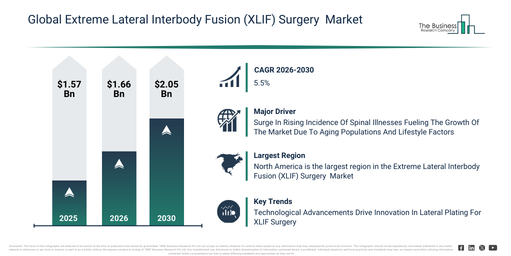
    The extreme lateral interbody fusion (xlif) surgery market size has demonstrated robust expansion over recent years. This market is projected to expand from $1.57 billion in 2025 to $1.66 billion in 2026, exhibiting a compound annual growth rate (CAGR) of 5.8%. Factors contributing to its historical growth include an escalating prevalence of degenerative disc disease, an increase in spinal disorder cases, a growing preference for minimally invasive surgical procedures, advancements in surgical instrumentation, and the proliferation of orthopedic hospitals.

    The market size for extreme lateral interbody fusion (xlif) surgery is poised for robust expansion in the coming years, with projections indicating it will climb to $2.05 billion by 2030, achieving a compound annual growth rate (CAGR) of 5.5%. This anticipated growth during the forecast period is fueled by several factors, including the increasing elderly demographic, continuous technological advancements in spinal implants, a growing preference among surgeons for lateral surgical approaches, escalating investments in healthcare infrastructure, and a heightened awareness of minimally invasive spine surgery. Noteworthy trends expected during this period involve the rising adoption of minimally invasive spine procedures, a growing demand for accelerated post-surgical recovery, an increased deployment of advanced interbody cages, the expansion of specialized spine surgery centers, and enhanced surgical outcomes facilitated by lateral access techniques.

    Get A Free Sample Report With In-Depth Market Insights:

    https://thebusinessresearchcompany.com/sample_request?id=68497513&type=smp&name=Extreme%20Lateral%20Interbody%20Fusion%20%28XLIF%29%20Surgery%C2%A0%20Market%20Report%202026&utm_source=Blogs&utm_medium=Paid&utm_campaign=Nov_PR

    Extreme Lateral Interbody Fusion (XLIF) Surgery  Market Growth Factors: What’s Supporting Expansion?

    An increasing occurrence of spinal ailments is projected to boost the expansion of the extreme lateral interbody fusion (XLIF) surgery market throughout the forecast period. These conditions encompass various medical issues impacting the spine, such as its vertebrae, discs, nerves, spinal cord, and adjacent muscles and ligaments. Sedentary habits are a primary contributor to the increase in spinal illnesses, given that prolonged sitting and insufficient physical exercise lead to inadequate posture and weakened core musculature, thereby elevating the likelihood of spinal deterioration and persistent back discomfort. XLIF surgical procedures are necessary for addressing spinal conditions because they non-invasively correct disc height and spinal alignment, alleviating pressure on nerves and stabilizing the spine without requiring incisions through significant back muscles. For example, in June 2024, data from the Australian Institute of Health and Welfare, an Australian government body, indicated that by 2023, back issues had emerged as the third primary source of disease burden in Australia, accounting for 4.3% of the overall disease burden. Consequently, the growing frequency of spinal disorders is propelling the expansion of the extreme lateral interbody fusion (XLIF) surgery market.

    Extreme Lateral Interbody Fusion (XLIF) Surgery  Market Breakdown By Product Type And Application

    The extreme lateral interbody fusion (xlif) surgery market covered in this report is segmented –

    1) By Product Type: Extreme Lateral Interbody Fusion (XLIF) Interbody Fusion Systems, Extreme Lateral Interbody Fusion (XLIF) Interbody Cages

    2) By Procedure Type: Single Segment, Multi-Segment, Mini Open

    3) By Application: Spinal Stenosis, Herniated Disc, Degenerative Disc Disease

    4) By End-User: Hospitals, Ambulatory Surgical Centers, Orthopedic Clinic

    Subsegments:

    1) By XLIF Interbody Fusion Systems: Minimally Invasive XLIF Systems, Stand-Alone XLIF Systems, Expandable XLIF Systems, Biomechanical XLIF System

    2) By XLIF Interbody Cages: PEEK (Polyether Ether Ketone) XLIF Cages, Titanium XLIF Cages, 3D-Printed XLIF Cages, Expandable XLIF Cages

    Extreme Lateral Interbody Fusion (XLIF) Surgery  Market Trends Shaping Long-Term Demand

    Leading companies in the extreme lateral interbody fusion (XLIF) surgery market are concentrating on developing technologically advanced products, such as lateral plating systems, with the goal of reducing operative time and promoting quicker patient recovery. These lateral plating systems are orthopedic implants utilized in spine surgery to provide stabilization and support by attaching plates to the side (lateral aspect) of the vertebrae, frequently in conjunction with interbody fusion procedures, including XLIF. For instance, in August 2024, Globus Medical Inc., a US-based medical device manufacturer, introduced the ADIRA XLIF Plate System. This ADIRA XLIF Plate System provides a streamlined lateral plating solution incorporating a secure coupling mechanism that precisely aligns plates over interbody spacers for improved stability. Compatible with bone screws and lateral MIS anchors, it supports various fixation methods and spacer types. Integrated within the Globus Medical lateral portfolio, it directly threads into multiple interbody spacers to mitigate the risk of spacer movement and adapt to diverse patient needs and surgical preferences, thereby enhancing both efficiency and reliability.

    Extreme Lateral Interbody Fusion (XLIF) Surgery  Market Company Landscape And Competitive Strategy

    Major companies operating in the extreme lateral interbody fusion (xlif) surgery market are Medtronic plc, Stryker Corporation, Zimmer Biomet Holdings Inc., NuVasive Inc., Globus Medical Inc., Orthofix Medical Inc., Alphatec Holdings Inc. (Alphatec Spine), Spinal Elements Inc., Surgalign Holdings Inc., Spineology Inc., CoreLink LLC, Aurora Spine Corporation, Life Spine Inc., Premia Spine Ltd., Nexxt Spine LLC, Spinal Simplicity LLC, CoreSpine Technologies LLC, NU-Spine LLC, ATEC Spine Inc., Captiva Spine Inc., Xtant Medical Holdings Inc., Centinel Spine LLC

    View The Full Extreme Lateral Interbody Fusion (XLIF) Surgery  Market Report:

    https://thebusinessresearchcompany.com/report/extreme-lateral-interbody-fusion-xlif-surgery-global-market-report?utm_source=Blogs&utm_medium=Paid&utm_campaign=Nov_PR

    Extreme Lateral Interbody Fusion (XLIF) Surgery  Market Geographic Spread And Regional Opportunities

    North America was the largest region in the extreme lateral interbody fusion (XLIF) surgery market in 2025. Asia-Pacific is expected to be the fastest-growing region in the forecast period. The regions covered in the extreme lateral interbody fusion (xlif) surgery market report are Asia-Pacific, South East Asia, Western Europe, Eastern Europe, North America, South America, Middle East, Africa.

    Reach Out To Our Team:

    The Business Research Company: https://www.thebusinessresearchcompany.com/

    Americas: +1 310-496-7795

    Asia: +44 7882 955267 & +91 8897263534

    Europe: +44 7882 955267

    Email us at: marketing@tbrc.info

    Follow us on:

    LinkedIn: https://in.linkedin.com/company/the-business-research-company

    YouTube: https://www.youtube.com/channel/UC24_fI0rV8cR5DxlCpgmyFQ

    Global Market Model: https://www.thebusinessresearchcompany.com/global-market-model
  • Extracorporeal Membrane Oxygenation Machine (ECMO) Machine Market Forecast 2026: Market Size, Competitive Landscape And Growth Drivers

    Extracorporeal Membrane Oxygenation Machine (ECMO) Machine Market Forecast 2026: Market Size, Competitive Landscape And Growth Drivers

    Built to provide research that’s more actionable and strategically valuable, The Business Research Company’s 2026 market reports include market attractiveness analysis, total addressable market sizing, company benchmarking matrices, interactive Excel dashboards, broader supply chain intelligence, emerging startup tracking, and in-depth product insights.

    Extracorporeal Membrane Oxygenation Machine (ECMO) Machine Market Forecast: What Value Will The Market Reach By 2030?

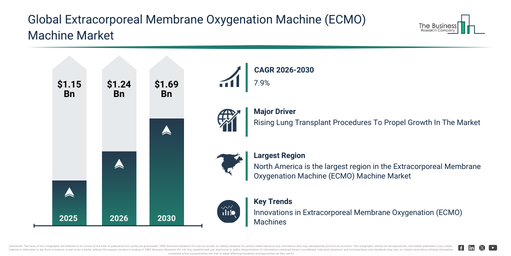
    The extracorporeal membrane oxygenation machine (ecmo) machine market has experienced robust growth in recent years. It is projected to increase from $1.15 billion in 2025 to $1.24 billion in 2026, exhibiting a compound annual growth rate (CAGR) of 8.1%. This historical expansion can be attributed to factors such as the rising incidence of respiratory failure, an increase in cardiac disorders, the broader availability of intensive care units, greater utilization during pandemics, and ongoing advancements in life-support technologies.

    The extracorporeal membrane oxygenation machine (ecmo) machine market is anticipated to experience robust expansion in the coming years. By 2030, this market is projected to reach $1.69 billion, expanding at a compound annual growth rate (CAGR) of 7.9%. This projected growth is driven by several factors, including ongoing technological improvements in oxygenators, increased investment in critical care facilities, improved survival rates for neonates, wider adoption of mobile ecmo units, and the development of more training initiatives for ecmo professionals. Key trends anticipated during this period involve the increasing application in critical care and emergency situations, broader use in neonatal and pediatric contexts, the proliferation of mobile ecmo systems, a heightened emphasis on advanced life support techniques, and the growth of specialized ecmo centers.

    Get A Free Sample Report With In-Depth Market Insights:

    https://thebusinessresearchcompany.com/sample_request?id=94964097&type=smp&name=Extracorporeal%20Membrane%20Oxygenation%20Machine%20%28ECMO%29%20Machine%20Market%20Report%202026&utm_source=Blogs&utm_medium=Paid&utm_campaign=Nov_PR

    Extracorporeal Membrane Oxygenation Machine (ECMO) Machine Market Demand Drivers: What’s Powering Industry Growth?

    The expansion of the extracorporeal membrane oxygenation machine (ECMO) machine market is expected to be propelled by the increasing volume of lung transplant procedures. A lung transplant involves replacing a diseased or damaged lung with a healthy one from a donor. The uptick in lung transplants can be attributed to enhancements in surgical techniques, improved post-transplant care, and a growing organ donor pool, collectively leading to higher success rates and greater patient eligibility. Extracorporeal membrane oxygenation (ECMO) machines play a crucial role in elevating the success rate of lung transplant procedures by providing essential support to patients experiencing severe respiratory failure, thereby maintaining their stability until a suitable donor lung becomes available. As an illustration, the Organ Procurement and Transplantation Network (OPTN) reported in January 2025 that lung transplants rose from 3,026 in 2023 to 3,340 in 2024, marking a 10.4% increase. Hence, the increasing number of lung transplant procedures is a significant force driving the growth of the extracorporeal membrane oxygenation machine (ECMO) machine market.

    Extracorporeal Membrane Oxygenation Machine (ECMO) Machine Market Segment Analysis And Revenue Potential

    The extracorporeal membrane oxygenation machine (ecmo) machine market covered in this report is segmented –

    1) By Component: Pumps, Oxygenator, Controllers, Cannula, Accessories

    2) By Modality: Veno-Venous, Veno-Arterials, Arterio-Venous

    3) By Patient Type: Neonates, Pediatric, Adult

    4) By Application: Respiratory, Cardiac, Extracorporeal Cardiopulmonary Resuscitation(ECPR)

    5) By End Use: Hospitals, Ambulatory Surgical Centers, Research Institutions

    Subsegments:

    1) By Pumps: Roller Pumps, Centrifugal Pumps

    2) By Oxygenator: Hollow Fiber Oxygenators, Flat Sheet Oxygenators, Pediatric Oxygenators

    3) By Controllers: Analog Controllers, Digital Controllers, Mobile ECMO Controllers

    4) By Cannula: Venous Cannula, Arterial Cannula, Bi-Caval Dual Lumen Cannula

    5) By Accessories: Tubing Sets, Blood Filters, Temperature Probes, Hemoconcentrators

    Extracorporeal Membrane Oxygenation Machine (ECMO) Machine Market Innovation Trends Shaping Future Development

    Leading firms within the extracorporeal membrane oxygenation machine (ECMO) machine market are concentrating on creating innovative products, including configurable one-system ECMO solutions, to improve patient results, optimize clinical processes, and simplify operation in critical care settings. A configurable one-system ECMO solution is a versatile ECMO device capable of being customized to meet the unique requirements of each patient, providing adjustable configurations and parts to offer ideal respiratory and cardiac assistance across various clinical situations. An example is that in September 2024, Medtronic plc, a US-based medical device company, introduced VitalFlow, a configurable ECMO solution built for ease of use and high performance. This configurable, one-system solution emphasizes simplicity, enabling quick setup and straightforward modifications during critical care. It delivers superior performance through sophisticated monitoring features, guaranteeing excellent oxygenation and blood flow regulation. The system is engineered for adaptability, accommodating both venovenous (VV) and venoarterial (VA) configurations, thereby suiting diverse patient requirements.

    Extracorporeal Membrane Oxygenation Machine (ECMO) Machine Market Key Players Shaping Industry Direction

    Major companies operating in the extracorporeal membrane oxygenation machine (ecmo) machine market are Abiomed Inc., Abbott Laboratories, Medtronic plc, Fresenius Medical Care AG & Co. KGaA, Terumo Cardiovascular Systems Corporation, Shenzhen Mindray Biomedical Electronics Co. Ltd., Nipro Corporation, Getinge Group, LivaNova plc, MicroPort Scientific Corporation, Hamilton Medical AG, Braile Biomédica, Xenios AG, Eurosets S.R.L., OriGen Biomedical Inc., Hemovent GmbH, Senko Medical Instrument Mfg Co Ltd, Medos Medizintechnik AG, Spectrum Medical, Chalice Medical

    View The Full Extracorporeal Membrane Oxygenation Machine (ECMO) Machine Market Report:

    https://thebusinessresearchcompany.com/report/extracorporeal-membrane-oxygenation-machine-ecmo-machine-global-market-report?utm_source=Blogs&utm_medium=Paid&utm_campaign=Nov_PR

    Extracorporeal Membrane Oxygenation Machine (ECMO) Machine Market Top Region By Revenue And Market Share

    North America was the largest region in the extracorporeal membrane oxygenation machine (ECMO) machine market in 2025. The regions covered in the extracorporeal membrane oxygenation machine (ecmo) machine market report are Asia-Pacific, South East Asia, Western Europe, Eastern Europe, North America, South America, Middle East, Africa.

    Reach Out To Our Team:

    The Business Research Company: https://www.thebusinessresearchcompany.com/

    Americas: +1 310-496-7795

    Asia: +44 7882 955267 & +91 8897263534

    Europe: +44 7882 955267

    Email us at: marketing@tbrc.info

    Follow us on:

    LinkedIn: https://in.linkedin.com/company/the-business-research-company

    YouTube: https://www.youtube.com/channel/UC24_fI0rV8cR5DxlCpgmyFQ

    Global Market Model: https://www.thebusinessresearchcompany.com/global-market-model
  • External Fixation System Market Size In 2026: Regional Growth, Key Segments And Future Outlook

    External Fixation System Market Size In 2026: Regional Growth, Key Segments And Future Outlook

    Backed by market attractiveness analysis, total addressable market sizing, company benchmarking matrices, interactive Excel dashboards, wider supply chain intelligence, emerging startup coverage, and detailed product-level insights, The Business Research Company’s 2026 market reports are designed to offer research that is more actionable and strategically valuable than ever.

    External Fixation System Market Size Outlook: How Quickly Will Revenue Expand Through 2030?

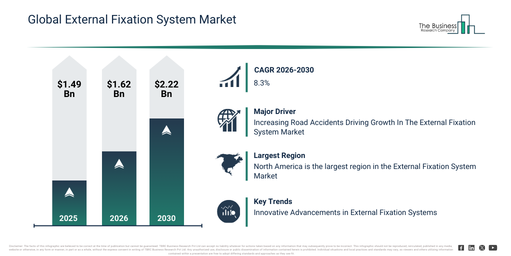
    The external fixation system market has experienced substantial expansion in recent years. Projections indicate it will advance from $1.49 billion in 2025 to $1.62 billion in 2026, achieving a compound annual growth rate (CAGR) of 8.3%. This historical expansion can be linked to factors such as a higher frequency of road accidents, an increase in orthopedic surgical procedures, a rise in sports injuries, the proliferation of trauma centers, and enhanced surgical techniques.

    The external fixation system market is poised for significant expansion over the next few years, with projections indicating a rise to $2.22 billion by 2030, demonstrating an 8.3% compound annual growth rate. This upward trend during the forecast period is primarily driven by advancements in fixation materials, an expanding geriatric demographic, increasing demand for minimally invasive surgical interventions, the proliferation of ambulatory surgical centers, and heightened investment in healthcare infrastructure. Prominent trends anticipated in this period involve an escalating adoption in trauma and orthopedic surgeries, a greater inclination towards minimally invasive fixation methods, the development of computer-aided fixation systems, the enhancement of trauma care infrastructure, and increasing application in limb reconstruction procedures.

    Get A Free Sample Report With In-Depth Market Insights:

    https://thebusinessresearchcompany.com/sample_request?id=11920182&type=smp&name=External%20Fixation%20System%20Market%20Report%202026&utm_source=Blogs&utm_medium=Paid&utm_campaign=Nov_PR

    External Fixation System Market Growth Drivers: What’s Behind The Acceleration?

    An increase in road accidents is anticipated to stimulate the expansion of the external fixation system market in the future. These incidents of road accidents are often linked to greater vehicle utilization, drivers being distracted, insufficient infrastructure, and irresponsible conduct. External fixation systems offer stability for broken bones in trauma victims, aiding in improved recovery and therapeutic outcomes for those involved in road accidents. As an illustration, a report from the Bureau of Infrastructure and Transport Research Economics (BITRE), an Australian government body, indicated 1,340 road deaths in July 2025, marking a 2.9% rise compared to the 12 months ending July 2024. Consequently, the increasing incidence of road accidents is a key factor propelling the development of the external fixation system.

    External Fixation System Market Segmentation And Category Overview

    The external fixation system market covered in this report is segmented –

    1) By Type: Unilateral Fixation Systems, Bilateral Fixation Systems, Hybrid Fixation Systems, Colles Fracture Fixation Systems, Circular Fixation Systems

    2) By Manufacturing Technique: Conventionally-Made, Computer-Aided

    3) By Application: Orthopedic Deformities, Fracture Fixation, Infected Fracture, Limb Correction, Other Applications

    4) By End User: Hospitals, Ambulatory Surgical Centers, Orthopedic And Trauma Centers

    Subsegments:

    1) By Unilateral Fixation Systems: Monolateral Fixators, Single-arm Fixators

    2) By Bilateral Fixation Systems: Double-arm Fixators, Dual Fixators

    3) By Hybrid Fixation Systems: Combination of Unilateral and Bilateral Fixators, Frame-based Hybrid Fixators

    4) By Colles Fracture Fixation Systems: External Fixators for Distal Radius Fractures, Pin-based Fixators for Colles Fractures

    5) By Circular Fixation Systems: Ilizarov-type Fixators, Multi-ring Circular Fixators

    External Fixation System Market Trends Redefining Industry Growth

    Leading companies active in the external fixation system market are concentrating on developing superior fixation systems, such as pin-to-bar systems. This endeavor aims to elevate surgical efficiency, enhance patient outcomes, and provide more resilient and adaptable solutions for stabilizing fractures. A pin-to-bar system represents a method for external bone stabilization, where pins placed within the bone are connected to an external rod to offer support during the healing process. For instance, in September 2023, Orthofix Medical Inc., a US-based orthopedics firm, launched the Galaxy Fixation Gemini System. This specific external fixation system is made available in various sterile procedure kits, offering a pre-prepared solution. The Galaxy Fixation Gemini Ankle Kit stands out as the only pin-to-bar system that includes specific clamps in a sterile kit, thereby boosting efficiency for surgeons responding to urgent lower extremity trauma situations. It incorporates a double multi-crew clamp for rapid tibial half-pin insertion and also includes additional kits for foot support and first metatarsal stabilization, leading to a more robust overall construct.

    External Fixation System Market Competitive Analysis Of Leading Industry Participants

    Major companies operating in the external fixation system market are Johnson & Johnson Services Inc., Stryker Corporation, Zimmer Biomet Holdings, Smith & Nephew plc, MicroPort Scientific Corporation, Orthofix Holdings Inc., Citieffe s.r.l, Auxein Medical Pvt. Ltd., WishBone Medical Inc., Siora Surgicals Pvt. Ltd., Gexfix SA, LEDA Orthopaedics Limited, Integra LifeSciences Holdings Corporation, Response Ortho LLC, Changzhou Waston Medical Appliance Co. Ltd, TST Orthopedics, B Braun Melsungen AG, Acumed LLC, Wrs Ortho, Ortho-SUV Ltd., Tasarimmed Tibbi Mamuller San Tic AS, AOI Medical, Wright Medical

    View The Full External Fixation System Market Report:

    https://thebusinessresearchcompany.com/report/external-fixation-system-global-market-report?utm_source=Blogs&utm_medium=Paid&utm_campaign=Nov_PR

    External Fixation System Market Regional Analysis And Top Geography

    North America was the largest region in the external fixation system market in 2025. The regions covered in the external fixation system market report are Asia-Pacific, South East Asia, Western Europe, Eastern Europe, North America, South America, Middle East, Africa.

    Reach Out To Our Team:

    The Business Research Company: https://www.thebusinessresearchcompany.com/

    Americas: +1 310-496-7795

    Asia: +44 7882 955267 & +91 8897263534

    Europe: +44 7882 955267

    Email us at: marketing@tbrc.info

    Follow us on:

    LinkedIn: https://in.linkedin.com/company/the-business-research-company

    YouTube: https://www.youtube.com/channel/UC24_fI0rV8cR5DxlCpgmyFQ

    Global Market Model: https://www.thebusinessresearchcompany.com/global-market-model

  • Explainable Artificial Intelligence For Diagnostics Market Growth Forecast Through 2030: Market Size And Trends In 2026

    Explainable Artificial Intelligence For Diagnostics Market Growth Forecast Through 2030: Market Size And Trends In 2026

    Featuring market attractiveness scoring, total addressable market sizing, company benchmarking matrices, interactive Excel dashboards, deeper supply chain intelligence, emerging startup tracking, and granular product-level insights, The Business Research Company’s 2026 market reports are built to deliver research that is both more actionable and more strategically valuable.

    Explainable Artificial Intelligence For Diagnostics Market Size, Value And Growth Trajectory Through 2030

    The explainable artificial intelligence for diagnostics market size has observed substantial expansion in recent years. This market is forecasted to increase from $1.69 billion in 2025 to $2.12 billion in 2026, registering a compound annual growth rate (CAGR) of 25.9%. The historical growth was driven by factors such as the increasing adoption of AI-based diagnostic tools, the expansion of digital health infrastructure, a rise in medical imaging data volumes, growing demand for clinical decision support systems, and early regulatory frameworks for AI in healthcare.

    The explainable artificial intelligence for diagnostics market is projected to experience substantial expansion over the next few years. It is expected to reach $5.28 billion by 2030, demonstrating a compound annual growth rate (CAGR) of 25.6%. This anticipated growth during the forecast period is primarily fueled by factors such as increasing regulatory requirements for transparent AI models, growing investments in trustworthy AI platforms, the broadening of explainable AI applications beyond medical imaging, a rising demand from clinicians for interpretable outputs, and greater integration of AI with electronic health records. Significant trends during this period include a wider adoption of interpretable AI diagnostic models, enhanced integration of explainability layers within clinical AI tools, an increased focus on developing regulatory-compliant AI systems, an expansion of AI utilization in multi-modal diagnostics, and a stronger emphasis on clinical trust and transparency.

    Get A Free Sample Report With In-Depth Market Insights:

    https://thebusinessresearchcompany.com/sample_request?id=20304631&type=smp&name=Explainable%20Artificial%20Intelligence%20For%20Diagnostics%20Market%20Report%202026&utm_source=Blogs&utm_medium=Paid&utm_campaign=Nov_PR

    Explainable Artificial Intelligence For Diagnostics Market Growth Factors Behind Sustained Expansion

    The anticipated expansion of the explainable artificial intelligence for diagnostics market is linked to the rising need for personalized medicine. Personalized medicine involves a healthcare strategy that tailors prevention, diagnosis, and treatment according to an individual’s genetic makeup, lifestyle, and environmental factors. The prevalence of personalized medicine is growing due to progress in genomic data and sequencing technologies, which facilitate more precise, focused, and potent treatments customized for each patient. Explainable artificial intelligence in diagnostics supports personalized medicine by offering clear, understandable insights from patient-specific data, thereby informing customized treatment choices. As an illustration, in February 2024, data from the US-based non-profit organization, the Personalized Medicine Coalition, revealed that in 2023, the FDA granted approval to 16 novel personalized treatments for patients with rare diseases, a significant rise from six in 2022. Among the personalized treatments approved in 2023 were also seven cancer drugs and three for other diseases and conditions. Consequently, the escalating demand for personalized medicine is a key factor propelling the expansion of the explainable artificial intelligence for diagnostics market.

    Explainable Artificial Intelligence For Diagnostics Market Segment Outlook: Which Categories Are Growing Fastest?

    The explainable artificial intelligence for diagnostics market covered in this report is segmented –

    1) By Component: Software, Hardware, Services

    2) By Deployment Mode: On-Premises, Cloud

    3) By Application: Medical Imaging, Pathology, Genomics, Risk Assessment, Treatment Recommendation, Other Applications

    4) By End-User: Hospitals, Diagnostic Laboratories, Research Institutes, Clinics, Other End-Users

    Subsegments:

    1) By Software: Machine Learning Platforms, Natural Language Processing Tools, Computer Vision Tools

    2) By Hardware: Imaging Devices, Computational Devices, Sensors And Scanners

    3) By Services: Consulting And Implementation, Maintenance And Support, Training And Education

    Explainable Artificial Intelligence For Diagnostics Market Strategic Trends: What Defines The Next Growth Phase?

    Leading companies in the explainable artificial intelligence for diagnostics market are focusing on creating advanced solutions, like the AI-powered HER2 scoring algorithm, to elevate diagnostic precision, enable transparent clinical judgments, and support personalized cancer therapies. An AI-powered HER2 scoring algorithm functions as a machine learning-based system crafted to analyze medical images, such as breast cancer tissue samples, for the automatic assessment of HER2 protein expression levels, delivering accurate, consistent, and interpretable results crucial for diagnosis and tailored treatment planning. For instance, in July 2023, PathAI Inc., a US-based AI-driven digital pathology company, launched AIM-HER2 Breast Cancer to improve the accurate detection of HER2 status in breast cancer patients. This offering provides automated, reproducible HER2 scoring with explainable AI heatmaps that emphasize key tissue characteristics, thereby enhancing diagnostic confidence and transparency. It processes entire breast cancer biopsy slides without requiring manual region selection, streamlining pathologists’ workflows, especially in challenging borderline scenarios. This AI-powered tool is intended to boost accuracy, efficiency, and trust in HER2 scoring for both biopharma research and clinical laboratory settings.

    Explainable Artificial Intelligence For Diagnostics Market Leading Companies And Competitive Benchmarking

    Major companies operating in the explainable artificial intelligence for diagnostics market are Fujitsu Limited, Koninklijke Philips N.V., Tempus AI, Owkin Inc., PathAI Inc., Aidoc Medical Ltd., Viz.ai Inc., Qure.ai Technologies Private Limited, Paige.AI Inc., Digital Diagnostics Inc., Enlitic, Aignostics GmbH, Proscia Inc., Corti ApS, Fiddler AI Inc., Riverain Technologies LLC, Arthur AI Inc., InData Labs, Ibex Medical Analytics Ltd., Mindpeak GmbH, Therapixel SAS.

    View The Full Explainable Artificial Intelligence For Diagnostics Market Report:

    https://thebusinessresearchcompany.com/report/explainable-artificial-intelligence-for-diagnostics-global-market-report?utm_source=Blogs&utm_medium=Paid&utm_campaign=Nov_PR

    Explainable Artificial Intelligence For Diagnostics Market Geographic Analysis: Where Is Demand Rising Fastest?

    North America was the largest region in the explainable artificial intelligence for diagnostics market in 2025. Asia-Pacific is expected to be the fastest-growing region in the forecast period. The regions covered in the explainable artificial intelligence for diagnostics market report are Asia-Pacific, South East Asia, Western Europe, Eastern Europe, North America, South America, Middle East, Africa.

    Reach Out To Our Team:

    The Business Research Company: https://www.thebusinessresearchcompany.com/

    Americas: +1 310-496-7795

    Asia: +44 7882 955267 & +91 8897263534

    Europe: +44 7882 955267

    Email us at: marketing@tbrc.info

    Follow us on:

    LinkedIn: https://in.linkedin.com/company/the-business-research-company

    YouTube: https://www.youtube.com/channel/UC24_fI0rV8cR5DxlCpgmyFQ

    Global Market Model: https://www.thebusinessresearchcompany.com/global-market-model
  • Expanded Carrier Screening Market Analysis: $2.87 Billion Market Size In 2026 And Future Growth Prospects

    Expanded Carrier Screening Market Analysis: $2.87 Billion Market Size In 2026 And Future Growth Prospects

    Built to provide research that’s more actionable and strategically valuable, The Business Research Company’s 2026 market reports include market attractiveness analysis, total addressable market sizing, company benchmarking matrices, interactive Excel dashboards, broader supply chain intelligence, emerging startup tracking, and in-depth product insights.

    Expanded Carrier Screening Market CAGR Outlook And Future Development

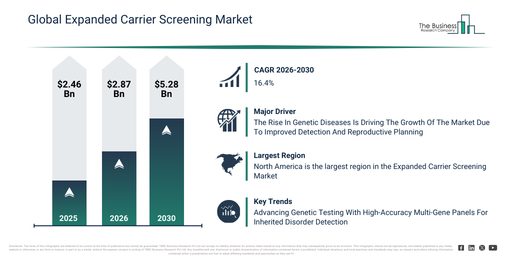
    The expanded carrier screening market has seen swift growth in recent years. It is anticipated to expand from $2.46 billion in 2025 to $2.87 billion in 2026, demonstrating a compound annual growth rate (CAGR) of 16.7%. The historical increase can be attributed to a heightened awareness of inherited genetic disorders, the expansion of prenatal screening initiatives, improvements in genetic sequencing accuracy, a growing availability of diagnostic laboratories, and rising clinician adoption of carrier screening tools.

    The expanded carrier screening market is projected to experience substantial expansion over the upcoming years. Its valuation is anticipated to reach $5.28 billion by 2030, demonstrating a compound annual growth rate (CAGR) of 16.4%. This anticipated growth throughout the forecast period stems from several factors, including a heightened demand for customized reproductive health solutions, the growing incorporation of AI-based variant interpretation, the broadening of population-level screening programs, increasing capital allocated to genomic data platforms, and an elevated emphasis on proactive genetic healthcare. Key trends for this period encompass the broader uptake of pan-ethnic genetic screening panels, an escalating need for preconception carrier testing, the expanding application of next-generation sequencing technologies, the proliferation of direct-to-provider genetic testing options, and a stronger emphasis on integrating genetic counseling.

    Get A Free Sample Report With In-Depth Market Insights:

    https://thebusinessresearchcompany.com/sample_request?id=28215&type=smp&name=Expanded%20Carrier%20Screening%20Market%20Report%202026&utm_source=Blogs&utm_medium=Paid&utm_campaign=Nov_PR

    Expanded Carrier Screening Market Demand Drivers Opening New Revenue Streams

    The expanding occurrence of genetic diseases is anticipated to drive the progress of the expanded carrier screening market moving forward. Genetic diseases are conditions resulting from abnormalities or mutations within an individual’s DNA, which can be inherited or develop spontaneously. The growing prevalence of genetic diseases is due to advancements in diagnostic methods, especially next-generation sequencing and other genomic tools, which have considerably improved the capacity to detect and identify a broad spectrum of genetic disorders that were previously undiagnosed or incorrectly categorized. Expanded carrier screening aids in identifying carriers of genetic disorders before symptoms manifest, enabling informed reproductive choices and mitigating the risk of transmitting inherited conditions to subsequent generations. For example, in October 2024, data from the Cystic Fibrosis Trust, a UK-based charity dedicated to aiding individuals with cystic fibrosis, reported 11,148 cystic fibrosis patients registered in 2022, a number that rose to 11,318 in 2023, marking a 1.5% increase in patient registrations year-over-year. Consequently, the increasing prevalence of genetic diseases is stimulating the growth of the carrier screening market.

    Expanded Carrier Screening Market Segment Landscape: Which Areas Lead Development?

    The expanded carrier screening market covered in this report is segmented –

    1) By Type: Customized Panel Testing, Predesigned Panel Testing

    2) By Technology: Deoxyribonucleic Acid Sequencing, Polymerase Chain Reaction, Microarrays, Other Technologies

    3) By Application: Preconception, Prenatal, Other Applications

    4) By End-User: Hospitals, Diagnostic Laboratories, Research Laboratories, Specialty Clinics, Other End-Users

    Subsegments:

    1) By Customized Panel Testing: Single Gene Testing, Multi-Gene Panel Testing, Ethnicity-Based Custom Panels, Condition-Specific Custom Panels, Family History-Based Custom Panels

    2) By Predesigned Panel Testing: Pan-Ethnic Panels, Universal Carrier Panels, Population-Specific Panels, Disorder-Focused Panels, Expanded Predefined Panels

    Expanded Carrier Screening Market Transformation Trends: What Innovations Are Driving Change?

    Leading companies in the expanded carrier screening market are concentrating on the creation of innovative solutions, such as extensive next-generation sequencing-based panels, to identify a broad spectrum of genetic conditions with enhanced accuracy and efficiency. These comprehensive next-generation sequencing (NGS)-based panels are sophisticated genetic tests that analyze numerous genes concurrently to pinpoint a wide range of inherited disorders with high precision and speed. For example, in February 2023, Fulgent Genetics Inc., a US-based genomic testing firm, unveiled the Beacon787 Expanded Carrier Screening Panel, specifically designed to assess 787 genes connected to severe inherited conditions. This panel offers extensive coverage for more than 700 autosomal recessive and X-linked disorders, including all Tier 3 genes. It harnesses advanced next-generation sequencing technology, providing high analytical accuracy, a pan-ethnic methodology, and a swift turnaround time of 2–3 weeks, thereby positioning it as one of the most comprehensive and precise reproductive carrier screening solutions currently available.

    Expanded Carrier Screening Market Industry Leaders And Competitive Landscape

    Major companies operating in the expanded carrier screening market are Thermo Fisher Scientific Inc., Labcorp Holdings Inc., Quest Diagnostics Incorporated, Eurofins Scientific SE, Illumina Inc., Natera Inc., Myriad Genetics Inc., Fulgent Genetics Inc., BGI Genomics Co. Ltd., Ambry Genetics Corporation, GeneDx Inc., BillionToOne Inc., MedGenome Labs Ltd., Centogene N.V., Baylor Miraca Genetics Laboratories LLC, Victorian Clinical Genetics Services, Pathkind Diagnostics Private Limited, Medicover Genetics GmbH, NxGen MDx LLC, GeneTech

    View The Full Expanded Carrier Screening Market Report:

    https://thebusinessresearchcompany.com/report/expanded-carrier-screening-global-market-report?utm_source=Blogs&utm_medium=Paid&utm_campaign=Nov_PR

    Expanded Carrier Screening Market Global Footprint: Which Region Leads The Market?

    North America was the largest region in the expanded carrier screening market in 2025. Asia-Pacific is expected to be the fastest-growing region in the forecast period. The regions covered in the expanded carrier screening market report are Asia-Pacific, South East Asia, Western Europe, Eastern Europe, North America, South America, Middle East, Africa.

    Reach Out To Our Team:

    The Business Research Company: https://www.thebusinessresearchcompany.com/

    Americas: +1 310-496-7795

    Asia: +44 7882 955267 & +91 8897263534

    Europe: +44 7882 955267

    Email us at: marketing@tbrc.info

    Follow us on:

    LinkedIn: https://in.linkedin.com/company/the-business-research-company

    YouTube: https://www.youtube.com/channel/UC24_fI0rV8cR5DxlCpgmyFQ

    Global Market Model: https://www.thebusinessresearchcompany.com/global-market-model
  • Exosome Technologies Market 2026 Market Size And Growth Forecast: Key Trends To Watch

    Exosome Technologies Market 2026 Market Size And Growth Forecast: Key Trends To Watch

    Backed by market attractiveness analysis, total addressable market sizing, company benchmarking matrices, interactive Excel dashboards, wider supply chain intelligence, emerging startup coverage, and detailed product-level insights, The Business Research Company’s 2026 market reports are designed to offer research that is more actionable and strategically valuable than ever.

    Exosome Technologies Market Set To Climb From $0.11 Billion In 2026 To $0.3 Billion By 2030

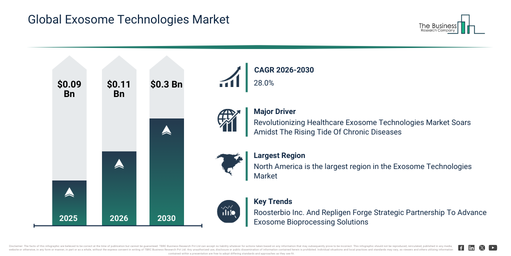
    The market for exosome technologies has seen rapid expansion in its scale over recent years. Projections indicate its expansion from $0.09 billion in 2025 to $0.11 billion in 2026, exhibiting a compound annual growth rate (CAGR) of 27.6%. This historical growth is attributable to several factors, including developments in extracellular vesicle research, an increasing need for non-invasive diagnostic tools, a rise in biotechnology investment, the broadening of regenerative medicine studies, and a surge in partnerships between academia and industry.

    The exosome technologies market is poised for significant expansion in the coming years. Its value is projected to reach $0.3 billion by 2030, exhibiting a compound annual growth rate (CAGR) of 28.0%. This growth during the forecast period is fueled by the commercialization of exosome diagnostics, the expansion of personalized medicine, a rise in clinical validation studies, increased venture capital funding, and the broadening of therapeutic pipelines. Prominent trends anticipated for the forecast duration include the growing adoption of exosome-based diagnostics, a heightened focus on liquid biopsy applications, the development of therapeutic exosomes, increased investment in regenerative medicine, and advancements in exosome isolation technologies.

    Get A Free Sample Report With In-Depth Market Insights:

    https://thebusinessresearchcompany.com/sample_request?id=95888425&type=smp&name=Exosome%20Technologies%20Market%20Report%202026&utm_source=Blogs&utm_medium=Paid&utm_campaign=Nov_PR

    Exosome Technologies Market Growth Backed By Core Demand Fundamentals

    The increasing occurrence of chronic illnesses is anticipated to fuel the expansion of the exosome technologies market. A chronic disease is defined as a persistent or long-term health ailment, typically enduring for three months or more, with effects that can worsen over time. The growing incidence of chronic conditions necessitates exosome technologies capable of various applications, including identifying specific disease biomarkers, tracking disease advancement through exosome cargo analysis, precise drug delivery, and modulating the immune system in chronic ailments. As an illustration, global data from September 2023 by the World Health Organization, a specialized agency of the United Nations located in Switzerland, indicated that non-communicable diseases (NCDs), also known as chronic diseases, accounted for 41 million annual deaths, representing 74% of all fatalities. Among these, cardiovascular diseases led to 17.9 million deaths, cancer caused 9.3 million deaths, chronic respiratory diseases resulted in 4.1 million deaths, and diabetes was responsible for 2.0 million deaths. Consequently, the expanding occurrence of chronic illnesses is projected to stimulate the growth of the exosome technologies market.

    Exosome Technologies Market Segments: Where Is Growth Concentrated?

    The exosome technologies market covered in this report is segmented –

    1) By Exosome Type: Loaded Cargos, Non-Cargo

    2) By Cell Source: HEK293 Cells, Mesenchymal Stem Cells (MSCs), Platelets, Erythrocytes, Natural Killer Cells, Other Cell Sources

    3) By Application: Therapeutics, Diagnostics

    4) By End-Users: Health Care Providers, Pharmaceutical And Biotechnology Companies, Other End-Users

    Subsegments:

    1) By Loaded Cargo: Proteins, Nucleic Acids (DNA, RNA), Lipids, Small Molecules

    2) By Non-Cargo: Exosome Membrane Components, Extracellular Matrix Components

    #Exosome Technologies Market Growth Trends: What’s Shaping The Future Outlook?

    Major companies engaged in exosome technologies are adopting a strategic alliance approach to utilize complementary strengths and expedite advancements in this rapidly evolving field. Strategic partnerships involve companies leveraging each other’s capabilities and resources to achieve shared advantages and success. For instance, in June 2023, RoosterBio Inc., a US-based biotechnology company, partnered with Repligen, a US-based bioprocessing-focused life sciences company. Through this collaboration, they intend to accelerate the creation of scalable and cost-effective exosome bioprocessing solutions, ultimately enhancing patient access to exosome-based therapies.

    Exosome Technologies Market Key Participants And Competitive Landscape

    Major companies operating in the exosome technologies market are AEGLE Therapeutics, Aruna Bio Inc., Carmine Therapeutics Inc., Exosome Diagnostics Inc., OmniSpirant Limited, Anjarium Biosciences, NOVADIP Biosciences S.A., Exopharm Ltd., Organicell Regenerative Medicine Inc., Evox Therapeutics, Direct Biologics, ExoCan Healthcare Technologies Pvt. Ltd., ExoCoBio, ExonanoRNA LLC, ILIAS Biologics Inc., Invitrix Therapeutics, XOStem Inc., VivaZome Therapeutics Pty Ltd., Aethlon Medical Inc., Capricor Therapeutics, Codiak BioSciences, Exogenus Therapeutics, Exovita Biosciences, HansaBioMed Life Sciences

    View The Full Exosome Technologies Market Report:

    https://thebusinessresearchcompany.com/report/exosome-technologies-global-market-report?utm_source=Blogs&utm_medium=Paid&utm_campaign=Nov_PR

    Exosome Technologies Market Regional Split: Which Areas Are Fueling Growth?

    North America was the largest region in the exosome technologies market in 2025.Asia-Pacific is expected to be the fastest-growing region in the global exosome technologies market report during the forecast period. The regions covered in the exosome technologies market report are Asia-Pacific, South East Asia, Western Europe, Eastern Europe, North America, South America, Middle East, Africa.

    Reach Out To Our Team:

    The Business Research Company: https://www.thebusinessresearchcompany.com/

    Americas: +1 310-496-7795

    Asia: +44 7882 955267 & +91 8897263534

    Europe: +44 7882 955267

    Email us at: marketing@tbrc.info

    Follow us on:

    LinkedIn: https://in.linkedin.com/company/the-business-research-company

    YouTube: https://www.youtube.com/channel/UC24_fI0rV8cR5DxlCpgmyFQ

    Global Market Model: https://www.thebusinessresearchcompany.com/global-market-model
  • Exosome Research Market Size Forecast: How The Industry Is Expected To Grow From 2026 To 2030

    Exosome Research Market Size Forecast: How The Industry Is Expected To Grow From 2026 To 2030

    Featuring market attractiveness scoring, total addressable market sizing, company benchmarking matrices, interactive Excel dashboards, deeper supply chain intelligence, emerging startup tracking, and granular product-level insights, The Business Research Company’s 2026 market reports are built to deliver research that is both more actionable and more strategically valuable.

    Exosome Research Market Forecast: Value Set To Climb From $502.62 Billion To $1502.75 Billion

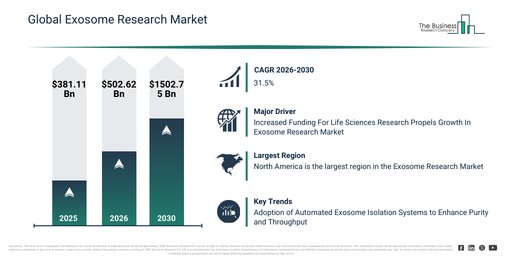
    The exosome research market size has experienced substantial expansion in recent years. It is projected to grow from $381.11 billion in 2025 to $502.62 billion in 2026, demonstrating a compound annual growth rate (CAGR) of 31.9%. Historically, this growth was influenced by an increase in cancer research activities, a heightened focus on extracellular vesicles, the expansion of academic research institutes, advancements in molecular biology tools, and a rise in government research grants.

    The exosome research market size is anticipated to witness rapid growth over the next few years. It is projected to expand to $1502.75 billion by 2030, achieving a compound annual growth rate (CAGR) of 31.5%. This expansion during the forecast period is primarily attributed to the increasing role of exosomes in precision medicine, an uplift in translational research, rising pharmaceutical interest in exosome-based therapies, advancements in analytical instruments, and broadening clinical trial activity. Major trends expected in the forecast period encompass the increasing use of exosomes in cancer research, the expansion of biomarker discovery studies, growth in academic and clinical research funding, increased adoption of advanced isolation techniques, and rising collaboration between academia and pharma.

    Get A Free Sample Report With In-Depth Market Insights:

    https://thebusinessresearchcompany.com/sample_request?id=24309856&type=smp&name=Exosome%20Research%20Market%20Report%202026&utm_source=Blogs&utm_medium=Paid&utm_campaign=Nov_PR

    Exosome Research Market Growth Catalysts And Demand Drivers

    The exosome research market is projected to expand in the future, driven by increasing financial support for life sciences research. This funding represents monetary aid provided to scientists, researchers, and organizations to carry out studies and investigations within the life sciences domain. Heightened financial backing for life sciences research has sparked greater enthusiasm for exosome studies, particularly in the fields of disease diagnosis and therapeutic applications. Moreover, the availability of these funds has fostered the development of innovative approaches to exosome research, incorporating advanced technologies and methodologies to examine exosome biology and function. For example, as reported by the National Center for Science and Engineering Statistics, a US-based principal statistical agency, in September 2024, funding from the National Institute of Health (NIH) directed to the life science and healthcare sector reached $26.4 billion by mid-August 2024. This trajectory suggests it will surpass 2023 levels and establish a new annual record for government spending from the federal agency. Thus, the increasing funding for life sciences research is a primary driver of the exosome research market’s growth.

    Exosome Research Market Segment Analysis: What Are The Core Market Categories?

    The exosome research market covered in this report is segmented –

    1) By Product: Kits And Reagents, Instruments, Other Products

    2) By Indication: Cancer, Neurodegenerative Diseases, Cardiovascular Diseases, Infectious Diseases, Other Indications

    3) By Application: Biomarkers, Vaccine Development, Tissue Regeneration, Other Applications

    4) By End User: Academic And Research Institutes, Pharmaceutical And Biotechnology Companies, Hospitals And Clinical Testing Laboratories

    Subsegments:

    1) By Kits And Reagents: Isolation Kits, Purification Kits, Detection Kits, Labeling Reagents

    2) By Instruments: Ultracentrifuges, Flow Cytometers, Nanosight Instruments, PCR Systems

    3) By Other Products: Exosome Standards, Microfluidic Devices, Software For Data Analysis

    Exosome Research Market Industry Trends: What’s Reshaping Demand?

    Within the exosome research market, leading enterprises are concentrating on developing technological innovations, including immunoaffinity magnetic bead-based isolation platforms. These platforms aim for efficient, high-purity, and scalable exosome capture, thereby improving research reproducibility and subsequent biomarker analysis. An immunoaffinity magnetic bead platform functions by utilizing antibodies or specific ligands attached to magnetic particles to selectively capture exosomes that exhibit particular surface markers, which provides greater specificity and yield compared to conventional ultracentrifugation or precipitation techniques. As an illustration, in November 2024, Everest Biolabs, a U.S.-based life sciences company, introduced the Ascent instrument along with Apex SEC columns, forming an automated exosome isolation system. This platform integrates liquid handling with automated fraction collection to reduce manual intervention, while the Apex columns are designed to optimize exosome recovery and purity, thereby enabling downstream applications such as ELISA, RNA profiling, and biomarker discovery with enhanced reproducibility and scalability.

    Exosome Research Market Top Companies Driving Competitive Growth

    Major companies operating in the exosome research market are Thermo Fisher Scientific Inc., System Biosciences LLC, QIAGEN N.V., Exosome Diagnostics Inc., Bio-Techne Corporation, Aethlon Medical Inc., NanoSomiX Inc., Malvern Panalytical Ltd., NX PharmaGen Corporation, Miltenyi Biotec GmbH, AMS Biotechnology (Europe) B.V., Norgen Biotek Corp., Novus Biologicals LLC, Lonza Group AG, Izon Science Ltd, Evomic Science LLC, New England Biolabs Inc., Evox Therapeutics Limited, Codiak BioSciences Inc., MagBio Genomics Inc., Cell Guidance Systems Ltd., Aruna Biomedical PBC, Capricor Therapeutics Inc., Stemcell Technologies Inc., ExoCoBio Inc., Creative Biolabs, Nanovex Biotechnologies S.L.

    View The Full Exosome Research Market Report:

    https://thebusinessresearchcompany.com/report/exosome-research-global-market-report?utm_source=Blogs&utm_medium=Paid&utm_campaign=Nov_PR

    Exosome Research Market Top Region: Where Does Most Revenue Come From?

    North America was the largest region in the exosome research market in 2025. The regions covered in the exosome research market report are Asia-Pacific, South East Asia, Western Europe, Eastern Europe, North America, South America, Middle East, Africa.

    Reach Out To Our Team:

    The Business Research Company: https://www.thebusinessresearchcompany.com/

    Americas: +1 310-496-7795

    Asia: +44 7882 955267 & +91 8897263534

    Europe: +44 7882 955267

    Email us at: marketing@tbrc.info

    Follow us on:

    LinkedIn: https://in.linkedin.com/company/the-business-research-company

    YouTube: https://www.youtube.com/channel/UC24_fI0rV8cR5DxlCpgmyFQ

    Global Market Model: https://www.thebusinessresearchcompany.com/global-market-model
  • Exocrine Pancreatic Insufficiency Market Reaches $3.88 Billion In 2026: Forecast And Growth Opportunities

    Exocrine Pancreatic Insufficiency Market Reaches $3.88 Billion In 2026: Forecast And Growth Opportunities

    Built to provide research that’s more actionable and strategically valuable, The Business Research Company’s 2026 market reports include market attractiveness analysis, total addressable market sizing, company benchmarking matrices, interactive Excel dashboards, broader supply chain intelligence, emerging startup tracking, and in-depth product insights.

    Exocrine Pancreatic Insufficiency Market Revenue Growth On Track For A 7.3% CAGR Through 2030

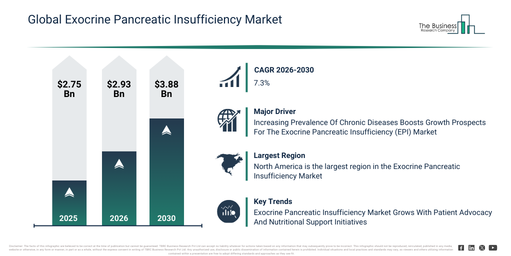
    The exocrine pancreatic insufficiency market size has demonstrated significant growth in recent years. It is projected to increase from $2.75 billion in 2025 to $2.93 billion in 2026, at a compound annual growth rate (CAGR) of 6.5%. The expansion observed historically can be attributed to the rising prevalence of chronic pancreatitis, increasing awareness of digestive disorders, improved availability of enzyme therapies, the expansion of hospital pharmacy networks, and growth in diagnostic testing adoption.

    The exocrine pancreatic insufficiency market is anticipated to show strong expansion in the upcoming years. It is projected to climb to $3.88 billion by 2030, achieving a compound annual growth rate (CAGR) of 7.3%. This growth during the forecast period can be attributed to advancements in enzyme formulation technologies, an increasing geriatric population, a rising demand for homecare treatment, the expansion of online pharmacies, and improved reimbursement for digestive disorder treatments. Key trends in the forecast period include a greater adoption of pancreatic enzyme replacement therapy, an increased focus on early and accurate diagnosis, a rise in home-based nutritional management, the wider distribution channels of online pharmacies, and enhanced patient awareness and education programs.

    Get A Free Sample Report With In-Depth Market Insights:

    https://thebusinessresearchcompany.com/sample_request?id=81233942&type=smp&name=Exocrine%20Pancreatic%20Insufficiency%20Market%20Report%202026&utm_source=Blogs&utm_medium=Paid&utm_campaign=Nov_PR

    Exocrine Pancreatic Insufficiency Market Opportunity Drivers: What’s Unlocking New Revenue Potential?

    The escalating prevalence of chronic illnesses is anticipated to stimulate the expansion of the exocrine pancreatic insufficiency market in the coming years. Chronic diseases are defined as enduring medical conditions that persist over an extended duration, typically three months or longer. The sustained presence of these underlying health issues can elevate the risk of developing secondary complications, such as exocrine pancreatic insufficiency, thereby underscoring the importance of improved management for chronic conditions through various medical interventions and therapies, which can contribute to longer life spans for individuals facing these challenges. For instance, in September 2023, the World Health Organization, a specialized agency of the United Nations based in Switzerland, reported that 41 million deaths occur annually, with 74% attributed to non-communicable diseases (NCDs) or chronic diseases worldwide. Consequently, the increasing incidence of chronic diseases will be a significant factor driving the growth of the exocrine pancreatic insufficiency market.

    Exocrine Pancreatic Insufficiency Market Segment Breakdown: Which Categories Lead On Revenue?

    The exocrine pancreatic insufficiency market covered in this report is segmented –

    1) By Treatment: Nutritional Management, Pancreatic Enzyme Replacement Therapy (PERT), Other Treatments

    2) By Diagnosis: Imaging Tests, Computed Tomography (CT) Scan, Abdominal Ultrasound, Secretin Pancreatic Function Test, Fecal Fat Test, Fecal Elastase Test (FE-1), Other Types

    3) By Symptoms: Abdominal Pain, Constipation, Diarrhea, Fatty Stools, Weight Loss, Other Symptoms

    4) By Distribution Channel: Hospital Pharmacy, Retail Pharmacy, Online Pharmacy, Other Distribution Channels

    5) By End Users: Hospitals, Specialty Clinics, Homecare

    Subsegments:

    1) By Nutritional Management: Dietary Modifications, Nutritional Supplements

    2) By Pancreatic Enzyme Replacement Therapy (PERT): Enteric-Coated Capsules, Non-Enteric-Coated Capsules, Powder Formulations

    3) By Other Treatments: Medications, Surgical Interventions, Supportive Therapies

    Exocrine Pancreatic Insufficiency Market Innovation Trends: What Developments Are Reshaping The Industry?

    Leading companies within the exocrine pancreatic insufficiency market are concentrating on developing patient advocacy groups that provide support, such as comprehensive nutritional guidance. These initiatives are designed to boost awareness, education, and the management of the condition among individuals impacted. Comprehensive nutritional guidance represents a holistic method that personalizes dietary advice based on individual requirements, health circumstances, and lifestyle, focusing on education, meal planning, and sustainable practices to encourage overall well-being. For example, in June 2024, Nestlé Health Science, a Switzerland-based nutrition company, rolled out a GLP-1 nutrition support platform. This platform from Nestlé Health Science delivers customized nutritional resources and expert direction for those using GLP-1 medications, with a focus on muscle preservation, gut health, and overall wellness, aiming to empower users in their weight management journey by addressing unique dietary needs and fostering community support.

    Exocrine Pancreatic Insufficiency Market Leading Players And Competitive Positioning

    Major companies operating in the exocrine pancreatic insufficiency market are Nestlé Health Science S.A., Nordmark Arzneimittel GmbH & Co. KG, Digestive Care Inc., Enzymedica Inc., Alcresta Therapeutics Inc., Chiesi Farmaceutici S.p.A., Amryt Pharma Plc, Pfizer Inc., F. Hoffmann-La Roche AG, AbbVie Inc., Sanofi S.A., Eli Lilly and Company, Medtronic plc, First Wave BioPharma Inc., Vivus Inc., Abbott Laboratories, Danone S.A., Fresenius SE & Co. KGaA, Baxter International Inc, Siemens Healthineers AG, Thermo Fisher Scientific Inc, GE HealthCare Technologies Inc, Koninklijke Philips N.V., Fujifilm Holdings Corporation

    View The Full Exocrine Pancreatic Insufficiency Market Report:

    https://thebusinessresearchcompany.com/report/exocrine-pancreatic-insufficiency-global-market-report?utm_source=Blogs&utm_medium=Paid&utm_campaign=Nov_PR

    Exocrine Pancreatic Insufficiency Market Regional Breakdown: Where Is Demand Concentrated?

    North America was the largest region in the exocrine pancreatic insufficiency market in 2025. Asia-Pacific is expected to be the fastest-growing region in the forecast period. The regions covered in the exocrine pancreatic insufficiency market report are Asia-Pacific, South East Asia, Western Europe, Eastern Europe, North America, South America, Middle East, Africa.

    Reach Out To Our Team:

    The Business Research Company: https://www.thebusinessresearchcompany.com/

    Americas: +1 310-496-7795

    Asia: +44 7882 955267 & +91 8897263534

    Europe: +44 7882 955267

    Email us at: marketing@tbrc.info

    Follow us on:

    LinkedIn: https://in.linkedin.com/company/the-business-research-company

    YouTube: https://www.youtube.com/channel/UC24_fI0rV8cR5DxlCpgmyFQ

    Global Market Model: https://www.thebusinessresearchcompany.com/global-market-model