Category: Healthcare Services

  • Acquired Hemophilia Treatment Market To Expand At A 4.4% CAGR On The Back Of Growing Number Of Ongoing Clinical Trials

    Acquired Hemophilia Treatment Market To Expand At A 4.4% CAGR On The Back Of Growing Number Of Ongoing Clinical Trials

    Designed to make market research more actionable and strategically valuable, The Business Research Company’s 2026 market reports feature market attractiveness scoring, total addressable market sizing, company benchmarking matrices, interactive Excel dashboards, deeper supply chain intelligence, emerging startup tracking, and granular product-level insights.

    Acquired Hemophilia Treatment Market Revenue Expansion Outlook For The 2026–2030 Forecast Period

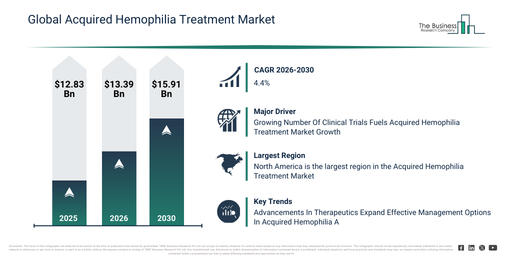
    The market size for acquired hemophilia treatments has demonstrated consistent growth over the last few years. This market is projected to expand from $12.83 billion in 2025 to $13.39 billion in 2026, exhibiting a compound annual growth rate (CAGR) of 4.4%. Factors contributing to its historical expansion include the restricted access to specialized hemophilia therapies, an increase in the occurrence of acquired hemophilia cases, reliance on healthcare provided in hospitals, a heightened understanding of bleeding disorders, and the implementation of on-demand treatment methods.

    The acquired hemophilia treatment market is anticipated to show consistent expansion in the coming years. It is projected to achieve a size of $15.91 billion by 2030, growing at a compound annual growth rate (CAGR) of 4.4%. This growth during the forecast period is attributable to advancements in gene therapy technology, the wider adoption of prophylaxis treatments, the evolution of personalized medicine within hematology, increasing investments in hemophilia research, and better access to advanced treatment options in emerging regions. Significant trends expected during this period include a greater embrace of clotting factor replacement therapies, increased utilization of gene therapy for hemophilia prophylaxis, the expansion of individualized treatment plans for acquired hemophilia, rising awareness and early diagnosis programs, and a focused effort on reducing bleeding episodes and eradicating inhibitors.

    Download A Free Sample For In-Depth Acquired Hemophilia Treatment Market Intelligence:

    https://thebusinessresearchcompany.com/sample_request?id=42106255&type=smp&name=Acquired%20Hemophilia%20Treatment%20Market%20Report%202026&utm_source=Blogs&utm_medium=Paid&utm_campaign=Nov_PR

    Acquired Hemophilia Treatment Market Demand Driver: How It Is Shaping Industry Growth

    The expansion of ongoing clinical trials is projected to fuel the growth of the acquired hemophilia treatment market. These research studies involve human participants to assess the safety and efficacy of new medical treatments, particularly for acquired hemophilia, thereby advancing research, improving patient outcomes, and establishing effective therapeutic interventions.

    Acquired Hemophilia Treatment Market Segmentation Overview: Detailed Category Analysis

    The acquired hemophilia treatment market covered in this report is segmented –

    1) By Treatment Approach: Bleeding Control Therapy (On-Demand Treatment), Inhibitor Eradication Therapy (Immunosuppressive Treatment)

    2) By Route of Administration: Intravenous, Subcutaneous

    3) By End User: Hospitals, Specialty Hematology Clinics, Other End Users

    Subsegments:

    1) By Bleeding Control Therapy (On-Demand Treatment): Bypassing Agents, Recombinant Activated Factor VII (rFVIIa), Activated Prothrombin Complex Concentrates (aPCC), Recombinant Porcine Factor VIII, Desmopressin

    2) By Inhibitor Eradication Therapy (Immunosuppressive Treatment): Corticosteroid Monotherapy, Corticosteroids + Cytotoxic Agents (e.g., Cyclophosphamide), Rituximab-Based Immunotherapy, Combination Immunosuppressive Regimens

    Top Acquired Hemophilia Treatment Market Trends And Recent Industry Developments

    Leading companies within the acquired hemophilia treatment market are concentrating on developing and gaining approval for drugs that offer additional benefits to sustain their market presence. There’s an increase in drug approvals for routine prophylaxis, largely driven by the necessity for more effective and safer options.

    Acquired Hemophilia Treatment Market Company Landscape: Key Players To Watch

    Major companies operating in the acquired hemophilia treatment market are Roche Holding AG, Novo Nordisk A/S, Takeda Pharmaceutical Company Limited, Pfizer Inc., Bayer AG, CSL Limited, Grifols SA, Octapharma AG, Kedrion Biopharma Inc., Sanofi SA, Sobi Inc., Chugai Pharmaceutical Co. Ltd., Novartis AG, Bristol-Myers Squibb Company, Johnson & Johnson, Medexus Pharmaceuticals Inc., Ferring Pharmaceuticals BV, Hema Biologics LLC, Bio Products Laboratory Ltd., LFB SA

    Explore The Acquired Hemophilia Treatment Global Market Report For Full Insights:

    https://thebusinessresearchcompany.com/report/acquired-hemophilia-treatment-global-market-report?utm_source=Blogs&utm_medium=Paid&utm_campaign=Nov_PR

    Acquired Hemophilia Treatment Market Region-Wise Analysis: Largest Regional Market Identified

    North America was the largest region in the acquired hemophilia treatment market in 2025. Asia-Pacific is expected to be the fastest-growing region in the forecast period. The regions covered in the acquired hemophilia treatment market report are Asia-Pacific, South East Asia, Western Europe, Eastern Europe, North America, South America, Middle East, Africa.

    Reach Out To Our Team:

    The Business Research Company: https://www.thebusinessresearchcompany.com/

    Americas: +1 310-496-7795

    Asia: +44 7882 955267 & +91 8897263534

    Europe: +44 7882 955267

    Email us at: marketing@tbrc.info

    Follow us on:

    LinkedIn: https://in.linkedin.com/company/the-business-research-company

    YouTube: https://www.youtube.com/channel/UC24_fI0rV8cR5DxlCpgmyFQ

    Global Market Model: https://www.thebusinessresearchcompany.com/global-market-model
  • What Is Driving The Artificial Intelligence-Generated Personalized Prenatal Nutrition Guide Market? A Closer Look At Rising Prevalence Of Nutrition Related Pregnancy Complications

    What Is Driving The Artificial Intelligence-Generated Personalized Prenatal Nutrition Guide Market? A Closer Look At Rising Prevalence Of Nutrition Related Pregnancy Complications

    With a focus on actionable insights and strategic value, The Business Research Company’s 2026 market reports include market attractiveness scoring, total addressable market sizing, company benchmarking matrices, interactive Excel dashboards, deeper supply chain intelligence, emerging startup tracking, and granular product-level insights.

    Artificial Intelligence-Generated Personalized Prenatal Nutrition Guide Market Size Outlook: A $3.88 Billion Market By 2030, Growing At 22.8% Annually

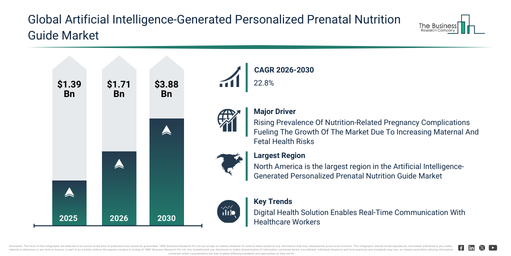
    The market size for artificial intelligence-generated personalized prenatal nutrition guides has experienced rapid growth in recent years. This market is projected to expand from $1.39 billion in 2025 to $1.71 billion in 2026, demonstrating a compound annual growth rate (CAGR) of 23.1%. Historically, this expansion has been driven by factors such as a heightened understanding of the significance of maternal nutrition, the early adoption of applications for pregnancy health, improved digital health literacy, the proliferation of prenatal care initiatives, and an increasing desire for customized wellness solutions.

    The artificial intelligence-generated personalized prenatal nutrition guide market size is projected to experience rapid expansion over the upcoming years. This market is forecasted to reach $3.88 billion by 2030, demonstrating a compound annual growth rate (CAGR) of 22.8%. This anticipated growth during the forecast period stems from factors such as greater investments in digital maternal health solutions, the growing application of AI-powered nutrition analysis, the broadening of remote prenatal monitoring services, increased incorporation of genomics into nutrition strategies, and a heightened need for data-centric pregnancy support. Key trends for this period encompass a rise in the adoption of AI-personalized prenatal diet planning, enhanced integration with wearable health tracking devices, an expansion of nutrition recommendations based on genetics, wider utilization of digital maternal health platforms, and a strengthened emphasis on proactive prenatal care.

    Make Data-Driven Decisions With A Free Artificial Intelligence-Generated Personalized Prenatal Nutrition Guide Market Sample Report:

    https://thebusinessresearchcompany.com/sample_request?id=22397303&type=smp&name=Artificial%20Intelligence-Generated%20Personalized%20Prenatal%20Nutrition%20Guide%20Market%20Report%202026&utm_source=Blogs&utm_medium=Paid&utm_campaign=Nov_PR

    Key Demand Driver Expected To Lift Artificial Intelligence-Generated Personalized Prenatal Nutrition Guide Market Revenue

    The increasing occurrence of pregnancy complications linked to nutrition is anticipated to boost the artificial intelligence generated personalized prenatal nutrition guide market in the future. These complications encompass maternal or fetal health problems stemming from insufficient, excessive, or imbalanced nutrient consumption, manifesting as conditions like anemia, gestational diabetes, or abnormal birth weights. The rise in such complications is attributed to unhealthy eating habits, which result in inadequate nutrient absorption, undue weight gain, and metabolic irregularities throughout gestation. An artificial intelligence generated personalized prenatal nutrition guide addresses these issues by providing customized dietary advice, making it highly beneficial for pregnant women. It lowers associated risks via individualised tracking and support, thereby enhancing health outcomes for both the mother and her baby. Consequently, the growing incidence of nutrition-linked pregnancy complications is fueling the expansion of the artificial intelligence generated personalized prenatal nutrition guide market.

    Exploring The Artificial Intelligence-Generated Personalized Prenatal Nutrition Guide Market Through Its Key Segments

    The artificial intelligence-generated personalized prenatal nutrition guide market covered in this report is segmented –

    1) By Product Type: Mobile Apps, Web-Based Platforms, Wearable Integration, Other Product Types

    2) By Deployment Mode: Cloud-Based, Hybrid Deployment Models

    3) By Application: Pregnancy Nutrition Management, Dietary Recommendations, Supplement Tracking, Other Applications

    4) By End User: Hospitals And Clinics, Homecare, Fitness And Wellness Centers, Other End Users

    Subsegments:

    1) By Mobile Apps: Artificial Intelligence-Driven Meal Planning Apps, Prenatal Nutrition Tracking Apps, Genetic-Based Nutrition Recommendation Apps, Microbiome Analysis Apps, Symptom And Health Log Apps For Pregnancy

    2) By Web-Based Platforms: Online Prenatal Diet Planning Portals, Genetic Test Result Dashboards, Artificial Intelligence (AI)-Powered Consultation Platforms, Nutrient Deficiency Monitoring Portals, Personalized Prenatal Recipe Platforms

    3) By Wearable Integration: Fitness Trackers With Prenatal Nutrition Sync, Continuous Glucose Monitoring (CGM) Integration, Smart Scales With Pregnancy Mode, Sleep Trackers Linked To Nutrition Recommendations, Hydration Monitoring Wearables

    4) By Other Product Types: At-Home Genetic Test Kits With Prenatal Focus, Microbiome Test Kits For Pregnancy Health, Artificial Intelligence-Enabled Supplement Dispensers, Voice-Assistant Guided Prenatal Nutrition Tools, Smart Kitchen Devices With Pregnancy Diet Presets

    New Trends Redefining Competition In The Artificial Intelligence-Generated Personalized Prenatal Nutrition Guide Market

    Leading companies within the artificial intelligence-generated personalized prenatal nutrition guide market are concentrating on developing advanced solutions, including digital health solutions, to provide customized nutritional recommendations aimed at improving maternal and fetal health outcomes. A digital health solution is a technology-driven platform that utilizes data and artificial intelligence to offer personalized nutritional guidance for enhanced maternal and fetal well-being.

    Artificial Intelligence-Generated Personalized Prenatal Nutrition Guide Market Competition: Key Players And Industry Participants

    Major companies operating in the artificial intelligence-generated personalized prenatal nutrition guide market are MamaWell, Appinventiv Technologies Pvt. Ltd., Maven Clinic Inc., Ritual Vitamins Inc., Nutrino Health Ltd., Ovia Health Inc., Vitagene Inc., Bump And Beyond Nutrition Limited., Nutrify LLC, Perelel, DayTwo Inc., Qua Nutrition, Baby2Body Limited., JM Nutrition, Rootine Inc., Suggestic Inc., Zaya Care, BellyFuel, Femia, Nuskha Kitchen

    Get The Detailed Artificial Intelligence-Generated Personalized Prenatal Nutrition Guide Market Research Report Here:

    https://thebusinessresearchcompany.com/report/artificial-intelligence-generated-personalized-prenatal-nutrition-guide-global-market-report?utm_source=Blogs&utm_medium=Paid&utm_campaign=Nov_PR

    Artificial Intelligence-Generated Personalized Prenatal Nutrition Guide Market Regional Overview: Largest Market And Global Coverage

    North America was the largest region in the artificial intelligence-generated personalized prenatal nutrition guide market in 2025. Asia Pacific is expected to be the fastest-growing region in the forecast period. The regions covered in the artificial intelligence-generated personalized prenatal nutrition guide market report are Asia-Pacific, South East Asia, Western Europe, Eastern Europe, North America, South America, Middle East, Africa.

    Reach Out To Our Team:

    The Business Research Company: https://www.thebusinessresearchcompany.com/

    Americas: +1 310-496-7795

    Asia: +44 7882 955267 & +91 8897263534

    Europe: +44 7882 955267

    Email us at: marketing@tbrc.info

    Follow us on:

    LinkedIn: https://in.linkedin.com/company/the-business-research-company

    YouTube: https://www.youtube.com/channel/UC24_fI0rV8cR5DxlCpgmyFQ

    Global Market Model: https://www.thebusinessresearchcompany.com/global-market-model
  • Acoustic Neuroma Market Growth Rate Explained: 7.1% CAGR Projected Through 2030

    Acoustic Neuroma Market Growth Rate Explained: 7.1% CAGR Projected Through 2030

    The Business Research Company’s 2026 market reports are designed to deliver research that is more actionable and strategically valuable. Key offerings include market attractiveness scoring, total addressable market sizing, company benchmarking matrices, interactive Excel dashboards, deeper supply chain intelligence, emerging startup tracking, and granular product-level insights.

    Which Factors Will Shape The Acoustic Neuroma Market Size Through 2030?

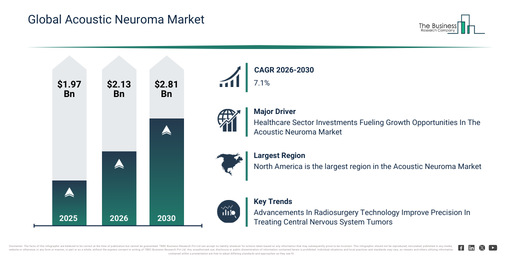
    The acoustic neuroma market has seen significant growth in recent years. This market is set to expand from $1.97 billion in 2025 to $2.13 billion in 2026, exhibiting a compound annual growth rate (CAGR) of 8.2%. Factors contributing to its historical growth include restricted awareness of acoustic neuroma, dependence on traditional radiation therapy, sluggish integration of advanced imaging modalities, a rising incidence of hearing disorders, and a scarcity of surgical treatment facilities.

    The acoustic neuroma market is projected to experience substantial expansion over the upcoming years. By 2030, it is anticipated to reach a valuation of $2.81 billion, showing a compound annual growth rate (CAGR) of 7.1%. This projected growth during the forecast period is fueled by several factors, including advancements in MRI and CT-scan technologies, the expanding use of proton therapy and stereotactic radiosurgery, increased investments in hospitals and surgical centers, a rise in patient awareness leading to earlier diagnoses, and the proliferation of specialized treatment facilities. Key trends anticipated during this period encompass the wider adoption of sophisticated imaging techniques, a growing inclination towards minimally invasive treatments, continued development in proton therapy and stereotactic radiosurgery, the broadened application of personalized treatment methods, and heightened understanding of vestibular schwannoma indicators.

    Request A Free Acoustic Neuroma Market Sample To Support Your Strategic Planning:

    https://thebusinessresearchcompany.com/sample_request?id=69703365&type=smp&name=Acoustic%20Neuroma%20Market%20Report%202026&utm_source=Blogs&utm_medium=Paid&utm_campaign=Nov_PR

    What Is Propelling The Acoustic Neuroma Market Toward $2.81 Billion By 2030?

    The escalating investment within the healthcare sector is anticipated to stimulate the expansion of the acoustic neuroma market. This sector encompasses diverse services and facilities aimed at fostering health, delivering medical care, and enhancing overall well-being for individuals and communities. Such investments stem from factors like escalating demand, technological breakthroughs, evolving regulations, and worldwide health crises. Specifically, these funds drive innovation in the diagnosis and treatment of acoustic neuroma conditions, thereby improving patient outcomes and overall quality of life. Consequently, the increasing investment in the healthcare sector is a key driver for the growth of the acoustic neuroma market.

    What Are The Key Segments And Subsegments In The Acoustic Neuroma Market?

    The acoustic neuroma market covered in this report is segmented –

    1) By Type: Unilateral Vestibular Schwannomas, Bilateral Vestibular Schwannomas

    2) By Treatment Type: Radiation Therapy, Proton Therapy, Stereotactic Radiosurgery

    3) By Diagnosis Type: Magnetic Resonance Imaging (MRI), Hearing Tests

    4) By End User: Hospitals, Surgical Centers

    Subsegments:

    1) By Unilateral Vestibular Schwannomas: Small Unilateral Vestibular Schwannomas, Medium Unilateral Vestibular Schwannomas, Large Unilateral Vestibular Schwannomas

    2) By Bilateral Vestibular Schwannomas: Familial Bilateral Vestibular Schwannomas, Sporadic Bilateral Vestibular Schwannomas

    Acoustic Neuroma Market Trends Behind The 7.1% CAGR Forecast

    Companies operating in the acoustic neuroma market are prioritizing the development of advanced solutions, such as high-precision image-guided delivery, to enhance the accuracy of treatments, reduce damage to surrounding healthy tissues, and improve patient outcomes. This high-precision image-guided delivery is a technological characteristic within radiosurgery that enables real-time tumor targeting and tracking, ensuring exact radiation application to the affected area. For instance, in April 2025, Accuray Incorporated, a US-based medical device company specializing in state-of-the-art radiosurgery systems, released new clinical data regarding its CyberKnife System, emphasizing its wide-ranging capabilities in delivering SRS and SBRT. Engineered to treat central nervous system (CNS) tumors, including acoustic neuroma, the system provides noninvasive, targeted treatment options that enhance both safety and clinical efficacy.

    Major Companies Profiled In The Acoustic Neuroma Market Report

    Major companies operating in the acoustic neuroma market are Pfizer Inc, F. Hoffmann-La Roche AG, Merck & Co. Inc., Sanofi S.A., AstraZeneca plc, Novartis AG, GSK plc, Amgen Inc., Teva Pharmaceuticals Industries Ltd, General Electric Company, Siemens Healthineers, Canon Medical Systems Corporation, Toshiba Medical Systems Corporation, Shimadzu Corporation, Varian Medical Systems, Elekta AB, Medtronic plc, Olympus Corporation, Cochlear Limited, Brainlab AG, Natus Medical Incorporated, Abbott Laboratories

    Explore The Business Research Company’s Complete Acoustic Neuroma Market Report:

    https://thebusinessresearchcompany.com/report/acoustic-neuroma-global-market-report?utm_source=Blogs&utm_medium=Paid&utm_campaign=Nov_PR

    Where Does The Acoustic Neuroma Market Generate The Most Revenue?

    North America was the largest region in the acoustic neuroma market in 2025. The regions covered in the acoustic neuroma market report are Asia-Pacific, South East Asia, Western Europe, Eastern Europe, North America, South America, Middle East, Africa.

    Reach Out To Our Team:

    The Business Research Company: https://www.thebusinessresearchcompany.com/

    Americas: +1 310-496-7795

    Asia: +44 7882 955267 & +91 8897263534

    Europe: +44 7882 955267

    Email us at: marketing@tbrc.info

    Follow us on:

    LinkedIn: https://in.linkedin.com/company/the-business-research-company

    YouTube: https://www.youtube.com/channel/UC24_fI0rV8cR5DxlCpgmyFQ

    Global Market Model: https://www.thebusinessresearchcompany.com/global-market-model
  • Artificial Intelligence-Enhanced Hospital Equipment Utilization Market 27.1% CAGR Outlook: Size, Segments And Regional Analysis

    Artificial Intelligence-Enhanced Hospital Equipment Utilization Market 27.1% CAGR Outlook: Size, Segments And Regional Analysis

    The Business Research Company’s 2026 market reports combine market attractiveness scoring, total addressable market sizing, company benchmarking matrices, interactive Excel dashboards, deeper supply chain intelligence, emerging startup tracking, and granular product-level insights to deliver research that is more actionable and strategically valuable.

    Is The Artificial Intelligence-Enhanced Hospital Equipment Utilization Market Expanding? Latest Size Estimates And 2030 Projections

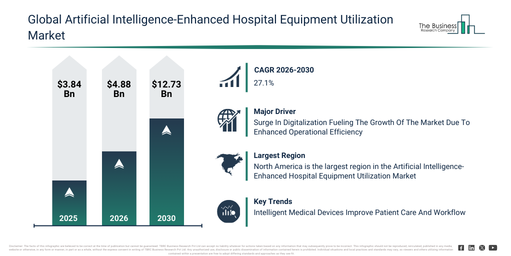
    The market size for artificial intelligence-enhanced hospital equipment utilization has experienced substantial growth recently. It is anticipated to expand from $3.84 billion in 2025 to $4.88 billion in 2026, reflecting a compound annual growth rate (CAGR) of 27.3%. Factors contributing to this growth historically include increased hospital equipment utilization rates, mounting operational cost pressures within healthcare facilities, the early embrace of connected medical devices, the proliferation of hospital digital transformation initiatives, and the broadening of centralized equipment management systems.

    The market size for artificial intelligence-enhanced hospital equipment utilization is projected to experience substantial growth over the coming years. This market is anticipated to expand to $12.73 billion by 2030, exhibiting a compound annual growth rate (CAGR) of 27.1%. Factors contributing to this growth during the forecast period include greater investments in intelligent hospital infrastructure, a heightened demand for AI-powered operational efficiency, the proliferation of cloud-based platforms for equipment management, increased integration of hospital-wide data analytics, and an intensified focus on cost optimization within healthcare operations. Key trends expected during this period involve the wider adoption of predictive maintenance for medical equipment, a surge in the use of AI-driven asset tracking systems, the increasing integration of real-time analytics for equipment performance, the expansion of platforms designed for workflow optimization, and an elevated emphasis on minimizing equipment downtime.

    Free Artificial Intelligence-Enhanced Hospital Equipment Utilization Market Sample: Market Size, Growth Drivers And Competitive Landscape:

    https://thebusinessresearchcompany.com/sample_request?id=52719308&type=smp&name=Artificial%20Intelligence-Enhanced%20Hospital%20Equipment%20Utilization%20Market%20Report%202026&utm_source=Blogs&utm_medium=Paid&utm_campaign=Nov_PR

    Artificial Intelligence-Enhanced Hospital Equipment Utilization Market Drivers Explained: What Is Supporting A 27.1% CAGR?

    The future expansion of the artificial intelligence-enhanced hospital equipment utilization market is anticipated to be driven by escalating digitalization. Digitalization involves integrating digital technologies into various aspects of business operations, services, and daily activities to boost efficiency and generate value. This surge in digitalization is attributed to improvements in operational efficiency, facilitating streamlined processes and strengthening decision-making based on data. Artificial intelligence-enhanced hospital equipment utilization contributes to digitalization by integrating intelligent analytics and real-time monitoring systems, which in turn optimize equipment performance, enhance hospital operational efficiency, and reinforce data connectivity throughout healthcare networks. Consequently, the expanding digitalization is fueling the growth of the artificial intelligence-enhanced hospital equipment utilization market.

    Artificial Intelligence-Enhanced Hospital Equipment Utilization Market Segment Guide: Main Divisions And Subsegments

    The artificial intelligence-enhanced hospital equipment utilization market covered in this report is segmented –

    1) By Component: Software, Hardware, Services

    2) By Deployment Mode: On-Premises, Cloud

    3) By Application: Asset Tracking, Predictive Maintenance, Workflow Optimization, Inventory Management, Patient Flow Management

    4) By End-User: Hospitals, Clinics, Ambulatory Surgical Centers, Diagnostic Centers

    Subsegments:

    1) By Software: Predictive Analytics Software, Imaging Analysis Software, Workflow Optimization Software, Patient Monitoring Software

    2) By Hardware: Imaging Devices, Robotic Surgical Systems, Intelligent Monitoring Equipment, Diagnostic Instruments

    3) By Services: Maintenance And Support, Training And Implementation, Data Management, Consulting

    Artificial Intelligence-Enhanced Hospital Equipment Utilization Market Trends And Opportunities For 2026–2030

    Leading companies within the artificial intelligence-enhanced hospital equipment utilization market are concentrating on creating advanced medical technologies, such as AI-driven imaging systems, to secure a competitive advantage. These AI-powered imaging systems are medical technologies that utilize artificial intelligence to improve image analysis, enhance diagnostic precision, and accelerate the discovery of abnormalities.

    Which Major Players Are Active In The Artificial Intelligence-Enhanced Hospital Equipment Utilization Market?

    Major companies operating in the artificial intelligence-enhanced hospital equipment utilization market are Butterfly Network Inc., International Business Machines Corporation, Oracle Corporation, Medtronic Plc, Sectra AB, Siemens Healthineers AG, Fujifilm Holdings Corporation, Stryker Corporation, Philips Healthcare, GE Healthcare, Intuitive Surgical Inc., Hologic Inc., Canon Medical Systems Corporation, Carestream Health Inc., Qventus Inc., Agfa HealthCare NV, TRIMEDX Inc., Nuance Communications Inc., Sonitor Technologies AS, CenTrak Inc.

    Unlock The Complete Artificial Intelligence-Enhanced Hospital Equipment Utilization Market Report With Company Benchmarking:

    https://thebusinessresearchcompany.com/report/artificial-intelligence-enhanced-hospital-equipment-utilization-global-market-report?utm_source=Blogs&utm_medium=Paid&utm_campaign=Nov_PR

    Artificial Intelligence-Enhanced Hospital Equipment Utilization Market World Regions Compared: Which Leads In Revenue?

    North America was the largest region in the artificial intelligence-enhanced hospital equipment utilization market in 2025. Asia-Pacific is expected to be the fastest-growing region in the forecast period. The regions covered in the artificial intelligence-enhanced hospital equipment utilization market report are Asia-Pacific, South East Asia, Western Europe, Eastern Europe, North America, South America, Middle East, Africa.

    Reach Out To Our Team:

    The Business Research Company: https://www.thebusinessresearchcompany.com/

    Americas: +1 310-496-7795

    Asia: +44 7882 955267 & +91 8897263534

    Europe: +44 7882 955267

    Email us at: marketing@tbrc.info

    Follow us on:

    LinkedIn: https://in.linkedin.com/company/the-business-research-company

    YouTube: https://www.youtube.com/channel/UC24_fI0rV8cR5DxlCpgmyFQ

    Global Market Model: https://www.thebusinessresearchcompany.com/global-market-model
  • How The Artificial Intelligence-Driven Hospital Energy Optimization Market Will Grow To $7.15 Billion By 2030

    How The Artificial Intelligence-Driven Hospital Energy Optimization Market Will Grow To $7.15 Billion By 2030

    Market attractiveness scoring, total addressable market sizing, company benchmarking matrices, interactive Excel dashboards, deeper supply chain intelligence, emerging startup tracking, and granular product-level insights are among the key offerings featured in The Business Research Company’s 2026 market reports, designed to deliver more actionable and strategically valuable research.

    Artificial Intelligence-Driven Hospital Energy Optimization Market Growth Outlook: How Much Bigger Will The Market Be By 2030?

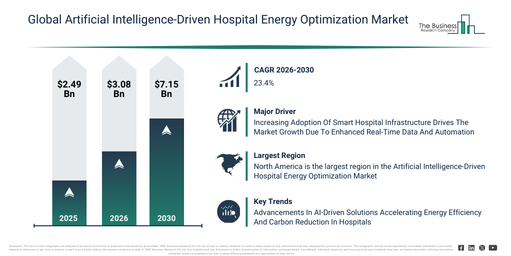
    The artificial intelligence-driven hospital energy optimization market has seen substantial growth in recent years. It is anticipated to increase from $2.49 billion in 2025 to $3.08 billion in 2026, exhibiting a compound annual growth rate (CAGR) of 23.7%. This historical growth can be attributed to factors such as rising hospital energy consumption levels, increased operational cost pressures, the initial adoption of building management systems, the expansion of digital hospital infrastructure, and a growing focus on operational efficiency.

    The artificial intelligence-driven hospital energy optimization market size is anticipated to undergo significant expansion in the upcoming years. It is projected to reach $7.15 billion by 2030, exhibiting a compound annual growth rate (CAGR) of 23.4%. This projected growth is driven by factors such as increasing investments in green hospital initiatives, a rising demand for carbon footprint reduction, the expansion of smart hospital projects, the growing adoption of AI-driven facility management, and an increasing regulatory focus on energy efficiency standards. Major trends expected during this forecast period include the expanding deployment of AI-based energy management platforms, the rising adoption of smart sensors and meters, the broadening of predictive maintenance for hospital utilities, the growing integration of building automation systems, and an enhanced focus on energy cost optimization.

    Request A Free Artificial Intelligence-Driven Hospital Energy Optimization Market Sample From The Business Research Company:

    https://thebusinessresearchcompany.com/sample_request?id=17766433&type=smp&name=Artificial%20Intelligence-Driven%20Hospital%20Energy%20Optimization%20Market%20Report%202026&utm_source=Blogs&utm_medium=Paid&utm_campaign=Nov_PR

    How Is The Key Growth Driver Influencing The Artificial Intelligence-Driven Hospital Energy Optimization Market?

    The expanding integration of smart hospital infrastructure is anticipated to fuel the expansion of the artificial intelligence-driven hospital energy optimization market in the future. This infrastructure represents a sophisticated digital network facilitating effective healthcare services, continuous monitoring, and automated resource management within hospitals. The rise in smart hospital infrastructure adoption is prompted by the imperative to enhance patient results via live data surveillance, which allows for quicker diagnoses and tailored treatments, thereby boosting care quality and operational efficiency. By supplying linked sensors and real-time data from diverse systems, smart hospital infrastructure aids Artificial Intelligence-Driven Hospital Energy Optimization, allowing AI algorithms to analyze energy consumption trends and automatically modify configurations to decrease usage and enhance efficiency. Consequently, the expanding implementation of smart hospital infrastructure is propelling the growth of the artificial intelligence-driven hospital energy optimization market.

    Artificial Intelligence-Driven Hospital Energy Optimization Market Segmentation By Category: What Does The 2026 Report Cover?

    The artificial intelligence-driven hospital energy optimization market covered in this report is segmented –

    1) By Component: Software, Hardware, Services

    2) By Deployment Mode: On-Premises, Cloud

    3) By Hospital Size: Small And Medium Hospitals, Large Hospitals

    4) By Application: Heating, Ventilation, And Air Conditioning Optimization, Lighting Control, Energy Management, Equipment Monitoring, Other Applications

    5) By End-User: Public Hospitals, Private Hospitals, Specialty Hospitals, Other End-Users

    Subsegments:

    1) By Software: Energy Management Software, Building Automation Software, Predictive Maintenance Software, Data Analytics and Visualization Tools, Artificial Intelligence Algorithms And Optimization Engines

    2) By Hardware: Smart Sensors And Internet Of Things Devices, Smart Meters, Controllers And Actuators, Heating, Ventilation, And Air Conditioning Systems, Lighting Control Systems, Edge Devices And Gateways

    3) By Services: Consulting And Advisory Services, Installation And Integration Services, Maintenance And Support Services, Energy Auditing Services, Training And Education Services

    How Are Industry Players Changing The Artificial Intelligence-Driven Hospital Energy Optimization Market Landscape?

    Major companies operating in the Artificial Intelligence-Driven Hospital Energy Optimization market are prioritizing intelligent energy management to accelerate the deployment of energy-efficient solutions across healthcare facilities. This intelligent energy management encompasses the use of AI, cloud computing, and IoT technologies to monitor, analyze, and automatically optimize hospital energy systems like HVAC for enhanced efficiency and reduced consumption.

    Artificial Intelligence-Driven Hospital Energy Optimization Market Global Key Players And Competitive Overview

    Major companies operating in the artificial intelligence-driven hospital energy optimization market are Enel S.p.A., General Electric Company, Veolia Environnement S.A., Schneider Electric SE, Honeywell International Inc., ABB Group, Eaton Corporation Plc, Johnson Controls International Plc, Trane Technologies Plc, Centrica Business Solutions Ltd., Rockwell Automation Inc., Ameresco Inc., ENGIE Impact, GridPoint Inc., Optimum Energy LLC, Verdigris Technologies, Enerbrain, BuildingIQ Inc., Deerns, Resync

    Explore Comprehensive Artificial Intelligence-Driven Hospital Energy Optimization Market Coverage In The Full Report:

    https://thebusinessresearchcompany.com/report/artificial-intelligence-driven-hospital-energy-optimization-global-market-report?utm_source=Blogs&utm_medium=Paid&utm_campaign=Nov_PR

    Regional Analysis Of The Artificial Intelligence-Driven Hospital Energy Optimization Market: Where Is The Industry Concentrated?

    North America was the largest region in the artificial intelligence-driven hospital energy optimization market in 2025. Asia-Pacific is expected to be the fastest-growing region in the forecast period. The regions covered in the artificial intelligence-driven hospital energy optimization market report are Asia-Pacific, South East Asia, Western Europe, Eastern Europe, North America, South America, Middle East, Africa.

    Reach Out To Our Team:

    The Business Research Company: https://www.thebusinessresearchcompany.com/

    Americas: +1 310-496-7795

    Asia: +44 7882 955267 & +91 8897263534

    Europe: +44 7882 955267

    Email us at: marketing@tbrc.info

    Follow us on:

    LinkedIn: https://in.linkedin.com/company/the-business-research-company

    YouTube: https://www.youtube.com/channel/UC24_fI0rV8cR5DxlCpgmyFQ

    Global Market Model: https://www.thebusinessresearchcompany.com/global-market-model
  • Acne Vulgaris Market Projected To Be Worth $11.46 Billion By 2030: Industry Outlook And Analysis

    Acne Vulgaris Market Projected To Be Worth $11.46 Billion By 2030: Industry Outlook And Analysis

    With a focus on actionable insights and strategic value, The Business Research Company’s 2026 market reports include market attractiveness scoring, total addressable market sizing, company benchmarking matrices, interactive Excel dashboards, deeper supply chain intelligence, emerging startup tracking, and granular product-level insights.

    Acne Vulgaris Market Size Snapshot: 2026 Valuation, 2030 Projection And Key Growth Factors

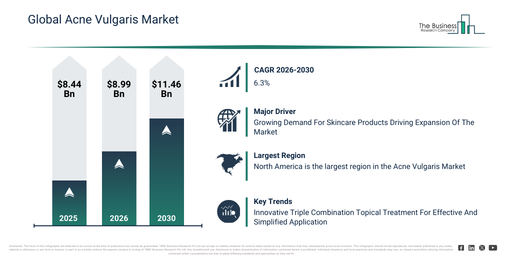
    The market for acne vulgaris has demonstrated robust expansion in recent years. This market is projected to expand from $8.44 billion in 2025 to $8.99 billion in 2026, achieving a compound annual growth rate (CAGR) of 6.5%. Historically, this growth can be ascribed to several factors, including the rising incidence of acne vulgaris among teenagers, heightened understanding of dermatological therapies, the growth of hospital and clinic infrastructure, the widespread availability of prescription medications for acne, and a growing emphasis on cosmetic and skincare practices.

    The acne vulgaris market is projected to experience robust growth in the upcoming years. Its value is expected to reach $11.46 billion by 2030, demonstrating a compound annual growth rate (CAGR) of 6.3%. This expansion over the forecast period is fueled by several factors, such as the advancement of targeted acne therapeutics, the increasing integration of teledermatology and digital health platforms, an uptick in anti-inflammatory and retinoid formulations, the rising consumer demand for personalized skincare regimens, and the wider availability through online pharmacy and e-commerce channels. Significant trends anticipated for this period include a growing demand for combination topical therapies, the expanded use of hormonal treatments in managing acne, an increase in laser and light-based physical treatments, the broader application of oral retinoids and antibiotic therapies, and an increasing preference for herbal, natural, and novel therapeutic options.

    Get A No-Cost Sample Of The Acne Vulgaris Market Study:

    https://thebusinessresearchcompany.com/sample_request?id=35583642&type=smp&name=Acne%20Vulgaris%20Market%20Report%202026&utm_source=Blogs&utm_medium=Paid&utm_campaign=Nov_PR

    Major Factor Fueling The Acne Vulgaris Market Through 2030

    The future expansion of the acne vulgaris market is anticipated to be fueled by the rising consumer demand for skincare items. Skincare products are preparations developed to improve skin health and aesthetic appeal, encompassing diverse items addressing various skin issues, ranging from cleansing and moisturizing to protective functions. This surge in demand stems from factors such as social media’s influence, increasing dermatological worries, new product developments, and a move towards proactive skincare, all contributing to heightened skincare awareness. Skincare products aid in treating acne vulgaris by addressing its underlying causes, including surplus sebum, blocked pores, and bacterial proliferation. They utilize ingredients such as salicylic acid, benzoyl peroxide, and retinoids, which facilitate exfoliation, diminish inflammation, and foster clearer, healthier complexions. Consequently, increasing skincare awareness is a key factor propelling the acne vulgaris market.

    Acne Vulgaris Market Segment Landscape: Main Categories And Subcategories Covered

    The acne vulgaris market covered in this report is segmented –

    1) By Type: Systemic Therapy, Hormonal Therapy, Physical Treatment, Topical Combination Therapy, Other Types

    2) By Age Group: 10 To 17 Years, 18 To 44 Years, 45 To 64 Years

    3) By Distribution Channel: Hospital Pharmacies, Online Pharmacies

    Subsegments:

    1) By Systemic Therapy: Oral Antibiotics, Oral Retinoids, Oral Anti-Inflammatory Agents

    2) By Hormonal Therapy: Oral Contraceptives, Androgen Receptor Inhibitors

    3) By Physical Treatment: Laser Therapy, Light-Based Therapy, Chemical Peels, Microdermabrasion

    4) By Topical Combination Therapy: Retinoid And Antibiotic Combinations, Benzoyl Peroxide And Antibiotic Combinations, Retinoid And Benzoyl Peroxide Combinations

    5) By Other Types: Herbal And Natural Remedies, Biologic Therapies, Emerging Therapies

    How Are Emerging Trends Influencing The Acne Vulgaris Market’s Growth Path?

    Leading companies in the acne vulgaris market are focusing on developing advanced solutions, such as triple-combination topical treatments, to offer a simplified, once-daily application for acne vulgaris. This kind of topical treatment involves a formulation that brings together three active components, typically targeting different aspects of a condition, to deliver enhanced therapeutic benefits in managing skin conditions like acne or psoriasis.

    Acne Vulgaris Market Leading Players And Key Industry Participants In 2026

    Major companies operating in the acne vulgaris market are Pfizer Inc., Johnson and Johnson, AbbVie Inc., L’Oréal Paris, GlaxoSmithKline Plc., Reckitt Benckiser Group plc, Viatris Inc., Teva Pharmaceuticals, Bausch Health Companies, Sun Pharmaceutical Industries Ltd., Incyte, Aurobindo Pharma, Lupin Ltd., Torrent Pharmaceuticals, Biocon, Stiefel Laboratories, Mayne Pharma Group Limited, Paratek Pharmaceuticals, Cosmo Pharmaceuticals, AOBiome

    Check Out The Full Acne Vulgaris Market Report 2026:

    https://thebusinessresearchcompany.com/report/acne-vulgaris-global-market-report?utm_source=Blogs&utm_medium=Paid&utm_campaign=Nov_PR

    Acne Vulgaris Market By Geography: Revenue Leaders Among Global Regions

    North America was the largest region in the acne vulgaris market in 2025. Asia-Pacific is expected to be the fastest-growing region in the forecast period. The regions covered in the acne vulgaris market report are Asia-Pacific, South East Asia, Western Europe, Eastern Europe, North America, South America, Middle East, Africa.

    Reach Out To Our Team:

    The Business Research Company: https://www.thebusinessresearchcompany.com/

    Americas: +1 310-496-7795

    Asia: +44 7882 955267 & +91 8897263534

    Europe: +44 7882 955267

    Email us at: marketing@tbrc.info

    Follow us on:

    LinkedIn: https://in.linkedin.com/company/the-business-research-company

    YouTube: https://www.youtube.com/channel/UC24_fI0rV8cR5DxlCpgmyFQ

    Global Market Model: https://www.thebusinessresearchcompany.com/global-market-model
  • Artificial Intelligence In The Diagnostic Market Segmentation And Growth Analysis: Insights Through 2030

    Artificial Intelligence In The Diagnostic Market Segmentation And Growth Analysis: Insights Through 2030

    Designed to make market research more actionable and strategically valuable, The Business Research Company’s 2026 market reports feature market attractiveness scoring, total addressable market sizing, company benchmarking matrices, interactive Excel dashboards, deeper supply chain intelligence, emerging startup tracking, and granular product-level insights.

    Artificial Intelligence In The Diagnostic Market Forecast 2026–2030: Size, Value And Compound Annual Growth Rate

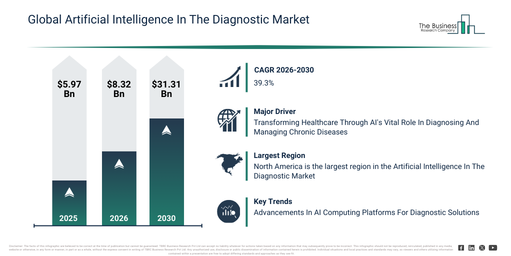
    The artificial intelligence in the diagnostic market has experienced substantial expansion in recent years. It is projected to grow from $5.97 billion in 2025 to $8.32 billion in 2026, at a compound annual growth rate (CAGR) of 39.5%. This historical growth can be attributed to several factors including the increasing availability of medical imaging data, the growing digitization of healthcare records, a rising scarcity of skilled diagnosticians, the early integration of computer vision in radiology, and the development of healthcare IT infrastructure.

    The artificial intelligence in the diagnostic market is anticipated to experience substantial growth over the coming years, reaching $31.31 billion by 2030, demonstrating a compound annual growth rate (CAGR) of 39.3%. This projected expansion is driven by factors such as a heightened demand for early disease identification, increased investments in AI-powered healthcare solutions, the proliferation of personalized medicine programs, the greater incorporation of AI diagnostics into clinical practices, and an uptick in regulatory approvals for AI-driven instruments. Key trends expected during this period involve a rising uptake of AI-powered diagnostic imaging instruments, a greater application of machine learning in aiding clinical decisions, enhanced integration of AI across radiology and pathology procedures, the broadening scope of predictive analytics for disease detection, and a sharpened emphasis on the precision and rapidity of diagnostics.

    Try Before You Buy: Free Sample Of The Artificial Intelligence In The Diagnostic Market Report:

    https://thebusinessresearchcompany.com/sample_request?id=14703059&type=smp&name=Artificial%20Intelligence%20In%20The%20Diagnostic%20Market%20Report%202026&utm_source=Blogs&utm_medium=Paid&utm_campaign=Nov_PR

    Artificial Intelligence In The Diagnostic Market Growth Engine: The Factor Boosting Demand Globally

    The increasing occurrence of chronic illnesses is anticipated to fuel the expansion of AI in the diagnostics market in the future. These are enduring health conditions that continue for a prolonged duration, frequently for an individual’s entire life. Integrating AI-driven diagnostic methods into the management of chronic diseases facilitates prompt identification, forecasting, improved decision-making tools, patient remote surveillance, reduced expenses, and customized treatments for individuals through the examination of their genetic profile and disease advancement. Consequently, the growing incidence of chronic diseases is a key factor propelling the expansion of AI in the diagnostics market.

    Which Categories And Subcategories Shape The Artificial Intelligence In The Diagnostic Market?

    The artificial intelligence in the diagnostic market covered in this report is segmented –

    1) By Component: Hardware, Software, Services

    2) By Technology: Machine Learning, NLP (Natural Language Processing), Context-Aware Computing, Computer Vision

    3) By Diagnosis Type: Radiology, Pathology, Cardiology, Oncology, Neurology, Chest And Lung, Other Diagnosis Types

    Subsegments:

    1) By Hardware: Imaging Devices, Diagnostic Equipment, Wearable Devices

    2) By Software: Diagnostic Imaging Software, Data Analytics Software, Machine Learning Algorithms, Clinical Decision Support Systems

    3) By Services: Consulting Services, Integration Services, Maintenance And Support Services, Training Services

    Artificial Intelligence In The Diagnostic Market Trend Insights: Strategic Focus Areas Of Leading Companies

    Leading companies in the AI in diagnostics market are innovating with new technologies, such as AI modules, to achieve a competitive edge. An AI module is an independent software component that integrates specific AI capabilities or functionalities.

    Leading Organizations In The Artificial Intelligence In The Diagnostic Market

    Major companies operating in the artificial intelligence in the diagnostic market are Siemens Healthineers, Koninklijke Philips N.V., GE Healthcare Technologies Inc., Paige.AI Inc., HeartFlow Inc., Aidoc Medical Ltd., AliveCor Inc., Butterfly Network Inc., Imagen Technologies, Digital Diagnostics Inc., Brainomix Ltd., NovaSignal Corp., Enlitic Inc., Nano-X Imaging LTD., EchoNous Inc., Zebra Medical Vision Ltd., Aidence B.V., Neural Analytics Inc., IDx Technologies Inc., icometrix N.V., Vuno Inc.

    Continue Reading: The Full Artificial Intelligence In The Diagnostic Market Report:

    https://thebusinessresearchcompany.com/report/artificial-intelligence-in-the-diagnostic-global-market-report?utm_source=Blogs&utm_medium=Paid&utm_campaign=Nov_PR

    Artificial Intelligence In The Diagnostic Market Regional Spotlight: Top Geography And Report Coverage

    North America was the largest region in the artificial intelligence in diagnostics market in 2025. Asia-Pacific is expected to be the fastest-growing region in the forecast period. The regions covered in the artificial intelligence in the diagnostic market report are Asia-Pacific, South East Asia, Western Europe, Eastern Europe, North America, South America, Middle East, Africa.

    Reach Out To Our Team:

    The Business Research Company: https://www.thebusinessresearchcompany.com/

    Americas: +1 310-496-7795

    Asia: +44 7882 955267 & +91 8897263534

    Europe: +44 7882 955267

    Email us at: marketing@tbrc.info

    Follow us on:

    LinkedIn: https://in.linkedin.com/company/the-business-research-company

    YouTube: https://www.youtube.com/channel/UC24_fI0rV8cR5DxlCpgmyFQ

    Global Market Model: https://www.thebusinessresearchcompany.com/global-market-model
  • From $9.36 Billion To $11.81 Billion: Acne Treatments Market Forecast 2026–2030

    From $9.36 Billion To $11.81 Billion: Acne Treatments Market Forecast 2026–2030

    The Business Research Company’s 2026 market reports combine market attractiveness scoring, total addressable market sizing, company benchmarking matrices, interactive Excel dashboards, deeper supply chain intelligence, emerging startup tracking, and granular product-level insights to deliver research that is more actionable and strategically valuable.

    Acne Treatments Market Value Projected To Grow At A 6% Compound Annual Growth Rate Through 2030

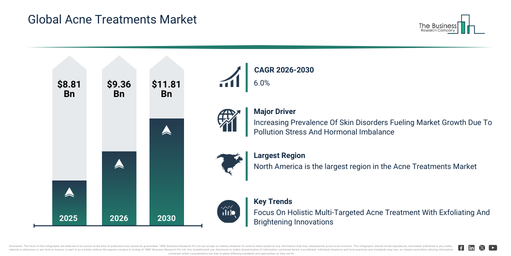
    The acne treatments market has experienced robust growth in recent years. This market is projected to expand from $8.81 billion in 2025 to $9.36 billion in 2026, exhibiting a compound annual growth rate (CAGR) of 6.3%. Historically, this expansion can be linked to factors such as the rising incidence of acne across various age groups, enhanced accessibility to dermatological treatments, the proliferation of clinical dermatology practices, greater adoption of prescription acne medications, and the broadening of healthcare services focused on skincare.

    The acne treatments market is projected for significant expansion in the coming years, anticipated to reach $11.81 billion by 2030, demonstrating a compound annual growth rate (CAGR) of 6.0%. This projected growth is driven by factors such as a heightened demand for customized dermatology solutions, the increasing embrace of advanced therapeutic approaches for acne, the expansion of teledermatology services, a greater emphasis on preventing scars and repairing skin, and the broader integration of digital tools for skin assessment. Key trends shaping the market during this period include a greater uptake of combination acne therapies, an escalating demand for individualized acne treatment strategies, the increasing application of topical prescription drugs, the wider availability of laser and light-based treatments for acne, and an intensified focus on managing long-term skin health.

    Evaluate The Acne Treatments Market Report Before You Buy With A Free Sample:

    https://thebusinessresearchcompany.com/sample_request?id=31999764&type=smp&name=Acne%20Treatments%20Market%20Report%202026&utm_source=Blogs&utm_medium=Paid&utm_campaign=Nov_PR

    Acne Treatments Market Growth Driver Analysis For The 2026–2030 Forecast Period

    The escalating occurrence of skin conditions is anticipated to fuel the expansion of the acne treatments market moving forward. A skin disorder refers to any medical issue affecting the skin, leading to alterations in its appearance, texture, or functioning. This rise in skin disorders is attributed to increased pollution, stress, and hormonal imbalances, prompting individuals to seek specialized treatments that yield visible outcomes, minimize adverse effects, and integrate seamlessly into daily routines. Acne treatments prove beneficial for skin disorders by effectively reducing inflammation, preventing outbreaks, and aiding in the recovery of damaged skin. Hence, the rising prevalence of skin disorders is propelling growth within the acne treatments market.

    Acne Treatments Market Segmentation Breakdown: Primary And Secondary Categories

    The acne treatments market covered in this report is segmented –

    1) By Product: Retinoids, Antibiotics, Isotretinoin, Other Products

    2) By Acne Type: Inflammatory Acne, Cystic Acne, Post-Surgical Or Wound Acne

    3) By Treatment: Medication, Therapeutic, Laser Treatment

    4) By End User: Hospitals, Clinics, Ambulatory Surgical Centers

    Subsegments:

    1) By Retinoids: Topical Retinoids, Oral Retinoids

    2) By Antibiotics: Topical Antibiotics, Oral Antibiotics

    3) By Isotretinoin: Oral Isotretinoin, Topical Isotretinoin

    4) By Other Products: Benzoyl Peroxide, Salicylic Acid, Hormonal Treatments, Herbal And Natural Products, Combination Formulations

    Acne Treatments Market Industry Trends: New Developments From Leading Companies

    Major companies operating in the acne treatments market are increasingly emphasizing a holistic and multi-targeted approach to addressing acne, particularly through multi-functional exfoliating and brightening formulations. This trend aims to offer consumers effective solutions that not only treat acne but also enhance skin texture and reduce discoloration. Such a multi-functional formulation combines ingredients that gently remove dead skin cells while simultaneously reducing dark spots and improving overall skin tone.

    Who Are The Top Competitors In The Acne Treatments Market?

    Major companies operating in the acne treatments market are Pfizer Inc., Johnson & Johnson, AbbVie Inc., Bayer AG, Sanofi S.A., L’Oréal S.A., GlaxoSmithKline plc, Teva Pharmaceutical Industries Ltd., Shiseido Company Ltd., Sun Pharmaceutical Industries Ltd., Dr. Reddy’s Laboratories Ltd., Zydus Lifesciences Ltd., Glenmark Pharmaceuticals Ltd., Almirall S.A., Cipher Pharmaceuticals, Diomed Developments Limited, Galderma S.A., Bausch Health Companies Inc., F. Hoffmann-La Roche Ltd., Novartis AG, Leo Pharma A/S, Mayne Pharma Group Ltd.

    Access The Acne Treatments Market Report For Complete Segment-Level Analysis:

    https://thebusinessresearchcompany.com/report/acne-treatments-global-market-report?utm_source=Blogs&utm_medium=Paid&utm_campaign=Nov_PR

    Which Region Leads The Acne Treatments Market, And Which Regions Are Covered?

    North America was the largest region in the acne treatments market in 2025. Asia-Pacific is expected to be the fastest-growing region in the forecast period. The regions covered in the acne treatments market report are Asia-Pacific, South East Asia, Western Europe, Eastern Europe, North America, South America, Middle East, Africa.

    Reach Out To Our Team:

    The Business Research Company: https://www.thebusinessresearchcompany.com/

    Americas: +1 310-496-7795

    Asia: +44 7882 955267 & +91 8897263534

    Europe: +44 7882 955267

    Email us at: marketing@tbrc.info

    Follow us on:

    LinkedIn: https://in.linkedin.com/company/the-business-research-company

    YouTube: https://www.youtube.com/channel/UC24_fI0rV8cR5DxlCpgmyFQ

    Global Market Model: https://www.thebusinessresearchcompany.com/global-market-model
  • Artificial Intelligence In Radiology Market Analysis 2026: Major Companies Including Microsoft Corporation

    Artificial Intelligence In Radiology Market Analysis 2026: Major Companies Including Microsoft Corporation

    The Business Research Company’s 2026 market reports are designed to deliver research that is more actionable and strategically valuable. Key offerings include market attractiveness scoring, total addressable market sizing, company benchmarking matrices, interactive Excel dashboards, deeper supply chain intelligence, emerging startup tracking, and granular product-level insights.

    Artificial Intelligence In Radiology Market Size Insights: Annual Growth Rate, Revenue Outlook And Forecast Drivers

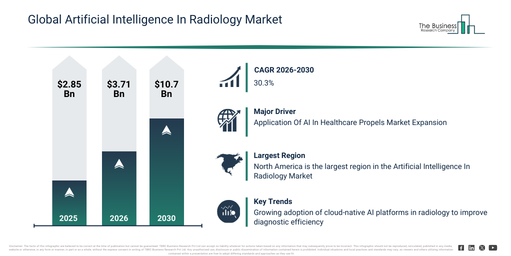
    The artificial intelligence in radiology market has observed significant growth in recent years. It is anticipated to increase from $2.85 billion in 2025 to $3.71 billion in 2026, at a compound annual growth rate (CAGR) of 30.2%. The expansion seen in the past can be ascribed to a heightened demand for diagnostic imaging services, a scarcity of radiology professionals, the widespread use of digital radiology systems, the increasing complexity of imaging data, and the implementation of picture archiving systems.

    The artificial intelligence in radiology market is projected to experience rapid expansion over the coming years. This market is anticipated to reach $10.7 billion by 2030, driven by a compound annual growth rate (CAGR) of 30.3%. Several factors contribute to this growth during the forecast period, including the growing acceptance of AI-assisted radiology platforms, a heightened emphasis on enhancing productivity within imaging departments, the proliferation of cloud-based radiology AI solutions, the expanding application of predictive imaging analytics, and greater integration with hospital IT systems. Key trends anticipated in the forecast period involve a heightened incorporation of AI into radiology reporting processes, increased utilization of computer vision for interpreting images, expanding implementation of AI for streamlining workflows, the broader availability of real-time decision support instruments, and a stronger commitment to improving diagnostic accuracy.

    Request A Free Excerpt Of The Artificial Intelligence In Radiology Global Market Report 2026:

    https://thebusinessresearchcompany.com/sample_request?id=20413689&type=smp&name=Artificial%20Intelligence%20In%20Radiology%20Market%20Report%202026&utm_source=Blogs&utm_medium=Paid&utm_campaign=Nov_PR

    What Will Drive Artificial Intelligence In Radiology Market Growth Through 2030?

    The expanding integration of artificial intelligence (AI) within the healthcare sector is projected to significantly advance the artificial intelligence (AI) in the radiology market. AI-driven algorithms show exceptional potential for accurately analyzing and interpreting medical images, assisting radiologists in identifying minute irregularities and enhancing diagnostic precision. The inherent efficiency and rapid processing capabilities of AI solutions not only optimize radiological processes but also facilitate quicker and more reliable diagnostic conclusions. Consequently, the rising adoption of AI in healthcare is a key factor propelling the expansion of artificial intelligence (AI) in the radiology market.

    Artificial Intelligence In Radiology Market Segment Analysis Covering All Major Categories

    The artificial intelligence in radiology market covered in this report is segmented –

    1) By Solution Type: AI Software, AI Hardware

    2) By Modality: Computed Tomography (CT), Magnetic Resonance (MR), X-Ray, Mammography, Ultrasound (US), Other Modalities

    3) By Application: Neurology, Chest And Lung, Musculoskeletal, Abdomen, Cardiology, Other Applications

    4) By End-User: Hospitals, Diagnostic Imaging Centers, Other End-Users

    Subsegments:

    1) By AI Software: Image Analysis Software, Workflow Optimization Software, Radiology Reporting Software, Decision Support Systems, Predictive Analytics Tools

    2) By AI Hardware: Imaging Devices, Servers And Computing Infrastructure, Robotics For Automated Imaging, Workstations For Radiologists

    Major Trends Shaping The Future Of The Artificial Intelligence In Radiology Market

    Leading companies operating within the artificial intelligence in radiology market are focusing on creating innovative cloud-native radiology informatics platforms, including AI-orchestrated diagnostic workspaces. Their objective is to improve imaging workflow efficiency, facilitate quicker clinical decision-making, and manage growing imaging volumes. A cloud-native AI radiology platform integrates traditional PACS or RIS functionalities with scalable cloud infrastructure, enabling real-time AI model deployment, sophisticated image streaming, automated reporting, and effortless interoperability across various clinical systems. As an example, in February 2025, DeepHealth, Inc., a U.S.-based health informatics company, introduced Diagnostic Suite, an AI-powered cloud-native radiology workspace. This platform combines worklist management, patient briefs, high-speed streaming viewers, AI orchestration, and intelligent reporting in a single interface. It delivers high scalability, incorporates multiple AI diagnostic models for lung, prostate, brain, and breast imaging, and boosts efficiency by ensuring smooth interoperability with existing radiology IT infrastructure.

    Artificial Intelligence In Radiology Market Competitive Environment And Key Companies

    Major companies operating in the artificial intelligence in radiology market are Microsoft Corporation, IBM Corporation, NVIDIA Corporation, Siemens Healthineers AG, Koninklijke Philips N.V, GE Healthcare Technologies Inc., Canon Medical Systems Corporation, HeartFlow Inc., Viz.ai Inc., Aidoc Medical Ltd., EnvoyAI, Butterfly Network Inc., Digital Diagnostics Inc., Caption Health, Enlitic Inc., Arterys, Nano X Imaging Ltd., Subtle Medical Inc., CureMetrix Inc., DiA Imaging Analysis Ltd., Imagen Technologies, Gleamer Ltd., Quibim, Behold.ai, Intel Corporation

    Access Expert Artificial Intelligence In Radiology Market Analysis In The Full Report:

    https://thebusinessresearchcompany.com/report/artificial-intelligence-in-radiology-global-market-report?utm_source=Blogs&utm_medium=Paid&utm_campaign=Nov_PR

    Which Regions Are Covered In The Artificial Intelligence In Radiology Market Report?

    North America was the largest region in the artificial intelligence in radiology market in 2025. The regions covered in the artificial intelligence in radiology market report are Asia-Pacific, South East Asia, Western Europe, Eastern Europe, North America, South America, Middle East, Africa.

    Reach Out To Our Team:

    The Business Research Company: https://www.thebusinessresearchcompany.com/

    Americas: +1 310-496-7795

    Asia: +44 7882 955267 & +91 8897263534

    Europe: +44 7882 955267

    Email us at: marketing@tbrc.info

    Follow us on:

    LinkedIn: https://in.linkedin.com/company/the-business-research-company

    YouTube: https://www.youtube.com/channel/UC24_fI0rV8cR5DxlCpgmyFQ

    Global Market Model: https://www.thebusinessresearchcompany.com/global-market-model
  • Artificial Intelligence In Oncology Market Regional Analysis: North America Holds The Largest Share

    Artificial Intelligence In Oncology Market Regional Analysis: North America Holds The Largest Share

    With a focus on actionable insights and strategic value, The Business Research Company’s 2026 market reports include market attractiveness scoring, total addressable market sizing, company benchmarking matrices, interactive Excel dashboards, deeper supply chain intelligence, emerging startup tracking, and granular product-level insights.

    How Large Could The Artificial Intelligence In Oncology Market Become By 2030 At A 34.5% CAGR?

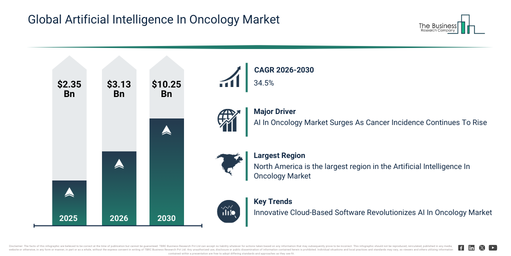
    The artificial intelligence in oncology market size has observed substantial growth in recent years. This market is expected to expand from $2.35 billion in 2025 to $3.13 billion in 2026, achieving a compound annual growth rate (CAGR) of 33.4%. Factors contributing to its historic growth include increasing global cancer incidence rates, the rise of oncology research initiatives, wider adoption of digital pathology, a growing reliance on data-driven cancer diagnostics, and significant investments in advanced oncology infrastructure.

    The artificial intelligence in oncology market is projected to experience rapid expansion over the coming years. This market is anticipated to reach a valuation of $10.25 billion by 2030, demonstrating a compound annual growth rate (CAGR) of 34.5%. Factors contributing to this growth during the forecast period include the increasing uptake of precision oncology solutions, a rising need for personalized cancer treatments, broader application of AI in clinical oncology trials, enhanced integration of genomics with AI platforms, and a surge in investments directed towards oncology-focused AI startups. Key trends anticipated for this period encompass a greater adoption of AI-based tools for cancer detection, more extensive use of AI in optimizing treatment plans, deeper integration of AI into drug discovery and development processes, the expansion of predictive oncology analytics, and a heightened emphasis on precision oncology applications.

    Get A Free Artificial Intelligence In Oncology Market Sample With 2030 Forecast Insights:

    https://thebusinessresearchcompany.com/sample_request?id=20841049&type=smp&name=Artificial%20Intelligence%20In%20Oncology%20Market%20Report%202026&utm_source=Blogs&utm_medium=Paid&utm_campaign=Nov_PR

    Artificial Intelligence In Oncology Market Outlook: Key Driver Supporting Long-Term Growth

    The anticipated increase in cancer diagnoses is projected to stimulate expansion in the AI in oncology market. Cancer itself is a complex group of diseases marked by the uncontrolled growth and division of abnormal cells within the body. Integrating AI into oncology holds the potential to revolutionize cancer care, making it significantly more precise, personalized, and efficient.

    Segmentation Of The Artificial Intelligence In Oncology Market: Key Categories Explained

    The artificial intelligence in oncology market covered in this report is segmented –

    1) By Component: Software Solutions, Hardware, Services

    2) By Treatment Type: Chemotherapy, Radiotherapy, Immunotherapy, Other Treatment Types

    3) By Cancer Type: Breast Cancer, Lung Cancer, Prostate Cancer, Colorectal Cancer, Brain Tumor, Other Cancer Types

    4) By Application: Cancer Detection, Drug Discovery, Drug Development, Other Applications

    5) By End-Users: Hospitals, Diagnostic Centers, Pharmaceutical Companies, Research Institutes, Other End Users

    Subsegments:

    1) By Software Solutions: Diagnostic Software, Treatment Planning Software, Patient Management Software, Data Analytics Platforms

    2) By Hardware: AI-Enabled Imaging Devices, High-Performance Computing Systems

    3) By Services: Consulting Services, Integration Services, Maintenance And Support Services

    Artificial Intelligence In Oncology Market Evolving Trends: What Businesses Should Know

    Leading companies operating in the AI in the oncology market are focusing on developing innovative software, such as cloud-based solutions, to enhance their efficiency and provide improved offerings. Cloud-based software plays a significant role in AI applications within oncology by providing a scalable, adaptable, and accessible platform for processing and analyzing large quantities of medical data.

    Who Competes In The Artificial Intelligence In Oncology Market? Major Companies Listed

    Major companies operating in the artificial intelligence in oncology market are Azra AI, IBM Corporation, Siemens Healthcare GmbH, GE HealthCare, NVIDIA Corporation, Digital Diagnostics Inc., ConcertAI Inc., PathAI Inc., Median Technologies SA, Kheiron Medical Technologies Ltd, Tempus Labs Inc., Paige AI Inc., Prognos Health Inc., Enlitic, Inspirata Inc., Proscia Inc., Deep 6 AI Inc., Intel Corporation, Zebra Medical Vision, Ibex Medical Analytics, Nanox Imaging Ltd., Berg LLC

    Read The Complete Artificial Intelligence In Oncology Market Forecast Report Through 2030:

    https://thebusinessresearchcompany.com/report/artificial-intelligence-in-oncology-global-market-report?utm_source=Blogs&utm_medium=Paid&utm_campaign=Nov_PR

    Artificial Intelligence In Oncology Market Regional Ranking: Which Geography Comes First?

    North America was the largest region in the AI in oncology market in 2025. Asia-Pacific is expected to be the fastest-growing region in the forecast period. The regions covered in the artificial intelligence in oncology market report are Asia-Pacific, South East Asia, Western Europe, Eastern Europe, North America, South America, Middle East, Africa.

    Reach Out To Our Team:

    The Business Research Company: https://www.thebusinessresearchcompany.com/

    Americas: +1 310-496-7795

    Asia: +44 7882 955267 & +91 8897263534

    Europe: +44 7882 955267

    Email us at: marketing@tbrc.info

    Follow us on:

    LinkedIn: https://in.linkedin.com/company/the-business-research-company

    YouTube: https://www.youtube.com/channel/UC24_fI0rV8cR5DxlCpgmyFQ

    Global Market Model: https://www.thebusinessresearchcompany.com/global-market-model