Category: Healthcare Services

  • Accountable Care Solutions Market Forecast To 2030: The Growing Role Of Leveraging AI For Enhanced Healthcare Delivery And Outcomes

    Accountable Care Solutions Market Forecast To 2030: The Growing Role Of Leveraging AI For Enhanced Healthcare Delivery And Outcomes

    The Business Research Company’s 2026 market reports combine market attractiveness scoring, total addressable market sizing, company benchmarking matrices, interactive Excel dashboards, deeper supply chain intelligence, emerging startup tracking, and granular product-level insights to deliver research that is more actionable and strategically valuable.

    Accountable Care Solutions Market Size Trajectory: Key Numbers Every Industry Stakeholder Should Know

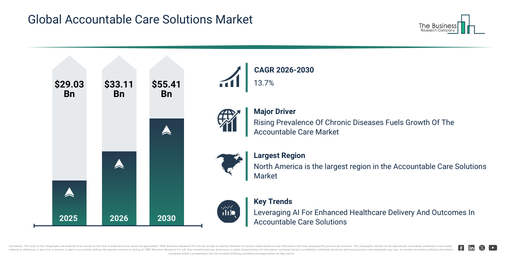
    The accountable care solutions market has experienced rapid expansion in recent years. It is forecast to grow from $29.03 billion in 2025 to $33.11 billion in 2026, demonstrating a compound annual growth rate (CAGR) of 14.0%. This historical growth can be attributed to several factors including increasing healthcare cost pressures, the early adoption of accountable care organizations, the rising use of electronic health records, the expansion of integrated care networks, and a regulatory push towards outcome-based reimbursement.

    The accountable care solutions market is projected to experience swift expansion in the coming years. Its size is forecast to reach $55.41 billion by 2030, exhibiting a compound annual growth rate (CAGR) of 13.7%. This anticipated growth during the forecast period stems from factors such as a heightened focus on value-based reimbursement models, increased capital allocation towards healthcare data analytics, a surge in the implementation of interoperable health IT systems, the broadening of patient-centric care frameworks, and an escalating need for solutions that optimize costs. Key trends expected during the same period encompass a greater uptake of value-based care platforms, an uptick in the utilization of healthcare analytics solutions, the progressive incorporation of population health management instruments, the broadening deployment of cloud-based accountable care systems, and a sharpened emphasis on coordinating care.

    Looking For Reliable Accountable Care Solutions Market Data? Request A Free Sample:

    https://thebusinessresearchcompany.com/sample_request?id=52121531&type=smp&name=Accountable%20Care%20Solutions%20Market%20Report%202026&utm_source=Blogs&utm_medium=Paid&utm_campaign=Nov_PR

    What Is Behind The Rising Demand In The Accountable Care Solutions Market?

    The increasing occurrence of chronic diseases is anticipated to boost the accountable care market’s expansion in the future. Chronic illnesses are persistent health conditions that persist for more than a year, often requiring ongoing treatment and impacting daily activities. These conditions are primarily fueled by an aging population, extended lifespans, and a higher incidence of ailments like heart disease and diabetes. Accountable care initiatives support the management of chronic diseases by optimizing patient care, improving health results, and reducing expenses via integrated and proactive methods. Consequently, the growing prevalence of chronic diseases is fueling the development of the accountable care market.

    Accountable Care Solutions Market Segment Coverage And Subsegment Analysis

    The accountable care solutions market covered in this report is segmented –

    1) By Component: Software, Services

    2) By Solutions: Electronic Health Or Medical Records, Healthcare Analytics, Revenue Cycle Management Solutions (RCM), Patient Engagement Solutions, Population Health Management (PHM) Solutions, Claims Management Solutions, Healthcare Information Exchange (HIE), Other Solutions

    3) By Deployment: On-Premise, Web And Cloud-Based

    4) By End-User: Healthcare Providers, Healthcare Payers

    Subsegments:

    1) By Software: Population Health Management (PHM) Software, Electronic Health/Medical Records (EHR/EMR) Software, Care Management Software, Health Information Exchange (HIE) Software, Revenue Cycle Management (RCM) Software, Clinical Decision Support Systems (CDSS), Claims Management Software, Patient Engagement Software

    2) By Services: Implementation Services, Consulting Services, Support & Maintenance Services, Training & Education Services, Managed Services, Analytics and Reporting Services.

    Accountable Care Solutions Market Future Trends: Where Is The Industry Heading?

    Leading companies in the accountable care solutions market are developing artificial intelligence (AI)-based models to better serve clients with more effective and efficient healthcare options. These AI-based models represent advanced systems crafted with cutting-edge algorithms and technologies to enhance healthcare delivery, performance, and overall efficiency. Their goal is to improve patient care, optimize resource allocation, and ensure cost-effective management through sophisticated algorithms and data analytics.

    Accountable Care Solutions Market Top Players List For 2026

    Major companies operating in the accountable care solutions market are UnitedHealth Group, McKesson Corporation, Optum Inc., Oracle Corporation, Infosys Limited, Change Healthcare, Aetna Inc., Athenahealth Inc., Lumeris, Inovalon Holdings Inc., eClinicalWorks LLC, NXGN Management LLC, Health Catalyst, Innovaccer Inc., ZeOmega Inc., MedeAnalytics Inc., HealthEC LLC, Azara Healthcare LLC, ISalus Healthcare LLC, Ayoka L.L.C.,

    Order Your Copy Of The Accountable Care Solutions Market Report 2026:

    https://thebusinessresearchcompany.com/report/accountable-care-solutions-global-market-report?utm_source=Blogs&utm_medium=Paid&utm_campaign=Nov_PR

    How Does The Accountable Care Solutions Market Vary By Region?

    North America was the largest region in the accountable care solutions market in 2025. Asia-Pacific is expected to be the fastest-growing region in the forecast period. The regions covered in the accountable care solutions market report are Asia-Pacific, South East Asia, Western Europe, Eastern Europe, North America, South America, Middle East, Africa.

    Reach Out To Our Team:

    The Business Research Company: https://www.thebusinessresearchcompany.com/

    Americas: +1 310-496-7795

    Asia: +44 7882 955267 & +91 8897263534

    Europe: +44 7882 955267

    Email us at: marketing@tbrc.info

    Follow us on:

    LinkedIn: https://in.linkedin.com/company/the-business-research-company

    YouTube: https://www.youtube.com/channel/UC24_fI0rV8cR5DxlCpgmyFQ

    Global Market Model: https://www.thebusinessresearchcompany.com/global-market-model
  • Latest Artificial Intelligence Clinical Genomics Interpretation Market Size Estimate For 2026 And The Road Ahead To 2030

    Latest Artificial Intelligence Clinical Genomics Interpretation Market Size Estimate For 2026 And The Road Ahead To 2030

    Market attractiveness scoring, total addressable market sizing, company benchmarking matrices, interactive Excel dashboards, deeper supply chain intelligence, emerging startup tracking, and granular product-level insights are among the key offerings featured in The Business Research Company’s 2026 market reports, designed to deliver more actionable and strategically valuable research.

    Artificial Intelligence Clinical Genomics Interpretation Market Size Estimate For 2026 And Revenue Forecast Through 2030

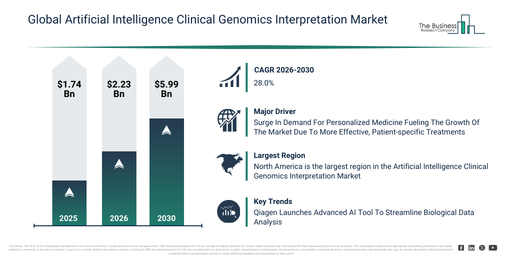
    The artificial intelligence clinical genomics interpretation market has shown substantial growth in recent years. This market is anticipated to expand from $1.74 billion in 2025 to $2.23 billion in 2026, achieving a compound annual growth rate (CAGR) of 28.3%. Factors contributing to its historical growth include the increasing availability of genomic sequencing data, the expansion of precision medicine initiatives, the wider adoption of bioinformatics platforms, the rising clinical utilization of genomic insights, and the early integration of AI within genomics workflows.

    The artificial intelligence clinical genomics interpretation market is projected to experience substantial expansion in the coming years. Its valuation is anticipated to reach $5.99 billion by 2030, demonstrating a compound annual growth rate (CAGR) of 28.0%. This anticipated growth during the forecast period is primarily driven by several factors, including a heightened demand for customized healthcare solutions, increased investments in genomic data analytics, the proliferation of oncology-focused genomics applications, broader acceptance of cloud-based interpretation platforms, and a sharpened emphasis on clinical-grade genomic reporting. Key trends identified for this period encompass the wider embrace of AI-powered variant interpretation tools, an expanding integration of genomics into clinical decision support systems, the increasing application of predictive modeling for genomic analysis, the enlargement of cloud-based genomics platforms, and a reinforced focus on personalized treatment planning.

    Free Artificial Intelligence Clinical Genomics Interpretation Market Report Sample Available For Download:

    https://thebusinessresearchcompany.com/sample_request?id=25863968&type=smp&name=Artificial%20Intelligence%20Clinical%20Genomics%20Interpretation%20Market%20Report%202026&utm_source=Blogs&utm_medium=Paid&utm_campaign=Nov_PR

    Why Is Demand In The Artificial Intelligence Clinical Genomics Interpretation Market Expected To Keep Rising?

    The future expansion of the artificial intelligence clinical genomics interpretation market is anticipated to be fueled by the increasing need for personalized medicine. Personalized medicine is defined as a medical strategy customizing diagnosis, therapy, and prevention based on an individual’s genetic makeup, environmental influences, and lifestyle choices. This heightened demand for personalized medicine stems from its capacity to offer more efficacious treatments, given that therapies are adjusted to a patient’s genetic profile, leading to enhanced results and fewer side effects. Artificial intelligence clinical genomics interpretation supports the demand for personalized medicine by quickly processing intricate genomic information to pinpoint exact, patient-specific treatment avenues, thereby boosting treatment efficacy and minimizing experimental methods. Consequently, the growing requirement for personalized medicine is projected to propel the expansion of the artificial intelligence clinical genomics interpretation market.

    How Is The Artificial Intelligence Clinical Genomics Interpretation Market Divided Across Segments And Subsegments?

    The artificial intelligence clinical genomics interpretation market covered in this report is segmented –

    1) By Component: Software, Services

    2) By Deployment Mode: Cloud Based, On Premises

    3) By Application: Oncology, Rare Diseases, Pharmacogenomics, Infectious Diseases, Other Applications

    4) By End User: Hospitals And Clinics, Research Institutes, Diagnostic Laboratories, Other End User

    Subsegments:

    1) By Software: Genomic Data Analysis, Variant Interpretation, Clinical Decision Support, Predictive Modeling, Reporting And Visualization

    2) By Services: Implementation And Integration, Consulting And Advisory, Training And Support, Data Management, Maintenance And Upgrades

    Artificial Intelligence Clinical Genomics Interpretation Market Trends Reshaping Customer Demand And Business Strategies

    Leading companies in the artificial intelligence clinical genomics interpretation market are focusing on innovations that enhance scalability for large genomic studies. These advancements enable high-throughput data processing, improve the accuracy of genomic insights, and accelerate the discovery of biomarkers and therapeutic targets. Scalability denotes the capacity of AI systems to efficiently analyze massive and complex genomic datasets without compromising speed or precision, which is a critical requirement as sequencing volume and complexity continue to grow.

    Artificial Intelligence Clinical Genomics Interpretation Market Major Players: Companies At The Forefront Of The Industry

    Major companies operating in the artificial intelligence clinical genomics interpretation market are F. Hoffmann-La Roche AG, NVIDIA Corporation, Illumina Inc., QIAGEN N.V., Tempus Labs Inc., GeneDx Inc., Freenome Inc., NantHealth Inc., SOPHiA GENETICS SA, Genomenon Inc., DNAnexus Inc., Lifebit Biotech Ltd., Deep Genomics Inc., SpeeDx Pty Ltd, PierianDx Inc., Genuity Science Inc., Karius Inc., FDNA Inc., SeqOne Genomics Inc., Nostos Genomics Inc.

    Read More About The Artificial Intelligence Clinical Genomics Interpretation Market In The Full Report:

    https://thebusinessresearchcompany.com/report/artificial-intelligence-clinical-genomics-interpretation-global-market-report?utm_source=Blogs&utm_medium=Paid&utm_campaign=Nov_PR

    Artificial Intelligence Clinical Genomics Interpretation Market Regional Share Analysis For 2025

    North America was the largest region in the artificial intelligence clinical genomics interpretation market in 2025. Asia-Pacific is expected to be the fastest-growing region in the forecast period. The regions covered in the artificial intelligence clinical genomics interpretation market report are Asia-Pacific, South East Asia, Western Europe, Eastern Europe, North America, South America, Middle East, Africa.

    Reach Out To Our Team:

    The Business Research Company: https://www.thebusinessresearchcompany.com/

    Americas: +1 310-496-7795

    Asia: +44 7882 955267 & +91 8897263534

    Europe: +44 7882 955267

    Email us at: marketing@tbrc.info

    Follow us on:

    LinkedIn: https://in.linkedin.com/company/the-business-research-company

    YouTube: https://www.youtube.com/channel/UC24_fI0rV8cR5DxlCpgmyFQ

    Global Market Model: https://www.thebusinessresearchcompany.com/global-market-model
  • Artificial Intelligence (AI)-Powered Tele-Intensive Care Unit (ICU) Monitoring Market Outlook 2026–2030: Everything You Need To Know

    Artificial Intelligence (AI)-Powered Tele-Intensive Care Unit (ICU) Monitoring Market Outlook 2026–2030: Everything You Need To Know

    Designed to make market research more actionable and strategically valuable, The Business Research Company’s 2026 market reports feature market attractiveness scoring, total addressable market sizing, company benchmarking matrices, interactive Excel dashboards, deeper supply chain intelligence, emerging startup tracking, and granular product-level insights.

    How Fast Is The Artificial Intelligence (AI)-Powered Tele-Intensive Care Unit (ICU) Monitoring Market Growing? Market Size, CAGR And Forecast Insights

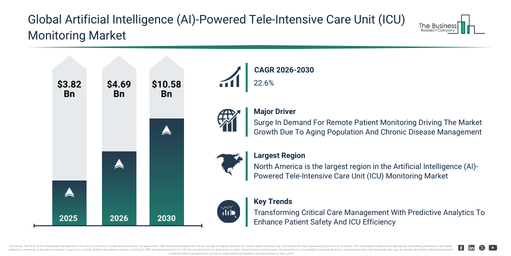
    The artificial intelligence (AI)-powered tele-intensive care unit (icu) monitoring market has witnessed substantial growth in recent years. This market is forecast to increase from $3.82 billion in 2025 to $4.69 billion in 2026, exhibiting a compound annual growth rate (CAGR) of 22.8%. The historical expansion can be ascribed to increasing critical care patient volumes, shortage of intensivists in hospitals, early adoption of remote patient monitoring systems, expansion of digital health infrastructure, and rising investment in hospital IT systems.

    The artificial intelligence (AI)-powered tele-intensive care unit (icu) monitoring market is projected to experience substantial growth in the upcoming years, reaching an estimated value of $10.58 billion by 2030, with a compound annual growth rate (CAGR) of 22.6%. This expansion is fueled by several factors, including a growing need for data-driven critical care solutions, wider acceptance of cloud-based telehealth platforms, the broadening scope of AI-enabled clinical analytics, a heightened emphasis on lowering ICU mortality, and increased capital allocation towards virtual care models. Key trends anticipated during this period encompass the increased deployment of AI-powered predictive patient monitoring, greater integration of remote ICU surveillance platforms, expanded utilization of real-time clinical decision support systems, the establishment of more centralized tele-ICU command centers, and a stronger emphasis on detecting complications early.

    Unlock Artificial Intelligence (AI)-Powered Tele-Intensive Care Unit (ICU) Monitoring Market Insights With A Free Sample Report:

    https://thebusinessresearchcompany.com/sample_request?id=38171305&type=smp&name=Artificial%20Intelligence%20%28AI%29-Powered%20Tele-Intensive%20Care%20Unit%20%28ICU%29%20Monitoring%20Market%20Report%202026&utm_source=Blogs&utm_medium=Paid&utm_campaign=Nov_PR

    Artificial Intelligence (AI)-Powered Tele-Intensive Care Unit (ICU) Monitoring Market Momentum: Key Driver Expected To Boost Growth Through 2030

    The increasing need for remote patient monitoring is anticipated to fuel the expansion of the artificial intelligence (AI)-powered tele-intensive care unit (ICU) monitoring market. Remote patient monitoring (RPM) refers to the use of digital technologies to gather and transmit patients’ health data from their location to healthcare providers for assessment and management. The rising demand for RPM is attributed to the aging population in developed countries, which requires continuous oversight of chronic conditions like diabetes, cardiovascular diseases, and respiratory illnesses that need ongoing management between hospital visits. Artificial intelligence (AI)-powered tele-intensive care unit (ICU) monitoring assists RPM by utilizing real-time data and sophisticated algorithms to track vital signs, identify early signs of deterioration, and allow centralized teams to manage numerous critically ill patients remotely, enhancing response times and access to critical care expertise. Consequently, the surge in demand for remote patient monitoring is driving the growth of the artificial intelligence (AI)-powered tele-intensive care unit (ICU) monitoring market.

    Artificial Intelligence (AI)-Powered Tele-Intensive Care Unit (ICU) Monitoring Market Segments: A Category-By-Category Overview

    The artificial intelligence (AI)-powered tele-intensive care unit (icu) monitoring market covered in this report is segmented –

    1) By Component: Software, Hardware, Services

    2) By Deployment Mode: Cloud-Based, On-Premises

    3) By Application: Patient Monitoring, Clinical Decision Support, Workflow Automation, Predictive Analytics, Other Applications

    4) By End-User: Hospitals, Specialty Clinics, Ambulatory Surgical Centers, Other End-Users

    Subsegments:

    1) By Software: Predictive Analytics Software, Clinical Decision Support Software, Data Management Software, Remote Patient Monitoring Software, Visualization And Dashboard Software

    2) By Hardware: Patient Monitoring Devices, Communication And Display Systems, Networking And Connectivity Devices, Servers And Storage Systems, Cameras And Sensors

    3) By Services: Implementation And Integration Services, Training And Education Services, Maintenance And Support Services, Remote Monitoring Services, Consulting Services

    Which Emerging Trends Are Gaining Traction In The Artificial Intelligence (AI)-Powered Tele-Intensive Care Unit (ICU) Monitoring Market?

    Leading companies operating in the artificial intelligence (AI)-powered tele-intensive care unit (ICU) monitoring market are prioritizing the adoption of innovative solutions, such as predictive analytics for patient deterioration, to enhance patient outcomes and optimize ICU workflows. This predictive analytics for patient deterioration leverages AI and data analysis to identify patients at risk of worsening health conditions before critical events occur, empowering healthcare providers to intervene proactively, improve patient outcomes, and minimize ICU complications.

    Artificial Intelligence (AI)-Powered Tele-Intensive Care Unit (ICU) Monitoring Market Key Participants: Prominent Companies At A Glance

    Major companies operating in the artificial intelligence (AI)-powered tele-intensive care unit (icu) monitoring market are Koninklijke Philips N.V., GE HealthCare Technologies Inc., Inova Health System, Teladoc Health Inc., Apollo Telehealth Services Private Limited, Masimo Corporation, UCSF Health, Spacelabs Healthcare Inc., AvaSure Holdings Inc., Hicuity Health Inc., Ceiba Healthcare US Inc., Cloudphysician Healthcare Private Limited, Equum Management Inc., RemoteICU Inc., INTeleICU Inc., Etiometry Inc., Clew Medical Ltd., Ambient Clinical Analytics Inc., DocBox Inc., HelloCare Inc.

    Get Detailed Artificial Intelligence (AI)-Powered Tele-Intensive Care Unit (ICU) Monitoring Market Forecasts In The Complete Report:

    https://thebusinessresearchcompany.com/report/artificial-intelligence-ai-powered-tele-intensive-care-unit-icu-monitoring-global-market-report?utm_source=Blogs&utm_medium=Paid&utm_campaign=Nov_PR

    Top Region In The Artificial Intelligence (AI)-Powered Tele-Intensive Care Unit (ICU) Monitoring Market: A Global Perspective

    North America was the largest region in the artificial intelligence (AI)-powered tele-intensive care unit (ICU) monitoring market in 2025. Asia-Pacific is expected to be the fastest-growing region in the forecast period. The regions covered in the artificial intelligence (AI)-powered tele-intensive care unit (icu) monitoring market report are Asia-Pacific, South East Asia, Western Europe, Eastern Europe, North America, South America, Middle East, Africa.

    Reach Out To Our Team:

    The Business Research Company: https://www.thebusinessresearchcompany.com/

    Americas: +1 310-496-7795

    Asia: +44 7882 955267 & +91 8897263534

    Europe: +44 7882 955267

    Email us at: marketing@tbrc.info

    Follow us on:

    LinkedIn: https://in.linkedin.com/company/the-business-research-company

    YouTube: https://www.youtube.com/channel/UC24_fI0rV8cR5DxlCpgmyFQ

    Global Market Model: https://www.thebusinessresearchcompany.com/global-market-model
  • Academic Medical Center Market Set To Reach $896.61 Billion By 2030, Driven By Increasing Prevalence Of Chronic Diseases

    Academic Medical Center Market Set To Reach $896.61 Billion By 2030, Driven By Increasing Prevalence Of Chronic Diseases

    Market attractiveness scoring, total addressable market sizing, company benchmarking matrices, interactive Excel dashboards, deeper supply chain intelligence, emerging startup tracking, and granular product-level insights are among the key offerings featured in The Business Research Company’s 2026 market reports, designed to deliver more actionable and strategically valuable research.

    What Is The Academic Medical Center Market Size In 2026, And Where Is It Heading By 2030?

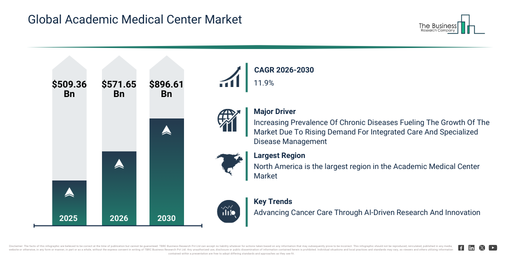
    The academic medical center market size has experienced rapid expansion in recent years. It is anticipated to increase from $509.36 billion in 2025 to $571.65 billion in 2026, at a compound annual growth rate (CAGR) of 12.2%. This historical growth can be attributed to the expansion of tertiary healthcare institutions, an increase in medical education demand, enhanced government funding for research hospitals, the rising complexity of clinical cases, and the establishment of teaching hospital networks.

    The market size for academic medical centers is projected to experience substantial expansion over the coming years. This market is anticipated to reach $896.61 billion by 2030, exhibiting a compound annual growth rate (CAGR) of 11.9%. This expansion during the forecast period is driven by factors such as greater investments in precision medicine research, the broadening of digital medical education platforms, a heightened emphasis on collaboration between academia and industry, the increasing integration of AI in clinical research, and a surge in the need for specialized referral centers. Key trends emerging over the forecast period encompass a greater integration of research and clinical care approaches, the accelerating adoption of sophisticated medical training technologies, the growth of translational research initiatives, an expanding reliance on data-driven clinical decision support systems, and a strengthened commitment to interdisciplinary education.

    Request Your Free Academic Medical Center Market Sample With Segment And Regional Data:

    https://thebusinessresearchcompany.com/sample_request?id=44040703&type=smp&name=Academic%20Medical%20Center%20Market%20Report%202026&utm_source=Blogs&utm_medium=Paid&utm_campaign=Nov_PR

    Academic Medical Center Market Growth Drivers And Their Impact On Future Demand

    The rising occurrence of chronic illnesses is anticipated to fuel the expansion of the academic medical center market in the coming years. Chronic illnesses are enduring health conditions that manifest gradually and persist over long periods, frequently necessitating ongoing medical attention. A factor contributing to the increasing incidence of chronic diseases is sedentary lifestyles, as extended periods of sitting and insufficient physical activity heighten the risk of ailments like heart conditions and diabetes. Academic medical centers play a crucial role in managing chronic diseases by providing comprehensive care, sophisticated diagnostic tools, and specialized treatment regimens, positioning them as optimal choices for patients with intricate health requirements. These centers enhance patient results through the integration of clinical proficiency, research, and educational initiatives, thereby elevating the overall caliber and effectiveness of healthcare provision. Consequently, the growing prevalence of chronic diseases is propelling the expansion of the academic medical center market.

    What Categories Define The Academic Medical Center Market?

    The academic medical center market covered in this report is segmented –

    1) By Academic Level: Undergraduate, Graduate, Postgraduate

    2) By Hospital Type: University Teaching Hospitals, Community Hospitals, Private Hospitals, Public Hospitals

    3) By Focus Area: Clinical Care, Research, Education

    4) By Funding Source: Government Funding, University Funding, Private Donations, Patient Revenue

    5) By Affiliation: Academic Health Centers, Independent Academic Medical Centers, Healthcare Networks

    Subsegments:

    1) By Undergraduate: MBBS Or MD, Bachelor Of Nursing, Bachelor Of Pharmacy, Bachelor Of Dentistry (BDS/DDS), Allied Health Sciences, Public Health And Health Administration

    2) By Graduate: Master Of Medicine Or Surgery (MS/MD), Master Of Nursing, Master Of Pharmacy, Master Of Dentistry (MDS), Master Of Public Health (MPH), Master Of Biomedical Sciences

    3) By Postgraduate: Doctor Of Philosophy (PhD) In Medical Or Health Sciences, Postdoctoral Fellowships, Clinical Fellowships, Residency Training Programs, Subspecialty Certifications, Advanced Professional Diplomas In Healthcare

    What New Developments Are Emerging In The Academic Medical Center Market?

    Leading enterprises operating in the academic medical center market are concentrating on forging strategic alliances with healthcare technology providers. This focus is aimed at incorporating AI-driven diagnostics, advanced imaging tools, and data-driven research, ultimately enhancing early detection, personalized treatment, and overall patient outcomes. For instance, during June 2025, Tata Memorial Centre (TMC), an India-based medical institute, formed a partnership with Wipro GE HealthCare, an India-based healthcare company, to establish a cutting-edge cancer research and innovation center. This center is dedicated to advancing precision-led cancer care in India. Tata Memorial Centre contributes its proficiency in oncology and research, while Wipro GE HealthCare supplies advanced imaging tools, AI-powered platforms, and digital healthcare solutions. The core of this collaboration involves AI-driven diagnostics, clinical workflow optimization, and data-driven research to improve early detection and personalized treatment. This endeavor is anticipated to fortify the cancer care ecosystem, promote academic-industry collaboration, and act as a blueprint for public-private healthcare partnerships.

    Major Players Driving Competition In The Academic Medical Center Market

    Major companies operating in the academic medical center market are University of Pennsylvania Health System, Mayo Clinic, Massachusetts General Hospital Inc., Northwestern Medicine, NYU Langone Health System, UCSF Health, The Cleveland Clinic Foundation, Mount Sinai Health System Inc., Johns Hopkins Medicine Inc., University of Michigan Health System, Yale New Haven Health Services Corporation, Emory Healthcare Inc., University of Chicago Medical Center, Stanford Health Care, The Ottawa Hospital, Sunnybrook Health Sciences Centre, Toronto General Hospital, Weill Cornell Medicine, University of Colorado Anschutz Medical Campus, Columbia University Irving Medical Center

    View The Comprehensive Academic Medical Center Market Analysis:

    https://thebusinessresearchcompany.com/report/academic-medical-center-global-market-report?utm_source=Blogs&utm_medium=Paid&utm_campaign=Nov_PR

    Academic Medical Center Market Regional Leaders: Insights From The 2026 Report

    North America was the largest region in the personalized genomics market in 2025. Asia-Pacific is expected to be the fastest-growing region in the forecast period. The regions covered in the academic medical center market report are Asia-Pacific, South East Asia, Western Europe, Eastern Europe, North America, South America, Middle East, Africa.

    Reach Out To Our Team:

    The Business Research Company: https://www.thebusinessresearchcompany.com/

    Americas: +1 310-496-7795

    Asia: +44 7882 955267 & +91 8897263534

    Europe: +44 7882 955267

    Email us at: marketing@tbrc.info

    Follow us on:

    LinkedIn: https://in.linkedin.com/company/the-business-research-company

    YouTube: https://www.youtube.com/channel/UC24_fI0rV8cR5DxlCpgmyFQ

    Global Market Model: https://www.thebusinessresearchcompany.com/global-market-model
  • Artificial Intelligence (AI)-Powered Spinal Surgery Market Forecast To 2030: Growth Outlook For Key Players Such As Johnson and Johnson

    Artificial Intelligence (AI)-Powered Spinal Surgery Market Forecast To 2030: Growth Outlook For Key Players Such As Johnson and Johnson

    The Business Research Company’s 2026 market reports are designed to deliver research that is more actionable and strategically valuable. Key offerings include market attractiveness scoring, total addressable market sizing, company benchmarking matrices, interactive Excel dashboards, deeper supply chain intelligence, emerging startup tracking, and granular product-level insights.

    Artificial Intelligence (AI)-Powered Spinal Surgery Market Historical Growth Vs. Forecast Growth: How Do The Numbers Compare?

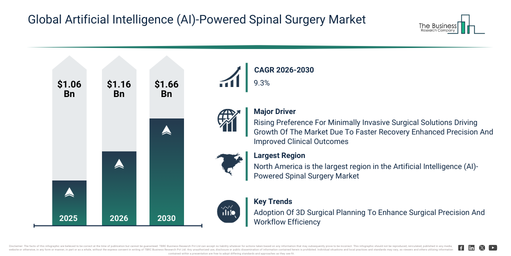
    The artificial intelligence (AI)-powered spinal surgery market size has demonstrated significant growth in recent years. It is anticipated to expand from $1.06 billion in 2025 to $1.16 billion in 2026, achieving a compound annual growth rate (CAGR) of 9.6%. This historical growth can be linked to factors including the rising prevalence of spinal disorders, increased adoption of robotic-assisted spine surgeries, advancements in medical imaging technologies, greater acceptance of digital surgical tools by surgeons, and the expansion of minimally invasive spine procedures.

    The artificial intelligence (AI)-powered spinal surgery market size is anticipated to undergo significant expansion in the next few years, projected to reach $1.66 billion by 2030, demonstrating a compound annual growth rate (CAGR) of 9.3%. This growth during the forecast period can be attributed to several factors, including the increasing demand for precision-based spine surgery, rising investments in AI-enabled surgical platforms, the expansion of data-driven clinical decision support, a growing emphasis on reducing surgical complications, and the increasing integration of AI with robotic spine systems. Major trends expected in this period involve the increasing adoption of AI-guided surgical navigation systems, a rising use of predictive analytics for surgical outcomes, the growing integration of imaging-based decision support tools, the expansion of minimally invasive AI-assisted procedures, and an enhanced focus on personalized spine treatment planning.

    Start With A Free Sample Of The Artificial Intelligence (AI)-Powered Spinal Surgery Market Research Report:

    https://thebusinessresearchcompany.com/sample_request?id=39463915&type=smp&name=Artificial%20Intelligence%20%28AI%29-Powered%20Spinal%20Surgery%20Market%20Report%202026&utm_source=Blogs&utm_medium=Paid&utm_campaign=Nov_PR

    The Leading Growth Driver In The Artificial Intelligence (AI)-Powered Spinal Surgery Market Explained

    The increasing demand for minimally invasive surgical techniques is anticipated to boost the expansion of the artificial intelligence (AI)-powered spinal surgery market in the future. These solutions involve operations conducted through small cuts instead of the larger incisions characteristic of conventional open surgery. The growing adoption of minimally invasive surgery is attributed to the quicker patient recovery periods it provides. The artificial intelligence (AI)-powered spinal surgery market facilitates this trend by allowing for greater surgical accuracy and less tissue harm, thereby speeding up patient recuperation and enhancing overall treatment results. Consequently, the growing inclination towards minimally invasive surgical methods is fueling the expansion of the artificial intelligence (AI)-powered spinal surgery market.

    Key Segments Shaping The Artificial Intelligence (AI)-Powered Spinal Surgery Market Landscape

    The artificial intelligence (AI)-powered spinal surgery market covered in this report is segmented –

    1) By Type Of Surgery: Spinal Fusion Surgery, Microdiscectomy, Laminectomy, Laminotomy, Lumbar Decompression Surgery, Transforaminal Lumbar Interbody Fusion, Oblique Lumbar Interbody Fusion, Vertebroplasty

    2) By Anatomy: Cervical, Thoracic, Lumbar

    3) By Indication: Degenerative, Trauma, Deformity, Tumor Or Oncologic, Infection, Other Indications

    4) By End User: Hospitals, Ambulatory Surgery Centers (ASCs), Orthopedic Centers

    Subsegments:

    1) By Spinal Fusion Surgery: Posterior Spinal Fusion, Anterior Spinal Fusion, Lateral Spinal Fusion, Cervical Spinal Fusion, Thoracic Spinal Fusion, Lumbar Spinal Fusion

    2) By Microdiscectomy: Open Microdiscectomy, Minimally Invasive Microdiscectomy, Endoscopic Microdiscectomy

    3) By Laminectomy: Cervical Laminectomy, Thoracic Laminectomy, Lumbar Laminectomy, Minimally Invasive Laminectomy

    4) By Laminotomy: Unilateral Laminotomy, Bilateral Laminotomy, Cervical Laminotomy, Lumbar Laminotomy

    5) By Lumbar Decompression Surgery: Open Lumbar Decompression, Minimally Invasive Lumbar Decompression, Microsurgical Lumbar Decompression

    6) By Transforaminal Lumbar Interbody Fusion: Open Transforaminal Lumbar Interbody Fusion, Minimally Invasive Transforaminal Lumbar Interbody Fusion, Endoscopic Transforaminal Lumbar Interbody Fusion

    7) By Oblique Lumbar Interbody Fusion: Anterior To Psoas Oblique Lumbar Interbody Fusion, Lateral Oblique Lumbar Interbody Fusion, Single Level Oblique Lumbar Interbody Fusion, Multilevel Oblique Lumbar Interbody Fusion

    8) By Vertebroplasty: Percutaneous Vertebroplasty, Balloon-Assisted Vertebroplasty, Image-Guided Vertebroplasty, Cement-Augmented Vertebroplasty

    Artificial Intelligence (AI)-Powered Spinal Surgery Market Trend Spotlight: Key Shifts Shaping Future Demand

    Leading companies in the artificial intelligence (AI)-powered spinal surgery market are focusing on integrating technological innovations like 3D surgical planning to improve surgical precision, workflow efficiency, and patient outcomes. 3D surgical planning is a sophisticated technology that uses patient-specific 3D anatomical models derived from imaging data to simulate operations and optimize implant placement, enabling capabilities such as preoperative visualization, personalized treatment planning, and intraoperative alignment optimization.

    Artificial Intelligence (AI)-Powered Spinal Surgery Market Competitive Analysis: Who Are The Main Competitors?

    Major companies operating in the artificial intelligence (AI)-powered spinal surgery market are Johnson and Johnson, Medtronic plc, Stryker Corporation, Zimmer Biomet Holdings Inc., Globus Medical Inc., Orthofix Holdings Inc., Alphatec Holdings Inc., Brainlab AG, Spineart SA, Surgalign Holdings Inc, TINAVI Medical Technologies Co Ltd, Augmedics Inc., Proprio Inc., Surgical Theater Inc., Medivis Inc., Ortoma AB, OnPoint Surgical Inc., Katomed Inc., Surglasses, Illuminant Surgical Inc.

    Find The Complete Artificial Intelligence (AI)-Powered Spinal Surgery Market Outlook In The Full Report:

    https://thebusinessresearchcompany.com/report/global-artificial-intelligence-ai-powered-spinal-surgery-market-report?utm_source=Blogs&utm_medium=Paid&utm_campaign=Nov_PR

    Mapping The Artificial Intelligence (AI)-Powered Spinal Surgery Market: Regional Leadership And Global Reach

    North America was the largest region in the artificial intelligence (AI)-powered spinal surgery market in 2025. Asia-Pacific is expected to be the fastest-growing region in the forecast period. The regions covered in the artificial intelligence (AI)-powered spinal surgery market report are Asia-Pacific, South East Asia, Western Europe, Eastern Europe, North America, South America, Middle East, Africa.

    Reach Out To Our Team:

    The Business Research Company: https://www.thebusinessresearchcompany.com/

    Americas: +1 310-496-7795

    Asia: +44 7882 955267 & +91 8897263534

    Europe: +44 7882 955267

    Email us at: marketing@tbrc.info

    Follow us on:

    LinkedIn: https://in.linkedin.com/company/the-business-research-company

    YouTube: https://www.youtube.com/channel/UC24_fI0rV8cR5DxlCpgmyFQ

    Global Market Model: https://www.thebusinessresearchcompany.com/global-market-model
  • Artificial Intelligence (AI)-Powered Sleep Apnea Monitoring Market Led By North America: Size, Growth And Regional Outlook

    Artificial Intelligence (AI)-Powered Sleep Apnea Monitoring Market Led By North America: Size, Growth And Regional Outlook

    With a focus on actionable insights and strategic value, The Business Research Company’s 2026 market reports include market attractiveness scoring, total addressable market sizing, company benchmarking matrices, interactive Excel dashboards, deeper supply chain intelligence, emerging startup tracking, and granular product-level insights.

    Artificial Intelligence (AI)-Powered Sleep Apnea Monitoring Market Size Forecast Points To $4.84 Billion In Revenue By 2030

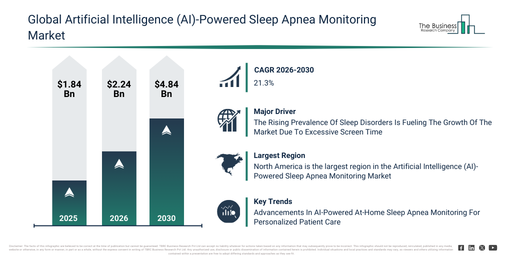
    The artificial intelligence (AI)-powered sleep apnea monitoring market size has shown significant expansion in recent years. This market is forecast to increase from $1.84 billion in 2025 to $2.24 billion in 2026, progressing at a compound annual growth rate (CAGR) of 21.6%. The historical growth in this sector is attributable to the increasing prevalence of sleep apnea, a rising awareness of sleep health, the expansion of wearable health technology adoption, the growing use of home-based diagnostics, and the increased availability of digital sleep data.

    The market for artificial intelligence (AI)-powered sleep apnea monitoring is projected to experience substantial expansion in the coming years. This market is anticipated to reach a value of $4.84 billion by 2030, driven by a compound annual growth rate (CAGR) of 21.3%. This growth during the forecast period is attributable to progress in AI-driven respiratory analytics, the increasing uptake of tele-sleep medicine, the broadening of cloud-based sleep monitoring platforms, a surging demand for continuous health monitoring, and a heightened emphasis on managing sleep disorders preventatively. Key trends anticipated during this period encompass the growing acceptance of AI-based sleep disorder detection, the expanding integration of wearable sleep monitoring devices, an uptick in the utilization of remote sleep diagnostics, the proliferation of home-based monitoring solutions, and a stronger emphasis on detecting apnea early.

    Get A Free Artificial Intelligence (AI)-Powered Sleep Apnea Monitoring Market Sample Covering Drivers, Trends And Key Players:

    https://thebusinessresearchcompany.com/sample_request?id=61032692&type=smp&name=Artificial%20Intelligence%20%28AI%29-Powered%20Sleep%20Apnea%20Monitoring%20Market%20Report%202026&utm_source=Blogs&utm_medium=Paid&utm_campaign=Nov_PR

    Artificial Intelligence (AI)-Powered Sleep Apnea Monitoring Market Driver Analysis: Key Factor Supporting Revenue Growth

    The increasing occurrence of sleep disorders is projected to fuel the expansion of the artificial intelligence (AI)-powered sleep apnea monitoring market in the future. These disorders are health conditions that routinely impair an individual’s capacity to achieve restful sleep, including issues like insomnia, sleep apnea, and restless legs syndrome. An increase in sleep disorders is linked to prolonged screen usage prior to bedtime, given that blue light disrupts melatonin synthesis and postpones the onset of sleep. Artificial intelligence (AI)-powered sleep apnea monitoring assists with sleep disorders through continuous observation of breathing patterns, oxygen saturation, and sleep cycles, allowing for the real-time detection of apnea episodes. This facilitates early detection and tailored therapeutic approaches, alongside enabling remote oversight and enhancing overall sleep quality. Consequently, the growing frequency of sleep disorders is propelling the development of the artificial intelligence (AI)-powered sleep apnea monitoring market.

    Artificial Intelligence (AI)-Powered Sleep Apnea Monitoring Market Segmentation Framework: Major Segments At A Glance

    The artificial intelligence (AI)-powered sleep apnea monitoring market covered in this report is segmented –

    1) By Product Type: Wearable Devices, Non-Wearable Devices, Software Solutions

    2) By Technology: Machine Learning, Deep Learning, Natural Language Processing, Other Technologies

    3) By Distribution Channel: Online, Offline

    4) By Application: Home Care, Hospitals And Clinics, Sleep Centers, Other Applications

    5) By End-User: Adults, Pediatrics, Geriatrics

    Subsegments:

    1) By Wearable Devices: Wrist Worn Sleep Trackers, Finger Oximeter Rings, Adhesive Respiratory Patches, Chest Belt Respiratory Monitors, Headband Sleep Sensors, Smart Clothing Garments

    2) By Non-Wearable Devices: Bedside Radar Respiratory Monitors, Under Mattress Sensor Mats, Smart Bed Platforms With Physiological Monitoring, Pillow Embedded Acoustic Sensors, Nightstand Radio Frequency Sensing Units

    3) By Software Solutions: Event Detection And Scoring Platforms, Remote Monitoring And Adherence Portals, Clinical Decision Support Dashboards, Patient Engagement And Coaching Applications, Population Health Screening And Triage Modules, Care Coordination And Teleconsultation Tools, Data Management And Cloud Storage Services

    Latest Artificial Intelligence (AI)-Powered Sleep Apnea Monitoring Market Developments And Emerging Trends

    Leading companies operating in the artificial intelligence (AI)-powered sleep apnea monitoring market are concentrating on developing advanced at-home sleep assessment solutions to offer personalized management of sleep apnea and improve patient outcomes. These at-home sleep examination solutions enable individuals to monitor their sleep patterns and respiration from their homes, collecting real-time physiological data for accurate identification of sleep disorders and minimizing clinic visits. For instance, in January 2025, APNEAL, a France-based healthcare technology company, unveiled the world’s first AI-powered smartphone app for detecting sleep apnea during CES 2025. The application converts a regular smartphone into a clinical-grade diagnostic tool capable of analyzing respiratory patterns, heartbeats, and breathing sounds utilizing built-in sensors such as the accelerometer, gyroscope, and microphone. It leverages advanced artificial intelligence to deliver a 90% accuracy rate compared to polysomnography, making at-home sleep apnea screening possible without specialized equipment or hospital visits.

    Which Companies Are Shaping The Artificial Intelligence (AI)-Powered Sleep Apnea Monitoring Market?

    Major companies operating in the artificial intelligence (AI)-powered sleep apnea monitoring market are Koninklijke Philips N.V., ResMed Inc., Nihon Kohden Corporation, Fisher & Paykel Healthcare Corporation Limited, Inspire Medical Systems Inc., Vyaire Medical Inc., BioSerenity, SomnoMed Limited, BMC Medical Co. Ltd., Compumedics Limited, Sibel Health, Sleepiz AG, EnsoData Inc., Onera Health B.V., SleepScore Labs LLC, SleepImage, Beacon Biosignals, Acurable, Wesper, Hexoskin.

    Dive Deeper Into The Artificial Intelligence (AI)-Powered Sleep Apnea Monitoring Market With The Full Report:

    https://thebusinessresearchcompany.com/report/artificial-intelligence-ai-powered-sleep-apnea-monitoring-global-market-report?utm_source=Blogs&utm_medium=Paid&utm_campaign=Nov_PR

    Artificial Intelligence (AI)-Powered Sleep Apnea Monitoring Market Regional Distribution: Where Is Revenue Concentrated?

    North America was the largest region in the artificial intelligence (AI)-powered sleep apnea monitoring market in 2025. Asia-Pacific is expected to be the fastest-growing region in the forecast period. The regions covered in the artificial intelligence (AI)-powered sleep apnea monitoring market report are Asia-Pacific, South East Asia, Western Europe, Eastern Europe, North America, South America, Middle East, Africa.

    Reach Out To Our Team:

    The Business Research Company: https://www.thebusinessresearchcompany.com/

    Americas: +1 310-496-7795

    Asia: +44 7882 955267 & +91 8897263534

    Europe: +44 7882 955267

    Email us at: marketing@tbrc.info

    Follow us on:

    LinkedIn: https://in.linkedin.com/company/the-business-research-company

    YouTube: https://www.youtube.com/channel/UC24_fI0rV8cR5DxlCpgmyFQ

    Global Market Model: https://www.thebusinessresearchcompany.com/global-market-model
  • Ablation Technology Market CAGR Of 8.7% Forecast For 2026–2030: What It Means For The Industry

    Ablation Technology Market CAGR Of 8.7% Forecast For 2026–2030: What It Means For The Industry

    Designed to make market research more actionable and strategically valuable, The Business Research Company’s 2026 market reports feature market attractiveness scoring, total addressable market sizing, company benchmarking matrices, interactive Excel dashboards, deeper supply chain intelligence, emerging startup tracking, and granular product-level insights.

    Ablation Technology Market To Expand At A 8.7% CAGR: Size And Growth Projections Through 2030

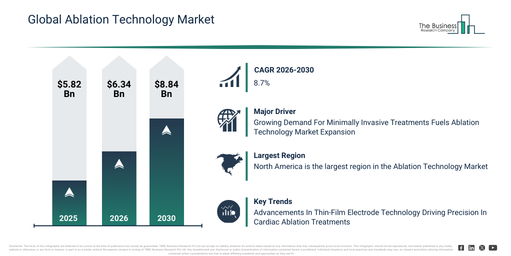
    The ablation technology market has experienced substantial growth in recent years. It is projected to expand from $5.82 billion in 2025 to $6.34 billion in 2026, demonstrating a compound annual growth rate (CAGR) of 8.8%. Historically, this expansion was largely influenced by the innovation of early ablation devices, the growing incidence of chronic pain and cardiovascular disorders, the increasing adoption of minimally invasive technologies by hospitals, heightened awareness of alternative cancer treatments, and the proliferation of surgical centers.

    The ablation technology market is projected for significant expansion over the coming years, reaching a size of $8.84 billion by 2030, exhibiting a compound annual growth rate (CAGR) of 8.7%. This projected growth is driven by several factors, including ongoing technological advancements in laser, RF, and cryoablation devices, an increasing proliferation of ambulatory surgical centers, a rising demand for aesthetic and cosmetic procedures, greater investment in precision surgical equipment, and the broadening application of ablation therapies within emerging markets. Key trends anticipated during this forecast period encompass the increasing preference for minimally invasive procedures, the widening application of ablation therapies in cancer treatment, a growing utilization of both thermal and non-thermal ablation technologies, expanded applications in cardiovascular and pain management, and a heightened emphasis on precision and safety during ablation procedures.

    Get Your Free Ablation Technology Market Report Sample Today:

    https://thebusinessresearchcompany.com/sample_request?id=90388735&type=smp&name=Ablation%20Technology%20Market%20Report%202026&utm_source=Blogs&utm_medium=Paid&utm_campaign=Nov_PR

    Which Factor Is Expected To Drive The Ablation Technology Market Over The Forecast Period?

    The increasing requirement for minimally invasive treatments is anticipated to drive the expansion of the ablation technology market in the future. These treatments involve medical procedures conducted via small cuts or natural bodily orifices, utilizing specialized tools directed by imaging methods. The rise in minimally invasive treatments stems from their capacity to shorten recovery periods, lessen surgical dangers, and enhance patient results when contrasted with conventional surgical approaches. Within minimally invasive procedures, ablation technology is employed to accurately target and eliminate diseased tissues, concurrently reducing harm to adjacent healthy tissues. Consequently, the escalating need for minimally invasive treatments is fueling the expansion of the ablation technology market.

    Ablation Technology Market Segmentation Insights: How Is The Industry Categorized?

    The ablation technology market covered in this report is segmented –

    1) By Product: Cryoablation Devices, Electrical Ablators, Hydrothermal Or Hydromechanical Ablators, Laser Or Light Ablators, Microwave Ablators, Radiofrequency Ablators, Ultrasound Ablators, Other Products

    2) By Technologies: Thermal Ablation Technology, Non-Thermal Ablation Technology, Other Technologies

    3) By Applications: Cardiovascular Disease Treatment, Cancer Treatment, Gynecological Treatment, Pain Management, Urological Treatment

    4) By End Users: Ambulatory Surgical Centers, Hospitals And Ablation Centers, Other End Users

    Subsegments:

    1) By Cryoablation Devices: Cryoprobes, Cryoablation Catheters

    2) By Electrical Ablators: Electrosurgical Units, Electrode Catheters

    3) By Hydrothermal Or Hydromechanical Ablators: Steam-Based Ablation Devices, Water-Jet Ablation Devices

    4) By Laser Or Light Ablators: Diode Laser Ablation Devices, Fiber-Optic Laser Ablation Systems

    5) By Microwave Ablators: Microwave Ablation Catheters, Microwave Generator Systems

    6) By Radiofrequency Ablators: RF Ablation Catheters, RF Ablation Generators

    7) By Ultrasound Ablators: Focused Ultrasound Ablation Devices, Ultrasound-Guided Ablation Systems

    8) By Other Products: Balloon Ablation Systems, Cryoanalgesia Systems

    Ablation Technology Market Trends Explained: What Is Changing And Why It Matters

    Key companies in the ablation technology market are advancing technologies, such as thin-film electrode technology, to heighten precision and efficacy in treating cardiac arrhythmias, reduce procedure durations, and improve patient outcomes. Thin-film electrode technology is a method employing ultra-thin conductive layers to create accurate electrodes for targeted ablation treatments.

    Ablation Technology Market Competitor Landscape: Who Are The Major Companies?

    Major companies operating in the ablation technology market are Johnson & Johnson, Abbott Laboratories, Medtronic plc, Boston Scientific Corporation, Stryker Corporation, Olympus Corporation, Terumo Corporation, Smith & Nephew plc, Hologic Inc., ConMed Corporation, Accuray Incorporated, AtriCure Inc., AngioDynamics Inc., HealthTronics Inc., Creo Medical Group plc, Misonix Inc., MedWaves Inc., Theraclion SA, IceCure Medical Ltd, EDAP TMS SA, Merit Medical Systems Inc.

    See The Full Ablation Technology Market Report For Complete Market Sizing And Trends:

    https://thebusinessresearchcompany.com/report/ablation-technology-global-market-report?utm_source=Blogs&utm_medium=Paid&utm_campaign=Nov_PR

    Ablation Technology Market Regional Demand Analysis And Leading Geography

    North America was the largest region in the ablation technology market in 2025. Asia-Pacific is expected to be the fastest-growing region in the forecast period. The regions covered in the ablation technology market report are Asia-Pacific, South East Asia, Western Europe, Eastern Europe, North America, South America, Middle East, Africa.

    Reach Out To Our Team:

    The Business Research Company: https://www.thebusinessresearchcompany.com/

    Americas: +1 310-496-7795

    Asia: +44 7882 955267 & +91 8897263534

    Europe: +44 7882 955267

    Email us at: marketing@tbrc.info

    Follow us on:

    LinkedIn: https://in.linkedin.com/company/the-business-research-company

    YouTube: https://www.youtube.com/channel/UC24_fI0rV8cR5DxlCpgmyFQ

    Global Market Model: https://www.thebusinessresearchcompany.com/global-market-model
  • Artificial Intelligence (AI)-Powered Rare Disease Diagnosis Market Forecast To 2030: The Growing Role Of Advancements Unified Genomic Diagnostics And Innovative Solutions

    Artificial Intelligence (AI)-Powered Rare Disease Diagnosis Market Forecast To 2030: The Growing Role Of Advancements Unified Genomic Diagnostics And Innovative Solutions

    The Business Research Company’s 2026 market reports combine market attractiveness scoring, total addressable market sizing, company benchmarking matrices, interactive Excel dashboards, deeper supply chain intelligence, emerging startup tracking, and granular product-level insights to deliver research that is more actionable and strategically valuable.

    Artificial Intelligence (AI)-Powered Rare Disease Diagnosis Market Size Trajectory: Key Numbers Every Industry Stakeholder Should Know

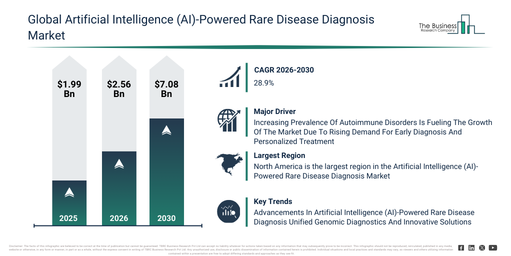
    The artificial intelligence (AI)-powered rare disease diagnosis market has seen its size expand significantly in recent years. It will grow from $1.99 billion in 2025 to $2.56 billion in 2026 at a compound annual growth rate (CAGR) of 28.9%. Historically, this growth can be attributed to several factors including the rising difficulties in diagnosing rare conditions, the increased availability of genetic testing, greater investments in rare disease research, the expanding use of data analytics within healthcare, and the early adoption of AI-driven diagnostic tools.

    The artificial intelligence (AI)-powered rare disease diagnosis market is projected to experience substantial growth in the upcoming years. It is expected to reach $7.08 billion by 2030, driven by a compound annual growth rate (CAGR) of 28.9%. This expansion during the forecast period can be attributed to several factors, including an increasing focus on personalized medicine, the rising deployment of AI-assisted clinical decision support, the broadening integration of genomic sequencing, growing investments in rare disease screening programs, and an increasing demand for diagnostic efficiency. Major trends anticipated in this period involve the expanding use of AI for pattern recognition in rare diseases, the rising adoption of genomic data analytics platforms, the growing integration of multi-modal patient data, the proliferation of cloud-based diagnostic solutions, and an enhanced focus on early and accurate diagnosis.

    Looking For Reliable Artificial Intelligence (AI)-Powered Rare Disease Diagnosis Market Data? Request A Free Sample:

    https://thebusinessresearchcompany.com/sample_request?id=13642562&type=smp&name=Artificial%20Intelligence%20%28AI%29-Powered%20Rare%20Disease%20Diagnosis%20Market%20Report%202026&utm_source=Blogs&utm_medium=Paid&utm_campaign=Nov_PR

    What Is Behind The Rising Demand In The Artificial Intelligence (AI)-Powered Rare Disease Diagnosis Market?

    The anticipated expansion of the artificial intelligence (AI)-powered rare disease diagnosis market is driven by the rising incidence of autoimmune disorders. Autoimmune disorders are characterized by the immune system erroneously attacking the body’s own healthy cells and tissues, leading to inflammation and damage. The increasing occurrence of these disorders stems from a growing population with immune system dysfunctions, thereby boosting the need for prompt diagnosis, advanced therapies, and ongoing monitoring for effective symptom management. AI-powered rare disease diagnosis aids in managing autoimmune disorders by swiftly identifying intricate conditions, facilitating tailored treatment plans, and enhancing diagnostic precision overall. As an illustration, the Mayo Clinic, a US-based nonprofit academic medical center, projected in January 2025 that roughly 15 million individuals are estimated to suffer from one or more of 105 autoimmune diseases. Consequently, the expanding prevalence of autoimmune disorders is a key factor fueling the growth of the artificial intelligence (AI)-powered rare disease diagnosis market.

    Artificial Intelligence (AI)-Powered Rare Disease Diagnosis Market Segment Coverage And Subsegment Analysis

    The artificial intelligence (AI)-powered rare disease diagnosis market covered in this report is segmented –

    1) By Component: Software, Hardware, Services

    2) By Technology: Machine Learning, Deep Learning, Natural Language Processing, Computer Vision, Other Technologies

    3) By Deployment Mode: Cloud-Based, On-Premises

    4) By Diagnosis Type: Genetic Disorders, Autoimmune Disorders, Metabolic Disorders, Infectious Diseases, Other Diagnosis Types

    5) By End-User: Hospitals, Diagnostic Centers, Research Institutes, Specialty Clinics, Other End-Users

    Subsegments:

    1) By Software: Clinical Decision Support, Data Analytics Platforms, Genomic Interpretation Tools, Machine Learning Algorithms, Diagnostic Reporting Software

    2) By Hardware: Sequencing Instruments, Imaging Devices, Laboratory Equipment, Computational Servers, Diagnostic Sensors

    3) By Services: Consulting Services, Implementation And Integration, Training And Support, Data Management Services, Maintenance And Upgrades

    Artificial Intelligence (AI)-Powered Rare Disease Diagnosis Market Future Trends: Where Is The Industry Heading?

    Leading companies in the artificial intelligence (AI)-powered rare disease diagnosis market are concentrating on developing innovative technologies, such as unified genomic diagnostics solutions, to improve diagnostic precision, decrease processing time, and offer more extensive insights into complex genetic conditions. A unified genomic diagnostics solution functions as an integrated system, combining whole-genome sequencing with artificial intelligence (AI)-driven analysis to provide complete genetic understanding.

    Artificial Intelligence (AI)-Powered Rare Disease Diagnosis Market Top Players List For 2026

    Major companies operating in the artificial intelligence (AI)-powered rare disease diagnosis market are Ambry Genetics Corporation, MedGenome Inc., Sophia Genetics SA, Variantyx Inc., Atropos Health Inc., Congenica Ltd., Saventic Care Sp. z o.o., Rapid Innovation LLC, Centogene N.V., Impilo AB, ThinkGenetic Inc., ClairLabs Ltd., 3billion Inc., OpenEvidence Inc., GenomeUp S.R.L., Mendel.ai Inc., RareSum GmbH, DeepRare AI Solutions, Zebra-Llama Project

    Order Your Copy Of The Artificial Intelligence (AI)-Powered Rare Disease Diagnosis Market Report 2026:

    https://thebusinessresearchcompany.com/report/artificial-intelligence-ai-powered-rare-disease-diagnosis-global-market-report?utm_source=Blogs&utm_medium=Paid&utm_campaign=Nov_PR

    How Does The Artificial Intelligence (AI)-Powered Rare Disease Diagnosis Market Vary By Region?

    North America was the largest region in the artificial intelligence (AI)-powered rare disease diagnosis market in 2025. Asia-Pacific is expected to be the fastest-growing region in the forecast period. The regions covered in the artificial intelligence (AI)-powered rare disease diagnosis market report are Asia-Pacific, South East Asia, Western Europe, Eastern Europe, North America, South America, Middle East, Africa.

    Reach Out To Our Team:

    The Business Research Company: https://www.thebusinessresearchcompany.com/

    Americas: +1 310-496-7795

    Asia: +44 7882 955267 & +91 8897263534

    Europe: +44 7882 955267

    Email us at: marketing@tbrc.info

    Follow us on:

    LinkedIn: https://in.linkedin.com/company/the-business-research-company

    YouTube: https://www.youtube.com/channel/UC24_fI0rV8cR5DxlCpgmyFQ

    Global Market Model: https://www.thebusinessresearchcompany.com/global-market-model
  • Artificial Intelligence (AI)-Powered Hospital Asset Rental Market Set To Reach $8.05 Billion By 2030, Driven By Rise In Telemedicine

    Artificial Intelligence (AI)-Powered Hospital Asset Rental Market Set To Reach $8.05 Billion By 2030, Driven By Rise In Telemedicine

    Market attractiveness scoring, total addressable market sizing, company benchmarking matrices, interactive Excel dashboards, deeper supply chain intelligence, emerging startup tracking, and granular product-level insights are among the key offerings featured in The Business Research Company’s 2026 market reports, designed to deliver more actionable and strategically valuable research.

    What Is The Artificial Intelligence (AI)-Powered Hospital Asset Rental Market Size In 2026, And Where Is It Heading By 2030?

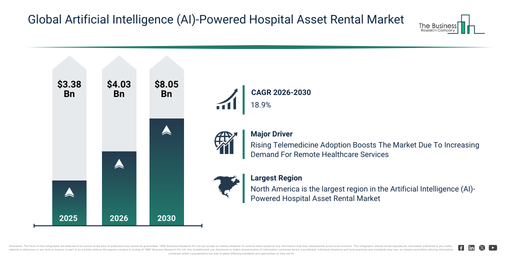
    The artificial intelligence (AI)-powered hospital asset rental market size has experienced substantial growth in recent years. It is anticipated to expand from $3.38 billion in 2025 to $4.03 billion in 2026, achieving a compound annual growth rate (CAGR) of 19.1%. This market’s past growth can be attributed to factors such as rising healthcare equipment costs, an increased need for operational efficiency in hospitals, the broader adoption of digital asset management, the growing use of rental medical devices, and a stronger focus on hospital cost containment.

    The market for artificial intelligence (AI)-powered hospital asset rentals is projected to experience swift expansion over the coming years. This market is anticipated to reach $8.05 billion by 2030, exhibiting a compound annual growth rate (CAGR) of 18.9%. Factors contributing to this growth include the broadening of AI-driven hospital operations, the increasing embrace of asset-as-a-service models, enhanced integration with hospital information systems, surging investments in smart healthcare infrastructure, and the escalating need for predictive utilization analytics. Key trends anticipated during this period involve the wider implementation of AI-based asset utilization analytics, greater deployment of predictive maintenance within hospitals, an uptick in demand for equipment sharing platforms, the expansion of cloud-based asset rental systems, and a sharpened emphasis on tools for cost optimization.

    Request Your Free Artificial Intelligence (AI)-Powered Hospital Asset Rental Market Sample With Segment And Regional Data:

    https://thebusinessresearchcompany.com/sample_request?id=53893511&type=smp&name=Artificial%20Intelligence%20%28AI%29-Powered%20Hospital%20Asset%20Rental%20Market%20Report%202026&utm_source=Blogs&utm_medium=Paid&utm_campaign=Nov_PR

    Artificial Intelligence (AI)-Powered Hospital Asset Rental Market Growth Drivers And Their Impact On Future Demand

    The increasing prevalence of telemedicine is anticipated to boost the Artificial Intelligence (AI)-Powered Hospital Asset Rental Market. Telemedicine involves providing healthcare services remotely through digital communication tools. Its growth stems from a rising desire for accessible healthcare, enabling patients to receive consultations and follow-ups from home, which saves time and lessens travel needs. AI-powered hospital asset rental facilitates telemedicine by guaranteeing immediate access and optimal utilization of essential medical equipment, thereby enabling healthcare professionals to offer efficient remote diagnostics and virtual care. Consequently, the expansion of telemedicine is a key factor propelling the Artificial Intelligence (AI)-Powered Hospital Asset Rental Market.

    Artificial Intelligence (AI)-Powered Hospital Asset Rental Market Driver: Rising Healthcare Expenditure Driving The Market Growth Due To Increasing Investment In Advanced Patient Monitoring Technologies

    What Categories Define The Artificial Intelligence (AI)-Powered Hospital Asset Rental Market?

    The artificial intelligence (AI)-powered hospital asset rental market covered in this report is segmented –

    1) By Component: Software, Hardware, Services

    2) By Asset Type: Medical Equipment, Mobility Devices, Diagnostic Devices, Other Asset Types

    3) By Deployment Mode: On-Premises, Cloud-Based

    4) By Application: Equipment Tracking, Inventory Management, Predictive Maintenance, Utilization Optimization, Other Applications

    5) By End User: Hospitals, Clinics, Diagnostic Centers, Other End-Users

    Subsegments:

    1) By Software: Artificial Intelligence-Based Asset Management Software, Predictive Maintenance Software, Hospital Information System (HIS) Integration Software

    2) By Hardware: Artificial Intelligence-Enabled Medical Equipment, Iot Sensors And Devices For Asset Tracking, Robotics And Automation Equipment

    3) By Services: Installation And Deployment Services, Maintenance And Support Services, Training And Consultation Services

    Major Players Driving Competition In The Artificial Intelligence (AI)-Powered Hospital Asset Rental Market

    Major companies operating in the artificial intelligence (AI)-powered hospital asset rental market are Siemens Healthineers AG, Stryker Corporation, GE Healthcare Technologies Inc., US Med-Equip, LLC, Agiliti Health, Med One Group, Hill-Rom Holdings, Baxter International, Canon Medical Systems, Fresenius Medical Care, Cardinal Health, Avante Health Solutions, Block Imaging, Owens & Minor, Rentex Medical, WestCMR, Vanguard Healthcare Solutions, Trimedx, Althea Group, Prometheus Group, Cognosos, Kontakt.io, Asset Panda, CenTrak, Zebra Technologies Corporation

    View The Comprehensive Artificial Intelligence (AI)-Powered Hospital Asset Rental Market Analysis:

    https://thebusinessresearchcompany.com/report/artificial-intelligence-ai-powered-hospital-asset-rental-global-market-report?utm_source=Blogs&utm_medium=Paid&utm_campaign=Nov_PR

    Artificial Intelligence (AI)-Powered Hospital Asset Rental Market Regional Leaders: Insights From The 2026 Report

    North America was the largest region in the artificial intelligence (AI)-powered hospital asset rental market in 2025. Asia-Pacific is expected to be the fastest-growing region in the forecast period. The regions covered in the artificial intelligence (AI)-powered hospital asset rental market report are Asia-Pacific, South East Asia, Western Europe, Eastern Europe, North America, South America, Middle East, Africa.

    Reach Out To Our Team:

    The Business Research Company: https://www.thebusinessresearchcompany.com/

    Americas: +1 310-496-7795

    Asia: +44 7882 955267 & +91 8897263534

    Europe: +44 7882 955267

    Email us at: marketing@tbrc.info

    Follow us on:

    LinkedIn: https://in.linkedin.com/company/the-business-research-company

    YouTube: https://www.youtube.com/channel/UC24_fI0rV8cR5DxlCpgmyFQ

    Global Market Model: https://www.thebusinessresearchcompany.com/global-market-model
  • Abetalipoproteinemia Management Market Forecast: $0.72 Billion Valuation Expected By 2030

    Abetalipoproteinemia Management Market Forecast: $0.72 Billion Valuation Expected By 2030

    The Business Research Company’s 2026 market reports are designed to deliver research that is more actionable and strategically valuable. Key offerings include market attractiveness scoring, total addressable market sizing, company benchmarking matrices, interactive Excel dashboards, deeper supply chain intelligence, emerging startup tracking, and granular product-level insights.

    Abetalipoproteinemia Management Market Size, Growth Rate And Key Forecast Highlights For 2026–2030

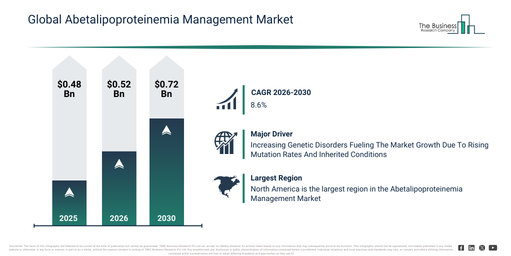
    The abetalipoproteinemia management market has shown robust expansion over recent years. This market is projected to expand from $0.48 billion in 2025 to $0.52 billion in 2026, demonstrating a compound annual growth rate (CAGR) of 8.9%. Factors contributing to its historical growth include restricted awareness of abetalipoproteinemia, the prevalent use of conventional vitamin supplementation, insufficient access to molecular diagnostic instruments, increasing acknowledgment of rare genetic disorders, and the rise of hospital-based diagnosis initiatives.

    The abetalipoproteinemia management market is projected for significant expansion in the coming years. This market is set to reach $0.72 billion by 2030, exhibiting a compound annual growth rate (CAGR) of 8.6%. This anticipated growth is driven by several factors, including progress in ngs and pcr testing, the evolution of gene therapy methods, an increase in diagnosis rates among pediatric and adult patients, intensified research into mct and dietary adjustments, and the expanding adoption of personalized treatment strategies. Key trends during this period are expected to encompass the broader implementation of fat-soluble vitamin supplementation programs, increased uptake of molecular genetic testing for rare diseases, a heightened emphasis on managing pediatric patients, greater utilization of mct therapy and dietary modifications, and improved incorporation of supportive care alongside emerging therapies.

    See What’s Inside The Abetalipoproteinemia Management Market Report With A Free Sample:

    https://thebusinessresearchcompany.com/sample_request?id=66156218&type=smp&name=Abetalipoproteinemia%20Management%20Market%20Report%202026&utm_source=Blogs&utm_medium=Paid&utm_campaign=Nov_PR

    Abetalipoproteinemia Management Market Expansion: The Major Factor Driving Growth

    An anticipated rise in the occurrence of genetic disorders is projected to boost the abetalipoproteinemia management market in the coming years. Genetic disorders are conditions stemming from alterations or defects in an individual’s DNA, which can be either inherited or develop spontaneously, impacting overall health and growth. The prevalence of these disorders is climbing, partly due to improved medical treatments and interventions leading to higher survival rates for those affected. Abetalipoproteinemia management addresses nutrient deficiencies through high doses of fat-soluble vitamins (A, D, E, K) and a low-fat diet, thereby preventing complications from genetic disorders. Early intervention is crucial for averting neurological and vision issues, which significantly enhances patients’ quality of life. Consequently, the increasing prevalence of genetic disorders is propelling the growth of the abetalipoproteinemia management market. The increasing consumer demand for personalized medicine is expected to fuel the expansion of the abetalipoproteinemia management market moving forward. Personalized medicine involves a healthcare methodology where treatments and strategies are customized for individual patients, taking into account their unique genetic makeup, environmental exposures, and lifestyle elements. This demand is growing due to advancements in genomic research and technology, which now allow for a detailed understanding of individual genetic profiles and their influence on health and disease progression. Within this context, abetalipoproteinemia management complements personalized medicine by offering targeted nutritional therapies and treatments specifically designed based on an individual’s genetic characteristics. This tailored approach leads to improved health outcomes for patients and ensures effective, long-term management of their condition. Thus, the rising call for personalized medicine is a key factor driving the growth of the abetalipoproteinemia management market.

    Understanding Abetalipoproteinemia Management Market Segmentation For Strategic Planning

    The abetalipoproteinemia management market covered in this report is segmented –

    1) By Treatment: Molecular Genetic Testing Treatment, Blood Testing Treatment, Fat-Soluble Vitamins Supplementation, Other Treatments

    2) By Route Of Administration: Oral, Parenteral

    3) By Patient Population: Pediatric Patients, Adult Patients

    4) By Application: Hospitals And Clinics, Diagnostics Labs, Other Applications

    Subsegments:

    1) By Molecular Genetic Testing Treatment: Deoxyribonucleic Acid (DNA) Sequencing, Polymerase Chain Reaction (PCR) Testing, Microarray Analysis, Next-Generation Sequencing (NGS), Southern Blotting

    2) By Blood Testing Treatment: Lipid Panel Testing, Apolipoprotein B (ApoB) Testing, Complete Blood Count (CBC), Liver Function Tests (LFTs), Other Blood Biomarkers

    3) By Fat-Soluble Vitamins Supplementation: Vitamin A, Vitamin D, Vitamin E, Vitamin K, Multivitamin Combinations

    4) By Other Treatments: Dietary Modifications, Medium-Chain Triglycerides (MCT) Therapy, Supportive Care, Gene Therapy Research, Emerging Experimental Therapies

    Key Companies Active In The Abetalipoproteinemia Management Market

    Major companies operating in the abetalipoproteinemia management market are Abbott Laboratories, Laboratory Corporation of America, NYU Langone Health, Mayo Foundation for Medical Education and Research, Medicover Hospitals, Fulgent Genetics, Invitae Corp., Nutricia, Max Healthcare, Ambry Genetics Corporation, Pentec Health Inc., Prevention Genetics, Blueprint Genetics, Cambrooke Therapeutics, DNA Labs India, Siloam Hospitals, Abetalipoproteinemia and Related Disorders Foundation, Orphanet, Cleveland Clinic, Johns Hopkins Hospital, GeneDx, Baylor Genetics

    Explore Detailed Abetalipoproteinemia Management Market Research And Forecasts:

    https://thebusinessresearchcompany.com/report/abetalipoproteinemia-management-global-market-report?utm_source=Blogs&utm_medium=Paid&utm_campaign=Nov_PR

    Which Geography Dominates The Abetalipoproteinemia Management Market?

    North America was the largest region in the abetalipoproteinemia management market in 2025. Asia-Pacific is expected to be the fastest-growing region in the forecast period. The regions covered in the abetalipoproteinemia management market report are Asia-Pacific, South East Asia, Western Europe, Eastern Europe, North America, South America, Middle East, Africa.

    Reach Out To Our Team:

    The Business Research Company: https://www.thebusinessresearchcompany.com/

    Americas: +1 310-496-7795

    Asia: +44 7882 955267 & +91 8897263534

    Europe: +44 7882 955267

    Email us at: marketing@tbrc.info

    Follow us on:

    LinkedIn: https://in.linkedin.com/company/the-business-research-company

    YouTube: https://www.youtube.com/channel/UC24_fI0rV8cR5DxlCpgmyFQ

    Global Market Model: https://www.thebusinessresearchcompany.com/global-market-model