Category: Healthcare Services

  • Virtual Ward Care Solutions Market Growth Outlook: Why Analysts Expect Continued Expansion

    Virtual Ward Care Solutions Market Growth Outlook: Why Analysts Expect Continued Expansion

    The Business Research Company’s 2026 market reports include new capabilities such as market attractiveness scoring and analysis, total addressable market analysis, company scoring matrix, interactive excel data dashboard, improved supply chain analysis, upcoming startups in the market, and overview of key products, aimed at improving the depth, usability, and strategic value of the insights delivered.

    What Will Be The Estimated Market Size Of The Virtual Ward Care Solutions Market By 2030?

    The wastewater pathogen variant analytics market has experienced rapid expansion in recent years. It is projected to grow from $1.62 billion in 2025 to $1.9 billion in 2026, at a compound annual growth rate (CAGR) of 17.4%. This growth in the preceding period can be attributed to increasing awareness of community-level disease monitoring, the adoption of PCR-based pathogen detection, a rise in municipal wastewater testing, the development of environmental monitoring laboratories, and increased funding for public health surveillance.

    The wastewater pathogen variant analytics market is projected to experience substantial expansion over the upcoming years. By 2030, this market is anticipated to achieve a valuation of $3.63 billion, growing at a compound annual growth rate (CAGR) of 17.6%. This projected growth is driven by the wider adoption of next-generation sequencing technologies, the integration of artificial intelligence and big data analytics, heightened government initiatives for outbreak forecasting, the need for real-time wastewater monitoring, and enhanced collaboration between municipalities and research organizations. Significant trends for the forecast duration comprise wastewater genomic surveillance, the tracking of pathogen variants in real-time, AI-powered systems for predicting outbreaks, seamless integration with public health dashboards, and analytical approaches for predicting environmental risks.

    Download A Free Sample Report For Comprehensive Market Insights:

    https://www.thebusinessresearchcompany.com/sample_request?id=86407270&type=smp

    Which Growth Drivers Are Expected To Support The Virtual Ward Care Solutions Market Forward?

    The expanding adoption of remote patient monitoring (RPM) is anticipated to propel the growth of the virtual ward care solutions market going forward. RPM utilizes digital technologies and devices to collect patients’ health data outside traditional healthcare settings and transmit it to healthcare providers for ongoing monitoring and management. The rising need for continuous healthcare management drives RPM’s adoption, as it allows providers to track patients’ health in real time. Virtual ward care solutions support RPM by offering an integrated platform for healthcare providers to continuously track patients’ vital signs, symptoms, and treatment adherence in real time, coordinating care remotely to ensure timely interventions and personalized management beyond conventional hospital settings. For instance, in August 2025, the Office of Inspector General, a US-based independent organization, stated that Medicare enrollees using remote patient monitoring significantly rose to nearly 1 million in 2024, which is a 27% increase compared to 2023. Thus, the increasing adoption of remote patient monitoring is a primary driver for the growth of the virtual ward care solutions market.

    Which Segment Divisions Form The Structure Of The Virtual Ward Care Solutions Market?

    The virtual ward care solutions market covered in this report is segmented –

    1) By Component: Hardware, Software, Services

    2) By Patient Type: Chronic Disease Patients, Acute Care Patients, Elderly And Frail Patients

    3) By Care Type: Hospital-At-Home Care, Transitional Care, Preventive Care, Rehabilitation And Recovery Care, Palliative Care

    4) By Technology: Telehealth And Teleconsultation Technology, Remote Patient Monitoring, Wearable And Internet of Things (IoT) Health Technology, Artificial Intelligence And Predictive Analytics, Cloud-Based Solutions, Mobile Applications

    5) By End User: Hospitals And Health Systems, Home Healthcare Providers, Insurance Providers, Government And Public Health Organizations, Long-Term Care Facilities

    Subsegments:

    1) By Hardware: Patient Monitoring Devices, Wearable Health Sensors, Telecommunication Equipment, Tablet And Mobile Devices

    2) By Software: Remote Patient Monitoring Software, Electronic Health Record Integration Software, Care Coordination And Workflow Software, Analytics And Reporting Software

    3) By Services: Implementation And Integration Services, Training And Education Services, Maintenance And Support Services, Telehealth Consultation Services

    What Trends Are Driving Changes In The Virtual Ward Care Solutions Market?

    Leading enterprises within the virtual ward care solutions market are prioritizing the incorporation of novel solutions, including digital health platforms, to elevate remote patient oversight and optimize care provision in home environments. These digital health platforms function as software-driven systems designed to gather, scrutinize, and disseminate patient health information from a distance, thereby assisting healthcare professionals in real-time condition tracking, facilitating prompt medical actions, and diminishing the necessity for physical hospital attendance. As an illustration, in February 2023, Hull University Teaching Hospitals NHS Trust (HUTH), a UK hospital trust, collaborated with Lenus Health, a UK-based digital health firm, to introduce the Lenus Virtual Ward and Remote Monitoring Services. This sophisticated digital platform aims to aid patients beyond conventional hospital environments. This particular solution incorporates wearable sensors, mobile applications, and dashboards for clinicians to continuously monitor vital signs, identify nascent warning signals, and enable swift clinical interventions. Furthermore, the platform’s disease management capabilities allow for customized care pathways for chronic ailments like COPD and heart failure, by merging symptom surveillance, individualized treatment strategies, and automated reminders for care, ultimately enhancing patient results. Essential functionalities encompass live data supervision, automatic notifications for medical teams, secure integration with electronic health records, and improved patient involvement through informative materials and alerts.

    Which Organizations Are Involved In The Virtual Ward Care Solutions Market?

    Major companies operating in the virtual ward care solutions market are Medtronic plc, Siemens Healthineers AG, Koninklijke Philips N.V., GE HealthCare Technologies Inc., Masimo Corporation, HealthSnap Inc., Huma Therapeutics Limited, Telli Health LLC, Health Recovery Solutions Inc., Accuhealth Solutions Inc., Lark Technologies Inc., Optimize Health Inc., VitalTech Holdings Inc., BioIntelliSense Inc., CareSimple Inc., Doccla Ltd, Whzan Digital Health Ltd, Vitls Inc., Spirit Health Group Limited, HealthArc Inc., 100Plus Inc., Docobo Limited, Cadence Care Inc., and Docly Technologies AB.

    Access The Complete Virtual Ward Care Solutions Market Report:

    https://www.thebusinessresearchcompany.com/report/virtual-ward-care-solutions-market-report

    What Is The Largest Regional Market In The Virtual Ward Care Solutions Market?

    North America was the largest region in the virtual ward care solutions market in 2025. Asia-Pacific is expected to be the fastest-growing region in the forecast period. The regions covered in the virtual ward care solutions market report are Asia-Pacific, South East Asia, Western Europe, Eastern Europe, North America, South America, Middle East, Africa.

    Access a Customized Virtual Ward Care Solutions Market Report for Deeper Competitive Insights

    https://www.thebusinessresearchcompany.com/sample_request?id=86407270&type=smp

    Get in touch with us:

    The Business Research Company: https://www.thebusinessresearchcompany.com/

    Americas: +1 310-496-7795

    Asia: +44 7882 955267 & +91 8897263534

    Europe: +44 7882 955267

    Email us at: marketing@tbrc.info

    Follow us on:

    LinkedIn: https://in.linkedin.com/company/the-business-research-company

    YouTube: https://www.youtube.com/channel/UC24_fI0rV8cR5DxlCpgmyFQ

    Global Market Model: https://www.thebusinessresearchcompany.com/global-market-model
  • Virtual Sleep Clinics Market Evolution: From Today’s Valuation To A $3.45 Billion Industry

    Virtual Sleep Clinics Market Evolution: From Today’s Valuation To A $3.45 Billion Industry

    The Business Research Company’s 2026 market reports include new capabilities such as market attractiveness scoring and analysis, total addressable market analysis, company scoring matrix, interactive excel data dashboard, improved supply chain analysis, upcoming startups in the market, and overview of key products, aimed at improving the depth, usability, and strategic value of the insights delivered.

    What Is The Estimated Growth In Market Size Of The Virtual Sleep Clinics Market During 2026–2030?

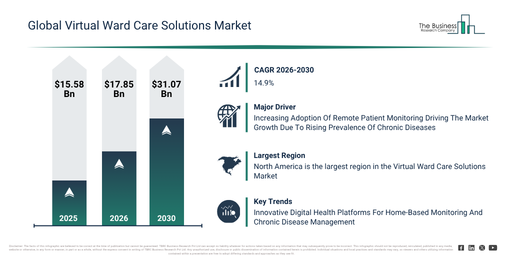
    The virtual ward care solutions market has seen swift growth in recent years. It is forecast to expand from $15.58 billion in 2025 to $17.85 billion in 2026, exhibiting a compound annual growth rate (CAGR) of 14.6%. This historical development can be ascribed to a rising demand for home healthcare, technological advancements in telemedicine, increasing chronic disease prevalence, healthcare cost containment initiatives, and growing awareness of hospital-acquired infections.

    The virtual ward care solutions market is poised for significant expansion in the coming years. Its size is projected to reach $31.07 billion by 2030, exhibiting a compound annual growth rate (CAGR) of 14.9%. This anticipated growth is driven by factors such as the proliferation of AI-enabled monitoring solutions, the integration of IoT health devices, governmental backing for virtual care programs, the increasing uptake of cloud-based health platforms, and investments in predictive patient care analytics. Prominent trends throughout the forecast period include the broadening of remote patient monitoring, enhanced telehealth integration, the adoption of wearable health devices, leveraging predictive analytics for patient outcomes, and the automation of virtual care workflows.

    Download A Free Sample Report For Comprehensive Market Insights:

    https://www.thebusinessresearchcompany.com/sample_request?id=51845600&type=smp

    What Influential Factors Are Boosting The Virtual Sleep Clinics Market Demand?

    The expanding prevalence of sleep disorders is set to drive the growth of the virtual sleep clinics market in the future. These medical conditions, encompassing insomnia, sleep apnea, and circadian rhythm disorders, affect the quality, timing, or duration of sleep, thereby impairing daily functioning. The increasing burden of sleep disorders stems from factors like chronic stress from modern lifestyles, elevated screen exposure, irregular work schedules, and aging populations, all of which disrupt circadian rhythms and hormonal balance. Virtual sleep clinics address this growing demand by offering expanded remote access to diagnosis, monitoring, and personalized treatment, enabling timely intervention and continuous management for a rising patient population. For instance, in July 2025, SleepFoundation.org, a US-based non-profit organization focused on sleep health education, estimated that insomnia affected over 850 million adults globally, accounting for approximately 16.2% of the adult population, with severe cases impacting nearly 415 million individuals. Thus, the escalating prevalence of sleep disorders is fueling the expansion of the virtual sleep clinics market.

    How Are Different Segment Groups Identified Within The Virtual Sleep Clinics Market?

    The virtual sleep clinics market covered in this report is segmented –

    1) By Service Components: Tele-Consultation And Sleep Specialist Visits, Home Sleep Apnea Testing (HSAT) Programs, Remote Positive Airway Pressure Titration And Adherence Monitoring, Digital Insomnia Care Pathways (CBT-I Services), Care Coordination And Durable Medical Equipment (DME) Integration Services

    2) By Technology Platform: Integrated Virtual Clinic Platforms, Standalone Telehealth Solutions, Remote Monitoring Systems, Digital Therapeutic Applications

    3) By Clinical Indication: Obstructive Sleep Apnea (OSA), Insomnia, Circadian Rhythm Disorders, Restless Legs Syndrome, Other Clinical Indications

    4) By End User Or Channel: Direct-To-Patient Virtual Clinics, Hospital-Affiliated Virtual Programs, Payers Or Employers, Durable Medical Equipment (DME) Providers Or PAP Networks, Other End User Or Channels

    Subsegments:

    1) By Tele-Consultation And Sleep Specialist Visits: Real-Time Virtual Consultations With Sleep Medicine Specialists, Follow-Up Visits And Treatment Planning Via Telehealth, Second-Opinion Services

    2) By Home Sleep Apnea Testing (HSAT) Programs: Portable Diagnostic Devices For Sleep Apnea, Remote Data Transmission And Interpretation, Prescription And Setup Support

    3) By Remote Positive Airway Pressure Titration And Adherence Monitoring: Remote Pressure Adjustment For PAP Devices, Compliance Tracking And Reporting, Feedback Loops To Clinicians

    4) By Digital Insomnia Care Pathways (CBT-I Services): Online Cognitive Behavioral Therapy For Insomnia, Self-Guided Modules And Clinician Support, Outcome Tracking And Personalized Care Plans

    5) By Care Coordination And Durable Medical Equipment (DME) Integration Services: Centralized Care Navigation, Coordination Between Providers, Labs, Equipment Suppliers, Insurers, Integration Of Sleep Devices And Accessories

    Which Trends Are Shaping The Virtual Sleep Clinics Market Landscape?

    Major companies operating in the virtual sleep clinics market are prioritizing technological advancements in sleep monitoring devices, such as virtual sleep care solutions. These innovations are intended to improve remote diagnostic accuracy, increase patient engagement and adherence to treatment, and deliver personalized, data-driven management of sleep disorders via integrated digital platforms. A virtual sleep care solution is defined as a digitally enabled healthcare platform that provides comprehensive diagnosis, treatment, monitoring, and management of sleep conditions remotely, leveraging telemedicine technologies, connected medical devices, and data analytics tools. For example, in September 2023, Neura Health, a US-based digital neurology company, introduced a Comprehensive Virtual Sleep Care Solution for Employers. This solution offers complete sleep care through board-certified sleep specialists via telehealth, provides at-home sleep testing kits, develops personalized treatment plans, and facilitates ongoing virtual follow-ups. It combines behavioral sleep therapy, prescription management, and care coordination within a single digital platform, allowing employers to offer scalable sleep health benefits to their workforce. The service also utilizes data-driven insights to enhance diagnosis accuracy and treatment adherence while reducing costs associated with traditional sleep labs.

    Who Are The Firms Contributing To The Virtual Sleep Clinics Market Ecosystem?

    Major companies operating in the virtual sleep clinics market are Kaiser Foundation Health Plan Inc., Koninklijke Philips N.V., ResMed Inc., Teladoc Health Inc., Sleep Number Corporation, Carbon Health Inc., Amwell Group Inc., Compumedics Limited, Big Health Inc., BetterNight Inc., Gem Sleep LLC, Fullpower Technologies Inc., Sleep Data Holdings LLC, Sleepio Ltd., Haleo Inc., TeleSleep Clinic LLC, Sliiip Holdings Inc., WakeWell LLC, Ognomy Inc., Oura Health Ltd.

    Access The Complete Virtual Sleep Clinics Market Report:

    https://www.thebusinessresearchcompany.com/report/virtual-sleep-clinics-market-report

    Which Region Contributes The Most To The Virtual Sleep Clinics Market?

    North America was the largest region in the virtual sleep clinic market in 2025. Asia-Pacific is expected to be the fastest-growing region in the forecast period. The regions covered in the virtual sleep clinics market report are Asia-Pacific, South East Asia, Western Europe, Eastern Europe, North America, South America, Middle East, Africa.

    Access a Customized Virtual Sleep Clinics Market Report for Deeper Competitive Insights

    https://www.thebusinessresearchcompany.com/sample_request?id=51845600&type=smp

    Get in touch with us:

    The Business Research Company: https://www.thebusinessresearchcompany.com/

    Americas: +1 310-496-7795

    Asia: +44 7882 955267 & +91 8897263534

    Europe: +44 7882 955267

    Email us at: marketing@tbrc.info

    Follow us on:

    LinkedIn: https://in.linkedin.com/company/the-business-research-company

    YouTube: https://www.youtube.com/channel/UC24_fI0rV8cR5DxlCpgmyFQ

    Global Market Model: https://www.thebusinessresearchcompany.com/global-market-model
  • Virtual Patient Avatars Market Demand Drivers Supporting Future Growth Opportunities

    Virtual Patient Avatars Market Demand Drivers Supporting Future Growth Opportunities

    The Business Research Company’s 2026 market reports include new capabilities such as market attractiveness scoring and analysis, total addressable market analysis, company scoring matrix, interactive excel data dashboard, improved supply chain analysis, upcoming startups in the market, and overview of key products, aimed at improving the depth, usability, and strategic value of the insights delivered.

    What Market Value Expansion Is Expected For The Virtual Patient Avatars Market Over The Forecast Period?

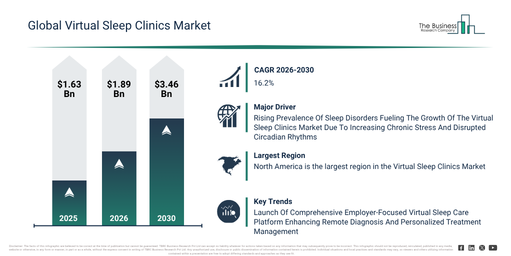
    The virtual sleep clinics market has seen substantial growth in recent years. It is anticipated to expand from $1.63 billion in 2025 to $1.89 billion in 2026, achieving a compound annual growth rate (CAGR) of 16.0%. This historical market expansion is primarily due to the increasing incidence of sleep disorders, restricted accessibility to in-person sleep clinics, the wider acceptance of telehealth solutions, the desire for patient convenience, and the development of wearable sleep monitoring devices.

    The market size for virtual sleep clinics is poised for rapid expansion over the next few years. It is projected to grow to $3.46 billion by 2030, exhibiting a compound annual growth rate (CAGR) of 16.2%. This anticipated growth during the forecast period can be ascribed to the expansion of virtual sleep clinics, the integration of ai-driven diagnostics, regulatory support for telemedicine, increased investment in remote monitoring technologies, a rising awareness of sleep health, and personalized care. Significant trends for the forecast period encompass remote sleep disorder monitoring, the expansion of tele-consultation, the adoption of home-based sleep testing, the provision of digital insomnia care services, and integrated care coordination.

    Download A Free Sample Report For Comprehensive Market Insights:

    https://www.thebusinessresearchcompany.com/sample_request?id=14228382&type=smp

    Which Drivers Are Advancing The Virtual Patient Avatars Market Growth?

    The increasing burden of chronic illnesses is anticipated to propel the expansion of the virtual patient avatars market moving forward. Long-term ailments such as cardiovascular disorders, diabetes, cancer, and respiratory conditions necessitate continuous monitoring, individualized treatment plans, and consistent patient engagement, thereby escalating the demand for sophisticated digital healthcare solutions. The growing incidence and severity of chronic diseases are influenced by factors like inactive lifestyles, an aging global population, and unhealthy eating habits, which elevate the chances of developing obesity, diabetes, and cardiovascular disease. Virtual patient avatars enable medical professionals and researchers to simulate how diseases progress, tailor therapies, and improve patient education and adherence, making them invaluable instruments for managing intricate chronic conditions and supporting clinical decision-making. As an illustration, in June 2025, the Office for Health Improvement and Disparities (OHID), a UK-based government body, reported a rise in emergency admissions for respiratory diseases in England between 2023 and 2024, with particularly sharp increases for chronic conditions like COPD (9%) and adult asthma (17%). Therefore, the escalating prevalence of chronic diseases is driving the growth of the virtual patient avatars market.

    What Segment Categories Are Evaluated In The Virtual Patient Avatars Market Study?

    The virtual patient avatars market covered in this report is segmented –

    1) By Component: Software, Services

    2) By Technology: AI-Based, Virtual Reality Or Augmented Reality-Based, 3D Modeling, Other Technologies

    3) By Deployment Mode: Cloud-Based, On-Premise

    4) By Application: Medical Training, Patient Education, Therapy And Rehabilitation, Clinical Trials, Other Applications

    5) By End-User: Hospitals And Clinics, Academic And Research Institutes, Pharmaceutical And Biotechnology Companies, Other End-Users

    Subsegments:

    1) By Software: Anatomy Visualization Software, Simulation And Modeling Software, Analytics And Assessment Tools

    2) By Services: Installation And Integration, Training Services, Content Customization, Support And Maintenance

    What Trends Are Influencing The Virtual Patient Avatars Market Outlook?

    Leading firms within the virtual patient avatars market are prioritizing the creation of sophisticated tools like glasses-free 3D visualization, aiming to improve clinical dialogue and patient comprehension. This glasses-free 3D visualization method is an imaging technique that transforms standard CT and MRI scans into precise three-dimensional models, enabling real-time collaborative anatomical viewing between clinicians and patients, thereby enhancing clarity and facilitating joint decision-making. As an example, in November 2025, Avatar Medical collaborated with Barco, a medtech company based in France, to introduce Eonis Vision, which incorporates 3D visualization software and an autostereoscopic medical display. This innovation integrates software and hardware components to convert medical images into realistic anatomical avatars directly within the examination room setting. It instantaneously transforms imaging scans into interactive three-dimensional models, bypassing the need for manual segmentation, and supports real-time rendering optimized for clinical efficiency and precision. The system initiates directly from the patient’s medical record and seamlessly integrates with current imaging infrastructure, thus preserving established clinical workflows. This display provides authentic depth perception without the need for additional headsets or specific goggles, promoting collaborative viewing and more transparent consultation interactions.

    Which Key Players Are Active In The Virtual Patient Avatars Market?

    Major companies operating in the virtual patient avatars market are CAE Healthcare, Laerdal Medical, InSimu, Immersive Labz, Osso VR, BioDigital Inc., VirtaMed AG, Oxford Medical Simulation, Shadow Health (Elsevier), SimX Inc., Brahmarsive, Virtual Medical Coaching, SimforHealth, GIGXR Inc., Health Scholars, Body Interact, Medscape (WebMD), VirtaMed, 3D Systems (Simbionix), Patient Communication Simulations (PCS), MedVR Education.

    Access The Complete Virtual Patient Avatars Market Report:

    https://www.thebusinessresearchcompany.com/report/virtual-patient-avatars-market-report

    Which Regional Market Leads The Virtual Patient Avatars Market?

    North America was the largest region in the virtual patient avatars market in 2025. Asia-Pacific is expected to be the fastest-growing region in the forecast period. The regions covered in the virtual patient avatars market report are Asia-Pacific, South East Asia, Western Europe, Eastern Europe, North America, South America, Middle East, Africa.

    Access a Customized Virtual Patient Avatars Market Report for Deeper Competitive Insights

    https://www.thebusinessresearchcompany.com/sample_request?id=14228382&type=smp

    Get in touch with us:

    The Business Research Company: https://www.thebusinessresearchcompany.com/

    Americas: +1 310-496-7795

    Asia: +44 7882 955267 & +91 8897263534

    Europe: +44 7882 955267

    Email us at: marketing@tbrc.info

    Follow us on:

    LinkedIn: https://in.linkedin.com/company/the-business-research-company

    YouTube: https://www.youtube.com/channel/UC24_fI0rV8cR5DxlCpgmyFQ

    Global Market Model: https://www.thebusinessresearchcompany.com/global-market-model
  • Viral Genome Sequencing Market Leaders Positioned For Future Growth

    Viral Genome Sequencing Market Leaders Positioned For Future Growth

    The Business Research Company’s 2026 market reports include new capabilities such as market attractiveness scoring and analysis, total addressable market analysis, company scoring matrix, interactive excel data dashboard, improved supply chain analysis, upcoming startups in the market, and overview of key products, aimed at improving the depth, usability, and strategic value of the insights delivered.

    What Is The Forecasted Rise In Market Size Of The Viral Genome Sequencing Market During The Forecast Period?

    The virtual dissection labs market has experienced rapid growth in recent years. This market is projected to increase from $1.77 billion in 2025 to $2.15 billion in 2026, achieving a compound annual growth rate (CAGR) of 21.2%. The expansion observed in prior periods can be attributed to the rising adoption of digital learning tools, increasing demand for anatomy visualization, shortage of physical cadavers, growth in medical and veterinary education, and the integration of simulation software in curriculum.

    The virtual dissection labs market is anticipated to experience substantial growth in the upcoming years, projected to reach $4.67 billion by 2030 with a compound annual growth rate (CAGR) of 21.5%. This expansion during the forecast period can be attributed to the broadening of cloud-based virtual labs, advancements in AI and AR/VR technologies, increasing adoption in K-12 and higher education, the demand for personalized learning experiences, and investment in content customization and analytics. Major trends identified for this period include interactive 3D anatomical simulations, AR/VR-based collaborative learning, AI-powered assessment and analytics, cloud-based virtual dissection platforms, and customizable curriculum integration.

    Download A Free Sample Report For Comprehensive Market Insights:

    https://www.thebusinessresearchcompany.com/sample_request?id=24703760&type=smp

    Which Strategic Drivers Are Supporting The Viral Genome Sequencing Market Development?

    The rising incidence of infectious diseases is anticipated to fuel the expansion of the viral genome sequencing market in the future. These diseases, originating from pathogenic microorganisms, are continually increasing worldwide, driven by factors like greater international travel, urbanization, and the swift transnational spread of pathogens. Consequently, this escalating burden of illness has prompted governments and healthcare infrastructure to enhance their genomic surveillance and outbreak response capacities. Viral genome sequencing is crucial in managing infectious diseases, as it facilitates the quick identification of viral strains, monitors genetic changes, traces transmission routes, and aids in focused public health initiatives. As an illustration, the Centers for Disease Control and Prevention (CDC), a US government agency, reported in February 2026 that influenza led to roughly 290,000–450,000 hospitalizations and 34,000–53,000 deaths each year in the United States. Meanwhile, RSV was responsible for an estimated 190,000–350,000 hospitalizations and 10,000–23,000 deaths. Thus, the rising occurrence of infectious diseases is anticipated to stimulate the expansion of the viral genome sequencing market.

    Which Segment Groups Define The Viral Genome Sequencing Market Landscape?

    The viral genome sequencing market covered in this report is segmented –

    1) By Sequencing Technology: Next-Generation Sequencing, Sanger Sequencing, Third-Generation Sequencing

    2) By Sample Type: Blood, Nasal Or Throat Swabs, Saliva, Other Sample Types

    3) By Application: Clinical Diagnostics, Research, Epidemiology, Vaccine Development, Other Applications

    4) By End-User: Hospitals And Clinics, Research Institutes, Pharmaceutical And Biotechnology Companies, Other End-Users

    Subsegments:

    1) By Next-Generation Sequencing: Sequencing By Synthesis, Ion Semiconductor Sequencing, Reversible Terminator Chemistry Sequencing, Targeted Amplicon Sequencing, Whole Genome Shotgun Sequencing

    2) By Sanger Sequencing: Capillary Electrophoresis Sequencing, Automated Fluorescent Chain Termination Sequencing, Dideoxy Chain Termination Sequencing, Low Throughput Mutation Verification Sequencing, Plasmid Insert Verification Sequencing

    3) By Third-Generation Sequencing: Single Molecule Real Time Sequencing, Nanopore Based Sequencing, Zero Mode Waveguide Sequencing, Long Read Direct Ribonucleic Acid Sequencing, Real Time Field Deployable Sequencing

    What Trends Are Affecting The Viral Genome Sequencing Market Dynamics?

    Leading companies in the viral genome sequencing market are concentrating on technological advancements in long-read sequencing, particularly benchtop long-read sequencing platforms, to achieve a competitive advantage. A benchtop long-read sequencing platform is an integrated laboratory system designed to generate highly accurate, extended nucleotide reads from viral genomes within a compact footprint. This enables comprehensive structural variant detection, improved genome assembly, and a faster turnaround for pathogen characterization, thereby strengthening surveillance capabilities, supporting outbreak response, and enhancing research precision, albeit requiring higher capital investment and advanced data analysis infrastructure at scale. For instance, in November 2024, Pacific Biosciences, a US-based biotechnology company, unveiled the Revio benchtop HiFi sequencing platform. This platform provides high-fidelity long reads, increased throughput compared with earlier systems, and offers a scalable configuration for clinical and research laboratories, consequently improving viral mutation tracking and genome completeness within the viral genome sequencing market.

    Which Companies Are Engaged In The Viral Genome Sequencing Market Environment?

    Major companies operating in the viral genome sequencing market are F. Hoffmann‑La Roche Ltd., Thermo Fisher Scientific Inc., Agilent Technologies Inc., Illumina Inc., PerkinElmer Inc., Bio‑Rad Laboratories Inc., QIAGEN N.V., Integrated DNA Technologies Inc., GenScript Biotech Corporation, Novogene Co. Ltd., Takara Bio Inc., Twist Bioscience Corporation, Oxford Nanopore Technologies Ltd., Pacific Biosciences of California Inc., Genewiz, Macrogen Inc., MedGenome Labs Ltd., Eurofins Scientific SE, CD Genomics, BGI Genomics Co. Ltd.

    Access The Complete Viral Genome Sequencing Market Report:

    https://www.thebusinessresearchcompany.com/report/viral-genome-sequencing-market-report

    Which Region Is The Dominant Market In The Viral Genome Sequencing Market?

    North America was the largest region in the viral genome sequencing market in 2025. Asia-Pacific is expected to be the fastest-growing region in the forecast period. The regions covered in the viral genome sequencing market report are Asia-Pacific, South East Asia, Western Europe, Eastern Europe, North America, South America, Middle East, Africa.

    Access a Customized Viral Genome Sequencing Market Report for Deeper Competitive Insights

    https://www.thebusinessresearchcompany.com/sample_request?id=24703760&type=smp

    Get in touch with us:

    The Business Research Company: https://www.thebusinessresearchcompany.com/

    Americas: +1 310-496-7795

    Asia: +44 7882 955267 & +91 8897263534

    Europe: +44 7882 955267

    Email us at: marketing@tbrc.info

    Follow us on:

    LinkedIn: https://in.linkedin.com/company/the-business-research-company

    YouTube: https://www.youtube.com/channel/UC24_fI0rV8cR5DxlCpgmyFQ

    Global Market Model: https://www.thebusinessresearchcompany.com/global-market-model
  • Urine Tumor Deoxyribonucleic Acid (DNA) Testing Market Report From The Business Research Company Covers Trends, Segments And Forecasts

    Urine Tumor Deoxyribonucleic Acid (DNA) Testing Market Report From The Business Research Company Covers Trends, Segments And Forecasts

    The Business Research Company’s 2026 market reports include new capabilities such as market attractiveness scoring and analysis, total addressable market analysis, company scoring matrix, interactive excel data dashboard, improved supply chain analysis, upcoming startups in the market, and overview of key products, aimed at improving the depth, usability, and strategic value of the insights delivered.

    How Is The Urine Tumor Deoxyribonucleic Acid (DNA) Testing Market’s Market Value Anticipated To Evolve From 2026 To 2030?

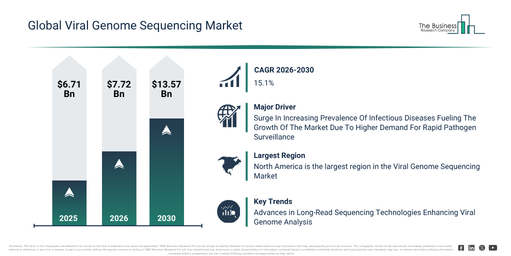
    The viral genome sequencing market size has experienced rapid expansion in recent years. Its value is projected to increase from $6.71 billion in 2025 to $7.72 billion in 2026, demonstrating a compound annual growth rate (CAGR) of 14.9%. This historical growth can be linked to several factors, including the increasing prevalence of viral outbreaks, the uptake of next-generation sequencing, the expansion of clinical diagnostics, government financial support for research, and the demand for epidemiological studies.

    The viral genome sequencing market is anticipated to see considerable expansion over the next few years. It is projected to increase to $13.57 billion by 2030, achieving a compound annual growth rate (CAGR) of 15.1%. This growth during the forecast period can be attributed to elements such as AI-driven genome analysis, the expansion of vaccine development programs, the adoption of portable sequencing technologies, integration with predictive bioinformatics, and a heightened focus on real-time pathogen monitoring. Key trends expected in the forecast period include high-throughput viral genome sequencing, portable sequencing devices, integration with bioinformatics platforms, automated sample processing, and real-time mutation tracking.

    Download A Free Sample Report For Comprehensive Market Insights:

    https://www.thebusinessresearchcompany.com/sample_request?id=55654252&type=smp

    What Major Growth Factors Are Impacting The Urine Tumor Deoxyribonucleic Acid (DNA) Testing Market?

    The escalating prevalence of urological cancers is expected to drive the growth of the urine tumor deoxyribonucleic acid (DNA) testing market in the coming years. Urological cancers, which affect the urinary system and male reproductive organs including the kidneys, bladder, prostate, and testes, are increasing in incidence largely due to aging populations, as the risk of cancer rises with advancing age. Urine tumor DNA testing plays a vital role in managing these cancers by facilitating the non-invasive detection of cancer-specific genetic mutations in urine, thereby enabling early diagnosis, effective disease monitoring, and personalized treatment planning. For instance, in December 2025, Cancer Australia, an Australia-based government department, estimated that 28,868 new prostate cancer cases would be diagnosed, representing approximately 30% of all new cancer diagnoses among men. Therefore, the increasing prevalence of urological cancers is anticipated to fuel the expansion of the urine tumor deoxyribonucleic acid (DNA) testing market.

    What Key Segment Areas Are Included In The Urine Tumor Deoxyribonucleic Acid (DNA) Testing Market Assessment?

    The urine tumor deoxyribonucleic acid (DNA) testing market covered in this report is segmented –

    1) By Technology: Polymerase Chain Reaction-based, Next-Generation Sequencing, Other technologies

    2) By Product Type: Assay Kits, Instruments, Services

    3) By Cancer Type: Bladder Cancer, Prostate Cancer, Kidney Cancer, Other Cancer Types

    4) By Sample Type: First-Morning Urine, Random Urine Samples, Catheterized Urine Samples

    5) By End-User: Hospitals, Diagnostic Laboratories, Research Institutes, Other End-Users

    Subsegments:

    1) By Polymerase Chain Reaction Based: Real Time Polymerase Chain Reaction, Digital Polymerase Chain Reaction, Multiplex Polymerase Chain Reaction, Reverse Transcription Polymerase Chain Reaction

    2) By Next Generation Sequencing: Whole Genome Sequencing, Targeted Gene Sequencing, Exome Sequencing, Transcriptome Sequencing

    3) By Other Technologies: Microarray Based Testing, Hybridization Based Assays, Mass Spectrometry Based Analysis, Fluorescence In Situ Hybridization

    Which Trends Are Influencing The Expansion Of The Urine Tumor Deoxyribonucleic Acid (DNA) Testing Market?

    Companies active in the urine tumor deoxyribonucleic acid (DNA) testing market are intensifying their efforts to create cutting-edge solutions, notably urine-based liquid biopsy platforms, which aim to allow non-invasive cancer detection, enhance diagnostic precision, and facilitate individualized treatment strategies. These urine-based liquid biopsy platforms represent non-invasive diagnostic tools engineered to identify and examine tumor-derived DNA and various other biomarkers found in urine specimens, serving purposes such as cancer detection, surveillance, and evaluation of disease advancement. As an illustration, in September 2024, PreAnalytiX, a collaborative entity formed by QIAGEN, a Netherlands-based sample-to-insight provider, and Becton, Dickinson and Company, a US-based medical technology firm, unveiled a groundbreaking urine-based liquid biopsy offering specifically designed for superior DNA stabilization and extraction, essential for subsequent molecular analyses. This platform, developed for both clinical and research contexts, incorporates features like consistent urine collection, effective DNA preservation, and seamless integration with next-generation sequencing processes, thereby promoting prompt cancer identification, accurate biomarker evaluation, and enhanced patient care.

    Who Are The Prominent Players Across The Urine Tumor Deoxyribonucleic Acid (DNA) Testing Market?

    Major companies operating in the urine tumor deoxyribonucleic acid (DNA) testing market are Roche Diagnostics, Thermo Fisher Scientific Inc., Abbott Laboratories, Illumina Inc., QIAGEN N.V., Bio-Techne Corporation, NeoGenomics Laboratories Inc., Freenome Holdings Inc., MDxHealth SA, Biodesix Inc., Sysmex Inostics GmbH, Pacific Edge Limited, Apostle Inc., Lucence Diagnostics, Pangea Laboratory, Nucleix Ltd, Genomica Lab, Vesica Health, Biocept Inc., Promis Diagnostics Inc.

    Access The Complete Urine Tumor Deoxyribonucleic Acid (DNA) Testing Market Report:

    https://www.thebusinessresearchcompany.com/report/urine-tumor-deoxyribonucleic-acid-dna-testing-market-report

    Which Area Represents The Largest Portion Of The Urine Tumor Deoxyribonucleic Acid (DNA) Testing Market?

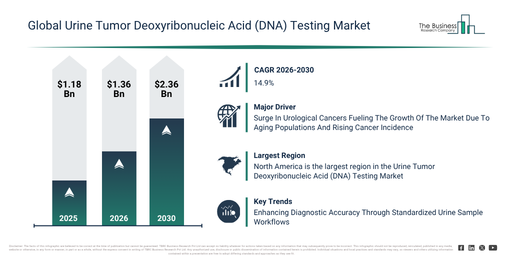
    North America was the largest region in the urine tumor deoxyribonucleic acid (DNA) market in 2025. Asia-Pacific is expected to be the fastest-growing region in the forecast period. The regions covered in the urine tumor deoxyribonucleic acid (DNA) testing market report are Asia-Pacific, South East Asia, Western Europe, Eastern Europe, North America, South America, Middle East, Africa.

    Access a Customized Urine Tumor Deoxyribonucleic Acid (DNA) Testing Market Report for Deeper Competitive Insights

    https://www.thebusinessresearchcompany.com/sample_request?id=55654252&type=smp

    Get in touch with us:

    The Business Research Company: https://www.thebusinessresearchcompany.com/

    Americas: +1 310-496-7795

    Asia: +44 7882 955267 & +91 8897263534

    Europe: +44 7882 955267

    Email us at: marketing@tbrc.info

    Follow us on:

    LinkedIn: https://in.linkedin.com/company/the-business-research-company

    YouTube: https://www.youtube.com/channel/UC24_fI0rV8cR5DxlCpgmyFQ

    Global Market Model: https://www.thebusinessresearchcompany.com/global-market-model
  • Tumor-Informed Minimal Residual Disease (MRD) Tests Market Report Covering Growth Trends Segments And Forecasts

    Tumor-Informed Minimal Residual Disease (MRD) Tests Market Report Covering Growth Trends Segments And Forecasts

    The Business Research Company’s 2026 market reports include new capabilities such as market attractiveness scoring and analysis, total addressable market analysis, company scoring matrix, interactive excel data dashboard, improved supply chain analysis, upcoming startups in the market, and overview of key products, aimed at improving the depth, usability, and strategic value of the insights delivered.

    By 2030, How Much Growth In Market Size Is Expected For The Tumor-Informed Minimal Residual Disease (MRD) Tests Market?

    The market size for urine tumor deoxyribonucleic acid (DNA) testing has observed rapid expansion in recent years. This market is set to increase from $1.18 billion in 2025 to $1.36 billion in 2026, achieving a compound annual growth rate (CAGR) of 14.6%. Historically, this expansion has been driven by factors such as the rising prevalence of urinary cancers, the adoption of PCR-based urine testing, continuous advancements in sequencing technologies, increasing awareness about early cancer detection, and the growth in hospital diagnostic facilities.

    The urine tumor deoxyribonucleic acid (DNA) testing market size is projected to experience substantial expansion in the coming years. This market is anticipated to reach $2.36 billion by 2030, demonstrating a compound annual growth rate (CAGR) of 14.9%. The anticipated expansion during this period stems from factors such as AI-driven urine DNA analysis, the creation of multiplex and high-throughput assays, the broadening scope of personalized medicine, its integration with electronic health records, and an increasing need for non-invasive monitoring solutions. Prominent developments expected in this forecast timeframe encompass non-invasive cancer monitoring, advancements in liquid biopsy, AI-powered genetic analysis, the detection of high-sensitivity urine DNA, and its incorporation into clinical decision support systems.

    Download A Free Sample Report For Comprehensive Market Insights:

    https://www.thebusinessresearchcompany.com/sample_request?id=98797946&type=smp

    What Market Drivers Are Helping Shape The Tumor-Informed Minimal Residual Disease (MRD) Tests Market Expansion?

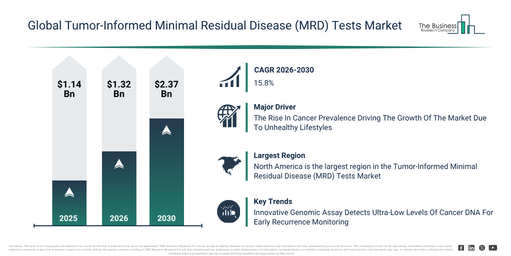
    The market for tumor-informed minimal residual disease (MRD) tests is projected to grow significantly, driven by the increasing occurrence of cancer. Cancer refers to a collection of diseases marked by the uncontrolled proliferation and division of abnormal cells, which can invade surrounding tissues and spread throughout the body. This rising prevalence of cancer is attributable to unhealthy lifestyle factors, including poor diet, insufficient physical activity, smoking, and excessive alcohol consumption, all of which heighten the risk of developing various cancer types. Tumor-informed minimal residual disease (MRD) tests play a crucial role in cancer management by identifying minute amounts of cancer-specific genetic material following treatment, allowing for early detection of relapse and guiding personalized therapeutic decisions. For example, in February 2024, the World Health Organization, a Switzerland-based international organization dedicated to global health policy and public health initiatives, forecasted over 35 million new cancer cases in 2050, marking a 77% increase from the estimated 20 million cases in 2022. Thus, the escalating prevalence of cancer is a key driver for the rapid expansion of the tumor-informed minimal residual disease (MRD) tests market.

    How Is Segment Classification Applied In The Tumor-Informed Minimal Residual Disease (MRD) Tests Market?

    The tumor-informed minimal residual disease (MRD) tests market covered in this report is segmented –

    1) By Technology: Next-Generation Sequencing, Polymerase Chain Reaction (PCR)-based, Other Technologies

    2) By Product Type: Assay Kits, Instruments, Software, Services

    3) By Sample Type: Peripheral Blood (Ctdna), Bone Marrow, Tissue Biopsy, Other Body Fluids

    4) By Application: Colorectal Cancer, Lung Cancer, Breast Cancer, Hematological Malignancies, Other Applications

    5) By End-User: Hospitals, Diagnostic Laboratories, Research Institutes, Other End-Users

    Subsegments:

    1) By Next-Generation Sequencing: Targeted Sequencing, Whole Genome Sequencing, Whole Exome Sequencing, Single Cell Sequencing, Other Sequencing Approaches

    2) By Polymerase Chain Reaction (PCR)-Based: Digital Polymerase Chain Reaction, Real Time Polymerase Chain Reaction, Multiplex Polymerase Chain Reaction, Other Polymerase Chain Reaction Methods

    3) By Other Technologies: Hybrid Capture Based, Bead Based Assays, Electrochemical Detection, Other Emerging Technologies

    What Trends Are Impacting The Tumor-Informed Minimal Residual Disease (MRD) Tests Market?

    Major companies operating in the tumor informed minimal residual disease (MRD) tests market are concentrating on creating advanced solutions, including tissue informed whole genome sequencing (WGS) MRD assays, to identify extremely low quantities of circulating tumor DNA for prompt detection of cancer recurrence and assessment of treatment efficacy. Specifically, a tissue-informed whole genome sequencing (WGS) MRD assay utilizes a patient’s tumor tissue to pinpoint distinct genetic mutations, subsequently tracking these mutations in the blood to identify minimal residual disease even at minute concentrations. For example, in September 2025, Foundation Medicine, Inc., a US-based precision medicine firm, introduced the Tissue-informed WGS MRD test through the FlexOMx Lab. This novel, tumor-informed whole-genome sequencing test, intended for molecular residual disease research, is applicable to cancers from early to late stages. It precisely tracks hundreds to thousands of tumor-specific variants within circulating tumor DNA, enabling the accurate detection of minimal residual disease even at extremely low tumor burdens, and simultaneously offers extensive genomic profiling to improve insights into recurrence and treatment resistance within clinical investigations.

    Which Companies Form The Competitive Landscape Of The Tumor-Informed Minimal Residual Disease (MRD) Tests Market?

    Major companies operating in the tumor-informed minimal residual disease (MRD) tests market are Roche Diagnostics International Ltd., Thermo Fisher Scientific Inc., Laboratory Corporation of America Holdings, ICON Public Limited Company, Illumina Inc., Bio-Rad Laboratories Inc., Exact Sciences Corporation, QIAGEN N.V., Integrated DNA Technologies Inc., Natera Inc., NeoGenomics Laboratories Inc., Veracyte Inc., Foundation Medicine Inc., Adaptive Biotechnologies Corporation, Genetron Holdings Limited, Burning Rock Biotech Co Ltd., Personalis Inc., Foresight Diagnostics Inc., Predicine Inc., Guardant Health Inc.

    Access The Complete Tumor-Informed Minimal Residual Disease (MRD) Tests Market Report:

    https://www.thebusinessresearchcompany.com/report/tumor-informed-minimal-residual-disease-mrd-tests-market-report

    Which Region Commands The Largest Share Of The Tumor-Informed Minimal Residual Disease (MRD) Tests Market?

    North America was the largest region in the tumor-informed minimal residual disease (MRD) tests market in 2025. Asia-Pacific is expected to be the fastest-growing region in the forecast period. The regions covered in the tumor-informed minimal residual disease (MRD) tests market report are Asia-Pacific, South East Asia, Western Europe, Eastern Europe, North America, South America, Middle East, Africa.

    Access a Customized Tumor-Informed Minimal Residual Disease (MRD) Tests Market Report for Deeper Competitive Insights

    https://www.thebusinessresearchcompany.com/sample_request?id=98797946&type=smp

    Get in touch with us:

    The Business Research Company: https://www.thebusinessresearchcompany.com/

    Americas: +1 310-496-7795

    Asia: +44 7882 955267 & +91 8897263534

    Europe: +44 7882 955267

    Email us at: marketing@tbrc.info

    Follow us on:

    LinkedIn: https://in.linkedin.com/company/the-business-research-company

    YouTube: https://www.youtube.com/channel/UC24_fI0rV8cR5DxlCpgmyFQ

    Global Market Model: https://www.thebusinessresearchcompany.com/global-market-model
  • Stuttering Treatment Market Projected to Reach $4.05 Billion by 2030

    Stuttering Treatment Market Projected to Reach $4.05 Billion by 2030

    The Business Research Company’s 2026 market reports feature advanced enhancements such as market attractiveness analysis, total addressable market evaluation, company benchmarking matrices, interactive Excel dashboards, expanded supply chain intelligence, emerging startup coverage, and detailed product insights, delivering more actionable and strategically valuable research.

    What Is The Estimated Growth In Market Size Of The Stuttering Treatment Market During 2026–2030?

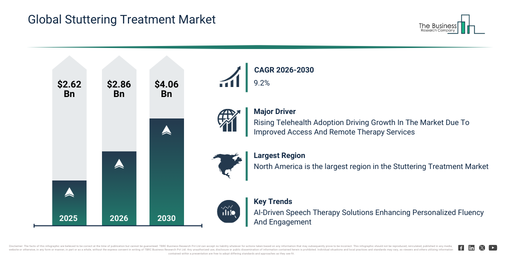
    The stuttering treatment market size has shown significant growth over recent years. It is anticipated to increase from $2.62 billion in 2025 to $2.86 billion in 2026, achieving a compound annual growth rate (CAGR) of 8.9%. The expansion observed in the historical period is largely due to heightened awareness of speech disorders, an increase in speech therapy clinics, the development of more school screening programs, the wider availability of pediatric therapy services, and the early implementation of fluency shaping methods.

    The stuttering treatment market is anticipated to experience substantial growth in the upcoming years, with its valuation expected to reach $4.06 billion by 2030, driven by a compound annual growth rate (CAGR) of 9.2%. This projected expansion during the forecast period is fueled by the increasing adoption of teletherapy, greater integration of mental health services into speech care, the expansion of digital therapy platforms, improved insurance coverage for speech therapy, and higher rates of early diagnosis. Prominent trends throughout this period are set to include the growing embrace of app-based speech therapy, a rise in the use of virtual speech therapy sessions, the broadening of early childhood fluency programs, increased incorporation of behavioral counseling, and more widespread utilization of assistive fluency devices.

    Download A Free Sample Report For Comprehensive Market Insights:

    https://www.thebusinessresearchcompany.com/sample.aspx?id=33327&type=smp

    What Major Growth Factors Are Impacting The Stuttering Treatment Market?

    The expanding use of telehealth is projected to boost the stuttering treatment market in the upcoming years. Telehealth encompasses the provision of healthcare services remotely utilizing digital communication tools like video consultations, mobile applications, and online therapy systems. Its increasing uptake is due to enhanced access to care, especially for those in isolated or underserved regions, alongside cutting down travel time and logistical obstacles. Stuttering treatment is particularly suited for telehealth, as speech therapy sessions can be effectively carried out through live video interactions. Telehealth allows patients to obtain regular, convenient, and tailored speech therapy from their homes, potentially improving commitment to therapy and broadening reach to expert speech-language pathologists. For instance, in September 2024, according to the Australian Bureau of Statistics (ABS), the national statistical agency of Australia, in 2023–24, 83.5% of males reported using telehealth services, up from 78.6% in 2022–23. Consequently, the rising adoption of telehealth is stimulating growth in the stuttering treatment market.

    How Is Segment Classification Applied In The Stuttering Treatment Market?

    The stuttering treatment market covered in this report is segmented –

    1) By Treatment Type: Speech Therapy; Digital And App-Based Therapy; Pharmacological Treatment; Assistive Devices And Wearables

    2) By Age Group: Children; Adolescents; Adults

    3) By End User: Speech And Language Clinics; Hospitals And Rehabilitation Centers; Schools And Educational Institutions; Direct-To-Consumer Platforms

    Subsegments:

    1) By Speech Therapy: Articulation Therapy; Fluency Shaping Therapy; Stuttering Modification Therapy; Cognitive Behavioral Therapy

    2) By Digital And App-Based Therapy: Mobile Application Based Therapy; Online Video Therapy Sessions; Virtual Reality Based Therapy; Interactive Software Tools

    3) By Pharmacological Treatment: Anti Anxiety Medication; Dopamine Modulators; Beta Blockers; Other Prescription Drugs

    4) By Assistive Devices And Wearables: Speech Feedback Devices; Delayed Auditory Feedback Devices; Electronic Fluency Devices; Wearable Therapy Devices

    What Trends Are Affecting The Growth Of The Stuttering Treatment Market?

    Major companies operating in the stuttering treatment market are increasingly directing their focus toward developing innovative solutions, such as AI-powered speech therapy applications, to improve personalization, enhance therapy adherence, and support better speech fluency outcomes. These AI-powered speech therapy apps are digital platforms that utilize artificial intelligence to analyze speech patterns, offer real-time feedback, and deliver tailored therapy exercises designed to help individuals manage stuttering more effectively. These solutions enable scalable, continuous intervention outside traditional clinical settings. For instance, in December 2025, Iyaso Softwares Private Limited, an India-based health technology company, launched Eloquent, an AI-powered speech therapy application intended to help individuals who stutter improve fluency and speaking confidence through regular practice. The app incorporates evidence-based techniques such as gentle onsets, rhythmic speech, and simulated real-life conversations. According to the company, users who engaged in consistent daily sessions experienced measurable improvements in stuttering severity and speaking confidence, highlighting the potential effectiveness of AI-enabled, app-based therapy solutions.

    Who Are The Prominent Players Across The Stuttering Treatment Market?

    Major companies operating in the stuttering treatment market are Mayo Clinic, Cleveland Clinic, Vanderbilt Health, Houston Methodist, Texas Children’s Hospital, Boston Children’s Hospital, Apollo Hospitals Enterprise Limited, Practo Technologies Pvt. Ltd. (Practo), Ruby Hall Clinic, All India Institute of Speech and Hearing (AIISH) Mysore, McGuire Programme, Perley Health, Tender Palm Super Speciality Hospital, American Institute for Stuttering (AIS), Wasatch Speech & Language Center, Michael Palin Centre for Stammering, National Stuttering Association, Speech & Stuttering Institute, Australian Stuttering Research Centre, Curtin Stuttering Treatment Clinic

    Access The Complete Stuttering Treatment Market Report:

    https://www.thebusinessresearchcompany.com/report/stuttering-treatment-market-report

    Which Region Accounts For The Highest Share Of The Stuttering Treatment Market?

    North America was the largest region in the stuttering treatment market in 2025. Asia-Pacific is expected to be the fastest-growing region in the forecast period. The regions covered in the stuttering treatment market report are Asia-Pacific, South East Asia, Western Europe, Eastern Europe, North America, South America, Middle East, Africa.

    Access a Customized Stuttering Treatment Market Report for Deeper Competitive Insights

    Get in touch with us:

    The Business Research Company: https://www.thebusinessresearchcompany.com/

    Americas: +1 310-496-7795

    Asia: +44 7882 955267 & +91 8897263534

    Europe: +44 7882 955267

    Email us at: marketing@tbrc.info

    Follow us on:

    LinkedIn: https://in.linkedin.com/company/the-business-research-company

    YouTube: https://www.youtube.com/channel/UC24_fI0rV8cR5DxlCpgmyFQ

    Global Market Model: https://www.thebusinessresearchcompany.com/global-market-model
  • AI in Sleep Diagnostics Market Insights and Strategic Growth Outlook for 2026–2030

    AI in Sleep Diagnostics Market Insights and Strategic Growth Outlook for 2026–2030

    The Business Research Company’s 2026 market reports feature advanced enhancements such as market attractiveness analysis, total addressable market evaluation, company benchmarking matrices, interactive Excel dashboards, expanded supply chain intelligence, emerging startup coverage, and detailed product insights, delivering more actionable and strategically valuable research.

    How Is The Sleep Diagnostics Artificial Intelligence Market’s Market Value Anticipated To Evolve From 2026 To 2030?

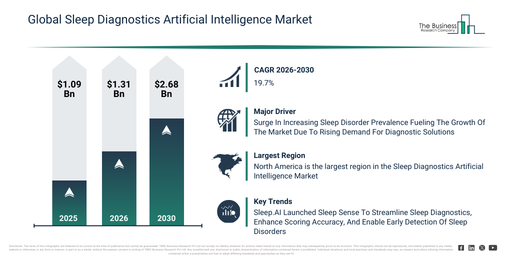
    The sleep diagnostics artificial intelligence market has seen significant growth over the past few years. It is anticipated to increase from $1.09 billion in 2025 to $1.31 billion in 2026, achieving a compound annual growth rate (CAGR) of 19.4%. Several factors contributed to the historical expansion, including an escalation in sleep disorder occurrences, the widespread adoption of wearable devices, the development of digital health analytics, a rise in sleep lab investigations, and the pressing requirement for accelerated diagnostic solutions.

    The market size for sleep diagnostics artificial intelligence is projected to experience substantial expansion over the upcoming years. This market is anticipated to reach $2.68 billion by 2030, exhibiting a compound annual growth rate (CAGR) of 19.7%. This forecasted growth is largely driven by factors such as the increasing adoption of AI clinical decision-making tools, the broader expansion of remote sleep monitoring, an increase in home-based diagnostics, the emergence of personalized sleep therapy, and better integration with digital health platforms. Key trends expected during this period encompass AI-based sleep stage scoring, analytics integrated with wearables, cloud-based sleep diagnostic platforms, models for predicting sleep disorders, and automated polysomnography interpretation.

    Download A Free Sample Report For Comprehensive Market Insights:

    https://www.thebusinessresearchcompany.com/sample.aspx?id=33318&type=smp

    Which Growth Factors Are Strengthening The Sleep Diagnostics Artificial Intelligence Market Landscape?

    The expanding occurrence of sleep disorders is projected to fuel the advancement of the sleep diagnostics artificial intelligence market in the foreseeable future. These disorders are health conditions that interfere with typical sleep cycles, impacting sleep quality, timing, or length, which results in daytime discomfort or reduced capability. The growing prevalence is primarily caused by factors like an aging demographic, stress linked to modern lifestyles, and a heightened understanding of sleep wellness, all of which have led to more screenings, diagnoses, and documented cases. Sleep diagnostics artificial intelligence aids in managing sleep disorders through automated, precise, and scalable analysis of sleep data, thereby facilitating prompt identification, customized therapies, and enhanced patient results. As an illustration, during November 2023, NHS England revealed that 64.9% of individuals between 17 and 23 years old reported experiencing sleep difficulties three or more times in the preceding week. This underscores the escalating challenge of sleep issues and the subsequent rise in demand for diagnostic tools. Consequently, the increasing occurrence of sleep disorders serves as a significant impetus for expansion within the sleep diagnostics artificial intelligence market.

    What Are The Major Segment Categories Within The Sleep Diagnostics Artificial Intelligence Market?

    The sleep diagnostics artificial intelligence market covered in this report is segmented –

    1) By Component: Software; Hardware; Services

    2) By Technology: Machine Learning; Deep Learning; Natural Language Processing; Ensemble Learning

    3) By Deployment Mode: On Premises; Cloud Based

    4) By Application: Sleep Apnea; Insomnia; Narcolepsy; Restless Legs Syndrome; Circadian Rhythm Disorders; Other Applications

    5) By End User: Hospitals; Sleep Centers And Clinics; Home Care Settings; Research Institutes; Other End Users

    Subsegments:

    1) By Software: Sleep Scoring Software; Predictive Analytics Software; Electronic Health Record Integration Software

    2) By Hardware: Wearable Devices; Portable Diagnostic Devices; In Lab Monitoring Equipment

    3) By Services: Consulting Services; Implementation Services; Maintenance And Support Services

    What Trends Are Influencing The Sleep Diagnostics Artificial Intelligence Market?

    Companies operating in the sleep diagnostics artificial intelligence market are prioritizing technological advancements in automated sleep scoring, particularly frictionless sleep monitoring technology, to lessen clinician dependency and reduce diagnostic variability, thereby gaining a competitive advantage. This frictionless sleep monitoring technology is a contactless, AI-powered system designed to automatically capture and analyze sleep patterns, stages, and disturbances without requiring wearable devices, thus enabling accurate and convenient sleep diagnostics. For example, in December 2025, Sleep.ai, a U.S.-based digital health company, introduced Sleep Sense, a frictionless sleep monitoring technology that converts any smartphone into a privacy-aware sleep sensor, allowing for near-universal sleep data capture without wearables or manual input. It employs advanced AI boundary detection with hybrid spatio-temporal models to accurately identify bedtime and wake time, performing comparably to PSG-validated trackers. Moreover, through multimodal contextual modeling, it examines signals like motion, ambient light, and device usage patterns to generate reliable sleep insights, even when data quality is noisy or limited.

    Who Are The Businesses Driving Activity In The Sleep Diagnostics Artificial Intelligence Market?

    Major companies operating in the sleep diagnostics artificial intelligence market are ResMed Inc., Neurosoft Ltd., Nox Health Inc., Itamar Medical Ltd., Compumedics Limited, Beacon Biosignals Inc., Onera Health Inc., EnsoData Inc., SleepImage Inc., Zeto Inc., HoneyNaps Co. Ltd., SOMNOmedics GmbH, SleepScore Labs, Nox Medical A/S, Sleep.AI Inc., Sleepacta S.r.l.

    Access The Complete Sleep Diagnostics Artificial Intelligence Market Report:

    https://www.thebusinessresearchcompany.com/report/sleep-diagnostics-artificial-intelligence-market-report

    Which Region Has The Strongest Presence In The Sleep Diagnostics Artificial Intelligence Market?

    North America was the largest region in the sleep diagnostics artificial intelligence (AI) market in 2025. Asia-Pacific is expected to be the fastest-growing region in the forecast period. The regions covered in the sleep diagnostics artificial intelligence market report are Asia-Pacific, South East Asia, Western Europe, Eastern Europe, North America, South America, Middle East, Africa.

    Access a Customized Sleep Diagnostics Artificial Intelligence Market Report for Deeper Competitive Insights

    Get in touch with us:

    The Business Research Company: https://www.thebusinessresearchcompany.com/

    Americas: +1 310-496-7795

    Asia: +44 7882 955267 & +91 8897263534

    Europe: +44 7882 955267

    Email us at: marketing@tbrc.info

    Follow us on:

    LinkedIn: https://in.linkedin.com/company/the-business-research-company

    YouTube: https://www.youtube.com/channel/UC24_fI0rV8cR5DxlCpgmyFQ

    Global Market Model: https://www.thebusinessresearchcompany.com/global-market-model
  • Retinal Detachment Diagnostics Market Forecast to Hit $2.12 Billion by 2030

    Retinal Detachment Diagnostics Market Forecast to Hit $2.12 Billion by 2030

    The Business Research Company’s 2026 market reports feature advanced enhancements such as market attractiveness analysis, total addressable market evaluation, company benchmarking matrices, interactive Excel dashboards, expanded supply chain intelligence, emerging startup coverage, and detailed product insights, delivering more actionable and strategically valuable research.

    What Market Size Is Forecasted For The Retinal Detachment Diagnostic Market By 2030 Based On Its 2026 Value?

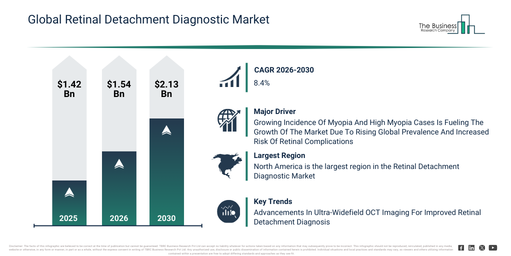
    The retinal detachment diagnostic market size has experienced strong growth in recent years. It is anticipated to expand from $1.42 billion in 2025 to $1.54 billion in 2026, exhibiting a compound annual growth rate (CAGR) of 8.2%. This historical growth can be attributed to an increase in diabetic eye disease cases, the expansion of ophthalmic imaging centers, rising awareness of retinal disorders, the proliferation of hospital eye clinics, and the early adoption of OCT scanners.

    The market for retinal detachment diagnostics is projected to experience substantial expansion over the upcoming years. Its valuation is set to reach $2.13 billion by 2030, demonstrating a compound annual growth rate (CAGR) of 8.4%. This anticipated growth during the forecast period stems from factors such as an expanding aging demographic, an escalating need for timely vision diagnoses, the proliferation of remote eye screening initiatives, increased capital allocation in ophthalmic imaging technologies, and a greater incidence of myopia and diabetes. Key developments expected within this period encompass the increasing utilization of optical coherence tomography imaging, a surging uptake of teleophthalmology screening solutions, the widening availability of digital fundus photography systems, an escalating application of AI-powered retinal image analysis, and a greater prevalence of portable ophthalmic ultrasound apparatus.

    Download A Free Sample Report For Comprehensive Market Insights:

    https://www.thebusinessresearchcompany.com/sample.aspx?id=33303&type=smp

    What Influential Factors Are Boosting The Retinal Detachment Diagnostic Market Demand?

    An anticipated increase in the occurrence of myopia and high myopia is set to drive the expansion of the retinal detachment diagnostic market in the future. Myopia and high myopia are characterized by a rising frequency of nearsightedness and extreme nearsightedness, respectively, which hinder the ability to see objects far away and elevate the likelihood of severe ocular issues. This surge in myopia and high myopia instances, largely attributed to extended periods of screen use and diminished outdoor engagement, is intensifying eye strain, consequently causing refractive errors to appear sooner and advance more rapidly. Retinal detachment diagnostics provide crucial assistance for individuals with myopia and high myopia by facilitating the prompt identification of retinal complications, enabling swift medical intervention, and diminishing the chances of significant vision impairment. For example, data from July 2025, sourced from Woo University, a US-based non-profit, indicates that 30% of the global population is currently myopic, a figure projected to approach 50% by 2050, impacting approximately 5 billion individuals. Consequently, the increasing prevalence of myopia and high myopia cases is fueling the expansion of the retinal detachment diagnostic market.

    How Is The Retinal Detachment Diagnostic Market Examined Through Segment Analysis?

    The retinal detachment diagnostic market covered in this report is segmented –

    1) By Disease Type: Tractional Retinal Detachment; Rhegmatogenous Retinal Detachment

    2) By Diagnostic Type: Fundus Photography; Ophthalmoscopy; Optical Coherence Tomography Scanners; Fundus Cameras; Ophthalmic Ultrasound Imaging Systems; Ophthalmic A Scan Ultrasound; Ophthalmic B Scan Ultrasound

    3) By Technology: Imaging Based Diagnostics; Non Imaging Clinical Examination; Advanced Digital Ophthalmic Systems

    4) By Application: Vitreo Retinal Disorders; Cataract; Glaucoma; Refractive Disorders

    5) By End Use: Hospitals And Eye Clinics; Academic And Research Laboratories; Other End Uses

    Subsegments:

    1) By Tractional Retinal Detachment: Diabetic Tractional Retinal Detachment; Proliferative Vitreoretinopathy Related Tractional Retinal Detachment; Inflammatory Tractional Retinal Detachment; Trauma Induced Tractional Retinal Detachment; Post Surgical Tractional Retinal Detachment; Neovascularization Associated Tractional Retinal Detachment

    2) By Rhegmatogenous Retinal Detachment: Superior Break Rhegmatogenous Retinal Detachment; Inferior Break Rhegmatogenous Retinal Detachment; Giant Retinal Tear Related Rhegmatogenous Retinal Detachment; Lattice Degeneration Related Rhegmatogenous Retinal Detachment; Trauma Related Rhegmatogenous Retinal Detachment; Myopic Degeneration Related Rhegmatogenous Retinal Detachment; Post Cataract Surgery Rhegmatogenous Retinal Detachment

    Which Trends Are Influencing The Direction Of The Retinal Detachment Diagnostic Market?

    Leading companies in the retinal detachment diagnostic market are concentrating on developing advanced imaging solutions, such as ultra-widefield optical coherence tomography (OCT), to boost detection accuracy, enhance the visualization of the peripheral retina, and facilitate the early identification of retinal tears and detachments. Ultra-widefield OCT refers to an imaging technology that captures high-resolution, wide-angle views of the retina, enabling clinicians to spot subtle or peripheral retinal abnormalities that might otherwise be missed. For instance, in March 2025, Optos PLC, a UK-based retinal imaging company, launched MonacoPro, its next-generation ultra-widefield SLO and spectral domain retinal imaging system. This system is designed to assist eye care professionals with improved diagnostic precision and workflow efficiency. MonacoPro features high-quality OCT imaging, integrated 200° optomap visualization, and the new AreaAssist tool, which automates area measurement and analysis, collectively enhancing clinicians’ capability to detect retinal detachments and other ocular pathologies.

    Who Are The Firms Contributing To The Retinal Detachment Diagnostic Market Ecosystem?

    Major companies operating in the retinal detachment diagnostic market are Canon Inc., Essilor International S.A., NIDEK Co Ltd., Alcon Inc., Nikon Corporation, Kowa Company Ltd., Carl Zeiss Meditec AG, Topcon Corporation, Tomey Corporation, Forus Health Pvt Ltd., Reichert Technologies, Optos plc, Revenio Group, Visionix USA Inc., Haag-Streit Group, Optomed Plc, Remidio Innovative Solutions, Intelligent Retinal Imaging Systems (IRIS), Santec Corporation, and D-EYE Srl.

    Access The Complete Retinal Detachment Diagnostic Market Report:

    https://www.thebusinessresearchcompany.com/report/retinal-detachment-diagnostic-market-report

    Which Area Represents The Largest Portion Of The Retinal Detachment Diagnostic Market?

    North America was the largest region in the retinal detachment diagnostic market in 2025. Asia-Pacific is expected to be the fastest-growing region in the forecast period. The regions covered in the retinal detachment diagnostic market report are Asia-Pacific, South East Asia, Western Europe, Eastern Europe, North America, South America, Middle East, Africa.

    Access a Customized Retinal Detachment Diagnostic Market Report for Deeper Competitive Insights

    Get in touch with us:

    The Business Research Company: https://www.thebusinessresearchcompany.com/

    Americas: +1 310-496-7795

    Asia: +44 7882 955267 & +91 8897263534

    Europe: +44 7882 955267

    Email us at: marketing@tbrc.info

    Follow us on:

    LinkedIn: https://in.linkedin.com/company/the-business-research-company

    YouTube: https://www.youtube.com/channel/UC24_fI0rV8cR5DxlCpgmyFQ

    Global Market Model: https://www.thebusinessresearchcompany.com/global-market-model
  • Renal Toxicity ADME Testing Market Set to Grow to $2.78 Billion by 2030 at 12.9% CAGR

    Renal Toxicity ADME Testing Market Set to Grow to $2.78 Billion by 2030 at 12.9% CAGR

    The Business Research Company’s 2026 market reports feature advanced enhancements such as market attractiveness analysis, total addressable market evaluation, company benchmarking matrices, interactive Excel dashboards, expanded supply chain intelligence, emerging startup coverage, and detailed product insights, delivering more actionable and strategically valuable research.

    What Are The Forecasted Market Size Figures For The Renal Toxicity – Absorption, Distribution, Metabolism, And Excretion (ADME) Toxicology Testing Market In 2026 And 2030?

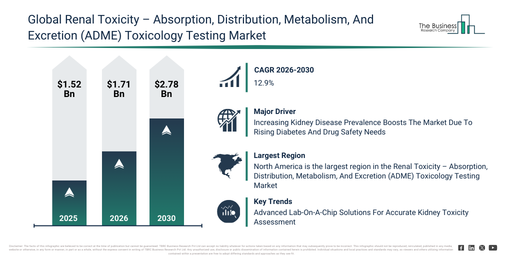
    The market for renal toxicity – absorption, distribution, metabolism, and excretion (adme) toxicology testing has experienced rapid expansion in recent years. It is projected to increase from $1.52 billion in 2025 to $1.71 billion in 2026, exhibiting a compound annual growth rate (CAGR) of 12.7%. Historically, the market’s growth has been fueled by developments such as increased preclinical drug safety testing, a rise in nephrotoxicity related drug failures, the expansion of CRO services, elevated regulatory safety requirements, and greater adoption of in vitro assays.

    The renal toxicity – absorption, distribution, metabolism, and excretion (adme) toxicology testing market is projected for significant expansion in the coming years. This market is anticipated to reach $2.78 billion by 2030, exhibiting a compound annual growth rate (CAGR) of 12.9%. This expansion during the forecast period can be primarily attributed to several factors, including the rising prevalence of biologics and intricate drugs, the wider adoption of predictive toxicology models, the growing use of organ-on-chip platforms, advancements in precision medicine research, and the increasing demand for AI-driven safety analytics. Key developments anticipated in this period encompass toxicity assays utilizing kidney organoids, artificial intelligence-assisted models for nephrotoxicity prediction, advanced high-throughput renal screening platforms, biomarker-guided renal safety panels, and microphysiological kidney-on-chip systems.

    Download A Free Sample Report For Comprehensive Market Insights:

    https://www.thebusinessresearchcompany.com/sample.aspx?id=33295&type=smp

    What Primary Factors Are Fueling The Expansion Of The Renal Toxicity – Absorption, Distribution, Metabolism, And Excretion (ADME) Toxicology Testing Market?

    An increasing prevalence of kidney-related disorders is anticipated to propel the expansion of the renal toxicity-absorption, distribution, metabolism, and excretion (ADME) toxicology testing market in the future. These disorders represent conditions that inflict damage upon the kidneys, impeding their capacity to filter blood and uphold the body’s internal balance. The escalation in kidney-related disorders is largely attributed to the growing incidence of diabetes, which detrimentally affects renal blood vessels and impairs their filtering function. Renal toxicity ADME/toxicology testing plays a crucial role in detecting and evaluating potential kidney damage caused by various drugs or chemicals, thereby enabling timely intervention and the development of more secure treatments. For instance, in 2025, the American Cancer Society, a US-based professional organization, forecasts that approximately 80,980 new cases of kidney (renal) cancer will be diagnosed in the US, with an estimated 14,510 deaths attributed to the disease. Therefore, the increasing occurrence of kidney-related disorders is a significant factor driving the growth of the renal toxicity-absorption, distribution, metabolism, and excretion (ADME) toxicology testing market.

    What Key Segment Areas Are Included In The Renal Toxicity – Absorption, Distribution, Metabolism, And Excretion (ADME) Toxicology Testing Market Assessment?

    The renal toxicity – absorption, distribution, metabolism, and excretion (adme) toxicology testing market covered in this report is segmented –

    1) By Test Type: In Vitro Renal Toxicity Testing; In Vivo Renal Toxicity Testing; In Silico Renal Toxicity Modeling

    2) By Method: Biochemical and Enzymatic Assays; Cell Based Renal Assays; Biomarker Based Toxicity Analysis; Histopathology and Imaging; Pharmacokinetic and Drug Metabolism Studies

    3) By Stage of Drug Development: Discovery and Lead Optimization; Preclinical Development; Clinical Development; Post Marketing Safety Studies

    4) By Technology: High Throughput Screening Platforms; Organ On Chip and Microfluidic Systems; Omics Based Toxicology Platforms; Artificial Intelligence and Predictive Modeling Tools; Digital Pathology and Imaging Systems

    5) By End User: Pharmaceutical and Biotechnology Companies; Contract Research Organizations; Academic and Research Institutes; Regulatory Laboratories

    Subsegments:

    1) By In Vitro Renal Toxicity Testing: Primary Renal Cell Assays; Immortalized Renal Cell Line Assays; Three Dimensional Renal Cell Cultures; Kidney Organoid Models; Transporter Interaction Assays; Biomarker Based Nephrotoxicity Assays; High Content Imaging Assays; Microphysiological Kidney System Models

    2) By In Vivo Renal Toxicity Testing: Acute Renal Toxicity Studies; Subacute Renal Toxicity Studies; Subchronic Renal Toxicity Studies; Chronic Renal Toxicity Studies; Renal Biomarker Evaluation Studies; Histopathological Kidney Assessment; Dose Response Toxicity Studies; Recovery and Reversibility Studies

    3) By In Silico Renal Toxicity Modeling: Quantitative Structure Activity Relationship Modeling; Machine Learning Based Toxicity Prediction; Physiologically Based Pharmacokinetic Modeling; Virtual Screening for Nephrotoxicity; Read Across Toxicity Modeling; Systems Biology Based Toxicity Modeling

    Which Trends Are Shaping The Renal Toxicity – Absorption, Distribution, Metabolism, And Excretion (ADME) Toxicology Testing Market Landscape?

    Major companies engaged in the renal toxicity-absorption, distribution, metabolism, and excretion (ADME) toxicology testing market are concentrating on developing innovative solutions, such as low-drug-absorbing microfluidic chips. These advancements aim to enhance the predictive accuracy of kidney toxicity while simultaneously reducing the need for animal testing. A low-drug-absorbing microfluidic chip refers to a lab-on-a-chip system designed for renal toxicity assessment that minimizes the unintended absorption of drugs by the chip’s material, thereby ensuring a more accurate simulation of kidney functions and reliable measurement of drug effects on renal cells. For instance, in September 2024, Emulate Inc., a US-based biotechnology company, launched the chip-R1 rigid chip to improve kidney toxicity testing with more precise and dependable results. This chip is constructed for accurate ADME and toxicology modeling in non-stretch organs like the liver and kidney, employing low-drug-absorbing plastics and a thin, porous polycarbonate membrane to prevent compound loss and boost drug recovery for lipophilic compounds. Its benefits include robust shear stress support (up to 2.3 dyn/cm²), preactivated surfaces for simplified workflows, and improved cellular crosstalk, while advantages encompass enhanced reproducibility, precise toxicity detection, and compatibility with current organ-chip hardware to accelerate human-relevant preclinical testing.

    Who Are The Leading Firms Participating In The Renal Toxicity – Absorption, Distribution, Metabolism, And Excretion (ADME) Toxicology Testing Market?

    Major companies operating in the renal toxicity – absorption, distribution, metabolism, and excretion (adme) toxicology testing market are Thermo Fisher Scientific Inc., Eurofins Scientific SE, Agilent Technologies Inc., WuXi AppTec Co. Ltd., Charles River Laboratories International Inc., PerkinElmer Inc., Beckman Coulter Inc., Bio-Rad Laboratories Inc., Pharmaron Beijing Co. Ltd., Simulations Plus Inc., GVK Biosciences Pvt. Ltd., Promega Corporation, Syngene International Ltd., SAI Life Sciences Ltd., QPS Holdings LLC, Southern Research Institute, BioIVT LLC, TCG Lifesciences Pvt. Ltd., Frontage Laboratories Inc., Symeres, TSRL Inc., BOC Sciences LLC, Vivisciences Preclinical CRO.

    Access The Complete Renal Toxicity – Absorption, Distribution, Metabolism, And Excretion (ADME) Toxicology Testing Market Report:

    https://www.thebusinessresearchcompany.com/report/renal-toxicity-absorption-distribution-metabolism-and-excretion-adme-toxicology-testing-market-report

    Which Region Accounts For The Highest Share Of The Renal Toxicity – Absorption, Distribution, Metabolism, And Excretion (ADME) Toxicology Testing Market?

    North America was the largest region in the renal toxicity-ADME toxicology testing market in 2025. Asia-Pacific is expected to be the fastest-growing region in the forecast period. The regions covered in the renal toxicity – absorption, distribution, metabolism, and excretion (adme) toxicology testing market report are Asia-Pacific, South East Asia, Western Europe, Eastern Europe, North America, South America, Middle East, Africa.

    Access a Customized Renal Toxicity – Absorption, Distribution, Metabolism, And Excretion (ADME) Toxicology Testing Market Report for Deeper Competitive Insights

    Get in touch with us:

    The Business Research Company: https://www.thebusinessresearchcompany.com/

    Americas: +1 310-496-7795

    Asia: +44 7882 955267 & +91 8897263534

    Europe: +44 7882 955267

    Email us at: marketing@tbrc.info

    Follow us on:

    LinkedIn: https://in.linkedin.com/company/the-business-research-company

    YouTube: https://www.youtube.com/channel/UC24_fI0rV8cR5DxlCpgmyFQ

    Global Market Model: https://www.thebusinessresearchcompany.com/global-market-model