Category: Healthcare Services

  • Osteoarthritis Regenerative Therapies Market to Reach $5.88 Billion by 2030 with Strong Growth

    Osteoarthritis Regenerative Therapies Market to Reach $5.88 Billion by 2030 with Strong Growth

    The Business Research Company’s 2026 market reports feature advanced enhancements such as market attractiveness analysis, total addressable market evaluation, company benchmarking matrices, interactive Excel dashboards, expanded supply chain intelligence, emerging startup coverage, and detailed product insights, delivering more actionable and strategically valuable research.

    How Much Larger Will The Regenerative Therapies For Osteoarthritis Market Become By 2030 Compared To 2026?

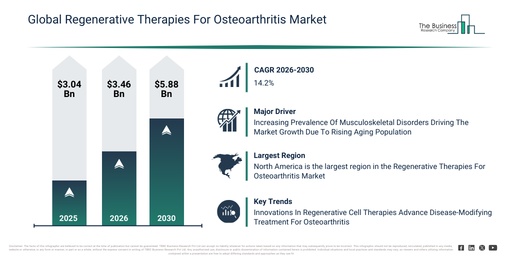
    The regenerative therapies for osteoarthritis market has seen rapid expansion in recent years. It is forecast to increase from $3.04 billion in 2025 to $3.46 billion in 2026, with a compound annual growth rate (CAGR) of 13.9%. This historical growth can be linked to factors such as rising osteoarthritis prevalence, an expanding aging population, the limitations of pain relief drugs, an increase in sports injuries, and a heightened demand for non-surgical treatments.

    The regenerative therapies for osteoarthritis market size is projected to experience substantial expansion in the coming years. This market is anticipated to reach $5.88 billion by 2030, exhibiting a compound annual growth rate (CAGR) of 14.2%. The expansion during this forecast period stems from factors such as increased uptake of biologic therapy, the proliferation of regenerative clinics, growing support from clinical evidence, a surge in demand for cartilage restoration, and greater investment in cell therapy research. Key developments anticipated in the forecast period include therapies for joint repair based on stem cells, protocols for platelet-rich plasma treatment, cartilage regeneration using scaffolds, minimally invasive regenerative injections, and customized biologic therapy plans.

    Download A Free Sample Report For Comprehensive Market Insights:

    https://www.thebusinessresearchcompany.com/sample.aspx?id=33292&type=smp

    Which Strategic Drivers Are Supporting The Regenerative Therapies For Osteoarthritis Market Development?

    The escalating occurrence of musculoskeletal disorders is projected to propel the advancement of the regenerative therapies for the osteoarthritis market moving forward. These disorders are conditions that affect bones, joints, muscles, and connective tissues, resulting in pain and restricted movement and agility. The increasing incidence of musculoskeletal disorders is predominantly driven by the aging global population, as older demographics frequently experience higher rates of joint deterioration and inflammatory conditions impacting musculoskeletal structures. This surge in musculoskeletal disorders consequently elevates the demand for regenerative therapies, as these treatments provide cutting-edge options for joint restoration and tissue repair in patients with osteoarthritis. For instance, in January 2024, the Office for Health Improvement & Disparities, a UK-based government agency, noted that in 2023, 18.4% of individuals aged 16 and above reported a long-term musculoskeletal (MSK) condition, an increase from 17.6% in 2022. Thus, the rising prevalence of musculoskeletal disorders is a significant force behind the growth of the regenerative therapies for the osteoarthritis market.

    How Is Segment Classification Applied In The Regenerative Therapies For Osteoarthritis Market?

    The regenerative therapies for osteoarthritis market covered in this report is segmented –

    1) By Therapy Type: Stem Cell Therapy; Platelet Rich Plasma Therapy; Tissue Engineering; Gene Therapy; Other Therapy Types

    2) By Distribution Channel: Direct Manufacturer Supply; Hospital And Clinic Procurement Channels; Specialty Medical Distributors

    3) By Application: Knee Osteoarthritis; Hip Osteoarthritis; Hand Osteoarthritis; Other Applications

    4) By End User: Hospitals; Ambulatory Surgical Centers; Specialty Clinics; Other End Users

    Subsegments:

    1) By Stem Cell Therapy: Autologous Stem Cell Therapy; Allogeneic Stem Cell Therapy; Mesenchymal Stem Cell Therapy; Adipose Derived Stem Cell Therapy; Bone Marrow Derived Stem Cell Therapy

    2) By Platelet Rich Plasma Therapy: Leukocyte Rich Platelet Rich Plasma Therapy; Leukocyte Poor Platelet Rich Plasma Therapy; Activated Platelet Rich Plasma Therapy; Non Activated Platelet Rich Plasma Therapy; Pure Platelet Rich Plasma Therapy

    3) By Tissue Engineering: Scaffold Based Tissue Engineering; Hydrogel Based Tissue Engineering; Biodegradable Matrix Tissue Engineering; Cell Seeded Tissue Engineering; Three Dimensional Tissue Engineering

    4) By Gene Therapy: Viral Vector Gene Therapy; Non Viral Vector Gene Therapy; In Vivo Gene Therapy; Ex Vivo Gene Therapy; Targeted Gene Therapy

    5) By Other Therapy Types: Hyaluronic Acid Therapy; Growth Factor Therapy; Chondrocyte Implantation Therapy; Peptide Based Therapy; Immunomodulatory Therapy

    What Trends Are Influencing The Regenerative Therapies For Osteoarthritis Market Outlook?

    Leading companies within the regenerative therapies for the osteoarthritis market are concentrating on creating advanced solutions, including allogeneic mesenchymal stem cell (MSC) osteoarthritis therapies, to address the increasing need for disease-modifying treatments. These allogeneic mesenchymal stem cell (MSC) osteoarthritis therapies utilize donor-derived stem cells to regulate inflammation and aid cartilage regeneration in affected joints, offering a readily available and scalable alternative to patient-derived cells, enabling standardized dosing and broader acceptance. As an example, in December 2025, Cipla Limited, an Indian pharmaceutical firm, collaborated with Stempeutics Research, an Indian research and product development enterprise, to introduce Ciplostem, a novel allogeneic MSC therapy specifically for knee osteoarthritis. This therapy is administered as a single-dose intra-articular injection, comprising 25 million cultured adult human bone marrow-derived MSCs co-formulated with hyaluronic acid. Its design aims to operate at the cellular level, thereby reducing inflammation, decelerating disease progression, improving joint function, and assisting in preserving cartilage quality for Grade II and III knee OA patients. Key characteristics of this therapy include its off-the-shelf availability (eliminating the need for individualized preparation), its action at the cellular level rather than just providing symptomatic relief, and its potential for extended improvements in joint health when contrasted with conventional treatments.

    Which Companies Are Engaged In The Regenerative Therapies For Osteoarthritis Market Environment?

    Major companies operating in the regenerative therapies for osteoarthritis market are Stryker Corporation, Smith & Nephew plc, MiMedx Group Inc, Anika Therapeutics Inc, Regentis Biomaterials Ltd, Zomedica Corp, Biosplice Therapeutics Inc, Tissue Regenix Group plc, Co.don AG, MEDIPOST Co Ltd, Ampio Pharmaceuticals Inc, Kolon TissueGene Inc, Mesoblast Limited, Orgenesis Inc, Hyalex Orthopaedics Limited, Orthocell Limited, Jellagen Limited, Hyalogic LLC, Bionaut Labs Inc, and Regeneus Limited.

    Access The Complete Regenerative Therapies For Osteoarthritis Market Report:

    https://www.thebusinessresearchcompany.com/report/regenerative-therapies-for-osteoarthritis-market-report

    Which Region Is The Primary Market For The Regenerative Therapies For Osteoarthritis Market?

    North America was the largest region in the regenerative therapies for osteoarthritis market in 2025. Asia-Pacific is expected to be the fastest-growing region in the forecast period. The regions covered in the regenerative therapies for osteoarthritis market report are Asia-Pacific, South East Asia, Western Europe, Eastern Europe, North America, South America, Middle East, Africa.

    Access a Customized Regenerative Therapies For Osteoarthritis Market Report for Deeper Competitive Insights

    Get in touch with us:

    The Business Research Company: https://www.thebusinessresearchcompany.com/

    Americas: +1 310-496-7795

    Asia: +44 7882 955267 & +91 8897263534

    Europe: +44 7882 955267

    Email us at: marketing@tbrc.info

    Follow us on:

    LinkedIn: https://in.linkedin.com/company/the-business-research-company

    YouTube: https://www.youtube.com/channel/UC24_fI0rV8cR5DxlCpgmyFQ

    Global Market Model: https://www.thebusinessresearchcompany.com/global-market-model
  • Recurrent Pericarditis Market Growth Outlook Supported by Key Driving Factors Through 2035

    Recurrent Pericarditis Market Growth Outlook Supported by Key Driving Factors Through 2035

    The Business Research Company’s 2026 market reports feature advanced enhancements such as market attractiveness analysis, total addressable market evaluation, company benchmarking matrices, interactive Excel dashboards, expanded supply chain intelligence, emerging startup coverage, and detailed product insights, delivering more actionable and strategically valuable research.

    How Will The Market Value Of The Recurrent Pericarditis Market Increase Between 2026 And 2030?

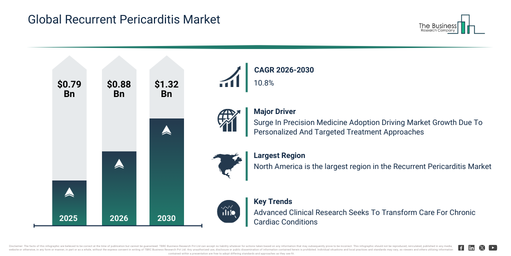
    The market size for recurrent pericarditis has experienced rapid growth over recent years. It is projected to expand from $0.79 billion in 2025 to $0.88 billion in 2026, demonstrating a compound annual growth rate (CAGR) of 10.6%. This historical expansion can be attributed to factors such as the past reliance on NSAIDs and colchicine, an increase in the diagnosis of inflammatory heart conditions, the presence of established cardiology care pathways, enhanced availability of echocardiography, and the implementation of guideline-driven anti-inflammatory therapy.

    The market for recurrent pericarditis is projected to experience swift expansion over the coming years. This market is anticipated to reach $1.32 billion by 2030, exhibiting a compound annual growth rate (CAGR) of 10.8%. Key factors contributing to this expansion during the projection period include the increasing uptake of biologic drugs, enhanced recurrence risk stratification, the proliferation of specialty cardiology clinics, greater recognition of immune-mediated pericarditis, and a rise in the application of targeted cytokine inhibitors. Significant trends identified for the forecast timeframe encompass a greater reliance on targeted biologic therapies, the broadening of long-term disease monitoring, an increase in anti-inflammatory combination therapies, wider acceptance of IL-1 inhibitors, and the implementation of structured recurrence prevention protocols.

    Download A Free Sample Report For Comprehensive Market Insights:

    https://www.thebusinessresearchcompany.com/sample.aspx?id=33288&type=smp

    Which Significant Factors Are Encouraging Growth In The Recurrent Pericarditis Market?

    The increasing focus on precision medicine methods is projected to boost the expansion of the recurrent pericarditis market in the future. This medical approach involves customizing prevention and treatment plans for individual patients, taking into account their unique genetic profile, surrounding conditions, and daily habits. The heightened attention on precision medicine stems from its capacity to enhance treatment efficacy, given that therapies are specifically designed for a person’s genetic and biological characteristics, resulting in superior results and diminished chances of negative reactions. Recurrent pericarditis contributes to the progress of precision medicine by facilitating targeted therapeutic strategies that concentrate on inflammatory pathways specific to each patient, for example, those involving interleukin-1–mediated mechanisms, thereby enabling more individualized and successful management of the disease. As an illustration, in February 2025, reports from the NHS England, a public healthcare organization based in the UK, indicated that in 2024, the NHS Genomic Medicine Service provided more than 810,000 genomic tests to patients throughout England at various life stages. This figure has consistently risen annually since the inception of the NHS Genomic Medicine Service, showing an 8% increase when compared to 2023. Consequently, the expanding focus on precision medicine methodologies is fueling the growth of the recurrent pericarditis market.

    Which Segment-Based Categories Are Covered In The Recurrent Pericarditis Market?

    The recurrent pericarditis market covered in this report is segmented –

    1) By Product Type: Non-Steroidal Anti-Inflammatory Drugs (NSAIDs); Corticosteroids; Colchicine; Biologics; Other Product Types

    2) By Diagnosis And Assessment: Electrocardiography (ECG); Echocardiography; Physical Examination

    3) By Route of Administration: Oral; Injectable

    4) By Application: Colchicine Therapy; Corticosteroids; Non-Steroidal Anti-Inflammatory Drugs (NSAIDs)

    5) By End-User: Hospitals; Ambulatory Surgical Centers; Clinics; Home Care Settings; Emergency Medical Services (EMS)

    Subsegments:

    1) By Non Steroidal Anti Inflammatory Drugs: Ibuprofen; Aspirin; Indomethacin; Naproxen

    2) By Corticosteroids: Prednisone; Methylprednisolone; Hydrocortisone; Dexamethasone

    3) By Colchicine: Oral Colchicine; Low Dose Colchicine; Extended Duration Colchicine Therapy

    4) By Biologics: Interleukin One Inhibitors; Monoclonal Antibody Therapies; Targeted Cytokine Inhibitors

    5) By Other Product Types: Immunosuppressive Agents; Analgesic Therapies; Supportive Combination Therapies

    What Trends Are Shaping The Recurrent Pericarditis Market Structure?

    Major companies operating in the recurrent pericarditis market are focusing on developing anti-inflammatory and anti-fibrotic effects. These efforts aim to reduce pericardial inflammation, prevent long-term cardiac damage, improve patient quality of life, and minimize recurrence rates. Anti-inflammatory effects function by reducing tissue inflammation, while anti-fibrotic effects work by preventing or reversing the formation of scar tissue, collectively aiding in the protection of organs from damage and maintaining normal function. For instance, in October 2024, Cardiol Therapeutics Inc., a Canada-based clinical-stage life sciences company, advanced CardiolRx. CardiolRx offers a novel oral, non-immunosuppressive therapeutic approach for recurrent pericarditis by targeting the NLRP3 inflammasome, which is a key upstream driver of IL-1–mediated inflammation. It is being developed to prevent disease recurrence, particularly in patients who relapse after discontinuing IL-1 blocker therapies such as rilonacept or anakinra. Through its late-stage clinical programs, CardiolRx seeks to reduce pericarditis flares, alleviate chest pain, and normalize inflammatory markers (CRP).

    Who Are The Key Market Participants In The Recurrent Pericarditis Market?

    Major companies operating in the recurrent pericarditis market are Johnson & Johnson Services Inc., Roche Holding AG, Merck & Co. Inc., Pfizer Inc., AbbVie Inc., Sanofi S.A., Novartis AG, AstraZeneca PLC, Bristol-Myers Squibb Company, GlaxoSmithKline plc, Eli Lilly and Company, Novo Nordisk A/S, Takeda Pharmaceutical Company Limited, Amgen Inc., Gilead Sciences Inc., Boehringer Ingelheim International GmbH, Regeneron Pharmaceuticals Inc., Biogen Inc., Lonza Group AG, Moderna Inc., and WuXi Biologics (Cayman) Inc.

    Access The Complete Recurrent Pericarditis Market Report:

    https://www.thebusinessresearchcompany.com/report/recurrent-pericarditis-market-report

    Which Region Has The Strongest Presence In The Recurrent Pericarditis Market?

    North America was the largest region in the recurrent pericarditis market in 2025. Asia-Pacific is expected to be the fastest-growing region in the forecast period. The regions covered in the recurrent pericarditis market report are Asia-Pacific, South East Asia, Western Europe, Eastern Europe, North America, South America, Middle East, Africa.

    Access a Customized Recurrent Pericarditis Market Report for Deeper Competitive Insights

    Get in touch with us:

    The Business Research Company: https://www.thebusinessresearchcompany.com/

    Americas: +1 310-496-7795

    Asia: +44 7882 955267 & +91 8897263534

    Europe: +44 7882 955267

    Email us at: marketing@tbrc.info

    Follow us on:

    LinkedIn: https://in.linkedin.com/company/the-business-research-company

    YouTube: https://www.youtube.com/channel/UC24_fI0rV8cR5DxlCpgmyFQ

    Global Market Model: https://www.thebusinessresearchcompany.com/global-market-model
  • Protein Language Models Market Insights and Long-Term Forecast Through 2035

    Protein Language Models Market Insights and Long-Term Forecast Through 2035

    The Business Research Company’s 2026 market reports feature advanced enhancements such as market attractiveness analysis, total addressable market evaluation, company benchmarking matrices, interactive Excel dashboards, expanded supply chain intelligence, emerging startup coverage, and detailed product insights, delivering more actionable and strategically valuable research.

    How Is The Protein Language Models Market’s Market Value Anticipated To Evolve From 2026 To 2030?

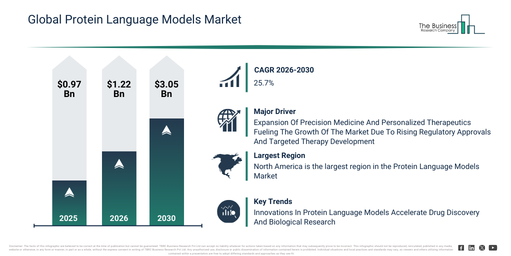
    The market for protein language models has experienced substantial expansion in recent years. Its valuation is predicted to increase from $0.97 billion in 2025 to $1.22 billion in 2026, reflecting a compound annual growth rate (CAGR) of 25.5%. The historical growth of this market is linked to factors such as the rise in genomic sequencing data, increased investment in biopharma research, the development of bioinformatics platforms, wider availability of protein databases, and the early incorporation of machine learning within biology.

    The market for protein language models is projected to experience rapid expansion over the coming years. This market is anticipated to reach a valuation of $3.05 billion by 2030, exhibiting a compound annual growth rate (CAGR) of 25.7%. This growth during the projection period stems from several factors, including the escalating demand for computational protein design, the broadening of AI-driven drug pipelines, the increasing requirement for swift target identification, the burgeoning collaborations between AI and biology across industries, and increased investment in AI life science startups. Key trends anticipated within this forecast timeframe encompass the expanding utilization of sequence-based protein representation models, the proliferation of cloud-hosted platforms for protein modeling, the increasing need for protein annotation services, a rise in API-based bioinformatics toolkits, and greater adoption of AI-powered drug discovery workflows.

    Download A Free Sample Report For Comprehensive Market Insights:

    https://www.thebusinessresearchcompany.com/sample.aspx?id=33275&type=smp

    Which Core Factors Are Supporting The Expansion Of The Protein Language Models Market?

    The expansion of precision medicine and personalized therapeutics is anticipated to propel the growth of the protein language models market in the foreseeable future. Precision medicine and personalized therapeutics are healthcare methodologies that customize treatments to align with individual patient attributes, including genetic composition, biomarkers, and disease profiles, with the goal of enhancing treatment effectiveness and mitigating adverse reactions. The momentum behind precision medicine and personalized therapeutics stems from a rise in regulatory approvals and a concentrated research effort on targeted therapies that address specific biological pathways, rather than offering universal solutions. Protein language models support precision medicine by facilitating in-depth analysis of protein sequences and structures, which assists researchers in identifying therapeutic targets, predicting drug responses, and devising patient-specific biological treatments more effectively. For instance, in February 2024, the Personalized Medicine Coalition, a US-based not-for-profit organization, reported that in 2023, the Food and Drug Administration (FDA) approved 16 new personalized therapies for rare disease patients, marking a sharp increase from six approvals in 2022. Therefore, the growth of precision medicine and personalized therapeutics is a key driver for the protein language models market. The rising adoption of AI-driven drug discovery is expected to fuel the growth of the protein language models market moving forward. AI-driven drug discovery employs artificial intelligence to accelerate the identification, design, and optimization of drug candidates through sophisticated analysis of large volumes of biological and chemical data. The increase in the adoption of artificial intelligence in drug discovery is due to its capacity to expedite target identification, refine candidate selection, and improve research efficiency when compared to traditional approaches. Protein language models assist drug discovery by utilizing deep learning architectures to analyze protein sequences, predict structure–function relationships, and identify valuable patterns that inform target selection and candidate optimization. As an illustration, in January 2025, according to the World Economic Forum, a Switzerland-based non-profit organization, approximately 30 percent of new drugs are discovered using AI technologies. Consequently, the increasing embrace of AI-driven drug discovery is driving the growth of the protein language models market.

    How Are Different Segment Groups Identified Within The Protein Language Models Market?

    The protein language models market covered in this report is segmented –

    1) By Component: Software; Hardware; Services

    2) By Deployment Mode: On-Premises; Cloud

    3) By Application: Drug Discovery; Protein Engineering; Disease Diagnosis; Functional Annotation; Other Applications

    4) By End-User: Pharmaceutical And Biotechnology Companies; Academic And Research Institutes; Healthcare Providers; Other End-Users

    Subsegments:

    1) By Software: Protein Sequence Analysis Platforms; Model Training And Fine Tuning Tools; Protein Structure Prediction Software; Protein Function Annotation Tools; Bioinformatics Integration Platforms

    2) By Hardware: High Performance Computing Systems; Graphics Processing Hardware; Tensor Processing Hardware; Data Storage And Processing Systems; Cloud Based Computing Infrastructure

    3) By Services: Consulting And Advisory Services; Custom Model Development Services; System Integration Services; Managed And Support Services; Training And Knowledge Transfer Services

    Which Trends Are Contributing To Changes In The Protein Language Models Market?

    Leading companies in the protein language models market are concentrating on creating sophisticated AI-powered protein language models to enhance protein sequence analysis and expedite drug discovery and biological research. An AI-driven protein language model utilizes artificial intelligence, trained on extensive protein sequences, to predict, interpret, and generate protein structures and functions, thereby accelerating protein engineering, mutation assessment, and the creation of new therapeutic solutions. For instance, in September 2024, Ginkgo Bioworks Holdings, Inc., a US-based biotechnology company, introduced a Protein Large Language Model and Model API developed on Google Cloud technology. This solution, trained on Ginkgo’s proprietary protein dataset and hosted on Vertex AI, enables enterprises and individual researchers to conduct advanced protein sequence analysis and improve pattern recognition, ultimately speeding up drug development and biological research workflows.

    Who Are The Companies Shaping The Protein Language Models Market Landscape?

    Major companies operating in the protein language models market are Google LLC, Meta Platforms Inc., Pfizer Inc., Novartis AG, AstraZeneca PLC, NVIDIA Corporation, Owkin Inc., Generate Biomedicines Inc., Recursion Pharmaceuticals Inc., BenevolentAI Limited, Exscientia plc, Dyno Therapeutics Inc., Atomwise Inc., ProteinQure Inc., Cradle Bio B.V., Profluent Bio Inc., BioMap (Beijing) Intelligence Technology Co. Ltd., EvolutionaryScale Inc., Isomorphic Labs Limited, Insilico Medicine Inc., AbSci Corporation, Peptone Ltd., and Valence Labs Inc.

    Access The Complete Protein Language Models Market Report:

    https://www.thebusinessresearchcompany.com/report/protein-language-models-market-report

    Which Region Is The Dominant Market In The Protein Language Models Market?

    North America was the largest region in the protein language models market in 2025. Asia-Pacific is expected to be the fastest-growing region in the forecast period. The regions covered in the protein language models market report are Asia-Pacific, South East Asia, Western Europe, Eastern Europe, North America, South America, Middle East, Africa.

    Access a Customized Protein Language Models Market Report for Deeper Competitive Insights

    Get in touch with us:

    The Business Research Company: https://www.thebusinessresearchcompany.com/

    Americas: +1 310-496-7795

    Asia: +44 7882 955267 & +91 8897263534

    Europe: +44 7882 955267

    Email us at: marketing@tbrc.info

    Follow us on:

    LinkedIn: https://in.linkedin.com/company/the-business-research-company

    YouTube: https://www.youtube.com/channel/UC24_fI0rV8cR5DxlCpgmyFQ

    Global Market Model: https://www.thebusinessresearchcompany.com/global-market-model
  • Prion Disease Treatment Market Trends and Growth Drivers Shaping 2026–2030

    Prion Disease Treatment Market Trends and Growth Drivers Shaping 2026–2030

    The Business Research Company’s 2026 market reports feature advanced enhancements such as market attractiveness analysis, total addressable market evaluation, company benchmarking matrices, interactive Excel dashboards, expanded supply chain intelligence, emerging startup coverage, and detailed product insights, delivering more actionable and strategically valuable research.

    By 2030, How Much Growth In Market Size Is Expected For The Prion Disease Treatment Market?

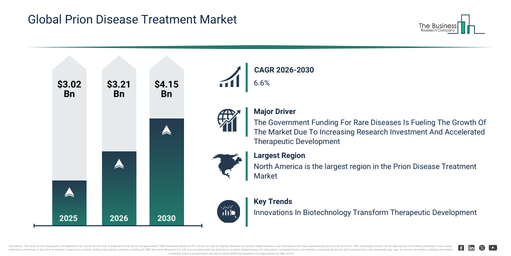
    The prion disease treatment market size has demonstrated strong growth over recent years. It is projected to expand from $3.02 billion in 2025 to $3.21 billion in 2026, advancing at a compound annual growth rate (CAGR) of 6.4%. The expansion observed during the historic period is primarily due to factors such as rare disease research funding, heightened neurological disorder awareness, the increased expansion of genetic testing, various academic clinical studies, and the development of specialty neurology centers.

    The prion disease treatment market size is expected to show robust expansion in the coming years. It is projected to reach $4.15 billion in 2030, achieving a compound annual growth rate (CAGR) of 6.6%. This anticipated growth during the forecast period is largely due to factors such as novel molecule discovery programs, precision neurology approaches, biomarker-based diagnostics, expanded orphan drug incentives, and advanced neuro research collaborations. Key developments influencing the market during this period include targeted neurodegenerative drug research, sophisticated prion diagnostic testing, genetic risk screening programs, compassionate use therapy trials, and integrated supportive care protocols.

    Download A Free Sample Report For Comprehensive Market Insights:

    https://www.thebusinessresearchcompany.com/sample.aspx?id=33272&type=smp

    What Are The Main Drivers Accelerating The Growth Of The Prion Disease Treatment Market?

    The future growth of the prion disease treatment market is anticipated to be driven by increasing government financial support for rare diseases. Rare diseases are defined as medical conditions that affect a small portion of the population and are often chronic, progressive, and potentially life-threatening. Funding for rare diseases is on the rise due to enhanced governmental and philanthropic contributions, which is accelerating research initiatives, clinical trials, and the development of innovative therapies for conditions with significant unmet medical needs. Government funding dedicated to rare diseases promotes progress in prion disease treatment by supporting long-term basic research, maintaining specialized laboratories and surveillance systems, encouraging pharmaceutical innovation despite limited commercial incentives, and expediting the translation of discoveries into diagnostics and potential treatments. For instance, in February 2024, the Department of Health and Social Care, a UK-based government department, invested $17.3 million (£14 million) to create the UK Rare Disease Research Platform, comprising 11 research nodes across the country and a central coordinating hub. This initiative aims to foster collaborative efforts among academic, clinical, and industry researchers, people living with rare diseases, research charities, and other stakeholders to accelerate advancements in the understanding, diagnosis, and treatment of rare diseases. Thus, the growing government funding for rare diseases is propelling the expansion of the prion disease treatment market.

    What Segment Categories Are Evaluated In The Prion Disease Treatment Market Study?

    The prion disease treatment market covered in this report is segmented –

    1) By Disease Type: Creutzfeldt-Jakob Disease; Gerstmann-Sträussler-Scheinker Syndrome; Fatal Familial Insomnia; Kuru; Other Disease Types

    2) By Treatment Type: Medication; Supportive Care; Other Treatment Types

    3) By Route Of Administration: Oral; Parenteral

    4) By Distribution Channel: Hospital Pharmacies; Retail Pharmacies; Online Pharmacies

    5) By End-User: Hospitals; Specialty Clinics; Research Institutes; Other End-Users

    Subsegments:

    1) By Creutzfeldt-Jakob Disease: Sporadic Creutzfeldt-Jakob Disease; Familial Creutzfeldt-Jakob Disease; Iatrogenic Creutzfeldt-Jakob Disease; Variant Creutzfeldt-Jakob Disease

    2) By Gerstmann-Sträussler-Scheinker Syndrome: Early-Stage Gerstmann-Sträussler-Scheinker Syndrome; Progressive-Stage Gerstmann-Sträussler-Scheinker Syndrome; Advanced-Stage Gerstmann-Sträussler-Scheinker Syndrome

    3) By Fatal Familial Insomnia: Sleep Disorder Management; Autonomic Dysfunction Management; Psychiatric Symptom Management

    4) By Kuru: Motor Function Support; Cognitive Function Support; Symptomatic Neurological Care

    5) By Other Disease Types: Atypical Prion Disorders; Unclassified Prion Conditions

    What Trends Are Shaping The Prion Disease Treatment Market Structure?

    Leading companies in the prion disease treatment market are concentrating on developing innovative approaches, such as viral vector-based gene therapy, to deliver targeted treatments across the blood-brain barrier and decelerate the disease’s progression. Viral vector-based gene therapy is a medical intervention that employs modified viruses to introduce therapeutic genes into specific cells, thereby helping to correct or reduce disease-causing processes like misfolded prion proteins through targeted and lasting effects. For instance, in February 2025, Apertura Gene Therapy, a US-based biotechnology company, provided support to the Broad Institute for the development of a gene therapy for prion disease utilizing an engineered AAV capsid designed to target TfR1. This therapy delivers therapeutic genes across the blood-brain barrier, facilitating widespread distribution within the central nervous system (CNS) and potentially slowing or preventing the accumulation of prion protein. It offers high precision, fewer off-target effects, and sustained therapeutic expression, representing a significant leap forward compared to conventional treatments that primarily manage symptoms rather than altering the disease’s trajectory. Overall, this constitutes a substantial advancement in transitioning from symptomatic relief to disease-modifying interventions, with the potential to transform the treatment landscape for prion disorders.

    Which Industry Players Are Present In The Prion Disease Treatment Market?

    Major companies operating in the prion disease treatment market are Ionis Pharmaceuticals Inc., Broad Institute of MIT and Harvard, Sangamo Therapeutics Inc., Gate Bioscience, Apertura Gene Therapy, Sibylla Biotech, Case Western Reserve University, and National Prion Clinic.

    Access The Complete Prion Disease Treatment Market Report:

    https://www.thebusinessresearchcompany.com/report/prion-disease-treatment-market-report

    Which Area Represents The Largest Portion Of The Prion Disease Treatment Market?

    North America was the largest region in the prion disease treatment market in 2025. Asia-Pacific is expected to be the fastest-growing region in the forecast period. The regions covered in the prion disease treatment market report are Asia-Pacific, South East Asia, Western Europe, Eastern Europe, North America, South America, Middle East, Africa.

    Access a Customized Prion Disease Treatment Market Report for Deeper Competitive Insights

    Get in touch with us:

    The Business Research Company: https://www.thebusinessresearchcompany.com/

    Americas: +1 310-496-7795

    Asia: +44 7882 955267 & +91 8897263534

    Europe: +44 7882 955267

    Email us at: marketing@tbrc.info

    Follow us on:

    LinkedIn: https://in.linkedin.com/company/the-business-research-company

    YouTube: https://www.youtube.com/channel/UC24_fI0rV8cR5DxlCpgmyFQ

    Global Market Model: https://www.thebusinessresearchcompany.com/global-market-model
  • Rapid Microbiological Testing Innovations Transform Pharmaceutical Quality Control Services

    Rapid Microbiological Testing Innovations Transform Pharmaceutical Quality Control Services

    The Business Research Company’s 2026 market reports feature advanced enhancements such as market attractiveness analysis, total addressable market evaluation, company benchmarking matrices, interactive Excel dashboards, expanded supply chain intelligence, emerging startup coverage, and detailed product insights, delivering more actionable and strategically valuable research.

    How Will The Market Size Of The Pharmaceutical Quality Control Release Testing Service Market Progress Through 2030?

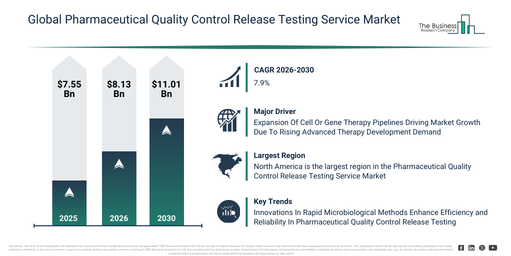
    The pharmaceutical quality control release testing service market size has exhibited robust growth in recent years. It is forecast to grow from $7.55 billion in 2025 to $8.13 billion in 2026, at a compound annual growth rate (CAGR) of 7.6%. The expansion observed in the past can be ascribed to more stringent GMP regulations, an increase in global drug production, the rise of contract testing laboratories, escalating biologics testing requirements, and the broadening of generic drug manufacturing.

    The pharmaceutical quality control release testing service market size is projected to experience substantial expansion in the coming years. This market is anticipated to reach a valuation of $11.01 billion by 2030, exhibiting a compound annual growth rate (CAGR) of 7.9%. Key factors driving this growth over the forecast period include the expanding pipelines of complex biologics, an increase in the frequency of regulatory audits, the broadening of outsourced quality control models, a heightened demand for more rapid batch release cycles, and a rise in multi-region drug approvals. Significant trends expected during this period encompass automated batch release testing, the implementation of digital laboratory quality systems, analytical validation assisted by AI, the development of connected stability testing laboratories, and the adoption of smart quality data platforms.

    Download A Free Sample Report For Comprehensive Market Insights:

    https://www.thebusinessresearchcompany.com/sample.aspx?id=33260&type=smp

    What Primary Factors Are Fueling The Expansion Of The Pharmaceutical Quality Control Release Testing Service Market?

    The anticipated increase in cell or gene therapy pipelines is projected to boost the expansion of the pharmaceutical quality control release testing service market. These pipelines encompass cellular and genetic therapeutic products currently in development and undergoing regulatory scrutiny for future commercial release. This growth primarily stems from escalating investments in biotechnology research and development, where pharmaceutical and biotech companies are dedicating significant funds to developing novel cellular and genetic treatments for conditions that were previously incurable. The expanding number of cell and gene therapy programs directly fuels the need for specialized quality control release testing services, which are crucial for ensuring these intricate biological products comply with strict safety and efficacy standards prior to their market introduction. An illustrative example, as reported in January 2025 by the American Society of Gene and Cell Therapy, a US-based scientific association, indicates that the worldwide gene therapy pipeline comprised 2,117 programs in the fourth quarter of 2024, an ascent from 2,041 programs in the third quarter of 2024. Consequently, the ongoing enlargement of cell or gene therapy pipelines is a key factor propelling the advancement of the pharmaceutical quality control release testing service market.

    How Is Segment Classification Applied In The Pharmaceutical Quality Control Release Testing Service Market?

    The pharmaceutical quality control release testing service market covered in this report is segmented –

    1) By Product Type: Dissolution Testing; Anti-Corrosion Testing; ICH Stability Storage and Testing; Other Product Types

    2) By Service Type: Analytical Testing Services; Microbiological Testing Services; Stability Testing Services; Sterility Testing Services

    3) By Technology: Gas Chromatography (GC); Mass Spectrometry; Spectroscopy Methods

    4) By End Users: Pharmaceutical Manufacturers; Biotechnology Companies; Contract Development and Manufacturing Organizations (CDMOs); Contract Manufacturing Organizations (CMOs); Research and Academic Institutions

    Subsegments:

    1) By Dissolution Testing: Immediate Release Testing; Extended Release Testing; Delayed Release Testing; Sink Condition Evaluation

    2) By Anti-Corrosion Testing: Packaging Material Corrosion Testing; Container Compatibility Assessment; Environmental Stress Corrosion Testing; Protective Coating Evaluation

    3) By ICH Stability Storage and Testing: Long Term Stability Studies; Accelerated Stability Studies; Intermediate Stability Studies; Photostability Testing

    4) By Other Product Types: Impurity Profiling; Residual Solvent Testing; Elemental Impurity Analysis; Container Closure Integrity Testing

    What Trends Are Driving Changes In The Pharmaceutical Quality Control Release Testing Service Market?

    Leading companies in the pharmaceutical quality control release testing services market are concentrating on developing advanced solutions, such as microbiological-based quality control testing, to guarantee product sterility, regulatory compliance, and timely batch release. This type of testing utilizes microbiological techniques to monitor and measure microbial presence in pharmaceutical products and production settings, which assists in confirming sterility, maintaining product safety, and meeting regulatory requirements before batch release. For instance, in March 2025, Nelson Laboratories, a US-based microbiological testing company, launched its Rapid Sterility Testing, a microbiology-based quality control testing offering aimed at modernizing sterility assurance processes. It is designed to enable faster batch release of sterile pharmaceutical products. The solution abbreviates traditional fourteen-day incubation timelines to approximately six days and incorporates automated, quantitative data analytics to enhance result precision, reduce manual intervention, and improve overall testing reliability.

    Who Are The Leading Firms Participating In The Pharmaceutical Quality Control Release Testing Service Market?

    Major companies operating in the pharmaceutical quality control release testing service market are Labcorp Holdings Inc., SGS S.A., Eurofins Scientific SE, Selvita S.A., WuXi AppTec Co. Ltd., Intertek Group plc, Charles River Laboratories International Inc., Piramal Pharma Limited, Siegfried Holding AG, Almac Group Limited, NSF International, ClinChoice Inc., BioAgilytix Inc., Microbac Laboratories Inc., ARL Bio Pharma Inc., Quality Chemical Laboratories LLC, Neopharm Labs Inc., Butterworth Laboratories Limited, Cambridge Polymer Group Inc., Honeyman Group Limited, and Element Materials Technology Group Limited.

    Access The Complete Pharmaceutical Quality Control Release Testing Service Market Report:

    https://www.thebusinessresearchcompany.com/report/pharmaceutical-quality-control-release-testing-service-market-report

    Which Geographic Region Represents The Largest Pharmaceutical Quality Control Release Testing Service Market Share?

    North America was the largest region in the pharmaceutical quality control release testing service market in 2025. Asia-Pacific is expected to be the fastest-growing region in the forecast period. The regions covered in the pharmaceutical quality control release testing service market report are Asia-Pacific, South East Asia, Western Europe, Eastern Europe, North America, South America, Middle East, Africa.

    Access a Customized Pharmaceutical Quality Control Release Testing Service Market Report for Deeper Competitive Insights

    Get in touch with us:

    The Business Research Company: https://www.thebusinessresearchcompany.com/

    Americas: +1 310-496-7795

    Asia: +44 7882 955267 & +91 8897263534

    Europe: +44 7882 955267

    Email us at: marketing@tbrc.info

    Follow us on:

    LinkedIn: https://in.linkedin.com/company/the-business-research-company

    YouTube: https://www.youtube.com/channel/UC24_fI0rV8cR5DxlCpgmyFQ

    Global Market Model: https://www.thebusinessresearchcompany.com/global-market-model
  • Personalized Medicine Trends Accelerating Growth in Personal Genome Services Market

    Personalized Medicine Trends Accelerating Growth in Personal Genome Services Market

    The Business Research Company’s 2026 market reports feature advanced enhancements such as market attractiveness analysis, total addressable market evaluation, company benchmarking matrices, interactive Excel dashboards, expanded supply chain intelligence, emerging startup coverage, and detailed product insights, delivering more actionable and strategically valuable research.

    What Is The Expected Market Size Of The Personal Genome Services Market In 2026 And How Much Will It Reach By 2030?

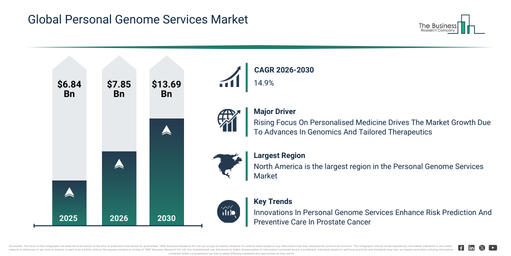
    The personal genome services market has experienced significant expansion in recent years. It is projected to grow from $6.84 billion in 2025 to $7.85 billion in 2026, achieving a compound annual growth rate (CAGR) of 14.7%. The market’s historical growth can be attributed to factors such as reduced sequencing costs, an increase in demand for ancestry testing, greater consumer awareness of genetics, the proliferation of genomics startups, and enhanced sequencing accuracy.

    The personal genome services market is projected to experience swift expansion in the coming years. This market is anticipated to reach $13.69 billion by 2030, demonstrating a compound annual growth rate (CAGR) of 14.9%. Several factors will drive this expansion during the forecast period, including an increase in preventive genomics adoption, wider application of pharmacogenomics, growing consumer demand for personalized wellness solutions, more extensive insurance coverage for testing, and the integration with digital health platforms. Significant developments expected in this timeframe comprise direct-to-consumer genome testing, comprehensive health risk genomic reports, bundled pharmacogenomic services, preventive genome screening packages, and digital platforms for genetic counseling.

    Download A Free Sample Report For Comprehensive Market Insights:

    https://www.thebusinessresearchcompany.com/sample.aspx?id=33258&type=smp

    Which Strategic Drivers Are Supporting The Personal Genome Services Market Development?

    The personal genome services market is projected to expand due to the heightened emphasis on personalized medicine. Personalized medicine represents a healthcare strategy that tailors treatment and preventive measures according to an individual’s unique genetic, biological, and lifestyle attributes. The growing acceptance of personalized medicine stems from breakthroughs in genomics and molecular diagnostics, enabling the customization of treatments to an individual’s genetic makeup for improved results. Through the analysis of an individual’s genetic profile, personal genome services facilitate personalized medicine, aiding in disease risk prediction, guiding medication choices, and customizing prevention and treatment plans. As an illustration, data from February 2024 by the Personalized Medicine Coalition, a US-based non-profit organization, indicated that in 2023, the FDA sanctioned 16 novel personalized treatments for rare disease patients, an increase from six in 2022. The personalized treatments newly approved for 2023 further comprised seven cancer drugs and three for various other diseases and conditions. Consequently, the heightened attention on personalized medicine is fueling the expansion of the personal genome services market.

    What Are The Core Segment Classifications In The Personal Genome Services Market?

    The personal genome services market covered in this report is segmented –

    1) By Service Type: Genetic Testing; Whole Genome Sequencing; Carrier Testing; Ancestry Testing; Other Service Types

    2) By Application: Healthcare; Research; Ancestry; Other Applications

    3) By End-User: Hospitals and Clinics; Research Centers; Direct-to-Consumer; Other End-Users

    Subsegments:

    1) By Genetic Testing: Health Risk Assessment Testing; Pharmacogenomic Testing; Nutritional Genetic Testing; Lifestyle Genetic Testing; Wellness Genetic Screening

    2) By Whole Genome Sequencing: Clinical Whole Genome Sequencing; Research Whole Genome Sequencing; Preventive Health Genome Sequencing; Rare Disease Genome Sequencing; Population Based Genome Sequencing

    3) By Carrier Testing: Inherited Disease Carrier Screening; Preconception Carrier Testing; Prenatal Carrier Testing; Reproductive Health Carrier Screening; Family Planning Carrier Testing

    4) By Ancestry Testing: Ethnicity Estimation Testing; Genealogical Lineage Testing; Migration Pattern Analysis; Regional Ancestry Breakdown; Family Relationship Discovery

    5) By Other Service Types: Newborn Genetic Screening; Predictive Genetic Testing; Sports Performance Genetic Analysis; Personalized Health Reporting; Custom Genetic Consulting Services

    Which Trends Are Shaping The Personal Genome Services Market Landscape?

    Leading firms within the personal genome services market are concentrating on creating sophisticated offerings, including genome-wide risk stratification, to deliver tailored health information, forecast disease vulnerability, and inform both preventative measures and lifestyle adjustments. This stratification involves examining a person’s complete genome to pinpoint genetic variations linked to the likelihood of developing specific diseases or conditions, thereby allowing for customized health risk predictions and focused prevention approaches. An example of this is MyOme Inc., a US-based biotechnology firm, which introduced the initial integrated polygenic risk score (iPRS) test for prostate cancer in November 2025. This test integrates ~7 million genetic markers with clinical data to provide individualized risk projections over 10 years and a lifetime, with its accuracy confirmed in 140,000+ diverse men. The objective is early detection and prevention for 95% of cases lacking rare variants like BRCA2. It directs PSA, MRI, or biopsies for individuals deemed high-risk (those with 3-4x elevated odds in the top decile), simultaneously reducing instances of false positives and unnecessary treatments. Its advantages encompass precise stratification, equitable performance across ancestries, and continuously updated insights powered by AI, all derived from one whole-genome sample.

    Which Companies Are Engaged In The Personal Genome Services Market Environment?

    Major companies operating in the personal genome services market are Thermo Fisher Scientific Inc, Illumina Inc, Helix OpCo LLC, Ancestry.com Operations Inc, Fulgent Genetics Inc, 23andMe Holding Co, Prenetics Global Limited, MyHeritage Ltd, Color Health Inc, Genomics plc, GenoPalate Inc, Living DNA Ltd, Mapmygenome India Pvt Ltd, Nebula Genomics Inc, Xcode Life Sciences Pvt Ltd, Sema4 Holdings Corp, Gene by Gene Ltd, TellmeGen SL, CRI Genetics LLC, African Ancestry Inc, and DNAFit Limited.

    Access The Complete Personal Genome Services Market Report:

    https://www.thebusinessresearchcompany.com/report/personal-genome-services-market-report

    Which Region Leads The Personal Genome Services Market By Size?

    North America was the largest region in the personal genome services market in 2025. Asia-Pacific is expected to be the fastest-growing region in the forecast period. The regions covered in the personal genome services market report are Asia-Pacific, South East Asia, Western Europe, Eastern Europe, North America, South America, Middle East, Africa.

    Access a Customized Personal Genome Services Market Report for Deeper Competitive Insights

    Get in touch with us:

    The Business Research Company: https://www.thebusinessresearchcompany.com/

    Americas: +1 310-496-7795

    Asia: +44 7882 955267 & +91 8897263534

    Europe: +44 7882 955267

    Email us at: marketing@tbrc.info

    Follow us on:

    LinkedIn: https://in.linkedin.com/company/the-business-research-company

    YouTube: https://www.youtube.com/channel/UC24_fI0rV8cR5DxlCpgmyFQ

    Global Market Model: https://www.thebusinessresearchcompany.com/global-market-model
  • Orthostatic Hypotension Market Outlook Highlighting Demand Trends for 2026–2030

    Orthostatic Hypotension Market Outlook Highlighting Demand Trends for 2026–2030

    The Business Research Company’s 2026 market reports feature advanced enhancements such as market attractiveness analysis, total addressable market evaluation, company benchmarking matrices, interactive Excel dashboards, expanded supply chain intelligence, emerging startup coverage, and detailed product insights, delivering more actionable and strategically valuable research.

    What Are The Forecasted Market Size Figures For The Orthostatic Hypotension Market In 2026 And 2030?

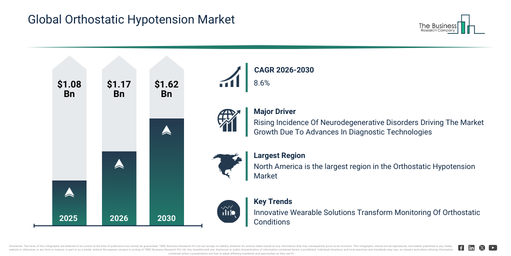
    The orthostatic hypotension market size has demonstrated significant growth in recent years. It is projected to expand from $1.08 billion in 2025 to $1.17 billion in 2026, at a compound annual growth rate (CAGR) of 8.4%. The historical increase can be attributed to factors such as an aging population, a rise in neurological disorders, the increased prevalence of cardiovascular diseases, the expansion of diagnostic testing, and heightened clinical awareness.

    The orthostatic hypotension market size is set for significant expansion in the coming years. It is foreseen to attain a valuation of $1.62 billion in 2030, progressing at a compound annual growth rate (CAGR) of 8.6%. This growth throughout the forecast period stems from increased acceptance of remote monitoring, a rising incidence of chronic diseases, the expansion of specialized neurology care services, more frequent screening initiatives, and enhanced integration of telehealth. Noteworthy trends during this period include wearable technologies for blood pressure monitoring, digital assessments for autonomic function, broad remote patient monitoring programs, multi-drug therapy approaches, and models for home-based hypotension management.

    Download A Free Sample Report For Comprehensive Market Insights:

    https://www.thebusinessresearchcompany.com/sample.aspx?id=33253&type=smp

    Which Significant Factors Are Encouraging Growth In The Orthostatic Hypotension Market?

    The increasing occurrence of neurodegenerative conditions is anticipated to fuel the expansion of the orthostatic hypotension market in the future. These progressive ailments are characterized by the degradation of nerve cells within the brain and nervous system, leading to both motor and cognitive impairments. The prevalence of neurodegenerative disorders is growing primarily due to aging global populations, as a greater number of individuals reach advanced ages where conditions like Alzheimer’s and Parkinson’s disease are more likely to manifest. An uptick in neurodegenerative disorders, including Parkinson’s disease and multiple system atrophy, contributes to the onset of orthostatic hypotension by hindering autonomic nervous system regulation, disrupting baroreceptor reflexes, and diminishing vascular tone, consequently compromising the body’s capacity to maintain stable blood pressure when standing. For example, in March 2023, the Alzheimer’s Association, a US-based nonprofit voluntary health organization, reported that approximately 6.7 million Americans aged 65 and older are living with Alzheimer’s dementia, a figure expected to climb to 13.8 million by 2060. Thus, the growing incidence of neurodegenerative disorders is a significant factor driving the orthostatic hypotension market. The increasing prevalence of cardiovascular diseases is anticipated to boost the growth of the orthostatic hypotension market moving forward. These conditions encompass ailments affecting the heart and blood vessels, including coronary heart disease, stroke, heart failure, and arrhythmias. The incidence of cardiovascular diseases is rising due to demographic shifts towards older populations, given that advanced age substantially elevates the risk of developing heart and vascular issues, particularly for those over 65 years. The increasing occurrence of cardiovascular diseases fuels the demand for orthostatic hypotension management solutions because individuals with heart conditions encounter considerably elevated risks of postural blood pressure irregularities that necessitate specialized monitoring and therapeutic interventions. As an illustration, in October 2024, data from the Centers for Disease Control and Prevention, a US-based government agency, indicated that in 2023, cardiovascular disease was responsible for 919,032 deaths, accounting for roughly one-third of all fatalities. Coronary heart disease remained the most common type, with approximately one in six cardiovascular deaths occurring in adults under the age of 65. Therefore, the increasing prevalence of cardiovascular diseases is a key factor propelling the orthostatic hypotension market.

    What Are The Major Segment Categories Within The Orthostatic Hypotension Market?

    The orthostatic hypotension market covered in this report is segmented –

    1) By Drug Type: Fludrocortisone; Midodrine Hydrochloride; Droxidopa; Pyridostigmine; Indomethacin; Caffeine; Epoetin; Oxilofrine Potassium Chloride; Non Steroidal Anti Inflammatory Drugs

    2) By Test Type: ECG; Blood Tests; Stress Test; Echocardiogram

    3) By Route Of Administration: Oral; Parenteral

    4) By Distribution Channel: Hospital Pharmacies; Retail Pharmacies; Online Pharmacies

    5) By End User: Hospitals; Diagnostic Centers; Clinics; Ambulatory Surgical Centers

    Subsegments:

    1) By Fludrocortisone: Fludrocortisone Tablets; Fludrocortisone Oral Solutions

    2) By Midodrine Hydrochloride: Midodrine Immediate Release Tablets; Midodrine Extended Release Formulations

    3) By Droxidopa: Droxidopa Capsules; Droxidopa Oral Formulations

    4) By Pyridostigmine: Pyridostigmine Bromide Tablets; Pyridostigmine Extended Release Tablets

    5) By Indomethacin: Indomethacin Capsules; Indomethacin Sustained Release Tablets

    6) By Caffeine: Caffeine Oral Tablets; Caffeine Oral Solutions

    7) By Epoetin: Epoetin Alfa Injections; Epoetin Beta Injections

    8) By Oxilofrine Potassium Chloride: Oxilofrine Oral Formulations; Oxilofrine Combination Formulations

    9) By Non Steroidal Anti Inflammatory Drugs: Ibuprofen Based Drugs; Naproxen Based Drugs; Aspirin Based Drugs; Other Non Steroidal Anti Inflammatory Drug Formulations

    What Trends Are Affecting The Orthostatic Hypotension Market Dynamics?

    Leading firms within the orthostatic hypotension market are concentrating on creating cutting-edge solutions, like wearable cerebral blood flow monitors, to enhance the real-time monitoring of symptoms and provide more individualized patient support. Such a monitor is a body-worn instrument, for instance, placed in the ear, which continuously gauges blood flow to the brain, assisting in identifying orthostatic shifts, forecasting syncope, and directing symptom regulation. As an illustration, in June 2023, STAT Health, a US-based digital health startup, introduced its ear-worn wearable device, specifically engineered for orthostatic conditions. This device captures cerebral blood flow via a superficial ear artery, identifies alterations in posture, and produces trend scores, enabling users to monitor their time spent standing and any irregularities in blood flow. Its distinctive attributes encompass alerts for impending fainting, seamless integration with a complementary application, and extended wearability coupled with clinical-grade signal quality, thereby empowering patients suffering from conditions such as POTS, long COVID, and chronic fatigue syndrome to more effectively manage their symptoms.

    Who Are The Key Market Participants In The Orthostatic Hypotension Market?

    Major companies operating in the orthostatic hypotension market are Pfizer Inc., Novartis AG, Takeda Pharmaceutical Company Limited, Teva Pharmaceutical Industries Ltd., Baxter International Inc., Sandoz International GmbH, Sun Pharmaceutical Industries Ltd., Apotex Inc., Dr. Reddy’s Laboratories Ltd., Cipla Limited, H. Lundbeck A/S, Hikma Pharmaceuticals PLC, Amneal Pharmaceuticals Inc., Lupin Limited, Alembic Pharmaceuticals Ltd., Theravance Biopharma Inc., Avadel Pharmaceuticals plc, Civica Rx Inc., Alterity Therapeutics Limited, and STAT Health Services LLC.

    Access The Complete Orthostatic Hypotension Market Report:

    https://www.thebusinessresearchcompany.com/report/orthostatic-hypotension-market-report

    What Is The Largest Regional Market In The Orthostatic Hypotension Market?

    North America was the largest region in the orthostatic hypotension market in 2025. Asia-Pacific is expected to be the fastest-growing region in the forecast period. The regions covered in the orthostatic hypotension market report are Asia-Pacific, South East Asia, Western Europe, Eastern Europe, North America, South America, Middle East, Africa.

    Access a Customized Orthostatic Hypotension Market Report for Deeper Competitive Insights

    Get in touch with us:

    The Business Research Company: https://www.thebusinessresearchcompany.com/

    Americas: +1 310-496-7795

    Asia: +44 7882 955267 & +91 8897263534

    Europe: +44 7882 955267

    Email us at: marketing@tbrc.info

    Follow us on:

    LinkedIn: https://in.linkedin.com/company/the-business-research-company

    YouTube: https://www.youtube.com/channel/UC24_fI0rV8cR5DxlCpgmyFQ

    Global Market Model: https://www.thebusinessresearchcompany.com/global-market-model
  • Oligonucleotide Synthesis Services Market Forecast to Hit $4.69 Billion by 2030

    Oligonucleotide Synthesis Services Market Forecast to Hit $4.69 Billion by 2030

    The Business Research Company’s 2026 market reports feature advanced enhancements such as market attractiveness analysis, total addressable market evaluation, company benchmarking matrices, interactive Excel dashboards, expanded supply chain intelligence, emerging startup coverage, and detailed product insights, delivering more actionable and strategically valuable research.

    What Is The Expected Market Value Outlook For The Oligonucleotide Synthesis Services Market Through 2030?

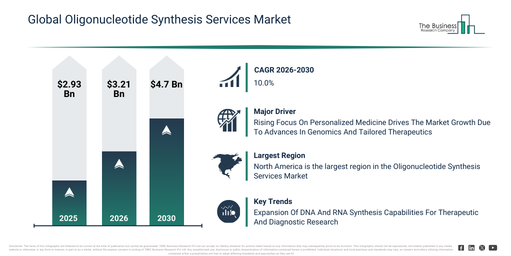
    The oligonucleotide synthesis services market size has experienced strong growth in recent years. This market is forecasted to increase from $2.93 billion in 2025 to $3.21 billion in 2026, at a compound annual growth rate (CAGR) of 9.7%. Historically, this expansion has been driven by the rising use of PCR and sequencing, the broadening of molecular biology research, an increase in genomic testing, greater academic genomics funding, and an expansion of biotech research and development activity.

    The oligonucleotide synthesis services market is set to experience robust expansion over the next few years. It is projected to achieve a value of $4.7 billion by 2030, advancing at a compound annual growth rate (CAGR) of 10.0%. This anticipated growth is primarily fueled by the expansion of gene and cell therapy pipelines, increasing demand for CRISPR and gene editing, the broadening application of nucleic acid therapeutics, greater adoption of precision diagnostics, and the scaling up of clinical oligo production. Prominent trends for the forecast period include high-throughput custom oligo production, offerings for modified and labeled oligonucleotide services, GMP-grade oligo manufacturing, rapid turnaround gene editing oligos, and sophisticated oligo purification workflows.

    Download A Free Sample Report For Comprehensive Market Insights:

    https://www.thebusinessresearchcompany.com/sample.aspx?id=33245&type=smp

    What Important Drivers Are Powering The Oligonucleotide Synthesis Services Market Growth?

    A growing emphasis on personalized medicine is projected to stimulate the expansion of the oligonucleotide synthesis services market in the future. This medical approach tailors treatment and prevention strategies to an individual’s unique genetic, biological, and lifestyle attributes. Its adoption is rising, fueled by breakthroughs in genomics and molecular diagnostics that enable therapies to be customized to an individual’s genetic makeup, leading to improved patient results. Oligonucleotide synthesis services facilitate personalized medicine through the quick and accurate creation of bespoke DNA or RNA sequences, which are vital for patient-specific diagnostics, precise therapies, and gene-oriented treatments, thus supporting interventions tailored to an individual’s genetic profile. As an illustration, in February 2024, data from the Personalized Medicine Coalition, a US-based non-profit organization, showed that in 2023, the FDA sanctioned 16 novel personalized treatments for patients with rare diseases, an increase from six in 2022. The newly sanctioned personalized treatments for 2023 also comprised seven cancer medications and three for other illnesses and conditions. Consequently, the heightened focus on personalized medicine is a key driver for the growth of the oligonucleotide synthesis services market.

    What Segment Types Are Included In The Oligonucleotide Synthesis Services Market Analysis?

    The oligonucleotide synthesis services market covered in this report is segmented –

    1) By Type Of Oligonucleotide: Deoxyribonucleic Acid Oligonucleotides; Ribonucleic Acid Oligonucleotides; Peptide Nucleic Acids (PNAs); Locked Nucleic Acids (LNAs); Other Synthetic Nucleotides

    2) By Synthesis Method: Solid Phase Synthesis; Liquid Phase Synthesis; Microarray Based Synthesis; Oligonucleotide Synthesis Via Automated Synthesizers; Enzymatic Synthesis

    3) By Purity Level: Standard Purity; High Purity; Ultra High Purity; Custom Purity Solutions; Quality Control Measures

    4) By Application: Diagnostics; Therapeutics; Research And Development; Gene Editing; Vaccine Development

    5) By End User: Academic And Research Institutions; Pharmaceutical And Biotechnology Companies; Diagnostic Laboratories; Contract Research Organizations (CROs); Clinical Laboratories

    Subsegments:

    1) By Deoxyribonucleic Acid Oligonucleotides: Standard Deoxyribonucleic Acid Oligonucleotides; Modified Deoxyribonucleic Acid Oligonucleotides; Phosphorothioate Deoxyribonucleic Acid Oligonucleotides; Methylated Deoxyribonucleic Acid Oligonucleotides

    2) By Ribonucleic Acid Oligonucleotides: Standard Ribonucleic Acid Oligonucleotides; Modified Ribonucleic Acid Oligonucleotides; Small Interfering Ribonucleic Acid Oligonucleotides; Micro Ribonucleic Acid Oligonucleotides

    3) By Peptide Nucleic Acids: Standard Peptide Nucleic Acids; Modified Peptide Nucleic Acids; Functionalized Peptide Nucleic Acids

    4) By Locked Nucleic Acids: Standard Locked Nucleic Acids; 2′-O-Methyl Locked Nucleic Acids; Gapmer Locked Nucleic Acids

    5) By Other Synthetic Nucleotides: Morpholino Oligonucleotides; Phosphoramidite Oligonucleotides; Xeno Nucleic Acid Oligonucleotides; Synthetic Aptamers

    Which Trends Are Affecting The Oligonucleotide Synthesis Services Market Framework?

    Leading entities within the oligonucleotide synthesis services sector are prioritizing the expansion of DNA and RNA manufacturing capabilities to advance therapeutic and diagnostic investigations. These capabilities encompass sophisticated techniques for generating and scaling premium genetic material, which are essential for facilitating scientific inquiry, diagnostic procedures, and the formulation of biopharmaceutical treatments. A notable illustration is Oligo Factory Inc., a US-based manufacturing firm, which introduced a low-scale oligo synthesis feature in May 2025, specifically designed to extend assistance to professionals in therapeutic and diagnostic research and development. This innovation facilitates the production of custom DNA/RNA in small batches, beginning at 50 nmol, catering to initial research and development phases across therapeutics, diagnostics, qPCR, NGS, and preclinical trials. Its advantages include reduced expenses and waste, a rapid turnaround time (4 weeks or less) adhering to GMP or ISO 13485 quality standards, and the provision of continuous scaling support through portfolios like FactorTx, eliminating the need for vendor transitions. This flexibility is particularly advantageous for researchers who require prototypes rather than extensive minimum order quantities.

    Which Firms Are Competing In The Oligonucleotide Synthesis Services Market?

    Major companies operating in the oligonucleotide synthesis services market are Thermo Fisher Scientific Inc., Agilent Technologies Inc., QIAGEN N.V., Integrated DNA Technologies Inc., Sangon Biotech (Shanghai) Co. Ltd., Ajinomoto Co. Inc., Twist Bioscience Corporation, Sigma-Aldrich Co. LLC, Aldevron LLC, Bioneer Corporation, GenScript Biotech Corporation, BBI Life Sciences Ltd., Takara Bio Inc., BioServe Biotechnologies Ltd., Eurofins Genomics Germany GmbH, Bio-Synthesis Inc., TriLink BioTechnologies LLC, BioBasic Inc., Biosearch Technologies Inc., JenaBioscience GmbH, Geneworks Pty Ltd., HUWEL Life Science Co. Ltd., and SynoLigo Pvt. Ltd.

    Access The Complete Oligonucleotide Synthesis Services Market Report:

    https://www.thebusinessresearchcompany.com/report/oligonucleotide-synthesis-services-market-report

    Which Region Holds The Largest Share In The Oligonucleotide Synthesis Services Market?

    North America was the largest region in the oligonucleotide synthesis services market in 2025. Asia-Pacific is expected to be the fastest-growing region in the forecast period. The regions covered in the oligonucleotide synthesis services market report are Asia-Pacific, South East Asia, Western Europe, Eastern Europe, North America, South America, Middle East, Africa.

    Access a Customized Oligonucleotide Synthesis Services Market Report for Deeper Competitive Insights

    Get in touch with us:

    The Business Research Company: https://www.thebusinessresearchcompany.com/

    Americas: +1 310-496-7795

    Asia: +44 7882 955267 & +91 8897263534

    Europe: +44 7882 955267

    Email us at: marketing@tbrc.info

    Follow us on:

    LinkedIn: https://in.linkedin.com/company/the-business-research-company

    YouTube: https://www.youtube.com/channel/UC24_fI0rV8cR5DxlCpgmyFQ

    Global Market Model: https://www.thebusinessresearchcompany.com/global-market-model

  • Increasing Imaging Demand Driving Expansion in Medical Imaging Outsourcing Market

    Increasing Imaging Demand Driving Expansion in Medical Imaging Outsourcing Market

    The Business Research Company’s 2026 market reports feature advanced enhancements such as market attractiveness analysis, total addressable market evaluation, company benchmarking matrices, interactive Excel dashboards, expanded supply chain intelligence, emerging startup coverage, and detailed product insights, delivering more actionable and strategically valuable research.

    What Growth In Market Value Is Anticipated For The Medical Imaging Outsourcing Market Between 2026 And 2030?

    The medical imaging outsourcing market has shown substantial growth recently. This market is set to expand from $18.08 billion in 2025 to $19.68 billion in 2026, achieving a compound annual growth rate (CAGR) of 8.9%. Historically, this expansion was fueled by factors including a shortage of radiologists, increasing diagnostic imaging volumes, hospital initiatives to reduce costs, the early adoption of teleradiology, and the wider deployment of digital imaging systems.

    The medical imaging outsourcing market is poised for significant expansion in the coming years. It is projected to achieve a size of $27.88 billion by 2030, exhibiting a compound annual growth rate (CAGR) of 9.1%. This anticipated growth during the forecast period is driven by an increasing demand for cross-border reporting, a rise in imaging backlogs, the expansion of remote diagnostic approaches, heightened outsourcing by hospitals, and the necessity for faster report delivery. Major trends expected within this period include the development of global teleradiology reporting networks, round-the-clock remote image interpretation, centralized management of imaging workflows, cloud-based services for image archiving, and specialized radiology outsourcing.

    Download A Free Sample Report For Comprehensive Market Insights:

    https://www.thebusinessresearchcompany.com/sample.aspx?id=33210&type=smp

    Which Core Factors Are Supporting The Expansion Of The Medical Imaging Outsourcing Market?

    The escalating volumes of imaging procedures are projected to fuel the expansion of the medical imaging outsourcing market moving forward. Imaging procedure volumes represent the cumulative count of diagnostic imaging examinations performed by healthcare providers within a specific timeframe. The rise in these volumes stems from the increasing prevalence of chronic diseases, which necessitates frequent diagnostic imaging for early detection, monitoring disease progression, and guiding treatment decisions. Medical imaging outsourcing facilitates the management of these growing procedure volumes by enabling healthcare providers to efficiently address increasing diagnostic demands through access to remote radiology expertise, adaptable resources, quicker report turnaround times, and a reduced operational burden, all without needing to expand their in-house infrastructure. For example, in November 2023, data from the National Health Service, a UK-based government department, revealed that in the year concluding March 2023, England conducted 45.0 million imaging tests, marking a 2.2% increase from 44.0 million in the preceding year. This total included 10.3 million diagnostic ultrasound tests, an increase of 1.8%; 7.1 million CT scans, up by 5.5%; and 4.1 million MRI scans, showing a rise of 6.2%. Consequently, the rising imaging procedure volumes are a key driver for the growth of the medical imaging outsourcing market. The growth of healthcare infrastructure is anticipated to drive the medical imaging outsourcing market’s development in the future. Healthcare infrastructure comprises the facilities, equipment, and workforce essential for delivering medical services effectively to a population. This infrastructure is expanding due to a rising population, which requires more hospitals, clinics, medical equipment, and trained healthcare professionals to provide adequate services and ensure public health and well-being. The expansion of healthcare infrastructure increases the demand for advanced diagnostic services, allowing medical imaging outsourcing to offer specialized expertise, faster turnaround times, and cost-effective solutions that complement the expanding network of hospitals and clinics. For instance, in May 2023, the American Health Care Association, a US-based nonprofit organization, reported that the number of hospitals in the United States increased by 0.591% from the previous year, rising from 6,093 to 6,129. Thus, the expansion of healthcare infrastructure is propelling the growth of the medical imaging outsourcing market.

    How Is The Medical Imaging Outsourcing Market Examined Through Segment Analysis?

    The medical imaging outsourcing market covered in this report is segmented –

    1) By Product Type: Computed Tomography (CT); Magnetic Resonance Imaging (MRI); Ultrasound; X-Ray; Nuclear Medicine; Other Modalities

    2) By Delivery Mode: Onsite Outsourcing Services; Offsite Outsourcing Services; Hybrid Outsourcing Services

    3) By Application: Cardiology; Diagnostic Imaging; Orthopedic; Diagnostic Testing Systems; Drug Delivery; Diabetes Care; Other Application

    4) By End Use: Hospitals And Clinics; Interventional Imaging Centers; Other End Uses

    Subsegments:

    1) By Computed Tomography: High Resolution Computed Tomography; Low Dose Computed Tomography; Contrast Enhanced Computed Tomography; Cardiac Computed Tomography; Whole Body Computed Tomography

    2) By Magnetic Resonance Imaging: Functional Magnetic Resonance Imaging; Diffusion Weighted Imaging; Magnetic Resonance Angiography; Magnetic Resonance Spectroscopy; Cardiac Magnetic Resonance Imaging

    3) By Ultrasound: Diagnostic Ultrasound Imaging; Doppler Ultrasound Imaging; Three Dimensional Ultrasound Imaging; Four Dimensional Ultrasound Imaging; Point Of Care Ultrasound

    4) By X-Ray: Digital Radiography; Computed Radiography; Mobile X-Ray Imaging; Fluoroscopy Imaging; Dental X-Ray Imaging

    5) By Nuclear Medicine: Positron Emission Tomography; Single Photon Emission Computed Tomography; Hybrid Nuclear Imaging; Radionuclide Imaging; Molecular Imaging

    6) By Other Modalities: Optical Imaging; Thermal Imaging; Elastography Imaging; Photoacoustic Imaging; Molecular Diagnostic Imaging

    Who Are The Companies Shaping The Medical Imaging Outsourcing Market Landscape?

    Major companies operating in the medical imaging outsourcing market are Sonic Healthcare Limited, RadNet Inc., Agfa HealthCare NV, Flatworld Solutions Pvt. Ltd., Radiology Partners Inc., Envision Radiology, ProScan Imaging, Alliance Medical Limited, Teleradiology Solutions, Everlight Radiology Limited, ONRAD Inc., RamSoft Inc., StatRad LLC, Sirona Medical Inc., Candelis Inc., MedWeb LLC, MetaMed, Shields Health Care Group, Diagnostic Imaging Services, MEDNAX Services Inc., 3DR Laboratories Inc., and American Imaging Consultants.

    Access The Complete Medical Imaging Outsourcing Market Report:

    https://www.thebusinessresearchcompany.com/report/medical-imaging-outsourcing-market-report

    Which Region Is The Primary Market For The Medical Imaging Outsourcing Market?

    North America was the largest region in the medical imaging outsourcing market in 2025. Asia-Pacific is expected to be the fastest-growing region in the forecast period. The regions covered in the medical imaging outsourcing market report are Asia-Pacific, South East Asia, Western Europe, Eastern Europe, North America, South America, Middle East, Africa.

    Access a Customized Medical Imaging Outsourcing Market Report for Deeper Competitive Insights

    Get in touch with us:

    The Business Research Company: https://www.thebusinessresearchcompany.com/

    Americas: +1 310-496-7795

    Asia: +44 7882 955267 & +91 8897263534

    Europe: +44 7882 955267

    Email us at: marketing@tbrc.info

    Follow us on:

    LinkedIn: https://in.linkedin.com/company/the-business-research-company

    YouTube: https://www.youtube.com/channel/UC24_fI0rV8cR5DxlCpgmyFQ

    Global Market Model: https://www.thebusinessresearchcompany.com/global-market-model

  • Kidney Transplant Rejection Market Outlook Highlighting Demand Trends Through 2030

    Kidney Transplant Rejection Market Outlook Highlighting Demand Trends Through 2030

    The Business Research Company’s 2026 market reports feature advanced enhancements such as market attractiveness analysis, total addressable market evaluation, company benchmarking matrices, interactive Excel dashboards, expanded supply chain intelligence, emerging startup coverage, and detailed product insights, delivering more actionable and strategically valuable research.

    How Will The Market Value Of The Kidney Transplant Rejection Market Change Between 2026 And 2030?

    The market size for kidney transplant rejection has experienced substantial growth in recent years. This market is expected to expand from $3.51 billion in 2025 to $3.76 billion in 2026, achieving a compound annual growth rate (CAGR) of 7.2%. The historical growth in this sector is attributable to an increase in kidney transplant procedures, progress in histopathological assessment techniques, the broader availability of immunosuppressive drugs, the expansion of transplant center networks, and improved patient survival rates post-transplant.

    The kidney transplant rejection market is anticipated to show substantial growth over the next few years, set to reach $5.01 billion in 2030, at a compound annual growth rate (CAGR) of 7.4%. This projected expansion during the forecast period is driven by factors such as an escalating demand for personalized immunosuppression strategies, increased adoption of molecular diagnostics, the expansion of precision medicine within transplant care, a growing emphasis on long-term graft survival, and rising investment in transplant monitoring technologies. Key trends during this period will encompass the increasing integration of biomarker-based rejection monitoring, a rising utilization of genomics-based diagnostic approaches, continuous optimization of immunosuppressive therapy protocols, the development of non-invasive rejection surveillance methods, and an enhanced focus on the early detection of chronic rejection.

    Download A Free Sample Report For Comprehensive Market Insights:

    https://www.thebusinessresearchcompany.com/sample.aspx?id=33190&type=smp

    Which Strategic Drivers Are Supporting The Kidney Transplant Rejection Market Development?

    The increasing occurrence of end-stage renal disease is projected to stimulate the expansion of the kidney transplant rejection market in the future. End-stage renal disease (ESRD) is defined as the ultimate, irreversible stage of chronic kidney disease where kidneys are unable to function adequately without external support like dialysis or a kidney transplant. The rise in end-stage renal disease cases is attributed to the growing prevalence of chronic conditions, notably diabetes and hypertension, which progressively damage the kidneys, leading to their failure. Kidney transplant rejection creates a demand for advanced monitoring and therapeutic interventions, directly supporting the effective management of end-stage renal disease by ensuring the continued functionality of transplanted kidneys and preserving patients’ kidney health. For instance, in September 2024, information from the National Institute of Diabetes and Digestive and Kidney Diseases, a US-based government institute, indicated that in 2023, more than 808,000 people in the United States were living with end-stage kidney disease (ESKD), also known as end-stage renal disease (ESRD), with 68% undergoing dialysis and 32% having received a kidney transplant. Therefore, the growing incidence of end-stage renal disease is fueling the growth of the kidney transplant rejection market.

    Which Segment-Based Categories Are Covered In The Kidney Transplant Rejection Market?

    The kidney transplant rejection market covered in this report is segmented –

    1) By Rejection Type: Chronic Rejection; Acute Rejection

    2) By Treatment: Immunosuppressive Drugs; Antibody-Mediated Rejection Therapies

    3) By Diagnostic Approach: Biomarker-Based Diagnostics; Genomics-Based Diagnostics

    4) By Therapeutics: Small Molecule Inhibitors; Biologic Therapies

    5) By End-Users: Transplant Centers Or Hospitals; Diagnostic Laboratories; Pharmacies

    Subsegments:

    1) By Chronic Rejection: Antibody Mediated Chronic Rejection; Chronic Allograft Nephropathy; Interstitial Fibrosis And Tubular Atrophy; Vascular Chronic Rejection; Mixed Chronic Rejection

    2) By Acute Rejection: Cellular Acute Rejection; Antibody Mediated Acute Rejection; Hyperacute Rejection; Mixed Acute Rejection; Vascular Acute Rejection

    Which Trends Are Influencing The Direction Of The Kidney Transplant Rejection Market?

    Leading firms within the kidney transplant rejection market are prioritizing the creation of advanced diagnostic options, including noninvasive urinary biomarker testing, aiming for swifter, safer, and more precise identification of transplant rejection. This noninvasive method examines urine specimens to pinpoint molecular markers signaling kidney inflammation or rejection, thereby assisting medical professionals in promptly and safely recognizing transplant complications, eliminating the necessity for invasive biopsies. An example of this is the launch in May 2024 by Thermo Fisher Scientific Inc., a US-based biotechnology company, of its CXCL10 testing service, representing an innovative diagnostic instrument for individuals who have received kidney transplants. The CXCL10 test identifies the CXCL10 chemokine present in urine, a substance linked to the early stages of transplant rejection and inflammation. This test provides results within 24 hours, facilitating faster clinical judgments, lessening the requirement for superfluous biopsies, and enhancing patient ease through its noninvasive sample collection process. Developed and validated by Thermo Fisher’s One Lambda Laboratories, this assay offers a combination of high sensitivity, specificity, and user-friendliness in clinical environments, thereby contributing to superior post-transplant management and improved patient results.

    Which Companies Are Engaged In The Kidney Transplant Rejection Market Environment?

    Major companies operating in the kidney transplant rejection market are F. Hoffmann-La Roche AG, Merck & Co. Inc., Sanofi SA, Novartis AG, Bristol-Myers Squibb Company, Thermo Fisher Scientific Inc., Takeda Pharmaceutical Company Limited, Amgen Inc., Asahi Kasei Corporation, Teva Pharmaceutical Industries Ltd., Astellas Pharma Inc., Biogen Inc., ChugAI Pharmaceutical Co. Ltd., Eurofins Scientific SE, Illumina Inc., Natera Inc., CareDx Inc., Azurity Pharmaceuticals Inc., Insight Molecular Diagnostics, and RenalytixAI plc.

    Access The Complete Kidney Transplant Rejection Market Report:

    https://www.thebusinessresearchcompany.com/report/kidney-transplant-rejection-market-report

    Which Region Contributes The Most To The Kidney Transplant Rejection Market?

    North America was the largest region in the kidney transplant rejection market in 2025. Asia-Pacific is expected to be the fastest-growing region in the forecast period. The regions covered in the kidney transplant rejection market report are Asia-Pacific, South East Asia, Western Europe, Eastern Europe, North America, South America, Middle East, Africa.

    Access a Customized Kidney Transplant Rejection Market Report for Deeper Competitive Insights

    Get in touch with us:

    The Business Research Company: https://www.thebusinessresearchcompany.com/

    Americas: +1 310-496-7795

    Asia: +44 7882 955267 & +91 8897263534

    Europe: +44 7882 955267

    Email us at: marketing@tbrc.info

    Follow us on:

    LinkedIn: https://in.linkedin.com/company/the-business-research-company

    YouTube: https://www.youtube.com/channel/UC24_fI0rV8cR5DxlCpgmyFQ

    Global Market Model: https://www.thebusinessresearchcompany.com/global-market-model