Category: Healthcare Services

  • Global Clinically Isolated Syndrome Market Analysis 2026–2030 Offering Strategic Insights

    Global Clinically Isolated Syndrome Market Analysis 2026–2030 Offering Strategic Insights

    The Business Research Company’s 2026 market reports feature advanced enhancements such as market attractiveness analysis, total addressable market evaluation, company benchmarking matrices, interactive Excel dashboards, expanded supply chain intelligence, emerging startup coverage, and detailed product insights, delivering more actionable and strategically valuable research.

    How Will The Market Value Of The Clinically Isolated Syndrome Market Change Between 2026 And 2030?

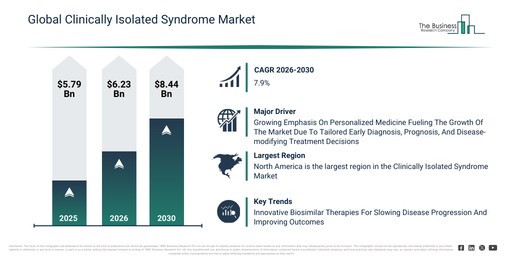
    The market size for clinically isolated syndrome has experienced robust growth in recent years. It is anticipated to expand from $5.79 billion in 2025 to $6.23 billion in 2026, registering a compound annual growth rate (CAGR) of 7.6%. The growth observed in the past can be attributed to enhanced access to magnetic resonance imaging diagnostics, increased awareness of early neurological symptoms, the proliferation of neurology specialty clinics, the adoption of disease-modifying therapies, and the presence of standardized diagnostic protocols.

    The market size for clinically isolated syndrome is expected to show significant growth in the coming years. It is forecast to grow to $8.44 billion in 2030, achieving a compound annual growth rate (CAGR) of 7.9%. The projected increase during this period can be attributed to an intensified focus on early multiple sclerosis prevention, the rising application of artificial intelligence in neurodiagnostics, the expanding availability of remote patient monitoring solutions, growing investment in biomarker research, and an increasing demand for personalized neurological care. Noteworthy trends in the forecast period include the expanding use of advanced neuroimaging analytics, a rising adoption of early intervention treatment strategies, the increasing integration of digital patient monitoring platforms, an expansion of biomarker-based risk assessment, and an enhanced emphasis on personalized disease management.

    Download A Free Sample Report For Comprehensive Market Insights:

    https://www.thebusinessresearchcompany.com/sample.aspx?id=33067&type=smp

    What Key Growth Drivers Are Influencing The Clinically Isolated Syndrome Market?

    The increasing focus on personalized medicine is projected to drive the expansion of the clinically isolated syndrome market in the future. This medical approach involves customizing treatment and preventive measures based on an individual’s unique genetic profile, lifestyle choices, and environmental factors. The heightened importance of personalized medicine stems from its capacity to enhance the efficacy of treatments and minimize side effects by aligning therapies with specific patient characteristics. Within clinically isolated syndrome, personalized medicine allows medical professionals to customize early diagnostic, prognostic, and disease-modifying treatment choices, taking into account individual patient biomarkers, imaging results, and risk profiles, thereby aiming to postpone or avert the development of multiple sclerosis. For example, in February 2024, the Personalized Medicine Coalition, a US-based non-profit organization, reported that the US Food and Drug Administration (FDA) in 2023 approved 16 new personalized therapies for individuals with rare diseases, a significant rise from the six approvals recorded in 2022. Consequently, the expanding focus on personalized medicine is fostering the growth of the clinically isolated syndrome market.

    What Key Segment Areas Are Included In The Clinically Isolated Syndrome Market Assessment?

    The clinically isolated syndrome market covered in this report is segmented –

    1) By Product And Service Type: Diagnostic Services; Disease-Modifying Therapies; Monitoring And Management Services; Digital Monitoring And Decision Support Tools

    2) By Drug Class: Interferon Beta; Glatiramer Acetate; Monoclonal Antibodies; Oral Immunomodulators; Other Drug Classes

    3) By Route Of Administration: Oral; Injectable; Intravenous

    4) By End User: Hospitals; Neurology Clinics; Diagnostic Centers; Home Care Settings

    Subsegments:

    1) By Diagnostic Services: Magnetic Resonance Imaging Diagnostic Services; Cerebrospinal Fluid Analysis Services; Evoked Potential Testing Services; Neurological Examination Services; Laboratory Biomarker Testing Services; Advanced Imaging Interpretation Services

    2) By Disease-Modifying Therapies: Injectable Immunomodulatory Therapies; Oral Disease Modifying Therapies; Monoclonal Antibody Based Therapies; Corticosteroid Based Therapies; Emerging Pharmacological Therapies

    3) By Monitoring And Management Services: Clinical Follow Up Monitoring Services; Relapse Management Services; Physical And Cognitive Rehabilitation Services; Patient Counseling And Support Services; Long Term Disease Management Programs

    4) By Digital Monitoring And Decision Support Tools: Remote Patient Monitoring Platforms; Clinical Decision Support Software; Mobile Health Applications; Artificial Intelligence Based Analytics Tools; Electronic Health Record Integrated Solutions

    Which Trends Are Influencing The Expansion Of The Clinically Isolated Syndrome Market?

    Major companies operating within the clinically isolated syndrome market are concentrating on creating innovative solutions, particularly biosimilar disease-modifying therapies. These therapies are designed to slow disease progression, reduce relapse rates, and improve long-term neurological outcomes for patients. Biosimilar disease-modifying therapies are essentially biologic drugs that bear a high similarity to an already approved reference biologic, intending to modify the fundamental disease process instead of just mitigating symptoms, all while offering comparable safety, efficacy, and quality. For example, in August 2023, Sandoz, a Switzerland-based generic and biosimilar medicines company, obtained FDA approval for Tyruko (natalizumab-sztn), establishing it as the first and only biosimilar for relapsing forms of multiple sclerosis (MS). Its primary purpose is to decrease MS relapses by up to 70%, decelerate disability progression, and limit the formation of new brain lesions by inhibiting immune cells from crossing into the central nervous system. This treatment is administered via IV infusion every four weeks under a REMS program due to the risk of PML. Significant benefits include its equivalent efficacy, safety, and immunogenicity to the originator product, and its anticipated November 2025 US launch is expected to provide considerable cost savings and wider access for patients with highly active disease who have not responded to other therapies.

    Which Companies Are Influencing The Clinically Isolated Syndrome Market?

    Major companies operating in the clinically isolated syndrome market are F. Hoffmann-La Roche Ltd., Bayer AG., Sanofi S.A., Novartis AG., Bristol-Myers Squibb Company, Siemens Healthineers AG., Merck KGaA, GE HealthCare, Teva Pharmaceutical Industries Ltd., Laboratory Corporation of America Holdings, Biogen Inc., Atara Biotherapeutics, Cipla Limited, Lupin Limited, Alembic Pharmaceuticals, TG Therapeutics Inc., Metropolis Healthcare, Mapi Pharma, Cortechs.AI Inc., Polpharma Biologics

    Access The Complete Clinically Isolated Syndrome Market Report:

    https://www.thebusinessresearchcompany.com/report/clinically-isolated-syndrome-market-report

    What Is The Largest Regional Market In The Clinically Isolated Syndrome Market?

    North America was the largest region in the clinically isolated syndrome market in 2025. Asia-Pacific is expected to be the fastest-growing region in the forecast period. The regions covered in the clinically isolated syndrome market report are Asia-Pacific, South East Asia, Western Europe, Eastern Europe, North America, South America, Middle East, Africa.

    Access a Customized Clinically Isolated Syndrome Market Report for Deeper Competitive Insights

    Get in touch with us:

    The Business Research Company: https://www.thebusinessresearchcompany.com/

    Americas: +1 310-496-7795

    Asia: +44 7882 955267 & +91 8897263534

    Europe: +44 7882 955267

    Email us at: marketing@tbrc.info

    Follow us on:

    LinkedIn: https://in.linkedin.com/company/the-business-research-company

    YouTube: https://www.youtube.com/channel/UC24_fI0rV8cR5DxlCpgmyFQ

    Global Market Model: https://www.thebusinessresearchcompany.com/global-market-model
  • Global Chronic Idiopathic Urticaria Treatment Market Forecast 2026–2035 with Long-Term Outlook

    Global Chronic Idiopathic Urticaria Treatment Market Forecast 2026–2035 with Long-Term Outlook

    The Business Research Company’s 2026 market reports feature advanced enhancements such as market attractiveness analysis, total addressable market evaluation, company benchmarking matrices, interactive Excel dashboards, expanded supply chain intelligence, emerging startup coverage, and detailed product insights, delivering more actionable and strategically valuable research.

    By 2030, How Much Growth In Market Size Is Expected For The Chronic Idiopathic Urticaria Treatment Market?

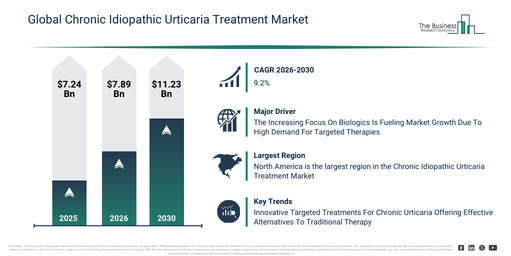
    The chronic idiopathic urticaria treatment market size has seen significant growth in recent years. It is anticipated to expand from $7.24 billion in 2025 to $7.89 billion in 2026, exhibiting a compound annual growth rate (CAGR) of 9.0%. This historical growth can be attributed to an increased diagnosis of chronic urticaria, the availability of second-line antihistamine therapies, the adoption of stepwise treatment protocols, the expansion of allergy specialty clinics, and the growing use of immunomodulatory drugs.

    The chronic idiopathic urticaria treatment market is projected to experience robust expansion over the coming years. This market is set to reach $11.23 billion by 2030, exhibiting a compound annual growth rate (CAGR) of 9.2%. Factors contributing to this growth during the forecast period include a heightened demand for biologic therapies, an increased emphasis on individualized immunology care, the proliferation of digital tools for disease management, greater investment in new urticaria treatments, and improved patient understanding and compliance with therapy. Key trends anticipated for this period encompass a wider acceptance of biologic therapies for individuals with difficult-to-treat conditions, a surge in the implementation of tailored treatment plans, increased incorporation of digital tools for symptom tracking, an expansion of available injectable medications, and a stronger emphasis on managing the disease over the long term.

    Download A Free Sample Report For Comprehensive Market Insights:

    https://www.thebusinessresearchcompany.com/sample.aspx?id=33064&type=smp

    Which Growth Drivers Are Expected To Support The Chronic Idiopathic Urticaria Treatment Market Forward?

    An escalating emphasis on biologics is anticipated to stimulate the expansion of the chronic idiopathic urticaria treatment market moving forward. Biologics are therapeutic products derived from living organisms or their constituents, designed to target specific immune system pathways for treating diseases. The growing focus on biologics is attributed to advancements in biotechnology and immunology, which have facilitated the creation of more precise and effective treatments that address the underlying mechanisms of immune-mediated conditions, rather than merely managing symptoms. These biologics specifically target the fundamental immune pathways and mast cell activation responsible for chronic idiopathic urticaria, thus transforming treatment approaches and offering patients more effective and durable symptom control. For example, in February 2025, the World Health Organization (WHO), a Switzerland-based intergovernmental body, stated that its 2023 Essential Medicines List comprises 81 biologic therapies, constituting over 15% of all listed medicines. Therefore, the heightened focus on biologics is propelling the growth of the chronic idiopathic urticaria treatment market.

    How Is The Chronic Idiopathic Urticaria Treatment Market Structured Across Different Market Segments?

    The chronic idiopathic urticaria treatment market covered in this report is segmented –

    1) By Types: Tablets; Capsules; Creams; Lotions; Injections

    2) By Drug Class: Antihistamines; Corticosteroids; Leukotriene Receptor Antagonists; Immunosuppressants; Biologic Therapies; Other Drug Class

    3) By Route Of Administration: Oral; Injectable; Topical

    4) By Distribution Channel: Hospital Pharmacies; Retail Pharmacies; Online Pharmacies

    Subsegments:

    1) By Tablets: Immediate Release Tablets; Extended Release Tablets; Enteric Coated Tablets; Chewable Tablets; Orally Disintegrating Tablets

    2) By Capsules: Hard Gelatin Capsules; Soft Gelatin Capsules; Sustained Release Capsules; Delayed Release Capsules

    3) By Creams: Medicated Topical Creams; Anti Inflammatory Creams; Antifungal Creams; Antibacterial Creams; Moisturizing Therapeutic Creams

    4) By Lotions: Medicated Therapeutic Lotions; Anti Inflammatory Lotions; Antiseptic Lotions; Moisturizing Lotions; Specialty Dermatological Lotions

    5) By Injections: Intravenous Injections; Intramuscular Injections; Subcutaneous Injections; Pre Filled Syringe Injections; Auto Injector Based Injections

    What Trends Are Influencing The Chronic Idiopathic Urticaria Treatment Market?

    Leading companies in the chronic idiopathic urticaria treatment market are concentrating on developing innovative products, such as monoclonal antibody therapies, to offer targeted, lasting relief for patients who do not respond to conventional treatments. These monoclonal antibody therapies are biologic medications specifically engineered to target immune system components, like immunoglobulin E (IgE) or other inflammatory mediators that cause chronic hives, thereby providing more precise action compared to traditional antihistamines or corticosteroids. For example, in September 2025, Celltrion Inc., a biopharmaceutical company based in South Korea, introduced Omriclo, an omalizumab biosimilar, in Norway. This product contains the same active monoclonal antibody as Xolair, works by neutralizing circulating IgE, and is administered via subcutaneous injection. Its distinctive characteristics include its first-mover status in Europe, improved accessibility via local distribution channels, and potential cost efficiencies for healthcare systems. It is intended for chronic idiopathic urticaria patients who remain symptomatic despite standard therapy, serving as a biologic alternative to conventional treatments, offering enhanced symptom management, reducing the frequency of flare-ups, and potentially improving overall quality of life by decreasing dependence on long-term antihistamine or corticosteroid use.

    Which Organizations Are Involved In The Chronic Idiopathic Urticaria Treatment Market?

    Major companies operating in the chronic idiopathic urticaria treatment market are F. Hoffmann-La Roche Ltd., Sanofi S.A., Novartis AG., AstraZeneca PLC, GlaxoSmithKline plc, Teva Pharmaceutical Industries Ltd., Regeneron Pharmaceuticals Inc., Incyte Corporation, Dr. Reddy’s Laboratories Ltd., Celltrion Inc., Yuhan Corporation, Kiniksa Pharmaceuticals Ltd., Celldex Therapeutics Inc., Septerna Therapeutics Inc., Carna Biosciences Inc., United BioPharma Inc., Recludix Pharma Inc., Jasper Therapeutics Inc., Evommune Inc., ARS Pharmaceuticals Inc

    Access The Complete Chronic Idiopathic Urticaria Treatment Market Report:

    https://www.thebusinessresearchcompany.com/report/chronic-idiopathic-urticaria-treatment-market-report

    Which Region Holds The Largest Share In The Chronic Idiopathic Urticaria Treatment Market?

    North America was the largest region in the chronic idiopathic urticaria treatment market in 2025. Asia-Pacific is expected to be the fastest-growing region in the forecast period. The regions covered in the chronic idiopathic urticaria treatment market report are Asia-Pacific, South East Asia, Western Europe, Eastern Europe, North America, South America, Middle East, Africa.

    Access a Customized Chronic Idiopathic Urticaria Treatment Market Report for Deeper Competitive Insights

    Get in touch with us:

    The Business Research Company: https://www.thebusinessresearchcompany.com/

    Americas: +1 310-496-7795

    Asia: +44 7882 955267 & +91 8897263534

    Europe: +44 7882 955267

    Email us at: marketing@tbrc.info

    Follow us on:

    LinkedIn: https://in.linkedin.com/company/the-business-research-company

    YouTube: https://www.youtube.com/channel/UC24_fI0rV8cR5DxlCpgmyFQ

    Global Market Model: https://www.thebusinessresearchcompany.com/global-market-model
  • Global Cheek Augmentation Market Outlook 2026–2035 Highlighting Expansion Opportunities

    Global Cheek Augmentation Market Outlook 2026–2035 Highlighting Expansion Opportunities

    The Business Research Company’s 2026 market reports feature advanced enhancements such as market attractiveness analysis, total addressable market evaluation, company benchmarking matrices, interactive Excel dashboards, expanded supply chain intelligence, emerging startup coverage, and detailed product insights, delivering more actionable and strategically valuable research.

    How Does The Forecasted Market Size Of The Cheek Augmentation Market Compare Between 2026 And 2030?

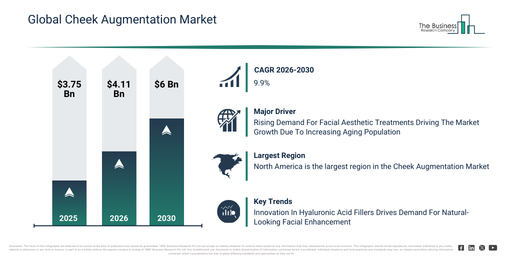
    The cheek augmentation market size has experienced robust growth over recent years. This market is anticipated to expand from $3.75 billion in 2025 to $4.11 billion in 2026, achieving a compound annual growth rate (CAGR) of 9.7%. Historically, this expansion has been driven by factors such as increasing acceptance of cosmetic procedures, the growth of medical aesthetics clinics, the availability of advanced dermal fillers, the rising influence of aesthetic medicine, and the expansion of urban cosmetic service providers.

    The cheek augmentation market is anticipated to experience substantial growth in the coming years, with its valuation expected to reach $6 billion by 2030, demonstrating a compound annual growth rate (CAGR) of 9.9%. This projected growth is fueled by several factors, including a rising demand for minimally invasive cosmetic treatments, increased adoption of AI-assisted facial analysis, the expansion of medical tourism focused on aesthetics, a growing emphasis on personalized beauty solutions, and heightened investments in aesthetic technology platforms. Furthermore, significant trends shaping this period encompass the greater utilization of 3D facial imaging for planning treatments, an increasing desire for non-surgical injectable procedures, a stronger preference for personalized aesthetic designs, the broadened application of minimally invasive facial contouring, and an enhanced focus on achieving natural-looking results.

    Download A Free Sample Report For Comprehensive Market Insights:

    https://www.thebusinessresearchcompany.com/sample.aspx?id=33062&type=smp

    Which Drivers Are Advancing The Cheek Augmentation Market Growth?

    The increasing need for facial aesthetic procedures is projected to fuel the expansion of the cheek augmentation market in the future. These treatments are cosmetic methods aimed at enhancing or restoring facial characteristics, thereby improving appearance and boosting self-confidence. This heightened demand for facial aesthetic treatments stems from an expanding aging demographic desiring a more youthful look, as the natural loss of facial volume and the emergence of wrinkles encourage numerous people to undergo procedures that can restore youthfulness and elevate self-confidence. Cheek augmentation complements facial aesthetic procedures by replenishing mid-face volume, refining facial contours, correcting asymmetry, and producing a subtle lifting effect, all of which contribute to a more youthful, harmonious, and revitalized overall facial appearance. For example, data from June 2024, provided by the American Society of Plastic Surgeons, a US-based non-profit body, indicated that minimally invasive procedures grew by 7% in 2023, surpassing surgical procedures by 2%. Concurrently, plastic surgeries observed a 5% increase, while minimally invasive procedures recorded a 7% year-over-year growth. Consequently, the increasing need for facial aesthetic procedures is propelling the expansion of the cheek augmentation market.

    What Are The Major Segment Categories Within The Cheek Augmentation Market?

    The cheek augmentation market covered in this report is segmented –

    1) By Procedure Type: Surgical Cheek Implants; Injectable Fillers; Fat Grafting Or Autologous Fat Transfer

    2) By Product: Derma Fillers; Implant; Malar Implant; Submalar Implant; Combined Implant; Other Products

    3) By Technique: Minimally Invasive Procedures; Conventional Surgical Procedures

    4) By End-User: Specialty Aesthetic Clinics Market; Medical Spas Market; Hospitals Market

    Subsegments:

    1) By Surgical Cheek Implants: Silicone Implants; Porous Polyethylene Implants; Anatomical Implants

    2) By Injectable Fillers: Hyaluronic Acid Fillers; Calcium Hydroxylapatite Fillers; Poly L Lactic Acid Fillers; Polymethyl Methacrylate Fillers

    3) By Fat Grafting Or Autologous Fat Transfer: Micro Fat Grafting; Nano Fat Grafting; Structural Fat Grafting

    What Trends Are Influencing The Future Of The Cheek Augmentation Market?

    Leading companies operating in the cheek augmentation market are concentrating on developing innovative products, such as advanced hyaluronic acid-based dermal fillers, to enhance facial volume and contour, offering improved safety and longer-lasting results. These advanced hyaluronic acid-based dermal fillers are injectable gels designed to mimic the body’s natural hyaluronic acid, helping to restore cheek volume, enhance contour, and improve facial symmetry by attracting and retaining moisture for a smoother, more youthful appearance. For instance, in January 2026, Revance Therapeutics Inc., a US-based pharmaceutical company, and TEOXANE SA., a Switzerland-based manufacturing company, received U.S. Food and Drug Administration (FDA) approval for RHA Dynamic Volume, a next-generation hyaluronic acid dermal filler developed for cheek augmentation and the correction of age-related midface contour deficiencies. The product is engineered using Preserved Network Technology, a gentle, heat-free crosslinking process that helps maintain the natural structure of hyaluronic acid, resulting in high dynamic strength, elasticity, and durability compared with conventional fillers. It is designed to provide deep structural support while adapting to facial movement, allowing natural-looking results both at rest and in motion, and has demonstrated comparable clinical effectiveness with fewer treatment sessions and touch-ups in late-stage clinical studies.

    Which Key Players Are Active In The Cheek Augmentation Market?

    Major companies operating in the cheek augmentation market are AbbVie Inc., LG Chem Life Sciences Ltd., Stryker Corporation, Zimmer Biomet Holdings Inc., Merz Aesthetics GmbH, KLS Martin Group, Sinclair Pharma Limited, Medartis Holding AG, Hugel Inc., Revance Therapeutics Inc., Medytox Inc., Anika Therapeutics Inc., Croma-Pharma GmbH, GC Aesthetics Ltd., Regen Lab SA, Teoxane Laboratories SA, Human Med AG, BioPlus Co. Ltd., Polytech Health & Aesthetics GmbH, and Sebbin Group.

    Access The Complete Cheek Augmentation Market Report:

    https://www.thebusinessresearchcompany.com/report/cheek-augmentation-market-report

    Which Area Represents The Largest Portion Of The Cheek Augmentation Market?

    North America was the largest region in the cheek augmentation market in 2025. Asia-Pacific is expected to be the fastest-growing region in the forecast period. The regions covered in the cheek augmentation market report are Asia-Pacific, South East Asia, Western Europe, Eastern Europe, North America, South America, Middle East, Africa.

    Access a Customized Cheek Augmentation Market Report for Deeper Competitive Insights

    Get in touch with us:

    The Business Research Company: https://www.thebusinessresearchcompany.com/

    Americas: +1 310-496-7795

    Asia: +44 7882 955267 & +91 8897263534

    Europe: +44 7882 955267

    Email us at: marketing@tbrc.info

    Follow us on:

    LinkedIn: https://in.linkedin.com/company/the-business-research-company

    YouTube: https://www.youtube.com/channel/UC24_fI0rV8cR5DxlCpgmyFQ

    Global Market Model: https://www.thebusinessresearchcompany.com/global-market-model
  • Technology expansion enhancing development capabilities in the Cell and Gene Therapy CRO Market

    Technology expansion enhancing development capabilities in the Cell and Gene Therapy CRO Market

    The Business Research Company’s 2026 market reports feature advanced enhancements such as market attractiveness analysis, total addressable market evaluation, company benchmarking matrices, interactive Excel dashboards, expanded supply chain intelligence, emerging startup coverage, and detailed product insights, delivering more actionable and strategically valuable research.

    How Is The Market Value Of The Cell And Gene Therapy Contract Research Organization Market Projected To Expand During 2026–2030?

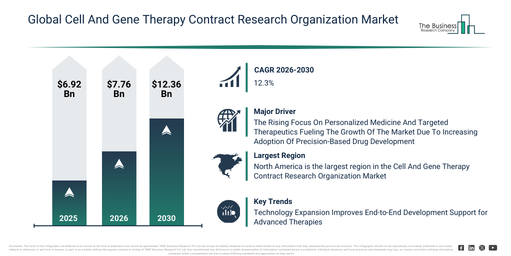
    The cell and gene therapy contract research organization market has seen rapid growth in recent years. It will grow from $6.92 billion in 2025 to $7.76 billion in 2026 at a compound annual growth rate (CAGR) of 12.1%. The market’s historical expansion is attributable to an increasing number of early-stage cell and gene therapy programs, limited in-house development capabilities, a rise in rare disease research pipelines, growing regulatory complexity within advanced therapies, and an increasing reliance on external research expertise.

    The market size for cell and gene therapy contract research organizations is projected to experience swift expansion over the coming years. This market is anticipated to reach $12.36 billion in 2030, exhibiting a compound annual growth rate (CAGR) of 12.3%. Factors contributing to this growth during the forecast period include heightened clinical trial activity in gene therapies, the broadening of personalized medicine development, increased investments in oncology and genetic disorder research, a rising need for accelerated development timelines, and enhanced collaboration between biotechnology companies and CROs. Key trends observed over the forecast period encompass an increase in outsourcing for cell and gene therapy research, a surging demand for integrated preclinical and clinical services, a heightened emphasis on regulatory and compliance expertise, the expansion of support for vector development and manufacturing, and improved utilization of data-driven trial management strategies.

    Download A Free Sample Report For Comprehensive Market Insights:

    https://www.thebusinessresearchcompany.com/sample.aspx?id=33057&type=smp

    Which Significant Factors Are Encouraging Growth In The Cell And Gene Therapy Contract Research Organization Market?

    The increasing emphasis on personalized medicine and targeted therapeutics is anticipated to drive expansion in the cell and gene therapy contract research organization (CRO) market moving ahead. This approach entails creating treatments specifically adapted to an individual’s unique genetic, molecular, or cellular profile to enhance effectiveness and minimize side effects. The heightened attention on personalized medicine stems from regulators and healthcare systems increasingly favoring precision therapies to tackle intricate diseases and attain improved clinical outcomes. Cell and gene therapy contract research organizations (CROs) facilitate personalized medicine through their specialized preclinical, clinical, and regulatory services essential for the development, testing, and validation of intricate gene- and cell-based therapeutic products. As an illustration, in April 2025, the Personalized Medicine Coalition, a US-based nonprofit, reported that the Food and Drug Administration (FDA) approved 18 personalized medicines during 2024, representing approximately 38% of all newly approved therapeutic molecular entities. Consequently, the expanding focus on personalized medicine and targeted therapeutics is a significant factor boosting the cell and gene therapy contract research organization (CRO) market.

    How Are Different Segment Groups Identified Within The Cell And Gene Therapy Contract Research Organization Market?

    The cell and gene therapy contract research organization market covered in this report is segmented –

    1) By Type: Preclinical Contract Research Organization; Clinical Stage Contract Research Organization; Other Types

    2) By Service: Project And Clinical Trial Management; Regulatory Strategy; Data Management And Medical Writing; Clinical Monitoring; Quality Management And Good Manufacturing Practice Compliance; Biostatistics And Safety Monitoring; Patient And Site Recruitment; Technology Transfer; Other Services

    3) By Indication: Oncology; Central Nervous System Disorders; Infectious Diseases; Immunological Disorders; Cardiovascular Diseases; Respiratory Diseases; Diabetes; Ophthalmology; Pain Management; Other Indications

    4) By Modality: Cell-Based Therapies; Gene Therapies; Gene-Modified Cell Therapies

    5) By Application: Hospital; Research Institute; Other Applications

    Subsegments:

    1) By Preclinical Contract Research Organization: In Vitro Testing Services; In Vivo Animal Model Services; Toxicology And Safety Assessment; Other Preclinical Services

    2) By Clinical Stage Contract Research Organization: Phase I Clinical Trial Services; Phase II Clinical Trial Services; Phase III Clinical Trial Services; Other Clinical Stage Services

    3) By Other Types: Regulatory Consulting Services; Process Development Services; Manufacturing Support Services; Other Support Services

    Which Trends Are Influencing The Direction Of The Cell And Gene Therapy Contract Research Organization Market?

    Major companies within the cell and gene therapy contract research organization (CRO) market are concentrating on developing innovative solutions, such as expanded laboratory and analytical services. These efforts aim to enhance the efficiency of therapy development, ensure regulatory compliance, and improve research precision by offering state-of-the-art facilities, specialized equipment, and integrated testing capabilities for cell and gene therapies. Expanded laboratory and analytical services refer to contract research organization (CRO) offerings that increase capacity, enable the execution of complex assays, and provide sponsors with end-to-end support for the development of advanced cell and gene therapies. For instance, in August 2025, Labcorp Holdings Inc., a US-based healthcare company, enlarged its cell and gene therapy laboratory in Madison, Wisconsin, thereby improving its capabilities for cell characterization, vector analytics, and regulatory-compliant testing. This expanded facility now provides specialized infrastructure for intricate cell and gene therapy workflows, supports high-throughput sample processing, and integrates advanced analytical platforms, positioning it as a comprehensive solution for accelerating cell and gene therapy research and development.

    Who Are The Key Market Participants In The Cell And Gene Therapy Contract Research Organization Market?

    Major companies operating in the cell and gene therapy contract research organization market are Thermo Fisher Scientific Inc., IQVIA Holdings Inc., Laboratory Corporation of America Holdings (Labcorp), ICON plc, WuXi AppTec Co. Ltd., Syneos Health Inc., Charles River Laboratories International Inc., Parexel International Corporation, Fortrea Holdings Inc., CMIC Co. Ltd., Medpace Holdings Inc., PharmaLex GmbH, Premier Research International LLC, Worldwide Clinical Trials Inc., Novotech (Australia) Pty Ltd., Precision for Medicine Inc., Syngene International Limited, Allucent Inc., TFS HealthScience AB, QPS Holdings LLC, Altasciences Company Inc., Veristat LLC, Linical Co. Ltd., Aixial Group, ProRelix Research LLC

    Access The Complete Cell And Gene Therapy Contract Research Organization Market Report:

    https://www.thebusinessresearchcompany.com/report/cell-and-gene-therapy-contract-research-organization-market-report

    Which Region Leads The Cell And Gene Therapy Contract Research Organization Market By Size?

    North America was the largest region in the cell and gene therapy contract research organization (CRO) market in 2025. Asia-Pacific is expected to be the fastest-growing region in the forecast period. The regions covered in the cell and gene therapy contract research organization market report are Asia-Pacific, South East Asia, Western Europe, Eastern Europe, North America, South America, Middle East, Africa.

    Access a Customized Cell And Gene Therapy Contract Research Organization Market Report for Deeper Competitive Insights

    Get in touch with us:

    The Business Research Company: https://www.thebusinessresearchcompany.com/

    Americas: +1 310-496-7795

    Asia: +44 7882 955267 & +91 8897263534

    Europe: +44 7882 955267

    Email us at: marketing@tbrc.info

    Follow us on:

    LinkedIn: https://in.linkedin.com/company/the-business-research-company

    YouTube: https://www.youtube.com/channel/UC24_fI0rV8cR5DxlCpgmyFQ

    Global Market Model: https://www.thebusinessresearchcompany.com/global-market-model
  • Growing demand for early detection boosting the Cardiovascular Genetic Testing Market

    Growing demand for early detection boosting the Cardiovascular Genetic Testing Market

    The Business Research Company’s 2026 market reports feature advanced enhancements such as market attractiveness analysis, total addressable market evaluation, company benchmarking matrices, interactive Excel dashboards, expanded supply chain intelligence, emerging startup coverage, and detailed product insights, delivering more actionable and strategically valuable research.

    What Growth In Market Value Is Anticipated For The Cardiovascular Genetic Testing Market Between 2026 And 2030?

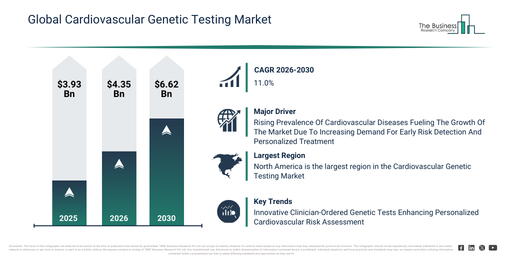
    The market for cardiovascular genetic testing has experienced significant growth over the past few years. It is anticipated to expand from $3.93 billion in 2025 to $4.35 billion in 2026, at a compound annual growth rate (CAGR) of 10.8%. The growth observed in the past can be attributed to heightened awareness of inherited cardiovascular disorders, the broadening of molecular diagnostic capabilities, decreasing costs associated with genetic sequencing, an increase in the use of genetic counseling services, and more research in cardiovascular genomics.

    The cardiovascular genetic testing market is set to experience substantial growth in the upcoming years, projected to reach $6.62 billion in 2030 with a compound annual growth rate (CAGR) of 11.0%. This expansion over the forecast period is driven by factors such as the increasing need for precision medicine approaches, a rise in the adoption of population-based genetic screening, the broader application of AI-driven variant interpretation, the growing integration of genomics into clinical decision making, and an increased focus on preventive cardiovascular healthcare. Significant trends expected during this period include the wider acceptance of predictive genetic risk assessment, a surge in the use of multigene panel testing, the deeper integration of bioinformatics and AI analytics, the expansion of pharmacogenomic testing applications, and an enhanced emphasis on personalized cardiovascular care.

    Download A Free Sample Report For Comprehensive Market Insights:

    https://www.thebusinessresearchcompany.com/sample.aspx?id=33054&type=smp

    What Important Drivers Are Powering The Cardiovascular Genetic Testing Market Growth?

    The increasing incidence of cardiovascular diseases is projected to drive the expansion of the cardiovascular genetic testing market moving forward. Cardiovascular diseases, or CVDs, encompass a range of conditions affecting the heart and blood vessels, such as heart attacks, strokes, and hypertension. The rise in cardiovascular disease prevalence is primarily attributed to increasingly sedentary lifestyles linked to urbanization, which foster obesity, high blood pressure, and metabolic disorders. This growing frequency of cardiovascular diseases stimulates demand for genetic testing, as early detection of genetic predispositions enables personalized prevention and treatment strategies to mitigate the risk of serious heart issues. For instance, in January 2024, the American Heart Association, a US-based non-profit organization, reported that the age-adjusted death rate from cardiovascular disease reached 233.3 per 100,000 in 2024, indicating a 4.0% increase from 224.4 per 100,000 in 2023. Consequently, the rising prevalence of cardiovascular disease is a significant force propelling the growth of the cardiovascular genetic testing market.

    Which Segment Groups Define The Cardiovascular Genetic Testing Market Landscape?

    The cardiovascular genetic testing market covered in this report is segmented –

    1) By Testing Type: Predictive Testing; Carrier Testing; Prenatal And Newborn Testing; Diagnostic Testing; Pharmacogenomic Testing; Other Testing Types

    2) By Disease: Inherited Cardiomyopathies; Hypertrophic Cardiomyopathy (HCM); Dilated Cardiomyopathy (DCM); Arrhythmia; Aortopathies; Other Diseases

    3) By Technology: Cytogenetic Testing; Biochemical Testing; Molecular Testing

    4) By Application: Chromosome Analysis; Genetic Disease Diagnosis; Cardiovascular Disease Diagnosis; Other Applications

    5) By End User: Hospitals And Clinics; Diagnostic Laboratories; Research Institutions; Genetic Counseling Centers; Pharmaceutical Companies; Direct-To-Consumer Testing

    Subsegments:

    1) By Predictive Testing: Presymptomatic Risk Assessment; Familial Variant Screening; Polygenic Risk Evaluation; Late Onset Disease Prediction; Susceptibility Gene Testing

    2) By Carrier Testing: Autosomal Recessive Carrier Screening; Linked Carrier Screening; Expanded Carrier Screening Panels; Single Gene Carrier Screening; Family History Based Carrier Testing

    3) By Prenatal And Newborn Testing: Non Invasive Prenatal Genetic Testing; Invasive Prenatal Diagnostic Testing; Newborn Metabolic Screening; Congenital Heart Disease Genetic Screening; Neonatal Gene Panel Testing

    4) By Diagnostic Testing: Single Gene Diagnostic Testing; Multigene Panel Diagnostic Testing; Whole Exome Diagnostic Testing; Whole Genome Diagnostic Testing; Variant Confirmation Testing

    5) By Pharmacogenomic Testing: Drug Response Gene Testing; Adverse Drug Reaction Risk Testing; Dose Optimization Genetic Testing; Anticoagulant Response Testing; Cardiovascular Drug Metabolism Testing

    6) By Other Testing Types: Cascade Family Testing; Population Based Genetic Screening; Research Use Genetic Testing; Confirmatory Follow Up Testing; Clinical Trial Genetic Testing

    What Trends Are Influencing The Cardiovascular Genetic Testing Market Outlook?

    Leading companies in the cardiovascular genetic testing market are concentrating on developing innovative solutions, such as clinician-ordered tests, to ensure medical necessity and tailor them to a patient’s specific health condition, thereby reducing redundant testing and costs. A clinician-ordered test is defined as a medical examination or diagnostic procedure requested by a healthcare professional to assess, monitor, or guide the management of an individual’s health status. For instance, in September 2025, Mass General Brigham, a US-based not-for-profit integrated academic healthcare system, in collaboration with Broad Clinical Labs, a US-based genomic data generation laboratory, and Mass General Brigham Laboratory for Molecular Medicine, a US-based molecular diagnostic laboratory, introduced a genetic test designed to evaluate inherited risk for eight cardiovascular conditions. This clinician-ordered test is offered on a self-pay basis and assesses genetic predisposition to eight conditions, which include atrial fibrillation, coronary artery disease, type 2 diabetes, elevated lipoprotein(a), hypercholesterolemia, hypertension, thoracic aortic aneurysm, and venous thromboembolism. Its development incorporated genotype and clinical data from 236,393 participants in the NIH’s All of Us Research Program. Publicly available polygenic risk scores for each condition were integrated utilizing PRSmix, an elastic-net modeling approach that combines multiple component scores into a single, comprehensive risk score per disease. High-resolution genetic data is captured through a clinical blended genome-exome assay at Broad Clinical Labs, while the CLIA-certified Mass General Brigham Laboratory for Molecular Medicine is responsible for interpreting the results and generating patient-friendly reports.

    Which Firms Are Competing In The Cardiovascular Genetic Testing Market?

    Major companies operating in the cardiovascular genetic testing market are Labcorp Holdings Inc., Quest Diagnostics Inc., ICON plc, Illumina Inc., Apollo Hospitals, OPKO Health Inc., Revvity Inc., ARUP Laboratories Inc., Mayo Clinic Laboratories, Fulgent Genetics Inc., MedGenome Inc., Genome Medical, PreventionGenetics, Eurofins Genomics LLC, Blueprint Genetics Inc., MapmyGenome, GENinCode, Allelica Srl, Rocket Pharma Inc., and Health in Code SL.

    Access The Complete Cardiovascular Genetic Testing Market Report:

    https://www.thebusinessresearchcompany.com/report/cardiovascular-genetic-testing-market-report

    What Is The Largest Regional Market In The Cardiovascular Genetic Testing Market?

    North America was the largest region in the cardiovascular genetic testing market in 2025. Asia-Pacific is expected to be the fastest-growing region in the forecast period. The regions covered in the cardiovascular genetic testing market report are Asia-Pacific, South East Asia, Western Europe, Eastern Europe, North America, South America, Middle East, Africa.

    Access a Customized Cardiovascular Genetic Testing Market Report for Deeper Competitive Insights

    Get in touch with us:

    The Business Research Company: https://www.thebusinessresearchcompany.com/

    Americas: +1 310-496-7795

    Asia: +44 7882 955267 & +91 8897263534

    Europe: +44 7882 955267

    Email us at: marketing@tbrc.info

    Follow us on:

    LinkedIn: https://in.linkedin.com/company/the-business-research-company

    YouTube: https://www.youtube.com/channel/UC24_fI0rV8cR5DxlCpgmyFQ

    Global Market Model: https://www.thebusinessresearchcompany.com/global-market-model
  • Global Carboxy Therapy Market Forecast Reflecting Growth Trends from 2026–2030

    Global Carboxy Therapy Market Forecast Reflecting Growth Trends from 2026–2030

    The Business Research Company’s 2026 market reports feature advanced enhancements such as market attractiveness analysis, total addressable market evaluation, company benchmarking matrices, interactive Excel dashboards, expanded supply chain intelligence, emerging startup coverage, and detailed product insights, delivering more actionable and strategically valuable research.

    How Will The Market Value Of The Carboxy Therapy Market Increase Between 2026 And 2030?

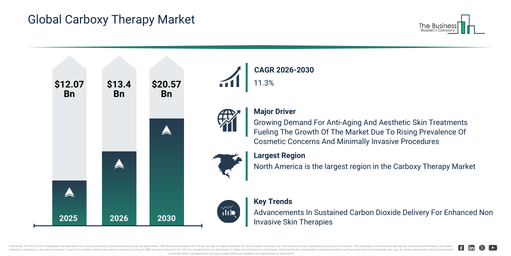
    The carboxy therapy market has experienced swift expansion recently. This market is projected to expand from $12.07 billion in 2025 to $13.4 billion by 2026, demonstrating a compound annual growth rate (CAGR) of 11.1%. Several factors contributed to its expansion during past periods, including the rise in aesthetic medicine procedures, increasing consumer awareness of minimally invasive treatments, enhanced availability of professional aesthetic devices, the expansion of dermatology and cosmetic clinics, and the growing acceptance of aesthetic therapies.

    The carboxy therapy market size is projected to experience substantial growth in the upcoming years. The market is set to expand to $20.57 billion by 2030, progressing at a compound annual growth rate (CAGR) of 11.3%. This expansion during the forecast period is primarily driven by a heightened demand for personalized cosmetic treatments, increased uptake of regenerative medicine techniques, the broadening of wellness and preventive care services, a stronger emphasis on evidence-based aesthetic outcomes, and greater investments in advanced therapy devices. Significant developments expected in the forecast period encompass a wider adoption of personalized aesthetic treatment protocols, an increased integration of combination therapy strategies, the expansion of non-invasive skin rejuvenation procedures, a heightened focus on collagen stimulation therapies, and a stronger demand for monitoring clinical outcomes.

    Download A Free Sample Report For Comprehensive Market Insights:

    https://www.thebusinessresearchcompany.com/sample.aspx?id=33052&type=smp

    What Key Growth Drivers Are Influencing The Carboxy Therapy Market?

    The expansion of the carboxy therapy market is projected to be fueled by the increasing occurrence of skin aging and various cosmetic issues. These concerns encompass noticeable indicators such as wrinkles, fine lines, skin looseness, under-eye circles, cellulite, and inconsistent skin texture, affecting both older and younger demographics worldwide. The heightened prevalence of skin aging and cosmetic concerns stems from prolonged exposure to ultraviolet radiation, ambient pollution, and lifestyle choices that hasten collagen deterioration and skin degradation. Carboxy therapy contributes to addressing these issues by enhancing microcirculation, boosting oxygen supply, and stimulating the regeneration of collagen, thereby treating multiple aesthetic indications through a method that is minimally invasive. For example, in June 2024, data from the International Society of Aesthetic Plastic Surgery, a professional organization based in the US, indicated that facial and head aesthetic procedures saw substantial growth in 2023 compared to the prior year, reaching a total of over 6.5 million interventions, which represents a 19.6% increase. Consequently, the rising incidence of skin aging and cosmetic concerns is a significant catalyst for the growth of the carboxy therapy market.

    How Is Segment Classification Applied In The Carboxy Therapy Market?

    The carboxy therapy market covered in this report is segmented –

    1) By Service Category: Aesthetic Rejuvenation Services; Therapeutic Medical Treatments; Rehabilitative And Sports Medicine; Post Surgical Recovery Programs

    2) By Product Type: Professional Devices; At-Home Kits

    3) By Gas Type: Carbon Dioxide; Oxygen

    4) By Application: Stretch Marks; Cellulite; Alopecia; Psoriasis; Dark Circles

    5) By End User: Aesthetic Clinics And Dermatology Centers; Hospitals And Medical Centers; Wellness And Spa Centers

    Subsegments:

    1) By Aesthetic Rejuvenation Services: Facial Skin Tightening Treatments; Body Contouring Treatments; Cellulite Reduction Treatments; Stretch Mark Reduction Treatments; Scar Appearance Improvement Treatments; Skin Texture And Tone Enhancement Treatments

    2) By Therapeutic Medical Treatments: Chronic Wound Management Treatments; Peripheral Vascular Disorder Treatments; Dermatological Condition Treatments; Pain Management Treatments; Circulatory Disorder Treatments

    3) By Rehabilitative And Sports Medicine: Muscle Injury Recovery Treatments; Joint Pain Relief Treatments; Soft Tissue Rehabilitation Treatments; Sports Injury Recovery Treatments; Inflammation Reduction Treatments

    4) By Post Surgical Recovery Programs: Postoperative Scar Management Treatments; Edema Reduction Treatments; Tissue Healing Support Treatments; Fibrosis Reduction Treatments; Circulation Improvement Treatments

    What Trends Are Affecting The Carboxy Therapy Market Dynamics?

    Leading entities within the carboxytherapy market are concentrating on creating novel solutions, including patented sustained carbon dioxide delivery systems designed for professional-grade carboxytherapy applications. This effort aims to satisfy the increasing need for safer, more efficacious non-invasive aesthetic and regenerative skin treatments. Such patented sustained carbon dioxide delivery systems represent sophisticated formulations and device innovations that progressively release carbon dioxide over an extended duration, facilitating more profound skin penetration and improved circulation when contrasted with conventional fast-acting gels and packs which rapidly dissipate upon application. For example, in August 2025, Lumisque Skincare, a clinical skincare and biomedical firm based in the US, unveiled enhancements to its CO2Lift carboxytherapy treatment. This features a patented lactone hydrolysis system that consistently emits carbon dioxide for more than an hour, supporting more profound tissue absorption and a wider range of therapeutic applications. The CO2Lift system is being adopted by medical doctors and aesthetic experts for purposes such as non-invasive skin rejuvenation, aiding wound recovery, and boosting microcirculation, thereby presenting a professional-level substitute for existing consumer-grade CO2 offerings. Lumisque’s demonstrated clinical efficacy and professional acceptance emphasize the technology’s capacity to elevate carboxytherapy beyond fundamental cosmetic uses, indicating ongoing ingenuity within the market.

    Which Companies Are Influencing The Carboxy Therapy Market?

    Major companies operating in the carboxy therapy market are Cynosure Inc., Alma Lasers Ltd., Cosmopro Srl, Cocoon Medical Ltd., MBE Medical Divisions GmbH, Carbossiterapia Italiana Srl, DTA Medical GmbH, Alvi Prague Co., Kastner-Praxisbedarf GmbH, MEDAiON Plasma GmbH, Beijing Jontelaser Technologies Co. Ltd., HyaCorp GmbH, Sublime Skin Ltd., Hyaluronic GmbH, Aesthetic Solutions Ltd., RevitaLaze GmbH, Medcos GmbH, Mezopharma GmbH, Advon Technologies Pvt. Ltd., and Solana Beauty Technology Co. Ltd.

    Access The Complete Carboxy Therapy Market Report:

    https://www.thebusinessresearchcompany.com/report/carboxy-therapy-market-report

    Which Regional Market Leads The Carboxy Therapy Market?

    North America was the largest region in the carboxy therapy market in 2025. Asia-Pacific is expected to be the fastest-growing region in the forecast period. The regions covered in the carboxy therapy market report are Asia-Pacific, South East Asia, Western Europe, Eastern Europe, North America, South America, Middle East, Africa.

    Access a Customized Carboxy Therapy Market Report for Deeper Competitive Insights

    Get in touch with us:

    The Business Research Company: https://www.thebusinessresearchcompany.com/

    Americas: +1 310-496-7795

    Asia: +44 7882 955267 & +91 8897263534

    Europe: +44 7882 955267

    Email us at: marketing@tbrc.info

    Follow us on:

    LinkedIn: https://in.linkedin.com/company/the-business-research-company

    YouTube: https://www.youtube.com/channel/UC24_fI0rV8cR5DxlCpgmyFQ

    Global Market Model: https://www.thebusinessresearchcompany.com/global-market-model
  • Blastomycosis Treatment Market Outlook Indicating Growth to $1.06 Billion by 2030

    Blastomycosis Treatment Market Outlook Indicating Growth to $1.06 Billion by 2030

    The Business Research Company’s 2026 market reports feature advanced enhancements such as market attractiveness analysis, total addressable market evaluation, company benchmarking matrices, interactive Excel dashboards, expanded supply chain intelligence, emerging startup coverage, and detailed product insights, delivering more actionable and strategically valuable research.

    How Will The Market Value Of The Blastomycosis Treatment Market Change Between 2026 And 2030?

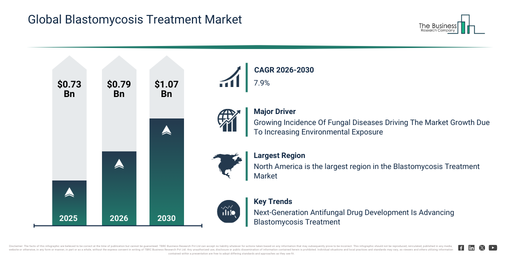
    The blastomycosis treatment market has seen substantial growth in recent years. It is anticipated to expand from $0.73 billion in 2025 to $0.79 billion in 2026, demonstrating a compound annual growth rate (CAGR) of 7.6%. The market’s past growth is attributable to heightened awareness of systemic fungal infections, the availability of antifungal drug therapies, the enlargement of diagnostic laboratory services, increased clinical recognition of blastomycosis cases, and the proliferation of infectious disease treatment programs.

    The blastomycosis treatment market is anticipated to experience substantial expansion in the coming years. It is projected to reach $1.07 billion by 2030, demonstrating a compound annual growth rate (CAGR) of 7.9%. This expansion throughout the forecast period can be attributed to a heightened emphasis on timely and precise diagnosis, the increasing development of improved antifungal formulations, the establishment of more specialized infectious disease care centers, the rising adoption of personalized treatment strategies, and greater investment in fungal disease research. Prominent trends expected during this period include a wider embrace of advanced diagnostic methods, the increased application of targeted antifungal therapies, the broadening of therapeutic drug monitoring practices, a stronger focus on early disease detection, and improved integration of clinical decision support tools.

    Download A Free Sample Report For Comprehensive Market Insights:

    https://www.thebusinessresearchcompany.com/sample.aspx?id=33044&type=smp

    What Influential Factors Are Boosting The Blastomycosis Treatment Market Demand?

    The rising prevalence of fungal ailments is anticipated to fuel the expansion of the blastomycosis treatment market moving forward. Fungal diseases are infections triggered by pathogenic fungi capable of entering the body via inhalation, direct contact, or exposure to environmental factors. The increase in fungal disease occurrences is largely attributable to climate-related environmental shifts, as greater rainfall and flooding create damp, organic soil environments conducive to fungal spore proliferation and subsequent human interaction. The growing incidence of fungal infections generates a need for effective treatment solutions, as timely diagnosis and appropriate antifungal medication are crucial for preventing severe health issues and decreasing mortality rates. For example, in May 2025, the UK Health Security Agency, a UK-based governmental body, reported a 4% rise in bloodstream infections linked to yeast in 2024 compared with 2023, with cases increasing from 2,170 to 2,247. Consequently, the increasing incidence of fungal diseases is a key factor propelling the growth of the blastomycosis treatment market. An expanding immunocompromised demographic is projected to boost the blastomycosis treatment market going forward. The immunocompromised population encompasses individuals with weakened immune systems resulting from underlying medical conditions, genetic predispositions, or therapeutic interventions such as chemotherapy, immunosuppressive medications, or organ transplants. This population is growing due to improved longevity for those with chronic illnesses, coupled with the wider application of immunosuppressive and immunomodulating therapies for autoimmune and inflammatory disorders. Blastomycosis treatment offers vital support to the immunocompromised by delivering effective antifungal therapy that manages severe and widespread infections, diminishes fungal load, and averts life-threatening complications in patients with compromised immunity. As an illustration, in September 2024, the South Korea–based journal Infection & Chemotherapy (IC) indicated that as of December 2023, South Korea had accumulated 19,001 HIV diagnoses, of which 1,219 (6.4%) were women. In 2022 alone, 1,066 new HIV cases were identified, including 82 women (7.7%), consisting of 35 Korean nationals and 47 foreign nationals. During the same year, the total number of Korean nationals living with HIV in the country reached 15,880, with 998 cases being women. Thus, the increasing immunocompromised population is a driving force behind the growth of the blastomycosis treatment market.

    What Are The Major Segment Categories Within The Blastomycosis Treatment Market?

    The blastomycosis treatment market covered in this report is segmented –

    1) By Treatment Type: Antifungal Drugs; Surgical Intervention

    2) By Anatomy: Lung; Bones; Central Nervous System; Other Anatomy

    3) By Dosage: Tablet; Injection; Capsule; Other Dosage forms

    4) By Route Of Administration: Intravenous; Oral; Other Route Of Administrations

    5) By End-User: Hospitals; Outpatient Clinics; Diagnostic Laboratories

    Subsegments:

    1) By Antifungal Drugs: Azole Antifungal Agents; Polyene Antifungal Agents; Echinocandin Antifungal Agents; Oral Antifungal Formulations; Intravenous Antifungal Formulations

    2) By Surgical Intervention: Lesion Debridement Procedures; Abscess Drainage Procedures; Lung Resection Procedures; Soft Tissue Excision Procedures

    What Trends Are Influencing The Blastomycosis Treatment Market?

    Companies operating in the blastomycosis treatment market are increasingly focusing on developing advanced solutions, such as novel antifungal drugs, to achieve greater treatment effectiveness, improved safety profiles, and a stronger position in addressing the unmet needs associated with severe systemic fungal infections. This antifungal drug development involves creating new therapies designed to enhance the effectiveness of existing treatments, minimize toxicity, overcome drug resistance, and provide superior dosing, formulation, or delivery methods. For example, in June 2024, the US-based biotechnology firm Elion Therapeutics announced that its product, SF001, is a next-generation polyene antifungal and a new analog of amphotericin B, a medication recognized as a primary treatment for serious systemic fungal infections, including blastomycosis. Although the press release specifically referenced invasive fungal infections like aspergillosis, SF001’s operational mechanism, as an amphotericin B derivative engineered to maintain broad-spectrum antifungal properties while reducing adverse effects, also makes it pertinent to blastomycosis therapy. Consequently, given amphotericin B’s efficacy against Blastomyces dermatitidis, a medication developed from its foundation and mechanism, such as SF001, is logically applicable to the treatment of blastomycosis.

    Who Are The Firms Contributing To The Blastomycosis Treatment Market Ecosystem?

    Major companies operating in the blastomycosis treatment market are Johnson & Johnson, Pfizer Inc., AbbVie Inc., Merck & Co. Inc., Bayer AG, Sanofi S.A., Novartis AG, AstraZeneca plc, Bristol-Myers Squibb Company, Thermo Fisher Scientific Inc., GlaxoSmithKline plc, Eli Lilly and Company, Takeda Pharmaceutical Company Limited, Gilead Sciences Inc., Teva Pharmaceutical Industries Ltd., Viatris Inc., Astellas Pharma Inc., bioMérieux SA, Cipla Ltd., Lupin Limited, SCYNEXIS Inc., and F2G Ltd.

    Access The Complete Blastomycosis Treatment Market Report:

    https://www.thebusinessresearchcompany.com/report/blastomycosis-treatment-market-report

    Which Region Commands The Largest Share Of The Blastomycosis Treatment Market?

    North America was the largest region in the blastomycosis treatment market in 2025. Asia-Pacific is expected to be the fastest-growing region in the forecast period. The regions covered in the blastomycosis treatment market report are Asia-Pacific, South East Asia, Western Europe, Eastern Europe, North America, South America, Middle East, Africa.

    Access a Customized Blastomycosis Treatment Market Report for Deeper Competitive Insights

    Get in touch with us:

    The Business Research Company: https://www.thebusinessresearchcompany.com/

    Americas: +1 310-496-7795

    Asia: +44 7882 955267 & +91 8897263534

    Europe: +44 7882 955267

    Email us at: marketing@tbrc.info

    Follow us on:

    LinkedIn: https://in.linkedin.com/company/the-business-research-company

    YouTube: https://www.youtube.com/channel/UC24_fI0rV8cR5DxlCpgmyFQ

    Global Market Model: https://www.thebusinessresearchcompany.com/global-market-model
  • At-Home Lab Testing Market Expected to Reach $17.37 Billion by 2030 at 9.3% CAGR

    At-Home Lab Testing Market Expected to Reach $17.37 Billion by 2030 at 9.3% CAGR

    The Business Research Company’s 2026 market reports feature advanced enhancements such as market attractiveness analysis, total addressable market evaluation, company benchmarking matrices, interactive Excel dashboards, expanded supply chain intelligence, emerging startup coverage, and detailed product insights, delivering more actionable and strategically valuable research.

    What Increase In Market Value Is Predicted For The At-Home Lab Testing Market During The 2026–2030 Period?

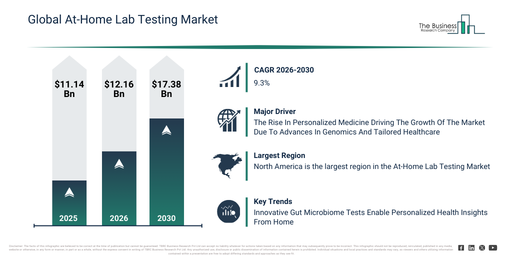
    The at-home lab testing market has experienced substantial growth in recent years. It is forecast to increase from $11.14 billion in 2025 to $12.16 billion in 2026, reflecting a compound annual growth rate (CAGR) of 9.1%. The expansion observed in prior periods can be attributed to a rising consumer preference for home-based healthcare, the broader reach of telehealth services, a greater understanding of preventive diagnostics, the increasing availability of mail-in testing kits, and enhancements in laboratory processing technologies.

    The at-home lab testing market is anticipated to experience robust growth in the coming years, with its size projected to reach $17.38 billion in 2030, exhibiting a compound annual growth rate (CAGR) of 9.3%. This expansion over the forecast period is attributable to an increasing demand for personalized health insights, the rising adoption of genetic and hormone testing, the broadening of digital diagnostics ecosystems, growing investments in home healthcare services, and a heightened focus on data-driven health management. Key trends identified for this period include the increasing adoption of self-collection diagnostic kits, a rising demand for remote health monitoring solutions, the growing integration of digital health platforms, an expansion of direct-to-consumer testing services, and an enhanced emphasis on preventive healthcare.

    Download A Free Sample Report For Comprehensive Market Insights:

    https://www.thebusinessresearchcompany.com/sample.aspx?id=33029&type=smp

    Which Significant Factors Are Encouraging Growth In The At-Home Lab Testing Market?

    The expansion of personalized medicine is expected to propel the future growth of the at-home lab testing market. This medical approach involves customizing the prevention, diagnosis, and treatment of diseases based on an individual’s genetic, environmental, and lifestyle factors. The increasing prevalence of personalized medicine is attributed to advancements in genomics, which enable the analysis of an individual’s genetic makeup to tailor medical treatments and interventions for more precise, effective, and targeted healthcare outcomes. Personalized medicine enhances at-home lab testing by adapting diagnostic approaches and recommendations to an individual’s genetic, lifestyle, and health profile, leading to more accurate, actionable, and convenient healthcare insights. For instance, in February 2024, the Personalized Medicine Coalition, a US-based non-profit organization, reported that in 2023, the FDA approved 16 new personalized treatments for rare disease patients, an increase from six in 2022. The newly approved personalized treatments for 2023 also included seven cancer drugs and three for other diseases and conditions. Consequently, the rise in personalized medicine is a key driver for the growth of the at-home lab testing market.

    What Segment Categories Are Evaluated In The At-Home Lab Testing Market Study?

    The at-home lab testing market covered in this report is segmented –

    1) By Test Type: Glucose Test Kits; Infectious Disease Test Kits; Pregnancy And Fertility Test Kits; Cholesterol And Lipid Test Kits; Genetic Test Kits; Hormone Test Kits; Allergy Test Kits; Drug And Alcohol Test Kits; Coagulation And INR Test Kits; Other Test Kits

    2) By Sample Type: Blood; Saliva; Urine; Swab Samples; Other Sample Types

    3) By Distribution Channel: Hospital Pharmacies; Retail Pharmacies; Online Pharmacies

    4) By End User: Individuals; Healthcare Providers; Employers And Organizations; Other End Users

    Subsegments:

    1) By Glucose Test Kits: Blood Glucose Monitoring Kits; Continuous Glucose Monitoring Kits; Post Meal Glucose Test Kits; Fasting Glucose Test Kits

    2) By Infectious Disease Test Kits: Viral Infection Test Kits; Bacterial Infection Test Kits; Respiratory Infection Test Kits; Sexually Transmitted Infection Test Kits

    3) By Pregnancy And Fertility Test Kits: Pregnancy Detection Test Kits; Ovulation Prediction Test Kits; Fertility Hormone Test Kits; Early Pregnancy Confirmation Test Kits

    4) By Cholesterol And Lipid Test Kits: Total Cholesterol Test Kits; High Density Lipoprotein Cholesterol Test Kits; Low Density Lipoprotein Cholesterol Test Kits; Triglyceride Test Kits

    5) By Genetic Test Kits: Ancestry Genetic Test Kits; Health Risk Genetic Test Kits; Carrier Screening Test Kits; Personalized Genetic Wellness Test Kits

    6) By Hormone Test Kits: Thyroid Hormone Test Kits; Reproductive Hormone Test Kits; Stress Hormone Test Kits; Metabolic Hormone Test Kits

    7) By Allergy Test Kits: Food Allergy Test Kits; Environmental Allergy Test Kits; Pet Allergy Test Kits; Respiratory Allergy Test Kits

    8) By Drug And Alcohol Test Kits: Alcohol Detection Test Kits; Prescription Drug Test Kits; Illicit Drug Test Kits; Multi Substance Test Kits

    9) By Coagulation And INR Test Kits: Prothrombin Time Test Kits; International Normalized Ratio Monitoring Kits; Blood Clotting Function Test Kits; Anticoagulant Therapy Monitoring Test Kits

    10) By Other Test Kits: Vitamin Deficiency Test Kits; Metabolic Health Test Kits; Kidney Function Test Kits; Liver Function Test Kits

    What Trends Are Affecting The Growth Of The At-Home Lab Testing Market?

    Major companies in the at-home lab testing market are concentrating on developing innovative solutions, such as direct-to-consumer gut microbiome test kits, to deliver personalized health insights without requiring clinic visits. A direct-to-consumer gut microbiome test kit is a product allowing individuals to collect a sample at home and receive an analysis of their gut bacteria and tailored health insights without needing a doctor’s visit. For instance, in January 2025, CJ Bioscience Inc., a South Korea-based biotech company, launched a gut microbiome testing service aimed at enabling personalized nutrition recommendations. This service, named SMILE GUT, enables users to collect a stool sample at home and obtain a detailed analysis of their gut bacterial composition. Utilizing AI and a database of over 140,000 profiles, the test generates a Gut Microbiome Index score and identifies areas for dietary or probiotic adjustments. The company also provides personalized guidance on food and supplements, supporting overall gut health and facilitating the development of tailored functional food products.

    Who Are The Key Market Participants In The At-Home Lab Testing Market?

    Major companies operating in the at-home lab testing market are Roche Diagnostics AG, Abbott Laboratories, Siemens Healthineers AG, Becton, Dickinson and Company, Laboratory Corporation of America Holdings, Quest Diagnostics Incorporated, QuidelOrtho Corporation, OraSure Technologies Inc., 23andMe Holding Co., Everlywell Inc., Tiny Health Inc., Acon Laboratories Inc., Vault Health Inc., iHealth Labs Inc., Healthy.io Ltd., Getlabs Inc., Thriva Ltd., BioIQ Inc., myLAB Box LLC, Medichecks.com Ltd.

    Access The Complete At-Home Lab Testing Market Report:

    https://www.thebusinessresearchcompany.com/report/at-home-lab-testing-market-report

    Which Region Stands As The Largest Contributor To The At-Home Lab Testing Market?

    North America was the largest region in the at-home lab testings market in 2025. Asia-Pacific is expected to be the fastest-growing region in the forecast period. The regions covered in the at-home lab testing market report are Asia-Pacific, South East Asia, Western Europe, Eastern Europe, North America, South America, Middle East, Africa.

    Access a Customized At-Home Lab Testing Market Report for Deeper Competitive Insights

    Get in touch with us:

    The Business Research Company: https://www.thebusinessresearchcompany.com/

    Americas: +1 310-496-7795

    Asia: +44 7882 955267 & +91 8897263534

    Europe: +44 7882 955267

    Email us at: marketing@tbrc.info

    Follow us on:

    LinkedIn: https://in.linkedin.com/company/the-business-research-company

    YouTube: https://www.youtube.com/channel/UC24_fI0rV8cR5DxlCpgmyFQ

    Global Market Model: https://www.thebusinessresearchcompany.com/global-market-model
  • AI in Disease Outbreak Prediction Market Outlook 2026–2035 Highlighting Expansion Trends

    AI in Disease Outbreak Prediction Market Outlook 2026–2035 Highlighting Expansion Trends

    The Business Research Company’s 2026 market reports feature advanced enhancements such as market attractiveness analysis, total addressable market evaluation, company benchmarking matrices, interactive Excel dashboards, expanded supply chain intelligence, emerging startup coverage, and detailed product insights, delivering more actionable and strategically valuable research.

    How Will The Market Size Of The Artificial Intelligence (AI) In Disease Outbreak Prediction Market Progress Through 2030?

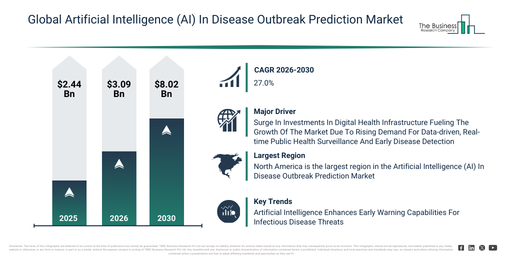
    The artificial intelligence (AI) in disease outbreak prediction market has seen significant expansion in recent years. This market is forecast to grow from $2.44 billion in 2025 to $3.09 billion in 2026, exhibiting a compound annual growth rate (CAGR) of 26.7%. The growth observed in previous periods is attributable to the increasing frequency of infectious disease outbreaks, the expansion of public health surveillance programs, the growth of health data digitization, early adoption of AI analytics in epidemiology, and increased collaboration between health agencies.

    The artificial intelligence (AI) in disease outbreak prediction market size is projected to experience substantial growth in the upcoming years. It will grow to $8.02 billion in 2030 at a compound annual growth rate (CAGR) of 27.0%. This expansion during the forecast period is driven by factors such as the development of predictive public health infrastructure, increased funding for AI-powered disease readiness, wider adoption of real-time health monitoring data, greater integration of climate and mobility analytical tools, and the broadening of global health intelligence networks. Key trends expected over the forecast period encompass a surge in real-time epidemiological modeling, enhanced incorporation of mobility and environmental data, a rise in the implementation of AI-powered surveillance dashboards, the extension of predictive risk assessment platforms, and a heightened emphasis on early warning systems.

    Download A Free Sample Report For Comprehensive Market Insights:

    https://www.thebusinessresearchcompany.com/sample.aspx?id=33023&type=smp

    What Core Drivers Are Transforming The Artificial Intelligence (AI) In Disease Outbreak Prediction Market?

    The increasing investments in digital health infrastructure are projected to drive the future growth of the artificial intelligence in disease outbreak prediction market. Digital health infrastructure refers to the integrated digital systems, platforms, data networks, and technologies that facilitate the secure collection, exchange, analysis, and application of health information to support healthcare delivery, public health surveillance, and decision-making. The escalation in investments in digital health infrastructure is motivated by the necessity for more efficient, interconnected, and data-centric healthcare systems that enhance care provision, accessibility, and operational effectiveness. Artificial intelligence in disease outbreak prediction utilizes digital health infrastructure by employing large-scale, real-time health data for the early identification of disease patterns and timely public health interventions, thereby establishing advanced digital systems as a crucial foundation for these AI applications. For instance, in May 2023, the Australian Department of Health and Aged Care, an Australia-based government department, revealed an approximately $6.1 billion investment aimed at strengthening Medicare, encompassing $2.2 billion for new and amended PBS listings, $259.5 million for critical health infrastructure, and a $951.2 million digital health package. Consequently, the rising investments in digital health infrastructure are stimulating the expansion of the artificial intelligence in disease outbreak prediction market.

    How Is The Artificial Intelligence (AI) In Disease Outbreak Prediction Market Examined Through Segment Analysis?

    The artificial intelligence (AI) in disease outbreak prediction market covered in this report is segmented –

    1) By Component: Software; Hardware; Services

    2) By Deployment Mode: On-Premises; Cloud

    3) By Application: Healthcare Providers; Government Agencies; Research Institutes; Pharmaceutical Companies; Other Applications

    4) By End-User: Hospitals And Clinics; Public Health Organizations; Academic And Research Centers; Other End Users

    Subsegments:

    1) By Software: Machine Learning Platforms; Predictive Analytics Software; Data Visualization Software; Epidemiological Modeling Software; Cloud-Based Analytics Software

    2) By Hardware: Health Monitoring Device; Geographic Information System Devices; Wearable Health Trackers; Diagnostic Devices; Sensor Devices

    3) By Services: Disease Surveillance Services; Outbreak Modeling Services; Predictive Analytics Services; Public Health Consulting; Data Integration Services; Epidemiological Risk Assessment

    Which Trends Are Influencing The Direction Of The Artificial Intelligence (AI) In Disease Outbreak Prediction Market?

    Leading firms within the artificial intelligence in disease outbreak prediction market are prioritizing the creation of sophisticated solutions, particularly artificial intelligence–driven global disease surveillance platforms, aiming to enhance early outbreak detection, expedite response times, and bolster public health readiness. These platforms leverage artificial intelligence, machine learning, and natural language processing techniques to process extensive global data, encompassing news reports, public health documentation, airline travel information, and environmental metrics. This capability allows them to pinpoint potential disease outbreaks more rapidly than conventional surveillance approaches. As an illustration, BlueDot, a digital health and artificial intelligence company based in Canada, introduced its advanced global infectious disease surveillance solution in August 2024, specifically engineered to substantially decrease the time spent on manual detection. This platform utilizes sophisticated AI models for continuous, near real-time scanning and interpretation of worldwide data, thereby cutting manual detection efforts by almost 90%. Such an improved capacity empowers health authorities and various organizations to identify emerging infectious threats with greater speed, evaluate risks with increased precision, and deploy prompt containment strategies.

    Which Organizations Are Operating Within The Artificial Intelligence (AI) In Disease Outbreak Prediction Market?

    Major companies operating in the artificial intelligence (AI) in disease outbreak prediction market are Amazon Web Services Inc., Oracle Corporation, SAP SE, Siemens Healthineers AG, SAS Institute Inc., Clarivate Plc, Tempus AI Inc., Seegene Inc., Ginkgo Bioworks Inc., Dataminr Inc., Komodo Health Inc., H2O.ai, Evidation Health Inc., Qventus Inc., Airfinity Ltd., SparkBeyond Inc., Blue Dot Inc., GIDEON Informatics Inc., Hyfe Inc., EPIWATCH Pty Ltd., EpiDetect AI Inc.

    Access The Complete Artificial Intelligence (AI) In Disease Outbreak Prediction Market Report:

    https://www.thebusinessresearchcompany.com/report/artificial-intelligence-ai-in-disease-outbreak-prediction-market-report

    What Is The Largest Regional Market In The Artificial Intelligence (AI) In Disease Outbreak Prediction Market?

    North America was the largest region in the artificial intelligence in disease outbreak prediction in 2025. Asia-Pacific is expected to be the fastest-growing region in the forecast period. The regions covered in the artificial intelligence (AI) in disease outbreak prediction market report are Asia-Pacific, South East Asia, Western Europe, Eastern Europe, North America, South America, Middle East, Africa.

    Access a Customized Artificial Intelligence (AI) In Disease Outbreak Prediction Market Report for Deeper Competitive Insights

    Get in touch with us:

    The Business Research Company: https://www.thebusinessresearchcompany.com/

    Americas: +1 310-496-7795

    Asia: +44 7882 955267 & +91 8897263534

    Europe: +44 7882 955267

    Email us at: marketing@tbrc.info

    Follow us on:

    LinkedIn: https://in.linkedin.com/company/the-business-research-company

    YouTube: https://www.youtube.com/channel/UC24_fI0rV8cR5DxlCpgmyFQ

    Global Market Model: https://www.thebusinessresearchcompany.com/global-market-model
  • Acellular Therapy Market Insights 2026–2030 Highlighting Emerging Business Opportunities

    Acellular Therapy Market Insights 2026–2030 Highlighting Emerging Business Opportunities

    The Business Research Company’s 2026 market reports feature advanced enhancements such as market attractiveness analysis, total addressable market evaluation, company benchmarking matrices, interactive Excel dashboards, expanded supply chain intelligence, emerging startup coverage, and detailed product insights, delivering more actionable and strategically valuable research.

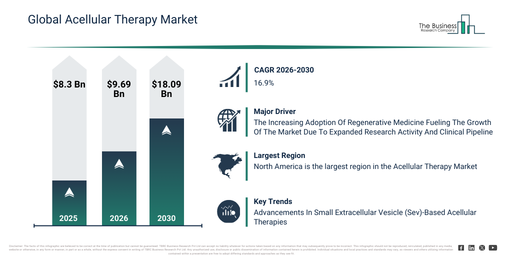
    How Much Larger Will The Acellular Therapy Market Become By 2030 Compared To 2026?

    The acellular therapy market has experienced substantial expansion in recent years. Its valuation is projected to increase from $8.3 billion in 2025 to $9.69 billion in 2026, achieving a compound annual growth rate (CAGR) of 16.7%. This historical growth can be attributed to several factors, including heightened research activity in regenerative medicine, the early clinical adoption of acellular matrices, a rising demand for immune-safe therapies, the expansion of wound care applications, and improvements in biomaterial processing techniques.

    The acellular therapy market is projected to experience significant expansion in the coming years. Its valuation is set to reach $18.09 billion in 2030, exhibiting a compound annual growth rate (CAGR) of 16.9%. This anticipated growth during the forecast timeframe is primarily driven by several factors, including the surging demand for tailored regenerative treatments, enhanced investments in sophisticated biomaterials, the broadening of clinical applications for acellular therapies, a heightened emphasis on scalable regenerative solutions, and increased regulatory backing for non-cellular therapies. Key trends anticipated during this period encompass the growing acceptance of growth factor-centric therapies, an uptick in the utilization of extracellular matrix scaffolds, a sharpened focus on cell-free regenerative approaches, the wider availability of ready-to-use regenerative products, and improved integration of translational research platforms.

    Download A Free Sample Report For Comprehensive Market Insights:

    https://www.thebusinessresearchcompany.com/sample.aspx?id=33006&type=smp

    Which Core Factors Are Supporting The Expansion Of The Acellular Therapy Market?

    The acellular therapy market is anticipated to expand due to the growing acceptance of regenerative medicine. Regenerative medicine encompasses medical strategies designed to repair, replace, or regenerate human cells, tissues, or organs using biological processes and treatments to restore normal bodily function. The uptake of regenerative medicine is on the rise, driven by a global surge in biotechnology research, characterized by an increased number of developers, more extensive pipelines, and wider therapeutic investigations. Acellular therapy (AT) plays a crucial role in this trend by offering bioactive, cell-free therapeutic substances, including extracellular vesicles, secretomes, and other biologically active compounds, which enhance regenerative approaches with improved safety and consistent dosing. For instance, in june 2024, the Centre for Commercialization of Regenerative Medicine (CCRM), a Canada-based regenerative medicine organization, reported 2,848 cell and gene therapy developers globally as of april 2024, marking an 11% increase from quarter four (Q4) 2023, and 1,751 active regenerative medicine clinical trials worldwide as of april 2024, indicating ongoing clinical engagement and expansion in regenerative research. Consequently, the increasing embrace of regenerative medicine is fueling the expansion of the acellular therapy market.

    How Is The Acellular Therapy Market Structured Across Different Market Segments?

    The acellular therapy market covered in this report is segmented –

    1) By Type: Acellular Dermal Matrices; Acellular Amniotic Membranes; Acellular Umbilical Cord Products; Other Types

    2) By Disease: Parkinson’s; Alzheimer’s; Chronic Wounds; Sclerosis; Cancer

    3) By Scaffold: Fused Deposition Modeling (FDM); Cell Laden Hydrogel; Extracellular Matrix (ECM); Selective Laser Sintering (SLS)

    4) By Application: Hepatology; Orthopedic; Cardiology; Neurology; Oncology; Gastroenterology

    5) By End-User: Hospitals; Clinics; Ambulatory Surgical Centers; Research Institutes

    Subsegments:

    1) By Acellular Dermal Matrices: Human Derived Dermal Matrices; Animal Derived Dermal Matrices; Cross Linked Dermal Matrices; Non Cross Linked Dermal Matrices

    2) By Acellular Amniotic Membranes: Cryopreserved Amniotic Membranes; Dehydrated Amniotic Membranes; Lyophilized Amniotic Membranes; Laminated Amniotic Membranes

    3) By Acellular Umbilical Cord Products: Wharton Jelly Based Products; Umbilical Cord Patch Products; Umbilical Cord Powder Products; Umbilical Cord Sheet Products

    4) By Other Types: Acellular Cartilage Matrices; Acellular Bone Matrices; Acellular Vascular Grafts; Acellular Tendon And Ligament Scaffolds

    What Trends Are Affecting The Acellular Therapy Market Dynamics?

    Leading firms in the acellular therapy market are prioritizing the creation of small extracellular vesicle (sEV) therapies. These therapies aim to improve tissue regeneration, lessen inflammation, and adjust immune responses through the direct delivery of bioactive vesicles to target tissues, eliminating the need for living cells. Defined as acellular products originating from cultured cells, small extracellular vesicle (sEV) therapies transport proteins, ribonucleic acids (RNAs), and signaling molecules. This allows for precise control over cellular activity, the mending of injured tissue, and immune system regulation. A notable example occurred in march 2025 when evast bio, an US-based biotechnology company, introduced an sEV therapy specifically for knee osteoarthritis. This development was intended to tackle significant issues associated with inflammatory joint conditions. This treatment works by delivering exosomes to inflamed cartilage, encouraging the regeneration of the cartilage extracellular matrix, decreasing inflammatory markers, and enhancing joint function. Consequently, it stands as a groundbreaking acellular therapy (AT) for musculoskeletal inflammation and sets a precedent for subsequent extracellular vesicle (sEV) based therapies.

    Who Are The Companies Shaping The Acellular Therapy Market Landscape?

    Major companies operating in the acellular therapy market are Thermo Fisher Scientific, FUJIFILM Holdings Corp., Lonza Group AG, Smith+Nephew, Charles River Laboratories, Sartorius AG, Integra LifeSciences, AGC Biologics, Organogenesis Holdings Inc., MiMedx Group Inc., Vericel Corporation, Avita Medical, Capricor Therapeutics, RoosterBio Inc., Creative Biolabs, Evox Therapeutics Ltd., ILIAS Biologics, Aruna Biomedical, Stem Cell Medicine Ltd., Aegle Therapeutics Corp, Direct Biologics LLC., BioCardia Inc., BioRestorative Therapies Inc., and EverZom.

    Access The Complete Acellular Therapy Market Report:

    https://www.thebusinessresearchcompany.com/report/acellular-therapy-market-report

    Which Area Represents The Largest Portion Of The Acellular Therapy Market?

    North America was the largest region in the acellular therapy market in 2025. Asia-Pacific is expected to be the fastest-growing region in the forecast period. The regions covered in the acellular therapy market report are Asia-Pacific, South East Asia, Western Europe, Eastern Europe, North America, South America, Middle East, Africa.

    Access a Customized Acellular Therapy Market Report for Deeper Competitive Insights

    Get in touch with us:

    The Business Research Company: https://www.thebusinessresearchcompany.com/

    Americas: +1 310-496-7795

    Asia: +44 7882 955267 & +91 8897263534

    Europe: +44 7882 955267

    Email us at: marketing@tbrc.info

    Follow us on:

    LinkedIn: https://in.linkedin.com/company/the-business-research-company

    YouTube: https://www.youtube.com/channel/UC24_fI0rV8cR5DxlCpgmyFQ

    Global Market Model: https://www.thebusinessresearchcompany.com/global-market-model