Category: Healthcare Services

  • Topical Pain Relief Market Developments and Growth Opportunities

    Topical Pain Relief Market Developments and Growth Opportunities

    The Business Research Company’s 2026 market reports feature enhanced tools like market attractiveness analysis, TAM assessment, and company scoring matrices, along with interactive dashboards, deeper supply chain insights, and startup coverage strengthening the depth, usability, and strategic value of insights.

    How Does The Market Size Of The Topical Pain Relief Market Compare Between 2026 And 2030?

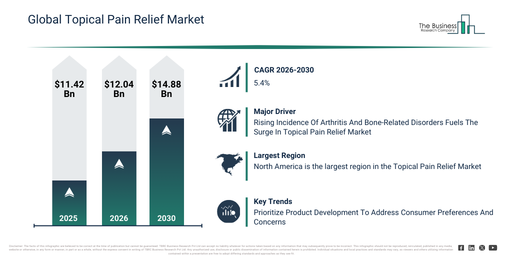
    The topical pain relief market has experienced robust growth in recent years. It is anticipated to expand from $11.42 billion in 2025 to $12.04 billion in 2026, achieving a compound annual growth rate (CAGR) of 5.4%. The historical growth in this market can be attributed to factors such as the rising prevalence of musculoskeletal disorders, increased incidence of sports and lifestyle injuries, widespread availability of OTC pain relief products, a growing aging population, and the expansion of pharmacy retail networks.

    The topical pain relief market is anticipated to experience substantial expansion over the coming years. By 2030, its valuation is projected to reach $14.88 billion, demonstrating a compound annual growth rate (CAGR) of 5.4%. This anticipated growth during the forecast period stems from factors such as the greater embrace of self-care pain management, a heightened demand for alternatives free from opioids, the expansion of pharmaceutical sales through e-commerce platforms, an intensified focus on managing chronic pain, and continuous innovation in the delivery of topical drugs. Key trends shaping this period encompass a growing need for non-opioid topical analgesics, an elevated consumer preference for readily available over-the-counter pain relief items, the advancement of sophisticated transdermal delivery systems, a rise in the application of combination formulations, and a heightened emphasis on products offering quick and sustained relief.

    Access Your Free Sample Report For In-Depth Market Analysis:

    https://www.thebusinessresearchcompany.com/sample.aspx?id=13744&type=smp

    Which Major Drivers Are Influencing The Expansion Of The Topical Pain Relief Market?

    The increasing incidence of arthritis and musculoskeletal conditions is anticipated to drive expansion in the topical pain relief market in the future. These disorders refer to health issues impacting joints, bones, and their adjacent tissues. Topical pain relief products are frequently employed to manage arthritis and related bone conditions, helping to ease localized pain, reduce inflammation, and mitigate discomfort, especially in accessible joints. For example, in August 2024, Healthy Bones Australia, an Australian non-profit, disclosed that 6.2 million Australians aged 50 and over experienced poor bone health in 2023, with 77% diagnosed with osteopenia and 23% with osteoporosis; this figure is expected to climb to 7.7 million by 2033. Consequently, the rising occurrence of arthritis and bone-related ailments is fueling the expansion of the topical pain relief market.

    Which Segment Classifications Are Used In The Topical Pain Relief Market Segment Analysis?

    The topical pain relief market covered in this report is segmented –

    1) By Type: Prescription Pain Relief, Over-The-Counter (OTC) Pain Relief

    2) By Formulation: Cream, Gel, Spray, Patch, Other Formulations

    3) By Therapeutic: Non-Opioids, Opioids

    4) By Distribution Channel: Pharmacies And Drug Stores, E-Commerce, Retail And Grocery Stores

    Subsegments:

    1) By Prescription Pain Relief: Prescription Creams And Gels, Prescription Patches, Compounded Topical Analgesics

    2) By Over-The-Counter (OTC) Pain Relief: Nonsteroidal Anti-Inflammatory Drugs (NSAIDs), Counterirritants, Analgesic Creams And Gels

    Which Trends Are Shaping The Topical Pain Relief Market?

    Leading companies in the topical pain relief market are concentrating on developing advanced products, such as pain-relieving creams, to fulfill the rising need for effective pain management solutions. A pain-relieving cream is an external preparation that delivers penetrating relief to help desensitize minor joint and muscle discomfort. For instance, in August 2023, Kenvue Inc., a US-based consumer health firm, introduced a new topical pain-relieving cream named Tylenol, which is a precise pain-relieving cream. It is formulated to provide maximum-strength lidocaine (4%) without the necessity of a prescription. This product is offered in two formats: a rapidly absorbing formula and a distinctively designed rollerball for hands-free, clean application. The cream is fragrance-free and also available with fresh scent alternatives for discreet usage. Moreover, its attributes offer maximum-strength lidocaine for focused and swift pain relief, appealing to consumers seeking efficient and user-friendly options.

    Which Firms Are Contributing To The Topical Pain Relief Market Ecosystem?

    Major companies operating in the topical pain relief market are Pfizer Inc., Johnson & Johnson, AbbVie Inc., Bayer AG, Novartis AG, Sanofi S.A., GlaxoSmithKline Plc, Eli Lilly and Company, Reckitt Benckiser Group plc, Viatris Inc., Teva Pharmaceutical Industries Ltd., Mylan N.V., Sun Pharmaceutical Industries Ltd., Perrigo Company PLC, Dr. Reddy’s Laboratories Ltd., Aurobindo Pharma Limited, Cipla Ltd., Lupin Limited, Almirall S.A., AdvaCare Pharma, Topical BioMedics Inc.

    Get The Full Topical Pain Relief Market Report:

    https://www.thebusinessresearchcompany.com/report/topical-pain-relief-global-market-report

    Which Region Leads The Topical Pain Relief Market In Overall Market Size?

    North America was the largest region in the topical pain relief market in 2025. The regions covered in the topical pain relief market report are Asia-Pacific, South East Asia, Western Europe, Eastern Europe, North America, South America, Middle East, Africa.

    Request A Customized Topical Pain Relief Market Report For Competitive Insights:

    https://www.thebusinessresearchcompany.com/report/topical-pain-relief-global-market-report

    Browse Through More Reports Similar to the Global Topical Pain Relief Market 2026, By The Business Research Company

    Topical Wound Agents Market Report 2026

    https://www.thebusinessresearchcompany.com/report/topical-wound-agents-global-market-report

    Topical Drug Delivery Market Report

    https://www.thebusinessresearchcompany.com/report/topical-drug-delivery-global-market-report

    Pain Patch Market Report

    https://www.thebusinessresearchcompany.com/report/pain-patch-global-market-report

    Get in touch with us:

    The Business Research Company: https://www.thebusinessresearchcompany.com/

    Americas +1 310-496-7795

    Asia +44 7882 955267 & +91 8897263534

    Europe +44 7882 955267

    Email us at info@tbrc.info

    Follow us on:

    LinkedIn: https://in.linkedin.com/company/the-business-research-company

    YouTube: https://www.youtube.com/channel/UC24_fI0rV8cR5DxlCpgmyFQ

    Global Market Model: https://www.thebusinessresearchcompany.com/global-market-model
  • Tokenized Health Loyalty Programs Market Long-Term Industry Forecast

    Tokenized Health Loyalty Programs Market Long-Term Industry Forecast

    The Business Research Company’s 2026 market reports feature enhanced tools like market attractiveness analysis, TAM assessment, and company scoring matrices, along with interactive dashboards, deeper supply chain insights, and startup coverage strengthening the depth, usability, and strategic value of insights.

    What Is The Forecasted Market Size Trajectory Of The Tokenized Health Loyalty Programs Market From 2026 To 2030?

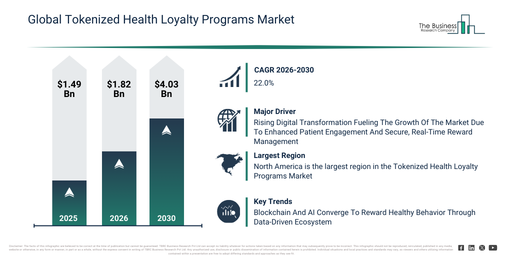
    The market size for tokenized health loyalty programs has seen significant expansion in recent years. This market is projected to expand from $1.49 billion in 2025 to $1.82 billion in 2026, at a compound annual growth rate (CAGR) of 22.3%. The market’s historical growth can be attributed to an increasing demand for patient engagement solutions, the early integration of blockchain into healthcare systems, a heightened focus on preventive healthcare programs, the proliferation of digital health platforms, and the expansion of wellness incentive models.

    The market for tokenized health loyalty programs is projected to experience rapid expansion in the coming years. This market is anticipated to reach $4.03 billion by 2030, showing a compound annual growth rate (CAGR) of 22.0%. This anticipated surge can be linked to the increasing uptake of decentralized healthcare applications, the growing integration with insurance and payer systems, the broadening of interoperable digital health ecosystems, the evolving regulatory clarity surrounding blockchain technology, and a heightened focus on strategies for long-term patient engagement. Key developments expected during this forecast period encompass a greater acceptance of blockchain-based reward platforms, increased integration with applications designed for patient engagement, a surging utilization of smart contracts for managing incentives, the proliferation of secure tokenized wellness ecosystems, and an intensified commitment to data transparency and fostering trust.

    Access Your Free Sample Report For In-Depth Market Analysis:

    https://www.thebusinessresearchcompany.com/sample.aspx?id=28342&type=smp

    What Key Drivers Are Fueling The Growth Of The Tokenized Health Loyalty Programs Market?

    The expanding digital transformation is anticipated to fuel the advancement of the tokenized health loyalty programs market in the future. Digital transformation involves embedding digital technologies throughout a business to optimize operations, enrich customer interactions, and generate increased value. This surge in digital transformation stems from the rising consumer desire for rapid, tailored, and user-friendly digital services, enabled by innovations like AI, cloud computing, and sophisticated analytics. The tokenized health loyalty programs market aligns with this trend by facilitating secure, clear, and immediate reward administration, thereby boosting patient involvement and confidence within digital health environments. For example, in July 2024, the European Central Bank, a Germany-based central bank for the eurosytem, reported that contactless card payments in 2023 increased by 16% in the latter half of the year, totaling 23.2 billion transactions when compared to the corresponding period in 2022. Consequently, the escalating digital transformation is a key force behind the expansion of the tokenized health loyalty programs market.

    How Is The Tokenized Health Loyalty Programs Market Organized By Segment Classification?

    The tokenized health loyalty programs market covered in this report is segmented –

    1) By Component: Platform, Services

    2) By Technology: Blockchain, Smart Contracts, Tokenization Platforms

    3) By Application: Patient Engagement, Wellness Programs, Prescription Management, Insurance Claims, Other Applications

    4) By End-User: Hospitals And Clinics, Pharmacies, Insurance Providers, Wellness Centers, Other End-Users

    Subsegments:

    1) By Platform: Patient Engagement Platform, Reward Management Platform, Data Analytics Platform, Blockchain-Based Platform

    2) By Services: Consulting Services, Implementation Services, Support And Maintenance Services, Integration Services

    What Trends Are Influencing The Tokenized Health Loyalty Programs Market?

    Major companies in the tokenized health loyalty program market are prioritizing the development of innovative solutions, such as blockchain-based health data ecosystems, to incentivize healthy behaviors, enhance data ownership, and offer personalized wellness rewards. A blockchain-based health data ecosystem functions as a secure, decentralized network where individuals can store, manage, and share their health data while preserving ownership and privacy. For instance, in June 2025, CUDIS, an island-based Web3 and AI-powered wellness company, launched its native token named $CUDIS on the Solana blockchain. This token is a part of CUDIS’s decentralized healthcare ecosystem and aims to reward users based on verified health data collected through their AI-integrated smart ring and application. It allows users to earn rewards for validated biometric data from the CUDIS smart ring, including steps, sleep, and heart rate, establishing a tokenized loyalty system connected to real health activity. It also grants access to premium AI coaching, a health data marketplace, DeSci dApps, and governance through staking and community voting. The launch features a multi-tiered airdrop of 50 million tokens, listings on exchanges like Bybit and Bitget, and integration with the Longevity Hub for external wellness applications.

    Who Are The Industry Participants Involved In The Tokenized Health Loyalty Programs Market?

    Major companies operating in the tokenized health loyalty programs market are TELUS Health, Health Hero, Calo, Vitality Group Inc., Brave Software, Wellable Inc., Sweatco Ltd., Solve.Care Inc., Sprout at Work, IncentFit Corp., VitaDAO, StepN, qiibee, Lympo, Genopets, Actifit Inc., Ocean Protocol, Streamr, Loyyal Corp., Dotmoovs, IOTA, Healthereum LLC, Healthcoin, Clinicoin, Coinhealth, Dentacoin

    Get The Full Tokenized Health Loyalty Programs Market Report:

    https://www.thebusinessresearchcompany.com/report/tokenized-health-loyalty-programs-global-market-report

    Which Region Is The Top Contributor To The Tokenized Health Loyalty Programs Market By Share?

    North America was the largest region in the tokenized health loyalty programs market in 2025. Asia-Pacific is expected to be the fastest-growing region in the forecast period. The regions covered in the tokenized health loyalty programs market report are Asia-Pacific, South East Asia, Western Europe, Eastern Europe, North America, South America, Middle East, Africa.

    Request A Customized Tokenized Health Loyalty Programs Market Report For Competitive Insights:

    https://www.thebusinessresearchcompany.com/report/tokenized-health-loyalty-programs-global-market-report

    Browse Through More Reports Similar to the Global Tokenized Health Loyalty Programs Market 2026, By The Business Research Company

    Connected Health And Wellness Solutions Market Report 2026

    https://www.thebusinessresearchcompany.com/report/connected-health-and-wellness-solutions-global-market-report

    Consumer Healthcare Market Report

    https://www.thebusinessresearchcompany.com/report/consumer-healthcare-global-market-report

    Corporate Wellness Solutions Market Report

    https://www.thebusinessresearchcompany.com/report/corporate-wellness-solutions-global-market-report

    Get in touch with us:

    The Business Research Company: https://www.thebusinessresearchcompany.com/

    Americas +1 310-496-7795

    Asia +44 7882 955267 & +91 8897263534

    Europe +44 7882 955267

    Email us at info@tbrc.info

    Follow us on:

    LinkedIn: https://in.linkedin.com/company/the-business-research-company

    YouTube: https://www.youtube.com/channel/UC24_fI0rV8cR5DxlCpgmyFQ

    Global Market Model: https://www.thebusinessresearchcompany.com/global-market-model
  • Tobramycin Eye Drop Market Growth Analysis Highlighting Innovation

    Tobramycin Eye Drop Market Growth Analysis Highlighting Innovation

    The Business Research Company’s 2026 market reports feature enhanced tools like market attractiveness analysis, TAM assessment, and company scoring matrices, along with interactive dashboards, deeper supply chain insights, and startup coverage strengthening the depth, usability, and strategic value of insights.

    How Much Will The Market Value Of The Tobramycin Eye Drop Market Grow Between 2026 And 2030?

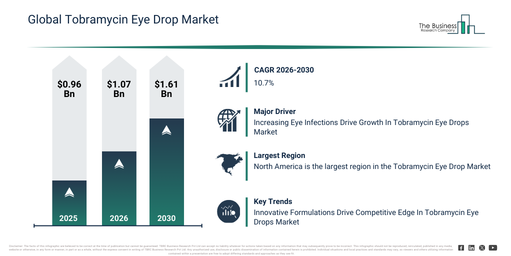
    The tobramycin eye drop market has observed substantial growth in recent years. It is anticipated to expand from $0.96 billion in 2025 to $1.07 billion in 2026, registering a compound annual growth rate (CAGR) of 11.9%. This historical growth can be attributed to a rising incidence of bacterial eye infections, widespread clinical use of ophthalmic antibiotics, the expansion of outpatient ophthalmology services, improved access to prescription eye medications, and an increase in hospital pharmacy dispensing.

    The tobramycin eye drop market size is set for considerable expansion over the next few years, with projections indicating it will reach $1.61 billion by 2030, exhibiting a compound annual growth rate (CAGR) of 10.7%. This expansion during the forecast period is driven by factors such as an escalating need for economical ophthalmic treatments, improved awareness regarding eye infection management, the proliferation of specialized eye care clinics, a growing preference for combination therapies, and increased regulatory scrutiny concerning ophthalmic drug quality. Key trends anticipated in this period include the increased availability of generic tobramycin formulations, a rise in the use of combination antibiotic-steroid eye drops, a stronger emphasis on sterile and preservative-free formulations, expanded application for pediatric and geriatric patients, and a heightened focus on regulatory compliance and quality control.

    Access Your Free Sample Report For In-Depth Market Analysis:

    https://www.thebusinessresearchcompany.com/sample.aspx?id=16556&type=smp

    Which Drivers Are Supporting The Tobramycin Eye Drop Market Growth?

    The escalating incidence of eye infections is projected to drive the future expansion of the tobramycin eye drops market. These infections involve inflammation or irritation in ocular structures such as the conjunctiva, cornea, or eyelids, typically resulting from bacteria, viruses, fungi, or other microorganisms. Factors like increasing urbanization, heightened pollution levels, and extended screen exposure have contributed to a surge in the global prevalence of eye infections. Tobramycin eye drops function by impeding bacterial protein synthesis, thus effectively mitigating both infection and inflammation, and are used to treat bacterial eye infections. For example, data from January 2024, provided by the Centers for Disease Control and Prevention, a US-based science and data-driven service organization that protects the public’s health, indicated that more than 3.4 million Americans aged 40 years and older experienced blindness or visual impairment, a figure projected to double by 2030. Consequently, the expanding occurrence of eye infections is a key factor propelling the growth of the tobramycin eye drops market.

    Which Segments Define The Tobramycin Eye Drop Market Segment Structure?

    The tobramycin eye drop market covered in this report is segmented –

    1) By Product Type: Tobramycin Ophthalmic Suspension, Tobramycin And Dexamethasone Ophthalmic Suspension, Other Product Types

    2) By Indication: Bacterial Eye Infections, Keratitis, Pre Or Post Ocular Surgery Prophylaxis, Other Indications

    3) By Application: Adult, Children

    4) By End User: Hospitals, Homecare, Specialty Clinics, Other End Users

    Subsegments:

    1) By Tobramycin Ophthalmic Suspension: Standard Tobramycin Ophthalmic Suspension, High-Concentration Tobramycin Ophthalmic Suspension

    2) By Tobramycin And Dexamethasone Ophthalmic Suspension: Fixed-Dose Combination (Tobramycin And Dexamethasone)

    3) By Other Product Types: Tobramycin Ophthalmic Ointment, Tobramycin Eye Drops (Non-Suspension Forms), Generic Tobramycin Ophthalmic Products

    Which Trends Are Expected To Impact The Tobramycin Eye Drop Market?

    Leading firms within the tobramycin eye drops sector are prioritizing technological advancements, particularly sophisticated formulation methods, to secure a competitive edge in the marketplace. These advancements encompass better drug delivery mechanisms and heightened effectiveness, addressing the growing consumer need for potent therapies. As an illustration, in October 2023, Harrow Health Inc., an ophthalmic pharmaceuticals company based in the US, introduced TOBRADEX ST (tobramycin and dexamethasone ophthalmic suspension) 0.3%/0.05%. This product integrates an antibiotic with a corticosteroid, targeting steroid-responsive inflammatory ocular conditions where there is a potential for bacterial infection. TOBRADEX ST incorporates a distinct suspension formulation designed to boost bioavailability and lessen dosing frequency, thereby providing patients with greater convenience and superior therapeutic results.

    Who Are The Established Players Within The Tobramycin Eye Drop Market?

    Major companies operating in the tobramycin eye drop market are Novartis AG, Teva Pharmaceuticals Industries Ltd., Alcon Vision LLC, Bausch Health Companies Inc., Sun Pharmaceutical Industries Ltd., Hikma Pharmaceuticals Plc, Apotex Inc., Alembic Pharmaceuticals Limited, Incepta Pharmaceuticals Ltd., Jubilant Cadista Pharmaceuticals Inc., Zydus Lifesciences, Cipla Limited, Lupin Limited, Glenmark Pharmaceuticals Limited, Santen Pharmaceutical Co Ltd, FDC Limited, Micro Labs Limited, Alkem Laboratories Limited, Intas Pharmaceuticals Limited, Wockhardt Limited, Pfizer Inc, Abbott Laboratories

    Get The Full Tobramycin Eye Drop Market Report:

    https://www.thebusinessresearchcompany.com/report/tobramycin-eye-drop-global-market-report

    Which Region Represents The Largest Share Of The Tobramycin Eye Drop Market?

    North America was the largest region in the tobramycin eye drops market in 2025. Asia-Pacific is expected to be the fastest-growing region in the forecast period. The regions covered in the tobramycin eye drop market report are Asia-Pacific, South East Asia, Western Europe, Eastern Europe, North America, South America, Middle East, Africa.

    Request A Customized Tobramycin Eye Drop Market Report For Competitive Insights:

    https://www.thebusinessresearchcompany.com/report/tobramycin-eye-drop-global-market-report

    Browse Through More Reports Similar to the Global Tobramycin Eye Drop Market 2026, By The Business Research Company

    Ophthalmic Eye Dropper Market Report 2026

    https://www.thebusinessresearchcompany.com/report/ophthalmic-eye-dropper-global-market-report

    Otc Dry Eye Drops Market Report

    https://www.thebusinessresearchcompany.com/report/otc-dry-eye-drops-global-market-report

    Dry Eye Medication Market

    https://www.thebusinessresearchcompany.com/report/dry-eye-medication-market

    Get in touch with us:

    The Business Research Company: https://www.thebusinessresearchcompany.com/

    Americas +1 310-496-7795

    Asia +44 7882 955267 & +91 8897263534

    Europe +44 7882 955267

    Email us at info@tbrc.info

    Follow us on:

    LinkedIn: https://in.linkedin.com/company/the-business-research-company

    YouTube: https://www.youtube.com/channel/UC24_fI0rV8cR5DxlCpgmyFQ

    Global Market Model: https://www.thebusinessresearchcompany.com/global-market-model
  • Tissue Sectioning Market Forecast with Key Trends Through 2030

    Tissue Sectioning Market Forecast with Key Trends Through 2030

    The Business Research Company’s 2026 market reports feature enhanced tools like market attractiveness analysis, TAM assessment, and company scoring matrices, along with interactive dashboards, deeper supply chain insights, and startup coverage strengthening the depth, usability, and strategic value of insights.

    What Changes In Market Value Are Expected For The Tissue Sectioning Market Over The 2026–2030 Period?

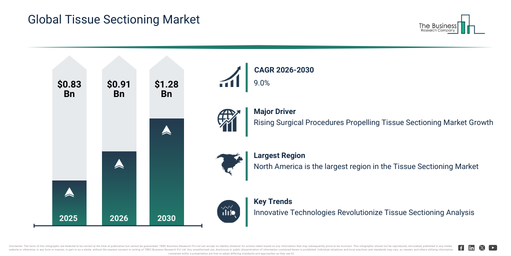
    The tissue sectioning market has experienced robust expansion in recent years. It is forecast to grow from $0.83 billion in 2025 to $0.91 billion in 2026, exhibiting a compound annual growth rate (CAGR) of 9.9%. The market’s historical growth can be ascribed to a surge in diagnostic pathology procedures, the enlargement of hospital laboratory infrastructure, an escalating demand for cancer diagnostics, an increase in biomedical research activities, and the broader implementation of histology-based testing.

    The tissue sectioning market is projected for substantial expansion in the coming years, with its size expected to reach $1.28 billion by 2030, exhibiting a compound annual growth rate (CAGR) of 9.0%. This anticipated growth during the forecast period is primarily fueled by increasing investments in advanced diagnostic laboratories, the rising adoption of digital pathology workflows, a growing demand for personalized medicine diagnostics, the expansion of academic and clinical research programs, and an intensified focus on laboratory automation. Concurrently, major trends for this period include the increasing adoption of automated tissue sectioning systems, a rising demand for high-precision microtomes and cryostats, the growing use of disposable and standardized consumables, the expansion of workflow integration in histopathology labs, and an enhanced focus on reproducibility and section quality.

    Access Your Free Sample Report For In-Depth Market Analysis:

    https://www.thebusinessresearchcompany.com/sample.aspx?id=16555&type=smp

    What Key Factors Are Affecting The Tissue Sectioning Market Demand?

    An anticipated increase in surgical operations is projected to stimulate the expansion of the tissue sectioning market in the future. These procedures constitute medical interventions that utilize instruments for the diagnosis, treatment, or restoration of the body. This surge in surgical operations can be attributed to progresses in medical technology, evolving demographics, and changes in healthcare approaches. Tissue sectioning supports surgical procedures by supplying precise, slender tissue samples for histological examination, which facilitates accurate diagnosis, meticulous treatment planning, and successful transplantation. For example, in April 2025, data from the Australian Institute of Health and Welfare, an Australian government agency, indicated that during 2023–24, public hospitals documented 778,500 admissions from elective surgery waitlists. This represents a 5.8% increase when contrasted with the 735,500 admissions recorded in 2022–23. Consequently, the growing number of surgical interventions is a key factor boosting the tissue sectioning market.

    How Is The Tissue Sectioning Market Segmented Across Different Segment Categories?

    The tissue sectioning market covered in this report is segmented –

    1) By Product: Accessories And Consumables, Instruments, Services

    2) By Technology: Automatic, Manual, Semi-Automatic

    3) By Application: Diagnosis, Research

    4) By End-User: Clinics, Diagnostic Laboratories, Hospitals, Research Centers

    Subsegments:

    1) By Accessories And Consumables: Microtome Blades, Staining Reagents, Tissue Embedding Media, Mounting Media, Disposable Consumables (Slides, Coverslips)

    2) By Instruments: Microtomes (Manual, Semi-Automated, Fully Automated), Cryostats, Tissue Processors, Tissue Embedding Stations, Sectioning Systems

    3) By Services: Maintenance And Repair Services, Calibration Services, Installation Services, Training Services

    What Trends Are Influencing Changes In The Tissue Sectioning Market?

    Major companies in the tissue sectioning market are actively developing sophisticated technologies, such as next-generation spatial gene expression technology, to improve tissue analysis and diagnostic processes. This innovative technology facilitates the precise mapping of gene activity within tissue sections, providing valuable insights into the spatial arrangement of gene expression and tissue architecture. For example, in March 2024, 10x Genomics, a US-based biotechnology company, unveiled Visium HD, which is a next-generation spatial gene expression technology. This product is engineered to enable accurate gene expression mapping within intricate anatomical structures and is designed to deliver high-resolution spatial gene expression data at single-cell scale resolution from formalin-fixed, paraffin-embedded (FFPE) tissue sections. This technology allows for the comprehensive characterization of FFPE tissue sections by measuring whole transcriptome spatial gene expression at single-cell resolution.

    Which Organizations Play A Role In The Tissue Sectioning Market Landscape?

    Major companies operating in the tissue sectioning market are Thermo Fisher Scientific Inc., Danaher Corporation, Leica Biosystems Nussloch GmbH, Sakura Finetek USA Inc., Ted Pella Inc., Milestone Srl, Diapath S.p.A., Bio-Optica Milano S.p.A, MEDITE Medical GmbH, PathnSitu Biotechnologies Pvt Ltd, Tanner Scientific Inc., Boeckeler Instruments Inc., SLEE Medical GmbH, Amos Scientific PTY. LTD., SM Scientific Instruments Pvt. Ltd., Bright Instrument Co. Ltd., RWD Life Science Co. Ltd., Hacker Instruments & Industries Inc., MICROM International GmbH, Epredia Inc, Histo-Line Laboratories, PHC Holdings Co. Ltd, AGD Biomedicals Pvt Ltd, Avantik Labs

    Get The Full Tissue Sectioning Market Report:

    https://www.thebusinessresearchcompany.com/report/tissue-sectioning-global-market-report

    Which Geographic Region Dominates The Tissue Sectioning Market?

    North America was the largest region in the tissue sectioning market in 2025. Asia-Pacific is expected to be the fastest-growing region in the forecast period. The regions covered in the tissue sectioning market report are Asia-Pacific, South East Asia, Western Europe, Eastern Europe, North America, South America, Middle East, Africa.

    Request A Customized Tissue Sectioning Market Report For Competitive Insights:

    https://www.thebusinessresearchcompany.com/report/tissue-sectioning-global-market-report

    Browse Through More Reports Similar to the Global Tissue Sectioning Market 2026, By The Business Research Company

    Facial Tissues Market Report 2026

    https://www.thebusinessresearchcompany.com/report/facial-tissues-global-market-report

    Tissue Diagnostic Market Report

    https://www.thebusinessresearchcompany.com/report/tissue-diagnostic-global-market-report

    Tissue Engineering Market Report

    https://www.thebusinessresearchcompany.com/report/tissue-engineering-global-market-report

    Get in touch with us:

    The Business Research Company: https://www.thebusinessresearchcompany.com/

    Americas +1 310-496-7795

    Asia +44 7882 955267 & +91 8897263534

    Europe +44 7882 955267

    Email us at info@tbrc.info

    Follow us on:

    LinkedIn: https://in.linkedin.com/company/the-business-research-company

    YouTube: https://www.youtube.com/channel/UC24_fI0rV8cR5DxlCpgmyFQ

    Global Market Model: https://www.thebusinessresearchcompany.com/global-market-model
  • Tissue Engineering Market Outlook 2026–2030 with Growth Drivers

    Tissue Engineering Market Outlook 2026–2030 with Growth Drivers

    The Business Research Company’s 2026 market reports feature enhanced tools like market attractiveness analysis, TAM assessment, and company scoring matrices, along with interactive dashboards, deeper supply chain insights, and startup coverage strengthening the depth, usability, and strategic value of insights.

    By 2030, What Market Size Is The Tissue Engineering Market Expected To Reach Based On Its 2026 Value?

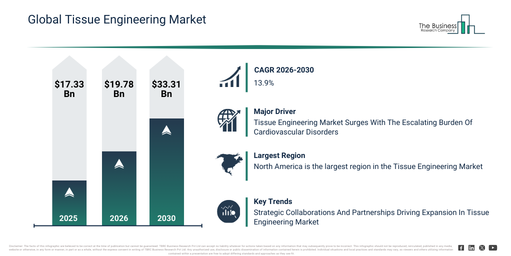
    The tissue engineering market has seen rapid expansion in recent years. It is forecast to increase from $17.33 billion in 2025 to $19.78 billion in 2026, achieving a compound annual growth rate (CAGR) of 14.1%. The growth observed in the past can be attributed to advancements in biomaterial science, the expansion of academic tissue engineering research, an increasing demand for organ repair solutions, the availability of biocompatible scaffold materials, and the growth of clinical regenerative studies.

    The tissue engineering market is poised for significant expansion in the coming years. Its valuation is projected to reach $33.31 billion by 2030, driven by a compound annual growth rate (CAGR) of 13.9%. This anticipated growth can be linked to several factors, including heightened investments in regenerative medicine, a surge in the adoption of personalized tissue therapies, the broadened clinical application of engineered tissues, the expanding incorporation of AI-driven tissue design, and the escalating need for sophisticated organ replacement solutions. Key developments expected during this forecast period encompass the wider utilization of advanced scaffold materials, a sharpened focus on regenerative medicine applications, the increasing assimilation of 3D bioprinting technologies, the broadening scope of cell-based tissue therapies, and a greater emphasis on restoring tissue function.

    Access Your Free Sample Report For In-Depth Market Analysis:

    https://www.thebusinessresearchcompany.com/sample.aspx?id=9535&type=smp

    Which Primary Drivers Are Impacting The Tissue Engineering Market Growth?

    The anticipated expansion of the tissue engineering market is linked to the growing incidence of cardiovascular disorders. These conditions, often referred to as cardiovascular diseases (CVD), encompass a range of medical ailments impacting the heart and blood vessels. Within tissue engineering, cardiovascular disorders represent areas where innovative solutions are developed for the repair and regeneration of impaired cardiac and vascular tissues. An illustrative example comes from January 2024, when the American Heart Association, a US-based non-profit organization, reported that the age-adjusted mortality rate from cardiovascular disease climbed to 233.3 per 100,000 in 2024. This marked a 4.0% rise from 224.4 per 100,000 recorded in 2023. Consequently, the increasing prevalence of cardiovascular disorders is indeed a key factor propelling the expansion of the tissue engineering market.

    What Are The Main Segments Within The Tissue Engineering Market Segment Structure?

    The tissue engineering market covered in this report is segmented –

    1) By Type: Synthetic Scaffold Material, Biologically Derived Scaffold Material, Other Types

    2) By Application: Orthopedics And Musculoskeletal, Neurology, Cardiovascular, Skin And Integumentary, Dental, Other Applications

    3) By End-User: Hospitals And Clinics, Ambulatory Facilities

    Subsegments:

    1) By Synthetic Scaffold Material: Polymeric Scaffolds, Ceramic Scaffolds, Composite Scaffolds

    2) By Biologically Derived Scaffold Material: Natural Polymers, Decellularized Tissues, Hydrogels

    3) By Other Types: Self-Healing Scaffolds, Smart Scaffolds

    Which Trends Are Shaping Growth In The Tissue Engineering Market?

    A significant trend involves major companies strategically engaging in partnerships and collaborations with start-ups and mid-sized enterprises within the tissue engineering market to broaden the products and services offered. These strategic collaborations and partnership agreements assist companies in expanding their existing product portfolio and geographical reach. For instance, in June 2023, Regen Lab, a Swiss-based commercial-stage medical technology company specializing in the research, development, registration, manufacturing, and commercialization of proprietary tissue engineering products, entered into a collaboration agreement with Long Island University (LIU) and the Dassault Systèmes Group (3DS). Under the terms of the agreement, LIU, a US-based university, and RegenLab USA will share resources to establish an industrial innovation accelerator, which is a new center of excellence dedicated to regenerative medicine and tissue engineering. The Dassault Systèmes Group is a France-based software corporation.

    Who Are The Companies Participating In The Tissue Engineering Market?

    Major companies operating in the tissue engineering market are Medtronic plc, Zimmer Biomet, Organogenesis Holdings Inc., Integra LifeSciences, Stryker Corporation, DePuy Synthes Companies, RTI Surgical Inc., Vericel Corporation, Athersys Inc., Tissue Regenix Group plc, Xeltis AG, Prellis Biologics, Bit Bio, Be Biopharma Inc., TELA Bio Inc., Orthocell Limited, Organovo Holdings Inc., EpiBone, TissueLabs, CollPlant Biotechnologies Ltd., Osiris Therapeutics Inc.

    Get The Full Tissue Engineering Market Report:

    https://www.thebusinessresearchcompany.com/report/tissue-engineering-global-market-report

    Which Region Is The Leading Market For The Tissue Engineering Market?

    North America was the largest region in the tissue engineering market in 2025. Asia-Pacific is expected to be the fastest-growing region in the tissue engineering market during the forecast period. The regions covered in the tissue engineering market report are Asia-Pacific, South East Asia, Western Europe, Eastern Europe, North America, South America, Middle East, Africa.

    Request A Customized Tissue Engineering Market Report For Competitive Insights:

    https://www.thebusinessresearchcompany.com/report/tissue-engineering-global-market-report

    Browse Through More Reports Similar to the Global Tissue Engineering Market 2026, By The Business Research Company

    Medical Engineered Materials Market Report 2026

    https://www.thebusinessresearchcompany.com/report/medical-engineered-materials-global-market-report

    Biomaterials Market Report

    https://www.thebusinessresearchcompany.com/report/biomaterials-global-market-report

    Soft Tissue Repair Market Report

    https://www.thebusinessresearchcompany.com/report/soft-tissue-repair-global-market-report

    Get in touch with us:

    The Business Research Company: https://www.thebusinessresearchcompany.com/

    Americas +1 310-496-7795

    Asia +44 7882 955267 & +91 8897263534

    Europe +44 7882 955267

    Email us at info@tbrc.info

    Follow us on:

    LinkedIn: https://in.linkedin.com/company/the-business-research-company

    YouTube: https://www.youtube.com/channel/UC24_fI0rV8cR5DxlCpgmyFQ

    Global Market Model: https://www.thebusinessresearchcompany.com/global-market-model
  • Increasing Accidents Driving Demand in Tissue-Engineered Skin Substitute Market

    Increasing Accidents Driving Demand in Tissue-Engineered Skin Substitute Market

    The Business Research Company’s 2026 market reports feature enhanced tools like market attractiveness analysis, TAM assessment, and company scoring matrices, along with interactive dashboards, deeper supply chain insights, and startup coverage strengthening the depth, usability, and strategic value of insights.

    What Is The Anticipated Rise In Market Value Of The Tissue Engineered Skin Substitute Market During The Forecast Period?

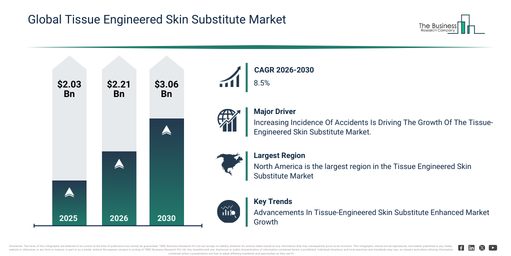
    The tissue engineered skin substitute market size has shown substantial growth in recent years. This market is anticipated to expand from $2.03 billion in 2025 to $2.21 billion in 2026, exhibiting a compound annual growth rate (CAGR) of 8.8%. The increase observed historically can be linked to factors like the rising occurrence of chronic wounds and burns, the proliferation of reconstructive surgery procedures, the growing acceptance of biologic wound care products, an uptick in clinical research concerning skin regeneration, and the accessibility of advanced biomaterials.

    The market for tissue engineered skin substitutes is projected to undergo significant expansion over the coming years. This sector is anticipated to reach a valuation of $3.06 billion by 2030, demonstrating a compound annual growth rate (CAGR) of 8.5%. The primary drivers for this growth during the forecast period include a burgeoning aging population with specific wound care requirements, an escalating demand for regenerative medicine solutions, the broadening scope of personalized tissue engineering applications, increasing investment in advanced bioprinting technologies, and a sharpened focus on achieving quicker healing coupled with reduced scarring. Noteworthy trends anticipated in the forecast period involve the growing acceptance of 3D bioprinted skin constructs, a rise in the application of stem cell-based skin substitutes, the progressive integration of sophisticated biomaterials, the wider availability of personalized wound healing solutions, and an intensified emphasis on rapid skin regeneration technologies.

    Access Your Free Sample Report For In-Depth Market Analysis:

    https://www.thebusinessresearchcompany.com/sample.aspx?id=20664&type=smp

    What Significant Factors Are Influencing The Tissue Engineered Skin Substitute Market Expansion?

    The escalating occurrence of accidents is anticipated to boost the expansion of the tissue-engineered skin substitute market in the coming years. This heightened frequency of accidents can be attributed to factors such as elevated traffic volumes, inattentive driving, insufficient road upkeep, and a surge in the use of mobile devices while operating a vehicle. Tissue-engineered skin substitutes provide assistance by offering a functional and biocompatible replacement for compromised skin, thereby accelerating healing and diminishing complications like infections and scarring. For example, in November 2025, the National Highway Traffic Safety Administration (NHTSA), a US-based government agency, stated that in 2023, the estimated injuries resulting from traffic crashes climbed to 2,442,581, representing a 2.5% increase from the 2.38 million individuals injured in 2022. Thus, the rising incidence of accidents is propelling the growth of the tissue-engineered skin substitute market.

    How Is Segmentation Applied In The Tissue Engineered Skin Substitute Market Segment Analysis?

    The tissue engineered skin substitute market covered in this report is segmented –

    1) By Product: Acellular Skin Substitutes, Biologic Skin Substitute, Cellular Skin Substitutes, Synthetic Skin Substitutes

    2) By Material: Synthetic, Natural

    3) By Technology: Laser Assisted Bio-Printing, Robotic Technology, Other Technologies

    4) By Application: Chronic Wounds, Acute Wounds, Other Applications

    5) By End User: Hospital, Specialty Clinics, Ambulatory Surgical Centers, Research Laboratory

    Subsegments:

    1) By Acellular Skin Substitutes: Decellularized Dermis, Collagen-Based Scaffolds, Amniotic Membrane

    2) By Biologic Skin Substitutes: Living Cell-Containing Substitutes, Allogeneic Skin Grafts, Xenogeneic Skin Grafts

    3) By Cellular Skin Substitutes: Cultured Epithelial Autografts (CEA), Dermal Substitutes with Cells, Stem Cell-Derived Skin Constructs

    4) By Synthetic Skin Substitutes: Polymer-Based Scaffolds, Biodegradable Scaffolds, Hydrogel-Based Substitutes

    What Trends Are Affecting The Direction Of The Tissue Engineered Skin Substitute Market?

    Key companies within the tissue-engineered skin substitute market are directing their efforts towards pioneering laser technologies with enhanced wavelengths, such as advanced biofabricated dermo-epidermal graft systems, to gain a competitive advantage. These bio-fabricated dermo-epidermal graft systems integrate living skin cells with a scaffold to produce full-thickness skin substitutes that closely resemble human skin structure and aid in post-grafting integration. For instance, in July 2024, CUTISS AG, a Switzerland-based regenerative medicine company, unveiled DenovoSkin, a next-generation personalized bioengineered skin graft. This innovative system utilizes a small patient biopsy to cultivate a large dermo-epidermal skin substitute, offering benefits like improved donor-site conservation, superior graft integration, and reduced scarring. This particular innovation provides quicker healing and enhanced cosmetic results, thus supporting the broader implementation of advanced wound care and reconstructive therapies, although cost and manufacturing scalability continue to present limitations.

    Who Are The Companies Participating In The Tissue Engineered Skin Substitute Market Environment?

    Major companies operating in the tissue engineered skin substitute market are Stryker Corporation, DePuy Synthes, Smith & Nephew Plc, ConvaTec Group PLC, Mallinckrodt Pharmaceuticals plc, Integra LifeSciences Holdings Corporation, Gunze Limited, Organogenesis Inc., LifeNet Health Inc., MiMedx Group Inc., Vericel Corporation, AlloSource Inc., Sientra Inc., PolyNovo Limited, Avita Medical Limited, Tissue Regenix Group, PolarityTE, Promethean LifeSciences Inc., Regenicin Inc., Kerecis Ltd.

    Get The Full Tissue Engineered Skin Substitute Market Report:

    https://www.thebusinessresearchcompany.com/report/tissue-engineered-skin-substitute-global-market-report

    Where Is The Tissue Engineered Skin Substitute Market Primarily Concentrated By Region?

    North America was the largest region in the tissue engineered skin substitute market in 2025. The regions covered in the tissue engineered skin substitute market report are Asia-Pacific, South East Asia, Western Europe, Eastern Europe, North America, South America, Middle East, Africa.

    Request A Customized Tissue Engineered Skin Substitute Market Report For Competitive Insights:

    https://www.thebusinessresearchcompany.com/report/tissue-engineered-skin-substitute-global-market-report

    Browse Through More Reports Similar to the Global Tissue Engineered Skin Substitute Market 2026, By The Business Research Company

    Organic Skincare Market Report 2026

    https://www.thebusinessresearchcompany.com/report/organic-skincare-global-market-report

    Dna Based Skin Care Products Market Report

    https://www.thebusinessresearchcompany.com/report/dna-based-skin-care-products-global-market-report

    Double Sided Masking Tapes Market Report

    https://www.thebusinessresearchcompany.com/report/double-sided-masking-tapes-global-market-report

    Get in touch with us:

    The Business Research Company: https://www.thebusinessresearchcompany.com/

    Americas +1 310-496-7795

    Asia +44 7882 955267 & +91 8897263534

    Europe +44 7882 955267

    Email us at info@tbrc.info

    Follow us on:

    LinkedIn: https://in.linkedin.com/company/the-business-research-company

    YouTube: https://www.youtube.com/channel/UC24_fI0rV8cR5DxlCpgmyFQ

    Global Market Model: https://www.thebusinessresearchcompany.com/global-market-model
  • Foot and Ankle Injuries Supporting Growth in the Tinea Pedis Treatment Market

    Foot and Ankle Injuries Supporting Growth in the Tinea Pedis Treatment Market

    The Business Research Company’s 2026 market reports feature enhanced tools like market attractiveness analysis, TAM assessment, and company scoring matrices, along with interactive dashboards, deeper supply chain insights, and startup coverage strengthening the depth, usability, and strategic value of insights.

    How Is The Market Size Of The Tinea Pedis Treatment Market Expected To Scale Between 2026 And 2030?

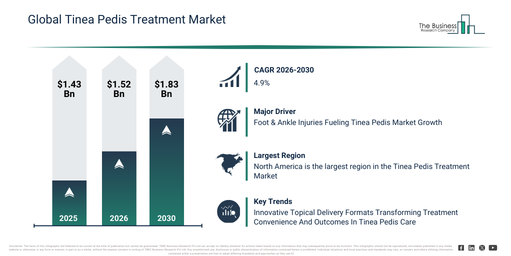
    The tinea pedis treatment market has demonstrated substantial growth in recent years. This market is anticipated to expand from $1.43 billion in 2025 to $1.52 billion in 2026, driven by a compound annual growth rate (CAGR) of 5.7%. The historical expansion of the market can be attributed to various factors including a rising incidence of fungal skin infections, the widespread adoption of occlusive footwear, the availability of topical antifungal medications, the expansion of retail pharmacy networks, and increasing awareness regarding personal hygiene.

    The tinea pedis treatment market is anticipated to experience stable growth over the next few years. It is projected to reach $1.83 billion by 2030, exhibiting a compound annual growth rate (CAGR) of 4.9%. This expansion during the forecast period is driven by factors such as an escalating demand for fast-acting antifungal formulations, the broadening of online drug distribution, an increasing focus on combination therapies, a rising adoption of preventive antifungal care, and growing consumer preference for self-medication options. Major trends expected in the forecast period include an increasing demand for topical antifungal treatments, a rising preference for combination drug formulations, the growing availability of over-the-counter therapies, the expansion of e-commerce pharmaceutical channels, and an enhanced focus on treatment compliance.

    Access Your Free Sample Report For In-Depth Market Analysis:

    https://www.thebusinessresearchcompany.com/sample.aspx?id=15684&type=smp

    Which Important Drivers Are Guiding The Tinea Pedis Treatment Market Growth?

    The escalating incidence of foot and ankle injuries is projected to boost the growth of the tinea pedis treatment market in the coming years. Foot and ankle injuries are defined as any harm or trauma sustained by the bones, ligaments, tendons, muscles, or other tissues in the foot or ankle region, frequently resulting from accidents, sports activities, or repetitive stress. Several factors contribute to these injuries, including changes in lifestyle, increased participation in sports and physical activities, inadequate footwear, improper training techniques, a propensity for falls, and degenerative conditions. Additionally, the widespread presence of obesity and chronic diseases like diabetes further heightens the risk of foot and ankle complications. Such injuries can intensify tinea Pedis treatment challenges by fostering conditions favorable for fungal development and leading to prolonged periods of inactivity. For instance, in November 2023, according to Howden Group Holdings Ltd., a UK-based insurance intermediary company, the severity of ankle injuries in the English Premier League saw a 170% increase from October 2022 to January 2023 after the FIFA World Cup Qatar 2022. Consequently, the rising frequency of foot and ankle injuries is a key driver for the Tinea pedis treatment market.

    What Segment Categories Shape The Tinea Pedis Treatment Market Segment Landscape?

    The tinea pedis treatment market covered in this report is segmented –

    1) By Drug Class: Antifungals, Combinations

    2) By Route of Administration: Oral, Topical

    3) By Disease Indication: Interdigital Tinea Pedis, Plantar Tinea pedis, Vesicular Tinea Pedis

    4) By Distribution Channel: Hospital Pharmacies, Retail Pharmacies, E-commerce

    Subsegments:

    1) By Antifungals: Topical Antifungal Drugs, Oral Antifungal Drugs

    2) By Combinations: Antifungal And Corticosteroid Combinations, Antifungal And Antiseptic Combinations

    What Trends Are Influencing The Evolution Of The Tinea Pedis Treatment Market?

    Leading companies within the tinea pedis treatment market are concentrating on developing innovative topical delivery formats, such as dry stick applicators and nano-formulated sprays, to achieve a competitive advantage. Dry stick applicators are solid topical sticks that enable smooth treatment application without liquids or mess, offering straightforward and clean use. For instance, in September 2025, Propedix, a US-based dermatology company, introduced Dryello, the first dry-stick antifungal treatment for Athlete’s Foot, marking a significant innovation in topical dermatology. Formulated with tolnaftate 1%, Dryello employs the company’s proprietary DryStik Technology Platform to deliver medication in a clean, portable, and mess-free stick format that applies and remains dry, unlike traditional creams and sprays. Developed in collaboration with dermatologists, the product is designed to enhance patient compliance and treatment outcomes. In clinical testing, 90% of users were cured within four weeks, and most also reported reduced foot sweating. As Propedix’s initial commercial product from its DryStik platform, Dryello signals a broader pipeline of advanced anti-infective dermatology solutions.

    Who Are The Companies Operating Across The Tinea Pedis Treatment Market Value Chain?

    Major companies operating in the tinea pedis treatment market are Pfizer Inc., Bayer AG, GlaxoSmithKline plc, Sandoz International GmbH, Perrigo Company plc, Aurobindo Pharma, Dr. Reddy’s Laboratories Ltd., Cipla Ltd., Lupin Limited, Glenmark Pharmaceuticals Ltd., Almirall S.A., Taro Pharmaceutical Industries Ltd., Ego Pharmaceuticals Pty. Ltd., Fougera Pharmaceuticals Inc., Sun Pharmaceutical Industries Ltd., Blueberry Therapeutics Ltd., Johnson & Johnson, Merck & Co. Inc., Sanofi S.A., Teva Pharmaceutical Industries Ltd., Astellas Pharma Inc.

    Get The Full Tinea Pedis Treatment Market Report:

    https://www.thebusinessresearchcompany.com/report/tinea-pedis-treatment-global-market-report

    Which Region Has The Greatest Market Share In The Tinea Pedis Treatment Market?

    North America was the largest region in the tinea pedis treatment market in 2025. Asia-Pacific is expected to be the fastest-growing region in the forecast period. The regions covered in the tinea pedis treatment market report are Asia-Pacific, South East Asia, Western Europe, Eastern Europe, North America, South America, Middle East, Africa.

    Request A Customized Tinea Pedis Treatment Market Report For Competitive Insights:

    https://www.thebusinessresearchcompany.com/report/tinea-pedis-treatment-global-market-report

    Browse Through More Reports Similar to the Global Tinea Pedis Treatment Market 2026, By The Business Research Company

    Dermatology Otc Medications Market Report 2026

    https://www.thebusinessresearchcompany.com/report/dermatology-otc-medications-global-market-report

    Condyloma Acuminata Treatment Market Report

    https://www.thebusinessresearchcompany.com/report/condyloma-acuminata-treatment-global-market-report

    Dermatophytosis Treatment Market Report

    https://www.thebusinessresearchcompany.com/report/dermatophytosis-treatment-global-market-report

    Get in touch with us:

    The Business Research Company: https://www.thebusinessresearchcompany.com/

    Americas +1 310-496-7795

    Asia +44 7882 955267 & +91 8897263534

    Europe +44 7882 955267

    Email us at info@tbrc.info

    Follow us on:

    LinkedIn: https://in.linkedin.com/company/the-business-research-company

    YouTube: https://www.youtube.com/channel/UC24_fI0rV8cR5DxlCpgmyFQ

    Global Market Model: https://www.thebusinessresearchcompany.com/global-market-model
  • Rising Autoimmune Disorders Fueling Growth in the Tildrakizumab Market

    Rising Autoimmune Disorders Fueling Growth in the Tildrakizumab Market

    The Business Research Company’s 2026 market reports feature enhanced tools like market attractiveness analysis, TAM assessment, and company scoring matrices, along with interactive dashboards, deeper supply chain insights, and startup coverage strengthening the depth, usability, and strategic value of insights.

    What Level Of Market Value Growth Is Predicted For The Tildrakizumab Market From 2026 To 2030?

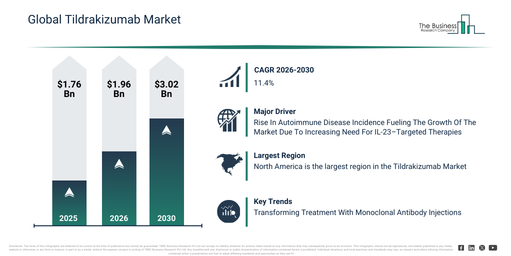
    The tildrakizumab market has seen rapid expansion in recent years. It is projected to increase from $1.76 billion in 2025 to $1.96 billion in 2026, achieving a compound annual growth rate (CAGR) of 11.7%. The growth observed in prior periods can be attributed to factors such as the rising prevalence of plaque psoriasis, the clinical validation of biologic efficacy, the broadening presence of specialty dermatology clinics, the increasing adoption of injectable biologics, and the availability of reimbursement assistance for biologics.

    The tildrakizumab market is projected to experience substantial expansion over the coming years. By 2030, its value is anticipated to reach $3.02 billion, demonstrating a compound annual growth rate (CAGR) of 11.4%. This projected growth throughout the forecast period stems from several factors, including a heightened demand for tailored autoimmune treatments, the broadening of biologic drug applications, an increased emphasis on managing diseases over the long term, the growing acceptance of administering biologics at home, and rising financial commitments to immunology research. Key developments anticipated during this period encompass a greater utilization of specific biologic therapies, an increased uptake of il-23 inhibitors, a developing preference for injectable treatments with extended efficacy, the expansion of specialized channels for biologic distribution, and a heightened focus on treatment approaches centered around the patient.

    Access Your Free Sample Report For In-Depth Market Analysis:

    https://www.thebusinessresearchcompany.com/sample.aspx?id=21301&type=smp

    What Major Factors Are Driving The Tildrakizumab Market Forward?

    The rising prevalence of autoimmune conditions is projected to stimulate the expansion of the tildrakizumab market in the coming period. Autoimmune diseases are characterized by the immune system mistakenly attacking healthy bodily tissues. The increase in these conditions is attributed to growing environmental factors, including pollution and exposure to chemicals. Tildrakizumab functions in autoimmune diseases by inhibiting the IL-23 pathway, thereby reducing inflammation and managing symptoms. For instance, data from Public Health Scotland, a national organization based in Scotland, revealed in August 2024 that the Scottish Multiple Sclerosis Register (SMSR) recorded 455 new MS patient diagnoses in 2023. Hence, the escalating occurrence of autoimmune diseases is fueling the growth of the tildrakizumab market.

    Which Segment Types Are Examined In The Tildrakizumab Market Segment Study?

    The tildrakizumab market covered in this report is segmented –

    1) By Indication: Plaque Psoriasis, Psoriatic Arthritis, Other Indications

    2) By Dosage Form: Injectable, Oral

    3) By Distribution Channel: Hospital Pharmacies, Retail Pharmacies, Online Pharmacies

    4) By End-User: Hospitals, Specialty Clinics, Homecare

    Subsegments:

    1) By Plaque Psoriasis: Moderate Plaque Psoriasis, Severe Plaque Psoriasis, Treatment-Resistant Plaque Psoriasis

    2) By Psoriatic Arthritis: Peripheral Psoriatic Arthritis, Axial Psoriatic Arthritis, Enthesitis-related Psoriatic Arthritis

    3) By Other Indications: Inflammatory Skin Disorders, Off-Label Autoimmune Conditions, Emerging Therapeutic Applications

    Which Trends Are Impacting The Progress Of The Tildrakizumab Market?

    Leading firms within the tildrakizumab market are prioritizing the creation of advanced formulations, like monoclonal antibody injections, to boost treatment effectiveness and better patient results. A monoclonal antibody injection involves delivering antibodies created in a lab, engineered to home in on particular antigens within the body for either treatment or prevention. As an example, in May 2023, the Indian pharmaceutical company, Sun Pharmaceutical Industries Ltd., secured approval from China’s National Medical Products Administration (NMPA) for its tildrakizumab injection, intended for managing plaque psoriasis. This treatment operates by targeting interleukin-23 (IL-23), a cytokine implicated in the inflammatory reactions leading to psoriasis. By addressing IL-23, tildrakizumab aids in decreasing inflammation and slowing down the rapid proliferation of skin cells, thereby alleviating symptoms like redness, scaling, and the development of plaques.

    Which Players Are Part Of The Competitive Landscape Of The Tildrakizumab Market?

    Major companies operating in the tildrakizumab market are Almirall S.A., Sun Pharmaceutical Industries Ltd., Novartis, Pfizer, Eli Lilly, Bristol Myers Squibb, Roche, Merck & Co, Janssen Biotech (Johnson & Johnson), Amgen, GSK, AbbVie, Sanofi, AstraZeneca, Innovent Biologics, Boehringer Ingelheim, LEO Pharma, Kyowa Kirin, Takeda Pharmaceutical, Regeneron Pharmaceuticals, Biocon Ltd.

    Get The Full Tildrakizumab Market Report:

    https://www.thebusinessresearchcompany.com/report/tildrakizumab-global-market-report

    Which Region Accounts For The Largest Portion Of The Tildrakizumab Market?

    North America was the largest region in the tildrakizumab market in 2025. Asia-Pacific expected to be the fastest-growing region in the forecast period. The regions covered in the tildrakizumab market report are Asia-Pacific, South East Asia, Western Europe, Eastern Europe, North America, South America, Middle East, Africa.

    Request A Customized Tildrakizumab Market Report For Competitive Insights:

    https://www.thebusinessresearchcompany.com/report/tildrakizumab-global-market-report

    Browse Through More Reports Similar to the Global Tildrakizumab Market 2026, By The Business Research Company

    Fishmeal Market Report 2026

    https://www.thebusinessresearchcompany.com/report/fishmeal-global-market-report

    Sukuk Market Report

    https://www.thebusinessresearchcompany.com/report/sukuk-global-market-report

    Dulaglutide Market Report

    https://www.thebusinessresearchcompany.com/report/dulaglutide-global-market-report

    Get in touch with us:

    The Business Research Company: https://www.thebusinessresearchcompany.com/

    Americas +1 310-496-7795

    Asia +44 7882 955267 & +91 8897263534

    Europe +44 7882 955267

    Email us at info@tbrc.info

    Follow us on:

    LinkedIn: https://in.linkedin.com/company/the-business-research-company

    YouTube: https://www.youtube.com/channel/UC24_fI0rV8cR5DxlCpgmyFQ

    Global Market Model: https://www.thebusinessresearchcompany.com/global-market-model
  • Climate Change Impact Driving Growth in Tick-Borne Encephalitis Market

    Climate Change Impact Driving Growth in Tick-Borne Encephalitis Market

    The Business Research Company’s 2026 market reports feature enhanced tools like market attractiveness analysis, TAM assessment, and company scoring matrices, along with interactive dashboards, deeper supply chain insights, and startup coverage strengthening the depth, usability, and strategic value of insights.

    How Will The Market Value Of The Tick Borne Encephalitis Market Progress Between 2026 And 2030?

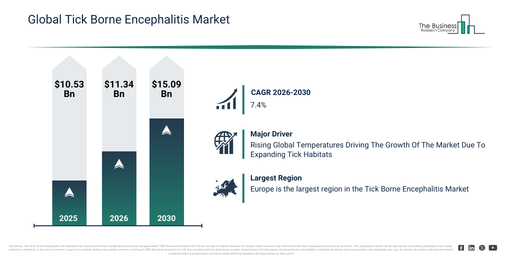
    The tick borne encephalitis market size has experienced significant growth in recent years. It is projected to expand from $10.53 billion in 2025 to $11.34 billion in 2026, demonstrating a compound annual growth rate (CAGR) of 7.7%. The growth observed in the historic period can be ascribed to the expansion of tick habitats resulting from climate change, an increasing incidence of vector-borne infections, the availability of TBE vaccines in endemic regions, the rise of public health awareness campaigns, and the expansion of diagnostic testing capabilities.

    The tick borne encephalitis market is predicted to undergo significant expansion in the foreseeable future. It is expected to grow to $15.09 billion by 2030, achieving a compound annual growth rate (CAGR) of 7.4%. This anticipated growth is attributed to factors such as increased investments in vaccine research and development, a rising demand for immunizations related to travel, the broadening of early diagnostic screening programs, a growing adoption of integrated disease monitoring platforms, and an intensifying focus on preventing infectious diseases. Major trends identified for this forecast period include the increasing implementation of preventive vaccination initiatives, a heightened demand for rapid diagnostic testing, greater awareness regarding tick-borne illnesses, the expansion of integrated disease surveillance systems, and an enhanced commitment to public health preparedness.

    Access Your Free Sample Report For In-Depth Market Analysis:

    https://www.thebusinessresearchcompany.com/sample.aspx?id=23542&type=smp

    Which Key Drivers Are Affecting The Tick Borne Encephalitis Market Development?

    The increasing climate change is projected to drive the growth of the tick-borne encephalitis market moving forward. Climate change refers to long-term alterations in global temperatures and weather patterns, primarily resulting from human activities such as the burning of fossil fuels and deforestation. The rise in climate change is attributed to the excessive combustion of fossil fuels, which releases significant amounts of greenhouse gases, including carbon dioxide and methane, into the atmosphere, trapping heat and causing global temperatures to increase. Climate change boosts the demand for tick-borne encephalitis treatment by expanding the habitats of disease-carrying ticks due to rising temperatures and milder winters, leading to higher infection rates and a greater need for diagnostics, vaccines, and antiviral treatments. As an illustration, in November 2024, the World Meteorological Organization (WMO), a specialized agency of the United Nations based in Switzerland, reported that from January to September 2024, the global mean surface air temperature was 1.54°C above the pre-industrial average (with a ±0.13°C margin of uncertainty), influenced by a warming El Niño event. Therefore, the escalating climate change is propelling the expansion of the tick-borne encephalitis market.

    How Are Different Segments Classified In The Tick Borne Encephalitis Market Segment Analysis?

    The tick borne encephalitis market covered in this report is segmented –

    1) By Product Type: Tick-Borne Encephalitis (TBE) Vaccines, Tick Repellents, Diagnostic Tests, Antiviral Drugs

    2) By Virus Type: European Tick Borne Encephalitis Virus, Siberian Tick Borne Encephalitis Virus, Far Eastern Tick Borne Encephalitis Virus

    3) By Route of Administration: Parenteral, Other Routes Of Administration

    4) By Distribution Channel: Online, Offline

    5) By End-User: Travelers, Outdoor Enthusiasts, Healthcare Providers, Research Institutions

    Subsegments:

    1) By Tick-Borne Encephalitis (TBE) Vaccines: Inactivated (Killed) Vaccines, Live Attenuated Vaccines

    2) By Tick Repellents: DEET-Based Repellents, Picaridin-Based Repellents, Natural Or Plant-Based Repellents, Permethrin-Treated Clothing And Gear

    3) By Diagnostic Tests: ELISA (Enzyme-Linked Immunosorbent Assay), PCR (Polymerase Chain Reaction), Rapid Diagnostic Tests (RDTs), Neutralization Tests

    4) By Antiviral Drugs: Nucleoside Analogs, Interferons, Immunoglobulin Therapy, Supportive Therapy (Symptomatic Treatment)

    Who Are The Companies Driving Activity In The Tick Borne Encephalitis Market?

    Major companies operating in the tick borne encephalitis market are Pfizer Inc., Sanofi Pasteur, Novartis AG, GlaxoSmithKline (GSK) Plc, Bavarian Nordic, Valneva SE, Microgen, DIESSE Diagnostica Senese S.p.A., QED Bioscience Inc., Serion Immunologics, Chumakov Federal Scientific Center, Merck & Co. Inc., AstraZeneca Plc, Johnson & Johnson (Janssen Pharmaceuticals), CSL Limited, Takeda Pharmaceutical Company Limited, Serum Institute of India Pvt Ltd, BioNTech SE, Zydus Cadila, Bharat Biotech International Limited, Walvax Biotechnology Co Ltd

    Get The Full Tick Borne Encephalitis Market Report:

    https://www.thebusinessresearchcompany.com/report/tick-borne-encephalitis-global-market-report

    Which Region Holds The Highest Market Share In The Tick Borne Encephalitis Market?

    Europe was the largest region in the tick borne encephalitis market in 2025. North America is expected to be the fastest-growing region in the forecast period. The regions covered in the tick borne encephalitis market report are Asia-Pacific, South East Asia, Western Europe, Eastern Europe, North America, South America, Middle East, Africa.

    Request A Customized Tick Borne Encephalitis Market Report For Competitive Insights:

    https://www.thebusinessresearchcompany.com/report/tick-borne-encephalitis-global-market-report

    Browse Through More Reports Similar to the Global Tick Borne Encephalitis Market 2026, By The Business Research Company

    Tick Repellent Market Report 2026

    https://www.thebusinessresearchcompany.com/report/tick-repellent-global-market-report

    Encephalitis Treatment Market Report

    https://www.thebusinessresearchcompany.com/report/encephalitis-treatment-global-market-report

    Hepatic Encephalopathy Market Report

    https://www.thebusinessresearchcompany.com/report/hepatic-encephalopathy-global-market-report

    Get in touch with us:

    The Business Research Company: https://www.thebusinessresearchcompany.com/

    Americas +1 310-496-7795

    Asia +44 7882 955267 & +91 8897263534

    Europe +44 7882 955267

    Email us at info@tbrc.info

    Follow us on:

    LinkedIn: https://in.linkedin.com/company/the-business-research-company

    YouTube: https://www.youtube.com/channel/UC24_fI0rV8cR5DxlCpgmyFQ

    Global Market Model: https://www.thebusinessresearchcompany.com/global-market-model
  • Advanced RNA Sequencing Enhancing Thyroid Testing and Diagnostics Market

    Advanced RNA Sequencing Enhancing Thyroid Testing and Diagnostics Market

    The Business Research Company’s 2026 market reports feature enhanced tools like market attractiveness analysis, TAM assessment, and company scoring matrices, along with interactive dashboards, deeper supply chain insights, and startup coverage strengthening the depth, usability, and strategic value of insights.

    What Are The Market Size Estimates For The Thyroid Function Test Market In 2026 And 2030?

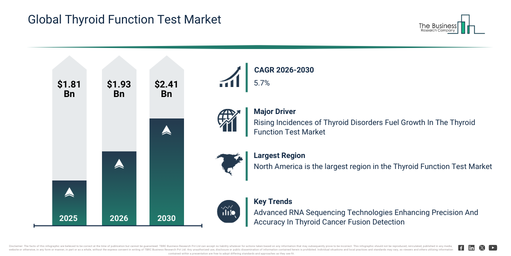
    The thyroid function test market has experienced robust expansion over recent years. Projections indicate it will expand from $1.81 billion in 2025 to $1.93 billion by 2026, achieving a compound annual growth rate (CAGR) of 6.5%. Historically, this growth can be ascribed to several factors, including the increasing occurrence of thyroid disorders, heightened understanding of endocrine health, the growth of diagnostic laboratory infrastructures, the presence of standardized thyroid assays, and the regular incorporation of TSH testing into general health checkups.

    The thyroid function test market is anticipated to exhibit robust expansion over the next few years, projecting an increase to $2.41 billion by 2030, driven by a compound annual growth rate (CAGR) of 5.7%. The growth during the forecast period is attributed to several factors such as the increasing embrace of personalized medicine approaches, a rising demand for point-of-care thyroid testing, the expansion of automated laboratory workflows, a growing emphasis on early disease detection, and the increasing integration of digital diagnostics. Major trends observed in the forecast period encompass the increasing adoption of high-sensitivity immunoassays, a rising demand for early thyroid disorder screening, the growing utilization of automated diagnostic platforms, the expansion of comprehensive thyroid test panels, and an enhanced focus on diagnostic accuracy and standardization.

    Access Your Free Sample Report For In-Depth Market Analysis:

    https://www.thebusinessresearchcompany.com/sample.aspx?id=16553&type=smp

    What Factors Are Contributing To The Growth Of The Thyroid Function Test Market?

    The increasing occurrence of thyroid disorder cases is anticipated to drive the expansion of the thyroid function test market in the future. These disorders are health conditions impacting the performance of the thyroid gland, a butterfly-shaped organ situated in the front of the neck. Their rise is attributed to shifts in diet, exposure to radiation, fluctuations in hormones, environmental elements, and autoimmune conditions. Thyroid function tests are essential tools for both diagnosis and management of these disorders, as they offer critical insights into thyroid hormone concentrations and the existence of antibodies, thereby facilitating treatment choices, tracking the success of therapy, and averting potential issues. An example illustrating this trend is that in April 2024, the Journal of Global Health (JoGH), a UK-based non-profit organization, projected that thyroid cancer incidence cases would approximate 305,078 by 2030. Consequently, the widespread occurrence of thyroid disorders is a significant impetus for the growth of the thyroid function test market.

    How Is The Thyroid Function Test Market Categorized Across Its Segment Groups?

    The thyroid function test market covered in this report is segmented –

    1) By Test Type: Thyroid Stimulating Hormone (TSH), Triiodothyronine (T3), Thyroxine (T4), Free Triiodothyronine (FT3), Free Thyroxine (FT4)

    2) By Indication: Hypothyroidism, Hyperthyroidism, Thyroid Cancer, Other Indications

    3) By End User: Clinics, Research Organizations, Diagnostic Laboratories, Hospitals

    Subsegments:

    1) By Thyroid Stimulating Hormone (TSH): TSH Assay (Immunoassay, Electrochemiluminescence), TSH-Based Diagnostic Kits

    2) By Triiodothyronine (T3): Total T3, Free T3, T3-Based Diagnostic Kits

    3) By Thyroxine (T4): Total T4, Free T4, T4-Based Diagnostic Kits

    4) By Free Triiodothyronine (FT3): FT3 Immunoassay, FT3 Electrochemiluminescence (ECL), FT3-Based Diagnostic Kits

    5) By Free Thyroxine (FT4): FT4 Immunoassay, FT4 Electrochemiluminescence (ECL), FT4-Based Diagnostic Kits

    What Trends Are Shaping The Future Of The Thyroid Function Test Market?

    Leading companies in the thyroid function test market are developing advanced solutions, such as the RNA sequencing test, to enhance the precision of cancer fusion detection across various solid tumors, including thyroid cancer. RNA sequencing (RNA-Seq) is a high-throughput method that allows for the analysis of RNA quantity and sequence in a sample, thereby providing insights into gene expression and the entire transcriptome. For example, in May 2024, Foundation Medicine, Inc., a US-based biotechnology company, announced the U.S. launch of FoundationOne RNA. This is a tissue-based RNA sequencing test specifically designed to identify cancer-related gene fusions across 318 genes. The test delivers fusion reporting for all solid tumors and could be particularly effective in pinpointing fusions in cancers such as non-small cell lung cancer (NSCLC), sarcoma, pancreatic cancer, thyroid cancer, cholangiocarcinoma, and bladder cancer.

    Which Firms Are Influencing Competition In The Thyroid Function Test Market?

    Major companies operating in the thyroid function test market are F. Hoffmann-La Roche Ltd., Abbott Laboratories Inc., Thermo Fisher Scientific Inc., Danaher Corporation, Siemens Healthineers AG, Merck KGaA, BioMérieux Inc., WerfenLife SA, DiaSorin SpA, Beckman Coulter Life Sciences, Autobio Diagnostics Co. Ltd., Quidel Corporation, Boditech Med Inc., Cortez Diagnostics, Qualigen Inc., Ortho Clinical Diagnostics, Bio-Rad Laboratories Inc., Sysmex Corporation, Randox Laboratories Ltd., Tosoh Corporation, Fujirebio

    Get The Full Thyroid Function Test Market Report:

    https://www.thebusinessresearchcompany.com/report/thyroid-function-test-global-market-report

    Where Is The Thyroid Function Test Market Most Concentrated Geographically?

    North America was the largest region in the thyroid function test market in 2025. Asia-Pacific is expected to be the fastest-growing region in the forecast period. The regions covered in the thyroid function test market report are Asia-Pacific, South East Asia, Western Europe, Eastern Europe, North America, South America, Middle East, Africa.

    Request A Customized Thyroid Function Test Market Report For Competitive Insights:

    https://www.thebusinessresearchcompany.com/report/thyroid-function-test-global-market-report

    Browse Through More Reports Similar to the Global Thyroid Function Test Market 2026, By The Business Research Company

    Thyroid Cancer Diagnostics Market Report 2026

    https://www.thebusinessresearchcompany.com/report/thyroid-cancer-diagnostics-global-market-report

    Endocrine Testing Market Report

    https://www.thebusinessresearchcompany.com/report/endocrine-testing-global-market-report

    Anti Thyroid Drugs Market Report

    https://www.thebusinessresearchcompany.com/report/anti-thyroid-drugs-global-market-report

    Get in touch with us:

    The Business Research Company: https://www.thebusinessresearchcompany.com/

    Americas +1 310-496-7795

    Asia +44 7882 955267 & +91 8897263534

    Europe +44 7882 955267

    Email us at info@tbrc.info

    Follow us on:

    LinkedIn: https://in.linkedin.com/company/the-business-research-company

    YouTube: https://www.youtube.com/channel/UC24_fI0rV8cR5DxlCpgmyFQ

    Global Market Model: https://www.thebusinessresearchcompany.com/global-market-model