Category: Healthcare Services

  • TrkC Antibody Market Growth Trends and Outlook Through 2030

    TrkC Antibody Market Growth Trends and Outlook Through 2030

    The Business Research Company’s 2026 market reports feature enhanced tools like market attractiveness analysis, TAM assessment, and company scoring matrices, along with interactive dashboards, deeper supply chain insights, and startup coverage strengthening the depth, usability, and strategic value of insights.

    From Its 2026 Market Size, What Value Is The Tropomyosin Receptor Kinase C (TrkC) Antibody Market Projected To Reach By 2030?

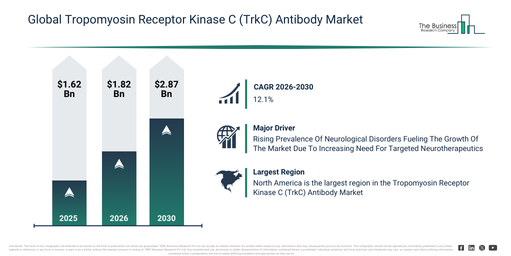
    The tropomyosin receptor kinase c (trkc) antibody market has experienced significant expansion in recent years. Projections indicate its increase from $1.62 billion in 2025 to $1.82 billion in 2026, with a compound annual growth rate (CAGR) of 12.4%. This past growth is largely attributable to an escalating research focus on neurotrophin signaling pathways, the expansion of academic neuroscience research, improved access to advanced antibody engineering techniques, increased funding for molecular biology research, and the growing application of antibodies in diagnostic studies.

    The tropomyosin receptor kinase c (trkc) antibody market is anticipated to experience substantial expansion in the coming years, with its size projected to reach $2.87 billion by 2030, exhibiting a compound annual growth rate (CAGR) of 12.1%. This growth trajectory during the forecast period is primarily fueled by several factors, including the increasing incorporation of antibodies into targeted drug discovery efforts, escalating investments in research focused on neurological disorders, the broadening scope of precision medicine initiatives, the expanding use of sophisticated immunoassay techniques, and a heightened demand for research antibodies possessing high selectivity. Key trends anticipated to shape the market during this period encompass the greater uptake of highly specific trkc antibodies, the increasing utilization of recombinant antibody formats, a burgeoning demand for tools essential for neurobiology research, the broadening of studies focused on targeted signaling pathways, and a sharpened emphasis on standards for antibody validation.

    Access Your Free Sample Report For In-Depth Market Analysis:

    https://www.thebusinessresearchcompany.com/sample.aspx?id=30423&type=smp

    Which Factors Are Influencing The Growth Of The Tropomyosin Receptor Kinase C (TrkC) Antibody Market?

    An increase in the occurrence of neurological disorders is projected to fuel the expansion of the tropomyosin receptor kinase C (TrkC) antibody market in the future. These conditions are health issues impacting the brain, spinal cord, and nerves, resulting in various symptoms such as cognitive, motor, and sensory difficulties. The rising incidence of these disorders is connected to an aging demographic, given that aging progressively diminishes neuronal function, lessens brain plasticity, and heightens oxidative stress, all of which contribute to the onset and advancement of these ailments. The tropomyosin receptor kinase C (TrkC) antibody assists in addressing neurological disorders by precisely targeting TrkC receptors, which are crucial for neuronal growth, survival, and differentiation. It facilitates the modulation and investigation of TrkC signaling pathways, thereby aiding in the creation of targeted treatments and enhancing comprehension of neurodegenerative and neurodevelopmental conditions. For example, in July 2024, the National Health Service, a UK-based government agency, reported that 487,432 patients had been diagnosed with dementia (a progressive brain disorder affecting memory, thinking, and daily activities) by June 30, 2024, representing an increase of 3,155 cases compared to May 31, 2024. Consequently, the growing prevalence of neurological disorders is stimulating the expansion of the tropomyosin receptor kinase C (TrkC) antibody market.

    How Are Segments Identified Within The Tropomyosin Receptor Kinase C (TrkC) Antibody Market Segment Framework?

    The tropomyosin receptor kinase c (trkc) antibody market covered in this report is segmented –

    1) By Product Type: Monoclonal Antibodies, Polyclonal Antibodies, Recombinant Antibodies

    2) By Application: Basic Research, Drug Discovery

    3) By End-User: Pharmaceutical And Biotechnology Companies, Academic And Research Institutes, Diagnostic Laboratories, Other End-Users

    Subsegments:

    1) By Monoclonal Antibodies: Human Monoclonal Antibodies, Humanized Monoclonal Antibodies, Chimeric Monoclonal Antibodies, Murine Monoclonal Antibodies

    2) By Polyclonal Antibodies: Animal-Derived Polyclonal Antibodies, Recombinant Polyclonal Antibodies, Serum-Based Polyclonal Antibodies, Plant-Derived Polyclonal Antibodies

    3) By Recombinant Antibodies: Single Chain Variable Fragment Antibodies, Fragment Antigen Binding Antibodies, Full-Length Recombinant Antibodies, Engineered Recombinant Antibodies

    Who Are The Companies Competing Within The Tropomyosin Receptor Kinase C (TrkC) Antibody Market?

    Major companies operating in the tropomyosin receptor kinase c (trkc) antibody market are Merck & Co. Inc., Thermo Fisher Scientific Inc., Becton Dickinson and Company, GeneTex Inc., Bio-Techne Corporation, GenScript Biotech Corporation, Cell Signaling Technology Inc, Sino Biological Inc., ACROBiosystems Inc., Proteintech Group Inc., Abclonal Inc., OriGene Technologies Inc., Santa Cruz Biotechnology Inc., Rockland Immunochemicals Inc., Novus Biologicals LLC, Abnova Corporation, Aviva Systems Biology Corporation, MyBioSource Inc., Alomone Labs, LifeSpan BioSciences Inc.

    Get The Full Tropomyosin Receptor Kinase C (TrkC) Antibody Market Report:

    https://www.thebusinessresearchcompany.com/report/global-tropomyosin-receptor-kinase-c-trkc-antibody-market-report

    Which Region Has The Greatest Market Share In The Tropomyosin Receptor Kinase C (TrkC) Antibody Market?

    North America was the largest region in the tropomyosin receptor kinase C (TrkC) antibody market in 2025. Asia-Pacific is expected to be the fastest-growing region in the forecast period. The regions covered in the tropomyosin receptor kinase c (trkc) antibody market report are Asia-Pacific, South East Asia, Western Europe, Eastern Europe, North America, South America, Middle East, Africa.

    Request A Customized Tropomyosin Receptor Kinase C (TrkC) Antibody Market Report For Competitive Insights:

    https://www.thebusinessresearchcompany.com/report/global-tropomyosin-receptor-kinase-c-trkc-antibody-market-report

    Browse Through More Reports Similar to the Global Tropomyosin Receptor Kinase C (TrkC) Antibody Market 2026, By The Business Research Company

    Antibody Discovery Market Report 2026

    https://www.thebusinessresearchcompany.com/report/antibody-discovery-global-market-report

    Tyrosine Kinase Inhibitors Market Report

    https://www.thebusinessresearchcompany.com/report/tyrosine-kinase-inhibitors-global-market-report

    Polyclonal Antibodies Market Report

    https://www.thebusinessresearchcompany.com/report/polyclonal-antibodies-global-market-report

    Get in touch with us:

    The Business Research Company: https://www.thebusinessresearchcompany.com/

    Americas +1 310-496-7795

    Asia +44 7882 955267 & +91 8897263534

    Europe +44 7882 955267

    Email us at info@tbrc.info

    Follow us on:

    LinkedIn: https://in.linkedin.com/company/the-business-research-company

    YouTube: https://www.youtube.com/channel/UC24_fI0rV8cR5DxlCpgmyFQ

    Global Market Model: https://www.thebusinessresearchcompany.com/global-market-model
  • Tropical Spastic Paraparesis Market Insights on Trends and Opportunities

    Tropical Spastic Paraparesis Market Insights on Trends and Opportunities

    The Business Research Company’s 2026 market reports feature enhanced tools like market attractiveness analysis, TAM assessment, and company scoring matrices, along with interactive dashboards, deeper supply chain insights, and startup coverage strengthening the depth, usability, and strategic value of insights.

    How Much Growth In Market Value Is Expected For The Tropical Spastic Paraparesis Market Between 2026 And 2030?

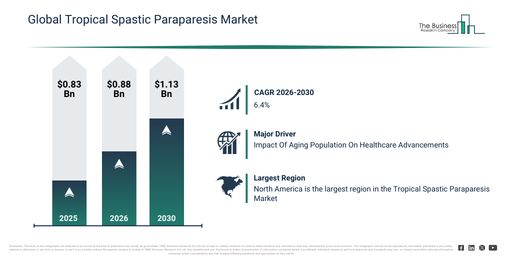
    The market size for tropical spastic paraparesis has demonstrated robust growth in recent years. Projections indicate it will expand from $0.83 billion in 2025 to $0.88 billion in 2026, at a compound annual growth rate (CAGR) of 6.6%. The historical growth can be attributed to factors such as the increasing prevalence of htlv-1 infection, limited availability of disease-modifying therapies, growing awareness of neurological disorders, expanded access to diagnostic imaging, and rising demand for supportive care services.

    The tropical spastic paraparesis market size is anticipated to undergo significant expansion in the foreseeable future. It is projected to reach $1.13 billion by 2030, exhibiting a compound annual growth rate (CAGR) of 6.4%. This projected growth throughout the forecast period can be attributed to advancements in antiviral research, increasing investments in rare neurological disorder research, the broadening of precision diagnostics, an intensified focus on long-term disease management, and improved patient access to specialized care. Prominent trends expected during the forecast period involve a rising focus on HTLV-1 targeted diagnostics, the increasing adoption of multidisciplinary treatment approaches, a growing emphasis on early disease detection, the expansion of supportive physiotherapy programs, and enhanced disease awareness and screening initiatives.

    Access Your Free Sample Report For In-Depth Market Analysis:

    https://www.thebusinessresearchcompany.com/sample.aspx?id=21309&type=smp

    What Leading Drivers Are Supporting The Tropical Spastic Paraparesis Market Expansion?

    The expansion of the elderly demographic is anticipated to stimulate the future growth of the tropical spastic paraparesis market. This demographic, typically comprising individuals aged 65 and above, frequently requires greater healthcare due to natural age-related physiological shifts, persistent illnesses, and physical limitations. The rise in the geriatric population is attributable to factors such as extended life expectancy, progress in medical care, decreased birth rates, higher living standards, improved disease management, lower infant mortality, better nutrition, and availability of medical breakthroughs. Tropical spastic paraparesis, a persistent neurodegenerative condition impacting motor abilities, emphasizes the necessity for better geriatric healthcare by stressing the significance of prompt diagnosis, specialized rehabilitative care, and sustained care approaches that enhance mobility, autonomy, and overall life quality among older adults. As an illustration, in October 2024, the World Health Organization, a Switzerland-based intergovernmental body, forecasted that the worldwide count of individuals aged 60 and above would reach 1.4 billion by 2030, constituting one in every six people globally. This total is projected to increase to 2.1 billion by 2050, with those aged 80 and above tripling to 426 million. Consequently, the increasing elderly population is propelling the expansion of the tropical spastic paraparesis market.

    What Are The Key Segment Divisions In The Tropical Spastic Paraparesis Market Segment Structure?

    The tropical spastic paraparesis market covered in this report is segmented –

    1) By Disease Type: Tropical Spastic Paraparesis, HIV Associated Myelopathy, Multiple Sclerosis

    2) By Treatment Modality: Pharmaceuticals, Physiotherapy, Surgical Interventions

    3) By Patient Demographics: Pediatric Patients, Adult Patients, Geriatric Patients

    4) By Diagnostic Technique: Magnetic Resonance Imaging (MRI), Lumbar Puncture

    5) By End Use Industry: Hospitals, Clinics, Diagnostic Centers, Other End Use Industries

    Subsegments:

    1) By Tropical Spastic Paraparesis: Early Stage Tropical Spastic Paraparesis, Late Stage Tropical Spastic Paraparesis

    2) By HIV Associated Myelopathy: Acute HIV Associated Myelopathy, Chronic HIV Associated Myelopathy

    3) By Multiple Sclerosis: Relapsing-Remitting Multiple Sclerosis, Primary Progressive Multiple Sclerosis, Secondary Progressive Multiple Sclerosis

    Which Organizations Are Engaged In The Tropical Spastic Paraparesis Market?

    Major companies operating in the tropical spastic paraparesis market are Pfizer Inc., Merck & Co. Inc., Bayer AG, Sanofi SA, Bristol-Myers Squibb Company, AstraZeneca Plc, Novartis AG, Eli Lilly and Company, Takeda Pharmaceutical Company Limited, Teva Pharmaceutical Industries Ltd., UCB S.A., Viatris Inc., Biogen Inc., Ionis Pharmaceuticals, H Lundbeck A/S, AC Immune, VectorY Therapeutics, Verge Genomics, ViroMed Co. Ltd., Coya Therapeutics Inc., AgeneBio

    Get The Full Tropical Spastic Paraparesis Market Report:

    https://www.thebusinessresearchcompany.com/report/tropical-spastic-paraparesis-global-market-report

    Which Region Accounts For The Largest Portion Of The Tropical Spastic Paraparesis Market?

    North America was the largest region in the tropical spastic paraparesis market in 2025. Asia-Pacific is expected to be the fastest-growing region in the forecast period. The regions covered in the tropical spastic paraparesis market report are Asia-Pacific, South East Asia, Western Europe, Eastern Europe, North America, South America, Middle East, Africa.

    Request A Customized Tropical Spastic Paraparesis Market Report For Competitive Insights:

    https://www.thebusinessresearchcompany.com/report/tropical-spastic-paraparesis-global-market-report

    Browse Through More Reports Similar to the Global Tropical Spastic Paraparesis Market 2026, By The Business Research Company

    Gastroparesis Market Report 2026

    https://www.thebusinessresearchcompany.com/report/gastroparesis-global-market-report

    Malaria Vaccines Market Report

    https://www.thebusinessresearchcompany.com/report/malaria-vaccines-global-market-report

    Pruritus Therapeutic Market Report

    https://www.thebusinessresearchcompany.com/report/pruritus-therapeutic-global-market-report

    Get in touch with us:

    The Business Research Company: https://www.thebusinessresearchcompany.com/

    Americas +1 310-496-7795

    Asia +44 7882 955267 & +91 8897263534

    Europe +44 7882 955267

    Email us at info@tbrc.info

    Follow us on:

    LinkedIn: https://in.linkedin.com/company/the-business-research-company

    YouTube: https://www.youtube.com/channel/UC24_fI0rV8cR5DxlCpgmyFQ

    Global Market Model: https://www.thebusinessresearchcompany.com/global-market-model
  • Triple Negative Breast Cancer Market Developments Driving Growth

    Triple Negative Breast Cancer Market Developments Driving Growth

    The Business Research Company’s 2026 market reports feature enhanced tools like market attractiveness analysis, TAM assessment, and company scoring matrices, along with interactive dashboards, deeper supply chain insights, and startup coverage strengthening the depth, usability, and strategic value of insights.

    What Is The Estimated Market Size Of The Triple Negative Breast Cancer Market In 2026, And How Will Its Value Evolve By 2030?

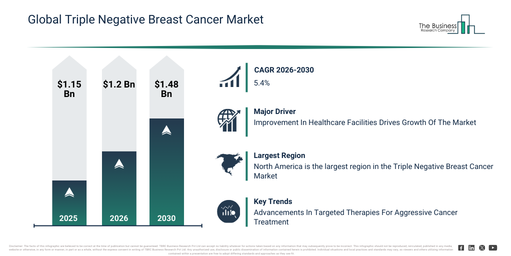
    The triple negative breast cancer market size has experienced consistent growth in recent years. It is anticipated to expand from $1.15 billion in 2025 to $1.2 billion in 2026, demonstrating a compound annual growth rate (CAGR) of 4.4%. Historically, the market’s expansion can be attributed to an increasing occurrence of aggressive breast cancer subtypes, the constrained efficacy of hormone therapies, heightened awareness of genetic risk factors, the proliferation of oncology specialty centers, and advancements in diagnostic imaging techniques.

    The triple negative breast cancer market is projected to experience robust expansion in the coming years. Its valuation is anticipated to reach $1.48 billion by 2030, demonstrating a compound annual growth rate (CAGR) of 5.4%. This projected growth over the forecast period is primarily driven by the escalating development of innovative immunotherapies, a heightened emphasis on individualized oncology treatments, the proliferation of clinical trials for TNBC, the increasing application of biomarker-guided therapy selection, and advancements in the creation of targeted drugs. Key developments expected during this period involve a surge in the implementation of immunotherapy-centric treatment plans, an increased utilization of PARP and other targeted inhibitors, a greater concentration on genetic and biomarker diagnostic testing, the broadening of combination therapy strategies, and a stronger focus on prompt and assertive interventions.

    Access Your Free Sample Report For In-Depth Market Analysis:

    https://www.thebusinessresearchcompany.com/sample.aspx?id=21308&type=smp

    Which Key Factors Are Driving The Triple Negative Breast Cancer Market Growth?

    The future expansion of the triple negative breast cancer market is anticipated to be driven by enhanced healthcare facilities. These facilities are establishments like hospitals, clinics, and diagnostic centers that provide medical care and services to support and treat patients. Their enhancement stems from various factors, including increased investment in healthcare infrastructure, a focus on patient-centered care, and demographic shifts such as population growth and aging. Improved healthcare facilities bolster support for triple-negative breast cancer by offering access to advanced diagnostic technologies, personalized treatment options, multidisciplinary care teams, and better patient education, ultimately leading to improved early detection, treatment outcomes, and overall patient survival rates. For instance, in May 2023, the American Health Care Association, a US-based nonprofit organization, reported that the United States had 6,129 hospitals, showing a 0.591% increase from the previous year’s count of 6,093 hospitals. Consequently, the improvement of healthcare facilities is propelling the growth of the triple negative breast cancer market.

    Which Segment Categories Are Included In The Triple Negative Breast Cancer Market Segment Analysis?

    The triple negative breast cancer market covered in this report is segmented –

    1) By Treatment Type: Chemotherapy, Immunotherapy, Targeted Therapy, Surgery, Radiation Therapy, Other Treatment Types

    2) By Type Of Test: Imaging Techniques, Assays, Breast Biopsy

    3) By End-User: Hospitals, Specialty Clinics, Ambulatory Surgical Centers, Other End-Users

    Subsegments:

    1) By Chemotherapy: Anthracyclines-based Chemotherapy, Taxane-based Chemotherapy, Platinum-based Chemotherapy

    2) By Immunotherapy: Checkpoint Inhibitors, Cancer Vaccines

    3) By Targeted Therapy: PARP Inhibitors, VEGF Inhibitors, CDK4 Or CDK6 Inhibitors

    4) By Surgery: Mastectomy, Lumpectomy, Lymph Node Dissection

    5) By Radiation Therapy: External Beam Radiation, Brachytherapy

    6) By Other Treatment Types: Hormone Therapy, Hyperthermia Therapy, Stem Cell Therapy

    Which Trends Are Guiding The Direction Of The Triple Negative Breast Cancer Market?

    Major companies active in the triple-negative breast cancer market are emphasizing the development of innovative products, such as small molecule drugs, to precisely and effectively target a broad spectrum of diseases. Small molecule drugs are low molecular weight compounds that can easily enter cells to modulate biological processes, making them effective for treating specific diseases, including cancer and infectious diseases. For example, in December 2024, Lantern Pharma Inc., a US-based clinical-stage biotechnology company, announced investigational medication candidate LP-184 for the treatment of Triple Negative Breast Cancer (TNBC), which received Fast Track Category approval from the Food and Drug Administration (FDA), a US-based government agency. LP-184 is a next-generation acylfulvene and small molecule drug candidate designed to selectively damage DNA in cancer cells that overexpress specific biomarkers or have mutations in DNA damage repair pathways. LP-184 aids in identifying patient populations and cancer subtypes likely to respond to treatment by employing Lantern’s proprietary RADR AI platform. It is currently undergoing evaluation across multiple solid tumors, demonstrating nanomolar potency. Additionally, LP-184 has displayed promising activity against drug-resistant cancers, suggesting its potential as a breakthrough in targeted cancer therapy.

    Who Are The Active Companies Shaping The Triple Negative Breast Cancer Market?

    Major companies operating in the triple negative breast cancer market are Pfizer Inc., F Hoffmann-La Roche Ltd., Merck & Co Inc., AbbVie Inc., Bristol-Myers Squibb Company, AstraZeneca Plc, GlaxoSmithKline plc, Eli Lilly and Company, Amgen Inc., Daiichi Sankyo Company Limited, Illumina Inc., Bio-Rad Laboratories Inc., Seagen Inc., MacroGenics Inc., Immutep Limited, G1 Therapeutics Inc., BeOne Medicines, BioNTech SE, Akeso Inc, BriaCell Therapeutics Corp, Bicycle Therapeutics

    Get The Full Triple Negative Breast Cancer Market Report:

    https://www.thebusinessresearchcompany.com/report/triple-negative-breast-cancer-global-market-report

    Which Region Holds The Highest Market Share In The Triple Negative Breast Cancer Market?

    North America was the largest region in the triple negative breast cancer market in 2025. Asia-Pacific is expected to be the fastest-growing region in the forecast period. The regions covered in the triple negative breast cancer market report are Asia-Pacific, South East Asia, Western Europe, Eastern Europe, North America, South America, Middle East, Africa.

    Request A Customized Triple Negative Breast Cancer Market Report For Competitive Insights:

    https://www.thebusinessresearchcompany.com/report/triple-negative-breast-cancer-global-market-report

    Browse Through More Reports Similar to the Global Triple Negative Breast Cancer Market 2026, By The Business Research Company

    Metastatic Hr Her2 Breast Cancer Market Report 2026

    https://www.thebusinessresearchcompany.com/report/metastatic-hr-her2-breast-cancer-global-market-report

    Breast Cancer Diagnostics Market Report

    https://www.thebusinessresearchcompany.com/report/breast-cancer-diagnostics-global-market-report

    Breast Cancer Drugs Market Report

    https://www.thebusinessresearchcompany.com/report/breast-cancer-drugs-global-market-report

    Get in touch with us:

    The Business Research Company: https://www.thebusinessresearchcompany.com/

    Americas +1 310-496-7795

    Asia +44 7882 955267 & +91 8897263534

    Europe +44 7882 955267

    Email us at info@tbrc.info

    Follow us on:

    LinkedIn: https://in.linkedin.com/company/the-business-research-company

    YouTube: https://www.youtube.com/channel/UC24_fI0rV8cR5DxlCpgmyFQ

    Global Market Model: https://www.thebusinessresearchcompany.com/global-market-model
  • Triple Combination Therapy Market Forecast with Demand Insights

    Triple Combination Therapy Market Forecast with Demand Insights

    The Business Research Company’s 2026 market reports feature enhanced tools like market attractiveness analysis, TAM assessment, and company scoring matrices, along with interactive dashboards, deeper supply chain insights, and startup coverage strengthening the depth, usability, and strategic value of insights.

    How Does The Market Size Of The Triple Combination Therapy Market Compare Between 2026 And 2030?

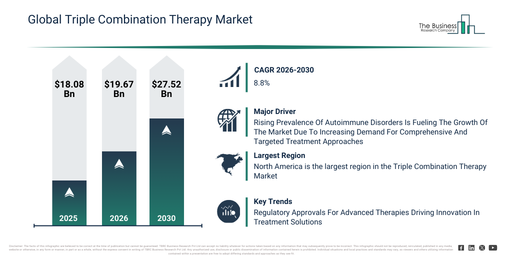
    The triple combination therapy market has experienced robust expansion over recent years. This market is projected to expand from $18.08 billion in 2025 to $19.67 billion in 2026, demonstrating a compound annual growth rate (CAGR) of 8.8%. Historically, this market’s expansion was driven by factors such as the broadening of chronic disease treatment protocols, the extensive application of antiretroviral therapy, the escalating intricacy of cancer treatment regimens, the increased availability of combination drug approvals, and the rise of specialty pharmaceutical markets.

    The triple combination therapy market is anticipated to show significant expansion in the coming years. It is projected to achieve a size of $27.52 billion by 2030, growing at a compound annual growth rate (CAGR) of 8.8%. This growth during the forecast period is expected to stem from factors such as increasing demand for precision combination therapies, the rising development of gene-modulating drugs, the expansion of oncology combination pipelines, a growing focus on optimizing treatment adherence, and advancements in pharmacogenomics. Major trends during this period are set to include the increasing adoption of fixed-dose combination therapies, the rising use of personalized multi-drug regimens, a growing emphasis on resistance-reducing treatment protocols, the expansion of combination therapies in oncology and HIV, and enhanced integration of clinical decision support tools.

    Access Your Free Sample Report For In-Depth Market Analysis:

    https://www.thebusinessresearchcompany.com/sample.aspx?id=23547&type=smp

    What Primary Drivers Are Shaping The Triple Combination Therapy Market?

    The triple combination therapy market is projected to experience growth driven by the increasing occurrence of autoimmune disorders. These conditions involve the body’s immune system mistakenly attacking its healthy tissues and organs. The escalating prevalence of autoimmune disorders stems from increased exposure to environmental factors such as pollution, which can trigger abnormal immune responses in genetically susceptible individuals. Triple combination therapy offers a comprehensive strategy for managing autoimmune disorders by concurrently targeting multiple immune pathways, thereby enhancing treatment efficacy and reducing disease activity. For instance, in February 2024 according to the Arthritis Australia is a Australia-based non-profit organization, it is estimated that in 2025, 212,136 males and 362,137 females are projected to have rheumatoid arthritis (RA), with these numbers anticipated to increase by 2040 to approximately 280,040 males and 479,828 females. Therefore, the rising prevalence of autoimmune disorders is a key factor propelling the expansion of the triple combination therapy market.

    How Is The Triple Combination Therapy Market Broken Down By Segment Categories?

    The triple combination therapy market covered in this report is segmented –

    1) By Drug Class: Antiretroviral Agents, Targeted Cancer Therapies, Immunomodulators, Anti-Inflammatory Drugs, Gene Modulators

    2) By Therapeutic Area: Infectious Diseases, Chronic Diseases, Cystic Fibrosis (CF), Cancer, Autoimmune Disorders, Neurological Disorders

    3) By Route Of Administration: Oral Therapies, Intravenous (IV), Subcutaneous (SC), Inhalation-Based Therapies, Topical Applications

    4) By Distribution Channel: Hospital Pharmacies, Retail Pharmacies, Online Pharmacies, Specialty Clinics

    Subsegments:

    1) By Antiretroviral Agents: Nucleoside Reverse Transcriptase Inhibitors (NRTIs), Non-Nucleoside Reverse Transcriptase Inhibitors (NNRTIs), Protease Inhibitors (PIs)

    2) By Targeted Cancer Therapies: Tyrosine Kinase Inhibitors (TKIs), Monoclonal Antibodies (mAbs), Immune Checkpoint Inhibitors

    3) By Immunomodulators: Interleukin Inhibitors, Tumor Necrosis Factor (TNF) Inhibitors, Janus Kinase (JAK) Inhibitors

    4) By Anti-Inflammatory Drugs: Non-Steroidal Anti-Inflammatory Drugs (NSAIDs), Corticosteroids, Selective COX-2 Inhibitors

    5) By Gene Modulators: Antisense Oligonucleotides, RNA Interference (RNAi) Agents, CRISPR-Based Gene Editing Therapies

    What Trends Are Affecting The Growth Of The Triple Combination Therapy Market?

    Major companies operating in the triple combination therapy market are focusing on developing innovative solutions, such as next-generation cystic fibrosis triple therapy, to improve clinical outcomes in cystic fibrosis by addressing the disease’s underlying cause. This advanced treatment approach combines three modulators to enhance the function of the defective cystic fibrosis transmembrane conductance regulator (CFTR) protein, aiming to improve respiratory outcomes and overall disease management in patients with cystic fibrosis. For instance, in July 2024, Vertex Pharmaceuticals Incorporated, a US-based biotechnology company, announced that the U.S. Food and Drug Administration (FDA) had accepted its New Drug Application (NDA) for vanzacaftor/tezacaftor/deutivacaftor, a next-in-class triple combination therapy for the treatment of cystic fibrosis in patients aged six years and older who have at least one responsive cystic fibrosis transmembrane conductance regulator (CFTR) mutation. This once-daily regimen, known as the “vanza triple,” is engineered to significantly enhance CFTR protein function by combining two correctors and a potentiator, thereby targeting the protein’s quantity and activity at the cell surface. The therapy has been granted priority review by the FDA and validated by the European Medicines Agency (EMA), underscoring its potential to raise the standard of care and improve the quality of life for a broader segment of the cystic fibrosis population.

    Which Players Are Present In The Triple Combination Therapy Market Space?

    Major companies operating in the triple combination therapy market are Merck & Co. Inc., AstraZeneca plc, Novartis AG, GlaxoSmithKline (GSK) plc, Boehringer Ingelheim International GmbH, Vertex Pharmaceuticals, Daiichi Sankyo US, Bausch Health Companies Inc., CHIESI Farmaceutici S.p.A., Cipla Ltd., Lupin Ltd., BeyondSpring Inc., Daewoong pharmaceutical Co. Ltd, Galapagos NV, George Medicines, Biocytogen, Healio, Laekna Therapeutics, PDS Biotechnology, TG Therapeutics Inc., Immutep

    Get The Full Triple Combination Therapy Market Report:

    https://www.thebusinessresearchcompany.com/report/triple-combination-therapy-global-market-report

    Where Is The Triple Combination Therapy Market Most Concentrated Geographically?

    North America was the largest region in the triple combination therapy market in 2025. Asia-Pacific is expected to be the fastest-growing region in the forecast period. The regions covered in the triple combination therapy market report are Asia-Pacific, South East Asia, Western Europe, Eastern Europe, North America, South America, Middle East, Africa.

    Request A Customized Triple Combination Therapy Market Report For Competitive Insights:

    https://www.thebusinessresearchcompany.com/report/triple-combination-therapy-global-market-report

    Browse Through More Reports Similar to the Global Triple Combination Therapy Market 2026, By The Business Research Company

    Music Therapy Market Report 2026

    https://www.thebusinessresearchcompany.com/report/music-therapy-global-market-report

    Antiviral Combination Therapy Market Report

    https://www.thebusinessresearchcompany.com/report/antiviral-combination-therapy-global-market-report

    Cells Therapy Market Report

    https://www.thebusinessresearchcompany.com/report/cells-therapy-global-market-report

    Get in touch with us:

    The Business Research Company: https://www.thebusinessresearchcompany.com/

    Americas +1 310-496-7795

    Asia +44 7882 955267 & +91 8897263534

    Europe +44 7882 955267

    Email us at info@tbrc.info

    Follow us on:

    LinkedIn: https://in.linkedin.com/company/the-business-research-company

    YouTube: https://www.youtube.com/channel/UC24_fI0rV8cR5DxlCpgmyFQ

    Global Market Model: https://www.thebusinessresearchcompany.com/global-market-model
  • Trigeminal Neuralgia Treatment Market Outlook Driven by Growth Factors

    Trigeminal Neuralgia Treatment Market Outlook Driven by Growth Factors

    The Business Research Company’s 2026 market reports feature enhanced tools like market attractiveness analysis, TAM assessment, and company scoring matrices, along with interactive dashboards, deeper supply chain insights, and startup coverage strengthening the depth, usability, and strategic value of insights.

    What Is The Forecasted Market Size Trajectory Of The Trigeminal Neuralgia Treatment Market From 2026 To 2030?

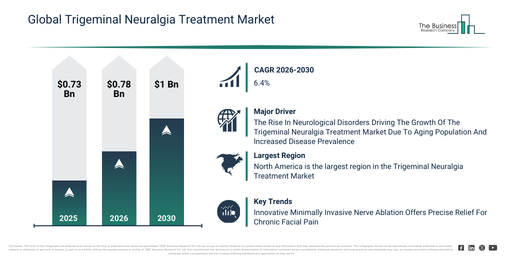
    The trigeminal neuralgia treatment market size has experienced robust expansion in recent years. It is anticipated to grow from $0.73 billion in 2025 to $0.78 billion in 2026, achieving a compound annual growth rate (CAGR) of 6.7%. The market’s expansion in the past was driven by factors such as increasing diagnosis rates of trigeminal neuralgia, a continued reliance on pharmacological pain management, the expansion of neurology specialty services, improved imaging for nerve disorders, and the growing availability of surgical treatment options.

    The trigeminal neuralgia treatment market is projected to experience robust expansion in the coming years. By 2030, its value is anticipated to reach $1 billion, exhibiting a compound annual growth rate (CAGR) of 6.4%. This expansion during the projection period can be attributed to several factors, including a heightened demand for lasting pain relief solutions, increased adoption of gamma knife radiosurgery, the proliferation of outpatient surgical centers, an amplified emphasis on patient quality-of-life outcomes, and breakthroughs in neurosurgical techniques. Key developments expected during this timeframe involve the greater utilization of advanced anticonvulsant medications, a surge in the embrace of minimally invasive surgical procedures, a burgeoning inclination towards stereotactic radiosurgery, the broadening of multidisciplinary pain management approaches, and a stronger concentration on long-term symptom control.

    Access Your Free Sample Report For In-Depth Market Analysis:

    https://www.thebusinessresearchcompany.com/sample.aspx?id=21307&type=smp

    Which Major Drivers Are Influencing The Expansion Of The Trigeminal Neuralgia Treatment Market?

    The increasing occurrence of neurological disorders is anticipated to drive the expansion of the trigeminal neuralgia treatment market. Neurological disorders encompass various conditions affecting the brain, spinal cord, and nerves. The rising prevalence of these disorders is primarily linked to the aging demographic, as older individuals face a higher risk of developing conditions such as Alzheimer’s, Parkinson’s, and stroke. Trigeminal neuralgia treatments offer support to patients by alleviating severe facial pain, reducing nerve irritation, enhancing their quality of life, and preventing further neurological damage. For instance, in March 2023, according to the Alzheimer’s Association, a US-based nonprofit voluntary health organization, in 2023, approximately 6.7 million Americans aged 65 and older are living with Alzheimer’s dementia, and this number is projected to rise to 13.8 million by 2060. Therefore, the growing incidence of neurological disorders is propelling the growth of the trigeminal neuralgia treatment market. The expanding elderly population is expected to fuel the growth of the trigeminal neuralgia treatment market. The geriatric population consists of individuals typically aged 65 years and older, who often have elevated healthcare needs due to age-related physiological changes, chronic illnesses, and functional limitations. The increase in the geriatric population is a result of extended life expectancy, advancements in healthcare, lower birth rates, improved living standards, better disease management, reduced infant mortality, enhanced nutrition, and access to medical innovations. Trigeminal neuralgia treatment assists the elderly by alleviating intense facial pain, improving daily functioning, and enhancing their overall quality of life. For instance, in October 2024, according to World Health Organization, a Switzerland-based intergovernmental organization, the global population of individuals aged 60 and older is projected to hit 1.4 billion by 2030, making up one in every six people worldwide. This figure is expected to double to 2.1 billion by 2050, with the number of people aged 80 and above set to triple, reaching 426 million. Consequently, the aging population is driving the growth of the trigeminal neuralgia treatment market.

    What Are The Different Segment Types In The Trigeminal Neuralgia Treatment Market Segment Breakdown?

    The trigeminal neuralgia treatment market covered in this report is segmented –

    1) By Treatment Type: Medications, Surgery, Other Treatment Types

    2) By Distribution Channel: Hospital Pharmacies, Retail Pharmacies, Online Pharmacies

    3) By End-User: Hospitals, Specialty Clinics, Ambulatory Surgical Centers, Other End-Users

    Subsegments:

    1) By Medications: Anticonvulsants, Muscle Relaxants, Antidepressants

    2) By Surgery: Microvascular Decompression Surgery, Gamma Knife Radiosurgery, Rhizotomy

    3) By Other Treatment Types: Nerve Blocks, Stereotactic Radiosurgery, Physical Therapy

    Which Trends Are Shaping The Trigeminal Neuralgia Treatment Market?

    Major companies in the trigeminal neuralgia treatment market are dedicated to developing innovative solutions, such as minimally invasive nerve ablation, with the aim of improving patient outcomes, reducing complications associated with procedures, and enhancing the overall quality of life for individuals suffering from severe facial pain. Minimally invasive nerve ablation is a medical technique that utilizes heat, cold, or chemical agents to selectively destroy or disable nerves responsible for pain, causing minimal damage to surrounding tissues. For instance, in August 2025, NeuroOne Medical Technologies Corporation, a US-based medical technology company, obtained approval from the U.S. Food and Drug Administration (FDA) for the OneRF Trigeminal Nerve Ablation System, authorizing its use for treating trigeminal neuralgia, a chronic facial pain condition. The system features a multi-contact radiofrequency probe that facilitates precise pain localization, stimulation, and customized ablation using a single electrode. It functions with temperature-controlled lesioning to boost accuracy and safety, potentially decreasing procedure time and elevating patient comfort. The system is minimally invasive and delivers targeted radiofrequency energy to ablate nerve fibers responsible for chronic facial pain, such as trigeminal neuralgia.

    Who Are The Well-Known Companies In The Trigeminal Neuralgia Treatment Market?

    Major companies operating in the trigeminal neuralgia treatment market are Novartis AG, Sandoz, Sun Pharmaceutical Industries Ltd., Apotex Inc., Lupin Limited, Taro Pharmaceutical Industries Ltd., Torrent Pharmaceuticals Ltd., Kriya Therapeutics, Convergence Pharmaceuticals Limited, Noema Pharma AG, Max Healthcare, Oxford Cannabinoid Technologies Holdings Plc, NanoVibronix, Pfizer Inc., GlaxoSmithKline plc, Teva Pharmaceutical Industries Ltd., Medtronic plc, Boston Scientific Corporation, Abbott Laboratories, Elekta, Accuray Inc., UCB S.A., Eli Lilly and Company

    Get The Full Trigeminal Neuralgia Treatment Market Report:

    https://www.thebusinessresearchcompany.com/report/trigeminal-neuralgia-treatment-global-market-report

    Which Region Dominates The Trigeminal Neuralgia Treatment Market By Market Share?

    North America was the largest region in the trigeminal neuralgia treatment market in 2025. Asia-Pacific is expected to be the fastest-growing region in the forecast period. The regions covered in the trigeminal neuralgia treatment market report are Asia-Pacific, South East Asia, Western Europe, Eastern Europe, North America, South America, Middle East, Africa.

    Request A Customized Trigeminal Neuralgia Treatment Market Report For Competitive Insights:

    https://www.thebusinessresearchcompany.com/report/trigeminal-neuralgia-treatment-global-market-report

    Browse Through More Reports Similar to the Global Trigeminal Neuralgia Treatment Market 2026, By The Business Research Company

    Fibromyalgia Treatment Market Report 2026

    https://www.thebusinessresearchcompany.com/report/fibromyalgia-treatment-global-market-report

    Muscle Pain Treatment Market Report

    https://www.thebusinessresearchcompany.com/report/muscle-pain-treatment-global-market-report

    Migraine Treatment Market Report

    https://www.thebusinessresearchcompany.com/report/migraine-treatment-global-market-report

    Get in touch with us:

    The Business Research Company: https://www.thebusinessresearchcompany.com/

    Americas +1 310-496-7795

    Asia +44 7882 955267 & +91 8897263534

    Europe +44 7882 955267

    Email us at info@tbrc.info

    Follow us on:

    LinkedIn: https://in.linkedin.com/company/the-business-research-company

    YouTube: https://www.youtube.com/channel/UC24_fI0rV8cR5DxlCpgmyFQ

    Global Market Model: https://www.thebusinessresearchcompany.com/global-market-model
  • Treatment-Resistant Depression Market Overview 2026–2030 with Insights

    Treatment-Resistant Depression Market Overview 2026–2030 with Insights

    The Business Research Company’s 2026 market reports feature enhanced tools like market attractiveness analysis, TAM assessment, and company scoring matrices, along with interactive dashboards, deeper supply chain insights, and startup coverage strengthening the depth, usability, and strategic value of insights.

    How Much Will The Market Value Of The Treatment-Resistant Depression Market Grow Between 2026 And 2030?

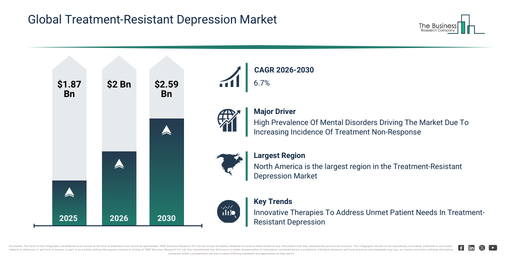
    The treatment-resistant depression market has shown significant expansion in recent years. It is projected to increase from $1.87 billion in 2025 to $2 billion in 2026, demonstrating a compound annual growth rate (CAGR) of 6.9%. This historical growth can be attributed to factors such as the rising prevalence of major depressive disorder, the limited efficacy of conventional antidepressants, an increased diagnosis of refractory depression cases, the expansion of psychiatric specialty clinics, and the growing acceptance of advanced mental health therapies.

    The market size for treatment-resistant depression is predicted to undergo significant expansion over the next few years, with projections indicating it will reach $2.59 billion by 2030, growing at a compound annual growth rate (CAGR) of 6.7%. This anticipated growth is largely attributed to several factors including increasing investments in precision psychiatry, the growing approval of ketamine and esketamine therapies, the expansion of biomarker-driven treatment selection, a rising demand for long-term depression management solutions, and the increased use of digital therapeutic support tools. Furthermore, major trends anticipated in the forecast period encompass the increasing adoption of novel rapid-acting antidepressants, rising utilization of neuromodulation therapies, a growing focus on personalized psychiatry approaches, the expansion of psychedelic-based treatment research, and enhanced integration of digital mental health tools.

    Access Your Free Sample Report For In-Depth Market Analysis:

    https://www.thebusinessresearchcompany.com/sample.aspx?id=23546&type=smp

    What Key Drivers Are Fueling The Growth Of The Treatment-Resistant Depression Market?

    The widespread occurrence of mental disorders is projected to boost the expansion of the treatment-resistant depression market. Mental disorders are diverse conditions affecting cognitive, emotional, and behavioral functioning, often causing substantial distress and daily impairment. This elevated prevalence is influenced by factors such as genetic predisposition, where inherited genetic variations can impact brain chemistry and heighten susceptibility to conditions like depression, anxiety, and schizophrenia. Treatment-resistant depression (TRD) supports individuals with mental disorders by promoting advanced, personalized treatments when standard therapies fail, ultimately improving their recovery chances and quality of life. For example, in November 2023, the American Psychological Association (APA), a US-based scientific and professional organization, reported that among adults, those aged 18 to 34 had the highest rate of mental illnesses at 50% in 2023, while adults aged 35 to 44 saw the largest increase in diagnoses, with 45% reporting a mental illness. Thus, the high prevalence of mental disorders is a key driver for the growth of the treatment-resistant depression market.

    Which Segment Classifications Are Used In The Treatment-Resistant Depression Market Segment Analysis?

    The treatment-resistant depression market covered in this report is segmented –

    1) By Drug Class: Selective Serotonin Reuptake Inhibitors (SSRIs), Monoamine Oxidase Inhibitors, Tricyclic Antidepressants, Psychedelics

    2) By Route Of Administration: Oral, Parenteral, Other Routes Of Administration

    3) By Distribution Channel: Hospital Pharmacies, Retail Pharmacies, Online Pharmacies

    4) By End-User: Hospitals, Homecare, Specialty Clinics, Other End-Users

    Subsegments:

    1) By Selective Serotonin Reuptake Inhibitors (SSRIs): Fluoxetine, Sertraline, Paroxetine, Citalopram, Escitalopram

    2) By Monoamine Oxidase Inhibitors (MAOIs): Phenelzine, Tranylcypromine, Isocarboxazid, Selegiline

    3) By Tricyclic Antidepressants (TCAs): Amitriptyline, Nortriptyline, Imipramine, Clomipramine, Doxepin

    4) By Psychedelics: Ketamine, Esketamine, Psilocybin, Lysergic Acid Diethylamide (LSD), 3,4-Methylenedioxymethamphetamine (MDMA)

    What Trends Are Influencing The Treatment-Resistant Depression Market?

    Leading companies in the treatment-resistant depression sector are prioritizing the creation of novel treatments, including monotherapy, to fulfill unmet patient requirements, boost effectiveness, and minimize adverse reactions. Monotherapy involves using a singular treatment or drug for a condition, rather than administering multiple therapies concurrently. This approach aids in managing treatment-resistant depression by providing a singular, concentrated therapy that could prove more beneficial for individuals who have not responded to various preceding medications. As an illustration, Johnson & Johnson Services Inc., a pharmaceutical, biotechnology, and medical technology firm based in the U.S., declared in January 2025 that the U.S. Food and Drug Administration (FDA), a U.S. government regulatory agency, had granted approval for SPRAVATO (esketamine) nasal spray, a rapid-onset therapy for adults suffering from treatment-resistant depression (TRD). SPRAVATO is administered in conjunction with an oral antidepressant when individuals have shown an insufficient response to at least two other antidepressant regimens. The swift impact of this medication overcomes the shortcomings of conventional antidepressants, which typically require several weeks to demonstrate efficacy. Derived from ketamine, esketamine functions by targeting NMDA receptors in the brain, with the potential to elevate mood within a few hours. This approval represented a substantial stride forward in the domain of mental health care.

    Which Firms Are Contributing To The Treatment-Resistant Depression Market Ecosystem?

    Major companies operating in the treatment-resistant depression market are Pfizer Inc., Johnson & Johnson Services Inc., Neurocrine Biosciences Inc., Relmada Therapeutics Inc., Neuronetics Inc., COMPASS Pathways, BrainsWay Ltd., Magstim Company Limited, MindMed, Alto Neuroscience, Sage Therapeutics Inc., MindBio Therapeutics Ltd., Reunion Neuroscience

    Get The Full Treatment-Resistant Depression Market Report:

    https://www.thebusinessresearchcompany.com/report/treatment-resistant-depression-global-market-report

    Which Region Is The Largest In The Treatment-Resistant Depression Market?

    North America was the largest region in the treatment-resistant depression market in 2025. Asia-Pacific is expected to be the fastest-growing region in the forecast period. The regions covered in the treatment-resistant depression market report are Asia-Pacific, South East Asia, Western Europe, Eastern Europe, North America, South America, Middle East, Africa.

    Request A Customized Treatment-Resistant Depression Market Report For Competitive Insights:

    https://www.thebusinessresearchcompany.com/report/treatment-resistant-depression-global-market-report

    Browse Through More Reports Similar to the Global Treatment-Resistant Depression Market 2026, By The Business Research Company

    Major Depressive Disorder Market Report 2026

    https://www.thebusinessresearchcompany.com/report/major-depressive-disorder-global-market-report

    Music Therapy Market Report

    https://www.thebusinessresearchcompany.com/report/music-therapy-global-market-report

    Behavioral Therapy Market Report

    https://www.thebusinessresearchcompany.com/report/behavioral-therapy-global-market-report

    Get in touch with us:

    The Business Research Company: https://www.thebusinessresearchcompany.com/

    Americas +1 310-496-7795

    Asia +44 7882 955267 & +91 8897263534

    Europe +44 7882 955267

    Email us at info@tbrc.info

    Follow us on:

    LinkedIn: https://in.linkedin.com/company/the-business-research-company

    YouTube: https://www.youtube.com/channel/UC24_fI0rV8cR5DxlCpgmyFQ

    Global Market Model: https://www.thebusinessresearchcompany.com/global-market-model
  • Traveler’s Diarrhea Treatment Market Forecast Highlighting Key Trends

    Traveler’s Diarrhea Treatment Market Forecast Highlighting Key Trends

    The Business Research Company’s 2026 market reports feature enhanced tools like market attractiveness analysis, TAM assessment, and company scoring matrices, along with interactive dashboards, deeper supply chain insights, and startup coverage strengthening the depth, usability, and strategic value of insights.

    What Changes In Market Value Are Expected For The Traveler’s Diarrhea Treatment Market Over The 2026–2030 Period?

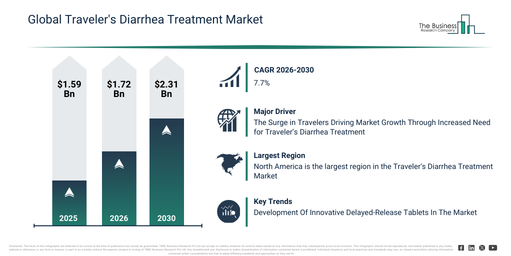
    In recent years, the traveler’s diarrhea treatment market has experienced robust expansion. This market is projected to expand significantly, climbing from $1.59 billion in 2025 to $1.72 billion in 2026, demonstrating a compound annual growth rate (CAGR) of 7.9%. Historically, several factors have contributed to its growth, including a rise in international travel, a greater occurrence of foodborne infections, the widespread accessibility of oral rehydration solutions, heightened awareness of health risks for travelers, and the broadening of retail pharmacy networks.

    The traveler’s diarrhea treatment market is projected to experience robust expansion over the coming years. By 2030, its valuation is anticipated to reach $2.31 billion, demonstrating a compound annual growth rate (CAGR) of 7.7%. This anticipated growth during the forecast timeframe is primarily driven by an increased emphasis on preventive travel healthcare, the rising uptake of probiotics and zinc supplements, the expansion of digital travel health advisory services, a greater need for child-specific formulations, and improved access to antibiotics in emerging markets. Key trends characterizing the forecast period encompass a growing preference for combination drug therapies, escalating demand for rapid-relief anti-diarrheal medications, wider application of oral rehydration and probiotic solutions, expanded availability of over-the-counter treatment, and a heightened focus on travel-related preventive care.

    Access Your Free Sample Report For In-Depth Market Analysis:

    https://www.thebusinessresearchcompany.com/sample.aspx?id=21305&type=smp

    Which Drivers Are Supporting The Traveler’s Diarrhea Treatment Market Growth?

    The increasing number of people traveling by air is anticipated to boost the traveler’s diarrhea treatment market in the coming years. Air travelers are defined as individuals who travel via airplane for various reasons such as business, leisure, or other objectives. The rise in air travel volumes stems from factors including greater flight availability, more affordable ticket options, enhanced global connectivity, and a growing consumer desire for international travel. Treatments for traveler’s diarrhea aid this expansion by lessening the seriousness of the illness, preventing dehydration, and allowing travelers to continue their plans with little interruption. For example, in January 2024, data from the Transportation Security Administration (TSA), a US-based government agency, showed that 2.85 billion passengers were screened at TSA checkpoints in 2023, an increase from 2.73 billion screenings recorded in 2022. Consequently, the uptick in air passengers is fueling the expansion of the traveler’s diarrhea treatment market.

    How Is The Traveler’s Diarrhea Treatment Market Organized By Segment Classification?

    The traveler’s diarrhea treatment market covered in this report is segmented –

    1) By Drug Type: Antibiotics, Anti-diarrheal, Other Drug Types

    2) By Route Of Administration: Oral, Parenteral

    3) By Application: Adult Traveler’s Diarrhea, Children Traveler’s Diarrhea

    4) By End-Users: Hospitals, Homecare, Specialty Clinics, Other End-Users

    Subsegments:

    1) By Antibiotics: Fluoroquinolones, Macrolides, Rifamycins

    2) By Anti-diarrheal: Loperamide, Bismuth Subsalicylate

    3) By Other Drug Types: Oral Rehydration Therapy, Probiotics, Zinc Supplements

    Which Trends Are Expected To Impact The Traveler’s Diarrhea Treatment Market?

    Leading companies within the traveler’s diarrhea treatment market are focusing on the creation of innovative drugs, such as delayed-release tablets, to prolong drug activity and reduce the frequency of dosing. These delayed-release tablets are medications formulated to release their active ingredients at a specific time after ingestion, ensuring they reach the intestines before dissolving to effectively treat traveler’s diarrhea while minimizing stomach irritation. For instance, in September 2023, Adalvo Ltd., a Malta-based pharmaceutical company, partnered with Cosmo Pharmaceuticals N.V., an Ireland-based pharmaceutical company, to launch Rifamycin SV MMX 200 mg (Aemcolo). This treatment for traveler’s diarrhea works by delivering a non-absorbed antibiotic directly to the colon, thereby reducing symptoms and lessening disruption to beneficial gut bacteria. Its targeted approach provides effective relief with a lower risk of systemic side effects and multi-drug resistance.

    Who Are The Industry Participants Involved In The Traveler’s Diarrhea Treatment Market?

    Major companies operating in the traveler’s diarrhea treatment market are Johnson & Johnson Services Inc., Bayer AG, Sanofi SA, GlaxoSmithKline plc, Teva Pharmaceutical Industries Ltd., C.H. Boehringer Sohn AG & Co. KG, Aurobindo Pharma Limited, Lupin Pharmaceuticals Inc., Glenmark Pharmaceuticals Ltd., RedHill Biopharma Ltd., Immuron Limited, Cosmo Pharmaceuticals N.V., Scandinavian Biopharma Holding AB, Pfizer Inc., Merck & Co. Inc., Novartis AG, Biocodex, Cipla Ltd., Dr Reddys Laboratories Ltd., Takeda Pharmaceutical Company Ltd., AbbVie Inc., Shanghai United Cell Biotechnology Co Ltd, PaxVax Inc.

    Get The Full Traveler’s Diarrhea Treatment Market Report:

    https://www.thebusinessresearchcompany.com/report/travelers-diarrhea-treatment-global-market-report

    Which Region Leads The Traveler’s Diarrhea Treatment Market In Terms Of Market Share?

    North America was the largest region in the traveler’s diarrhea treatment market in 2025. Asia-Pacific is expected to be the fastest-growing region in the forecast period. The regions covered in the traveler’s diarrhea treatment market report are Asia-Pacific, South East Asia, Western Europe, Eastern Europe, North America, South America, Middle East, Africa.

    Request A Customized Traveler’s Diarrhea Treatment Market Report For Competitive Insights:

    https://www.thebusinessresearchcompany.com/report/travelers-diarrhea-treatment-global-market-report

    Browse Through More Reports Similar to the Global Traveler’s Diarrhea Treatment Market 2026, By The Business Research Company

    Urinary Tract Infection Treatment Market Report 2026

    https://www.thebusinessresearchcompany.com/report/urinary-tract-infection-treatment-global-market-report

    Constipation Treatment Market Report

    https://www.thebusinessresearchcompany.com/report/constipation-treatment-global-market-report

    Gastrointestinal Drugs Market

    https://www.thebusinessresearchcompany.com/report/gastrointestinal-drugs-global-market

    Get in touch with us:

    The Business Research Company: https://www.thebusinessresearchcompany.com/

    Americas +1 310-496-7795

    Asia +44 7882 955267 & +91 8897263534

    Europe +44 7882 955267

    Email us at info@tbrc.info

    Follow us on:

    LinkedIn: https://in.linkedin.com/company/the-business-research-company

    YouTube: https://www.youtube.com/channel/UC24_fI0rV8cR5DxlCpgmyFQ

    Global Market Model: https://www.thebusinessresearchcompany.com/global-market-model
  • Traumatic Brain Injury Market Analysis with Growth Drivers and Outlook

    Traumatic Brain Injury Market Analysis with Growth Drivers and Outlook

    The Business Research Company’s 2026 market reports feature enhanced tools like market attractiveness analysis, TAM assessment, and company scoring matrices, along with interactive dashboards, deeper supply chain insights, and startup coverage strengthening the depth, usability, and strategic value of insights.

    By 2030, What Market Size Is The Traumatic Brain Injury Market Expected To Reach Based On Its 2026 Value?

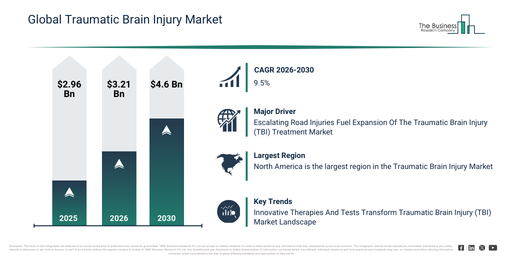
    The traumatic brain injury market size has experienced robust expansion in recent years. This market is projected to increase from $2.96 billion in 2025 to $3.21 billion in 2026, with a compound annual growth rate (CAGR) of 8.5%. The historical development of this market is attributable to an increase in sports-related and accident-induced tbis, the expansion of neurosurgical capabilities, the development of rehabilitation protocols, improved survival rates in severe injuries, and the growth in trauma center networks.

    The traumatic brain injury market size is projected to experience robust expansion over the coming years. It is anticipated to reach $4.6 billion in 2030, demonstrating a compound annual growth rate (CAGR) of 9.5%. This growth during the forecast period is primarily fueled by advancements in neuroprotective therapies, increasing investments in rehabilitation technologies, a heightened demand for long-term TBI care, the expansion of home-based rehabilitation solutions, and the growing integration of digital therapy platforms. Key developments anticipated in the forecast period encompass the greater adoption of multidisciplinary TBI treatment approaches, rising utilization of advanced neurorehabilitation therapies, enhanced integration of monitoring and imaging devices, the broadening of long-term cognitive rehabilitation programs, and an increased focus on personalized treatment plans.

    Access Your Free Sample Report For In-Depth Market Analysis:

    https://www.thebusinessresearchcompany.com/sample.aspx?id=13049&type=smp

    What Key Factors Are Affecting The Traumatic Brain Injury Market Demand?

    The growth of the traumatic brain injury (TBI) market is anticipated to be driven by an increase in road injuries. Road injuries are defined as physical harm sustained during accidents on streets, highways, and various transportation routes. An uptick in road injuries directly correlates with a greater occurrence of traumatic brain injuries, given that impacts from collisions frequently result in abrupt force to the head, causing neurological impairment. Treatments for TBI aid recovery by mitigating complications, enhancing cognitive abilities, and improving long-term results for patients. For example, in April 2024, the U.S. Department of Transportation, a U.S.-based government agency, reported that roadway fatalities in the United States totaled 40,990 deaths in 2023, indicating persistently high levels of severity for roadway injuries. Consequently, the increase in road injuries is propelling the expansion of the traumatic brain injury market.

    Which Segments Define The Traumatic Brain Injury Market Segment Structure?

    The traumatic brain injury market covered in this report is segmented –

    1) By Device: Computed Tomography, X-Ray, Imaging Devices, Magnetic Resonance Imaging Devices, Monitoring Devices, Other Devices

    2) By Technique: Intracranial Pressure (ICP) Monitoring, Partial Pressure Of Oxygen In Brain Tissue (PbrO2)

    3) By End-Use: Diagnostic Centers, Hospitals, Other End-Uses

    Subsegments:

    1) By Computed Tomography: Standard CT Scans, CT Angiography

    2) By X-Ray: Skull X-Ray, Cervical X-Ray

    3) By Imaging Devices: Ultrasound Imaging, PET Scans

    4) By Magnetic Resonance Imaging Devices: Closed MRI, Open MRI

    5) By Monitoring Devices: Intracranial Pressure Monitors, EEG Monitors

    6) By Other Devices: Neuropsychological Testing Devices, Portable Brain Injury Assessment Devices

    What Trends Are Influencing Changes In The Traumatic Brain Injury Market?

    Leading firms within the traumatic brain injury market are creating novel treatments and diagnostic tools, including the VIDAS TBI (GFAP, UCH-L1), to address evolving consumer requirements. Ongoing development and research into new therapies and tests for traumatic brain injury (TBI) aim to enhance patient outcomes and the overall quality of life for those living with TBI. For instance, in October 2023, bioMérieux, a France-based company specializing in in vitro diagnostics, revealed the launch of VIDAS TBI (GFAP, UCH-L1), a blood test designed to support the assessment of patients with mild traumatic brain injury (mTBI), founded on a distinct combination of brain biomarkers: GFAP and UCH-L1. This precise and objective tool can help decrease the number of unnecessary head Computed Tomography (CT) scans for mTBI patients and alleviate Emergency Department (ED) overcrowding by predicting the absence of acute intracranial lesions (ICL) after a head trauma.

    Who Are The Established Players Within The Traumatic Brain Injury Market?

    Major companies operating in the traumatic brain injury market are Medtronic plc, Stryker Corporation, Elekta AB, Integra LifeSciences Holdings Corp., Natus Medical Inc., Nihon Kohden Corporation, Raumedic AG, Qure.ai, Compumedics Ltd., Synaptive Medical Inc., BrainScope Company Inc., Soterix Medical Inc., Neural Analytics Inc., InfraScan Inc., NanoDx Inc., NeuroTrauma Sciences, Oculogica Inc., PathMaker Neurosystems Inc., Pinteon Therapeutics Inc., Abliva AB, QuesGen Systems Inc., Neural Analytics Inc.

    Get The Full Traumatic Brain Injury Market Report:

    https://www.thebusinessresearchcompany.com/report/traumatic-brain-injury-global-market-report

    Which Region Leads The Traumatic Brain Injury Market In Overall Market Size?

    North America was the largest region in the traumatic brain injury market in 2025. Asia-Pacific is expected to be the fastest-growing region in the forecast period. The regions covered in the traumatic brain injury market report are Asia-Pacific, South East Asia, Western Europe, Eastern Europe, North America, South America, Middle East, Africa.

    Request A Customized Traumatic Brain Injury Market Report For Competitive Insights:

    https://www.thebusinessresearchcompany.com/report/traumatic-brain-injury-global-market-report

    Browse Through More Reports Similar to the Global Traumatic Brain Injury Market 2026, By The Business Research Company

    Traumatic Brain Injuries Assessment Market Report 2026

    https://www.thebusinessresearchcompany.com/report/traumatic-brain-injuries-assessment-global-market-report

    Traumatic Brain Injuries Assessment And Management Devices Market Report

    https://www.thebusinessresearchcompany.com/report/traumatic-brain-injuries-assessment-and-management-devices-global-market-report

    Traumatic Brain Injury Diagnostic Equipment Market Report

    https://www.thebusinessresearchcompany.com/report/traumatic-brain-injury-diagnostic-equipment-global-market-report

    Get in touch with us:

    The Business Research Company: https://www.thebusinessresearchcompany.com/

    Americas +1 310-496-7795

    Asia +44 7882 955267 & +91 8897263534

    Europe +44 7882 955267

    Email us at info@tbrc.info

    Follow us on:

    LinkedIn: https://in.linkedin.com/company/the-business-research-company

    YouTube: https://www.youtube.com/channel/UC24_fI0rV8cR5DxlCpgmyFQ

    Global Market Model: https://www.thebusinessresearchcompany.com/global-market-model
  • Traumatic Brain Injury Assessment Market Growth Opportunities to 2030

    Traumatic Brain Injury Assessment Market Growth Opportunities to 2030

    The Business Research Company’s 2026 market reports feature enhanced tools like market attractiveness analysis, TAM assessment, and company scoring matrices, along with interactive dashboards, deeper supply chain insights, and startup coverage strengthening the depth, usability, and strategic value of insights.

    What Is The Anticipated Rise In Market Value Of The Traumatic Brain Injuries Assessment Market During The Forecast Period?

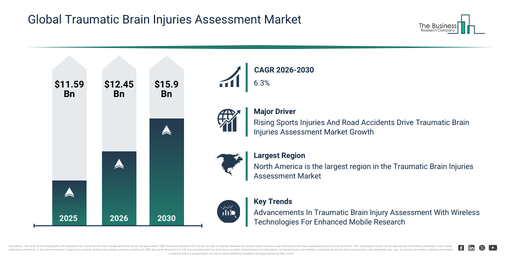
    The market size for traumatic brain injuries assessment has shown strong growth in recent years. It is projected to increase from $11.59 billion in 2025 to $12.45 billion in 2026, achieving a compound annual growth rate (CAGR) of 7.4%. This historical expansion can be attributed to factors such as increased incidence of head injuries, the expansion of emergency neurology services, improved access to CT and MRI imaging, the development of standardized assessment protocols, and a growing awareness of brain injury diagnosis.

    The traumatic brain injuries assessment market is anticipated to experience robust expansion in the coming years. Its valuation is projected to reach $15.9 billion by 2030, exhibiting a compound annual growth rate (CAGR) of 6.3%. This anticipated growth during the forecast period is propelled by factors such as the advancement of ai-assisted diagnostic platforms, increasing adoption of point-of-care assessment tools, integration of digital neuro-monitoring solutions, rising investments in brain injury research, and growing demand for rapid and accurate assessment methods. Noteworthy trends observed throughout the forecast period encompass the increasing use of advanced neuroimaging techniques, rising adoption of portable tbi assessment devices, growing integration of multimodal monitoring systems, expansion of early-stage injury detection tools, and an enhanced focus on objective diagnostic metrics.

    Access Your Free Sample Report For In-Depth Market Analysis:

    https://www.thebusinessresearchcompany.com/sample.aspx?id=15688&type=smp

    Which Primary Drivers Are Impacting The Traumatic Brain Injuries Assessment Market Growth?

    The rising incidence of sports injuries and road accidents is anticipated to advance the traumatic brain injuries assessment market. Sports injuries involve physical harm sustained during athletic pursuits, while road accidents are vehicular incidents on roads leading to harm or damage. This surge in sports injuries and road accidents stems from greater engagement in sports activities, heightened traffic congestion, distracted driving, and insufficient safety provisions. Traumatic brain injuries assessment is applied in cases of sports injuries and road accidents to gauge the seriousness of head trauma, inform treatment choices, and track recovery to ensure optimal outcomes for those affected. As an illustration, the International Transport Forum, a France-based intergovernmental organization, reported in August 2025 that Australia registered 1,297 road deaths in 2024, representing a 4% increase over 2023. Consequently, the growing count of sports injuries and road accidents is propelling the expansion of the traumatic brain injury assessment market.

    How Is The Traumatic Brain Injuries Assessment Market Segmented Across Different Segment Categories?

    The traumatic brain injuries assessment market covered in this report is segmented –

    1) By Product: Screening Devices, Monitoring Devices

    2) By Technique: Intracranial Pressure (ICP) Monitoring, Partial Pressure Of Oxygen In Brain Tissue (pBrO2)

    3) By End-User: Hospital, Diagnostics Center, Other End Users

    Subsegments:

    1) By Screening Devices: CT Scanners, MRI Scanners, Portable Screening Devices

    2) By Monitoring Devices: Intracranial Pressure (ICP) Monitors, Electroencephalogram (EEG) Monitors, Neuromonitoring Systems

    Which Trends Are Shaping Growth In The Traumatic Brain Injuries Assessment Market?

    Leading companies within the traumatic brain injury assessment market are focusing on incorporating advanced non-invasive brain stimulation (NIBS) technologies, specifically wire-free systems, into mobile devices to secure a competitive edge. These wire-free systems improve mobility and ease of use by eliminating the need for physical connections, making the devices more adaptable and appropriate for dynamic, real-world environments. For example, in April 2024, Soterix Medical Inc., a US-based medical technology firm, introduced the MxN-GO EEG system. This innovative product integrates High Definition Transcranial Electrical Stimulation (HD-tES) with EEG, featuring a distinct wire-free architecture. Tailored for research in mobile and natural environments, the MxN-GO EEG system provides a lightweight, easy-to-operate design for swift setup. It comes equipped with 33 stimulation channels and 32 recording channels, ensuring precise and application-specific targeting. HD-tES, a proprietary neuromodulation technology created by Soterix Medical, uses sophisticated electrode design, personalized brain current-flow modeling, and patented algorithms to safely guide current through high-definition electrodes.

    Which Organizations Play A Role In The Traumatic Brain Injuries Assessment Market Landscape?

    Major companies operating in the traumatic brain injuries assessment market are Medtronic Inc, Koninklijke Philips NV, Stryker Corporation, GE Healthcare Inc, Canon Medical Systems Corporation, Carestream Health Inc, Nihon Kohden Corp, Integra Lifesciences Corporation, Natus Medical Inc, Raumedic AG, Compumedics Limited, BrainScope Company Inc, Advanced Brain Monitoring Inc, InfraScan Inc, Siemens Healthineers AG, NovaSignal Corporation, SyncThink Inc, Imeka Solutions Inc, Elekta AB, Cadwell Industries Inc, Neurosoft SA, Boston Scientific Corporation, ESAOTE SPA

    Get The Full Traumatic Brain Injuries Assessment Market Report:

    https://www.thebusinessresearchcompany.com/report/traumatic-brain-injuries-assessment-global-market-report

    Which Region Is The Top Contributor To The Traumatic Brain Injuries Assessment Market By Share?

    North America was the largest region in the traumatic brain injuries assessment market in 2025. The regions covered in the traumatic brain injuries assessment market report are Asia-Pacific, South East Asia, Western Europe, Eastern Europe, North America, South America, Middle East, Africa.

    Request A Customized Traumatic Brain Injuries Assessment Market Report For Competitive Insights:

    https://www.thebusinessresearchcompany.com/report/traumatic-brain-injuries-assessment-global-market-report

    Browse Through More Reports Similar to the Global Traumatic Brain Injuries Assessment Market 2026, By The Business Research Company

    Traumatic Brain Injuries Assessment And Management Devices Market Report 2026

    https://www.thebusinessresearchcompany.com/report/traumatic-brain-injuries-assessment-and-management-devices-global-market-report

    Traumatic Brain Injury Market Report

    https://www.thebusinessresearchcompany.com/report/traumatic-brain-injury-global-market-report

    Traumatic Brain Injury Diagnostic Equipment Market Report

    https://www.thebusinessresearchcompany.com/report/traumatic-brain-injury-diagnostic-equipment-global-market-report

    Get in touch with us:

    The Business Research Company: https://www.thebusinessresearchcompany.com/

    Americas +1 310-496-7795

    Asia +44 7882 955267 & +91 8897263534

    Europe +44 7882 955267

    Email us at info@tbrc.info

    Follow us on:

    LinkedIn: https://in.linkedin.com/company/the-business-research-company

    YouTube: https://www.youtube.com/channel/UC24_fI0rV8cR5DxlCpgmyFQ

    Global Market Model: https://www.thebusinessresearchcompany.com/global-market-model
  • Global Trauma Care Centers Market Projected to Reach $32.56 Billion by 2030

    Global Trauma Care Centers Market Projected to Reach $32.56 Billion by 2030

    The Business Research Company’s 2026 market reports feature enhanced tools like market attractiveness analysis, TAM assessment, and company scoring matrices, along with interactive dashboards, deeper supply chain insights, and startup coverage strengthening the depth, usability, and strategic value of insights.

    How Is The Market Size Of The Trauma Care Centers Market Expected To Scale Between 2026 And 2030?

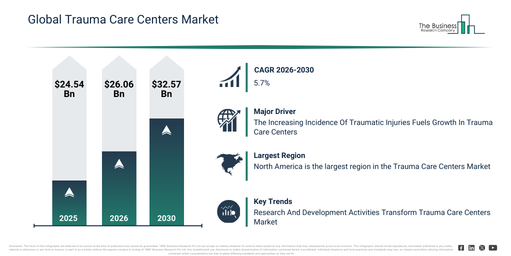
    The trauma care centers market size has demonstrated strong growth in recent years. It is anticipated to expand from $24.54 billion in 2025 to $26.06 billion in 2026, exhibiting a compound annual growth rate (CAGR) of 6.2%. This historical growth can be attributed to several factors including an increase in road traffic injuries, the expansion of emergency medical services infrastructure, the development of trauma system protocols, the growth of urban healthcare facilities, and a rising incidence of fall-related injuries.

    The trauma care centers market is projected to experience substantial expansion in the coming years. This market is anticipated to reach $32.57 billion by 2030, exhibiting a compound annual growth rate (CAGR) of 5.7%. This projected growth is driven by several factors, including the development of smart hospital infrastructure, increased funding for trauma-specific facilities, the implementation of AI-assisted triage systems, an increased emphasis on integrating rehabilitation services, and the escalating need for high-acuity emergency medical care. Key trends expected during this period involve the establishment of expanded integrated trauma care networks, the wider application of advanced diagnostic imaging techniques, a heightened focus on efficient rapid response and triage protocols, improved multidisciplinary approaches to trauma management, and the increasing uptake of tele-trauma services.

    Access Your Free Sample Report For In-Depth Market Analysis:

    https://www.thebusinessresearchcompany.com/sample.aspx?id=7540&type=smp

    What Significant Factors Are Influencing The Trauma Care Centers Market Expansion?

    The increasing number of emergency department visits due to traumatic injuries is expected to propel the growth of the trauma care centre market in the future. A traumatic injury refers to physical harms that are sudden and severe, requiring immediate medical attention. The rising frequency of traumatic injury-related emergency department visits obliges the trauma care centers market to deliver enhanced quality services for patients, which, in turn, boosts the demand for trauma care centers. For instance, in 2023, according to a report published by the Wisconsin Department of Health Services, a US-based government agency, the count of traumatic injuries caused by assault rose by 3% in 2023 compared to 2022, increasing from 1,544 cases in 2022 to 1,584 cases in 2023. Consequently, the growing number of traumatic injury-related emergency department visits is a key factor driving the expansion of the trauma care centers market.

    What Are The Main Segments Within The Trauma Care Centers Market Segment Structure?

    The trauma care centers market covered in this report is segmented –

    1) By Facility: In-house, Standalone

    2) By Trauma: Falls, Traffic-Related Injuries, Stab or Wound or Cut, Burn Injury, Brain Injury, Other Injuries

    3) By Service: Inpatient, Outpatient, Rehabilitation

    Subsegments:

    1) By In-house: Hospital-Based Trauma Units, Emergency departments With Trauma Services, Specialized Trauma Surgical Centers

    2) By Standalone: Independent Trauma Care Clinics, Urgent Care Facilities With Trauma Capabilities, Freestanding Emergency Medical Centers

    What Trends Are Affecting The Direction Of The Trauma Care Centers Market?

    Many entities operating within the trauma care centers market are prioritizing research and development initiatives to bolster their position in the trauma care centers market and ensure the best possible treatment for trauma patients. For instance, in April 2023, the Boston University School of Public Health inaugurated the Center for Trauma and Mental Health (CTMH). This center is committed to investigating and developing public health strategies specifically designed to address the health impacts of trauma. Its objective is to gain a comprehensive understanding of various stressful and traumatic events and their resulting repercussions. Functioning as an interdisciplinary nexus for academic activities, the center promotes collaboration across the school to confront the significant societal challenges presented by trauma. It endeavors to cultivate a community of researchers, educators, and practitioners dedicated to addressing trauma in its diverse forms.

    Who Are The Companies Participating In The Trauma Care Centers Market?

    Major companies operating in the trauma care centers market are University of Alabama at Birmingham, Banner Good Samaritan Medical Center, St. Joseph’s Hospital and Medical Center, Albany Medical Center, Ascension St. John Hospital, Baylor University Medical Center, Bellevue Hospital Center, China Medical University Hospital, Boston Medical Center, Brigham and Women’s Hospital, Cedars-Sinai Medical Center, Children’s Hospital of Philadelphia, Cleveland Clinic Foundation, Duke University Hospital, Emory University Hospital, Harborview Medical Center, Hospital of the University of Pennsylvania, Indiana University Health, Johns Hopkins Hospital, Massachusetts General Hospital, Mayo Clinic, Memorial Hermann-Texas Medical Center, Mount Sinai Hospital, New York-Presbyterian Hospital, Northwestern Memorial Hospital, Ohio State University Wexner Medical Center, Oregon Health & Science University Hospital, Parkland Memorial Hospital, Penn State Health Milton S. Hershey Medical Center, Ronald Reagan UCLA Medical Center, Stanford Health Care

    Get The Full Trauma Care Centers Market Report:

    https://www.thebusinessresearchcompany.com/report/trauma-care-centers-global-market-report

    Which Region Represents The Largest Share Of The Trauma Care Centers Market?

    North America was the largest region in the trauma care centers market in 2025. Asia-Pacific is expected to be the fastest-growing region in the forecast period. The regions covered in the trauma care centers market report are Asia-Pacific, South East Asia, Western Europe, Eastern Europe, North America, South America, Middle East, Africa.

    Request A Customized Trauma Care Centers Market Report For Competitive Insights:

    https://www.thebusinessresearchcompany.com/report/trauma-care-centers-global-market-report

    Browse Through More Reports Similar to the Global Trauma Care Centers Market 2026, By The Business Research Company

    Wound Care Centers Market Report 2026

    https://www.thebusinessresearchcompany.com/report/wound-care-centers-global-market-report

    Hospitals And Outpatient Care Centers Market Report

    https://www.thebusinessresearchcompany.com/report/hospitals-and-outpatient-care-centers-global-market-report

    Ambulatory Surgery Center Market Report

    https://www.thebusinessresearchcompany.com/report/ambulatory-surgery-center-global-market-report

    Get in touch with us:

    The Business Research Company: https://www.thebusinessresearchcompany.com/

    Americas +1 310-496-7795

    Asia +44 7882 955267 & +91 8897263534

    Europe +44 7882 955267

    Email us at info@tbrc.info

    Follow us on:

    LinkedIn: https://in.linkedin.com/company/the-business-research-company

    YouTube: https://www.youtube.com/channel/UC24_fI0rV8cR5DxlCpgmyFQ

    Global Market Model: https://www.thebusinessresearchcompany.com/global-market-model